JEWISH HOME FOR REHABILITATION AND NURSING, THE


1151 WEST MAIN STREET, FREEHOLD, NJ 07728 (732) 202-1000
For profit - Limited Liability company 150 Beds MARQUIS HEALTH SERVICES Data: November 2025
Trust Grade
75/100
#138 of 344 in NJ
Last Inspection: June 2025

Inspected within the last 6 months. Data reflects current conditions.

Overview

The Jewish Home for Rehabilitation and Nursing in Freehold, New Jersey, has a Trust Grade of B, indicating a good quality facility that is a solid choice for care. It ranks #138 out of 344 nursing homes in New Jersey, placing it in the top half of facilities in the state, and #18 out of 33 in Monmouth County, meaning only a few local options are better. However, the trend is concerning as the number of issues reported has worsened from 5 in 2023 to 7 in 2025, highlighting a decline in overall performance. Staffing is a strength, with a 4 out of 5 rating and a turnover rate of 38%, which is below the state average, though RN coverage is average. Notably, there have been incidents such as the failure to maintain clean kitchen equipment and errors in medication administration, where nurses made significant mistakes that exceeded the acceptable error rate. While the facility has some strengths, such as low fines and decent staffing levels, these issues raise important questions for families considering this nursing home.

Trust Score
B
75/100
In New Jersey
#138/344
Top 40%
Safety Record
Low Risk
No red flags
Inspections
Getting Worse
5 → 7 violations
Staff Stability
○ Average
38% turnover. Near New Jersey's 48% average. Typical for the industry.
Penalties
✓ Good
No fines on record. Clean compliance history, better than most New Jersey facilities.
Skilled Nurses
✓ Good
Each resident gets 46 minutes of Registered Nurse (RN) attention daily — more than average for New Jersey. RNs are trained to catch health problems early.
Violations
⚠ Watch
14 deficiencies on record. Higher than average. Multiple issues found across inspections.
★★★★☆
4.0
Overall Rating
★★★★☆
4.0
Staff Levels
★★★★☆
4.0
Care Quality
★★★★☆
4.0
Inspection Score
Stable
2023: 5 issues
2025: 7 issues

The Good

  • 4-Star Staffing Rating · Above-average nurse staffing levels
  • 4-Star Quality Measures · Strong clinical quality outcomes
  • Full Sprinkler Coverage · Fire safety systems throughout facility
  • No fines on record
  • Staff turnover below average (38%)

    10 points below New Jersey average of 48%

Facility shows strength in staffing levels, quality measures, fire safety.

The Bad

Staff Turnover: 38%

Near New Jersey avg (46%)

Typical for the industry

Chain: MARQUIS HEALTH SERVICES

Part of a multi-facility chain

Ask about local staffing decisions and management

The Ugly 14 deficiencies on record

Jun 2025 2 deficiencies
CONCERN (D)

Potential for Harm - no one hurt, but risky conditions existed

Deficiency F0657 (Tag F0657)

Could have caused harm · This affected 1 resident

Based on observation, interview, review of the medical record, and review of other pertinent facility documents, it was determined that the facility failed to revise an individual comprehensive care p...

Read full inspector narrative →
Based on observation, interview, review of the medical record, and review of other pertinent facility documents, it was determined that the facility failed to revise an individual comprehensive care plan (ICCP) for a resident with a physician's order for tube feeding (delivers nutrition directly into the digestive system through a tube) whose tube feedings were discontinued. This deficient practice was identified for 1 of 2 residents reviewed for tube feeding (Resident #8), and was evidenced by the following: On 5/28/25 at 11:10 AM, during the initial tour of the facility, the surveyor observed Resident #8 seated in their wheelchair watching television. The surveyor did not observe a feeding pump or tube feeding being administered. On 5/29/25 at 11:15 AM, the surveyor reviewed the medical record for Resident #8. A review of the admission Record face sheet (admission summary) reflected that Resident #8 was admitted to the facility with diagnoses that included but were not limited to; aphasia (disorder that affects how you communicate) and dysphagia following cerebral infarction (difficulty swallowing). A review of the most recent comprehensive Minimum Data Set (MDS), an assessment tool dated 2/23/25, indicated that the resident had a Brief Interview for Mental Status (BIMS) score of 2 out of 15, which indicated severe cognitive impairment. A further review of section K for swallowing/nutritional status, revealed that Resident #8 had a feeding tube and received 51% or more total caloric intake through a tube feeding. A review of the Order Summary Report with 11/1/24 and 5/31/25, included a physician's order (PO) dated 11/18/24, with an order status of discontinued, for enteral feed to give 237 milliliter (ml) of Glucerna 1.2 three times a day via gastrostomy tube (g-tube, feeding tube surgically inserted into the stomach to deliver nutrition). A review of the April 2024 Medication Administration Record (MAR) revealed that the PO dated 11/18/24, for Glucerna 1.2 to give three times per day was discontinued on 4/2/25. There were no additional orders for Glucerna on the MAR. A review of the ICCP included a focus area with a revision date of 9/13/24, to provide and serve diet at ordered. The ICCP included an intervention to administer Glucerna 1.2 five times a day. This did not correspond with the PO from 11/18/24 to 4/2/25, or the resident's current diet with no Glucerna 1.2. On 5/30/25 at 10:50 AM, the surveyor interviewed the Licensed Practical Nurse/Unit Manager (LPN/UM), who identified that the ICCP should have been updated with interventions as changes occurred in their plan of care. The LPN/UM stated that the focus areas on the care plan included items specific to that resident such as falls, pain, code status, enteral feedings, and their diagnosis. The LPN/UM stated that ICCP's should be updated or revised when there was a change in the resident's plan of care. The LPN/UM confirmed that Resident #8 was no longer receiving tube feedings and that the Glucerna 1.2 was discontinued on 4/2/25. The LPN/UM acknowledged that the resident's ICCP should have been updated when the Glucerna 1.2 was discontinued to ensure proper resident care. On 5/30/25 at 11:29 AM, the surveyor interviewed the Registered Dietician (RD), who stated that the resident was no longer receiving a tube feeding. The RD also stated that when the resident's Glucerna 1.2 was discontinued, their ICCP should have been updated to reflect that. The RD further stated that the importance of updating the ICCP was to ensure that the resident's care was accurately reflected in the ICCP and it should have been revised when the tube feeding was discontinued. On 6/2/25 at 12:48 PM, the Director of Nursing (DON), in the presence of the Regional Director of Clinical Services, [NAME] President of Clinical Services, and the survey team, confirmed that the ICCP should have been updated and revised as soon as the staff were aware of any changes in the resident's care. The DON stated that the importance of updating a resident's care plan was to know what type of care the resident required. A review of the facility's Care Plans, Comprehensive Person-Centered policy dated revision March 2022, included a comprehensive, person-centered care plan that includes measurable objectives and timetables to meet the resident's physical, psychosocial and functional needs is developed and implemented for each resident . assessments of residents are ongoing, and care plans are revised as information about the residents and the residents' conditions change . NJAC 8:39-27.1(a)
CONCERN (E)

Potential for Harm - no one hurt, but risky conditions existed

Food Safety (Tag F0812)

Could have caused harm · This affected multiple residents

Based on observation, interview, and record review, it was determined that the facility failed to a) maintain kitchen equipment in a clean and sanitary manner and b) maintain a clean, sanitary environ...

Read full inspector narrative →
Based on observation, interview, and record review, it was determined that the facility failed to a) maintain kitchen equipment in a clean and sanitary manner and b) maintain a clean, sanitary environment in 3 of 3 kitchenettes used by residents. The evidence was as follows: On 5/28/25 at 9:56 AM, in the presence of the Food Service Director (FSD), the surveyor observed the following during the kosher kitchen tour: 1. The steam table on the dairy side had four individual wells that held water for the steam. All four of the wells had food, corrosion, and white flakey build-up floating in the water. The surveyor interviewed the Cook, in the presence of the FSD, who stated she only cleaned the water well weekly. The FSD acknowledged and stated, it was not cleaned according to facility policy. 2. The surveyor toured the 3 of 3 kitchenettes on the units. The refrigerators and cabinets were for residents to utilize for their personal food. The cabinets located on the 3 of 3 residential unit kitchenettes were soiled with brown sediment on the cabinet doors and inside the cabinets. The laminate on the cabinet doors were peeled, missing or cracked. One cabinet in the resident care dayroom had a broken and jagged cabinet pull handle. On 5/25/25 at 10:55 AM, the surveyor interviewed the FSD, who acknowledged that the equipment should have been cleaned and maintained in a sanitized manner per facility policy, to prevent food borne illness and contamination. The FSD added that it was for the safety of the residents. On 5/30/25 at 11:00 AM, the surveyor interviewed the Housekeeping Director (HKD), who stated he was an employee of the contracted housekeeping company hired by the facility. The HKD stated that the housekeeping staff were directed to clean all flat surfaces and refrigerators in the kitchenettes daily. The HKD added that if the housekeeping staff saw any hazards, sanitation, or cleaning issues, that they were to report the issue to him, and he would notify the proper manager. The HKD acknowledged the surveyor's findings and that the kitchenettes were not cleaned as per facility policy. On 5/30/25 at 11:09 AM, the surveyor interviewed the Building Service Manager (BSM), who stated that if there were broken items or areas that need to be fixed, i.e . plumbing, mechanical, homelike setting, the staff had the responsibility to put the issues into the electronic maintenance system used by the facility to generate a work order ticket. The BSM stated the facility had calls out for two months for quotes for resurfacing cabinetry, but there was not a definitive time frame for installation. On 5/30/25 at 11:19 AM, the surveyor interviewed the Licensed Nursing Home Administrator (LNHA), who stated that the cleaning and sanitation of the kitchenettes were not per facility policy. The LNHA further stated that he had requested cabinet resurfacing quotes from several vendors and was able to provide communication from emails. The LNHA added that no quotes had been accepted, there were no approvals from the facility corporate office, and no payments had been rendered for the work to be completed. The LNHA acknowledged that since it was in the kitchenettes, it was a priority because the residents used that area. On 6/3/25 at 1:30 PM, the survey team met with the Regional Director of Nursing, the Director of Nursing, and the Regional [NAME] President of Operations, who all acknowledged the surveyor's concerns and did not provide any additional information. A review of the facility's, undated, Cleaning Instructions: Steam Table, included steam tables will be maintained in a clean and sanitary condition. Steam tables should be cleaned after each use and thoroughly cleaned at least once per day. A review of the facilities undated, Homelike Environment, included Policy statement: Residents are provided with a safe, clean, comfortable and homelike environment and encouraged to use their personal belongings to the extent possible .the characteristics of the facility that reflect a personalized homelike setting Clean, sanitary and orderly environment . inviting colors and décor. NJAC 8:39-17.2(g)
Feb 2025 5 deficiencies
CONCERN (D) 📢 Someone Reported This

A family member, employee, or ombudsman was alarmed enough to file a formal complaint

Potential for Harm - no one hurt, but risky conditions existed

Report Alleged Abuse (Tag F0609)

Could have caused harm · This affected 1 resident

**NOTE- TERMS IN BRACKETS HAVE BEEN EDITED TO PROTECT CONFIDENTIALITY** Based on record review, interviews, and facility policy review, the facility failed to report to the State Survey Agency (SSA) a...

Read full inspector narrative →
**NOTE- TERMS IN BRACKETS HAVE BEEN EDITED TO PROTECT CONFIDENTIALITY** Based on record review, interviews, and facility policy review, the facility failed to report to the State Survey Agency (SSA) an allegation of physical abuse and an injury of unknown source in a timely manner for two of three residents (Resident (R) 10 and R2) reviewed for Abuse of 24 sample residents. This failure had the potential to affect resident safety at the facility. Findings include: Review of the facility's policy titled, Abuse, Neglect, Exploitation or Misappropriation- Reporting and Investigating, revised 09/22 revealed, If resident abuse, neglect, exploitation, misappropriation of resident property or injury of unknown source is suspected, the suspicion must be reported immediately to the administrator and to other officials according to state law .The Administrator or the individual making the allegation immediately reports his or her suspicion to the following persons or agencies: a. The state licensing/certification agency responsible for surveying/ licensing the facility . 'immediately' is defined as: a. within two hours of an allegation involving abuse or result in serious bodily injury . 1. Review of R10's admission Record located under the Profile tab of the electronic medical record (EMR) revealed the resident was admitted on [DATE]. Review of R10's admission Minimum Data Set (MDS) with an Assessment Reference Date (ARD) of 09/02/24 and located in the MDS tab of the EMR revealed a Brief Interview for Mental Status (BIMS) score of 99 which indicated the resident was unable to complete the interview. The resident was marked as severely impaired in cognition. Review of the abuse investigation, provided by the facility, revealed an incident dated 09/11/24 at 12:00 PM. The allegation was reported on 09/24/24 at 11:00 AM. The investigation revealed that Caring Partner (CP) 2 stated that on 09/11/24, she observed a Certified Nurse Aide (CNA) 1 pinching the hand of R10. It was documented that the CP2 did not report it to anyone further because she figured the Licensed Practical Nurse (LPN) 2 would report it and did not think anyone would believe her if she brought it forward. During an interview on 02/24/25 at 2:19 PM, the Director of Nursing (DON) stated there was an allegation from CP2 that CNA1 pinched a resident, and another LPN2 had witnessed the interaction. She stated the LPN2 denied witnessing any abuse. She stated the incident was reported to have occurred on 09/11/24 but CP2 did not report it to her until 09/24/24. She stated CP2 did not think anyone would believe her, so she reported it late. 2. Review of R2's admission Record in the Electronic Medical Record (EMR) indicated that R2 was admitted to the facility on [DATE]. Review of facility provided Reportable Event Record/Report dated 6/12/23 indicated, .on 06/09/23 at 4:45 PM the nurse supervisor was notified by the resident's spouse that R2 had some hand swelling. The nurse supervisor came to assess and noted that R2's right hand and right thumb swollen and slightly bruised. No complaint of pain upon assessment .On 06/12/23, the resident was reassessed, and the hand was still slightly bruised and swollen .Resident unable to provide an explanation of what happened to his/her hand. Review of facility provided Summary of Investigation dated 06/12/23 indicated, .Investigation: The resident was unable to offer an explanation related to cognitive impairment secondary to dementia. The resident is care planned for behaviors related to dementia including being resistant to care During an interview on 02/26/25 at 11:58 AM, the DON indicated that when staff became aware of the injury of unknown origin, it should have been reported to the SSA. She confirmed R2's injury was reported by the Administrator to the SSA late. Review of a document titled AAS-45 provided by the facility revealed that R2's injury was report to the SSA on 06/12/23 at 3:48PM.
CONCERN (D) 📢 Someone Reported This

A family member, employee, or ombudsman was alarmed enough to file a formal complaint

Potential for Harm - no one hurt, but risky conditions existed

Quality of Care (Tag F0684)

Could have caused harm · This affected 1 resident

**NOTE- TERMS IN BRACKETS HAVE BEEN EDITED TO PROTECT CONFIDENTIALITY** Based on interviews, record review, and review of facility policy, the facility failed to ensure that one of two residents (Resi...

Read full inspector narrative →
**NOTE- TERMS IN BRACKETS HAVE BEEN EDITED TO PROTECT CONFIDENTIALITY** Based on interviews, record review, and review of facility policy, the facility failed to ensure that one of two residents (Resident (R) 4) reviewed out of a sample of 24 received their medications as ordered by the physician. This failure has the potential for R4 not to get the full benefit of her medication. Findings include: Review of the facility's policy titled, Administering Medications dated April 2019 indicated, .Medications are administered in accordance with prescriber orders, including any required time frame. Review of R4's admission Record in the Electronic Medical Record (EMR), under the Census tab indicated that R4 was re-admitted to the facility on [DATE] with a diagnosis of chronic pain syndrome, and rheumatoid arthritis (RA). Review of R4's quarterly Minimum Data Set (MDS) with an Assessment Reference Date (ARD) of 01/28/25 indicated a Brief Interview for Mental Status (BIMS) score of 11 out of 15, which indicated R4's cognition was moderately impaired. Review of R4's Nursing Note dated 01/17/24 located under the Note tab revealed, R4 received incorrect dosage of fentanyl patch on 01/15/24. R4 is ordered to receive Fentanyl 12mcg, as well as Fentanyl 50mcg, for a total of 62mcg every 72 hours. During medication administration, Registered Nurse (RN) misread order and only administered Fentanyl 12mcg patch. Upon identifying that dosage was administered incorrectly, R4 was assessed for increased pain and denied any increase in pain. Review of facility provided Order Summary Report dated 02/25/25 indicated, . Fentanyl patch 72 Hour 50 microgram per hour (MCG/HR), apply one patch transdermal every 72 hours for pain. Give with 12 mcg to equal 62 mcg, starting 01/12/24; and Fentanyl transdermal patch 72 Hour 12 MCH/HR, apply 12 mcg transdermally every 72 hours for pain, give with 50 mcg to equal 62 mcg, starting 12/31/23. Review of facility provided Medication Administration Record (MAR) for January 2024 indicated the Fentanyl transdermal patch 50 mcg/hr was not applied to R4 on 1/15/24. Review of the facility provided Grievance Report dated 1/18/24 revealed, On 1/17/24 it was discovered that R4 did not receive one of her Fentanyl patches on 01/15/24 .Unit Manager (UM) stated that when resident discharged to the hospital, resident was noted to only have 12 mcg fentanyl patch on. Interview on 02/26/25 at 10:30 AM, the Director of Nursing (DON) confirmed that the RN was unaware of the 50-mcg physician order for the Fentanyl patch and thought it was a duplicate order, which was the reason she did not apply it. The DON stated she expects that the medications are given as ordered.
CONCERN (D) 📢 Someone Reported This

A family member, employee, or ombudsman was alarmed enough to file a formal complaint

Potential for Harm - no one hurt, but risky conditions existed

Incontinence Care (Tag F0690)

Could have caused harm · This affected 1 resident

**NOTE- TERMS IN BRACKETS HAVE BEEN EDITED TO PROTECT CONFIDENTIALITY** Based on observations, interviews, and record review, the facility failed to ensure that thorough incontinence care was provided...

Read full inspector narrative →
**NOTE- TERMS IN BRACKETS HAVE BEEN EDITED TO PROTECT CONFIDENTIALITY** Based on observations, interviews, and record review, the facility failed to ensure that thorough incontinence care was provided for two (Resident (R) 6 and R7) residents out of a sample of 24 residents. This failure has the potential to cause urinary tract infections (UTI) if inappropriate care was provided. Findings include: 1. Review of R7's admission Record in the Electronic Medical Record (EMR) under Census tab indicated that R7 was re-admitted to the facility on [DATE] with a diagnosis of major depressive disorder and muscle wasting. Review of the admission Minimum Data Set (MDS) with assessment reference date (ARD) of 02/04/25 indicated that R7 was always incontinent of bladder. Further, the MDS revealed a Brief Interview for Mental Status (BIMS) score of eight out of 15, which indicated that R7 was cognition was moderately impaired. During R7's incontinence care observation on 02/25/25 at 5:39 AM, Certified Nursing Assistant (CNA) 2 donned gloves after washing his hands. CNA2 removed R7's soiled brief, did not doffed gloves and applied clean gloves. CNA2 took a washcloth and washed R7's front perineal area in a circular motion several times; however, CNA2 did not wash R7's genitals. CNA2 did not rinse nor dry R7. R7 started to urinate so CNA2 obtained R7's urinal off the nightstand. After R7 finished urinating, without changing gloves and performing hand hygiene, CNA2 finished incontinence care and placed cream on R7's perineal area. CNA2 assisted R7 to his/her right side and applied cream to R7's buttocks area without washing the buttocks area first. CNA2 doffed the gloves but did not perform hand hygiene. CNA2 donned clean gloves and assisted R7 to roll over to his/her left side to adjust his/her brief and turned R7 back to his/her back. CNA2 exited R7's room without performing hand hygiene. Interview on 02/25/25 at 6:18 AM, CNA2 stated that the facility uses no rinse soap. When asked about how incontinence care was to be provided, CNA2 was unable to state the procedure. 2. Review of R6's admission Record in the EMR under Census tab indicated that R6 was admitted to the facility on [DATE] with a diagnosis of Urinary Tract Infection (UTI). During R6's incontinence care observation on 02/25/25 at 6:06 AM, CNA3 donned gloves after entering R6's room. CNA3 assisted R6 to his/her right side, removed the soiled bowel movement (BM) brief. Without soap, CNA3 wiped R6's buttocks area with a wet towel. CNA3 did not dry R6's buttocks; however, applied a cream to R6's buttocks area. CNA3 did not wash R6's front perineal area. CNA3 placed linen in a bag and placed a new brief on R6 before leaving the room. Review of R6's admission MDS with an ARD of 02/10/25 indicated that R6 was always incontinent of bladder and is not eligible for a toileting program. Further indication revealed that R6 has a BIMS score of 15 out of 15, which indicated R6 was cognitively intact. Interview on 02/26/25 at 9:30 AM, the Infection Preventionist (IP) confirmed that during incontinence care, nursing staff are to wash the resident's front genital area and the buttocks area. Interview on 02/26/25 at 10:15 AM, the Director of Nursing (DON) confirmed that she expected staff to wash all of the resident's genital area and the buttocks.
CONCERN (D) 📢 Someone Reported This

A family member, employee, or ombudsman was alarmed enough to file a formal complaint

Potential for Harm - no one hurt, but risky conditions existed

Unnecessary Medications (Tag F0759)

Could have caused harm · This affected 1 resident

**NOTE- TERMS IN BRACKETS HAVE BEEN EDITED TO PROTECT CONFIDENTIALITY** Based on observation, record review, interviews, and facility policy review, the facility failed to ensure a medication error ra...

Read full inspector narrative →
**NOTE- TERMS IN BRACKETS HAVE BEEN EDITED TO PROTECT CONFIDENTIALITY** Based on observation, record review, interviews, and facility policy review, the facility failed to ensure a medication error rate of less than five percent. During observation of medication pass, there were six medication errors observed out of 29 opportunities, resulting in a 20.69% error rate. This had the potential to place three residents (Residents (R) 4, R8, and R9) at risk of not receiving the full benefit of their medication therapy. Findings include: Review of facility policy titled, Administering Medications, revised April 2019, indicated, Medications are administered in a safe and timely manner, and as prescribed. Policy Interpretation and Implementation .4. Medications are administered in accordance with prescriber orders, including any required time frame . 7. Medications are administered within one (l) hour of their prescribed time, unless otherwise specified (for example, before and after meal orders) . 22. The individual administering the medication initials the resident's MAR [Medication Administration Record] on the appropriate line after giving each medication and before administering the next ones. Review of R4's admission Record in the Electronic Medical Record (EMR) under the Census tab indicated that R4 was re-admitted to the facility on [DATE] with a diagnosis of hypophosphatemia (low blood phosphate). On 02/25/25 at 11:55 AM, Licensed Practical Nurse (LPN)3, prepared medication for R4, which included Phos-Nak powder (phosphate supplement medication) to be given three times a day (TID) with meals. After LPN3 obtained all the medications needed for R4, she administered the medications. R4 was observed sitting up in his/her bed waiting on his/her lunch tray, which had not arrived yet. Review of facility provided Order Summary Report dated 02/25/25 indicated, Potassium and Sodium Phosphates Oral Packet 280-160-250 milligrams (mg), give one packet by mouth (PO) TID for prevent hypophosphatemia, started 01/21/25. Interview on 02/26/25 at 2:34 PM, LPN3 indicated that R4 usually gets all his/her medications around 12:30 PM to eat. 2. Review of R8's admission Record in the EMR, under the Census tab, indicated that R8 was admitted to the facility on [DATE] with a diagnosis of acid indigestion, edema, and atrial fibrillation. On 02/25/25 at 8:29 AM, Registered Nurse (RN) 2 prepared R8's medication which included omeprazole (medication for acid indigestion) 40 mg to be given at least half hour prior to meals according to medication blister package. In addition, RN2 had prepared Eliquis (medication for atrial fibrillation) 2.5 mg. RN2 popped two Eliquis medication which she was unaware of and continued to prepare zinc (supplement medication) 50 mg one tablet from over-the-counter medication. When RN2 finished and agreed that was all the medication she was going to give at this time, surveyor had RN2 to count the medications at her medication cart prior to entering R8's room. As RN2 went through the medications a second time, revealed there was only one zinc tablet in the medication cup with an extra Eliquis tablet. There was no furosemide 20 mg in the cup. At this time, RN2 stated that R8 only gets one pill of Eliquis not two and that R2 receives two tablets of zinc. Upon entering R8's room, R8 had eaten breakfast. Review of facility provided Blister Package indicated furosemide 20 mg, give one tablet by mouth daily for edema. Review of facility provided Blister Package indicated omeprazole 40 mg give one capsule by mouth daily for acid indigestion. Give at least half an hour prior to meals. Do not crush or chew. Review of facility provided Blister Package indicated Eliquis 2.5 mg give one tablet by mouth two times a day (BID) for a-fib[atrial fibrillation]. Review of facility provided Medication Administration Audit Report dated 02/25/25 indicated, omeprazole 40 mg, scheduled at 8:00 AM; zinc 50 mg give two capsules BID for wound healing, scheduled at 9:00 AM; furosemide 20 mg scheduled at 9:00 AM, and Eliquis 2.5 mg scheduled at 9:00 AM. Interview on 02/26/26 at 12:29 PM, RN2 confirmed that omeprazole should have been given prior to meals and that it was not. 3. Review of R9's admission Record in the EMR, under the Census tab, indicated that R9 was re-admitted to the facility on [DATE] with a diagnosis of wound healing. On 02/25/25 at 9:37 AM, LPN1 prepared R9's medication (Amiodarone 200 milligram (mg) one tablet, Wellbutrin 150 mg one tablet, Midodrine 10 mg one tablet, Multivitamin one tablet, Vitamin C 500 mg one tablet and Plavix 75 mg one tablet) for R9 and stated that these were all of the medications at this time for R9. LPN1 gave R9 the medications however, LPN1 omitted zinc 100 mg. Review of facility provided Order Summary Report, dated 02/25/25, indicated, zinc 100 mg PO [by mouth] BID [twice per day] for wound healing for 14 days, starting 02/18/25. This medication was omitted during medication observation with LPN1. Review of facility provided Medication Administration Audit Report dated 02/25/25 indicated, zinc 100 mg BID (9:00AM and 5:00PM) for wound healing, scheduled at 9:00 AM and administered at 11:04 AM. Interview on 02/26/25 at 12:43 PM, LPN1 confirmed that zinc was not given with the other medication as ordered. LPN1 confirmed that she gave the zinc medication later. Interview on 02/26/25 at 2:24 PM, the Director of Nursing (DON) confirmed that she expects all nurses to pass medications according to physician orders.
CONCERN (D) 📢 Someone Reported This

A family member, employee, or ombudsman was alarmed enough to file a formal complaint

Potential for Harm - no one hurt, but risky conditions existed

Infection Control (Tag F0880)

Could have caused harm · This affected 1 resident

**NOTE- TERMS IN BRACKETS HAVE BEEN EDITED TO PROTECT CONFIDENTIALITY** Based on observations, policy review, and interviews, the facility failed to ensure that staff changed gloves when going from a ...

Read full inspector narrative →
**NOTE- TERMS IN BRACKETS HAVE BEEN EDITED TO PROTECT CONFIDENTIALITY** Based on observations, policy review, and interviews, the facility failed to ensure that staff changed gloves when going from a dirty area to a clean area during incontinence care for two of two resident (Resident (R) 6 and R7) and for one of one resident (R4) during suprapubic catheter care, to prevent possible cross contamination in a sample of 24. In addition, the facility failed to ensure that staff wore personal protective equipment (PPE) during incontinence care for one resident (R6) that was on enhanced barrier precaution (EBP). This failure has the potential to spread multi-drug-resistant organisms (MDROs) throughout the facility and/or has the potential to increase urinary tract infections (UTI). Findings include: Review of the facility's policy titled, Standard Precautions, revised September 2022, indicated, Standard precautions are used in the care of all residents regardless of their diagnoses, or suspected or confirmed infection status. Standard precautions presume that all blood, body fluids, secretions, and excretions (except sweat), non-intact skin and mucous membranes may contain transmissible infectious agents .Gloves are changed and hand hygiene performed before moving from a contaminated body site to a clean-body site during resident care. Review of the facility's policy titled, EBP revised March 2024 indicated, EBP are utilized to reduce the transmission of MDROs to residents. Policy Interpretation and Implementation . 3. Examples of high-contact resident care activities requiring the use of gown and gloves for EBPs include: . f. changing briefs or assisting with toileting .g. device care or use (central line, urinary catheter, feeding tube, tracheostomy/ventilator, etc.) . 5. EBPs are indicated (when contact precautions do not otherwise apply) for residents with wounds and/or indwelling medical devices regardless of MDRO colonization. a. Wounds generally include chronic wounds (i.e. pressure ulcers, diabetic foot ulcers, venous stasis ulcers, and unhealed surgical wounds), not shorter-lasting wounds like skin breaks or skin tears. b. Indwelling medical devices include central lines, urinary catheters, feeding tubes, and tracheostomies. Peripheral intravenous (IV) catheters are not considered an indwelling medical device for purposes of EBPs. Review of R4's admission Record in the Electronic Medical Record (EMR), under the Census tab indicated that R4 was re-admitted to the facility on [DATE] with diagnoses of obstructive uropathy and neurogenic bladder. During suprapubic catheter care observation on 02/25/25 at 12:10 PM, Licensed Practical Nurse (LPN)3 applied PPE, gloves, mask and gown, prior to entering R4's room. LPN3 performed hand hygiene and donned her gloves then proceeded to wipe down the overbed table. Wearing the same gloves, LPN3 washed around R4's suprapubic catheter. LPN3 took a wipe, and vigorously wiped the catheter tubing, then LPN3 placed a new dressing around the suprapubic catheter. At this point, LPN3 emptied R4's catheter bag, while wearing the same gloves. LPN3 removed her gloves and performed hand hygiene prior to exiting the room. Interview on 02/25/25 at 12:25 PM, LPN3 indicated that gloves should be changed at least three times during catheter care change. LPN3 confirmed that she did not change her gloves and perform hand hygiene and she should have. 2. Review of R6's admission Record in the EMR, under Census tab, indicated that R6 was admitted to the facility on [DATE] with a diagnosis of UTI. During R6's incontinence care observation on 02/25/25 at 6:06AM, R6 was on EBP for a wound to the sacrum. PPE was outside the room. Certified Nursing Assistant (CNA)3 did not perform hand hygiene or apply a gown prior to entering R6's room. CNA3 donned gloves after entering R6's room. CNA3 removed R6's soiled brief, which contained bowel movement (BM), wiped R6's buttocks and applied a cream to the buttocks area wearing the same gloves. CNA3 placed a new brief on R6. CNA3 gathered all the items prior to leaving the room, removed his gloves; however, did not perform hand hygiene after leaving the room. 3. Review of R7's admission Record in the EMR under the Census tab indicated that R7 was re-admitted to the facility on [DATE] with a diagnosis of major depressive disorder and muscle wasting. During R7's incontinence care observation on 02/25/25 at 5:39 AM, CNA2 donned gloves after performing hand hygiene. CNA2 removed R7's soiled brief and washed R7's front perineal area. Without doffing her gloves, CNA2 obtained R7's urinal off the nightstand and held the urinal while R7 urinated. CNA2 took the urinal to the bathroom and washed it out then returned it to R7's nightstand. CNA2 finished incontinence care wearing the same gloves and applied cream to R7's perineal area. CNA2 assisted R7 to roll over to his/her right side, placed a new brief and applied cream to R7's buttocks. CNA2 changed his/her gloves and did not perform hand hygiene. CNA2 assisted R7 to his/her left side to adjust the brief, then turned R7 to his/her back. CNA2 left R7's room, without performing hand hygiene. Interview on 02/25/25 at 6:18 AM, CNA2 stated that gloves were to be changed every time something was done; however, was not able to state if he changed his gloves or not. Interview on 02/26/25 at 9:30 AM, the Infection Preventionist (IP) confirmed that gloves are to be changed when going from a dirty area to a clean area and PPE is to be worn when caring for residents that have wounds and/or catheters. Interview on 02/26/25 at 10:15 AM, the Director of Nursing (DON) confirmed that she expects staff to change gloves when going from a dirty area to a clean area. Also, she expects staff to wear PPE for any resident that has a wound, catheter, and/or any other external device while completing incontinence care.
May 2023 5 deficiencies
CONCERN (D)

Potential for Harm - no one hurt, but risky conditions existed

Grievances (Tag F0585)

Could have caused harm · This affected 1 resident

Based on interview and record review, it was determined that the facility failed to resolve a resident's grievance recorded in the Resident Council Minutes in a timely manner for one (1) of six (6) re...

Read full inspector narrative →
Based on interview and record review, it was determined that the facility failed to resolve a resident's grievance recorded in the Resident Council Minutes in a timely manner for one (1) of six (6) residents (Resident #82) who attended the Resident Council meeting. The deficient practice was evidenced by the following: The surveyor reviewed the Resident Council Minutes dated 3/30/23 at 2:36 PM that was facilitated by the Director of Life Enrichment. The minutes revealed under the category of Nursing that Resident #82 had expressed buzzed during the 11-7 shift because he/she was having trouble breathing. No one responded to his/her call bell until 40 minutes and then the aid had an attitude with him/her. I could have been there dead. The call should take precedence. There was only one nurse on. Need for more staff. On 4/20/23 at 11:05 AM, during the Resident Council meeting, the surveyor asked the group of six (6) residents in attendance, if the Grievance Official responded to concerns and six (6) of six (6) residents agreed that concerns were addressed and six (6) of six (6) knew how to file a grievance. During the Resident Council meeting, two (2) of six (6) residents, which included Resident #82, expressed that they did not feel the staff came when called in a timely manner. The two (2) residents provided no specific information regarding the statement. Resident #82 stated that the facility was aware of his/her issue but had not heard anything further about it. On 4/20/23 at 1:08 PM, the surveyor interviewed Resident #82 in their room. The resident stated that he/she does not feel that the staff responds in a timely manner during the 11 PM to 7 AM shift. The resident explained that a timely manner would be less than 40 minutes because he/she had a breathing problem and was concerned that if he/she had had a concern breathing then 40 minutes was too long to wait. The resident added that she had told staff about his/her concern. The resident then stated that he/she could not remember the specifics, such as which day this had occurred or exactly what he/she had said to the staff, but was still concerned because he/she had not heard anything back about it. The resident then stated that he/she had not felt the staff had an attitude and just felt that it took too long for someone to answer the call bell. The surveyor reviewed the medical record for Resident #82. A review of the admission Record (or face sheet-an admission summary) reflected that the resident had diagnoses which included asthma, chronic respiratory failure with hypoxia ( a condition that occurs when there is not enough oxygen in the blood) and chronic obstructive pulmonary disease (a condition involving constriction of the airways and difficulty or discomfort breathing). A review of the annual Minimum Data Set (MDS), an assessment tool used to facilitate the management of care, dated 2/4/23 reflected that the resident had a brief interview for mental status (BIMS) score of 15 out of 15, indicating the resident had an intact cognition. On 4/27/23 at 9:20 AM, the surveyor interviewed the Director of Nursing (DON) who stated that there were no grievance reports in the last three (3) months for Resident #82. On 4/27/23 at 1:50 PM, the survey team met with the facility administrative team. The DON stated that she was unaware of any issues with Resident #82. The Licensed Nursing Home Administrator (LNHA) stated that if there was a grievance voiced at a Resident Council meeting then he would look into the concern and bring back a resolution to the resident that had voiced the grievance. The LNHA could not speak to why Resident #82's grievance that was voiced at the 3/30/23 Resident Council meeting and documented in the minutes was not acted upon. On 4/28/23 at 1:18 PM, the survey team met with the facility administrative team. The Regional Director of Risk Management (RDRM) stated that a Grievance Report was completed 4/27/23 for Resident #82. The RDRM added that usually a member of the Activities Department was at the Resident Council meeting to facilitate the meeting and a grievance was not initiated after the 3/30/23 meeting for Resident #82. The RDRM added that the Director of Activities had not had Resident #82's statement in her own written notes and could not remember if the Assistant Director had completed the typed minutes. The RDRM stated that the facility was adjusting the process when concerns were voiced at the Resident Council meeting. A review of the undated facility policy for Grievances/Complaints, Filing provided by the DON reflected that The Administrator and staff will make prompt efforts to resolve grievances to the satisfaction of the resident and/or representative. In addition, All grievances, complaints or recommendations stemming from resident or family groups concerning issues of resident care in the facility will be considered. Actions on such issues will be responded to in writing, including a rationale for the response. Also, The resident, or person filing the grievance and/or complaint on behalf of the resident, will be informed (verbally and in writing) of the findings of the investigation and the actions that will be taken to correct any identified problems. NJAC 8:39-13.2 (c)
CONCERN (D)

Potential for Harm - no one hurt, but risky conditions existed

Deficiency F0658 (Tag F0658)

Could have caused harm · This affected 1 resident

**NOTE- TERMS IN BRACKETS HAVE BEEN EDITED TO PROTECT CONFIDENTIALITY** Complaint #NJ00160939 Based on observation, interview, and record review, it was determined that the facility failed to observe ...

Read full inspector narrative →
**NOTE- TERMS IN BRACKETS HAVE BEEN EDITED TO PROTECT CONFIDENTIALITY** Complaint #NJ00160939 Based on observation, interview, and record review, it was determined that the facility failed to observe two residents take medication or assess them for self administration of medication. This was found with 2 of 25 residents reviewed, Resident # 16 and Resident # 17 . Reference: New Jersey Statues, Annotated Title 45, Chapter. Nursing Board The Nurse Practice Act for the State of New Jersey states; The practice of nursing as a registered professional nurse is defined as diagnosing and treating human responses to actual or potential physical and emotional health problems, through such services as case finding, health teaching, health counseling, and provision of care supportive to or restorative of life and well being, and executing a medical regimens as prescribed by a licensed or otherwise legally authorized physician or dentist. Reference: New Jersey Statutes Annotated, Title 45, Chapter 11. Nursing Board. The Nurse Practice Act for the State of New Jersey states: The practice of nursing as a licensed practical nurse is defined as performing tasks and responsibilities with in the framework of case finding; reinforcing the patient and family teaching program through health teaching, health counseling and provision of supportive and restorative care, under the direction of a registered nurse or licensed or otherwise legally authorized physician or dentist. The deficient practice was evidenced by the following: 1. On 4/17/23 at 11:33 AM, the surveyor observed Resident # 16 in their room sitting in a wheelchair with an over bed table in front of them, there was a white liquid medicine in a clear plastic medicine cup. It was a 30 milliliter (ml) cup that was full. The resident said the nurse put it there when she gave me medicine this morning, it's to move my bowels, I'll take it soon. The surveyor checked about an hour later and the cup was empty and sitting on the table. The resident said they had taken it. On 4/18/23 at 10:00 AM, the surveyor reviewed the residents record which revealed the following: An admission record with diagnoses which included Chronic Obstructive Pulmonary Disease, Unspecified Age Related Cataracts, Muscle Wasting and Atrophy, Unsteadiness on Feet, Reduced Mobility, Need for Assistance with Personal Care, Gastro-Esophageal Reflux Disease without Esophagitis, Anxiety Disorder, Rheumatoid Arthritis. A Physician's Order Sheet with an order that read Milk of Magnesia Suspension 1200 MG/15ml (Magnesium Hydroxide) Give 30 ml by mouth every 24 hours as needed for constipation daily IF NO BM FOR 3 DAYS. The order date was 1/7/22. A Medication Administration Record which included a physician's order that read Milk of Magnesia Suspension 1200 MG/15ML (Magnesium Hydroxide) Give 30 ml by mouth every 24 hours as needed for Constipation Daily IF NO BM FOR 3 DAYS-Start date-1/7/22. There was no initial under the 4/17/23 date that would account for the resident being administered the Milk of Magnesia on 4/17/23. An Annual Minimum Data Set (MDS) assessment dated [DATE]. The resident scored a 15 out of 15 when the Brief Interview for Mental Status was done. This indicated the resident was cognitively intact. There was no assessment seen in the chart that would have evaluated the resident to be able to self administer medication. 2. On 4/26/23 at 11:28 AM, the surveyor observed a Licensed Practical Nurse (LPN) take medication out of the medication cart, put three pills in a medicine cup and give the medicine cup to Resident # 17. The resident then put the medicine cup with the three pills in it on the seat of their walker and go into their room with it. While walking away the resident stated I'll take it when I eat. The LPN walked in the opposite direction into another residents room. On 4/26/23 at 11:40 AM, the surveyor observed Resident # 17 in their bed in their room. The medication cup was on the overbed table with three pills in it. The surveyor asked the resident about the medication. The resident said it was Lactaid pills to take with lunch because they were having quiche with cheese and needed to take the Lactaid with dairy. On 4/26/23 at 11:46 AM, the surveyor spoke with the LPN who gave the pills to Resident # 17. The surveyor asked about the pills he gave to the resident. The LPN stated It is Lactaid, [the resident] takes it when lunch comes. Asked if the resident was assessed to self administer medication. The LPN said It's ok, [the resident] takes it before [the resident] eats. It's a PRN (take as needed). On 4/26/23 at 12:30 PM, the surveyor reviewed the resident's medical record which revealed the following: An admission Record with diagnoses which included; Congestive Heart Failure, Chronic Obstructive Pulmonary Disease, Muscle Wasting and Atrophy, Need for Assistance with Personal Care, Major Depressive Disorder, Dysphagia, Gastro-Esophageal Reflux Disease Without Esophagitis, Barrett's Esophagus. A Physician's Order with an order that read Lactaid Tablet 3000 UNIT (Lactase) Give 3 tablets by mouth as needed for Lactase Enzyme Supplement TAKE AS NEEDED WITH MEALS CONTAINING DAIRY** MAY USE MEDS SUPPLIED BY FAMILY The order date was 1/18/23. Under Scheduling Details for the order it read; Administer by Clinician. A Medication Administration Record with an order that read Lactaid Tablet 3000 UNIT (Lactase) Give 3 tablets by mouth as needed for Lactase Enzyme Supplement TAKE AS NEEDED WITH MEALS CONTAINING DAIRY**MAY USE MEDS SUPPLIED BY FAMILY-Start date-1/18/23 There was no nurses initial for that day to account for the nurse giving the medication to the resident. A Quarterly MDS assessment dated [DATE]. The resident scored a 15 out of 15 when the Brief Interview for Mental Status (BIMS) was done. This indicated that the resident was cognitively intact. There was no assessment seen in the chart that would have evaluated the resident to be able to self administer medication. On 5/01/23 at 12:37 PM, the surveyor interviewed the Registered Nurse/Unit Manager (RN/UM) and asked what was the process was for residents to self administer medication. The UM/RN stated We do an assessment, the nurses or I, and we assess them to see if they can do it independently, read the labeling to see if they know why they are taking it. They would hold the medication in their room in a lock box that they have access to. We usually go over it with the Social Worker, we look at their BIMS score to see if they are alert and oriented. We discuss it with the Director of Nursing (DON) as well. The surveyor asked the UM/RN if Resident # 16 and Resident # 17 had been assessed to self administer medication. The UM/RN stated No, they are not on my self administer list. On 5/01/23 at 1:12 PM, the surveyor spoke with the DON, the Administrator (LNHA), and two Regional Nurses. The surveyor made them aware of the concerns with Resident # 16 and Resident # 17 being given medication and the nurses not observing them take the medication. On 5/2/23 at 12 PM, the surveyor reviewed the facility's undated policy and procedure titled Self Administration of Medications. Under Policy it read; Residents have the right to self-administer medications if the interdisciplinary team has determined that it is clinically appropriate and safe for the resident to do so. NJAC 8:39-27.1 (a)
CONCERN (D)

Potential for Harm - no one hurt, but risky conditions existed

Respiratory Care (Tag F0695)

Could have caused harm · This affected 1 resident

**NOTE- TERMS IN BRACKETS HAVE BEEN EDITED TO PROTECT CONFIDENTIALITY** Based on observation, interview, and record review, it was determined that the facility failed to administer oxygen in accordanc...

Read full inspector narrative →
**NOTE- TERMS IN BRACKETS HAVE BEEN EDITED TO PROTECT CONFIDENTIALITY** Based on observation, interview, and record review, it was determined that the facility failed to administer oxygen in accordance with physician's orders. This was found with Resident # 32, who was 1 of 2 residents reviewed for Respiratory Care. The deficient practice was evidenced by the following: On 4/17/23 at 12:16 PM, the surveyor observed the resident sitting in a recliner in their room. The resident was receiving oxygen through a nasal cannula (a tube with 2 prongs at the end that deliver oxygen through the nose) that was connected to an oxygen concentrator that was set between 3 and 4 liters per minute (lpm). The oxygen concentrator was on the opposite side of the bed from where the resident was sitting. The resident said they received 3 lpm. On 4/24/23 at 11:35 AM, the surveyor observed the resident sitting in a recliner in their room. The resident was receiving oxygen through a nasal cannula that was connected to an oxygen concentrator that was set between 4-5 lpm. On 4/26/23 at 11:05 AM, the surveyor observed the resident sitting in a recliner in their room asleep with the television on. The resident was receiving oxygen through a nasal cannula that was connected to an oxygen concentrator that was set between 4 and 5 lpm. On 4/26/23 at 1:03 PM, the surveyor reviewed the resident's medical record which revealed the following: An admission record with diagnoses which included; Muscle Wasting and Atrophy, Chronic Obstructive Pulmonary Disease, Morbid Obesity due to excess calories, Unspecified Abnormalities of Gait and Mobility, Muscle Weakness, Difficulty Walking, Bipolar Disorder, Anxiety Disorder, and Unspecified Diastolic (Congestive) Heart Failure. A physician's order sheet with a physician's order that read Oxygen @ 3 L/min via Nasal Cannula Continuous every shift for Supplemental Oxygen. The date of the order was 3/22/23 with a start date of 3/22/23. A medication administration record with an order that read Oxygen @ 3 L/min via Nasal Cannula Continuous every shift for Supplemental Oxygen-Start Date-3/22/23 1500. This order was initialed by a nurse every day as being carried out in accordance with the physician's order. A Quarterly Minimum Data Set (MDS) assessment dated [DATE]. The MDS indicated that the resident scored a 15 when the Brief Interview for Mental Status was done. This indicated the resident was cognitively intact. The MDS also indicated the resident was receiving oxygen therapy. On 4/27/23 at 10:40 AM, the surveyor entered the room to check the oxygen setting. The setting on the oxygen concentrator was set between 4 and 5 lpm. On 4/27/23 at 10:44 AM, the surveyor asked the Registered Nurse (RN) who was assigned to the resident to check the resident's oxygen setting on the oxygen concentrator. The RN looked at the oxygen concentrator and confirmed that it was set between 4 and 5 lpm. The surveyor asked the RN what the physician's order for the oxygen setting was. The RN said 4 lpm, the resident interjected, stating it's supposed to be 3 liters but last night the nurse said she would increase it because I felt short of breath. The RN then said she would check the physician's order. The surveyor and the RN went together and checked the order. The order read Oxygen @ 3 L/min via Nasal Cannula Continuous every shift for Supplemental Oxygen, the order date was 3/22/23. The RN stated I will go back and put it down to 3 liters. The surveyor observed the RN decrease the oxygen down to 3 lpm. The surveyor asked the RN if she checked the oxygen setting at any point during her shift. The RN said she takes vitals in the morning, she saw that it was set to 4 lpm and she thought it was supposed to be set at 4 lpm. The surveyor asked the RN if the nurses were permitted to change oxygen settings, she said they could but they would need a physician's order if it was 4 liters or above. At that time the Registered Nurse/Unit Manager (RN/UM) arrived. The surveyor asked the RN/UM if the nurses could administer oxygen without a physician's order or if they could change the oxygen settings without a physician's order, she said no, you need a physician's order. On 4/27/23 at 11:40 AM, the surveyor spoke with the resident's assigned Certified Nursing Assistant (CNA) and asked her if the resident changed the oxygen setting, she said the resident could. I asked if she ever saw the resident change the setting. The CNA stated no but sometimes [the resident] asks me to change the setting but I tell [the resident] I can't. The CNA then stated No, I don't think [the resident] changes the setting. On 4/27/23 at 1:54 PM, the surveyor spoke with the Director of Nursing (DON), the Licensed Nursing Home Administrator (LNHA), and 2 Regional Nurses and made them aware of the concerns with the resident's oxygen setting being set at a rate different than what was ordered by the physician. They did not dispute the concerns for the remainder of the survey. On 5/2/23 at 10:00 AM ,the surveyor reviewed the facility's undated policy and procedure titled Oxygen Administration. The Purpose read; The purpose of this procedure is to provide guidelines for safe oxygen administration. Under Procedure it read; Verify that there is a physician's order for this procedure. Review the physician's orders or facility protocol for oxygen administration. NJAC 8:39-27.1 (a)
CONCERN (E)

Potential for Harm - no one hurt, but risky conditions existed

Pharmacy Services (Tag F0755)

Could have caused harm · This affected multiple residents

**NOTE- TERMS IN BRACKETS HAVE BEEN EDITED TO PROTECT CONFIDENTIALITY** Based on observation, interview, and record review, it was determined that the facility failed to provide pharmaceutical service...

Read full inspector narrative →
**NOTE- TERMS IN BRACKETS HAVE BEEN EDITED TO PROTECT CONFIDENTIALITY** Based on observation, interview, and record review, it was determined that the facility failed to provide pharmaceutical services in accordance with professional standards to ensure, a) disposition (destruction) of controlled dangerous substance (narcotic; medications, that due to their high potential for abuse, are tracked with detail) were accurately documented with a date of disposition and signed by two witnesses for Resident #40, #114, #125 and #428 as per facility policy, b) accurate reconciliation, acquisition, and dispensing of a narcotic medication for Resident #125 who was out on leave/pass, identified in one (1)of nine (9) medication carts inspected, c) a system to account and reconcile for prompt identification of loss or potential narcotic drug diversion stored within one of one of the electronic emergency (back-up) machine observed, d) shift to shift reconciliation of controlled substance medication was completed and discrepancies were immediately investigated upon identification, for 1 of 9 medication carts inspected, e) medication was removed from active inventory after being discontinued on [DATE], for 1 of 9 medication carts inspected, f) accurate controlled drug accountability for two (2) of nine (9) medication carts inspected, and g) accurate transcription and administration of two (2) medications (Lasix and Aricept) according to physician's orders for one (1) of six (6) residents reviewed for medication management. Reference: New Jersey Statutes Annotated, Title 45. Chapter 11. Nursing Board. The Nurse Practice Act for the State of New Jersey states: The practice of nursing as a registered professional nurse is defined as diagnosing and treating human responses to actual and potential physical and emotional health problems, through such services as case finding, health teaching, health counseling, and provision of care supportive to or restorative of life and wellbeing, and executing medical regimens as prescribed by a licensed or otherwise legally authorized physician or dentist. Reference: New Jersey Statutes Annotated, Title 45, Chapter 11. Nursing Board. The Nurse Practice Act for the State of New Jersey states: The practice of nursing as a licensed practical nurse is defined as performing tasks and responsibilities within the framework of case finding; reinforcing the patient and family teaching program through health teaching, health counseling and provision of supportive and restorative care, under the direction of a registered nurse or licensed or otherwise legally authorized physician or dentist. Reference: Title 21 Chapter 2 Part 1306 Sec. 1306.06 Persons entitled to fill prescriptions. A prescription for a controlled substance may only be filled by a pharmacist, acting in the usual course of his professional practice and either registered individually or employed in a registered pharmacy, a registered central fill pharmacy, or registered institutional practitioner Reference: Title 21 Chapter 1 Subchapter C Part 203 Subpart D 203.32 Drug sample storage and handling requirements. (a) Storage and handling conditions. Manufacturers, authorized distributors of record, and their representatives shall store and handle all drug samples under conditions that will maintain their stability, integrity, and effectiveness and ensure that the drug samples are free of contamination, deterioration, and adulteration. This deficient practice was evidenced by the following: 1. On [DATE] at 10:34 AM, the surveyor, in the presence of the Licensed Practical Nurse (LPN #1) began, the narcotic medication inspection, which was stored in a mounted, double locked portion of the medication cart (narcotic box), located in the low side of 2B. At 10:36 AM, during an interview with the surveyor, LPN #1 stated she completed the shift-to-shift count [method used to account for narcotic inventory that must be counted and signed by two nurses doing the counting] with the nurse going off duty on that day. She was unable to explain the reason why some of the signatures for the nurse going off duty was blank. The shift-to-shift count log reflected the following: -[DATE] at 11:00 PM, the nurse going off duty signature was blank -[DATE] at 3:00 PM, the nurse going off duty signature was blank -[DATE] at 3:00 PM, the nurse going off duty signature was blank -[DATE] at 7:00 AM, the nurse going off duty signature was blank At 10:37 AM, during an interview with the surveyor, in the presence of LPN #1, LPN/Unit Manager (LPN/ UM #1) stated the policy for narcotic wasting [narcotic destruction/disposition] should be completed by two nurses. At that time, the surveyor continued to inspect the patient specific controlled substance record (CSR) in the presence of LPN #1 and observed the following: -Page number 1 reflected Resident #40's CSR for Belsomra (medication for sleep), 10 milligram (mg) was received on [DATE]. The amount left on [DATE] was one tablet. The bottom right of the page under Medication Destroyed did not reflect date destroyed; the document reflected one signature. -Page number 2 reflected Resident 40's CSR for Tramadol 50 mg (medication for pain) was received on [DATE]. The amount left on [DATE] was 44 tablets. The bottom right of the page under Medication Destroyed did not reflect date destroyed; the document reflected one signature. -Page number 7 reflected Resident #125's CSR for Hydromorphone 1 mg (medication for pain) was received on [DATE]. The amount left on [DATE] was 60 tablets. The bottom right of the page under Medication Destroyed did not reflect date destroyed; the document reflected one signature. -Page number 10 reflected Resident #428's CSR for Tramadol 50 mg (medication for pain) was Received on [DATE]. The amount left on [DATE] was 10 tablets. The bottom right of the page under Medication Destroyed did not reflect date destroyed; the document reflected one signature. -Page number 11 reflected Resident #428's CSR for Oxycodone/Acetaminophen 5 mg/325 mg (medication for pain) was received on [DATE]. The amount left on [DATE] was 20 tablets. The bottom right of the page under Medication Destroyed did not reflect date destroyed; the document reflected one signature. -Page number 13 reflected Resident #125's CSR for Oxycodone 5 mg (medication for pain) was received on [DATE]. The amount left on [DATE] was 26 tablets. The bottom right of the page under Medication Destroyed did not reflect date destroyed; the document reflected one signature. -Page number 17 reflected Resident #125's CSR for Hydromorphone 2 mg (medication for pain) was received on [DATE]. The amount left on [DATE] was 30 tablets. The bottom right of the page under Medication Destroyed did not reflect date destroyed; the document reflected one signature. -Page number 22 reflected Resident #40's CSR for Belsomra 10 mg (medication for sleep) was received on [DATE]. The amount left on [DATE] was nine tablets. The bottom right of the page under Medication Destroyed did not reflect date destroyed; the document reflected one signature. On [DATE] at 12:59 PM, during an interview with the surveyor, the Director of Nursing (DON) explained the process for narcotic destruction. The DON stated that the narcotic medications for residents that were discharged and/or had discontinued narcotic medications were brought to her by the supervisors, and the destruction was conducted by two nurses. The DON stated she missed signing the observed CSRs. The DON provided a written statement detailing that she had forgotten to sign the narcotic book [CSR] along with the supervisor. On [DATE] at 2:31 PM, during a follow up interview with the surveyor, the DON stated we will audit the shift-to-shift count and audit the narcotic books (CSR) daily. The DON acknowledged that medication error could have resulted, and transcription errors did occur. 2) On [DATE] at 10:55 AM, in the presence of LPN #1, the surveyor observed a bottle of Hydromorphone 2 mg that had a pharmacy label for Resident #125. The bottle was wrapped in a clear plastic bag, with an unsanctioned paper. The paper was dated [DATE], reflected 2 signatures, and indicated received ten tabs of Dilaudid (Hydromorphone) upon return. The paper further revealed the date of [DATE] at 2:30 AM, a greater than sign, the numbers 1, 2, and 3 and no signature was reflected. At that time, LPN #1 stated she had not counted the narcotic medication contained within the bottle because she had not thought she had to. She also could not explain what the unsanctioned paper was and confirmed it was not a facility form. At that time, in the presence of the surveyor, LPN #1 counted the contents of Resident #125's Hydromorphone which reflected a quantity of seven, half tablets. At 11:02 AM, the surveyor reviewed page number 19 that reflected Resident #125's CSR for Hydromorphone 2 mg was received [DATE]. The amount left on [DATE] was 30, half tablets. The CSR did not reflect 30, half tablets were used for the resident. At that time the surveyor reviewed page number 20 that reflected Resident #125's CSR for Hydromorphone 2mg was received on [DATE]. The amount left on [DATE] was 20, half tablets. The CSR did not reflect 20, half tablets were used for the resident. At that time, the surveyor and LPN #1 did not observe bingo cards (a multidose card containing individually packaged medications) within the narcotic box inventory for reconciliation against the quantities left as indicated on the Resident #125's CSR page 19 and page 20. At that time, in the presence of two surveyors, the LPN/UM #1 stated she popped all the Hydromorphone medications from the bingo cards that totaled 50, half tablets. LPN/UM #1 stated the provider pharmacy made an error and sent Resident #125's medication in a bingo card as opposed to a bottle. The LPN/UM #1 stated she contacted the pharmacy who sent a labeled empty bottle and that is where the popped Hydromorphone was placed, was dispensed, and sent home with Resident #125 while on leave/pass. The LPN/UM #1 provided a written statement dated [DATE], detailing the events. A review of the admission record reflected Resident #125 was admitted to the facility on [DATE] with diagnoses that included, unspecified fracture of the sacrum (a break on the bone called sacrum), radiculopathy (irritation of or injury to a spinal nerve root from being compressed which typically causes pain, numbness, or muscle weakness in the part of the body) sacral and sacrococcygeal and other fractures. According to the admission Minimum Data Set (MDS; an assessment tool), dated [DATE], reflected that the resident had a Brief Interview of Mental Status (BIMS) score of 15 out of 15 which indicated that the resident was cognitively intact. A review of the [DATE] electronic Medication Administration Record (eMAR) reflected a physician order dated [DATE] for Dilaudid (Hydromorphone) 2 mg tablets, give 1.5 tablet by mouth every 4 hours as needed for moderate to severe pain and an end date of [DATE]. Further review of the eMAR reflected a physician order dated [DATE] for Dilaudid 2 mg tablets, give 0.5 tablet by mouth every 4 hours as needed for pain, give 3, half tablets to equal 3 mg. A review of Resident #125's census list reflected that on [DATE] to [DATE], the resident was on Leave of Absence [for five days]. On [DATE] at 11:14 AM, during an interview with the surveyors, the LPN/UM #1 explained her process for receiving resident's narcotic medications. She stated the narcotic medications arrived with a manifest, documented in the CSR book, and signed by a nurse attesting for the medication received. If a medication was destroyed, it was signed by 2 witnesses and when a resident was out on pass, the supply for the resident was obtained from the provider pharmacy. On [DATE] at 12:59 PM, during an interview with the surveyor, the Regional Director of Risk Management (RDRM) stated the out on pass medications should not have been written in the declining inventory book [CSR]. It should have been coordinated with the pharmacy provider. The remaining Hydromorphone should not have been used when Resident #125 came back to the facility. On [DATE] at 1:28 PM, during a follow-up interview with the surveyors, the RDRM stated we normally do not take back medication sent home with residents on leave/pass and when we do, the medications were destroyed. At that time, the RDRM clarified that the bottle from the family contained 10, half tablets, and the night supervisor used three, half tablets from the same bottle which was the reason why the contents in the bottle reflected seven tablets. The RDRM stated the Hydromorphone was available in the back-up machine. At that time, the RDRM explained that during the shift-to-shift count the nurses are looking at the bingo card and not at the CSR book and when the bingo card is not there, the nurses did not look at the CSR book. At that time, the RDRM stated a mistake was made. She stated, in this case the nurses did not follow the process for resident on leave of absence and the process for the inventory of narcotic medications in the narcotic box was not followed. On [DATE] at 9:27 AM, during an interview with the surveyor, Resident #125 stated he/she does go home/out on pass and had no issues. The resident also stated he/she received all his/her medications and had no issues or concerns. The surveyor reviewed a written statement from LPN #2, LPN/UM #1 and acting Assistant Director of Nursing (ADON) dated [DATE]. The statement reflected the nurse, and the supervisor received the Resident's Hydromorphone from the family after returning to the facility [from his leave of absence]. They counted the Hydromorphone and documented on a [unsanctioned] paper. The nurse indicated she was nervous and did not know what to do with Resident #125's Hydromorphone and proceeded to lock the medication in the narcotic box. The surveyor reviewed a written statement from LPN #3 dated [DATE]. The statement described Resident #125 was in pain at 2:00 AM and requested for Dilaudid (Hydromorphone). The nurses' statement reflected she was nervous about not relieving the resident's pain. The nurse was also unsure on how to handle the declining sheet (CSR), had forgotten to sign the [unsanctioned] paper, and signed the Medication Administration Record (MAR) to reflect administration of the medication. The statement reflected the nurse was not clear on what to do with the bottle, placed and locked it in the narcotic box. On [DATE] at 2:31 PM, during a follow up interview with the survey team, the RDRM stated the nurses were using the bingo card and the out on pass medication interchangeably which made reconciliation hard. She further stated that thankfully the resident returned with medication from leave of absence and the resident did not have to go without medications. At that time, The DON stated we will audit the shift-to-shift count and audit the narcotic books (CSR) daily. The DON acknowledged that medication error could have resulted, and transcription errors did occur. At that time, the DON stated the shift-to-shift count appears to have been completed but the Dilaudid (hydromorphone) was not accounted for. At that time, the DON stated she did not suspect diversion. 3. On [DATE] at 12:09 PM, the surveyor, with the pharmacy provider account manager (PPAM) and the ADON entered the second-floor medication room that contained the back-up machine (an automated medication dispensing system). At that time, the surveyor received the inventory quantity report (IQR) for the back-up machine from the PPAM. At 12:42 PM, the surveyor in the presence of the pharmacy provider account manager (PPAM) and the ADON conducted the unit inspection for the narcotic portion of the back-up machine. At that time, the surveyor reviewed the IQR which indicated the bin number (location of the medication in the back-up machine), item number, generic name of the medication, brand name of the medication, maximum [quantity on-hand], minimum [quantity on hand], critical [quantity level that required replenishment], on-hand quantity, soonest expiration, site (pharmacy provider name and state location). At 12:47 PM, in the presence of the PPAM and the ADON, the surveyor observed the compartment for the Oxycontin (Oxycodone; medication for pain) tab (tablet) 10 mg ER (extended release) that contained 37 tablets. The surveyor reviewed the quantity against the IQR which reflected an on-hand of 27 tablets. At 12:51 PM, in the presence of the PPAM and the ADON, the surveyor observed the compartment for Zolpidem (Ambien; medication for sleep) tab 5 mg that contained 41 tablets. The surveyor reviewed the quantity against the IQR which reflected an on-hand of 39 tablets At that time the surveyor requested for the shift-to-shift report and for the inventory report for Oxycontin 10mg ER and Zolpidem 5mg. A review of the facility provided a detailed inventory report (DIR) for Oxycontin tablet 10mg ER indicated the date, time, name of the medication, username (staff that added or removed the medication from the bin, issue dose (quantity removed or added) and the patient's name. The DIR did not indicate the name of the second user when Oxycontin tab 10 mg ER were removed Further review of the DIR reflected the following: -[DATE] at 10:46:09 PM, Oxycontin tab 10 mg ER, issue dose of 2, patient name: house stock, MQ-JHR JEWISH HOME -[DATE] at 10:46:10 PM, Oxycontin tab 10 mg ER, issue dose of 1, patient name: house stock, Null -[DATE] at 4:12:00 PM, Oxycontin tab 10 mg ER, issue dose of 3, patient name: house stock, MQ-JHR JEWISH HOME -[DATE] at 7:25:34 PM, Oxycontin tab 10 mg ER, issue dose of 3, patient name: house stock, MQ-JHR JEWISH HOME -[DATE] at 4:36:58 PM, Oxycontin tab 10 mg ER, issue dose of 3, patient name: house stock, MQ-JHR JEWISH HOME -[DATE] at 1:58:35 PM, Oxycontin tab 10 mg ER, issue dose of 1, patient name: Null -[DATE] at 11:16:26 AM, Oxycontin tab 10 mg ER, issue dose of 10, patient name: Null A review of the DIR report for the Zolpidem reflected the following: The DIR did not indicate the name of the second user when Zolpidem tab(s) 5mg were removed, -[DATE] at 02:04:48 AM, Zolpidem tab(s) 5mg, issue dose of 2, patient name: Null Further review of the DIR did not indicate the name of the second user when the medications were removed, Further review of the DIR reflected on [DATE] at 12:51:29 PM, Zolpidem tab 5mg, issue dose of reflected a positive adjustment of 2, patient name: Null On [DATE] at 1:06 PM, during an interview with survey team, the ADON stated the name of the resident should be on the report, the negative number identified the quantity removed. The ADON also stated that the name of the resident is used to access the medication to be removed. At that time, the DON stated once there is a cycle count error, the resolution is required and inputted into the back-up machine. At 1:12 PM, the surveyor and the DON reviewed the DIR together. At that time, the DON stated she was unable to explain the removal of the Oxycontin and Zolpidem without the resident's name. On [DATE] at 9:39 AM, the DON submitted an Incident/Report dated [DATE] to the surveyors. The DON informed the surveyors that they had suspected a potential narcotic drug diversion. At that time, the DON submitted written staff statements in response to surveyor inquiry regarding the accounting and reconciliation for the Oxycontin and Zolpidem. A review of LPN #4's written statement dated [DATE] reflected the nurse had no knowledge of how to remove a narcotic medication as house stock from the back-up machine. She used her signature for another nurse and walked away. A review of LPN #5's written statement dated [DATE] reflected the nurse did not know how to take medication from [as] house stock. She also documented that she did note take [remove] Oxycontin from the back-up machine on [DATE]. A review of the Nurse Supervisor's written statement on [DATE] reflected the nurse signed as a witness under house stock due to not knowing the resident. The Nurse Supervisor wrote he was not aware of each particular removal. He further admitted to being present and had personally used the option when a resident was not in the system. A review of LPN #6's written statement dated [DATE] reflected the nurse was unaware how the drug error or discrepancy occurred. She was also unaware how to remove a medication under house stock LPN #6 wrote that on many occasions, she used her finger [electronic back-machine form of signature] for co-workers and supervisor. She then added that she had to step out after giving verification. A review of LPN #6's telephone statement dated [DATE] at 10:12 AM, indicated LPN #6 gave her finger and stood there while the nurse supervisor counted and removed the medication. LPN #6 stated she did not witness how much medication was being removed, or who the medication was for. The supervisor counted and removed the medication. LPN #6 admitted she did not count the medication. On [DATE] at 11:00 AM, in the presence of the survey team, the PPAM provided a report Controlled Substance Admin log (CSAL). The PPAM informed the surveyors that the electronic back-up machine was received sometime on 3/2022. At that time, the PPAM stated the staff received training from the manufacturer and the provider pharmacy and assigned user access. The facility also had the ability to create user access and the extent of access. The user access identified who can load, remove, witness removal of medication from the back-up machine. At that time, the PPAM stated there was an option to remove narcotic medications called house stock which was used for residents who were not entered into the system. The PPAM stated she was not sure how narcotic medications removed under house stock would have been accounted for and she was not sure of the facility received an alert when a medication was removed under house stock At that time, the PPAM stated the provider pharmacy had no accountability for documentation of usage and only monitored quantities [for stock replenishment] because the medications were facility owned. On [DATE] at 11:12 AM, in the presence of the survey team, the DON stated the staff were educated when the machine was brought in. New employees were issued a password and their fingerprint was used to access the machine. The staff were taught a witness was required without which the back-up machine would not dispense the medication. At that time, the DON stated there was not shift-to-shift cycle count. She stated she was not aware she needed one. We do a daily count. At 11:17 AM, in the presence of the survey team, the ADON stated a daily count was usually done in the morning with the supervisor. The ADON stated she was entered into the system by the previous ADON and was shown the basic process for the back-up machine. At that time, the DON stated she was not a participant of the daily count. At 11:19 AM, the ADON explained that she and the LPN/UM #1 conducted the cycle counts and with each narcotic their fingerprints were recorded. The ADON stated sometimes there were discrepancies that they resolved. She stated she did not recall an instance when the count was off except for [DATE]. The ADON admitted she checked the count based on what she was taught and was not aware of other reports. She stated, we opened the bin and counted its contents. She admitted she was focused on the quantity and not for whom the medication was removed for. The ADON stated she thought resolving the discrepancy on the counts was the accountability. At that time, the DON stated yesterday afternoon, [[DATE], after surveyor inquiry] an investigation was started after reviewing removal of narcotic medication under house stock. Followed by interviews with staff. At that time, the DON stated she found the CSAL report which reflected the removal of narcotic medications under house stock had the nurse supervisor as the witness each time. At that time, the DON informed the surveyors that the nurses stated that the nurse supervisor counted everything. At that time, the DON informed the surveyors that the supervisor stated he did not recall and left the building. The DON stated the nurse supervisor was suspended. At 11:49 AM, during an interview with the survey team, the Licensed Nursing Home Administrator (LNHA) stated the process for accounting and reconciliation for the narcotic medications could use improvement and that is what we recognize. The LNHA stated it should have been detected prior to survey inquiry. The LNHA provided a copy of the reportable event record/report. At that time, the RDO stated if the issue came up previously it would have been presented in a Quality Assurance and Performance Improvement and moving forward it would be. 4. On [DATE] at 1:27 PM, the surveyor in the presence of LPN #7 began the narcotic medication inspection, which was stored in a mounted, double locked portion of the narcotic box, located in the Memory Care unit. At that time the surveyor reviewed the shift-to-shift log which reflected the following: -[DATE] at 3:00 PM, the nurse going off duty signature was blank -[DATE] at 7:00 AM, the nurse going off duty signature was blank -[DATE] at 7:00 AM, the nurse going off duty signature was blank -[DATE] at 3:00 PM, the nurse going off duty signature was blank At 1:34 PM, the surveyor reviewed page number 88 that reflected Resident #19's CSR for Lorazepam Oral Concentrate 2 mg/ml (milliliter). The CSR reflected the following: -[DATE] at 8:00 PM, the amount left was 0 (zero) -[DATE] at 9:00 PM, the amount used was 1ml, amount left 0 -[DATE] at 10:00 PM, the amount used was 1ml, amount left 0 -[DATE] at 12:00 AM, the amount used was 1ml, amount left 0 -[DATE] at 2:00 AM, the amount used was 1ml, amount left 0 -[DATE] at 3:00 AM, the amount used was 1ml, amount left 0 -[DATE] at 5:00 AM, the amount used was 1ml, amount left 0 -[DATE] at 7:00 AM, the amount used was 1ml, amount left 0 -[DATE] at 8:00 AM, the amount used was 1ml, amount left 0 -[DATE] at 9:00 AM, the amount used was 1ml, amount left 0 -[DATE] at 10:00 AM, the amount used was 1ml, amount left 0 -[DATE] at 11:00 AM, the amount used was 1ml, amount left 0 -[DATE] at 12:00 PM, the amount used was 1ml, amount left 0 -[DATE] at 1:00 PM, the amount used was 1ml, amount left 0 -[DATE] at 2:00 PM, the amount used was 1ml, amount left 0 -[DATE] at 3:00 PM, the amount used was 1ml, amount left 0 -[DATE] at 4:00 PM, the amount used was (blank) ml, amount left 0 -[DATE] at 5:00 PM, the amount used was (blank) ml, amount left 0 -[DATE] at 6:00 PM, the amount used was (blank) ml, amount left 0 -[DATE] at 7:00 PM, the amount used was (blank) ml, amount left 0 -[DATE] at 8:00 PM, the amount used was (blank) ml, amount left 0 The CSR revealed that the Lorazepam 2mg log continued to be signed out 15 times with an amount use of 1milliliter (ml) each time, and five more times, which did not indicate the amount used. A review of the Packing Slip Proof of Delivery from the pharmacy provider reflected Resident #19's Lorazepam Concentrate 2 mg/ml Concentrate, quantity 30 ml was delivered on [DATE] at 3:30:12 AM and signed received by LPN #3. A review of the IQR did not indicate Lorazepam Oral Concentrate liquid was stocked in the back-up machine. A review of the admission record reflected Resident #19 was admitted to the facility on [DATE] with diagnoses that included chronic kidney disease, type 2 diabetes mellitus, chronic obstructive pulmonary disease, radiculopathy of the lumbar region, major depressive disorder, and anxiety disorder. Further review of the admission record reflected Resident #19 was discharged [DATE] [expired]. A review of [DATE] eMAR against the CSR included the following: -Lorazepam Oral Concentrate 2 mg/ml (Lorazepam Intesol), Give 0.5 ml [1 mg] orally every 4 hours for anxiety Start date [DATE] at 0000, D/C date [DATE] at 0140. The eMAR revealed an administration on [DATE] at 12:00 AM and was not documented on the CSR log as used -Lorazepam Oral Concentrate 1mg/0.5ml, Give 0.5 ml [1mg] by mouth every hour for anxiety and agitation, Hospice patient Start date [DATE] at 12:00, D/C date [DATE] at 2009. The eMAR revealed administrations on [DATE] at 12:00 PM, 1:00 PM, 2:00 PM, and 3:00 PM [4 times] and was not documented on the CSR log as used. The eMAR further reflected administrations on [DATE] at 1:00 AM, 4:00 AM and 6:00 AM [3 times] and was not documented on the CSR log as used. -Lorazepam Intesol Oral Concentrate 2 mg/ml, Give 1ml [2 mg] by mouth every hour for agitation/anxiety, Hospice Patient Start date [DATE] at 2100, D/C date [DATE] at 1548 The eMAR further reflected an administration on [DATE] at 21:00 and was not documented on the CSR as used. On [DATE] at 2:31 PM, during an interview with the surveyor, The Director of Nursing (DON) stated that the internal investigation [after surveyor inquiry] was still on-going. The DON stated the shift supervisor was informed about the excess of quantity of the Lorazepam for Resident #19. The shift supervisor advised the nurses to continue to administer to the resident and failed to investigate the discrepancies on the narcotic count. At that time, the DON stated an investigation should have been done. The DON stated we will audit the shift-to-shift count and audit the narcotic books (CSR) daily. The DON stated that medication errors and transcription errors did occur. At that time, the DON stated the shift-to-shift count appears to have been completed but the Lorazepam was not accounted for. A review of the facility provided Full QA (Quality Assurance) Report dated [DATE] at 12:00 PM, reflected a medication error occurred. The nurse administered the wrong dosage form to the resident (without a corresponding physician's order). A review of the facility provided Full QA (Quality Assurance) Report dated [DATE] at 4:00 PM, reflected a written statement from LPN #2. The statement from LPN #2 revealed, the nurse informed the shift supervisor of the discrepancy at that time. A review of the facility provided Full QA (Quality Assurance) Report dated [DATE] at 12:00 AM, included a medication error occurred. The nurse documented on the Medication Administration Record (MAR), administration of 0.5mg [ml] and documented removal of 1 mg from the CSR on [DATE] at 12AM, 1AM, 2AM, 3AM, 4AM, 5AM, 6AM and 7AM. A review of the facility provided Full QA (Quality Assurance) Report dated [DATE] at 8:00 AM, included a medication error occurred. The nurse documented on the Medication Administration Record (MAR), administration of 0.5ml and documented removal of 1 ml from the CSR on [DATE] at 8AM, 9AM, 10AM, 11AM, 12AM, 1PM, and 2PM. A review of the facility provided Full QA (Quality Assurance) Report dated [DATE] at 3:00 PM, included a medication error occurred. The nurse failed to document amount administered, discrepancy on [DATE] at 3PM, 4PM, 5PM, 6PM, 7PM, and 8PM. On [DATE] at 12:57 PM, during a follow up interview with the surveyors, the DON stated the shift supervisors failed to conduct investigations regarding reconciliation of the narcotic counts for Resident #19's Lorazepam after being informed by the nurses. 5) On [DATE] at 10:35 AM, the surveyor, in the presence of the LPN/UM #2, began the non-controlled medication inspection of the medication cart located on the high side of 3A. On [DATE] at 10:39 AM, the surveyor and the LPN/UM #2 observed a bingo card of Hydralazine (medication used to lower high blood pressure) 25 mg, wi[TRUNCATED]
CONCERN (E)

Potential for Harm - no one hurt, but risky conditions existed

Unnecessary Medications (Tag F0759)

Could have caused harm · This affected multiple residents

Based on observation, interview, and record review, it was determined that the facility failed to ensure that all medications were administered without error of 5% or more. During the medication obser...

Read full inspector narrative →
Based on observation, interview, and record review, it was determined that the facility failed to ensure that all medications were administered without error of 5% or more. During the medication observation on 4/20/23, the surveyor observed two (2) nurses administer medications to two (2) residents. There were 25 opportunities, and five (5) errors were observed which calculated to a medication administration error rate of 20%. This deficient practice was identified for one (2) of two (2) residents, (Resident #38 and #80), that were administered medications by two (2) of two (2) nurses. The deficient practice was evidenced by the following: 1. On 4/20/23 at 8:15 AM, the surveyor observed the Licensed Practical Nurse (LPN #1) preparing to administer 11 medications to Resident #38 which included one pink round tablet of Cyanocobalamin (Vitamin B12) 500 micrograms (MCG). The LPN#1 stated that the Vitamin B12 tablets were in a bottle which was considered a house stock over the counter (OTC) medication. On 4/20/23 at 8:37 AM, the surveyor observed the LPN#1 administer the 11 medications to Resident #38 which included the one pink round tablet of Vitamin B12 500 micrograms (MCG). At that time, the resident stated that he/she was on his/her way to eat breakfast and took whatever medications the nurses gave him/her. Upon returning to the medication cart, the surveyor, with the LPN#1 reviewed the electronic medication administration record (EMAR) for the Vitamin B12 physician's order (PO) which revealed that there was a PO with a start date 4/27/22 for Vitamin B12 1000 MCG, give one tablet by mouth one time a day for supplement. The LPN#1 stated that she had administered a 1000 MCG tablet to Resident #38 from the house stock OTC bottle. The LPN#1 then checked the medication cart and there was no house stock bottle for Vitamin B-12 1000 MCG tablets. The LPN#1 then removed the Vitamin B-12 500 MCG house stock OTC bottle which contained the pink round 500 MCG tablets and stated that she thought it was 1000 MCG tablets.(ERROR#1) The LPN#1 then stated that she should have administered two (2) 500 MCG tablets for the 1000 MCG dose. The LPN#1 added that usually the PO would indicate to administer two (2) of the 500 MCG tablets for a 1000 MCG dose and thought there was a house stock OTC bottle of 1000 MCG tablets but she since there was none on the cart she would have to check with central supply. The surveyor reviewed the medical record for Resident #38. A review of the resident's admission Record reflected that the resident had diagnoses which included cognitive communication deficit (difficulty with thinking) and Vitamin B12 deficiency anemia (a condition that develops when the body cannot make enough health red blood cells because it doesn't have enough vitamin B12). According to the quarterly Minimum Data Set (MDS) (an assessment tool), dated 1/31/23, reflected that the resident had a brief interview for mental status (BIMS) score of 12 out of 15, indicating that the resident had a moderately intact cognition. A review of the Order Summary Report reflected that there was a PO with a start date 4/27/22 for Vitamin B12 1000 MCG, give one tablet by mouth one time a day for supplement. A review of the house stock OTC list provided by the Director of Nursing (DON) revealed that Vitamin B12 1000 MCG tablets were on the list of medications that the facility provided for the residents. On 4/20/23 at 8:45 AM, during a medication observation with LPN#2, the surveyor observed LPN#2 administer a pink oblong tablet of Vitamin B12 1000 MCG from a house stock OTC bottle. On 4/25/23 at 11:43 AM, the surveyor interviewed the consultant pharmacist (CP) who stated that she was not the CP who had completed the reports but was able to speak to any questions. The CP stated that medication observations had been completed and that the facility would have the records. The CP stated that the medication observations were provided once a month on random nurses or if the administration requested a specific nurse. The CP added that medication pass inservices were usually done at the medication cart with the nurse using a medpass audit tool. The CP was unable to speak to which medications were house stock. The CP added that the house stock OTC medication being administered must match the PO. On 4/25/23 at 1:37 PM, the survey team met with the administrative team. The surveyor reviewed the medication observation results. The DON stated that she would provide any med pass observations and inservices that have been completed for LPN #1. The DON added that the CP completes med passes as well as the facility does med pass observations. On 4/26/23 at 1:11 PM, the surveyor reviewed a Medpass Audit Tool forms dated 11/23/22 and 1/27/23, completed by a Nurse Consultant from the CP company for LPN#1 that was provided by the Assistant Director of Nursing (ADON). The 11/23/22 Medpass Audit Tool revealed a score of 100% and the 1/27/23 score was 96%. There were no errors noted on either if the forms. In addition, the Medpass Audit Tool had a section which reflected Observes the 5 rights of medication .right dose The ADON stated that inservices dated 4/20/23 were provided regarding medication pass instructions. The ADON was unsure if there were any inservices prior to 4/20/23. A review of the undated facility policy for Administering Medications provided by the DON reflected that medications are administered as prescribed and in accordance with prescriber orders. In addition, The individual administering the medications checks the label THREE (3) times to verify right dosage .before giving the medication. 2. On 4/20/23 at 8:45 AM, the surveyor observed the LPN #2 preparing to administer 12 medications to Resident #80 which included polyethylene glycol 3350 powder (ClearLax) (a laxative medication to relieve constipation). LPN #2 stated that ClearLax was a house stock OTC medication provided by the facility and stored in the medication cart in the original container and that she needed to measure 17 grams (GMS). LPN #2 then measured the ClearLax powder by pouring the powder into a medication cup. The LPN#2 stated that she was measuring the powder to the 30 milliliter (ML) line delineated on the medication cup. On 4/20/23 at 9:17 AM, upon returning to the medication cart, the surveyor interviewed the LPN #2 who stated that she thought 17 GMS of ClearLax was measured in the medication cup to the 30 ML line. The surveyor, with the LPN #2, reviewed the directions for use on the ClearLax manufacturer's bottle that revealed: the bottle top is a measuring cap marked to contain 17 grams of powder when filled to the indicated line (white section on cap). The LPN#2 stated that she could see the bottle cap where the 17 GMS line was indicated. The LPN#2 then stated that she was unsure if the 30 ml would be the same dose. The LPN#2 stated that she should have used the cap to measure the 17 GMS of ClearLax. (ERROR#2) On 4/25/23 at 9:04 AM, the surveyor interviewed Resident #80 who stated that he/she took the medications the nurses brought but had not always drank all the water with the laxative in it because he/she was not sure if it was needed. The surveyor reviewed the medical record for Resident #80. A review of the resident's admission Record reflected that the resident had diagnoses which included cognitive communication deficit, low back pain, age related osteoporosis, fracture of sacrum and wedge fractures of the T11-T12, first, third and fourth lumbar vertebra. According to the admission Minimum Data Set (MDS) (an assessment tool), dated 3/1/23, reflected that the resident had a brief interview for mental status (BIMS) score of 13 out of 15, indicating that the resident had an intact cognition. A review of the Order Summary Report revealed a PO dated 3/6/23 for GlycoLax Powder (Polyethylene Glycol 3350) (ClearLax), give 17 GMS by mouth two times a day for constipation, mix powder in 6 ounces of fluid of choice. A review of the EMAR revealed a PO dated 3/6/23 for GlycoLax Powder (Polyethylene Glycol 3350) (ClearLax), give 17 GMS by mouth two times a day for constipation, mix powder in 6 ounces of fluid of choice with administration times of 9 AM and 5 PM. On 4/25/23 at 9:04 AM, the surveyor interviewed Resident #80 who stated that the gel medication helped with his/her pain in his/her neck, elbow and knees. The resident was unable to speak to whether a measuring strip or card was used. On 4/25/23 at 11:43 AM, the surveyor interviewed the consultant pharmacist (CP) who stated that she was not the CP who had completed the reports but was able to speak to any questions. The CP stated that medication observations had been completed and that the facility would have the records. The CP stated that the medication observations were provided once a month on random nurses or if the administration requested a specific nurse. The CP added that medication pass inservices were usually done at the medication cart with the nurse using a medpass audit tool. The CP stated that ClearLax must be measured in the cap provided on the bottle. The CP added that she has never seen ClearLax measured in a medication cup and that the medication cup measures a liquid volume and would not calibrate to match 17 GMS. On 4/25/23 at 1:37 PM, the survey team met with the administrative team. The surveyor reviewed the medication observation results. The DON stated that she would provide any med pass observations and inservices that have been completed for LPN #2. The DON added that the CP completes med passes as well as the facility does med pass observations. On 4/26/23 at 1:11 PM, the surveyor reviewed a facility form Administering Medications Competency dated 1/16/23 provided by the Assistant Director of Nursing (ADON) that indicated LPN#2 demonstrated competency for administering medications. The ADON stated that the form was completed by another LPN who was shadowing LPN#2. The ADON stated that inservices dated 4/20/23 were provided regarding medication pass instructions. The ADON was unsure if there were any inservices prior to 4/20/23. A review of the undated facility policy for Administering Medications provided by the DON reflected that medications are administered as prescribed and in accordance with prescriber orders. In addition, The individual administering the medications checks the label THREE (3) times to verify right dosage .before giving the medication. A review of the manufacturer specifications for ClearLax powder indicate to follow the directions for use on the label. In addition, To use the powder form of this medicine, measure your dose with the medicine cap on the bottle. This cap should contain dose marks on the inside of it. 3. On 4/20/23 at 8:45 AM, the surveyor observed the LPN #2 preparing to administer 12 medications to Resident #80 which included Diclofenac (Voltaren) gel. The LPN#2 stated that the resident had three different POs for the Voltaren gel because the gel was to be applied to the resident's neck, right elbow and bilateral knees. The LPN#2 removed a tube of Voltaren gel 1% from the medication cart and proceeded to squeeze an unmeasured amount of Voltaren gel into a medication cup. On 4/20/23 at 9:12 AM, the surveyor observed the LPN#2 put on gloves and using the medication cup with the Voltaren gel, removed an unmeasured amount of gel with her gloved fingers and applied the gel to the resident's neck (ERROR #3), then applied an unmeasured amount to the resident's right elbow (ERROR#4) and then applied an unmeasured amount to the resident's bilateral knees (ERROR#5). On 4/20/23 at 9:17 AM, upon returning to the medication cart, the surveyor interviewed the LPN#2 who was unable to speak to the dosage of Voltaren gel that was applied to the neck, right elbow and bilateral knees. The LPN#2 stated that she thought the dose of Voltaren was 2 GMS. The surveyor, with the LPN, reviewed the EMAR for the three (3) POs for Voltaren gel: The first PO had a start date of 3/1/23 for Voltaren External Gel 1% (Diclofenac Sodium (Topical), Apply to bilateral knees topically every day and evening shift for pain management. The second PO had a start date of 4/4/23 for Voltaren External Gel 1% (Diclofenac Sodium (Topical), Apply to right elbow topically two times a day for right lateral epicondylitis (tennis elbow-an irritation of the tissue connecting the forearm muscle to the elbow). And the third PO had a start date of 4/7/23 Voltaren External Gel 1% (Diclofenac Sodium (Topical), Apply to neck topically every day and evening shift for pain. At that time, the LPN#2 showed the surveyor another resident's Voltaren gel 1% box that contained the tube and a dosage measuring plastic card. The LPN#2 stated that she should have used the measuring card for each application but had forgot.(ERROR#3, ERROR#4 and ERROR#5) The LPN#2 then stated that she would have to clarify the Voltaren gel POs for a dosage. The surveyor reviewed the medical record for Resident #80. A review of the resident's admission Record reflected that the resident had diagnoses which included cognitive communication deficit, low back pain, age related osteoporosis, fracture of sacrum and wedge fractures of the T11-T12, first, third and fourth lumbar vertebra. According to the admission Minimum Data Set (MDS) (an assessment tool), dated 3/1/23, reflected that the resident had a brief interview for mental status (BIMS) score of 13 out of 15, indicating that the resident had an intact cognition. A review of the Order Summary Report reflected the same three (3) POs as the EMAR for Voltaren gel: The first PO had a start date of 3/1/23 for Voltaren External Gel 1% (Diclofenac Sodium (Topical), Apply to bilateral knees topically every day and evening shift for pain management. The second PO had a start date of 4/4/23 for Voltaren External Gel 1% (Diclofenac Sodium (Topical), Apply to right elbow topically two times a day for right lateral epicondylitis (tennis elbow-an irritation of the tissue connecting the forearm muscle to the elbow). And the third PO had a start date of 4/7/23 Voltaren External Gel 1% (Diclofenac Sodium (Topical), Apply to neck topically every day and evening shift for pain. On 4/25/23 at 11:43 AM, the surveyor interviewed the consultant pharmacist (CP) who stated that she was not the CP who had completed the reports but was able to speak to any questions. The CP stated that medication observations had been completed and that the facility would have the records. The CP stated that the medication observations were provided once a month on random nurses or if the administration requested a specific nurse. The CP added that medication pass inservices were usually done at the medication cart with the nurse using a medpass audit tool. The CP stated that Voltaren gel should be administered according to the package insert which requires the gel to be measured using the measuring guide that is provided in the package. The CP added that the PO should specify the dosage of the Voltaren gel according the specified body part which usually is 2 grams for the upper body parts and 4 grams for lower body parts but that would be specified in the PO. On 4/25/23 at 1:37 PM, the survey team met with the administrative team. The surveyor reviewed the medication observation results. The DON stated that she would provide any med pass observations and inservices that have been completed for LPN #2. The DON added that the CP completes med passes as well as the facility does med pass observations. On 4/26/23 at 1:11 PM, the surveyor reviewed a facility form Administering Medications Competency dated 1/16/23 provided by the Assistant Director of Nursing (ADON) that indicated LPN#2 demonstrated competency for administering medications. The ADON stated that the form was completed by another LPN who was shadowing LPN#2. The ADON stated that inservices dated 4/20/23 were provided regarding medication pass instructions and Voltaren gel instructions. The ADON was unsure if there were any inservices prior to 4/20/23. A review of the undated facility policy for Administering Medications provided by the DON reflected that medications are administered as prescribed and in accordance with prescriber orders. In addition, The individual administering the medications checks the label THREE (3) times to verify right dosage .before giving the medication. A review of the Voltaren gel manufacturer specifications revealed Use the enclosed dosing card to measure the correct dose. The gel should be applied within the oblong area of the dosing card up to 2 or 4 gram line (2 grams foe each elbow, wrist, or hand, and 4 grams for each knee, ankle, or foot). NJAC 8:39-11.2(b), 29.2(d)
Jul 2021 2 deficiencies
CONCERN (D)

Potential for Harm - no one hurt, but risky conditions existed

Deficiency F0658 (Tag F0658)

Could have caused harm · This affected 1 resident

**NOTE- TERMS IN BRACKETS HAVE BEEN EDITED TO PROTECT CONFIDENTIALITY** Based on observation, interview, and record review, it was determined that the facility failed to: a.) appropriately administer ...

Read full inspector narrative →
**NOTE- TERMS IN BRACKETS HAVE BEEN EDITED TO PROTECT CONFIDENTIALITY** Based on observation, interview, and record review, it was determined that the facility failed to: a.) appropriately administer pain medication in accordance with a physician's order, b.) accurately document the administration of pain medication, and c.) document communication with the Physician for 1 of 24 residents reviewed (Resident #96) professional standards of practice. Reference: New Jersey Statutes Annotated, Title 45. Chapter 11. Nursing Board. The Nurse Practice Act for the State of New Jersey states: The practice of nursing as a registered professional nurse is defined as diagnosing and treating human responses to actual and potential physical and emotional health problems, through such services as casefinding, health teaching, health counseling, and provision of care supportive to or restorative of life and wellbeing, and executing medical regimens as prescribed by a licensed or otherwise legally authorized physician or dentist. Reference: New Jersey Statutes Annotated, Title 45, Chapter 11. Nursing Board. The Nurse Practice Act for the State of New Jersey states: The practice of nursing as a licensed practical nurse is defined as performing tasks and responsibilities within the framework of casefinding; reinforcing the patient and family teaching program through health teaching, health counseling and provision of supportive and restorative care, under the direction of a registered nurse or licensed or otherwise legally authorized physician or dentist. The evidence was as follows: On 7/8/21 at 10:44 AM, the surveyor observed Resident #96 being assisted into his/her room. The resident was non-interviewable and was in no distress. On 7/8/21 at 10:45 AM, the surveyor observed Registered Nurse (RN #1) in the Day Room with the medication cart. At this time, the surveyor interviewed RN #1 who confirmed that he was still administering morning medication to Resident #96. The surveyor observed RN #1 crush the following medications: Lisinopril (blood pressure), multivitamin, calcium supplement, and Memantine (cognitive-enhancing) and placed the crushed medications into pudding. At this time, RN #1 administered these medications to Resident #96. On 7/8/21 at 10:48 AM, the surveyor reviewed the medications administered to Resident #96 with RN #1. RN #1 informed the surveyor that he had not administered the Tramadol 100 milligram extended release (100 mg ER) narcotic pain medication to the resident because he only had Tramadol 50 mg for the resident. RN #1 stated that he needed to follow-up with the Licensed Practical Nurse/Unit Manager (LPN/UM) since he was only on that unit every two weeks. On 7/8/21 at 11:44 AM, the surveyor observed RN #1 inform the LPN/UM that he did not have the Tramadol 100 mg ER pain medication for the resident. At this time, the LPN/UM stated that she would contact the Physician. The surveyor reviewed the medical record for Resident #96. A review of the admission Record reflected that the resident was admitted to the facility in June of 2021, with diagnoses which included hyperlipedemia (high blood cholesterol), anxiety disorder, Alzheimer's disease, essential hypertension (high blood pressure), arthritis, and a wedge compression fracture of unspecified thoracic vertebra (fracture of the spine in which the bones of spine have suffered a crush or wedge injury). A review of the admission Minimum Data Set (MDS), an assessment tool dated 6/15/21, reflected a Brief Interview for Mental Status (BIMS) score of 3 out of 15 which indicated a severely impaired cognition. A review of the resident's individualized care plan included a focus concern initiated on 6/12/21 and last revised on 6/23/21, for: I have chronic pain with regards to arthritis and a fracture to the right wrist. Interventions included; to administer pain medications as ordered. A review of the Order Summary Report dated 7/8/21 included a physician's order (PO) dated 6/14/21 for Tramadol 100 mg ER tablet; give one tablet by mouth one time a day for back pain. A review of the resident's Tramadol 100 mg ER declining inventory sheet reflected that the last tablet the resident was administered from inventory was on 7/3/21. On 7/8/21 at 11:14 AM, the surveyor interviewed the LPN/UM who stated that she spoke with the resident's Physician who ordered a one time order of Tramadol 50 mg to be administered now and Tramadol 50 mg to be administered in the afternoon. The LPN/UM confirmed that the facility's back-up medication system did not contain Tramadol 100 mg ER so they were unable to obtain that medication. The LPN/UM stated that she also followed-up with the Pharmacy to see what the delay was. At this time, the surveyor continued to review the resident's medical record with the LPN/UM. A review of the Tramadol 100 mg ER declining inventory sheet confirmed that the last Tramadol 100 mg ER tablet that the resident received was on 7/3/21. A review of the electronic Medication Administration record (eMAR) reflected that on 7/4/21 at 9:00 AM, the resident had not received the Tramadol 100 mg ER tablet. A further review reflected that on 7/5/21, 7/6/21, and 7/7/21 the nurses signed that the Tramadol 100 mg ER tablet was administered which was confirmed by the LPN/UM. A review of the electronic Progress Notes (ePN) for these corresponding dates reflected a eMAR note dated 7/4/21 at 12:04 PM, that the Tramadol 100 mg ER was not administered. There were no additional notes for this date. A further review reflected that there were no ePN regarding the Tramadol 100 mg ER on [DATE] or 7/6/21. A review of a eMAR note dated 7/7/21 at 9:01 AM, indicated that Tramadol 100 mg ER was pending a refill so the as needed Percocet (narcotic pain medication) was administered for discomfort. There was no additional notes reflecting the Tramadol 100 mg ER. A further review of the Order Summary Report reflected a PO dated 6/14/21 for Percocet 5-325 mg tablet; give one tablet every six hours as needed for moderate to severe break through pain. On 7/8/21 at 11:25 AM, the surveyor re-interviewed the LPN/UM regarding the resident's medical record. The LPN/UM stated that the nurse would need to notify the Physician if a narcotic pain medication was not available at the time of administration and they would have to document contacting the doctor as well as any new PO. The LPN/UM also confirmed that for the Percocet administered on 7/7/21 in place of the Tramadol 100 mg ER, the nurse would have had to contact the Physician first to confirm that administering the Percocet instead of the Tramadol was okay, as well as document this in the ePN. The LPN/UM stated that the resident did complain of pain at times and that he/she was able to verbalize and give the location of the pain. At this time, the LPN/UM stated that she would need to look further into the Tramadol administration. On 7/8/21 at 11:30 AM, the surveyor interviewed the resident's Certified Nursing Aide (CNA #1) who stated that the resident did complain at times of pain, which she informed the nurse at the time. CNA #1 stated that the resident had not complained of pain today. CNA #1 stated that she had the resident on 7/6/21 which she had not complained of pain, but did not have the resident on 7/7/21. The surveyor continued to review the medical record. A further review of the eMAR, reflected a PO dated 7/4/21, for a one time order for Tramadol 50 mg tablet; give two tablets by mouth one time a day signed as administered. An additional PO dated 7/8/21, for a one time order for Tramadol 50 mg tablet; give one tablet by mouth one time a day not signed as administered. A review of the pain level documented on 7/4/21, 7/5/21, 7/6/21, and 7/7/21 reflected that the resident was experiencing no pain during this time. On 7/8/21 at 12:19 PM, the LPN/UM in the presence of the Director of Nursing (DON) stated that she spoke with the nurses from 7/4/21 through 7/7/21. The LPN/UM stated on 7/4/21, the nurse contacted the Physician for a one time order for Tramadol 50 mg that was obtained from the facility's back-up medication system. The nurse did not document this. On 7/6/21, the nurse contacted the Physician who stated to administer the Percocet instead of the Tramadol 100 mg ER, but the nurse did not document this. On 7/7/21, the nurse contacted the Physician for a one time order for Tramadol 50 mg that she obtained for the facility's back-up medication system. The nurse did not document the communication with the Physician, as well as the administration of the medication. The LPN/UM stated that on 7/5/21, the nurse did not contact the physician. At this time, the DON confirmed that all of this should have been documented in the resident's medical record. A review of the facility's undated Administering Pain Medication policy included to administer pain medications as ordered. The policy also included to report other information in accordance with facility policy and professional standards of practice. A review of the facility's Unavailable Medication policy dated adopted June 2021, included that in the event that a medication ordered for a resident is noted to be unavailable near or at the time it is to be dispensed, nursing staff shall: contact the pharmacy regarding the unavailable medication; attempt to obtain the medication from the facility's automated medication dispensing system or emergency kit; notify the physician of the unavailable medication, explain the circumstances, report the date of expected availability, and provide the alternative medication(s) recommended by pharmacy: obtain a new order and discontinue order, or obtain a hold order for the unavailable medication. NJAC 8:39-11.2(b)
CONCERN (D)

Potential for Harm - no one hurt, but risky conditions existed

Accident Prevention (Tag F0689)

Could have caused harm · This affected 1 resident

Based on observation, interview, record review, and review of pertinent facility documentation, it was determined that the facility failed to ensure a call light was placed within reach for a resident...

Read full inspector narrative →
Based on observation, interview, record review, and review of pertinent facility documentation, it was determined that the facility failed to ensure a call light was placed within reach for a resident with a history of falls. This deficient practice was identified for 1 of 2 resident reviewed for accidents (Resident #53), and was evidenced by the following: On 6/29/21 at 10:59 AM, the surveyor observed Resident #53 in bed asleep. The call light was observed not within reach of the resident located on the opposite side of the room clipped to the call light wall outlet. On 7/1/21 at 10:11 AM, the surveyor observed Resident #53's room. The resident was not in his/her room, but the call light was observed clipped to the call light outlet. The surveyor reviewed the medical record for Resident #53. A review of the admission Record reflected that the resident was admitted to the facility in August of 2020, with diagnoses which included unspecified dementia with behavioral disturbance, generalized muscle weakness, anxiety disorder, and hypertension (high blood pressure). A review of the the most recent annual Minimum Data Set (MDS), an assessment tool dated 5/24/21, reflected a Brief Interview for Mental Status (BIMS) score of 1 out of 15 which indicated severely impaired cognition. A review of the resident's individualized care plan included a focus concern initiated on 9/18/2020 and last revised on 6/7/21, for at risk for falls with regards to confusion and safety awareness with actual falls. Interventions included; to be sure my call light is within reach and encourage me to use it for assistance as needed. On 7/6/21 at 8:41 AM, the surveyor observed the resident in bed watching television. The bed was positioned low, and the call light was not within reach, located on the opposite side of the room clipped to the call light wall outlet. The resident was unable to be interviewed at this time. On 7/6/21 at 8:44 AM, the surveyor interviewed Certified Nursing Aide (CNA #2), who stated that when a resident was in bed, the bed should be placed in the appropriate position for the resident with the call light within reach. At this time, CNA #1 accompanied the surveyor into Resident #53's room. CNA #2 confirmed that the call light should not be on the opposite side of the room from the resident while the resident was in bed, and she was unsure why it was placed there. CNA #2 removed the call light from the wall and clipped it to the resident's bed sheet. On 7/6/21 at 9:00 AM, the surveyor interviewed the Licensed Practical Nurse/Unit Manager (LPN/UM) who stated that when residents were in bed, the call light should be clipped to the blanket within reach of the resident, even if the resident was unable to to use it. On 7/7/21 at 9:50 AM, the surveyor interviewed the Director of Nursing (DON) who confirmed that call lights should be placed within reach of the resident at all times. A review of the facility's Answering the Call Light policy dated adopted April 2016, included that when the resident is in bed or confined to a chair, be sure the call light is within easy reach of the resident. NJAC 8:39- 27.1(a)
Understanding Severity Codes (click to expand)
Life-Threatening (Immediate Jeopardy)
J - Isolated K - Pattern L - Widespread
Actual Harm
G - Isolated H - Pattern I - Widespread
Potential for Harm
D - Isolated E - Pattern F - Widespread
No Harm (Minor)
A - Isolated B - Pattern C - Widespread

Questions to Ask on Your Visit

  • "Can I speak with families of current residents?"
  • "What's your RN coverage like on weekends and overnight?"

Our Honest Assessment

Strengths
  • • No major safety red flags. No abuse findings, life-threatening violations, or SFF status.
  • • No fines on record. Clean compliance history, better than most New Jersey facilities.
  • • 38% turnover. Below New Jersey's 48% average. Good staff retention means consistent care.
Concerns
  • • 14 deficiencies on record. Higher than average. Multiple issues found across inspections.
Bottom line: Generally positive indicators. Standard due diligence and a personal visit recommended.

About This Facility

What is Jewish Home For Rehabilitation And Nursing, The's CMS Rating?

CMS assigns JEWISH HOME FOR REHABILITATION AND NURSING, THE an overall rating of 4 out of 5 stars, which is considered above average nationally. Within New Jersey, this rating places the facility higher than 99% of the state's 100 nursing homes. This rating reflects solid performance across the metrics CMS uses to evaluate nursing home quality.
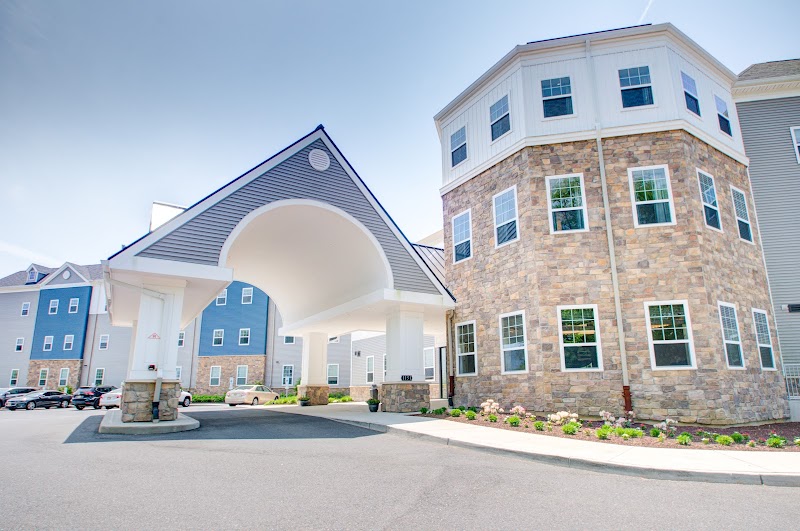
How is Jewish Home For Rehabilitation And Nursing, The Staffed?

CMS rates JEWISH HOME FOR REHABILITATION AND NURSING, THE's staffing level at 4 out of 5 stars, which is above average compared to other nursing homes. Staff turnover is 38%, compared to the New Jersey average of 46%. This relatively stable workforce can support continuity of care.

What Have Inspectors Found at Jewish Home For Rehabilitation And Nursing, The?

State health inspectors documented 14 deficiencies at JEWISH HOME FOR REHABILITATION AND NURSING, THE during 2021 to 2025. These included: 14 with potential for harm.
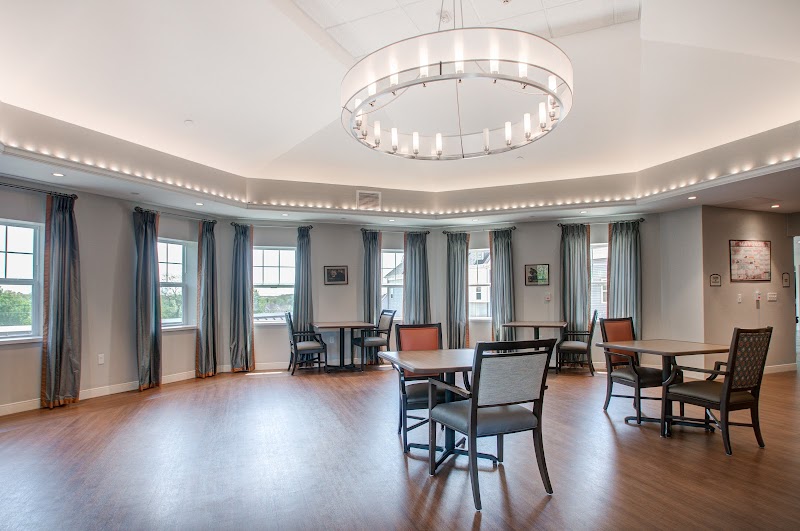
Who Owns and Operates Jewish Home For Rehabilitation And Nursing, The?

JEWISH HOME FOR REHABILITATION AND NURSING, THE is owned by a for-profit company. For-profit facilities operate as businesses with obligations to shareholders or private owners. The facility is operated by MARQUIS HEALTH SERVICES, a chain that manages multiple nursing homes. With 150 certified beds and approximately 140 residents (about 93% occupancy), it is a mid-sized facility located in FREEHOLD, New Jersey.
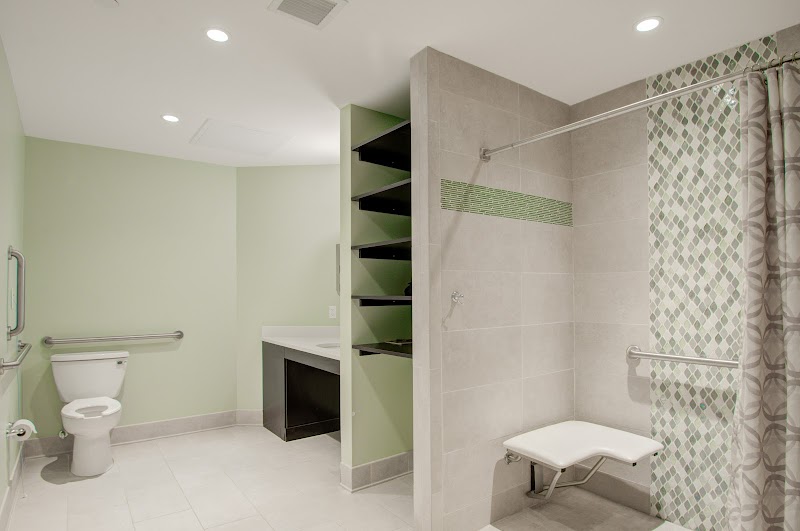
How Does Jewish Home For Rehabilitation And Nursing, The Compare to Other New Jersey Nursing Homes?

Compared to the 100 nursing homes in New Jersey, JEWISH HOME FOR REHABILITATION AND NURSING, THE's overall rating (4 stars) is above the state average of 3.3, staff turnover (38%) is near the state average of 46%, and health inspection rating (4 stars) is above the national benchmark.

What Should Families Ask When Visiting Jewish Home For Rehabilitation And Nursing, The?

Based on this facility's data, families visiting should ask: "Can I visit during a mealtime to observe dining assistance and food quality?" "How do you handle medical emergencies, and what is your hospital transfer rate?" "Can I speak with family members of current residents about their experience?"

Is Jewish Home For Rehabilitation And Nursing, The Safe?

Based on CMS inspection data, JEWISH HOME FOR REHABILITATION AND NURSING, THE has a clean safety record: no substantiated abuse findings (meaning no confirmed cases of resident harm), no Immediate Jeopardy citations (the most serious violation level indicating risk of serious injury or death), and is not on the Special Focus Facility watch list (a federal program monitoring the lowest-performing 1% of nursing homes). The facility has a 4-star overall rating and ranks #1 of 100 nursing homes in New Jersey. While no facility is perfect, families should still ask about staff-to-resident ratios and recent inspection results during their visit.

Do Nurses at Jewish Home For Rehabilitation And Nursing, The Stick Around?

JEWISH HOME FOR REHABILITATION AND NURSING, THE has a staff turnover rate of 38%, which is about average for New Jersey nursing homes (state average: 46%). Moderate turnover is common in nursing homes, but families should still ask about staff tenure and how the facility maintains care continuity when employees leave.

Was Jewish Home For Rehabilitation And Nursing, The Ever Fined?

JEWISH HOME FOR REHABILITATION AND NURSING, THE has no federal fines on record. CMS issues fines when nursing homes fail to meet care standards or don't correct problems found during inspections. The absence of fines suggests the facility has either maintained compliance or corrected any issues before penalties were assessed. This is a positive indicator, though families should still review recent inspection reports for the full picture.

Is Jewish Home For Rehabilitation And Nursing, The on Any Federal Watch List?

JEWISH HOME FOR REHABILITATION AND NURSING, THE is not on any federal watch list. The most significant is the Special Focus Facility (SFF) program, which identifies the bottom 1% of nursing homes nationally based on persistent, serious quality problems. Not being on this list means the facility has avoided the pattern of deficiencies that triggers enhanced federal oversight. This is a positive indicator, though families should still review the facility's inspection history directly.