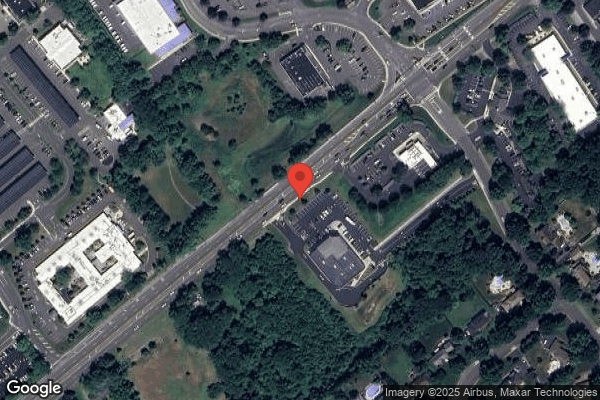
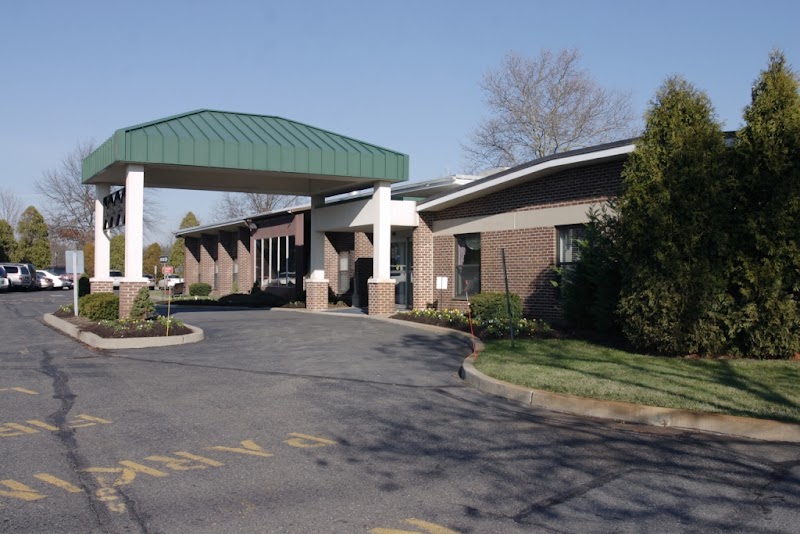
MANOR, THE

689 WEST MAIN ST, FREEHOLD, NJ 07728 (732) 431-5200
Non profit - Corporation 123 Beds Independent Data: November 2025
Trust Grade
80/100
#144 of 344 in NJ
Last Inspection: June 2025

Inspected within the last 6 months. Data reflects current conditions.

Overview

The Manor in Freehold, New Jersey, has a Trust Grade of B+, indicating it is above average and recommended for families considering care options. It ranks #144 out of 344 facilities in New Jersey, placing it in the top half, and #20 of 33 in Monmouth County, meaning only a few local options are better. Unfortunately, the facility is experiencing a worsening trend, with issues increasing from 1 in 2023 to 5 in 2025. Staffing is a relative strength, with a rating of 4 out of 5 stars and a turnover rate of 33%, which is below the state average, suggesting staff consistency. There have been no fines reported, which is positive, but RN coverage is only average, meaning there may not be as many registered nurses on duty as in other facilities. Specific concerns identified by inspectors include a failure to maintain clean kitchen equipment, with food debris found on equipment and unlabeled food items in the freezer. Additionally, there was a lack of proper physician orders for hospice care for a resident, which raises concerns about compliance with care standards. Overall, while The Manor has strengths in staffing and no fines, families should be aware of the recent increase in issues and the specific areas where improvement is needed.

Trust Score
B+
80/100
In New Jersey
#144/344
Top 41%
Safety Record
Low Risk
No red flags
Inspections
Getting Worse
1 → 5 violations
Staff Stability
○ Average
33% turnover. Near New Jersey's 48% average. Typical for the industry.
Penalties
✓ Good
No fines on record. Clean compliance history, better than most New Jersey facilities.
Skilled Nurses
○ Average
Each resident gets 37 minutes of Registered Nurse (RN) attention daily — about average for New Jersey. RNs are the most trained staff who monitor for health changes.
Violations
○ Average
8 deficiencies on record. Average for a facility this size. Mostly minor or procedural issues.
★★★★☆
4.0
Overall Rating
★★★★☆
4.0
Staff Levels
★★★★☆
4.0
Care Quality
★★★★☆
4.0
Inspection Score
Stable
2023: 1 issues
2025: 5 issues

The Good

  • 4-Star Staffing Rating · Above-average nurse staffing levels
  • 4-Star Quality Measures · Strong clinical quality outcomes
  • Full Sprinkler Coverage · Fire safety systems throughout facility
  • No fines on record
  • Staff turnover below average (33%)

    15 points below New Jersey average of 48%

Facility shows strength in staffing levels, quality measures, fire safety.

The Bad

Staff Turnover: 33%

13pts below New Jersey avg (46%)

Typical for the industry

The Ugly 8 deficiencies on record

Jun 2025 5 deficiencies
CONCERN (D)

Potential for Harm - no one hurt, but risky conditions existed

Comprehensive Care Plan (Tag F0656)

Could have caused harm · This affected 1 resident

Based on interviews and review of pertinent facility documentation it was determined that the facility failed to develop and implement a comprehensive person-centered care plan for a resident with a p...

Read full inspector narrative →
Based on interviews and review of pertinent facility documentation it was determined that the facility failed to develop and implement a comprehensive person-centered care plan for a resident with a peripherally inserted central catheter (PICC) (a tube inserted into a vein in the upper arm and threaded into a larger vein near the heart used for medications, fluids, and blood draws). This deficient practice was identified for 1 of 16 residents reviewed for care plans (Resident #49) and was evidenced by the following: On 06/18/25 at 11:47 AM, the surveyor observed the resident in the room in a chair. The resident showed the surveyor the PICC line in the upper arm. The surveyor reviewed the medical record for Resident #49. A review of the Face Sheet (an admission summary) reflected that the resident was admitted to the facility with diagnoses which included but not limited to; osteomyelitis (bone infection), congestive heart failure, and hypertension (high blood pressure). A review of the admission Minimum Data Set (MDS), an assessment tool used to facilitate the management of care dated 5/31/25, section C for cognitive patterns revealed the resident had a Brief Interview of Mental Status of 14, meaning the resident was cognitively intact. Section O of the MDS, special procedures indicated the resident was receiving intravenous antibiotic treatments on admission to the facility. A review of the physician orders showed an active order dated 5/25/25, for PICC line dressing change every Tuesday and Daptomycin (antibiotic) 350 mg intravenously one time a day for 25 days. A review of individualized comprehensive care plan (ICCP) initiated on 5/25/25 revealed no documented evidence to address the PICC line on the care plan. On 06/18/25 at 11:57 AM, the surveyor interviewed the Registered Nurse/Unit Manager (RN/UM) of the 200 unit at the facility. The surveyor asked the RN/UM if a resident had a peripherally inserted central catheter would they be care planned for that and the RN/UM responded Yes. The surveyor asked who was responsible for initiating and updating care plans and she told the surveyor it was the Unit Managers. The RN/UM could not answer why the resident did not have the PICC line addressed on the care plan. On 6/23/25 at 10:20 AM, the surveyor reviewed the policy titled, Baseline Care Plans dated 11/18/24. The policy included that the resident's care plan was developed to promote continuity of care and communication among nursing home staff, increase resident safety, and safeguard against adverse events that are most likely to occur right after admission. Care plans will be based upon admission orders, information from the transferring provider and dissuasion with the resident. NJAC 8:39-27.1 (a)
CONCERN (D)

Potential for Harm - no one hurt, but risky conditions existed

Deficiency F0658 (Tag F0658)

Could have caused harm · This affected 1 resident

Based on interview and record review, it was determined that the facility failed to follow professional standards of clinical practice by not obtaining a physician's order for hospice care. This was o...

Read full inspector narrative →
Based on interview and record review, it was determined that the facility failed to follow professional standards of clinical practice by not obtaining a physician's order for hospice care. This was observed for 1 of 1 resident (Resident #12) reviewed for hospice and end of life care and was evidenced by the following: Reference: New Jersey Statutes Annotated, Title 45. Chapter 11. Nursing Board. The Nurse Practice Act for the State of New Jersey states: The practice of nursing as a registered professional nurse is defined as diagnosing and treating human responses to actual and potential physical and emotional health problems, through such services as case finding, health teaching, health counseling, and provision of care supportive to or restorative of life and wellbeing, and executing medical regimens as prescribed by a licensed or otherwise legally authorized physician or dentist. Reference: New Jersey Statutes Annotated, Title 45, Chapter 11. Nursing Board. The Nurse Practice Act for the State of New Jersey states: The practice of nursing as a licensed practical nurse is defined as performing tasks and responsibilities within the framework of case finding; reinforcing the patient and family teaching program through health teaching, health counseling and provision of supportive and restorative care, under the direction of a registered nurse or licensed or otherwise legally authorized physician or dentist. On 6/18/25 at 9:50 AM, the surveyor reviewed Resident #12's electronic medical record (EMR). A review of the admission Record indicated that Resident #12 was admitted to the facility with diagnosis which included but was not limited to: chronic heart failure and chronic kidney disease. A review of the quarterly Minimum Data Set (MDS) (a comprehensive assessment tool) dated 4/2/25, indicated that Resident #12 had a Brief Interview for Mental Status Score (BIMS) of 13 out of 15 which indicated the resident was cognitively intact and that the resident was receiving hospice care. A review of the resident's Individualized Comprehensive Care Plan (ICCP) included a care focus area with an initiated date 9/23/24, indicating the resident had a terminal prognosis related to weight loss and congestive heart failure. The focus area included and intervention to have hospice care for the resident in the facility. A review of the physician order summary indicated a physician order dated 9/13/24, for hospice education and another order dated 9/13/24, for palliative consult. The physician orders did not include an order for hospice care. On 6/18/25 at 12:19 PM, the surveyor, in the presence of the survey team, reviewed Resident #12's physician's orders and hospice care with the Director of Nursing (DON) and the Licensed Nursing Home Administrator (LNHA). On 6/24/25 at 9:20 AM, the surveyor interviewed the DON who stated that residents who are enrolled to go on hospice need to have a physician's order indicating hospice care. On 6/24/25 at 9:44 AM, the DON, in the presence of the survey team, acknowledged that residents who go on hospice should absolutely have a specific order indicating hospice care. Further review of Resident #12's physician order summary indicated an order for hospice care with and ordered date of 6/18/25, after surveyor's inquiry. A review of the facility's Hospice Care Policy and Procedure with a recent date of 8/30/24, did not include the requirement to obtain physician's orders for hospice care prior to initiating hospice services. NJAC 8:39-11.2 (b)
CONCERN (D)

Potential for Harm - no one hurt, but risky conditions existed

Respiratory Care (Tag F0695)

Could have caused harm · This affected 1 resident

Based on observation, interview, medical record review, and review of other pertinent facility documents, it was determined that the facility failed to provide the necessary care and services for one ...

Read full inspector narrative →
Based on observation, interview, medical record review, and review of other pertinent facility documents, it was determined that the facility failed to provide the necessary care and services for one (1) of 1 resident (Resident #11) reviewed for respiratory care and was evidenced by the following: Review of the admission Record (admission summary) reflected that Resident #11 was admitted to the facility with the diagnoses that included but was not limited to; emphysema (a chronic lung condition that causes shortness of breath) and chronic obstructive pulmonary disease (COPD) (a chronic lung condition that makes breathing difficult). A review of the admission Minimum Data Set (MDS), an assessment that facilitates a resident's care dated 5/30/2025, indicated that Resident #11 had a Brief Interview for Mental Status (BIMS) of 13 out of 15 which indicated that the resident was cognitively intact. The MDS also indicated Resident #11 required partial to moderate assistance for activities of daily living (ADLs) and continuous and intermittent oxygen (O2) treatments. On 6/16/25 at10:52 AM, the surveyor observed Resident # 11 sitting in a wheelchair wearing O2 which was infusing at 2 liters/min via (by way of) nasal cannula (NC) [a medical device that provides supplemental O2 to people who have lower oxygen levels]. The surveyor observed that the O2 tubing was not dated or labeled. The surveyor also observed a nebulizer tubing (connects the nebulizer machine to the mask or mouthpiece, delivering medication directly to the lungs) set up on the bedside table not labeled or dated. On 6/17/25 at 10:45 AM, the surveyor entered Resident #11's room and observed that the O2 tubing and nebulizer tubing were still not dated or labeled. On 6/17/25 at 12:16 PM, the surveyor interviewed Resident #11 who was in their room eating lunch and reported having the diagnoses of COPD and required O2 continuously. Resident #11 stated that they did not remember when the O2 tubing or nebulizer tubing were changed, however felt that it was relatively new. The Resident stated that they had not had any respiratory infections since admission to the facility. A review of Resident #11's electronic medical record (EMR) revealed the following information: A review of the Order Summary Report (OSR) dated 5/23/2025, reflected a physician's orders (PO) to apply O2 at 2L via NC if SPO2 (the percentage of amount of oxygen in the blood), less than 90% every shift. A OSR dated 5/23/2025 contained an order for Albuterol Sulfate HFA inhalation Aerosol Solution 108 (90 Base) MCT/ACT (Albuterol Sulfate) 1 puff inhale orally every 8 (eight) hours for shortness of breath (SOB) or wheezing. A review of the OSR dated 6/16/2025, reflected an order to change nasal cannula every Sunday weekly on 11:00 pm to 7:00 am shift however, the order was not transcribed onto the Medication Administration Record (MAR) or the Treatment Administration Record (TAR). There were no physician orders to change the nebulizer tubing. A review of Resident #11's Interdisciplinary Care Plan (ICP) dated 5/25/2025, indicated that Resident #11 had the diagnoses of COPD. The interventions included: give aerosol or bronchodilators as ordered, monitor and document any side effects and effectiveness and oxygen settings and O2 via nasal progs at 2L continuously. There were no interventions in the ICP that indicated that the nebulizer tubing or O2 tubing were to be changed weekly. On 6/17/25 at 12:10 PM, the surveyor interviewed the Licensed Practical Nurse (LPN) who stated that Resident #11 was on O2 at 2 liters via nasal cannula. The LPN added that the resident had been on nebulizer treatments and O2 since admission to the facility. The LPN revealed that O2 and nebulizer tubing were to be changed every Wednesday by the 11:00 pm-7:00 am shift nurse and that staff were supposed to date and time the tubing. The LPN accompanied the surveyor to the room and confirmed that the O2 tubing and nebulizer tubing were not labeled and dated. The LPN then stated that it was important to change the tubing to maintain cleanliness and for infection control. On 6/23/25 at 12:46 PM, the surveyor interviewed the Director of Nursing (DON) who confirmed that O2 tubing and nebulizer tubing must be changed, labeled and dated every week. The DON stated that the nurses were responsible for ensuring that tubing was changed weekly on the 11:00 pm-7:00 am shift to prevent infection. A review of the facility policy dated 8/12/24 and titled, Respiratory Therapy Infection Prevention Policy and Procedure included that it was the policy of the facility to use this policy in the prevention of infection associated with respiratory therapy task and equipment. The policy specified that the O2 cannula and tubing were to be changed every 7 (seven) days or as needed and that the nebulizer set up was to be discarded every 7 days. NJAC 8:39-19.4(a)
CONCERN (D)

Potential for Harm - no one hurt, but risky conditions existed

Drug Regimen Review (Tag F0756)

Could have caused harm · This affected 1 resident

2. On 6/16/25 at 10:33 AM, the surveyor observed Resident # 43 in bed. The surveyor reviewed the medical record for Resident #43. A review of the Face Sheet revealed the resident was admitted to the f...

Read full inspector narrative →
2. On 6/16/25 at 10:33 AM, the surveyor observed Resident # 43 in bed. The surveyor reviewed the medical record for Resident #43. A review of the Face Sheet revealed the resident was admitted to the facility with diagnoses which included but not limited to, diabetes, congestive heart failure, paranoid schizophrenia, difficulty in walking, and hypertension. A review of the comprehensive admission MDS section C for cognitive patterns revealed the resident had a Brief Interview of Mental Status of 14 out of 15, indicating the resident was cognitively intact. On 06/18/25 at 09:24 AM, the surveyor reviewed the pharmacy consultant recommendations for Resident #43 which included: - Pharmacy consultant recommendations made by the consultant pharmacist on 4/2/25, 5/5/25, and 6/5/25, that Potassium Chloride should be mixed with 3 to 6 ounces of water or juice. The order at the time of surveyor review was for Potassium Chloride Oral Packet 20 MEQ (Potassium Chloride) Give 1 packet by mouth two times a day for supplement give with meal, mix 1 Packet of Phos-Nak in 75 milliliters (ml of water or juice, stir well and use promptly. - Pharmacy consultant recommendation made on 5/5/25, was for glucagon to have parameters. The current active order at time of surveyor review was as follows: Glucagon Emergency Injection Kit 1 mg (Glucagon (rDNA)) Inject 1 application intramuscularly as needed for HYPOGLYCEMIA GLUCAGON 1mg INTRAMUSCULAR INJECTION STAT. - Pharmacy consultant recommendation made on 5/5/25, to clarify loperamide, 2 mg ordered on the current orders, but medication discharge list read 4 mg. The current active order at the time of surveyor review was for Loperamide HCl Oral Tablet 2 MG (Loperamide HCl) Give 1 tablet by mouth two times a day for diarrhea. - Pharmacy consultant recommendation was to update Voltaren gel to indicate the dose in grams for each application. The recommended dose is 4 grams for lower extremity joints and 2 grams or upper extremity joints. The current active order at the time of surveyor review was for Voltaren Arthritis Pain External Gel 1 % (Diclofenac Sodium (Topical)) Apply to RT Knee topically two times a day for pain AND apply to left knee topically two times a day for pain. After review, it revealed that the orders were not changed to follow the pharmacy consultant recommendations. On 06/18/25 at 12:14 PM, the surveyor interviewed the Registered Nurse/Unit Manager (RN/UM) of the 200 unit regarding pharmacy consultant recommendations. She stated The PC point out the recommendations and either the desk nurse or the Unit Manager follow up. Copies are left in a book, but if we need to, we will call the doctor to change the order. On 6/23/25 at 9:27 AM, a surveyor interviewed the facility PC. The PC stated that comments and recommendations were provided to the facility the next day after review. The recommendations were then emailed to the LNHA, DON, and Medical Director. The PC stated the facility should act upon the recommendations within one week. If the recommendation is significant if should be acted upon within 24 hours and the PC would verbally notify the nurse on the unit and the DON if available. If recommendations are not followed the PC would notify the DON and Medical Director if in the facility. The physician will sign the recommendations. On 06/24/25 at 09:40 AM, the surveyor interviewed the RN/UM regarding glycogen and need for parameters. The UM/RN stated that its only given if the blood sugar is below 70 or the resident doesn't have an intravenous access or unable to swallow. The surveyor asked if that would be part of the physician order and the RN/UM stated yes, it's always an order set. She then said whoever entered it did it wrong, it should be there. The surveyor then asked about the completed forms from the PC recommendations with the follow up and the RN/UM said that they were in the Electronic Medical Record (EMR) under the miscellaneous section, and it was the Unit Managers responsibility or the nurse. The surveyor asked if there was a book with the papers for review and she told the surveyor, No, they are just scanned in computer. On 06/24/25 at 10:03 AM, the surveyor reviewed the miscellaneous section of the EMR. The surveyor located one pharmacy recommendation follow-up dated 6/13/25, for the volataren gel recommendation that was not followed. No other recommendations were scanned into the miscellaneous section of the EMR at the time of surveyor review. A review of the facility policy titled Consultant Pharmacist's Medication Regimen Review (MMR), with a revised date of 6/8/24, included but was not limited to: the Consultant Pharmacist Medication Regimen Review shall be reviewed, noted, and acted upon by the facility nursing and/or medical staff to assist each elder to attain the highest practicable level of functioning or prevent or minimize adverse consequences related to medication therapy to the extend possible. Under the procedure section of the policy, it indicated the Unit Manger shall track physician responses to ensure that the recommendations are addressed in a timely manner. NJAC 8:39-29.3 Based on observation, interview and review of facility documentation it was determined that the facility failed to follow pharmacy consultant recommendations for 2 of 5 residents (Resident #6 and #43) observed for unnecessary medications and was evidenced by the following: 1. On 6/17/25 at 12:07 PM, the surveyor reviewed the medical record for Resident #6. A review of the Face Sheet (an admission summary) reflected that the resident was admitted to the facility with diagnoses which included but not limited to, diabetes, malignant neoplasm of the liver (liver cancer), malignant neoplasm of the colon (colon cancer), and chronic kidney disease. A review of the comprehensive admission Minimum Data Set (MDS), an assessment tool used to facilitate the management of care, section C for cognitive patterns revealed the resident had a Brief Interview of Mental Status of 14 out of 15, indicating the resident was cognitively intact. A review of Resident #6's pharmacy consultant recommendations for May and June 2025 indicated the following: - Pharmacy consultant recommendation was made by the pharmacist on 5/12/25, indicating missing indication for mild and severe pain with current PRN (as needed) pain orders. Please clarify or update orders so that all levels of pain are covered. - Pharmacy consultant recommendation made on 6/5/25, indicated to clarify the order for oxycodone (a controlled pain medication). Please indicate pain level for use vs APAP (acetaminophen - a non-controlled medication used to treat pain). A review of the physician's orders and medication administration record (MAR) indicated the following: A physician's order dated 5/23/25, for oxycodone 5 milligrams (mg) half tablet by mouth every six hours as needed for pain. A physician's order dated of 5/27/25, for oxycodone 5 mg to give a half tablet by mouth every 12 hours as needed for pain for 14 days. A physician's order dated 6/11/25, for oxycodone 5 mg half tablet by mouth every eight hours as needed for pain. After surveyor review, it was revealed that the orders were not changed to follow the pharmacy consultant recommendations to indicate pain level parameters for the administration of controlled pain medications. On 6/18/25 at 12:19 PM, in the presence of the survey team, the surveyor reviewed the pharmacy recommendations and corresponding physician's orders with the Director of Nursing (DON) and the Licensed Nursing Home Administrator (LNHA). On 6/23/25 at 9:27 AM, the surveyor interviewed the Pharmacy Consultant (PC) who stated that comments and recommendations were provided to the facility the next day after review. The recommendations were then emailed to the Licensed Nursing Home Administrator (LNHA), the Director of Nursing (DON), and Medical Director. The PC further stated the facility should act upon the recommendations within one week. If the recommendation was significant it should be acted upon within 24 hours and the PC would verbally notify the nurse on the unit and the DON if available. If recommendations are not followed, the PC would notify the DON and Medical Director. The physician would sign the recommendations. On 6/24/25 at 9:24 AM, the surveyor interviewed the DON who stated that the facility reviewed pharmacy recommendations for order adjustments and acknowledged the surveyor's findings and stated that the orders regarding pain level for oxycodone were adjusted after the surveyor's inquiry. After surveyor inquiry, the physician's order was updated on 6/20/25, to include the following: oxycodone 5 mg give half tablet by mouth every eight hours as needed for moderate to severe pain.
CONCERN (F)

Potential for Harm - no one hurt, but risky conditions existed

Food Safety (Tag F0812)

Could have caused harm · This affected most or all residents

**NOTE- TERMS IN BRACKETS HAVE BEEN EDITED TO PROTECT CONFIDENTIALITY** Based on observation, interview, and record review, it was determined that the facility failed to maintain kitchen equipment in ...

Read full inspector narrative →
**NOTE- TERMS IN BRACKETS HAVE BEEN EDITED TO PROTECT CONFIDENTIALITY** Based on observation, interview, and record review, it was determined that the facility failed to maintain kitchen equipment in a clean and sanitary manner as evidenced by the following: On 6/16/25 at 10:01 AM, in the presence of the Food Service Director (FSD), the surveyor observed the following: 1. The slicer had food debris under the blade and on the food holder prongs. The FSD acknowledged and stated, it was not cleaned according to facility policy. 2. The walk-in freezer had two (2) boxes (one box of [NAME] and one box of Tilapia) that were open, unlabeled and not sealed. The FSD stated, the boxes should be sealed and labeled with an open and expiration date. The FSD acknowledged and stated they should be labeled according to policy, with name, date of opening and discard date. This will ensure that all the staff know when it expires and items should be sealed to maintain food quality, freshness and palatability. 3. The six-burner stove interior of the oven had food sediment and build up on the interior door. The catch tray that was lined with foil had burnt liquid, and food debris covering the entire tray and foil that was peeling. The FSD acknowledged and stated, it was not cleaned according to facility policy. 4. The griddle catch trays that were lined with foil had burnt liquid, and food debris covering the entire tray and foil that was peeling. The FSD acknowledged and stated, it was not cleaned according to facility policy. 5. A grey cabinet, labeled as a Utensil Cart, with multiple pull-out trays held cooking utensils. The pull-out trays had crumbs and debris on them with the utensils on top. The FSD acknowledged and stated, it was not cleaned according to facility policy. 6. The can opener blade had a metal chip on both sides, and brown substance on the blade. The FSD stated, I am not sure of the last time the blade was changed. I do not have any in the facility and will need to order it. She further stated, there wasn't a maintenance log in place to indicate when to replace the blade. On 6/16/25 at 12:10 PM, the surveyor interviewed the FSD, who stated, I acknowledged the surveyors finding and the equipment should have been cleaned and maintained in a sanitized way to prevent food borne illness and contamination for safety of our residents and staff. On 6/17/25 at 11:45 AM, the surveyor toured the unit kitchenettes with the Director of Nursing, (DON) and the Infection Preventionist (IP). During the tour, it was noted that both units ice machines, two of two units, had brown and black discoloration in the plastic grey shoot interior of the water dispenser and ice cube dispenser. The DON and the IP both acknowledge that the discoloration of sediment should not be in the interior aspect of the dispensers. On 6/18/25 at 12:05 PM, the surveyor interviewed the Maintenance Director (MD), who stated, I acknowledged the surveyors concerns after reviewing the pictures of the kitchen equipment. The equipment should be cleaned and maintained per policy, and I will contact our contracted company for them to come out and service. It is serviced three (3) times yearly that may need to be adjusted. On 6/19/25 at 10:10 AM, the surveyor interviewed the Licensed Nursing Home Administrator (LNHA), who stated, I acknowledged the surveyors concerns after reviewing the pictures of the kitchen equipment and ice machines on the units. The equipment should be cleaned and maintained to prevent food borne illness, contamination, or injury. This ensures the safety of our residents and staff. On 6/19/25 at 11:10 AM, the surveyor interviewed the Licensed Nursing Home Administrator (LNHA), who stated, I acknowledged the surveyors concerns after reviewing the pictures of the kitchen equipment. The equipment should be cleaned and maintained to prevent food borne illness, contamination, or injury. This ensures the safety of our residents and staff. On 6/24/25 at 10:18 AM, the survey team met with the LNHA, Assistant LNHA, Executive Director of facility, and the Director of Nursing (DON), who all acknowledged the surveyor's concerns. No additional information was provided. A review of the facility's, undated, Sanitation: Keeping food safe for guests and staff, included .food residue: cooking equipment residue may look harmless but can be a food source for microbes, insect and vermin .at the end of each shift or when you are finished with a stove/oven, wipe down equipment, replace aluminum liners and empty grease catch areas. A review of the Product dating and expiration policy, dated 9/2020, included . items removed from the original labeled cases are labeled with name/description of item, date opened, and last date or discard date. Items to be frozen are to be wrapped in plastic, then wrapped in foi and labeled with date it is frozen and the name. NJAC 8:39-17.2(g)
Dec 2023 1 deficiency
CONCERN (D)

Potential for Harm - no one hurt, but risky conditions existed

Deficiency F0678 (Tag F0678)

Could have caused harm · This affected 1 resident

**NOTE- TERMS IN BRACKETS HAVE BEEN EDITED TO PROTECT CONFIDENTIALITY** Based on record review, and staff interviews, the facility failed to ensure Code Status was correct for one (Resident (R) R51) o...

Read full inspector narrative →
**NOTE- TERMS IN BRACKETS HAVE BEEN EDITED TO PROTECT CONFIDENTIALITY** Based on record review, and staff interviews, the facility failed to ensure Code Status was correct for one (Resident (R) R51) out of two residents reviewed for Advance Directives/Code Status. There was no documentation in the record to indicate the resident's Code Status (whether to initiate Cardiopulmonary Resuscitation (CPR) or not in the event the resident was found not breathing and/or without a pulse. Findings include: The facility's policies related to Code Status were requested from the facility on [DATE] at 4:30 PM. The facility provided a policy specifically related to Do Not Resuscitate (DNR) Status. However, the survey team was not provided with a policy related to the designation of Code Status prior to the survey exit on [DATE]. R51's admission Record, found in the Electronic Medical Record (EMR) under the Profile Tab, revealed the resident was admitted to the facility on [DATE] with diagnoses including infection following a medical procedure and long-term use of antibiotics. R51's admission Minimum Data Set (MDS) with an Assessment Reference Date (ARD) of [DATE], indicated a Brief Interview for Mental Status (BIMS) score of 15 out of 15 (cognitively intact). The assessment indicated the resident was receiving rehabilitation/therapy services. R51's Medication Review Report, (MRR) dated [DATE] and found in the EMR under the Orders Tab, indicated no orders related to the resident's designated wishes related to his Code Status. R51's undated comprehensive Care Plan, (CP) found in the EMR under the Care Plan tab was reviewed and indicated no documentation of the resident's wishes related to his Code Status. A review of R51's entire EMR indicated no documentation related to the resident's Code Status had been obtained by the facility since his admission date. During an interview on [DATE] at 11:24 AM, Registered Nurse (RN)1, confirmed there was no information related to R51's Code Status in his record and stated she would ask the resident what his wishes related to his Code Status were. She stated the expectation for every resident's Code Status was to be entered into his or her record upon admission to the facility. She stated the default Code Status was Full Code (perform CPR). During a follow-up interview on [DATE] at 11:28 AM, RN1 stated she had spoken with the resident and his wishes were to be Full Code. She stated she would update the resident's record to reflect his wishes and would call the doctor to obtain an order for Full Code. During an interview on [DATE] at 11:40 AM, the Director of Nursing (DON) stated his expectation was that every resident should have documentation related to their Code Status in their record upon admission to the facility or shortly thereafter. NJAC 8:39-9.6(a) NJAC 8:39-35.2(d)3
Jul 2021 2 deficiencies
CONCERN (D)

Potential for Harm - no one hurt, but risky conditions existed

Deficiency F0658 (Tag F0658)

Could have caused harm · This affected 1 resident

Based on observation, interview, and record review it was determined that the facility failed to follow facility policy and procedures regarding wander guards (a monitoring device, such as a bracelet ...

Read full inspector narrative →
Based on observation, interview, and record review it was determined that the facility failed to follow facility policy and procedures regarding wander guards (a monitoring device, such as a bracelet used to help ensure safety of the resident at risk for elopement) for function. This practice was identified for 1 of 1 resident (Resident #50), reviewed for elopement. Reference: New Jersey Statutes Annotated, Title 45, Chapter 11. Nursing Board. The Nurse Practice Act for the State of New Jersey states: The practice of nursing as a registered professional nurse is defined as diagnosing and treating human responses to actual and potential physical and emotional health problems, through such services as case finding, health teaching, health counseling, and provision of care supportive to or restorative of life and wellbeing, and executing medical regimens as prescribed by a licensed or otherwise legally authorized physician or dentist. Reference: New Jersey Statutes Annotated, Title 45, Chapter 11. Nursing Board. The Nurse Practice Act for the State of New Jersey states: The practice of nursing as a licensed practical nurse is defined as performing tasks and responsibilities within the framework of case finding; reinforcing the patient and family teaching program through health teaching, health counseling and provision of supportive and restorative care, under the direction of a registered nurse or licensed or otherwise legally authorized physician or dentist. The evidence was as follows: On 07/21/21 at 10:40 AM, during the initial tour of the facility, the surveyor observed Resident #50 walking in the hallway of the unit. The surveyor also observed that all the other residents' doors in the same hallway had stop signs on them with the word STOP printed in Spanish. At this time, the surveyor asked the Certified Nursing Assistant (CNA) on the unit what the signs were on each door for, and the CNA stated that it was to help deter the wandering resident from entering the other residents' rooms. The surveyor asked who the wandering resident was, and the CNA informed the surveyor it was the resident that was observed by the surveyor in the hall (Resident #50). The surveyor reviewed the medical record for Resident #50. A review of the admission Record reflected that the resident was admitted to the facility in June of 2021 with diagnoses which included dementia with behavioral disturbance, hypertension (high blood pressure), and hyperlipidemia (high blood cholesterol). A review of the admission Minimum Data Set (MDS), an assessment tool dated 6/29/21, reflected that the resident had a Brief Interview of Mental Status (BIMS) of 3 out of 15 which indicated severe cognitive impairment. A further review of the MDS in Section E. Behavior, reflected that the resident had a wandering behavior that occurred daily. A review of the Electronic Medical Record (EMR) behavior progress notes indicated that the resident would wander on the unit and walk into other resident rooms and the staff would redirect the resident out of the other resident rooms. On 07/22/21 at 12:10 PM, the resident was observed sitting at a table across from the nursing station having lunch. The surveyor observed a wander guard to the resident's right ankle. On 07/22/21 at 12:14 PM, the surveyor interviewed the Registered Nurse/Unit Manager (RN/UM) regarding residents with wander guards. The surveyor asked the process for checking wander guards and the RN/UM informed the surveyor that we look at it every shift. The surveyor asked if the device was checked for function and the RN/UM stated that the devices were checked once before they go on the resident. The surveyor then asked the RN/UM if the devices were checked for function by any other staff member or supervisor at regularly scheduled intervals and the RN/UM responded no. On 07/22/21 at 12:57 PM, the surveyor continued to review the resident's medical record. A review of the resident's individualized care plan included a focus initiated on 6/22/21 for a risk for wandering/elopement. Interventions included to: clearly identify resident's room and bathroom; engage resident in purposeful activity; local county wander guard in place; and wander guard on right ankle. A review of the July 2021 Order Summary Report reflected a physician's order (PO) dated 6/18/21 to monitor wander guard placement to right lower extremity every shift. The PO did not include to check wander guard function. A review of the resident's admission Elopement Evaluation dated 6/18/21, reflected that the resident had an elopement score of 2.0 which indicated the resident was an elopement risk and had a history of attempted elopement in the past from home. 07/26/21 09:24 AM, the surveyor interviewed the Licensed Practical Nurse (LPN) regarding wander guards. The LPN informed the surveyor that, they are checked for placement every shift. The surveyor asked about checking the device for function and the LPN responded, when the resident goes near the door it would alarm. The surveyor asked if wander guards were checked at regular intervals and the LPN stated that, the Unit Managers are responsible for that, the nurses just check for placement. On 7/27/21 at 10:08 AM, the Director of Nursing (DON) in the presence of the facility's Administration and survey team, confirmed that staff should have been checking the function of the resident's wander guard every shift. A review of the facility's Resident Wandering Policy and Procedure dated 09/21/20, included under the procedure section of the policy that if assessment or behavior indicated need, implement the use of a Wander Guard for the resident, to be monitored every shift for placement and function. N.J.A.C. 8:39-27.1 (b)
CONCERN (D)

Potential for Harm - no one hurt, but risky conditions existed

Pharmacy Services (Tag F0755)

Could have caused harm · This affected 1 resident

Based on observation, interview, and record review, and review of other facility documentation, it was determined the facility failed to ensure the required Federal narcotic acquisition forms (DEA 222...

Read full inspector narrative →
Based on observation, interview, and record review, and review of other facility documentation, it was determined the facility failed to ensure the required Federal narcotic acquisition forms (DEA 222 form) were 1.) completed with sufficient detail to enable accurate reconciliation for 14 of 14 forms reviewed and 2.) dated and signed by the Medical Director as of the day it was submitted for filling for 4 of 4 forms provided. This deficient practice was evidenced by the following: 1. On 7/27/21 at 10:05 AM, a review of the facility's DEA 222 forms revealed an inconsistent pattern in regard to ordering the medication package size versus the number of packages being ordered. This inconsistency was identified on the following order forms: Order Form: #201886315, #201886316, #201886318, #201886319, #201536578, #201536579, #201886320, #201886321, #201886322, #201886325, #200710828, #200710830, #200710831, #200710832 On 7/27/21 at 10:21 AM, the surveyor interviewed the Director of Nursing (DON), who stated that one of the responsibilities of the DON was to complete the DEA 222 forms. The DON stated that she had looked back at previously completed forms and had followed those examples when completing the new forms. The DON stated the pills came in a zipped plastic bag and each individual tablet was in its own blister package, so the package size was one, and number of packages was the total number of individually packaged pills. She further stated she was never in-serviced on how to complete the newly revised DEA 222 forms by the provider pharmacy, but assumed they were filled out properly because the provider pharmacy never alerted her that they were filled out incorrectly. The surveyor stated the zipper locked bag was the one package and the package size was the total number of pills in that zipper bag. A review of the instructions for submission of the DEA 222 form located on the reverse side of the form included Part 1. Purchaser Information, 2. Only one item may be entered on a single line. Enter the number of packages, the size of the package, and the name of the item. Part 5. Controlled Substance Receipt 1. The purchaser fills out this section on its copy of the original form. 2. Enter the number of packages received and the date received for each line item. 2. On 7/27/21 at 10:19 AM, the surveyor requested from DON to review the facility's DEA 222 blank forms. The surveyor was handed four envelopes. Two envelopes were sealed, and two envelopes were opened. The two opened envelopes each contained two DEA 222 forms that had not been filled out but were already signed by the Medical Director. The identified forms were as follows: #201535572, #201535573, #201535574 and #201886314. At that time, the DON acknowledged the forms had been pre-signed by the facility's Medical Director. The DON stated she had been on leave and had the forms pre-signed in her absence for the acting DON to use. The DON further stated the Medical Director was in the facility at least three times a week and if needed, the acting DON could have reached out to the Medical Director if controlled substances needed to be ordered. On 7/27/21 at 11:35 AM, the surveyor interviewed the facility's Medical Director who stated he believed the facility policy for DEA 222 forms was for complete transparency. He stated that the facility's forms can only be sent to their provider pharmacy and that the provider pharmacy can only send the requested controlled substance medication to the facility. When the surveyor asked was there a possibility of drug diversion if the forms were pre-signed and the Medical Director acknowledged there was. The Medical Director further acknowledged that DEA 222 forms should not be pre-signed prior to completion of the controlled substance request. A review of the facility's Medication Ordering and Receiving from Pharmacy policy dated effective February 2019 included: D. The pharmacy dispenses medications listed in Schedules II, III, IV, and V in readily accountable quantities and containers designed for easy counting of contents. The policy did not include instructions for the proper completion of the DEA 222 form. N.J.A.C. 8:39-29.7(c)
Understanding Severity Codes (click to expand)
Life-Threatening (Immediate Jeopardy)
J - Isolated K - Pattern L - Widespread
Actual Harm
G - Isolated H - Pattern I - Widespread
Potential for Harm
D - Isolated E - Pattern F - Widespread
No Harm (Minor)
A - Isolated B - Pattern C - Widespread

Questions to Ask on Your Visit

  • "Can I speak with families of current residents?"
  • "What's your RN coverage like on weekends and overnight?"

Our Honest Assessment

Strengths
  • • Grade B+ (80/100). Above average facility, better than most options in New Jersey.
  • • No major safety red flags. No abuse findings, life-threatening violations, or SFF status.
  • • No fines on record. Clean compliance history, better than most New Jersey facilities.
  • • 33% turnover. Below New Jersey's 48% average. Good staff retention means consistent care.
Concerns
  • • No significant concerns identified. This facility shows no red flags across CMS ratings, staff turnover, or federal penalties.
Bottom line: Generally positive indicators. Standard due diligence and a personal visit recommended.

About This Facility

What is Manor, The's CMS Rating?

CMS assigns MANOR, THE an overall rating of 4 out of 5 stars, which is considered above average nationally. Within New Jersey, this rating places the facility higher than 99% of the state's 100 nursing homes. This rating reflects solid performance across the metrics CMS uses to evaluate nursing home quality.

How is Manor, The Staffed?

CMS rates MANOR, THE's staffing level at 4 out of 5 stars, which is above average compared to other nursing homes. Staff turnover is 33%, compared to the New Jersey average of 46%. This relatively stable workforce can support continuity of care.

What Have Inspectors Found at Manor, The?

State health inspectors documented 8 deficiencies at MANOR, THE during 2021 to 2025. These included: 8 with potential for harm.

Who Owns and Operates Manor, The?

MANOR, THE is owned by a non-profit organization. Non-profit facilities reinvest revenue into operations rather than distributing to shareholders. The facility operates independently rather than as part of a larger chain. With 123 certified beds and approximately 66 residents (about 54% occupancy), it is a mid-sized facility located in FREEHOLD, New Jersey.

How Does Manor, The Compare to Other New Jersey Nursing Homes?

Compared to the 100 nursing homes in New Jersey, MANOR, THE's overall rating (4 stars) is above the state average of 3.3, staff turnover (33%) is significantly lower than the state average of 46%, and health inspection rating (4 stars) is above the national benchmark.

What Should Families Ask When Visiting Manor, The?

Based on this facility's data, families visiting should ask: "Can I visit during a mealtime to observe dining assistance and food quality?" "How do you handle medical emergencies, and what is your hospital transfer rate?" "Can I speak with family members of current residents about their experience?"

Is Manor, The Safe?

Based on CMS inspection data, MANOR, THE has a clean safety record: no substantiated abuse findings (meaning no confirmed cases of resident harm), no Immediate Jeopardy citations (the most serious violation level indicating risk of serious injury or death), and is not on the Special Focus Facility watch list (a federal program monitoring the lowest-performing 1% of nursing homes). The facility has a 4-star overall rating and ranks #1 of 100 nursing homes in New Jersey. While no facility is perfect, families should still ask about staff-to-resident ratios and recent inspection results during their visit.

Do Nurses at Manor, The Stick Around?

MANOR, THE has a staff turnover rate of 33%, which is about average for New Jersey nursing homes (state average: 46%). Moderate turnover is common in nursing homes, but families should still ask about staff tenure and how the facility maintains care continuity when employees leave.

Was Manor, The Ever Fined?

MANOR, THE has no federal fines on record. CMS issues fines when nursing homes fail to meet care standards or don't correct problems found during inspections. The absence of fines suggests the facility has either maintained compliance or corrected any issues before penalties were assessed. This is a positive indicator, though families should still review recent inspection reports for the full picture.

Is Manor, The on Any Federal Watch List?

MANOR, THE is not on any federal watch list. The most significant is the Special Focus Facility (SFF) program, which identifies the bottom 1% of nursing homes nationally based on persistent, serious quality problems. Not being on this list means the facility has avoided the pattern of deficiencies that triggers enhanced federal oversight. This is a positive indicator, though families should still review the facility's inspection history directly.