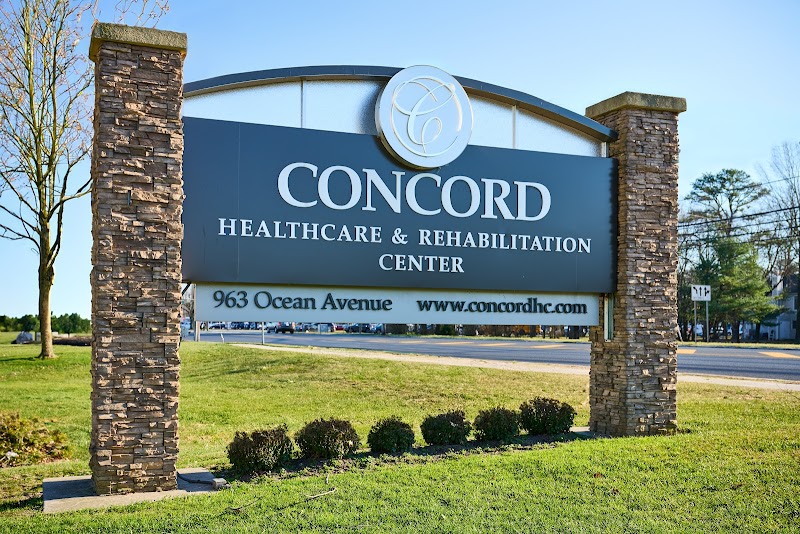
CONCORD HEALTHCARE & REHABILITATION CENTER
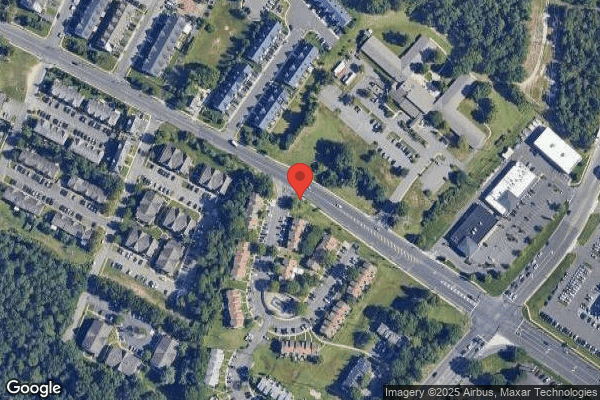
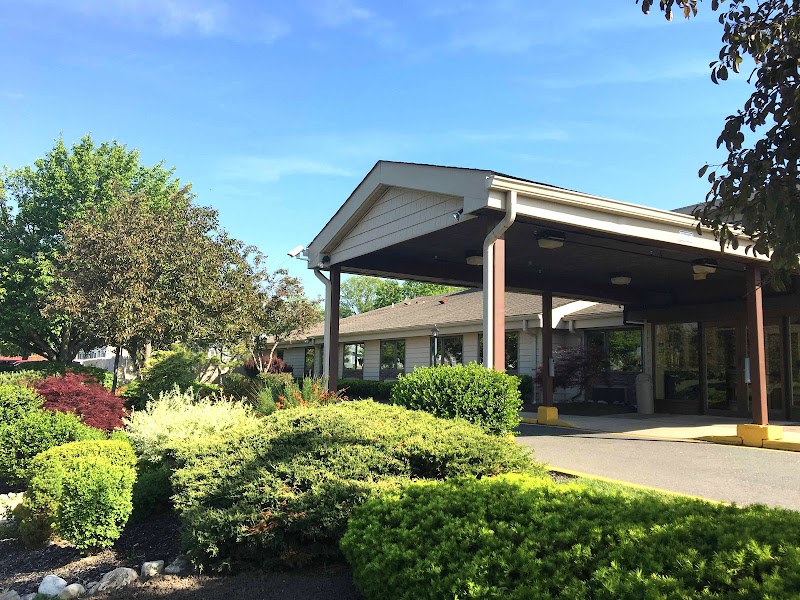
963 OCEAN AVE, LAKEWOOD, NJ 08701 (732) 367-7444
For profit - Corporation 120 Beds COLEV GESTETNER Data: November 2025
Trust Grade
85/100
#124 of 344 in NJ
Last Inspection: December 2024

Within standard 12-15 month inspection cycle. Federal law requires annual inspections.

Overview

Concord Healthcare & Rehabilitation Center in Lakewood, New Jersey has a Trust Grade of B+, indicating it is recommended and above average among nursing homes. It ranks #124 out of 344 facilities in the state, placing it in the top half, and #8 out of 31 in Ocean County, with only seven local options performing better. The facility is improving, with issues decreasing from three in 2023 to just one in 2024. Staffing is good with a 4 out of 5 star rating and a low turnover rate of 23%, significantly better than the state average of 41%, suggesting that staff are stable and familiar with residents' needs. While the facility has not incurred any fines, there are some concerns, including an incident where an ice machine had black mold, indicating a need for better kitchen sanitation, and another incident where a resident was given medication without adequate privacy, which could affect their dignity.

Trust Score
B+
85/100
In New Jersey
#124/344
Top 36%
Safety Record
Low Risk
No red flags
Inspections
Getting Better
3 → 1 violations
Staff Stability
✓ Good
23% annual turnover. Excellent stability, 25 points below New Jersey's 48% average. Staff who stay learn residents' needs.
Penalties
✓ Good
No fines on record. Clean compliance history, better than most New Jersey facilities.
Skilled Nurses
○ Average
Each resident gets 36 minutes of Registered Nurse (RN) attention daily — about average for New Jersey. RNs are the most trained staff who monitor for health changes.
Violations
○ Average
6 deficiencies on record. Average for a facility this size. Mostly minor or procedural issues.
★★★★☆
4.0
Overall Rating
★★★★☆
4.0
Staff Levels
★★★★☆
4.0
Care Quality
★★★★☆
4.0
Inspection Score
Stable
2023: 3 issues
2024: 1 issues

The Good

  • 4-Star Staffing Rating · Above-average nurse staffing levels
  • 4-Star Quality Measures · Strong clinical quality outcomes
  • Low Staff Turnover (23%) · Staff stability means consistent care
  • Full Sprinkler Coverage · Fire safety systems throughout facility
  • No fines on record
  • Staff turnover is low (23%)

    25 points below New Jersey average of 48%

Facility shows strength in staffing levels, quality measures, staff retention, fire safety.

The Bad

Chain: COLEV GESTETNER

Part of a multi-facility chain

Ask about local staffing decisions and management

The Ugly 6 deficiencies on record

Dec 2024 1 deficiency
CONCERN (F)

Potential for Harm - no one hurt, but risky conditions existed

Food Safety (Tag F0812)

Could have caused harm · This affected most or all residents

Based on observation, interview, and record review, it was determined that the facility failed to maintain kitchen equipment in a clean, safe, and sanitary manner and was evidenced by the following: O...

Read full inspector narrative →
Based on observation, interview, and record review, it was determined that the facility failed to maintain kitchen equipment in a clean, safe, and sanitary manner and was evidenced by the following: On 12/16/24 at 09:45 AM, in the presence of the Food Service Director (FSD) the surveyor observed the ice machine which had a black sediment on the interior of the ice machine dispenser shoot. When the surveyor asked the FSD what it was, the FSD responded it was Black Mold and he would have it cleaned immediately. On 12/16/24 at 10:20 AM, the surveyor interviewed the FSD who stated the ice machine was cleaned quarterly but it seems to be needed more often. The FSD acknowledged that the interior of the dispensing shoot had black sediment in it. The FSD further stated that the ice machine is responsible for the food tray line and the ice coolers on the nursing units that provide ice to the residents. The FSD stated he would have all the ice chests pulled from the nursing units to be cleaned. On 12/17/24 at 9:50 AM, the survey team met with the Licensed Nursing Home Administrator (LNHA) and the Director of Nursing (DON) to discuss the ice machine findings. The LNHA acknowledged the black sediment in the surveyors findings. On 12/20/24 at 10:09 AM, the surveyor interviewed the LNHA, who confirmed that the ice machine was cleaned quarterly and had just been done in the beginning of November. After reviewing the pictures, the LNHA acknowledged the black sediment found on the interior of the dispensing shoot. On 12/20/24 at 10:30 AM, the survey team met with the LNHA and DON and both acknowledged the surveyors findings. A review of the Ice Machines and Ice Storage Chests, dated revision January 2024, revealed . Policy: Ice machines and ice storage/distribution containers will be used and maintained to assure a safe and sanitary supply of ice. Policy Interpretation and Implementation: 1) Ice making machines, ice storage chests/ containers, and ice can all become contaminated by: c) colonization by microorganisms. 2) To help prevent contamination of ice machines, ice storage chest/containers or ice, staff shall follow these precautions: Clean and sanitize the tray and the scoop daily. 3) cleaning interior according to manufacture instructions. A review of the manufacturers cleaning, sanitation and maintenance user manual, date 12/2018, revealed . The ice machine requires 3 types of maintenance: 1) remove the buildup of mineral scales from the ice machine's water system and sensors. 2) Sanitize the ice machines water system and the storage bin or dispenser. 3) Clean or replace the air filter and clean the air cooled condenser It is the user's responsibility to keep the ice machine and ice storage bin in a sanitary condition. Without humane intervention, sanitation will not be maintained. Ice machines also require occasional cleaning of their water systems. NJAC 8:39-17.2(g)
Nov 2023 3 deficiencies
CONCERN (D)

Potential for Harm - no one hurt, but risky conditions existed

Deficiency F0658 (Tag F0658)

Could have caused harm · This affected 1 resident

Based on observation, interview, and review of facility documents, it was determined that the facility failed to follow professional standards of clinical practice with medication administration for 1...

Read full inspector narrative →
Based on observation, interview, and review of facility documents, it was determined that the facility failed to follow professional standards of clinical practice with medication administration for 1 of 8 residents (Resident #93) observed for medication pass. This deficient practice was evidenced by the following: Reference: New Jersey Statutes, Annotated Title 45, Chapter 11 Nursing Board, The Nurse Practice Act for the State of New Jersey state: The practice of nursing as a registered professional nurse is defined as diagnosing and treating human responses to actual or potential physical and emotional health problems, through such services as case finding, health teaching, health counseling, and provision of care supportive to or restorative of life and well-being, and executing a medical regimen as prescribed by a licensed or otherwise legally authorized physician or dentist. Reference: New Jersey Statutes, Annotated Title 45, Chapter 11 Nursing Board, The Nurse Practice Act for the State of New Jersey state: The practice of nursing as a licensed practical nurse is defined as performing tasks and responsibilities within the framework of case finding; reinforcing the patient and family teaching program through health teaching, health counseling and provision of supportive and restorative care, under the direction of a registered nurse or licensed or otherwise legally authorized physician or dentist. On 10/27/23 at 8:16 AM, the surveyor observed as the Registered Nurse (RN) prepared medications to be administered via a gastrostomy tube (a tube inserted through the belly that brings nutrition directly to the stomach) to Resident # 93. The RN removed the resident's medication bingo cards (a multidose card containing individually packaged medications) from the medication cart and checked them against the Medication Administration Record (MAR). The RN removed the tablets from the bingo cards, put them in a small plastic bag, and crushed the three tablets together. The RN administered the 3 crushed medications together via the Gastrostomy tube (g-tube). During an interview with the surveyor on 10/27/23 at 12:07 PM, the RN stated that it was her regular practice to crush and administer all the tablets together via a g- tube. The surveyor asked the RN what the facility's policy was for administering medications via a g-tube. The RN replied she wasn't sure. The surveyor asked the RN if she had received a medication administration in service and competency. The RN replied she had received both but wasn't sure who provided the training or completed the competency. On 11/2/23 at 11:25 AM, the surveyor team met with the Regional Administrator, Licensed Nursing Home Administrator (LNHA), Administrator in training, Director of Nursing (DON), Regional Nurse, and Infection Preventionist Nurse to discuss the above observations and concerns. The DON stated that the facility's policy was to administer medications individually one at a time via the g-tube. Review of the facility's Administering Medications policy, revised April 2023, did not address the administration of medications via a gastrostomy tube. Review of the Facility's Competency Validation for Medication Administration reflected .Respect resident's right to privacy .when administering medication through a g-tube do not mix several medications together .flush tube between each medication with at least 5 ccs of water. Review of the RN's Competency Validation for Medication Administration reflected that the Infection Prevention Nurse (IPN) had completed a competency with the RN during her orientation on 9/13/23. NJAC 8:39-27.1(a)
CONCERN (D)

Potential for Harm - no one hurt, but risky conditions existed

Infection Control (Tag F0880)

Could have caused harm · This affected 1 resident

**NOTE- TERMS IN BRACKETS HAVE BEEN EDITED TO PROTECT CONFIDENTIALITY** Based on observation, interview, record review, and review of facility documentation, it was determined that the facility failed...

Read full inspector narrative →
**NOTE- TERMS IN BRACKETS HAVE BEEN EDITED TO PROTECT CONFIDENTIALITY** Based on observation, interview, record review, and review of facility documentation, it was determined that the facility failed to maintain infection control standards and procedures to address the risk of infection transmission by failing to perform proper hand hygiene for 1 of 3 nurses who administered medications to 1 of 8 residents (Resident # 93) observed during medication administration. This deficient practice was evidenced by the following: On 10/27/23 at 8:16 AM, the surveyor observed the Registered Nurse (RN) administer insulin and medications via a gastrostomy tube (a tube inserted through the belly that brings nutrition directly to the stomach) to Resident # 93. The surveyor then observed the RN remove her gloves to wash her hands. The RN applied soap and lathered her hands for seven seconds out of the stream of running water. She rinsed her hands and turned off the faucet with her bare hands then dried her hands with a paper towel. The surveyor reviewed the medical records of Resident #93 which revealed the following: Resident #93 was admitted with diagnoses which included but were not limited to Type 2 diabetes mellitus and aphasia following a cerebral infarction (stroke) and Gastrostomy Status. Review of Resident #93's Quarterly MDS dated [DATE], revealed that Resident #93 had a BIMS of 3 out of 15 which indicated that the resident's cognition was severely impaired. During an interview with the surveyor on 10/27/23 at 12:07 PM, the RN stated that the process for handwashing included lathering hands together with soap and water for 20 seconds and that the whole process should take 30 seconds. The RN stated that the importance of handwashing was to prevent the spread of infection. On 11/2/23 at 11:25 AM, the surveyor team met with the Regional Administrator, Licensed Nursing Home Administrator (LNHA), Director of Nursing (DON), Regional Nurse, and Infection Preventionist Nurse to discuss the above observations and concerns. During an interview with the Infection Preventionist Nurse (IPN) on 11/2/23 at 1:36 PM, the IPN stated that the RN should have washed her hands following the facility handwashing policy which instructed to vigorously lather hands with soap and scrub them for at least 20 seconds. The IPN further stated that the RN should have turned the faucet off with a clean paper towel. A review of the facility's Handwashing/Hand Hygiene policy, revised December 2022 reflected .this facility considers hand hygiene the primary means to prevent the spread of infections .Employees must wash their hands for at least 20 seconds using antimicrobial or non-antimicrobial soap and water under the following conditions:before and after direct resident care; before and after performing any invasive procedure (e.g., fingerstick blood sampling) .vigorously lather hands with soap and rub them together, creating friction to all surfaces, for at least 15-20 seconds covering all surfaces of the hands and fingers .rinse hands thoroughly under running water .dry hands thoroughly with paper towels and then turn off faucets with a clean dry paper towel. A review of the U.S. Centers for Disease Control and Prevention (CDC) guidelines, Clean Hands Count for Healthcare Providers, reviewed 1/8/2021, included, When cleaning your hands with soap and water, wet your hands first with water, apply the amount of product recommended by the manufacturer to your hands, and rub your hands together vigorously for at least 15 seconds, covering all surfaces of the hands and fingers. Rinse your hands with water and use disposable towels to dry. NJAC 8:39:19.4 (a)(n),27.1(a)
CONCERN (E)

Potential for Harm - no one hurt, but risky conditions existed

Deficiency F0583 (Tag F0583)

Could have caused harm · This affected multiple residents

**NOTE- TERMS IN BRACKETS HAVE BEEN EDITED TO PROTECT CONFIDENTIALITY** Based on observation, interview, and record review, it was determined that the facility failed to provide privacy and promote di...

Read full inspector narrative →
**NOTE- TERMS IN BRACKETS HAVE BEEN EDITED TO PROTECT CONFIDENTIALITY** Based on observation, interview, and record review, it was determined that the facility failed to provide privacy and promote dignity during medication administration for 3 of 8 residents observed (Residents #16, #34 and #93) on 1 of 2 nursing units and for 1 of 3 nurses observed. This deficient practice was evidenced by the following: During the medication administration observation of the A unit on 10/27/23 at 7:39 AM, the surveyor observed the Registered Nurse (RN) administer medications to Resident #16. The surveyor observed the resident awake and seated in their wheelchair in the doorway of their room. The RN sanitized their hands, donned gloves, and without providing Resident #16 with privacy the RN cleaned Resident #16's finger with an alcohol swab and performed a capillary blood glucose test (finger prick to obtain a blood sugar level using a glucometer). The door to the resident's room remained opened and the resident continued to be visible from the hallway as the RN performed the test. The surveyor reviewed the medical records of Resident #16 which revealed the following: Resident #16 was admitted with diagnoses which included but were not limited to: Type 2 diabetes mellitus (DM) and mood disorder. Review of Resident #16's Quarterly Minimum Data Set (MDS), an assessment tool, dated August 20, 2023, revealed that the resident had a Brief Interview for Mental Status (BIMS) of 11 out of 15 which indicated that the resident's cognition was moderately impaired. Review of Resident #16's October 2023 Physician Order Summary (POS) Report reflected a physician order (PO) for Humalog Solution 100 units/milliliter (ml) (Insulin Lispro) Inject as per sliding scale: if 201-250 give (=) 2 units; 251-300=4 units; 301-350=6 units; 351-400=8 units; 401-450=10 subcutaneously before meals for DM; if blood glucose monitoring (BGM) is less than 70 or greater than 400 notify the MD. On 10/27/23 at 8:09 AM, the surveyor observed Resident #34 seated in their wheelchair in the hallway outside of their room. The RN asked Resident #34 to go to their room. The RN put gloves on, cleaned Resident #34's fingertip with an alcohol pad and performed a capillary blood glucose test. The door to the resident's room remained opened and the resident continued to be visible from the hallway as the RN then administered Artificial Tears 1 drop (gtt) to each eye and then used an eye scrub pad to each eye. The surveyor reviewed the medical records of Resident #34 which revealed the following: Resident #34 was admitted with diagnoses which included but were not limited to: Type 2 diabetes mellitus and Alzheimer's disease. Review of Resident #34's Quarterly MDS, dated [DATE], revealed that Resident #34 had a BIMS of 14 out of 15 which indicated that the resident's cognition was intact. Review of Resident #34's October 2023 POS reflected a PO for Novolog Solution 100 unit/ml for BGM if less than 70 or greater than 400 notify the MD; PO for Artificial Tears Solution 1.4% instill one gtt in both eyes two times a day for allergies; Provide Privacy; Eye Scrub External Pad apply to both eyes topically two times a day for redness/swelling. On 10/27/23 at 8:16 AM, the surveyor observed the RN enter Resident # 93's room. Resident #93 was awake in bed. The RN stated that the resident was aphasic but communicated by using a communication board and using thumbs up and thumbs down. The RN put gloves on, cleaned Resident #93's fingertip with an alcohol pad, and performed a capillary blood glucose test. The RN pulled up Resident #93's gown exposed his/her adult brief, gastrostomy tube, urinary catheter tubing, and administered 8 units of Insulin subcutaneously to Resident #93's abdomen in the upper right quadrant. The door remained open and the resident continued to be visible from the hallway. At that time, the surveyor asked the RN to step out of Resident #93's room and asked the RN if she should have provided the resident with privacy by pulling the resident's curtain and closing the door. The RN replied, yes, but [the resident] is so far back and nobody is usually back here. The surveyor reviewed the medical records of Resident #93 which revealed the following: Resident #93 was admitted with diagnoses which included but were not limited to Type 2 diabetes mellitus, aphasia following cerebral infarction (stroke), and Gastrostomy Status (a tube inserted through the belly that brings nutrition directly to the stomach). Review of Resident #93's Quarterly MDS dated [DATE], revealed that Resident #93 had a BIMS of 3 out of 15 which indicated that the resident's cognition was severely impaired. Review of Resident #93's October 2023 POS reflected a PO dated 9/9/23 for Humalog Injection Solution 100 units/ml (Insulin Lispro) inject per sliding scale: if 151-200 = 2 units; 201-250 = 4 units; 251-300 = 6 units; 301-350 = 8 units; 351-400 =10 units, subcutaneously three times a day for DM call MD if less than 70 or greater than 400. During an interview with the surveyor on 10/27/23 at 12:07 PM, the RN stated that she should have provided privacy by closing the residents' door during care, capillary blood glucose testing, administration of eye drops, eye scrubs, insulin, and medications given via the gastrostomy tube. The RN acknowledged that she did not provide privacy during those times. On 11/2/23 at 11:25 AM, the surveyor team met with the Regional Administrator, Licensed Nursing Home Administrator (LNHA), Director of Nursing (DON), Regional Nurse, and Infection Preventionist Nurse to discuss the above observations and concerns. The DON stated that the RN should provide privacy during care, treatments, and medication administration. Review of a facility policy titled, Resident Rights, dated January 2023, included but was not limited to; Employees shall treat all Residents with kindness, dignity, and respect. Federal and state laws guarantee certain basic rights to all residents of this facility. These rights include .privacy and confidentiality. Residents are entitled to exercise their rights and privileges to the fullest extent possible. NJAC 8:39-4.1(a)(12)
Aug 2021 2 deficiencies
CONCERN (D)

Potential for Harm - no one hurt, but risky conditions existed

Pressure Ulcer Prevention (Tag F0686)

Could have caused harm · This affected 1 resident

Based on observation, interview, and record review, it was determined that the facility failed to ensure a resident received treatment and services to promote healing of a chronic stage two (Stage II)...

Read full inspector narrative →
Based on observation, interview, and record review, it was determined that the facility failed to ensure a resident received treatment and services to promote healing of a chronic stage two (Stage II) pressure ulcer. This deficient practice was identified for 1 of 3 residents, (Resident #19) reviewed for pressure ulcers and was evidenced by the following: On 08/2/21 at 07:11 PM, the surveyor observed Resident #19 sitting upright and asleep in his/her bed on a fully inflated and functioning pressure reducing air mattress. On 08/5/21 from 10:03 AM to 10:17 AM, the surveyor in the presence of another surveyor and the Registered Nurse/Unit Manager (RN/UM) observed the Licensed Practical Nurse (LPN) perform the wound treatment to Resident #19's sacral (lower back) wound. The following observations were made: At the treatment cart, the LPN gathered the required supplies which included island dressing (a sterile gauze bandage which is centered in a square adhesive pad), wooden tongue depressor (for medication application), and squeezed medihoney (a paste which aids in wound healing) into a small medication cup. The LPN, while at the treatment cart used her ungloved hand to open and date the outside of the island dressing. At 10:08 AM, the LPN performed hand hygiene using soap and water and laid a dry clean pad on the bedside table and placed the supplies. The LPN proceeded to turn Resident #19 with the assistance of the RN/UM exposing a clean, oval shaped, reddish-pink, healing Stage II pressure ulcer (opening in the skin that is superficial, not reaching the full thickness of the skin) on his/her sacrum. The LPN then performed hand hygiene using alcohol based hand rub and put on clean gloves. The LPN dampened a clean gauze with normal saline solution and cleaned the wound. The LPN then disposed of the soiled gauze and immediately grabbed new, clean, dry gauze and patted the wound dry. There was no observed glove change or hand hygiene performed after the disposal of the soiled gauze and the application of the clean gauze. The LPN using the same gloves, then applied the medihoney with the tongue depressor to the resident's wound. Then the LPN without any observed glove change or hand hygiene applied the clean pre-dated island gauze dressing to the resident's wound and then removed her gloves and preformed hand hygiene. The surveyor reviewed Resident #19's medical record. A review of the admission Record reflected that the resident was re-admitted to the facility in June 2021 with diagnoses which included pressure ulcer of sacral region, unspecified open wound of the right and left knees, acute kidney failure (kidneys suddenly stop working properly), peripheral vascular disease (a slow and progressive circulation disorder), and unspecified dementia with behavioral disturbance. A review of the most recent quarterly Minimum Data Set (MDS), an assessment tool dated 05/21/21, reflected that the resident had a Brief Interview for Mental Status (BIMS) score of 12 out of 15 which indicated that the resident had moderately impaired cognition. A further review of the MDS Section M - Skin Conditions, reflected that the resident had no active pressure ulcers. A review of a telephone physician's order dated 7/30/21, for medihoney wound/burn gel; to cleanse wound with normal saline solution, apply medihoney to wound bed and cover with clean dry dressing daily for fourteen days. A review of the Progress Notes reflected a Skin/Wound Note dated 8/3/21, that the resident had a deep tissue injury that evolved into a stage II pressure ulcer measuring 2x2.5x0.2 centimeters (cm) in size. The plan was clean wound with normal saline solution and apply medihoney with clean dry dressing daily and as needed if soiled. A review of the resident's individualized care plan reflected that the resident had a focus area dated 6/27/21, for the potential for skin breakdown related to compromised skin integrity on admission and comorbidities: anemia (decrease in red blood cells), kidney failure, gout, arthritis, incontinence (lack of voluntary control over bowel and/or bladder), scar tissue to sacrum and bilateral (both) knees. Interventions included; to administer treatment per physician orders. On 08/5/21 at 11:53 AM, the surveyor interviewed the LPN who stated that the process to perform wound care would be to remove the dressing off the wound, assess the wound for any sign of infection, clean the wound as ordered, remove gloves, sanitize hands, put on new clean gloves and then apply medication and new dressing as ordered. When the surveyor asked the LPN if she missed any of these steps during the wound care, the LPN replied that she could not remember. On 08/5/21 at 12:07 PM, the surveyor interviewed the RN/UM who stated to that the procedure for wound care after gathering supplies and checking physician orders was to remove the dirty dressing and assess for signs of infection, remove gloves and wash hands, put new gloves on, apply ointment or medication and dressing. When the surveyor asked the RN/UM if the LPN had missed any of these steps, the RN/UM replied that she could not remember. On 8/5/21 at 12:54 PM, the surveyor interviewed the Director of Nursing (DON) who stated that the procedure for wound care would be to wash hands, put on clean gloves, remove dressing already in place, dispose of dirty dressing and dirty gloves, perform hand hygiene, put on new gloves, clean wound site as ordered, dispose of gloves and perform hand hygiene, and apply treatment medication and clean dressing. On 08/6/21 at 09:23 AM, the [NAME] President (VP) in the presence of the DON, Licensed Nursing Home Administrator, and the survey team stated that, The nurse who forgot to change her gloves, she should have. She knew what to do, but she got scared. A review of the facility's Wound Care Procedure for Major Wounds policy dated revised 2009, included the procedure for wound care is to remove soiled dressing, remove gloves and discard, wash hands, clean the wound according to the order, place soiled gauze used for cleaning in (trash) bag, remove gloves, put on new gloves, apply clean dressing as ordered, remove gloves, and initial, date and time dressing. NJAC 8:39-27.1(e)
CONCERN (D)

Potential for Harm - no one hurt, but risky conditions existed

Deficiency F0805 (Tag F0805)

Could have caused harm · This affected 1 resident

Based on observation, interview, and review of facility documentation, it was determined that the facility failed to provide the correct consistency of diet according to physician's orders. This defic...

Read full inspector narrative →
Based on observation, interview, and review of facility documentation, it was determined that the facility failed to provide the correct consistency of diet according to physician's orders. This deficient practice was identified for 1 of 4 residents (Resident #58) reviewed for nutrition and evidenced by the following: On 8/4/21 at 11:45 AM, the surveyor observed the Certified Nursing Aide (CNA) place a lunch meal tray in front of an unsampled resident. The meal ticket on the tray identified the meal was for sampled Resident #45 and contained a peanut butter and jelly sandwich, jello, creamed celery, health shake (nutritional supplement) and thin liquids (consistency) of water and gingerale. The CNA set-up the meal by placing a spoon in the soup, opened all three beverage containers, and cleaned the resident's hands. The surveyor observed no identification on the resident so they asked the resident what his/her name was. The resident had not responded and the CNA told the resident to tell the surveyor his/her name. The resident identified him/herself as Resident #58 and the CNA confirmed this. At this time, the CNA left the resident alone with the meal tray to eat and drink. On 8/4/21 at 11:50 AM, the surveyor asked the Licensed Practical Nurse/Unit Manager (LPN/UM) to identify Resident #58, which the LPN/UM confirmed that the resident was Resident #58. At this time, the surveyor asked the LPN/UM to accompany them to the resident's tray and identify whose lunch tray this was. The LPN/UM confirmed that the tray was Resident #45's and not Resident #58's. The LPN/Um immediately removed the lunch tray and put it at the nurse's station. The LPN/UM stated that it had not appeared that the resident had eaten or drank from the lunch tray. At this time, the surveyor observed a list on the cabinet entitled Residents with Thickened Liquids/Fluid Restrictions Ordered dated revision 8/4/2, which indicated that Resident #58 was on nectar thick liquids (consistency slightly thicker than thin liquids) and not the thin liquids he/she was served on Resident #45's lunch tray. On 8/4/21 at 11:53 AM, the surveyor observed Resident #58's lunch tray which contained chopped carrots and cheese blintz, pudding, cream of celery, health shake, and nectar thick cranberry juice and nectar thick lemon beverage. On 8/4/21 at 11:54 AM, the surveyor interviewed the CNA who stated that he was given Resident #45's lunch tray and was told to give it to Resident #58. When asked who the person was, the CNA responded that he could not remember, but confirmed that he was suppose check the tray as well to ensure that correct resident received the correct tray. The CNA confirmed that Resident #58 drank nectar thick liquids, but he was unsure the liquid consistency that he/she received on the other resident's tray. The surveyor reviewed the medical record for Resident #58. A review of the admission record reflected that the resident was admitted to the facility in April of 2021, with diagnoses which included dementia with behavioral disturbance, protein-calorie malnutrition, heart failure, anorexia (lack or loss of appetite for food), and gastro-esophageal reflux disease (acid reflux). A review of the admission Minimum Data Set, an assessment tool dated 7/9/21, reflected a Brief Interview of Mental Status (BIMS) score of 0 out of 15 which indicated cognitive impairment. A further review of the MDS in Section G - Functional Status, indicated that the resident required extensive assistance of one person physical assistance for eating. A review of the active Order Summary Report dated 8/4/21, reflected a physician's order dated 7/15/21, for nectar thick liquids. A review of the Progress Notes reflected a Nursing Progress Note dated 7/15/21, that the Speech Therapist (ST) stated that the resident was coughing during session (speech therapy) so diet was downgraded to mechanical soft (food texture) with nectar thick liquids. A review of the resident's individualized care plan reflected a focused area dated 7/6/21, that the resident has a nutritional problem or potential nutritional problem with regards to dementia and at risk for varied by oral intake. Interventions included to feed self after tray set up; staff will monitor for sign and symptoms of dysphagia (difficulty swallowing); and staff will provide and serve diet as ordered. On 8/4/21 at 12:29 PM, the surveyor re-interviewed the CNA who stated that the resident was able to feed him/herself, but required assistance with the set-up. The CNA stated that staff observed the resident eating to ensure that the resident took small bites and drank plenty of liquids to prevent pocketing of food or aspiration (when something such as food or liquids enters your airway or lungs by accident). On 8/4/21 at 12:36 PM, the surveyor re-interviewed the LPN/UM who confirmed that the resident fed him/herself, but it had not appeared that the resident had touched anything on Resident #45's lunch tray. On 8/4/21 at 1:09 PM, the surveyor interviewed the ST via telephone who stated that Resident #58 was currently receiving speech therapy. The resident arrived to the facility with a diet order of regular texture food and thin liquids. The ST stated that she had observed the resident two weeks later eating poorly and he/she seemed congested so she put the resident in speech therapy and changed the diet order to mechanical soft food texture with nectar thick liquids with a goal to return back to regular texture food and thin liquids. The ST stated that thin liquids were not dangerous to the resident, and if the resident were to receive, they would not be at risk for choking or death. On 8/5/21 at 1:11 PM, the surveyor in the presence of the Licensed Nursing Home Administrator, Director of Nursing, Regional Nurse, and survey team addressed this concern. A review of the facility's undated Meal Tray Policy and Procedure which included that staff passing trays will check the meal ticket to identify the correct resident before passing each tray and special or altered diets listed on the meal ticket will be verified before the resident begins eating. NJAC 8:39-17.4(a)(1,2); 27.1
Understanding Severity Codes (click to expand)
Life-Threatening (Immediate Jeopardy)
J - Isolated K - Pattern L - Widespread
Actual Harm
G - Isolated H - Pattern I - Widespread
Potential for Harm
D - Isolated E - Pattern F - Widespread
No Harm (Minor)
A - Isolated B - Pattern C - Widespread

Questions to Ask on Your Visit

  • "Can I speak with families of current residents?"
  • "What's your RN coverage like on weekends and overnight?"

Our Honest Assessment

Strengths
  • • Grade B+ (85/100). Above average facility, better than most options in New Jersey.
  • • No major safety red flags. No abuse findings, life-threatening violations, or SFF status.
  • • No fines on record. Clean compliance history, better than most New Jersey facilities.
  • • 23% annual turnover. Excellent stability, 25 points below New Jersey's 48% average. Staff who stay learn residents' needs.
Concerns
  • • No significant concerns identified. This facility shows no red flags across CMS ratings, staff turnover, or federal penalties.
Bottom line: Generally positive indicators. Standard due diligence and a personal visit recommended.

About This Facility

What is Concord Healthcare & Rehabilitation Center's CMS Rating?

CMS assigns CONCORD HEALTHCARE & REHABILITATION CENTER an overall rating of 4 out of 5 stars, which is considered above average nationally. Within New Jersey, this rating places the facility higher than 99% of the state's 100 nursing homes. This rating reflects solid performance across the metrics CMS uses to evaluate nursing home quality.
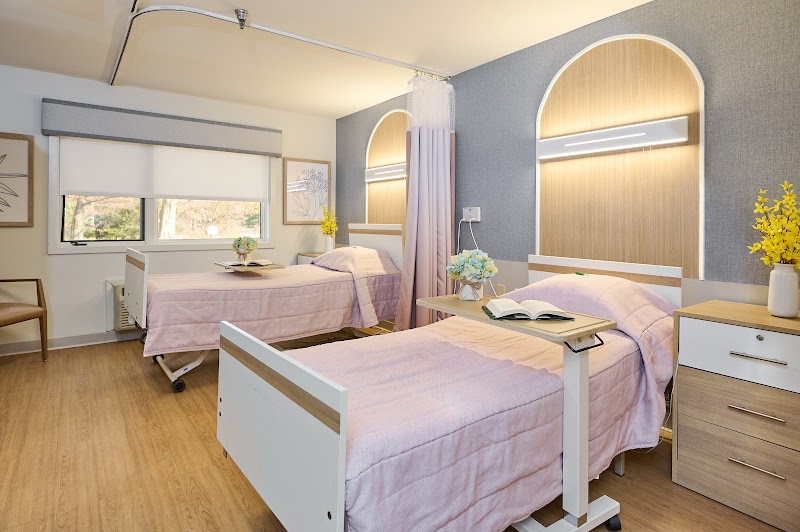
How is Concord Healthcare & Rehabilitation Center Staffed?

CMS rates CONCORD HEALTHCARE & REHABILITATION CENTER's staffing level at 4 out of 5 stars, which is above average compared to other nursing homes. Staff turnover is 23%, compared to the New Jersey average of 46%. This relatively stable workforce can support continuity of care.

What Have Inspectors Found at Concord Healthcare & Rehabilitation Center?

State health inspectors documented 6 deficiencies at CONCORD HEALTHCARE & REHABILITATION CENTER during 2021 to 2024. These included: 6 with potential for harm.
Who Owns and Operates Concord Healthcare & Rehabilitation Center?

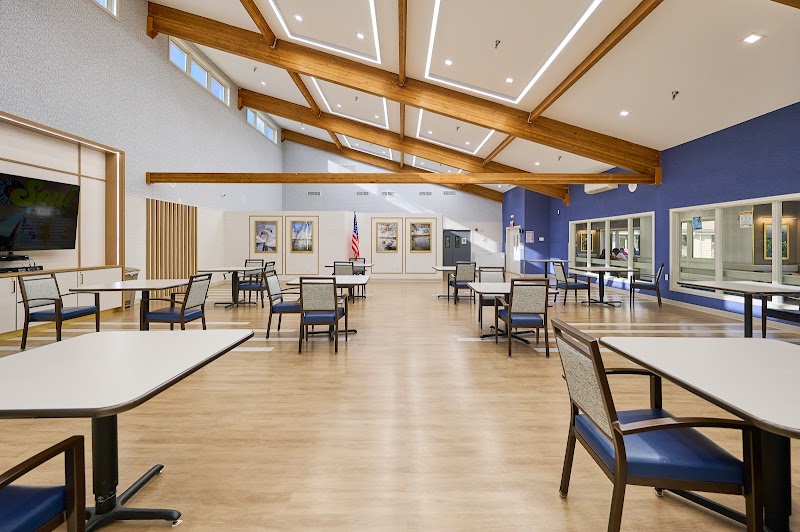
CONCORD HEALTHCARE & REHABILITATION CENTER is owned by a for-profit company. For-profit facilities operate as businesses with obligations to shareholders or private owners. The facility is operated by COLEV GESTETNER, a chain that manages multiple nursing homes. With 120 certified beds and approximately 92 residents (about 77% occupancy), it is a mid-sized facility located in LAKEWOOD, New Jersey.
How Does Concord Healthcare & Rehabilitation Center Compare to Other New Jersey Nursing Homes?

Compared to the 100 nursing homes in New Jersey, CONCORD HEALTHCARE & REHABILITATION CENTER's overall rating (4 stars) is above the state average of 3.3, staff turnover (23%) is significantly lower than the state average of 46%, and health inspection rating (4 stars) is above the national benchmark.

What Should Families Ask When Visiting Concord Healthcare & Rehabilitation Center?

Based on this facility's data, families visiting should ask: "Can I visit during a mealtime to observe dining assistance and food quality?" "How do you handle medical emergencies, and what is your hospital transfer rate?" "Can I speak with family members of current residents about their experience?"

Is Concord Healthcare & Rehabilitation Center Safe?

Based on CMS inspection data, CONCORD HEALTHCARE & REHABILITATION CENTER has a clean safety record: no substantiated abuse findings (meaning no confirmed cases of resident harm), no Immediate Jeopardy citations (the most serious violation level indicating risk of serious injury or death), and is not on the Special Focus Facility watch list (a federal program monitoring the lowest-performing 1% of nursing homes). The facility has a 4-star overall rating and ranks #1 of 100 nursing homes in New Jersey. While no facility is perfect, families should still ask about staff-to-resident ratios and recent inspection results during their visit.

Do Nurses at Concord Healthcare & Rehabilitation Center Stick Around?

Staff at CONCORD HEALTHCARE & REHABILITATION CENTER tend to stick around. With a turnover rate of 23%, the facility is 23 percentage points below the New Jersey average of 46%. Low turnover is a positive sign. It means caregivers have time to learn each resident's needs, medications, and personal preferences. Consistent staff also notice subtle changes in a resident's condition more quickly.

Was Concord Healthcare & Rehabilitation Center Ever Fined?

CONCORD HEALTHCARE & REHABILITATION CENTER has no federal fines on record. CMS issues fines when nursing homes fail to meet care standards or don't correct problems found during inspections. The absence of fines suggests the facility has either maintained compliance or corrected any issues before penalties were assessed. This is a positive indicator, though families should still review recent inspection reports for the full picture.

Is Concord Healthcare & Rehabilitation Center on Any Federal Watch List?

CONCORD HEALTHCARE & REHABILITATION CENTER is not on any federal watch list. The most significant is the Special Focus Facility (SFF) program, which identifies the bottom 1% of nursing homes nationally based on persistent, serious quality problems. Not being on this list means the facility has avoided the pattern of deficiencies that triggers enhanced federal oversight. This is a positive indicator, though families should still review the facility's inspection history directly.