FOUNTAINVIEW CARE CENTER
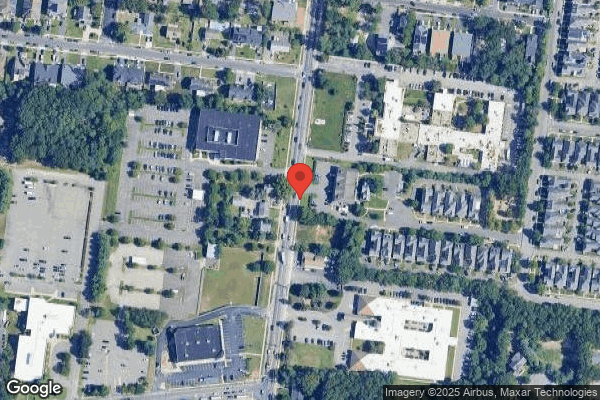
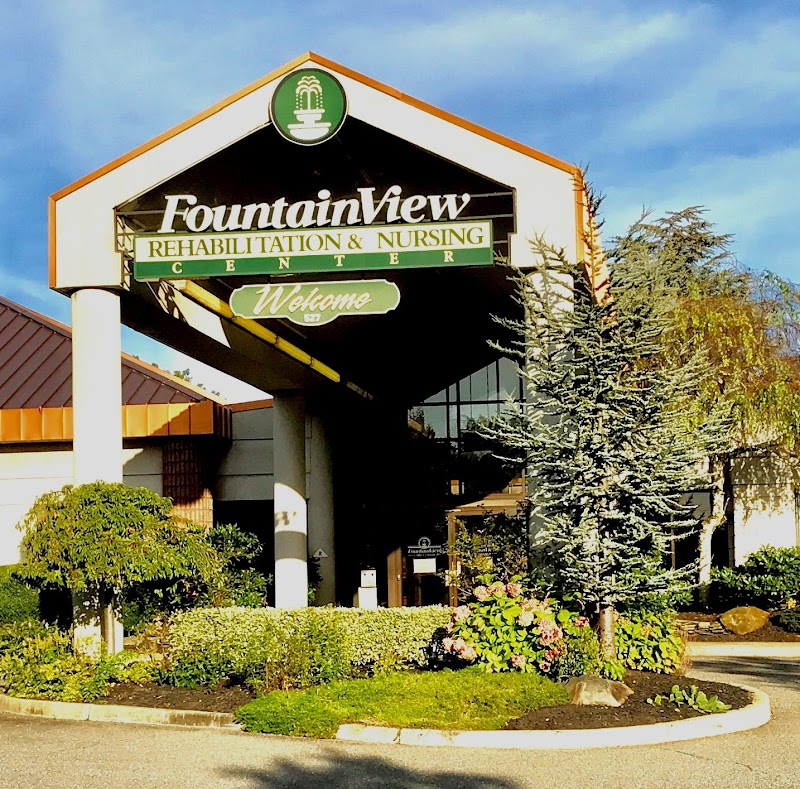
527 RIVER AVENUE, LAKEWOOD, NJ 08701 (732) 905-0700
For profit - Partnership 123 Beds Independent Data: November 2025 2 Immediate Jeopardy citations
Trust Grade
0/100
#320 of 344 in NJ
Last Inspection: March 2025

Within standard 12-15 month inspection cycle. Federal law requires annual inspections.

Overview

Fountainview Care Center has received a Trust Grade of F, indicating significant concerns about the facility's quality and care. It ranks #320 out of 344 in New Jersey, placing it in the bottom half of all state facilities, and #28 out of 31 in Ocean County, suggesting there are very few local options that are better. The facility's situation is worsening, with issues increasing from 1 in 2024 to 11 in 2025. Staffing is rated average at 3 out of 5 stars, with a turnover rate of 46%, which is typical for New Jersey but may indicate instability. However, the facility has faced concerning fines totaling $67,276, higher than 86% of others in the state, which raises alarms about compliance. Specific incidents include a serious case of verbal abuse where a staff member was recorded belittling a resident during a doctor's visit, and a failure to follow physician orders regarding the maintenance of a resident's CPAP machine, which compromises their health. While the quality measures rating is relatively good at 4 out of 5 stars, the overall poor health inspection score of 1 out of 5 indicates significant issues that families should carefully consider.

Trust Score
F
0/100
In New Jersey
#320/344
Bottom 7%
Safety Record
High Risk
Review needed
Inspections
Getting Worse
1 → 11 violations
Staff Stability
⚠ Watch
46% turnover. Above average. Higher turnover means staff may not know residents' routines.
Penalties
○ Average
$67,276 in fines. Higher than 56% of New Jersey facilities. Some compliance issues.
Skilled Nurses
⚠ Watch
Each resident gets only 21 minutes of Registered Nurse (RN) attention daily — below average for New Jersey. Fewer RN minutes means fewer trained eyes watching for problems.
Violations
⚠ Watch
18 deficiencies on record. Higher than average. Multiple issues found across inspections.
★☆☆☆☆
1.0
Overall Rating
★★★☆☆
3.0
Staff Levels
★★★★☆
4.0
Care Quality
★☆☆☆☆
1.0
Inspection Score
Stable
2024: 1 issues
2025: 11 issues

The Good

  • 4-Star Quality Measures · Strong clinical quality outcomes
  • Full Sprinkler Coverage · Fire safety systems throughout facility
  • No fines on record

Facility shows strength in quality measures, fire safety.

The Bad

1-Star Overall Rating

Below New Jersey average (3.2)

Significant quality concerns identified by CMS

Staff Turnover: 46%

Near New Jersey avg (46%)

Higher turnover may affect care consistency

Federal Fines: $67,276

Well above median ($33,413)

Moderate penalties - review what triggered them

The Ugly 18 deficiencies on record

2 life-threatening
Jun 2025 1 deficiency
CONCERN (E) 📢 Someone Reported This

A family member, employee, or ombudsman was alarmed enough to file a formal complaint

Potential for Harm - no one hurt, but risky conditions existed

Deficiency F0658 (Tag F0658)

Could have caused harm · This affected multiple residents

Complaint #: NJ186666 Based on interview and record review, it was determined that the facility failed to ensure physician's orders were obtained for a.) weekly cleaning and tubing changes for a resid...

Read full inspector narrative →
Complaint #: NJ186666 Based on interview and record review, it was determined that the facility failed to ensure physician's orders were obtained for a.) weekly cleaning and tubing changes for a resident's continuous positive airway pressure (CPAP) machine and b.) filling the chamber of the CPAP machine with distilled water daily from March 2025 through the resident's discharge from the facility in accordance with professional standards of practice. This deficient practice was identified for 1 of 4 residents reviewed (Resident #1). Reference: New Jersey Statutes Annotated, Title 45. Chapter 11. Nursing Board. The Nurse Practice Act for the State of New Jersey states: The practice of nursing as a registered professional nurse is defined as diagnosing and treating human responses to actual and potential physical and emotional health problems, through such services as case finding, health teaching, health counseling, and provision of care supportive to or restorative of life and wellbeing, and executing medical regimens as prescribed by a licensed or otherwise legally authorized physician or dentist. Reference: New Jersey Statutes Annotated, Title 45, Chapter 11. Nursing Board. The Nurse Practice Act for the State of New Jersey states: The practice of nursing as a licensed practical nurse is defined as performing tasks and responsibilities within the framework of case finding; reinforcing the patient and family teaching program through health teaching, health counseling and provision of supportive and restorative care, under the direction of a registered nurse or licensed or otherwise legally authorized physician or dentist. The evidence was as follows: The surveyor reviewed the closed medical record for Resident #1. According to the admission Record face sheet (an admission summary), Resident #1 was admitted to the facility with diagnoses which included but were not limited to; multiple fractures to the right-side rib, obstructive sleep apnea (a breathing disorder where the walls of the throat relax and narrow during sleep), depression, prosthetic heart valve, and history of falling. According to the Minimum Data Set (MDS), an assessment tool dated 02/25/2025, Resident #1 had a Brief Interview for Mental Status (BIMS) score of 11 out of 15, which indicated that the resident's cognition was moderately impaired. The MDS also indicated that Resident #1 required assistance with care for all activities of daily living (ADLs). A review of Resident #1's Order Summary Report (OSR) dated 02/01/2025 through 06/30/2025, included a physician's order dated 03/26/2025, for a CPAP machine (a machine used for sleep apnea disorders to send a flow of pressurized air into your nose and mouth as you sleep) every night applied at bedtime, set the pressure at 13 centimeters (cm) of water, and to remove in the morning. On 06/19/2025 at 1:27 PM, the surveyor interviewed the Infection Prevetionist/License Practical Nurse (IP/LPN), regarding the facility's policy for CPAP machine maintenance. The IP/LPN stated that all the tubing for the CPAP machine were changed by the 11:00 PM to 7:00 AM (11-7) shift nurses on Sunday nights, and the CPAP machines were washed and refilled with distilled water at that time. On 06/19/2025 at 1:50 PM, the surveyor interviewed the Unit Manager/Licensed Practical Nurse (UM/LPN), who stated the 11-7 shift nurses were assigned to change the CPAP tubing and clean the CPAP machines. The surveyor asked the UM/LPN if physician's orders were required to change the CPAP tubing, clean the CPAP machine, and change the distilled water, and the UM/LPN confirmed yes. At that time, the surveyor and the UM/LPN reviewed Resident #1's OSR, and the UM/LPN confirmed there were no orders. A review of the March, April, and May 2025 Medication Administration Records (MAR) revealed that the facility was signing for the administration of the CPAP machine daily, but not for the changing of the tubing, cleaning of the machine, or distilled water changes. On 06/19/2025 at 2:51 PM, the surveyor interviewed the Director of Nursing (DON), and asked if physician's orders were required to change the CPAP tubing, clean the CPAP machine, and change the distilled water, and the DON confirmed yes. At that time, the DON and the surveyor reviewed the physician's orders together, and the DON acknowledged there was no order for the tube changing, cleaning of the CPAP machine, and filling the water chamber of the CPAP machine daily with distilled water prior to use, and washing the resident's face to remove any oils prior to the use of the CPAP machine. The DON stated, if no order, no documentation means it not been done. A review of the facility's undated CPAP/BIPAP Support policy included Purpose: 1. To provide the spontaneously breathing resident with continuous positive airway pressure with or without supplement oxygen. 2. To improve arterial oxygenation (PaO2) in resident with respiratory insufficiency, obstructive sleep apnea or restrictive/obstructive lung disease. 3. To promote resident comfort and safety . Preparation: 1. Only a Licensed Professional nurse or respiratory therapist should administer oxygen through a CPAP mask. 2. Review the resident's medical record to determine his/her baseline oxygen saturation. Respiratory circulation and gastrointestinal status. 3. Review the physician's order to determine the oxygen concentration and flow, and the [Positive End-Expiratory Pressure] pressure (CPAP, IPAP and EPAP) for the machine. 4. Review and follow manufactures instructions for CPAP machine setup and oxygen delivery . NJAC 8:39-27.1(a)
Mar 2025 10 deficiencies 2 IJ
CRITICAL (J) 📢 Someone Reported This

A family member, employee, or ombudsman was alarmed enough to file a formal complaint

Immediate Jeopardy (IJ) - the most serious Medicare violation

Free from Abuse/Neglect (Tag F0600)

Someone could have died · This affected 1 resident

Complaint #: NJ162242 Based on observation, interview, record review, and review of the facility's policy, the facility failed to implement their abuse policies and procedures by ensuring a resident (...

Read full inspector narrative →
Complaint #: NJ162242 Based on observation, interview, record review, and review of the facility's policy, the facility failed to implement their abuse policies and procedures by ensuring a resident (Resident #239) was free from verbal abuse. This deficient practice was identified for 1 of 3 residents reviewed for abuse (Resident #239). Resident #239, who had diagnoses of bipolar, schizoaffective disorder, and anxiety, was observed by staff at an Ear, Nose, and Throat (ENT) doctor's office appointment being verbally abused and exploited by their facility escort, Housekeeping Aide (HA #1), who recorded the resident with their cell phone while they verbally abused the resident. The ENT staff who witnessed the incident reported that HA #1 was belittling and yelling at the resident. Observation of the ENT's surveillance video showed the entrance to the ENT's office with HA #1 yelling and cursing at Resident #239 who was observed visibly upset and verbalized that they thought HA #1 was kidnapping them. HA #1 continued to record and yell at the resident; never once reassuring the resident of their safety. The ENT's office had to request that HA #1 leave their office and a new escort be brought from the facility for Resident #239. The facility's failure to implement their abuse policy to ensure all residents were free from verbal abuse and exploitation posed the likelihood of serious harm to all residents. This resulted in an Immediate Jeopardy (IJ) situation. The IJ was Past Non-Compliance (PNC). The IJ was identified from 3/7/23 at 1:38 PM, when HA #1 began verbally abusing Resident #239 and exploiting them by videotaping it. The facility's Administration were notified of the IJ on 3/6/25 at 4:50 PM. The facility submitted an acceptable Removal Plan (RP) on 3/6/25 at 10:41 PM. The facility was back in compliance when the facility addressed the situation by: HA #1 was terminated; Resident #239 received a psychosocial evaluation; and all staff were in-serviced on the facility's abuse prevention and reporting policies by the Assistant Director of Nursing (ADON). The survey team verified the completion of the RP was 3/7/23, during an on-site survey on 3/6/25 at 11:13 PM, and determined the IJ was PNC. Findings include: A review of the facility's Abuse Prevention policy initiated January 2018, included the facility will not tolerate any form of resident abuse, neglect, or exploitation by staff members, volunteers, visitor, or family members or by another resident . The surveyor reviewed the closed medical record for Resident #239. A review of the admission Record face sheet (admission summary) revealed that the resident was admitted to the facility with diagnoses which included but not limited to; bipolar disorder, schizoaffective disorder, and anxiety disorder. A review of the comprehensive Minimum Data Set (MDS), an assessment tool dated 1/27/23, reflected the resident had a Brief Interview for Mental Status (BIMS) score of 5 out of 15, which indicated a severely impaired cognition. A review of the individualized comprehensive care plan (ICCP) included a focus area initiated 1/22/23, that the resident had a cognitive deficit. Interventions included: to be able to verbalize safety rules for specific tasks; engage in appropriate social conversation with facility staff; and consistent caregivers. A review of a Social Progress Note dated 3/7/23, indicated that the Social Worker (SW) documented that they followed-up with Resident #239 upon their return from the doctor's office. The resident appeared calm and in no emotional distress. The resident reported they could not recall if there was an incident while they were at the doctors and does not know what may have happened . A review of the Individual Psychotherapy Progress Note dated 3/8/23, included that the resident was initially tense, worried, and irritated because [the resident] was going to attend a meeting with staff. [The resident] was able to speak calmly once [they] were settled and assured [they] would be alright . A review of the facility's undated Investigation included an overview that on 3/7/23, at approximately 1:40 PM, the Director of Nursing (DON) received a phone call from the ENT's office that Resident #239 was observed with their escort, HA #1, who was observed having inappropriate aggressive behaviors towards the resident which included yelling, cursing, and videotaping Resident #239. That caused Resident #239 to become more agitated, that they fear for the resident safety with staff member, that [HA #1's] were so disruptive to the office that they asked her to step out of the office. The DON advised the office to call the police, to have HA #1 removed, and the facility would immediately send a new staff member to assist the resident. The investigation further indicated that HA #1 returned to the facility, they were interviewed, and the facility reviewed HA #1's cell phone video and then had them delete the video. The facility concluded that based on their investigation, the alleged allegation of abuse was substantiated. HA #1 was witnessed yelling, cursing, and videotaping the resident; actual videos of the resident were taken without their consent. HA #1 was asked and deleted all videos, and HA #1 was terminated. On 3/4/25 at 3:10 PM, the surveyor observed the video recording taken and provided by the ENT's office on 3/7/23 at 1:38 PM. The video showed the outside entrance and reception area of the ENT's office with HA #1 yelling loudly and cursing towards Resident #239 while videotaping the resident with a cell phone. Resident #239 appeared upset and was confused and the resident stated that they believed they had been kidnapped by HA #1 who never reassured the resident of their safety, but only yelled at the resident. Further review revealed that at no time did the transport driver for the facility's contracted transportation company intervene on behalf of the resident, but instead assisted HA #1 with the videotaping of the resident on the same cell phone. During a telephone interview on 3/4/25 at 2:59 PM, ENT staff (ENT #1) stated that she was notified by her staff on 3/7/23, that HA #1 was inappropriate with Resident #239 and staff asked her to come to the reception area. ENT #1 also stated that she observed HA #1 yelling and belittling Resident #239. ENT #1 stated her staff asked HA #1 to step outside and they contacted the facility to make them aware and they requested that another staff member come to supervise Resident #239 for the remainder of the appointment. During a telephone interview on 3/4/25 at 3:05 PM, ENT #2 revealed that the aide [HA #1] was very nasty to Resident #239. ENT #2 stated HA #1 was yelling at the resident a lot and videotaping the resident who seemed agitated and confused. ENT #2 reported that Resident #239 thought they were being kidnapped, but the aide [HA #1] did not assure the resident that they were safe and just yelled at them. During an interview on 3/6/25 at 8:59 AM, the DON stated she was contacted by ENT #1 at the ENT's office on 3/7/23, who reported that she had witnessed HA #1 being abusive towards Resident #239. The DON stated HA #1 was terminated, and that the facility substantiated that abuse occurred. The DON stated when she reviewed the abuse video, she was visibly shocked and upset. The DON stated the abuse Resident #239 sustained was terrible. The acceptable Removal Plan (RR) on 3/6/25 at 10:41 PM, indicated the action the facility will take to prevent serious harm from occurring or reoccurring. The facility implemented a corrective action plan to remediate the deficient practice including; HA #1 was terminated, Resident #239 received a psychosocial evaluation, and all staff were in-serviced on the facility's abuse prevention and reporting policies by the ADON. The facility self-corrected the deficient practice and it was determined that the IJ was Past Non-Compliance (PNC); that the facility corrected their non-compliance on 3/7/23. The survey team verified the implementation of the Removal Plan during the continuation of the on-site survey on 3/6/25 at 11:13 PM. NJAC 8:39-4.1(5); 33.2(c)12
CRITICAL (J) 📢 Someone Reported This

A family member, employee, or ombudsman was alarmed enough to file a formal complaint

Immediate Jeopardy (IJ) - the most serious Medicare violation

Investigate Abuse (Tag F0610)

Someone could have died · This affected 1 resident

Complaint #: NJ162242 Based on observation, interview, record review, and review of pertinent facility documents, it was determined that the facility failed to thoroughly investigate an allegation of ...

Read full inspector narrative →
Complaint #: NJ162242 Based on observation, interview, record review, and review of pertinent facility documents, it was determined that the facility failed to thoroughly investigate an allegation of staff to resident verbal abuse and exploitation by a Housekeeping Aide (HA #1) who was observed being verbally abusive and videotaping the incident. This deficient practice was identified for 1 of 3 residents reviewed for abuse (Resident #239). Resident #239, who had diagnoses of bipolar, schizoaffective disorder, and anxiety, was observed by staff at an Ear, Nose, and Throat (ENT) doctor's office appointment being verbally abused and exploited by their facility escort, HA #1, who recorded the resident with their cell phone while they verbally abused the resident. The ENT staff who witnessed the incident reported that HA #1 was belittling and yelling at the resident. Observation of the ENT's surveillance video showed the entrance to the ENT's office with HA #1 yelling and cursing at Resident #239 who was observed visibly upset and verbalized that they thought HA #1 was kidnapping them. HA #1 continued to record and yell at the resident; never once reassuring the resident of their safety. The ENT's office had to request that HA #1 leave their office and a new escort be brought from the facility for Resident #239. During the facility's investigation, the facility failed to thoroughly investigate by obtaining statements from all witnesses including other residents who were escorted by HA #1 to their appointments. The facility's failure to implement their abuse policy by immediately conducting a thorough investigation to ensure all residents were free from abuse posed a likelihood of serious harm to all residents. This resulted in an Immediate Jeopardy (IJ) situation. The IJ began on 3/7/23 at 1:38 PM, when HA #1 began verbally abusing Resident #239 and exploiting them by videotaping it. The facility's Administration were notified of the IJ on 3/6/25 at 4:50 PM. The facility submitted an acceptable Removal Plan (RP) on 3/6/25 at 10:41 PM. The survey team verified the implementation of the RP on-site 3/6/25 at 11:13 PM. Findings include: A review of the facility's Abuse Prevention policy initiated January 2018, included all reports of alleged or suspected abuse, neglect, and injuries of unknown origin shall be promptly and thoroughly investigated by the facility's Administrator. Immediate Investigation: the Nurse Supervisor will immediately initiate and investigation and will: .interview those staff members or other persons present to determine a cause/effect relationship for the injury/incident .the person conducting the interview will: .interview all witnesses and staff in the immediate area; interview the resident when appropriate . The surveyor reviewed the closed medical record for Resident #239. A review of the admission Record face sheet (admission summary) revealed that the resident was admitted to the facility with diagnoses which included but not limited to; bipolar disorder, schizoaffective disorder, and anxiety disorder. A review of the comprehensive Minimum Data Set (MDS), an assessment tool dated 1/27/23, revealed the resident had a Brief Interview for Mental Status (BIMS) score of 5 out of 15, which indicated a severely impaired cognition. A review of a Social Progress Note dated 3/7/23, indicated that the Social Worker (SW) documented that they followed-up with Resident #239 upon their return from the doctor's office. The resident appeared calm and in no emotional distress. The resident reported they could not recall if there was an incident while they were at the doctors and does not know what may have happened . A review of the Individual Psychotherapy Progress Note dated 3/8/23, included that the resident was initially tense, worried, and irritated because [the resident] was going to attend a meeting with staff. [The resident] was able to speak calmly once [they] were settled and assured [they] would be alright . A review of the facility's undated Investigation signed by the Director of Nursing (DON), included an overview that on 3/7/23, at approximately 1:40 PM, the DON received a phone call from the ENT's office that Resident #239 was observed with their escort, HA #1, who was observed having inappropriate aggressive behaviors towards the resident which included yelling, cursing, and videotaping Resident #239. That caused Resident #239 to become more agitated, that they fear for the resident safety with staff member, that [HA #1's] was so disruptive to the office that they asked her to step out of the office. The DON advised the office to call the police, to have HA #1 removed, and the facility would immediately send a new staff member to assist the resident. The investigation further indicated that HA #1 returned to the facility, they were interviewed, and the facility reviewed HA #1's cell phone video and then had them delete the video. The resident returned to the facility and a skin assessment was conducted with no injuries found. The facility concluded that based on their investigation, the alleged allegation of abuse was substantiated. HA #1 was witnessed yelling, cursing, and videotaping the resident; actual videos of the resident were taken without their consent. HA #1 was asked and deleted all videos, and HA #1 was terminated. The statements obtained were from the Unit Manager, DON, and HA #1. There were no interviews with the driver of the contracted transportation company, the ENT staff, HA #1's supervisor, Resident #239, or other residents. There was no evidence during the course of the facility's investigation if any other residents were identified and interviewed who had been escorted to appointments by HA #1. On 3/4/25 at 3:10 PM, the surveyor observed the video recording taken provided by the ENT's office on 3/7/23 at 1:38 PM. The video showed the outside entrance and reception area of the ENT's office with HA #1 yelling loudly and cursing towards Resident #239 while videotaping the resident with a cell phone. Resident #239 appeared upset and was confused and the resident stated that they believed they had been kidnapped by HA #1 who never reassured the resident of their safety, but only yelled at the resident. Further review revealed that at no time did the transport driver for the facility's contracted transportation company intervene on behalf of the resident, but instead, he took HA #1's cell phone and continued to record the resident. During a telephone interview on 3/4/25 at 2:59 PM, ENT staff (ENT #1) stated that she reported the incident to the facility; however, there were no follow-up interviews conducted with her by the facility. During a telephone interview on 3/4/25 at 3:05 PM, ENT #2 stated that she was not interviewed by anyone from the facility about the incident. During an interview on 3/6/25 at 8:35 AM, the Social Services Director (SSD) stated during an abuse investigation, she interviewed the resident involved and other residents. The SSD stated during that investigation, she did not interview any residents. During an interview on 3/6/25 at 8:59 AM, the DON stated the ENT staff did not make her aware of the driver being involved in the incident, but she did not ask. The DON also stated that she did not interview all the ENT staff who witnessed the incident; she did not know that she could. The DON further stated that she did not interview the Scheduling Coordinator at that time or attempt to identify and interview other residents who had been escorted by HA #1 during appointments. The acceptable Removal Plan (RR) on 3/6/25 at 10:41 PM, indicated the action the facility will take to prevent serious harm from occurring or reoccurring. The facility implemented a corrective action plan to remediate the deficient practice including; a complete investigation was initiated; the Licensed Nursing Home Administrator (LNHA) and DON were educated by the Regional Administrator on the facility's abuse policy, customer service, professionalism, and complete and thorough investigations; the SSD was in-serviced on proper investigation of abuse including interviews of other residents; and all staff were in-serviced on abuse. The survey team verified the implementation of the Removal Plan on-site on 3/6/25 at 11:13 PM. NJAC 8:39-4.1(a)5
CONCERN (D) 📢 Someone Reported This

A family member, employee, or ombudsman was alarmed enough to file a formal complaint

Potential for Harm - no one hurt, but risky conditions existed

Resident Rights (Tag F0550)

Could have caused harm · This affected 1 resident

Complaint #: NJ162242 Based on observation, interview, and record review, it was determined that the facility failed to ensure a resident's rights were protected when a staff member video recorded the...

Read full inspector narrative →
Complaint #: NJ162242 Based on observation, interview, and record review, it was determined that the facility failed to ensure a resident's rights were protected when a staff member video recorded the resident without the resident or their representative's consent. This deficient practice was identified for 1 of 1 resident reviewed for resident rights (Resident #239). Findings include: A review of Resident #239's admission Record face sheet (an admission summary) indicated that the resident was admitted to the facility with diagnoses which included but not limited to; bipolar disorder, schizoaffective disorder, and anxiety disorder. A review of Resident #239's comprehensive Minimum Data Set (MDS), an assessment tool dated 01/27/23, revealed that the resident had a Brief Interview for Mental Status (BIMS) score of 5 out of 15; which indicated a severely impaired cognition. The surveyor observed on 03/04/25 at 3:10 PM, a video recording taken on 03/07/23 at 1:38 PM, of the outside entrance and reception area of the Ear, Nose, and Throat (ENT) doctor's office, revealed that Housekeeping Aide (HA #1) was video recording Resident #239 with a cell phone. Resident #239 appeared upset and was confused and the resident stated that they believed they had been kidnapped by HA #1. Further review revealed that the transport driver from the transportation company took HA #1's cell phone and assisted HA #1 with continuing to video recording the resident on the same cell phone. During a telephone interview on 03/04/25 at 2:59 PM, with the ENT staff (ENT #1), who stated that she was notified by her staff on 03/07/23, that HA #1 was inappropriate with Resident #239 and they asked her to come to the reception area. ENT #1 stated that she observed HA #1 yelling and belittling Resident #239 while video recording the resident. During a telephone interview on 03/04/25 at 3:05 PM, ENT #2 stated that HA #1 was video recording Resident #239 who seemed agitated and confused. ENT #2 stated the staff were videotaping the resident during the incident. During an interview on 03/06/25 at 8:59 AM, the Director of Nursing (DON) stated that she was contacted by ENT #1 who reported that HA #1 was videotaping Resident #239 who upset and then she passed the phone to the transport driver who continued to video tape Resident #239. The DON stated that staff were prohibited from recoding residents, and they had been trained regarding that expectation. NJAC 8:39-4.1(a)12
CONCERN (D)

Potential for Harm - no one hurt, but risky conditions existed

Deficiency F0583 (Tag F0583)

Could have caused harm · This affected 1 resident

Based on observation, interview, and policy review, it was determined that the facility failed to respect the right to confidentiality of medical records during medication pass. This deficient practic...

Read full inspector narrative →
Based on observation, interview, and policy review, it was determined that the facility failed to respect the right to confidentiality of medical records during medication pass. This deficient practice was identified for 2 of 8 residents observed during medication pass (Resident #38 and Resident #290). Findings include: Observation on 03/05/25 at 11:27 AM, Registered Nurse (RN #1) administered medications to resident Resident #290 in the resident's room. RN #1 left Resident #290's electronic medical records (EMR) open which contained confidential and private medical information visible to any resident or visitor in the hallway outside of the dining room. During an interview on 03/05/25 at 11:40 AM, RN #1 stated, I'm nervous, I don't normally leave the computer screen open. Observation on 03/05/25 at 1:02 PM, Licensed Practical Nurse (LPN #1) administered medications to Resident #38 in the resident's room. LPN #1 left Resident #38's EMR open which contained confidential and private medical information visible to any resident or visitor in the hallway outside of the dining room. During an interview on 03/05/25 at 1:05 PM, LPN #1 stated, someone could see the resident's information if the screen of the computer is left open. During an interview on 03/06/25 12:09 PM, the Director of Nursing (DON) stated, It's expected for the computer screen to be closed so that people cannot see resident information. It would be a HIPPA [Health Insurance Portability and Accountability Act] violation and a violation of resident rights to privacy and confidentiality. A review of the facility's undated Resident Rights policy includedFederal and state laws guarantee certain basic rights to all residents in this facility. These rights include the resident's right to: . t. privacy and confidentiality. NJAC 8:39-4.1(a); 35.2(i)
CONCERN (D) 📢 Someone Reported This

A family member, employee, or ombudsman was alarmed enough to file a formal complaint

Potential for Harm - no one hurt, but risky conditions existed

Deficiency F0604 (Tag F0604)

Could have caused harm · This affected 1 resident

Complaint #: NJ162242 Based on observation, interview, record review, and review of the facility's policy, it was determined that the facility failed to ensure residents were free from physical restra...

Read full inspector narrative →
Complaint #: NJ162242 Based on observation, interview, record review, and review of the facility's policy, it was determined that the facility failed to ensure residents were free from physical restraints. This deficient practice was identified for 1 of 1 resident reviewed for restraints (Resident #239). Findings include: A review of Resident #239's admission Record face sheet (an admission summary) reflected that the resident was admitted to the facility with diagnoses which included but not limited to; bipolar disorder, schizoaffective disorder, and anxiety disorder. A review of Resident #239's comprehensive Minimum Data Set (MDS), an assessment tool dated 01/27/23, reflected that the resident had a Brief Interview for Mental Status (BIMS) score of 5 out of 15; which indicated a severely impaired cognition. A review of Resident #239's individualized comprehensive care plan 02/13/23, did not include the resident had a restraint or used a wheelchair seatbelt. A review of Resident #239's Physician Orders dated 03/05/23, did not include an order for restraints. Observation on 03/04/25 at 3:10 PM, of video recording taken on 03/07/23 at 1:38 PM, of the outside entrance and reception area of an Ear, Nose, and Throat (ENT) doctor's office, revealed Resident #239 was seated in their wheelchair with a lap seatbelt applied. Several times in the video, Resident #239 was observed grabbing the front of the reception desk and attempting to stand up from their wheelchair, but the wheelchair's lap seatbelt prevented the resident from independently standing up from their wheelchair. During a telephone interview on 03/04/25 at 2:59 PM, ENT staff (ENT #1) stated that she observed Resident #239 in the reception area of their office in a wheelchair. ENT #1 stated Resident #239 was strapped in their wheelchair and they were unable to release the seatbelt and stand up. During an interview on 03/05/25 at 2:29 PM, the Staffing Coordinator (SC) stated she was the staff who went to the ENT office on 03/07/23, to remain with Resident #239 and she accompanied the resident back to the facility. The SC stated she believed Resident #239 had a seatbelt on. The SC also stated that when residents were transported, the transport driver put a seat belt on the residents. The SC stated if a resident had a strap or lap seatbelt on while they were in their wheelchair, and it restricted their freedom of movement and it would be a restraint. During an interview on 03/06/25 at 8:59 AM, the Director of Nursing (DON) stated that she reviewed the abuse video and observed Resident #239 in a wheelchair with a lap seatbelt in use. The DON stated that the use of the wheelchair's lap seatbelt was a restraint. The DON stated that the transport driver was the person who put the strap on the resident and was the one who should have released it; it was not her staff that did that. A review of the facility's undated Restraints Policy and Procedure policy included restraints can only be applied with a physician's written order specifying type, medical justification, duration, and condition for use . NJAC 8:39-4.1(a)5, 6 NJAC 8:39-27.1(a)
CONCERN (D) 📢 Someone Reported This

A family member, employee, or ombudsman was alarmed enough to file a formal complaint

Potential for Harm - no one hurt, but risky conditions existed

Report Alleged Abuse (Tag F0609)

Could have caused harm · This affected 1 resident

**NOTE- TERMS IN BRACKETS HAVE BEEN EDITED TO PROTECT CONFIDENTIALITY** Complaint #: NJ172235 Based on interviews, record review, and facility policy review, it was determined that the facility failed...

Read full inspector narrative →
**NOTE- TERMS IN BRACKETS HAVE BEEN EDITED TO PROTECT CONFIDENTIALITY** Complaint #: NJ172235 Based on interviews, record review, and facility policy review, it was determined that the facility failed to implement policies and procedures to report an allegation of staff-to-resident sexual abuse to the New Jersey Department of Health (NJDOH). This deficient practice was identified for 1 of 3 residents reviewed for abuse (Resident #289). Findings include: A review of Resident #289's admission Record face sheet (an admission summary) reflected that the resident was admitted to the facility with diagnoses which included but not limited to; anxiety disorder, dementia with agitation, social phobia, and cognitive communication deficit. The resident expired on [DATE]. A review of Resident #289's BIMS Evaluation dated [DATE], revealed that the resident had a Brief Interview of Mental Status (BIMS) score of 4 out of 15; which indicated a severely impaired cognition. A review of Resident #289's individualized comprehensive care plan (ICCP) revealed that the resident had impaired decision [making] and a diagnosis of cognitive communication deficit dated [DATE]. Further review of the ICCP revealed that the resident exhibited socially inappropriate behavior as evidenced by false accusations that included; yelled out was kicked, thrown to floor, pushed around with no specific details, nor timeframe then will forget saying those comments dated [DATE], with an intervention for a two-staff assistance with care, refer for psychiatric consult as needed, and social service evaluation and follow-up. The resident exhibited physically aggressive behavior toward staff/other dated [DATE]. The resident had a diagnosis of social anxiety disorder and social phobia dated [DATE]. The resident was at high risk for skin breakdown related to decreased mobility, anemia, history of wounds, actual wounds, incontinence or diabetes and bed bound status dated [DATE]. A review of the facility provided investigative documentation dated [DATE], revealed the facility was notified by the ombudsman on [DATE], that a complaint was received that Resident #289 was sexually assaulted by an unidentified staff member approximately two weeks before the resident's death on [DATE]. During a telephone interview on [DATE] at 3:22 PM, the Resident's Representative (RR #1) stated that they had not been notified of the allegation. During an interview on [DATE] at 4:05 PM, the Director of Nursing (DON) stated, No, it was not reported to the NJDOH or police. The DON stated that the ombudsman came in and investigated the allegation and closed the case. I didn't think I needed to report it, since the ombudsman came in. I just investigated the allegation and kept a soft file just in case and educated the staff on abuse. I'm responsible for reporting abuse allegations to the [NJDOH] and police. A review of the facility's Abuse Prevention policy revised [DATE], included The facility will not tolerate any form of resident abuse, neglect, or exploitation by staff members, volunteers, visitors, or family members, or by another resident .All occurrences of abuse, neglect, mistreatment, exploitation, injuries of unknown origin, theft or misappropriation of resident's property, and other grievances or complaints will be reported .The facility has procedures to report all alleged violations and substantiated incidents to the [State Agency] and to all other agencies, as required, and to take actions depending on the results of the investigation .The Administrator or designee will notify the following agencies of the allegations: the office of the ombudsman .New Jersey Department of Health and Senior Services must be called immediately .the secretary of the US Department of Health and Human Services must be notified immediately and in no event later than 2 hours after forming the suspicion of a crime resulting in serious bodily injury to a resident .If the suspected crime does not result in serious bodily injury, the report must be made no later than 24 hours after forming the suspicion .the local police department will be notified of any suspected crime resulting but not limited to theft, physical abuse, sexual abuse or extreme verbal abuse threatening bodily harm. NJAC 8:39-9.4(f)
CONCERN (D)

Potential for Harm - no one hurt, but risky conditions existed

Deficiency F0700 (Tag F0700)

Could have caused harm · This affected 1 resident

Based on observation, interview, and record review, it was determined that the facility failed to ensure residents received alternative measures prior to installation of bedrails. This deficient pract...

Read full inspector narrative →
Based on observation, interview, and record review, it was determined that the facility failed to ensure residents received alternative measures prior to installation of bedrails. This deficient practice was identified for 1 of 1 resident reviewed for bedrails (Resident 78). Findings include: A review of Resident #78's admission Record face sheet (an admission summary) reflected the resident was re-admitted to the facility with diagnoses which included but not limited to ; hemiplegia and hemiparesis. A review of Resident #78's quarterly Minimum Data Set (MDS), and assessment tool dated 12/01/24, reflected that the resident had a Brief Interview for Mental Status (BIMS) score of 13 out of 15, which indicated a fully intact cognition. A review of Resident #78's individualized comprehensive care plan dated 05/29/24, included the resident required left bedrail for mobility and safety. Interventions in place were left sided bedrails as ordered. A review of Resident #78's Bed Rail Evaluation dated 05/29/24, revealed no alternatives were attempted prior to the placement of the bedrails. During an observation on 03/04/25 at 11:18 AM, Resident #78 was lying in the bed with the head of the bed upright and a bedrail on the left side in place. During an interview on 03/05/25 at 5:01 PM, the Licensed Practical Nurse (LPN #3) stated that the nursing staff completed the bedrail assessment for Resident #78, but they did not explore alternative options prior implementing the use of the bedrail. During an interview on 03/06/25 at 6:09 PM, the Director of Nursing (DON) stated the facility did not explore alternative options prior to the use of bedrails, and the facility allowed a resident to use them when they requested to do so. NJAC 8:39-27.1(a)
CONCERN (D)

Potential for Harm - no one hurt, but risky conditions existed

Medication Errors (Tag F0758)

Could have caused harm · This affected 1 resident

Based on record review, interview, and policy review, it was determined that the facility failed to ensure a physician ordered as needed (PRN) antianxiety medication had a stop date. This deficient pr...

Read full inspector narrative →
Based on record review, interview, and policy review, it was determined that the facility failed to ensure a physician ordered as needed (PRN) antianxiety medication had a stop date. This deficient practice was identified for 1 of 5 residents reviewed for unnecessary medications (Resident #141). Findings include: A review of Resident #141's admission Record face sheet (an admission summary) reflected that the resident was admitted to the facility with a diagnosis of Alzheimer's with behaviors. A review of Resident #141's physician's Order Summary included an order dated 02/21/25, for alprazolam (an antianxiety medication) .25 milligrams (mg) daily PRN for anxiety. There was no documented evidence of a stop date. A review of Resident #141's corresponding February 2025 Medication Administration Record (MAR), revealed that the resident received alprazolam .25 mg PRN on 02/21/25, 02/26/25, and 02/28/25. A review of the March 2025 MAR, revealed that the resident received alprazolam .25 mg PRN on 03/01/25, 03/02/25, and 03/03/25. Interview with the Director of Nursing (DON) on 03/06/25 at 11:55 AM, confirmed that the PRN alprazolam should have had a stop date, and she confirmed the order did not. A review of the facility's undated Antipsychotic Medication Use included . Policy Interpretation and Implementation .7. All PRN orders for psychotropic medications must be ordered for 14 days. The physician will evaluate needs beyond 14 days for new orders. NJAC 8:39-29.3(a)
CONCERN (D) 📢 Someone Reported This

A family member, employee, or ombudsman was alarmed enough to file a formal complaint

Potential for Harm - no one hurt, but risky conditions existed

Deficiency F0761 (Tag F0761)

Could have caused harm · This affected 1 resident

Deficiency Text Not Available

Read full inspector narrative →
Deficiency Text Not Available
CONCERN (D)

Potential for Harm - no one hurt, but risky conditions existed

Medical Records (Tag F0842)

Could have caused harm · This affected 1 resident

**NOTE- TERMS IN BRACKETS HAVE BEEN EDITED TO PROTECT CONFIDENTIALITY** Based on record review and interview, it was determined that the facility failed to ensure a resident's medical record was maint...

Read full inspector narrative →
**NOTE- TERMS IN BRACKETS HAVE BEEN EDITED TO PROTECT CONFIDENTIALITY** Based on record review and interview, it was determined that the facility failed to ensure a resident's medical record was maintained complete, accurately documented, and readily accessible. This deficient practice was identified for 1 of 30 sampled residents (Resident #87). Findings include: A review of Resident #87's admission Record face sheet (an admission summary) reflected that the resident was admitted to the facility with diagnoses that included; atherosclerosis of native arteries of bilateral legs, restless leg syndrome (RLS), and nerve pain. A review of Resident's #87's Progress Notes included a Nurses Note dated [DATE], included .At 3:05 PM, [Resident #87] found in bed with eyes closed .no respirations/no pulse. 3:10 PM code blue called, cardiopulmonary resuscitation (CPR) initiated at 3:13 PM .3:30 PM call placed to power of attorney (POA) .During conversation, POA states that [Resident #87] should have been a do not resuscitate (DNR). She stated she had signed practitioner orders for life sustaining treatment (POLST) stating same. Explanations given that [name of the facility] did not have a copy of POLST and that with no POLST, [Resident #87] had to be considered a full code so CPR initiated. A review of the Progress Notes included no documented evidence from the Social Worker regarding talking to the resident POA about the POLST. During an interview on [DATE] at 9:15 AM, the Social Service Director (SSD) confirmed she kept a soft file on Resident #87 and had all the documentation in that file. The SSD confirmed that she educated the POA that either she would need to sign a new POLST, or the facility would need to get a copy of the existing POLST, and that Resident #87 would remain a full code until a POLST was obtained. The SSD stated that the only thing that she placed in the medical record was quarterly assessments and care conferences, otherwise she kept everything else in her office in a soft file. The SSD was not aware that the medical records were to remain complete, accurately documented, and readily accessible for each resident. A review of the facility's undated policy titled, Medical Records and Accuracy Policy, indicated, To ensure that all medical records are accurately maintained, easily accessible, and compliant with applicable laws and regulations, including those set by the State of [name of state], the Centers for Medicare and Medicaid Services (CMS), and the Health Insurance Portability and Accountability Act (HIPAA) .Policy: 1. Accurate Documentation: All medical records must reflect accurate, current, and complete information regarding the resident's medical condition, care plan, treatments, medications, and progress .2. Completeness of Records: Each medical record must contain, at a minimum, the following .treatment plans, care plan, and interdisciplinary progress notes .3. Timeliness of Documentation: Documentation should be completed in a timely manner, ideally immediately following a resident's visit or procedure. All entries should reflect the most up-to-date information.Review of the facility's undated policy titled, Medical Records and Accuracy Policy, indicated, To ensure that all medical records are accurately maintained, easily accessible, and compliant with applicable laws and regulations, including those set by the State of [name of state], the Centers for Medicare and Medicaid Services (CMS), and the Health Insurance Portability and Accountability Act (HIPAA) .Policy: 1. Accurate Documentation: All medical records must reflect accurate, current, and complete information regarding the resident's medical condition, care plan, treatments, medications, and progress .2. Completeness of Records: Each medical record must contain, at a minimum, the following .treatment plans, care plan, and interdisciplinary progress notes .3. Timeliness of Documentation: Documentation should be completed in a timely manner, ideally immediately following a resident's visit or procedure. All entries should reflect the most up-to-date information. NJAC 8:39-4.1(a)18 NJAC 8:39-35.2
May 2024 1 deficiency
CONCERN (D) 📢 Someone Reported This

A family member, employee, or ombudsman was alarmed enough to file a formal complaint

Potential for Harm - no one hurt, but risky conditions existed

Medical Records (Tag F0842)

Could have caused harm · This affected 1 resident

Complaint# NJ00174037 Based on interviews, record review, and review of other pertinent facility documentation on 05/30/24, it was determined that the facility failed to maintain a complete Medical Re...

Read full inspector narrative →
Complaint# NJ00174037 Based on interviews, record review, and review of other pertinent facility documentation on 05/30/24, it was determined that the facility failed to maintain a complete Medical Record (MR) which contained the New Jersey Universal Transfer Form (NJUTF) for a resident who was sent out for an emergent hospitalization. This deficient practice was identified for Resident #4, 1 of 5 sampled residents, and was evidenced by the following: According to the admission Record, Resident #4 was admitted to the facility with diagnoses which included but were not limited to: Benign Neoplasm of Cerebral Meninges, Hypertension, Atrial Fibrillation, Chronic Obstructive Pulmonary Disease (COPD), and Diabetes Mellitus type 2. A review of the Resident #4's Progress Notes (PN) revealed that on 05/13/2024 at 09:45, Licensed Practical Nurse (LPN) #1 documented Resident was noted yelling I can't breathe, I can't breathe. Bp-126/78, R-18, T-97.5, SpO2- 75% on 2L of O2, wheezing noted to bilateral lungs upon auscultation. Call place to [physician] n/o [new order] received to send resident to ER [emergency room] for eval [evaluation] and treat [treatment] .Call place to 911 EMTs [emergency medical technicians] arrived stat [immediately] resident transported to MMSC [hospital] . A further review of the Resident #4's PN, dated 05/13/2024 at 14:20 and documented by LPN #1, revealed as follows: Call place to MMSC-ER [hospital-ER] for status on resident .spoke with RN [nurse] made aware resident being admitted dx: Pneumonia. Call place to [physician] and wife [resident's wife] to make aware . A review of Resident #4's MR revealed no NJUTF for the 05/13/2024 transfer to the hospital. During an interview with the surveyor on 05/30/24 at 2:57 p.m. and at 4:57 p.m., the Director of Nursing (DON) stated she was unable to locate the 05/13/2024 NJUTF for Resident #4. The DON further stated she/he did not see the Resident when he was transferred out. At which point, the DON affirmed that Resident #4's NJUTF was not made. A review of the facility policy titled, Transfer or Discharge, Emergency, revealed under the Policy Interpretation and Implementation #2 Should it become necessary to make an emergency transfer or discharge to a hospital or other related institution, our facility will implement the following procedures: .c. Prepare the resident for transfer; d. Prepare a transfer form to send with the resident . NJAC 8:39-35.2 (d) 12
Feb 2023 6 deficiencies
CONCERN (D)

Potential for Harm - no one hurt, but risky conditions existed

Deficiency F0558 (Tag F0558)

Could have caused harm · This affected 1 resident

Based on observation, interview, and review of facility documents, it was determined that the facility failed to maintain the call device within reach for 1 of 29 sampled residents, (Resident #67). Th...

Read full inspector narrative →
Based on observation, interview, and review of facility documents, it was determined that the facility failed to maintain the call device within reach for 1 of 29 sampled residents, (Resident #67). This deficient practice was evidenced by the following: On 2/17/2023 at 8:46 AM the surveyor observed Resident #67 lying in bed. The surveyor observed that Resident #67's call device was on the floor at the foot of the bed. The call device was between the wall and bed. The call device was not accessible to the Resident #67. According to the Resident Face Sheet, Resident #67 was admitted to the facility with the following but not limited to diagnoses: Alzheimer's disease, insomnia, dementia, unspecified severity with behavioral disturbance, and dementia with agitation. A review of the quarterly Resident Assessment Instrument Minimum Data Set, an assessment tool, dated 1/13/2023 revealed that Resident #67 had a Brief Interview for Mental Status score of 4/15, indicating severe cognitive impairment. According to Section G, Resident #67 required supervision/limited assist with activities of daily living. Section H revealed that Resident #67 was frequently incontinent of both bowel and bladder and Section J revealed Resident #67 had a fall with injury. According to Section P, Resident #67 had no restraints and no alarms. A review of Resident #67's Care Plan Activity Report revealed a care plan with a Focus for falls. It revealed Resident #67 was a risk for falls due to poor safety awareness, immobility, incontinence, history of falls, impulsive behaviors, refusal of care, constantly wants to be independent. The following was observed under Interventions: Keep call bell within reach while in room, Effective 1/06/2020. On 2/23/2023 at 8:31 AM, the surveyor observed Resident #67 lying in bed with the bed pushed against the wall. The call light device cord was observed to extend from the outlet on the wall and extend down onto the floor between the bed and wall. The call device was not within reach of Resident #67. On 2/23/2023 at 10:07 AM, the surveyor observed Resident #67 seated in their wheelchair, in their room, eating breakfast. The bed was made for the day. The call device was still observed between the wall and bed and lying on the floor at the foot end of the bed, as seen previously that morning. The surveyor interviewed Licensed Practical Nurse (LPN #2) and Certified Nursing Assistant (CNA #1) assigned to Resident #67 that shift. CNA #1, when interviewed, agreed that she is responsible to make sure that resident call devices are within reach of the resident and that she is to monitor for placement of the call light during the shift. LPN #2 agreed that call lights are to be within reach of the resident. The surveyor questioned LPN #2 if he/she had already provided Resident #67 their medication this AM. LPN #2 said that he/she had already provided medication to Resident #67 this morning but had not noticed the call device being on the floor. On 2/23/2023 at 1:09 PM, the surveyor met with the facility administrative staff. The surveyor asked the facility Director of Nursing (DON) what their expectation was for placement of facility call devices. The DON responded, My expectation is that all resident call lights are within reach of the resident. When asked who in the facility is responsible for ensuring that call lights are resident accessible the DON stated, All staff are responsible to ensure that resident call devices are within reach. Any staff could do that, housekeeping, nursing, activities. The surveyor reviewed the facility provided policy titled Call Lights, undated. The policy had the following Purpose: To use a light and/or sound system to alert staff to patient needs. The following was revealed under Procedure: 5. Always position call light conveniently for use and within the reach of the resident. 7. Check lights when providing care to ensure that cord length is appropriate and that the light is in working order. Report defective call lights promptly to maintenance for immediate repair and arranges for alternate call system or change patient's room and frequent checks on resident. N.J.A.C. 8:39-31.8(c)(9)
CONCERN (D)

Potential for Harm - no one hurt, but risky conditions existed

Safe Environment (Tag F0584)

Could have caused harm · This affected 1 resident

**NOTE- TERMS IN BRACKETS HAVE BEEN EDITED TO PROTECT CONFIDENTIALITY** On 2/17/2023 at 09:32 AM, Surveyor #3 observed the following on the [NAME] unit: *Residue buildup on the radiator near room [RO...

Read full inspector narrative →
**NOTE- TERMS IN BRACKETS HAVE BEEN EDITED TO PROTECT CONFIDENTIALITY** On 2/17/2023 at 09:32 AM, Surveyor #3 observed the following on the [NAME] unit: *Residue buildup on the radiator near room [ROOM NUMBER] *Hole in the wall in the dayroom/lounge near the television *Brownish residue buildup on the bedrail and bedframe in room [ROOM NUMBER] *Brownish residue buildup noted on the bedframe in room [ROOM NUMBER]A * Peeling wallpaper in room [ROOM NUMBER], 201 & 209 *Rubber moulding hanging off the wall under the radiator in room [ROOM NUMBER] *Multiple rips in a pillow located in room [ROOM NUMBER]A On 2/22/23 at 10:15 AM, five days after the initial observation, the bedframe in room [ROOM NUMBER] and 201 still had the residue buildup. During an interview with Surveyor #3 on 02/22/2023 at 10:47 AM, the Housekeeper (HK) stated that all rooms are cleaned daily and if the housekeepers are gone for the day porters are always available. During an interview with Surveyor #3 on 2/22/2023 at 11:05 AM, the Assistant Director of Housekeeping (ADOH) replied, daily when asked how often the rooms are cleaned. The ADOH further stated the housekeeper is expected to clean the spot, if they are unable to then they will call a porter, if the porter can't get it, then they call me. when asked what is expected of the housekeeper if there is a residue buildup on the bedframe or handrail. In addition, the ADOH stated the hallway is swept and mopped 3 times per day when asked how often the hallway is swept and mopped. During an interview with Surveyor #3 on 2/22/2023 at 11:05 AM, the Director of Nutritional Services (DONS) replied yes, as needed when asked are the beds wiped down. On 02/22/2023 at 11:26 AM Surveyor #3 requested the ADOH accompany Surveyor #3 to room [ROOM NUMBER], 201 and the hallway of the [NAME] Unit. The ADOH confirmed the bedframes in room [ROOM NUMBER] & 201 were not clean and stated yes, that should have been cleaned, sometimes I get in here myself. Attention was brought to the radiator in the hallway near room [ROOM NUMBER], the ADOH stated he didn't get a chance to get to it yet, it should be cleaned immediately, as soon as you see it. A review of the Housekeeping Operations Manual revised on 3/2020 revealed, Cleaning Specifics RESIDENT ROOMS Beds (headboard, footboard, hand-rails) Daily .Radiators (dust & check inside for debris Daily .CORRIDORS and LOBBIES Resilient Tile Floor (dust mop, damp mop, spot mop) Daily Resilient Tile Floor (buff & burnish) Daily Daily Procedures for Cleaning a Resident Room .5. Clean resident bed- wipe down headboard, footboard, and handrails A review of the facility policy titled The Maintenance and cleaning of PTAC (Packaged Terminal Air Conditioner)/Radiator units revealed, PROCEDURE: Maintenance Department will inspect and clean PTACS and Radiators quarterly. This includes cleaning of the filters and the coils. This can be done either through washing the filters and/or by using forced air. Maintenance Department will keep a log to the facility Administrator. N.J.A.C. 8:39-31.4(a)(c)(f) On 2/16/2023 at 11:08 AM surveyor #2 observed the following in room [ROOM NUMBER]. The surveyor observed the A-bed over the bed table. The table had an unidentified white substance surrounding the outer edge of the table. The top of the over-there -bed table appeared to be delaminating and also had an unidentified white substance on the table top and other unidentified darker stains on the table top. On 2/23/2023 surveyor #2 made the following observations in room [ROOM NUMBER] bed B: The metal frame that surrounds the PTAC unit was observed to be rusted around the top edge of the metal frame. The wall adjacent to the resident's bed is painted blue. Multiple scrapes are observed in the paint which shown through the blue paint and are white in color. The cork board on the wall above the head of the resident's bed is crooked. Based on observation, interview, and review of other facility documentation, it was determined that the facility failed to maintain a clean and safe environment for 1 of 3 units, [NAME]. This deficient practice was evidenced by the following: On 2/17/2023 at 12:37 PM, Surveyor #1 observed the following on [NAME] unit: *While walking in the hallway your feet were partially sticking to the floor. *The floor in the unit dayroom/Dining room had dried stains, odor of urine and a large dried stain by the partitioned part of the wall when entering the room to the left. On 2/17/2023 at 12:42 PM, Surveyor #1 observed the following: *Dark stains along the baseboard of the hallway on the entire unit *There was no doorway threshold for room [ROOM NUMBER] *Outside room [ROOM NUMBER] pieces of the hallway flooring were missing across from room [ROOM NUMBER] *The corners of the baseboard and doors had black colored debris and dust balls for all doors on the unit On 2/21/2023 at 8:56 AM, Surveyor #1 observed the following: *Wallpaper in bathroom of room [ROOM NUMBER] has peeling wallpaper in the corner. * Chipped paint on door frames and doors, wallpaper buckled and peeling
CONCERN (D)

Potential for Harm - no one hurt, but risky conditions existed

Respiratory Care (Tag F0695)

Could have caused harm · This affected 1 resident

**NOTE- TERMS IN BRACKETS HAVE BEEN EDITED TO PROTECT CONFIDENTIALITY** On 2/16/2023 at 10:45 AM, Surveyor #2 observed Resident #68 in his/her room sitting in chair, with the oxygen infusing via a nas...

Read full inspector narrative →
**NOTE- TERMS IN BRACKETS HAVE BEEN EDITED TO PROTECT CONFIDENTIALITY** On 2/16/2023 at 10:45 AM, Surveyor #2 observed Resident #68 in his/her room sitting in chair, with the oxygen infusing via a nasal cannula connected to an oxygen concentrator. An oxygen cylinder and cart were also present at the bedside, the nasal cannula tubing was uncovered and draped over the oxygen cylinder. Both nasal cannula tubings contained a piece of tape with 2-5 written on it. On 02/17/2023 at 9:54 AM, Surveyor #2 observed Resident # 68 was observed sitting in his/her room with the oxygen concentrator in use. Both nasal cannula tubings still contained a piece of tape with 2-5 handwritten on it. A review of the Resident Face Sheet revealed that Resident #68 was admitted with diagnoses including but not limited to: Chronic Obstructive Pulmonary Disease. A review of the most annual MDS dated [DATE], revealed BIMS of 15/15 indicating Resident #68' cognition was intact. A further review of the MDS indicated under section O Resident #68 used oxygen while a resident. A review of the Physician's Orders indicated, Oxygen Device: mask/cannula Rate: O2 3 L / min Continuous with start date/time 11/6/2020 9:02 PM. An additional Physician's Order dated 11/6/2020 9:02 PM indicated, Oxygen- Change O2 tubing weekly Schedule: Every Week on Sunday at 11:00 PM- 7:00 AM A review of the TAR for February 2023 revealed that the oxygen tubing was signed by the nurse as having been changed on 2/5/2023 and 2/12/2023. During an interview with Surveyor #2 on 2/17/2023 at 1:11 PM, the surveyor requested UM/LPN to accompany the surveyor to Resident #68's room. UM/LPN confirmed both the nasal cannnula tubing connected to the oxygen cylinder and nasal cannula tubing connected to the concentrator were dated 2/5 and the nasal cannula connected to the cylinder was uncovered. UM/LPN replied, They cover it with plastic when not in use, when asked how the nasal cannula should be stored when not in use. The UM/LPN further stated that the 11-7 nurse changes the tubing weekly. During an interview with the surveyor on 2/23/2023 at 1:02 PM, the Director of Nursing said the process for oxygen tubing changes is tubing's are to be changed weekly on the 11-7 shift. This automatically populated on MAR/TAR. The DON stated that the Unit Mangers are responsible to check to make sure oxygen tubing's are changed on their rounds. The nurse is responsible because she is signing for it. The Infection Preventionist also checks as part of infection control rounds. The DON said her expectations are to be in compliance and that is why there is order so the nurses don't miss it. When asked how the oxygen tubing is to be stored when not in use, the DON replied it is to be stored in a bag. A review of a facility policy titled Oxygen Administration did not include documentation of when oxygen tubing is to be changed. NJAC:27.1(a) Based on observation, interview, record review and review of other facility documentation, it was determined that the facility failed to follow physician orders in accordance with professional standards for the care of Oxygen tubing for 2 of 3 residents reviewed for oxygen use (Resident # 30 and Resident # 68). This deficient practice was evidenced by the following: Reference: New Jersey Statutes, Annotated Title 45, Chapter 11. Nursing Board The Nurse Practice Act for the State of New Jersey stated, The practice of nursing as a registered professional nurse is defined as diagnosing and treating human responses to actual or potential physical and emotional health problems, through such services as case finding, health teaching, health counseling, and provision of care supportive to or restorative of life and wellbeing, and executing medical regimens as prescribed by a licensed or otherwise legally authorized physician or dentist. Reference: New Jersey Statutes, Annotated Title 45, Chapter 11. Nursing Board The Nurse Practice Act for the State of New Jersey stated, The practice of nursing as a licensed practical nurse is defined as performing tasks and responsibilities within the framework of casefinding; reinforcing the patient and family teaching program through health teaching, health counseling and provision of supportive and restorative care, under the direction of a registered nurse or licensed or otherwise legally authorized physician or dentist. During the initial tour of [NAME] unit on 2/16/2023 at 11:29 AM, Resident #30 was observed lying in bed. Surveyor #1 observed an oxygen cylinder at the bed side, turned off, with nasal cannula tubing that has residents last name and 2 5 on it. The cannula is draped over the cylinder uncovered and exposed and in contact with cylinder. Surveyor #1 also observed an oxygen concentrator, turned off, at the bed side with a nasal cannula with tape with residents last name and 2-5 and draped over the concentrator uncovered and exposed and in contact with the machine. Resident# 30 said he/she uses oxygen all day. On 2/17/2023 at 9:06 AM, Surveyor #1 observed Resident #30 in his/her room. Both the oxygen cylinder and concentrator were turned off and the oxygen tubing is uncovered and exposed. The tubing's still had the tape with 2 5 on them and were draped over and in contact with the cylinder and concentrator. According to the Resident Face Sheet, Resident #30 was admitted to the facility with diagnoses including but not limited to: Chronic Ischemic Heart Disease (heart problems caused by narrowed heart arteries), Chronic Obstructive Pulmonary Disease (a condition involving constriction of the airways and difficulty or discomfort in breathing). A review of the most recent Minimum Data Set (MDS) an assessment tool used to facilitate resident care, dated 1/6/2023, revealed a Brief Interview for Mental Status (BIMS) of 7/15 indicating Resident #30 had severely impaired cognition. A further review of the MDS indicated under section O Resident #30 used oxygen while a resident. A review of the Physician's Orders indicated Oxygen Device: nasal cannula Rate: O2 (oxygen) 2L(liters) / min (minute) Continuous with start date of 1/5/2023. The Physician's Orders further indicated an order dated 1/5/2023 to Change O2 tubing weekly. A review of the Treatment Administration Record (TAR) for February 2023 revealed that the oxygen tubing was signed by the nurse as having been changed on 2/5/23 and 2/12/23. A review of Resident # 30's care plan revealed a Focus area of I need oxygen to maintain my SPO2 (oxygen level). Interventions included but were not limited to change oxygen tubing as ordered with an effective date of 1/5/2023. During an interview with Surveyor #1 on 2/17/2023 at 1:07 PM, the surveyor requested Unit Manger Licensed Practical Nurse (UM/LPN) to accompany surveyor to room [ROOM NUMBER]. UM/LPN confirmed both the cylinder oxygen tubing and concentrator oxygen tubing were dated 2/5. UM/LPN said oxygen tubing should be stored in plastic bag when not in use and he/she isn't using oxygen but that is no excuse.
CONCERN (E)

Potential for Harm - no one hurt, but risky conditions existed

Food Safety (Tag F0812)

Could have caused harm · This affected multiple residents

**NOTE- TERMS IN BRACKETS HAVE BEEN EDITED TO PROTECT CONFIDENTIALITY** Based on observation, interview, and review of other facility documentation, it was determined that the facility failed to maint...

Read full inspector narrative →
**NOTE- TERMS IN BRACKETS HAVE BEEN EDITED TO PROTECT CONFIDENTIALITY** Based on observation, interview, and review of other facility documentation, it was determined that the facility failed to maintain kitchen sanitation in a safe and consistent manner to prevent food borne illness. This deficient practice was evidenced by the following: On 2/16/2023 from 9:30 AM to 10:18 AM the surveyor, accompanied by the Director of Nutrition Services (DONS), observed the following in the kitchen: 1. In the dry storage room on an upper shelf 3 individual, opened cardboard boxes, contained plastic knives, forks, and spoons. The boxes were open to the air and the utensils were exposed to contamination. 2. On an upper rack of a wheeled and multi-tiered can storage rack, a can of applesauce unsweetened had a significant dent on the upper seam. The DONS removed the can to the designated dented can area. 3. Prior to observing the high temperature dish machine the surveyor requested that the DONS provide the surveyor the high temperature dish machine temperature log for review. The log revealed the following recorded temperatures for the breakfast period on 2/16/2023: Wash: 160 F (Fahrenheit) Rinse: 180 F. According to the Dish Machine Temperature Documentation sheet, dated February 2023, the following minimum temperature standards were Wash Temp> 160 degrees and Rinse Temp>180 degrees. The document further revealed, Any out-of-range temps/ppm (parts per million) must be reported to supervisor. The surveyor and DONS then went to observe the wash and rinse temperatures on the dish machine while facility staff were actively washing dishes after the breakfast meal service. On the first observation the surveyor and DONS observed a wash temperature of 120 F and a rinse temperature of 196 F. The surveyor then questioned the dishwasher at what time the dish machine temperatures were recorded. The dishwasher responded, I had 160 F this morning when I recorded the temperature. The surveyor then questioned the dishwasher at what time did he record the wash and rinse temperature of the dish machine. The dishwasher responded, I wrote on the log around 7 AM. The surveyor further questioned the dishwasher if he monitored the dish machine wash and rinse temperatures throughout the dishwashing process. The dishwasher replied, I monitor the temperatures periodically, but I didn't today. At this point the DONS instructed the dishwasher to shut the high temperature dish machine down and was placing a call to have the dish machine serviced. 4. On an upper shelf of the walk-in refrigerator, a plastic milk crate contained 3 lemons in a plastic bag dated 1/19/2022. An orange was also in the crate, open to the air and uncovered. The orange was wilted and was covered in a white fungus like growth on the outer surface. The DONS removed the orange to the trash. On another upper shelf, an opened bag of Low Moisture Mozzarella Cheeses was not completely sealed and was exposed to the air. The bag also had no open or use by date, as per facility policy. The DONS threw the cheese in the trash. On 2/22/2023 from 10:27 to 10:39 AM, the surveyor, accompanied by the Licensed Practical Nurse (LPN #2), observed the following on the [NAME] unit pantry/nourishment room: 1. On an upper shelf of a snack storage cabinet the surveyor observed a face shield that was used by staff for PPE (personal protective equipment). The face shield was stored in the same cabinet that is used to store snacks for the facility residents. 2. In a drawer next to the refrigerator, the surveyor observed (2) empty portion control packages of breakfast cereal. The packages were opened and only crumbs were visible in the containers. 3. The surveyor observed a white plastic bag in the pantry refrigerator. A paper bag was within the white plastic bag and appeared to contain Asian style takeout food. The bag was labeled with a name and room number. The bag did not have a date. According to LPN #2, I will take out the food. LPN #2 further stated, Yes, all food should be dated and discarded after 72 hours. I will remove everything, when asked by the surveyor if foods are to be dated when placed in the refrigerator. On 2/23/2023 from 10:43 to 11:04 AM, the surveyor, accompanied by the DONS, observed the following in the kitchen: 1. In the walk-in refrigerator, on a lower rack of a multi-tiered wheeled cart, a 1/2 pan placed on top of a sheet pan contained 2 white plastic bags of ground turkey to be defrosted. The bags had a pull date of 2/20/23 and a discard/use by date of 2/22/2023. The DONS stated, That should have been used yesterday. The ground turkey was discarded. 2. In the cook's prep area a cleaned and sanitized meat slicer was on top of the cook's prep table. The slicer had no cover and was exposed. The surveyor asked the cook and DONS if the meat slicer had been used since the beginning of operations that day. The cook nodded no, and the DONS stated that the meat slicer was cleaned and sanitized and should be covered when not in use. The surveyor and DONS observed unidentified food debris on the base of the slicer under the slicing wheel. The surveyor reviewed the facility policy titled Dented Can Policy, Rev 8.2021. The following was revealed under POLICY: Kitchen will receive quality acceptable canned goods. Unacceptable, dented canned goods will be reported and returned/discarded in a timely manner. The following was revealed under the heading PROCEDURE: 1. Identify an acceptable/unacceptable dented can. Unacceptable: Any dent, crease, bulge, swelling, or rust. 2. Upon discovery, place dented can in the designated Dented Can area. The surveyor reviewed that facility policy titled RECEIVABLE AND STORAGE POLICY, Revised 7.2022. The following was revealed under the heading PROCEDURE: 8. Ensure that all foods are securely covered, dated, and labeled. The surveyor reviewed the facility policy titled DISWASHING POLICY, Revised 7.2020. The following was revealed under the heading PROCEDURE: 9. Dishwashing staff will monitor and record dish machine temperatures to assure proper sanitation. 10. High Temp (Wash 150 degrees F (Fahrenheit), Rinse 180 degrees F). 12. FSD (Food Service Director) or designee will spot check clean dishes and dish machine log temperature and PPM (part per million) reading prior to each usage. The surveyor reviewed the facility policy titled RECEIVING and STORAGE, dated 2.2020. The following was revealed under the heading Purpose: To receive, store, and issue efficiently foods, nonfood items, and supplies; to establish receiving methods that assure that all items ordered are received, and to control issue so that no items are lost, stolen, or allowed to deteriorate. The policy further revealed the following: vii Produce that shows insect infestation, mold, cuts, wilting, discoloration, or unpleasant odor. The surveyor reviewed the facility policy regarding food brought in by family and visitors, undated. The following was revealed under the heading Policy Interpretation and Implementation: 6. Once food is delivered to the resident, the food or any leftover food that the resident did not finish, will be bagged, labeled, dated and placed in resident's own fridge or nourishment room fridge on the unit for the resident. 7. Leftover food is only allowed to stay in the nourishment fridge for up to 72 hours only. 11. After 72 hours kitchen staff upon their daily inspection of the nourishment fridge, will discard any food left in the fridge. The surveyor reviewed the facility policy titled Food Service Equipment Sanitation Policy; date reviewed/revised: 5/08/21. The following was revealed under the heading POLICY: All slicers, Buffalo Choppers, Blenders and Mixers will be cleaned and sanitized before and after every use. In addition, the following was revealed under PROCEDURE: Only bag clean equipment once completely cleaned, sanitized, air dried and not in use. N.J.A.C. 8:39-17.2(g)
CONCERN (E)

Potential for Harm - no one hurt, but risky conditions existed

Garbage Disposal (Tag F0814)

Could have caused harm · This affected multiple residents

Based on observation, interview, and review of other facility documentation, it was determined that the facility failed to provide a sanitary environment for residents, staff, and the public by failin...

Read full inspector narrative →
Based on observation, interview, and review of other facility documentation, it was determined that the facility failed to provide a sanitary environment for residents, staff, and the public by failing to maintain garbage off the ground surrounding 2 of 2 garbage dumpster's. This deficient practice was evidenced by the following: On 2/16/2023 at approximately 10:10 AM, the surveyor and the facility Director of Nutrition Services (DONS) went outside the facility to inspect the designated facility garbage area. Upon arriving to the designated garbage area, the surveyor observed 2 green dumpster's with lids open and staff actively dumping garbage. The DONS identified these 2 dumpster's as garbage dumpster's. A third dumpster with its lids closed was determined to be a recycling only dumpster, per the DONS. Upon observation of the ground surrounding the dumpster's the surveyor observed an empty Reese's candy wrapper, plastic beverage lids, papers, plastic wrappers, an empty portion control ketchup packet, and old rusty grocery shopping cart, plastic straws, cigarette butts, leaves, pieces of white, plastic garbage bags, disposable gloves, surgical style masks, paper cups, empty 4 ounce plastic juice containers, cardboard boxes, and empty Black and Mild cigar box, an empty plastic gallon jug with top half of the jug removed, empty snack type bags, as well as other pieces of unidentified debris and garbage. When interviewed as to who had the responsibility of maintaining the facility garbage area the DONS responded, The garbage area should be cleaned and monitored daily. We do it daily. My staff and our housekeeping staff will get it cleaned up. The surveyor reviewed the facility policy titled GARBAGE AND DUMPSTER AREA POLICY, Date: Reviewed/Revised 5/08/21. The following was revealed under Policy: To maintain at all times the dumpster area is clean and organized. In addition, the following was also revealed: 3. IF ANY TRASH BLOWS OUT OF THE TRASH CAN OR YOU DROP ANY TRASH ON THE GROUND OR AROUND THE DUMPSTER, YOU ARE RESPONSIBLE TO PICK IT UP (tie up the bags first). IF YOU MAKE A MESS BY THE DUMPSTER WHEN THROWING OUT GARBAGE, YOU MUST CLEAN IT UP. 5. DO NOT THROW BOXES OUT BY THE BACK DOOR ONTO THE GROUND. N.J.A.C 8:39-19.3(c)
CONCERN (E)

Potential for Harm - no one hurt, but risky conditions existed

Infection Control (Tag F0880)

Could have caused harm · This affected multiple residents

**NOTE- TERMS IN BRACKETS HAVE BEEN EDITED TO PROTECT CONFIDENTIALITY** 3.) On 2/17/2023 at 12:21 PM, Surveyor #3 observed a sign on Resident #97's room door that read, Enhanced Barrier Precautions: P...

Read full inspector narrative →
**NOTE- TERMS IN BRACKETS HAVE BEEN EDITED TO PROTECT CONFIDENTIALITY** 3.) On 2/17/2023 at 12:21 PM, Surveyor #3 observed a sign on Resident #97's room door that read, Enhanced Barrier Precautions: Providers and Staff Must Also: Wear gloves and a gown for the following High-Contact Resident Care Activities. The Resident Care Activities listed on the sign included, Wound Care: any skin opening requiring a dressing. On the same date and time, Surveyor #3 observed wound care performed by Licensed Practical Nurse (LPN) #1 on Resident #97. Prior to entering the room and during the procedure, LPN #1 did not wear a gown. A review of Resident #97's Physician's Orders located in the Electronic Medical Record (EMR) revealed an order for Isolation for Enhanced Barrier Precautions scheduled for every day during all shifts. The order was renewed on 1/25/2023. A review of Resident #97's Care Plan Activity Report located in the EMR, revealed a care plan titled, Isolation Precautions, Enhanced Barrier precautions with an effective date of 11/29/2022. In the care plan, there was an intervention that revealed staff must apply isolation equipment upon entry to the room. On the same date at 12:32 PM, during an interview with Surveyor #3, LPN #1 replied, Yes, yes I am. when asked if she was supposed to wear a gown. On 2/23/23 at 1:02 PM, during an interview with Surveyor #3, the Infection Preventionist replied, Yes when asked if during wound care on a resident in an enhanced barrier precaution room, should the nurse doing the procedure, wear a gown. A review of the undated facility policy titled, Isolation-Categories of transmission-based precautions under section, Policy and Interpretation and Implementation number 2. revealed, Enhanced Barrier Precautions: In addition to Standard Precautions, implement Enhanced Barrier Precautions during high-contact resident care activities: such as dressing, bathing, showering, transferring, providing hygiene, changing linens, changing briefs or assisting with toileting, for residents with indwelling devices, wounds . Further, the policy revealed under c. that, Gown (1) In addition to wearing a gown as outlined under Standard Precautions, wear a gown (clean, nonsterile) for all interactions that may involve contact with the resident or potentially contaminated items in the resident's environment. N.J.A.C. 8:39-19.4(a) 2.) On 2/16/2023 at 10:45 AM, Surveyor #2 observed Resident #68 in his/her room sitting in a chair, with the oxygen infusing via a nasal cannula connected to an oxygen concentrator. An oxygen cylinder and cart were also present at the bedside, the nasal cannula tubing was uncovered and draped over the oxygen cylinder. Both nasal cannula tubings contained a piece of tape with 2-5 written on it. On 02/17/2023 at 9:54 AM, Surveyor #2 observed Resident # 68 was observed sitting in his/her room with the oxygen concentrator in use. Both nasal cannula tubings still contained a piece of tape with 2-5 handwritten on it. A review of the Resident Face Sheet revealed that Resident #68 was admitted with diagnoses including but not limited to: Chronic Obstructive Pulmonary Disease. A review of the most annual Minimum Data Set (MDS; an assessment tool) dated 11/14/2022, revealed a Brief Interview for Mental Status score of 15/15 indicating Resident #68' cognition was intact. A further review of the MDS indicated under section O, Resident #68 used oxygen while a resident. A review of the Physician's Orders indicated, Oxygen Device: mask/cannula Rate: O2 3 L / min Continuous with start date/time 11/6/2020 9:02 PM. An additional Physician's Order dated 11/6/2020 9:02 PM indicated, Oxygen- Change O2 tubing weekly Schedule: Every Week on Sunday at 11:00 PM- 7:00 AM. A review of the Treatment Administration Record for February 2023 revealed that the oxygen tubing was signed by the nurse as having been changed on 2/5/23 and 2/12/23. During an interview with Surveyor #2 on 2/17/2023 at 1:11 PM, the surveyor requested UM/LPN to accompany surveyor to Resident #68's room. UM/LPN confirmed both the cylinder oxygen tubing and concentrator oxygen tubing were dated 2/5 and the nasal cannula connected to the cylinder was uncovered. UM/LPN replied, They cover it with plastic when not in use when asked how the nasal cannula should be stored when not in use. The UM/LPN further stated that the 11-7 nurse changes the tubing weekly. During an interview with the surveyors on 2/23/2023 at 1:07 PM, the Director of Nurisng (DON) said, when asked how the oxygen tubing is to be stored when not in use, the DON replied it is to be stored in the bag. The facility was unable to provide a policy regarding storage of oxygen tubing when not in use. Based on observation, interview, record review and review of other facility documentation, it was determined that the facility failed to a) implement infection control measures for the handling and storage of respiratory equipment for 2 of 2 residents reviewed for oxygen use, (Resident # 30 and Resident # 68) and b) failed to ensure staff wore the appropriate personal protective equipment (PPE) required to enter a resident's room that required transmission-based precautions during wound care. The deficient practice was observed for 1 of 2 residents investigated for Pressure Ulcer/Injury (Resident #97). This deficient practice was evidenced by the following: 1.) During the initial tour of [NAME] unit on 2/16/2023 at 11:29 AM, Resident #30 was observed lying in bed. Surveyor #1 observed an oxygen cylinder at the bed side, turned off, with nasal cannula tubing that has residents last name and 2 5 on it. The cannula is draped over the cylinder uncovered and exposed and in contact with cylinder. Surveyor #1 also observed an oxygen concentrator, turned off, at the bed side with a nasal cannula with tape with residents last name and 2-5 and draped over the concentrator uncovered and exposed and in contact with the machine. Resident# 30 said he/she uses oxygen all day. On 2/17/2023 at 9:06 AM, Surveyor #1 observed Resident #30 in his/her room. Both the oxygen cylinder and concentrator were turned off and the oxygen tubing is uncovered and exposed. The tubing still had the tape with 2 5 on them and were draped over and in contact with the cylinder and concentrator. On 2/17/2023 at 9:06 AM, Surveyor #1 observed Resident #30 in his/her room. Both the oxygen cylinder and concentrator were turned off and the oxygen tubing is uncovered and exposed. The tubing still had the tape with 2 5 on them and were draped over and in contact with the cylinder and concentrator. During an interview with the surveyor on 2/17/2023 at 1:07 PM, the surveyor requested Unit Manger Licensed Practical Nurse (UM/LPN) to accompany surveyor to room [ROOM NUMBER]. UM/LPN said oxygen tubing should be stored in plastic bag when not in use and he/she isn't using oxygen but that is no excuse.
Understanding Severity Codes (click to expand)
Life-Threatening (Immediate Jeopardy)
J - Isolated K - Pattern L - Widespread
Actual Harm
G - Isolated H - Pattern I - Widespread
Potential for Harm
D - Isolated E - Pattern F - Widespread
No Harm (Minor)
A - Isolated B - Pattern C - Widespread

Questions to Ask on Your Visit

  • "What changes have you made since the serious inspection findings?"
  • "What safeguards are in place to prevent abuse and neglect?"
  • "Can I speak with families of current residents?"
  • "What's your RN coverage like on weekends and overnight?"

Our Honest Assessment

Strengths
  • • Licensed and certified facility. Meets minimum state requirements.
Concerns
  • • Multiple safety concerns identified: Federal abuse finding, 2 life-threatening violation(s), $67,276 in fines. Review inspection reports carefully.
  • • 18 deficiencies on record, including 2 critical (life-threatening) violations. These warrant careful review before choosing this facility.
  • • $67,276 in fines. Extremely high, among the most fined facilities in New Jersey. Major compliance failures.
  • • Grade F (0/100). Below average facility with significant concerns.
Bottom line: This facility has a substantiated abuse finding. Extreme caution advised. Explore alternatives.

About This Facility

What is Fountainview's CMS Rating?

CMS assigns FOUNTAINVIEW CARE CENTER an overall rating of 1 out of 5 stars, which is considered much below average nationally. Within New Jersey, this rating places the facility higher than 0% of the state's 100 nursing homes. A rating at this level reflects concerns identified through health inspections, staffing assessments, or quality measures that families should carefully consider.
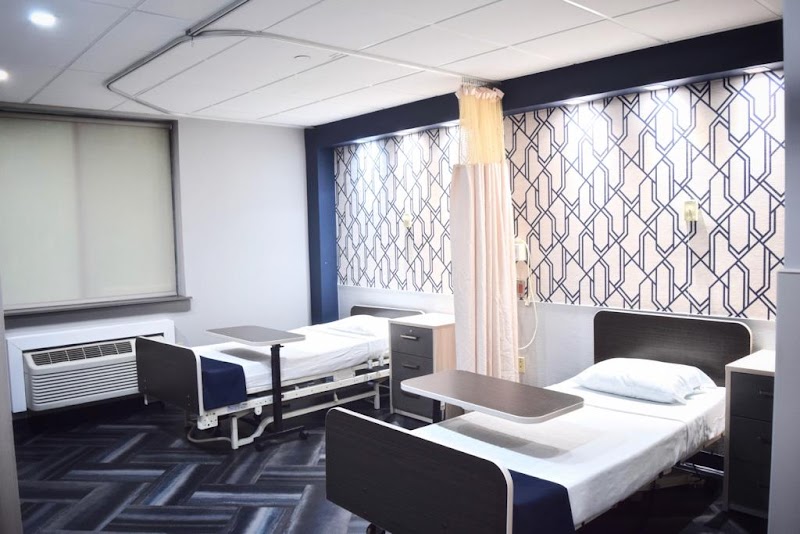
How is Fountainview Staffed?

CMS rates FOUNTAINVIEW CARE CENTER's staffing level at 3 out of 5 stars, which is average compared to other nursing homes. Staff turnover is 46%, compared to the New Jersey average of 46%.

What Have Inspectors Found at Fountainview?

State health inspectors documented 18 deficiencies at FOUNTAINVIEW CARE CENTER during 2023 to 2025. These included: 2 Immediate Jeopardy (the most serious level, indicating potential for serious harm or death) and 16 with potential for harm. Immediate Jeopardy findings are rare and represent the most serious regulatory concerns. They require immediate corrective action.
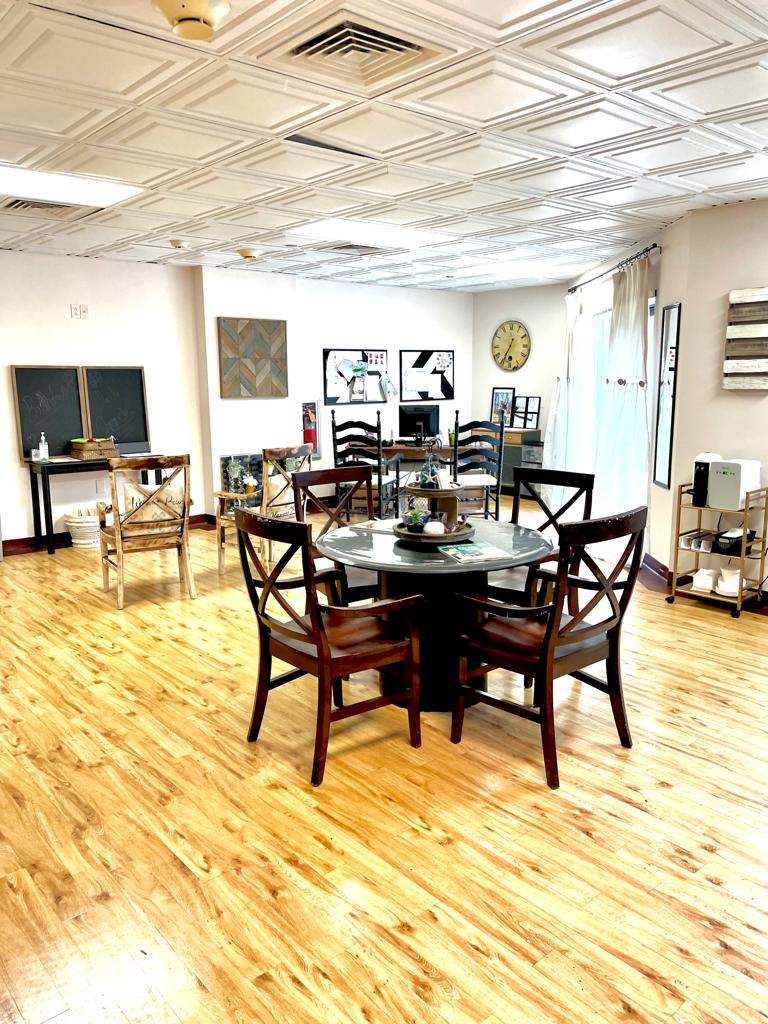
Who Owns and Operates Fountainview?

FOUNTAINVIEW CARE CENTER is owned by a for-profit company. For-profit facilities operate as businesses with obligations to shareholders or private owners. The facility operates independently rather than as part of a larger chain. With 123 certified beds and approximately 84 residents (about 68% occupancy), it is a mid-sized facility located in LAKEWOOD, New Jersey.
How Does Fountainview Compare to Other New Jersey Nursing Homes?

Compared to the 100 nursing homes in New Jersey, FOUNTAINVIEW CARE CENTER's overall rating (1 stars) is below the state average of 3.2, staff turnover (46%) is near the state average of 46%, and health inspection rating (1 stars) is much below the national benchmark.

What Should Families Ask When Visiting Fountainview?

Based on this facility's data, families visiting should ask: "What changes have been made since the serious inspection findings, and how are you preventing similar issues?" "What safeguards and monitoring systems are in place to protect residents from abuse or neglect?" "Can I visit during a mealtime to observe dining assistance and food quality?" "How do you handle medical emergencies, and what is your hospital transfer rate?" These questions are particularly relevant given the facility's Immediate Jeopardy citations and the substantiated abuse finding on record.

Is Fountainview Safe?

Based on CMS inspection data, FOUNTAINVIEW CARE CENTER has documented safety concerns. The facility has 1 substantiated abuse finding (meaning confirmed case of resident harm by staff or other residents). Inspectors have issued 2 Immediate Jeopardy citations (the most serious violation level indicating risk of serious injury or death). The facility has a 1-star overall rating and ranks #100 of 100 nursing homes in New Jersey. Families considering this facility should ask detailed questions about what corrective actions have been taken since these incidents.

Do Nurses at Fountainview Stick Around?

FOUNTAINVIEW CARE CENTER has a staff turnover rate of 46%, which is about average for New Jersey nursing homes (state average: 46%). Moderate turnover is common in nursing homes, but families should still ask about staff tenure and how the facility maintains care continuity when employees leave.

Was Fountainview Ever Fined?

FOUNTAINVIEW CARE CENTER has been fined $67,276 across 11 penalty actions. This is above the New Jersey average of $33,752. Fines in this range indicate compliance issues significant enough for CMS to impose meaningful financial consequences. Common causes include delayed correction of deficiencies, repeat violations, or care failures affecting resident safety. Families should ask facility leadership what changes have been made since these penalties.

Is Fountainview on Any Federal Watch List?

FOUNTAINVIEW CARE CENTER is not on any federal watch list. The most significant is the Special Focus Facility (SFF) program, which identifies the bottom 1% of nursing homes nationally based on persistent, serious quality problems. Not being on this list means the facility has avoided the pattern of deficiencies that triggers enhanced federal oversight. This is a positive indicator, though families should still review the facility's inspection history directly.