CONCERN
(D)
Potential for Harm - no one hurt, but risky conditions existed
Resident Rights
(Tag F0550)
Could have caused harm · This affected 1 resident
NJ00154373
Based on interview and review of facility documentation, it was determined that the facility failed to follow upcoming policy changes within the timeframe provided to residents. This defici...
Read full inspector narrative →
NJ00154373
Based on interview and review of facility documentation, it was determined that the facility failed to follow upcoming policy changes within the timeframe provided to residents. This deficient practice was identified for 1 of 5 residents reviewed for smoking (Resident #104) and was evidenced by the following:
On 05/08/23 at 10:26 AM, the surveyor interviewed Resident #104. The resident told the surveyor that when he/she came to the facility residents were allowed to smoke three times a day, and a few months ago it was changed to twice a day, about six I think. Resident #104 said, There are days when we can't smoke at all, maybe every other month because the staff doesn't show up. The resident could not give specific dates when the smoking was suspended. At the same time, the surveyor reviewed the residents complaint which indicated the residents were not allowed to smoke on 04/27/22.
Review of the admission Record showed that Resident #104 was admitted to the facility on 6/2020. Medical diagnoses included, but not limited to Huntington's disease (a condition that damages nerve cells in the brain), diabetes mellitus (high blood sugar), Covid 19 (respiratory illness caused by a virus), unspecified lack of coordination, and muscle weakness. Review of the quarterly Minimum Data Set, (an assessment tool) dated 4/2/23 indicated the resident had a Brief Interview of Mental Status of 15, meaning the resident was cognitively intact.
On 05/08/23 at 10:37 AM, the surveyor reviewed Resident #104's paper chart. The surveyor reviewed the quarterly smoking assessments which indicated the resident was a safe smoker since admission to the facility 06/2020. The last quarterly smoking assessment that was reviewed was on 4/23/23.
On 05/09/23 at 10:29 AM, a surveyor interviewed the Director of Activities (AD)regarding smoking. The AD told the surveyor that at one point in time, the residents were smoking three times a day. The surveyor asked the AD when the times changed, and the AD was unsure of specific dates but said it's been well over a year. The AD said when the smoking times changes, all the residents were educated, and a trial run was done prior so they could get used to it, and to see if they had any questions. The residents all signed agreements acknowledging the new rules, and it was also reflected in the resident's care plan.
On 05/09/23 at 10:54 AM, the surveyor reviewed Resident #104's care plan which showed the following focus regarding smoking: The smoking program will be reduced from 3 sessions a day to 2 sessions a day. We will be eliminating the afternoon session. If the current staff that were to call out from work for the day, we will do our utmost to cover the position for that day but if we are unsuccessful, we may have to suspend the program for that day. The care plan had a revised date of 04/19/23.
On 05/10/23 at 10:36 AM, the facility provided progress notes from the social worker stating she met with Resident #104 on 4/19/22 to inform the resident of a change in smoking policy. The social worker explained to the resident that the changes would take effect in 30 days. The resident was told that there might be days when smoking would be eliminated if there were not staff available for supervision. It was documented that the resident understood although displeased with the change. The administrator also sent an email regarding the changes which were to take effect 30 days from 04/19/22. At the same time, the resident's care plan was revised to include the changes.
On 05/10/23 at 11:00 AM, the surveyor reviewed an email sent to resident representatives informing them of the upcoming smoking changes to take place 30 days from 04/19/22. The email read that the notification on April 19, 2022, was a 30-day notice and the new smoking schedule would go into effect after 30 days.
On 05/10/23 at 11:15 AM, the surveyor reviewed the Smoke Room policy, dated January 22, 2021. The policy did not include a statement saying that if no staff were available smoking would be suspended for the residents. The surveyor then reviewed the revised policy, dated May 13, 2022, which then included that if a smoke room attendant is unable to work their shift and coverage is unattainable, no smoking will be provided for the day.
NJAC 8:39-31.6 (e, 3)
CONCERN
(D)
Potential for Harm - no one hurt, but risky conditions existed
Safe Environment
(Tag F0584)
Could have caused harm · This affected 1 resident
**NOTE- TERMS IN BRACKETS HAVE BEEN EDITED TO PROTECT CONFIDENTIALITY** 3.) On 05/08/23 at 1:14 PM, the surveyor entered room [ROOM NUMBER] on the [NAME] Unit at the request of Resident #33. The surve...
Read full inspector narrative →
**NOTE- TERMS IN BRACKETS HAVE BEEN EDITED TO PROTECT CONFIDENTIALITY** 3.) On 05/08/23 at 1:14 PM, the surveyor entered room [ROOM NUMBER] on the [NAME] Unit at the request of Resident #33. The surveyor observed a wall in the room with an area of spackle, approximately 4 feet long by six inches wide. The surveyor asked the resident if the facility recently started working on the wall and the resident told the surveyor, Been like that since I came in the room in 2020. The surveyor also noticed multiple sections of peeling wallpaper, which was a decorative border on three of the four walls. On the window blinds one small section of a blind slat was missing, approximately 5 inches on the right side, and when the blind was moved there was a buildup of a black substance on the back of the window blind.
On 05/09/23 at 11:30 AM, the surveyor interviewed Maintenance Worker #1 (MW#1) and Maintenance Worker #2 (MW#2) and asked if there was a process of routine maintenance in the resident rooms or routine maintenance rounding. The MW #1 told the surveyor there was a binder that staff would write down what needed to be fixed and the binder was checked in the morning and again later in the day. The surveyor asked what would happen if there was an urgent need for a repair and MW#1 said, the staff would page us overhead. The surveyor entered room [ROOM NUMBER] on the [NAME] Unit with MW #1 and MW #2 with Resident #33 permission. The surveyor asked about the spackled areas on the wall. MW#1 said, the guy who worked here before must have done that, maybe two months ago. MW#2 told surveyor that maybe it was done 5 months ago. MW#1 told the surveyor The maintenance director should know; he is on the roof right now. The surveyor asked MW#1 to provide more information if available. No further information was provided to the surveyor.
NJAC 8:39-31.2(e), 31.4 (a)(f)
Complaint # NJ00163390
Based on observation, interview, record review, and review of pertinent facility documentation it was determined that the facility failed to: a.) maintain a clean, comfortable, homelike environment on the Florida unit, b.) maintain privacy curtains free from stains in a resident's room c.) maintain cleanliness behind the blinds in a resident's room, and d.) paint over the spackle in a resident's room. This deficient practice was identified for two (2) of 36 resident's, (Resident #4 and Resident #33) and on one (1) of four (4) nursing units, (Florida unit) reviewed for clean, comfortable, homelike environment.
The deficient practice was evidenced by the following:
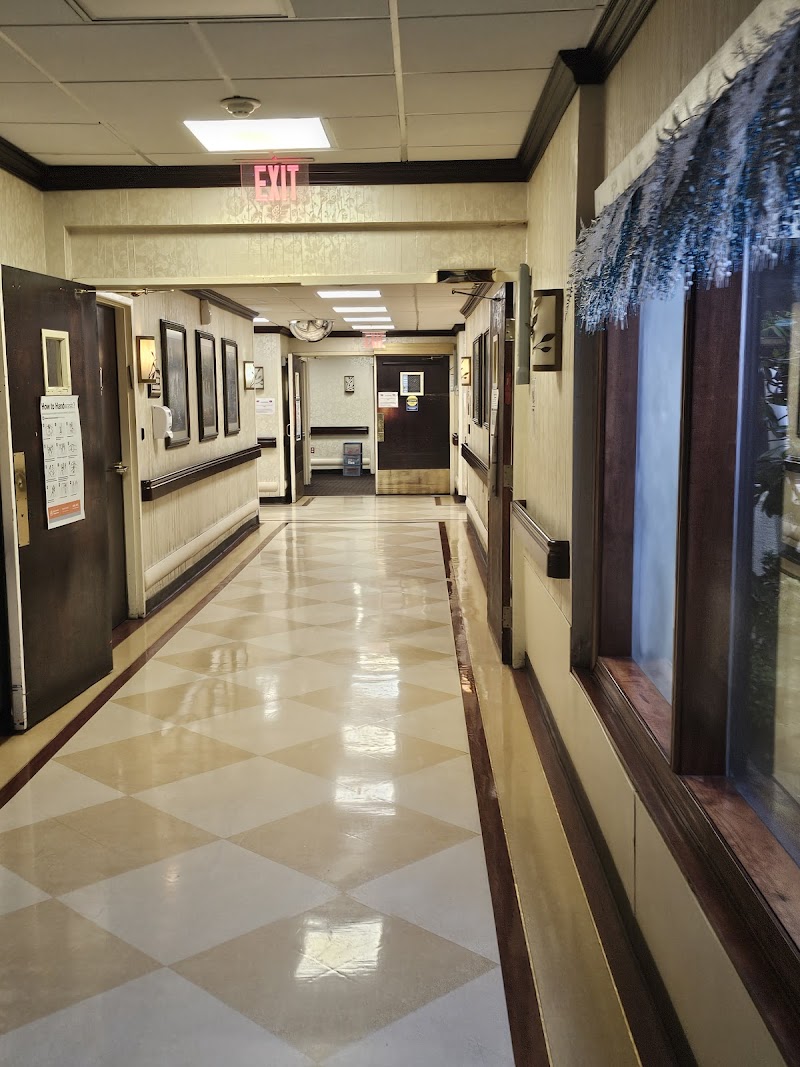
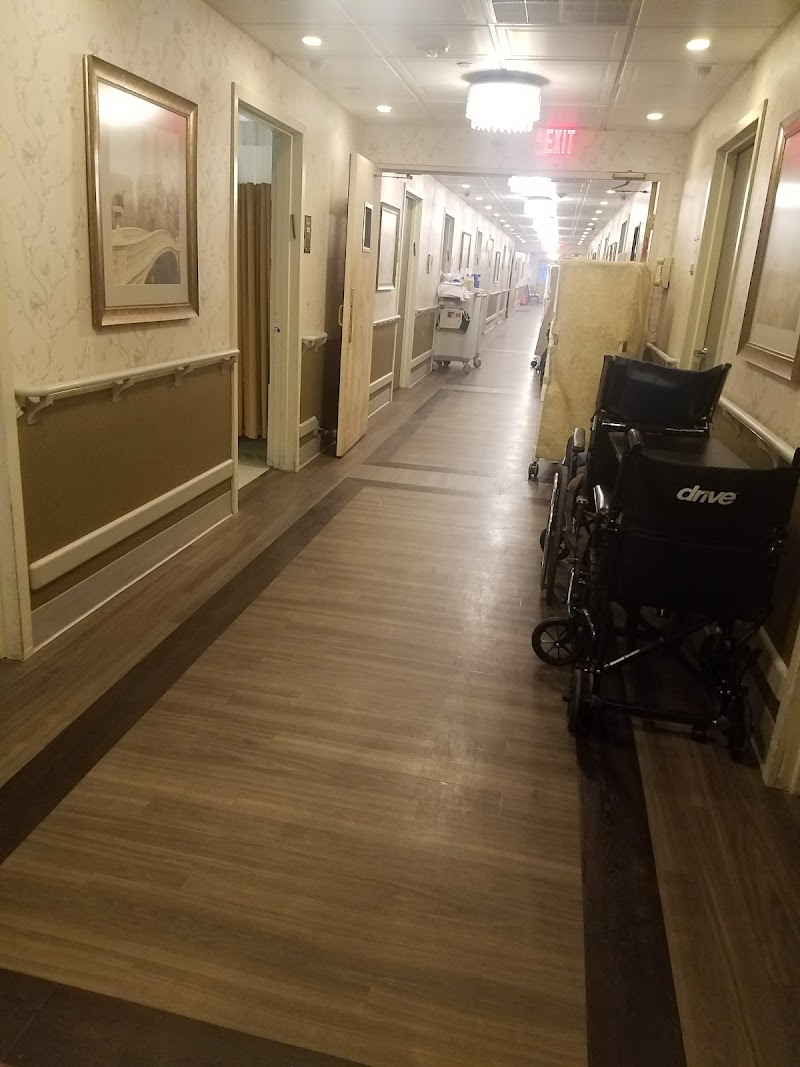
1.) On 05/04/23 at 10:39 AM, the surveyor toured the Florida unit and observed that the gold-colored wallpaper to the right of room [ROOM NUMBER] was ripped from the wall leaving a white mark.
On 05/05/23 at 11:49 AM, the surveyor toured the Florida unit in the presence of the Maintenance Director (MD). The MD observed the area and stated that it was hard to patch the wallpaper, but he would fix it as soon as he could.
On 05/04/23 at 10:43 AM, the surveyor observed on the Florida unit in between rooms [ROOM NUMBERS], scratches in the wall underneath the handrail. [NAME] indentations and holes were observed on the wall.
On 05/05/23 at 11:50 AM, the surveyor toured the Florida unit with the MD who observed the scratches in the wall in between rooms [ROOM NUMBERS]. The MD stated that the wall needed to be spackled and painted.
On 05/04/23 at 10:45 AM, the surveyor observed on the Florida unit, white indentations and scratches at the bottom part of the wall, underneath the handrail between room [ROOM NUMBER] and the day room.
On 05/05/23 at 11:52 AM, the surveyor toured the Florida unit with the MD who observed the scratches and indentations at the bottom part of the wall, underneath the handrail between room [ROOM NUMBER] and the day room who stated that the wall was patched up, less than a year ago, last May, but needed to be touched up again.
On 05/04/23 at 10:47 AM, the surveyor toured the Florida unit and observed a hole in the brown molding attached to the wall by the floor in between rooms [ROOM NUMBERS]. The surveyor further observed scratches and white indentations on the wall underneath the brown molding.
On 05/05/23 at 11:53 AM, the surveyor toured the Florida unit in the presence of the MD who observed the hole in the brown molding attached to the wall by the floor in between rooms [ROOM NUMBERS]. At that time, the MD stated that he didn't know how long it had been that way. The MD looked at the scratches and indentations in the wall and stated that, it needed to be patched up.
On 05/04/23 at 10:51 AM, the surveyor toured the Florida unit and observed scratches and holes in the wall, slightly above the brown molding attached to the floor in between rooms [ROOM NUMBERS].
On 05/05/23 at 11:55 AM, the MD observed the scratches and holes in the wall, slightly above the brown molding attached to the floor in between rooms [ROOM NUMBERS] in the presence of the surveyor. The surveyor observed the MD touch the wall and white debris was observed falling onto the floor. The MD stated that the wall needed to be patched up too.
On 05/04/23 at 10:52 AM, the surveyor observed on the Florida unit underneath the handrail in between rooms [ROOM NUMBERS] brown and white indentations throughout the wall.
On 05/05/23 at 11:56 AM, the MD observed the brown and white indentations in the wall between rooms [ROOM NUMBERS] with the surveyor and stated that the wall needed to be spackled and painted.
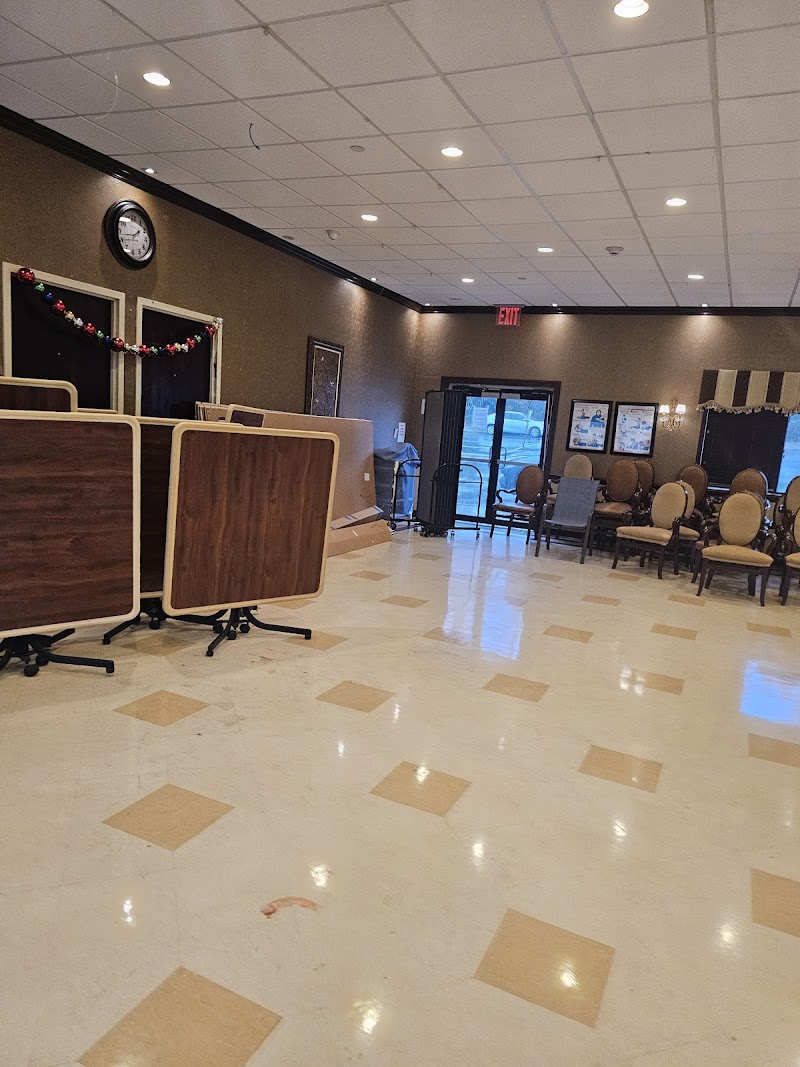
On 05/04/23 at 10:54 AM, the surveyor observed in the day room on the Florida unit dents throughout the white trim in the room. The surveyor further observed wallpaper peeling underneath the light switch.
On 05/05/23 at 11:57 AM, the surveyor entered the day room on the Florida unit with the MD who stated that if he painted the bottom of the trim in the day room, it would be dented in three (3) days and that the material of the trim should be plastic and not wood, due to the resiliency of the plastic. The MD told the surveyor that he could patch up the wallpaper with tape.
On 05/04/23 at 10:55 AM, the surveyor observed scratches halfway up the door on the shower room door on the Florida unit.
On 05/05/23 at 11:58 AM, the MD observed the scratches on the shower room door on the Florida unit and stated that he could use paint to fix it and put a water based poly (polyurethan, a material that coats an area making the area more durable) to seal the paint.
On 05/04/23 at 10:56 AM, the surveyor observed on the Florida unit white, red, and brown discolorations throughout the tile in front of the nurse's station. The surveyor further observed scratches throughout the brown exit doors towards the right of the nurse's station.
On 05/05/23 at 12:00 PM, the MD observed the tile in the presence of the surveyor and stated that the housekeeping department was responsible for cleaning the tile. The MD further stated that he was unsure what the white marks on the door were, the door wasn't painted often, but could probably use a touch up.
On 05/04/23 at 12:06 PM, the surveyor observed white stains in the center of the right door in the front hall of the Florida unit
On 05/05/23 at 12:01 PM, the MD observed the white stains on the doors in the presence of the surveyor and stated that the doors needed a touch up.
On 05/05/23 at 08:41 AM, the surveyor observed on the Florida unit white marks and scratches on the wallpaper in between room [ROOM NUMBER] and room [ROOM NUMBER].
On 05/05/23 at 12:05 PM, the MD observed the white marks and scratches on the wallpaper between rooms [ROOM NUMBERS] in the presence of the surveyor.
On 05/05/23 at 08:45 AM, the surveyor toured the Florida unit and observed an indentation in the wall to the left of room [ROOM NUMBER]. There was a rectangular white box observed over the indentation and the area surrounding the white box was observed to be caving into the wall.
On 05/05/23 at 12:04 PM, the MD observed the indentation in the wall in the presence of the surveyor. The MD told the surveyor that the facility used to have lights there and the hole got too big, so they had to put a bigger plate there for now before the unit was redone.
On 05/09/23 at 11:11 AM, the surveyor interviewed the Florida unit Licensed Practical Nurse/Unit Manager (LPN/UM) who stated that the maintenance department was responsible for fixing anything that was broken. The LPN/UM told the surveyor that if staff working on the unit identified that anything was broken, they would call maintenance to notify them and put it in the maintenance book on the unit. The LPN/UM explained that the Administration and Infection Preventionist rounded the unit monthly and made a list of things that needed to be fixed. Once the list was constructed, it would then be delegated to the different departments to delegate who was responsible for fixing what. The LPN/UM further stated that the maintenance department was responsible for fixing scratches, holes in walls, paint discoloration, and broken furniture. The LPN/UM stated that the expectation would be to hopefully fix things when they came up or monthly. The LPN/UM stated that, it had been quite a few years since the Florida unit had been renovated and the unit takes quite a beating.
On 05/09/23 at 12:25 PM, the surveyor interviewed the Housekeeping Director (HD) who stated that he made rounds on the unit daily.
On 05/12/23 at 11:01 AM, the Administrator stated in the presence of the survey team that the maintenance department was short on staff, and he was in the process of hiring more staff. The Administrator stated that the Florida unit needed someone there to fix it very often and that sometimes they would fix something and then have to fix it again right away.
A review of the May 2023 Florida unit Maintenance Log did not include any of the above observations documented in the log that needed repair.
A review of the Maintenance Director's Job Description and Performance Standards dated 07/12/22 indicated that the purpose of the position was to, develop and implement facility maintenance policies and procedures in an efficient, cost-effective manner to meet safely meet resident's needs in compliance with federal, state, and local requirements. A further review of the Maintenance Director's Job Description revealed that the MD was responsible for developing and implanting repair and maintenance schedules for all the areas of the facility grounds and supervising the schedule for repair and maintenance by contractors.
2.) On 05/02/23 at 10:26 AM, the surveyor observed Resident #21 in their room. The surveyor observed that the privacy curtain between Resident #21 and his/her roommate was light peach in color and had light brown stains throughout.
On 05/03/23 at 12:08 PM, the surveyor observed the resident in their room seated in a high back wheelchair. The surveyor observed that the privacy curtain between Resident #21 and his/her roommate was light peach in color and had light brown stains throughout.
05/04/23 11:42 AM, the surveyor observed the resident in his/her room seated in their high back wheelchair. A staff member was in the room feeding the resident, seated next to the resident's wheelchair. At that time the surveyor observed that the privacy curtain between Resident #21 and his/her roommate was light peach in color and had light brown stains throughout. The surveyor further observed that the bottom part of the privacy curtain by the door in the resident's room had a red stain on it and browns stains throughout.
The surveyor reviewed the medical record for Resident #21.
A review of the resident's admission Record (an admission Summary) reflected that the resident had resided at the facility for over a decade and had diagnoses which included but were not limited to Huntington's disease (an inherited disease in which nerve cells in the brain break down over time), COVID-19, anxiety disorder, essential hypertension (high blood pressure), and dysphagia (difficulty swallowing).
A review of the resident's most recent quarterly Minimum Data Set (MDS), an assessment toll used to facilitate the management of care dated 03/14/23 indicated that the resident's Brief Interview for Mental Status (BIMS) score was 03 out of 15 which indicated the resident's cognition was severely impaired.
On 05/05/23 at 09:55 AM, the surveyor interviewed the resident's Licensed Practical Nurse (LPN) who stated that they changed the privacy curtains in the resident's room the night before (05/04/23).
On 05/05/23 at 11:35 AM, the surveyor interviewed the housekeeper working on the Florida unit who stated that it was her job to change the privacy curtains in the resident's rooms.
On 05/09/23 at 10:52 AM, the surveyor conducted a follow up interview with the resident's LPN who stated that it was the responsibility of the housekeeping department to change the privacy curtains in the resident's rooms. The LPN told the surveyor that if the nursing staff noticed that the privacy curtains were dirty, the nursing staff would tell the housekeeper verbally when they saw them or document in the housekeeping communication book on the unit. The LPN further stated that if she directly spoke with the housekeeping staff, she would not document the request in the housekeeping book.
On 05/09/23 at 11:09 AM, the surveyor interviewed the Florida unit LPN/UM who stated that if staff noticed that the privacy curtains in the resident's room were dirty, the staff would call and notify the HD or document it in the housekeeping book for the unit. The LPN/UM further stated that the housekeeping department had a routine schedule where every room on the unit was deep cleaned once monthly and at that time the privacy curtains in the resident's rooms would be changed.
On 05/09/23 at 12:25 PM, the surveyor interviewed the HD who stated that he made rounds on the Florida unit every day and would look at everything including the cleanliness of medication carts, resident's wheelchairs, and the floors. The HD told the surveyor that the resident's rooms were deep cleaned every month and the privacy curtains in the resident's rooms would be changed at that time and when a resident was discharged from the facility. The HD explained that it was the housekeeping departments responsibility to change the privacy curtains and the Administration was aware that some of the privacy curtains were stained.
A review of April 2023 and May 2023 housekeeping book did not indicate that the nurses documented that the privacy curtain needed to be changed in Resident #21's room.
A review of the HD Job Description and Performance Standards dated 12/20/22 indicated, the purpose of this position is to implement effective, efficient systems to operate the housekeeping department in a cost-effective, efficient manner to safely meet residents' needs in compliance with federal, state, and local requirements.
A review of the facility's House Keeping In-Service, Complete Room Cleaning dated 01/01/00, indicated, cubicle curtains - check and report any soil or damage to supervisor.
CONCERN
(D)
Potential for Harm - no one hurt, but risky conditions existed
Transfer Notice
(Tag F0623)
Could have caused harm · This affected 1 resident
**NOTE- TERMS IN BRACKETS HAVE BEEN EDITED TO PROTECT CONFIDENTIALITY** Based on record review and interview, it was determined that the facility failed to provide written notification of the emergenc...
Read full inspector narrative →
**NOTE- TERMS IN BRACKETS HAVE BEEN EDITED TO PROTECT CONFIDENTIALITY** Based on record review and interview, it was determined that the facility failed to provide written notification of the emergency transfer to the resident, resident representative, and the Office of the Long-Term Care Ombudsman (LTCO) for one (1) of two (2) residents (Resident # 124), reviewed for hospitalizations.
This deficient practice was evidenced by the following:
The surveyor reviewed the medical records of Resident # 124.
Review of the admission Record (an admission summary) reflected that the resident was admitted to the facility with diagnoses which included but not limited to coronary artery disease, heart failure, diabetes, and hyperlipidemia.
Review of the New Jersey Universal Transfer Form (NJUTF) dated 01/30/23 indicated the resident was transferred to the hospital for lethargy and weakness, abnormal labs and low pulse OX.
Review of the Minimum Data Set (MDS) dated [DATE], indicated the resident had a discharge assessment with return anticipated.
Review of the NJUTF dated 02/21/23, indicated the resident was transferred to the hospital for fever.
Review of the MDS dated [DATE], indicated the resident had a discharge assessment with return anticipated.
Review of the NJUTF dated 03/22/23, indicated the resident was transferred to the hospital for an elevated temperature and an increase in weakness.
Review of the MDS dated [DATE], indicated the resident had a discharge assessment with return anticipated.
On 05/11/23 at 12:29 PM, the surveyor interviewed the front desk receptionist (FDR) who stated she was responsible for notifying the residents and resident representatives of the facility's bed-hold policy and notice of transfers. She stated she began her position as the FDR approximately 2 years ago and started sending the notifications out about 4 weeks ago, in April. The FDR stated before her the Social Worker (SW) was the staff who sent out the last notifications.
On 05/11/23 at 12:33 PM, the surveyor interviewed the SW who stated she began her position as the SW, 23 years ago. The SW confirmed that she was one of two staff responsible for notifying the Long-Term Care Ombudsman (LTCO) office of emergency transfer(s) and discharges on a monthly basis but confirmed the facility had not completed them for a long time before March 2023 due to staffing.
On that same date at 12:48 PM, the FDR provided the surveyor with one Notice of Transfer for Resident #124 dated 03/22/23. The FDR could not provide any documented evidence of the Notice of Transfer notices sent to the resident representative or the LTCO for 01/30/23 and 02/21/23.
On 05/11/23 at 12:35 PM, the survey team met with the Licensed Nursing Home Administrator (LNHA) and the Director of Nursing (DON) and discussed the above findings. There was no additional information provided.
Review of the facility's policy for Notice Requirements for Transfer/Discharge of a Long-Term Care Resident include that the notice of transfer or discharge form will be completed by the nursing/social services department. The resident/responsible party will be notified. Resident discharge list will be emailed to the Ombudsman office on a monthly basis.
NJAC 8:39-5.3; 5.4
CONCERN
(D)
Potential for Harm - no one hurt, but risky conditions existed
Assessment Accuracy
(Tag F0641)
Could have caused harm · This affected 1 resident
**NOTE- TERMS IN BRACKETS HAVE BEEN EDITED TO PROTECT CONFIDENTIALITY** 3. On 05/02/23 at 01:07 PM, the surveyor observed Resident #144 returning from the smoking area and was sitting in his/her room ...
Read full inspector narrative →
**NOTE- TERMS IN BRACKETS HAVE BEEN EDITED TO PROTECT CONFIDENTIALITY** 3. On 05/02/23 at 01:07 PM, the surveyor observed Resident #144 returning from the smoking area and was sitting in his/her room with a blanket over their head seated in a wheelchair. Resident #144 confirmed with the surveyor that he/she was a smoker but did not want to talk any further.
The surveyor reviewed the medical record for Resident #144.
On 05/02/23 at 01:37 PM, a review of the resident's admission Record (an admission Summary) reflected that the resident was admitted 2/2022 and had diagnoses which included but were not limited to Huntington's disease (an inherited disease in which nerve cells in the brain break down over time), pneumonia, dysphagia, psychiatric/mood disorder (anxiety disorder/psychotic disorder), muscle weakness, obstructive and reflux uropathy, and implants and grafts.
On 05/12/23 at 12:53 PM, a review of the resident's most recent annual MDS, dated [DATE], indicated that the resident had a Brief Interview for Mental Status score of 13 out of 15 which indicated the resident's cognition was cognitively intact. A further review of the resident's MDS, Section J1300 under Current Tobacco Use was coded 0 and indicated that Resident #144 was not identified as a smoker on the MDS, which was coded incorrectly.
At that same date and time, the surveyor reviewed the resident CP which showed a focus of smoking, with potential risk for injury related to smoking. The CP was initiated on 12/30/22.
On 05/12/23 at 11:05 AM, the surveyor interviewed the Social Worker (SW) in the MDS Coordinator's absence and made the SW aware that Section J1300 of the MDS did not identify Resident #144 as a smoker and was not coded correctly. The SW confirmed the MDS was initially not coded correctly but provided the surveyor with a copy of the modified annual MDS dated [DATE].
A review of CMS RAI Version 3.0 Manual, Section J - Health Conditions indicated in J1300: Current Tobacco Use, that the negative effects of smoking can shorten life expectancy and create health problems that interfere with daily activities and adversely affect quality of life. In planning for care, this item opens the door to negotiation of a plan of care with the resident that includes support for smoking cessation. If cessation is declined, a care plan that allows safe and environmental accommodation of resident preferences is needed. Facility staff is to conduct an assessment and ask the resident if he or she used tobacco in any form during the seven (7) day look-back period. If the resident states that he or she used tobacco in some form during the 7-day look-back period, code 1, yes. If the resident is unable to answer or indicates that he or she did not use tobacco of any kind during the look-back period, review the medical record and interview staff for any indication of tobacco use by the resident during the look-back period. Coding Instructions indicated to code 0 for no, indicating the resident did not smoke and 1 for yes, indicating that the resident did smoke.
NJAC 8:39-11.2(e)1
2. On 05/08/23 at 10:26 AM, the surveyor interviewed Resident #104. The resident told the surveyor that when he/she came to the facility they were allowed to smoke three times a day, and few months ago it was changed to twice a day, about six months I think. The surveyor asked if the resident was a smoker since being admitted to the facility and the resident replied, yes.
A review of the resident's admission Record indicated that Resident #104 was admitted to the facility in 06/2020. Medical diagnoses included, but not limited to, Huntington's Disease (an inherited disease in which nerve cells in the brain break down over time), diabetes (high blood sugar), lack of coordination and muscle weakness. The resident had a Brief Interview of Mental Status of 15 out of 15, meaning the resident was cognitively intact.
On 05/10/23 at 10:30 AM, the surveyor reviewed the resident CP which showed a focus of smoking, with potential risk for injury related to smoking. The CP was initiated on 01/29/21.
On 05/10/23 at 10:50 AM, the surveyor reviewed Resident #104's annual MDS, dated [DATE]. Section J1300, titled health conditions was marked zero for tobacco, meaning the resident was not a smoker. The surveyor then reviewed the annual MDS dated [DATE], section J1300 was marked zero for tobacco, meaning the resident was not a smoker.
On 05/10/23 at 11:15 AM, the surveyor interviewed the MDS coordinator regarding Resident #104. The surveyor asked the MDS coordinator how she would find out if a resident was a smoker. The MDS coordinator told the surveyor, We look at documentation, but now we are verbally asking because of the lack of documentation. The surveyor then asked the MDS coordinator to look at Resident #104's annual MDS dated [DATE], section J1300 the tobacco section. The MDS coordinator said, After it was reviewed, a modification was completed for both the annuals from 7/2021 and 7/2022. The surveyor asked when the modifications were completed, and the MDS coordinator said, yesterday 5/9/23, originally they were done incorrectly but then a modification was done on 5/9/23, after surveyor inquiry.
Based on observation, interview, and record review it was determined that the facility failed to accurately code the Minimum Data Set (MDS), an assessment tool used to facilitate the management of care, in accordance with federal guidelines for three (3) of 38 residents, (Resident #65, Resident #104, Resident #144) reviewed for accuracy of MDS coding.
This deficient practice was evidence by the following:
1. On 05/02/23 at 10:24 AM, the surveyor observed Resident #65 self-propelling in his/her wheelchair from the smoking section on the Florida unit to their room. At that time, the surveyor interviewed the resident whose speech was slightly garbled. The resident stated that he/she smoked cigarettes and the staff held his/her lighter and cigarettes for them.
The surveyor reviewed the medical record for Resident #65.
A review of the resident's admission Record (an admission Summary) reflected that the resident had resided at the facility for over five (5) years and had diagnoses which included but were not limited to Huntington's disease (an inherited disease in which nerve cells in the brain break down over time), major depressive disorder, anxiety disorder, muscle weakness, and benign prostatic hyperplasia with lower urinary tract symptoms (prostate enlargement that causes difficulty urinating).
A review of the resident's most recent annual MDS, dated [DATE], indicated that the resident had a Brief Interview for Mental Status score of 03 out of 15 which indicated the resident's cognition was severely impaired. A further review of the resident's MDS, J1300 - Current Tobacco Use indicated that the resident did not smoke.
A review of the resident's Safe Smoking Assessment, dated 03/07/23, indicated that the resident had impaired judgement, impaired decision making skills and impaired short-term memory. The resident's Safe Smoking Assessment further revealed that the resident did not have any physical limitations which could impact smoking or a history of other smoking related issues.
A review of the resident's Care Plan (CP), initiated on 04/09/21 and revised on 04/12/23, reflected a focus area that the resident was at an increased risk of injury related to smoking. The goal of the resident's CP was that the resident would remain free from injuries from smoking. The interventions in the resident's CP included to monitor clothing for any burns from cigarette ashes, to wear a smoking apron during smoking, to use smoking extenders during smoking, and to monitor smoking apron prior to leaving the smoking area.
On 05/05/23 at 10:44 AM, the surveyor interviewed the resident's Certified Nursing Aide (CNA) who stated that the resident was alert, oriented, and could make needs known. The CNA told the surveyor that the resident was a smoker.
On 05/05/23 at 11:05 AM, the surveyor made the Registered Nurse/Minimum Data Set Coordinator (RN/MDSC) aware that section J1300 was not filled out correctly. The RN/MDSC stated that she would review the resident's medical record and modify the annual MDS dated [DATE].
On 05/05/23 at 12:09 PM, the surveyor interviewed the resident's Licensed Practical Nurse (LPN) who stated that the resident smoked cigarettes.
On 05/09/23 at 11:17 AM, the surveyor interviewed the resident's Licensed Practical Nurse/Unit Manger (LPN/UM) who stated that the resident smoked cigarettes.
CONCERN
(D)
Potential for Harm - no one hurt, but risky conditions existed
Deficiency F0688
(Tag F0688)
Could have caused harm · This affected 1 resident
**NOTE- TERMS IN BRACKETS HAVE BEEN EDITED TO PROTECT CONFIDENTIALITY** Based on observation, interview, and record review it was determined the facility failed to apply a physician ordered splinting ...
Read full inspector narrative →
**NOTE- TERMS IN BRACKETS HAVE BEEN EDITED TO PROTECT CONFIDENTIALITY** Based on observation, interview, and record review it was determined the facility failed to apply a physician ordered splinting device to a resident with contractures. This deficient practice was identified for 1 of 2 residents' (Resident #41) reviewed for position and mobility and was evidenced by the following:
On 05/02/23 at 11:00 AM, during the initial tour of the facility Resident #41 was observed out of bed in the room in a reclining chair. The residents right hand appeared contracted, and the surveyor did not observe a hand splint or palm guard.
Review of the admission Record indicated that Resident #41 was admitted to the facility on [DATE]. Medical diagnoses included, but were not limited to traumatic brain injury, calorie malnutrition, major depressive disorder, stiffness of unspecified joint, and hypertension (high blood pressure). The surveyor reviewed the quarterly Minimum Data Set (MDS), an assessment tool dated 03/23/23 which showed the residents Brief Interview of Mental Status was incomplete due to severe cognitive impairment.
On 05/02/23 at 11:46 AM, the surveyor reviewed the physician orders which revealed the following active order dated 05/20/22 patient will tolerate wearing a resting hand splint on right hand for improved joint integrity and decrease risk contractures for four hours in the morning and four hours in the afternoon. Skin checks in between donning and doffing (applying and removing).
On 05/02/23 at 11:54 AM, the surveyor reviewed the Treatment Administration Record (TAR), the splint was signed as applied for 05/02/23 for the morning shift.
On 05/03/23 at 09:40 AM, the surveyor reviewed the care plan which showed the following focus: I will maintain current level of physical and functioning abilities. The care plan included the following intervention regarding upper extremity range of motion: o passive range of motion to bilateral upper extremities and lower extremities. The care plan was initiated 06/20/2020.
On 05/03/23 at 09:53 AM, the surveyor reviewed the residents TAR. The order for the hand splint being applied was signed by the nurse as being completed, meaning the hand splint was applied on the resident.
On 05/03/23 at 11:24 AM, the surveyor observed Resident #41 in the room in a reclining chair. The surveyor did not observe a splint to the residents right upper extremity.
On 05/03/23 at 12:13 PM, the surveyor reviewed the most recent MDS a quarterly assessment tool dated 3/23/23. Under section G, titled functional status, it indicated that the resident had impairment of an upper extremity of one side.
On 05/04/23 at 09:49 AM, the surveyor reviewed the TAR. The TAR was signed for right upper extremity splint as if it was applied on the resident.
On 05/04/23 at 09:55 AM, the surveyor observed the resident in the room in a reclining chair. The resident did not have a splint to the right upper extremity.
On 05/04/23 at 10:00 AM, the surveyor interviewed the Licensed Practical Nurse (LPN) caring for Resident #41 regarding the signed TAR as the splint was applied. In the presence of the surveyor the nurse viewed the residents TAR. The section for the right upper extremity splint was reviewed by the surveyor and the LPN. The surveyor asked if it was signed did it mean the splint was applied and the LPN stated yes, it's on, we can go look now. The surveyor entered the room in the presence of the LPN and the splint was not on the resident. The surveyor then observed the LPN look in the resident's nightstand drawer and reach to the back of the drawer to retrieve the splint. The LPN said, there it is, it should be on, and proceeded to get the help of a Certified Nursing Assistant (CNA) to apply the splint.
On 05/08/23 at 12:24 PM, the surveyor reviewed the policy titled, Splint/Adaptive Devices dated January 2022. The policy sated that splints/adaptive devices are to be applied as ordered by the physiatrist, attending physician, or nurse practitioner. Under number 12 of the procedure section of the policy, it indicated nursing will document splint application and or removal of the splint on the residents Treatment administration record. Number 13 indicated that nursing will discuss with therapy and/or Medical Doctor if the resident refuses the splints/adaptive devices.
On 05/12/23 at 10:31 AM, the surveyor met with the Director of Nursing (DON). The DON told the surveyor that the nurse who was caring for Resident #41 told me, She did not put the splint on, she was very anxious. The DON told the surveyor that the resident will be reassessed by physical therapy to ensure that there was no negative affect by not wearing the splint.
NJAC 8:39-27.1 (a)
CONCERN
(D)
Potential for Harm - no one hurt, but risky conditions existed
Accident Prevention
(Tag F0689)
Could have caused harm · This affected 1 resident
Based on observation, interview, record review and review of pertinent facility documentation it was determined, that the facility failed to provide a resident who was a smoker with a smoking apron. T...
Read full inspector narrative →
Based on observation, interview, record review and review of pertinent facility documentation it was determined, that the facility failed to provide a resident who was a smoker with a smoking apron. This deficient practice was identified for one (1) of five (5) residents, (Resident #65), reviewed for safe smoking practices and was evidenced by the following:
On 05/02/23 at 10:24 AM, the surveyor observed Resident #65 self-propelling in his/her wheelchair from the smoking section on the Florida unit to their room. At that time, the surveyor interviewed the resident whose speech was slightly garbled. The resident stated that he/she smoked cigarettes and the staff held his/her lighter and cigarettes for them.
On 05/05/23 at 10:17 AM, the surveyor observed Resident #65 seated in his/her wheelchair in the outside smoking section on the Florida unit with the smoking attendant present. The surveyor observed the resident appropriately holding his/her cigarette. The cigarette had a smoking extender (device attached to the end of the cigarette to make it longer) attached to it. The surveyor observed the resident was bent at the waist, resting his/her elbows on their knees. The cigarette was observed positioned in front of the resident's body. The surveyor did not observe a smoking apron worn by the resident. At that time, the surveyor conducted an interview with the resident who told the surveyor that he/she always used the smoking extender and never wore the smoking apron.
On 05/05/23 at 10:20 AM, the surveyor interviewed the smoking attendant who stated that Resident #65 never wore a smoking apron, just the extender. The smoking attendant then showed the surveyor a piece of paper which included a list of the resident's names who smoked on the unit. The surveyor reviewed the piece of paper in the presence of the smoking attendant. Next to the list of the resident's names who smoked, was a second list of identifiers for residents who smoked electronic cigarettes and residents who were required to utilize an apron/extender. Resident #65's name was included under the list of names for residents who were required to wear an apron/extender. The surveyor asked the smoking attendant, How do you know which residents wear the apron or the extender? The smoking attendant stated that the resident had always just used the smoking extender.
The surveyor reviewed the medical record for Resident #65.
A review of the resident's admission Record (an admission Summary) reflected that the resident had resided at the facility for over five years and had diagnoses which included but were not limited to Huntington's disease (an inherited disease in which nerve cells in the brain break down over time), major depressive disorder, anxiety disorder, muscle weakness, and benign prostatic hyperplasia with lower urinary tract symptoms (prostate enlargement that causes difficulty urinating).
A review of the resident's most recent annual Minimum Data Set (MDS), an assessment tool used to facilitate the management of care, dated 03/04/23, indicated that the resident had a Brief Interview for Mental Status score of 03 out of 15 which indicated that the resident's cognition was severely impaired.
A review of the resident's Safe Smoking Assessment, dated 03/07/23, indicated that the resident had impaired judgement, impaired decision making skills and impaired short-term memory. The resident's Safe Smoking Assessment further revealed that the resident did not have any physical limitations which could impact smoking or a history of other smoking related issues. The Safe Smoking Assessment indicated that the resident required a smoking apron and extender while smoking.
A review of the resident's Care Plan (CP), revised on 04/12/23, reflected a focus area that the resident was at an increased risk of injury related to smoking. The goal of the resident's CP was that the resident would remain free from injuries from smoking. The interventions in the resident's CP included to monitor clothing for any burns from cigarette ashes, to wear a smoking apron during smoking, to use smoking extenders during smoking, and to monitor smoking apron prior to leaving the smoking area. The resident's CP did not indicate that facility staff observed burn holes in the resident's clothes, that the resident had a history of being hurt during smoking or had dropped the cigarette on himself/herself while smoking.
On 05/05/23 at 10:30 AM, the surveyor interviewed the resident's Nursing Assistant (NA) who stated that she worked at the facility since December and always shared an assignment and performed care with a Certified Nursing Aide (CNA) present. The NA stated that the resident was alert and had never showed signs of confusion when she cared for him/her. The NA further stated that she got the resident up and dressed in the morning so the resident could go outside and smoke cigarettes. The NA stated that she would bring the resident to the smoking section and the smoking attendant was responsible for supervising the area. The NA told the surveyor that the resident could feed himself/herself and to her knowledge the resident had never dropped a cigarette.
On 05/05/23 at 10:44 AM, the surveyor interviewed the resident's CNA who stated the resident was alert, oriented, and could make needs known. The CNA explained that the resident was a smoker, and she was unsure if the resident was required to wear a smoking apron because the smoking attendant who worked for the recreation department was always outside supervising. The CNA further stated that to her knowledge, the resident never burned himself/herself while smoking.
On 05/05/23 at 12:09 PM, the surveyor interviewed the resident's Licensed Practical Nurse (LPN) who stated that the resident was alert, oriented, and a very nice person. The LPN further stated that the resident smoked cigarettes and had never burned himself/herself while smoking.
On 05/09/23 at 10:24 AM, the surveyor interviewed the Director of Activities (DOA) who stated that the facility had four (4) separate smoking locations and the residents were monitored twice daily during the scheduled smoking times by the smoking attendant. The DOA told the surveyor that the times were scheduled so the smoking attendant could observe and help all the residents who smoked at the facility.
On 05/09/23 at 11:17 AM, the surveyor interviewed the resident's Licensed Practical Nurse/Unit Manger (LPN/UM) who stated that the smoking attendant was responsible for making sure the residents were provided with smoking extenders and smoking aprons as a safety precaution. The LPN/UM stated that Resident #65 had never burned himself/herself while smoking and the smoking apron was an additional intervention to protect the resident.
A review of the facility's Smokeroom document, revised 05/01/23, indicated that Resident #65 was to wear an apron and an extender while smoking.
A review of the facility's Smoke Room Policy, revised 05/23, indicated, 7. Safety is the number one priority; smoking aprons and/or cigarette extenders will be offered to all patients/residents who smoke and provided to those patients/residents who have the potential to burn themselves and/or clothing secondary to their disease process (i.e. choreic [a movement disorder that causes sudden, unintended and uncontrollable jerky movements of the arms, legs, and facial muscles] and/or Parkinsonism movements). These aprons will also be provided to any resident who request to use it. 8. Smoking aprons will be monitored by the smoking attendant to be in good condition.
NJAC 8:39-27.1(a)
CONCERN
(D)
Potential for Harm - no one hurt, but risky conditions existed
Incontinence Care
(Tag F0690)
Could have caused harm · This affected 1 resident
Based on observation, interview, record review and review of pertinent facility documentation it was determined that the facility failed to appropriately store an indwelling urinary catheter drainage ...
Read full inspector narrative →
Based on observation, interview, record review and review of pertinent facility documentation it was determined that the facility failed to appropriately store an indwelling urinary catheter drainage bag in a manner to prevent against infection. This deficient practice was identified for one (1) of 1 resident, (Resident #4) reviewed for urinary catheter care.
This deficient practice was evidenced by the following:
On 05/02/23 at 11:10 AM, the surveyor entered Resident #4's vacant room and observed a blue privacy bag attached the resident's bed frame. The blue privacy bag was empty. The surveyor knocked on the door to the resident's unoccupied bathroom and observed a plastic bag tied to the handrail in the bathroom. Inside of the plastic bag, the surveyor observed an indwelling urinary catheter drainage bag with a blue cap attached to the end of the foley catheter tubing. The indwelling urinary catheter bag was dated 05/02/23.
On 05/03/23 at 12:25 PM, the surveyor entered Resident #4's vacant room and observed an empty blue privacy bag attached to the resident's bed frame. The surveyor then entered the resident's unoccupied bathroom and observed a plastic bag tied to the handrail in the bathroom. Inside of the plastic bag, the surveyor observed an indwelling urinary catheter bag. The tubing to the indwelling urinary catheter was uncapped and in direct contact with the plastic bag. The indwelling urinary catheter bag was dated 05/02/23.
On 05/04/23 at 12:13 PM, the surveyor entered Resident #4's unoccupied bathroom and observed the resident's indwelling urinary catheter drainage bag stored inside of the plastic bag attached to the handrail in the resident's bathroom. The tubing to the indwelling urinary catheter drainage bag was observed to be uncapped and in direct contact with the plastic bag. The surveyor further observed clear, yellow urine inside of the indwelling urinary catheter tubing. The indwelling urinary catheter bag was dated 05/02/23.
On 05/04/23 at 12:18 PM, the surveyor interviewed the resident's Certified Nursing Aide (CNA) who stated that the resident was alert and oriented with confusion at times. The CNA stated that he changed the resident's indwelling urinary catheter drainage bag to a leg bag every morning and that he would empty the indwelling urinary catheter bag after use and store the bag that the resident wore at night in a plastic bag in the resident's bathroom. The surveyor asked the CNA if he capped the tubing on the indwelling urinary catheter drainage bag. The CNA stated that he would put the cap on the tubing, sometimes and the purpose for putting the cap on the tubing was so the bag would not leak and that it would have been protected against contamination. The CNA further stated that he had cared for the resident during the 7:00 AM - 3:00 PM day shift the day before (05/03/23).
On 05/04/23 at 12:22 PM, the surveyor entered the resident's bathroom with the CNA. The CNA put on a pair of gloves in the presence of the surveyor, touched, and observed the resident's indwelling urinary catheter drainage bag and confirmed that the tubing to the bag was uncapped. At that time the CNA stated, the tubing should have been capped.
On 05/04/23 at 12:24 PM, the surveyor interviewed the resident's Licensed Practical Nurse (LPN) who stated that she was not very familiar with the resident. The LPN further stated that the resident was alert and oriented with confusion, could make needs known, and ask for help. The LPN told the surveyor that the staff performed catheter care for the resident and that the resident had a suprapubic catheter (a hollow flexible tube surgically inserted into the bladder from an opening by a person's lower abdomen that is used to drain urine from the bladder) for urinary retention (a condition where your bladder doesn't empty all the way or at all when you urinate). The LPN stated that she thought maybe the tubing to the indwelling urinary catheter bag should have a cap on it.
05/04/23 12:28 PM, the surveyor entered the resident's bathroom and observed the indwelling urinary catheter drainage bag in the presence of the LPN. The LPN stated that she did not see a cap on the foley catheter tubing and was unsure if the tubing needed one because she had never seen one on them before.
On 05/04/23 at 12:30 PM, the surveyor interviewed the Licensed Practical Nurse/Unit Manager (LPN/UM) who stated that the indwelling urinary catheter bags came with a blue cap. The LPN/UM further stated that if the blue cap was not on the indwelling urinary catheter drainage bag while it was being stored and not in use, then the drainage bag should be thrown away and the staff would be required to utilize a new bag for the resident.
On 05/04/23 at 12:33 PM, the surveyor entered the resident's bathroom with the LPN/UM. The LPN/UM observed, in the presence of the surveyor, that the indwelling urinary catheter bag was dated 05/02/23 and was uncapped. At that time the LPN/UM stated that the cap should have been placed on the foley catheter tubing for infection control purposes.
On 05/04/23 at 2:04 PM, the surveyor interviewed the Licensed Practical Nurse/Infection Preventionist (LPN/IP) who stated that sometimes the cap would go at the end of the indwelling urinary catheter bag tubing when the bag was not in use. The LPN/IP stated that the facility's practice was to change out the indwelling urinary catheter drainage bag weekly and store the bag in a plastic bag when not in use. The LPN/IP told the surveyor that the purpose of the cap was to prevent anything from getting inside the tubing that could have potentially caused an infection.
On 05/04/23 at 02:16 PM, the surveyor interviewed the LPN/IP who stated that Resident #4 had not had a history of a urinary tract infection in the last four (4) months.
On 05/05/23 at 11:15 AM, the surveyor observed Resident #4 walk with a cane into the smoking section on the unit. The resident was observed wearing loose, long pants. The surveyor interviewed the resident who stated that the CNAs helped him/her with the care of his/her catheter. The resident further stated that he/she could not remember the last time they had a urinary tract infection.
On 05/09/23 at 09:01 AM, the surveyor conducted a follow up interview with the LPN/IP who stated that moving forward, the facility was going to dispose of the indwelling urinary catheter drainage bags and privacy leg bags after each use. The LPN/IP further stated that the instructions for indwelling urinary catheter drainage bag and the leg bag indicated to dispose of the bags after one use to prevent against microbial growth within the catheter tubing.
The surveyor reviewed the medical record for Resident #4.
A review of the resident's admission Record (an admission Summary) reflected that the resident had resided at the facility for over five (5) years and had diagnoses which included but were not limited to anemia, hyperlipidemia, essential hypertension, obstructive and reflux uropathy (abnormal flow of urine from the bladder into the ureters), and benign prostatic hyperplasia with lower urinary tract symptoms (prostate enlargement that causes difficulty urinating).
A review of the resident's most recent annual Minimum Data Set (MDS), an assessment tool used to facilitate the management of care, dated 03/01/23, indicated that the resident had a Brief Interview for Mental Status (BIMS) score of 15 out of 15 which indicated that the resident was cognitively intact. A further review of the resident's MDS, Section H - Bladder and Bowel reflected that the resident had an indwelling catheter.
A review of the resident's May 2023 Order Summary Report (OSR) reflected a Physician's Order (PO) dated 05/06/23 to change foley catheter stabilizing device weekly. Date and initial device. Rotate application site every night shift on Sundays for protection. A further review of the May 2023 OSR did not reveal a PO for changing the indwelling urinary catheter drainage bag to a privacy bag daily or for the storage of the indwelling urinary catheter drainage bag.
A review of the May 2023 Medication Administration Record (MAR) did not reflect that nurses were signing that the resident's indwelling urinary catheter bag was changed to a leg bag daily or for the storage of the indwelling urinary catheter drainage bag.
A review of the May 2023 Treatment Administration Record (TAR) indicated that on 05/07/23 the nurses signed on the night shift that the resident's foley catheter stabilizing device was changed for prevention. A further review of the May 2023 did not reveal that the nurses were signing that the resident's indwelling urinary catheter bag was changed to a leg bag daily or for the storage of the indwelling urinary catheter drainage bag.
A review of the resident's Care Plan (CP), revised on 02/23/23, indicated a focus area that the resident had potential for urinary tract infection related to suprapubic catheter and obstructive uropathy. The goal of the resident's CP was that the resident's suprapubic catheter would remain intact and the resident would be free from signs and symptoms of a urinary tract infection. The interventions in the resident's CP included to provide proper pericare, monitor suprapubic catheter site for signs and symptoms of infection during routine care, ensure patency of all tubing, change foley drainage bag weekly, and empty drainage bag every shift.
A review of the facility's, Indwelling Urinary Catheter Policy and Procedure, dated 05/04/23, indicated that every attempt should be used to maintain a closed urinary drainage system. The Policy and Procedure further indicated to change tubing and drainage bag when catheter was changed and when changing from a straight drainage bag to a leg bag as ordered by physician. The Policy and Procedure instructed staff to use a new drainage bag every time the drainage tubing was disconnected, label the bag with the date and the resident's room number, discard the used bags, do not wash, or disinfect drainage bags to reuse them.
NJAC 8:38-27.1(a)
CONCERN
(D)
Potential for Harm - no one hurt, but risky conditions existed
Respiratory Care
(Tag F0695)
Could have caused harm · This affected 1 resident
Based on observation, interview and review of medical records and other pertinent facility documentation it was determined that the facility failed to assure that a resident received oxygen as ordered...
Read full inspector narrative →
Based on observation, interview and review of medical records and other pertinent facility documentation it was determined that the facility failed to assure that a resident received oxygen as ordered by the physician. This deficient practice was identified for 1 of 3 residents (Resident #25) reviewed for respiratory care and was evidenced by the following:
According to the admission Record, Resident #25 was admitted to the facility with the diagnoses which included but was not limited to atelectasis (collapsed lung), Huntington's Disease (genetic neurological disease) and heart failure. The quarterly Minimum Data Set (MDS-an assessment tool utilized to facilitate the care of a resident), dated 03/03/2023, indicated that the resident was cognitively intact and required extensive assistance with activities of daily living. The MDS also indicated that the resident was on oxygen.
On 05/02/23 at 10:20 AM, the surveyor was conducting a tour on the Florida Unit and observed Resident #25 in their room and was being administered oxygen (O2) by way of (via) nasal cannula at 2 liters per minute (l/min). The surveyor observed that the O2 was hooked up to a portable liquid O2 tank that was located on the back of the resident's chair. The portable O2 tank gauge reading indicated that the O2 tank was empty. Resident #25 was not in any distress and there was no evidence that he/she was short of breath (SOB). The resident was observed moving about the room in the wheelchair. Resident #25 was interviewed at this time, and he/she indicated that he/she could not feel the O2 coming through the nasal cannula tubing and did not know when the portable liquid O2 tank was last filled with oxygen.
On 05/02/23 at 10:57 AM, the surveyor reviewed the Resident's Physician Order Summary (POS) which reflected orders for:
- O2 at 2 l/min via nasal cannula and may titrate to maintain O2 saturation of 92% or greater every shift.
-Check O2 liter flow (2 liters) and O2 tubing placement/integrity every shift for SOB.
The surveyor reviewed the Treatment Administration Record (TAR) dated 05/01/2023-05/31/2023 which reflected a physician's order for O2 at 2 l/min via nasal cannula and may titrate to maintain O2 saturation of 92% or greater every shift and check O2 liter flow (2 liters) and O2 tubing placement/integrity every shift for SOB.
On 05/02/23 at 11:36 AM, the surveyor interviewed the Registered Nurse (RN) who stated that she had been employed in the facility for the last 20 years. The RN stated Resident # 25 had been on routine oxygen at 2 liters for quite some time. She explained that she had not yet checked the resident's portable liquid O2 tank that was hanging on the back of the resident's wheelchair. The surveyor asked the RN who was responsible to assure that the portable liquid O2 tank was filled with O2, and she explained that the Certified Nursing Assistant (CNA) was responsible to assure that the portable O2 tank was filled. The RN accompanied the surveyor to the resident room, and she confirmed that the portable tank was empty, and that the resident was not receiving the oxygen that was ordered by the physician.
On 05/02/23 at 11:43 AM, the surveyor interviewed the CNA who was caring for Resident #25. The CNA stated that she thought that the resident was on the O2 concentrator that was in the resident's room and did not realize that the resident was on the portable liquid tank that was on the resident's wheelchair. She stated that she did not know that the resident's portable O2 tank was empty, and that the resident was not receiving the O2 that was ordered by the physician. The CNA stated that the nurses and the CNAs were responsible to assure that the portable O2 tank was filled with O2. She stated that the resident would usually tell her that the tank was empty, but the resident did tell her anything that morning.
On 05/03/23 at 11:43 AM, the surveyor interviewed the Licensed Practical Nurse Unit Manager (LPN/UM) who stated that Resident # 25 usually used the O2 concentrator while in the room and utilized the portable O2 tank when out of the room. She stated that the CNA's were responsible to check the portable liquid O2 tanks every couple hours to make sure they were filled. She explained that the nurses and the CNAs did not have to sign any paperwork that indicated that they were checking the portable O2 tank to assure that it was filled with O2.
On 05/03/23 at 11:47 AM, the surveyor observed the resident sitting in the room and was wearing O2 at 2 l/min via the portable liquid O2 tank that was hanging on the back of the resident's chair. The portable O2 tank was filled, and the resident stated that she felt the O2 coming out of the nasal cannula tubing.
On 05/10/23 at 12:40 PM, the surveyor interviewed the Director of Nursing (DON) who stated that the nurses and the CNAs were responsible to assure that the portable liquid O2 tanks were filled and explained that they all knew how to fill it and they all knew that they should have checked that it was filled.
On 05/12/23 at 10:23 AM, the surveyor in the presence of the survey team, interviewed the DON who stated that the nurses and the CNAs were trained on liquid O2 and knew how to care for residents on liquid oxygen. She explained that the nursing staff knew how to fill the portable liquid O2 tanks. The DON stated that she spoke with the CNA that was caring for Resident #25 on 05/02/23 7:00 AM- 3:00 PM shift and that the CNA stated that the O2 tank was approaching the 0 mark which would have indicated that the tank was empty but did not feel that it would have emptied that quickly. The DON stated that there was no paperwork that the CNAs filled out when they checked the portable O2 tanks.
The surveyor reviewed the facility policy, Liquid Oxygen, dated October 29, 2022, which indicated that the facility utilized liquid oxygen technology to supply its residents with their oxygen needs. It's the facility policy to ensure safe transportation, use and storage of both liquid oxygen based units and portable units; ensure that the filling of oxygen, herein referred to as trans-filling, from the liquid oxygen base unit to the portable unit id done properly and complied with the State Department of Health and Federal Regulation and maintains the safety precautions in the transportation, use, storage, trans-filling of units and handling of oxygen. The policy also indicated that the residents using oxygen will utilize concentrators in their rooms and while outside of their rooms, residents will be transferred to a portable tank. Prior to this transfer, the caregiver-nurse and or CNAs will check the oxygen gauge to determine how much O2 is left; if not a full tank, the nurse and or CNA should fill the tank utilizing the procedure for trans-filling of a portable tank.
NJAC 8:39-19.4(a)
CONCERN
(F)
Potential for Harm - no one hurt, but risky conditions existed
Food Safety
(Tag F0812)
Could have caused harm · This affected most or all residents
Based on observation, interviews and review of facility documentation it was determined that the facility failed to: a.) properly handle and store potentially hazardous foods in a manner that is inten...
Read full inspector narrative →
Based on observation, interviews and review of facility documentation it was determined that the facility failed to: a.) properly handle and store potentially hazardous foods in a manner that is intended to prevent the spread of food borne illnesses, b.) maintain equipment and kitchen areas in a manner to prevent microbial growth and cross contamination and c.) maintain adequate infection control practices during food service in the kitchen.
This deficient practice was observed and evidenced by the following:
On 05/02/23 at 09:51 AM, in the presence of the Food Services Director (FSD), the surveyor toured the kitchen and observed the following:
1. In the dairy freezer, there was one (1) knotted clear plastic bag which contained several frozen brown coated squares of meat, which the FSD identified as breaded fish squares, with no label and no dates. The FSD acknowledged there was no label and stated that he did not know how old the food was and stated that the bag should have been marked when it was opened and what the contents were. There was a large metal tray which contained white pieces of meat that were partially covered with clear plastic wrap. The meat was visible and exposed to air on both sides of the tray. The FSD identified the meat as flounder filets and stated that the plastic wrap should have completely covered the fish to prevent contamination. There was one (1) large knotted blue plastic bag which contained brown coated square pieces of meat, that the FSD identified as vegan chicken patties, with no label and no dates. There was a large round hole observed in the bag with the meat visible and exposed to air. The FSD acknowledged that there should have been a label and a use by date and stated that the hole should not have been in the bag. There was one (1) knotted clear plastic bag with several round flat yellowish pieces of dough, that the FSD identified as crepes, with no label and no dates. There were two (2) knotted large blue bags with several round white and tan pieces of dough, that the FSD identified as pizza shells, with no label and no dates. The FSD was unable to state how old the food items were and acknowledged that the crepes and the pizza shells had no labels and no dates. The FSD further stated that it was important that the food was labeled and dated so that everyone would have known what the food was and how old the product was. The FSD removed the bags from the freezer.
2. In the walk-in refrigerator, there was one (1) opened bag of shredded yellow cheddar cheese wrapped in clear plastic wrap with no opened or use by date. The FSD acknowledged that he did not know when the cheese was opened and stated that it should have been marked with the date when it was opened. In a metal half pan, there were 15 small plastic plates of fruit covered with clear plastic wrap, with no labels and no dates. The FSD acknowledged that he did not know how old the undated plates of fruit were and that they should have had a label and a use by date. The FSD removed the cheese and the fruit from the refrigerator.
3. In the meat freezer, there was one (1) knotted clear plastic bag that contained several brown circular patties, that the FSD identified as beef patties, with no label and no dates. When the surveyor inquired as to how old the beef patties were, the FSD stated, You wouldn't know by looking at it. The FSD acknowledged that the beef patties should have had a label and use by date and that it was important to label and date the food products because contamination could have caused sickness. The FSD discarded the meat into the garbage.
4. In the dry storage room, there was one opened bag of chocolate pudding wrapped in clear plastic wrap with no open or use by date. There was one opened bag of quick rolled oats wrapped in clear plastic wrap with no open or use by date. The FSD stated he was unsure how long the pudding and the oats were good for and that they should have been dated when they were opened. In the can section on a metal rack, there was one (1) 115 ounce can tomato ketchup with a large dent, one (1) 100 ounce can cut sweet potatoes with a large dent and six (6) 108 ounce cans diced potatoes with large dents. On the top shelf on a large metal rack there was one (1) 66.5 ounce can chunk light tuna with a large dent. The FSD acknowledged the dents and stated that the dented cans should have been put on the dented can shelf. There were two (2) opened bags of confectioner sugar each wrapped in clear plastic wrap with no open or use by dates. There was one (1) large opened brown bag in an opened clear plastic bag, that contained visible white flakes that were exposed to air, with no label and marked 4/18/23. The FSD identified the white flakes as potato flakes and stated that he was unsure if the marked date indicated if the bag was opened at that time. The FSD further stated that the bag should have been wrapped and closed and have had a label and a use by date.
5. On the meat side of the kitchen, under a metal food prep area, there was a red bucket that contained a white rag and clear liquid. The FSD identified the bucket contents as sanitizer and stated that the bucket was made at the start of the shift and it was used to wipe down the prep area. The FSD used a chlorine paper test strip to test the sanitizer which revealed a light grey color. The FSD stated it read nothing and that it should have read 200 parts per million (ppm.) The FSD then used a QT10 paper test strip to test the sanitizer which revealed a light orange color which the FSD stated read more like 100 ppm and that it should have read 200 ppm. The FSD acknowledged that the sanitizer bucket did not contain enough sanitizer and instructed the cook to add sanitizer to the bucket.
6. On the drying rack there were two (2) large red cutting boards with black smudges and gouges. The FSD acknowledged that the smudges and gouges should not have been there and used his finger to scrape at the smudges. The FSD stated that it was important to use clean equipment to prevent cross contamination.
7. In the three-compartment sink, the sanitizer sink was filled with clear liquid. The FSD tested the liquid with a QT10 paper test strip which matched 300 ppm. The FSD acknowledged the 300 ppm and stated that the liquid should have been 200 ppm and added more water to the sink.
8. On the dairy side of the kitchen, in the three-compartment sink in the dish washing area, the sanitizer sink was filled with clear liquid. The FSD tested the liquid with a QT10 paper test strip which revealed a dark green color that matched 400 ppm. The FSD acknowledged the 400 ppm and stated that the liquid should have been 200 ppm and instructed the dish washer to empty some liquid from the sink and add more water then retest.
On 05/05/23 at 10:52 AM, in the presence of the FSD, the surveyor observed the door to the dietary cart room opened and held ajar with a five-gallon bucket.
9. In the dietary cart room on the top shelf of a metal five-tiered cart, which contained paper and plastic products, there were several large coffee filters resting on the shelf which were exposed to air. The FSD acknowledged that the coffee filters should not have been stored that way and that they should have been in a bag to prevent contamination. The FSD discarded the coffee filters into the garbage.
On 05/05/23 at 11:00 AM, in the presence of the FSD, the surveyor toured the kitchen and observed the following:
10. On the meat side of the kitchen, there was a red bucket labeled sanitizer which contained a rag and clear liquid. The FSD tested the liquid with a QT10 paper test strip which revealed a dark green color which matched 400 ppm. The FSD acknowledged the strip read 400 ppm and stated that it should have read 200 ppm. The FSD emptied some of the liquid into the sink and added more water then retested the liquid with a QT10 paper test strip which matched 200 ppm.
11. On the dairy side of the kitchen, there was a red bucket marked sanitizer which contained a rag and clear liquid. The FSD tested the liquid with a QT10 paper test strip which matched 400 ppm. The FSD acknowledged the strip read 400 ppm and stated that it should have read 200 ppm. The FSD emptied some of the liquid into the sink and added more water then retested the liquid with a QT10 paper test strip which matched 200 ppm. The FSD stated that after any meal prep that the counters were washed with soap and water and then the sanitizer was used. The FSD further stated that it was important to have the correct amount of sanitizer so that there was an optimum level of chemical to clean any bacteria.
A review of the undated facility policy, Cleaning and Disinfection of Kitchen Equipment, revealed, Policy Interpretation and Implementation 2. All Kitchens, kitchen areas and dining areas shall be kept free clean .3. Sanitizing of Environmental surfaces must be performed with one of the following solutions . b. 150-200 ppm of approved sanitizing solution which is the one used here in Leisure Chateau.
A review of the facility document, Sanitizer Buckets, with a revision date 5/23, revealed, 3. Buckets should be filled and checked and fixed until the test strip reads 200 ppm of solution, which is the optimal cleaning reading.
A review of the undated facility policy, Cleaning Instructions: Cutting Boards, revealed, Policy: Cutting boards will be cleaned and sanitized after each use. Procedure: 2. After each use, wash cutting in hot soapy water. 3. Rinse and sanitize
A review of the facility policy, Dented Can Policy,, with a revision date of 8/2022, revealed, Procedure: 1. Identify an acceptable/unacceptable dented can. Unacceptable: Any dent, crease, bulge, swelling, or rust. 2. Upon discovery, place dented can in the designated Dented Can area.
A review of the facility policy, Receiving and Storage, dated 2/2020, revealed Procedure: 2. d. All foods are dated as they are placed in storage and dated using a first in-first out system. 3. a. i. Dented cans-Not acceptable and should be stored in designated area for pick up from the vendor at a later time.
A review of the facility policy, Receivable and Storage Policy, with a revision date of 7/2022, revealed, Procedure: 8. Ensure that all foods are securely covered, dated, and labeled.
NJAC 8:39-17.2(g)
MINOR
(B)
Minor Issue - procedural, no safety impact
Deficiency F0582
(Tag F0582)
Minor procedural issue · This affected multiple residents
Based on interview and record review, it was determined that the facility failed to issue the required beneficiary notices for 2 of 3 residents (Residents #77 and #122) reviewed for Beneficiary Protec...
Read full inspector narrative →
Based on interview and record review, it was determined that the facility failed to issue the required beneficiary notices for 2 of 3 residents (Residents #77 and #122) reviewed for Beneficiary Protection Notification. This deficient practice was evidenced by the following:
On 5/09/23 at 10:00 AM, the surveyor reviewed three residents that were discharged from Medicare part A with days remaining. Resident #77 had a last covered day for Medicare of 11/18/22. The Notice of Medicare Non-Coverage (NMNC) and the Skilled Nursing Facility Advance Beneficiary Notice of Non- Coverage (SNFABN) was not signed by the representative nor was there documentation that the representative was notified.
On 5/9/23 at 10:00 AM the surveyor reviewed the SNF Beneficiary Protection Notification Review form for Resident #122. Resident #122 had a LCD for Medicare of 1/13/23. The NMNC and the SNFABN was not signed by the representative nor was there documentation that the representative was notified.
On 05/09/23 at 12:28 PM the surveyor interviewed the Social Worker (SW) regarding Residents' #77 and #122 SNF Beneficiary Protection Notification Review forms. She stated she cannot provide documentation that she spoke to the resident or the representative regarding the last covered day of Medicare A. She stated that she does her best to get them to sign but it is not always easy.
On 05/09/23 at 12:43 PM the surveyor interviewed the Licensed Nursing Home Administrator. His expectation is that the ABN and NMONC forms are signed.
On 05/11/23 at 12:01 PM, the surveyor reviewed the facility's NOMNC/ABN Policy reviewed on 5/22 which reflects 2. The NOMNC/ABN will be brought to the resident or delivered for signature by at least two calendar days before Medicare covered services end. 3. Resident or family will be requested to come in to sign the forms or to return the forms as soon as possible.
NJAC 8:39-4.1a(8)