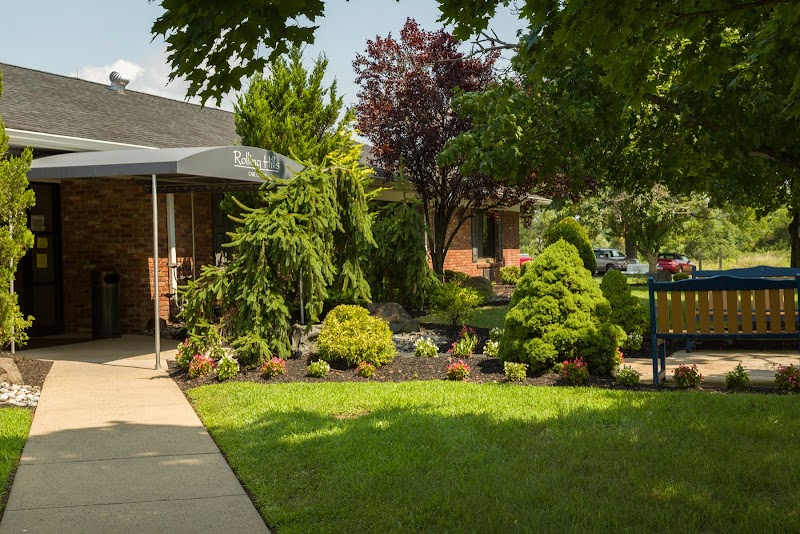
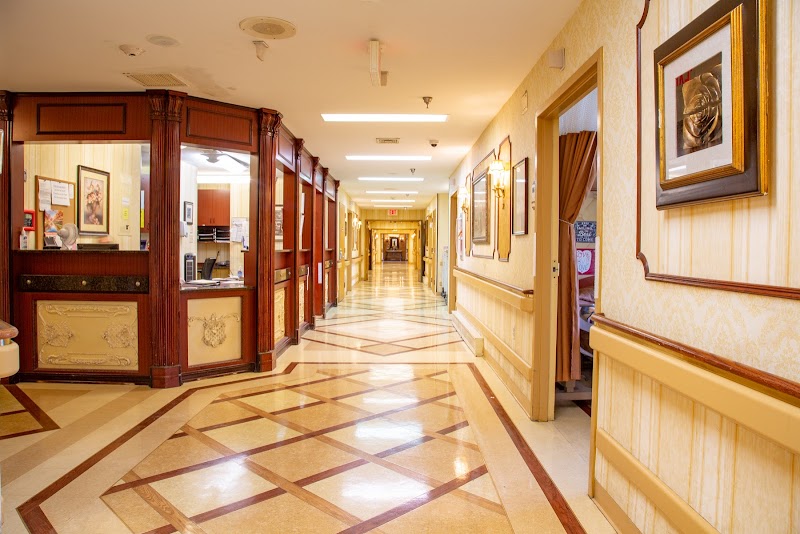
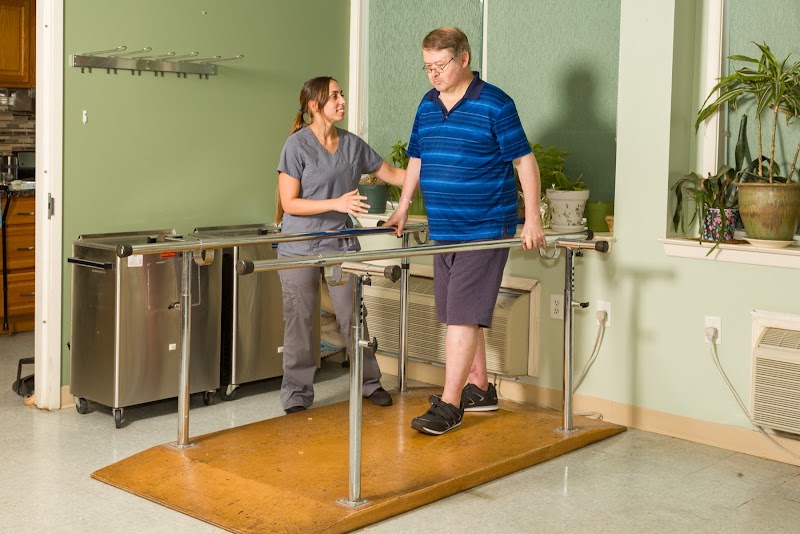
ROLLING HILLS CARE CENTER

16 CRATETOWN ROAD, LEBANON, NJ 08833 (908) 236-2011
For profit - Limited Liability company 67 Beds OCEAN HEALTHCARE Data: November 2025 1 Immediate Jeopardy citation
Trust Grade
18/100
#336 of 344 in NJ
Last Inspection: February 2025

Within standard 12-15 month inspection cycle. Federal law requires annual inspections.

Overview

Rolling Hills Care Center in Lebanon, New Jersey has a Trust Grade of F, which indicates significant concerns and a poor level of care. It ranks #336 out of 344 facilities in New Jersey, placing it in the bottom half statewide, and #4 out of 4 in Hunterdon County, meaning there are no better local options available. The facility is showing an improving trend, with issues decreasing from 11 in 2023 to 9 in 2025, although it still has a long way to go. Staffing received a 2-star rating, which is below average, and the turnover rate is 50%, indicating that many staff members leave. Additionally, the center has concerning fines of $43,001, which are higher than 88% of facilities in the state, suggesting repeated compliance problems. Specific incidents include a critical finding where residents were served incorrect pureed food textures, posing a choking hazard, and serious concerns about kitchen sanitation, with observed temperatures in the dishwashing process that could lead to foodborne illness. While there are some positive aspects, such as a trend towards fewer issues, families should carefully weigh these strengths against the significant weaknesses in care and compliance at this facility.

Trust Score
F
18/100
In New Jersey
#336/344
Bottom 3%
Safety Record
High Risk
Review needed
Inspections
Getting Better
11 → 9 violations
Staff Stability
⚠ Watch
50% turnover. Above average. Higher turnover means staff may not know residents' routines.
Penalties
○ Average
$43,001 in fines. Higher than 51% of New Jersey facilities. Some compliance issues.
Skilled Nurses
⚠ Watch
Each resident gets only 23 minutes of Registered Nurse (RN) attention daily — below average for New Jersey. Fewer RN minutes means fewer trained eyes watching for problems.
Violations
⚠ Watch
25 deficiencies on record. Higher than average. Multiple issues found across inspections.
★☆☆☆☆
1.0
Overall Rating
★★☆☆☆
2.0
Staff Levels
★★★☆☆
3.0
Care Quality
★☆☆☆☆
1.0
Inspection Score
Stable
2023: 11 issues
2025: 9 issues

The Good

  • Full Sprinkler Coverage · Fire safety systems throughout facility
  • No fines on record

Facility shows strength in fire safety.

The Bad

1-Star Overall Rating

Below New Jersey average (3.2)

Significant quality concerns identified by CMS

Staff Turnover: 50%

Near New Jersey avg (46%)

Higher turnover may affect care consistency

Federal Fines: $43,001

Above median ($33,413)

Moderate penalties - review what triggered them

Chain: OCEAN HEALTHCARE

Part of a multi-facility chain

Ask about local staffing decisions and management

The Ugly 25 deficiencies on record

1 life-threatening 1 actual harm
Feb 2025 9 deficiencies 1 IJ (1 facility-wide)
CRITICAL (L)

Immediate Jeopardy (IJ) - the most serious Medicare violation

Accident Prevention (Tag F0689)

Someone could have died · This affected most or all residents

⚠️ Facility-wide issue

**NOTE- TERMS IN BRACKETS HAVE BEEN EDITED TO PROTECT CONFIDENTIALITY** On 1/31/25 at 10:07 AM, the surveyor interviewed CNA #4 who stated that a pureed diet should be smooth and porridge like. CNA #4...

Read full inspector narrative →
**NOTE- TERMS IN BRACKETS HAVE BEEN EDITED TO PROTECT CONFIDENTIALITY** On 1/31/25 at 10:07 AM, the surveyor interviewed CNA #4 who stated that a pureed diet should be smooth and porridge like. CNA #4 then stated that pastina and couscous were not pureed diet. On 1/31/25 at 10:10 AM, the surveyor interviewed the Licensed Practical Nurse (LPN#1) who stated that a pureed diet should be smooth with no lumps. She stated that it was important that residents received the correct pureed texture because the resident could choke. On 1/31/25 at 10:15 AM, the surveyor interviewed the Registered Nurse (RN #1) who stated that a pureed diet should be a porridge consistency. She stated that she was shocked it was on the diet as the resident could choke on that consistency. On 01/31/25 at 11:19 AM, the surveyor interviewed the Director of Activities (DOA) who stated that a pureed diet should be like pudding, it should be smooth. The DOA stated that there should be no lumps and that pastina and couscous were not part of the pureed diet as the resident could choke. On 2/3/25 at 2:03 PM, the surveyor interviewed the Medical Director (MD) who stated that the consistency of a pureed diet was smooth and had no granules (small particles). At that time, the surveyor showed the MD a picture of the pasta that was served on 1/30/25 to the residents on pureed diet. The MD stated, that is grainy, it looks like couscous to me. She then stated that it had to be pureed to prevent aspiration and aid in easy swallowing. An acceptable Removal Plan was received on 1/31/25 at 8:54 AM, which indicated the action the facility would take to prevent serious harm from occurring or recurring. The facility implemented a corrective action plan to remediate the deficient practice including Residents #3, #13, #29, #37, and #47 were assessed for signs and symptoms of aspiration; the Dietary Manual was updated to remove pastina (small pasta) and couscous (small-round type of pasta) as approved selections for puree diets; staff were educated on acceptable options for residents on puree diets and the importance of checking the meal trays to ensure they received the appropriate textured diet. The survey team verified the implementation of the Removal Plan during the continuation of the on-site on 1/31/25. NJAC 8:39-17.4 (a)1-2; 27.1(a) Based on observations, interviews, record review, and review of pertinent documents on 1/30/25, it was determined that the facility failed to ensure 5 of 5 cognitively impaired residents (Residents #3, #13, #29, #37, and #42) at risk of aspiration (accidental breathing in of fluid or food into the lungs) and who had physician's order (PO) for a pureed textured (blended, mixed, or processed into a smooth and uniform texture) diet received an entrée consistent with the prescribed diet. This deficient practice was identified for 5 of 5 residents reviewed for mechanically altered diet (require change in texture of food or liquids; example pureed food). On 1/30/25 at 12:13 PM, the surveyor observed the lunch meal tray preparation in the kitchen. At that time, the surveyor observed small, white, round, pearl-like consistency pasta with red sauce on top and a Regular Pureed meal ticket on the tray line which reflected pureed spaghetti four (4) ounces (oz). At 12:14, the surveyor interviewed the Food Service Director (FSD) regarding the consistency of the pasta. The FSD and the Regional FSD (RFSD) who was also present confirmed that the small, white, round, pearl-like consistency pasta was considered pureed texture. The FSD stated that the pasta was pastina which was small pasta that did not have to be modified. On 1/30/25 between 12:44 PM to 1:09 PM, the survey team observed that the lunch meal trays were delivered to the five (5) residents that were on a pureed texture diet and included the small, white, round, pearl-like consistency pasta. Interview with the Registered Dietician (RD) on 1/30/25, confirmed that a pureed texture diet consisted of a smooth pudding-like consistency with no lumps. The RD stated that pasta should be placed in a blender to get the pureed consistency. The RD stated that it was important for residents to receive the correct consistency to prevent choking and aspiration which could lead to pneumonia or death. Interview with the Speech Language Pathologist (SLP) on 1/30/25, confirmed for a pureed diet, everything needed to be smooth with no lumps and not too dry. The SLP confirmed pastina was not considered pureed, even though it was small, round, with a pearl-like texture, it needed to be blended. The SLP stated if the resident received the incorrect diet, that placed them at risk for choking. The facility's failure to ensure that the 5 of 5 cognitively impaired residents who were at risk of aspiration and who had PO for a pureed textured diet received an entrée consistent with the prescribed diet posed a likelihood of serious injury, harm, impairment, or death could occur to all residents. This resulted in an Immediate Jeopardy (IJ) situation. The IJ began on 1/30/25, and the facility Administration was notified of the IJ on 1/30/25 at 4:02 PM. The facility submitted an acceptable Removal Plan (RP) on 1/31/25 at 8:54 AM. The survey team verified the implementation of the RP during the continuation of the on-site on 1/31/25. The evidence was as follows: A review of the undated facility's Dysphagia Diets policy included, the food service department will be responsible for preparing and serving the diet as ordered. On 1/30/25 at 12:13 PM, the surveyor observed the lunch meal tray preparation in the kitchen. At that time, the surveyor observed small, white, round, pearl-like consistency pasta with red sauce on top and a Regular Pureed meal ticket on the tray line which reflected the following: Pureed Spaghetti 4 ounces (oz) Pureed Italian Medley Pureed [NAME] Bread Pureed Chocolate Frosty Thick. On 1/30/25 at 12:44 PM, the surveyor observed Resident #37's lunch meal tray on the overbed table. The lunch meal ticket on the tray reflected pureed spaghetti. The surveyor observed the small, white, round pieces of pasta covered in a red sauce. On 1/30/25 at 12:56 PM, the surveyor observed Resident #29 in their room with the lunch meal tray on the overbed table. At that time, the surveyor observed the small, white, round, pearl-like consistency pasta and the lunch meal ticket indicated a pureed diet. At that time, the Certified Nursing Assistant (CNA #5) confirmed the pasta texture was not the correct pureed consistency and that it should not have chunks in it. He then stated the pureed texture should be smooth. CNA #5 stated he had seen incorrect pureed textures before but could not recall when it occurred. CNA #5 stated that he would request an appropriate pureed diet for the resident. On 1/30/25 at 1:00 PM, the surveyor observed Resident #13's lunch meal tray on the meal cart to be delivered. At that time, the surveyor observed the small, white, round, pearl-like consistency pasta with red sauce on top. On 1/30/25 at 1:06 PM, the surveyor observed Resident #37 in bed with the pureed textured lunch meal tray in front of them. At that time, CNA #1 stated the resident only ate the ice cream from the lunch tray and did not eat the pasta. On 1/30/25 at 1:09 PM, the surveyor observed Resident #42 feeding themselves and eating the small, white, round, pearl-like consistency pasta in their room. Resident #42 stated the food tasted good. On 1/30/25 at 1:18 PM, the surveyor interviewed the Staffing Coordinator (SC) who stated that Resident #3 was on a pureed diet and had already eaten all their lunch in the Activity room. At that time, the surveyor observed the resident self-propelling their wheelchair in the hallway. On 1/30/25 at 1:30 PM, the survey team reviewed the electronic medical record (EMR) of the 5 residents (Residents #3, #13, #29, #37, and #42) which revealed the following: A review of the admission Record facesheet, an admission summary, reflected that Resident #3, was admitted to the facility with diagnoses that included; dysphagia (difficulty swallowing), dementia, and presence of dental prosthetic device. A review of Resident #3's admission Minimum Data Set (MDS), an assessment tool dated 1/9/25, included the resident had a Brief Interview for Mental Status (BIMS) score of 00 out of 15, which indicated a severely impaired cognition. Further review of the MDS indicated the resident was on a mechanically altered diet. A review of the physician's order (PO) reflected Resident #3, had an active PO for a pureed textured diet and aspiration precautions. A review of the individualized comprehensive care plan (ICCP) dated 12/15/22, indicated Resident # 3 was at risk for aspiration related to dysphagia; 1/30/24, diet downgraded to pureed. Interventions included monitor for signs and symptoms (s/s) for aspiration; provide pureed diet as ordered. A review of the admission Record, reflected that Resident #13, was admitted to the facility with diagnoses that included; dysphagia (difficulty swallowing), dementia, and seizures. A review of Resident's #13 admission MDS, dated [DATE], included the resident had a BIMS score of 02 out of 15, which indicated a severely impaired cognition. Further review of the MDS indicated the resident was on a mechanically altered diet A review of the physician's order (PO) reflected Resident #13, had an active PO for a pureed textured diet. A review of the ICCP dated 1/30/25, reflected Resident #13 was at risk for aspiration related to dysphagia. Interventions included: provide pureed diet as ordered and monitor for signs and symptoms of aspiration. A review of the admission Record reflected that Resident #29 was admitted to the facility with diagnoses that included; dysphagia, cognitive communication deficit, and personal history of other diseases of the respiratory system. A review of Resident #29's quarterly MDS, dated [DATE], included the resident had a BIMS score of 00 out of 15, which indicated a severely impaired cognition. Further review of the MDS indicated the resident was on a mechanically altered diet. A review of the physician's order (PO) reflected Resident #29, had an active PO for a pureed textured diet. A review of the ICCP dated 8/1/22, reflected Resident #29 was at risk for aspiration related to dysphagia. Interventions included: provide pureed diet as ordered. A review of the admission Record, reflected that Resident #37, was admitted to the facility with diagnoses that included, dysphagia, mild cognitive impairment, and personal history of other diseases of the respiratory system. A review of Resident #37's most recent comprehensive MDS, dated [DATE], included the resident had a BIMS score of 00 out of 15, which indicated a severely impaired cognition. Further review of the MDS indicated the resident was on a mechanically altered diet. A review of the physician's order (PO) reflected Resident #37, had an active PO for a pureed textured diet and aspiration precautions. A review of the ICCP dated 11/26/22 reflected Resident #37 was at risk for aspiration related to dysphagia. Interventions included: provide pureed diet as ordered and monitor for signs and symptoms of aspiration. A review of the admission Record, reflected that Resident #42, was admitted to the facility with diagnoses that included; dysphagia, dementia and cough. A review of Resident #42's quarterly MDS, dated [DATE], included the resident had a BIMS score of 04 out of 15, which indicated a severely impaired cognition. Further review of the MDS indicated the resident was on a mechanically altered diet. A review of the physician's order (PO) reflected Resident #42, had an active PO for a pureed textured diet and aspiration precautions. A review of the ICCP dated 5/6/22, reflected Resident #42 was at risk for aspiration related to dysphagia. Interventions included: provide pureed diet as ordered and monitor for signs and symptoms of aspiration. On 1/30/25 at 1:41 PM, the surveyor conducted a telephone interview with the RD who stated that a pureed texture diet was smooth and pudding like. She stated that there should be no lumps, and it should be smooth. The RD stated that she was not a SLP but that to get a pureed consistency it should be placed in a blender. She further stated that pasta should be placed in a blender to get the pureed consistency. The RD stated that it was important for residents to receive the correct consistency to prevent choking, aspiration and any consequences of aspirations which would be pneumonia or death. On 1/30/25 at 2:02 PM, the surveyor interviewed the RFSD who stated that pureed texture should be a smooth consistency. The RFSD stated that pastina has been allowed in the facility and to his understanding it became pureed once it was in the mouth. He then stated he went by the facility's menu extensions (modified diet plans based on a standard menu, often including texture modifications like pureed) and the SLP and the RD overruled him. The RFSD stated the importance of a pureed diet was so the resident did not aspirate. On 1/30/25 at 2:41 PM, the surveyor interviewed the Director of Rehabilitation (DOR) in the presence of the survey team who stated that the pureed texture should be smooth. She stated that it was important for residents to receive the correct diet to prevent choking and aspiration. On 1/30/25 at 2:53 PM, the surveyor conducted a telephone interview with the SLP in the presence of the survey team who stated for a pureed diet everything needed to be smooth, no lumps and not too dry. She stated that pastina was not considered pureed unless it was blended. She further stated that if it was a small, round, pearl-like texture that still would not be considered pureed. The SLP stated if the resident received the incorrect diet, that placed them at risk for choking. The SLP confirmed that pureed pasta should be a smooth consistency. On 1/30/25 at 3:00 PM, the surveyor interviewed the Director of Nursing (DON) in the presence of the Licensed Nursing Home Administrator (LNHA) and the survey team who stated that pureed food was placed into a blender and the texture should be soft food that was mashed-up pudding like. She stated that it was important for the residents to receive the correct consistency, so they did not choke or aspirate. On 1/30/25 at 3:07 PM, the LNHA in the presence of the DON and the survey team stated that no resident was harmed and pastina was acceptable to be served as a pureed textured diet. He further stated that it had been the practice of the facility to serve pastina without modifying it because it was considered pureed. The LNHA acknowledged that a pureed diet should be smooth with no lumps.
CONCERN (D)

Potential for Harm - no one hurt, but risky conditions existed

Safe Environment (Tag F0584)

Could have caused harm · This affected 1 resident

Based on observation and interview, it was determined that the facility failed to maintain a safe and home like environment. This deficient practice was identified on 1 of 3 nursing units [South Unit...

Read full inspector narrative →
Based on observation and interview, it was determined that the facility failed to maintain a safe and home like environment. This deficient practice was identified on 1 of 3 nursing units [South Unit] reviewed for environmental concerns, and was evidenced by the following: On 1/29/2025 at 9:38 AM, the surveyor toured the South Unit and observed the following: 1.) Inside resident room #S18, on the wall adject to the door was a large area of unfinished plaster surrounding two sides of an electrical outlet, peeling wallpaper behind the resident's bed, and brown stains on the floor tiles between the resident's bed and the wall adjacent to the door. 2.) Outside room #S19 the wallpaper was peeling. 3.) Across the hall from room #S19, the kick plate on the lower half of the door to the room labeled Spa, was detached and warped. 4.) Inside resident room #S19, on the wall adjacent to bed #2, paint was peeling with small areas of plaster exposed. 5.) Inside resident room #S21 adjacent to bed #2, one third of the veneer was missing, exposing raw wood on the drawer front of the bottom drawer of a three-drawer bedside chest of drawers. On 1/30/2025 at 12:46 PM, during a tour of the South Unit, in the hallway outside room #S18, the handrail was missing one of the curved end caps, exposing the sharp edges of the handrail. On 1/31/2025 at 10:03 AM, during a tour of the South Unit, in the presence of Director of Maintenance (DM) of 10 years, broken floor tiles were observed in the hallway outside resident room #S20 and near the door frame of room #S27. Upon interview with surveyor, the DM stated that environmental rounds were done each day upon arrival, each room was checked, and the staff were asked if there were any issues. Occasionally, administration would accompany the DM on rounds. The DM further stated that maintenance was on site Monday through Friday 9:00 AM - 5:00 PM and was on call 24/7. If maintenance was not on site, the staff would text or use a messaging app to communicate issues. Upon request, the DM was unable to provide any documentation of repairs or polices relating to the care of the environment, maintenance, or maintenance logs. The DM further stated that the facility did not have any policies for maintenance. The DM added that maintenance was aware of the peeling wallpaper outside resident room #S19 but not of the other observations in the hallway and resident's rooms. The DM stated that the missing end cap on the handrail could cause cuts if not replaced, and that it was important to maintain the integrity of wall coverings to prevent infections. On 2/3/2025 at 10:59AM the surveyor interviewed the Licensed Nursing Home Administrator (LNHA), who stated that the DM was constantly doing rounds, was always on the lookout and moving around, looking for safety issues or anything dangerous to the residents. If repairs were needed, the DM fixed it or the repair was outsourced. The LNHA stated that the facility had no official policy for environment or maintenance. The LNHA continued that the building should be kept in a homelike environment. On 2/4/2025 at 10:16 AM the Licensed Nursing Home Administrator (LNHA), in the presence of the Director of Nursing (DON) and the survey team, acknowledged the above findings. The faciltiy was unable to provide a policy on environment or maintenance. NJAC 8:39-4.1(a)(11) NJAC 8:39-31.4(a)
CONCERN (D)

Potential for Harm - no one hurt, but risky conditions existed

Transfer Notice (Tag F0623)

Could have caused harm · This affected 1 resident

**NOTE- TERMS IN BRACKETS HAVE BEEN EDITED TO PROTECT CONFIDENTIALITY** Based on interview, record review, and review of facility documents, it was determined that the facility failed to notify the Of...

Read full inspector narrative →
**NOTE- TERMS IN BRACKETS HAVE BEEN EDITED TO PROTECT CONFIDENTIALITY** Based on interview, record review, and review of facility documents, it was determined that the facility failed to notify the Office of the State Long-Term Care Ombudsman of a resident hospitalization. This deficient practice was identified for 1 of 2 residents (Resident #4) reviewed for hospitalization and was evidenced by the following: On 1/29/25 at 10:10 AM, the surveyor observed the resident awake and alert sitting in a wheelchair with a visitor at their bedside. Resident #4 stated they were in the hospital back in October 2024. On 1/29/25 at 11:00 AM, the surveyor reviewed the medical record for Resident #4. A review of the admission Record, an admission summary, revealed the resident had diagnoses which included respiratory syncytial virus (RSV) and enterocolitis (inflammation of the intestines). A review of the quarterly Minimum Data Set (MDS), an assessment tool, dated 11/2/24, included the resident had a Brief Interview for Mental Status (BIMS) score of 14 out of 15, which indicated the resident's cognition was intact. Further review of the MDS revealed the resident had an admission reentry from the acute hospital. A review of the Progress Note (PN), dated 10/22/24 at 8:46 PM, reflected the resident was admitted to the hospital for sepsis. On 1/30/25 at 12:35 PM, the surveyor interviewed the Licensed Nursing Home Administrator (LNHA) who stated that he was unable to locate the notification to the State Long-Term Care Ombudsman (Ombudsman's office) for Resident #4. He then stated that the previous Director of Social Services (DSS) completed them up until October 2024. The LNHA stated that it was important for the ombudsman's office to be notified of the emergency transfer because they were the resident's advocate, and they should be aware of the resident's care. The LNHA acknowledged it should have been completed prior to surveyor inquiry. On 1/30/25 at 12:40 PM, the surveyor interviewed the DSS who stated she started in October 2024 and overlapped with the previous DSS. The DSS stated that she was unaware of when the last time the notification to the ombudsman's office was sent. She stated that it was important for the ombudsman's office to be notified, so they were aware of the resident's emergency transfer. At that time, the DSS confirmed it had not been done since she started. She then stated with the transition it was lost. On 1/31/25 at 11:06 AM, the DSS stated that the notification to the ombudsman's office was last completed in June 2024. A review of the facility's Transfer/Discharge/Bed Hold Policy and Procedure dated October 2024, included, 2. Notification: the facility will B. for residents over age [AGE], send a copy of the notice to a representative of the Office of the State Long-Term Care Ombudsman. NJAC 8:39-4.1(a)3
CONCERN (D)

Potential for Harm - no one hurt, but risky conditions existed

Deficiency F0625 (Tag F0625)

Could have caused harm · This affected 1 resident

Based on interview, review of the medical record, and review of other pertinent facility documentation, it was determined that the facility failed to provide the resident or resident representative wr...

Read full inspector narrative →
Based on interview, review of the medical record, and review of other pertinent facility documentation, it was determined that the facility failed to provide the resident or resident representative written notification of the facility's bed hold policy for 1 of 2 residents (Resident #4) reviewed for hospitalizations. This deficient practice was evidenced by the following: On 1/29/25 at 10:10 AM, the surveyor observed the resident awake and alert sitting in a wheelchair with a visitor at their bedside. Resident #4 stated they were in the hospital back in October 2024. On 1/29/25 at 11:00 AM, the surveyor reviewed the medical record for Resident #4. A review of the admission Record, an admission summary, revealed the resident had diagnoses which included respiratory syncytial virus (RSV) and enterocolitis (inflammation of the intestines). A review of the quarterly Minimum Data Set (MDS), an assessment tool, dated 11/2/24, included the resident had a Brief Interview for Mental Status (BIMS) score of 14 out of 15, which indicated the resident's cognition was intact. Further review of the MDS revealed the resident had an admission reentry from the acute hospital. A review of the Progress Note (PN), dated 10/22/24 at 8:46 PM, reflected the resident was admitted to the hospital for sepsis. On 1/30/25 at 12:40 PM, the surveyor interviewed the Director of Social Services (DSS) who stated she started in October 2024 and overlapped with the previous DSS. The DSS stated that she was unaware of when the last time the Transfer/Bed Hold Notice Prior to Hospitalization or Therapeutic Leave form was completed. At that time, the DSS confirmed the forms had not been done since she started and with the transition it was lost. On 1/31/25 at 11:06 AM, the DSS stated that the Transfer/Bed Hold Notice Prior to Hospitalization or Therapeutic Leave forms were last completed in September 2024. On 2/4/25 at 10:38 AM, the LNHA in the presence of the Director of Nursing (DON) and survey team stated that completing the Transfer/Bed Hold Notice Prior to Hospitalization or Therapeutic Leave form was an oversight. He stated that it was important for the resident or the resident's representative to receive the form so they are aware of the bed hold policy. A review of the facility's Transfer/Discharge/Bed Hold Policy and Procedure dated October 2024, included, 1. Notice Before Transfer: When a resident is temporarily transferred on an emergency basis to an acute care facility .Before a nursing facility transfers a resident to the emergency room (ER) The nursing facility will provide written information to the resident and resident representative that specifies A. The duration of the state bed-hold policy for hospital transfers B. The reserve bed payment policy. N.J.A.C. 8:39-5.1 (a); 5.2 (a)
CONCERN (D)

Potential for Harm - no one hurt, but risky conditions existed

Deficiency F0692 (Tag F0692)

Could have caused harm · This affected 1 resident

Based on observation, interview, record review, and review of pertinent facility documents, it was determined that the facility failed to obtain a re-weight according to the facility's policy for a re...

Read full inspector narrative →
Based on observation, interview, record review, and review of pertinent facility documents, it was determined that the facility failed to obtain a re-weight according to the facility's policy for a resident with a history of significant weight loss. This deficient practice was identified for 1 of 3 residents (Resident #19) reviewed for nutrition and evidenced by the following: On 1/30/25 at 1:01 PM, the surveyor observed Resident #19 in his/her room being served lunch. The resident received double portions of ground spaghetti and meatballs with sauce, vegetables, and bread. The resident stated he/she enjoyed the food. At 1:43 PM, the surveyor observed Resident #19 had consumed approximately 50% of his/her lunch meal. The surveyor reviewed the medical record for Resident #19. A review of the admission Record, an admission summary, revealed the resident had diagnoses which included, but were not limited to, unspecified dementia, unspecified protein-calorie malnutrition, and dysphagia (difficulty swallowing). A review of the quarterly Minimum Data Set (MDS), an assessment tool used to facilitate the management of care, dated 12/14/24, included the resident had a Brief Interview for Mental Status (BIMS) score of 0 out of 15, which indicated the resident's cognition was severely impaired. Further review of the MDS revealed the resident had a weight loss of 5% or more in the last month, or 10% or more in the last six months, while not on a physician-prescribed weight loss regimen. A review of the individual comprehensive care plan (ICCP) included a focus area, revised 12/17/24, that the resident had a significant weight loss in one month. Interventions included: 12/17/24 Weekly weights x 4 weeks, and Monitor weights per protocol. A review of the Dietician Note (DN), dated 12/17/24, included the resident had a significant weight loss in one month. Further review of the DN included recommendations to start weekly weights for four weeks. A review of the Weights and Vitals Summary, as of 1/31/25, included the following weights: On 1/3/25, the resident weighed 169.6 lbs. On 1/16/25, the resident weighed 151.8 lbs. According to the documented weights, the resident experienced a 10.5% weight loss (17.8 lbs) in 13 days. A review of the Progress Notes, dated 1/16/25 through 1/30/25, did not include evidence that a re-weight was attempted after the documented weight loss of more than five pounds, or that the Registered Dietician (RD) or physician was notified of the significant weight loss on 1/16/25. On 1/31/25 at 9:58 AM, the surveyor interviewed Certified Nursing Assistant (CNA) #4 who stated the nurse schedules the weights that the CNAs need to obtain. The CNA further stated she reports the weights to the nurse, but does not look at the resident's weight history for comparison. The CNA explained that if a resident needed to be re-weighed, the nurse would instruct the CNA to obtain the weight at that time. The CNA added that it was important to obtain resident weights as ordered to see if the weight is fluctuating. On 1/31/25 at 10:12 AM, the surveyor interviewed the Infection Preventionist (IP), who was the nurse for Resident #19 that day. The IP stated residents were weighed on a schedule depending on their specific circumstances and that weights were documented in the electronic medical record (EMR) by the nurse or RD. The IP further stated that if a resident had a weight change of five pounds or more, a re-weight should be obtained to verify the correct weight. The IP explained that a weight change of five pounds or more should be communicated to the physician to make sure whatever is best for the resident is done. On 1/31/25 at 10:15 AM, the surveyor interviewed the RD who stated that residents were placed on weekly weights when their weights needed to be monitored for weight gain or loss, and that the weights were documented in the EMR by the nurse or the RD. The RD explained that if a resident had a weight change of five pounds or more since the last weight, a re-weight should be obtained immediately to confirm if the weight was accurate. The RD further stated that for true significant weight losses, she would document her nutritional assessment in the resident's progress notes and notify the physician. The RD stated that it was important for staff to notify her or the physician of a significant weight change in order to implement the appropriate interventions. At that time, the surveyor informed the RD of the significant weight loss that was documented in Resident #19's EMR on 1/16/25. The RD stated she was unaware of the weight that was obtained on 1/16/25, and that the staff should have re-weighed the resident and notified the RD or physician if there was a true weight loss of five pounds or more. On 1/31/25 at 10:45 AM, the RD informed the surveyor that she obtained a re-weight for Resident #19 after surveyor inquiry. The RD stated that the resident's weight was 163.6 lbs and that the weight obtained on 1/16/25 was most likely inaccurate. On 1/31/25 at 10:50 AM, the surveyor interviewed the Director of Nursing (DON) who stated that residents with a weight change of five pounds or more should be re-weighed within 24 hours so that the RD or physician could evaluate the need for an intervention. At that time, the surveyor informed the DON of Resident #19's documented significant weight loss on 1/16/25. The DON confirmed that when the weight was obtained on 1/16/25, the staff should have obtained a re-weight to verify the resident's accurate weight. A review of the facility's Weight Policy, dated 11/2024, included the following: a. The nursing staff is responsible to obtain weights as assigned. -Reweight is required if the resident has a weight change +/- 5 lbs. -Dietician will follow up with any weight discrepancies ASAP [as soon as possible]. d. Weight Refusal The nursing staff will notify the Unit Manager/Designee of any resident who refuses to be weighed. Nurse and Dietician will meet with the resident to encourage him or her to get weighed. If resident continues to refuse, dietician will document and initiate/update care plan as needed. A review of the facility's Unintentional/Unplanned Weight Change policy, dated 11/2024, included the following: Purpose: To intervene appropriately with residents having unintentional/unplanned weight change. 1. Determination is made through monthly/weekly weight reviews by the dietician in communication with nursing that a resident has unintentional/unplanned weight change. NJAC 8:39 - 27.2 (a)
CONCERN (D)

Potential for Harm - no one hurt, but risky conditions existed

Infection Control (Tag F0880)

Could have caused harm · This affected 1 resident

Based on observation, interview, and review of facility documents, it was determined that the facility failed to maintain proper infection control practices to ensure a.) staff performed appropriate h...

Read full inspector narrative →
Based on observation, interview, and review of facility documents, it was determined that the facility failed to maintain proper infection control practices to ensure a.) staff performed appropriate hand hygiene while donning (putting on) and doffing (removing) gloves for 1 of 1 staff member observed, and b.) enhanced barrier precautions (EBP) was initiated for 1 of 1 resident (Resident #24). This deficient practice was evidenced by the following: 1.) On 1/29/2025 at 10:06 AM, during the initial tour of the South Unit, the surveyor observed the Environmental Services staff member (EVS #1) exit resident room S24 doffed gloves, disposed them in the garbage and donned another pair of gloves without performing hand hygiene, EVS #1 then entered resident room S25. At 10:08 AM, the surveyor observed EVS #1 exit room S25 doffed gloves, disposed the gloves in the garbage, donned another pair of gloves again without performing hand hygiene and entered room S22. On 1/29/2025 at 10:12 AM, the surveyor interviewed EVS #1 upon exiting room S22, who stated that gloves were changed twice during the cleaning of a resident's room; after cleaning the bathroom and after cleaning the room. EVS #1 was not able to speak to the process of hand hygiene for donning and doffing gloves. On 1/31/2025 at 10:43 AM, the surveyor interviewed the Regional Director of Environmental Services (REVS), who stated that hand hygiene should be performed before donning and after doffing gloves. The REVS then stated that gloves should be changed between rooms and hand hygiene should be performed. He stated that education was provided upon hire, anytime there was a change in policy and as needed. He then stated that the Infection Preventionist (IP) educated the environmental services staff on hand hygiene. On 1/31/2025 at 10:56 AM, the surveyor interviewed the IP who stated that the importance of hand hygiene was to prevent infections. She stated that hand hygiene should be performed before and after resident care, when exiting a room and finished with the resident, when delivering meal trays, contact with any types of fluids, and before donning and after doffing gloves. The IP also stated that education was provided to environmental services staff on hand hygiene and a Spanish speaking translator was utilized if needed. On 2/3/2025 at 11:11 AM, the surveyor interviewed the Director of Nursing (DON), who stated that hand hygiene should be performed prior to anything with resident care, before donning and after doffing gloves, and between residents' rooms. The DON also stated that hand hygiene education was given annually to staff and that IP conducted random audits. On 2/4/2025 at 10:16 AM, the Licensed Nursing Home Administrator (LNHA), in the presence of the DON and the survey team, acknowledged the above findings. A review of facility's Hand Hygiene Policy dated 3/19/24, included, Hand Hygiene Guidelines When to Perform Hand Hygiene . F. Decontaminate hands before entering a patient room. G. Decontaminate hands upon exiting a patient room . J. Decontaminate hands before reaching into a glove box to obtain gloves . u. Decontaminate hands after removing gloves. A review of facility's Inservice Record/Meetings policy dated 12/20/2024, included, Topic(s) hand hygiene .Discussion: Preventing infections, hand sanitizer versus [vs] soap and water, gloves. It further reflected it was signed by EVS#1. 2.) On 1/29/2025 at 10:51 AM, during tour of the South Unit the surveyor observed Resident #24 with and intravenous (IV) peripherally inserted central catheter (PICC - a thin, flexible tube inserted into a vein in the upper arm and threaded into a larger vein in the chest) line on the left upper extremity with Sodium Chloride Solution 0.9% dated 1/28/2025 infusing via gravity. No Enhanced Barrier Precautions (EBP) signage was observed posted inside or outside the resident's room. On 1/30/2025 at 10:09 AM, the surveyor reviewed the physician's orders (PO) for Resident #24, which included the following: A PO dated 1/28/2025, for insert midline for IV access and IV fluids. A PO dated 1/28/2025, for monitor left (L) arm IV site every shift & document site appearance, and any signs and symptoms (s/s) of infection/infiltration; every shift for intake and output (I&O) monitor every shift and document. A PO, dated 1/30/2025, for, discontinue (d/c) midline. A review of the individual comprehensive care plan (ICCP) included a focus area dated 1/28/2025, that the resident has the potential for complications related to IV access site. Interventions included, monitor for insertion site of midline for signs and symptoms of infection. On 1/31/2025 at 10:55 AM surveyor interviewed the IP who stated resident #24, should have been on EBP with the PICC and IV infusion. On 2/3/2025 at 11:11 AM , the surveyor interviewed the DON who stated that for residents on EBP signage should be posted and added to the ICCP. She then the IP would oversee to ensure the signage was posted. The DON stated EBP should be initiated on residents with a central line (central venous catheter (CVC - a thin, flexible tube that's inserted into a large vein near the heart) and that a PICC was a midline catheter and would not require EBP. Reference: Center for Disease Control and Prevention, Long-Term Care Facilities, document titled Frequently Asked Questions (FAQs) about Enhanced Barrier Precautions in Nursing Homes dated June 28, 2024, states, .22. What is the definition of indwelling medical device? An indwelling medical device provides a direct pathway for pathogens in the environment to enter the body and cause infection. Examples of indwelling medical devices include, but are not limited to, central vascular catheters (including hemodialysis catheters, peripherally inserted central catheters (PICCs)) . Although the data are limited, CDC does not currently consider peripheral I.V.s (except for midline catheters) . as indications for Enhanced Barrier Precautions . A review of the facility's undated Enhanced Barrier Precautions policy included, states, Procedure EBP is used in conjunction with standard precautions and expand the use of PPE [personal protective equipment] to don gown and gloves during high-contact resident care activities .EBP is targeted to these highest risk activities .wound and/or indwelling medical devices even if the resident is not known to be infected or colonized with an MDRO [multi-drug resistant organisms] . A review of the facility's Infection Prevention and Control Plan 2024 policy dated 3/27/23 included, Goals for the Infection Prevention and Control Program are: 1. To provide a safe, clean environment for staff, residents and visitors and to institute measures to prevent acquisition of infection that may jeopardize the resident's recovery .12. To reduce cross contamination throughout [facility name] .Development of Goals .4. To identify and prevent transfer of infections .among residents, staff team members .This is accomplished by using, but not limited to, standard precautions, aseptic technique and any addition isolation precautions as needed and appropriate. NJAC 8:39-19.4(n)
CONCERN (D)

Potential for Harm - no one hurt, but risky conditions existed

Safe Environment (Tag F0921)

Could have caused harm · This affected 1 resident

Based on observations and interviews, it was determined that the facility failed to maintain a safe and sanitary food storage room. This deficient practice was identified in 1 of 1 emergency food stor...

Read full inspector narrative →
Based on observations and interviews, it was determined that the facility failed to maintain a safe and sanitary food storage room. This deficient practice was identified in 1 of 1 emergency food storage rooms and was evidenced as follows: On 1/31/2025 at 10:00 AM, the surveyor and the Regional Food Service Director (RFSD) toured the emergency food storage room in the basement. The surveyor heard intermittent liquid dripping and observed a brown puddle of liquid on the floor. In the nearby vicinity, an open box containing serving utensils and two (2) boxes of coffee cup lids and were located on the lower shelf. The boxes appeared to be disfigured and discolored containing brown splatter marks. At the same time, the surveyor observed an opening in the ceiling near the window. Two brown long drip lines were noted on the wall. The surveyor further observed crates that contained numerous soiled gallon water bottles. At that time, the surveyor interviewed the RFSD who stated that nothing should leak into the emergency food supply, the serving utensils, or the boxes of lids. On 1/31/2025 at 11:37 AM, the surveyor interviewed the Director of Maintenance (DM) who stated that the building should be intact and there should not be any leaks. A review of the Corporate-led rounds on 1/26/25 revealed that pooling was noted on the floor of the emergency food storage room, and water gallons were in crates with water damage and debris. On 2/3/2025 at 11:07 AM, the surveyor interviewed the Licensed Nursing Home Administrator (LNHA) in the presence of the DON and the survey team, who acknowledged that anything hazardous to the residents should be addressed in a timely manner. He further stated that the condition of the building should be kept nice, and any concerns should be brought to the attention of the Director of Maintenance (DM) right away. A review of the facility's undated Storage Areas policy included, Food is stored in an area that is clean, dry and free from contaminants. NJAC 8:39-31.4(a)
CONCERN (E)

Potential for Harm - no one hurt, but risky conditions existed

Deficiency F0658 (Tag F0658)

Could have caused harm · This affected multiple residents

Based on observation, interview, record review, and review of facility documents, it was determined that the facility failed to a) accurately monitor and document a dressing change for a midline (a th...

Read full inspector narrative →
Based on observation, interview, record review, and review of facility documents, it was determined that the facility failed to a) accurately monitor and document a dressing change for a midline (a thin, flexible tube inserted in a vein in the upper arm to deliver fluids or medications) intravenous catheter and b) ensure that a resident (Resident #4) received care and treatment in accordance with professional standards of clinical practice, the physician's order, and the facility's policy. This deficient practice was identified for 1 of 1 resident (Resident #159) reviewed for infection and 1 of 1 resident (Resident #4) reviewed for hospitalization and was evidenced by the following: 1.) On 1/29/25 at 10:14 AM, during the initial tour of the facility, the surveyor observed signage outside of Resident #159's room which indicated that the resident was on isolation precautions and personal protective equipment (specialized clothing or equipment worn to protect the wearer from infection or injury) was required to be worn in order to enter the resident's room. The surveyor observed Resident #159 lying in bed with an intravenous (IV) catheter in his/her left upper arm that was dated 1/17/25. The resident's family member was present and stated that the resident's IV was used for antibiotic administration and the dressing was last changed at the hospital. The surveyor observed that there were multiple central line (a long flexible tube inserted in the arm that provides access to a patient's blood supply) dressing kits hanging on the IV pole beside the resident's bed. On 1/29/25 at 12:48 PM, the surveyor reviewed the medical record for Resident #159. A review of the admission Record, an admission summary, revealed the resident had diagnoses which included, but were not limited to, diverticulitis (an inflammation or infection in one or more small pouches in the digestive tract) of the large intestine with perforation and abscess (a hole in an organ wall, with a collection of pus or infected fluid) without bleeding, colostomy (a surgical operation in which a piece of colon is diverted to an artificial opening in the abdominal wall so as to bypass a damaged part of the colon) and diabetes mellitus (occurs when the body does not produce enough insulin) due to underlying condition without complications. The resident's comprehensive Minimum Data Set (MDS), an assessment tool, was in progress and was not completed for review at the time of the observation. A review of the resident's individual comprehensive care plan (ICCP) included a focus area, dated 1/23/25, that the resident had a potential for complications related to left arm midline access site; IV therapy due to pericolic (surrounding the colon) abscess. Interventions included: Monitor insertion site of PICC (a long, flexible tube inserted into a vein in the arm and threaded into a large vein near the heart) line for signs and symptoms of infection and dressing changes as ordered. A review of the Order Summary Report (OSR), dated as of 1/23/25, indicated to change the midline left arm IV dressing, extension set (tubing), and cap 24 hours post insertion, then every week and as needed for Midline/PICC IV use, and to change the dressing, extension set, and cap as needed. A review of the Medication Administration Record (MAR) revealed an entry with a start date of 1/23/25, which included: Change Midline left arm dressing, extension set, and cap 24 hours post insertion, then every week and as needed every shift every seven days for Midline/PICC IV use, and to change the dressing, extension set, and cap every week. Further review of the MAR revealed that the order was signed out as completed by nursing on 2/23/25 on both the evening and night shifts. A review of the Progress Notes (PN) failed to include documentation related to the resident's left arm midline dressing changes. On 1/30/25 at 11:38 AM, the surveyor observed the resident lying in bed accompanied by his/her family member. The resident's left upper arm midline catheter was dated 1/17/25. The resident's family member stated that the IV dressing had not been changed. He/She further stated that the extension tubing had leaked during IV antibiotic administration, but the nurse stated that it was okay since it was such a small amount of medication. On 1/30/25 at 12:07 PM, the surveyor interviewed Registered Nurse (RN) #1 who stated that the resident's IV dressing was supposed to be changed every seven days and she had not seen the resident's dressing yet. On 1/30/25 at 12:15 PM, RN #1 accompanied the surveyor into the resident's room to observe the left upper arm IV dressing. RN #1 stated that the IV dressing was dated 1/17/25 from the hospital and that the IV dressing should have been changed on 1/24/25. RN #1 further stated that it was important to change the IV dressing every seven days to prevent infection. On 1/30/25 at 12:26 PM, the surveyor interviewed the Infection Preventionist (IP) who stated that the original IV dressing from the hospital was supposed to be changed within 24 hours, and that was in the facility's order set. The IP then proceeded to review the electronic Medication Administration Record (EMAR) in the presence of the surveyor and confirmed that the midline dressing change was signed out as completed on 1/23/25, on both the evening and night shifts. The IP stated that it was an infection control concern if the IV dressing was not changed as ordered. The IP further stated that she would have expected to see a progress note to indicate why the dressing change was not done as indicated. On 1/31/25 at 9:58 AM, the surveyor interviewed the Director of Nursing (DON) who stated that if a midline dressing that was dated 1/17/25 from the hospital was intact, then it could be changed seven days later on 1/24/25. The DON stated if nursing signed the EMAR to reflect that they changed the resident's IV dressing then they should have written a progress note to indicate the reason that they did not do it. The DON further stated that it was important to change the dressing as scheduled to ensure that the there was no infection. On 1/31/25 at 10:34 AM, the DON stated, I have to see this for myself and proceeded to go into the resident's room. The DON observed the resident's IV dressing and stated that the dressing was changed yesterday by RN #1. The surveyor informed the DON that RN #1 changed the resident's dressing after surveyor inquiry. On 1/31/25 at 12:08 PM, the DON provided the surveyor with untitled documentation from the hospital which indicated that the resident's midline catheter was inserted on 1/17/25. On 2/3/25 at 10:25 AM, in the presence of the Licensed Nursing Home Administrator (LNHA) and the survey team, the DON stated that the facility would have changed a midline catheter the day after insertion, but the resident was not here the day after insertion. When the surveyor asked the DON why nursing signed the EMAR to indicate that they had changed the dressing on 1/23/25 but did not complete the dressing change as indicated, the DON stated, I do not know. A review of the facility's Catheter Insertion and Care policy revised 1/17/19, included: Midline Dressing Changes Midline catheter dressing will be changed at specified intervals, or when needed, to prevent catheter-related infections associated with contaminated, loosened or soiled catheter-site dressings. General Guidelines: Change midline catheter dressing 24 hours after catheter insertion, every 5-7 days, or if it is wet, dirty, not intact, or compromised in any way . 2.) On 1/29/2025 at 10:10 AM, Resident #4 was observed awake and alert, sitting in a wheelchair next to their bed. The resident stated that they were in the hospital in October 2024. A review of the admission Record, an admission summary revealed the resident had diagnoses that included, a personal history of urinary tract infections (UTI), interstitial cystitis, and overactive bladder. A review of the resident's quarterly Minimum Data Set (MDS), an assessment tool, dated 11/2/24, included the resident had a Brief Interview for Mental Status (BIMS) score of 14 out of 15, which indicated the resident's cognition was intact. A review of the resident's individual comprehensive care plan (ICCP), dated 10/25/2024, included a focus area that the resident was at risk for a UTI related to catheter use. Interventions included remain free from complications related to catheter use. A review of the Order Summary Report (OSR), dated as of 2/3/2025, included a physician's order (PO) dated 10/28/2024, to schedule the resident a urology follow up for superpubic catheter placement due to recurrent UTI. A review of the Physician Progress Note (PPN) reflected the following: 10/25/2024 at 1:36 PM, the resident was admitted for complicated UTI. 10/28/2024 at 12:45 PM, Assessment and plan: obtain urology follow up. On 1/31/2024 at 11:02 AM, the surveyor interviewed the DON, who stated that the unit clerk scheduled and arranged transportation for outside medical appointments. She further stated that the PO should be followed, and if the resident was unable to attend the appointment, the physician should be notified as to why their order was not carried out. On 1/31/2025 at 11:20 AM, the surveyor interviewed the staffing coordinator (SC), who stated that she was responsible for scheduling the resident appointments. The SC was unable to provide evidence that the appointment was scheduled for Resident #4. On 2/3/2025 at 11:48 AM, the surveyor interviewed the Medical Director (MD), who stated that a urology consult was ordered to determine whether Resident #4 met the criteria for a suprapubic catheter due to frequent UTIs. The MD also stated a UTI can lead to a resident becoming sepsis (a life-threatening condition that occurs when the body's immune system overreacts to an infection), which would lead to antibiotics. She further stated that the nursing staff should have reviewed the order, scheduled the appointment, made transportation arrangements, and notified the team that the appointment had been made. On 2/4/2025 at 10:59 AM, the surveyor conducted a follow-up interview with the DON, in the presence of the LNHA and the survey team. The DON acknowledged that the urology appointment should have been scheduled as ordered. She further stated that a urology appointment was scheduled for tomorrow (2/5/2025). The facility was unable to provide a policy pertaining to scheduling resident appointments. NJAC 8:39-19.4, 27.1(a)
CONCERN (F)

Potential for Harm - no one hurt, but risky conditions existed

Food Safety (Tag F0812)

Could have caused harm · This affected most or all residents

Based on observation, interview, and review of pertinent facility documents, it was determined that the facility failed to maintain kitchen sanitation in a safe and consistent manner to prevent food b...

Read full inspector narrative →
Based on observation, interview, and review of pertinent facility documents, it was determined that the facility failed to maintain kitchen sanitation in a safe and consistent manner to prevent food borne illness. This deficient practice was evidenced by the following: On 1/29/25 from 9:28 AM to 11:31 AM, the surveyor, accompanied by the Dietary Aide (DA #1) and the Food Service Director (FSD) toured the kitchen and observed the following: 1. On 1/29/25 at 10:09 AM the surveyor observed a high temperature dish machine running at 136 degrees Fahrenheit (F). The FSD stated that per the manufacture's recommendations the dish machine should wash above 150 degrees and rinse above 180 degrees. DA #1 placed a rack of soiled trays in the dishwasher and when the cycle was complete dipped a test strip onto a wet tray immediately. DA #1 then showed, the test strip failed to change colors which indicated that the concentration was less than 10 Parts Per Million (PPM). At that time, the surveyor observed the chemical sanitizer test strip bottle was expired with a date of 10/1/24. DA #1 located a new bottle of test strips with an expiration date of 4/1/26 and repeated the test. Again, the test strip failed to change color and was less than 10 PPM according to the color scale on the bottle. 2. The surveyor requested the monthly temperature (temp) dish machine log. A review of the high temp dish machine log revealed the following: on 1/28/25 the temperature at breakfast for the wash cycle was 146 F and rinse cycle was 94 F; on 1/29/25 the wash cycle temp was 145 F, and the rinse cycle was 95 F. 3. On 1/29/25 at 10:38 AM, the surveyor observed the FSD not wearing a hair net. On 1/29/25 at 10:09 AM, the surveyor interviewed DA #1 who stated that the dishwasher was not tested today (1/29/25). DA #1 then stated that they did not record the chlorine test strips only the temperatures of the dish machine and the sink. DA #1 stated that the Director of Maintenance (DM) was aware of the issue with the dish machine. On 1/29/25 at 10:38 AM, the surveyor interviewed the FSD who stated that there were lime deposits affecting the dish machine and the temperatures. She stated that the wash cycle should be 150 F or above, the rinse cycle should be 180 F and above, or the chemical sanitizer should be 50 PPM or above. The FSD stated that the importance of this was to prevent food borne illnesses. The FSD also stated that a hair net should be worn in the kitchen for safe handling practices. On 2/4/24 at 9:16 AM, the surveyor interviewed the Regional FSD (RFSD) who stated that the expectation for the dish washer who be it reached the required temperatures and if it did not then it should go into the chemical sanitizer. The RFSD stated that the chemical sanitizer should reach 50 -100 PPM. The RFSD stated that if the facility had to use chemical sanitizer, they would utilized it before every meal. The RFSD emphasized he was unaware that it was not being tested. He then stated that the dishwasher was the heart of the kitchen. The RFSD stated that his expectation for anyone walking in the kitchen was to wear a hair net, so that hair follicles did not fall into the food and cause contamination. A review of the undated facility's manufacturer specifications for the dish machine included, high temperature dish machine the wash temperature is to be between 150 - 165 F and the rinse temperature 180F .if low temperature or using chemical sanitize that the wash be 120F and that the chemical reads 50 PM Hydrochloride. A review of the facility's undated Maintenance of the Dish Machine policy included, Dish machine will be properly maintained to assure proper functioning . the dish machine will be regularly cleaned and de-limed as needed. A review of the undated facility's Dish Machine Temperature Log policy, included, the dishwasher staff will monitor and record dish machine temperature to assure proper sanitizing of dishes .the FSD will promptly assess any dish machine problems and act immediately to assure the sanitation of dishes. NJAC 8:39-17.2(g)
Nov 2023 11 deficiencies 1 Harm
SERIOUS (G) 📢 Someone Reported This

A family member, employee, or ombudsman was alarmed enough to file a formal complaint

Actual Harm - a resident was hurt due to facility failures

Quality of Care (Tag F0684)

A resident was harmed · This affected 1 resident

Deficiency Text Not Available

Read full inspector narrative →
Deficiency Text Not Available
CONCERN (D) 📢 Someone Reported This

A family member, employee, or ombudsman was alarmed enough to file a formal complaint

Potential for Harm - no one hurt, but risky conditions existed

Safe Environment (Tag F0584)

Could have caused harm · This affected 1 resident

Complaint # NJ00166500 Based on observations, interview, record review, and review of other pertinent facility documents, the facility failed to exercise reasonable care for the protection of the resi...

Read full inspector narrative →
Complaint # NJ00166500 Based on observations, interview, record review, and review of other pertinent facility documents, the facility failed to exercise reasonable care for the protection of the resident's property from loss or theft by failing to ensure resident's personal belongings were labeled and inventoried for one (1) of five (5) residents sampled for closed records (Resident #214). This deficient practice was evidenced by the following: The surveyor reviewed the medical records of Resident #214. Resident #214's closed record included the following Progress Note: Resident #214 was discharged at 6:00 PM today with the resident's representative (RR) but was unable to find resident's clothes that he/she came with Writer and RR searched resident's room and also laundry area but couldn't [could not] find any clothing, not really clear it [if] clothes were labeled . A review of Resident #214's admission Record (or face sheet; admission summary) indicated that the resident was admitted to the facility with medical diagnoses that included but were not limited to; encephalopathy (a broad term for any brain disease that alters brain function or structure), hypotension (low blood pressure, which can cause fainting or dizziness because the brain doesn't receive enough blood) and displaced intertrochanteric fracture of right femur (broken thighbone). Resident #214's Comprehensive Minimum Data Set (MDS), an assessment tool used to facilitate the management of care, dated 6/07/23, indicated a Brief Interview for Mental Status (BIMS) score of 6 out of 15, which reflected that the resident's cognition was severely impaired. On 11/17/23 at 9:03 AM, the surveyor interviewed the Registered Nurse (RN) regarding the process for resident's clothing and missing items. The RN stated that the resident's clothing were to be labeled. He added that the family brought in the clothing and that the clothing was labeled by the nurse and that it was documented on a clothing sheet but that he was not sure where the document was kept. The RN then stated that usually the family will report a missing item and that the laundry department was made aware. The RN added that he did not know if there was a document or log that was kept for missing items. On 11/20/23 at 10:25 AM, the surveyor interviewed the Director of Nursing (DON) regarding the process for resident's clothing and missing items. The DON stated that on admission the resident or family was asked if family would be doing the laundry or the facility. He added that either way the family was encouraged to have the resident's clothing labeled. The DON stated that on admission an inventory sheet would be completed. The DON stated that when a resident comes from the hospital, they do not have all their belongings. He added that when the family comes in, the family may bring in the clothes and we are not aware sometimes. The DON then stated that when we identify that clothes were brought in then we would bring them to the laundry department to get labeled. On that same date and time, the surveyor asked the DON if all residents should have an inventory sheet. The DON stated that all residents should have an inventory sheet, even if it was blank and the resident did not come in with clothes on admission. The DON then stated that if a family brought in a T-shirt and it was not labeled there would be a rack in the laundry department of clothing that was not labeled. He added that if a resident had a missing item, then the family would be taken to the rack to see if the item was there. The DON then stated that if the item was not there the facility would ask for a receipt and reimburse the family for the missing item. Furthermore, the surveyor then asked the DON if the facility kept a log of missing items. The DON stated that he would have to ask the Licensed Nursing Home Administrator (LNHA). The surveyor asked where a complaint about missing items would go. The DON stated that if a family complained it went in the grievance. The surveyor requested the grievances for June 2023 and July 2023. On 11/20/23 at 11:40 AM, the surveyor interviewed the Director of Social Services (DoSS) regarding the process for grievance and missing items. The DoSS stated that when a grievance was presented that she would meet with the family and the grievance would be investigated. She added that the appropriate department head would do the investigation, discuss it and attempt to resolve it. The surveyor asked the DoSS if missing items would be included in the grievance book. The DoSS stated that missing items would be included and she added that the book included individual forms and there was not a log sheet. The surveyor requested to view the book. On 11/20/23 at 11:49 AM, the DoSS provided the surveyor with eight (8) grievance forms for July 2023 and stated that there was not any grievance forms for June 2023. The surveyor asked the DoSS if a complaint of missing items would be included in the forms. The DoSS stated that missing items would be included. The surveyor reviewed the provided forms and there was not a grievance form for Resident #214's missing items. At that same time, the DoSS reviewed Resident #214's medical record and stated that she was not made aware of the missing clothes that the nurse wrote about. She then stated that she was not aware that anyone else was made aware. The DoSS stated that she was out of the facility from July 02 to July 11 and that if it was reported to someone then that person should have followed up. She added that the nurses usually tell me or they should have told someone else. She then stated that if she was not aware that she could not do anything. On 11/20/23 11:53 AM, in the presence of the DoSS, the surveyor notified the LNHA the concern that Resident #214 had missing items. The LNHA stated that he was not aware of the situation at the time and that his understanding now was that it happened right when the resident left. The DoSS stated that the resident did not do the inventory on admission but that it would be a good idea for resident to have it. On 11/20/23 at 11:58 AM, in the presence of the DoSS, the LNHA stated that part of the nursing admission, there was a printed patient clothing list that should be filled out and should be uploaded to the resident's medical record. The LNHA provided the surveyor a blank form titled Patient Clothing List. The DoSS confirmed that there was no Patient Clothing List uploaded into Resident #214's medical record. On 11/20/23 at 12:20 PM, the surveyor interviewed the Housekeeping Manager (HM) regarding resident clothing and missing items. The HM stated that the laundry department would label resident clothing if the family did not label it. She added that if a family did the resident's laundry then it may not get labeled. The HM stated that there would be a sign at the resident's bedside or closet if the family was doing the laundry. The HM was not sure if the laundry department was washing Resident #214's clothes or the family was. There was no documented evidence that Resident #214 had a Patient Clothing List. There was no documented evidence to indicate who was washing Resident #214's clothing. There was no documented evidence that Resident #214 had a grievance form or the missing items complaint was investigated or resolved. On 11/20/23 at 01:13 PM, in the presence of the survey team, the surveyor notified the LNHA, DON, Regional Nurse Consultant (RNC), Assistant DON (ADON) and [NAME] President of Skilled Nursing Division (VPoSND) the concern regarding Resident #214's missing clothing, missing inventory sheet and missing grievance form. On 11/21/23 at 12:07 PM, in the presence of the survey team, DON and RNC, the LNHA stated that the staff was inserviced on the grievance process and the form that they fill out. He added that the facility posted a message for resident/families in the room informing them of the process and to reach out to a staff member and complete the form. The LNHA added that if it rose to a serious situation then the DoSS or himself would address it. He stated that they had the process and they added to it. On that same date and time, the surveyor asked if Resident #214 should have had an inventory sheet, a grievance and an investigation done. The LNHA stated that yes it should have been done. The DON added that the nurse did not tell anyone and that it was not like they were aware. A review of the facility provided policy titled, Social Services Policy and Procedure for Resident Grievances (i.e. Missing Items) with an updated date of June 2017, included the following: Policy: It is the policy of [Name of Facility] to address circumstances of missing items and promptly resolve reported grievances. Procedure: I. Process: 1. When the SW (Social Worker) and/or Administrator/GO(Grievance Officer) are the recipient of the missing item grievance, an interview with resident/designee will be conducted to identify what the missing item is (described in as much detail as possible) & location in which it was last seen. This will be documented on Grievance Form. 2. Following interview, an investigation will be immediately conducted, in resident's room to determine if item of which is missing can be located. This investigation will be conducted with both the Grievance officer (designee) along with a second person in the room. 3. Both laundry and activities departments will be inspected to determine if item can be located . All grievances gathered will be placed in a binder labeled Resident Grievance's which will be kept in the GO's office for review. NOTE: Blank grievance forms will be available at all nurses' stations for the residents/representatives/visitors to utilize. A review of the facility provided policy titled, Social Services Policy and Procedure for Resident Grievances with an updated date of June 2017 included the following: .Resident's and their representatives will be notified through the admission process and/or through postings in prominent locations throughout the facility of the GO's name and contact info as well as their right to voice grievances: Orally In writing . At any time . II. Process: 1 .a. When the recipient of the grievance is not the SW and or Administrator/GO, it is to be reported [to] one of them immediately; in their absence they will be contacted/informed via email and/or phone. The facility did not provide a policy related to the Patient Clothing List. N.J.A.C. 8:39-4.1(a)11
CONCERN (D)

Potential for Harm - no one hurt, but risky conditions existed

Comprehensive Care Plan (Tag F0656)

Could have caused harm · This affected 1 resident

**NOTE- TERMS IN BRACKETS HAVE BEEN EDITED TO PROTECT CONFIDENTIALITY** Based on observation, interview and record review, it was determined that the facility failed to develop a comprehensive care pl...

Read full inspector narrative →
**NOTE- TERMS IN BRACKETS HAVE BEEN EDITED TO PROTECT CONFIDENTIALITY** Based on observation, interview and record review, it was determined that the facility failed to develop a comprehensive care plan (CP) to address smoking and psychotropic medication (any drug capable of affecting the mind, emotions, and behavior) use for one (1) of sixteen (16) sampled residents (Resident #24). This deficient practice was evidenced by the following: On 11/16/23 at 11:18 AM, the surveyor interviewed Resident #24 who stated that he/she smoked cigarettes. The surveyor reviewed Resident #24's medical record. Resident #24's admission Record (an admission summary) indicated that the resident was admitted to the facility with medical diagnoses that included but were not limited to; dehydration (dangerous loss of body fluid caused by illness, sweating, or inadequate intake), ulcerative colitis (chronic, inflammatory bowel disease that causes inflammation in the digestive tract) and bipolar disorder (disorder associated with episodes of mood swings ranging from depressive lows to manic highs). A review of Resident #24's Minimum Data Set (MDS), an assessment tool used to facilitate care management, in the computerized medical record revealed that the resident had a Discharge Return Not Anticipated MDS dated [DATE] and had an admission MDS approximately a few weeks after the Discharge Return Not Anticipated MDS. The admission MDS indicated that that the type of entry was an admission not a reentry. Further review indicated that the resident had a Brief Interview for Mental Status (BIMS) score of 14 out of 15, which reflected that the resident's cognition was intact. The admission MDS indicated that the resident currently used tobacco (smoked) and was taking antipsychotic (medication used to reduce or improve the symptoms of certain psychiatric conditions) and antidepressant (medications used to treat major depressive disorder, anxiety disorders, chronic pain, and addiction) medications. Resident #24's Resident Smoking Assessment dated 10/04/23, indicated the resident's smoking status was supervised smoker. A review of Resident #24's Smoking Contract indicated that the resident signed the contract on 10/04/23. A review of the Order Summary Report dated 11/20/23 included the following orders: Buspirone HCL (anxiolytic used to treat anxiety disorders) tablet 5 mg (milligrams) give 1 tablet by mouth two times a day for anxiety. Mirtazapine Tablet (an atypical antidepressant) 15 mg Give 1 tablet by mouth one time a day related to anxiety disorder. Quetiapine Fumarate (an atypical antipsychotic used to treat schizophrenia, bipolar disorder and depression) oral Tablet 300 mg Give 1 tablet by mouth one time a day related to bipolar disorder. Trazadone HCL (antidepressant used to treat depression and anxiety disorders) Tablet 150 mg Give 1 tablet by mouth one time a day for insomnia at bedtime. A review of Resident #24's individualized comprehensive CP revealed that there was no CP initiated for smoking and psychotropic medication use for the resident's current admission. On 11/17/23 at 8:58 AM, the surveyor interviewed the Registered Nurse (RN) regarding the process for resident's that smoked. The RN stated that the resident needed an assessment by the nurse and that they would have a smoking CP. The surveyor asked the RN who initiated the CP at the facility. The RN stated that the nurses could do them. He added that the goal was to keep the residents safe. On 11/17/23 at 9:07 AM, the surveyor asked the Director of Nursing (DON) who was responsible for initiating CPs. The DON stated that the MDS Coordinator (MDSC) would be responsible but that he also updated them. The surveyor requested a printed copy of Resident #24's current CP. On 11/17/23 at 9:27 AM, in the presence of another surveyor, the MDSC provided the surveyor a printed copy of Resident #24's current CP which did not have a CP for smoking or psychotropic medication use. He also provided the surveyor a printed copy of Resident #24's last admission CP that was not an active CP for the resident's current admission. The MDSC stated that the resident was admitted to the facility after the resident went to the hospital for surgery and that the nurse opened a new baseline CP which was not a complete CP. On that same date and time, the surveyor asked the MDSC what the process was for CP. The MDSC stated that when a resident was admitted , there was an admission observation assessment which was a comprehensive assessment that would generate triggers based on the input and that the nurse would open a new CP. He added that the nurse does not know whether the new CP was needed or not. The MDSC stated that it was his responsibility to know if the CP was complete. He added that if Resident #24's quarterly MDS [which was not due to be done yet] would have been done then he would have known that the CP was not complete. At that time, the surveyor asked what a discharge return not anticipated MDS indicated. The MDSC stated that it meant that the resident returned to the community and would not be returning to the facility and that the CP would be closed by him. The MDSC stated that the resident was discharged and return was not anticipated but that the resident went to the hospital after discharge and was in the hospital for four (4) or five (5) days. He added that he would have eventually integrated the old CP into the new CP. The surveyor asked who was responsible for CPs. The MDSC stated that everyone was responsible. He added that if the CP was interdisciplinary then everyone should review the CP. The surveyor asked if the nurses on the unit initiated CPs. The MDSC stated that the nurses did not. He added that there is a hyperlink on the assessment that was linked to the CP but that the nurses did not do the CP. Furthermore, the surveyor asked the process for a resident that smoked. The MDSC stated that when a resident that smoked was admitted that the resident was immediately assessed by nurse and the nurse would give him the assessment and he would put it in the CP. He added that the DON could also put it in the CP and the DON often does. The surveyor asked the MDSC what was missing on Resident #24's CP. The MDSC stated that it was not personalized. The surveyor asked if Resident #24's CP should have included smoking and psychotropic medication use. The MDSC stated yes. On 11/20/23 at 10:12 AM, the surveyor interviewed the DON regarding the process for CP. The DON stated that when a resident was admitted or readmitted , the nurse would do an assessment that would generate a basic CP. He added that then the MDSC would individualize the CP going forward. The DON then stated that sometimes he would help with CPs that he did not wait for MDSC if he had an update for a CP. The surveyor asked the DON if certain areas should be on the CP right away. The DON stated that the assessment triggers the most basic CP to be done. The surveyor then asked if something is not triggered by the assessment then how would certain areas be captured. The DON stated that they address that during clinical meeting that happen every morning Monday through Friday and the interdisciplinary team reviewed the 24 hour report. He added that the team would discuss the residents and then would update the CP. The surveyor asked if smoking needed a CP. The DON stated that it did and that it should come up on the initial assessment. On that same date and time, the surveyor then asked the DON about Resident #24's CP. The DON stated that when the resident was discharged and returns the facility would just revise the CP. The DON then stated that if the resident was a discharge return not anticipated then when the resident was admitted then the resident should have a complete new CP. The surveyor asked the DON if Resident #24 should have a CP for psychotropic medication use. The DON stated that the resident should have had one. On 11/20/23 at 01:12 PM, in the presence of the survey team, the surveyor notified the Licensed Nursing Home Administrator (LNHA), DON, Regional Nurse Consultant (RNC), Assistant DON (ADON) and [NAME] President of Skilled Nursing Division (VPoSND) the concern that Resident #24 did not have a CP for smoking and psychotropic medication use. On 11/21/23 at 12:20 PM, in the presence of the survey team, the LNHA and RNC, the DON stated that when a resident comes back to the facility when the MDS was return not anticipated that the resident should have a new CP and that the best way to do it was to reconcile from history. The DON added that Resident #24's CP was not updated in a timely manner. The surveyor asked the DON if Resident #24 should have had the smoking and psychotropic medication use CP. The DON stated yes. A review of the facility provided policy titled, Resident Smoking Policy and Procedure with a revised date of 10/26/23, included the following: Procedure: II. Assessment Process: .B) Residents who smoke and have been deemed as needing assistance will have an individualized plan of care that addresses their smoking. The care plan will be kept current an updated as needed in accordance with any variance of the individual's capabilities and needs. A review of the facility provided policy titled, Psychotropic Medications dated 10/22/23, included the following: Procedure: 1. Psychoactive (psychotropic) medications-a general classification encompassing those organic or inorganic substances which have in common the ability to alter mental, emotional, and behavioral disorder: Antipsychotic Antidepressants Antianxiety Hypnotics . 8. Psychoactive medications should have a care plan. A review of the facility provided policy titled, Care Plan Policy with a revised date of 5/1/2023, included the following: Policy: It is the policy of [facility name redacted] that each resident will have a comprehensive care plan which will include possible intervention, measurable objectives and target time to meet a resident's medical, nursing, physical and psychosocial needs. Purpose: The purpose of the program is to: To establish an interdisciplinary team care planning process that ensures that the resident care and treatment is planned and updated appropriately for the resident's needs and severity of condition, impairment, disability, safety or disease. To ensure a planning process that maximizes and maintains each resident's optimal physical, psychosocial, and functional status. To ensure a care-management system in which the care and treatment planning process is timely, systematic, comprehensive, and incorporates input from all disciplines Procedure: 1. The Admitting Nurse will initiate the care plan on admission with the identified areas of concern. This will be used as a working tool until the comprehensive assessment is completed. 2. A comprehensive assessment of the resident's needs will be initiated by the multidisciplinary team and completed within fourteen (14) days of the resident's admission, annual assessment, and upon significant change in status. If the assessment is completed on the calendar day 14 of the stay, many appropriate care area issues, risk factors, or conditions may have already been identified, new causes may have been considered, and new interventions may have been initiated. A complete care plan is required no later than 7 days after the comprehensive assessment is completed. 3. The interdisciplinary team will review and revise the Comprehensive Care Plan and all interventions thereafter during quarterly, Annual and with any significant change care conference to ensure all interventions are appropriate and set up next target date . N.J.A.C. 8:39-11.2 (d)
CONCERN (D)

Potential for Harm - no one hurt, but risky conditions existed

Respiratory Care (Tag F0695)

Could have caused harm · This affected 1 resident

Based on observation, interview, and record review, it was determined that the facility failed to maintain the necessary respiratory care and services for a resident who was receiving continuous oxyge...

Read full inspector narrative →
Based on observation, interview, and record review, it was determined that the facility failed to maintain the necessary respiratory care and services for a resident who was receiving continuous oxygen for one (1) of two (2) residents (Resident #38) reviewed for oxygen use. This deficient practice was evidenced by the following: On 11/15/23 at 10:51 AM and 11/17/23 at 9:13 AM, the surveyor observed Resident #38 out of bed in a wheelchair reading a book. The resident had a nasal cannula (N/C; a device that delivers extra oxygen through a tube and into nose) tubing that was labeled with a date, and respirations were not labored. The tubing was attached to an oxygen (O2) concentrator (take air from surroundings, extract oxygen and filter it into purified O2 to breathe) with the O2 liters set at 4.5 LPM (liters per minute). The surveyor reviewed the medical records for Resident #38. The admission Record (or face sheet; an admission summary) reflected that the resident was admitted to the facility with a diagnosis that included but was not limited acute and chronic respiratory failure with hypoxia (respiratory failure is a condition in which your blood does not have enough O2 or has too much carbon dioxide), and acute and chronic diastolic (congestive) heart failure (chronic diastolic heart failure comes on slowly with age and is the most common form, acute diastolic heart failure comes on suddenly, often with sudden difficulty breathing and fatigue). A review of the quarterly Minimum Data Set (qMDS), an assessment tool used to facilitate the management of care, dated 9/24/23, reflected a Brief Interview for Mental Status (BIMS) score of 11 of 15 revealed that resident's cognitive status was moderately impaired. The Care Plan dated 9/30/23 revealed a focus for respiratory complications related to (r/t) a history of chronic respiratory failure and cerebral vascular accident. A review of the October 2023 Active Order Summary Report included a physician order (PO) dated 10/04/23 at 11:00 PM to Oxygen via N/C continuous at 3 LPM. A review of the October 2023 electronic Medication Administration Record (eMAR) revealed O2 via N/C at 3 LPM every shift for O2 therapy. Monitor pulse oximetry (ox) every shift, notify Medical Doctor (MD) if pulse ox is less then 90%. This order had a start date of 10/04/2023. Upon review of the eMAR, it revealed that there were three nurses signed it off for days, evening and night shift for three consecutive days on 10/15/23, 10/16/23 and 10/17/23. On 11/21/23 at 12:25 PM, the surveyor interviewed the Director of Nursing (DON) in the presence of the survey team. The DON stated The O2 should be administer based on the doctor's order. The nursing staff is supposed to check the O2 concentrator for volume flow correctness. If there is an issue, they are supposed to inform me of it and write a note in the electronic medical record (eMR). A review of policy titled, O2 Administration Policy and Procedure, dated 11/2018, updated 10/2019 included . Process: 1. Verify that there is a physician order. 2. Review residents care plan to assess for any special needs of the resident. Assessment: Before administering O2, and while the resident is receiving O2 therapy, assess the following: 3. Signs and symptoms of O2 toxicity. 4. Lung sounds Steps in the procedure: 7. Adjust the O2 delivery device so that it is comfortable for the resident and the PROPER flow of O2 is being administered. On 11/22/23 at 02:25 PM, the survey team met with the Licensed Nursing Home Administrator, DON, Regional Nurse Consultant, Assistant Director of Nursing for Exit Conference. There was no additional information provided by the facility. NJAC 8:39-11.2 (b); 27.1(a)
CONCERN (D)

Potential for Harm - no one hurt, but risky conditions existed

Pharmacy Services (Tag F0755)

Could have caused harm · This affected 1 resident

Based on observation, interview, record review, and review of other facility provided documents, it was determined that the facility failed to a.) maintain a system of record keeping of DEA (Drug Enfo...

Read full inspector narrative →
Based on observation, interview, record review, and review of other facility provided documents, it was determined that the facility failed to a.) maintain a system of record keeping of DEA (Drug Enforcement Administration) Form-222 (a federal narcotic requisition form), that ensured drug records were in order, and controlled dangerous substance (narcotics medications), with high potential for abuse were tracked with detail and b.) develop procedures that enabled prompt identification of loss or potential diversion of controlled substance. The deficient practice was evidenced by the following: 21 CFR 1305.16(b) Whenever any used or unused DEA Forms 222 are stolen or lost (other than in the course of transmission) by any purchaser or supplier, the purchaser or supplier must immediately upon discovery of the theft or loss, report the theft or loss to the Special Agent in Charge of the Drug Enforcement Administration in the Divisional Office responsible for the area in which the registrant is located, stating the serial number of each form stolen or lost. 21 CFR 1305.18 If the registration of any purchaser terminates (because the purchaser dies, ceases legal existence, discontinues business or professional practice, or changes the name or address as shown on the purchaser's registration) or is suspended or revoked under 1301.36 of this chapter for all Schedule I and II controlled substances for which the purchaser is registered, the purchaser must return all unused DEA Forms 222 to the Registration Section. On 11/20/23 at 02:25 PM, the surveyor and the Director of Nursing (DON) reviewed the DEA Form-222 (a federal narcotic requisition form), used to enable accurate reconciliation of controlled-dangerous substances (medications, with high potential for abuse and tracked with detail) together. The surveyor and the DON observed three (3) forms were missing. Order Form Number 210912665; missing. Order Form Number 210912667; missing. Order Form Number 210912672; missing. At that time, the DON informed the surveyor that he had not realized that the DEA Form-222 were to be used and maintained in a sequential order, and that the Regional Nurse Consultant (RNC) had only informed him that day of its proper maintenance. On that same date and time, the DON was unaware that the DEA Form-222 were missing, was unable to locate the missing DEA Form-222, and was unable to provide information if the forms were used, voided, lost, or stolen. At that time, the surveyor discussed with the DON the concerns regarding the drug records that were not in order and the failure to maintain a system of record keeping, and gave an opportunity to submit further information regarding the missing DEA Form-222. On 11/20/23 at 12:58 PM, in the presence of the survey team, the DON, the Licensed Nursing Home Administrator (LNHA), the RNC, the Assistant DON (ADON) and the [NAME] President of the Skilled Nursing Division (VPoSND), were made aware of the concerns regarding the missing DEA Form 222 and failure to maintain a record system for accountability. A review of the facility provided letter dated 11/21/23, sent by the DON to the Department of Community Affairs (DCA) Controlled Drug Substance (CDS) unit reflected a statement from the DON. The letter indicated that the Medical Director (MD) of the facility had changed. The previous MD had retired, and the DON had destroyed the old DEA Form-222 that was not executed. The DON documented he was unaware that it had to be returned to the DEA office. On 11/21/23 at 12:04 PM, in the presence of the survey team, the LNHA, and the RNC, the DON stated he had sent an email to the DCA CDS unit regarding the missing DEA Form-222 with an explanation. At that time, the DON stated that he would conduct an audit of the DEA Form-222. He further stated that the maintenance of the record system was important and ensured against drug diversion and allowed for the facility tracking of the controlled dangerous substance. A review of the undated facility provided policy and procedure regarding Controlled CDS did not include a procedure for record keeping and maintenance of the DEA Form-222. On 11/22/23 at 02:25 PM, the survey team met with the LNHA, DON, RNC, ADON for Exit Conference. There was no additional information provided by the facility. NJAC 8:39-19.4(a)
CONCERN (D)

Potential for Harm - no one hurt, but risky conditions existed

Unnecessary Medications (Tag F0759)

Could have caused harm · This affected 1 resident

Based on observation, interview, and record review, it was determined that the facility failed to ensure that all medications were administered without error of 5% or more. During the medication obser...

Read full inspector narrative →
Based on observation, interview, and record review, it was determined that the facility failed to ensure that all medications were administered without error of 5% or more. During the medication observation conducted on 11/17/23 and 11/20/23, the surveyor observed four (4) nurses administer medications to six (6) residents. There were 27 opportunities, and two errors were observed which resulted in a medication error rate of 7.41%. This deficient practice was identified for two (2) of six (6) residents (Resident #47 and #55), that was administered by one (1) of four (4) nurses. This deficient practice was evidenced by the following: 1. On 11/17/23 at 8:33 AM, the surveyor observed the Licensed Practical Nurse (LPN) prepare medications for Resident #47. The medications included a physician's order of Artificial Tears Solution 1.4% (polyvinyl alcohol), instill one (1) drop in both eyes four times a day with an order date of 10/23/23. At that time, the nurse stated she did not have the medication Artificial Tears Solution 1.4% (polyvinyl alcohol) eye drop in the medication cart and left to retrieve it from the medication room. At 8:37 AM, the LPN finished preparing the medications for Resident #47 that included Artificial Tears (Glycerin 0.2%, Hypromellose 0.2%, Polyethylene glycol 400 1%) and confirmed with the surveyor that she was ready to administer the resident's medication. At 8:42 AM, the LPN explained to Resident #47 that she about to administer the eye drop and the resident refused. At that time, the surveyor and the LPN left the resident's room. The surveyor and the LPN reviewed the electronic Medication Administration Record (eMAR) together against the Artificial Tears the LPN attempted to administer which revealed the following: -The eMAR reflected an order for Artificial Tears Solution 1.4% (polyvinyl alcohol; eye lubricant used to relieve eye dryness and prevents further irritation). -The Artificial Tears prepared by the LPN for administration contained Glycerin 0.2% (lubricant) Hypromellose 0.2% (lubricant) Polyethylene glycol 400 1% (lubricant) Indicated as an eye protectant against further irritation or to relieve dryness of the eye, temporary relief due to minor irritation or exposure to wind or sun. At that time, the LPN informed the surveyor that the Artificial Tears she had obtained from the medication room was a house stock item and the only kind the facility had in stock. At that time, the LPN acknowledged that the Physician Order on the eMAR and the Artificial Tears she had obtained from the medication room were different. At that time, the LPN stated she would contact the pharmacy to obtain the correct order and call to inform the physician that the eye drop was not available at that time. 2. On 11/17/23 at 8:46 AM, the surveyor observed the LPN prepare medications for Resident #55. The medications included a physician order of Senna 8.6 milligram (mg; sennoside) - Docusate - 50 mg, give 2 tablets by mouth two times a day for bowel regimen with an order date of 10/24/23. At 8:49 AM, the LPN finished preparing the medication for Resident #55 that included, Geri-Kot (sennoside 8.6 mg) and confirmed she was ready to administer the medications for Resident #55. The LPN locked the cart and entered the threshold of the resident's room. At 8:50 AM, prior to the administration of Resident #55's medication, the surveyor asked the LPN to step outside the resident's room. At 8:51 AM, the surveyor and the LPN reviewed the eMAR together against the Geri-Kot (sennoside 8.6 mg) the LPN attempted to administer. The LPN confirmed the medication she had attempted to administer was not the same as the physician's order since it did not contain the Docusate ingredient. The physician's order was for a stimulant and a stool softener as part of the resident's bowel regimen. A review of the Consultant Pharmacist (CP) Medication Pass Observation for the LPN reflected the following: -On 11/30/21, the LPN had 0% error rate. -On 01/20/22, the LPN had 7% error rate. -No further information was provided for 2023. On 11/20/23 at 12:58 PM, in the presence of the survey team, the DON, the Licensed Nursing Home Administrator (LNHA), the Regional Nursing Consultant (RNC), the Assistant DON (ADON) and the [NAME] President of the Skilled Nursing Division (VPoSND), the surveyor discussed the concerns regarding the medication pass errors observed. On 11/21/23 at 12:04 PM, in the presence of the survey team, the LNHA, and the RNC, the DON stated that the LPN should have informed the unit manager, DON, someone and called the physician to obtain a substitution and not assume it was the same item. The DON stated moving forward the pharmacist would conduct more medication pass observations. The DON also stated that during the medication pass, the LPN should have followed the five steps to medication administration. A review of the facility provided policy, Medication Preparation and dispensing, revised on 02/16/22 included the following: Procedure: D. Medication Inspection 1. Confirm that medication name and dose are correct. G. Prior to Medication Administration 1. Verify each medication preparation that the medication is the RIGHT DRUG, at the RIGHT DOSE, the RIGHT ROUTE, at the RIGHT RATE, at the RIGHT TIME, for the RIGHT CUSTOMER. NJAC 8:39-11.2 (b), 29.2 (d)
CONCERN (D)

Potential for Harm - no one hurt, but risky conditions existed

Deficiency F0882 (Tag F0882)

Could have caused harm · This affected 1 resident

Based on observation, interview, and review of pertinent facility documents, it was determined that the facility failed to ensure that the Infection Preventionist (IP) had completed specialized traini...

Read full inspector narrative →
Based on observation, interview, and review of pertinent facility documents, it was determined that the facility failed to ensure that the Infection Preventionist (IP) had completed specialized training in infection prevention and control per Centers for Medicare & Medicaid Services (CMS) guidance prior to assuming the IP role for one (1) of one (1) employee reviewed for IP. This deficient practice was evidenced by the following: A review of CMS QSO-19-10-NH Memo, dated 3/11/19, included but was not limited to the following: Background: Effective November 28, 2019, the final requirement includes specialized training in infection prevention and control for the individual(s) responsible for the facility's IPCP (infection prevention and control program).Specialized Training for Infection Prevention and Control: In order to receive . a certificate of completion, learners must complete all modules and pass a post-course exam . The Nursing Home Infection Preventionist Training Course is available on CDC's (Centers for Disease Control and Prevention) TRAIN website .Completion of this course will provide specialized training in infection prevention and control. A review of the CMS QSO-22-19-NH Memo dated 6/29/22 included but was not limited to the following: Infection Control: Revisions include guidance for implementing Phase 3 regulations which require nursing homes to have an Infection Preventionist (IP) who has specialized training onsite at least part-time to effectively oversee the facility's infection prevention and control program (IPCP). This revision will strengthen our general infection control guidance to address frequently cited issues such as hand hygiene, transmission-based precautions, and surveillance of infectious diseases. While the requirement is to have an IP at least part-time, facilities are responsible for an effective IPCP and should ensure the role of the IP is tailored to meet the facility's needs. With emerging infectious disease such as COVID-19, CMS believes the role of the IP is critical in the facility's efforts to mitigate the onset and spread of infections. Additionally, CDC and CMS developed specialized IP training to include topics such as Transmission Based Precautions and Antibiotic Stewardship programs (ASP). On 11/16/23 at 11:10 AM, the surveyor interviewed the facility IP. The IP stated that she assumed the role of IP in January 2023. She added that she took the CDC course. The surveyor requested a copy of the CDC course certificate and her signed job description. A review of the designated IP CDC Nursing Home Infection Preventionist Training Course (web-based) required training for IP revealed that it was completed on 9/16/23. A review of the Job Description Acknowledgment for the position of an IP showed that the IP signed the acknowledgement on 01/09/23 and assumed the role of IP. The IP did not have the required specialized training prior to assuming the role of IP. On 11/20/23 at 01:12 PM, in the presence of the survey team, the surveyor notified the Licensed Nursing Home Administrator (LNHA), Director of Nursing (DON), Regional Nurse Consultant (RNC), Assistant DON, and [NAME] President of Skilled Nursing Division the concern that the IP did not have specialized training prior to assuming the role as IP. On 11/21/23 at 12:41 PM, in the presence of the survey team, LNHA and DON, the RNC stated that the IP was hired January 2023 and took the CDC training course in the beginning of April 2023 but that she did not take the test and get the certificate at that time. She added that the IP did not complete it [the course] until September when it was recognized. The LNHA stated that the IP was a new role that came about since Covid and that we needed someone in the role and get them trained. He added that they chose to fill the role with someone that was already employed at the facility. A review of the IP Job Description included the following: Qualifications: . MUST become a Certified Infection Preventionist as per CDC Guidelines (will be informed of required trainings) The job description did not include any information regarding CMS guidance. N.J.A.C. 8:39-19.1(b)
CONCERN (E)

Potential for Harm - no one hurt, but risky conditions existed

Pressure Ulcer Prevention (Tag F0686)

Could have caused harm · This affected multiple residents

**NOTE- TERMS IN BRACKETS HAVE BEEN EDITED TO PROTECT CONFIDENTIALITY** 2. On 11/15/23 at 10:18 AM, during the initial tour, the surveyor interviewed the Licensed Practical Nurse/Charge Nurse (LPN/CN)...

Read full inspector narrative →
**NOTE- TERMS IN BRACKETS HAVE BEEN EDITED TO PROTECT CONFIDENTIALITY** 2. On 11/15/23 at 10:18 AM, during the initial tour, the surveyor interviewed the Licensed Practical Nurse/Charge Nurse (LPN/CN) for the North unit. The LPN/CN stated that Resident #3 had a facility acquired PU. On 11/15/23 at 10:57 AM, the resident observed the resident sitting on a wheelchair, privacy bag for the catheter was visible and no foul scent was observed. The resident was conversant and stated he/she had a sore on the rear end. On 11/15/23 at 12:23 PM, the RNC submitted the list of residents who were identified with a facility acquired wound to the surveyors. Resident #3 was not listed. On 11/20/23 at 12:03 PM, during an interview with the surveyor, the Certified Nursing Assistant (CNA) informed the surveyor that Resident #3 was continent for bowels and that he aided with the catheter care. The resident was independent and provided mostly assistance to the resident. As for showers, the resident often refused. I report to the nurse and the nurse records the information. The surveyor reviewed the medical record for Resident #3. The resident's AR reflected that Resident #3 was admitted to the facility with diagnoses that included but were not limited to osteomyelitis of vertebra, lumbosacral region (lower back), chronic obstructive pulmonary disease (COPD; a condition that causes airflow blockage), type 2 diabetes ((an impairment in the way the body regulates glucose (sugar), rheumatoid arthritis (autoimmune and inflammatory disorder). According to the quarterly MDS dated [DATE], Resident #3 was documented as having a BIMS score of 15 out of 15, indicating that the resident was cognitively intact, required set up help for toilet and eating and one-person physical assistance for the other activities of daily living. The MDS further revealed that the resident was at risk for developing PU based on clinical assessment and had no unhealed pressure ulcer. The resident had skin tear(s) and moisture associated skin damage (MASD; caused by prolonged exposure to various sources of moisture, including urine, stool, perspiration, wound exudate, mucus, saliva .). The skin and ulcer/injury treatment included pressure reducing device for chair and bed, nutrition and hydration interventions, and application of ointment. A review if the ongoing care plan (CP) revealed a focus that Resident #4 was at risk for skin breakdown due to decreased mobility. The reflected interventions that included daily skin monitoring during care by the CNA, notifying nurse of areas of concern initiated on 6/24/21, and on 11/18/18. There was no documented focus, goal, or intervention for the Resident's gluteal PU within the ongoing CP. A review of the Order Summary Report (OSR) that contained active orders as of 11/17/23 included an order for Zinc Oxide Ointment 20% to be applied to intergluteal fold topically every shift for protection ordered on 7/20/23. No other treatment order was reflected on the OSR prior to surveyor inquiry. A review of the November 2023 Treatment Administration Record (TAR) reflected that the nurse signed that the weekly skin checks ordered on 7/20/23, was completed weekly on 11/02/23, 11/06/23, 11/09/23, 11/13/23, 11/16/23, 11/20/23. Further review of the TAR reflected that the nurse signed that the Zinc Oxide Ointment 20% ordered on 7/20/23, was signed applied on every shift (three times a day) on 11/01/23 to the morning of 11/20/23. A review of Resident #3's Single Wound- Weekly Tracking dated 11/19/23 identified a left lower leg wound, and a right lower leg wound. The forms dated 11/19/23, did not identify the left gluteal wound. A review of the Multi Wound Chart details dated 11/09/23, did not include an assessment of the left gluteal fold wound. On 11/20/23 at 11:13 AM, the surveyor observed the IP for the intergluteal fold wound care of Resident #3. At that time, the IP and the surveyor observed the resident's left gluteal fold had an opening, no scent and no drainage was seen. The IP stated that she was a surprised because she thought the skin was intact. She approximated the left gluteal fold, wound opening at 3-centimeter (cm) x 0.5 cm. The IP also stated that she would call the physician to notify of the change and to receive new orders. At 11/20/23 at 11:36 AM, the surveyor notified the RNC of the findings and concerns. On 11/20/23 at 11:38 AM, in the presence of the surveyors, the DON stated that the expectation was that the nurse would call, then notify the physician and obtain new orders because the Zinc Oxide was a skin preventative treatment. The CP should have been updated to reflect the new wound. The nurse should have also initiated an investigation for the new wound. At that time, the surveyor informed the DON that during the initial tour on 11/15/23 the LPN/CN and Resident #3 had informed the surveyor of the wound. At that time, the DON stated that the LPN/CN should have known better. She was responsible for investigating, calling the doctor, and updating the CP. The DON stated he would further investigate the matter. On 11/20/23 at 12:58 PM, in the presence of the survey team, the DON, the LNHA, the RNC, the Assistant DON (ADON) and the [NAME] President of the Skilled Nursing Division (VPoSND), were made aware of the concerns regarding the failure to evaluate, and assess Resident #3 immediately after the initial identification of the wound, to obtain a physician order, update the resident's CP and conduct an investigation for the facility acquired wound prior to surveyor inquiry in accordance with the facility policy. On 11/21/23 at 12:04 PM, in the presence of the survey team, the LNHA, and the RNC, the DON stated a complete body assessment was done for Resident #3 yesterday, the physician was in the building, who placed an order for the wound, an investigation/risk management report was completed, and the CP was updated, which were all initiated after surveyor discovery. The DON also stated that moving forward the wound nurse would speak with the CNAs to be better aware. At that time, the DON stated that the LPN/CN confirmed she was aware of the wound and thought the Zinc Oxide order was taking care of the wound. The DON was asked why there was no full body assessment, investigation or updated CP when the LPN/CN was aware of the new facility acquired wound. The DON stated that was the reason the LPN/CN was disciplined. A review of the Risk Management report dated 11/20/23, revealed that the resident had a stage 2 pressure injury located in the left gluteal fold that measured at 5.5 x 1.0 x 0.5 without drainage. The resident informed the IP that it had been a while that he/she was experiencing pain during under garment removal as it would stick to the area. The prescriber was notified, orders from the physician was received. The orders included a cleansing of the wound, an antibiotic, and a foam dressing. A full body assessment was also conducted that did not result to other wounds. A review of the facility provided policy Wound Management dated 9/2023 included the following: Procedure 1. All residents will be assessed for risk of skin breakdown upon admission, readmission using the Braden scale as per MDS requirements . 2. Residents who are admitted to the facility with existing pressure ulcers and residents who develop wounds in the facility will be assessed and the wound care protocol will be initiated unless otherwise ordered by the physician. the second body assessment will be completed within 24 hours by an RN or designee 6. Wound assessments will be completed and documented in the medical records when a wound is discovered or upon admission and readmission and weekly thereafter . 11. Weekly skin checks will be completed on all residents and documented in resident's medical record. In addition, any abnormalities will be documented on the 24-hour report and in nurse's notes. Follow through for an any abnormal skin condition will be done per protocol. 15. All facility acquired pressure ulcers will be investigated using the Facility Acquired Investigation Tool and Risk Management Will Be Completed in [electronic medical record]. Protocol for Weekly Bodychecks 1. Weekly body checks will be performed on all residents. Documentation of new skin problems will be done on the electronic medical record for each patient. 2. Any new abnormality that is on the skin assessment must also be written in nurses notes and on the 24-hour report as well as in risk management in [electronic medical record]. 5. Any bruises skin tears etc. of unknown origin that have been found must have an incident report completed, along with an investigation (if needed), unless there already has been an incident report completed (check nurses notes). On 11/22/23 at 02:25 PM, the survey team met with the LNHA, DON, RNC, and ADON for Exit Conference. There was no additional information provided by the facility management. NJAC 8:39-27.1(a)(e) Complaint # NJ00166500 Based on observation, interview, record review, and review of pertinent facility documentation, it was determined that the facility failed to a) document an incident report and perform an investigation for a facility acquired pressure ulcer (PU) for two (2) of two (2) residents reviewed for pressure ulcer/injury (Resident #3 and #214) according to standards of clinical practice and facility's policy and procedure, b) accurately code the Minimum Data Set (MDS), an assessment tool used to facilitate the management of care, for one (1) of two (2) residents reviewed for PU (Resident #214), and c) evaluate and complete an assessment of a skin opening opening immediately upon identification, initiate wound care protocol, and consistently implement timely interventions in adherence with the facility wound management policy that included obtain a physician's orders and update the care plan for one (1) of two (2) residents reviewed for PU (Resident #3). This deficient practice was evidenced by the following: 1. On 11/16/23 at 9:00 AM, the surveyor reviewed Resident #214's closed medical record. Resident #214's admission Record (AR; or face sheet; admission summary) indicated that the resident was admitted to the facility with medical diagnoses that included but were not limited to; encephalopathy (a broad term for any brain disease that alters brain function or structure), hypotension (low blood pressure, which can cause fainting or dizziness because the brain doesn't receive enough blood) and displaced intertrochanteric fracture of right femur (broken thighbone). A review of Resident #214's Comprehensive MDS (CMDS) dated [DATE], indicated a Brief Interview for Mental Status (BIMS) score of 6 out of 15, which reflected that the resident's cognition was severely impaired. Further review of Section M Skin Conditions indicated that the resident did not have one or more unhealed pressure ulcers/injuries. A review of Resident #214's Progress Note (PN) included the following note: Effective Date: 6/15/23; Type: Weekly Wound Progress Note; Note Text: Resident #214 has skin impairment noted to Left Heel; status is STABLE. Skin impairment type is Pressure Ulcer/Injury. Stage II: Partial thickness skin loss with exposed dermis. Measurements: 1.2 x 1.4 x 0. A review of Resident #214's initial admission Observation-V9 that was prior to the 6/15/23 PN, indicated that the resident had a left thigh bruise, left second toe had redness at nail bed, sacrum had redness and discoloration of bilateral upper and lower extremities. There was no documentation that the resident's left heel had any impairment. A review of Resident #214's three Single Wound-Weekly Tracking forms each dated 6/08/23, included a right lateral thigh, sacral and right heel skin impairment. The forms dated 6/08/23 did not include a left heel wound. A review of Resident #214's multiple Single Wound-Weekly Tracking forms each dated 6/15/23, included a left heel skin impairment. The origin of the wound section was not filled out to indicate if the wound was hospital acquired, community acquired or facility acquired. The Pressure ulcer/injury stage indicated was Stage II: Partial thickness skin loss with exposed dermis. A review of Resident #214's Universal Transfer Form when the resident was initially transferred from the hospital to the facility as an initial admission indicated under Skin Condition: No wounds. A review of Resident #214's Discharge Return Anticipated MDS, dated [DATE], indicated under Section M that the resident did not have one or more unhealed pressure ulcers/injuries. The MDS was not accurately coded to include the Stage II PU of the left heel. On 11/16/23 at 10:58 AM, the surveyor reviewed the facility provided incident report that was previously requested for all incidents and/or investigations that Resident #214 had during the resident's stay. The incident report provided was for an unwitnessed fall. There was no incident report/investigation for Resident #214's left heel PU. On 11/16/23 at 11:02 AM, in presence of the survey team and Licensed Nursing Home Administrator (LNHA), the surveyor asked the Director of Nursing (DON) if Resident #214 had any other incident reports or investigations in addition to what was provided. The DON stated that the only incident or investigation was the unwitnessed fall that was provided to the surveyor. On 11/17/23 at 9:02 AM, the surveyor interviewed the Registered Nurse (RN) regarding the process for PU. The RN stated that the PU would be assessed, the physician notified and an incident report was made out. He added that an investigation would be done and the DON would do the follow up. On 11/20/23 at 12:49 PM, the surveyor interviewed the Infection Preventionist (IP) that was also the facility wound nurse regarding the process for a new PU. The IP stated that the there is a wound care team that is contracted to come every Thursday and they see all residents that have a skin problem, all new admissions and any new cases that the nurses have brought to my attention. The surveyor asked if the wound care team documented their visits. The IP stated that they usually have a scribe (a personal assistant to the physician who performs documentation) and send the report to the facility but that it was not always uploaded to the residents computerized medical record. The IP stated that if there was a new skin impairment, the nurse would tell me, call the physician, receive orders. She added that an incident report would be made by the nurse and then an investigation would be done. On that same date and time, the surveyor then asked about Resident #214's heel PU. The IP stated that Resident #214 had redness and the wound team evaluated it. She added that they did offload of the heels and skin prep. The IP stated that it was a blister and it broke just before the resident went to the hospital. The surveyor asked if the PU was present before the resident went to the hospital. The IP stated that the resident did have a PU before the resident went to the hospital. She added that the resident had redness when admitted . The surveyor asked if an incident report and investigation was done. The IP stated that she did not think anyone did an incident report but that she would have to verify that. The surveyor asked if an investigation should have been done. The IP stated that she believed so. The surveyor requested the wound physician notes. On 11/20/23 at 02:02 PM, the surveyor interviewed the DON regarding the process for PU. The DON stated that once a wound is identified, a skin assessment is done to determine type and measurements. She added that the physician is informed, receive orders and then refer it to the wound team. The DON then stated that an incident report was created and an investigation would be done. On 11/21/23 at 9:30 AM, the surveyor reviewed the wound physician visit reports which included the following: Visit Report for 6/15/23 Wound Number: 5; Wound Location; Left Heel; Wound Type: PU; .Wound Encounter: Initial; Wound Progress: Initial Exam; Thickness: Stage 2 Pressure Injury. This wound was not listed on the previous wound physician visit report dated 6/08/23. On 11/21/23 at 12:59 PM, in the presence of the survey team, the surveyor notified the LNHA, DON and Regional Nurse Consultant (RNC) the concern that Resident #214 did not have an incident report and investigation of a facility acquired PU to the left heel and that the Discharge Return Anticipated MDS was not coded accurately. On 11/22/23 at 11:06 AM, in the presence of the survey team, LNHA and RNC, the DON stated that they were going to do a QAPI (Quality Assurance and Performance Improvement, a data driven and proactive approach to quality improvement) on risk management because the process was not followed. The DON stated that Resident #214 had a PU here and should have had a risk management (incident report) and investigation done. At this time, the surveyor asked about the accuracy of the MDS. The DON stated that sometimes if the risk management was not done, that will affect other things. He added that the nurse assessment and chart were relied on for the MDS. The DON stated that the MDS was coded to what was seen. He added that it might have been coded incorrectly. The DON stated that staff were reinserviced. Furthermore, the surveyor asked the DON if Resident #214 should have had an incident report and investigation for the PU and if the MDS should have coded that the resident had the PU. The DON stated that Resident #214 should have had an incident report, investigation and a MDS that was correct. He added that the MDS would be modified.
CONCERN (F)

Potential for Harm - no one hurt, but risky conditions existed

Food Safety (Tag F0812)

Could have caused harm · This affected most or all residents

**NOTE- TERMS IN BRACKETS HAVE BEEN EDITED TO PROTECT CONFIDENTIALITY** Based on observation, interview, and document review, it was determined that the facility failed to handle potentially hazardous...

Read full inspector narrative →
**NOTE- TERMS IN BRACKETS HAVE BEEN EDITED TO PROTECT CONFIDENTIALITY** Based on observation, interview, and document review, it was determined that the facility failed to handle potentially hazardous foods and maintain sanitation in a safe consistent manner. This deficient practice was evidenced by the following: On 11/15/23 at 10:56 AM, the surveyor accompanied by the Food Service Director (FSD), observed the following in the kitchen: 1. Upon entry to the kitchen, nine (9) stacks of dessert tray cups were observed with scattered white substances. The FSD informed the surveyor that the white substances were dust. The FSD stated that two (2) out of nine (9) stacks were empty. He further stated that they were considered clean but would not be used as of that time, the facility was using disposables for dessert because of the short staff lately for a month or so now. 2. In the metal dish racks, there were clean pans and pots. The metal side part of the dish racks was noted with brownish discoloration. The FSD stated that the brownish discoloration was not rust. He further stated that the metal dish racks should have been cleaned. 3. In the hanging utensil bar, just above the hot food (with cover), there were scattered blackish substances all over the metal part of the hanging utensil bar. The FSD wiped it with his bare hand and stated that the blackish substances were dust accumulation and should have been cleaned. There were six whisks, three spatulas, eight small serving spoons, one big serving spoon, and five tongs hung on the utensil bar that the FSD indicated were considered clean. 4. In the bread area, both the surveyor and FSD observed the bread with one date with no specification if the date was use by date, as follows: Two loaves of bread dated 11/10 12 loaves of bread dated 11/14 One loaf of rye bread dated 11/10 (not properly sealed, with hole) One bag of burger buns (12 buns) dated 11/10 One bag of burger buns dated 11/14 One bag of dinner rolls dated 11/10 One bag of dinner rolls dated 11/11 One bag of hotdog bun dated 11/11 Two bags of hotdog bun dated 11/14 At this time, the FSD stated that the dates on the bread were the delivery dates. The surveyor asked the FSD how they knew when to discard the bread and how long the shelf life was if it was stored at room temp. The FSD stated that as long as the bread was not stale (no longer fresh and pleasant to eat; hard, musty, or dry) and had no mold the bread was still good. The surveyor asked the FSD what's the facility policy about the bread and he stated that there's no specific date for how long the bread can be at room temp probably 5 days. 5. In the pellet warmer (an improved heating pellet for keeping serving plates warm in hospitals and other food-service operations), there were scattered areas inside with brownish substances. The FSD informed the surveyor that there were clean plates inside the pellet warmer. The FSD further stated that the brownish substances looks like grease, and should have been cleaned. 6. In the tray line table, below the tray line table there were dried white substances where the clean cereal bowl lids were stacked. On 11/20/23 at 11:36 AM, the surveyor reviewed the provided invoices of delivery receipts for bread as follows: 11/10/23 invoice#37442454=quantity and description: four (4) packs [NAME] (hamburger) plain 12 pk (pack), six (6) each white LF (loaf) 28oz (28 ounces), 12 each wheat LF 280z, four (4) pk din (dinner) RL (roll) split top 16PK, four (4) EA (each) Texas TST (toast) wht (white) 11/14/23 invoice#37445422=quantity and description: two (2) PK hotdog RL 12 PK, one (1) PK [NAME] RL plain 12 PK, eight (8) EA white LF 280z, 10 EA wheat LF 280Z A review of the above provided invoices revealed that there was no delivery done on 11/11/23. On 11/20/23 at 12:57 PM, the survey team met with the Licensed Nursing Home Administrator (LNHA), Director of Nursing (DON), Regional Nurse Consultant (RNC), Assistant Director of Nursing (ADON), and [NAME] President of Skilled Nursing Division (VPoSND). The surveyor notified the facility management of the above findings and concerns. A review of the undated facility's General Sanitation in the Kitchen Policy that was provided by the LNHA included that the staff shall maintain the sanitation of the kitchen through compliance with a written, comprehensive cleaning schedule. A review of the facility's Bread Policy that was provided by the LNHA with an updated date on 7/06/23 included to assure all bread is being served in a safe manner and to maintain the freshness of the food product being served, the Food Service Department/designee will inspect all bread upon arrival to facility to assure proper freshness and food quality. All boxed bread will be date marked with a received date. Each individual package of bread will be date marked with a received date. No bread in the storage area and/or production area will exceed five days. If any bread in the storage area and/or production area exceeds five days, the product will be discarded at the end of day five or the best buy date, whichever comes first. A review of the provided In-service record/meetings by the LNHA for the date of 11/16/23 with a topic(s) that included All bread products must have a 'received on' and 'use by' date placed on them upon delivery. All bread products must be discarded after five days or by expiration date, whichever comes first. Ex (example) bread has a received date of 11/17, it must be discarded by end of day 11/21. On 11/21/23 at 12:04 PM, the survey team met with the RNC, DON, and LNHA. The LNHA stated that there should be two dates in the bread, the delivery date and the discard date. The LNHA further stated I understand that was not the appropriate process, when the surveyor observed the bread. On that same date and time, the LNHA stated that there were cleaning issues with the dessert cups, hanging utensils, and the pellet warmer and that they should have been cleaned. The surveyor reviewed the Order#WJ44831481 provided by the LNHA. It reflected that the five (5) tier rolling steel wire shelving unit for new dish racks was placed on order on 11/20/23. NJAC 8:39-17.2(g)
CONCERN (F)

Potential for Harm - no one hurt, but risky conditions existed

Deficiency F0922 (Tag F0922)

Could have caused harm · This affected most or all residents

Based on observation, interviews, and review of facility provided documents, it was determined that the facility failed to maintain the designated emergency supply of water needed for residents in the...

Read full inspector narrative →
Based on observation, interviews, and review of facility provided documents, it was determined that the facility failed to maintain the designated emergency supply of water needed for residents in the event of a loss of normal water supply in accordance with the facility's emergency disaster plan. This failure had the potential to affect all 62 residents who currently live in the facility. This deficient practice was evidenced by the following: On 11/16/23 at 12:45 PM, the surveyor observed the emergency water storage area in the presence of the Food Service Director (FSD), Licensed Nursing Home Administrator (LNHA), and the Director of Nursing (DON). The resident census on the day of observation was 62 (based on the Matrix [used to identify pertinent care categories for: 1) newly admitted residents in the last 30 days who are still residing in the facility, and 2) all other residents currently in the facility] provided by the DON). The surveyor observed 27 cases that contained three (3) 1-gallon bottles each, for a total of 81 gallons. The expiration date of the water gallons was 3/23/22. On that same date and time, the FSD stated that they should have three (3) gallons of water per resident for three days in storage. He further stated it was important to have the water in storage in case of emergency the facility will have water to use. The FSD then confirmed that this was the only water stored for the facility and that the water was all expired. At that same time, the surveyor asked the facility management why the Emergency Stock Inventory dated February 2023 (where the emergency water supply was listed) was computed only for residents and the staff was not included. The facility management had no response. The LNHA informed the surveyor that they (facility management) would get back to the surveyor for the facility policy and procedure regarding emergency water supply and computation that included the facility staff. The LNHA stated that he acknowledged that the facility did not have enough emergency water supply and that they are all expired the one that they have in stock. Furthermore, the FSD stated that there should be 201 gallons of water for a total of 67 residents (licensed beds=67 residents x 3 gallons=201 gallons). On 11/16/23 at 01:35 PM, the LNHA informed the surveyor that he was not happy about the emergency water supply. The surveyor asked the LNHA who was responsible for the emergency water supply and the LNHA stated that he and the FSD were responsible. At that same time, the surveyor asked the LNHA what happened and why the facility's emergency water supply was not in accordance with the facility's requirement and all expired, the LNHA stated Out of sight, out of mind. He further stated that he would make sure that delivery would be done today for emergency water supply to comply with the requirement. The surveyor followed up with the LNHA on the requested documents that included policy and procedure and the LNHA stated that they were still working on it. On 11/20/23 at 12:57 PM, the survey team met with the LNHA, DON, Regional Nurse Consultant (RNC), Assistant Director of Nursing (ADON), and [NAME] President of Skilled Nursing Division. The surveyor notified the facility management of the above findings and concerns. On 11/21/23 at 12:04 PM, the survey team met with the RNC, DON, and LNHA. The LNHA informed the survey team that the emergency water was now available. The LNHA stated that the facility should be able to provide water for three days in case of disaster. The surveyor asked the facility management why the initial provided document for emergency water was computed only for the residents and the facility staff were not included. The LNHA stated that he did not have an answer and I was not aware of it. A review of the undated facility's Emergency Disaster Plan Policy that was provided by the LNHA included that the FSD will coordinate the function of the food service department during an emergency. The Procedure: the following will be available during an emergency or disaster: emergency food, water, and supplies for the planned menu pattern for three days. On 11/22/23 at 02:25 PM, the survey team met with the LNHA, DON, RNC, and ADON for an Exit Conference. There was no additional information provided by the facility. NJAC 8:39-31.6(n)
MINOR (C)

Minor Issue - procedural, no safety impact

Deficiency F0728 (Tag F0728)

Minor procedural issue · This affected most or all residents

Based on observation, interview and review of pertinent facility documents, it was determined that the facility failed to ensure: a.) verification that recently hired non-certified Nursing Aides (NA) ...

Read full inspector narrative →
Based on observation, interview and review of pertinent facility documents, it was determined that the facility failed to ensure: a.) verification that recently hired non-certified Nursing Aides (NA) were currently enrolled and actively taking classes in a New Jersey state-approved Certified Nursing Aide (CNA) Training Program, b.) validate completion of Module 1 in their CNA Training Program prior to allocating an independent resident assignment, and c.) there was a delineated policy and/or program in place for the hiring, staffing, and assignments of non-certified NAs for one (1) of one (1) non-certified NA's. This deficient practice was evidenced by the following: Reference: State of New Jersey Department of Health memo dated April 21, 2023 sent to Nursing Homes included the following: Facilities are advised as follows: I. TNAs (Temporary Nursing Assistant) A. Individuals who are working as TNAs must pass the nurse-aide written or oral exam and the State-approved clinical skills competency exam by May 11, 2023, or the end of the federal PHE (Public Health Emergency), whichever comes first. B. If a TNA does not pass the exams by the end of the federal PHE, the TNA may not work after May 11, 2023, unless the TNA meets the requirements of Paragraph C below. C. In order to work beyond May 11, 2023, TNAs must, by May 11, 2023: 1. Be enrolled in a NATCEP CNA training program, and 2. Have completed the first 16 hours of training, and 3. Be working in a facility before May 11, 2023. 4. Note that the TNA only has until September 10, 2023 to complete the NATCEP (Nurse Aide Training and Competency Evaluation Program) program and pass the exams. II. Nurse Aides Nurse Aides (not TNAs) who are enrolled in a NATCEP program must finish training and pass the nurse-aide written or oral exam and the State approved clinical skills competency exam within the usual 120 days, pursuant to N.J.A.C. 8:39-43.1. After completing the first 16 hours of training, the nurse aide may work in a nursing home while completing the training and testing. On 11/22/23 at 9:00 AM, the surveyor reviewed eight selected new hire employee files from the facility provided New Hire Roster since 7/1/2021. The surveyor reviewed the non-certified NA employee file with a date of hire of 7/7/2021 and the file included the following: Temporary Nurse Aide (TNA) job description acknowledgement form signed and dated by the NA 7/07/21. There was no document listing the job description for TNA. TNA Certificate of Completion dated 11/27/2020. Enrollment Agreement from [school name redacted] for Certified Nursing Assistant program with a course start date of 08/23 signed by the NA on 7/14/23. There was no documented evidence that the NA was currently enrolled and actively taking classes in a New Jersey state-approved CNA Training Program or completion of Module 1 in their CNA Training Program. There was no signed job description for a NA. On 11/22/23 at 9:43 AM, in the presence of another surveyor, the surveyor asked the Licensed Nursing Home Administrator (LNHA) for information regarding the NA. The LNHA stated that the NA was on maternity leave and before she returned to work, the NA went to CNA class and finished the 16 hours in class. He added that the NA was within the 120 days [to become certified]. He added that he was going to speak with the Director of Human Resources (DHR) for more information. On 11/22/23 at 10:18 AM, in the presence of another surveyor, the LNHA stated that according to the DHR, the NA was on maternity leave of absence from 5/13/23 and that the NA was not working in the facility until after the first 16 hours of class. On 11/22/23 at 11:14 AM, in the presence of another surveyor, the surveyor notified the LNHA that there were no documents in the employee file for the completion of the 16 hours. The LNHA looked through the NA's employee file and confirmed that there were no documents for the completion of the 16 hours. The surveyor requested the timecard for the NA. A review of the facility provided timecard indicated that the NA started working again at the facility on 9/06/23 after being on a leave of absence that had started 11/2/22. On 11/22/23 at 11:19 AM, in the presence of another surveyor and LNHA, the DHR looked through the NA's employee file and confirmed that there were no documents for the completion of the 16 hours. The DHR stated that she thought that it was in there when she pulled the file. On 11/22/23 at 11:40 AM, in the presence of another surveyor, the surveyor interviewed the NA. The NA stated that she just finished CNA Training Program. She stated that she was going to take her skills competency test on December 1, 2023 and then the written exam. She stated that in the past she had taken and passed the skills test on 8/24/22 but that she became pregnant and could not take the written test. The NA stated that she had to start her CNA training program over and that she started it on 8/08/23. She added that she had to complete 16 hours of class and then she came back to work on September 6, 2023. The NA stated that she did an orientation and worked with someone for two (2) weeks. She added that on 10/24/23 she had completed 90 hours of class and 40 hours of clinical. On 11/22/23 at 11:52 AM, the surveyor asked the NA if she had documentation that she completed the 16 hours. The NA stated that she did not have any documentation but that the school would have it. The NA called the school and was told to send an email to the school. The NA sent an email to the school to get the 16 hour documentation. On 11/22/23 at 12:25 PM, in the presence of another surveyor, the surveyor interviewed the NA regarding her resident assignment. The NA stated that she had her own resident assignment and that she assisted her residents to the bathroom, cleaned them and provided showers. She added that the only time she worked with someone was when a resident required two people for a transfer. The surveyor asked how long the NA had her own assignment. The NA stated that she had her own assignment for almost three months and that the only time she was with someone as a buddy was during her two weeks of orientation. On 11/22/23 at 12:31 PM, the surveyor interviewed the Licensed Practical Nurse (LPN) that was on the South unit regarding the current assignment for the unit. The LPN provided the surveyor that day's assignment and confirmed that the NA had her own assignment. On 11/22/23 at 12:40 PM, in the presence of another surveyor, the surveyor interviewed the Unit Secretary/Staffing Coordinator/Central Supply (US/SC/CS) The US/SC/CS stated that the NA currently worked on the South unit and that she had her own assignment. On 11/22/23 at 01:00 PM, in the presence of another surveyor, the surveyor interviewed the Director of Nursing (DON) regarding NAs. The DON stated that the DHR was responsible for the files for NAs and CNAs. He added that he was responsible for the interview and requirements but that the DHR was responsible for the proof check. The surveyor asked the DON what were the documents that were required for a NA. The DON stated that the NAs had to have proof of 16 hours completed from their course, background check and reference check. He added that we did our own orientation and competency with the NAs. The surveyor asked the DON about the NA. The DON stated that the NA was previously a temporary nurse aide (TNA) when she was originally hired and that during the process of her becoming a CNA the NA became pregnant and did not finish the whole process. The surveyor asked the DON if the NA should have had documented evidence that she had completed the 16 hours prior to restarting her employment at the facility. The DON stated that there should have been documentation. On 11/22/23 at 01:55 PM, the LNHA provided documented evidence that the NA had completed the 16 hours that was a letter from the school that was dated 11/22/23. The LNHA, in the presence of another surveyor, confirmed that the facility just received the document from the school and that they did not previously have it. On 11/22/23 at 02:10 PM, in the presence of another surveyor, the surveyor notified the LNHA, DON, Regional Nurse Consultant and Assistant DON the concern that the facility failed to ensure that the NA was currently enrolled, actively taking classes and validated completion of Module 1 in the CNA Training Program before the NA had an independent resident assignment and that the NA did not have a signed job description. On 11/22/23 at 02:12 PM, the facility administration confirmed that they did not have a policy on NAs and that they only had a NA responsibilities and requirements document that the facility provided to the surveyor. The surveyor requested a blank copy of a NA job description. The facility did not provide any additional information. A review of the facility provided undated and untitled document included the following: Nursing Assistant responsibilities include: . Requirements and skills . Relevant training and/or certifications as a Nursing Assistant . N.J.A.C. 8:39-43.1
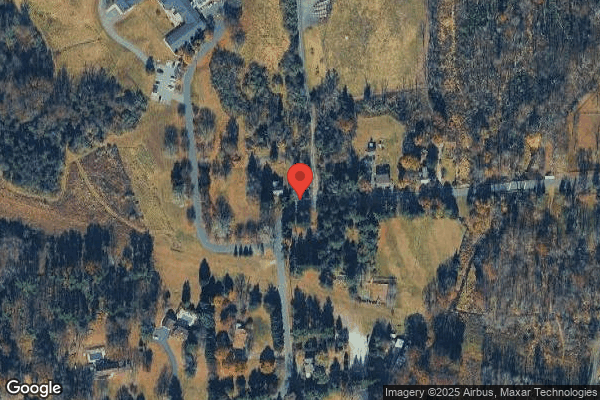
Jul 2021 5 deficiencies
CONCERN (D)

Potential for Harm - no one hurt, but risky conditions existed

Deficiency F0583 (Tag F0583)

Could have caused harm · This affected 1 resident

Based on observation, interview, and review of facility policies it was determined that the facility failed to provide full visual privacy during medication administration and phlebotomy (use a needle...

Read full inspector narrative →
Based on observation, interview, and review of facility policies it was determined that the facility failed to provide full visual privacy during medication administration and phlebotomy (use a needle to take blood from a vein) services for 4 of 14 residents (Resident #28, #31, #41 and #302). The deficient practice was evidenced by the following: 1. On 7/19/21 at 8:57 AM, the surveyor observed from the hallway a Phlebotomist in the process of obtaining a blood sample from Resident #31 in room S22-2. The resident's roommate was present in the room. The resident's privacy curtain and door were open. At 9:03 AM, the surveyor observed the Phlebotomist from the hallway obtaining a blood sample from Resident #41 in room N06-2 without pulling the privacy curtain or closing the door. At 9:12 AM, the surveyor observed the Phlebotomist from the hallway obtaining a blood sample from Resident #302 in room N07-1 without pulling the privacy curtain or closing the door. On 7/19/21 at 9:17 AM, the surveyor interviewed the Phlebotomist. The surveyor asked the Phlebotomist if she usually provides privacy while obtaining a blood sample from the resident. The Phlebotomist stated that she leaves the room the way that she found it and that if the door to a resident's room was already closed that she would keep it closed. The surveyor asked, What if the door was not already closed? The Phlebotomist stated that she wasn't trained to close resident's doors but that it's something to think about. On 7/20/21 at 1:29 PM, the surveyor spoke with the Director of Nursing (DON) and the Licensed Nursing Home Administrator (LNHA) about the observation of the Phlebotomist not offering privacy when obtaining a blood sample. The DON stated that it was inappropriate. On 7/22/21 at 11:46 AM, the surveyor reviewed the policy, Approved Laboratory Test Procedure dated 11/16/2012 obtained by the LNHA from the company where the Phlebotomist worked. The policy indicated the following, For patient privacy the door/ curtain should be closed when performing any procedure with patient/ resident. 2. On 7/21/21 at 8:10 AM, during medication administration observation, two surveyors observed the Licensed Practical Nurse (LPN) took a blood pressure, took a blood glucose finger stick, applied a nitroglycerin medication patch to the right chest area, and gave an insulin injection to the upper right arm of resident #28 in the resident's room with the door and privacy curtain open. A surveyor observed two staff members walk by in the hallway outside of the resident's room during this time. On 7/21/21 at 9:30 AM, the surveyor reviewed the Electronic Medical Record of Resident #28 which revealed the following: The July 2021 Physician's Order Sheet had the following medications orders: Nitro-Dur Patch 24 Hour 0.4 MG/HR (Nitroglycerin) Apply 1 patch transdermally (apply medication to the skin) in the morning and remove patch after 12 hours, Lantus Insulin injection 30 units subcutaneously one time a day, and blood pressure and pulse to be obtained before the administration of Carvedilol (antihypertensive medication) 25 mg. On 7/21/21 at 10:15 AM, two surveyors interviewed the LPN. The LPN stated that he should have provided privacy when he took the blood pressure, took the blood sugar, applied a medication patch, and gave an injection. On 7/21/21 at 1:07 PM, the surveyor discussed the above concerns the LNHA and DON. The surveyor asked for the policy for providing privacy when administering medications. On 7/23/21 at 10:15 AM, the surveyor reviewed the facility policy titled Medication Dispensing System revised 10/1/2018. The policy indicated as follows under J. Medication Administration #5: Ensure customer's privacy (knock before entering the room, pulling privacy curtains). NJAC 8:39:4.1(a)16
CONCERN (D)

Potential for Harm - no one hurt, but risky conditions existed

Comprehensive Care Plan (Tag F0656)

Could have caused harm · This affected 1 resident

Based on observation, interview, and record review it was determined that the facility failed to consistently implement care plan interventions to: a) provide pressure reduction for a resident at high...

Read full inspector narrative →
Based on observation, interview, and record review it was determined that the facility failed to consistently implement care plan interventions to: a) provide pressure reduction for a resident at high risk of developing pressure ulcers (Resident #2). The deficient practice was observed for 1 of 17 residents reviewed and evidenced by the following: The surveyor observed Resident #2 on 7/19/21 at 8:23 AM and 11:50 AM, 7/20/21 at 9:32 AM and 11:30 AM, 7/21/21 at 9:00 AM, and 7/22/21 at 10:00 AM. The resident was lying in bed on his/her back without the offloading of pressure to the heels. The surveyor reviewed Resident #2's Electronic Medical Record which revealed the following. The admission Record revealed the resident was receiving palliative care (comfort measures). The 7/3/21 quarterly Minimum Data Set assessment tool indicated the resident had severe cognitive impairment and needed extensive assistance of one caregiver to change position in bed. The care plan addressing skin breakdown was initiated on 9/28/20 and revised on 10/7/20. One of the interventions listed instructed staff to encourage and assist the resident to offload pressure to the lower extremities when in bed by elevating as tolerated. The 7/13/21 Braden Scale, a measurement tool for the prediction of pressure ulcer development, indicated the resident was at high risk for developing pressure ulcers. The surveyor interviewed the resident's Certified Nursing Assistants (CNA #1, CNA #2) on 7/20/21 at 1:30 PM. The CNAs stated they occasionally put a pillow under the resident's calves. The CNAs stated they do not offload the lower extremities consistently and do not document the placement of pressure relief to the lower extremities. The surveyor interviewed the unit Registered Nurse (RN) on 7/22/21 at 10:00 AM. The RN stated Resident #2's heels are not offloaded even though he is at risk for skin breakdown. She stated lower extremity pressure relieving devices are used with other residents at risk for pressure ulcers in the facility. She did not know why Resident #2's lower extremities were not offloaded. The surveyor discussed concerns with the Director of Nursing (DON) and the Administrator on 7/22/21 at 1:37 PM. The DON provided the surveyor with the facility policy and procedure for Skin and Wound, dated 1/2021. The policy indicated facility staff will provide positioning pillows to offload pressure. NJAC 8:39-27.1(a)
CONCERN (D)

Potential for Harm - no one hurt, but risky conditions existed

Deficiency F0658 (Tag F0658)

Could have caused harm · This affected 1 resident

2. On 7/20/21 at 9:37 AM, the surveyor observed Resident #12 with eyes open, lying on a pressure relieving mattress with a blue cushion on the bed underneath the resident's legs and elevating the resi...

Read full inspector narrative →
2. On 7/20/21 at 9:37 AM, the surveyor observed Resident #12 with eyes open, lying on a pressure relieving mattress with a blue cushion on the bed underneath the resident's legs and elevating the resident's feet off the bed. The surveyor reviewed Resident #12's EMR which revealed the following: According to the admission Record, the resident had diagnoses that included Unspecified Dementia and Pemphigus (a disease that causes blisters or sores on the skin). A BIMS was performed on 4/27/21. The facility assessed the resident with a score of 3 which indicated the resident was severely cognitively impaired. The care plan indicated Resident #12 was at risk for skin breakdown related to impaired mobility, a history of skin tears and fragile skin, incontinence, poor PO (by mouth) intake, weight loss, and a history of a pressure ulcer to the left heel. The following physician orders for treatments observed on the ETAR had missing nurse's initials on the dates indicated below: -Offer toileting frequently and render incontinence care as needed every day and evening shift, not signed on evening shift 7/15/21. -Air mattress on bed for pressure prevention every shift for pressure prevention check setting and function on air mattress, not signed on night shift 7/4/21 and evening shift 7/15/21. -Floor mat while in bed with bed in lower position, not signed on night shift 7/4/21 and evening shift 7/15/21. -Off load heels while in bed as tolerated, not signed on night shift 7/4/21 and evening shift 7/15/21. -Siderails x 2 for positioning, not signed 7/4/21 on night shift and on evening shift 7/15/21. -Zinc Oxide Ointemnt 20%, apply to buttocks topically every shift for protection, not signed 7/4/21 on night shift and 7/15/21 on evening shift. On 7/22/21 at 1:28 PM, the surveys discussed the above concerns with the Administrator and Director of Nursing. No additional information was provided. Based on Observation, interview, and record review, it was determined that the facility failed to follow acceptable standards of practice by not signing for medications in the Electronic Medication Administration (EMAR) for Resident #30 and not signing for treatments in the Electronic Treatment Administration Record (ETAR) Resident #12. The deficient practice was observed for 2 of 14 residents reviewed and evidenced by the following: Reference: New Jersey Statutes, Annotated Title 45, Chapter 11. Nursing Board The Nurse Practice Act for the State of New Jersey states; The practice of nursing as a registered professional nurse is defined as diagnosing and treating human responses to actual or potential physical and emotional health problems, through such services as case finding, health teaching, health counseling, and provision of care supportive to or restorative of life and wellbeing, and executing medical regimens as prescribed by a licensed or otherwise legally authorized physician or dentist. Reference: New Jersey Statutes Annotated, Title 45, Chapter 11. Nursing Board. The Nurse Practice Act for the State of New Jersey states: The practice of nursing as a licensed practical nurse is defined as performing tasks and responsibilities within the framework of case finding; reinforcing the patient and family teaching program through health teaching, health counseling and provision of supportive and restorative care, under the direction of a registered nurse or licensed or otherwise legally authorized physician or dentist. 1. On 7/19 /21 at 9:01 AM, the surveyor observed resident #30 in bed with eyes closed and lying on a pressure relieving mattress eating breakfast. The surveyor reviewed Resident #30's Electronic Medical Record (EMR) that revealed the following: According to the EMAR, the resident was admitted with diagnoses that included Cerebral Infarct (Stroke) and Gastro-Esophageal Reflux Disease (GERD). According to the Quarterly Minimum Data Set an assessment tool dated 6/6/21, a Brief Interview for Mental Status (BIMS) was performed. The facility assessed the resident with a score of 1 out of 15, which indicated the resident was cognitively impaired. The following physician orders observed on the EMAR had missing nurse's initials on the dates indicated below: -Esomeprazole Magnesium 20 mg to be given one time daily, not signed at 6:30 AM on 7/3/21, 7/4/21, 7/10/21 and 7/20/21. -Ensure Pudding 4 ounces two times daily, not signed at 1300 (1 PM) on 7/10/21. -Monitor temperature and pulse oximeter (oxygen level in the blood) every night, was not signed for on 7/2/21, 7/3/21, 7/9/21, and 7/19/21. -Encourage po (oral) hydration every shift, not signed for on 7/2/31, 7/3/21, 7/9/21, and 7/19/21. -Monitor for Pain every shift, not signed for on 7/2/21, 7/3/21, 7/9/21, and 7/19/21.
CONCERN (D)

Potential for Harm - no one hurt, but risky conditions existed

Respiratory Care (Tag F0695)

Could have caused harm · This affected 1 resident

**NOTE- TERMS IN BRACKETS HAVE BEEN EDITED TO PROTECT CONFIDENTIALITY** 2. On 7/19/21 at 8:41 AM, the surveyor observed Resident #41 lying in bed with eyes closed. Oxygen (O2) was being delivered at 2...

Read full inspector narrative →
**NOTE- TERMS IN BRACKETS HAVE BEEN EDITED TO PROTECT CONFIDENTIALITY** 2. On 7/19/21 at 8:41 AM, the surveyor observed Resident #41 lying in bed with eyes closed. Oxygen (O2) was being delivered at 2.5 lpm by way of nasal cannula. There was no date on the tubing or the humidified water bottle to indicate when the O2 tubing and water was changed. On 7/20/21 at 10:58 AM, the surveyor observed the resident sitting up in bed awake and alert, the O2 was off and the nasal cannula was draped over the humidified water bottle and open to air. The surveyor asked the resident if the resident needed the O2 and the resident responded, I guess not. The surveyor reviewed Resident #41's Electronic Medical Record (EMR) that revealed the following: The admission Record which indicated that Resident #41 was admitted to the facility with diagnoses that included Anxiety and Chronic Obstructive Pulmonary Disease (COPD). An admission MDS dated [DATE] that revealed the resident scored a 9 out of 15 when the facility conducted the BIMS assessment, which indicated the resident had a moderate cognitive deficit. The facility documented on the MDS that the resident was not receiving Oxygen when the admission MDS was completed on 6/17/21. A physician's order that read nc at 4l/min. There were no directions specified for the oxygen to be delivered through the nasal cannula or the duration of use for the oxygen. The order had a start date of 7/3/21. The Physician's order did not carry over to the EMAR (Electronic Medication Administration Record) for the date of 7/3/21. There was no nurses note indicating why the oxygen was ordered or if it was used on 7/3/21. According to the July 2021 EMAR, the resident's pulse oximeter readings were between 95% - 100%. Upon review of the Progress Notes the only documentation regarding O2 use from the nurse was on the 7-3 shift dated 7/15/21 at 13:33 (1:33 PM). The nurse documented on Oxygen at 2.5 L/NC with SPO2 98%. No SOB noted, we will cont. to monitor. On 7/20/21 at 12:30 PM, the surveyor observed the O2 tubing draped over the humidified water bottle on the O2 concentrator. The concentrator was turned off. The surveyor called RN#2 to the resident's room and asked if the O2 tubing should have been stored over the humidified water bottle on the O2 concentrator. RN#2 hestitated and then stated she was unsure how the O2 tubing should have been stored. The surveyor then asked RN#2 to look at the resident's physician's order that read nc 4 l/min with no direction for it's use. RN#2 could not explain the incomplete oxygen order, she stated the nurse was probably in a rush because the resident needed the oxygen. On 7/21/21 at 8:50 AM, the surveyor observed the resident in bed with eyes closed and with O2 running at 2.5 lpm by way of nasal cannula. There was a date on the O2 tubing indicating it was opened for use on 7/21/21. The surveyor reviewed the physician's order in the EMR and noted a new order for O2 dated 7/20/21 at 15:00 (3 PM) which read Oxygen at 4 lpm as needed for shortness of breath. The previous O2 order was removed from the EMR. On 7/21/21 at 11:06 AM, the surveyor observed the resident in bed awake. The resident was receiving O2 via nasal cannula. The O2 rate was set at 2.5 lpm. From 7/19/21 - 7/21/21, while the surveyor observed the resident receiving O2, there was no documentation in the Progress Notes regarding the oxygen use. Additonally, the O2 order on the EMAR was not signed for by the nurse to indicate that the resident had received the oxygen as ordered by the physician. On 7/22/21 at 9:19 AM, the surveyor observed the resident in bed, awake. The resident was receiving O2 via nasal cannula. The O2 rate was set at 2.5 lpm. The surveyor reviewed the physician's order and observed the new O2 order was transmitted to the EMAR. There were no nurse's initials to indicate that the O2 was being administered. The surveyor also reviewed the Progress Notes from 7/20/21 - 7/22/21. There was documentation that the new order for O2 PRN (as needed) was obtained on 7/20/21. The nurse did not document the details of the resident's need for oxygen. . On 7/22/21 at 10:40 AM, the surveyor observed that the resident was not in the room, the O2 tubing was wrapped around the side rail. The O2 tubing was dated 7/21/21. At 12:11 PM, the surveyor observed the resident in bed with eyes closed, the resident was receiving O2 at 2.5 lpm and the tubing was dated 7/21/21. On 7/22/21 at 12:15 PM, the surveyor interviewed the Certified Nursing Assistant (CNA) who was assigned to the resident. The CNA stated that she got the resident out of bed to bring the resident to the activity room. The surveyor asked how she stored the O2 tubing when not in use and she stated she washed it with soap and water and left it on top of the O2 concentrator. Then she stated she wiped the O2 tubing with a wipe. She wasn't aware how the O2 tubing was to be stored when not in use. On 7/22/21 at 12:20 PM, the surveyor asked the Licensed Practical Nurse (LPN) assigned to the resident to come to the resident's room to check the O2 setting. The LPN confirmed that the O2 was set at 2.5 lpm. The LPN stated he didn't know what the O2 setting should have been. The LPN and surveyor checked the physician's orders in the EMR. The LPN read to the surveyor that the O2 was to be set at 4L/M. The LPN stated he turned on the O2 that morning because the resident appeared anxious. He stated he didn't check the O2 order prior to putting the oxygen on the resident. The surveyor asked the LPN why he didn't sign the EMAR or document the residents need for O2 in the Progress Notes. The LPN stated he forgot. On 7/22/21 at 1:38 PM, the surveyor discussed the above concerns with the Administrator and DON. The DON provided the policy on 7/23/21. The surveyor reviewed the facility's policy titled Oxygen Tubing and Respiratory Products. Under Procedure bullet point number two read Ensure if O2 tubing is not in use that it is dated and in a bag. The policy did not address the need for obtaining a physician's order with respect to the rate of liters per minute of the O2. NJAC 8:39-27.1 (a) Based on observation, interview, and record review, it was determined that the facility failed to administer oxygen in accordance with physician's orders and in a way that would decrease the possibility of transmitting infections. This was found with 2 of 2 residents reviewed for respiratory care, Resident # 32 and Resident # 41. The deficient practice was evidenced by the following: 1. On 7/19/21 at 8:16 AM, the surveyor observed Resident # 32 in bed. The resident was receiving oxygen via a nasal cannula that was attached to an oxygen concentrator and set to deliver oxygen at a rate of 4 liters per minute (lpm). There was an excess of tubing that was looped around several times on the floor. The oxygen concentrator was about six feet from the bed, next to the door. On 7/20/21 at 9:58 AM, the surveyor observed the resident in the wheelchair in the resident's room. Earlier that morning the surveyor observed the Certified Nursing Assistant (CNA) bring the mechanical lift into the resident's room and close the door. The resident was receiving oxygen via a nasal cannula that was attached to an oxygen concentrator that was set at 4 lpm. The tubing was very long and looped several times on the floor. The CNA left the room and retrieved a shorter oxygen tubing set and attached it to the oxygen concentrator then placed the nasal cannula on the resident. The new tubing was not touching the floor. The oxygen was set at 4 lpm. The surveyor checked the oxygen setting on the oxygen concentrator. While the surveyor was checking the oxygen setting the resident stated it's supposed to be set at 3 lpm but when I was getting up with [the mechanical lift] I told the CNA to put it up to 4 lpm and he did. I thought he got permission to do that. The resident was waiting for transportation to a doctor's appointment. On 7/20/21 at 10:20 AM the surveyor reviewed the resident's medical record which revealed the following: An admission Record which revealed that the resident was admitted with diagnoses which included Anemia, Angina Pectoris, Pulmonary Hypertension, Anxiety Disorder, Acute or Chronic Diastolic (Congestive) Heart Failure, and Unspecified Asthma. A Physician's Order Sheet (POS) with an order that read Oxygen via N/C continuous @ 3 LPM as needed for SOB. The start date was 6/17/21. There was also an order that read Titer and wean pt off O2. Discontinue order when complete every shift. The start date was 6/17/21. The Electronic Medication Administration Record (EMAR) which included an order that was initialed by a nurse daily and every shift that read, Titer and wean pt. off O2. Discontinue order when complete every shift. There was another order on the EMAR that read OXYGEN via N/C continuous @ 3 LPM as needed for SOB An admission Minimum Data Set (MDS) an assessment tool dated 6/7/21, revealed that the resident scored a 13 of a possible 15 when the Brief Interview for Mental Status (BIMS) was done by the facility. The score indicated that the resident was cognitively intact. A Physician's Progress Note dated 7/19/21 that read, oxygen NC-weaning trial in progress, decreased to 3 lit and if [the resident] tolerates will further decrease to 2 lit to keep SPO2 >90%. On 7/20/21 at 1:44 PM, the surveyor observed the resident in bed. The resident was receiving oxygen via a nasal cannula that was attached to an oxygen concentrator that was set at 5 lpm. The tubing was very long and looped several times on the floor. On 7/20/21 at 1:52 PM, the surveyor spoke with the CNA who was assigned to provide care to the resident. The surveyor asked the CNA if he adjusted the oxygen settings on this resident's oxygen concentrator. The CNA stated sometimes. The surveyor asked if the resident asked him to change the oxygen setting. The CNA stated sometimes. The surveyor asked the CNA if the resident asked him today and if he did change the oxygen setting. The CNA stated yes. The surveyor asked the CNA what setting the oxygen was supposed to be.,The CNA said he didn't know. The surveyor asked the CNA if he was supposed to change oxygen settings. The CNA stated probably not. The surveyor asked the CNA if he told the nurse he changed the oxygen setting. The CNA stated no. On 7/20/21 at 1:55 PM, the surveyor asked the Registered Nurse (RN#1) on the unit if CNAs should be changing the oxygen settings on resident's oxygen delivery systems. The RN stated no, definitely not, it should be the nurse only who changes the oxygen settings. On 7/20/21 at 2:20 PM, the surveyor spoke with the Licensed Practical Nurse (LPN) assigned to the resident and asked if she checked the resident's oxygen that day, the LPN stated yes, I checked it earlier. The surveyor asked the LPN what the oxygen was supposed to be set on. The LPN stated between 2 and 4 lpm depending on how the resident feels, it should never be over 4 lpm. The surveyor asked the LPN if the CNA should have been changing the oxygen settings. The LPN stated no. The LPN stated [the CNA] just told me he changed the setting and I told him he shouldn't do that. On 7/22/21 at 1:41 PM, the surveyor spoke with the Director of Nursing (DON) and the Administrator about the concern with the oxygen for Resident # 32. They confirmed that the CNA should not have been changing the oxygen settings. The DON and the Administrator said the resident didn't want the oxygen concentrator by the bed and that is why the tubing was on the floor. The DON stated That is the only thing we could do. On 7/23/21 at 11:38 AM, the surveyor spoke with the DON, the Administrator, and the Regional Nurse. The DON said he spoke to the resident about the oxygen and the Resident said he didn't want to be weaned off the oxygen. The surveyor asked about the two physician's orders, one that read 3 lpm continuous . and the second, that read titer and wean pt off O2 The Regional Nurse said the nurse would turn the oxygen down to 2 lpm and check the oxygen saturation and if the level was ok they would keep it there, if oxygen saturation went down they would raise the oxygen level. The surveyor asked if there was a policy and procedure for weaning a resident off oxygen. On 7/23/21 at 12:15 PM, the DON explained that they did not have a policy and procedure for weaning a resident off of oxygen and that the order for weaning that was on the EMAR was not transcribed correctly by the nurse. On 7/23/21 at 12:30 PM, the surveyor reviewed the facility's policy and procedure titled Oxygen Tubing and Respiratory Products that was dated 1/2/21. Under Policy it read It is the policy of Rolling Hills Healthcare Center to ensure all oxygen tubing is single use for a single resident, clean, properly stored, and dated to prevent the transmission of infection. Under Procedure bullet point number 4 read, If tubing falls on the floor it shall be thrown away and replaced immediately to prevent illness.
CONCERN (D)

Potential for Harm - no one hurt, but risky conditions existed

Pharmacy Services (Tag F0755)

Could have caused harm · This affected 1 resident

Based on observation interview and review of facility records, it was determined that the facility failed to 1) ensure an accurate inventory of controlled medications (narcotic medications) dispensed ...

Read full inspector narrative →
Based on observation interview and review of facility records, it was determined that the facility failed to 1) ensure an accurate inventory of controlled medications (narcotic medications) dispensed from the facility's automatic medication dispensing system and 2) sign for the controlled medication after it was removed from inventory. The deficient practice was observed on the automatic medication dispensing system and on the South unit and evidenced by the following: 1. On 7/19/21 at 11:04 AM, the surveyor inspected the automatic medication dispensing system in the presence of the Director of Nursing (DON), for the controlled medication accuracy. The screen showed that there was a discrepancy on 7/1/21 and 7/3/21. On 7/1/21 the medication Ambien 5 mg (controlled sleep aide) was removed from the system and not signed out for by the Licensed Practical Nurse's (LPN) name shown on the screen and on 7/3/21 the medication Alprazolam 0.5 mg (an antianxiety) was removed from the system and was not signed out for by the same named LPN. The DON stated he wasn't aware of the discrepancy. The DON stated that two nurses are to count the controlled medications in the automatic dispensing system once a day and the two nurses were to sign the Rolling Hills Cubex Narcotic Count (RHCNC) form. The DON provided the surveyor with the May 2021 and June 2021 RHCNC forms, but stated he couldn't find the July 2021 RHCNC form. The DON and the Corporate Registered Nurse confirmed there was no July 2021 RHCNC available for review. Upon review of the RHCNC, the surveyor observed where there was only one signature by a nurse on the form on 5/1/21, 5/2/21, 5/3/21, 6/1/21, 6/5/21, 6/21/21 and observed the following dates had no nurse signatures to ensure the controlled medication were counted on 5/9/21, 5/17/21, 5/19/21, 5/22/21, 5/27/21, 5/29/21, 5/31/21, 6/6/21, 6/18/21, 6/27/21, and 6/30/21. On 7/19/21 at 11:13 AM, the surveyor interviewed the LPN who was identified on the automatic medication dispensing system. The LPN was unable to recall the what happened. The LPN explained the process that two nurses count the control medications and sign on the RHCNC form. The LPN stated that if there was a discrepancy the DON or the Assistant DON (ADON) would be notified. At 11:55 AM, the surveyor interviewed the ADON who stated she was aware of the discrepancy. She stated that two nurses were required to clear the discrepancy, but she couldn't find another nurse to clear the discrepancy. The ADON stated she usually follows up on discrepancies but this month has been crazy, short nurses and she's had to pass medications and was unable to follow up on the discrepancies. The ADON further stated there was no July RHCNC form because she couldn't find a second nurse to help with the count. On 7/21/21 at 1:07 PM, the surveyors discussed the Unit Inspection findings with the Administrator and DON. The DON stated that the staff did not make him aware of the discrepancy with the controlled medications in the automatic medication dispensing system. The surveyor reviewed the facility's policy titled Automated Dispensing Devices Medication Dispensing System dated 10/1/18, under Procedure #D-2 reads as follows: Inventory count must be verified count must be verified prior to the removal of any controlled substances . The surveyor reviewed the facility's policy titled Rolling Hills Care Center dated 3/17/21, under #2 Procedure to count the narcotics medication in the Cubex with 2 Nurses, each narcotic count on the Cubex must correlate with the amount on the narcotic sheets in the white binder. If any discrepancy please inform DON or ADON after the count. 2. The surveyor performed the medication storage task on 7/19/21 at 11:09 AM. In the presence of the South Unit Registered Nurse (RN), the surveyor inspected the Controlled Medications (substances that have a potential for abuse and may also lead to physical or psychological dependence) kept in the South Unit Medication cart. RN obtained an Individual Patient Controlled Substance Administration Record from a binder on top of the medication cart. RN proceeded to document the administration of a controlled medication used for anxiety which was ordered by the physician to be given to a resident at 9 AM. RN stated she gave the resident the medication earlier that day at 9 AM, but forgot to document its administration. The surveyor discussed the concern with the Administrator and the Director of Nursing (DON) on 7/21/21 at 1:30 PM. The DON provided the surveyor with the facility policy regarding the Medication Dispensing System, revised 10/1/2018. The policy indicated nurses are to document medication administration when the medications are administered. NJAC 8:39-29.4(n)
Understanding Severity Codes (click to expand)
Life-Threatening (Immediate Jeopardy)
J - Isolated K - Pattern L - Widespread
Actual Harm
G - Isolated H - Pattern I - Widespread
Potential for Harm
D - Isolated E - Pattern F - Widespread
No Harm (Minor)
A - Isolated B - Pattern C - Widespread

Questions to Ask on Your Visit

  • "What changes have you made since the serious inspection findings?"
  • "Can I speak with families of current residents?"
  • "What's your RN coverage like on weekends and overnight?"

Our Honest Assessment

Strengths
  • • Licensed and certified facility. Meets minimum state requirements.
Concerns
  • • Multiple safety concerns identified: 1 life-threatening violation(s), 1 harm violation(s), $43,001 in fines. Review inspection reports carefully.
  • • 25 deficiencies on record, including 1 critical (life-threatening) violation. These warrant careful review before choosing this facility.
  • • $43,001 in fines. Higher than 94% of New Jersey facilities, suggesting repeated compliance issues.
  • • Grade F (18/100). Below average facility with significant concerns.
Bottom line: Trust Score of 18/100 indicates significant concerns. Thoroughly evaluate alternatives.

About This Facility

What is Rolling Hills's CMS Rating?

CMS assigns ROLLING HILLS CARE CENTER an overall rating of 1 out of 5 stars, which is considered much below average nationally. Within New Jersey, this rating places the facility higher than 0% of the state's 100 nursing homes. A rating at this level reflects concerns identified through health inspections, staffing assessments, or quality measures that families should carefully consider.

How is Rolling Hills Staffed?

CMS rates ROLLING HILLS CARE CENTER's staffing level at 2 out of 5 stars, which is below average compared to other nursing homes. Staff turnover is 50%, compared to the New Jersey average of 46%. RN turnover specifically is 67%, which is notably high. RNs provide skilled clinical oversight, so turnover in this role can affect medical care quality.

What Have Inspectors Found at Rolling Hills?

State health inspectors documented 25 deficiencies at ROLLING HILLS CARE CENTER during 2021 to 2025. These included: 1 Immediate Jeopardy (the most serious level, indicating potential for serious harm or death), 1 that caused actual resident harm, 22 with potential for harm, and 1 minor or isolated issues. Immediate Jeopardy findings are rare and represent the most serious regulatory concerns. They require immediate corrective action.

Who Owns and Operates Rolling Hills?

ROLLING HILLS CARE CENTER is owned by a for-profit company. For-profit facilities operate as businesses with obligations to shareholders or private owners. The facility is operated by OCEAN HEALTHCARE, a chain that manages multiple nursing homes. With 67 certified beds and approximately 61 residents (about 91% occupancy), it is a smaller facility located in LEBANON, New Jersey.

How Does Rolling Hills Compare to Other New Jersey Nursing Homes?

Compared to the 100 nursing homes in New Jersey, ROLLING HILLS CARE CENTER's overall rating (1 stars) is below the state average of 3.2, staff turnover (50%) is near the state average of 46%, and health inspection rating (1 stars) is much below the national benchmark.

What Should Families Ask When Visiting Rolling Hills?

Based on this facility's data, families visiting should ask: "What changes have been made since the serious inspection findings, and how are you preventing similar issues?" "Can you walk me through typical staffing levels on day, evening, and night shifts?" "Can I visit during a mealtime to observe dining assistance and food quality?" "How do you handle medical emergencies, and what is your hospital transfer rate?" These questions are particularly relevant given the facility's Immediate Jeopardy citations and the below-average staffing rating.

Is Rolling Hills Safe?

Based on CMS inspection data, ROLLING HILLS CARE CENTER has documented safety concerns. Inspectors have issued 1 Immediate Jeopardy citation (the most serious violation level indicating risk of serious injury or death). The facility has a 1-star overall rating and ranks #100 of 100 nursing homes in New Jersey. Families considering this facility should ask detailed questions about what corrective actions have been taken since these incidents.

Do Nurses at Rolling Hills Stick Around?

ROLLING HILLS CARE CENTER has a staff turnover rate of 50%, which is about average for New Jersey nursing homes (state average: 46%). Moderate turnover is common in nursing homes, but families should still ask about staff tenure and how the facility maintains care continuity when employees leave.

Was Rolling Hills Ever Fined?

ROLLING HILLS CARE CENTER has been fined $43,001 across 2 penalty actions. The New Jersey average is $33,509. While any fine indicates a compliance issue, fines under $50,000 are relatively common and typically reflect isolated problems that were subsequently corrected. Families should ask what specific issues led to these fines and confirm they've been resolved.

Is Rolling Hills on Any Federal Watch List?

ROLLING HILLS CARE CENTER is not on any federal watch list. The most significant is the Special Focus Facility (SFF) program, which identifies the bottom 1% of nursing homes nationally based on persistent, serious quality problems. Not being on this list means the facility has avoided the pattern of deficiencies that triggers enhanced federal oversight. This is a positive indicator, though families should still review the facility's inspection history directly.