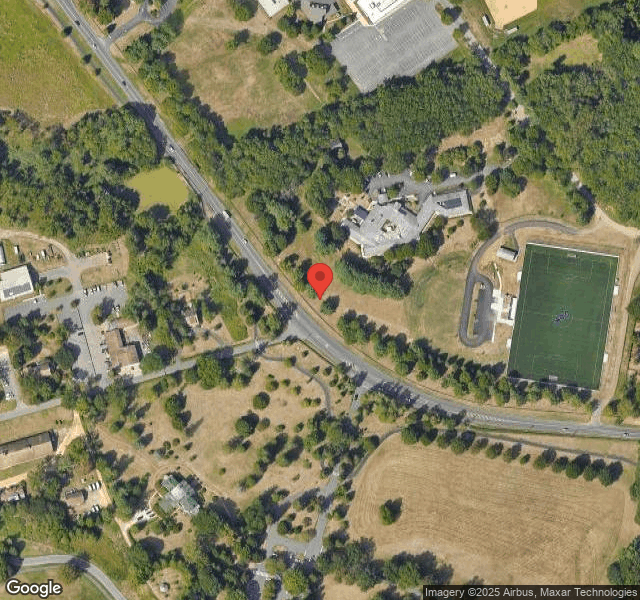
DE LA SALLE HALL

810 NEWMAN SPRINGS RD, LINCROFT, NJ 07738 (732) 530-9470
Non profit - Corporation 32 Beds Independent Data: November 2025
Trust Grade
90/100
#34 of 344 in NJ
Last Inspection: December 2024

Within standard 12-15 month inspection cycle. Federal law requires annual inspections.

Overview

De La Salle Hall in Lincroft, New Jersey, has received an excellent Trust Grade of A, indicating it is a highly recommended facility. Ranking #34 out of 344 nursing homes in New Jersey places it in the top half of state facilities, and #5 out of 33 in Monmouth County means it is among the best local options. The facility's trend is stable, with six concerns noted in both 2021 and 2024, suggesting consistent issues rather than deterioration. Staffing is rated 4 out of 5 stars, though with a turnover rate of 48%, which is average for the state, indicating some challenges in retaining staff. Importantly, the home has not incurred any fines, which is a positive sign of compliance with regulations. However, there are some areas of concern. Recent inspector findings revealed that the facility failed to store potentially hazardous foods safely, leading to risks of foodborne illness. Additionally, they did not document weekly weights for a resident as required, which can impact health monitoring. While the overall care quality is strong with excellent health inspection and quality measures ratings, these issues indicate that there is room for improvement in operational practices.

Trust Score
A
90/100
In New Jersey
#34/344
Top 9%
Safety Record
Low Risk
No red flags
Inspections
Holding Steady
3 → 3 violations
Staff Stability
⚠ Watch
48% turnover. Above average. Higher turnover means staff may not know residents' routines.
Penalties
✓ Good
No fines on record. Clean compliance history, better than most New Jersey facilities.
Skilled Nurses
✓ Good
Each resident gets 44 minutes of Registered Nurse (RN) attention daily — more than average for New Jersey. RNs are trained to catch health problems early.
Violations
○ Average
6 deficiencies on record. Average for a facility this size. Mostly minor or procedural issues.
★★★★★
5.0
Overall Rating
★★★★☆
4.0
Staff Levels
★★★★★
5.0
Care Quality
★★★★★
5.0
Inspection Score
Stable
2021: 3 issues
2024: 3 issues

The Good

  • 4-Star Staffing Rating · Above-average nurse staffing levels
  • 5-Star Quality Measures · Strong clinical quality outcomes
  • Full Sprinkler Coverage · Fire safety systems throughout facility
  • No fines on record

Facility shows strength in staffing levels, quality measures, fire safety.

The Bad

Staff Turnover: 48%

Near New Jersey avg (46%)

Higher turnover may affect care consistency

The Ugly 6 deficiencies on record

Dec 2024 1 deficiency
CONCERN (E)

Potential for Harm - no one hurt, but risky conditions existed

Deficiency F0658 (Tag F0658)

Could have caused harm · This affected multiple residents

Based on observations, interview, and review of pertinent facility documents, it was determined that the facility failed to document weekly weights as ordered in accordance with professional standards...

Read full inspector narrative →
Based on observations, interview, and review of pertinent facility documents, it was determined that the facility failed to document weekly weights as ordered in accordance with professional standards of practices. This deficient practice was identified for 1 of 12 residents reviewed for professional standards of practice (Resident #10). The deficient practice was evidenced by the following: 1. On 12/26/24 at 10:35 AM, during initial tour of the facility, the surveyor observed resident #10 in their bedroom seated in their wheelchair. At the time Resident #10 had a visitor present and reported no concerns. A review of the admission Record face sheet (an admission summary) reflected the resident was admitted to the facility with diagnoses which included but not limited to; Parkinson's Disease with dyskinesia (involuntary, uncontrolled movements), hypertension (high blood pressure), generalized muscle weakness, and dysphagia (difficulty swallowing). A review of the most recent quarterly Minimum Data Set (MDS), an assessment tool dated 11/24/24, reflected the resident had a Brief Interview for Mental Status (BIMS) score of 13 out of 15, which indicated a cognitively intact cognition. A review of the Order Summary Report dated active orders as of 9/3/24, included a physician's order (PO) dated 9/3/24, for weekly weights every Friday. A review of the corresponding September, October, November, and December 2024 Treatment Administration Records (TAR) revealed the weekly weights were signed off as completed on 9/20/24, 9/27/24, 10/18/24, 10/25/24, 11/15/24, 11/22/24, 11/29/24, 12/13/24, 12/27/24. A further review of the October and December 2024 TAR revealed that weekly weights were blank on 10/25/24 and 12/20/24. A review of the Weights and Vitals Summary provided by the Director of Nursing (DON) revealed weekly weights were not documented for 9/20/24, 9/27/24, 10/18/24, 10/25/24, 11/15/24, 11/22/24, 11/29/24, 12/13/24, 12/20/24 and 12/27/24. On 12/27/24 at 12:57 PM, the surveyor interviewed the DON, who stated she could not provide weekly weights for the 10 dates listed above. The DON stated that the nurse completes weekly weights, signs it off on the TAR and then will document it under the weights tab in the electronic medical record (eMR). On 12/20/24 at 11:50 AM, the surveyor interviewed the Licensed Practical Nurse (LPN) who stated that the LPN or Certified Nurses Aide (CNA) can obtain weekly weights. The LPN also stated that the weights order will show up on the TAR to initial off, but they also document the weight under the weights and vitals tab. On 12/30/24 at 12:18 PM, the surveyor interviewed the Registered Dietitian (RD), who stated that she was unaware that Resident #10 was on weekly weights. The RD also stated that when Resident #10 was admitted to the facility they had a desire to lose weight and they discussed a weight goal. The RD further stated she had been monitoring the residents' weights monthly. On 12/30/24 at 1:21 PM, the Director of Nursing (DON), in the presence of the Licensed Nursing Home Administer (LNHA), and survey team, confirmed that Resident #10's weights were not obtained weekly as ordered. The DON stated that weekly weights should be documented in the eMR under the weights tab. The DON acknowledged that the weights should have been obtained weekly as ordered. A review of the facility's Weight Monitoring policy dated reviewed and updated 11/19/24, included residents that are on weekly weights should be weighed on the day of the week ordered . All weights will be reported to the nurse and documented in the resident's chart .RD will monitor resident's weights for any weight loss/gain. A review of the facility's Charting and Documentation policy dated reviewed and updated 11/20/24, included all services provided to the resident, progress toward the care plan goal, or any changes in the resident's medical, physical, functional of psychological condition, shall be documented in the resident's medical record .Documentation in the medical record will be objective (not opinionated or speculative), complete, and accurate. NJAC 8:39-27.1(a)
Jan 2024 2 deficiencies
CONCERN (D)

Potential for Harm - no one hurt, but risky conditions existed

Infection Control (Tag F0880)

Could have caused harm · This affected 1 resident

Based on observation, interviews, record review, and review of pertinent facility documentation, it was determined that the facility failed to maintain proper infection control practices for donning (...

Read full inspector narrative →
Based on observation, interviews, record review, and review of pertinent facility documentation, it was determined that the facility failed to maintain proper infection control practices for donning (putting on) the appropriate Personal Protective Equipment (PPE) prior to entering an isolation room to prevent the transmission of infection for 2 of 13 residents (Resident #1 and Resident #16) positive for COVID-19. This deficient practice was evidenced by the following: 1. During an interview with the surveyor on 01/04/24 at 9:33 AM, the Infection Preventionist (IP) stated the facility was currently in a COVID-19 outbreak, but that all residents were fully vaccinated against COVID-19 with multiple booster doses as well. On 01/04/24 at 10:36 AM, the surveyor observed the District Manager Housekeeper (DMH) standing outside of Resident #1's room. Outside the resident's room, there was a three-tiered PPE supply bin next to the door which contained N95 masks, gowns, gloves, and face shields, but there wasn't any signage on the door to indicate what PPE was required to enter the resident's room. The DMH donned a N95 mask, gown, and gloves and entered the resident's room. The DMH did not don any eye protection prior to entering the resident's room. At 10:42 AM, the DMH opened the door to Resident #1's room and was observed wearing a N95 mask, gown, and gloves inside the resident's room. The DMH doffed (removed) his PPE, disposed of the PPE in the resident's room, and performed hand hygiene with alcohol-based hand rub (ABHR) before exiting the resident's room. During an interview with the surveyor on 01/04/24 at 10:44 AM, the DMH stated Resident #1 was on isolation for COVID-19 and that the PPE required to enter the resident's room included a N95 mask, gown, and gloves. The DMH further stated that there is normally a sign on the resident's door to indicate what PPE was required for the isolation room. When asked about eye protection, the DMH stated eye protection is also required in the COVID-19 isolation rooms. He then pulled out eyeglasses from his pants pocket and stated he wore eyeglasses in the resident's room. When asked if the DMH wore a face shield or goggles inside the resident's room, the DMH stated he should have worn a face shield or goggles in the COVID-19 isolation room. According to the admission Record, Resident #1 had diagnosis of COVID-19. Review of resident's Order Summary Report, as of 01/01/24, included a physician's order, dated 12/30/23, for Contact/Droplet Isolation precautions related to positive COVID results x 10 days. Review of the resident's Care Plan, revised 12/30/23, included a focus of, Transmission Based Precautions - Fitted N95 mask, gown, face shield or goggles, and gloves to be worn Q Shift [every shift], with an intervention that, Staff will wear PPE to enter my room and perform hand hygiene. Review of the resident's Progress Notes included a Nurse's Note, dated 12/30/23 at 12:04 PM, that revealed, COVID test done, results positive. Further review of the Progress Notes included a Nurse's Note, dated 12/30/23 at 2:41 PM, that revealed, Implemented isolation/droplet precautions. During an interview with the surveyor on 01/04/23 at 10:49 AM, the IP stated that when a resident was placed on isolation for COVID-19, signs were posted on the resident's door to notify staff and visitors to Please see a nurse before entering this room, and, Transmission Based Precautions in Place, Anyone entering the room must wear: Gown, Mask: N95, Goggles/Face Shield, Gloves, and a PPE supply bin is placed outside the resident's room. The IP further stated that residents diagnosed with COVID-19 were placed on droplet precautions and the PPE required to enter that resident's room was a N95 mask, gown, gloves, and a face shield or goggles. At that time, the surveyor notified the IP of the missing signage for Resident #1's room and that the DMH did not wear eye protection while in Resident #1's room. The IP stated that the staff should have notified her that the signage was missing and that the DMH should have worn droplet precaution PPE in Resident #1's room. 2. On 01/05/24 at 10:56 AM, the surveyor observed the Infectious Disease (ID) physician standing outside of Resident #16's room. Outside the resident's room, there was a three-tiered PPE supply bin next to the door which contained N95 masks, gowns, gloves, and face shields, and there was signage on the door that included, Transmission Based Precautions in Place, Anyone entering the room must wear: Gown, Mask: N95, Goggles/Face Shield, Gloves. The ID physician donned a gown, gloves, and N95 mask and entered the resident's room. The ID physician was wearing eyeglasses but did not don eye protection, such as a face shield or goggles prior to entering Resident #16's room. At 10:58 AM, the ID physician exited Resident #16's room and performed hand hygiene with ABHR. The surveyor interviewed the ID physician at that time. The ID physician stated that Resident #16 was on isolation for COVID-19 and that the required PPE for that room included a N95 mask, gloves, and gown. The ID physician further stated that the resident's door had signage which indicated the PPE required for the room, but that he doesn't look at that sign since he already knows what PPE to wear. The ID physician then acknowledged the sign included that staff must wear eye protection, such as a face shield or goggles, prior to entering the resident's room. The ID physician further stated that it was important to wear the correct PPE for residents on isolation in order to prevent the spread of infection. According to the admission Record, Resident #16 was admitted with a diagnosis of cerebral infarction (stroke). Review of the resident's Order Summary Report, as of 01/08/24, included a physician's order, dated 01/03/24, for, Transmission Based Precautions - Fitted N95 mask, gown, face shield or goggles, and gloves to be worn Q Shift. Review of the resident's Care Plan, revised 01/03/24, included a focus of, Transmission Based Precautions for COVID x10 days, and an intervention of, PPE and signage at room. Review of the Progress Notes included a Nurse's Note, dated 01/03/24 at 9:32 AM, which revealed, Resident c/o [complained of] sore throat. COVID swab performed . COVID positive. ID [physician] informed . placed on Transmission Based Precautions. On 01/05/24 at 11:04 AM, the surveyor notified the IP of the surveyor's observation of the ID physician. The IP stated the ID physician should have worn goggles or a face shield prior to entering Resident #16's room. Review of the facility's Outbreak Response Plan, reviewed 10/2023, included, Staff will be educated on exposure risks, symptoms, and prevention of the Emerging Infectious Disease (EID). Special emphasis will be on reviewing basic infection prevention and control, use of PPE, isolation, and other prevention strategies such as hand washing. Review of the facility's Application of Transmission-Based Precautions policy, revised 10/09/23, included, Droplet Precautions: Intended to prevent transmission of pathogens spreading through close respiratory or membrane contact with respiratory secretions. Staff caring for residents with Droplet Precautions should wear a face mask for close contact with the resident. Consider adding goggles or a face shield to protect eyes from exposure to respiratory droplets, especially when caring for residents with a significant cough or respiratory secretions. Further review of the policy included, Communication about Transmission-Based Precautions . Room entry signage indicating what type of Transmission-Based Precautions and appropriate PPE to be used. Review of the Centers for Disease Control and Prevention (CDC) guidelines titled, Interim Infection Prevention and Control Recommendations for Healthcare Personnel During the Coronavirus Disease 2019 (COVID-19) Pandemic, updated 05/08/23, included, HCP [Health Care Professionals] who enter the room of a patient with suspected or confirmed SARS-CoV-2 infection should adhere to Standard Precautions and use a NIOSH approved particulate respirator with N95 filters or higher, gown, gloves, and eye protection (i.e., goggles or a face shield that covers the front and sides of the face). NJAC 8:39-19.4(a); 27.1(a)
CONCERN (E)

Potential for Harm - no one hurt, but risky conditions existed

Food Safety (Tag F0812)

Could have caused harm · This affected multiple residents

Based on observation, interview, and review of facility documentation it was determined that the facility failed to a.) properly handle and store potentially hazardous foods in a manner that is intend...

Read full inspector narrative →
Based on observation, interview, and review of facility documentation it was determined that the facility failed to a.) properly handle and store potentially hazardous foods in a manner that is intended to prevent the spread of foodborne illnesses, and b.) maintain equipment and kitchen areas in a manner to prevent microbial growth and cross-contamination. This deficient practice was observed and evidenced by the following: On 01/03/24 from 09:22 AM until 10:06 AM, the surveyor toured the kitchen in the presence of the Dining Services Director (DSD) and observed the following: 1. In the walk-in refrigerator, there was a stack of yellow square cheese wrapped in clear plastic with no open or use by dates and no label. The DSD acknowledged there was no label and stated that there should have been a label marked with the open date and the good through date. There was one opened plastic bag of shredded cheddar cheese wrapped in clear plastic wrap with no open or use by dates and no label. There was one white plastic container containing meat, with no label and no use by dates. The container was partially covered by clear plastic wrap and the meat was visible and exposed to air. The DSD identified the meat as lamb chops and acknowledged that the container was not covered correctly and that it should have had a lid and a label with a use by date. The DSD stated that it was important, for the prevention of bacterial growth and foodborne illness, for food to have not been held longer than a specified time, and proceeded to throw the lamb chops in the trash. In a half pan on the bottom shelf of a metal rack there was one bag of defrosted chicken that the DSD stated were chicken tenders, with no label or dates. The DSD stated it was pulled last night and that it should have had a label. 2. In the walk-in freezer, there was one opened package of frozen tortillas wrapped in clear plastic, marked by manufacturer, date use by June 2, 2023. The DSD stated that they were expired and disposed of them into the trash. 3. In the spice area, there was one 22 ounce (oz) jar of sriracha seasoning, one 14 oz jar of Aleppo style pepper, one 16 oz jar of Ancho chile pepper, one 5 oz jar of dill weed, and one 6 oz jar of rosemary leaves, all undated and no open dates. The DSD acknowledged the spices were undated and stated, I have no idea how old they are, I just got here. The DSD threw the spices into the garbage. 4. On a metal table was the Robot Coup which the DSD stated was used then cleaned. The DSD removed the lid and inside of the cannister was clear liquid and white food debris. The DSD removed the food debris with her finger and acknowledged that the Robot Coup should not have been wet nested and stated that it could have passed bacteria. The slicer, which the DSD stated was clean, was resting in the same area. There was dried white debris on the slicer pan which the DSD scraped with her finger and then used a wet cloth to wipe the area. There was white and brown debris on the slicer base which the DSD wiped with her finger and stated, Men don't clean well. 5. Under the prep table on the bottom rack was one white cutting board with brown smudges, one yellow cutting board with gouges and brown smudges, and one white cutting board with gouges and brown smudges. The DSD acknowledged that the cutting boards should not have had smudges and gouges and stated that bacteria could have gotten into the grooves. 6. In a 1/6 size pan in the reach in refrigerator, there were four clear plastic bags of herbs. The DSD identified: one bag of rosemary with green and brown leaves; one bag of cilantro; one bag of thyme; and one bag of sage. None of the bags had a label nor any open or use by dates. The DSD acknowledged that the herbs were not labeled nor dated and stated that they should have been. The DSD threw all the bags of herbs away. 7. In the dry storage room, there were three opened bags of pasta knotted closed and two opened bags of pasta wrapped in clear plastic wrap with no opened or use by dates. The DSD acknowledged the pasta was not stored correctly and stated that they should have been marked with an open and use by date. The DSD stated that it was important to store the pasta correctly, so bugs did not get in and to ensure food was not served past expiry. 8. In the ice cream freezer, there were 20 unmarked individual covered cups of scooped ice cream with no label or use by dates. The DSD acknowledged the cups should have had a label with the use by date. On 01/05/24 at 12:12 PM, the Licensed Nursing Home Administrator met with the surveyors in the conference room, and was made aware of the kitchen concerns. A review of the facility policy, Storage of Food and Supplies, reviewed 12/7/2020, revealed, Method/How To/Procedure: Most, but not all, products contain an expiration date. The words sell-by, best-by, enjoy-by, or use-by should precede the date .Discard food past the use-by, sell-by, or enjoy-by date. Cover, label and date unused portions and open packages. Complete all sections on a Unidine Universal Date Label or use an approved labeling system. Date and rotate items. Discard food past the use-by or expiration date. Refrigerated Storage Life of Food: Use manufacturer's expiration date for products before opened. If there is no expiration date on the package, add the time listed here to the date the food received. Add the time in the opened column to the date when the food is prepared or opened. Label when product is opened. A review of the facility document, 7.4 Food Protection, Facility/Equipment, created 10/1/2022, revealed no information on equipment cleaning. NJAC 8:39-17.2(g)
Aug 2021 3 deficiencies
CONCERN (D)

Potential for Harm - no one hurt, but risky conditions existed

Deficiency F0761 (Tag F0761)

Could have caused harm · This affected 1 resident

2. On 8/19/21 at 8:24 AM, the surveyor observed the Registered Nurse (RN) in the hallway in front of the dining room prepare medications for Resident #4 at medication cart #1. The RN prepared four ora...

Read full inspector narrative →
2. On 8/19/21 at 8:24 AM, the surveyor observed the Registered Nurse (RN) in the hallway in front of the dining room prepare medications for Resident #4 at medication cart #1. The RN prepared four oral medications, which included an adult low dose Aspirin 81 milligrams (mg). The RN then pulled medication cart #1 closer to the window, locked the electronic medical record, locked the medication cart, and proceeded into the dining room to administer the medications to Resident #4. On 8/19/21 at 8:26 AM, the surveyor observed the RN had left the bottle of adult low dose aspirin 81 mg on top of the medication cart. There were no residents in the immediate area of the medication cart. On 8/19/21 at 8:29 AM, the RN and the surveyor returned to the medication cart and the RN signed off on the four oral medications she administered in the electronic medical record. The surveyor picked up the bottle of aspirin 81 mg that was left on top of the cart, and the RN then realized she had left the bottle of aspirin 81 mg on top of the medication cart. The RN stated the bottle of aspirin 81 mg was not in her view after the surveyor had reviewed the medication prior to administration. The RN immediately placed the bottle of aspirin 81 mg back in the top drawer of the medication cart and stated she was supposed to make sure all medications are placed back into the cart prior to locking it. On 8/19/21 at 9:38 AM, in the presence of the survey team, the DON stated staff should never walk away with medications left on top of the cart for the safety of the residents. She further emphasized staff should not leave medications on top of the cart because a resident could come and take the medication off the cart. On 8/19/21 at 12:31 PM, in the presence of the survey team the DON and LNHA acknowledged staff was responsible to ensure everything was placed back into the medication cart prior to locking it. On 8/19/21 at 12:43 PM, the LNHA also acknowledged medications should never be left on top of a medication cart. The LNHA stated the reason was for a safety prospective as someone could come and take the medication. A review of an in-service sign in sheet provided by the LNHA dated 8/20/21 indicated that the nursing staff was educated on Medications may not be left on the medication cart unattended at any time. This is a concern for safety. A review of the facility's revised 10/2017, for Medication Administration Guidelines dated revised 10/2017 included that the medication cart will be kept within view at all times or locked when unattended. A review of the facility's Disposition of Medications: Medication Storage policy dated effective November 2010 included: that medications will be stored safely and securely in accordance with all state and federal guidelines; all medications should be secured in a locked cart, cabinet, or room, with the exception of the emergency kit; and access to medications should be limited to authorized personnel per facility policy. NJAC 8:39-29.4(h) Based on observation, interview, and record review, it was determined that the facility failed to ensure that all medications were properly secured and stored at all times during the medication pass observation on 8/19/2021. This deficient practice was identified for 2 of 2 nurses and 2 of 6 residents, (Resident #4 and #23) reviewed for medication storage. The evidence was as follows: 1. On 8/19/2021 at 8:14 AM, the surveyor in the presence of another surveyor observed the Licensed Practical Nurse (LPN) administer medications to Resident #23. The LPN prepared ten medications which included two different eye drop medications (Dorzolamide HCl-Timolol and Brimonidine) and oral medications for the resident. The LPN stated the eye drop medications needed to be administered at least five minutes apart from each other. The LPN choose one of the eye drop medications (Dorzolamide HCl-Timolol) and placed the other eye drop medication (Brimonidine) on the top of the cart. The LPN then pulled the cart to the doorway, locked the cart, locked the electronic medical record and proceeded into the room to administer the medications leaving the eye drop medication (Brimonidine) on top of the cart. There were no residents in the immediate area. On 8/19/21 at 8:29 AM, the LPN exited the room after he administered the medications to Resident #23. At that time, the surveyor questioned the LPN if he should have left the eye drop medication (Brimonidine) on the cart, and the LPN responded he should not have. The LPN stated that he should have kept the eye drop medication (Brimonidine) he planned to administer second in the locked medication cart while administering the first round of medications to Resident #23. On 8/19/21 at 9:37 AM, the surveyor interviewed the Director of Nursing (DON) who stated that the nurses had to ensure that the medication cart was locked at all times for safety. She further stated that the nurses needed to maintain a view of the medication cart at all times and never walk away from the cart with medications left on top. On 08/19/21 at 12:42 PM, the DON and the Licensed Nursing Home Administrator (LNHA) acknowledged medication should never be left on the top of the cart unattended because from a safety prospective, someone could come along and take it.
CONCERN (E)

Potential for Harm - no one hurt, but risky conditions existed

Pharmacy Services (Tag F0755)

Could have caused harm · This affected multiple residents

Based on observation, interview, and record review it was determined the facility failed to ensure the accurate ordering and receiving of narcotic medications on the required Federal narcotic acquisit...

Read full inspector narrative →
Based on observation, interview, and record review it was determined the facility failed to ensure the accurate ordering and receiving of narcotic medications on the required Federal narcotic acquisition forms (DEA 222 form) were completed with sufficient detail to enable accurate reconciliation. This deficient practice was identified for 4 of 4 DEA 222 forms provided, and was evidenced by the following: On 8/18/21 at 12:30 PM, the surveyor reviewed four of the facility's DEA 222 forms that were provided. The forms revealed that the facility did not complete Part 1 (last line) or complete in Part 5 the number of packages received or the date the medication was received as instructed to on the reverse side of the DEA 222 form. The inaccuracies were as follows: Order Form: #191734631: No number received #202777659: No number received #202777662: No number received and no last line completed #202777663: No number received and no date received On 08/18/21 at 12:49 PM, the surveyor interviewed the Director of Nursing (DON) who stated that one of the responsibilities of the DON was to complete the DEA 222 forms. The DON acknowledged that she had not completed the forms as required; that the last line in Part 1 was not completed prior to submitting the form. She further acknowledged when she had received narcotic mediations, she should have filled in the quantity received; as well as the date the medication was received. A review of the instructions for submission of the DEA 222 form located on the reverse side of the form included: Part 1. Purchaser Information, 2. Only one item may be entered on a single line. Enter the number of packages, the size of the package, and the name of the item. Part 5. Controlled Substance Receipt 1. The purchaser fills out this section on its copy of the original form. 2. Enter the number of packages received and date received for each line item. A review of the facility's Ordering Medications, Controlled Drug Substances in Back Up, Policy 4.8 dated effective November 2010, included: A. Match all medications with corresponding records. The policy did not include the procedure for how to the complete the DEA 222 form once the medication was received by the pharmacy. N.J.A.C. 8:39-29.7
CONCERN (F)

Potential for Harm - no one hurt, but risky conditions existed

Food Safety (Tag F0812)

Could have caused harm · This affected most or all residents

Based on observation, interview, and review of pertinent documentation, it was determined that the facility failed to a.) store potentially hazardous foods in a manner to ensure safe food temperatures...

Read full inspector narrative →
Based on observation, interview, and review of pertinent documentation, it was determined that the facility failed to a.) store potentially hazardous foods in a manner to ensure safe food temperatures are maintained, and b.) store foods in a manner to ensure items are not used beyond safe use by dates. This deficient practice was evidenced by the following: On 08/18/21 at 09:15 AM, the surveyor toured the kitchen in the presence of Food Service Director (FSD) and two other surveyors and observed the following: 1. The large walk-in refrigerator with attached walk-in freezer had an August 2021 temperature log that was blank. The FSD informed the surveyor that, It got dirty, so this is new one. The surveyor asked to see the dirty one that the FSD said was completed for August 1st thru the 17th and the FSD said it ripped and he threw it away. 2. A stand-alone ice cream freezer which contained cartons of individual cups of ice cream; there was a blank temperature log for the month of August. The FSD informed the surveyor it got dirty too and ripped and I threw it away. 3. A stainless steel food prep refrigerator had a blank temperature for the month of August. Before the surveyor could ask for the temperature log, the FSD said to surveyor, Ok, I just didn't do it. 4. In the walk-in refrigerator there was a stainless-steel rack with five trays of food items. One tray had individual serving cups of rice pudding, one with individual serving cups of chocolate pudding, one tray with individual serving cups of gelatin dessert, one tray with individual serving glass cups of fresh fruit and one tray with two 10-inch pies. The pies were not covered and open to air and the fruit was open to air. None of the items were dated with a prepared or a use by date. The FSD informed the surveyor they are for today. 5. In the walk-in refrigerator there was a stainless tray with 15 stuffed pork chops on one of the bottom refrigerator racks. The pork chops were open to air and there were no prepared or use by dates. The FSD informed the surveyor, I am going to cook these, they were prepared this morning. The surveyor asked if they should be dated and covered and he responded, yea. 6. In the walk-in refrigerator there was a stainless-steel tray of cut up white potatoes, not covered and no prepared or use by dates. 7. In the walk-in refrigerator there was one opened five-pound bag of shredded mozzarella cheese approximately half full and wrapped in clear plastic wrap. There was no received by, opened, or use by dates. 8. In the walk-in refrigerator there was one opened five-pound bag of grated parmesan cheese approximately half full. There was no received by, opened, or use by dates. 9. In the small prep refrigerator there was a stainless-steel tray of 12 small plastic cups of brown thick liquid substance. The FSD said it was prune pudding. There was no prepared or use by dates. 10. In the dry storage area there was an opened five-pound bag of pancake mix approximately half full. There was no opened or use by dates. 11. In the dry storage area there were five opened five-pound bags of pasta, all approximately half or less full and wrapped in clear plastic wrap. There was no opened or use by dates. 12. In small prep fridge there were 12 slices of cooked bacon wrapped in clear wrap. There was no prepared or use by dates. 13. In small prep refrigerator there were 10 provolone cheese slices wrapped in clear wrap. There was no opened, received or use by dates. 14. In small prep refrigerator there were two sandwiches on white bread on small plates covered with plastic wrap. The FSD said they were peanut butter and jelly. Both sandwiches had a use by date of 8/16/21. 15. A large plastic bin with white flour and a large black scoop in the flour. 16. In the dry storage area there were four large cans; one fruit cocktail, one tomato sauce, and two black beans that were dented. They were not in the dented can area. When pointed out to the FSD he responded, oh and removed the cans from the can rack. On 08/18/21 at 11:40 AM, the surveyor interviewed the FSD who stated I labeled everything now. The surveyor asked if the items should have been labeled and dated prior to today and the FSD responded Yes, but I have no staff. A review of the facility's Storage of Food and Supplies policy dated December 2020, included under the section of Refrigerated Foods that food should be stored at 41 degrees Fahrenheit or below and assure compliance of this using temperature logs in each corresponding location. The policy also included to cover foods stored on ladder racks to prevent contamination. Under the section titled Method/How to/Procedure, the policy included to cover, label and date unused portions and open packages. Complete all sections on a date label or use an approved labeling system. NJAC 8:39-17.2 (g)
Understanding Severity Codes (click to expand)
Life-Threatening (Immediate Jeopardy)
J - Isolated K - Pattern L - Widespread
Actual Harm
G - Isolated H - Pattern I - Widespread
Potential for Harm
D - Isolated E - Pattern F - Widespread
No Harm (Minor)
A - Isolated B - Pattern C - Widespread

Questions to Ask on Your Visit

  • "Can I speak with families of current residents?"
  • "What's your RN coverage like on weekends and overnight?"

Our Honest Assessment

Strengths
  • • Grade A (90/100). Above average facility, better than most options in New Jersey.
  • • No major safety red flags. No abuse findings, life-threatening violations, or SFF status.
  • • No fines on record. Clean compliance history, better than most New Jersey facilities.
Concerns
  • • No significant concerns identified. This facility shows no red flags across CMS ratings, staff turnover, or federal penalties.
Bottom line: Generally positive indicators. Standard due diligence and a personal visit recommended.

About This Facility

What is De La Salle Hall's CMS Rating?

CMS assigns DE LA SALLE HALL an overall rating of 5 out of 5 stars, which is considered much above average nationally. Within New Jersey, this rating places the facility higher than 99% of the state's 100 nursing homes. This rating reflects solid performance across the metrics CMS uses to evaluate nursing home quality.

How is De La Salle Hall Staffed?

CMS rates DE LA SALLE HALL's staffing level at 4 out of 5 stars, which is above average compared to other nursing homes. Staff turnover is 48%, compared to the New Jersey average of 46%.

What Have Inspectors Found at De La Salle Hall?

State health inspectors documented 6 deficiencies at DE LA SALLE HALL during 2021 to 2024. These included: 6 with potential for harm.

Who Owns and Operates De La Salle Hall?

DE LA SALLE HALL is owned by a non-profit organization. Non-profit facilities reinvest revenue into operations rather than distributing to shareholders. The facility operates independently rather than as part of a larger chain. With 32 certified beds and approximately 21 residents (about 66% occupancy), it is a smaller facility located in LINCROFT, New Jersey.

How Does De La Salle Hall Compare to Other New Jersey Nursing Homes?

Compared to the 100 nursing homes in New Jersey, DE LA SALLE HALL's overall rating (5 stars) is above the state average of 3.3, staff turnover (48%) is near the state average of 46%, and health inspection rating (5 stars) is much above the national benchmark.

What Should Families Ask When Visiting De La Salle Hall?

Based on this facility's data, families visiting should ask: "Can I visit during a mealtime to observe dining assistance and food quality?" "How do you handle medical emergencies, and what is your hospital transfer rate?" "Can I speak with family members of current residents about their experience?"

Is De La Salle Hall Safe?

Based on CMS inspection data, DE LA SALLE HALL has a clean safety record: no substantiated abuse findings (meaning no confirmed cases of resident harm), no Immediate Jeopardy citations (the most serious violation level indicating risk of serious injury or death), and is not on the Special Focus Facility watch list (a federal program monitoring the lowest-performing 1% of nursing homes). The facility has a 5-star overall rating and ranks #1 of 100 nursing homes in New Jersey. While no facility is perfect, families should still ask about staff-to-resident ratios and recent inspection results during their visit.

Do Nurses at De La Salle Hall Stick Around?

DE LA SALLE HALL has a staff turnover rate of 48%, which is about average for New Jersey nursing homes (state average: 46%). Moderate turnover is common in nursing homes, but families should still ask about staff tenure and how the facility maintains care continuity when employees leave.

Was De La Salle Hall Ever Fined?

DE LA SALLE HALL has no federal fines on record. CMS issues fines when nursing homes fail to meet care standards or don't correct problems found during inspections. The absence of fines suggests the facility has either maintained compliance or corrected any issues before penalties were assessed. This is a positive indicator, though families should still review recent inspection reports for the full picture.

Is De La Salle Hall on Any Federal Watch List?

DE LA SALLE HALL is not on any federal watch list. The most significant is the Special Focus Facility (SFF) program, which identifies the bottom 1% of nursing homes nationally based on persistent, serious quality problems. Not being on this list means the facility has avoided the pattern of deficiencies that triggers enhanced federal oversight. This is a positive indicator, though families should still review the facility's inspection history directly.