COMPLETE CARE AT MONMOUTH, LLC
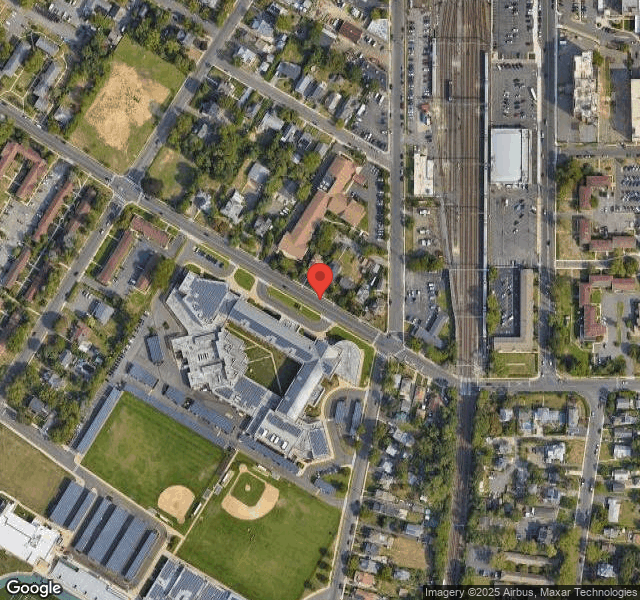
229 BATH AVENUE, LONG BRANCH, NJ 07740 (732) 229-4300
For profit - Limited Liability company 120 Beds COMPLETE CARE Data: November 2025
Trust Grade
53/100
#187 of 344 in NJ
Last Inspection: December 2024

Within standard 12-15 month inspection cycle. Federal law requires annual inspections.

Overview

Complete Care at Monmouth, LLC has received a Trust Grade of C, indicating that it is average compared to other nursing homes. It ranks #187 out of 344 facilities in New Jersey, placing it in the bottom half of state options, and #24 out of 33 in Monmouth County, meaning only a few local facilities are better. The facility's situation is improving, with issues decreasing from 14 in 2024 to just 2 in 2025. However, staffing is a concern, with a 68% turnover rate, which is significantly higher than the state average, and its RN coverage is lower than 93% of other facilities, suggesting less oversight than ideal. Recent inspections revealed serious issues, such as employees not washing their hands properly after handling food and failing to maintain kitchen sanitation, which could pose risks to residents. Overall, while there are some strengths, especially in quality measures, families should be aware of critical areas needing attention.

Trust Score
C
53/100
In New Jersey
#187/344
Bottom 46%
Safety Record
Low Risk
No red flags
Inspections
Getting Better
14 → 2 violations
Staff Stability
⚠ Watch
68% turnover. Above average. Higher turnover means staff may not know residents' routines.
Penalties
✓ Good
$22,340 in fines. Lower than most New Jersey facilities. Relatively clean record.
Skilled Nurses
⚠ Watch
Each resident gets only 18 minutes of Registered Nurse (RN) attention daily — below average for New Jersey. Fewer RN minutes means fewer trained eyes watching for problems.
Violations
⚠ Watch
28 deficiencies on record. Higher than average. Multiple issues found across inspections.
★★★☆☆
3.0
Overall Rating
★★☆☆☆
2.0
Staff Levels
★★★★★
5.0
Care Quality
★★☆☆☆
2.0
Inspection Score
Stable
2024: 14 issues
2025: 2 issues

The Good

  • 5-Star Quality Measures · Strong clinical quality outcomes
  • Full Sprinkler Coverage · Fire safety systems throughout facility
  • No fines on record

Facility shows strength in quality measures, fire safety.

The Bad

3-Star Overall Rating

Near New Jersey average (3.3)

Meets federal standards, typical of most facilities

Staff Turnover: 68%

22pts above New Jersey avg (46%)

Frequent staff changes - ask about care continuity

Federal Fines: $22,340

Below median ($33,413)

Minor penalties assessed

Chain: COMPLETE CARE

Part of a multi-facility chain

Ask about local staffing decisions and management

Staff turnover is elevated (68%)

20 points above New Jersey average of 48%

The Ugly 28 deficiencies on record

Apr 2025 1 deficiency
CONCERN (D) 📢 Someone Reported This

A family member, employee, or ombudsman was alarmed enough to file a formal complaint

Potential for Harm - no one hurt, but risky conditions existed

Medical Records (Tag F0842)

Could have caused harm · This affected 1 resident

Complaint: NJ184628 Based on interviews, record review, and review of other pertinent facility documentation on 04/15/2025, it was determined that the facility failed to provide a) Individual Patient ...

Read full inspector narrative →
Complaint: NJ184628 Based on interviews, record review, and review of other pertinent facility documentation on 04/15/2025, it was determined that the facility failed to provide a) Individual Patient Controlled Substance Administration Record for a resident (Resident #3) b) facility failed to document refusal on the Electronic Medication Administration Record (eMAR). The facility also failed to follow its policies titled, Medication Administration and Documentation in Medical Record. This deficient practice was identified for one of three residents, Resident #3. This deficient practice was evidenced by the following: Review of the Electronic Medical Record (EMR) was as follows: According to Resident #3's admission Record (AR), the resident was admitted to the facility with diagnoses that included but were not limited to: Amyotrophic Lateral Sclerosis (ALS) (nervous system disease that weakens muscles), Anxiety disorder, Chronic Pain Syndrome, Schizoaffective Disorder, Bipolar Disorder, and Adult Failure to Thrive. According to the Minimum Data Set (MDS), an assessment tool dated 01/14/2025, Resident #3 had a Brief Interview of Mental Status (BIMS) score of 15 out of 15, which indicated the resident was cognitively intact. According to Resident #3's Order Summary Report (OSR) Active Orders as of 04/01/2025, the OSR revealed a physician order for the following medications: Lorazepam Oral Concentrate 2MG/ML (milligram/milliliter). Give 1 ml by mouth every 6 hours(hrs.) at 12:00 A.M, 06:00 AM, 12:00 P.M and 06:00 P.M for agitation/anxiety with a start date of 05/06/2024. Methadone HCL Oral Concentrate. 10 MG/ML. Give 7 ml by mouth every 8 hrs at 06:00 A.M, 02:00 P.M, and 10:00 P.M for Chronic intractable pain ALS. Morphine Sulfate Oral Concentrate 20 MG/ML. Give 1.25 ML by mouth every 3 hours for Chronic intractable pain ALS 1.25ml=25mg at 12:00 A.M, 03:00 A.M, 06:00 A.M, 09:00 A.M, 12:00 P.M, 03:00 P.M, 06:00 P.M an 09:00 P.M. Review of Resident #3's eMAR showed the orders were not signed by staff on the following dates and times. Lorazepam Oral Concentrate 2MG/ML. Give 1 ml by mouth every 6 hrs., on 03/23/2025 at 06:00 P.M. Methadone HCL Oral Concentrate. 10 MG/ML. Give 7 ml by mouth every 8 hrs., on 03/12/2025 at 02:00 P.M. and 03/23/2025 at 10:00. P.M Morphine Sulfate Oral Concentrate 20 MG/ML. Give 1.25 ML by mouth every 3 hrs. on 03/23/2025 at 06:00 P.M and 09:00 P.M. A review of Resident #3's Progress Notes (PNs) from 03/24/2025 written by the Licensed Practical Nurse (LPN)/Unit Manager (UM) for Resident #3 documented, As reported from nursing staff resident refused the nurse to administer his/her midnight medication on 3/24/25. In a second PNs, regarding 3/23/25 medications for Resident #3, there was clarification that the refused medications were for the 11:00 P.M - 07:00 A.M shift. The PNs show Resident #3 refused his/her medications, however there were blanks on the eMAR. During an interview on 04/15/2025, the LPN/UM, stated that there shouldn't be any blanks on the eMAR and that the nurse administering the medication was responsible for signing the eMAR. The LPN/UM stated, If the resident refuses a medication, the proper code should be pressed and a progress note should be included. The LPN/UM confirmed the missing signatures by staff for Resident #3 on 03/23/2025 and acknowledged the nurse administering the medications did not follow the facility's policy for documentation. Surveyor attempted to interview nurse who worked on 03/23/2025 and was unable to, therefore the DON was interviewed. During an interview on 04/15/2025 at 02:48 P.M, with the Director of Nursing (DON) in the presence of the Licensed Nursing Home Administrator (LNHA), the DON stated that she doesn't expect blanks on the eMAR and that the unit managers are responsible to ensure that there are no blanks. She also stated that whoever administered the medication is responsible for filling out the eMAR and it should be signed immediately after a medication is given. She acknowledged the blanks on the eMAR for 03/23/2025 and that refusal of medications should be documented as well. She also stated that the facility's policies for medication administration and documentation was not followed. The surveyor requested Individual Patient Controlled Substance Administration Record sheets for Resident #3's medications of Lorazepam, Methadone, and Morphine Sulfate for 03/12/2025 and 03/23/2025. Reviewed Individual Patient Controlled Substance Administration Record for Methadone on 3/12/2025 and it showed that the 02:00 P.M dose was administered. The facility failed to provide the requested Individual Patient Controlled Substance Administration Record for Lorazepam, Methadone, and Morphine Sulfate for 03/23/2025. During an offsite telephone interview with the DON on 04/16/2025 at 04:16 P.M, she stated, Declining sheet should be available to surveyors and typically the original goes into the patient's chart. The DON acknowledged that Resident #3's Individual Patient Controlled Substance Administration Records were not available and they failed to follow their policy. Review of the facility's document titled Documentation in Medical Record, implemented on 10/01/2024, revealed under Policy Explanation and Compliance Guidelines: licensed staff and interdisciplinary team members shall document all assessments, observations, and services provided in the resident's medical record in accordance with state law and facility policy. Review of the facility's document titled Medication Administration, implemented on 09/01/2024, revealed Medication Administration: 21. Sign MAR after administered. For those medications requiring vital signs, record vital signs on the MAR. 22. Report and document any adverse side effects or refusals. NJAC 8:39-35.2 (d) NJAC 8:39-35.2 (g)
Jan 2025 1 deficiency
CONCERN (D) 📢 Someone Reported This

A family member, employee, or ombudsman was alarmed enough to file a formal complaint

Potential for Harm - no one hurt, but risky conditions existed

Deficiency F0658 (Tag F0658)

Could have caused harm · This affected 1 resident

Complaint #: NJ182074, NJ182526 Based on observations, interviews, medical record review, and review of other pertinent facility documentation on 01/23/2025 and 1/27/2025, it was determined that the f...

Read full inspector narrative →
Complaint #: NJ182074, NJ182526 Based on observations, interviews, medical record review, and review of other pertinent facility documentation on 01/23/2025 and 1/27/2025, it was determined that the facility failed to follow standards of clinical practice for Physician Orders (POs) for medication administration and follow the Care Plan (CP) interventions for a resident (Resident #2). The facility also failed to follow its policy titled Medication Administration. This deficient practice was identified for 1of 8 residents reviewed for medication administration and was evidenced by the following: Reference: New Jersey Statutes Annotated, Title 45, Chapter 11. Nursing Board. The Nurse Practice Act for the State of New Jersey states: The practice of nursing as a licensed practical nurse is defined as performing tasks and responsibilities within the framework of case finding; reinforcing the patient and family teaching program through health teaching, health counseling and provision of supportive and restorative care, under the direction of a registered nurse or licensed or otherwise legally authorized physician or dentist. According to Resident #2's admission Record (AR), the resident was admitted with diagnoses that included but were not limited to: Adult Failure to Thrive (decline in physical and mental functioning), Anxiety (feeling of worry, anxiety, or fear that are strong enough to interfere with one's daily activities), Depression (loss of pleasure or interest in activities for long periods of time), and Chronic Pain Syndrome. According to the Minimum Data Set (MDS), an assessment tool dated 01/14/2025, Resident #2 had a Brief Interview of Mental Status (BIMS) score of 15 out of 15, which indicated the resident was cognitively intact. The MDS also revealed a diagnosis of Chronic Pain Syndrome and Anxiety. According to Resident #2's CP with an initiated date of 10/18/2023, under Focus revealed: I have chronic pain r/t (related to) ALS, under Intervention: The resident (Resident #2) pain is alleviated by: scheduled Methadone and Morphine. According to Resident #2's Order Summary Report (OSR) Active Orders as of 01/27/2025, the OSR revealed a physician order for the following medications: Lorazepam Oral Concentrate 2MG/ML (milligram/milliliter). Give 1 ml by mouth every 6 hours(hrs.) at 12:00 A.M., 6:00 A.M., 12:00 P.M., and at 6:00 P.M. for agitation/anxiety with a start date of 05/06/2024. Review of Resident #2's Electronic Medication Administration Record (eMAR), the aforementioned orders were not administered on the following dates and times. Lorazepam Oral Concentrate 2mg/ml give 1 ml by mouth every 6 hrs., on 01/21/2025 at 6:00 A.M., and on 01/22/2025 at 6:00A.M. Review of Resident #2's Individual Patient Controlled Substance Administration Records (declining inventory used for narcotics) for Lorazepam and Morphine, there was no evidence of administration on the dates above. Review of Resident #2's progress notes for the mentioned dates, there was no documentation of harm to the resident due to not receiving their medications as ordered. On 01/27/2025, at 1:36 P.M., during an interview with the surveyor, the Licensed Practical Nurse (LPN), stated the expectation is for the nurse to follow the POs for medication administration for the residents. She further stated, if a medication is administered, the nurse should immediately initial the eMAR. The LPN stated, if a medication is not administered for any reason, the physician and family should be notified, and the reason should be documented in the resident's progress notes in point click care (PCC). When presented with Resident #2's eMAR for 01/2025, the LPN confirmed the missing initials. On 01/27/2025, at 2:00 P.M., during an interview with the surveyor, the Interim Director of Nursing (DON) stated it was important to administer medication as ordered because of consistency and compliance. The DON said if a medication is administered, it should be immediately documented by the administering nurse in the resident's eMAR. She further stated if a medication is not administered, the resident's physician and family should be notified, and it should be documented in the progress notes in PCC. The DON stated, there would be no other place to document except in PCC. The DON stated her expectation would be for all nurses to administer medications as ordered. When presented with Resident #2's eMAR for 01/2025, the DON confirmed the blank spaces for Lorazepam and Morphine. She further said blank spaces would indicate a medication was not administered as ordered. Review of the facility policy titled Medication Administration with a revised date of 09/01/2024. Under Policy reveals: mediations are administered by licensed nurses, or staff who are legally authorized to do so in this state, as ordered by the physician and in accordance with professional standards of practice, in a manner to prevent contamination or infection. Under Policy Explanation and Compliance Guidelines: #20. Sign MAR after administered. For those medications requiring vital signs, record vitals onto the MAR. NJAC 8:39- 11.2 (b)
Dec 2024 14 deficiencies
CONCERN (D) 📢 Someone Reported This

A family member, employee, or ombudsman was alarmed enough to file a formal complaint

Potential for Harm - no one hurt, but risky conditions existed

Resident Rights (Tag F0550)

Could have caused harm · This affected 1 resident

NJ Complaint # 174208 Based on observation, interview, and review of pertinent documents, it was determined that the facility failed to serve meals in a dignified, home-like manner by using disposable...

Read full inspector narrative →
NJ Complaint # 174208 Based on observation, interview, and review of pertinent documents, it was determined that the facility failed to serve meals in a dignified, home-like manner by using disposable containers to serve food for residents who dinned in 1 of 2 main dining rooms (second floor). The deficient practice was evidenced by the following: On 12/3/24 at 12:10 PM, the surveyor observed residents in the second floor main dining room being served lunch from the on-site serving station/steam table and being plated on reusable plates and silverware. Once lunch was served to all residents present in the dining room, the surveyor observed that four (4) out of the 14 residents were served lunch on red plastic disposable plates. At that time, the surveyor interviewed the Licensed Practical Nurse (LPN #1) who was present in the room, regarding the disposable plates, and LPN #1 stated that there were not enough reusable plates brought up from the kitchen to serve all the residents in the main dining room. On 12/3/24 at 12:23 PM, after completing entrée service for the resident's lunch, the Chef went to the main kitchen to obtain desserts for the residents in the second floor main dining room. The Chef returned with a tray of individually wrapped sliced cake that were plated on disposable plates. The Chef then proceeded to serve each resident in the dining room a slice of cake by placing the individually wrapped slices on the table in front of them. No staff members were observed assisting residents to remove the plastic wrap off the cake slices. On 12/5/24 at 12:24 PM, the surveyor in the presence of the contracted dietary Corporate Compliance Officer (CCO) observed one resident (unsampled) in the main dining room of the second floor eating lunch off of a red plastic disposable plate, while two other residents at the table were eating off of reusable plates. The surveyor at that time asked the CCO about the use of the disposable plates, and the CCO approached the Chef in the dining room who stated that he ran out of regular plates and that he always had disposable plates as backup because the kitchen did not provide enough plates for the meal service. On 12/5/24 at 12:35 PM, the surveyor interviewed the CCO, who stated that residents should not be served on disposable plates because it was a dignity issue and the facility needed to maintain a home-like environment. On 12/6/24 at 11:53 AM, the Licensed Nursing Home Administrator (LNHA), in the presence of the survey team, acknowledged that the residents in the main dining room should have all been served in the same manner using reusable plates and silverware because it was a dignity concern with dining. On 12/9/24 at 11:02 AM, the LNHA, in the presence of the survey team, the Director of Nursing (DON), and Assistant LNHA (ALNHA), stated that the kitchen should have provided more than the anticipated amount of plates needed for the residents meal service, and the Chef should have called the kitchen to request additional plates. A review of Dining Service Tray Presentation policy dated revised 10/2023, included .residents will eat their meals in a dignified home-like environment. Disposable plates, containers, utensils will not be used for meal service .the director of each account is responsible for keeping inventory and purchase non-disposables to maintain adequate supply . NJAC 8:39-17.2(e)
CONCERN (D) 📢 Someone Reported This

A family member, employee, or ombudsman was alarmed enough to file a formal complaint

Potential for Harm - no one hurt, but risky conditions existed

Transfer Requirements (Tag F0622)

Could have caused harm · This affected 1 resident

Deficiency Text Not Available

Read full inspector narrative →
Deficiency Text Not Available
CONCERN (D)

Potential for Harm - no one hurt, but risky conditions existed

Comprehensive Care Plan (Tag F0656)

Could have caused harm · This affected 1 resident

Based on observation, interview, and record review it was determined that the facility failed to develop an individualized comprehensive care plan (ICCP) for a resident with a new left below knee ampu...

Read full inspector narrative →
Based on observation, interview, and record review it was determined that the facility failed to develop an individualized comprehensive care plan (ICCP) for a resident with a new left below knee amputation who was receiving wound care to a surgical site. This deficient practice was identified for 1 of 22 residents reviewed for comprehensive care plans (Resident #189), and was evidenced by the following: On 12/3/24 at 10:40 AM, during the initial tour of the facility the surveyor observed Resident #189 out of bed sitting in a wheelchair. The resident told the surveyor that they were receiving therapy on the left leg, showing the surveyor that the resident had a below knee amputation. The surveyor reviewed the medical record for Resident #189. A review of the admission Record face sheet (an admission summary) reflected that the resident was admitted with medical diagnoses which included; acquired absence of left leg below the knee, diabetes mellitus (high blood sugar), repeated falls, and acute kidney failure. A review of the most recent comprehensive Minimum Data Set (MDS), an assessment tool dated 11/22/24, indicated the resident had a Brief Interview of Mental Status (BIMS) score 15 out of 15, meaning the resident was cognitively intact. A review of Section GG, Functional Status, revealed that the resident had an impairment of the left lower extremity. A review of the Physician Order Summary included a physician's order (PO) dated 11/26/24, to cleanse the left below knee amputation with saline, dry, apply xeroform (non-adherent gauze to promote healing), and an ace wrap to stump daily. A review of the corresponding Treatment Administration Record (TAR) revealed that Resident #189 was receiving daily wound care to the left leg surgical wound. A review of the ICCP did not include a left below knee amputation, surgical wound, or impaired skin integrity. On 12/5/24 at 12:13 PM, the surveyor interviewed the Director of Nursing (DON) regarding baseline/comprehensive care plans. The surveyor asked what would be included in the electronic medical record (EMR) if a resident was admitted with a surgical wound, and the DON stated the surgical wound would be noted on the admission assessment, in the physician orders, and included in the ICCP. The surveyor asked what the focus would be on the ICCP, and the DON stated impaired skin integrity. The surveyor asked if a new left leg amputation should be part of the ICCP, and the DON confirmed yes. A review of the Comprehensive Care Plan policy dated 9/1/24, included it was the policy of the facility to develop and implement a comprehensive person-centered care plan for each resident, consistent with resident rights to meet a residents medical, nursing and mental and psychosocial needs that are identified in the resident's comprehensive assessment . NJAC 8:39-11.2(e), 27.1(a)
CONCERN (D)

Potential for Harm - no one hurt, but risky conditions existed

Deficiency F0657 (Tag F0657)

Could have caused harm · This affected 1 resident

**NOTE- TERMS IN BRACKETS HAVE BEEN EDITED TO PROTECT CONFIDENTIALITY** 2. On 12/3/24 at 11:00 AM, during the initial tour of the facility, the surveyor observed Resident #14 sleeping in a recliner ch...

Read full inspector narrative →
**NOTE- TERMS IN BRACKETS HAVE BEEN EDITED TO PROTECT CONFIDENTIALITY** 2. On 12/3/24 at 11:00 AM, during the initial tour of the facility, the surveyor observed Resident #14 sleeping in a recliner chair in their bedroom. On 12/4/24 at 12:13 PM, the surveyor observed Resident #14 lying in bed sleeping. The surveyor observed fall mats located on both sides of the resident's bed and the resident's bed was in low position with the call device within reach. On 12/4/24 at 1:13 PM, the surveyor reviewed the medical record for Resident #14. A review of the admission Record Face sheet reflected that the resident was admitted to the facility with diagnoses that included but not limited to; chronic obstructive pulmonary disease (long-term lung disease that makes it hard to breathe), type 2 diabetes mellitus (pancreas does not make enough insulin), bradycardia (condition where your heart beats fewer than 60 times a minute), and congestive heart failure (when your heart can not pump enough blood to meet the body's need). A review of the most recent comprehensive MDS dated [DATE], indicated the resident had a BIMS score of 8 out of 15, indicating a moderately impaired cognition. A further review in Section GG, Functional Abilities, reflected the resident was completely dependent for transfers and mobility. A review of the Order Summary Report included a PO dated 4/27/23, for bedside floor mats at all times when in bed. A review of the facility's incident and accident reports revealed that Resident #14 had falls on 6/22/24, 6/28/24, 7/6/24, and 9/12/24. A review of the ICCP included a focus area dated 9/12/22, that the resident was at risk for falls related to impaired mobility, impaired gait, and balance, independent minded and does not always call for assistance when needed, behaviors of sliding out of bed, rolling out of bed, and putting their self out of bed onto the floor mats. Interventions included but not limited to; floor mats in place at all times, bed in lowest position when in bed, educate resident to use the grabber for items out of reach, and review information on past falls and attempt to determine the cause of the falls. The ICCP did not include any new interventions put into place after the falls that occurred on 6/22/24, 6/28/24, and 9/12/24. During an interview with the surveyor on 12/5/24 at 11:20 AM, the Director of Nursing (DON) identified that a ICCP should be updated with interventions as changes occurred, quarterly, and annually. The DON further stated that when there was a fall, the ICCP was updated with new interventions. The DON acknowledged that Resident #14's ICCP was not updated after the falls on 6/22/24, 6/28/24, and 9/12/24. A review of the facility's Fall Prevention Program policy dated implemented date 9/1/24, included . 6. each resident's risk factors and environmental hazards will be evaluated when developing the resident's comprehensive plan of care. a. Interventions will be monitored for effectiveness. b. The plan of care will be revised as needed. 7. When any resident experiences a fall, the facility will . e. Review the resident's care plan and update as indicated . A review of the facility's Care Plan Revisions Upon Status Change policy dated implemented 9/1/24, included .2. Procedure for reviewing and revising the care plan when a resident experiences a status change . d. The care plan will be updated with the new or modified interventions . NJAC 8:39-27.1(a) Based on interview and review of pertinent facility documents, it was determined that the facility failed to a) revise an individual comprehensive care plan (ICCP) for a resident with a fracture following a fall, and b) revise an (ICCP) for a resident after a fall. This deficient practice was identified for 2 of 2 residents reviewed for falls (Resident #14 and Resident #55), and was evidenced by the following: 1. On 12/3/24 at 9:50 AM, during the initial tour of the facility, the surveyor went to see Resident #55 and was informed that the resident was hospitalized . On 12/9/24 at 10:23 AM, the surveyor reviewed the medical record for Resident #55. The medical record indicated that the resident was readmitted back to the facility on [DATE]. A review of the admission Record face sheet (an admission summary) reflected the resident was admitted to the facility with diagnoses which included but were not limited to; fracture right hip joint, muscle weakness, diabetes mellitus (high blood sugar), and difficulty in walking. A review of the most recent comprehensive Minimum Data Set (MDS), an assessment tool dated 11/14/24, revealed the resident had a Brief Interview of Mental Status (BIMS) score of 11 out of 15, meaning the resident had a moderately impaired cognition. A review of Section GG, Functional Status, indicated that the resident was completely dependent on staff for transfers and mobility. A review of Section J, Pain Assessment, revealed the resident did not have any falls since admission/entry or reentry to the facility. A review of the Order Summary Report included a physician's order (PO) dated 1/15/24, to always have bed in lowest position and bedside floor mats when in bed. An additional PO dated 12/8/24, indicated the resident could bear weight to right lower extremity. A review of the post falls assessment dated [DATE], indicated following the resident's fall, the resident was a high risk for falls. A review of the ICCP included a focus area dated 11/13/23, and last revised on 6/26/24, that the resident was a moderate risk for falls related to gait/balance problems, poor safety awareness and impulsive behaviors. Interventions included to; keep bed in lowest position, bedside floor mats, and therapy to evaluate and treat. The care plan goals were that the resident would be free from falls and the resident would be free from minor injury. The goals were updated on 12/9/24, after the surveyor inquiry. On 12/9/24 at 12:15 PM during an interview with the Licensed Nursing Home Administrator (LNHA) and the Director of Nursing (DON), the surveyor asked if the ICCP should be updated with new interventions following a fall, and the DON responded confirmed yes, that it should be updated with new interventions put in place.
CONCERN (D) 📢 Someone Reported This

A family member, employee, or ombudsman was alarmed enough to file a formal complaint

Potential for Harm - no one hurt, but risky conditions existed

Deficiency F0658 (Tag F0658)

Could have caused harm · This affected 1 resident

**NOTE- TERMS IN BRACKETS HAVE BEEN EDITED TO PROTECT CONFIDENTIALITY** NJ Complaint # 172281 Based on observation, interview, record review, and review of pertinent facility documentation, it was det...

Read full inspector narrative →
**NOTE- TERMS IN BRACKETS HAVE BEEN EDITED TO PROTECT CONFIDENTIALITY** NJ Complaint # 172281 Based on observation, interview, record review, and review of pertinent facility documentation, it was determined that the facility failed to maintain professional standard of practice by a) ensuring medications were administered in a timely manner in accordance with the resident's physician's order for Resident #48, and b) ensuring proper medication management by borrowing medications from one resident's supply to administer to another resident for Resident #60 and Resident #4. This deficient practice was identified for 3 of 21 residents (Resident #48, Resident #60 and Resident #4) reviewed for professional standards of practice. Reference: New Jersey Statutes Annotated, Title 45. Chapter 11. Nursing Board. The Nurse Practice Act for the State of New Jersey states: The practice of nursing as a registered professional nurse is defined as diagnosing and treating human responses to actual and potential physical and emotional health problems, through such services as casefinding, health teaching, health counseling, and provision of care supportive to or restorative of life and wellbeing, and executing medical regimens as prescribed by a licensed or otherwise legally authorized physician or dentist. Reference: New Jersey Statutes Annotated, Title 45, Chapter 11. Nursing Board. The Nurse Practice Act for the State of New Jersey states: The practice of nursing as a licensed practical nurse is defined as performing tasks and responsibilities within the framework of casefinding; reinforcing the patient and family teaching program through health teaching, health counseling and provision of supportive and restorative care, under the direction of a registered nurse or licensed or otherwise legally authorized physician or dentist. 1. During initial tour on 12/4/24 at 12:15 PM, the surveyor observed two nurses exiting Resident #48's bedroom. The nurse stated the resident just received their 12:00 PM medications and did not want to be bothered at this time. The surveyor reviewed the medical record for Resident #48. A review of the admission Record Face sheet (an admission summary) reflected that Resident #48 was admitted to the facility with diagnoses which included, but not limited to; chronic pain syndrome (pain that persists for weeks or years and interferes with daily life), anxiety disorder (feeling of fear, dread, and uneasiness), bipolar disorder (mental health condition that causes extreme mood swings), and adult failure to thrive (decline in older adults that includes decreased appetite, inactivity, weight loss). A review of the most recent significant change in status Minimum Data Set (MDS), an assessment tool used to facilitate the management of care dated 10/16/24, reflected the resident had a brief interview for mental status score of 15 out of 15, indicating that the resident had an intact cognition. Further review in Section J Health Conditions reflected the resident received scheduled pain medication. A review of the Order Summary Report included a physician's order (PO) dated 2/27/24, for methadone HCL oral concentrate 10 milligram per milliliter (mg/ml) (narcotic used to treat pain) give 5.8 ml by mouth every 8 hours for chronic intractable pain. May wake for administration. The Order Summary Report also included a physician's order dated 2/5/24, for lorazepam concentrate 2 mg/ml give (used to treat anxiety) 1 ml by mouth every 6 hours for anxiety/agitation. Further review of the Order Summary Report revealed an order dated 2/26/24, with a discontinued date of 3/4/24, for morphine sulfate solution 20 mg/ml (used to treat moderate to severe pain) give 2.5 ml by mouth every 3 hours for chronic intractable pain. Hold for sedation. There was a new physician order dated 3/4/24, for morphine sulfate solution 20 mg/ml give 2.5 ml sublingually every 3 hours for chronic intractable pain. A review of the corresponding Medication Admin Audit Report revealed the morphine sulfate solution 20 mg/ml was administered outside of the parameters (3) three times on 3/3/24, (1) one time on 3/4/24, (5) five times on 3/5/24, (2) two times on 3/6/24, (5) five times on 3/7/24, (2) two times on 3/8/24 and (1) one time on 3/9/24. The methadone HCL oral concentrate 10 mg/ml was administered outside parameters (2) two times on 3/3/24, (1) one time on 3/4/24, (2) two times on 3/5/24 and (1) one time on 3/7/24. The lorazepam concentrate 2 mg/ml was administered outside of parameters (1) one time on 3/3/24, (2) two times on 3/5/24, (3) three times on 3/7/24, and (1) one time on 3/8/24. On 12/6/24 at 11:35 AM, the surveyor asked the Director of Nursing (DON) in the presence of the survey team what were the time frames for administering medications, and the DON stated medications can be administered an hour before or after the physician order. The DON acknowledge that 9 AM medications given after 10 AM were considered late. On 12/9/24 at 11:05 AM, the Licensed Nursing Home Administrator (LNHA), in the presence of the DON, Regional Clinical Nurse, LNHA in training and the survey team, stated that if the nurse is administering medications outside the parameters, they need to document the reason. The DON stated the importance of administering the medication on time was to prevent the potential of an overdose. A review of the facility's Medication Administration implemented on 9/1/24, included compare medication source (bubble pack, vial, etc.) with MAR to verify resident name, medication name, form, dose, route, and time .Administer within 60 minutes prior to or after scheduled time unless otherwise ordered by physician. 2. On 12/5/24 at 8:35 AM, during medication administration observations, the surveyor observed Licensed Practical Nurse #1 (LPN #1) dispensing and preparing to administer medication to Resident #60. During the process of medication administration, after showing the surveyor the medication cards (Bingo card containing individually packaged pills), one at a time, for observation, the LPN #1 dispensed one Depakote Sprinkles oral capsule delayed release 125 milligrams (mg) into a small plastic medication cup. The LPN #1 proceeded to retrieve the second medication escitalopram oxalate 10 mg tablet (used to treat depression and anxiety) when the LPN #1 recognized Resident #60 did not have this medication in the medication cart. The LPN #1 then stated, I will have to borrow the medication from another resident. The LPN #1 also stated she should not be borrowing medication from another resident, but I don't have back up medication on the medication cart. The LPN #1 further stated that back up medications were located in the medication room. LPN #1 found the escitalopram oxalate 10 mg tablet in Resident #68's medications. LPN #1 then dispensed the medication into the small plastic medication cup. LPN #1 administered the medications to Resident #60. On 12/5/24 at 8:50 AM, during medication administration observation, the surveyor observed LPN #1 as she prepared 15 medications for Resident #4. Included in these medications was metformin HCL 500 mg oral tablet (used to treat high blood sugar levels). When LPN #1 went to retrieve the medication from the resident's medication cards, LPN #1 stated Resident #4 did not have this medication in the medication cart and she would have to borrow it from another resident. LPN #1 then proceeded to borrow the metformin HCL 500 mg oral tablet from Resident #82. LPN #1 then administered all 15 medications to Resident #4. LPN #1 then stated, we aren't supposed to borrow medications from another resident, but I don't have backup medications on the medication cart. The surveyor reviewed the medical records for Resident's #60, #68, #4 and #82. a.) A review of the admission Record Face sheet (an admission summary) reflected that Resident #60 was admitted to the facility with diagnoses that included, but not limited to; hypothyroidism (when the thyroid gland doesn't make enough thyroid hormone), major depressive disorder (depressed mood or loss of interest in activities) and dementia (loss of cognitive functioning). A review of Resident #60's most recent quarterly Minimum Data Set (MDS), an assessment tool dated 11/17/24, indicated the resident had a brief interview for mental status (BIMS) score of 15 out of 15, indicating the resident was cognitively intact. A review of the Order Summary Report for Resident #60 included a physician's order (PO) dated 10/24/23 for escitalopram oxalate Tablet 10 mg give one tablet by mouth one time a day for depression. b.) A review of the admission Record Face sheet (an admission summary) reflected that Resident #68 was admitted to the facility with diagnoses which included, but not limited to; major depressive disorder (depressed mood or loss of interest in activities), dementia (loss of cognitive functioning) and muscle weakness. A review of Resident #68's most recent annual MDS dated [DATE], indicated the resident had a BIMS score of 10 out of 15, indicating the resident had moderately impaired cognition. A review of the Order Summary Report for Resident #68 included a physician's order (PO) dated 10/31/23, for escitalopram oxalate tablet 10 mg give one tablet by mouth one time a day related to major depressive disorder. c.) A review of the admission Record Face sheet (an admission summary) reflected that Resident #4 was admitted to the facility with diagnoses which included, but not limited to; hypertension (high blood pressure), hyperlipidemia (abnormally high levels of fats (lipids) in the blood), and multiple sclerosis (chronic autoimmune disease that damages the central nervous system). A review of Resident #4's most recent quarterly MDS dated [DATE], indicated the resident had a BIMS score of 8 out of 15, indicating that the resident had moderately impaired cognition. A review of the Order Summary Report for Resident #4 included a physician's order (PO) dated 9/21/24, for metformin HCL oral tablet 500 mg give one tablet by mouth one time a day for diabetes mellitus. d.) A review of the admission Record Face sheet reflected that Resident #82 was admitted to the facility with diagnoses which included, but not limited to; hypertension (high blood pressure), anxiety disorder (feeling of fear, dread, and uneasiness), bipolar disorder (mental health condition that causes extreme mood swings), and polyneuropathy (disease that affects peripheral nerves, causing weakness, numbness, and pain). A review of Resident #82's most recent quarterly MDS dated [DATE], indicated the resident had a BIMs score of 15 out of 15, indicating the resident had cognitively intact cognition. A review of the Order Summary Report for Resident #82 included a physician's order (PO) dated 11/18/24, for metformin HCL oral tablet 500 mg give one tablet by mouth one time a day for diabetes mellitus. On 12/5/24 at 9:08 AM, the surveyor interviewed the Assistant Director of Nursing (ADON) who stated that when a medication was not available the nurse was to check the back up medication in the pyxis (automated medication dispensing system). The ADON stated if its not in the pyxis, the nurse should call the pharmacy to see if it can be ordered STAT (immediately) and also notify the physician. The ADON further stated that a nurse should never borrow a medication from another resident. On 12/5/24 at 9:15 AM, the surveyor interviewed the Director of Nursing (DON) who stated that the nurse should check the pyxis if they run out of a medication. The DON also stated that if the medication was not in the pyxis, the nurse should notify the physician, get a new order if needed and follow up with the pharmacy. The DON further stated the nurse would notify the resident and the residents representative. DON then proceeded to state that medications should not be borrowed from one resident for another. On 12/6/24 at 11:35 AM, during an interview with the Director of Nursing (DON), in the presence of the Licensed Nursing Home Administrator (LNHA), Regional Clinical Nurse, LNHA in training and the survey team, stated that if a nurse runs out of a medication, they are to check the pyxis for back up. If there was no back up, the nurse is to notify the physician, pharmacy, and the resident. The DON stated the nurse should not borrow medications from another resident. The DON further stated that borrowing medications from another resident can cause that resident to run out of their medication. A review of the facility's Medication Administration implemented on 9/1/24, included compare medication source (bubble pack, vial, etc.) with MAR to verify resident name, medication name, form, dose, route, and time .Administer within 60 minutes prior to or after scheduled time unless otherwise ordered by physician. NJAC 8:39-29.2(d)
CONCERN (D)

Potential for Harm - no one hurt, but risky conditions existed

Pressure Ulcer Prevention (Tag F0686)

Could have caused harm · This affected 1 resident

Based on observations, interviews, and review of pertinent facility documentation it was determined that the facility failed to provide pressure ulcer prevention and skin protective devices as ordered...

Read full inspector narrative →
Based on observations, interviews, and review of pertinent facility documentation it was determined that the facility failed to provide pressure ulcer prevention and skin protective devices as ordered by the physician. This deficient practice was identified for 1 of 2 residents (Resident #85) reviewed for pressure ulcers and was evidenced by the following: On 12/3/24 at 11:05 AM, during the initial tour of the facility the surveyor observed Resident # 85 in the bed. Resident #85 told the surveyor they were receiving physical therapy but could not wear shoes because of a sore on their right heel. The surveyor asked if it had healed and the resident stated, one nurse said it was closed, and one said it was open a little bit. On 12/4/24 at 11:00 AM, the surveyor observed Resident #85 in bed. The resident did not have a low air loss mattress or heel boots in place. On 12/5/24 at 10:00 AM, the surveyor reviewed the medical record. A review of the admission Record face sheet (an admission summary) reflected that the resident was admitted with medical diagnoses which included but was not limited to infection due to indwelling urinary catheter, difficulty in walking, hypertension (high blood pressure), and acute kidney failure. A review of the admission Minimum Data Set (MDS), an assessment tool used to facilitate the management of care dated 11/12/24, reflected that the resident had a Brief Interview for Mental Status (BIMS) score of 15 out of 15, indicating that the resident was cognitively intact. Review of Section M of the MDS for skin assessment indicated the resident had a stage three (wound with full thickness loss of tissue) pressure ulcer and was at risk for the development of pressure ulcers. A review of the Physician Order Summary (PO) revealed an order dated 11/5/24, to offload heels when in bed, a PO dated 11/19/24, for a customized shoe for the left foot, a PO dated 11/11/24, for foam heel protector boots to the left foot and a PO dated 11/12/24, for wound care consult. A review of the current resident care plan revealed a focus area for actual impairment to skin integrity of the left heel. The care plan was initiated on 11/21/24. Interventions included to educate resident and family of causative factors and measures to prevent skin injury, follow facility protocols for treatment of injury and identify potential causative factors and eliminate/resolve where possible. A review of the wound consult dated 11/13/24, showed the resident had a documented left heel pressure ulcer measuring 0.5 cm (centimeter) by 0.5 cm. The resident also had a right buttock stage three wound measuring 1 cm x 0.5 cm. The wound care consult recommended a low air loss mattress and pressure relieving heel boots while in bed. Review of the 12/4/24, wound consultant note recommended to continue offloading measures. On 12/5/24 at 12:28 PM, the resident was observed in bed. The resident was not on a low air loss mattress and the resident did not have pressure relieving boots. The surveyor asked if resident had special boots for leg elevation while in bed and the resident stated, No, they use a pillow sometimes. The surveyor asked the resident if they were offered a special mattress, and the resident told the surveyor no. The surveyor then asked the resident if the facility fitted them for a special shoe and the resident stated no. The resident pointed to their own slip-on plastic shoes on the nightstand and said they were their shoes. On 12/5/24 at 1:31 PM, the surveyor interviewed the Licensed Practical Nurse (LPN) caring for Resident #85. The surveyor asked if the resident wore pressure relieving boots, and she stated, no, we offload with a pillow. The surveyor then asked the LPN if the resident had a low air loss mattress, and the LPN stated no. On 12/6/24 at 12:10 PM, during an interview with the Director of Nursing (DON) regarding the recommendations made by the wound care consultants. The DON stated that the recommendations were reviewed by the Unit Manager and were then carried out. The surveyor asked why the resident would need a low air loss mattress, heel boots, or prescribed a shoe and the DON stated to prevent worsening of the wound or to prevent new pressure ulcers. On 12/9/24 at 1:00 PM, the surveyor reviewed the policy titled, Pressure Injury Prevention and Management, dated 9/1/24. The policy included that the facility was committed to the prevention of avoidable injuries, unless clinically unavoidable and is to provide treatment and services to heal the pressure ulcer and prevent development of additional pressure ulcers. NJAC 8:39-27.1 (e)
CONCERN (D)

Potential for Harm - no one hurt, but risky conditions existed

Accident Prevention (Tag F0689)

Could have caused harm · This affected 1 resident

Based on observation, interview, and review of pertinent facility documents, it was determined that the facility failed to have a resident who smoked sign the Smoking Contract/Agreement upon admission...

Read full inspector narrative →
Based on observation, interview, and review of pertinent facility documents, it was determined that the facility failed to have a resident who smoked sign the Smoking Contract/Agreement upon admission. This deficient practice was identified for 1 of 3 residents (Resident #82) reviewed for accidents. A review of the resident's Smoking Contract/Agreement provided by the facility was signed by the resident on 7/17/24. The facility could not provide a smoking contract upon admission. This deficient practice was evidenced by the following: On 12/3/24 at 10:53 AM, during the initial tour the surveyor observed Resident #82 ambulating in the hallway with their walker. On 12/6/24 at 1:03 PM, the surveyor observed Resident #82 in their bedroom. Resident #82 stated, I am going to eat my lunch now. The resident was not sure if they were going outside to smoke later. On 12/4/24 at 9:41 AM, the surveyor reviewed the medical record for Resident #82. A review of the admission Record face sheet (an admission summary) reflected that the resident was admitted to the facility with diagnoses including but not limited to; hypertension (high blood pressure), anxiety disorder (feeling of fear, dread, and uneasiness), bipolar disorder (mental health condition that causes extreme mood swings), and polyneuropathy (disease that affects peripheral nerves, causing weakness, numbness, and pain). A review of the most recent comprehensive Minimum Data Set (MDS), an assessment tool used to facilitate the management of care dated 4/10/24, reflected that the resident had a brief interview for mental status score of 15 out of 15, indicating that the resident had an intact cognition. Further review of the MDS in Section J for Health Conditions reflected the resident was a current tobacco user. A review of the individualized comprehensive care plan (ICCP) included a focus area dated 4/5/24, that the resident was a smoker. Interventions included that the facility would conduct a smoking safety evaluation on admission and as needed; educate the resident/responsible party on the facility's tobacco smoking policy and the resident will sometimes ask staff to give their cigarettes to her friends. The ICCP included a focus area dated 7/22/24, that the resident is a social smoker, contract was signed and reviewed with the resident. Interventions included that the resident is assisted with smoking outside and to notify the resident of any changes to the smoking schedule. A review of the Smoking Assessment, located in the electronic medical record (eMR) revealed the most recent smoking assessment was completed on 10/5/24. The Smoking Assessment indicated that the resident was a smoker and could smoke safely. A review of the resident's Smoking Contract/Agreement provided by the facility was signed by the resident on 7/17/24. The facility could not provide a smoking contract upon admission. On 12/6/24 at 1:24 PM, the surveyor interviewed the Activities Director (AD), who stated that smoking assessments were completed upon admission and quarterly. The AD also stated that smoking contracts are signed by the resident on admission. The AD acknowledge that Resident #82 was a smoker. On 12/9/24 at 10:17 AM, the surveyor interviewed the Director of Nursing (DON), who stated Smoking Contracts should be completed within 72 hours of admission. The DON could not speak to when Smoking Contracts should be completed other than upon admission. On 12/9/24 at 11:05 AM, the Licensed Nursing Home Administrator (LNHA), in the presence of the DON, Regional Clinical Nurse, LNHA in training and the survey team, stated that the Smoking Contracts were completed upon admission. The LNHA acknowledge a Smoking Contract should have been completed in April upon admission. A review of the facility's Smoking Policy - Residents, Staff and Visitors no revision date, included the resident will be evaluated on admission to determine if he or she is a smoker or non-smoker. If a smoker, the evaluation will include: . e. All residents that smoke are required to sign a smoking agreement contract. NJAC 8:39-27.1(a)
CONCERN (D)

Potential for Harm - no one hurt, but risky conditions existed

Deficiency F0698 (Tag F0698)

Could have caused harm · This affected 1 resident

Based on observation, interview, record review, and review of pertinent facility documentation, it was determined that the facility failed to ensure a physician's order was in place to properly assess...

Read full inspector narrative →
Based on observation, interview, record review, and review of pertinent facility documentation, it was determined that the facility failed to ensure a physician's order was in place to properly assess a resident's dialysis access site. This deficient practice was identified for 1 of 1 residents reviewed for dialysis (Resident #81), and was evidenced by the following: On 12/3/24 at 12:04 PM, during initial tour of the facility, the surveyor observed Resident #81 in their room. The resident informed the surveyor that they recently had a medical emergency where the resident's dialysis shunt started to bleed, and they had to be sent to the hospital for emergency surgery. On 12/6/24 at 1:42 PM, the surveyor reviewed Resident #81's medical record. A review of the admission Record face sheet (an admission summary) reflected the resident was admitted to the facility with diagnosis which included but was not limited to; end stage renal disease and dependence on renal dialysis. A review of the most recent comprehensive Minimum Data Set (MDS), an assessment tool dated 10/21/24, reflected the resident indicated in Section C - Cognitive Patterns that the resident had a Brief Interview for Mental Status (BIMS) score of 15 out of 15, indicating a fully intact cognition. A review of Section O, Special treatments, procedures, and programs, included dialysis as an active treatment. A review of the physician's Order Summary Report revealed no order to assess the resident's dialysis access. A review of the individualized comprehensive care plan (ICCP) included a focus care area that the resident was on dialysis three days per week, but did not have interventions to monitor or assess the dialysis access site. A review of the November and December 2024 Medication Administration (MAR) and Treatment Administration Record (TAR) did not include the nurses were signing that the dialysis site was assessed or monitored. On 12/9/24 at 9:53 AM, the surveyor interviewed the Licensed Practical Nurse/Unit Manager (LPN/UM #1), who confirmed that Resident #81 had a dialysis access called a arteriovenous fistula (AVF) in their arm. On 12/9/24 at 9:55 AM, the surveyor interviewed LPN #2, who stated Resident #81 had an AVF and that she was not allowed to monitor blood pressure in that arm. LPN #2 further stated that she felt for a thrill (a vibration felt through the skin over a blood vessel), but it was not documented. On 12/9/24 at 10:01 AM, the surveyor interviewed the Director of Nursing (DON), who stated that a resident with a dialysis access should have orders to check the dialysis access that the nurses signed as completed on the TAR. At that time, the DON reviewed Resident #81's physician's orders and confirmed that there was no order for assessing the dialysis access. The DON acknowledged that the facility could not provide documentation that the site was being assessed by the nurses, and the DON stated we all know the golden rule in healthcare indicating if it was not documented, it was not done. The DON stated sometimes the nurses forget to document. A review of the facility's Hemodialysis policy dated of 9/1/24, included .the nurse will ensure that the dialysis access site (e.g. AV shunt or graft) is checked before and after dialysis treatments and every shift for patency by auscultating (listening) for a bruit and palpating (feeling) for a thrill . NJAC 8:39- 27.1(a)
CONCERN (D)

Potential for Harm - no one hurt, but risky conditions existed

Pharmacy Services (Tag F0755)

Could have caused harm · This affected 1 resident

Based on observation, interview, record review, and review of facility provided documents, it was determined that the facility failed to provide pharmaceutical services in accordance with professional...

Read full inspector narrative →
Based on observation, interview, record review, and review of facility provided documents, it was determined that the facility failed to provide pharmaceutical services in accordance with professional standards to ensure, a) dispensed and administered controlled substance (narcotic) medication was accurately counted, and b) the Individual Patient Controlled Substance Administration Record (IPCSAR)reconciliation sheet was incorrect for 8 shifts with 16 occurrences on Medication Cart A, 2nd floor. This deficient practice was identified on 1 of 2 medication carts reviewed for medication storage, and was evidenced by the following: On 12/05/24 at 09:33 AM, the surveyor observed the Licensed Practical Nurse Unit Manager (LPN/UM) with the Director of Nursing (DON) begin the cycle count for the controlled substance (narcotic) medications on medication Cart A on the 2nd floor. At that time, the surveyor in the presence of the LPN/UM and DON, observed on the IPCSAR that there should be one tablet left on the declining count. Upon review of the blister pack, there were no tablets remaining of Oxycodone/Acetaminophen 5/325 milligrams (a controlled narcotic medication used to treat pain). The surveyor reviewed the December 2024 Medication Administration Record (MAR) which revealed that the missing narcotic pill was administered and signed off on the residents MAR on 12/2/24, for the scheduled 10:00 pm dose but was not signed off correctly on the PCSAR declining medication sheet correctly. A review of the Narcotic Shift Count log indicated that there were 8 shifts with 16 occurrences for change of shift that the blister pack was inaccurately counted as having one left for the following dates: 12/2/24 (11pm-7am shift), 12/3/24 (11pm-7am, 7A-3pm and 3pm-11pm shift), 12/4/24 (11pm-7am, 7am-3pm and 3pm-11pm shift), and 12/5/24 (11pm-7am, and 7am-3pm shift). A review of the Narcotic Shift Count log on 12/4/24, for 11pm-7am shift indicated that there were no reconciliation signatures present for the Narcotic Shift Count. On 12/5/24 at 10:51 PM, the surveyor interviewed the Licensed Practical Nurse/ Unit Manager #2 (LPN/UM #2) who stated that a narcotic count is done during shift change with the departing and receiving nurses for all controlled substances. The LPN/UM acknowledged that the facility policy was not being followed and that the narcotic count was not done correctly. On 12/9/24 at 11:49 PM, the survey team met with the DON and Licensed Nursing Home administrator (LNHA) who acknowledged the discrepancies with the narcotic count and the reconciliation signatures. A review of the policy Controlled Substance Administration and Accountability, dated 9/1/24, indicated . 1) General Protocols: a) Controlled substances are stored in a separate compartment of a locked storage unit with access limited to approved personnel. f) All controlled substances are accounted for in one of the following ways: ii) all controlled substances obtained from non -automated medication cart or cabinet are recorded on the designated usage form. g) In all cases the dose noted on the usage form must match the dose recorded on the MAR, controlled drug record, or other facility specified form serves dual purpose of recording both narcotic disposition and patient administration. 9) Inventory verification: b) For areas without automated dispensing systems, two licensed nurses account for all controlled substances and access keys at the end of each shift. NJAC 8:39-29.3(a)6, 29.4 (g)
CONCERN (D)

Potential for Harm - no one hurt, but risky conditions existed

Drug Regimen Review (Tag F0756)

Could have caused harm · This affected 1 resident

**NOTE- TERMS IN BRACKETS HAVE BEEN EDITED TO PROTECT CONFIDENTIALITY** Based on interview, record review, and review of other facility documents, it was determined that the facility failed to ensure ...

Read full inspector narrative →
**NOTE- TERMS IN BRACKETS HAVE BEEN EDITED TO PROTECT CONFIDENTIALITY** Based on interview, record review, and review of other facility documents, it was determined that the facility failed to ensure recommendations made by the Consultant Pharmacist (CP) were acted upon in a timely manner for 2 of 5 residents (Resident #54 and Resident #35) reviewed for unnecessary medications. This deficient practice was evidenced by the following: 1. On 12/04/24 at 12:15 AM, the surveyor reviewed the medical records for Resident #54. A review of the admission Record face sheet (an admission summary) reflected that the resident was admitted to the facility with the diagnoses which included but was not limited to; chronic obstructive pulmonary disease (COPD) (a group of lung diseases that damage the airways and air sacs in the lungs, making it hard to breathe). A review of the quarterly Minimum Data Set (qMDS) dated [DATE], reflected that the resident's cognitive skills for daily decision making scored a 15 out of 15, indicating they were cognitively intact. A review of the CP report dated 6/16/24, indicated to consider that the potential for serotonin syndrome was increased with the concurrent use of Trazadone, Remeron, and Effexor. The report added to please evaluate the risk verses the benefit for this therapy. The CP report was not signed or dated by the attending physician. A review of the corresponding Medication Administration Record (MAR) reflected that the recommendation was not completed by the facility. A review of the CP report dated 8/20/24, indicated to consider Amlodipine was recommended once daily per manufacturer and to consider changing Amlodipine 5 milligrams twice daily to 10 milligrams once daily. Also, concurrent use of Combivent inhaler and DuoNeb nebulizer may be considered duplicate therapy and to please consider discontinuing one of the orders. The CP report was not signed or dated by the attending physician. A review of the corresponding MAR reflected that the recommendation was not completed by the facility. A review of the Consultant Pharmacist (CP) report dated 9/15/24, indicated to consider changing Amlodipine (it was never addressed from the CP reported dated 8/20/24). The report also indicated that Dicyclomine was an anticholinergic and may produce toxic effects in the elderly and to please evaluate the risk versus benefit for use for more then 7 day or more then once every 3 months. The CP report was not signed or dated by the attending physician. A review of the corresponding MAR reflected that the recommendation was not completed by the facility. A review of the Consultant Pharmacist (CP) report dated 10/22/24 indicated a 2nd request for the Dicyclomine to be evaluated stating it was not addressed in September (9/15/24). The CP report was not signed or dated by the attending physician. A review of the corresponding MAR reflected that the recommendation was not completed by the facility. On 12/06/24 at 11:48 AM, the surveyor interviewed the Director of Nursing (DON) who stated that the CP reports were given to the facility monthly; that a copy was sent to her, the Licensed Nursing Home Administrator (LNHA), and unit managers (UM). The DON stated the CP's recommendations were to be completed by the UMs. Furthermore, she stated that an appropriate time for the CP's recommendations to be completed was within 10 days of receiving them, and she was unable to explain why the recommendations provided from the CP from June, August, September, and October of the year 2024 were not completed. 2. On 12/6/24 at 9:45 AM, the surveyor reviewed Resident #35's medical record and the following was indicated: The admission Record indicated that Resident #35 was admitted to the facility with diagnosis which included but was not limited to hemiplegia and hemiparesis following cerebrovascular disease (weakness and paralysis because of a stroke) affecting right dominant side. A review of the physician's Order Summary Report included but was not limited to a discontinued order for ipratropium-albuterol solution 0.5 - 2.5 (3 milligram (mg) per 3 milliliter (ml)) (a medication used to treat lung disease, also called Duoneb) inhale orally via nebulizer every eight hours as needed (PRN) for shortness of breath or wheezing, which had a order start date of 2/10/24 and an order end date of 9/16/24 with a reason to discontinue of non-use. A review of the CP monthly therapeutic suggestion reports included but was not limited to the following: On the report dated 8/20/24, the consultant pharmacist indicated PRN medications which have not been used for over 60 days are recommended to be discontinued. Please consider discontinuing Duoneb. The CP monthly report dated 9/16/24 indicated regarding the comment made on 8/20/24: PRN medications which have not been used for over 60 days are recommended to be discontinued. Please consider discontinuing Duoneb. The pharmacy consult was not addressed. On 12/6/24 at 11:43 AM, the surveyor interviewed the DON who stated pharmacy consultant recommendations should be addressed within one to two weeks. On 12/9/24 at 11:02 AM, the LNHA, in the presence of the survey team, the DON, Assistant LNHA, and Regional Director of Operations (RDO), acknowledged the pharmacy consultant recommendation not being addressed timely. A review of the facility's Addressing Medication Regimen Review Irregularities policy, dated 9/1/24, indicated policy explanation and compliance guidelines: 4a-f) The pharmacist must report any irregularities to the attending physician, the facilities medical director and director of nursing and the reports must be acted upon. 5) The report should be submitted to the DON within 10 working days of the review. A review of the facility's Consultant Physician/Practitioner Orders policy, dated 9/1/24, included .1) Consulting physician/practitioner orders are those orders provided to the facility by a physician/practitioner other than the residents attending physician. 2) For consulting physicians/practitioner orders received in writing or via fax, the nurse in a TIMELY manner will: a) call the attending physician to verify the order. b) Document the verification order by entering the order and the time, date, and signature on the physician order sheet. A review of the facility's Pharmacy Services policy, dated 9/1/24, under Compliance Guidelines: 1) The facility will provide pharmaceutical services to include procedures that assure the accurate acquiring, receiving, dispensing, and administering of all routine and emergency drugs and biologics to meet the needs of each resident, are consistent with state and federal requirements, and reflect current standards of practice. 7) The pharmacist is responsible for helping the facility obtain and maintain timely and appropriate pharmaceutical services that support residents healthcare needs, goals, and quality of life that are consistent with current standards of practice and meet state and federal requirements. A review of the Pharmacy Consultant agreement revealed a contract signed date of 5/6/24. On 12/09/2024 at 12:34 PM, the above concern was discussed with the Director of Nursing (ADON), Licensed Nursing Home Administrator (LNHA) and Regional Director of Operations (RDO). NJAC 8:39-29.3(a)
CONCERN (D)

Potential for Harm - no one hurt, but risky conditions existed

Dental Services (Tag F0791)

Could have caused harm · This affected 1 resident

**NOTE- TERMS IN BRACKETS HAVE BEEN EDITED TO PROTECT CONFIDENTIALITY** Based on observation, interview, and record review it was determined that the facility failed to provide the mandatory annual de...

Read full inspector narrative →
**NOTE- TERMS IN BRACKETS HAVE BEEN EDITED TO PROTECT CONFIDENTIALITY** Based on observation, interview, and record review it was determined that the facility failed to provide the mandatory annual dental care and services. This deficient practice was identified for 1 of 21 residents reviewed (Resident #15), and was evidenced by the following: On 12/3/24 at 10:55 AM, the surveyor observed that Resident #15's teeth were brown and discolored with their front teeth chipped and some missing teeth. On 12/4/24 at 9:00 AM the surveyor reviewed the electronic medical record (eMAR). A review of the admission Record (AR) revealed the resident was admitted with a diagnosis of but not limited to: Type two diabetes mellitus (DM) (high blood sugar) A review of the Nursing Comprehensive assessment, dated 10/17/2023, revealed under section D) Oral / Nutritional, 12.1) was marked yes, broken, or loosely fitting full or partial denture (chipped, cracked, uncleanable or loose). A review of the comprehensive Minimum Data Set (cMDS), dated [DATE], revealed the resident had a BIMS score of 10 out of 15 which indicated that the resident's cognition was moderately impaired. The MDS further revealed under section L, Oral/Dental status (which asked if the resident had broken dentures or natural teeth) that none of the above were present was checked. The look back period did not reflect the residents condition based on staff visual in-person assessment. A review of the comprehensive Minimum Data Set (cMDS), dated [DATE], revealed the resident had Brief Interview for Mental Status (BIMS), score of 10 out of 15 which indicated that the resident's cognition was moderately impaired. It further revealed under section L, Oral/Dental status (which asked if the resident had broken dentures or natural teeth) that none of the above were present was checked. The MDS documentation for a look back period did not reflect the residents condition based on nursing assessment. A review of the resident's Order Summary Report revealed that there was not an order for a dental consultation. A complete review of the resident's eMAR revealed that there was no documentation that the resident was offered and /or refused dental care services. The facility was unable to provide dental consultation records in the last year of admission. A review of the resident's Care Plan (CP) revealed an initiated revision date of 10/18/2023, for the following focus areas: 1. Assistive Daily Living (ADL) self-care performance deficit related to limited mobility. Interventions included; the resident was totally dependent on staff for eating, dated 10/18/23, and that the resident was totally dependent on 1 staff for personal hygiene and oral care. 2. The resident has oral/dental health problems r/t poor hygiene, dated 10/18/23. The interventions for this focus were to monitor and report any signs and symptoms of dental issues, dated 10/18/23 and provide mouth care as per ADL personal hygiene. A review of the Resident seen per day detail of dental visits provided by the Director of Nursing for the months of January week 1, March week 2, March week 5, April week 3, July week 4 and November week 3 for the year 2024 did not reflect that Resident #15 was on the list. The facility and dental office could not provide any other weeks that care was provided to the facility residents. On 12/04/24 at 11:11 AM, the surveyor interviewed the Licensed Practical Nurse Unit Manager (LPNUM) who stated, after initial assessment of a newly admitted resident by the nurse, the nurse then calls the physician and gives a report of their findings, to include the medications the resident was on, and then telephone orders would be given according to the needs of the resident i.e . consults, treatment, and care areas. The physician would then follow up either that day or the next day. The residents are also discussed in morning meetings with all department management. The MDS coordinator would also do an assessment and documentation. On 12/06/2024 at 01:34 PM, the surveyor interviewed the Director of Nursing (DON) who stated that the resident should have a physician order initiated by nursing under medical review for all consults for issues caught on the admission assessment. The facility policy states that all long-term care residents should be followed by a dentist annually and as needed. On 12/09/2024 at 12:34 PM, the above concern was discussed with the Director of Nursing (ADON), Licensed Nursing Home Administrator (LNHA) and Regional Director of Operations (RDO). A review of the facility's Dental Services Policy, dated 9/1/24, provided by the LNHA on 12/6/2023, indicated: The dental needs of each resident are identified through the physical assessment and MDS assessment processes and are addressed in each resident's care plan. On 12/6/24 at 10:54 AM, the surveyor reviewed the facilities Dental Services Agreement revealing it is effective and valid from January 2023 and renewed in January 2024. NJAC 8:39-15.1(a)
CONCERN (E)

Potential for Harm - no one hurt, but risky conditions existed

Abuse Prevention Policies (Tag F0607)

Could have caused harm · This affected multiple residents

Based on interview, review of facility policy, and review of pertinent facility documents, it was determined that the facility failed to implement their abuse policy to complete reference checks on em...

Read full inspector narrative →
Based on interview, review of facility policy, and review of pertinent facility documents, it was determined that the facility failed to implement their abuse policy to complete reference checks on employees before their start date. The deficient practice was identified for 5 of 10 employees reviewed for new hires (Employee #3, #6, #8, #9 and Employee #10), and was evidenced by the following: A review of facility's Abuse Policy dated 9/1/24, included in the section titled Screening Components that it is the policy of this facility to screen employees and volunteers prior to working with residents. Screening components include 1. verification of references shall be conducted on potential employees .3. The facility will maintain documentation of proof that the screening occurred. On 12/3/24 at 12:47 PM, the surveyor requested from the Licensed Nursing Home Administrator (LNHA) ten newly hired employee personnel files who were hired since the facility's last standard survey who were still employed or terminated. A review of employee personnel files revealed the following: For Employee #3, Certified Nursing Assistant (CNA) with a start date of 10/24/23, there was no evidence of a reference check prior to the start of employment. For Employee #6, a Licensed Practical Nurse (LPN) with a start date of 1/2/24, there was no evidence of a reference check prior to the start of employment. For Employee #8, a CNA with a start date of 3/20/24, there was no evidence of a reference check prior to the start of employment. For Employee #9, a Registered Nurse (RN) with a start date of 2/13/24, there was no evidence of a reference check prior to the start of employment. For Employee #10, a Dietary Aide with a start date of 1/30/24, there was no evidence of a reference check prior to the start of employment. On 12/5/25/24 at 11:57 AM, the surveyor interviewed the Human Resources Director (HRD) about the facility's screening process for new hires, and the HRD stated the facility should follow their hiring policy and all new hires should have a completed reference check prior to their first day of employment. On 12/9/24 at 10:35 AM, the LNHA in the presence of the Director of Nursing (DON), Regional Director of Operations (RDO), and survey team acknowledged the missing pre-employment checks. The LNHA confirmed every employee should have a criminal background and reference check prior to employment. NJAC 8:39-4.1(a)(5); 9.3(b)
CONCERN (E)

Potential for Harm - no one hurt, but risky conditions existed

Respiratory Care (Tag F0695)

Could have caused harm · This affected multiple residents

**NOTE- TERMS IN BRACKETS HAVE BEEN EDITED TO PROTECT CONFIDENTIALITY** Based on observation, interview, record review, and review of pertinent facility documents, it was determined that the facility ...

Read full inspector narrative →
**NOTE- TERMS IN BRACKETS HAVE BEEN EDITED TO PROTECT CONFIDENTIALITY** Based on observation, interview, record review, and review of pertinent facility documents, it was determined that the facility failed to ensure a.) respiratory equipment was stored and dated properly and b) ensure a physician's order was in place for a resident who received oxygen. This deficient practice was identified for 3 of 3 residents reviewed for respiratory care (Resident #19, Resident #54, and Resident #239), and the evidence was as follows: 1. On 12/3/24 at 10:38 AM, the surveyor observed Resident #19 in the bathroom performing morning care. At that time, the surveyor observed on the resident's bedside an oxygen (O2) concentrator (a medical device that separates nitrogen from the air around you so you can breathe up to 95% pure oxygen) that was turned off and the nasal cannula (NC) tubing (a thin, flexible tube with two prongs that delivers oxygen through the nose) was draped across the top of the O2 concentrator. The tubing was not labeled or dated when it was changed, and it was not stored in a protective covering. On 12/4/24 at 11:25 AM, the surveyor reviewed the medical records for Resident #19. A review of the admission Record face sheet (an admission summary) reflected the resident was admitted to the facility with diagnoses which included but not limited too; acute and chronic congestive heart failure (CHF; chronic condition where the heart can't pump blood efficiently), acute and chronic respiratory failure (a condition where there is not enough oxygen or too much carbon dioxide in your body), and obstructive sleep apnea (when the throat muscles relax and block the airway). A review of the quarterly Minimum Data Set (MDS), an assessment tool dated 10/14/24, reflected that the resident had a Brief Interview for Mental Status (BIMS) score of 15 out of 15, which indicated a fully intact cognition. A review of the individualized comprehensive care plan included a focus area dated 5/16/22, and revised 6/13/22, for altered respiratory status and difficulty breathing related to (r/t) diagnosis (dx) of obstructive sleep apnea. Interventions include to administer oxygen therapy via a NC at two liters per minute (2 lpm) as needed (PRN). A review of the active Order Summary Report (OSR) reflected a physician's order (PO) dated 12/3/24, to change O2 tubing when in use weekly on Wednesdays on the 11:00 PM to 7:00 AM (11-7) shift or PRN. A review of the corresponding Treatment Administration Record (TAR) revealed that the nurses were signing for the changing of the O2 tubing weekly on Wednesdays. On 12/5/24 at 11:05 AM, the surveyor interviewed the Licensed Practical Nurse/Unit Manager (LPN/UM), who stated that staff were expected to follow the facility's policy and change the O2 tubing as reflected on the physician's orders and on the TAR. The LPN/UM stated the facility had the policy in place to prevent contamination and infection from old, dirty, or broken tubing. The LPN/UM stated when the nursing staff changed the tubing, they were supposed to label, initial, and date it to ensure accountability and allows the rest of the facility staff to know it was done. On 12/6/24 at 11:10 AM, the surveyor interviewed the Infection Preventionist (IP), who stated that the nursing staff changed any respiratory tubing every Wednesday night on the 11-7 shift. The IP stated that staff labeled the tubing with the date and their initials, and they provided a labeled and dated respiratory bag so the tubing can be placed in it when not in use to prevent contamination and infection. The IP stated proper storage of the respiratory equipment prevented infection, and daily rounds were done by management to ensure policy was followed and that something was not missed. On 12/9/2024 at 12:34 PM, the surveyor informed the Director of Nursing (DON), Licensed Nursing Home Administrator (LNHA), and Regional Director of Operations (RDO) the above concern. 2. On 12/3/24 at 10:44 AM, the surveyor observed Resident #54 lying in bed receiving O2 through a NC tubing. The tubing was labeled and dated 11/21/24, which indicated the tubing was in use for twelve days. At that time, the surveyor did not observe an O2 tubing storage bag. On 12/4/24 at 12:15 PM, the surveyor reviewed the medical record for Resident #54. A review of the admission Record face sheet reflected the resident was admitted to the facility with diagnoses which included but not limited too; chronic obstructive pulmonary disease (COPD; a group of lung diseases that damage the airways and air sacs in the lungs, making it hard to breathe). A review of the quarterly MDS dated [DATE], reflected that the resident had a BIMS score of 15 out of 15, which indicated a fully intact cognition. A review of the ICCP r included a focus area dated 5/16/22, and revised 12/12/23, for oxygen therapy r/t COPD. Interventions included; to administer O2 therapy via NC at 2 lpm. A review of the active OSR reflected a PO dated 8/21/24, to change O2 tubing weekly, label, date, and initial each component every night shift on Wednesdays. On 12/5/24 at 11:05 AM, the surveyor interviewed the LPN/UM, who stated that staff were expected to follow the facility's policy and change the O2 tubing as reflected on the physician's orders and on the TAR. The LPN/UM stated the facility had the policy in place to prevent contamination and infection from old, dirty, or broken tubing. The LPN/UM stated when the nursing staff changed the tubing, they were supposed to label, initial, and date it to ensure accountability and allows the rest of the facility staff to know it was done. On 12/6/24 at 11:10 AM, the surveyor interviewed the IP, who stated that the nursing staff changed any respiratory tubing every Wednesday night on the 11-7 shift. The IP stated that staff labeled the tubing with the date and their initials, and they provided a labeled and dated respiratory bag so the tubing can be placed in it when not in use to prevent contamination and infection. The IP stated proper storage of the respiratory equipment prevented infection, and daily rounds were done by management to ensure policy was followed and that something was not missed. On 12/9/2024 at 12:34 PM, the surveyor informed the DON, LNHA, and RDO the above concern. A review of the facility's Oxygen Administration policy dated 9/1/24, included .5 .d) change O2 delivery tubing per facility policy and as needed if they become soiled; e) keep delivery devices covered in a plastic bag when not in use . 3. On 12/3/24 at 10:51 AM, the surveyor observed Resident #239 in bed resting. The resident had a tracheostomy tube (trach; a tube that is inserted into a surgically created opening in the windpipe to help a person breathe) with a clear plastic mask used to deliver oxygen over top of the trach that was connected to a hose that was connected to an oxygen concentrator at the resident's bedside. The concentrator was set to deliver oxygen at 2 lpm to the resident. On 12/4/24 at 10:39 AM, the surveyor reviewed Resident #239's electronic medical record (EMR). A review of the admission Record face sheet reflected that the resident was admitted to the facility with diagnosis which included but was not limited to; tracheostomy, end stage renal disease, and aphasia (inability to communicate verbally). A review of the physician's Order Summary Report did not include a physician's order for oxygen administration. A review of the Individualized Comprehensive Care Plan (ICCP) included a focus area that the resident had a tracheostomy and interventions included but were not limited to; oxygen to be administered via tracheostomy collar as ordered. A review of the Progress Notes included an admission Summary note dated 11/29/24 at 4:37 PM, which included the resident's vital signs and indicated the resident had a blood oxygen saturation level of 97% while being administered oxygen at a rate of 8 lpm. A review of the November and December 2024 Medication Administration Record (MAR) did not include that the nurse's were signing for the administration of oxygen. On 12/6/24 at 11:43 AM, the surveyor interviewed the Director of Nursing (DON), who stated that residents who used of oxygen required a physician's order for the use. At that time, the DON reviewed Resident #239's physician's orders and confirmed that there were no order for the administration of oxygen, and the resident received oxygen. On 12/9/24 at 11:02 AM, the DON, in the presence of the survey team, the LNHA, Assistant LNHA, and RDO, who acknowledged that Resident #239 was supposed to have an order for oxygen in place and did not. A review of the facility's Oxygen Administration policy dated 9/1/24, included .oxygen is administered under orders of a physician, except in the case of an emergency. In such case, oxygen is administered and orders for oxygen are obtained as soon as practicable when the situation is under control . NJAC 8:39-11.2(b); 27.1(a)
CONCERN (F) 📢 Someone Reported This

A family member, employee, or ombudsman was alarmed enough to file a formal complaint

Potential for Harm - no one hurt, but risky conditions existed

Food Safety (Tag F0812)

Could have caused harm · This affected most or all residents

NJ Complaint #: 174208 Based on observation, interview, and review of pertinent facility documentation, it was determined that the facility failed to maintain kitchen sanitation in a safe and consiste...

Read full inspector narrative →
NJ Complaint #: 174208 Based on observation, interview, and review of pertinent facility documentation, it was determined that the facility failed to maintain kitchen sanitation in a safe and consistent manner to prevent food borne illness. This deficient practice was evidenced by the following: On 12/3/24 at 9:41 AM, the surveyor, accompanied by the Food Service Director (FSD), toured the facility's kitchen. The following was observed in the kitchen freezer: One unlabeled, undated opened box of hotdogs/kielbasa, which was opened, the plastic bag inside the box also opened exposing the hotdogs/kielbasa links, which had the appearance of freezer burn, to air. One opened 15-pound box of single slice bacon. The plastic bag inside the box was also opened and exposing the bacon to air. At that time, the FSD stated that those items should not be stored like that. At 9:55 AM, the surveyor observed the following in the walk-in refrigerator: Sliced turkey deli meat wrapped in clear plastic wrap, which was approximated by the FSD to be a quarter pound, labeled and dated with a use by date of 12/2. The FSD stated the turkey should have been discarded. At 10:11 AM, the surveyor observed the following on the spice/dry storage rack in the food preparation area: A four-quart plastic container with a green lid, unlabeled and undated, approximately a quarter full of an unidentifiable white powder. The FSD identified this as instant mashed potato mix. One opened 16-ounce (oz) container of garlic powder, one opened 16 oz container paprika powder, and one opened 32 fluid oz bottle of browning seasoning sauce, all undated. At that time, the FSD stated those items should have all been labeled and dated with date opened and expiration date. On the canned goods rack were the following dented cans: One number 10 can of mandarin orange slices and one number 10 can of grape jelly. The FSD stated that dented cans should have been removed from this rack and stored with the dented cans in the dry food storage room. On 12/9/24 at 11:02 AM, in the presence of the survey team, the Licensed Nursing Home Administrator (LNHA), Director of Nursing (DON), Assistant LNHA (ALNHA), and the Regional Director of Operations (RDO), acknowledged the findings observed by the surveyor in the kitchen. A review of the facility's Frozen Food Storage Policy with revised date of November 2024 included but was not limited to 3. Boxes are labeled with the date received and kept closed until use. 4. When a box or container is opened, it is labeled with an open date and securely covered to prevent frost accumulation and freezer burn. A review of the facility's Refrigerated Food Storage Policy with revised date of November 2024, included but was not limited to 4. When a box or container is opened, it is labeled with an open date and securely covered to preserve food quality and avoid physical, chemical, or bacterial contamination. 5. Food can be stored in the refrigerator for time periods according to refrigerated food storage charts and/or manufacturer's instructions. A review of the facility's Dry Food Storage Policy with a revised date of October 2024 included but was not limited to products opened are marked with 'open' and 'use by' date label. A review of the facility's Dented/Compromised Cans Policy dated October 2023 included but was not limited to dented cans are stored in a separate location from the regular food supply. Food from a dented can has been compromised and considered contaminated. NJAC 8:39-17.2(g)
Nov 2023 6 deficiencies
CONCERN (D)

Potential for Harm - no one hurt, but risky conditions existed

Report Alleged Abuse (Tag F0609)

Could have caused harm · This affected 1 resident

**NOTE- TERMS IN BRACKETS HAVE BEEN EDITED TO PROTECT CONFIDENTIALITY** Based on interviews, documentation review, and policy review, the facility failed to ensure an allegation of abuse was reported ...

Read full inspector narrative →
**NOTE- TERMS IN BRACKETS HAVE BEEN EDITED TO PROTECT CONFIDENTIALITY** Based on interviews, documentation review, and policy review, the facility failed to ensure an allegation of abuse was reported to the State Agency for one of four residents (Resident (R) 79) reviewed for abuse. Findings include: Review of R79 admission Minimum Data Set (MDS) with an assessment reference date (ARD) of 10/24/23, located in the MDS tab of the electronic medical record (EMR), revealed R79 had a Brief Interview for Mental Status score of 15 out of 15 indicating she was cognitively intact; and required substantial/maximum assistance with toileting, showers, and lower body dressing. Per the MDS R79, required moderate assistance with bed mobility and transfers. Review of R79's admission Record, located in the EMR Profile tab, revealed she was admitted to the facility on [DATE] from the hospital with a primary diagnosis of multiple fractures of the ribs, left side and diagnosis of difficulty walking, need for assistance with personal care, cerebral palsy, agoraphobia (fear of new environments), major depressive disorder, and anxiety disorder. During an interview on 11/14/23 at 8:36 AM, R79 was asked if staff treated her with dignity and respect and if she had ever been abused. R79 stated the staff take good care of her for the most part; however Certified Nursing Assistant (CNA) 6 put her over bed table over her and lifted the bed up while the table was positioned over her and hurt her chest. R79 stated it happened in the first week she was here, and she told a staff person but could not remember the name of the person she told. R79 stated the aide did not apologize. During an interview on 11/14/23 at 9:30 AM, the Administrator was asked if he had a report related to the resident making an allegation of an aide pushing a table into her chest. At 2:46 PM a letter from R79's insurance company dated 11/02/23 was provided. The letter was addressed to the Administrator and stated the member (R79) made a complaint with the insurance company. The letter stated the member alleged she was injured when an employee slammed her food tray into her already broken sprained ribs. On 11/14/23 at 2:55 PM the letter from the insurance company was reviewed with the Administrator and the Director of Nursing (DON). They stated they became aware of the allegation when they received the letter from the insurance company on 11/02/23. They both stated they did not report it to the State Survey Agency because they talked to R79 and CNA6 and they each stated CNA6 placed her food tray over her and then lifted the head of the bed and her chest came into contact with the overbed table and therefore they felt it was not an incident of abuse and did not report it. During an interview on 11/14/23 at 3:18 PM, Licensed Practical Nurse (LPN) 4 stated she was the day shift unit manager on the unit R79 resided on. LPN4 stated R79 told her about the incident a few days after it occurred, however she could not remember the date. LPN4 stated the resident told her CNA6 pushed the tray into her. LPN4 stated she did tell the DON and they started checking on her more often and having two people go in to care for her. LPN4 stated she could not remember the date she told the DON nor the date the R79 told her. The facility policy titled Abuse, Neglect, and Misappropriation with a last date revised of May 2021 stated the following: All allegations of abuse, neglect, exploitation, or mistreatment are reported immediately, but not later than 2 hours after the allegation is made if the events that cause the allegation involve abuse or results in serious bodily injury, or not later than 24 hours if the events did not involve abuse to the Administrator and the other officials including the State Survey Agency. The policy also stated the facility will have evidence of a thorough investigation and prevent further abuse or neglect while the investigation is in progress and the results of the investigation will be reported to the State Survey Agency within 5 working days of the incident. NJAC-8:39-9.4(f)
CONCERN (D)

Potential for Harm - no one hurt, but risky conditions existed

Investigate Abuse (Tag F0610)

Could have caused harm · This affected 1 resident

**NOTE- TERMS IN BRACKETS HAVE BEEN EDITED TO PROTECT CONFIDENTIALITY** Based on interviews, documentation review, and policy review, the facility failed to ensure an allegation of abuse was thoroughl...

Read full inspector narrative →
**NOTE- TERMS IN BRACKETS HAVE BEEN EDITED TO PROTECT CONFIDENTIALITY** Based on interviews, documentation review, and policy review, the facility failed to ensure an allegation of abuse was thoroughly investigated and failed to prevent further abuse/neglect while the investigation was in progress for one resident of four residents (Resident (R) 79) reviewed for abuse. Findings include: Review of R79's admission Minimum Data Set (MDS) with an Assessment Reference Date (ARD) of 10/24/23, located in the MDS tab of the electronic medical record (EMR), revealed R79 had a Brief Interview for Mental Status (BIMS) score of 15 out of 15 indicating she was cognitively intact; and she required substantial/maximum assistance with toileting, showers, and lower body dressing. Per the MDS, R79 required moderate assistance with bed mobility and transfers. Review of R79's admission Record, located in the EMR Profile tab, revealed she was admitted to the facility on [DATE] from the hospital with a primary diagnosis of multiple fractures of the ribs, left side and diagnosis of difficulty walking, need for assistance with personal care, cerebral palsy, agoraphobia (fear of new environments), major depressive disorder, and anxiety disorder. During an interview on 11/14/23 at 8:36 AM, R79 was asked if staff treated her with dignity and respect and if she had ever been abused. R79 stated the staff take good care of her for the most part; however Certified Nursing Assistant (CNA) 6 put her over bed table over her and lifted the bed up while the table was positioned over her and hurt her chest. R79 stated it happened in the first week she was here, and she told a staff person but could not remember the name of the person she told. She stated the aide did not apologize. R79 was upset over the incident. R79 stated she had not seen CNA6 since the incident. During an interview on 11/14/23 at 9:30 AM, the Administrator was asked if he had a report related to the resident making an allegation of an aide pushing a table into her chest. At 2:46 PM a letter from R79's insurance company dated 11/02/23 was provided. The letter was addressed to the Administrator and stated the member (R79) made a complaint with the insurance company. The letter stated the member alleged she was injured when an employee slammed her food tray into her already broken sprained ribs. On 11/14/23 at 2:55 PM the letter from the insurance company was reviewed with the Administrator and the Director of Nursing (DON). They stated they became aware of the incident on 11/02/23 when the letter arrived. They both stated they only interviewed the alleged perpetrator and the resident because when they talked to the resident and CNA6 they each stated CNA6 placed her food tray over her and then lifted the head of the bed and her chest came into contact with the overbed table and therefore they felt it was not an incident of abuse. Review of the documents provided revealed the only interview statement in the investigation file was from CNA6. The investigation did not include any interviews with R79 or other residents, or other staff. Review of CNA6's time sheets, provided by the facility, revealed she continued working in the facility with no additional interventions. During an interview on 11/14/23 at 3:18 PM, Licensed Practical Nurse (LPN) 4 stated she was the day shift unit manager on the unit R79 resided on. LPN4 stated R79 told her about the incident a few days after it occurred, however she could not remember the date. LPN4 stated R79 told her CNA6 pushed the tray into her. LPN4 stated she did tell the DON and they started checking on her more often and having two people go in to care for her. LPN4 stated she could not remember the date she told the DON nor the date the R79 told her. When asked if she checked R79 for bruising or injuries, she stated she did, and R79 had no injuries however she did not document it in her medical record. When asked if she further asked R79 about what happened she stated she did not because R79 was visibly upset over the situation, and she did not want to further upset her. The facility policy titled Abuse, Neglect, and Misappropriation with a last date revised of 05/2021 stated the following: When suspicion of abuse, neglect or exploitation, or reports of abuse, neglect or exploitation occur, an investigation is immediately warranted. The policy stated the resident involved should be interviewed; interview all witnesses; interview residents in adjoining rooms and staff members. All statements should be timed and dated. NJAC-8:39-4.1(a)5, NJAC-8:39-9.4(f), NJAC-8:39-27.1(a)
CONCERN (D)

Potential for Harm - no one hurt, but risky conditions existed

Comprehensive Care Plan (Tag F0656)

Could have caused harm · This affected 1 resident

Based on interview and record review, the facility failed to develop comprehensive care plans according to resident needed care areas for three of twenty-one residents sampled (Resident (R) 18 and R36...

Read full inspector narrative →
Based on interview and record review, the facility failed to develop comprehensive care plans according to resident needed care areas for three of twenty-one residents sampled (Resident (R) 18 and R36). Findings include: 1. Record review of R18's Face Sheet located in the electronic medical record (EMR) under the ''Profile'' tab revealed an admission date of 05/08/20 and diagnoses including behavioral disturbance, psychotic disturbance, mood disturbance, and anxiety. Record review for R18's quarterly Minimum Data Set (MDS) with an Assessment Reference Date of 09/25/23 revealed a Brief Interview for Mental Status (BIMS) score of 13 of 15, indicating intact cognition. Record review of R18's EMR Orders revealed current physician's orders for Depakote (an anticonvulsant medication used as a mood stabilizer) 125 milligrams (mg) BID and Lexapro (a selective serotonin reuptake inhibitor used to treat anxiety) 10 mg BID. Record review for R18 revealed in the EMR ''Care Plans'' tab, that R18 did not have a care plan focus category for Unnecessary/Psychotropic Meds. 2. Record review of R36's Face Sheet located in the EMR under the ''Profile'' tab revealed an admission date of 05/26/23 and diagnoses including major depression and paranoid schizophrenia. Record review for R36's admission MDS with an ARD of 06/02/23 reveals a BIMS score of 13 out of 15, indicating intact cognition. The Care Area Assessment Summary of the MDS,'' indicated mood state and psychosocial well-being should be addressed in R36's care plan. During observation and interview on 11/14/23 at 9:28 AM, R36 was sitting in her room near her bed. R36 appeared tearful but stated she was okay and asked that surveyor come back later. During observation and interview on 11/15/23 at 10:47 AM, R36 was in her room in the dark with her blinds closed. R36 appeared tearful and stated she was not interested in being around people today. R36 admitted to feeling sad and sated her mom passed away about this time of year. Record review of R36's care plan, located in the EMR in the tab labeled ''Care Plans,'' revealed that R36 did not have a care plan focus category for Behavioral/Emotional/Mood. During an interview on 11/16/23 at 8:59 AM, LPN4/Unit Manager, revealed she was responsible for the nursing part of the care plans, implementing new focus areas for care plans, and updating those areas. LPN4/unit manager revealed the importance and purpose of the care plan was to implement and track changes of care needs for the residents. LPN4 confirmed that R18's care plan did not address her psychotropic medications and R36's care plan did not address mood and should have. NJAC-8:39-11.2(e)1,2 NJAC-8:39-27.1(a)
CONCERN (D) 📢 Someone Reported This

A family member, employee, or ombudsman was alarmed enough to file a formal complaint

Potential for Harm - no one hurt, but risky conditions existed

Quality of Care (Tag F0684)

Could have caused harm · This affected 1 resident

Based on staff interview, record review, and policy review, the facility staff failed to administer medications timely to two of four residents (Resident (R)136 and R69) out of a total sample of 21 re...

Read full inspector narrative →
Based on staff interview, record review, and policy review, the facility staff failed to administer medications timely to two of four residents (Resident (R)136 and R69) out of a total sample of 21 residents. Findings include: 1. Review of R136's undated admission Record, located in the electronic medical record (EMR) under the Profile tab, revealed an admission date of 07/08/22 with medical diagnoses that included but not limited to diabetes mellitus, fibromyalgia, and hypertension. Review of R136's Orders located in the EMR under the Orders tab, revealed physician orders for the following medications: 1. Glipizide ER Tablet Extended Release 24 Hour 10 mg (milligram) Give one tablet by mouth in the morning for DM (diabetes mellitus). The order date for this medication was 07/10/22. 2. Irbesartan Tablet 300 mg Give one tablet by mouth one time a day for HTN (hypertension) related to Essential (primary) Hypertension. The order date for this medication was 07/10/22. 3. Gabapentin Capsule 400 mg Give one capsule by mouth three times a day for neuropathy. The order date for this medication was 07/10/22. 4. Gabapentin Capsule 500 mg Give one capsule by mouth three times a day for neuropathy. The order date for this medication was 07/11/22. Review of R136's Medication Administration Audit Report, that was provided by the facility, revealed the following: 1. Glipizide ER Tablet Extended Release 24 Hour 10 mg (milligram) Give one tablet by mouth in the morning for DM (diabetes mellitus). Scheduled for 07/10/22 at 9:00 AM. Given on 07/10/22 at 2:04 PM. 2. Gabapentin Capsule 400 mg Give one capsule by mouth three times a day for neuropathy. Scheduled for 07/10/22 at 9:00 AM. Given on 07/10/22 at 2:04 PM. 3. Gabapentin Capsule 400 mg Give one capsule by mouth three times a day for neuropathy. Scheduled for 07/11/22 at 9:00 Am. Given on 07/10/22 at 12:20 PM. 4. Irbesartan Tablet 300 mg Give one tablet by mouth one time a day for HTN (hypertension) related to Essential (primary) Hypertension. Scheduled for 07/11/22 at 9:00 AM. Given on 07/11/22 at 12:20 PM. 5. Glipizide ER Tablet Extended Release 24 Hour 10 mg Give one tablet by mouth in the morning for DM. Scheduled for 07/11/22 at 9:00 AM. Given on 07/11/22 at 12:20 PM. 6. Gabapentin Capsule 500 mg Give one capsule by mouth three times a day for neuropathy. Scheduled for 07/14/22 at 9:00 AM. Given on 07/14/22 at 11:07 AM. 7. Glipizide ER Tablet Extended Release 24 Hour 10 mg Give one tablet by mouth in the morning for DM. Scheduled for 07/14/22 at 9:00 AM. Given on 07/14/22 at 11:07 AM. 8. Gabapentin Capsule 500 mg Give one capsule by mouth three times a day for neuropathy. Scheduled for 07/14/22 at 1:00 PM. Given on 07/14/22 at 6:08 PM. 9. Gabapentin Capsule 500 mg Give one capsule by mouth three times a day for neuropathy. Scheduled for 07/15/22 at 1:00 PM. Given on 07/15/22 at 4:47 PM. Interviewed the Director of Nursing (DON) on 11/16/23 at 4:13 PM. The DON confirmed that these medications were given outside of the hour that the medications were scheduled to be administered. 2. Review of R69's undated admission Record, located in the EMR under the Profile tab, revealed an admission date of 06/27/23 with medical diagnoses that included but not limited to traumatic brain injury, rhabdomyolysis, aphasia, and dementia. Review of R69's Orders located in the EMR under the Order tab, revealed physician orders for Depakote Sprinkles Oral Capsule Delayed Release Sprinkle 125 mg (milligram) Give one capsule by mouth two times a day for mood disorder/dementia. The order date for this medication was 10/10/23. Review of R69's Medication Administration Audit Report, that was provided by the facility, revealed the following: 1. Depakote Sprinkles Oral Capsule Delayed Release Sprinkle 125 mg (milligram) Give one capsule by mouth two times a day for mood disorder/dementia. Scheduled for 11/09/23 at 9:00 AM. Given on 11/09/23 at 10:32 AM. 2. Depakote Sprinkles Oral Capsule Delayed Release Sprinkle 125 mg (milligram) Give one capsule by mouth two times a day for mood disorder/dementia. Scheduled for 11/15/23 at 9:00 AM. Given on 11/15/23 at 10:12 AM. 3. Depakote Sprinkles Oral Capsule Delayed Release Sprinkle 125 mg (milligram) Give one capsule by mouth two times a day for mood disorder/dementia. Scheduled for 11/09/23 at 5:00 PM. Given on 11/09/23 at 6:12 PM. 4. Depakote Sprinkles Oral Capsule Delayed Release Sprinkle 125 mg (milligram) Give one capsule by mouth two times a day for mood disorder/dementia. Scheduled for 11/14/23 at 5:00 PM. Given on 11/14/23 6:59 PM. Interviewed the DON on 11/16/23 at 4:13 PM. The DON confirmed that these medications were given outside of the hour that the medications were scheduled to be administered. Review of the facility policy titled Administering Medications with revision date of 2023 stated, .Medications must be administered within one (l) hour of their prescribed time, unless otherwise specified (for example, before and after meal orders) . NJAC-8:39-29.2(d)
CONCERN (D)

Potential for Harm - no one hurt, but risky conditions existed

Respiratory Care (Tag F0695)

Could have caused harm · This affected 1 resident

Based on interview, record review, and observations, the facility implemented oxygen therapy without physician's orders for one of one resident (Resident (R) R20) reviewed for oxygen use. Findings inc...

Read full inspector narrative →
Based on interview, record review, and observations, the facility implemented oxygen therapy without physician's orders for one of one resident (Resident (R) R20) reviewed for oxygen use. Findings include: Observation on 11/14/23 at 10:09 AM, revealed R20 in bed, alert with oxygen (O2) per oxygen concentrator at her bedside, on by nasal canula at 2 liters per minute (lpm). R20 did not appear to be in any respiratory distress. R20 stated she had returned from a hospital procedure done yesterday. Observation on 11/15/23 at 8:43 AM revealed R20 in bed, alert with O2 by nasal cannula at 2 lpm. R20 did not appear to be in any respiratory distress. Observation on 11/16/23 at 9:20AM revealed R20 in bed resting quietly, easily aroused with O2 per nasal canula at 2 lpm from oxygen concentrator at her bedside. Observation on 11/16/23 at 9:20 AM with Licensed Practical Nurse (LPN) 4, observed R20 receiving continuous oxygen via nasal canula at 2 lpm. Review of R20's ''Face Sheet'' located in the electronic medical record (EMR) under the ''Profile'' tab, revealed an admission date of 10/17/23 with diagnosis of Parkinson Disease with dyskinesia (involuntary, erratic, writhing movements of the face, arms, legs or trunk), major depression, sacral decubitus Stage 3 and 4. Review of R20's EMR, under the ''Orders Tab'' revealed no orders for oxygen therapy. Review of R20's care plan under the ''care Plan'' tab in the EMR did not reveal any use for oxygen. During an interview on 11/16/23 at 9:20 AM, LPN4 confirmed R20 did not have orders for oxygen use in her physical chart or the EMR. During an interview on 11/16/23 at 10:00AM, Registered Nurse (RN) 1, who was identified as the RN that completed the admission on R20, revealed and confirmed R20 did not have orders for oxygen use. NJAC-8:39-29.2(d)
CONCERN (F)

Potential for Harm - no one hurt, but risky conditions existed

Food Safety (Tag F0812)

Could have caused harm · This affected most or all residents

Based on observation, staff interview, and policy review, the facility failed to serve food in a sanitary manner as evidenced by one employee not washing his hands and changing his gloves after they b...

Read full inspector narrative →
Based on observation, staff interview, and policy review, the facility failed to serve food in a sanitary manner as evidenced by one employee not washing his hands and changing his gloves after they became contaminated. This had the potential to affect 80 of the 81 facility residents who consumed food from the facility kitchen. Findings include: On 11/15/23 at 11:07 AM, Cook1 was observed at the steam table placing soup in bowls when a metal steam table divider fell on the floor. Cook1 picked the metal steam table divider up and placed it on the shelf just below the serving counter of the steam table. Without changing his gloves and washing his hands he touched the oven door handle and removed a pan of baked beans out of the oven and touched the thermometer and took the temperature of the beans. Cook1 placed the pan of beans back into the oven and obtained a clean wiping cloth and wiped off the counter and then touched the trash can lid and lifted it up and threw the wiping cloth in the trash. After Cook1 touched the lid of the trash can, he touched the thermometer and took the temperature of the soup and placed six bowls on the counter touching each bowl. Using a ladle Cook1 put soup in the bowls and put the bowls on a pan and placed them in the food warmer. Cook1 obtained another wiping cloth and wiped the counter off and then touched the trash can lid with the same gloves on to throw away the wiping cloth. Cook1 removed additional food items from the oven and while wiping the thermometer with an alcohol wipe the wipe fell to the floor. Cook1 picked it up from the floor and placed it in his pocket and continued taking the temperature of the food items and placing the pans on the steam table. At 11:27 AM, Cook1 was questioned about if he had changed his gloves after picking items up from the floor and after touching the trash can lid and he pointed at a box of gloves laying on a food cart but did not give an answer. At 11:30 AM, Cook1 was observed to take off his gloves and wash his hands however he touched the top of the trash can to throw the paper towel away and then took a pair of disposable gloves out of the box of gloves that was hanging on the wall over the hand sink touching the outside of the gloves. Cook1 began serving and at 11:35 AM he removed his gloves, touched the top of the trash can to throw them away and without washing his hands he reached into the box of clean gloves and touching the outside of the gloves took them out of the box. At 11:35 AM, the Corporate Support Specialist was present in the kitchen watching the tray line and she verified Cook1 contaminated his hands throwing the gloves away and then obtained a clean pair of gloves touching the outside of the gloves. the Corporate Support Specialist stated Cook1 should have washed his hands after touching the trash can lid and throwing his soiled gloves away. The facility policy's titled Hand Washing Policy with a revised date of October 2022 stated staff were to wash their hands after touching trash and contaminated objects. NJAC-8:39-17.(g) NJAC-8:39-19.4(a) NJAC-8:39-19.7(d)
Mar 2023 5 deficiencies
CONCERN (D) 📢 Someone Reported This

A family member, employee, or ombudsman was alarmed enough to file a formal complaint

Potential for Harm - no one hurt, but risky conditions existed

Report Alleged Abuse (Tag F0609)

Could have caused harm · This affected 1 resident

**NOTE- TERMS IN BRACKETS HAVE BEEN EDITED TO PROTECT CONFIDENTIALITY** Complaint #: NJ00162301 Based on interview, medical records (MR) review, and review of pertinent facility documents on 3/14/23, ...

Read full inspector narrative →
**NOTE- TERMS IN BRACKETS HAVE BEEN EDITED TO PROTECT CONFIDENTIALITY** Complaint #: NJ00162301 Based on interview, medical records (MR) review, and review of pertinent facility documents on 3/14/23, 3/16/23, and 3/20/23, it was determined that the facility failed to immediately report 2 allegations of inappropriate touching by Resident #3 to the New Jersey Department of Health (NJDOH) and follow their facility policy on Abuse, Neglect, Exploitation or Misappropriation - Reporting and Investigating for 2 of 5 sampled residents (Resident #1 and Resident #2) reviewed for incident and accident investigation and reporting. This deficient practice was evidenced by the following: 1. According to the admission Record (AR), Resident #1 was admitted to the facility on [DATE], with diagnoses which included but were not limited to; Encounter for Autism Screening and Deaf Nonspeaking. The Minimum Data Set (MDS), an assessment tool dated 1/12/23, revealed Resident #1 had a Brief Interview for Mental Status (BIMS) score of 12 which indicated moderately impaired cognition and the resident was independent of Activities of Daily Living (ADLs). A Care Plan (CP), initiated on 4/12/22, reflected that Resident #1 had a communication deficit due to being deaf, mute, and autistic. The CP further included that Resident #1 can be frightened when he/she meets someone for the first time or does not know the person. The surveyor attempted to interview Resident #1 on 3/14/23 and 3/16/23. The resident was given a marker and paper to write his/her response. The surveyor used the computer and paper and marker to communicate to the resident. The surveyor wrote on paper; Resident #1 was asked if Resident #3 had physical contact like hug and a kiss? Resident #1 did not reply. The resident can easily be destructed and unable to participate during the interview. When the surveyor began questioning about the incident which happened two weeks prior to 3/7/23, Resident #1 became frustrated, pointed at the door, and gestured to leave the room. 2. According to the AR, Resident #2 was admitted to the facility on [DATE], with a diagnosis which included but were not limited to; Dementia. The MDS, dated [DATE], revealed Resident #2 had a BIMS score of 3, which indicated a severely impaired cognitive status and needed independent to limited staff assistance with ADLs. A CP, initiated on 4/5/22, included that Resident #2 had impaired cognition related to Dementia and can explore the unit safely by walking. During the tour of the unit on 3/14/23 from 10:05 am to 11:00 am, the surveyor observed Resident #2 walking freely from his/her room to the unit's hallway. The surveyor further observed that Resident #2's room was at end of the hallway, not visible from the nurse's station. Resident #2 was unable to be interviewed. 3. According to the AR, Resident #3 was admitted to the facility on [DATE], with diagnoses which included but were not limited to; Depression, Personality Disorder, and Anxiety Disorder. The MDS, dated [DATE], revealed Resident #3 had a BIMS score of 15 which indicated cognition was intact and was independent for ADLs. Review of the investigation summary (IS) dated 3/8/23 revealed on 3/7/23 at 3:30 pm, Certified Nursing Assistant (CNA #1) witnessed Resident #3 being affectionate to Resident #2. The CNA also reported that (date unknown) she witnessed the same behavior towards Resident #1. The IS further revealed that the CNA revised her statement all she saw was Resident #3 kiss Residents #1 and #2 on the face but not necessarily in an inappropriate manner. Resident #3 was educated not to have any physical contact with any resident that might be perceived as sexual inappropriateness. Additionally, if [he/she] feels that certain residents are not receiving enough care to report it to nursing authority in building. Included in the IS was CNA #1's undated statement which indicated an incident on 3/7/23 at 3:45 pm. The CNA was in the hallway and heard Resident #3 saying give me a kiss. The statement further indicated that the CNA witnessed Resident #3 kissing Resident #2 in his/her room. CNA #1 asked Resident #3 not to kiss Resident #2. Resident #3 left the room. Included in the IS was Resident #3's statement dated 3/8/23, which indicated on: 3/7 [3/7/23] 1. My next door Resident [Resident#2] seemed very disturbed and I put my arms around [her/him] and gave [him/her] a slight kiss on [his/her] farhead [forehead]. This eased [his/her] stress and that was it. 3/6 [3/6/23] 2. With the [Resident #1], I also put my arms around [his/her], as [he/she] was very stressed and gave [him/her] a slight kiss on the right side of [his/her] head .This is the only time these incidents have happened. A CP, initiated on 4/16/22 indicated that the resident had the tendency to be verbally abusive and physically aggressive towards others related to anger and gets easily frustrated. Interventions included but was not limited to: Monitor/document/report as needed any sign and symptom of resident posing danger to self and others. The CP, initiated on 3/8/23 (two weeks after the initial unreported incident), further indicated that Resident #3 had a behavior of episodes of hugging peers when comforting them. Interventions which included but were not limited to; assist me with developing more appropriate methods of coping and interacting .Intervene as necessary to protect the rights and safety of others .Divert attention. Remove from situation and take to alternate location as needed. Monitor behavior episode and attempt to determine underlying cause. Consider location, time of day, person involved, and situation. Document behavior and potential causes. Review of Resident #3's Statewide-Clinical Outreach Program for the Elderly (S-COPE), dated 3/8/23 at 11:15 am, the SCOPE indicated that Client was referred by SW [Social Worker] .after she discovered that Client made physical contact with a [male/female] resident without consent on 03/07/2023. Client reportedly kissed [male/female] resident on the forehead. [male/female] resident has dementia .According to staff, about a week prior Client put [his/her] arms around another [male/female] residents who appeared to be distressed and kissed [him/her] on the forehead as well. Client reported that [he/she] put [his/her] arms around [male/female] resident to calm [him/her]. Both [male/female] residents have dementia . During an interview with the surveyor on 3/14/23 at 12:57 pm, CNA #1 revealed that on 3/7/23 around 3:45 pm, she heard a resident saying, kiss me, kiss me from Resident #2's room. CNA #1 entered Resident #2's room and witnessed Resident #3 kissing Resident #2 on his/her face and Resident #2's head was moving from left to right. The CNA instructed Resident #3 not to kiss Resident #2. Resident #3 said okay, okay and left the room. CNA #1 reported the incident to the nurse. The CNA further revealed that approximately 2 weeks ago, prior to the 3/7/23 incident (unable to recall exact date) she witnessed Resident #3 hug and kiss Resident #1 on her/his face in the unit hallway. The CNA further stated that Resident #1's back was against the wall and Resident #3 was standing in front of Resident #1 kissing and hugging her/him. The CNA added that Resident #1's face appeared fearful/afraid and not happy that he/she was being kissed or hugged. CNA #1 instructed Resident #3 to stop hugging and kissing Resident #1. Resident #3 walked away. The CNA reported the incident to an agency nurse on the same day. The CNA was unable to recall who the nurse was that she reported the incident on 2 weeks prior to 3/7/23. During an interview with the surveyor on 3/14/23 at 11:43 am, Resident #3 stated that he/she was just being helpful to my neighbors, [Resident #3] tried to give them compassion by showing them by reassurance that everything will be ok. Resident #3 further explained that a few weeks ago, before the incident with Resident #2 [unable to recall time and date] I tried to help [Resident #1] because [he/she] was fighting with another resident. It happened in the hallway, I hugged and kissed [him/her] on the forehead. Furthermore, the resident stated that he/she also did the same thing with Resident #2. Resident #2 was in her/his room and was upset, Resident #3 stated that he/she approached Resident #2 and put Resident #3's arms around Resident #2 and kissed Resident #2 on the forehead. Resident #3 revealed that a few days after the incident on 3/7/23, the administrator had said you can't interact with other residents like giving them kiss and hug. During an interview with the surveyor on 3/14/23 at 1:40 pm, the Assistant Director of Nursing (ADON), DON and LNHA, the ADON stated that on 3/7/23 (unknown time), the Licensed Practical Nurse (LPN #1) reported that Resident #3 was in Resident #2's room, stood up and kissed him/her. The ADON further stated that she did not interview Resident #2 because he/she does not speak English and has diagnosis of Dementia. The ADON also revealed that the CNA witnessed a similar incident that occurred approximately 2 weeks prior to the 3/7/23 incident involving Resident #3 and Resident #1. The ADON stated that on 3/7/23, she asked Resident #1 in writing saying, Did [Resident #3] tried to kiss you? According to ADON [Resident #1] immediately put [her/his] head down and started crying. The ADON wrote; I want to help you; you can tell me if anything happened, and [Resident #1] had the same reaction. The ADON stated that she reported the incident to the DON on 3/7/23. The DON confirmed that on 3/7/23 she was made aware of both incidents; 3/7/23 and the previous incident approximately 2 weeks prior. The DON instructed the Unit Manager (UM)/LPN #2 to monitor Resident #3 and the investigation started on 3/8/23 by the LNHA. The DON confirmed that she did not report either incident to NJDOH. During an interview with the surveyor on 3/14/23 at 2:16 pm, the UM/LPN #2 confirmed that she was made aware on 3/7/23 of the incidents that happened approximately 2 weeks ago involving Resident #1 and Resident #2, and on 3/7/23 involving Resident #2 and Resident #3. The UM/LPN #2 stated that she did not initiate the investigation because the DON said that she will take care of it tomorrow. During an interview with the surveyor on 3/16/23 at 10:10 am, the SW stated that on 3/8/23 she was made aware of the incidents by the LNHA and DON of the incident involving Resident #2 and Resident #3 on 3/7/23, and the incident with Resident #1 and Resident #3 that occurred approximately 2 weeks prior to 3/7/23. According to the SW, during the interview with the SW and LNHA on 3/8/23 (unable to recall exact time), Resident #3 could not remember if there was physical touch between Resident #2 and Resident #3, the LNHA asked did you kiss or hug [Resident #2]?, Resident #3 replied ok something happened, I might have hugged and kiss [Resident #2] by giving my support and I was comforting [him/her]. Furthermore, the SW revealed that Resident #3 stated that he/she also put his/her arms around Resident #1. During an interview with the surveyor on 3/14/23 at 12:15 pm, the Licensed Nursing Home Administrator (LNHA) and the Director of Nursing (DON) revealed that the facility had investigated an incident when CNA #1 reported that she witnessed Resident #3 was by Resident #2's room kiss and hug Resident #2 on his/her face. The LNHA further revealed that he educated Resident #3 not to physically touch residents as that might be perceived as sexually inappropriate. The LNHA and DON stated the incident was not reported to the NJDOH because the original statement from the staff and Resident #3 were no sexual nature and there was no context of sexual abuse. Review of the facility SELF-STUDY ORIENTATION PACKET, indicated under ABUSE/NEGLECT/ELDER JUSTICE/PEGGY'S LAW .to report any incidents or aggression or any indication of abusive behaviors. Protect residents immediately and report any cases of abuse to the Administrator immediately. This is everyone's responsibility. Notify Abuse Officer - - THE ADMINISTRATOR immediately!! Thoroughly investigate - - statements from everyone Reported immediately to state agency and law enforcement officials when appropriate . The facility policy titled; Abuse, Neglect, Exploitation or Misappropriation - Reporting and Investigating dated 9/22/22, indicated All reports of resident abuse .are reported to local, state and federal agencies (as required by current regulations) and thoroughly investigated by facility management. Findings of all investigations are documented and reported .Reporting Allegations to the Administrator and Authorities 1. If resident abuse .is suspected, the suspicion must be reported immediately to the administrator and to other officials according to state law .2. The administrator or the individual making the allegation immediately reports his or her suspicion to the following persons or agencies: a. The state licensing/certification agency responsible for surveying /likening the facility; b. The Local/state ombudsman; c. The resident's representative .Law enforcement officials; f. Attending physician; and .3. Immediately is defined as: a. within two hours of an allegation involving abuse or result in serious bodily injury; or b. within 24 hours of an allegation that does not involve abuse or result in serious bodily injury. 4. Verbal/written notices to agencies are submitted via special carrier, fax, e-mail, or by telephone .All allegations are thoroughly investigated NJAC 8:39-9.4(f)
CONCERN (D) 📢 Someone Reported This

A family member, employee, or ombudsman was alarmed enough to file a formal complaint

Potential for Harm - no one hurt, but risky conditions existed

Deficiency F0657 (Tag F0657)

Could have caused harm · This affected 1 resident

**NOTE- TERMS IN BRACKETS HAVE BEEN EDITED TO PROTECT CONFIDENTIALITY** Complaint #NJ 00162301 Based on interviews and review of the medical records (MRs) and other facility documentation on 3/14/23, ...

Read full inspector narrative →
**NOTE- TERMS IN BRACKETS HAVE BEEN EDITED TO PROTECT CONFIDENTIALITY** Complaint #NJ 00162301 Based on interviews and review of the medical records (MRs) and other facility documentation on 3/14/23, 3/16/23, and 3/21/23, it was determined that the facility failed to update and/or initiate care plan interventions timely for a resident who was at risk for substance and drug use while out on pass (OOP). This deficient practice was identified for 1 of 5 sampled resident (Resident #4) reviewed for care plans. This deficiency is evidenced by the following: 1. According to the admission Record, Resident #4 was admitted to the facility on [DATE]. A Physician's progress notes (PN) dated 12/8/22 indicated diagnoses which included but were not limited to: Schizoaffective D/O (disorder), ETOH (ethyl alcohol) Cirrhosis with Ascites, H/O (history of) ETOH and Drug Use. A Minimum Data Set (MDS), an assessment tool, dated 11/16/22, revealed the resident had a Brief Interview for Mental Status (BIMS) score of 14 which indicated intact cognition and the resident did not require assistance with activities of daily living (ADLs). An Order Summary Report (OSR) included a Physician's Order (PO), dated 5/5/22 for: May go OOP and or leave of absence (LOA) with responsible party with medications. A Care Plan (CP), initiated on 10/18/22 and revised on 2/22/23, included but were not limited to: while OOP, the resident may possibly indulge in alcohol and drug abuse. Interventions, initiated on 2/8/23 reflected Resident #4 was educated on safety while OOP and notify the physician with episodes of signs of intoxication and drug use when returning from out on pass. A nursing PN signed by the Director of Nursing (DON), dated 1/28/23 at 7:44 AM, revealed a late entry for 1/27/23 5pm. It indicated the resident signed self out for out on pass. Resident returned to facility with the responsible party (RP), RP reported resident was found unresponsive outside of a pharmacy in the community. As per RP when he/she arrived to the scene police officer reported to him/her that resident was found unresponsive and narcan [Narcan] was administered. Resident was with no signs of distress. This writer spoke with the physician and made aware. Per physician continue to monitor resident for any changes. Review of the of the CP did not reveal that interventions were developed or implemented after the incident on 1/27/23. A leave of absence (LOA) form revealed Resident #4 went out on pass on 1/30/23, 2/2/23, 2/3/23, and 2/7/23. There was no indication in the MR the resident was assessed for signs of drug or alcohol use upon return from OOP which was not according to the resident's CP. A nursing PN signed by the DON, dated 2/8/23 at 8:00 AM, revealed the resident signed OOP on 2/7/23 which the facility learned on 2/8/23 when the correctional facility informed them the resident was arrested and spent the night at the prison. During an interview with the surveyor on 3/21/23 at 2:00 PM, Licensed Practical Nurse (LPN) #1 assigned to Resident #4 on 2/7/23 stated the resident would sign OOP on a regular basis and return before 8:00 PM. LPN #1 confirmed that a family member indicated Resident #4 was found intoxicated on 1/27/23 and on 2/7/23 and was the reason Resident #4 was arrested. LPN #1 was unsure of the resident's care plan or if it was updated on 1/28/23 or prior to the second incident on 2/7/23. During an interview with the surveyor on 3/21/23 at 1:21 PM, the Unit Manager (UM)/LPN #2 stated the admission nurse initiates the baseline care plan, the MDS coordinator completes the comprehensive CP, and the UMs complete the updates. She added, the CP is important because it served as a communication tool among interdisciplinary staff on how to care for residents. The UM/LPN #2 agreed the aforementioned incident on 1/27/23 was a change is Resident #4's status which required a care plan revision. However, the care pan was not revised until 2/8/23, after the second incident. The UM/LPN #2 stated she was unsure if she had to update the care plan but acknowledged the CP should have been updated to reflect the resident's change in condition. During a telephone interview with the surveyor post survey on 4/4/23 at 10:26 AM, the Nursing Supervisor (NS)/Registered Nurse (RN) #2, assigned supervisor on 1/28/23 day (7AM-3PM) and evening (3-11PM) shifts stated he was unaware of the incident on 1/27/23. He was unsure who initiates or updates residents' care plan and was unaware on how to initiate or update resident's CP. During an interview with the surveyor on 3/21/23 at 4:50 PM, the DON stated there was incident report completed for the aforementioned incident on 1/27/23 because the incident did not occur at the facility. However, the resident's CP must be updated because of the alleged drug or alcohol use. The DON further stated she updated Resident #4's CP; however, it was not revised until 2/8/23. She could not explain why the CP was not updated timely. During an interview with the surveyor on 3/21/23 at 4:50 PM and a telephone interview post survey on 4/4/23 at 2:00 PM, the Administrator stated the UM, NS, DON, and Assistant DON are expected to initiate and update CPs for each resident. CPs are initiated on admission and updated or revised for changes in condition and or when incident or accident occur. Review of the facility's policy titled Care Planning, updated 10/2021 revealed our facility's Care Planning/Interdisciplinary Team is responsible for the development of an individualized comprehensive care plan for each resident. Review of the facility's policy titled Change in a Resident's Condition or Status updated 10/2019 revealed 1. The nurse will notify the Physician or physician on call when there has been a(an); a. accident or incident involving the resident .e. significant change in the resident's physical/emotional/mental condition .2. A significant change is a major decline or improvement in the resident's status that; a. Will not normally resolve by itself without intervention by staff .c. Requires interdisciplinary review and/or revision to the care plan . NJAC 8:39-11.1 NJAC 8:39-11.2 (i)
CONCERN (D) 📢 Someone Reported This

A family member, employee, or ombudsman was alarmed enough to file a formal complaint

Potential for Harm - no one hurt, but risky conditions existed

Deficiency F0660 (Tag F0660)

Could have caused harm · This affected 1 resident

**NOTE- TERMS IN BRACKETS HAVE BEEN EDITED TO PROTECT CONFIDENTIALITY** Complaint #NJ 00162301 Based on interviews and review of the medical records (MRs) and other facility documentation on 3/14/23, ...

Read full inspector narrative →
**NOTE- TERMS IN BRACKETS HAVE BEEN EDITED TO PROTECT CONFIDENTIALITY** Complaint #NJ 00162301 Based on interviews and review of the medical records (MRs) and other facility documentation on 3/14/23, 3/16/23, and 3/21/23, it was determined the facility failed to develop a discharge care plan, update the discharge goals based on the resident's needs, and notify the physician of a discharge for a resident who was discharged to the community. This deficient practice was identified for 1 of 3 sampled residents (Resident #4) reviewed for discharge planning. The deficient practice is evidenced by the following. 1. According to the admission Record, Resident #4 was admitted to the facility on [DATE]. A Physician's progress notes (PN) dated 12/8/22 indicated diagnoses which included but were not limited to: Schizoaffective D/O (disorder), Diabetes, and H/O (history of) ETOH (ethyl alcohol) and Drug Use. A Minimum Data Set (MDS), an assessment tool, dated 11/16/22, revealed the resident had a Brief Interview for Mental Status (BIMS) score of 14, which indicated intact cognition and the resident did not require assistance with activities of daily living (ADLs). The goal-setting portion (Section Q) of the MDS indicated the resident participated in the assessment. The questions about expectations for discharge to the community and if a referral was made to a local contact agency were marked No. The MDS further revealed that Resident #4 was not receiving physical, occupational, or speech therapy. Review of the Order Summary Report (OSR) revealed no physician order (PO) for discharge to the community. Review of the MR revealed that a care plan (CP) for discharge (DC) planning or DC to community was not developed since admission. Review of nursing progress notes (PN) revealed a documentation by the Director of Nursing (DON) on 2/8/23 at 8:00 AM that Resident #4 went out on Pass (OOP) on 2/7/23, no time. There was no indication in the MR the resident was scheduled to be out for an overnight leave of absence (LOA). On 2/8/23, the facility was informed by a correctional facility (CF) that Resident #4 was arrested on 2/7/23 and spent the night at the prison. There was no indication in the MR that the facility was aware of Resident #4's whereabouts until 2/8/23 when the CF notified them. On 2/8/23 at 3:29 PM, a Licensed Practical Nurse (LPN) documented Resident out of the building. The PN did not reveal detailed documentation the condition of Resident #4 upon DC, or details of the DC. Review of the MR revealed no indication the physician was notified. Further review of the MR revealed, typed and written, document titled Discharge Instructions, signed by Resident #4 but undated, indicated that Resident #4 was discharged to the community on 2/8/23. The document indicated Resident #4's DC date was 2/8/23. The RP's home was the DC location, the resident was discharged by him/herself, and the mode of transportation was a cab. During exit on 3/21/23 at 4:50 PM, the Administrator and the DON could not explain why the timeline of the incident or the physician's DC orders were not documented in the MR. On 3/24/23, post survey, the surveyor received a typewritten timeline document from the facility titled Timeline 1/27-2/9 [Resident #4]. The timeline document revealed on 2/7/23, Resident #4 signed out at 11 AM and did not return to the facility. On 2/8/23, morning hours, the CF called the facility to report of the arrest on 2/7/23 and CF Social Worker (CFSW) provided an update. On that same date, afternoon hours, the CFSW informed the Administrator that the resident would be released to the community. Afterwards, the Administrator contacted Resident #4 with no response and then contacted the family or Responsible Party (RP), but they were unaware of the resident's whereabouts. On 2/9/23, morning hours, Resident #4 responded to the Administrator's call, and they discussed the potential liability of the resident returning to the facility. Resident #4 said he/she would not return to the facility and mentioned he/she would go to a motel or the RP's home. Shortly after, Resident #4 returned to the facility, gathered his/her belongings, and said he/she would try to check into a motel. Approximately half an hour later, Resident #4 called the Administrator to inform him the motel did not allow the resident to check in and would go the RP's house instead. The timeline document revealed no indication the physician was notified about the discharge to the community. Furthermore, there was no indication that Resident #4 was provided with DC education/instruction or referral to a local agency in the community for alcohol/drug use. During a telephone interview with the surveyor on 4/3/23 at 1:51 PM, the resident's attending Physician Assistant (PA) confirmed they were not notified of Resident #4's DC on 2/9/23. During a telephone interview with the surveyor on 3/21/23 at 2:45 PM, the RP stated that Resident #4 called him/her because the motel would not allow the resident to check in due to improper identification and many personal belongings. The RP explained the resident told the facility he/she planned to stay with him/her which he was not aware of until Resident #4 called him/her. The RP continued to explain the facility offered Resident #4 a gift card to pay for the motel. However, because the motel would not accept the resident, he/she booked another motel where the resident stayed for 2 nights. During a telephone interview with the surveyor on 4/4/23 at 2:00 PM, the Administrator confirmed that the timeline document was accurate, and Resident #4 was not discharged against medical advice (AMA). Review of the Social Services (SS) assessment dated [DATE] revealed that Resident #4's DC disposition was planned to remain in long term. Review of the MR revealed a SS note indicating that an interdisciplinary care plan (IDCP) meeting was held on 8/12/22, 11/18/22, and 12/8/22. The SS notes further indicated that a separate IDCP note was uploaded in the electronic MR. Further review of the SS notes revealed no indication that an admission/initial IDCP meeting was held. Review of the document titled Interdisciplinary Team Note (IDTN) dated 8/12/22 signed by the resident, the RP, the Unit Manager (UM), the Registered Dietitian (RD), and SW as attendees included but were not limited to the following: the care plan was reviewed and updated. Resident #4 expressed interest in looking into affordable housing. An assisted living facility (ALF) was suggested, which Resident #4 would consider if the RP contacts the Managed Long Term Services and Supports (MLTSS) case manager. Although it was indicated that the CP was updated during the IDCP meeting, a CP for DC planning/DC to the community was not developed or initiated on or after 8/12/22 IDCP meeting. Review of the IDTN dated 11/18/22 signed by the resident, the Registered Nurse (RN), RD, and SW as attendees included but were not limited to the following: the care plan was reviewed and updated. Although Resident #4 expressed interest to be DC in the community during an IDCP meeting on 8/12/22, there was no indication in the MR that it was followed through or a CP for DC planning/DC to the community was developed on or after 11/18/22 IDCP meeting. Review of the IDTN dated 12/8/22 signed by the resident, the RP, DON, Administrator, SW, and activity director certified (ADC) as attendees included but were but not limited to the following: Resident #4 was notified of the DC notice if the resident continued to be non-compliant with the facility rules. Although the IDCP team discussed discharge notification with Resident #4 on 12/8/22 IDCP meeting, the team had not established a care plan for DC planning/DC to the community on or after the meeting. The surveyor was unable to interview the former SW for Resident #4. During an interview with the surveyor on 3/21/23 at 4:50 PM, the DON and Administrator stated that CPs are initiated on admission and must be updated or revised when there are changes in residents' needs and goals. They both confirmed the physician was not notified of the discharge, and there was no discharge summary for the resident. They also confirmed Resident #4 was not provided discharge instructions or prescriptions for his/her medications. They stated the DC was complicated by Resident #4's situation, and the resident would not return to the facility at that time. However, they acknowledged the facility should have followed the appropriate DC procedure. During a follow-up telephone interview with the Administrator on 4/4/23 at 2:00 PM, he stated that there had been conversations with Resident #4 about DC planning and returning to the community; however, he was unable to explain why there was no care plan for DC planning or DC to the community established at that time. Review of the policy titled Nursing Discharge Procedure dated 9/30/22 revealed under Planned Discharge that 1. Review of the discharge plan at initial care conference to include needed level of care at discharge, plan of residence, arrangements for follow up care .3. Subsequent discharge plan to be discussed with the primary physician for needs of scripts for both medication and equipment needs, a. order for discharge to be placed in orders tab of PCC (point click care, an electronic MR) .5. discharged instructions to be opened and completed by SS, therapy, and nursing .7. Transfer/Discharge report must be completed, a. Ensure to complete all areas .b. complete area of date of DC plan .c. confirm active medications .write any end dates needed .8. All forms to be reviewed, signed, and then copied for upload . NJAC 8:39-5.4(b)(c)
CONCERN (D) 📢 Someone Reported This

A family member, employee, or ombudsman was alarmed enough to file a formal complaint

Potential for Harm - no one hurt, but risky conditions existed

Accident Prevention (Tag F0689)

Could have caused harm · This affected 1 resident

**NOTE- TERMS IN BRACKETS HAVE BEEN EDITED TO PROTECT CONFIDENTIALITY** Complaint #NJ 00162301 Based on interviews and review of the medical records (MRs) and other facility documentation on 3/14/23, ...

Read full inspector narrative →
**NOTE- TERMS IN BRACKETS HAVE BEEN EDITED TO PROTECT CONFIDENTIALITY** Complaint #NJ 00162301 Based on interviews and review of the medical records (MRs) and other facility documentation on 3/14/23, 3/16/23, and 3/21/23, it was determined the facility failed to implement interventions and establish a procedure for a resident who left the facility for a same day out on pass (OOP) and did not return on time or as expected. This deficient practice was identified for 1 of 3 sample residents (Resident #4) reviewed for incidents and accidents. The deficient practice is evidenced by the following. 1. According to the admission Record, Resident #4 was admitted to the facility on [DATE]. A Physician's progress note (PN) dated 12/8/22 indicated diagnoses which included but were not limited to: Schizoaffective D/O (disorder), and H/O (history of) ETOH (ethyl alcohol) and Drug Use. A Minimum Data Set (MDS), an assessment tool, dated 11/16/22, revealed the resident had a Brief Interview for Mental Status (BIMS) score of 14 which indicated intact cognition and the resident did not require assistance with activities of daily living (ADLs). A Care Plan (CP), initiated on 10/18/22 and revised on 2/22/23, included but were not limited to: while OOP, the resident may possibly indulge in alcohol and drug abuse. Interventions, initiated on 2/8/23 reflected Resident #4 was educated on safety while OOP and notify the physician with episodes of signs of intoxication and drug use when returning from out on pass. An Order Summary Report (OSR) included a Physician's Order (PO), dated 5/5/22 for: May go OOP and or leave of absence (LOA) with responsible party with medications. A nursing PN signed by the Director of Nursing (DON), dated 1/28/23 at 7:44 AM, revealed a late entry for 1/27/23 at 5 PM. The PN indicated Resident #4 signed self out for out on pass. The resident returned to facility with the responsible party (RP), RP reported resident was found unresponsive outside of a pharmacy in the community. As per RP when he/she arrived at the scene police officer reported to him/her that resident was found unresponsive and narcan was administered. Resident was with no signs of distress. This writer spoke with the physician and made aware. Per physician continue to monitor resident for any changes. There was no indication in the MR that Resident #4 was monitored, and interventions were developed after the incident. Further review of the nursing PN revealed a second incident and another late entry by the DON on 2/8/23 at 8:00 AM. The nursing PN indicated that Resident #4 went out on Pass (OOP) on 2/7/23, no time of the day was indicated. The MR did not reveal the resident was scheduled to be out for an overnight leave of absence (LOA). Furthermore, on 2/8/23, the facility was informed by a correctional facility (CF) that Resident #4 was arrested on 2/7/23 and spent the night at the prison. In addition, the MR did not reveal the facility was aware of Resident #4's whereabouts until 2/8/23 when the CF called them. On 2/8/23 at 3:29 PM, the PN further revealed a nursing documentation Resident out of the building. The CP was revised at that time, and interventions were initiated on 2/8/23. During exit conference on 3/21/23 at 4:50 PM, the Administrator confirmed the facility was not aware of the resident's whereabouts until the correctional facility called on 2/8/23 and informed them the resident was arrested on 2/7/23 and spent the night at the prison. A sign out register form titled Release of Responsibility for Leave of Absence included a Signing Out area where the resident or RP would complete and sign the date, time, name of resident, signature of person accepting responsibility. On the form, also included the date, time, and the signature of the facility representative for Signing In. The form revealed Resident #4 signed out and signed in his/her name (not the facility representative) in each out on pass date from 6/14 to 1/30, no year. On that same form, the resident used the blank side to sign out and in on 2/2/23 and 2/3/23 and signed out on 2/7/23 at 11:00 AM. During an interview with the surveyor on 3/21/23 at 2:00 PM, Licensed Practical Nurse (LPN) #1 assigned to Resident #4 on 2/7/23 day shift (7AM-3PM) and evening shift (3PM-11PM) stated the resident would sign OOP on a regular basis and return before 8:00 PM. LPN #1 confirmed any resident who goes OOP is expected to return unless it is scheduled as an overnight pass and, in that case, medications are provided to the resident. LPN #1 explained Resident #4 signed OOP on 2/7/23, unsure of the time, and was expected to return anytime that evening but the resident never showed up. LPN #1 confirmed Resident #4 was not in the facility when her shift ended, after 11PM. She added, she mentioned to LPN #3 about Resident #4 not being back from OOP before she left the facility. LPN #1 continued to explain, the next morning on 2/8/23 during day shift, unsure of the time, she received a call from a prison asking about the resident's medication regimen and was told Resident #4 was arrested on 2/7/23 due to intoxication. She then informed the DON about the call. LPN #1 confirmed she did not notify the Unit Manager (UM) or Nursing Supervisor (NS), the physician, the RP, the DON or Administrator during her shift on 2/7/23 when Resident #4 did not return to the facility as expected and was unable to explain why. However, she acknowledged she should have notified them to ensure the resident was safe. During a telephone interview post survey with the surveyor on 4/3/23 at 1:56 PM, LPN #3 who was assigned to Resident #4 on 2/7/23 night shift (11PM-7AM) confirmed Resident #4 did not return from OOP. She stated she did not receive a report from LPN #1 that the resident went OOP. She continued to state during her shift, the Certified Nursing Assistant (CNA) assigned to the resident informed her the resident was not in the room. She was unable to answer if she did her rounds that night but stated she would usually do it or delegate to CNAs. She added, she called LPN #1 at home to discuss the situation and at that time LPN #1 informed her Resident #4 went OOP. LPN #3 was unable recall what time the CNA informed her or when she called LPN #1. The surveyor asked if she notified the NS, RP, the physician, and the DON or Administrator, she stated no because it was not her responsibility but LPN #1's since it happened during her shift. She added, she was unsure if there was a NS that night and she had no contact information of the DON or the Administrator. During an interview with the surveyor on 3/21/23 at 1:21 PM, the UM/LPN #2 who was on duty on 2/7/23 day and evening shifts confirmed if a resident requested to go OOP or LOA overnight, there would be a written or verbal report passed on to the next shift nurse. She explained residents requesting to go OOP/LOA overnight are provided medications and if the resident was scheduled for LOA, he/she would have been provided medications. She continued to explain she was unable to recall if she was on duty that evening and unaware of the resident's OOP. However, she confirmed if a resident did not return as expected from an OOP, the nurse should have reached out to the RP and physician, notified the NS, the DON, or the Administrator. During a telephone interview post survey with the surveyor on 4/4/23 at 8:50 AM, the NS/Registered Nurse (RN) #3 on 2/7/23 night shift stated nurses are responsible to do room to room rounds to ensure residents are all accounted for. She explained the UM/LPN #2 and LPN #1 did not inform her during shift handoff that Resident #4 signed out for OOP and had not returned. She added, LPN #2 did not inform her upon discovering Resident #4 was not in the room/facility. She continued to state she had no knowledge of the incident until LPN #1 arrived on 2/8/23 and informed her during shift hand off. She confirmed nurses are expected to report to the NS any incident or accidents immediately so interventions could be initiated. She added, the nurses should have notified her immediately. During a telephone interview with the surveyor on 3/21/23 at 10:01 AM and 2:24 PM, the RP stated he/she was not notified that Resident #4 had not returned for a same day OOP on 1/27/23. The RP continued to state that Resident #4 called and informed her/him of the incident on 2/8/23 or 2/9/23 after Resident #4 was discharged from the facility. During an interview with the surveyor on 3/21/23 at 4:50 PM, the DON stated nurses are expected to report incidents/accidents to the UM, NS, DON or Administrator and document in the MR. She confirmed she was unaware of the incident until 2/8/23 when it was reported to her the resident was arrested. She stated, since the resident was expected to return from OOP on 1/27/23, the nurses should have notified the NS, herself, or the Administrator upon learning the resident was not in the room/facility. Review of the facility's policy titled Out on Pass updated 1/2023 revealed 1. Patients/Residents must have a physician's order .2. Each resident leaving the premises (excluding transfer/discharges) must sign themselves out or be signed out by responsible party. 3 .Registers must indicate the resident's expected time of return. 4. Patients/Residents going out on pass for prolonged periods of time may request/require medications to be administered while patient/resident is out .medications that must be administered while the resident is out will be given to the resident/person signing the resident out .10. Residents must sign in upon return to the facility. Review of the facility's policy titled Change in a Resident's Condition or Status updated 10/2019 revealed 1. The nurse will notify the Physician or physician on call when there has been a(an); a. accident or incident involving the resident .e. significant change in the resident's physical/emotional/mental condition .2. A significant change is a major decline or improvement in the resident's status that, a. Will not normally resolve by itself without intervention by staff .c. Requires interdisciplinary review and/or revision to the care plan . NJAC 8:39-27.1 (a)
CONCERN (E) 📢 Someone Reported This

A family member, employee, or ombudsman was alarmed enough to file a formal complaint

Potential for Harm - no one hurt, but risky conditions existed

Free from Abuse/Neglect (Tag F0600)

Could have caused harm · This affected multiple residents

**NOTE- TERMS IN BRACKETS HAVE BEEN EDITED TO PROTECT CONFIDENTIALITY** Complaint #: NJ 162301 Based on observation, interviews, review of the medical records (MRs), and other facility documentation o...

Read full inspector narrative →
**NOTE- TERMS IN BRACKETS HAVE BEEN EDITED TO PROTECT CONFIDENTIALITY** Complaint #: NJ 162301 Based on observation, interviews, review of the medical records (MRs), and other facility documentation on 3/14/23, 3/16/23, and 3/21/23, it was determined that the facility failed to implement their policy titled Abuse, Neglect, Exploitation or Misappropriation - Reporting and Investigating to prevent reoccurrence of a resident-to-resident inappropriate touching by Resident #3 and to protect 2 of 2 sampled residents (Resident #1 and Resident #2). Approximately 2 weeks prior to 3/7/2023, Certified Nursing Assistant (CNA #1) witnessed Resident # 3 hug and kiss Resident #1 on her/his face in the unit hallway, Resident #1 has diagnoses of Deafness and Autism, had moderately impaired cognition and was able to communicate via writing and non-verbal gestures. Although, according to CNA #1, the incident was reported to the nurse, there was no indication that staff notified facility Administration at the time of the incident. In addition, there was no indication the resident was assessed, or interventions was put in place to prevent future occurrences of inappropriate touching by Resident #3. Subsequently, another witnessed incident of inappropriate touching by Resident #3 was reported on 3/7/23 by CNA #1. On 3/7/23 CNA #1 heard Resident #3 in Resident #2's room saying to Resident #2 kiss me, kiss me. Resident #2 has a diagnosis of Dementia and had severely impaired cognition. The CNA entered the room and observed Resident #3 was kissing Resident #2 on the face while Resident #2 was moving his/her head from left to right. The CNA separated the residents and reported the event to the nurse who reported the incident to the ADON on 3/7/23. An investigation was initiated for the 3/7/23 incident. Resident #3 was monitored for three days, continued to wander and remained on the same unit with the alleged victims Resident #1 and Resident #2 until 3/14/23. Resident #3 was evaluated by Statewide-Clinical Outreach Program for the Elderly (SCOPE) who determined that Resident #3 does not appear to be an immediate threat to self or others at the time of the assessment on 3/8/23. The facility's failure to report and initiate interventions to address the behavior displayed by Resident # 3 approximately 2 weeks prior to the incident on 3/7/23. This deficient practiced was evidence by: On 3/14/23, 3/16/23, and 3/21/23, the surveyor reviewed the MR of Resident #1, Resident #2, and Resident #3. 1. According to the admission Record (AR), Resident #1 was admitted to the facility on [DATE], with diagnoses which included but were not limited to; Encounter for Autism Screening and Deaf Nonspeaking. The Minimum Data Set (MDS), an assessment tool dated 1/12/23, revealed Resident #1 had a Brief Interview for Mental Status (BIMS) of 12 which indicated cognition was moderately impaired and was independent with Activities of Daily Living (ADLs). A Care Plan (CP), initiated on 4/12/22, reflected that Resident #1 had a communication deficit due to being deaf, mute, and autistic. The CP further included that Resident #1 can be frightened when he/she met someone for the first time or does not know the person. 2. According to the AR, Resident #2 was admitted to the facility on [DATE], with a diagnosis which included but were not limited to; Dementia. The MDS, dated [DATE], revealed Resident #2 had a BIMS score of 3, which indicated a severely impaired cognitive status and was independent with ADLs. A CP, initiated on 4/5/22, included that Resident #2 had impaired cognition related to Dementia and can explore the unit safely by walking. 3. According to the AR, Resident #3 was admitted to the facility on [DATE], with diagnoses which included but were not limited to; Depression, Personality Disorder, and Anxiety Disorder. The MDS, dated [DATE], revealed Resident #3 had a BIMS of 15 which indicated cognition was intact and was independent with ADLs. A CP, initiated and revised on 4/16/22 indicated that the resident had the tendency to be verbally abusive and physically aggressive towards others related to anger and gets easily frustrated. Interventions included but was not limited to: Monitor/document/report as needed any sign and symptom of resident posing danger to self and others. Review of the investigation summary (IS) dated 3/8/23, revealed that on 3/7/23 at 3:30 pm, Certified Nursing Assistant (CNA #1) witnessed Resident #3 being affectionate to Resident #2. The CNA also reported that (date unknown) she witnessed the same, Resident #3 had the same behavior towards Resident #1. The IS further revealed that the CNA revised her statement all she saw was Resident #3 kiss Residents #1 and #2 on the face but not necessarily in an inappropriate manner. Furthermore, the IS conclusion indicated that there were no acts of sexual inappropriateness from Resident #3 to Resident #2 and Resident #1. Resident #3 was educated not to have any physical contact with any resident that might be perceived as sexual inappropriateness. Additionally, if [he/she] feels that certain residents are not receiving enough care to report it to nursing authority in building. Included in the IS was CNA #1's statement, undated. The IS reflected an incident on 3/7/23 at 3:45 pm, the CNA was in the hallway and heard Resident #3 saying give me a kiss. The statement further indicated that the CNA witnessed Resident #3 kissing Resident #2 in his/her room. CNA #1 asked Resident #3 not to kiss Resident #2. Resident #3 left the room. Included in the IS, Resident #1's written interview, undated, indicated that Resident #1 was questioned, [Resident #3] said that [he/she] hugged you because [he/she] cares about you, is that accurate? Resident #1 circled yes. Did [he/she] kiss you on lips or face? Resident #1 circled neck. Included in the IS was Resident #3's statement dated 3/8/23, which indicated on: 3/7 [3/7/23] 1. My next door Resident [Resident#2] seemed very disturbed and I put my arms around [her/him] and gave [him/her] a slight kiss on [his/her] farhead [forehead]. This eased [his/her] stress and that was it. 3/6 [3/6/23] 2. With the [Resident #1], I also put my arms around [his/her], as [he/she] was very stressed and gave [him/her] a slight kiss on the right side of [his/her] head .This is the only time these incidents have happened. Included in the IS, an undated statement from the Unsampled Resident #4 (UR4), who had intact cognition. UR4 indicated on 3/7/23 at 3:30 pm [Resident #2] is a dementia resident [she/he] can become confuse agitated and aggressive. [Resident #3] lives next door to [Resident #2] and calls [her/him] [mama/[NAME]]. They have a friendly relationship. On March 7th at about 3:30 pm [Resident #2] became agitated. I am [unsampled Resident #4] and live across the hall from [Resident #2 and Resident #3]. [Resident #2] does not interact socially unless [she/he] must. [He/She] spends all her time pacing up and down the hallways. When [Resident #2] became agitated - I got up to see what was wrong, coming out of my room. [Resident #3] also responded to [her/his] agitation coming forward to be helpful. What's wrong Mama? Do you need a hug?: [Resident #3] leaned forward - [he/she] did not hug, [he/she] did not kiss [Resident #2]. I looked for a sweater for [her/him]. [Resident #3] left the room and I followed. Neither a hug or a sweater or a kiss would have helped [Resident #2]. Respecting [her/his] wishes-[Resident #3] said - Ok [mama/[NAME]] I will leave you alone . The surveyor conducted an interview with UR4 on 3/16/23 at 1:35 pm, the UR4 confirmed what was written on the IS. However, UR4 stated that [Resident #2] likes [Resident #3], this incident was not new, [he/she] has been kissing and hugging [him/her]. The UR4 further stated that [she/he] did not report that Resident #3 had been kissing and hugging Resident #2 because the staff knew about it. The CP for Resident #3, initiated and revised on 3/8/23 (two weeks after the initial unreported incident), indicated that Resident #3 had a behavior of hugging peers when comforting them. Interventions which included but were not limited to; assist me with developing more appropriate methods of coping and interacting .Intervene as necessary to protect the rights and safety of others .Divert attention. Remove from situation and take to alternate location as needed. Monitor behavior episode and attempt to determine underlying cause. Consider location, time of day, person involved, and situation. Document behavior and potential causes. Review of Resident #3's Statewide-Clinical Outreach Program for the Elderly (S-COPE), dated 3/8/23 at 11:15 am, the SCOPE indicated that Client was referred by SW [Social Worker] .after she discovered that Client made physical contact with a [male/female] resident without consent on 03/07/2023. Client reportedly kissed [male/female] resident on the forehead. [Male/Female] resident has dementia .According to staff, about a week prior Client put [his/her] arms around another [male/female] residents who appeared to be distressed and kissed [him/her] on the forehead as well. Client reported that [he/she] put [his/her] arms around [male/female] resident to calm [him/her]. Both [male/female] residents have dementia. According to Administrator, Client has no history of unwarranted sexual behavior or physical contact prior to this incident. It is unclear whether Client was informed of LTCF's [Long Term Care Facility] policy on sexual behavior after the first incident, but [he/she] was informed after the second incident. Client stated that [he/she] was not aware [he/she] was breaking the rules and would not do it again .Client is wheelchair-bound .Client was seated in an electronic wheelchair and reported being able to ambulate to a limited degree . The SCOPE further indicated that Resident #3 had Minimal Depression and with mild cognitive impairment and under Clinical Impression: Client does not appear to be an immediate threat to himself/herself or others at the time of this assessment. Client appears to have been unaware of LTCF's policy on sexual behavior. Client appeared to have the intention of showing affection and/or calming a distressed resident .Stabilization Recommendations: 1. Provide Client with policy on sexual behavior with residents and educate [him/her] on terms. Educate Client on appropriate ways of showing affection that are in line with policy. 2. Utilize line of sight supervision when Client is in close proximity to other residents. Prompt Client to maintain boundaries when appropriate. 3. Encourage Client to come to staff to report if Client notices residents in distress. 4. S-COPE recommends staff training on Managing Sexually Inappropriate Behavior in Long-Term Care . There was no staff education regarding Managing Sexually Inappropriate Behavior in Long-Term Care . documented until 3/15/23. Review of Resident #1's Psychiatric Evaluation (PE), undated, written by Psychiatry Nurse Practitioner (NP #1), indicated that Resident #1 was referred for evaluation for an allegation of inappropriate contact by another resident. The NP described Resident #1 can communicate by lifting thumbs up. The PE indicated that Resident #1 generally is easily frustrated. The PE indicated When asked [Resident #1] if [she/he] had any physical contact with another resident like hug or a kiss, [she/he] started pointing to writer [NP #1] frustrated [she/he] then produced a facility pamphlet and pointed to a female resident picture, made a gesture of two pinky fingers intertwined. When asked if this resident had any physical contact with her/him she/he became frustrated waving [his/her] hands [.] When asked if [she/he] felt safe at the facility [she/he] lifted hand thumbs up. The NP further indicated that Resident #3 was unable to describe or provide any details regarding the incident. During the conversation with the NP, Resident #1 became frustrated and walked away. Review of Resident #2's PE, dated 3/15/23, written by NP #1, indicated that Resident #2 was referred for an evaluation for an allegation of physical contact by Resident #3. The NP further indicated that Resident #2 suffers from Dementia, confused to place, time, and situations. Resident #2 was unable to provide meaningful answer and insight and judgement were poor. Review of Resident #3's PE, dated 3/15/23, written by NP #1, indicated that Resident #3 was referred to evaluate for hugging and giving a kiss to 2 residents. The NP educated Resident #3 on importance of personal boundaries and no physical contact with other residents. The MR for Resident #1 had no indication the resident was assessed, or interventions was put in place approximately 2 weeks prior to 3/7/2023 incident to protect future occurrences of inappropriate touching by Resident #3. The MR for Resident #2 had no indication the resident was assessed for the 3/7/23 incident until 3/8/23. Furthermore, the MR/CP did not indicate that interventions were put in place to protect Resident #2 from inappropriate touching by Resident #3 until 3/15/23. The MR for Resident #3 had no indication that interventions were put in place to prevent future occurrences of inappropriate touching by Resident #3 approximately 2 weeks prior to the 3/7/23 incident. The MR indicated that on 3/14/23 at 10:51 pm, Resident #3 was moved to the second floor. The MR had no documented evidence that Resident #3 was being monitored from approximately 2 weeks prior to 3/7/23 to prevent a reoccurrence on 3/7/23. During the tour of the unit on 3/14/23 from 10:05 am to 11:00 am, the surveyor observed Resident #2 wandering/ambulating in the unit. The surveyor further observed that Resident #2 and Resident #3's room were at the end of the hallway which was not visible from the nurse's station. The surveyor attempted to interview Resident #1 on 3/14/23 and 3/16/23. The resident was given a marker and paper to write his/her response. The surveyor used the computer and paper and marker to communicate to the resident. The surveyor wrote on paper Resident #1 was asked if Resident #3 had physical contact like hug and a kiss? Resident did not reply, instead, Resident #1 started showing pamphlets and pointing people on the picture. The surveyor asked who are the residents on the pictures? Resident #1 raised his/her hands with thumbs up. The surveyor asked another question. When is your birthday? Resident #1 walked away to his/her drawer and showed pictures, the resident gestured to type the names written on multiple pictures. The resident can easily be distracted and unable to participate during the interview. When the surveyor began questioning about the incident happened two weeks prior to 3/7/23, Resident #1 became frustrated, pointed at the door, and gestured to leave the room. During an interview with the surveyor on 3/14/23 at 11:43 am, Resident #3 stated that he/she was just being helpful to my neighbors, [Resident #3] tried to give them compassion by showing them by reassurance that everything will be ok. Resident #3 further explained that a few weeks ago, before the incident with Resident #2 [unable to recall time and date] I tried to help [Resident #1] because [he/she] was fighting with another resident. It happened in the hallway, I hugged and kissed [him/her] on the forehead. Furthermore, the resident stated that he/she also did the same thing with Resident #2. Resident #2 was in her/his room and was upset, Resident #3 stated that he/she approached Resident #2 and put Resident #3's arms around Resident #2 and kissed Resident #2 on the forehead. Resident #3 revealed that a few days after the incident on 3/7/23, the administrator had said you can't interact with other residents like giving them kiss and hug. During an interview with the surveyor on 3/14/23 at 12:57 pm, CNA #1 revealed that on 3/7/23 around 3:45 pm, she heard a resident saying, kiss me, kiss me from Resident #2's room. CNA #1 entered Resident #2's room and witnessed Resident #3 kissing Resident #2 on his/her face and Resident #2's head was moving from left to right. The CNA instructed Resident #3 not to kiss Resident #2. Resident #3 said okay, okay and left the room. CNA #1 reported the incident to the nurse. The CNA further revealed that approximately 2 weeks ago, prior to the 3/7/23 incident (unable to recall exact date) she witnessed Resident #3 hug and kiss Resident #1 on her/his face in the unit hallway. The CNA further stated that Resident #1's back was against the wall and Resident #3 was standing Infront of Resident #1 kissing and hugging her/him. The CNA added that Resident #1's face appeared fearful/afraid and not happy that he/she was being kissed or hugged. CNA #1 instructed Resident #3 to stop hugging and kissing Resident #1. Resident #3 walked away. The CNA reported the incident to an agency nurse on the same day. The CNA was unable to recall who was nurse that she reported the incident on 2 weeks prior to 3/7/23. During an interview with the surveyor on 3/14/23 at 1:40 pm, the Assistant Director of Nursing (ADON), Director of Nursing (DON) and LNHA, the ADON stated that on 3/7/23 (unknown time), the Licensed Practical Nurse (LPN #1) reported that Resident #3 was in Resident #2's room, stood up and kissed him/her. The ADON further stated that she did not interview Resident #2 because he/she does not speak English and has diagnosis of Dementia. The ADON also revealed that the CNA witnessed a similar incident that occurred approximately 2 weeks ago, prior to the 3/7/23 incident involving Resident #3 and Resident #1. The ADON stated that on 3/7/23, she asked Resident #1 in writing saying, Did [Resident #3] tried to kiss you? According to ADON Resident #1 immediately put her/his head down and started crying. The ADON wrote again I want to help you; you can tell me if anything happened, and Resident #1 had the same reaction. The ADON stated that she reported the incident to the DON on 3/7/23. The DON confirmed that on 3/7/23 she was made aware of the first incidents that occurred prior to the 3/7/23 incident involving Resident #3 and Resident #1 and the incident that occurred on 3/7/23 involving Resident #2 and Resident #3. The DON instructed the Unit Manager (UM)/LPN #2 to monitor Resident #3 and the investigation started on 3/8/23 by the LNHA. The DON confirmed that she did not report the incident on 3/7/23 to NJDOH. During an interview with the surveyor on 3/14/23 at 2:16 pm, the UM/LPN #2 confirmed that she was made aware on 3/7/23 of the incidents that happened approximately 2 weeks ago involving Resident #1 and Resident #2, and on 3/7/23 involving Resident #2 and Resident #3. The UM/LPN #2 stated that she did not initiate the investigation because the DON said that she will take care of it tomorrow. The UM/LPN #2 further stated that she did not update the Resident #1 and Resident #3's CP because she was not aware of 3/7/23 incident. During an interview with the surveyor on 3/16/23 at 10:10 am, the SW stated that on 3/8/23 she was made aware of the incidents by the LNHA and DON of the incident involving Resident #2 and Resident #3 that occurred on 3/7/23, and the incident with Resident #1 and Resident #3 that occurred approximately 2 weeks prior to the 3/7/23 incident. According to the SW, during the interview with the SW and LNHA on 3/8/23 (unable to recall exact time), Resident #3 could not remember if there was physical touch between Resident #2 and Resident #3, the LNHA asked did you kiss or hug [Resident #2]?, Resident #3 replied ok something happened, I might have hugged and kiss [Resident #2] by giving my support and I was comforting [him/her]. Furthermore, the SW revealed that Resident #3 stated that he/she also put his/her arms around Resident #1 [unable to recall exact time and date]. During an interview with the surveyor on 3/14/23 at 12:15 pm, the LNHA and the DON revealed that the facility had investigated an incident on 3/7/23 when CNA #1 witnessed Resident #3 was kissing and hugging Resident #2 on his/her face. The LNHA further revealed that he educated Resident #3 not to physically touch residents as that might be perceived as sexually inappropriate. The LNHA stated the incident was not reported to the NJDOH because the original statement from the staff and Resident #3 were no sexual nature and there was no context of sexual abuse. During an interview with the surveyor on 3/14/23 at 1:37 pm, the Licensed Nursing Home Administrator (LNHA) revealed that the incident involving Resident #1 and Resident #3 was not investigated because CNA #1 was unable to recall exact date and whom she reported the incident two weeks prior to 3/7/2023. The LNHA added it's a dead end. Review of the facility SELF-STUDY ORIENTATION PACKET, indicated under ABUSE/NEGLECT/ELDER JUSTICE/PEGGY'S LAW .to report any incidents or aggression or any indication of abusive behaviors. Protect residents immediately and report any cases of abuse to the Administrator immediately. This is everyone's responsibility. Notify Abuse Officer - - THE ADMINISTRATOR immediately!! Thoroughly investigate - - statements from everyone Reported immediately to state agency and law enforcement officials when appropriate . The facility policy titled; Abuse, Neglect, Exploitation or Misappropriation - Reporting and Investigating dated 9/22/22, indicated All reports of resident abuse .are reported to local, state and federal agencies (as required by current regulations) and thoroughly investigated by facility management. Findings of all investigations are documented and reported .Reporting Allegations to the Administrator and Authorities 1. If resident abuse .is suspected, the suspicion must be reported immediately to the administrator and to other officials according to state law .2. The administrator or the individual making the allegation immediately reports his or her suspicion to the following persons or agencies: a. The state licensing/certification agency responsible for surveying /likening the facility; b. The Local/state ombudsman; c. The resident's representative .Law enforcement officials; f. Attending physician; and .3. Immediately is defined as: a. within two hours of an allegation involving abuse or result in serious bodily injury; or b. within 24 hours of an allegation that does not involve abuse or result in serious bodily injury. 4. Verbal/written notices to agencies are submitted via special carrier, fax, e-mail, or by telephone .All allegations are thoroughly investigated NJAC 8:39 - 4.1 (a) (5)
Jul 2021 1 deficiency
CONCERN (E)

Potential for Harm - no one hurt, but risky conditions existed

Accident Prevention (Tag F0689)

Could have caused harm · This affected multiple residents

**NOTE- TERMS IN BRACKETS HAVE BEEN EDITED TO PROTECT CONFIDENTIALITY** 2. On 7/13/21 at 11:17 AM, during facility tour, a resident who resided on the second floor complained that the water temperatur...

Read full inspector narrative →
**NOTE- TERMS IN BRACKETS HAVE BEEN EDITED TO PROTECT CONFIDENTIALITY** 2. On 7/13/21 at 11:17 AM, during facility tour, a resident who resided on the second floor complained that the water temperature was cold throughout the building. The resident stated that he/she had resided on both floors. On 7/14/21 at 11:32 AM, the surveyor in the presence of the Registered Nurse/Unit Manager (RN/UM), calibrated the surveyor's thermometer to 32 degrees Fahrenheit (dF). On 7/14/21 at 11:47 AM, the surveyor in the presence of the RN/UM obtained the water temperature of 112.4 dF in the bathroom of resident room [ROOM NUMBER]. On 7/14/21 at 11:50 AM, the surveyor in the presence of the RN/UM obtained the water temperature of 119.3 dF in the bathroom of resident room [ROOM NUMBER]. 07/15/21 10:58 AM , the surveyor conducted a Resident Council meeting with five residents. Out of the four remaining residents in the meeting, when asked how the facility's water temperature was, 4 of 4 residents stated that the water in the shower room was comfortable. The residents stated that the water was not too hot in their rooms as well. NJAC 8:39 -31.7 (h) Based on observations, interview, and review of pertinent facility documentation, it was determined that the facility failed to a.) maintain water temperatures at a safe temperature not in excess of 110 degrees Fahrenheit (dF); b.) develop an accurate facility policy in accordance with state maximum water temperatures of 110 df; and c.) implement facility policy for water temperature logs to ensure that residents were protected from accident hazards. The deficient practice was observed in 6 of 13 sinks used by residents and was evidenced by the following: 1. On 7/14/2021 at 8:49 AM, during entrance conference with the Licensed Nursing Home Administrator (LNHA) and the Maintenance Director (MD), the surveyor requested a copy of the the facility's floor plan and water temperature logs. During an interview at this time, the MD informed the surveyor that water temperatures were obtained daily and that the water temperatures were usually between 105-110 dF. On 7/14/21 between 8:44 AM and 11:32 AM, the surveyor and the MD toured the facility and obtained the following water temperatures from resident sink areas: At 11:05 AM, in Resident Unisex bathroom next to resident room [ROOM NUMBER], the water temperature was 129 dF. At 11:06 AM, the bathroom sink inside resident room [ROOM NUMBER], the water temperature was 129.9 dF. At 11:32 AM, the bathroom sink inside resident room [ROOM NUMBER], the water temperature was 123.1 dF. At 11:40 AM, the bathroom sink inside resident room [ROOM NUMBER], the water temperature was 121.4 dF. On 7/14/21 at 12:27 PM, the surveyor reviewed the facility's Maintenance Hot Water Temperature log. The log was incomplete for 7/14/21. A further review of the water temperatures from 7/12/21 and 7/13/21 reflected that the water temperatures were all ok for First Floor 100-107 Cleveland Wing, First Floor 108-116 [NAME] Wing, First Floor 201-213 Bath Wing, Second Floor 300-306 Cleveland Wing, Second Floor 400-411 [NAME] Wing, Second Floor 307-316; 326 Bath Wing, and Basement. The comments indicated that temperature ranged from 105 to 110 dF with the water heater set to 145 dF. The log did not indicate any specific water temperatures or rooms sampled as well as time of day sampled. A further review of the facility's Maintenance Hot Water Temperature log for June and July 2021 reflected that the facility only recorded water temperatures checked Mondays through Fridays. These logs also had not reflected specific water temperatures or rooms sampled as well as time of day sampled. On 7/14/21 at 2:17 PM, the surveyor exited with the LNHA and MD. A review of the facility's Water Temperature Testing policy dated 5/2/14 included that hot water fixtures accessible to patients/residents follow current state and federal parameter/guidelines, not to exceed 95-120 degrees Fahrenheit at anytime. The policy also included that hot water temperatures will be taken at least once a day at strategic sampling points throughout the facility. All sample test results shall be recorded, and the records shall at least include the following: name of individual doing the sampling; time and date of test; location of the test; and temperature reading or designation that the temperature falls within acceptable parameters.
Understanding Severity Codes (click to expand)
Life-Threatening (Immediate Jeopardy)
J - Isolated K - Pattern L - Widespread
Actual Harm
G - Isolated H - Pattern I - Widespread
Potential for Harm
D - Isolated E - Pattern F - Widespread
No Harm (Minor)
A - Isolated B - Pattern C - Widespread

Questions to Ask on Your Visit

  • "Why is there high staff turnover? How do you retain staff?"
  • "Can I speak with families of current residents?"
  • "What's your RN coverage like on weekends and overnight?"

Our Honest Assessment

Strengths
  • • No major safety red flags. No abuse findings, life-threatening violations, or SFF status.
Concerns
  • • 28 deficiencies on record. Higher than average. Multiple issues found across inspections.
  • • $22,340 in fines. Higher than 94% of New Jersey facilities, suggesting repeated compliance issues.
  • • Grade C (53/100). Below average facility with significant concerns.
  • • 68% turnover. Above average. Higher turnover means staff may not know residents' routines.
Bottom line: Mixed indicators with Trust Score of 53/100. Visit in person and ask pointed questions.

About This Facility

What is Complete Care At Monmouth, Llc's CMS Rating?

CMS assigns COMPLETE CARE AT MONMOUTH, LLC an overall rating of 3 out of 5 stars, which is considered average nationally. Within New Jersey, this rating places the facility higher than 0% of the state's 100 nursing homes. This mid-range rating indicates the facility meets federal standards but may have areas for improvement.
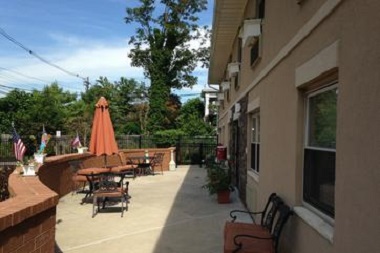
How is Complete Care At Monmouth, Llc Staffed?

CMS rates COMPLETE CARE AT MONMOUTH, LLC's staffing level at 2 out of 5 stars, which is below average compared to other nursing homes. Staff turnover is 68%, which is 22 percentage points above the New Jersey average of 46%. High turnover can affect care consistency as new staff learn residents' individual needs. RN turnover specifically is 62%, which is notably high. RNs provide skilled clinical oversight, so turnover in this role can affect medical care quality.

What Have Inspectors Found at Complete Care At Monmouth, Llc?

State health inspectors documented 28 deficiencies at COMPLETE CARE AT MONMOUTH, LLC during 2021 to 2025. These included: 28 with potential for harm.
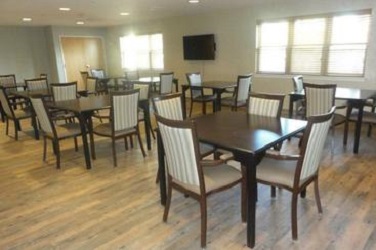
Who Owns and Operates Complete Care At Monmouth, Llc?

COMPLETE CARE AT MONMOUTH, LLC is owned by a for-profit company. For-profit facilities operate as businesses with obligations to shareholders or private owners. The facility is operated by COMPLETE CARE, a chain that manages multiple nursing homes. With 120 certified beds and approximately 76 residents (about 63% occupancy), it is a mid-sized facility located in LONG BRANCH, New Jersey.

How Does Complete Care At Monmouth, Llc Compare to Other New Jersey Nursing Homes?

Compared to the 100 nursing homes in New Jersey, COMPLETE CARE AT MONMOUTH, LLC's overall rating (3 stars) is below the state average of 3.3, staff turnover (68%) is significantly higher than the state average of 46%, and health inspection rating (2 stars) is below the national benchmark.

What Should Families Ask When Visiting Complete Care At Monmouth, Llc?

Based on this facility's data, families visiting should ask: "How do you ensure continuity of care given staff turnover, and what is your staff retention strategy?" "Can you walk me through typical staffing levels on day, evening, and night shifts?" "Can I visit during a mealtime to observe dining assistance and food quality?" "How do you handle medical emergencies, and what is your hospital transfer rate?" These questions are particularly relevant given the facility's high staff turnover rate and the below-average staffing rating.

Is Complete Care At Monmouth, Llc Safe?

Based on CMS inspection data, COMPLETE CARE AT MONMOUTH, LLC has a clean safety record: no substantiated abuse findings (meaning no confirmed cases of resident harm), no Immediate Jeopardy citations (the most serious violation level indicating risk of serious injury or death), and is not on the Special Focus Facility watch list (a federal program monitoring the lowest-performing 1% of nursing homes). The facility has a 3-star overall rating and ranks #100 of 100 nursing homes in New Jersey. While no facility is perfect, families should still ask about staff-to-resident ratios and recent inspection results during their visit.

Do Nurses at Complete Care At Monmouth, Llc Stick Around?

Staff turnover at COMPLETE CARE AT MONMOUTH, LLC is high. At 68%, the facility is 22 percentage points above the New Jersey average of 46%. Registered Nurse turnover is particularly concerning at 62%. RNs handle complex medical decisions and coordinate care — frequent RN changes can directly impact care quality. High turnover means new staff may not know residents' individual needs, medications, or preferences. It can also be disorienting for residents, especially those with dementia who rely on familiar faces. Families should ask: What is causing the turnover? What retention programs are in place? How do you ensure care continuity during staff transitions?

Was Complete Care At Monmouth, Llc Ever Fined?

COMPLETE CARE AT MONMOUTH, LLC has been fined $22,340 across 1 penalty action. This is below the New Jersey average of $33,302. While any fine indicates a compliance issue, fines under $50,000 are relatively common and typically reflect isolated problems that were subsequently corrected. Families should ask what specific issues led to these fines and confirm they've been resolved.

Is Complete Care At Monmouth, Llc on Any Federal Watch List?

COMPLETE CARE AT MONMOUTH, LLC is not on any federal watch list. The most significant is the Special Focus Facility (SFF) program, which identifies the bottom 1% of nursing homes nationally based on persistent, serious quality problems. Not being on this list means the facility has avoided the pattern of deficiencies that triggers enhanced federal oversight. This is a positive indicator, though families should still review the facility's inspection history directly.