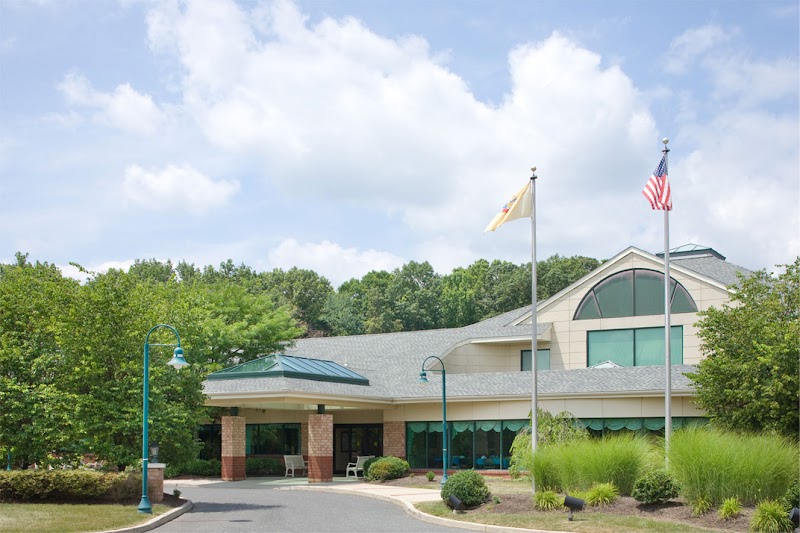
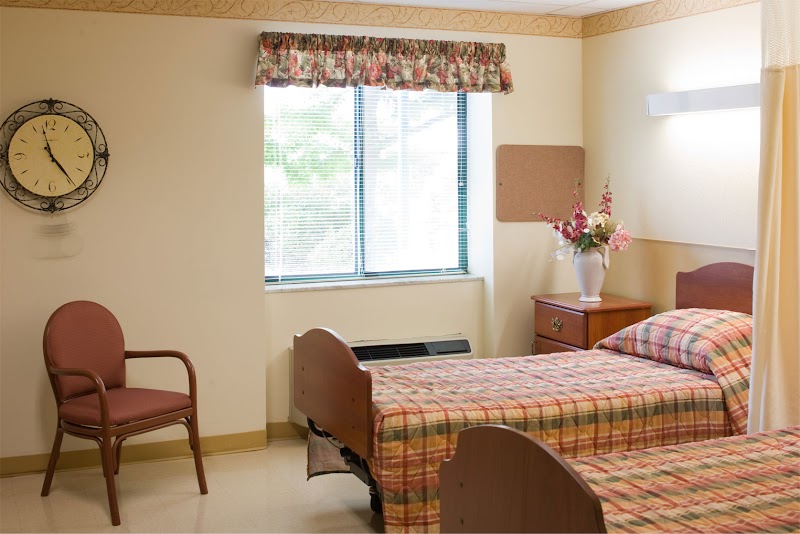

CRANBURY CENTER

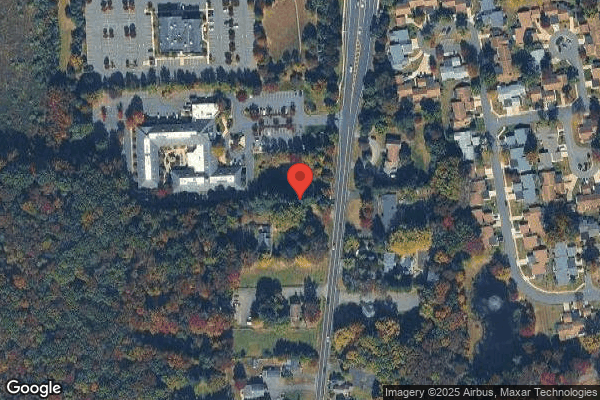
292 APPLEGARTH ROAD, MONROE TOWNSHIP, NJ 08831 (609) 860-2500
For profit - Corporation 154 Beds GENESIS HEALTHCARE Data: November 2025
Trust Grade
80/100
#126 of 344 in NJ
Last Inspection: June 2024

Within standard 12-15 month inspection cycle. Federal law requires annual inspections.

Overview

Cranbury Center in Monroe Township, New Jersey, has a Trust Grade of B+, indicating it is above average and recommended for families considering care options. It ranks #126 out of 344 facilities in New Jersey, placing it in the top half, and #11 out of 24 in Middlesex County, meaning only ten local facilities are better. The overall trend is improving, with issues decreasing from six in 2022 to five in 2024. Staffing has an average rating of 3 out of 5 stars, with a turnover rate of 50%, which is consistent with the state average. Notably, there are no fines on record, which is a positive sign. However, there are some concerns, including incidents where meals were delivered without staff properly serving the food, potentially leading to an institutional dining experience for some residents. Additionally, cooking vessels were observed being stored while still wet, which could encourage bacterial growth. Lastly, there were issues with medical records being unorganized and not readily accessible for certain residents, indicating room for improvement in administrative practices. Overall, while Cranbury Center has strengths, such as its good trust grade and lack of fines, families should be aware of the identified concerns.

Trust Score
B+
80/100
In New Jersey
#126/344
Top 36%
Safety Record
Low Risk
No red flags
Inspections
Getting Better
6 → 5 violations
Staff Stability
⚠ Watch
50% turnover. Above average. Higher turnover means staff may not know residents' routines.
Penalties
✓ Good
No fines on record. Clean compliance history, better than most New Jersey facilities.
Skilled Nurses
○ Average
Each resident gets 36 minutes of Registered Nurse (RN) attention daily — about average for New Jersey. RNs are the most trained staff who monitor for health changes.
Violations
⚠ Watch
11 deficiencies on record. Higher than average. Multiple issues found across inspections.
★★★★☆
4.0
Overall Rating
★★★☆☆
3.0
Staff Levels
★★★☆☆
3.0
Care Quality
★★★★☆
4.0
Inspection Score
Stable
2022: 6 issues
2024: 5 issues

The Good

  • Full Sprinkler Coverage · Fire safety systems throughout facility
  • No fines on record

Facility shows strength in fire safety.

The Bad

Staff Turnover: 50%

Near New Jersey avg (46%)

Higher turnover may affect care consistency

Chain: GENESIS HEALTHCARE

Part of a multi-facility chain

Ask about local staffing decisions and management

The Ugly 11 deficiencies on record

Jun 2024 5 deficiencies
CONCERN (D)

Potential for Harm - no one hurt, but risky conditions existed

Resident Rights (Tag F0550)

Could have caused harm · This affected 1 resident

**NOTE- TERMS IN BRACKETS HAVE BEEN EDITED TO PROTECT CONFIDENTIALITY** Based on observations, interviews, record review, and facility policy review, the facility failed to maintain the residents' dig...

Read full inspector narrative →
**NOTE- TERMS IN BRACKETS HAVE BEEN EDITED TO PROTECT CONFIDENTIALITY** Based on observations, interviews, record review, and facility policy review, the facility failed to maintain the residents' dignity when staff stood while assisting residents to eat in the dining room for one of 17 residents (Resident (R) 16) reviewed for meal assistance of 34 sampled residents. This failure had the potential to result in an undignified dining experience. Findings include: Review of R16's admission Record located in the electronic medical record (EMR) under the Profile tab, revealed she was admitted to the facility on [DATE] with diagnoses to include unspecified dementia with agitation and dysphagia. Review of R16's annual Minimum Data Set (MDS) with an Assessment Reference Date (ARD) of 03/29/24 located in R16's EMR under the MDS tab, revealed R16 had a Brief Interview for Mental Status (BIMS) score of two out of 15, which indicated the resident was severely cognitively impaired. The MDS revealed R16 required a mechanically altered diet. During an observation on 06/11/24 at 12:02 PM, the meal trays were delivered to 17 residents seated at four tables in the Unit C dining room. During an observation on 06/11/24 at 12:06 PM, R16 was sitting in a wheelchair at the second table in the dining room with the lunch meal placed on the tray in front of her. Continued observation revealed Licensed Practical Nurse (LPN) 3 walked over to R16, picked up a fork then fed her small bites of food from the plate, while standing next to her. During an interview on 06/11/24 at 12:16 PM, LPN3 confirmed she was standing over R16 while assisting her to eat the lunch meal in the dining room. LPN3 stated that by standing while feeding R16 she didn't maintain her dignity. LPN3 also stated she could not find a chair to sit in, so she fed her standing up because she wanted to feed R16 while the meal was warm. During an interview on 06/14/24 at 8:53 AM, the Director of Nursing (DON) and interim Administrator stated they expected nursing staff to sit down next to the resident while feeding them to maintain their dignity. Review of the facility's policy titled, Resident Rights Under Federal Law, revised on 02/01/23 and provided by the facility, revealed . Purpose To treat each resident with respect and dignity and care for each resident in a manner and in an environment that promotes maintenance or enhancement of his/her self-esteem and selfworth . 5. Respect and Dignity. The resident has a right to be treated with respect and dignity, including (refer lo Center Operations Policies and Procedures, Treatment: Considerate and Respectful) NJAC 8:39-4.1(a)(12)
CONCERN (D)

Potential for Harm - no one hurt, but risky conditions existed

Deficiency F0688 (Tag F0688)

Could have caused harm · This affected 1 resident

**NOTE- TERMS IN BRACKETS HAVE BEEN EDITED TO PROTECT CONFIDENTIALITY** Based on observation, interviews, record review, and facility policy review, the facility failed to follow a physician's order f...

Read full inspector narrative →
**NOTE- TERMS IN BRACKETS HAVE BEEN EDITED TO PROTECT CONFIDENTIALITY** Based on observation, interviews, record review, and facility policy review, the facility failed to follow a physician's order for a right-hand splint device for one of one resident (Resident (R) 74) reviewed for range of motion of 34 sample residents. This failure could potentially cause worsening contractures and a decline in range of motion. Findings include: Review of R74's admission Record tab located in the electronic medical record (EMR), indicated R74 was admitted to the facility on [DATE] with diagnoses to include but not limited to, hypertension, hemiplegia and hemiparesis following cerebral infarction affecting right dominant side, and unspecified lack of coordination. Review of R74's quarterly Minimum Data Set (MDS) with an Assessment Reference Date (ARD) of 03/15/24 revealed a Brief Interview for Mental Status (BIMS) score of 11 out of 15 which indicated R74 had moderately impaired cognition. Review of R74's Care Plan, dated 05/12/24 and located in the EMR under the Care Plan tab, revealed [R74] to use RUE (Right Upper Extremity) hand splint during daytime for 6-8 hours . Review of the Physician Orders, dated 05/10/24 and located in the EMR under the Orders tab, revealed R74 to wear a RUE resting hand splint daily for 6-8 hours (hrs.) during daytime .Assistance for application/removal was required every day and evening shift. During an observation and interview on 06/11/24 at 2:29 PM, R74 had a right-hand splint device, which was light and dark blue, lying on his dresser across the room. an interview, R74 was asked about the hand splint observation. R74 stated he was to wear the splint every day and proceeded to remove his right hand from under his bed sheets and showed me his right hand, which was contracted. R74 was asked why he was not wearing his hand splint and R74 stated, No one has put it on me. During an observation on 06/12/24 at 9:12 AM, R74 was lying in his bed resting and observation of the light and dark blue hand splint was still lying on the dresser in the same position as observed on the previous day on 06/11/23. During an interview on 06/12/24 at 9:12 AM, Licensed Practical Nurse (LPN) 2 stated R74 RUE splint should have been worn daily, she placed the splint on R74's right hand. LPN2 was asked the importance of wearing a hand splint and the LPN2 stated, Splints should be worn as ordered and if not worn regularly R74 could lose what range of motion he has. LPN2 further stated that R74 was not able to apply the splint on his own. During an interview on 06/12/24 at 2:19 PM, the Director of Nursing (DON) revealed her expectation of staff was that all physician orders were followed. During an interview on 06/12/24 at 3:17 PM, the facility Administrator revealed her expectation of staff was that physician orders were followed. Review of the facility's policy titled, Activities of Daily Living (ADL), dated 05/01/23, revealed Based on the comprehensive assessment of a patient and consistent with the patient's needs and choices, the Center must provide the necessary care and services to ensure that a patient's activities of daily living (ADL) abilities are maintained or improved and do not diminish unless circumstances of the patient's clinical condition demonstrate that a change was unavoidable .assistive devices and adaptive equipment are provided as needed. NJAC 8:39-27.1(a)
CONCERN (D)

Potential for Harm - no one hurt, but risky conditions existed

Infection Control (Tag F0880)

Could have caused harm · This affected 1 resident

**NOTE- TERMS IN BRACKETS HAVE BEEN EDITED TO PROTECT CONFIDENTIALITY** Based on observation, interview, record review, and facility policy review, the facility failed to follow infection control and ...

Read full inspector narrative →
**NOTE- TERMS IN BRACKETS HAVE BEEN EDITED TO PROTECT CONFIDENTIALITY** Based on observation, interview, record review, and facility policy review, the facility failed to follow infection control and prevention guidelines to prevent cross-contamination when they did not follow Enhanced Barrier Precautions (EBP) while performing catheter care for one of one resident (Resident (R) 103) reviewed for catheters of 34 sampled residents. This failure had the potential to spread multidrug resistant organisms (MDROs) to the residents. Findings include: Review of R103's admission Record, located in the electronic medical record (EMR) under the Profile tab, revealed R103 was admitted to the facility on [DATE] with diagnoses that included quadriplegia, C5-C7 incomplete, colostomy status, pressure ulcer of sacral region stage three, and suprapubic catheter status. Review of R103's comprehensive Care Plan located in the EMR under the Care Plan tab, revealed the following focus areas: I, [R103] have a PICC [peripherally inserted central catheter] line measuring 36cm [centimeters] in my RUE [right upper extremity] r/t [related to] use of ABX [antibiotic] therapy secondary to Multi-Organism Wound Infection [a germ that is resistant to treatment with many antibiotics] , dated 03/01/24, with no EBP interventions; I, [R103] have actual skin breakdown present on admission r/t impaired gait and mobility, deconditioning s/p [status post] hospitalization Wounds Present on admission: actual pressure ulcer, sacrum, Rt [right] buttock, Lt [left] hip: B/L [bilateral] heels, Rt foot, dated 09/20/23, with no EBP interventions; and I, [R103] have a supra-pubic catheter placed d/t [due to] neurogenic bladder, dated 09/20/23, with no EBP interventions. Review of R103's Physician's Orders, dated 06/01/24, located in the EMR under the Orders tab, revealed orders as follows: Perform Indwelling Catheter Care (Suprapubic catheter 18F [French] with 10 ml [milliliters] balloon) every day and evening shift, Observe right arm double lumen PICC every shift and Dakins (1/4 strength) External Solution (Sodium Hypochlorite) Apply to coccyx topically every day and evening shift for wound***Cleanse wound with Dakin's Solution, apply Silvadene Cream to wound bed, apply wet to dry packing and cover with Silicone bordered foam and apply to coccyx topically as needed for Wound ***Change dressing if loose or soiled. Observation on 06/11/24 at 10:18 AM revealed R103 lying in bed with the indwelling urinary catheter tubing not kinked, the catheter bag was not covered, and was attached to the bottom bed rail. There was no EBP sign on the resident's door and no cart with personal protective equipment (PPE) near or outside of the resident's room. Interview with R103 at this time revealed staff were not wearing a gown when performing catheter or wound care. Observations on 06/11/24 at 10:39 AM, 12:32 PM, and 2:50 PM, revealed there was no EBP sign on R103's door and no PPE cart outside of the room. During an interview and observation on 06/11/24 at 12:34 PM, Licensed Practical Nurse (LPN) 2 confirmed R103 did not have an EBP sign on the door and there was no PPE cart outside of the room or in the hallway. During an interview on 06/11/24 at 12:34 PM, LPN3 verified R103 did not have an EBP sign on the door and there was no PPE cart outside of R103's room. LPN3 stated nursing staff were trained by the former Infection Preventionist (IP) on EBP a few months ago and the EBP was used for residents with open wounds, indwelling urinary catheters, PICC lines, and MDROs (multidrug resistant organisms). LPN3 stated EBP were extra precautions that you took when providing wound and catheter care and should wear a gown and gloves when performing wound and catheter care. During an interview on 06/11/24 at 12:40 PM, Certified Nursing Assistant (CNA) 4 stated she was trained by the former IP on EBP a few months ago and should wear a gown and gloves when providing care to residents but she didn't know which residents should be on EBP. CNA4 also stated residents on EBP would have an EBP sign on the outside of the door and a PPE cart would be placed outside of the door. CNA4 verified R103 did not have an EBP sign on the door or PPE cart in the hallway. CNA4 also stated she was assigned to R103 and had provided catheter care using gloves but not a gown. During an interview on 06/12/24 at 8:31 AM, the Nurse Manager stated the IP would place an EBP sign on the door and PPE cart outside of the room if the resident had an open wound, indwelling catheter, PICC line, and MDRO. The Nurse Manager also stated R103 should have been placed on EBP when he was readmitted on [DATE] but someone missed it. The Nurse Manager indicated a gown, and gloves should be worn when the nursing staff were providing high touch activities for residents on EBP and that these precautions were implemented to protect residents and staff from spreading MDROs. During an interview on 06/12/24 at 4:22 PM, CNA7 acknowledged R103 was not on EBP on 06/11/24 and did not know why the resident was on the precautions today because he had not received report yet. During an interview on 06/14/24 at 12:32 PM, the Administrator stated the former IP resigned two months ago and trained the staff on EBP prior to her departure. The Administrator also stated the interim IP was at the facility most days of the week but not on the weekends and expected the admitting nurse to implement EBP and update the care plan when R103 was readmitted to the facility from the hospital on [DATE]. During an interview on 06/14/24 at 1:16 PM, the interim IP acknowledged EBP was not implemented for R103 until 06/12/24 and she expected the admitting nurse to implement EBP and document EBP on the care plan after his readmission to the facility on [DATE] per the EBP policy. The interim IP stated the EBP signs were available on the floor at the nurses' station and nursing staff had access to the PPE carts during the week and on weekends. The interim IP also stated that the facility must implement EBP for residents with MDROs but could use their discretion for residents with devices such as PICC lines, indwelling urinary catheters, and open wounds. Review of the facility's policy titled, Enhanced Barrier Precautions (EBP), revised 04/01/24 and provided by the facility, revealed . l. Prompt recognition of need: . c. The facility will have the discretion on how to communicate to staff which residents require the use of EBP, as long as staff are aware of which residents require the use of EBP prior to providing high-contact care activities. 2. Initiation of Enhanced Barrier Precautions: a. The facility will have the discretion in using EBP for residents who do not have a chronic wound or indwelling medical device and are infected or colonized with an MDRO that is not currently targeted by Center for Disease Control (CDC). b. An order for enhanced barrier precautions will be obtained for residents with any of the following: i. Wounds (e.g., chronic wounds such as pressure ulcers, diabetic foot ulcers, unhealed surgical wounds, and chronic venous stasis ulcers) and/or indwelling medical devices (e.g., central lines, urinary catheters, feeding tubes, tracheostomy/ventilator tubes) even if the resident is not known to be infected or colonized with a Multi- Drug Resistant Organisms MDRO) . 4. High-contact resident care activities include: . g. Device care or use: central lines, urinary catheters, feeding tubes, tracheostomy/ventilator tubes . Review of the facility's policy titled, Enhanced Barrier Precautions, revised 01/08/24 and provided by the facility, revealed Policy In addition to Standard Precautions, Enhanced Barrier Precautions (EBP) will be used for novel or targeted multi-drug resistant organisms (MDROs) . Purpose to reduce the risk of transmission of epidemiologically important microorganisms by direct or indirect contact. Refer to: Enhanced Barrier Precautions procedure Review of the facility's document titled, Procedure: Enhanced Barrier Precautions, revised 05/01/24 and provided by the facility, revealed 1. Post the appropriate Enhanced Barrier Precautions (EBP) sign on the patient's room door . 1.1 Enhanced Barrier Precautions (EBP) are to be utilized for the duration of the patient's stay . 3. Follow the CDC [Centers for Disease Prevention and Control] guidance per table below . Enhanced barrier applies to chronic wounds and/or indwelling medical devices (e.g., central line, urinary catheter, enteral feeding tube, tracheostomy, ventilator) regardless of MDRO colonization status. PPE used for these situations during high contact patient care activities: Dressing, bathing/showering, transferring, providing hygiene, changing linens, changing briefs or assisting with toileting, device care or use, central line, urinary catheter, enteral feeding tube, tracheostomy, ventilator, wound care, any skin opening requiring a dressing . Required PPE gown, gloves prior to high contact care activity (change PPE before caring for another patient) . 4. PPE should be accessible and located outside of the patient's room . 12. document: 12.1 type of precautions in care plan Review of the facility's staff in-service titled New EBP Policy, dated 03/20/24 and provided by the facility, revealed nursing staff were trained on the new EBP guidelines. NJAC 8:39-19.4
CONCERN (E)

Potential for Harm - no one hurt, but risky conditions existed

Safe Environment (Tag F0584)

Could have caused harm · This affected multiple residents

Based on observations, interviews, and facility policy review, the facility failed to ensure a homelike environment when staff delivered the lunch meal on a tray from the cart to the table and did not...

Read full inspector narrative →
Based on observations, interviews, and facility policy review, the facility failed to ensure a homelike environment when staff delivered the lunch meal on a tray from the cart to the table and did not remove the food from the tray in the dining room for 16 of 55 residents that resided on Unit C (Residents (R) 16, R23, R39, R47, R49, R54, R56, R69, R70, R75, R80, R86, R90, R110, R113 and R123. This failure had the potential to result in an institutional dining experience. Findings include: During an observation on 06/11/24 at 12:01 PM, two staff members delivered the lunch meal trays and sat them on the tables in front of R16, R23, R39, R47, R49, R54, R56, R69, R70, R75, R80, R86, R90, R110, R113 and R123. Continued observation revealed nursing staff in the dining room did not remove the food from the tray and place it on the table after the trays were delivered. During an interview on 06/11/24 at 12:13 PM, Certified Nursing Assistant (CNA) 5 verified she had worked at the facility since 2014 and the food was not removed from the tray after it was placed on the table in the dining room on Unit C. During an interview on 06/11/24 at 12:15 PM, CNA6 confirmed she had worked at the facility less than one month and resident's food was always served on trays and not removed from the tray after placed on the table in front of the residents in the dining room. During an interview on 06/11/24 at 12:16 PM, Licensed Practical Nurse (LPN) 3 acknowledged she had worked at the facility over three years, and she had observed staff removing the meal trays from the cart, placing it on the table in front of the residents without removing the plates, bowls, drinks, and utensils from the tray. During an interview on 06/14/24 at 8:53 AM, the Director of Nursing (DON) and Administrator stated leaving food on the trays after being served in the dining room was a cafeteria setting and not a homelike environment. Review of the facility's policy titled, Resident Rights Under Federal Law, revised on 02/01/23 and provided by the facility, revealed . 9. Safe Environment. The resident has the right to a safe, clean, comfortable and homelike environment, including but not limited to receiving treatment and supports for daily living safety NJAC 8:39-31.4(a)
CONCERN (E)

Potential for Harm - no one hurt, but risky conditions existed

Food Safety (Tag F0812)

Could have caused harm · This affected multiple residents

Based upon observation, interview, and facility policy review the facility failed to allow cooking vessels to completely air dry before being placed for storage in one of one kitchen. This failure has...

Read full inspector narrative →
Based upon observation, interview, and facility policy review the facility failed to allow cooking vessels to completely air dry before being placed for storage in one of one kitchen. This failure has the potential to create an environment that would enable bacteria growth between the vessels which could cause illness among 127 of 128 residents. Findings include: During an observation and interview on 06/11/24 at 10:10 AM with the Chef Manager (CM), buffet pans and other pans were stacked to be stored without reaching complete dryness. The CM was shown the multiple stacked pans, and the CM stated all the washed items should have been completely dried before stacking and storing. The CM then proceeded to take the stacks of wet items to the dishwasher room. During an observation and interview on 06/12/24 at 2:34 PM, with the CM and Food Services Director (FSD), buffet pans and other pans were stacked to be stored without reaching complete dryness. The CM and FSD were shown the multiple stacks, and the CM stated all the washed items should have been completely dried before stacking and storing, and that the staff were educated on 06/11/24, the day before. The CM then proceeded to take the stacks of wet items to the dishwasher room to be recleaned. During an interview on 06/14/24 at 11:20 AM, the Administrator verified nesting pans stored for future use in the kitchen should have been completely dried before being stacked together. Review of the facility's policy titled, Warewashing, revised 02/23 and provided by the facility, revealed all dishware, service ware, and utensils will be cleaned and sanitized after each use. The policy continued to indicate, all dishware will be air dried and properly stored. NJAC 8:39-17.2(g)
Mar 2022 6 deficiencies
CONCERN (D)

Potential for Harm - no one hurt, but risky conditions existed

Deficiency F0578 (Tag F0578)

Could have caused harm · This affected 1 resident

Based on observation, interview, and record review, it was determined that the facility failed to provide documentation that the resident declined an Advance directive (AD). This deficient practice wa...

Read full inspector narrative →
Based on observation, interview, and record review, it was determined that the facility failed to provide documentation that the resident declined an Advance directive (AD). This deficient practice was identified for 1 of 7 residents reviewed for Advanced Directives (Resident #50), and was evidenced by the following: On 03/14/22 at 10:27 AM, 3/15/22 at 10:09 AM, and 03/16/22 at 9:47 AM, the surveyor attempted to interview Resident #50, and the resident was not available. The surveyor reviewed the medical record of Resident #50. A review of the resident's admission Record (face sheet) reflected that Resident #50 was admitted to the facility in January 2022 with diagnoses that included, End-stage renal disease (kidney failure), Congestive heart failure, Type two diabetes, and Complete and traumatic amputation. Further review of the admission Record reflected that the section labeled, Advanced Directives (AD; a living will/health care proxy) was blank with no further information. A review of the admission Minimum Data Set (MDS) an assessment tool dated 1/19/22 revealed Resident #50 had a Brief Interview for Mental Status (BIMS) of 15 which means that the resident's cognition was intact. A review of Resident #50's medical chart, did not reveal an AD. A review of the resident's individualized care plan (CP) initiated on 1/9/22 revealed the AD was not addressed. A review of the progress note for Post admission Patient/Family Conference dated 1/11/22 revealed: Advance Directives not yet in place. A review of Social Services Assessment and Documentation (SSAD) dated 1/13/22 section 5, revealed that Resident #50 did not have an Advance Directive (AD) in place. A conversation regarding advanced care planning was provided and information was given. The section under further elaborate information on health care decision making was blank. On 3/15/22 at 12:12 PM, the surveyor interviewed the Director of Social Services (DSS). The DSS stated that all residents who are admitted to the facility are interviewed for a psychosocial assessment. The DSS also stated she meets with admitted residents several times and discusses AD. The DSS further stated an AD was discussed during the Interdisciplinary Team (IDT) meeting within 72 hours of admission. The DSS confirmed Resident #50 did not have an AD, but it was discussed and should have been documented. On 3/17/22 at 11:12 AM, two surveyors interviewed the Licensed Practical Nurse/Charge Nurse (LPN/CN) assigned to the B wing, where Resident #50 resided. The LPN/CN printed the resident's face sheet and confirmed the category for the advanced directive was blank with no further information. The LPN/CN confirmed that the resident did not have an advanced directive on file, and further stated that it should have been obtained and documented upon admission. On 3/17/22 at 12:21 PM, two surveyors interviewed the Assistant Director of Nursing (ADON) and reviewed the eMR. The ADON stated Resident #50 did not have an advance directive on file. The ADON acknowledged there should have been an Advanced Directive for Resident #50. 03/21/22 at 11:53 AM, in the presence of the Director of Nursing (DON) and two surveyors. The DSS confirmed an Advanced directive, that should have been documented before the surveyor's inquiry. The DON stated upon a resident's admission, the nurse should have obtained and documented advanced directives within 24 hours of admission. The DON also stated SW meets with newly admitted residents for SSAD within 24 hours of admission and completed by day five (5) of admission. The DON further added the Interdisciplinary team meets 72 hours after a resident's admission and formulated the resident's care plan which should have included the resident's AD status. 03/21/22 at 01:30 PM, in the presence of the survey team, the Licensed Nursing Home Administrator (LNHA) and the DON acknowledged there were four opportunities between four different disciplines of practice that could have been obtained and documented the AD and/or end of life preferences and was not done. 03/23/22 at 09:15 AM, in the presence of the survey team the SW stated Resident #50 was alert, oriented, and was able to make his/her own decision. The SW stated Resident #50 did not have an AD and was offered advanced health care planning but declined. The SW acknowledged she did not document in the SSAD, care plan, and on the eMR that Resident #50 declined. She further acknowledged that an AD could change with each readmission and should have been obtained and documented with each readmission. She confirmed Resident #50 did not have a documented AD with each readmission. The SW acknowledged she was not aware of Federal regulations regarding AD. A review of the facility's Social Services Documentation Requirement with a revised date of 9/13/19, under section Social Service Assessment and Documentation, revealed, A Social Service Assessment and Documentation /Initial Assessment will be automatically scheduled upon patient's admission. It is to be completed by day 5 of admission. A review of the facility's policy Social Services Progress Notes with a revision date of 1/15/21 included Progress notes will be completed on [name redacted]. A review of the facility's policy Health Care Decision Making with a revised date of 3/1/22 included Advanced care planning includes two key parts: 1. Face to face conversations with physician and other health care professionals and patients and their health care decision-makers to discuss advance directives and treatment decisions with or without completing relevant legal forms; and 2. Documenting treatment and wishes .To assure that patients' wishes concerning health care issues are communicated to all staff . and their wishes will be executed at the appropriate time .Upon admission , determine whether the patient has an advanced directive . NJAC 8:39-19.6
CONCERN (D)

Potential for Harm - no one hurt, but risky conditions existed

Assessment Accuracy (Tag F0641)

Could have caused harm · This affected 1 resident

**NOTE- TERMS IN BRACKETS HAVE BEEN EDITED TO PROTECT CONFIDENTIALITY** Based on observation, interview, record review, and review of pertinent facility documentation, it was determined that the facil...

Read full inspector narrative →
**NOTE- TERMS IN BRACKETS HAVE BEEN EDITED TO PROTECT CONFIDENTIALITY** Based on observation, interview, record review, and review of pertinent facility documentation, it was determined that the facility failed to accurately code a resident's Minimum Data Set (MDS) for falls in accordance with the Resident Assessment Instrument (RAI) Manual (a guide for completing resident assessments). This deficient practice was identified for 1 of 1 residents reviewed for falls, (Resident #2) as was evidenced by the following: On 03/14/22 at 10:24 AM, the surveyor observed Resident #2 lying in bed. The surveyor further observed a discoloration on the resident's left eye, cheek bone and temple area that was purple, reddish-blue, and yellow in color. The surveyor attempted to interview the resident on how he/she obtained the bruise and the resident stated, they were taking [name redacted] to see the monkeys and the monkey got [name redacted]. The surveyor reviewed the admission Record (face sheet) which reflected Resident # 2 was admitted to the facility with diagnoses which included, but were not limited to: Unspecified dementia (a mental disorder in which a person loses the ability to think, remember, learn, make decisions, and solve problems), Cerebral infarction (Stroke), Muscle weakness (when your full effort doesn't produce a normal muscle contraction or movement), and Abnormality of gait and mobility (when a person is unable to walk in the usual way). A review of the facility's Resident Manager System (RMS) Event Summary Reports dated 12/02/21 at 1:15 PM reflected that Resident #2 had a fall with minor injury. Further review of the facility's RMS Event Summary Report dated 02/19/22 at 6:55 PM reflected that Resident #2 had an additional fall which resulted in minor injury. A review of the Quarterly MDS dated [DATE], which revealed the resident's cognitive skills for daily decision making were moderately impaired. Further review of the resident's MDS, Section - J1800 - Any falls since Admission/Entry or Reentry or Prior Assessment (OBRA or Scheduled PPS), whichever is more recent, indicated that the resident had no falls during the assessment review period. The falls with minor injury previously mentioned were not accurately coded in the MDS. The surveyor interviewed the Assistant MDS Coordinator on 03/21/22 at 12:37 PM, who stated that she made a mistake and did not accurately code the falls on the resident's quarterly MDS. The surveyor interviewed the MDS Coordinator on 03/22/22 at 9:57 AM, who acknowledged that the quarterly MDS was inaccurately coded for falls. NJAC 8:39-33.2(d)
CONCERN (D)

Potential for Harm - no one hurt, but risky conditions existed

Deficiency F0658 (Tag F0658)

Could have caused harm · This affected 1 resident

**NOTE- TERMS IN BRACKETS HAVE BEEN EDITED TO PROTECT CONFIDENTIALITY** Based on observation, interview, record review, and review of pertinent facility documents, it was determined that the facility ...

Read full inspector narrative →
**NOTE- TERMS IN BRACKETS HAVE BEEN EDITED TO PROTECT CONFIDENTIALITY** Based on observation, interview, record review, and review of pertinent facility documents, it was determined that the facility failed to a.) obtain a physician order for Code Status upon readmission for 1 of 7 residents reviewed (Resident#50 ), b.) administer an over the counter medication as indicated in the directions on the medication bottle for 1 of 4 residents observed during medication pass (Resident # 308), and c.) ensure that treatments were administered according to Physician's Orders and professional standards of clinical practice for 1 of 1 resident reviewed for skin conditions (Resident #757). This deficient practice was evidenced by the following: Reference: New Jersey Statutes Annotated, Title 45. Chapter 11. Nursing Board. The Nurse Practice Act for the State of New Jersey states: The practice of nursing as a registered professional nurse is defined as diagnosing and treating human responses to actual and potential physical and emotional health problems, through such services as case-finding, health teaching, health counseling, and provision of care supportive to or restorative of life and wellbeing, and executing medical regimens as prescribed by a licensed or otherwise legally authorized physician or dentist. Reference: New Jersey Statutes Annotated, Title 45, Chapter 11. Nursing Board. The Nurse Practice Act for the State of New Jersey states: The practice of nursing as a licensed practical nurse is defined as performing tasks and responsibilities within the framework of case finding; reinforcing the patient and family teaching program through health teaching, health counseling, and provision of supportive and restorative care, under the direction of a registered nurse or licensed or otherwise legally authorized physician or dentist. 1. On 03/14/22 at 10:27 AM, 3/15/22 at 10:09 AM, and 03/16/22 at 9:47 AM, the surveyor attempted to interview Resident #50, and the resident was unable to interview. The surveyor reviewed the medical record of Resident #50. A review of the resident's admission Record (face sheet) reflected that Resident #50 was admitted to the facility in January 2022 with diagnoses that included, End-stage renal disease (kidney failure), Congestive heart failure, Type two diabetes, and Complete and traumatic amputation. Further review of the admission Record reflected that the section labeled, Advanced Directives (AD; a living will/health care proxy) was blank with no further information. A review of the electronic Medical Record (eMR) profile for Resident #50 reflected a blank section for Code Status. A review of the admission Minimum Data Set (MDS), an assessment tool used to facilitate management of care dated 1/19/22 revealed Resident #50 had a Brief Interview for Mental Status (BIMS) of 15 which reflected that the resident was cognitively intact. A review of the New Jersey Practitioner Orders for Life-Sustaining Treatment form (POLST; end of life medical treatment based on the resident's known preferences) from 1/8/22 to 3/14/22 for Resident #50 was not initiated. A review of the Clinical Physician Orders (CPO) revealed the resident did not have an order for a code status from 1/8/22 to 3/14/22. A review of the electronic progress notes from 1/8/22 to 3/15/22 reflected there was no documentation for code status. On 3/15/22 at 12:12 PM, the surveyor interviewed the Director of Social Services (DSS). The DSS stated that all residents who are admitted to the facility are interviewed for a psychosocial assessment. The DSS also stated she meets with admitted residents several times and discusses the end of life preferences. The DSS further stated end of life preferences are discussed during the Interdisciplinary Team (IDT) meeting within 72 hours of admission. Furthermore, the DSS confirmed Resident #50 did not have a code status and a POLST. The DSS acknowledged Resident #50 should have had a documented code status and POST status. The DSS further stated that the POLST was done after the surveyor's inquiry. On 3/17/22 at 11:12 AM, two surveyors interviewed the Licensed Practical Nurse/Charge Nurse (LPN/CN) assigned to the B wing, where Resident #50 resided. The LPN/CN and two surveyors reviewed the resident's eMR and chart together. The LPN/CN confirmed that the resident did not have a code status and POLST on file. She further stated that it should have been obtained upon admission. On 03/17/22 at 11:45 AM, two surveyors interviewed the Registered Nurse/Unit Manager (RN/UM) who stated all residents who are admitted should have a POLST and code status in the eMR. The RN/UM further stated a code status can be documented by obtaining the resident's end-of-life preferences during the care plan conference that would occur within 72 hours of admission, quarterly, or followed up on since code status could change. On that same date and time, the RN/UM acknowledged the code status and POLST should have been documented with each readmission. The RN/UM confirmed Resident #50 did not have a POLST and code status from 1/9/22 to 3/14/22. She stated a code status was important should an emergency happen we know what to do. On 3/17/22 at 12:21 PM, two surveyors interviewed the Assistant Director of Nursing (ADON) and reviewed the eMR. At that time, the ADON stated that she could not find evidence of the code status for the resident. In addition, there was no physician order for the resident's code status. The ADON further stated order for code status should have been obtained and documented based on their facility policy. The ADON confirmed the code status indicated how we know how to treat a patient. 03/21/22 at 11:53 AM, in the presence of the Director of Nursing (DON) and two surveyors. The DON stated that the Nurse Practitioner (NP) and Physician should have completed the history and physical (H&P) for newly admitted residents which should have addressed a code status, POLST, and completed by 24 to 48 hours of admission. The DON further added the Interdisciplinary team meets 72 hours after a resident's admission and formulated the resident's care plan which should have included the resident's code status and POLST. 03/21/22 at 01:30 PM, in the presence of the survey team, the Licensed Nursing Home Administrator (LNHA) and the DON acknowledged there were four (4) opportunities between four (4) different disciplines of practice that could have obtained an order and documented the code status and/or end of life preferences of the resident. A review of the facility's Social Services Documentation Requirement with a revised date of 9/13/19, under section Social Service Assessment and Documentation revealed, A Social Service Assessment and Documentation /Initial Assessment will be automatically scheduled upon patient's admission. It is to be completed by day 5 of admission. A review of the facility's policy Social Services Progress Notes with a revision date of 1/15/21 included Progress notes will be completed on [name redacted]. A review of the facility's policy Health Care Decision Making with a revised date of 3/1/22 included To assure that patient's wishes concerning health care issues are communicated to all staff . and their wishes will be executed at the appropriate time .Upon admission, determine whether the patient has an advanced directive .Advanced care planning includes two key parts: 1. Face to face conversations with physician and other health care professionals and patients and their health care decision makers to discuss advance directives and treatment decisions with or without completing relevant legal forms; and 2. Documenting treatment and wishes. A review of the facility's policy Code Status Orders with an effective date 1/31/20 included, each patient's code status . will be easily accessible to the clinical staff for all patients . 1. Upon admission /re-admission, a code status order is required as soon as possible as part of the patient's admission order set .1.1 orders for code status include Full Code .2. Staff should verify the patient's wishes with regard to code status .upon admission. 2. The surveyor reviewed the resident's admission Record which indicated Resident #308 was admitted to the facility and had medical diagnoses which included, but not limited to: Dementia and Constipation. On 03/15/22 and 03/16/22, the surveyor observed medication pass on the Subacute Unit and the C-wing unit. The observation included observing three nurses with four residents for a total of 25 medication pass opportunities. On 03/16/22 at 09:15 AM, the surveyor observed Unit Manager/Licensed Practical Nurse (UM/LPN) administer medications on the C-Wing of the facility. The UM/LPN administered medications to two residents, Resident #26, and Resident #308 with a total of eight opportunities. The surveyor observed medication pass with Resident #308. The UM/LPN prepared the medication MiraLax (for constipation) which was an over-the-counter medication in a powder form. The surveyor observed the UM/LPN open the bottle of MiraLax and poured the white powder into a 30 cubic centimeter (cc) medicine cup. The surveyor asked the UM/LPN how she measured 17 grams and she stated, usually you pour it into the cap and then into the medicine cup, but this is the same amount. The surveyor asked to see the bottle of MiraLax, and the directions on the bottle indicated that one capful equaled 17 grams. The UM/LPN stated that it is equal to this and held up the medicine cup. On 03/16/22 at 10:45 AM, the surveyor reviewed the Order Summary Report for March 2022 for Resident #308. There was an order for MiraLax Powder (Polyethylene Glycol 3350) Give 17 grams by mouth one time a day for Constipation. On 03/22/22 at 09:07 AM, the Center Executive Nurse (CEN) provided the surveyor with documentation on MiraLaX usage, dosage, and side effects which the facility used to educate the nursing staff on proper administration of the medication. Under the section titled, How should I take MiraLAX ?, indicated that To use MiraLAX powder, measure your dose with the medicine cap on the bottle. This cap should contain dose marks on the inside of it. Pour the powder into 4 to 8 ounces of a cold or hot beverage such as water, juice, soda, coffee, or tea. Stir this mixture and drink it right away. Do not save for later use. 3. On 03/14/22 at 9:45AM, the surveyor observed the Resident #757 lying in bed, alert and responsive, and receiving oxygen via nasal cannula. The resident's feet were elevated on a pillow and there was an uncovered blister to the right medial foot. A review of the resident's admission Record indicated that Resident #757 was admitted to the facility and had diagnoses which included but were not limited to: Dementia, Heart failure and Hypertension. A review of the admission MDS dated [DATE], with a BIMS score of 8, which reflected that the resident's cognition was moderately impaired. A review of resident's Physician Order Summary for March 2022, revealed an order for 1. Cleanse right medial foot blister with normal saline and apply optiform dressing every 3 days and as needed, and 2. Apply protective dressing behind left ear fold every shift. On 3/15/22 at 10:36 AM, the surveyor observed the resident lying in bed. There was no protective dressing behind the resident's left ear and the blister to right medial foot remained uncovered. On 3/16/22 at 12:30 PM, the surveyor observed the resident in the presence of the Licensed Practical Nurse (LPN) #1. There was no protective dressing to the left ear and the right medial foot blister remained uncovered. The surveyor asked LPN #1 if the resdient's left ear should have a protective dressing and if the blister to the right medial foot should have been covered with optifoam. She stated, the blister is usually not covered with a dressing. On that same date and time, in the presence of the surveyor, LPN #1 reviewed the Treatment Administration Record (TAR) and acknowledged that there were physician's orders for a protective dressing to the left ear and a dressing change to the right medial foot blister every 3 days and as needed. She further acknowledged that these dressings should have been in place. On 3/16/22 at 1:57 PM, the surveyor interviewed the Center Nurse Executive (CNE) who stated that the nurses should have followed the treatment orders. On 3/17/22 at 10:38 AM, the surveyor observed the resident's left ear and right medial foot wounds in the presence of LPN #2. The surveyor observed that the right medial foot blister was covered with a dressing. However, the protective dressing was still not in place behind the resident's left ear . LPN #2 could not state if there should have been a protective dressing behind the resident's left ear. A review of policy titled Treatments, with a revised date of 6/1/21, indicated that A licensed nurse or medical technician, per state regulations, will perform ordered treatments. Accepted standards of practice will be followed. Under Practice Standards, 5. Perform treatment as ordered. No additional documentation was provided to the survey team during the survey. NJAC 8:39-19.6 NJAC 8:39-27.1(a) NJAC 8:39-29.2(d)
CONCERN (D)

Potential for Harm - no one hurt, but risky conditions existed

Food Safety (Tag F0812)

Could have caused harm · This affected 1 resident

Based on observation, interview, and review of facility policies, it was determined the facility failed to maintain proper kitchen sanitation practices to prevent the development of food born illnesse...

Read full inspector narrative →
Based on observation, interview, and review of facility policies, it was determined the facility failed to maintain proper kitchen sanitation practices to prevent the development of food born illnesses. This deficient practice was observed during two of three kitchen tours and was evidenced by the following: On 3/14/22 at 9:38 AM, the surveyor conducted an initial tour of the kitchen with the Lead [NAME] in the presence of a second surveyor and observed a white wall mounted oscillating fan in the upper corner above the hand washing station. The fan was observed blowing visible debris consisting of black long fuzzy strands on the clean dishes in the conveyor belt area of the dishwasher. The surveyor further observed a small beige, plastic, uncovered garbage receptacle without a lid or liner containing trash under the hand-washing sink. This trash can was located next to clean dessert dishes stored in a roller caddy's racks under the dishwasher line. The surveyor observed a pivoting metal arm behind the stove that was mounted to the wall. It had two large tongs and two large whisks hanging on it and touching a plumbing pipe which was soiled with black colored sediment. The surveyor conducted a second tour and interview on 3/14/22 at 11:08 AM with the Dining Services Director (DSD) who stated that the fan was used to speed dry the dishes and was not included in the facility's weekly cleaning schedule. The DSD further stated that the trash receptacle should have had a lid and the utensils hanging over the pivoting bar near the pipe were intentionally stored there, but she could see the surveyors concern with the storage of the utensils. On 3/21/22 at 1:08 PM, the survey team met with the facility Center Executive Director (Licensed Nursing Home Administrator), the Director of Nursing, and both were made aware of the above concerns. The surveyor reviewed the facility policy titled, Department Sanitation with a revised date of 6/15/18 which revealed, Trash is in covered containers and emptied when full and Cleaning schedules are followed, and cleaning procedures are utilized. NJAC 8:39-17.1 (a);17.2 (g)
CONCERN (D)

Potential for Harm - no one hurt, but risky conditions existed

Infection Control (Tag F0880)

Could have caused harm · This affected 1 resident

Based on observation, interview and review of facility documents it was determined that the facility failed to ensure a.) a Temporary Nurse's Aide (TNA) appropriately donned (applied) and doffed (remo...

Read full inspector narrative →
Based on observation, interview and review of facility documents it was determined that the facility failed to ensure a.) a Temporary Nurse's Aide (TNA) appropriately donned (applied) and doffed (removed) an N95 mask before entering and exiting a resident's room who was on Transmission Based Precautions (TBP) for Covid-19, and b.) the TNA appropriately disinfected her eye protection after exiting the same room with the available disinfectant wipes. This deficient practice was evidenced by the following: According to the U.S. CDC How to Use Your N95 Respirator, updated 3/16/22, included 4. Keep Your N95 Snug: Your N95 must form a seal to your face to work properly. Your breath must pass through the N95 and not around its edges. Jewelry, glasses, and facial hair can cause gaps between your face and the edge of the mask. The N95 works better if you are clean shaven. Gaps can also occur if your N95 is too big, too small, or it was not put on correctly. To check for gaps, gently place your hands on the N95, covering as much of it as possible, then breathe out. If you feel air leaking out from the edges of the N95, or if you are wearing glasses and they fog up, it is not snug. Adjust the N95 and try again. If you cannot get a tight seal, try a different size or style. Even if you cannot get the N95 sealed against your face, it will provide protection that is likely better than a cloth mask. Check for gaps every time you put on your N95. 5. Remove the N95: After you remove your N95, wash your hands with soap and water, or hand sanitizer containing at least 60% alcohol if soap is not available. When to replace your N95: . Replace the N95 when the straps are stretched out and it no longer fits snugly against your face or when it becomes wet, dirty, or damaged. Throw it in the trash. According to the document, Eye Safety - Eye Protection for Infection Control / NIOSH / CDC, last reviewed 7/29/13, included The Centers for Disease Control and Prevention (CDC) recommends eye protection for a variety of potential exposure settings where workers may be at risk of acquiring infectious diseases via ocular exposure . Infectious diseases can be transmitted through various mechanisms, among which are infections that can be introduced through the mucous membranes of the eye (conjunctiva) . Eye protection provides a barrier to infectious materials entering the eye and is often used in conjunction with other personal protective equipment (PPE) such as gloves, gowns, masks or respirators . Healthcare setting-specific procedures for cleaning and disinfecting used patient care equipment should be followed for reprocessing reusable eye protection devices. Manufacturers may be consulted for their guidance and experience in disinfecting their respective products. Contaminated eye protection devices should be reprocessed in an area where other soiled equipment is handled. Eye protection should be physically cleaned and disinfected with the designated hospital disinfectant, rinsed, and allowed to air dry. Gloves should be worn when cleaning and disinfecting these devices. On 3/16/22 at 12:12 PM, the surveyor observed a TNA donn an N95 mask over a surgical mask before entering a resident's room who was on TBP for Covid-19. The TNA was also wearing a gown, gloves, a face shield and used Antibacterial Hand Rub (ABHR) appropriately prior to entering the room. The surveyor observed a PPE bin near the door which had gowns, gloves, N95 masks, ABHR and disinfectant wipes. The surveyor observed a sign on the door which indicated to stop and see the nurse before entering the room. It was titled Patient-Specific Contact Plus Airborne Precautions For Special Respiratory Circumstances. The sign indicated what PPE must be applied prior to entering the resident's room, which included a N95 respirator and face shield. At 12:25 PM, in the presence of a second surveyor, the surveyor observed the TNA exit the room without removing the N95 mask and without disinfecting her face shield. When asked why she applied the N95 mask over her surgical mask she stated that I wanted to have extra precaution. The TNA could not speak to how she should have applied the N95 mask. She then stated that I should have taken the N95 off. Further, she could not speak to why she had not disinfected her face shield. She was unaware that she should have done so. At 12:53 PM, in the presence of a two additional surveyors, the surveyor interviewed the Registered Nurse (RN) Unit Manager (UM). The RN UM stated that when a staff member exited a resident's room who was on TBP for Covid-19, they should disinfect their eye protection with the Cavi disinfectant wipes that are on the PPE bins, which she stated had a one-minute dwell time. She further stated that an N95 mask should be applied directly on the staff members face and not over a surgical mask. She stated that it would break the seal. On 3/23/22 10:36 AM, the surveyor interviewed the Infection Control (IC) RN. She stated that an N95 mask must be applied directly to the face and not over a surgical mask. She further stated that staff are fit tested for the N95 masks and if it was applied over a surgical mask it would break the seal. She also stated that the N95 mask should have been doffed and replaced upon exiting a resident's room who was on TBP for Covid-19. A review of the facility policy Personal Protective Equipment (PPE), with a review date of 9/26/19, indicated that the purpose was to prevent transmission of microorganisms from employee to resident or resident to employee. It also indicated that all PPE will be removed and disposed of prior to leaving the work area. It further indicated that all protective equipment must fit personnel properly and staff using respirators will be fit tested. It also indicated that protective eyewear or face shields that become soiled will be cleaned and disinfected before reuse. On 3/22/22 at 9:07 AM, the facility provided the surveyor with a copy of the CDC document Use Personal Protective Equipment (PPE) When Caring for Patients with Confirmed or Suspected COVID-19, dated 6/3/20 used for education. The document indicated that PPE must be donned correctly before entering the patient area (e.g., isolation room, .). It also indicated to Put on a NIOSH-approved N95 filtered facepiece respirator or higher .If the respirator has a nose piece, it should be fitted to the nose with both hands .When wearing a N95 respirator .select the proper eye protection to ensure that the respirator does not interfere with the correct positioning of the eye protection, and the eye protection does not affect the fit or seal of the respirator. A review of the facilities Clinical Competency Validation .Donning .Doffing .PPE form, with a review date of 2/2021, indicated that when applying a mask or respirator adjust to fit snuggly around the face and below the chin with no gaps. It also indicated that if a respirator was used to check seals each time it is put on. The document further indicated if removing a face mask or respirator, to remove outside the resident's room and to discard in a waste container. It also indicated that if goggles or a face shield are reusable, to place in a designated location for cleaning/disinfecting prior to next use. NJAC 8:39 - 19.4 (a)
CONCERN (E)

Potential for Harm - no one hurt, but risky conditions existed

Medical Records (Tag F0842)

Could have caused harm · This affected multiple residents

**NOTE- TERMS IN BRACKETS HAVE BEEN EDITED TO PROTECT CONFIDENTIALITY** Based on observation, interview and record review, it was determined that the facility failed to maintain readily accessible and...

Read full inspector narrative →
**NOTE- TERMS IN BRACKETS HAVE BEEN EDITED TO PROTECT CONFIDENTIALITY** Based on observation, interview and record review, it was determined that the facility failed to maintain readily accessible and systematically organized medical records. This deficient practice was identified for 5 of 25 residents reviewed, Resident #80, #304, #306, #754, and #757. The deficient practice was evidenced by the following: 1. On 3/15/22 at 12:15 PM, the surveyor reviewed the electronic medical records (EMRs) and could not find documented evidence that an Initial Social Service Assessments ([NAME]) was completed for Residents #80, #304, and #306. On 3/16/22 at 8:59 AM, the Center Nurse Executive (CNE) provided the surveyor with the ISSAs for Resident #80, #304, and #306. A review of Resident #80's admission Record reflected an admission date of 2/8/22. A review of the resident's [NAME] revealed that the [NAME] was documented, completed and signed on 3/15/22 in the EMR. A review of Resident #304's admission Record reflected an admission date of 3/8/22. A review of the resident's [NAME] revealed that the [NAME] was documented, completed and signed on 3/15/22 in the EMR. A review of Resident 306's admission Record reflected an admission date of 2/16/22. A review of the resident's [NAME] revealed that the [NAME] was documented, completed and signed on 3/15/22 in the EMR. On 3/23/22 at 9:31 AM, the survey team met with the SASW. The SASW stated that I try to meet with the patients before each care conference meeting. Sometimes the meeting is the first point of contact. I contact families before the care conference meeting. At that same time, a surveyor asked the SASW when the assessments had to be completed. The SASW stated that the ISSAs needed to be in the EMR within the 5 days. Upon surveyor inquiry as to when the ISSAs are entered into the EMR, the SASW stated that, No, they are not entered right away. The truth of the matter is, I only work 24 hours a week and I don't get the time to finish my assessments. On 03/21/22 at 09:55 AM the facility provided the surveyor with the facility policy Social Service Progress Notes with a revised date of 1/15/21, indicated that Progress notes will be completed in [name redacted], the facility's EMR program. A document that was attached to the provided policy was titled Social Services Documentation Requirements, with a revised date of 9/13/19, reflected that a resident's [NAME] should be completed by day five of the admission. 2. On 3/15/22 the surveyor reviewed the EMR for residents, #754 and #757. The [NAME] were labeled incomplete. A review of admission Record indicated that Resident #754 was admitted on [DATE] and had diagnoses which included but were not limited to: Multiple Myeloma, Anemia, and Osteoporosis. A review of admission Record indicated that Resident #757 was admitted on [DATE] and had diagnoses which included but were not limited to: Dementia, Heart Failure and Hypertension. On 3/15/22 at 12:15 PM, the surveyor interviewed the Director of Social Service (DSS) in the presence of the survey team who stated that the Subacute Unit Social Worker (SUSW) handled the residents [NAME], and the assessments have been completed but not documented into EMR. A review of the ISSAs for Resident #754 and #757, indicated that they were documented, completed and signed on 3/15/22 in the EMR. On 3/22/22 at 12:10 PM, the surveyor interviewed the CNE who stated that the [NAME] must be completed and documented in EMR within 5 days of admission. She acknowledged that Resident #754 and #757 ISSAs were not completed timely. On 3/23/22 at 12:10 PM, the surveyor interviewed the SUSW in the presence of the survey team who stated that she writes her assessment on paper and documented later in EMR. She further stated that the [NAME] must be completed and documented in EMR within 5 days of admission. Furthermore, she acknowledged that Resident #754 and #757's [NAME] were not completed timely. NJAC 8:39-35.2(c)(d)
Understanding Severity Codes (click to expand)
Life-Threatening (Immediate Jeopardy)
J - Isolated K - Pattern L - Widespread
Actual Harm
G - Isolated H - Pattern I - Widespread
Potential for Harm
D - Isolated E - Pattern F - Widespread
No Harm (Minor)
A - Isolated B - Pattern C - Widespread

Questions to Ask on Your Visit

  • "Can I speak with families of current residents?"
  • "What's your RN coverage like on weekends and overnight?"

Our Honest Assessment

Strengths
  • • Grade B+ (80/100). Above average facility, better than most options in New Jersey.
  • • No major safety red flags. No abuse findings, life-threatening violations, or SFF status.
  • • No fines on record. Clean compliance history, better than most New Jersey facilities.
Concerns
  • • 11 deficiencies on record. Higher than average. Multiple issues found across inspections.
Bottom line: Generally positive indicators. Standard due diligence and a personal visit recommended.

About This Facility

What is Cranbury Center's CMS Rating?

CMS assigns CRANBURY CENTER an overall rating of 4 out of 5 stars, which is considered above average nationally. Within New Jersey, this rating places the facility higher than 99% of the state's 100 nursing homes. This rating reflects solid performance across the metrics CMS uses to evaluate nursing home quality.

How is Cranbury Center Staffed?

CMS rates CRANBURY CENTER's staffing level at 3 out of 5 stars, which is average compared to other nursing homes. Staff turnover is 50%, compared to the New Jersey average of 46%.

What Have Inspectors Found at Cranbury Center?

State health inspectors documented 11 deficiencies at CRANBURY CENTER during 2022 to 2024. These included: 11 with potential for harm.

Who Owns and Operates Cranbury Center?

CRANBURY CENTER is owned by a for-profit company. For-profit facilities operate as businesses with obligations to shareholders or private owners. The facility is operated by GENESIS HEALTHCARE, a chain that manages multiple nursing homes. With 154 certified beds and approximately 110 residents (about 71% occupancy), it is a mid-sized facility located in MONROE TOWNSHIP, New Jersey.

How Does Cranbury Center Compare to Other New Jersey Nursing Homes?

Compared to the 100 nursing homes in New Jersey, CRANBURY CENTER's overall rating (4 stars) is above the state average of 3.3, staff turnover (50%) is near the state average of 46%, and health inspection rating (4 stars) is above the national benchmark.

What Should Families Ask When Visiting Cranbury Center?

Based on this facility's data, families visiting should ask: "Can I visit during a mealtime to observe dining assistance and food quality?" "How do you handle medical emergencies, and what is your hospital transfer rate?" "Can I speak with family members of current residents about their experience?"

Is Cranbury Center Safe?

Based on CMS inspection data, CRANBURY CENTER has a clean safety record: no substantiated abuse findings (meaning no confirmed cases of resident harm), no Immediate Jeopardy citations (the most serious violation level indicating risk of serious injury or death), and is not on the Special Focus Facility watch list (a federal program monitoring the lowest-performing 1% of nursing homes). The facility has a 4-star overall rating and ranks #1 of 100 nursing homes in New Jersey. While no facility is perfect, families should still ask about staff-to-resident ratios and recent inspection results during their visit.

Do Nurses at Cranbury Center Stick Around?

CRANBURY CENTER has a staff turnover rate of 50%, which is about average for New Jersey nursing homes (state average: 46%). Moderate turnover is common in nursing homes, but families should still ask about staff tenure and how the facility maintains care continuity when employees leave.

Was Cranbury Center Ever Fined?

CRANBURY CENTER has no federal fines on record. CMS issues fines when nursing homes fail to meet care standards or don't correct problems found during inspections. The absence of fines suggests the facility has either maintained compliance or corrected any issues before penalties were assessed. This is a positive indicator, though families should still review recent inspection reports for the full picture.

Is Cranbury Center on Any Federal Watch List?

CRANBURY CENTER is not on any federal watch list. The most significant is the Special Focus Facility (SFF) program, which identifies the bottom 1% of nursing homes nationally based on persistent, serious quality problems. Not being on this list means the facility has avoided the pattern of deficiencies that triggers enhanced federal oversight. This is a positive indicator, though families should still review the facility's inspection history directly.