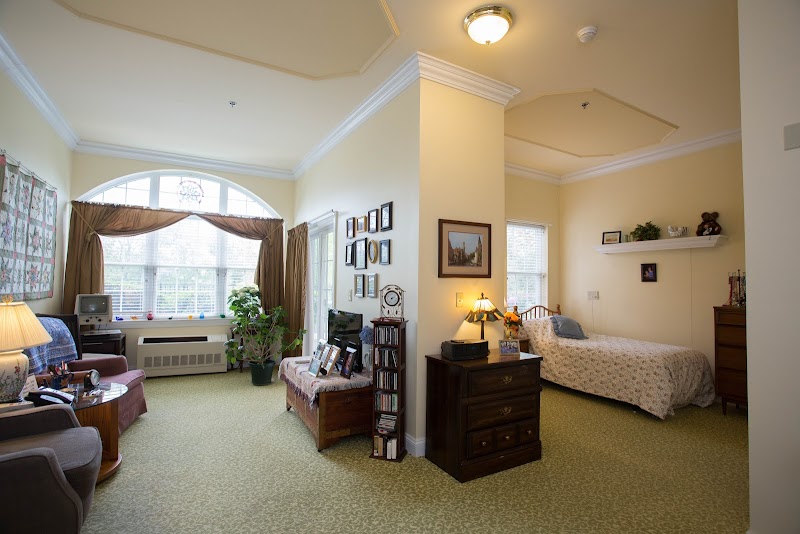
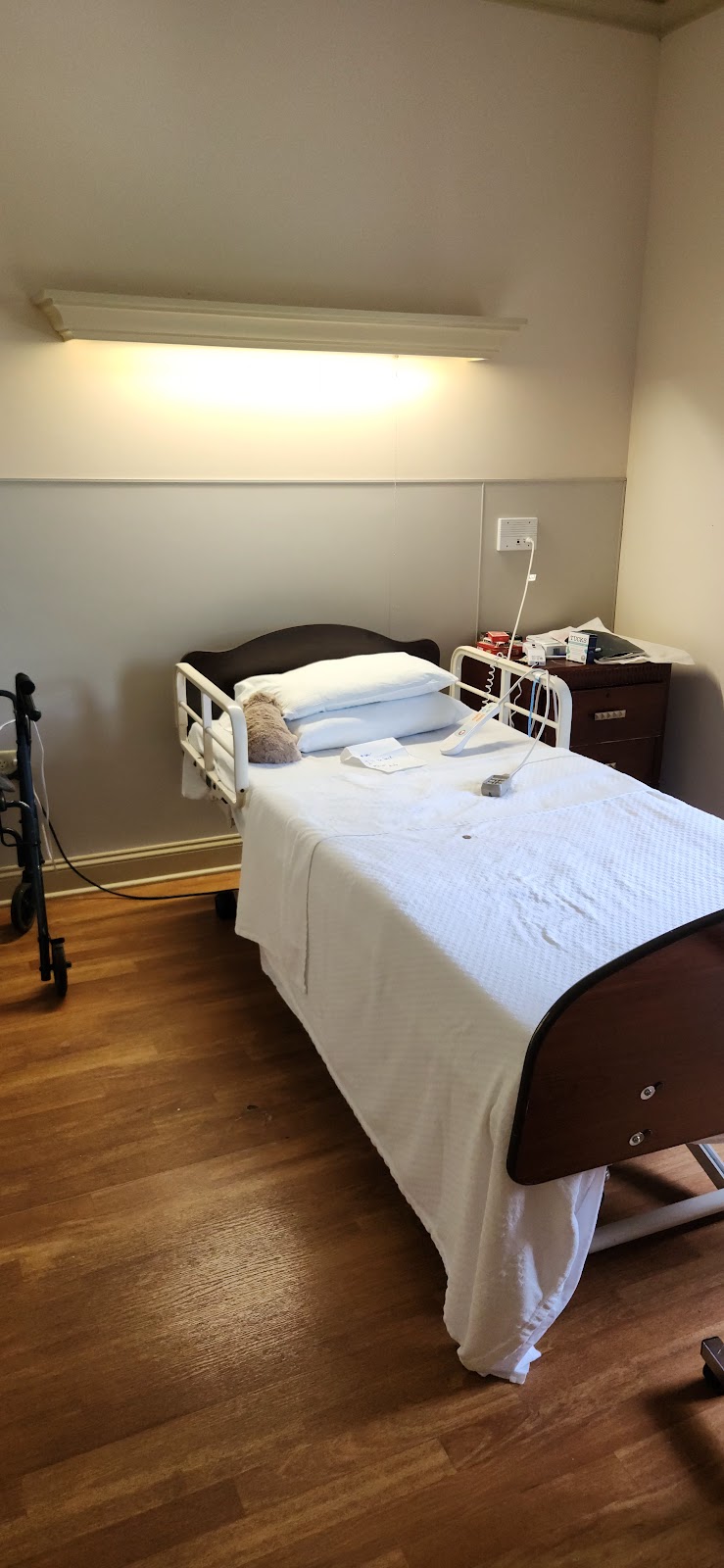
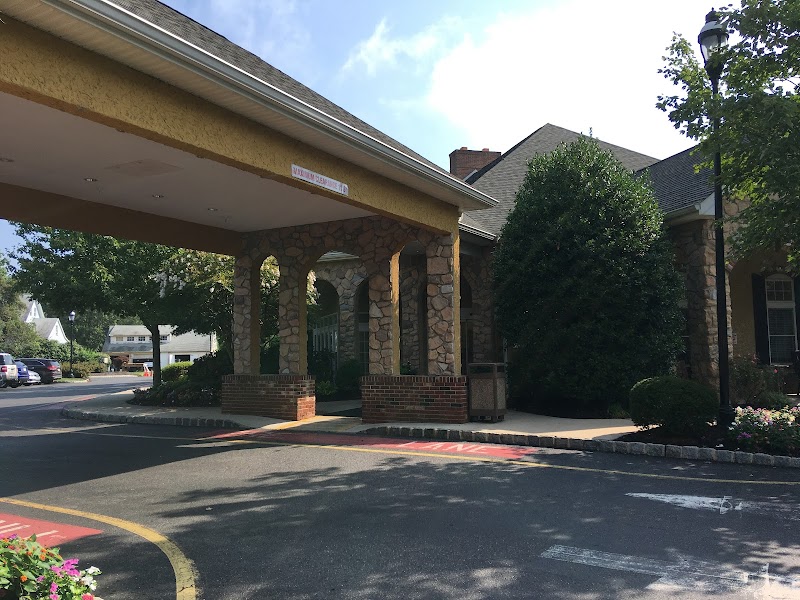
CAREONE AT MOORESTOWN

895 WESTFIELD ROAD, MOORESTOWN, NJ 08057 (856) 914-0444
For profit - Limited Liability company 65 Beds CAREONE Data: November 2025
Trust Grade
75/100
#104 of 344 in NJ
Last Inspection: September 2024

Within standard 12-15 month inspection cycle. Federal law requires annual inspections.

Overview

CareOne at Moorestown has a Trust Grade of B, indicating it is a solid choice for families seeking a nursing home. Ranked #104 out of 344 facilities in New Jersey, it sits comfortably in the top half, and #6 out of 17 in Burlington County, showing it has some local competition. The facility is improving, with reported issues decreasing from 11 to 3 over the past year. Staffing receives a below-average rating of 2 out of 5 stars, with a turnover rate of 46%, which is about the state average; however, it has good RN coverage, exceeding 80% of other facilities in New Jersey. While there have been no fines reported, the inspector found concerning issues such as failing to monitor daily weights for a resident with congestive heart failure, inadequate storage of nebulizer equipment, and a lack of yearly performance reviews for Certified Nursing Aides, which could impact care quality. Overall, while there are strengths in RN coverage and no fines, the facility does have areas for improvement, particularly in staffing and specific care practices.

Trust Score
B
75/100
In New Jersey
#104/344
Top 30%
Safety Record
Low Risk
No red flags
Inspections
Getting Better
11 → 3 violations
Staff Stability
⚠ Watch
46% turnover. Above average. Higher turnover means staff may not know residents' routines.
Penalties
✓ Good
No fines on record. Clean compliance history, better than most New Jersey facilities.
Skilled Nurses
✓ Good
Each resident gets 55 minutes of Registered Nurse (RN) attention daily — more than average for New Jersey. RNs are trained to catch health problems early.
Violations
⚠ Watch
19 deficiencies on record. Higher than average. Multiple issues found across inspections.
★★★★☆
4.0
Overall Rating
★★☆☆☆
2.0
Staff Levels
★★★★★
5.0
Care Quality
★★★☆☆
3.0
Inspection Score
Stable
2024: 11 issues
2025: 3 issues

The Good

  • 5-Star Quality Measures · Strong clinical quality outcomes
  • Full Sprinkler Coverage · Fire safety systems throughout facility
  • No fines on record

Facility shows strength in quality measures, fire safety.

The Bad

Staff Turnover: 46%

Near New Jersey avg (46%)

Higher turnover may affect care consistency

Chain: CAREONE

Part of a multi-facility chain

Ask about local staffing decisions and management

The Ugly 19 deficiencies on record

Aug 2025 3 deficiencies
CONCERN (D) 📢 Someone Reported This

A family member, employee, or ombudsman was alarmed enough to file a formal complaint

Potential for Harm - no one hurt, but risky conditions existed

Deficiency F0555 (Tag F0555)

Could have caused harm · This affected 1 resident

Based on interview, record review, review of the facility's admission Agreement and facility policy review, the facility failed to provide information regarding a resident's right to choose an attendi...

Read full inspector narrative →
Based on interview, record review, review of the facility's admission Agreement and facility policy review, the facility failed to provide information regarding a resident's right to choose an attending physician for one (Resident (R)1) of three sampled residents reviewed for facility's admissions process in a total sample of 21 residents. This had the potential R1's rights not to be upheld and honor his/her right to have a physician of his choice.Review of the facility's policy titled, admission Agreement dated 08/18, indicated, Policy statement All residents must have a signed and dated admission agreement on file. Policy Interpretation and Implementation 1. At the time of admission, the resident (or his/her representative) must sign an admission agreement (contract). 2. The admission agreement (contract) will reflect all charges for covered and non-covered items, as well as identify the parties that are responsible for payment of such services . 4. A copy of the admission agreement is provided to the resident or his/her representative (sponsor), and a copy placed in the resident's permanent file . Review of the facility's undated admission Agreement provided by the facility, specified . ARTICLE X RESIDENT'S PERSONAL PHYSICIAN OR OTHER PROVIDER 1. Personal Physician. Resident may choose a licensed personal physician. In the event that Resident does not choose a physician, Facility shall appoint one to provide services to Resident, as needed, at the Resident Parties' expense . 2. Personal Physician Without Facility Staff Privileges. Physicians and other healthcare providers who do not have staff privileges at the Facility are prohibited from providing healthcare services at the Facility, except in cases of life-threatening emergency. If Resident chooses a physician, dentist or other healthcare provider who does not have staff privileges at the Facility, Resident must travel, at Resident Parties' expense, to that healthcare provider to receive services from that provider . Review of R1's Durable Healthcare Power of Attorney (HCPOA) and Living Will [R1's name] which was signed by R1 on 05/04/16 and located under the Misc [Miscellaneous] tab of the resident's EMR, specified R1 had appointed F1 to serve as his Health Care Representative. R1's HCPOA and Living Will specified the following: . 1.3 Employ or Discharge Health Care Personnel- My Health Care Representative shall be authorized to employ or discharge medical personnel including physicians, psychiatrists, dentists, nurses, and therapists as my Health Care Representative shall deem necessary for my physical, mental, and emotional well-being and to pay them reasonable compensation . Review of R1's Resident Evaluation note, which was dated 10/09/24, timed at 11:04 AM and located under the Prog [Progress] Note tab of the electronic medical record (EMR), indicated, Resident Evaluation completed for [R1's name] arrived via stretcher . Review of R1's facility admission Record located under the Profile tab of the EMR revealed the resident was admitted to the facility on 10/24 with diagnoses which included dementia, abnormalities of gait and mobility, difficulty walking, and history of falling. Family Member (F)1 was listed as R1's Guardian and Emergency Contact #1. Review of R1's admission Minimum Data Set (MDS) assessment, with an Assessment Reference Date (ARD) of 10/11/24, located in the MDS tab of the EMR, revealed R1 had a Brief Interview for Mental Status (BIMS) score of eight out of 15 which indicated he/she had moderately impaired cognition. During an interview on 08/06/25 at 10:50 AM, F1 stated he/she was R1's HCPOA and was present with R1 when he/she arrived at the facility and was admitted on 10/24. F1 stated when R1 arrived at the facility on 10/24 staff took R1 and himself/herself to his/her room on the second floor. F1 stated there was not any type of admission conference with staff and staff did not provide R1 or himself/herself with any information about the facility or an admission agreement. F1 stated a Nurse Practitioner came into R1's room on 10/24 and had him/her sign a one-page form which he/she believed was a consent for treatment, but he/she was not provided any option to choose a physician for R1. F1 stated he/she discharged R1 from the facility Against Medical Advice (AMA) on 10/13/24. F1 explained that prior to or during R1's stay at the facility R1, himself/herself, or any other family member, never received any information on resident rights, admission information, or a facility admission agreement. F1 stated he/she would have liked to have received information regarding choosing a physician, so he/she could have made an informed decision on selecting a physician for R1. During an interview on 08/06/25 at 11:35 AM, the Admissions Director (ADMD) stated she was not employed at the facility when R1 was admitted in October 2024. The AD reviewed R1's information in the EMR and confirmed he/she was admitted to the facility on 10/24 and F1 was his/her HCPOA. The AD stated there was no information in R1's EMR that an admission Agreement was signed or the information was provided to R1's HCPOA or R1. The AD explained that the facility's admission Agreement should have been provided to R1's HCPOA on 10/24 when the resident was admitted to the facility and a copy of a resident's signed admission Agreement should have been kept in the resident's file. The AD stated the facility's admission Agreement provided information on how to choose a resident's physician.During an interview on 08/06/25 at 2:15 PM, the Administrator stated he expected the resident and HCPOA to be provided the facility's admission Agreement, which included information on how to choose a physician, on the same day of the resident's admission, unless it was a late admission then he would expect the admission Agreement information to be provided no later than on the next business day.
CONCERN (D) 📢 Someone Reported This

A family member, employee, or ombudsman was alarmed enough to file a formal complaint

Potential for Harm - no one hurt, but risky conditions existed

Accident Prevention (Tag F0689)

Could have caused harm · This affected 1 resident

**NOTE- TERMS IN BRACKETS HAVE BEEN EDITED TO PROTECT CONFIDENTIALITY** Based on interview, record review, and facility policy review, the facility failed to provide a hazard free environment for one ...

Read full inspector narrative →
**NOTE- TERMS IN BRACKETS HAVE BEEN EDITED TO PROTECT CONFIDENTIALITY** Based on interview, record review, and facility policy review, the facility failed to provide a hazard free environment for one of five residents (Resident (R) 8) reviewed for accidents out of a total sample of 21 residents. During a staff assisted transfer R8 suffered harm when the metal frame of his/her bed which had exposed openings with rough edges cut his/her leg and resulted in a large laceration which required sutures at a hospital emergency room (ER) to close the wound.Review of the facility's policy titled, Safety and Supervision of Residents dated 07/21, indicated, Policy statement Our facility strives to make the environment as free from accident hazards as possible. Resident safety and supervision and assistance to prevent accidents are facility-wide priorities. Policy Interpretation and Implementation Facility Oriented Approach to Safety . 2. Safety risks and environmental hazards are identified on an ongoing basis through a combination of employee training, employee monitoring, and reporting process: QAPI [Quality Assurance and Performance Improvement] reviews for safety and incident/accident data; and a facility-wide commitment to safety at all levels of the organization . Review of R8's facility admission Record located under the Profile tab of the electronic medical record (EMR) revealed the resident was admitted to the facility on 04/25 with diagnoses which included abnormalities of gait and mobility, and history of falling. Review of R8's Care Plan located under the Care Plan tab of the EMR, revealed the following Focus area which was initiated on 04/30/25: At risk due to history of falls, impaired balance/poor coordination, medication side effects. A care plan intervention specified, Provide assistance to transfer and ambulate as needed. Review of R8's admission Minimum Data Set (MDS) assessment, with an Assessment Reference Date (ARD) of 05/06/25, located in the MDS tab of the EMR, revealed R8 had a Brief Interview for Mental Status (BIMS) score of 13 out of 15 which indicated he/she was cognitively intact and required substantial assistance when transferring from chair to bed. Review of R8's Nursing/Clinical Notes located in the Prog [Progress] Note tab of the EMR revealed the following note written by Licensed Practical Nurse (LPN) 1 on 05/24/25 5:00 PM: This nurse notified by assigned CNA [Certified Nursing Assistant] that resident had obtained a skin tear to right lower shin. Skin tear acquired when CNA transferred resident from wheelchair to bed. Visible bleeding seen; this nurse cleaned and covered with dressing to contain the bleeding. Resident sent out to ER via Transport for possible stitches. Review of the facility's incident report of R8's leg laceration dated 05/24/25, provided by the facility and prepared by LPN1, indicated, Nursing Description: Resident obtained a skin tear while being transferred from wheelchair bed. Statements Per [CNA 1's name] Patient was being transferred to bed from wheelchair via stand/pivot. Transfer went smoothly, however patient expressed pain after sitting on bed. CNA noticed blood on patients' leg and alerted LPN. CNA states the bed frame had an area of metal tubing that did not have a cap on it and was exposed. CNA states she believes the patients leg made contact with the exposed bed frame, causing the laceration. Review of R8's 05/24/25 ER After Visit Summary located in the Misc [Miscellaneous] tab of the EMR specified, . You had a large laceration with absorbable sutures placed and then nine horizontal mattress sutures [type of stitch used in wound closure creating a wide, strong closure] placed. This was covered with 5 Steri- Strips . Diagnosis Laceration of right lower leg initial encounter . During an interview on 08/05/25 at 1:25 PM, Family Member (F)3 stated that he was notified by the facility on 05/24/25 that R8 had experienced a laceration to his/her leg and was being transported to the hospital for treatment. F3 stated R8's leg laceration required sutures to close the wound. F3 stated after R8 returned to the facility on [DATE] he viewed the resident's metal bed frame and observed the openings in the frame were still with rough edges that were not covered. During an interview on 08/05/25 at 2:20 PM, CNA1 stated on 05/24/25 she was transferring R8 from wheelchair to the bed and when R8 sat on the bed she noticed that the resident's leg was bleeding. CNA1 stated during the transfer R8's leg rubbed against the bed's metal frame, which had an open circular area with rough edges which caused the injury. CNA1 stated when she saw that the resident's leg was bleeding, she notified the nurse immediately. During an interview on 08/06/25 at 6:30 AM, LPN1 stated on 05/24/25 CNA1 informed her that R8's leg was bleeding, and she immediately went to the resident's room to check the resident's condition. LPN1 stated R8 had a large laceration to his/her right leg that was bleeding, and she notified the resident's physician and family. LPN1 explained that due to the size of the leg laceration and amount of bleeding she called Emergency Medical Services (EMS) to transport R8 to the hospital to see if he/she needed stitches. During an interview on 08/06/25 at 9:15 AM, the Director of Environmental Services (DES) stated the Administrator notified him regarding R8's which was cut on his/her bed frame during a transfer. The DES stated he looked at R8's metal bed frame and found there were missing bed frame caps which caused metal sections of the frame with rough edges to be exposed. The DES stated on 05/27/25 (three days after the incident with R8) the maintenance staff audited all 65 beds in the building with each bed frame requiring six circle caps and two square caps to enclose all openings on their frames. Of the 65 beds there were 210 out of 390 circle caps missing and 57 out of 130 square caps missing. The DES stated the maintenance staff placed duct tape over the holes in the bed frames until he could order bedcaps from the supplier. The bed caps were delivered to the facility on [DATE] and installed on each bed. The DES revealed the facility did not audit the metal bed frames on resident beds for missing caps and rough edges prior to the incident with R8. During an interview on 08/06/25 at 2:25 PM, the Administrator stated he expected the facility to be free of accident hazards. The Administrator stated the missing bed frame caps was integrated into the facility's QAPI process after 05/24/25 when R8 hit his/her leg on the metal bed frame while being transferred into bed by staff and experienced a laceration to his/her leg. There was no other corrective action provided to staff to report any defects in any resident's bed or equipment immediately to Environmental Services for repair.
CONCERN (D) 📢 Someone Reported This

A family member, employee, or ombudsman was alarmed enough to file a formal complaint

Potential for Harm - no one hurt, but risky conditions existed

Infection Control (Tag F0880)

Could have caused harm · This affected 1 resident

Based on observation, interview, and facility policy review, the facility failed to ensure that medications were administered in a sanitary manner for two of five (Residents (R)18 and R20) observed du...

Read full inspector narrative →
Based on observation, interview, and facility policy review, the facility failed to ensure that medications were administered in a sanitary manner for two of five (Residents (R)18 and R20) observed during medication administration out of a total sample of 21 residents. This failure could lead to potential resident infections due to contamination.Review of the facility policy titled, Administering Medications revised April 2019 revealed . 25. Staff follows established facility infection control procedures e.g., handwashing, antiseptic technique, gloves, isolation precautions, etc.) for the administration of medications, as applicable.1.During an observation on 08/05/25 at 8:20 AM of R18's medication administration revealed Licensed Practical Nurse (LPN)2 dropped a furosemide (a diuretic) tablet on the top of the medication cart and then put the tablet in the administration cup and administered the furosemide tablet to R18.During an interview on 08/05/25 at 8:30 AM LPN2 stated that because the pill only dropped on the medication cart, she put it in the administration cup. When asked how she had been trained she stated that she should have gotten a new pill and discarded the dropped pill.2.During an observation on 08/05/25 at 9:08 AM of R20's medication pass revealed LPN3 dropped a clopidogrel (an antiplatelet medication used to reduce the risk of heart disease and stroke) tablet and sertraline (an antidepressant) tablet on the top of the medication cart. LPN3 put both pills in the administration cup and administered the mediations to R20.During an interview on 08/05/25 at 9:50 AM LPN3 stated that she should have gotten new medications to replace the ones dropped on the cart.During an interview on 08/05/25 at 1:45 PM the Director of Nursing (DON) stated that it was not facility policy to administer medications that have been dropped.
Sept 2024 10 deficiencies
CONCERN (D)

Potential for Harm - no one hurt, but risky conditions existed

Abuse Prevention Policies (Tag F0607)

Could have caused harm · This affected 1 resident

Based on observations, interviews, and review of pertinent facility documents, it was determined that the facility failed to implement their abuse policy by ensuring all newly hired employees were scr...

Read full inspector narrative →
Based on observations, interviews, and review of pertinent facility documents, it was determined that the facility failed to implement their abuse policy by ensuring all newly hired employees were screened for potential abuse by conducting criminal background checks prior to hire. This deficient practice was identified for 1 of 10 staff (Staff #4) reviewed for newly hired employees, and was evidenced by the following: A review of the facility's Abuse Prevention Program policy with an edited date of 4/5/18, included .as part of the resident abuse prevention, administration will: 1. Protect our residents from abuse by anyone, including but not necessarily limited to: facility staff, other residents, consultants, volunteers, staff from other agencies, family members, legal representatives, friends, visitors, or any other individual. 2. Conduct employee background checks and will not knowingly employ or otherwise engage any individual who has a. Have been found guilty of abuse, neglect, exploitation, misappropriation of property or mistreatment, by a court of law; b. have had a finding entered into the State nursing aide registry concerning abuse, neglect, exploitation, mistreatment of residents or misappropriation of their property; or c. have a disciplinary action in effect against his or her professional license by a state licensure body as a result of a finding of abuse, neglect, exploitation, mistreatment of residents, or misappropriation of resident property . On 9/25/24 at 12:10 PM, the surveyor requested from the Licensed Nursing Home Administrator (LNHA) to provide the survey team with the personnel and health files for ten selected newly hired employees (Staff #1, #2, #3, #4, #5, #6, #7, #8, #9, and #10). On 9/26/24 at 9:40 AM, the surveyor reviewed the ten employee health and personnel files requested and provided by the facility which included: Staff #4, a Licensed Practical Nurse (LPN), with a date of hire 12/7/23. A criminal background check was dated entered 1/24/24, and completed 1/26/24, seven weeks after starting employment. On 9/26/24 at 11:35 AM, the surveyor requested the LNHA provide all timecard punches for Staff #4 and all background checks completed for this staff member. A review of Staff #4's timecard punches indicated Staff #4 had their first-time punched at 9:00 AM on 12/7/23, for three hours and a Day shift (7:00 AM) time in punch at 7:00 AM for a 12 hour nursing shift. On 9/26/24 at 12:37 PM, the [NAME] President of Clinical Services (VPCS) in the presence of the LNHA, Infection Preventionist/Registered Nurse (IP/RN), and survey team stated that criminal background checks were performed on staff prior to being hired. On 9/27/24 at 10:23 AM, the LNHA in the presence of the IP/RN, [NAME] President of Operations Bridge Care (VPO), and survey team confirmed that Staff #4 did not have a background check prior to hire. He further stated that Staff #4 had never had an allegation of abuse against them, and no longer worked at the facility. NJAC 8:39-4.1(a)(5)
CONCERN (D)

Potential for Harm - no one hurt, but risky conditions existed

Investigate Abuse (Tag F0610)

Could have caused harm · This affected 1 resident

Based on interview and review of pertinent facility documents, it was determined that the facility failed to a.) initiate an investigation at the time a facility acquired pressure ulcer was discovered...

Read full inspector narrative →
Based on interview and review of pertinent facility documents, it was determined that the facility failed to a.) initiate an investigation at the time a facility acquired pressure ulcer was discovered on 9/18/24, to rule out neglect. The deficient practice was identified for 1 of 2 residents reviewed for skin conditions and pressure ulcers (Resident #402), and was evidenced by the following: Reference: https://www.ncbi.nlm.nih.gov/books/NBK2650/table/ch12.t2/ National Pressure Ulcer Staging System: Deep Tissue Injury: A pressure-related injury to subcutaneous tissues under intact skin. Initially, these lesions have the appearance of a deep bruise, and they may herald the subsequent development of a Stage III-IV pressure ulcer, even with optimal treatment. Definition: Purple or maroon localized area of discolored intact skin or blood-filled blister due to damage of underlying soft tissue from pressure and/or shear. Characteristics: The area may be preceded by tissue that is painful, firm, mushy, boggy, warmer, or cooler, as compared to adjacent tissue. Deep tissue injury may be difficult to detect in individuals with dark skin tones. The area may rapidly evolve to expose additional layers of tissue, even with optimal treatment. On 9/24/24 at 10:10 AM, the surveyor observed Resident #402 lying in bed with their foot elevated on a pillow. The resident stated that they had pain in their heel that they informed their therapist of, so they did not go to therapy today. The surveyor observed the resident had no-skid socks on both feet. On 9/23/24 at 10:40 AM, the surveyor reviewed the medical record for Resident #402. A review of the admission Record face sheet (an admission summary) reflected the resident was admitted to the facility with medical diagnoses which included but not limited to; unilateral inguinal hernia with obstruction without gangrene (a condition where abdominal contents protrude through the inguinal canal, and the herniated contents are obstructed but not gangrenous). A review of the most recent comprehensive Minimum Data Set (MDS), an assessment tool dated 9/13/24, reflected the resident had a Brief Interview for Mental Status (BIMS) score of 14 out of 15, which indicated a fully intact cognition. A review of the Order Summary Report (OSR) dated active orders as of 9/6/24, included a physician's order (PO) dated 9/18/24, for skin prep wipes; to apply one application transdermal two times a day for right heel, red and boggy (abnormal texture of tissues characterized by sponginess usually because of high fluid content). Notify Medical Doctor (MD) if it worsens or gets darker. A review of an additional PO dated 9/18/24, to float heels on pillow every eight hours for boggy heel. A review of the September 2024 Treatment Administration Record (TAR) included a PO dated 9/13/24, for weekly skin observation every Friday .enter 0 for no skin breakdown, 1 for previously identified wound, 2 for newly identified wound. A review of the corresponding order, revealed that the nurse signed on 9/20/24, a 0, which indicated no skin breakdown. A review of the September 2024 Medication Administration Record (MAR) included a PO dated 9/18/24, to float heels on pillow every eight hours for boggy heel at 8:00 AM, 2:00 PM, and 10:00 PM daily. A review of the corresponding MAR revealed nurses were signing completion with a check mark (which indicated administration) for 9/18/24 through 9/24/24. A review of the Progress Notes included a Physician Practitioner Progress note dated 9/18/24 at 9:09 AM, which included a skin assessment of the right heel as red and boggy. The Advance Practice Nurse documented that they spoke to nurse to make her aware of heel pain and will put an order in for skin prep pads. On 9/24/24 at 11:40 AM, the surveyor interviewed the Licensed Practical Nurse (LPN), who stated that the resident complained of heel pain, so she administered the prescribed medication of Tylenol. The surveyor asked the LPN if she assessed the heel prior administering pain medication, and the LPN responded that she had not. At that time, the LPN in the presence of the surveyor assessed the resident's right heel, which was observed as non-blanchable erythema (area of redness that does not disappear with pressure applied; the beginning of a pressure ulcer), boggy, and ankle swelling. The left heel was reddened but blanchable (area of redness that disappears when pressure applied). The surveyor observed the resident's feet and heels were directly on the pillow, and not offloaded (feet and heels should not touch anything including the pillow that would cause pressure). The nurse stated that's he would let the physician know that the right heel was non-blanchable. The the nurse then adjusted the resident's feet to have the heels offloaded from the bed and pillow. On 9/24/24 at 12:22 PM, the surveyor interviewed the Unit Manager/Licensed Practical Nurse (UM/LPN), who stated if the physician made the nurse aware of a pressure injury, the nurse should have completed an assessment, report redness, broken skin, swelling, or something new because it could lead to a breakdown. The UM/LPN stated the nurse should have reported it to the Charge Nurse or Supervisor so an incident report could be completed; family and physician notified. On 9/26/24 at 12:15 PM, the Licensed Nursing Home Administrator (LNHA) provided the surveyor with an investigation of Resident #402's wound dated 9/24/24, that was initiated after surveyor inquiry. A review of the incident report indicated that it was determined that the nurses were unaware of proper staging of a wound. During the inservice of wound staging the LPN indicated that I did not do an incident report because the skin was intact without any openings. A review of the facility's Abuse Prevention Program policy dated edited 4/5/18, included policy statement: our residents have the right to be free from abuse, neglect, misappropriation of resident property and exploitation. This includes but is not limited to freedom from corporal punishment, involuntary seclusion, verbal, mental, sexual, or physical abuse, and physical or chemical restraint not required to treat the residents' symptoms . A review of facility's Accidents and Incidents - Investigating and Reporting policy dated revised July 2017, included policy statement: all accidents or incidents involving residents, employees, visitors, vendors, [etcetera], occurring on our premises shall be investigated and reported to the administrator .Policy Interpretation and Implementation: 1. the nurse supervisor/charge nurse and/or the department director or supervisor shall promptly initiate and document investigation of the accident or incident. 2. The following data, as applicable, shall be included on the Report of Incident /Accident form: a. the date and time the accident or incident took place; b. the nature of the injury or illness, (example bruising, falls, nausea, etcetera); c. the circumstances surrounding the accident or incident .5. the nurse/supervisor/charge nurse and/or the department director or supervisor shall complete an Report of Incident/Accident form and submit the original to the director of nursing services within 24 hours of the incident or accident . A review of the facility's Investigating Resident Injuries policy dated revised April 2021, included policy statement: all resident injuries are investigated. Policy interpretation and Implementation .3. if an incident/accident is suspected, a nurse or nurse supervisor completes the facility-approved accident/incident forms . A review of the facility's Pressure Ulcer/Skin Breakdown - Clinical Protocol dated revised March 2014, included .2. the nurse shall describe and document/report the following: a. full assessment of pressure sore including location, stage, length, width and depth, presence of exudates or necrotic tissue; b. pain assessment; c) resident's mobility status; d. current treatments . A review of the facility's Prevention of Pressure Injuries dated revised April 2020, included purpose: this procedure is to provide information regarding identification of pressure injury risk factors, interventions, or specific risk factors .Skin Assessment: .2. during the skin assessment, inspect: a. the presence of erythema; b. temperature of skin and soft tissue; c. edema. 3. inspect the skin on a daily basis when performing or assisting with personal care of [activities of daily living]. a. identify any signs of developing pressure injuries (i.e. non-blanchable erythema) .Monitoring: 1. evaluate, REPORT, and document potential changes in the skin . NJAC 8:39-4.1(a)5
CONCERN (D)

Potential for Harm - no one hurt, but risky conditions existed

Deficiency F0657 (Tag F0657)

Could have caused harm · This affected 1 resident

Based on observation, interview, and review of pertinent facility documents, it was determined that the facility failed to revise an individual comprehensive care plan for a resident with a history of...

Read full inspector narrative →
Based on observation, interview, and review of pertinent facility documents, it was determined that the facility failed to revise an individual comprehensive care plan for a resident with a history of falls at the facility. This deficient practice was identified for 1 of 2 residents reviewed for accidents (Resident #21), and was evidenced by the following: On 9/23/24 at 7:52 PM, during the initial tour of the facility, the surveyor observed Resident #21 in bed with their eyes closed. The surveyor observed a fall mat on the right side of the bed, and the left side of the bed was against the wall. The surveyor asked the Resident Representative (RR), who was present at the time, if the resident had any falls, and the RR stated that the resident didn't fall but has slid to the floor. On 9/24/24 at 11:00 AM, the surveyor reviewed the medical record for Resident #21. A review of the admission Record face sheet (an admission summary) revealed that the resident was admitted to the facility with diagnoses that included but were not limited to; cancer of ribs and sternum, infection following procedure, and dementia. A review of the most recent comprehensive Minimum Data Set (MDS), an assessment tool dated 7/25/24, reflected that the resident had a Brief Interview of Mental Status (BIMS) score of 13 out of 15, which indicated a fully intact cognition. A further review in Section J. health conditions, indicated the resident had a history of falls. On 9/24/24 at 1:02 PM, the surveyor reviewed the resident's incidents and accidents which revealed the resident had the fallowing falls: On 8/29/24, the resident stated I sat on the floor. On 9/4/24, the staff heard a fall, and the resident was kneeling at the foot of the bed. On 9/14/24, the resident was found on the floor sitting near the closet. On 9/21/24, the resident's [name redacted representative] assisted the resident in transfer, lost control, and guided the resident to the floor. Following each fall, the resident had a fall evaluation and a pain evaluation. A review of the individualized comprehensive care plan (ICCP) included a focus area dated 8/24/24 with a revision date of 9/4/24, for a risk for falls related to impaired balance. Interventions included physical therapy; to assist with transfers; and to reinforce safety. The ICCP did not include any specific interventions implemented following each of the resident's falls. On 9/25/24 at 10:00 AM, the surveyor interviewed the unit Charge Nurse (CN) regarding the facility's post fall process, who stated that they assessed the resident's vital signs, checked for injuries, notified family and the doctor. The CN stated that the resident's ICCP was updated to prevent future falls. The surveyor asked when the ICCP would be updated, and the CN stated after each fall. On 9/26/24 at 10:28 AM, the surveyor interviewed the Infection Preventionist/Registered Nurse (IP/RN), who was assisting in the Director of Nursing's (DON) absence, who stated the DON was responsible for revising ICCPs or the MDS Coordinator. On 9/26/24 at 10:35 AM, the surveyor interviewed the MDS Coordinator, who stated that they had a big roll with ICCPs, that they helped nursing initiate them, and the IP/RN also completed. The surveyor asked if she was responsible for revisions and she stated no, that it was a nursing measure. The MDS Coordinator stated that falls were reviewed in an Interdisciplinary Team (IDT) meeting, and the ICCP was revised with approval of nursing after reviewing notes and incident reports and that was handled by nursing. On 9/27/24 at 10:33 AM, the IP/RN in the presence of the Licensed Nursing Home Administrator (LNHA), [NAME] President of Operations Bridge Care, and survey team acknowledged that Resident #21's ICCP was revised after the first and second falls, but it was not revised after the third and fourth fall. A review of the facility's Care Plans, Comprehensive Person-Centered policy dated December 2016, did not include care plan revisions. NJAC 8:30-27.1(a)
CONCERN (D) 📢 Someone Reported This

A family member, employee, or ombudsman was alarmed enough to file a formal complaint

Potential for Harm - no one hurt, but risky conditions existed

Deficiency F0658 (Tag F0658)

Could have caused harm · This affected 1 resident

**NOTE- TERMS IN BRACKETS HAVE BEEN EDITED TO PROTECT CONFIDENTIALITY** 2. On 9/23/24 at 7:05 PM, during initial tour of the facility, the surveyor observed Resident #301 sleeping in bed with the Resi...

Read full inspector narrative →
**NOTE- TERMS IN BRACKETS HAVE BEEN EDITED TO PROTECT CONFIDENTIALITY** 2. On 9/23/24 at 7:05 PM, during initial tour of the facility, the surveyor observed Resident #301 sleeping in bed with the Resident Representative (RR) by their bed side. The RR stated that the resident had not been eating well and a feeding tube (a tube surgically inserted into the stomach to provide nutrition; FT) was inserted to provide supplemental nutrition. The surveyor observed the FT pump located on a pole near the resident's bed. There was no formula being administered at that time. On 9/24/24 at 11:10 AM, the surveyor reviewed the medical record for Resident #301. A review of the admission Record face sheet reflected that the resident was admitted to the facility with diagnoses including but not limited to; dysphagia (difficulty with swallowing), gastrostomy (FT) malfunction, and adult failure to thrive (weight loss, decreased appetite, poor nutrition, and inactivity). A review of the most recent MDS dated [DATE], reflected the resident had a BIMS score of 6 of out of 15, indicating a severe impairment in cognition. A review of Section K indicated Resident #301 had a FT and received mechanically altered diet. A review of the Physician Order Summary Report reflected a physician's order (PO) with a start date of 9/19/24, for Osmolite 1.5 calorie (nutrition formula) with a start start time of 6:00 PM (6 PM), to administer 40 milliliters (ml) per hour until 800 ml has been infused. There was also a PO with a start date of 9/14/24, to administer water flushes every six hours 150 ml every shift for water flushes. On 9/24/24 at 11:40 AM, the surveyor observed Resident #301 lying in bed awake. The surveyor asked the resident if they ate breakfast that morning, and the resident, who seemed confused, replied yes. The surveyor observed a 1000 ml bottle of Osmolite 1.5 calorie and a water flush bag hanging on the FT pole near the resident's bed. The pump was turned off and the tube feeding was not connected to the resident. The bottle of Osmolite had 600 ml remaining in the bottle, and was dated for 9/23/24, and timed for 10:00 PM. On 9/24/24 at 11:53 AM, the surveyor observed Resident #301 in their wheelchair being escorted by the Certified Nursing Aide (CNA) to a common area where Resident #301 started watching television. Resident #301 was not receiving any tube feeding at that time. On 9/24/24 at 12:01 PM, the surveyor interviewed the Licensed Practical Nurse (LPN), who stated that Resident #301's tube feeding started at 6 PM, and ran until the resident received a total volume of 800 ml. The LPN and surveyor proceeded to the resident's room where the LPN confirmed that the tube feeding was hanging on the feeding pole and not being infused at that time. The LPN confirmed that there was only 400 ml missing from the Osmolite. The LPN acknowledged that the resident's tube feeding at a rate of 40 ml per hour would take until 2:00 PM (2 PM) to reach a total volume of 800 ml infused. The LPN then stated that they may be holding the tube feeding because Resident #301 was scheduled for a kidney, ureter, and bladder (KUB) X-ray (imaging test that examines the urinary and gastrointestinal system) today. The LPN stated there should be an order to hold the tube feeding. At that time, the surveyor and LPN reviewed the resident's EHR, and the LPN confirmed there was no physician's order to hold the tube feeding and said she was going to call Resident #301's physician to clarify if the tube feeding should be held. On 9/24/24 at 12:36 PM, the surveyor interviewed the LPN, who stated that she spoke with the resident's Nurse Practitioner (NP) who was aware of the tube feeding being held due to the KUB X-ray scheduled for today. The LPN stated that the NP was going to put in an order to hold the tube feeding. On 9/26/24 at 9:57 AM, the surveyor reviewed the physician order's which revealed a PO dated 9/24/24 at 12:41 PM, to hold tube feeding until KUB results. On 9/26/24 at 10:09 AM, the surveyor reviewed the Progress Notes which included a Physician/Practitioner Progress Note created on 9/24/24 at 3:21 PM, that documented the KUB X-ray was ordered and the tube feeding was on hold until KUB was obtained. The LPN created a progress note on 9/24/24 at 4:28 PM, which indicated that the tube feeding was on hold until KUB results were returned. The doctor and nutritionist were notified. On 9/26/24 at 10:40 AM, the surveyor interviewed the Charge Nurse (CN), who acknowledged that there should have been a physician's order to hold the tube feeding. The CN also stated the physician's order should have been obtained prior to holding the resident's feeding. On 9/27/24 at 10:24 AM, the IP/RN in the presence of the LNHA, VPO, and survey team, stated there should have been a physician's order to hold the tube feeding. The IP/RN acknowledged that the physician's order to hold the tube feeding should have been obtained at the time the KUB X-ray was ordered to ensure the nurses were aware to hold the tube feeding. A review of the facility's Licensed Practical (Vocational) Nurse (LPN)/(LVN) job description with a revision date of May 2022, included to transcribe telephone, verbal, and telemedicine orders from providers as appropriate . A review of the facility's Charting and Documentation policy with a revision date of 2001, included all services provided to the resident, progress toward the care plan goals, or any changes in the residents medical, physical, functional or psychosocial condition, shall be documented in the resident's medical record. The medical record should facilitate communication between the interdisciplinary team regarding the resident's condition and response to care . NJAC 8:39-27.1(a) Complaint NJ #: 175738 Based on observations, interview, and review of pertinent facility documents, it was determined that the facility failed to a.) obtain weekly weights as ordered; and b.) obtain a physician's order to hold a tube feeding (therapeutic nutrition) in accordance with professional standards of practices. This deficient practice was identified for 2 of 18 residents reviewed for professional standards of practice (Resident #103 and Resident #301). Reference: New Jersey Statutes Annotated, Title 45. Chapter 11. Nursing Board. The Nurse Practice Act for the State of New Jersey states: The practice of nursing as a registered professional nurse is defined as diagnosing and treating human responses to actual and potential physical and emotional health problems, through such services as case finding, health teaching, health counseling, and provision of care supportive to or restorative of life and wellbeing, and executing medical regimens as prescribed by a licensed or otherwise legally authorized physician or dentist. Reference: New Jersey Statutes Annotated, Title 45, Chapter 11. Nursing Board. The Nurse Practice Act for the State of New Jersey states: The practice of nursing as a licensed practical nurse is defined as performing tasks and responsibilities within the framework of case finding; reinforcing the patient and family teaching program through health teaching, health counseling and provision of supportive and restorative care, under the direction of a registered nurse or licensed or otherwise legally authorized physician or dentist. The deficient practice was evidenced by the following: 1. On 9/23/24 at 7:24 PM, the surveyor reviewed the closed medical record for Resident #103. A review of the admission Record face sheet (an admission summary) reflected the resident was admitted to the facility with diagnoses which included but not limited to; fracture of left femur (thigh bone), left knee osteoarthritis, generalized muscle weakness, and anemia (low iron). A review of the most recent comprehensive Minimum Data Set (MDS), an assessment tool dated 5/28/24, reflected the resident had a Brief Interview for Mental Status (BIMS) score of 12 out of 15, which indicated a moderately impaired cognition. A review of the Order Summary Report dated active orders as of 5/21/24, included a physician's order (PO) dated 5/21/24, for weekly weights every Tuesday. A review of the corresponding May and June 2024 Medication Administration Records (MAR) revealed the weekly weights were blank on 5/28/24 and 6/6/24. A review of the Weights and Vitals Summary included one weight for 5/22/24, of 195 pounds. On 9/26/24 at 11:49 AM, the surveyor interviewed the Infection Preventionist/Registered Nurse (IP/RN), who stated when a resident was admitted to the facility, their weight was taken upon admission, then a weekly weight was obtained. The IP/RN stated that the Certified Nursing Aides (CNA) obtained the weight, wrote the weight on a list and gave it to the nurse to enter the weight in the Electronic Health Record (EHR). The IP/RN stated that the weight was either recorded in the Weights and Vitals or on the MAR. On 9/26/24 at 12:06 PM, the surveyor interviewed the Registered Dietitian (RD), who stated that orders were put in for weekly weights, and the staff was expected to obtain weekly weights and document on the MAR. The RD stated that the facility was aware that the nurses were either not obtaining or not documenting weekly weights for residents, since there were blanks on the MAR. On 9/27/24 at 10:23 AM, the Licensed Nursing Home Administrator (LNHA), in the presence of the IP/RN, [NAME] President of Operations Bridge Care (VPO), and survey team, confirmed that Resident #103's weights were not obtained weekly as ordered. The LNHA acknowledged that the weights should have been obtained weekly as ordered. A review of the facility provided Weight Assessment and Intervention policy dated revised March 2022, included residents are weighed upon admission and at intervals established by the interdisciplinary team such as: weekly for four, then weekly for four weeks, then monthly unless otherwise indicated, or as ordered .weights are recorded in each individual's medical record .
CONCERN (D)

Potential for Harm - no one hurt, but risky conditions existed

Incontinence Care (Tag F0690)

Could have caused harm · This affected 1 resident

Based on observations, interview, and review of pertinent facility documentation, it was determined that the facility failed to ensure catheter care was performed and documented every shift in accorda...

Read full inspector narrative →
Based on observations, interview, and review of pertinent facility documentation, it was determined that the facility failed to ensure catheter care was performed and documented every shift in accordance with a physician's order. This deficient practice was identified in 1 of 2 residents reviewed for urinary catheters (Resident #44), and was evidenced by the following: On 9/23/24 at 7:05 PM, during the initial tour of the facility, Resident #44 was in the bed with their eyes closed. The surveyor did not observe a urinary catheter. On 9/24/24 at 9:00 AM, the surveyor reviewed the medical record for Resident #44. A review of the admission Record face sheet (an admission summary) reflected the resident had medical diagnoses which included but were not limited to; acute kidney failure, obstructive uropathy (structural or functional hindrance of normal urine flow), and repeated falls. A review of the most recent comprehensive Minimum Data Set (MDS), an assessment tool dated 9/2/24, reflected the resident had a Brief Interview of Mental Status of 11 of 15, which indicated moderately impaired cognition. A review of section H, bladder and bowel indicated the resident had an indwelling urinary catheter (a tube inserted into the bladder to allow urine to drain). A review of the physician orders (PO) included a PO dated 8/27/24, for urinary catheter care every shift. On 9/24/24 at 9:00 AM, the surveyor reviewed the facility's Charting and Documentation policy dated July 2017, which included all services provided to the resident or changes in the residents' condition shall be documented in the resident's medical record. At that time, the surveyor reviewed the facility's Urinary Catheter Care policy dated August 2022, which included insertion and maintenance of the urinary catheter and assessing for complications . On 9/24/24 at 10:12 AM, the surveyor observed the resident in the bed. There was a urinary drainage bag hanging on the right side of the bed, and the drainage bag was in a light grey privacy bag. The resident told the surveyor they had the catheter for awhile. The surveyor asked if they used a machine to check the bladder, and the resident responded yes. On 9/24/24 at 11:01 AM, the surveyor reviewed the resident's individualized comprehensive care plan (ICCP) which included a focus area dated 8/27/24, for the use of an indwelling urinary catheter related to obstructive uropathy, urinary retention. Interventions included change catheter per physician order, change collection bag as needed and report signs of infection to the physician. On 9/24/24 at 11:30 AM, the surveyor reviewed the September 2024 Treatment Administration Record (TAR) which included the PO for catheter care every shift (three times daily). The TAR revealed that from 9/1/24 through 9/23/24, catheter care was not documented as rendered eleven times. On 9/27/24 at 10:35 AM, the Licensed Nursing Home Administrator (LNHA) and [NAME] President of Operations Bridge Care (VPO), in the presence of the Infection Preventionist/Registered Nurse (IP/RN) and survey team, both stated that if it was not documented, it was not done in reference to Resident #44's missing documentation for catheter care in the TAR. NJAC 8:39-27.1 (a)
CONCERN (D)

Potential for Harm - no one hurt, but risky conditions existed

Deficiency F0698 (Tag F0698)

Could have caused harm · This affected 1 resident

Based on observation, interview, and review of pertinent facility documents, it was determined that the facility failed to a.) ensure a resident who received hemodialysis was being assessed in accorda...

Read full inspector narrative →
Based on observation, interview, and review of pertinent facility documents, it was determined that the facility failed to a.) ensure a resident who received hemodialysis was being assessed in accordance with their hemodialysis access site and professional standards of practice every shift; and b.) complete dialysis communication forms on return to the facility from dialysis treatment. This deficient practice was identified for 1 of 1 resident reviewed for hemodialysis (Resident #48) and was evidenced by the following: A review of the facility's Hemodialysis Pre and Post Care, the policy dated revised March 2010, included .the routes of dialysis treatments are to be monitored for complications, treatment sites are to be assessed regularly including pre and post dialysis treatment, and the access arm should not be used for venipuncture or blood pressures .the graft should be assessed upon return to the facility for patency and any unusual redness or swelling . On 9/23/24 at 7:01 PM, during initial tour of the facility, Resident #48 was observed sitting on the side of the bed. The resident stated that they went to dialysis (removes waste products and excess fluid from the blood when the kidneys no longer function properly) on Mondays, Wednesdays, and Fridays. The resident then told the surveyor that they had an access site (a surgically created entry point into the bloodstream that allows blood to be removed and returned during dialysis treatment) for dialysis in the left arm. On 9/24/24 at 9:15 AM, the surveyor reviewed the medical record for Resident #48. A review of the admission Record face sheet (an admission summary) reflected the resident was admitted to the facility with diagnoses which included but were not limited to; end stage renal disease (ESRD), heart failure, and dependence on renal dialysis. A review of the comprehensive Minimum Data Set (MDS), an assessment tool dated 9/9/24, reflected that the resident had a Brief Interview of Mental Status (BIMS) score of 15 out of 15, meaning the resident was cognitively intact. A further review indicated that the resident received dialysis treatments. A review of the September 2024 Order Summary Report included the following physician's orders (PO) related to dialysis: a PO dated 9/2/24, for ESRD dialysis every Monday, Wednesday, and Friday with a 10:00 AM pick-up time. There were no orders related to the dialysis access site or orders to check for a bruit or thrill (a nursing assessment which shows the arteriovenous (AV) graft (surgically placed shunt that connects an artery to a vein in preparation for dialysis) is functioning). A review of the individualized comprehensive care plan (ICCP) included a focus area dated 9/4/24, that the resident had the potential complications related to left arm fistula (vessel formed by joining a vein to an artery in your arm during an operation to form an accessible blood vessel that gives increased flows of blood that are adequate for dialysis). Interventions included to change dressing site per physician orders and as needed; and to report signs and symptoms of infection such as redness, swelling, drainage, tenderness to touch, and fever. On 9/24/24 at 10:55 AM, the surveyor reviewed the dialysis communication book (a tool used for the facility to communicate with the dialysis center). A review of the Dialysis Center Communication Record revealed that the section Post-treatment, which was completed by the facility after the resident returned from dialysis, was not completed on 9/4/24, 9/9/24, 9/11/24, 9/13/24, 9/18/24, and 9/20/24. On 9/24/24 at 11:05 AM, the surveyor interviewed the Charge Nurse (CN), who stated that it was the facility's responsibility to assess the resident upon return to the facility from dialysis which included but not limited to; obtaining vital signs, assessing for injuries, assessing for pain, provide a meal, and complete the Dialysis Communication Record. At that time, the surveyor and the CN reviewed the resident's dialysis communication book, and the CN confirmed that the six forms were not completed upon return from dialysis, and she could not speak to why. On 9/25/24 at 11:30 AM, the surveyor reviewed Resident #48's Electronic Medical Record (EMR) blood pressure documentation for the month of September 2024. The resident had their blood pressure checked a total of 50 times. Out ff the 50 times, it was documented that the blood pressure was checked 18 times for the resident's left arm which contained their AV fistula. On 9/25/24 at 11:45 AM, the surveyor interviewed the Registered Nurse (RN), who stated that the resident had a left arm AV graft. The surveyor asked what that would mean for the staff caring for the resident, and the RN replied, No blood pressures in that arm, the AV graft could clot, and we check it for function. The surveyor then asked the RN to review the blood pressures in the EMR, who confirmed the resident's blood pressures were documented as obtained from both the left and right arms. The RN stated maybe it was a mistake the documented blood pressures in the left arm. The RN acknowledged that there was no documentation that the nurses were checking the resident's bruit and thrill. On 9/27/24 at 10:38 AM, the Infection Preventionist/RN (IP/RN), in the presence of the Licensed Nursing Home Administrator (LNHA), [NAME] President of Operations Bridge Care, and survey team stated that physician added an order to check the dialysis access for bruit and thrill after surveyor inquiry, and confirmed staff should have completed the dialysis communication forms upon the resident's return from dialysis. The IP/RN stated that the nurses should be aware not take blood pressure from the arm with the dialysis access site but sometimes they were rushing. NJAC 8:39-27.1(a)
CONCERN (E)

Potential for Harm - no one hurt, but risky conditions existed

Quality of Care (Tag F0684)

Could have caused harm · This affected multiple residents

Based on observation, interview, and review of other facility documentation, it was determined that the facility failed to obtain daily weights for 7 out of 20 daily weights ordered for a resident wit...

Read full inspector narrative →
Based on observation, interview, and review of other facility documentation, it was determined that the facility failed to obtain daily weights for 7 out of 20 daily weights ordered for a resident with congestive heart failure that required daily weights to monitor fluid retention. This deficient practice was identified for 1 of 1 resident reviewed for respiratory care (Resident #302), and was evidenced by the following: On 9/23/24 at 7:39 PM, during initial tour of the facility, the surveyor observed Resident #302 in their bedroom lying in bed watching television. Resident #302 was receiving oxygen via a nasal cannula (tubing that administers oxygen through the nose). On 9/25/24 at 11:16 AM, the surveyor reviewed the medical record for Resident #302. A review of the admission Record face sheet (an admission record) reflected that the resident was admitted to the facility with diagnoses including but not limited to; acute and chronic respiratory failure with hypercapnia (body cannot get rid of carbon dioxide which prevents blood cells from carrying oxygen), asthma (inflammation and narrowing of the airways), chronic kidney disease (damaged kidneys that cannot filter the blood properly), and acute on chronic diastolic (congestive) heart failure (heart muscle does not pump blood as well as it should). A review of the most recent Minimum Data Set (MDS), an assessment tool dated 9/10/24, reflected the resident had a brief interview for mental status score of 10 of out of 15, which indicated a moderately impaired cognition. A review of Section I indicated that the resident had an active diagnosis of heart failure. A review of the Physician Order Summary Report reflected a physician's order (PO) dated 9/5/24, for weight daily in the morning for congestive heart failure (CHF). A review of the Weights and Vital Summary from 9/5/24 to 9/25/24, reflected there were no daily weights taken on 9/5/24, 9/6/24, 9/7/24, 9/8/24, 9/9/24, 9/14/24, and 9/18/24. A review of the individualized comprehensive care plan (ICCP) initiated on 9/5/24, indicated a focus area for edema/excess fluid volume related to cardiac disease, peripheral vascular disease, and renal disease. Interventions included to report signs and symptoms of edema/fluid overload such as change in mental status; weight gain; neck vein distention; abnormal lung sounds; and extremity swelling. On 9/25/24 at 12:36 PM, the surveyor interviewed the Licensed Practical Nurse (LPN), who stated the resident was weighed daily because they had a diagnosis CHF, so it was important to monitor their weights daily to ensure they were not retaining fluid and going into fluid overload (occurs when the heart is unable to pump enough blood, causing fluid to build up in the body). At that time, the surveyor and the LPN reviewed the resident's Electronic Medical Record (EMR), and the LPN confirmed that there were no daily weights obtained on 9/5/24 to 9/9/24, 9/14/24, and 9/18/24. On 9/25/24 at 12:55 PM, the surveyor interviewed the Charge Nurse (CN), who stated that the resident had an order for daily weights as of 9/5/24, because they have CHF. The CN reviewed the EMR, and confirmed that daily weights did not start until 9/10/24, and that no weights were obtained on 9/14/24 and 9/18/24. The CN stated that the importance of weighing the resident daily was to determine if they were retaining fluid, because if they were retaining fluids, it could mean the resident's CHF was worsening. The CN stated if the resident had a weight gain, we notified the physician. On 9/27/24 at 10:24 AM, the Infection Preventionist/Registered Nurse (IP/RN) in the presence of the Licensed Nursing Home Administrator (LNHA), [NAME] President Operations Bridge Care, and survey team, acknowledged the facility did not obtain daily weights as ordered for Resident #302. The IP/RN confirmed the resident was being monitored daily to ensure their weight was being maintained and not fluctuating to ensure no extra weight gain. The IP/RN stated that if there was any extra weight, it could lead to fluid overload. A review of the facility's Licensed Practical (Vocational) Nurse (LPN)/(LVN) job description with a revision date of May 2022, included monitor resident weight and intake of food and fluids; notify the practitioner of significant weight loss or gain or changes in consumption . A review of the facility's Certified Nursing Assistant job description with a revision date of 2003, included weigh and measure residents as instructed . A review of the facility provided Weight Assessment and Intervention policy dated revised March 2022, included residents are weighed upon admission and at intervals established by the interdisciplinary team such as: weekly for four, then weekly for four weeks, then monthly unless otherwise indicated, or as ordered .weights are recorded in each individual's medical record . NJAC 8:39-27.1(a)
CONCERN (E)

Potential for Harm - no one hurt, but risky conditions existed

Respiratory Care (Tag F0695)

Could have caused harm · This affected multiple residents

**NOTE- TERMS IN BRACKETS HAVE BEEN EDITED TO PROTECT CONFIDENTIALITY** Based on observation, interview, and review of other facility documentation, it was determined that the facility failed to a.) s...

Read full inspector narrative →
**NOTE- TERMS IN BRACKETS HAVE BEEN EDITED TO PROTECT CONFIDENTIALITY** Based on observation, interview, and review of other facility documentation, it was determined that the facility failed to a.) store nebulizer equipment in a manner to prevent the spread of infection for 1 of 1 residents reviewed for respiratory care (Resident #302); and b.) administer and accurately document breathing exercises using an incentive spirometer tool as ordered by the physician for 3 of 4 residents reviewed for incentive spirometry therapy (Resident #5, Resident #401, and Resident #402). This deficient practice was evidenced by the following: 1. On 9/23/24 at 7:39 PM, during initial tour of the facility, the surveyor observed Resident #302 in their bedroom lying in bed watching television. The surveyor observed the nebulizer machine with attached face mask and tubing lying directly on the resident's nightstand. The nebulizer tubing and face mask were not in use, and not placed in a bag which exposed both to air and contamination. On 9/25/24 at 11:16 AM, the surveyor reviewed the medical record for Resident #302. A review of the admission Record face sheet (an admission summary) reflected that the resident was admitted to the facility with diagnoses including but not limited to; acute and chronic respiratory failure with hypercapnia (body cannot get rid of carbon dioxide which prevents blood cells from carrying oxygen), asthma (inflammation and narrowing of the airways), chronic kidney disease (damaged kidneys that cannot filter the blood properly), and acute on chronic diastolic (congestive) heart failure (heart muscle does not pump blood as well as it should). A review of the most recent comprehensive Minimum Data Set (MDS), an assessment tool dated 9/10/24, reflected the resident had a brief interview for mental status (BIMS) score of 10 of out of 15, indicating a moderately impaired cognition. A further review indicated the resident received continuous oxygen therapy. A review of the Physician Order Summary Report reflected a physician's order dated 9/13/24, for albuterol sulfate nebulization solution 2.5 milligram per 3 milliliter (2.5 mg/3 ml) 0.083%; inhale one vial orally via nebulizer every six hours for shortness of breath (SOB). On 9/26/24 at 10:25 AM, Resident #302 was observed sitting in their wheelchair watching television in their bedroom. The resident stated that they received a nebulizer treatment that morning. The surveyor observed the nebulizer mask in the opened top drawer of the nightstand. The mask was uncovered and exposed to air. On 9/26/24 at 10:35 AM, the surveyor interviewed the Licensed Practical Nurse (LPN) who stated that when a resident completed a nebulizer treatment, the nebulizer mask should be stored in a plastic bag to keep it clean. On 9/26/24 at 10:38 AM, the surveyor accompanied by the LPN went to Resident #302's room and the LPN confirmed that the resident's nebulizer mask was in the nightstand drawer, not in a bag and exposed to air. The LPN stated that it should not be stored in the drawer like that, it should be stored in a plastic bag. On 9/26/24 at 10:45 AM, the surveyor interviewed the Charge Nurse (CN) who stated when the nebulizer treatment was completed, the mask was cleaned, dried, and placed in the clear plastic bag to help prevent infection. On 9/27/24 at 10:24 AM, the Infection Preventionist/Registered Nurse (IP/RN) in the presence of the Licensed Nursing Home Administrator (LNHA), [NAME] President Operations Bridge Care (VPO), and survey team, stated that it was important to store the nebulizer mask in a bag to keep it clean, dust free, and for infection control purposes. A review of the facility's Administering Medications through a Small Volume (handheld) Nebulizer with a revision date of October 2010, included the purpose of this procedure is to safely and aseptically administer aerosolized particles of medication into the resident's airway. Steps in the procedure .when equipment is completely dry, store in a plastic bag with the resident's name and the date on it . 2. On 9/24/24 at 12:00 PM, the surveyor reviewed the medical record for Resident #5. A review of the admission Record face sheet reflected the resident was admitted to the facility with medical diagnoses which included but not limited to; displaced fracture of base of neck of left femur and the presence of left artificial hip. A review of the most recent quarterly MDS dated [DATE], reflected the resident had a BIMS score of 13 of 15, which indicated a fully intact cognition. A review of the September 2024 Order Summary Report (OSR) included a PO dated 7/27/24, for a incentive spirometry (a device used for breathing exercise; IS); do five sets of five repetitions, cough between sets. On 9/24/24 at 1:44 PM, the surveyor observed Resident #5 lying in bed and did not see an IS in the room. The surveyor asked the resident if they used an IS, and the resident stated that they had never received an IS, and they were never taught how to use one since their admission to the facility. On 9/24/24 at 2:15 PM, the surveyor continued to review the resident's medical record. A review of the July 2024, August 2024, and September 2024 Medication Administration Records (MAR) revealed that the nurses were signing that the resident used the IS for times a day at 9:00 AM (9 AM), 1:00 PM (1 PM), 5:00 PM (5 PM), and 9:00 PM (9 PM). On 9/25/24 at 10:11 AM, surveyor interviewed the IP/RN, who acknowledged that Resident #5 did not have an IS, and the nurses should not have been signing off that the resident used one four times a day. The IP/RN stated that the IS should be used as ordered to prevent pneumonia and respiratory complications for post-surgical residents. On 9/25/24 at 12:25 PM, surveyor accompanied by the Unit Manager/Licensed Practical Nurse (UM/LPN), showed Resident #5 an IS, and the resident confirmed they did not have one and were not taught how to use on. On 9/25/24 at 12:36 PM, the surveyor interviewed the UM/LPN, who stated that she expected staff to train the resident how to use an IS, watch the resident use the IS to ensure the proper use, and then sign the MAR after the resident used it. The UM/LPN acknowledged that Resident #5 was cognitively intact so if they stated they were not given an IS, they would know. On 9/26/24 at 12:34 PM, the surveyor interviewed the Licensed Nursing Home Administrator (LNHA), who stated that he expected all staff to follow all facility policies. 3. On 9/23/24 at 7:00 PM, the surveyor reviewed Resident #401's medical record. A review of the admission Record face sheet reflected that the resident was admitted to the facility with medical diagnoses which included but not limited to; nontraumatic subarachnoid hemorrhage (intracranial bleeding within the subarachnoid space, which lies between the arachnoid and [NAME] mater overlying the brain). A review of the most recent comprehensive MDS dated [DATE], reflected the resident had a BIMS score of 13 out of 15, which indicated a fully intact cognition. A review of the September 2024 OSR included a PO dated 9/13/24, for IS, do five sets of five repetitions four times a day for prevention of pneumonia due to deconditioning. On 9/23/24 at 7:52 PM, the surveyor observed Resident #401 sitting in a wheelchair conversing with another resident. The resident stated they never received an IS or was taught how to use one. On 9/24/24 at 9:00 AM, the surveyor continued to review the medical record. A review of the September 2024 MAR reflected that the nurses were signing daily that the resident used the IS at 9 AM, 1 PM, 5 PM, and 9 PM. On 9/25/24 at 10:11 AM, the surveyor interviewed the IP/RN, who acknowledged that Resident #401 did not have an IS, and the nurses should not have been signing off that the resident used one four times a day. The IP/RN stated that the IS should be used as ordered to prevent pneumonia and respiratory complications for post-surgical residents. On 9/25/24 at 12:25 PM, surveyor accompanied by the UM/LPN, showed Resident #401 an IS, and the resident confirmed they did not have one and were not taught how to use on. On 9/25/24 at 12:36 PM, the surveyor interviewed the UM/LPN, who stated that she expected staff to train the resident how to use an IS, watch the resident use the IS to ensure the proper use, and then sign the MAR after the resident used it. The UM/LPN acknowledged that Resident #401 was cognitively intact so if they stated they were not given an IS, they would know. On 9/26/24 at 12:34 PM, the surveyor interviewed the LNHA, who stated that he expected all staff to follow all facility policies. 4. On 9/23/24 at 7:10 PM, the surveyor reviewed the medical record for Resident #402. A review of the admission Record face sheet reflected that the resident was admitted to the facility with medical diagnoses which included but not limited to; unilateral inguinal hernia with obstruction without gangrene (a condition where abdominal contents protrude through the inguinal canal, and the herniated contents are obstructed but not gangrenous). A review of the most recent comprehensive MDS dated [DATE], reflected the resident had a BIMS score of 14 out of 15, which indicated a fully intact cognition. A review of September 2024 OSR included a PO dated 9/6/24, for IS, do five sets of five repetitions four times a day for lung expansion. On 9/23/24 at 8:10 PM, the surveyor observed Resident #402 who was sitting in a wheelchair conversing with another resident. The resident stated that they did not have an IS and were not trained on how to use it. On 9/24/24 at 9:30 AM, the surveyor continued to review the resident's medical record. A review of the September 2024 MAR which revealed the nurses were signing daily that the resident used the IS at 9 AM, 1 PM, 5 PM, and 9 PM. On 9/25/24 at 10:11 AM, the surveyor interviewed the IP/RN, who acknowledged that Resident #402 did not have an IS, and the nurses should not have been signing off that the resident used one four times a day. The IP/RN stated that the IS should be used as ordered to prevent pneumonia and respiratory complications for post-surgical residents. On 9/25/24 at 12:25 PM, surveyor accompanied by the UM/LPN, showed Resident #402 an IS, and the resident confirmed they did not have one and were not taught how to use on. On 9/25/24 at 12:36 PM, the surveyor interviewed the UM/LPN, who stated that she expected staff to train the resident how to use an IS, watch the resident use the IS to ensure the proper use, and then sign the MAR after the resident used it. The UM/LPN acknowledged that Resident #402 was cognitively intact so if they stated they were not given an IS, they would know. On 9/26/24 at 12:34 PM, the surveyor interviewed the LNHA, who stated that he expected all staff to follow all facility policies. A review of the facility's undated Incentive Spirometry policy included policy statement: Patients who have had recent operative procedures will be taught deep breathing exercises with an IS to encourage lung expansion and reduce post operative respiratory complications. Purpose statement: to optimize lung inflation, cough mechanism, improve inspiratory muscle performance, prevent and/or correct atelectasis and promote bronchial hygiene. IS can be cost-effective way to avoid more aggressive bronchial hygiene modalities. General Purpose statement: IS shall be performed by a licensed caregiver that has demonstrated the required competencies. Direct supervision is required until the resident has demonstrated mastery of the technique, understands the modality and realistic volume goals. Optimal results achieved when the patient is given pretreatment instruction. Process: 1) Verify physicians order, 2) obtain disposable IS and label with resident's name and date, 9) assess residents heart rate, breath sounds and cough, 11) provide instruction to resident . A review of the facility's Charting and Documentation, dated July 2017, included .the following information is to be documented in the resident's medical record; b) medications administered, c) treatments and services performed . NJAC 8:39-27.1(a)
CONCERN (E)

Potential for Harm - no one hurt, but risky conditions existed

Deficiency F0730 (Tag F0730)

Could have caused harm · This affected multiple residents

Based on interview and review of pertinent facility documents, it was determined that the facility failed to conduct yearly performance reviews of Certified Nursing Aides (CNA) to provide specific edu...

Read full inspector narrative →
Based on interview and review of pertinent facility documents, it was determined that the facility failed to conduct yearly performance reviews of Certified Nursing Aides (CNA) to provide specific education based on the outcomes of the reviews. This deficient practice was identified for 4 of 5 CNAs reviewed for education (CNA #1, #2, #3, and #4), and was evidenced by the following: During entrance conference on 9/23/24 at 6:55 PM, the surveyor requested from the Licensed Nursing Home Administrator (LNHA) and Director of Nursing (DON) to provide a list of all the facility's CNAs with their date of hire. On 9/25/24 at 12:10 PM, the surveyor requested from the LNHA to provide all education from 2023 and the most recent performance evaluation for five selected CNAs (CNA #1, #2, #3, #4, and #5). On 9/26/24 at 9:40 AM, the surveyor reviewed the performance evaluations provided by the LNHA which revealed the following: CNA #1 was hired on 9/23/20. The last performance evaluation was completed 2022, and signed by the employee with no date of signature documented. CNA #2 was hired on 10/30/19. The last performance evaluation was completed September 2021, and signed by the employee on 11/12/21. CNA #3 was listed as hired on 11/7/22. The facility did not provide the surveyor with a performance evaluation for this CNA. CNA #4 was listed as hired on 10/10/22. The facility did not provide the surveyor with a performance evaluation for this CNA. On 9/26/24 at 10:54 AM, the surveyor interviewed the LNHA who stated that the most recent evaluations and performance reviews he could find were provided. The LNHA further stated that CNA #3 and #4 were re-hired, but he was unable to provide any documentation. At that time, the surveyor requested a performance evaluation policy. On 9/26/24 at 12:37 PM, [NAME] President of Operations Bridge Care (VPO), in the presence of the LNHA, Infection Preventionist/Registered Nurse (IP/RN), and survey team confirmed that performance evaluations should be completed annually. At that time, the surveyor requested for a second time, that the facility provide documentation that CNA #3 and CNA #4 were not hired on 11/7/22 and 10/10/22, respectively as documented on the list provided, or their last performance evaluations. On 9/26/24 at 10:23 AM, the LNHA, in the presence of the VPO, IP/RN, and survey team stated that the importance of performance evaluations was for staff improvement and education to identify areas of concern. The facility did not provide any additional information or policies. NJAC 8:39-43.17(b)
CONCERN (E)

Potential for Harm - no one hurt, but risky conditions existed

Pharmacy Services (Tag F0755)

Could have caused harm · This affected multiple residents

**NOTE- TERMS IN BRACKETS HAVE BEEN EDITED TO PROTECT CONFIDENTIALITY** Based on observation, interview, and review of pertinent facility documents, it was determined that the facility failed to: a.) ...

Read full inspector narrative →
**NOTE- TERMS IN BRACKETS HAVE BEEN EDITED TO PROTECT CONFIDENTIALITY** Based on observation, interview, and review of pertinent facility documents, it was determined that the facility failed to: a.) ensure the accountability of the narcotic shift count logs were completed; b.) accurately account for and document the administration of controlled medications; and c.) ensure medications were stored appropriately in accordance with professional standards of practice. This deficient practice was identified on 2 of 2 medication carts reviewed for medication storage, and was evidenced by the following: 1. During medication storage review on 9/24/24 at 10:08 AM, the surveyor in the presence of the Licensed Practical Nurse (LPN #1), reviewed the [NAME] nursing unit's medication cart's August and September 2024 New Jersey Control Drug Index (a shift-to-shift controlled substance and narcotics (narc) count sheet signed by the incoming and outgoing nurses each shift) which revealed the following: The narcotic counts Cards, Packs, Bottles and nursing signatures were blank for the incoming nurse for the following shifts: For the day shift (7:00 AM to 3:00 PM) on: 8/2, 8/11, 8/25, 9/4, and 9/10. For the evening shift (3:00 PM to 11:00 PM) on: 8/2, 8/10, 8/11, 8/16, 8/25, 9/1, 9/2, 9/4, 9/5, 9/6, and 9/22. For the overnight shift (11:00 PM to 7:00 AM) on: 8/10, 8/11, 9/3, 9/5, and 9/22. The narcotic counts Cards, Packs, Bottles and nursing signatures were blank for the outgoing nurse for the following shifts: For the day shift on: 8/2, 9/4, 9/6, and 9/10. For the evening shift on: 8/2, 8/3, 8/4, 8/11, 8/25, 9/4, and 9/5. For the overnight shift on: 8/2, 8/10, 8/11, 8/15, 9/1, 9/2, 9/3, 9/5, 9/6, 9/15, and 9/22. Further review of cart revealed the individual resident Controlled Drug Administration Record logs (declining inventory) indicated the 9:00 AM (9 AM) doses of clonazepam (a controlled medication used to treat anxiety or seizures) 1 milligram (mg) tablet for Resident #204 and alprazolam (a controlled medication used to treat anxiety) for Resident #21 were not signed out on the residents' individual medication administration records corresponding with those medications. At the time of observation, the surveyor interviewed LPN #1, who stated she did not sign the declining inventory sheets for Resident #21 and Resident #204's 9 AM controlled medications because she got distracted. LPN # 1 showed the surveyor that those doses were signed out as being administered in the electronic Medication Administration Record (MAR), but were not accounted for on the declining inventory sheets. LPN #1 further acknowledged that there should be no missing documentation on the narcotic or controlled substance logs, including the shift-to-shift count sheets; that the incoming and outgoing nurses should be counting the narcotics together and signing the log together to acknowledge the count was correct and accurate. On 9/24/24 at 10:58 AM, the surveyor, in the presence of LPN #2, reviewed the Maple Shade nursing unit's medication cart's August and September 2024 New Jersey Control Drug Index logs which revealed the following: The narcotic counts Cards, Packs, Bottles and nursing signatures were blank for the incoming nurse for the following shifts: For the day shift on: 8/4. For the evening shift on: 8/2, 8/4, 8/6, 8/11, and 8/31. For the overnight shift on: 8/6, 8/23, and 9/8. The narcotic counts Cards, Packs, Bottles and nursing signatures were blank for the outgoing nurse for the following shifts: For the day shift on: 8/7, 9/9, 9/22, and 9/23. For the evening shift on: 8/12, 8/17, and 8/31. For the overnight shift on: 8/2, 8/4, and 8/6. At the time of observation, LPN #2 stated that the shift-to-shift count sheets should be completed at the time of shift change and the count was done by the incoming and outgoing nurses. She further acknowledged that there should be no missing documentation on the narcotic count sheets. On 9/24/24 at 11:39 AM, the surveyor interviewed the LPN/Charge Nurse (LPN/CN) who stated narcotic count shift-to-shift logs should be completed and should have no missing documentation. The LPN/CN stated that individual declining inventory sheets should be completed at the time the controlled medication was removed from inventory, and there should be no missing documentation. On 9/24/24 at 12:01 PM, the surveyor interviewed the Director of Nursing (DON), who stated that the shift-to-shift narcotic count log should have been completed by the incoming and outgoing nurses at the time the count was performed at shift change. The DON stated there should be no missing documentation or signatures on the narcotic count logs because it was for accountability. The DON further acknowledged that the declining inventory logs should be completed and filled out for each narcotic dose dispensed immediately at the time the medication was removed from inventory. The DON acknowledged that if it was not documented it's not done. 2. On 9/24/24 at 10:08 AM, the surveyor, in the presence of LPN #1 reviewed the [NAME] nursing unit's medication cart. The surveyor observed four unidentifiable, loose medication pills of varying shapes, colors, and sizes in the medication cart drawer. At that time, LPN #1 stated there should be no loose pills in the medication cart. On 9/24/24 at 12:01 PM, the surveyor interviewed the DON who stated that there should be no loose pills in the medication carts and that it was the nurse's responsibility to ensure the cart was organized and clean. A review of the facility's Controlled Substance policy with a revision date November 2022, included .1. Controlled substance inventory is monitored and reconciled to identify loss or potential diversion in a manner that minimizes the time between loss/diversion and detection/follow-up. 2. The system of reconciling the receipt, dispensing and disposition of controlled substances includes the following: A. Records of personnel access and usage. B. Medication administration records. C. Declining inventory records, and D. Destruction, waste and return to pharmacy records. 3. Staff count controlled medication inventory at the end of each shift, using these records to reconcile the inventory count. 4. The nurse coming on duty and the nurse going off duty make the count together and document and report any discrepancies to their director of nursing services . A review of the facility's undated Medication Labeling and Storage policy included .1. medications and biologicals are stored in the packaging containers or other dispensing systems in which they are received. Only the issuing pharmacy is authorized to transfer medications between containers. 2. The nursing staff is responsible for maintaining medication storage and preparation areas. In a clean, safe and sanitary manner . NJAC 8:39-29.4, 29.7(c)
Jun 2024 1 deficiency
CONCERN (D)

Potential for Harm - no one hurt, but risky conditions existed

Infection Control (Tag F0880)

Could have caused harm · This affected 1 resident

Based on observation, interview, record review, and facility policy review, the facility failed to ensure staff put on personal protective equipment (PPE) before they entered the room of a resident wi...

Read full inspector narrative →
Based on observation, interview, record review, and facility policy review, the facility failed to ensure staff put on personal protective equipment (PPE) before they entered the room of a resident with suspected or confirmed COVID-19. This deficient affected 2 (Resident #1 and Resident #2) of 5 sampled residents. Findings included: A facility policy titled, Coronavirus Disease [COVID-19] - Using Personal Protective Equipment, dated 05/2023, revealed, 2. When caring for a resident with suspected or confirmed SARS-CoV-2 [severe acute respiratory syndrome coronavirus 2] infection, personnel who enter the room of the resident will adhere to standard precautions and use a NIOSH [National Institute for Occupational Safety and Health]-approved N95 or equivalent or higher-level respirator, gown, gloves, and eye protection. An admission Record revealed the facility readmitted Resident #1 on 06/08/2024. Per the admission Record, the resident had a medical history that included a diagnosis of COVID-19. An admission Minimum Data Set (MDS) with an Assessment Reference Date (ARD) of 05/24/2024, revealed Resident #2 had a Brief Interview for Mental Status (BIMS) score of 12, which indicated the resident had moderate cognitive impairment. The facility document titled, Maple Shade updated 06/18/2024, revealed Resident #1 and Resident #2 were on isolation for COVID. On 06/18/2024 at 8:43 AM, the per diem Nurse Practitioner (NP) entered the room of Resident #1 and Resident #2 without performing hand hygiene or donning PPE. The per diem NP wore an N95 face mask without goggles or a face shield. The droplet precautions signage was observed behind the N95 mask box that hung on the door. In an interview on 06/18/2024 at 8:46 AM, the per diem NP stated she assumed both residents were off isolation because the droplet precaution signage was not visible. The per diem NP stated she should have performed hand hygiene and donned all necessary PPE prior to entering the room of Resident #1 and Resident #2. In an interview on 06/18/2024 at 11:21 AM, the interim Administrator stated staff should put on and remove PPE appropriately when they enter the room of a resident who was on transmission based precautions. The interim Administrator stated staff should also perform hand hygiene before they enter the room and when they exit the resident's room. NJAC 8:39-19.4(a)
Sept 2023 1 deficiency
CONCERN (D)

Potential for Harm - no one hurt, but risky conditions existed

Infection Control (Tag F0880)

Could have caused harm · This affected 1 resident

**NOTE- TERMS IN BRACKETS HAVE BEEN EDITED TO PROTECT CONFIDENTIALITY** Based on observation, interview, record review, and policy review, the facility failed to ensure an effective infection control ...

Read full inspector narrative →
**NOTE- TERMS IN BRACKETS HAVE BEEN EDITED TO PROTECT CONFIDENTIALITY** Based on observation, interview, record review, and policy review, the facility failed to ensure an effective infection control program was followed. Specifically, the facility failed to ensure staff properly removed (doffed) a contaminated gown and gloves for two of 21 sampled residents, (Resident (R) 200 and R202), diagnosed with COVID-19. This failure increased the risk of spreading the COVID-19 virus. Findings include: Observation on 09/19/23 at 3:20 PM, revealed Certified Nursing Assistant (CNA#1) was assisting R200 and R202 in their room. CNA#1 had entered the shared room with full PPE in place, including eye protection, gown, gloves, and N95 mask. After completing tasks with both residents, CNA#1 exited the room into the common hallway, with soiled gown and gloves still in place. Review of R200's admission Record located in the electronic medical record (EMR) under the Profile tab, revealed R200 was re-admitted to the facility on [DATE], with a primary diagnosis of metabolic encephalopathy. Review of R200's revised Care Plan located in the EMR under the Care Plan tab, dated 09/13/23, included COVID-19 infection and maintaining contact and droplet transmission-based precautions (TBP). Review of R200's Order Summary Report located in the EMR under the Orders tab included TBP isolation precautions starting 09/13/23, with no end date. Review of R200's untitled document, dated 09/13/23, provided by the Infection Prevention nurse confirmed that R200 tested positive for COVID-19 on 09/13/23. Review of R202's admission Record located in the EMR under the Profile tab, revealed R202 was admitted to the facility on [DATE] with a primary diagnosis of acute and chronic respiratory failure with hypoxia. Review of R202's Care Plan located in the EMR under the Care Plan tab, dated 09/08/23, included COVID-19 infection, and maintaining contact and droplet transmission-based precautions (TBP). Review of R202's Order Summary Report located in the EMR under the Orders tab included TBP isolation precautions starting 09/13/23 with no end date. Review of R202's untitled document, dated 09/13/23, provided by the Infection Prevention nurse, confirmed that R202 tested positive for COVID-19 on 09/13/23. During an interview on 09/19/23 at 3:20 PM, CNA#1 confirmed he was aware that R200 and R202 were on TBP for COVID-19. CNA#1 confirmed full PPE (personal protective equpment) was required to enter the room, and that the gown and gloves should have been doffed prior to exiting the room per facility policy. CNA#1 stated he forgot to remove the gown and gloves prior to exiting the room but should have. CNA#1 stated he had recently received PPE training. During an interview on 09/21/23 at 11:48 AM, the Director of Nursing (DON) stated it was her expectation that staff should remove gown and gloves prior to exiting a COVID-19 isolation room. During an interview on 09/22/23 at 4:29 PM, the Infection Prevention Nurse stated it was her expectation that staff remove gown and gloves prior to exiting a COVID-19 positive room. Staff may continue to wear their N95 mask and eye protection while on the COVID-19 unit. If staff need to exit the unit, they should don a new N95 mask, and sanitize eye protection. The Infection Prevention Nurse confirmed that CNA#1 had PPE competency training in March and September 2023. Review of the facility policy titled, Coronavirus Disease (COVID-19)- Using Personal Protective Equipment, dated 09/2022, revealed staff should put on (don) personal protective equipment (PPE) to include . NIOSH-approved [National Institute for Occupational Safety and Health] N95 or equivalent or higher-level respirator, gown, gloves, and eye protection . Gloves are removed and discarded before leaving the resident room or care area, and hand hygiene performed immediately . The gown is removed and discarded in a dedicated container for waste or linen before leaving the resident room . NJAC 8:39-19.4(a)
Jul 2022 4 deficiencies
CONCERN (D)

Potential for Harm - no one hurt, but risky conditions existed

Deficiency F0761 (Tag F0761)

Could have caused harm · This affected 1 resident

**NOTE- TERMS IN BRACKETS HAVE BEEN EDITED TO PROTECT CONFIDENTIALITY** Based on observation, interview, and review of pertinent facility documentation, it was determined that the facility failed to s...

Read full inspector narrative →
**NOTE- TERMS IN BRACKETS HAVE BEEN EDITED TO PROTECT CONFIDENTIALITY** Based on observation, interview, and review of pertinent facility documentation, it was determined that the facility failed to secure medications in a locked compartment by leaving unattended medication in a plastic cup on top of a medication cart. The deficient practice was identified for 1 out 4 medication carts observed and was evidenced by the following: On 07/07/22 at 9:56 AM while touring the second floor, the surveyor observed medication tablets in a plastic cup on top of a medication cart outside of room [ROOM NUMBER]. The medication tablets were unattended. On the same date at 9:58 AM, the Licensed Practice Nurse #1 (LPN) was observed around the corner in room [ROOM NUMBER]. At this time, during an interview with the surveyor, LPN #1 stated that she should not have left the medication on top of the medication cart. LPN #1 stated, Its just Tylenol (medication used for pain relief or fever reduction). LPN #1 then confirmed that Myrbetriq (medication used to treat overactive bladder) was also in the plastic cup. On 07/07/22 at 1:53 PM, during an interview with the surveyor, the Director of Nursing confirmed that unattended medication should not be left on top of a medication cart. She further confirmed that medication should be stored in a locked cart. Review of the facility policy titled Storage of Medications with a reviewed date of November 2020, under subheading, Policy Interpretation and Implementation number 1. revealed, Drugs and biologicals used in the facility are stored in locked compartments . The policy further revealed under number 3. that, The nursing staff is responsible for maintaining medication storage and preparation areas in a clean, safe, and sanitary manner. NJAC 8:39-29.4(h)
CONCERN (E)

Potential for Harm - no one hurt, but risky conditions existed

Accident Prevention (Tag F0689)

Could have caused harm · This affected multiple residents

**NOTE- TERMS IN BRACKETS HAVE BEEN EDITED TO PROTECT CONFIDENTIALITY** Based on observations, interviews, medical record review and review of other pertinent facility documentation, it was determined...

Read full inspector narrative →
**NOTE- TERMS IN BRACKETS HAVE BEEN EDITED TO PROTECT CONFIDENTIALITY** Based on observations, interviews, medical record review and review of other pertinent facility documentation, it was determined that the facility failed to adequately monitor a resident that was identified as a high risk for falls and implement fall prevention interventions to prevent frequent falls in accordance with facility policy for 1 of 2 residents reviewed for falls, Resident #34. This deficient practice was evidenced by the following: On 06/23/22 at 11:05 AM, during the initial tour of the facility, the surveyor observed Resident #34 lying in bed awake. The resident did not respond to the surveyor when spoken to. The surveyor observed a non-adherent (non-stick) bandage on the resident's right elbow and there was a fall mat on the floor on the left side of the resident's bed. The surveyor reviewed the admission Record of Resident #34 which indicated that the resident was admitted to the facility in May of 2022 with diagnoses which included but were not limited to: dementia with behavioral disturbance, narcolepsy without cataplexy (chronic sleep disorder with excessive daytime sleepiness without sudden loss of muscle tone while awake), acute cystitis with hematuria (inflammation of urinary bladder often caused by infection and painful urination), muscle weakness and difficulty walking. Review of the admission Minimum Data Set (MDS), an assessment tool dated 06/9/22, reflected that Resident #34 had a Brief Intermittent Mental Status (BIMS) score of 07, which indicated that the resident was severely cognitively impaired. Further review of the document identified that the resident required extensive assistance of one person for both bed mobility and transfers and required assistance of one person for ambulation and utilized a walker and or wheelchair. Further review of the MDS revealed that the resident had one fall without injury and two falls with injury (except major) since admission. On 06/27/22 at 10:45 AM, the surveyor observed Resident #34 seated in the hallway outside of the Therapy Gym. The resident's right arm was wrapped in kling wrap and had a pea-sized drop of bloody drainage that seeped through the dressing in the region of the right anterior forearm. The kling wrap was dated 06/26/22. The resident stated, I fell yesterday. At 2:30 PM, the surveyor requested to view all investigations related to Resident #34. Review of the Progress Notes (PN) contained within the Electronic Health Record (EHR), revealed that on 06/2/22 at 12:38 PM, the Registered Nurse/Unit Manager (RN/UM) documented that she was called to Resident #34's room by the resident's roommate and found Resident #34 lying on the floor. The resident's roommate reported that the resident got up from the chair and walked to the wardrobe, knocked on the door of it and took a few steps back and fell. Further review of the PN revealed that on 06/2/22 at 11:27 PM, the Registered Nurse (RN) #1 documented that at approximately 07:40 PM, Resident #34 was noted lying on the floor in the room in the fetal position lying on the left side. The resident reported that he/she fell trying to go to the bathroom. The resident was observed to have been bleeding from a laceration to the left side of the scalp with a lump on the same side of the head. The resident was sent to the emergency room (ER) for evaluation. On 06/3/22 at 08:48 AM, RN #2 documented that Resident #34 returned to the facility with three staples on his/her scalp. On 06/03/22 at 06:51 PM, the Assistant Director of Nursing (ADON) documented that the Resident #34 was found on the floor in the doorway of the bedroom lying on his/her right side. The resident sustained a skin tear to the right elbow (5 centimeters (cm) x 3.2 cm). On 06/16/22 at 07:33 PM, RN #3 documented that Resident #34 was observed on the floor closer to the roommate's bed and was unable to explain what happened. On 06/16/16 at 07:54 PM, RN #1 documented that at approximately 07:45 PM, the Resident #34 called for help and the resident's primary nurse indicated the resident was on the floor. The resident was noted to be lying on his/her right side and had a 2 cm x 1 cm abrasion on the the back of the head with a small hematoma (a solid swelling of clotted blood within the tissues). The resident stated that he/she attempted to walk to a family member's home. On 06/23/22 at 08:26 AM, RN #2 documented that the Certified Nursing Assistant (CNA) reported to the nurse that Resident #34 was on the floor on the mat in his/her room. The Supervisor assessed the resident and noted that an old scab came off of the resident's right elbow. On 06/23/22 at 02:11 PM, the RN/UM documented that she heard a thud from down the hall and Resident #34 yelled out. When she approached the room, the resident was observed on his/her right side. She documented that the resident appeared to have been coming from the bathroom and the resident was unable to state where he/she was going or tried to do at that time. On 06/27/22 at 2:27 AM, RN #2 documented that at 08:45 PM on 06/26/22, Resident #34 was found on the floor in another resident's room. The resident had multiple skin tears on the right arm, a skintear on the left elbow and left shoulder. Review of a Fall Risk assessment dated [DATE], revealed that Resident #34 scored 17 on the assessment which indicated that the resident was at HIGH RISK for falls (total score of 10 or greater). On 06/28/22 at 10:25 AM, the surveyor observed Resident #34 seated in a wheelchair outside of the Therapy Gym with a tray table placed in front of the wheelchair. The resident stood without assistance and held onto the table. The Registered Dietician (RD) heard the surveyor speaking with the resident and came out of a nearby office and redirected the resident to sit down. On 06/28/22 at 11:30 AM, the Director of Nursing (DON) presented the surveyor with seven fall investigations that pertained to Resident #34 which were completed between 06/2/22 and 06/26/22. The surveyor reviewed Resident #34's Care Plan which included the following entry: At risk for falls due to history of falls, unsteady gait. The Care Plan was reviewed on 06/3/22, 06/16/22, 06/23/22 and 06/27/22. The interventions included but were not limited to the following: On 06/3/22 Seat resident in common area for close supervision, on 06/16/22 Offer toileting to patient upon rising (6 AM), before and after meals, before bed, and as needed throughout the day. On 06/23/22 Medications reviewed and Ritalin (used to treat attention deficit disorder) discontinued due to increased agitation and restlessness, On 06/27/22 A helmet was to be worn at all times except for hygiene to prevent injury and landing pad to the left side of the bed. On 06/28/22 at 02:31 PM, the surveyor interviewed the Infection Preventionist (IP) and former DON, who stated that the facility did not use any type of alarms or restraints to prevent falls. She stated that I should speak with the current DON to obtain further information. The surveyor reviewed Resident #34's PN contained within the EHR which revealed that on 6/28/22 at 08:42 PM, RN #1 documented that at approximately 08:30 PM, she responded to a large crashing noise. Resident #34 was observed in the room near the doorway leaning against the wall/chair. The Primary Nurse and CNA responded at the same time. The resident was observed to have had on regular socks (instead of non-skid socks). The call bell was on and the resident's room mate reported that he/she pushed it when the resident fell and only observed the fall. The surveyor requested to review the investigation related to this fall and was later provided with the investigation for review on 7/1/22 at 11 AM. On 06/30/22 at 10:11 AM, the surveyor observed Resident #34 lying in bed awake. The fall mat was not observed on the left side of the floor beside the resident's bed but instead was placed against the wall behind a chair. The resident did not respond to the surveyor when spoken to. The surveyor attempted to locate the resident's assigned CNA or Nurse but was unable to do so as both staff members were providing care to other residents at that time. On 06/30/22 at 10:15 AM, the surveyor interviewed the Lead Therapist/Occupational (LT/OT) Therapist who stated that she was not assigned to Resident #34, but therapy was working with the resident on fall prevention and transfers. She stated that she knew the resident had been falling left and right. She stated that the resident was very lethargic and was not eating well. She stated that the resident's medications were changed and the resident's alertness increased. She stated that we trialed a helmet to prevent injuries, but the first trial was unsuccessful as the resident took it off on both Tuesday and Wednesday of this week. She stated that they needed to ensure that the resident was able to remove it independently before it were issued to the resident. She stated that when the resident was seated in the common area, outside of the the Therapy Gym, the therapy staff were not watching the resident because we worked with other residents. She stated that the area had high visibility and the charge nurse should have been responsible. She further stated that the aides sat with the resident sometimes and activities gave the resident things to do to keep busy. At that time, the LT/OT further stated that the fall mat should have been beside the resident when the resident was in bed. She stated that the aides removed the fall mat from the floor once the resident was up and dressed and in the wheelchair. She stated that the purpose of the fall mat was to cushion falls if the resident tried to get up. She stated she was unaware of any other safety mechanism employed to prevent resident falls other than the fall mat and the trial of the helmet. She demonstrated the helmet and stated that the longest the resident was able to tolerate it was for ten seconds and then the resident took it off. She stated the resident would not even permit us to secure the strap. She further stated that the resident always needed assistance and cueing as he/she does not have the cognitive ability to follow through with direction independently. She stated the resident was able to walk for 15 to 25 feet with a walker and minimal staff assistance with wheelchair following behind. She stated that the resident's discharge date was not yet set as the resident required 24/7 supervision, was at a high risk for falls, and needed standby assistance for all functional mobility. On 06/30/22 at 10:37 AM, the surveyor interviewed Resident #34's CNA #1 at Resident 334's bedside and both the surveyor and CNA #1 observed that the resident laid in bed and that there was no fall mat next to the bed as required. She stated that the fall mat should have been in place when the resident was in bed. She stated she got the resident up this AM and placed the fall mat against the wall. She stated she did not know who put the resident back in bed but they should have put the fall mat to the left side of the bed in case the resident tried to get up. She stated the resident was not good with using the call bell. She stated that she had eight residents today and the staffing was the same in the evening. She stated that this resident required 1:1 care and we do not do 1:1 care here, only rarely. She stated that sometimes the families provided private duty 1:1 aides. She stated that she needed to place the mat on the floor. She asked the surveyor to remain with the resident for a minute until she left the room to get soap to wash her hands so she could help her resident. She returned and donned gloves and placed the fall mat to the left of the resident's bed. On 06/30/22 at 11:08 AM, the surveyor interviewed the Assistant Director of Social Services (ADSS) who stated that Resident #34 had both dementia and narcolepsy with poor safety awareness. She stated that the resident was brought out to the common area for observation and a mat was placed next to the resident's bed in case the resident fell so he/she would fall on the mat instead of on the floor. She stated the bed was kept in the lowest position. She sated that we really do not do 1:1 observation here, but family could provide it for peace of mind. She stated we recommend private duty agencies for reference. She stated that we have not offered the resident's family the option of private duty 1:1 care to privately pay for 1:1 supervision services, as the resident seemed to manage well during the day. She stated a 1:1 was not explored at night when the resident fell. She stated cognitively, the resident was unable to communicate and provide input. She further stated the resident was severely cognitively impaired. On 06/30/22 at 01:45 PM, the surveyor interviewed Resident #34's room mate, an unsampled resident whose BIMS score was 15, which indicated that the resident was fully cognitively intact. The room mate stated that he/she witnessed Resident #34 fall three times in all. Once as the resident walked toward the door, once near the bathroom and once out in the hall. The room mate stated that he/she called for nursing each time via the call bell and the nurses responded right away. He/She further stated that the fall mat was down at night when the resident fell. On 06/30/22 at 01:47 PM, the surveyor observed Resident #34 lying in bed awake. The resident had a helmet on his/her night stand and asked the surveyor to pass it to him/her. The surveyor attempted to locate the resident's nurse to accommodate the resident's request to wear the helmet and the nurse passed medications at the time. Except for when performing hygiene, the facility failed to ensure that the helmet was always worn to prevent injury as specified in the resident's Care Plan entry dated 06/27/22. On 06/30/22 at 01:56 PM, the surveyor interviewed the RN/UM who stated that she would have expected the aides and nurses to ensure that Resident #34 had his/her non-skid socks on at night. She stated that a fall mat was implemented and should have been part of the care plan when it was implemented. She stated that the facility was not staffed to provided 1:1 observation. She stated that Social Services could offer a list to families for privately paid private duty aides. She further stated, You do what you need to do on an hourly basis and should round every two hours. On 06/30/22 at 02:38 PM, the surveyor interviewed Licensed Practical Nurse (LPN) #2 who stated that Resident #34 was confused and was a fall risk. She stated that we round more frequently, every 45 minutes to an hour to observe the resident. She stated that the resident was placed in the hall for observation at times. She stated that the CNA's put on the resident's socks and foot wear. She stated that it was rare that the facility did 1:1's and the responsibility to provide such coverage was left up to the family. She stated if the family could not afford it, we do not provide 1:1 coverage. She stated that the resident was impulsive. She further stated that she knew that the resident hit his/her head in the past, but to her knowledge the staples were previously removed. On 07/1/22 at 11:05 AM, the surveyor interviewed the Licensed Nursing Home Administrator (LNHA) in the presence of the survey team, who stated that Resident #34 may have put himself/herself back to bed independently when the resident was observed by the surveyor lying in bed without a fall mat beside the bed. She stated the resident could have self-propelled the wheelchair from the hallway and gotten back into the bed independently as he/she did sometimes. She stated that the Care Plan and Fall Policy should have been followed to ensure resident safety. She stated if a staff member placed the resident back in bed, then they should have placed the fall mat next the bed at that time. At 12:21 PM, in a later interview with the DON, she stated that after the surveyor brought it to her attention, she spoke with the Social Worker who provided the Resident #34's family with a list of 1:1 private duty agencies for which the family had the option to pay for privately if they wished due to repeated falls. She also provided the surveyor with a Wound Care Visit Report dated 6/29/22 which pertained to Resident #34 and detailed that the resident had the following wounds: right elbow (resolved abrasion), right superior upper arm skin tear, not healed, Right Inferior Upper Arm Skin Tear, not healed, Right elbow skin ear, not healed, right superior forearm skin tear, not healed, right interior forearm skin tear, not healed. Wound care recommendations were recommended for Wound #6 right superior upper arm, Wound #7 right inferior upper arm, Wound #8 right elbow, and Wound #9 right superior forearm. On 07/1/22 at 11 AM, the surveyor received and reviewed a Fall Investigation from the DON dated 06/28/22 at 08:30 PM. The surveyor reviewed the investigation and noted that the facility did not include a PN written by RN #1 which detailed the fall and noted that the resident wore regular socks instead of appropriate foot wear as required. Further review of the Investigation revealed a PN written by RN #2, which did not specify that the resident wore regular socks. On 07/11/22 at 10:56 AM, during a post-survey telephone interview, when the surveyor asked the DON why the PN that specified the resident wore regular socks was not included in the investigation? She stated that at the time of the fall, RN #2 was on her medication pass and RN #1, the Desk Nurse, responded to the resident. She stated that the PN was not included in the investigation as the way the resident fell was a stability thing and was not a slip and slide thing. She stated that the resident required supervision for transfers and ambulation. She stated the resident should not have been walking alone. She stated that the fall mat was not placed on the resident's Care Plan prior to 06/27/22 because we felt it would have been more of a hazard to the resident after the resident was observed trying to pick it up from the floor. She stated that the Care Plan was reviewed and if it was determined that an intervention did not work, we revise the Care Plan and try something else to prevent falls. Review of the facility policy titled, Falls and Fall Risk, Managing (Revised March 2018) revealed the following: Based on previous evaluations and current data, the staff will identify interventions related to the resident's specific risks and causes to try to prevent the resident from falling to try to minimize complications from falling. Fall Risk Factors: Environmental factors that contribute to the risk of falls include: .footwear that is unsafe or absent Resident-Centered Approaches to Managing Falls and Fall Risk: .Position-change alarms will not be used as the primary or sole intervention to prevent falls, but rather will be used to assist the staff in identifying patterns and routines of the resident. The use of alarms will be monitored for efficacy and staff will respond to alarms in a timely manner. NJAC 8:29-27.1(a)
CONCERN (E)

Potential for Harm - no one hurt, but risky conditions existed

Food Safety (Tag F0812)

Could have caused harm · This affected multiple residents

Based on observation, interview, and review of facility documentation it was determined that the facility failed to a.) properly handle and store potentially hazardous foods in a manner that is intend...

Read full inspector narrative →
Based on observation, interview, and review of facility documentation it was determined that the facility failed to a.) properly handle and store potentially hazardous foods in a manner that is intended to prevent the spread of foodborne illnesses, b.) maintain equipment and kitchen areas in a manner to prevent microbial growth and cross-contamination and c.) maintain sanitation in a safe and consistent manner to prevent foodborne illness. This deficient practice was observed and evidenced by the following: On 06/23/22 from 10:09 AM until 11:29 AM, the surveyor toured the kitchen in the presence of the Director of Culinary Services (DCS) and observed the following: 1. On a metal shelf in the walk-in freezer, there was one knotted clear plastic bag that contained four pieces of frozen oval shaped dough, that the DCS identified as flat bread, that had no label and no dates. The DCS acknowledged that the bag should have been dated and that he did not know when it was opened. The DCS further stated it was important to date food correctly, so you knew how old it was. 2. On a metal pan on a shelf in the prep refrigerator, there was a lunchmeat sandwich on a plate wrapped in clear plastic wrap with no label and no dates. The DCS acknowledged there was no label or date and stated that the sandwich should have had a snack sticker that would include the resident's name, room number and date. The DCS further acknowledged it was important to label and date food items to prevent illness. 3. In the dry storage room, there was: one large opened clear plastic bag in an opened box that contained plastic lidded food containers that were exposed to air. The DCS stated they were to go containers and that the bag and box should be closed to keep the containers free from dust, dirt and contaminants; one large metal shelf which contained one dented 6 pound 8 ounce can of sliced apples, and one dented 108 ounce can of cannellini beans. The DCS acknowledged the cans were dented and stated they should not be used because they could contain botulism which could cause illness. The DCS removed the cans and placed them in the dumpster. 4. In a wire rack on the bottom shelf of a metal prep table there was one yellow cutting board, one green cutting board, and one red cutting board with black smudges and slice marks. The DCS stated the cutting boards got cleaned and sanitized then were stored in the wire rack. The DCS acknowledged the smudges and slices should not be there and that it was important to keep them clean and sanitized. 5. On the bottom shelf under the prep sink area was one liquid filled green bucket that the DCS identified as soap and one liquid filled red bucket that the DCS identified as sanitizer. The DCS stated the area gets wiped down with soap then sanitized before and after use. The DCS tested the sanitizer bucket with a testing strip which read an orange color which was less than zero parts per million (ppm). The DCS stated that the amount of sanitizer in the bucket was nonexistent and that it should be between 150-200 ppm QUAT (quaternary ammonium compound) to have the right concentration to kill the germs. The DCS refilled the sanitizer bucket. On 07/07/22 at 1:47 PM, the Licensed Nursing Home Administrator, the Director of Nursing, and the Infection Preventionist were made aware of the surveyor's concerns. The surveyor reviewed the facility's policy, Food Receiving and Storage, edited 12/4/2018, which revealed Policy Interpretation and Implementation, 5. Non-refrigerated foods, disposable dishware and napkins will be stored in a designated dry storage unit which is temperature and humidity controlled, free of insects and rodents and kept clean. 8. Foods stored in the refrigerator or freezer will be stored using food service standards. The surveyor reviewed the facility's policy, Sanitation, edited 05/02/2018, which revealed Policy Interpretation and Implementation, 2. All utensils, counters, shelves, and equipment shall be kept clean, maintained in good repair and shall be free from breaks, corrosions, open seams, cracks and chipped areas that may affect their use or proper cleaning .3. All equipment, food contact surfaces and utensils shall be washed to remove or completely loosen soils by using the manual or mechanical means necessary and sanitized using hot water and/or chemical sanitizing solutions. 4. Sanitizing of environmental surfaces must be performed with one of the following solutions: b. 150-200 ppm quaternary ammonium compound . The surveyor reviewed the facility's undated policy, Dented Can Policy, which revealed Policy Statement: All cans must be inspected, placed in the Culinary Directors office for a credit and then disposed of. We will not store any dented, bulging, or damaged cans in any other space. Policy Interpretation and Implementation: 1. During delivery inspect cans for dents, bulges, and dings by visually inspecting and placing hand around the can while rotating all the way around. Discard into Culinary Directors office. 2. Inspect all cans before use for dents, bulges, and dings by visually inspecting and placing hand around the can while rotating all the way around. Discard into Culinary Directors office. No policies on kitchen dating and labeling were provided. NJAC 8:39-17.2(g)
CONCERN (E)

Potential for Harm - no one hurt, but risky conditions existed

Infection Control (Tag F0880)

Could have caused harm · This affected multiple residents

**NOTE- TERMS IN BRACKETS HAVE BEEN EDITED TO PROTECT CONFIDENTIALITY** d. On 06/27/22 at 08:52 AM, the surveyor observed Licensed Practical Nurse (LPN) #3 as he prepared medications for one resident....

Read full inspector narrative →
**NOTE- TERMS IN BRACKETS HAVE BEEN EDITED TO PROTECT CONFIDENTIALITY** d. On 06/27/22 at 08:52 AM, the surveyor observed Licensed Practical Nurse (LPN) #3 as he prepared medications for one resident. LPN #3 opened the top drawer of the medication cart and stated that there was no enteric coated aspirin or magnesium oxide (dietary supplement) available for administration. He stated that he needed to go to the medication storage room to obtain the medications. The surveyor accompanied LPN #3 into the locked medication room and observed him as he obtained the medications. On 06/27/22 at 08:59 AM, the surveyor and LPN #3 returned to the medication cart from the medication room with both enteric coated aspirin and magnesium oxide. The surveyor observed that LPN #3 did not perform hand hygiene before he opened the bottle of enteric coated aspirin, broke the seal with the tip of a pen, and pulled out a piece of cotton that was contained within the bottle with his bare hands and discarded it before he poured the required dosage of medication into a medication cup and repeated the same process with the magnesium oxide. LPN #3 then dated both medication bottles and placed them in the top drawer of the medication cart. LPN #3 accessed the computer that was on top of the medication cart and reviewed the medications that were to be administered and prepared one additional scheduled medication and one supplement. On 06/27/22 at 09:06 AM, the surveyor accompanied LPN #3 into the resident's room and observed that he had not performed hand hygiene before he handed the resident a Styrofoam cup of water that was on the resident's over bed table and a plastic medication cup that contained the resident's medications. After LPN #3 administered the medications, he went into the resident's bathroom and washed his hands for 20 seconds. On 06/27/22 at 09:14 AM, the surveyor interviewed LPN #3 who stated that he washed his hands before he left the last room that he was in prior to the medication pass observation. He stated that he should have washed his hands after he returned from the medication room and before he resumed medication preparation. He stated that by failing to do so, it could have been an infection control issue. On 06/27/22 at 09:40 AM, the surveyor observed LPN #4 as she prepared medications for two residents. At 10:06 AM, the surveyor observed LPN #4 as she prepared medications for the second resident. She opened the top drawer of the medication cart and obtained a bottle of enteric coated aspirin. She stated that the bottle of enteric coated aspirin failed to contain an expiration date and would be discarded. She stated that she needed to obtain a replacement bottle from the medication storage room. The surveyor accompanied LPN #4 to the locked medication room where she obtained a bottle of enteric coated aspirin. As LPN #4 and the surveyor walked onto the nursing unit, LPN #4 noted that Resident #34 was seated in a wheelchair in front of the Therapy Gym. The resident wore a surgical mask that was pulled down beneath his/her chin, which left the resident's mouth and nose exposed. LPN #4 stopped and told the resident to pull the mask up so that it covered his/her nose. When the resident did not respond, LPN #4 transferred the bottle of aspirin out of her right hand and into her left and pulled up the resident's surgical mask to cover his/her mouth and nose with her right hand. She then transferred the bottle of aspirin from her left hand into her right hand and carried it back to the medication cart and placed the bottle of aspirin on top of the medication cart. LPN #4 did not perform hand hygiene or sanitize the outside of the bottle of enteric coated aspirin. She then proceeded to open the bottom drawer of the medication cart and obtained a bottle of drug buster (solvent used for medication destruction) and proceeded to discard the contents of the bottle of enteric aspirin which did not bear an expiration date. She dated the newly obtained bottle of aspirin. After, she utilized alcohol based hand rub and performed hand hygiene before she resumed medication preparation. On 06/27/22 at 10:27 AM, the surveyor observed LPN #4 as she washed her hands after she obtained a resident's vital signs (blood pressure, temperature, pulse oximetry (noninvasive method to obtain oxygen saturation level via probe placed on finger tip) and administered medications. She washed her hands for ten second out of the stream of running water and continued to rub her hands together under the stream of running water for 12 additional seconds. On 06/27/22 at 10:36 AM, the surveyor interviewed LPN #4 who stated that she was required to scrub her hands for 20-30 seconds out of the stream of running water in accordance with the facility policy. She stated that she sang row, row, row your boat to determine the length of time that she washed her hands. She stated that after she pulled up Resident #34's mask and then proceeded to carry the bottle of enteric coated aspirin back to the medication cart without first performing hand hygiene, she risked contamination. She stated that she should have returned to the cart and secured the aspirin before she assisted the resident to pull up his/her mask. She stated that the resident was unable to follow commands and that was why she pulled the resident's mask up for him/her. On 06/27/22 at 12:26 PM, the surveyor interviewed the DON who stated that nursing should have performed hand hygiene prior to medication administration. She stated that LPN #4 should have asked someone else to assist Resident #34 to pull up his/her mask. On 06/27/22 at 01:09 PM, in a later interview with the DON, she stated that the medications that LPN #3 touched after he left the medication room would be discarded since he left the medication room and handled the medications without first performing hand hygiene. On 06/27/22 at 1:39 PM, the surveyor interviewed the Registered Nurse/Unit Manager (RN/UM) who stated that the process for hand washing was to: Turn on the water, apply soap, lather both sides of the hands and in between the webbing of the fingers and sing happy birthday or the alphabet twice to determine the length of time to wash hands, then rinse from the wrist down, obtain a towel to dry hands, another to shut off the faucet and discard the paper towel after. She clarified that hands were required to be washed out of the stream of running water or else you would have washed the soap right off. She further stated that your hands would not be cleaned if you only washed them for 10 seconds out of the stream of running water and under the stream of running water for 12 seconds. She stated that once the nurses left the medication room and returned to the medication cart they should have performed hand hygiene to prevent the possible spread of infection, as this was not good infection control practice. She further stated that when LPN #4 touched Resident #34's mask, especially during a COVID outbreak, you never knew who may test positive. She further stated that after LPN #4 touched the resident's mask and then handled medications, she risked the chance of the spread of infection. On 6/27/22 at 01:33 PM, the DON provided the surveyor with LPN #3 and LPN #4's Clinical Practice Referrals related to handwashing and infection control practices while administering medications that were completed on 6/27/22 and their Medication Pass Observation's that were conducted by the Consultant Pharmacist (CP). Review of LPN #3's Medication Pass Observation dated 7/13/21, revealed that the CP made the following observation comments: Review of infection control-cleaning equipment, handwashing before and after gloves. Review of LPN #4's Medication Pass Observation dated 10/06/21, revealed that the CP made the following observation comments: Discussed medication disposal, items put directly on the tray table, discussed infection control tips to keep items clean. e. On 6/23/22 at 12:02 PM, during the initial tour of the facility, the surveyor observed Resident #103 lying in bed on an air mattress. When interviewed, the resident stated that he/she thought that a wound was developing on his/her buttocks. The surveyor reviewed the admission Record (an admission summary) which revealed that Resident #103 was admitted to the facility in June of 2022 with diagnoses which included but were not limited to: Type 2 Diabetes (an impairment in the way the body regulates sugar (glucose) as a fuel) with diabetic neuropathy (disease of peripheral nerves which typically causes numbness), peripheral vascular disease (circulatory condition), muscle weakness, difficulty in walking and needs assistance with personal care. A review of Resident #103's admission Minimum Data Set (MDS), an assessment tool dated 6/27/22, revealed that the resident's Brief Interview for Mental Status (BIMS) score of 14 indicated that the resident was cognitively intact. Further review of the MDS revealed that the resident required extensive assistance of one person for bed mobility, transfers, dressing, ambulating in room and toileting. A review of the Skin Conditions portion of the MDS indicated that the resident had two unstageable pressure ulcers, skin tears and moisture associated skin damage (e.g., incontinence-associated dermatitis, perspiration, drainage) all of which were documented to have been present on admission/entry or reentry to the facility. On 6/29/22 at 11:27 AM, the surveyor observed Licensed Practical Nurse (LPN) #5 perform wound treatment (s) on Resident #103 and observed the following: The surveyor met with LPN #5 at the treatment cart outside of Resident #103's room. LPN #5 donned gloves and removed the resident's personal belongings from the bedside table. She doffed her gloves and washed her hands for 42 seconds. She returned to the treatment cart and reviewed the resident's treatment orders in the computer and gathered all necessary supplies. She returned to the resident's room and placed the wound treatment supplies on the resident's bedside table without first cleaning it. She then donned gloves and cleaned half of the table with bleach wipes. She did not wait for the table to dry before she placed paper towels on the portion of the table that she cleaned as a barrier and moved the treatment supplies from the other end of the table onto the paper towels. She doffed her gloves and washed her hands for 39 seconds after. LPN #5 pulled the string and turned on the light that was over Resident #103's bed. She then donned gloves, removed the blankets that covered the resident, removed the resident's sock from the left foot. She then doffed her gloves and removed Band-Aids from the package and dated them. She then proceeded to don gloves without first performing hand hygiene. She donned a pair of gloves and applied saline solution to a 4 x 4 dressing and cleansed the right foot wound. She doffed her gloves and donned a new pair without first performing hand hygiene. She patted the resident's left foot wound dry with a 4 x 4 dressing. She doffed her gloves and donned a new pair of gloves without first performing hand hygiene. She applied a Band-Aid on the right foot wound. She doffed her gloves and donned a new pair without first performing hand hygiene. She applied a second Band-Aid to the resident's right toe. She doffed her gloves and donned a new pair without first performing hand hygiene and proceeded to apply skin prep (a liquid film-forming dressing applied to intact skin to reduce friction) to the resident's right heel. She doffed her gloves and applied a new pair without first performing hand hygiene before she proceeded to reposition the resident's left foot which was in a padded heel boot. She doffed her gloves and washed her hands for 40 seconds. LPN #5 donned gloves and removed a heel boot and slipper sock from Resident #103's left foot before she removed a Band-Aid from the resident's right foot. She doffed her gloves and washed her hands for 27 seconds. She then opened a Band-Aid and dated it before she donned gloves and applied normal saline solution to a 4 x 4 dressing and cleansed an open area next to the resident's left great toe. She doffed her gloves and donned a new pair without first performing hand hygiene. She then proceeded to dab the area with a dry 4 x 4 dressing and applied a Band-Aid over the area. She lifted the resident's left foot and applied skin prep to the resident's heel. She doffed her gloves and donned a new pair of gloves before she applied a slipper sock and heel boot to the resident's left foot. LPN #5 doffed her gloves and washed her hands for 44 seconds. She donned a pair of gloves and applied skin prep to the resident's scabbed right knee. She doffed her gloves and donned a new pair of gloves without first performing hand hygiene. She applied skin prep to the resident's scabbed left knee. She doffed her gloves and washed her hands for 32 seconds. LPN #5 donned a pair of gloves. Resident #103 complained that his/her bottom was burning. LPN #5 assisted the resident to reposition in the bed and removed the adhesive from the resident's brief and exposed the resident's perineum (area between the anus and scrotum or vulva). She cleansed the area with a soapy wash rag and dried the area with a towel. She then doffed her gloves and donned a new pair without first performing hand hygiene. She assisted the resident to turn and utilized wipes to cleanse bowel movement from the resident's rectal area. She doffed her gloves and washed her hands for 25 seconds and donned a new pair of gloves. LPN #5 used a wash rag to cleanse the Resident #103's buttocks and then patted the area dry with a clean towel. She placed the resident's soiled linens in a trash bag. She then doffed her gloves and donned a new pair of gloves without first performing hand hygiene. She then proceeded to apply zinc oxide (protective ointment) to the resident's buttocks. She doffed her gloves and donned a new pair without first performing hand hygiene. She placed a brief beneath the resident and assisted the resident to turn and position the brief. She then proceeded to apply Nyastatin (antifungal powder) to the resident's right groin. She doffed her gloves and donned a new pair of gloves without first performing hand hygiene. She doffed her gloves and pressed the bed remote to lower the height of the bed. She donned a new pair of gloves and put the resident's package of wipes back into the drawer. LPN #5 doffed her gloves and washed her hands x 20 seconds and donned a new pair of gloves. She then used a wash rag to cleanse the area under Resident #103's bilateral breasts and dried the area with a towel. She doffed her gloves and donned a new pair without first performing hand hygiene. She then proceeded to apply Nyastatin under the resident's breasts bilaterally. LPN #5 washed her hands x 24 seconds. She donned a pair of gloves and used a bleach wipe to clean her bandage scissors. She placed the resident's wound treatment supplies back into the drawer. She discarded all waste into a trash bag and tied up the bag. She doffed her gloves and donned a new pair without first performing hand hygiene before she assisted the Certified Nursing Assistant (CNA) reposition the resident in bed. At 12:42 PM, in a post-wound treatment observation interview, LPN #5 stated that she should have cleaned the over bed table with bleach wipes and allowed the table to dry for three minutes (effective germ kill time per manufacturer) before she brought the resident's wound treatment supplies into the room and placed them on the resident's over bed table. She stated that by placing the wound treatment supplies on the table prior to cleaning it and before it dried, she risked contamination of the supplies and they would now have to be discarded. She stated that each time that she doffed her gloves she was required to wash her hands rather than donning a new pair. She stated that she should have doffed her gloves and washed her hands and donned new gloves after she cleansed the resident's left opened foot wound with normal saline because by failing to do so, she spread the nasty stuff that was in the resident's wound that she cleansed and spread it back into the wound which posed an infection control issue. She stated that she realized it right away after she did it. On 6/29/22 at 01:40 PM, the surveyor interviewed the Registered Nurse/Unit Manager (RN/UM) who stated that when a wound treatment was to be performed the nurse should have cleared the resident's overbed table and cleaned it with a bleach wipe and waited three minutes for it to dry. She stated that she utilized a trash bag to cover the top of table which served as a drape for supplies. She stated that the nurse should have washed her hands for 20 seconds and donned gloves prior to the treatment and discarded the gloves once doffed and repeated that same process with each wound treatment. She stated that the area should have been cleaned and prepped before she brought any supplies into the room. She stated that she would have expected that between every wound treatment that you had to doff your gloves, wash your hands and don a new pair of gloves. She stated that,a wound opening was a portal of infection and we had to practice hand hygiene to prevent infection. She stated that the table surface was important because we did not know what may have been on the surface prior to the treatment or when it was last disinfected. She stated that if the table was cleaned with a bleach wipe and not permitted to dry for the proper kill time prior to use, then it was a sloppy mess, that was what that was. On 6/29/22 at 02:17 PM, the surveyor interviewed the Infection Preventionist (IP) who stated that the process for wound treatment was to: gather products, check order first, clean surface in the room with bleach wipe and allow to dry for three minutes, put down a clean paper towel after it dried per kill time, bring in supplies and place on top of paper towels, assess pain level advise of procedure. She stated that you should wash your hands, don gloves, cleanse wound or apply necessary treatments. She stated when gloves were removed, you needed to wash your hands again. She stated she would have donned gloves and applied the new treatment. When finished, doff gloves, wash hands, gather supplies, sanitize the area and sign out the treatment. She Stated that she would not have placed supplies on the resident's table without it being cleaned first. She stated that the whole table should have been cleaned first. She stated there could have been germs on the table that could have been transferred onto the clean paper towel that she put down as a drape for supplies. She stated that every time gloves were doffed, hand hygiene should have been performed. She stated that the nurse should have doffed her gloves, washed her hands and put on a pair of gloves prior to putting a clean dressing on. She stated that it was possible to introduce germs that were on the table into open areas in the wound. She stated that scabbed and dried areas were probably a little less likely, but skin is permeable and skin does absorb. On 7/1/22 at 11:20 AM, the surveyor interviewed the Director of Nursing (DON) who stated that the nurse should have performed hand hygiene when she doffed her gloves and when she cleaned a wound prior to drying and applying the treatment. She stated that the surface of the table should have been cleared prior to bringing in supplies, wiped down, wait three minutes or until it dried before supplies were placed on the table. She stated that the risk with lack of hand hygiene after gloves were doffed, and if not cleaning table prior to putting supplies on the table posed a possible risk of contamination. The surveyor reviewed LPN #5's competencies which revealed she completed a Dressing Change (Clean) competency on 4/10/21. Review of the facility policy titled, Medication Administration General Guidelines For The Administration of Medications (Revised 1/15) revealed the following: .Nurse washes hands appropriately before and after medication administration depending on degree of resident contact. Review of the facility policy titled,Handwashing/Hand Hygiene (Reviewed 2/28/20) revealed the following: The facility considers hand hygiene the primary means to prevent the spread of infections. All personnel shall follow the handwashing/hand hygiene procedures to help prevent the spread of infections to other personnel, residents and visitors. .Use an alcohol-based hand rub containing at least 62% alcohol; or, alternatively, soap (antimicrobial or non-antimicrobial) and water for the following situations: .Before and after direct contact with residents, Before preparing or handling medications; .After contact with a resident's intact skin; .After contact with objects (e.g., medical equipment) in the immediate vicinity of the resident; Procedure Washing Hands: 1. Wet hands first with water, apply soap and vigorously rub hands together creating friction to all surfaces for a minimum of 20 seconds (or longer). 2. Rinse hands thoroughly under running water. Hold hands lower than wrist. Do not touch fingertips to inside of sink. 3. Dry hands thoroughly with paper towels and then turn off faucets with a clean, dry paper towel. 4. Discards towels into trash . Review of the facility policy titled, Clean Dressing Change (Revision Date(s): 3/22/13; 4/29/2016) revealed the following: Purpose: To promote wound healing; prevent infection; assess the healing process; and protect the wound from mechanical trauma. .Clean the surface of the over bed table and dry thoroughly. .Perform hand hygiene according to local requirements Don clean gloves. Clean the wound as indicated, or according to the physician order: Cleanse the wound from the center outward using a circular motion, or vertical stroke Use one gauze sponge or applicator swab per stroke and discard after use .Remove gloves, perform hand hygiene according to local requirements and don a new pair of clean gloves. Review of the facility policy titled, Handwashing/Hand Hygiene (Reviewed 2/28/20) revealed the following: Use an alcohol-based hand rub containing at least 62% alcohol; or, alternatively, soap (antimicrobial or non-antimicrobial) and water for the following situations: .Before moving from a contaminated body site to a clean body site during resident care; .After handling used dressings, contaminated equipment, etc.; .After removing gloves; Hand hygiene is the final step after removing and disposing of personal protective equipment. The use of gloves does not replace hand washing/hand hygiene. Integration of glove use along with routine hand hygiene is recognized as the best practice for preventing healthcare-associated infections. The surveyor reviewed the following facility provided policies which revealed the following: Personal Protective Equipment, Version 2.0 (H5MAPL0619), Policy Statement: Personal protective equipment appropriate to specific task requirements is available at all times. Policy Interpretations and Implementation, 3. Not all tasks involve the same risk of exposure, or the same kind or extent of protection. The type of PPE required for a task is based on: a. The type of transmission-based precaution;, b. The fluid or tissue to which there is a potential exposure;, c. The likelihood of exposure;, d. The potential volume of material;, e. The probable route of exposure; and. The overall working conditions and job requirements. 6. Employees who fail to use personal protective equipment when indicated may be disciplined in accordance with personnel policies. , 7. Visitors and residents who are asked to comply with transmission-based precautions are educated on the proper use of PPE and provided with equipment at no charge. COVID-19 Preparedness and Response Key Actions Protocol SummaryRev. 12/30/2021, .Follow CDC/state guidelines for potentially or confirmed exposed contacts, If HCP exposure conduct exposure risk assessment, Use N95 or equivalent or higher-level respirator, gloves, gown & eye protection for COVID positive, Continue to implement droplet and contact precautions for positive cases, symptomatic residents, and unvaccinated new admissions and other residents in quarantine .Cohort Plan NJ, Rev. 06/08/2022, Patient Type: Red (Covid positive), [NAME] (Naive, negative, recovered, vaccinated). Coronavirus Disease (COVId-19) - Testing Residents, Revised September 2021, Policy Statement: Residents are tested for the SARS-CoV-2 virus to detect the presence of current infections (viral testing) and to help prevent the transmission of COVID-19 in the facility. Policy Interpretations and Implementation, 7. Contact Tracing and Focused Testing: a. If there is the ability to identify close contacts of the individual with SARS-CoV-2 infection, contact tracing and focused testing are conducted. Coronavirus Disease (COVID-19)- Education and Training revised September 2021, Residents, visitors, family and staff are provided educational materials and updated information on COVID-19, including signs and symptoms, infection prevention and control and testing. 2. Staff includes both facility-based personnel and consultants (therapists, medical specialist). Education and training are also provided to volunteers. Infection Prevention and Control Program, Review 03/04/2019, Policy Statement: An infection prevention and control program (IPCP) is established and maintained to provide a safe, sanitary and comfortable environment and to help prevent the development and transmission of communicable diseases and infections. 7. Surveillance: b. Surveillance tools are used for recognizing the occurrence of infections, recording their number and frequency, detecting outbreaks and epidemics, monitoring employee infection, monitoring adherence to infection prevention and control practices, and detecting unusual pathogens with infection control implications. NJAC 8:39-19.4 (a) Based on observation, interview, record review and document review it was determined the facility failed to ensure: a.) the facility completed thorough contact tracing upon the identification of a resident who tested positive for COVID-19 to ensure all potential contacts are identified and tested for COVID-19 per the facility's outbreak response plan and per federal guidance for infection control, b.) ensure contracted staff (Phlebotomist) wore appropriate personal protective equipment (PPE) when drawing blood from a COVID-19 positive resident, c.) staff wore appropriate PPE during the handling of a COVID-19 specimen, d.) minimize the potential spread of infection to residents during medication administration for 2 of 2 nurses observed during the medication pass on 2 of 3 units, ([NAME] and Maple Shade Units), and e.) maintain infection control standards and procedures to address the risk of infection transmission by failing to: a) perform proper hand hygiene and perform a wound treatment in a safe and sanitary manner for 1 of 1 nurse observed providing a wound care treatment, to 1 of 1 resident, (Resident #103); References: Centers for Clinical Standards and Quality/Survey & Certification Group, Ref: QSO-20-38-NJ, REVISED 03/10/2022 Centers for Disease Control (CDC), Interim Guidelines for Collecting and Handling of Clinical Specimens for COVID-19 Testing Updated May 18, 2022 CDC Interim Infection Prevention and Control Recommendations to Prevent SARS-CoV-2 Spread in Nursing Homes, Nursing Homes & Long-Term Care Facilities, Updated Feb. 2, 2022 a. On 06/23/22 at 10:00 AM during the entrance conference conducted with the facility Administrator (LHNA) and Director of Nursing (DON), the LHNA informed the survey team that the facility was currently experiencing an outbreak of COVID-19 which began on 04/28/22. The LHNA stated staff and residents were tested for COVID-19 on Monday, Wednesday and Friday with a COVID-19 rapid test. On 06/29/22 at 9:32 AM, the Infection Preventionist Registered Nurse (IPRN) stated there was a new COVID-19 case yesterday on 06/28/22. The unsampled resident (UR #1) was admitted on [DATE] and had tested COVID-19 negative at that time and was placed in a non-transmission-based precautions (TBP) room due to being fully vaccinated for COVID-19 and having had received two boosters for COVID-19. The IPRN stated the UR #1, became symptomatic for COVID-19, and had an elevated temperature and nausea on 06/28/22, and then tested COVID-19 positive on the same day. The IPRN stated the DON was responsible to update the local department of health, and the facility line listing. The IPRN stated the contact tracing was initiated yesterday on 06/28/22. The surveyor reviewed the UR #1's medical record. A Progress Note, dated 06/28/22 at 14:30 (3:30 PM), revealed the resident displayed symptoms of COVID-19, had a temperature of 99.2 degrees Fahrenheit, and was moved to the COVID-19 positive wing and was placed on TBP for COVID-19. The admission Record (AR) revealed the resident diagnoses included but were not limited to, compression fracture of T11-T12 Vertebra, Parkinson's disease and COVID-19 with an onset date of 06/28/22. The Certified Nurse Aide Kardex revealed the resident required the assistance of one person for activities of daily living (bed mobility, transfer, dressing, toilet use, and personal hygiene). On 06/30/22 at 9:35 AM, the surveyor interviewed the facility IPRN regarding who was responsible for conducting contact tracing to determine the contacts of the newly diagnosed COVID-19 positive resident. The IPRN stated the DON completed the contact tracing for UR #1, and the facility would provide a copy to the surveyor. On 06/30/22 at 9:48 AM, the DON provided the surveyor with the facility contact tracing (CT) completed for UR #1. The CT revealed that UR #1 had symptoms that included an upset stomach, nausea and vomiting, a sore throat and a temperature of 99.2 degrees Fahrenheit with an onset date of 06/28/22. Seven (7) nursing staff were listed as contacts on the contact tracing form. On 06/30/22 at 10:34 AM, the surveyor observed UR #1 in a COVID-19 positive resident room. On 06/30/22 at 2:30 PM the surveyor reviewed the daily Certified Nurse Aide (CNA) Daily Assignment Sheet for for 06/26/22, 06/27/22 and 06/28/22. A CNA, CNA #1 had UR #1 listed on her assignment on 06/26/22. CNA #1 was not listed on the contact tracing document as identified staff. On 06/30/22 at 2:44 PM, the surveyor interviewed CNA #1 regarding providing care for the unsampled resident. CNA #1 stated she had been informed today about UR #1 who had tested COVID-19 positive on 06/28/22, and stated she had been off on Tuesday 06/28/22 and Wednesday 06/29/22 and no one had contacted her. She stated she had provided care for UR #1, and had not yet taken a COVID-19 test. On 06/30/22 at 3:18 PM, the DON provided the contact tracing policy to the surveyor. The surveyor inquired to the DON as to the contact tracing process. The DON stated that the facility reviewed the staff that were assigned to the COVID-19 positive residents and stated that they typically had the same staff for the same resident rooms. The DON stated that she would look back 48 hours to see if there was possible exposure and that the facility relied on the staff for screening and we would test the staff if they had symptoms. The DON confirmed that even if the staff was on vacation that they would be contacted and she confirmed that she had completed the contact tracing. The surveyor inquired to the DON if the contact tracing for the unsampled resident was completed and the DON stated everyone has been tested by now and the one that was off was contacted, I am confident I got everybody. The surveyor inquired to the DON regarding if CNA #1 was listed a contact for the UR #1. The DON stated that she was unaware that CNA #1 provided care for UR #1 because she did not review the CNA assignment sheet for 06/28/22, and that UR #1 was not on CNA #1's usual[TRUNCATED]
Understanding Severity Codes (click to expand)
Life-Threatening (Immediate Jeopardy)
J - Isolated K - Pattern L - Widespread
Actual Harm
G - Isolated H - Pattern I - Widespread
Potential for Harm
D - Isolated E - Pattern F - Widespread
No Harm (Minor)
A - Isolated B - Pattern C - Widespread

Questions to Ask on Your Visit

  • "Can I speak with families of current residents?"
  • "What's your RN coverage like on weekends and overnight?"

Our Honest Assessment

Strengths
  • • No major safety red flags. No abuse findings, life-threatening violations, or SFF status.
  • • No fines on record. Clean compliance history, better than most New Jersey facilities.
Concerns
  • • 19 deficiencies on record. Higher than average. Multiple issues found across inspections.
Bottom line: Generally positive indicators. Standard due diligence and a personal visit recommended.

About This Facility

What is Careone At Moorestown's CMS Rating?

CMS assigns CAREONE AT MOORESTOWN an overall rating of 4 out of 5 stars, which is considered above average nationally. Within New Jersey, this rating places the facility higher than 99% of the state's 100 nursing homes. This rating reflects solid performance across the metrics CMS uses to evaluate nursing home quality.

How is Careone At Moorestown Staffed?

CMS rates CAREONE AT MOORESTOWN's staffing level at 2 out of 5 stars, which is below average compared to other nursing homes. Staff turnover is 46%, compared to the New Jersey average of 46%. This relatively stable workforce can support continuity of care. RN turnover specifically is 67%, which is notably high. RNs provide skilled clinical oversight, so turnover in this role can affect medical care quality.

What Have Inspectors Found at Careone At Moorestown?

State health inspectors documented 19 deficiencies at CAREONE AT MOORESTOWN during 2022 to 2025. These included: 19 with potential for harm.

Who Owns and Operates Careone At Moorestown?

CAREONE AT MOORESTOWN is owned by a for-profit company. For-profit facilities operate as businesses with obligations to shareholders or private owners. The facility is operated by CAREONE, a chain that manages multiple nursing homes. With 65 certified beds and approximately 55 residents (about 85% occupancy), it is a smaller facility located in MOORESTOWN, New Jersey.

How Does Careone At Moorestown Compare to Other New Jersey Nursing Homes?

Compared to the 100 nursing homes in New Jersey, CAREONE AT MOORESTOWN's overall rating (4 stars) is above the state average of 3.3, staff turnover (46%) is near the state average of 46%, and health inspection rating (3 stars) is at the national benchmark.

What Should Families Ask When Visiting Careone At Moorestown?

Based on this facility's data, families visiting should ask: "Can you walk me through typical staffing levels on day, evening, and night shifts?" "Can I visit during a mealtime to observe dining assistance and food quality?" "How do you handle medical emergencies, and what is your hospital transfer rate?" "Can I speak with family members of current residents about their experience?" These questions are particularly relevant given the below-average staffing rating.

Is Careone At Moorestown Safe?

Based on CMS inspection data, CAREONE AT MOORESTOWN has a clean safety record: no substantiated abuse findings (meaning no confirmed cases of resident harm), no Immediate Jeopardy citations (the most serious violation level indicating risk of serious injury or death), and is not on the Special Focus Facility watch list (a federal program monitoring the lowest-performing 1% of nursing homes). The facility has a 4-star overall rating and ranks #1 of 100 nursing homes in New Jersey. While no facility is perfect, families should still ask about staff-to-resident ratios and recent inspection results during their visit.

Do Nurses at Careone At Moorestown Stick Around?

CAREONE AT MOORESTOWN has a staff turnover rate of 46%, which is about average for New Jersey nursing homes (state average: 46%). Moderate turnover is common in nursing homes, but families should still ask about staff tenure and how the facility maintains care continuity when employees leave.

Was Careone At Moorestown Ever Fined?

CAREONE AT MOORESTOWN has no federal fines on record. CMS issues fines when nursing homes fail to meet care standards or don't correct problems found during inspections. The absence of fines suggests the facility has either maintained compliance or corrected any issues before penalties were assessed. This is a positive indicator, though families should still review recent inspection reports for the full picture.

Is Careone At Moorestown on Any Federal Watch List?

CAREONE AT MOORESTOWN is not on any federal watch list. The most significant is the Special Focus Facility (SFF) program, which identifies the bottom 1% of nursing homes nationally based on persistent, serious quality problems. Not being on this list means the facility has avoided the pattern of deficiencies that triggers enhanced federal oversight. This is a positive indicator, though families should still review the facility's inspection history directly.