WILLOWBROOKE COURT SKILLED CARE AT EVERGREENS
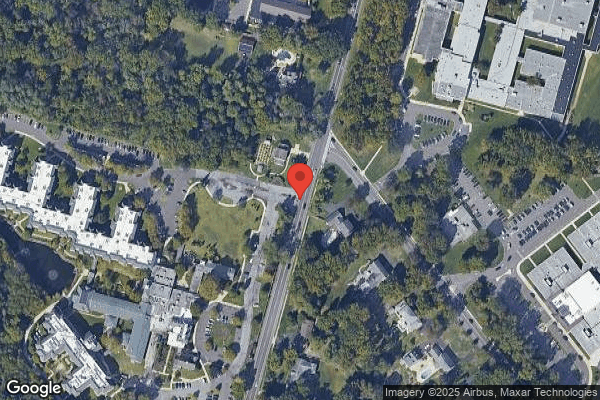
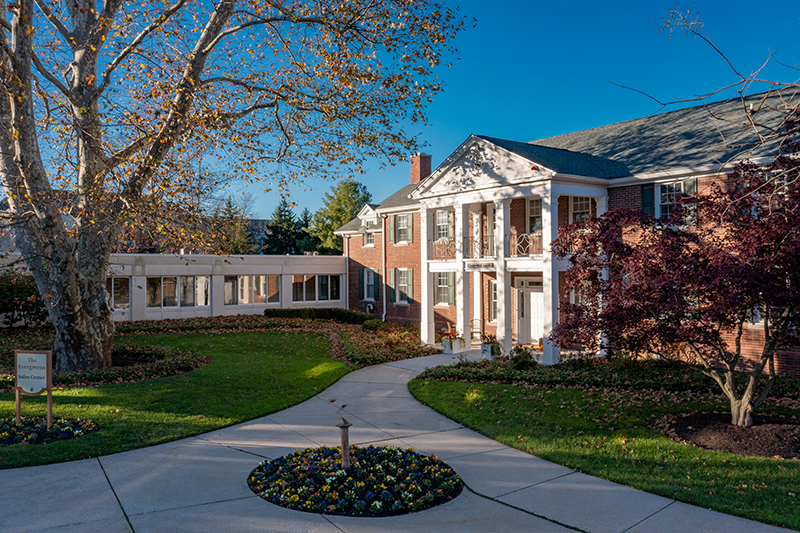
309 BRIDGEBORO RD, MOORESTOWN, NJ 08057 (856) 439-2000
Non profit - Corporation 17 Beds ACTS RETIREMENT-LIFE COMMUNITIES Data: November 2025
Trust Grade
95/100
#81 of 344 in NJ
Last Inspection: June 2024

Within standard 12-15 month inspection cycle. Federal law requires annual inspections.

Overview

Willowbrooke Court Skilled Care at Evergreens has received a Trust Grade of A+, indicating it is considered an elite facility in terms of quality and care. Ranked #81 out of 344 in New Jersey, it places in the top half of all facilities, while locally, it ranks #5 out of 17 in Burlington County, meaning only four other homes are better. The facility is improving, with issues decreasing from three in 2022 to two in 2024. Staffing is a strong point, earning a perfect 5/5 rating with a low turnover of just 14%, significantly better than the state average, and it has excellent RN coverage, surpassing 94% of New Jersey facilities. However, there are concerns; recent inspections found issues like improper food handling and failure to address a bruise on a resident with fragile skin, which point to potential lapses in safety and care protocols. Overall, while the facility has many strengths, families should be aware of these shortcomings.

Trust Score
A+
95/100
In New Jersey
#81/344
Top 23%
Safety Record
Low Risk
No red flags
Inspections
Getting Better
3 → 2 violations
Staff Stability
✓ Good
14% annual turnover. Excellent stability, 34 points below New Jersey's 48% average. Staff who stay learn residents' needs.
Penalties
✓ Good
No fines on record. Clean compliance history, better than most New Jersey facilities.
Skilled Nurses
✓ Good
Each resident gets 82 minutes of Registered Nurse (RN) attention daily — more than 97% of New Jersey nursing homes. RNs are the most trained staff who catch health problems before they become serious.
Violations
✓ Good
Only 5 deficiencies on record. Cleaner than most facilities. Minor issues only.
★★★★★
5.0
Overall Rating
★★★★★
5.0
Staff Levels
★★★★★
5.0
Care Quality
★★★★☆
4.0
Inspection Score
Stable
2022: 3 issues
2024: 2 issues

The Good

  • 5-Star Staffing Rating · Excellent nurse staffing levels
  • 5-Star Quality Measures · Strong clinical quality outcomes
  • Low Staff Turnover (14%) · Staff stability means consistent care
  • Full Sprinkler Coverage · Fire safety systems throughout facility
  • No fines on record
  • Staff turnover is low (14%)

    34 points below New Jersey average of 48%

Facility shows strength in staffing levels, quality measures, staff retention, fire safety.

The Bad

Chain: ACTS RETIREMENT-LIFE COMMUNITIES

Part of a multi-facility chain

Ask about local staffing decisions and management

The Ugly 5 deficiencies on record

Jun 2024 2 deficiencies
CONCERN (D)

Potential for Harm - no one hurt, but risky conditions existed

Investigate Abuse (Tag F0610)

Could have caused harm · This affected 1 resident

Based on observation, interview, review of medical records and other pertinent facility documentation, it was determined that the facility failed to a.) identify and investigate a bruise of unknown or...

Read full inspector narrative →
Based on observation, interview, review of medical records and other pertinent facility documentation, it was determined that the facility failed to a.) identify and investigate a bruise of unknown origin and b.) follow interventions implemented on the Care Plan (CP) for a resident identified as having fragile skin. This deficient practice was identified for 1 (one) of 2 (two) residents (Resident #117) reviewed for accidents and was evidenced by the following: The admission Record dated 06/06/24, indicated that Resident #117 had diagnoses which included, but were not limited to, dementia and major depressive disorder. The quarterly Minimum Data Set (MDS), an assessment that facilitates a resident's care, dated 04/11/24, indicated that the resident had severe cognitive impairment and required maximum assistance with all aspects of activities of daily living (ADLs). On 06/04/24 at 07:06 PM during tour, the surveyor observed Resident #117 lying in bed with the left arm exposed. The surveyor observed that the resident had a large irregular shaped dark purplish colored bruise noted on the left forearm. The resident was not able to be interviewed due to cognitive deficits. The surveyor also observed that the left-side rail was padded, and the right-side rail was not. On 06/05/24 at 12:12 PM, the surveyor observed Resident #117 lying in bed and was non-verbal. The resident was able to make eye contact with the surveyor. The surveyor observed that both the resident's arms were exposed, and the surveyor visualized a large, irregular shaped, dark, purplish colored bruise on the left forearm and a skin tear with steri-strips (to keep the edges of the wound together as it heals) on the right forearm. The surveyor observed that the left side rail was padded and the side rail on the right side was not padded. The surveyor reviewed the residents Care Plan (CP) which revealed the following documentation: -Focus: That the resident was at risk for skin tear/bruise related to my fragile skin. The focus was initiated on 07/12/2021. The CP reflected an intervention that was initiated on 02/07/2024, that the enabler bars were to be padded to protect the resident's skin. -Focus: The resident was dependent on staff for meeting emotional, intellectual, physical, and social needs related to the resident requiring hospice services. The surveyor reviewed the nursing Progress Notes (PN), dated 06/04/24 at 08:01 PM, which indicated that a nurse performed a weekly skin assessment and that no new skin abnormality was noted. This skin assessment was performed after the surveyor's first observation of the bruise. There was no documentation in the PN that the resident had a large bruise on the left forearm. On 06/05/24 at 12:12 PM, the surveyor interviewed the Certified Nursing Assistant (CNA) who stated that the bruise on the resident left forearm was identified a week ago (could not provide a specific date) by the resident's companion from hospice. The CNA stated that the companion from hospice provided care to the resident from 7:00 - 9:00 AM and reported to her that the resident had a bruise on the left forearm. The CNA stated that the companion also told her that she reported the left forearm bruise to the Licensed Practical Nurse (LPN) that was providing care to the resident. On 06/05/24 01:01 PM, the surveyor interviewed the Licensed Practical Nurse (LPN #1) who stated that he was not notified that the resident had a bruise on the left forearm. He stated that the resident did not have a companion but had a hospice CNA that came in for a couple hours each morning to care for the resident. When the surveyor asked LPN #1 about the bruise on the resident's left forearm, the LPN stated that he had not seen the bruise. LPN #1 stated that if a resident had a bruise of unknown origin, then an incident report should have been completed and the bruised area should have been measured and assessed. He continued to add the resident should have been assessed for further injury and an investigation should have been conducted. He explained that during the investigation the nurse would obtain statements from the staff going back three shifts and that the family and primary care physician would have been notified. He then stated that Resident #117 had some behaviors, such as flailing of the arms during care, which could have caused a bruise. On 06/06/24 at 10:06 AM, the surveyor reviewed the resident's medical records and there was still no documentation or assessment documented in the electronic medical record (EMR) regarding the bruise on the residents left forearm. On 06/06/24 at 09:14 AM, the surveyor observed a staff member providing care to Resident #117. The staff member was interviewed and identified herself as the Home Health Aide (HHA) from hospice. The HHA stated that she reported the bruise on the resident's left forearm a week ago to the facility CNA and LPN. She stated that she did not remember what the CNA's name was or what the LPN's name was. The HHA also stated that the siderail on the left had been padded, however she had not seen any padding on the side rail on the right side since she had been caring for the resident. On 06/06/24 at 09:00 AM, the Director of Nursing (DON) provided the surveyor incident and accident reports and investigations for the last 6 months for Resident #117. There were no incident or accident investigation for the bruise of the left forearm, however there was an incident and accident investigation provided for the skin tear of the right arm. On 06/06/24 at 09:25 AM, the surveyor interviewed the CNA who stated that the resident's left siderail had been padded, however the right siderail had not been padded for a couple months. On 06/06/24 at 10:27 AM, the surveyor interviewed LPN #1 who stated that purpose of the CP was to assure that special needs of the resident was provided. He stated that the CP assured that all staff members knew what needs the resident had and to provide those needs. He stated that he usually reviewed the residents CP quarterly when the skilled nursing assessment was completed. LPN #1 explained that nurses were made aware when skilled nursing assessment was due for a resident because it would trigger on the daily EMR when it was scheduled. LPN #1 stated explained that he was aware that Resident #117s siderails should be padded to protect the resident's skin, however had no explanation as to why the residents right siderail was not padded. He stated that the skin assessments were completed when the resident's bath was scheduled. He stated that the skin assessment should include any abnormalities of the skin. On 06/06/24 at 10:37 AM, the surveyor interviewed the DON who stated skin assessments were scheduled during first shower day of the week and the nurse was responsible to assess the skin for any abnormalities such as bruises, pressure ulcers, skin tears etc. She stated that if the nurse identified a bruise or any other skin impairment then the nurse would be responsible to assess the area, document findings, complete an incident report incident of unknown origin, start an investigation, and get a statements from CNAs going back three shift. She stated that the nurse was also responsible to alert the practitioner and the resident's family. She also indicated that the nurses would be responsible to notify the DON. The DON explained the CP process to the surveyor and stated that CPs were developed to assure that resident needs and preferences were identified, to include mitigating risk that could potentially negatively impact the resident and to mitigate those risk by formulating interventions to prevent accidents or incidents. She stated that an example of a resident risk would include a resident that had an issue with flailing arms and had the potential of bruising or developing skin tears from this behavior and the facility would pad the residents side rails or provide skin protectant sleeves to prevent skin tears. On 06/06/24 at 11:41 AM, the surveyor interviewed LPN #2 who performed the skin assessment for Resident #117 on 06/04/24 at 08:01 PM. LPN #2 stated that skin assessments were done once a week with shower. The LPN explained that the nurse usually performed the skin assessment with the CNA present. The LPN stated that she asked the CNA that was assigned to the resident on the evening of 06/04/24 how the residents skin condition was, and the CNA told her that the resident had no skin issues. The LPN admitted that she did not actually assess and visualize the residents' skin and that she relied on the CNA to inform her of any skin abnormalities. She stated that she trusts the CNA and that the CNA was dependable to give an accurate description of the resident's skin condition. She stated that the CNA did not report to her that the resident had a large bruise on the left forearm. On 06/06/24 at 12:08 PM, the surveyor interviewed the DON who stated if the nurse performed a weekly skin assessment, the nurse should be visualizing the resident's skin and documenting the condition of the skin on the resident's progress notes. The DON examined Resident #117's left forearm in the presence of the surveyor and confirmed that the resident had a bruise on the left forearm that was in the healing stage. She stated that she would start the investigation. The DON stated that when the surveyor reported the bruise to the LPN, the LPN should have started the accident and incident investigation, even if the bruise was old or in a healing stage. The DON also indicated that that nurse who performed the resident's skin assessment on 06/04/24 at 08:01 PM, should not have depended on the CNA to give her a description of the resident's skin and should have assessed the resident's skin herself. The DON also accompanied the surveyor to Resident #117's room and confirmed that the both the residents siderails should have been padded as the CP interventions indicated. On 06/07/24 at 09:01 AM, the surveyor team met with the DON and Licensed Nursing Home Administrator (LNHA) who stated that an investigation was started regarding Resident #117's left forearm bruise. She indicated that the siderail pad must have become dislodged and was on an armchair in the Resident #117's room. She indicated that a physician's order was obtained for the siderail pads so that the nurse would check to assure that they were in place in case it contributed to the bruising. She also stated that the facility-initiated training related to skin checks procedure and documentation of previous skin impairments and the incident reporting procedure. The facility policy titled Non-impaired Skin Integrity dated 09/15, indicated that the facility strived to identify all residents at risk for developing impaired skin integrity, the level and nature of the risk and initiate the appropriate plan of care. The policy also indicated that the licensed nurse was responsible for initiating the appropriate interventions according to the resident's level of risk and performing weekly visual skin integrity checks were to be completed by the licensed nurse or designee on the resident's bath/shower day. The facility policy titled, Incident Reporting/Injury Investigation Residents and Visitors dated 03/19, indicated that the facility strived to ensure that incidents involving a resident or visitor were recorded, patterns, or trends of occurrences were investigated, and measures were implemented to alleviate or decrease further occurrences. The policy indicated that the description of the resident's incident/injury, resident status, intervention, and any relevant observation shall be documented in the electronic progress notes. The policy also indicated that resident incidents shall be reported to the nursing supervisor and that an incident report had been completed in its entirety and that upon receipt of a report of incident/injury the charge nurse of supervisor shall immediately evaluate the resident, provide any needed intervention, and complete all areas of the Incident Investigation form. The facility policy titled, Person-Centered, Interdisciplinary Care Planning and Care Conference dated 10/2022 reflected that the facility ensured that the person-centered, interdisciplinary care plan team members follow-through with their responsibilities and identify problems/needs and strengths and follow-up on the approaches. NJAC 8:3.9-4.1(a)5 NJAC 8:3.9-13.4(c)2i, ii
CONCERN (F)

Potential for Harm - no one hurt, but risky conditions existed

Food Safety (Tag F0812)

Could have caused harm · This affected most or all residents

Based on observation, interview, and review of other pertinent facility documents, it was determined that the facility failed to handle potentially hazardous foods and maintain sanitation in a safe an...

Read full inspector narrative →
Based on observation, interview, and review of other pertinent facility documents, it was determined that the facility failed to handle potentially hazardous foods and maintain sanitation in a safe and consistent manner to prevent food borne illness. This deficient practice was evidenced by the following: On 06/05/24 from 8:56 AM to 9:25 AM, the surveyor, accompanied by the Regional Culinary Director (RCD) observed the following in the kitchen: 1.) The RCD washed her hands at a designated hand washing sink for 12 seconds. 2.) The step can style trash can at the employee hand washing sink had small flying insects (identified by the RCD as fruit flies) flying inside and outside of the trash can when opened. When the surveyor stepped on the pedal to open the trash can, there was a white paper towel with an orange discoloration inside with small insects crawling on it. The RCD stated she would get someone to empty the trash can. 3.) In the refrigerator, identified as the Produce Refrigerator by the RCD, there was a half pan of carrots sealed with plastic wrap. The half pan of carrots was not labeled with a date the carrots were prepared nor a use-by date. The RCD removed the half pan of carrots from the refrigerator. On 06/06/24 from 11:50 AM to 12:10 PM, the surveyor, accompanied by the RCD and Culinary Director (CD), observed the following in the kitchen: 4.) Two (2) Line Cooks and one (1) Prep [NAME] were wearing beard guards that did not cover their mustache facial hair. The RCD instructed the kitchen staff to pull their beard guards over their mustaches. 5.) A multi-tiered shelving unit, identified by the RCD as the storage area for clean and dry dishware, contained a stack of full pans and a stack of third pans that were wet nested. The surveyor lifted the pans to reveal there was liquid between the pans. The RCD instructed kitchen staff to re-wash the pans. During an interview with the surveyor on 06/06/24 at 12:50 PM, the RCD stated the following: 1.) The process for hand washing included washing hands for 15-20 seconds to prevent cross contamination and food-borne illnesses. 2.) The trash cans at the hand washing sink were designated for hand washing purposes only and that the trash cans should be emptied and kept clean for infection control purposes. The RCD further stated that pest issues, such as fruit flies, should be reported to management as fruit flies can lay eggs and continue to spread if not eliminated. 3.) The sealed carrots should have been labeled with the date they were prepped and would be good for three (3) days since it was a prepared product. 4.) [NAME] guards, a type of hair restraint, should cover all facial hair, including mustaches, to prevent hair from entering food or food prep items, since hair is full of bacteria. 5.) Dishware, such as pans, should be air dried before storing nested and if pans are wet nested, they should be re-washed because, wet nesting promotes bacteria growth. Review of the facility's Hand Washing Procedure from the Culinary Services Manual, revised 12/07, included, Apply approximately one tablespoon of hand soap from proper dispenser to your hands. Join hands and work up a good lather for 20 seconds, in addition concentrate under nails, between fingers, and under wedding bands. Review of the facility's Trash policy from the Environmental Services Manual, revised 08/2011, included, All trash containers will be covered with a fitted metal or plastic cover, and In order to maintain sanitary conditions, trash containers should be lined with plastic liners. The policy did not address how to prevent and address pest issues related to trash cans in the kitchen. Review of the facility's Date Marking Ready-To-Eat Foods policy from the Culinary Services Manual, revised 02/17, included, All ready-to-eat foods will be labeled to include the following information: product name and date (month, day and year) the product was prepared or opened and the date the product should be used by. Review of the facility's Food Storage Chart, revised 10/14, included under 3 days for refrigerated storage was, ready-to-cook foods prepared on site. Review of the facility's Personal Appearance Standards from the Culinary Services Manual, revised 01/16, included, Men with facial hair, mustache and or/beard, must wear a beard guard while in the production kitchen, and, Hair restraints, such as hats, hair covering, or nets, and clothing that covers body hair shall be worn when in the production area where food is prepared or plated from a hot or cold work station. Review of the facility's Ware Washing policy from the Culinary Services Manual, undated, included, Allow cleaned items to air dry and cool completely before storing. NJAC 18:39-17.2(g)
Oct 2022 3 deficiencies
CONCERN (D)

Potential for Harm - no one hurt, but risky conditions existed

Deficiency F0578 (Tag F0578)

Could have caused harm · This affected 1 resident

**NOTE- TERMS IN BRACKETS HAVE BEEN EDITED TO PROTECT CONFIDENTIALITY** Based on record review, staff interview, and review of facility policy, the facility failed to ensure the right to formulate adv...

Read full inspector narrative →
**NOTE- TERMS IN BRACKETS HAVE BEEN EDITED TO PROTECT CONFIDENTIALITY** Based on record review, staff interview, and review of facility policy, the facility failed to ensure the right to formulate advance directives by failing to ensure a current copy of each resident's advance directive was in the resident's medical record for two of three residents (Resident (R) 6 and R7) reviewed for advance directives. Findings include: 1. Review of R7's profile located on the ''Profile'' tab of the electronic medical record (EMR) revealed R7 was admitted to the facility on [DATE]. Review of the ''Misc'' (miscellaneous) tab in EMR revealed a notarized durable power of attorney dated 09/10/01 and signed by R7. Review of the document revealed no reference to health care decision making. Review of the physician's orders under the Orders'' tab of the EMR revealed physician's ''DNR [do not resuscitate]'' order dated 10/10/2022. Review of the ''Misc'' tab in EMR revealed a document titled ''E.P._admission Paperwork.'' Review of the admission paperwork document revealed R7 had received written information about New Jersey Advance Health Care Directives. The document indicated R7 had a living will and had given a copy to the facility. During an interview with the Social Services Director (SSD) on 10/26/22 at 3:56 PM, SSD was told there was no living will in R7's record. SSD stated she was responsible for the admission paperwork but did not know why R7's living will was not in the record or where it was located. SSD stated she would check R7's paper record. On 10/26/22 at 4:49 PM, SSD was unable to locate a living will for R7 and stated R7's family will bring physical copy of his living will but was not sure it would match MD's DNR order. SSD stated she will discuss with MD about MD'S DNR order. SSD also stated that when R7 moved from assisted living to skilled nursing care, the system failed to carry over the living will from assisted living. On 10/27/22, at about 12:00 noon, SSD produced a ''Durable Power of Attorney for Health Care for the Appointment of a Heath Care Representative (Proxy Directive)'' dated 08/08/2001 for R7. SSD acknowledged that the record for R7 had been incomplete until the living will was located. The advanced directives included a DNR. 2. Review of the ''Misc.'' tab in the EMR for R6 revealed a durable power of attorney (DPOA) dated 08/03/18. The DPOA failed to reveal any references to R6's health care management, advance directives, or code status. Review of the physician's orders under the Orders'' tab of the EMR revealed physician's ''DNR'' (do not resuscitate) order dated 06/12/22. During an interview on 10/26/22 at 3:56 PM, SSD was asked if R6 had an advance directive, and if SSD had enquired from the resident or family about advance directives. SSD stated there was an MD order in the medical record indicating R6 was a DNR. SSD stated she would find out if there was any document that reflected R6's wishes for her care, and that the document may have failed to transfer from assisted living to the skilled nursing. On 10/26/22 at 4:30 PM, SSD produced a ''Living Will and Health Care Directive'' for R6, dated 8/3/18. SSD stated the document had failed to cross over with the resident from her assisted living facility. SSD admitted that the medical record for R6 was incomplete without R6's living will. Review of policy #H11 titled ''Health Care Records'' dated 12/2017 revealed the policy of the facility was ''to strive to maintain a health care record for each resident that is complete, accurately documented, readily accessible, systematically organized and per the policies and procedures of the Privacy Protection Manual.'' Review of the facility's policy #A-07 dated 12/2018 and titled ''Advance Health Care Directives for Residents in Skilled Care Center and Residential Community'' revealed its purpose was: ''To strive to establish procedures to support effective administration of residents' advance health care directives in Acts skilled care centers and residential communities and to strive to ensure compliance with the Federal Patient Self-Determination Act and the State Advance Directives Statutes. 1. The skilled care center and residential community will honor properly executed and clearly stated Advance Health Care Directives so that residents and their families will be assured that medically indicated treatment decisions correspond with their wishes. 2. Periodic discussion on the subject of Advance Health Care Directives will be held at the skilled care center and/or residential community. 3. Information concerning Advance Health Care Directives will be made available to all residents upon move-in and as requested. Note: This information is found in the Resident Information Book. 4. While the director of nursing (DON), . nurse practitioner (NP), social services coordinator or his/her designee may review the contents of the information provided to the resident in the Resident Information Book, he/she shall make dear to the resident that he/she is not providing legal advice and direct the resident to contact his/her attorney with any questions pertaining to his/her circumstances.'' The policy further provided that upon admission, residents will be provided information of the following. -Proxy Directive (Durable Power of Attorney for Health Care) -Living Will. A copy of any Advance Health Care Directives shall be kept as part of the resident's health record. NJAC 8:39-9.6(a)(b)
CONCERN (D)

Potential for Harm - no one hurt, but risky conditions existed

Infection Control (Tag F0880)

Could have caused harm · This affected 1 resident

Based on review of facility policy, observations, and staff interviews, the facility failed to follow appropriate infection control practices for hand hygiene and glove wearing for two out of five res...

Read full inspector narrative →
Based on review of facility policy, observations, and staff interviews, the facility failed to follow appropriate infection control practices for hand hygiene and glove wearing for two out of five residents (Resident (R6 and R115) observed during medication administration, and one out of one resident (R115) observed during wound care. Findings include: Observation on 10/25/22 at 9:37 AM revealed Registered Nurse (RN) 1 applying an Aspercreme Lidocaine 4% patch (a pain-relieving patch) to R6. RN1 approached R6 in the dining area and RN1 wheeled R6 to R6's room. RN1 did not perform hand hygiene. RN1 stood R6 up and pulled down R6's pants in order to access R6's right knee. RN1 opened the Lidocaine patch, pulled off the protective film and applied the patch to R6's right knee. RN1 pulled R6's pants back up, did not don gloves and did not perform hand hygiene. RN1 wheeled R6 back to the dining area at 9:41 AM. RN1 proceeded to pull medications for R4 from the medication cart, administered the medications to R4, and still did not perform hand hygiene. RN1 pulled and administered medications to R9, assisted R9 in taking the medications with a spoon, and still performed no hand hygiene. RN1 performed hand hygiene at 10:01 AM. Further observation of RN1 on 10/26/22 at 9:31 AM revealed RN1 administering medications to R12 in R12's room. RN1 performed no hand hygiene before entering R12's room. On 10/26/22 at 9:47 AM, RN1 assisted R115 with taking his pills. RN1 held R115's straw and cup while R115 took his pills one at a time and sipped from the cup held by RN1. R115 requested more ice. RN1 lifted a Styrofoam cup with a lid that had been lying on R115's bedside table and took the cup out of the room and into the hallway. RN1 made a brief stop in the Director of Nursing's (DON) office, placed R115's used cup briefly on a table in the DON's office; RN1 retrieved the cup, took it to the kitchen, filled it with ice and took it back to R115's room. On 10/26/22 at 10:25 AM, observation of RN1 placing another lidocaine patch on R6. RN1 did not perform hand hygiene or don gloves. RN1 removed the patch from the package, placed the packet on the floor, peeled off the protective film and applied the patch with bare hands on R6, right knee. RN1 picked the packet off the floor, proceeded to the medication cart to retrieve R6's phone, took the phone down the hall to R6's room, returned to the medication cart, and finally performed hand hygiene with hand sanitizer. Observation of wound care with RN1 and Assistant Director of Nursing (ADON) on 10/26/22 at 10:11 AM revealed RN1 donned a pair of gloves without first performing hand hygiene. RN1 removed the old dressing in R115's back and changed gloves. No hand hygiene was performed before changing gloves. ADON, who was assisting RN1, removed her gloves and donned another pair without performing hand hygiene. At the conclusion of the wound care, RN1 took off the gloves with which she had performed wound care. RN1 touched the resident, the resident's wheelchair, and the resident's glasses before performing hand hygiene. During an interview on 10/26/22 at 12:24 PM, the DON was asked what her expectations were for nurses to perform hand hygiene and don gloves. DON stated staff should don gloves during eye drop administration, PEG (feeding tube) care, urinary catheter care, handling briefs, or taking someone to the toilet. Also, when giving certain medications if the staff is pregnant and the medication would be harmful to staff. DON stated staff did not need to wear gloves if touching a resident who is clothed. The foregoing observations were discussed with the DON, and she agreed that they were breaches in infection control and prevention standards and RN1 should have performed hand hygiene in the scenarios observed. DON added that gloves should be worn when rubbing cremes and applying a medication patch and hand hygiene ''after each thing you do.'' During an interview with RN1 at 12:45 PM on 10/26/22 the forgoing observations were discussed. RN1 agreed that they were breaches in infection control and prevention standards. RN1 further stated that it was difficult to apply a Lidocaine path with gloved hands because the patch became twist and difficult to control. RN1 stated she was careful not to touch the medication when she applied it. During an interview with the facility's Infection Preventionist, (ICP) the foregoing observations were discussed with the ICP, and she confirmed that they were all breaches of infection control standards contrary to what she had been teaching. ICP stated more training would be done with staff. Review of facility's policy# B-03.81C titled ''HAND WASHING AND HAND HYGIENE'' revealed the policy was ''to strive to prevent infections through adequate hand washing and hand hygiene techniques.'' Policy further provided: '' C. Always decontaminate hands: When coming on and going off duty Before and after direct resident contact. Before and after inserting urinary catheter, intravenous catheter, or other invasive devices. Before and after entering isolation precaution settings Before and after changing a dressing After contact with a resident's intact skin (i.e., when taking a pulse or blood pressure and lifting a resident). After blowing and wiping nose After contact with body fluids or excretions, mucous membranes, non-intact skin, and wound dressings. If moving from a contaminated body site to a clean body site during resident care. After contact with inanimate objects (including medical equipment) in the immediate vicinity of the resident. After handling soiled or used linens, dressings, bedpans, catheters and urinals After removing gloves' Review of facility's policy #B-03.6IC, revised 03/2020 titled ''Gloves'' revealed ''gloves are worn . for all procedures or tasks involved with touching blood and body fluids, mucous membranes, or non-intact skin.'' NJAC8:39-19.4(a)1
CONCERN (E)

Potential for Harm - no one hurt, but risky conditions existed

Food Safety (Tag F0812)

Could have caused harm · This affected multiple residents

Based on observation and interview, the facility failed to ensure foods stored in dry storage were resealed closed when opened. This failure had the potential to affect the 12 residents who ate food p...

Read full inspector narrative →
Based on observation and interview, the facility failed to ensure foods stored in dry storage were resealed closed when opened. This failure had the potential to affect the 12 residents who ate food prepared by the kitchen. Findings include: The following observations in the kitchen were made with and verified by the Director of Culinary and Nutrition Services (DCN). On 10/24/22 at 10:30 AM, observation of the dry storage room revealed one box of thickener, one bag of dried cranberries, one bag of cake mix, one container of fried onion sticks, one bag of raisins, and one container of chopped nuts, that were open to air. During an interview on 10/24/22 at 10:43 AM, DCN stated, The food items should be sealed closed after opened. I understand that bugs can get into anything that is open. During an interview on 10/27/22 at 10:49 AM, the Interim Administrator stated, My expectation for the kitchen is that any food item that is opened should be sealed shut. The facility did not provide a policy that addressed ensuring open food items in storage were sealed. NJAC 8:39-17.2(g)
Understanding Severity Codes (click to expand)
Life-Threatening (Immediate Jeopardy)
J - Isolated K - Pattern L - Widespread
Actual Harm
G - Isolated H - Pattern I - Widespread
Potential for Harm
D - Isolated E - Pattern F - Widespread
No Harm (Minor)
A - Isolated B - Pattern C - Widespread

Questions to Ask on Your Visit

  • "Can I speak with families of current residents?"
  • "What's your RN coverage like on weekends and overnight?"

Our Honest Assessment

Strengths
  • • Grade A+ (95/100). Above average facility, better than most options in New Jersey.
  • • No major safety red flags. No abuse findings, life-threatening violations, or SFF status.
  • • No fines on record. Clean compliance history, better than most New Jersey facilities.
  • • Only 5 deficiencies on record. Cleaner than most facilities. Minor issues only.
Concerns
  • • No significant concerns identified. This facility shows no red flags across CMS ratings, staff turnover, or federal penalties.
Bottom line: Generally positive indicators. Standard due diligence and a personal visit recommended.

About This Facility

What is Willowbrooke Court Skilled Care At Evergreens's CMS Rating?

CMS assigns WILLOWBROOKE COURT SKILLED CARE AT EVERGREENS an overall rating of 5 out of 5 stars, which is considered much above average nationally. Within New Jersey, this rating places the facility higher than 99% of the state's 100 nursing homes. This rating reflects solid performance across the metrics CMS uses to evaluate nursing home quality.

How is Willowbrooke Court Skilled Care At Evergreens Staffed?

CMS rates WILLOWBROOKE COURT SKILLED CARE AT EVERGREENS's staffing level at 5 out of 5 stars, which is much above average compared to other nursing homes. Staff turnover is 14%, compared to the New Jersey average of 46%. This relatively stable workforce can support continuity of care.

What Have Inspectors Found at Willowbrooke Court Skilled Care At Evergreens?

State health inspectors documented 5 deficiencies at WILLOWBROOKE COURT SKILLED CARE AT EVERGREENS during 2022 to 2024. These included: 5 with potential for harm.
Who Owns and Operates Willowbrooke Court Skilled Care At Evergreens?

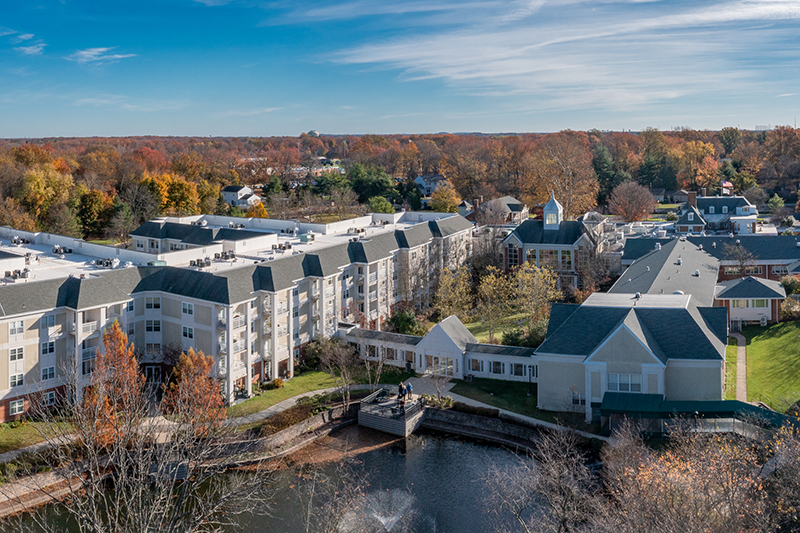
WILLOWBROOKE COURT SKILLED CARE AT EVERGREENS is owned by a non-profit organization. Non-profit facilities reinvest revenue into operations rather than distributing to shareholders. The facility is operated by ACTS RETIREMENT-LIFE COMMUNITIES, a chain that manages multiple nursing homes. With 17 certified beds and approximately 11 residents (about 65% occupancy), it is a smaller facility located in MOORESTOWN, New Jersey.

How Does Willowbrooke Court Skilled Care At Evergreens Compare to Other New Jersey Nursing Homes?

Compared to the 100 nursing homes in New Jersey, WILLOWBROOKE COURT SKILLED CARE AT EVERGREENS's overall rating (5 stars) is above the state average of 3.3, staff turnover (14%) is significantly lower than the state average of 46%, and health inspection rating (4 stars) is above the national benchmark.

What Should Families Ask When Visiting Willowbrooke Court Skilled Care At Evergreens?

Based on this facility's data, families visiting should ask: "Can I visit during a mealtime to observe dining assistance and food quality?" "How do you handle medical emergencies, and what is your hospital transfer rate?" "Can I speak with family members of current residents about their experience?"

Is Willowbrooke Court Skilled Care At Evergreens Safe?

Based on CMS inspection data, WILLOWBROOKE COURT SKILLED CARE AT EVERGREENS has a clean safety record: no substantiated abuse findings (meaning no confirmed cases of resident harm), no Immediate Jeopardy citations (the most serious violation level indicating risk of serious injury or death), and is not on the Special Focus Facility watch list (a federal program monitoring the lowest-performing 1% of nursing homes). The facility has a 5-star overall rating and ranks #1 of 100 nursing homes in New Jersey. While no facility is perfect, families should still ask about staff-to-resident ratios and recent inspection results during their visit.

Do Nurses at Willowbrooke Court Skilled Care At Evergreens Stick Around?

Staff at WILLOWBROOKE COURT SKILLED CARE AT EVERGREENS tend to stick around. With a turnover rate of 14%, the facility is 31 percentage points below the New Jersey average of 46%. Low turnover is a positive sign. It means caregivers have time to learn each resident's needs, medications, and personal preferences. Consistent staff also notice subtle changes in a resident's condition more quickly. Registered Nurse turnover is also low at 17%, meaning experienced RNs are available to handle complex medical needs.

Was Willowbrooke Court Skilled Care At Evergreens Ever Fined?

WILLOWBROOKE COURT SKILLED CARE AT EVERGREENS has no federal fines on record. CMS issues fines when nursing homes fail to meet care standards or don't correct problems found during inspections. The absence of fines suggests the facility has either maintained compliance or corrected any issues before penalties were assessed. This is a positive indicator, though families should still review recent inspection reports for the full picture.

Is Willowbrooke Court Skilled Care At Evergreens on Any Federal Watch List?

WILLOWBROOKE COURT SKILLED CARE AT EVERGREENS is not on any federal watch list. The most significant is the Special Focus Facility (SFF) program, which identifies the bottom 1% of nursing homes nationally based on persistent, serious quality problems. Not being on this list means the facility has avoided the pattern of deficiencies that triggers enhanced federal oversight. This is a positive indicator, though families should still review the facility's inspection history directly.