HUDSONVIEW HEALTH CARE CENTER

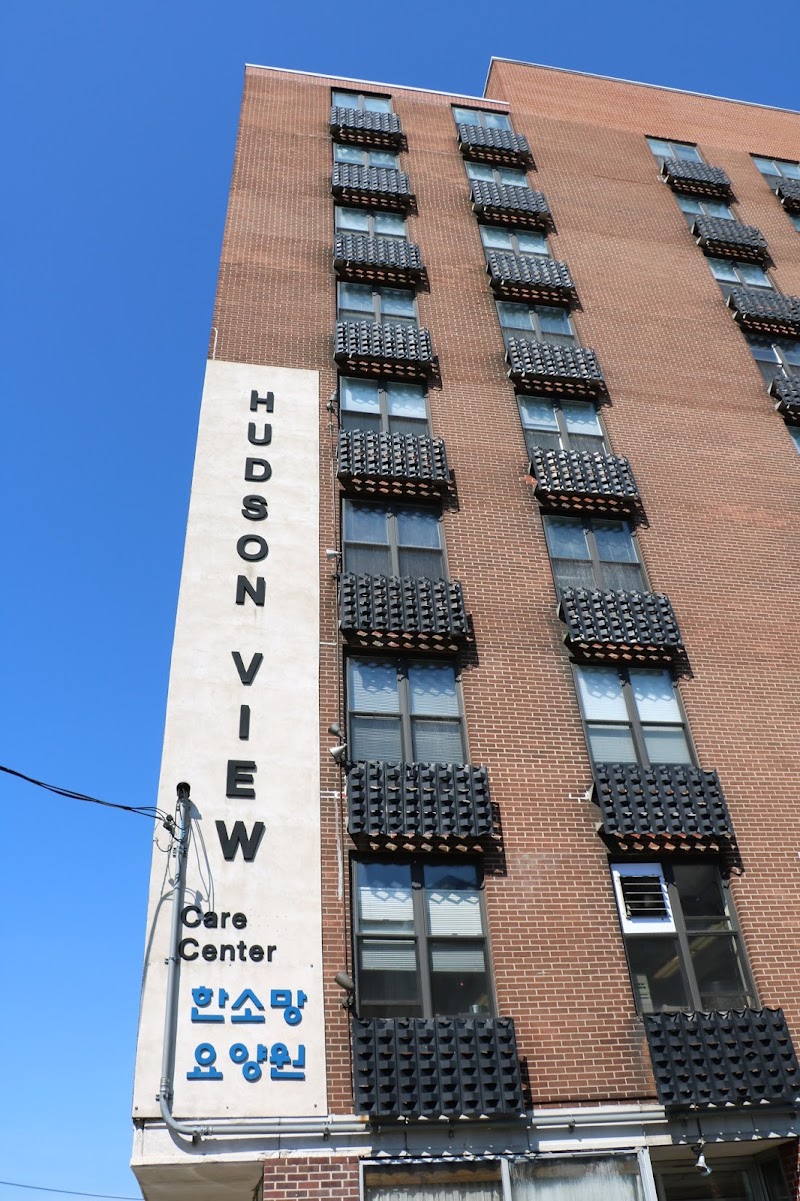
9020 WALL STREET, NORTH BERGEN, NJ 07047 (201) 861-4040
For profit - Corporation 273 Beds PARAMOUNT CARE CENTERS Data: November 2025
Trust Grade
90/100
#44 of 344 in NJ
Last Inspection: January 2024

Within standard 12-15 month inspection cycle. Federal law requires annual inspections.

Overview

Hudsonview Health Care Center has received an excellent Trust Grade of A, indicating it is highly recommended and performs well compared to other facilities. It ranks #44 out of 344 nursing homes in New Jersey, placing it in the top half, and #4 out of 14 in Hudson County, meaning only three local facilities are rated higher. However, the facility is experiencing a worsening trend, with issues increasing from 5 in 2021 to 9 in 2024, and it has a total of 14 concerns, though none are critical or serious. Staffing is a relative strength, with a turnover rate of 14%, well below the state average of 41%, but the RN coverage is only average. Specific concerns include a failure to offer vaccinations to a resident, use of unnecessary side rails for another resident, and not reporting observed hematomas, indicating some compliance issues that families should consider. Overall, while Hudsonview Health Care Center has strong staffing and no fines, the increasing trend of concerns and specific incidents should be carefully evaluated by families.

Trust Score
A
90/100
In New Jersey
#44/344
Top 12%
Safety Record
Low Risk
No red flags
Inspections
Getting Worse
5 → 9 violations
Staff Stability
✓ Good
14% annual turnover. Excellent stability, 34 points below New Jersey's 48% average. Staff who stay learn residents' needs.
Penalties
✓ Good
No fines on record. Clean compliance history, better than most New Jersey facilities.
Skilled Nurses
○ Average
Each resident gets 31 minutes of Registered Nurse (RN) attention daily — about average for New Jersey. RNs are the most trained staff who monitor for health changes.
Violations
⚠ Watch
14 deficiencies on record. Higher than average. Multiple issues found across inspections.
★★★★★
5.0
Overall Rating
★★★☆☆
3.0
Staff Levels
★★★★★
5.0
Care Quality
★★★★☆
4.0
Inspection Score
Stable
2021: 5 issues
2024: 9 issues

The Good

  • 5-Star Quality Measures · Strong clinical quality outcomes
  • Low Staff Turnover (14%) · Staff stability means consistent care
  • Full Sprinkler Coverage · Fire safety systems throughout facility
  • No fines on record
  • Staff turnover is low (14%)

    34 points below New Jersey average of 48%

Facility shows strength in quality measures, staff retention, fire safety.

The Bad

Chain: PARAMOUNT CARE CENTERS

Part of a multi-facility chain

Ask about local staffing decisions and management

The Ugly 14 deficiencies on record

Jan 2024 9 deficiencies
CONCERN (D) 📢 Someone Reported This

A family member, employee, or ombudsman was alarmed enough to file a formal complaint

Potential for Harm - no one hurt, but risky conditions existed

Deficiency F0604 (Tag F0604)

Could have caused harm · This affected 1 resident

**NOTE- TERMS IN BRACKETS HAVE BEEN EDITED TO PROTECT CONFIDENTIALITY** Based on observation, interview, record review, and facility policy review, the facility failed to ensure that residents were fr...

Read full inspector narrative →
**NOTE- TERMS IN BRACKETS HAVE BEEN EDITED TO PROTECT CONFIDENTIALITY** Based on observation, interview, record review, and facility policy review, the facility failed to ensure that residents were free from the use of unnecessary side rails bars for one (Resident (R)209) out of two residents reviewed for physical restraints out of a total sample of 55 residents. Findings include: Review of R209's admission Record, located under the Profile tab of the electronic medical record (EMR) revealed R209 was admitted to the facility on [DATE] with diagnoses including repeated falls, unspecified dementia, and difficulty in walking. Review of R209's annual Minimum Data Set (MDS) assessment under the MDS tab of the EMR, with an Assessment Reference Date (ARD) of 10/29/23, revealed she scored five out of 15 on the Brief Interview for Mental Status (BIMS), indicating R209 was severely cognitively impaired. Further review revealed side bars were not listed as being in use for R209. Review of R209's Care Plan, located under the Care Plan tab of the EMR and dated 08/04/23, revealed R209 was using ¾ side rails and was at risk for entrapment and injury. Interventions in place were to ensure proper bed positioning and evaluate continuous need for side rails. Further review revealed R209 was care planned for impaired cognitive function and behavior issues as evidenced by impulsive behavior of continuously standing up from wheelchair or bed. Review of R209's Quarterly Nursing Assessment located under the Observations tab in the EMR and dated 10/29/23 revealed R209 scored a 15 on the fall risk evaluation, which indicated R209 was a high fall risk. Further review revealed R209 was currently using side rails for support and positioning and wants side rails raised at this time, but side rails do not prohibit R209's mobility or freedom of movement and are not a restraint. Review of R209's Physician's Orders located under the Orders tab in the EMR, dated 08/05/23 revealed R209 may have ¾ side rails for bed mobility/enabler/positioning/resident request. During observations on 01/07/24 at 10:26 AM and on 01/08/23 at 1:57 PM, R209 was lying in bed with full side rails in place on both sides of the bed. During an interview on 01/09/24 at 12:04 PM, the Rehabilitation Director stated R209 required staff's assistance with bed mobility and repositioning and upon discharge from therapy in April 2023, R209 still required staff prompting and queuing to use bed rails for positioning. The Rehabilitation Director stated that without staff being present and prompting, R209 would be unable to use side rails to reposition with intent due to the resident's cognition. The Rehabilitation Director stated side rails were up for fall/safety risk, but she was unable to state if the side rails should remain up when R209 was in bed when staff were not in the room helping the resident. During an interview on 01/09/24 at 12:25 PM, Certified Nursing Assistant (CNA)6 stated R209 was total care and was unable to turn and reposition herself in bed and that staff needed to help with that. CNA6 stated the side rails were in place to keep R209 from falling onto the floor. CNA6 stated R209 was unable to get out of bed without staff assistance and that R209 was unable to put the side rails down by herself. CNA6 stated the side rails were always kept up whenever R209 was in bed. During an interview on 01/09/24 at 1:24 PM, Registered Nurse/Unit Manager (RN)4 stated side rails were used for bed mobility and positioning and helped with providing care. RN4 stated R209 required cuing from staff to use the bedrails and was unable to use them for bed mobility or repositioning due to R209's confusion and R209 was unable to release them without staff assistance. RN4 stated she thought that R209 may be able to scoot out of the bed and get around the rail, but that staff kept an eye on her. RN4 stated she was unsure why the bed rails were kept up whenever R209 was in bed since R209 was only able to use them with staff prompting. RN4 stated the family wanted the bed rails up and that staff went over the risks and benefits with the family when the consent was signed. During an interview on 01/10/24 at 1:25 PM, the Director of Nursing (DON) stated when side rails were used a siderail assessment was completed and staff took into consideration a resident's mental capacity and overall, activities of daily living (ADLs) functionality and what type of ADL assistance a resident required to determine if the resident needed a side rail to turn or reposition and to help them get up or when staff were providing care. The DON stated staff tried removing side rails before but there was an increase in falls and families requested the siderails be used. The DON stated they discussed risk versus benefits, but some families insisted on residents having them. The DON was unable to answer if a side rail should be down when staff were not in the room providing care. But she did state the facility recognized the need to update the side rail assessments and she knew some of the assessments had been not updated. The DON stated she felt R209 used the side rails as an enabler. A review of the facilities policy titled Restraint Free Environment, revised 07/23 indicated, Each resident shall attain and maintain his/her highest practicable well-being in an environment that prohibits the use of restraints for discipline or convenience and limits restraint use to circumstances in which the resident has medical symptoms that warrant the use of restraints. Physical restraints are defined as any manual method or physical or mechanical device, material, or equipment attached or adjacent to the resident's body that the individual cannot remove easily, which restricts freedom of movement or normal access to one's body. Physical restraints may include but are not limited to using side rails to keep resident from voluntarily getting out of bed. NJAC 8:39-4.1(a)6 NJAC 8:39-27.1(c)
CONCERN (D)

Potential for Harm - no one hurt, but risky conditions existed

Report Alleged Abuse (Tag F0609)

Could have caused harm · This affected 1 resident

**NOTE- TERMS IN BRACKETS HAVE BEEN EDITED TO PROTECT CONFIDENTIALITY** Based on record review, staff interview, and facility policy review, the facility failed to ensure that two hematomas observed o...

Read full inspector narrative →
**NOTE- TERMS IN BRACKETS HAVE BEEN EDITED TO PROTECT CONFIDENTIALITY** Based on record review, staff interview, and facility policy review, the facility failed to ensure that two hematomas observed on a resident's arm were reported to the state survey agency for one (Resident (R)83) out of three residents reviewed for abuse and neglect out of a total sample of 55 residents. Findings include: Review of R83's admission Record, located under the Profile tab of the electronic medical record (EMR), revealed R83 was initially admitted to the facility on [DATE] and was readmitted on [DATE] with diagnoses including diabetes and chronic kidney disease. Review of R83's Quarterly Minimum Data Set (MDS) assessment located under the MDS tab of the EMR, with an Assessment Reference Date (ARD) of 10/07/23, revealed R83 scored 11 out of 15 on the Brief Interview for Mental Status (BIMS), indicating R83 was moderately cognitively impaired. Further review revealed R83's primary language was Chinese and required the use of an interpreter. Review of R83's Care Plan, located under the Care Plan tab of the EMR, dated 07/24/23, revealed, The resident was at risk for bruising, bleeding and skin tears related to aspirin therapy. Review of R83's Health Status Note located under the Progress Notes tab in the EMR, dated 07/24/23 revealed notified by CNA that R83 had two hematomas on the left upper posterior arm area with no complaints of pain. Review of R83's Skin Breakdown Report dated 07/24/23, indicated a hematoma on left upper posterior arm area with the physician, responsible party, and supervisor notified. Review of Facility Incident/Accident Report dated 07/24/23 revealed, possible contributing factors were R83 had a movement disorder, required total assistance, and took aspirin. Further review of this incident report revealed R83 was interviewed and said she took aspirin and bruised more easily. During an interview on 01/10/24 at 9:05 AM, Licensed Practical Nurse (LPN)2 stated she observed bruises on R83's arm and immediately reported it to the Registered Nurse (RN)5. During an interview on 01/10/24 at 9:37 AM, Certified Nursing Assistant (CNA)9 stated she observed the bruises on R83's arm while providing morning care and she informed the nurse immediately. During an interview on 01/10/24 at 10:40 AM, Family Member (FM)2 stated she did not remember staff notifying her about any hematomas being discovered on R83 arm on 07/24/23 and she was not asked to interpret for staff so they could interview R83 about how the bruises occurred. FM2 stated R83 was unable to state how the bruises occurred. An interview was conducted on 01/10/24 at 1:39 PM with the Director of Nursing (DON) and the Administrator. The DON stated after an incident, staff would assess any type of injury, interview staff and residents, and look at residents' medications. The DON stated if there is an injury from an unknown origin, they report it to the state survey agency and notify the physician, family, complete an investigation, and update the care plan. The DON stated that this incident was not reported but there was an incident report done by RN5. A review of the facility policy titled Abuse, Neglect and Exploitation, revised 06/09/23 revealed Each resident has the right to be free from abuse, neglect, misappropriation of resident property and exploitation. This includes but is not limited to freedom from corporal punishment, involuntary seclusion and any physical or chemical restraint not required to treat the resident's medical symptoms. Residents must not be subject to abuse by anyone, including, but not limited to; facility staff, other residents, consultants, contractors, volunteers, or staff of other agencies serving the resident, family members, legal guardians, friends, or other individuals. The policy further revealed, The Abuse coordinator in the facility is the Director of Nursing, Administrator, or facility appointed designee. Report allegations or suspected abuse, neglect, or exploitation immediately to the Administrator, other Officials in accordance with State Law and the State Survey and Certification agency through established procedures. NJAC 8:39-9.4(f)
CONCERN (D)

Potential for Harm - no one hurt, but risky conditions existed

Investigate Abuse (Tag F0610)

Could have caused harm · This affected 1 resident

**NOTE- TERMS IN BRACKETS HAVE BEEN EDITED TO PROTECT CONFIDENTIALITY** Based on observation, record review, staff interview, and facility policy review the facility failed to ensure that two hematoma...

Read full inspector narrative →
**NOTE- TERMS IN BRACKETS HAVE BEEN EDITED TO PROTECT CONFIDENTIALITY** Based on observation, record review, staff interview, and facility policy review the facility failed to ensure that two hematomas observed on a resident's left arm were thoroughly investigated for one (Resident (R)83) out of three residents reviewed for abuse and neglect out of a total sample of 55 residents. Findings include: Review of R83's admission Record, located in the Profile tab of the electronic medical record (EMR) revealed R83 was initially admitted to the facility on [DATE] and was readmitted on [DATE] with diagnoses including diabetes and chronic kidney disease. Review of R83's Quarterly Minimum Data Set (MDS) assessment under the MDS tab of the EMR, with an Assessment Reference Date (ARD) of 10/07/23, revealed R83 scored 11 out of 15 on the Brief Interview for Mental Status (BIMS), indicating R83 was moderately cognitively impaired. Review of R83's Health Status Note located under the Progress Notes tab in the EMR and dated 07/24/23 revealed R83 had two hematomas on the left upper posterior arm area. Review of R83's Skin Breakdown Report dated 07/24/23, revealed a hematoma on left upper posterior arm area and physician, responsible party, and supervisor notified. New intervention to prevent recurrence was staff were educated regarding gentle hold/care during transfers and care. Review of Facility Incident/Accident Report dated 07/24/23 revealed, possible contributing factors were R83 had a movement disorder, required total assistance, and took aspirin. Further review revealed R83 was interviewed and said she took aspirin and bruised more easily. Further review revealed statements by Certified Nursing Assistant (CNA)9 who discovered the bruises, Licensed Practical Nurse (LPN)2 to whom CNA9 reported the bruises and RN5 who filled out the report. Further review revealed no additional staff or residents were interviewed. During an interview on 01/10/24 at 9:05 AM, LPN2 stated she observed bruises on R83's arm and immediately reported it to RN5. LPN2 stated she did not remember completing a statement regarding R83's bruises or being interviewed by staff. During an interview on 01/10/24 at 9:37 AM, CNA9 stated she observed the bruises on R83's arm and informed the nurse immediately. CNA9 stated she did not remember completing a statement regarding R83's bruises or being interviewed by staff. During an observation and interview on 01/10/24 at 10:40 AM, Family Member (FM)2 stated she did not remember staff notifying her about any hematomas being discovered on R83 arm on 07/24/23 and she was not asked to interpret for staff so they could interview R83 about how the bruises occurred. FM #1 stated R83 was unable to state how the bruise occurred. An interview was conducted on 01/10/24 at 1:39 PM with the Director of Nursing (DON) and the Administrator. The DON stated after an incident, staff would assess any type of injury, interview staff and residents, and look at residents' medications. The DON stated if there was still an injury from an unknown origin, they report it to the state survey agency and notify the physician, family, complete an investigation, and update the care plan. The DON stated RN5 wrote in the report that she interviewed R83 and that a family member was used at times to interpret but she did not know who RN5 used to interpret for R83. The DON said she felt it was investigated since RN5 stated she interviewed R83 and there was no concern. A review of the facility policy titled Abuse, Neglect and Exploitation, revised 06/09/23 revealed Each resident has the right to be free from abuse, neglect, misappropriation of resident property and exploitation. This includes but is not limited to freedom from corporal punishment, involuntary seclusion and any physical or chemical restraint not required to treat the resident's medical symptoms. Residents must not be subject to abuse by anyone, including, but not limited to; facility staff, other residents, consultants, contractors, volunteers, or staff of other agencies serving the resident, family members, legal guardians, friends, or other individuals. Further review of the policy revealed, Investigation of Alleged Abuse, Neglect and Exploitation. - When suspicion of abuse, neglect or exploitation, or reports of abuse, neglect or exploitation occur, an investigation is immediately warranted. Once the resident is cared for and initial reporting has occurred, an investigation should be conducted. Components of an investigation may include Interview the involved resident, if possible, and document all responses. If a resident is cognitively impaired, interview the resident several times to compare responses. If there is no discernible response from the resident, or if the resident's response is incongruent with that of a reasonable person, interview the resident's family, responsible parties, or other individuals involved in the resident's life to gather how he/she believes the resident would react to the incident. Interview all witnesses separately. Include roommates, residents in adjoining rooms, staff members in the area, and visitors in the area. Obtain witness statements, according to appropriate policies. All statements should be signed and dated by the person making the statement. Document the entire investigation chronologically. NJAC 8:39-4.1(a)5 NJAC 8:39-9.4(f) NJAC 8:39-27.1(a)
CONCERN (D)

Potential for Harm - no one hurt, but risky conditions existed

Deficiency F0637 (Tag F0637)

Could have caused harm · This affected 1 resident

**NOTE- TERMS IN BRACKETS HAVE BEEN EDITED TO PROTECT CONFIDENTIALITY** Based on interview, record review, and review of the RAI (Resident Assessment Instrument) manual, the facility failed to complet...

Read full inspector narrative →
**NOTE- TERMS IN BRACKETS HAVE BEEN EDITED TO PROTECT CONFIDENTIALITY** Based on interview, record review, and review of the RAI (Resident Assessment Instrument) manual, the facility failed to complete a significant change assessment for one of one resident (Resident (R) 109) reviewed for significant change out of a total sample of 55 residents after R109 was placed on hospice care. Findings include: Review of R109's Face Sheet, located in the electronic medical record (EMR) under the Profile tab, revealed R109 was admitted to the facility on [DATE] with diagnoses that included cerebral infarction (stroke). Review of R109's significant change Minimum Data Set (MDS) located under the RAI tab of the EMR, with an Assessment Reference Date (ARD) of 12/28/23 revealed that it was still in progress. R109 was admitted to hospice 12/22/23. Interview on 01/09/24 at 11:15 AM, Licensed Practical Nurse (LPN)1 stated, There was a significant change completed for hospice due to struggles with nutrition and [R109's] difficulty in swallowing. LPN1 stated that the significant change MDS was completed on 12/25/23. Interview on 01/09/24 at 11:22 AM, the MDS Coordinator (MDSC) stated A change in condition was completed on 12/28/23. During an interview on 01/10/24 at 8:50 AM, the Assistant Director of Nursing (ADON) stated that a significant change was not completed and was in progress. The ADON stated, I still have days to complete and send the data. During a follow-up interview on 01/10/24 at 1:21 PM, the ADON stated that after review of the RAI for significant change status, the significant change MDS was overdue for R109. Review of the RAI manual indicated, .An significant change in status (SCSA) is required to be performed when a terminally ill resident enrolls in a hospice program (Medicare-certified or State-licensed hospice provider) or changes hospice providers and remains a resident at the nursing home. The ARD must be within 14 days from the effective date of the hospice election (which can be the same or later than the date of the hospice election statement, but not earlier than). An SCSA must be performed regardless of whether an assessment was recently conducted on the resident. This is to ensure a coordinated plan of care between the hospice and nursing home is in place. A Medicare-certified hospice must conduct an assessment at the initiation of its services. This is an appropriate time for the nursing home to evaluate the MDS information to determine if it reflects the current condition of the resident, since the nursing home remains responsible for providing necessary care and services to assist the resident in achieving his/her highest practicable well-being at whatever stage of the disease process the resident is experiencing . NJAC 8:39-11.2(i)
CONCERN (D)

Potential for Harm - no one hurt, but risky conditions existed

PASARR Coordination (Tag F0644)

Could have caused harm · This affected 1 resident

**NOTE- TERMS IN BRACKETS HAVE BEEN EDITED TO PROTECT CONFIDENTIALITY** Based on interview, record review, and facility policy review, the facility failed to ensure residents with newly evident seriou...

Read full inspector narrative →
**NOTE- TERMS IN BRACKETS HAVE BEEN EDITED TO PROTECT CONFIDENTIALITY** Based on interview, record review, and facility policy review, the facility failed to ensure residents with newly evident serious mental disorder was referred for a (Preadmission Screening and Resident Review (PASARR) level II evaluation for one of three sampled residents (Resident (R) 108) reviewed for PASARR. R108 received a serious mental disorder diagnosis after admission to the facility; however, the resident was never referred for a PASARR Level II evaluation. This failure had the potential to negatively affect the resident's mental and psychosocial wellbeing. Findings include: Review of R108's undated Face Sheet, provided by the facility, indicated R108 was admitted to the facility on [DATE]. Review of the Face Sheet also revealed an active diagnosis of anxiety disorder dated 08/22/22. Review of R108's PASARR Level 1, dated 06/10/19, provided by the Director of Nursing (DON) indicated no diagnosis or evidence of a major mental illness. Review of R108's annual Minimum Data Set (MDS), with an assessment reference date (ARD) of 06/14/23, located in the resident's electronic medical record (EMR) under the MDS tab revealed the following active diagnoses: anxiety disorder, depression, and bipolar disorder. During an interview on 01/19/24 at 3:45 PM, the Social Services Director (SSD) stated he should have reported a significant change in R108's condition to the state-designated mental health or Intellectual Disability (ID) authority for a change of mental status. Review of the facility's policy titled Resident Assessment-Coordination with PASARR Program, dated January 2023, indicated This facility coordinates assessments with the preadmission screening and resident review (PASARR) program under Medicaid to ensure that individuals with a mental disorder, intellectual disability, or a related condition receives care and services in the most integrated setting appropriate to their needs. The policy also stipulated that all applicants to this facility will be screened for serious mental disorders or intellectual disabilities and related conditions in accordance with the State's Medicaid rules . NJAC 8:39-40.3(d)
CONCERN (D)

Potential for Harm - no one hurt, but risky conditions existed

Deficiency F0692 (Tag F0692)

Could have caused harm · This affected 1 resident

**NOTE- TERMS IN BRACKETS HAVE BEEN EDITED TO PROTECT CONFIDENTIALITY** Based on observations, staff interviews, record review, and policy review, the facility failed to ensure weekly weights were ord...

Read full inspector narrative →
**NOTE- TERMS IN BRACKETS HAVE BEEN EDITED TO PROTECT CONFIDENTIALITY** Based on observations, staff interviews, record review, and policy review, the facility failed to ensure weekly weights were ordered and/or obtained after a weight loss for one (Resident (R) 46) of five reviewed for nutrition out of a total sample of 55 residents. The facility failed to weigh the resident weekly for the first four weeks as directed by the Registered Dietician (RD). Findings include: Review of R46's annual Minimum Data Set (MDS) located in the electronic medical record (EMR) under the MDS tab, with an Assessment Reference Date (ARD) of 09/15/23 indicated the resident had a Brief Interview for Mental Status (BIMS) score of 12 out of 15, which indicated R46 was moderately cognitively impaired. The assessment revealed the resident weighed 187 pounds and sustained no weight loss/gain. The assessment indicated the resident received mechanically altered meals. Review of a document provided by the facility titled admission Record indicated R46 was originally admitted to the facility on [DATE] and recently readmitted to the facility on [DATE] with a diagnosis of cystitis (inflammation of the bladder). Review of R46's Progress Notes, located in the EMR under the Prog [Progress] Note tab and dated 11/07/23, indicated the resident was recently readmitted back to the facility on [DATE] with a new diagnosis of COVID-19 and cystitis. The Registered Dietitian (RD recommended the facility do weekly weights times four weeks. Review of R46's Weights, located in the EMR under Wts [Weight]/Vitals tab, indicated on 10/28/23 the resident weighed 188 pounds. On 11/07/23 the resident's weight was 176 pounds. Next to this date there was a notation which revealed the resident had lost 6.4 percent following a hospitalization from his last weight taken on 10/28/23. There were no weekly weights in R46's chart after the 11/07/23 weight. The next weight documented was on 12/08/23 and the resident's weight at this time was 182 pounds. Observations were made on 01/07/24 at 12:57 PM and 01/08/24 at 12:51 PM, for R46's lunch meal. The resident was observed to be able to feed himself with no concerns identified. During an interview on 01/08/24 at 1:53 PM, Licensed Practical Nurse (LPN) 1 stated the RD typically places her recommendations in the hard chart and the recommendation would then be sent to the primary physician. During an interview on 01/08/24 at 2:19 PM, LPN6 stated the standard for a resident who was admitted or readmitted was to weigh them once a week for four weeks. During an interview on 01/09/24 at 2:06 PM, the RD confirmed R46 was not weighed weekly times four weeks per her recommendations. The RD stated she typically would speak with the nurse and then write an order in the paper chart. The RD confirmed that she did not write an order for weekly weights for R46. During an interview on 01/10/24 at 9:57 PM, the Director of Nursing (DON) stated normally any recommendation would be written on a doctor order sheet and this would then be relayed to the primary physician and if approved by the doctor, the order would then be implemented. Review of a policy provided by the facility titled Weight Management/Gain Program, dated 07/01/23 indicated .The weight maintenance/gain program is designed to promote weight gain or maintenance in residents.Weights will be recorded weekly, unless otherwise recorded. NJAC 8:39-17.1(c) NJAC 8:39-17.2(d) NJAC 8:39-27.2(e)
CONCERN (D)

Potential for Harm - no one hurt, but risky conditions existed

Deficiency F0761 (Tag F0761)

Could have caused harm · This affected 1 resident

Based on observations, staff interview, and facility policy review, the facility failed to ensure medications were stored in a locked storage area when left unattended for one of eight medication cart...

Read full inspector narrative →
Based on observations, staff interview, and facility policy review, the facility failed to ensure medications were stored in a locked storage area when left unattended for one of eight medication carts in the facility and failed to maintain medications in the original package delivered from pharmacy for two of eight medication carts. Findings include: During an observation on 01/08/24 at 1:56 PM to 2:01 PM, Licensed Practical Nurse (LPN)6 left the medication cart outside of Resident (R)96's room unlocked and unattended while LPN6 went into R96's room to give the resident medication. There were three residents seated in the hallway at the time of observation. LPN6 was unable to visualize the medication cart once inside of the resident's room. During an interview on 01/08/24 at 2:01 PM, LPN6 stated, I couldn't see the cart when I went into the room. I should have checked my cart before I went into the room to give the medication. During an observation and interview on 01/10/24 at 9:34 AM, Registered Nurse (RN)1's medication cart on the seventh floor had pills that were noted to be loose in the second drawer and not in the original package from the pharmacy as follows: one round white pill with 40 imprinted on one side, one peach oval pill with 5 imprinted on it, one light green pill with ARI [ Aripiprazole] imprinted on one side, one small white round pill, and one small white oval pill. In the third drawer of this medication cart, the following pills were also noted to be loose in the drawer and not in the original package from the pharmacy: one medium oval pill with 16 imprinted on one side and one small white oval pill. In the narcotic drawer the following pill was noted to be loose in the drawer without being in the original package from the pharmacy: one small, round pill with R5 imprinted on one side. RN1 confirmed that the loose pills should have been discarded. During an observation and interview on 01/10/24 at 1:55 PM, the medication cart on the sixth floor had four boxes of Hydrocortisone Acetate Suppositories 30 mg (milligram) which had an expiration date of 12/23. LPN4 stated, The nurses that checked this cabinet for expired medications should have pulled these boxes so they could not be used and reordered from pharmacy. During an interview on 01/10/24 at 3:15 PM, the DON confirmed the medication cart should be locked when unattended by the nurse, the loose pills should have been discarded, and the expired medication should had been discarded and reordered from the pharmacy. Review of facility policy Medication Administration dated 07/23 revealed, .Lock medication cart before entering resident/patient room. Never leave the medication cart open and unattended . NJAC 8:39-29.4(h)
CONCERN (D)

Potential for Harm - no one hurt, but risky conditions existed

Infection Control (Tag F0880)

Could have caused harm · This affected 1 resident

**NOTE- TERMS IN BRACKETS HAVE BEEN EDITED TO PROTECT CONFIDENTIALITY** Based on observation, interview, record review, and facility policy review, the facility staff failed to place signage on a resi...

Read full inspector narrative →
**NOTE- TERMS IN BRACKETS HAVE BEEN EDITED TO PROTECT CONFIDENTIALITY** Based on observation, interview, record review, and facility policy review, the facility staff failed to place signage on a resident's door notifying all who enter this was resident was in contact precaution isolation for one (Resident (R)13) of one resident reviewed for isolation precautions out of a total sample of 55 residents. Findings include: Review of R13's undated admission Record, located in the electronic medical record (EMR) under the Profile tab, revealed this resident was readmitted to the facility on [DATE] with the diagnosis of heart failure. Review of R13's admission Minimum Data Set (MDS) located in the EMR under the MDS tab with an Assessment Reference Date (ARD) of 11/07/23 revealed a Brief Interview for Mental Status (BIMS) score of ten out of 15, which indicated R13 was moderately cognitively impaired. During an observation and interview on 01/07/2023 at 10:07 AM, an infection control bin was observed outside of R13's room that contained personal protective equipment (PPE) to be used when entering the room of a resident that is on isolation precautions. There was no sign on the door alerting the type of isolation. Licensed Practical Nurse (LPN)3 confirmed there should be signage R13's door. Review of R13's Physician Orders, under the Orders tab in the EMR, revealed an order dated 10/31/23 which indicated, Contact Precautions. During an interview on 01/09/2024 at 2:17 PM, the Infection Preventionist (IP) stated, The unit manager or the nurse that receives the patient is responsible for getting the correct signage on the door. The IP confirmed there should be signage on R13's door. Review of the facility policy Transmission Based Precautions dated for 07/23 indicated, . Room entry signage indicating what type of Transmission-Based Precautions and appropriate PPE to be used . NJAC 8:39-19.4(a)
CONCERN (E)

Potential for Harm - no one hurt, but risky conditions existed

Deficiency F0883 (Tag F0883)

Could have caused harm · This affected multiple residents

**NOTE- TERMS IN BRACKETS HAVE BEEN EDITED TO PROTECT CONFIDENTIALITY** Based on interview, record review, review of the Centers for Disease Control and Prevention (CDC) guidelines, and facility polic...

Read full inspector narrative →
**NOTE- TERMS IN BRACKETS HAVE BEEN EDITED TO PROTECT CONFIDENTIALITY** Based on interview, record review, review of the Centers for Disease Control and Prevention (CDC) guidelines, and facility policy review, the facility failed to offer one of five residents (Resident (R) 131) reviewed for flu/pneumonia vaccinations and/or their representatives, the opportunity for the resident to be vaccinated in accordance with nationally recognized standards out of a total sample of 55 residents. The facility failed to offer R131 the opportunity to be vaccinated with Pneumococcal 15-valent Conjugate Vaccine (PCV15) or one dose of Prevnar 20 (PCV20) in accordance with nationally recognized standards. This practice had the potential to increase the risk for this resident to contract pneumonia. In addition, the facility failed to ensure their pneumococcal policies reflected current CDC recommendations. Findings include: Review of the CDC website titled Pneumococcal Vaccination: Summary of Who and When to Vaccinate, effective 01/28/22, indicated . CDC recommends pneumococcal vaccination for all adults 65 years or older . For adults 65 years or older who have not previously received any pneumococcal vaccine, CDC recommends you . Give 1 dose of PCV [Pneumococcal Conjugate Vaccine] 15 or PCV20 . If PCV15 is used, this should be followed by a dose of PPSV 23 at least one year later. The minimum interval is 8 weeks and can be considered in adults with an immunocompromising condition, cochlear implant, or cerebrospinal fluid leak . If PCV20 is used, a dose of PPSV23 is NOT indicated . For adults 65 years or older who have only received a PPSV23, CDC recommends you . May give 1 dose of PCV15 or PCV20 . The PCV15 or PCV20 dose should be administered at least one year after the most recent PPSV23 vaccination. Regardless of if PCV15 or PCV20 is given, an additional dose of PPSV23 is not recommended since they already received it. For adults 65 years or older who have only received PCV13, CDC recommends you . Give PPSV23 as previously recommended . For adults who have received PCV13 but have not completed their recommended pneumococcal vaccine series with PPSV23, one dose of PCV20 may be used if PPSV23 is not available. If PCV20 is used, their pneumococcal vaccinations are complete . Review of a document provided by the facility titled admission Record indicated R131 was admitted to the facility on [DATE]. The resident was over the age of [AGE] years of age upon admission to the facility. Review of a document provided by the facility titled Updated Immunization, dated 05/25/22, indicated R131 received PPSV23. During an interview on 01/08/24 at 9:56 AM, the Director of Nursing (DON) confirmed R131 was not offered any other pneumococcal vaccine other than the PPSV23. During an interview on 01/09/24 at 9:49 AM, the Infection Control Preventionist (ICP) stated she was not aware of the updated CDC recommendations for the pneumococcal vaccines. Review of a facility policy titled Pneumococcal Vaccine (Series), dated 07/23, indicated .It is our policy to offer our residents, staff, and volunteer workers immunization against pneumococcal disease in accordance with current CDC guidelines and recommendations.Each resident will be assessed for pneumococcal immunization upon admission. Self-report of immunization shall be accepted. Any additional efforts to obtain information shall be documented, including efforts to obtain information shall be documented, including efforts to determine date of immunization or type of vaccine received .No previous vaccination (or vaccination status is unknown): PCV13 first, then PPSV23 one year later. NJAC 8:39-19.4(h)(i)
Sept 2021 5 deficiencies
CONCERN (D)

Potential for Harm - no one hurt, but risky conditions existed

Deficiency F0583 (Tag F0583)

Could have caused harm · This affected 1 resident

**NOTE- TERMS IN BRACKETS HAVE BEEN EDITED TO PROTECT CONFIDENTIALITY** Based on observation and interview, it was determined that the facility failed to provide visual privacy during a physical exami...

Read full inspector narrative →
**NOTE- TERMS IN BRACKETS HAVE BEEN EDITED TO PROTECT CONFIDENTIALITY** Based on observation and interview, it was determined that the facility failed to provide visual privacy during a physical examination for 1 of 35 residents reviewed, Resident # 180. The deficient practice was evidenced by the following: On 9/13/21 at 12:32 PM, the surveyor observed Resident #180 seated in a wheelchair wearing 2 facility gowns, in the dining room having lunch with other residents and staff in the dining area. On 9/13/21 at 12:35 PM, the surveyor observed the Nurse Practitioner (NP) enter the dining room to examine Resident #180. The NP was observed listening to the resident's heart and lungs with a stethoscope placed on top of the resident's facility gowns. The NP was also observed lifting Resident #180's facility gowns up to examine the resident's left leg, exposing the resident's left leg. On 9/13/21 at 12:40 PM, the surveyor observed the NP exit the dining area. The surveyor introduced herself to the NP and asked if it was her routine practice to examine residents in the presence of other residents and staff in the dining area. The NP replied that she should not have examined the resident in the dining area and should have taken the resident back to the resident's room for privacy and dignity. The surveyor reviewed Resident #180's admission Record, which reflected that Resident #180 was admitted on [DATE] with diagnoses which included but were not limited to Cellulitis of Right Lower Limb, Diabetes Mellitus and Osteomyelitis. The surveyor reviewed Resident #180's Minimum Data Set, an assessment tool, which assessed Resident #180 as having a Brief Interview for Mental Status (BIMS) of 15. A BIMS score of 15 indicates that Resident #180 has intact cognition. On 9/14/21 at 2:04 PM the survey team discussed the above concern with the Licensed Nursing Home Administrator (LNHA), Director of Nursing (DON), VP of Operations and Regional RN-VP Clinical Operations. On 9/15/21 at 12:49 PM, the DON stated that the NP should not have performed a physical examination in the dining room area. No further information was provided by the facility. On 9/15/21 at 1:15 PM, during an interview the surveyor asked the resident if it bothered [the resident] to have the NP do a physical exam in the dining room. Resident #180 replied, No, not at all. N.J.A.C. 8:39-27.1 (a)
CONCERN (D)

Potential for Harm - no one hurt, but risky conditions existed

MDS Data Transmission (Tag F0640)

Could have caused harm · This affected 1 resident

**NOTE- TERMS IN BRACKETS HAVE BEEN EDITED TO PROTECT CONFIDENTIALITY** Based on interview and record review, it was determined that the facility failed to complete and transmit a Minimum Data Set (MD...

Read full inspector narrative →
**NOTE- TERMS IN BRACKETS HAVE BEEN EDITED TO PROTECT CONFIDENTIALITY** Based on interview and record review, it was determined that the facility failed to complete and transmit a Minimum Data Set (MDS), in accordance with federal guidelines. This deficient practice was identified for 1 of 2 residents reviewed for resident assessment (Resident #4). This deficient practice was evidenced by the following: On 9/15/21 at 9:50 AM, the surveyor reviewed the facility assessment task that included the Resident's MDS Assessments. The MDS is a comprehensive tool that is federal mandated process for clinical assessment of all residents that must be completed and transmitted to the Quality Measure System. The facility must electronically transmit the MDS up to 14 days of the assessment being completed. On 9/15/21 at 9:57 AM, the surveyor reviewed Resident #4's electronic medical record. The record revealed that the resident was admitted to the facility on [DATE] with diagnoses that included Type 2 Diabetes Mellitus; Hyperlipidemia; Hypertension and Sepsis. Further review of the record revealed that the resident was discharged to the community on 7/9/21. The surveyor reviewed the MDS assessment history which revealed that there was no Discharge MDS Assessment completed for the resident's discharge date of 7/9/21. On 9/15/21 at 12:25 PM, the surveyor interviewed the MDS assessor who was responsible for completing and submitting the MDS assessment. She stated that the Discharge MDS was not completed in a timely manner. On 9/15/21 at 12:45 PM, the surveyor spoke to the Regional Nurse and the Director of Nursing regarding the above concern. They did not provide any further information. NJAC 8:39-11.2
CONCERN (D)

Potential for Harm - no one hurt, but risky conditions existed

Assessment Accuracy (Tag F0641)

Could have caused harm · This affected 1 resident

**NOTE- TERMS IN BRACKETS HAVE BEEN EDITED TO PROTECT CONFIDENTIALITY** Based on interview and record review, it was determined that the facility failed to accurately complete the Minimum Data Set (MD...

Read full inspector narrative →
**NOTE- TERMS IN BRACKETS HAVE BEEN EDITED TO PROTECT CONFIDENTIALITY** Based on interview and record review, it was determined that the facility failed to accurately complete the Minimum Data Set (MDS) for 1 of 35 residents reviewed, Resident # 218. This deficient practice was evidenced by the following: On 9/3/21 at 11:57 AM, the surveyor observed Resident #218 in the hallway seated in a Geri chair. The surveyor was unable to interview the resident as they did not speak to or acknowledge the surveyor. Resident #218 was nonverbal. The surveyor reviewed Resident #218's electronic medical record which revealed that the resident was admitted to the facility on [DATE] with diagnosis that included but were not limited to Dementia and Heart Failure. A review of the resident's MDS, an assessment tool used to facilitate the management of care, dated 7/30/21 reflected Resident #218 had a Brief Interview for Mental Status (BIMS) of 2. Resident #218's BIMS score indicated that the resident had a severe cognitive impairment. Section M (used to list skin conditions which best describes the current number of unhealed Pressure Ulcers and lists injuries at each stage) of the MDS documented that Resident #218 had two Stage 1 Pressure Ulcers, indicating the skin was intact with non-blanchable redness (means that there is no ulcer, but the skin is red in color). The MDS did not indicate that Resident #218 had any stage 2, 3 or 4 wounds. The surveyor reviewed the Weekly Wound Documentation (WWD), identifying an Unstageable sacral wound on 7/12/21. The WWD indicated that on 7/19/21 Resident #218 had a Debridement (the removal of damaged tissue from the wound) of the Sacral Wound by the Physician, The Physician assessed the wound as Stage 4. Stage 4 ulcers are the most serious. Stage 4 wounds can extend below the subcutaneous fat into deep tissues like muscle, tendons, and ligaments depending on the depth of the wound. On 9/14/2021 at 12:05 PM, the surveyor interviewed the Registered Nurse/ Unit Manager (RN/UM) for the 6th floor, who was responsible for completing the MDS assessments. The RN/UM stated that the resident had a Stage 4 Sacral Wound and acknowledged that the MDS was coded inaccurately as the wound was assessed as Stage 4 by the wound Physician on 7/19/21. On 9/15/21 at 12:49 PM, the survey team discussed the above concern with the Director of Nursing and Regional RN. No further information was provided by the facility. NJAC 8:39-11.1
CONCERN (D)

Potential for Harm - no one hurt, but risky conditions existed

Deficiency F0658 (Tag F0658)

Could have caused harm · This affected 1 resident

**NOTE- TERMS IN BRACKETS HAVE BEEN EDITED TO PROTECT CONFIDENTIALITY** Based on observation and record review, it was determined that the facility failed to withhold a blood pressure medication when ...

Read full inspector narrative →
**NOTE- TERMS IN BRACKETS HAVE BEEN EDITED TO PROTECT CONFIDENTIALITY** Based on observation and record review, it was determined that the facility failed to withhold a blood pressure medication when the Systolic Blood Pressure (SBP) parameters ordered by the physician indicated that the medication should not be administered. This deficient practice was identified for 1 of 1 resident reviewed for blood pressure monitoring and medication management, (Resident #148). The evidence was as follows: Reference: New Jersey Statutes, Annotated Title 45, Chapter 11. Nursing Board The Nurse Practice Act for the State of New Jersey stated, The practice of nursing as a registered professional nurse is defined as diagnosing and treating human responses to actual or potential physical and emotional health problems, through such services as case finding, health teaching, health counseling, and provision of care supportive to or restorative of life and wellbeing, and executing medical regimens as prescribed by a licensed or otherwise legally authorized physician or dentist. Reference: New Jersey Administrative Code, Title 13, Law and Public Safety, Chapter 37, New Jersey Board of Nursing, under 13:37-6.5 Non-Delegable Nursing Tasks, includes: A registered professional nurse shall not delegate the physical, psychological, and social assessment of the patient, which requires professional nursing judgment, intervention, referral, or modification of care. Reference: New Jersey Statutes, Annotated Title 45, Chapter 11. Nursing Board The Nurse Practice Act for the State of New Jersey stated, The practice of nursing as a licensed practical nurse is defined as performing tasks and responsibilities within the framework of case-finding; reinforcing the patient and family teaching program through health teaching, health counseling and provision of supportive and restorative care, under the direction of a registered nurse or licensed or otherwise legally authorized physician or dentist. On 9/9/2021 at 11:21 AM, the surveyor observed Resident #148 in the room lying in bed, watching TV. The surveyor interviewed the Resident #148. The surveyor reviewed Resident #148's medical record. The resident was admitted to the facility on [DATE] and readmitted on [DATE] with diagnoses that included but was not limited to Hypotension. A review of the electronic Physician Orders sheet for September 2021 reflected a physician order (PO) dated 8/7/21 for a medication, Midodrine HCL Tablet 2.5 milligrams (mg) every 8 hours for Hypotension and to hold the medication for a systolic blood pressure (SBP) (top number of a blood pressure reading) greater than 135. A review of the electronic Medication Administration Record (eMAR) for September 2021 reflected that Midodrine was documented to be administered at 6:00 AM, 2:00 PM, and 10:00 PM. The September 2021 eMAR reflected that the Midodrine was signed as administered when the resident's SBP was greater than 135 seven times in the month. The facility nursing staff documented that Midodrine was administered on 9/2 at 2:00 PM with a SBP of 144, 9/6 at 2:00 PM and 11:00 PM with a SBP of 141, 9/11 at 2:00 PM with a SBP of 165, 9/12 at 11:00 PM with a SBP of 140, 9/13 at 11:00 PM with a SBP of 130 and 9/14 at 6:00 AM with a SBP documented as 156. On 9/14/21 at 2:04 PM, the surveyor discussed the issue with the Administrator, Director of Nursing, [NAME] President of Operations, [NAME] President of Clinical Services in the presence of the survey team. The facility representatives agreed that the eMAR reflected that nursing administered the Midodrine to Resident #148 seven times in September 2021 when it should have been held as per the physician's order. No further information was supplied. NJAC 8:39- 29.2 (d)
CONCERN (D)

Potential for Harm - no one hurt, but risky conditions existed

Deficiency F0712 (Tag F0712)

Could have caused harm · This affected 1 resident

**NOTE- TERMS IN BRACKETS HAVE BEEN EDITED TO PROTECT CONFIDENTIALITY** Based on observation, interview, and record review, it was determined that the facility failed to ensure that the physician resp...

Read full inspector narrative →
**NOTE- TERMS IN BRACKETS HAVE BEEN EDITED TO PROTECT CONFIDENTIALITY** Based on observation, interview, and record review, it was determined that the facility failed to ensure that the physician responsible for the care of residents conducted required face to face visits and documented progress notes at least every 60 days. This deficient practice continued over several months for 2 of 41 residents reviewed, Resident #22 and Resident #114. This deficient practice was evidenced by the following: 1. On 9/1/21 at 11:50 AM, the surveyor observed Resident #22 seated in a wheelchair in the day/dining room. The resident was not interviewable. The surveyor reviewed the admission Record Face sheet (ARFS) (one-page summary of resident information) for Resident # 22. The resident was admitted to the facility on [DATE] and readmitted on [DATE] with diagnosis that included but were not limited to Chronic Kidney Disease; Anemia; Hypertension; Hyperlipidemia; Dementia without behavioral disturbance. A review of the Minimum Data Set (MDS), an assessment tool used to facilitate the management of care, dated 8/30/21, revealed a Brief Interview for Mental Status (BIMS) which documented that Resident #22 was unable to complete the interview due to Memory problem. The surveyor reviewed Resident #22's Physician Progress Note (PPN), located in the electronic Resident Records (eRR) lacking any documentation that there was any face to face visits or progress notes written by the physician for the year 2021. 2. On 9/3/21 at 11:40 AM, the surveyor observed Resident #114 seated in a wheelchair in the day/dining room. The resident was not interviewable. The surveyor reviewed the ARFS for Resident # 114. The resident was admitted to the facility on [DATE] with diagnosis that included but were not limited to Type 2 Diabetes Mellitus; Dementia; Depression and Osteoporosis. A review of the MDS, an assessment tool used to facilitate the management of care, dated 6/22/21, revealed a BIMS score of 3 which indicated that Resident #114 had severe impaired cognition. The surveyor reviewed Resident #114's PPN, located in the eRR lacking any documentation that there was any face to face visits or progress notes written by the physician for the year 2021. On 9/14/21 at 12:45 PM, the surveyor discussed the above concerns to the Administrator, Regional Nurse and the Director of Nursing who acknowledged that the Physician did not conduct a face to face visit to his assigned residents for several months. No further information was supplied by the facility NJAC 8:39-27.1
Understanding Severity Codes (click to expand)
Life-Threatening (Immediate Jeopardy)
J - Isolated K - Pattern L - Widespread
Actual Harm
G - Isolated H - Pattern I - Widespread
Potential for Harm
D - Isolated E - Pattern F - Widespread
No Harm (Minor)
A - Isolated B - Pattern C - Widespread

Questions to Ask on Your Visit

  • "Can I speak with families of current residents?"
  • "What's your RN coverage like on weekends and overnight?"

Our Honest Assessment

Strengths
  • • Grade A (90/100). Above average facility, better than most options in New Jersey.
  • • No major safety red flags. No abuse findings, life-threatening violations, or SFF status.
  • • No fines on record. Clean compliance history, better than most New Jersey facilities.
  • • 14% annual turnover. Excellent stability, 34 points below New Jersey's 48% average. Staff who stay learn residents' needs.
Concerns
  • • 14 deficiencies on record. Higher than average. Multiple issues found across inspections.
Bottom line: Generally positive indicators. Standard due diligence and a personal visit recommended.

About This Facility

What is Hudsonview Health's CMS Rating?

CMS assigns HUDSONVIEW HEALTH CARE CENTER an overall rating of 5 out of 5 stars, which is considered much above average nationally. Within New Jersey, this rating places the facility higher than 99% of the state's 100 nursing homes. This rating reflects solid performance across the metrics CMS uses to evaluate nursing home quality.

How is Hudsonview Health Staffed?

CMS rates HUDSONVIEW HEALTH CARE CENTER's staffing level at 3 out of 5 stars, which is average compared to other nursing homes. Staff turnover is 14%, compared to the New Jersey average of 46%. This relatively stable workforce can support continuity of care.

What Have Inspectors Found at Hudsonview Health?

State health inspectors documented 14 deficiencies at HUDSONVIEW HEALTH CARE CENTER during 2021 to 2024. These included: 14 with potential for harm.

Who Owns and Operates Hudsonview Health?

HUDSONVIEW HEALTH CARE CENTER is owned by a for-profit company. For-profit facilities operate as businesses with obligations to shareholders or private owners. The facility is operated by PARAMOUNT CARE CENTERS, a chain that manages multiple nursing homes. With 273 certified beds and approximately 267 residents (about 98% occupancy), it is a large facility located in NORTH BERGEN, New Jersey.

How Does Hudsonview Health Compare to Other New Jersey Nursing Homes?

Compared to the 100 nursing homes in New Jersey, HUDSONVIEW HEALTH CARE CENTER's overall rating (5 stars) is above the state average of 3.3, staff turnover (14%) is significantly lower than the state average of 46%, and health inspection rating (4 stars) is above the national benchmark.

What Should Families Ask When Visiting Hudsonview Health?

Based on this facility's data, families visiting should ask: "Can I visit during a mealtime to observe dining assistance and food quality?" "How do you handle medical emergencies, and what is your hospital transfer rate?" "Can I speak with family members of current residents about their experience?"

Is Hudsonview Health Safe?

Based on CMS inspection data, HUDSONVIEW HEALTH CARE CENTER has a clean safety record: no substantiated abuse findings (meaning no confirmed cases of resident harm), no Immediate Jeopardy citations (the most serious violation level indicating risk of serious injury or death), and is not on the Special Focus Facility watch list (a federal program monitoring the lowest-performing 1% of nursing homes). The facility has a 5-star overall rating and ranks #1 of 100 nursing homes in New Jersey. While no facility is perfect, families should still ask about staff-to-resident ratios and recent inspection results during their visit.

Do Nurses at Hudsonview Health Stick Around?

Staff at HUDSONVIEW HEALTH CARE CENTER tend to stick around. With a turnover rate of 14%, the facility is 31 percentage points below the New Jersey average of 46%. Low turnover is a positive sign. It means caregivers have time to learn each resident's needs, medications, and personal preferences. Consistent staff also notice subtle changes in a resident's condition more quickly. Registered Nurse turnover is also low at 3%, meaning experienced RNs are available to handle complex medical needs.

Was Hudsonview Health Ever Fined?

HUDSONVIEW HEALTH CARE CENTER has no federal fines on record. CMS issues fines when nursing homes fail to meet care standards or don't correct problems found during inspections. The absence of fines suggests the facility has either maintained compliance or corrected any issues before penalties were assessed. This is a positive indicator, though families should still review recent inspection reports for the full picture.

Is Hudsonview Health on Any Federal Watch List?

HUDSONVIEW HEALTH CARE CENTER is not on any federal watch list. The most significant is the Special Focus Facility (SFF) program, which identifies the bottom 1% of nursing homes nationally based on persistent, serious quality problems. Not being on this list means the facility has avoided the pattern of deficiencies that triggers enhanced federal oversight. This is a positive indicator, though families should still review the facility's inspection history directly.