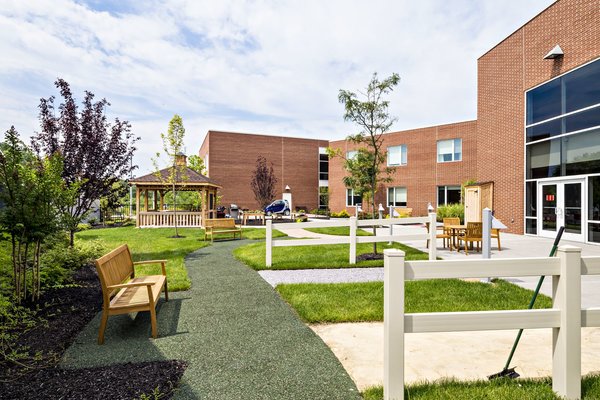
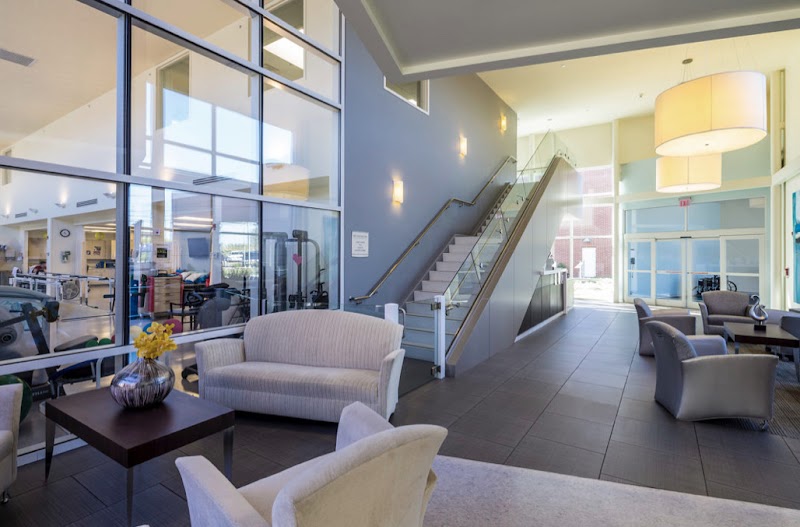
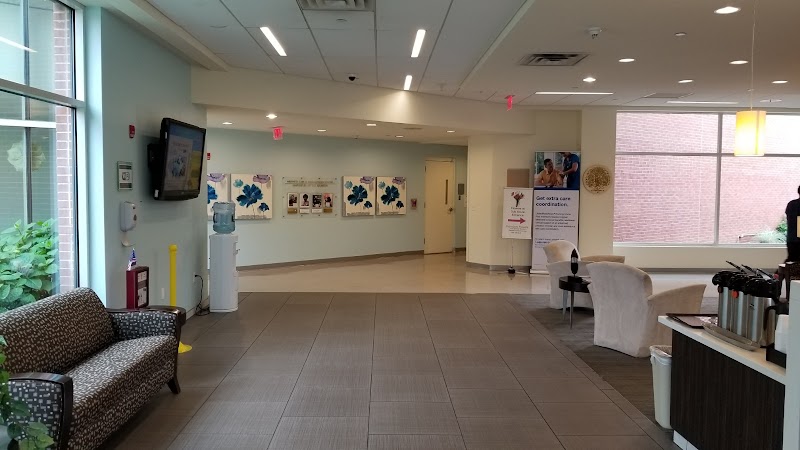
MERWICK CARE & REHAB CENTER, LLC

100 PLAINSBORO ROAD, PLAINSBORO, NJ 08536 (609) 759-6000
For profit - Corporation 200 Beds MARQUIS HEALTH SERVICES Data: November 2025 2 Immediate Jeopardy citations
Trust Grade
0/100
#327 of 344 in NJ
Last Inspection: April 2025

Within standard 12-15 month inspection cycle. Federal law requires annual inspections.

Overview

Merwick Care & Rehab Center in Plainsboro, New Jersey has received a Trust Grade of F, indicating significant concerns about the quality of care provided. Ranked #327 out of 344 facilities in New Jersey and #23 out of 24 in Middlesex County, this facility is in the bottom half of both state and county rankings. While the trend shows some improvement in issues reported-from 17 in 2023 to 8 in 2025-there are still serious concerns, including critical deficiencies related to untrained staff handling resident care needs and a failure to monitor significant weight loss in residents. Staffing is a major weakness, with a high turnover rate of 68%, which is well above the state average of 41%, although they do maintain good RN coverage compared to 86% of facilities in New Jersey. Additionally, the facility has incurred $26,680 in fines, suggesting ongoing compliance issues that families should be aware of.

Trust Score
F
0/100
In New Jersey
#327/344
Bottom 5%
Safety Record
High Risk
Review needed
Inspections
Getting Better
17 → 8 violations
Staff Stability
⚠ Watch
68% turnover. Above average. Higher turnover means staff may not know residents' routines.
Penalties
✓ Good
$26,680 in fines. Lower than most New Jersey facilities. Relatively clean record.
Skilled Nurses
✓ Good
Each resident gets 48 minutes of Registered Nurse (RN) attention daily — more than average for New Jersey. RNs are trained to catch health problems early.
Violations
⚠ Watch
36 deficiencies on record. Higher than average. Multiple issues found across inspections.
★☆☆☆☆
1.0
Overall Rating
★☆☆☆☆
1.0
Staff Levels
★★★★☆
4.0
Care Quality
★☆☆☆☆
1.0
Inspection Score
Stable
2023: 17 issues
2025: 8 issues

The Good

  • 4-Star Quality Measures · Strong clinical quality outcomes
  • Full Sprinkler Coverage · Fire safety systems throughout facility
  • No fines on record

Facility shows strength in quality measures, fire safety.

The Bad

1-Star Overall Rating

Below New Jersey average (3.2)

Significant quality concerns identified by CMS

Staff Turnover: 68%

22pts above New Jersey avg (46%)

Frequent staff changes - ask about care continuity

Federal Fines: $26,680

Below median ($33,413)

Moderate penalties - review what triggered them

Chain: MARQUIS HEALTH SERVICES

Part of a multi-facility chain

Ask about local staffing decisions and management

Staff turnover is elevated (68%)

20 points above New Jersey average of 48%

The Ugly 36 deficiencies on record

2 life-threatening 2 actual harm
Apr 2025 8 deficiencies
CONCERN (D)

Potential for Harm - no one hurt, but risky conditions existed

Resident Rights (Tag F0550)

Could have caused harm · This affected 1 resident

Based on observation, interview, and record review, it was determined that the facility failed to treat each resident with respect and dignity in a manner that promotes his/her quality of life. This d...

Read full inspector narrative →
Based on observation, interview, and record review, it was determined that the facility failed to treat each resident with respect and dignity in a manner that promotes his/her quality of life. This deficient practice was identified for 1 of 32 residents (Resident #123) reviewed for resident rights. Upon initial tour of the facility on 04/21/2025 at 11:15 AM, the surveyor was speaking with Resident #123 in their room with the door closed. While speaking with the resident, the door opened and Registered Nurse #1 (RN#1) attempted to enter. Resident #132 shook their head, looked at the surveyor, and stated no knock. This surveyor stated that they were speaking with the resident and RN #1 exited the room. Approximately 5 minutes later, RN #1 knocked, immediately entered the room, walked past the surveyor and began to set up wound care supplies. This surveyor explained that they were with the Department of Health and would like to speak with the resident. RN #1 stated that they had to set up for wound care. The surveyor requested RN #1 three different times to exit the room to allow privacy. During an interview with the surveyor on 04/21/2025 at 11:31 AM, the Licensed Practical Nurse Unit Manager (LPN/UM) confirmed that RN #1 acknowledged she should have knocked, announced their presence, and stated their purpose when they entered the room. When asked what should have been done when the surveyor requested privacy, LPN/UM stated that RN #1 should have provided privacy and exited the room when requested. A review of the admission Record, an admission summary, revealed the resident had diagnoses which included, but were not limited to: Local infection of the skin, Colostomy Status, and Pressure Ulcer. A review of the resident's comprehensive Minimum Data Set (MDS), an assessment tool used to facilitate the management of care, dated 03/22/2025, the resident had a Brief Interview for Mental Status (BIMS) score of 15 out of 15, which indicated the resident's cognition was cognitively intact. During an interview with the surveyor on 04/25/2025 at 09:40 AM, the Director of Nursing, in the presence of the Licensed Nursing Home Administrator (LNHA), Regional Registered Nurse, and Regional Operations acknowledged that residents have an expectation of privacy. A review of the facility's undated Resident Rights policy included the following under Policy Interpretation and Implementation: 1. Federal and state laws guarantee certain basic rights to all residents of this facility. These rights include the resident's right to: a. a dignified existence; b. be treated with respect, kindness, and dignity . NJAC 8:39-4.1 (a) 12
CONCERN (D)

Potential for Harm - no one hurt, but risky conditions existed

Safe Environment (Tag F0584)

Could have caused harm · This affected 1 resident

**NOTE- TERMS IN BRACKETS HAVE BEEN EDITED TO PROTECT CONFIDENTIALITY** Based on observation and interview, it was determined the facility failed to maintain the resident's living environment in a cle...

Read full inspector narrative →
**NOTE- TERMS IN BRACKETS HAVE BEEN EDITED TO PROTECT CONFIDENTIALITY** Based on observation and interview, it was determined the facility failed to maintain the resident's living environment in a clean, sanitary, and homelike manner that included a wall-mounted call device input (Resident #13) and soap dispensers (Resident #17 and #49). This deficient practice was identified for 2 of 4 nursing units observed for environment. This deficient practice was evidence by the following: 1. During the initial tour of the facility on 4/21/25 at 10:16 AM, the Surveyor #1 observed a call device input system taped to the wall above the resident's bed in room [ROOM NUMBER] bed #2. On 4/22/25 at 9:15 AM, the surveyor interviewed Resident #13's family member that stated that the call device input box had been taped to the wall for at least a month and that the Maintenance Department was aware of it and waiting on a new system to replace it. The family member confirmed that the call device had been functioning properly. During an interview with the surveyor on 4/24/25 at 12:34 PM, the Licensed Nursing Home Administrator (LNHA) stated that they are aware of the taped call device input box that was inherited from the previous management and that they are working on replacing the entire call device system. At that time, the surveyor expressed concern regarding the safety of the unsecured box. On 4/25/25 at 10:05 AM during a meeting with the facility administration, the LNHA stated that the call device input box had been secured to the wall by the Maintenance Department. A review of the undated facility provided policy titled, Homelike Environment, revealed, Residents are provided with a safe, clean, comfortable, and homelike environment. N.J.A.C. 8:39-31.4(a) 2. On 04/21/2025 at 10:17 AM, Surveyor #2 observed brown-colored debris on both the wall and floor in Resident #133's bedroom. On 04/21/2025 at 10:58 AM, Surveyor #2 observed that the wall-mounted soap dispenser's drip tray was detached from the wall in Resident #49's bathroom, located on the second floor of the Grace Garden Unit. On 04/22/2025 at 11:40 AM, Surveyor #2 observed that the wall-mounted soap dispenser's drip tray was detached from the wall in Resident #49's bathroom. On 04/22/2025 at 11:51 AM, Surveyor #2 observed that the wall-mounted soap dispenser's drip tray was detached from the wall in Resident #17's bathroom, located on the second floor of the Grace Garden Unit. On 04/23/2025 at 9:20 AM, Surveyor #2 observed that the wall-mounted soap dispenser's drip tray was detached from the wall in Resident #49's bathroom. On 04/23/2025 at 10:32 AM, Surveyor #2 observed that the wall-mounted soap dispenser's drip tray was detached from the wall in Resident #17's bathroom. On 04/24/2025 at 10:49 AM, Surveyor #2 observed that the wall-mounted soap dispenser's drip tray was detached from the wall in Resident #49's bathroom. During an interview with Surveyor #2 on 04/24/2025 at 10:31 AM, a facility maintenance staff member (MS) said that each morning, MS conducts daily rounds throughout the facility, including visits to the nursing stations on every unit to review the maintenance log and ask nursing staff if there are any maintenance issues that need attention. MS also said that he was unaware of the detached wall-mounted soap dispenser drip trays in the bathrooms of Residents #17 and #49. During an interview with Surveyor #2 on 04/24/2025 at 10:36 AM, Registered Nurse/Unit Manager #1 said that, to ensure a clean and homelike environment, the wall-mounted soap dispensers drip trays should be attached to the wall, and there should be no brown debris present on the walls or floors. During an interview with Surveyor #2 on 04/15/2025 at 12:24 PM, the Licensed Nursing Home Administrator said that the drip tray of the wall-mounted soap dispenser should be securely attached and functional, and no brown debris should be present on the walls or floors to maintain a clean and homelike environment. A review of the undated facility provided policy titled, Homelike Environment, revealed, Residents are provided with a safe, clean, comfortable, and homelike environment. N.J.A.C. 8:39-31.4(a)
CONCERN (D)

Potential for Harm - no one hurt, but risky conditions existed

MDS Data Transmission (Tag F0640)

Could have caused harm · This affected 1 resident

Based on interview and record review, it was determined that the facility failed to transmit a Minimum Data Set (MDS) in accordance with federal guidelines. This deficient practice was identified for ...

Read full inspector narrative →
Based on interview and record review, it was determined that the facility failed to transmit a Minimum Data Set (MDS) in accordance with federal guidelines. This deficient practice was identified for 2 of 2 residents reviewed for resident assessment (Resident #9 and Resident # 147). This deficient practice was evidenced by: The MDS is a comprehensive federal mandated process for clinical assessment of all residents that should be completed and submitted to the Quality Measure System. The facility must electronically transmit the MDS no later than 14 days after assessment being completed. After transmitting of the MDS, it will generate a quality measure to enable a facility to monitor the residents decline and progress. The following residents were identified that the MDS were not transmitted timely: 1. Resident #9: the discharge return anticipated MDS was completed on 12/21/2024 and was due to be transmitted no later than 01/04/2025. It was transmitted 04/23/2025. 2. Resident #147: the discharge return not anticipated MDS was completed on 12/20/2024 and was due to be transmitted no later than 01/03/2025. It was transmitted on 04/23/2025. 04/23/2025 12:18 PM, during an interview with the surveyor, the MDS Coordinator stated that MDS's should be transmitted within 2 weeks of completion. The MDS Coordinator acknowledged that Resident #9 and Resident #147 discharge MDSs were transmitted late. The facility provided policy titled, MDS Completion and Submission Timeframes, with a revision date of July 2017 reflected our facility will conduct and submit resident assessments in accordance with federal and state submission timeframes. NJAC 8:39-11.1
CONCERN (D)

Potential for Harm - no one hurt, but risky conditions existed

Deficiency F0658 (Tag F0658)

Could have caused harm · This affected 1 resident

Based on observation, interview, and pertinent facility documentation, it was determined that the facility nursing staff failed to document on the Treatment Administration Record (TAR) to indicate tha...

Read full inspector narrative →
Based on observation, interview, and pertinent facility documentation, it was determined that the facility nursing staff failed to document on the Treatment Administration Record (TAR) to indicate that treatments were administered according to the Physician Orders (PO) and acceptable standards of clinical practice in accordance with the New Jersey Board of Nursing Statutes. The deficient practice was identified for 1 of 41 residents (Resident #49). This deficient practice was evidenced by the following: Reference: New Jersey Statutes, Annotated Title 45, Chapter 11. Nursing Board The nurse practice act for the State of New Jersey states; The practice of nursing as a registered professional nurse is defined as diagnosing and treating human responses to actual or potential physical and emotional health problems, through such services as casefinding, health teaching, health counseling, and provision of care supportive to or restorative of life and wellbeing, and executing medical regimens as prescribed by a licensed or otherwise legally authorized physician or dentist. Reference: New Jersey Statutes Annotated, Title 45, Chapter 11. Nursing Board. The Nurse Practice Act for the State of New Jersey states: The practice of nursing as a licensed practical nurse is defined as performing tasks and responsibilities within the framework of case finding; reinforcing the patient and family teaching program through health teaching, health counseling and provision of supportive and restorative care, under the direction of a registered nurse or licensed or otherwise legally authorized physician or dentist. A review of the admission Record revealed Resident #49 was admitted to the facility with diagnoses including but not limited to: quadriplegia, lack of coordination, and muscle weakness. A review of Resident # 49 's TAR dated 02/01/2025 - 02/28/2025, revealed the following PO: Offload heels off the mattress every shift for protection. A review of the TAR dated 02/19/2025, did not include documentation that the treatment was completed as ordered on 07/08/2020. Apply Remedy Z (protects and soothe irritated or compromised skin) to sacrum (back portion of the pelvis) every shift for prophylaxis (action taken to prevent disease, especially by specified means or against a specified disease.). A review of the TAR dated 02/19/2025, did not include documentation that the treatment was completed as ordered on 07/16/2020. Air mattress every shift. A review of the TAR dated 02/19/2025, did not include documentation that the treatment was completed as ordered on 01/20/2021. Heel booties to bilateral feet while in bed every shift. A review of the TAR dated 02/19/2025, did not include documentation that the treatment was completed as ordered on 01/20/2021. Sacrum clean with normal saline (sterile solution of sodium chloride), apply zinc oxide (forms a protective layer on the skin to block moisture and irritants) to crease of buttocks open area every shift and as needed for moistened damage. A review of the TAR dated 02/19/2025, did not include documentation that the treatment was completed as ordered on 01/29/2024. Moisture barrier (skin protectant that forms a protective layer over the skin to prevent irritation and breakdown caused by moisture) to the sacrum, dry skin, and lower extremities every shift for skin care, clean sites and apply cream. A review of the TAR dated 02/19/2025, did not include documentation that the treatment was completed as ordered on 09/11/2024. On 04/23/2025 at 1:05 PM, Surveyor reviewed 02/2025 facility consultant pharmacist's medication regimen review for Resident #49, which noted blank entries on the Medication Administration Record (MAR). Further review of the resident's MAR and TAR for 02/2025 revealed undocumented treatments on the TAR for the evening shift of 02/19/2025, with no explanation in the EMR for the undocumented treatments. During an interview with Surveyor #2 on 04/24/2025 at 12:24 PM, the Licensed Nursing Home Administrator said that there should be no blank entries on the TAR, because blanks indicate that treatments were not administered. The facility was unable to provide a policy outlining procedures for documentation on the TAR. NJAC 8:39-11.2 (a) (b), 27.1 (b), 29.2 (a)
CONCERN (D)

Potential for Harm - no one hurt, but risky conditions existed

Respiratory Care (Tag F0695)

Could have caused harm · This affected 1 resident

Based on observation, interview, and review of pertinent facility documentation, it was determined that the facility failed to A). store oxygen equipment in a sanitary manner B.) develop a comprehensi...

Read full inspector narrative →
Based on observation, interview, and review of pertinent facility documentation, it was determined that the facility failed to A). store oxygen equipment in a sanitary manner B.) develop a comprehensive care plan for a resident receiving oxygen therapy and a resident who self suctioned; C.) label and date oxygen tubing according to professional standards and failed to obtain a physician order for a resident receiving oxygen therapy. This deficient practice was identified in 3 of 4 residents (Resident #70; Resident #152; Resident #472) reviewed for respiratory care and was evidenced by the following: A.) On 4/21/25 at 10:08 AM during the initial tour of the facility, surveyor # 1 observed an oxygen concentrator (a device that enriches air with oxygen by removing nitrogen) in Resident # 70's room with a nasal cannula oxygen tubing (small flexible tube with two prongs that delivers oxygen into the nose) connected to the concentrator. The nasal cannula tubing was found on the floor under the bedside table. A review of the admission Record, an admission summary, revealed that Resident #70 had medical diagnoses which included but were not limited to: Chronic Kidney Disease, contractures and hypoglycemia. A review of the Comprehensive Minimum Data Set (MDS), an assessment tool dated 4/1/25, identified that the resident had a Significant Change, and included the resident had a Brief Interview for Mental Status (BIMS) score of 7 out of 15, which indicated the resident's cognition was severely impaired. Further review of the MDS revealed the resident was placed on Hospice 4/3/25. In addition, under section O Special Treatments, Procedures, and Programs, it was indicated that the resident was on oxygen. A review of the Physician Order Summary dated as of 4/24/25, revealed that Resident #70 was prescribed oxygen to be administered at two liters per minute (2 lpm) via a nasal cannula as needed for shortness of breath and to maintain a SpO2 (peripheral oxygen saturation) greater than 90 percent. A review of the resident's individual comprehensive care plan (ICCP) did not include a focus area for respiratory care or oxygen. On 4/24/25 at 12:10 PM during a team interview with the administration of the facility, the Director of Nursing (DON) stated that oxygen administration should be care planned. A review of the facility's Comprehensive Care Plans policy, with a last revised date of 9/2022, included under #6: The comprehensive care plan will include measurable objectives and timeframes to meet the resident's needs as identified in the resident's comprehensive assessment. The objectives will be utilized to monitor the resident's progress . N.J.A.C. 8:39-27.1 (a) B.) Upon initial tour of the facility on 04/21/2025 at 10:55 AM, the surveyor #2 observed Resident #152 in bed sleeping. The surveyor observed that the resident's oxygen tubing was not labeled with the date in which the tubing was applied. On 04/24/2025 at 09:44 AM, surveyor #2 observed Resident #152 in bed sleeping. The surveyor observed that the resident's oxygen tubing was not labeled with the date in which the tubing was applied. A review of the admission Record, an admission summary, revealed the resident had diagnoses which included, but were not limited to: Pneumonia, Urinary Tract Infection, and Alzheimer's Disease. A review of the resident's comprehensive Minimum Data Set (MDS), an assessment tool used to facilitate the management of care, dated 01/31/2025, identified that the resident was Severely Impaired in relation to Cognitive Skills for Daily Decision Making. A review of the resident's individual comprehensive care plan (ICCP) did not identify that the resident requires oxygen. A review of the Treatment Administration Record (TAR), dated as of 4/25/2025, included the following physician orders (PO): A PO, dated 1/28/2025, for [Oxygen] inhalation at 2 LPN (Liters Per Minute) via nasal cannula every shift for shortness of breath [ .]. A PO, dated 4/27/2024, to Change Oxygen Tubing, Humidifier, and clean filter weekly and as needed. Every night shift every Sunday. Date and Label Tubing and Humidifier. During an interview with the surveyor on 04/24/2025 at 10:05 AM, Licensed Practical Nurse (LPN #1) confirmed that resident's oxygen tubing was to be changed weekly on the Sunday overnight shift and it should be labeled/dated. LPN #1 explained that a resident care plan should have all the information needed to care for a resident. When asked if oxygen should be on a resident care plan LPN #1 stated, yes and it should have how many liters they are on. During an interview with the surveyor on 04/24/2025 at 10:23 AM, the Licensed Practical Nurse Unit Manager (LPN/UM) confirmed oxygen tubing was to be changed weekly and it should be labeled dated when changed. LPN/UM acknowledged Resident #152's oxygen dependence was not on the care plan. During an interview with the surveyor on 04/24/2025 at 11:01 AM, the Infection Preventionist (IP) also confirmed that oxygen tubing should be labeled and dated accordingly. During an interview with the surveyor on 04/25/2025 at 09:40 AM, the Director of Nursing, in the presence of the Licensed Nursing Home Administrator (LNHA), Regional Registered Nurse, and Regional Operations acknowledged oxygen is to be labeled/dated and should be on resident's care plans. A review of the facility's Comprehensive Care Plan policy, last updated 09/2022, included the following under Policy Interpretation and Implementation: The Comprehensive Care Plan will describe, at a minimum, the following: A. Services that are to be furnished to attain or maintain the resident's highest practicable physical, mental, and psychosocial well-being [ .] A review of the facility's Oxygen Administration policy did not identify label or dating of oxygen tubing. N.J.A.C. 8:39-27.1 (a) C.) On 4/21/2025 at 10:32 AM, during the initial tour of the facility, Surveyor #3 observed Resident #472 in bed. The resident was receiving oxygen (O2) via nasal cannula (NC) (a flexible tube with prongs that go inside the nostrils to deliver oxygen) at 2 liters per minute (lpm). The resident was also observed holding a Yankauer suction tube (a rigid device connected to a suction machine used to remove fluids from the airway) in their hands and suctioning themselves. The suction tube was attached to a canister located on the bedside table. The canister was half-filled with brown-tinged frothy liquid substance and connected to a wall-mounted suction machine. On 4/22/2025 at 10:52 AM, the resident was observed in bed receiving oxygen via NC at 2 lpm and holding a Yankauer suction device in their left hand. The suction canister was observed on bedside table containing whitish frothy liquid substance. On 4/24/2025 at 10:30 AM, a review of the electronic medical record (EMR) revealed the following: A review of the admission Record reflected the resident had diagnoses that included acute and chronic respiratory failure with hypoxia (low level of oxygen in the body) and acute kidney failure. A review of the most current comprehensive Minimum Data Set (MDS), an assessment tool with target date of 4/26/2025 revealed that it was still in progress. A review of the Physician Order (PO) active and discontinued as of 4/24/2025 at 10:30 AM, did not reflect a physician order for oxygen therapy since admission to the facility. The PO did not also include an order for self-administration of the suction device since admission to the facility. A review of the Treatment Administration Record (TAR) for the month of April 2025 did not reflect oxygen administration and self-administration of the suction device since admission. A review of Resident #472's individualized care plan did not reveal a focus, goal, and interventions for the resident's oxygen use and self-administration of suction device. On 4/24/2025 at 12:08 PM, during an interview with the survey team and in the presence of the Licensed Nursing Home Administrator (LNHA), the Director of Nursing (DON) stated Yes when asked if a physician order was needed for oxygen administration and self-suctioning. The DON also stated Yes when asked if residents who receive oxygen therapy and residents who suction themselves needed to be care planned. A review of facility-provided policy titled Oxygen Administration revised October 2010 included under Preparation 1. Verify that there is a physician's order for this procedure .2. Review the resident's care plan to assess for any special needs of the resident. A review of the facility-provided policy titled Self-Administration of Medications revised February 2021 did not address self-administration of suction device. N.J.A.C. 8:39 - 27.1 (a), (c)(3)
CONCERN (D)

Potential for Harm - no one hurt, but risky conditions existed

Pharmacy Services (Tag F0755)

Could have caused harm · This affected 1 resident

Based on observation, interview, record review, and review of facility documentation, it was determined that the facility failed to ensure accurate accountability of controlled drugs to prevent loss o...

Read full inspector narrative →
Based on observation, interview, record review, and review of facility documentation, it was determined that the facility failed to ensure accurate accountability of controlled drugs to prevent loss or diversion. The deficient practice was identified for 1 of 5 medication carts inspected. This deficient practice was evidenced by the following: On 04/23/2025 at 09:59 AM, the surveyor inspected the Luxor Unit medication cart in the presence of the Registered Nurse #1 (RN#1). A review of the shift-to-shift Narcotic and Controlled Drug Count Verification Record, (NCDCVR) which is used in healthcare settings to track the administration and accountability of controlled substances, revealed missing signatures for the following dates and shifts: 04/02/2025 for the outgoing nurse (11:00PM) 04/04/2025 for the outgoing nurse (11:00PM) 04/06/2025 for the incoming nurse (11:00PM) 04/07/2025 for the outgoing nurse (7:00AM) 04/09/2025 for the incoming nurse (3:00PM) and outgoing nurse (11:00PM) 04/11/2025 for the incoming nurse (3:00PM) and outgoing nurse (11:00PM) 04/12/2025 for the outgoing nurse (11:00PM) 04/13/2025 for the outgoing nurse (11:00PM) 04/14/2025 for the incoming nurse (11:00PM) 04/15/2025 for the incoming and outgoing nurse (11:00PM) 04/16/2025 for the incoming nurse (3:00PM) and outgoing nurse (11:00PM) 04/17/2025 for the outgoing nurse (11:00PM) 04/21/2025 for the incoming nurse (3:00PM) and outgoing nurse (11:00PM) 04/22/2025 for the incoming nurse (3:00PM) and outgoing nurse (11:00PM) During an interview on 04/23/2025 at 09:59 AM with the surveyor, RN #1 said that she was not sure why there were any blanks and that there should not be any blanks on the NCDCVR. During an interview on 04/23/2025 at 10:05 AM with the surveyor, the Unit Manager said that the NCDVR should be completed at the beginning and end of each shift to ensure accurate narcotic counts and there should not be any blanks. During an interview on 04/24/2025 at 12:07 PM with the surveyor, the Director of Nursing said when the nurses are coming on shift and leaving the shift, they should do an accurate narcotic count and sign off on the NCDVR. A review of the facility provided policy, with a revision date November 2022, titled, Controlled Substances revealed section Dispensing and Reconciling Controlled Substances that, 4. The nurse coming on duty and the nurse going off duty make the count together and document and report any discrepancies to the director of nursing. NJAC 8:39-29.7(c)
CONCERN (E)

Potential for Harm - no one hurt, but risky conditions existed

Infection Control (Tag F0880)

Could have caused harm · This affected multiple residents

4.) On 4/21/25 at 10:08 AM during the initial tour of the facility, surveyor #4 observed an oxygen concentrator (a device that enriches air with oxygen by removing nitrogen) in Resident # 70's room wi...

Read full inspector narrative →
4.) On 4/21/25 at 10:08 AM during the initial tour of the facility, surveyor #4 observed an oxygen concentrator (a device that enriches air with oxygen by removing nitrogen) in Resident # 70's room with a nasal cannula oxygen tubing (small flexible tube with two prongs that delivers oxygen into the nose) connected to the concentrator. The nasal cannula tubing was found on the floor under the bedside table. A review of the admission Record, an admission summary, revealed that Resident #70 had medical diagnoses which included but were not limited to: Chronic Kidney Disease, contractures and hypoglycemia. A review of the Comprehensive Minimum Data Set (MDS), an assessment tool dated 4/1/25, identified that the resident had a Significant Change, and included the resident had a Brief Interview for Mental Status (BIMS) score of 7 out of 15, which indicated the resident's cognition was severely impaired. Further review of the MDS revealed the resident was placed on Hospice 4/3/25. In addition, under section O Special Treatments, Procedures, and Programs, it was indicated that the resident was on oxygen. A review of the Physician Order Summary dated as of 4/24/25, revealed that Resident #70 was prescribed oxygen to be administered at two liters per minute (2 lpm) via a nasal cannula as needed for shortness of breath and to maintain a SpO2 (peripheral oxygen saturation) greater than 90 percent. During an interview with the survey team on 4/24/25 at 11:02 AM, the Infection Preventionist (IP) stated that she conducts infection control surveillance on the units. The surveillance process for monitoring respiratory equipment included checking the functioning of respiratory equipment, checking for appropriated labeling and storage of respiratory equipment. When asked how respiratory equipment should be stored when not in use, the IP stated that respiratory equipment should be dated and stored in a plastic bag when not in use. The IP added that oxygen tubing should be changed weekly. NJAC 8:39-33.1(b) Based on observation, interview, record review, and review of pertinent facility documents, it was determined that the facility failed to provide a sanitary and comfortable environment that helped prevent the development and transmission of communicable diseases and infections. This was identified for 7 of 32 residents reviewed for infection control. The deficient practice was evidenced by the following: 1.) On 04/24/2025 at 9:55 AM, upon tour of the second floor unit (Luxor 2), surveyor #1 observed Resident #158 in their bed with an Enhanced Barrier Precautions (EBP) sign along the doorframe. The surveyor further observed a black trash bin with self-closing lid inside the resident room next to the door. Inside the room, the surveyor observed the resident trash bin overflowing with personal protective equipment (PPE), specifically blue gowns. A review of Resident #158's electronic medical record (EMR) revealed a physician's order to maintain enhanced barrier precautions related to, but not limited to, tracheostomy status (a surgical hole in the windpipe that helps with breathing). On the same date at 9:57 AM, the surveyor observed Resident #322 in their bed with an Enhanced Barrier Precautions sign along the doorframe. The surveyor further observed a black trash bin with self-closing lid inside the resident room next to the door. Upon entering the room, the surveyor observed dirty gloves and a used deep suctioning catheter (a catheter that is placed deep into the airway to remove secretions from the lower respiratory tract) laying on top of used PPE gowns and gloves in the resident's trash bin. A review of Resident #322's electronic medical record (EMR) revealed a physician's order to maintain enhanced barrier precautions related to, but not limited to, tracheostomy status. During an interview with the surveyor on 04/24/2025 at 10:23 AM, the Licensed Practical Nurse Unit Manager (LPN/UM) stated that any possible infectious material, including PPE and respiratory equipment, should be tied up in a plastic bag then disposed in the black PPE trash bin located at the doorway. During an interview with the surveyor on 04/24/2025 at 11:01 AM, the Infection Preventionist (IP) explained that staff are to contain any potentially infection material, including PPE and respiratory equipment, should be in a tied plastic bag then disposed properly. When asked if used suction catheters are to remain unwrapped and visible or if used PPE should be overflowing in resident trash bins the IP responded, no because it could spread infection. During an interview with the surveyor on 04/25/2025 at 09:40 AM, the Director of Nursing, in the presence of the Licensed Nursing Home Administrator (LNHA), Regional Registered Nurse, and Regional Operations acknowledged that PPE and infectious material should not have been placed in resident trash can. A review of the facility's undated Enhanced Barrier Precautions policy included the following under Policy Interpretation and Implementation: [ .]16. Staff are trained prior to caring for residents on EBP. A review of the facility's undated Suctioning the Tracheostomy Tube policy included the following under General Guidelines: [ .] 28. Disconnect catheter from tubing. Wrap Catheter around gloved hand. Pull the glove off and over the catheter. Discard in designated receptacle. [ .] 32. Discard personal protective equipment in designated receptacles. A review of the facility's undated Personal Protective Equipment policy included the following under Policy Interpretation and Implementation: [ .] 5. Training on the proper donning (putting on), use and disposal of PPE is provided upon orientation and at regular intervals [ .]. On 04/22/2025 at 08:49 AM, surveyor #1 completed the Medication Administration Facility Task with Registered Nurse (RN#1) with Resident # 25. The surveyor observed as RN #1 washed their hands with soap and water without fully lathering under the flow of running water for ten seconds .The surveyor then observed RN #1 don (apply) gloves and continue to dispense medication from Resident #25's medication card by obtaining medication card from the cart, popping the medication through the foil backing, picking the pill out of the foil with the gloved hand, and placing in to the medication cup. Prior to administering the medication, RN #1 knocked on Resident #25's door, introduced self and surveyor, and advised that she will be administering their medications. RN #1 also informed the resident that their vital signs needed to be obtained. RN #1 applied the blood pressure cuff to the resident's arm and applied the pulse oximeter (a device that measures the oxygen levels in the blood). After providing Resident #25's medication and removing her gloves, RN #1 washed their hands with soap and water lathering under the flow of running water for five seconds. RN #1 exited the room and was observed quickly wiping the blood pressure cuff and pulse oximeter then roll the cuff upon itself. Surveyor #1 did not observe RN #1 saturate the blood pressure cuff as the cuff appeared to dry quickly, allow to air dry, and did not observe RN #1 wipe the monitor screen of the medical device. When asked how long hand washing should be completed, RN #1 confirmed that it should be 30 seconds with a full lather to ensure that all infections were removed. RN #1 acknowledged that hand washing was not completed for 30 seconds. RN #1 further acknowledged that she should not have used a gloved hand to touch the resident's medication. During an interview with the surveyor on 04/24/2025 at 10:23 AM, the Licensed Practical Nurse Unit Manager (LPN/UM) confirmed that it was not best practice to wear gloves during medication pass and that a resident's medication should never be directly touched. The LPN/UM further stated that hand washing should last approximately 20 seconds with a full lather. During an interview with the surveyor on 04/24/2025 at 11:01 AM, the Infection Preventionist (IP) also that confirmed that it was not best practice to wear gloves during medication pass, a resident's medication should never be directly touched, hand washing should last approximately 20 seconds with a full lather, and that all areas of the blood pressure machine should be disinfected and set out to dry. A review of the facility's undated Handwashing/Hand Hygiene policy included the following under Washing Hands:[ .] 2. Rub hands together vigorously for at least 20 seconds, covering all surfaces of the hands and fingers [ .] A review of the facility's undated Administering Medications policy included the following under Policy Interpretation and Implementation: [ .] 25. Staff follows established facility infection control procedures (e.g. handwashing, antiseptic technique, gloves, isolation precaution, etc.) for the administration of medications, as applicable. A review of the U.S. Centers for Disease Control and Prevention (CDC) guidelines, Clean Hands Count for Healthcare Providers, reviewed 1/8/2021, included, When cleaning your hands with soap and water, wet your hands first with water, apply the amount of product recommended by the manufacturer to your hands, and rub your hands together vigorously for at least 15 seconds, covering all surfaces of the hands and fingers. Rinse your hands with water and use disposable towels to dry. NJAC 8:39-33.1(b) 3.) On 04/21/2025 at 10:42 AM during initial tour of the building, surveyor #3 observed a nurse enter Resident #43's room and flush the residents Peripherally inserted central Catheter (PICC) line (a thin tube that's inserted through a vein in the arm and placed through the larger veins near the heart). The nurse was not wearing a gown. A review of Resident #'s 43 electronic medical record (EMR) revealed a physician's order to maintain enhanced barrier precautions related to wounds. On 04/22/2025 at 11:33 AM surveyor #3 observed the nurse doing vital signs on Resident # 37 in their room without a gown on. A review of Resident #37's EMR revealed a physician's order to maintain enhanced barrier precautions related to wounds. During an interview on 04/24/2025 at 10:01 AM with surveyor #3, The Licensed Practical Nurse said when performing direct care with residents on Enhanced Barrier Precautions they should be wearing gloves, a gown and sometimes a face shield. During an interview on 04/24/2025 at 11:02 AM with surveyor #3, the infection preventionist (IP) said that he does rounds everyday to make sure that staff are wearing the proper PPE when performing care. The IP said for residents on Enhanced Barrier Precautions staff should be wearing a gown and gloves when providing any direct care. When asked if vital signs and flushing a pick would require the nurse the wear a gown, the IP replied, yes. During a review of a facility provided policy titled Enhanced Barrier Precautions revealed, 7. EBPs employ targeted gown and glove use in addition to standard precautions during high contact resident care activities when contact precautions do not otherwise apply. NJAC 8:39-33.1(b) 2.) On 04/21/2025 at 10:17 AM, Surveyor #2 observed two urinals (containers used to collect urine) on Resident #133's bedside table. One of the urinals contained liquid. These were placed in close proximity to an actively running intravenous (IV) pump (a device used to deliver fluids and medications directly into the bloodstream) and an IV medication bag (a sterile bag containing liquid medication administered through an IV line), which was stored in an open plastic bag. On 04/21/2025 at 10:58 AM, Surveyor #2 observed Resident #49 lying in bed in the bedroom, with a bedside table positioned across the bed. On the table was a urinal containing urine, placed next to an open milk container and a cup of liquid with a lid. During an interview with Surveyor #2 on 04/24/2025 at 10:36 AM, the Registered Nurse/Unit Manager #1 said that urinals should never be placed on bedside tables, especially near food, beverages, or actively running IV medications, due to infection control concerns. During an interview with Surveyor #2 on 04/24/2025 at 11:00 AM, the Infection Preventionist said that urinals not in use should be stored away during meals, and those containing urine must be kept away from IV medications or infusion pumps to prevent cross-contamination. During an interview with Surveyor #2 on 04/24/2025 at 12:24 PM, the Licensed Nursing Home Administrator (LHNA) said that urinals should never be placed on bedside tables, particularly near food, beverages, or IV medications, due to infection control risks. A review of the undated facility provided policy titled, Resident Rights revealed that, under the section Policy Interpretation and Implementation, 1. Federal and state laws guarantee certain basic rights to all residents of this facility. These rights include the resident's right to: a. a dignified existence; b. be treated with respect, kindness, and dignity. NJAC 8:39-33.1(b) 5.) On 4/21/2025 at 10:38 AM, during the initial tour of the facility, Surveyor #5 observed a sign by the door of Resident #156 that the resident was on Enhanced Barrier Precautions (EBP) (an infection control practice designed to reduce transmission of multidrug-resistant organisms in nursing homes), and a Personal Protective Equipment (PPE) bin was outside the resident's room by the doorway. The sign had instructions for staff and visitors to wear gloves and gown during high-contact resident activities that included dressing, hygiene, toileting, transferring, bathing, changing linens, device care, and wound care. The surveyor observed 2 visiting staff from a vascular company inside the resident's room wearing gloves but no gown. Both visitors were observed repositioning the resident in bed, by touching their limbs and back, and pulling down their gown exposing the resident's abdomen and incontinence brief. Visitor #1 was observed operating the ultrasonography machine while Visitor #2 stayed by the bedside. When the two visitors concluded their visit, Surveyor #4 asked them if they should have worn gowns as indicated in the EBP signage. Visitor #1 stated they did not know that they had to wear gown. A review of the admission Record revealed Resident #156 was admitted to the facility with diagnoses which included cellulitis of the lower limb (infection of the skin and underlying tissue) and heart failure. A review of the resident's most recent comprehensive Minimum Data Set (MDS), an assessment tool dated 4/21/2025, reflected the resident had a venous and arterial ulcer (open sores on the skin that result from compromised blood flow). A review of the Clinical Physician Orders active as of 4/21/2025 revealed an order for Enhanced Barrier Precautions for wounds every shift started on 3/28/2025. A review of the comprehensive care plans initiated on 3/28/2025, reflected a focus for EBP related to chronic wound. Interventions included the following: Staff will wear gown and gloves during high-contact care like dressing, bathing/ showering, transferring, providing hygiene, changing linens, assisting with toileting, device care, or wound care; Use of signage to identify resident that requires EBP. On 4/24/2025 at 11:01 AM, during an interview with the survey team, the Infection Preventionist (IP) stated that visitors like the staff from the vascular company who did an ultrasonography test on the resident need to observe EBP if they have close contact with a resident on EBP. A review of the facility-provided policy titled Enhanced Barrier Precautions revised in December 2024, included under Policy Interpretation and Implementation 7.a) Gloves and gown are applied prior to performing the high contact resident care activity. 8.) Examples of high-contact resident care activities requiring the use of gown and gloves for EBP include .f.) providing bed mobility .h.) prolonged, high-contact with .resident's clothing or skin. N.J.A.C. 8:39 - 19.4 (a)
CONCERN (F)

Potential for Harm - no one hurt, but risky conditions existed

Food Safety (Tag F0812)

Could have caused harm · This affected most or all residents

**NOTE- TERMS IN BRACKETS HAVE BEEN EDITED TO PROTECT CONFIDENTIALITY** Based on observation, interview, and review of facility documents, it was determined that the facility failed to a.) sanitize, s...

Read full inspector narrative →
**NOTE- TERMS IN BRACKETS HAVE BEEN EDITED TO PROTECT CONFIDENTIALITY** Based on observation, interview, and review of facility documents, it was determined that the facility failed to a.) sanitize, store, and maintain kitchen equipment to prevent microbial growth, b.) store, label and date potentially hazardous foods to prevent food borne illness, and c.) discard potentially hazardous food past the use by date. The deficient practice was evidenced by the following: On 4/21/2025 from 9:36 AM to 10:05 AM, the surveyor, who was accompanied by the Assistant Food Service Director (AFSD), observed the following in the kitchen: 1. In the walk-in refrigerator, there was a 5-pound container of ricotta cheese with lid ajar and opened date of 4/8/2025. The packaging indicated to use within 7 days of opening. The AFSD confirmed it needed to be discarded. 2. In the walk-in refrigerator, there were 3 Styrofoam cups of brownish liquid covered with plastic lids with no label and use by date. The AFSD confirmed they were coffee and that they needed to be labeled and dated. 3. In the walk-in freezer, there were 2 Styrofoam cups of unlabeled and undated frozen whitish substance that the AFSD identified as ice cream. The cups were covered by plastic wrap. The AFSD confirmed they needed to be labeled and dated. 4. In the dry storage room [ROOM NUMBER], a dry spillage of whitish powder was noted on top of canned sliced peaches on the lowest shelf. Directly above the cans was a large carton box with whitish powder inside and outside the box. Inside the box was an unsealed plastic bag of whitish powder. The AFSD identified the powder as powdered thickener. The plastic bag was unlabeled and there was no opened or use by date. The AFSD stated that the powder should have been transferred to another container and the plastic bag sealed. The AFSD took the box out of the storage room. 5. In the dry storage room [ROOM NUMBER], a carton box containing four, 6-pound cans of chocolate pudding was directly on the floor. The AFSD stated that it should have been 6 inches from the floor. The AFSD transferred the box on top of other boxes sitting on a shelf. 6. In the dry storage room [ROOM NUMBER] on the active can rack, a 6-pound canned sliced apple was observed dented on the side from the upper to the lower seam. The AFSD confirmed it needed to be discarded. 7. In the dry storage room [ROOM NUMBER], a previously opened bag of dry pasta was observed with no opened date. The AFSD confirmed it needed to be discarded. 8. On the equipment table, a conveyor toaster not in use was observed with heavy buildup of reddish brown and black substance all over the catch tray. Underneath the conveyor was a heavy buildup of blackish debris. The outer edge of the toaster on the upper and left side had a buildup of greasy brownish substance. The AFSD stated it would be cleaned. 9. A vented rolling dish rack containing 14 inverted red reusable plastic cups with mouthpiece part down were stored on top of a floor drain underneath the dish machine conveyor. Dietary aide #1 stated that the staff have finished washing them and the cups were clean. On 4/22/2025 at 8:28 AM, the surveyor observed a vented rolling dish rack filled with inverted red reusable plastic cups with mouthpiece part down underneath the dish machine conveyor. The surveyor pointed them out to the Regional Food Service Director (RFSD) who stated that the cups would be washed again. On 4/22/2025 at 9:11 AM, the surveyor and the Licensed Practical Nurse/ Unit Manager (LPN/UM) #1 toured the nourishment room [ROOM NUMBER] and observed the following: 1. In the reach-in freezer, an unlabeled and undated frozen core power protein shake. The LPN/UM confirmed it needed to be discarded. 2. In the reach-in refrigerator, a big bottle of seltzer was unlabeled and with no opened date. 3. In the reach-in refrigerator, a tub of previously used sandwich spread was unlabeled and with no opened date. 4. In the reach-in refrigerator, a full-size container of ketchup was unlabeled and with no opened date. 5. In the reach-in refrigerator, two cups of cooked white rice were unlabeled and with no use by date. 6. In the reach-in refrigerator, one plastic bag of raw oatmeal was unsealed, unlabeled, and with no use by date. 7. In the reach-in refrigerator, one covered bowl of milk powder was unlabeled and with no use by date. On 4/22/2025 at 9:46 AM, the surveyor and LPN/ UM #2 toured kitchenette #1 and observed the reach-in refrigerator door hsignage that reflected, all food must be labeled and dated, after 3 days it will be thrown out. The following were also observed: 1. In the reach-in refrigerator, a container of butter was unlabeled and with no opened or use by date. The LPN/ UM #2 confirmed it needed to be discarded. 2. In the reach-in refrigerator, a plastic tumbler containing liquid with curdled brownish substance. The LPN/ UM #2 confirmed it needed to be discarded. On 4/22/2025 at 9:52 AM, the surveyor and LPN/ UM #3 toured kitchenette #2 and observed the following: 1. In the reach-in refrigerator, a plastic bag of bread that appeared to be hard to the touch, was unlabeled with no opened or use by date. 2. In the reach-in refrigerator, a plastic container with several cartons of milk was immediately taken by the LPN/ UM #3 who stated they needed to be discarded. 3. In the reach-in refrigerator, a take-out style plastic container with leftover food was unlabeled and undated. On 4/23/2025 at 8:51 AM, in an interview with the surveyor, the Food Service Director (FSD) stated that the dietary department was responsible for the refrigerators in the kitchenettes. The surveyor relayed to the FSD the observations from the initial and follow-up tours. The FSD stated that all foods need to be labeled and dated. The FSD stated that dented cans need to be discarded. The FSD stated that all items in storage need to be 6 inches from the floor. On 4/25/2025 at 9:30 AM, the Licensed Nursing Home Administrator (LNHA), in the presence of the the RFSD and the survey team, acknowledged the concerns. A review of undated facility-provided policy titled Food Storage included the following: - Under Procedure 7.b.) Food should be dated as it is placed on the shelves if required by state regulation. - Under Procedure 7.c.) Date marking will be visible on all high-risk food to indicate the date by which a ready-to-eat, TCS (Time/ Temperature Control for Safety) food should be consumed, sold, or discarded. - Under Procedure 8.) Plastic containers with tight-fitting covers must be used for storing grain products, sugar, dried vegetables, and broken lots of bulk foods. All containers must be legible and accurately labeled and dated. - Under Procedure 9.) Food will be stored a minimum of 6 inches above the floor . - Under Procedure 11.) Leftover food will be stored in covered containers or wrapped carefully and securely. Each item will be clearly labeled and dated before being refrigerated. Leftover food is used within 7 days or discarded as per the 2017 Federal Food Code. - Under Procedure 12.) Refrigerated food storage: f.) All foods should be covered, labeled, and dated. - Under Procedure 13.) Frozen Foods: c.) All food items should be covered, labeled, and dated. All foods will be checked to assure that foods will be consumed by their use by dates or discarded. A review of undated facility-provided policy titled General Food Preparation and Handling included the following: - Under Procedure 2.) Food Storage: c.) Food in broken packages, swollen or dented cans with a compromised seal, or food with an abnormal appearance or odor will be discarded. - Under Procedure 4.) Food Service: d.) Leftovers must be dated, labeled, covered, cooled, and stored in a refrigerator. - Under Procedure 5.) Equipment: a.) All food service equipment should be cleaned, sanitized, air-dried, and reassembled after each use. A review of undated facility-provided policy titled Handling Clean Equipment and Utensils included the following: - Under Procedure: 2.) Clean equipment and utensils will be stored in a clean, dry location in a way that protects them from splashes, dust, or other contamination. - Under Procedure: 3.) Glasses and cups will be stored in an inverted position on a clean sanitary surface. N.J.A.C. 8:39 - 17.2 (g)
Nov 2023 8 deficiencies
CONCERN (D) 📢 Someone Reported This

A family member, employee, or ombudsman was alarmed enough to file a formal complaint

Potential for Harm - no one hurt, but risky conditions existed

Report Alleged Abuse (Tag F0609)

Could have caused harm · This affected 1 resident

Complaint #NJ00156125 Based on interview, record review, and review of pertinent documents, it was determined that the facility failed to report an allegation of abuse to the New Jersey Department of ...

Read full inspector narrative →
Complaint #NJ00156125 Based on interview, record review, and review of pertinent documents, it was determined that the facility failed to report an allegation of abuse to the New Jersey Department of Health (NJDOH) for 1 of 5 residents reviewed for investigations and was evidence by the following: A review of Resident #296's admission Record Face Sheet (an admission summary) reflected that the resident was admitted to the facility with diagnosis which included ileostomy (surgery where the small intestines is diverted through an opening of the abdomen), multiple sclerosis (a chronic disease of the central nervous system) and depression. A review of Resident #296's admission Minimum Data Set (MDS), an assessment tool, dated 6/16/22, revealed the resident had a Brief Interview for Mental Status (BIMS) score of 15 out of 15 indicating the resident was cognitively intact. On 11/20/23 at 1:15 PM, the surveyor reviewed a facility document dated 6/24/22 titled Resolution to Resident Grievance/Complaint Form for Resident #296. The grievance form revealed that on 6/17/22 that the resident felt threatened by the nursing supervisor and had called the police. Attached to the grievance form was an investigation dated 6/24/23 which revealed the facility concluded that there was no indication of abuse or threatening of Resident # 296. A review of the police incident report provided by the facility, dated 6/17/22, revealed Resident #296 had called the police on 6/17/22 and explained to the police that they felt harassed by the nursing supervisor and was not receiving the correct care. On 11/20/23 at 2:19 PM, the surveyor interviewed the Licensed Nursing Home Administrator (LNHA) regarding Resident #296's grievance and investigation. The LNHA stated when conducting that type of investigation, she would have reported an allegation of abuse to the NJDOH. The LNHA stated that she could not find documentation to confirm that the investigation was reported to the NJDOH. A review of the facility's policy reviewed a Policy labeled Abuse, Neglect and Exploitation which the most recent date of 9/2023, which included but was not limited to; section VII reporting/response: 1. reporting of all alleged violations to the Administrator, state agency, adult protective services and to all other required agencies with specified timeframe's; a. Immediately, but no later than 2 hours after the allegation is made, if the events that cause the allegation involve abuse or result in serious bodily injury, or b. Not later than 24 hours if the events that cause the allegation do not involve abuse and do not result in serious bodily injury. NJAC 8:39-4.1(a)(5)
CONCERN (D)

Potential for Harm - no one hurt, but risky conditions existed

Comprehensive Care Plan (Tag F0656)

Could have caused harm · This affected 1 resident

Based on observation, interview, and record review, it was determined that the facility failed to develop and implement a comprehensive person-centered care plan. This deficient practice was identifie...

Read full inspector narrative →
Based on observation, interview, and record review, it was determined that the facility failed to develop and implement a comprehensive person-centered care plan. This deficient practice was identified for 1 of 30 residents (Resident #124) reviewed for care plans and evidenced by the following: On 11/13/2023 at 12:47 PM, the surveyor observed Resident #124 with an unidentifiable mass on the forehead. The surveyor also observed that there was blood on the bedsheets. The surveyor reviewed the medical record for Resident #124: A review of the admission Record face sheet (an admission summary) reflected that the resident was admitted to the facility with diagnosis that included displaced fracture of surgical neck of left humerus and schizophrenia. A review of the most recent Quarterly Minimum Data Set (MDS), an assessment tool used to facilitate care, dated 08/11/2023, reflected a brief interview for mental status (BIMS) score of 9 out of 15, which demonstrated moderately impaired cognition. A review of the individualized comprehensive care plan (ICCP) failed to include a focus area and interventions that identified Resident #124's forehead mass and picking behavior. A review of Resident #124's electronic medical record Physician Progress Note entered on 6/23/2023 identified that the resident declined dermatology on site to do any work up or treatment for black irregular lesion on [their] forehead. A subsequent Nursing Skin Evaluation entered on 10/11/2023, noted that the resident constantly scratches his forehead until it bleeds. On 11/17/23 at 10:55 AM, the surveyor interviewed Licensed Nurse Practitioner (LPN #2), who acknowledged that care plans are utilized to render care to residents based on their behaviors, personal preferences, and independence. LPN #2 confirmed that the resident's care plan should identify their unidentified mass and picking behavior. On 11/20/2023 at 11:08 AM, the surveyor interviewed Registered Nurse Unit Manager (RN/UM#2), who acknowledged that a care plan is a tool used to communicate the status and preferences of the resident needs to everyone involved in their care. RN/UM #2 stated that Resident #124's forehead mass, picking behavior, and refusal of evaluation should have been identified on the care plan. On 11/20/2023 at 11:08 AM, the surveyor interviewed the Director of Nursing (DON) in the presence of Clinical Regional Nurse (CRN), who stated that a care plan was used to identify areas for patient review and improvement. The DON and CRN stated that Resident #124's forehead mass, picking behavior, and refusal of dermatology evaluation should be careplanned. A review the facility's Comprehensive Care Plan documentation, included [ .] 3. The comprehensive care plan will describe, at a minimum, the following .a- the services that are to be furnished to attain or maintain the resident's highest practicable physical, mental, and psychosocial well-being. b-Any services that would otherwise be furnished ,but are not provided due to the resident's exercise of his or right to refuse treatment. A review the facility's Position Title: Licensed Practical Nurse responsibilities/Accountabilities: documentation, included: Under supervision of the Director of Nursing, the incumbent utilizes a general understanding of the principles of nursing and basic physical assessment skills in the development of and implementation of individualized nursing care plans to ensure that the needs of the resident are met [ .] formulates individualized nursing care plans utilizing the nursing progress. NJAC8:39-11.2(e) thru (i); 27.1(a), (d)
CONCERN (D)

Potential for Harm - no one hurt, but risky conditions existed

Deficiency F0698 (Tag F0698)

Could have caused harm · This affected 1 resident

Based on observation, interview, record review, and review of other pertinent facility documents, it was determined that the facility failed to consistently complete the dialysis communication form fo...

Read full inspector narrative →
Based on observation, interview, record review, and review of other pertinent facility documents, it was determined that the facility failed to consistently complete the dialysis communication form for one (1) of two (2) residents, (Resident # 239) reviewed for dialysis. This deficient practice was evidenced by the following: On 11/17/23 at 10:01 AM, the surveyor observed the resident seated in a wheelchair in their room. Resident #239 stated that he/she goes to dialysis on Mondays, Wednesdays, and Fridays. A review of Resident #239's admission record reflected that the resident was admitted to the facility with diagnoses which included but were not limited to: acute kidney failure, osteomyelitis of the vertebra (infection of the bone), and low back pain. A review of the admission Minimum Data Set (MDS), an assessment tool dated 11/7/23 reflected a Brief Interview for Mental Status (BIMS) score of 15 of 15, which indicated an intact cognition. A further review of the resident's MDS, Section O - Special Treatment and Procedures, reflected that the resident received hemodialysis services (a process of purifying the blood due to impaired kidney function). A review of the resident's individualized Care Plan revised on 11/3/23, reflected that Resident #239 was at risk for complications related to hemodialysis (HD -filtration of the blood by artificial equipment). A further review of the care plan revealed the intervention was to communicate with the dialysis center regarding medications, diet, and lab results; to coordinate care in collaboration with the resident's dialysis center. A review of the November 2023 Order Summary Report revealed that Resident #239 had active physician orders for the following: Monitor right chest wall Permacath (a special catheter inserted into a blood vessel for dialysis access) to prevent injury and observe for infection with a start date of 11/3/23. On 11/17/23 at 9:39 AM, the surveyor reviewed Resident #239's Hemodialysis Communication Record (HDCR) book which was located at the nurses' station. A review of the resident's HDCR book revealed individual forms that contained three separate sections to be filled out: the top section - to be completed by center licensed nurse for dialysis patient prior to HD treatment, the middle section - to be completed by dialysis nurse following dialysis treatment and to accompany patient on return to center post - HD, and the bottom section to be completed by center licensed nurse post - HD treatment. A further review of the HDCR forms reflected that the forms from 11/6/23 to 11/15/23 revealed the middle section was not consistently filled out and the bottom section was not filled out on 11/13/23 and 11/15/23. On 11/20/23 at 10:04 AM, the surveyor interviewed Resident #239 who stated upon arrival from dialysis the nurses assessed him/her. The resident stated the nurses checked his/her access site and checked their blood pressure. During an interview with the surveyor on 11/20/23 at 10:15 AM, the RN/UM stated that the nurse at the facility was responsible for filling out the top section of the HDCR and the dialysis center was responsible for completing the middle section and the facility nurses were responsible for filling out the bottom section of the HDCR. She further stated that if the dialysis center did not complete the middle section, then the nurses should follow up with the dialysis center to get a report. On 11/21/23 at 1:35 PM, the survey team met with the Administrator, Assistant Administrator, and Director of Nursing (DON) to discuss the above observations and concerns. The DON stated that the dialysis center should be filling out their section prior to the resident leaving the dialysis center. The DON then stated that if the dialysis center did not complete their section, the expectation of the nurses would be to call the dialysis center for a report. A review of the facility's policy, Dialysis, revised 9/2023 included . the following information will be documented in the resident's medical record: Monitoring for complications related to renal failure/dialysis, monitoring for signs and symptoms of infection, monitoring for patency of dialysis access, measures to protect dialysis access .A dialysis communication form will be sent with the resident to dialysis. Upon return from dialysis, the charge nurse will review and take note of any recommendations. NJAC 8:39-27.1(a)
CONCERN (D)

Potential for Harm - no one hurt, but risky conditions existed

Garbage Disposal (Tag F0814)

Could have caused harm · This affected 1 resident

Based on observation, interviews, and review of other facility documentation, it was determined that the facility failed to provide a sanitary environment for residents, staff, and the public by faili...

Read full inspector narrative →
Based on observation, interviews, and review of other facility documentation, it was determined that the facility failed to provide a sanitary environment for residents, staff, and the public by failing to keep the garbage compactor free of garbage and debris. On 11/13/23 at 9:59 AM, the surveyor, in the presence of the Food Service Supervisor (FSS) toured the kitchen and the designated garbage area and observed the following: There was garbage debris that included food, gloves, cups, paper products, plastic bags, and card board surrounding the garbage compactor. The FSS stated that the area should have been clean by the maintenance, housekeeping, and dietary departments. On 11/20/23 at 2:19 PM, the surveyor met with the Licensed Nursing Home Administrator (LNHA) and was informed of the findings. The LNHA stated the garbage compactor was replaced prior to survey and the maintenance department and housekeeping should ensured the area was clean. A review of the facility policy titled Dispose of Garbage and Refuse, dated 8/17, indicated that the Dining Services Director coordinates with the Director of Maintenance to ensure that the area surrounding the exterior dumpster's is maintained in a manner free of rubbish and debris. NJAC 8:39-19.3(ac)
CONCERN (E) 📢 Someone Reported This

A family member, employee, or ombudsman was alarmed enough to file a formal complaint

Potential for Harm - no one hurt, but risky conditions existed

Deficiency F0658 (Tag F0658)

Could have caused harm · This affected multiple residents

Complaint # NJ00158378 Based on observation, interview, record review, and review of pertinent facility documentation, it was determined that the facility failed to a.) follow a physician's order to o...

Read full inspector narrative →
Complaint # NJ00158378 Based on observation, interview, record review, and review of pertinent facility documentation, it was determined that the facility failed to a.) follow a physician's order to obtain weekly weights for 1 of 5 residents (Resident #251) investigated for nutrition b.) notify a physician of a resident's medication refusal for 1 of 4 residents (Resident #254) investigated for accidents c.) follow a physician's order (PO) to notify if a resident's blood sugar fell below 100 for 1 of 30 residents (Resident #58) reviewed for medications d.) enter a progress note related to an unwitnessed fall for 1 of 4 residents (Resident #58), investigated for accidents and incidents and e.) document the administration of medication on the resident's electronic medication administration record (eMAR) for 1 of 30 residents (Resident #292) reviewed. This deficient practice was evidenced by the following: Reference: New Jersey Statutes, Annotated Title 45, Chapter 11. Nursing Board. The Nurse Practice Act for the state of New Jersey states: The practice of nursing as a registered professional nurse is defined as diagnosing and treating human responses to actual or potential physical and emotional health problems, through such services as case finding, health teaching, health counseling and provision of care supportive to or restorative of life and wellbeing, and executing medical regimes as prescribed by a licensed or otherwise legally authorized physician or dentist. Reference: New Jersey Statutes, Annotated Title 45, Chapter 11. Nursing Board. The Nurse Practice Act for the state of New Jersey states: The practice of nursing as a licensed practical nurse is defined as performing tasks and responsibilities within the framework of case finding, reinforcing the patient and family teaching program through health teaching, health counseling and provision of supportive and restorative care, under the direction of a registered nurse or licensed or otherwise legally authorized physician or dentist. 1. On 11/15/23 at 1:03 PM, the surveyor observed Resident # 251 seated in a wheelchair in their room. The resident stated they were newly admitted to the facility for rehabilitation. The resident further stated they were on a specialized diet and had spoken to both the kitchen and the dietician regarding their food preferences. The surveyor reviewed the medical record for Resident #251. A review of the resident's admission Record indicated the resident was admitted to the facility in October of 2023 with diagnoses which included a fracture of the left humerus (bone of the upper arm that runs from the shoulder to the elbow), fracture of the right femur (thigh bone), muscle weakness and lack of coordination. A review of the resident's October 2023 Order Summary Report revealed a PO dated 10/20/22 that read for weight each Tuesday 10/24, 10/31, 11/7, 11/14 one time a day every 4 weeks on Tue. A review of the resident's October 2023 eMAR did not reveal a PO dated 10/20/22 that read for weight each Tuesday 10/24, 10/31, 11/7, 11/14 one time a day every 4 weeks on Tue. A review of the order details revealed when the PO was entered into the electronic medical record (eMAR) the nurse failed to indicate that documentation on the eMAR was required. On 11/17/23 at 12:39 PM, the surveyor interviewed the resident's Licensed Practical Nurse #3 (LPN #3) who stated residents on the subacute wing were weighed every Tuesday by the Certified Nurse Aides (CNAs). The CNAs would relay the weights to the nurses who would then enter the weights into the eMAR for each resident. The weights could be viewed on the dashboard section of the eMAR. On 11/17/23 at 12:47 PM, together with LPN #3 the surveyor reviewed the eMAR which revealed the resident's weight had been documented on two dates only 10/18/23 and 11/6/23. The LPN acknowledged there should have been weights documented on 10/24/23, 10/31/23, 11/7/23 and 11/14/23. LPN #3 then reviewed the order details for the PO dated 10/20/22 regarding acquiring weekly weights and acknowledged the order had been entered incorrectly and the required weight documentation did not carry over to the eMAR for scheduling. On 11/17/23 at 12:55 PM, the surveyor interviewed the Registered Nurse Unit Manager (RN/UM1) who stated residents were weighed on admission and every week on Tuesday. The RN/UM1 stated the CNAs used the daily census sheet as a guide to make sure no resident was missed. The weights are reviewed by nursing and the dietician for weight loss, gain, or any discrepancy usually on Wednesdays. The surveyor and the RN/UM1 then reviewed the resident's eMAR and she acknowledged the weights had not been recorded according to the PO. On 11/21/23 at 2:00 PM, the surveyor interviewed the Director of Nursing (DON) who stated the nurses should have followed the physician's orders for weekly weights. The DON further stated she had checked the nursing unit to ensure the resident's weights had not been recorded elsewhere and was unable locate any documentation the weights had been recorded according to the physician's order. A review of the facility's undated Weight Monitoring policy included . Weight can be a useful indicator of nutritional status . weights should be recorded at the time obtained. Suggested weight schedule . Newly admitted residents- weekly for four weeks . 2. On 11/15/23 at 12:22 PM, the surveyor observed Resident #254 in their room who stated they had been at the facility too long and was [mad] they were still there. The resident further stated they were at the facility for rehabilitation therapy. When asked the resident stated they would not smoke on campus but would occasionally when out of the facility with family. The surveyor reviewed the medical record for Resident #254. A review of the admission Record face sheet (an admission summary) reflected the resident was admitted to the facility in May of 2023, with diagnoses which included acute and chronic respiratory failure with hypoxia (low levels of oxygen in the body tissues), tachycardia (elevated heart rate), major depressive disorder, and anxiety. A review of the most recent quarterly Minimum Data Set (MDS), an assessment tool dated 8/14/23, reflected a brief interview for mental status (BIMS) score of 11 out of 15, which indicated a moderately impaired cognition. A review of the individualized comprehensive care plan reflected a focus area initiated 8/23/23, indicating the resident was a smoker. Interventions included a nicotine patch had been ordered. A review of the Order Summary Report included a PO dated 8/23/23 for nicotine patch 24 hour, 14 mg/24hr (milligram per 24 hours) apply one patch transdermally one time a day for smoking cessation for 6 (six) weeks. A further review revealed a second PO dated 8/23/23 for nicotine patch 24 hour, 7mg/24hr apply one patch transdermally one time a day for smoking cessation for 2 (two) weeks. A review of the October 2023 MAR reflected the following: The medication order for nicotine patch 14mg/24hr was scheduled daily at 9:00 AM, from 10/1/23 until 10/4/23. On 10/1/23, 10/2/23 and 10/3/23 the nurse entered the code 5. According to the chart codes 5 indicated hold /see nurse notes. A review of the corresponding progress notes revealed the resident had refused the medication. The medication order for nicotine patch 7mg/24hr was scheduled daily at 9:00 AM, from 10/5/23 until 10/18/23. On 10/7/23, 10/8/23 and 10/12/23 the nurse entered the code 5. A review of the corresponding progress notes revealed the resident had refused the medication. A further review of the medication order for nicotine patch 7mg/hr, revealed on 10/5/23, 10/9/23, 10/10/23, 10/11/23 and 10/13/23 the nurse entered the code 2. According to the chart code 2 indicated drug refused. A review of the progress notes for October 2023 did not reveal documentation that the resident's physician had been made aware the resident had been refusing their nicotine patch administration. On 11/17/23 at 1:20 PM, the surveyor interviewed LPN #3 who stated that if a resident refused a medication, she would be prompted by the system to document in the progress notes the resident's refusal. She also stated if the resident refused a medication on multiple occasions, she would contact the physician for guidance. On 11/17/23 at 1:29 PM, the surveyor interviewed RN/UM #1 who stated the resident had the right to refuse a medication, but the nurse was responsible to document the refusal in the eMAR. If the medication was critical then the physician must be notified immediately. On 11/21/23 at 2:00 PM, the surveyor interviewed the DON who stated the nurses should reach out to the physician if a resident refused a medication. The DON acknowledged the nurses should have made the physician aware of the nicotine patch refusal. A review of the facility's Refusal of Treatment policy dated 2/2023 included . Documentation pertaining to a resident's refusal of treatment shall include at least the following .the resident's response and reason for refusal .the date the physician was notified as well as the physician's response . A review of the facility's Medication Administration policy dated revised 9/2023 included . Report and document . refusals . 3. The surveyor reviewed the closed medical record for Resident #292. A review of the admission Record face sheet (an admission summary) reflected that the resident was admitted to the facility with diagnosis that included Type 2 Diabetes Mellitus (DM II), Morbid Obesity, and Heart Failure. A review of the Quarterly Minimum Data Set (MDS), an assessment tool dated 12/17/2023, reflected a brief interview for mental status (BIMS) score of 15 out of 15, which demonstrated intact cognition. A review of Resident #292's Medication Administration Record (MAR) revealed the following: An order for Ammonium Lactate Lotion 12%. Apply to bilateral lower legs topically every day shift for skin care after cleansing with soap and water. The designated space for 11/9/2022 Day was blank, with no check mark or nurse's initials. An order for Farxiga Tablet 10mg. Give 0.5 tablet by mouth one time a day for Diabetes Give 05 (1/2) tablet daily (5mg). The designated space for 11/9/2022 at 0900 was blank, with no check mark or nurse's initials. An order for Ferrous Sulfate Tablet 325MG Give 1 tablet by mouth one time a day for supplementation. The designated space for 11/9/2022 at 0900 was blank, with no check mark or nurse's initials. An order for Metoprolol Succinate ER Tablet Extended Release 24 Hour 25 MG give 1 tablet by mouth one time a day for HTN please administer with meal. The designated space for 11/9/2022 at 0900 was blank, with no check mark or nurse's initials. An order for Plavix Tablet 75MG Give 1 tablet by mouth one time a day for DVT Prophylaxix. The designated space for 11/9/2022 at 0900 was blank, with no check mark or nurse's initials. An order for Apixaban Tablet 5MG Give 1 tablet by mouth two times a day for A-Fib. The designated space for 11/9/2022 at 0900 was blank, with no check mark or nurse's initials. An order for Florastor Capsule 250MG Give 1 capsule by mouth two times a day for Prophylaxis. The designated space for 11/9/2022 at 0900 was blank, with no check mark or nurse's initials. An order to evaluate for cough, shortness of breath (SOB), chills, headache, myalgia, sore throat, new loss of taste or smell, congestion or runny nose, nausea, vomiting, diarrhea, pneumonia, ARDS. Every shift for COVID-19, other s/s screening. The designated space for 11/9/2022 at DAY was blank, with no check mark or nurse's initials. An order for Gabapentin Capsule 100MG give 1 capsule by mouth three times a day for Neuropathy. The designated space for 11/9/2022 at 0900 and 1400 was blank, with no check mark or nurse's initials. An order to monitor every shift for SOB, edema, distended neck veins and abnormal breath sounds. The designated space for 11/9/2022 at DAY was blank, with no check mark or nurse's initials. An order for Insulin Lispro Solution 100unit/ML Inject as per sliding scale: if 150-200= 2 unit; 201-250= 4 unit; 251-300= 6 unit; 301-350= 8 unit; 351-400= 10 unit Call MD if Blood Sugar (BS) less than 70 or greater than 400, subcutaneous before meals and at bedtime for Diabetes. The designated space for BS 11/9/2022 at 0730 and 1130 was blank, with no check mark or nurse's initials. On 11/20/2023 at 10:42 AM, the surveyor interviewed Registered Nurse (RN #2), who stated that there should never be a blank space in a MAR. RN #2 continued to state that if a medication was not given then the physician should be contacted and explanation given in rogress notes. On 11/20/2023 at 11:08 AM, the surveyor interviewed the Director of Nursing (DON) in the presence of Clinical Regional Nurse (CRN), who confirmed the presence of blank spaces throughout the MAR on 11/9/2022. The DON confirmed that there should not be blank spaces on the MAR. A review the facility's Documentation Policy/Procedure Policy, included .1.Pursuant to the Police and Procedure for the Interdisciplinary Progress Notes (IPN), all professional disciplines are to document accordingly . 17. Sign MAR after administered. For those medications requiring vital signs, record the vital signs onto the MAR. A review the facility's Position Title: Licensed Practical Nurse responsibilities/Accountabilities: documentation, included . Dispenses medication and performs treatments, as requested, and in accordance with policies and procedures. 4. On 11/13/2023 at 11:37 AM, the Resident #58 was observed in the hallway in their wheelchair. The surveyor reviewed the medical record for Resident #58. A review of the admission Record face sheet (an admission summary) reflected that the resident was admitted to the facility with diagnosis that included Atrial Fibrillation, Asthma, and Type 2 Diabetes Mellitus (DM II). A review of the Quarterly Minimum Data Set (MDS), an assessment tool dated 10/13/2023, reflected a brief interview for mental status (BIMS) score of 15 out of 15, which demonstrated intact cognition. A review of the PO identified that Resident #58 was ordered Insulin NPH (Human) (Isophone) Subcutaneous Suspension Pen-injector 100 unit/ML; Inject 20 unit subcutaneous every 12 hours for DM II. HOLD for Blood Sugar (BS) less than 100, call MD if BS readings less than 100. A review of Resident #58's eMar revealed that the resident's blood sugar returned as 92mg/dL on 11/12/2023 and 95mg/dL 11/13/2023. Underneath the resident's blood sugar results on 11/12/2023, a Chart Code of 11 was entered that identified No insulin Required. Underneath the resident's blood sugar results on 11/13/2023, a Chart Code of 5 was entered that identified Hold/See Nurse Note. A review of Resident #58's electronic medical record Progress Notes did not document that the resident's physician was contacted to notify of blood sugar below 100, as per the PO. Further review of Resident #58's electronic medical record Progress Notes identified a Plan of Care noted dated 11/7/2023 at 18:29 for an evaluation post fall, [status post] ER visit [ .] was sent to [emergency room] last night post fall. Staff reports she hit her head on floor and was sent to [emergency department] for [computed tomography scan]. The surveyor did not observe a nursing note documenting the fall. On 11/20/2023 at 10:42 AM, the surveyor interviewed Registered Nurse (RN #2), who confirmed that if a physician sets parameters for a point of care test and the result returned below that number, the physician should be contacted, and a progress note should be entered documenting that conversation. RN #2 stated that after a fall, it was the responsibility of the nurse to enter the resident's assessment into the progress notes depicting the events of the incident. On 11/20/2023 at 11:08 AM, the surveyor interviewed Registered Nurse Unit Manager (RN/UM#2) who stated that if a physician enters an order to be contacted with blood sugar less than 100, then they were to be contacted and it should be documented under progress note. RN/UM #2 confirmed that there was no documentation of the physician being contacted for the blood sugars less than 100 on 11/12/2023 and 11/13/2023. RN/UM#2 confirmed that a progress note was required after a fall incident, which would include the narrative of the patient, pain and fall assessment, and vital signs. On 11/20/2023 at 11:08 AM, the surveyor interviewed the Director of Nursing (DON) in the presence of Clinical Regional Nurse (CRN), who stated that physicians were to be contacted when any medication, including insulin, is withheld. The DON and CRN confirmed that there was no documentation of the physician being contacted for the blood sugars less than 100 on 11/12/2023 and 11/13/2023. The DON and CRN further confirmed that after a resident fell, the nurse was to document the incident in the progress notes because it was a change in patient's status. The DON and CRN confirmed that the fall was not documented in Resident #58's electronic medical record. A review the facility's Documentation Policy/Procedure Policy, dated 11/2022, included under policy . the resident's medical record will reflect- on a continuum- all events that substantiate the effectiveness of (or need for revision in) care planning. Moreover, documentation in the Interdisciplinary Progress Notes must reflect assimilation of communication amongst and between disciplines . 1. Pursuant to the Police and Procedure for the Interdisciplinary Progress Notes (IPN), all professional disciplines are to document accordingly .2. Documentation must address both new positive and negative events . A review the facility's Position Title: Licensed Practical Nurse responsibilities/Accountabilities: documentation, included . ensures that pertinent information is communicated to and from him/her and orders are taken correctly . Assesses each resident daily and implements a change in the course of action as needed NJAC 8:39-27.1(a)-29.2(d)
CONCERN (E)

Potential for Harm - no one hurt, but risky conditions existed

ADL Care (Tag F0677)

Could have caused harm · This affected multiple residents

**NOTE- TERMS IN BRACKETS HAVE BEEN EDITED TO PROTECT CONFIDENTIALITY** Complaint # NJ 154800, NJ 154946, NJ 158378 Based on observation, interview, record review, and review of facility-provided doc...

Read full inspector narrative →
**NOTE- TERMS IN BRACKETS HAVE BEEN EDITED TO PROTECT CONFIDENTIALITY** Complaint # NJ 154800, NJ 154946, NJ 158378 Based on observation, interview, record review, and review of facility-provided documentation, it was determined that the facility failed to a.) ensure that incontinence care was provided to dependent residents in a timely manner for 7 of 9 residents (Resident #3, #25, #103, #75, #48, #95, and #127) observed for incontinence care on 2 of 4 units ([NAME] and Luxor 1) and b.) provide nail care to residents that required extensive assistance from the staff for activities of daily living (ADLs) for 2 of 4 residents, (Resident #127 and #75) reviewed for ADLs. This deficient practice was evidenced by the following: 1. On 11/15/23 at 12:46 PM, during an interview with the surveyor, RN/UM #2 and LPN #2 identified residents as being dependent on staff for care. On 11/16/23 at 7:36 AM, the surveyor completed an incontinence tour on the [NAME] Unit and observed the following: a. On 11/16/23 at 8:00 AM, the surveyor accompanied by Registered Nurse (RN) #2 observed Resident #3 in bed. The surveyor observed that Resident #3's incontinence brief was saturated with urine. Licensed Practical Nurse (LPN) #1 entered the room to assist RN #2 who both acknowledged the brief was saturated with urine. A review of Resident #3's admission Record reflected that the Resident was admitted to the facility with diagnoses which included but were not limited to Alzheimer's disease, diabetes mellitus, hemiplegia (mild or partial weakness or loss of strength on one side of the body) and hemiparesis (severe or complete loss of strength or paralysis on one side of the body and dysphagia. A review of Resident #3's admission Minimum Data Set (MDS) an assessment tool dated 9/8/23 revealed Resident #3 had a Brief Interview for Mental Status (BIMS) score of 1 out of 15 which indicated Resident #3 had a severe cognitive impairment. The MDS further revealed that the resident was dependent on staff for personal hygiene, and he/she was always incontinent of bowel and bladder. b. On 11/16/23 at 8:22 AM, the surveyor accompanied by LPN #2 observed Resident #25 in bed. CNA #1 was in the resident's room and exposed Resident #25's incontinence brief which was saturated with urine. At that time when CNA #1 exposed the incontinence brief another incontinence brief was observed which also saturated with urine. The pad under the incontinence briefs used to protect the bed sheets also was saturated with urine. LPN #2 and CNA #1 both acknowledged the two briefs and pad were saturated with urine and they each stated that no residents should be wearing two incontinence briefs. A review of Resident #25's admission Record revealed Resident #25 was admitted to the facility with diagnoses which included but not limited to Parkinson's Disease, diabetes mellitus, and cognitive communication deficit. A review of Resident #25's Quarterly MDS dated [DATE] revealed Resident #25 had a BIMS of 1 of 15 indicating a severe cognitive impairment. MDS further assessed Resident #25 was dependent on staff for personal hygiene and was frequently incontinent of bowel and bladder. c. On 11/16/23 at 8:30 AM, the surveyor accompanied by LPN #2 observed Resident #103 in bed. LPN #2 exposed Resident #103's brief which was wet with urine. At that time, when LPN #2 exposed the incontinence brief the surveyor observed another incontinence brief in place which was also wet with urine. LPN#2 stated that the resident's should not have two incontinence briefs in place. A review of Resident #103's admission record reflected Resident #103 was admitted to the facility with diagnoses which included but were not limited to aortic valve stenosis (heart valve disease), cerebral infarction (stroke) and end-stage renal disease with dependency on dialysis. A review of Resident #103's Quarterly MDS dated [DATE] revealed Resident #103 had a BIMS score of 12 of 15 which indicated the Resident had a moderate cognitive impairment. The MDS further reflected that Resident #103 required moderate assistance from staff for personal hygiene, was frequently incontinent of urine, and always incontinent of bowel movements. d. On 11/16/23 at 8:42 AM, the surveyor accompanied by RN/UM # 2 observed Resident #75 in bed, with the resident's permission the RN/UM asked to check the incontinence brief which was saturated with urine. Resident #75 stated, they don't have a lot of nurses here so I don't get the help and care that I need. A review of Resident #75's admission Record revealed Resident #75 was admitted to the facility with diagnoses that included but were not limited to Parkinson's disease, need for assistance with personal care, and sarcoidosis (a condition where cells in the immune system form small, red and inflamed lumps.) A review of Resident #75's Quarterly MDS dated [DATE] revealed Resident #75 had a BIMS score of 13 of 15 which indicated that the resident was cognitively intact. The MDS further reflected that Resident #75 required staff assistance for personal hygiene and was continent of urine. e. On 11/16/23 at 8:52 AM, the surveyor accompanied by LPN #1 observed Resident #48 in bed. LPN #1, with the resident's permission exposed the incontinence brief which was saturated with urine and feces. LPN #1 stated, it doesn't look like it was changed this morning. A review of Resident #48's admission Record revealed Resident #48 was admitted to the facility with diagnoses which included but were not limited to Chronic Obstructive Pulmonary Disease (COPD), heart failure, and urinary incontinence. A review of Resident #48's Quarterly MDS dated [DATE] reflected that Resident #48 had a BIMS of 8 of 15 which reflected Resident #48 had a moderate cognitive impairment. The MDS further revealed the Resident required maximum assistance from staff for personal hygiene and was always incontinent of bowel and bladder. f. On 11/16/23 at 9:44 AM, the surveyor accompanied by CNA #2 observed Resident #95 in bed, unclothed, and observed their incontinence brief on the floor and was be saturated with urine. CNA #2 stated that he had just removed Resident #95's brief. The surveyor asked CNA #2 if it was acceptable to place the soiled brief on the floor. CNA #2 replied, You're just trying to make my job difficult. At that time, the Director of Nursing (DON) entered Resident #95's room and observed the soiled brief on the floor. The DON told CNA #2 that the soiled brief should not be on the floor. At that time, the DON stated to the surveyor that incontinence rounds should be completed every two hours, and that the above observations were unacceptable. A review of Resident 95's admission Record revealed that Resident #95 was admitted to the facility with diagnoses which included but were not limited to Alzheimer's Disease, depression and anxiety. The admission MDS dated [DATE] revealed Resident #95's cognitive skills for daily decision-making were severely impaired. The MDS further assessed Resident #95 required assistance from staff for personal hygiene and was always incontinent of bowel and bladder. g. On 11/20/23 at 10:10 AM, the surveyor accompanied by CNA #5 observed Resident #127 in bed. CNA #5 asked Resident #127 is she could check his/her incontinence brief and the resident nodded their head. Resident #127 was wearing an incontinence brief which was saturated with urine. CNA #5 acknowledged the resident's brief was saturated. CNA #5 stated that it was the first chance she got to do incontinence care. A review of the admission record reflected Resident #127 was admitted to the facility with diagnoses that included but were not limited to: diabetes mellitus, cerebral infarction (stroke) and a gastrostomy tube (a tube inserted into the belly that brings nutrition directly to the stomach). A review of the Quarterly MDS dated [DATE] revealed Resident #127 had short-term and long-term memory problems and that their cognitive skills for daily decision-making were severely impaired. Further review of the MDS revealed that the resident required extensive assistance from staff for personal hygiene and was always incontinent of bowel and bladder. During an interview with the surveyor on 11/16/23 at 10:28 AM, CNA #3 stated that she completed incontinence rounds every 2 hours starting at 7:00 AM, and continued all day long. CNA #3 stated that she never used double briefs because it could cause rashes and infections. During an interview with the surveyor on 11/16/23 at 10:31 AM, CNA #1 stated that she completes incontinence rounds on the residents every two hours and never used two briefs at one time. CNA #1 stated that she always did her last incontinence care rounds at 2:30 PM. During an interview with the surveyor on 11/17/23 at 7:14 AM, CNA #4 stated that she completed incontinence rounds every two hours and never put two briefs on the resident at the same time. The assigned 11 PM-7 AM CNAs (CNA #6, #7, and #8) for Resident's #3, #25, #103, #75, #48, #95, and #127 were unavailable to be interviewed. A review of the facility's Incontinence Care policy reflected .based on the resident's comprehensive assessment, all residents who are incontinent will receive appropriate treatment and services .to prevent infections and to restore continence to the extent possible. 2. On 11/16/23 at 8:42 AM the surveyor observed Resident #75 in bed. The surveyor observed the resident's fingernails to be long and soiled underneath. Resident #75 stated they would like to have their nails cleaned and trimmed. On 11/17/23 at 7:14 AM, the surveyor and CNA #4 observed Resident #75's fingernails appeared to be long and soiled underneath. Resident #75 stated they would like to have their nails cleaned and trimmed. On 11/20/23 at 10:10 AM, the surveyor accompanied by CNA #5 observed Resident #127 in bed. With the resident's permission, CNA #5 removed the sheet and exposed Resident #127's feet. Their toenails appeared to be long, and jagged and their feet were soiled, scaley, and dry. CNA #5 stated that she had told a nurse a long time ago that the resident's nails needed to be clipped but could not recall which nurse she had told. A review of the facility's policy ADL care with a revised date of 9/2023, reflected: It is the policy of this facility to provide ADL care to residents requiring such assistance to ensure all ADL needs are met on a daily basis. A review of the facility policy, Nail Care with a revised date of 9/2023, indicated .Nails will be cleaned daily and filed weekly or as necessary to keep nails clean. The nursing staff instructed on procedure will provide observation and care of nails. On 11/21/23 at 1:35 PM, the survey team met with the Licensed Nursing Home Administrator (LNHA), Assistant LHNA, Regional DON, Regional Infection Preventionist Nurse (RIPN), and DON to discuss the above observations and concerns. The DON stated that the podiatrist came to the facility every 90 days and the nurses and CNAs were responsible for putting the residents on the list to ensure those residents who needed to be seen would be seen. The DON further stated that the CNAs should be applying lotion to residents feet daily and fingernails should be cleaned and trimmed during care. On 11/22/23 at 9:33 AM, no further information was provided by the facility. NJAC 8:39-27.1 (a), 27.2 (h)
CONCERN (E) 📢 Someone Reported This

A family member, employee, or ombudsman was alarmed enough to file a formal complaint

Potential for Harm - no one hurt, but risky conditions existed

Deficiency F0725 (Tag F0725)

Could have caused harm · This affected multiple residents

**NOTE- TERMS IN BRACKETS HAVE BEEN EDITED TO PROTECT CONFIDENTIALITY** Complaint #NJ00155975; NJ00158378; NJ00154946; NJ154800 Based on observation, interview, record review, and review of pertinent ...

Read full inspector narrative →
**NOTE- TERMS IN BRACKETS HAVE BEEN EDITED TO PROTECT CONFIDENTIALITY** Complaint #NJ00155975; NJ00158378; NJ00154946; NJ154800 Based on observation, interview, record review, and review of pertinent documentation, it was determined that the facility failed to provide adequate staff to ensure all residents were provided with timely: a.) incontinent care, and b.) nail care for residents that required extensive assistance for activities of daily living (ADLs). This deficient practice occurred for 7 of 9 residents reviewed for incontinence care (Resident #3, #25, #103, #75, #48, #95 and #127 on 2 of 4 units ([NAME] and Luxor 1) and for 2 of 4 residents, (Resident #38 and #218) reviewed for ADLs and was evidenced by the following: Refer to F677E Reference: New Jersey Department of Health (NJDOH) memo, dated 1/28/21, Compliance with N.J.S.A. (New Jersey Statutes Annotated) 30:13-18, new minimum staffing requirements for nursing homes, indicated the New Jersey Governor signed into law P.L. 2020 c 112, codified at N.J.S.A. 30:13-18 (the Act), which established minimum staffing requirements in nursing homes. The following ratio(s) were effective on 2/01/21: One Certified Nurse Aide (CNA) to every eight residents for the day shift. One direct care staff member to every 10 residents for the evening shift, provided that no fewer than half of all staff members shall be CNAs, and each direct staff member shall be signed in to work as a CNA and shall perform nurse aide duties: and One direct care staff member to every 14 residents for the night shift, provided that each direct care staff member shall sign in to work as a CNA and perform CNA duties. The surveyor reviewed the staffing for dates 10/29/2023 through 11/11/2023 which revealed that the facility was deficient in Certified Nursing Assistant (CNA) staffing for residents on 14 of 14 day shifts and deficient in CNAs to total staff on 5 of 14 evening shifts as follows: -10/29/23 had 7 CNAs for 142 residents on the day shift, required at least 18 CNAs -10/29/23 had 8 CNAs to 19 total staff on the evening shift, required at least 9 CNAs. -10/30/23 had 10 CNAs for 142 residents on the day shift, required at least 18 CNAs. -10/31/23 had 13 CNAs for 142 residents on the day shift, required at least 18 CNAs. -11/01/23 had 10 CNAs for 142 residents on the day shift, required at least 18 CNAs. -11/02/23 had 12 CNAs for 142 residents on the day shift, required at least 18 CNAs. -11/03/23 had 9 CNAs for 142 residents on the day shift, required at least 18 CNAs. -11/04/23 had 10 CNAs for 147 residents on the day shift, required at least 18 CNAs. -11/05/23 had 9 CNAs for 147 residents on the day shift, required at least 18 CNAs. -11/05/23 had 6 CNAs to 19 total staff on the evening shift, required at least 9 CNAs. -11/06/23 had 9 CNAs for 147 residents on the day shift, required at least 18 CNAs. -11/07/23 had 13 CNAs for 144 residents on the day shift, required at least 18 CNAs. -11/07/23 had 9 CNAs to 22 total staff on the evening shift, required at least 11 CNAs. -11/08/23 had 11 CNAs for 144 residents on the day shift, required at least 18 CNAs. -11/09/22 had 12 CNAs for 144 residents on the day shift, required at least 18 CNAs. -11/09/23 had 11 CNAs to 24 total staff on the evening shift, required at least 12 CNAs. -11/10/23 had 10 CNAs for 144 residents on the day shift, required at least 18 CNAs. -11/11/23 had 9 CNAs for 143 residents on the day shift, required at least 18 CNAs. -11/11/23 had 8 CNAs to 20 total staff on the evening shift, required at least 10 CNAs. On 11/16/23 at 7:36 AM, surveyor #1 conducted an Incontinence tour on the [NAME] Unit. The surveyor was accompanied by one Licensed Practical Nurses (LPN) one Registered Nurses (RN) one Registered Nurse Unit Manager (RN/UM) and eight CNAs during the tour of nine residents for incontinence care. Of the nine residents the surveyor observed, seven (Resident #3, #25, #103, #75, #48, #95 and #127) were found with saturated incontinence briefs as well as multiple instances of double incontinence briefing. On 11/16/23 at 9:27 AM, surveyor #2 interviewed RN/UM on [NAME] Unit who stated there were two nurses, and two Certified Nurse Aides (CNA) working that day and the unit census was 27. This far exceeds the minimum staffing requirements required. On 11/16/23 at 8:42 AM, surveyor #1 observed Resident #75 in bed. Surveyor #1 observed the resident's fingernails were long and soiled underneath. Resident #75 stated they would like their nails cleaned and trimmed. On 11/20/23 at 10:10 AM, surveyor #1 along with a CNA observed Resident #127's feet, their toenails appeared long and jagged and their feet were soiled, scaley and dry. On 11/21/23 at 10:07 AM, surveyor #2 interviewed the facility staffing coordinator (SC) who stated she was aware of the minimum staffing requirements. The SC stated right now the facility met the staffing requirements but that ratios would change with staff call outs. On 11/22/23 the Licensed Nursing Home Administrator (LNHA) in the presence of the survey team, stated she was aware of the minimum staffing requirements and were currently in the process of hiring more staff. A review of the facility Nursing Services and Sufficient Staff policy revised 9/2023 included . It is the policy of this facility to provide sufficient staff with appropriate competencies and skill sets to assure resident safety and attain or maintain the highest practicable physical, mental, and psychosocial well-being of each resident .The facility will supply services by sufficient numbers . licensed nurses .including but not limited to nurse aides.
CONCERN (E)

Potential for Harm - no one hurt, but risky conditions existed

Infection Control (Tag F0880)

Could have caused harm · This affected multiple residents

**NOTE- TERMS IN BRACKETS HAVE BEEN EDITED TO PROTECT CONFIDENTIALITY** Based on observation, interview, record review, and review of facility documentation, it was determined that the facility failed...

Read full inspector narrative →
**NOTE- TERMS IN BRACKETS HAVE BEEN EDITED TO PROTECT CONFIDENTIALITY** Based on observation, interview, record review, and review of facility documentation, it was determined that the facility failed to maintain infection control standards and procedures to address the risk of infection transmission by failing to: a.) follow appropriate hand hygiene practices for 4 of 5 staff observed and b.) handle and store linens and resident's garbage in accordance with facility policy. This deficient practice was evidenced by the following: 1. On 11/13/23 at 1:50 PM, the surveyor observed Registered Nurse (RN) #1 don (put on) a disposable gown, and gloves and entered room [ROOM NUMBER] which had signage indicating the resident was on transmission-based precautions. On 11/13/23 at 1:55 PM, the surveyor observed RN #1 preparing to exit room [ROOM NUMBER], RN #1 doffed (took off) her gown and gloves and exited the room. The surveyor observed that RN #1 did not sanitize or wash her hands after she removed her gloves. On 11/16/23 at 7:57 AM, during incontinence rounds, the surveyor observed RN #2 enter room [ROOM NUMBER], and checked the resident's incontinence brief. Afterward, the surveyor observed RN #2 washed her hands for 5 seconds before placing her hands under the stream of water. RN #2 then used the same paper towel that she dried her hands with and turned off the faucet. On 11/16/23 at 8:00 AM, RN #2 entered room [ROOM NUMBER] during incontinence rounds and checked the resident's incontinence brief. Afterward, the surveyor observed RN #2 washed her hands for 13 seconds before placing her hands under the stream of water. RN #2 then used the same paper towel that she dried her hands with and turned off the faucet. On 11/16/23 at 8:13 AM, during incontinence rounds the surveyor observed RN #2 entered room [ROOM NUMBER]. Afterward, RN #2 washed her hands for 13 seconds before placing her hands under the stream of water. RN #2 then used the same paper towel that she dried her hands with and turned off the faucet. On 11/16/23 at 8:22 AM, Licensed Practical Nurse (LPN) #2 entered room [ROOM NUMBER] and checked the resident's incontinence brief. Afterward, LPN #2 washed her hands for 12 seconds before placing her hands under the stream of water. On 11/16/23 at 8:25 AM, LPN #2 entered room [ROOM NUMBER] and checked the resident's incontinence brief. Afterward, LPN #2 washed her hands for 5 seconds before placing her hands under the stream of water. On 11/16/23 at 8:30 AM, LPN#2 entered room [ROOM NUMBER] and checked the resident's incontinence brief. Afterward, LPN#2 washed her hands for 11 seconds before placing her hands under the stream of water. On 11/16/23 at 8:42 AM, during incontinence care rounds, the surveyor observed the Registered Nurse/Unit Manager (RN/UM) #2 entered room [ROOM NUMBER] and checked the resident's incontinence brief. Afterward, the surveyor observed the RN/UM #2 wash her hands for 9 seconds before placing her hands under the stream of water. During an interview with the surveyor on 11/16/23 at 1:30 PM, RN #2 stated that the process for handwashing included lathering hands together with soap for 15-20 seconds and the entire handwashing process should take one to two minutes. During an interview with the surveyor on 11/16/23 at 1:35 PM, LPN #2 stated that the process for handwashing included lathering hands together and that the entire process should take 20 seconds. The surveyor showed LPN #2 the handwashing instructions that were hanging on the wall which instructed to scrub hands for 20 seconds. LPN #2 acknowledged that she should wash her hands with soap for 20 seconds before placing her hands under the stream of water. On 11/17/23 at 7:14 AM, the surveyor observed Certified Nursing Assistant (CNA) #4 enter room [ROOM NUMBER] and the surveyor observed CNA #4 wash her hands for 9 seconds before placing her hands under the stream of water. CNA #4 applied gloves, provided care to the resident and afterward, the surveyor observed CNA #4 removed her gloves and washed her hands for 8 seconds before placing her hands under the stream of water. During an interview with the surveyor on 11/17/23 at 7:19 AM, CNA #4 stated that the process for handwashing included lathering hands together for 20 seconds before placing them under the stream of water. CNA #4 further stated that the reason she didn't lather her hands for 20 seconds was that she was rushing. During an interview with the surveyor on 11/17/23 at 7:22 AM, the RN/UM #2 acknowledged that the process for handwashing included lathering hands together for 20 seconds before placing them under the stream of water. During an interview with the surveyor on 11/21/23 at 9:31 AM, the RN #1 stated that she usually washed or sanitized her hands after she removed her gloves but that she must have been so focused on finding out when the resident's labs were going to be drawn that she forgot to lather for the full 20 seconds. 2. On 11/16/23 at 9:44 AM, the surveyor accompanied by CNA #2 observed Resident #95 in bed, unclothed, and observed their incontinence brief on the floor which appeared to be saturated with urine. The surveyor also observed two large clear plastic bags, one contained soiled gowns and linens and the other contained trash. CNA #2 stated that he had just removed Resident #95's brief. The surveyor asked CNA #2 if it was acceptable to place the soiled briefs, a bag of soiled gowns and linen, and a bag of trash on Resident #95's floor. CNA #2 replied, You're just trying to make my job difficult. At that time, the Director of Nursing (DON) entered Resident #95's room and observed the soiled diaper, bag of soiled laundry, and bag of trash on the floor. The DON told CNA #2 that the soiled brief, bag of soiled laundry, and bag of trash should not be in the resident's room on the floor. On 11/21/23 at 1:35 PM, the survey team met with the Licensed Nursing Home Administrator (LNHA), Assistant LHNA, Regional DON, Regional Infection Preventionist Nurse (RIPN), and DON to discuss the above observations and concerns. The DON stated that the staff should be washing their hands for 20 seconds before placing hands under the stream of water. A review of the facility's Hand Hygiene policy, revised 9/22 reflected .Staff involved in direct resident contact will perform proper hand hygiene procedures to prevent the spread of infection to other personnel, residents, and visitors . Hand hygiene is a general term that applies to either handwashing or the use of an antiseptic hand rub, also known as alcohol-based hand rub (ABHR) .staff will perform hand hygiene when indicated, using proper technique consistent with accepted standards of practice . Hand hygiene technique when using soap and water: Rub hands together vigorously for at least 20 seconds, away from the stream of water and covering all surfaces of the hands and fingers; use single-use towel to turn off the faucet. A review of the U.S. Centers for Disease Control and Prevention (CDC) guidelines, Clean Hands Count for Healthcare Providers, reviewed 1/8/2021, included, When cleaning your hands with soap and water, wet your hands first with water, apply the amount of product recommended by the manufacturer to your hands, and rub your hands together vigorously for at least 15 seconds, covering all surfaces of the hands and fingers. Rinse your hands with water and use disposable towels to dry. A Review of the facility's Infection Prevention and Control Program policy revised 5/19/23 included .the facility has established and maintains an infection prevention and control program designed to provide a safe, sanitary, and comfortable environment and to help prevent the development and transmission of communicable diseases and infections .hand hygiene shall be performed in accordance with our facility's established hand hygiene procedures .soiled linen shall be collected at the bedside and placed in a linen bag. When the task is complete, the bag shall be closed securely and placed in the soiled utility room. Soiled linen shall not be kept in the resident's room or bathroom. NJAC 8:39-27.1 (a); NJAC 8:39:19.4 (a)(n)
Jun 2023 9 deficiencies 2 IJ (2 facility-wide)
CRITICAL (L) 📢 Someone Reported This

A family member, employee, or ombudsman was alarmed enough to file a formal complaint

Immediate Jeopardy (IJ) - the most serious Medicare violation

Deficiency F0728 (Tag F0728)

Someone could have died · This affected most or all residents

⚠️ Facility-wide issue

**NOTE- TERMS IN BRACKETS HAVE BEEN EDITED TO PROTECT CONFIDENTIALITY** COMPLAINT#: NJ164590 Based on observations, interviews, medical records review, and review of other pertinent facility documenta...

Read full inspector narrative →
**NOTE- TERMS IN BRACKETS HAVE BEEN EDITED TO PROTECT CONFIDENTIALITY** COMPLAINT#: NJ164590 Based on observations, interviews, medical records review, and review of other pertinent facility documentation on [DATE], [DATE], and [DATE], it was determined that the facility failed to ensure a process was in place and followed to ensure untrained staff without sufficient competencies were meeting the health and/or safety needs of one or more residents. Hospitality Aides (HAs), which include (Certified Home Health Aides-CHHAs and Temporary Nurses' Aides-TNAs), were competent to provide Resident care by failing to ensure: a.) HAs were enrolled in a State-approved training and competency program, and b.) a system was in place to ensure all HAs received the appropriate training and were deemed eligible to provide resident care, which included, but was not limited to, assisting residents with toilet care, bathing and turning and repositioning residents. On [DATE] at 11:28 a.m., the Surveyor observed an HA (HA #1) assist a resident (Resident #2) from the bathroom with his/her walker and then transferred the Resident from a standing position to a sitting position into a chair in the corner of the room. During an interview on [DATE] at 11:29 a.m., the HA said she had 18 residents today, all total care, and she does the same duties as the Certified Nursing Assistant (C.N.A.). On [DATE] at 6:42 p.m., the Surveyor observed HA #2 assisted CNA #1 with bathing when she helped reposition a resident (Resident #7) in bed. The facility's failure to have a system in place to ensure that HAs were appropriately trained and certified to provide resident care placed all residents at risk for the likelihood that serious injury, serious harm, and death may occur, resulting in an Immediate Jeopardy situation (IJ). This placed all residents in an IJ situation. The IJ was identified and reported to the facility's Licensed Nursing Home Administrator (LNHA) and the Director of Nursing (D.O.N.) on [DATE] at 8:00 p.m. The Administrator was presented with the IJ template that included information about the issue. The IJ began on [DATE] and continued through [DATE], when the facility removed all HAs from the floor. On [DATE], the Removal Plan was implemented. The facility implemented the Removal Plan, which included removing all uncertified aides [H.A.s] from the floor and educating all staff that uncertified aides [H.A.s] are not to be in resident care areas. So, the noncompliance remained on [DATE] as a level F for no actual harm with the potential for more than minimal harm that is not immediate jeopardy. This deficient practice was identified for 15 Hospitality Aides (H.A.s) reviewed that provided care on 4 of 4 resident units from [DATE] through [DATE] and was evidenced by the following: On [DATE] at 10:37 a.m., the Surveyor took a tour of the first-floor unit and requested the Assignment Sheet (AS) for the 7:00 a.m. - 3:00 p.m. shift. The AS revealed the unit 3 CNA Assignment with 3 names listed for each of the 3 hallways on the unit, including HA #1 with her own Assignment of 17 residents. At 6:23 p.m., the Surveyor took a 2nd tour of the unit and requested the AS for the 3:00 p.m.-11:00 p.m. shift for the 3 CNA Assignment, revealing 3 CNA names per hallway, to include HA #2 with her own Assignment of 20 residents. On [DATE] at 11:28 a.m., the Surveyor observed HA #1, as noted on her employee badge, provide assistance to a Resident (Resident #2) walking from the bathroom with his/her walker across the room and provided transfer assistance from a standing position into a sitting position to a chair in the corner of the room. On [DATE] at 6:42 p.m., the Surveyor observed HA #2 assisted CNA #1 with bathing when she helped reposition a resident (Resident #7) in bed. HA #2 was observed helping CNA #1 reposition the Resident up in bed by assisting with the chuck pad (sheet located under the Resident to help with movement) to move the Resident towards the head of the bed and also helped reposition his/her right leg during bathing. 1. According to the admission Record (AR), Resident #2 was originally admitted to the facility on [DATE] and readmitted on [DATE] with diagnoses which included but were not limited to Dysarthria Following Cerebral Infarction, Personal History of Transient Ischemic Attack (TIA) and Cerebral Infarction Without Residual Deficits and Other Abnormalities of Gait and Mobility. According to the Minimum Data Set (MDS), an assessment tool dated [DATE], Resident # 2 had a Brief Interview of Mental Status (BIMS) score of 3/15, which indicated the Resident was severely cognitively impaired. The MDS also showed Resident #2 needed extensive assistance and one-person physical assistance with most Activities of Daily Living (ADLs), including transferring and toilet use. 2. According to the AR, Resident #7 was admitted to the facility on [DATE] with diagnoses which included but were not limited to Unspecified Thoracic, Thoracolumbar, and Lumbosacral Intervertebral Disc Disorder, Generalized Muscle Weakness, and Need for Assistance With Personal Care. According to the MDS, an assessment tool dated Resident # 7 had a BIMS score of 15/15, which indicated the Resident was cognitively intact. The MDS also showed Resident #7 needed extensive, one-person physical assistance with most Activities of Daily Living (ADLs), including bed mobility and bathing. On [DATE] at 3:00 p.m., the Administrator provided a list of current Hospitality Aides (H.A.s) with 9 names. On [DATE] at 1:20 p.m., the Regional Human Resources Manager (RHRM) provided a 2nd list of Hospitality Aides/Hospitality Liaisons with 5 additional uncertified aides for a total of 14. A review of Daily Schedule Sheets (DSS) dated [DATE] through [DATE] revealed a total of 15 uncertified aides (H.A.s) were scheduled as Nursing Assistants with their own assignments of residents on all 3 shifts on all units to work as follows: HA #1 on the 7:00 a.m.-3:00 p.m. shift on [DATE], [DATE], [DATE], [DATE], [DATE], [DATE], [DATE], [DATE], [DATE], [DATE], [DATE], [DATE], [DATE], [DATE], [DATE], [DATE] and on the 3:00 p.m.-11:00 p.m. shift on [DATE], [DATE], [DATE], [DATE], [DATE], [DATE], [DATE], [DATE], [DATE]. HA #2 on the 7:00 a.m.-3:00 p.m. shift on [DATE], [DATE], [DATE], [DATE], [DATE], [DATE], [DATE], [DATE], [DATE], [DATE], [DATE], [DATE], [DATE], [DATE], [DATE], [DATE], [DATE], [DATE], [DATE] and on the 3:00 p.m.-11:00 p.m. shift on [DATE], [DATE], [DATE], [DATE], [DATE], [DATE], [DATE] and [DATE]. HA #3 on the 7:00 a.m.-3:00 p.m. shift on [DATE], [DATE], [DATE], [DATE], [DATE], [DATE], [DATE], [DATE], [DATE], [DATE], [DATE], [DATE], [DATE], [DATE], [DATE], [DATE], [DATE] and on the 3:00 p.m.-11:00 p.m. shift on [DATE], [DATE], [DATE], [DATE], [DATE], [DATE], [DATE], [DATE]. HA #4 on the 7:00 a.m.-3:00 p.m. shift on [DATE]. HA #5 on the 7:00 a.m.- 3:00 p.m. shift on [DATE] and on the 3:00 p.m.-11:00 p.m. shift on [DATE], [DATE], [DATE], [DATE], [DATE], [DATE], [DATE], [DATE], [DATE], [DATE], [DATE] and [DATE]. HA #6 on the 7:00 a.m.-3:00 p.m. shift and the 3:00 p.m.-11:00 p.m. shift on [DATE], [DATE], [DATE], [DATE] and 11:00 p.m.-7:00 p.m. on [DATE], [DATE], [DATE], [DATE], [DATE], [DATE] and [DATE]. HA #7 on the 3:00 p.m.-11:00 p.m. shift on [DATE], [DATE], [DATE], [DATE], [DATE], [DATE], [DATE], [DATE], [DATE], [DATE], [DATE], [DATE], [DATE], [DATE], [DATE] and on the 11:00 p.m.-7:00 a.m. shift on [DATE], [DATE], [DATE], [DATE], [DATE], [DATE], [DATE], [DATE], [DATE], [DATE], [DATE], [DATE], [DATE]. HA #8 on the 7:00 a.m.-3:00 p.m. shift on [DATE], [DATE], [DATE], [DATE], [DATE], [DATE], [DATE], [DATE], [DATE], [DATE], [DATE], [DATE], [DATE], [DATE], [DATE], [DATE], [DATE] and on the 3:00 p.m.-11:00 p.m. shift on [DATE], [DATE], [DATE], [DATE], [DATE], [DATE], [DATE], [DATE] and [DATE]. HA #9 on the 11:00 p.m.-7:00 a.m. shift on [DATE]. HA #10 on the 11:00 p.m.-7:00 a.m. on [DATE]. HA #11 on 3:00 p.m.-11:00 p.m. shift on [DATE], [DATE], [DATE], [DATE], [DATE], [DATE], [DATE], [DATE], [DATE], [DATE], [DATE], [DATE], [DATE], [DATE], [DATE] and on the 11:00 p.m.-7:00 a.m. shift on [DATE], [DATE], [DATE], [DATE], [DATE], [DATE], [DATE] and [DATE]. HA #12 on the 3:00 p.m.-11:00 p.m. shift on [DATE], [DATE], [DATE], [DATE], [DATE], [DATE], [DATE], [DATE], [DATE], [DATE], [DATE], [DATE], [DATE], [DATE], [DATE], [DATE], [DATE], [DATE] and on the 11:00 p.m.-7:00 a.m. on [DATE], [DATE], [DATE], [DATE]. [DATE], [DATE], [DATE], [DATE], [DATE], [DATE], [DATE], [DATE], [DATE], [DATE], [DATE], [DATE], [DATE], [DATE], [DATE], [DATE] and [DATE]. HA #13 on the 7:00 a.m.-3:00 p.m. shift on [DATE], [DATE], [DATE], [DATE], [DATE], [DATE], [DATE], [DATE], [DATE], [DATE], [DATE], [DATE], [DATE], [DATE], [DATE], [DATE] and [DATE]. HA #14 on the 11:00 p.m.-7:00 a.m. shift on [DATE]. A review of a timesheet for HA #15 revealed Selected Range of Dates [DATE] - [DATE] included Under Date 6/06 and 6/07 Under Schedule 7:00 a.m.-3:30 p.m. Under In, 7:00 a.m. (a.m.) and Out, 3:30 p.m. (p.m.) and Under Daily revealed, 8.0 for both dates revealing Under Amount 23.5 [hours]. During an interview on [DATE] at 11:29 a.m., HA #1 stated, I'm a Certified Home Health Aide (CHHA). I have been working since April. I usually have 18 residents, all total care on my Assignment. When the Surveyor asked if she had done any CNA classes, she replied, I haven't done any CNA classes yet; I will do them soon. In the same interview, when the Surveyor asked her about her duties, HA #1 replied, I do the CNA duties, I provide incontinence care every 2 hours, and as [the] patient [Resident] needs it, I do showers for residents, I write my tasks on the Activities of Daily Living (ADL) sheet, I answer the call bell on this side [hallway], I provide meal assistance. I do everything a CNA does . During an interview on [DATE] at 11:49 a.m., the Unit Manager /Registered Nurse (UM/RN) stated today that she has HA (HA #1) who is going through training. The UM/RN further stated the HA has her own Assignment. She added that each aide has a hallway assigned. During an interview on [DATE] at 12:06 p.m., with the Nursing Supervisor (NS), in the presence of the Staffing Coordinator, she stated we use Temporary Nurses' Aides (T.N.A.s) on the floor; there are ADL Competency sheets [to be completed] and the goal is to [for them] to be enrolled in [a] CNA program. In the same interview, the NS stated, Most of the TNAs & Hospitality Aides (HAs) are home health aides, [they] have some training, and the Registered Nurse (RN) signs off [on the training]. Hospitality Aides serve water, pass trays, assist with care, and have passed some competencies. She continued, TNA can do as much as a CNA; TNA is never on the floor by themselves. Once the TNA passes competencies, [the] CNA does not need to be in the room with the TNAs; the TNA can have their own Assignment of residents once competencies are passed based on the Unit Manager. We [the facility] are following the guidance dated [DATE]. During an interview on [DATE] at 12:46 p.m., when asked if she assisted the TNA (HA #1) working on the floor today, CNA #2 working on the day shift on the 1st floor stated that she was told by the nurse the TNA (HA #1) has been here for a couple of months, so I don't provide assistance to her. During an interview at 12:57 p.m., CNA #3, the other CNA working on the day shift on the 1st floor, stated, Today, I did not provide assistance to the TNA (HA #1). During an interview on [DATE] at 1:17 p.m., when the Surveyor asked her if a TNA could work alone, the RN on the 1st-floor unit stated, Yes, if [a] TNA pass[ed] competencies, they can work alone, once passed, the nurse doesn't sign off on any paperwork, [but] offer[s] help if needed. During an interview on [DATE] at 1:57 p.m., the Unit Manager/Registered Nurse (UM/RN) stated, The nurse doesn't sign off on any competencies; the nurse educator is in charge of [the] competencies. She continued to say that the Administrator wanted [the] UM to train TNAs, but UMs had no time [to train]. The UM/RN further stated, I don't know if competencies are done; I had no idea of [a] CHHA/ [HA] on [the] floor. I thought TNAs were ready to go [work] when they arrived on the floor. Prior to the current staff educator, I don't know who trained the TNAs, [staff are] hired and [have] no official orientation to [the] company, go to [the]floor and learn on [the] floor. In the same interview, the UM/RN stated, I felt [the] TNAs needed to be trained; I was told there'd be a CNA training here through the school here, but [it was] not initiated yet. During an interview on [DATE] at 2:23 p.m., when asked about TNAs, the Regional Human Resources Manager (RHRM) stated, We shouldn't have any TNAs now; they should be in the CNA class or not working. Hospitality Aides (H.A.s) assist with ADLs, but no transferring. HA needs to have someone certified, CNA or nurse, with them to transfer. HA can pass trays and brush hair, but no feeding. The CHHAs are the HAs. The CHHAs need a certified person to work with them. We don't offer the CNA class here; I give the [phone] numbers to call. In the same interview, when the Surveyor asked about who verifies the staff has required certification and knows their job duties, the RHRM replied, The Supervisor, UM, Director of Nursing (D.O.N.), Assistant Director of Nursing (ADON) or Department Head, review the job description with [the] HA and both sign off on it, and it is kept in [their] file. The staff brings proof of their certification, and the nurses follow up with them. When the Surveyor asked about the TNA name badge, the RHRM replied, If there [was a] TNA on [the] floor, it would say TNA. If a CHHA was hired, [the] badge would say Hospitality Aide. The RHRM continued, H.A.s are supervisors, not hands-on care; they observe. During an interview on [DATE] at 2:44 p.m., the DON stated, We hire TNA. We are in the process of having a CNA class here. We train TNAs by following CNAs, and [they] do competencies. TNAs don't have an assignment, [they] answer call light, provide ice water and pass out trays during mealtimes. Hospitality Aides do the same duties as [a] TNA; HA wants to become CNAs. In the same interview, the DON stated, We do hire CHHAs, [they] are hired as Hospitality Aides (H.A.s) because [they] are not certified by the state to work independently. When the Surveyor asked how the nurse knew if the aide was a T.N.A. or a CNA, the DON stated, The nurse on the floor knows by the assignment sheet if the aide is a T.N.A. or CNA In the same interview, when the Surveyor showed the DON the 2 DOH memos dated [DATE], the DON stated, Yeah, these are [the] 2 memos followed by [the] facility. [The] State will probably extend it again, and we'll be in compliance. During an interview on [DATE] at 4:50 p.m., when the Surveyor asked her if a TNA could provide care, the Administrator replied, I believe not; TNA shadows a CNA. In the same interview, when the Surveyor asked about the duties of the HAs and CHHAs, the Administrator stated, HA don't provide care, only ice water, and I need to check if a HA can assist a resident to the bathroom; I think a certified person, a nurse or C.N.A. [is] to do care. CHHA and HA are the same. CHHA is a HA CHHA have [their] own license but don't provide care. NA (Nursing Aides) don't have skills; I let them go [from employment]. We created HAs. We are waiting to provide [CNA] classes here. In a second interview on [DATE] at 5:35 p.m., when the Surveyor asked the Administrator who ensures the TNA and HA receive the required training, the Administrator replied, The Nursing Staff Educator (NSE). The NSE was unavailable between March and May, so the Regional Corporate Clinical Nurse (RCCN) was responsible. During an interview on [DATE] at 5:40 p.m., the RCCN stated, The State extended deadlines; I provided education to TNAs on competencies for ADLs. After training, the TNA is buddied up [paired] with a CNA for 2-3 weeks; then, I would do another competency with the UM . TNAs are used after taking 8 hours of class and enrolled in a school, buddied up, doesn't stop until certified. I'm not sure if the TNAs are now enrolled in school; I have to check. Some were terminated if not [enrolled] in school. Prior to 2021, [TNA] took [s] [an] 8-hour class and enrolled in a CNA program. If they are unable to enroll in CNA school, we will switch them to HA, which will be a buddy system. There's no documentation of a buddy system; it's only on [the] staffing sheets. However, the RCCN could not provide evidence that the TNA was enrolled in an NJ State-approved training program. During the same interview, when the Surveyor asked her about the CHHA and HA, the RCCN stated, [The] CHHA don't do direct care. CHHAs are HAs, [they] are buddied up with CNAs as long as they are in [the] facility. The TNAs are called HAs [and] should not be doing direct care. During an interview on [DATE] at 6:32 p.m., CNA #1 stated, I'm working with the NA (HA #2). She passes trays and answers the call light. I only do care, not the NA. I'm with her the whole shift. During an interview on [DATE] at 6:35 p.m., when the Surveyor asked the NA (HA #2) her job title, she replied, CNA. In the same interview, when the Surveyor asked the NA (HA #2) about the care provided, she replied, Yes, I provided direct care. I work by myself. Then she walked away. This Surveyor observed HA #2 answer the call light and provided the Resident with ice. During an interview on [DATE] at 6:53 p.m., when the Surveyor asked about the AS sheet, the Licensed Practice Nurse (LPN #1) stated CNA #1 was not on the schedule; she came to help. During an interview on [DATE] at 6:55 p.m., the DON stated another CNA did not come into work with HA #2, so CNA #1 came from another floor to help. During a second interview on [DATE] at 6:58 p.m., LPN #1 stated, [The] CHHA is not supposed to provide direct care. I just go by the assignment sheet; if it says CNA Assignment, they are CNAs. I don't know why the facility hires CHHAs; I'm not involved with hiring. I didn't know HA #2 was a CHHA until the DON said it. [she is] on Assignment as CNA. On [DATE] at 12:30 p.m., the Administrator provided the Surveyor with copies of the 2 Department of Health (DOH) Memos dated [DATE]. A review of the first DOH Memo dated [DATE], Under To: Administrators of Long-Term Care Facilities Licensed Pursuant to NJAC 8:39, Under Subject: revealed 5-21-20 Temporary Feeding Assistant Training Revoked included: information during the COVID-19 pandemic, about Temporary Feeding Assistants completing a one-hour online training course, passing a [an] online written test and working as a Temporary Feeding Assistant under supervision, [the] waiver will be rescinded 90 days from [DATE] ([DATE]) . A review of a second DOH Memo dated [DATE], Under To: Licensed Inpatient Facility Administrators, Under Subject: revealed 03-13-20 Temporary Operational Waivers during a State of Emergency Revoked included: information during the COVID-19 pandemic the waiver applied to exceeding licensed bed capacity, bed additions staff qualification requirements waiver will be rescinded 90 days from [DATE]) [DATE]) On [DATE] at 7:52 p.m., the Surveyors provided a DOH Memo dated [DATE], to the Administrator revealed Under To: Nursing Homes . included: Re: (Reference) Temporary Nurse Aides (T.N.A.s) and the Public Health Emergency (P.H.E.) is expected to end on [DATE]. During a telephone interview on [DATE] at 12:33 p.m., the Medical Director (MD) stated she was unaware that uncertified aides, CHHAs, and HAs have been providing care. She continued, I knew the State gave [the] facility permission to use CHHA to provide assistance, but not hands-on care. It's very important for CNAs to be certified and trained to take care of the patient [Resident]; if not could result in mishaps and injury. In the same interview, when the Surveyor asked her about her expectation, the MD replied, The aides are to be certified, have ongoing education and training, renew their licenses, and be allowed to work in the facility. During an interview on [DATE] at 11:07 a.m., the RN stated, The nurse ensures the NAs or HAs are not doing direct care. NAs/[CHHAs]/HAs do answer the call light and get water. They can go into the patient's [Resident's] room, see what he/she needs, and tell the aide [CNA]. During an interview on [DATE] at 11:40 a.m., LPN #2 stated, Whatever nurse arrives on the floor first does the Assignment. When the Surveyor asked her what duties can the TNA/NA/HA allowed to do, LPN #2 replied, They are not to assist the Resident with the chuck pad on the bed, not to reposition or move the resident . TNAs can bring water and supplies . During a telephone interview on [DATE] at 12:30 p.m., when the Surveyor asked her about the HAs, the UM/RN stated, I assumed when the CNA/aide came to the floor [he/she] was a CNA. She continued, HA pass out water, deliver trays, make the bed, change the linens, provide water/ice, do simple tasks. [A] HA cannot physically move patients [residents], cannot assist CNA, even if present in the room, they observe, cannot touch [the] patient [Resident]. During an interview on [DATE] at 2:09 p.m., the RHRM stated, The Hospitality Aide is the same job description as the Hospitality Liaison. During an interview on [DATE] at 3:45 p.m., CNA #1 stated, The HA (HA #2) is [to] observe me, and I answer [their] questions. The NA (HA #2) is not supposed to touch [the] patient [Resident] or move his/her leg, or turn him/her. When the Surveyor asked her what happened with the NA (HA #2) during the care of Resident #7, she replied, I spoke to her after and [told her] she was supposed to watch me. A review of the updated facility policy titled Employee Care Partner Hiring Policy revealed the following: Under Our Purpose, included As a caring community, we believe in creating empowered care partner teams who will support our communities in creating meaningful relationships with all people who live and work in the homes. We will hire qualified candidates whose values and attitudes align with our core value of promoting honor, dignity, and respect for all care partners in the homes. Under Our Strategies included .5.All candidates must complete and sign a job application form. 6. The following criteria will be considered in determining whether an applicant is qualified for a particular job position: a. Ability to perform the essential functions of the job .c. Valid certifications and licenses. 7. Nursing Positions: Department Head, Nursing Services Mentor (Director of Nursing), and Community Mentor (Administrator) will interview candidates and discuss qualifications for potential hire .22. All policies, procedures, benefits, and conditions of employment must be reviewed with all new hires. All policies and procedures must be signed and dated by the new hire . N.J.A.C. 8:39-43.1 N.J.A.C. 8:39-43.2
CRITICAL (L) 📢 Someone Reported This

A family member, employee, or ombudsman was alarmed enough to file a formal complaint

Immediate Jeopardy (IJ) - the most serious Medicare violation

Administration (Tag F0835)

Someone could have died · This affected most or all residents

⚠️ Facility-wide issue

**NOTE- TERMS IN BRACKETS HAVE BEEN EDITED TO PROTECT CONFIDENTIALITY** COMPLAINT#: NJ164590 Based on observations, interviews, medical records review, and review of other pertinent facility documenta...

Read full inspector narrative →
**NOTE- TERMS IN BRACKETS HAVE BEEN EDITED TO PROTECT CONFIDENTIALITY** COMPLAINT#: NJ164590 Based on observations, interviews, medical records review, and review of other pertinent facility documentation on [DATE], [DATE], and [DATE], it was determined that the facility failed to ensure a process was in place and followed to ensure untrained staff without sufficient competencies were meeting the health and/or safety needs of one or more residents. Hospitality Aides (HAs), which include (Certified Home Health Aides-CHHAs and Temporary Nurses' Aides-TNAs), were competent to provide Resident care by failing to ensure: a.) HAs were enrolled in a State-approved training and competency program, and b.) a system was in place to ensure all HAs received the appropriate training and were deemed eligible to provide resident care, which included, but was not limited to, assisting residents with toilet care, bathing and turning and repositioning residents. On [DATE] at 11:28 a.m., the Surveyor observed an HA (HA #1) assist a resident (Resident #2) from the bathroom with his/her walker and then transferred the Resident from a standing position to a sitting position into a chair in the corner of the room. During an interview on [DATE] at 11:29 a.m., the HA said she had 18 residents today, all total care, and she does the same duties as the Certified Nursing Assistant (C.N.A.). On [DATE] at 6:42 p.m., the Surveyor observed HA #2 assisted CNA #1 with bathing when she helped reposition a resident (Resident #7) in bed. The Administrator failed to ensure the facility policy titled Employee Care Partner Hiring Policy and the job description titled Administrator were followed. The facility's failure to have a system in place to ensure that HAs were appropriately trained and certified to provide resident care placed all residents at risk for the likelihood that serious injury, serious harm, and death may occur, resulting in an Immediate Jeopardy situation (IJ). This placed all residents in an IJ situation. The IJ was identified and reported to the facility's Licensed Nursing Home Administrator (LNHA) and the Director of Nursing (D.O.N.) on [DATE] at 8:00 p.m. The Administrator was presented with the IJ template that included information about the issue. The IJ began on [DATE] and continued through [DATE], when the facility removed all HAs from the floor. On [DATE], the Removal Plan was implemented. The facility implemented the Removal Plan, which included removing all uncertified aides [H.A.s] from the floor and educating all staff that uncertified aides [H.A.s] are not to be in resident care areas. So, the noncompliance remained on [DATE] as a level F for no actual harm with the potential for more than minimal harm that is not immediate jeopardy. This deficient practice was identified for 15 Hospitality Aides (H.A.s) reviewed that provided care on 4 of 4 resident units from [DATE] through [DATE] and was evidenced by the following: On [DATE] at 10:37 a.m., the Surveyor took a tour of the first-floor unit and requested the Assignment Sheet (AS) for the 7:00 a.m. - 3:00 p.m. shift. The AS revealed the unit 3 CNA Assignment with 3 names listed for each of the 3 hallways on the unit, including HA #1 with her own Assignment of 17 residents. At 6:23 p.m., the Surveyor took a 2nd tour of the unit and requested the AS for the 3:00 p.m.-11:00 p.m. shift for the 3 CNA Assignment, revealing 3 CNA names per hallway, to include HA #2 with her own Assignment of 20 residents. On [DATE] at 11:28 a.m., the Surveyor observed HA #1, as noted on her employee badge, provide assistance to a Resident (Resident #2) walking from the bathroom with his/her walker across the room and provided transfer assistance from a standing position into a sitting position to a chair in the corner of the room. On [DATE] at 6:42 p.m., the Surveyor observed HA #2 assisted CNA #1 with bathing when she helped reposition a resident (Resident #7) in bed. HA #2 was observed helping CNA #1 reposition the Resident up in bed by assisting with the chuck pad (sheet located under the Resident to help with movement) to move the Resident towards the head of the bed and also helped reposition his/her right leg during bathing. During an interview on [DATE] at 4:50 p.m., the Administrator stated, The TNAs were already hired when I started; TNAs were to complete 8 hours of training, online training, and basically processes here were not in place. In the same interview, when the Surveyor asked about the TNAs providing care, the Administrator stated, I believe not, the TNA needs to do 80 hours of training of [per the] state regulation, and the TNA shadows a CNA. In the same interview, when the Surveyor asked about the duties of the HAs and Certified Home Health Aides (CHHAs), the Administrator stated, HAs don't provide care, only ice water, and I need to check if a HA can assist a resident to the bathroom, I think a certified person, a nurse or CNA [is] to do care. CHHA and HA are the same. CHHA is a HA. CHHA have [their] own license but don't provide care. NA (Nursing Aides) don't have skills, [so] I let them go [from employment]. If the NAs could not provide [the] course online, we [facility] created hospitality aides (HAs), we're awaiting [CNA] classes to be provided, I'd rather have some people to answer the call bell, get [a] glass of water. [The] HA would cover this, [be] a help on the floor w/CNAs and nurses. In a second interview on [DATE] at 5:35 p.m., when the Surveyor asked the Administrator who ensures the TNA and HA receive the required training, the Administrator replied the Nursing Staff Educator (NSE). The NSE was unavailable for the months between March and May, so the Regional Corporate Clinical Nurse (RCCN) was responsible. During an interview on [DATE] at 5:40 p.m., the RCCN stated, The State extended deadlines; I provided education to TNAs on competencies for ADLs. After training, the TNA is buddied up [paired] with a CNA for 2-3 weeks, then after I would do another competency with the UM .TNAs are used after taking 8 hours [of] class and enrolled in a school, buddied up, doesn't stop until certified. I'm not sure if the TNAs are now enrolled in school; I have to check. Some were terminated if not [enrolled] in school. Prior to 2021, [TNA] take[s] [an] 8-hour class and enroll in a CNA program. If they are not able to enroll in CNA school, we will switch them to HA, which will be a buddy system. There's no documentation of a buddy system; it's only on [the] staffing sheets. During an interview on [DATE] at 1:23 p.m., the Administrator stated, The HA/NA/TNA shadow the CNA, they pass water, answer the call bell and hand them [CNAs] the clothing, I don't know exactly, what [they] do, I need to look at the job description to clarify. During an interview on 6//12/2023 at 11:04 a.m., the NSE stated, In the past, I don't know what happened. Once the CNA is assigned to another CNA, if lacking competencies, I re-educate, then the CNA can be released to do care. When asked about the HAs, the NSE replied: No, cannot do care. In the same interview, when the Surveyor asked about the hours needed for required training, the NSE continued to say, I do not know about the number of hours/modules the CNAs have to complete to become certified. I was not expected to know . A review of the undated Position Title: Administrator revealed Under Responsibilities/Accountabilities: included: .Interprets personnel practices within policy guidelines .is responsible for planning an is countable for all activities and departments subject to rules and regulations promulgated by government agencies to ensure proper health care services to residents; .Oversees and guides department managers in the development and use of departmental policies and procedures; Review and evaluates the work performance assigned personnel as well as counsel/discipline assigned personnel according to established company personnel policy; .Implements facility objectives as determined and directed by the governing body; .Ensures the residents and families receive the highest quality of service in a caring and compassionate atmosphere which recognizes the individuals' needs and rights; . A review of the updated facility policy titled Employee Care Partner Hiring Policy revealed the following: Under Our Purpose included As a caring community, we believe in creating empowered care partner teams who will support our communities in creating meaningful relationships with all people who live and work in the homes. We will hire qualified candidates whose values and attitudes align with our core value of promoting honor, dignity, and respect for all care partners in the homes. Under Our Strategies included .5.All candidates must complete and sign a job application form. 6. The following criteria will be considered in determining whether an applicant is qualified for a particular job position: a. Ability to perform the essential functions of the job .c. Valid certifications and licenses. 7. Nursing Positions: Department Head, Nursing Services Mentor (Director of Nursing), and Community Mentor (Administrator) will interview candidates and discuss qualifications for potential hire .22. All policies, procedures, benefits, and conditions of employment must be reviewed with all new hires. All policies and procedures must be signed and dated by the new hire . N.J.A.C. 8:39-43.1 N.J.A.C. 8:39-43.2
SERIOUS (G) 📢 Someone Reported This

A family member, employee, or ombudsman was alarmed enough to file a formal complaint

Actual Harm - a resident was hurt due to facility failures

Deficiency F0692 (Tag F0692)

A resident was harmed · This affected 1 resident

**NOTE- TERMS IN BRACKETS HAVE BEEN EDITED TO PROTECT CONFIDENTIALITY** C#: NJ#159535, NJ#163626 Based on observations, interviews, medical records review, and review of other pertinent facility docum...

Read full inspector narrative →
**NOTE- TERMS IN BRACKETS HAVE BEEN EDITED TO PROTECT CONFIDENTIALITY** C#: NJ#159535, NJ#163626 Based on observations, interviews, medical records review, and review of other pertinent facility documentation on 6/8/2023 and 6/9/2023, it was determined that the facility failed to a.) identify and address a significant unplanned weight loss of 7.5 % in one month, b.) implement and monitor weekly weights, and c.) comprehensively assess the resident after a significant weight change to prevent further weight loss for a resident with a history of weight loss, in a timely manner. The facility also failed to follow its policy titled Weight Management Protocol. This deficient practice was identified for 1 of 2 residents reviewed (Resident #15) for weight loss and was evidenced by the following: Reference: The Academy of Nutrition and Deititians, Position of the Academy of Nutrition and Dietitianss: Individualized Nutrition Approaches for Older Adults: Long-Term Care, Post-Acute Care, and Other Settings, dated April 2018. Position Statement It is the position of the Academy of Nutrition and Dietitians that the quality of life and nutritional status of older adults in long-term care, post-acute care, and other settings can be enhanced by individualized nutrition approaches. The Academy advocates that as part of the interprofessional team, registered Dietitian nutritionist assess, evaluate, and recommend appropriate nutrition interventions according to each individual's medical condition, desires, and rights to make health care choices. Nutrition and dietetic technicians, registered assist registered Dietitian nutritionists in the implementation of individualized nutrition care. Review of the facility's Weight Management Protocol policy, Rev 4/2014, reflected under Guidelines that monthly weights must be done the first week of each month completed by the 10th of the month and document in the medical record. The policy indicated that the threshold for significant unplanned and undesired weight loss/gain will be based on the following criteria . a. 1 month - 5% weight loss is significant; greater than 5% is severe. b. 3 months - 7.5% weight loss is significant; greater than 7.5% is severe. c. 6 months - 10% weight loss is significant; greater than 10% is severe. A re-weigh of residents within 24 hours, experiencing a significant unplanned and undesired weight loss/gain, should be witnessed and initialed by a licensed care partner for verification. The policy indicated the Dietician would be notified in the event of a verified weight loss or gain. The policy revealed that a. Meal intake will be monitored for each meal by the Nursing department, b. weight will be done x 4 weeks, or more frequently as needed, or until stable, c. The care plan (CP) will be updated based upon recommendation of the Interdisciplinary Care Partner team (IDCP) to reflect the weight loss/gain problem, the appropriate goal, and interventions. d. Interdisciplinary Notes will focus on weight problem, monitoring, interventions, and resident response; such as increased intake or weight gain/loss as desired. e. Resident's medication and lab values will be reviewed for possible cause of weight loss/gain. According to the admission Record, Resident #15 was admitted to the facility on [DATE] with diagnoses which included but were not limited to Alzheimer's disease, cerebral infarction, muscle weakness, and need for assistance with personal care. Review of the annual Minimum Data Set (MDS), an assessment tool used to facilitate the management of care, dated 1/30/2022, revealed that Resident #13 had a Brief Interview for Mental Status (BIMS) score of 02, which indicated the resident had severe cognitive impairment. The MDS also showed that the resident needed extensive to total assistance with all Activities of Daily Living (ADLs). Further review of the MDS showed that the resident had weight loss of 5% or more in the last month or a loss of 10% or more in 6 months, and that resident was not on a prescribed weight loss regimen. Review of Resident #15's Nutrition Note, (NN) written by the Registered Dietician (RD), on 4/29/2022 at 12:48 PM, indicated that the resident was seen for a quarterly review and triggered for significant weight loss of 14.6 lbs. or 13 % in six months. The NN revealed that the weight loss was unfavorable related to the resident having a BMI (body mass index) of 17, indicating that the resident was underweight, along with advanced age and disease progression. The RD documented that the were no new recommendations at this time and to continue with current plan of care. RD to follow and make changes as needed. Review of the NN, written by the RD, on 4/29/2022 at 12:54 PM, documented additional supplements of fortified cereals for breakfast and fortified mashed potatoes at lunch. Review of Resident #15's physician's Order Summary Report (OSR), for active orders as of 4/30/2022, revealed the following physician orders: 1. A physician order dated 1/3/2022 for Ensure Plus and to provide eight ounces three times a day for supplementation. 2. A physician order dated 4/29/2022 for super cereal in the morning with breakfast 3. A physician order dated 4/29/2022 for super mashed in the afternoon with lunch. Review of the Resident #13's 4/2022 Medication Administration Record (MAR) revealed the corresponding 1/3/2022 physician order for Ensure Plus three times a day for supplementation, with the discontinue date of 6/3/2022. The MAR included the administration times of 10:00 AM, 2:00 PM, and 7:00 PM. The MAR further revealed the corresponding 4/29/2022 physician order for super cereal in the morning with breakfast, with the discontinue date of 1/18/2023. The MAR included the administration time of 9:00 AM. The MAR also revealed the corresponding 4/29/2022 physician order for super mashed in the afternoon with lunch, with the discontinue date of 1/18/2023. The MAR included the administration time of 12:00 PM. Review of Resident #15's Care Plan (CP) revealed a Focus, initiated on 4/25/2018, that Resident #13 had a nutritional problem related to the diagnoses that included but were not limited to Alzheimer's, dementia, need for mechanically altered diet, need for assistance with meals, and history of significant weight loss. The goal, initiated on 2/4/2021, was for Resident #15's to not experience a significant, unfavorable weight change through the review date. Under Interventions, reflected to assist with meals, honor dietary preferences as able, provide and serve diet as ordered. Provide supplements as ordered: fortified cereal at breakfast and fortified mashed potatoes at lunch, healthy shakes with meals, and family to provide Ensure and [NAME] supplement as needed. Review of the facility provided, Weights and Vitals (weights), date range 2/1/2022 to 10/31/2022, revealed the following: 3/3/2022 a weight of 96.6 pounds. (lbs.); -10 % change [comparison weight 9/14/2021, 110 lbs., -12.2 %, -13.4 lbs.] 5/13/2022 a weight of 88.6 lbs; -5.0% change [comparison weight 4/14/2022, 95.8 lbs., -7.5 %, -7.2 lbs.]; -7.5% change [comparison weight 3/3/2022, 96.6 lbs., -8.3 %, -8 lbs.] and -10 % change [comparison weight 12/28/2021, 99 lbs., -10.5 %, -10.4 lbs.] There were no additional weights documented following the 5/13/2022 significant weight loss. The weights further reveal no documentation that Resident #15's weight was obtained for the month of June 2022. Review of the resident's Progress Notes (PN) from 5/13/2022 through 7/24/2022 revealed no documentation that Resident #15's physician was notified 5/13/2022 significant weight loss. The PN did not contain any additional notes from the RD and any assessment to determine the causal factor of Resident #15's 5/13/2022 significant weight loss. Review of the resident's late entry Physician Progress Note, with the effective date 6/20/2022 at 4:43 PM, revealed no documentation about Resident #15's 5/13/2022 significant weight loss. Further review of Resident #15's weights revealed a 07/1/2022 weight of 85.3 lbs.; -7.5 % change [comparison weight 1/20/2022, 96.4 lbs., -11.5 %, -11.1 lbs.] Resident #15 had lost an additional 3.3 lbs. from 5/13/2022. Review of Resident #15's NN, written by the RD, on 7/25/2022 at 2:36 PM, indicated that the resident was seen for a quarterly review and that there was no changed with the resident's chewing/swallowing status. The NN revealed that the resident triggered for significant weight loss of 10.5 lbs. or 11 % in three months and 11.5 % in six months. The NN revealed that the weight loss was unfavorable related to the resident having a BMI of 15.1, which indicated the resident was underweight, along with advanced age and disease progression. The NN further revealed that Resident #15's 7/12/22 laboratory results revealed an albumin level of 2.9. [The normal level is 3.4-5.4 low albumin level may indicate malnutrition.] The RD recommended to assist the resident will meals and to continue all other interventions. RD to follow and make changes as needed. Resident #15's BMI had decrease by 1.9 from the previous BMI of 17 that was documented in the 4/29/2022 NN, written by the RD. Review of Resident #15's physician's OSR, for active orders as of 7/31/2022, revealed a 7/25/2023 physician order for Active Liquid Protein Sugar Free (SF ALP) and to administer 30 millimeters (ml) one time a day for wound healing. Review of the Resident #13's 4/2022 MAR revealed the corresponding 7/25/2022 physician order, with the discontinuation of 12/14/2022, for SF ALP. The MAR included the administration time of 9:00 AM. During an interview on 6/8/2023 at 2:55 PM, the Licensed Practical Nurse (LPN) #1 stated that monthly weights were obtained between the first and the fifth of the month and that the nurses and Unit Manager (UM) were responsible for making sure the were obtained. The LPN added that the nurses and the Certified Nurse Assistants (CNA) could obtain a residents' weights and that the nursing staff were responsible for entering the weight into the electronic medical record (EMR.) The weights would then be reviewed by the UM and RD. During an interview on 6/8/2023 at 3:06 PM, the Registered Nurse/Unit Manager (RN/UM) stated that monthly weights were obtained by the nursing staff and inputted into the EMR for the RD to review. Th RD would review the weights and inform the nursing staff of any weight loss. The RD comes to the weight meeting with a spreadsheet of all the weight loss for the interdisciplinary team (team) to review. The team included the RD, Director of Nursing (DON), Unit Manager and sometimes the Licensed Nursing Home Administrator (LNHA). They would discuss the plan of care for the residents with significant weight loss, the physician would be notified, meal consumption would be monitored, and a referral to Speech Therapy for evaluation may be initiated. During an interview on 6/8/2023 at 3:20 PM, the RD stated her responsibilities included the monitoring residents' weights for weight loss, nutritional evaluation of newly admitted residents, and completing the quarterly and annual nutrition reviews. The RD added that weights were obtained by the 10th of each month and that she tracked to see which resident triggered for a significant weight loss in the past one month, three months, and six months. A 5 % or more weight loss in one month was considered significant and the resident would need to be reassessed. The resident's preferences and meal consumption would be reviewed and supplements and/or referral to speech therapy wound be initiated, if necessary. The RD added that any interventions would be documented in the resident's PN, and that nursing would notify the resident's physician and family of the weight loss. The UM would document the notification in the resident's PN. The RD stated Resident #15 was frail, required assistance with feeding, was on supplements, and that their family also provide additional supplements. When questioned about Resident #15's significant weight loss, the RD stated she would have to look into it and would follow up with the surveyor. During a follow-up interview on 6/9/2023 at 9:47 AM, the RD stated that Resident #15 never had a significant weight loss. The RD continued that she completed a NN noted on 4/29/2023 and that the resident had triggered for a significant weight loss for the prior six months. The RD further stated that she recommended Ensure three times a day, one scoop of [NAME] super energy and that the resident was eating 50 % to 100% of meals at that time. The RD added that the recommendations in place were appropriate and that they met Resident #15's needs. The surveyor questioned Resident #15's weight loss from April 2022 to May 2022. The RD reviewed the Resident #15's weights in the EMR and calculated the weight loss percentage for aforementioned months, in the presence of the surveyor. The RD stated that Resident #15 triggered for a significant weight loss of 7.2 lbs. which was 7.5 % weight loss in one month. The RD added that there was nothing in the resident's medical record that indicated that the resident was re-weighed. The RD further stated the next NN documented in the EMR was on 7/25/22 and that she recommended Active Liquid [SF ALP] for wound healing. When question if the physician was notified of the Resident #15's significant weight loss, the RD stated she was not sure if the physician was notified, and that the UM was responsible for notifying the resident's physician. The surveyor question if Resident #15's weight loss was assessed in June 2022, the RD stated there was no weight obtained for the resident for the month of June 2022. The RD added that there were difficulties with staff obtaining the residents' weights back then and that they were not being obtained in a timely manner. The RD continued that Resident #15's weight had stabilized in May 2022 and that the new weight had become his/her baseline. When questioned about the resident's July 2022 weight, the RD stated the resident had lost an additional few more pounds from May 2022 to July 2022. The RD explained the facility process when a significant weight loss is identified. The resident would be re-weighed, weekly weights would be initiated, meals would be monitored, the resident would be reassessed for new interventions, and the CP would be updated by the RD. The RD added that everything would be documented in the EMR. The RD stated that the May 2022 weight meeting was conducted on 5/13/22 and at the time, Resident #15's weight was still pending. The RD further stated that the June 2022 weight meeting was conducted on 7/1/2022 and that Resident #15 was not discussed during that meeting because the weight had not been obtained. The RD added that normally she would follow up with nursing for the weight and that in a week she would check again with nursing if the resident's weight had not been obtained. The RD added that Resident #15 had came back on the weight meeting list for the month of July 2022 and that the resident's significant weight loss was addressed at that time. The RD stated that Resident #15 was maintaining a weight of 85 lbs. to 88 lbs., and that the interventions in placed met their need. The resident was being assisted with meals, supplements were in place, and was eating 50 % to 100 % of meals. The RD explained that the UM was responsible for the documenting and monitoring the residents' weight in the EMR. She would then review the weights, generate a report with all the resident's weight by unit, and compare the weights by one month, three months, and six months. The RD stated that back then, the weights were imputed late and that she had additional responsibilities. The RD further stated that she did not know why the resident's weight was not obtained or assessed for the month of June 2022. Review of the 5/13/2022 Weight Meeting sheets revealed that Resident #15's May 2022 weight was pending. Review of the 7/1/2023 Weight Meeting sheets did not include documentation for Resident #15. Review of the 7/29/2023 Weight Meeting sheets revealed that Resident #15 had a 10 lbs. or 11 % weight loss times 3 months and a 11.1 lbs. or 11.5 % weight loss in six months. Under the Comments/Interventions, included the following interventions: unfavorable weight loss, regular pureed diet, fortified cereal, mashed potatoes daily, health shakes three times a day, SF ALP once daily, and assist with meals. During an interview on 6/9/2023 at 10:22 AM, the DON stated that residents' weights were monitored monthly to monitor for any weight loss or gain. If a significant weight loss was identified, the resident would need to be re-evaluated. The UM and RD are responsible for monitoring residents' weights in order to identify any significant weight loss or gain. The DON added that the EMR triggers a significant weight loss once inputted and that they try to get on top of it as soon as possible. The DON explained that the resident would be reweighted, reassessed, food preferences and medications would be reviewed, speech and or psychiatry evaluations would be initiated, if needed. The resident physician and family would be notified by either the UM or RD and the notification would be documented in the resident's EMR. The RD generates a report monthly for residents with either weight loss or gain and those residents are discussed during the monthly weight meeting. The team discusses new interventions and would monitor the residents with a significant weight loss closely. Inteventions wound include a calorie count to assess the resident's meal consumption. The RD would document any new interventions and notify the physician and family. The DON stated that any missing weight noted during the monthly weight meeting should be obtained right away and that it was important to obtain the weight because the team would not be able to identify if a significant weight loss had occurred. The DON continued that they would come together as a team and would take a holistic approach in order to come up with proper interventions for any resident with significant weight loss. The resident's family and physician would also be notified because they would have to be on board with everything. The DON added that a physician order for weekly weights would be obtained and documented on the resident's Treatment Administration Record. Review of Resident #15 May 2022, June 2022, and July 2022 revealed no physician order for weekly weights. During interview on 6/9/2023 at 1:00 PM, the LPN #2 stated that she used to be the UM for Resident #15's unit. LPN #2 further stated that resident's weights were reviewed monthly and the team would discuss the residents that with a weight loss or gain. LPN #2 added that the CNAs would obtain the weights, the nurses would document the weights in the EMR, and the Charge Nurse or UM would review them. The residents identified with a significant weight loss or gain would be discussed at the next weight meeting. The team would hold off discussing the residents with missing weights and they would try to obtain the weight as soon as possible. The weight would be obtained and given to the RD, who would then assess the resident and inform nursing of any new interventions. When questioned about Resident #15, the LPN stated that she could not recall the resident. The LPN review Resident #15's EMR, in the presence of the surveyor, and stated that she now remembered the resident. The LPN stated that Resident #15 was pretty good and required a lot of encouragement with meals. The LPN added that the resident had a poor appetite, needed to be assisted with meals, and was able to verbalize when he/she had enough food. During a follow-up interview on 6/9/2023 at 2:06 PM, the DON stated that he had no further information about Resident #15 significant weight loss from April 2022 to May 2022. The DON added that a significant weight loss would be considered as a change in condition and that it should be reported to the resident's physician and documented in the EMR. The DON further stated the physician's documentation would address the resident's weight loss and the intervention that were put in place. No further information was provided by the facility. Review of the facility's Change in Condition policy, rev 10/2019, revealed under Policy that the facility would ensure that changes in the resident's condition is communicated promptly to the licensed nursing staff to ensure prompt evaluation and management of such changes. Changes in condition will be communicated to the Attending Physician, resident and/or resident representative Care plan and medical records will be updated, as needed. Review of the undated Title: Registered Dietician revealed Under Job Function: included: . Completes comprehensive nutrition assessments . in accordance with federal and state regulatory guidance. Completes comprehensive assessments in accordance with current standards of practice. Consults with resident, family, or interdisciplinary team as needed regarding the plan of care for residents. NJAC 8:39-17.1(c)
SERIOUS (G) 📢 Someone Reported This

A family member, employee, or ombudsman was alarmed enough to file a formal complaint

Actual Harm - a resident was hurt due to facility failures

Deficiency F0697 (Tag F0697)

A resident was harmed · This affected 1 resident

**NOTE- TERMS IN BRACKETS HAVE BEEN EDITED TO PROTECT CONFIDENTIALITY** C#: NJ#161374 Based on observations, interviews, medical records review, and review of other pertinent facility documentation on...

Read full inspector narrative →
**NOTE- TERMS IN BRACKETS HAVE BEEN EDITED TO PROTECT CONFIDENTIALITY** C#: NJ#161374 Based on observations, interviews, medical records review, and review of other pertinent facility documentation on 6/5/2023, 6/6/2023, 6/7/2023, 6/8/2023, and 6/9/2023, it was determined that the facility failed to consistently follow resident's care plans, evaluate a resident's pain and ensure that pain medications were administered according to the physician's orders (PO's) for a resident who was experiencing pain. The facility also failed to follow its policies titled Pain Management and Medication Administration. This deficient practice was identified for Resident #13, 1 of 1 resident reviewed for pain management, and was evidenced by the following: Review of the facility's Pain Management policy, revised on 9/2022, indicated, The facility must ensure that pain management is provided to residents who require such services, consistent with professional standard or practice, the comprehensive person-centered care plan and the resident's goals and preferences. Under Treatment revealed .5. Pharmacological interventions should follow a systemic approach. Review of the facility's Medication Administration-Policy and General Guidelines, revised on 2/2023, indicated under that medications are administered, as prescribed, in accordance with good nursing principles and practices, and only by persons legally authorized to do so . Medications are administered in accordance with State and Federal regulations. The Purpose is to ensure the safe, accurate, and timely administration of medications. Under Procedure, indicated the Medication Administration Record (MAR) is electronically initialed by the person administering a medication immediately after administration of the medication. All routine Controlled Schedule II, III, IV, V medications are documented in the electronic MAR at the time of administration. All doses of Controlled Schedule II and PRN [as needed] III, IV, V medications are signed out in both the Controlled Substance Book and the electronic MAR at the time of administration. According to the admission Record, Resident #13 was admitted to the facility on [DATE] with diagnoses which included but were not limited to low back pain, secondary malignant neoplasm of bone, and prostate. Review of the admission Minimum Data Set (MDS), an assessment tool used to facilitate the management of care, dated 01/26/23, revealed that Resident #13 had a Brief Interview for Mental Status (BIMS) score of 07, which indicated the resident had severe cognitive impairment. The MDS also showed that the resident needed extensive assistance with most Activities of Daily Living (ADLs) and received a scheduled and as-needed pain medication regimen. Further review of the MDS also showed that a pain assessment should be completed for the presence of pain, and the resident has pain occasionally with a pain intensity descriptor rating of moderate. A review of Resident #13's Care Plan (CP) revealed a Focus, initiated on 1/23/2023, that Resident #13 had acute/chronic pain related to depression and disease process. The goal was for Resident #13's to not have an interruption in normal activities due to pain. Under Interventions, reflected to anticipate the need for pain relief, respond immediately to any complaint of pain, and evaluate the effectiveness of pain interventions as needed. Review for compliance, alleviating of symptoms, dosing schedules, and resident satisfaction with results, impact on functional ability, and impact on cognition. Identify and record previous pain history and management of that pain and impact on function. Identify and record previous pain history and management of that pain and impact on function. Identify previous responses to analgesia, including pain relief, side effects, and impact on function. Identify, record, and treat the resident's existing conditions, which may increase pain and or discomfort and cancer. Monitor/document for probable cause of each pain episode. Remove/limit causes where possible. Review of Resident #13's physician's Order Summary Report (OSR) order date range 1/19/2023-2/25/2023, revealed a physician order dated 1/27/2023 for Morphine Sulfate Solution (a Schedule II narcotic used for relief of moderate to severe acute and chronic pain) (Morphine) 20 milligrams/milliliters (unit of measurement) (mg/ml) and to administer 0.5 ml [for a total dose of 10mg] every 4 hours for severe pain. Review of the Resident #13's 1/2023 MAR revealed the corresponding 1/27/2023 physician order for Morphine 20 mg/ml and to administer 0.5 ml every 4 hours for severe pain, with a discontinued date of 1/29/2023. The MAR included the administration times of 12:00 AM, 4:00 AM, 8:00 AM, 12:00 PM, 4:00 PM, and 8:00 PM. The 1/2023 MAR revealed that Resident #13 had a pain level of 8 out of 10 on 1/28/2023 at 8:00 AM and that Morphine had been administered. Review of Resident #13's Individual Patient Controlled Substance Administration Record (declining sheet) (a narcotic medication sheet used to document the date and time the medication was removed, the nurse's signature and a declining count of the medication) for Morphine did not include documentation that the medication was removed for administration for the 1/28/23 8:00 AM dose. Further review of Resident #13's 1/2023 MAR revealed that Resident #13's pain level was a 4 out of 10 at 12:00 PM and had increased to a 10 out of 10 at 4:00 PM on 1/28/2023. Review of Resident #13's Progress Notes (PN) revealed no additional documentation about the resident's 1/28/2023 Morphine administration. Review of Resident #13's Progress Notes (PN) revealed a Medication Administration Note (MAN), with the effective date of 1/28/2023 at 7:24 PM, that indicated Resident #13 had refused vital signs due to pain. Review of Resident #13's OSR revealed a physician order, dated 1/29/2023, for Morphine 20 mg/ml and to administer 0.5 ml every 2 hours for severe pain. Review of the Resident #13' 2/2023 MAR revealed the corresponding 1/29/2023 physician order for Morphine 20 mg/ml and to administer 0.5 ml every 2 hours for severe pain, with a discontinued date of 2/12/2023. The MAR included the administration times of 12:00 AM, 2:00 AM, 4:00 AM, 6:00 AM, 8:00 AM, 10:00 AM, 12:00 PM, 2:00 PM, 4:00 PM, 6:00 PM, 8:00 PM, and 10:00 PM. The 2/2023 MAR revealed no documentation that Resident #13's pain level was assessed or that he/she received the physician ordered Morphine doses on 2/2/2023 at 6:00 PM and 10:00 PM. Review of Resident #13's declining sheet for Morphine did not include documentation that the medication was removed for administration for the 2/2/2023 6:00 PM and 10:00 PM doses. Further review of Resident #13's 2/2023 MAR revealed that Resident #13 had a pain level of 6 out of 10 on 2/2/2023 at 8:00 PM, which was the next administration time for Morphine after the missed 6:00 PM dose. The MAR further revealed that the resident's pain level had increased to a 9 out of 10 on 2/3/2023 at 12:00 AM, which was the next administration time for Morphine after the missed 10:00 PM dose. Review of Resident #13's PN revealed no additional documentation about the resident's 2/2/2023 Morphine administration. The 2/2023 MAR revealed that Resident #13 had the following pain levels and that Morphine had been administered: 1. A pain level of 8 out of 10 on 2/5/2023 at 8:00 AM. 2. A pain level of 8 out of 10 on 2/5/2023 at 2:00 PM. 3. A pain level of 6 out of 10 on 2/9/2023 at 2:00 PM. Review of Resident #13's declining sheet for Morphine did not include documentation that the medication was removed for the administration of the 2/5/2023 8:00 AM, 2:00 PM, and the 2/9/2023 2:00 PM doses. Further review of Resident #13's 2/2023 MAR revealed that, on 2/5/2023, Resident #13's pain level remained at an 8 out of 10. On 2/9/2023, the resident's pain level had increased to an 8 out of 10 at 4:00 PM, which was the next administration time for Morphine. Review of Resident #13's PN revealed no additional documentation about the resident's 2/5/2023 and 2/9/2023 Morphine administration. Review of Resident #13's Physician Progress Note (PPN), with the effective date of 2/11/2023 at 9:58 PM, revealed that the hospice registered nurse reported the resident as somnolent but still noted with facial grimacing. The PPN further revealed that the physician would increase the Morphine dose to 20 mg every two hours. Review of Resident #13's PPN, with the effective date of 2/12/2023 at 11:23 AM, indicated that nursing had initiated Morphine 20 mg every two hours that morning, and the resident was comfortable, with no facial grimacing noted and was sleeping. Review of Resident #13's OSR revealed a physician order, dated 2/12/2023, for Morphine 20 mg/ml and to administer 1 ml [for a total dose of 20 mg] every 2 hours for severe pain. Review of the Resident #13' 2/2023 MAR revealed the corresponding 2/12/2023 physician order for Morphine 20 mg/ml and to administer 1 ml every 2 hours for severe pain, with a discontinued date of 2/15/2023. The MAR included the administration times of 12:00 AM, 2:00 AM, 4:00 AM, 6:00 AM, 8:00 AM, 10:00 AM, 12:00 PM, 2:00 PM, 4:00 PM, 6:00 PM, 8:00 PM, and 10:00 PM. The 2/2023 MAR revealed no documentation that Resident #13's pain level was assessed or that he/she received the physician ordered Morphine dose on 2/12/2023 at 2:00 PM. Review of Resident #13's declining sheet for Morphine did not include documentation that the medication was removed for administration for the 2/12/2023 2:00 PM dose. Further review of Resident #13's 2/2023 MAR revealed the resident's pain level was 4 out of 10 on 2/12/2023 at 12:00 PM. Resident #13's pain level had increased to an 8 out of 10 at the 4:00 PM pain assessment, which was the next administration time for Morphine after the missed 2:00 PM dose. Review of Resident #13's PN revealed no additional documentation about the resident's 2/12/2023 Morphine administration. The 2/2023 MAR revealed that Resident #13 had the following pain levels and that Morphine had been administered: 1. A pain level of 3 out of 10 on 2/12/2023 at 6:00 PM. 2. A pain level of 7 out of 10 on 2/13/2023 at 6:00 AM. 3. A pain level of 5 out of 10 on 2/14/2023 at 12:00 AM. 4. A pain level of 9 out of 10 on 2/14/2023 at 2:00 AM. Review of Resident #13's declining sheet for Morphine did not include documentation that the medication was removed for the administration of the 2/12/2023 at 6:00 PM, 2/13/2023 at 6:00 AM, 2/14/2023 at 12:00 AM, and 2/14/2023 at 2:00 AM doses. Further review of Resident #13's 2/2023 MAR revealed the following: 1. The resident's pain level had increased to a 5 out of 10 on 2/12/2023 at 8:00 PM. 2. A pain level of 6 out of 10 on 2/13/2023 at 8:00 AM. 3. The resident's pain level had increased to a 9 out of 10 on 2/14/2023 at 2:00 AM. 4. The resident's pain level remained at a 9 out of 10 on 2/14/2023 at 4:00 AM. Review of Resident #13's PN revealed no additional documentation about the resident's 2/12/2023, 2/13/2023, and 2/14/2023 Morphine administration. During an interview on 6/6/2023 at 1:25 PM, the Registered Nurse/Unit Manager (RN/UM) who cared for Resident #13 stated the resident was very sick, on hospice, and required total assistance with ADLSs. The RN/UM stated that the resident experienced a lot of pain, had standing physician orders for pain medication, and was medicated as requested. Resident #13 was on palliative care, and that comfort measures were maintained. The RN/UM added that the resident had declined fast, was losing weight and muscle, and that she felt bad because the resident was in a lot of pain. The RN/UM stated there were family dynamics involved, the physician was in constant communication with both family members, and that care was administered per the physician's assessment and orders. During a follow-up interview on 6/7/2023 at 1:13 PM, the RN/UM explained the nursing practice when administering Morphine. The RN/UM stated the nurse measures out the physician-ordered amount in a syringe, record the date, time, amount removed, and their signature on the declining sheet. The nurse would administer the medication to the resident, and then returns to the medication cart to sign the medication as administered on the MAR. The RN/UM added that the MAR and the declining sheet should match and that Morphine was always available because extra bottles are kept in backup. The RN/UM stated that standing pain medications should be administered as ordered, and there should not be any blanks on the MAR. The RN/UM added that blanks on the MAR indicated that the nurse forgot to sign the MAR. When questioned about Resident #13's pain management, the RN/UM stated the resident was diagnosed with metastatic cancer (when cancer spreads from where it started to a distant part of the body) and was constantly in pain. The RN/UM reiterated that there was family dynamics involved. During a telephone interview on 6/7/2023 at 1:55 PM, the RN floor nurse explained the nursing practice when administering Morphine. The RN stated the nurse assesses the resident's pain level and administers the Morphine per the physician's order. The nurse is supposed to sign the declining sheet when the medication is removed from the bottle. The MAR is signed after the nurse administers the medication to the resident. During an interview on 6/7/2023 at 3:19 PM, the Director of Nursing (DON) stated the nurse should review the physician's order and follow the five rights when administering medication. The five rights include the right resident, right medication, right dose, right time, and right route. The DON stated that he expected the nurse to sign the declining sheet once they removed the dosage from the Morphine bottle. The nurses are expected to sign the MAR after administering the medication to the resident. The DON added that there should not be any blanks on the MAR. During an interview on 6/8/2023 at 9:50 AM, Resident #13's physician, who is also the facility's Medical Director (MD), stated the resident had an advanced cancer diagnosis, was malnourished when admitted , and that she assisted the family with end-of-life management and goals of care. The resident did not want to do further cancer treatments and just wanted to be comfortable. The MD added that family dynamics were involved and that the resident's sister did not want the resident on Morphine, while the resident's Power of Attorney (POA) wanted Morphine to be administered for pain management. The MD stated that she informed the resident's sister that the resident was not being overmedicated and that they were trying to keep him/her comfortable. The physician indicated that she had frequent communication with the resident's family, provided education about the resident's disease process and that the resident's pain needed to be managed . Due to the resident's lifestyle and medical history, he/she needed higher doses of Morphine for pain management. The MD added that Resident #13's appetite improved once the pain had been controlled. The MD stated that her goal was to control the resident's symptoms and that the Morphine dose was eventually lowered. The MD further stated that she expected the nurses to administer Resident #13's medication per the physician's order. During a follow-up interview on 6/8/2023 at 11:59 AM, the DON stated that he expected nurses to administer the resident's medication per the physician's order. The DON reiterated that there should be no blanks and that the medication should have been administered. The DON stated the MAR and declining sheet should match. The nurses are supposed to document all removal of narcotics on the declining sheet. The DON could not provide an answer as to why the nurses did not sign the MAR and/or the declining sheet on the aforementioned dates. During a follow-up interview on 6/9/2023 at 12:45 PM, the RN/UM, who was responsible for administering Resident #13's Morphine on 2/5/2023, stated that she would sometimes work the cart and that she administered the resident's medication per the physician order. The RN/UM added that the declining sheet should be signed when the medication is removed from the Morphine bottle. When questioned about Resident #13's 2/5/2023 medication administration, the RN/UM stated that she administered the medication as ordered but must have forgotten to sign the declining sheet. No further information was provided by the facility. Review of the facility's Controlled Substances Policy, revised on 1/2023, indicated under Policy that it was the policy of this facility to promote safe, high-quality patient care, compliant with state and federal regulations regarding monitoring the use of controlled substances. The policy is revealed under General Protocols, 4. The Controlled Substance Administration Record (CSAR) [declining sheet] serves the dual purpose of recording both the narcotic disposition and patient administration. 5. The licensed nurse administering a controlled substance will document the administration in the patient's electronic medical record, i.e. Medication Administration Record [MAR] and/or Progress Notes. The policy further revealed under Documenting Administration Controlled Substances, that any facility nurse who administers a Controlled Substance (CS) to a resident will document on the resident's applicable declining sheet the date and time the CS was removed and the number of remaining doses. The nurse will also document the administration in the resident's MAR. N.J.A.C.: 8:39-27.1(a)
CONCERN (D) 📢 Someone Reported This

A family member, employee, or ombudsman was alarmed enough to file a formal complaint

Potential for Harm - no one hurt, but risky conditions existed

Assessment Accuracy (Tag F0641)

Could have caused harm · This affected 1 resident

**NOTE- TERMS IN BRACKETS HAVE BEEN EDITED TO PROTECT CONFIDENTIALITY** C#: NJ#163626, NJ#164589 Based on interviews and review of other pertinent facility documents on 6/8/23 and 6/9/23, it was deter...

Read full inspector narrative →
**NOTE- TERMS IN BRACKETS HAVE BEEN EDITED TO PROTECT CONFIDENTIALITY** C#: NJ#163626, NJ#164589 Based on interviews and review of other pertinent facility documents on 6/8/23 and 6/9/23, it was determined that the facility failed to complete the Minimum Data Set (MDS), an assessment tool, accurately and also failed to follow its facility policy titled Resident Assessment - (resident assessment instrument) RAI, for 4 of 15 sampled residents (Resident #3, Resident #4, Resident #5, and Resident #15). This deficient practice was evidenced by the following: During a tour of the facility on 6/8/23 at 9:18 AM, the surveyor observed Resident #8 with an incontinence brief that was saturated with urine. The Certified Nursing Assistant (CNA) stated all incontinent residents should be changed at 6 AM during the previous shift. The CNA was unable to determine whether the Resident was changed at 6 AM. Review of the Electronic Medical Records (EMR) were as follows: 1. According to the Face Sheet, Resident #3 was admitted to the facility with diagnoses that included but were not limited to Parkinson's disease, stroke, muscle weakness, and chronic kidney disease (CKD). A review of the Physician's Orders (PO) as of 5/31/23 did not show an order for incontinence care, nor had a diagnosis of incontinence for Resident #3. The Care Plan (CP) dated 5/15/23 indicated Resident #3 had a Self-Care Performance Deficit and required extensive one-person assistance with transfers, bed mobility, toilet use, and personal hygiene. The CP also revealed Resident #3 was not care planned for incontinence care. A review of the Treatment Administration Record (TAR) dated 5/2023 revealed no orders for incontinence care. A review of Resident #3's Progress Notes (PNs), dated 5/6/23 to 6/6/23, did not address urinary incontinence. According to the Quarterly MDS, dated [DATE], Resident #3 had a Brief Mental Interview for Mental Status (BIMS), a cognitive assessment, which indicated the Resident was severely impaired and was rarely seen or heard .The MDS showed Resident #3 was an extensive two-person assist and/or total dependence on Activities of Daily Living (ADLs), specifically transfers, bed mobility, toilet use, and personal hygiene. The MDS also revealed Resident #3 was always incontinent of bowel and bladder. Resident #3 was able to communicate clearly with the surveyor with a Spanish speaking interpreter. Resident #3 was mildly confused, but able to answer all questions asked by the surveyor. Resident was able to articulate his/her status, his/her incontinence and the type of care he/she received daily. During a facility tour on 6/8/23 at 9:45 AM, the surveyor observed Resident #3 in a chair in the common area. The resident stated she/he had gotten up that morning and changed his/her incontinence brief by himself/herself by turning side to side. The Resident stated he/she needed to get changed as soon as he/she goes to the bathroom because it irritates his/her skin. Resident #3 stated the CNAs change him/her three times daily. Resident #3 stated she is incontinent of bowel and bladder. 2. According to the Face Sheet, Resident #4 was admitted to the facility with diagnoses that included but were not limited to acquired absence of right leg above the knee (AKA), muscle weakness, peripheral vascular disease, Type 2 Diabetes Mellitus without complications, cellulitis of left lower limb, nonpressure ulcer of left heel and midfoot, and need for assistance with personal care. In a review of Resident 4#'s PNs, dated 8/29/22, the physician noted the Resident had a left leg above the knee amputation (AKA) on 8/25/22 for a gangrenous foot. According to the Comprehensive MDS, dated [DATE], Resident #4 had a BIMS score of 15/15, which indicated the Resident was cognitively intact. Resident #4 was coded under Section G - Functional Status, Functional Limitation in Range of Motion - lower extremities, impairment on one side. Under Balance During Transitions and Walking, Resident #4 was coded under A. Moving from seated to standing position as 2 - Not steady, only able to stabilize with staff assistance; under B. Walking - 8 - activity did not occur; under C. Turning around and facing the opposite direction while walking - 8 activity did not occur; under D. Moving on and off the toilet - 2 Not steady, only able to stabilize with staff assistance; and E. Surface-to-surface transfer (transfer between bed and chair or wheelchair) - 2 - Not steady, only able to stabilize with staff assistance. Under Mobility Devices, Resident #4 was marked for B. [NAME] and C. wheelchair. According to the most recent Quarterly MDS, dated [DATE], Resident #4 had a BIMS score of 15/15, which indicated the Resident was cognitively intact. The MDS showed Resident #4 was a two-person assist for most ADLs and had lower extremity impairment on one side. The MDS also revealed Resident #4 was always continent of bowel and bladder. A review of Resident #4's PO dated 5/1/23 did not show a diagnosis for incontinence or the AKA of the left leg, and there was no order for incontinence care. Also on the PO was an order for Moisture Barrier to the Sacrum/Dry Skin/lower extremities, every shift for skin care. The CP dated 5/24/22 and revised 4/18/23 indicated Resident #4 had a risk for falls related to gait/balance problems. The CP dated 7/31/22 and revised 4/18/23 revealed Resident#4 had pain related to a left heel wound. The CP dated 4/5/22 and revised 4/18/23 revealed Resident #4 had impairment to skin integrity related to a left heel wound and left shin wound. The resident was marked on the MDS as continent of bowel and bladder, but had an incontinence brief on at the time of observation that was saturated with urine. The resident stated he is incontinent of bladder. 3. According to the Face Sheet, Resident #8 was admitted to the facility with diagnoses that included but were not limited to: Parkinson's disease, muscle weakness, anarthria (a total inability to articulate speech), aftercare following a joint replacement and need for assistance with personal care. According to the Comprehensive MDS, dated [DATE], Resident #8 had a BIMS of 11/15, which indicated the Resident had moderate impairment. The MDS showed Resident #8 was an extensive two-person assist with most ADLs, specifically transfers, bed mobility, toilet use, and personal hygiene. The MDS also revealed Resident #8 was always incontinent of bowel and bladder. A review of the PO dated 6/1/23 had no diagnosis of incontinence and no orders for incontinence care. The CP dated 4/25/23 indicated Resident #8 had no CP for incontinence care. A review of the TAR dated 6/2023 revealed no order for incontinence care. A review of Resident #8's PNs, dated 5/16/23, revealed Resident was continent of the bladder and incontinent of bowel. A PN on 5/4/2023 revealed dark red fluid noted in disposable brief but did not mention incontinence at this time. A PN dated 5/3/23 revealed the Resident is bedfast all or most of the time. The MDS revealed Resident #8 was always incontinent of bowel and bladder, however the progress notes indicated the resident was continent of bladder. The resident was wearing an incontinent brief at the time of observation that had urine in it. During an interview on 6/8/23 at 11:39 AM, the former MDS coordinator reviewed Resident #3 and Resident #4's most current MDS. Resident #3's Quarterly MDS, dated [DATE], was completed using care and progress notes. The MDS coordinator stated she didn't get a chance to interview the Resident; the Social Worker (SW) conducts the interviews with the residents. The surveyor inquired why the Resident was coded as rarely seen or heard but was able to speak (in Spanish) to the surveyor with an interpreter. The MDS coordinator stated she coded it based on the SW interview and not from actual observation of the Resident. According to Resident #4's Annual MDS, dated [DATE], the MDS coordinator coded the Resident with a lower extremity impairment on one side based on range of motion (ROM) documentation from nursing and rehabilitation. The surveyor informed the MDS coordinator that Resident #4 had an above-the-knee amputation (AKA) on both sides and inquired if she would have coded it differently. The MDS coordinator replied, I would have, but the documentation available stated differently. If I had assessed the Resident, I would have coded it differently. During an interview on 6/9/23 at 2:15 PM, the DON stated if a resident had a bilateral AKA, that would be considered an impairment of the lower extremities on both sides, and it should be coded like that on the MDS. During a telephone interview on 6/21/23 at 11:48 AM, the SW stated Resident #3's cognitive assessment was based on the questions they would ask on the BIMS. According to the SW, Resident #3 was unable to answer those questions and was coded 00, rarely seen or heard. The surveyor asked the SW if Resident #3's assessment was done in Spanish, and she stated, We have Spanish-speaking staff in the building. SW also stated psych also completed an assessment on Resident #3 on 6/13/23, and it was the same result. The surveyor asked the SW if the assessment was done in Spanish, the Resident's spoken language. She stated she didn't know if it was done in Spanish. The SW refused to answer any additional questions about Resident #3, #4, and #8's MDS assessments. 4. According to the admission Record, Resident #15 was admitted to the facility on [DATE] with diagnoses which included but were not limited to Alzheimer's disease, cerebral infarction, muscle weakness, and need for assistance with personal care. Review of the 2/4/22 Braden Scale revealed that the facility identified Resident #15 as being moderate risk for developing a pressure sore. Review of Resident #15's Progress Notes (PN) revealed a Health Status Note, with the effective date of 1/10/2023 at 10:36 PM, that indicated the resident was noted with an open area on left buttock. Review of Resident #15's 1/10/2023 Pressure Injury report (incident report) indicated that the resident was noted with an open area on the left buttock. Under Immediate Action Taken, indicated that the wound was cleansed with normal saline, Medihoney with alginate (honey dressing for use on wounds) was applied and covered with foam dressing. Under Predisposing Physical Factors, indicated that Resident #15 was confused and incontinent. The incident report revealed that the resident's physician and family were notified. Review of Resident #15's physician Order Summary Report, (OSR) order date range 1/1/2023-3/31/2023, revealed a physician order dated 1/10/2023 to cleanse left buttock with normal saline, apply Medihoney with alginate, and cover with optifoam dressing (foam dressing that has a silicone adhesive border and waterproof backing) every day shift for wound care. Review of the January 2023 Treatment Administration Record (TAR) revealed the corresponding 1/10/2023 physician order to cleanse left buttock with normal saline, apply Medihoney with alginate, and cover with optifoam dressing every day shift for wound care, with the discontinuation date of 3/16/2023. The TAR included the administration time of day shift. Review of Resident #15's Care Plan (CP) revealed a Focus, initiated on 4/24/2018, that Resident #13 had potential for pressure ulcer development related to immobility and incontinence of bowel and bladder . 1/10/2023- open area on left buttock, no bleeding, skin is raw, no drainage noted, The goal, initiated on 4/24/2018, was for Resident #15's to have intact skin, free of redness, blisters, or discoloration by/through review date. Under Interventions reflected to follow facility policies/protocols for the prevention/treatment of skin breakdown, prompt incontinence care, and wound consult as needed. Review of the annual MDS, dated [DATE], revealed that Resident #15 had severe cognitive impairment. The MDS also showed that the resident needed extensive assist of one person for bed mobility and transfers and total assistance with personal hygiene and toilet use. The MDS also revealed that the resident was at risk for developing pressure ulcers. Further review of the MDS showed under Section M Skin Conditions (a section used to document the skin conditions of the resident and Pressure Ulcers and their stage) showed no documentation that Resident #6 had an open area on the left buttock. During a telephone interview on 6/9/2023 at 11:41 AM, the MDS Coordinator responsible for completing Resident #15's 1/17/2023 MDS, explained that she normally looked at the resident's CP and physician orders when completing Section M of the MDS. The MDS Coordinator reviewed Resident #15's electronic medical record (EMR) and stated that she based the 1/17/2023 coding off the resident's 11/10/22 wound report, which indicated the wound was resolved. When questioned about Resident #15's 1/10/2023 physician order to cleanse left buttock with normal saline, apply Medihoney with alginate, and cover with optifoam dressing day shift for wound care. The MDS Coordinator reviewed the resident's EMR and stated that she missed the 1/10/2023 physician order. The MDS Coordinator further stated that the wound should have been captured on the 1/17/2023 MDS. Review of the facility's undated Resident Assessment - RAI policy revealed the following under Policy: This facility makes a comprehensive assessment of each Resident's needs, strengths, goals, life history, and preferences using the RAI specified by CMS [Centers for Medicare & Medicaid Services.] Under Policy Explanation and Compliance Guidelines indicated that 3. The assessment process will include direct supervision and communication with the Resident, as well as communication with licensed and non-licensed direct care staff members on all shifts and under 4. The facility will maintain all resident assessments completed within the previous 15 months in the Resident's active record and use the results of the assessment to develop, review and revise the Resident's comprehensive care plan. N.J.A.C.: 8:39-11.1
CONCERN (D) 📢 Someone Reported This

A family member, employee, or ombudsman was alarmed enough to file a formal complaint

Potential for Harm - no one hurt, but risky conditions existed

Comprehensive Care Plan (Tag F0656)

Could have caused harm · This affected 1 resident

**NOTE- TERMS IN BRACKETS HAVE BEEN EDITED TO PROTECT CONFIDENTIALITY** COMPLAINT#: NJ155672 Based on interviews, medical records review, and review of other pertinent facility documentation on 6/5/20...

Read full inspector narrative →
**NOTE- TERMS IN BRACKETS HAVE BEEN EDITED TO PROTECT CONFIDENTIALITY** COMPLAINT#: NJ155672 Based on interviews, medical records review, and review of other pertinent facility documentation on 6/5/2023, 6/6/2023, 6/7/2023, 6/8/2023, 6/9/2023 and 6/12/2023, it was determined that the facility failed to implement a baseline care plan (CP) for a resident who was admitted with an Ileostomy (a stoma (surgical opening) constructed by bringing the end or loop of the small intestine (the ileum) out onto the surface of the skin) for 1 of 14 residents (Resident #6). The facility also failed to follow its policy titled Baseline Care Plan. This deficient practice was evident in 1 of 14 care plans, as evidenced by the following: According to the admission Record (AR), Resident #6 was admitted to the facility on [DATE] with diagnoses which included but were not limited to Encounter for Surgical Aftercare Following Surgery on The Digestive System, Ileostomy Status, and Generalized Muscle Weakness. According to the Minimum Data Set (MDS), an assessment tool dated 6/16/2022, Resident # 6 had a Brief Interview of Mental Status (BIMS) score of 15/15, which indicated the Resident was cognitively intact. The MDS also showed Resident #6 needed extensive assistance with one-person physical assistance with Transfers and Toilet Use and with most Activities of Daily Living (ADLs). A review of Resident #6's Care Plan (CP) revealed no CP for Ileostomy Care. During a telephone interview on 6/7/2023 at 12:30 p.m., the Unit Manager/Registered Nurse (UM/RN) stated the purpose of the CP is so that nurses can meet our residents' needs, set goals for them and know how to care for them [residents]. During an interview on 6/9/2023 at 11:00 a.m., the LPN who cared for Resident #6 upon admission stated, [the] ileostomy care and monitoring the skin [around the ileostomy] should be on the care plan upon admission and updated by the Unit Manager (UM). The LPN continued to say the UM or the Nurse Supervisor initiates the CP, not the floor nurse. During an interview on 6/9/2023 at 12:25 p.m., the Director of Nursing (DON) stated, If a resident [was] admitted with [an] ileostomy, stoma, [the] care of [the] ileostomy, [the] skin around the stoma [care] and monitor[ing of the] incision should be on the care plan. In the same interview, when the Surveyor asked about the person responsible for the CP, the DON continued to say, The UM puts it [the ileostomy care] on the CP. During an interview on 6/12/2023 at 1:15 p.m., the Administrator stated the nurses, the UM, and Supervisor are in charge of the CP .[the] UM usually makes sure the CP is done. At the time of the survey, the Unit Manager and Nurse Supervisor who cared for Resident #6 were unavailable for an interview. A review of the facility policy titled Baseline Care Plan with a revised date of 2/8/23 revealed the following: Under Policy included The facility will develop and implement a baseline care plan for each resident that includes the instructions needed to provide effective and person-centered care of the resident that meet professional standards of quality care . Under Policy Explanation and Compliance Guidelines, included 1. The baseline care plan will: a. Be developed within 48 hours of a resident's admission. b. Include the minimum healthcare information necessary to properly care for a resident, including but not limited to: i. Initial goals based on admission orders. ii. Physician Orders . N.J.A.C. 8:39-27.1 (a)
CONCERN (E) 📢 Someone Reported This

A family member, employee, or ombudsman was alarmed enough to file a formal complaint

Potential for Harm - no one hurt, but risky conditions existed

Deficiency F0657 (Tag F0657)

Could have caused harm · This affected multiple residents

**NOTE- TERMS IN BRACKETS HAVE BEEN EDITED TO PROTECT CONFIDENTIALITY** COMPLAINT: #NJ155672, #NJ163626, #NJ164589 Based on interviews, medical records review, and review of other pertinent facility d...

Read full inspector narrative →
**NOTE- TERMS IN BRACKETS HAVE BEEN EDITED TO PROTECT CONFIDENTIALITY** COMPLAINT: #NJ155672, #NJ163626, #NJ164589 Based on interviews, medical records review, and review of other pertinent facility documentation on 6/5/2023, 6/6/2023, 6/7/2023, 6/8/2023, 6/9/2023 and 6/12/2023, it was determined that the facility failed to a.) revise the comprehensive Care Plan (CP) for a change in condition for 5 of 15 residents (Resident #3, #4, #6, #8, and #15). The facility failed to follow its policies titled Change of Condition and Comprehensive Care Plans. This deficient practice was evidenced by the following: Review of the Medical Record (MR) was as follows: 1. According to the admission Record (AR), Resident #3 was admitted to the facility with diagnoses that included but were not limited to: Parkinson's disease, stroke, muscle weakness, and chronic kidney disease (CKD). According to the Minimum Data Set (MDS), an assessment tool, dated 5/18/23, Resident #3 had a Brief Mental Interview for Mental Status (BIMS) cognitive assessment, which indicated the resident was severely impaired and rarely seen or heard. The MDS showed Resident #3 was an extensive two person assist and/or total dependence with Activities of Daily Living (ADLs); specifically transfers, bed mobility, toilet use, and personal hygiene. The MDS also revealed Resident #3 was always incontinent of bowel and bladder. A review of the Physician's Orders (POs) as of 5/31/23, did not show an order for incontinence care nor had a diagnosis of incontinence for Resident #3. The CP dated 5/15/23 indicated Resident #3 had a Self-Care Performance Deficit and required extensive one person assist with transfers, bed mobility, toilet use and personal hygiene. The CP also revealed Resident#3 was not care planned for incontinence care. A review of Resident #3's Treatment Administration Record (TAR) dated 5/2023, revealed no orders for incontinence care. A review of Resident #3's Progress Notes (PNs), dated 5/6/23 to 6/6/23, did not address urinary incontinence. 2. According to the AR, Resident #4 was admitted to the facility with diagnoses that included but were not limited to: acquired absence of right leg above the knee (AKA), muscle weakness, peripheral vascular disease, Type 2 Diabetes Mellitus without complications, cellulitis of left lower limb, non pressure ulcer of left heel and midfoot, and need for assistance with personal care. According to the MDS, dated [DATE], Resident #4 had a BIMS score of 15/15, which indicated the resident was cognitively intact. The MDS showed Resident #4 was a two person assist for most ADLs; and had lower extremity impairment on one side. The MDS also revealed Resident #4 was always continent of bowel and bladder. A review of Resident #4's POs dated, 5/1/23, did not show a diagnosis for incontinence or the AKA of the left leg and there was no order for incontinence care. Also on the POs was an order for Moisture Barrier to the Sacrum/Dry Skin/lower extremities, every shift for skin care. The CP dated 5/24/22, and revised 4/18/23 indicated Resident #4 had a risk for falls related to gait/balance problems. The CP dated 7/31/22, and revised 4/18/23 revealed Resident#4 had pain related to a left heel wound. The CP dated 4/5/22, and revised 4/18/23 revealed Resident #4 had impairment to skin integrity related to a left heel wound, left shin wound. A review of Resident 4#'s PNs, dated, 8/29/22, revealed the physician noted the resident had a left leg AKA on 8/25/22 for gangrenous foot. 3. According to the AR, Resident #6 was admitted to the facility on [DATE] with diagnoses which included but were not limited to Encounter for Surgical Aftercare Following Surgery On The Digestive System, Ileostomy (a stoma (surgical opening) constructed by bringing the end or loop of small intestine (the ileum) out onto the surface of the skin) and Generalized Muscle Weakness. According to the MDS, dated [DATE], Resident # 6 had a BIMS score of 15/15, which indicated the Resident was cognitively intact. The MDS also showed Resident #6 needed extensive assistance with one-person physical assist with Transfers and Toilet Use and with most Activities of Daily Living (ADLs). A review of Resident #6's PNs dated 6/17/2022 at 10:46 p.m. revealed .new treatment order hydrocolloid .awaiting pharmacy delivery . A review of the Order Summary Report (OSR) 06/09/2022-06/28/2022 for Resident #6 revealed a POs: Hydrocol II Pad (Wound Dressings) Apply to Around the stoma topically every shift for wound care when changing colostomy wafer make a hole in it and apply around the stoma then apply the wafer, dated 6/17/2022. A review of Resident #6's CP initiated 06/10/2022, revealed under Focus: The Resident has acute pain r/t (related/to) new colostomy surgical site. The CP also included under Goal: The Resident will verbalize adequate relief of pain or ability to cope with incompletely relieved pain through the review date. Also, under Interventions: included, Administer analgesia acetaminophen 650 mg (milligrams) q (every) 6 PRN (as needed). Give ½ hour before treatments or care., Anticipate Resident's need for pain relief and respond immediately to any complaint of pain . Further review of Resident #6's CP revealed the CP was not updated to reflect the aforementioned POs: Hydrocol II Pad (Wound Dressings) Apply to Around the stoma topically every shift for wound care when changing colostomy wafer make a hole in it and apply around the stoma then apply the wafer, dated 6/17/2022. 4. According to the AR, Resident #8 was admitted to the facility with diagnoses that included but were not limited to: Parkinson's disease, muscle weakness, anarthria (a total inability to articulate speech), aftercare following a joint replacement and need for assistance with personal care. According to the MDS, dated [DATE], Resident #8 had a BIMS score of 11/15 which indicated the resident had moderate impairment. The MDS showed Resident #8 was an extensive two person assist with ADLs; specifically transfers, bed mobility, toilet use, and personal hygiene. The MDS also revealed Resident #8 was always incontinent of bowel and bladder. A review of the POs dated 6/1/23, had no diagnosis of incontinence and no orders for incontinence care. The CP dated 4/25/23 indicated Resident #8 had no CP for incontinence care. A review of the TAR dated 6/2023, revealed no order for incontinence care. A review of Resident #8's PNs, dated 5/16/23, revealed the Resident was continent of bladder, incontinent of bowel. A PN on 5/4/2023 revealed, dark red fluid noted in disposable brief but did not mention incontinence at this time. A PN dated 5/3/23 revealed the resident is bedfast all or most of the time. During a tour of the facility on 6/8/23 at 9:18 a.m., the surveyor observed Resident #8 with an incontinence brief that was saturated with urine. The Certified Nursing Assistant (CNA) stated all incontinent residents should be changed at 6:00 a.m.during the previous shift. The CNA was unable to determine whether the resident was changed at 6:00 a.m. During a tour of the facility on 6/8/23 at 9:30 a.m the surveyor, in the presence of a CNA and the Director of Nursing (DON), observed Resident #4 with an incontinence brief that was saturated with urine. Resident #4 stated he was last changed during the previous shift. The CNA was unable to determine when the resident was changed during the previous shift. During a tour of the facility on 6/8/23 at 9:45 a.m., the surveyor observed Resident #3 in a chair in the common area. The resident is Spanish speaking and was questioned with an interpreter. The resident was able to answer all the questions asked of him/her. The resident stated he/she had gotten up this morning and changed his/her incontinence brief himself/herself, by turning side to side. The resident stated he/she needed to get changed as soon as he/she goes to the bathroom because it irritates his/her skin. Resident #3 stated the CNAs change him/her three times daily. During an interview on 6/9/2023 at 10:38 a.m., the Director of Nursing (DON) stated if [there is] a new medication or treatment change [for a Resident], it should be on the CP, it would be considered a change in condition, [it] would be updated on the CP. During an interview on 6/9/2023 at 11:00 a.m., the LPN who cared for Resident #6 stated if [a] resident has a treatment change, the Unit Manager puts the new medication or treatment on the CP. During an interview on 6/9/23 at 2:15 p.m., the DON stated if a resident was a bilateral AKA that would be considered impairment of the lower extremities both sides. During the same interview, the DON stated if a resident's care plan changed, the moment is was identified, it would be updated. If a resident was incontinent or had a change in condition, it should be on the care plan. The DON reviewed Resident #3's care plan and incontinence care was not listed on the care plan. The DON stated, The care plan should have been updated. The nurse is responsible for updating it. The DON reviewed Resident #4's care plan which indicated gait/balance, left heel wound and diabetic neuropathy of lower extremities care, even though the resident was a bilateral AKA. The DON stated, No, that should not have been on the care plan. The care plan should have been updated. The DON reviewed Resident #8's care plan for incontinence care and it was not listed on the care plan. The DON stated, It is not on the care plan. The care plan should've been updated. 5. According to the admission Record, Resident #15 was admitted to the facility on [DATE] with diagnoses which included but were not limited to Alzheimer's disease, cerebral infarction, muscle weakness, and need for assistance with personal care. A review of the annual MDS, dated [DATE], revealed that Resident #15 had severe cognitive impairment. The MDS also showed that the resident needed extensive assist of one person for bed mobility and transfers and total assistance with personal hygiene and toilet use. The MDS also revealed that the resident was at risk for developing pressure ulcers. A review of the 2/4/22 Braden Scale, an assessment tool used to predict the risk for pressure sore development, revealed that the facility identified Resident #15 as being moderate risk for developing a pressure sore. A review of the 1/26/23 wound care consult revealed that Resident #15 had an unstageable pressure injury to right lateral ankle. Under Assessment Notes: indicated that Resident #15 was known to our service, last seen 11/10/2022. Patient presents with an unstageable pressure injury to the right lateral ankle, noted with 80 % slough [dead tissue] and 10 % granulation [healing tissue] tissue. Under Treatment Recommendations, indicated to discontinue prior treatment. Cleanse wound with normal saline. Do not scrub or use excessive force. Pat Dry. Apply Honey (Medical Grade) Gel to wound. Cover with silicone foam adhesive dressing. Change dressing daily. The wound consult further revealed that the plan of care was discussed with facility staff. A review of Resident #15's physician OSR, order date range 1/1/2023-3/31/2023, revealed a physician order dated 1/26/2023 to cleanse the right lateral ankle with normal saline, apply Medihoney (honey dressing for use on wounds) and foam border gauze dressing every day shift. A review of the January 2023 TAR revealed the corresponding 1/26/2023 physician order to cleanse the right lateral ankle with normal saline, apply Medihoney, and foam border gauze dressing every day shift, with the discontinuation date of 2/3/2023. The TAR included the administration time of day shift. A review of Resident #15's CP revealed a Focus, initiated on 4/24/2018 and revised on 1/24/2023, that Resident #13 had potential for pressure ulcer development related to immobility and incontinence of bowel and bladder. 9/11/2021-blistered to right side of heel. 1/10/2023- open area on left buttocks, no bleeding skin, skin is raw no drainage noted. The goal, initiated on 4/24/2018 and revised on 1/20/2023, was for Resident #15's to have intact skin, free of redness, blisters, or discoloration by/through review date, revised on 1/30/2023. Under Interventions revealed the following: 1. Follow facility policies/protocols for the prevention/treatment of skin breakdown, revised on 9/11/2021. 2. Heel booties to protect the skin while in bed, revised on 5/14/19. 3. Monitor/document/report to physician as needed changes in skin status, initiated 9/11/21. 4. Prompt incontinent care, revised on 8/1/2018. 5. Skin prep to right heel, initiated on 9/11/2021. 6. Wound consult as needed, initiated 8/1/2018. Further review of Resident #15's CP showed no evidence that the CP was updated for the unstageable pressure injury to the right lateral ankle. During an interview on 6/9/2023 at 2:06 PM, the DON stated that the resident's CP provided a specific plan of care that fit the resident's needs. The DON added that Resident #15 had a 1/26/2023 physician order for the right lateral ankle and that the new treatment order is supposed to reflect on the resident's CP. The DON reviewed Resident #15's CP, in the presence of the surveyor, and confirmed that the unstageable pressure injury to the right lateral ankle was not addressed in the resident's CP. The DON added that the resident's CP should have been updated to address the right ankle wound. A review of the facility policy titled Change in Condition dated 09/2022, revealed the following under Policy included It is the policy of this facility to ensure that changes (physical and non-physical) in resident's condition is communicated promptly to a licensed nursing staff to ensure the prompt evaluation and management of such changes. Under Policy Explanation and Compliance Guidelines revealed .5. If a significant change in the resident's physical or mental condition occurs, a comprehensive assessment of the resident's condition will be conducted by the interdisciplinary care team as required by current Omnibus Budge Reconciliation Act of 1987 (OBRA) regulations governing resident assessments and as outlined in the MDS resident assessment instrument (RAI) Instruction Manual. 6. Care plan and medical records will be updated, as needed. A review of the facility policy titled Comprehensive Care Plans dated 1/2023, revealed the following under Policy includedIt is the policy of the facility to develop and implement a comprehensive person-centered care plan for each resident, consistent with resident rights, that includes measurable objectives and timeframes to meet a resident's medical, nursing and mental psychosocial needs that are identified in the resident's comprehensive assessment. Under Policy Explanation and Compliance Guidelines revealed .5. The comprehensive care plan will be reviewed and revised by the interdisciplinary team after each comprehensive and quarterly MDS assessment. 6. The comprehensive care plan will include measurable objectives and timeframes to meet the resident's needs as identified in the resident's comprehensive assessment. The objectives will be utilized to monitor the resident's progress. Alternative interventions will be documented, as needed . N.J.A.C. 8:39-11.2 (2)
CONCERN (E) 📢 Someone Reported This

A family member, employee, or ombudsman was alarmed enough to file a formal complaint

Potential for Harm - no one hurt, but risky conditions existed

Pressure Ulcer Prevention (Tag F0686)

Could have caused harm · This affected multiple residents

**NOTE- TERMS IN BRACKETS HAVE BEEN EDITED TO PROTECT CONFIDENTIALITY** C#: NJ#1161374, NJ#163626 Based on observations, interviews, medical records review, and review of other pertinent facility docu...

Read full inspector narrative →
**NOTE- TERMS IN BRACKETS HAVE BEEN EDITED TO PROTECT CONFIDENTIALITY** C#: NJ#1161374, NJ#163626 Based on observations, interviews, medical records review, and review of other pertinent facility documentation on 6/6/2023, 6/7/2023, 6/8/2023, 6/9/2023, and 6/12/2023, it was determined that the facility failed to a.) transcribe a physician's order for the wound treatment of a pressure ulcer in a timely manner for Resident #13 and b.) ensure that a pressure ulcer prevention treatment was completed in accordance with professional standards of practice for Resident #15. The deficient practices were identified for Resident #13 and #15, 2 of 2 resident reviewed for pressure ulcers and was evidenced by the following: 1. According to the admission Record, Resident #13 was admitted to the facility on [DATE] with diagnoses which included but were not limited to low back pain, secondary malignant neoplasm of bone, and prostate. Review of the admission Minimum Data Set (MDS), an assessment tool used to facilitate the management of care, dated 01/26/23, revealed that Resident #13 had a Brief Interview for Mental Status (BIMS) score of 07, which indicated the resident had severe cognitive impairment. The MDS also showed that the resident needed extensive assistance with most Activities of Daily Living (ADLs). The resident required extensive assist of one person for bed mobility, transfers, personal hygiene, and toilet use. The MDS also revealed that the resident was incontinent and was at risk for developing pressure ulcers. Review of the 1/19/23 Braden Scale, an assessment tool used to predict the risk for pressure sore development, revealed that the facility identified Resident #13 as being moderate risk for developing a pressure sore. Review of the Resident #13's Interdisciplinary Care Plan (CP) revealed that the facility Interdisciplinary Team identified a Focus, initiated on 1/19/23, that Resident #13 had potential for impairment to skin integrity r/t [related to] fragile skin, malignant neoplasm of the bone and prostate, sacral wound. The goal was for Resident #13's to be free from injury through next review date. Under Interventions, reflected to monitor/document location, size, and treatment of skin injury. Review of Resident #13's 2/4/2023 Pressure Injury report (incident report) indicated that the resident was noted with an open area on the sacrum. Under Immediate Action Taken, revealed that wound care was provided and that the physician and family were informed. [The] resident was premedicated with Morphine prior to wound care. Under Predisposing Physical Factors, indicated that Resident #13 was confused, incontinent, in pain, and had a recent illness and change in condition. Review of Resident #13's Progress Notes (PN) revealed a late entry Health Status Note, with the effective date of 2/4/2023 at 3:08 PM, that indicated the resident was noted with an open area to sacrum - affected area cleansed with NSS [normal saline]- Medihoney (honey dressing for use on wounds) applied and covered with dry dressing. Review of Resident #13's physician's Order Summary Report (OSR) order date range 1/19/2023-2/25/2023, revealed a physician order dated 2/7/2023 for Medihoney Paste and to apply to sacral wound every day and evening shifts for wound care. The OSR did not include a physician ordered that addressed Resident #13's sacral wound identified on 2/4/2023. Review of the February 2023 Treatment Administration Record (TAR) revealed a 2/7/2023 physician's order for Medihoney Paste and to apply to sacral wound every day and evening shifts for wound care. The TAR did not include a physician ordered that addressed Resident #13's sacral wound identified on 2/4/2023. The TAR further revealed no documentation that Resident #13's sacral wound treatment was completed on 2/5/2023 and 2/6/2023. Review of the Resident #13's 2/2/2023 to 2/7/2023 Progress Notes (PN) revealed no documentation that Resident #13 refused any wound treatments or that the resident's sacral wound treatment was completed. During an interview on 6/6/2023 at 1:25 PM, the Registered Nurse/Unit Manager (RN/UM) who cared for Resident #13 stated the resident was very sick, on hospice, and required total assistance with ADLSs. Resident #13 was on palliative care, and that comfort measures were maintained. The RN/UM added that the resident declined fast and was losing weight and muscle. The RN/UM explained that with any new sacral wound opening, the nurse would notify the physician, obtain a new treatment order, and notify the family. The treatment order would then be transcribed into the electronic medical record (EMR). During a follow-up interview on 6/7/2023 at 1:13 PM, the RN/UM stated that wound treatments should be initiated in the EMR as soon as a wound is identified. The wound treatment would then reflect on the TAR for the nurses to continue to complete. During an interview on 6/7/2023 at 3:19 PM, the Director of Nursing (DON) explained the nursing practice when a new wound is identified. The DON stated the nurse would complete an incident report and notify the physician and family. The DON added that a wound treatment would be obtained from the physician and transcribed into the EMR. The treatment order would be initiated immediately and that it would reflect on the TAR for the nurses to complete. When questioned about the timely initiation of Resident #13's wound treatment for the sacral wound noted on 2/4/2023, the DON stated he would have to look into it and would follow up with the surveyor. During a follow-up interview on 6/8/2023 at 11:59 AM, the DON stated that he looked into the timely initiation of Resident 13's sacral wound treatment and confirmed the surveyor's findings. The DON stated that Resident #13's sacral wound treatment was initiated on 2/7/2023 and not on 2/4/2023, when the sacral wound was identified. The DON stated the nurse was interviewed and stated that she forgot to transcribe the physician order into the EMR. The nurse stated she worked a double that day and had gotten caught up with other things. The DON further stated the nurse should have transcribed the physician order immediately after receiving it from the physician. The DON added that it was important to transcribe physician orders timely to make sure that the treatments are being completed as ordered. 2. According to the admission Record, Resident #15 was admitted to the facility on [DATE] with diagnoses which included but were not limited to Alzheimer's disease, cerebral infarction, muscle weakness, and need for assistance with personal care. Review of the annual MDS, dated [DATE], revealed that Resident #15 had severe cognitive impairment. The MDS also showed that the resident needed extensive assist of one person for bed mobility and transfers and total assistance with personal hygiene and toilet use. The MDS also revealed that the resident was at risk for developing pressure ulcers. Review of the 2/4/22 Braden Scale revealed that the facility identified Resident #15 as being moderate risk for developing a pressure sore. Review of Resident #15's CP revealed a Focus, initiated on 4/24/2018, that Resident #13 had potential for pressure ulcer development related to immobility and incontinence of bowel and bladder. The goal, initiated on 4/24/2018, was for Resident #15's to have intact skin, free of redness, blisters, or discoloration by/through review date. Under Interventions reflected to follow facility policies/protocols for the prevention/treatment of skin breakdown. Review of Resident #15's physician OSR order date range 1/1/2023-3/31/2023, revealed a physician order dated 1/11/2023 for Skin Prep Wipes (skin prep) and to apply to right ankle topically at bedtime for protection. Review of the January 2023 TAR revealed the corresponding 1/11/2023 physician order for Skin Prep to be applied to right ankle topically at bedtime for protection, with the discontinuation date of 2/2/2023. The TAR included the administration time of 9:00 PM. The TAR further revealed no documentation that the physician ordered Skip Prep was applied to Resident #15's right ankle on the following dates: 1/12/2023, 1/13/2023, 1/14/2023, 1/15/2023, 1/16/2023, 1/17/2023, 1/18/2023, and 1/19/2023. Review of the Resident #15's 1/12/2023 to 1/19/2023 PN revealed no documentation that Resident #15 refused any wound treatments or that Skip Prep was applied to Resident #15's right ankle as ordered. During an interview on 6/6/2023 at 1:25 PM, RN/UM stated that nurses sign the medications and treatments as administration in the EMR. The RN/UM further stated that there should not be any blanks on the Medication Administration Record (MAR) and TAR. The RN/UM added that the nurse would document the reason for not completing a physician order in the resident's PN. During a follow-up interview on 6/8/2023 at 3:06 PM, the RN/UM stated that she could not recall Resident #15 and that the resident was gone by the time she started working on the unit. During an interview on 6/12/2023 at 11:01 AM, the DON stated Skin Prep was used as a preventative measure to prevent a wound from opening for residents at risk for developing wounds. The DON added that Skin Prep orders were documented on the TAR and the nurses were responsible for administering the treatment as ordered by the physician. When questioned about the completion of Resident #15's skin prep treatment on the aforementioned dates, the DON stated he would look into it and follow up with the surveyor. During a follow-up interview on 6/12/2023 at 12:25 PM, the DON confirmed that the nurses did not document that skin perp was applied to Resident #15's ankle on the aforementioned dates. The DON stated that treatment orders are transcribed into the EMR and are reflected on the TAR for the nurses to sign. The DON further stated the nurses should sign the TAR when they completed the treatment. The DON added that skin prep should be administered per the physician order and that if the treatment was not signed out, then it was not done. The DON further stated that nurses should complete the resident's treatment per the physician order. During an interview on 6/12/2023 at 1:26 PM, the Administrator stated physician orders were to be transcribed onto the EMR and completed per the physician order. The Administrator further stated that she expected nurses to document the completion of treatments immediately and that the nurses had laptops on their medication cart to document as needed. Review of the facility's undated Pressure Ulcer Prevention & Management Policy, indicated under Procedure that 7. The Licensed Nurse is responsible to implement the PRESSURE ULCER TREATMENT PROTOCOL (See Pressure Ulcer Treatment Policy), unless otherwise ordered by the attending physician. All treatments except for moisture barrier for Stage I require a physician's order. Review of the facility's Physician Orders policy, rev on 2/2023, indicated that the nurse receiving the order must . enter the order into the medical record and to follow through with orders by making appropriate contact or notification. Review of the facility's Medication Administration-Policy and General Guidelines, revised on 2/2023, indicated under that medications are administered, as prescribed, in accordance with good nursing principles and practices, and only by persons legally authorized to do so . Medications are administered in accordance with State and Federal regulations. The Purpose is to ensure the safe, accurate, and timely administration of medications. Under Procedure, indicated that topical medications used in treatments and dosage schedules should be listed in the TAR. Review of the facility's undated Skin Check Policy, included under Procedure that 6. Where new open areas are present . The Licensed Nurse will also inform the attending physician, family/responsible party, and initiate treatment according to the Wound Treatment Protocol Policy. Review of the facility's Wound Treatment Management policy, rev 9/2022, revealed under Policy To promote wound healing of various types of wounds, it is the policy of this facility to provide evidenced-based treatments in accordance with current standards of practice and physician orders. Under Policy Explanation and Compliance Guidelines, indicated that 1. Wound treatments will be provided in accordance with physician orders, including the cleansing method, type of dressing, and frequency of dressing change . 6. Treatments will be documented on the Treatment Administration Record. NJAC 8:39-27.1(a)
CONCERN (F) 📢 Someone Reported This

A family member, employee, or ombudsman was alarmed enough to file a formal complaint

Potential for Harm - no one hurt, but risky conditions existed

Deficiency F0726 (Tag F0726)

Could have caused harm · This affected most or all residents

**NOTE- TERMS IN BRACKETS HAVE BEEN EDITED TO PROTECT CONFIDENTIALITY** COMPLAINT#: NJ164590 Based on observation, interviews, medical record review and review of pertinent facility documentation on [...

Read full inspector narrative →
**NOTE- TERMS IN BRACKETS HAVE BEEN EDITED TO PROTECT CONFIDENTIALITY** COMPLAINT#: NJ164590 Based on observation, interviews, medical record review and review of pertinent facility documentation on [DATE], [DATE], [DATE], [DATE], [DATE] and [DATE], it was determined that the facility failed to ensure a process was in place and followed to ensure untrained staff without sufficient competencies were meeting the health and/or safety needs of one or more residents. Hospitality Aides (HAs) were competent to provide resident care by failing to ensure: a.) HAs were enrolled in a State-approved training and competency program, and b.) a system was in place to ensure all HAs received the appropriate training and deemed eligible to provide resident care, which included, but was not limited to; two person transfers, bathing and feeding of dependent residents. This was identified for 15 employees, who provided facility wide direct resident care on 4 of 4 units from [DATE] through [DATE], were reviewed. On [DATE], the Surveyor reviewed the Assignment Sheets from [DATE] through the present. The assignment sheets showed a total of 15 uncertified staff. The Surveyor then requested the uncertified staff Personnel files from the Administrator and noted the following documentation was missing from the Personnel files for the HAs at the time of the survey: HA #1: Under Human Resources New Hire Form (HRNHF) revealed a Date of Hire (DOH) [DATE]. Under Professional Reference (PR) only noted the Applicant's Name:,Applicant Signature: and Date: [DATE] no references contacted. HA #2: Under HRNHF revealed a DOH [DATE]. Under PR noted as blank, no references contacted. HA #3: Under HRNHF revealed a DOH [DATE]. Under PR noted only the Applicant's Name, Applicant Signature: and Date [DATE], no references were contacted. HA #4: Under PR revealed the Applicant's Signature: and Date [DATE], no references were contacted. HA #5: Under Application for Employment dated [DATE] revealed Position(s) Applied for Hospitality. Under undated HR New Hire Form revealed Under Department Nursing and Under Position as Hospitality. Under Position Title: Certified Nurse Aide included Department: Nursing Reports to: Charge Nurse/Supervisor/Nursing Administrator revealed HA #5 signature on [DATE]. There was no Certification number noted in the Personnel file. HA #5 was noted as a Hospitality Liaison on the [DATE] list provided by the RHRM. Under PR revealed a date of [DATE] only documented 1 reference. HA #6: Under Application for Employment dated [DATE]-23 revealed Position(s) Applied for Care Give H.H.A. (Home Health Aide). Under HR New Hire Form revealed a Date of Hire [DATE] revealed Position: TNA (Temporary Nursing Assistant). There was no Job Description noted in the Personnel File. Under PR revealed the Applicant's Signature: and Date [DATE], no references were contacted. HA #7: Under Application for Employment dated [DATE] revealed Position applied for CNA/TNA. Under undated HRNHF revealed Department as Float and Under Position NA (Nursing Assistant). There was no Job Description noted in the Personnel File. Under PR revealed blank PR with no references contacted. HA #8: Under undated Application for Employment revealed no references listed. Under PR revealed blank spaces with no references contacted. HA #9: Under Application for Employment dated [DATE] revealed only 1 reference listed. Under HRNHF revealed a Date of Hire [DATE] revealed Position Hospitality. Under undated Position Title: Hospitality Liaison included Department: Nursing Reports to: Charge Nurse/Supervisor/Nursing Administrator revealed no second page or employee signature on the Job Description. Under PR revealed blanks with no references contacted. HA #10: Under Application for Employment dated [DATE] revealed Position(s) Applied For CHHA and only 1 reference listed. Under HRNHF revealed a Date of Hire [DATE] revealed Position Hospitality. Under undated Position Title: Hospitality Liaison revealed no second page or employee signature on the Job Description. Under PR revealed blanks with no references contacted. HA #11: There was no PR in the Personnel File. HA #12: Under Application for Employment revealed a date, [DATE]. There was no Criminal History Background Check noted in the Personnel file. Under Position Title: Certified Nurse Aide included Department: Nursing Reports to: Charge Nurse/Supervisor/Nursing Administrator revealed HA #12 signature on [DATE]. There was no CNA Certification noted in the Personnel file. HA #12 is noted as a Hospitality Liaison on the [DATE] list provided by the RHRM. Under PR revealed only the Applicant's Signature: and Date of [DATE] [2023], no references were contacted. HA #13: Under Application for Employment dated [DATE] revealed no references listed. There was no PR in the Personnel File. HA #14: Under undated Position Title: Hospitality Liaison revealed no second page or employee signature on the Job Description. Under PR only revealed 1 reference contacted. HA #15: Under undated Position Title: Hospitality Liaison revealed no second page or employee signature on the Job Description. There was no PR in the Personnel File. During an interview on [DATE] at 2:23 p.m., the Regional Human Resources Manager (RHRM) stated, Certified Home Health Aides (CHHAs) are Hospitality Aides, [they] assist with Activities of Daily Living (ADLs), but no transferring [of residents]. The HA[s] need to work with a certified person to do a transfer. In the same interview, the RHRM continued to say the Supervisor, the Unit Manager (UM), Director of Nursing (DON), Assistant Director of Nursing (ADON) or Department Head reviews the job description with the HAs and both sign off on it and [a copy] is kept in the personnel file . We don't offer the Certified Nursing Assistant (CNA) class here I give the numbers [for staff] to call. The staff brings their certification and the nurses follow up with them. During an interview on [DATE] at 5:35 p.m. when the Surveyor asked who ensures the TNAs and HAs receive the required training, the Administrator replied the Nursing Staff Educator ensures the TNA[s] and HA[s] receive the required training. She continued to say, between the months of February to April, 2023, the Regional Corporate Clinical Nurse (RCCN) was responsible for ensuring the required training was done. During an interview on [DATE] at 5:40 p.m., when the Surveyor asked about the TNA and HA training, the RCCN stated I provided education and competencies on ADLs to the TNAs. CHHAs are HAs, [they] don't do direct care, TNAs and HAs are always buddied up with Certified Nursing Assistants (CNAs) as long as they are in the facility and until they become certified. In the same interview, the RCCN stated [the] TNAs are used after taking [a] 8 hours [of] class and enrolled in a school. I'm not sure if the TNAs now are enrolled in school. If [the TNA is] not able to enroll in [a] CNA school, we switched them over to hospitality aide and will be a buddy system. They should not be doing direct care. In the same interview, when the surveyor asked about documentation, the RCCN replied there is no documentation about [the] buddy system, it's only [noted] on [the] staffing sheets. During an interview on [DATE] at 2:40 p.m., the RHRD stated Criminal History Background Checks and Results should be in the [Personnel] File. Any documentation before [DATE] I can't speak about because I wasn't hired yet. In the same interview, she continued to say it was a general orientation, not a hiring orientation, staff would complete hiring paperwork and start to work. Orientation has not happened in a while, but I don't know how long. On [DATE] at 2:01 p.m., the RHRM stated the job description for Hospitality Liaison and Hospitality Aides are the same position in the computer. On [DATE] at 1:20 p.m., the RHRM provided another list of 13 HAs to the Surveyor, then upon review, 2 more were added for a total of 15. On [DATE] at 2:42 p.m., when the Surveyor asked about the current HA list, the Administrator replied the CHHA/HA list given on Monday, [DATE] was taken from the shared drive [on the computer] but it was not updated. During an interview on [DATE] at 11:04 a.m., the Registered Nurse Educator stated when I started [in May], the facility nurse was to become certified and the HAs would enroll in [CNA] school here, some HAs enrolled, but I don't know who, where or what place. She continued to say the new hire [staff] goes to Human Resources (HR) first about [the] job position, then the new staff comes to me for onboarding and education, I'm not involved with the schooling. I do the competencies. A review of the undated Position Title Regional Human Resources Manager revealed Under Responsibilities/Accountabilities: included: .Ensures compliance with federal, state, and local employment laws and regulations, best practices to maintain compliance .Knowledge of state and federal laws .On-boarding, orientation, and employment verification of new employees; .Knowledge of requirements of each position; . A review of the undated Position Title: Staff Educator: revealed Under Responsibilities and Accountabilities: included: Plan, develop, direct, evaluate, and coordinate educational and on-the-job training programs .Develop, evaluate, and control the quality of in-service educational programs sin accordance with established policies and procedures .Perform administrative requirements such as completing necessary forms, reports, class attendance and subject records, etc .Develop and participate in the planning, conducting, and scheduling of orientation programs that orient newly hired personnel to their position, the facility's policies and procedures, resident rights and responsibilities, etc. A review of the undated facility policy titled Employee Care Partner Hiring Policy revealed the following: Under Our Purpose included As a caring community, we believe in created empowered care partner teams who will support our communities in creating meaningful relationships with all people who live and work in the homes. We will hire qualified candidates whose values and attitudes align with our core value of promoting honor, dignity and respect for all care partners in the homes. Under Our Strategies included .5.All candidates must complete and sign a job application form. 6. The following criteria will be considered in determining whether an applicant is qualified for a particular job position: a. Ability to perform the essential functions of the job .c. Valid certifications and licenses. 7. Nursing Positions: Department Head, Nursing Services Mentor (Director of Nursing) and Community Mentor (administrator) will interview candidates and discuss qualifications for potential hire .11. Upon final selection of the candidate the application is forwarded to the Staffing Coordinator to conduct reference checks. A minimum of two (2) reference checks are required for each applicant .15. Every effort must be made to contact previous employers expeditiously to ensure we do not lose qualified candidates .17. The Team Member Services Manager will conduct a Criminal Background Check (CBC) on all applicants being considered for employment. If the CBC is unfavorable the hiring process ends for the candidate .22. All policies, procedures, benefits and conditions of employment must be reviewed with all new hires. All policies and procedures must be signed and dated by the new hire . N.J.A.C. 8.39-43.2
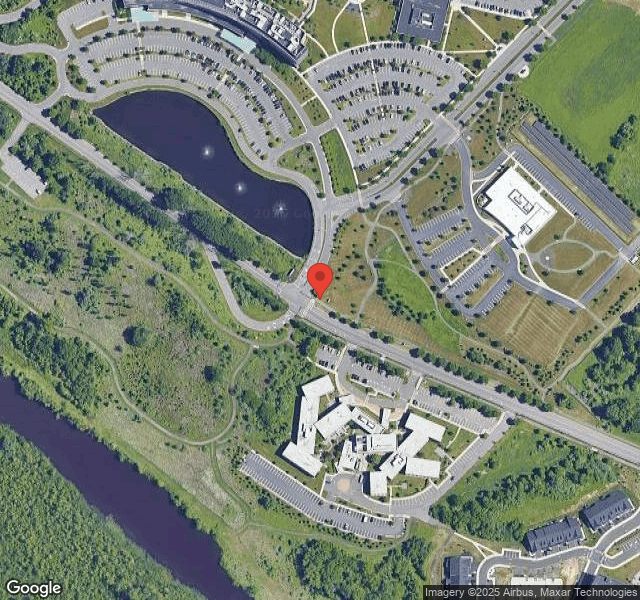
Dec 2021 11 deficiencies
CONCERN (D)

Potential for Harm - no one hurt, but risky conditions existed

Deficiency F0558 (Tag F0558)

Could have caused harm · This affected 1 resident

**NOTE- TERMS IN BRACKETS HAVE BEEN EDITED TO PROTECT CONFIDENTIALITY** Based on observation, interview, record review and review of other facility documents, it was determined that the facility faile...

Read full inspector narrative →
**NOTE- TERMS IN BRACKETS HAVE BEEN EDITED TO PROTECT CONFIDENTIALITY** Based on observation, interview, record review and review of other facility documents, it was determined that the facility failed to maintain the call bell within reach of 1 of 28 residents (Resident #91) reviewed. This deficient practice was evidenced by the following: On 12/01/21 at 12:30 PM, during the initial tour of the facility, the surveyor observed Resident #91, whose room was located towards the end of the hallway, far from the nurse's station. Resident #91 was out of bed and seated in a Geri-chair in his/her room. The resident was leaning to the left side with no pillows or cushions on the Geri-recliner for comfort and proper positioning. When asked, Resident #91 stated, in a very soft voice, that he/she was very uncomfortable. The resident was not in reach of the call bell, which was wrapped around a bar on the bed frame to the left of the resident's Geri-recliner. On that same day and time, a Certified Nursing Assistant (CNA #1) entered the resident's room and repositioned the resident with a pillow and left the room after placing the call bell on top of the bed, to the left side of Resident #91, which was out of his/her sight and reach. The surveyor observed two signs on the walls of Resident #91's room. One sign indicated to, Use your call bell for all assistance and needs. The other hand-written note indicated that the call bell should be placed to the right side of Resident #91. On 12/03/21 at 11:57 AM, the surveyor observed that Resident #91 was out of bed and seated in a Geri-chair and not in reach of the call bell. The call bell was observed on the bed to the left side of the resident. CNA #2 immediately noticed the way the resident was positioned, took a pillow off the resident's bed and used it to reposition Resident #91. CNA #2 stated that Resident #91 would sometimes throw the pillow on the floor and sometimes pulled the call bell out of the wall, then left the room. CNA #2 did not place the call bell on the right side of the resident. On 12/08/21 at 10:10 AM, the surveyor observed Resident #91 in bed, fully dressed, awake and nonverbal. The resident's legs were curled up and knees were facing to the left. The resident's call bell was tied to the right bed rail and hanging toward the floor. Resident #91 was not in reach of the call bell. The surveyor reviewed the resident's medical record which revealed the following: The admission record indicated that Resident #91 was admitted with diagnoses that included, but were not limited to, Parkinson's Disease, need for assistance with personal care, cognitive communication deficit, aphasia (loss of ability to understand or express speech), dysarthria (difficult or unclear articulation of speech), anarthria (inability to articulate speech at all). The Significant Change Minimum Data Set (MDS), dated [DATE], an assessment tool used to facilitate the management of care, revealed the resident had a Brief Interview for Mental Status of 8/15, which indicated that the resident's cognitive status was moderately impaired. Further review of the MDS revealed that the resident required extensive assistance with all Activities of Daily Living (ADL), including turning in bed. According to the Range of Motion section of the MDS, the resident had impairment in his upper and lower extremities on both sides. The resident's current Interdisciplinary Care Plan included the following: 1. For the focus of ADL Self Care Performance Deficit related to Parkinson's Disease, contractures and lack of coordination: Interventions included to encourage the resident to use the call bell for assistance. 2. For the focus of risk for falls related to impaired mobility, use of medications, disease process of Parkinson's and lack of coordination: Interventions included using visual cues to remind the resident to use call bell for assistance. 3. For the focus of potential for pain related to impaired mobility, disease process of contracture: Interventions included that the resident was able to call for assistance when in pain, reposition self, ask for medication, tell the caregiver how much pain is experienced and what increases or alleviates pain. On 12/7/21 at 1:50 PM, the survey team met with the administrative staff and discussed the above observations and concerns. On 12/08/21 at 12:02 PM, two surveyors interviewed the Maintenance Director. He stated that the facility had employed an Ambassador Program to monitor the condition of residents and their rooms. He explained that each manager in the facility does Ambassador Rounds. The notes from these rounds were kept in a binder provided by the facility's Licensed Nursing Home Administrator (LNHA). A review of the Ambassador notes revealed that there had been no rounds on that wing of the facility since 10/21/2021. The Maintenance Director stated that the Ambassador for that wing had left employment from the facility around that date. He also stated that the maintenance staff also did rounds and kept their own notes to see issues that need to be repaired. The Maintenance Director stated call bells were checked routinely. He stated that they didn't keep a log regarding which bells were checked. On 12/08/21 at 02:45 PM, the survey team met with the Director of Nursing and the Licensed Nursing Home Administrator (LNHA). The LNHA explained that, after the staff meeting in morning, the Ambassadors would walk around and greet the residents and observe that things were in place. If there were any housekeeping or maintenance issues, the Ambassador would report it. If the Ambassador wasn't there, the manager on duty would take over. The facility provided no evidence that the manager on duty took over the responsibilities of the Ambassador who had left employment. The LNHA stated that there were no written policies regarding the Ambassador Program. NJAC 8:39-31.8 (c) (9)
CONCERN (D)

Potential for Harm - no one hurt, but risky conditions existed

Safe Environment (Tag F0584)

Could have caused harm · This affected 1 resident

Based on observation, interview and a review of facility documents, it was determined that the facility failed to a.) maintain kitchen floors and baseboards in a sanitary manner and in good repair and...

Read full inspector narrative →
Based on observation, interview and a review of facility documents, it was determined that the facility failed to a.) maintain kitchen floors and baseboards in a sanitary manner and in good repair and b.) provide clean, sanitary floor mats in 3 of 4 resident rooms on 1 wing of 1 Nursing Unit (Grace Garden Unit 2, high side hallway). This deficient practice was evidenced by the following: 1. On 12/01/21 at 09:42 AM, during the initial tour of the kitchen in the presence of the Account Manager (AM), the surveyor observed the following: a.) There was an accumulation of dirt along the floor to wall junctures throughout the kitchen and dish room. There was some debris behind the double ovens. Most notably, the kitchen floor was severely worn in several areas near the cooking equipment and throughout the dish room. Therefore, the kitchen floor was not a smooth surface and was difficult to clean. The AM acknowledged the poor condition of the kitchen floor and stated, It's a big project. To patch it up, we would have to replace the entire floor. Once it starts pitting, it doesn't stop. The concrete is porous. b.) The surveyor also observed some accumulation of debris and crumbs on top of pipes running along the wall in the cooking section. c.) The surveyor observed some dirt and debris along the floor to wall junctures throughout the dry storeroom. In the storeroom there was a soiled plastic rack holding a bag of coffee filters. During a return visit to the kitchen on 12/09/2021 at 09:11 AM, the surveyor observed that the floor to wall junctures throughout the kitchen had been cleaned. All the pipes along the wall were also cleaned. The cove molding still appeared soiled in spots. The AM explained that the molding was stained and could not be cleaned completely. The surveyor interviewed the Ambassador of Dietary and Food Service (ADFS), who happened to be in the kitchen at that time. The ADFS stated that the facility performed a QAPI this last quarter about hopefully replacing kitchen floor. Maintenance did come to fill these divots, but they kept coming up. We have to replace the floor. He stated that a representative from the same company that installed the floor was in the kitchen on 12/7/2021. The company was going to provide a quote on replacing the floor. The ADFS acknowledged that they would also need to replace the cove molding throughout the kitchen that was stained. On 12/7/2021, the AM provided the surveyor with cleaning schedules for the kitchen, which showed that most of the items noted during the initial tour of the kitchen were scheduled to be cleaned the next day, 12/2/2021. On 12/9/2021, the AM provided the quote for repairing the entire kitchen floor, including the cove molding. 2. On 12/1/21 at 12:54 PM, the surveyor observed Resident #123 in bed. The surveyor attempted to interview the resident but the resident was non-interviewable. The surveyor observed a mat on the floor on the side of the bed. The floor mat was stained and had all four edges frayed and turning up. The surveyor was able to observe the foam inside of the floor mat on all four edges. On 12/2/21 at 12:31 PM, the surveyor interviewed the Certified Nursing Aide (CNA) who stated that she was familiar with the care of Resident #123. The surveyor, with the CNA, observed the floor mat in the resident's room. The CNA stated that she thought the floor mat was not in the best of conditions. The CNA was unable to speak to who was responsible for replacing floor mats. The CNA added that she thought maybe housekeeping was responsible because they clean the rooms every day. On 12/8/21 at 9:46 AM, the surveyor interviewed the Housekeeper (HK), who stated that he was not responsible for the cleaning of the rooms and was responsible for the cleaning of the building. On 12/8/21 at 9:48 AM, the surveyor with the HK observed the floor mat in the room. The HK stated that the floor mat should be replaced because the edges were turned up, ripped and ragged. The HK stated that he was responsible for getting the floor mats from central supply and was told which rooms were to receive a floor mat. The HK added that central supply ordered the floor mats and he had recently put floor mats into rooms and thought he had gotten the last four floor mats from central supply. On 12/8/21 at 9:57 AM, the surveyor interviewed the Licensed Practical Nurse (LPN) who stated that she thought maintenance was responsible for replacing floor mats in the resident's room if they became ripped. The LPN stated that if she saw a floor mat that needed to be replaced, she would call maintenance and there was a computerized system to let maintenance know what was needed. On 12/02/21 at 11:30 AM, the surveyor observed that the fall mat on the floor next to the bed of Resident #57 which was torn in all four corners and along the edges. On 12/02/21 at 12:27 PM, the surveyor observed Resident # 91 lying in bed. The fall mat on the floor next to the bed was torn and soiled. On 12/08/21 at 10:29 AM, the surveyor interviewed the Unit Clerk, who stated that maintenance would be called regarding replacing a floor mat. They will take the old mat and replace with a new one. She also stated that there was a log kept in the computer regarding floor mat replacement. On 12/08/21 at 12:02 PM, two surveyors interviewed the Maintenance Director who stated that either housekeeping or central supply replaced floor mats. He stated that four floor mats were given to housekeeping this morning. The Maintenance Director stated that the facility had employed an Ambassador Program to monitor the condition of residents and their rooms. He explained that each manager in the facility does Ambassador Rounds. The notes from these rounds were kept in a binder provided by the facility's Licensed Nursing Home Administrator (LNHA). A review of the Ambassador notes revealed that there had been no rounds on that wing of the facility since 10/21/2021. The Maintenance Director stated that the Ambassador for the high side Garden Unit had left employment from the facility around that date. He also stated that the maintenance staff did rounds and kept their own notes to see issues that needed to be repaired. On 12/08/21 at 02:45 PM, the survey team met with the Director of Nursing and the LNHA. The LNHA explained that, after the staff meeting in morning, the Ambassadors would walk around and greet the residents and observe that things were in place. If there were any housekeeping or maintenance issues, the Ambassador would report it. If the Ambassador wasn't there, the manager on duty would take over. The facility provided no evidence that the manager on duty took over the responsibilities of the Ambassador who had left employment. The LNHA stated that there were no written policies regarding the Ambassador Program. On 12/8/2021 at 12:25 PM, the Maintenance Director presented the computer print-out of his maintenance log which showed that no new mats were requested from 11/1/2021 through 12/8/2021. On 12/09/21 at 10:28 AM, the surveyor observed that three of four mats on the High side of Garden 2 were still observed to be torn and stained. These mats were observed in the rooms of Resident #57, #91 and #123. NJAC 8:39-17.2 (g) and 8:39-31.4 (a-f)
CONCERN (D)

Potential for Harm - no one hurt, but risky conditions existed

Deficiency F0658 (Tag F0658)

Could have caused harm · This affected 1 resident

**NOTE- TERMS IN BRACKETS HAVE BEEN EDITED TO PROTECT CONFIDENTIALITY** Based on interview, record review, and review of other pertinent facility documentation, it was determined that the facility fai...

Read full inspector narrative →
**NOTE- TERMS IN BRACKETS HAVE BEEN EDITED TO PROTECT CONFIDENTIALITY** Based on interview, record review, and review of other pertinent facility documentation, it was determined that the facility failed to clarify a Physician's Orders (PO) for code status (the type of emergent Cardio Pulmonary Resuscitation treatment a person would receive if their heart or breathing were to stop). This deficient practice was identified for 1 of 30 residents, (Resident #36) reviewed for code status related to professional standards of nursing practice and was evidenced by the following: Reference: New Jersey Statutes Annotated, Title 45. Chapter 11. Nursing Board. The Nurse Practice Act for the State of New Jersey states: The practice of nursing as a registered professional nurse is defined as diagnosing and treating human responses to actual and potential physical and emotional health problems, through such services as casefinding, health teaching, health counseling, and provision of care supportive to or restorative of life and wellbeing, and executing medical regimens as prescribed by a licensed or otherwise legally authorized physician or dentist. Reference: New Jersey Statutes Annotated, Title 45, Chapter 11. Nursing Board. The Nurse Practice Act for the State of New Jersey states: The practice of nursing as a licensed practical nurse is defined as performing tasks and responsibilities within the framework of casefinding; reinforcing the patient and family teaching program through health teaching, health counseling and provision of supportive and restorative care, under the direction of a registered nurse or licensed or otherwise legally authorized physician or dentist. On [DATE] at 9:21 AM, the surveyor reviewed the medical record for Resident #36. A review of Resident #36's Electronic Medical Record (EMR) revealed two different PO's for the resident's code status. The PO dated [DATE] reflected a PO for Full Code every 24 hours CPR (Cardiopulmonary Resuscitation). The PO dated [DATE] revealed an additional PO for DNR/DNI (Do Not Resuscitate/Do Not Intubate). These two different PO's documented in the resident's medical record contradicted one another. The Surveyor reviewed the progress notes dated [DATE] in the EMR which did not reflect an order change for code status. A review of Resident #36's Care Plan, with a target date of [DATE] indicated that the resident was a DNR/DNI. On [DATE] at 11:26 AM, the surveyor interviewed Licensed Practical Nurse (LPN #1 and LPN #2) on how to determine the code status of a resident. Both LPN #1 and LPN #2 stated that a resident's code status was listed in the EMR below the resident's picture and was also documented in the PO's. The LPN #1 showed the surveyor the resident's EMR with the resident's code status on top left corner below the resident's picture which indicated in bold letters Full code. The surveyor asked LPN #1 to check the resident's current PO's. LPN #1 reviewed the PO's in the EMR and stated that there were two PO's for the resident's code status. LPN #1 stated that a [DATE] PO indicated full code, and a [DATE] PO indicated DNR/DNI. The LPN #1 further stated that the [DATE] code status order should have been discontinued. LPN #1 also stated that the resident's physician should have been notified to confirm and clarify the resident's code status. On [DATE] at 9:59 AM, the surveyor reviewed resident's paper chart which revealed a POLST (New Jersey Practitioner Orders for Life-Sustaining Treatment) form dated [DATE]. A review of the POLST form reflected areas with a check mark indicating DNR and DNI. The form was signed by Resident #36 and a physician. On [DATE] at 1:43 PM, the surveyor interviewed the Assistant Director of Nursing (ADON)/Infection Preventionist (IP) who stated that each resident's code status was determined on admission and entered in the resident's EMR. The ADON/IP further stated that the resident's code status would also be documented on the POLST form in the resident's paper chart. At that time, the surveyor asked the ADON/IP to provide a policy or the facility's process for documenting code status. On [DATE] at 9:22 AM, the surveyor interviewed the ADON/IP who stated that if a resident was admitted and did not have an Advance Directive, then the facility would assume that the resident was a full code. The ADON/IP further stated that the unit managers were responsible to check PO's and clarify any PO's in the resident's charts so adjustments could be made and orders were kept up to date. The surveyor reviewed Resident #36's current PO's in the presence of the ADON/IP. The ADON/IP stated that the code status order from dated [DATE] indicating Full Code should have been discontinued and the most recent physician order on [DATE] indicating DNR/DNI should have been updated and documented in the resident's EMR. The ADON/IP further stated that the facility performed 24 hour chart checks daily on the night shift (11:00 PM - 7:00 AM shift). The ADON/IP was unable to provide a facility code status policy or a written process for documenting a resident's code status. On [DATE] at 10:03 AM, the surveyor interviewed the Director of Nursing (DON) regarding the process of code status determination and documentation on new admissions and current facility residents. The DON stated that new admissions would arrive to the facility with an Advance Directive, or their code status could be documented on the universal transfer form. The DON explained that if the new admission did not have an Advance Directive, than the resident would be a Full code until their code status was clarified. The DON added that Social Services has 48 hours to determine code status of new admissions and get the POLST signed by the resident, resident representative, and the resident's physician. The physician would speak with the resident or resident representative to confirm the resident's code status order. If the physician made a change to the resident's code status, the physician would flag the new order and also notify the unit manager. The DON stated that the unit manager was responsible to make sure that each resident's code status was up to date, and administration would check resident's code status updates weekly. The surveyor was not provided a facility policy and procedure for resident's code status. NJAC 8:39-11.2(b)
CONCERN (D)

Potential for Harm - no one hurt, but risky conditions existed

ADL Care (Tag F0677)

Could have caused harm · This affected 1 resident

**NOTE- TERMS IN BRACKETS HAVE BEEN EDITED TO PROTECT CONFIDENTIALITY** Based on observation, interview, record review, and review of pertinent facility documentation it was determined that the facili...

Read full inspector narrative →
**NOTE- TERMS IN BRACKETS HAVE BEEN EDITED TO PROTECT CONFIDENTIALITY** Based on observation, interview, record review, and review of pertinent facility documentation it was determined that the facility failed to provide Activity of Daily Living (ADL) care to dependent residents. This deficient practice was identified for 2 of 2 residents, (Resident #8 and Resident #21) reviewed for ADLs and was evidenced by the following: 1. On 12/01/2021 at 10:22 AM, the surveyor observed Resident #8 lying in bed. The surveyor observed that the fingernails on both hands extended approximately ¼ inch above his/her fingertips. On 12/06/2021 at 12:35 PM, the surveyor observed the resident lying in bed. The resident's left hand was observed to be curled inward. The surveyor further observed that the resident's fingernails extended approximately ¼ inch above his/her fingertips on both hands. On 12/08/2021 at 9:45 AM, the surveyor observed Resident #8 fingernails in the presence of the resident's assigned Certified Nursing Aide (CNA). The resident's CNA stated that the resident's fingernails were, very long and that she would cut the resident's nails after discussing care with the resident's nurse. The CNA further stated that she did not regularly take care of the resident and did not know if the facility had a schedule for nail care but would perform the care when she observed that it was required. On 12/08/2021 at 9:52 AM, the surveyor interviewed the resident's Licensed Practical Nurse (LPN) who stated that the resident was alert with his/her eyes, unable to speak, and required the nursing staff to help the resident perform all ADLs. The LPN stated that she would try and cut the resident's nails if she noticed that they were long. The LPN stated that the resident was not a diabetic (person with high levels of sugar in their blood because the body cannot absorb the sugar), so the CNA could perform nail care. The LPN further stated that there was no schedule in place for nail care. On 12/08/21 at 10:18 AM, the surveyor interviewed the Director of Nursing (DON) who stated that the resident's CNAs were responsible for trimming and filing the resident's fingernails. The DON further stated that the residents had scheduled shower days and when the staff observed that the resident needed additional ADL grooming, that would be when the care was performed. The DON stated that she didn't know if the facility had an accountability record for documentation of when specific ADL care was performed. The surveyor reviewed the medical record for Resident #8. A review of the resident's admission Record indicated that the resident had resided at the facility for several years and had diagnoses which included but were not limited to cerebral palsy (abnormal brain development before birth which causes disorders of movement, muscle tone, and posture), seizures, unspecified protein calorie malnutrition, and heart failure. A review of the resident's most recent quarterly Minimum Data Set (MDS), an assessment tool used to facilitate the management of care dated 09/01/2021 reflected that the resident's cognitive skills for decision making were severely impaired. A further review of the resident's MDS, Section G - Functional Status indicated that the resident required total assistance with ADLs and one person to assist with personal hygiene care. A review of the resident's Care Plan (CP) revised on 09/01/2021 indicated a focus area that the resident had an ADL self-care performance deficit related to cerebral palsy. The goal of the resident's CP was for the resident to maintain his/her current level of functioning through the next review date. The interventions on Resident #8's ADL care plan indicated that the resident required total assistance with one staff member for hygiene and assistance by two staff members for bathing. The resident's ADL CP did not reflect care related to grooming or nail care. 2. On 12/01/2021 at 11:07 AM, on 12/02/2021 at 12:23 PM, and on 12/03/2021 at 9:53 AM, the surveyor observed Resident #21 lying in bed on an air mattress. The surveyor further observed that the resident's bilateral hands were contracted, and the resident had scruffy facial hair covering his/her chin, cheek, and neck area. On 12/08/2021 at 9:42 AM, the surveyor observed in the presence of Resident #21's CNA that the resident had less facial hair covering his/her chin, cheek, and neck area then the prior observations. The resident's facial hair was observed to be not as dark in color and not as thick or prominent. The CNA stated that she had taken care of the resident the day before and shaved the resident. The CNA further stated that the resident needed to be shaved frequently because his/her facial hair grew fast, and she provided this type of care to the resident because she liked to treat people the way she would want to be treated. On 12/08/2021 at 9:54 AM, the surveyor interviewed the resident's LPN who stated that the resident was not alert and oriented but had moments of clarity where he/she could express himself/herself and the resident required total care with ADLs. The LPN further stated there was no schedule in place to shave the resident and that the assigned CNA or nurse could shave the resident. The LPN stated that care could be performed at the individual's caregiver's discretion and if there was a physician's order to perform specific care. The LPN stated that it would be a good idea to put something in place like a physician's order to make sure care was performed, like a treatment to remind staff in case things got hectic. On 12/08/21 at 10:18 AM, the surveyor interviewed the DON who stated that the residents had scheduled shower days and when the staff observed that the resident needed additional ADL grooming, that would be when the care was performed. The DON further stated that if care was not performed, it should be brought to the primary nurse's attention and a manager's attention so something could be put in place to address the resident's needs. The surveyor reviewed the medical records for Resident #21. A review of the resident's admission Record indicated that the resident had resided at the facility for a few years and had diagnoses which included but were not limited to contracture to the right hand, contracture to the left hand, COVID-19, unspecified dementia without behavior disturbances, and major depressive disorder. A review of the resident's most recent quarterly MDS, dated [DATE] reflected that the resident's cognitive skills for decision making were severely impaired. A further review of the resident's MDS, Section G - Functional Status indicated that the resident had functional limits in range of motion on both upper extremities. A review of the resident's CP revised 06/05/2021 indicated a focus area that the resident had an ADL self-care performance deficit. The goal of the resident's CP was that the resident would maintain current level of functioning through the review date. The interventions for the resident's CP included that the resident required total assist of one person for hygiene. The resident's ADL CP did not reflect care related grooming or shaving. On 12/09/21 at 11:56 AM, the surveyor conducted a follow up interview with the DON who stated that the facility utilized a form titled, My Daily Rhythm of Life which was in the CNA binder on the unit and provided the CNAs with information related to the residents ADL needs and preferences. The DON further stated that the nurse and CNA should assess the residents on the resident's shower day that ADL care was provided. At that time, the DON provided the surveyor with the resident's My Daily Rhythm of Life forms and in-service education dated 12/08/2021 provided to the nursing staff that this form should be followed. The surveyor reviewed My Daily Rhythm of Life forms for Resident #8 and Resident #21. Both resident's forms indicated, I trust that you will assist me with all my needs (getting dressed, fixing my hair, shaving, cutting my nails) to get ready for the day or night. A review of the facility's ADL Care Policy revised 10/2019 indicated that it was the facility's policy to provide ADL care to all resident's who required assistance to ensure that the resident's ADL needs were met daily. NJAC 8:39-4.1(a)22;27.2(b),(f)through(i)
CONCERN (D)

Potential for Harm - no one hurt, but risky conditions existed

Deficiency F0688 (Tag F0688)

Could have caused harm · This affected 1 resident

Based on observation, interview, record review, and review of facility documentation, it was determined that the facility failed to apply a physician ordered splinting device to a resident with contra...

Read full inspector narrative →
Based on observation, interview, record review, and review of facility documentation, it was determined that the facility failed to apply a physician ordered splinting device to a resident with contractures (a permanent tightening of the muscles, tendons, skin, and nearby tissues that cause the joints to shorten and become stiff). This deficient practice was identified for 1 of 5 residents's (Resident #21) reviewed for position and mobility and was evidenced by the following: On 12/01/2021 at 11:07 AM, the surveyor observed Resident #21 lying in bed with his/her hands resting on his/her lap. The surveyor observed that both resident's hands were contracted, and the resident was not wearing a splinting device on his/her hands. On 12/02/2021 at 12:23 PM, the surveyor observed the resident in his/her room being fed lunch by the Certified Nursing Aide (CNA). The resident was smiling and listening to soft music as he/she was being fed. The surveyor observed that the resident's hands were placed on his/her lap. The surveyor further observed that the resident's hands were contracted, and the resident was not wearing a splinting device. On 12/03/2021 at 9:53 AM, the surveyor observed the resident lying in bed, listening to soft music, and singing. The surveyor observed that the resident's hands were contracted, positioned up toward his/her chest and there was no splinting device observed on the resident. The surveyor reviewed the medical records for Resident #21. A review of the resident's admission Record indicated that the resident had resided at the facility for a few years and had diagnoses which included but were not limited to contracture to the right hand, contracture to the left hand, COVID-19, unspecified dementia without behavior disturbances, and major depressive disorder. A review of the resident's most recent quarterly Minimum Data Set (MDS), an assessment tool used to facilitate the management of care dated 09/09/2021 reflected that the resident's cognitive skills for decision making were severely impaired. A further review of the resident's MDS, Section G - Functional Status indicated that the resident had functional limits in range of motion on both upper extremities. A review of the resident's most recent December 2021 Order Summary Report reflected a physician's order dated 11/18/2020 for bilateral palm grip protector for approximately six to eight hours or as tolerated and to routinely check for skin integrity one time a day and remove per schedule. A review of the resident's December 2021 Treatment Administration Record (TAR) reflected that the nurses were applying the bilateral palm guard protectors at 0900 (9:00 AM), and to remove at (1500) 3:00 PM. A further review of the December 2021 TAR reflected that the 7:00 AM - 3:00 PM nurse had signed on 12/01/2021 and 12/02/2021 that the bilateral palm guards were in place. A review of the resident's Care Plan (CP) revised on 06/18/2020 reflected that the resident had a focus area for ADL (activity of daily living) self-care performance deficit. The goal of the resident's ADL CP indicated that the resident would maintain his/her current level of function in bed mobility, transfers, eating, dressing, toilet use, and personal hygiene through the next review date. The goals of the resident's CP reflected physical and occupational evaluation and treatment per physician orders. A further review of the resident's CP did not reveal a focus area that the resident had contractures or for the care of the resident related to his/her contractures. On 12/03/2021 at 12:42 PM, the surveyor observed Resident #21 sitting upright in bed, being fed by her CNA. At that time, the surveyor interviewed the CNA who stated that she was not the resident's regular CNA and it had been about three months since she had last taken care of the resident. The CNA stated that she had no idea if the resident wore palm guards, and the nurse would know all about that. The CNA further stated that it was the nurse's responsibility to apply the palm guards to the resident's hands if he/she had them. On 12/03/2021 at 12:47 PM, the surveyor interviewed the resident's Licensed Practical Nurse (LPN) who stated that she took care of the resident regularly. The LPN further stated that the resident was confused with moments of clarity and required total assist with ADLs. The LPN stated the resident's hands, were a little contracted and she was waiting for the therapy department to provide her with more palm guards for the resident because they were, filthy. The LPN stated that she would usually put the palm guards in the resident's hands around 9:00 AM and take them off at 3:00 PM - 3:15 PM before she left for the day. The surveyor reviewed the December 2021 Treatment Administration Record (TAR) in the presence of the LPN. The LPN could not explain as to why she had signed that the palm guards were in place on 12/01/2021 and 12/02/2021 when she had not put them on the resident. On 12/03/2021 at 12:57 PM, the surveyor interviewed the Occupational Therapist (OT) who stated that if a resident had a contracture he would want to see if it was fixed or not fixed. The OT further stated that he would assess the resident for range of motion and even if the contracture was not fixed in place, the therapy department would try and do as much splinting as they could. The OT stated that purpose of a resident wearing a splinting device would be to increase range of motion, decrease skin contact, decrease the formation of wounds, and prevent the deterioration of further contractures. On 12/03/2021 at 1:15 PM, the surveyor interviewed the Physical Therapist/Director of Rehab (PT/DOR) who stated that if a resident had a hand contracture, they would receive a referral from nursing and perform an evaluation and an assessment on the resident. The PT/DOR stated that the assessment was based off range of motion and pre-existing conditions and if the resident was assessed as needing palm guards, the therapy would educate the nurses on how to apply the palm guards, make a recommendation for a physician's order for them, and it would be the nurse's responsibility to carry out. The PT/DOR further stated that if the rehab department was made aware that the resident needed palm guards ,she would check inventory, and if they weren't in inventory, they would order them. The surveyor asked the PT/DOR services if she was made aware that Resident #21 needed palm guards. The PT/DOR checked in the presence of the surveyor if her staff had been made aware and stated that they were not. On 12/07/21 at 10:53 AM, the surveyor observed the rehab supply closet in the presence of the PT/DOR. The supply closet contained a sufficient supply of splinting devices and palm guards. On 12/09/21 at 12:06 PM, the surveyor interviewed the Administrator who stated that the palm guards should have been in place if there was a physician's order for them. The surveyor requested a Policy and Procedure for Splinting Devices and Contractures at the facility in the presence of the survey team and was not provided with one. NJAC 8:39-27.1(a);27.2(m)
CONCERN (D)

Potential for Harm - no one hurt, but risky conditions existed

Deficiency F0692 (Tag F0692)

Could have caused harm · This affected 1 resident

**NOTE- TERMS IN BRACKETS HAVE BEEN EDITED TO PROTECT CONFIDENTIALITY** Based on observation, interview, record review, and review of pertinent facility documentation, it was determined that the facil...

Read full inspector narrative →
**NOTE- TERMS IN BRACKETS HAVE BEEN EDITED TO PROTECT CONFIDENTIALITY** Based on observation, interview, record review, and review of pertinent facility documentation, it was determined that the facility failed to a.) accurately assess a new admission weight for a resident; b.) follow and obtain weekly weights for 4 weeks as per facility's weight schedule for newly admitted residents in accordance with facility policy and procedure and c.) obtain a re-weight in a timely manner for 1 of 5 residents (Resident #53) reviewed for nutrition. This deficient practice was evidenced by the following: On 12/1/21 at 11:34 AM, the surveyor observed Resident #53 was on contact precautions. The resident was in bed awake and speaking with his/her physician inside the resident's room. On 12/3/21 at 10:55 AM, the surveyor observed the resident in bed awake with oxygen in use at 3 liters per minute via nasal cannula and wearing eyeglasses. The resident verbalized that he/she goes to hemodialysis three times a week. The resident verbalized that the food is ok, and that his/her appetite varies day to day. The resident further verbalized I have to watch how much I drink a day. On 12/3/21 at 12:45 PM, the surveyor interviewed the resident's Certified Nurse's Aide (CNA) who stated that the resident usually eats well. It depends on how the resident is feeling and how tired the resident is. The surveyor reviewed the medical record for Resident #53. A review of the resident's admission Record reflected that the resident had diagnoses which included but were not limited to end stage renal disease, heart failure, type II diabetes mellitus without complications and chronic obstructive pulmonary disease, unspecified. A review of the resident's admission Minimum Data Set (MDS), an assessment tool used to facilitate the management of care dated 10/1/21 indicated that the resident was admitted to the facility on [DATE] from an acute hospital. Further review of the MDS reflected that the resident had a Brief Interview of Mental Status score of 14 out of 15 which indicated the resident was cognitively intact. Review of section K for height and weight indicated the resident's height was 62 inches and weighed 226 pounds. The MDS did not reflect any weight loss or weight gain for the resident. Further review of the MDS indicated the resident's diet was mechanically altered. Review of section O- Special Treatments, Procedures, and Programs indicated that resident received oxygen therapy and dialysis. A review of the resident's weights documented in the electronic medical record indicated the following: - 9/25/21: 226 pounds (lbs) - 9/26/21: 226 lbs - 10/19/21: 169.4 lbs which indicated a 56.6 lb or a 25 % weight loss from 9/25/21. - 11/10/21: 163.2 lbs - 11/17/21: 162 lbs - 12/3/21: 156 lbs Review of the resident's admission Nutritional Evaluation dated 9/27/21 and documented by the Registered Dietician (RD) reflected that residents most recent admission was 9/24/21. The resident's diet was a renal/CCD [carbohydrate-controlled diet]. The RD documented will continue diet restriction as ordered. Resident stated he/she also follows a low sodium diet. Added no added salt. The weight documented on the evaluation was 226 lbs [pounds] dated 9/26/21. The RD further documented anticipated some weight fluctuations 2/2 fluid shifts with ongoing HD treatments 3 x/week. Goal is for weight stability. The RD further documented that the resident's usual weight in lbs was unknown at this time. The RD calculated and documented the resident's daily nutritional requirements based on the resident's weight of 226 lbs and documented the following calculations as follows: - 1890-2200 kcal based on 30-35 kcal/kg (adj BW) [adjust body weight] - Wt/kg [weight per kilograms] protein factor = [equals] EST [estimated] daily protein needs GM [grams] calculated as 63-95 g protein (1-1.5/kg) - Wt/Kg x Fluid factor + [plus] EST [estimate] daily fluid needs calculated as 1575-1890 ml (25-30 ml/kg) The RD further documented will continue ongoing communication with HD RD [Hemodialysis Registered Dietician] resident is at risk for malnutrition with poor appetite increased estimated needs, and a need for supplementation. The above nutritional calculations were based on a documented weight of 226 pounds. Review of the electronic nutrition note dated 10/5/21 timed at 14:07 and documented by the RD indicated CBW [current body weight] pending monthly weight; BMI: 226 # [pounds]; BMI [body mass index]: 41.3 (class III). Current diet is CCD/renal. Appetite remains fair-varies depending on meals. Discussed food preferences at length .Spoke with HD RD. Will continue NEPRO BID [twice a day] for supplementation (+ 850 kcal, +38 grams protein). HD RD recommending to start IDPN [Intradialytic parenteral nutrition, a nutritional support therapy for dialysis patients who have a difficult time maintaining adequate nutrition] during HD treatments fair appetite .Will intervene PRN [as needed]. Review of the electronic nutrition note dated 10/20/21 timed at 17:29 and documented by the RD indicated Resident is very selective with food choices. Lunch was consumed greater than 75% as observed on tray. CBW [current body weight]: 169.4# [pounds]??? On 10/19. Pending re-weight as requested. Will follow. Review of the electronic Progress Notes dated 10/28/21 timed at 13:55 and documented by the second floor Registered Nurse Unit Manager indicated spoke to patients [family member] who stated [resident] was transferred from dialysis to the [hospital] for management of hyponatremia. Review of the electronic Progress Notes dated 10/28/21 timed at 23/35 and documented by a Registered Nurse indicated Pt [patient] not on Unit this shift. Called [hospital] for status update. Pt admitted to [hospital] w/hyponatremia. Review of the electronic Progress Notes dated 11/3/21 timed at 16:23 and documented by a Registered Nursed indicated the resident was re-admitted to the facility. Review of the electronic Progress Notes dated 11/5/21 timed at 17:11 and documented by the second floor Registered Nurse Unit Manager indicated Patient to be admitted to [hospital] tonight with possible surgery tomorrow. Review of the electronic Progress Notes dated 11/8/21 timed at 16/35 and documented by a Registered Nurse indicated the resident was re-admitted to the facility. Review of the resident's re-admission Nutritional Evaluation dated 11/8/21 and documented by the Registered Dietician (RD) reflected a documented weight of 169.4 lbs dated 10/19/21. The RD further documented Anticipated weight shifts r/t [related to] ongoing HD [hemodialysis] treatments. Pending monthly weight; will follow. 169.4 # [pounds] 10/19 226# 9/25 Noted questionable, significant weight loss x 2 months of -25%. Weight loss most likely error d/t [due to] mech lift vs post HD weight. A review of the resident's Care plan (CP) date initiated 9/27/21 and revised on 12/6/21 reflected a focus area that the resident had a nutritional problem related to a need for a therapeutic diet with ongoing hemodialysis treatments 3 times a week, and a history of weight loss. The goal of the resident's CP was that the resident will maintain adequate nutritional status as evidenced by maintaining weight within CBW, no s/sx [sign or symptoms] of malnutrition and consuming at least more than 51-75 % of most meals daily through review date. The interventions for the resident's CP indicated to monitor/record/report to MD [medical doctor] PRN [as needed] s/sx [signs or symptoms] of malnutrition: Emaciation (Cachexia), muscle wasting, significant weight loss: 3 lbs in 1 week, more than 5% in 1 month, more than 7/5 % in 3 months, more than 10% in 6 months .weights as ordered. On 12/8/21 at 10:59 AM, the surveyor in the presence of the survey team interviewed the facility RD. The RD stated that the re-weight for Resident #53 was not obtained to my knowledge. She stated the resident was not a planned weight loss. She stated she had reviewed the resident's hospital records from September 2021 which showed the resident weighed 163 pounds. So, I did not believe that he/she was 226 pounds. When I requested a re-weight, it is verbal, and I provide a list of residents to the unit manager. I don't remember who the unit manager was. I try to follow up as best as I can. I check in [name redacted] to see if the re-weights are documented. I would speak to the unit manager regarding this, but I don't remember if I spoke with the unit manager for this resident. I think the 226-pound weight wasn't the correct weight. I'm not sure who obtained the weight. But by looking at the resident, I did not think he/she weighed 226 pounds and I reviewed his/her September 2021 hospital records. No, I did not document that information in my notes. She stated, she did not know why she did not document the hospital weight in her initial and subsequent nutritional notes. She further stated she did not know why she did not follow up on the re-weight she requested on 10/19/21. She stated, its difficult to obtain re-weights. Yes, administration knows, everyone knows. For the most part, I go by the hemodialysis weights. On 12/8/21 at 12:02 PM, the RD provided the surveyor the resident weights from hemodialysis which indicated the following weights: - 9/30/21: post HD wt 75.3 kg = 165.3 lbs - 9/28/21: post HD wt: 74 kg = 163 lbs - 9/25/21: post HD wt: 76.5 kg = 168.7 lbs On 12/8/21 at 12:28 PM, the surveyor in the presence of the survey team interviewed the second floor Register Nurse/Unit Manager (RN/UM#1) who stated that when the RD requests a re-weight of a resident she usually emails out the request and then between me and my secretary we assign the re-weights to the aides to get done. The RN/UM #1 could not speak to why the re-weight for Resident # 53 was not done. She stated, I can't even recall it. When we obtain weights, it is put right into [name redacted]. It depends if it's a daily weight then the nurses would call the doctor but just weekly weights, the dietician just comes back in and ask for a re-weight. We would get his/her weight from the hemodialysis book. The RN/UM #1 could not speak to why Resident # 53's admission weight was documented in the medical record as 226 pounds on 9/25/21 and 9/26/21. The surveyor inquired how do you follow up to ensure a re-weight is done? She stated, I guess between the unit manager and the RD, really nursing whoever is putting the weight in. She further stated that the Certified Nursing Assistants (CNAs) do the re-weights. I don't know what happened. A review of an email [electronic mail] dated 10/20/21 timed at 7:47 AM provided by the Regional Nurse indicated that an email was sent from the RD to the second-floor unit manager which indicated Thank you all for obtaining most of the weights! Listed below are patients (organized by units) who are still pending weekly, monthly, and some re-weights needed to ensure accuracy. Further review of the email indicated that Resident # 53 was on the list. On 12/8/21 at 1:02 PM, the surveyor in the presence of the survey team interviewed the first floor RN/UM #2 who stated that the resident was transferred to her unit at least 3 to 4 weeks ago. She stated that the process for obtaining a re-weight was sometimes I put the order in the system to weight the patient today as a one-time order. I would follow up with the CAN or the nurse. They are pretty good with my list. The RD gives me a list of residents who need to be re-weighted. We do weekly weights but if there is a discrepancy than we re-weight the resident. We double check especially if it is different from the previous weight. Some patients are on daily weights and the nurses have to know if it is more than 3 lbs we follow the doctor's orders. The RN/UM #2 further stated that the CNAs are responsible for obtaining residents weights and relates the information to the nurse. The surveyor inquired how do you ensure a re-weight is done? RN/UM #2 stated, I delegate to the nurse that is their responsibility. The CNAs are getting the weight of the resident and the nurse enters the weight into the system. If not done the nurse reports, it to me. She further stated that the RD sends an email regarding residents who need a re-weight. I transfer into word and print it out and delegate the re-weights out to the nurse. Unfortunately, I cannot recall why that weight was not done. RN/UM #2 stated that Resident #53 was on the second floor when admitted to the facility and transferred to the first floor on 11/4/21. On 12/8/21 at 1:40 PM, the surveyor conducted a telephone interview with the hemodialysis RD (HD RD) who acknowledged that she was familiar with Resident #53 even before being admitted to the facility and that she was in frequent contact with the facility RD regarding the resident. I speak with the facility RD on the phone, via text and emails. The resident's main issues are low albumin, low sodium, and weight loss. I started the resident on IDPN (Intradialytic parenteral nutrition, a nutritional support therapy for dialysis patients who have a difficult time maintaining adequate nutrition) on dialysis days and have communicated with the facility RD. I speak with the facility RD once a week and added Nepro and IDPN on dialysis days. I believe he/she had weight loss when he/she went in but the month prior he/she was stable. I know his/her weight fluctuated a bit. The surveyor asked the HD RD if she recalled that Resident # 53 weighted 226 lbs in September of 2021. The HD RD stated, No, not 226 lbs he/she was not that big. On 12/8/21 at 1:57 PM, the survey team met with the administrative staff and discussed the above concerns. On 12/9/21 at 11:36 AM, the survey team met with the administrative staff. The Director of Nursing stated that they had updated the resident's weight note to clarify and the regional RD educated the RD regarding nutritional assessment and how to follow through with a weight discrepancy. A review of the facility's Weight Monitoring policy and procedure revised 11/2019 indicated that Weight can be a useful indicator of nutritional status. Significant unintended changes in weight (loss or gain) or insidious weight loss (gradual unintended loss over a period of time) may indicate a nutritional problem. Weights should be recorded at the time obtained. Suggested weight schedule: newly admitted residents- weekly for 4 weeks, if clinically indicated- daily or weekly, all others- monthly. The newly recorded resident weight should be compared to the previous recorded weight. A review of the facility's Nutritional Management revised 9/2019 indicted under Identification/assessment that Nursing staff shall obtain the resident's height an weight upon admission, and subsequently in accordance with facility policy .A comprehensive nutritional assessment will be completed by a dietitian within 72 hours of admission, annually and upon significant change in condition. Follow-up assessment will be completed as needed. Components of the assessment may include but are not limited to . height/weight. Review of the Evaluation/analysis section of the policy indicated, The assessment shall clarify the resident's current nutritional status and individual risk factors for altered nutrition/hydration. The dietitian shall use data gathered from the nutritional assessment to estimate the resident's calorie, nutrient, and fluid needs and whether intake is adequate to meet those needs. Current standard of practice/formulas are used in calculating these estimates. A review of the Registered Dietitian's job description provided by the Regional Nurse indicated that the RD completes the comprehensive nutrition assessments, in accordance with federal, state regulatory guidance and current standards of practice. NJAC 8:39-27.1(a)
CONCERN (E)

Potential for Harm - no one hurt, but risky conditions existed

Respiratory Care (Tag F0695)

Could have caused harm · This affected multiple residents

**NOTE- TERMS IN BRACKETS HAVE BEEN EDITED TO PROTECT CONFIDENTIALITY** 3. The surveyor reviewed the closed medical record for Resident #145. While reviewing the resident's closed medical record, the ...

Read full inspector narrative →
**NOTE- TERMS IN BRACKETS HAVE BEEN EDITED TO PROTECT CONFIDENTIALITY** 3. The surveyor reviewed the closed medical record for Resident #145. While reviewing the resident's closed medical record, the surveyor observed a picture of the resident wearing oxygen via nasal cannula. The admission Record indicated that the resident had medical diagnoses that included but were not limited to chronic obstructive pulmonary disease, acute respiratory failure, and acute pulmonary edema (fluid in the lungs). The resident's admission MDS dated [DATE] indicated in Section O - Special Treatments, Procedures, and Programs that the resident received oxygen therapy. The 10/13/2021 COMS- Clinical admission Evaluation indicated that Resident #145 was receiving oxygen via nasal cannula. The 10/16/21 Health Status Note indicated that Resident #145 was receiving continuous oxygen at two liters nasal cannula. The 10/21/2021 Physician Progress Note indicated that Resident #145 was receiving supplemental oxygen. The 10/23/2021 N Adv- Skilled Evaluation Progress Note indicated that Resident #145 was receiving oxygen via nasal cannula. The Order Recap Report for the month of October 2021 failed to indicate a physician order for oxygen therapy. The resident's Care Plan dated 10/13/2021 did not reveal a focus area for oxygen therapy. The surveyor discussed the concern with the DON on 12/3/2021 at 12:06 PM. The DON stated that the resident was on oxygen, that she could not find an order for oxygen, and that definitely an order for oxygen should have been in place. A review of the 2/2019 facility policy, Oxygen Concentrator indicated that Oxygen is administered under orders of the attending physician, except in the case of an emergency. NJAC 8:39-25.2(b),(c)4 3. On 12/01/21 at 11:52 AM, the surveyor observed Resident #94 seated in his/her recliner chair in his/her room wearing oxygen via nasal cannula. The surveyor observed that the oxygen tubing was attached to a concentrator and was not labeled with a date indicating when the oxygen tubing was administered to the resident. On 12/02/21 at 12:03 PM, the surveyor observed the resident lying in bed wearing oxygen via nasal cannula. The surveyor observed that the oxygen tubing was not labeled or dated. When the surveyor walked outside of the resident's room, the surveyor did not observe a sign posted outside of the resident's door indicating that the resident was wearing oxygen. On 12/03/21 at 9:37 AM, the surveyor observed that the resident was not present in his/her room. At that time, the surveyor observed the resident's nasal cannula in direct contact with the floor in the resident's room near the trash can. The nasal cannula was further observed to not be labeled and dated. On 12/03/21 at 12:35 PM, the surveyor observed Resident #94 seated in his/her recliner chair wearing oxygen via nasal cannula flowing at two liters per minute attached to the oxygen concentrator. The surveyor observed that the oxygen tubing was not labeled and dated. On 12/07/21 at 11:14 AM, the surveyor interviewed the resident's Certified Nursing Assistant (CNA) who stated that the resident was alert, oriented, and able to make needs known. The CNA further stated that she was unsure if the resident wore oxygen because she had only cared for the resident once or twice. The CNA told the surveyor that she would help the resident apply the nasal cannula tubing into their nostrils if the resident needed it and all other oxygen care for the resident was the primary nurse's responsibility. On 12/07/21 at 11:18 AM, the surveyor interviewed the resident's Licensed Practical Nurse (LPN) who stated the resident was alert, oriented, and could make needs known. The LPN further stated that the resident had a physician's order for oxygen to be administered at two liters per minute via nasal cannula. At 11:21 AM, the surveyor entered the resident's room in the presence of the resident's LPN and observed the resident seated in his/her recliner chair. The surveyor and the LPN observed that the resident's oxygen tubing was not labeled and dated. The LPN stated that the oxygen tubing should have been labeled and dated and she usually changed the tubing and labeled and dated it every three to four days. The LPN could not speak to why the resident's oxygen tubing was not currently labeled and dated. When the surveyor walked outside of the resident's room, the surveyor did not observe a sign posted outside of the resident's door indicating that the resident was wearing oxygen. The surveyor reviewed the medical record for Resident #94. A review of the resident's admission Record reflected that the resident had diagnoses which included but were not limited to chronic obstructive pulmonary disease (a group of lung diseases that block airflow and make it difficult to breath), acute and chronic respiratory failure with hypoxia (absence of oxygen in the tissues), and pneumonia. A review of the resident's quarterly MDS, an assessment tool used to facilitate the management of care dated 11/02/2021 reflected that the resident had a Brief Interview of Mental Status score of 12 out of 15 which indicated the resident was cognitively intact. A further review of the resident's MDS, Section O - Special Treatments, Procedures, and Programs that the resident received oxygen therapy. A review of the resident's December 2021 OSR reflected a physician's order for oxygen at two liters per minute continuous every shift. A further review of the resident's December 2021 OSR did not reflect a physician's order for the care of the oxygen tubing. A review of the resident's Care Plan (CP) dated 11/16/2021 reflected a focus area that the resident had a diagnosis of chronic obstructive pulmonary disease. The goal of the resident's CP was that the resident would display optimal breathing pattern due the review date. The interventions for the resident's CP indicated to give oxygen therapy as ordered by the physician. The resident's CP did not include a focus area for care related to oxygen therapy. On 12/09/2021 at 11:47 AM, the surveyor interviewed the DON who stated that oxygen tubing should be changed weekly, upon changing the oxygen tubing it should be dated and labeled. The DON further stated that when the oxygen tubing was not being used, it should have been placed in a plastic bag. A review of the facility's Oxygen Concentrator Policy and Procedure revised on 02/2019 indicated to, Place an oxygen warning sign on the resident's door. A further review of the facility's Oxygen Concentrator Policy and Procedure indicated to check oxygen tubing, mask, and cannula weekly and as needed if it becomes soiled and contaminated. Based on observation, interview, record review, and review of pertinent facility documentation, it was determined that the facility failed to: a.) obtain the appropriate physician orders for the care of a resident with a tracheostomy, b.) appropriately label and date oxygen tubing, c.) obtain a physician's order for the use of oxygen and continuous positive airway pressure (CPAP) and d.) failed to follow their facility's policy and procedure for the use and storage of oxygen and respiratory equipment. This deficient practice was identified for 3 of 3 resident's, (Resident #81, Resident #94 and Resident #140), reviewed for respiratory care for 1 of 2 residents, (Resident #145) reviewed for closed medical records. The deficient practice was evidenced by the following: 1. On 12/1/21 at 11:16 AM, the surveyor observed Resident # 81 in bed sleeping. The resident was observed with a Tracheostomy (trach) with humidified oxygen in use. The tracheostomy collar and dressing observed to be clean. The head of the bed was elevated, and enteral feeding was in use via pump at 55 ml/hr. There was an air mattress in use. On 12/2/21 at 12:25 PM, the surveyor observed the resident in bed sleeping. The tracheostomy collar and dressing observed to be clean. Humidified oxygen via mask in use over tracheostomy. On 12/3/21 at 10:27 AM, the surveyor observed the resident in bed sleeping. Tracheostomy collar and dressing clean and intact. Humidified oxygen via mask in use over tracheostomy. On 12/6/21 at 9:20 AM, the surveyor observed the resident's assigned Registered Nurse (RN) suction and perform trach care for the resident. The resident tolerated the procedure well. The surveyor inquired how often trach care is rendered. The RN stated the night shift nurse does it every night. The surveyor reviewed the medical record for Resident #94. A review of the resident's admission Record reflected that the resident had diagnoses which included but were not limited to acute and chronic respiratory failure with hypoxia, benign neoplasm of meninges, unspecified and chronic obstructive pulmonary disease, unspecified. A review of the resident's quarterly Minimum Data Set (MDS), an assessment tool used to facilitate the management of care dated 10/25/21 reflected that the resident's cognitive skills for daily decision making was severely impaired. Further review of the resident's MDS, Section O- Special Treatments, Procedures, and Programs indicated the resident received oxygen therapy, suctioning, and Tracheostomy care. A review of the resident's December 2021 Order Summary Report (OSR) indicated a physician's order to changed disposable inner cannula (DIC) of trach every night shift. Further review of the December 2021 OSR did not reflect a physician's order for the care of the tracheostomy. A review of the residents Care Plan (CP) initiated 7/15/20 and revised 5/7/21 reflected that the resident has a tracheostomy related respiratory failure and COPD [chronic obstructive pulmonary disease] exacerbation. The goal of the resident's CP was that the resident would not have abnormal drainage around tracheostomy site through the review date. The interventions for the resident's CP indicated to ensure that trach ties are secured at all times, give humidified oxygen as prescribed-40% via trach collar, monitor/document respiratory rate, depth and quality. Check and document every shift/as ordered, provide good oral care daily and as needed, provide trach care every shift, suction as necessary, trach size-Shiley #6. On 12/8/21 at 2:42 PM, the surveyor interviewed the Director of Nursing (DON) who stated that there should be physician orders for the care of the resident's tracheostomy. There was no additional information provided. 2. On 12/1/21 at 11:48 AM, the surveyor observed Resident #140 awake, dressed and seated in a wheelchair inside his/her room. The CPAP machine was observed on the bedside dresser. The CPAP mask was observed lying on top and in direct contact of the bedside dresser. The tubing for the CPAP machine was not dated. On 12/3/21 at 10:33 AM, the surveyor observed the resident awake and out of bed seated in a wheelchair near the door of his/room. The CPAP mask was observed lying on top and in direct contact of the bedside dresser. The CPAP tubing was not dated. On 12/7/21 at 10:44 AM, the surveyor observed the resident awake, dressed and out of bed seated in a wheelchair in his/her room watching television. The CPAP mask was observed lying on top and in direct contact with bedside dresser. On 12/7/21 at 10:51 AM, the surveyor in the presence of the Registered Nurse/Unit Manager (RN/UM) observed the CPAP mask lying on top and in direct contact with the bedside dresser. The RN/UM stated that the CPAP mask should be kept inside a bag. Usually, the night shift nurse does that. I will take care of it. The surveyor reviewed the medical record for Resident #140. A review of the resident's admission Record reflected that the resident had diagnoses which included but were not limited to metabolic encephalopathy, urinary tract infection, and Parkinson's disease. A review of the resident's quarterly MDS dated [DATE], reflected that the resident had a BIMS score of 03 which indicated severe cognitive impairment. A review of the resident's December 2021 OSR reflected a physician's order dated 12/6/21 for Cpap on at bedtime and remove in the AM at bedtime and remove per schedule. A review of the resident's December 2021 electronic medication administration record reflected the above corresponding physician's order dated 12/6/21. A review of the resident's CP initiated on 9/1/21 reflected that the resident has altered respiratory status related to sleep apnea. The goal of the resident's CP was that the resident would maintain normal breathing pattern as evidenced by normal respirations, normal skin color, and regular respiratory rate/pattern through the target date of 1/31/22. Review of the CP interventions did not include a focus area for care related to the CPAP machine, mask, or tubing. On 12/7/21 at 1:52 PM, the surveyor met with the administrative team and discussed the above observations and concerns. On 12/8/21 at 2:43 PM, the DON stated that the CPAP mask should have been stored properly inside a plastic bag, the tubing should have been dated. She could not speak to why there was no physician's order for the CPAP until 12/6/21. A review of the facility's CPAP/BIPAP Cleaning policy and procedure revised on 11/2017 indicated to Clean mask frame daily after use with CPAP cleaning wipe or soap and water. Dry well. Cover with plastic bag or completely enclosed in machine storage when not in use. Store mask and gear in plastic bag.
CONCERN (E)

Potential for Harm - no one hurt, but risky conditions existed

Medical Records (Tag F0842)

Could have caused harm · This affected multiple residents

**NOTE- TERMS IN BRACKETS HAVE BEEN EDITED TO PROTECT CONFIDENTIALITY** Based on observation, interview and record review, it was determined that the facility failed to maintain complete, accurate and...

Read full inspector narrative →
**NOTE- TERMS IN BRACKETS HAVE BEEN EDITED TO PROTECT CONFIDENTIALITY** Based on observation, interview and record review, it was determined that the facility failed to maintain complete, accurate and readily accessible medical records. This deficient practice was identified for 1 of 30 residents reviewed (Resident #37) for a period of 7 months and was evidenced by the following: On 12/01/21 at 11:33 AM, during the initial tour of the facility, the surveyor observed Resident #37, seated in a wheelchair in the resident's room. Resident #37 had three complaints: swollen feet, poor vision with missing eyeglasses, and missing dentures. Review of the resident's medical record revealed the following information: The resident's Face Sheet (an admission summary) disclosed that Resident #37 was admitted with diagnoses that included, but were not limited to dysphagia (difficulty or discomfort in swallowing) and glaucoma (a condition of increased pressure within the eyeball, causing gradual loss of sight). Review of the resident's Significant Change Minimum Data Set (MDS), dated [DATE], an assessment tool used to facilitate management of care, revealed the resident scored 9 out of 15 on the Brief Interview for Mental Status, indicating moderately impaired cognitive functioning. The initial MDS, dated [DATE] reflected that Resident #37 had adequate vision with corrective lenses. The MDS, dated [DATE] indicated that Resident #37 had adequate vision without corrective lenses. Neither of these MDS assessments revealed that Resident #37 had dentures while in the facility. Review of the electronic Order Summary Report, including active orders as of 12/8/2021, included physician's orders for a Dysphagia, Pureed texture for this edentulous resident. The Physician also ordered TED Stockings to be put on the resident in the morning and removed at night for the swelling in the feet and ankles. Although Resident #37 sometimes refused the stockings in the morning, he/she eventually consented to wear them as observed during the survey period. On 12/8/2021, the surveyor reviewed the resident's progress notes in the electronic medical record and observed that the physician had submitted eight progress notes in February 2021. There were no additional physician's progress notes in either the electronic medical record or in the resident's paper medical record until 8/27/2021 . a gap of six months. The physician then recorded progress notes in the electronic medical record three times in September 2021. As of 12/8/2021, the last physician progress note available for review was dated 9/20/2021. On 12/9/2021 at 11:11 AM, the surveyor conducted a telephone interview with the resident's physician who stated that she saw Resident #37 at the facility once a month. She stated, Some notes are in my office. I think I'm supposed to fax the notes to the facility, but there has been too much turn around in the office and it wasn't done. On 12/9/2021 at 12:09 PM, the Licensed Nursing Home Administrator (LNHA) presented copies of the seven months of missing progress notes for Resident #37 that the physician had just faxed to the facility. The LNHA acknowledged that the progress notes were a permanent part of the resident's medical record and should have been kept at the facility. NJAC 8:39-35.2 (d) (6)
CONCERN (E)

Potential for Harm - no one hurt, but risky conditions existed

Infection Control (Tag F0880)

Could have caused harm · This affected multiple residents

**NOTE- TERMS IN BRACKETS HAVE BEEN EDITED TO PROTECT CONFIDENTIALITY** Based on observation, interview, and record review, it was determined that the facility failed to ensure a.) appropriate infecti...

Read full inspector narrative →
**NOTE- TERMS IN BRACKETS HAVE BEEN EDITED TO PROTECT CONFIDENTIALITY** Based on observation, interview, and record review, it was determined that the facility failed to ensure a.) appropriate infection control practices were followed in accordance with the Center for Disease Control guidance (CDC) and facility guidelines for 2 of 2 housekeeping staff observed on 1 of 4 nursing units and b.) Transmission-Based Precautions (TBP) were followed for 1 of 11 residents (unsampled resident #1) on TBP's on 1 of 4 nursing units and c.) proper handwashing technique for 3 of 4 nurses during the medication pass on 3 of 4 units. The evidence was as follows: According to the U.S. CDC guidelines for Hand Hygiene in Healthcare Settings Hand Hygiene Guidance, updated 1/30/20, included Healthcare personnel should use an alcohol-based hand rub or wash with soap and water for the following clinical indications: • Immediately before touching a patient • Before performing an aseptic task (e.g., placing an indwelling device) or handling invasive medical devices • Before moving from work on a soiled body site to a clean body site on the same patient • After touching a patient or the patient's immediate environment • After contact with blood, body fluids, or contaminated surfaces • Immediately after glove removal Unless hands are visibly soiled, an alcohol-based hand rub is preferred over soap and water in most clinical situations due to evidence of better compliance compared to soap and water. Hand rubs are generally less irritating to hands and, in the absence of a sink, are an effective method of cleaning hands. According to the U.S. CDC guidelines for Use Personal Protective Equipment (PPE) When Caring for Patients with Confirmed or Suspected COVID-19, updated 6/3/20, indicated to remove gloves, gown, and dispose into a trash receptacle. Then the healthcare provider may exit the patient room and then perform hand hygiene. According to the U.S. CDC guidelines for Transmission-Based Precautions dated 1/7/2016, indicated to Use personal protective equipment (PPE) appropriately, including gloves and gown. Wear a gown and gloves for all interactions that may involve contact with the patient or the patient's environment. Donning PPE upon room entry and properly discarding before exiting the patient room is done to contain pathogens. 1. On 12/1/21 during the initial tour of the Luxor 2 unit, the surveyor observed room [ROOM NUMBER] with a sign near the door which indicated to stop due to Contact/Droplet Precautions The sign had specific instructions to be followed which included Everyone Must Wear N 95, Gown, Face Shield and Gloves when entering this room. Wash/gel hands before entering and leaving room, Remove Gown and Gloves before leaving room, Wipe/Wash Shield before leaving room. There was also a personal protective equipment (PPE) bin right outside the door with the appropriate adequate PPE and there was a dedicated black trash bin inside the room for the disposable of PPE prior to leaving the room. On that same date and time, the surveyor observed a housekeeper (HK#1) inside room [ROOM NUMBER]. HK#1 was wearing a N 95 mask, eye protection, a gown and gloves and was observed cleaning the floor inside room [ROOM NUMBER]. The surveyor observed HK #1 come out of room [ROOM NUMBER] and remove the gloves and gown in the hallway and disposed the gloves and gown inside the housekeeping cart. HK#1 did not perform hand hygiene after removing the gloves and gown. At that same time, the surveyor interviewed the HK#1 who stated, No, I took off inside. She said it was ok to dispose the gloves and gown inside the housekeeping cart. 2. On 12/2/21 at 1:13 PM, the surveyor, on the Luxor 1 unit, observed room [ROOM NUMBER] with a sign near the door which indicated to stop due to Contact/Droplet Precautions The sign had specific instructions to be followed which included Everyone Must Wear N 95, Gown, Face Shield and Gloves when entering this room. Wash/gel hands before entering and leaving room, Remove Gown and Gloves before leaving room, Wipe/Wash Shield before leaving room. There was also a personal protective equipment (PPE) bin right outside the door with the appropriate adequate PPE and there was a dedicated black trash bin inside the room for the disposable of PPE prior to leaving the room. On that same date and time, the surveyor observed HK#2 walk out of room [ROOM NUMBER] wearing a N 95 mask, eye protection, a yellow disposable gown and gloves. She removed the gloves and gown in the hallway and disposed the gloves and gown inside the housekeeping cart. HK#2 did not perform hand hygiene after removing the gloves and gown. At that same time, the surveyor interviewed HK#2 who stated, oh well. I don't know. I put my trash inside the cart. Does it matter? The surveyor inquired if she had any training on infection control. HK#2 stated, yes, not that long ago. The surveyor and HK#2 read the instructions on the contact/droplet sign posted on the outside wall of room [ROOM NUMBER]. She then acknowledged and stated, she should have removed the gloves and gown inside the room. 3. On 12/3/21 at 10:39 AM, the surveyor, on the Luxor 1 unit, observed room [ROOM NUMBER] with a sign near the door which indicated to stop due to Contact/Droplet Precautions The sign had specific instructions to be followed which included Everyone Must Wear N 95, Gown, Face Shield and Gloves when entering this room. Wash/gel hands before entering and leaving room, Remove Gown and Gloves before leaving room, Wipe/Wash Shield before leaving room. There was also a personal protective equipment (PPE) bin right outside the door with the appropriate adequate PPE and there was a dedicated black trash bin inside the room for the disposable of PPE prior to leaving the room. At that time, the surveyor observed a Registered Nurse (RN#1) walk out of room [ROOM NUMBER] carrying a blood pressure machine and a thermometer. The RN#1 walked to the medication cart, placed the medical equipment on top of the cart, put on gloves and disinfected the medical equipment. The surveyor had not observed the RN#1 disinfect the medical equipment before exiting room [ROOM NUMBER] and had not observed the RN#1 perform hand hygiene prior to putting on gloves to disinfect the medical equipment. At that same time, the surveyor interviewed the RN#1 who stated she did not need to perform hand hygiene before putting on gloves because she washed her hands with soap and water before she left the room. On 12/7/21 at 12:38 PM, the surveyor, in the presence of the survey team interviewed the Director of Housekeeping who spoke to the process of removing gloves and gown inside the room and disposing the PPE at the door inside the room using the black dedicated PPE trash bin. The surveyor inquired who trains the housekeeping department on infection control and donning and doffing? He stated, I do some but the ADON [Assistant Director of Nursing] does most of the training for them. On 12/7/21 at 12:43 PM, the surveyor, in the presence of the survey team interviewed the Assistant Director of Nursing/Infection Control Preventionist (ADON/IP) who confirmed that most of the training for the housekeeping department was done by her. She stated she trains the housekeeping staff on proper hand hygiene, donning, doffing, and blood borne pathogens. She stated she also does competencies for hand washing, donning, and doffing. She further stated, for those with a language barrier I get a translator. The surveyor inquired how does she ensure that staff are following the proper infection control protocols? She stated, I usually do my rounds in the morning and the afternoon. On 12/7/21 at 1:51 PM, the survey team met with the administrative staff and discussed the above observations and concerns. Review of the facility policy for Hand Hygiene with a revised date of 11/2017 reflected staff involved in direct resident contact will perform proper hand hygiene procedures to prevent the spread of infection to other personal, residents and visitors. The policy also indicated that the use of gloves does not replace hand washing. Wash hands after removing gloves. Review of the facility policy for Isolation Precautions with a revised date of 9/2021 reflected that it is the facility's policy to take appropriate precautions, including isolation, to prevent transmission of infectious agents. The policy further indicated that staff would apply Transmission-Based Precautions, in addition to standard precautions to residents who are known or suspected to be infected or colonized with certain infectious agents requiring additional controls to prevent transmission and the category of TBP's will determine the type of PPE to be used. 4. On 12/6/21 from 9:08 AM to 9:32 AM, during the medication pass on Luxor 1 unit, the surveyor, in the presence of another surveyor, observed LPN#1 obtain vital signs from an unsampled resident #1 in room [ROOM NUMBER]. The LPN#1 brought an electronic blood pressure machine into the resident's room. The surveyor's observed the resident sitting up in bed with a breakfast tray on the overbed table in front of the resident. The LPN#1 then returned to the medication cart in the hallway near the resident's door to prepare the resident's medications which included eye drops and a subcutaneous (SC) injection (a bolus injection into the layer of the skin below the dermis and epidermis). The LPN#1 returned to the resident in the room and administered eye drops into both the resident's eyes and administered an abdominal SC injection. The surveyors also observed the LPN#1 place a hearing aid into the resident's right ear and checked the hearing aid in the resident's left ear. The surveyors and the LPN#1 had not donned and/or doffed PPE when entering and exiting the resident's room. The surveyors had not observed any signage regarding the need to don and doff PPE on the resident's door to the room. On 12/6/21 at 12:30 PM, the surveyors reviewed the medical record for the unsampled resident #1. A review of the December 2021 Order Summary Report revealed a physician's order dated 12/1/21 to Observe droplet and contact precautions, perform hand hygiene before entering and when leaving the room. Maintain N-95 mask or facemask if N-95 unavailable and eye protection at all times while in resident room. Use gloves and gowns during high contact care activities(ex. Toileting, dressing, device care) every shift for COVID-19 precautions for 14 days. The PO had a discontinuation date of 12/15/21. On 12/6/21 at 1:07, the surveyor, in the presence of another surveyor, interviewed the LPN#1 who stated that he had no residents on TBP for any reason on his side. The LPN#1 explained that he was responsible for the residents in rooms from 134 to 150 which corresponded with his medication cart. The LPN#1 stated that if there were residents that required that he wear PPE then he would have been told when he received report from the nurse going off shift or from his UM/. The LPN#1 added that he was not told by the nurse going off shift or from his UM that there were any residents on his side that required PPE to be worn. The LPN#1 added that he thought all the residents that were on TBP were on the medication cart for the other side. The LPN#1 also acknowledged that the unsampled resident #1 in room [ROOM NUMBER] was not on TBP and that there was no need to don and/or doff PPE because the resident was not on TBP. On 12/6/21 at 1:50 PM, the surveyor received a list of residents on Droplet Precautions on the Luxor 1 unit from the UM/. The list revealed that the unsampled resident's name was not on the list. On 12/6/21 at 1:55 PM, the surveyor, in the presence of the survey team, interviewed the ADON/IP. The ADON/IP explained that when residents were admitted , and the vaccination status was unknown then the resident would be placed on TBP for 14 days. The ADON/IP added that if a resident had been fully vaccinated and was a new admission then the TBP would be followed for 3 days and then the TBP would be discontinued. The ADON/IP stated that the unsampled resident #1 was put on TBP for 14 days starting 12/1/21 in the afternoon when the resident was admitted because the vaccination status of the resident was unknown. The ADON/IP added that a family member had verbally told her that the resident had been fully vaccinated in another state. The ADON/IP thought the UM/ had received the vaccination card or dates from the family member and that was why the TBP was discontinued. The ADON/IP stated that she was unaware that there was a PO remaining for TBP until 12/15/21. On 12/8/21 at 1:04 PM, the surveyor, in the presence of the survey team, interviewed the UM/ who stated that the unsampled resident #1 was on TBP for 3 days after admission. The UM/ added that she was aware that the family member had verbally told the ADON/IP that the resident had been vaccinated in another state. The UM/ stated that a request for the vaccination card with the dates was requested from the family member. The UM/ added that before removing a resident from TBP the vaccination card was usually received. The UM/ stated that after receiving the vaccination dates, a PO discontinuing the TBP would be completed. The UM/ stated that she would have to check for the vaccination card or dates for the unsampled resident #1. On 12/8/21 at 1:26 PM, the surveyor, in the presence of the survey team, interviewed the UM/ who stated that she had not received a vaccination card for the unsampled resident from the family member and was unaware of the dates of vaccination. The UM/ stated that the ADON/IP had made the decision to remove the unsampled resident #1 from TBP after 3 days from the admission date based on the verbal family members statement that the resident had been fully vaccinated. The UM/ added that the ADON/IP was responsible for checking the isolation status of all new admissions and sends a list of the residents on TBP. The UM was unable to speak to why the PO was not discontinued. On 12/8/21 at 2:30 PM, the surveyor received a list from the DON of all Residents on Transmission Based Precautions for the date of 12/6/21. The list revealed that the unsampled resident's name was not on the list. On 12/9/21 at 11:49 AM, the survey team met with the administrative team. The DON explained that a new admission was placed on TBP for 14 days if vaccination status was unknown or not vaccinated. The DON also explained that if a resident was vaccinated then the TBP would be followed for 3 days after admission and then discontinued. The DON stated that the staff was re-educated regarding the protocol for placing a new admission on TBP and that the nurses should have the vaccination card or dates of vaccination in hand before removing the resident from the 14-day TBP. The DON stated that the unsampled resident #1 was tested for COVID-19 on 12/1, 12/4, 12/7 and 12/9 and had negative test results for all the dates. The DON and Licensed Nursing Home Administrator (LNHA) acknowledged that the unsampled resident #1 had no verified dates of vaccination until after surveyor inquiry. At that time, the LNHA provided a copy of the unsampled resident's COVID-19 Vaccination Report Card with the dates of vaccination and manufacturer. A review of the facility policy for COVID-19 Vaccination dated 11/2021 provided by the ADON/IP reflected that the facility had an immunization program against COVID-19 in accordance with national standards of practice. In addition, the resident's medical record would include documentation of each dose of the vaccine administered to the resident. The CDC definition for fully vaccinated, included In general, people are considered fully vaccinated: 2 weeks after their second dose in a 2-dose series, such as the Pfizer or Moderna vaccines, or 2 weeks after a single-dose vaccine, such as Johnson & Johnson ' s [NAME] vaccine 5. On 12/6/21 at 8:20 AM, the surveyor, in the presence of another surveyor, observed RN#2 administer medications to an unsampled resident #2 on the Long-Term Care 1 unit, which included an intranasal (a nose spray) medication. On 12/6/21 at 8:22 AM, the surveyor observed the RN#2 perform hand hygiene by washing her hands in the resident's bathroom sink. The RN#2 applied soap to her hands and lathered outside of the water stream for 5 seconds and then placed her hands under the water stream. While drying her hands with a paper towel, the RN#2 had to pick up a paper towel that had fallen to the floor. The RN#2 performed hand hygiene by washing her hands for a second time. The RN#2 followed the same procedure and applied soap to her hands, lathered outside of the water stream for 5 seconds and then placed her hands under the water stream. On 12/6/21 at 1:30 PM, the surveyor, in the presence of another surveyor, interviewed the RN#2 who stated that she had been in-serviced regarding hand washing technique by the ADON/IP. The RN#2 explained that the correct technique was to apply soap to your hands and lather outside of the water stream for 20 seconds before putting your hands under the water. The RN#2 stated that she either counts 1-2-3 to 20 or sings the song Happy Birthday. The RN#2 added that she usually sings the song Happy Birthday and thought that she had done 20 seconds. 6. On 12/6/21 at 9:16 AM, the surveyor, in the presence of another surveyor, during the medication pass on Luxor 1 unit, observed the LPN#1 perform hand hygiene by washing his hands in the resident's bathroom sink by applying soap on his hands and lathering his hands in and out of the water for 12 seconds. Then, the LPN#1 placed gloves on his hands. At that time, both surveyors observed the LPN#1 administer eye drops into both the resident's eyes and administered an abdominal SC injection. The surveyors also observed the LPN#1 place a hearing aid into the resident's right ear and checked the hearing aid in the left ear. The surveyor had not observed the LPN#1 wash their hands after the removal of gloves from the administration of eye drops and/or in between the administration of the abdominal subcutaneous injection. The LPN#1 had used alcohol-based hand rub (ABHR) after the removal of gloves upon completion of the abdominal SC injection. On 12/6/21 at 1:07 PM , the surveyor, in the presence of another surveyor, interviewed the LPN#1 who stated that he had been in-serviced by the ADON/IP regarding the proper technique for handwashing. The LPN#1 stated that he was instructed to wash his hands outside of the water stream for 20 seconds. The LPN#1 added that he sang the song Happy Birthday or counted in his head to make sure he lathered for 20 seconds. The LPN#1 thought he had followed the correct technique for hand washing. 7. On 12/6/21 at 10:19 AM, during the medication pass, the surveyor, in the presence of another surveyor observed the RN#3 perform hand hygiene before changing an intravenous (IV) solution bag and flushing the IV line for an unsampled resident #3 on the Luxor 2 unit, by washing her hands in the resident's bathroom sink. The RN#3 applied soap to her hands and lathered for 6 seconds outside the water stream and then placed her hands under the water stream. The RN#3 then applied gloves. On 12/5/21 at 10:28 AM, after completing the change and flushing of the unsampled resident #3's IV solution bag, the RN#3 performed hand hygiene after removing her gloves by washing her hands in the resident's bathroom sink. The RN#3 applied soap to her hands and lathered for 10 seconds outside of the water stream and then placed hands under the water stream. On 12/6/21 at 1:20 PM, the surveyor, in the presence of another surveyor, interviewed the RN#3 who stated that she had been in- serviced by the ADON/IP regarding the proper hand washing technique. The RN#3 added that she sings the song Happy Birthday. The RN#3 added that she thought that she had done 20 seconds, but she had not timed it. On 12/8/21 at 2:18 PM, the survey team met with the administrative team. The DON stated that the proper hand washing technique included that the nurses were to sing the song Happy Birthday twice to be able to make 20 seconds of lathering outside the stream of water. The DON added that singing the song Happy Birthday was not the best practice because singing the song once would not be 20 seconds and it was possible to sing in your head faster than 20 seconds. The DON added that counting in your head could also be faster than 20 seconds. A review of the facility policy Medication Administration dated as revised 11/2017 provided by the LNHA reflected that medications were to be administered in a manner to prevent contamination or infection. The policy also reflected that the nurses were to Wash hands prior to administering medication per facility protocol and product. A review of the Staff Inservice titled Infection Control Essentials and Survey Readiness dated 5/8/2021 provided by the ADON/IP reflected that there were 5 steps every time you washed your hands, which included Step #2 Lather your hands by rubbing them together with the soap. Lather the backs of your hands between your fingers, and under your nails. In addition, Step #3 Scrub your hands for 20 seconds. Need a timer? Hum the Happy Birthday song from beginning to end twice. The ADON/IP also provided a flyer titled Wash Your Hands that was posted in resident bathrooms by the sink which reflected a six-step process which included step #3 to Rub and scrub thoroughly for 20 seconds-scrub palms, back of hands, between fingers, and under nails. A review of the Handwashing Competency forms provided by the ADON/IP revealed that competencies were completed by the ADON/IP for RN#2 dated 11/29/20 and 9/27/21, for LPN#1 dated 2/15/21 and 9/27/21 and for RN#3 dated 11/11/21. The Handwashing Competency form revealed that the Critical Performance Factors included to vigorously rub hands together for at least 20 seconds (hands should NOT be under the running water.) Clean all surfaces including 2 inches above the wrist, between fingers and under nails. All the competency forms reflected that the Critical Performance Factors were marked as met, which indicated that the competency status was met. A review of the facility policy for Hand Hygiene with a revised date of 11/2017 reflected staff involved in direct resident contact will perform proper hand hygiene procedures to prevent the spread of infection to other personal, residents and visitors. The policy also indicated that the use of gloves does not replace hand washing. Wash hands after removing gloves. NJAC 8:39-19.4 (a) (1) (n) (2)
CONCERN (E)

Potential for Harm - no one hurt, but risky conditions existed

Deficiency F0883 (Tag F0883)

Could have caused harm · This affected multiple residents

Based on observation, interview, record review, and review of pertinent facility documentation it was identified that the facility failed to offer a resident the influenza and pneumonia vaccination. T...

Read full inspector narrative →
Based on observation, interview, record review, and review of pertinent facility documentation it was identified that the facility failed to offer a resident the influenza and pneumonia vaccination. This deficient practice was identified for 1 of 5 residents, (Resident #74) reviewed for vaccination status and was evidenced by the following: On 12/01/2021 at 11:42 AM, the surveyor observed Resident #74 lying in bed on an air mattress reading a book that was written in the resident's native language. At that time, the surveyor attempted to interview the resident and the resident stated that his/her English was not so good. The surveyor reviewed Resident #74's medical record. A review of the resident's admission Record reflected that the resident was admitted to the facility in June 2021 and had diagnoses which included but were not limited to muscle weakness, high blood pressure, other recurrent depressive episodes, cognitive communication deficit, and encounter for surgical aftercare following surgery on the digestive system. A review of the resident's most recent quarterly Minimum Data Set (MDS), an assessment tool used to facilitate the management of care dated 10/20/2021 reflected that the resident had a Brief Interview of Mental Status (BIMS) score of 05 out of 15 which indicated the resident had moderately impaired cognition. A further review of the resident's MDS, Section O - Special Treatments, Procedures, and Programs indicated that the influenza vaccine was not received because the resident was not eligible. The MDS further reflected that the pneumococcal vaccine was not received because the resident was not eligible. A review of the resident's immunization history in the resident's electronic medical record revealed that the resident was administered the TB two step Mantoux Test (a tuberculin skin test performed to check if a person has been infected with tuberculosis) on 04/07/2021 and 05/03/2021. A further review of the resident's immunization history revealed that the resident was administered the two-step COVID-19 vaccination on 09/02/2021 and 09/23/2021. There was no evidence in the resident's electronic medical record that the resident had been administered the flu or the pneumonia vaccination. On 12/07/2021 at 9:11 AM, the surveyor interviewed the Assistant Director of Nursing/Infection Preventionist (ADON/IP) who stated that the influenza and pneumococcal vaccinations were offered to the resident upon admission, but the resident was unable to sign for the administrations of the vaccinations due to a cognitive impairment. The ADON/IP further stated that if the resident presented with a cognitive impairment, then the resident's representative should have been notified to provide consent for the administration of the vaccinations. The ADON/IP stated that there was no documentation in the resident's medical record that the resident's representative was notified upon admission to present for the administration of the influenza and pneumonia vaccinations. The ADON/IP further stated that she spoke to the resident's representative and the resident that morning and they both agreed for the resident to be vaccinated. The ADON/IP could not speak as to why the MDS indicated the resident was not eligible for the influenza and pneumococcal vaccinations. At that time the ADON/IP provided the surveyor with the resident's Influenza and Pneumococcal Vaccination - Informed Consent forms dated 12/07/2021. A review of both forms indicated that the resident and the resident's representative agreed to have the vaccinations administered. On 12/07/2021 at 9:34 AM, the surveyor conducted an interview over the telephone with the resident's representative who stated that today was the first day that he/she had been provided with information about the influenza and pneumonia vaccination for the resident. On 12/09/2021 at 11:46 AM, the surveyor interviewed the Regional/Registered Nurse (R/RN) who stated that there was no documentation that the resident was not eligible to receive the vaccinations. The R/RN further stated that the resident should have been offered both vaccinations upon admission and again at the start of flu season. A review of the facility's Influenza Vaccination Policy revised 09/15/2020 indicated, It is the policy of this facility, in collaboration with the medical director and/or the Infectious Disease doctor, to have an immunization program against influenza disease in accordance with national standards of practice. The facility's Influenza Vaccination Policy further indicated that the influenza vaccination would be routinely offered on-site or of-site annually from October 1st through March 31st. A review of the facility's Pneumococcal Vaccine Series Policy revised 11/2017 revealed that it was the facility's policy to offer residents the pneumococcal vaccination in accordance with current CDC (Center for Disease Control) guidelines. The facility's Pneumococcal Vaccine Series Policy further indicated, Each resident will be assessed for pneumococcal immunization upon admission. Self-report of immunization shall be accepted. Any additional efforts to obtain information shall be documented, including efforts to determine date of immunization or type of vaccine received. Each resident will be offered a pneumococcal immunization unless it is medically contraindicated or the resident has already been immunized. NJAC 8:39-19.4(h),(i),)(j)
MINOR (B)

Minor Issue - procedural, no safety impact

Deficiency F0568 (Tag F0568)

Minor procedural issue · This affected multiple residents

Based on observation, interview, record review, and review of pertinent facility documentation, it was identified that the facility failed to provide a resident with their quarterly Personal Needs All...

Read full inspector narrative →
Based on observation, interview, record review, and review of pertinent facility documentation, it was identified that the facility failed to provide a resident with their quarterly Personal Needs Allowance (PNA) statement. This deficient practice was identified for 1 of 30 residents, (Resident #76) reviewed for accounting and records of personal funds. The deficient practice was evidenced by the following. On 12/06/2021 at 12:28 PM, Resident #76 was observed seated in a wheelchair in the main dining room on the long-term care unit on the first floor. The resident stopped the surveyor and requested if the surveyor could help him/her obtain the money that was entitled to him/her every month from the facility. The resident further stated that he/she thought the allowance was $52.00 a month. On 12/07/2021 at 9:43 AM, the surveyor interviewed the Director of Social Services (DOSS) who stated that it was the first time she was hearing that the resident was requesting money. The DOSS further stated that it was a combination of activities, the business office, and social services to work together to provide the residents with their PNA and the facility's business office was currently working with the resident's representative on the residents, business application. On 12/07/2021 at 9:47 AM, the surveyor interviewed the facility's receptionist who stated that she provided Resident #76 with his/her PNA yesterday as soon as the resident requested the money. The receptionist told the surveyor that she was unsure of how the residents were made aware of how much money was available in their PNA accounts. On 12/07/2021 at 11:36 AM, the surveyor interviewed the resident's activity aide who stated that if a resident requested their PNA money, she would help the resident obtain it and yesterday was the first time she had heard Resident #76 request money. On 12/07/2021 at 9:59 AM, the surveyor conducted a telephone interview with Resident #76's resident representative who stated that the resident told him/her a few weeks ago that he/she was entitled to money by the facility. The resident representative stated that he/she never received information regarding the resident's PNA from the facility. On 12/07/2021 at 11:38 AM, the surveyor interviewed the facility's Administrator who stated that a letter sent from the business office would be provided to the resident or resident representative regarding PNA information. The surveyor reviewed the medical record for Resident #76. A review of the resident's admission Record indicated that the resident had resided at the facility for almost a year and had diagnoses which included but were not limited to schizophrenia (a disorder that is characterized by thoughts or experiences that seem out of touch with perceptions of reality), major depressive disorder, anxiety, and muscle weakness. A review of the resident's most recent quarterly Minimum Data Set (MDS), an assessment tool used to facilitate the management of care dated 10/21/2021 reflected that the resident had a Brief Interview of Mental Status score of 09 out of 15 which indicated the resident had moderately impaired cognition. A review of the resident's Sub Acute Care admission Agreement dated 02/15/2021 indicated that the resident representative was made aware of the resident's financial affairs and personal needs allowance. A review of the Resident Fund Management Service form dated 07/26/2021 indicated that the resident was made aware by the facility that an automatic transfer of $50.00 a month was available to him/her. A further review of the Resident Fund Management Service form indicated, I understand, I may have my recurring checks direct deposited to my resident fund account, I may make deposits to and withdrawals from my resident fund account at the facility, and I will receive a statement of any account I have at least quarterly. On 12/09/2021 at 12:26 PM, the surveyor conducted a follow up interview with the Administrator who stated that the resident was not provided with his/her quarterly PNA information by the business office last quarter. The Administrator further stated that the resident should have received their quarterly PNA notice from the business office in October 2021. A review of the facility's Resident Personal Funds Policy revised 11/2017 indicated, The individual financial record must be available to the resident through quarterly statements and upon request. NJAC 8:39-4.1(a)7,9
Understanding Severity Codes (click to expand)
Life-Threatening (Immediate Jeopardy)
J - Isolated K - Pattern L - Widespread
Actual Harm
G - Isolated H - Pattern I - Widespread
Potential for Harm
D - Isolated E - Pattern F - Widespread
No Harm (Minor)
A - Isolated B - Pattern C - Widespread

Questions to Ask on Your Visit

  • "What changes have you made since the serious inspection findings?"
  • "Why is there high staff turnover? How do you retain staff?"
  • "Can I speak with families of current residents?"
  • "What's your RN coverage like on weekends and overnight?"

Our Honest Assessment

Strengths
  • • Licensed and certified facility. Meets minimum state requirements.
Concerns
  • • Multiple safety concerns identified: 2 life-threatening violation(s), 2 harm violation(s), $26,680 in fines. Review inspection reports carefully.
  • • 36 deficiencies on record, including 2 critical (life-threatening) violations. These warrant careful review before choosing this facility.
  • • $26,680 in fines. Higher than 94% of New Jersey facilities, suggesting repeated compliance issues.
  • • Grade F (0/100). Below average facility with significant concerns.
Bottom line: Trust Score of 0/100 indicates significant concerns. Thoroughly evaluate alternatives.

About This Facility

What is Merwick Care & Rehab Center, Llc's CMS Rating?

CMS assigns MERWICK CARE & REHAB CENTER, LLC an overall rating of 1 out of 5 stars, which is considered much below average nationally. Within New Jersey, this rating places the facility higher than 0% of the state's 100 nursing homes. A rating at this level reflects concerns identified through health inspections, staffing assessments, or quality measures that families should carefully consider.

How is Merwick Care & Rehab Center, Llc Staffed?

CMS rates MERWICK CARE & REHAB CENTER, LLC's staffing level at 1 out of 5 stars, which is much below average compared to other nursing homes. Staff turnover is 68%, which is 22 percentage points above the New Jersey average of 46%. High turnover can affect care consistency as new staff learn residents' individual needs. RN turnover specifically is 82%, which is notably high. RNs provide skilled clinical oversight, so turnover in this role can affect medical care quality.

What Have Inspectors Found at Merwick Care & Rehab Center, Llc?

State health inspectors documented 36 deficiencies at MERWICK CARE & REHAB CENTER, LLC during 2021 to 2025. These included: 2 Immediate Jeopardy (the most serious level, indicating potential for serious harm or death), 2 that caused actual resident harm, 31 with potential for harm, and 1 minor or isolated issues. Immediate Jeopardy findings are rare and represent the most serious regulatory concerns. They require immediate corrective action.

Who Owns and Operates Merwick Care & Rehab Center, Llc?

MERWICK CARE & REHAB CENTER, LLC is owned by a for-profit company. For-profit facilities operate as businesses with obligations to shareholders or private owners. The facility is operated by MARQUIS HEALTH SERVICES, a chain that manages multiple nursing homes. With 200 certified beds and approximately 156 residents (about 78% occupancy), it is a large facility located in PLAINSBORO, New Jersey.

How Does Merwick Care & Rehab Center, Llc Compare to Other New Jersey Nursing Homes?

Compared to the 100 nursing homes in New Jersey, MERWICK CARE & REHAB CENTER, LLC's overall rating (1 stars) is below the state average of 3.2, staff turnover (68%) is significantly higher than the state average of 46%, and health inspection rating (1 stars) is much below the national benchmark.

What Should Families Ask When Visiting Merwick Care & Rehab Center, Llc?

Based on this facility's data, families visiting should ask: "What changes have been made since the serious inspection findings, and how are you preventing similar issues?" "How do you ensure continuity of care given staff turnover, and what is your staff retention strategy?" "Can you walk me through typical staffing levels on day, evening, and night shifts?" "Can I visit during a mealtime to observe dining assistance and food quality?" These questions are particularly relevant given the facility's Immediate Jeopardy citations, the facility's high staff turnover rate, and the below-average staffing rating.

Is Merwick Care & Rehab Center, Llc Safe?

Based on CMS inspection data, MERWICK CARE & REHAB CENTER, LLC has documented safety concerns. Inspectors have issued 2 Immediate Jeopardy citations (the most serious violation level indicating risk of serious injury or death). The facility has a 1-star overall rating and ranks #100 of 100 nursing homes in New Jersey. Families considering this facility should ask detailed questions about what corrective actions have been taken since these incidents.

Do Nurses at Merwick Care & Rehab Center, Llc Stick Around?

Staff turnover at MERWICK CARE & REHAB CENTER, LLC is high. At 68%, the facility is 22 percentage points above the New Jersey average of 46%. Registered Nurse turnover is particularly concerning at 82%. RNs handle complex medical decisions and coordinate care — frequent RN changes can directly impact care quality. High turnover means new staff may not know residents' individual needs, medications, or preferences. It can also be disorienting for residents, especially those with dementia who rely on familiar faces. Families should ask: What is causing the turnover? What retention programs are in place? How do you ensure care continuity during staff transitions?

Was Merwick Care & Rehab Center, Llc Ever Fined?

MERWICK CARE & REHAB CENTER, LLC has been fined $26,680 across 1 penalty action. This is below the New Jersey average of $33,346. While any fine indicates a compliance issue, fines under $50,000 are relatively common and typically reflect isolated problems that were subsequently corrected. Families should ask what specific issues led to these fines and confirm they've been resolved.

Is Merwick Care & Rehab Center, Llc on Any Federal Watch List?

MERWICK CARE & REHAB CENTER, LLC is not on any federal watch list. The most significant is the Special Focus Facility (SFF) program, which identifies the bottom 1% of nursing homes nationally based on persistent, serious quality problems. Not being on this list means the facility has avoided the pattern of deficiencies that triggers enhanced federal oversight. This is a positive indicator, though families should still review the facility's inspection history directly.