CARE CONNECTION RAHWAY
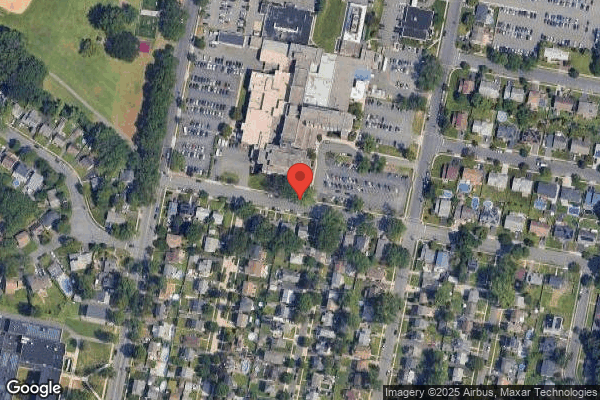
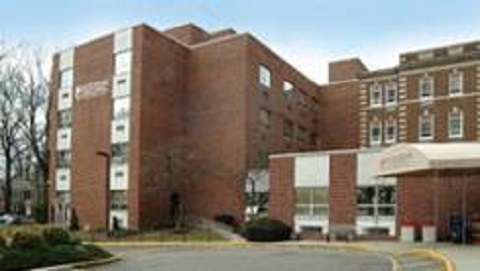
865 STONE STREET, RAHWAY, NJ 07065 (732) 499-6460
For profit - Limited Liability company 24 Beds ALARIS HEALTH Data: November 2025
Trust Grade
90/100
#10 of 344 in NJ
Last Inspection: August 2024

Within standard 12-15 month inspection cycle. Federal law requires annual inspections.

Overview

Care Connection Rahway has an excellent Trust Grade of A, meaning it is highly recommended and performs well compared to other facilities. It ranks #10 out of 344 nursing homes in New Jersey, placing it in the top tier of facilities in the state, and #2 out of 23 in Union County, indicating only one other local option is better. The facility's trend is stable, with only one concern noted in inspections in both 2021 and 2024, which signals consistency in quality. Staffing is a strong point, with a 5-star rating and RN coverage better than 89% of facilities in the state, although staff turnover is at 49%, which is average. However, there are some concerns as well. The facility has been cited for failing to maintain proper kitchen sanitation practices, which could lead to foodborne illnesses, and it also did not provide appropriate incontinence care for a resident, resulting in noticeable odors in the hallway. While these issues are serious, it's worth noting that there have been no fines or life-threatening incidents reported, suggesting that the overall environment is safe and that the facility is committed to improvement.

Trust Score
A
90/100
In New Jersey
#10/344
Top 2%
Safety Record
Low Risk
No red flags
Inspections
Holding Steady
1 → 1 violations
Staff Stability
⚠ Watch
49% turnover. Above average. Higher turnover means staff may not know residents' routines.
Penalties
✓ Good
No fines on record. Clean compliance history, better than most New Jersey facilities.
Skilled Nurses
✓ Good
Each resident gets 91 minutes of Registered Nurse (RN) attention daily — more than 97% of New Jersey nursing homes. RNs are the most trained staff who catch health problems before they become serious.
Violations
✓ Good
Only 2 deficiencies on record. Cleaner than most facilities. Minor issues only.
★★★★★
5.0
Overall Rating
★★★★★
5.0
Staff Levels
★★★★★
5.0
Care Quality
★★★★★
5.0
Inspection Score
Stable
2021: 1 issues
2024: 1 issues

The Good

  • 5-Star Staffing Rating · Excellent nurse staffing levels
  • 5-Star Quality Measures · Strong clinical quality outcomes
  • Full Sprinkler Coverage · Fire safety systems throughout facility
  • No fines on record

Facility shows strength in staffing levels, quality measures, fire safety.

The Bad

Staff Turnover: 49%

Near New Jersey avg (46%)

Higher turnover may affect care consistency

Chain: ALARIS HEALTH

Part of a multi-facility chain

Ask about local staffing decisions and management

The Ugly 2 deficiencies on record

Aug 2024 1 deficiency
CONCERN (D)

Potential for Harm - no one hurt, but risky conditions existed

ADL Care (Tag F0677)

Could have caused harm · This affected 1 resident

**NOTE- TERMS IN BRACKETS HAVE BEEN EDITED TO PROTECT CONFIDENTIALITY** Based on observation, interview, review of records, and review of pertinent documents, it was determined that the facility faile...

Read full inspector narrative →
**NOTE- TERMS IN BRACKETS HAVE BEEN EDITED TO PROTECT CONFIDENTIALITY** Based on observation, interview, review of records, and review of pertinent documents, it was determined that the facility failed to provide appropriate incontinence care for 1 of 2 residents reviewed for Activities of Daily Living ( Resident #75 who required extensive assistance from staff for care. The deficient practice was evidenced by the following: On 08/20/24 around 8:45 AM, the surveyor toured the North Wing of the facility. At 8:49 AM, while touring the unit, a strong malodorous odor of feces was permeated in the hallway next to Resident #75's room. The surveyor observed a Certified Nursing Assistant (CNA) exited the room. Resident #75 was in the bed fully covered. Resident #75 nodded the head to the surveyor's greetings and kept the head down. The surveyor asked the resident how was life here at the facility, Resident #75 did not answered. The surveyor met the CNA in the next hallway and summoned her to the room. The surveyor informed the CNA that she would like to perform a care tour. The CNA entered the room, checked Resident #75 for incontinence. Resident #75 was soiled with urine and feces. The surveyor and the CNA we both observed that Resident #75 had 2 adult briefs on which were saturated with urine Resident #75 had a dressing to the sacral area that was saturated with urine and bloody drainage. The bed padding were saturated with urine. the The CNA informed the surveyor that she reported to work at 7:00 AM this morning, she got report from the nurse and did not receive report from the CNA who worked from the 7:00 PM-7:00 AM shift. The CNA added that she had not provided care yet to Resident #75. The surveyor asked the CNA to call the charge nurse. At 8:55 AM, the charge nurse entered the room and verified that Resident #75 had 2 adult briefs on which were saturated with urine. The blue pads used to protect the bed were all saturated with urine. The surveyor then interviewed the charge nurse who stated that all residents were to have one brief on. When asked how the staff will know, the charge nurse replied, The staff had been educated. On 08/21/24 at 10:30 AM, the surveyor reviewed Resident #75's electronic medical record. The admission Face Sheet (an admission summary) reflected that Resident #75 was admitted to the facility with diagnoses which included but were not limited to; acute respiratory failure with hypoxia, depression, unspecified dementia, unspecified severity without behavioral disturbances, mood disturbance and anxiety. The admission Minimum Set ( MDS) dated [DATE], reflected that Resident #75 received a score of 15 on the Brief Interview for Mental Status (BIMS) indicative of intact cognition. However interview with staff revealed that Resident #75 was confused. Review of Resident #75's plan of care revealed a focus for decline in Activities of daily living Self Care Performance related to Activity Intolerance, impaired balance, limited mobility and musculo-skeletal impairment due to recent hospitalization, initiated 08/02/24. The goal was for Resident #75 will improve current level of function in Mobility, transfers, dressing, toilet use and personal hygiene also initiated 08/02/24. Resident #75 had also a focus for incontinence related to disease process, initiated 08/15/24. The goal was for Resident #75 to decrease frequency of urinary incontinence through the next review date of 10/31/24. The interventions included, uses disposable briefs. Change frequently and as needed. An intervention added on 8/20/24, was that Resident #75 prefers using 2 adult briefs to wick away urine and keep feeling dry. According to the care plan history, the Director of Nursing added this intervention on 8/20/24 after the charge nurse verified with the surveyor that Resident #75 had 2 adult briefs on which were saturated with urine. On 08/21/24 at 09:34 AM, the surveyor interviewed the CNA who cared for Resident #75 on 8/20/24. The CNA stated that Resident #75 can partially assist with care, can stand and pivot and sometimes was aware of their incontinence needs. The CNA stated that the CNA who provided care to the resident from 11:00 PM- 7:00 AM shift left the resident with the 2 briefs on. The CNA added that she got report from the nurse regarding the resident. The CNA stated that on the morning of 8/20/24 she served and set the breakfast tray for Resident #75 and did not checked Resident #75 for incontinence prior to breakfast. The CNA added that she was not familiar with Resident #75's routine. The CNA stated that she did not get report from the CNA who worked the night shift and was not aware of the time that incontinence care was last provided. On 08/21/24 at 10:30 AM, the surveyor again interviewed the Registered Nurse (Charge nurse) who was in the room with the CNA and witnessed Resident #75 with the two adult briefs. The RN stated that Resident #75 should not have 2 adult briefs on. On 08/22/24 at 12:50 PM, the above concerns were discussed with the DON in the presence of the Licensed Nursing Home Administrator and the Regional Nurse. The surveyor asked the DON regarding her expectations regarding incontinence care. In the presence of the survey team, the DON stated that residents were to have one adult incontinent brief on. The DON further added, that heavy wetter at times would have 2 adult briefs on when requested The DON added that Resident #75 would not allowed staff to provide incontinence care while playing cards. The surveyor informed the DON that in the morning of 8/20/24 at 8:40 AM, Resident #75 was in bed fully covered. The CNA admitted that she set up the breakfast tray and did not checked Resident #75 prior to breakfast. According to staff breakfast was served around 7:30 AM-7:45 AM on 8/20/24. Resident #75 assessed by the facility as having impaired cognitive function related to dementia or impaired thought process was totally dependent on staff for all activities of daily living. During the survey, the surveyor attempted to interview Resident #75 on 8/20/24 at 8:35 AM and again on 8/21/24 at 10:30 AM, Resident #75 was unable to proceed with the interview. On 08/23/24 at 11:52 AM, the CNA who worked the 7:00 PM-7:00 AM shift, returned the call. The CNA informed the surveyor that she did not provide care to the resident in the morning. The CNA stated that another CNA who worked the 3:00 PM- 11:00 PM cared for Resident #75 and placed the double briefs on the resident around 12:00 PM. The CNA stated on 8/20/24 around 4:00 AM when she went to the room Resident #75 was sleeping and did not want to be checked for incontinence care. She did not return to the room nor inform the nurse that Resident #75 was not cared for during the shift. According to the interview with the CNA, almost 9 hours had elapsed since Resident #75 was provided with incontinence care. The surveyor then asked the CNA how often that she would observed other residents who were incontinent with 2 briefs on. The CNA stated the residents that were incontinent would have two adult briefs on. The first brief will be placed inside the second brief to contain the urine and would not be snapped. When asked if she reported the concerns to the nurses or the DON she stated, No. A review of the policy for Activities of Daily Living last revised 1/2024, provided by the facility on 8/21/24 indicated the following: Residents shall receive assistance with activities of daily living (ADLs) every shift, as appropriate. The facility's policy for incontinence care indicated that the facility shall provide care for all incontinent residents. NJAC 8:39-27.1(a),
May 2021 1 deficiency
CONCERN (F)

Potential for Harm - no one hurt, but risky conditions existed

Food Safety (Tag F0812)

Could have caused harm · This affected most or all residents

Based on observation, interview and review of documentation provided by the facility, it was determined that the facility failed to maintain proper kitchen sanitation practices and properly store dry ...

Read full inspector narrative →
Based on observation, interview and review of documentation provided by the facility, it was determined that the facility failed to maintain proper kitchen sanitation practices and properly store dry foods in a safe and sanitary environment to prevent the development of food borne illness. The deficient practice was observed and was evidenced by the following: On 05/11/21 at 09:48 AM, during the initial tour of the kitchen in the presence of the Director of Food and Environmental Services (DFES) and the Food Service Manager (FSM), the surveyor observed the following: 1. A Mixer that was on a table next to the robo-coupe had multi-colored substance splash marks on it. The FSM stated that the substance was probably from the robo-coupe as the station was not wiped down well. The wall behind the mixer and robo-coupe table had areas of multiple multi-colored dried substance on the wall. The FSM used a paper towel to wipe the wall, nothing came off on the paper towel. The FSM stated that they should have done a better job cleaning. On the same wall, there was an electronic exterminator trap with multiple areas of multi-colored dried substance on the exterior. The DFES stated we are responsible for the exterior; it should not have the splash marks on it. 2. A standing Mixer located next to the robo-coupe table had multi-colored dried substance splash marks on the outside of it. The arm in which the outside of the mixing bowl rests in, had a black substance and brown debris on it. The FSM used his finger to wipe the arm, the brown debris came off but the black substance did not. The guard located above the mixing bowl had a white substance on it. The FSM stated that it should have been dissembled and cleaned to make sure that there was no cross-contamination. 3. There were several silver serving trays and pans nested on top of each other on the drying rack. The surveyor asked the FSM to separate the silver trays and pans. There was moisture observed between them. The FSM stated that the trays should have been separated to allow proper drying because water can sit and harbor bacteria. 4. In walk-in fridge # 1, there was a bag of opened Mesclun mix salad, an opened bag of classic salad mix and an opened bag of shredded carrots that did not have an opened date. The DFES was unable to locate an opened date on either bag. The DFES stated that they all should have contained an opened date. There was a heavy build up of black and grayish material on the ceiling above the fans. The FSM stated the ceiling should be kept clean so that mold and dust does not fall into the food. 5. The serving tray storage rack had multiple stacked servings trays that had moisture between them when the DFES separated them. He stated that the trays should be completely air dried before stacking and placing on the storage rack. 6. In walk-in fridge #4, there was a heavy build up of black and grayish material on the ceiling above the fans. The FSM stated the ceiling should be kept clean so that mold and dust does not fall into the food. 7. A cook was transferring cooked meat to another tray. The cook had a face mask on with facial hair that was exposed around the side and the bottom of the mask. The cook and the FSM stated that he should have had a beard net on so that his facial hair did not fall in the food and contaminate it. 8. A cook performed hand washing. He turned on the water, wet his hands, applied soap, lathered for 2 seconds, rinsed his hand, dried his hands and then with a new paper towel turn the water off. The surveyor asked the cook to wash his hands again. He turned on the water, wet his hands, applied soap, lathered for 7 seconds, rinsed his hand, dried his hands and then with a new paper towel turn the water off. The FSM stated, the cook needs proper hand washing technique to stop contaminates from getting in food. 9. In the dry storage room, there were two storage bins, the FSM stated one was flour and one was rice. Inside the flour bin there was a blue scoop resting directly on the flour. Inside the rice bin, there was a blue scoop resting directly on the rice. The FSM stated that the scoops should be stored in holders and not be stored inside the bins to avoid contamination. 10. A food service worker (FSW) poured salad dressing into little cups wore a hair net but her bangs were not contained within the hair net. The FSW stated that they always should wear a hair net to cover their hair so hair doesn't get into food. The DFES and the FSM confirmed that the FSW hair bangs were not contained in the hair net as required. A review of the facility's undated Daily Cleaning schedule with person and time, revealed Daily Cleaning: All equipment on Patient service line-Toaster, Turbo chef, Grill, Stove top, Outside of Ovens, Plate warmers, Steam table, Steamers, and all tables. Slicer, Mini Robo-coupe, kettles are to be done by cook using equipment last. [NAME] 3pm to 7 pm shift: Detail cleans daily the Slicer, back wall of station, Mixers (standing & Tabletop models), shelves underneath, and Large Robo coupe. Stockroom clerk: cleaning stockroom, all shelving, soda equipment, flour/rice bins, Scoops to be placed in holders, walk-ins maintained and cleaned, clean stockroom floor. Tues-walk in #1, Wednesday-walk in #3, Friday-walk in # 4. This should be done by the end of each meal period DAILY. A review of the facility's Policy and Procedure Dishes and Silverware, dated 1/01, revealed Cleaning and Sanitizing-Washing Pots and Pans, #6 Allow to air dry. Do not dry with a towel. A review of the facility's undated Policy and Procedure Kitchen Food dating/Expiration Policy, revealed Food dating guidelines: All food in production/preparation will have a 72-hour shelf life. A review of the facility's Policy and Procedure Receiving and Storage of Food and Supplies, dated 5/11/21, revealed Standards/Guidelines: Bulk dry food (Rice, Breadcrumbs, Flour, etc.) scoops should be stored outside of the food in storage bin. Standards/Guidelines: Items that are clearly identifiable do not need to be labeled with name of product but must be dated. A review of the facility's Policy and Procedure Personal Hygiene, with a supersedes date of 3/26/06, revealed Procedure: Hair Nets, [NAME] Guards and Caps to be worn at all times. Hair and beards need to be covered and restrained when preparing food. Hand Washing Procedures: # 3 Lather hands and wrists with soap for at least 20 seconds. NJAC 8:39-17.1(a);17.2(g)
Understanding Severity Codes (click to expand)
Life-Threatening (Immediate Jeopardy)
J - Isolated K - Pattern L - Widespread
Actual Harm
G - Isolated H - Pattern I - Widespread
Potential for Harm
D - Isolated E - Pattern F - Widespread
No Harm (Minor)
A - Isolated B - Pattern C - Widespread

Questions to Ask on Your Visit

  • "Can I speak with families of current residents?"
  • "What's your RN coverage like on weekends and overnight?"

Our Honest Assessment

Strengths
  • • Grade A (90/100). Above average facility, better than most options in New Jersey.
  • • No major safety red flags. No abuse findings, life-threatening violations, or SFF status.
  • • No fines on record. Clean compliance history, better than most New Jersey facilities.
  • • Only 2 deficiencies on record. Cleaner than most facilities. Minor issues only.
Concerns
  • • No significant concerns identified. This facility shows no red flags across CMS ratings, staff turnover, or federal penalties.
Bottom line: Generally positive indicators. Standard due diligence and a personal visit recommended.

About This Facility

What is Care Connection Rahway's CMS Rating?

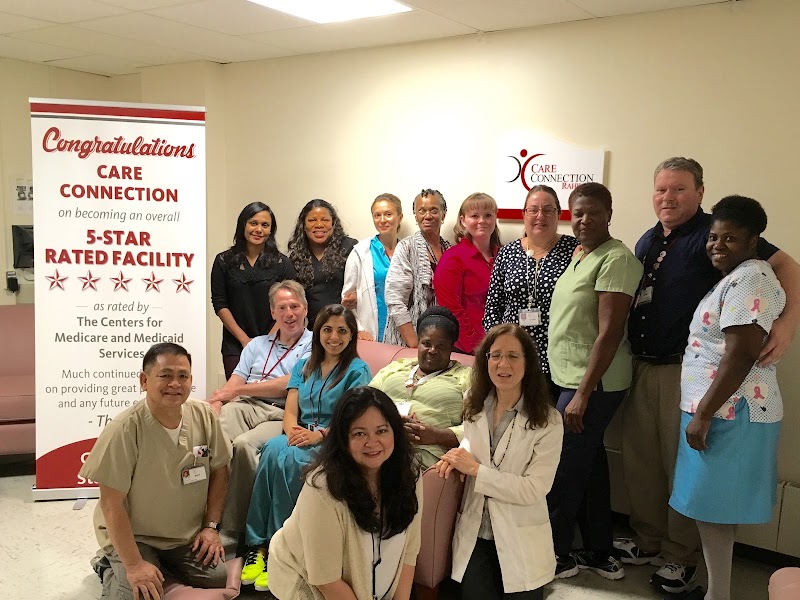
CMS assigns CARE CONNECTION RAHWAY an overall rating of 5 out of 5 stars, which is considered much above average nationally. Within New Jersey, this rating places the facility higher than 99% of the state's 100 nursing homes. This rating reflects solid performance across the metrics CMS uses to evaluate nursing home quality.
How is Care Connection Rahway Staffed?

CMS rates CARE CONNECTION RAHWAY's staffing level at 5 out of 5 stars, which is much above average compared to other nursing homes. Staff turnover is 49%, compared to the New Jersey average of 46%.

What Have Inspectors Found at Care Connection Rahway?

State health inspectors documented 2 deficiencies at CARE CONNECTION RAHWAY during 2021 to 2024. These included: 2 with potential for harm.

Who Owns and Operates Care Connection Rahway?

CARE CONNECTION RAHWAY is owned by a for-profit company. For-profit facilities operate as businesses with obligations to shareholders or private owners. The facility is operated by ALARIS HEALTH, a chain that manages multiple nursing homes. With 24 certified beds and approximately 21 residents (about 88% occupancy), it is a smaller facility located in RAHWAY, New Jersey.

How Does Care Connection Rahway Compare to Other New Jersey Nursing Homes?

Compared to the 100 nursing homes in New Jersey, CARE CONNECTION RAHWAY's overall rating (5 stars) is above the state average of 3.3, staff turnover (49%) is near the state average of 46%, and health inspection rating (5 stars) is much above the national benchmark.

What Should Families Ask When Visiting Care Connection Rahway?

Based on this facility's data, families visiting should ask: "Can I visit during a mealtime to observe dining assistance and food quality?" "How do you handle medical emergencies, and what is your hospital transfer rate?" "Can I speak with family members of current residents about their experience?"

Is Care Connection Rahway Safe?

Based on CMS inspection data, CARE CONNECTION RAHWAY has a clean safety record: no substantiated abuse findings (meaning no confirmed cases of resident harm), no Immediate Jeopardy citations (the most serious violation level indicating risk of serious injury or death), and is not on the Special Focus Facility watch list (a federal program monitoring the lowest-performing 1% of nursing homes). The facility has a 5-star overall rating and ranks #1 of 100 nursing homes in New Jersey. While no facility is perfect, families should still ask about staff-to-resident ratios and recent inspection results during their visit.

Do Nurses at Care Connection Rahway Stick Around?

CARE CONNECTION RAHWAY has a staff turnover rate of 49%, which is about average for New Jersey nursing homes (state average: 46%). Moderate turnover is common in nursing homes, but families should still ask about staff tenure and how the facility maintains care continuity when employees leave.

Was Care Connection Rahway Ever Fined?

CARE CONNECTION RAHWAY has no federal fines on record. CMS issues fines when nursing homes fail to meet care standards or don't correct problems found during inspections. The absence of fines suggests the facility has either maintained compliance or corrected any issues before penalties were assessed. This is a positive indicator, though families should still review recent inspection reports for the full picture.

Is Care Connection Rahway on Any Federal Watch List?

CARE CONNECTION RAHWAY is not on any federal watch list. The most significant is the Special Focus Facility (SFF) program, which identifies the bottom 1% of nursing homes nationally based on persistent, serious quality problems. Not being on this list means the facility has avoided the pattern of deficiencies that triggers enhanced federal oversight. This is a positive indicator, though families should still review the facility's inspection history directly.