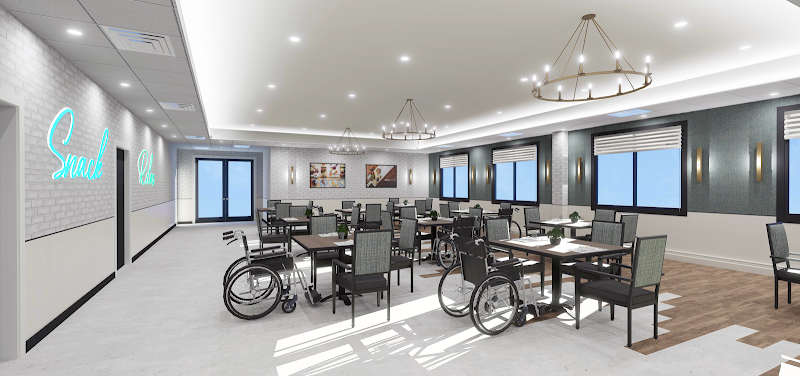
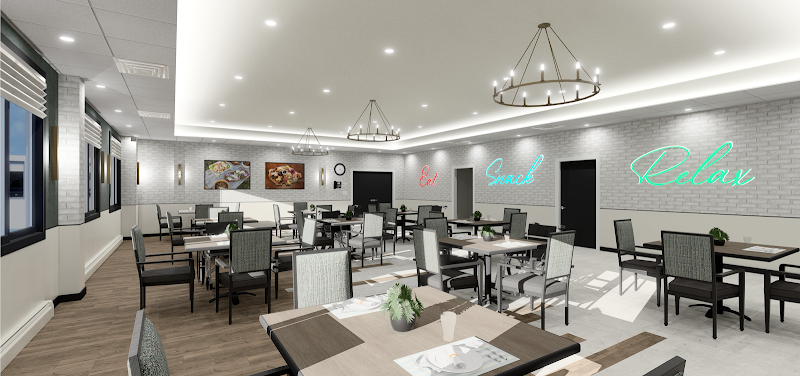
REDBANK CENTER FOR REHABILITATION AND HEALING

100 CHAPIN AVENUE, RED BANK, NJ 07701 (732) 741-8811
For profit - Limited Liability company 180 Beds Independent Data: November 2025
Trust Grade
58/100
#222 of 344 in NJ
Last Inspection: February 2025

Within standard 12-15 month inspection cycle. Federal law requires annual inspections.

Overview

Red Bank Center for Rehabilitation and Healing has a Trust Grade of C, which means it is average and sits in the middle of the pack for nursing homes. It ranks #222 out of 344 facilities in New Jersey, placing it in the bottom half, and #26 out of 33 in Monmouth County, indicating limited local options. The facility's situation is worsening, with issues increasing from 12 in 2023 to 14 in 2025. Staffing is a relative strength, rated 3 out of 5 stars with a turnover rate of 30%, which is lower than the state average, suggesting experienced staff remain. However, the facility has faced some concerning incidents, such as failing to conduct required assessments for all residents and not completing staff performance reviews, which could impact care quality. Overall, while there are some strengths like lower staff turnover, the facility has notable weaknesses that families should consider.

Trust Score
C
58/100
In New Jersey
#222/344
Bottom 36%
Safety Record
Low Risk
No red flags
Inspections
Getting Worse
12 → 14 violations
Staff Stability
○ Average
30% turnover. Near New Jersey's 48% average. Typical for the industry.
Penalties
✓ Good
$3,250 in fines. Lower than most New Jersey facilities. Relatively clean record.
Skilled Nurses
○ Average
Each resident gets 30 minutes of Registered Nurse (RN) attention daily — about average for New Jersey. RNs are the most trained staff who monitor for health changes.
Violations
⚠ Watch
29 deficiencies on record. Higher than average. Multiple issues found across inspections.
★★★☆☆
3.0
Overall Rating
★★★☆☆
3.0
Staff Levels
★★★★★
5.0
Care Quality
★★☆☆☆
2.0
Inspection Score
Stable
2023: 12 issues
2025: 14 issues

The Good

  • 5-Star Quality Measures · Strong clinical quality outcomes
  • Full Sprinkler Coverage · Fire safety systems throughout facility
  • No fines on record
  • Staff turnover below average (30%)

    18 points below New Jersey average of 48%

Facility shows strength in quality measures, fire safety.

The Bad

3-Star Overall Rating

Near New Jersey average (3.3)

Meets federal standards, typical of most facilities

Staff Turnover: 30%

16pts below New Jersey avg (46%)

Typical for the industry

Federal Fines: $3,250

Below median ($33,413)

Minor penalties assessed

The Ugly 29 deficiencies on record

Feb 2025 14 deficiencies
CONCERN (D) 📢 Someone Reported This

A family member, employee, or ombudsman was alarmed enough to file a formal complaint

Potential for Harm - no one hurt, but risky conditions existed

Assessment Accuracy (Tag F0641)

Could have caused harm · This affected 1 resident

**NOTE- TERMS IN BRACKETS HAVE BEEN EDITED TO PROTECT CONFIDENTIALITY** Based on observation, interview, record review, facility policy review, and review of the Resident Assessment Instrument (RAI) M...

Read full inspector narrative →
**NOTE- TERMS IN BRACKETS HAVE BEEN EDITED TO PROTECT CONFIDENTIALITY** Based on observation, interview, record review, facility policy review, and review of the Resident Assessment Instrument (RAI) Manual, the facility failed to ensure three residents (Resident (R) 107, R129, and R92) out of 32 sampled residents had an accurate Minimum Data Set (MDS) assessment. This had the potential to cause the residents to have unmet care needs. Findings include: 1. Review of R107's admission Record, located in the electronic medical record (EMR) under the Profile tab revealed the resident was initially admitted to the facility on [DATE] and had diagnoses that included osteomyelitis, personal history of transient ischemic attack (TIA), and cerebral infarction. Review of R107's Medication Administration Record (MAR) for January 2025 revealed an order for oxygen at 4 LPM [liters per minute] via trach signed off each shift from 01/21/25 to 01/31/25. Another order for tracheostomy care every shift was signed off from 01/21/25 to 01/31/25. Review of R107's quarterly Minimum Data Set (MDS) with an Assessment Reference Date (ARD) of 01/31/25 and located in the resident's EMR under the MDS tab, documented R107 received no oxygen therapy nor tracheostomy care. The resident was rarely/never understood, and the Staff Assessment for Mental Status documented memory impairment. Review of R107's Care Plan located in the Care Plan tab of the EMR revealed a focus area, dated 02/17/25, The resident has a tracheostomy r/t [related to] impaired breathing mechanics. During an observation on 02/23/25 at 11:45 AM, R107 had a tracheostomy tube in place with oxygen flowing at 4 LPM via a tracheostomy mask. During an interview on 02/25/25 at 2:23 PM, the Regional Nurse stated she expected the MDS to reflect tracheostomy cares and oxygen use for someone who received them in the facility in the seven days prior to the MDS ARD date. During an interview on 02/26/25 at 1:06 PM, the Director of Nursing (DON) expected that MDSs were coded accurately. 2. Review of R129's EMR revealed she had an admission Record located in the Profile tab which revealed she was admitted to the facility on [DATE] with diagnosis of multiple fractures of pelvis with stable disruption of pelvic ring, fusion of spine, encounter screening of human immunodeficiency virus, mononeuropathy, retention of urine, pain, laceration of the liver, and laceration of right kidney. According to the Miscellaneous information section of the admission Record, the resident was discharged on 12/19/24 at 12:42 AM to a private home/apartment with home health services. Review of R129's discharge MDS with an ARD date of 12/19/24 and located in the MDS tab of the EMR revealed it was coded under Discharge Status that she went to a short-term general hospital. During an interview on 02/25/25 at 12:55 PM, Licensed Practical Nurse (LPN) 4 was interviewed. She stated the resident was picked up by her grandmother and was discharged either to her mother's home or her grandmother's home. She stated the resident did not go to the hospital. During an interview on 02/25/25 at 2:22 PM, the Regional Nurse. stated the MDS was inaccurately coded because the resident was discharged to a private home and was not discharged to a short-term hospital. 3. Review of R92's admission Record face sheet located in the EMR under the admission Record tab revealed he was admitted to the facility on [DATE] after hospitalization with diagnoses which included quadriplegia, hypertension, and sepsis. Review of the admission assessment dated [DATE] and located under the Progress Notes tab of the EMR, revealed R92 had redness to the sacral area. Review of the skin assessment on 12/02/24 located under the Progress Notes tab of the EMR, revealed the sacral area had an area that was two-three centimeters but was not staged. Review of the Nurse Practitioner (NP) progress notes for 11/29/24 and located under the Progress Notes tab of the EMR, revealed R92 had impaired skin integrity with deep tissue injury and a wound consultation was ordered. Review of R92's admission MDS assessment located in the MDS tab of the EMR with an ARD of 12/04/24 revealed R92 did not have a BIMS score available. Review of the MDS further revealed R92 did not have any unhealed pressure ulcers and was not at risk for developing pressure ulcers. Review of the MDS revealed R92 did not have any other ulcers, wounds, or skin problems. Review of the MDS revealed R92 had nutrition or hydration interventions to manage skin problems, treatments of pressure ulcer/injury care, application of non-surgical dressings other than to feet, and applications of ointments and medications other than to the feet were checked as applicable for R92. Review of the physician orders dated 12/04/24 and located under the Orders tab of the EMR, revealed R92 had an order for wound care to the right buttock wound. Review of the Wound Consult progress notes dated 12/06/24 and located under the Evaluations tab of the EMR, revealed R92 had a stage two pressure injury to the right buttock. During an interview on 02/26/25 at 2:41 PM with the Regional Nurse verified the admission MDS was inaccurate. The Regional Nurse reviewed the admission MDS dated [DATE] and revealed R92 did not have any pressure concerns coded on the MDS. However, the Regional Nurse reviewed the admission skin assessment done on 11/27/24 which revealed there was redness to the sacrum and on the 12/02/24 skin assessment there was a two-to-three-centimeter pressure area to the sacrum but was not staged. The Regional Nurse reviewed the physician orders dated 12/04/24 and further revealed that R92 had orders for treatment to the right buttock and the sacral area was healed. The Regional Nurse revealed the admission MDS should have reflected the pressure area and the risk for further pressure areas. The Regional Nurse revealed the pressure ulcer area on the MDS which showed treatment was correct, but the pressure ulcer area was not coded correctly. The Regional Nurse revealed the MDS should have been coded as a pressure area existing on the sacral and buttock areas. Review of the facility's policy titled, MDS Guideline for Completion, reviewed October 2024, revealed It is the policy of [facility] to ensure accurate and timely completion of MDS . in accordance with Federal and State Operation Manual. Review of the RAI (Resident Assessment Instrument) Manual, dated 10/01/24 and located at https://www.cms.gov/medicare/quality/nursing-home-improvement/resident-assessment-instrument-manual revealed .It is important to note here that information obtained should cover the same observation period as specified by the Minimum Data Set (MDS) items on the assessment and should be validated for accuracy (what the resident's actual status was during that observation period) by the IDT [interdisciplinary team] completing the assessment . NJAC 8:39-33.2(d)
CONCERN (D) 📢 Someone Reported This

A family member, employee, or ombudsman was alarmed enough to file a formal complaint

Potential for Harm - no one hurt, but risky conditions existed

PASARR Coordination (Tag F0644)

Could have caused harm · This affected 1 resident

**NOTE- TERMS IN BRACKETS HAVE BEEN EDITED TO PROTECT CONFIDENTIALITY** Based on record review, interview, and facility policy review, the facility failed to complete a new level one Preadmission Scre...

Read full inspector narrative →
**NOTE- TERMS IN BRACKETS HAVE BEEN EDITED TO PROTECT CONFIDENTIALITY** Based on record review, interview, and facility policy review, the facility failed to complete a new level one Preadmission Screening and Resident Review (PASARR) when a psychiatric diagnosis was identified for one of three residents (Resident (R) 20) and failed to ensure level II was conducted for one of three residents (R101) reviewed for PASARR out of 32 sample residents. This had the potential for a failure to identify what specialized or rehabilitative services the residents needed and whether placement in the facility was appropriate. Findings include: 1. Review of R20's admission Record located in the Profile tab of the electronic medical record (EMR) revealed she was admitted to the facility on [DATE] without a psychiatric diagnosis. Review of R20's Pre-admission Screening and Resident Review (PASARR) Level I Screen, located in the Misc tab of the EMR, revealed the hospital completed the form on 09/01/23 and documented no diagnosis or evidence of a major mental illness. Review of R20's admission Minimum Data Set (MDS) assessment with an Assessment Reference Date (ARD) of 09/11/23 revealed R20 had not been evaluated for a Level II PASARR and determined to have a serious mental illness and/or intellectual disabilities or a related condition. R20 had no schizophrenia diagnosis. Review of R20's diagnoses under the Med Diag tab of R20's EMR revealed the facility entered a diagnosis of schizoaffective disorder on 09/13/23, with an onset date of 09/12/23. Review of a Nursing Progress Note, dated 09/25/23 and located in the Prog Note tab of the EMR, revealed Call was placed to [daughter] in ref [reference] to her mother's psych history. [Daughter] stated that her mother was diagnosed with schizophrenia and bipolar disorder years ago. Review of R20's quarterly MDS assessment with an ARD of 12/02/24 and located in the MDS tab of the EMR, revealed a Brief Interview for Mental Status (BIMS) score of six out of 15 indicating R20 was severely cognitively impaired. She had a diagnosis of schizophrenia (e.g., schizoaffective, and schizophreniform disorders). Review of R20's EMR revealed there was no evidence of a new PASARR level one screen after the facility added the schizoaffective diagnosis. During an interview on 02/25/25 at 11:16 AM, the Regional Nurse stated the MDS Coordinator (MDSC) who entered the schizoaffective diagnosis into the EMR was out of the country. The Regional Nurse stated she would check to see if a new PASARR level one screen had been completed with the addition of the schizoaffective diagnosis. The Regional Nurse stated the facility normally received the PASARR level one screen from the hospital. During an interview on 02/25/25 at 12:14 PM, the Regional Nurse reported she could not find a new PASARR level one screen when the diagnosis was added. The Regional Nurse stated the facility should have completed one at the time of the diagnosis. During an interview on 02/26/25 at 10:34 PM, the Social Services Director (SSD) stated if the social services department was made aware of a new psychiatric diagnosis, they should complete a new PASARR level one screening with the updated information. During an interview on 02/26/25 at 1:06 PM, the Director of Nursing (DON) stated she expected a new PASARR level one screening to be completed with the addition of a new psychiatric diagnosis. 2. Review of R101's admission Record located under the Profile tab of the EMR revealed R101 was originally admitted to the facility on [DATE] with diagnoses that included depression, a history of mental and behavioral disorders, end stage renal disease, and general anxiety disorder. Review of the quarterly MDS with an ARD of 01/27/25 and located under the MDS tab of the EMR, revealed a BIMS score of 15 out of 15 which indicated the resident had intact cognition. Review of R101's PASARR Level I Screening Tool, dated 02/15/24 and located under the Miscellaneous tab of the EMR, indicated a Positive Screen for MI (mental illness) based on responses to questions in Section II. Screening Outcomes, located in Section IV, revealed R101 was found to have a Positive screening under Section II and should have been referred for a level II. During an interview on 02/26/25 at 9:22 AM the SSD confirmed that the facility was aware of R101's positive Level I PASARR screening. She stated that the facility had been working with their psychological services department to get the resident scheduled for a Level II screening. In a subsequent interview, SSD stated that the facility was allowed to admit residents who had a positive screening but reiterated that she was working to get the resident a Level II screening. During an interview on 02/26/25 at 9:30 AM, the Assistance Director of Nursing (ADON) confirmed that the PASARR Level II Screening was requested yesterday, which would have been 02/25/25. Review of the facility's undated policy titled, Screen/ Pre-admission Screen Resident Review (PASRR) Process, revealed If an issue is identified, it is reported to the Director of Social Services for further evaluation and consultation . Social Services is responsible receiving and confirming all PASSR Level I are completely correctly and if a Level II review is required. NJAC 8:39-40.3(d)
CONCERN (D) 📢 Someone Reported This

A family member, employee, or ombudsman was alarmed enough to file a formal complaint

Potential for Harm - no one hurt, but risky conditions existed

Comprehensive Care Plan (Tag F0656)

Could have caused harm · This affected 1 resident

**NOTE- TERMS IN BRACKETS HAVE BEEN EDITED TO PROTECT CONFIDENTIALITY** Based on record review, interviews, and facility policy review, the facility failed to ensure a comprehensive care plan was deve...

Read full inspector narrative →
**NOTE- TERMS IN BRACKETS HAVE BEEN EDITED TO PROTECT CONFIDENTIALITY** Based on record review, interviews, and facility policy review, the facility failed to ensure a comprehensive care plan was developed for three of 32 sample residents (Resident (R) 13, R56, and R121) reviewed for care plans specific to vision, oxygen use, and boots for skin protection. The failures had the potential to affect resident care. Findings include: 1. Review of R13's Profile tab of the electronic medical record (EMR) revealed he was admitted to the facility on [DATE] with diagnoses that included end stage renal disease and heart failure. Review of R13's annual Minimum Data Set (MDS) with an Assessment Reference Date (ARD) of 01/13/25 and located in the resident's EMR MDS tab, revealed R13 had a Brief Interview for Mental Status (BIMS) score of 14 out of 15 which indicated intact cognition. The MDS documented R13 had impaired vision. Review of the Care Area Assessment (CAA) revealed, Triggers due to visual deficits. This puts resident at risk for falls and safety issues and decreased socialization and quality of life. Staff to provide support as needed to maximize his independence by informing him of item placement, who they are and providing adequate lighting. Review of the Orders tab of R13's EMR revealed an order, dated 01/25/25, for ophthalmology consult as needed blurry vision. Review of R13's Care Plan, located in the Care Plan tab of the EMR, revealed no documentation of vision impairment or associated interventions. During an interview on 02/23/25 at 10:19 AM, R13 reported he had cataracts which needed surgery. R13 reported he was unable to clearly see the TV in his room. During an interview on 02/26/25 at 12:44 PM, the Licensed Practical Nurse (LPN) Unit Manager (UM) 1 stated the unit managers initiated the care plans upon a resident's admission and updated them with changes. UM1 reported she was unfamiliar with CAAs. During an interview on 02/26/25 at 12:58 PM, the Regional Nurse reported if a CAA was triggered on the MDS, it was expected to be on the care plan. The MDS Coordinator (MDSC) was expected to review and sign off on the care plans. During an interview on 02/26/25 at 1:06 PM, the Director of Nursing (DON) reported a CAA area was expected to be on the care plan. 2. Review of R56's Profile tab of the EMR revealed she was initially admitted to the facility on [DATE] and had a hospital stay from 12/28/24 to 01/06/25. R56 had diagnoses of bronchiectasis, with onset date of 01/07/25, and acute respiratory failure with hypercapnia, dated 01/09/25. Review of R56's quarterly MDS with an ARD of 12/16/24 and located in the resident's EMR MDS tab, revealed R56 had a BIMS score of 13 out of 15 which indicated intact cognition. R56 did not utilize oxygen. Review of the Orders tab of R56's EMR revealed an order, dated 01/06/25, for oxygen at 2 LPM [liters per minute] via nasal cannula every shift. Review of R56's five-day MDS with an ARD of 01/13/25 and located in the resident's EMR section titled MDS revealed R56 had a BIMS score of 12 out of 15 which indicated moderately impaired cognition. R56 utilized oxygen. Review of R56's Care Plan located in the Care Plan tab of the EMR, revealed no documentation of the resident's need for supplemental oxygen. During a concurrent observation and interview on 02/23/25 at 11:59 AM, R56 was observed lying in bed with an oxygen concentrator administering oxygen at 5-LPM via a nasal cannula. R56 reported she had used oxygen since returning from the hospital. R56 did not know what her orders were for the oxygen setting. During an interview on 02/24/25 at 2:04 PM, LPN5 reported R56 had orders for oxygen to be delivered at 2-LPM and changed the oxygen concentrator setting from 3.5 LPM to 2-LPM. During an interview on 02/26/25 at 12:28 PM, LPN3 stated he was not involved in the care planning process and was unsure where to look in the EMR to find care plans. During an interview on 02/26/25 at 12:33 PM, Certified Nurse Aide (CNA) 6 stated if she wanted to know how to care for a resident, she referred to their hard chart or asked the nurse. CNA6 was unaware of anywhere she could look for a plan of care in the EMR. During an interview on 02/26/25 at 12:44 PM, UM1 stated the unit managers initiated the care plans upon a resident's admission and updated them with changes. UM1 reported oxygen should have been addressed on R56's Care Plan and verified it was not addressed. During an interview on 02/26/25 at 1:06 PM, the DON reported oxygen use was expected to be on the care plan. 3. Review of R121's admission MDS located in the MDS tab of the EMR with an ARD of 01/13/25, R121 had a BIMS score of 11 out of 15 which indicated moderately impaired cognition. Review further revealed R121 hand upper and lower impaired range of motion (ROM) to one side and was dependent on lower body dressing and putting on footwear. Review of the MDS revealed R121 was at risk for pressure sores. Review of the physician's order, dated 02/02/25, located under the Orders tab of the EMR revealed an order for heel protector boots to both feet while in bed to ensure skin and joint integrity and R121 needed assistance to apply and remove the boots. Review of the physician orders revealed an order, dated 02/02/25, for Multipodus boots to both feet while out of bed. Review R121's comprehensive care plan located under the Care Plan tab of the EMR with an initiated date of 01/06/25 revealed a problem was addressed for limited ROM but there was no intervention for green boots or black boots. Review of the care plan further revealed a problem was listed for dependence on staff for meeting Activities of Daily Living (ADL) and the interventions did not include the use of green boots or black boots. Review of the care plan further revealed a problem was listed for R121 for being at risk of skin impairment but no interventions for the boots were listed. During an interview on 02/25/25 at 10:12 AM, UM1 revealed it was CNA's responsibility to put the boots on R121. UM1 revealed the CNA point of care screen and verified there were no interventions for the boots to alert the CNA of the need for them. UM1 revealed it was the unit manager's responsibility to put the information into the computer for the CNA's and it had not been added. During an interview on 02/26/25 at 1:23 PM, the DON revealed all residents' care plan should be followed and the care plan was the basis of how staff should care for them. The DON revealed if the care plan was not followed or not accurate then a resident's care may not be what the resident needed. The DON revealed the care plan was like a recipe for how to take care of a resident. During an interview on 02/26/25 at 3:14 PM, the Regional Nurse revealed care plans should be followed. The Regional Nurse revealed the purpose of the care plan was to establish guidelines on how to care for a resident. The Regional Nurse revealed the nurse who admitted the resident would initiate the care plan then each discipline would follow up. The Regional Nurse revealed the MDS coordinator was responsible for verifying the care plan was in place and that it was accurate. Review of the facility's policy titled Care Planning with a revised date of 09/24, revealed an individualized comprehensive care plan would be developed for each resident. The policy revealed the comprehensive care plan was based on a thorough assessment that identified the highest level of functioning the resident may be expected to attain. The policy further revealed it reflected the residents' wishes regarding their care. The policy revealed identified problems would have interventions that were targeted and meaningful Areas of concern that are triggered during the resident assessment are evaluated using specific assessment tools (including Care Area Assessments) before interventions are added to the care plan .The Care Planning/ Interdisciplinary Team is responsible for the review and updating of care plans . when the resident has been readmitted to the facility from a hospital stay. Review of the facility's policy titled, MDS Guideline for Completion, revised October 2024, revealed that MDS director or MDS assessors will be responsible to ensure that all CAAs are completed and addressed in residents care plan before signing section V0100B. It also stated, The IDT [interdisciplinary team] is responsible for reviewing all resident strengths, problems, needs and plan of care to insure the delivery of appropriate and quality care. NJAC 8:39-11.2(e)thru(i) NJAC 8:39-27.1(a)
CONCERN (D) 📢 Someone Reported This

A family member, employee, or ombudsman was alarmed enough to file a formal complaint

Potential for Harm - no one hurt, but risky conditions existed

ADL Care (Tag F0677)

Could have caused harm · This affected 1 resident

**NOTE- TERMS IN BRACKETS HAVE BEEN EDITED TO PROTECT CONFIDENTIALITY** Based on observations, record review, interviews, and facility policy review, the facility failed to ensure proper incontinence ...

Read full inspector narrative →
**NOTE- TERMS IN BRACKETS HAVE BEEN EDITED TO PROTECT CONFIDENTIALITY** Based on observations, record review, interviews, and facility policy review, the facility failed to ensure proper incontinence care assistance to avoid double briefing for one of two residents (Resident (R) 92) reviewed for incontinence care of 32 sample residents. This failure put R92 at risk of pressure sore formation and skin breakdown. Findings include: Review of R92's admission Record face sheet located in the electronic medical record (EMR) under the admission Record tab revealed he was admitted to the facility on [DATE] after hospitalization with diagnoses of non-traumatic acute subdural hemorrhage, anoxic brain damage, chronic obstructive pulmonary disease (COPD), atrial fibrillation, convulsions, acute embolism and thrombosis of deep veins, quadriplegia, hypertension, and sepsis. Review of R92's admission Minimum Data Set (MDS) assessment located in the MDS tab of the EMR with an Assessment Reference Date (ARD) of 12/04/24 revealed R92 did not have a Brief Interview for Mental Status (BIMS) available. Review of the MDS further revealed R92 was dependent on staff with all Activities of Daily Living (ADL). R92 was totally dependent on staff for toileting hygiene. Review of the MDS further revealed R92 was always incontinent of bowel and bladder and was not a candidate for a bowel and bladder program. Review of R92's comprehensive care plan located in the Care Plan tab of the EMR with an initiated date of 11/27/24 and revised on 12/04/24 revealed a problem for dependence on staff for meeting all R92's daily living needs which included toileting, dressing, personal hygiene, bathing, repositioning, bowel, and bladder elimination. Review of R92's comprehensive care plan located in the Care Plan tab of the EMR and initiated on 12/04/24 further revealed a problem for bowel and bladder incontinence with an intervention for pericare after every incontinent episode. Review of R92's comprehensive care plan located in the Care Plan tab of the EMR and initiated on 12/04/24 further revealed a problem for incontinent of bladder and was at risk for urinary tract infections. The care plan revealed the peri area was to be cleaned after each incontinent episode and the peri area was to be monitored for skin integrity. Review of the physician orders, dated 12/31/24, located under the Orders tab of the EMR, revealed an order for zinc oxide to the bilateral buttocks to be done every shift for protection. During an interview on 02/23/25 at 4:21 PM Family Member (FM) 1 revealed she had a concern with R92 being double briefed and showed this surveyor that he was indeed double briefed. During an observation and interview on 02/23/25 at 4:39 PM, Licensed Practical Nurse (LPN) 7 was going to get a Certified Nurse Aide (CNA) to change R92 but came back into the room without the CNA, who was on their lunch break. Observation further revealed LPN7 applied personal protective equipment (PPE) and checked R92's brief and verified he was double briefed, and the blue inner brief was soaked with urine and the yellow brief was slightly wet. During an interview on 02/23/25 at 4:45 PM, LPN7 revealed to her knowledge residents should not be double briefed and it was so wrong because it could cause skin breakdown. During an interview on 02/23/25 at 4:45 PM, CNA3 revealed a resident should not be double briefed and he did not have R92 that day. CNA3 further revealed if a resident was double briefed and not changed when wet, the resident was more at risk for a bedsore to worsen or develop a new pressure sore. During an observation on 02/24/25 at 1:43 PM, CNA4 was giving a bed bath to R92, and he was double briefed again. Observation further revealed the blue inner brief was wet, but the yellow outer brief was dry. During an interview on 02/25/25 at 1:23 PM, the Director of Nursing (DON) revealed no residents should be double briefed unless they have requested to be. The DON revealed there was only one resident in the facility who had requested to be double briefed, and it was not R92. The DON further revealed if a resident was double briefed it could cause skin breakdown and if a resident had a history of pressure sores, then it would put them more at risk of recurrent pressure sores. Review of the facility's undated policy titled, Incontinence Care Plan revealed it was the policy of the facility to provide care to residents who were incontinent of bowel and bladder. The policy further revealed CNA' s would follow a residents incontinence program as instructed in the CNA task. The policy further revealed residents should be checked for incontinence at least every two hours and the residents should be toileted as needed. The policy revealed brief, and pads should be used appropriately with one pad on the residents' bed and one diaper on the residents. The policy further revealed that briefs and pads were to be changed immediately when wet or soiled and pericare was to be completed. NJAC 8:39-4.1(a) NJAC 8:39-21.1(a)
CONCERN (D) 📢 Someone Reported This

A family member, employee, or ombudsman was alarmed enough to file a formal complaint

Potential for Harm - no one hurt, but risky conditions existed

Quality of Care (Tag F0684)

Could have caused harm · This affected 1 resident

**NOTE- TERMS IN BRACKETS HAVE BEEN EDITED TO PROTECT CONFIDENTIALITY** Based on observations, interviews, record reviews, and facility policy review, the facility failed to ensure physician orders we...

Read full inspector narrative →
**NOTE- TERMS IN BRACKETS HAVE BEEN EDITED TO PROTECT CONFIDENTIALITY** Based on observations, interviews, record reviews, and facility policy review, the facility failed to ensure physician orders were followed for two of 32 sample residents (Resident (R) 121 and R89) reviewed for orders regarding boots to prevent skin breakdown for R121 and dressing change for R89. This failure put residents at risk for skin breakdown, infection, and worsening contractures. Findings include: 1. Review of R121's admission Record face sheet located in the electronic medical record (EMR) under the admission Record tab, revealed R121 was admitted to the facility on [DATE] with diagnoses of zygomatic fracture right side, stable burst facture of fourth thoracic vertebra, stable burst fracture of the first lumbar vertebra, and wedge compression fracture of the second lumbar vertebra. Review of R121's admission Minimum Data Set (MDS) located in the MDS tab of the EMR with an Assessment Reference Date (ARD) of 01/13/25 revealed R121 had a Brief Interview for Mental Status (BIMS) score of 11 out of 15 which indicated moderately impaired cognition. Review further revealed R121 had hand upper and lower impaired range of motion (ROM) to one side and was dependent on lower body dressing and putting on footwear. Review of the MDS revealed R121 was at risk for pressure sores. Review of R121's comprehensive care plan located under the Care Plan tab of the EMR with an initiated date of 01/06/25 revealed a problem was addressed for limited ROM but there was no intervention for green boots or black boots. Review of the care plan further revealed a problem was listed for dependence on staff for meeting Activities of Daily Living (ADL) and the interventions did not include the use of green boots or black boots. Review of the care plan further revealed a problem was listed for R121 for being at risk of skin impairment but no interventions for the boots were listed. Review of the physician's order, dated 02/02/25, located under the Orders tab of the EMR revealed an order for heel protector boots to both feet while in bed to ensure skin and joint integrity and R121 needed assistance to apply and remove the boots. Review of the physician orders, dated 02/02/25, revealed an order for Multipodus boots to both feet while out of bed. During an observation on 02/23/25 at 4:14 PM, R121 was lying in bed and did not have any boots on his feet. During an observation on 02/24/25 at 8:38 AM, R121 was lying in bed and did not have any boots on his feet. During an observation on 02/24/25 at 10:38 AM, R121 was lying in bed and did not have any boots on his feet. Observation further revealed there were green boots lying on the chair in the room. During an observation on 02/24/25 at 1:04 PM, R121 was lying in bed and did not have any boots on his feet. Observation further revealed there were green boots lying in the chair. During an observation on 02/25/25 at 10:05 AM, R121 was lying in bed and did not have any boots on his feet. Observation further revealed green and black boots were on the chair in the room. During an interview on 02/25/25 at 10:06 AM Certified Nursing Assistant (CNA) 4 revealed that the green boots were to be used when a resident was in bed and the black boots were to be used when the resident was up in a wheelchair. CNA4 revealed R121 had come to the unit on Friday, and she had not taken care of him before. CNA4 revealed she had seen the boots lying on the chair but did not know his schedule. CNA4 revealed she did not get any report from the nurses yesterday or today about his care. CNA4 revealed, after she reviewed the tablet that had the care needs of R121, there was not any indication that R121 needed to have the boots on his feet. CNA4 tried to look at the care plan on the tablet but she did not know how to get to the care plan to advance to the next page. The CNA4 confirmed the boots were not on the resident. During an interview on 02/25/25 at 10:12 AM with the Licensed Practical Nurse (LPN) Unit Manager (UM) 1 revealed it was CNA's responsibility to put the boots on R121. UM1 revealed the nurse told the CNA what the care needs were for R121, and it should be on the tablet. UM1 revealed R121 received green boots to his feet when in bed to prevent skin breakdown. UM1 further revealed R121 was to wear the black [NAME] boots on his feet when he was up in the wheelchair. UM1 reviewed the CNA point of care screen and verified there were no interventions for the boots to alert the CNA of the need for them. UM1 revealed it was the unit manager's responsibility to put the information into the computer for the CNA's and it had not been added. During an interview on 02/26/25 at 9:29 AM, the Therapy Director revealed R121 had been admitted to the facility from the hospital and the boots were already established from there and the therapy department did not have to address them. The Therapy Director further revealed the heel protectors should have been worn in bed for offloading to prevent skin breakdown. The Therapy director further revealed R121 was at risk of skin breakdown if boots were not being utilized. During an interview on 02/26/25 at 1:23 PM, the Director of Nursing (DON) revealed after an order was obtained it should be documented in the task section so the CNA's can see what the residents' needs were. The DON revealed if the order was not transferred over to the task, then the CNA might not be able to see the care needs. During an interview on 02/26/25 at 3:14 PM, the Regional Nurse revealed R121 had an order for the green boots to be worn when he was in bed. The Regional Nurse further revealed the green boots, and the black boots were not on the comprehensive care plan and should be an intervention for the resident. The Regional Nurse revealed R121 was at risk for skin breakdown and the boots should be utilized on the feet. 2. Review of R89's admission Record located under the Profile tab of the electronic medical record revealed R89 was originally admitted to the facility on [DATE] with diagnoses that included diabetes mellitus due to underlying condition with diabetic chronic kidney disease, end stage renal disease, sepsis due to methicillin resistant staphylococcus Aurea (MRSA), and MRSA infection as the cause of diseases. During an observation on 02/23/25 at 11:20 AM, R89 was ambulating, unassisted, throughout the 4th floor. The resident was not wearing a top and a large bandage could be seen on the resident's left pectoral. Hanging from the bandage was a peripherally inserted central catheter (PICC) line along with a clamp. Upon closer assessment at 11:27 AM, the bandage revealed a date of 02/14/25. Review of the admission MDS with an ARD of 01/31/25 located under the MDS tab of the EMR revealed a BIMS score of 15 out of 15 which indicated R89 was cognitively intact. During an interview on 02/23/25 at 3:03 PM, R89 stated he did not recall the last time his bandage was changed but advised that he has had no complications related to his PICC line. Review of R89's orders located under the Orders tab of the EMR revealed the following dressing change orders: 1) Change PICC/Midline dressing once weekly, every night shift every Fri with a start date of 01/31/25; 2) R [right] chest PICC dressing change weekly on Wed 7-3 shift, every day shift every Wed starting on 01/12/24. Review of the Medication Administration Record (MAR) for the month of February 2025 revealed that the dressing change was performed on 02/07/25, 02/12/25, 02/14/25, 02/19/25, 02/21/25, 02/26/25. During an observation and interview on 02/24/25 at 3:45 PM, UM2 was shown the bandage dated 02/14/25 and confirmed that bandages are typically changed weekly. UM2 confirmed that per the order and administration record, the bandage had not been changed. During an interview on 02/25/24 at 10:26 AM, LPN9 stated that she entered the order for the bandage to be conducted weekly on Fridays. She was asked about the duplicate order to change bandages on Wednesdays, and she stated she was not aware of another order. LPN9 was also asked why the MAR had been documented as if the wound change occurred and she confirmed that she did not know. Review of the facility's policy titled, Dressings, Dry/Clean, dated June 2024, revealed its purpose was to provide guidelines for the application of dry, clean dressings. Per the policy, to prepare for a dressing change staff must verify there's a physician's order; review care, orders, and diagnoses to determine if there are special resident needs; check the treatment record; and lastly assemble the equipment and supplies as needed. 1. Adjust bedside stand to waist level. Clean bedside stand. Establish a clean field. 2. Place the clean equipment on the bedside stand. Arrange the supplies so they can be easily reached. 3. Tape a biohazard or plastic bag on the bedside stand or open on the bed. 4. Pull strips of tape adequate for securing dressing at the end of the procedure and add date, time, and initials. Place on edge of bedside table to enable easy access when needed. Review of the facility's policy titled, Adaptive Devices with a revised date of 10/24 revealed adaptive devices were utilized to maximize positioning comfort and function. Review further revealed the LPN would document adaptive device on the CNA accountability record and on the interdisciplinary care plan. NJAC 8:39-27.1(a)
CONCERN (D) 📢 Someone Reported This

A family member, employee, or ombudsman was alarmed enough to file a formal complaint

Potential for Harm - no one hurt, but risky conditions existed

Respiratory Care (Tag F0695)

Could have caused harm · This affected 1 resident

**NOTE- TERMS IN BRACKETS HAVE BEEN EDITED TO PROTECT CONFIDENTIALITY** Based on observation, interview, record review, and policy review, the facility failed to administer oxygen at the physician pre...

Read full inspector narrative →
**NOTE- TERMS IN BRACKETS HAVE BEEN EDITED TO PROTECT CONFIDENTIALITY** Based on observation, interview, record review, and policy review, the facility failed to administer oxygen at the physician prescribed dose for one of six residents (Residents (R) 56) reviewed for respiratory care out of 32 sample residents. This had the potential to cause residents' respiratory distress. Findings include: Review of R56's Profile tab of the electronic medical record (EMR) revealed she was initially admitted to the facility on [DATE] and had a hospital stay from 12/28/24 to 01/06/25. R56 had diagnoses of bronchiectasis, with onset date of 01/07/25, and acute respiratory failure with hypercapnia, dated 01/09/25. Review of the Orders tab of R56's EMR revealed an order, dated 01/06/25, for oxygen at 2 LPM [liters per minute] via nasal cannula every shift. Review of R56's five-day Minimum Data Set (MDS) assessment with an Assessment Reference Date (ARD) of 01/13/25 and located in the MDS tab of the EMR, revealed a BIMS score of 12 out of 15 which indicated R56 had moderately impaired cognition. R56 utilized oxygen. Review of R56's Medication Administration Record (MAR), dated February 2025 and located in the EMR under the Orders tab, revealed nurses signed off the order for oxygen at 2 LPM every shift and documented an oxygen saturation level. During a concurrent observation and interview on 02/23/25 at 11:59 AM, R56 was observed lying in bed with an oxygen concentrator administering oxygen at five LPM via a nasal cannula. R56 reported she had used oxygen since returning from the hospital. R56 did not know what her orders were for the oxygen setting. During an observation on 02/24/25 at 12:51 PM, R56 was in bed with her oxygen concentrator set at 3.5 LPM delivering oxygen via nasal cannula. During an observation and interview on 02/24/25 at 2:04 PM, Licensed Practical Nurse (LPN) 5 reported R56 had orders for oxygen to be delivered at two LPM, verified the concentrator was set incorrectly, and changed the oxygen concentrator setting from 3.5 LPM to two LPM. During an interview on 02/26/25 at 1:06 PM, the Director of Nursing (DON) stated she expected oxygen orders to be followed. The DON stated high settings of oxygen delivery could be problematic for residents with chronic obstructive pulmonary disease (COPD) or when trying to wean a resident off of oxygen. Review of the facility's policy titled, Oxygen Administration, reviewed October 2024, revealed staff were to, Verify that there is a physician's order for this procedure. Review the physician's orders or facility protocol for oxygen administration . adjust the oxygen delivery device so that it is comfortable for the resident and the proper flow of oxygen is being administered. NJAC 8:39-27.1(a)
CONCERN (D) 📢 Someone Reported This

A family member, employee, or ombudsman was alarmed enough to file a formal complaint

Potential for Harm - no one hurt, but risky conditions existed

Deficiency F0698 (Tag F0698)

Could have caused harm · This affected 1 resident

**NOTE- TERMS IN BRACKETS HAVE BEEN EDITED TO PROTECT CONFIDENTIALITY** Based on record review, interview, and facility policy review, the facility failed to ensure a meal or snack was provided and th...

Read full inspector narrative →
**NOTE- TERMS IN BRACKETS HAVE BEEN EDITED TO PROTECT CONFIDENTIALITY** Based on record review, interview, and facility policy review, the facility failed to ensure a meal or snack was provided and that there was ongoing pre- and post-dialysis communication for a resident receiving dialysis three times a week for one of one resident (Resident (R) 13) reviewed for dialysis out of 32 sample residents. This had the potential to affect the nutritional status and health of residents receiving dialysis. Findings include: Review of R13's admission Record located in the electronic medical record (EMR) under the Profile tab, revealed he was admitted to the facility on [DATE] with diagnoses that included end stage renal disease and heart failure. Review of R13's Care Plan section of the EMR revealed a focus area, dated 07/20/23, [Resident] needs hemodialysis three times a week with interventions including: Vital signs are taken before and after dialysis. The Care Plan also included a focus for R13 being at risk for altered weight status [related to] edema . [hemodialysis]/fluid fluctuations. Review of R13's annual Minimum Data Set (MDS) with an Assessment Reference Date (ARD) of 01/13/25 and located in the resident's EMR MDS tab, revealed a Brief Interview for Mental Status (BIMS) score of 14 out of 15 which indicated intact cognition. R13 received dialysis. Review of the Orders tab of R13's EMR, revealed an order, dated 02/20/25, dialysis pick up - 5:30 am one time a day every Tue, Thu, Sat. Review of a Dialysis binder, located at the nurse's station for R13, revealed it contained Dialysis and Nursing Home Hand-Off Communication Tool papers in it for each dialysis day. The papers were pre-filled with R13's name, code status, allergies, diet, current type of precautions, contact person, and nursing home name and number. There were areas above the prefilled line containing the facility's name and number to fill in vital signs, what the last meal or snack was, and the time it was consumed. The middle section, below the nursing facility's name and number, and above To be completed by dialysis facility addressed dialysis access concerns, medications taken, and changes since last dialysis treatment. The areas had yes/no boxes to check. Further review of the Dialysis binder for R13 revealed that, of the 19 papers filled out for dialysis days between 01/11/25 and 02/25/25, fifteen contained no documentation of vital signs taken before dialysis. None of the papers documented any meal or snack. Seventeen of the papers had no boxes checked regarding whether the resident had taken any medications or had any changes since the last dialysis treatment. During an interview on 02/23/25 at 10:26 AM, R13 reported receiving dialysis for eleven years. R13 stated he went out to dialysis at 5:30 AM on Tuesdays, Thursdays, and Saturdays without receiving a snack. I'm very hungry when I return around 11:00 AM. During an interview on 02/25/25 at 4:15 PM, Licensed Practical Nurse (LPN) 4 stated dialysis communication forms were in a binder, which went with the resident to dialysis. LPN4 was unsure who filled out the top portion of the forms, above the to be completed by dialysis facility area since she did not send residents to dialysis. She stated when R13 returned from dialysis, LPN4 reviewed the bottom part of the communication form, which dialysis filled out, wrote a progress note, and checked his vital signs. During an interview on 02/25/25 at 4:20 PM, LPN3 stated the facility should fill out the top of the form above the to be completed by dialysis facility. LPN3 stated when LPN3 worked the evening shift, dietary staff did not send food in the evening for the residents to eat the morning of dialysis. During an interview on 02/25/25 at 4:24 PM, Unit Manager (UM) 1 stated that dialysis filled out the communication form under the nursing home name but above to be completed by dialysis facility. UM1 stated this section included medications taken, new medical problems or falls, hospitalizations or emergency department visits, labs drawn since last dialysis, and new medications or vaccinations. During an interview on 02/25/25 at 4:43 PM, the Director of Nursing (DON) stated the nurse sending the resident to dialysis was expected to fill out the top of the dialysis communication form all the way to the area to be completed by dialysis for ongoing communication with dialysis. During an interview on 02/26/25 at 9:39 AM, LPN8 reported the nursing staff made R13 tea each morning before dialysis. LPN8 stated that sometimes R13 took crackers in the morning before dialysis, but sometimes he refused. LPN8 stated dietary staff did not send up an early breakfast tray or snack. She stated the dialysis binder, with the communication forms, went with R13 to dialysis. She stated the top of the communication forms had prefilled information. LPN8 stated nursing documented vital signs prior to dialysis. She stated the rest of the form was only filled out with changes, and there were no recent changes. During an interview on 02/26/25 at 11:00 AM, the Dietary Manager (DM) stated if a resident went out to dialysis before 6:00 AM, dietary sent a bagged breakfast up to the unit the evening before, which nursing kept in the refrigerator until the next morning. DM stated if a resident went out at 6:00 AM or later, dietary was onsite and sent up an early breakfast tray. Review of the facility's policy titled, Meals for Dialysis Residents, created 03/24, revealed Nursing Services will notify the Food Services Department when a resident will be at dialysis during meal times. Such information will include, but is not necessarily limited to: need for an early meal tray; which meal(s) the resident will miss; how long the resident will be absent; and which meal the resident will be served upon returning to the facility. Review of the facility's Dialysis Procedure, reviewed 01/25, revealed Communication with the Dialysis Center will be maintained through the use of a communication book. The book is located at the nurse's station and is clearly labeled with the resident's name. The communication book is sent with the resident each time they are transported to dialysis. The nursing staff and the Dialysis Center will communicate any pertinent resident information through the communication book. In addition, the Dietician will be made aware to provide snacks/meals as needed. NJAC 8:39-2.9 NJAC 8:39-27.1(a)
CONCERN (D) 📢 Someone Reported This

A family member, employee, or ombudsman was alarmed enough to file a formal complaint

Potential for Harm - no one hurt, but risky conditions existed

Medication Errors (Tag F0758)

Could have caused harm · This affected 1 resident

**NOTE- TERMS IN BRACKETS HAVE BEEN EDITED TO PROTECT CONFIDENTIALITY** Based on record review and interviews, the facility failed to ensure PRN (as needed) psychotropics were not prescribed beyond 14...

Read full inspector narrative →
**NOTE- TERMS IN BRACKETS HAVE BEEN EDITED TO PROTECT CONFIDENTIALITY** Based on record review and interviews, the facility failed to ensure PRN (as needed) psychotropics were not prescribed beyond 14 days without documented rational, for one of five residents (Resident (R) 101) reviewed for unnecessary medications of 32 sample residents. This failure had the potential to contribute to excessive medication administration. Findings include: Review of the admission Record located under the Profile tab of the electronic medical record (EMR), revealed R101 was originally admitted to the facility on [DATE] with diagnoses that included depression, a history of mental and behavioral disorders, end stage renal disease, and general anxiety disorder. Review of the quarterly Minimum Data Set (MDS) with an Assessment Reference Date (ARD) of 01/27/25 and located under the MDS tab of the EMR, revealed a Brief Interview for Mental Status (BIMS) score of 15 out of 15 which indicated the resident had intact cognition. Review of R101's Order tab of the EMR, revealed an order for Clonazepam 2MG [milligram] once every 24 hours as needed (PRN) for anxiety, with a start dated 02/13/24. There was no end date indicated. Review of the most recent psychiatric evaluation follow-up, located under the Evaluations tab of the EMR, on 02/19/25, revealed the resident was reviewed related to a history of depression, anxiety, and insomnia. The resident was noted to have no acute behavioral issues or concerns and was pleasant and cooperative during the assessment. According to the evaluation, R101 also denied audio or visual hallucinations along with no presence of delusional ideation or paranoia. Review of the Medication Administration Record (MAR) dated February 2025 and located under the Orders tab of the EMR, revealed that the medication was administered on 02/29/25, 02/20/25, 02/23/25, and 02/25/25. During an interview on 02/16/25 at 4:12 PM, the Director of Nursing (DON) confirmed that the antipsychotic, Clonazepam, was PRN and did not have an end date. She added that the facility was aware of the regulation and that an end date was required for that medication protocol. NJAC 8:39-29.3(a)
CONCERN (D) 📢 Someone Reported This

A family member, employee, or ombudsman was alarmed enough to file a formal complaint

Potential for Harm - no one hurt, but risky conditions existed

Unnecessary Medications (Tag F0759)

Could have caused harm · This affected 1 resident

**NOTE- TERMS IN BRACKETS HAVE BEEN EDITED TO PROTECT CONFIDENTIALITY** Based on observation, record review, interview, and facility policy review, the facility failed to ensure medication administrat...

Read full inspector narrative →
**NOTE- TERMS IN BRACKETS HAVE BEEN EDITED TO PROTECT CONFIDENTIALITY** Based on observation, record review, interview, and facility policy review, the facility failed to ensure medication administration was less than 5% error rate which included gabapentin, scheduled for every eight hours was administered one hour and 39 minutes after the scheduled time; calcium acetate, which had been discontinued, was administered; and one tablet of estradiol was administered instead of two for one of four residents (Resident (R) 101) observed during medication administration of 32 sample residents. Medication errors have the potential to result in adverse health outcomes. Findings include: Review of R101's admission Record under the electronic medical record (EMR) Profile tab, revealed she was admitted to the facility on [DATE]. R101 had diagnoses which included hypothyroidism and failure to thrive. Review of R101's Orders tab of the EMR, revealed orders which included: -Estradiol 2 milligrams (mg). Give two tablets daily and one tablet every evening, both ordered 12/31/24, for hormone replacement. -Gabapentin 100mg. Give one capsule by mouth every eight hours for neuropathic pain, ordered 12/31/24, and -Calcium acetate 667mg. Give two capsules with meals for high phosphate levels, ordered 12/31/24 and discontinued on 02/22/25. Review of R101's Medication Administration Record (MAR) dated February 2025 and located under the EMR Orders tab, revealed the gabapentin, ordered to be given every eight hours, was scheduled at 8:00 AM. The two tablets of estradiol were scheduled for 9:00 AM, and the calcium acetate had been scheduled for 9:00 AM until it was discontinued on 02/22/25. During an observation on 02/25/25 at 9:25 AM, Licensed Practical Nurse (LPN) 2 reviewed the medication orders in the EMR and removed one estradiol 2mg tablet from a box labeled with R101's name and placed it in the medication cup. LPN2 then removed R101's packaged strip/roll of medications from the medication cart and reviewed the medication orders on the EMR while looking at the medication names and doses listed on the packaged medications. Although the gabapentin and calcium acetate were not on the 9:00 AM medication list LPN2 reviewed, LPN2 placed R101's gabapentin 100mg capsule and two tabs of the calcium acetate 667mg in the medication cup with R101's other medications. At 9:37 AM, LPN2 administered all the medications in the medication cup to R101. During an interview on 02/25/25 at 10:12 AM, LPN2 confirmed she had given the gabapentin late; she had one hour before until one hour after the scheduled time to administer the medication. LPN2 reviewed the estradiol order and reported R101 should receive two tablets in the morning. LPN2 was unable to locate the calcium acetate order and asked another nurse if R101 had recently had medications discontinued. During an interview on 02/26/25 at 12:05 PM, the Assistant Director of Nursing (ADON) stated medications were to be given from one hour before to one hour after the scheduled time. The ADON stated medications should be given as ordered. During an interview on 02/26/25 at 1:06 PM, the Director of Nursing (DON) stated she expected nurses to administer medications as ordered. DON stated nurses should perform the five rights with their medication administration to prevent medication errors. The DON expected medications to be administered within one hour before to one hour after their scheduled times. Review of the facility's policy titled, Medication Administration, reviewed December 2024, revealed the procedure the licensed nurse was to follow: 3. Reads medication order on electronic Medication Administration Record (e-MAR) 4. Removes medication from resident's drawer in the medication cart, checks name of resident, checks name of drug, checks strength/dose of drug, frequency given 5. Checks medication order again. Compares e-MAR to med rolls to ensure it reads the same . 7. Stock Medications: Carefully read label, compare medication and correct dosage on the e-MAR. Pour medication . The policy further stated, It is a Standard of Practice that medications be administered as ordered by the physician. Medication be [sic] administered to the resident within a one-hour time frame before/after the indicated administration time, unless otherwise specified by drug information. NJAC 8:39-29.2(d)
CONCERN (D) 📢 Someone Reported This

A family member, employee, or ombudsman was alarmed enough to file a formal complaint

Potential for Harm - no one hurt, but risky conditions existed

Deficiency F0761 (Tag F0761)

Could have caused harm · This affected 1 resident

**NOTE- TERMS IN BRACKETS HAVE BEEN EDITED TO PROTECT CONFIDENTIALITY** Based on observation, staff interview, and review of facility policy, the facility failed to ensure that three of six medication...

Read full inspector narrative →
**NOTE- TERMS IN BRACKETS HAVE BEEN EDITED TO PROTECT CONFIDENTIALITY** Based on observation, staff interview, and review of facility policy, the facility failed to ensure that three of six medication carts, located on all three floors of the facility, were secure when staff were not present. This had the potential to affect the health of all residents with medications on those carts and the safety of any resident who might open the cart and remove medications. Findings include: Observations of one of two medication carts on the third floor on 02/23/25 revealed: -From 11:25 AM until 11:34 AM, Registered Nurse (RN) 1 walked away and went into a resident's room leaving the medication cart unlocked. Five residents were seated in wheelchairs in the hall within twenty feet of the cart, located across the hall from the Dayroom. -At 11:34 AM, RN1 returned to the medication cart. RN1 removed medication and walked into another resident's room at 11:35 AM, leaving the cart unlocked and unattended. -From 12:20 PM until 12:24 PM, the medication cart was observed in the same location as previous observations and was unlocked. Two residents were seated in wheelchairs nearby. RN1 returned to the cart at 12:24 PM to obtain requested pain medication. At 12:26 PM, RN1 walked away leaving the cart unlocked until locking it at 12:37 PM. -From 12:55 PM to 1:00 PM, the medication cart was unlocked, and RN1 handed out lunch trays. No one was in the vicinity of the cart. During an interview on 02/23/25 at 3:00 PM, RN1 stated the medication cart was to be locked if unattended. RN1 stated there were times he left the cart unlocked during his shift. I'll do better next time. It's my first survey. It's a learning experience. When asked what could occur when the cart was left unlocked, RN1 stated, Some residents might take meds off it. During an observation on 02/23/25 at 3:52 PM, an unlocked medication cart was observed in front of the fourth-floor nursing station, directly across from the elevator. An attempt to pull on each door revealed they were unsecure. There were no nursing staff visible from the elevator and down each corridor, running left to right. There was a resident seated in her wheelchair approximately 10 to 12 feet from the unsecure medication cart, and other residents were traversing the halls passing the cart. During an observation on 02/23/25 at 3:55 PM, Unit Manager (UM) 2 was observed on an adjacent corridor standing at another medication cart. She was asked who was responsible for the unlocked medication cart, and she stated Licensed Practical Nurse (LPN) 12. UM2 was asked if the cart was secure, and she confirmed that it was not. She added that it was expected that if you walk away from your cart, you are to ensure that it was secure. During an interview on 02/26/25 at 12:05 PM, the Assistant Director of Nursing (ADON) stated medication carts should be locked when unattended. During an observation with the ADON on 02/26/25 at 12:08 PM, one medication cart on the second floor was unattended and unlocked in the hallway near room [ROOM NUMBER] with no staff or residents in the hall. The ADON locked the cart. During an interview on 02/26/25 at 12:10 PM, LPN11 stated she should keep the medication cart locked. LPN11 reported she had been in a hurry and had not realized the cart wasn't locked when she pushed the lock button before walking into a resident's room. During an interview on 02/26/25 at 1:06 PM, the Director of Nursing (DON) stated she expected medication carts to be locked when nurses walked away from them. Review of the facility's policy titled, Medication Storage, revised May 2024, revealed Medication room, carts, and medication supplies are locked or attended by persons with authorized access. NJAC 8:39-29.2 NJAC 8:39-29.4(h)
CONCERN (D) 📢 Someone Reported This

A family member, employee, or ombudsman was alarmed enough to file a formal complaint

Potential for Harm - no one hurt, but risky conditions existed

Medical Records (Tag F0842)

Could have caused harm · This affected 1 resident

**NOTE- TERMS IN BRACKETS HAVE BEEN EDITED TO PROTECT CONFIDENTIALITY** Based on record review, interview, and facility policy review, the facility failed to ensure complete records for two of four re...

Read full inspector narrative →
**NOTE- TERMS IN BRACKETS HAVE BEEN EDITED TO PROTECT CONFIDENTIALITY** Based on record review, interview, and facility policy review, the facility failed to ensure complete records for two of four residents (Resident (R) 127 and R129) related to the death in facility for R127 and related to being discharged to the community for R129; reviewed for medical records of 32 sample residents. Failure to completely document the circumstances around resident discharge had the potential to result in staff not knowing why the resident was no longer in the facility; not knowing if the physician and family were notified; and potential legal ramifications. Findings include: 1. Review of R127's admission Record located in the Profile tab of the electronic medical record (EMR) revealed the resident was discharged on 12/29/24 at 7:20 AM and the resident was discharged to the funeral home. Review of the resident's discharge Minimum Data Set (MDS) with an Assessment Reference Date (ARD) of 12/29/24 and located under the MDS tab of the EMR, revealed she had a death in facility. Review of the EMR in its entirety revealed it was absent of further documentation related to the death of the resident. There was no documentation related to how the resident's death was discovered; who was notified of the death; and the circumstances surrounding the death. Review of the Prog Note tab in the EMR revealed the last three progress notes in the resident's record was a Social Services evaluation, dated 12/26/24 and timed 9:09 AM; a nutrition/dietary note, dated 12/20/24 and timed 12:24 PM; and a therapy note, dated 12/18/24 timed 4:32 PM which revealed skilled speech therapy was not recommended. There were no notes addressing the resident's death and the circumstances around her death or notification of the physician and responsible party about the death. During an interview on 02/24/25 at 3:51 PM, the Director of Nursing (DON) was asked about the resident's death and medical record. After reviewing the EMR, she verified the record was absent of any documentation related to the death of the resident. Review of the Medication Administration Record (MAR), dated December 2024 and located under the Order tab of the EMR, revealed the resident did not receive medication on 12/29/24 based on review of the initials of the nurses administering the medications and revealed Licensed Practical Nurse (LPN) 2 was the last nurse to administer her medication. During an interview on 02/25/25 at 1:47 PM, LPN2 verified she forgot to document on the resident's death. She stated she had worked a double shift from 11:00 PM to 3:00 PM that day and it just slipped her mind, and she forgot to document on the death. She stated the resident passed away on the 11:00 PM to 7:00 AM shift stating it was maybe around 6:00 AM. She stated the Certified Nursing Assistant (CNA) told her the resident did not look good and when she went to check on the resident she did not have any vital signs and had already passed away, so she notified Registered Nurse (RN) 1 and he pronounced her dead. During an interview on 02/25/25 at 2:39 PM, RN1 stated he was working on the third floor, and the fourth-floor nurse called him to come to the fourth floor. He stated when he arrived at the resident's room she was not breathing, her pupils were fixed and dilated, she was cold to touch, and he pronounced her dead. When asked, he stated he did not do any documentation because the nurse working on the floor was going to do the documentation and notify the family and responsible party. During an interview on 02/25/25 at 2:46 PM, LPN2 stated the resident had a court appointed power of attorney and she called the number and left a message, and she called the physician and informed him of the death however she did not document it because she forgot. Review of the orders tab of the EMR revealed there was no order from the physician to release the resident's body to the funeral home. 2. Review of R129's EMR admission Record located in the Profile tab revealed she was admitted to the facility on [DATE] with diagnosis of multiple fractures of pelvis with stable with stable disruption of pelvic ring, fusion of spine, encounter screening of human immunodeficiency virus, mononeuropathy, retention of urine, pain, laceration of the liver, and laceration of the right kidney. Review of the EMR Miscellaneous information tab of the admission Record, revealed the resident was discharged on 12/19/24 to a private home/apartment with home health services. Review of the discharge MDS with an ARD of 12/19/24 and located under the MDS tab of the EMR revealed the resident's last MDS was a Discharge Return Not Anticipated. Review of her progress notes in the Progress note tab of the EMR, revealed there were no progress notes for the date she was discharged . The last progress note was a Medical Professional Note, dated 12/18/24 and timed 3:34 PM. The note was absent to the resident's discharge. The next note was dated 12/18/24 timed 12:00 AM (prior to the discharge date ) which revealed it was a discharge note completed by a Nurse Practitioner (NP). The note revealed the NP completed a final examination of the resident, completed medication reconciliation, prescribing discharge medications and discussion of continuing care instructions with the resident, family, and relevant care givers. During an interview on 02/25/25 at 12:55 PM, LPN4 stated she was R129's nurse at the time of discharge, however she forgot to document on the discharge. She stated she remembered her grandmother picking her up, but she could not remember if she was going to her grandmother's house or to her mother's house and she could not remember if she sent any discharge instructions or medications with the resident, however she thought she did send in two subscriptions with the resident. Review of the facility's policy titled, [Facility Name] for Rehabilitation and Healing . Title: Documentation of Transfers/Discharges, with a reviewed date of 10/24, revealed When a resident is transferred or discharged , his or her medical records shall be documented as to the reasons why such action was taken. The policy stated when a resident is transferred or discharged the reason for the discharge, the appropriate notice was provided to the physician and responsible party; the time and date of the transfer; the new location of the resident; the mode of transportation; disposition of the resident's personal effects; disposition of medications; and a summary of the resident's overall medical, physical, and mental condition must be documented along with the signature of the person recording the data in the medical record. NJAC 4.1(a)18 NJAC 8:39-35.2(d)(k)
CONCERN (E) 📢 Someone Reported This

A family member, employee, or ombudsman was alarmed enough to file a formal complaint

Potential for Harm - no one hurt, but risky conditions existed

Deficiency F0679 (Tag F0679)

Could have caused harm · This affected multiple residents

**NOTE- TERMS IN BRACKETS HAVE BEEN EDITED TO PROTECT CONFIDENTIALITY** Based on observations, interviews, record reviews, and facility policy review, the facility failed to ensure activities were pro...

Read full inspector narrative →
**NOTE- TERMS IN BRACKETS HAVE BEEN EDITED TO PROTECT CONFIDENTIALITY** Based on observations, interviews, record reviews, and facility policy review, the facility failed to ensure activities were provided according to assessments and care plans for five of six residents (Resident (R) 5, R87, R92, R112, and R121) reviewed for activities out of the 32 sample residents This failure had the potential to affect the residents social and mental status. Findings include: 1. Review of R5's admission Record face sheet located in the admission Record tab of the electronic medical record (EMR) revealed R5 was readmitted to the facility on [DATE] with diagnoses of cerebral infarction, hemiplegia and hemiparesis, dysphagia, congestive heart failure (CHF), peripheral vascular disease, diabetes, and hypertension. Review of R5's quarterly Minimum Data Set (MDS) located under the MDS tab in the EMR with an Assessment Reference Date (ARD) of 12/16/24 revealed a Brief Interview for Mental Status (BIMS) score of seven out of 15 which indicated severely impaired cognition. Review of the MDS further revealed it was very important to R5 to do her favorite activities. Review of R5's MDS revealed she was dependent on staff for dressing and transfers. Review of the MDS further revealed chair to bed and back to chair transfers did not occur during the look back period. Review of R5's comprehensive Care Plan located under the Care Plan tab in the EMR, with a target date of 12/15/24 revealed a problem for activities that included R5 being invited to scheduled activities and that were compatible with individual needs and abilities. During an interview on 02/23/25 at 9:30 AM, R5 revealed she did not go to activities in the dining room because she was not invited, and she wanted to go. Review of the January 2025 activity calendar revealed there were approximately 65 activities that were available in the dining room. Review of the February 2025 activity calendar revealed there were approximately 50 activities that were available in the dining room. Reviews of January 2025 and February 2025 log for R5 revealed she had not attended any of those activities. Review of the February 2025 activity calendar revealed on Sunday 02/23/25 at 2:00 PM bingo was being conducted in the dining area. On Monday 02/24/25 at 10:00 AM, the activity calendar revealed communion was being done, at 10:20 AM a blackjack activity was being done in the main dining room. On Tuesday 02/25/25 at 10:30 AM the activity calendar revealed sit, and stretch was going on in the main dining room. During an observation on 02/24/25 at 10:44 AM, R5 was in bed and awake and had not gone to the blackjack activity being done in the main dining room. During an observation on 02/25/25 at 10:44 AM, R5 was sitting up in her bed in her room while the sit and stretch activity was going on down in the dining room. During an interview on 02/25/25 at 10:44 AM R5 stated she had not been asked to go to the exercise program downstairs, and she would have gone if she had been asked. The interview further revealed she did not receive communion on Monday and was not asked to attend. R5 revealed she was Methodist and would receive communion if asked and she had never had communion since being at the facility. During an interview on 02/26/25 at 11:29 AM the Activity Director (AD) revealed R5 had not gone to the dining room for activities for the month of January or February because they had not had any music or dancing entertainment which R5 enjoyed. The Activity Director revealed the main activities done with R5 were conversation, coffee cart, chronicle news, and snack and beverage cart. The Activity Director further revealed R5 also liked entertainment and if she did not go to the baking activities downstairs, they brought the food up to her. During an interview on 02/26/25 at 12:58 PM, the Recreation Aid (RA) revealed R5 liked to go to anything that was going on and special events and he assisted her if she was up. The RA revealed he tried to get staff to get her up so R5 could go to the activities she enjoyed. 2. Review of R87's admission Record face sheet located in the admission Record tab of the EMR, revealed R87 was admitted to the facility on [DATE] and readmitted to the facility on [DATE] with diagnoses of nontraumatic intracerebral hemorrhage, respiratory failure, failure to thrive, tracheostomy complications, gastrostomy status, and anxiety. Review of R87's annual MDS located under the MDS tab in the EMR, with an ARD of 01/06/25 revealed a BIMS was not conducted due to resident was rarely/never understood. Review of R87's comprehensive care plan located under the Care Plan tab in the EMR, with a revision date of 01/15/25, revealed a problem for activities was listed and the interventions included R87 needed one-on-one bedside/in-room activities if unable to attend out-of-room events. Review of the January 2025 activity calendar revealed there were approximately 65 activities that were available in the dining room. Review of the February 2025 activity calendar revealed there were approximately 50 activities that were available in the dining room. Review of the January 2025 and February 2025 log for R87 revealed he had not attended any of those activities. Reviews of the January 2025 and February 2025 log for R87 revealed he had room visits daily, but the log did not specify what activities were done. During an observation on 02/23/25 at 10:50 AM R87 was lying in his room with no television or radio playing. During an observation on 02/24/25 at 10:42 AM R87 was lying in bed in his room and was awake. Observation further revealed R87's brother was at bedside. Observation further revealed Enhanced Barrier Precautions (EBP) was posted on the door. During an interview on 02/24/25 at 10:42 AM Family Member (FM) 2 revealed R87 did not verbally respond. FM2 further revealed the staff did not get him up and he did not go to any activities. FM2 further revealed that R87 liked music. During an interview on 02/26/25 at 11:29 AM the AD revealed the RA was the activity person that provided activities to the residents on the third floor. During an interview on 02/26/25 at 11:55 AM the AD revealed R87's room visits consisted of hand massages, music channels, shut curtains for relaxation, and putting the television on. The AD revealed R87 did not speak English, so the music was in Spanish. During an interview on 02/26/25 at 1:06 PM the RA revealed R87 was on room visits but he had not done them, and another activity assistant might have done R87's activities. 3. Review of R92's admission Record face sheet located in the admission Record tab of the EMR, revealed R92 was admitted to the facility on [DATE] with diagnoses of nontraumatic acute subdural hemorrhage, anoxic brain damage, chronic obstructive pulmonary disease, atrial fibrillation, embolism and thrombosis of deep veins in extremities, convulsions, sepsis, quadriplegia, hypertension, and epilepsy. Review of R92's admission MDS under the MDS tab in the EMR with an ARD of 12/04/24 revealed a BIMS was not conducted because R92 was rarely/never understood and his decision-making ability was severely impaired. Review of the MDS further revealed R92 had a tracheostomy. Review of R92's comprehensive care plan located under the Care Plan tab in the EMR, with a target date of 12/17/24 revealed a problem for activities and one of the interventions was for one-on-one bedside/in-room visits if unable to attend out of room events. Review of the physician orders under the Orders tab in the EMR, dated 11/28/24 and revised on 02/13/25, revealed R92 was nothing by mouth (NPO). Review of the January 2025 activity calendar revealed there were approximately 65 activities that were available in the dining room. Review of the February 2025 activity calendar revealed there were approximately 50 activities that were available in the dining room. Review of the log for R92 revealed he had not attended any of those activities. Review of the January 2025 log revealed R92 received room visits every day, however it was not always noted what activity was done. Review of the January log further revealed on 01/12/25 through 01/16/25 and 01/20/25 through 01/22/25, R92 received conversation, snack, and beverage visits, and on 01/21/25, R92 had a food social activity. Review of the February 2025 activity log revealed room visits were done but there was no documentation of what the room visit consisted of. Review further revealed the room visits did not have a signature of who had completed the activity. During an observation on 02/23/25 at 4:02 PM, R92 was lying in bed, and his wife and son were visiting him. Observation further revealed EBP was posted on the door caddie of the resident's room. During an interview on 02/23/25 at 4:21 PM, Family Member (FM) 1 revealed staff never got R92 up and he did not go to any activities. FM1 revealed the Geri-chair that R92 used was broken and they had not yet replaced it. During observations on 02/24/25 at 9:47 AM, 10:40 AM, and 1:43 PM, R92 was lying in bed in his room and the television and radio were not on. During an observation on 02/25/25 at 8:48 AM and 9:15 AM, R92 was lying in bed in his room and the radio and television were both on at the same time. During an observation on 02/26/25 at 8:39 AM, R92 was lying in bed in his room and the radio and television were both on at the same time. During an interview on 02/26/25 at 8:54 AM, Therapy Director revealed the Geri-chair was broken, and they had ordered another one, but it had not arrived yet. The Therapy Director revealed therapy had established it was okay to get R92 up in a Geri-chair. During an interview on 02/26/25 at 11:40 AM, the AD revealed R92 preferred to stay in his room, so room visits that consisted of conversation and about life in general were done. The interview further revealed she was not sure if the Geri-chair was broken. The interview further revealed, after she reviewed the January 2025 log, if R92 had a trach then he would not get the snack and beverage activity as documented on the log. The Activity Director revealed she was not sure if he had a trach. During an interview on 02/26/25 at 12:51 PM, the RA revealed R92 did not go downstairs for any activity, and he had not done any activities with him. The RA revealed if they had an extra person, they would do more one on one activities. 4. Review of R112's admission Record face sheet located in the admission Record tab of the EMR, revealed R112 was admitted to the facility on [DATE] with diagnoses of nontraumatic intracerebral hemorrhage intraventricular, dysphagia, aphonia, and pneumonia. Review of R112's admission MDS located under the MDS tab in the EMR with an ARD of 11/23/24 revealed a BIMS was not conducted due to R112 being rarely/never understood and had severely impaired decision-making skills. Review of R112's comprehensive care plan located under the Care Plan tab in the EMR, with a target date of 12/26/24, revealed a problem for activities and the interventions included the resident needed one on one bedside/in room visits and activities if unable to attend out of room events. Review of the January 2025 activity calendar revealed there were approximately 65 activities that were available in the dining room. Review of the February 2025 activity calendar revealed there were approximately 50 activities that were available in the dining room. Review of the log for R112 revealed he had not attended any of those activities. Review of January 2025 and February 2025 log for R112 revealed he had room visits but there was no documentation of what those visits consisted of or what activity person had completed the activity. Review revealed the log that was kept in a book where the RA documented what activity was done. During an observation on 02/23/25 at 11:45 AM, R112 was lying in bed, and no activities were being done. During an observation on 02/24/25 at 12:44 PM, R112 was lying in bed and was awake with no activities being done. During an observation on 02/25/25 at 8:59 AM, R112 was lying in bed, and no activities were being done. During an interview on 02/26/25 at 11:57 AM, the AD revealed R112 received room visits daily which consisted of television, music on the television, hand massages, sensory things with lights and music. The AD further revealed R112 spoke and understood English. During an interview on 02/26/25 at 1:04 PM, the RA revealed he did not do any in-room visits with R112 but there were other activity assistants who might have. The RA further revealed R112 did not speak English and was nonverbal. 5. Review of R121's admission Record face sheet located in the EMR under the admission Record tab revealed R121 was admitted to the facility on [DATE] with diagnoses of diffuse traumatic brain injury, traumatic subarachnoid hemorrhage, fracture of skull and facial bone, zygomatic fracture right side, stable burst facture of fourth thoracic vertebra, stable burst fracture of the first lumbar vertebra, wedge compression fracture of the second lumbar vertebra, epilepsy, depression, and anxiety. Review of R121's admission MDS located in the MDS tab of the EMR with an ARD of 01/13/25, R121 had a BIMS of 11 out of 15 which indicated moderately impaired cognition. Review further revealed R121 hand upper and lower impaired range of motion (ROM) to one side and dependent on staff for transfers. Review of the MDS further revealed it was somewhat important to him to participate in religious services, to do favorite activities, to listen to music, and participate in group activities. Review R121's comprehensive care plan located under the Care Plan tab of the EMR with an initiated date of 01/06/25 revealed a problem was listed for dependence on staff for meeting social needs and one intervention was to ensure R121 attended activities that were compatible with his interests, preferences, and physical condition. Review further revealed R121 should be invited to scheduled activities and one-on-one room visits if unable to attend out-of-room events. During an observation on 02/23/25 at 4:14 PM, R121 was lying in bed in his room and the television was on. During an observation on 02/24/25 at 8:38 AM, R121 was lying in bed in his room and no activities were being provided. During an observation on 02/24/25 at 10:38 AM, R121 was lying in bed in his room and no in-room activities were being done. During an observation on 02/24/25 at 1:04 PM, R121 was lying in bed in his room and no in-room activities were being done. During an interview on 02/25/25 at 10:04 AM, CNA4 revealed she had taken care of R121 on Monday 02/24/25 and was R121's aide today. CNA4 further revealed R121 had not been to any activities on those days. CNA4 revealed she was not even sure if he was supposed to go to any activity since he had just gotten to the unit Friday from another floor. During an interview on 02/26/25 at 9:43 AM, the AD revealed residents that were on EBP were not allowed to go to the dining room for activities such as entertainment, but the staff could do activities with them in their rooms. During an interview on 02/26/25 at 11:45 AM, the AD revealed RA did the activities for the third floor. The interview further revealed, after she reviewed the activity logbook twice, she could not find the January 2025 or February 2025 logs for R121. The AD revealed the pages may have fallen out and would look for the pages. During an interview on 02/26/25 at 12:26 PM, the Infection Preventionist (IP) revealed there was no reason why a resident that was on EBP could not go to any of the activity's downstairs. IP further revealed residents that had a trach did not have to stay in their rooms all the time. During an interview on 02/26/25 at 12:30 PM, the AD revealed she had overlooked the pages in the book and found his record of activities. The interview further revealed R121 had room visits for the months of January 2025 and February 2025 but there was no documentation of what activities had been done. During an interview on 02/26/25 at 1:23 PM, the Director of Nursing (DON) revealed residents that were on EBP could go to the dining room downstairs for any activity. The DON further revealed residents' activities should be established around their likes and dislikes, Review of the facility's policy titled, Activities, with a revised date of 02/19/25, revealed it was the policy of the facility to provide an ongoing activity program to support residents in their choices of activities. The policy further revealed activities referred to any endeavor, other than routine Activities of Daily Living (ADL) that enhance the resident's sense of well-being and emotional health. The Activity policy further revealed activities would be designed to reflect the residents' interests and religious preferences. Review of the facility's policy titled, Enhanced Barrier Precautions (EBP) with a revised date of 02/25, revealed residents that were on EBP were permitted to leave their room to participate in activities. The policy further revealed EBP should not prevent a resident from participating in a group activity or restrict a resident to their room. NJAC 8:39-7.3
CONCERN (E) 📢 Someone Reported This

A family member, employee, or ombudsman was alarmed enough to file a formal complaint

Potential for Harm - no one hurt, but risky conditions existed

Food Safety (Tag F0812)

Could have caused harm · This affected multiple residents

Based on observation, interviews, and facility policy review, the facility failed to ensure staff changed gloves and washed hands after touching face and contaminated items while touching food and pla...

Read full inspector narrative →
Based on observation, interviews, and facility policy review, the facility failed to ensure staff changed gloves and washed hands after touching face and contaminated items while touching food and plates with the same contaminated gloves in one of one kitchen. This failure had the potential to result in the spread of infection and food borne illness for 132 of 141 residents consuming food in the facility. Findings include: On 02/25/25 at 11:25 AM, Cook1 was observed touching his face and nose with his gloved hands. At 11:35 AM, he began serving food off the steam table without first changing his gloves. While serving he was observed picking the fried fish filets up with his gloved hands not using utensils, removing sandwiches and chicken strips out of the oven with his gloved hands. At 11:47 AM, he picked up visibly soiled cooking mitts and placed one on each of his gloved hands, opened the oven door, removed a pan of fish, and placed it in the steam table. He took the oven mitts off and continued to serve the food touching the serving utensils, the top side of the plates and taking fish out of the pan with his gloved hands without first changing his gloves. At 11:54 AM, he again put the oven mitts over his gloved hands and removed a pan of fish out of the oven and again preceded to continue serving without first changing his gloves and washing his hands. He removed chicken strips out of the oven using his gloved hands. The Dietary Manger (DM) was alerted to the staff not changing his gloves and he also observed Cook1 put the contaminated gloves on and then remove them and continue touching the food without first changing his gloves. The DM confirmed the observation and obtained serving utensils for the fish and the chicken strips and handed them to Cook1 telling him the inside of the cooking mitts were soiled. Cook1 continued to use his hands with the same gloves on and was observed touching the side of his pants and his face again. Review of the facility's policy titled, Red Bank Center for Rehabilitation and Healing .Policy and Procedure .Title: Dietary - Handwashing with a created date of 03/24, revealed hands shall be washed in accordance with established procedures; before working, after eating, after touching any part of the body, after using the restroom, after working with any dirty equipment, and between working with foods. NJAC 8:39-17.2(g)
CONCERN (E) 📢 Someone Reported This

A family member, employee, or ombudsman was alarmed enough to file a formal complaint

Potential for Harm - no one hurt, but risky conditions existed

Infection Control (Tag F0880)

Could have caused harm · This affected multiple residents

**NOTE- TERMS IN BRACKETS HAVE BEEN EDITED TO PROTECT CONFIDENTIALITY** Based on observations, interviews, record reviews, and facility policy reviews, the facility failed to ensure infection control ...

Read full inspector narrative →
**NOTE- TERMS IN BRACKETS HAVE BEEN EDITED TO PROTECT CONFIDENTIALITY** Based on observations, interviews, record reviews, and facility policy reviews, the facility failed to ensure infection control Enhanced Barrier Precautions (EBP) were followed for two of four residents (Resident (R) 92 and R107) reviewed for EBP and failed to ensure medications were handled properly for one of four residents (R101) reviewed for medication administration of 32 sample residents. In addition, isolation supplies were not readily available on one out of four floors of the facility. These failures put all residents at risk of infection. Findings include: 1. During observations on [DATE] from 9:50 AM- 2:41 PM for rooms 316, 317, 319, 325, 326, and 328, EBP signage was located. Review of the signage for EBP located on the door caddie or wall of the rooms revealed everyone must clean their hands including before entering the room and when leaving the room. The signage further revealed providers, and staff must also put on gloves and a gown when doing high contact care which included changing a brief, device care for tracheostomy and wound care. During an observation on [DATE] at 12:56 PM, a lunch tray was passed to room [ROOM NUMBER] which had EBP posted on the door caddie by Certified Nurse Aide (CNA) 2 and CNA2 did not sanitize her hands before or after entering the room. CNA2 went down the hall and passed another tray to room [ROOM NUMBER] which had EBP signage on the door caddie and did not sanitize her hands going into the room or when leaving. CNA2 continued down the hall to the small dining room and helped residents without washing or sanitizing her hands. During an interview on [DATE] at 2:46 PM, CNA2 revealed she had been employed at the facility for eleven months and been in-serviced on EBP. CNA2 revealed if a resident was on EBP they had to gown up and put gloves on anytime they touched the resident. CNA2 revealed when they passed trays in a room with EBP they did not have to sanitize their hands when they entered or left the room. Review of the in-service training completed on [DATE] revealed CNA2 had education on infection control in healthcare setting and it contained information about EBP. During an observation on [DATE] at 8:55 AM, Licensed Practical Nurse (LPN) 5 went into R92's room, who had EBP posted on the door caddie, and did not sanitize her hands or apply a gown but she did put a mask on and gloves. LPN5 proceeded to clean the mucus from around the covering of the tracheostomy tube, did not remove her gloves, opened the drawer beside the bed, and reached down and unplugged the suction machine and plugged in the breathing treatment machine, fixed the blanket, removed her gloves, and sanitized her hands. LPN5 applied gloves but did not put on a gown and the nebulizer had a piece missing. LPN5 removed the gloves and did not sanitize or wash her hands. Observation of R92 revealed he was coughing and mucous sounding. Observation further revealed LPN5 did not have any gloves on and reached down beside the table and unplugged the nebulizer and plugged in the suction machine. LPN5 sanitized her hands and applied sterile gloves but no gown to suction R92. LPN5 suctioned R92 and after suctioning him she cleaned around the outer covering of the tube and wiped around the stoma area without changing gloves. LPN5 removed the gloves, sanitized her hands, and put a gauze around the tracheostomy with no gloves or gown on. LPN5 sanitized her hands and applied the nebulizer. During an observation on [DATE] at 12:53 PM, LPN5 applied gloves, mask, and no gown to clean mucus from the neck of R92. LPN5 removed her gloves and washed her hands. During an interview on [DATE] at 12:53 PM, LPN5 stated R92 was not on any precautions and when she suctioned him, she did not need to wear a gown. LPN5 revealed she had worn a gown previously that morning when she suctioned him but this time it was just a little suctioning, so she did not need a gown. LPN5 further revealed they did not have to sanitize their hands if they just went into the room and did not touch the resident even though the signage reflected you needed to sanitize your hands when going in and out of the room. LPN5 further revealed she had been in-service on EBP. During an observation on [DATE] at 9:15 AM, LPN6 went into R92's room and did not sanitize or wash her hands but had regular gloves on her hands. LPN6 did not have a gown or any type of face covering on her. Observation further revealed LPN6 removed the trach tie, neck gauze and cleaned the trach area with normal saline and gauze. Observation further revealed copious amount of light-yellow thick mucus was coughed out and LPN6 unplugged the nebulizer machine and plugged in the suction machine and did not remove her gloves to suction R92. Observation further revealed the cannula was changed but LPN6 did not use sterile gloves. LPN6 did not wash hands or sanitize her hands and did not change gloves to attach the nebulizer. Observation further revealed LPN6 had to unplug the suction machine and plug the nebulizer machine in. During an interview on [DATE] at 9:30 AM, LPN6 revealed she did not wash or sanitize her hands before doing R92's care because she had just come out of the room. LPN6 revealed she did not change gloves and was not aware that sterile gloves needed to be used for suctioning. LPN6 revealed she should have changed gloves when she had suctioned R92 and cleaned the area. LPN6 verified she had not worn a gown even though R92 had been coughing. LPN6 revealed she was not sure what type of precautions R92 was on and had not read the signage for EBP and was not even sure there had been a sign up there before. LPN6 revealed she thought she had an in-service on universal precautions but the agency she worked for did not offer in-services. LPN6 further revealed the room only had four electrical outlets and they were all being used and that was why she had to unplug the suction and nebulizer cords. During an interview on [DATE] at 10:30 AM, the Nurse Practitioner (NP) revealed sterile gloves should be worn to suction a resident and should be removed after suctioning. NP further revealed using dirty gloves that had touched a power cord should not be used to suction a resident and that was a no no. The NP further revealed sterile protocol was broken by not utilizing sterile gloves to suction. The NP revealed you do not know what you have on dirty gloves. During an interview on [DATE] at 1:47 PM, the Infection Preventionist (IP) revealed if a resident was on EBP staff should sanitize their hands before and after they went into a room and that included passing meal trays. The IP further revealed if staff were going to suction a resident that had a trach and was on EBP they should wear a gown, gloves, eye protection, and mask. The IP further revealed the eye shields or goggles should be on the door caddies for immediate use. The IP revealed suctioning was a port of entry for germs and if on EBP they must wear eye protection and a gown to keep from transmitting germs to the rest of the facility and staff. During an observation on [DATE] at 2:41 PM, there were no face shields or goggles on the isolation bins on Hall A, B, and C on the 300 unit. Observation further revealed the door caddies on Rooms 310, 318, 321, 325, and 329 did not have any goggles or face shields available for immediate use even though the residents were on EBP. During an interview on [DATE] at 2:41 PM, IP verified there were no goggles or face shields readily available on the third floor even though there were several trach residents on the unit. The IP stated face shields should be available for immediate use to help prevent the spread of germs, especially if a resident was on a tracheostomy and was coughing with sputum production. The interview with the IP further revealed the staff did not restock supplies as readily as they should. The IP revealed nursing staff, usually the night shift supervisor were the ones who were supposed to restock. During an observation and interview on [DATE] at 3:00 PM, the IP revealed there were supposed to be stock face shields in central supply but when he looked at the two boxes they expired on 07/24. Observation further revealed there were no face shields available in the stockroom. Observations with the IP further revealed there were goggles available on the other floors but no face shields. During an interview on [DATE] at 1:23 PM, the Director of Nursing (DON) revealed she expected the staff to follow policy on EBP, transmission-based precautions, and isolation. The DON further revealed when a resident was on EBP staff should sanitize their hands before and after they go into the room and that included passing meal trays. The DON stated if staff provided hands on care, then they should sanitize their hands before going into the room, put a gown on, and gloves before doing care, and face shields if suctioning. The DON further revealed once the care was completed staff should remove PPE and hands should be sanitized or washed. The DON revealed if proper PPE was not utilized then it proposed a high risk of spreading an infection to other residents, families, and staff. During an interview on [DATE] at 1:23 PM, the DON further revealed agency staff had to have documented in-services on infection control before they could work at the facility. The interview with the DON further revealed central supply brought the supplies to the units and the nurse stocked the door caddies and hall bins. 2. Review of R107's admission Record located in the resident's electronic medical record (EMR) Profile tab, revealed the resident was initially admitted to the facility on [DATE] and had diagnoses that included osteomyelitis and personal history of transient ischemic attack (TIA) and cerebral infarction. R107 returned from the hospital on [DATE]. Review of the R107's quarterly Minimum Data Set (MDS) with an Assessment Reference Date (ARD) of [DATE] and located in the resident's EMR MDS tab, documented R107 had a feeding tube and received 50 percent or more of her total calories through tube feeding. The resident was rarely/never understood, and the Staff Assessment for Mental Status documented memory impairment. Review of R107's Orders tab of the EMR, revealed an order, dated [DATE], for Jevity 1.5 (liquid nutrition for tube feeding) at 50mL (milliliters) per hour. Hang each morning and give a four-hour break when finished. R107 also had orders for enhanced barrier precautions, dated [DATE]. Review of R107's Care Plan located in the Care Plan section of the EMR revealed a focus area dated [DATE], To prevent cross contamination utilize Enhanced Barrier Precautions r/t [related to] risk of infection: indwelling medical devices: foley cath [catheter]/trach/feeding tube. Another focus area, dated [DATE], revealed The resident requires tube feeding via Gtube [gastric feeding tube] r/t Dysphagia [impaired swallowing]. During an observation on [DATE] at 11:45 AM, an enhanced barrier precautions sign hung on R107's door with a door caddy holding gowns and gloves. During an observation on [DATE] at 2:45 PM, LPN5 flushed R107's feeding tube with water poured in a syringe attached to the tube. LPN5 then ran the tubing from the new feeding container she hung on a pole, through the pump, and attached the end of the tubing to R107's feeding tube. LPN5 pushed a button on the pump to start the flow of the feeding. During the observation, LPN5 wore gloves but no gown. During an interview on [DATE] at 3:10 PM, LPN5 stated EBP for R107 meant staff wore gowns and gloves when providing wound treatment or perineal care. LPN5 stated a gown was not needed for the tube feeding. During an interview on [DATE] at 1:47 PM, the IP stated staff should wear a gown if passing meds by a g-tube or feeding through a g-tube, as that was considered high contact. During an interview on [DATE] at 1:06 PM, the DON reported the expectation that nurses would use EBP and wore a gown and gloves when flushing a feeding tube and starting a feeding. 3. Review of R101's admission Record located in Profile tab of the EMR revealed R101 was admitted on [DATE] and had diagnoses which included end stage renal disease. During an observation of a medication administration pass on [DATE] at 9:25 AM, LPN2 was tearing open medication packaging which held multiple pills when one pill landed on the medication cart instead of in a medication cup. LPN2 picked up the pill with an ungloved hand and placed it in the medication cup with the other pills. At 9:37 AM, LPN2 administered all the medications in the medication cup to R101. During an interview on [DATE] at 10:12 AM, LPN2 stated, My error. I would not normally do that, when asked about picking up the pill with an ungloved hand and placing it in the medication cup. During an interview on [DATE] at 1:47 PM, the IP stated when passing medication, staff should not touch pills. They should use touchless method, open the pack, and drop the medication into a cup. If staff needed to touch a pill, the IP recommended using gloves and perform hand hygiene before putting on the glove to pick up the pill. The IP stated by administering medication touched with bare hands, staff risked transmitting germs and putting the residents in jeopardy. During an interview on [DATE] at 1:06 PM, the DON stated nurses were expected to wear gloves if they were touching medications. Review of the facility's policy titled, Medication Administration, revised [DATE], revealed staff were to remove medications from med rolls and administer them using a no touch technique. Review of the facility's policy titled, Enhanced Barrier Precautions with a revised date of 02/25, revealed the policy was to reduce the risk of transmission of multidrug-resistant organisms in the facility while allowing those most likely to become colonized or those known to be colonized or infected to participate in group activities that night otherwise be limited if they were required to be maintained on contact precautions. The policy further revealed EBP was implemented based on an evaluation of the resident's risk of acquiring multidrug-resistant organisms. The policy revealed EBP would be implemented with residents who have risk factors that included wounds, indwelling medical devices, and colonization. NJAC 8:39-19.4
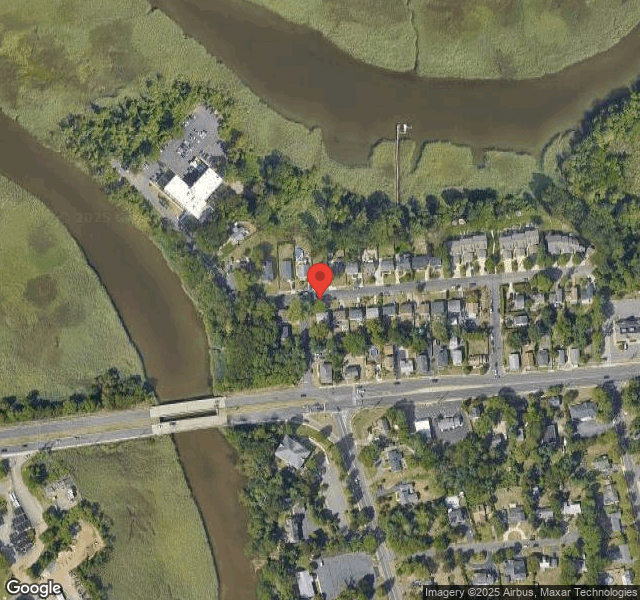
Jan 2023 12 deficiencies
CONCERN (D)

Potential for Harm - no one hurt, but risky conditions existed

Deficiency F0712 (Tag F0712)

Could have caused harm · This affected 1 resident

**NOTE- TERMS IN BRACKETS HAVE BEEN EDITED TO PROTECT CONFIDENTIALITY** Based on observation, interview, and review of pertinent facility documents, it was determined that the facility failed to ensur...

Read full inspector narrative →
**NOTE- TERMS IN BRACKETS HAVE BEEN EDITED TO PROTECT CONFIDENTIALITY** Based on observation, interview, and review of pertinent facility documents, it was determined that the facility failed to ensure that the physician responsible for supervising the care of residents conducted face-to-face visits and wrote progress notes at least every thirty days. This deficient practice was identified for 1 of 24 residents (Resident #19) reviewed for physician visits and evidenced by the following: On 1/3/23 at 10:57 AM, the surveyor observed Resident #19 lying in bed asleep. The resident appeared to be thin. The surveyor reviewed the medical record for Resident #19. A review of the Resident Face Sheet (an admission summary) reflected the resident was admitted to the facility in October of 2016 with diagnoses which included iron deficiency anemia, type II diabetes mellitus, schizoaffective disorder, and bipolar II disorder. A review of the most recent quarterly Minimum Data Set (MDS), an assessment tool dated 10/11/22, reflected the resident had a brief interview for mental status (BIMS) score of 1 out of 15, which indicated a severely impaired cognition. A review of the Physician's Progress Notes reflected the resident was seen by the physician on 9/7/22, 10/5/22, and 12/8/22. There was an incomplete History and Physical Examination dated 11/2/22 for a re-admission from the hospital. There was no evidence the resident was seen by the physician in November of 2022. On 1/9/23 at 11:34 AM, the surveyor interviewed the Licensed Practical Nurse (LPN) who stated the resident was sent to the hospital for osteomyelitis (bone infection) and returned to the facility in November of 2022 on an intravenous (medical technique that administers fluids, medications and nutrients into a person's vein) antibiotic. On 1/9/23 at 1:37 PM, the surveyor interviewed the Unit Manager (UM)/LPN who stated the facility currently did not use nurse practitioners and that the physicians saw their residents. The UM/LPN stated when a resident was admitted or re-admitted to the facility, the physician needed to see the resident, but she was unsure within how many days. The UM/LPN stated that the resident's Physician visited the facility at least every sixty days. At this time, the surveyor and the UM/LPN reviewed the resident's medical chart. The UM/LPN confirmed that the resident was briefly sent out to the hospital in October, and returned to the facility on [DATE]. The UM/LPN confirmed that the Physician did not see Resident #19 upon re-admission from the hospital or for the month of November. The UM/LPN confirmed the resident was not seen until 12/8/22. The UM/LPN stated that she flagged the resident's chart for the Physician to see them, but confirmed the resident was not seen. On 1/9/23 at 1:57 PM, the surveyor interviewed the Regional Nurse who stated physicians needed to see their residents monthly. The Regional Nurse also stated that upon admission or re-admission to the facility, the physician had forty-eight hours to see the resident. At this time, the surveyor reviewed with the Regional Nurse Resident #19's chart, and the Regional Nurse confirmed the resident should have been seen by the physician upon re-admission on [DATE]. On 1/9/23 at 2:10 PM, the surveyor called the Physician's office and spoke to the Receptionist who stated the Physician would return the surveyor's phone call. On 1/11/23 at 10:29 AM, the Regional Nurse in the presence of the Licensed Nursing Home Administrator, Assistant Director of Nursing, and survey team confirmed the Physician did not visit Resident #19 in November; that the visit was flagged but not done. The Physician never returned the surveyor's phone call. A review of the facility's HMNR Physician Services policy last revised 12/2022, included each provider will comply with applicable federal laws, rules and regulations, as well as facility policies and standards of medical and nurse professional practice .the physician will review the resident's/patient's total program of care, including medications and treatments, at each required visit .for the initial comprehensive visit, a resident/patient must be seen by a physician in a person (face-to-face) within 48 hours of admission .the physician will visit the resident/patient at least every 30 days for the first 90 days and at least once every 60 days thereafter. NJAC 8:39-23.2(d)
CONCERN (D)

Potential for Harm - no one hurt, but risky conditions existed

Deficiency F0806 (Tag F0806)

Could have caused harm · This affected 1 resident

Based on observation, interview, and review of pertinent facility documents, it was determined that the facility failed to follow a physician's order for no cheese by ensuring a resident did not recei...

Read full inspector narrative →
Based on observation, interview, and review of pertinent facility documents, it was determined that the facility failed to follow a physician's order for no cheese by ensuring a resident did not receive cheese tortellini which was listed on their meal ticket preference as no cheese. This deficient practice was identified for 1 of 2 residents (Resident #23) reviewed for food choices, and was evidenced by the following: On 1/3/23 at 11:22 AM, the surveyor observed Resident #23 awake lying in bed. The resident informed the surveyor he/she was unhappy with the kitchen because they sent inappropriate foods to them. The resident continued they had a recent diagnosis of lactose intolerance and was supposed to receive lactaid milk and no cheese. The resident stated the facility sent them dishes with cheese last week which included chicken cordon blue and pizza. The resident stated he/she informed the kitchen and as an alternative was given a burger with no bun because the kitchen did not have any buns. The resident stated his/her meal ticket also indicated no corned beef and he/she received corned beef. The resident stated that they felt the kitchen was missing management. The surveyor reviewed the medical record for Resident #23. A review of the Resident Face Sheet (an admission summary) reflected the resident was re-admitted to the facility in October of 2022 with diagnoses which included weakness; diarrhea; anxiety; major depressive disorder; heart failure; and type II diabetes mellitus. A review of the most recent quarterly Minimum Data Set (MDS), an assessment tool dated 10/18/22, reflected the resident had a brief interview for mental status (BIMS) score of a 15 out of 15; which indicated a fully intact cognition. A review of the January 2023 Physician's Order Sheet reflected a physician's order (PO) dated 12/15/22 for lactaid milk only; no milk, no cheese, no seafood, no pork. A review of Weekly Menu Cycle 3 menu for 1/1/23 through 1/5/23, reflected on 1/5/23, lunch was a chicken tortellini scampi. On 1/5/23 at 12:47 PM, the surveyor observed Resident #23 receive their lunch tray. The surveyor observed on the tray tricolor tortellini with chicken and spinach. The resident informed the surveyor he/she should not have the tortellini because it had cheese in it. At this time, the surveyor observed the resident's meal ticket which indicated no cheese. On 1/5/23 at 12:49 PM, the surveyor accompanied by the Unit Manager/Licensed Practical Nurse (UM/LPN) went into Resident #23's room and observed their meal tray. The UM/LPN stated the tortellini should have cheese in it and the resident should not be receiving cheese. The UM/LPN asked the resident if they completed a menu request and they responded no. The UM/LPN stated sometimes the resident ordered foods that contained cheese and the nurse administered them lactaid medication. The resident confirmed they did not request tortellini for lunch. The resident also informed the UM/LPN that last Friday they received chicken cordon blue and informed the kitchen. The UM/LPN stated after the resident's recent hospitalization, they came back to the facility self-reporting they were lactose intolerant and would take lactaid medication if he/she wanted cheese. The UM/LPN acknowledged the resident should not receive any foods with cheese unless they requested it. On 1/5/23 at 12:57 PM, the surveyor interviewed the Dietary Aide (DA #1) who was acting as the facility's Food Service Director (FSD) while their FSD was out on leave. The surveyor asked DA#1 what the tortellini was filled with? DA #1 asked the [NAME] who stated the tortellini was cheese filled. DA #1 explained the food service tray line had three people to serve the food; the [NAME] plated and the last person on the line (DA #2) checked the meal ticket to ensure it matched the meal tray. At this time, DA #2 confirmed she checked the meal tickets and if a resident could not have a food, she let the [NAME] know. The surveyor reviewed Resident #23's meal ticket with DA #1 and DA #2 which indicated no cheese. When asked why the resident received cheese tortellini today, DA #2 stated maybe the tortellini was not cheese, it was potato. The [NAME] again confirmed the tri-colored tortellini contained cheese. DA #1 and the [NAME] confirmed the resident should not have received cheese tortellini. On 1/5/23 at 1:36 PM, the surveyor observed the resident who confirmed they received an egg salad sandwich on whole wheat bread. On 1/5/23 at 1:42 PM, the UM/LPN confirmed the tortellini was tri-colored; beige, green, and red. The UM/LPN stated the nurse did check meal tickets with meal trays to ensure accuracy, but sometimes the resident requested cheese and it was their choice. On 1/10/23 at 12:48 PM, the surveyor interviewed the Registered Dietitian (RD) via telephone who stated that she worked at the facility part-time twenty-four hours a week. The RD stated that she audited the diet orders in the kitchen to ensure they were correct and had in-serviced the kitchen staff on tray accuracy. When asked if the kitchen had an issue with tray accuracy, the RD responded that the kitchen staff are human but do try. The surveyor informed the RD Resident #23 received cheese tortellini for lunch on 1/5/23, and the RD responded that was something she would need to address with the kitchen. The RD stated Resident #23 did not have a dairy allergy; the resident had lactose intolerance and could request lactaid medication if they wanted dairy products. The RD acknowledged unless the resident requested cheese, the kitchen should not serve the resident dairy products. On 1/11/23 at 10:29 AM, the Regional Nurse in the presence of the Licensed Nursing Home Administrator (LNHA), Assistant Director of Nursing (ADON), and survey team acknowledged Resident #23 should not have been served cheese tortellini. A review of the facility's Tray Identification policy dated 9/13/19, included .to assist in setting up and serving the correct food trays/diets to residents, the Food Service Department will use appropriate identification (e.g. color coded or computer generated diet cards) to identify the various diets. The Food Services Manager or supervisor will check trays for correct diets before the food carts are transported to their designated areas. Nursing staff shall check each food tray for correct diet before serving the residents . NJAC 8:39-17.4(a)(1)
CONCERN (D)

Potential for Harm - no one hurt, but risky conditions existed

Infection Control (Tag F0880)

Could have caused harm · This affected 1 resident

Based on observation, interview, and review of pertinent facility documents, it was determined that the facility failed to maintain infection control standards of practice and procedures to prevent th...

Read full inspector narrative →
Based on observation, interview, and review of pertinent facility documents, it was determined that the facility failed to maintain infection control standards of practice and procedures to prevent the risk of infection and promote healing. This deficient practice was identified for 1 of 1 residents (Resident #33) observed during wound treatments and was evidenced by the following: On 1/4/23 at 10:14 AM, the surveyor observed Resident #33 in bed with his/her eyes open. The resident did not respond to the surveyor. The surveyor reviewed the medical record for Resident #33. A review of the Resident Face Sheet (an admission summary) reflected that the resident was admitted to the facility in July of 2017 with diagnoses that included parastomal hernia (incision that allows protrusion of abdominal contents through the abdominal wall), infection, colostomy (surgical procedure connecting the colon to the abdominal wall), schizophrenia, intestinal obstruction, and dysphasia (difficulty swallowing). A review of the annual Minimum Data Set (MDS), an assessment tool dated 7/25/22, reflected the resident had a brief interview for mental status (BIMS) score of 6 out of 15, which indicated a severely impaired cognition. The MDS further indicated that Resident #33 was admitted with a colostomy and the treatments included applications of ointments/medications. A review of the Advance Practice Nurse's Wound Assessment Progress Note dated 9/7/22, reflected an old ostomy site (stoma, opening on the stomach) was present which per the unit manager has been present for years. No excoriation (to wear off the skin of) to surrounding skin. Moderate clear jelly drainage was present; was seen by a surgeon and the area will remain chronic for the patient. He/she had a functioning ostomy which was lateral to the area. Will use foam dressing to keep the area clean and moist. Plan: clean the area with normal saline solution (NSS); apply a foam dressing daily/change prn (as needed). A review of the January 2023 Physician Order Summary which was transcribed onto the Treatment Administration Record (TAR) included a physician's order dated 12/15/22, to cleanse the old stoma with NSS and apply a foam dressing once a day for wound care. On 1/4/23 at 10:33 AM, the surveyor observed the Licensed Practical Nurse (LPN) perform a treatment to Resident #33's stoma. The surveyor observed the following: The LPN disinfected the over-bed table (OBT) with sanitizing wipes and then applied a clean barrier. The LPN then assembled the needed supplies from the treatment cart and placed them on the OBT in the resident's room. Among the supplies were a bottle of NSS, a foam dressing, gauze sponges, and a marker. The LPN provided the treatment for Resident #33's stoma. During the treatment, the LPN removed the soiled dressing, washed his hands using soap and water, donned a new pair of gloves, moistened the gauze pad with NSS and told the surveyor, I will clean from the inside of the wound to the outside. The LPN cleaned the center of the stoma to the outer edges using a circular motion. The LPN and surveyor observed a yellow gel-like drainage on the gauze pad. The LPN discarded the gauze, moistened a new gauze pad with NSS, cleansed the peri-wound (the area surrounding the stoma) in a circular motion, and discarded the gauze. The LPN used a new gauze pad moistened with NSS to cleanse the peri-wound again and then with the same contaminated gauze cleansed the center of the stoma. The LPN used this technique two times, each time contaminating the stoma. At that time, the surveyor asked the LPN to stop the treatment so they could step away and talk privately. The LPN acknowledged he had contaminated the stoma by using the same gauze he used to cleanse the peri-wound. He stated he needed to clean the wound using appropriate infection control techniques. The LPN proceeded to wash his hands with soap and water, donned gloves, and cleaned the stoma using acceptable technique. The LPN applied the foam dressing to the stoma and then dated and initialed the dressing on the resident. On 1/4/23 at 11:00 AM, the surveyor discussed the breaks in technique with the LPN. The LPN acknowledged that he had contaminated the stoma by cleaning around the stoma and then using the same gauze to clean the stoma. The LPN further stated that he should have initialed and dated the foam dressing prior to its application to the resident. On 1/11/23 at 10:05 AM, the surveyor met with the Regional Nurse and Assistant Director of Nursing and discussed the concerns observed during the wound treatment. The Regional Nurse stated that the LPN had acknowledged he had contaminated the wound and that he was very nervous. The Regional Nurse acknowledged that the wounds should be cleansed from inner aspect to the outer, and that the LPN should have initialed and dated the foam dressing before applying it to the resident's wound. She further stated that staff should not be writing on residents. A review of the Wound Dressing Change Competency Checklist dated 3/15/2019, included the following instructions: clean wound from the least to most contaminated area; apply treatment then dressing as ordered; secure dressing labeled with initials and date NJAC 8:39-27.1(a)
CONCERN (E)

Potential for Harm - no one hurt, but risky conditions existed

Free from Abuse/Neglect (Tag F0600)

Could have caused harm · This affected multiple residents

Based on observations, interviews, and review of pertinent facility documents, it was determined that the facility failed to implement their abuse policy by ensuring all new employees were screened fo...

Read full inspector narrative →
Based on observations, interviews, and review of pertinent facility documents, it was determined that the facility failed to implement their abuse policy by ensuring all new employees were screened for potential abuse by conducting reference checks from previous and current employers. This deficient practice was identified for 4 of 5 staff (Staff #2, #3, #4, and #5) reviewed for newly hired employees and was evidenced by the following: On 1/9/23 at 2:50 PM, the surveyor requested from the Licensed Nursing Home Administrator (LNHA) to provide the survey team with the personnel and health files for five selected newly hired employees (Staff #1, #2, #3, #4, and #5) in the past four months. A review of the facility's HMNR Abuse Prevention policy dated 2022, included [facility name] will protect the resident/patient right to be free from verbal, sexual, physical, mental abuse, corporal punishment, misappropriation of property and involuntary seclusion .This policy will be accomplished through the seven components of abuse prevention: screening of potential staff .Screening: prospective staff will be screened for any actual or suspected history of resident/patient abuse, neglect, exploitation, misappropriation or mistreatment, or any other criminal felony. a. Prospective staff will sign a release allowing a criminal background check, and a reference check from previous and current employers and checking with appropriate licensing boards and registries . On 1/10/23 at 8:40 AM, the surveyor reviewed the five employee health and personnel files requested and provided by the facility which included: Staff #1, Assistant Director of Nursing (ADON), hired 8/29/22. There was no reference check. Staff #2, Director of Social Services, hired 7/13/22. There was no reference check. Staff #3, Housekeeper, hired 8/10/22. There was no reference check. Staff #4, Occupational Therapist, hired 11/2/22. There was no reference check. Staff #5, Occupational Therapist, hired 11/4/22. There was no reference check. On 1/10/23 at 9:11 AM, the surveyor requested the Regional Nurse and LNHA to review the employee files provided and locate the reference checks. The Regional Nurse confirmed the reference checks were not in the files, and stated she had to check with the Human Resource Department for the reference checks. On 1/10/23 at 9:35 AM, the surveyor interviewed the Staffing Coordinator who stated that the facility had a corporate Human Recourse Department and there was no Human Resource Department at the facility. The Staffing Coordinator stated that the Human Resource Manager (HRM) sent her the names of the new hires and she conducted background checks, scheduled these employees for their health examinations and employee identification cards. The Staffing Coordinator stated all their paperwork including their application, license verification, and background check went into their file which she kept. The Staffing Coordinator stated reference checks came from the corporate Human Resource Department. On 1/10/23 at 9:54 AM, the surveyor attempted to interview the HRM via telephone, but there was no answer. On 1/10/23 at 10:50 AM, the Regional Nurse in the presence of the LNHA informed the surveyor that she only found a reference check for the ADON (Staff #1) and not the other four employees. On 1/10/23 at 10:54 AM, the surveyor interviewed the HRM via telephone who confirmed the facility did not have a Human Resource Department on-site and he oversaw the Human Resource Department for the building. The HRM stated that the facility was acquired in 2020 and they were never moved onto their main system which meant the facility was responsible for their own hiring of new employees. The HRM verified since the facility was in charge of their own hiring, they were also responsible for conducting their own screening of prospective employees including reference checks. On 1/10/23 at 2:46 PM, the Regional Nurse in the presence of the LNHA, ADON, and survey team stated she was in touch with the Human Resource Department, and the contracted Corporate Recruiter [name redacted] who was responsible for onboarding of new employees, having their reference checks and emailing them to the facility. The Regional Nurse also stated the facility had no policy for hiring of new employees. On 1/11/23 at 8:43 AM, the surveyor conducted a follow-up interview via telephone with the HRM who stated [name redacted] was a contracted Corporate Recruiter who completed sourcing requisitions for high level employees such as a director of nursing or administrator. Most of the employees at the facility were hired directly from the facility which went through the Staffing Coordinator. The Staffing Coordinator was expected to contact these prospective employees and obtain all the necessary documents and screenings including background checks, reference checks, and license verifications, as well as scheduling health examinations. The HRM confirmed for an employee such as a housekeeper or occupational therapist, the contracted Corporate Recruiter would not conduct reference checks for them since it was not a high-level position. On 1/11/23 at 10:29 AM, the Regional Nurse, in the presence of the LNHA, ADON, and survey team confirmed the facility did not complete reference checks for Staff #2, Staff #3, Staff #4, and Staff #5. The Regional Nurse acknowledged that was part of the screening process to prevent residents from potential abuse. The LNHA confirmed there were no allegations of abuse made against these employees. NJAC 4.1(a)(5)
CONCERN (E)

Potential for Harm - no one hurt, but risky conditions existed

Deficiency F0692 (Tag F0692)

Could have caused harm · This affected multiple residents

**NOTE- TERMS IN BRACKETS HAVE BEEN EDITED TO PROTECT CONFIDENTIALITY** Based on observations, interviews, and review of pertinent facility documents, it was determined that the facility failed to obt...

Read full inspector narrative →
**NOTE- TERMS IN BRACKETS HAVE BEEN EDITED TO PROTECT CONFIDENTIALITY** Based on observations, interviews, and review of pertinent facility documents, it was determined that the facility failed to obtain weekly weights as ordered for newly admitted residents with significant weight loss. This deficient practiced was identified for 2 of 2 residents (Resident #19 and #59) reviewed for unplanned weight loss and was evidenced by the following: On 1/3/23 at 11:19 AM, the surveyor observed Resident #59 lying in bed asleep with an enteral formula (formula administered via tube feeding (a tube inserted into the stomach wall to provide nutrition)) hanging on a tube feeding pole not being administered. The resident appeared to be very thin. On 1/3/23 at 11:30 AM, the surveyor interviewed the Unit Manager/Licensed Practical Nurse (UM/LPN) who stated the Second-Floor nursing unit did not have a weight book for the residents' weights; she kept all the residents' weights on a spreadsheet on her personal computer. The UM/LPN stated she reviewed the weights and gave a copy of the weights to the Registered Dietitian (RD). The UM/LPN stated weights were generally obtained in the beginning of each month. At this time, the surveyor requested a copy of all the residents' weights for the past six months. A review of Resident #59's weights reflected the resident weighed 119.4 pounds (#) in October 2022, 119.1# in November of 2022, and 80.5# in December of 2022. There was no evidence of a re-weight for the December 2022 weight, which would have been a 38.6# weight loss or a 32.41% significant weight loss in one month. On 1/5/23 at 9:01 AM, the surveyor interviewed the UM/LPN who stated Resident #59 was re-admitted to the facility on [DATE] after a thirty-two day stay in the hospital. The UM/LPN stated since the resident was out of the facility for more than thirty days, this was considered a new admission for the resident. The surveyor reviewed the medical record for Resident #59. A review of the Resident's Face Sheet (an admission summary) reflected the resident was admitted to the facility in December of 2022 with diagnoses which included essential hypertension (high blood pressure), hyperlipidemia (high cholesterol), unspecified convulsions, and nontraumatic intracerebral hemorrhage (bleeding into the substance of the brain in the absence of trauma or surgery). A review of the Minimum Data Set (MDS), an assessment tool, reflected the admission assessment was in progress. A review of the New Jersey Universal Transfer form dated 12/21/22, reflected the resident was transferred to the facility from the hospital with a primary diagnosis of a urinary tract infection. The resident was on a nothing by mouth (NPO) diet with a tube feeding order of Jevity 1.5 Cal (an enteral formula) to be administered at 40 milliliters (mL) per hour. A review of the Monthly Weight and Vital Signs Record for year 2022, reflected the weight on 12/22/22 was 79.8#. A review of the Enteral Nutrition Protocol dated 12/22/22, indicated the resident was to receive 50 mL per hour of Jevity 1.5 Cal via a feeding tube for twenty hours with a total volume of 1000 mL infused and 1500 kilocalories. A review of the Nutrition Assessment completed by the RD on 12/22/22, reflected the resident had a 39.2# weight loss during a one month hospitalization. The resident had a severe hospital weight loss until they put in a tube (tube feeding) with severe malnutrition. Recommendation was weekly weights. A review of the resident's individualized person-centered care plan included a focus area of nutrition - enteral nutrition support with risk for aspiration (when food or liquid enters a person's airway and lungs by accident) initiated 12/29/22, with interventions that included to administer feeding formula with required water as prescribed by physician; notify physician if feeding is not tolerated or not infused as per orders; and monitor weights as physician ordered. On 1/5/23 at 12:20 PM, the surveyor interviewed the LPN who stated that every unit obtained monthly weights for each resident which were taken by the Certified Nursing Aide (CNA) and given to the medication nurse who gave the weights to the UM/LPN. The weights were usually written on the census sheet for the day and given to the UM/LPN. If a weight had to be re-done, the nurse completed the re-weight. On 1/5/23 at 12:22 PM, the surveyor re-interviewed the UM/LPN who confirmed the unit did not have a weight book for the residents. The UM/LPN stated that the weights were taken at the beginning of each month by the assigned CNA, and if there was a discrepancy of two pounds or more from the previous month's weight, a re-weight was taken the same day and observed by the nurse to ensure accuracy. The UM/LPN confirmed both weights were not recorded on her spreadsheet so there was no evidence a re-weigh was completed. The UM/LPN stated that sometimes the RD ordered weekly weights or weekly weights were done upon admission or re-admission to the facility and documented on the Medication Administration Record (MAR). The UM/LPN stated the physician did not need to write an individual order for weekly weights for four weeks for a new or re-admission because it was a standing order. At this time, the surveyor reviewed the December 2022 and January 2023 MARs with the UM/LPN who confirmed Resident #59's weight was not obtained weekly; the only weight for the resident was upon admission. The UM/LPN acknowledged they did drop the ball for that resident. On 1/5/23 at 12:43 PM, the surveyor observed the resident laying in bed with Jevity 1.5 Cal running at a rate of 50 mL per hour with a total volume infused of 32 mL. On 1/6/23 at 9:40 AM, the surveyor asked the UM/LPN if they obtained a weight for the resident yet. The UM/LPN stated no, she planned on asking a CNA to take today. At this time, the surveyor requested the resident's weight to be taken in their presence. On 1/6/23 at 10:18 AM, the surveyor observed CNA #1, CNA #2, and the UM/LPN obtain Resident #59's weight via a hoyer lift scale. The weight was 81.2# which was a 1.4# weight gain since admission. On 1/10/23 at 12:48 PM, the surveyor interviewed the RD via telephone who stated that standard practices for resident weights included monthly weights, weekly weights for two or four weeks for residents with significant weight loss, and weekly weights for four weeks for new or re-admitted residents. The RD stated Resident #59 was starved in the hospital and lost so much weight that they were weighing them weekly. The RD stated she generally verified they were taking weights weekly and usually documented it. The RD stated that she had unfortunately been out of the building recently and had not been monitoring the resident's weight. On 1/10/23 at 1:21 PM, the surveyor and UM/LPN reviewed Resident #59's chart. The UM/LPN confirmed there was no further documentation from the RD after 12/22/22. On 1/11/23 at 10:20 AM, the Regional Nurse in the presence of the Licensed Nursing Home Administrator (LNHA), Assistant Director of Nursing (ADON) and survey team, acknowledged Resident #59's weights were not obtained weekly as ordered. 2. On 1/3/23 at 10:57 AM, the surveyor observed Resident #19 in bed. The resident appeared very thin. On 1/3/23 at 11:30 AM, the surveyor interviewed the UM/LPN who stated the Second-Floor nursing unit did not have a weight book for the residents' weights; she kept all the residents' weights on a spreadsheet on her computer. The UM/LPN stated she reviewed the weights and gave a copy of the weights to the RD. The UM/LPN stated weights were generally obtained in the beginning of each month. At this time, the surveyor requested a copy of all the residents' weights for the past six months. A review of Resident #19's weights for the past six months were: July 2022: 134.8# August 2022: 133.9# September 2022: 132# October 2022: 131.2# November 2022: 121.7# December 2022: 120.9# This was a 13.9# weight loss or 10.31% significant weight loss in six months. The surveyor reviewed the medical record for Resident #19. A review of the Resident Face Sheet reflected the resident was admitted to the facility in October of 2016 with diagnoses which included iron deficiency anemia, type II diabetes mellitus, schizoaffective disorder, and bipolar II disorder. A review of the most recent quarterly MDS dated [DATE], reflected the resident had a brief interview for mental status (BIMS) score of 1 out of 15, which indicated a severely impaired cognition. The assessment further indicated the resident did not have a significant weight loss or gain in one month, three months, or six months. A review of the Dietary Progress Note dated 11/6/22, reflected the resident was re-admitted from the hospital and the RD was awaiting a weight. A review of the Dietary Progress Note dated 11/8/22, reflected the resident's weight was 121.7# with was a decrease of 9.5#. The RD noted this was a significant weight loss and to follow with weekly weights. A review of an incomplete History and Physical Examination, reflected the resident was re-admitted to the facility from the hospital on [DATE]. On 1/5/23 at 12:20 PM, the surveyor interviewed the LPN who stated that every unit obtained monthly weights for each resident which were taken by the CNA and given to the medication cart nurse who gave the weights to the UM/LPN. The weights were usually written on the census sheet for the day and given to the UM/LPN. If a weight had to be re-done, the nurse completed the re-weight. On 1/5/23 at 12:22 PM, the surveyor re-interviewed the UM/LPN who confirmed the unit did not have a weight book for the residents. She explained that the weights were taken at the beginning of each month by the assigned CNA, and if there was a discrepancy of two pounds or more from the previous month's weight, a re-weight was taken the same day and observed by the nurse to ensure accuracy. The UM/LPN confirmed both weights were not recorded on her spreadsheet so there was no evidence a re-weigh was completed. The UM/LPN stated that sometimes the RD ordered weekly weights or weekly weights were done upon admission or re-admission to the facility and documented on the MAR. The UM/LPN stated the physician did not need to write an individual order for weekly weights times four weeks for a new or re-admission because it was a standing order. The surveyor reviewed the November 2022 MAR for the resident which did not include weekly weights. On 1/10/23 at 12:48 PM, the surveyor interviewed the RD via telephone who stated that standard practices for resident weights included monthly weights, weekly weights for two or four weeks for residents with significant weight loss, and weekly weights for four weeks for new or re-admitted residents. The RD stated she generally documented weekly for any resident on weekly weights. The RD stated Resident #19 has had a slow decline, and she thought the UM/LPN had been in touch with the family. On 1/10/23 at 1:21 PM, the surveyor and the UM/LPN reviewed the resident's chart. The UM/LPN stated there were no documented weekly weights on the MAR as should be, but the RD documented in her notes the resident's weight on 11/8/22 of 121.7#; 11/23/22 of 121.5#; and 12/5/22 the weight was 120.9# on 11/30/22. The UM/LPN confirmed there were no documented weights for the week of November 13. The UM/LPN stated she must have just given the RD the weights instead of documenting the weights on the MAR. On 1/11/23 at 10:29 AM, the Regional Nurse in the presence of the LNHA, ADON, and survey team acknowledged weekly weights were not completed for Resident #19 as ordered. A review of the facility's HMNR Resident/Patient Weights policy dated revised 7/2022, included residents/patient weights are taken upon admission or readmission (to establish a baseline weight), weekly for the first four weeks after admission and at least monthly to help identify and document trends such as slow progressive weight changes .resident/patients with a recent history of weight loss and or risk for weight loss may be weighed weekly as determined by the dietitian and or physician. Weekly weights will be completed on the same day each week and may be initiated by nursing, the dietitian or physician. NJAC 8:39-27.1(a); 27.2(a)
CONCERN (E)

Potential for Harm - no one hurt, but risky conditions existed

Pharmacy Services (Tag F0755)

Could have caused harm · This affected multiple residents

Based on observation, interview, and review of pertinent facility documents, it was determined the facility failed to a.) ensure an accurate ordering and receiving of narcotic medications on the requi...

Read full inspector narrative →
Based on observation, interview, and review of pertinent facility documents, it was determined the facility failed to a.) ensure an accurate ordering and receiving of narcotic medications on the required Federal narcotic acquisition forms (DEA 222 forms) were completed with sufficient detail to enable accurate reconciliation for 1 of 1 forms provided; b.) ensure the DEA 222 forms were dated and signed as of the day it was submitted for filling for 4 of 7 forms provided; and c.) to accurately document the administration of controlled medication for 2 sampled residents (Resident #52 and Resident #61) identified upon inspection of 1 of 3 medication carts. The evidence was as follows: 1. On 1/6/23 at 9:43 AM, the surveyor reviewed the facility provided DEA 222 forms which revealed four of the seven provided forms had been pre-signed by the facility's Medical Director prior to submission to the provider pharmacy for filling. The forms were as follows: Order form number: 220240368; 220240367; 220317342; and 220317341. On 1/6/23 at 1:56 PM, the surveyor interviewed the Director of Nursing (DON) in the presence of the survey team. The DON acknowledged there were seven blank DEA 222 forms in the facility provided binder. Upon inspection, the DON acknowledged there were four out of seven forms pre-signed by the Medical Director (MD) for convenience. The DON stated that the MD pre-signed the forms because he was not always at the facility; that he only came to the facility once a week. The DON acknowledged there should be no pre-signed forms; forms were signed by the MD after they were completed, and the narcotic medications were ready to be ordered. On 1/10/23 at 2:49 PM, the surveyor conducted an interview via the phone with the facility MD who stated he was available to the facility twenty-four hours a day seven days a week, even when he was away. The MD further stated the facility used his DEA number to order narcotics; that the DEA 222 form was filled out by the DON, and he would sign the form to be sent to the provider pharmacy for filling. The surveyor then asked the MD why there were four pre-signed forms found in the facility binder? He stated he was not aware until recently that he should not pre-sign the DEA 222 forms. He had only recently learned from another facility that he should not pre-sign. The MD could not recall when he had signed the identified forms, but it was definitely not within the last six months. The MD further stated he was not sure why he should not have pre-signed; he could only guess it was because the forms could be misdirected or misused. On 1/11/23 at 10:29 AM, the Regional Nurse in the presence of the Licensed Nursing Home Administrator (LNHA), Assistant Director of Nursing (ADON), and survey team confirmed the MD should not have pre-signed the DEA 222 forms. A review of the Instructions for DEA Form 222, under Part 1. Purchaser Information, 6. The order form must be signed and dated by the purchaser on the day it is submitted for filling. 2. On 1/6/23 at 9:43 AM, the surveyor reviewed the facility provided DEA 222 forms. There were no forms completed for 2022. There was only a packing slip from the Provider Pharmacy and an inventory receipt from the facility's automated medication dispensing system. On 1/6/23 at 10:57 AM, the surveyor requested from the DON any completed DEA 222 forms for 2022. The DON stated her automated medication dispensing system was in bad shape and she did not request any controlled substances all year. The DON stated she did not have or keep a copy of the DEA 222 forms submitted to the Provider Pharmacy for filling. The DON stated she would contact the Provider Pharmacy for a copy of the form. The DON acknowledged that since she did not have a copy of the submitted DEA 222 form, she was unable to complete the form as directed once the controlled medications were received. On 1/11/23 at 10:29 AM, the Regional Nurse in the presence of the LNHA, ADON, and survey team confirmed the facility was not completing and maintaining the DEA 222 forms in accordance with the form's instructions. 3. On 1/6/23 at 12:40 PM, the surveyor in the presence of the Licensed Practical Nurse (LPN) inspected the Third-Floor nursing unit Cart-A medication cart. A review of the narcotics located in the secured and locked narcotic box and reconciled to the declining inventory sheet revealed Resident #52's clonazepam 1 milligram (mg) tablet, a medication used for anxiety, did not match. The blister pack contained 16 tablets and the declining inventory sheet indicated there should be 17 tablets remaining. Upon further cart inspection, it was revealed that Resident #61's clonazepam 1 mg tablets also did not match. The blister pack contained 1 tablet and the declining inventory sheet indicated there should be 2 tablets remaining. The LPN stated he had just administered the medications and he had forgotten to sign the declining inventory sheet for the doses he had administered. He further stated he should have recorded on the declining inventory sheet as well as the medication administration record (MAR) after he had administered the medication. On 1/6/23 at 2:04 PM, the surveyor interviewed the DON in the presence of the survey team. The DON stated when administering a controlled medication, you would first check the medication matches the medication order, then punch out the medication from the blister pack, once the medication was administered you would come back and sign the declining inventory sheet and the MAR. The DON acknowledged the purpose of the declining inventory sheet was for each shift to reconcile and ensure there was accountability for the inventory of the controlled medication. At that time, the surveyor reviewed with the DON the facility provided Medication Administration policy dated last approved 3/22, which included .P. When a controlled medication is administered, the declining inventory form is signed by the nurse at the time the medication is removed from the container. The MAR is signed after the resident takes the medication . The DON acknowledged she must have misspoken and that the nurse should always be following the medication administration policy. On 1/11/23 at 10:29 AM, the Regional Nurse in the presence of the LNHA, ADON, and survey team confirmed the declining inventory was signed at the time the medication was removed from inventory. NJAC 8:39- 29.2(d), 29.7
CONCERN (E)

Potential for Harm - no one hurt, but risky conditions existed

Garbage Disposal (Tag F0814)

Could have caused harm · This affected multiple residents

Based on observation and interview, it was determined that the facility failed to properly dispose and maintain waste in garbage dumpster areas. This deficient practice was identified for 5 of 6 garba...

Read full inspector narrative →
Based on observation and interview, it was determined that the facility failed to properly dispose and maintain waste in garbage dumpster areas. This deficient practice was identified for 5 of 6 garbage dumpsters in 1 of 2 garbage disposal areas and was evidenced by the following: On 1/4/23 at 8:15 AM, the surveyor observed the garbage dumpster area which contained five garbage dumpsters. Out of the five garbage dumpsters, one of the garbage dumpster's lids was opened exposing its contents. The surveyor observed high levels of debris surrounding all five garbage dumpsters on all four sides. The debris included but was not limited to disposable gloves, boxes, paper, bottles, and other debris. On 1/5/23 at 8:11 AM, the surveyor observed the garbage dumpster area which contained five garbage dumpsters. Out of the five garbage dumpsters, one of the garbage dumpster's lids was opened exposing its contents. The surveyor observed high levels of debris surrounding all five garbage dumpsters on all four sides. The debris included but was not limited to disposable gloves, boxes, paper, bottles, and other debris. On 1/6/23 at 7:51 AM, the surveyor observed the garbage dumpster area which contained five garbage dumpsters. Out of the five garbage dumpsters, one of the garbage dumpster's lids was opened exposing its contents. The surveyor observed high levels of debris surrounding all five garbage dumpsters on all four sides. The debris included but was not limited to disposable gloves, boxes, paper, bottles, and other debris. On 1/6/23 at 11:15 AM, the surveyor accompanied by the Dietary Aide (DA) who was acting as the Food Service Director (FSD) for the FSD who was out on leave observed the dumpster garbage area which contained five garbage dumpsters. They observed one of the five garbage dumpster's lid was opened and the DA confirmed the lids should be closed at all times unless disposing of garbage. They also observed surrounding all five garbage dumpsters on all four sides high levels of debris including bags containing garbage, coffee cup lids, coffee cups, water bottles, used gloves, plastic bags, milk containers, cups, boxes, and paper. The DA acknowledged the debris around the garbage dumpsters was unacceptable. The DA stated that these dumpsters were used by both dietary and housekeeping staff, and both departments were responsible for maintaining the area. The DA stated there was no formal cleaning schedule for the area, and staff were expected to clean the area when they were disposing of garbage. On 1/6/23 at 11:19 AM, the survey interviewed the Director Environmental Services (DES) who stated that housekeeping staff utilized the garbage compactor in a second garbage area to dispose of their waste. The DES stated that the dumpster area containing five garbage dumpsters were utilized by the dietary staff who were expected to maintain the area. At this time, the DES accompanied the surveyor to the garbage dumpster area and observed the condition of the area. The DES confirmed that the garbage dumpster area should be maintained free of waste and the conditions were not acceptable (unsanitary) and could promote pests and needed to be cleaned immediately. On 1/6/23 at 12:01 PM, the Licensed Nursing Home Administrator (LNHA) provided the surveyor with the facility's Food-Related Garbage and Refuse Disposal policy. The LNHA stated he was aware of the conditions of the garbage dumpster area and acknowledged it was not acceptable. A review of the facility's food-Related Garbage and Refuse Disposal policy dated revised October 2017, included all food waste shall be kept in containers; all garbage and refuse containers are provided with tight-fitting lids or covers and must be kept covered when stored or not in continuous use .garbage and refuse containing food wastes will be stored in a manner that is inaccessible to pests; storage areas will be kept clean at all times, and shall not constitute a nuisance; outside dumpsters provided by garbage pickup services will be kept closed and free of surrounding litter. NJAC 8:39-19.3(a); 19.7(a)(b)
CONCERN (F)

Potential for Harm - no one hurt, but risky conditions existed

MDS Data Transmission (Tag F0640)

Could have caused harm · This affected most or all residents

Based on interviews and review of pertinent facility documents, it was determined that the facility failed to complete and submit discharge Minimum Data Set Assessments (MDS), an assessment tool, as r...

Read full inspector narrative →
Based on interviews and review of pertinent facility documents, it was determined that the facility failed to complete and submit discharge Minimum Data Set Assessments (MDS), an assessment tool, as required for 17 of 17 residents (Resident #9, #17, #35, #47, #57, #82, #85, #93, #94, #96, #97, #98, #99, #100, #101, #102, and #110) system selected for MDS over 120 days and was evidenced by the following: On 1/4/23 at 10:32 AM, the surveyor interviewed the MDS Coordinator who stated she had been working alone on MDS for about five months, and the facility had been looking for additional help without success. At this time, the surveyor provided the MDS Coordinator with a list of thirty-seven system selected residents identified as having an MDS record that was over 120 days overdue. The MDS Coordinator was asked to provide the survey team with the date the last MDS was submitted and the next MDS that was due, as well as if the resident remained in the facility or had been discharged . On 1/5/23 at 9:14 AM, the surveyor interviewed the MDS Coordinator who stated that she had concentrated on annuals, admissions, and quarterly MDS and had not prioritized discharge MDS's. She further stated she had made administration aware that it was just too much to keep up with. On 1/5/22 at 11:09 AM, the MDS Coordinator provided the surveyor with the requested system selected MDS information. The MDS Coordinator confirmed that seventeen of thirty-seven selected residents were discharged from the facility and their discharge MDS assessment were not completed. The MDS Coordinator acknowledged the discharge MDS should have been completed at the time of discharge as required. A review of the seventeen residents who were discharged from the facility with no completed discharge MDS was as follows: 1. Resident #9 had a discharge date of 9/12/22, a completion due date of 9/19/22, a submission due date of 10/3/22. The MDS was completed on 1/6/23 and not yet submitted. 2. Resident #17 had a discharge date of 8/2/22, a completion due date of 8/9/22, and a submission due date of 8/23/22. The MDS was not completed or submitted. 3. Resident #35 had a discharge date of 10/30/22, a completion due date of 11/6/22, and a submission due date of 11/20/22. The MDS was completed on 11/4/22 and not yet submitted. 4. Resident #47 had a discharge date of 10/4/22, a completion due date of 10/11/22, and a submission due date of 10/25/22. The MDS was completed on 10/11/22 and submitted on 1/4/23. 5. Resident #57 had a discharge date of 9/2/22, a completion due date of 9/9/22, and a submission due date of 9/23/22. The MDS was completed on 1/6/23 and not yet submitted. 6. Resident #82 had a discharge date of 8/30/22, a completion due date 9/6/22, and a submission due date of 9/20/22. The MDS was completed on 9/6/22 and submitted on 1/4/23. 7. Resident #85 had a discharge date of 10/31/22, a completion due date of 11/7/22, and a submission date of 11/21/22. The MDS was completed on 11/7/22 and not yet submitted. 8. Resident #93 had a discharge date of 10/5/22, a completion due date of 10/12/22, and a submission due date of 10/26/22. The MDS was completed on 1/5/23 and not yet submitted. 9. Resident #94 had a discharge date of 8/25/22, a completion due date of 9/1/22, and a submission due date of 9/15/22. The MDS was not completed or submitted. 10. Resident #96 had a discharge date of 8/30/22, a completion due date of 9/6/22, and a submission due date of 9/20/22. The MDS was completed on 9/6/22 and submitted on 10/4/23. 11. Resident #97 had a discharge date of 9/8/22, a completion due date of 9/15/22, and a submission due date of 9/29/22. The MDS was not completed or submitted. 12. Resident #98 had a discharge date of 9/18/22, a completion due date of 9/25/22, and a submission due date of 10/9/22. The MDS was completed on 1/5/23 and not yet submitted. 13. Resident #99 had a discharge date of 9/24/22, a completion due date of 10/1/22, and a submission due date of 10/15/22. The MDS was completed on 1/5/23 and not yet submitted. 14. Resident #100 had a discharge date of 9/16/22, a completion due date of 9/23/22, and a submission due date of 10/7/22. The MDS was completed on 9/23/22 and not yet submitted. 15. Resident #101 had a discharge date of 9/8/22, a completion due date of 9/15/22, and a submission due date of 9/29/22. The MDS was completed on 1/9/23 and not yet submitted. 16. Resident #102 had a discharge date of 10/4/22, a completion due date of 10/11/22, and a submission due date of 10/25/22. The MDS was completed on 1/6/23 and not yet submitted. 17. Resident #110 had a discharge date of 8/19/22, a completion due date of 8/26/22, and a submission due date of 9/9/22. The MDS was completed on 1/6/23 and not yet submitted. On 1/9/23 at 12:34 PM, the MDS Coordinator informed the surveyor she had fourteen days after discharge to complete the MDS and fourteen days to submit the discharge MDS. The MDS Coordinator acknowledged she had not completed the discharge MDS or submitted them on time as required. On 1/11/23 at 10:30 AM, the Regional Nurse, in the presence of the Licensed Nursing Home Administrator (LNHA), the Assistant Director of Nursing (ADON) and survey team, acknowledged the identified discharged residents' discharge MDS's were not completed within fourteen days of discharge and submitted within fourteen days in accordance with the Centers for Medicare and Medicaid Services (CMS) Resident Assessment Instrument (RAI) Version 3.0 Manual. A review of the facility provided MDS/Nursing/Administration policy dated last reviewed 7/1/2020, included MDS Department: schedules Minimum Data Set (MDS) and Care Plan Meeting in accordance to the existing regulations governing the RAI process . NJAC 8:39-11.1
CONCERN (F)

Potential for Harm - no one hurt, but risky conditions existed

Deficiency F0730 (Tag F0730)

Could have caused harm · This affected most or all residents

Based on interview and review of pertinent facility documents, it was determined that the facility failed to conduct yearly performance reviews of Certified Nursing Aides (CNA) in order to provide spe...

Read full inspector narrative →
Based on interview and review of pertinent facility documents, it was determined that the facility failed to conduct yearly performance reviews of Certified Nursing Aides (CNA) in order to provide specific education based on the outcomes of the reviews. This deficient practice was identified for 4 of 4 CNAs whose personnel records were reviewed and was evidenced by the following: 1. According to the data provided by the facility, CNA #1 was hired on 9/11/08. Review of CNA #1's personnel file reflected there was no current performance evaluations completed for CNA #1. 2. According to the data provided by the facility, CNA #2 was hired on 11/5/14. Review of CNA #2's personnel file reflected there was no current performance evaluations completed for CNA #2. 3. According to the data provided by the facility, CNA #3 was hired on 11/8/93. Review of CNA #3's personnel file reflected there was no current performance evaluations completed for CNA #3. 4. According to the data provided by the facility, CNA #4 was hired on 9/23/19. Review of CNA #4's personnel file reflected there were no current performance evaluations completed for CNA #4. On 1/10/23 at 9:13 AM, the surveyor interviewed the Regional Nurse who stated that the Director of Nursing (DON) would evaluate the CNAs performance annually. She further stated that performance evaluations were done annually in order to identify the CNA's strengths and weaknesses to determine what education they needed. The Regional Nurse could not explain why there had been no annual performance evaluations completed for CNA #1, #2, #3 and #4. The Regional Nurse further stated she was unable to locate performance evaluations from previous years. On 1/11/23 at 11:45 AM, the Regional Nurse in the presence of the Licensed Nursing Home Administrator (LNHA), Assistant Director of Nursing (ADON), and survey team stated the facility was not disputing anything and that she was unable to provide performance evaluations for any of the CNAs. The Regional Nurse further stated since she could not find any performance evaluations it meant that they were not done. A review of an undated facility policy HMNR Employee Evaluations included all employees will be evaluated within 90 days of hire and annually or as needed to evaluate work performance thereafter, with the purpose to establish skills, dependability, personal relationships, emotional stability, personal appearance and to be used as a basis for disciplinary action . NJAC 8:39-43.17(b)
CONCERN (F)

Potential for Harm - no one hurt, but risky conditions existed

Deficiency F0801 (Tag F0801)

Could have caused harm · This affected most or all residents

Based on observations, interviews, and review of pertinent facility documents, it was determined that the facility failed to employee staff with the appropriate competencies and skills sets to carry o...

Read full inspector narrative →
Based on observations, interviews, and review of pertinent facility documents, it was determined that the facility failed to employee staff with the appropriate competencies and skills sets to carry out the functions of the food and nutrition service in the role of the Food Service Director (FSD) in the absence of a full-time Registered Dietitian. This deficient practice would affect all residents and was evidenced by the following: On 1/3/23 at 9:24 AM, the surveyor entered the kitchen and asked to tour with the FSD. The Dietary Aide (DA) stated he was temporarily filling in for the FSD who has been out on leave since May. The DA stated he had no certifications in dietary management, food service management and safety or have a degree in food service management. The DA stated he was employed at the facility for many years and was just helping while the FSD was out. The DA stated that a sister facility's FSD could help out and was certified. The surveyor asked if any of the other employees in the kitchen had food safety certification, and the DA stated no. The surveyor requested copies of food safety certifications from kitchen staff. On 1/6/23 at 12:01 PM, the surveyor interviewed the Licensed Nursing Home Administrator (LNHA) who confirmed that the kitchen had no management and no one in the kitchen was certified in food safety or dietary management. The LNHA stated the previous FSD was out of the facility on leave and for legal reasons, he was unable to hire a new FSD. The LNHA acknowledged the facility could have provided the DA with food safety management training. On 1/6/23 at 1:53 PM, the LNHA informed the surveyor that the Regional FSD would now be overseeing the kitchen who is certified in food service management and safety. On 1/9/23 at 10:41 AM, the LNHA informed the surveyor that the previous FSD's last day of work was 5/25/22. On 1/10/23 at 12:48 PM, the surveyor interviewed the Registered Dietitian (RD) via telephone who stated she was a part-time dietitian at the facility and was contracted for twenty-four hours a week. The RD stated that besides clinical assessments for the residents, the RD provided education to the kitchen staff including ensuring meal tray accuracy and gluten-free diets. On 1/10/23 at 2:53 PM, the LNHA in the presence of the Assistant Director of Nursing (ADON), Regional Nurse, and survey team confirmed that the RD was a part-time employee. The LNHA stated the RD on occasion would attend their morning meetings, but the DA did not attend morning meetings. The LNHA confirmed that all department heads attended the morning meetings, which did include the previous FSD, but not the DA who was acting as the FSD since May of 2022. On 1/11/23 at 8:54 AM, the LNHA confirmed the facility only had one dietitian and the RD was contracted part-time. At this time the surveyor requested a copy of the RD's contract, RD's resume, the DA's resume or job application, and the job responsibilities for the FSD and RD. On 1/11/23 at 11:48 AM, the Regional Nurse informed the survey team that the DA was hired at the facility in 1988, and she did not have his application, nor did he have a resume. A review of the RD's contract dated 8/19/2020, indicated the RD was hired as part-time for twenty-four hours a week. A review of the facility's Job Description Director of Dietary dated revised 10/1/21, included Knowledge, Education and Skills Required: Knowledge of food safety, sanitation, regulatory compliance, and guidelines governing dietary services in long-term care facility .Prior supervisory experience, preferably in long term care setting. Knowledge, Education and Skills Preferred: Bachelor's degree; Preferred Certification/Licensing: 1. Serv Safe Certification; 2. CDM (Certified Dietary Manager) or RD (Registered Dietitian) from an accredited entity. If neither is currently active, the Director must enroll in a program within six months of obtaining the position and pass the exam within six months of course completion. Refer F806 and F812 NJAC 8:39-17.1(a); 17.2(g)
CONCERN (F)

Potential for Harm - no one hurt, but risky conditions existed

Food Safety (Tag F0812)

Could have caused harm · This affected most or all residents

Based on observation, interview, and review of pertinent facility documents, it was determined that the facility failed to a.) ensure the dish machine in use maintained the appropriate temperature acc...

Read full inspector narrative →
Based on observation, interview, and review of pertinent facility documents, it was determined that the facility failed to a.) ensure the dish machine in use maintained the appropriate temperature according to the manufacturer's specifications; b.) maintain multiuse food-contact surface cutting board in a manner to prevent microbial growth; c.) store, label, and date potentially hazardous foods to prevent food-borne illness; d.) discard potentially hazardous foods past their date of expiration; and e.) maintain storage areas in a sanitary manner. This deficient practice was evidenced by the following: On 1/3/23 at 9:24 AM, the surveyor entered the kitchen and asked to tour with the Food Service Director (FSD). The Dietary Aide (DA) stated he was temporarily filling in for the FSD who has been out on leave since May. The DA stated he had no certifications in food service management and safety, dietary management, or have a degree in food service management. The DA stated he was employed at the facility for many years and was just helping while the FSD was out. The DA stated that a sister facility's FSD could help out who was certified. The surveyor asked if any of the other employees in the kitchen had food safety certification, and the DA stated no. At this time, the surveyor and the DA toured the kitchen and observed the following: 1. In the walk-in refrigerator, one 3.18 kilogram (kg) carton of coleslaw with a use by date of 12/23/22. 2. In the walk-in refrigerator, a one-gallon opened container of fat free Italian dressing. The container was not labeled when opened and had a labeled use by date of 12/15/22. 3. In the walk-in refrigerator, one opened box of mesquite turkey breast which contained one unopened three-pound turkey breast. The box indicated use or freeze by date of 1/2/23. 4. In the walk-in refrigerator, one opened box that contained one package of breaded tilapia. The box indicated to keep frozen. The DA confirmed the breaded tilapia was thawed. There was no indication of when the breaded tilapia was pulled from the freezer or when to use by. 5. In the walk-in freezer, the vinyl strip curtains located in the entrance to the freezer were all missing except three strip curtains on the outer sides of the doorway. These curtains protect the inside of the freezer from outside dust particles as well as keep the cold air from escaping the freezer when the door was opened. 6. On a storage rack, the surveyor observed two small white, two large tan, two large red, two light blue, one large green, one large yellow, and one large white cutting boards. The cutting boards were all deeply pitted and discolored. The DA stated the cutting boards were changed a couple of months ago and should be changed when discolored. The DA acknowledged the pitting and discoloration could lead to bacterial growth and the cutting boards should not be in use. 7. On a shelf by the kitchen preparation area, one opened container of lemon juice. The lemon juice packaging indicated to refrigerate when opened. 8. In the Dietary Dry Storage Room, a large brown dried spillage on the floor. The DA stated someone must have spilled the prune juice that was opened and did not clean-up. On 1/6/23 at 12:01 PM, the surveyor addressed the above concerns with the Licensed Nursing Home Administrator (LNHA) who acknowledged he was aware. The LNHA confirmed the kitchen had no management; that no one was certified in food safety management. The LNHA stated the FSD was out on leave, and the DA was acting in his place because the LNHA was unable to hire a new FSD for legal reasons. On 1/6/23 at 1:53 PM, the LNHA informed the surveyor that a Regional FSD would now be overseeing the kitchen who was certified in food safety management. On 1/9/23 at 10:41 AM, the surveyor requested the LNHA to provide the survey team with all in-service education the kitchen staff had received for the past year. On 1/10/23 at 10:10 AM, the surveyor did a follow-up kitchen inspection to inspect the facility's dish machine. The surveyor observed the DA pushing a drying rack that contained 79 food insulator tops that had visible water beads. The dish machine was turned on, but was not observed in use. The Regional FSD stated that the dish machine was a high temperature dish machine meaning the wash temperature needed to be 150 degrees Fahrenheit (F) or higher and the final rinse temperature had to be 180 F or higher to sanitize. The Regional FSD ran several empty dish racks through the machine, and the final rinse temperature did not reach higher than 150 F. At this time, the surveyor reviewed the Dish Machine Temperature Record for January 2023 which was not completed for that day's breakfast shift. On 1/10/23 at 10:15 AM, the surveyor interviewed the [NAME] who informed them that they were assigned to wash the morning dishes. The [NAME] stated the temperature log was not completed for that morning because the facility had not yet washed dishes. The surveyor questioned the observed insulator tops with the water beads, and the [NAME] confirmed they were just washed, but could not speak to why the log was not completed prior to washing the insulator tops. The [NAME] stated that the final rinse temperature varied, that it reached 180 F but did not stay there consistently. The [NAME] began running empty dish racks and the surveyor observed with one rack, the final rinse reached 180 F. The next tray sent through the machine; the final rinse reached 150 F. The [NAME] continued to run empty racks through the dish machine, but the final rinse temperature did not reach 180 F. On 1/10/23 at 10:20 AM, the Regional FSD stated the facility did not have heat test strips to determine if the dish machine temperature was hot enough. The Regional FSD stated he would test the final rinse temperature by collecting a sample of the water in the machine at the end. The Regional FSD calibrated a digital thermometer to 32.9 F using an ice bath method. On 1/10/23 at 10:23 AM, the Regional FSD sent a food insulator top in the dish machine to collect the dish water. The surveyor observed the final rinse temperature on the gauge was 154 F and the Regional FSD measured the temperature of the water collected in the insulator lid which was 155 F. The Regional FSD sent an empty mug through the dish machine to collect the dish water during the final rinse. The surveyor observed the final rinse temperature gauge was 162 F and the Regional FSD measured the temperature of the water collected in the mug was 161 F. The Regional FSD confirmed the temperature gauge for the final rinse was accurate. The Regional FSD stated the dish machine could not be used until the Dish Machine Repair Company [name redacted] came to fix the machine. The Regional FSD acknowledged the insulator tops were washed that morning and had to be rewashed and sanitized by hand. A review of the Dish Machine Temperature Record for January 2023, revealed that the final rinse temperature was below 180 F on 1/3/23 breakfast; 1/6/23 breakfast, lunch, and dinner; 1/7/23 breakfast, lunch, and dinner; 1/8/23 breakfast and lunch; and 1/9/23 lunch. On 1/10/23 at 11:33 AM, the Regional FSD informed the surveyor the Dish Machine Repair Company Employee [name redacted] was at the facility and left; they were going to convert the dish machine to a low temperature dish machine that sanitized with a chemical solution. At this time, the surveyor reviewed the Dish Machine Temperature Record for January 2023 with the Regional FSD which revealed that for ten shifts for the month the dish machine's final rinse temperature was not 180 F. The Regional FSD confirmed the machine should not have been used if the final rinse was not at 180 F; staff should have washed dishes by hand. On 1/10/23 at 11:39 AM, the surveyor interviewed the DA who stated last week the dish machine was not maintaining temperature, so he called the Dish Machine Repair Company [name redacted] who serviced the machine. The DA was unsure what day the Dish Machine Repair Company [name redacted] was there, but confirmed the kitchen used the dish machine all last week. On 1/10/23 at 12:38 PM, the surveyor interviewed the Dish Machine Repair Company Employee [name redacted] who stated he was at the facility last Tuesday (1/4/23) to service the dish machine since the dish temperature was not reaching 180 F. The Dish Machine Repair Company Employee [name redacted] stated there was an issue with the dish machine's booster system which increased the water temperature for the final rinse. He continued that he had to order a part for the machine so in the meantime, he increased the water temperature to 185 F and the temperature was maintaining when he left. The Dish Machine Repair Company Employee stated since the final rinse temperature was not reaching 180 F, he was converting the dish machine to a low temperature machine which he had to set the water temperature lower since sanitizing was done with a chemical solution. The Dish Machine Repair Employee confirmed the facility should not have used the dish machine if the final temperature was not 180 F because that was the temperature needed to kill and sanitize and the facility should have called them. On 1/10/23 at 12:42 PM, the surveyor re-interviewed the DA regarding the dish machine being used when the temperature for the final rinse was below 180 F. The DA stated it was not brought to his attention the dish machine was below 180 F or he would have called the Dish Machine Repair Company to come back to the facility. The DA stated the kitchen did receive in-service education from the Director of Nursing (DON), Assistant Director of Nursing (ADON), Infection Preventionist (IP), and the Registered Dietitian (RD). A review of the facility provided in-services for kitchen staff did not include in-service education on high temperature dish machine usage. On 1/10/23 at 2:53 PM, the LNHA in the presence of the Regional Nurse and ADON, informed the survey team that he had been at the facility for eight weeks now. The LNHA stated he was aware there was no food service management, and he expected the kitchen to bring any concerns to his attention. The LNHA stated he does rounds of the kitchen and was aware of the missing strip curtains in the walk-in freezer, but since the facility did not have a vendor, the Corporate company would not allow the LNHA to order. The LNHA stated he was unaware the dish machine was not working properly and would have expected the kitchen staff to let him know. The LNHA stated the kitchen staff should be aware to bring all issues to his attention, and acknowledged all the above findings. A review of the Dish Machine Repair Company [name redacted] service report dated 1/4/23, revealed that the repair company was at the facility on 1/4/23 for a service call that the dish machine rinse temperature was low. The company turned the machine's booster heater temperature up and the temperature reached 184 F. Resolved. A review of the facility's HMNR Dishwashing policy dated effective 12/22, included .turn on dish-washing machine and check wash and rinse temperatures. Wash temperature must be 160 F or higher. Rinse temperature must be 180 F or higher; all temperatures must be documented on the Dish-machine Temperature Log; If temperatures are not in proper range corrective actions must be taken and documented. Dish-washing machine will only be used if machine is running at proper temperatures . A review of the facility's HMNR Refrigerated Storage policy dated effective 10/21, included all items in the refrigerator must be labeled properly. They must follow the Food Labeling Policy . A review of the facility's undated Food Labeling policy included all food must be labeled properly upon delivery and after preparation. If food is not properly labeled it will be discarded .any items that are not labeled correctly must be discarded; any items that have past the date and time of expiration must be discarded. NJAC 8:39-17.2(g)
CONCERN (F)

Potential for Harm - no one hurt, but risky conditions existed

Antibiotic Stewardship (Tag F0881)

Could have caused harm · This affected most or all residents

**NOTE- TERMS IN BRACKETS HAVE BEEN EDITED TO PROTECT CONFIDENTIALITY** Based on observation, interview, and review of pertinent facility documents, it was determined that the facility failed to ensur...

Read full inspector narrative →
**NOTE- TERMS IN BRACKETS HAVE BEEN EDITED TO PROTECT CONFIDENTIALITY** Based on observation, interview, and review of pertinent facility documents, it was determined that the facility failed to ensure the systemic implementation of their antibiotic stewardship program. This deficient practice was identified while reviewing Resident #29 for use of antibiotics for a urinary tract infection and has the potential to affect all residents. The evidence was as follows: On 1/3/23 at 12:02 PM, the surveyor observed Resident #29 lying in bed. The resident had a urinary catheter in a privacy bag that was positioned below the bladder. The surveyor reviewed the medical record for Resident #29. A review of the Resident Face Sheet (an admission summary) reflected the resident was readmitted to the facility in November of 2022 with diagnoses which included chronic obstructive pulmonary disease (condition involving constriction of the airways and difficulty breathing), Parkinson's disease (a progressive disorder that affects the nervous system and the part of the body controlled by nerves), and neuromuscular dysfunction of the bladder (lack of bladder control due to brain, spinal cord, or nerve problems). A review of the Physician Order Sheet (POS) revealed on 12/18/22 at 2:00 PM, there was a telephone order for a urinalysis (U/A) and a culture and sensitivity (C/S) that were used to determine the presence and type of infection. The results of the U/A and C/S determine which type of antibiotic should be used to treat the infection. Further review of the POS revealed an order dated 12/24/22, for Ceftin (an antibiotic used to treat infections) 250 milligrams (mg); one tablet twice a day for five days for a diagnosis of a urinary tract infection (UTI). A review of the December 2022 Medication Administration Record (MAR) revealed that the Ceftin was administered as ordered for the five days. A review of Resident #29's laboratory results dated [DATE], reflected that on 12/22/22 they were signed and faxed to the Physician. The U/A indicated many bacteria in the urine which was an abnormal result. The C/S result of the urine revealed three or more organisms consistent with mixed urogenital flora indicating probable contamination. There was no evidence of further work up. A review of the Nurses Note (NN) dated 12/21/22, 3-11 PM shift indicated that the U/A and C/S were obtained. The U/A results were received and faxed to the Physician and on 12/24/22. The nurse received a call from the Physician who ordered Ceftin 250 mg one tablet to be administered twice a day for five days for the diagnosis of UTI. On 1/6/23 at 11:45 AM, the surveyor interviewed the Unit Manager/Licensed Practical Nurse (UM/LPN) on the Third-Floor nursing unit who stated depending on what the physician's ordered, whether a U/A or C/S, the nurse would inform the Physician of the results, and the Physician determined what antibiotic to order. The UM/LPN further stated that she could not answer how the Physician determined the exact antibiotic to treat that specific organism with the results of the U/A and no results from the C/S, since the C/S indicated what antibiotic should be used to treat. On 1/6/23 at 11:52 AM, the surveyor interviewed the Infection Preventionist/Registered Nurse (IP/RN) who stated that the facility did have an Antibiotic Stewardship Program. The nurses on the unit would use a Resident Infection Record form and a form for the pharmacy and they would be reviewed when a Physician ordered an antibiotic for a resident. This process was used to try to reduce the overuse of antibiotics and that was their goal. On 1/6/23 at 1:00 PM, the surveyor interviewed the Third-Floor nursing unit UM/LPN who stated that she had not received any formal training for the Antibiotic Stewardship Program, but she used the SBAR (Situation, Background, Assessment, Recommendation) form which was a technique that provided a framework of communication between members of health care team about a resident's condition that the nurses followed. On 1/6/23 at 1:10 PM, the surveyor interviewed the IP/RN who stated that he had been working in the facility for over a year and did not use the SBAR form because it was not consistently used by the nurses, and that he wanted to start using another form. The IP/RN continued that the facility must refocus on what forms to use for the program. He stated it would make more sense to have a C/S before an antibiotic would be ordered because the C/S indicated which antibiotic should be used for treatment. The IP/RN further stated that the facility completely dropped the ball as it had not developed an Antibiotic Stewardship Program; there was no formal process in place, and he had not provided staff with education. On 1/6/23 at 2:18 PM, the surveyor interviewed the Director of Nursing (DON) who stated her responsibility with the Antibiotic Stewardship Program was to submit the clinical outcomes to the regional staff monthly. The DON stated that the IP/RN oversaw the program and every month the IP/RN shared his folder with her, and she performed an audit to determine how many antibiotics were used and discussed the information during daily clinical meetings. The DON further stated the staff were educated by the Assistant Director of Nursing (ADON) who was the staff educator and that there was no formal meeting for the Antibiotic Stewardship Program. On 1/10/23 at 2:25 PM, the Regional Nurse in the presence of the Licensed Nursing Home Administrator (LNHA), ADON, and the survey team stated the Antibiotic Stewardship Program was not completed and not as robust as she would like it to be; there was no discussion or leadership. She acknowledged there was a policy and a plan, but the facility was not implementing their policy and plan. She stated the facility focused on infection control and Covid-19, but did not talk about the Antibiotic Stewardship Program. The Regional Nurse also confirmed the facility was not implementing the SBAR. At this time, the LNHA stated he was unaware that the facility had no formal Antibiotic Stewardship Program. On 1/11/23 at 10:31 AM, no further information including but not limited to staff antibiotic education or audits provided. A review of the facility's Antibiotic Stewardship Policy with an effective date of 3/22, included the purpose of an antibiotic stewardship program was to optimize clinical outcomes in adults, to ensure the optimal selection, dose, and duration of antibiotics that leads to the best clinical outcomes for the treatment or prevention of infection, while producing the fewest possible side effects and the lowest risk for subsequent resistance . A review of the facility's Antibiotic Stewardship Program dated reviewed 3/8/22, included the program components should consist of leadership, accountability of a team, antibiotic expertise, antibiotic stewardship actions, measuring actions (tracking), reporting, and education which should be provided by the facility to the staff, prescribing providers, residents, and families . A review of the facility's Infection Control Coordinator (ICC) job description included that they are responsible for the implementation and administration of an organization-wide system for the prevention and control of infection, coordination of infection control within the confines of established policies and procedures, including surveillance, identification, and analysis of problem areas .Essential generic job function: the IP actively participates and assists in presentation of reports including but not limited to the antibiotic stewardship program . NJAC 8:39-19.4(d)
Oct 2020 3 deficiencies
CONCERN (D)

Potential for Harm - no one hurt, but risky conditions existed

Infection Control (Tag F0880)

Could have caused harm · This affected 1 resident

**NOTE- TERMS IN BRACKETS HAVE BEEN EDITED TO PROTECT CONFIDENTIALITY** 2. On 10/22/20 at 11:13 AM, during the initial tour of the Second Floor, Hall A Nursing Unit, the surveyor entered a room [ROOM ...

Read full inspector narrative →
**NOTE- TERMS IN BRACKETS HAVE BEEN EDITED TO PROTECT CONFIDENTIALITY** 2. On 10/22/20 at 11:13 AM, during the initial tour of the Second Floor, Hall A Nursing Unit, the surveyor entered a room [ROOM NUMBER] and observed a sharps container (a hard plastic container that is used to safely dispose of hypodermic needles and other sharp medical instruments) affixed to the wall. The surveyor noted that the barrel and plunger of a syringe protruded from the top of the container and extended beyond the lip of the handle, which was stuck in an upright position and displayed the following printed message: FULL. At that time, the surveyor interviewed the resident whose bed was placed in close proximity to the sharps container and he/she stated that he/she hadn't received a shot for a while and did not see that the container was full. The surveyor then interviewed Certified Nursing Assistant (CNA) #1 who stated that she utilized the sharps container to dispose of disposable razors, but had not observed nursing place any thing in the container. At 11:15 AM, the surveyor interviewed Licensed Practical Nurse (LPN) #1 who stated that all of the resident rooms contained sharps containers and that Housekeeping usually emptied them. LPN #1 confirmed that there were no confused residents on the unit who wandered or were able to stand to reach the sharps container. At 11:16 AM, the surveyor interviewed LPN #2 who stated that she did not utilize the sharps containers that were located in resident rooms but instead utilized the sharps container that was affixed to the side of the medication cart. At 11:25 AM, the surveyor interviewed the Director of Environmental Services (DES), who stated the [NAME] was responsible to empty sharps containers weekly and there was no set schedule or log kept to document when the sharps containers were emptied. He further stated that the [NAME] had a key to the sharps container and replaced it with a new one when it was full. At 11:54 AM, the surveyor entered room [ROOM NUMBER] and noted a sharps container affixed to the wall. The container was filled above the FULL line and the following items were observed protruding from the top of the container: the plunger end of two syringes, a disposable razor with exposed blade and a blood-filled lab specimen test tube. At 11:56 AM, the surveyor entered room [ROOM NUMBER] and observed a sharps container that was affixed to the wall and filled beyond the FULL line. The surveyor noted that a butterfly needle (capped) with tubing (winged infusion set used to draw blood) was draped over the lip of the container and hung down against the front of the container. The surveyor also observed a syringe which rested horizontally on top of the lip of the sharps container. At 11:59 AM, the surveyor interviewed the [NAME] who stated that he checked the sharps containers daily and emptied them when they were full. The surveyor accompanied by the [NAME] entered room [ROOM NUMBER]. The [NAME] stated that he didn't check this room because the residents in the room did not receive shots. He further stated that he checked it the day before yesterday. The [NAME] stated that the week prior, he did a walk through of the unit and the only thing that he observed was that disposable razors were placed on the back of the sharps container rather being disposed of inside of the container as required. He stated that the staff were supposed to make sure that there was nothing sticking out. At 12:00 PM, the surveyor interviewed the DES who stated that rounds were conducted on the unit last Tuesday but was unable to provide documentation of the inspection when requested. The surveyor accompanied by the DES entered room [ROOM NUMBER] and observed a syringe that protruded from above the full line of the sharps container. The DES stated that it was a hazard. At 12:04 PM, the surveyor entered room [ROOM NUMBER] accompanied by UM #1. UM #1 stated that she was off yesterday and was not aware that the sharps containers were full. She stated that Housekeeping was responsible to empty sharps containers in resident rooms. At 12:05 PM, the surveyor entered room [ROOM NUMBER] accompanied by UM #1. UM #1 stated that the lab placed a specimen vial in the sharps container. She stated that the syringes that stuck out of the sharps container were placed there by staff. She stated that once the sharps containers were full staff should alert the [NAME] to empty it. UM #1 confirmed that no one on the unit had been injured or stuck as a result of the sharps disposal being overfilled or disposed of improperly. At 12:09 PM, the surveyor entered room [ROOM NUMBER] accompanied by UM #1 where a syringe protruded above the container lip, above the FULL line, and a capped butterfly needle was draped over the front of the sharps container. UM #1 stated that it looked like the butterfly needle could be pulled out and was accessible. At 12:14 PM, the surveyor and UM #1 entered room [ROOM NUMBER]. In the presence of UM #1, the surveyor observed that the sharps container was full with two vacutainers (blood collection tube that is sterile glass or plastic test tube with a colored rubber stopper creating a vacuum seal inside of the tube, facilitating the drawing of blood) protruding from the top of the container. UM #1 stated that it was a problem that the sharps container was overflowing and that when the lab visited the facility to draw labs, they should have used their own portable disposal systems instead of the facility's. On 10/26/20 at 1:23 PM, the surveyor interviewed the Director of Nursing (DON) who stated that per quoted facility policy, sharps containers must be changed and sealed correctly when contents reached max fill line and stored safely away from the public and out of reach of children. She further stated that nurses had the option to use both sharps containers on their medication carts or in resident rooms. The DON stated that it was the facility's expectation that the policy be followed as specified. The DON stated that Unit Managers should round daily on their shifts and Supervisors should round daily on the weekends. The DON provided the surveyor with a copy of an Infection Prevention and Control Rounds Checklist that was completed on 10/21/20 on the Third Floor Nursing Unit and included the following entry, Sharps containers secure and not overfilled. The DON stated she was unaware if the Second Floor Nursing Unit completed the checklist. She further stated that the tool didn't necessarily have to be completed to document the inspection but the inspection should be performed. The DON stated that Porters and DES were expected to perform environmental rounds. She stated that all staff who entered the residents rooms had a responsibility to ensure that the sharps containers were emptied and that the nursing staff could notify the [NAME] when sharps containers were full. The surveyor reviewed the Job Description for the Housekeeper/Porter/Laundry Aide which revealed the [NAME] was responsible for Rounds daily checking sharps containers in resident rooms and on medication carts are clean [sic] and not above the fill line. Review of the Standard Precautions Policy (last approved 05/2020), revealed under Safe Injection Practices & Handling and Disposal of Sharps that sharps containers must be changed and sealed correctly when contents reach the maximum fill line. 3. On 10/26/20 at 10:10 AM, during the medication pass observation the surveyor observed Licensed Practical Nurse (LPN) #2 as she reviewed a medication order for an unsampled resident. She stated that she was required to obtain a set of vital signs prior to blood pressure medication administration. LPN #2 left Hall A and went to Hall B where she obtained an automated blood pressure machine. LPN #2 wheeled the machine into the resident's room and applied the blood pressure cuff to the resident's left arm and applied the pulse oximetry (device that measures the proportion of oxygenated hemoglobin in the blood in capillaries of the finger) to the resident's index finger of the left hand without first cleaning the cuff or pulse ox probe. LPN #2 removed the device and parked it in the hallway outside of the resident's room and did not clean the blood pressure cuff or pulse oximetry probe after. LPN #2 then began to review medication orders for the next resident. When interviewed, she stated that she did not clean the blood pressure machine or pulse oximeter prior to use because it should have already been cleaned by the last person who used it. She further stated that she didn't clean it after she used it because she was distracted being observed. She further stated that she should have cleaned both the blood pressure machine, cuff and probe both before and after use with a disinfectant wipe to prevent transmission of infection. On 10/26/20 at 11:39 AM, the surveyor interviewed Unit Manager (UM) #1 who stated that LPN #2 should have wiped down the blood pressure cuff and probe prior to use because you couldn't assume that it was clean. She stated that the cuff could have had blood on it or a transmittable infection such as scabies (contagious skin disease) so it's a risk for infection control if it were not cleaned before and after use. On 10/26/20 at 1:45 PM, the surveyor interviewed the Director of Nursing (DON) who stated that the automated blood pressure cuff should be cleaned between residents and she would have to check the policy. The Infection Prevention Nurse was not available for interview. Review of the facility policy, Standard Precautions (last approved 05/2020), revealed the following: Clean, disinfect, and reprocess reusable equipment appropriately before use with another patient. NJAC 8:39-19.4 (a)(l) Based on observation, interview, record review, and review of pertinent facility documentation it was identified that the facility failed to: a.) appropriately dispose of sharps equipment in accordance with infection control guidelines b.) sanitize a multi-use equipment blood pressure cuff between resident's during the medication pass observation in accordance with infection control guidelines, and c.) properly clean and replace a soiled privacy curtain for a resident. This deficient practice was identified on 1 of 3 nursing units, (Second Floor which included six out of thirty rooms), for 1 of 1 unsampled resident during the medication pass observation, and in 1 of 26 resident's rooms, (Resident # 24). The deficient practice was evidenced by the following: 1. On 10/22/20 at 10:55 AM, the surveyor entered Resident #24's room who resided on the third floor and observed the resident lying in bed. Two staff members were observed cleaning the resident's room. The surveyor looked down at the floor by the resident's bed and observed a feces soiled brief and pair of sweat-pants on the floor next to the resident's bed. The surveyor further observed splattered feces all over the floor next to the resident's bed. The surveyor asked the resident how he/she was doing, and the resident stated, I'm doing good. Always doing good. On 10/23/20 at 11:13 AM, the surveyor entered the resident's room and observed brown colored stains splattered throughout the privacy curtain in the resident's room. On 10/27/20 at 11:02 AM, the surveyor observed the resident lying in bed with his eyes closed. The curtain was pulled to the side and the surveyor further observed brown colored stains splattered throughout the privacy curtain hung in the resident's room. On 10/27/20 at 11:06 AM, the surveyor entered the resident's room with the Licensed Practical Nurse/Unit Manger (LPN/UM). The surveyor asked the LPN/UM to put on a pair of gloves and inspect the privacy curtain in the presence of the surveyor. The LPN/UM pulled the privacy curtain, so it was drawn all the way. The surveyor asked the LPN/UM what the stains on the curtain looked like. The LPN/UM stated that the stains on the resident's privacy curtain were brown. The LPN/UM further stated that when a staff member noticed that a privacy curtain in a resident's room was soiled, they would notify the house-keeping department to clean and replace the privacy curtain. The LPN/UM stated that she was not sure if the facility had a cleaning schedule for the privacy curtains. On 10/27/20 at 11:14 AM, the surveyor interviewed the House-Keeping Director (HKD) who stated that the process for cleaning the privacy curtains in the facility was if a staff member such as a Certified Nursing Aide (CNA), licensed nurse or house-keeper observed that a curtain was soiled, they would let the porter know and the porter would remove the curtain and put up a new one. The HKD stated that once the privacy curtain was cleaned, they would out it back into circulation. The HKD further stated that the facility had no schedule in place for cleaning the privacy curtains in the resident's room. On 10/27/20 at 1:06 PM, the surveyor interviewed the Administrator who stated that if a staff member observed that a privacy curtain in the resident's room was soiled, they would notify the house keeping department and a staff member from the house keeping department would replace it with a clean curtain. The Administrator stated that there was no schedule in place in the facility for cleaning the privacy curtain and stated, If they see something is wrong, they fix it. Review of the resident's face sheet (An admission Record) indicated that the resident was admitted to the facility approximately two years ago and had diagnoses which included but were not limited to major depressive disorder, unspecified atrial fibrillation (an irregular heart rhythm), chronic diastolic heart failure (inability of the heart to effectively pump blood throughout the body), and hypertension (high blood pressure). Review of the facility's Cleaning Cubicle (Privacy) Curtains Policy and Procedure dated 05/2019 indicated, Cubicle curtains will be clean, hung properly and free from dirt and stains. The facility's Cleaning Cubicle (Privacy) Curtain Policy and Procedure further indicated, 3. Cubicle (privacy) curtains will be changed at least monthly and as needed to maintain sanitary conditions. 4. All cubicle curtains must be clean, wrinkle free, hung correctly and be functional. Review of the facility's Cleaning Resident Room Policy and Procedure dated 05/2019 indicated that the policy was in place to ensure the resident's rooms were clean, sanitary, odor free, and safe. The facility's Cleaning Resident Room Policy and Procedure further indicated, Check cubicle curtain, drapes and vents. Clean as scheduled or needed. They should be cleaned during total room disinfection.
CONCERN (E)

Potential for Harm - no one hurt, but risky conditions existed

Deficiency F0658 (Tag F0658)

Could have caused harm · This affected multiple residents

**NOTE- TERMS IN BRACKETS HAVE BEEN EDITED TO PROTECT CONFIDENTIALITY** 2). On 10/22/20 at 09:24 AM, the surveyor observed Resident #124 lying in bed with a brace on the right calf and foot. The brace...

Read full inspector narrative →
**NOTE- TERMS IN BRACKETS HAVE BEEN EDITED TO PROTECT CONFIDENTIALITY** 2). On 10/22/20 at 09:24 AM, the surveyor observed Resident #124 lying in bed with a brace on the right calf and foot. The brace was later identified as a multipodus boot. On 10/27/20 at 11:04 AM, the surveyor observed Resident #124 in bed with the multipodus boot on the right calf and foot. On 10/27/20 at 12:03 PM, in the presence of the surveyor, the Registered Nurse Unit Manager (RN/UM) and Licensed Practical Nurse #1 (LPN) removed Resident #124's multipodus boot and sock to revealed the resident's right foot from just above the ankle, was completely covered with dry, flaky skin. The dry, flaky skin was only present on the area covered by the sock and multipodus boot on the right foot. Review of the Resident Face Sheet revealed Resident #124 had been admitted to the facility in 9/2020 with diagnoses that included but were not limited to cerebral infarction (dead tissue in the brain resulting from lack of or restriction of blood and oxygen to the brain), Diabetes and pneumonia. Review of the admission Minimum Data Set (MDS- an assessment tool), dated 09/23/20, revealed Resident #124 was not assessed for cognition because the resident was rarely or never understood. The MDS further revealed the resident was totally dependent on one or more staff members for dressing, personal hygiene and bathing. The MDS revealed the resident had no mobility devices and was at risk for pressure ulcers/injuries. Review of the admission Assessment, dated 9/17/20, revealed Resident #124 had aphasia (inability to communicate), had paralysis on the right side, had a leg brace to R (right) leg and was completely immobile. Review of the Physician's Order Sheet and Physician's Telephone Orders for 9/2020 and 10/2020, revealed no orders for multipodus boot or treatments and care related to the use of the multipodus boot. Review of the Medication Administration Record (MAR) and the Treatment Administration Record (TAR) for 9/2020 and for 10/2020, revealed no documentation or orders for the multipodus boot or for treatment and care related to the use of the multipodus boot. Review of the Resident [NAME] (a reference to aid in the care of a resident), initiated 9/2020 and on-going, revealed only that Resident #124 had a Brace, routine skin care and contractures on right arm flaccid. The [NAME] revealed no instructions specific to the treatment or care related to the use of the multipodus boot or the skin under the multipodus boot. Review of the Care Plan revealed Resident #124 had a focus area for Activities of Daily Living (ADL) with an intervention that included but was not limited to right leg brace on in AM off at HS while out of bed, which had not been added until 10/1/2020. The Care Plan did not reveal anything further regarding the treatment, care, interventions or goals for the use of the multipodus boots. Review of the Weekly Skin Checklist, revealed an entry dated 10/9/20 with no indication of skin condition but noted tx (treatment) in progress and no documentation of the area on the diagram; dated 10/16/20 with no indication of skin condition and 10/23/20 with no indication of skin condition but noted tx (treatment) in progress and no documentation of the area on the diagram. During an interview with the surveyor on 10/27/20 at 11:48 AM, the RN/UM on the 4th floor stated Resident #124 had been admitted from the hospital with the multipodus boot on the right foot. The RN/UM reviewed Resident #124's orders, in the presence of the surveyor, and could not find a physician's order for the multipodus boot. The RN/UM further stated the physician's order would have included care such as to take off the multipodus boot to do care and check the skin under the boot for breakdown. The RN/UM stated without the physician's order for care, Resident #124 could develop a wound or skin breakdown. The RN/UM stated CNAs would be the ones to remove the multipodus boot for care and that would be noted on the assignment. The RN/UM further stated each resident would have a skin check twice a week. During an interview with the surveyor on 10/27/20 at 12:03 PM, LPN #1 caring for Resident #124, stated she does not do much with the multipodus boot but that therapy would take care of the boot. LPN #1 stated she did know the multipodus boot would be applied in the morning and taken off in the evening and there was no actual order, but she just knew that was the routine. LPN #1 stated the resident's foot should have been washed and lotion applied to the dry, flaky skin. The LPN further stated if not cared for, the resident could develop skin sores and breakdown. LPN #1 stated there were no orders on the TAR so there were no records of the multipodus boot being removed or the skin being cared for. During an interview with the surveyor on 10/27/20 at 12:10 PM, the part-time physical therapist (PT) stated he does range of motion (ROM) exercised to Resident #124's lower extremities. The PT stated the resident externally rotates the right foot so the multipodus boot was there to help with positioning. The PT further stated he was not sure who ordered the multipodus boot and that he trusted the other therapists, so he never checked for a physician's order. During an interview with the surveyor on 10/27/20 at 12:25 PM, Resident #124's Occupational Therapist (OT) stated the multipodus boot would be a physician's order in the medical record. The OT stated she had not checked for an order because she assumed nursing would have the order. The OT further stated she did not initiate the request for the multipodus boot because if she had, she would have included to check the skin under the boot. During an interview with the surveyor on 10/27/20 at 01:12 PM, the Director of Nursing (DON) stated there should have been a physician's order for any braces or boots and the skin should be cleaned and taken care of to keep the skin integrity intact. During an interview with the surveyor on 10/28/20 at 08:28 AM, the RN/UM stated the admission nurse would have been responsible to transcribe the hospital orders and to notify the physician if there were something like a brace or boot with no physician order. The RN/UM further stated she and a second nurse would be responsible to assess the resident and verify the orders. The RN/UM stated she had just missed getting an order for the multipodus boot. During an interview with the surveyor on 10/28/20 on 08:36 AM, the Certified Nursing Assistant (CNA) who routinely cared for Resident #124, stated the resident wears the multipodus boot during the day but that nobody really told him what to do regarding care. The CNA stated he would ask the nurse or therapist what to do but there were no written instructions for the care. The CNA stated when he would care for the resident, he would take the boot and sock off, clean the area and apply ointment to the foot. The CNA further stated he had been aware of the dry skin and had told the RN/UM. The CNA could not speak to the care Resident #124 would receive when he was not caring for the resident. During an interview with the surveyor on 10/28/20 at 10:31 AM, Resident #124's physician stated he had not been the resident's physician in the hospital and was not made aware by the staff of the multipodus boot. The physician further stated there would be care and instructions related to the use of the multipodus boot. During an interview with the surveyor on 10/28/20 at 09:39 AM, the DON stated the skin assessments should show the area being treated and should indicate if anything were found on the skin or if the skin were intact. The DON stated if there was anything identified on the skin, the weekly skin assessment should have the area documented and shown on the diagram of the person on the form. The DON stated there was no policy for how to fill out the weekly skin checklist. The DON stated the physician should have been notified and an order for the boot should have been obtained. The facility was unable to provide any competencies or in-services on how to conduct the skin assessment and document on the weekly skin assessment form. The facility was unable to provide any documentation that Resident #124 had been referred to or seen by a Podiatrist. Review of the facility, Immobilization Devices, policy and procedure dated 6/2020, revealed splints and braces are immobilization devices. Consult with the ordering physician for a wearing schedule. Review of the facility, Foot Care Policy, policy and procedure dated 3/2019, revealed foot care consistent with professional standards of practice will be provided to residents. Foot care includes treatment to prevent complications from conditions such as diabetes or immobility. The resident's specialized foot care will be identified by the comprehensive assessment, staff observation as well as physician. Residents requiring specialized foot care will have an individualized care plan with appropriate interventions. Residents requiring foot care who have complicating disease processes will be referred to qualified professionals as listed above. NJAC 8:39-27.1(a); 23.2(a) Based on observation, interview and medical record review, and other facility documentation, it was determined that the facility failed to a.) transcribe orders to the electronic physician's orders and medication administration record (eMAR), for 1 of 4 residents reviewed for tube feeding, (Resident #32) and b.) obtain a physician's order to apply, monitor and care for a resident wearing a multipodus boot (a device worn to protect and correct from contractures), for 1 of 1 resident reviewed for positioning (Resident #124). This deficient practice was evidenced by the following: Reference: New Jersey Statutes, Annotated Title 45, Chapter 11. Nursing Board The Nurse Practice Act for the State of New Jersey states, The practice of nursing as a registered professional nurse is defined as diagnosing and treating human responses to actual or potential physical and emotional health problems, through such services as case finding, health teaching, health counseling, and provision of care supportive to or restorative of life and wellbeing, and executing medical regimens as prescribed by a licensed or otherwise legally authorized physician or dentist. Reference: New Jersey Statutes Annotated, Title 45, Chapter 11. Nursing Board. The Nurse Practice Act for the State of New Jersey states, The practice of nursing as a licensed practical nurse is defined as performing tasks and responsibilities within the framework of case finding; reinforcing the patient and family teaching program through health teaching, health counseling and provision of supportive and restorative care, under the direction of a registered nurse or licensed or otherwise legally authorized physician or dentist. 1. According to the admission Record, Resident #32 was admitted to the facility in 7/2020 with diagnoses which included but were not limited to; Hemiplegia and Dysphagia (difficulty swallowing). Review of the resident's Significant Change Minimum Data Set (MDS), an assessment tool dated 10/11/2020, revealed Resident #32 was cognitively intact. The MDS also indicated that although Resident #32 had a feeding tube (G tube), the resident was on a mechanically altered diet, had no signs and symptoms of a swallowing disorder and ate with supervision. Review of the resident's care plan dated 10/13/20, revealed Resident #32 was pending a feeding tube removal and that the tube only was used for (water) flushes. Review of a written physician's telephone order dated 08/13/20, indicated discontinuing Resident #32's nothing by mouth (NPO) status and to administer medication by mouth (PO). Review of the September Physicians Order Sheet (POS) printed on 8/20/2020 revealed orders for Amlodipine 10 milligram (mg) (a blood pressure medication) 1 tablet via G-Tube (feeding tube) once daily, Carvedilol 25 mg (a blood pressure medication) 1 tablet via G-Tube every 8 hours, Valsartan 160 mg (a blood pressure medication) 1tablet via G-Tube once daily and Vitamin D3 25 micrograms (mcg) 4 tabs via G-Tube once daily. Review of the September Medication Administration Record (MAR) revealed: 1. Amlodipine 10 milligram (mg) 1 tablet via G-Tube (feeding tube) once daily was signed by nursing as administered on September 1 and September 3-29. 2. Carvedilol 25 mg 1 tablet via G-Tube every 8 hours was signed by nursing as administered on September 1-5. 3. Valsartan 160 mg 1tablet via G-Tube once daily was signed by nursing as administered on September 1 and September 3-30. 4. Vitamin D3 25 mcg 4 tabs via G-Tube once daily was signed by nursing as administered on September 1-30. Review of the October Physicians Order Sheet printed on 9/20/2020 revealed orders for Amlodipine 10 mg 1 tablet via G-Tube once daily, Valsartan 160 mg 1 tablet via G-Tube once daily and Vitamin D3 25 mcg 4 tabs via G-Tube once daily. Review of the October MAR Revealed: 1. Amlodipine 10 mg 1 tablet via G-Tube once daily was signed by nursing as administered on October 1-27. 2. Valsartan 160 mg 1tablet via G-Tube once daily was signed by nursing as administered on October 1-27. 3. Vitamin D3 25 mcg 4 tabs via G-Tube once daily was signed by nursing as administered on October 1. On 10/22/20 at 10:22 AM, the surveyor observed Resident #32 in bed. Resident #32 indicated the feeding tube was being used for (water) flushes and the resident was eating regular food. During a follow up interview with Resident #32 on 10/26/20 at 09:15 AM, the resident said the doctor was discussing removing the resident's feeding tube. On 10/28/20 at 10:10 AM Resident #32 said, I have been taking my meds (medication) by mouth since mid-August. During an interview with the surveyor on 10/27/20 at 09:25 AM, the Licensed Practical Nurse (LPN) #1 assigned to Resident #32 stated the resident received (water) flushes through the G-tube and was awaiting an appointment to remove the G-tube. During a follow up interview with LPN #1 on 10/27/20 at 09:45 AM, the surveyor reviewed the September and October MAR in the presence of the LPN. LPN #1 said the orders should be written as oral and not G-Tube and she would immediately update the orders. At 10:06 AM LPN #1 said although Resident #32 was not on her regular assignment, she remembered the resident's route being changed. The LPN said before a medication was given to a resident the nurse should be sure the right medication was given to the right patient, by the right route at the right time with the right dosage. LPN #1 said she checks the MAR at least twice, to be sure she has the right medication. When the surveyor asked why the incorrect route was written on the MAR and signed by the nurses as being administered for September and October, LPN#1 stated, I think it was just overlooked on the POS and on the MAR, even pharmacy didn't catch it. During an interview with the surveyor on 10/27/20 at 09:51 AM, The Unit Manager (UM) stated an 11-7 shift nurse was responsible to review the POS Recaps (Recapitulation of Medication) for accuracy. The nurse should have compared the previous months POS to the upcoming months POS and added any telephone orders. The UM was unable to contact the night nurse responsible via telephone for the surveyor to interview while the surveyor was in the facility. The UM obtained a statement by the 11-7 nurse who said the medication routes for Resident #32 were overlooked. During an interview with the Director of Nursing (DON) 10/27/20 at 01:01 PM, the DON said after an order was scanned to pharmacy, pharmacy should change the route on the POS and MAR. The DON stated this did not happen. The DON further revealed two nurses were responsible to review recaps for accuracy with the POS and the UM was responsible to review after the nurses. The DON said the pharmacy not changing the route on the POS caused the medication to be improperly transcribed. During an interview with the Pharmacy Consultant (PC) on 10/28/20 at 10:48 AM, the PC revealed part of her monthly responsibilities included chart review for each resident. The PC stated her process was to look at the MAR and the resident's orders and compare to make sure they are accurate. She clarified saying she looked at the new orders and compare them with the MAR, which should match with the POS on the chart. The PC said, I should have seen the route. The PC said she noticed the route for the Norvasc and Vitamin D in September indicated a clarification was necessary on the consultant pharmacy evaluation. The PC was not sure how the routes got missed for the October and could not provide evidence that the PC followed up on her clarification request written in September. The PC said she did not have an answer for how the routes got missed. The surveyor reviewed the Consultant Pharmacist Evaluation for Resident #32. On 9/17/20 the PC comment was written, Clarify route Vit D3 and Norvasc. On 10/14/20 the PC comment did not address route clarification for any medications. The surveyor reviewed the unsigned and undated Pharma-Care reference for Medication Pass. Under the Resident ID and Medication Preparation, Accuracy-The Rights of Med Pass section included, Right Route-Medication administered using the correct route of administration as per physician order. Review of the unsigned Medication Administration Policy reviewed on 12/2019, included, Medications must be administered in accordance with the written orders of the attending physician. Review of the unsigned undated Recapitulation of Medication Policy, included, Purpose: To accurately and completely recapitulate and reconcile medications for all medical records, Procedure . 2. Physician orders will be reviewed on a monthly basis to ensure accuracy, completeness and compliance.4. The nursing department will review the previous month's printed orders and orders written over the past month. A. Medication orders include route, times, dosage and appropriate diagnosis for use. 5. Nursing will compare previous orders to newly printed orders to assure accuracy and completeness. 6. Corrections will be made at the time of discovery to assure the newly printed orders are accurate and complete. Review of the Pharmacy Consultation Agreement included consultant duties including, Performing a monthly onsite review of the drug regimen of each patient on the facility's unit census on the date(s) of visit. Reports of any irregularities shall be provided to the nurse in charge and/or the attending physician, and the administrator.
CONCERN (E)

Potential for Harm - no one hurt, but risky conditions existed

Deficiency F0712 (Tag F0712)

Could have caused harm · This affected multiple residents

Based on interview and record review, it was determined that the facility failed to ensure that physician face to face visits were conducted and progress notes were documented at least every 60 days. ...

Read full inspector narrative →
Based on interview and record review, it was determined that the facility failed to ensure that physician face to face visits were conducted and progress notes were documented at least every 60 days. This deficient practice was identified for Resident # 90, 1 of 26 residents reviewed for the timeliness of physician progress notes and was evidenced by the following: On 10/22/20 at 10:40 AM, during the initial tour of the facility the surveyor observed Resident #90 lying in bed awake with a urinary catheter bag that was enclosed within a privacy bag on the floor to the right of the resident's bed. The surveyor reviewed the Resident Face Sheet contained within the medical record of Resident #90, which revealed that the resident was admitted to the facility in 2016 with diagnoses that included: Retention of urine, type 2 diabetes mellitus, dementia, and cerebral infarction (stroke). Review of Resident #90's quarterly Minimum Data Set (MDS) (an assessment tool) dated 09/06/2020, revealed that the resident's Brief Interview for Mental Status (BIMS) Score was three, which indicated that the resident was severely cognitively impaired. Further review of Resident #90's medical record revealed that Physician Progress Notes were completed by the physician on 11/9/19, 01/05/20, 02/08/20, 03/14/20, 04/04/20, and 05/03/20. There was no further documentation in the medical record to indicate that the resident's physician conducted a face-to-face visit with the residents 05/03/20. On 10/27/20 at 10:58 AM, the surveyor reviewed Resident #90's medical record with Unit Manager (UM) #1, who confirmed that there were no Physician's Progress Notes completed after 05/03/20. She stated that Resident #90's physician had not been into the building to see the resident due to the COVID-19 Pandemic and was available by phone but had not conducted tele health visits with the resident. She stated that the facility had no cases of COVID-19 since August. UM #1 further stated that in accordance with the facility policy, she notified Medical Records that Resident #90's Physician had not been into the facility to see the resident as required. On 10/28/20 at 8:48 AM, the surveyor interviewed the Director of Medical Records (DMR) who stated that she was notified that Resident #90's physician was not coming into the facility. She stated that she sent him a fax recently to inform him that he was required to come in to see his assigned residents after UM #1 informed her of the issue. She estimated that the physician was responsible for four residents in the building. She further stated that she did not receive a response from the physician which was not uncommon. The DMR stated that she was required to place a follow-up phone call to the physician and notify both the Medical Director and Administrator that the physician did not perform face-to-face visits as required. She further stated that she may have given a verbal notification to the Medical Director but was not 100% sure if he was notified. The DMR stated that she normally thinned the resident's charts and performed a light audit on a quarterly basis. She stated that her last audit of the second floor nursing unit was done in March 2020. She stated that she should have performed audits in June and September. She further stated that due to the COVID-19 Pandemic, things had not been on schedule as they should have been and the quarterly audits were not completed. On 10/28/20 at 9:44 AM, the surveyor interviewed both the Director of Nursing and the Administrator who both stated that they were not notified by the Unit Managers or the DMR that Resident #90's Physician was not coming into the facility to see his assigned residents. The Administrator provided the surveyor with surveyor with Rosters for the Second, Third and Fourth Floor Nursing Units which revealed that the Physician was the attending physician for both Resident #90 and two additional unsampled residents who resided on the Second and Third Floors of the facility. On 10/28/20 at 10:13 AM, the surveyor interviewed the Medical Director (MD) in the presence of the survey team, who stated that he was unaware that Resident #90's physician was not coming into the building to see his assigned residents. He stated that usually the Unit Managers would notify him if a resident were not being seen by their attending physician. He stated that it was not appropriate for a resident not to be seen for greater than 60 days. He further stated that most physician's visited within two days of admission and most then visit every 30 days thereafter. The MD stated that he would have phoned the physician to notify him that he was not in compliance if he was advised of the issue. On 10/28/20 at 10:40 AM, the surveyor interviewed UM #2 who stated that she was aware that the physician was not visiting residents on the Third Floor Nursing Unit for several months and she advised the DMR periodically but was not certain when she notified her. UM #2 stated that the DMR was responsible to send a letter or fax to inform the physician of the need for a face-to-face resident visit. The surveyor reviewed the medical record of an unsampled resident who resided on the Third Floor Nursing Unit in the presence of both UM #2 and the [NAME] President of Nursing (VPN) who confirmed that the last Physician's Progress Note was completed on 05/03/20. The surveyor reviewed the medical record of an unsampled resident who resided on the Second Floor Nursing Unit which confirmed that the last Physician's last Progress note was completed on 05/03/20. The Administrator provided the surveyor with a facsimile sheet dated 10/22/20 with Subject: State Survey Team came in this morning come see all your residents ASAP written in the subject line. Note and signature not done through May. Followed by a letter dated 10/27/20 which noted that a Physician's Progress Note was not completed since May 2020. Review of a Medical Records Job Description (undated) revealed the following: Activity/Accountability: Serves as a liaison between Administration, Medical Staff, and Department Heads in regards to Medical Records. Assists Administration and Medical Staff through consultation, assignment or other mechanisms as deemed necessary to insure record completion. Review of the facility policy, Physicians Services (last approved 07/2020), revealed the following: Following the initial visit, alternate visits may be delegated by a physician to the non-facility employed non-physician provider. The physician will visit the resident at least every 30 days for the first 90 days and at least every 60 days thereafter. NJAC 8:39-23.2(d)
Understanding Severity Codes (click to expand)
Life-Threatening (Immediate Jeopardy)
J - Isolated K - Pattern L - Widespread
Actual Harm
G - Isolated H - Pattern I - Widespread
Potential for Harm
D - Isolated E - Pattern F - Widespread
No Harm (Minor)
A - Isolated B - Pattern C - Widespread

Questions to Ask on Your Visit

  • "Can I speak with families of current residents?"
  • "What's your RN coverage like on weekends and overnight?"

Our Honest Assessment

Strengths
  • • No major safety red flags. No abuse findings, life-threatening violations, or SFF status.
  • • $3,250 in fines. Lower than most New Jersey facilities. Relatively clean record.
  • • 30% turnover. Below New Jersey's 48% average. Good staff retention means consistent care.
Concerns
  • • 29 deficiencies on record. Higher than average. Multiple issues found across inspections.
  • • Grade C (58/100). Below average facility with significant concerns.
Bottom line: Mixed indicators with Trust Score of 58/100. Visit in person and ask pointed questions.

About This Facility

What is Redbank Center For Rehabilitation And Healing's CMS Rating?

CMS assigns REDBANK CENTER FOR REHABILITATION AND HEALING an overall rating of 3 out of 5 stars, which is considered average nationally. Within New Jersey, this rating places the facility higher than 0% of the state's 100 nursing homes. This mid-range rating indicates the facility meets federal standards but may have areas for improvement.

How is Redbank Center For Rehabilitation And Healing Staffed?

CMS rates REDBANK CENTER FOR REHABILITATION AND HEALING's staffing level at 3 out of 5 stars, which is average compared to other nursing homes. Staff turnover is 30%, compared to the New Jersey average of 46%. This relatively stable workforce can support continuity of care.

What Have Inspectors Found at Redbank Center For Rehabilitation And Healing?

State health inspectors documented 29 deficiencies at REDBANK CENTER FOR REHABILITATION AND HEALING during 2020 to 2025. These included: 29 with potential for harm.

Who Owns and Operates Redbank Center For Rehabilitation And Healing?

REDBANK CENTER FOR REHABILITATION AND HEALING is owned by a for-profit company. For-profit facilities operate as businesses with obligations to shareholders or private owners. The facility operates independently rather than as part of a larger chain. With 180 certified beds and approximately 141 residents (about 78% occupancy), it is a mid-sized facility located in RED BANK, New Jersey.

How Does Redbank Center For Rehabilitation And Healing Compare to Other New Jersey Nursing Homes?

Compared to the 100 nursing homes in New Jersey, REDBANK CENTER FOR REHABILITATION AND HEALING's overall rating (3 stars) is below the state average of 3.3, staff turnover (30%) is significantly lower than the state average of 46%, and health inspection rating (2 stars) is below the national benchmark.

What Should Families Ask When Visiting Redbank Center For Rehabilitation And Healing?

Based on this facility's data, families visiting should ask: "Can I visit during a mealtime to observe dining assistance and food quality?" "How do you handle medical emergencies, and what is your hospital transfer rate?" "Can I speak with family members of current residents about their experience?"

Is Redbank Center For Rehabilitation And Healing Safe?

Based on CMS inspection data, REDBANK CENTER FOR REHABILITATION AND HEALING has a clean safety record: no substantiated abuse findings (meaning no confirmed cases of resident harm), no Immediate Jeopardy citations (the most serious violation level indicating risk of serious injury or death), and is not on the Special Focus Facility watch list (a federal program monitoring the lowest-performing 1% of nursing homes). The facility has a 3-star overall rating and ranks #100 of 100 nursing homes in New Jersey. While no facility is perfect, families should still ask about staff-to-resident ratios and recent inspection results during their visit.

Do Nurses at Redbank Center For Rehabilitation And Healing Stick Around?

REDBANK CENTER FOR REHABILITATION AND HEALING has a staff turnover rate of 30%, which is about average for New Jersey nursing homes (state average: 46%). Moderate turnover is common in nursing homes, but families should still ask about staff tenure and how the facility maintains care continuity when employees leave.

Was Redbank Center For Rehabilitation And Healing Ever Fined?

REDBANK CENTER FOR REHABILITATION AND HEALING has been fined $3,250 across 1 penalty action. This is below the New Jersey average of $33,111. While any fine indicates a compliance issue, fines under $50,000 are relatively common and typically reflect isolated problems that were subsequently corrected. Families should ask what specific issues led to these fines and confirm they've been resolved.

Is Redbank Center For Rehabilitation And Healing on Any Federal Watch List?

REDBANK CENTER FOR REHABILITATION AND HEALING is not on any federal watch list. The most significant is the Special Focus Facility (SFF) program, which identifies the bottom 1% of nursing homes nationally based on persistent, serious quality problems. Not being on this list means the facility has avoided the pattern of deficiencies that triggers enhanced federal oversight. This is a positive indicator, though families should still review the facility's inspection history directly.