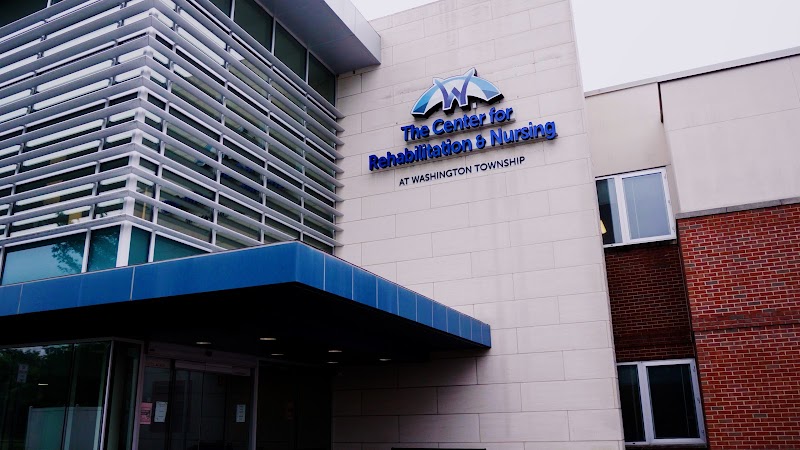
THE CENTER FOR REHAB & NURSING WASHINGTON TOWNSHIP
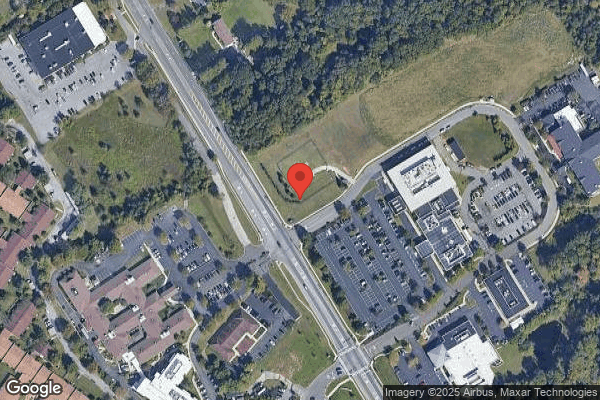
535 EGG HARBOR ROAD, SEWELL, NJ 08080 (856) 557-0105
For profit - Limited Liability company 190 Beds ALLAIRE HEALTH SERVICES Data: November 2025
Trust Grade
30/100
#299 of 344 in NJ
Last Inspection: November 2024

Within standard 12-15 month inspection cycle. Federal law requires annual inspections.

Overview

The Center for Rehab & Nursing Washington Township has received an F grade, indicating significant concerns about the facility's care quality. Ranking #299 out of 344 facilities in New Jersey places it in the bottom half, and it's the lowest-ranked of the nine facilities in Gloucester County. While the facility's trend is improving, with issues decreasing from 15 in 2024 to 7 in 2025, there are still serious concerns, including a significant fine of $108,675, which is higher than 87% of New Jersey facilities. Staffing is average with a 3 out of 5 rating, but the turnover rate is concerning at 53%, exceeding the state average. Specific incidents include a failure to follow wound care recommendations for a resident, resulting in the worsening of a pressure injury, and inadequate staffing of Certified Nurse Aides during multiple shifts, risking resident care. On a positive note, the facility has excellent quality measures and maintains average RN coverage, which can catch issues that CNAs might miss.

Trust Score
F
30/100
In New Jersey
#299/344
Bottom 14%
Safety Record
High Risk
Review needed
Inspections
Getting Better
15 → 7 violations
Staff Stability
⚠ Watch
53% turnover. Above average. Higher turnover means staff may not know residents' routines.
Penalties
✓ Good
$108,675 in fines. Lower than most New Jersey facilities. Relatively clean record.
Skilled Nurses
✓ Good
Each resident gets 42 minutes of Registered Nurse (RN) attention daily — more than average for New Jersey. RNs are trained to catch health problems early.
Violations
⚠ Watch
39 deficiencies on record. Higher than average. Multiple issues found across inspections.
★★☆☆☆
2.0
Overall Rating
★★★☆☆
3.0
Staff Levels
★★★★★
5.0
Care Quality
★☆☆☆☆
1.0
Inspection Score
Stable
2024: 15 issues
2025: 7 issues

The Good

  • 5-Star Quality Measures · Strong clinical quality outcomes
  • Full Sprinkler Coverage · Fire safety systems throughout facility
  • No fines on record

Facility shows strength in quality measures, fire safety.

The Bad

2-Star Overall Rating

Below New Jersey average (3.2)

Below average - review inspection findings carefully

Staff Turnover: 53%

Near New Jersey avg (46%)

Higher turnover may affect care consistency

Federal Fines: $108,675

Well above median ($33,413)

Significant penalties indicating serious issues

Chain: ALLAIRE HEALTH SERVICES

Part of a multi-facility chain

Ask about local staffing decisions and management

The Ugly 39 deficiencies on record

1 actual harm
Mar 2025 7 deficiencies 1 Harm
SERIOUS (G) 📢 Someone Reported This

A family member, employee, or ombudsman was alarmed enough to file a formal complaint

Actual Harm - a resident was hurt due to facility failures

Pressure Ulcer Prevention (Tag F0686)

A resident was harmed · This affected 1 resident

**NOTE- TERMS IN BRACKETS HAVE BEEN EDITED TO PROTECT CONFIDENTIALITY** Complaint #: NJ184057 Based on interview, record review, and review of other pertinent facility documents on 03/05/2025 and 03/0...

Read full inspector narrative →
**NOTE- TERMS IN BRACKETS HAVE BEEN EDITED TO PROTECT CONFIDENTIALITY** Complaint #: NJ184057 Based on interview, record review, and review of other pertinent facility documents on 03/05/2025 and 03/06/2025, it was determined that the facility failed to: a.) obtain a Physician's Order for a wound care recommendation which resulted in worsening of the wound; b.) implement recommendations from the wound care consultant to prevent worsening of facility acquired pressure injury. This deficient practice occurred for 1 of 1 resident reviewed for pressure ulcer (Resident #4). This deficient practice was evidenced by the following: Resident #4 was identified as having a skin alteration within the sacral region on 01/23/2025. The Licensed Practical Nurse (LPN) failed to transcribe the verbal order obtained for wound care. On 01/28/2025 during a wound consult, Resident #4's sacral wound measured 2 centimeters (cm) x 2 cm x 0.5 cm and progressed to 3 cm x 3 cm x 1 cm on 02/04/2025. Review of Resident #4's Order Summary Report (OSR) from 01/23/2025 through 02/04/2025 showed no evidence for wound care order in place for the resident's sacral wound. On 02/13/2025, Resident #4 was seen by the Physician and transferred out to the emergency room for sacral wound debridement. According to the hospital records, Resident #4 was admitted to the hospital on [DATE] with a diagnosis of Sacral Wound. This deficient practice was evidenced by the following: A review of the admission Record (an admission summary) reflected that Resident #4 was admitted to the facility with diagnoses that included but were not limited to; Anemia (low healthy red blood cells and hemoglobin), Depression (feeling of sadness), and Muscle Weakness. A review of the admission Minimum Data Set, an assessment tool used to facilitate the management of care dated 01/12/2025, reflected that the resident had a Brief Interview for Mental Status score of 14 out of 15, indicating that the resident was cognitively intact. Section M0100 revealed no pressure ulcer. A review of Resident #4's Progress Notes (PNs) dated 01/23/2025 revealed the following written by LPN #1: Aide [certified nursing assistant] informed me today that patient [Resident #4] has a skin tare in the sacral area. Cleaned with NSS [normal saline solution], and applied Medi honey and dry border gauze. Risk management note done and wound consult in chart. A review of Resident #4's wound care notes with an effective date of 01/28/2025 revealed the following: Wound Location: Sacrum Etiology: old pilonidal cyst reopened Signs of infection: none Size: 2 cm x 2 cm x 0.5 cm Tissue type: necrotic Drainage: mod serous Peri wound: intact Edema: none Description: none Dressing: Dakin's dressing Review a wound care notes with an effective date of 02/04/2025 revealed the following: Wound Location: Sacrum Etiology: old pilonidal cyst reopened Signs of infection: none Size: 3 cm x 3 cm x 1 cm Tissue type: necrotic/ purple edges Drainage: mod serous Peri wound: intact Edema: none Description: none Dressing: Santyl/Dakin's dressing A review of Resident #4's OSR and TAR revealed no evidence the wound care recommendations were implemented for the resident's sacral wound care from 01/23/2025 through 02/04/2025. A review of Resident #4's PNs dated 02/02/2025 revealed: pt [Resident #4] AAO x3 [alert, awake, oriented to person, place and time], all medications tolerated whole with water. C/O [complained of] pain in their sacral area. Dressing cleaned and changed. Further review of Resident #4's PNs dated 01/23/2025 through 02/04/2025, showed no further evidence wound care was provided. A review of Resident #4's OSR with an order date of 02/05/2025, revealed the following order: Wound care: Dress sacrum with Santyl to base then cover with Dakin moist gauze then ABD [abdominal dressing] pad post NSS [normal saline solution] cleanse. One time a day for sacrum break down. A review of Resident #4's TAR dated 02/05/2025 revealed the aforementioned order for wound care. On 03/05/2025 at 3:49 P.M., during an interview with LPN#1, she confirmed to the surveyor that she received a verbal order from the physician for Medi honey with border gauze for Resident #4's sacral wound and did not put the order in Point Click Care (PCC) as per facility's policy. LPN #1 stated once a wound is observed, the process is to evaluate the wound, notify the resident's Physician of the wound and obtain an order for wound care. She said the expectation is for the nurse to put the order in PCC where it's transcribed to the TAR for implementation. She further stated, all new wounds and existing wounds should have a treatment order in place. When asked by the surveyor if the order she received on 01/23/205 for Resident #4 should have been put in PCC and transcribed to the TAR, she said, yes. LPN#1 said the nurse is responsible to notify the physician of recommendations for wound care and obtain a Physician's Order for the recommendations. LPN#1 said she was unsure why the physician was not notified for Resident #2's wound recommendations. LPN#1 said, if wound care is not provided as ordered, the wound could get worse On 03/05/2025 at 4:10 P.M., during an interview with the Director of Nursing (DON), she said, if there is a skin alteration, the nurse will evaluate and notify the Physician, get a new treatment order, start the risk management and request a wound consult. The DON said, the expectation is if a nurse obtains a new wound care order from the Physician, the order should be placed in PCC and carried out on the TAR as per physician specifics. The DON said there should be a treatment order in place for all skin alteration and the resident's wound could get worse if there is no treatment in place. The DON also said wound care recommendations should be carried out on the TAR, and wounds care provided as ordered. The DON confirmed there was no treatment order on the TAR from 01/23/2025 through 02/04/2025. On 03/13/2025 at 10:00 A.M., during an offsite interview with Resident #4's Physician, he said the expectation is, wound care orders should be followed as ordered. He said once the nurse receives a verbal order for wound care, the order should be implemented immediately. He said it is unacceptable if wound care is not done or followed. The Physician said, if wound care is not started immediately, the wound could get worse. During the same interview, the Physician said there should be an order in place for all wounds. A review of the facility's policy title Wound Care with a revised date of 04/2024 under Policy revealed the following: The purpose of this procedure is to provide guidelines for the care of wounds to promote wound healing. A review if the facility's policy with a revised date of 12/2024 titled Medication and Treatment Order under Policy Interpretation and Implementation revealed: 7. Verbal orders must be recorded immediately in the resident's chart by the person receiving the order and must include prescriber's last name, credentials, date and time of the order. A review of the facility's policy titled Charting and Documentation under policy Statement revealed: All services provided to the resident, progress toward the care plan goals, or any changes in the resident's medical, physical, functional or psychological condition, shall be documented in the resident's' medical record. The medical record should facilitate communication between the interdisciplinary team regarding the resident's condition and response to care. NJAC 8:39-27.1
CONCERN (D) 📢 Someone Reported This

A family member, employee, or ombudsman was alarmed enough to file a formal complaint

Potential for Harm - no one hurt, but risky conditions existed

Safe Environment (Tag F0584)

Could have caused harm · This affected 1 resident

Complaint#: NJ182815 Based on observations, interviews, and review of other facility documentation on 3/5/2025 and 3/6/2025, it was determined that the facility failed to maintain a homelike environme...

Read full inspector narrative →
Complaint#: NJ182815 Based on observations, interviews, and review of other facility documentation on 3/5/2025 and 3/6/2025, it was determined that the facility failed to maintain a homelike environment for residents that included access to clean linens. The deficient practice was identified for 1 of 1 nursing units observed. This deficient practice was evidenced by the following: During a tour of the 500 Unit on 3/5/2025 at 10:55 AM, the surveyor asked what the resident census was on the unit, and the Resource Nurse/Registered Nurse (Resource/RN) stated 30 residents. At 11:36 AM, the surveyor toured the 500 High Hallway Linen Room and observed four wash cloths on the shelf. At 11:38 AM, the surveyor toured the linen room for the 500 Low Hallway Linen Room and observed three wash cloths on the shelf. The surveyor reviewed the Resident Council Meeting Minutes dated 12/19/2024, 1/3/2025, and 1/30/2025 which revealed resident complaints on the lack of linens available for resident care. On 3/5/2025 at 1:07 PM, the surveyor interviewed the Housekeeper (HK) who was working in the laundry room. The HK stated that the linen was delivered to the units twice a day. The HK indicated that PAR levels (the amount of inventory established by the facility) were used to determine the number of linens that go on each linen cart. The HK stated that there were always resident complaints about linens and that there were not enough towels and washcloths in the facility. On 3/5/2025 at 2:41 PM, the surveyor interviewed the Certified Nursing Assistant (CNA #1) who stated that there were three washcloths in the linen room this morning. CNA #1 indicated the linens were delivered to the unit late every day, usually after 10:30 AM. CNA #1 indicated there were times, when she had to wait for linen to come to the unit, which resulted in her cutting a bath blanket to be able to provide care to the residents. On 3/5/2025 at 3:17 PM, the surveyor interviewed the Housekeeping Director (HD) who stated that the PAR levels for the linen were low and identified there needed to be changes made. On 3/5/2025 at 4:10 PM, the surveyor interviewed the Director of Nursing (DON) who stated she was aware of not having enough linens in the facility. The DON indicated that the facility investigated and found that the staff were throwing away linens due to improperly labeled bins in the soiled linen room. On 3/6/2025 at 10:20 AM, the surveyor toured the 500 Low Hallway Linen Room and observed no washcloths and three towels. At 12:07 PM, the surveyor conducted a tour of the 500 Unit High hallway Linen Room and observed no washcloths and three towels. At 12:10 PM, the surveyor did a follow-up tour of the 500 Low Hallway Linen Room and observed no washcloths and towels. On 3/6/2024 at 12:11 PM, the surveyor interviewed the Resource/RN who confirmed there were no washcloths and three towels in the 500 Unit High Hallway Linen Room and no washcloths and towels in the 500 Unit Low Hallway Linen Room. The Resource/RN indicated that the lack of linens had been an ongoing issue and staff would have to call the laundry to bring more linens to the unit. The Resource/RN stated there were times when the staff had to cut bath blankets to provide resident care. On 3/6/2025 at 1:58 PM, the surveyor interviewed the Licensed Nursing Home Administrator (LNHA) in the presence of the DON and the survey team who stated that he was aware of the issue with the lack of linen, and it was brought up in the last Resident Council meeting. The LNHA stated that he had ordered more linens to help resolve the issue. The LNHA indicated that linens should always be readily accessible to residents. The LNHA stated that he thought the staff calling laundry for linens was considered readily accessible. On 3/6/2025 at 2:05 PM, the DON in the presence of the LNHA and the surveyor team stated that it was not acceptable for staff to use bath blankets to provide care to the residents in place of towels and washcloths. NJAC 8:39-21.3 (a)
CONCERN (D) 📢 Someone Reported This

A family member, employee, or ombudsman was alarmed enough to file a formal complaint

Potential for Harm - no one hurt, but risky conditions existed

Deficiency F0657 (Tag F0657)

Could have caused harm · This affected 1 resident

Complaint #: NJ184057 Based on observation, interview, review of the Electronic Medical Record (EMR) and review of other facility documentation on 03/05/2025 and 03/05/2025, it was determined that the...

Read full inspector narrative →
Complaint #: NJ184057 Based on observation, interview, review of the Electronic Medical Record (EMR) and review of other facility documentation on 03/05/2025 and 03/05/2025, it was determined that the facility failed to update and revise a resident's care plan, specifically for a newly identified wound, for 1 of 1 resident reviewed for comprehensive person-centered care plans, (Resident #4). This deficient practice was evidenced by the following: A review of the admission Record (an admission summary) reflected that Resident #4 was admitted to the facility with diagnoses that included but were not limited to: Anemia (low healthy red blood cells and hemoglobin), Depression (feeling of sadness), and Muscle Weakness. A review of the admission Minimum Data Set, an assessment tool used to facilitate the management of care dated 01/12/2025, reflected that the resident had a Brief Interview for Mental Status score of 14 out of 15, indicating that the resident was cognitively intact. Section M0100 revealed no pressure ulcer. A review of Resident #4's Care Plan (CP) initiated on 01/06/2025 included under Focus At risk for alteration in skin integrity related to fragile skin and immobility. A review of Resident #4's Progress Notes (PNs) dated 01/23/2025 revealed the following written by LPN #1: Aide [certified nursing assistant] informed me today that patient [Resident #4] has a skin tare in the sacral area. Cleaned with NSS [normal saline solution], and applied Medi honey and dry border gauze. Risk management note done and wound consult in chart. A review of Resident #4's wound care notes with an effective date of 01/28/2025 revealed the following wound care recommendations: Wound Location: Sacrum Etiology: old pilonidal cyst reopened Signs of infection: none Size: 2 cm x 2 cm x 0.5 cm Tissue type: necrotic Drainage: mod serous Peri wound: intact Edema: none Description: none Dressing: Dakin's dressing A review of Resident #4's CP showed no updates with interventions of the aforementioned. On 03/05/2025 at 4:03 P.M., during an interview with the Resource Nurse/Registered Nurse, the surveyor asked what was the importance of the CP and who was reposnsible to update the CP? In the presence of another surveyor, the Resource Nurse/ Registered Nurse said she was unable to answer the question. On 03/05/2025 at 4:05 P.M., during an interview with the Director of Nursing (DON), she stated the importance of the CP is how the team stays updated on the resident's needs, and what care needs to be provided for the resident. The DON stated the CP should be updated or revised with any new change in a resident's condition. When presented Resident #4's CP, the DON confirmed the CP was not revised or updated to reflect an actual skin breakdown on 01/23/2025. She said the CP should have been updated and revised once the resident (Resident #4) developed a wound. The observation of the wound and interventions should have been on the CP. She further stated the Interdisciplinary Team (nurses, social worker, therapist,) is responsible to initiate and/or revise the CP A review of the facility's policy with a revised date of 01/2025 titled Care Plans, Comprehensive, Person-Centered under Policy Statement reveals A comprehensive, person-centered care plan that includes measurable objectives and timetables to meet the resident's physical, psychosocial and functional needs is developed and implemented for each resident. Under Policy Interpretation and Implementation #13. Assessments of residents are ongoing, and care plans are revised as information about the residents and residents' NJAC 8:39-27.1(a)
CONCERN (D) 📢 Someone Reported This

A family member, employee, or ombudsman was alarmed enough to file a formal complaint

Potential for Harm - no one hurt, but risky conditions existed

Deficiency F0658 (Tag F0658)

Could have caused harm · This affected 1 resident

Complaint #: NJ184057 Based on observation, interview, and review of pertinent facility documents on 03/05/2025 and 03/05/2025, it was determined that the facility failed to: a.) ensure the treatment ...

Read full inspector narrative →
Complaint #: NJ184057 Based on observation, interview, and review of pertinent facility documents on 03/05/2025 and 03/05/2025, it was determined that the facility failed to: a.) ensure the treatment cart was secured during wound care observation, b.) initial, date, and time a dressing prior to applying on a resident (R#4) in accordance with professional standards of clinical practice. The facility also failed to follow its policies titled Storage of Medications and Wound Care This deficient practice was identified for 1 of 1 resident observed for wound care. This deficient practice was evidenced by the following: Reference: New Jersey Statutes Annotated, Title 45, Chapter 11. Nursing Board. The Nurse Practice Act for the State of New Jersey states: The practice of nursing as a licensed practical nurse is defined as performing tasks and responsibilities within the framework of case finding; reinforcing the patient and family teaching program through health teaching, health counseling and provision of supportive and restorative care, under the direction of a registered nurse or licensed or otherwise legally authorized physician or dentist. On 03/05/25 at 12:00 P.M., the surveyor observed the Registered Nurse (RN#1) parked the treatment cart outside the door of Resident #4's room. RN#1 performed hand hygiene, don clean gloves, and gathered all supplies needed and proceeded to the resident's room to perform wound care. RN#1 left the treatment cart unlocked and walked to Resident #4's room who was in bed and pulled the resident's privacy curtain. The treatment cart was out of the line of sight of RN#1 and no residents were observed present in the hallway and by the treatment cart. RN#1 was observed performed wound care after which she applied a clean dressing to the resident's wound without initials, date or time. On 03/05/2025 at 12:45 P.M., during an interview with RN#1, she stated the treatment cart should always be locked. She said its important to keep the treatment and medication carts always locked to avoid residents from getting into the carts. RN#1 acknowledged the treatment cart was unlocked and left unattended while performing wound care for Resident #4. RN#1stated if a treatment cart is left unlocked, a resident could get an ointment to ingest or rub causing harm or injury to the resident. During the same interview, RN#1 confirmed the dressing for Resident #4 was not initial, dated or time prior to application on the resident's wound. She stated the importance of dating, timing and writing the initial on a dressing is so that other staff caring for the resident knows the last time the wound care was performed for the resident. She stated, I should have initial, timed and dated the dressing prior to applying the dressing on the resident's wound. On 03/05/2025 at 1:00 P.M., during an interview with the Resource Nurse/RN, she stated all wound dressings should have an initial, date and time written on it prior to applying on a resident's wound. She stated it was important so that staff are aware of the last time the dressing change was completed. The Resource Nurse/RN also stated the medication and treatment carts should be locked unless I am standing there, it is important for safety. If a resident got into a medication cart or treatment cart, there could be a potential for harm or injury to the resident. On 03/05/2025 at 4:10 P.M. during an interview with the Director of Nursing (DON), she stated my expectation is for all dressings to be dated with the nurse's initials and time prior to applying the dressing. The DON also said the medication and treatment carts should be locked by the nurse when not in use. Its is important because of the safety of the residents. A review of the facility's policy titled Storage of Medications with a revised date of 6/2024, under Policy Interpretation and Implementation 7. Compartments (including drawers, cabinets, rooms, refrigerators, carts, and boxes) containing drugs and biologicals shall be locked when not in use, and trays or carts used to transport items shall not be left unattended if open or otherwise potentially available to others. A review of the facility's policy titled Wound Care with a revised date of 04/2024 under Steps in the Procedure 13. Dress wound. Pick up sponge with paper and apply directly to area. [NAME] tape with initials, time and date and apply dressing. NJAC 8:39-29.4(h)
CONCERN (D) 📢 Someone Reported This

A family member, employee, or ombudsman was alarmed enough to file a formal complaint

Potential for Harm - no one hurt, but risky conditions existed

Food Safety (Tag F0812)

Could have caused harm · This affected 1 resident

Complaint#: NJ182815 Based on observations, interviews, and review of other facility documentation on 3/5/2025, it was determined that the facility failed to: a.) ensure that food items were dated, b....

Read full inspector narrative →
Complaint#: NJ182815 Based on observations, interviews, and review of other facility documentation on 3/5/2025, it was determined that the facility failed to: a.) ensure that food items were dated, b.) ensure outdated food items were discarded, and c.) ensure refrigerator temperatures in the kitchen were completed to prevent foodborne illnesses. This deficient practice was evidenced by the following: On 3/5/2025 from 10:08 AM to 10:40 AM, the surveyor, accompanied by the Dietary Director (DD), observed the following during a tour of the kitchen: 1. On the bread rack, the surveyor observed: - an unopened loaf of sliced rye sandwich bread with a use by date of 2/22/25. - an opened gluten free white wide slice bread with a use by date of 2/11/25. -an opened bag of 8 English muffins with no label and no expiration date. 2. The surveyor observed a temperature log sheet outside the walk-in refrigerator that had a blank space for 3/4/2025, for PM temperatures. 3. The surveyor and DD entered the walk-in refrigerator that contained milk and juice. The surveyor observed a cart in the walk-in refrigerator that contained the following: - a pitcher of orange juice that had no date on it. -an opened 64 oz. cranberry apple juice bottle with no date on it. -an opened 64 oz. cranberry raspberry juice bottle with no date on it. On 3/5/2025 at 10:30 AM, the surveyor interviewed the DD who stated that all food and juice items should have been dated once opened. The DD indicated that gluten free items have a longer shelf date, and the gluten free bread had the incorrect use by sticker on it. The DD agreed that any food items past the use by date should have been discarded. The DD confirmed the blank space on the walk-in refrigerator temperature log sheet and indicated the PM temperature for 3/4/2025 should have been recorded. Review of the facility food service policy titled, Dating/Labeling of Food Items with a reviewed/revised date of 01/2025 revealed under Policy Explanation and Compliance Guidelines for Staffing, 2. The food shall be clearly marked to indicate the date or day by which the food shall be consumed or discarded. 3. The individual opening or preparing a food shall be responsible for date marking the food at the time the food is opened or prepared. 4. The marking system shall consist of a label, the day/date of opening, and the day/date the item must be consumed or discarded. Review of the facility job description titled, Dietary Director dated April 2020 revealed under Essential Duties and Responsibilities, Monitor food preparation and food storage areas to be sure that health and sanitation regulations are being met. NJAC 8:39-17.2 (g)
CONCERN (D) 📢 Someone Reported This

A family member, employee, or ombudsman was alarmed enough to file a formal complaint

Potential for Harm - no one hurt, but risky conditions existed

Infection Control (Tag F0880)

Could have caused harm · This affected 1 resident

Complaint #: NJ184057 Based on observation, interview, and review of pertinent facility documents on 3/5/2025 and 3/6/2025, it was determined that the facility staff failed to maintain appropriate inf...

Read full inspector narrative →
Complaint #: NJ184057 Based on observation, interview, and review of pertinent facility documents on 3/5/2025 and 3/6/2025, it was determined that the facility staff failed to maintain appropriate infection control practices specifically by not properly discarding an opened pack of unused 4x4 gauze after a wound care observation to prevent the potential spread of infection in accordance with the Center for Disease and Control prevention guidelines and Standards of Clinical Practice. The facility staff failed to follow their policy titled Infection Prevention and Control Program. This defiant practice was identified during 1 of 1 wound care observation. On 3/5/2025 at 12:00 P.M., the surveyor observed the Registered Nurse (RN#1) complete a wound care treatment. Upon completion of the wound care, RN#1 was observed gathering and returned an opened pack of unused 4x4 gauze and placed it in the treatment cart. On 03/05/2025 at 12:45 P.M., during an interview with RN#1, she stated the opened pack of unused 4x4 gauze from the resident's room should have been discarded and not placed in the treatment cart. She further started it was important not to put the opened pack of unused 4x4 gauze back on the treatment cart to avoid cross contamination. On 03/05/2025 at 1:31 P.M., during an interview with the Infection Preventionist (IP), she stated all unused treatment supplies should be discarded once not used during a wound care. The IP stated the expectation is to take only items needed during a treatment with the treatment cart outside the door to obtain extra supplies if needed. Opened unused gauze should not be placed back on the treatment cart once it was previously taken in the resident's room, it is important because of infection prevention. On 03/05/2025 at 4:10 P.M., during an interview with the Director of Nursing (DON), she stated unused wound supplies should be discarded after a wound dressing. When asked by the surveyor if an opened pack of unused 4x4 gauze should be returned to the treatment cart, the DON stated, no, the nurse should not put unused wound supplies back on the treatment cart. It's important to prevent cross contamination. A review of the facility policy with a revised date of 01/2025, title Infection Prevention and Control Program under Purpose revealed: To ensure the facility establishes and maintains an Infection Control Program designed to provide a safe, sanitary and comfortable environment and to help prevent the development and transmission of disease and infection in accordance with Federal and state requirements. NJAC 8:39-19.1
CONCERN (D) 📢 Someone Reported This

A family member, employee, or ombudsman was alarmed enough to file a formal complaint

Potential for Harm - no one hurt, but risky conditions existed

Deficiency F0919 (Tag F0919)

Could have caused harm · This affected 1 resident

**NOTE- TERMS IN BRACKETS HAVE BEEN EDITED TO PROTECT CONFIDENTIALITY** Complaint #: NJ182815 Based on observations and interviews on 3/5/2025 and 3/6/2025, it was determined that the facility failed ...

Read full inspector narrative →
**NOTE- TERMS IN BRACKETS HAVE BEEN EDITED TO PROTECT CONFIDENTIALITY** Complaint #: NJ182815 Based on observations and interviews on 3/5/2025 and 3/6/2025, it was determined that the facility failed to ensure their wireless call bell system communicated calls directly to the staff. This deficient practice was evidenced by the following: 1. According to the admission Record (AR), Resident #1 was admitted to the facility with diagnoses that included but were not limited to: fracture of unspecified part of neck of left femur, sarcoidosis (an inflammatory disease of the lungs and lymph nodes), and hypertension. A review of resident #1's Minimum Data Set (MDS), an assessment tool dated 2/28/2025, revealed a Brief Interview of mental Status (BIMS) score of 13 out of 15, which indicated the resident's cognition was intact. The MDS further revealed the resident was dependent for toileting hygiene. On 3/5/2025 at 11:21 AM, the surveyor interviewed Resident # 1 in the presence of the resident's family member. The resident stated he /she was admitted to the facility several weeks ago. Resident #1 indicated that the day before it took staff 50 minutes to answer his/her call light. Resident #1 further stated that this was not the first time this occurred and that he/she had reported it to the nurse. The surveyor had Resident #1 ring his/her call bell. The surveyor returned to the resident's room at 11:35 AM and observed the call bell light still on with no audible sound present. The resident stated no staff had answered his/her call bell yet. Resident #1 further indicated that the staff had come to his/her room about ten minutes prior to the surveyor coming to the room the first time. Resident #1 stated the staff probably were not going to come back since she called for them earlier and they had already responded. 2. According to the AR, Resident #3 was admitted to the facility with diagnoses that included but were not limited to: chronic obstructive pulmonary disease (a lung condition caused by damage to the airways, due to smoking or other irritants), anemia, and hyperlipidemia. A review of Resident #3's MDS, an assessment tool dated 2/13/2025, revealed a BIMS score of 12 out of 15, which indicated the resident's cognition was moderately impaired. The MDS further revealed the resident needed substantial assistance for toileting hygiene. 3. According to the AR, Resident #7 was admitted to the facility with diagnoses that included but were not limited to: diabetes, morbid obesity, and unspecified falls. A review of Resident #7's MDS, an assessment tool dated 1/10/2025, revealed a BIMS score of 14 out of 15, which indicated the resident's cognition was intact. The MDS further revealed the resident was dependent for toileting hygiene. On 3/6/2025 at 10:01 AM, the surveyor interviewed Resident #7 who stated that sometimes it took the staff more than ten minutes to answer his/her call bell. The resident further indicated that there were times his/her call bell was not answered by the staff. The resident further stated this mostly had occurred on the evening shift. On 3/5/2025 at 11:23 AM, the surveyor interviewed Resident # 3 who stated he/she had been a resident of the facility previously and recently came back. Resident #3 indicated that it took a long time for staff to answer his/her call light and sometimes the staff never came to the room to answer the light. Resident #3 further stated that he/she had made the charge nurse aware. On 3/5/2025 at 2:52 PM, the surveyor interviewed the Certified Nursing Assistant (CNA #2) who stated the call bells on the 500 Unit did not ring to the staff work areas. CNA #2 proceeded inside a resident room and rang the call bell. The surveyor observed a green light illuminate with no audible sound present on the ceiling in front of the resident room. CNA #2 indicated that the green light meant the resident would be calling from their room and if the light was red, it was calling from the resident bathroom. CNA #2 stated the only way she was aware that the call bell was ringing was if she looked up at the ceiling while standing in the hallway when she was not busy providing care to other residents. On 3/5/2025 at 3:00 PM, the surveyor did not observe any staff at the designated staff work areas on the 500 Unit Low and High Hallways. On 3/6/2025 at 9:55 AM, the surveyor interviewed the Licensed Practical Nurse (LPN #2) who stated she was unable to see two rooms (room [ROOM NUMBER] and 514) call lights from the staff work area in the 500 High Hallway. The LPN indicated a staff member would have to sit in the middle of the hallway to see if the call lights would illuminate from those two rooms. The LPN confirmed that there was no call bell system at the workstation to alert the staff that the residents were ringing their call bells. On 3/6/2025 at 10:12 AM, the surveyor interviewed the Registered Nurse (RN#1) who stated she was unable to see the call lights for two rooms (room [ROOM NUMBER] and 504) from the staff work area in the 500 Low Hallway. RN #1 indicated that the staff should be in the hallways to monitor the call bells since they were not audible and do not ring to any main location. On 3/6/2025 at 10:16 AM, the surveyor interviewed the Resource Nurse/Registered Nurse (Resource/ RN) who indicated that she was aware that the residents had complained about their call bells not being answered for more than ten minutes especially on the 7pm-7am shift. The Resource/ RN stated that the staff were supposed to be monitoring the call lights hourly as the call bells were not audible on the unit and were to respond in a timely manner. On 3/6/2025 at 1:58 PM, the surveyor interviewed the Director of Nursing (DON) in the presence of the Licensed Nursing Home Administrator (LNHA). The DON stated she was not aware of any resident complaints regarding the call bells not being answered. The DON further indicated that the staff were expected to respond to the call bells in a timely manner. The DON stated it was everyone's responsibility to answer the call bells and that staff had received training on responding to the resident call bells. On 3/6/2025 at 1:58 PM, the surveyor interviewed the LNHA that confirmed the call bells in the new building which consisted of the 400 and 500 unit, did not ring to a centralized location and that staff had to visually see if the call bell was ringing. Review of the facility's policy titled, Communication-Call System with a reviewed/revised date of 01/2025 revealed under Purpose, To provide a mechanism for residents to promptly communicate with nursing staff. Under Procedures, 7. Nursing staff will answer call bells promptly . NJAC 8:39-27.1 (a)
Nov 2024 15 deficiencies
CONCERN (D)

Potential for Harm - no one hurt, but risky conditions existed

Resident Rights (Tag F0550)

Could have caused harm · This affected 1 resident

Based on observation and interview and record review, it was determined that the facility failed to ensure that the residents' dining experience was provided in a manner to promote dignity and respect...

Read full inspector narrative →
Based on observation and interview and record review, it was determined that the facility failed to ensure that the residents' dining experience was provided in a manner to promote dignity and respect of the residents. This deficient practice was identified in 1 of 6 dining areas observed, (the Activities room) and was evidenced by the following: On 11/19/24 at 11:59 AM, the surveyor observed dining on the first-floor activities room. The surveyor observed two (2) residents (Resident #22 and Resident #94) sitting at the same table. Resident #94 had their lunch tray and was eating. Resident #22 had not received their lunch tray. At that time, the surveyor interviewed a Licensed Practical Nurse (LPN # 2) who stated that residents who were seated at the same table should have been served their lunch at the same time. At 12:02 PM, LPN #2 stated that she had called the kitchen to obtain Resident #22's lunch tray. At that time, the surveyor observed Resident #22 take a piece of brownie from Resident # 94's plate and ate it. Then, Resident #94 tried to feed a forkful of broccoli to Resident #22 and LPN #1 intervened. LPN #1 stated I Know Resident #22 is on a regular diet. At 12:11 PM, the surveyor observed Resident # 22's lunch was delivered, and the resident began eating. A review of Resident #22's Order Summary Report revealed a Physician's order, dated 9/10/24, for a Regular diet. On 11/20/24 at 8:29 AM, the surveyor interview with the Registered Dietician (RD) who stated that all residents who were seated at the same table should have been served their meals at the same time. The RD stated that it was important to serve all residents at the same table their meals at the same time for dignity. The RD further stated that a resident should not be sitting at a table for a long period of time without food. On 11/21/24 at 12:44 PM, the surveyor interviewed the Director of Nursing (DON), in the presence of the Licensed Nursing Home Administrator (LNHA) and the survey team, who stated when serving residents in the dining areas, one table should be served their meals at the same time. The DON further stated that the importance of serving meals to all residents at the same table at the same time was so that a resident would not be waiting to eat while other residents were eating. The DON stated that Resident#22 and Resident #97 should have been served their lunch at the same time. On 11/22/24 at 9:42 AM, the LNHA, in the presence of the DON and survey team, stated that Resident #22 usually ate lunch in the main dining room but due to the main dining room being unavailable that day, Resident #22 was rerouted to the activities room for lunch and their lunch tray should have gone to the activities room. A review of the facility's Dining Room Services policy, revised/updated May 2024, included Dignity and Respect: All residents should be treated with dignity and respect during mealtimes. A review of the facility's Resident Rights policy, reviewed/revised 12/20/2023, included that all employees shall treat all residents with kindness, respect, and dignity. NJAC 8:39-4.1(a)12
CONCERN (D)

Potential for Harm - no one hurt, but risky conditions existed

Deficiency F0578 (Tag F0578)

Could have caused harm · This affected 1 resident

Based on interview, medical record review, and review of other facility documentation, it was determined that the facility failed to document a resident's life-sustaining treatment preference on the p...

Read full inspector narrative →
Based on interview, medical record review, and review of other facility documentation, it was determined that the facility failed to document a resident's life-sustaining treatment preference on the physician's orders. This deficient practice was identified for one (1) of one (1) resident (Resident #52) reviewed for advanced directives and was evidenced by the following: On 11/18/24 at 11:18 AM, the surveyor reviewed the medical record for Resident #52. There was no documented evidence of the resident's code status. A review of the admission Record, (an admission summary) revealed the resident was admitted to the facility with diagnoses which included: heart failure, depression, obstructive sleep apnea, atrial fibrillation, hyperlipidemia, and hypertensive chronic kidney disease. A review of the resident's comprehensive Minimum Data Set (MDS), an assessment tool, dated 11/3/24, included the resident had a Brief Interview Mental Status (BIMS) score of 13 out of 15, which indicated the resident's cognition was intact. On 11/20/24 at 11:25 AM, the surveyor interviewed the Registered Nurse (RN) #1 who stated, if the resident was admitted without a code status, they informed the Social Worker (SW) and the physician. She stated that if the resident did not have a code status, we put full code until we clarify. At that time, RN #1 reviewed Resident #52's electronic medical record (EMR) and confirmed the code status was not documented. She then stated, I don't know how that was missed. On 11/20/24 at 2:23 PM, the surveyor interviewed the Director of Nursing (DON) who stated that the resident's code status should be determined upon admission to the facility as it was a part of the admission process. She further stated if the resident did not have a Provider Orders for Life-Sustaining Treatment (POLST - a specific type of advance directive that communicates your wishes for emergency medical treatment when you are unable to speak for yourself.) form on admission, then during the care conference with the Interdisciplinary Team (IDT) the advance directive would be confirmed. She explained the physician then created a POLST form, and a physician order (PO) for the code status was written. On 11/22/24 at 10:08 AM, the surveyor interviewed the Licensed Nursing Home Administrator (LNHA) in the presence of the DON and the survey team. The LNHA stated that every resident should have a code status and it should be determined on admission. A review of the facility's Advanced Directives policy, reviewed/revised December 2023, included, Prior to or upon admission of a resident, the Social Services Director or designee will inquire of the resident, his/her family members and/or his or her legal representative, about the existence of any written advance directives. NJAC 8:39 - 9.6 (a)
CONCERN (D) 📢 Someone Reported This

A family member, employee, or ombudsman was alarmed enough to file a formal complaint

Potential for Harm - no one hurt, but risky conditions existed

Report Alleged Abuse (Tag F0609)

Could have caused harm · This affected 1 resident

Complaint #NJ169388 Based on interview, record review, and review of facility documents, it was determined that the facility failed to report an allegation of staff to resident abuse to the New Jersey...

Read full inspector narrative →
Complaint #NJ169388 Based on interview, record review, and review of facility documents, it was determined that the facility failed to report an allegation of staff to resident abuse to the New Jersey Department of Health and the Office of the Ombudsman in a timely manner in accordance with state and federal requirements and the facility policy. This deficient practice was identified for 1 of 1 resident (Resident #199) reviewed for abuse and was evidenced by the following: Refer to F610 A review of the admission Record (an admission summary), revealed the resident had diagnoses which included: unspecified dementia, unspecified severity, without behavioral disturbance, psychotic disturbance, mood disturbance, and anxiety, major depressive disorder, recurrent, moderate, generalized anxiety disorder, mild cognitive impairment of uncertain or unknown etiology, unspecified urinary incontinence, and morbid (severe) obesity due to excess calories. A review of the resident's quarterly Minimum Data Set (MDS), an assessment tool, dated 12/10/23, included the resident had a Brief Interview for Mental Status (BIMS) score of 15 out of 15, which indicated the resident's cognition was intact. Further review of the MDS revealed the resident had a functional limitation in range of motion impairment on both sides of the upper and lower extremities and was always incontinent of both bowel and bladder. Further review of the MDS indicated that the resident had no documented behaviors. A review of the residents individual comprehensive care plan (ICCP) included a focus area, that indicated the resident had activities of daily living (ADL) self care deficit physical limitations. Interventions included: Assist with ADL's x 1 (one) staff, Ambulation: total dependence, Toileting: total dependence, Bed Mobility: Total assist x 2 (two) staff and Transfers: Total dependence. On 11/19/24 at 10:46 AM, the surveyor interviewed the Licensed Practical Nurse (LPN #5) who stated that the resident had behaviors which included giving a hard time to a care giver who was not consistent. LPN #5 stated that the resident would would yell at them and did not talk to them in a nice way. LPN #5 stated that if a resident were denied care, the aide would be removed from the assignment and both the supervisor and the Director of Nursing (DON) would handle that. LPN #5 stated that one time, an agency aide asked the resident's family members to step out of the resident's room and that was when I called the supervisor. LPN #5 stated that the resident was specific with their words and the aide said the same thing. LPN #5 stated that the resident meant no harm, as that was just how they talked. LPN #5 stated that everything was then handled by the supervisors. When the surveyor asked if it was abuse if the CNA refused to provide care and LPN #5 responded, abuse is a strong word, I would say negligence. On 11/19/24 at 11:03 AM, the surveyor requested all investigations that pertained to the resident and the Director of Nursing (DON) provided the surveyor with a Reportable Event Record/Report (RER/R) dated 11/29/23, for a report of staff-to-resident abuse that occurred at an unspecified time in the AM on 11/26/23. The portion of the form designated to determine, Was this a Significant event? and Was Significant Event called in (to the New Jersey Department of Health (NJDOH)) with the date and time was not completed. Further review of the RER/R revealed that on 11/29/23, the resident's family member alleged emotional abuse towards the resident during an interaction with a care taker on 11/26/23, and the identified caretaker was removed from the schedule pending the investigation. When the surveyor asked if the allegation was phoned into the NJDOH she replied yes, and that it was human error that area designated for the date and time the allegation was phoned in was left blank. Further review of the RER/R included an Individual Statement Form that was written by Registered Nurse/Supervisor (RN/S) #2 on 11/27/23. RN/S #2 documented that on the afternoon (time not specified) of 11/26/23, RN/S #2 received a text message that was intended for the DON from the resident's family member, which conveyed that a CNA (Certified Nursing Assistant) from the prior evening was rude to the resident. The family member also had a complaint about today's CNA, CNA #7, who asked the resident's two family members to please leave the room while she changed the resident. The family members asked why they were asked to leave the room and the CNA stated that it would be easier for her to get around the bed. When the family members refused to leave CNA #7 walked out and that was when RN/S #2 documented that she got involved and changed the resident. RN/S #2 documented that she had CNA #7 write a statement and removed her from the resident's assignment. RN/S #2 documented, refer to CNA #7's statement. Further review of the RER/R failed to contain documented evidence of CNA #7's statement as referenced by RN/S#2. On 11/19/24 at 1:19 PM, the surveyor interviewed the DON who stated that the RN/S #2 wrote a statement on 11/27/23 about the concerns raised by the resident's family on 11/25/23 and 11/26/23. The DON stated the interaction that occurred was between the employee and the resident's family member. The Supervisor provided care and reassigned the CNA. The DON stated that was CNA #7's first and only day that she worked at the facility. The surveyor asked if RN/S #2 was responsible to phone in an allegation of abuse to the NJDOH? The DON stated that was not the facility practice. The DON stated that the supervisor's role was to just to write a statement form, collect statements, and follow through. At that time, the surveyor asked the DON if she had spoken to anyone at the NJDOH after the RER/R was submitted? The DON responded, that she believed that someone had reached out to her to request additional information. The DON further stated that she also believed that someone from the NJDOH came in and spoke with the resident directly regarding the incident. The DON maintained that it was human error that the date and time she phoned the complaint in to NJDOH was omitted from the form. On 11/20/24 at 1:49 PM, the surveyor reviewed the Transmission Verification Report (TVR) (confirmation of facsimile (fax) submission) that was dated 11/29/23 at 6:54 PM. Further review of the TVR revealed that three pages, the length of the RER/R was faxed to an incorrect fax number that was unrelated to the NJDOH. The surveyor confirmed with the NJDOH Long-Term Care Complaints Department that there was no receipt of a Facility Reported Event (FRE) or a RER/R being phoned in or faxed from the facility that pertained to the resident's allegation of emotional abuse. There was also no record of a summary and conclusion of the abuse investigation on file at the NJDOH. On 11/20/24 at 2:00 PM, in the presence of the survey team the DON stated that she was unsure if she was required to call in an allegation of abuse within two hours or within twenty-four hours and stated that she would have to refer to the policy. The DON further stated, You do not have to call and send it in. You just send it in. On 11/21/24 at 11:40 AM, the DON provided the surveyor with a copy of the Summary and Conclusion for the investigation that was completed on 12/1/23 and was sent to the NJDOH yesterday (11/20/24). When the surveyor requested a TVR to confirm when the Summary and Conclusion was originally sent to the NJDOH the DON stated that she did not have one. On 11/22/24 at 9:54 AM, the surveyor interviewed the Licensed Nursing Home Administrator (LNHA) and asked if the Office of the Ombudsman were notified of the abuse allegation timely? The LNHA stated that the notification would have been faxed or emailed to the Office of the Ombudsman. The DON who was present stated that she would have to check and see if there were a second fax confirmation. The facility failed to provide documented evidence that the Office of the Ombudsman was notified of the resident's allegation of emotional abuse. A review of the facility's Abuse Investigation And Reporting policy, updated 7/10/23, included: All reports of resident abuse, neglect, exploitation, misappropriation of resident property, mistreatment and/or injuries of unknown origin (abuse) shall be promptly reported to local, state and federal agencies (as defined by current regulations) and thoroughly investigated by facility management. Findings of abuse investigations shall also be reported. Witness reports shall be obtained in writing. Either the witness shall write his/her statement and sign and date it, or the investigator may obtain a statement, read it back to the member and have him/her sign and date it. The investigator shall notify the ombudsman that an abuse investigation is being conducted. The investigator shall consult daily with the Administrator concerning the progress/findings of the investigation. Upon conclusion of the investigation, the investigator shall record the results of the investigation on approved documentation forms and provide the completed documentation to the Administrator. All alleged violations involving abuse, neglect, exploitation, or mistreatment, including injuries of an unknown source and misappropriation of property shall be reported by the facility Administrator, or his/her designee, to the following persons or agencies: The State licensing/certification agency responsible for surveying/licensing the facility; The local/State Ombudsman; The Resident's Representative (Sponsor) of Record; Law enforcement officials; The resident's Attending Physician An alleged violation of abuse, neglect, exploitation or mistreatment (including injuries of unknown source and misappropriation of resident property) shall be reported immediately, but not later than: Two (2) hours if the alleged violation involves abuse OR has resulted in serious bodily injury; or Twenty-four (24) hours if the alleged violation does not involve abuse AND has not resulted in serious bodily injury. Verbal/written notices to agencies may be submitted via special carrier, fax, e-mail, or by telephone. Notices shall include, as appropriate: The name of the resident; The number of the room in which the resident resides; The type of abuse that was allegedly committed (i.e., Verbal, Physical, Sexual, Neglect, etc.); The date and time the alleged incident occurred; The name (s) of all persons involved in the incident; and What immediate action was taken by the facility. The Administrator/designee, shall provide the appropriate agencies or individuals listed above with a written report of the findings of the investigation within five (5) working days of the occurrence of the incident . NJAC 8:39-9.4 (f)
CONCERN (D) 📢 Someone Reported This

A family member, employee, or ombudsman was alarmed enough to file a formal complaint

Potential for Harm - no one hurt, but risky conditions existed

Investigate Abuse (Tag F0610)

Could have caused harm · This affected 1 resident

**NOTE- TERMS IN BRACKETS HAVE BEEN EDITED TO PROTECT CONFIDENTIALITY** Complaint #NJ169388 Based on interview, record review, and review of facility documents, it was determined that the facility fai...

Read full inspector narrative →
**NOTE- TERMS IN BRACKETS HAVE BEEN EDITED TO PROTECT CONFIDENTIALITY** Complaint #NJ169388 Based on interview, record review, and review of facility documents, it was determined that the facility failed to conduct a timely and thorough investigation in accordance with the facility policy for an allegation of staff to resident abuse. This deficient practice was identified for 1 of 1 resident (Resident #199) reviewed for abuse and was evidenced by the following: Refer to F609 On 11/18/24 at 10:27 AM, the surveyor reviewed the closed medical record for Resident #199. A review of the admission Record (an admission summary), revealed the resident had diagnoses which included: unspecified dementia, unspecified severity, without behavioral disturbance, psychotic disturbance, mood disturbance, and anxiety, major depressive disorder, recurrent, moderate, generalized anxiety disorder, mild cognitive impairment of uncertain or unknown etiology, unspecified urinary incontinence, and morbid (severe) obesity due to excess calories. A review of the resident's quarterly Minimum Data Set (MDS), an assessment tool, dated 12/10/23, included the resident had a Brief Interview for Mental Status (BIMS) score of 15 out of 15, which indicated the resident's cognition was intact. Further review of the MDS revealed the resident had a functional limitation in range of motion impairment on both sides of the upper and lower extremities and was always incontinent of both bowel and bladder. Further review of the MDS indicated that the resident had no documented behaviors. A review of the residents individual comprehensive care plan (ICCP) included a focus area, that indicated the resident had activities of daily living (ADL) self care deficit physical limitations. Interventions included: Assist with ADL's x 1 (one) staff, Ambulation: total dependence, Toileting: total dependence, Bed Mobility: Total assist x 2 (two) staff and Transfers: Total dependence. On 11/19/24 at 10:46 AM, the surveyor interviewed the Licensed Practical Nurse (LPN) #5 who stated that the resident had behaviors which included giving a hard time to a care giver who was not consistent. LPN #5 stated that the resident would would yell at them and did not talk to them in a nice way. LPN #5 stated that if a resident were denied care, the aide would be removed from the assignment and both the supervisor and the Director of Nursing (DON) would handle that. LPN #5 stated that one time, an agency aide asked the resident's family members to step out of the resident's room and that was when I called the supervisor. LPN #5 stated that the resident was specific with his/her words and the aide said the same thing. LPN #5 stated that the resident meant no harm, as that was just how he/she talked. LPN #5 stated that everything was then handled by the supervisors. When the surveyor asked if were abuse if the CNA refused to provide care LPN #5 responded, abuse is a strong word, I would say negligence. A review of the resident's Progress Notes (PN) revealed there was no documented evidence of the incident that was described by LPN #5. On 11/19/24 at 11:03 AM, the surveyor requested all investigations for the resident and the Director of Nursing (DON) provided the surveyor with a Reportable Event Record/Report (RER/R) dated 11/29/23, for a report of staff-to-resident abuse that occurred at an unspecified time in the AM on 11/26/23. Further review of the RER/R revealed that on 11/29/23, the resident's family member alleged emotional abuse towards the resident during an interaction with a care taker on 11/26/23, and the identified caretaker was removed from the schedule pending the investigation. Further review of the RER/R included an Individual Statement Form that was written by Registered Nurse/Supervisor (RN/S) #2 on 11/27/23. RN/S #2 documented that on the afternoon (time not specified) of 11/26/23, RN/S #2 received a text message that was intended for the DON from the resident's family member, which conveyed that a CNA (Certified Nursing Assistant) from the prior evening was rude to the resident. The family member also had a complaint about today's CNA, CNA #7, who asked the resident's two family members to please leave the room while she changed the resident. The family members asked why they were asked to leave the room and the CNA stated that it would be easier for her to get around the bed. When the family members refused to leave CNA #7 walked out and that was when RN/S #2 documented that she got involved and changed the resident. RN/S #2 documented that she had CNA #7 write a statement and removed her from the resident's assignment. RN/S #2 documented, refer to CNA #7's statement. Further review of the RER/R failed to contain documented evidence of CNA #7's statement as referenced by RN/S#2. Further review of the RER/R included a statement that was written by the Licensed Nursing Home Administrator (LNHA) on 11/29/23, which indicated that he had spoken with the resident's family member with the DON present. The LNHA documented that he asked the resident's family member to explain the written statement in his/her email correspondence provided to the facility that mentioned there was staff-to-resident abuse. The family member reportedly told the LNHA that the resident experienced emotional abuse and not physical abuse on Sunday (11/26/23) with a CNA, after they found the resident tearful and the CNA was rude. The family member reportedly stated that the resident had difficulty recalling or remembering things and also informed the LNHA that the resident's room mate was present at the time. Further review of the RER/R failed to contain documented evidence that the facility interviewed or obtained a statement from the resident's room mate, an unsampled resident whose BIMS was 15 out of 15, according to the resident's MDS dated [DATE]. Further review of the RER/R included four resident interviews that were dated 11/30/23. There were no further Statement Forms attached to the investigation to indicate that the resident, resident's roommate, the resident's assigned nurse, or facility staff were interviewed as potential witnesses to the abuse allegation as required of the facility policy. On 11/19/23 at 11:33 AM, the surveyor unsuccessfully attempted to contact both RN/S #2 and CNA #7 via telephone for an interview. On 11/19/24 at 1:19 PM, the surveyor interviewed the DON and asked why the facility failed to provide the surveyor with a statement from CNA #7 that was referenced by RN/S #2? At that time, the DON provided the surveyor with a copy of an email sent to the facility by the resident's family dated 11/27/24 at 12:03 PM, and referenced an undated or timed interview that the DON reportedly wrote on the back of the email. The DON stated that when she realized that CNA #7's statement was missing, she called her a few days later after the event. The DON stated that when interviewed, CNA #7 stated that when she entered the resident's room, they immediately asked who she was and were constantly on the call bell. The DON stated that CNA #7 did not even have a chance to introduce herself. The DON stated that CNA #7 stated that the residents wanted a nurse and she got them some ice. CNA #7 stated that the resident's room mate was reportedly demeaning to her. The DON stated that she had given the family her number and the supervisors number to call her directly if needed. The DON further stated that we made a follow-up call on Sunday, 11/26/23, and there was no allegation of abuse. The DON stated that when the LNHA phoned the family, that was when they alleged abuse. The DON stated that if abuse was alleged during the shift, clear alleged abuse, then we send the aide home rather than just remove them from the resident's assignment. The DON further stated that RN/S #2 was interviewed and stated that the CNA #7 asked the resident's family to step out because they were hindering the aide. RN/S #2 stated that the two family members stood at the end of the bed in a small space and were very confrontational and CNA #7 felt hindered from getting supplies and could not perform the care. RN/S #2 stated that CNA #7 felt the family was demeaning and got the supervisor. The DON stated from the reports she received, the resident did not voice aggression or inappropriateness. The conversation was with the family, not the resident. The DON stated that it was the family's perception that CNA #7 was nasty to them. The DON stated that was when CNA #7 was removed from the resident's assignment and was permitted to work the rest of the shift. The DON stated that the family just did not want CNA #7 assigned to the resident as she had a rude attitude. The DON stated that according to RN/S #2, The resident was not affected. The DON stated that when the family went to get the supervisor, she came and completed the resident's care and assigned the resident to another CNA. The DON stated that was CNA #7's first and only day that she ever worked at the facility and was then placed on the do not return list. The DON further stated that the RN/S #2 initiated a concern, not a risk management, as it was not their practice. The RN/S #2 spoke with the family and obtained statements and the DON initiated an investigation. The surveyor then reviewed the email the DON provided dated 11/27/23 at 12:03 PM, from the resident's family that was sent to both the DON and LNHA. The family advised the facility that on 11/25/23, the resident and his/her room mate had an aide that was extremely nasty to them when she came on duty at 7:00 PM and they did not want her back on Sunday. The family documented that the concern was presented to RN/S #2 when she came to the room to talk with us on Sunday. Further review of the email indicated that the family presented to the facility around 12:45 PM, on 11/26/23 and neither the resident or his/her room mate had baths or were dressed. The family was reportedly told that no one would be getting out of bed because there was short staffing. When asked about changing the resident, CNA #7 stated, I just changed you which was not the case because the family was there for almost two hours at that point. The email further indicated that CNA #7 stated she would be back and did not return for 1.5 hours and that was when they texted RN/S #2. Then when CNA #7 finally came back, she requested that we leave the room when the resident wanted us to stay. When the family asked why CNA #7 stated, I want them to leave and proceeded to leave and left the resident lying flat in the bed. The family described CNA #7 as beyond rude and ignorant. The family then informed LPN #5 after twenty minutes passed who stated, the aide is agency and it was the resident's option to have his/her family there or not. The family indicated that when CNA #7 walked by the family asked if she would go back and change the resident and CNA #7 allegedly stated if he/she needs help he/she can ring the bell for that. On 11/20/24 at 9:10 AM, the surveyor interviewed the DON in the presence of the survey team and asked why the resident's roommate was not interviewed when the resident's family indicated his/her presence during the allegation? The DON stated, The roommate did not complain about it. I do not know. A review of the facility's Abuse Investigation And Reporting policy, updated 7/10/23, included: All reports of resident abuse, exploitation, misappropriation of resident property, mistreatment and/or injuries of unknown source (abuse) shall be promptly reported to local, state and federal agencies (as defined by current regulations) and thoroughly investigated by facility management. Findings of abuse investigations shall also be reported. .Role of the Investigator: The individual conducting the investigation shall, as a minimum: Review the completed forms; Review the resident's medical record to determine events leading up to the incident; Interview the person (s) reporting the incident; Interview any witnesses to the incident; Interview the resident (as medically appropriate); Interview the resident's nurse/Attending Physician as needed to determine the resident's current level of function and medical condition; Interview staff members (on all shifts) who have had contact with the resident during the period of the alleged incident; Interview the resident's roommate; Interview other residents to whom the accused employee provides care or services; and Review all events leading up to the alleged incident. A review of the facility's Abuse Prevention Program updated 7/10/23, included: Residents have the right to be free from abuse, neglect, misappropriation of resident property and exploitation. This includes but is not limited to freedom from corporal punishment, involuntary seclusion, verbal, mental, sexual or physical abuse, and physical or chemical restraint not required to treat the resident's symptoms. .Identify and assess all possible incidents of abuse; Investigate and report any allegations of abuse within the timeframes as required by federal requirements; Protect residents during abuse investigations; . Abuse is defined as .the willful infliction of injury, unreasonable confinement, intimidation, or punishment with resulting physical harm, pain or mental anguish. Abuse also includes the deprivation by an individual, including a caretaker, of goods or services that are necessary to attain or maintain physical, mental, and psychosocial well-being. Instances of abuse of all residents, irrespective of any mental or physical condition, cause physical harm, pain or mental anguish. It includes verbal abuse, sexual abuse, and mental abuse including abuse facilitated or enabled by the use of technology. Neglect, as defined .means the failure of the facility, and its employees or service providers to provide goods and services to a resident that are necessary to avoid physical harm, pain, mental anguish or emotional distress .the nurse shall assess the individual and document related findings. Assessment data shall include: injury assessment (bleeding, bruising, deformity, swelling etc.); Pain assessment; Current behavior; Patient's age and sex; All current medications, especially anticoagulants (thins the blood), NSAIDS (non-steroidal anti-inflammatory medications),salicylate (aspirin); . Vital signs; Behavior over last 24 hours . .All active diagnoses; and Any recent labs. .The staff, with the physician's input as needed, shall investigate alleged abuse and neglect to clarify what happened and identify possible causes. The physician shall provide adequate documentation regarding negative outcomes that have resulted from a resident's underlying medical illnesses or conditions, despite appropriate care. .The staff and physician shall monitor individuals who have been abused to address any issues regarding their medical condition, mood and function. The medical director shall advise facility management and staff about ways to ensure that basic medical, functional, and psychosocial needs are being met and that potentially preventable or treatable conditions affecting function and quality of life are addressed appropriately. The physician shall advise the facility and help review and address abuse and neglect issues as part of the quality assurance process. NJAC 8:39-4.1(a) 5
CONCERN (D) 📢 Someone Reported This

A family member, employee, or ombudsman was alarmed enough to file a formal complaint

Potential for Harm - no one hurt, but risky conditions existed

Deficiency F0657 (Tag F0657)

Could have caused harm · This affected 1 resident

**NOTE- TERMS IN BRACKETS HAVE BEEN EDITED TO PROTECT CONFIDENTIALITY** Complaint #: NJ173651 Based on observation, interview, record review, and review of pertinent facility documents, it was determi...

Read full inspector narrative →
**NOTE- TERMS IN BRACKETS HAVE BEEN EDITED TO PROTECT CONFIDENTIALITY** Complaint #: NJ173651 Based on observation, interview, record review, and review of pertinent facility documents, it was determined that the facility failed to revise a resident's individual comprehensive care plan after a resident developed contractures for 1 of 2 residents (Resident #2) reviewed for limited range of motion. This deficient practice was evidenced by the following: On 11/17/24 at 10:16 AM, the surveyor observed Resident #2 lying in bed. The resident's left hand appeared contracted. On 11/18/24 at 10:24 AM, the surveyor reviewed the medical record for Resident #2. A review of the admission Record (an admission summary), revealed the resident had diagnoses which included: unspecified dementia, major depressive disorder, generalized anxiety disorder, insomnia, and muscle weakness. A review of the quarterly Minimum Data Set (MDS), an assessment tool, dated 10/23/24, included the resident had a Brief Interview for Mental Status score of 3 out of 15 which indicated the resident's cognition was severely impaired. Further review of the MDS revealed the resident had impaired range of motion (ROM) to upper and lower extremities on both sides. A review of the Individualized Comprehensive Care Plan (ICCP) did not include the resident's impaired range of motion to upper and lower extremities on both sides. Further review of the ICCP did not include interventions to treat or prevent reduction in ROM. A review of the Order Summary Report, dated as of 11/21/24, did not include any physician orders (PO) to treat or prevent reduction in ROM. A review of the Certified Nursing Assistant (CNA) [NAME], dated as of 11/21/24, did not include any instructions for the CNA to provide or assist the resident with ROM exercises to prevent a reduction in ROM. A review of the Record of Patient and Family Concerns form, dated 8/16/23, included on the second page titled, Areas of Concerns, that the resident was contracted. On 11/20/24 at 10:20 AM, the surveyor interviewed CNA #2 who stated she had been Resident #2's CNA for about a year and that both the resident's hands were contracted. When asked how long the resident's hands were contracted, the CNA stated she was unsure the exact timeframe, but that the resident's hands were not contracted when the CNA was first assigned to the resident about a year ago. On 11/20/24 at 10:41 AM, the surveyor interviewed the Director of Rehab (DOR) who stated that the resident was seen by Occupational Therapy (OT) from 2/21/24 to 3/20/24, and that the resident's hands were not contracted at that time. The DOR reviewed the OT treatment notes and stated the resident preferred hands fisted and that OT provided education to the nurse and CNA to provide ROM exercises to the resident's upper extremities. At that time, the DOR provided the surveyor with copies of the OT and Physical Therapy (PT) evaluations, treatment notes, and discharge summaries, as well as the Training and Education Log that OT created to train the nurse and CNA on ROM exercises. A review of the PT Evaluation and Plan of Treatment, dated 2/20/24, included the resident had diagnoses of right knee contracture and left knee contracture. A review of the OT Evaluation and Plan of Treatment, dated 2/21/24, included the resident had diagnoses of unspecified dementia and muscle weakness. Further review included OT educated the CNAs on the benefit of ROM to resident's left upper extremity. A review of the Training and Education Log, dated 3/19/24, included the resident would benefit from daily ROM to both upper extremities, and that ROM could be incorporated into daily resident morning care. Further review included the resident refused any devices to prevent reduction in ROM. A review of the OT Discharge summary, dated [DATE], included discharge recommendations for nursing staff to continue ROM to the resident's upper extremities. On 11/20/24 at 11:22 AM, the surveyor conducted a follow-up interview with CNA #2 who stated she performed ROM exercises for Resident #2's hand contractures. The CNA explained that she would open and close the resident's hands during care, but that the resident's left hand was stuck, and caused the resident pain when opened. On 11/20/24 at 12:04 PM, the surveyor interviewed the Hospice Aide (HA) who stated she tried to perform ROM exercises on the resident's left hand, but the resident refused to let the HA open the resident's hand. On 11/21/24 at 10:57 AM, the surveyor conducted a follow-up interview with CNA #2 who stated for residents with contractures, the CNAs repositioned the resident every two hours and performed ROM exercises with care. The CNA further stated it was important to provide ROM exercises to contracted residents in order to make the resident flexible and prevent them from getting stuck. On 11/21/24 at 11:05 AM, the surveyor interviewed Licensed Practical Nurse (LPN) #4 who stated for residents with contractures, the nursing staff performed ROM exercises and repositioned the resident every two hour to prevent worsening. LPN #4 further stated that contractures should be included on the resident's ICCP so that staff know what is going on with the resident to provide proper care. On 11/21/24 at 11:15 AM, the surveyor interviewed Licensed Practical Nurse/Resource Nurse (LPN/RSN) #1 who stated for residents with contractures, the nursing staff monitored the resident's skin integrity and performed ROM exercises for the resident to prevent worsening. LPN/RSN #1 further stated contractures should be included on the resident's ICCP so that everyone can follow the resident's plan of care. On 11/21/24 at 12:45 PM, the surveyor interviewed the Director of Nursing (DON) in the presence of the Licensed Nursing Home Administrator (LNHA) and the survey team. The DON stated that for contracted residents, staff should be following the recommendations made by the therapy department to prevent worsening of contractures. The DON further stated the therapy recommendations should be included on the resident's ICCP which was revised by the interdisciplinary team as soon as there were changes in the resident's condition because the ICCP details the care that the resident needs. At that time, the surveyor informed the DON that Resident #2's ICCP did not include the resident's contractures and the DON confirmed that the resident's ICCP should have been revised to include the contractures. A review of the facility's Range of Motion Exercises policy, revised December 2023, included, Review the resident's care plan to assess for any special needs of the resident. A review of the facility's Care Plans, Comprehensive, Person-Centered policy, revised January 2024, included, Assessments of residents are ongoing and care plans are revised as information about the residents and the residents' conditions change, and, The Interdisciplinary Team must review and update the care plan: . At least quarterly, in conjunction with the required quarterly MDS assessment. NJAC 8:39-27.1(a)
CONCERN (D) 📢 Someone Reported This

A family member, employee, or ombudsman was alarmed enough to file a formal complaint

Potential for Harm - no one hurt, but risky conditions existed

ADL Care (Tag F0677)

Could have caused harm · This affected 1 resident

Complaint #: NJ173651 Based on observation, interview, record review, and review of pertinent facility documents, it was determined that the facility failed to provide nail care to a resident who was ...

Read full inspector narrative →
Complaint #: NJ173651 Based on observation, interview, record review, and review of pertinent facility documents, it was determined that the facility failed to provide nail care to a resident who was unable to carry out activities of daily living (ADL) for 1 of 4 residents (Resident #2) reviewed for ADL care. This deficient practice was evidenced by the following: On 11/18/24 at 10:54 AM, the surveyor observed Resident #2 lying in bed. The resident's left hand appeared contracted and the fingernail on the resident's left middle finger was long in length and jagged. On 11/18/24 at 10:24 AM, the surveyor reviewed the medical record for Resident #2. A review of the admission Record (an admission summary), revealed the resident had diagnoses which included: unspecified dementia, major depressive disorder, generalized anxiety disorder, insomnia, and muscle weakness. A review of the quarterly Minimum Data Set (MDS), an assessment tool, dated 10/23/24, included the resident had a Brief Interview for Mental Status score of 3 out of 15 which indicated the resident's cognition was severely impaired. Further review of the MDS revealed the resident was dependent on staff for all activities of daily living (ADL). A review of the Individualized Comprehensive Care Plan (ICCP) included a focus area, dated 8/1/23, that the resident had an ADL self-care performance deficit related to dementia. Interventions included: Check nail length and trim and clean on bath day and as necessary. A review of the Order Summary Report (OSR), dated as of 11/21/24, included the following physician orders (PO): A PO, dated 7/16/24, for showers biweekly every Tuesday and Saturday night shift. A review of the Progress Notes (PN) in the last six (6) months revealed there was no documentation that the resident refused to have his/her fingernails trimmed. On 11/20/24 at 10:20 AM, the surveyor interviewed Certified Nursing Assistant (CNA) #2 who stated the activities staff were responsible for resident fingernail care. When asked about Resident #2, CNA #2 stated she had been the resident's CNA for about a year and that the resident's left hand was contracted. On 11/20/24 at 12:04 PM, the surveyor interviewed the Hospice Aide (HA) who stated she normally would file Resident #2's fingernails, but the resident refused the left hand. At that time, the surveyor observed both of Resident #2's hands in the presence of the HA who confirmed that the resident's right-hand fingernails were trimmed, but the left-hand fingernails were long. On 11/20/24 at 2:11 PM, the surveyor interviewed the Activities Director (AD) who stated the activities staff paint resident fingernails, but were not allowed to trim resident fingernails. On 11/21/24 at 10:57 AM, the surveyor conducted a follow-up interview with CNA #2 who stated the CNAs were responsible for residents' fingernail care and if the resident refused, the CNA would notify the nurse. CNA #2 further stated that it was important to provide nail care to prevent long nails for infection control and if the resident's hand was contracted, the fingernails could dig into the hands. On 11/21/24 at 11:05 AM, the surveyor interviewed Licensed Practical Nurse (LPN) #4 who stated it was important to ensure residents with contracted hands did not have long fingernails to prevent skin breakdown. LPN #4 further stated he was unsure who was responsible for trimming resident fingernails, but that if a resident refused nail care, the nurse would document the refusal in the progress notes. On 11/21/24 at 11:15 AM, the surveyor interviewed Licensed Practical Nurse/Resource Nurse (LPN/RSN) #1 who stated it was important to ensure residents with contracted hands did not have long fingernails because it could create skin impairments. LPN/RSN#1 further stated it was the CNA's responsibility to check the residents' hands every day to see if the fingernails needed to be cleaned or trimmed. LPN/RSN#1 added that if the resident refused nail care, the staff should reapproach to improve compliance. On 11/21/24 at 12:45 PM, the surveyor interviewed the Director of Nursing (DON) in the presence of the Licensed Nursing Home Administrator (LNHA) and the survey team. The DON stated the CNAs file the residents' nails as part of the residents' daily care. The DON further stated that if the resident refused nail care, the nurse should document the refusal. At that time, the surveyor informed the DON of Resident #2's long fingernails and the DON confirmed the CNA should notify the nurse of the resident's refusal for nail care. On 11/22/24 at 9:43 AM, in the presence of the LNHA and the survey team, the DON confirmed that she observed Resident #2's fingernails on the left hand to be jagged. A review of the facility's Care of Fingernails/Toenails policy, revised December 2023, included, Nail care includes daily cleaning and regular trimming, and, Trimmed and smooth nails prevent the resident from accidently scratching and injuring his or her skin. Further review of the policy included, Stop and report to the nurse supervisor if there is evidence of ingrown nails, infections, pain, or if the nails are too hard or too thick to cut with ease, and, Notify the supervisor if the resident refuses the care. NJAC 8:39-27.2 (g)
CONCERN (D) 📢 Someone Reported This

A family member, employee, or ombudsman was alarmed enough to file a formal complaint

Potential for Harm - no one hurt, but risky conditions existed

Deficiency F0679 (Tag F0679)

Could have caused harm · This affected 1 resident

Complaint #: NJ173651 and NJ174353 Based on observation, interview, record review, and review of facility documents, it was determined that the facility failed to provide a resident with meaningful ac...

Read full inspector narrative →
Complaint #: NJ173651 and NJ174353 Based on observation, interview, record review, and review of facility documents, it was determined that the facility failed to provide a resident with meaningful activities that reflected the resident's preferences for 1 of 1 resident (Resident #2) reviewed for activities. This deficient practice was evidenced by the following: On 10/18/24 at 10:24 AM, the surveyor reviewed the medical record for Resident #2. A review of the admission Record (an admission summary), revealed the resident had diagnoses which included: unspecified dementia, major depressive disorder, generalized anxiety disorder, insomnia, and muscle weakness. A review of the comprehensive Minimum Data Set (MDS), an assessment tool, dated 4/25/24, included the resident had a Brief Interview for Mental Status score of 3 out of 15 which indicated the resident's cognition was severely impaired. Further review of the MDS revealed it was important for the resident to do things with groups of people and that the resident was dependent on staff for all activities of daily living (ADLs). A review of the Individualized Comprehensive Care Plan (ICCP) included a focus area, dated 11/1/23, that the resident was dependent on staff for meeting his/her leisure needs related to physical limitations and disease process. Interventions included: Patient preference of activities includes: socials and/or special events . day room activities . recreational room activities . and, Invite and assist to all daily activities as appropriate. [Resident #2] comes to the Recreation Room after lunch for the 2:00 activity. Further review of the ICCP revealed there was no documentation of refusal to go to activities. A review of the Progress Notes (PN) in the last six (6) months revealed the last Activity Participation Note was dated 5/23/24 at 2:32 PM which included, [Resident #2] received an individual visit from this writer for socialization and sensory stimulation. A further review of the PN in the last 6 months revealed there was no documentation that the resident refused to go to activities. On 11/20/24 at 1:00 PM, the surveyor reviewed the November 2024 Activities Calendar which revealed there was an activity called Family Feud scheduled for 2:00 PM in the Recreation Room. On 11/20/24 at 1:56 PM, the surveyor observed Resident #2 was lying in bed. On 11/20/24 at 1:57 PM, the surveyor observed the Recreation Room. There were approximately five (5) residents sitting around a table talking to one (1) Certified Nursing Assistant (CNA #5). CNA #5 stated she was in the Recreation Room because she was on light-duty. When asked if an activity was going to start at 2:00 PM, the CNA was unsure about any activity or if an activity staff member was coming to the Recreational Room. The surveyor waited outside the Recreation Room until 2:10 PM, but no activity staff showed up to start the 2:00 PM activity. On 11/20/24 at 2:11 PM, the surveyor interviewed the Activities Director (AD) who was in her office at the time. The AD stated most of the activities were ran by the AD because there were currently no other activities staff. The AD explained the Family Feud activities game included residents being split into two teams that take turn answering questions related to a topic chosen by the AD. When asked if the activity was currently being held in the Recreational Room, the AD stated, I haven't gotten down there yet. The surveyor then asked about Resident #2, and the AD stated the resident stayed in his/her room primarily, but that the resident would benefit from attending activities in the Recreational Room because he/she could get stimulation from being around other residents. On 11/20/24 at 2:28 PM, the surveyor interviewed CNA #2 who stated Resident #2 did not have a get up schedule because the resident does not get out of bed, but that the resident had a geri-chair if he/she wanted to get up. CNA #2 further stated that the last time she asked the resident if he/she wanted to get up for an activity was about a week ago and the resident refused due to pain. At that time, the surveyor and the CNA entered Resident #2's room to ask if the resident wanted to attend an activity, and the resident stated he/she would like to go to the activity. CNA #2 then stated she would get the mechanical lift to get the resident out of bed. On 11/20/24 at 2:35 PM, the surveyor interviewed Licensed Practical Nurse (LPN) #5 who stated Resident #2 had not gotten out of bed in a while, because the resident was contracted. LPN #5 explained that the resident did not go to the Recreational Room for activities because he/she hasn't been getting up. When asked about refusals, the LPN stated that if a resident refused to get up, the CNA would notify the nurse who would document the refusal in the resident's progress notes. LPN #5 verified that she was not made aware of any refusals by the CNA for Resident #2 for the current shift. On 11/20/24 at 2:40 PM, the surveyor observed CNA #2 with the mechanical lift in Resident #2's room with CNA #3 and CNA #4 who were assisting. During the transfer into the geri-chair, the resident did not refuse getting out of bed. CNA #3 stated the resident did not have his/her own assigned geri-chair, but that the resident should because the resident was on hospice. Once the resident was transferred into the geri-chair, CNA #2 stated she would take the resident to the Recreational Room. Further review of the November 2024 Activities Calendar revealed there was a 3:00 PM activity scheduled for the Recreational Room. On 11/21/24 at 10:57 AM, the surveyor conducted a follow-up interview with CNA #2 who stated the CNAs were responsible for getting residents ready to attend activities and either the CNA or the activity aide could take the resident to the Recreational Room. CNA #2 further stated activities were important to help residents relieve stress, calm residents, and make residents feel at home. On 11/21/24 at 11:05 AM, the surveyor interviewed LPN #4 who stated the CNAs, nurses, or activity aides were responsible for taking residents to the Recreational Room for activities. LPN #4 further stated that activities were important to keep residents social. When asked about refusals, the LPN stated that staff would encourage residents to go to activities and document in the progress notes whether the resident attended or refused the activity. On 11/21/24 at 11:15 AM, the surveyor interviewed Licensed Practical Nurse/Resource Nurse (LPN/RSN) #1 who stated CNAs were responsible for taking residents to the Recreational Room for activities. LPN/RSN #1 further stated that activities were important so that residents can be stimulated, socialized, and for their well-being. When asked about refusals, the LPN/RSN stated the resident has the right to refuse activities, and that the nurse would document the refusal in the progress notes. On 11/21/24 at 12:45 PM, the surveyor interviewed the Director of Nursing (DON) in the presence of the Licensed Nursing Home Administrator (LNHA) and the survey team. The DON stated that if a resident was care planned to attend the 2:00 PM activity, staff should get the resident out of bed and ready for the activity, and if the resident refused, the staff should document in the resident's progress notes. The DON explained that activities were important for social interaction and resident engagement. At that time, the surveyor informed the DON of the observation made during the 2:00 PM activity and the DON confirmed that the staff should have offered to get Resident #2 out of bed for the activity. A review of the facility's Activities policy, revised March 2024, included the following: Activities should be planned with resident input and tailored to meet the individual interests, abilities, and needs of residents. The activities program should include a mix of group activities, one-on-one interactions, and self-directed activities. Activities should be inclusive, allowing residents of all physical and cognitive abilities to participate. Residents have the right to choose which activities they participate in and to decline participation without consequence. Their choice should be respected, and alternative options should be offered when possible. A record of all activities, including participation and outcomes, should be maintained. NJAC 8:39-4.1(a)22 NJAC 8:39-7.3(a)
CONCERN (D)

Potential for Harm - no one hurt, but risky conditions existed

Quality of Care (Tag F0684)

Could have caused harm · This affected 1 resident

Based on observation, interview, record review, and review of facility documents, it was determined that the facility failed to: a.) notify the physician of an injury sustained by a resident, b.) obta...

Read full inspector narrative →
Based on observation, interview, record review, and review of facility documents, it was determined that the facility failed to: a.) notify the physician of an injury sustained by a resident, b.) obtain a physician's order for a wound treatment, and c.) document a skin assessment in accordance with the facility policy and professional standards of nursing practice. This deficient practice was identified for 1 of 1 resident (Resident #78) reviewed for skin conditions and was evidenced by the following: Reference: New Jersey Statutes Annotated, Title 45. Chapter 11. Nursing Board. The Nurse Practice Act for the State of New Jersey states: The practice of nursing as a registered professional nurse is defined as diagnosing and treating human responses to actual and potential physical and emotional health problems, through such services as case finding, health teaching, health counseling, and provision of care supportive to or restorative of life and wellbeing, and executing medical regimens as prescribed by a licensed or otherwise legally authorized physician or dentist. Reference: New Jersey Statutes Annotated, Title 45, Chapter 11. Nursing Board. The Nurse Practice Act for the State of New Jersey states: The practice of nursing as a licensed practical nurse is defined as performing tasks and responsibilities within the framework of case finding; reinforcing the patient and family teaching program through health teaching, health counseling and provision of supportive and restorative care, under the direction of a registered nurse or licensed or otherwise legally authorized physician or dentist. On 11/17/24 at 10:54 AM, the surveyor observed Resident #78 lying in bed with a bandage that was not dated on his/her right lower forearm. There was a dried red substance on the right side of the resident's pillow. When interviewed, the resident stated that the bandage was applied by an unknown staff member the other day after the resident scratched themselves. On 11/18/24 at 12:19 PM, the surveyor observed Resident #78 lying asleep in bed. The resident had a bandage on his/her right lower forearm. On 11/19/24 at 9:35 AM, the surveyor reviewed the medical record for Resident #78. A review of the admission Record (an admission summary), revealed the resident had diagnoses which included: repeated falls, multiple fractures of ribs, right side, subsequent encounter for fracture with routine healing, malignant neoplasm (cancer) of unspecified site of right and left female breasts, chronic obstructive pulmonary disease (a lung disease that makes it difficult to breathe), pressure ulcer of left heel, unstageable (occurs when prolonged pressure prevents blood flow and oxygen from reaching the tissue) and a need for assistance with personal care. A review of the resident's most recent comprehensive Minimum Data Set (MDS), an assessment tool, dated 10/23/24, included the resident had a Brief Interview for Mental Status Score of 14 out of 15, which indicated that the resident's cognition was intact. Further review of the MDS revealed the resident was at risk for developing pressure ulcers/injuries but did not have any documented unhealed pressure ulcers/injuries present upon admission to the facility. A review of the resident's individual comprehensive care plan (ICCP) included a focus area, dated 10/17/24, that identified that the the resident was at risk for alteration in skin integrity related to impaired mobility. Interventions included: Weekly body audit by licensed staff. Report changes in skin integrity to MD (medical doctor), and Treatment as ordered by physician. A review of the Order Summary Report (OSR), included a Physician's Order (PO) dated 10/17/24, to conduct a full body assessment weekly on Thursday and document findings in assessments (weekly skin observation tool) every night shift every Thursday for skin check. With new wound identified. A PO dated 10/17/24, for Consults: Wound consult and treat as needed. A review of the Progress Notes (PN) revealed there was no documented evidence that the resident scratched themselves and required a bandage to be applied to the right lower forearm area as described by the resident. A review of the resident's Skin/Observation/checks dated 10/17/24, 11/7/24, and 11/8/24, reflected no documented evidence for the resident's right lower forearm skin alteration. On 11/19/24 at 10:04 AM, the surveyor interviewed the Certified Nursing Assistant (CNA) #6 who stated that she did not know why the resident had a bandage on his/her right lower forearm. CNA #6 further stated that the nurse removed it before he/she left yesterday. On 11/20/24 at 11:11 AM, the surveyor interviewed Registered Nurse (RN) #1 who stated that she was not aware that the resident had a bandage on his/her right lower forearm. RN #1 stated that if the resident had a skin tear you had to write a note in the progress notes, notify the family, call the doctor to initiate a treatment, and complete an incident report if it was a big skin tear. RN #1 stated that the resident's bandage should have been dated. RN #1 stated, as a nurse you have to write an order before you do a treatment. On 11/21/24 at 11:32 AM, the surveyor interviewed the Director of Nursing (DON) who stated that if a skin tear were identified, there should have been a wound investigation completed and a treatment order should have been obtained. The DON stated that if a scratch was observed on the resident's skin it should have been documented in the progress notes. The DON stated that she would have dated the dressing as it was part of an investigation and wound management. The DON further stated that she would also have expected to have seen it documented on the skin assessment if it were new. At that time, the DON confirmed that a wound investigation was not completed as required. A review of the facility's Accidents and Incidents-Investigating and Reporting policy reviewed/revised January 2024, included: The Nurse Supervisor/Charge Nurse and/or the department director or supervisor shall promptly initiate and document investigation of the accident or incident. The following data, as applicable, shall be included on the Report of Incident/Accident form: The date and time the accident or incident took place; The nature of the injury/illness (e.g., bruise, fall, nausea, etc.); The circumstances surrounding the accident or incident; Where the accident or incident took place; The name (s) of witnesses and their accounts of the accidents or incident; The injured person's account of the accident or incident; The time the injured person's Attending Physician was notified, as well as the time the physician responded and his other instructions; The date/time the injured person's family was notified and by whom; .Any corrective action taken; follow-up information; Other pertinent data as necessary or required; and The signature and title of the person completing the report . The Nurse/Supervisor/Charge Nurse and/or the department director or supervisor shall complete a Report of Incident/Accident form and submit the original to the Director of Nursing services within 24 hours of the incident or accident. The Director of Nursing shall ensure that the administrator receives a copy of the Report of Incident/Accident form for each occurrence. A review of the facility's Charting and Documentation policy, reviewed/revised 1/21, included: All services provided to the resident, progress toward the care plan goals, or any changes in the resident's medical, physical, functional or psychosocial condition, shall be documented in the resident' medical record. The medical record should facilitate communication between the interdisciplinary team regarding the resident's condition and response to care. .The following information is to be documented in the resident medical record: Objective observations; Treatments or services performed; Changes in the resident's condition; Events, incidents or accidents involving the resident; . .Documentation of procedures and treatments will include care-specific details including: The date and time the procedure/treatment was provided; The name and title of the individual (s) providing the care; The assessment data and/or unusual findings obtained during the procedure/treatment; How the resident tolerated the procedure/treatment; .Notification of family, physician or other staff, if indicated; and the signature and title of the individual documenting. NJAC 8:39-11.2(b)
CONCERN (D) 📢 Someone Reported This

A family member, employee, or ombudsman was alarmed enough to file a formal complaint

Potential for Harm - no one hurt, but risky conditions existed

Accident Prevention (Tag F0689)

Could have caused harm · This affected 1 resident

Complaint #: NJ173651 Based on observation, interview, record review, and review of facility documents, it was determined that the facility failed to ensure floor mats were in place for 1 of 2 residen...

Read full inspector narrative →
Complaint #: NJ173651 Based on observation, interview, record review, and review of facility documents, it was determined that the facility failed to ensure floor mats were in place for 1 of 2 residents (Resident #2) reviewed for falls. This deficient practice was evidenced by: On 10/17/24 at 10:16 AM and 10/18/24 at 10:54 AM, the surveyor observed Resident #2 lying in bed. On both observations, there were no floor mats on either side of the resident's bed. On 10/18/24 at 10:24 AM, the surveyor reviewed the medical record for Resident #2. A review of the admission Record (an admission summary), revealed the resident had diagnoses which included: unspecified dementia, major depressive disorder, generalized anxiety disorder, insomnia, and muscle weakness. A review of the quarterly Minimum Data Set (MDS), an assessment tool, dated 10/23/24, included the resident had a Brief Interview for Mental Status score of 3 out of 15 which indicated the resident's cognition was severely impaired. Further review of the MDS revealed the resident was dependent on staff for all activities of daily living (ADLs). A review of the individualized comprehensive care plan (ICCP) included a focus area, dated 8/1/23, that the resident was at risk for falls related to confusion, deconditioning, and incontinence. Interventions included: fall mat in place to left side of bed while resident is in bed, dated 8/2/23, and floor mat placed on right side of bed, dated 8/29/23. A review of the Order Summary Report (OSR), dated as of 11/21/24, included the following physician orders (PO): A PO, dated 8/2/23, for a floor mat in place to the left side of bed. A review of the Treatment Administration Record (TAR) for November 2024 did not include the PO for the floor mat. A review of the Progress Notes (PN) included a Nurses Note (NN), dated 8/29/23 at 11:52 PM, which revealed the resident rolled out of bed to the floor and sustained a bump to the right side of the head. A review of the Incident Report (IR), dated 8/29/24, revealed the resident was conscious laying on the right side next to his/her bed and had a small bump to the right side of his/her head. On 11/20/24 at 10:10 AM, the surveyor observed Resident #2 lying in bed and there was a floor mat to the resident's left side of the bed. On 11/20/24 at 12:04 PM, the surveyor interviewed the Hospice Aide (HA) who stated she has been the resident's HA for about three months. When asked how long the resident had a floor mat, the HA stated it must have been placed the night before because there was no floor mat when she cared for the resident the day before (11/19/24). On 11/21/24 at 10:57 AM, the surveyor interviewed Certified Nursing Assistant (CNA) #2 who stated residents who had floor mats were supposed to have the floor mats down when the resident was in bed to prevent injury from falls. On 11/21/24 at 11:05 AM, the surveyor interviewed Licensed Practical Nurse (LPN) #4 who stated residents who had floor mats were supposed to have the floor mats down when the resident was in bed to prevent serious injury from falls. On 11/21/24 at 11:15 AM, the surveyor interviewed Licensed Practical Nurse/Resource Nurse (LPN/RSN) #1 who stated fall interventions could include floor mats while the resident was in bed to prevent injury from falls. LPN/RSN #1 further stated that if a resident had a PO or was care planned for floor mats, the resident should have floor mats in place while in bed. On 11/21/24 at 12:45 PM, the surveyor interviewed the Director of Nursing (DON) in the presence of the Licensed Nursing Home Administrator (LNHA) and the survey team. The DON stated if a resident had a PO for floor mats and the ICCP included interventions for floor mats, the resident should have floor mats in place while in bed for injury prevention. At that time, the surveyor informed the DON of observations of Resident #2's room without floor mats while the resident was in bed, and the DON confirmed that staff should have ensured the PO was carried out and that the floor mats were in place. The facility was unable to provide a policy related to floor mats. NJAC 8:39-27.1 (a)
CONCERN (D)

Potential for Harm - no one hurt, but risky conditions existed

Respiratory Care (Tag F0695)

Could have caused harm · This affected 1 resident

REPEAT DEFICIENCY Based on observation, interview, and review of pertinent facility documents, it was determined that the facility failed a.) to provide a continuous positive airway pressure (CPAP- a ...

Read full inspector narrative →
REPEAT DEFICIENCY Based on observation, interview, and review of pertinent facility documents, it was determined that the facility failed a.) to provide a continuous positive airway pressure (CPAP- a machine used to keep breathing airways open during sleep) to accommodate the respiratory needs of a resident upon admission to the facility, b.) ensure the CPAP was stored in accordance with professional standards when not in use, and c.) ensure the individualized comprehensive care plan included CPAP therapy. This deficient practice was identified for 1 of 3 residents reviewed for respiratory care (Resident #52), and the evidence was as follows: On 11/17/24 at 11:10 AM, during the initial tour, Resident #52 was observed sitting upright in the wheelchair with their eyes closed. At that time, the surveyor observed a CPAP machine and face mask on top of the nightstand and the face mask was not properly stored inside a plastic bag. A review of the admission Record (an admission summary), revealed the resident was admitted to the facility with diagnoses which included: heart failure, depression, obstructive sleep apnea, atrial fibrillation, hyperlipidemia, diabetes mellitus, and hypertensive chronic kidney disease. A review of the admission Minimum Data Set (MDS), an assessment tool, dated 10/31/24, revealed that the facility assessed the resident's cognition using a Brief Interview Mental Status (BIMS) score of 13 out of 15, which indicated the resident's cognition was intact. Further review of the MDS did not reflect that the resident used a CPAP. A review of the admission Notification form (a form completed prior to the arrival of the resident) indicated Resident #52 needed a CPAP machine. A review of the Physician's Progress Notes revealed the following: 10/31/24 at 9:15 AM, Late Entry .* obstructive sleep apnea (OSA) -continue cpap . 11/4/24 at 10:00 AM, *OSA -continue cpap. 11/7/24 at 9:43 AM, .*OSA needs mask, continue cpap. A review of the Order Summary Report (OSR) reflected a physician order (PO) dated 11/8/24, to apply cpap at eight (8) pressure setting indication (psi) at bedtime for sleep apnea. A review of the November 2024 Medication Administration Record (MAR) reflected that the resident did not begin CPAP therapy until 11/8/24. On 11/20/24 at 1:02 PM, the surveyor interviewed Registered Nurse (RN) #1, who stated that when there was an admission, she would review the discharge documentation from the hospital to find all the equipment and medication the resident needs. She also stated, they received an email as well, so they knew all of the things that the patient needed. On 11/21/24 at 9:46 AM, the surveyor interviewed the Case Manager (CM), Liaison who stated she would get the referrals from the sending facility and review their chart for clinical information. The CM further stated she completed the admission Notification form, which included documentation of any special equipment the resident needed, and sent it to the unit secretaries. On 11/21/24 at 9:56 AM, the surveyor interviewed the admission Coordinator (AC), who stated that when she received the admission Notification form, notified the phyisican, the nurses, the Director of Nursing (DON), and Licensed Nursing Home Administrator (LNHA). She further stated she sent an email which included any special equipment such as oxygen, bipap/cpap machine that the resident needed. At that time, the AC pulled up an email pertaining to Resident #52's admission that was sent on 10/28/24 at 9:16 AM. She stated the email was sent to the Assistant Director of Nursing (ADON), the admissions department, the physicians, and nursing. On 11/21/24 at 10:13 AM, the surveyor interviewed Licensed Practical Nurse (LPN) #3, who stated that before the resident arrived on the unit, she would get the completed admission Notification form. LPN #3 further stated, most residents bring their own CPAP, but if the resident did not have their own CPAP, she would notify the resource nurse to follow-up, and usually the respiratory department would provide it. She continued by stating, she would get orders for the resident. The supervisor would then check the physician's orders, and if there was anything missing, they would obtain orders. On 11/21/24 at 10:58 AM, the surveyor interviewed the Medical Doctor (MD), who stated that if the resident has been on a BiPAP/CPAP, the facility can find a machine for him. The resident would just continue with the CPAP, and he was not sure why there was a delay. On 11/21/24 at 12:15 PM, the surveyor conducted a follow-up interview with the resident, who stated that while at home, he/she used the CPAP every night and was not sure of the delay in receiving it. Resident #52 also stated he/she had a nice CPAP at home but did not have anyone to bring it to the facility. They further stated did not think anyone knew at the time that they were on a CPAP or anything so they asked for one. On 11/21/24 at 12:28 PM, the surveyor conducted a follow-up interview with RN #1, who confirmed that she would get the admission Notification form and the discharge summary upon admission. She further stated, if I were the one who caught this, I would call the doctor and say, the CPAP is not on the discharge summary. RN #1 stated she would ask the physican if they wanted to continue with it. RN #1 also stated that the resident complained that he/she used a CPAP and they did not have one. On 11/21/24 at 2:10 PM, in the presence of the survey team, and LNHA, the DON stated, the admission Notification Form did not go to the nurse who admitted Resident #52. She further stated the admission Notification form went to the physician and when a resident was admiited, the discharge summary was followed. 2.) On 11/17/24 at 11:10 AM, the surveyor observed Resident #52 sitting in a wheelchair with their eyes closed. The CPAP mask was on the resident's nightstand, uncovered and not in use. On 11/19/24 at 11:50 AM, the surveyor observed the resident sitting in a chair with his their eyes closed. The CPAP mask was on the resident's nightstand, uncovered and not in use. On 11/20/24 at 11:51 AM, the surveyor returned to the resident's room for a follow-up. The resident was not present in their room at that time. The CPAP mask was observed hanging over the resident's nightstand and touching the floor. The surveyor left the resident's room and then returned with RN #1 to confirm the findings. At that time, RN #1 started to disconnect the mask from the CPAP and stated that she was going to replace it. On 11/19/24 at 11:53 AM, the surveyor interviewed LPN #5, who stated, the mask was supposed to be cleaned off with soap and water, after it dried it should be placed in the bag near the CPAP machine. On 11/20/24 at 11:29 AM, the surveyor interviewed RN #1, who stated, if the mask was not in use, it had to be in a bag. 3.) A review of the individualized comprehensive care plan (ICCP) did not include the CPAP. On 11/20/24 at 11:29 AM, the surveyor interviewed RN #1, who stated, when a resident was on a CPAP, it should be included on the care plan so everyone knew how to care for the resident. At that time, RN #1 pulled up the resident's electronic medical record (EMR) and confirmed that the care plan did not include the CPAP. On 11/20/24 at 02:30 PM, the surveyor interviewed the DON who stated, if a resident did not have their own CPAP/BiPAP machine, the facility had them in stock, we just program it and apply it to the patient. She further stated that the CPAP mask should be bagged and stored away, when not in use. The DON also stated the CPAP should be included in the care plan. A review of the facility's Durable Medical Equipment (DME) policy, reviewed/revised December 2023, included, Policy: The facility will ensure that residents or patients are provided Durable Medical Equipment, as prescribed by their provider. Durable Medical Equipment refers to items that are prescribed by a healthcare provider to aid in the treatment of a resident's medical condition. DME is intended for long-term use and includes items like: Wheelchairs, Hospital beds, Oxygen equipment, Walkers, Commode chairs, CPAP machines, Shower chairs, Prosthetics and orthotics .Storage: DME must be stored safely and properly to avoid damage or misuse. Facility will have designated areas for storing equipment when not in use. A review of the facility's Care Plan, Comprehensive Person-Centered policy, reviewed/revised January 2024, included Policy Statement A comprehensive, person-centered care plan that includes measurable objectives and time tables to meet the resident's physical, psychosocial and functional needs is developed and implemented for each resident. NJAC 8:39 - 27.1(a) NJAC 8:39 - 19.4(a)(1-6) NJAC 8:39 - 11.2(f)
CONCERN (D)

Potential for Harm - no one hurt, but risky conditions existed

Staffing Information (Tag F0732)

Could have caused harm · This affected 1 resident

Based on observation, interview, and review of facility documents, it was determined that the facility failed to ensure that the daily Nursing Home Resident Care Staffing Report was posted and display...

Read full inspector narrative →
Based on observation, interview, and review of facility documents, it was determined that the facility failed to ensure that the daily Nursing Home Resident Care Staffing Report was posted and displayed in a place that was readily accessible to be viewed by both residents and the general public as indicated on the report. This deficient practice was identified on 5 of 5 nursing units and was evidenced by the following: On 11/18/24 at 9:37 AM, the surveyor observed the facility's Nursing Home Resident Care Staffing Report posted on the receptionist's desk in the front main lobby. A pass code was required to be entered into a keypad on the wall to gain access to the locked double doors that led to the nursing units. The surveyor toured the facility and did not observe the daily Nursing Home Resident Care Staffing Report posted on any of the five nursing units. On 11/21/24 at 2:10 PM, when the surveyor asked the Director of Nursing (DON) where the staffing report was posted she stated that it was posted at both entrances to the facility. When asked if the staffing report was available for residents and the general public to view without having to ask to see it, the Licensed Nursing Home Administrator (LNHA) was present and stated, Is that something that we need to have? On 11/21/24 at 2:22 PM, the surveyor interviewed the Staffing Coordinator (SC) who stated that she just posted the staffing in the front and rehab lobbies and it was not accessible on the nursing units. A review of the facility's Staffing policy, reviewed/revised December 2023, failed to include any details that pertained to the required daily posting of the Nursing Home Resident Care Staffing Report. NJAC 8:39-41.2 (a)(d)
CONCERN (D)

Potential for Harm - no one hurt, but risky conditions existed

Infection Control (Tag F0880)

Could have caused harm · This affected 1 resident

Based on observation, interview, record review, and review of facility documents, it was determined that the facility failed to follow appropriate infection control practices during the provision of a...

Read full inspector narrative →
Based on observation, interview, record review, and review of facility documents, it was determined that the facility failed to follow appropriate infection control practices during the provision of a wound treatment. This deficient practice was observed for 1 of 1 nurse (400 Unit) observed during the provision of wound care to 1 of 1 resident (Resident #62) and was evidenced by the following: On 11/17/24 at 11:24 AM, the surveyor observed Resident #62 lying in bed on an air mattress. On 11/18/24 at 12:27 PM, the surveyor reviewed the medical record for Resident #62. A review of the admission Record (an admission summary), revealed the resident had diagnoses which included: osteomyelitis (a bone infection), unspecified, type 2 (two) diabetes mellitus with diabetic chronic kidney disease, muscle weakness (generalized), need for assistance with personal care and pressure ulcer of sacral region, Stage 4 (four) (Full thickness tissue loss with exposed bone, tendon or muscle). A review of the resident's comprehensive Minimum Data Set (MDS), an assessment tool, dated 10/31/24, included the resident had a Brief Interview for Mental Status (BIMS) score of 13 out of 15, which indicated the resident's cognition was intact. Further review of the MDS revealed the resident had one Stage 2 (two) pressure ulcer (partial thickness loss of dermis (skin)), and one Stage 4 (four) pressure ulcer that were present upon admission/entry or reentry to the facility. A review of the resident's individual comprehensive care plan (ICCP) included a focus area, dated 10/26/24, that the resident had actual skin breakdown related to a sacral and right buttock wound. Interventions included: Administer treatment per physician orders, Encourage and assist as needed to turn and reposition; use assistive devices as needed, Pressure reducing specialty mattress on bed, and Wound clinic referral and follow-up as ordered. A review of the Order Summary Report (OSR) included the following physician's orders (PO): A PO, dated 11/3/24, for Cleanse wound to right buttock with normal saline, pat dry and apply Medihoney then dressing every shift. A PO, dated 11/3/24, for Santyl (to remove damaged skin from chronic wounds) External Ointment 250 Unit/GM (grams) (Collagenase) Apply to sacrum topically every shift for sacral wound. Cleanse sacral wound with normal saline, apply Santyl and pack with gauze soaked with Dakin's solution. Then apply dry dressing. A PO, dated 11/4/24, for Dakin's (1/4 strength) External Solution 0.125 % Apply to sacral (triangular bone at the base of the spine) wound topically every day shift for pack sacral wound with Dakin's soaked gauze. On 11/20/24 at 10:19 AM, the surveyor interviewed Licensed Practical Nurse (LPN) #7 who stated that she worked at the facility for one month and had seen improvement in the resident's wound. LPN #7 stated that she was assigned to Resident #62 and was prepared to perform the resident's wound treatment at that time. LPN #7 was at the medication cart and cleaned her hands with Alcohol Based Hand Rub (ABHR) before she accessed the computer to review resident's wound treatment orders aloud prior to the treatment observation. LPN #7 then proceeded to clean the treatment cart with a disinfectant wipe. LPN #7 then accessed the treatment cart without first performing hand hygiene and removed a bottle of Dakin's 1/4 strength solution from the treatment cart. She then proceeded to donn (put on) gloves and prepared sterile gauze with normal saline solution. LPN #7 then proceeded to doff (remove) her gloves. LPN #7 then donned gloves without first performing hand hygiene before she prepared sterile gauze with Dakin's 1/4 strength solution, prepared the Medihoney and Santyl and obtained a border gauze dressing. LPN #7 then doffed her gloves and failed to perform hand hygiene, before she proceeded to look through the treatment cart and removed different styles of dressings before she made a selection. LPN #7 then donned a pair of gloves and opened a package of gauze pads, and the applied Medihoney onto the gauze pad with a tongue depressor. LPN #7 then doffed her gloves and cleaned her hands with ABHR. LPN #7 brought the treatment supplies into the resident's room and placed them on the resident's table which was already sanitized and had a drape that covered the top. LPN #7 then proceeded to doff her gloves and washed her hands in the resident's room for eight seconds before she donned a mask, gown, and gloves. LPN #7 then proceeded to remove the resident's outer dressing and packing from his/her sacral wound. LPN #7 then doffed her gloves and cleaned her hands with ABHR. LPN #7 then donned gloves and cleaned the resident's sacral wound with normal saline solution. LPN #7 then doffed her gloves and washed her hands for eight seconds. LPN #7 then donned gloves and applied Santyl to slough (dead tissue) with a sterile cotton tipped stick. LPN #7 then doffed her gloves and donned another pair of gloves without first performing hand hygiene. LPN #7 then proceeded to pack the resident's sacral wound with a tongue depressor. LPN #7 then applied a border gauze dressing that was dated to the outer sacral wound. LPN #7 then cleaned her hands with ABHR before she donned gloves and applied Medihoney to the right buttock and covered it with a dated border dressing. LPN #7 then doffed her gloves and began to remove the trash from the room. LPN #7 then donned gloves without first performing hand hygiene and proceeded to clean the treatment scissors with a disinfectant wipe. LPN #7 then doffed her mask, gown, and gloves, discarded the trash and washed her hands after the treatment was completed. On 11/20/24 at 10:53 AM, the surveyor interviewed LPN #7 who stated that she was required to wash her hands for at least 30 seconds and sang happy birthday twice to ensure the appropriate length of time for hand washing. LPN #7 stated that when you doffed your gloves, you were supposed to use ABHR or wash your hands. On 11/21/24 at 11:17 AM, the surveyor interviewed the Infection Preventionist (IP) who stated that staff were required to wash their hands for 20 seconds. The IP further stated that if hand washing were performed for less than twenty seconds it was an infection control concern. The IP further stated that when doing a wound treatment, when the soiled dressing was removed hand washing was required to be performed for twenty seconds. The IP stated that if hand washing was performed for less than twenty seconds then they were not taking the germs off of their hands. The IP further stated that staff were required to wash their hands when they doffed their gloves or cross-contamination could occur. The IP stated that stuff could get inside your gloves and you have to use soap and water to get the bacteria off of your hands, not the hand sanitizer. On 11/21/24 at 11:36 AM, the surveyor interviewed the Director of Nursing (DON) who stated that every time staff removed (doffed) their gloves they were required to perform hand hygiene. The DON stated that hands should be scrubbed for thirty seconds, or twenty seconds minimally. The DON stated that if staff washed their hands for less than twenty seconds they were not cleaned. On 11/22/24 at 10:20 AM, the DON provided the surveyor with a Licensed Nurse Clinical Skills Checklist and Competency evaluation and an Infection Control Competency Checklist which included, Skill #1: Hand Hygiene (Hand Washing) that was completed by LPN #7 on 10/22/24 with demonstrated competency and a Treatment Administration competency that was completed by LPN #7 on 10/22/24 with demonstrated competency. A review of the facility's HandWashing/Hand Hygiene policy, reviewed/revised May 2023, included: The facility considers hand hygiene the primary means to prevent the spread of infections. .All personnel shall follow the hand washing/hand hygiene procedure to help prevent the spread of infections to other personnel, residents, and visitors. .Wash hands with soap .and water for the following situations: When hands are visibly soiled; . .Use an alcohol-based hand rub containing at least 62% alcohol; or alternatively, soap . Before and after coming on duty; Before and after direct contact with residents; Before preparing and handling medications; Before performing any non-surgical invasive procedures; . .Before donning sterile gloves; Before handling clean or soiled dressings, gauze pads, etc.; Before moving from a contaminated body site to a clean body site during resident care; After contact with a resident's intact skin; After contact with blood or bodily fluids; After handling used dressings, contaminated equipment, etc.; After contact with objects in the immediate vicinity of the resident; After removing gloves; Before and after entering isolation precaution settings; . .the use of gloves does not replace hand washing/hand hygiene. Integration of glove use along with routine hand hygiene is recognized as the best practice for preventing healthcare-associated infections. .Washing Hands: Vigorously lather hands with soap and rub them together, creating friction to all surfaces, for a minimum of 20 seconds (or longer) . NJAC 8:39-19.4
CONCERN (F) 📢 Someone Reported This

A family member, employee, or ombudsman was alarmed enough to file a formal complaint

Potential for Harm - no one hurt, but risky conditions existed

Deficiency F0725 (Tag F0725)

Could have caused harm · This affected most or all residents

2.) A review of the Nurse Staffing Report for the following weeks provided by the facility revealed the following: 1. For the week of Complaint staffing from 10/08/2023 to 10/14/2023, the facility was...

Read full inspector narrative →
2.) A review of the Nurse Staffing Report for the following weeks provided by the facility revealed the following: 1. For the week of Complaint staffing from 10/08/2023 to 10/14/2023, the facility was deficient in Certified Nurse Aide (CNA) staffing for residents on 7 of 7 day shifts as follows: -10/08/23 had 9 CNAs for 131 residents on the day shift, required at least 16 CNAs. -10/09/23 had 12 CNAs for 131 residents on the day shift, required at least 16 CNAs. -10/10/23 had 12 CNAs for 131 residents on the day shift, required at least 16 CNAs. -10/11/23 had 14 CNAs for 131 residents on the day shift, required at least 16 CNAs. -10/12/23 had 13 CNAs for 137 residents on the day shift, required at least 17 CNAs. -10/13/23 had 12 CNAs for 137 residents on the day shift, required at least 17 CNAs. -10/14/23 had 13 CNAs for 137 residents on the day shift, required at least 17 CNAs. 2. For the week of Complaint staffing from 11/26/2023 to 12/02/2023, the facility was deficient in CNA staffing for residents on 4 of 7 day shifts and deficient in CNAs to total staff on 1 of 7 evening shifts as follows: -11/26/23 had 11 CNAs for 118 residents on the day shift, required at least 15 CNAs. -11/27/23 had 13 CNAs for 118 residents on the day shift, required at least 15 CNAs. -11/28/23 had 14 CNAs for 118 residents on the day shift, required at least 15 CNAs. -12/02/23 had 13 CNAs for 121 residents on the day shift, required at least 15 CNAs. -12/02/23 had 6.9 CNAs to 15.4 total staff on the evening shift, required at least 8 CNAs. 3. For the week of Complaint staffing from 06/02/2024 to 06/08/2024, the facility was deficient in CNA staffing for residents on 3 of 7 day shifts as follows: -06/03/24 had 15 CNAs for 135 residents on the day shift, required at least 17 CNAs. -06/07/24 had 16 CNAs for 133 residents on the day shift, required at least 17 CNAs. -06/08/24 had 16 CNAs for 133 residents on the day shift, required at least 17 CNAs. 4. For the 2 weeks of staffing prior to survey from 11/03/2024 to 11/16/2024, the facility was deficient in CNA staffing for residents on 5 of 14 day shifts and deficient in total staff for residents on 1 of 14 evening shifts as follows: -11/05/24 had 16 CNAs for 140 residents on the day shift, required at least 17 CNAs. -11/07/24 had 18 CNAs for 151 residents on the day shift, required at least 19 CNAs. -11/09/24 had 14.5 total staff for 151 residents on the evening shift, required at least 15 total staff. -11/10/24 had 18 CNAs for 150 residents on the day shift, required at least 19 CNAs. -11/12/24 had 17 CNAs for 148 residents on the day shift, required at least 18 CNAs. -11/16/24 had 19 CNAs for 157 residents on the day shift, required at least 20 CNAs. On 11/21/24 at 2:22 PM, the surveyor interviewed the Staffing Coordinator (SC) who stated the Director of Nursing (DON) and the Assistant DON (ADON) informed her of the staffing ratio requirements. She stated she scheduled according to the facility's census to ensure she met the requirements. On 11/22/24 at 9:58 AM, the surveyor interviewed the DON who stated the facility had an on-call rotation for staffing and they educated the staff on the expectations on arriving on time and calling out. The DON stated the facility did everything they could to handle call outs in real time. She stated that the staffing ratios had been okay and tried to ensure they were staffed according to the required staffing ratios. A review of the facility's Staffing policy revised December 2023, included, 1. Staffing levels: the facility will meet federal state, and local staffing requirements. 3. Staff to Resident Ratios: the facility will maintain a minimum staff-to-resident ratio of 1:8 during the day shifts, 1:10 during the evening shifts, and 1:14 during the night shifts. 4. Adjustments to staffing will be made based on: resident acuity levels; special care units; and fluctuations in resident census. 5. Staffing Assignments and Schedules: A staffing plan will be developed and reviewed regularly by the Director of Nursing, Scheduler, or designee to ensure appropriate allocation of resources. NJAC 8:39-5.1(a); 25.2(a,b); 27.1(a) Complaint NJ #'s: 168276, 169388, 173735 and 174353 Based on observation, interview, record review, and document review, it was determined that the facility failed to provide sufficient nursing staff to ensure all residents reached their highest practical wellbeing by failing to: a) provide timely incontinence care to 1 out of 4 residents (Resident #47) reviewed for Activities of Daily Living, and (b) sufficient nursing staff for 5 of 5 weeks of staffing prior to the recertification survey date of 11/22/24. The deficient practice was evidenced by the following: Refer to S0560 1.) On 11/19/24 at 11:04 AM, the surveyor observed the resident #47 lying in bed with his/her eyes closed. observed resident in bed. The surveyor observed the resident's family member at the bedside. The family member repositioned Resident #47 and showed the surveyor Resietn #47 incontinence brief which was saturated with urine and urine had leaked onto the cloth underpad. The resident's family meember stated that the resident was usually washed, dressed, and up in their wheelchair by this time. At 11:08AM, the assigned Licensed Practical Nurse (LPN #1) entered the room and confirmed that the incontinence brief was saturated with urine and had leaked urine onto the cloth underpad. At that time, the assigned Certified Nursing Assistant (CNA #1), along with another CNA, entered the room and confirmed the incontinence brief was saturated with urine and urine had leaked onto the cloth underpad. At that time, the surveyor along with the family member exited the room so the CNAs could provide incontinence care to Resident #47. On 11/19/24 at 11:24 AM, the surveyor observed Resident #47 dressed and sitting in his/her wheelchair. At that time, the surveyor interviewed CNA #1 who stated that she usually does ADLS with Resident #47 first thing in the morning but today she had to get rehabilitation residents up first, so they were ready for therapy. CNA #1 stated that she had a total of 13 residents that day which included 7 long term care residents who were dependent for ADL's and 3 rehabilitation residents (residents who were admitted for therapy) who also dependent in their ADL's. CNA #1 further stated that 4 of her 13 assigned residents also needed total assist with feeding. A review of the CNA Assignment Sheet, dated 11/19/24, indicated that CNA #1 was assigned 12 residents. On 11/18/24 at 11:24 AM, the surveyor reviewed the medical record for Resident #47. A review of the admission Record (an admission summary), revealed the resident had diagnoses which included: epilepsy (a disorder in which nerve cell activity in the brain is disturbed, causing seizures), muscle weakness, mild cognitive impairment of unknown etiology, unspecified psychosis, and major depressive disorder. A review of the resident's comprehensive Minimum Data Set (MDS), an assessment tool, dated 10/8/24, included the resident had a Brief Interview for Mental Status (BIMS) score of 3 out of 15, which indicated the resident's cognition was severely impaired. Further review of the MDS revealed the resident was dependent in all activities of daily living, non-ambulatory, and always incontinent of bladder. A review of the resident's individual comprehensive care plan (ICCP) included a focus area, dated 9/11/23, that the resident was incontinent of bowel and bladder. Interventions included: clean peri-area with each incontinence episode. On 11/20/24 at 12:28 PM, the surveyor conducted d a follow up interview with CNA #1 who stated that on this day she was assigned a total of 10 long term care residents which included 8 residents who were dependent for all care. On 11/21/24 at 12:44 PM, the surveyor interviewed the Director of Nursing (DON), in the presence of the Licensed Nursing Home Administrator (LNHA) and the survey team, who stated that the nurse's on the unit will make the assignment for the CNA's. The DON stated that the CNA's should perform incontinence rounds on their residents every 2 hours and as needed. The DON stated that she was aware of the New Jersey (NJ) Mandated staffing ratios of one (1) CNA for every eight (8) residents on day shift. The DON confirmed that CNA #1 should not have been assigned 13 residents per the NJ Mandated staffing ratio. The DON further stated that the facility determined staffing levels needed per day by the census and the total care of the residents. A review of the facility's Supporting Activities of Daily Living policy, reviewed/revised January 2024, included that appropriate care and services will be provided for residents who are unable to carry out ADLs independently including .c) elimination (toileting).
CONCERN (F)

Potential for Harm - no one hurt, but risky conditions existed

Food Safety (Tag F0812)

Could have caused harm · This affected most or all residents

Based on observation, interview, and review of other pertinent facility documents, it was determined that the facility failed to handle potentially hazardous foods and maintain sanitation in a safe an...

Read full inspector narrative →
Based on observation, interview, and review of other pertinent facility documents, it was determined that the facility failed to handle potentially hazardous foods and maintain sanitation in a safe and consistent manner to prevent food borne illness. This deficient practice was identified in the facility's kitchen and 5 of 5 pantries designated for resident food, and was evidenced by the following: On 11/88/24 from 9:16 AM to 10:26 AM, the surveyor, accompanied by the Food Service Director (FSD) toured the kitchen and observed the following: In the Walk-in Freezer: 1. one box containing French toast inside a plastic bag that was not closed and the French toast was open to the air. 2.One 10-pound box of veggie burgers inside a plastic bag that was not closed, and the burgers were open to the air. At that time, the FSD stated that the French toast and the veggie burgers should be closed and wrapped. On 11/19/24 at 9:32 AM, the surveyor accompanied by the Licensed Practical Nurse (LPN #1) observed the following in the 200-unit pantry: a) the freezer did not contain a thermometer b) the freezer had dark dust like debris on the white plastic bottom shelf. LPN #1 stated the freezer should be clean. On 11/19/24 at 9:20 AM, the surveyor, accompanied by the Director of Nursing (DON), observed the following in the 100 Unit pantry: a) the freezer had dark dust like debris on the white plastic bottom shelf. b) the Microwave had dried food particles inside oven and on the inside of the door. The DON stated that housekeeping cleans the refrigerators and freezers. On 11/19/24 at 9:32 AM, the surveyor, accompanied by the Registered Nurse/Resource Nurse (RN/RSN #1), observed the following in the 300 Unit pantry: a) the freezer did not contain a thermometer b) the freezer had ice build up c) the freezer contained a pint of chocolate brownie ice cream, not dated, or labeled, with ice buildup on the container. RN/RSN #1 stated that the ice cream belonged to a resident and should have had a name and date on it. The surveyor observed a sign on the refrigerator that all temperature logs maintained in the kitchen. On 11/19/24 at 9:49 AM, the surveyor, accompanied by the Minimum Data Set (MDS) Coordinator, observed the following in the 400-unit locked pantry: a) a stainless-steel sink had dried food particles and dust like debris in the sink area. b) The water machine outside the locked pantry had white debris on the grate. The MDS Coordinator stated that she thought housekeeping was responsible to clean the pantry. On 11/19/24 at 9:58 AM, the surveyor, accompanied by the Registered Nurse/Resource Nurse (RN/RNS#2), observed the following in the 500-unit locked pantry: a) food particles outside the microwave. b) red and clear liquid on the bottom tray of the refrigerator. RN/RNS #2 stated that FSD comes into the pantry and cleans it, or housekeeping cleans the pantry. On 11/19/ 24 at 10:05 AM, the surveyor interviewed the housekeeper on the 500 unit (HSK #1) who stated that the floor technician was responsible and I think they are cleaned daily. On 11/19/24 at 9:36 AM, the surveyor interviewed HSK #2 who stated that the floor technician was responsible for cleaning the pantry. On 11/20/24 at 10:07 AM, the surveyor interviewed the Housekeeping Supervisor (HS) who stated that the floor technician was responsible to clean the floors, tables, sink and counter in the pantries and the dietary department was responsible for the refrigerator, freezer, and ice machine. The HS stated that the housekeeper should have cleaned the stainless sink and microwaves in the pantries. The HS further stated that there was a miscommunication of who cleans the stainless sinks in the locked pantries on the 400 and 500 units. On 11/21/24 at 10:38 AM, the surveyor interviewed the FSD who stated that dietary department was responsible for cleaning the refrigerator and freezers daily. The FSD stated the freezers would be de-iced once a week, on Fridays, when the refrigerators were scheduled for a deep clean. The deep clean would be completed by both the dietary and housekeeping departments.The FSD further stated that ice machines were cleaned monthly. The FSD stated that he removed the thermometers from the 200- and 300-unit freezers because they weren't working. On 11/21/24 at 12:44 PM, the surveyor interviewed the Licensed Nursing Home Administrator (LNHA), in the presence of the DON and survey team, stated that his expectation would be that the pantries would be kept clean, thermometers would be in the freezers, and the refrigerators and freezers would be clean. Review of the facility's Food receiving and Storage policy, reviewed/revised December 2023, included, All foods stored in the refrigerator or freezer will be covered, labeled, and dated. All food belonging to residents must be labeled with the resident's name, the item, and the date. Refrigerators must have working thermometers and be monitored for temperature according to state specific guidelines. The facility did not provide a policy on the cleaning the pantry area. NJAC 8:39-17.2(g)
CONCERN (F)

Potential for Harm - no one hurt, but risky conditions existed

Garbage Disposal (Tag F0814)

Could have caused harm · This affected most or all residents

Based on observation, interview, and review of other facility documentation, it was determined that the facility failed to provide a sanitary environment for residents, staff, and the public by failin...

Read full inspector narrative →
Based on observation, interview, and review of other facility documentation, it was determined that the facility failed to provide a sanitary environment for residents, staff, and the public by failing to keep the garbage container area free of garbage and debris. This deficient practice was evidenced by the following: On 11/18/14 at 10:06 AM, during initial kitchen tour with the Food Service Director (FSD), the surveyor observed the trash company at the dumpster area. The surveyor observed the debris, trash, leaves around the enclosed dumpster area. The dumpster area included four (4) blue dumpsters and one (1) black dumpster container for used oil. The surveyor observed five (5) black trash bags lying directly on the ground next to the first dumpster and one (1) black trash bag lying directly on ground next to third dumpster. At that time, the surveyor, in the presence of the FSD, interviewed the driver of the trash company who stated that he had just moved the (5) black trash bags that were lying in front of the dumpster directly on the ground to the side of the dumpster so he could get access the dumpster. The FSD stated that there should be no debris, trash, or trash bags outside or around the dumpster area. The FSD further stated that it was maintenance, housekeeping and dietary who was responsible for cleaning the dumpster area. The FSD stated it was important to keep the dumpster area clean to avoid pests or rodents to get in the area. On 11/20/24 at 9:45 AM, the surveyor interviewed the Facility Manager (FM) who stated that both maintenance and dietary were responsible to clean the dumpster area. The FM further stated that no debris, trash, or trash bags should be on the ground around the dumpsters to keep out rodents. On 11/21/24 at 12:44 PM, the Licensed Nursing Home Administrator (LNHA), in the presence of the Director of Nursing (DON) and the survey team, stated that it was unacceptable to leave bags of trash on the ground around the dumpsters. A review of facility's Disposal of garbage: policy, reviewed/revised March 2024, included: - containers and dumpsters shall be kept covered when not being loaded and the surrounding shall be kept clean so that accumulation of debris and insect/rodent attractions are minimized. -garbage should not accumulate or be left outside the dumpster. N.J.A.C. 8:39-19.3(c)
Aug 2023 13 deficiencies
CONCERN (D)

Potential for Harm - no one hurt, but risky conditions existed

Resident Rights (Tag F0550)

Could have caused harm · This affected 1 resident

**NOTE- TERMS IN BRACKETS HAVE BEEN EDITED TO PROTECT CONFIDENTIALITY** Based on observation, interviews, review of medical records and other facility documentation, it was determined that the facilit...

Read full inspector narrative →
**NOTE- TERMS IN BRACKETS HAVE BEEN EDITED TO PROTECT CONFIDENTIALITY** Based on observation, interviews, review of medical records and other facility documentation, it was determined that the facility failed to provide privacy and promote dignity during resident assessment. This deficient practice was identified for 1 of 1 resident (Resident #24) reviewed for dignity. This deficient practice was evidenced by the following: On 08/07/23 at 12:53 PM, the surveyor entered the dining room and observed the Nurse Practitioner ask Resident #24 several questions regarding his/her health and then bent down to examine Resident 24's feet. This was done in the dining room in the presence of other residents and staff and while Resident #24 was sitting at the table eating lunch directly across from another resident. The surveyor interviewed the Nurse Practitioner who confirmed that Resident #24 should not have been examined in the dining room and should have been seen in his/her room for privacy but the NP did not want to disturb his/her lunch. According to the admission Record Resident #24 was admitted to the facility on [DATE] and review of Resident #24's Quarterly Minimum Data Set (MDS), an assessment tool revealed that the resident had a Brief Interview for Mental Status (BIMS) score of 7 out of 15 which indicated that the resident was severely cognitively impaired. On 08/07/23 at 12:56 PM, the surveyor interviewed the Unit Manager (UM) who stated that she was standing at the nurse's station and facing toward the dining room but did not observe the NP examining Resident #24. The UM confirmed that the NP should not see any resident or ask residents any questions in the dining room, residents should be seen in their room for privacy. At that same day at 12:59, the surveyor interviewed two Certified Nurse Assistants (CNA) who were in the dining room at the time of the observation. CNA #1 and CNA #2 both agreed that Resident #24 should have been removed to their room for privacy. CNA #1 did not feel comfortable saying anything because it was an NP but confirmed they should have offered to take Resident #24 to his/her room. CNA #2 stated they did not observe it but if they had then CNA #2 would have offered to move Resident #24 to his/her room. On 08/07/23 at 1:01 PM, the surveyor interviewed the Director of Nursing (DON) who stated that the Nurse Practitioner should have taken Resident #24 back to his/her room to ask any questions and to exam the resident because it was both a dignity and privacy issue and any staff that observed it should have offered to take Resident #24 to their room for privacy. Review of the facility policy titled, Confidentiality of Information and Personal Privacy: (Reviewed/Revised 12/2018) revealed the following: Our facility will protect and safeguard resident confidentiality and personal privacy. 2. The facility will strive to protect the resident's privacy regarding his or her: a. accommodation, b. medical treatments, and d. personal care. NJAC 8:39 4.1(a) 12
CONCERN (D)

Potential for Harm - no one hurt, but risky conditions existed

Deficiency F0582 (Tag F0582)

Could have caused harm · This affected 1 resident

Based on interview and record review, it was determined that the facility failed to issue the proper required Skilled Nursing Advance Beneficiary Notice of Non-Coverage (SNFABN) for 2 of 3 residents (...

Read full inspector narrative →
Based on interview and record review, it was determined that the facility failed to issue the proper required Skilled Nursing Advance Beneficiary Notice of Non-Coverage (SNFABN) for 2 of 3 residents (#107, #86) reviewed for facility change notifications. This deficient practice was evidenced by the following: On 08/04/23 at 1:24 PM, the Director of Nursing (DON) provided the surveyor with a list of residents who were discharged from the facility within the last six months and should have received Beneficiary Notices. The surveyor reviewed two of the residents (#107, #86) listed who were discharged from a Medicare Part A (helps cover skilled nursing facility care including rehabilitation services) stay at the facility and were documented as having a discontinuation of their Medicare Part A insurance payment to the facility. Resident #107 was admitted to the facility in April of 2023. The last documented day of coverage for Medicare Part A service was on 05/01/23. The facility did not present the resident with the proper required SNFABN form to notify them of the termination of insurance. Resident #86 was admitted to the facility in May of 2023. The last documented day of coverage for Medicare Part A service was on 06/20/23. The facility did not present the resident with the proper required SNFABN form to notify them of the termination of insurance. On 08/09/23 at 12:24 PM, the surveyor informed the Licensed Nursing Home Administrator (LNHA) and the DON that the facility did not provide the SNFABN to Resident #107 and Resident #86 after their Medicare Part A coverage had ceased and they were remaining in the facility. The Administrator and DON informed the surveyor that they were not aware that the SNFABN form had to be provided to these residents who continued their stay in the facility after their Medicare Part A insurance had ceased. Review of the facility policy Medicare Denial Process (Reviewed/Revised 02/2023) revealed the following: Medicare beneficiaries will be properly notified when it is determined that they do not meet the requirements for covered skilled services under the Medicare Program. .SNF Advance Beneficiary Notice (CMS (The Centers for Medicare and Medicaid Services)-10055)-The facility designee will issue SNF Advance Beneficiary Notice in the following scenarios: .The resident has Part A skilled benefit days remaining, and the Facility has determined that the resident no longer meets the skilled level of care and the resident will continue to live at the Facility. NJAC 8:39-5.4 (b) (c)
CONCERN (D)

Potential for Harm - no one hurt, but risky conditions existed

PASARR Coordination (Tag F0644)

Could have caused harm · This affected 1 resident

Based on observation, interview, and record review it was determined the facility failed to conduct a new Preadmission Screening and Resident Review (PASARR) level 1 assessment after a resident was ne...

Read full inspector narrative →
Based on observation, interview, and record review it was determined the facility failed to conduct a new Preadmission Screening and Resident Review (PASARR) level 1 assessment after a resident was newly diagnosed with a mental illness. This deficient practice was identified in 1 of 2 residents reviewed for PASARRs (Resident #42) and was evidenced by the following: On 08/06/23 at 10:00 AM, the surveyor reviewed the resident's Preadmission Screening and Resident Review (PASARR) level 1 (a federal requirement to help ensure that individuals are not inappropriately placed in nursing homes for long term care) which was negative, meaning the resident did not have any mental illness diagnoses or changes. At the same time, the surveyor reviewed the admission Minimum Data Set, an assessment tool (MDS), dated 2021. Under the diagnoses section I, the surveyor noted that the resident did not have any mental or psychiatric diagnosis. Resident #42 was admitted to the facility in April 2021. Review of the resident's most recent MDS indicated the resident had medical diagnosis which included, but not limited to hypertension (high blood pressure), psychotic disorder, and dementia. The resident had a Brief Interview of Mental Status (BIMS) of 99 meaning the resident had severe cognitive impairment. On 08/06/23 at 10:30 AM, the surveyor reviewed the residents' medications and one of the medications was Risperdal an antipsychotic. The surveyor then reviewed the most recent MDS which was from June 2023 and under section I, diagnosis, the resident had diagnosis of psychosis, anxiety, and depression. On 08/08/23 at 12:07 PM, the surveyor interviewed the Social Worker (SW) regarding completing PASARR. The SW told the surveyor They were checked for completeness and diagnosis. The surveyor then asked the SW how she would identify residents with new mental disorder diagnosis and the SW responded, It would be discussed at the morning meeting. On 08/09/23 at 2:00 PM, surveyor met with the SW again regarding the PASARR level one and two for Resident #42 and she did not provide any additional information. On 08/10/23 09:52 AM, the SW met with the surveyor and said, I'm not sure why the PASARR was not redone, it should have been, I was not the social worker at that time. On 08/18/23 at 1:30 PM, the surveyor reviewed the policy titled, admission Criteria, with a revision date of 1/2021. Number eight of the policy read Nursing and medical needs of individuals with mental disorders or intellectual disabilities will be determined by coordination with the Medicaid Pre-admission Screening and Resident Review (PASARR) program to the extent practicable. NJAC 8:39-27.1 (a)
CONCERN (D)

Potential for Harm - no one hurt, but risky conditions existed

Deficiency F0657 (Tag F0657)

Could have caused harm · This affected 1 resident

Based on observation, interview, and record review, it was determined that the facility failed to revise a resident's comprehensive care plan. This deficient practice was identified for 1 of 22 reside...

Read full inspector narrative →
Based on observation, interview, and record review, it was determined that the facility failed to revise a resident's comprehensive care plan. This deficient practice was identified for 1 of 22 residents reviewed for resident-centered care plans (Resident #69), and was evidenced by the following: On 8/2/23 at 11:09 AM the surveyor observed Resident #69 in his/her room with the left fingers contracted. Resident #69 asked where the brace for his/her hand was and stated the staff usually place it on the left hand. On 8/03/23 at 09:04 AM the surveyor observed Resident #69 with left fingers contracted and no brace observed on the left hand. Subsequent observations made on 8/4/23 at 11:14 AM, 8/7/23 at 12:47 AM, and 8/8/23 at 10:45 AM of Resident #69 with no brace on the left hand. The surveyor reviewed Resident #69's medical record which revealed that the resident was admitted to the facility with diagnoses that included but was not limited to hemiparesis (muscle weakness) following a stroke. The surveyor reviewed Resident #69's care plans dated 1/29/20 which include that this resident has a contracture of the left extremity. The interventions include that this resident should utilize a left-hand brace. The Annual Minimum Data Set (MDS) an assessment tool dated 7/31/23 indicated that Resident #69 was cognitively intact and has functional ROM impairment of her upper and lower extremities. During an interview on 8/8/23 at 12:11 PM, the Certified Nursing Assistant stated that Resident #69 uses has a left-hand brace but has not been using it lately. During an interview 0n 8/9/23 at 10:20 AM, the Unit 100 Nurse Manager (NM) stated that Resident # 69 does not wear a brace to her left hand anymore. She believes the Resident stopped wearing it in June. The NM stated this resident should not be getting the brace, but the care plan was not updated. During an interview on 8/09/23 at 12:06 PM, the Unit 100 NM confirmed that she should have updated the care plan. The facility provided policy titled Care Plans, Comprehensive, Person-Centered revised 12/2020 includes that assessments of residents are ongoing and care plans are revised as information about the resident's changes. NJAC 8:39-11.2(i)
CONCERN (D)

Potential for Harm - no one hurt, but risky conditions existed

Respiratory Care (Tag F0695)

Could have caused harm · This affected 1 resident

Based on observations, interviews, review of medical records and other facility documentation, it was determined that the facility failed a.) to provide a CPAP (continuous positive airway pressure, a ...

Read full inspector narrative →
Based on observations, interviews, review of medical records and other facility documentation, it was determined that the facility failed a.) to provide a CPAP (continuous positive airway pressure, a machine used to keep breathing airways open during sleep) to accommodate the respiratory needs of a resident and b.) to follow the physician's order (PO) and provide the correct setting on the oxygen (O2) machine to accommodate the respiratory needs of a resident. This deficient practice was identified for 2 of 24 residents reviewed (Resident #188 and #89). This deficient practice was evidenced by the following: On 08/07/23 at 1:12 PM, the surveyor observed Resident #188 who was seated on the side of the bed. The resident voiced concern that there had been a delay in receipt of a CPAP machine that was allegedly ordered upon the resident's admission to the facility. Review of the admission Record (an admission summary) revealed that the resident was admitted to the facility in July of 2023 with diagnosis which included but were not limited to: Obstructive sleep apnea (intermittent airway blockage during sleep), nicotine dependence, hypertensive heart and chronic kidney disease with heart failure and with Stage 5 chronic kidney disease, or end stage renal disease and injury of left lower leg. Review of Resident #188's admission Minimum Data Set (MDS), an assessment tool, which remained in progress and revealed that the resident had a Brief Interview for Mental Status (BIMS) Score of 15 out of 15, which indicated that the resident was fully cognitively intact. Review of the Order Summary Report revealed an order dated 07/27/23 for CPAP HS (hours of sleep) @10 at bedtime. Review of the Progress Notes revealed an entry dated 08/06/23 at 9:08 PM, entered by the Licensed Practical Nurse (LPN) which indicated that CPAP HS @10 at bed time was not available and was on order. Review of Resident #188's Care Plan revealed that on 08/08/23 an entry was added to reflect that the resident had altered respiratory status related to sleep apnea. One of the interventions included: CPAP as ordered. On 08/07/23 at 2:34 PM, the Registered Nurse (RN) stated that Resident #188 had brought it to her attention today that a CPAP had not been provided by the facility and the resident did not have anyone to bring their CPAP machine in from home. The RN reviewed the physician's orders in the presence of the surveyor and stated that an order was placed for the CPAP machine on 07/27/23. The RN stated that someone should have followed up when the CPAP order was placed to ensure that the resident received the CPAP as ordered. On 08/07/23 at 2:59 PM, the surveyor interviewed the Nurse Manager (NM) who reportedly worked at the facility for 20 years. The NM stated that ordinarily, the facility attempted to obtain CPAP prior to resident arrival. The NM stated that she was surprised that Resident #188 had an order for CPAP and had not received it. The NM reviewed the August 2023 medication administration record (MAR) in the presence of the surveyor and stated that the nurses documented a code of 2, which indicated that the drug was not available or a code of 9, which indicated to see the progress notes (PN). The NM then reviewed the PN which failed to illustrate that the resident was ordered a CPAP machine that was not available for usage. The NM stated that the nurse should have called the doctor to let him/her know that a CPAP was ordered and was not available for further direction. The NM explained that management reviewed the PN daily and if nursing had documented that a CPAP was needed it would have been ordered upon identification. The NM stated that the lack of a CPAP machine should have resulted in closer resident monitoring and could have potentially resulted in an adverse medical problem. Review of the PN revealed that on 08/08/23 at 3:54 AM, the Licensed Practical Nurse (LPN) documented Resident #188 used CPAP during this shift, tolerated well, and slept for the most part of the night. On 08/08/23 at 1:33 PM, the surveyor interviewed the Director of Nursing (DON) who stated that if CPAP were ordered, then it should have been available within six hours. The DON stated that there was no policy that spoke to the process regarding the ordering of equipment such as CPAP. On 08/09/23 at 10:22 AM, the surveyor interviewed the DON who stated that the Nurse Practitioner placed the order for CPAP on 07/27/23 and should have communicated the need for CPAP verbally to staff so that the order was promptly addressed. The DON stated that nursing should have also notified the management team that the CPAP was not available for resident use. The DON further stated that if nursing documented on the MAR that the reader should refer to the PN, then a note should have been documented in the PN to reflect that the resident was ordered a CPAP machine that was not available for use. On 08/09/23 at 2:15 PM, the DON provided the surveyor with a Summary of Investigation dated 08/08/23, which revealed the following: Resident #188 had a delay in receiving their ordered CPAP device which did not result in any harm or negative impact. This delay was due to the unfamiliarity with the facilities new EMR (electronic medical record) system as well as new ordering procedure. b.) On 08/07/23 at 12:37 PM, the surveyor observed Resident #89 who was laying in the bed awake with the oxygen (O2) tubing laying on the left side of the bed. The surveyor observed the O2 machine running and was set at 3 Liters (L). Upon exiting the room, the surveyor also observed that there was no sign posted outside of Resident #89's room door to show that there was O2 being utilized in the room. Review of the admission Record (an admission summary) revealed that the resident was admitted to the facility in October of 2019 with diagnosis which included but were not limited to: elevated white blood cell count; respiratory failure, shortness of breath, nausea with vomiting, anxiety disorder, disturbance of salivary secretion, sepsis, severe sepsis, acute respiratory failure with hypoxia, major depressive disorder, dementia, and chronic obstructive pulmonary disease (COPD). Review of Resident #89's admission Minimum Data Set (MDS), an assessment tool, which remained in progress and revealed that the resident had a Brief Interview for Mental Status (BIMS) Score of 5 out of 15, which indicated that the resident was mildly cognitively impaired. Review of the Order Summary Report revealed an order dated 07/25/23 for O2 via nasal canula 4 Liters; via nasal canula continuously every shift. Review of Resident #89's Care Plan revealed that on 08/02/23 an entry was added to reflect that the resident had altered respiratory status related to diagnosis of chronic obstructive pulmonary disease (COPD). One of the interventions included: Oxygen setting: O2 via NC @ 4LPM. The CP further revealed that Resident #89 would remove the O2 nasal tubing. On 08/10/23 at 11:22 AM, the surveyor interviewed the Licensed Practical Nurse #2 (LPN) who confirmed the machine was on 3 L and made the adjustments to 4 L as per the PO. LPN #2 also removed the tubing from the bed and placed it on resident #89's nasal canula. On 08/14/23 at 12:46 AM, Interviewed the Director of Nursing (DON) regarding the O2 being set at 3L when the PO is for 4L, and the O2 sign not being displayed outside the resident's room door. The DON confirmed that the nurses should be following the PO and if the order was written for 4 L then the O2 machine should be set at 4 L and if there is O2 use in the resident's room, then there should be a sign on the door. Review of the facility policy, Charting and Documentation (Reviewed/Revised 01/2021) revealed the following: .The medical record should facilitate communication between the interdisciplinary team regarding the resident's condition and response to care. Documentation in the medical record will be objective .complete, and accurate . NJAC 8:39-27.1 (a)
CONCERN (D) 📢 Someone Reported This

A family member, employee, or ombudsman was alarmed enough to file a formal complaint

Potential for Harm - no one hurt, but risky conditions existed

Pharmacy Services (Tag F0755)

Could have caused harm · This affected 1 resident

**NOTE- TERMS IN BRACKETS HAVE BEEN EDITED TO PROTECT CONFIDENTIALITY** Complaint #NJ00166725 Based on record review and interview it was determined the facility failed to ensure that received medicat...

Read full inspector narrative →
**NOTE- TERMS IN BRACKETS HAVE BEEN EDITED TO PROTECT CONFIDENTIALITY** Complaint #NJ00166725 Based on record review and interview it was determined the facility failed to ensure that received medications were appropriately labeled and dated by the providing pharmacy and to check medication expiration dates prior to administering a medication. This deficient practice was identified in 1 of 1 resident reviewed for intravenous nutrition (Resident #288) and was evidenced by the following: On [DATE] at 10:04 AM, the surveyor reviewed Resident #288 Electronic Medical Record (EMR) which revealed Resident#288 was admitted to the facility on [DATE] at 06:40 PM from an acute care facility. Review of the Physician Orders (POS) indicated the resident was ordered nothing by mouth (no eating or drinking) and had an order for Total Parenteral Nutrition (TPN) which was total intravenous nutrition, to be infused at 100 milliliters per hour intravenously in the evening daily for until a total of 1800 milliliters was infused. The TPN was ordered by the physician and sent to the outside pharmacy on [DATE] at 08:13 AM. On [DATE] at 7PM the facility had received the TPN and initiated administration to the resident. Review of the admission Record indicated Resident #288 was admitted to the facility 08/2023. Medical diagnoses included, but not limited to anxiety, hypertension (high blood pressure), kidney failure, and cancer of the colon. The surveyor attempted to view the most recent Minimum Data Set, an assessment tool but it was not completed due to the resident being a new admission. Review of the Social Worker admission Assessment, it revealed the resident was alert and oriented to person, place, and time. On [DATE] at 10:17 AM, the surveyor interviewed the Director of Nursing (DON) regarding residents on TPN. The DON told the surveyor the facility used an outside contracted pharmacy for the intravenous medications. The DON told the surveyor there was no pharmacist to mix TPN on weekends and if the facility did receive a TPN referral and there was no pharmacist available, We wouldn't accept the resident. On [DATE] at 10:45 AM, the surveyor met with the DON regarding Resident #288 and the TPN. The DON said the resident was admitted on [DATE] at 6:40 PM, and the Medical Doctor (MD) was aware the TPN would be administered to the resident on [DATE] for the 7 PM dose and daily afterward. On [DATE] at 10:54 AM, the surveyor spoke with contracted pharrmacy, the provider for Resident #288 TPN. The pharmacy confirmed the TPN for the resident was ordered on [DATE] and a four-day supply was delivered on [DATE] at 02:32 PM and signed for by the facility Resource Charge Nurse (RCN). On [DATE] at 11:00 AM, the surveyor reviewed the progress notes which revealed that on [DATE] at 7 PM the resident received the TPN. Further review of the progress notes and the Treatment Administration Record (TAR) revealed that on [DATE] and [DATE] the resident did not receive the TPN as ordered by the physician. The physician was notified, and a substitute intravenous fluid was ordered until the TPN arrived for the [DATE] dose. On [DATE] at 11:10 AM, the surveyor interviewed the facility RCN who was the receiving nurse of the TPN from the contracted pharmacy. During the interview the RCN told the surveyor he received the TPN and told the surveyor, I signed for it from the pharmacy, it came in on Friday the eleventh. I gave one bag to the nurse to administer; I received four bags total. The other three bags were placed in the refrigerator on the 400-unit. I put them on the bottom of refrigerator. The surveyor asked the RNC why the resident did not receive the TPN on [DATE] and [DATE] as documented in the progress notes. The RNC told the surveyor, Saturday, there was an issue with expiration dates on the TPN bags. The label said the TPN expired [DATE] and we thought it expired so we discarded them and got an order for Dextrose 10 percent (a sterile solution for fluid and calorie replacement) at 75 milliliters per hour until new TPN bags arrived. The RNC told the surveyor, I would not expect bags to be expired that were just received from the pharmacy. The surveyor asked if the bag that was administered to Resident #288 on [DATE] also had an expired date of [DATE] and the nurse said, probably. The RCN was asked if the nurse should have checked the expiration date prior to administering the TPN and the RCN said, Yes. On [DATE] at 11:55 AM, the surveyor spoke with the supervising Pharmacist from the contracted pharmacy regarding the residents TPN. The supervisor told the surveyor the TPN bags have a white and yellow label, each bag dispensed has a seven-day expiration. The pharmacist told the surveyor, The date was not correct on the label and the facility disposed of the bags. All four bags were incorrectly labeled. On [DATE] at 12:44 PM, the surveyor reviewed the policy titled, Receipt of Routine Deliveries, an undated policy. The policy read that each facility has routine deliveries to meet the facility's needs and ensure timelines of medication availability. Number seven indicated that the facility designee inspects the packages for damage or errors and will notify the pharmacy immediately (24 hours) of any discrepancies. The surveyor then reviewed the policy titled, Administering Medication, with a revision date of 12/2021. The policy statement was that medications shall be administered in a safe and timely manner, and as prescribed. Number nine of the policy indicated that the expiration/beyond use date on the medication label must be checked prior to administering. NJAC 8:39-29.2 (d), 29.6 (b.2)
CONCERN (D)

Potential for Harm - no one hurt, but risky conditions existed

Deficiency F0757 (Tag F0757)

Could have caused harm · This affected 1 resident

**NOTE- TERMS IN BRACKETS HAVE BEEN EDITED TO PROTECT CONFIDENTIALITY** Based on observation, interview, and review of facility documentation it was determined the facility failed to document behavior...

Read full inspector narrative →
**NOTE- TERMS IN BRACKETS HAVE BEEN EDITED TO PROTECT CONFIDENTIALITY** Based on observation, interview, and review of facility documentation it was determined the facility failed to document behaviors on a resident receiving psychotropic medications. This deficient practice was observed for 1 of 2 residents reviewed for behaviors (Resident #42) and was evidenced by the following: On 08/02/23 at 1:00 PM, the surveyor observed Resident #42 sitting in the dayroom being assisted with lunch. On 08/07/23 at11:42 AM, the surveyor reviewed the physician orders which showed the resident was prescribed Risperidone, an antipsychotic, Paxil, an antidepressant, and Trazadone an antidepressant and sedative. Resident #42 was admitted to the facility in 2021. Medical diagnoses included, but not limited to hypertension (high blood pressure), failure to thrive, and arthritis of the left hip. Review of the most recent quarterly Minimum Data Set (MDS), an assessment tool revealed the resident had a Brief Interview of Mental Status of 99, meaning the resident could not respond to the cognitive assessment questions. On 08/07/23 at 11:45 AM, the surveyor reviewed the most recent psychiatry note which showed the resident had two failed gradual dose reductions of psychotropic medications due to behaviors. On 08/07/23 at 12:20 PM, the surveyor reviewed the most recent quarterly Minimum Data Set (MDS), an assessment tool dated 06/01/23, section I titled active diagnoses which indicated the resident had medical diagnoses of anxiety, depression and psychotic disorder. On 08/07/23 at 12:26 PM, the surveyor reviewed an annual MDS dated [DATE], section I, titled active diagnoses revealed the resident did not have anxiety, depression, or a psychotic disorder at that time. On 08/07/23 at 12:43 PM, the surveyor observed Resident #42 in the day room being assisted by unit staff for lunch. On 08/07/23 at 12:45 PM, the surveyor interviewed Licensed Practical Nurse #1 (LPN#1) regarding documentation of behaviors in residents. LPN#1 told the surveyor, Any residents with behaviors and who are on psychotropic medications are documented on the residents Medication Administration Records (MAR), if they have behavior, you write yes and if not, you write no. LPN#1 could not show the surveyor any documented behaviors for Resident #42. On 08/07/23 at 01:25 PM, the surveyor requested Resident #42 documented behaviors. The Director of Nursing (DON) provided the surveyor with the behavioral health notes from the contracted company. The DON could not provide any behaviors documented by the nursing staff from the facility. On 08/08/23 at 10:34 AM, the surveyor reviewed the active current care plan which showed a focus of anxiety. The care plan was initiated 04/05/21. Interventions included but were not limited to nursing staff will observe for signs and symptoms of anxiety and report observations to nurse for assessment: restlessness, difficulty concentrating, irritability, change in appetite, trembling, shaking, dizziness, or chest pain. Another care plan dated 03/23/23 and revised 08/04/23 had a focus of improved mood and behaviors (swings arms, combative, yelling scratching others) during care. One of the interventions was to observe and document signs and symptoms of behaviors. On 08/08/23 at 11:24 AM, the surveyor reviewed the quarterly MDS dated [DATE]. Section E200 had documented Physical behavioral symptoms directed towards others (e.g., hitting, kicking, pushing, scratching, grabbing, abusing others sexually) that the behavior occurred every1 to 3 days. On 08/10/23 at 10:42 AM, the surveyor interviewed LPN#1 who was caring for Resident #42 regarding behaviors. LPN#1 said that the resident roams up and down the hall and would rip at his/her colostomy bag (waterproof bag on the abdomen to collect waste). LPN#1 said the resident had not been yelling or calling out today. On 08/14/23 at 10:04 AM, the surveyor requested all monitoring of behaviors from nursing staff from the DON. The DON provided the surveyor with six progress notes of behavior monitoring, a total of 6 non-consecutive days by only one nurse. The surveyor asked if the behaviors were monitored every shift and the DON said, I pulled the notes I could find. The surveyor asked if the progress notes by the one specific nurse were the only behaviors that were documented, and the DON said It looks that way. but I'll keep searching. On 08/14/23 at 10:20 AM, the surveyor reviewed the Consultant Pharmacy note which stated the staff were to monitor for specific and appropriate targeted behaviors for Risperidone. On 08/14/23 at 12:30 PM, the surveyor reviewed the Social Worker note dated 1/5/22 which indicated that behaviors were continuing to be monitored. On 08/17/23 at 10:45 AM, the surveyor reviewed the policy titled, Behavior Assessment, Intervention and Monitoring, the policy had a revision date of 01/2022. Under the Assessment section of the policy, number two indicated that the nursing staff will identify, document, and inform the physician about specific details regarding changes in an individual's mental status, behavior, and cognition. Under the monitoring section of the policy, number four indicated that the nursing staff and the physician will monitor for side effects and complications related to psychoactive medications, for example, lethargy, abnormal involuntary movements, anorexia, or recurrent falling. NJAC 8:39-27.1 (a)
CONCERN (D)

Potential for Harm - no one hurt, but risky conditions existed

Deficiency F0761 (Tag F0761)

Could have caused harm · This affected 1 resident

Based on observation, interview, and review of facility policy, it was determined that the facility failed to a.) properly secure a wound treatment cart containing medications while unattended during ...

Read full inspector narrative →
Based on observation, interview, and review of facility policy, it was determined that the facility failed to a.) properly secure a wound treatment cart containing medications while unattended during wound care for 1 of 1 resident (Resident #68) reviewed for wound care, and b.) store medications according to facility policy. This deficient practice was evidenced by the following: a. On 8/2/23 at 10:57 AM, the surveyor observed Resident #68 in their room sitting in a wheelchair while being visited by a family member. The family member introduced themselves to the surveyor as the resident's daughter-in-law (family member) and informed the surveyor that they are the resident's caregiver at home prior to admission to this facility. They further informed the surveyor that the resident had an ulcer on (his/her) bottom. On 8/3/23 at 12:12 PM, the surveyor observed Resident #68 being wheeled back to their room in a wheelchair by the family member. Once back in the resident's room, the family member informed the surveyor that the resident's wound is most likely a pressure ulcer but was unsure. They stated that the wound was cared for by the wound care nurse twice per week and had a pressure reducing pad on the wheelchair seat as well as an air mattress (to help reduce further pressure ulcer complications). A review of the Face Sheet (an admission summary) reflected that the resident was admitted to the facility in July of 2023 with diagnosis which included malignant neoplasm (a form of cancer) of the mouth, peripheral vascular disease (reduced circulation of blood to a body part, other than the brain or heart, due to a narrowed or blocked blood vessel), and difficulty walking. A review of the most recent admission Minimum Data Set (MDS), an assessment tool, dated 7/12/2023, reflected a brief interview for mental status (BIMS) score of 11 which indicated the resident had intact cognition. A further review of section M - Skin Conditions reflected the resident was at risk for developing pressure ulcers or injuries, had one arterial or venous ulcer present, and required application of dressings and medications. A review of the resident's individualized resident-centered Care Plan included a focused care area initiated on 7/7/2023 for impairment to skin integrity related to fragile skin, and a second focus area initiated on 7/20/2023 for impaired skin integrity to the sacrum and to left heel. A review of the resident's physician's orders (PO) included an active order started on 7/12/2023 for Mupirocin external ointment 2% (a medication used to treat skin infections caused by bacteria) apply to right buttock topically one time a day for right buttock wound cleanse wound with NSS (normal saline solution (a sterile water solution)), dress with bactroban (an antibacterial used to treat skin infections) and cover with ABD (abdominal) pad (no tape). On 8/9/2023 at 9:53 AM, the surveyor observed Registered Nurse #1 (RN #1) prepare to perform wound care for Resident #68 by bringing the wound care treatment cart in the hallway, directly outside the resident's room door. At 10:03 AM, RN #1 donned (put on) disposable gloves, gathered a new plastic trash bag and a handful of disinfectant wipes from the unlocked cart drawers. RN #1 then left the cart unlocked and the third drawer slightly opened approximately two to three inches and went into the resident's room to disinfect the bedside tray table in preparation for the treatment supplies. After performing brief hand hygiene, RN #1 then returned to the unlocked treatment cart. At this time the surveyor interviewed the RN regarding the treatment cart being left unlocked with a drawer partially opened, and unattended, to which the RN confirmed it was left unlocked and opened and there are some prescribed medications in the cart, and she was supposed to lock it. The RN further stated, I thought I locked it. On 8/9/2023 at 10:47 AM, the surveyor interviewed the Registered Nurse/ Nurse Manager (RN/NM) for the facility's 400 and 500 units, who confirmed treatment carts are supposed to be locked when unattended. She further stated, if left unlocked and unattended, the medication could get into the wrong hands like visitors or other patients. A review of the Storage of medication policy provided by the facility with a revision date of 12/2018 included, 7. Compartments (including, but not limited to drawers, cabinets, rooms, refrigerators, carts, and boxes) containing drugs and biologicals shall be locked when not in use, and trays or carts used to transport such items shall not be left unattended if open or otherwise potentially available to others. b. On 08/15/23 at 11:10 AM, the surveyors observed two (2) clear bags of medication bingo cards (a medication packaging system) under the desk in the open Unit 200 Nurse Manager's office. The medications included antibiotics, mood medications, heart medications, pain medications, heart burn medications, and supplements. There were no controlled medications observed. This room was not designated as a medication storage room. On 08/16/23 10:45 AM, the Director of Nursing stated that the medications should not be stored in an unlocked office. She furthered that the office door is usually closed and locked. 08/18/23 01:13 PM, the Licensed Practical Nurse 1 stated that the medications should have been stored in a locked medication storage room. The surveyor reviewed the facility provided policy revised on 2/7/2023. It reflects: #7. Compartments containing drugs and biologicals shall be locked when not in use. N.J.A.C. 8:39-29.4(h)
CONCERN (D)

Potential for Harm - no one hurt, but risky conditions existed

Deficiency F0836 (Tag F0836)

Could have caused harm · This affected 1 resident

**NOTE- TERMS IN BRACKETS HAVE BEEN EDITED TO PROTECT CONFIDENTIALITY** Based on observation, interview, and review of pertinent facility documents it was determined that the facility failed to notify...

Read full inspector narrative →
**NOTE- TERMS IN BRACKETS HAVE BEEN EDITED TO PROTECT CONFIDENTIALITY** Based on observation, interview, and review of pertinent facility documents it was determined that the facility failed to notify CMS (Centers for Medicare & Medicaid Services) and receive authorization for a change in the facility's name in accordance with 42 CFR (Code of Federal Regulations) 424.516. This deficient practice was evidenced by the following: According to 42 CFR 424.516 Additional provider and supplier requirements for enrolling and maintaining active enrollment status in the Medicare Program: (a) Certifying compliance. CMS enrolls and maintains an active enrollment status for a provider or supplier when that provider or supplier certifies that it meets, and continues to meet, and CMS verifies that it meets, and continues to meet, all of the following requirements: (1) Compliance with title XVIII of the Act and applicable Medicare regulations. (2) Compliance with Federal and State licensure, certification, and regulatory requirements, as required, based on the type of services or supplies the provider or supplier type will furnish and bill Medicare. (3) Not employing or contracting with individuals or entities that meet either of the following conditions: (i) Excluded from participation in any Federal health care programs, for the provision of items and services covered under the programs, in violation of section 1128 A(a)(6) of the Act. (ii) Debarred by the General Services Administration (GSA) from any other Executive Branch procurement or nonprocurement programs or activities, in accordance with the Federal Acquisition and Streamlining Act of 1994, and with the HHS Common Rule at 45 CFR part 76 (d) Reporting requirements for physicians, nonphysician practitioners, and physician and nonphysician practitioner organizations. Physicians, nonphysician practitioners, and physician and nonphysician practitioner organizations must report the following reportable events to their Medicare contractor within the specified timeframes: (1) Within 30 days - (i) A change of ownership; (ii) Any adverse legal action; or (iii) A change in practice location. (2) All other changes in enrollment must be reported within 90 days. On 08/02/2023 at 9:08 AM, upon arrival of the surveyors to the facility, the surveyor observed a facility entrance sign displayed on the street that had a name of Center For Rehabilitation and Nursing at [NAME] Township that did not correspond with the CMS (Center for Medicaid and Medicare Services) licensed, approved name and provider registered name Jefferson Health Care Center. As the surveyor entered the facility, there was a displayed sign with the same name Center For Rehabilitation and Nursing at [NAME] Township which was not the CMS licensed, approved and provider registered name, Jefferson Health Care Center. The facility name displayed on the outside of the facility and in the lobby, Center For Rehabilitation and Nursing at [NAME] Township did not correspond with the CMS licensed and approved name of Jefferson Health Care Center. On 08/02/2023 at 10:50 AM, the State Surveyor met with the Licensed Nursing Home Administrator (LNHA) and the Director of Nursing (DON) for the Entrance Conference. During entrance conference, the facility management confirmed that the facility's name was changed on 07/07/2023 at 7:00 AM. That same day, at 01:11 PM, the surveyor reviewed various documents and facility policies that were provided by the Regional LNHA that presented with Center For Rehabilitation and Nursing at [NAME] Township demonstrated on the letterhead as the title. The documents provided showed that the facility name that was being used was not in accordance to the facility's licensed name and prior to CMS approved name/change of ownership approval. On 08/03/2023 at 10:05 AM, the state surveyor met with the LNHA to clarify the facility's name. At this time, the surveyor discussed the facility's license displayed on the wall in the reception area which reflected that the CMS approved name of the facility, Jefferson Health Care Center, which was different than the name displayed on all of the signs and document letterhead presented with Center For Rehabilitation and Nursing at [NAME] Township. During the meeting with the State Surveyor, the Regional LNHA provided a letter that the facility received from the State of New Jersey Department of Health (NJDOH), dated 05/19/2023. The letter referenced an application for transfer of ownership application received by the NJDOH that has been approved to proceed. The letter establishes, approving your request to proceed with the transfer of ownership interests of [NAME] Health Care Center. The letter continues to present, The referenced application submitted is for the transfer of ownership of [NAME] Health Care Center from the previous owner to the current owner. In addition, the letter establishes, Simultaneously with the transfer of ownership, the Facility will be renamed Center For Rehabilitation and Nursing at [NAME] Township. On page 2 of the NJDOH letter, Although the new owner is authorized to operate the facility following the transaction, the Department will not issue the license under the new ownership until the items listed below are received and reviewed by staff from the Department. The letter continues to list a number of items that need to be submitted for the NJDOH to issue a new license for the new owners allowing them to change the name of the facility. That same date at 11:35 AM, the State Surveyor interviewed the Regional LNHA who confirmed that the items listed on page 2, to complete the name change, was sent to the NJDOH but could not provide a copy of the final license. Upon further review of the documents provided by the Regional LNHA, there was an email dated for 07/19/23 sent to NJDOH from the facility's attorney asking for the new license to be expedited to the facility. The State Surveyor met with the facility's LNHA to discuss the deficient practice of utilizing the facility name Center For Rehabilitation and Nursing at [NAME] Township without NJDOH Licensure approval. No further information or documentation was provided to the survey team to refute these findings. NJAC 8:39-5.1 (a)
CONCERN (E)

Potential for Harm - no one hurt, but risky conditions existed

Deficiency F0658 (Tag F0658)

Could have caused harm · This affected multiple residents

**NOTE- TERMS IN BRACKETS HAVE BEEN EDITED TO PROTECT CONFIDENTIALITY** 6.) On 8/2/23 at 10:35 AM, the surveyor observed Resident #97 in their room looking through a magazine. Present in the room was ...

Read full inspector narrative →
**NOTE- TERMS IN BRACKETS HAVE BEEN EDITED TO PROTECT CONFIDENTIALITY** 6.) On 8/2/23 at 10:35 AM, the surveyor observed Resident #97 in their room looking through a magazine. Present in the room was a visitor, who identified themselves as the resident's daughter. The daughter informed the surveyor that the resident was admitted to the facility recently due to frequent blood in the indwelling urinary catheter. A review of the Face Sheet (an admission summary) reflected that the resident was initially admitted to the facility in May 2023 and re-admitted in July 2023 with diagnosis which included but not limited to Parkinson's Disease, hematuria (blood in the urine), and dementia. A review of the most recent admission Minimum Data Set (MDS), an assessment tool, dated 7/31/23, under section M - Skin Conditions reflected the resident was at risk for developing pressure ulcers or injuries, and had skin tear(s). A review of the resident's physician's orders (PO) included two active orders ordered on 7/25/23 to conduct full body assessment weekly on Thursday. Document findings in assessments (weekly skin observation tool) in the morning every Thursday for skin check. A review of the resident's individualized resident-centered Care Plan included focused care areas initiated on 7/26/23 for potential impairment to skin integrity related to fragile skin, and actual skin impairment for skin tear of left forearm related to fragile skin. Review of the July and August 2023 TAR reflected that the TAR was signed by the nurse for full body assessments order on 07/27/23, 08/3/23, and 08/10/23. indicating that the skin assessments were completed by nursing and entered in the skin observation tool in the assessments section of the EMR. The surveyor then reviewed the assessment section of the EMR and could not locate the skin observation tools for these dates. The surveyor did observe a skin observation assessment dated [DATE], which was in progress and did not contain any documentation. 7.) On 8/2/23 at 10:57 AM, the surveyor observed Resident #68 in their room sitting in a wheelchair while being visited by a family member. The family member introduced themselves to the surveyor as the resident's daughter-in-law (family member) and informed the surveyor that they are the resident's caregiver at home prior to admission to this facility. They further informed the surveyor that the resident had an ulcer on (his/her) bottom. On 8/3/23 at 12:12 PM, the surveyor observed Resident #68 being wheeled back to their room in a wheelchair by the family member. Once back in the resident's room, the family member informed the surveyor that the resident's wound is most likely a pressure ulcer but was unsure. They stated that the wound was cared for by the wound care nurse twice per week and had a pressure reducing pad on the wheelchair seat as well as an air mattress (to help reduce further pressure ulcer complications). A review of the Face Sheet reflected that the resident was admitted to the facility in July of 2023 with diagnosis which included but not limited to malignant neoplasm (a form of cancer) of the mouth, peripheral vascular disease (reduced circulation of blood to a body part, other than the brain or heart, due to a narrowed or blocked blood vessel), and difficulty walking. A review of the most recent admission MDS dated [DATE], reflected a brief interview for mental status (BIMS) score of 11 which indicated the resident had intact cognition. A further review of section M - Skin Conditions reflected the resident was at risk for developing pressure ulcers or injuries, had one arterial or venous ulcer present, and required application of dressings and medications. A review of the resident's PO included an active order started on 7/14/23 to conduct full body assessment weekly on Fridays 7a to 7p. Document findings in assessments (weekly skin observation tool) one time a day every Friday. A review of the resident's individualized resident-centered Care Plan included a focused care area initiated on 7/7/2023 for impairment to skin integrity related to fragile skin, and a second focus area initiated on 7/20/2023 for impaired skin integrity to the sacrum and to left heel. On 08/04/23 at 1:01 PM, the surveyor reviewed the TAR for July and August 2023. Review of the July TAR revealed the nursing staff signed the TAR for 7/14/23, 7/21/23, 7/28/23, and 8/4/23 indicating that the skin assessments were completed by nursing and entered in the skin observation tool in the assessments section of the EMR. The surveyor then reviewed the assessment section of the EMR and could not locate the skin observation tools for 7/21/23 and 7/28/23. 8.) On 8/3/23 at 12:31 PM, the surveyor observed Resident #37 sitting in a geriatric chair (a large, padded chair that is designed to help seniors with limited mobility) in the dining/day room eating lunch with other residents. On 8/7/23 at 12:09 PM, the surveyor again observed the resident sitting in the geriatric chair with their eyes closed in the dining/day room waiting for lunch to be served. A review of the Face Sheet reflected that the resident was admitted to the facility in October 2021 with diagnosis which included but not limited to Parkinson's Disease, diabetes, and hypertension (high blood pressure. A review of the most recent significant change MDS dated [DATE], reflected a BIMS score of 10 which indicated the resident had mild cognitive impairment. A further review of section M - Skin Conditions reflected the resident was at risk for developing pressure ulcers or injuries. A review of the resident's physician's orders (PO) an active order with an order date of 3/9/23 and a start date of 3/10/23 to conduct full body assessment weekly on (Friday). Document findings in assessments (weekly skin observation tool) every night shift every Friday for skin check. Review of the July and August 2023 TAR reflected that the TAR was signed by the nurse for full body assessments order on 07/7/23, 7/14/23, 7/21/23, 7/28/23, 8/4/23, and 8/11/23. indicating that the skin assessments were completed by nursing and entered in the skin observation tool in the assessments section of the EMR. The surveyor then reviewed the assessment section of the EMR and could not locate any skin observation tools for these dates. On 08/09/23 at 10:47 AM, the surveyor interviewed the Nurse Manager (NM #1) for the 400 and 500 nursing units, who stated nurses are used to documenting assessments in progress notes in the previous EMR software. On 08/09/23 at 12:34 PM, the surveyor interviewed the DON, who stated there was education provided to nursing staff approximately a week and a half ago about documenting in the assessment tab rather than in progress notes. On 08/10/23 at 10:07 AM, the surveyor interviewed Registered Nurse #1 (RN #1) who was confirmed by the facility to have signed the skin assessment order in the TAR on 7/28/23 for Resident #68 to have been completed. RN #1 informed the surveyor that she did not have an assessment documented in the EMR for that day and confirmed, if it's not documented its not done. On 08/18/23 at 12:08 PM, the surveyor interviewed the DON who informed the surveyor that the administration team looked back at the identified residents without skin assessments documented and found nurses were signing them off in the TAR, but the assessments were not documented. NJAC 8:39-27.1 (a), 11.2 (b), 9.) On 8/7/23 at 12:37 PM, the surveyor observed Resident #89 laying in the bed awake. On 8/14/23 at 11:42 AM, the surveyor again observed the resident laying in bed with their eyes closed and Resident #89 appeared to be asleep. A review of the Face Sheet reflected that the resident was admitted to the facility in October 2019 with diagnosis which included but not limited to diabetes, and hypertension (high blood pressure) and on hospice as of July 2023. A review of the most recent significant change MDS dated [DATE], reflected a BIMS score of 3 which indicated the resident had severe cognitive impairment. A further review of section M - Skin Conditions reflected the resident was at risk for developing pressure ulcers or injuries. A review of the resident's physician's orders (PO) an active order with a start date of 2/28/23 to conduct full body assessment weekly on (Tuesday). Document findings in assessments (weekly skin observation tool) every night shift every Tuesday for skin check. Review of the July TAR reflected that the July 4th TAR date was left blank and not signed by the nurse indicating that no full assessment was completed on that date. July 11th 2023 and July 18th 2023 were signed by the nurse but when the surveyor reviewed the assessment section of the EMR, there was no skin assessments for those dates. The DON was interviewed and confirmed there was no skin assessments available. Review of August 2023 TAR reflected that the TAR for the skin assessments were signed by the nurses on August 1st and August 8th indicating that the skin assessments were completed by nursing and entered in the skin observation tool under the assessments section of the EMR on these dates. The surveyor then reviewed the assessment section of the EMR and did not locate any skin assessments for these dates. On 08/18/23 at 3:25 PM, the DON provided copies of skin assessments dated for August 2nd and August 9th which were different dates from the dates signed in the TAR of August 2nd and August 8th. The DON confirmed that the facility is now aware and will reeducate the nursing staff on how to properly document the skin assessments under the assessment tab. C. 1) On 08/02/23 at 10:39 AM, during the initial tour of the facility Resident #38 told the surveyor he/she attended dialysis treatments. The surveyor observed the resident was on a low air loss mattress used for pressure ulcer prevention. Review of the admission Record indicated Resident #38 was admitted to the facility November 2013. Medical diagnoses included but were not limited to kidney failure and dependence on dialysis. Review of the most recent Minimum Data Set (MDS), dated [DATE] revealed the resident had a Brief Interview of Mental Status (BIMS) of 15, meaning the resident was cognitively intact. Review of section M, skin conditions indicated the resident was at risk for pressure ulcers. On 08/02/23 at 1:00 PM, the surveyor reviewed the physician orders for Resident #38. the orders showed the following order: Conduct full body assessment weekly on (Saturday). Document findings in assessments (weekly skin observation tool) every night shift every Saturday for skin check, an active order dated 02/21/23. On 08/09/23 at 10:15 AM, the surveyor reviewed the residents TAR for July and August 2023. Review of the July TAR showed that 07/29/23 was blank meaning the assessment was not completed by the staff. On 07/08/23, 07/15/22, and 07/22/23 they were signed by the nursing staff as completed. The surveyor then reviewed the August TAR and 08/05/23 and 08/12/23 were signed as completed by the nursing staff, meaning the skin observation tools were completed. The surveyor then reviewed the assessment section of the EMR and there were no skin observation tools to view. 2) On 08/02/23 at 10:51 AM, during initial tour of the facility Resident #12 was in bed with eyes open. The resident was on a low air loss mattress (used to prevent pressure ulcers). On 08/03/23 at 09:30 AM, the surveyor observed Resident #12 in bed sipping on water. Review of the admission record indicated that the resident was admitted to the facility March 2023. Medical diagnoses included but was not limited to hypertension (high blood pressure), depression, and anxiety. Review of Resident #12 most recent quarterly Minimum Data Set (MDS), dated 6/2023 indicated the resident had a BMS of 15, indicating the resident was cognitively intact. Review of section M of the MDS which indicated the resident had a pressure ulcer and was at risk for getting pressure ulcers. On 08/09/23 at 11:00 AM, the surveyor reviewed Resident#12 physician orders in the Electronic Medical Record (EMR) which showed an order for the following: Conduct full body assessment weekly on (Thursday). Document findings in assessments (weekly skin observation tool) every night shift every Thursday for skin check. This was an active order dated 04/06/23. On 08/09/23 at 12:40 PM, the surveyor reviewed the residents Treatment Administration Record (TAR) in the EMR which showed the order for the full body assessments. The TAR was signed as completed by the nurse for full body assessments on 07/13/23, 07/20/23, 07/27/23, 08/3/23, and 08/10/23. On 08/14/23 at 10:00 AM, the surveyor reviewed the assessments section of the EMR. The surveyor could not locate any skin observation tools. 3) On 08/02/23 at 11:53 AM, during the initial tour of the facility Resident #8 was receiving care from the Certified Nursing Assistant. The surveyor observed Resident #8 was on a low air loss mattress (used to prevent pressure ulcers in high-risk residents). Resident#8 was admitted to the facility May of 2015. Medical diagnoses included but were not limited to hypertension (high blood pressure), cerebral infarction (disruptive blood flow to the brain), and dysfunction of bladder. Review of the most recent quarterly Minimum Data Set (MDS), an assessment tool dated 05/13/23 indicated the resident had a Brief Interview of Mental Status (BIMS) of 15, meaning the resident was cognitively intact. Review of section M, skin conditions of the MDS revealed Resident #8 was at risk for pressure ulcers. On 08/09/23 at 11:30 AM, the surveyor reviewed the resident's physician orders and saw the following order: Conduct full body assessment weekly on (Saturday). Document findings in assessments (weekly skin observation tool) every night shift every Saturday for skin check, an active order with an order date of 3/14/23. On 08/09/23 at 11:45 AM, the surveyor reviewed the TAR for July and August 2023. Review of the July Treatment Administration Record (TAR) revealed the nursing staff signed the TAR for 7/11/23, 7/18/23, 7/25/23, 8/1/23, and 8/8/23 indicating that the skin assessments were completed by nursing and entered in the skin observation tool in the assessments section of the EMR. On 08/09/23 at 12:10 AM, the surveyor reviewed the assessment section of the EMR and could not locate the skin observation tools for those dates. On 08/15/23 at 11:34 AM, the surveyor interviewed the Director of Nursing (DON) regarding the skin observation tool in the assessments section of the EMR. The DON told the surveyor Because it was a new system, the nurses thought when they signed initials in the TAR, it was automatically entered into the skin observation tool in the assessment section of the EMR. The DON told the surveyor, The staff do not understand how to enter the skin assessment in the new system. On 08/16/23 at 10:03 AM, the surveyor interviewed unit Licensed Practical Nurse #1 (LPN#1) regarding the physician orders for the full body assessments weekly and document on the skin assessment tool. The surveyor asked LPN#1 what signing the TAR actually meant for the body assessments. LPN#1 told the surveyor, Well, we ask the Certified Nurse's Aide (CNA) to call us when they are providing care to a resident and then we go look at residents skin to see if there are any issues that we didn't see before and then we sign it. LPN#1 continued, We are just getting used to this system. The surveyor asked LPN#1 where she would document any changes if they had occurred and she said, The progress notes. The surveyor asked LPN#1 if she knew where the skin observation tools in the assessment section were in the EMR and she attempted but could not locate them. The surveyor asked LPN#1 if she had training, and she said they had one day of training prior to the new EMR and an extra training to learn how to modify orders. The surveyor asked if LPN#1if she had any training on documentation of skin assessments since August and the LPN said No. 4) On 08/02/23 at 11:09 AM, during the initial tour of the facility Resident #69 was observed in bed. The surveyor reviewed Resident #69 ' s medical record which revealed that the resident was admitted to the facility with diagnoses that included but was not limited to hemiparesis (muscle weakness) following a stroke. The Annual Minimum Data Set (MDS) an assessment tool dated 7/31/23 indicated that Resident #69 was cognitively intact. Review of section M, skin conditions indicated the resident was at risk for pressure ulcers and did not have any pressure ulcers. On 08/14/23 at 1:00 PM, the surveyor reviewed the physician orders (PO) for Resident #69. There is an order dated 3/4/23 to conduct full body assessment weekly on (Saturday). Document findings in assessments (weekly skin observation tool) On 08/14/23 at 1:00 PM, the surveyor reviewed Resident #69's July 2023 TAR. The July TAR was signed off as the body assessment being completed on 07//08/23, 07/15/23, /0722/23, and 07/29/23. The August 2023 TAR was reviewed an signed off as the body assessment being completed on the 08/05/23 and 08/12/23. A review of the weekly skin observation tool revealed that no observation tool was completed for Resident #69 as for July of 2023 or on August 5, 2023 as ordered. 5) 08/02/23 at 10:28 AM during the initial tour the surveyor observed Resident #78 in his room sitting in a wheelchair. The surveyor reviewed Resident #78 ' s medical record which revealed that the resident was admitted to the facility with diagnoses that included but was not limited to Parkinson's Disease (a neurological disorder affecting the muscles). The Quarterly Minimum Data Set (MDS) an assessment tool dated 06/10/23 indicated that Resident #78 was cognitively intact. Review of section M, skin conditions indicated the resident was at risk for pressure ulcers and did not have any pressure ulcers. On 08/15/23 at 12:21 PM, the surveyor reviewed the physician orders (PO) for Resident #78. There is an order dated 3/21/23 to conduct full body assessment weekly on (Sunday). Document findings in assessments (weekly skin observation tool). On 08/14/23 at 1:00 PM, the surveyor reviewed Resident #78's July 2023 TAR. The July TAR was signed off as the body assessment being completed on 07/09/23, 07/16/23, and 07/23/23. The August 2023 TAR was reviewed an signed off as the body assessment being completed on the 08/06/23 and 08/13/23. A review of the weekly skin observation tool revealed that no observation tool was completed for Resident #78 for July of 2023 or on August 6, 2023 as ordered. On 08/16/23 at 10:03 AM, the surveyor interviewed LPN # 2 regarding the order for skin checks. LPN#2 stated that a full body assessment should be completed every week and documented in the observation tool in the assessment tab. She ackowledged that from what she sees the skin assessment were not completed as ordered for Resident #69 in July 2023 or on August 5, 2023. LPN#2 confirmed that skin assessments were not completed as ordered for Resident # 78 in July or on August 6, 2023. b. On 8/09/23 at 9:00 AM, while observing LPN 3 prepare medication for administration to Resident #56, the surveyor observed an order in the electronic medication administration record (EMAR) for cholecalciferol oral tablet (Vitamin D3) 5000 units orally one time a day for a vitamin D deficiency and an order for Vitamin D 3 5000 units one time a day for a vitamin D deficiency. When asked about the duplicate orders for Vitamin D3, the LPN 3 stated she will speak to the nurse manager to clarify the Vitamin D3 order. Resident #56 was observed taking his morning medication, he received only one dose of the Vitamin D3 at that time. The surveyor reviewed Resident #56's medical record which revealed that he/she was admitted to the facility and had diagnoses that included but were not limited to a Vitamin D deficiency and Parkinson's Disease (a neurological disorder that affects movement). A review of the quarterly Minimum Data Set (MDS), an assessment tool used to facilitate the management of care dated 5/17/23 reflected that the resident was moderately cognitively impaired. A review of Resident #56's physician's orders (PO) reflected an order dated 7/4/23 for cholecalciferol oral tablet (vitamin D3) 5000 unit orally one time a day for vitamin D deficiency and a duplicate order dated 3/27/23 for Vitamin D 3 5000U one time a day for vitamin D deficiency. A review of the EMAR for July and August 2023 reflected that the medication nurse signed for the administration of both orders for Vitamin D3. (The EMAR was signed to reflect the resident received Vitamin D3 10,000 units once daily instead of the 5000 units once daily in accordance with physician orders.) On 8/9/23 at 9:14 AM, the surveyor interviewed the Nurse Manager (NM) 2. At that time, the surveyor and the NM 2 reviewed the PO and EMAR for Resident # 56. The NM 2 stated that the order for the Vitamin D is in the POs twice. She acknowledged that the duplicate orders for the Vitamin D3 is incorrect. The NM 2 confirmed that the nurses were signing both orders as being administered in the EMAR. She stated she doesn't think the nurses would be giving two of the Vitamin D tabs however they did sign them both out. She stated that she will call the doctor to clarify the order. On 8/09/23 at 10:26 AM, the NM 2 confirmed that there should have been only one order for the Vitamin D3. A review of the Administering Medications Policy revised 12/2021 included that if a dosage is believed to be excessive for a resident age, the person preparing/administering the medication shall contact the resident's attending physician or the facility's medical director to discuss the concerns. Based on observations, interviews, review of medical records and other facility documentation, it was determined that the facility failed to follow professional standards of nursing practice by a.) not obtaining a physician's order for a negative pressure wound therapy (NPWT) machine setting prior to application. This deficient practice was identified for 1 of 1 residents (Resident #188) reviewed for skin conditions, b.) not clarifying physician orders for 1 of 4 residents reviewed for medication administration, (Resident # 56), and c.) not completing weekly skin assessments as ordered by the physician for 9 of 21 residents reviewed (Resident #38, #12, #8, #69, #78, #97, #68, #37, and #89) This deficient practice was evidenced by the following: Reference: New Jersey Statutes, Annotated Title 45, Chapter 11 Nursing Board, The Nurse Practice Act for the State of New Jersey state: The practice of nursing as a registered professional nurse is defined as diagnosing and treating human responses to actual or potential physical and emotional health problems, through such services as case finding, health teaching, health counseling, and provision of care supportive to or restorative of life and well being, and executing a medical regimen as prescribed by a licensed or otherwise legally authorized physician or dentist. Reference: New Jersey Statutes, Annotated Title 45, Chapter 11 Nursing Board, The Nurse Practice Act for the State of New Jersey state: The practice of nursing as a licensed practical nurse is defined as performing tasks and responsibilities within the framework of case finding; reinforcing the patient and family teaching program through health teaching, health counseling and provision of supportive and restorative care, under the direction of a registered nurse or licensed or otherwise legally authorized physician or dentist. a.On 08/02/23 at 10:48 AM, during the initial tour of the facility, the surveyor observed Resident #188 seated on the side of the bed with a NPWT on the left leg. When interviewed, the resident stated that the wound resulted after the resident banged their leg at home and the NPWT was used to aid in wound closure. Review of the admission Record (an admission summary) revealed that the resident was admitted to the facility in July of 2023 with diagnosis which included but were not limited to: unspecified injury of left lower leg, anemia (a condition marked by a deficiency of red blood cells), and type two diabetes mellitus with diabetic neuropathy (chronic condition which affects the way the body processes blood sugar or glucose, and numbness or weakness). Review of Resident #188's admission Minimum Data Set (MDS), an assessment tool, which remained in progress and revealed that the resident had a Brief Interview for Mental Status (BIMS) Score of 15 out of 15, which indicated that the resident was fully cognitively intact. Review of the Order Summary Report (OSR) revealed an order dated 07/26/23 for Wound Vac (NPWT) dressing change to be done every Monday-Wednesday-Friday in the evening for wound care. The order failed to specify the rate at which the NPWT machine was required to be set at. On 08/07/23 at 1:12 PM, the surveyor observed Resident #188 seated on the side of the bed with the NPWT on the left lower leg. The surveyor asked the resident what the NPWT was set at? The resident showed the surveyor the digital display on the monitor which indicated that the machine was set at 125 mm/hg (millimeters of mercury) of continuous suction. On 08/07/23 at 2:34 PM, the surveyor interviewed the Registered Nurse (RN) who stated that Resident #188's NPWT was set at 125 mm/hg of continuous suction. The RN stated that the settings were determined based on the physician's order. The surveyor asked the RN to review the orders in the electronic health record (EHR) and show the surveyor the order. The RN reviewed the orders and stated that she did not see an order for the NPWT settings. The RN explained that the resident was admitted at night and the night nurse must have seen the setting in the hospital records and set the pump accordingly. The RN further stated that a physician's order should have been obtained and placed in the EHR when the nurse reviewed the admission orders with the physician. On 08/07/23 at 2:59 PM, the surveyor interviewed the Nurse Manager (NM) who stated that she worked at the facility for 20 years. The NM stated that the NPWT setting should have come on the hospital transfer orders or was based on the recommendation of the facility physician or wound doctor. The NM further stated that an order was required for the established setting. The NM reviewed the OSR in the presence of the surveyor and stated that she did not see a physician's order that specified the NPWT setting. The NM confirmed that there was no order for the NPWT setting, but there should have been. On 08/09/23 at 10:22 AM, the surveyor interviewed the Director of Nursing (DON) who stated that there were two nurses who were part of the admissions team who received information from the hospital prior to resident admission. The DON stated that the admissions nurse determined if the resident required specific equipment which was then ordered in accordance with the actual discharge orders from the hospital or further clarification was required. The DON stated that if an order was needed after the resident was admitted then it should be obtained as soon as possible. The DON further explained that the facility nurse liaison informed the admission Coordinator verbally that a NPWT was needed for Resident #188 but the NPWT settings were not listed. At 10:55 AM, the DON provided the surveyor with Resident #188's After Visit Summary (AVS, hospital discharge instructions). Attached to the AVS was a hand written document which indicated that the resident had a LLE (left lower extremity) Vac at 125 cont. (continuous). On 08/09/23 at 12:23 PM, the Licensed Nursing Home Administrator (LNHA), Assistant LNHA, DON, and Regional DON were informed that Resident #188 had a NPWT in place set at 125 mm/hg continuous suction without a physician's order until after surveyor inquiry. On 08/10/23 at 10:21 AM, the surveyor interviewed the Nurse Clinical Liaison and reviewed the undated admission Notification form which indicated that a wound vac (NPWT) was needed, but failed to specify the required settings. The Nurse Clinical Liaison explained that the hand written document that was attached to the admission Notification was written by the facility nurse on the nursing unit who received verbal report from the hospital nursing staff regarding Resident #188's medical status prior to admission. The report was reviewed with the Nurse Clinical Liaison and it was confirmed that it included the NPWT settings (LLE (left lower extremity) Vac 125 cont. w/d (wet to dry dressing for transport). The Nurse Clinical Liaison confirmed that based on the documentation provided, the receiving facility nurse was aware of the NPWT settings prior to resident's arrival to the facility and could have obtained a physician's order for the NPWT settings prior to initiation. Review of the facility policy Negative Pressure Wound Therapy (Reviewed/Revised 12/2018) revealed the following: The purpose of this procedure is to provide guidelines for establishing and maintaining negative pressure wound therapy (NPWT). Verify that there is an order for this procedure. .Turn on pump: Initiate negative pressure setting on the pump as ordered (-125 mm/hg is a typical default setting).
CONCERN (E)

Potential for Harm - no one hurt, but risky conditions existed

Deficiency F0868 (Tag F0868)

Could have caused harm · This affected multiple residents

Based on interview and document review, it was determined that the facility failed to provide documented evidence that Quality Assessment and Assurance (QAA) meetings were held with the required membe...

Read full inspector narrative →
Based on interview and document review, it was determined that the facility failed to provide documented evidence that Quality Assessment and Assurance (QAA) meetings were held with the required members in attendance for the past four quarters. On 08/04/23 at 1:45 PM, the surveyor requested all quarterly sign-in sheets for QAA meetings for the past four quarters. The Licensed Nursing Home Administrator (LNHA) stated that there were no sign-in sheets or proof of attendance as staff attended the meetings remotely via ZOOM (online platform). The LNHA further stated that since the facility recently changed ownership, she no longer had access to her emails and was unable to furnish the surveyor with documented evidence of staff meeting attendance or topics that were discussed. The LNHA stated that if the lack of documentation resulted in a deficient practice so be it, as she did not have access to any type of proof of QAA meeting attendance. On 08/14/23 at 10:07 AM, the surveyor interviewed the LNHA who stated that she began working at the facility in September of 2022. The LNHA stated that the facility held QAA Meetings on a quarterly basis in January, April, July and October. The LNHA showed the surveyor a copy of an e-mail dated 07/25/23, which she alleged demonstrated an invitation for a QAA Meeting. The surveyor reviewed the e-mail and noted that the Director of Nursing (DON) and Infection Preventionist were not listed on the e-mail as required participants. The LNHA stated that the Infection Preventionist was not in attendance, but the Administrator and Medical Director were present. The LNHA was unable to provide the surveyor with documented evidence that the meeting was held with the required participants or designees in attendance. On 08/17/23 at 12:09 PM, The LNHA presented the surveyor with a document titled, Quarterly QA Meeting invitation for meeting date of 07/25/23 at 10:30 AM. The LNHA stated that the document was in a different format than what she originally provided and rescinded. The LNHA stated that the Registered Nurse Unit Manager filled in for the DON in her absence at the QA Meeting. The LNHA confirmed that the Infection Preventionist was not present at the QA Meeting as required. Further review of the invitation revealed that the only required attendees included the Medical Director and the LNHA and all other employees listed on the invitation were noted to be optional attendees. At that time, the LNHA further stated that the facility believed in quality assurance and their goal was to capture their documentation to support it. The LNHA further stated that she was confident that everyone was doing QA, but the facility needed a process to streamline it. Review of the facility QAPI (Quality Assurance Performance Improvement) Plan (Established 07/25/23) revealed the following: .Administrator Responsibilities: The Administrator is the chairperson of the QAPI committee and is responsible for ensuring the QAPI isplanned [sic.], developed, implemented, coordinated and ongoing in accordance with current rules, regulations, and guidelines that govern our facility . .The QAPI Committee Responsibilities: The QAA Committee will meet quarterly (or more often as necessary). QAPI activities and outcomes will be on the agenda of every staff meeting and shared with residents and family members. .All department managers, the administrator, the director of nursing, infection control and prevention officer, medical director, consulting pharmacist, resident and/or family representatives (if appropriate), and additional staff will provide QAPI leadership by being on the QAA committee . NJAC 8:39-33.1 (b)
CONCERN (E)

Potential for Harm - no one hurt, but risky conditions existed

Infection Control (Tag F0880)

Could have caused harm · This affected multiple residents

**NOTE- TERMS IN BRACKETS HAVE BEEN EDITED TO PROTECT CONFIDENTIALITY** Based on observation, interview, and review of pertinent facility records it was determined that the facility failed to implemen...

Read full inspector narrative →
**NOTE- TERMS IN BRACKETS HAVE BEEN EDITED TO PROTECT CONFIDENTIALITY** Based on observation, interview, and review of pertinent facility records it was determined that the facility failed to implement infection control protocols in a manner that would decrease the possibility of the spread of infection by a.) not performing hand hygiene in accordance with the Center for Disease Control and Prevention and facility policy during wound care and b.) during the distribution of resident meal trays. This was observed for a.) 1 of 1 residents (Resident #68) reviewed for wound care and b.) 5 of 7 nursing staff observed on 2 of 4 nursing units during resident meal pass. This deficient practice was evidenced by the following: a.) On 8/2/23 at 10:57 AM, the surveyor observed Resident #68 in their room sitting in a wheelchair while being visited by a family member. The family member introduced themselves to the surveyor as the resident's daughter-in-law (family member) and informed the surveyor that they are the resident's caregiver at home prior to admission to this facility. They further informed the surveyor that the resident had an ulcer (an open wound) on (his/her) bottom. On 8/3/23 at 12:12 PM, the surveyor observed Resident #68 being wheeled back to their room in a wheelchair by the family member. Once back in the resident's room, the family member informed the surveyor that the resident's wound is most likely a pressure ulcer but was unsure. They stated that the wound was cared for by the wound care nurse twice per week and had a pressure reducing pad on the wheelchair seat as well as an air mattress (to help reduce further pressure ulcer complications). A review of the Face Sheet (an admission summary) reflected that the resident was admitted to the facility in July of 2023 with diagnosis which included malignant neoplasm (a form of cancer) of the mouth, peripheral vascular disease (reduced circulation of blood to a body part, other than the brain or heart, due to a narrowed or blocked blood vessel), and difficulty walking. A review of the most recent admission Minimum Data Set (MDS), an assessment tool, dated 7/12/2023, reflected a brief interview for mental status (BIMS) score of 11 which indicated the resident had moderately impaired cognition. A further review of section M - Skin Conditions reflected the resident was at risk for developing pressure ulcers or injuries, had one arterial or venous ulcer present, and required application of dressings and medications. A review of the resident's individualized resident-centered Care Plan included a focused care area initiated on 7/7/2023 for impairment to skin integrity related to fragile skin, and a second focus area initiated on 7/20/2023 for impaired skin integrity to the sacrum and to left heel. A review of the resident's physician's orders (PO) included an active order started on 7/12/2023 for Mupirocin external ointment 2% (a medication used to treat skin infections caused by bacteria) apply to right buttock topically one time a day for right buttock wound cleanse wound with NSS (normal saline solution (a sterile water solution)), dress with bactroban (an antibacterial used to treat skin infections) and cover with ABD (abdominal) pad (no tape). On 8/9/2023 at 9:53 AM, the surveyor observed Registered Nurse #1 (RN #1) prepare to perform wound care for Resident #68. RN #1 began at the treatment cart near the nurse's station by donning (putting on) disposable gloves and using a disinfectant wipe to wipe the cart surface. The RN then doffed (took off) the gloves and disposed of them along with the wipes and proceeded to wash her hands at the sink in the hallway. The surveyor, while using a digital stopwatch timed the nurse while she lathered her hands with soap to be eight (8) seconds before she rinsed and dried her hands. The nurse then went to Resident #68's room to check if they were ready for the treatment, at which point the resident's daughter-in-law, who was assisting the resident with morning care, stated they are almost ready. At 10:03 AM, the resident was ready for the wound care treatment. RN #1 informed the Licensed Practical Nurse orientee (LPN/o) who was following her for the day that they are about to start treatment and brought the wound care treatment cart in the hallway, directly outside the resident's room door. The LPN/o entered the resident's room while RN #1 donned gloves, entered the room to identify the resident and assess the wound to be treated. Once completed, the RN then doffed her gloves and washed her hands at the sink in the resident's room. The surveyor timed the RN's hand washing to be six (6) seconds prior to rinsing the soap off her hands. RN #1 then went to the cart, donned disposable gloves, gathered a new plastic trash bag and a handful of disinfectant wipes from the unlocked cart drawers, left the cart unlocked and the third drawer slightly opened approximately two to three inches and went into the resident's room to disinfect the bedside tray table in preparation for the treatment supplies. The RN then disposed of the used wipes, doffed her gloves, and washed her hands at the same sink, this time for approximately two (2) seconds. RN #1 then returned to the unlocked treatment cart; at this time the surveyor interviewed the RN regarding the treatment cart being left unlocked with a drawer partially opened, and unattended, to which the RN confirmed it was left unlocked and opened and there are some prescribed medications in the cart, and she was supposed to lock it. The RN further stated, I thought I locked it. The RN then donned new gloves and prepared all the medication and supplies needed for the treatment as ordered by the physician. At 10:13 AM, the RN brought in the treatment supplies into the room, placed a clean barrier pad down on the table and placed her supplies. She then assessed the wound once more, doffed her gloves and washed her hands, this time four (4) seconds before rinsing the soap. She donned new gloves used clean 4x4 gauze which was prepared with sterile saline to pat the wound clean. She then stated usually there would be a dressing on that we would remove and then change gloves, but there is no dressing on to which the resident's daughter-in-law stated it came off when the resident was getting ready earlier. RN #1 then patted the wound dry with clean 4x4 gauze, applied the ordered medication ointment and covered the wound with an ABD pad as ordered. The RN then disposed of used supplies in the trash bag, disposed of the bag in the trash bin, doffed her gloves and washed her hands for three (3) seconds. At 10:19 AM, RN #1 and the surveyor returned to the treatment cart and the surveyor interviewed the RN regarding hand washing technique. RN #1 stated she was supposed to wash hands for 20 seconds, and acknowledged that she did not wash hands for 20 seconds this time. The RN stated that she normally does not keep track of hand washing time with a clock or timer, rather by singing happy birthday song. On 8/9/2023 at 10:47 AM, the surveyor interviewed the Registered Nurse/ Nurse Manager (RN/NM) for the facility's 400 and 500 units, who stated hand washing should be for 20 seconds, if proper hand hygiene is not performed it could compromise infection control. On 8/10/2023 at 12:41 PM, the surveyor interviewed the facility's full time Infection Preventionist Registered Nurse (IP) who stated staff need to lather their hands for 20 seconds with soap when washing their hands. She further stated, if not, it can transfer bacteria to another patient or staff member, could cause a breech in infection control. On 8/14/2023 at 11:32 AM, the surveyor interviewed the facility's Director of Nursing (DON) who stated, during wound care we expect staff to follow hand washing policy when soap and water is appropriate and when alcohol-based hand rub (ABHR) is appropriate and expect that the policy be followed. Our policy states 15 seconds or greater, so if less than that then it's not appropriate. Potential effects of poor hand hygiene would increase risk of infection. b.) On 8/3/2023 at 11:43 AM, the surveyor observed Certified Nursing Assistant #1 (CNA #1) delivering meal trays to residents on the facility's 400 nursing unit. The CNA delivered a meal tray to the resident in room [ROOM NUMBER], he then returned to the meal cart and obtained another meal tray. At 11:46 AM, the CNA delivered the tray to room [ROOM NUMBER] bed A and set it down on the tray table. He then went to bed B of room [ROOM NUMBER], and without gloves, assisted the resident to position themselves in bed, by pulling them to sit upright for their meal. He then, without performing hand hygiene, returned to the meal cart in the hallway and grabbed another tray and delivered it to the resident in room [ROOM NUMBER] bed A. not having performed hand hygiene, at 11:49 AM the CNA grabbed another meal tray and delivered to 407-B. The CNA stayed in the room and, without gloves, adjusted the resident's tray table, set up the meal tray for the resident, took any trash from the meal tray setup and disposed of it in the trash, did not perform hand hygiene and went to the meal cart to grab and deliver a meal tray to room [ROOM NUMBER]. On 8/8/2023 at 12:20 PM, the surveyor observed meal tray pass on the 100 nursing unit. At 12:23 PM, CNA #2 delivered a meal to the resident in room [ROOM NUMBER] bed A, without gloves on, assisted with tray setup and remained in the room a talking to the resident while holding to the footboard of the resident's bed. CNA #2 then proceeded back to the meal cart, did not perform hand hygiene, and took another tray out of the cart and delivered it to room [ROOM NUMBER] bed B. On 8/8/23 at 12:30 PM, on the surveyor observed CNA #3 on nursing unit 100 deliver a meal to the resident in room [ROOM NUMBER] bed A. CNA #3 then donned gloves and with the assistance of another CNA repositioned the resident in bed, doffed her gloves, did not perform hand hygiene, went to the meal cart, and grabbed another meal tray and delivered it to room [ROOM NUMBER] bed A. On 8/14/2023 at 11:51 AM, the surveyor observed meal pass on the 400 nursing unit. LPN #1, took a meal tray from the meal cart, delivered it to room [ROOM NUMBER] bed A, placed it on the tray table, and without gloves, adjusted the table for the resident. She then without performing hand hygiene, returned to the meal cart, took another tray, and delivered to room [ROOM NUMBER] bed B. With no hand hygiene returned to the cart, took a tray, and went to room [ROOM NUMBER] bed B where she placed the tray on the table, without gloves used the controls on the footboard of the bed to adjust the bed position for the resident, did not perform hand hygiene, and went to the cart to take a tray to room [ROOM NUMBER] bed A. At 12:00 PM, the surveyor observed CNA #4 come out of room [ROOM NUMBER] after delivering a meal tray to bed A, go to the meal cart and obtain eating utensils, delivered them to 408-A, picked up another meal tray from the resident's room and brought it back to the meal cart and placed it into the cart with undelivered meals. On 8/10/2023 at 12:41 PM, the surveyor interviewed the IP who stated hand hygiene should be performed prior to handling a resident's meal tray, between each tray, assist residents if needed with hand hygiene, and perform proper hand hygiene if having provided any care to a resident or had any contact with the resident's environment prior to grabbing another resident's meal tray. On 8/14/2023 at 12:12 PM, the surveyor interviewed LPN #1 who stated she was an agency nurse working at the facility. The LPN stated the was not sure if it is protocol here to wash hands in between touching meal trays if in contact with resident's environment. The LPN also stated she was not told to wipe tray tables with a disinfectant wipe prior to setting the meal down, just declutter the table. On 8/14/2023 at 12:35 PM, the surveyor interviewed CNA #4 who stated that if touching resident environment or helping adjust a resident in bed, you place the tray down, put gloves on, help the resident, then perform hand hygiene before going to touch another resident's tray. On 8/16/2023 at 11:11 AM, the surveyor interviewed CNA #1 who stated hand hygiene is supposed to be performed in between delivering meal trays to each resident. He stated the purpose is for infection control. If you don't you could spread germs or whatever is around. The surveyor informed the CNA of the observation on 8/3/2023 of CNA #1 while delivering meal trays and assisting residents, to which the CNA stated I should have done that referring to hand hygiene. On 8/16/2023 at 11:50 AM, the surveyor interviewed the DON regarding hand hygiene during meal tray distribution. The DON informed that facility policy is that if staff are in contact with the resident's environment, the are expected to perform hand hygiene otherwise it risks breaking infection control. The DON also confirmed that any agency staff in the facility are expected to abide by these precautions and the agency for which they work are given the facility's hand hygiene policy. A review of the Infection Control Guidelines for All Nursing Procedures policy provided by the facility with a revision date of 01/2021 included, Policy: it is the policy of our facility to adhere to infection control guidelines to limit or prevent the spread of infection between residents and/or staff. Purpose to provide guidelines for general infection control while caring for residents .7. Employees must wash their hands for twenty (20) seconds using antimicrobial or non-antimicrobial soap and water under the following conditions . a. before and after direct contact with residents . d. after removing gloves . after handling items potentially contaminated with blood, body fluids, or secretions . 8. In most situations, the preferred method of hand hygiene is with an alcohol-based hand rub. If hands are not visibly soiled, use an alcohol-based hand rub containing 60-90% ethanol or isopropanol for all the following situations: a. before and after direct contact with residents .e. before handling clean or soiled dressings, gauze pads, etc . g. after contact with a resident's intact skin . i. after contact with objects (e.g., medical equipment) in the immediate vicinity of the resident, and j. after removing gloves. A review of the Handwashing/Hand Hygiene policy provided by the facility with a revision date of 01/2021 included .7. Use an alcohol-based hand rub containing at least 62% alcohol; or, alternatively, soap (antimicrobial or non-antimicrobial) and water for the following situations: .l. after contact with objects (e.g., medical equipment) in the immediate vicinity of the resident, m. after removing gloves; o. before and after eating or handling food. p. before and after assisting a resident with meals . Under the section labeled procedure and washing hands it includes 1. Wet hands with water and apply cleaning product to hands. 2. Vigorously lather hands with soap and rub them together, creating friction to all surfaces, for a minimum of 15 seconds (or longer, covering all surfaces of hands and fingers. 3. Rinse hands thoroughly under running water. Hold hands lower than wrists. To not touch fingertips to inside of sink. 4. Dry hands thoroughly with paper towels and then turn off faucets with a clean, dry paper towel. 5. Discard towels into trash . N.J.A.C. 8:39-19.4(m)(n)
CONCERN (F)

Potential for Harm - no one hurt, but risky conditions existed

Food Safety (Tag F0812)

Could have caused harm · This affected most or all residents

Based on observation, interview, and review of documentation, it was determined that the facility failed to store, label, and date potentially hazardous food, and maintain kitchen sanitation in a mann...

Read full inspector narrative →
Based on observation, interview, and review of documentation, it was determined that the facility failed to store, label, and date potentially hazardous food, and maintain kitchen sanitation in a manner intended to limit the spread of food-borne illnesses. The deficient practice was evidenced by the following: On 08/02/23 at 9:50 AM, the surveyor entered the facility kitchen and toured with the Food Service Director (FSD). The surveyor observed 3 crates of milk that had no expiration dates printed on each milk. The FSD confirmed there were 75 milk cartons in each crate for a total of 225 milk cartons that had no expiration dates and confirmed the facility uses the First in, First out method and the dates should have been checked upon delivery before being stored in the refrigerator. On that same day at 10:16 AM, the surveyor observed 4 packs of bread on the countertop that were all unlabeled. The FSD stated the bread was brought out to be used today. There were 2 bags of partially used hamburger buns, 1 pack of partially used hot dog buns, and another bag was found on the bread rack unlabeled containing 2 hoagie rolls. The FSD confirmed the breads were not labeled and should have been labeled once the breads were opened. The surveyor also observed a wet substance under the coffee machine which appeared to be coffee. The FSD confirmed that the wet substance was coffee and added that the machine was used this morning for breakfast and the spill should have been wiped up. On 8/02/23 at 10:28 AM, the surveyor observed a rolling cart with various unlabeled items on the cart to include juices, a carton of milk, 2 bowls filled with butter and creamer, and 1 pack of balsamic dressing. The FSD stated the cart is used throughout the day and the items are taken from their labeled boxes and placed on the cart. The FSD then confirmed that once the items were not used, they should have been placed back in their labeled box or labeled. At that same date at 10:31 AM, the surveyor observed in the dry storage area 2 boxes of premium Columbian coffee, 2 boxes of balsamic dressing, and 2 packs of tea bags that were not labeled and dated. There was also observations made of the rice bin and thickener bin not labeled or dated and the logs for both were not completed to show when the bins were filled or when they were cleaned. The logs were visible but both were blank. The FSD confirmed all the above items should have been labeled and the logs for the two bins should have been completed. On 08/17/23 at 10:11 AM, the surveyor observed dish machine cycle and observed that the rinse cycle was at 140 degrees and not at the required 180 or above. The FSD confirmed the temperature was incorrect, shut down the machine, and stated that maintenance would be called. The surveyor interviewed the dietary aide (DA) currently running the machine and the DA was unsure what the actual temperature should be for the rinse cycle. The FSD confirmed the DA was a new staff running the machine for the first time because they were short staffed but stated DA would get reeducated. On that same date at 10:32 AM, the surveyor reviewed the coffee logs and found that the kitchen logs which included hot beverage testing were not completed on a daily basis and the logs stated the acceptable kitchen holding temp for hot beverage should be 170 to 180. Hot beverages for 7/9/23 and 7/10/23 were logged at 187, 7/11/23 was logged at 182, 7/13-7/30/23 these forms were all blank, none of the temperatures on any of the sections were completed for those days, and for 7/31/23 there was no temperature logged for hot beverage. For the month of August, 8/1/23 there was no log available, 8/2-8/12 no temperatures were done for hot beverage, 8/13- 8/15 was logged at 187 and 8/16/23 there was no temp and at the time of the check on 8/17/23 there were none noted for the 17th as well. A review of the facility's policy, Food Storage and Labeling reviewed/revised 02/2023, revealed food storage areas shall be maintained in a clean, safe, and sanitary manner. Policy interpretation and implementation 4. Food shall be rotated as delivered and used in a First In, First Out method. Items will be dated on receipt to facilitate this procedure. 6. Containers are clearly marked with the item name and use-by-date. 7. Label, date, and monitor refrigerated and non-refrigerated food items to ensure items are used, discarded or frozen (if applicable) by their use-by-dates. A review of the facility's policy, Dish Machine the Dietary Manager will train dish washing staff to monitor dish machine temperatures throughout the dishwashing process. NJAC 8:39-17.2(g)
Jun 2021 4 deficiencies
CONCERN (D)

Potential for Harm - no one hurt, but risky conditions existed

Deficiency F0658 (Tag F0658)

Could have caused harm · This affected 1 resident

Based on observation, interview, record review and review of facility documentation, it was determined that the facility failed to administer a medication in accordance with professional standards. T...

Read full inspector narrative →
Based on observation, interview, record review and review of facility documentation, it was determined that the facility failed to administer a medication in accordance with professional standards. This deficient practice was identified for 1 of 2 nurses on 1 of 2 units (100 Unit) observed during medication pass and was evidenced by the following: Reference: New Jersey Statutes, Annotated Title 45, Chapter 11. Nursing Board. The Nurse Practice Act for the State of New Jersey states: The practice of nursing as a registered professional nurse is defined as diagnosing and treating human responses to actual or potential physical and emotional health problems, through such services as case finding, health teaching, health counseling, and provision of care supportive to or restorative of life and wellbeing, and executing medical regimens as prescribed by a licensed or otherwise legally authorized physician or dentist. Reference: New Jersey Statutes Annotated, Title 45, Chapter 11. Nursing Board. The Nurse Practice Act for the State of New Jersey states: The practice of nursing as a licensed practical nurse is defined as performing tasks and responsibilities within the framework of case finding; reinforcing the patient and family teaching program through health teaching, health counseling, and provision of supportive and restorative care, under the direction of a registered nurse or licensed or otherwise legally authorized physician or dentist. On 06/17/21 at 8:26 AM, the surveyor observed the Licensed Practical Nurse (LPN) administer medications to Resident #37. The LPN dispensed a total of six medications, which included a Metoprolol Succinate XL 25 milligram (mg) tablet, a time-released medication used to treat hypertension (high blood pressure). The LPN crushed all of the tablets, mixed them in applesauce and proceeded to the bedside of Resident #37 to administer the medications. At that time, the surveyor stopped the LPN from administering the medications and requested the LPN to return to the medication cart to review the medication orders for Resident #37. At 8:35 AM, the LPN acknowledged that the Metoprolol Succinate XL 25 mg tablet should not have been crushed. During an interview on 06/17/21 at 9:40 AM, the Director of Nursing (DON) stated that it was not appropriate to crush time-released medications and doing so was not consistent with the facility's policy. The DON further stated that time-released formulations should not be crushed because that would cause them to be released into the body's system faster. A review of Resident #37's Physician's Order Sheet (POS) revealed a 05/07/21 order for Metoprolol Succinate XL tablet 25 mg daily. A review of Resident #37's 06/2021 Medication Administration Record (MAR) revealed an order dated 05/07/21 for Metoprolol Succinate XL tablet 25 mg daily. The MAR further revealed the additional instructions, do not crush or chew. A review of the facility's Medication Pass Standards policy, with the revision date of March 2020, reflected that medications followed by a suffix of XL were sustained-release (time-released) medications. The policy indicated not to crush sustained-release medications. NJAC 8:39-29.2(d)
CONCERN (D)

Potential for Harm - no one hurt, but risky conditions existed

Accident Prevention (Tag F0689)

Could have caused harm · This affected 1 resident

Based on observation, interview and record review, it was determined that the facility failed to consistently follow a physician's order for bilateral floor mats. This deficient practice was identifi...

Read full inspector narrative →
Based on observation, interview and record review, it was determined that the facility failed to consistently follow a physician's order for bilateral floor mats. This deficient practice was identified for 1 of 2 residents reviewed for accidents (Resident #28) and was evidenced by the following: During a tour of the facility on 06/15/21 at 10:56 AM, the surveyor observed Resident #28 with his/her eyes closed in bed, with the head of the bed slightly elevated. The surveyor further observed two floor mats propped against the wall in front of the resident's bed. The surveyor did not observe floor mats on either side of the resident's bed. The surveyor made the same observation on 06/16/21 at 10:52 AM. According to the Face Sheet, Resident #28 was admitted to the facility with diagnoses that included but not limited to hemiplegia (paralysis on one side of the body), hemiparesis (partial weakness or loss of strength on one side of the body), nontraumatic intracerebral hemorrhage (bleeding within the brain) and repeated falls. A review of a Quarterly Minimum Data Set, an assessment tool used to facilitate the management of care, dated 04/19/21, reflected that staff assessed the resident as moderately cognitively impaired and required extensive assist of two persons for bed mobility and transfers. The resident was also identified as having impairment to one side of the body. A review of Resident #28's Morse Fall Risk Score, an assessment tool used to score a resident's likelihood of falling, dated 04/17/21, revealed that staff calculated a score of 75, which identified Resident #28 was at high risk for falls. A review of Resident #28's active Physician Orders (PO) revealed a 01/31/20 PO for Floor mats on each side of bed before sleep and naps. A review of Resident #28's Care Plan (CP) updated 06/24/21, reflected that Resident #28 had a Problem of potential for falls. The CP further revealed interventions that included floor mats while in bed. On 06/17/21 at 8:19 AM, the surveyor observed Resident #28 with his/her eyes closed in bed, with the head of bed slightly elevated. The surveyor observed a floor mat positioned to the right side of the resident's bed but did not observe a floor mat positioned to the left side of the bed. The surveyor further observed a floor mat propped against the wall in front of Resident #28's bed. On 06/23/21 at 11:01 AM, the surveyor interviewed the Certified Nurse Assistant (CNA) responsible for caring for Resident #28. The CNA stated that Resident #28 required total assistance with care and was not able to get out of bed by himself/herself. The CNA further stated that the resident had floor mats that should be positioned on each side of the bed whenever the resident was in bed. During an interview with the surveyor on 06/23/21 at 11:58 AM, the Licensed Practical Nurse (LPN) stated that Resident #28 required extensive assistance with care. The LPN stated the resident's floor mats should be positioned on each side of the bed whenever the resident was in bed. The LPN further stated the floor mats were in place as a fall precaution. During an interview with the surveyor on 06/24/21 at 12:50 PM, the Director of Nursing stated that she expected the resident's floor mats to be in place when the resident was in bed. NJAC 8:39-27.1(a)
CONCERN (D)

Potential for Harm - no one hurt, but risky conditions existed

Incontinence Care (Tag F0690)

Could have caused harm · This affected 1 resident

Based on observation, interview, record review and review of facility documentation, it was determined that the facility failed to provide appropriate treatment and services related to urinary cathete...

Read full inspector narrative →
Based on observation, interview, record review and review of facility documentation, it was determined that the facility failed to provide appropriate treatment and services related to urinary catheter care, in accordance with their policy. This deficient practice was identified for 1 of 1 residents (Resident #14) reviewed for urinary catheter care and was evidenced by the following: On 06/16/21 at 12:03 PM, the surveyor observed Resident #14 sitting in the wheelchair in his/her room. The urinary catheter tubing was touching the floor. On 06/22/21 at 12:38 PM, the surveyor observed the resident sitting in the wheelchair, in his/her room. The urinary catheter bag was touching the floor. On 06/23/21 at 10:46 AM, the surveyor observed the resident sitting in the wheelchair, in his/her room. The urinary catheter tubing and bag were both touching the floor. During an interview with the surveyor on 06/23/21 at 10:57 AM, at the resident's bedside, the Licensed Practical Nurse confirmed the above observation and stated the catheter tubing and bag should not be touching the floor. A review of Resident #14's Face Sheet revealed that the resident was admitted with diagnoses including but not limited to obstructive uropathy (a condition in which the flow of urine is blocked). During an interview with the surveyor on 06/24/21 at 12:50 PM, the Director of Nursing (DON) stated that the catheter tubing and/or bag touching the floor is not consistent with the facility's policy. A review of the facility's Foley Catheter Care policy, revised February 2021, reflected that urinary drainage bags should not be placed on the floor. NJAC 8:39-27.1(a)
CONCERN (D)

Potential for Harm - no one hurt, but risky conditions existed

Garbage Disposal (Tag F0814)

Could have caused harm · This affected 1 resident

Based on observation, interview and review of facility documents, it was determined that the facility failed to provide a sanitary environment for residents, staff and the public by failing to keep th...

Read full inspector narrative →
Based on observation, interview and review of facility documents, it was determined that the facility failed to provide a sanitary environment for residents, staff and the public by failing to keep the garbage container area free of garbage and debris and failed to have a cover over the opening of 1 of 3 garbage containers/dumpsters. This was cited at a level C, as the deficient practice was cited at the last standard survey of 08/08/2019. This deficient practice was evidenced by the following: On 06/07/21 at 9:50 AM, the surveyor toured the kitchen with the Director of Dietary (DOD) and requested to see the outside garbage receptacle area. The surveyor observed a garbage container (GC) that was uncovered and exposed to the elements. There was a foul odor noted in the area and a number of flies around the opened GC. The surveyor observed multiple clear white trash bags piled inside of the GC and sticking out of the top. The surveyor further observed that the outside garbage receptacle area was littered with debris, used gloves, milk crates and plastic utensils. When interviewed at that time, the DOD stated that both the housekeeping and dietary departments were responsible for maintaining the outside garbage receptacle area. The DOD further stated that they used the GC for breakfast clean up and that the GC lids would be closed just before lunch. During an interview with the surveyor on 06/10/21 at 11:12 AM, the Director of Housekeeping (DOH) stated the housekeeping department was responsible for maintaining the outside garbage receptacle area. The DOH further stated all staff knew that the GC lids were supposed to be closed when not in use. The surveyor reviewed the facility's Garbage Area Policy: Procedures policy, dated 05/05/21, provided by the DOD. The policy indicated the dietary department was responsible for closing lids on the GC. The policy further indicated there would be no trash or debris, including milk crates around the GC. NJAC 8:39-19.3(c)
Understanding Severity Codes (click to expand)
Life-Threatening (Immediate Jeopardy)
J - Isolated K - Pattern L - Widespread
Actual Harm
G - Isolated H - Pattern I - Widespread
Potential for Harm
D - Isolated E - Pattern F - Widespread
No Harm (Minor)
A - Isolated B - Pattern C - Widespread

Questions to Ask on Your Visit

  • "Can I speak with families of current residents?"
  • "What's your RN coverage like on weekends and overnight?"

Our Honest Assessment

Strengths
  • • Licensed and certified facility. Meets minimum state requirements.
Concerns
  • • Multiple safety concerns identified: 1 harm violation(s), $108,675 in fines. Review inspection reports carefully.
  • • 39 deficiencies on record, including 1 serious (caused harm) violation. Ask about corrective actions taken.
  • • $108,675 in fines. Extremely high, among the most fined facilities in New Jersey. Major compliance failures.
  • • Grade F (30/100). Below average facility with significant concerns.
Bottom line: Trust Score of 30/100 indicates significant concerns. Thoroughly evaluate alternatives.

About This Facility

What is The Center For Rehab & Nursing Washington Township's CMS Rating?

CMS assigns THE CENTER FOR REHAB & NURSING WASHINGTON TOWNSHIP an overall rating of 2 out of 5 stars, which is considered below average nationally. Within New Jersey, this rating places the facility higher than 0% of the state's 100 nursing homes. A rating at this level reflects concerns identified through health inspections, staffing assessments, or quality measures that families should carefully consider.
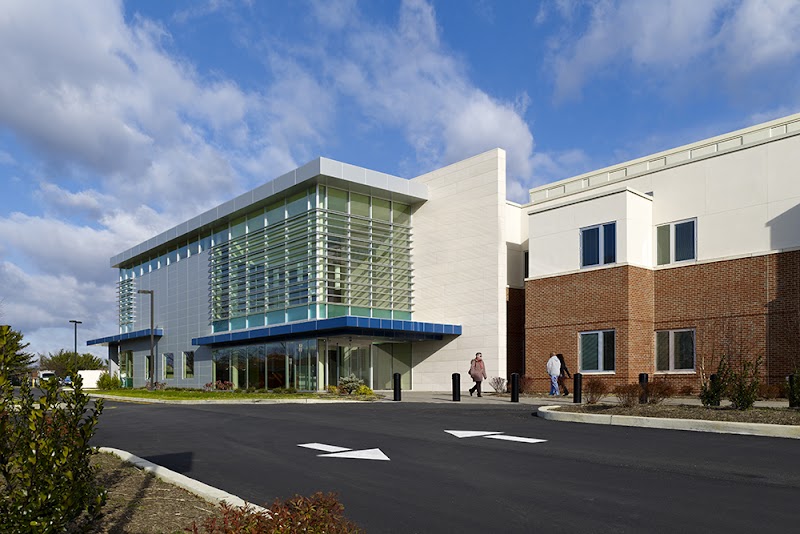
How is The Center For Rehab & Nursing Washington Township Staffed?

CMS rates THE CENTER FOR REHAB & NURSING WASHINGTON TOWNSHIP's staffing level at 3 out of 5 stars, which is average compared to other nursing homes. Staff turnover is 53%, compared to the New Jersey average of 46%.

What Have Inspectors Found at The Center For Rehab & Nursing Washington Township?

State health inspectors documented 39 deficiencies at THE CENTER FOR REHAB & NURSING WASHINGTON TOWNSHIP during 2021 to 2025. These included: 1 that caused actual resident harm and 38 with potential for harm. Deficiencies causing actual harm indicate documented cases where residents experienced negative health consequences.

Who Owns and Operates The Center For Rehab & Nursing Washington Township?

THE CENTER FOR REHAB & NURSING WASHINGTON TOWNSHIP is owned by a for-profit company. For-profit facilities operate as businesses with obligations to shareholders or private owners. The facility is operated by ALLAIRE HEALTH SERVICES, a chain that manages multiple nursing homes. With 190 certified beds and approximately 142 residents (about 75% occupancy), it is a mid-sized facility located in SEWELL, New Jersey.
How Does The Center For Rehab & Nursing Washington Township Compare to Other New Jersey Nursing Homes?

Compared to the 100 nursing homes in New Jersey, THE CENTER FOR REHAB & NURSING WASHINGTON TOWNSHIP's overall rating (2 stars) is below the state average of 3.2, staff turnover (53%) is near the state average of 46%, and health inspection rating (1 stars) is much below the national benchmark.

What Should Families Ask When Visiting The Center For Rehab & Nursing Washington Township?

Based on this facility's data, families visiting should ask: "Can I visit during a mealtime to observe dining assistance and food quality?" "How do you handle medical emergencies, and what is your hospital transfer rate?" "Can I speak with family members of current residents about their experience?"

Is The Center For Rehab & Nursing Washington Township Safe?

Based on CMS inspection data, THE CENTER FOR REHAB & NURSING WASHINGTON TOWNSHIP has a clean safety record: no substantiated abuse findings (meaning no confirmed cases of resident harm), no Immediate Jeopardy citations (the most serious violation level indicating risk of serious injury or death), and is not on the Special Focus Facility watch list (a federal program monitoring the lowest-performing 1% of nursing homes). The facility has a 2-star overall rating and ranks #100 of 100 nursing homes in New Jersey. While no facility is perfect, families should still ask about staff-to-resident ratios and recent inspection results during their visit.

Do Nurses at The Center For Rehab & Nursing Washington Township Stick Around?

THE CENTER FOR REHAB & NURSING WASHINGTON TOWNSHIP has a staff turnover rate of 53%, which is 7 percentage points above the New Jersey average of 46%. Moderate turnover is common in nursing homes, but families should still ask about staff tenure and how the facility maintains care continuity when employees leave.

Was The Center For Rehab & Nursing Washington Township Ever Fined?

THE CENTER FOR REHAB & NURSING WASHINGTON TOWNSHIP has been fined $108,675 across 1 penalty action. This is 3.2x the New Jersey average of $34,166. Fines at this level are uncommon and typically indicate a pattern of serious deficiencies, repeated violations, or failure to correct problems promptly. CMS reserves penalties of this magnitude for facilities that pose significant, documented risk to resident health or safety. Families should request specific documentation of what issues led to these fines and what systemic changes have been implemented.

Is The Center For Rehab & Nursing Washington Township on Any Federal Watch List?

THE CENTER FOR REHAB & NURSING WASHINGTON TOWNSHIP is not on any federal watch list. The most significant is the Special Focus Facility (SFF) program, which identifies the bottom 1% of nursing homes nationally based on persistent, serious quality problems. Not being on this list means the facility has avoided the pattern of deficiencies that triggers enhanced federal oversight. This is a positive indicator, though families should still review the facility's inspection history directly.