SOMERSET WOODS REHABILITATION & NURSING CENTER

780 OLD NEW BRUNSWICK ROAD, SOMERSET, NJ 08873 (732) 653-3000
For profit - Limited Liability company 148 Beds Independent Data: November 2025 4 Immediate Jeopardy citations
Trust Grade
0/100
#294 of 344 in NJ
Last Inspection: January 2025

Within standard 12-15 month inspection cycle. Federal law requires annual inspections.

Overview

Somerset Woods Rehabilitation & Nursing Center has received a Trust Grade of F, indicating significant concerns about the quality of care provided. This facility ranks #294 out of 344 in New Jersey, placing it in the bottom half of all facilities in the state, and is the lowest-ranked option in Somerset County. Unfortunately, the quality of care is worsening, with reported issues increasing from 3 in 2023 to 11 in 2025. Staffing is a concern as well, with a turnover rate of 67%, which is significantly higher than the New Jersey average. However, the facility does offer good RN coverage, exceeding 79% of other facilities in the state, which is a positive aspect. Specific incidents noted by inspectors include a resident waiting two hours for vital nebulizer treatment during a breathing emergency, highlighting serious gaps in timely care. Additionally, the facility has accumulated $104,680 in fines, indicating compliance issues that are higher than most facilities in New Jersey. Overall, while there are some strengths, the numerous deficiencies and concerning trends suggest families should proceed with caution.

Trust Score
F
0/100
In New Jersey
#294/344
Bottom 15%
Safety Record
High Risk
Review needed
Inspections
Getting Worse
3 → 11 violations
Staff Stability
⚠ Watch
67% turnover. Above average. Higher turnover means staff may not know residents' routines.
Penalties
⚠ Watch
$104,680 in fines. Higher than 97% of New Jersey facilities. Major compliance failures.
Skilled Nurses
○ Average
Each resident gets 39 minutes of Registered Nurse (RN) attention daily — about average for New Jersey. RNs are the most trained staff who monitor for health changes.
Violations
⚠ Watch
30 deficiencies on record. Higher than average. Multiple issues found across inspections.
★★☆☆☆
2.0
Overall Rating
★★☆☆☆
2.0
Staff Levels
★★★★★
5.0
Care Quality
★☆☆☆☆
1.0
Inspection Score
Stable
2023: 3 issues
2025: 11 issues

The Good

  • 5-Star Quality Measures · Strong clinical quality outcomes
  • Full Sprinkler Coverage · Fire safety systems throughout facility
  • No fines on record

Facility shows strength in quality measures, fire safety.

The Bad

2-Star Overall Rating

Below New Jersey average (3.2)

Below average - review inspection findings carefully

Staff Turnover: 67%

21pts above New Jersey avg (46%)

Frequent staff changes - ask about care continuity

Federal Fines: $104,680

Well above median ($33,413)

Significant penalties indicating serious issues

Staff turnover is elevated (67%)

19 points above New Jersey average of 48%

The Ugly 30 deficiencies on record

4 life-threatening
Jan 2025 11 deficiencies 4 IJ
CRITICAL (J) 📢 Someone Reported This

A family member, employee, or ombudsman was alarmed enough to file a formal complaint

Immediate Jeopardy (IJ) - the most serious Medicare violation

Free from Abuse/Neglect (Tag F0600)

Someone could have died · This affected 1 resident

**NOTE- TERMS IN BRACKETS HAVE BEEN EDITED TO PROTECT CONFIDENTIALITY** Part B On 1/23/25 at 10:31 AM, the surveyor observed Resident #73 dressed and groomed seated in a wheelchair in the doorway of t...

Read full inspector narrative →
**NOTE- TERMS IN BRACKETS HAVE BEEN EDITED TO PROTECT CONFIDENTIALITY** Part B On 1/23/25 at 10:31 AM, the surveyor observed Resident #73 dressed and groomed seated in a wheelchair in the doorway of their room. The resident stated they used continuous oxygen, which was observed by the surveyor. At that time, the resident had not expressed any concerns related to abuse. The surveyor observed an oxygen concentrator (a medical device that delivers oxygen to those with breathing related disorders) in the room set at 2 liters per minute (lpm), and an oxygen tank secured to the back of the resident's wheelchair. On 1/24/25 at 10:30 AM, the surveyor conducted a Resident Council Meeting where Resident #73 was in attendance. At that time, Resident #73 stated that one night they had difficulty breathing around 4:00 AM, and requested a nebulizer (a device used to administer medication in a form of a mist inhaled into the lungs) treatment to the Certified Nurse Aide (CNA #1). The resident stated they waited two hours until the nurse came in. At that time, the nurse stated she did not know anything about the resident's above mentioned request. The resident stated the nurse left the room, and it took another 45 minutes to receive the treatment. The resident further stated that they reported this to the Activities Director (AD); however, they (the AD) did not acknowledge the issue, and no one came back to follow up. A review of the Resident Council Minutes which was conducted on 1/14/25 at 2:00 PM, reflected that Resident #73 and the AD were in attendance. The minutes included that Resident #73 stated they were in respiratory distress at approximately 3:00 AM and told CNA #1. The resident further stated that they did not receive a nebulizer treatment until 7:15 AM. The resident also stated they spoke with the Licensed Practical Nurse/Unit Manager (LPN/UM #1) about the issue and the staff member (CNA#1). The resident further stated that CNA #1 stood in front of the resident in an intimidating manner because the resident told on her. On 1/24/25 at 2:02 PM, the surveyor requested any accidents, incidents, grievances, or investigations for Resident #73, and the DON stated she did not have anything for that resident. The surveyor reviewed the EMR for Resident #73. A review of the admission Record face sheet revealed the resident had diagnoses which included but were not limited to; asthma, acute and chronic respiratory failure (a condition that makes it difficult to breathe on your own) with hypoxia (low levels of oxygen in the body tissues), alcohol abuse and depression (a mental illness that can cause severe symptoms that affect a person's mood, thoughts, and daily activities). A review of the comprehensive MDS, dated [DATE], reflected the resident had a BIMS score of 15 out of 15, which indicated an intact cognition. It also reflected the above diagnoses and was coded for oxygen therapy. A review of the ICCP reflected a focus dated 11/29/23, that the resident had noncompliance with respiratory therapy. In addition, there was a care plan dated 10/30/23, with a focus that the resident had oxygen therapy due to respiratory illness. The goal was that the resident would not have poor oxygen absorption and interventions included but were not limited to; oxygen settings at 2 lpm, administer medications as ordered by the physician and monitor/document side effects and effectiveness. A review of the Order Summary Report reflected a physician's order (PO) dated 3/20/24, for oxygen set at 2 lpm; a PO dated 4/3/24, to check oxygen level every shift for shortness of breath (SOB); and a PO dated 1/5/24, for a nebulizer treatment every six hours as needed for SOB. A review of the Medication Administration Record (MAR) and Treatment Administration Record (TAR) for December 2024 and January 2025, revealed the resident's oxygen levels were 90% or above from 12/1/24 through 12/31/24, for all three shifts and 95% or above from 1/1/25 through 1/29/25, for all three shifts. A further review revealed the resident had not used a nebulizer treatment for either month. A review of the Progress Notes from 12/2/24 through 1/30/25, revealed no documented evidence that the resident had SOB, was in respiratory distress, or received a nebulizer treatment. In addition, there was no documented evidence of the resident's alleged incident prior to surveyor inquiry. On 1/24/25 at 2:04 PM, the surveyor interviewed the DON, who stated that she was unaware of the resident's alleged incident on 1/14/25, until now. The DON stated Resident #73 had not approached her with this concern, which she was surprised since she felt they had a good rapport and saw the resident often. The DON stated that now that she was aware, she would initiate an immediate investigation. She acknowledged that she had no formal way to follow up Resident Council Minutes content. On 1/24/25 at 2:48 PM, the surveyor interviewed the AD, who stated if there were nursing concerns brought up during Resident Council, he sent the DON an email and waited for a response. The AD stated that he could not remember concerns that were brought up at the last Resident Council Meeting, and at that time, he reviewed the minutes from the meeting on 1/14/25. The AD stated that if a resident expressed a concern at council, he spoke to them on the side and encouraged the resident to speak to the department head and could not recall if he did that with Resident #73. The AD stated the resident was very cognitively intact and could express themselves, but he still sent an email to the DON. He acknowledged he did not send the email to the LNHA as well. The AD stated he was taught to communicate via email and could not speak to why he did not report the resident's concern/allegation verbally as well. The AD stated he did not recall a response from the DON and stated he knew she was very busy. The AD stated if he had not received a response, he would reapproach the email recipient and acknowledged he did not do that and that 10 days was too long to wait. The AD stated, I should have followed up. The AD provided a copy of the email he sent to the survey team. On 1/24/25 at 3:56 PM, the surveyor interviewed the DON, who acknowledged that the AD sent an email but used the previous director's email account. The DON acknowledged the subject indicated 1/14 Resident Council, and stated, I just didn't get a chance to see that. The DON also stated LPN/UM #1 denied awareness of the incident, and the DON was able to identify the CNA and LPN that were allegedly involved and relayed that information to the survey team. The DON could not speak to why Resident #73 had not reported this to her and that the resident stated the incident occurred a few weeks before that Resident Council Meeting on the overnight shift. The DON stated that the resident had no history of making accusatory or inaccurate statements. The DON stated the AD should have brought this to her attention immediately, and further stated that the AD attended morning meeting daily as well. On 1/28/25 at 2:00 PM, the surveyor conducted a follow up interview with the resident in their room. The resident stated that they spoke to the AD the morning of the Resident Council Meeting on 1/14/25, about their concerns. The resident stated the AD stated to hold off and to mention the incident without details during the Resident Council Meeting so he can include it in an official report. The resident further described the incident to the surveyor. The resident stated that morning, while trying to sleep they felt they needed a nebulizer treatment. The resident stated they rang the call bell around 4:00 AM, and CNA #1 responded, Don't be like your friend [name redacted], which the resident stated was a resident who complained often. The resident acknowledged that they had not used the call bell again after. The resident stated at 6:30 AM, LPN #2 came to the room to administer medications. At that time, the resident asked if CNA #1 told her about the request for a nebulizer treatment. LPN #2 stated no and the resident stated that LPN #2 administered a nebulizer treatment at 7:15 AM. During that same interview, the resident stated they felt fine and that there was no negative outcome. The resident then stated that at approximately 9:30 AM, they went outside to the smoking area to speak with LPN/UM #1 (who they knew smoked after morning meeting) about the incident. The resident further stated the IPN was also present. The resident also stated later that morning, CNA #1 approached the resident in an intimidating manner, and stated the resident never told her about needing a nebulizer treatment and that the resident reported her and got her in trouble. The resident stated that later that morning they reported the incident to the AD, who told the resident to hold off and bring it up at the Resident Council Meeting so he could put it in an official report. The resident stated they did speak of the incident at the 2:00 PM Resident Council Meeting that day. The resident stated that they were disappointed this was not addressed in a timely manner since they went through the chain of command. The resident stated that on Friday (1/24/25) as soon as the DON was aware of the incident, she took care of it right away. The resident further stated that if the DON had known sooner, she would have acted rapidly. The resident stated that at no time did they feel unsafe or threatened to live on the 3rd floor. On 1/28/25 at 2:19 PM, the surveyor interviewed the IPN, who stated if he was made aware a resident reported they did not receive a requested treatment or care, he went straight to the unit manager and then reported it to the DON and LNHA. The IPN stated an investigation should have been done. The IPN stated that if he became aware that a resident reported that they were spoken to inappropriately by staff, he would go straight to the DON and LNHA, that's a serious situation, and it's a dignity issue. The IPN further stated it would have to be reported to the state and an official investigation should then be started. He did not recall being in the presence of the resident and LPN/UM #1 outside in the smoking area during a conversation regarding the resident's allegation. The IPN also stated that the resident had not reported anything to him. On 1/28/25 at 2:39 PM, the surveyor interviewed the AD, who stated he could not recall if the resident reported the allegation to him prior to the Resident Council Meeting. The AD stated, I think I would have remembered that. The AD stated that he did not think the resident was an accurate historian and was an emotional person who used extreme words. The AD stated he reported what the resident stated via an email sent rapidly. He did acknowledge and stated, I should have acted sooner. The AD stated, I don't want to diminish what [gender redacted] says but I know [gender redacted] does exaggerate. He further stated, I should have followed up sooner. He also stated I don't remember if the email or concern was discussed in morning meeting or if he checked with the DON to ensure she received the email and had followed up. He stated he assumed the DON read the email and followed up. The AD stated he received abuse education and named emotional abuse. The AD stated if a resident reported any type of abuse to him, he would have reported this to the DON. The AD stated, like I said, I should have possibly followed through a little more maybe I dropped the ball a little. On 1/28/25 at 3:32 PM, the surveyor interviewed LPN/UM #1, who stated that if a resident stated they rang the call bell for help and did not receive it, that she would interview the staff identified and report this to the DON and LNHA. LPN/UM #1 stated that if staff denied the allegation, she reassured the resident and still reported it to the LNHA. LPN/UM #1 stated, she reported all incidents to the DON, and the DON asked her for a statement related to an allegation by Resident #73. LPN/UM #1 stated she had no recollection of such incident, and had not been outside in the smoking area at the same time as the resident since the summer. LPN/UM #1 had no recollection of Resident #73 alleging any complaints about staff. UM/LPN #1 stated that had she been aware, she would have reported it to the DON. The LPN/UM #1 further stated the resident requested nebulizer treatments very infrequently. On 1/28/25 at 3:50 PM, the surveyor interviewed CNA #1, who stated that if a resident rang the call bell and needed treatment from a nurse, she reported this to the nurse immediately, especially if the resident was having trouble breathing. CNA #1 stated she had not experienced any incidents with a resident on the 3rd floor since she has worked there full time since 2020. CNA #1 stated that she answered call bells even if they were not on her assignment, and if a nurse did not do their job, she would have reported it to the unit manager, especially if it had to do with difficulty breathing. CNA #1 stated that Resident #73 was not on her assignment, but recalled that she answered her call bell one night or early morning. CNA #1 stated the resident stated they could not sleep, and that the resident was watching a scary movie at a loud volume. CNA #1 stated that it was sometime after 3:00 AM, and she encouraged the resident to turn off the television, that it may help them sleep. The CNA stated that the resident did not ring the call bell again, I guess [they] slept. CNA #1 stated she could not recall the exact date and stated it was sometime last year. On 1/29/25 at 10:33 AM, the surveyor conducted a phone interview with LPN #2, who stated that she was the resident's regular nurse and could not recall any incident with the resident. LPN #2 stated she could not recall the last time she provided the resident with a nebulizer treatment; that it was infrequent. LPN #2 stated that if she had, it would have been accounted for in the MAR/TAR. LPN #2 further stated the resident received continuous oxygen on 2 lpm and the resident's oxygen level was typically 95% or above. On 1/30/25 at 12:22 PM, the surveyor interviewed the Director of Social Work (DSW), who stated the LNHA was the abuse officer. The DSW further stated that if she was aware of any type of abuse allegation, she would have addressed it in morning meeting and that the DON and LNHA would follow up immediately. On 1/30/25 at 3:49 PM, the surveyor interviewed the DON and LNHA, in the presence of the survey team. The LNHA stated he would have expected the AD to go directly (physically) to the DON with Resident #73's allegation brought up at Resident Council and that email communication was not the typical procedure. The LNHA stated that he addressed this with the AD. The LNHA stated the AD did not feel it was abuse. The DON stated that in the past, the AD reported concerns to her verbally. In addition, she stated she was the only department the AD emailed, and not the LNHA as well. The LNHA stated that he was shocked. On 1/31/25 at 10:31 AM, the surveyor interviewed the LNHA, in the presence of the survey team. The LNHA acknowledged he was the abuse officer and was responsible to ensure allegations of abuse were reported and fully investigated. The LNHA stated he was responsible to oversee this process and that it was done in accordance to their facility abuse policy. A review of the facility's Resident Right's policy dated 6/2024, included employees should treat all residents with kindness, respect and dignity .resident rights included being able to voice grievances and have the facility respond to those grievances .the facility would make every effort to assist each resident to exercise their rights to assure that the resident was always treated with respect, kindness and dignity . A review of an undated unsigned facility job description for Director of Activities, included the directors Main Duties: included Support the facility's philosophy of care and strive to achieve its goals and objectives. A review of the AD's employee file reflected the resident had training on Abuse and Neglect of 1/10/24. He answered 10 of 10 questions correctly, which included Speaking to a resident in a disrespectful or intimidating manner is not considered verbal abuse; he correctly answered False, and Abuse of any resident may occur emotionally, verbally or physically; he correctly answered True, and If you suspect that a resident has been abused or neglected, it is your duty to report it to your supervisor; he correctly answered True. NJAC 8:39-4.1(a)(5); 33.2(c)(12) Complaint #: NJ 168006 Based on observations, interviews, record review, and review of pertinent facility documents, it was determined that the facility failed to a.) implement their abuse policy and ensure residents were protected from sexual abuse after a cognitively intact resident (Resident #155) made an allegation of rape on 9/30/23, and was sent to the hospital for evaluation. This deficient practice was identified for 1 of 2 residents reviewed for abuse (Resident #155). A review of a Nursing Note dated 9/30/23, revealed that Resident #155 was in bed with their Resident Representative (RR #1) at bedside, when the resident reported to the Registered Nurse (RN #1) that they were raped. The note further indicated that the resident, without RR #1 or RN #1's knowledge, had called the local police to report the rape. RN #1 documented that they spoke to the physician who ordered the resident to be transferred to the hospital for evaluation. Interviews on 1/24/25, with the Director of Nursing (DON) and on 1/28/25, with RN #1 confirmed the allegation of rape was made. The DON acknowledged that all allegations of abuse were to be immediately investigated and reported to the New Jersey Department of Health (NJDOH), and the DON confirmed Resident #155's allegation of sexual abuse was not investigated or reported to the NJDOH. The facility's failure to implement their abuse policy including investigating and reporting all allegations of abuse including sexual abuse placed all residents at risk for abuse which posed the likelihood of serious physical and emotional harm, or impairment resulted in an Immediate Jeopardy (IJ) situation. The IJ began on 9/30/23, after Resident #155 made an allegation of rape to RN #1. The facility was notified of the IJ on 1/28/25 at 5:59 PM. The facility submitted an acceptable Removal Plan (RP) on 1/29/25 at 2:56 PM. The survey team verified the implementation of the RP during the continuation of the on-site survey on 1/29/25. The facility further failed to ensure b.) an allegation of neglect and intimidation was investigated and reported in a timely manner when a cognitively intact resident made an allegation of not receiving a respiratory treatment as it was requested and was spoken to by staff in an intimidating manner. This deficient practice was identified for 1 of 2 residents reviewed for abuse (Resident #73). The evidence was as follows: Part A A review of the facility's Abuse, Neglect, Misappropriation Prevention Policy and Procedure dated reviewed 6/2024, included: Policy: Every resident as the right to be free from verbal, sexual, physical, or mental abuse, corporal punishment, and involuntary isolation .Purpose: To ensure timely and thorough investigation of abuse, neglect and/or mistreatment of residents .Sexual abuse: Includes but is not limited to humiliation, harassment, sexual coercion, unwanted sexual touching, or sexual assault Investigation & Protection: Procedure: 1. When an incident or suspected incident of abuse is reported, the Administrator will appoint a facility representative to initiate an investigation and follow through to completion. 2. The investigation will proceed as follows: a. Interview/obtain statement of person(s) reporting incident, b. Interview/obtain statement from involved resident, c. Interview/obtain statement of any witnesses to incident, d. As necessary interview/obtain statements from staff members having contact with the resident during the previous shift prior to the shift of the alleged incident, e. If relevant, interview/obtain statements from resident's roommate, family, and visitors, f. Review the medical record .5. The Administrator or investigative designee will provide the resident or responsible party with timely progress reports in addition to all corrective actions taken. 6. All investigative information will be documented on the Resident Abuse Investigation form 7. In the event of allegation of abuse or neglect of any kind, the Administrator or designee will report the findings immediately to the Office of Ombudsman and the New Jersey Department of Health and Senior Services. Additional notification to the [name redacted] Police Department as circumstances warrant, 8. Inquiries concerning abuse reporting and investigation should be referred to the Administrator of designee .Abuse, Neglect, Exploitation Incident Investigation Checklist .Checklist to be initiated by Administrator, Assistant Administrator, Director of Nursing or Director of Social Services .Obtain Incident report. Be thorough. Obtain verbal or written statement form Resident, if possible. A verbal statement may be transcribed and signed by the resident .Obtain written statements from all staff involved in Resident's care .Place information in investigative file that is available for survey process. The Director of Nursing/designee is designated as the individual who conducts the investigation. 3. The DON/Designee: a. Reviews the accident/incident report. b. Obtains written statements of staff assigned to the Resident for: i. the shift during the allegation is noted; ii. A minimum of 16 hours prior to the incident if indicated or appropriate, c. interviews witnesses, if any, d. Reviews the Resident's record. E. Reviews staff assignments and staff performance .h. Reports finding to the Administrator. The surveyor reviewed the electronic medical record (EMR) for Resident #155. A review of the admission Record face sheet (an admission summary) revealed the resident was admitted to the facility with diagnoses which included but were not limited to; acute posthemorrhagic anemia (low blood count), heart failure (a condition in which the hear does not pump blood as well as it should), hypertension (high blood pressure), and depression (a mental illness that can cause severe symptoms that affect a person's mood, thoughts, and daily activities.) A review of the comprehensive Minimum Data Set (MDS), an assessment tool dated 9/16/23, revealed the resident had a Brief Interview for Mental Status (BIMS) of 15 out of 15, indicating the resident was cognitively intact. Further review of the MDS, revealed the resident required extensive assistance with activities of daily living and mobility. A review of the Progress Notes included a Nursing Note written by the RN #1 dated 9/30/23 at 9:58 PM, which revealed that the resident was received in their room with RR #1 by their bedside. The resident was alert, awake, and oriented to person and place, but not time. The resident reported, I was raped by some people; some people spoke to me but in real sense they did not, I want to talk to the [doctor], when is the doctor coming? RR #1 at the bedside reported that the resident's mental status was never like that before the resident was taken to the hospital and brought to the facility for rehabilitation. The resident, without RR #1's and RN #1's knowledge, used their landline phone and called the police who then showed up at the facility and conversed with the resident. RN #1 assured RR #1 that the change would be communicated to the resident's physician. The physician was notified who then recommended that the resident be sent to [hospital name redacted] for evaluation. The resident was picked up at around 7:15 PM. A review of the individual comprehensive care plan (ICCP) included a focus of area for the use antidepressant medication related to depression, dated 9/10/23. The goals included; will show decreased episodes of the behaviors of depression through the review date, revised on 9/21/23. Interventions included to monitor/document/report as needed (PRN) adverse reactions to antidepressant therapy: change in behavior/mood/cognition; hallucinations/delusions; social isolation, suicidal thoughts, withdrawal, dated initiated 9/10/23. On 1/24/25 at 9:28 AM, the surveyor requested any accidents, incidents, grievances, or reportable events for Resident #155. On 1/24/25 at 10:04 AM, the DON informed the surveyor that she did not have any reports for Resident #155. On 1/24/25 at 2:44 PM, the surveyor interviewed the DON in the presence of the survey team, regarding an allegation of rape. At that time, the DON stated the Licensed Nursing Home Administrator (LNHA) had already left for the day. The DON stated if this is [name redacted-Resident #155], I had spoken with the Social Worker (HSW) from the hospital who stated they (the hospital) would work [Resident #155] up (tests and assessments conducted to collect evidence of sexual assault). The DON stated she spoke with the facility's nursing staff who stated RR #1 was in the room that whole day with the resident. The DON stated the police were called to the facility by the resident, and she notified the LNHA the police were here. At that time, the DON stated she was not sure it (the allegation of rape) was a reportable event (to the NJDOH) as the resident did not return to the facility. The DON stated the allegation happened on a Saturday, and on Monday when she came in, the resident was not back. I spoke to the HSW who said Resident #155 was not sexually assaulted. The DON stated the HSW gave no timeframe or no specifics to the allegation, at that time. The DON stated the resident said the rape occurred while they were still here (in the facility.) The DON stated the resident was sent to the hospital due to saying they were raped and had a change in their mental status. On 1/28/25 at 12:34 PM, the surveyor conducted a telephone interview with RN #1, who documented the resident's allegation of rape on 9/30/23. RN #1 did not remember the incident at first, but when the surveyor read RN #1's note from 9/30/23, RN #1 stated, Now I remember, that evening I was the RN working. RN #1 further explained that the resident stated they were raped by some people, only RR #1 was in room with the resident. RN #1 stated the police just showed up and said the resident called and said they were raped. RN #1 confirmed the supervisor was aware and was on the floor. RN#1 was unsure if the DON was notified, and she was unsure if she should have been. RN #1 remembered talking to the police, but was not sure if Resident #155 remained in the facility or went to the hospital. On 1/28/25 at 1:16 PM, the surveyor conducted a telephone interview with the RN Nursing Supervisor (RNS #1), who verified they were the supervisor on 9/30/23. RNS #1 stated he thought he vaguely remembered that case, but he could not recall the nurse on the unit. RNS #1 stated that the nurse called me that the resident was confused; RR #1 was always at the bedside; and I don't think that anyone would do that while [RR #1] was there. RNS #1 stated he and RN #1 called the physician, who ordered to send the resident to the emergency room. He further stated that we (the facility) called the police because of the allegation of rape. RNS #1 stated the resident told the police they were being raped or something like that. RNS #1 stated the DON was notified. The surveyor asked RNS #1 what should be done if a resident made an allegation of rape, he stated, let the doctor know, call the police, let the family know and notify the DON. On 1/28/25 at 2:19 PM, the surveyor interviewed the Infection Prevention Nurse (IPN), who stated if a resident told you a concern, you told the Unit Manager and informed the DON or LNHA and an investigation would occur. The IPN stated a grievance should be made available to the resident. The IPN stated it (the concern) would follow the chain of events, and then I would give a statement, and all parties involved would also need to give one, including the resident. The IPN added that he would go straight to the DON or LNHA, if the concern was mistreatment, he stated that was a serious situation because I believe they would have to report it to the state and start an official investigation. On 1/28/25 at 2:39 PM, the survey team interviewed the Activities Director (AD), who stated examples of abuse were physical, sexual, financial, emotional, restraining, withholding things and should be reported to the DON. On 1/28/25 at 5:55 PM, the survey team met with the DON and LNHA. The LNHA stated the types of abuse were physical, sexual, and verbal. The LNHA stated that an allegation of sexual abuse was a reason to suspect something happened, and he should be notified as soon as possible. The LNHA stated it would be reported, then investigated. The LNHA stated that typically an allegation of rape was reported to the NJDOH unless the staff was 100% certain it did not happen. The LNHA further stated that if a resident was cognitively impaired, it was sometimes their behavior so determination to report was made on a case-by-case basis. The LNHA stated that the DON had a soft file for Resident #155's allegation. The survey team informed him the soft file was not provided to the survey team on 1/24/25, when the accidents, incidents, grievances, or reportable events were requested for Resident #155. The survey team also stated that a soft file was not mentioned during the interview with the DON on 1/24/25. On 1/30/25 at 9:07 AM, the surveyor interviewed the Assistant Administrator (AA), who stated any type of abuse: verbal, physical, or sexual should be discussed with the LNHA and the DON. The AA stated an investigation included: checking on the resident; interviewing the resident and staff; reaching out to the family; doing a body assessment; and calling the police if warranted. The AA stated that the facility reported any allegation of abuse to the NJDOH as soon as we found out an incident occurred. The AA stated, if a resident made a statement of rape, they should be assessed; the LNHA should be called; and an investigation started. The AA stated she could not recall Resident #155's allegation of sexual abuse. On 1/30/25 at 9:37 AM, the surveyor interviewed the Medical Director (MD), who stated if staff called him regarding an allegation of abuse with a resident, he would have the resident sent to the hospital for evaluation and tell the staff to follow the facility's protocol for investigation. On 1/30/25 at 9:58 AM, the surveyor interviewed the LNHA and asked who was ultimately responsible for the building, and he stated, I am as the administrator. I am expected to be notified everyday of anything going on in the building. My staff are instructed to make me aware of everything. I understand it to be my responsibility. The LNHA stated typically we would be notified right away but if he was unavailable, the AA should field that call. The LNHA stated if staff left him a voicemail, it went to his email. The LNHA stated ultimately the DON knew what to do when he was not at the facility, and she knew what should be reported. The LNHA stated, Monday morning anything that happened over the weekend, I expect my staff to tell me and make me aware. The LNHA
CRITICAL (J) 📢 Someone Reported This

A family member, employee, or ombudsman was alarmed enough to file a formal complaint

Immediate Jeopardy (IJ) - the most serious Medicare violation

Report Alleged Abuse (Tag F0609)

Someone could have died · This affected 1 resident

**NOTE- TERMS IN BRACKETS HAVE BEEN EDITED TO PROTECT CONFIDENTIALITY** Part B On 1/23/25 at 10:31 AM, the surveyor observed Resident #73 dressed and groomed seated in a wheelchair in the doorway of t...

Read full inspector narrative →
**NOTE- TERMS IN BRACKETS HAVE BEEN EDITED TO PROTECT CONFIDENTIALITY** Part B On 1/23/25 at 10:31 AM, the surveyor observed Resident #73 dressed and groomed seated in a wheelchair in the doorway of their room. The resident stated they used continuous oxygen, which was observed by the surveyor. At this time, the resident had not expressed any concerns related to abuse. The surveyor observed an oxygen concentrator (a medical device that delivers oxygen to those with breathing related disorders) in the room set at 2 liters per minute (lpm), and an oxygen tank secured to the back of the resident's wheelchair. On 1/24/25 at 10:30 AM, the surveyor conducted a Resident Council Meeting where Resident #73 was in attendance. At that time, Resident #73 stated that one night they had difficulty breathing around 4:00 AM, and requested a nebulizer (a device used to administer medication in a form of a mist inhaled into the lungs) treatment to Certified Nurse Aide (CNA #1). The resident stated they waited two hours until the nurse came in. At that time, the nurse stated she did not know anything about the resident's above mentioned request. The resident stated the nurse left the room, and it took another 45 minutes to receive the treatment. The resident further stated that they reported this to the Activities Director (AD); however, they (the AD) did not acknowledge the issue, and no one came back to follow up. A review of the Resident Council Minutes which was conducted on 1/14/25 at 2:00 PM, reflected that Resident #73 and the AD were in attendance. The minutes included that Resident #73 stated they were in respiratory distress at approximately 3:00 AM and told CNA #1. The resident further stated that they did not receive a nebulizer treatment until 7:15 AM. The resident also stated they spoke with the Licensed Practical Nurse/Unit Manager (LPN/UM #1) about the issue and the staff member (CNA#1). The resident further stated that CNA #1 stood in front of the resident in an intimidating manner because the resident told on her. On 1/24/25 at 2:02 PM, the surveyor requested any accidents/incidents/grievances or investigations for Resident #73, and the DON stated she did not have anything for that resident. On 1/28/25 at 11:10 AM, the DON provided the survey team with a copy of an email which verified she reported the allegation of abuse for Resident #73 to the NJDOH on 1/24/25 at 4:41 PM. The surveyor reviewed the EMR for Resident #73. A review of the admission Record face sheet revealed the resident had diagnoses which included but were not limited to; asthma, acute and chronic respiratory failure (a condition that makes it difficult to breathe on your own) with hypoxia (low levels of oxygen in the body tissues), alcohol abuse and depression. A review of the annual MDS dated [DATE], reflected the resident had a BIMS score of 15 out of 15 which indicated an intact cognition. It also reflected the above diagnoses and was coded for oxygen therapy. On 1/24/25 at 2:04 PM, the surveyor interviewed the DON in the presence of the survey team. The DON stated that she was unaware of the resident's alleged incident on 1/14/25 until now. On 1/24/25 at 2:48 PM, the surveyor interviewed the AD in the presence of the survey team. At that time, he reviewed the minutes from the last resident council meeting dated 1/14/25. He stated he sent an email to the DON regarding Resident #73's allegation during the resident council meeting. He acknowledged he did not send the email to the LNHA as well. He stated he could not speak to why he did not report the resident's concern/allegation verbally. He did not recall a response from the DON and stated he knew she was very busy. The AD stated, I should have followed up and that 10 days was too long to wait. He provided a copy of the email he sent to the survey team. On 1/24/25 at 3:56 PM, the surveyor interviewed the DON in the presence of the survey team. The DON stated the AD should have brought this to her attention immediately. On 1/28/25 at 3:32 PM, the surveyor interviewed LPN/UM #1, in the presence of a second surveyor. LPN/UM #1 stated, she reported all incidents to the DON. She stated that Resident #73 did not report any allegations of neglect or intimidation to her. She stated had she been aware, she would have reported it to the DON. On 1/28/25 at 3:50 PM, the surveyor interviewed CNA #1, in the presence of a second surveyor. She stated that if a resident rang the call bell and needed treatment from a nurse, she would report this to the nurse immediately, especially if the resident was having trouble breathing. CNA #1 stated that if a nurse did not do their job, she would have reported it to the unit manager, especially if it had to do with difficulty breathing. On 1/30/25 at 3:49 PM, the surveyor interviewed the DON and LNHA, in the presence of the survey team. The LNHA stated he would have expected the AD to go directly (physically) to the DON with Resident #73's allegation brought up at resident council and that email communication was not the typical procedure. He stated that he addressed this with the AD. The LNHA stated the AD did not feel it was abuse. The DON stated that in the past, the AD reported concerns to her verbally. In addition, she stated she was the only department the AD emailed, and not the LNHA as well. The LNHA stated that he was shocked. On 1/31/25 at 10:31 AM, the surveyor interviewed the LNHA, in the presence of the survey team. He acknowledged he was the abuse officer and was responsible to ensure allegations of abuse were reported and fully investigated. The LNHA stated he was responsible to oversee this process and that it was done in accordance to their facility abuse policy. A review of the AD's employee file reflected the resident had training on Abuse and Neglect of 1/10/24. He answered 10 of 10 questions correctly, which included If you suspect that a resident has been abused or neglected, it is your duty to report it to your supervisor; he correctly answered True. NJAC 8:39-9.4(f) Complaint #: NJ 168006 Based on observations, interviews, record review, and review of pertinent facility documents, it was determined that the facility failed to report within two hours to the New Jersey Department of Health (NJDOH) a.) an allegation of sexual abuse for a cognitively intact resident (Resident #155) who reported being raped. This deficient practice was identified for 1 of 2 residents reviewed for abuse. A review of a Nursing Note dated 9/30/23, revealed that Resident #155 was in bed with their Resident Representative (RR #1) at bedside, when the resident reported to the Registered Nurse (RN #1) that they were raped. The note further indicated that the resident, without RR #1 or RN #1's knowledge, had called the local police to report the rape. RN #1 documented that they spoke to the physician who ordered the resident to be transferred to the hospital for evaluation. Interviews on 1/24/25, with the Director of Nursing (DON) and on 1/28/25, with RN #1 confirmed the allegation of rape was made. The DON acknowledged that all allegations of abuse were to be reported immediately to the NJDOH, and the DON confirmed Resident #155's allegation of sexual abuse was not reported to the NJDOH. The facility's failure to implement their abuse policy including investigating and reporting all allegations of abuse including sexual abuse placed all residents at risk for abuse which posed the likelihood of serious physical and emotional harm, or impairment resulted in an Immediate Jeopardy (IJ) situation. The IJ began on 9/30/23, after Resident #155 made an allegation of rape to RN #1. The facility was notified of the IJ on 1/28/25 at 5:59 PM. The facility submitted an acceptable Removal Plan (RP) on 1/29/25 at 2:56 PM. The survey team verified the implementation of the RP during the continuation of the on-site survey on 1/29/25. The facility further failed to ensure b.) an allegation of neglect and intimidation was reported to the NJDOH in a timely manner when a cognitively intact resident made an allegation of not receiving a respiratory treatment as it was requested and was spoken to by staff in an intimidating manner. This deficient practice was identified for 1 of 2 residents (Resident #73) reviewed for abuse. The evidence was as follows: Refer F 600 Part A A review of the facility's Abuse, Neglect, Misappropriation Prevention Policy and Procedure dated reviewed 6/2024, included: Policy: Every resident has the right to be free from verbal, sexual, physical, or mental abuse, corporal punishment, and involuntary isolation .Sexual abuse: Includes but is not limited to humiliation, harassment, sexual coercion, unwanted sexual touching, or sexual assault .Investigation & Protection: Procedure: 1. When an incident or suspected incident of abuse is reported, the Administrator will appoint a facility representative to initiate an investigation and follow through to completion .7. In the event of allegation of abuse or neglect of any kind, the Administrator or designee will report the findings immediately to the Office of Ombudsman and the New Jersey Department of Health and Senior Services. Additional notification to the [name redacted] Police Department as circumstances warrant .Reporting, 1. The Director of Nursing/Administrator/designee will report the incident to the Department of Health and Ombudsman program according to regulatory requirements if there is reason to suspect abuse, neglect or mistreatment .7. All appropriate regulatory agencies will be notified of any allegations of abuse or neglect according to required timeframe's. The surveyor reviewed the electronic medical record (EMR) for Resident #155. A review of the admission Record face sheet (an admission summary) revealed the resident was admitted to the facility with diagnoses which included but were not limited to; acute posthemorrhagic anemia (low blood count), heart failure (a condition in which the hear does not pump blood as well as it should), hypertension (high blood pressure), and depression (a mental illness that can cause severe symptoms that affect a person's mood, thoughts, and daily activities.) A review of the comprehensive Minimum Data Set (MDS), an assessment tool dated 9/16/23, revealed the resident had a Brief Interview for Mental Status (BIMS) of 15 out of 15, indicating the resident was cognitively intact. Further review of the MDS, revealed the resident required extensive assistance with activities of daily living (ADLs) and mobility. A review of the Progress Notes included a Nursing Note written by the RN #1 dated 9/30/23 at 9:58 PM, which revealed that the resident was received in their room with RR #1 by their bedside. The resident was alert, awake, and oriented to person and place, but not time. The resident reported, I was raped by some people; some people spoke to me but in real sense they did not, I want to talk to the [doctor], when is the doctor coming? RR #1 at the bedside reported that the resident's mental status was never like that before the resident was taken to the hospital and brought to the facility for rehabilitation. The resident, without RR #1's and RN #1's knowledge, used their landline phone and called the police who then showed up at the facility and conversed with the resident. RN #1 assured RR #1 that the change would be communicated to the resident's physician. The physician was notified who then recommended that the resident be sent to [hospital name redacted] for evaluation. The resident was picked up at around 7:15 PM. On 1/24/25 at 9:28 AM, the surveyor requested any accidents, incidents, grievances, or reportable events for Resident #155. On 1/24/25 at 10:04 AM, the DON informed the surveyor that she did not have any reports for Resident #155. On 1/24/25 at 2:44 PM, the survey team interviewed the DON, who stated that she and the Licensed Nursing Home Administrator (LNHA) were responsible for reportable events (reporting to the NJDOH) and that they should be reported as soon as possible. In Resident #155's case, the DON stated that she had spoken with the staff, and they informed her that RR #1 had been in the room with Resident #155 that whole day. The police were called to the facility by the resident, and the DON notified the LNHA that the police were at the facility. The DON further stated that at that time she was not sure it (the allegation of rape) was reportable event as the resident did not return to the facility. The DON stated the allegation was made on a Saturday, and when she came in on Monday, the hospital's Social Worker (HSW) called her. The DON reported that the HSW stated the hospital would work [Resident #155] up. (Tests and assessments conducted to collect evidence of sexual assault) The surveyor was unable to interview the LNHA as the DON stated he had left the facility already. On 1/28/25 at 12:34 PM, the surveyor conducted a telephone interview with RN #1, who documented the resident's allegation of rape on 9/30/23. RN #1 did not remember the incident at first, but when the surveyor read RN #1's note from 9/30/23, RN #1 stated, Now I remember, that evening I was the RN working. RN #1 further explained that the resident stated they were raped by some people, only RR #1 was in room with the resident. RN #1 stated the police just showed up and said the resident called and said they were raped. RN #1 confirmed the supervisor was aware and was on the floor. RN#1 was unsure if the DON was notified, and she was unsure if she should have been. On 1/28/25 at 1:16 PM, the surveyor conducted a telephone interview with the RN Nursing Supervisor (RNS #1), who verified they were the supervisor on 9/30/23. RNS #1 stated he thought he vaguely remembered that case, but he could not recall the nurse on the unit. RNS #1 stated that the nurse called me that the resident was confused; RR #1 was always at the bedside; and I don't think that anyone would do that while [RR #1] was there. RNS #1 stated he and RN #1 called the physician, who ordered to send the resident to the emergency room. He further stated that we (the facility) called the police because of the allegation of rape. RNS #1 stated the resident told the police they were being raped or something like that. RNS #1 stated the DON was notified. The surveyor asked RNS #1 what should be done if a resident made an allegation of rape, he stated, let the doctor know, call the police, let the family know and notify the DON. On 1/28/25 at 5:55 PM, the survey team met with the DON and LNHA. The LNHA stated the types of abuse were physical, sexual, and verbal. The LNHA stated that an allegation of sexual abuse was a reason to suspect something happened, and he should be notified as soon as possible. The LNHA stated it would be reported, then investigated. The LNHA stated that typically an allegation of rape was reported to the NJDOH unless the staff was 100% certain it did not happen. The LNHA further stated that if a resident was cognitively impaired, it was sometimes their behavior so determination to report was made on a case-by-case basis. The LNHA stated that the DON had a soft file for Resident #155's allegation. The survey team informed him the soft file was not provided to the survey team on 1/24/25, when the accidents/incidents, grievances, or reportable events were requested for Resident #155. The survey team also stated that a soft file was not mentioned during the interview with the DON on 1/24/25. On 1/30/25 at 9:07 AM, the surveyor interviewed the Assistant Administrator (AA), who stated any type of abuse: verbal, physical, or sexual should be discussed with the LNHA and the DON. The AA stated that the facility reported any allegation of abuse to the NJDOH as soon as we found out an incident occurred. The AA stated, if a resident made a statement of rape, they should be assessed; the LNHA should be called; and an investigation started. The AA stated she could not recall Resident #155's allegation of sexual abuse. On 1/30/25 at 9:58 AM, the surveyor interviewed the LNHA, who stated ultimately the DON knew what should be reported to the NJDOH when there was an allegation of abuse. On 1/30/25 at 10:15 AM, the surveyor interviewed the DON, who stated that she normally discussed any significant events that happened over the weekend at the Monday morning meeting, which included all the Department Heads: the DON, the Assistant Director of Nursing (ADON), the LNHA, and the AA. When asked if an allegation of rape or if the police came to the building was a significant event, she stated yes. The DON stated, I cannot remember if I discussed it (the allegation of abuse and the police coming to the building) in morning meeting. An acceptable removal plan was received on 1/29/25 at 2:56 PM, indicating the action the facility will take to prevent serious harm from occurring or recurring. The facility implemented a corrective action plan to remediate the deficient practice including: the allegation was reported to the NJDOH on 1/28/25, and the Ombudsman on 1/29/25; an investigation and conclusion was completed immediately for Resident #155 on 1/28/25; as of 1/28/25, the LNHA ensures that within two hours, all allegations will be reported to the appropriate authorities (NJDOH, Ombudsman, and local police department); the DON was re-educated by the LNHA regarding the requirement to report any allegation of abuse or neglect immediately to the LNHA, NJDOH. Ombudsman, and local police department; the DON or designee has inserviced all staff currently available in the building regarding reporting allegations of abuse and completion of incident report and investigations within two hours; and any staff member who has not received the inservice in person or over the phone on 1/29/25, will not be allowed to work their next scheduled shift until receiving re-education regarding reporting of abuse allegations. The survey team verified the implementation of the Removal Plan during the continuation of the on-site survey on 1/29/25.
CRITICAL (J) 📢 Someone Reported This

A family member, employee, or ombudsman was alarmed enough to file a formal complaint

Immediate Jeopardy (IJ) - the most serious Medicare violation

Investigate Abuse (Tag F0610)

Someone could have died · This affected 1 resident

**NOTE- TERMS IN BRACKETS HAVE BEEN EDITED TO PROTECT CONFIDENTIALITY** Part B On 1/23/25 at 10:31 AM, the surveyor observed Resident #73 dressed and groomed seated in a wheelchair in the doorway of t...

Read full inspector narrative →
**NOTE- TERMS IN BRACKETS HAVE BEEN EDITED TO PROTECT CONFIDENTIALITY** Part B On 1/23/25 at 10:31 AM, the surveyor observed Resident #73 dressed and groomed seated in a wheelchair in the doorway of their room. The resident stated they used continuous oxygen, which was observed by the surveyor. At that time, the resident had not expressed any concerns related to abuse. The surveyor observed an oxygen concentrator (a medical device that delivers oxygen to those with breathing related disorders) in the room set at 2 liters per minute, and an oxygen tank secured to the back of the resident's wheelchair. On 1/24/25 at 10:30 AM, the surveyor conducted a Resident Council Meeting where Resident #73 was in attendance. At that time, Resident #73 stated that one night they had difficulty breathing around 4:00 AM, and they requested a nebulizer (a device used to administer medication in a form of a mist inhaled into the lungs) treatment to the Certified Nurse Aide (CNA #1). The resident stated they waited two hours until the nurse came in. At that time, the nurse stated she did not know anything about the resident's above mentioned request. The resident stated the nurse left the room, and it took another 45 minutes to receive the treatment. The resident further stated that they reported this to the Activities Director (AD); however, they (the AD) did not acknowledge the issue, and no one came back to follow up. A review of the Resident Council Minutes which was conducted on 1/14/25 at 2:00 PM, reflected that Resident #73 and the AD were in attendance. The minutes included that Resident #73 stated they were in respiratory distress at approximately 3:00 AM and told CNA #1. The resident further stated that they did not receive a nebulizer treatment until 7:15 AM. The resident also stated they spoke with the Licensed Practical Nurse/Unit Manager (LPN/UM #1) about the issue and the staff member (CNA #1). The resident further stated that CNA #1 stood in front of the resident in an intimidating manner because the resident told on her. On 1/24/25 at 2:02 PM, the surveyor requested any accidents/incidents/grievances or investigations for Resident #73, and the DON stated she did not have anything for that resident. On 1/24/25 at 2:04 PM, the surveyor interviewed the DON, who stated that she was unaware of the resident's alleged incident on 1/14/25, until now. She stated Resident #73 had not approached her with this concern, which she was surprised since she felt they had a good rapport and saw the resident often. The DON stated that now that she was aware, she would initiate an immediate investigation. She acknowledged that she had no formal way to follow up resident council minutes content. The surveyor reviewed the EMR for Resident #73. A review of the admission Record face sheet revealed the resident had diagnoses which included but were not limited to; asthma, acute and chronic respiratory failure (a condition that makes it difficult to breathe on your own) with hypoxia (low levels of oxygen in the body tissues), alcohol abuse and depression (a mental illness that can cause severe symptoms that affect a person's mood, thoughts, and daily activities). A review of the comprehensive MDS, dated [DATE], reflected the resident had a BIMS score of 15 out of 15 which indicated an intact cognition. It also reflected the above diagnoses and was coded for oxygen therapy. On 1/24/25 at 2:48 PM, the surveyor interviewed the AD in the presence of the survey team. At that time, he reviewed the minutes from the last Resident Council Meeting dated 1/14/25. The AD stated he sent an email to the DON regarding Resident #73's allegation during the Resident Council Meeting, and he acknowledged that he did not send the email to the LNHA as well. The AD stated he could not speak to why he did not report the resident's concern/allegation verbally, and he did not recall a response from the DON, but he stated he knew the DON was very busy. The AD stated, I should have followed up and that 10 days was too long to wait. The AD provided a copy of the email he sent to the survey team. On 1/24/25 at 3:56 PM, the surveyor interviewed the DON, in the presence of the survey team. The DON stated the AD should have brought this to her attention immediately. On 1/30/25 at 3:49 PM, the surveyor interviewed the DON and LNHA, in the presence of the survey team. The LNHA stated he would have expected the AD to go directly (physically) to the DON with Resident #73's allegation brought up at Resident Council and that email communication was not the typical procedure. The LNHA stated that he addressed this with the AD. The LNHA stated the AD did not feel it was abuse. The DON stated that in the past, the AD reported concerns to her verbally. In addition, she stated she was the only department the AD emailed, and not the LNHA as well. The LNHA stated that he was shocked. On 1/31/25 at 10:31 AM, the surveyor interviewed the LNHA in the presence of the survey team. He acknowledged he was the abuse officer and was responsible to ensure allegations of abuse were reported and fully investigated. The LNHA stated he was responsible to oversee this process and that it was done in accordance to their facility abuse policy. NJAC 8:39-4.1 (a) (5); 8:39-33.2 (c) (12) Complaint #: NJ 168006 Based on observations, interviews, record review, and review of pertinent facility documents, it was determined that the facility failed to a.) implement their abuse policy and investigate an allegation of sexual abuse for a cognitively intact resident (Resident #155) who reported being raped. This deficient practice was identified for 1 of 2 residents reviewed for abuse (Resident #155). A review of a Nursing Note dated 9/30/23, revealed that Resident #155 was in bed with their Resident Representative (RR #1) at bedside, when the resident reported to the Registered Nurse (RN #1) that they were raped. The note further indicated that the resident, without RR #1 or RN #1's knowledge, had called the local police to report the rape. RN #1 documented that they spoke to the physician who ordered the resident to be transferred to the hospital for evaluation. Interviews on 1/24/25, with the Director of Nursing (DON) and on 1/28/25, with RN #1 confirmed the allegation of rape was made. The DON acknowledged that all allegations of abuse were investigated, and the DON confirmed Resident #155's allegation of sexual abuse was not investigated. The facility's failure to implement their abuse policy including investigating all allegations of abuse including sexual abuse placed all residents at risk for abuse which posed the likelihood of serious physical and emotional harm, or impairment resulted in an Immediate Jeopardy (IJ) situation. The IJ began on 9/30/23, after Resident #155 made an allegation of rape to RN #1. The facility was notified of the IJ on 1/28/25 at 5:59 PM. The facility submitted an acceptable Removal Plan (RP) on 1/29/25 at 2:56 PM. The survey team verified the implementation of the RP during the continuation of the on-site survey on 1/29/25. The facility further failed to ensure b.) an allegation of neglect and intimidation was investigated when a cognitively intact resident made an allegation of not receiving a respiratory treatment as it was requested and was spoken to by staff in an intimidating manner. This deficient practice was identified for 1 of 2 residents (Resident #73) reviewed for abuse. The evidence was as follows: Refer to F 600 Part A A review of the facility's Abuse, Neglect, Misappropriation Prevention Policy and Procedure dated reviewed 6/2024, included: Policy: Every resident as the right to be free from verbal, sexual, physical, or mental abuse, corporal punishment, and involuntary isolation .Purpose: To ensure timely and thorough investigation of abuse, neglect and/or mistreatment of residents .Sexual abuse: Includes but is not limited to humiliation, harassment, sexual coercion, unwanted sexual touching, or sexual assault Investigation & Protection: Procedure: 1. When an incident or suspected incident of abuse is reported, the Administrator will appoint a facility representative to initiate an investigation and follow through to completion. 2. The investigation will proceed as follows: a. Interview/obtain statement of person(s) reporting incident, b. Interview/obtain statement from involved resident, c. Interview/obtain statement of any witnesses to incident, d. As necessary interview/obtain statements from staff members having contact with the resident during the previous shift prior to the shift of the alleged incident, e. If relevant interview/obtain statements from resident's roommate, family, and visitors, f. Review the medical record .5. The Administrator or investigative designee will provide the resident or responsible party with timely progress reports in addition to all corrective actions taken. 6. All investigative information will be documented on the Resident Abuse Investigation form .8. Inquiries concerning abuse reporting and investigation should be referred to the Administrator of designee .Abuse, Neglect, Exploitation Incident Investigation Checklist .Checklist to be initiated by Administrator, Assistant Administrator, Director of Nursing or Director of Social Services .Obtain Incident report. Be thorough. Obtain verbal or written statement form Resident, if possible. A verbal statement may be transcribed and signed by the resident .Obtain written statements from all staff involved in Resident's care .Place information in investigative file that is available for survey process. The Director of Nursing/designee is designated as the individual who conducts the investigation. 3. The DON/Designee: a. Reviews the accident/incident report. b. Obtains written statements of staff assigned to the Resident for: i. the shift during the allegation is noted; ii. A minimum of 16 hours prior to the incident if indicated or appropriate, c. interviews witnesses, if any, d. Reviews the Resident's record. E. Reviews staff assignments and staff performance .h. Reports finding to the Administrator. The surveyor reviewed Resident #155's electronic medical record (EMR). A review of the admission Record face sheet (an admission summary) revealed the resident was admitted to the facility with diagnoses which included but were not limited to; depression (a mental illness that can cause severe symptoms that affect a person's mood, thoughts, and daily activities) and heart failure (a condition in which the hear does not pump blood as well as it should). A review of the comprehensive Minimum Data Set (MDS), an assessment tool dated 9/16/23, revealed the resident had a Brief Interview for Mental Status (BIMS) score of 15 out of 15, indicating the resident was cognitively intact. Further review of the MDS, revealed the resident required extensive assistance with activities of daily living and mobility. A review of the Progress Notes included a Nursing Note written by the RN #1 dated 9/30/23 at 9:58 PM, which revealed that the resident was received in their room with RR #1 by their bedside. The resident was alert, awake, and oriented to person and place, but not time. The resident reported, I was raped by some people; some people spoke to me but in real sense they did not, I want to talk to the [doctor], when is the doctor coming? RR #1 at the bedside reported that the resident's mental status was never like that before the resident was taken to the hospital and brought to the facility for rehabilitation. The resident, without RR #1's and RN #1's knowledge, used their landline phone and called the police who then showed up at the facility and conversed with the resident. RN #1 assured RR #1 that the change would be communicated to the resident's physician. The physician was notified who then recommended that the resident be sent to [hospital name redacted] for evaluation. The resident was picked up at around 7:15 PM. A review of the individual comprehensive care plan (ICCP) included a focus of area for the use antidepressant medication related to depression, dated 9/10/23. The goals included; will show decreased episodes of the behaviors of depression through the review date, revised on 9/21/23. Interventions included to monitor/document/report as needed (PRN) adverse reactions to antidepressant therapy: change in behavior/mood/cognition; hallucinations/delusions; social isolation, suicidal thoughts, withdrawal, dated initiated 9/10/23. On 1/24/25 at 9:28 AM, the surveyor requested any accidents, incidents, grievances, or reportable events for Resident #155. On 1/24/25 at 10:04 AM, the DON informed the surveyor that she did not have any reports for Resident #155. On 1/24/25 at 2:44 PM, the surveyor interviewed the DON in the presence of the survey team, regarding an allegation of rape. At that time, the DON stated the Licensed Nursing Home Administrator (LNHA) had already left for the day. The DON stated if this is [name redacted-Resident #155], I had spoken with the Social Worker (HSW) from the hospital who stated they (the hospital) would work [Resident #155] up (tests and assessments conducted to collect evidence of sexual assault). The DON stated she spoke with the facility's nursing staff who stated RR #1 was in the room that whole day with the resident. The DON stated the police were called to the facility by the resident, and she notified the LNHA the police were here. At that time, the DON stated she was not sure it (the allegation of rape) was a reportable event (to the New Jersey Department of Health (NJDOH)) as the resident did not return to the facility. The DON stated the allegation happened on a Saturday, and on Monday when she came in, the resident was not back. I spoke to the HSW who said Resident #155 was not sexually assaulted. The DON stated the HSW gave no timeframe or no specifics to the allegation, at that time. The DON stated the resident said the rape occurred while they were still here (in the facility.) The DON stated the resident was sent to the hospital due to saying they were raped and had a change in their mental status. On 1/28/25 at 12:34 PM, the surveyor conducted a telephone interview with RN #1, who did not remember the incident at first. When the surveyor read RN #1's note from 9/30/23, she stated, Now I remember that evening, I was the RN working, I think the [resident] had just come from the hospital, [RR #1] was at the bedside. RN #1 stated that the resident was oriented to maybe only person and place, not time, and the resident stated raped by some people, only their [RR #1] was in room with [resident]. RN #1 stated the police just showed up and said the resident called and said they were raped, and RR #1 was in the room; there were no other people around. RN #1 stated she notified the supervisor who was on the floor, and she was not sure if the DON or the physician were notified. RN #1 remembered talking to the police, but she was not sure if the resident went to the hospital or remained in facility. She stated, the police told her the [resident] told them they were raped. On 1/28/25 at 1:16 PM, the surveyor conducted a telephone interview with the RN Nursing Supervisor (RNS #1), who verified he was the supervisor on 9/30/23. RNS #1 stated he thought he vaguely remembered that case; that he was the supervisor, but he was unsure of the nurse on the unit. RNS #1 stated that the nurse called him that the resident was confused, and RR #1 was always at the bedside and I don't think that anyone would do that while [RR #1] was there. RNS #1 stated that he and RN #1 called the physician, who ordered to send the resident to the emergency room. He further stated that we (the facility) called the police because of the allegation of rape; that the resident told the police they were being raped or something like that. RNS #1 stated that the DON was notified as we notified the DON, whenever we sent a resident out regardless of the reason being sent out. The surveyor asked RNS #1 what should be done if a resident made an allegation of rape, he stated, let the doctor know, call the police, let the family know and notify the DON. On 1/28/25 at 2:19 PM, the surveyor interviewed the Infection Prevention Nurse (IPN), who stated if a resident told you a concern, you tell the Unit Manager and inform the DON or LNHA and an investigation would occur. The IPN stated a grievance should be made available to the resident. The IPN stated it (the concern) would follow the chain of events, and then I would give a statement, and all parties involved would also need to give one, including the resident. The IPN added that he would go straight to the DON or LNHA, if the concern was mistreatment, he stated that was a serious situation because I believe they would have to report it to the state and start an official investigation. On 1/28/25 at 5:55 PM, the survey team met with the LNHA and the DON. The LNHA stated types of abuse were physical, sexual, and verbal. The LNHA stated an allegation of sexual abuse was a reason to suspect something happened, and he should be notified as soon as possible. The LNHA stated, I would typically report before and do an investigation after. The LNHA added the DON had a soft file for the above mentioned event, and he could not speak to why the facility did not follow their policy and use the forms in their policy. No evidence of an investigation was provided to the surveyors regarding the allegation of rape. The soft file was not provided to surveyors when previously asked for any investigation, grievance, or reportable events. On 1/30/25 at 9:07 AM, the surveyor interviewed the Assistant Administrator (AA), who stated any type of abuse: verbal, physical, or sexual should be discussed with the LNHA and the DON, and it was discussed as a team. The AA stated an investigation included to check on the resident, interview them and staff, reach out to the families, do a body assessment and call the police if warranted. The AA stated, if a resident made a statement of rape, they should be assessed. The LNHA should be called and an investigation started. The AA stated she could not recall Resident #155's allegation of rape. On 1/30/25 at 9:37 AM, the surveyor interviewed the Medical Director (MD), who stated if staff called him regarding an allegation of abuse with a resident, he would have the resident sent to the hospital for evaluation and tell the staff to follow the facility's protocol for investigation. On 1/30/25 at 10:15 AM, the surveyor interviewed the DON, who stated she kept a soft file on the event in case there was a question, she added it was not part of the medical record. The surveyor asked was that not the purpose of an investigation, she stated yes. The DON could not explain why she did not offer the soft file to the survey team. An acceptable Removal Plan was received on 1/29/25 at 2:56 PM, indicating the action the facility will take to prevent serious harm from occurring or recurring. The facility implemented a corrective action plan to remediate the deficient practice including: the LNHA or designee initiated immediately an investigation and conclusion was completed; the allegation was reported to the NJDOH; the DON was reeducated on Investigations/Prevention/Correct Alleged Violations; and all staff were educated on the facility's abuse policies and procedures. The survey team verified the implementation of the Removal Plan during the continuation of the on-site survey on 1/29/25.
CRITICAL (J) 📢 Someone Reported This

A family member, employee, or ombudsman was alarmed enough to file a formal complaint

Immediate Jeopardy (IJ) - the most serious Medicare violation

Administration (Tag F0835)

Someone could have died · This affected 1 resident

Complaint #: NJ 168006 Based on observations, interviews, record review and review of pertinent facility documents, it was determined that the facility's Licensed Nursing Home Administrator (LNHA) fai...

Read full inspector narrative →
Complaint #: NJ 168006 Based on observations, interviews, record review and review of pertinent facility documents, it was determined that the facility's Licensed Nursing Home Administrator (LNHA) failed to ensure staff, as well as himself, implemented the facility's abuse policies and procedures to ensure resident safety and well-being by ensuring a.) an allegation of rape was thoroughly investigated and reported to the New Jersey Department of Health (NJDOH) for Resident #155. This deficient practice was identified for 1 of 2 residents reviewed for abuse (Resident #155). 1. Resident #155, who was cognitively intact with diagnoses which included but not limited to; depression (a mental illness that can cause severe symptoms that affect a person's mood, thoughts, and daily activities) and heart failure (a condition in which the hear does not pump blood as well as it should). Resident #155 reported on 9/30/23, to the Registered Nurse (RN #1) an allegation of rape. RN #1 documented the allegation in the electronic medical record and reported the incident to the Registered Nurse Supervisor #1 and the Director of Nursing (DON) on 9/30/23. The facility did not implement their abuse policy to investigate and report the allegation. The facility's failure to ensure all staff, including the LNHA, implemented their facility policies to ensure all residents were free from abuse by not investigating and reporting an allegation of rape (Resident #155) posed a serious and immediate threat for abuse that can cause serious physical and emotional harm or impairment. This resulted in an Immediate Jeopardy (IJ) situation which the facility became aware of on 1/28/25 at 4:59 PM. Refer to F 600, F 609, F 610. This resulted in an IJ situation that began on 9/30/23, after Resident #155 reported to RN #1 an allegation of sexual abuse that they were raped, and the facility was aware of the allegation and did not report the incident to the NJDOH or investigate the allegation. The facility Administration was notified of the IJ on 1/30/25 at 4:59 PM. The facility submitted an acceptable Removal Plan (RP) on 1/31/25 at 10:32 AM. The survey team verified the implementation of the Removal Plan during the continuation of the on-site survey on 1/31/25. The facility further failed to ensure b.) an allegation of neglect and intimidation was investigated and reported to the NJDOH in a timely manner when a cognitively intact resident made an allegation of not receiving a respiratory treatment as it was requested and was spoken to by staff in an intimidating manner. This deficient practice was identified for 1 of 2 residents reviewed for abuse (Resident #73). The evidence was as follows: Part A A review of the Administrator-Job Description provided by the facility revealed the following: Position Summary: this position is responsible to establish and maintain systems that are efficient and effective to operate the nursing home in a manner to safely meet resident's needs in accordance with federal, state and local regulation. Also, develop and maintain systems that are effective and efficient to operate the facility in a financially sound manner. Essential Requirements, Duties, and Responsibilities: -Develop, maintain and implement operation policies and procedures to meet resident's need compliance with federal, state and local requirements. -Develop and enforce a monitoring program to assure compliance with federal, state, and local requirements. -Serve as a representative of the facility to residents, family and the general public. -Establish systems to enforce the facility policies and procedures. -Serve as an active member of all committees as appropriate. -Arbitrate complaints and disputes concerning residents, families or personnel. -Interpret all federal, state and local regulations for the facility staff. -Establish systems to ensure compliance with all federal, state, and local regulations. -Observe all facility policies and procedures. On 1/24/25 at 2:44 PM, the surveyor interviewed the DON in the presence of the survey team, regarding the allegation of rape by Resident #155. At that time, the DON stated the LNHA had already left for the day. The DON stated the police were called to the facility by the resident. The DON further stated she notified the LNHA the police were here. At that time, the DON stated she was not sure it (the allegation of rape) was a reportable event (to the NJDOH) as the resident did not return to the facility. The DON stated the allegation was made on a Saturday, and when she came in on Monday, the hospital's Social Worker (HSW) called her. The DON reported that the HSW stated the resident was not sexually assaulted. On 1/28/25 at 2:19 PM, the surveyor interviewed the Infection Prevention Nurse (IPN), who stated if a resident told you a concern, you told the Unit Manager and informed the DON or LNHA, and an investigation would occur. The IPN stated a grievance should be made available to the resident. The IPN stated it (the concern) would follow the chain of events, and then I would give a statement, and all parties involved would also need to give one, including the resident. The IPN added, he would go straight to the DON or LNHA, if the concern was mistreatment, he stated that was a serious situation because I believe they would have to report it to the state and start an official investigation. On 1/28/25 at 2:39 PM, the survey team interviewed the Activities Director (AD), who stated examples of abuse were physical, sexual, financial, emotional, restraining, withholding things and it should be reported to the DON. On 1/28/25 at 5:55 PM, the survey team met with the LNHA and the DON. The LNHA stated types of abuse were physical, sexual, verbal. The LNHA stated an allegation of sexual abuse was reason to suspect something happened and he should be notified as soon as possible. The LNHA stated, I would typically report before and do an investigation after. The LNHA added the DON had a soft file for Resident #155's allegation of abuse. The LNHA could not speak to why the facility did not follow their policy and use the forms in their policy. No evidence of an investigation was provided to the surveyors regarding the allegation of rape. The soft file was not provided to surveyors when previously asked for any investigation, grievance, reportable events. On 1/30/25 at 9:07 AM, the surveyor interviewed the Assistant Administrator (AA), who stated any type of abuse: verbal, physical, or sexual should be discussed with the LNHA and the DON, and it would be discussed as a team. The AA stated an investigation included to check on the resident, interview them and staff, reach out to the families, do a body assessment and call the police if warranted. The AA stated report any allegation of abuse to the NJDOH as soon as we find out an incident occurred. The AA stated, if a resident made a statement of rape, they should be assessed. The LNHA should be called and an investigation started. The AA stated she could not recall the above mentioned event. On 1/30/25 at 9:37 AM, the surveyor interviewed the Medical Director (MD), who stated he was not aware of the reason for the Immediate Jeopardy situation during the current survey. The MD stated he recently reviewed the abuse policy because he was asked to but he went through it quickly, because I thought it was routine. The MD added if staff called him regarding an allegation of abuse with a resident, he would have the resident sent to the hospital for evaluation and tell the staff to follow the facility's protocol for investigation. On 1/30/25 at 9:58 AM, the surveyor interviewed the LNHA and asked who was ultimately responsible for the building, he stated, I am as the administrator. I am expected to be notified everyday of anything going on in the building. My staff are instructed to make me aware of everything. I understand it to be my responsibility. The LNHA stated typically he would be notified right away, but if he was unavailable, the AA should field that call. The LNHA stated if staff left him a voicemail, it will also went to his email. The LNHA stated ultimately the DON knew what to do when he was not there and knew what should be reported. The LNHA stated, Monday morning anything that happened over the weekend, I expect my staff to tell me and make me aware. The LNHA stated he instructed his staff to keep soft files in case there was ever a question about an event, but he could not explain the purpose of keeping a soft file. On 1/30/25 at 10:15 AM, the surveyor interviewed the DON, regarding Resident #155's allegation. The DON stated, I knew right away who (which resident) they (the survey team) were asking about. The DON stated she received a phone call from RNS #1 to say the police came to the building and he notified the doctor. The DON stated she informed the LNHA or the AA. She could not recall if she reported the event to the LNHA. The DON stated she kept a soft file on the event in case there was a question, she added it was not part of the medical record. The surveyor asked was that not the purpose of an investigation, and the DON stated yes. The DON could not explain why she did not offer the soft file to the survey team during the interview on 1/24/25. The DON stated she normally discussed any significant events that happened over the weekend at the Monday morning meeting, which included all the department heads: the DON, the Assistant Director of Nursing (ADON), the LNHA, and the AA. When asked if an allegation of rape or if the police came to the building was a significant event, she stated yes. The DON stated, I cannot remember if I discussed it (the allegation of abuse and the police coming to the building) in morning meeting. On 1/30/25 at 12:22 PM, the surveyor interviewed the Director of Social Work (DSW), who stated the LNHA was the abuse officer. The DSW further stated that if she was aware of any type of abuse allegation, she would have addressed it in morning meeting and that the DON and LNHA would follow up immediately. On 1/31/25 at 10:31 AM, the surveyor interviewed the LNHA in the presence of the survey team. The LNHA acknowledged he was the abuse officer and it was his responsibility to ensure allegations of abuse were reported and fully investigated. The LNHA stated he was responsible to oversee this process and that it was done in accordance to the facility's abuse policy. An acceptable removal plan was received on 1/31/25 at 10:32 AM, indicating the action the facility will take to prevent serious harm from occurring or recurring. The facility implemented a corrective action plan to remediate the deficient practice including: the Clinical Consultant and Governing Body educated the Administrator regarding Administration, and the abuse policy including; reporting abuse and conducting a thorough investigation to ensure resident's safety. The survey team verified the implementation of the removal plan during the continuation of the on-site survey and determined the IJ for F 835 was removed on 1/31/25. Part B Refer F 600, F 609, F 610 On 1/24/25 at 3:56 PM, the surveyor interviewed the Director of Nursing (DON) regarding an allegation of neglect and intimidation for Resident #73, the DON acknowledged that the Activities Director (AD) sent her an email regarding the allegation. The DON stated that the AD used the previous director's email, and she acknowledged that the subject indicated 1/14 Resident Council. The DON stated, I just didn't get a chance to see that. The DON also stated that the Licensed Practical Nurse/Unit Manager (LPN/UM #1) denied awareness of the incident, and that the resident had no history of making accusatory or inaccurate statements. The DON stated the AD should have brought this to her attention immediately. On 1/28/25 at 2:39 PM, the survey team interviewed the AD, who stated examples of abuse were physical, sexual, financial, emotional, restraining, withholding things and it should be reported to the DON. On 1/28/25 at 3:32 PM, the surveyor interviewed LPN/UM #1, who stated that if a resident stated they rang the call bell for help and did not receive it, she would interview the staff identified and report this to the DON and LNHA. LPN/UM #1 stated that if staff denied the allegation, she reassured the resident and still reported it to the LNHA. LPN/UM #1 stated, she reported all incidents to the DON. On 1/28/25 at 5:55 PM, the survey team met with the LNHA and the DON. The LNHA stated types of abuse were physical, sexual, verbal. The LNHA stated an allegation of sexual abuse was reason to suspect something happened and he should be notified as soon as possible. The LNHA stated, I would typically report before and do an investigation after. On 1/30/25 at 9:07 AM, the surveyor interviewed the Assistant Administrator (AA), who stated any type of abuse: verbal, physical, or sexual should be discussed with the LNHA and the DON, and it would be discussed as a team. The AA stated an investigation included to check on the resident, interview them and staff, reach out to the families, do a body assessment and call the police if warranted. The AA stated report any allegation of abuse to the NJDOH as soon as we find out an incident occurred. On 1/30/25 at 9:58 AM, the surveyor interviewed the LNHA and asked who was ultimately responsible for the building, he stated, I am as the administrator. I am expected to be notified everyday of anything going on in the building. My staff are instructed to make me aware of everything. I understand it to be my responsibility. The LNHA stated typically he would be notified right away, but if he was unavailable, the AA should field that call. The LNHA stated if staff left him a voicemail, it will also went to his email. The LNHA stated ultimately the DON knew what to do when he was not there and knew what should be reported. On 1/30/25 at 12:22 PM, the surveyor interviewed the Director of Social Work (DSW), who stated the LNHA was the abuse officer. The DSW further stated that if she was aware of any type of abuse allegation, she would have addressed it in morning meeting and that the DON and LNHA would follow up immediately. On 1/30/25 3:49 PM, the surveyor interviewed the DON and LNHA in the presence of the survey team. The LNHA stated he would have expected the AD to go directly (physically) to the DON with Resident #73's allegation brought up at Resident Council and that email communication was not typical procedure. The LNHA stated that he addressed this with the AD and the AD stated he did not feel it was abuse. The DON stated that in the past, the AD reported concerns to her verbally. In addition, she stated she was the only department the AD emailed, and not the LNHA as well. The LNHA stated that he was shocked. On 1/30/25 at 4:19 PM, in the presence of the survey team, the LNHA stated that the AD did not feel like the resident was intimidated. On 1/31/25 at 10:31 AM, the surveyor interviewed the LNHA in the presence of the survey team. The LNHA acknowledged he was the abuse officer and it was his responsibility to ensure allegations of abuse were reported and fully investigated. The LNHA stated he was responsible to oversee this process and that it was done in accordance to the facility's abuse policy. NJAC 8:39-9.2(a) NJAC 8:39-9.3(a) NJAC 8:39-27.1(a)
CONCERN (D)

Potential for Harm - no one hurt, but risky conditions existed

Deficiency F0637 (Tag F0637)

Could have caused harm · This affected 1 resident

Based on observations, interviews, review of medical records and other facility documentation, it was determined that the facility failed to complete a Significant Change in Status Assessment (SCSA) u...

Read full inspector narrative →
Based on observations, interviews, review of medical records and other facility documentation, it was determined that the facility failed to complete a Significant Change in Status Assessment (SCSA) using the Resident Assessment Instrument (RAI) process on a resident who elected hospice benefits. This deficient practice was identified for 1 of 1 residents reviewed for hospice (Resident # 4). This deficient practice was evidenced by the following: On 1/23/25 at 10:36 AM, the surveyor observed Resident #4 lying in bed. The resident denied any complaints or issues. A fall mat was noted on right side of bed. A review of Resident #4's admission record revealed that the resident had diagnoses which included but not limited; unspecified dementia (loss of cognitive functioning), bipolar disorder (a mental health condition characterized by extreme mood swings), and hypertension (high blood pressure). A review of Resident #4's order summary revealed an order to admit to [Name redacted] Hospice on 4/7/24. A review of the resident's Minimum Data Set (MDS) 3.0 Assessment History, an assessment tool contained within the resident's Electronic Health Record (EHR) dated 4/20/24, revealed that a SCSA was not completed for the resident within 14 calendar days from the resident's hospice election as required. It was completed 4/26/24, which was twenty days after admission to hospice services. On 1/29/25 at 1:27 PM, the surveyor interviewed the MDS Coordinator who stated that she completed the significant change MDS as she's been taught. The surveyor requested the facility's policy. On 1/29/25 at 01:40 PM, the MDS Coordinator brought the surveyor from the RAI manual (page 2-17). A review revealed Significant Change in Status (SCSA) - MDS Completion Date no later than 14th calendar day after determination that significant change in resident's status occurred (determination date + 14 calendar days). A review of the facility's untitled policy reviewed 06/2024, provided by facility revealed: Policy: It is our policy to complete the RAI process according to the Requirements and Standards of the latest published RAI manual. Procedure: 10. Should a Significant Change in Status in a resident's condition be noticed, the Nurse Assessment Coordinator will open a Significant Change Assessment within 14 days as required and will be completed as stated above according to the RAI manual. NJAC 8:39-11.2(i)
CONCERN (D) 📢 Someone Reported This

A family member, employee, or ombudsman was alarmed enough to file a formal complaint

Potential for Harm - no one hurt, but risky conditions existed

Menu Adequacy (Tag F0803)

Could have caused harm · This affected 1 resident

**NOTE- TERMS IN BRACKETS HAVE BEEN EDITED TO PROTECT CONFIDENTIALITY** Based on observations, interviews, record review, and review of pertinent facility documents, it was determined that the facilit...

Read full inspector narrative →
**NOTE- TERMS IN BRACKETS HAVE BEEN EDITED TO PROTECT CONFIDENTIALITY** Based on observations, interviews, record review, and review of pertinent facility documents, it was determined that the facility failed to a.) provide lunch menu items in accordance to resident preferences, meal tickets and physician orders (PO) for 2 of 3 residents (Resident #31 and #62), and b.) provide fortified mashed potatoes (super mashed) at lunch for 1 of 3 residents (Resident #62) reviewed for food. This deficient practice was evidenced by the following: On 1/24/25 at 12:15 PM, the surveyor observed Resident #62 in their room, groomed and seated in a wheelchair with an overbed table over their lap area. There was yogurt in a plastic cup, a liquid supplement and a six-ounce (oz) [name redacted] juice on the table. The resident's representative was present, and the surveyor interviewed them in the presence of a second surveyor. The resident's representative stated the resident had a PO for a puree diet and that she filled out menus in order to select food items and beverages they know [the resident] would prefer. The resident's representative stated even though they checked off preferred items on the meal tickets, they (the kitchen) often make mistakes, especially yogurt with all meals. The resident's representative stated the resident liked yogurt and often did not receive it and that was why they brought it from home daily. On 1/24/25 at approximately 1 PM, the surveyor observed Resident #62's lunch tray, in the presence of a second surveyor and the Registered Nurse / Unit Manager (RN/UM) #1. The resident's meal ticket indicated the resident was on a pureed diet. Fruit yogurt was checked; however, it was not on the tray. The meal ticket also indicated the resident should have received extra gravy/sauce on the side with meals, however it also was not on the tray. Additionally, the meal ticket indicated the resident should have received super mashed, the surveyor observed what appeared to be regular mashed potatoes. The RN/UM #1 acknowledged the surveyors' observations. On 1/28/25 at 9:39 AM, the surveyor observed Resident #62's regular Certified Nurse Aide (CNA) #1, feeding the resident breakfast. The meal ticket indicated the resident was on a puree diet. The surveyor observed a small plate of cut strawberries and sliced orange wedges which was wrapped with clear cellophane (untouched). CNA #1stated, I know [gender redacted] is on pureed, and stated he would not have given the fruit to the resident. He further stated staff need to read the meal tickets before assisting the residents at meals. The surveyor reviewed the electronic medical record (EMR) for Resident #62. A review of the admission Record (an admission summary) which included diagnoses but were not limited to; dementia and oral phase dysphagia (difficulty swallowing). A review of a quarterly Minimum Data Set (MDS), a tool to facilitate the management of care dated 12/26/24, reflected the resident had a Brief Interview for Mental Status (BIMS) score of 2 out of 15, which indicated severely impaired cognition. The resident was also coded for dementia and oral phase dysphagia as well as receiving a mechanically altered diet. A review of the individualized comprehensive care plan (ICCP), reflected a nutrition care plan initiated 11/1/22. It included a goal for the resident to tolerate the diet consistency without difficulty swallowing and an intervention for a PO puree diet. Interventions further included to identify resident food preference, and provide fortified foods three times per day. A review of the Order Summary Report, reflected a PO for a pureed texture diet dated 11/28/24. It also reflected a PO dated 1/3/25, Nursing - please check breakfast, lunch, and dinner tray to ensure texture is puree prior to feeding. Thank you before meals. A review of the electronic medication administration record for January 2025 reflected the above PO's. A review of the Registered Dietitian (RD) progress note dated 1/15/25, reflected the resident received a puree diet and experienced a planned weight gain. It also reflected to honor and update resident food preferences regularly as well as to provide fortified mashed potatoes twice a day. On 1/29/25 at 1:44 PM, the surveyor observed Resident #31 in bed with their eyes closed, who did not rouse for surveyor. The resident's lunch tray was on the overbed table. The surveyor observed the contents of the lunch tray verse what was indicated on the meal ticket in the presence of the RD, Food Service Director (FSD) and the Division Director of Food and Nutrition Operations. The main menu item (protein) pork was checked off on the selected menu. The only item on the resident's plate was diced potatoes. In addition, the meal ticket indicated the resident should have received 8 oz of whole milk (also on the menu), instead a 4 oz milk container was observed on the tray. At that time, all three staff members acknowledged these mistakes and could not speak to how this occurred. The FSD stated that he was in the kitchen monitoring the tray line for accuracy; however, when the food truck for this unit was prepared, he was on a resident unit and not in the kitchen. He stated in his absence the 3rd position on the tray line should have checked the tray for accuracy. He stated that position was also responsible for putting the correct cold items on the trays. The FSD acknowledged that the position that should have been checking the trays for accuracy made a mistake themselves for putting the wrong size milk on the tray for Resident #31. The surveyor reviewed the EMR for Resident #31. A review of the admission Record reflected the resident had diagnoses which were not limited to; alcohol dependence (in remission), chronic pancreatitis (inflammation of the pancreas), and history of peptic ulcer disease (open sores on the stomach lining and/or small intestine). A review of a quarterly (MDS) dated [DATE], reflected a BIMS score of 15 out of 15, which indicated the resident has an intact cognition. A review of the ICCP included a nutrition care plan dated 4/10/23, which reflected interventions cater to food preferences, and the resident had a PO for a No Added Salt (NAS) diet. A review of the Order Summary Report reflected the resident had a PO for a NAS diet, dated 2/14/24. On 1/24/25 at approximately 1:15 PM, the surveyor went to kitchen with a second surveyor. The surveyor observed [NAME] #1 cleaning up food from the steam tables on the tray line. The surveyor observed whole potatoes individually wrapped in tin foil and a deep pan of mashed potatoes in the steel table on the tray line. [NAME] #1 stated the potato was the main starch and the mashed potatoes were served to mechanically altered diets. He stated he had not made fortified mashed potatoes for lunch because no residents get that. [NAME] #1 stated he did not see that indicated on any meal tickets and could not speak to a recipe for fortified mashed potatoes. The FSD and the interim Regional FSD joined the surveyors and [NAME] #1. The FSD stated that he prepared the pureed food for lunch the night before and that [NAME] #1 heated it up. The FSD stated there were residents who received fortified mashed potatoes, and he asked [NAME] #1 if he prepared it, [NAME] #1 responded no. The FSD could not speak to a recipe for fortified mashed potatoes and there was no recipe posted or readily available. The FSD stated that the purpose of fortified foods was to help residents gain weight or avoid losing weight. The FSD showed the surveyor that they had fruit yogurt available and could not speak to why Resident #62 did not receive it at lunch. At that time, the FSD stated he would have been the one to check the meal trays for accuracy prior to delivery; however, today he was delivering food trucks to the resident units. He could not speak to if another staff member was instructed to do so in his absence. He acknowledged it was important for the meal trays to be accurate and stated the purpose was for customer satisfaction and overall health. The interim Regional FSD stated he was not at the lunch tray line to check the meal trays for accuracy and acknowledged that fortified food recipes should have been readily available. On 1/24/25 at 3:27 PM, the FSD was unable to provide a recipe for fortified mashed potatoes. On 1/29/25 at 11:50 AM, the surveyor interviewed the RD. She acknowledged that Resident #62 had a PO for a puree diet. She stated the kitchen prepared fortified foods (cereal, mashed potatoes and pudding). The RD stated she believed the kitchen had recipes and they should be readily available. She further stated that fortified foods were nutritional interventions, and the purpose was to promote weight gain and/or prevent loss. The RD also stated she updated resident food preferences frequently for resident satisfaction and maximum meal intake. She stated there were residents who received selective menus which were provided in advance to be filled out by the resident or family member. Her expectation would be that whatever was checked off, would be received at that meal. The RD stated she was unaware of meal tray inaccuracies. In addition, the RD stated that she was frequently in contact with the resident representative of Resident #62. She acknowledged that the resident enjoyed yogurt, and that the resident's representative brought it daily. On 1/29/25 at 12:18 PM, the surveyor interviewed the Speech Language Pathologist (SLP). She stated that if a resident received an incorrect diet consistency it could be harmful. She stated that if the puree diet was not prepared properly, it could be unsafe. The SLP stated when she conducted evaluations or provided therapy at the resident's bedside during meals, she had noticed what the resident received did not match what was checked off on their meal ticket. She stated the residents get very upset. The SLP stated that when she noticed that she notified the nurse who notified the kitchen to correct it. On 1/29/25 at 3:02 PM, the survey team met with the dietary team: RD, FSD and the interim Regional FSD. The dietary team could not speak to the tray accuracy errors observed by surveyors. The interim Regional FSD stated that there was a tray accuracy audit done on 1/15/24 and that an audit for Quality Assurance & Improvement Plan (QAPI) will be started again tonight. He stated that staff need to be more diligent on the tray line and they need to pay attention. He further stated a tray accuracy audit started in 2023 but ceased on 1/15/24 because they thought the problem resolved. He acknowledged that the new QAPI for tray accuracy was started after surveyor inquiry. The FSD acknowledged that during his food committee meeting with residents in December 2024, tray accuracy and ticket accuracy were concerns brought up by residents. He could not speak to what he did about these concerns. He further stated, It was more of a conversation. The RD acknowledged Resident #62 was supposed to receive fortified mashed potatoes twice a day. On 1/30/25 at 10:10 AM, the surveyor interviewed the SLP, in presence of survey team. She stated that Resident #62's representative had told her that they check off items on the selective menus, yet the kitchen provided something else. The SLP stated the resident enjoyed yogurt and that it was a staple for [gender redacted]. She stated she taught the resident's representative a feeding technique which was to alternate spoons of pureed food and yogurt because the resident had an affinity to sweet foods (yogurt, ice cream and juice) which encouraged greater consumption. The SLP stated that she provided therapy to Resident #62 for three weeks in December 2024 and acknowledged there were times items would be missing from the meal trays such as yogurt, ice cream and extra juice. The SLP stated when she noticed missing items she notified the nurse who notified the kitchen to correct it. On 1/30/25 at 1:55 PM, the surveyor interviewed the FSD and the interim Regional FSD, in the presence of the survey team. When discussing tray inaccuracy for Resident #31 which included the portion size of milk, the FSD stated that some resident's meal tickets indicated a four oz milk. The interim FSD acknowledged that the menus indicated eight oz milk and so did the resident's meal ticket and therefore it was a mistake, and the resident should have received an eight oz portion of milk. On 1/30/25 at 3:08 PM, the surveyor interviewed the Director of Nursing (DON) and Licensed Nursing Home Administrator (LNHA) about the QAPI committee meetings and topics. They stated there had been a prior QAPI due to tray line and meal ticket inaccuracies. The LNHA acknowledged that if the FSD identified any issue during last months menu committee meeting he should have implemented a plan of correction right away. On 1/30/25 at 4:19 PM, after reviewing tray accuracy concerns for Resident #31 and #62 with the DON and LNHA, in the presence of the survey team. The LNHA acknowledged, tray accuracy needs work. On 1/31/25 at 11:29 AM, the surveyor interviewed the the DON and LNHA, they acknowledged that the tray accuracy QAPI had been completed and was not currently ongoing. A review of the facility policy Food Preferences Policy dated 1/2025, included the policy of the facility was to provide food preferences and also allow residents to make point of service choices that reflect individualized, day to day meal preferences as able. It also included the FSD will provide food preferences. A review of an undated policy provided by [name redacted] a contracted company for Fortified Foods, included residents food preferences should be considered when planning a residents to improve their food intake. It also reflected the RD would determine if a resident required fortified foods which are calorically dense to improve a resident's nutritional status. A review of policy provided by [name redacted] a contracted company, Tray Line Process Policy dated 11/2024, reflected the purpose was to ensure accurate delivery of meal trays to residents while maintaining compliance with dietary orders, and resident preferences. It also included that Each completed tray must be checked for accuracy before being sent out for delivery. A review of the facility's undated FSD Job Description, included the FSD oversees all aspects of food service operations to ensure high standards of culinary excellence, and nutritional and regulatory compliance. In addition, it included the FSD should collaborate with other departments and services to plan and implement patient care as necessary in meeting the nutritional needs of the patients. A review of the undated Clinical Dietitian Job Description, provided by the contracted company [name redacted] included to Monitor food service operations to ensure adherence to nutritional standards . and quality requirements in accordance with all applicable state and federal regulations. NJAC 8:39-17.4 (a)(1) (2)
CONCERN (D)

Potential for Harm - no one hurt, but risky conditions existed

Deficiency F0805 (Tag F0805)

Could have caused harm · This affected 1 resident

Based on observations, interviews, record review and review of pertinent facility documents, it was determined that the facility failed to provide the correct diet consistency according to physician's...

Read full inspector narrative →
Based on observations, interviews, record review and review of pertinent facility documents, it was determined that the facility failed to provide the correct diet consistency according to physician's orders (PO). This deficient practice was identified for 1 of 3 residents (Resident #62) reviewed for food and evidenced by the following: On 1/24/25 at 12:15 PM, the surveyor observed the resident groomed and seated in a wheelchair with an overbed table over their lap area. There was yogurt in a plastic cup, a liquid supplement and a six-ounce (oz) [name redacted] juice on the table. The resident's representative was present, and the surveyor interviewed them in the presence of a second surveyor. The resident's representative stated the resident had a PO for a puree diet. The surveyor reviewed the electronic medical record for Resident #62. A review of the admission Record (an admission summary) which included diagnoses but were not limited to; dementia and oral phase dysphagia (difficulty swallowing). A review of a quarterly Minimum Data Set (a tool to facilitate the management of care) dated 12/26/24, reflected the resident had a Brief Interview for Mental Status score of 2 out of 15, which indicated severely impaired cognition. The resident was also coded for dementia and oral phase dysphagia as well as receiving a mechanically altered diet. A review of the individualized comprehensive care plan, reflected a nutrition care plan initiated 11/1/22. It included a goal for the resident to tolerate the diet consistency without difficulty swallowing and an intervention for a PO puree diet. A review of the Order Summary Report, reflected a PO for a pureed texture diet dated 11/28/24. It also reflected a PO dated 1/3/25, Nursing - please check breakfast, lunch, and dinner tray to ensure texture is puree prior to feeding. Thank you before meals. A review of the electronic medication administration record for January 2025 reflected the above PO's. A review of the Registered Dietitian (RD) progress note dated 1/15/25, reflected the resident received a pureed diet and experienced a planned weight gain. On 1/24/25 at approximately 1 PM, the surveyor observed Resident #62's lunch tray in the presence of a second surveyor and Registered Nurse / Unit Manager (RN/UM) #1. The resident's meal ticket indicated the resident was on a pureed diet. RN/UM #1 lifted the lid that covered the meal. The meal ticket indicated there should have been mashed potatoes, pureed chicken, pureed fish and pureed vegetable on the plate. With the exception of mashed potatoes, the other three scoops of food were observed to be crumbly and dry, not smooth and cohesive. RN/UM #1 acknowledged the same. On 1/24/25 at approximately 1:15 PM, the surveyor went to kitchen, with a second surveyor. The surveyor observed [NAME] #1 cleaning up food from the steam tables on the tray line. The surveyor observed pureed food in a 1/3 size, six-inch-deep stainless-steel pans (spinach, fish and breaded chicken as per COOK #1). [NAME] #1 stated the food items were an appropriate pureed consistency. The Food Service Director (FSD) and the interim Regional FSD joined. The FSD stated that he prepared the pureed food for lunch the night before and that [NAME] #1 heated it up. The FSD scooped the three pureed items spinach, fish and breaded chicken onto a plate and with a gloved hand manipulated the pureed food. He acknowledged that they were dry. He could not speak to the process of preparing pureed food, other than a [name redacted] blender type machine was used. On 1/29/25 at 11:30 AM, the surveyor interviewed the Division Director of Food and Nutrition Operations. He stated that a pureed consistency should be smooth, without chunks or particles, and should not be dry. On 1/29/25 at 11:41 AM, the surveyor interviewed RN/UM #1. He stated he and the staff check the resident's meal ticket to make sure it matched what was on the tray which included consistencies and textures. On 1/29/25 at 11:50 AM, the surveyor interviewed the RD. She stated that a pureed diet should be smooth like a mashed potato or pudding consistency. The RD further stated it should not be crumbly or dry. She acknowledged Resident #62's had a PO for a pureed diet. The RD stated she was unaware of any consistency concerns related to the puree diet. On 1/29/25 at 12:18 PM, the surveyor interviewed the Speech Language Pathologist (SLP). She stated that a puree diet should be a smooth texture, like mashed potatoes or pudding, that required no effort to chew at all. She further stated a crumbly consistency would be more like a ground diet. The SLP stated if food was not pureed enough or properly, that could cause a resident to cough or overly aspirate depending on if they have an oral deficit (trouble breaking down/chewing/and moving food back in the oral cavity) or if the resident had a swallowing deficit. She also stated, this could be harmful. She stated that if the puree diet was not prepared properly, it could be unsafe. The SLP stated she had issues with the puree consistency being more like a ground consistency and she addressed it with the FSD and nursing verbally right away. She stated she has seen improvement but that it still pops up. On 1/30/25 at 10:10 AM, the surveyor conducted a follow up interview with the SLP, in the presence of the survey team. She stated she provided Resident #62 therapy related to swallowing for approximately three weeks in December 2024 after the resident returned from a hospitalization. She stated the resident had been on a ground consistency diet and returned to the facility downgraded to a puree diet. However, even with therapy the resident was safest with a PO for a pureed consistency. On 1/30/25 at 3:49 PM, the survey team met with the Director of Nursing (DON) and the Licensed Nursing Home Administrator (LNHA). The DON stated that she expected the nurses to check the resident's meal trays to ensure the texture they received is consistent with their PO for diet consistency. A review of the undated facility provided Diet/Consistency Modifications guidelines, reflected that the puree diet should be pureed, homogenous, cohesive, pudding-like food that is in a form of an easy to swallow bolus (a round mass); and should be a moist, pudding-like consistency without particles which is easily swallowed with minimal chewing. A review of the facility policy Puree Texture Modification Policy dated 9/15/24, included the interdisciplinary care team determines modifications and orders them from the physician. It also included the regular menu items are pureed to a smooth pudding/mashed potato-like consistency. It further included; items must be homogenous, cohesive, mashed potato/pudding-like without particles. A review of the facility's undated FSD Job Description, included the FSD oversees all aspects of food service operations to ensure high standards of culinary excellence, and nutritional and regulatory compliance. In addition, it included the FSD should collaborate with other departments and services to plan and implement patient care as necessary in meeting the nutritional needs of the patients. A review of the undated Clinical Dietitian Job Description, provided by the contracted company [name redacted] included to Monitor food service operations to ensure adherence to nutritional standards . and quality requirements in accordance with all applicable state and federal regulations. NJAC 8:39-17.4(a)(1,2); 27.1 (a)
CONCERN (E) 📢 Someone Reported This

A family member, employee, or ombudsman was alarmed enough to file a formal complaint

Potential for Harm - no one hurt, but risky conditions existed

ADL Care (Tag F0677)

Could have caused harm · This affected multiple residents

COMPLAINT #: NJ 169737, NJ 171801 Based on observations, interviews, record review and review of pertinent facility documents it was determined that the facility failed to ensure timely care to reside...

Read full inspector narrative →
COMPLAINT #: NJ 169737, NJ 171801 Based on observations, interviews, record review and review of pertinent facility documents it was determined that the facility failed to ensure timely care to resident's dependent on staff for care. This was a.) observed for 1 of 3 residents reviewed for activities of daily living (ADLs) Resident #22 who required incontinence care and b.) revealed during a resident council meeting for 7 of 8 residents (Resident's #9, #13, #15, #44, #61, ##73 and 80) in attendance. This deficient practice was evidenced by the following: 1. On 1/23/25 at 11:12 AM, Surveyor #1 observed Resident #22 in bed. Upon entering the room, there was a strong foul odor. The resident stated they rang the call bell for staff to change their brief as the resident stated they soiled themselves. The resident stated a nurse responded to the call bell and stated she would get an aide to assist. The call bell was not on when the surveyor entered the room. On 1/23/25 at 11:23 AM, Surveyor #2 interviewed the resident. Upon entering the room, there was a strong foul odor. The resident stated they had been waiting for assistance for a change of their brief and had activated the call bell some time ago. The resident stated a nurse had responded initially and informed the resident that an aide would be coming. The resident was unable to identify the name of the nurse who responded to the call bell. At this point, the resident activated the call bell again, upon the surveyor's exit. On 1/23/25 11:25 AM, Surveyors #1 and #2 observed the Licensed Practical Nurse / Unit Manager (LPN/UM) #1, who wore a surgical mask, enter the resident's room for a brief period, during which the call bell was deactivated. She then exited the room, proceeded to the nursing station desk, and seated herself. However, she made no visible attempt to offer further assistance to the resident. On 1/23/25 at 11:43 AM, Surveyors #1 and #2 remained on the unit and observed LPN/UM #1 leave the unit via the elevator across from the nurse's station. On 1/23/25 at 11:45 AM, Surveyor #2 re-entered the resident's room and conducted a follow-up interview. The resident confirmed that the nurse who responded to the initial call bell was the same nurse who responded again later (LPN/UM #1). The resident stated they had informed the nurse they were still waiting to be changed. The resident activated the call bell once more as the surveyor exited the room. On 1/23/25 at 11:47 AM, Surveyors #1 and #2 observed Certified Nurse Aide (CNA) #1 promptly respond to the activated call bell. She exited the room and proceeded to seek assistance. On 1/23/25 at 11:50 AM, Surveyor #1 interviewed CNA #1 in the presence of Surveyor #2. She stated Resident #22 was not her assigned resident however she answered the call bell. She stated that the resident's assigned CNA was assisting another resident, and therefore she sought the assistance from CNA #2. CNA #1 further stated the resident required two staff members for assistance and they needed to use a lift or mechanical device designed to assist care givers to safely lift or transfer the resident. On 1/23/25 at 11:54 AM, LPN/UM #1 returned to the unit. Surveyor # 1 interviewed her in the presence of Surveyor #2. She stated that Resident #22 was alert and able to respond appropriately. She also stated the resident was unable to walk and required two staff members and a lift to assist them. LPN/UM #1 confirmed the presence of a strong foul odor in the resident's room. She acknowledged that the resident needed assistance to change their brief and that the assigned CNA was on break at that time. LPN/UM #1 stated that staff should prioritize residents who required incontinence care. In addition, she stated wait time for assistance should be approximately 10-15 minutes. When Surveyor #1 informed LPN/UM #1, the resident had been soiled during the initial tour of the unit at approximately 11:15 AM and that the resident's needs were not attended to until approximately 11:50 AM, LPN/UM #1 stated this represented a wait time of about 35 minutes, which she considered extreme. She further stated that prolonged wait times while soiled could lead to complications such as skin breakdown, infections, and urinary tract infections (UTIs). On 1/23/25 at 12:05 PM, Surveyors #1 and #2 observed CNA's #1 and #2 exit Resident #22's room. The surveyor reviewed the electronic medical record for Resident #22. A review of the admission Record (an admission summary) reflected the resident had diagnoses that included but were not limited to; hypertension and a cerebral infarction (stroke). A review of the quarterly Minimum Data Set (a tool that facilitates the management of care) dated 11/20/24, reflected the resident had a Brief Interview for Mental Status score of 14 out of 15, which indicated the resident had an intact cognition. It also reflected that the resident was frequently incontinent of bowel and bladder. It further reflected that the resident was coded as dependent for the functional ability required for toileting hygiene. This is defined as Helper does all the effort. Resident does none of the effort to complete the activity. Or the assistance of 2 or more helpers is required for the resident to complete the activity. A review of the resident's individualized comprehensie care plan reflected a focus area dated 8/24/23, which the resident had an ADL, self-care performance deficit related to impaired balance and limited mobility. It also included interventions of the resident required two staff assistance as well as mechanical lift for transfer's and to encourage the resident to use the call bell for assistance. The ICCP also included a focus area for both bowel and bladder incontinence, dated 8/14/23, which reflected the resident required peri care (cleaning the private areas after an incontinent occurrence) after each incontinent episode. A review of the Bladder Elimination task for 30 days (1/1/25-1/30/25) reflected the resident experienced 69 episodes of bladder incontinence. A review of the Bowel Elimination task for 30 days (1/1/25-1/30/25) reflected the resident experienced 46 episodes of bowel incontinence. On 1/24/25 at 2:19 PM, Surveyor #1 interviewed the Director of Nursing (DON), in the presence of the survey team. She stated any licensed staff (CNA, LPN or Registered Nurse [RN]) was able to assist to change a resident's brief after an incontinent episode. The DON further stated if the person who answered a call bell was unable to assist the resident, they should not turn off the call bell until the resident's needs were resolved and that staff member should seek assistance. The DON stated that if a resident needed incontinence care, she would expect staff to provide assistance as soon as possible if not immediately. If after 30 minutes, if staff were still unable to provide care, she would expect that staff member to seek help from another nurse. On 1/29/25 at 3:36 PM, the Surveyor #1 interviewed LPN/UM #1, who was wearing a surgical mask, in the presence of survey team. She stated that she responded to Resident #22's call bell and that the resident stated they did not need anything and further stated she did not smell any odor in the resident's room. LPN/UM #1 stated if the resident needed a brief change due to an incontinence episode she would have informed the CNA. On 1/30/25 at 3:49 PM, the survey team met with the DON and the Licensed Nursing Home Administrator (LNHA). The DON stated her expectation was that the UM (LPN/UM) should have gotten another CNA to assist the resident after waiting 5-10 minutes, if that residents CNA was still busy. Additionally, the DON stated that the UM herself could have assisted the resident herself with another staff member (CNA, LPN or RN). The DON stated her expectation was staff to meet the residents needs within 15 minutes and after 30 minutes to seek other assistance if needed. She again stated that she encouraged the staff not to turn the call bell off until the residents' needs were met. 2. On 1/24/25 at approximately 11 AM, Surveyor #2 conducted a resident council meeting with eight residents. Seven out of eight residents stated they were not provided with the care they need in a timely manner. A review of the facility policy Activities of Daily Living (ADLs) dated 5/17, included a resident who is unable to carry out ADLs will receive the necessary services to maintain good nutrition, grooming, and personal and oral hygiene. A review of the facility policy Incontinence Care dated 7/2024, included outlined a procedure for cleansing the perineum and buttocks after an incontinence episode with daily care to prevent infection from fecal matter and urine. A review of an undated facility list of UM responsibilities provided by the DON included Address incontinence. NJAC 8:39-27.1 (a); 8:39-27.2 (h)
CONCERN (E) 📢 Someone Reported This

A family member, employee, or ombudsman was alarmed enough to file a formal complaint

Potential for Harm - no one hurt, but risky conditions existed

Deficiency F0725 (Tag F0725)

Could have caused harm · This affected multiple residents

COMPLAINT #: NJ 169737, NJ 171801 Based on observations, interviews, record review and review of pertinent facility documents it was determined that the facility failed to provide adequate staff to an...

Read full inspector narrative →
COMPLAINT #: NJ 169737, NJ 171801 Based on observations, interviews, record review and review of pertinent facility documents it was determined that the facility failed to provide adequate staff to answer call bells and ensure residents were provided with timely care. This included a.) incontinence care for 1 of 3 residents reviewed for activities of daily living (ADLs) (Resident #22), and b.) 7 of 8 residents who attended a resident council meeting with a state surveyor (Resident's #9, #13, #15, #44, #61, #73 and #80). This deficient practice was evidenced by the following: Refer to F 677 Reference: New Jersey Department of Health (NJDOH) memo, dated 1/28/21, Compliance with N.J.S.A. (New Jersey Statutes Annotated) 30:13-18, new minimum staffing requirements for nursing homes, indicated the New Jersey Governor signed into law P.L. 2020 c 112, codified at N.J.S.A. 30:13-18 (the Act), which established minimum staffing requirements in nursing homes. The following ratio(s) were effective on 2/01/21: One Certified Nurse Aide (CNA) to every eight residents for the day shift. One direct care staff member to every 10 residents for the evening shift, provided that no fewer than half of all staff members shall be CNAs, and each direct staff member shall be signed in to work as a CNA and shall perform nurse aide duties: and One direct care staff member to every 14 residents for the night shift, provided that each direct care staff member shall sign in to work as a CNA and perform CNA duties. The surveyor reviewed staffing for the following dates which revealed that the facility was deficient in Certified Nursing Assistant (CNA) staffing as follows: For the 2 weeks of staffing from 10/29/2023 to 11/11/2023, the facility was deficient in CNA staffing for residents on 5 of 14 day shifts as follows: -10/29/23 had 13 CNAs for 112 residents on the day shift, required at least 14 CNAs. -11/03/23 had 13 CNAs for 115 residents on the day shift, required at least 14 CNAs. -11/04/23 had 13 CNAs for 115 residents on the day shift, required at least 14 CNAs. -11/05/23 had 10 CNAs for 115 residents on the day shift, required at least 14 CNAs. -11/11/23 had 12 CNAs for 113 residents on the day shift, required at least 14 CNAs. For the 5 weeks of staffing from 01/07/2024 to 02/10/2024, the facility was deficient in CNA staffing for residents on 17 of 35 day shifts as follows: -01/07/24 had 7 CNAs for 100 residents on the day shift, required at least 12 CNAs. -01/13/24 had 11 CNAs for 98 residents on the day shift, required at least 12 CNAs. -01/17/24 had 12 CNAs for 103 residents on the day shift, required at least 13 CNAs. -01/19/24 had 12 CNAs for 103 residents on the day shift, required at least 13 CNAs. -01/20/24 had 12 CNAs for 105 residents on the day shift, required at least 13 CNAs. -01/21/24 had 10 CNAs for 105 residents on the day shift, required at least 13 CNAs. -01/26/24 had 13 CNAs for 110 residents on the day shift, required at least 14 CNAs. -01/27/24 had 13 CNAs for 110 residents on the day shift, required at least 14 CNAs. -01/28/24 had 10 CNAs for 109 residents on the day shift, required at least 14 CNAs. -02/01/24 had 12 CNAs for 108 residents on the day shift, required at least 13 CNAs. -02/03/24 had 11 CNAs for 106 residents on the day shift, required at least 13 CNAs. -02/04/24 had 12 CNAs for 106 residents on the day shift, required at least 13 CNAs. -02/06/24 had 12 CNAs for 106 residents on the day shift, required at least 13 CNAs. -02/07/24 had 12 CNAs for 106 residents on the day shift, required at least 13 CNAs. -02/08/24 had 12 CNAs for 106 residents on the day shift, required at least 13 CNAs. -02/09/24 had 10 CNAs for 106 residents on the day shift, required at least 13 CNAs. -02/10/24 had 12 CNAs for 105 residents on the day shift, required at least 13 CNAs. For the 2 weeks of staffing prior to survey from 01/05/2025 to 01/18/2025, the facility was deficient in CNA staffing for residents on 5 of 14 day shifts as follows: -01/05/25 had 10 CNAs for 101 residents on the day shift, required at least 13 CNAs. -01/06/25 had 12 CNAs for 101 residents on the day shift, required at least 13 CNAs. -01/09/25 had 12 CNAs for 103 residents on the day shift, required at least 13 CNAs. -01/13/25 had 11 CNAs for 101 residents on the day shift, required at least 13 CNAs. -01/18/25 had 11 CNAs for 107 residents on the day shift, required at least 13 CNAs. 1.) On 1/23/25 at 9:21 AM, the surveyor interviewed the Licensed Practical Nurse/Unit Manager (LPN/UM) #1. She stated the unit census was 34 residents and there were four CNAs, and two LPNs on medication carts in addition to herself. The surveyor verified the staff and LPN/UM #1 provided the surveyor with a CNA assignment sheet. On 1/23/25 at 11:12 AM, Surveyor #1 observed Resident #22 in bed. Upon entering the room there was a strong foul odor. The resident stated they rang the call bell for staff to change their brief as the resident stated they soiled themselves. The resident stated a nurse responded to the call bell stated she would get an aide to assist. The call bell was not on when the surveyor entered the room. On 1/23/25 at 11:23 AM, Surveyor #2 interviewed the resident. Upon entering the room there was a strong foul odor. The resident stated they had been waiting for assistance for a change of their brief and had activated the call bell some time ago. The resident stated a nurse had responded initially and informed the resident that an aide would be coming. The resident was unable to identify the name of the nurse who responded to the call bell. At this point, the resident activated the call bell again upon the surveyor's exit. On 1/23/25 11:25 AM, Surveyors #1 and #2 observed the Licensed Practical Nurse / Unit Manager (LPN/UM) #1, who wore a surgical mask enter the resident's room for a brief period, during which the call bell was deactivated. She then exited the room, proceeded to the nursing station desk, and seated herself. However, she made no visible attempt to offer further assistance to the resident. On 1/23/25 at 11:43 AM, Surveyors #1 and # 2 observed LPN/UM #1 leave the unit via the elevator across from the nurse's station. On 1/23/25 at 11:45 AM, Surveyor #2 re-entered the resident's room and conducted a follow-up interview. The resident confirmed that the nurse who responded to the initial call bell was the same nurse who responded again later (LPN/UM #1). The resident stated they had informed the nurse they were still waiting to be changed. The resident activated the call bell once more as the surveyor exited the room. On 1/23/25 at 11:47 AM, Surveyors #1 and #2 observed Certified Nurse Aide (CNA) #1 promptly responded to the activated call bell. She exited the room and proceeded to seek assistance. On 1/23/25 at 11:50 AM, Surveyor #1 interviewed CNA #1 in the presence of Surveyor #2. She stated Resident #22 was not her assigned resident however she answered the call bell. She stated that the resident's assigned CNA was assisting another resident, and therefore she sought the assistance from CNA #2. CNA #1 further stated the resident required two staff members for assistance and they needed to use a lift or mechanical device designed to assist care givers to safely lift or transfer the resident. On 1/23/25 at 11:54 AM, LPN/UM #1 returned to the unit. Surveyor # 1 interviewed her in the presence of Surveyor #2. She stated that Resident #22 was alert, and able to respond appropriately. She also stated the resident was unable to walk and required two staff and a lift to assist them. LPN/UM #1 confirmed the presence of a strong foul odor in the resident's room. She acknowledged that the resident needed assistance to change their brief and that the resident's assigned CNA was on break at that time. LPN/UM #1 stated that staff should prioritize residents who required incontinence care. In addition, she stated wait time for assistance should be approximately 10-15 minutes. When Surveyor #1 informed LPN/UM #1, the resident had been soiled during the initial tour of the unit at approximately 11:15 AM and that the resident's needs were not attended to until approximately 11:50 AM, LPN/UM #1 stated this represented a wait time of about 35 minutes, which she considered extreme. She further stated that prolonged wait times while soiled could lead to complications such as skin breakdown, infections, and urinary tract infections (UTIs). On 1/23/25 at 12:05 PM, Surveyors #1 and #2 observed CNA #1 and 2 exit Resident #22 room. The surveyor reviewed the electronic medical record (EMR) for Resident #22. A review of the admission Record (an admission summary) reflected the resident had diagnoses that included but were not limited to; hypertension and a cerebral infarction (stroke). A review of the quarterly Minimum Data Set (a tool that facilitates the management of care) dated 11/20/24, reflected the resident had a Brief Interview for Mental Status score of 14 out of 15 which indicated the resident had an intact cognition. A review of the resident's individualized comprehensive care plan (ICCP), included a focus area dated 8/24/23, which reflected the resident had an ADL, self-care performance deficit related to impaired balance and limited mobility. It also included an intervention to encourage the resident to use the call bell for assistance. A review of the Bladder Elimination task for 30 days (1/1/25-1/30/25) reflected the resident experienced 69 episodes of bladder incontinence. A review of the Bowel Elimination task for 30 days (1/1/25-1/30/25) reflected the resident experienced 46 episodes of bowel incontinence. 2.) On 1/24/25 at approximately 11 AM, the surveyor conducted a resident council meeting with eight residents. Seven out of eight residents stated that staff did not answer call bells in a timely manner. The following were some specific complaints: -Resident #9 stated, I happen to wait an hour or more when I call for help. -Resident #13 stated, It takes them forever to respond to the residents here. You wait anywhere from 45 minutes to an hour. -Resident #15 stated, delays during shift changes are frustrating; shift change is at 3 PM, but sometimes you don't see them until 5 PM; it really affects the care. -Resident #44 stated, I wait a long time between 3 PM and 7 AM. Two weeks ago . I hit the bell about 2 AM and didn't get a response until 2:40 AM. -Resident #61 stated, I waited a long time today when I hit my call bell; they respond to the call bell but don't address your concern right away. -Resident #73 stated, I feel like we are not being provided with the care we need timely; one night around 4 AM . I hit my call bell . The resident stated a CNA answered the call bell but then waited 2 hours plus for assistance. -Resident #80 stated, When I hit the call bell, it takes 45 minutes to an hour for someone to answer, but they don't take care of the concern. They just say someone will be there, and then I wait another 30-45 minutes. On 1/24/25 at 2:19 PM, the survey team met with the DON. She stated that anyone could answer call bells; however, the light should not be turned off until the resident's needs were met. The DON further stated if the person who answered the call bell was not the one who resolved the resident's needs, they cannot turn off the call bell. She further stated she had come across that problem. The DON stated she conducted call bell audits on her rounds but did not have documentation. She stated she has rung call bells to see how long it took for staff to respond but did not have anything in writing. In addition, the DON stated that anyone can answer a call bell (except for dietary) and if it the need was something small (i.e. passing a remote) it should be resolved right away. On 1/28/25 at 3:32 PM, the surveyor interviewed LPN/UM #1, in the presence of a second surveyor. She stated she conducted call bell audits on her unit unofficially. She could not provide any documentation of audits. On 1/30/25 at 3:49 PM, the survey team met with the DON and the Licensed Nursing Home Administrator (LNHA). The DON stated her expectation was staff to meet the residents needs within 15 minutes and after 30 minutes to seek other assistance if needed. She again stated she encouraged the staff not to turn the call bell off until the residents' needs were met. On 1/31/25 at 12:26 PM, the DON acknowledged she could not provide any call bell audits in the presence of the survey team. A review of the facility policy Call Bells dated 6/2024, included that it was everybody's job to help out and respond to call bells. The policy delineated what was appropriate for non-nursing associates verse nurses to do for residents. The facility policy did not address expected or goals for response times or audits. A review of the facility policy Staffing Policy and Procedure dated 6/2024, included the facility's goal was to provide adequate staffing to meet needed care and services for the resident population, In addition, the goal was for nursing staff to ensure resident safety and attain or maintain the highest practicable physical, mental, and psychosocial well-being of each resident as determined by resident assessments and individual care plans. The policy also included the following: 1) One Certified Nurse Aide (CNA) to every eight residents for the day shift. 2) One direct care staff member to every 10 residents for the evening shift, provided that no fewer than half of all staff members shall be CNAs, and each direct staff member shall be signed in to work as a CNA and shall perform nurse aide duties: and 3) One direct care staff member to every 14 residents for the night shift, provided that each direct care staff member shall sign in to work as a CNA and perform CNA duties. NJAC 8:39-5.1(a); 8:39-25.2 (a)(b); 8:39-27.1(a);8:39-27.2(d); 27.2(h)
CONCERN (E)

Potential for Harm - no one hurt, but risky conditions existed

Deficiency F0804 (Tag F0804)

Could have caused harm · This affected multiple residents

Based on observation, interviews, and review of pertinent facility documents, it was determined that the facility failed to ensure the safe and appetizing temperatures of hot and cold foods served to ...

Read full inspector narrative →
Based on observation, interviews, and review of pertinent facility documents, it was determined that the facility failed to ensure the safe and appetizing temperatures of hot and cold foods served to the residents. This deficient practice was identified for 7 of 8 residents (need Resident #s?) interviewed during the Resident Council meeting and confirmed during the lunchtime meal service on 1/30/25 for 1 of 3 nursing units tested for food temperatures by two surveyors and was evidenced by the following: On 1/24/25 at approximately 11:00 AM, the surveyor met with eight residents for a resident council meeting. Seven out of eight residents stated that hot food temperatures were unacceptable. On 1/30/25 at 12:39 PM, the surveyor calibrated a state issued digital thermometer via the ice bath method to 32 degrees Fahrenheit (F) in the presence of the survey team. On 1/30/25 at 1:14 PM, the closed food truck arrived with lunch trays to the 3rd floor (2 surveyors present). The surveyor marked a regular consistency food tray as a test tray in the presence of staff and requested another tray be delivered to the unit for that resident (the dietary aide did so promptly). On 1/30/25 at 1:23 PM, the last tray was taken out of the food truck. At that same time, the surveyor took the temperature of the tray items in the presence of a second surveyor and the Licensed Practical Nurse / Unit Manager (LPN/UM) #1, who verified the temperature on the calibrated digital thermometer. The temperatures were recorded as follows: Milk 4 ounces (oz): 50.5 degrees F Canned peaches 4 oz: 63.9 degrees F Mashed potatoes 4 oz: 122.2 degrees F Chicken patty 1 portion topped with brown gravy: 121.1 degrees F Corn O'Brien 4 oz: 117 degrees F Coffee 6 oz: 119.4 degrees F On 1/30/25 at 1:43 PM, the surveyor interviewed the Food Service Director (FSD), in the presence of survey team. He stated he was not sure what the minimum temperature was for hot food once it arrived to the units; however, his expectation would have been 150 degrees F. He stated the cold food was 35 degrees F in the kitchen before delivery and so maybe it would arrive at the unit five to eight degrees higher (40-43 degrees F). He stated he conducted random test tray audits (2-3 a month). He also confirmed that both the induction plate liners and plate warmers were working and should have kept the food hot. The surveyor requested copies of the last three months of test tray audits to review. On 1/30/25 at 1:46 PM, the Interim Regional FSD joined the FSD and stated there was a guideline on the test tray audit form for proper food temperatures. On 1/30/25 at 1:58 PM, after the surveyor reviewed the test tray temperatures with the FSD, he stated, I am not happy about the temps. On 1/31/25 at 12:26 PM, the DON provided the surveyor with documents from the FSD and acknowledged the FSD did not provide her with test tray audits. A review of the facility's policy Food Temperature Policy dated 8/2024, included foods sent to the units for distribution such as meals, will be transported and delivered to maintain temperature at or below 45 degrees F for cold foods and at or above 135 degrees F for hot foods. It also included to avoid holding foods in the temperature danger zone (41 to 135 degrees F). A review of the facility policy Test Tray Policy and Procedure dated 1/3/2024, included the test tray evaluation process provides the food service management with a tool that measures the quality level of the meal service and identifies areas of substandard quality requiring corrective action. It also included to follow the schedule of three test trays per week. A review of the facility Test Tray Evaluation form dated 12/16/21, included cold food and beverages should be at or below 41 degrees F and hot foods and beverages should be 135 degrees F or above. It also included to develop an action plan if the overall score was less than 90%. A review of the facility's undated FSD Job Description, included the responsibility to oversee dietary aides and cooks and to ensure all aspects of food service operations provide culinary excellence with nutritional and regulatory compliance. A review of the undated Clinical Dietitian Job Description, provided by the contracted company [name redacted] included to Monitor food service operations to ensure adherence to nutritional standards . and quality requirements in accordance with all applicable state and federal regulations. NJAC 8:39-17.2(g), 17.4(e)
CONCERN (E)

Potential for Harm - no one hurt, but risky conditions existed

Deficiency F0809 (Tag F0809)

Could have caused harm · This affected multiple residents

Based on interview, and review of pertinent facility documents, it was determined that the facility failed to serve and document residents received a nourishing snack in the evening when there was mor...

Read full inspector narrative →
Based on interview, and review of pertinent facility documents, it was determined that the facility failed to serve and document residents received a nourishing snack in the evening when there was more than a 14-hour span between dinner and breakfast mealtimes. This deficient practice was identified for 8 of 8 (Resident's #9, #13, #15, #44, #49, #61, #73 and #80) residents during the resident council meeting and was evidenced by the following: On 1/24/25 at approximately 11:00 AM, the surveyor conducted a group meeting with eight residents who were alert and oriented and selected by the facility to participate. Seven out of eight residents stated they did not receive snacks in the evening. Two residents stated they were never offered evening snacks (Resident #13 and #61). On 1/29/25 at 11:30 AM, the surveyor interviewed the Divisional Director of Food Service Operations, who stated that if there was more than 14 hours between dinner and breakfast, the facility was required to provide the residents with a nourishing evening snack such as milk and half a sandwich. He acknowledged there was more than 14 hours between dinner and breakfast. He was unaware if there was an accountability system in place to ensure snacks were provided to the residents. On 1/29/25 at 11:50 AM, the surveyor interviewed the Registered Dietitian (RD) who stated that if there was more than 14 hours between dinner and breakfast, the facility was required to provide the residents with a nourishing evening snack . She acknowledged there was more than 14 hours between dinner and breakfast. The RD stated the kitchen provided snacks and there was accountability in the electronic medical record (EMR). On 1/29/25 at 12:41 PM, the surveyor interviewed the Licensed Practical Nurse / Unit Manager (LPN/UM) #1 on the Emerald unit (3rd floor), who stated she was not working when evening snacks were supposed to be delivered. In addition, she stated she was not sure if there was snack accountability unless there was a physician's order (PO) in the EMR. On 1/29/25 at 12:22 PM, the surveyor interviewed the LPN/UM #2 on the Diamond unit (1st floor) who stated the kitchen brought snacks to the pantry and when the nurses made rounds and if a resident was alert and oriented the nurse could provide a snack in the evening; however, she was not sure if there was documentation and accountability for the provision of snacks unless there was a PO. She further stated, snacks are not documented on all residents. On 1/29/25 at 12:52 PM, the surveyor interviewed the Registered Nurse #1 on the Sapphire unit (2nd floor), who stated he was not in the building when evening snacks were delivered, and he was not sure if there was accountability. He also stated that he was not sure if the nurses sign that snacks are sent from the kitchen as they do for meal trays. On 1/29/25 at 1:06 PM, the surveyor conducted a follow up interview with the Divisional Director of Food Service Operations. He was unsure how nurses document and account for snack delivery; however, he stated as of yesterday, the kitchen implemented a snack delivery form. On 1/30/25 at 9:20 AM, in the presence of the survey team, the Director of Nursing (DON) provided the surveyor with a copy of the tasks lists from the EMR for the residents who attended resident council and stated it did not include evening snack accountability. She stated, we do not record consumption of 9 PM snacks. On 1/30/25 at 3:49 PM, the surveyor interviewed the DON, in the presence of the Licensed Nursing Home Administrator (LNHA) and the survey team. She stated that nurses documented the provision of evening snacks to diabetic residents in the EMR; however, she was unaware that the provision of evening snacks needed to be documented and accounted for as well. The DON stated, I did not recognize it was not being done. A review of the facility's undated FSD Job Description, included to collaborate with other departments and services to plan and implement patient care as necessary in meeting the nutritional needs of the patients. A review of the undated Clinical Dietitian Job Description, provided by the contracted company [name redacted] included to Monitor food service operations to ensure adherence to nutritional standards . and quality requirements in accordance with all applicable state and federal regulations. NJAC 8:39-17.2 (f) )(1) (i) (ii)
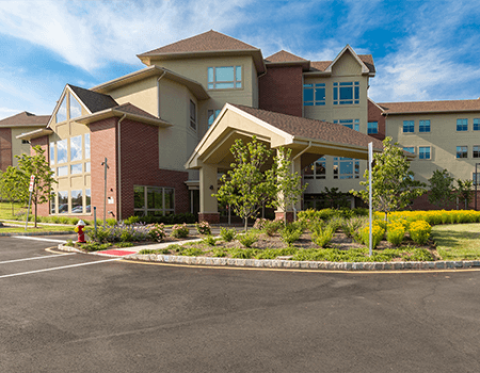
Sept 2023 3 deficiencies
CONCERN (D) 📢 Someone Reported This

A family member, employee, or ombudsman was alarmed enough to file a formal complaint

Potential for Harm - no one hurt, but risky conditions existed

Deficiency F0557 (Tag F0557)

Could have caused harm · This affected 1 resident

Based on observation, interview, and review of pertinent facility documentation, it was determined that the facility failed to ensure a resident's dignity was maintained during an enteral tube feeding...

Read full inspector narrative →
Based on observation, interview, and review of pertinent facility documentation, it was determined that the facility failed to ensure a resident's dignity was maintained during an enteral tube feeding (a flexible feeding tube placed into the stomach for nutrition) for 1 of 1 residents (Resident # 21) reviewed for tube feeding. This deficient practice was evidenced by the following: On 09/23/23 at 2:21 PM, the surveyor observed Resident # 21's room door open. The resident was awake out of bed and seated in a Geri chair (large padded reclining chair on wheels) in the center of the room and which faced the opened door. A Registered Nurse (RN) was administering a bolus enteral feeding via the gastronomy tube (an opening into the stomach from the abdominal wall, made surgically and used to insert a tube to provide a route for tube feeding). The resident's shirt was lifted exposing the gastronomy tube. On 09/21/23 at 2:23 PM, the surveyor interviewed the RN who stated, it is very difficult to give the resident a bolus feed. I left the door open just in case I needed help; someone could hear me. I wouldn't give a bolus feed in the hall, but today he/she was cooperative. The surveyor reviewed Resident # 21's medical record. Review of the admission Record face sheet (an admission summary) revealed that the resident had diagnoses which included but not limited to heart failure, generalized anxiety, and adult failure to thrive. Review of the 8/27/23, quarterly Minimum Data Set (MDS), an assessment tool used to facilitate the management of care reflected the resident's cognitive skills for daily decision making was severely impaired. Further review of the MDS in section K for nutritional approaches indicated feeding tube. Review of the Order Summary Report revealed a physician's order (PO) dated 9/22/23, for enteral feed order every three (3) hours for supplement give 250 ml [milliliters] Fibersource bolus every three (3) hours. Review of the September 2023 electronic medication administration record (eMAR) reflected the above corresponding PO. Review of the resident's individualized comprehensive care plan date initiated 8/18/23, indicated a focus area for has meals in room. The care plan goal indicated that the resident receives bolus feeds via gastronomy tube (G tube). The care plan intervention dated 8/18/23, indicated that privacy will continue to be met due to G tube. Review of the facility's policy for Tube Feeding Administration provided by the Director of Nursing (DON) indicated to provide resident with privacy. On 09/27/23 at 1:00 PM, the survey team met with the Licensed Nursing Home Administrator (LNHA) and DON and discussed the above observation. 09/28/23 01:06 PM, the survey team met with the LNHA and DON. The DON stated, I do believe there was a breach in his/her privacy. I do feel her reasoning, but still his/her privacy should have been maintained. NJAC 8:39-4.1(a)12
CONCERN (D) 📢 Someone Reported This

A family member, employee, or ombudsman was alarmed enough to file a formal complaint

Potential for Harm - no one hurt, but risky conditions existed

Comprehensive Care Plan (Tag F0656)

Could have caused harm · This affected 1 resident

Based on observation, interview and record review it was determined that the facility failed to develop and implement a comprehensive care plan for 2 of 3 residents (Resident # 46 and Resident # 48 ) ...

Read full inspector narrative →
Based on observation, interview and record review it was determined that the facility failed to develop and implement a comprehensive care plan for 2 of 3 residents (Resident # 46 and Resident # 48 ) reviewed for behaviors. This deficient practice was evidenced by the following: 1. On 09/20/23 at 12:45 PM, the surveyor observed Resident # 46 awake and seated in a wheelchair in the main dining room for lunch. The resident was screaming and yelling. Staff members were in the dining room attempting to calm and redirect the resident's behavior. On that same day at 12: 49 PM, the surveyor interviewed the Certified Nursing Assistant (CNA) who stated, this is the usual behavior for the resident. She further stated, in the morning [the resident] is ok, no behaviors it starts in the afternoon. The CNA stated the behaviors have not worsened, but she does not know what triggers the resident behaviors. She stated, out of the blue he/she just begins screaming for no reason sometimes he/she is redirected easily but most times he/she is not. The surveyor reviewed Resident # 46's medical record. Review of the admission Record face sheet (an admission summary) revealed that the resident had diagnoses which included but not limited to schizoaffective disorder, bipolar type, and major depressive disorder, single episode, mild. Review of the 09/10/23, quarterly Minimum Data Set (MDS), an assessment tool used to facilitate the management of care reflected a Brief Interview for Mental Status (BIMS) score of 05 which indicated severe cognitive impairment. Review of section E of the MDS for Behavior indicated the resident exhibits verbal behavioral symptoms directed toward others one to three days a week. Review of the Order Summary Report revealed a physician's order (PO) dated 4/13/23, for Buspirone (a medication used to treat anxiety) 5 mg [milligrams] give one tablet orally two times a day for anxiety and a PO dated 9/20/23, for Lorazepam (a medication used to treat anxiety) 0.5 mg give 0.5 mg tablet by mouth every 24 hours as needed for increased agitation until 10/4/23. Review of the July 2023 through September 2023 electronic treatment administration record (eTAR) revealed a PO dated 5/31/23, to monitor for target behaviors of verbalizing anxiety and combativeness every shift for behavior. Review of the Psychotropic Monthly Review from June 2023 through August 2023 indicated diagnosis of anxiety; target behaviors of verbalizing anxiousness and medication to treat the anxiety is Buspirone 5 mg twice a day. The review further revealed that the care plan for behavioral/psychotropic management was developed and implemented. Review of the psychiatric consult from the nurse practitioner dated 6/7/23, revealed the resident presented with impaired language skills with work finding difficulties, smiles and laughs inappropriately. No signs of hallucinations, delusion, bizarre behaviors, or psychotic process. The nurse practitioner recommended to continue Buspirone 5 mg by mouth twice a day and a gradual dose reduction was not recommended at this time to avoid recurrence of target symptoms and decompensation. Review of the psychiatric consult from the nurse practitioner dated 9/20/23, revealed symptoms of anxiety are present and have worsened. During today's rounds increased agitation was observed .presents as angry, distracted, hostile .signs of manic psychosis appear to be present. Review of the resident's individualized comprehensive care plan revealed a focus area for Buspirone medication related to diagnosis of anxiety initiated on 11/17/22. The goal indicated that the resident will not experience negative side effects from psychotropic med use. The interventions indicated to administer medications as ordered, assess effectiveness of medication, establish appropriate diagnosis for medication use, evaluate for reduction of medication dose, and psychiatric consult as needed. There was no evidence of an individualized care plan developed and implemented to address the resident's behaviors of verbalizing anxiety and combativeness which was being monitored every shift. 2. On 09/20/23 at 12:31 PM, the surveyor observed Resident # 48 awake and seated in a wheelchair. The resident greeted the surveyor. The surveyor reviewed Resident # 48's medical record. Review of the admission Record face sheet (an admission summary) revealed that the resident had diagnoses which included but not limited to Schizophrenia, unspecified, major depressive disorder, single episode, mild; anxiety disorder due to known physiological condition; and schizoaffective disorder, unspecified. Review of the 07/25/23, annual MDS reflected a BIMS score of 14 which indicated that the resident had an intact cognition. Review of section E of the MDS for Behavior indicated no behaviors. Review of the Order Summary Report revealed a PO dated 7/12/23, for Bupropion XL (a medication used to treat depression) 150 mg give one tablet orally one time a day for major depressive disorder; a PO dated 7/13/23, for Invega Trinza intramuscular (IM) 819 mg/2.6 ml inject 1 vial IM in the morning every 3 months for Schizoaffective disorder; a PO dated 5/8/23, for Quetiapine 400 mg give 1 tablet orally at bedtime for Schizoaffective disorder Bipolar type. Review of the July 2023 through September 2023 eTAR revealed a PO dated 6/12/23, to monitor for target behaviors of hallucinations and delusions every shift. Review of the Psychotropic Monthly Review from June 2023 through August 2023, indicated diagnosis of Schizoaffective and MDD [major depressive disorder]; target behaviors of hallucinations, delusions and sadness. The review further revealed that the care plan for behavioral/psychotropic management was developed and implemented. Review of the psychiatric consult from the nurse practitioner dated 7/5/23, revealed resident was feeling well with no psychiatric complaints. No evidence of acute depressive, psychotic, or behavioral symptoms noted during rounds. A gradual dose reduction was not recommended to avoid recurrence of target symptoms and decompensation. The recommendation was to continue the aforementioned medications. Review of the resident's individualized comprehensive care plans revealed a focus area for medication intended for management of hallucinations date initiated 2/13/23 and revised 6/13/23. The goal indicated that the resident will not experience negative side effects of medication such as. The interventions indicated no description provided, administer medications as ordered, establish appropriate diagnosis for medication use, and evaluate for reduction of medication use. Further review of the residents individualized comprehensive care plans revealed a focus area for antidepressant related to diagnosis of depression date initiated 2/13/23 and revised 8/1/23. The goal indicated that the resident will be free from behaviors and show no signs of depression. The interventions indicated to establish appropriate diagnosis for medication use and evaluate for reduction of medication dose. There was also a care plan with a focus area for medication related to diagnosis of anxiety date initiated 2/13/23 and revised 8/1/23. The goal of the care plan was that the resident will not experience negative side effects from psychotropic med use. The interventions indicated to administer medications as ordered, assess need for psychotherapeutic medication, establish appropriate diagnosis for medication use, and to monitor for change in behavior with medication change. There was no evidence of an individualized comprehensive care plan to address the residents' targeted behaviors of hallucinations, delusions, and sadness. On 09/21/23 at 11:09 AM, the surveyor interviewed the Director of Nursing (DON) who stated that the unit managers, herself, or the Assistant Director of Nursing (ADON) develop and revise care plans and at times the 3-11 shift nursing supervisor develop care plans. She could not speak to why a behavioral care plan was not developed to address Resident # 46's behaviors. On 09/27/23 at 1:00 PM, the survey team met with the Licensed Nursing Home Administrator (LNHA) and the DON and discussed the above findings. On 09/28/23 at12:00 PM, the survey team met with the LNHA and DON. The DON acknowledged that the residents should have had a care plan specific to address their behaviors. She stated that with the previous electronic medical record (EMR) they had care plans in place for their behaviors but when the facility transitioned to a new EMR the care plans got dropped off. Review of the facility's untitled policy provided by the DON included that the facility's Care Planning/Interdisciplinary team was responsible for the development of an individual comprehensive care plan for each resident. A comprehensive care plan is developed within 14 days of completion of the resident assessment (MDS) and is based on the resident's comprehensive assessment and is developed by a Care Planning/Interdisciplinary team. NJAC 8:39-11.2(e)
CONCERN (D)

Potential for Harm - no one hurt, but risky conditions existed

Drug Regimen Review (Tag F0756)

Could have caused harm · This affected 1 resident

Based on observation, interview, record review, and review of pertinent facility documents, it was determined that the facility failed to respond in a timely manner to the Consultant Pharmacist's (CP)...

Read full inspector narrative →
Based on observation, interview, record review, and review of pertinent facility documents, it was determined that the facility failed to respond in a timely manner to the Consultant Pharmacist's (CP) monthly recommendations for 1 of 5 residents (Resident #96) reviewed for unnecessary medications. The deficient practice was evidenced by the following: On 9/21/23 at 12:10 PM, the surveyor observed Resident #96 in bed with their eyes closed. The surveyor reviewed Resident #96's medical records. A review of the admission Record (an admission summary) reflected that the resident was admitted to the facility with diagnoses that included but not limited to Schizophrenia (a disorder that affects a person's ability to think, feel and behave clearly), major depressive disorder (a disorder that cause persistent feeling of sadness and loss of interest and can interfere your daily life) and Alzheimer's disease (a progressive disease that destroys memory and other important mental functions). A review of the Quarterly Minimum Data Set, an assessment tool used to facilitate the management of care, dated 7/26/23, reflected that the resident's cognitive skills for daily decision-making score was 2 out of 15, which indicated that the resident's cognition was severely impaired. A review of the Order Summary Report (OSR) (physician's order sheet) dated September 2023 revealed a Physician order (PO) dated 8/14/23 for Lorazepam (medication for anxiety) 0.5 mg (milligrams), give 1/2 tablet by mouth every 12 hours as needed for Anxiety. A further review of the OSR revealed a PO dated 7/13/23 for Alprazolam 0.25 mg (medication for anxiety) give 1 tablet by mouth every 8 hours as needed for Anxiety with a discontinued date of 8/11/23. A review of the July 2023, August 2023, and the September 2023 electronic medication administration record (eMAR) revealed an order dated 8/14/22, for Lorazepam 0.5 mg tablet, give 1/2 tablet by mouth every 12 hours as need for anxiety. A further review of the eMAR revealed a PO dated 7/13/23, for Alprazolam 0.25 mg tablet, give 1 tablet every 8 hours as needed for anxiety with a discontinued date of 8/11/23. A review of the Consultant Pharmacist (CP)- Medication Regimen Review revealed the following recommendations: On 9/15/23 the CP recommended that an as needed Lorazepam should have a stop date of 14 days. On 7/17/23 the CP recommended that an as needed Alprazolam should have a stop date of 14 days. On 9/21/23 at 2:10 PM, the surveyor interviewed the 2nd floor Registered Nurse/Unit manager (RN#1)(UM#1) who stated that it was her responsibility to review the Consultant Pharmacist recommendations. She further stated that the CP would make recommendations regarding as needed anti-anxiety medications. RN#1/UM#1 stated that she was aware that as needed medications for anxiety such as Alprazolam and Lorazepam should have a 14-day stop date. She was unable to speak to why the CP recommendation was not followed and stated that the resident had relocated from another floor and maybe the CP recommendation was missed. On 9/27/23 at 1:00 PM, the surveyor discussed the above observation and findings with the Director of Nursing (DON) and the Licensed Nursing Home Administrator. There was no additional information provided. On 10/2/23 at 11:45 AM, the surveyor interviewed the CP who stated that all Medication Regimen Review recommendation should be address by the facility within 2 days. A review of the facility's policy Consultant Pharmacy dated 10/22, which was provided by the DON did not include a time frame for the facility's response to the CP recommendations pertaining to medication irregularities. A review of the facility's policy Medication, Antipsychotic Drugs dated 10/22, which was provided by the DON did not include as needed anti-anxiety medications with a specific stop date. NJAC 8:39-29.3
May 2022 16 deficiencies
CONCERN (D)

Potential for Harm - no one hurt, but risky conditions existed

Transfer Notice (Tag F0623)

Could have caused harm · This affected 1 resident

Based on observation, interview, and record review, it was determined that the facility failed to notify in writing regarding the transfer of a resident to the hospital to: a.) the resident, b.) the r...

Read full inspector narrative →
Based on observation, interview, and record review, it was determined that the facility failed to notify in writing regarding the transfer of a resident to the hospital to: a.) the resident, b.) the resident's representative, and c.) the Office of the State Long-Term Care Ombudsman for 1 of 4 residents reviewed for transfers and affected 1 of 3 residents who were hospitalized (Resident #50). This deficient practice was evidenced by the following: On 5/5/22 at 9:00 AM, the surveyor observed Resident #50 in their room sitting on the bed. The resident informed the surveyor that he/she had not received any notice in writing from the facility about his/her hospitalizations. At 10:45 AM, the surveyor interviewed the Director of Nursing (DON), Assistant Director of Nursing (ADON), and Infection Preventionist Nurse (IPN). They stated that they did not provide written notification to notify the residents, their representatives or the New Jersey State Ombudsman's office for residents that were transferred to the hospital. In addition, the DON stated, we do not notify the ombudsman's office of anything, I didn't know we had to notify them for hospitalization, we only provide them with the information they request. At 3:04 PM, in the presence of the survey team during an additional interview with the DON, ADON, and IPN, they again stated that they were not aware that the New Jersey State Ombudsman's office was to be notified in writing when the resident was discharged to the hospital and the reason(s) for hospitalization. However, the Licensed Nursing Home Administrator (LNHA) informed the surveyors .we did not notify the Ombudsman office. The surveyor reviewed the medical record of Resident #50. The resident's Face Sheet (an admission summary) reflected that the resident's last admission to the facility was on 2/21/22, with diagnoses that included but were not limited to Parkinson's Disease (a brain disorder that affects movement) and Chronic Obstructive Pulmonary (Lung) Disease. The Quarterly Minimum Data Set (MDS), an assessment tool used to facilitate the management of care, dated 2/6/22 reflected that the resident had a Brief Interview for Mental Status (BIMS) score of 13 out of 15 which reflected the resident had an intact cognition. According to Resident admission and Discharge Tracking (ADT) Information, the resident was discharged to the hospital on 1/2/22 and 2/16/22. The nurse's Progress Note (PN) indicated that the resident was transferred to the hospital on 1/2/22 and was admitted to the hospital secondary to chest tightness and positive for Covid. Further review of the nurse's PN reflected that the resident was transferred again to the hospital on 2/16/22 and was admitted to the hospital for altered mental status. There was no documented evidence that the facility had notified the resident and his/her representative in writing regarding the reason for transfer to the hospital and that they sent a copy to a representative of the New Jersey State Long-Term Care Ombudsman. On 5/9/22 at 11:55 AM, the surveyor met with the LNHA, DON, ADON, and IPN in the presence of the survey team. The LNHA informed the survey team that there should be a written notification provided to the Ombudsman office indicating the reason for transfer when the resident was discharged to the hospital and stated, it's supposed to have been done. The facility was unable to provide a policy regarding written notification to the State Long-Term Care Ombudsman for residents who are transferred or discharged . NJAC 8:39-4.1(a)31
CONCERN (D)

Potential for Harm - no one hurt, but risky conditions existed

Deficiency F0625 (Tag F0625)

Could have caused harm · This affected 1 resident

**NOTE- TERMS IN BRACKETS HAVE BEEN EDITED TO PROTECT CONFIDENTIALITY** Based on observation, interview, and record review, it was determined that the facility failed to provide documented evidence th...

Read full inspector narrative →
**NOTE- TERMS IN BRACKETS HAVE BEEN EDITED TO PROTECT CONFIDENTIALITY** Based on observation, interview, and record review, it was determined that the facility failed to provide documented evidence that the facility had notified the resident and his/her representative in writing regarding the hospitalization, the reason for transfer, and the bed hold policy for 3 of 3 residents (Resident #8, #50 and #60) reviewed for hospitalization. This deficient practice was evidenced by the following: 1. Resident#8's Face Sheet (FS), an admission summary, reflected diagnoses that included but were not limited to Unspecified Dementia without Behavioral Disturbance and Chronic Obstructive Pulmonary (Lung) Disease, Unspecified (COPD). According to Resident admission and Discharge Tracking (ADT) Information, Resident#8 was discharged to the hospital on 4/1/22 and was readmitted to the facility on [DATE]. A review of the nurse's Progress Note (PN) indicated that the resident was transferred to the hospital on 4/1/22 due to episodes of vomiting and was admitted to the hospital secondary to a Gastrointestinal (Digestive) Bleed. There was no documented evidence that the facility had notified the resident and his/her representative in writing regarding the hospitalization, the reason for transfer, and the bed hold policy. 2. On 5/5/22 at 9:00 AM, the surveyor observed Resident #50 in their room sitting on the bed. The resident informed the surveyor that he/she had not received anything in writing about his/her hospitalizations, the reason for transfer, or the bed hold policy. The surveyor reviewed Resident #50's medical records. The resident's FS reflected diagnoses that included but were not limited to Parkinson's Disease (a brain disorder that affects movement) and COPD. The Quarterly Minimum Data Set (MDS), an assessment tool used to facilitate the management of care, dated 2/6/22 reflected that the resident had a Brief Interview for Mental Status (BIMS) score of 13 out of 15 which reflected the resident had an intact cognition. The nurse's PN indicated that the resident was transferred to the hospital on 1/2/22 and was admitted to the hospital secondary to chest tightness and positive for Covid. Further review of the nurse's PN reflected that the resident was transferred again to the hospital on 2/16/22 and was admitted to the hospital for altered mental status. There was no documented evidence that the facility had notified the resident and his/her representative in writing regarding the hospitalization, the reason for transfer, and the bed hold policy. 3. Resident#60's FS reflected diagnoses that included but were not limited to Essential (Primary) Hypertension (elevated blood pressure) and COPD. According to Resident ADT Information, Resident#60 was discharged to the hospital on 4/15/22 and was readmitted to the facility on [DATE]. The nurse's PN indicated that the resident was transferred to the hospital on 4/15/22 due to complaints of left-side abdominal pain and worsening pain. There was no documented evidence that the facility had notified the resident and his/her representative in writing regarding the hospitalization, the reason for transfer, and the bed hold policy. On 5/5/22 at 3:04 PM, the survey team met with the Licensed Nursing Home Administrator (LNHA), Director of Nursing (DON), Assistant Director of Nursing (ADON), Infection Preventionist Nurse (IPN) and were made aware of the above concern. The DON, ADON, and IPN were not aware of the requirement that the resident and the resident's representative party must be notified in writing related to hospitalizations, the reason for transfer, and the bed hold policy. The LNHA stated that he was aware of the requirements for notification and I thought we were doing it. A review of the Bed Hold Policy reflected that A written notification (signed and dated by the resident/patient and family member) shall be given to the resident/patient and family member each time of transfer for hospitalization or therapeutic leave. On 05/09/22 at 11:55 AM, the survey team met with the LNHA, DON, ADON, and IPN. No further information was provided prior to the survey team. NJAC 8:39-5.1
CONCERN (D)

Potential for Harm - no one hurt, but risky conditions existed

Deficiency F0658 (Tag F0658)

Could have caused harm · This affected 1 resident

**NOTE- TERMS IN BRACKETS HAVE BEEN EDITED TO PROTECT CONFIDENTIALITY** 2. On 5/2/22 at 12:00 PM, the surveyor observed Resident #78 in their room seated in a wheelchair. The surveyor reviewed Residen...

Read full inspector narrative →
**NOTE- TERMS IN BRACKETS HAVE BEEN EDITED TO PROTECT CONFIDENTIALITY** 2. On 5/2/22 at 12:00 PM, the surveyor observed Resident #78 in their room seated in a wheelchair. The surveyor reviewed Resident #78's medical records. The FS for Resident #78 which indicated that the resident was admitted to the facility with a diagnosis which included Type 1 Diabetes Mellitus (known as juvenile diabetes or insulin dependent diabetes, a chronic condition in which the pancreas produces little or no insulin) with Hyperglycemia (high blood sugar), hypertension, and hyperkalemia (too much potassium in the blood). The April 2022 Physician Order (PO) revealed an order dated 12/25/21 for Insulin Lispro (U-100) 100 units/ml to inject by subcutaneous route four times per day for Diabetes for a sliding scale: if blood sugar (BS)=0-200=0 units, 201-250=2 units, 251-300=4 units, 301-350=6 units, 351-400=8 units and if BS below 70 or greater than 400 call the Medical Doctor. The April 2022 PO revealed an order dated 2/4/22 for Semglee U-100 insulin 100 units/ml inject 10 units subcutaneous route once daily at 9:00 AM for Diabetes and an order dated 2/6/22 for Semglee U-100 insulin 100 units/ml inject 15 units by subcutaneous route once daily at 9:30 PM for Diabetes The April 2022 eMAR revealed an order dated 12/25/21 for Insulin Lispro (U-100) 100 units/ml inject by subcutaneous route 4 times per day for Diabetes for a sliding scale: if blood sugar (BS)=0-200=0 units, 201-250=2 units, 251-300=4 units, 301-350=6 units, 351-400=8 units and if BS below 70 or greater than 400 call the Medical Doctor. An order dated 2/4/22 for Semglee U-100 insulin 100 units/ml inject 10 units subcutaneous route once daily at 9:00 AM for Diabetes and an order dated 2/6/22 for Semglee U-100 insulin 100 units/ml inject 15 units by subcutaneous route once daily at 9:30 PM for Diabetes. The April 2022 eMAR revealed that the injection sites for Insulin Lispro were not documented 11 out of 80 times that insulin were administered and 47 out of 59 times that Semglee insulin were administered. The April 2022 eMAR also revealed that nurses did not document the dose of Insulin Lispro for sliding scale on 13 out of 59 times that the insulin were administered. On 5/3/22 at 12:10 PM, the surveyor interviewed LPN#1 who's the medication nurse for Resident #78. LPN #1 stated that she was not documenting the insulin injection site, but she was unable to tell the surveyor why the insulin dosage was not documented on the eMAR. On 5/3/22 at 12:20 PM, the surveyor interviewed the Consultant Pharmacist who stated that the facility should have been documenting the Insulin injection site and the dosage of Insulin administered for Insulin Lispro sliding scale. On 5/3/22 at 12:30 PM, the surveyor interviewed Resident #78's medication nurse and also the UM/LPN who acknowledged that she did not document the insulin injection sites on the eMAR. UM/LPN stated that she should have documented the injection sites on the eMAR for Resident #78's insulins. UM/LPN was unable to answer the surveyor question regarding the insulin dose for the sliding scale not being documented on the eMAR. On 5/5/22 at 10:04 AM, the surveyor interviewed the UM/LPN on the Emerald unit. The UM/LPN told the surveyor that she was in-service regarding the documentation of the eMAR. She stated that she was unaware that the insulin site location was a required documentation but stated that the dose of insulin administered should have been documented on the eMAR On 5/5/22 at 1:20 PM, the surveyor met with the LNHA, DON, ADON and the IPN, and no further information was provided by the facility. A review of the facility's policy for Administering Medications dated 9/30/21 and was provided by the DON indicated the following: As required or indicated for a medication, the individual administering the medication will record in the resident's medical record: a. The date and time the medication was administered b. The dosage c. The route of administration d. The injection site (if applicable) e. Any complaints or symptoms for which the drug was administered f. Any results achieved and when those results were observed and g. The signature and title of the person administering the drug. 3. On 4/26/22 at 12:15 AM, the surveyor observed Resident #358 in his room eating lunch. The surveyor reviewed Resident #358's medical records. The FS for Resident #358 which indicated that the resident was admitted to the facility with diagnoses which included Chronic atrial fibrillation (an irregular and often very rapid heart rhythm that can lead to blood clots in the heart), hypertension, and Type 2 Diabetes Mellitus (means that body does not use insulin properly). The April 2022 PO revealed an order dated 4/14/22 for Toprol XL 50 mg give one tablet by mouth daily hold for Systolic Blood Pressure (SBP) less than 120 or Heart Rate less than 50 Beats Per Minute (BPM) for Hypertension. The February 2022 eMAR revealed an order dated 4/14/22 for Toprol XL 50 mg 1 tablet by mouth once daily for Hypertension and hold for SBP less than 120 or HR less than 50 BPM. The eMAR revealed that the nurse failed to document the resident's HR on the eMAR from 4/15/22 through 4/26/22. On 4/27/22 at 11:00 AM, the surveyor interviewed a Licensed Practical Nurse#2 (LPN#2) who was Resident #358's medication nurse. LPN #2 stated that she will check Resident #358's HR every morning prior to administering the resident's Toprol XL 50 mg tablet. LPN #2 stated that she should have documented the heart rate in the eMAR. On 4/27/22 at 12:44 PM, the surveyor met with the DON, IPN, ADON, and the LNHA, and no further information was provided by the facility. NJAC: 8-39-27.1 (a) Based on observation, interview, and record review, it was determined that the facility failed to follow professional standards of practice in accurately monitoring and documenting the heart rate ordered by a physician, documenting the site and dose of insulin administered and the accurate administration/documentation of medication. This deficient practice was identified for 3 of 31 residents reviewed (Resident #8, #78, #358) and was evidenced by the following: Reference: New Jersey Statutes Annotated, Title 45. Chapter 11. Nursing Board. The Nurse Practice Act for the State of New Jersey states: The practice of nursing as a registered professional nurse is defined as diagnosing and treating human responses to actual and potential physical and emotional health problems, through such services as case finding, health teaching, health counseling, and provision of care supportive to or restorative of life and wellbeing, and executing medical regimens as prescribed by a licensed or otherwise legally authorized physician or dentist. Reference: New Jersey Statutes Annotated, Title 45, Chapter 11. Nursing Board. The Nurse Practice Act for the State of New Jersey states: The practice of nursing as a licensed practical nurse is defined as performing tasks and responsibilities within the framework of case finding; reinforcing the patient and family teaching program through health teaching, health counseling and provision of supportive and restorative care, under the direction of a registered nurse or licensed or otherwise legally authorized physician or dentist. 1. On 5/2/22 at 11:25 AM, the surveyor inspected the medication cart #7 on the 3rd floor. The surveyor noted an eye medication used to reduce pressure in the eye belonging to Resident #8, Brimonidine Tartrate 0.2% Ophthalmic Solution 5 milliliters (ml) with a documented opening date of 2/17/22. The Brimonidine bottle had a pharmacy label indicating that it was delivered to the facility on 2/9/22. Upon examination of the solution left in the bottle, it appeared full. On 5/2/22 at 11:30 AM, the surveyor interviewed the 3rd floor Unit Manager/Licensed Practical Nurse (UM/LPN) who examined the Brimonidine and confirmed that the bottle appeared full. The surveyor reviewed Resident #8's medical records. A review of the resident's Face Sheet (an admission summary) (FS) included documented diagnosis that included but were not limited to Unspecified Dementia without behavioral disturbance. A review of the 1/4/22 Annual Minimum Data Set (MDS), an assessment tool used for management of care, revealed a Brief Interview for Mental Status (BIMS) score of 1 of 15 which reflected that the resident's cognition was severely impaired. A review of the May 2022 electronic Medication Administration Record (eMAR) for Resident #8 indicated that there was a physician order for Brimonidine 0.2% eye drops, initially ordered by the physician on 12/3/20 to instill one (1) drop in each eye twice daily. The May 2022 eMAR also indicated a physician order, initially ordered by the physician on 12/3/20 for Latanoprost 0.005% eye drops instill one (1) drop in each eye in the evening. Both orders indicated that the eye drops were for a diagnosis of bilateral Ocular Hypertension (condition in which the measured eye pressure is consistently greater than normal). There was also a documented physician order included in the May 2022 eMAR for Fluticasone Propionate 50 microgram nasal spray, initially ordered by the physician on 1/2/21 indicating one (1) spray in each nostril twice daily. A review of the most recent eye exam dated 1/13/22 documented a diagnosis of Glaucoma, a condition causing abnormally high pressure in your eye. The Optometrist (eye doctor) documented that Resident #8 would continue treatment with Brimonidine twice daily and Latanoprost at bedtime. On 5/2/22 at 11:45 AM, the surveyor returned to inspect the medication cart in the presence of the UM/LPN and was informed that there was no Latanoprost 0.005% eye drops in the medication cart. On 5/4/22 at 9:36 AM, the surveyor interviewed Licensed Practical Nurse #1 (LPN#1) who stated that she ordered the Brimonidine 0.2% and Latanoprost 0.005% yesterday. LPN#1 informed the surveyor that both medications including the Fluticasone was to be delivered this afternoon. On 5/4/22 at 9:36 AM, upon inspection of the medication cart there were no eye drops available for Resident #8. The surveyor inspected the Fluticasone Propionate 50 microgram nasal spray still found in the cart. The Fluticasone Propionate had a documented opening date of 3/28/22 and a delivery date from the pharmacy of 3/9/22. The medication found in the bottle of Fluticasone Propionate appeared three-quarters full. On 5/4/22 at 9:40 AM, the surveyor interviewed the Consultant Pharmacist (CRPh), who agreed that the Fluticasone Propionate appeared three-quarters full. The CRPh explained that the bottle of Fluticasone Propionate contained 120 doses, this resident was receiving 4 doses daily and should have been completed by the end of May 2022. On 5/4/22 at 1:30 PM, the surveyor in the presence of the CRPh compared the 3/28/22 opened bottle of Fluticasone Propionate with that of the newly delivered, unopened bottle. The CRPh agreed that the 3/28/22 opened bottle of Fluticasone Propionate was three-quarters full and there should have been less medication left in the bottle if it had been administered to Resident #8 in accordance with the physician's order. Review of the March 2022 eMAR recorded daily administration of Brimonidine, Latanoprost, and Fluticasone except for 3/7/22 when Resident #8 was in the hospital. Review of the April 2022 eMAR recorded daily administration of Brimonidine, Latanoprost and Fluticasone except for 4/1, 4/2 and 4/3/22 when Resident #8 was in the hospital. On 5/5/22 at 12:11 PM, the surveyor interviewed the Optometrist who stated that Resident #8 had Glaucoma and it was a chronic condition that would have to be treated with medication forever. She stated that stopping the medication increases the ocular pressure causing elevation of the pressure and could cause permanent damage to the ocular nerve. On 5/9/22 at 11:19 AM, the surveyor interviewed the provider pharmacy pharmacist (RPh) who revealed the previous delivery dates of the three medications reviewed. The RPh informed the surveyor that the bottle of Brimonidine 5 ml contained a 50-day supply and was delivered to the facility on [DATE] and 2/9/22, the Latanoprost 2.5 ml contained a 25 day supply and was delivered on 11/14/21, 2/17/22 and 3/4/22 and the Fluticasone Propionate contained a 30-day supply and was delivered on 11/20/21, 2/9/22 and 3/9/22. On 5/9/22 at 11:55 AM, the surveyor informed the facility Licensed Nursing Home Administrator (LNHA), Director of Nursing (DON), Assistant Director of Nursing (ADON), and the Infection Preventionist Nurse (IPN) of the findings from 5/2/22, 5/4/22 and 5/9/22. They did not have any further information or were able to explain why these situations occurred.
CONCERN (D)

Potential for Harm - no one hurt, but risky conditions existed

Quality of Care (Tag F0684)

Could have caused harm · This affected 1 resident

**NOTE- TERMS IN BRACKETS HAVE BEEN EDITED TO PROTECT CONFIDENTIALITY** Based on observation, interview, and review of pertinent facility documents, it was determined that the facility failed to admin...

Read full inspector narrative →
**NOTE- TERMS IN BRACKETS HAVE BEEN EDITED TO PROTECT CONFIDENTIALITY** Based on observation, interview, and review of pertinent facility documents, it was determined that the facility failed to administer an antianxiety medication for a period of 14-hours which caused a resident increased anxiety resulting in psychological harm. This deficient practice was identified for 1 of 5 residents reviewed for medication management (Resident #256). The evidence was as follows: On 5/3/22 at 10:18 AM, two surveyors observed Resident #256 sitting upright in a wheelchair. At that time, the resident agreed to be interviewed and the resident was interviewed in a private conference room. The resident stated that he/she was at the facility for physical rehabilitation, but added that, part of healing is peace of mind. The resident began to elaborate that yesterday on 5/2/22 at 10 AM, he/she met with the primary physician about feeling very upset and anxious and requested an antianxiety medication. The resident stated that the physician agreed and prescribed a 0.25 milligram (mg) dose of Xanax (prescription medication used to treat the symptoms of anxiety). On that same date and time, the resident stated that at 11 AM, Resident #256 asked for a dose of the Xanax 0.25 mg from LPN#2 who replied that the physician had not yet written the medication order. The resident then stated that he/she waited until 3 PM and asked the same nurse for a dose of the Xanax. The resident stated that LPN#2 replied that the order went in at 2:15 PM and that he did not have it yet. The resident stated that he/she called the front desk at 2:30 PM, and the Receptionist stated that the pharmacy sends medications once they have enough orders. The resident stated to the Receptionist that it was an anxiety med can't you expedite it? Furthermore, the resident stated that at 5 PM he/she requested a medication for sleep because he/she had not received the Xanax dose yet and on 5/3/22 at 1 AM he/she asked the Registered Nurse (RN) Are the pills here yet? and the RN stated they were not. The resident stated at that point he/she was so frustrated, upset and anxious like I was coming out of my skin and shaking. The resident reported that he/she stated to the RN if you don't find a solution to this problem, I will turn this building upside down. At this time during the interview, the surveyor observed that the resident was raising their voice, shaking his/her arms, and tearing up. Also, the resident stated that the RN again stated to him/her that the medication was still not available. At that time, the resident informed the surveyors that it wasn't until he/she became very upset that a short time later he/she received the Xanax. The resident stated to the surveyor that the the [medications] helped with the anxiety. A review of Resident #256's medical record reflected the following: The Resident Face Sheet (an admission summary) reflected that the resident was admitted to the facility and had diagnoses which included but were not limited to, Diabetes (a group of diseases that result in too much sugar in the blood), Osteomyelitis (an infection in the bone) and orthopedic aftercare following surgical amputation. An additional diagnoses list in the resident's electronic medical record reflected that the resident had a diagnosis of Generalized Anxiety Disorder, and it was entered into the electronic medical record on 5/2/22. The surveyor attempted to review the admission Minimum Data Set (MDS), an assessment tool used to facilitate the management of care, in an effort to obtain the brief interview for mental status (BIMS) score. However, the MDS revealed that the assessment had not yet been completed. The resident only had an entry MDS dated [DATE]. The surveyor reviewed the Social History and assessment dated [DATE] which reflected that the resident had an intact recall. A review of the medical progress note dated 5/2/22 at 11:43 AM, reflected that the resident had Increased anxiety and depression . due to a personal matter. It also reflected that the resident had anxiety and agitation and to start Xanax 0.25 mg by mouth three times a day as needed. It indicated that prescription was given to the nurse, and that it was Discussed with Nursing. A review of the resident's hybrid medical record reflected the corresponding physician's order dated 5/2/22 on the Physician's Order Form for the Xanax 0.25 mg by mouth three times a day as needed. There was also a hard copy of a Prescription Pad sheet which indicated that the Xanax was indicated for anxiety or agitation. A review of the Physician's Orders entered into the electronic medical record reflected an order for Xanax 0.25 mg every eight hours for 14 days as needed for anxiety which was entered on 5/2/22 at 4:07 PM. A review of the electronic Medication Administration Record (eMAR) for May 2022 reflected that the first dose of Xanax was not administered until 5/3/22 at 1:18 AM (This is a period of approximately 14 hours from the time it was initially ordered). The eMAR for May 2022 further revealed that there were two other doses administered on 5/3/22, three doses administered on 5/4/22, two doses administered on 5/5/22 and 5/6/22, and three doses administered on 5/7/22 and 5/8/22. Further review of the resident's progress notes reflected the following: A medical progress note dated 5/5/22 at 10:21 AM reflected that the resident reported improvement in anxiety with the new prescription of Xanax. A nursing note dated 5/7/22 at 10:31 PM, reflected that the resident had three episodes of increased anxiety, and that nonpharmacological interventions were not effective however a dose of Xanax 0.25 mg was effective. A nursing note dated 5/8/22 at 2:41 PM, reflected PRN anxiety medication given with positive effect. A review of the residents Care Plan Activity Report printed out by the DON on 5/5/22 at 3:32 PM, did not reflect documentation related to Resident #256's new diagnosis of anxiety or plan of care related to the resident's target behavior of anxiety for the use of Xanax. On 5/5/22 at 2:06 PM, the survey team met with the Licensed Nursing Home Administrator (LNHA), the Director of Nursing (DON), the Assistant Director of Nursing (ADON) and the Infection Prevention Nurse (IPN). At that time the DON stated that a care plan should reflect a resident's current status and should be specific to the resident. She further stated that you should be able to read a care plan and know which resident it is talking about. On 5/6/22 at 10:30 AM, the surveyor interviewed the IPN in the presence of the survey team. She stated that if there was a new order for a resident and that medication was in the electronic back-up medication supply, it should have been administered to the resident. She further stated that the nurse should not have waited until the pharmacy delivered the medication. She stated that if a narcotic needed to be removed from the electronic back-up medication supply, a witness was required. She provided the surveyor a list of medications that were available in the back-up supply which included the anti-anxiety medication, Xanax 0.25 mg. In addition, she provided the surveyor with a Transaction print out dated 5/2022, which indicated that Xanax was not dispensed from the electronic back-up medication supply. On 5/6/22 at 11:00 AM, in the presence of the survey team, the surveyor attempted to call the 7 AM -3 PM day shift LPN #2 that worked on 5/2/22 and cared for Resident #256. There was no answer, and the surveyor left a message and requested a return phone call. On 5/6/22 at 11:16 AM, in the presence of the survey team, the surveyor attempted to call the 11 PM-7 AM night shift RN that worked on 5/2/22 into 5/3/22 and cared for Resident #256. There was no answer, and the surveyor left a message and requested a return phone call. On 5/6/22 at 1:33 PM, the surveyor interviewed the Social Worker in the presence of the survey team. He stated that he had met with the resident multiple times and that the resident had not brought up any issues with him with the exception of discharge planning. The Social Worker told the surveyor that Resident #256 can get upset really easy. The Social Worker was unaware that the resident had a new diagnosis of anxiety and was prescribed an antianxiety medication. On 5/9/22 at 11:00 AM, the surveyor conducted a phone interview with the 11 PM-7 AM night shift RN who cared for the resident from 5/2/22 into 5/3/22. He stated that the resident used to be calm. He stated that on 5/3/22 the resident went to the nursing station and approached him very upset with a raised voice. He stated that the resident requested Xanax and stated that he/she has been asking for Xanax since 10 AM. He stated that at that time the medication had not yet arrived from the pharmacy. He stated that the resident was yelling, became belligerent, and was threatening to cause problems for him and the facility. He further stated that he tried to calm the resident, however Resident #256 was getting more and more upset and that the resident was so frustrated [the resident] was almost crying. The RN stated that he was the only one in the building who had access to the electronic back-up medication supply. He stated that even though Xanax 0.25 mg was available in the electronic back-up medication supply, it required two people with access codes to retrieve the medication, and therefore it could not be accessed. The surveyor asked about the documentation of this, and the RN could not speak to why he had not documented this or notified the Physician. On 5/9/22 at 11:17 AM, the surveyor interviewed the IPN. She stated that the resident's LPN who worked on 5/2/22 on the 7 AM-3PM shift did not have access to the electronic back-up medication supply, because he was from an agency. She further stated that during the week, during the day shift there would have been two nurses available who had access to the electronic back-up medication supply to retrieve the Xanax 0.25 mg for the resident. On 5/9/22 at 11:47 AM, the surveyor interviewed the residents primary Physician. She stated that the resident had not exhibited anxiety prior to her visit on 5/2/22. She stated that a nurse requested that she visit the resident due to signs of anxiety. The Physician stated that the resident had an exacerbation of anxiety related to concerns about discharge planning. She stated that she evaluated the resident and wrote an order before noon on 5/2/22 for Xanax 0.25 mg. In addition, she stated that the nurse was aware that the prescription was written. The Physician stated that she was unaware that there was a delay in the administration of Xanax to the resident. She stated that if the resident did not get the Xanax until after 1 AM the next day, that is too long; that's almost 14 hours; that is an unreasonable amount of time for a resident to wait for an antianxiety medication. She stated that she had seen the resident since she prescribed the Xanax and that the resident was responding well to the medication. The Physician stated that the resident needed it. On 5/9/22 at 11:55 AM, the surveyor interviewed the ADON in the presence of both the survey team and the facility's LNHA, DON, and IPN. She stated that there should always be two people in the building who have access to the electronic back-up medication supply. On 5/9/22 at 11:27 AM, the ADON provided the surveyor with an investigation for Resident #256. The investigation acknowledged that the electronic back-up medication supply should have been used to administer the medication until personal blister pack arrived. A review of the [Electronic Back-Up Medication Supply brand name redacted] Station Policy dated 10/1/20, included that the .system requires two entries to access . In addition, it included that Only designated nurses will have access privileges to controlled medications. A review of an undated facility policy, Principles of Medication Administration did not reflect the process to administer as needed medications. A review of an undated facility policy, Behavioral Assessment, Intervention and Monitoring, reflected that the nursing staff should identify and document specific details regarding changes in an individual's mental status or behaviors, including onset, intensity, frequency, including any precipitating factors or triggers. It further reflected that the interdisciplinary team will thoroughly evaluate new or changing behavioral symptoms including anxiety and to care plan the findings from the comprehensive assessment including interventions to relieve the resident's distress. NJAC 8:39-27.1(a)(b); 27.2(h)
CONCERN (D)

Potential for Harm - no one hurt, but risky conditions existed

Respiratory Care (Tag F0695)

Could have caused harm · This affected 1 resident

Based on observation, interview and review of facility documents it was determined that the facility failed to, a.) follow physician orders for oxygen and b.) clarify existing oxygen orders for 1 of 2...

Read full inspector narrative →
Based on observation, interview and review of facility documents it was determined that the facility failed to, a.) follow physician orders for oxygen and b.) clarify existing oxygen orders for 1 of 2 residents reviewed for respiratory care (Resident #23). This deficient practice was evidenced by the following: On 4/26/22 at 12:11 PM, during the initial tour of the facility, the surveyor observed an oxygen concentrator (a device that provides supplemental oxygen) in the room of Resident #23. The nasal cannula tubing (plastic tubing that delivers oxygen through the nose) was rolled up and, in a bag, placed in the handle of the concentrator. The concentrator was not on during observation. The surveyor asked the resident when he/she wore oxygen and the resident stated they wore it all the time. The surveyor reviewed the following medical records of Resident #23. The Face Sheet (admission summary) revealed that the resident was admitted to the facility with medical diagnosis included but not limited to Pneumonia (lung inflammation caused by bacterial or viral infection), end stage renal disease, hypertension (elevated blood pressure), and epilepsy (a brain disorder that causes recurring, unprovoked seizures). The admission Minimum Data Set (MDS), an assessment tool dated 1/22/22, indicated the resident had a Brief Interview of Mental Status of 9 out of 15 which indicated that Resident #23 had a moderately impaired cognition. The April 2022 Resident Medication Administration Record (RMAR) reflected the following physician orders for oxygen: 1. 1/21/22 Administer oxygen to resident if pulse oximetry (a device used to assess the level of oxygen in the blood) was less than 90% as needed (PRN) 2. 2/02/22 Continuous oxygen (meaning to wear it all the time) at two liters via nasal cannula There was no documentation that the above two conflicting physician orders for oxygen were clarified. According to the vital sign monitoring (blood pressures, heart rate, weights, pulse oximetry) section of the Electronic Medical Record (EMR) the only pulse oximetry documented was on 1/21/22 and the result was 87%, the surveyor could not locate any further documentation of staff monitoring the resident's pulse oximetry status. The RMAR for the month of April 2022 included the order to administer oxygen if the saturation was less than 90%. There were no pulse oximetry results documented and there was no evidence of signatures from the staff. The surveyor reviewed the Treatment Administration Record (TAR) for April 2022 and it did not include pulse oximetry checks. On 4/28/22 at 9:40 AM, the surveyor observed the resident in bed, awake. The resident was not wearing oxygen and the oxygen concentrator was turned off. On 4/28/22 at 9:45 AM, the surveyor interviewed the Certified Nursing Assistant (CNA) caring for the resident. The surveyor asked if the resident wore oxygen, and the CNA said, they wear it sometimes, I think it was on yesterday. On 4/28/22 at 9:50 AM, the surveyor interviewed the Licensed Practical Nurse (LPN) who was caring for Resident #23 and asked if the resident wore oxygen. The LPN stated, yes, but not always though. The surveyor asked what the order for the oxygen was and the LPN stated, oxygen at 2 liters continuous. The surveyor asked if a pulse oximetry level was being checked and she said yes, it was 96% yesterday. The surveyor asked where it was documented and she replied, I found it in the progress notes. The surveyor asked if it was checked on regular intervals and she told the surveyor that the resident had medications with parameters, so they should check it then. The LPN could not give the surveyor regular intervals of when the pulse oxygenation status was to be assessed. On 4/28/22 at 10:41 AM, the surveyor reviewed the resident's care plan. The care plan did not include a respiratory focus or that the resident utilized oxygen. The surveyor reviewed the electronic medical record which had the resident's admission care plan and the current care plan and neither care plan included a respiratory focus or oxygen. The surveyor asked the Unit Manager/Licensed Practical Nurse (UM/LPN) who was responsible for care plan, and she stated, me, but I have been on the med cart every day. On 5/2/22 at 12:56 PM, the survey team met with the Licensed Nursing Home Administrator (LNHA), Director of Nursing (DON), and the Infection Preventionist Nurse (IPN), to review the surveyor's findings. No additional information was provided. A review of the facility policy titled, Oxygen Administration with a revision date of 2/26/21. Under the section titled Assessment, number six indicated the residents arterial gases and oxygen saturation, if applicable was to be assessed. NJAC-8:39-25.3
CONCERN (D)

Potential for Harm - no one hurt, but risky conditions existed

Deficiency F0697 (Tag F0697)

Could have caused harm · This affected 1 resident

Based on observation, interview and record review, the facility failed to ensure a.) the appropriate monitoring of pain was done in accordance with standards of practice; b.) a pain management admissi...

Read full inspector narrative →
Based on observation, interview and record review, the facility failed to ensure a.) the appropriate monitoring of pain was done in accordance with standards of practice; b.) a pain management admission assessment was completed; and c.) a care plan was initiated to address pain management for 1 of 5 residents reviewed for pain, Resident #60. This was evidenced by the following: On 5/4/22 at 10:10 AM, the surveyor observed Resident #60 sitting in their wheelchair, awake, alert, and verbally responsive to the surveyor's questions. The surveyor asked the resident how she was doing and the resident answered that she was feeling good today, and denied pain during the interview. During the interview of the surveyor on that same date and time, the resident stated that their preferred pain medication for back pain was Tramadol. The resident further stated that the Tramadol is helpful. The resident was knowledgeable of their current pain regime. The resident informed the surveyor that she can ask the nurse for Tramadol when needed and it was being given to the resident promptly. The resident further stated that the pain had not worsened. The resident's Face Sheet (an admission summary) reflected that Resident #60 was admitted to the facility with diagnoses that included but were not limited to essential (primary) hypertension (elevated blood pressure), and major depressive disorder, single episode, mild. The Quarterly Minimum Data Set (QMDS), an assessment tool used for management of care, dated 2/21/22, revealed a Brief Interview for Mental Status (BIMS) score of 15 of 15 which indicated that the resident was cognitively intact. The QMDS under Pain Management showed that Resident #60 experienced occasional pain. Further review of the medical record revealed that there was no care plan initiated to address Resident #60's pain management. A review of the assessment titled, admission Pain Assessment initiated on 4/21/22 was not completed. The Physician's re-admission progress notes dated 4/24/22 documented the resident's diagnosis that included but not limited to chronic pain syndrome The resident's April 2022 electronic Medication Administration Record (eMAR) showed a physician's order dated 4/4/22 for a pain medication, Tramadol 50 milligrams (mg) by oral route every 12 hours as needed (PRN) for moderate pain, pain scale of a 4-6. A review of the April and May 2022 eMAR indicated that the resident received Tramadol 50 mg by mouth as needed (PRN) on the following dates and times: 4/2/22 at 8:25 PM, 4/4/22 at 9:17 PM, 4/5/22 at 9:05 AM, 4/5/22 at 9:08 PM, 4/6/22 at 8:17 PM, 4/8/22 at 8:50 PM, 4/9/22 at 8:56 PM, 4/10/22 at 9:07 PM, 4/11/22 at 8:02 PM, 4/13/22 at 8:15 PM, 4/14/22 at 8:55 PM, 4/22/22 at 10:25 PM, 4/24/22 at 8:42 PM, 4/25/22 at 9:12 PM, 4/26/22 at 1:54 PM, 4/29/22 at 8:55 PM, 4/30/22 at 9:00 PM, 5/1/22 at 9:31 PM, 5/2/22 at 9:00 PM, 5/3/22 at 9:42 PM. The clinical progress notes or the eMAR's did not reflect evidence that the resident was assessed for the effectiveness of the pain medication after it was administered on the corresponding dates and times. During an interview with the surveyor on 5/3/22 at 11:14 AM, the Licensed Practical Nurse (LPN) acknowledged to the surveyor that the resident received pain medication PRN when requested by the resident. The surveyor asked the LPN if a pain care plan should be developed. The LPN stated, it should be to help the staff provide care and meet the resident's needs. The LPN acknowledged to the surveyor that there was no care plan initiated since the resident's admission to the facility and did not provide any information on why it was not initiated. On 5/5/22 at 10:50 AM, the surveyor interviewed the LPN /Unit Manager (LPN/UM) who acknowledged that there was no care plan initiated for Resident #60 to address the pain management. During an interview with the surveyor on 5/6/22 at 9:21 AM, the Registered Nurse (RN) acknowledged that a pain assessment must be completed upon resident's admission/re-admission. The RN further stated, pain is important to assess to establish a base line for a resident. On that same date and time, the RN stated to the surveyor the importance to re-assess the resident after giving any pain medication for effectiveness and to document in the progress notes. Then the surveyor reviewed Resident #60's progress notes in the presence of the RN who agreed that there was no re-assessment documentation of the effectiveness of the pain medication. On 5/6/22, the surveyor interviewed the Director of Nursing (DON) in the presence of the survey team who stated, I certainly think that it would be appropriate for the nursing staff to document effectiveness of PRN pain medication in the progress notes to know if the pain medication was working for the resident. A review of the facility's policy titled; Pain Assessment reflected under procedure 1.) A Pain Assessment will be completed for any resident with objective/subjective symptoms of pain, upon admission/readmission, quarterly, and as needed. A review of the facility's policy dated 9/2021 titled, Pain Management reflected that an assessment after the administration of p.o. (by mouth) medication should be done at least one hour after the medication has been administered. The results of this assessment will be documented in the clinical progress notes. A review of the facility's policy dated 9/2021 revealed under Policy Interpretation and Implementation 1.) Comprehensive care plan for each resident is developed within seven (7) days of completion of the resident assessment (MDS). A review of the facility's policy titled admission Assessment and Follow Up: Role of the Nurse reflected to conduct supplemental evaluations (following facility forms and protocol) including: pain evaluation. On 5/9/22 at 1:20 PM, the survey team met with the Administrator, DON, Assistant Director of Nursing, Infection Control Nurse, and the Pharmacy Consult. There was no additional information provided. NJAC 8:39-27.1 (a)
CONCERN (D)

Potential for Harm - no one hurt, but risky conditions existed

Drug Regimen Review (Tag F0756)

Could have caused harm · This affected 1 resident

Based on observation, interview, and record review, it was determined that the facility failed to: a.) ensure that the Consultant Pharmacist (CP) reported irregularities in the drug regimen to the phy...

Read full inspector narrative →
Based on observation, interview, and record review, it was determined that the facility failed to: a.) ensure that the Consultant Pharmacist (CP) reported irregularities in the drug regimen to the physician and the facility, and b.) follow-up on the CP's recommendations and report a medication irregularity for 1 of 6 residents reviewed for medication management (Resident #101). This deficient practice was evidenced by the following: On 4/25/22 at 11:29 AM, the surveyor observed Resident #101 laying on an air mattress, calm and quiet. The surveyor reviewed Resident #101's medical records that revealed the following: The resident's Face Sheet (an admission summary), revealed that the resident was admitted to the facility with diagnoses that included but were not limited to chronic obstructive pulmonary disease (COPD is a chronic inflammatory lung disease that causes obstructed airflow from the lungs), unspecified atrial fibrillation (an irregular and often very rapid heart rhythm that can lead to blood clots in the heart), major depressive disorder, and generalized anxiety disorder. According to the 3/27/22 annual Minimum Data Set (MDS), an assessment tool used to facilitate the management of care indicated a Brief Interview for Mental Status (BIMS) score of 12 of 15, which reflected that the resident's cognition was moderately impaired. The March 2022 Resident Medication Administration Record (RMAR) revealed an order dated 3/20/22 for a medication used to lower the blood pressure, Metoprolol tartrate 25 milligrams (mg) give one tablet (tab) by oral route every eight (8) hours. The orders specified to hold for systolic blood pressure (SBP is the top number measures the force the heart exerts on the walls of the arteries of each time it beats) less than 100 for diagnosis of unspecified atrial fibrillation. The above order for Metoprolol was signed as administered on 3/20/22 through 3/31/22 by nurses. There was no evidence that the SBP was taken and documented in accordance with the physician orders in the March 2022 RMAR. The April 2022 RMAR showed an order dated 3/20/22 for a medication used to lower blood pressure, Midodrine 2.5 mg tab. The order specified to give three tabs (to total 7.5 mg) by oral route three times per day (3x/day) before meals with parameters to hold if the SBP was above 130 for diagnosis of orthostatic hypotension (a condition in which blood pressure quickly drops when you stand up from a sitting or lying position). The above order for Midodrine was signed by nurses as administered in the April 2022 RMAR. The following dates showed that the Midodrine was administered without regard to the physician hold parameters and the SBP was greater than 130: 4/7/22 1:00 PM SBP 132 4/20/22 9:00 AM SBP 142 4/20/22 1:00 PM SBP 152 4/27/22 9:00 AM SBP 132 4/29/22 5:00 PM no SBP documented and left a dash sign (according to the legend in the RMAR, which indicated not documented). According to the Interim Medication Regimen Review dated 3/21/22 which included consultant pharmacist recommendations to nursing, it did not reveal recommendations addressing the Metoprolol and nurses not documenting the SBP in accordance with the physician's order. The Consultant Pharmacist's Medication Regimen Review (CPMRR) for recommendations created between 4/1/22 and 4/15/22 revealed a recommendation to Please clarify Midodrine hold on 4/8 and 4/10. Hold for BP above 130? The provided CPMRR did not have follow-through documentation to show that the recommendations were acted upon. Furthermore, the April 2022 RMAR continued to show that the medication was administered when the SBP was above 130 and the order for Midodrine was not followed. The April 2022 RMAR for Midodrine for dates 4/20/22 and 4/27/22 were signed as administered by nurses even after the CPMRR recommendations above that was created between 4/1/22 and 4/15/22. On 5/2/22 at 10:45 AM, the surveyor interviewed the Licensed Practical Nurse/Unit Manager (LPN/UM) of the Emerald unit on the 3rd floor. The LPN/UM informed the surveyor that Resident #101 was on Metoprolol and Midodrine with parameter orders to hold SBP. She further stated that the blood pressure must be checked before administering medications and documented in the RMAR. At that same date and time, the surveyor and the LPN/UM reviewed the electronic medical records to verify if the orders for both medications were being followed. Afterward, the surveyor asked the LPN/UM why there was no blood pressure documented in the March 2022 RMAR when the Metoprolol was administered from 3/20/22 through 3/31/22 and she stated I don't know. The LPN/UM further stated that she was the nurse on dates 4/7/22, 4/20/22, and 4/27/22. The surveyor again asked the LPN/UM why she administered the Midodrine on those dates when the SBP was above 130 and she responded, I don't know. She indicated that there was no negative effect to the resident. On 5/2/22 at 12:54 PM, the survey team met with the Licensed Nursing Home Administrator (LNHA), Director of Nursing (DON), and the Infection Preventionist Nurse (IPN) and were made aware of the surveyor's findings. On 5/3/22 at 1:35 PM, the surveyors met with the LNHA, DON, Assistant Director of Nursing (ADON), and the IPN. The ADON informed the surveyors that the nurse should have checked and documented the resident's blood pressure before administering Metoprolol and Midodrine medications. On 5/5/22 at 9:51 AM, the surveyor in the presence of the survey team interviewed the CP. The CP informed the surveyor that he's in the facility 18 to 24 hours per month and usually every second week of the month to do the medication record review for Long Term Care (LTC) and Subacute residents. The CP stated that the handwritten recommendations will be provided to the charge nurse on the same date of visit for the charge nurse to follow up recommendations for nursing and physician and then the typewritten report to follow and submitted to the DON. At that time, the surveyor asked the CP why he did not identify on 3/21/22 Interim Medication Regimen Review the irregularity of the Metoprolol medication when the blood pressure was not documented when the medication was administered. The CP did not respond. On 5/5/22 at 11:27 AM, the surveyor asked the LPN/UM if she responded to the CP's reviews for 3/21/22 and April 2022, the LPN/UM did not answer. A review of the facility Administering Medications policy that was provided by the DON with a review date of 9/21 included Policy Statement: Medications shall be administered in a safe and timely manner, and as prescribed. Policy Interpretation: Medications must be administered in accordance with the orders, including any required time frame and parameters .The following information must be check/verified for each resident prior to administering medications: a. Allergies to medications; b. Vital signs, if necessary . The facility Physician Medication Orders policy that was provided by the DON with a review date of 9/21 included Policy Interpretation and Implementation .8. Drug and biological orders must be recorded on the Physician's Order Sheet in the resident's chart. Such orders are reviewed by the Pharmacist on a monthly basis . According to the Consultant Pharmacist Retainer Agreement that was provided by the LNHA included The consultant pharmacist shall be responsible for the general supervision of the facility's pharmaceutical services which include the following: 1. Monthly or Quarterly reviews, as required by state and federal regulation, of the medication (MRR) of each facility patient with written, dated and signed reports of any irregularities noted being delivered to the Director of Nursing, the facility Administrator or their appointed designee . NJAC 8:39-29.3 (a)(1)
CONCERN (D)

Potential for Harm - no one hurt, but risky conditions existed

Deficiency F0761 (Tag F0761)

Could have caused harm · This affected 1 resident

**NOTE- TERMS IN BRACKETS HAVE BEEN EDITED TO PROTECT CONFIDENTIALITY** Based on observation, interview, and record review it was determined that the facility failed to properly remove medications wit...

Read full inspector narrative →
**NOTE- TERMS IN BRACKETS HAVE BEEN EDITED TO PROTECT CONFIDENTIALITY** Based on observation, interview, and record review it was determined that the facility failed to properly remove medications with shortened expiration dates (expired). This deficient practice was observed in 2 of 4 medication carts inspected, as evidenced by the following: A. On [DATE] at 10:30 AM, the surveyor inspected the 2nd floor unit, Medication cart #5 and the findings were as follows: 1. The surveyor noted insulin Novolog 100 units/milliliter (u/ml) which was delivered to the facility for Resident #84 on [DATE] from the provider pharmacy. The documented opening date for the Novolog 100 u/ml 10 ml bottle was [DATE]. Novolog 100 u/ml insulin has a 28 day expiration date once opened. This would have deemed this medication to have been expired after [DATE]. B. On [DATE] at 11:15 AM, the surveyor inspected the 3rd floor unit, Medication cart #7 and the findings were as follows: 1. The surveyor noted insulin Glargine 100 units/milliliter (u/ml) which was delivered to the facility for Resident #78 on [DATE] from the provider pharmacy. The documented opening date for the Glargine 100 u/ml 10 ml bottle was [DATE]. Glargine 100 u/ml insulin has a 28 day expiration date once opened. This would have deemed this medication to have been expired after [DATE]. 2. The surveyor noted insulin Lispro 100 units/milliliter (u/ml) which was delivered to the facility for Resident #86 on [DATE] from the provider pharmacy. The documented opening date for the Lispro 100 u/ml 10 ml bottle was [DATE]. Lispro 100 u/ml insulin has a 28 day expiration date once opened. This would have deemed this medication to have been expired after [DATE]. 3. The noted insulin Admelog 100 units/milliliter (u/ml) which was delivered to the facility for Resident #20 on [DATE] from the provider pharmacy. The documented opening date for the Admelog 100 u/ml 10 ml bottle was [DATE]. Admelog 100 u/ml insulin has a 28 day expiration date once opened. This would have deemed this medication to have been expired after [DATE]. 4. The surveyor noted insulin Novolog Flex pen 100 units/milliliter (u/ml) which was delivered to the facility for Resident #4 on [DATE] from the provider pharmacy. The documented opening date for the Novolog Flex pen 100 u/ml 10 ml bottle was [DATE]. Novolog Flex pen 100 u/ml insulin has a 28 day expiration date once opened. This would have deemed this medication to have been expired after [DATE]. 5. The surveyor noted insulin Basaglar Kwikpen100 units/milliliter (u/ml) which was delivered to the facility for Resident #20 on [DATE] from the provider pharmacy. The documented opening date for the Novolog 100 u/ml 10 ml bottle was [DATE]. Basaglar Kwikpen100 u/ml insulin has a 28 day expiration date once opened. This would have deemed this medication to have been expired after [DATE]. On [DATE] at 9:40 AM, the surveyor interviewed the Consultant Pharmacist (CRPh) who stated that he had removed all the expired insulins on his last visit to the facility, [DATE]. The CRPh explained that he provides a handout documented all the expiration time frames of insulin for easy review. He informed the surveyor that he removed the expired insulins from the medication cart and handed all of them to the unit manager so that they could be reordered and then destroyed. He could not explain how they ended up in the medication carts. On [DATE] at 10:00 AM, the surveyor interviewed the unit manager Licensed Practical Nurse (LPN). The LPN informed the surveyor that the CRPh handed the expired insulins to her when he had visited the previous week. The LPN explained that she had placed them into medication room for destruction and had ordered new insulins from the provider pharmacy. The LPN explained that the insulins might have been placed back into the cart when noted in the medication room. On [DATE], [DATE] and [DATE] the issue was presented to the Administrator, Director of Nursing (DON), Assistant Director of Nursing, and the Infection Preventionist. There was no further information supplied by the facility. A review of the facility's Administering Medications that was provided by the DON with a reviewed date of 9/21 included The expiration date on the medication label must be checked prior to administering. When opening multi-dose container, the date shall be recorded on the container . NJAC 8:39- 29.4(b)2
CONCERN (D)

Potential for Harm - no one hurt, but risky conditions existed

Deficiency F0865 (Tag F0865)

Could have caused harm · This affected 1 resident

Based on observation, interview, record review, and review of pertinent facility documentation it was identified that the facility failed to identify and implement interventions to address the Consult...

Read full inspector narrative →
Based on observation, interview, record review, and review of pertinent facility documentation it was identified that the facility failed to identify and implement interventions to address the Consultant Pharmacist (CRPh) concerns regarding expired medications through their Quality Assurance and Performance Improvement program (QAPI). This deficient practice was identified for 2 of 3 facility units inspected. The evidence was as follows: A. On 5/2/22 at 10:30 AM, the surveyor inspected the 2nd floor unit, Medication cart #5 and the findings were as follows: 1. The surveyor noted insulin Novolog 100 units/milliliter (u/ml) which was delivered to the facility for Resident #84 on 3/6/22 from the provider pharmacy. The documented opening date for the Novolog 100 u/ml 10 ml bottle was 3/6/22. Novolog 100 u/ml insulin has a 28 day expiration date once opened. This would have deemed this medication to have been expired after April 3, 2022. B. On 5/2/22 at 11:15 AM, the surveyor inspected the 3rd floor unit, Medication cart #7 and the findings were as follows: 1. The surveyor noted insulin Glargine 100 units/milliliter (u/ml) which was delivered to the facility for Resident #78 on 3/28/22 from the provider pharmacy. The documented opening date for the Glargine 100 u/ml 10 ml bottle was 3/31/22. Glargine 100 u/ml insulin has a 28 day expiration date once opened. This would have deemed this medication to have been expired after April 28, 2022. 2. The surveyor noted insulin Lispro 100 units/milliliter (u/ml) which was delivered to the facility for Resident #86 on 3/7/22 from the provider pharmacy. The documented opening date for the Lispro 100 u/ml 10 ml bottle was 3/8/22. Lispro 100 u/ml insulin has a 28 day expiration date once opened. This would have deemed this medication to have been expired after April 5, 2022. 3. The surveyor noted insulin Admelog 100 units/milliliter (u/ml) which was delivered to the facility for Resident #20 on 3/4/22 from the provider pharmacy. The documented opening date for the Admelog 100 u/ml 10 ml bottle was 3/15/22. Admelog 100 u/ml insulin has a 28 day expiration date once opened. This would have deemed this medication to have been expired after April 12, 2022. 4. The surveyor noted insulin Novolog Flex pen 100 units/milliliter (u/ml) which was delivered to the facility for Resident #4 on 3/4/22 from the provider pharmacy. The documented opening date for the Novolog Flex pen 100 u/ml 10 ml bottle was 3/15/22. Novolog Flex pen 100 u/ml insulin has a 28 day expiration date once opened. This would have deemed this medication to have been expired after April 12, 2022. 5. The surveyor noted insulin Basaglar Kwikpen100 units/milliliter (u/ml) which was delivered to the facility for Resident #20 on 3/3/22 from the provider pharmacy. The documented opening date for the Novolog 100 u/ml 10 ml bottle was 3/15/22. Basaglar Kwikpen100 u/ml insulin has a 28 day expiration date once opened. This would have deemed this medication to have been expired after April 12, 2022. On 5/4/22 at 9:40 AM, the surveyor interviewed the Consultant Pharmacist (CRPh) who stated that he had removed all the expired insulins on his last visit to the facility, 4/28/22. The CRPh explained that he provides a handout documented all the expiration time frames of insulin for easy review. He informed the surveyor that he removed the expired insulins from the medication cart and handed all of them to the unit manager so that they could be reordered and then destroyed. He could not explain how they ended up in the medication carts. medications should be monitored On 5/4/22 at 11:01 AM, the Assistant Director of Nursing presented the surveyor with the Consultant Pharmacist Quarterly Report dated December 2021 for the Fourth Quarter 2021 and 4/15/2022. Both reports documented, Expired and discontinued medications should be removed daily. Expired medications should be monitored and removed. Check for dating of open vials and Insulin pens. The December 2021 Consultant Pharmacist Quarterly Report further documented, All insulin should be replaced by the pharmacy 28 days after the first puncture whether refrigerated or not. It is suggested that all insulin be stored in the refrigerator until first used, then stored in the med cart for 28 days, then reordered and discarded. Review of the facility QAPI Goals/Purpose Statement explains, Our purpose is to provide excellent quality resident/patient care and services. Our nursing home has a Performance Improvement Program which systematically monitors, analyzes and improves it's performance to improve resident/patient outcomes. Review of a. Our QAPI plan addresses: i. Clinical Care-monitor existing Quality Improvement/Quality Monitoring results, internal monitors for falls, medication errors, pressure ulcers, incident reports, infection reports. The Quality of Care Team meets monthly with Medical Director and others to address care concerns. Review of Guidelines for Performance Improvement Project (PIP) Teams i. Potential topics for PIP's are identified through a prioritization process in the QAPI Committee. In addition, The QAPI Committee meets at least quarterly to discuss the previous QAPIs and how to better the facilities practices. On 5/2/22 at 11:00 AM, the surveyor interviewed the Infection Preventionist (IP) who stated that the night nurse was required to inspect all medication carts and remove all expired medications. On 5/2/22 at 12:30 PM, the surveyor informed the Director of Nursing (DON), Administrator (LNHA), IP and Assistant Director of Nursing (ADON) of the expired medications. The surveyor asked if there were any follow ups or QAPI to the monthly and quarterly recommendations made by the CRPh referring to the expired medications. The LNHA stated that the facility has been educating staff and are constantly working on the expired medication issue. On 5/9/22 at 10:30 AM, the surveyor interviewed the LNHA who stated that he follows up with QAPI plans and monitors the process. Review of the Quality Assurance/QAPI Sign-In Sheet dated 3/3/2022 for the 4th quarter 2021 included the LNHA, IP, and DON signatures. Review of the QAPI minutes under Pharmacy documented, Med carts are locked and proper order. There was no mention of expired medications listed in the Consultant Pharmacist Quarterly Report dated December 2021 For the Fourth Quarter 2021, despite being aware of the the CRPh's quarterly report findings. On 5/4/22, 5/5/22 and 5/9/22 the surveyor met with the DON, LNHA, IP and ADON. No further information or documentation was supplied to show that QAPI was performed in reference to the identified expired medication issues. Refer to F755. NJAC 8:39-33.1 (e); 33.2 (c)
CONCERN (D)

Potential for Harm - no one hurt, but risky conditions existed

Safe Environment (Tag F0921)

Could have caused harm · This affected 1 resident

Based on observation, interview, and review of pertinent documents, it was determined that the facility failed to maintain a safe and sanitary environment in 1 of 1 laundry rooms in accordance with th...

Read full inspector narrative →
Based on observation, interview, and review of pertinent documents, it was determined that the facility failed to maintain a safe and sanitary environment in 1 of 1 laundry rooms in accordance with the facility policy and procedures. This deficient practice was evidenced by the following: On 5/6/22 at 9:52 AM, the surveyor toured the laundry room with the Director of Housekeeping (DH) and in the presence of two other surveyors. The surveyor observed a staff member sitting next to two tables where linens are folded and stacked. The surveyors observed an unopened single served carton of milk and cold cereal on table # 1. The staff member stated, those were from last night. The DH stated that the food items should not be left on the table; she then removed the items afterward. At the same time, the surveyors observed two used disposable face shields, one reusable face shield, a personal cellphone, and a gold watch on table #2. Again, the staff member removed the items, and the DH stated to the staff member that there should not be any items on the table. Then, the surveyors entered the washing machine room from the folding area and observed a metal shelf rack with folded clean linens. In addition, the surveyors observed two used disposable face shields and a personal plastic water bottle placed next to the clean folded linens. The DH could not state why used PPEs and personal items were on the folding tables and the shelf rack, but acknowledged that there shouldn't be any items in those areas. From the washing machine room, the surveyors entered the soiled linen room. The surveyors observed a tall, uncovered plastic trash bin with trash and yellow disposable gowns. The DH stated that the staff disposes of their used PPE and regular trash in one trash bin. She further stated that she was unsure if the trash bin should be covered or if used PPE should have a designated trash bin. On 5/6/22 at 11:29 AM, the Infection Preventionist Nurse (IPN), in the presence of the survey team, stated that she expected the staff in the laundry area to have a designated covered trash bin to dispose of the PPE after use. She further stated that the staff had designated lockers to place their personal items and acknowledged that staff should not have put their personal items on the tables or the linen rack. A review of laundry policy titled Laundry Operations Manual, revised 01/2022. Under Storing Clean Linen Safety Precautions, it was indicated to make sure folding areas and tables are clean, sanitized and free of defects or damage. A review of policy titled Donning and Doffing of PPEs under Procedure it indicated the following: 5. Gowns c. Discard in appropriate trash bin; 7. Eye protection-Face shields c. Place the used face shield in designated trash bin On 5/9/22 at 12:01 PM, the facility administration was unable to additional documentation to the surveyor. NJAC 8:39-31.4 (a)
CONCERN (E)

Potential for Harm - no one hurt, but risky conditions existed

Deficiency F0698 (Tag F0698)

Could have caused harm · This affected multiple residents

**NOTE- TERMS IN BRACKETS HAVE BEEN EDITED TO PROTECT CONFIDENTIALITY** Based on observation, interview, and review of the medical records, it was determined that the facility failed to: a.) sequence ...

Read full inspector narrative →
**NOTE- TERMS IN BRACKETS HAVE BEEN EDITED TO PROTECT CONFIDENTIALITY** Based on observation, interview, and review of the medical records, it was determined that the facility failed to: a.) sequence medications according to a resident's dialysis schedule and notify the physician for missed doses and b.) complete the resident dialysis assessments and document on the dialysis communication sheets. This deficient practice was identified for 4 of 4 residents reviewed for dialysis (Resident #1, #23, #60, and #156). The evidence was as follows: 1. On [DATE] at 11:33 AM, during the initial tour, the Registered Nurse (RN) informed the surveyor that Resident #1 would routinely leave for hemodialysis (HD is a treatment to filter wastes and water from your blood, as your kidneys did when they were healthy) services on Tuesday, Thursday, and Saturday from around 6:00 AM and would return to the facility between 11:00 AM to 1:00 PM. On [DATE] at 11:19 AM, the surveyor interviewed Resident #1. The resident was responding appropriately to the surveyor's questions, and confirmed that their HD was every Tuesday, Thursday, Saturday, and the pickup time was around 6:00 AM and returned to the facility between 11:00 AM to 1:00 PM. The surveyor reviewed Resident #1's medical records. The Face Sheet (FS), an admission summary, reflected that the resident was admitted to the facility with diagnoses that included but were not limited to end stage renal (kidney) disease. The hybrid (paper and computer generated) medical records showed that Resident #1 goes out to the dialysis center on Tuesday, Thursday, and Saturday every week. The [DATE] electronic Resident Medication Administration Record (eRMAR) reflected the following medications plotted to be administered at 9:00 AM: Calcium Acetate 667 milligram (mg) for Renal Osteodystrophy (skeletal abnormalities that occur in patients with chronic kidney disease), Humalog KwikPen Insulin seven (7) units for Type 2 Diabetes, Aspirin 81 mg chewable for Unspecified Atrial Fibrillation (irregular heart rhythm), Vitamin D3 50 microgram (mcg) for Deficiency of Other Vitamins, Omega-3 Fatty Acids 1000 mg for Mixed Hyperlipidemia (high cholesterol), Ezetimibe 10 mg-Simvastatin 20 mg for Hyperlipidemia, Sevelamer Carbonate 800 mg for Renal Osteodystrophy, Eliquis (blood thiner) 2.5 mg for Paroxysmal Atrial Fibrillation (irregular heart rate), Sugar Free Prostat 30 ml (protein) supplementation, Famotidine 20 mg for increased secretion of gastrin (used for indigestion). A review of [DATE] eRMAR also reflected that a symbol of an asterisk in the Legend represented that a medication was Not Administered (see last section). Resident #1's medical record revealed that the following medications were plotted on the eRMAR for [DATE]: Calcium Calcium Acetate (Phosphate Binders) 667 mg capsule by mouth three times daily at 9:00 AM, 1:00 p.m., and 5:00 PM. This medication was not administered by a nurse on [DATE] and [DATE] at 9:00 a.m. The Reason was Office Visit. This medication was also not administered on [DATE], [DATE], [DATE], [DATE], and [DATE] at 9:00 AM and the Reason was LOA [leave of absence]. Humalog KwikPen Insulin inject 7 units subcutaneous (SQ) once daily in the morning at 9:00 AM was not administered on [DATE] and [DATE]. The Reason was Office Visit. This medication was also not administered on [DATE], [DATE], [DATE], [DATE], and [DATE] at 9:00 AM and the Reason was LOA. Aspirin 81 mg chewable tablet by mouth once daily at 9:00 AM. This medication was not administered by a nurse on [DATE] and [DATE] at 9:00 AM. The Reason was Office Visit. This medication was also not administered on [DATE], [DATE], [DATE], [DATE], and [DATE] at 9:00 AM and the Reason was LOA. Vitamin D3 50 mcg capsule by mouth once daily at 9:00 AM. This medication was not administered by a nurse on [DATE] and [DATE] at 9:00 AM. The Reason was Office Visit. This medication was also not administered on [DATE], [DATE], [DATE], [DATE], and [DATE] at 9:00 AM and the Reason was LOA. Omega-3 Fatty Acids capsule by mouth twice a day at 9:00 AM and 5:00 PM This medication was not administered by a nurse on [DATE] and [DATE] at 9:00 AM. The Reason was Office Visit. This medication was also not administered on [DATE], [DATE], [DATE], [DATE], and [DATE] at 9:00 AM and the Reason was LOA. Ezetimibe 10 mg-Simvastatin 20 mg tablet by mouth once daily at 9:00 AM. This medication was not administered by a nurse on [DATE]. The Reason was Office Visit. This medication was also not administered on [DATE], [DATE], [DATE], [DATE], and [DATE] at 9:00 AM and the Reason was LOA. Sevelamer Carbonate 800 mg tablet by mouth three times a day with meals, do not crush at 9:00 AM, 1:00 PM, and 5:00 PM. This medication was not administered by a nurse on [DATE]. The Reason was Office Visit. This medication was also not administered on [DATE], [DATE], [DATE], [DATE], and [DATE] at 9:00 AM and the Reason was LOA. Eliquis 2.5 mg tablet by mouth twice a day at 9:00 AM and 5:00 PM. This medication was not administered by a nurse on [DATE], [DATE], [DATE], [DATE], and [DATE] and the Reason was LOA. Sugar Free Prostat 30 ml at 9:00 AM and 5:00 PM. This medication was not administered on [DATE] and [DATE] at 9:00 AM and the Reason was LOA. This medication was also not administered on [DATE] at 9:00 AM and the Reason was Office Visit. Famotidine 20 mg tablet by mouth two times per day at 9: 00 AM and 5:00 PM. This medication was not administered on [DATE] and [DATE] and the Reason was LOA. The surveyor reviewed the Consultant Pharmacist Recommendations (CPR) to Nursing dated [DATE] at 7:21 AM, which reflected a Consultant Pharmacist's (CP) recommendation to, Schedule all medications in relation to dialysis chair times: See Omega 3, A.M. Insulin, Aspirin, Vitamin D3, Eliquis, Calcium Acetate etc . The Dialysis Communication Log (a communication tool between the facility and the Dialysis Center) which revealed that the log sheet for the resident assessment was not filled out by the facility upon the resident's return to the facility on the following dates: [DATE], [DATE], [DATE], [DATE], [DATE], and [DATE]. The surveyor reviewed the nursing Progress Notes which indicated that the nurses did not reflect consistent documentation of the assessment of Resident#1's vital signs and HD access site after returning from the dialysis for month of [DATE] except for dates [DATE] and [DATE]. On [DATE] at 10:10 AM, the Licensed Practical Nurse/Unit Manager#1 (LPN/UM#1) informed the surveyor that the documented LOA in the last section of eMAR represented leave of absence. He also stated that LOA and Office Visit in the last section of the [DATE] eRMAR meant that the resident was out for his/her HD appointment. On that same date and time, LPN/UM#1 acknowledged to the surveyor that the resident's 9:00 a.m. medications were not given and administered on his/her HD days. LPN/UM#1 stated that the resident's 9:00 a.m. medications during HD days should've been adjusted, but it wasn't done. Furthermore, LPN/UM#1 stated that the resident's primary physician was not notified of the missed 9:00 am medications on HD days. He further stated that the physician should have been notified to discuss the resident's HD days and time of leaving and returning to the facility and to verify medication administration time adjustments on HD days vs non-HD days. On [DATE] at 10:10 AM, the surveyor interviewed LPN/UM#1. LPN/UM#1 reviewed the resident's Dialysis Communication Log sheets in the presence of the surveyor. LPN/UM#1 acknowledged that the nurses were not filling in the dialysis communication sheets upon the resident's return to the facility. He further stated that the nurses should've filled in the Dialysis Communication Log sheets and recorded the resident's vital signs and the HD access site as soon as the resident returned to the facility. On [DATE] at 11:17 AM, the surveyor interviewed LPN/UM#1 with regard to the above [DATE] CPR to nursing. LPN/UM#1 informed the surveyor that the pharmacy consultant's recommendations to nursing dated [DATE] were not followed through until the surveyor's inquiry on [DATE]. On [DATE] at 2:07 PM, the survey team met with the Licensed Nursing Home Administrator (LNHA), Director of Nursing (DON), Assistant Director of Nursing (ADON), and the Infection Control Nurse (IPN). The ADON stated that the nurse receiving the resident who was returning from the HD should check the resident's vital signs and HD access site for a thrill/bruit (determines if the dialysis access functioning properly) right away, immediately upon the resident's return to the facility from the dialysis. On [DATE] at 1:20 PM, the survey team met with the LNHA, DON, ADON, IPN, and CP. No additional information was provided to the survey team to refute the surveyor's findings. 2. On [DATE] at 11:06 AM, during the initial tour of the facility the resident was out of the building at the dialysis center and was unavailable for an interview. The surveyor reviewed the medical records of Resident #23. The FS revealed that the resident with diagnosis included but not limited to end stage renal disease, Hypertension (elevated blood pressure), and Epilepsy (a disorder in which nerve cell activity in the brain is disturbed causing seizures). The admission MDS dated [DATE], indicated that Resident #23 had a BIMS score of 9 out of 15, meaning the resident had moderate cognitive impairment. Review of section O of the MDS, titled special procedures/treatments, indicated the resident went to the dialysis center for treatments prior to admission to the facility. The physician orders in the [DATE] Electronic Medical Record (EMR) which revealed the following order dated [DATE]: DIALYSIS DAYS; MON- WED - FRI via wheelchair, no o2 [oxygen] Chair time: 6 am pick up: 5 - 5:30 am, Return time: 10 am. Further review of the physician orders showed the following order dated [DATE]: Monitor Left Subclavian dialysis catheter (a catheter inserted into a large vein, usually through the chest wall to provide dependable access for dialysis treatments) for placement, signs and symptoms of infection (redness, swelling, fevers) and maintain dressing dry and intact every shift. The surveyor reviewed the care plan initiated on [DATE] which included a focus of renal (kidney) disease. One of the interventions on the care plan was that communication would occur between the facility skilled nursing staff and the hemodialysis center related to the care needs of patient. The dialysis communication book which had the forms for March and [DATE], reflected a total of 27 dialysis treatments. The forms contained three sections, one to be filled out prior to leaving facility, one for the dialysis center to complete following the treatment at the dialysis center and one section to be completed when the resident returned to the facility. Each section included vital signs and assessment of the dialysis access. After review of the communication forms, it revealed that 15 of the 27 forms were blank in section three, meaning when the resident returned from the dialysis center the facility did not complete the resident's assessment. On [DATE] at 11:56 AM, the surveyor interviewed Resident #23 who was in bed. Resident #23 stated, oh dialysis is always a rough day. The surveyor asked the resident how the dialysis center did the treatments (meaning which type of dialysis access was being used for dialysis) and the resident said, through the chest because the arm didn't work anymore, and the doctor could not get a site in the other arm. On [DATE] at 10:29 AM, the surveyor interviewed the unit Licensed Practical Nurse (LPN). The LPN told the surveyor that before the resident goes to dialysis, the residents' blood pressure and heart rate are checked and the dialysis access site is checked. The information then gets documented in the communication form book that goes with the resident to dialysis. The LPN stated when the resident returns from dialysis, the vitals are checked again and the dialysis site would be assessed and it gets put in the bottom of the page in the book, we do the top and bottom of the paper in the book. On [DATE] at 10:35 AM, the surveyor interviewed LPN/UM#2 regarding the dialysis process. The LPN/UM told surveyor that vital signs (blood pressure, respiration, heart rate) are checked and the dialysis site checked for a bruit or thrill (determines if dialysis access functioning properly) and everything gets documented in the dialysis communication book. On return from dialysis LPN/UM#1 stated, the blood pressure and the site are checked, and it's also put in the book, on the bottom of the communication sheet. The surveyor asked why it was important to check the blood pressure on return from dialysis and LPN/UM#2 said, because after dialysis they can be hypotensive (develop low blood pressure). The surveyor asked why some pages were blank and LPN/UM#2 could not speak to it. On [DATE] at 11:15 AM, the surveyor reviewed the dialysis policy in the presence of the ADON. The undated policy, titled Dialysis Policy, contained a section titled, Resident Care Information which said the facility and the center shall provide each other with resident care information and other documentation relevant to the proper care of the resident including but not limited to medical, social, nursing and other care plans and such other additional resident care and documentation as requested and necessary by each party's attending physicians. The facility shall provide the center with the care planning needs of their residents. The surveyor asked the ADON if there was a policy related to the nurse-to-nurse communication between facility and dialysis center and she responded, I'm not sure, but I can add it to this policy. 3. On [DATE] at 9:42 AM, the surveyor observed Resident #60 in the doorway of the bedroom in a wheelchair. The resident stated that the resident went to HD every Monday, Wednesday and Fridays and treatment started at 2 PM. The resident stated that he/she returned from HD on the 3 PM to 11 PM evening shift but could not state whether or not he/she was consistently assessed by the nurse upon return. The surveyor reviewed Resident #60's medical records. The resident's FS reflected that the resident was admitted to the facility with diagnoses that included but were not limited to, end Stage renal disease and Anemia (low blood count) in chronic kidney disease. A Quarterly MDS dated [DATE], reflected a BIMS score of 15 out of 15 which reflected a fully intact cognition. It further reflected active diagnoses of renal insufficiency, renal failure, and that the resident receives dialysis treatment. The Physician's Orders for [DATE] reflected an order for HD on Monday, Wednesday and Friday at 2 PM. Care Plan Activity Report provided by the ADON and printed on [DATE] at 10:44 AM, reflected a Dialysis goal that Resident will tolerate dialysis without complications as evidenced by stable blood pressure, no mental changes and no episodes of GI [gastrointestinal] distress. The resident's Dialysis Communication Log sheets from [DATE] to [DATE], reflected that eight (8) out of 13 post-HD nursing facility assessment sections were not completed, specifically on [DATE], [DATE], [DATE], [DATE], [DATE], [DATE], [DATE], and [DATE]. It indicted that Upon Return, the residents vital signs should have been evaluated as well as assessment to the HD access site Post Dialysis. The progress notes for the dates noted above did not reflect documented evidence for assessments of the resident post-HD. On [DATE] at 9:32 AM, the surveyor interviewed the LPN/UM#3. In the presence of the surveyor, LPN/UM#3 reviewed the resident's Dialysis Communication Log sheets from [DATE] to [DATE]. The LPN/UM#3 acknowledged that eight (8) out of 13 post-HD nursing facility assessment sections were not completed and should have been done and documented. She stated that the nurse just did not do it. She stated that the day shift nurse fills out the top of the log which reflected the resident's status prior to leaving for HD, so that the HD facility was aware. She then stated that the HD center completed their section on the form which included pre and post-HD weights, vital signs and any other pertinent information related to the resident's appointment; maybe they had to administer meds or blood pressure dropped. On that same date and time, LPN/UM#3 stated that it is important to assess the resident upon return to make sure the access is intact, not bleeding and that the vital signs are stable especially if something happened at the HD center. LPN/UM#3 further stated that the resident returned on the 3 PM - 11 PM evening shift and the nurse knows to fill this out and that there is no 3 - 11 supervisor and that the 3-11 supervisor would be responsible to oversee it was being done. On [DATE] at 2:06 PM, the survey team met with the LNHA, DON, ADON and IPN. The ADON stated that when a HD resident returned from a treatment, the nurse should assess the resident's blood pressure, assess the dialysis site, ensure there was no bleeding, and that the resident was stable. She further stated that she would immediately assess the resident to ensure that there were no acute changes. In addition, she stated that this information should have been documented on the Dialysis Communication Log sheets. On [DATE] at 3:00 PM, the DON stated that the nurse that received the resident post HD was responsible to ensure the HD form was completed and that there was a nursing supervisor on the 3-11 shift Tuesday and Thursday only. 4. On [DATE] at 12:15 PM, the surveyor observed Resident #156 inside the their room eating lunch. The surveyor reviewed Resident #156's medical records. The FS of Resident #156 revealed that the resident was admitted to the facility with diagnosis that included but not limited to hypertension, end stage renal disease, and angina pectoris (chest pain). The admission MDS dated [DATE], indicated that Resident #156 had a BIMS score of 13 out of 15, meaning the resident was cognitively intact. Review of section O of the MDS, titled special procedures/treatments, indicated the resident was a dialysis resident on admission. The physician orders in the EMR which showed the following order: DIALYSIS DAYS; MON- WED - FRI schedule Chair time at 3 PM. Resident #156's individualized care plan which had a focus on the renal disease with the goal that the resident will tolerate dialysis without complication as evidenced by stable blood pressure, no mental status changes, no episodes of GI (gastrointestinal) distress, and the resident will not present symptoms of infection to access the site and maintain patency of same with an effective date of [DATE]. There were no interventions documented for this individualized care plan. A review of Resident #156's dialysis communication book which had the forms for April and May of 2022, a total of 14 dialysis treatments. The communication forms revealed that 2 of the 14 forms were blank in section one, meaning that the resident assessment was not complete prior to being sent to dialysis. The dialysis communication forms also showed that 11 of the 14 forms were blank in section three, meaning when the resident returned from the dialysis center the facility did not complete the resident's assessment. On [DATE] at 10:10 AM, the surveyor interviewed the LPN/UM#1 on the Diamond unit. The LPN/UM#1 stated that the dialysis communication book must be filled out by nurses prior to the resident going out on dialysis and must also be filled out post-dialysis. Nurses need to document the resident's vital and check dialysis sites both prior and upon returning from dialysis. He further stated that nurses who don't document the Pre-Dialysis and Post-Dialysis information are not following the facility Dialysis policy. NJAC 8:39-2.9, 27.1(a)
CONCERN (E)

Potential for Harm - no one hurt, but risky conditions existed

Pharmacy Services (Tag F0755)

Could have caused harm · This affected multiple residents

**NOTE- TERMS IN BRACKETS HAVE BEEN EDITED TO PROTECT CONFIDENTIALITY** 3. On 5/2/22 at 12:05 PM, the surveyor interviewed Resident #78 who was seated in a wheelchair inside the resident's room. The ...

Read full inspector narrative →
**NOTE- TERMS IN BRACKETS HAVE BEEN EDITED TO PROTECT CONFIDENTIALITY** 3. On 5/2/22 at 12:05 PM, the surveyor interviewed Resident #78 who was seated in a wheelchair inside the resident's room. The resident informed the surveyor that he/she left the faciity on an extended LOA on 4/30/22 and returned to the facility the following morning (5/1/22). Resident #78 stated to the surveyor that prior to leaving the facility the nurse handed a bag containing LOA medication. The resident stated when they got to their brother's house the bag contained no insulin (Insulin Lispro for sliding scale and SEMGLEE long-acting insulin) and syringes. The resident stated that their brother had a blood glucose meter and test strips, and they were able to check their blood glucose which was 450. The surveyor reviewed Resident #78's medical records. The admission Record for Resident #78 which indicated that the resident was admitted to the facility with a diagnoses which included Type 1 Diabetes mellitus with hyperglycemia (elevated blood glucose), Diabetes due to an underlying condition with ketoacidosis (serious diabetes complication where the body produces excess blood acids (ketones), hypertension (elevated blood pressure), and Hyperkalemia (high potassium level in blood). The Quarterly MDS dated [DATE] with a BIMS score of 15 of 15, meaning the resident had a fully intact cognition. Review of section I of the MDS, titled Active Diagnoses, indicated under Metabolic that the resident was a Diabetic. The April 2022 Physician's Orders (PO) revealed an order dated 12/25/21 for Insulin Lispro (U-100) 100 units/ml to inject by subcutaneous route four (4) times per day for Diabetes for a sliding scale: if blood sugar (BS)=0-200=0 units, 201-250=2 units, 251-300=4 units, 301-350=6 units, 351-400=8 units and if BS was below 70 or greater than 400 call the Medical Doctor. According to the April 2022 PO revealed an order dated 2/4/22 for the long acting insulin SEMGLEE U-100 insulin 100 units/ml inject 10 units subcutaneous route once daily at 9:00 AM for Diabetes and an order dated 2/6/22 for the SEMGLEE U-100 insulin 100 units/ml inject 15 units by subcutaneous route once daily at 9:30 PM for Diabetes. The facility's Request for Pass Medications (RPM) revealed that the request form was filled out for Resident #78 and indicated that the resident will out on pass from 10 AM on 4/30/22 until 11 AM on 5/1/22. The form was filled out on 4/28/21 and it requested that medications to be sent by 4/29/22. The RPM contained a list of medication with their quantities. The list contained SEMGLEE and Insulin Lispro. The April 2022 Electronic Medication Administration Record revealed on 4/30/22 at 7:30 AM that Resident #78's blood sugar was 305 milligram/deciliter (mg/dl) and that the resident was administered six (6) units of Insulin Lispro. A review of the facility progress notes (PN) revealed that there was no note documenting that the resident was going on a LOA. Further, there was no documentation as to when and how the resident had returned from the LOA. On 5/3/22 at 10:05 AM, the surveyor called the provider pharmacy and interviewed the provider Pharmacist (RPH). The RPH stated that the Pharmacy didn't supply insulin, inhalers and over the counter medications for a leave of absence. The RPH stated that the facility was aware that the pharmacy doesn't supply insulin for a LOA. On 5/5/22 at 10:11 AM, the surveyor interviewed Resident #78's medication nurse, a Licensed Practical Nurse (LPN). The LPN stated that she should have documented in the progress notes that the resident was leaving on a LOA and should have written a progress note when the resident returned to the facility. The LPN indicated that she did not review the medication with Resident #78, she stated that she handed the resident a bag of medication. After further questioning, the LPN stated that she supplied no syringes or insulin to the resident prior to leaving the facility. She also admitted that she did not provide Resident #78 with education and stated she was by herself, and it was the first time she had a resident going on a LOA. On 5/5/22 at 11:00 AM, the surveyor interviewed the 3rd floor Licensed Practical Nurse/Unit Manager (LPN/UM#1). LPN/UM#1 informed the surveyor that she was unaware that the pharmacy doesn't provide insulin for a LOA. She stated that she was not educated by the facility regarding medications that are not provided by the pharmacy. She further stated that when a resident is going out on a LOA it was facility protocol that a nurse receiving the medication must review all medications. If a medication is missing the nurse should contact the pharmacy. If the pharmacy is unable to provide a medication, then the nurse should call the physician. She also stated that the nurse must review the medication with the resident or a resident representative prior to the resident leaving the facility. She told the surveyor that Resident #78 was a brittle diabetic and that she would have never let the resident leave the facility without their insulin. On 5/5/22 at 11:31 AM, the surveyor interviewed LPN/UM#2 on the Diamond unit, LPN/UM#2 who stated that he received the pharmacy delivery that contained Resident #78's LOA medications. He told the surveyor that facility protocol was for the receiving nurse to deliver the medication to each unit. It's the responsibility of the unit nurse to review all their medications. He told the surveyor that he was unaware that the pharmacy won't supply insulin for an extended LOA. He told the surveyor that he was never educated about the medications not supplied for a LOA. He also noted that the nurse receiving the LOA medication must review and make sure that all requested medication is accounted for and if a medication is missing, they need to contact the provider pharmacy. He also stated that if a pharmacy was unable to supply a medication that the nurse needs to call the physician. He also stated that the nurse must review LOA medications with the resident and that he would have never allow a resident to leave the facility without a vital medication such as Insulin. A review of the facility's Policy for Leave of Absence Policy that was undated and was provided by the DON indicated the following: 2. Physician Order: Supervisors shall secure a physician order permitting a requested LOA. The order for a LOA shall be written in the Residents medical records and include any special instructions for the LOA. E.g. specifying medications and/or treatments to be carried out while on LOA or which may be delayed unit the Resident return from LOA . 5. Care While Out on LOA: If the Resident's physician orders care to be provided while the Resident is out on LOA, the facility shall provide instructions on the Resident and/or the Resident's Responsible Party, as appropriate. In addition, the Nursing Supervisor is responsible for notifying the Food Service Director and other including the Activities Director, Physical Therapy, etc. When the Resident will be away from the facility during meal, activity or therapy hours and when the Resident has returned. On 5/3/22 at 2:15 PM, the surveyor met with the LNHA, DON, Assistant Director of Nursing (ADON) and the IPN, and there was no additional information provided by the facility. NJAC 8:39- 29.4(b)2 Based on observation, interview, and record review it was determined that the facility failed to: a.) keep accurate accountability records of controlled substances in 2 of 3 residents reviewed for control substance accountability (Resident# 47 and #63) and b.) acquire important medications for a resident's Leave of Absence (LOA) for 1 of 1 residents (Resident #78). This deficient practice was evidenced by the following: 1. On 5/5/22 at 9:20 AM, the surveyor interviewed Resident #47 who was in their room and stated that they were comfortable. The surveyor reviewed Resident#47's medical records. Resident #47's Face Sheet (FS), an admission summary, that documented diagnosis including but not limited to pain in right knee, low back pain, and muscle spasm of back. Resident #47's Quarterly Minimum Data Set (MDS), an assessment tool used to facilitate management of care, dated 2/13/22 showed Brief Interview for Mental Status (BIMS) score of 14 of 15 which indicated that the resident's cognition was intact. On 5/2/22 at 11:25 AM, the surveyor inspected medication cart #7 on the 3rd floor. The surveyor noted five nurse's entries on the back of the narcotic pain medication, Oxycodone IR 5 milligram (mg) tablet Controlled Drug Record sheet belonging to Resident #47 that was titled, Destroyed/Wasted Medication Doses. There was an entry for Dose #14 as popped out, #13 as wasted, #12 as popped out, #9 as wasted, and #8 as wasted, that included 2 nurses' signatures. The dates of these entries coincided with the dose #14 was 10/27/21 at 9:30 PM which was also documented as administered on the eMAR, #13 was 10/29/21 at 9:00 PM which was also documented as administered on the October 2021 electronic Medication Administration Record (eMAR), #12 was 10/30/21 at 9:00 PM which was also documented as administered on the October 2021 eMAR, #9 was 11/5/21 at 8:45 PM which was also documented as administered on the November 2021 eMAR and #8 was 11/7/21 at 8:42 PM which was also documented as administered on the November 2021 eMAR. The surveyor reviewed the October 2021, November 2021, and May 2022 eMAR which all had a physician's order documented for Oxycodone 5 mg. The physician's order was Oxycodone 5 mg 1 tablet (5 mg) every 6 hours as needed for moderate pain. Review of the Controlled Drug Record sheet revealed removal of Oxycodone 5 mg documented on 10/31/21 at 9:00 PM. There was no entry on the October 2021 eMAR for 10/31/21 documenting as administered to Resident #47. Review of the Controlled Drug Record sheet revealed removal of Oxycodone 5 mg documented on 11/2/21 at 9:00 PM, 11/9/21 at 9:00 PM, and 11/14/21 at 9:00 PM. There were no entries on the November 2021 eMAR for any of the doses removed documenting as administered to Resident #47. Review of the Controlled Drug Record sheet revealed removal of Oxycodone 5 mg documented on 5/4/22 at 9:00 PM. There was no entry on the May 2022 eMAR for the 5/4/22 dose removed documenting as administered to Resident #47. Review of the facility Principles of Medication Administration section 9. documents: a. Sign controlled medication sheet after you remove medication from stock bottle/unit dose package. b. Administer controlled medication c. Sign medication administration record 2. On 5/5/22 at 10:00 AM, the surveyor interviewed Resident #63 who was in their wheelchair and stated that they experienced pain after their admission to the facility but was feeling better now. The surveyor reviewed Resident #63's FS that documented diagnosis including but not limited to superficial frostbite of right foot (may experience burning, numbness, tingling, itching, or cold sensations in the affected area), acute lymphangitis of unspecified toe, pain in left foot, frostbite with tissue necrosis of unspecified foot, osteomyelitis (Inflammation of bone caused by infection) and postherpetic trigeminal neuralgia (the most common complication of shingles). On 5/2/22 at 11:25 AM, the surveyor inspected medication cart #7 on the 3rd floor. The surveyor noted a nurse's entry on the back of the Oxycodone IR 5 mg tablet Controlled Drug Record sheet belonging to Resident #63 that was titled, Destroyed/Wasted Medication Doses. There was an entry for 5 mg wasted, that included two nurses' signatures but did not include a date. The surveyor reviewed the March and April 2022 eMAR and found two physician's orders documented. The physician's orders were Oxycodone 5 mg 2 capsules (10 mg) every four (4) hours as needed for severe pain and Oxycodone 5 mg one capsule (5 mg) every four (4) hours as needed for moderate pain. Review of Resident #63's Annual MDS dated [DATE] with a BIMS score of 14 of 15 which indicated that the resident's cognition was intact. The eMAR for March 2022 revealed administrations of Oxycodone 5 mg one tablet on 3/3/22. The March 2022 eMAR revealed administrations of two (2) tablets of Oxycodone 5 mg on 3/4 at 8:08 AM, 3/4 at 6:49 PM, 3/5 at 10:17 AM, 3/6 at 11:00 AM, 3/6 at 2:30 PM, 3/7 at 5:04 PM, 3/10 at 9:32 AM, 3/14 at 8:51 AM, 3/17 at 8:37 AM, 3/20 at 7:14 AM, 3/21 at 10:08 AM, 3/31 at 9:00 AM. The Individual Patient's Controlled Drug Record, a perpetual inventory documented all the above dates administered as well as additional tablets for two (2) tablets of Oxycodone 5 mg removed from inventory and not documented as administered. The additional dates are 3/8 at 12:00 PM, 3/9 at 9:0 AM, 3/11 at 9:00 AM and 3/15/22 at 8:30 AM. A comparison of the Individual Patient's Controlled Drug Record and the April 2022 eMAR reveals one (1) tablet of Oxycodone 5 mg signed as removed from inventory on 4/3 at 12:00 PM and 4/9/22 at 8:00 AM, but it was never documented as administered on the April 2022 eMAR. On 5/6/22 at 1:12 PM, the surveyor informed the facility Licensed Nursing Home Administrator (LNHA), Director of Nursing (DON), Assistant Director of Nursing (ADON), and the Infection Preventionist Nurse (IPN) of the findings on 5/5/22 and 5/9/22. They were neither able to provide any further information nor were able to explain why these discrepancies occurred.
CONCERN (E)

Potential for Harm - no one hurt, but risky conditions existed

Medication Errors (Tag F0758)

Could have caused harm · This affected multiple residents

Based on observation, interview, and record review it was determined that the facility failed to consistently monitor, document, and evaluate the ongoing benefits of continued use of psychoactive medi...

Read full inspector narrative →
Based on observation, interview, and record review it was determined that the facility failed to consistently monitor, document, and evaluate the ongoing benefits of continued use of psychoactive medications for 1 of 5 residents reviewed for unnecessary medications, (Resident# 101). This occurred for a total of 26 months. The deficient practice was evidenced by the following: On 4/25/22 at 11:29 AM, the surveyor observed Resident #101 laying on an air mattress, calm and quiet. The resident told the surveyor that he/she did not want to talk to anyone. The surveyor reviewed the medical record for Resident #101, which revealed the following: The resident's Face Sheet (an admission summary), revealed that the resident was admitted to the facility with diagnoses that included but were not limited to chronic obstructive pulmonary disease (COPD is a chronic inflammatory lung disease that causes obstructed airflow from the lungs), major depressive disorder, and generalized anxiety disorder. According to the 3/27/22 Annual Minimum Data Set (AMDS), an assessment tool used to facilitate the management of care indicated a Brief Interview for Mental Status (BIMS) score of 12, which reflected that the resident's cognition was moderately impaired. The AMDS indicated that Resident #101 received antianxiety and antidepressant medications on a routine basis. The December 2020 Resident Medication Administration Record (RMAR) revealed that the resident was on Ativan 1 milligram (mg) twice a day (BID) and Buspirone 5 mg three times a day (TID) for anxiety both with a start date of 12/11/18. The December 2020 RMAR also showed that the resident was taking Pristiq 100 mg extended-release (ER) once a day (OD) for depression with a start date of 12/11/18. The resident's Psychotropic Monthly Review (PMR) was last documented in January 2020. The January 2020 PMR revealed that the resident was on medications Buspar and Ativan for anxiety and Pristiq 100 mg ER daily (for depression) with no side effects noted. The target behaviors were documented and signed by the multi-disciplinary team. Further review of the RMAR showed that the order for Remeron 15 mg one tablet (tab) at bedtime (hs) for depression was started on 10/4/21. Also, the order for Ativan 1 mg twice a day (BID) was changed to an as needed (PRN) order from October 2021 through November 2021. In addition, the Ativan 1 mg order for OD was ordered on 12/9/21. The 12/6/21 Progress Note (PN) written by the Psychiatrist revealed that Resident #101 was from a (NH) nursing home with a diagnosis of Anxiety and medications were Buspar 5 mg TID and Ativan 1 mg OD, Remeron 15 (a medication used to treat depression) and Effexor ER 100 mg OD medications used to treat depression. The Remeron documentation was incomplete and did not include complete dosing information. Furthermore, the 12/6/21 PN with the incomplete psychiatric consultation note revealed that the Examination part of the PN was not checked for the resident's appearance, speech, mood, orientation, memory, affect, and targeted behavior to describe if it was better, or worse, or the same. A review of the April 2022 RMAR showed the following medications with a start order date of 3/20/22 and signed daily by nurses as administered from 4/1/22 through 4/30/22: Lorazepam 1 mg tab to give one tab by oral route once daily (OD) for anxiety disorder. Buspirone 5 mg by oral route give one tab every 8 hours for generalized anxiety. Remeron 15 mg by oral route give one tab OD before bedtime for major depressive disorder. Desvenlafaxine succinate (another name is Pristiq) ER 100 mg to give one tab OD for major depressive disorder. There was no further documentation to reflect that the resident was being monitored routinely with the use of psychotropic medications after the January 2020 PMR when there was medication changes that happened from October 2021 through December 2021 and to reflect the current psychotropic medications that were listed in the April 2022 RMAR. On 4/28/22 at 9:45 AM, the surveyor interviewed the Temporary Nurse Aide (TNA). The TNA informed the surveyor that she was the assigned aide of Resident #101. The TNA stated that the resident was alert with periods of confusion, required extensive to total assistance with activities of daily living (ADLs), and had no unusual behavior noted. On 5/2/22 at 10:45 AM, the surveyor interviewed the Licensed Practical Nurse/Unit Manager (LPN/UM) who informed the surveyor that the residents on psychoactive medications were being monitored for targeted behavior monthly with the use of the PMR that was filed in a white binder. At that time, the LPN/UM showed the white binder that included the 3rd floor Emerald unit's residents with psychoactive medications that were separated by month from January 2022 through March 2022. She further stated that the PMR was a tool used to determine if gradual dose reduction (GDR) was appropriate. On that same date and time, the surveyor asked the LPN/UM if Resident #101 was on psychoactive medications and to show the PMR. Both the surveyor and the LPN/UM checked the white binder of PMR and the resident's hybrid medical records (combination of paper, scanned, and computer-generated records). The surveyor asked the LPN/UM why there was no PMR done after January 2020 when the LPN/UM mentioned that it should be done monthly because the resident was on antidepressant and antianxiety medications. The LPN/UM stated, I can only do much, and that she works as a medication (med) nurse every day including other responsibilities of a Unit Manager that's why the PMR was not done. Furthermore, the LPN/UM confirmed that there was no further documentation of the monthly behavior monitoring that included target behavior and adverse effects with the use of anti-anxiety and antidepressant medications according to the facility policy and protocol. On 5/2/22 at 12:54 PM, the survey team met with the Licensed Nursing Home Administrator (LNHA), Director of Nursing (DON), Infection Preventionist Nurse (IPN) and were made aware of the above concerns. On 5/3/2022 at 1:35 PM, the survey team met with the LNHA, DON, Assistant Director of Nursing (ADON), and IPN. The surveyor asked the DON if she knew that the PMR documentation was stopped after January 2020 and she responded no. On that same date and time, the ADON informed the survey team that it was the facility practice and protocol of the interdisciplinary team to meet monthly to discuss resident's psychoactive medications including targeted behavior, decide for a gradual dose reduction to be documented in the PMR filed in the binder where the Psychiatrist relied on their consultation. She further stated that the PMR should have been done. On 5/4/22 at 12:54 PM, the surveyor followed-up with the DON and IPN who provided a copy of facility policy about the use of psychoactive medications specifically for antianxiety and antidepressant use. The facility provided a copy of the Antipsychotic drugs policy and did not include anti-anxiety and antidepressants. On 5/5/22 at 9:51 AM, the surveyor in the presence of the survey team interviewed the Consultant Pharmacist (CP). The CP informed the surveyor that it was his responsibility to check the resident's medical records for documentation of targeted behavior and effectiveness of medication including monitoring of adverse effects of the use of psychoactive medications to provide recommendations of possible gradual dose reduction based on the occurrence or frequency of target behaviors. On that same date and time, the surveyor asked the CP if he was aware that the last documentation for PMR was in January 2020. The CP stated that he was not sure why there was no monthly documentation for behavior monitoring and that he can not remember when was the last time he signed the interdisciplinary team meeting for the monthly psychoactive medications review of Resident #101. He further stated, this is now something I should check and get back to you. On 5/5/22 at 2:04 PM, the survey team met with the LNHA, DON, ADON, and IPN who were made aware of the the surveyor's findings and that the CP was not aware that there was no further documentation of the monthly behavior of the resident after January 2020. On 5/9/22 at 11:12 AM, the surveyor interviewed the CP. The CP informed the surveyor that after review, there was no monthly behavior monitoring for psychoactive medications of Resident #101 and that it fell on the cracks. A review of the Consultant Pharmacist Retainer Agreement that was provided by the LNHA included Appendix A Baseline Consultant Pharmacist MRR services for facility will include: .Psychotropic, actuarial tracking and reporting for skilled facilities or as a requested for assisted living facilities NJAC 8:39-29.3(a); 29.8; 33.2(a)
CONCERN (E)

Potential for Harm - no one hurt, but risky conditions existed

Infection Control (Tag F0880)

Could have caused harm · This affected multiple residents

Based on observation, interview, and review of pertinent documents, it was determined that the facility failed to: a.) perform hand hygiene in accordance with infection prevention and control standard...

Read full inspector narrative →
Based on observation, interview, and review of pertinent documents, it was determined that the facility failed to: a.) perform hand hygiene in accordance with infection prevention and control standards for 2 of 3 staff and b.) ensure that residents were offered and provided hand hygiene before meals for 6 of 6 unsampled residents in accordance with the facility policies and Centers for Disease Control and Prevention (CDC) guidelines for infection prevention and control. This deficient practice was evidenced by the following: According to the U.S. CDC guidelines Hand Hygiene Recommendations, Guidance for Healthcare Providers for Hand Hygiene and COVID-19, page last reviewed 1/8/2021 included, Hands should be washed with soap and water for at least 20 seconds when hands are visibly soiled, before eating, and after using the restroom. According to the U.S. CDC guidelines: Hand Hygiene in Healthcare Settings, Hand Hygiene Guidance for Healthcare Providers, page last reviewed 1/30/2020 indicated that Healthcare facilities should require healthcare personnel to perform hand hygiene in accordance with CDC recommendations and ensure that supplies necessary for adherence to hand hygiene are readily accessible in all areas where patient care is being delivered. In addition, healthcare personnel should use an alcohol-based hand rub or wash with soap and water for the following clinical indications: Immediately before touching a patient; After touching a patient or the patient's immediate environment; After contact with blood, body fluids, or contaminated surfaces; Immediately after glove removal. On 4/25/22 at 12:49 PM, two surveyors (Surveyor #1 and #2) conducted dining observation on the second-floor main dining room during lunch. The residents were seated at the table. Certified Nursing Assistant #1 (CNA#1) handed out a tray to one resident and then left to get the disposable clothing protectors. CNA#1 returned and then placed the clothing protectors on the residents in the room. The surveyors did not observe hand hygiene for 6 of 6 unsampled residents and of CNA #1. The Licensed Practical Nurse/Unit Manager (LPN/UM) arrived, assisted with tray setup and the surveyors did not observed hand hygiene. There was no handwashing sink or hand sanitizers in the dining room. On 4/26/22 at 12:35 PM, Surveyor #2 conducted observation in the same dining room during lunch. The surveyor observed residents seated at the tables. Two CNAs in the dining room handed out trays to the residents. Hand hygiene was not offered to the residents before meals, and CNA #1 did not perform hand hygiene before and after distributing lunch trays to the residents. On 5/2/22 at 10:20 AM, Surveyor #1 interviewed CNA #1 who stated that during residents' communal dining, he would place clothing protectors on residents and help them sanitize their hands before meals. Afterward, he would sanitize his hands and then hand out food trays to residents. The surveyor asked why hand hygiene was not completed or provided to the residents'. CNA #1 stated, we were short-staffed that day and there were no sanitizing wipes available. Furthermore, CNA #1 was aware that an Alcohol-Based Hand Rub (ABHR) was installed on the wall across the dining room. However, he stated that the food truck was parked, blocking access to the ABHR, and completely forgot it. He acknowledged that he should have obtained the sanitizing wipes, sanitized the resident's hands before meals, and performed hand hygiene before handing out the food trays to residents. On 5/2/22 at 10:51 AM, Surveyor #1 interviewed the LPN/UM who stated that during communal dining, the CNA or other staff assigned in the main dining room are expected to offer hand hygiene to the residents before meals and perform hand hygiene before and after handing out trays. She further stated that the staff could wash their hands in the sink or use ABHR or sanitizing wipes. She added that there was a handwashing sink in the pantry that could be accessed through a door from the dining room. Furthermore, the LPN/UM acknowledged that hand hygiene practices were not observed during dining observation and that staff should have obtained the sanitizing wipes and cleansed residents' hands before meals. She further stated that she should have performed hand hygiene before helping with tray set up on 4/25/22 and that CNA #1 should have performed hand hygiene before handing out food trays. On 5/5/22 at 2:06 PM, the Director of Nursing (DON), in the presence of the survey team stated that hand hygiene should have been performed by the staff before handing out trays to residents. However, she could not state why the LPN/UM and CNA #1 did not perform hand hygiene on residents or themselves. At that same date and time, the Infection Preventionist Nurse (IPN) stated that due to the changes in dining settings, staff could still be adjusting to the new routine of residents eating in the main dining room and not in the room. However, she acknowledged that staff should have performed hand hygiene and sanitized residents' hands before meals. A review of facility policy titled Infection Control Policy and Procedure revised 9/2020, under Procedure Section I Infection Prevention and Control Program under B. included that c. Standards and transmission-based precautions to be followed to prevent the spread of infection, f. The hand hygiene procedures to be followed by staff involved in direct resident contact. On 5/9/22 at 12:10 PM, The facility provided no additional documentation to the surveyor. NJAC 8:39-19.4 (a)1 (m) (n)
CONCERN (F)

Potential for Harm - no one hurt, but risky conditions existed

Deficiency F0836 (Tag F0836)

Could have caused harm · This affected most or all residents

Based on observation, interview, and review of facility provided documentation, the facility failed to maintain the required minimum direct care staff-to-resident ratios as mandated by the state of Ne...

Read full inspector narrative →
Based on observation, interview, and review of facility provided documentation, the facility failed to maintain the required minimum direct care staff-to-resident ratios as mandated by the state of New Jersey. This deficient practice was identified to affect all residents in the facility residing on 3 of 3 units (Diamond, Emerald, and Sapphire). This deficient practice was evidenced by the following: 1. On 4/26/22 at 9:52 AM, the surveyor interviewed Resident#20's responsible party (RP) via phone interview. The RP stated that there was a concern with short of staff which most of the time was on weekends and holidays like the last holiday (Easter). The RP further stated that because of short staff, the incontinence care was affected and that management should provide enough staff because staff can only do much. The 4/22/22 Quarterly Minimum Data Set (QMDS), an assessment tool used in management of care, reflected a Brief Interview for Mental Status (BIMS) score of 4 of 15 which means that the resident's cognitive status was severely impaired. The QMDS showed that the resident required the total assistance of two staff with toileting. A review of the 7 AM-3 PM day shift assignment sheet for the Emerald unit for 5/3/22 revealed a census of 42 with three CNAs assigned. The CNA assigned to Resident #20 had a total of 15 residents which did not meet New Jersey State minimum staffing requirements for a 1 CNA to 8 Resident ratio. On 5/3/22 at 10:32 AM, two surveyors observed Resident #20 lying on a bed with a stained yellow ring around the resident on the pad underneath the resident and on the resident's bed sheet. The yellow ring appeared to be urine and smelled of urine. During an interview with the surveyor on 5/3/2022 at 1:02 PM, the CNA stated she had 15 residents in her assignment including Resident#20. The CNA informed the surveyor that she did not have a chance to do the morning care by 10:32 AM because it was busy today. She further stated that this was the first time that the resident was soaked with urine. The CNA was not aware of the New Jersey State minimum staffing requirements for a 1 CNA to 8 Resident ratio. 2. The surveyor reviewed the 3/4/22 QMDS for Resident #70 which revealed a cognitive skill for daily decision-making was severely impaired. The QMDS assessment revealed that the resident required an extensive assistance of two-persons with bed mobility and one person assist with toileting. A review of the 7 AM - 3 PM day shift assignment sheet for the Emerald unit for 5/2/22 revealed that the Emerald unit had a census of 42 with one CNA and one Temporary Nursing Aide (TNA) assigned. The TNA assigned to Resident#70 had a total of 20 residents which did not meet New Jersey State minimum staffing requirements for a 1 CNA to 8 Resident ratio. On 5/2/22 at 10:39 AM, the surveyor in the presence of the LPN observed Resident #70 lying on a bed with a soiled incontinence brief. There was a stained yellow ring with the appearance and smell of urine on the green pad. The LPN acknowledged that the dried pad and soiled incontinence brief was indeed urine. The LPN further stated that it was a typical ratio of CNA to a resident in the unit during the day shift was 1 CNA to 20 residents. The LPN was not aware of the New Jersey State minimum staffing requirements for CNA. On that same date at 11:19 AM, the surveyor interviewed the TNA. The TNA stated that she did not get a chance to do incontinence care yet because people need to get up for breakfast first. 3. The surveyor reviewed the 03/27/22 Annual MDS (AMDS) for Resident #101 which reflected a BIMS score of 12 of 15 which indicated that the resident's cognition was moderately impaired. The AMDS showed that the resident required total assistance of one person assist with toileting, bed mobility, and personal hygiene. A review of the 7 AM - 3PM day shift assignment sheet for the Emerald unit. The TNA assigned to Resident#101 had a total of 20 residents which did not meet New Jersey State minimum staffing requirements for a 1 CNA to 8 Resident ratio. On 5/2/22 at 10:31 AM, two surveyors observed Resident#101 lying on a bed wearing a hospital gown wet with the appearance of urine and soiled with feces. There was a yellow-stained ring on the bed sheets and covers underneath, which resembled the smell and appearance of urine. During an interview with the surveyor on 5/2/22 at 11:29 AM, the TNA informed the surveyor that when she came in today at 7:00 AM, she was not able to check the resident for incontinence because she was the only aide in the 3rd-floor unit for a total of 42 residents and they were short staffed. The TNA stated that she had to prioritize distributing the breakfast trays for all residents to be able to eat. She further stated that the other CNA came around 8:30 AM-9:00 AM. On that same date and time, the TNA stated that was the reason why the incontinence care was provided later than usual. On 5/2/22 at 12:56 PM, the survey team met with the LNHA, DON, and the Infection Preventionist Nurse (IPN) and were made aware of the above concerns. On 5/4/22 at 9:21 AM, the surveyors met with the LNHA, DON, and the IPN. The DON informed the surveyors that the TNA had to attend to another resident, and other things why Resident#101 was soaking wet. The surveyor asked the DON if the lack of staff that will attend to residents' incontinence care is the reason why the above residents were found soaked and wet with urine according to the TNA and CNA that was interviewed by the surveyors? The DON did not respond. 4. Reference: New Jersey Department of Health (NJDOH) memo, dated 1/28/2021, Compliance with N.J.S.A. (New Jersey Statutes Annotated) 30:13-18, new minimum staffing requirements for nursing homes, indicated the New Jersey Governor signed into law P.L. 2020 c 112, codified at N.J.S.A. 30:13-18 (the Act), which established minimum staffing requirements in nursing homes. The following ratio(s) were effective on 2/01/2021: One Certified Nurse Aide (CNA) to every eight residents for the day shift. One direct care staff member to every 10 residents for the evening shift, provided that no fewer than half of all staff members shall be CNAs, and each direct staff member shall be signed in to work as a CNA and shall perform nurse aide duties: and One direct care staff member to every 14 residents for the night shift, provided that each direct care staff member shall sign in to work as a CNA and perform CNA duties. 1. A review of the New Jersey Department of Health Long Term Care Assessment and Survey Program Nurse Staffing Report completed by the Director of Nursing (DON) for the period of 4/10/22 through 4/23/22, revealed the staffing to resident ratios did not meet the minimum requirement. The facility was deficient in CNA staffing for residents on 14 of 14 day shifts and deficient in total staffing for residents on 1 of 14 overnight shifts as follows: -04/10/22 had 5 CNAs for 106 residents on the day shift, required 14 CNAs. -04/10/22 had 7 total staff for 106 residents on the overnight shift, required 8 total staff. -04/11/22 had 12 CNAs for 106 residents on the day shift, required 14 CNAs. -04/12/22 had 11 CNAs for 106 residents on the day shift, required 14 CNAs. -04/13/22 had 12 CNAs for 106 residents on the day shift, required 14 CNAs. -04/14/22 had 12 CNAs for 112 residents on the day shift, required 14 CNAs. -04/15/22 had 10 CNAs for 112 residents on the day shift, required 14 CNAs. -04/16/22 had 12 CNAs for 112 residents on the day shift, required 14 CNAs. -04/17/22 had 8 CNAs for 111 residents on the day shift, required 14 CNAs. -04/18/22 had 11 CNAs for 111 residents on the day shift, required 14 CNAs. -04/19/22 had 9 CNAs for 110 residents on the day shift, required 14 CNAs. -04/20/22 had 10 CNAs for 110 residents on the day shift, required 14 CNAs. -04/21/22 had 10 CNAs for 110 residents on the day shift, required 14 CNAs. -04/22/22 had 10 CNAs for 110 residents on the day shift, required 14 CNAs. -04/23/22 had 7 CNAs for 112 residents on the day shift, required 14 CNAs. On 5/6/22 at 09:54 AM, the surveyor interviewed the Licensed Nursing Home Administrator (LNHA) who was made aware of the staffing findings. On 5/6/22 at 10:00 AM, the surveyor interviewed the Staffing Coordinator (SC). The SC informed the surveyor that it was her responsibility to find staff to meet the required numbers. The SC further stated that if the numbers were low, she would notify the Assistant Director of Nursing and the Director of Nursing (DON). Refer to F677 NJAC 8:39-5.1 (a)
MINOR (C)

Minor Issue - procedural, no safety impact

Deficiency F0888 (Tag F0888)

Minor procedural issue · This affected most or all residents

Based on observation, interview, and record review, it was determined that the facility failed to ensure that additional precautions were implemented for 2 of 7 staff who's vaccinations were not up-to...

Read full inspector narrative →
Based on observation, interview, and record review, it was determined that the facility failed to ensure that additional precautions were implemented for 2 of 7 staff who's vaccinations were not up-to-date for COVID-19 and had an exemption in accordance with the Centers for Disease Control and Prevention (CDC) guidelines and facility policy for infection control to mitigate the spread of COVID-19. This deficient practice was evidenced by the following: According to the U.S. CDC guidelines, Interim Infection Prevention and Control Recommendations to Prevent SARS-CoV-2 Spread in Nursing Homes updated 2/2/22 included Personal Protective Equipment: Ensure proper use, handling and implementation of personal protective equipment . On 4/25/22 at 9:42 AM, the surveyors met with the Licensed Nursing Home Administrator (LNHA) and the Director of Nursing (DON) during the entrance conference. The LNHA informed the surveyors that the Infection Preventionist Nurse (IPN) was not at the facility and will be back the next day. He further stated that the facility follows the CDC, Centers for Medicare and Medicaid Services (CMS), and local health department guidance for Infection Control policies and procedures. On 4/25/22 at 11:17 AM, the surveyor interviewed the Licensed Practical Nurse/Unit Manager (LPN/UM) who was wearing a surgical mask and eye protection on the 3rd floor Emerald unit. The LPN/UM informed the surveyor that she had a religious exemption and was required to use an N95 mask and eye protection when providing care, administering medications and providing treatment to residents according to the facility policy and procedure. The LPN/UM stated that the IPN had provided the education. The LPN/UM stated that she wears a surgical mask throughout the unit when not providing care. She further stated that the Emerald unit was a long-term care, non-COVID-19 unit. On 4/26/22 at 10:40 AM, the surveyors interviewed the IPN and informed the surveyors that she was responsible for vaccination, reporting, education, surveillance, testing, and audit with regard to infection control and COVID-19. The IPN stated that staff with COVID-19 exemptions must wear an N95 mask when giving care. She further stated that staff with exemptions may use a surgical mask in the facility including in the hallway when not providing care. She indicated that medication administration and treatment care were considered direct care and unvaccinated and staff with an exemption may use a surgical mask. The surveyor reviewed the facility policy and CMS guidelines that were provided by the facility that the facility follows and revealed the following: According to the undated facility Mandatory COVID-19 Vaccine Policy and Procedure-NJ that was provided by the LNHA included, III. Additional Precautions to Mitigate the Transmission and Spread of Covid-19 For All Staff Not Fully Vaccinated for Covid-19: Staff who are not fully vaccinated, have a pending exemption request, have been granted an exemption, or who have a temporary delay in vaccination approval must adhere to additional precautions based on national infection prevention and control standards for unvaccinated health care personnel that are intended to mitigate the spread of COVID-19. The facility will take or require the following precautions, as deemed appropriate or necessary: . D. Staff who have not completed their primary vaccination series will be required to use a NIOSH approved N95 or equivalent or higher-level respirator (and may also be required to wear a face shield or goggles) at all times when in the facility, regardless of whether they are providing direct care to or otherwise interacting with residents .Staff who are exempt from the COVID-19 vaccine shall still be required to follow all other facility COVID-19 related policies . The CMS Long-Term Care and Skilled Nursing Facility Attachment A-Revised that was provided by the IPN included Implementation of this guidance will occur according to the timeframes and parameters identified in either QSO-22-07-ALL-Revised effective December 28, 2021, QSO-22-09-ALL-Revised effective January 14, 2022, or QSO-22-11-ALL-Revised effective January 20, 2022 483.80(i)(3)(iii): Requires facilities to ensure those staff who are not yet fully vaccinated, or who have a pending or been granted an exemption, or who have a temporary delay as recommended by the CDC, adhere to additional precautions that are intended to mitigate the spread of COVID-19 Requiring staff who have not completed their primary vaccination series to use a NIOSH-approved N95 or equivalent or higher-level respirator for source control, regardless of whether they are providing direct care to or otherwise interacting with patients . A review of the Staff Vaccine reports that were provided by the IPN on 4/26/22 revealed that there were a total of 155 staff in the facility including the in-house staff, agency, and the physician. The staff vaccination reports also showed that there were 13 religious and 3 medical exemptions. On 5/3/22 at 10:29 AM, the surveyor observed the Registered Nurse (RN) coming out of the resident's room from the second floor Sapphire unit, a non COVID-19 unit with a surgical mask and goggles in use and directly went to her med cart that was parked in front of the nursing station. At that time, there were three male residents seated near the RN's medication cart with two residents wearing a mask and another resident not wearing a mask and were all four feet away from the RN. On that same date and time, the surveyor interviewed the RN who informed the surveyor that she had a religious exemption from the COVID-19 vaccine. The RN stated that as per facility protocol, she was being tested for COVID-19 twice a week and I know you're looking for my N95 mask, I have it in my pocket, and then the RN pulled her N95 mask from her left side of the uniform pocket where her cellphone was located. Then, the RN placed the N95 mask on top of the med cart where a piece of paper, a portable blood pressure machine, and where other medication administration supplies were located. Furthermore, the surveyor asked the RN what was the facility instructions for wearing an N95 mask for staff with exemptions to the COVID-19 vaccine. The RN stated that an N95 respirator mask should be worn when providing care that included med administration and treatment care. She further stated that she may use the surgical mask in the facility including in the hallway. Then the surveyor asked the RN if she was allowed to store her N95 mask inside her uniform pocket and place it directly on top of the med cart and she stated I was not told otherwise. On 5/3/22 at 1:35 PM, the survey team met with the LNHA, DON, Assistant Director of Nursing (ADON), and IPN, and were made aware of the surveyor's findings. NJAC 8:39-5.1(a); 19.4(a)
Understanding Severity Codes (click to expand)
Life-Threatening (Immediate Jeopardy)
J - Isolated K - Pattern L - Widespread
Actual Harm
G - Isolated H - Pattern I - Widespread
Potential for Harm
D - Isolated E - Pattern F - Widespread
No Harm (Minor)
A - Isolated B - Pattern C - Widespread

Questions to Ask on Your Visit

  • "What changes have you made since the serious inspection findings?"
  • "What safeguards are in place to prevent abuse and neglect?"
  • "Why is there high staff turnover? How do you retain staff?"
  • "Can I speak with families of current residents?"
  • "What's your RN coverage like on weekends and overnight?"

Our Honest Assessment

Strengths
  • • Licensed and certified facility. Meets minimum state requirements.
Concerns
  • • Multiple safety concerns identified: Federal abuse finding, 4 life-threatening violation(s), $104,680 in fines. Review inspection reports carefully.
  • • 30 deficiencies on record, including 4 critical (life-threatening) violations. These warrant careful review before choosing this facility.
  • • $104,680 in fines. Extremely high, among the most fined facilities in New Jersey. Major compliance failures.
  • • Grade F (0/100). Below average facility with significant concerns.
Bottom line: This facility has a substantiated abuse finding. Extreme caution advised. Explore alternatives.

About This Facility

What is Somerset Woods Rehabilitation & Nursing Center's CMS Rating?

CMS assigns SOMERSET WOODS REHABILITATION & NURSING CENTER an overall rating of 2 out of 5 stars, which is considered below average nationally. Within New Jersey, this rating places the facility higher than 0% of the state's 100 nursing homes. A rating at this level reflects concerns identified through health inspections, staffing assessments, or quality measures that families should carefully consider.

How is Somerset Woods Rehabilitation & Nursing Center Staffed?

CMS rates SOMERSET WOODS REHABILITATION & NURSING CENTER's staffing level at 2 out of 5 stars, which is below average compared to other nursing homes. Staff turnover is 67%, which is 21 percentage points above the New Jersey average of 46%. High turnover can affect care consistency as new staff learn residents' individual needs. RN turnover specifically is 56%, which is notably high. RNs provide skilled clinical oversight, so turnover in this role can affect medical care quality.

What Have Inspectors Found at Somerset Woods Rehabilitation & Nursing Center?

State health inspectors documented 30 deficiencies at SOMERSET WOODS REHABILITATION & NURSING CENTER during 2022 to 2025. These included: 4 Immediate Jeopardy (the most serious level, indicating potential for serious harm or death), 25 with potential for harm, and 1 minor or isolated issues. Immediate Jeopardy findings are rare and represent the most serious regulatory concerns. They require immediate corrective action.

Who Owns and Operates Somerset Woods Rehabilitation & Nursing Center?

SOMERSET WOODS REHABILITATION & NURSING CENTER is owned by a for-profit company. For-profit facilities operate as businesses with obligations to shareholders or private owners. The facility operates independently rather than as part of a larger chain. With 148 certified beds and approximately 107 residents (about 72% occupancy), it is a mid-sized facility located in SOMERSET, New Jersey.

How Does Somerset Woods Rehabilitation & Nursing Center Compare to Other New Jersey Nursing Homes?

Compared to the 100 nursing homes in New Jersey, SOMERSET WOODS REHABILITATION & NURSING CENTER's overall rating (2 stars) is below the state average of 3.2, staff turnover (67%) is significantly higher than the state average of 46%, and health inspection rating (1 stars) is much below the national benchmark.

What Should Families Ask When Visiting Somerset Woods Rehabilitation & Nursing Center?

Based on this facility's data, families visiting should ask: "What changes have been made since the serious inspection findings, and how are you preventing similar issues?" "What safeguards and monitoring systems are in place to protect residents from abuse or neglect?" "How do you ensure continuity of care given staff turnover, and what is your staff retention strategy?" "Can you walk me through typical staffing levels on day, evening, and night shifts?" These questions are particularly relevant given the facility's Immediate Jeopardy citations, the substantiated abuse finding on record, the facility's high staff turnover rate, and the below-average staffing rating.

Is Somerset Woods Rehabilitation & Nursing Center Safe?

Based on CMS inspection data, SOMERSET WOODS REHABILITATION & NURSING CENTER has documented safety concerns. The facility has 1 substantiated abuse finding (meaning confirmed case of resident harm by staff or other residents). Inspectors have issued 4 Immediate Jeopardy citations (the most serious violation level indicating risk of serious injury or death). The facility has a 2-star overall rating and ranks #100 of 100 nursing homes in New Jersey. Families considering this facility should ask detailed questions about what corrective actions have been taken since these incidents.

Do Nurses at Somerset Woods Rehabilitation & Nursing Center Stick Around?

Staff turnover at SOMERSET WOODS REHABILITATION & NURSING CENTER is high. At 67%, the facility is 21 percentage points above the New Jersey average of 46%. Registered Nurse turnover is particularly concerning at 56%. RNs handle complex medical decisions and coordinate care — frequent RN changes can directly impact care quality. High turnover means new staff may not know residents' individual needs, medications, or preferences. It can also be disorienting for residents, especially those with dementia who rely on familiar faces. Families should ask: What is causing the turnover? What retention programs are in place? How do you ensure care continuity during staff transitions?

Was Somerset Woods Rehabilitation & Nursing Center Ever Fined?

SOMERSET WOODS REHABILITATION & NURSING CENTER has been fined $104,680 across 1 penalty action. This is 3.1x the New Jersey average of $34,126. Fines at this level are uncommon and typically indicate a pattern of serious deficiencies, repeated violations, or failure to correct problems promptly. CMS reserves penalties of this magnitude for facilities that pose significant, documented risk to resident health or safety. Families should request specific documentation of what issues led to these fines and what systemic changes have been implemented.

Is Somerset Woods Rehabilitation & Nursing Center on Any Federal Watch List?

SOMERSET WOODS REHABILITATION & NURSING CENTER is not on any federal watch list. The most significant is the Special Focus Facility (SFF) program, which identifies the bottom 1% of nursing homes nationally based on persistent, serious quality problems. Not being on this list means the facility has avoided the pattern of deficiencies that triggers enhanced federal oversight. This is a positive indicator, though families should still review the facility's inspection history directly.