COMPLETE CARE AT HOLIDAY CITY
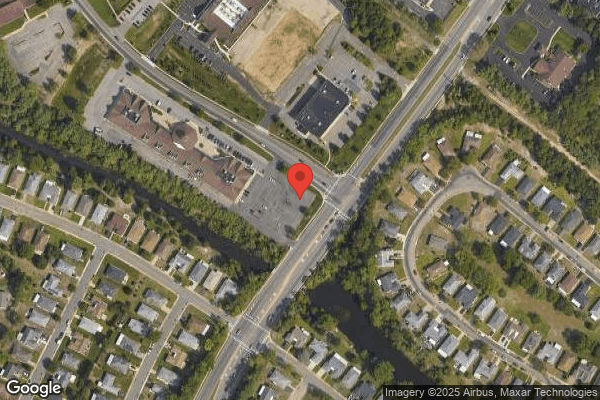
4 PLAZA DRIVE, TOMS RIVER, NJ 08757 (732) 240-0900
For profit - Corporation 180 Beds COMPLETE CARE Data: November 2025
Trust Grade
33/100
#315 of 344 in NJ
Last Inspection: April 2025

Within standard 12-15 month inspection cycle. Federal law requires annual inspections.

Overview

Complete Care at Holiday City has a Trust Grade of F, indicating significant concerns about the facility's care quality. It ranks #315 out of 344 in New Jersey, placing it in the bottom half of nursing homes in the state, and #27 out of 31 in Ocean County, meaning only a few local options are worse. Unfortunately, the trend is worsening, with reported issues increasing from 4 in 2023 to 12 in 2025. Staffing is a notable concern, with a poor rating of 1 out of 5 stars and a high turnover rate of 67%, which is much higher than the state average of 41%. Additionally, there are serious sanitation issues, such as food being served at unsafe temperatures and kitchen equipment not being cleaned properly, which raises health and safety risks for residents.

Trust Score
F
33/100
In New Jersey
#315/344
Bottom 9%
Safety Record
Moderate
Needs review
Inspections
Getting Worse
4 → 12 violations
Staff Stability
⚠ Watch
67% turnover. Above average. Higher turnover means staff may not know residents' routines.
Penalties
○ Average
$12,155 in fines. Higher than 55% of New Jersey facilities. Some compliance issues.
Skilled Nurses
⚠ Watch
Each resident gets only 16 minutes of Registered Nurse (RN) attention daily — below average for New Jersey. Fewer RN minutes means fewer trained eyes watching for problems.
Violations
⚠ Watch
19 deficiencies on record. Higher than average. Multiple issues found across inspections.
★☆☆☆☆
1.0
Overall Rating
★☆☆☆☆
1.0
Staff Levels
★★★★☆
4.0
Care Quality
★★☆☆☆
2.0
Inspection Score
Stable
2023: 4 issues
2025: 12 issues

The Good

  • 4-Star Quality Measures · Strong clinical quality outcomes
  • Full Sprinkler Coverage · Fire safety systems throughout facility
  • No fines on record

Facility shows strength in quality measures, fire safety.

The Bad

1-Star Overall Rating

Below New Jersey average (3.2)

Significant quality concerns identified by CMS

Staff Turnover: 67%

21pts above New Jersey avg (46%)

Frequent staff changes - ask about care continuity

Federal Fines: $12,155

Below median ($33,413)

Minor penalties assessed

Chain: COMPLETE CARE

Part of a multi-facility chain

Ask about local staffing decisions and management

Staff turnover is elevated (67%)

19 points above New Jersey average of 48%

The Ugly 19 deficiencies on record

1 actual harm
Apr 2025 4 deficiencies
CONCERN (D)

Potential for Harm - no one hurt, but risky conditions existed

Safe Environment (Tag F0584)

Could have caused harm · This affected 1 resident

**NOTE- TERMS IN BRACKETS HAVE BEEN EDITED TO PROTECT CONFIDENTIALITY** Based on observation, interview, record review, and review of pertinent facility documentation, it was determined that the facil...

Read full inspector narrative →
**NOTE- TERMS IN BRACKETS HAVE BEEN EDITED TO PROTECT CONFIDENTIALITY** Based on observation, interview, record review, and review of pertinent facility documentation, it was determined that the facility failed to maintain the residents' living environment in a clean, comfortable, homelike manner. This deficient practice was identified on 3 of 3 nursing units reviewed for homelike environment (Jefferson-unit, [NAME]-unit, and Applewood-unit), and was evidenced by the following: On 4/24/25 at 9:43 AM, in the presence of the Registered Nurse (RN), the surveyor observed the following in the nourishment room on the [NAME] unit: 1. The back splash and counter had black discoloration the length of the countertop joint. 2. The sink had stains and white discoloration. 3. The counters and cabinets were peeling laminate and chipped paint. 4. The interior of the far-right lower cabinet had a spill that had dried and stained the cabinet with coffee grounds stuck to it. On 4/24/25 at 9:59 AM, in the presence of the Licensed Practical Nurse (LPN), the surveyor observed the following in the nourishment room on the [NAME] unit: 1. The back splash and counter had black discoloration the length of the countertop joint. 2. The countertop right corner was broke, flaking of wood and had a hole in that was approximately 8 inches long. 3. The counters and cabinets were peeling laminate and chipped paint. 4. The inside of the cabinets and drawers had food debris and spilled items that were stuck on. On 4/24/25 at 10:23 AM, in the presence of the Licensed Practical Nurse/Unit Manager (LPN/UM), the surveyor observed the following in the nourishment room on the Applewood unit: 1. The back splash and counter had black discoloration the length of the countertop joint. 2. The counters and cabinets were peeling laminate and chipped paint. 3. The inside of the cabinets and drawers had large amounts of food debris and spilled items that were stuck on. On 4/24/25 at 10:25 AM, the surveyor interviewed with the contracted Housekeeping Director (HD), who stated that he had a weekly schedule in place to deep clean the nourishment rooms. The surveyor inquired if he did audits on his staff, and the HD replied, no I do not do audits, but I check the nourishment rooms daily. The surveyor asked if he had seen them this week, and the HD stated no. On 4/24/25 at 11:17 AM, the surveyor interviewed the Regional Maintenance Director (RMD), who stated that he made rounds throughout the facility regularly and there were no plans in place to replace or fix the cabinets and counters at that time. The RMD stated if there was a maintenance issue or something was broken, all staff had access to the electronic maintenance system which provided the maintenance department with a work order if something needed to be fixed. On 4/24/25 at 11:25 AM, the surveyor interviewed the Licensed Nursing Home Administrator (LNHA), who stated the only work order in for the facility was for furniture for the resident rooms. The LNHA was unaware of the issue in the nourishment rooms. On 4/24/25 at 12:50 PM, the survey team met with the LNHA and the Director of Nursing (DON), who both acknowledged the surveyor's concerns. They were unable to provide additional information. A review of the facility's Maintenance Inspection policy dated 9/1/24, included .It is the policy of this facility to utilize a maintenance inspection checklist in order to assure a safe, functional, sanitary and comfortable environment for residents, staff and the public all opportunities will be correct by maintenance personnel . NJAC 8:39 - 31.2
CONCERN (D)

Potential for Harm - no one hurt, but risky conditions existed

Assessment Accuracy (Tag F0641)

Could have caused harm · This affected 1 resident

**NOTE- TERMS IN BRACKETS HAVE BEEN EDITED TO PROTECT CONFIDENTIALITY** Based on observation, interview, and review of pertinent facility documents it was determined that the facility failed to code t...

Read full inspector narrative →
**NOTE- TERMS IN BRACKETS HAVE BEEN EDITED TO PROTECT CONFIDENTIALITY** Based on observation, interview, and review of pertinent facility documents it was determined that the facility failed to code the Minimum Data Set (MDS), an assessment tool used to facilitate the management of care for all residents, accurately. This deficient practice was identified for 3 of 27 residents reviewed for MDS (Resident #73, #99, and #101), and was evidenced by the following: 1. On 4/22/25 at 10:03 AM, the surveyor reviewed a list of smokers provided by the facility. Resident #73 was identified as a smoker. The surveyor reviewed the medical record for Resident #73. A review of the admission Record face sheet (an admission summary) revealed that Resident #73 was admitted to the facility with medical diagnoses which included but were not limited to; major depressive disorder, hypertension (high blood pressure), and schizophrenia (disorder that affects a person's ability to think, feel, and behave). A review of the most recent comprehensive MDS dated [DATE], revealed the resident had a Brief Interview of Mental Status (BIMS) score of 12 out of 15, which meant the resident had a moderately impaired cognition. A further review in Section J, Health Conditions, the question for tobacco use was marked as no, which meant Resident #73 was assessed as a non-smoker. A review of the resident's Activities assessment dated [DATE], included in the section titled participation, that the resident was a smoker and joined peers at the designated breaks. A review of the resident's smoking contracts, revealed the resident signed a quarterly smoking contract in January 2025. On 4/23/25 at 9:39 AM, the surveyor observed the resident outside during a smoking session. On 4/23/25 at 10:45 AM, the surveyor interviewed the Licensed Practical Nurse/Unit Manager (LPN/UM), who stated the resident was a smoker. On 4/24/25 at 10:12 AM, the surveyor interviewed the MDS Coordinator (MDSC). The surveyor asked how she was informed if a resident was a smoker. The MDSC stated that there would be a smoking assessment, she checked the medical record, and confirmed with the resident during an interview. The surveyor asked if the resident was a smoker and she stated maybe. 2. On 4/23/25 at 10:21 AM, the surveyor reviewed the MDS list for Resident #99. The list showed the last MDS that was completed for Resident #99 was a quarterly assessment completed on 12/11/24. A review of the admission Record face sheet revealed that Resident #99 had medical diagnoses which included but were not limited to; hemiplegia (weakness of one side of the body), diabetes (high blood sugar), and muscle weakness. A review of the progress notes reflected a note written on 12/19/24, which revealed the resident was on palliative care (a form of medical care that focuses on providing relief from pain and other symptoms for people with life threatening illness) and expired at the facility on 12/19/24. On 4/24/25 at 10:30 AM, the surveyor interviewed the MDSC regarding Resident #99. The surveyor asked how she was notified of a resident expiration. The MDSC stated she confirmed a resident's death by reading the progress notes and then completed a death in the facility MDS. The surveyor asked the MDSC to look for the death in the facility MDS for Resident #99. The MDSC confirmed there was not one, and stated they missed it. 3. On 4/21/25 at 7:53 PM, during the initial tour of the facility, the surveyor observed Resident #101 was in bed with their eyes open. The resident told the surveyor that they had a gastrostomy tube (g-tube; a tube inserted through abdomen into the stomach for nutrition feedings). The surveyor reviewed the medical record for Resident #101. A review of the admission Record face sheet revealed that Resident #101 was admitted to the facility with medical diagnoses that included but were not limited to; hemiplegia (weakness of one side of the body), hypertension (high blood pressure), and dysphagia (difficulty swallowing foods or liquids). A review of the physician's orders included an order for Jevity (liquid nutrition); to administer 70 milliliters (mL) per hour via the g-tube at 6:00 PM, until the total volume has reached 800 mL. A review of the most recent quarterly MDS dated [DATE], revealed that the resident had a BIMS score of 11 out of 15, which meant the resident had moderate cognitive impairment. A further review under section K, Nutrition and Swallowing, it was marked no for feeding tube (g-tube). On 4/24/25 at 10:40 AM, the surveyor interviewed the MDSC regarding Resident #101's feeding tube. The surveyor asked if the MDS should have included the resident's g-tube, and the MDSC confirmed yes, and that the nurse who that completed the MDS had put a no. The MDSC stated that she would correct the error. NJAC 8:39-33.2 (d)
CONCERN (D)

Potential for Harm - no one hurt, but risky conditions existed

ADL Care (Tag F0677)

Could have caused harm · This affected 1 resident

Based on observations, interviews, and review of pertinent facility documents, it was determined that the facility failed to provide a resident with nail care during activities of daily living (ADL) c...

Read full inspector narrative →
Based on observations, interviews, and review of pertinent facility documents, it was determined that the facility failed to provide a resident with nail care during activities of daily living (ADL) care. This deficient Practice was identified for 1 of 2 residents reviewed for ADL care (Resident #52), and was evidenced by the following: On 4/21/25 at 7:54 PM, the surveyor observed Resident #52 sitting in their wheelchair in their room. The resident's fingernails were long in length with dirt underneath, and on their left hand, the 3rd, 4th, and 5th digits (fingers) had a yellow thick discoloration of the nail. On 4/22/25 at 11:24 AM, the surveyor reviewed the medical record for Resident #52. A review of the admission Record face sheet (an admission summary) reflected the resident was admitted to the facility with diagnoses which included but were not limited to; major depressive disorder and Alzheimer's disease. A review of the most recent comprehensive Minimum Data Set (MDS), an assessment tool, reflected the resident had a Brief Interview for Mental Status (BIMS) score of 6 out of 15, which indicated a moderately impaired cognition. The resident required setup or clean-up assistance for personal hygiene. A review of the individualized comprehensive care plan (ICCP) included a focused area for activities of daily living (ADL). The intervention dated 1/10/23, for personal hygiene, indicated one staff member to assist and supervise that tasks have been completed. On 4/22/25 at 10:53 AM, the surveyor interviewed the resident if they preferred their fingernails to be long in length, and the resident stated no. The resident further stated that the last three digits on their left hand hurt to have them cut because they were so thick. On 4/23/25 at 1:16 PM, the surveyor interviewed the resident's assigned Certified Nursing Aide (CNA), who stated it was the responsibility of the CNAs to provide nail care for the resident which included cleaning underneath the nails and cutting the length. The CNA stated that nail care was performed when needed, and she confirmed she did not perform nail care on the resident today. On 4/23/25 at 1:20 PM, the surveyor interviewed the Licensed Practical Nurse (LPN), who stated that the assigned nurse should do a visual assessment and look at their residents every shift. the LPN stated if there were any issues noted, the nurse needed to make the physician aware and document it. The LPN stated if the physician did not call back soon, then she placed another call out to them. The LPN stated that the nurse also put any new findings on the 24-hour report (a facility document for supervisor) to let management know. On 4/23/25 at 1:34 PM, the surveyor interviewed the Licensed Practical Nurse/Unit Manager (LPN/UM), who stated that her expectations were for the staff to do a visual assessment every shift, and if there were any issues noted, they needed to make the physician aware and document. The LPN/UM stated the nurse should also update the care plan to reflect any new issues. On 4/24/25 at 10:34 AM, the surveyor interviewed the Director of Nursing (DON), who stated ADL care was performed by the CNAs, but all licensed nursing staff could perform care. The DON further stated that the nursing staff should visualize the resident and their hands prior to performing hygiene care or distributing food trays. The DON continued that the nursing staff should offer and assist the resident to wash their hands prior to eating. On 4/25/25 10:04 AM, in the presence of the survey team, the DON and the Licensed Nursing Home Administrator (LNHA) acknowledged the resident's fingernails were not cut until surveyor inquiry, and the ICCP did not include nail care. No further information was provided. A review of the facility's Activities of Daily Living policy dated 9/1/24, included . a resident who is unable to carry out activities of daily living will receive the necessary services to maintain good nutrition, grooming, and personal and oral hygiene . NJAC 8:39-27.2 (g)
CONCERN (F)

Potential for Harm - no one hurt, but risky conditions existed

Food Safety (Tag F0812)

Could have caused harm · This affected most or all residents

Based on observation, interview, and review of pertinent facility documents, it was determined that the facility failed to: a.) maintain kitchen equipment in a clean and sanitary manner and b.) mainta...

Read full inspector narrative →
Based on observation, interview, and review of pertinent facility documents, it was determined that the facility failed to: a.) maintain kitchen equipment in a clean and sanitary manner and b.) maintain nourishment room refrigerators in a clean and sanitary manner on 3 of 3 units and was evidenced by the following: On 4/22/25 at 9:48 AM, in the presence of the Food Service Director (FSD) and the Regional FSD, the surveyor observed the following: 1. The microwave had multi-colored dried stuck on debris on the interior ceiling of the unit. The FSD acknowledged it was not properly cleaned according to facility policy. 2. Two convection ovens were soiled with baked on brown coloring on the glass doors and interior of the unit. The FSD acknowledged and stated it was not cleaned according to facility policy. 3. Two steamer units had brown and crusted debris on the interior door and seal of door. The FSD acknowledged and stated it was not cleaned according to facility policy. 4. The six-burner stove top and oven were not clean. The FSD stated the oven was used for warming only, and the surveyor observed food sediment and debris on the interior and the interior door. The surveyor also observed the catch tray that was lined with foil had burnt liquid and food debris covering the entire tray and foil. The FSD acknowledged and stated it was not cleaned according to facility policy. 5. The double holder commercial plate warmer had food debris on the plate warmer section. The body of the unit had sticky brown debris around the rim of the plate warmer. The FSD acknowledged that the unit was not clean and that its purpose was too warm clean plates for distribution to the residents. He further stated it was not cleaned according to facility policy. 6. In the dining room, in the presence of the FSD and RFSD, it was observed to have a portable steam table that consisted of five individual steamer bays that were all filthy. Each bay had clouded white water, orange/brown sediment stuck to the sides of water basin, food particles of vegetables and potatoes were noted in the water. The body of the table had food debris stuck on the glass shield and side walls. The front of the table had a white banquet skirt that was stained. The FSD stated that it was supposed to be cleaned nightly or as needed in between resident dining. The FSD acknowledged and stated it was not cleaned according to facility policy. On 4/24/25 at 9:43 AM, in the presence of the nursing Unit Manager (UM), the surveyor observed on all three of the nursing units in their nourishment rooms, the refrigerators all had sediment in the gaskets of the doors, frozen food spills in the freezer, and dirt on the outside handles. The UM acknowledged and stated it was not cleaned according to facility policy, and that she would contact housekeeping. On 4/24/25 at 10:52 AM the surveyor interviewed the FSD, who acknowledged that the equipment should have been cleaned and maintained in a sanitized way to prevent food borne illness and contamination for safety of the residents. On 4/24/25 at 11:17 AM, the surveyor interviewed the Housekeeping Director (HD), who acknowledged that the pantry equipment should have been cleaned and maintained in a sanitized way to prevent food borne illness and contamination. On 4/24/25 at 12:45 PM, the survey team met with the Licensed Nursing Home Administrator (LNHA) and the Director of Nursing (DON), who both acknowledged the surveyor's concerns. No additional information was provided. A review of the facility's undated Cleaning of kitchen Equipment Policy policy included Ovens .ensure all debris and grease are removed from interior surfaces . Drip trays; change foil weekly or more frequently if soiled . Steamer; weekly, remove door plates and clean gaskets thoroughly to prevent buildup and maintain a proper seal .Microwave: at the end of each day, clean interior walls and surfaces . A review of the facility's undated Cleaning and Maintaining the steam table policy included all dietary staff are responsible for proper use, cleaning and maintenance of the steam table . NJAC 8:39-17.2(g)
Feb 2025 8 deficiencies
CONCERN (D) 📢 Someone Reported This

A family member, employee, or ombudsman was alarmed enough to file a formal complaint

Potential for Harm - no one hurt, but risky conditions existed

Resident Rights (Tag F0550)

Could have caused harm · This affected 1 resident

**NOTE- TERMS IN BRACKETS HAVE BEEN EDITED TO PROTECT CONFIDENTIALITY** Based on observation, interview, and review of the facility policy, the facility failed to protect a resident's right to dignity...

Read full inspector narrative →
**NOTE- TERMS IN BRACKETS HAVE BEEN EDITED TO PROTECT CONFIDENTIALITY** Based on observation, interview, and review of the facility policy, the facility failed to protect a resident's right to dignity while dining for one out of one resident (Resident (R)18) in a total sample of 22. The facility failed to ensure R18 was dressed and fully covered while in the dining room. This failure placed the resident at risk of a diminished quality of life and embarrassment. Findings included. Review of the facility policy titled, Promoting/Maintaining Resident Dignity, dated 09/01/24 revealed, .It is the practice of this facility to protect and promote resident rights and treat each resident with respect and dignity as well as care for each resident in a manner and in an environment, that maintains or enhances resident's quality of life by recognizing each resident's individuality .All staff members are involved in providing care to residents to promote and maintain resident dignity and respect resident rights . Review of the admission Record located in the Profile tab of the electronic medical record (EMR) revealed R18 was admitted to the facility on [DATE] with diagnoses that included heart failure, irregular heart rhythm, and anxiety disorder. Review of the quarterly Minimum Data Set (MDS) located in the MDS tab of the EMR revealed R18 had a Brief Interview of Mental Status (BIMS) score of five out of 15 which indicated R18 was severely impaired in cognition. During an observation on 02/11/25 at 12:56 PM, R18 was observed seated at the dining table in a geri chair (a specialized recliner.) He/She was wearing a hospital gown that was untied in the back exposing his/her back to all other residents, family members and staff members when he/she leaned forward to eat. Registered Nurse (RN) 1 was observed to have provided R18 with his/her meal tray, however, she did not tie the hospital gown in the back or cover R18 up with a blanket to prevent further exposure. During an interview on 02/11/25 at 1:10 PM, Unit Manager (UM)2 was asked about R18's exposed back while he/she was eating. UM2 stated, She should have covered him/her up, I will take care of it. During an interview on 02/11/25 at 4:30 PM, the Director of Nursing (DON) stated, Staff should be maintaining residents' dignity by keeping them covered. N.J.A.C. 8:39-4.1(a)(2)
CONCERN (D) 📢 Someone Reported This

A family member, employee, or ombudsman was alarmed enough to file a formal complaint

Potential for Harm - no one hurt, but risky conditions existed

Investigate Abuse (Tag F0610)

Could have caused harm · This affected 1 resident

**NOTE- TERMS IN BRACKETS HAVE BEEN EDITED TO PROTECT CONFIDENTIALITY** Based on record review, interview, facility investigation, and in the course of a complaint investigation, the facility failed t...

Read full inspector narrative →
**NOTE- TERMS IN BRACKETS HAVE BEEN EDITED TO PROTECT CONFIDENTIALITY** Based on record review, interview, facility investigation, and in the course of a complaint investigation, the facility failed to conduct a thorough investigation in one of one resident to resident altercation (Resident (R)9 and R21) out of a total of 22 sampled residents. This failure had the potential to affect all the residents in the facility who were at risk of abuse. Findings include: 1. Review of R9's undated Face Sheet located under the Profile tab in the electronic medical record (EMR) revealed R9 had been readmitted to the facility on [DATE] with the diagnosis of chronic kidney disease, stage five, diabetes mellitus, and anxiety disorder. Review of R9's quarterly Minimum Data Set (MDS) located under the MDS tab in the EMR with an Assessment Reference Date (ARD) of 07/14/23 coded R9 as having a Brief Interview for Mental Status (BIMS) score of 15 out of 15. This represents R21 was cognitively intact. R9 was not coded for exhibiting behaviors in the seven day look back period for this MDS. 2. Review of R21's undated Face Sheet located under the Profile tab in the EMR revealed R21 had been admitted to the facility on [DATE] with the diagnosis of diabetes mellitus and adjustment disorder with mixed anxiety and depressed mood. Review of R21's quarterly Minimum Data Set (MDS) located under the MDS tab in the EMR with an Assessment Reference Date (ARD)of 06/14/23 coded R21 as having a Brief Interview for Mental Status (BIMS) score of 15 out of 15. This represents R21 was cognitively intact. R21 was not coded for exhibiting behaviors in the seven day look back period. A review of the facility's self-reported dated 08/30/23 of the resident-to-resident altercation investigation was performed. Through this review, on 08/29/23 at 3:00 PM, R9 was wheeling himself/herself down the hall, another resident [R21] spoke to him/her [R9] briefly and then as he/she [R9] passed by he/she [R21] hit him/her [R9] on his/her back [sic]. No injuries occurred. Further review of the investigation revealed a statement from the Administrator and a statement from a staff member that witnessed the exchange between R9 and R21 on 08/21/23. There was also a resident statement that was reviewed. There was no further documentation of statements from the staff that were working with R9 and R21 on the date of this incident nor were there statements from the other residents that could have been interviewed. The Administrator and the staff statements were from staff that are no longer employed at the facility. During an interview on 02/12/25 at 11:00 AM, the present Administrator reviewed the investigation and stated, This is not a complete investigation. There are no other statements from the staff and the residents. I have questions like did [R21] have a psychiatrist or psychotherapy consult, did R21 have any past behaviors like this, and how did R9 feel after this altercation? I just don't see a lot that was done or asked during this investigation. Review of the facility's policy Abuse, Neglect, and Exploitation dated 09/01/24 stated, .Focusing the investigation on determining if abuse, neglect, exploitation, and/or mistreatment has occurred, the extent, and cause; and Providing complete and thorough documentation of the investigation . Increased supervision of the alleged victim and residents . N.J.A.C. 8:39-4.1(a)(5)
CONCERN (D) 📢 Someone Reported This

A family member, employee, or ombudsman was alarmed enough to file a formal complaint

Potential for Harm - no one hurt, but risky conditions existed

Assessment Accuracy (Tag F0641)

Could have caused harm · This affected 1 resident

**NOTE- TERMS IN BRACKETS HAVE BEEN EDITED TO PROTECT CONFIDENTIALITY** Based on interview, record review, and review of the Resident Assessment Instrument (RAI) manual, the facility failed to ensure ...

Read full inspector narrative →
**NOTE- TERMS IN BRACKETS HAVE BEEN EDITED TO PROTECT CONFIDENTIALITY** Based on interview, record review, and review of the Resident Assessment Instrument (RAI) manual, the facility failed to ensure the Minimum Data Set (MDS) was coded accurately for two (Residents (R)5, R10) in a total sample of 21. The facility failed to accurately code the significant change assessment for falls and the quarterly assessment for pressure ulcers for R5. In addition, the facility failed to accurately code pain on the admission assessment for R10. These failures placed the residents at risk of unmet care needs and a diminished quality of life. Findings included. Review of the October 2024 RAI, manual, page 1-5 revealed, .An accurate assessment requires collecting information from multiple sources, some of which are mandated by regulations .It is important to note here that information obtained should cover the same observation period as specified by the MDS (minimum data set) items on the assessment, and should be validated for accuracy (what the resident's actual status was during the observation period) by the IDT (interdisciplinary team) completing the assessment . 1. Review of the admission Record located in the Profile tab of the electronic medical record (EMR) revealed that R5 was admitted to the facility on [DATE] with a diagnosis of Alzheimer's disease. Review of the significant change MDS located in the MDS tab of the EMR with an Assessment Reference Date (ARD) of 01/24/24 revealed R5 was staff assessed to be severely impaired in cognition and had not sustained any falls since the previous assessment. Review of a 12/27/23 fall incident report, provided by the Director of Nursing (DON) revealed R5 had fallen out of bed and sustained a small cut above his/her right eye. R5 was transported to the hospital for evaluation and treatment. Review of the quarterly MDS located in the MDS tab of the EMR with and ARD of 04/25/24 revealed R5 had three Stage 3 pressure ulcers. Review of an 12/20/23 Health Status Note located in the Progress Notes tab of the EMR revealed R5 had one sacral pressure ulcer. There was no other pressure ulcers identified through the EMR from 12/20/23 to 04/25/24. 2. Review of the admission Record located in the Profile tab of the EMR revealed R10 was admitted to the facility on [DATE] with a diagnosis of a right hip fracture. Review of the admission MDS located in the MDS tab of the EMR with an ARD of 11/01/24 revealed that R10 was coded has not been administered either as needed pain medication or scheduled pain medication during the seven-day observation period. In addition, the assessment revealed that R10 had frequent pain and rated his/her pain 10 out 10 (worse pain possible) on the pain scale. Review of the October 2024 Medication Administration Record (MAR) located in the Orders tab of the EMR revealed R10 had been administered Oxycodone (a narcotic pain medication) daily during the observation period. During an interview on 02/13/25 at 9:25 AM, the Regional MDS Coordinator confirmed that R5 and R10's assessments were coded inaccurately. N.J.A.C. 8:39-11.1(h)
CONCERN (D) 📢 Someone Reported This

A family member, employee, or ombudsman was alarmed enough to file a formal complaint

Potential for Harm - no one hurt, but risky conditions existed

Comprehensive Care Plan (Tag F0656)

Could have caused harm · This affected 1 resident

**NOTE- TERMS IN BRACKETS HAVE BEEN EDITED TO PROTECT CONFIDENTIALITY** Based on observations, interviews, record review, and review of the facility policy and the Resident Assessment Instrument (RAI)...

Read full inspector narrative →
**NOTE- TERMS IN BRACKETS HAVE BEEN EDITED TO PROTECT CONFIDENTIALITY** Based on observations, interviews, record review, and review of the facility policy and the Resident Assessment Instrument (RAI) manual, the facility failed to develop a comprehensive Care Plan with a person-centered focus, measurable goals, and resident-specific interventions for two (Residents (R)8, and R17) in a total sample of 22. The facility failed to develop a comprehensive Care Plan related to pain for R8. In addition, the facility failed to develop a comprehensive Care Plan related to diabetes and insulin use for R17. These failures placed the residents at risk of unmet care needs and a diminished quality of life. Findings included: Review of the facility policy titled, Comprehensive Care Plans, dated 09/01/24 revealed, .It is the policy of this facility to develop and implement a comprehensive person-centered care plan for each resident, consistent with resident rights, that includes measurable objectives and timeframes to meet a resident's medical, nursing, and mental and psychosocial needs that are identified in the resident's comprehensive assessment . Review of the October 2024 RAI manual, page 1-2 revealed, .Providing care to residents with post-hospital and long-term care needs is complex and challenging work. Clinical competence, observational, interviewing, and critical thinking skills, and assessment expertise from all disciplines are required to develop individualized care plans. The RAI helps nursing home staff gather definitive information on a resident's strengths and needs, which must be addressed in an individualized care plan. It also assists staff with evaluated goal achievement and revision care plans accordingly by enabling the nursing home to track changes in the resident's status. As the process of problem identification is integrated with sound critical interventions, the care plan becomes each resident's unique path toward achieving or maintaining their highest practicable well-being . 1. Review of R8's undated Face Sheet located under the Profile tab in the electronic medical record (EMR) revealed R8 had been admitted to the facility on [DATE] with the diagnosis of end stage renal disease, anemia in chronic kidney disease, and diabetes mellitus. Review of R8's Nursing Progress Notes located under the Progress Note tab in the EMR revealed a note dated 07/31/24 at 10:19 PM which stated, Resident fail [sic] from stretcher doing transport to dialysis. As a result, did not have dialysis [sic] Resident was then transported to [name of hospital] . Right shoulder fracture . Order to put in Sling [sic]. Sling is in place . Review of R8's Care Plan located under the Care Plan tab revealed no documentation of a care plan which had been developed for the fracture of the right shoulder or for pain. During an interview on 02/12/25 at 10:35 AM, Unit Manager (UM)2 confirmed there was no development of a care plan after R8 sustained a right shoulder fracture or for pain after R8 fell from a stretcher during transport to dialysis in 07/31/24. 2. Review of the admission Record located in the Profile tab of the EMR revealed R17 was admitted to the facility on [DATE] with a diagnosis of diabetes mellitus, type 2. Review of the annual Minimum Data Set (MDS) located in the MDS tab of the EMR revealed R17 had a BIMS score of 13 out of 15 which indicated that R17 was cognitively intact. In addition, R17 had been administered insulin seven out of seven days during the observation period. Review of the current Order Summary located in the Orders tab of the EMR revealed a physician order, dated 01/24/25 for Insulin Aspart (short-acting insulin) 5 units subcutaneously three times a day for diabetes. In addition, R17 had a physician order, dated 12/19/24 for Lantus (Glargine-a long-acting insulin) 7 units subcutaneously at bedtime for diabetes. Review of the Comprehensive Care Plan located in the Care Plan tab of the EMR did not show a focus, measurable goal, or resident-centered approaches for R17's diabetes and insulin use. During an interview on 02/12/25 at 11:43 AM, Licensed Practical Nurse (LPN) 1was asked who was responsible for the development for the Diabetic Care Plan. LPN 1 stated, The nurses, unit managers, and the MDS coordinator. During an interview on 02/12/25 at 5:00 PM, the Director of Nursing (DON) stated, There should have been a Care Plan developed for R17 for diabetes and insulin. N.J.A.C. 8:39-11.2(i)
CONCERN (D) 📢 Someone Reported This

A family member, employee, or ombudsman was alarmed enough to file a formal complaint

Potential for Harm - no one hurt, but risky conditions existed

Deficiency F0657 (Tag F0657)

Could have caused harm · This affected 1 resident

**NOTE- TERMS IN BRACKETS HAVE BEEN EDITED TO PROTECT CONFIDENTIALITY** Based on record review, and interview, the facility failed to review and revise a care plan for insulin for one out of a total o...

Read full inspector narrative →
**NOTE- TERMS IN BRACKETS HAVE BEEN EDITED TO PROTECT CONFIDENTIALITY** Based on record review, and interview, the facility failed to review and revise a care plan for insulin for one out of a total of 22 sampled residents(Resident (R)16). This failure had the potential for R16 not to receive the necessary care. Findings include: Review of R16's undated Face Sheet located under the Profile tab in the electronic medical record (EMR) revealed R16 had been admitted to the facility on [DATE] with the diagnosis of diabetes mellitus and displaced fracture of the upper end of the left humerus. Review of R16's admission Minimum Data Set (MDS) located under the MDS tab in the EMR, with an Assessment Reference Date (ARD) of 02/04/25 revealed R16 had a Brief Interview for Mental Status (BIMS) score of 15 out of 15. This represented R16 was cognitively intact. R16 was also coded as having received insulin during the seven day look back period. Review of R16's Physician Orders located under the Orders tab in the EMR revealed an order dated 01/29/25 for Insulin Glargine inject 15 units subcutaneously at bedtime for diabetes mellitus. Review of R16's Care Plan located under the Care Plan tab in the EMR dated 02/10/25 which stated, The resident has Diabetes Mellitus. The interventions were Fasting Serum Blood Sugar as ordered by the doctor, Monitor/document/report PRN [as needed] and s/s [signs/symptoms] of hyperglycemia: increased thirst and appetite, frequent urination, weight loss, fatigue, dry skin, poor wound healing, muscle cramps, abd [abdominal] pain. Kussmaul breathing, acetone breath (smells fruity), stupor, coma [sic], and Monitor/document/report PRN [sic] any s/s of hypoglycemia: Sweating, tremor, Increased [sic] heart rate (tachycardia), Pallor, Nervousness, Confusion, slurred speech, lack of coordination, Staggering gait [sic]. There was no documentation R16 was taking insulin at bedtime in the care plan. During an interview on 02/12/25 at 2:30 PM, asked Unit Manager (UM)1, if R16 was receiving insulin should that be included on the care plan and UM1 stated, Yes, it should be. During an interview on 02/12/25 at 1:30 PM, the Director of Nursing stated, [R16] was receiving insulin so yes, the insulin should have been included in the care plan. N.J.A.C. 8:39-27.1(a)
CONCERN (D) 📢 Someone Reported This

A family member, employee, or ombudsman was alarmed enough to file a formal complaint

Potential for Harm - no one hurt, but risky conditions existed

Deficiency F0658 (Tag F0658)

Could have caused harm · This affected 1 resident

**NOTE- TERMS IN BRACKETS HAVE BEEN EDITED TO PROTECT CONFIDENTIALITY** Based on record review, interview, document review the facility failed to follow professional standards in diabetic management o...

Read full inspector narrative →
**NOTE- TERMS IN BRACKETS HAVE BEEN EDITED TO PROTECT CONFIDENTIALITY** Based on record review, interview, document review the facility failed to follow professional standards in diabetic management of two of four residents (Resident (R)16 and R17) reviewed out of a 22 total sampled residents. This failure had the potential for residents that have diabetes to be mismanaged in their care. Findings include: 1. Review of R16's undated Face Sheet located under the Profile tab in the electronic medical record revealed R16 had been admitted to the facility on [DATE] with the diagnosis of diabetes mellitus. Review of R16's admission Minimum Data Set (MDS) located under the MDS tab in the EMR, with an Assessment Reference Date (ARD) of 02/04/25 revealed R16 was coded as having a Brief Interview for Mental Status (BIMS) score of 15 out of 15. This represented R16 was cognitively intact. R16 was also coded as receiving seven injections of insulin during the seven day look back period. Review of R16's Physician Orders located under the Orders tab in the EMR revealed an order dated 01/29/25 for Lantus 15 units subcutaneously at bedtime for diabetes mellitus. Review of R16's Care Plan located under the Care Plan tab in the EMR revealed a care plan dated 02/10/25 which stated, The resident has Diabetes Mellitus. Interventions were Fasting Serum Blood Sugar as ordered by the doctor, Monitor/document/report PRN [as needed] and s/s [signs/symptoms] of hyperglycemia: increased thirst and appetite, frequent urination, weight loss, fatigue, dry skin, poor wound healing, muscle cramps, abd [abdominal] pain. Kussmaul breathing, acetone breath (smells fruity), stupor, coma [sic], and Monitor/document/report PRN [sic] any s/s of hypoglycemia: Sweating, tremor, Increased [sic] heart rate (tachycardia), Pallor, Nervousness, Confusion, slurred speech, lack of coordination, Staggering gait [sic]. There was no documentation R16 was taking insulin at bedtime in the care plan. Review of the January and February 2025 Medication Administration Record (MAR) and Treatment Administration Record (TAR), weights/vitals, and progress notes did not reveal documentation of blood sugars to be obtained for monitoring. Review of R16's Comprehensive Metabolic Panel dated 02/06/25, located under the Results tab in the EMR revealed a blood sugar level of 206. This result was alerted as being High by the laboratory. There was no documentation to show the physician or nurse practitioner were notified of the blood sugar result. Review of the Physician Progress Note dated 01/30/25 at 10:51 AM revealed R16 had been seen however, the progress note did not show that the physician/Nurse Practitioner had addressed the diabetes or insulin usage. No order was given for blood sugar monitoring. During an interview on 02/12/25 at 11:44 AM, Licensed Practical Nurse (LPN)2 was asked when you have a resident on insulin, how do you determine the effectiveness of the insulin you are giving? LPN2 replied, If I don't see signs of hypo or hyperglycemia. LPN2 was asked when a resident is admitted to the facility and is on long-acting insulin, and you do not see orders for blood glucose monitoring, what do you do? LPN2 stated, I call the doctor and ask if he wants to continue the medication or change it. During an interview on 02/12/25 at 1:57 PM, Physician 1 stated, Blood sugars should be done on a daily basis. That is the standard that we do. If there are no blood sugars ordered, then the nurses missed it as well as we missed it. During an interview on 02/12/25 at 3:30 PM, the Director of Nursing (DON) stated, The nurses will only do blood sugars if they are ordered by the physician. I see what you are saying, and I don't disagree. But the nurses won't be doing blood sugars unless they have been ordered by the physician to do so. 2. Review of the admission Record located in the Profile tab of the EMR revealed R17 was admitted to the facility on [DATE] with diagnoses that included diabetes, chronic obstructive pulmonary disease (COPD) and heart disease with heart failure. Review of the annual MDS located in the MDS tab of the EMR with an ARD of 11/25/24 revealed R17 had a BIMS score of 13 out of 15 which indicated she was cognitively intact. The assessment further showed that R17 had been administered insulin seven out seven days during the observation period. Review of the Weights and Vitals tab in the EMR revealed R17 had fingerstick blood sugar (FBS) monitoring three times daily. Review of the Order Summary' located in the Orders tab of the EMR did not show a physician order to obtain the FBS. During an interview on 02/12/25 at 11:15 AM, Licensed Practical Nurse (LPN)1 was asked if R17 was receiving FBS daily. LPN1 stated, When he/she came back from the hospital, he/she came back without orders to do the FBS. During an interview on 02/12/25 at 2:28 PM, Physician 2 stated, The expectation is that when a resident has insulin orders, there should be a sliding scale to check the FBS. I was not aware that he/she did not have FBS orders. It is the nurses' responsibility to tell me this. Review of the undated facility policy titled, Diabetes-Clinical Protocol revealed, . For the resident receiving insulin who is well controlled: monitor blood glucose levels twice a day (for example, before breakfast and lunch as necessary); monitor 3-4 times a day if on an intensive insulin therapy or sliding-scale insulin . Monitor A1C on admission . Review of Diabetes Management found at website https://www.lantus.com/diabetes-management stated, .Lantus should be taken once a day at the same tine every day. Test your blood sugar levels while using insulin, such as Lantus . N.J.A.C. 8:39-11.2(b)
CONCERN (D) 📢 Someone Reported This

A family member, employee, or ombudsman was alarmed enough to file a formal complaint

Potential for Harm - no one hurt, but risky conditions existed

Quality of Care (Tag F0684)

Could have caused harm · This affected 1 resident

**NOTE- TERMS IN BRACKETS HAVE BEEN EDITED TO PROTECT CONFIDENTIALITY** Based on record review, and interview and in the course of a complaint investigation, the facility failed to follow physician or...

Read full inspector narrative →
**NOTE- TERMS IN BRACKETS HAVE BEEN EDITED TO PROTECT CONFIDENTIALITY** Based on record review, and interview and in the course of a complaint investigation, the facility failed to follow physician orders for medications for two of four residents (Resident (R)7 and R22) out of a total sampled of 22 residents. This failure lead to R7 not receiving medications that were ordered by the physician to be given. Findings include: 1. Review of R7's undated Face Sheet located under the Profile tab in the EMR revealed R7 had been admitted to the facility on [DATE] with the diagnosis of chronic obstructive pulmonary disease, hypertension, and history of cerebral infarction without residual effects. Review of R7's Brief Interview for Mental Status (BIMS) located under the Evaluation tab in the EMR and conducted on 04/29/24 revealed R7 had a score of 15 out of 15 which represented R7 was cognitively intact. Review of R7's Physician Orders located under the Orders tab in the EMR revealed orders dated 04/29/25 for the following medications: -Clopidogrel Bisulfate (Plavix) 75 mg (milligram) Give one tablet by mouth one time a day for blood clot prevention -Folic Acid one mg Give one tablet by mouth one time a day for supplement -Lasix 20 mg Given one tablet by mouth one time a day for fluid retention -Prednisone five mg Give one tablet by mouth one time a day Review of R7's Medication Administration Record (MAR) located under the Orders tab in the EMR and dated for the month of April 2024 revealed these medications were coded as 7 for 04/29/24 which according to the Chart Codes means to refer to Nurses' Notes. Review of R7's Nursing Progress Notes located under the Progress Note tab in the EMR revealed notes dated for 04/29/24 which stated Awaiting delivery for the medications listed above. Review of the Pyxis Inventory which was provided by the facility revealed the medications listed above were available to the staff. During an interview on 02/11/25 at 3:15 PM, Unit Manager (UM)1 stated, They [nurses] have to call the doctor and get approval from him before medications can be ordered from pharmacy. After this approval, the nurse can go to the pyxis and get whatever medications that are needed that are in the pyxis and give to the resident. If the nurse does this, and it is past the time the resident was scheduled to get the medication, then the nurse has to get a one-time order for it to be given off schedule. This should be documented in the nurses' notes. During an interview on 02/11/25 at 4:00 PM, the Director of Nursing confirmed that Clopidogrel Bisulfate (Plavix). Folic Acid, Lasix, and Prednisone were available in the pyxis and could have been administered to the resident as ordered by the physician. 2. Review of the admission Record located in the Profile tab of the EMR revealed R22 was admitted to the facility on [DATE] with a diagnosis of Schizophrenia (a disorder that affects a person's ability to think, feel, and behave clearly). Review of the quarterly MDS located in the MDS tab of the EMR with an ARD of 11/15/24 revealed R22 had a BIMS score of 14 out of 15 which indicated he/she was cognitively intact. During a medication pass observation on 02/11/25 at 7:50 AM, LPN7 administered Fluticasone (an allergy medication) 50mcg via nasal spray to R22. LPN7 was not observed to have shaken the container prior to administration. When she inserted the nozzle into the left nostril, she was unable to get any medication out. She then removed the nozzle after attempting several times and then shook the medication bottle and said it was empty. LPN7 then returned to the medication cart and retrieved an additional bottle of Fluticasone. LPN7 returned to R22 and inserted the nozzle into the right nostril and pumped three times. During an interview on 02/11/25 at 8:00 AM, LPN7 was asked why she administered several sprays into the left nostril. LPN7 stated, The bottle was empty, but I did get some out. LPN7 was asked what the physician order state on how many times the medication was to be administered in each nostril. LPN 7 stated, One in each nostril. LPN7 was asked why she gave three sprays in the right nostril instead of one. LPN7 stated, It wasn't coming out. LPN7 was asked why she did not shake the bottle first before administering the medication. LPN7 stated, You don't need to shake it. During an interview on 02/11/25 at 9:05 AM, Unit Manager (UM)2 was told about the medication pass observation with LPN7. UM2 stated, If the order reads one spray, then do only one spray. During an interview on 02/11/25 at 11:30 AM, the DON was told about the medication pass observation. The DON stated, Fluticasone should be shaken prior to administration. The DON confirmed that there was an error in administering the medication. N.J.A.C. 8:39-11.2(b)
CONCERN (E) 📢 Someone Reported This

A family member, employee, or ombudsman was alarmed enough to file a formal complaint

Potential for Harm - no one hurt, but risky conditions existed

Food Safety (Tag F0812)

Could have caused harm · This affected multiple residents

Based on observation, interview, and facility document review and in the course of a complaint investigation, the facility failed to serve food at the appropriate temperatures on one of three units (A...

Read full inspector narrative →
Based on observation, interview, and facility document review and in the course of a complaint investigation, the facility failed to serve food at the appropriate temperatures on one of three units (Applewood Unit) in the facility. This failure had the potential for residents to experience untoward effects from eating food not served at the appropriate temperatures. Findings include: An observation was conducted on 02/11/25 at 11:45 AM at which time temperatures were taken o food on the tray line. The temperatures were as follows: -Moreshae Soup 186 degrees -Fritten Vegetable 188 degrees -Tomeolo 166 degrees -Mashed Potatoes 171 degrees -Mixed Vegetables 165 degrees -Eggplant 165 degrees -Whole Milk 39 degrees -Apple Juice 42 degrees -Pudding 37 degrees The meal trays began to be filled at 12:45 PM and ended at 1:00 PM. The trays were followed by the surveyor and the Dietary Manager (DM) to the Applewood unit where they arrived at 1:05 PM. Half of the meal trays were placed in an enclosed food cart while the other half was in an open food cart. The trays were given out by staff to the residents on the floor. At 1:13 PM, the last meal tray was served from the open food cart, and the test tray temperatures were taken. The temperatures are as follows: -Fritten Vegetable 133 degrees -Mixed Vegetables 111 degrees -Moreshae Soup 136 degrees -Whole Milk 53 degrees -Apple Juice 53 degrees -Pudding 48 degrees During an interview on 02/11/25 at 1:15 PM, the DM stated, The cold foods should be no higher than 42 degrees and the hot foods minimum temperature is 135 degrees. During an interview on 02/11/25 at 3:00 PM, the Regional Food Service Director stated, We had received complaints from residents that they were getting cold food. We started taking temperatures every week and we have not had the food temperature problems that we had today. Going forward we will continue to look at our process and improve so that we are not serving cold food. Review of the undated facility's policy Food Temperatures and Holding Policy stated, Guidelines for Holding Food: .Hot food at 135 [degrees] or above . Cold food at 41 [degrees] or below . N.J.A.C. 8:39-17.2 (g)
Mar 2023 4 deficiencies 1 Harm
SERIOUS (G) 📢 Someone Reported This

A family member, employee, or ombudsman was alarmed enough to file a formal complaint

Actual Harm - a resident was hurt due to facility failures

Quality of Care (Tag F0684)

A resident was harmed · This affected 1 resident

Deficiency Text Not Available

Read full inspector narrative →
Deficiency Text Not Available
CONCERN (D)

Potential for Harm - no one hurt, but risky conditions existed

Pharmacy Services (Tag F0755)

Could have caused harm · This affected 1 resident

Based on observation, interview, and review of pertinent facility documents, it was determined the facility failed to accurately document the administration of controlled medication for three resident...

Read full inspector narrative →
Based on observation, interview, and review of pertinent facility documents, it was determined the facility failed to accurately document the administration of controlled medication for three residents (Resident #11, Resident #14, and Resident #102). This deficient practice was identified on 1 of 3 medication carts (Applewood Low) reviewed and evidenced by the following: On 3/23/23 at 1:06 PM, the surveyor in the presence of the Licensed Practical Nurse (LPN) inspected the Applewood Low medication cart. The surveyor and the LPN reviewed the narcotic medication located in the secured and locked narcotic box. When the narcotic medication inventory was compared to the corresponding declining inventory sheet, the surveyor identified the following concerns: Resident #11's pregabalin 50 milligram (mg) tablets, a medication used for neuropathic pain, did not match. The blister pack contained 89 tablets and the declining inventory sheet indicated there should be 90 tablets remaining. Resident #11's clonazepam 0.5 mg tablets (one half tablet 0.25 mg), a medication used for anxiety did not match. The blister pack contained 17 tablets and the declining inventory sheet indicated there should be 18 tablets remaining. The LPN stated she had just administered Resident #11 their pregabalin medication that was scheduled to be given at 2:00 PM and had administered the clonazepam earlier that morning when it was due. Resident #14's lorazepam 0.5 mg tablets, a medication used for anxiety, declining inventory sheet compared with the corresponding blister pack did not match. The blister pack contained 12 tablets and the declining inventory sheet indicated there should be 13 tablets remaining. Resident #102's alprazolam 0.5 mg tablets, a medication used for anxiety, did not match. The blister pack contained nine tablets and the corresponding declining inventory sheet indicated there should be 10 tablets remaining. On 3/23/23 at 1:20 PM, the surveyor interviewed the LPN who stated the declining inventory sheets should be signed before the end of my shift, so the count was correct for the next nurse. The LPN continued that the Medication Administration Record (MAR) was signed after the medication was administered. On 3/23/23 at 1:28 PM, the surveyor interviewed the Assistant Director of Nursing (ADON) who stated the nurse signed the declining inventory sheet at the time they removed the medication from the blister pack. Then the nurse administered the medication and signed the MAR indicating the medication had been administered. The ADON continued the declining inventory sheet was an accountability sheet to account that a medication was removed from inventory because you cannot return a medication back to the blister pack; it must be wasted and destroyed. At that time the surveyor and the ADON together reviewed the declining inventory sheets and the blister packages for the medications identified and the ADON confirmed the LPN should have signed the declining inventory sheets immediately after removing the medications from the blister package, not before the end of their shift as stated by the LPN. On 3/30/23 at 10:07 AM, the survey team met with the Director of Nursing (DON) and the Licensed Nursing Home Administrator (LNHA). The DON confirmed the nurse should have signed for the medications as soon as it was removed from the packaging because that was a nursing standard of practice. A review of the facility provided Administering Medications policy dated last updated 1/2023, did not include the facility's process for the use of declining inventory sheets for medication reconciliation. NJAC 8:39- 29.2(d)
CONCERN (E)

Potential for Harm - no one hurt, but risky conditions existed

Deficiency F0698 (Tag F0698)

Could have caused harm · This affected multiple residents

**NOTE- TERMS IN BRACKETS HAVE BEEN EDITED TO PROTECT CONFIDENTIALITY** Based on observations, interviews, and review of pertinent facility documents, it was determined that the facility failed to ens...

Read full inspector narrative →
**NOTE- TERMS IN BRACKETS HAVE BEEN EDITED TO PROTECT CONFIDENTIALITY** Based on observations, interviews, and review of pertinent facility documents, it was determined that the facility failed to ensure residents who received dialysis treatments and were on fluid restriction diets received the appropriate amount of fluids daily in accordance with their physician's orders. This deficient practice was identified for 2 of 2 residents (Resident #35 and #80) reviewed for dialysis, and the evidence was a follows: 1. On 3/20/23 at 11:34 AM, the surveyor observed Resident #80's room, and the resident was not in his/her room. Certified Nursing Aide (CNA #1) informed the surveyor that Resident #80 was currently out of the facility at their dialysis appointment. The surveyor observed on the resident's tray table two four-ounce cups of cranberry juice, one sixteen-ounce disposable cup of water with a lid and straw, and one empty eight-ounce hot beverage mug. On 3/21/23 at 11:39 AM, the surveyor observed Resident #80 sitting in their room being administered oxygen via a nasal cannula. The resident informed the surveyor that they were at their dialysis appointment yesterday, and that their dialysis chair time was changed from leaving the facility at 3:00 PM to now leaving at 11:00 AM. The resident stated he/she went to dialysis three times a week on Monday, Wednesday, and Friday for four hours. The surveyor observed on the resident's tray table a sixteen-ounce disposable cup of water with a lid and straw, an eight-ounce cup of cranberry juice labeled Monday 3/21/23, and an eight-ounce plastic mug with a lid labeled cranberry juice. The surveyor asked the resident if they were on a fluid restriction diet because of their dialysis treatments, and the resident stated he/she was unaware. The resident continued some days yes and somedays no; some days told cannot have soup and then the doctor the next day says can have soup. The resident informed the surveyor he/she would not drink the cranberry juice labeled Monday 3/21/23, since it was sitting out too long. The resident also confirmed he/she always received the sixteen-ounce water cup with a straw and lid every day, and he/she drank out of that. The surveyor reviewed the medical record for Resident #80. A review of the admission Record face sheet (an admission summary) reflected the resident was admitted to the facility in February of 2023 with diagnoses which included muscle wasting and atrophy, essential hypertension (high blood pressure), unspecified protein-calorie malnutrition, heart failure, unspecified kidney failure, and dependence on renal dialysis. A review of the admission Minimum Data Set (MDS), an assessment tool dated 2/16/22, reflected the resident had a brief interview for mental status (BIMS) score of a 15 out of 15, which indicated a fully intact cognition. A further review included the resident received dialysis treatments while a resident at the facility. A review of the March 2023 Medication Administration Record (MAR) included a physician's order (PO) dated 3/9/23 and discontinued 3/20/23, for a 1500 milliliter (mL) fluid restriction (1140 mL dietary and 360 mL nursing) with breakfast four-ounces (4 oz) milk, 4 oz sugar free cranberry juice, 6 oz tea; lunch 6 oz tea, 4 oz sugar free cranberry juice; 2:00 PM 4 oz sugar free cranberry juice; and dinner 6 oz super soup (soup fortified with extra calories) and 4 oz sugar free cranberry juice. A review of the 3/21/23 day shift signed by nursing reflected the resident received 120 mL of fluids by nursing during that shift. This did not correspond with the sixteen-ounces of water observed on the resident's tray table. A review of the Order Summary Report included a PO dated 2/10/23 for fluid restriction diet. An additional PO dated 3/21/23, included 1500 mL fluid restriction (1140 mL dietary and 360 mL nursing) with breakfast 4 oz milk, 4 oz sugar free cranberry juice, 6 oz of tea; 10:00 AM 4 oz sugar free cranberry juice; lunch 6 oz tea, 4 oz sugar free cranberry juice; dinner 6 oz super soup and 4 oz sugar free cranberry juice. Nursing could provide 120 mL of fluids every shift. A review of the corresponding March 2023 MAR reflected the nurse had signed every shift from 3/21/23 until review of 3/26/23, that the resident received 120 mL of fluid during their shift except for the following shifts: 3/21/23 night shift 100 mL 3/22/23 day shift 100 mL 3/22/23 night shift 100 mL 3/26/23 night shift 60 mL This did not correspond with the sixteen-ounce disposable cup of water observed by the surveyor on the day shift for 3/21/23. A review of the individualized person-centered care plan included a focus area dated initiated 2/10/23 and revised 3/9/23, for I have a potential nutritional problem with regards to end stage renal disease on hemodialysis, congestive heart failure (chronic condition in which the heart does not pump blood as well as it should), diabetes mellitus, chronic obstructive pulmonary disease (restriction of the airways and difficulty breathing), and depression. Interventions included to provide a 15000 mL fluid restriction with 1140 ML dietary and 360 mL nursing; hemodialysis on Mondays, Wednesdays, and Fridays; and provide, serve diet as ordered. On 3/27/23 at 10:58 AM, the surveyor observed the resident at the nurse's station. The resident was informing the Registered Nurse (RN) that he/she was leaving for their dialysis treatment, and they had not received their turkey on rye bread sandwich to take with them. The RN informed the resident he would obtain from the kitchen. On 3/27/23 at 11:02 AM, the surveyor interviewed CNA #1 who stated that residents received sixteen-ounce disposable water cups with straws and lids every shift, and she changed the water on her shift. CNA #1 continued she refilled water cups throughout her shift as needed. The surveyor asked how she would know if the resident was on a fluid restriction, and CNA #1 responded by their meal ticket. The surveyor asked if any of the residents on her assignments had fluid restrictions, and CNA #1 stated no. CNA #1 confirmed she was Resident #80's assigned aide as she proceeded into the resident's room to clean. The surveyor observed on the resident's tray table a sixteen-ounce disposable water cup with a lid and straw and an additional four-ounces of water in a plastic cup. On 3/27/23 at 11:08 AM, the surveyor interviewed the RN who stated Resident #80 went to dialysis on Mondays, Wednesdays, and Fridays at 11:00 AM. The RN continued that the resident usually received a turkey sandwich at 10:00 AM prior to leaving, and they received their sandwich. The RN stated the resident was on a fluid restriction diet and could only drink the fluids provided on their meal trays from dietary as well as 120 mL per shift from nursing. The RN stated that the resident did not ask for additional fluids; he/she drank only the fluids provided. The RN stated residents on fluid restrictions should not have a disposable water cups in their rooms. At this time, the RN accompanied the surveyor to the resident's room and confirmed the resident had a sixteen-ounce disposable cup of water and four-ounces of additional water in a plastic cup. The RN confirmed the resident should not have these fluids, and he removed the lid from the water cup and confirmed there was sixteen-ounces of water in the cup. On 3/27/23 at 11:34 AM, the surveyor interviewed the Unit Manager/Licensed Practical Nurse (UM/LPN) who stated residents' water cups were changed daily during the 11:00 PM to 7:00 AM shift. The cups were filled each shift by the aide and if a resident asked for additional water, staff provided. The surveyor asked how staff would know if a resident was on a fluid restriction, and the UM/LPN stated that nurses were aware through the physician's orders and CNAs were aware through the [NAME] which included resident care. The UM/LPN stated she was aware Resident #80 received a sixteen-ounce disposable cup of water today and should not have because the resident was on a fluid restriction. The surveyor informed the UM/LPN that they observed a water cup on 3/20/23 and 3/21/23 as well. At this time, the surveyor requested a copy of Resident #80's [NAME]. On 3/27/23 at 11:42 AM, the surveyor interviewed the Director of Nursing (DON) who stated CNAs knew a resident was on fluid restrictions by the [NAME] and nurses were aware by the physician's order. The DON confirmed residents on fluid restrictions did not receive sixteen-ounce disposable cups of water by the CNAs, unless the nurse put the appropriate amount ordered for that shift in the cup. At this time, the surveyor informed the DON about the observations of the sixteen-ounce disposable water cup on 3/20/23, 3/21/23, and today made by the surveyor; as well as the RN confirmed the cup contained sixteen-ounces of water today. A review of the resident's [NAME] dated as of 3/27/23, included for eating/nutrition the resident was on a fluid restriction. On 3/29/23 at 10:50 AM, the surveyor interviewed the Registered Dietitian (RD) who stated the resident started dialysis in hospital prior to being admitted to the facility. The resident went for dialysis treatments three days a week, and she was in communication with the dialysis facility's dietitian. The RD stated that the resident was on a fluid restriction diet. On 3/30/23 at 10:02 AM, the DON in the presence of the Licensed Nursing Home Administrator (LNHA) and survey team acknowledged the resident was on a fluid restriction and all staff should have been aware not to give additional fluids. 2. On 3/21/23 at 12:18 PM, the surveyor observed Resident #35 eating lunch in their room with a visitor present. The resident stated he/she received dialysis treatments on Tuesdays, Thursdays, and Saturdays, and they had received dialysis at 5:30 AM this morning. The surveyor observed on the resident's tray 4 oz cranberry juice, an 8 oz mug of tea, a sixteen-ounce disposable cup of water with a lid and straw, and the resident was drinking from a sixteen-ounce paper coffee cup with a lid and straw. The surveyor asked the resident what they were drinking, and they stated tea from home. The surveyor asked if they had to limit fluids because of the dialysis treatments, and the resident stated no. The surveyor reviewed the medical record for Resident #35. A review of the admission Record face sheet reflected the resident was admitted to the facility in February of 2023 with diagnoses which included chronic obstructive pulmonary disease, chronic respiratory failure, essential hypertension, end stage renal disease, and dependence on renal dialysis. A review of the admission MDS dated [DATE], reflected the resident had a BIMS score of a 14 out 15, which indicated a fully intact cognition. A further review reflected the resident received dialysis treatments while a resident at the facility. A review of the Order Summary Report reflected a PO dated 2/13/23 for fluid restriction diet. An additional PO dated 2/13/23, reflected a 1200 mL fluid restriction (900 mL dietary and 300 mL nursing) with breakfast 6 oz tea and 4 oz milk; lunch 4 oz sugar free juice; dinner 6 oz tea and 4 oz sugar free juice; and nursing 100 mL each shift. A review of the corresponding March 2023 MAR, reflected on the day shift for 3/21/23, the resident received 100 mL of fluids, which did not reflect the sixteen-ounce disposable water cup the surveyor observed. A review of the resident's individualized person-centered care plan included a focus area initiated 2/11/23, that I have nutritional problem or potential nutritional problem with regards to obesity with a body mass index greater than 40; end stage renal disease on dialysis, diabetes mellitus, and congestive heart failure. Interventions included to provide 1200 mL fluid restriction (900 ml dietary and 300 mL nursing); and I have dialysis three times a week; Tuesdays, Thursdays, and Saturdays. I will have a snack prior to leaving and lunch when I return. On 3/27/23 at 11:17 AM, the surveyor interviewed the resident's LPN who stated CNAs were aware of fluid restrictions because the nurses informed them as well as the dietary meal tickets indicated it. The LPN continued the nurses were aware from the physician's orders. The LPN stated residents on a fluid restriction did not receive the sixteen-ounce disposable cups of water each shift and only the nurse and dietary staff could provide the resident with fluids. The LPN confirmed the resident was on a fluid restriction of 1200 mL per day, and the resident could be forgetful, but they were compliant with their restrictions. At this time, the LPN accompanied the surveyor into the resident's room and observed the resident with a sixteen-ounce disposable cup of water with the resident's name and today's date as well as a sixteen-ounce paper cup of tea the resident's visitor brought. The LPN informed the resident they were on a fluid restriction, and they would have to measure out the tea for them. The LPN also removed the sixteen-ounce disposable water cup and removed the lid and confirmed the cup was filled with water. On 3/27/23 at 11:29 AM, the surveyor interviewed CNA #2 who confirmed she was typically assigned to Resident #35. CNA #2 continued that the 7:00 AM to 3:00 PM shift gave residents fresh water daily in their disposable cup. CNA #2 stated she had no residents currently on any fluid restrictions, and confirmed Resident #35 was on no dietary restrictions including a fluid restriction. On 3/27/23 at 11:34 AM, the surveyor interviewed the UM/LPN who stated residents' water cups were changed daily during the 11:00 PM to 7:00 AM shift. The cups were filled each shift by the aide and if a resident asked for additional water, staff provided. The surveyor asked how staff would know if a resident was on a fluid restriction, and the UM/LPN stated that nurses were aware through the physician's orders and CNAs were aware through the [NAME] which included resident care. The UM/LPN stated she was aware Resident #35 received a sixteen-ounce disposable cup of water today and should not have because the resident was on a fluid restriction. The surveyor informed the UM/LPN that they observed a water cup on 3/21/23 as well. At this time, the surveyor requested a copy of Resident #35's [NAME]. On 3/27/23 at 11:42 AM, the surveyor interviewed the DON who stated CNAs knew a resident was on fluid restrictions by the [NAME] and nurses were aware by the physician's order. The DON confirmed residents on fluid restrictions did not receive sixteen-ounce disposable cups of water by the CNAs, unless the nurse put the appropriate amount ordered for that shift in the cup. At this time, the surveyor informed the DON about the observations of the sixteen-ounce disposable water cup on 3/21/23 and today made by the surveyor; as well as the LPN confirmed the cup contained sixteen-ounces of water today. The surveyor requested a copy of Resident #35's [NAME]. A review of the resident's [NAME] dated as of 3/27/23, included for eating/nutrition the resident was on a fluid restriction. On 3/29/23 at 10:36 AM, the surveyor interviewed the RD who stated the resident received dialysis treatments prior to admission to the facility as well as currently at the facility. The RD stated when the resident was first admitted to the facility, they had edema (excess fluid trapped in the body's tissues), but the fluid had since subsided. The RD stated that she had been in contact with the Dialysis Center RD who was familiar with the resident prior to admission to the facility, and the resident had returned to their usual body weight from six months ago. The RD stated that the resident was on a fluid restriction diet. On 3/30/23 at 10:02 AM, the DON in the presence of the LNHA and survey team acknowledged the resident was on a fluid restriction and all staff should have been aware not to give additional fluids. A review of the facility's Encouraging and Restricting Fluids policy dated updated 1/2023, included the purpose of this procedure is to provide the resident with the amount of fluids necessary to maintain optimum health. This may include encouraging or restricting fluids. Verify that there is a physician's order for this procedure .follow specific instructions concerning fluid intake or restrictions. Be accurate when recording fluid intake .when a resident has been placed on fluid restrictions, remove the water pitcher and cup from the room . NJAC 8:39-27.1(a)
CONCERN (E)

Potential for Harm - no one hurt, but risky conditions existed

Food Safety (Tag F0812)

Could have caused harm · This affected multiple residents

Based on observation, interview, and review of facility documents, it was determined that the facility failed to a.) maintain 2 of 2 kitchen hand washing sinks with accessible paper towels; b.) mainta...

Read full inspector narrative →
Based on observation, interview, and review of facility documents, it was determined that the facility failed to a.) maintain 2 of 2 kitchen hand washing sinks with accessible paper towels; b.) maintain multi-use food-contact surface resident entree plates in a manner to prevent microbial growth; and c.) maintain potentially hazardous food temperatures above 135 degrees Fahrenheit. This deficient practice was evidenced by the following: On 3/27/23 at 7:00 AM, the surveyor conducted a follow-up survey in the kitchen. At this time, the surveyor entered the kitchen and proceeded to wash their hands in the hand washing sink. After the surveyor washed their hands, they attempted to dry their hands but observed the paper towel dispenser was empty. The surveyor asked the four kitchen staff present; the Cook, Dietary Aide (DA #1), DA #2, and DA #3, how the surveyor should dry their hands since there were no paper towels; all four staff responded they needed to retrieve paper towels from the housekeeping department. The surveyor then asked in the meantime how they should dry their hands or if there was a secondary hand washing sink, and the surveyor was directed to an additional hand washing sink in the cook area. The surveyor observed there were paper towels in the dispenser, but the dispenser was jammed, and no paper towels could be removed. At this time, the surveyor interviewed the four kitchen staff and was told the following: An interview with the [NAME] revealed she arrived at the facility around 5:30/6:00 AM, and she washed her hands in the cook area hand sink. An interview with DA #1 revealed he arrived at the facility around 6:15 AM, and noticed there were no paper towels in the kitchen, so he washed his hands in the bathroom and then returned to the kitchen. An interview with DA #2 revealed he arrived at the facility around 5:30 AM, and washed their hands in the bathroom since there were no paper towels and then returned to the kitchen. An interview with DA #3 revealed he arrived at the facility around 6:45 AM, and he washed his hands in the kitchen and used a napkin to dry his hands since there were no paper towels. Interviews with staff revealed they were all aware there were no paper towels at the hand washing sink. On 3/27/23 at 7:12 AM, the surveyor observed the [NAME] calibrate a digital thin probe thermometer in an ice bath to 32 degrees Fahrenheit (F). The [NAME] then proceeded to obtain the temperatures of the breakfast tray line food items and the following food items were held below 135 F: A half pan deep of oatmeal being held directly on the countertop and not held in the steam table was 122 F. Twelve portioned oatmeals in insulated containers with lids being held directly on the countertop and not in contact with a heating element were 125 F. At this time, the [NAME] stated DA #1 was new to the facility and portioned the oatmeal, but he portioned too many oatmeals to start. The [NAME] did not reheat the oatmeal to a higher temperature and observed the kitchen serve the oatmeals. On 3/27/23 at 7:30 AM, the surveyor observed a stack of six resident entree plates placed on the breakfast tray line. The surveyor observed four of those plates to have large chips located on the rim of the plates which removed the ceramic coating exposing the plate's porous surface. At this time, the [NAME] acknowledged the chips in the plates and discard them. The [NAME] then instructed DA #1 to inspect all the plates from the plate warmer prior to placing the plates on the breakfast tray line for service. DA #1 removed an additional seventy-six entree plates that were all chipped on the rim which removed the ceramic coating exposing the porous surface. On 3/27/23 at 7:38 AM, the surveyor interviewed the Regional Dietary Director (RDD) who was now present in the kitchen. The RDD confirmed the facility should not be using chipped plates because shards of ceramic from the chip could go in the food; someone could cut their hand; and bacteria could harbor in the exposed porous surface. The RDD acknowledged it was a safety concern. On 3/27/23 at 7:38 AM, the surveyor reviewed the temperatures of the portioned oatmeal and the deep half pan of oatmeal being held on the tray line counter not on a heat source. The RDD stated hot foods should be held in the kitchen at 140 F or higher. On 3/27/23 at 9:00 AM, the surveyor interviewed the RDD who stated staff should wash their hands whenever they enter the kitchen area and after changing their gloves. The RDD stated staff were expected to change their gloves anytime leaving the kitchen or changing a task and wash their hands frequently. The RDD stated there were two hand washing sinks in the kitchen that were expected to have paper towels in the dispensers, and staff should have immediately restocked the dispenser when it was noticed there were no paper towels. On 3/27/23 at 10:15 AM, the RDD informed the surveyor that the facility did not have a policy for maintaining kitchen equipment like entree plates, but he stated entree plates were included on a kitchen checklist and plates with chips should not be used. On 3/29/23 at 12:09 PM, the surveyor interviewed the Dietary Director (DD) who stated he was aware of the incident on 3/27/23 with no paper towels in the kitchen, and staff should have immediately replaced the paper towels when it was first realized. On 3/30/23 at 10:02 AM, the Licensed Nursing Home Administrator (LNHA) and the Director of Nursing (DON) in the presence of the survey team acknowledged the above concerns. A review of the facility's Dining Services Food Temperatures policy dated created 2/7/22, included food will be maintained at the proper temperatures to ensure food safety. The temperatures of hot foods at the point of service (steam table) during tray assembly will be 135 degrees Fahrenheit or above. The cook is responsible to see all food is at proper temperature . A review of the facility's Dinning Service Inc. checklist dated created 2/7/22, included check for cracked trays and check for cracked smallware utensils . A review of facility's Handwashing/Hand Hygiene policy dated revised 1/2022, included hand hygiene products and supplies (sinks, soap, towels, alcohol-based hand rub, ect.) shall be readily accessible and convenient for staff use to encourage compliance with hand hygiene policies . NJAC 8:39-17.2(g)
May 2021 3 deficiencies
CONCERN (D)

Potential for Harm - no one hurt, but risky conditions existed

Deficiency F0658 (Tag F0658)

Could have caused harm · This affected 1 resident

Based on observation, interview, and record review, it was determined that the facility failed to follow professional standards of clinical practice with respect to administering medication, in accord...

Read full inspector narrative →
Based on observation, interview, and record review, it was determined that the facility failed to follow professional standards of clinical practice with respect to administering medication, in accordance with a physician's prescribed pain level parameters for Percocet (a medication to treat moderate to severe pain) for 1 of 2 residents reviewed for pain; Resident #3. This deficient practice was evidenced by the following: Reference: New Jersey Statutes Annotated, Title 45, Chapter 11. Nursing Board. The Nurse Practice Act for the State of New Jersey states: The practice of nursing as a licensed practical nurse is defined as performing tasks and responsibilities within the framework of case finding; reinforcing the patient and family teaching program through health teaching, health counseling, and provision of supportive and restorative care, under the direction of a registered nurse or licensed or otherwise legally authorized physician or dentist. On 5/05/21 at 11:29 PM, the surveyor interviewed Resident #3, lying in bed with a blanket pulled up to their chin. The resident stated they had pain in their arm for the last few months, that it was severe and that Percocet helped to numb the pain. On 05/05/21 at 12:14 PM, the surveyor spoke with Resident #3's primary Licensed Practical Nurse (LPN), who stated the resident was alert and oriented to person, place, and time. The LPN said that the resident has complained about pain and is currently on a pain management regimen with Percocet. The Percocet seems to help the resident after 30 minutes, and they will report the medication was effective. On 5/06/21 at 12:42 PM, the surveyor reviewed the admission Record of Resident #3, which revealed they were admitted to the facility in January 2020 with diagnoses not limited to chronic kidney disease, Type 2 Diabetes Mellitus, schizoaffective disorder, and anxiety disorder. A review of the active Order Summary Report revealed a physician's order for: Percocet tablet 5-325 milligrams (mg) Give 1 tablet by mouth every 6 hours as needed for severe pain 6-10. The surveyor then reviewed the Medication Administration Record (MAR) for March 2021 and April 2021, which revealed the following: MAR for period 3/1/21-3/31/21 revealed the medication Percocet was administered to Resident #3 when their reported pain level was below the prescribed parameter for severe pain of 6-10 on the following days as indicated by a checkmark: Pain Level 2: 3/9/21 (2050) Pain Level 4: 3/29/21 (1257) Pain Level 5: 3/17/21 (1145), 3/18/21 (1240), 3/19/21 (1221), 3/20/21 (1317), 3/22/21 (1230) and (2130), 3/23/21 (1215), 3/24/21 (1253), 3/27/21 (1226), 3/28/21 (1246). MAR for period 4/1/21-4/30/21 revealed the medication Percocet was administered to Resident #3 when their reported pain level was below the prescribed parameter for severe pain of 6-10 on the following days as indicated by a checkmark: Pain Level 1: 4/18/21 (2303) Pain Level 2: 4/2/21 (2318) Pain Level 3: 4/2/21 (1500), 4/13/21 (0419), 4/18/21 (0000), 4/27/21 (0407), 4/30/21 (2123) Pain Level 4: 4/10/21 (0425), 4/18/21 (0926) Pain Level 5: 4/5/21 (1134), 4/7/21 (0933), 4/10/21 (1737), 4/14/21 (090 0), 4/26/21 (0819) On 5/10/21 at 9:36 AM, the surveyor observed Resident #3 lying in bed with their blanket pulled up to their chin, with just their bare feet exposed. The resident stated they were uncomfortable and that their pain was currently a seven or an eight out of ten on the pain scale. The resident also said, at times, they get a pain that shoots out of their fingertips, and it can be hard to stop the pain. Resident #3 was assessed and medicated with Percocet per the physician's orders and was noted as effective. On 5/10/21 at 11:40 AM, the DON provided the surveyor with a copy of a policy entitled Documentation of Medication Administration, updated 10/2019. A review of the policy revealed: 1. A Nurse or Certified Medication Aide (where applicable) shall document all medications administered to each resident on the resident's medication administration record (MAR). 2. Administration of medication must be documented immediately after (never before) it is given. During this same time, the DON provided the surveyor with a copy of a facility policy entitled Pain -Clinical Protocol, updated 10/2019. A review of the policy revealed: 3. The staff and physician will identify the characteristics of pain, such as location, intensity, frequency, pattern, and severity. a. Staff will use a consistent approach and a standardized pain assessment instrument appropriate to the resident's cognitive level. On 5/11/21 at 11:30 AM, the survey team met with the Director of Nursing (DON), the Licensed Nursing Home Administrator (LNHA), and the Assistant Licensed Practical Nurse (ALPN). Upon review of Resident #3's March and April electronic Medication Administration Record (eMAR), the DON stated the pain scale was reported below the date, the box that followed contained a checkmark to indicate the medication was given, the initials of the nurse administering the medications were below the checkmark, followed by the time the medication was given, and an E to indicate the medication was effective. After a review of the resident's order for Percocet, the (DON) stated that the Percocet should only be given if the resident reports a pain level of six or more. The resident should not have received the Percocet on the acknowledged days, where the pain score reported was less than six. The DON acknowledged there were 14 times in April and 12 times in March where the resident received Percocet outside the parameters outlined in the physician's order. NJAC 8:39-11.2(b)
CONCERN (D)

Potential for Harm - no one hurt, but risky conditions existed

Pharmacy Services (Tag F0755)

Could have caused harm · This affected 1 resident

Based on observation, interview, and record review, it was determined the facility staff failed to accurately document the administration of a controlled substance medication for two residents, Reside...

Read full inspector narrative →
Based on observation, interview, and record review, it was determined the facility staff failed to accurately document the administration of a controlled substance medication for two residents, Resident #82 and Resident #75. This deficient practice was identified for 1 of 3 nurses and 1 of 3 carts, reviewed during the completion of the Medication Storage and Labeling task, and evidenced by the following: On 5/05/21 at 9:00 AM, the surveyor, in the Licensed Practical Nurse (LPN) presence, inspected the low side medication cart on Applewood Unit. A review of the reconciliation of the medications located in the secured and locked controlled substance box compared to the controlled substance declining inventory sheet revealed Resident #82's clonazepam 0.5 milligrams (mg) tablets, a medication used for anxiety and seizures, did not match. Clonazepam is classified as a Schedule IV controlled substance by the Drug Enforcement Agency (DEA). A Schedule IV drug, substance, or chemical is defined as a drug with a low potential for abuse and low risk of dependence, whose use is restricted and accounted for closely. Resident #82's clonazepam blister pack contained #12 tablets, and the declining inventory sheet indicated there should be #13 tablets remaining. The LPN stated he gave the resident their dose earlier that morning and said he should have signed the medication off on the declining inventory sheet, as administered, immediately after the medication was given. On continued inspection of the low side medication cart on the Applewood unit, in the presence of the same LPN, a review of Resident #75's tramadol 50 mg tablets count, a medication used for moderate to severe pain, did not match the declining inventory sheet count. Tramadol is also classified as a Schedule IV controlled substance by the DEA. Resident #75's tramadol blister pack contained #16 tablets, and the declining inventory sheet indicated there were #17 remaining. The LPN again stated he administered the dose to the resident earlier that morning. Again, he acknowledged he should have signed the medication off on the declining inventory sheet, as administered, immediately after the medication was given. At 9:14 AM, the surveyor interviewed the Applewood LPN Unit Manager (LPN/UM), who stated the process for administering a controlled substance medication was to sign the declining inventory sheet after you have given the medication as soon as you are done. The LPN/UM further stated the LPN should have given the medication and immediately signed the declining inventory sheet in the controlled substance book. The reason the medications should be signed for immediately was to keep track of the medication given, as well as keep the medication counts correct. On 5/06/21, the survey team met with the facility Director of Nursing (DON), the Licensed Nursing Home Administrator (LNHA), and the Corporate Regional Nurse. The DON stated that the controlled substance administration process should be as follows: when a controlled substance was administered, the nurse would pop the pill from the packaging and sign for the dose on the declining inventory sheet. The nurse should administer the medication and then return and sign off for the medication on the electronic medication administration record (eMAR). The DON further stated that the LPN should have followed the procedure and signed off on the medication on the declining inventory sheet. On 5/10/21, The DON provided the surveyor with a copy of a policy entitled Documentation of Medication Administration, updated 10/2019. A review of the policy revealed the following: 1. A Nurse or Certified Medication Aide (where applicable) shall document all medications administered to each resident on the resident's medication administration record (MAR). 2. Administration of medication must be documented immediately after (never before) it is given. NJAC 8:39-29.7(c)
CONCERN (D)

Potential for Harm - no one hurt, but risky conditions existed

Infection Control (Tag F0880)

Could have caused harm · This affected 1 resident

Based on observation, interview, and review of pertinent facility paperwork, the facility failed to follow proper infection control procedures by not cleaning reusable medical equipment by 1 of 2 nurs...

Read full inspector narrative →
Based on observation, interview, and review of pertinent facility paperwork, the facility failed to follow proper infection control procedures by not cleaning reusable medical equipment by 1 of 2 nurses observed during the medication pass task. This deficient practice was evidenced by the following: On 5/5/21, beginning at 7:51 AM, the surveyor observed the medication pass on the [NAME] Unit. A Licensed Practical Nurse (LPN) took the vital signs (blood pressure (BP), heart rate, temperature, and pulse oximetry) of Resident #35. After removing the BP cuff from the resident's arm, the LPN returned the BP cuff to the basket on the rolling stand without cleaning and disinfecting it. The LPN retrieved disinfecting wipes from her medication cart and cleaned the pulse oximetry device but did not clean the BP cuff. The LPN then prepared and administered the medications to Resident #35. After washing her hands, the LPN returned to the medication cart. The LPN then took the vital signs of Resident #71 with the same BP cuff. After removing the BP cuff from the Residents arm, the LPN returned the cuff to the basket on the rolling stand without cleaning and disinfecting it. The LPN then prepared and administered medications to Resident #71. After conducting hand hygiene, the LPN returned to the medication cart. The LPN then took the BP of Resident #103 with the same BP cuff. After removing the BP cuff from the resident's arm, the LPN returned the cuff to the basket on the rolling stand without cleaning and disinfecting it. After conducting hand hygiene, the LPN administered medications to Resident #103. The LPN then administered medications to Resident #32. After completing hand hygiene, the LPN returned to the medication cart. The surveyor inquired as to when the BP cuff should be cleaned. The LPN stated that the BP cuff should be cleaned and disinfected between residents. The LPN then cleaned the BP cuff and tubing with a disinfectant germicidal wipe that she kept on her medication cart. On 5/6/21 at 12:56 PM, the surveyor interviewed the Infection Preventionist, who confirmed that equipment should be cleaned and sanitized between residents and that included BP cuffs. At 3:08 PM, the Director of Nursing (DON) confirmed that the BP cuff should have been cleaned between residents. The surveyor then reviewed the facility policy and procedure titled, Cleaning and Disinfecting Non-Critical Resident-Care Items, last reviewed/revised 1/2020, which defined Non-critical items as those items that come in contact with skin but not mucus membranes. (1) Non-critical resident-care items include bedpans, blood pressure cuffs, crutches, and computers. (2) Most non-critical reusable items can be decontaminated where they are used (as opposed to being transported to a central processing location). Under Stethoscope/Blood Pressure Cuff: 1. Examine Stethoscope/Blood Pressure cuff for damages. Report damaged equipment to your supervisor. 2. Select facility-approved low-level disinfectant (e.g., ethyl or isopropyl alcohol). 3. Applying firm pressure in a circular motion, use disinfectant and wipes to clean stethoscope earpiece, tubing, diaphragm, and bell. 4. Applying firm pressure in a circular motion, use disinfectant and wipes to clean blood pressure cuff and tubing. 5. Remove gloves and discard them into the designated container. Wash and dry hands thoroughly. 6. Return the stethoscope to its designated storage area. 7. Return the blood pressure cuff to its designated storage area. 8. Discard disposable equipment and supplies in designated containers. 9. Clean and disinfect the surface area used to clean the stethoscope and or blood pressure cuff. 10. Wash and dry your hands thoroughly. N.J.A.C. 8:39 - 19.4 (a)
Understanding Severity Codes (click to expand)
Life-Threatening (Immediate Jeopardy)
J - Isolated K - Pattern L - Widespread
Actual Harm
G - Isolated H - Pattern I - Widespread
Potential for Harm
D - Isolated E - Pattern F - Widespread
No Harm (Minor)
A - Isolated B - Pattern C - Widespread

Questions to Ask on Your Visit

  • "Why is there high staff turnover? How do you retain staff?"
  • "Can I speak with families of current residents?"
  • "What's your RN coverage like on weekends and overnight?"

Our Honest Assessment

Strengths
  • • Licensed and certified facility. Meets minimum state requirements.
Concerns
  • • 19 deficiencies on record, including 1 serious (caused harm) violation. Ask about corrective actions taken.
  • • $12,155 in fines. Above average for New Jersey. Some compliance problems on record.
  • • Grade F (33/100). Below average facility with significant concerns.
  • • 67% turnover. Above average. Higher turnover means staff may not know residents' routines.
Bottom line: Trust Score of 33/100 indicates significant concerns. Thoroughly evaluate alternatives.

About This Facility

What is Complete Care At Holiday City's CMS Rating?

CMS assigns COMPLETE CARE AT HOLIDAY CITY an overall rating of 1 out of 5 stars, which is considered much below average nationally. Within New Jersey, this rating places the facility higher than 0% of the state's 100 nursing homes. A rating at this level reflects concerns identified through health inspections, staffing assessments, or quality measures that families should carefully consider.
How is Complete Care At Holiday City Staffed?

CMS rates COMPLETE CARE AT HOLIDAY CITY's staffing level at 1 out of 5 stars, which is much below average compared to other nursing homes. Staff turnover is 67%, which is 21 percentage points above the New Jersey average of 46%. High turnover can affect care consistency as new staff learn residents' individual needs.

What Have Inspectors Found at Complete Care At Holiday City?

State health inspectors documented 19 deficiencies at COMPLETE CARE AT HOLIDAY CITY during 2021 to 2025. These included: 1 that caused actual resident harm and 18 with potential for harm. Deficiencies causing actual harm indicate documented cases where residents experienced negative health consequences.
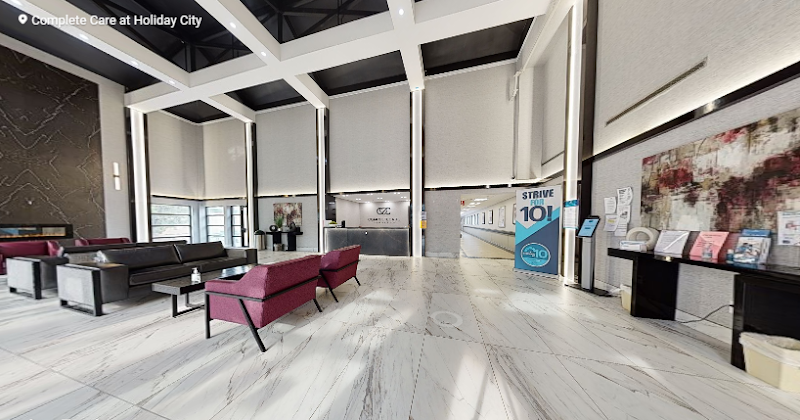
Who Owns and Operates Complete Care At Holiday City?

COMPLETE CARE AT HOLIDAY CITY is owned by a for-profit company. For-profit facilities operate as businesses with obligations to shareholders or private owners. The facility is operated by COMPLETE CARE, a chain that manages multiple nursing homes. With 180 certified beds and approximately 136 residents (about 76% occupancy), it is a mid-sized facility located in TOMS RIVER, New Jersey.

How Does Complete Care At Holiday City Compare to Other New Jersey Nursing Homes?

Compared to the 100 nursing homes in New Jersey, COMPLETE CARE AT HOLIDAY CITY's overall rating (1 stars) is below the state average of 3.2, staff turnover (67%) is significantly higher than the state average of 46%, and health inspection rating (2 stars) is below the national benchmark.

What Should Families Ask When Visiting Complete Care At Holiday City?

Based on this facility's data, families visiting should ask: "How do you ensure continuity of care given staff turnover, and what is your staff retention strategy?" "Can you walk me through typical staffing levels on day, evening, and night shifts?" "Can I visit during a mealtime to observe dining assistance and food quality?" "How do you handle medical emergencies, and what is your hospital transfer rate?" These questions are particularly relevant given the facility's high staff turnover rate and the below-average staffing rating.

Is Complete Care At Holiday City Safe?

Based on CMS inspection data, COMPLETE CARE AT HOLIDAY CITY has a clean safety record: no substantiated abuse findings (meaning no confirmed cases of resident harm), no Immediate Jeopardy citations (the most serious violation level indicating risk of serious injury or death), and is not on the Special Focus Facility watch list (a federal program monitoring the lowest-performing 1% of nursing homes). The facility has a 1-star overall rating and ranks #100 of 100 nursing homes in New Jersey. While no facility is perfect, families should still ask about staff-to-resident ratios and recent inspection results during their visit.

Do Nurses at Complete Care At Holiday City Stick Around?

Staff turnover at COMPLETE CARE AT HOLIDAY CITY is high. At 67%, the facility is 21 percentage points above the New Jersey average of 46%. High turnover means new staff may not know residents' individual needs, medications, or preferences. It can also be disorienting for residents, especially those with dementia who rely on familiar faces. Families should ask: What is causing the turnover? What retention programs are in place? How do you ensure care continuity during staff transitions?

Was Complete Care At Holiday City Ever Fined?

COMPLETE CARE AT HOLIDAY CITY has been fined $12,155 across 1 penalty action. This is below the New Jersey average of $33,200. While any fine indicates a compliance issue, fines under $50,000 are relatively common and typically reflect isolated problems that were subsequently corrected. Families should ask what specific issues led to these fines and confirm they've been resolved.

Is Complete Care At Holiday City on Any Federal Watch List?

COMPLETE CARE AT HOLIDAY CITY is not on any federal watch list. The most significant is the Special Focus Facility (SFF) program, which identifies the bottom 1% of nursing homes nationally based on persistent, serious quality problems. Not being on this list means the facility has avoided the pattern of deficiencies that triggers enhanced federal oversight. This is a positive indicator, though families should still review the facility's inspection history directly.