COMPLETE CARE AT VOORHEES, LLC

3001 EVESHAM ROAD, VOORHEES, NJ 08043 (856) 751-1600
For profit - Limited Liability company 190 Beds COMPLETE CARE Data: November 2025 1 Immediate Jeopardy citation
Trust Grade
38/100
#188 of 344 in NJ
Last Inspection: January 2025

Within standard 12-15 month inspection cycle. Federal law requires annual inspections.

Overview

Complete Care at Voorhees, LLC has received a Trust Grade of F, indicating significant concerns about the facility's quality of care. This places them at #188 out of 344 nursing homes in New Jersey, meaning they are in the bottom half of all facilities statewide, and #9 out of 20 in Camden County, indicating that only a few local options are better. Although the facility is showing an improving trend-reducing their issues from 16 in 2023 to 11 in 2025-there are still notable weaknesses, such as a concerning staffing turnover rate of 68% and less RN coverage than 96% of New Jersey facilities. Specific incidents include a staff member failing to wash hands after handling soiled laundry and issues with food sanitation in the kitchen, such as heavily soiled ovens and inadequate trash disposal for handwashing stations. While the facility has an excellent quality measures rating, the health inspection and staffing ratings are below average, highlighting a mix of strengths and weaknesses that families should consider carefully.

Trust Score
F
38/100
In New Jersey
#188/344
Bottom 46%
Safety Record
High Risk
Review needed
Inspections
Getting Better
16 → 11 violations
Staff Stability
⚠ Watch
68% turnover. Above average. Higher turnover means staff may not know residents' routines.
Penalties
✓ Good
$41,098 in fines. Lower than most New Jersey facilities. Relatively clean record.
Skilled Nurses
⚠ Watch
Each resident gets only 15 minutes of Registered Nurse (RN) attention daily — below average for New Jersey. Fewer RN minutes means fewer trained eyes watching for problems.
Violations
⚠ Watch
34 deficiencies on record. Higher than average. Multiple issues found across inspections.
★★★☆☆
3.0
Overall Rating
★★☆☆☆
2.0
Staff Levels
★★★★★
5.0
Care Quality
★★☆☆☆
2.0
Inspection Score
Stable
2023: 16 issues
2025: 11 issues

The Good

  • 5-Star Quality Measures · Strong clinical quality outcomes
  • Full Sprinkler Coverage · Fire safety systems throughout facility
  • No fines on record

Facility shows strength in quality measures, fire safety.

The Bad

3-Star Overall Rating

Near New Jersey average (3.3)

Meets federal standards, typical of most facilities

Staff Turnover: 68%

22pts above New Jersey avg (46%)

Frequent staff changes - ask about care continuity

Federal Fines: $41,098

Above median ($33,413)

Moderate penalties - review what triggered them

Chain: COMPLETE CARE

Part of a multi-facility chain

Ask about local staffing decisions and management

Staff turnover is elevated (68%)

20 points above New Jersey average of 48%

The Ugly 34 deficiencies on record

1 life-threatening
Aug 2025 1 deficiency
CONCERN (D) 📢 Someone Reported This

A family member, employee, or ombudsman was alarmed enough to file a formal complaint

Potential for Harm - no one hurt, but risky conditions existed

Pharmacy Services (Tag F0755)

Could have caused harm · This affected 1 resident

Based on interviews, medical record review, as well as review of other pertinent facility documents on 08/27/2025 and 08/29/2025, it was determined that the facility failed to administer medications i...

Read full inspector narrative →
Based on interviews, medical record review, as well as review of other pertinent facility documents on 08/27/2025 and 08/29/2025, it was determined that the facility failed to administer medications in accordance with the acceptable standard of nursing practice, and to follow the facility policy on Medication Administration.This deficient practice was identified for 1 of 9 sampled residents (Resident #7) reviewed for medication administration and was evidenced by the following:According to the admission Record, Resident #7 was admitted to the facility with diagnoses that included but were not limited to: Depression (mental health condition characterized by a feeling of sadness), Anxiety (a feeling of worry, nervousness or unease) Critical Illness Myopathy (any disease or disorder that affects the muscles, specifically the skeletal muscles that control voluntary movement), and Constipation. A review of Resident #7's quarterly Minimum Data Set (MDS), an assessment tool dated 07/22/25, revealed that the resident had a Brief Interview for Mental Status (BIMS) score of 15, indicating the resident was cognitively intact. The MDS also indicated that Resident #7 was dependent on staff for Activities of Daily Living (ADL). A review of Resident #7's Order Summary Report (OSR) dated 08/15/2025, revealed Physician's order for the following medications: Valium Oral Tablet 2mg give 1 tablet by mouth two times a day for muscle spasm was ordered on 11/07/2024. Pepcid Oral tablet 20mg give 1 tablet by mouth two times a day for GERD was ordered on 11/22/2024. Senna Oral tablet 8.6mg give 2 tablets by mouth two times daily for constipation 2 tabs=17.2mg was ordered on 01/22/2025. Bupropion HCL ER 300mg give 1 tablet by mouth one time a day for depression was ordered on 03/11/2025. Guanfacine HCL ER oral Tablet 4mg give 1 tablet by mouth one time a day for ADHD was ordered on 05/13/2025. Sertraline HCl oral Tablet 100mg give 1 tablet by mouth one time a day for depression was ordered on 06/06/2025. Tizanidine HCL Tablet 2mg give 1 tablet by mouth two times a day for muscle relaxant hold for sedation was ordered on 07/08/2025. Glycolax powder give 17 grams by mouth one time a day for constipation (in liquid) was ordered on 06/03/2025. A review of Resident #7's Medication Admin Audit Report (MAAR) from 07/27/2025 to 07/28/2025 confirmed the aforementioned medications were scheduled to be administered as follows: Valium Oral Tablet 2mg give 1 tablet by mouth at 9 AM; administered on 07/27/2025 at 11:33 A.M and on 07/28/2025 at 10:16 A.M. Pepcid Oral Tablet 20mg give 1 tablet by mouth at 9:00 A.M.; administered at 11:32 A.M. on 07/27/2025, and at 10:16 A.M. on 07/28/2025. Senna Oral Tablet 8.6mg give 2 tablets by mouth at 9:00 A.M., administered on 07/27/2025 at 11:32 A.M., and on 07/28/2025 at 10:16 A.M. Bupropion HCL ER 300mg give 1 tablet by mouth at 9:00 A.M., administered on 07/27/2025 at 11:32 A.M., and on 07/28/2025 at 10:16 A.M. Guanfacine HCL ER oral Tablet 4mg give 1 tablet by mouth at 9:00 A.M., administered on 07/27/2025 at 11:32 A.M., and on 07/28/2025 at 10:16 A.M. Sertraline HCl oral Tablet 100mg give 1 tablet by mouth at 9:00 A.M., administered on 07/27/2025 at 11:32 A.M., and on 07/28/2025 at 10:16 A.M. Tizanidine HCL Tablet 2mg give 1 tablet by mouth was scheduled to be administered at 9:00 A.M.; administered on 07/27/2025 at 11:32 A.M., and on 07/28/2025 at 10:16 A.M. Glycolax powder give 17 grams by mouth at 9:00 A.M., administered on 07/27/2025 at 11:39 A.M., and on 07/28/2025 at 10:16 A.M. A review of Resident #7's Progress Notes (PNs) from 07/27/25 to 07/28/25, showed no indication in the PNs that the Resident's Primary Care Physician (PCP) was notified that the aforementioned medications were not administered according to the scheduled time. There was also no documentation regarding why the medications were administered late. The surveyor did not find documented evidence of harm to the Resident #7 from the late administration of their medications. During an interview with the Licensed Practical Nurse/Unit Manager (LPN/UM) on 08/29/25 at 11:42 AM, she stated medications can be administered up to 1 hour before and 1 hour after the time the medication is due. The LPN/UM further stated, it's important to give medications on time to avoid interactions or adverse reaction. Some medications are scheduled with food, some multiple times during the day, so you do not want to cause an overdose. That is why it's important to follow the five rights of medication administration. She also stated that if a medication is not administered on time, the nurse should call the PCP to notify them and receive an order to give the medication after the administration time. LPN/UM stated, the nurse should also document why the medication was not administered on time, and that a PCP approved to give the medication after the allowed time. The LPN/UM stated, the expectation is for all nurses to follow the facility's policy for medication administration, looking at the MAAR for Resident #7, the policy was not followed. During an interview with the Director of Nursing (DON), in the presence of the Licensed Nursing Home Administrator (LNHA) on 08/29/2025 at 12:06 PM, the DON stated medications should be given an hour before or an hour after, except specified by the provider and that the rights of medication administration should be followed including; right medication, the right dose, the right route, the right patient, and the right time. The DON stated that the nurse should call the provider to inform the provider that the medications she was about to administer were outside the scheduled administration time window, and obtain instructions to make sure it was okay to give the medications outside the scheduled timeframe. DON further stated that nurses should document in the resident's PNs if a medication is not administered on time, and document that provider was notified and that they obtained order for the medications to be administered later than ordered time. The DON further stated the expectation is that the medication should be administered an hour before and an hour later. If a resident is out of the facility, there should be a progress note to say the patient is out of the facility and ok to administer medication later as per the provider. The DON stated, the policy was not followed if none of the above was done for medication administration. A review of the facility's policy titled Medication Administrations, dated 091/2024, revealed .12 .b. Administer within 60 minutes prior to or after scheduled time unless otherwise ordered by physician . NJAC 8:39-29.2 (d)
May 2025 1 deficiency
CONCERN (D) 📢 Someone Reported This

A family member, employee, or ombudsman was alarmed enough to file a formal complaint

Potential for Harm - no one hurt, but risky conditions existed

Pharmacy Services (Tag F0755)

Could have caused harm · This affected 1 resident

**NOTE- TERMS IN BRACKETS HAVE BEEN EDITED TO PROTECT CONFIDENTIALITY** Complaint # NJ 00185028 and NJ00185373 Based on interviews and record review, as well as a review of pertinent facility document...

Read full inspector narrative →
**NOTE- TERMS IN BRACKETS HAVE BEEN EDITED TO PROTECT CONFIDENTIALITY** Complaint # NJ 00185028 and NJ00185373 Based on interviews and record review, as well as a review of pertinent facility documents on 5/2/2025, it was determined that the facility failed to administer the medications in accordance with the acceptable standard of nursing practice and follow the facility policy on Administering Medications for 4 of 7 sampled residents (Resident #2, Resident #3, Resident #4 and Resident #5) reviewed for medication administrations. This deficient practice was evidenced by the following: According to the admission RECORD (AR), Resident #2 was admitted to the facility with diagnoses that included but were not limited to: Multiple Sclerosis (a chronic autoimmune disease that affects the central nervous system (brain and spinal cord)), Neuromuscular Dysfunction of the Bladder (the nerves that carry messages back and forth between the bladder and the spinal cord and brain don't work the way they should), and Calculus of the Kidney (solid masses or crystals that form from substances (like minerals, acids and salts) in the kidneys). A review of Resident #2's Minimum Data Set (MDS), an assessment tool, dated 04/10/25, revealed that the Resident had a Brief Interview for Mental Status (BIMS) score of 06 which indicated severe cognitive impairment and was dependent on staff for Activities of daily living (ADLs). A Review of Resident #2's Order Summary Report (OSR) dated 03/01/2025-03/31/2025, revealed an order for Fosfomycin Tromethamine Oral Packet 3 gram (gm), give 1 packet by mouth one time only for UTI (Urinary Tract Infection), ordered on 3/27/2025 with a start date of 3/28/2025 and end date of 3/29/2025. A review of Resident #2's Medication Administration Record (MAR) confirmed the aforementioned order was to be given one time. The MAR did not indicate the medication was administered. A review of Resident #2's progress notes (PN) from 3/1/25 to 3/31/25, revealed there was no indication that the Resident's Primary Care Physician (PCP) was notified that the aforementioned medication was not administered or if the medication was refused. In addition, there was no documented evidence of harm to the Resident. According to the AR, Resident #3 was admitted to the facility with diagnoses that included but were not limited to: Myopathy (any disease or disorder that affects the muscles, specifically the skeletal muscles that control voluntary movement), Injury of the Cervical Spine, Chronic Pain Syndrome, and Constipation. A review of Resident #3's MDS, dated [DATE], revealed that the resident had a BIMS score of 15 which indicated that the resident was cognitively intact and was dependent on staff for ADLs. A review of Resident #3's OSR, dated 5/2/2025 revealed an order for the following medications: Colace capsule 100mg, give 1 capsule by mouth twice a day for Constipation, was ordered on 11/22/2024. Doxycycline Hyclate Oral Tablet 100mg, give 1 tablet by mouth two times a day for Penile Discharge for 7 days, was ordered on 04/09/2025. Ibuprofen 400mg, give 1 tablet by mouth three times a day for Inflammation and Tendinopathy for 7 days, was ordered on 04/23/2025. Senna oral tablet 8.6 mg, give 2 tablets by mouth two times a day for Constipation, ordered on 11/22/2024. Valium Oral tablet 2mg, give 1 tablet by mouth two times a day for Muscle Spasm, ordered on 11/07/2024. A review of Resident #3's MAR and Medication Admin Audit Report (MAAR) from 4/1/2025 to 4/30/2025 confirmed the aforementioned medications were scheduled and administered as follows: Colace capsule 100 mg was scheduled as follows At 9 AM, however, it was administered on 4/1/25 at 11:41 AM, 4/2/25 at 11:52 AM, 4/3/25 at 12:19 PM, 4/4/25 at 10:01 AM, 4/5/25 at 11:56 AM, 4/6/25 at 11:40 AM, 4/7/25 at 11:51 AM, 4/8/25 at 11:55 AM, 4/9/25 at 12:09 PM, 4/10/25 at 11:10 AM, 4/11/25 at 10:33 AM, 4/12/25 at 12:56 PM, 4/13/25 at 10:23 AM 4/15/25 at 10:10 AM, 4/19/25 at 11:28 AM, 4/21/25 at 11:54 AM, 4/22/25 at 12:02 PM, 4/23/25 at 11:29 AM, 4/24/25 at 11:19 AM, 4/25/25 at 10:12 AM, 4/26/25 at 12:07 PM, 4/27/25 at 12:45 PM, 4/29/25 at 11:16 AM, and 4/30/25 at 11:58 AM At 5 PM, however, it was administered on 4/3/25 at 6:56 PM, 4/7/25 at 6:53 PM, 4/8/25 at 6:10 PM, 4/11/25 at 9:34 PM, 4/18/25 at 7:46 PM, 4/20/25 at 6:11 PM, 4/24/25 at 6:59 PM, 4/25/25 at 6:02 PM, 4/30/25 at 11:58 AM and 6:51 PM. Doxycycline Hyclate was scheduled as follows. At 9 AM, however, it was administered on 4/9/25 at 12:06 PM, 4/10/25 at 11:10 AM, 4/11/25 at 10:33 AM, 4/12/25 at 12:56 PM, 4/13/25 at 10:24 AM, and 4/15/25 at 10:11 AM. At 9 PM, however, it was administered on 4/13/25 at 10:50 PM. Ibuprofen tablet 400mg was scheduled as follows. At 9 AM, however, it was administered on 4/23/25 at 11:30 AM and 4/24/25 at 11:19 AM, 4/26/25 at 12:07 PM,4/27/25 at 12:44 PM, 4/29/25 at 11:16 PM, At 9 PM, however, it was administered on 4/26/25 at 10:52 PM, and 4/27/2025 at 10:54 PM. Valium Oral tablet 2mg was scheduled as follows. AT 9 AM, however, it was administered on 4/1/25 at 11:41 AM, 4/2/25 at 11:52 AM, 4/3/25 at 12:19 PM, 4/5/25 at 11:56 AM, 4/6/25 at 11:49 AM, 4/7/25 at 11:51 AM, 4/8/25 at 11:55 AM, 4/9/25 at 12:09 PM, 4/10/25 at 11:10 AM, 4/11/25 at 11:12 AM, 4/12/25 at 12:56 PM, 4/19/25 at 11:29 AM, 4/21/25 at 11:54 AM, 4/22/25 at 12:02 PM, 4/23/25 at 11:29 AM, 4/24/25 at 12:40 PM, 4/26/25 at 12:07 PM, 4/27/25 at 12:46 PM, 4/29/25 at 11:18 AM, and 4/30/25 at 11:59 AM. At 9 PM, however, it was administered on 4/4/25 at 10:40 PM, 4/13/25 at 11:11 PM, 4/26/25 at 10:52 PM, and 4/27/25 at 10:54 PM. A review of Resident #3's PN from 4/1/25 to 4/30/25, there was no indication in the PN that the Resident's PCP was notified that the aforementioned medications were not administered according to the scheduled time, nor was there documentation on why the medications were administered late. In addition, there was no documented evidence of harm to the Resident from the late administration of medications. According to the AR, Resident #4 was admitted to the facility with diagnoses that included but were not limited to: Hypertension (high blood pressure), Polyneuropathy (a condition when multiple peripheral nerves (the nerves that send messages from the brain and spinal cord to the rest of the body) become damaged), Heart Failure, Left and Right Knee Pain A review of Resident #4's MDS dated [DATE], revealed that the resident had a BIMS score of 15 which indicated that the resident was cognitively intact and was set up and clean-up assist with ADLs. A review of Resident #4's OSR, dated 5/2/2025 revealed an order for the following medications: Guaifenesin Extensive Release tablet 600 mg, give 1 tablet by mouth every 12 hours for Cough, ordered 10/18/2024. Metoprolol Tartrate Tablet 25 mg, give 1 tablet by mouth two times a day for Hypertension, ordered 03/12/2025 Tylenol with Codeine #3 Oral Tablet 300-30 mg, give 1 tablet by mouth every 12 hours for Chronic Pain, ordered 03/27/2025. A review of Resident #4's MAR and MAAR from 4/1/2025 to 4/30/2025 confirmed the aforementioned medications were scheduled and administered as follows: Guaifenesin ER Tablet 600 mg was scheduled as follows AT 8 AM, however, it was administered on 4/2/25 at 10:56 AM, 4/3/25 at 11:13, AM, 4/4/25 at 11:14 AM, 4/5/25 at 10:51 AM, 4/6/25 at 9:39 AM, 4/7/25 at 11:02 AM, 4/8/25 at 11:08 AM, 4/9/25 at 11:22 AM, 4/10/25 at 10:53 AM, 4/11/25 at 9:46 AM, 4/12/25 at 11:15 AM, 4/14/25 at 9:44 AM, 4/15/25 at 9:38 AM, 4/17/25 at 10:08 AM, 4/18/25 at 11:34 AM, 4/19/25 at 12:43 PM, 4/21/25 at 11:25 AM, 4/22/25 at 10:15 AM, 4/23/25 at 11:00 AM, 4/24/25 at 10:17 AM, 4/25/25 at 9:52 AM, 4/26/25 at 11:09 AM, 4/27/25 at 11:09 AM, 4/29/25 at 10:34 AM, 4/30/25 at 11:24 AM AT 8 PM, however, the medication was administered on 4/20/25 at 9:36 PM and 4/23/25 at 9:57 PM Metoprolol Tartrate Tablet 25 mg was scheduled as follows: At 9 AM, however, the medication was administered on 4/2/25 at 10:56 AM, 4/3/25 at 11:13 AM, 4/4/25 at 11:14 AM, 4/5/25 at 10:51 AM, 4/7/25 at 11:02 AM, 4/8/25 at 11:08 AM, 4/9/25 at 11:22 AM, 4/10/25 at 10:50 AM, 4/12/25 at 11:15 AM, 4/18/25 at 11:36 AM, 4/19/25 at 12:43 PM, 4/21/25 at 11:25 AM, 4/23/25 at 11:00 AM, 4/26/25 at 11:09 AM, 4/27/25 at 11:09 AM, 4/29/25 at 10:34 AM, 4/30/25 at 11:24 AM. At 5 PM, however, the medication was administered on 4/7/25 at 6:53 PM, 4/17/25 at 6:37 PM, 4/19/25 at 7:28 PM, 4/23/25 at 9:57 PM, and 4/29/25 at 6:37 PM. Tylenol with Codeine #3 Oral Tablet 300-30 mg was scheduled as follows At 9 AM, however, the medication was administered on 4/2/25 at 10:56 AM, 4/3/25 at 11:13 AM, 4/4/25 at 11:14 AM, 4/5/25 at 10:51 AM, 4/7/25 at 11:01 AM, 4/8/25 at 11:08 AM, 4/9/25 at 11:22 AM, 4/10/25 at 10:53 AM, 4/12/25 at 11:15 AM, 4/18/25 at 11:36 AM, 4/19/25 at 12:43 PM, 4/21/25 at 11:26 AM, 4/23/25 at 11:00 AM, 4/26/25 at 11:09 AM, 4/27/25 at 11:09 AM, and 4/30/25 at 11:24 AM. In a review of Resident #4's PN from 4/1/25 to 4/30/25, there was no indication in the PN that the Resident's PCP was notified that the aforementioned medications were not administered according to the scheduled time, nor was there documentation on why the medications were administered late. In addition, there was no documented evidence of harm to the Resident from the late administration of medications. According to the AR, Resident #5 was admitted to the facility with diagnoses that included but were not limited to: Dementia (a general term for loss of memory, language, problem-solving, and other thinking abilities that are severe enough to interfere with daily life), Chronic Pain, Osteoarthritis (a common joint disease that causes pain, stiffness, and loss of mobility), and Sacral Pressure Ulcer. A review of Resident #5's MDS dated [DATE], revealed that the resident had a BIMS score of 12 which indicated that the resident had mild cognitive impairment, and was dependent on staff for ADLs. A review of Resident #5's care plan (CP), dated 9/28/22, indicated that the Resident was on pain medication therapy related to Arthritis. The CP included interventions included but not limited to Administer Analgesic medications as ordered by Physician. A review of Resident #5's OSR from 04/01/2025 to 04/30/2025 revealed an order for the following medications: Ibuprofen Tablet 200 mg, give 1 tablet by mouth three times a day for inflammation of both hands. Please give with food, ordered 12/14/2023. Restasis Ophthalmic Emulsion, instill 1 drop in both eyes two times a day for Dry Eyes, ordered 10/17/2023. Timolol Maleate Ophthalmic Solution 0.5 %, instill 1 drop in both eyes two times a day for Glaucoma, ordered 10/17/2023. A review of Resident #5's MAR and MAAR from 4/1/2025 to 4/30/2025 confirmed the aforementioned medications were scheduled and to be administered as follows: Ibuprofen Tablet 200 mg was scheduled as follows. At 8 AM, however, the medication was administered on 4/4/25 at 9:46, 4/5/25 at 9:46 AM, 4/7/25 at 9:58 AM, 4/12/25 at 10:08 AM, 4/13/25 at 9:52 AM, and 4/30/25 at 10:10 AM. At 12 PM, however, the medication was administered on 4/2/25 at 1:39 PM, 4/5/25 at 2:34 PM, 4/6/25 at 2:57 PM, 4/7/25 at 1:44 PM, 4/9/25 at 1:41 PM, 4/11/25 at 2:04 PM, 4/22/25 at 2:46 PM, 4/24/25 at 2:46 PM, 4/26/25 at 1:50 PM, 4/29/25 at 1:56 PM, and 4/30/25 at 2:13 PM. At 4 PM, however, the medication was administered on 4/1/25 at 5:43 PM, 4/2/25 at 5:38 PM, 4/3/25 at 6:07 PM, 4/12/25 at 6:34 PM, 4/19/25 at 7:43 PM, 4/23/25 at 5:49 PM, 4/24/25 at 6:48 PM, and 4/25/25 at 5:43 PM. Restasis Ophthalmic Emulsion was scheduled as follows At 8 AM, however, the medication was administered on 4/3/25 at 9:39 AM, 4/4/25 at 9:46 AM, 4/5/25 at 9:47 AM, 4/6/25 at 9:32 AM, 4/7/25 at 9:58 AM, 4/12/25 at 10:09 AM, 4/13/25 at 9:52 AM, 4/17/25 at 11:44 AM, 4/18/25 at 11:12 AM, 4/19/25 at 10:12 AM, 4/20/25 at 11:02 AM, 4/21/25 at 9:38 AM, 4/24/25 at 9:38 AM, 4/26/25 at 9:34 AM, 4/29/25 at 9:39 AM, and 4/30/25 at 10:10 AM. At 8 PM, however, the medication was administered on 4/20/25 at 9:39 PM. Timolol Maleate Ophthalmic was scheduled as follows: At 8:10 AM, however, the medication was administered on 4/4/25 at 9:46 AM, 4/5/25 at 9:47, 4/7/25 at 9:58 AM, 4/12/25 at 10:09 AM, 4/13/25 at 9:52 AM, 4/17/25 at 11:44 AM, 4/18/25 at 11:08 AM, 4/19/25 at 10:12 AM, 4/20/25 at 11:02 AM, and 4/30/25 at 10:10 AM. At 8:10 PM, however, the medication was administered on 4/13/25 at 9:52 AM and 4/20/25 at 9:39 PM. A review of Resident #5's PN from 4/1/25 to 4/30/25, there was no indication in the PN that the Resident's PCP was notified that the aforementioned medications were not administered according to the scheduled time, nor was there documentation on why the medications were administered late. In addition, there was no documented evidence of harm to the Resident from the late administration of medications. During an interview with LPN #1 on 5/2/25 at 10:17 AM, she stated medications can be administered up to 1 hour before and 1 hour after the time the medication is due. The LPN further stated that the nurses were to give crackles or snacks if the medication was to be administered with food. She stated that the nurses were to wait at least 5 minutes when a resident had 2 eye drops and document in the MAR after the eye drops administration. The LPN explained that when the medication was administered, the nurses had to document in the MAR to indicate that the medication was given. She further explained that if a resident refused the medication, the nurses were expected to document it in the resident's MR. LPN #1 also stated that if the medications were late, the nurses were to call the PCP and document in the MR. During an interview with the DON, in the presence of the Administrator and Regional Director of Operations on 5/2/25 at 2:53 PM, the DON stated the rights of medication administration are the right medication, the right dose, the right route, the right patient, and the right time. She further stated that a medication can be administered 1 hour before and 1 hour after a medication is due. The DON explained the Fosfomycin for Resident #2 was brought to theh facility by the family, and the family was informed that the PCP from the facility needed to write an order prior to the medication being given. The DON was unable to explain if the Fosfomycin was given to Resident #2. The DON further explained that blanks on the MAR could possibly mean the medication was not given. A review of the facility's policy titled Medication Administrations, dated 091/2024, revealed .12 .b. Administer within 60 minutes prior to or after scheduled time unless otherwise ordered by physician . NJAC 8:39-29.2 (d)
Jan 2025 9 deficiencies
CONCERN (D)

Potential for Harm - no one hurt, but risky conditions existed

ADL Care (Tag F0677)

Could have caused harm · This affected 1 resident

Complaint #: NJ00174162 Based on observation, interview, record review, and review of facility documents, it was determined that the facility failed to a.) provide nail care to a resident who required...

Read full inspector narrative →
Complaint #: NJ00174162 Based on observation, interview, record review, and review of facility documents, it was determined that the facility failed to a.) provide nail care to a resident who required assistance with the activities of daily living (ADL) and b.) implement the comprehensive care plan. This deficient practice was identified for 1 of 8 residents (Resident #118) reviewed for activities of daily living. This deficient practice was evidenced as follows: 1.) On 1/7/25 at 11:07 AM, during an incontinence tour, while accompanied by Licensed Practical Nurse/Unit Manager (LPN) #1 and Certified Nurse Assistant (CNA) #2, the surveyor observed Resident #118 bilateral (b/l) lower legs with multiple blister-like areas containing some dried blood. The LPN/UM#1 stated that the resident scratches themselves. Resident #118's fingernails were observed to be medium in length and contained reddish-brown blood-like residue under multiple fingernails and thick brown fecal-like matter under their right thumb. A review of the admission Record, an admission summary, revealed the resident had diagnoses which included, hemiplegia and hemiparesis (partial paralysis on one side if the body) following cerebral infarction (a stroke) affecting the left non dominant side, dysarthria (weakness in the muscles used for speech) following cerebral infarction, chronic kidney disease and depression. A review of the resident's quarterly Minimum Data Set (MDS), an assessment tool, dated 9/11/24, included the resident had a Brief Interview for Mental Status (BIMS) score of 6 out of 15, which indicated the resident's cognition was severely impaired. Further review of the MDS revealed the resident had an upper extremity impairment on one side, required moderate assistance with personal hygiene, toileting hygiene, oral hygiene, and required substantial assistance with showers and lower body dressing. A review of the resident's individual comprehensive care plan (ICCP) included a focus area, dated 12/8/23, that the resident has a potential impairment to skin integrity. The interventions included: Avoid scratching and keep hands and body parts from excessive moisture. Keep fingernails short. Assist resident with general hygiene, skin will be assessed on a weekly basis and findings documented, monitor/document location, size and treatment of skin injury. On 1/8/2025 at 8:43 AM, the surveyor interviewed Licensed Practical Nurse/Unit Manager (LPN/UM) #1, who stated that the Certified Nursing Assistant (CNA) was responsible for cleaning the resident's fingernails as needed and trimming them to prevent scratching. The surveyor and LPN/UM#1 made a follow-up visit with the resident. At that time, Resident #118's fingernails still contained residue and were still the same length as the previous day (1/7/25). LPN/UM #1 confirmed that the resident's nails were medium in length and needed to be trimmed and cleaned. On 1/8/2025 at 9:56 AM, the surveyor interviewed the Regional Director of Nursing (RDON), who stated that the CNAs should check the residents' fingernails when they are performing care and clean them when they are soiled. She further stated that the resident's fingernails should be kept short and clean to prevent an infection. The RDON stated that the care plan should be followed. A review of the facility's Activities of Daily Living (ADLs) policy, dated 9/1/2024, included Care and services will be provided for the following activities of daily living: 1. Bathing, dressing, grooming and oral care; .A resident who is unable to carry out activities of daily living will receive the necessary services to maintain good nutrition, grooming, and personal and oral hygiene. A review of the facility's Comprehensive Care Plans policy, date 9/1/2024, included The policy of this facility to develop and implement a comprehensive person-centered care plan for each resident, consistent with the resident rights, that includes measurable objectives and timeframes to meet a resident's medical, nursing, and mental and psychosocial needs that are identified in the resident's comprehensive assessment. NJAC 8:39-27.2 (g)
CONCERN (D) 📢 Someone Reported This

A family member, employee, or ombudsman was alarmed enough to file a formal complaint

Potential for Harm - no one hurt, but risky conditions existed

Deficiency F0806 (Tag F0806)

Could have caused harm · This affected 1 resident

Complaint #: NJ172440 Based on observation, interview, record review, and review of facility documents, it was determined that the facility failed to ensure that resident dietary preferences were accu...

Read full inspector narrative →
Complaint #: NJ172440 Based on observation, interview, record review, and review of facility documents, it was determined that the facility failed to ensure that resident dietary preferences were accurately identified and implemented for 4 of 21 residents (Resident #20, #39, #107, and #275) reviewed for dining and was evidenced by the following: On 1/3/25 at 10:00 AM, during a surveyor-conducted resident council meeting, 4 out of 4 residents (Residents #6, #60, #71 and #98) stated that condiments such as cream, sugar, mustard, and mayonnaise would not be on the meal trays and that the facility did not honor food preferences on their meal tickets. The residents also stated that when they ask for a substitute food item than what was on their meal ticket, it can take a long time for another meal tray, or they don't get it at all. 1. On 1/3/25 at 11:36 AM, the surveyor observed Resident #107 seated in a wheelchair in his/her room. The resident stated that his/her meal ticket listed no bread, no citrus, and no tomato, but received bread on his/her meal tray. On 1/3/25 at 1:02 PM, the surveyor reviewed the medical record for Resident #107. A review of the admission Record revealed that the resident had diagnosis which included but were not limited to: Achalasia of cardia (a swallowing disorder), dementia, unspecified severity, with other behavioral disturbance, and dysphagia (difficulty swallowing). A review of the resident's quarterly Minimum Data Set (MDS), and assessment tool used to facilitate the management of care, dated 12/14/24, included the resident had a Brief Interview for Mental Status (BIMS) score of 15 out of 15, which indicated the resident's cognition was fully intact. A review of the resident's individual comprehensive care plan (ICCP) included a focus area, dated 3/8/24, that the resident had a need for a mechanically altered diet. Interventions included: Provide diet as ordered-Encourage diet compliance and educate family members on maintaining correct diet texture when eating outside facility or bringing in snacks. A review of the Order Summary Report revealed an order dated 5/20/24 for a Regular diet ground texture, thin liquids. On 1/6/25 at 1:02 PM, the surveyor received a Grievance Form that was completed by the facility's Director of Social Services (DSS) on 6/26/24 and indicated that the resident's family member reported a problem with tray accuracy and alleged that the resident received a biscuit on his/her tray. The DSS documented that the meal ticket was verified and indicated no bread. A review of the progress notes included a Health Status Note (HSN), dated 06/27/24 at 11:14 AM, which indicated that the resident had a cinnamon bun [trade name redacted] in a napkin and was educated that he/she was not allowed to have bread, and he/she responded, I only ate half. Further review of the progress notes revealed that there was no documentation that detailed that the resident was served a biscuit on 6/26/24 as indicated on the grievance form. On 1/6/25 at 1:37 PM, the surveyor observed the resident's meal tray and confirmed tray accuracy. The surveyor confirmed that the resident had no bread, no citrus, and no tomato listed on their meal ticket as preferences. On 1/7/25 at 11:00 AM, the surveyor interviewed the DSS who stated that on 6/26/24 the resident's family member called her to the resident's room and showed her the resident's meal tray with a meal ticket that indicated no bread products, and the resident was given a biscuit. The DSS stated that she went to the kitchen and verified that going forward no other bread products would be on the tray. On 1/7/25 at 12:21 PM, the surveyor interviewed Regional Director of Nursing (RDON) who stated that the meal ticket should match what is on the tray. The RDON further stated that a dry biscuit should not have been served to the resident and should match what was on the meal ticket. On 1/8/25 at 10:09 AM, the surveyor interviewed the Registered Dietician (RD) who stated that the resident's current diet was a ground consistency. The RD stated that there was a concern for aspiration (when food or liquid enter the airway) if the resident was served a biscuit. The Regional Registered Dietician (RRD) was present and stated that if bread were served it should have had gravy on it to ensure that it was moistened and soft. On 1/8/25 at 2:02 PM, the surveyor interviewed the Licensed Nursing Home Administrator (LNHA) in the presence of the surveyor team who stated that it was her expectation for staff to follow the resident's dietary preferences and diet orders. 2.) On 1/3/25 at 11:56 AM, the surveyor observed Resident #275 seated alone at a table in the dining room. The resident stated that he/she had not yet received his/her meal tray. On 1/3/25 at 11:58 AM, the surveyor observed Licensed Practical Nurse/Unit Manager (LPN/UM) #4 serve Resident #275 his/her meal tray. The resident stated that he/she had not received margarine that was listed as meal preference on his/her meal ticket, or salt and pepper. LPN/UM #4 provided the surveyor with margarine, salt and pepper when requested. When the surveyor asked LPN/UM #4 why the resident had not received margarine or salt and pepper on his/her tray, he stated that he was unsure why the resident had not received margarine as indicated on his/her meal ticket, or salt and pepper. 3.) On 01/06/25 at 01:38 PM, the surveyor observed Resident #39's lunch meal tray ticket that included a chicken pot pie, dinner roll, ham and cheese sandwich with lettuce, tomato, and mayonnaise, tossed salad with dressing, deluxe fruit salad, hot coffee, and apple juice. The surveyor observed that Resident #39's lunch tray did not include the ham and cheese sandwich with lettuce, tomato, and mayonnaise. At that time, Certified Nursing Assistant (CNA # 4) stated that there was a ham and cheese sandwich on top of the meal cart and gave the sandwich to the resident. Resident #39 stated, my meal ticket has that I'm supposed to get lettuce and tomato on my sandwich. The sandwich did not have lettuce and tomato. On 1/6/25 at 1:41 PM, the surveyor interviewed the Licensed Practical Nurse (LPN #6) who stated that it was every day that items were missing from residents' meal trays. LPN #6 stated that she would call the kitchen and let them know when items would be missing from the meal trays. On 1/8/25 at 11:14 AM, the surveyor interviewed the Registered Dietician (RD) in the presence of the Regional Registered Dietitian, who confirmed that Resident #39 had a food preference of a ham and cheese sandwich with lettuce, tomato, and mayonnaise on his/her meal ticket. 4.) On 1/7/25 at 9:35 AM, the surveyor observed breakfast meal delivery on the 100 Unit. The surveyor observed CNA #3 stated she had called the kitchen and requested a new breakfast tray for Resident # 20 because the tray was missing toast. On 1/7/25 at 9:57 AM, Resident #20's breakfast tray was delivered to the 100 unit. The surveyor observed Resident # 20's meal ticket on the tray that included oatmeal, toast, diet jelly, margarine, hot tea, and orange juice. The surveyor observed the meal tray did not include the toast, the diet jelly, or the margarine. At 10:15 AM, the surveyor and the Food Service Director (FSD) confirmed that the toast, diet jelly, and margarine were missing from the tray. The FSD stated I will get the resident a new tray. I am trying to find out what happened to the breakfast trays this morning. At 10:25 AM, Resident # 20 received the breakfast tray that included the toast, diet jelly, and margarine. On 1/8/25 at 1:19 PM, the surveyor interviewed the Licensed Nursing Home Administrator (LNHA), in the presence of the Regional Director of Nursing, the Regional Director of Operations, the Regional Nurse QA Nurse Specialist, and the survey team, who stated that she would expect the kitchen would have someone checking that everything on the meal tray matches the meal ticket. The LNHA further stated that it was important that the facility followed the meal ticket, the diet order, and the residents' preferences because it is the residents right. A review of the facility Meal Distribution policy, dated September 2017, revealed that the nursing staff will be responsible for verifying meal accuracy and timely delivery of meals to residents/patients. The policy further included: All meals will be assembled in accordance with the individualized diet order, plan of care, and preferences . NJAC 8:39-17.4(a)1, e
CONCERN (E)

Potential for Harm - no one hurt, but risky conditions existed

Resident Rights (Tag F0550)

Could have caused harm · This affected multiple residents

Based on observation and interview, it was determined that the facility failed to ensure that the residents' dining experience was provided in a manner to promote dignity and respect of the residents....

Read full inspector narrative →
Based on observation and interview, it was determined that the facility failed to ensure that the residents' dining experience was provided in a manner to promote dignity and respect of the residents. This deficient practice was identified in 1 of 5 units observed (the 100 unit) and was evidenced by the following: 1.) On 1/9/25 at 10:00 AM, during the surveyor-conducted resident council meeting, 4 of 4 residents (Resident #6, #60, #71 and #98) who attended the meeting stated that roommates did not get served their meal trays at the same time. 2.) On 1/7/25 at 9:27 AM, the surveyor observed the breakfast meal on the high end of the 100 unit and Resident #71 was delivered his/her breakfast tray. Resident #71 stated we don't get our meal trays delivered at the same time. At that time, the surveyor observed Resident #117 (Resident #71's roommate) standing at his/her doorway of their room and stated, I'm waiting for my breakfast tray. At 9:38 AM, the surveyor observed several residents on the unit had not received their breakfast trays. The Certified Nursing Assistant (CNA #4) confirmed with the surveyor that the following residents had not received their breakfast trays and that she had called the kitchen for the following seven (7) breakfast trays: Resident #20, #56, #80, #88, #112, #113, and #117. At 9:57 AM, the surveyor observed a food truck delivered to the 100 unit with the missing breakfast trays. The nursing staff delivered the breakfast trays to the residents. At that time, the surveyor observed that Resident #20's tray contained only oatmeal and not toast, which was listed on the meal ticket. At 10:02 AM, CNA #4 called the kitchen to obtain a new tray for Resident #20 that included the toast. At that time, CNA #4 stated that Resident #11 had not recieved a breakfast tray yet and then called the kitchen to obtain Resident #111's breakfast tray. The CNA did not give Resident #20 his/her tray with the missing item. At 10:14 AM, the surveyor observed the Food Service Director (FSD) deliver a breakfast tray to Resident #111. At 10:15 AM, the surveyor showed the FSD Residents #20's breakfast tray, that was still in the food truck, was missing the toast. The FSD stated she will get the resident a new breakfast tray. The FSD stated she was trying to find out what happened that all the breakfast trays were not delivered at the same time. At 10:25 AM, the surveyor observed Resident #20's breakfast tray delivered to the unit. On 1/8/25 at 1:19 PM, the surveyor interviewed the Licensed Nursing Home Administrator (LNHA), in the presence of the Regional Director of Nursing (RDON), the Regional Director of Operations, the Regional Nurse Quality Assurance Nurse Specialist, and the survey team, who stated that her expectation would be that meal trays would not be missing from the food trucks. The LNHA further stated that unit 100 was the last unit to be served breakfast, usually around 9:15 AM, and that residents in the same room should be served their trays at the same time. The LNHA further stated that it was important that residents are served meals at the same time because it was their resident's right. A review of the facility's Promoting/Maintaining Resident Dignity policy, dated 9/1/24, included that all staff members are involved in providing care to residents to promote and maintain resident dignity and respect resident's rights. A review of the facility's Meal Distribution policy, revised September 2017, included that the nursing staff will be responsible for verifying meal accuracy and the timely delivery of meals to residents. NJAC 8:39-4.1(a)12
CONCERN (E) 📢 Someone Reported This

A family member, employee, or ombudsman was alarmed enough to file a formal complaint

Potential for Harm - no one hurt, but risky conditions existed

Safe Environment (Tag F0584)

Could have caused harm · This affected multiple residents

**NOTE- TERMS IN BRACKETS HAVE BEEN EDITED TO PROTECT CONFIDENTIALITY** 4.) On 1/3/25 at 11:47 AM, during a tour of the 200 Unit, the surveyor interviewed Resident #107 who stated that they had spoken...

Read full inspector narrative →
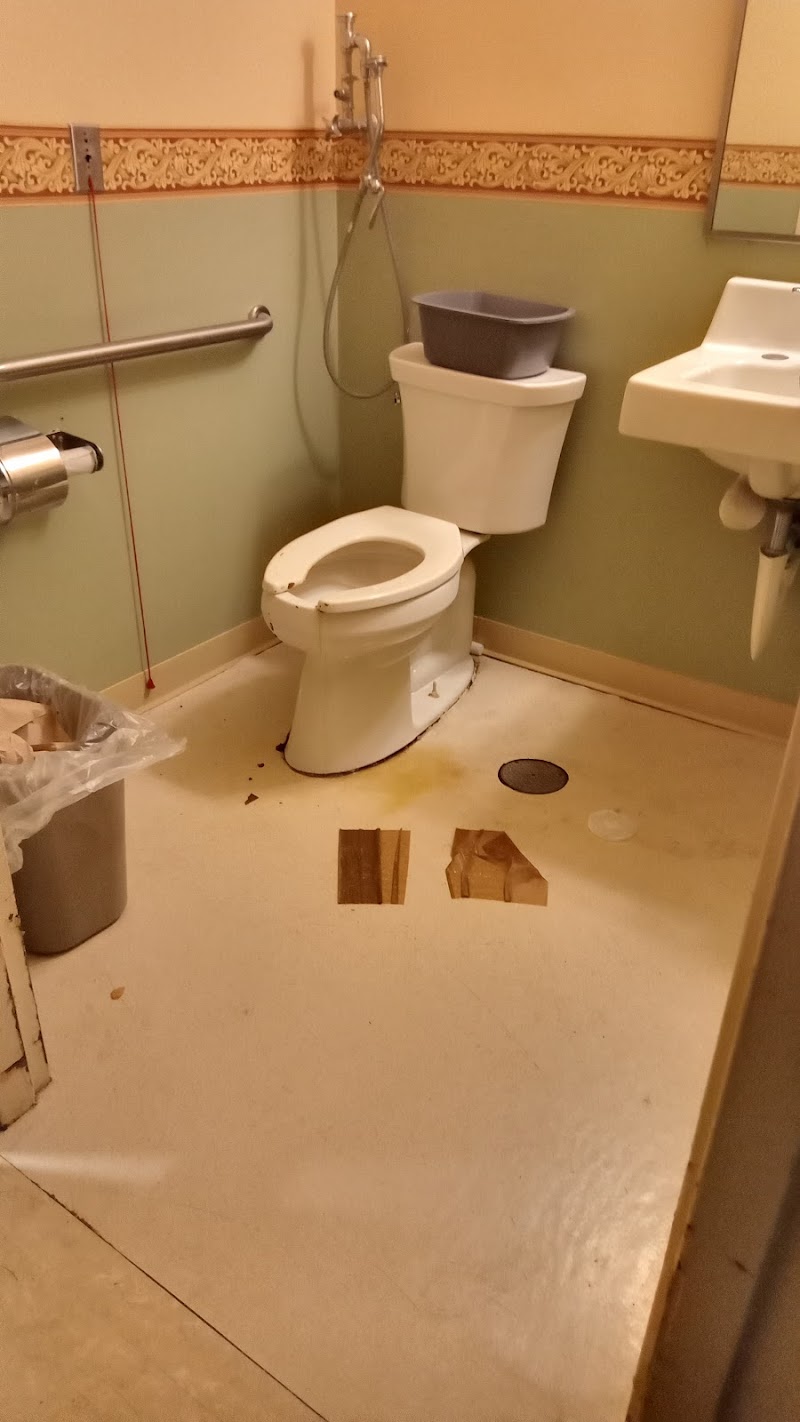
**NOTE- TERMS IN BRACKETS HAVE BEEN EDITED TO PROTECT CONFIDENTIALITY** 4.) On 1/3/25 at 11:47 AM, during a tour of the 200 Unit, the surveyor interviewed Resident #107 who stated that they had spoken the Licensed Nursing Home Administrator (LNHA) and the Director of Maintenance (DM) about their toilet seat being discolored with yellow on top of the seat and the inner side of the toilet seat. The resident stated that the LNHA indicated that at the very least they would replace the toilet seat. Resident #107 further stated that the bathroom was cleaned on Wednesday 1/1/25. A review of Resident #107's admission Record revealed that the resident had diagnosis which included, Achalasia of cardia (a swallowing disorder), dementia, unspecified severity, with other behavioral disturbance, and dysphagia (difficulty swallowing). A review of Resident #107's quarterly MDS, dated [DATE], included the resident had a Brief Interview for Mental Status (BIMS) score of 15 out of 15, which indicated the resident's cognition was fully intact. On 1/3/25 at 12:06 PM, the surveyor interviewed Housekeeper (HK) #1 who stated that resident rooms were cleaned daily. HK #1 stated that she did not know when Resident #107's room was cleaned last because she worked on a different unit. At that time, HK #1 accompanied the surveyor into Resident #107's bathroom. The surveyor showed HK #1 two areas of yellow staining and HK #1 stated these could come off. HK #1 then proceeded to spray the toilet seat and the surrounding area of the toilet with disinfectant cleaner and wiped it with a rag and both the yellow and black debris was removed. HK #1 stated, that was not discoloration. Resident #107 was present at that time and stated that we thought the yellow substance was staining, but it was urine. Resident #107 stated that the toilet was so much cleaner now. On 1/3/25 at 12:32 PM, the surveyor interviewed the [NAME] who stated that he had spoken with Resident #107 and the toilet seat should have been replaced after 12/5/24, and he referred the task to a Maintenance Aide verbally but had not documented it. The [NAME] stated that it was an infection control situation, and it should have been done. On 1/3/25 at 1:04 PM, the surveyor interviewed the DM who stated that he spoke with Resident #107 in the hall a couple of weeks ago and told the resident that he would get him/her a new toilet seat but then the resident requested a new toilet instead. The DM stated that he could have replaced the toilet seat right away. On 1/3/25 at 1:12 PM, the surveyor observed the DM outside of Resident #107's room with a new toilet seat after surveyor inquiry. On 1/8/25 at 1:22 PM, the surveyor interviewed the LNHA who stated that any staff member who sees a dirty toilet could notify housekeeping to clean the bathroom. The LNHA further stated it was important to ensure a resident's toilet was cleaned promptly for infection control reasons and because it was the resident's environment. A review of the facility's Routine Cleaning and Disinfection policy, dated 9/1/24, included that the facility is to ensure the provision of routine cleaning and disinfection in order to provide a safe, sanitary environment and to prevent the development and transmission of infections to the extent possible. Routine cleaning and disinfection of frequently touched or visible soiled surfaces will be performed in common area, residents' rooms and at time of discharge. NJAC 8:39-31.4(a) Complaint #: NJ180809 Based on observation, interview, and review of other facility documentation, it was determined that the facility failed to maintain the resident environment, equipment and living areas in a safe, sanitary, and homelike manner for 3 of 35 residents (Resident #106, #107, and #126) and air temperature log for 5 of 5 units observed during environmental rounds. This deficient practice was evidenced by the following: 1.) On 1/3/2025 at 12:13 PM, the surveyor toured the 500 Unit, which was noted to be chilly in the hallway near room [ROOM NUMBER]. The hatch door leading to the attic was observed to be partially open. The Director of Maintenance (DM) took the air temperature, which registered at 65 degrees. A review of the Air Temperature audit logs from 12/1 2024 to 1/8/25 revealed the following: On 12/3/2024: The 100 Unit shower room was documented as 70 degrees. The 300 Unit shower room was documented as 70 degrees. The 400 Unit shower room was documented as 69 degrees. On 12/18/2024: The 100 Unit, resident's room [ROOM NUMBER] was documented as 69 degrees. The 200 Unit resident's room [ROOM NUMBER] was documented as 69 degrees. On 12/31/2024: The 200 Unit shower room was documented as 70 degrees. The 500 Unit shower room was documented as 69 degrees. On 1/7/2025: The 100 Unit shower room was documented as 69 degrees. The 200 Unit shower room was documented as 67 degrees. The 300 Unit shower room was documented as 68 degrees. On 1/8/2025 at 11:47 AM, the Account Manager of Environmental Services ([NAME]) stated in the presence of the Licensed Nursing Home Administrator (LNHA) and the survey team, that the temperature should be comfortable and should not go below 65 degrees. He further stated the residents usually like it warmer. At that time, the LNHA stated she was unaware that the air temperature should be maintained between 71 to 81 degrees. 3.) On 1/2/25 10:25 AM, during the initial tour of the 200 Unit, the surveyor observed Resident # 106's bathroom and the toilet had a black substance dripping down the outside of the white toilet bowl. The white toilet seat was in a up position with yellow stains that were visible to the resident. The surveyor observed yellow liquid and black substance on the floor at the base of the toilet. At that time, the surveyor interviewed Resident #106 who stated that they uses the bathroom and was not sure when it was last cleaned. On 1/3/25 at 8:16 AM, the surveyor observed Resident #106's bathroom and observed the white toilet seat was in the up position with yellow stains, and yellow stains were also on the floor at the base of the toilet. A review of Resident #106's admission record, an admission summary, revealed the resident had diagnoses which included, dementia, retention of urine, and constipation. A review of the resident's quarterly MDS, dated [DATE], included the resident had a BIMS score of 11 out of 15, which indicated that the resident's cognition was moderately impaired. Further review of the MDS revealed the resident was continent of both bowel and bladder. On 1/3/25 at 12:40 PM, the surveyor interviewed the [NAME] who stated the housekeepers cleaned the residents' rooms three times during their 7:00 AM to 3:00 PM shift. The [NAME] further explained that the housekeepers were expected to make morning rounds at 7:00 AM to empty resident room trash cans and inspect the room for any immediate need for cleaning. The [NAME] stated after the housekeepers' first break, they cleaned resident rooms until the end of their shift when they made their final rounds in each resident room. The [NAME] also stated there was a porter from 2:00 PM to 10:00 PM, but no housekeeping staff from 10:00 PM to 7:00 AM. At that time, the surveyor informed the [NAME] of Resident #126's dirty toilet that had been soiled at 2:00 AM and not yet cleaned by 10:00 AM during the surveyor's observation. The [NAME] stated the housekeeper should have seen the dirty toilet during their 7:00 AM rounds and cleaned the toilet for infection control reasons. The [NAME] further stated that Resident #106s bathroom should have been addressed on the 7:00 AM rounds. 2.) On 1/2/25 at 10:07 AM, the surveyor observed Resident #126 sitting on the edge of the bed. The resident stated their main concern with the facility was the cleanliness of the bathroom. The resident stated their roommate would often leave feces on the toilet and floor, and that the housekeeping staff did not come to clean the bathroom until hours later. The resident then asked the surveyor to look at their bathroom because there had been feces on the toilet since approximately 2:00 AM that morning. When the surveyor opened the resident's bathroom door, there was a strong, foul odor noted and feces on the toilet seat. The surveyor reviewed the medical record for Resident #126. A review of the resident's quarterly Minimum Data Set (MDS), an assessment tool, dated 10/7/24, included the resident had a Brief Interview for Mental Status (BIMS)score of 15 out of 15, which indicated the resident's cognition was intact.
CONCERN (E) 📢 Someone Reported This

A family member, employee, or ombudsman was alarmed enough to file a formal complaint

Potential for Harm - no one hurt, but risky conditions existed

Deficiency F0658 (Tag F0658)

Could have caused harm · This affected multiple residents

2.) On 1/3/25 at 10:22 AM, during medication pass observation, the surveyor observed a Licensed Practical Nurse (LPN #3) administer medications to Resident #160. At that time, Resident #160 stated he/...

Read full inspector narrative →
2.) On 1/3/25 at 10:22 AM, during medication pass observation, the surveyor observed a Licensed Practical Nurse (LPN #3) administer medications to Resident #160. At that time, Resident #160 stated he/she had pain patches to both his/her knees. LPN #3 and the surveyor observed Resident #160 pull up his/her pant legs and observed undated and unidentified white patches to both knees. LPN #3 removed the white patches from both knees. Resident #160 stated he/she had pain to both knees and it has been worse since the weather has changed. At that time, LPN #3 and the surveyor reviewed the active physician's orders (PO) which revealed there was not a physician order for patches to both knees. LPN # stated she will call the doctor to inform them of the patches to the knees. On 1/3/25 at 9:18 AM, the surveyor interviewed the Licensed Practical Nurse/Unit Manager (LPN/UM #1) who stated that she was made aware of the patches that were on Resident #160's knees without a PO and would start an investigation. On 1/3/24 at 9:23 AM, the surveyor reviewed the medical record for Resident #160. A review of the admission Record, an admission summary, revealed the resident had diagnoses which included, primary osteoarthritis of the left hip, muscle weakness, unspecified osteoarthritis, and unspecified dementia. A review of the admission Minimum Data Set (MDS), an assessment tool, dated 10/29/24, included the resident had a Brief Interview for Mental Status (BIMS) score of 6 out of 15, which indicated the resident ' s cognition was severely impaired. Further review of the MDS revealed that the resident had occasional pain at a moderate pain level. A review of the individual comprehensive care plan (ICCP) included focus area, dated 10/22/24, that the resident had chronic pain related to arthritis. Interventions included: monitor/record/report to nurse resident complaints of pain or requests for pain treatment. A review with Order Summary Report (OSR), dated as of 1/8/25, included the following PO: A PO, dated 1/3/25, for Lidocaine External Patch 4% apply to B/L(bilateral) knee topically one time a day for chronic pain and remove per scheduled with a start date of 1/4/25. The OSR did not reveal a PO for pain patches to both knees prior to surveyor inquiry. A review of the January 2025 Medication Administration Record (MAR) and Treatment Administration Record (TAR) did not reveal a PO for pain patches to bilateral knees prior to 1/3/25 at 11:21 AM. A review of the December 2024 and January 2025 progress notes did not reveal any documentation of pain patches being applied to Resident #160's bilateral knees prior to the observation on 1/3/25. On 1/6/24 at 1:43 PM, the surveyor conducted a follow up interview with LPN/UM #1 who stated that the Nurse Practitioner was notified and a PO for Lidocaine pain patches to both knees was obtained. LPN/UM#1 stated that patches to both knees should not have been applied without a PO. On 1/7/25 at 8:47 AM, the Regional Director of Nursing (RDON) provided the surveyor an incident report for a medication error regarding applying pain patches without a PO. On 1/8/25 at 9:50 AM, the surveyor interviewed the RDON who stated that the patches should not have been applied to Resident #160's knees without a physician's order. The RDON stated that she would have expected the nurses to call the physician to obtain a PO before applying the patches. A review of the facility's Medication Administration policy, dated 9/1/24, included the following: 10. Ensure the six rights of medication administration are followed: right resident, right drug, right dosage, right route, right time, and right documentation. 11. Review the MAR to identify medication to be administered. 12. b. Administer within 60 minutes prior to or after scheduled time unless otherwise ordered by physician. A review of the facility's Medication Orders policy, dated 9/1/24, included that medication should be administered only upon a signed order of a person lawfully authorized to prescribe. The policy further revealed that the facility shall ensure medications will be administered as follows: a) according to physician's orders, b) per manufactures specifications and c), in accordance with accepted standards and principles which apply to professional providing services. A review of the facility's Medication Errors policy, dated 9/1/24, included, Medication error means the observed or identified preparation or administration of medications or biologicals which is not in accordance with the prescriber 's order . a. Medications administration not in accordance with the prescriber's order. Examples include, but not limited to: i. incorrect dose, route of administration, dosage form, time of administration . c. Medications administered not in accordance with professional standards and principles . 7. If a medication error occurs . c. Document actions taken in the medical record. NJAC 8:39-29.2(d) Complaint NJ #'s:168726, 168827, and 175632 Based on observation, interviews, record review, and review of pertinent facility documents, it was determined that the facility failed to ensure medications were administered within the physician's order scheduled time in accordance with professional standards of practice for 2 of 35 residents (Resident #86 and #160) reviewed for professional standards of practice. This deficient practice was evidenced by the following: Reference: New Jersey Statutes Annotated, Title 45. Chapter 11. Nursing Board. The Nurse Practice Act for the State of New Jersey states: The practice of nursing as a registered professional nurse is defined as diagnosing and treating human responses to actual and potential physical and emotional health problems, through such services as case finding, health teaching, health counseling, and provision of care supportive to or restorative of life and wellbeing, and executing medical regimens as prescribed by a licensed or otherwise legally authorized physician or dentist. Reference: New Jersey Statutes Annotated, Title 45, Chapter 11. Nursing Board. The Nurse Practice Act for the State of New Jersey states: The practice of nursing as a licensed practical nurse is defined as performing tasks and responsibilities within the framework of case finding; reinforcing the patient and family teaching program through health teaching, health counseling and provision of supportive and restorative care, under the direction of a registered nurse or licensed or otherwise legally authorized physician or dentist. 1.) On 1/2/25 at 10:27 AM, during the initial tour, the surveyor observed Resident #86 lying in bed sleeping. On 1/3/25 at 10:22 AM, the surveyor reviewed the medical record for Resident #86. A review of the admission Record, an admission summary, revealed the resident had diagnoses which included, Diabetes Mellitus (DM- high blood glucose), high blood pressure, pain in the right hip, and Alzheimer's disease. A review of the Medication Administration (Admin) Audit Report from 6/1/24 to 8/31/24 revealed the following: Metoprolol extended release (ER) 25 milligrams (mg), give one (1) tablet (tab) by mouth: scheduled for 8:00 AM. Ferrous Sulfate (iron) 325mg, give 1 tab by mouth: scheduled for 9:00 AM. Fluticasone (nasal spray) 50 micrograms (mcg) 1 spray in each nostril: scheduled for 9:00 AM. Aspirin 81 mg, give 1 tab by mouth: scheduled for 9:00 AM. Buspirone (for anxiety) 7.5mg, give 1 tab by mouth: scheduled for 9:00 AM. Lactobacillius (probiotic) 1 capsule by mouth: scheduled for 9:00 AM. Breo Ellipta (inhaler) 200/25 mcg, 1 puff: scheduled for 9:00 AM. Cholecalciferol (for calcium) 1000 unit, give 1 tab by mouth: scheduled for 9:00 AM. Hydralazine (for blood pressure) 50 mg, give 1 tab by mouth: scheduled for 9:00 AM. Amlodipine 10 mg, give 1 tab by mouth: scheduled for 9:00 AM, Oxycodone 5 mg, give 1 tab by mouth: scheduled for 8:00 AM was changed to Oxycontin 10 mg, give 1 tab by mouth: scheduled for 8:00 AM. In June 2024, medications were documented as administered late (not within the 60 minutes prior to or after the scheduled timeframe) a total of 47 times. In July 2024, medications were documented as administered late a total of 58 times. In August 2024, medications were documented as administered late a total of 34 times. A review of the Progress Notes (PN) from June 2024 to August 2024 did not reveal the physician was notified of the late administration of the medications. On 1/7/25 at 10:51 AM, the surveyor interviewed the Licensed Practical Nurse/Unit Manager (LPN/UM #3) who stated that medications should be administered one (1) hour before or 1 hour after the scheduled time. LPN/UM #3 stated that it was important for medications (meds) to be administered within the timeframe because some medications needed to be taken with food, or pain meds taken before wound care. She further stated that if not administered within the timeframe the medications could interfere with one another. LPN/UM #3 stated that it was a medication error if the meds were not administered as scheduled and it should be reported to the supervisor. On 1/7/25 at 10:58 AM, the surveyor interviewed the Licensed Practical Nurse (LPN #1) who stated that medications should be administered 1 hour before or 1 hour after the scheduled time. She stated that it was important to administer within those timeframes because the resident's blood pressure or blood glucose could be affected. She then stated it was also important to administer meds during the scheduled time to prevent the resident from being double dosed. LPN #1 stated that it was considered a medication error, and the physician should be notified to see if they still wanted the medication to be administered. On 1/7/25 at 12:20 PM, the Regional Director of Nursing (RDON) stated that nurses had an hour window which was one hour before or one hour after to administer the medications. She further stated that meds should be administered within the one-hour window as it may interfere with the next dosage. The RDON stated if the meds are not administered within the one-hour window the expectation would be that the nurse notify the physician. At that time, the surveyor and the RDON reviewed the Medication Audit report which revealed there were 13 nurses that did not administer medications within the one-hour window. On 1/8/25 at 8:43 AM, the surveyor interviewed the Regional Director of Nursing (RDON) who stated she spoke with some of the nurses regarding the times and they indicated that the medications were not administered late but that they documented late because the unit was busy. On 1/9/25 at 9:55 AM, the RDON stated in the presence of the Licensed Nursing Home Administrator (LNHA), the Regional Director of Operations (RDO), and the survey team that she attempted to contact the 13 nurses and six (6) nurses responded they administered the medications on time but documented late. The RDON acknowledged the nurses should document once the medications were administered.
CONCERN (E) 📢 Someone Reported This

A family member, employee, or ombudsman was alarmed enough to file a formal complaint

Potential for Harm - no one hurt, but risky conditions existed

Deficiency F0687 (Tag F0687)

Could have caused harm · This affected multiple residents

Complaint #: NJ175632 Based on observation, interviews, record review and review of pertinent facility documents, it was determined that the facility failed to provide foot care and services for 1 of...

Read full inspector narrative →
Complaint #: NJ175632 Based on observation, interviews, record review and review of pertinent facility documents, it was determined that the facility failed to provide foot care and services for 1 of 1 resident (Resident #86) reviewed for foot care. This deficient practice was evidenced by the following: On 1/2/25 at 10:27 AM, during the initial tour the surveyor observed Resident #86 lying in bed sleeping. On 1/3/25 at 10:22 AM, the surveyor reviewed the medical record for Resident #86. A review of the admission Record, an admission summary, revealed the resident had diagnoses which included, Diabetes Mellitus (DM- high blood glucose), abnormalities of gait (a person's manner in walking) and mobility, and Alzheimer's disease. A review of the individual comprehensive care plan (ICCP) included a focus area, dated 11/10/23, that the resident had DM. Interventions included: inspect feet daily, wash feet daily, dry thoroughly, and may use a light dusting powder or lotion. On 1/7/25 at 10:32 AM, the surveyor observed the resident lying in bed, dressed and their fingernails were trimmed. At that time, the surveyor was unable to observe the resident's feet. On 1/7/25 at 10:34 AM, the surveyor interviewed the Licensed Practical Nurse (LPN #1) who stated that she was an agency nurse but that the Hospice Aide (HA) came and performed morning (AM) care. At that time, the surveyor and LPN #1 entered Resident #86's room. LPN #1 removed the resident's socks and their feet appeared dry and the toenails appeared they needed to be trimmed and groomed. She stated that she was unsure when the last time the resident's toenails were trimmed by the Podiatrist. LPN #1 stated that the HA and the Certified Nursing Assistant (CNA) should have applied lotion to the resident's feet during care and as needed. On 1/7/25 at 10:40 AM, the surveyor interviewed the Licensed Practical Nurse/Unit Manager (LPN/UM #3) who stated that the Podiatrist came every other month. She further stated that the Podiatrist trimmed the residents' toenails, and the CNAs performed daily foot care. LPN/UM #3 stated that the resident was very feisty during care especially if he/she did not know the person. On 1/8/25 at 8:43 AM, the surveyor interviewed the Regional Director of Nursing (RDON) who stated that the resident was last seen by the Podiatrist in May of 2024. She further stated that since the resident was combative three (3) times the Podiatrist's office put the resident on the do not return list unless the facility called for the resident to be seen. The RDON stated that the facility was unaware that the resident was on that list. When asked who was responsible for performing daily foot care to the resident, the RDON stated the CNAs. On 1/8/25 at 8:58 AM, the surveyor interviewed LPN #2 who stated she was an agency nurse but that the CNAs should perform foot care and the nurse should assess the resident's feet during the skin assessment. On 1/8/25 at 9:02 AM, the surveyor interviewed the HA who stated that she came Monday to Friday and was with her residents for one (1) to two (2) hours. She stated that she performed AM care by washing the resident from head to toe. The HA stated that she performed fingernail care once but was then advised that the nurses trimmed the fingernails. The HA then stated that during AM care, she also provided foot care. When asked did she perform foot care yesterday (1/7/25), the HA replied yes around 8:30 AM. At that time, the surveyor informed the HA of the appearance of the resident's feet yesterday around 10:30 AM. When asked did she perform foot care today (1/8/25), the HA stated no, someone else applied lotion to the resident's feet. On 1/8/25 at 9:10 AM, the Resident's Representative (RR) was present in the room and stated the resident's feet were dry, so she asked a CNA to lotion them. The RR stated that the resident's feet were dry and flaky, and she always had to tell an aide to provide foot care for the resident. On 1/8/25 at 1:09 PM, the RDON provided an email confirming the resident was last seen by the Podiatrist on 5/16/24 and would not be placed back on the list to be seen unless requested by the facility. On 1/8/25 at 2:30 PM, the RDON stated in the presence of the Licensed Nursing Home Administrator (LNHA), the Regional Director of Operations (RDO), the Regional Nurse Quality Assurance Nurse Specialist and the survey team that the CNAs were responsible for performing foot care and that the HA and the CNAs should be looking at the resident's feet and inform the nurse if the resident's nails needed to be trimmed. On 1/9/25 at 9:55 AM, the RDON stated in the presence of the LNHA, the RDO, and the survey team that the resident was scheduled to be seen by the Podiatrist after surveyor inquiry. The RDON acknowledged that foot care should be performed daily during care. A review of the facility's Activities of Daily Living (ADLs) policy dated 9/1/24, included, Care and services will be provided for the following activities of daily living: 1. Bathing, dressing, grooming and oral care. A review of the facility's Skin Integrity - Foot Care policy dated 9/1/24, included, 1. The facility will provide foot care and treatment in accordance with professional standards of practice, including the prevention of complications from the resident's medical conditions. 2. Assessment Risk c. Nursing assistants will inspect skin during bath and will report any concerns to the resident's nurse immediately after the task. NJAC 8:39-27.1(a);27.2 (g)
CONCERN (E)

Potential for Harm - no one hurt, but risky conditions existed

Deficiency F0698 (Tag F0698)

Could have caused harm · This affected multiple residents

Based on observation, interview, record review, and review of facility documents, it was determined that the facility failed to adjust medication administration times to accommodate for scheduled dial...

Read full inspector narrative →
Based on observation, interview, record review, and review of facility documents, it was determined that the facility failed to adjust medication administration times to accommodate for scheduled dialysis times. This deficient practice was identified for 1 of 1 resident (Resident # 33) reviewed for dialysis and was evidenced by the following: On 1/2/24 at 10:15 AM, the surveyor observed that Resident #33 was not in his/her room. Per the staff, Resident #33 was at dialysis. On 1/7/24 at 10:18 AM, the surveyor interviewed Resident #33 who stated that his/her Midodrine medication (used to treat low blood pressure) was ordered three (3) times a day and he/she did not receive the medication at noon on his/her dialysis days. The resident stated the midodrine medication was scheduled for 6 am, 12 noon and 6pm, and the nurses were supposed to send the medication with him/her to dialysis for the noon dose. Resident #33 further stated that he/she had low blood pressure and was dizzy at dialysis the day before. Resident #33 stated that the medication was not adjusted around her dialysis times or sent with her to dialysis to be taken on her dialysis days at noon. On 1/3/25 at 11:32 AM, the surveyor reviewed the medical record for Resident #33. A review of the admission Record, an admission summary, revealed the resident had diagnoses which included, but were not limited to end stage renal (kidney) disease, chronic kidney diseases and dependence on other enabling machines and devices. A review of the quarterly Minimum Data Set (MDS), an assessment tool used to facilitate the management of care, dated 11/14/24, included the resident had a Brief Interview for Mental Status score of 15 out of 15, which indicated the resident's cognition was intact. Further review of the MDS revealed the resident received dialysis while a resident at the facility. A review of the individual comprehensive care plan (ICCP) included a focus area, dated 2/9/24, that the resident needed dialysis related to renal failure and that the resident went to dialysis on Mondays, Wednesdays, and Fridays with a 10:00 AM pick up time. The ICCP did not include any interventions to schedule medications around the resident's scheduled dialysis times. A review of the Order Summary Report (OSR), dated as of 1/8/25, included the following physician orders (PO): A PO, dated 12/30/24, for dialysis on Mondays, Wednesdays, and Fridays with a chair time of 10:00 AM and a pickup time of 9:00 AM. A PO, dated 11/30/24, for Midodrine HCL oral tablet 10 mg (milligrams) one tablet by mouth three times a day for hypotension (low blood pressure). Hold for SBP (systolic blood pressure) greater than 140. A review of the November and December 2024 Medication Administration Record (MAR) included the following PO: A PO, dated 11/22/24, for Midodrine HCL oral tablet 10 mg one tablet by mouth three times a day for hypotension. Hold for SBP greater than 140. The medication was scheduled to be administered at 6:00 AM, 12:00 PM, and 6:00 PM. A review of the January 2025 MAR included the following PO: A PO, dated 11/22/24, for Midodrine HCL oral tablet 10 mg one tablet by mouth three times a day for hypotension. Hold for SBP greater than 140. The medication was scheduled to be administered at 6:00 AM, 1:00 PM and 5:00 PM. On 1/8/25 at 9:23 AM, the surveyor interviewed Licensed Practical Nurse (LPN #5) who stated that if a medication was scheduled during the time the resident was at dialysis, then the nurse would not administer that medication. On 1/8/25 at 9:40 PM, the surveyor interviewed the LPN # 4 who stated dialysis residents' medication administration times were scheduled around their dialysis times and that the medication was scheduled during the dialysis time, the nurse should reach out to the physician to adjust the medication times. LPN#4 further stated that medication could not be sent with the resident to dialysis because we are not a pharmacy and cannot dispense medication. On 1/8/25 at 9:40 AM, the surveyor interviewed LPN/Unit Manager (LPN/UM #1) who stated that dialysis residents' medications should not be scheduled during dialysis times and that the nurse should have called the doctor to get the medication times changed. The LPN/UM #1 further stated that medication could not be sent with the resident to dialysis. On 1/8/24 at 9:44 AM, the surveyor interviewed the Regional Director of Nursing (RDON) who stated that medication should not be scheduled during dialysis times when the residents is not at the facility and nurses should have called the doctor to get the medication times changed on dialysis days. The RDON further stated that medication could not be sent with the resident to dialysis. The RDON stated that she had spoken with Resident #33 prior, and that the resident wanted to take the medication at 12 noon and for the facility to send the medication with her for the 12-noon dose on dialysis days. The RDON stated that she had informed the resident that the facility could not send medication to dialysis. On 01/08/25 at 1:19 PM, the Licensed Nursing Home Administrator (LNHA) in the presence of the RDON, the Regional Director of Operations, the Regional Nurse QA Specialist and survey team was made aware that the PO for midodrine medication was scheduled at noon on dialysis days. A review of the facility's Medication Administration policy, dated 9/1/2024, included that the six rights of medications were administered as followed: right resident, right drug, right dosage, right route, right time, and right documentation. A review of the facility's Hemodialysis policy, dated 9/1/2024, included the licensed nurse will communicate to the dialysis facility via telephonic communication or written communication, to include timely medication administration (initiated, held, or discontinued) by the nursing home. NJAC: 8:39-11.2(b), 27.1(a), 29.2(a)(d)
CONCERN (E) 📢 Someone Reported This

A family member, employee, or ombudsman was alarmed enough to file a formal complaint

Potential for Harm - no one hurt, but risky conditions existed

Deficiency F0804 (Tag F0804)

Could have caused harm · This affected multiple residents

Complaint #: NJ175632, 176860 Based on observation, interview, and review of pertinent documentation, it was determined that the facility failed to ensure appetizing and palatable temperature of food ...

Read full inspector narrative →
Complaint #: NJ175632, 176860 Based on observation, interview, and review of pertinent documentation, it was determined that the facility failed to ensure appetizing and palatable temperature of food for 1 of 1 lunch meal on 1 of 5 nursing units (300 Unit). This deficient practice was evidenced by the following: 1. On 1/3/25 at 9:21 AM, the surveyor conducted a Resident Council meeting which included four residents (Resident #6, #60, #71 and #98). All four residents informed the surveyor that the food was served cold and was not appetizing or recognizable. On 1/7/25 at 11:17 AM, the surveyor informed the Food Service Director (FSD) and the District Food Service Manager (DFSM) that they wanted to observe a lunch meal service for the day including food temperatures. The DFSM stated that all hot foods should be above 135 F on the food service line. The surveyor asked the FSD to calibrate a thin probe thermometer in their presence, which the FSD completed using an ice bath, and the thermometer reached 32 F (degrees Fahrenheit). On 1/7/25 at 11:46 AM, the surveyor observed the DFSM who took the following food temperatures from the steam table: Swedish meatballs 184 F Rice 191 F Green beans 178 F Beets 163 Mashed potatoes 159 F Ground meatballs 171 F Puree green beans 148 F Turkey patties 178 F Turkey patty puree 145 F Gravy 193 F Sauce 189 F Meatballs without sauce 158 F Pasta 170 F. On 1/7/25 at 11:56 AM, the [NAME] began serving the lunch meal on the tray line. The [NAME] utilized plastic insulated domes and bases, heated plate liners, and heated plates to maintain temperature. On 1/7/25 at 12:02 PM, the Dietary Aide (DA) #2 left the kitchen with meal cart for the 300 Unit Day Room. At this time, the surveyor, the FSD and the District Food Service Manager In Training (DFSMIT) accompanied DA #2 with a thin probed thermometer that was calibrated to 32 F. On 1/7/25 at 12:04 PM, DA #2 arrived at the 300 Unit with the meal cart and left the meal cart on the nursing unit. On 1/7/25 at 12:05 PM, Nursing signed receipt for the meal cart delivery and began to distribute the meal trays to the residents in the day room and to those residents who dined in their rooms. On 1/7/25 at 12:22 PM, the FSD informed the surveyor that all the residents' meal trays had been served. At that time, the FSD stated that hot items should be 135 F and cold items should be less than 40 F. The FSD then served the surveyor the puree test tray and poured coffee into the mug located on the tray. On 1/7/25 at 12:22 PM, the surveyor observed the FSD obtain the following temperatures from the puree sample tray: Puree green beans 116 F Puree meat balls 112 F Puree mashed potatoes 118 F Puree apple sauce 68 F At that time, the FSD stated that the hot food items should be maintained at 135 F to ensure that they do not fall into the danger zone. The FSD stated that the canned apple sauce was not refrigerated and should have been chilled first and served below 40 F or below to remain out of the food temperature danger zone. The FSD explained that if food temperatures were in the danger zone it meant that they were not at the proper temperature. On 1/7/25 at 12:28 PM, the surveyor observed the FSD obtain the following temperatures from the regular sample tray: Green beans 120 F Rice 128 F Meatballs 126 F Mandarin oranges 64 F Coffee 128 F Hot water 140 F At that time, the FSD stated that hot beverages were served from carafes on the unit and should be served between 170 F and 180 F. The FSD further stated that the Mandarin oranges were canned fruit and were not refrigerated prior to the meal service and should be served at less than 40 F. 2. On 1/8/25 at 08:55 AM, The surveyor requested and was served both a regular and puree breakfast test tray for palatability. Both of the meal trays were provided without a meal ticket to indicate what food items were served. The surveyors sampled scrambled eggs with red and green peppers, wheat toast, and a slice of ham that were of regular consistency. The scrambled eggs with red and green peppers on both the regular and puree tray lacked both seasoning and taste. On the pureed tray, there was a brown pureed substance that had a brown liquid around it that was not identifiable and had a pasty taste and texture. A review of the facility's Meal Distribution policy dated September 2017, revealed the following: .Proper food handling techniques to prevent contamination and temperature maintenance controls will be used for point-of-service dining. A review of the facility's Food Preparation policy dated September 2017, revealed the following: .The Dining Services Director/Cook(s) will be responsible for food preparation techniques which minimize the amount of time food items are exposed to temperatures greater than 41 F and/or less than 135 F, or per state regulations . On 1/9/25 at 10:19 AM, in the presence of the Regional Director of Nursing (RDON) the Licensed Nursing Home Administrator (LNHA) stated that she was surprised that the food temperatures were a Resident Council concern because they had improved. NJAC 8:39-17.4(a)(2)
CONCERN (F)

Potential for Harm - no one hurt, but risky conditions existed

Food Safety (Tag F0812)

Could have caused harm · This affected most or all residents

Based on observations, interview, and record review, it was determined that the facility failed to handle potentially hazardous foods and maintain sanitation in a safe consistent manner. This deficien...

Read full inspector narrative →
Based on observations, interview, and record review, it was determined that the facility failed to handle potentially hazardous foods and maintain sanitation in a safe consistent manner. This deficient practice was evidenced by the following: On 1/2/25 from 10:00 AM until 10:51 AM, the surveyor observed the following in the presence of the Food Service Director (FSD): 1. There was no trash can at the handwashing sink at the entrance to the galley of the kitchen. The nearest trash can was covered with a lid and failed to contain a foot pedal. The FSD stated that the lid was normally removed during food service. 2. The oven in the galley of the kitchen was heavily soiled. The FSD stated that it was cleaned two weeks ago. 3. The lower double convection oven in the galley of the kitchen was soiled with a thick, black substance. The FSD stated that it was recently cleaned. The FSD failed to provide the surveyor with documented evidence to account for when the ovens were cleaned at that time. 4. Dietary Aide (DA) #1 who operated the dish machine wore a beard guard beneath his chin which left both his mustache and beard exposed. The FSD stated that the beard guard should have fully covered his beard. The FSD then instructed DA #1 to donn (put on) an alternative facial covering that covered both his beard and mustache. On 1/6/25 from 11:53 AM until 12:39 PM, the surveyor observed the following in the Nursing Unit Pantries: 1. In the 100 Unit Pantry in the presence of Licensed Practical Nurse (LPN) #4, the surveyor observed that there was no temperature log on the refrigerator and freezer. LPN #4 stated that we are supposed to have a temperature log and staff were required to check the temperatures and sign the log on every shift. 2. A forty-six (46) ounce carton of thickened water was opened and was not dated. LPN #4 stated that it was supposed to be dated when opened. 3. There was no thermometer in the freezer. A container of ice cream that was stored in the freezer was hard to the touch. LPN #4 stated that a thermometer was required to be in the freezer to ensure that food items were maintained at the proper temperature. 4. In the 200 Unit Pantry in the presence of Certified Nursing Assistant (CNA) #1, the refrigerator temperature was 30 degrees Fahrenheit (F). The temperature log indicated that the refrigerator minimum/maximum range was 34 F to 40 F. Further review of the temperature log revealed that the last recorded refrigerator temperature on 1/6/25 was 42 F. CNA #1 stated that she would notify maintenance. 5. A forty-six (46) ounce carton of orange juice was opened and was not dated. CNA #1 stated that she would throw it out because it could only be in the refrigerator for 48 to 72 hours. 6. In the freezer, there was a clear plastic cup with a convenience store logo that contained ice and was not labeled or dated. CNA #1 stated that the cup belonged to an unsampled resident and was usually stored in the resident's room. CNA #4 stated that it was an infection control issue if the cup was brought to the freezer from the resident's room. During a follow-up visit to the kitchen on 1/7/25 from 11:17 AM until 12:02 PM, the surveyor observed the following in the presence of the FSD: 1. The District Food Service Manager (DFSM) washed his hands for eleven seconds outside of the stream of running water and then proceeded to rub his hands together under the stream of running water before he dried his hands and donned gloves. The DFSM then proceeded to obtain food temperatures from the steam table. 2. The DFSM then doffed (removed) his gloves and failed to perform hand hygiene before he opened the chef's refrigerator and removed a bag of cheese and placed it on a cutting board. The DFSM then proceeded to assemble and prepare grilled cheese sandwiches. On 1/7/25 at 12:45 PM, in a later interview with the DFSM, he stated that he stated that the whole process of handwashing was twenty seconds and included the time that it took to rinse the hands in water. The DFSM further stated that there was no policy that directed a specific amount of time to lather the hands outside of the stream of running water. The DFSM stated that hand washing was required after gloves were doffed (removed) only if touching ready to eat food. On 1/8/25 at 10:39 AM, during an interview with the Regional Director of Operations (RDO) #2, in the presence of the FSD and the survey team, RDO #2 stated that it was a top priority to maintain a temperature log for the refrigerator and freezer because we want to know what the temperatures were to ensure that the refrigerator and freezer were working properly. RDO #2 stated that a thermometer was required in both the refrigerator and freezer to ensure that the temperature was maintained below 41 F in the refrigerator and close to zero for the freezer. RDO #2 stated that staff should notify maintenance to adjust it. RDO #2 further stated that once opened, thickened liquids should be refrigerated and used within seven days so that nursing would know when to discard it. On 1/8/25 at 11:25 AM, the surveyor interviewed the Infection Preventionist (IP) who stated that the process for hand washing was to turn on the water, wet the hands, apply soap, lather the hands scrubbing vigorously under the nails and the tops of the hands for twenty seconds or more, rinse the hands under water with the hands pointed downward, then dry the hands with a paper towel and discard it and use additional paper towels to turn off the faucet and discard them. The IP stated that you were supposed to scrub with soap for twenty seconds out of the stream of running water to loosen up the dirt and germs and then rinse the hands under the stream of water. The IP further stated that her expectation was for everyone to sanitize their hands before donning and doffing gloves. On 1/8/24 at 12:13 PM, the surveyor interviewed the Director of Nursing (DON) who stated that all facial hair should be covered, and beard guards should not be worn beneath the chin in order to keep hair from getting into the dishes. On 1/8/25 at 2:21 PM, the Licensed Nursing Home Administrator (LNHA) stated that hands should be washed for twenty seconds with friction prior to rinsing them. A review of a facility Staff Attire policy dated September 2017, revealed the following: All staff members will have their hair off the shoulders, confined in a hair net or cap, and facial hair properly restrained. A review of a facility Food Preparation policy dated September 2017, revealed the following: All staff will practice proper hand washing techniques and glove use. Dining Services staff will be responsible for food preparation procedures that avoid contamination by potentially harmful physical, biological, and chemical contamination. A review of a facility, Food Storage: Cold Foods policy dated April 2018, revealed the following: All Time/Temperature Control for Safety (TCS) foods, frozen and refrigerated will be appropriately stored in accordance with the FDA (Food and Drug Administration) Food Code. An accurate thermometer will be kept in each refrigerator and freezer. A written record of daily temperatures will be recorded. All foods will be stored wrapped or in covered containers, labeled and dated, and arranged in a manner to prevent cross contamination. A review of a facility, Hand Hygiene policy dated 9/1/24, revealed the following: All staff will perform hand hygiene procedures to prevent the spread of infection to other personnel, residents, and visitors. This applies to all staff working in all locations within the facility. Hand hygiene technique when using soap and water: Wet hands with water . Apply to hands the amount of soap recommended by the manufacturer. Rub hands together vigorously for at least 20 seconds, covering all surfaces of the hands and fingers. Rinse hands with water. Dry thoroughly with a single-use towel. Use a clean towel to turn off the faucet. The use of gloves does not replace hand hygiene. If your task requires gloves, perform hand hygiene prior to donning gloves, and immediately after removing gloves. NJAC 8:39-17.2 (g); 19.4
Sept 2023 16 deficiencies 1 IJ
CRITICAL (J)

Immediate Jeopardy (IJ) - the most serious Medicare violation

Infection Control (Tag F0880)

Someone could have died · This affected 1 resident

**NOTE- TERMS IN BRACKETS HAVE BEEN EDITED TO PROTECT CONFIDENTIALITY** 2. Observations on 09/28/23 from 11:00 AM through 11:30 AM of the facility laundry room revealed the door was open and remained ...

Read full inspector narrative →
**NOTE- TERMS IN BRACKETS HAVE BEEN EDITED TO PROTECT CONFIDENTIALITY** 2. Observations on 09/28/23 from 11:00 AM through 11:30 AM of the facility laundry room revealed the door was open and remained open throughout the entire observation. There were plastic strips hung up on each side of the washer room and the folding room. Those strips remained hanging beside the doorway throughout the observation. They had scattered water-like stains on them and served as a barrier between the washers and clean folding area when they were down and in their place. An unpainted, cracked and broken wooden palette with torn and worn cardboard on top of it sat between two washing machines. On the floor there were many rust-like and white flake particles around the bottom and edges of the palette. Continued observations revealed Housekeeper (HK)1 loaded soiled laundry into a washing machine without protection covering her uniform then went directly to fold clean laundry. She did not complete hand hygiene or spray and clean the gray dirty laundry tub. Four gray dirty empty laundry tubs sat in the sorting area and had unknown debris in them. One of the tubs had a brown sticky substance that was four centimeters (cm) long and two cm wide on the longest side of the tub. None of them had been lined. The washing machines all had multiple rust like and white flakes around the entire bottoms and sides. There was water on the floor around the machines in front of the window. The wrap on the elbow joint area of two pipes, hanging from the ceiling, was frayed, and hanging down. There was debris of an unknown substance on the windowsill, and a spider web in the corner. The backsplash area, faucets, bases, soap holder and paper towel dispenser of both sinks were dirty. The laundry room floor had scattered loose debris on it. During an interview on 09/28/23 from 11:00 AM through 11:45 AM, the Housekeeping Supervisor (HKS) and the Housekeeping District Manager (HDM) revealed they agreed with all the above. The HDM stated he was surprised by the findings. The HKS remarked she intended to get the staff cleaning the laundry room immediately and denied having any documentation or cleaning schedules in place. Review of the facility's policy titled Laundry Room Cleaning and Upkeep, dated 01/10/10, revealed the washers, dryers, bins, sinks fans, tables, floors, walls, pipes, and windowsills were to have been cleaned daily. When soiled linen was sorted; eye protection, gowns, and gloves were to be worn. All bins and washers should have been sanitized between sorting each wash load and at the end of each day using approved disinfectant. All washers should have been dusted and cleaned: top, sides, and front at the end of each shift. Floors, walls, sinks, pipes, windowsills should have been dusted/cleaned at the end of each shift and as needed if visually soiled. The laundry room should have been scheduled monthly for deep cleaning to include machines, scrubbing of floor, corners/edges behind and around bins, chemical buffets, chemical dispensers, and dusting behind dryers, and racks. Laundry employees cleaned, dusted, and disinfected daily. NJAC 8:39-19.4(a) NJAC 8:39-19.4(n) NJAC 8:39-21.1(d)(e)(g) Based on observations, staff interviews, record review, and facility policy review, the facility failed to ensure the proper sanitization of a glucometer used to obtain blood glucose results for two (Residents (R) R61 and R81) of seven residents reviewed during medication administration observations. This failure had the potential to lead to serious illness and death for R61 and R81 related to the transmission of blood borne pathogens from resident to resident via the un-sanitized glucometer. In addition, the facility failed to ensure all areas in the laundry room were cleaned. The facility's Administrator was informed on 09/27/23 at 5:10 PM, that Immediate Jeopardy existed related to the failure to ensure that two of seven residents identified as receiving blood glucose checks received glucometers properly sanitized in between resident use. The facility provided an Immediate Jeopardy Removal Plan that was accepted on 09/28/23 at 2:33 PM. The survey team validated the implementation of the removal plan through interviews, and record review. Immediate Jeopardy was removed on 09/29/23 at 3:40 PM. After removal of the Immediate Jeopardy, the deficiency remained at a D scope and severity for an isolated potential for more than minimal harm and in addition to the findings in the laundry room. Findings include: 1. During an observation on 09/27/23 at 11:19 AM Licensed Practical Nurse (LPN1) was observed obtaining a blood glucose check for Resident (R81). LPN1 obtained a glucometer (one of two stored in her medication cart) and then obtained an alcohol pad which she used to wipe the glucometers result display window for approximately one to two seconds. LPN1 was then observed taking the glucometer and other supplies to R81's room, where she obtained the resident's blood glucose from one of the resident's fingers. After obtaining the result of R81's blood glucose check, LPN1 placed the blood glucose monitor just used to obtain R81's blood glucose back on the top of the medication cart. LPN1 was not observed to clean the glucometer machine with a facility approved cleaning agent/sanitizer. On 09/27/23 at 11:41 AM, immediately after obtaining R81's blood glucose and administering her insulin, LPN1 was observed obtaining a blood glucose check for R61 with the same glucometer. The glucometer's result display window was, again, observed to be wiped with an alcohol wipe for approximately one to two seconds and then LPN1 went to R61's room and obtained her blood glucose with the monitor. After obtaining R61's blood glucose, LPN replaced the monitor back into the medication cart without cleaning it. a. R61's admission Record dated 09/29/23 and found in the electronic medical record (EMR) under the Profile tab revealed the resident was admitted to the facility on [DATE] with diagnoses including Type 2 diabetes and HIV positive status. R61's quarterly Minimum Data Set (MDS) with an Assessment Reference Date (ARD) of 08/04/23 indicated a Brief Interview for Mental Status (BIMS) score of one out of 15 (severely cognitively impaired). R61's physician's orders located in the EMR under the Orders tab included an order for blood glucose checks to be obtained four times daily before meals and at bedtime. Review of R61's Medication Administration Record (MAR) located in the EMR under the Orders tab confirmed the resident was receiving her blood glucose checks routinely as ordered. b. R81's admission Record dated 09/29/23 and found in the EMR under the Profile tab revealed the resident was admitted to the facility on [DATE] with type 2 diabetes and moderate dementia. R81's quarterly MDS with an ARD of 08/31/23 indicated a BIMS that could not be done due to the resident's poor cognition. The assessment indicated R81 had both short and long-term memory deficits. R81's physician's orders located in the EMR under the Orders tab included an order for blood glucose checks to be obtained four times daily before meals and at bedtime. Review of R81's MAR located in the EMR under the Orders tab confirmed the resident was receiving her blood glucose checks routinely as ordered. During an interview on 09/27/23 at 11:56 AM, LPN1 stated the facility process for cleaning blood glucose monitors was that the night shift normally cleaned the monitors at night. She stated, I clean (the glucometer) with an alcohol pad before and after I use it because I have been a nurse for 30 years and that is just what I have always done, but generally it (cleaning and sanitizing the glucometer) is done at night. LPN1 stated it was facility procedure for the glucometers to be cleaned each night with an alcohol pad. LPN1 stated she was not familiar with the concept of kill or wet time, but stated she let the alcohol dry before using the glucometer to obtain blood glucose. LPN1 stated she thought someone from the pharmacy had been in the facility to watch her do medication administration, but she was not sure if she had been taught about obtaining glucometer checks at any time by the facility. During an interview on 09/27/23 at 12:16 PM, the Director of Nursing (DON) stated the facility process and her expectation related to the cleaning of glucometers was Clorox bleach wipes, available in all nursing cart in the bottom drawer, were to be used to clean glucometers before and after each use and indicated wet/kill time instructions were to be followed based on manufacturer's directions on the container of bleach wipes used. During a follow-up interview with the DON on 09/27/23 at 12:49 PM, she confirmed the only two residents receiving blood glucose checks on that medication cart were R81 and R61 and confirmed LPN1 worked only on the unit and medication cart observed by the surveyor. She stated, [LPN1] only works on that cart. That is her cart. The DON confirmed that although R81's blood glucose had been obtained prior to R61's blood glucose at the time of the surveyor's observation of LPN1 administering blood glucose checks to both residents; there was no way to predict which order the two residents would have their blood glucose monitored, placing R81 at risk for exposure to the HIV virus when glucometers were not appropriately sanitized between resident use. The DON confirmed LPN1 had received previous training. The facility's policy titled Blood Glucose Sampling-Capillary (Finger Sticks) Policy, dated 03/23 was reviewed and indicated, The purpose of this procedure is to guide safe handling of the capillary blood sampling devices to prevent transmission of bloodborne diseases to residents and employees;' and General Guidelines: 1. Always ensure that blood glucose meters intended for reuse are leaned and disinfected between resident uses; and Steps in the Procedure: 8. Following the manufacturer's instructions, clean and disinfect reusable equipment, parts, and/or devises after each use. The Assure Platinum Blood Glucose Monitoring User Instruction Manual (the manufacturer's instructions for use of the blood glucose monitor used by the facility) indicated, Page 47 Maintenance: Cleaning and Disinfecting Guidelines: .Contact with blood presents a potential infection risk. We suggest cleaning and disinfecting the meter between patient use. Option 1: Cleaning and disinfecting can be completed by using a commercially available EPA-registered disinfectant detergent or germicide wipe; .Option 2: To disinfect the meter, dilute 1 ml (milliliter) of household bleach (5 - 6% sodium hypochlorite solution) in 9 ml of water to achieve a 1:10 dilution (final concentration of 0.5 - 0.6% sodium hypochlorite). The solution can then be used to dampen a paper towel (do not saturate the towel). The use the damped paper towel to thoroughly wipe down the meter; and With all the recommended meter cleaning and disinfecting methods, it is critical that the meter be completely dry before testing a resident's glucose level. Please follow the disinfectant product label instructions to ensure proper drying time. Review of the product label instructions for Clorox Healthcare Bleach Germicidal Wipes (the facility's indicated glucometer disinfecting product) revealed the wet/dry time to be used for the product to ensure all potential pathogens were eliminated from the surface of the glucometer machines/other facility equipment was three minutes (this indicated the cleaned/disinfected surface was to remain wet for at least three minutes to ensure disinfection of the surface).
CONCERN (D)

Potential for Harm - no one hurt, but risky conditions existed

Deficiency F0578 (Tag F0578)

Could have caused harm · This affected 1 resident

**NOTE- TERMS IN BRACKETS HAVE BEEN EDITED TO PROTECT CONFIDENTIALITY** Based on record review, interview, and facility policy review, the facility failed to maintain the proper Advance Directive afte...

Read full inspector narrative →
**NOTE- TERMS IN BRACKETS HAVE BEEN EDITED TO PROTECT CONFIDENTIALITY** Based on record review, interview, and facility policy review, the facility failed to maintain the proper Advance Directive after one (Resident (R) 112) out of five residents reviewed for advance directives in a total sample of 41 residents. The facility's failure had the potential to prevent the residents from having their wishes granted for advance directives. Findings include: Review of R112's Face Sheet located in the electronic medical record (EMR) under the Profile tab, revealed R112 was admitted to the facility on [DATE] with diagnoses that included Trigeminal neuralgia, altered mental status, unspecified severe protein calorie malnutrition. Review of R112's Advance Directive, located in the EMR under the Miscellaneous tab, revealed R112 was documented as a Do Not Resuscitate (DNR). Review of R112's Orders, dated 02/18/23 and located in the EMR under the Orders tab, revealed a DNR code status order. Review of R112's New Jersey Universal Transfer Form, dated 06/28/23 and located in the EMR under the Miscellaneous tab, revealed that R112 returned to the facility from the hospital with a code status of Full Code. During an interview on 09/26/23 at 4:43 PM the Social Services Director (SSD) revealed R112 was a DNR when she went out to the hospital and upon her return, the discharge summary stated full code. The SSD stated the nurses receiving the resident back to her room, would have transferred the orders into the EMR. She stated she called R112's son to confirm the code status and he stated to keep the original code status of DNR. During an interview on 09/26/23 at 4:59 PM the Director of Nursing (DON) revealed I just changed R112's code status back to DNR. When the resident returned to the facility, a hospital summary with all new orders was entered into the EMR by the unit manager. The hospital summary stated full code and that is what was entered into the system. They did not check to make sure the summary matched the residents original order for DNR. The unit manager no longer works in this facility. Review of the facility's policy titled Advance Directives, dated 01/19, documented Advance directives will be respected in accordance with state law and facility policy .Upon admission, the resident will be provided with written information concerning the right to refuse or accept medical or surgical treatment and to formulate an advance directive if he or she chooses to do so .Information about whether or not the resident has executed an advance directive shall be displayed prominently in the medical record. NJAC 8:39-4.1(a)2 NJAC 8:39-9.6(a) NJAC 8:39-35.2(d)14
CONCERN (D) 📢 Someone Reported This

A family member, employee, or ombudsman was alarmed enough to file a formal complaint

Potential for Harm - no one hurt, but risky conditions existed

Free from Abuse/Neglect (Tag F0600)

Could have caused harm · This affected 1 resident

**NOTE- TERMS IN BRACKETS HAVE BEEN EDITED TO PROTECT CONFIDENTIALITY** Based on record review, staff interviews, and facility policy review, the facility failed to protect the rights of one (Resident...

Read full inspector narrative →
**NOTE- TERMS IN BRACKETS HAVE BEEN EDITED TO PROTECT CONFIDENTIALITY** Based on record review, staff interviews, and facility policy review, the facility failed to protect the rights of one (Resident (R) 121) of five residents reviewed for abuse of 41 sample residents to be free from physical abuse by another resident (R44). This failure had the potential to cause physical injury and/or psychological harm to R121. Findings include: A. Review of R121's admission Record, located in the Profile tab of the electronic medical record (EMR) revealed she was admitted to the facility on [DATE] with diagnoses including dementia with psychotic disturbance and agitation, anxiety, depression, mood disorder, and psychosis. R121 resided on the secure dementia care unit. Review of R121's quarterly Minimum Data Set (MDS) assessment under the MDS tab of the EMR, with an Assessment Reference Date (ARD) of 02/12/23, revealed she was unable to complete the Brief Interview for Mental Status (BIMS) and was assessed by staff with memory problems and severely impaired cognition. R121 was rarely/never able to make herself understood or understand others. She exhibited physical behavioral symptoms directed toward others. R121 required supervision with bed mobility, transfers, and locomotion and ambulated independently. Review of R121's Care Plan, located under the Care Plan tab of the EMR and dated 11/06/22, revealed The resident has a behavior problem r/t [related to] disease process Alzheimer's with behavioral disturbance: hitting staff, yelling, [and] refusing care/medications. The interventions included: Administer medications as ordered. Monitor/document for side effects and effectiveness. Anticipate and meet the resident's needs. Assist [R121] to develop more appropriate methods of coping and interacting. Encourage the resident to express feelings appropriately. [and] Explain all procedures to [R121] before starting and allow the resident to adjust to changes. During an observation in the secure dementia unit right dining room on 09/25/23 at 12:22 PM, R121 was seated in a reclining wheelchair. She did not respond to questioning upon interview and did not make eye contact or any acknowledgement of questioning. Review of R121's General Note, located under the Notes tab of the EMR and dated 04/01/23, revealed This evening at approximately 6:54 PM, [R121] was observed by the charge nurse ambulating in the hall when another resident [R44] approached her and smacked her on the arm. Staff immediately intervened and separated residents. Head to toe assessment completed with no injuries observed. No redness, bruising, or s/s [signs/symptoms] of injury at this time. No complaints or s/s of pain. MD [physician] and daughter.made aware. Review of R121's Care Plan under the Care Plan tab of the EMR revealed an update on 04/01/23, which documented, The resident is wanderer/explorer and uses other patient's bathrooms r/t dementia. The goal was The resident's safety will be maintained through the review date. The interventions included: Distract resident from wandering by offering pleasant diversions, structured activities, food, conversation, television, book. Frequent checks to ensure comfort and safety. Identify pattern of wandering: Is wandering purposeful, aimless, or escapist? Is resident looking for something? Does it indicate the need for more exercise? Intervene as appropriate. Provide structured activities: toileting, walking inside and outside, reorientation strategies including signs, pictures, and memory boxes. Psychiatry [and] Psychology f/u [follow up] .Redirect [R121] from wandering into other resident's rooms and bathrooms. Scheduled toileting/prompted voiding program: Before breakfast, lunch, dinner, HS [hour of sleep] [and] PRN [as needed] . [and] SW [Social Worker] to follow up to ensure no lasting effects/offer emotional support from incident on 4/1 [04/01/23]. B. Review of R44's admission Record under the Profile tab of the EMR revealed she was admitted to the facility on [DATE] with diagnoses including subdural hemorrhage, hemiplegia, depression, anxiety, mood disorder, stroke, and dementia. She resided in the secure dementia care unit. Review of R44's quarterly MDS assessment under the MDS tab of the EMR, with an ARD of 02/22/23, revealed she scored zero out of 15 on the BIMS, indicating severe cognitive impairment. She was sometimes able to make herself understood and understand others. She exhibited occasional mood symptoms of depression, verbal behaviors directed toward others, and other behaviors not directed toward others. R44 required extensive assistance with transfers and bed mobility and used a wheelchair for locomotion. Review of R44's Care Plan located in the Care Plan tab of the EMR, dated 11/08/22, revealed, [R44] has a behavior problem of being verbally/physically aggressive towards others r/t dementia. The goal was, The resident will have fewer episodes of aggressive behaviors by review date. The approaches included: Administer medications as ordered. Monitor/document for side effects and effectiveness. Anticipate and meet the resident's needs. Caregivers provide opportunity for positive interaction, attention. Stop and talk with him/her as passing by. Explain all procedures to the resident before starting and allow the resident (X minutes) to adjust to changes. Intervene as necessary to protect the rights and safety of others. Approach/Speak in a calm manner. Divert attention. Remove from situation and take to alternate location as needed. Minimize potential for the resident's disruptive behaviors (SPECIFY) by offering tasks which divert attention such as (SPECIFY). Monitor behavior episodes and attempt to determine underlying cause. Consider location, time of day, persons involved, and situations. Document behavior and potential causes. Praise any indication of the resident's progress/improvement in behavior. Provide a program of activities that is of interest and accommodates residents [sic] status. [and] Psychiatry and psychology follow up. During an observation in the secure dementia care unit hallway on 09/25/23 at 3:33 PM, R44 was self-propelling a wheelchair and wearing a helmet. R44 was talkative, but unable to answer questions and giving non-sensical responses. Her voice was very loud and aggressive sounding. Review of R44's General Note, found in the Notes tab of the EMR and dated 04/1/23 revealed, Spoke with .sister to inform her of [R44's] behaviors this shift involving another resident. Residents were separated and are now being monitored closely to maintain safety. [R44] was assessed by supervisor head to toe and has positive range of motion with no alterations in skin integrity. [R44] does not show any s/s of pain. MD made aware. Resident currently in bed at this time with safety precautions maintained. Review of R44's Care Plan revealed an intervention was added on 04/01/23 that documented, Intervene as necessary to protect the rights and safety of others. Approach/Speak in a calm manner. Divert attention. Remove from situation and take to alternate location as needed. C. Review of the facility's Reportable Event Record/Report, provided on paper and dated 04/01/23, revealed a resident-to-resident abuse incident was reported at 7:30 PM to the State Survey Agency. The report documented, On 4/1/2023 on the memory unit around 6:54 PM, [R44] became annoyed after [R121] used her bathroom; she came into the hallway where agency staff witnessed her hit [R121] on the arm. Staff then intervened and separated the residents. Both patients are alert and oriented to self, are demented, and reside on the memory unit. In an abundance of caution, the aggressor is being monitored under increased supervision. [The State Survey Agency], MD, [Name] Township Police Department, and responsible parties were notified. Investigation initiated. At this time, head to toe assessments have been completed with no injuries observed . No previous history between these two residents. Both residents were immediately separated and assessed with no inuries [sic] observed. Increased supervision initiated for aggressor. Review of the undated Investigational Summary, provided on paper, revealed At approximately 6:54 PM on 4/1/2023 the Director of Nursing was notified by the on-call manager that [R44] . became annoyed after another [R121] .used her bathroom. She then came into the hallway where an agency nurse witnessed her hit [R121] on the arm. Action: -Both residents were immediately separated -Both residents were assessed for injury, no injuries found on either resident -Labs were ordered for both residents . -SW follow up with both residents noting no lasting negative effect -Psychiatry and Psychology re-evaluation ordered for both residents -S-COPE [Statewide Clinical Outreach Program for the Elderly] evaluation ordered -Statements obtained -Ombudsman office notified -PCPs [primary care providers] notified -Families notified -[State Survey Agency] and [Name] Twp [Township] Police notified . Resident's Pertinent Medical Data: [R44] is AAOx1 [alert and oriented to self], BIMS 0, severe impairment. She is extensive assist for bathing and personal hygiene and limited assist for dressing. She has left sided weakness and she transfers via self at times, and other times requires stand pivot assist. She is able to self-propel in her w/c [wheelchair]. [R121] is AAOx1, BIMS 5, severe impairment. She is dependent with bathing, dressing, and personal hygiene. She self-transfers, is incontinent of bowel and bladder at times however does utilize the toilet. She explores and ambulates ad lib [freely] throughout the unit. Events Preceding Incident: There were no issues between these residents prior to this incident. Statement Summary: . Per agency nurse . at approximately 6:46 PM, while in [R44's] room attending to [R44], [R121] entered the room and utilized the bathroom. [R44] immediately became aggitated [sic] and yelling to remove [R121] from her room. Once [R121] was finished using the restroom, [the agency nurse] removed her from the room. Approximately 8 minutes later, [the agency nurse] observed [R44] self propelling [sic] toward the nurses station where [R121] was standing. [R44] then hit [R121] on the right forearm, stating she was unable to get around the nurses station quick enough. Facility staff immediately intervened and removed [R44] from the area. Both residents were assessed for injury. No other redness, bruising, or swelling was noted for either resident. Follow Up Action: -Lab results will be reviewed by the MD and make appropriate changes as needed -Psychiatry and Psychology will follow up with both residents when they are at the facility -Social services will follow up with both residents and offer emotional support -S-COPE evaluation for both residents -Care Plans reviewed for both residents and updated. Conclusions: The IDC [Inter-Disciplinary Care] Team met to discuss and review the incident. After conducting a comprehensive investigation, the facility is not able to validate the allegation of abuse as evidenced by the following facts: both residents have severe cognitive impairment and based upon re-interview by the DON [Director of Nursing] on 4/3/2023, neither resident can recall the incident. Based on the investigation that included resident and staff interviews, resident record review, the facility has concluded it was an isolated incident between these 2 resident [sic] with no premeditated intent to cause harm. The findings of this investigation have been shared with residents' physicians, who are in agreement with facility findings. This summary was signed by the DON. Review of a paper Individual Statement Form, dated 04/01/23, revealed the agency nurse documented, This nurse was in [R44's] room . at approximately 6:46 PM speaking to [R44] while she was lying in her bed. [R121] walked into the room and walked into the bathroom. [R44] started yelling at [R121] to get out of her bathroom. This nurse walked to the open bathroom door and observed [R121] had her pants down and was sitting on the toilet with toilet paper in her hand. This nurse walked back to the still yelling [R44]. [R44] yelled at this nurse to get that woman out of the bathroom. This nurse explained to [R44] that the patient was utilizing the toilet and that this nurse could not get her off of the toilet at this moment or the patient would make a mess on the floor. [R44] kept yelling for the other patient to get out of her bathroom and to 'stop touching her stuff.' [R44] was also yelling that she was going to 'take her out' and 'rough her up.' This nurse stayed in the bedroom until [R121] left the bathroom and the room. At approximately 6:54 PM, this nurse was behind the nurse's station when this nurse observed [R44] in the hallway next to the nurse's station in her wheelchair. [R44] began to yell at [R121] saying, 'you stay out of my room' and 'l'll make sure you do.' [R44] then rolled her wheelchair towards [R121] who was leaning against the nurse's station. While yelling, [R44] hit [R121] on [R121's] right forearm three times. [R121] was attempting to move away from [R44]. Three staff members immediately seperated [sic] [both residents] before this nurse could come from behind the nurse's station. [R44] continued yelling for approximately 30 minutes at other resident [sic] who walked by her. This nurse obtained vital signs from each resident. This nurse also assessed the skin on each resident. [R121] . Skin intact on her right forearm. No skin discolorations observed. [R121] stated that she was not in pain. [R44] .Skin intact on her bilateral hands, wrists, and forearms. No skin discolorations observed. [R44] stated that she was not in pain. On 09/26/23, contact information for the agency nurse was requested from DON, who stated the agency nurse no longer worked in the facility and there was no available information on her. DON did not provide the name of the agency or any additional information prior to survey exit. During an interview on 09/29/23 at 1:18 PM, the DON stated the incident was isolated with no premediated intent and neither resident remembered the incident a few days later. She stated R44 was witnessed striking R121 on the arm in the hallway after getting angry with R121 for using her bathroom. The DON stated she did not believe this was a premeditated action, as both residents had dementia and they're not aware of what's going on. The DON stated the IDT Team made the determination that abuse did not occur because the action was not premeditated. The DON stated the incident was reported and investigated, and interventions were developed to prevent recurrence. During an interview on 09/29/23 at 2:19 PM the Administrator, who served as the facility's Abuse Coordinator, stated he would follow the facility policy to determine whether abuse occurred, and believed any willful action with an intent to cause harm was considered abuse. The Administrator stated actions such as hitting, kicking, and scratching constituted physical abuse. The Administrator stated he did not believe the incident between R44 and R121 was abuse, as R44 had cognitive impairment and therefore was unable to formulate an intent to harm. Review of the facility's policy titled Abuse Prevention Program, dated 03/21, revealed, Our residents have the right to be free from abuse, neglect, misappropriation of resident property and exploitation. This includes . verbal, mental, sexual, or physical abuse . As part of the resident abuse prevention, the administration will . protect our residents from abuse by anyone including . other residents .[and] identify and assess all possible incidents of abuse. Cross-reference F607: Develop and Implement Abuse Policies and Procedures - The facility's Abuse Prevention Program policy did not include a definition of physical abuse or specifically address resident-to-resident altercations. NJAC 8:39-4.1(a)5
CONCERN (D) 📢 Someone Reported This

A family member, employee, or ombudsman was alarmed enough to file a formal complaint

Potential for Harm - no one hurt, but risky conditions existed

Abuse Prevention Policies (Tag F0607)

Could have caused harm · This affected 1 resident

**NOTE- TERMS IN BRACKETS HAVE BEEN EDITED TO PROTECT CONFIDENTIALITY** Based on record review, staff interviews, and facility policy review, the facility failed to develop policies and procedures tha...

Read full inspector narrative →
**NOTE- TERMS IN BRACKETS HAVE BEEN EDITED TO PROTECT CONFIDENTIALITY** Based on record review, staff interviews, and facility policy review, the facility failed to develop policies and procedures that identified abuse, including resident-to-resident abuse, in order to prohibit and prevent abuse for one (Resident (R) 121 of five residents reviewed for abuse of 41 sample residents. This failure had the potential to cause physical injury and/or psychological harm to R121. Findings include: Review of R121's admission Record, located in the Profile tab of the electronic medical record (EMR) revealed she was admitted to the facility on [DATE] with diagnoses including dementia with psychotic disturbance and agitation, anxiety, depression, mood disorder, and psychosis. R121 resided on the secure dementia care unit. Review of R44's admission Record under the Profile tab of the EMR revealed she was admitted to the facility on [DATE] with diagnoses including subdural hemorrhage, hemiplegia, depression, anxiety, mood disorder, stroke, and dementia. She resided in the secure dementia care unit. Review of the facility's Reportable Event Record/Report, provided on paper and dated 04/01/23, revealed a resident-to-resident abuse incident was reported at 7:30 PM to the State Survey Agency. The report documented, On 4/1/2023 on the memory unit around 6:54 PM, [R44] became annoyed after [R121] used her bathroom; she came into the hallway where agency staff witnessed her hit [R121] on the arm. Review of the undated Investigational Summary, provided on paper, revealed an agency nurse witnessed R44 get angry when R121 used her bathroom, and approximately eight minutes later, R44 located R121 in the hallway, yelled things like, I'll make you stay out of my room, and proceeded to hit R121 on the arm three times before staff were able to separate the residents. The investigation's conclusion documented, The IDC [Inter-Disciplinary Care] Team met to discuss and review the incident. After conducting a comprehensive investigation, the facility is not able to validate the allegation of abuse as evidenced by the following facts: both residents have severe cognitive impairment and based upon re-interview by the DON [Director of Nursing] on 4/3/2023, neither resident can recall the incident. Based on the investigation that included resident and staff interviews, resident record review, the facility has concluded it was an isolated incident between these 2 resident [sic] with no premeditated intent to cause harm. The findings of this investigation have been shared with residents' physicians, who are in agreement with facility findings. This summary was signed by the DON. During an interview on 09/29/23 at 1:18 PM, the DON stated the incident was isolated with no premediated intent and neither resident remembered the incident a few days later. She stated R44 was witnessed striking R121 on the arm in the hallway after getting angry with R121 for using her bathroom. The DON stated she did not believe this was a premeditated action, as both residents had dementia and they're not aware of what's going on. The DON stated the IDC Team made the determination that abuse did not occur because the action was not premeditated. When asked if the IDC Team had discussed whether R44's actions were 'willful,' she stated she based her identification of abuse on a requirement of premeditation, not willful action. During an interview on 09/29/23 at 2:19 PM the Administrator, who served as the facility's Abuse Coordinator, stated he would have followed the facility policy to define abuse. The Administrator reviewed the facility's Abuse Prevention Program policy, and stated the policy did not include a definition of abuse to aid in identification of abuse, especially resident-to-resident abuse. The Administrator further stated he believed any willful action with an intent to cause harm was considered abuse. The Administrator stated actions such as hitting, kicking, and scratching constituted physical abuse. The Administrator stated he did not believe the incident between R44 and R121 was abuse, as R44 had cognitive impairment and therefore was unable to formulate an intent to harm. The Administrator further explained that neither [resident] had the cognitive ability to formulate intentional calculated actions and may lack understanding of what's occurring. Because [R44] lacks [decision-making] capacity, she doesn't have an understanding of what she's doing. The Administrator added the investigation showed R44 stated clearly what she was going to do to R121 as she tracked R121 down in the hallway. The Administrator stated he based his identification of abuse on a definition that included intent to cause harm, not willful action. Review of the facility's policy titled Abuse Prevention Program, dated 03/21, revealed, Our residents have the right to be free from abuse, neglect, misappropriation of resident property and exploitation. This includes . verbal, mental, sexual, or physical abuse . As part of the resident abuse prevention, the administration will . protect our residents from abuse by anyone including . other residents . [and] identify and assess all possible incidents of abuse. The Abuse Prevention Program policy did not include a definition of physical abuse or specifically address resident-to-resident altercations in order to properly identify a situation of potential abuse. APPENDIX-B IX
CONCERN (D)

Potential for Harm - no one hurt, but risky conditions existed

Deficiency F0657 (Tag F0657)

Could have caused harm · This affected 1 resident

**NOTE- TERMS IN BRACKETS HAVE BEEN EDITED TO PROTECT CONFIDENTIALITY** Based on record review, staff interview, and facility policy review, the facility failed to ensure the comprehensive Care Plan w...

Read full inspector narrative →
**NOTE- TERMS IN BRACKETS HAVE BEEN EDITED TO PROTECT CONFIDENTIALITY** Based on record review, staff interview, and facility policy review, the facility failed to ensure the comprehensive Care Plan was revised to reflect resident-specific information regarding behavioral symptoms and activities of daily living (ADL) assistance for two (Resident (R) 119 and R288) of 41 sample residents. These failures had the potential to lead to unmet behavioral and/or ADL needs for these two residents due to a lack of care-planned interventions. Findings include: 1. Review of R119's admission Record located in the Profile tab of the electronic medical record (EMR) revealed he was admitted to the facility on [DATE] and re-admitted on [DATE]. R119 had diagnoses including Alzheimer's disease with behavioral disturbance, cognitive communication deficit, muscle weakness, major depressive disorder, anxiety disorder, and repeated falls. Review of R119's quarterly Minimum Data Set (MDS) assessment located in the MDS tab of the EMR, with an Assessment Reference Date (ARD) of 08/05/23, revealed he scored five out of 15 on the Brief Interview for Mental Status (BIMS) indicating severe cognitive impairment. He exhibited occasional symptoms of depression and no behavioral symptoms. R119 required extensive assistance by one staff member with bed mobility and transfers. He received anti-anxiety and antidepressant medications daily. a. Review of R119's Orders tab of the EMR revealed the following active orders: -Alprazolam (an anti-anxiety medication), 0.5 milligrams (mg) at bedtime for anxiety, with a start date of 06/03/23, and -Lexapro (an antidepressant medication), 10 mg one time a day for depression. Review of R119's behavioral problem Care Plan found in the Care Plan tab of the EMR, dated 07/25/23, revealed it was not completed and did not contain any information specific to the resident. The Care Plan documented, The resident has a behavior problem, foul language towards staff, r/t [related to] _________. However, the blank to fill in specific information was not completed. The goal was, The resident will have fewer episodes of (SPECIFY: behavior) (SPECIFY: daily/weekly) by review date. The areas to specify behaviors and frequency were not specified. The approaches included: Administer medications as ordered. Monitor/document for side effects and effectiveness; .Educate the resident/family/caregivers on successful coping and interaction strategies such as (SPECIFY). The resident needs encouragement and active support by family/caregivers when the resident uses these strategies. The approaches were not specific to R119 and the area to specify intervention strategies was not completed. Review of R119's psychotropic medication use Care Plan under the Care Plan tab of the EMR, dated 05/18/23, revealed, [R119] uses psychotropic medications to manage target behaviors of _______ r/t depression, anxiety. The blank to fill in target behaviors was not completed. The comprehensive Care Plan failed to describe R119's behavioral symptoms and appropriate intervention strategies. During an interview on 09/28/23 at 10:42 AM, Registered Nurse Unit Manger (RNUM) 4 stated she was responsible for the input of the specific information into the resident's Care Plan. She stated she probably had not gotten around to putting in the specific information yet, as she had been busy and the resident's condition had changed at some point. RNUM4 stated the resident-specific information should have been completed upon implementation of the Care Plan. RNUM4 stated she was not sure whether resident-centered behavioral interventions had been developed for R119. During an interview on 09/29/23 at 9:56 AM, the MDS Coordinator (MDSC) stated she developed the Care Plan templates upon completion of the MDS assessment; however, RNUM4 was responsible for adding the resident-specific information, including medications, target behaviors, and intervention strategies. The MDSC stated the blanks and SPECIFY areas should have contained resident-specific information. b. During an observation on 09/25/23 at 2:27 PM in R119's room, his bed was observed with bilateral ¼ bed rails in the up position. Review of R119's activities of daily living (ADL) Care Plan in the Care Plan tab of the EMR, dated 05/17/23, revealed it was incomplete and did not contain resident-specific approaches. The Care Plan documented, The resident has an ADL self-care performance deficit r/t Alzheimer's [disease]. The approaches included: BATHING/SHOWERING: [R119] requires (SPECIFY what assistance) by (X) staff with (SPECIFY bathing/showering) (SPECIFY FREQ) and as necessary. BED MOBILITY: [R119] requires (SPECIFY what assistance) by (X) staff to turn and reposition in bed (SPECIFY FREQ) and as necessary. DRESSING: [R119] requires (SPECIFY what assistance) by (X) staff to dress. EATING: [R119] requires (SPECIFY what assistance) by (X) staff to eat. PERSONAL HYGIENE/ORAL CARE: [R119] requires (SPECIFY assistive device) to maximize independence. TOILET USE: [R119] requires (SPECIFY assistance) by (X) staff for toileting.TRANSFER: [R119] requires (SPECIFY what assistance) by (X) staff to move between surfaces (SPECIFY FREQ) and as necessary. The Care Plan did not specify the required resident-specific information, nor did it reflect the resident's use of bed rails. During an interview on 09/28/23 at 10:40 AM, RNUM4 stated she was responsible for the input of specific information into the resident's Care Plan. She stated she probably had not gotten around to putting in the specific information yet, as she had been busy, and the resident's condition had changed at some point. RNUM4 stated the resident-specific information should have been completed upon implementation of the Care Plan. RNUM4 stated R119's use of bed rails should have been addressed in the Care Plan. During an interview on 09/29/23 at 9:56 AM, the MDSC stated she developed the Care Plan templates upon completion of the MDS assessment; however, RNUM4 was responsible for adding the resident-specific information, including assistance needs and bed rail use. The MDSC stated the blanks and SPECIFY areas should have contained resident-specific information. 2. Review of R288's admission Record, located in the Profile tab of the EMR, revealed she was admitted to the facility on [DATE] with diagnoses including: ataxia (poor balance), Alzheimer's disease with agitation, muscle weakness, abnormal posture, and delirium. Review of R288's significant change MDS assessment under the MDS tab of the EMR, with an ARD of 08/01/23, revealed she was unable to complete the BIMS and was assessed by staff with memory problems and had moderately impaired cognition with symptoms of inattention. R288 required extensive physical assistance with bed mobility and total assistance with transfers, toilet use, locomotion, dressing, eating, personal hygiene, and bathing. Review of R288's ADL Care Plan under the Care Plan tab of the EMR, dated 06/20/23, revealed, [R288] has an ADL self-care performance deficit r/t Alzheimer's, impaired balance. The goal was, [R288] will improve current level of function in (SPECIFY ADLs) through the review date . Resident will be able to: (SPECIFY). The approaches included: BATHING/SHOWERING: [R288] is totally dependent on (X) staff to provide (SPECIFY bath/shower) (SPECIFY FREQ) and as necessary. BED MOBILITY: [R288] requires (SPECIFY what assistance) by (X) staff to turn and reposition in bed (SPECIFY FREQ) and as necessary. DRESSING: [R288] requires (SPECIFY what assistance) by (X) staff to dress. EATING: [R288] requires (SPECIFY what assistance) by (X) staff to eat. PERSONAL HYGIENE: [R288] requires (SPECIFY assistance) by (X) staff with personal hygiene and oral care. During an interview on 09/28/23 at 10:40 AM, RNUM4 stated she was responsible for the input of specific information into the resident's Care Plan. She stated she probably had not had time to input in the specific information yet. RNUM4 stated the resident-specific information should be completed upon implementation of the Care Plan. During an interview on 09/29/23 at 9:56 AM, the MDSC stated she developed the Care Plan templates upon completion of the MDS assessment; however, RNUM4 was responsible for adding the resident-specific information. The MDSC stated the blanks and SPECIFY areas should have contained resident-specific information. Review of the facility's policy titled Care Planning, dated 09/13, revealed Our facility's Care Planning Interdisciplinary Team is responsible for the development of an individualized comprehensive care plan for each resident. NJAC 8:39-11.2(h) NJAC 8:39-27.1(b)
CONCERN (D)

Potential for Harm - no one hurt, but risky conditions existed

Pressure Ulcer Prevention (Tag F0686)

Could have caused harm · This affected 1 resident

**NOTE- TERMS IN BRACKETS HAVE BEEN EDITED TO PROTECT CONFIDENTIALITY** Based on record review, staff interviews, and facility policy review, the facility failed to ensure a newly identified area of s...

Read full inspector narrative →
**NOTE- TERMS IN BRACKETS HAVE BEEN EDITED TO PROTECT CONFIDENTIALITY** Based on record review, staff interviews, and facility policy review, the facility failed to ensure a newly identified area of skin breakdown was assessed and treated in a timely manner for one (Resident (R) 121) of five residents reviewed for pressure ulcers of 41 sample residents. This failure had the potential to cause further deterioration or infection of R121's wound. Findings include: Review of R121's admission Record, located in the Profile tab of the electronic medical record (EMR) revealed she was admitted to the facility on [DATE] with diagnoses including dementia with psychotic disturbance and agitation, hip fracture, osteoarthritis, and type one diabetes. Review of R121's quarterly Minimum Data Set (MDS) assessment under the MDS tab of the EMR, with an Assessment Reference Date (ARD) of 09/12/23, revealed she was unable to complete the Brief Interview for Mental Status (BIMS) and was assessed by staff with memory problems and severely impaired cognition. R121 was rarely/never able to make herself understood or understand others. She did not exhibit behavioral symptoms. R121 required extensive assistance with bed mobility and transfers and was totally dependent with toilet use and personal hygiene. She was at risk for pressure ulcer development but had no current pressure ulcers documented. Review of R121's Care Plan, located in the Care Plan tab of the EMR and dated 07/2723, revealed [R121] at risk for skin breakdown related to bowel and bladder incontinence. The goal was, The resident will not show signs of skin breakdown. The approaches included: providing an air mattress; using barrier cream with each cleansing; observing the skin for signs of breakdown like redness, cracking, and blistering; and reporting observed abnormalities. The Care Plan did not address any actual skin breakdown or pressure ulcer. Review of R121's Orders tab of the EMR revealed an order for zinc oxide ointment to be applied to the buttocks every shift for preventive, which originated on 06/02/23. Review of R121's 09/04/23, 09/11/23, and 09/18/23 Weekly Skin Reviews, found in the Assessments tab of the EMR, revealed her skin was intact with no signs of breakdown noted. Review of R121's Braden Scale, located in the Assessments tab of the EMR and dated 09/19/23, documented R121 was at risk for development of pressure ulcers. Review of R121's Skin/Wound Note under the Notes tab of the EMR, dated 09/22/23, revealed Resident has redness and open blister-like abrasion on sacral area. Cleansed with normal saline, treated, and dressed wound, and implemented repositioning. The note was written by Licensed Practical Nurse (LPN) 7. Review of R121's EMR on 09/27/23 revealed there were no treatment orders initiated for treatment of the open wound identified on 09/22/23. There was no documentation of physician notification of the newly identified wound, and no assessment or description of the wound to include type, stage, size, depth, odor, appearance, color, location, or other descriptors. During an interview on 09/27/23 at 2:46 PM, LPN3 stated R121 had an open wound, which appeared as shearing, to her sacrum. She stated the resident recently became sedentary due to a hip fracture and this placed her at risk for skin breakdown. She stated R121 had an order for zinc ointment but did not have a specific treatment order for the wound on her sacrum. LPN3 stated the wound care consultant usually did assessments and staging of wounds; however, they did not come this week. During a telephone interview on 09/28/23 at 9:47 AM LPN7 stated Friday, 09/22/23 was the first day she noticed the wound on R121's sacrum. She stated the protocol was to contact the physician and the supervisor to report the newly identified wound; however, it was toward the end of her shift, so she left a message with the physician's answering service and reported to the oncoming nurse for follow-up. LPN7 stated R121 was constantly sitting because of her hip fracture, so we have to be very careful to prevent skin problems. During an interview on 09/28/23 at 10:43 AM, Registered Nurse Unit Manager (RNUM) 4 stated R121's newly identified wound was reported to her on Monday, 09/25/23. She stated the physician was notified of the wound on Friday and the treatment ordered was zinc oxide ointment. RNUM4 stated she did not know if there was an assessment of the wound characteristics or any documentation to describe the wound. During a telephone interview on 09/28/23 at 12:44 PM, R121's physician stated he did not receive a report of newly identified wound; however, the Physician's Assistant (PA) may have received the report. The physician stated he would have expected a wound treatment to be implemented if it met that level of wound but had no information about the wound. During a telephone interview on 09/28/23 at 1:38 PM, the PA stated he was notified of R121's new wound on 09/22/23. He stated he verbally told the nurse to keep it clean, but did not order any wound treatment, as she was already receiving zinc oxide ointment. The PA stated he knew R121 had skin breakdown but was not sure of the type of breakdown, size, or staging. He stated the wound care consultant would be doing an assessment to formally diagnose and stage the wound. During an observation of R121's wound on 09/28/23 at 2:09 PM, a foam dressing was observed covering the wound on the sacrum. LPN3 removed the dressing for observation. A superficial wound was observed, approximately four centimeters (cm) long and two cm wide. Review of R121's Accident/Incident Report, completed by RNUM4, provided on paper, and dated 09/22/23, documented a new skin issue. (Cross-reference F842: Medical Records - the facility failed to reflect an accurate date the Accident/Incident Report was completed.) The Accident/Incident Report contained an Individual Statement Form, dated 09/22/23, that documented the physician and resident's responsible party were made aware and documented, Treatment ordered. The report documented, The nurse was assisting the aid with changing resident when she noticed shearing measurements 6.1 x 3.5 [centimeters]. Resident unable to give description . measurements made and MD [physician] and family made aware. Treatment was ordered. The injury type was described as redness/discoloration to the sacrum. The report also documented, IDT [Interdisciplinary Team] met to discuss [R121's] shearing of the sacrum which was noted by nurse while providing incontinence care. Supervisor made aware and came to assess patient head to toe. No further new alterations in skin noted. Resident denied pain. MD was made aware and new treatment orders were obtained and rendered. Intervention: treatment to site as ordered. Wound consult. Pt [patient] to be a two person assist with bed mobility and transfers. Family aware and in agreeance [sic] with plan of care. Care plan updated. The report also included a new Braden Scale, dated 09/27/23, and a new Pain Assessment, dated 09/28/23. During an interview on 09/28/23 at 2:23 PM RNUM4 stated she initiated the Accident/Incident Report on Monday 09/25/23 but dated it 09/22/23, since that was the day the wound was identified. RNUM stated treatment for the wound was zinc oxide ointment and there were no orders for dressings or other treatments. She stated she documented the size of the wound on the Accident/Incident Report she opened on Monday, 09/25/23, but there was no other assessment or description of the wound. RNUM4 did not know why R121 had a foam dressing on the wound upon observation, as there was no dressing ordered. During an interview on 09/29/23 at 1:26 PM, the Director of Nursing (DON) stated the IDT met to discuss the newly identified wound on Monday, 09/25/23. She stated the PA was notified of the wound on 09/22/23 but there were no initial wound measurements or assessment on 09/22/23. The DON stated the only description of the wound was documented in the Accident/Incident Report, not in R121's notes or assessments. The DON stated she expected the nursing staff to assess and document characteristics of a newly identified wound. Review of the facility's policy titled Pressure Ulcers/Skin Breakdown - Clinical Protocol, dated 10/19, revealed, Assessment and Recognition: 1. The nursing staff and practitioner will assess and document an individual's significant risk factors for developing pressure ulcers; for example, immobility, recent weight loss, and a history of pressure ulcer(s). 2. In addition, the nurse shall describe and document/report the following: a. Full assessment of pressure sore including location, stage, length, width and depth, presence of exudates or necrotic tissue; b. Pain assessment; c. Resident's mobility status; d. Current treatments, including support surfaces; and e. All active diagnoses.4. The physician will assist the staff to identify the type (for example, arterial or stasis ulcer) and characteristics (presence of necrotic tissue, status of wound bed, etc.) of an ulcer.The physician will order pertinent wound treatments, including pressure reduction surfaces, wound cleansing and debridement approaches, dressings (occlusive, absorptive, etc.), and application of topical agents. NJAC 8:39-27.1(e)
CONCERN (D)

Potential for Harm - no one hurt, but risky conditions existed

Accident Prevention (Tag F0689)

Could have caused harm · This affected 1 resident

**NOTE- TERMS IN BRACKETS HAVE BEEN EDITED TO PROTECT CONFIDENTIALITY** Based on observation, interview, record review, and facility policy review, the facility failed to ensure one out of six residen...

Read full inspector narrative →
**NOTE- TERMS IN BRACKETS HAVE BEEN EDITED TO PROTECT CONFIDENTIALITY** Based on observation, interview, record review, and facility policy review, the facility failed to ensure one out of six residents (Resident (R)62) reviewed for falls out of a total sample of 41 residents was adequately supervised resulting in a fall out of bed while the Certified Nursing Assistant (CNA) went to the bathroom to get supplies. Findings include: Review of the undated admission Record in the electronic medical record (EMR) under the Profile tab revealed R62 was admitted to the facility on [DATE]. R62's diagnoses included malnutrition, cerebral palsy, epilepsy, aphasia (language disorder with the inability to communicate), unspecified intellectual disabilities, spastic quadriplegic cerebral palsy, and contractures of multiple sites. Review of R62's quarterly Minimum Data Set (MDS) with an Assessment Reference Date (ARD) of 08/03/23 in the EMR under the MDS tab revealed R62 was severely impaired in decision making, did not speak, was rarely or never understood, and was rarely or never understood by others. Under activities of daily living (ADLs), R62 was dependent on one person for bed mobility, dressing, toilet use, and personal hygiene. R62 was 58 tall (4'10) and weighed 105 pounds and received nutrition via a feeding tube. R62 was impaired in upper and lower extremity range of motion on both sides. R62 had experienced one fall without injury since the previous MDS assessment. Review of the Care Plan, dated 04/13/23, in the EMR under the Care Plan tab revealed the focus area of The resident has an ADL self-care performance deficit r/t [related to] activity intolerance. The goal was, The resident will maintain current level of function through the review date. Interventions included in pertinent part, Air mattress; .Bed mobility: The resident is totally dependent on 1 staff for repositioning and turning in bed as necessary .Personal hygiene/oral care: The resident is totally dependent on 1 staff for personal hygiene and oral care .Toilet use: The resident is totally dependent on 1 staff for toilet use . Review of the Accident/Incident Report, dated 05/13/23, and provided by the facility revealed R62 experienced a fall on this date at 8:45 PM. Review of the Individual Statement Form, dated 05/13/23, by CNA7 (caregiver at the time the incident occurred) and provided by the facility revealed CNA7, I gathered the care materials and left the resident in bed to get a wet towel from the bathroom and on my way back to the resident, he fell from his bed onto the floor mat next to the bed .The Fall Report, dated 05/13/23, revealed IDT [interdisciplinary team] met to discuss [R62's] recent fall with [sic] occurred on 05/13/23 at 2045 (8:45 PM) hrs [hours]. When CNA was given [sic] care to the resident, CNA left unattended for a few seconds to wet a towel in bathroom. CNA found resident lying on the bedside floormat in supine position, bed in the lowest position. CNA notified charge nurse who immediately notified RN [Registered Nurse] supervisor. No apparent injury noted, unable to assess ROM [range of motion] due to resident contractures, neuro-check were immediately stated [sic] and WNL [within normal limits]. No S&S [signs and symptoms] of injury noted. Resident was assist [sic] back to bed x2 [by two] staff. MD [medical doctor] and family notified. Intervention: Staff education on how not to leave resident unattended while given [sic] care. None of the documentation mentioned whether the bed rails were in the up or down position or the location or position of R62 on the bed when the CNA left him unattended. During observations on 09/25/23 at 11:11 AM and 2:37 PM; on 09/26/23 at 8:45 AM and 4:34 PM; on 09/27/23 at 10:13 AM, 11:01 AM, and 12:46 PM, R62 was lying in bed with padded quarter bed rails in the up position. An air mattress was in use. R62 had contractures to his arms, legs and was small in stature. R62 did not respond to greetings/conversation. During an interview on 09/26/23 at 4:34 PM, the family member (F)62 stated R62 fell sometime between May 2023 and July 2023. F62 stated the supervisor called her and informed her R62 had fallen out of the bed. F62 stated the CNA left him on his side in the bed and stepped away to go to the bathroom and R62 fell out of bed. F62 stated R62 could not move by himself. F62 stated the CNA should not have left R62 on the bed unattended on his side. During an interview on 09/27/23 at 10:37 AM, CNA8 stated R62 was totally dependent on staff for the provision of care. During an interview on 09/27/23 at 1:21 PM, Licensed Practical Nurse (LPN) Unit Manager (UM)2 stated R62 fell on [DATE] after CNA7 was giving care and went to get something in the bathroom. LPNUM2 stated CNA7 should not have left R62 unattended on the bed while going into the bathroom. During an interview on 09/29/23 at 1:51 PM, the Director of Nursing (DON) stated CNA7 left R62 alone on the bed on 05/13/23, to go into the bathroom. The DON stated she did not remember if the bed rails were up at the time of the fall or if the resident was on his side or where he was located on the bed; she stated the fall report should include this information. The DON stated R62 did not have any voluntary movement, but he was on an air mattress. The DON stated if R62 was not positioned properly on the air mattress, the air mattress could, shove the resident out of the bed. During an interview on 09/29/23 at 3:08 PM, CNA7 stated on 05/13/23 he had gotten his supplies to provide care to R62 who was dependent for all care. CNA7 stated he needed to wet a washcloth and left the bed to go into the bathroom. CNA7 stated the bed rail was in the down position when he went into the bathroom. CNA7 stated he was only gone a few seconds but when he came back R62 was lying on the mat on the floor next to the bed. CNA7 stated when he left R62 to go into the bathroom, R7 was lying on his back near the edge of the bed. CNA7 stated he had been educated not to leave a resident in the middle of care following the incident. Review of the facility's policy titled Accidents and Incidents - Investigating and Reporting, dated 01/23 and provided by the facility, revealed All accidents or incidents involving residents, employees, visitors, vendors, etc., occurring on our premises shall be investigated and reported to the Administrator .The following data, as applicable, shall be included on the Report of Incident/Accident form: a. The date and time the accident or incident took place; .c. The circumstances surrounding the accident or incident; d. Where the accident or incident took place; .k. Any corrective action taken; .m. Other pertinent data as necessary or required; . NJAC 8:39-27.1(a)
CONCERN (D)

Potential for Harm - no one hurt, but risky conditions existed

Tube Feeding (Tag F0693)

Could have caused harm · This affected 1 resident

**NOTE- TERMS IN BRACKETS HAVE BEEN EDITED TO PROTECT CONFIDENTIALITY** Based on observation, interview, record review, and facility policy review, the facility failed to ensure one of two residents (...

Read full inspector narrative →
**NOTE- TERMS IN BRACKETS HAVE BEEN EDITED TO PROTECT CONFIDENTIALITY** Based on observation, interview, record review, and facility policy review, the facility failed to ensure one of two residents (Resident (R)62), reviewed for tube feeding out of a total sample of 41 residents, had head of bed elevated high enough while the tube feeding was being administered, which placed the resident at risk for aspiration (when something such as food or liquid enters the airway or lungs). Findings include: Review of the undated admission Record in the electronic medical record (EMR) under the Profile tab revealed R62 was admitted to the facility on [DATE]. R62's diagnoses included malnutrition, cerebral palsy, epilepsy, aphasia (language disorder with the inability to communicate), unspecified intellectual disabilities, spastic quadriplegic cerebral palsy, and contractures of multiple sites. Review of R62's quarterly Minimum Data Set (MDS) with an Assessment Reference Date (ARD) of 08/03/23 in the EMR under the MDS tab revealed R62 was severely impaired in decision making, did not speak, was rarely or never understood, and was rarely or never understood by others. Under activities of daily living (ADLs), R62 was dependent on one person for bed mobility, dressing, toilet use, and personal hygiene. R62 was 58 tall (4'10) and weighed 105 pounds and received nutrition via a feeding tube. Review of the Physician's Orders in the EMR under the Orders tab revealed R62 was prescribed Jevity 1.5 (tube feeding formula) at 60 milliliters (ml)/hour for a total volume of 1080 ml, with administration starting at 4:00 PM until total volume infused. R62 was fed via a Jejunostomy (J) tube (plastic tube placed through the abdomen into the midsection of the small intestine). The resident had an order to receive no food/fluids orally (NPO); he received 100% of his nutrition via the feeding tube. In addition, there was an order to, Elevate head of bed due to shortness of breath when lying flat. Review of the Care Plan, dated 08/26/20, in the EMR under the Care Plan tab revealed a focus of [R62] has an enteral feeding tube to meet nutritional needs related to diagnosis of cerebral palsy and dysphagia and is currently NPO. The goals included, [R62] will not develop any tube related complication over the next 90 days .[R62] will display no signs of aspiration over the next 90 days. Interventions included in pertinent part, Head of bed elevated 30-45 degrees during feeding .Monitor for nausea, vomiting, diarrhea, cramping, fatigue, weakness, and vital sign changes and report . Observations on 09/26/23 at 8:45 AM revealed R62 was lying in bed with Jevity tube feeding being administered with a total of 828 ml for the feeding session. R62's head of the bed was minimally elevated at 25 degrees; R62's was making gurgling sounds as he breathed. During an observation on 09/26/23 at 4:34 PM, R62's head of the bed continued to be minimally elevated at 25 degrees. R62's family member (F)62 was in the room and was interviewed at this time. F62 stated, He vomited today on his pillow, down his back. 62 stated she notified Licensed Practical Nurse (LPN) Unit Manager (UM)2 of the vomit. F62 stated the bed was elevated to 25 degrees but it should have been elevated higher so R62 would have been sitting more upright, closer to 45 degrees. F62 stated R62 was unable to move in bed or reposition himself. F62 stated she had tried using the bed control to raise the head of the bed higher, but the control was not working properly, and she had been unable to raise it. During an observation on 09/27/23 at 10:13 AM, R62 was lying in bed with the head of the bed minimally elevated at 25 degrees. Tube feed was being administered with 997 ml having been administered at this time. R62 made gurgling sounds while he breathed. During an observation on 09/27/23 at 11:01 AM, R62 was lying in bed with the head of the bed minimally elevated at 25 degrees. Certified Nurse Aide (CNA)8 entered the room with the surveyor and verified the head of the bed was not high enough considering R62's tube feeding was still being administered. CNA8 took the bed control, stated it was working, and raised the head of the bed to 35 degrees. During an interview on 09/27/23 at 1:21 PM, LPNUM2 stated F62, who was a nurse, informed her about the vomit on 09/26/23 around 3:00-4:00 PM. LPNUM2 stated the Physician was notified by the other nurse on duty (LPN6) and requested CMP (comprehensive metabolic panel) and BMP (basic metabolic panel) lab tests. LPNUM2 stated it was not unusual for R62 to make gurgling noises while he breathed. LPNUM2 stated F62 told her R62 had a history of bowel impaction, and the vomiting may have been due to that. LPNUM2 stated vomiting could also be a sign of aspiration. LPNUM2 reviewed the EMR and stated there was no documentation of the resident's vomiting, a physical assessment of his condition, or notification to the Physician in nurses' notes or in an incident report. LPNUM2 stated she would contact the nurse to make a late entry. During an interview on 09/28/23 at 10:07 AM, Nurse Practitioner (NP)1 stated R62's head of the bed should be elevated to 35 degrees for the administration of tube feeding. NP1 stated if the head of the bed was lower than 35 degrees, R62 could aspirate and verified R62 had a history of aspiration. NP1 stated gurgling was not normal for R62. NP1 stated R62 had many comorbidities and when he was discovered to have vomited, the nurse should have stopped the tube feeding, and contacted the Physician. NP1 stated, had she been notified, she would likely order interventions such as a chest x-ray because the resident was susceptible to aspiration, and nursing staff would have needed to monitor R62's oxygen saturations. A typical course of action might also include initiation of intravenous fluids and waiting to see how the resident was doing prior to sending him to the hospital immediately. During an interview on 09/28/23 at 12:43 PM, LPN6 stated he came to work on 09/26/23 around 4:00 PM. LPN6 stated once he arrived, LPNUM2 informed him of the situation with R62 and he and LPNUM2 went to R62's room together. LPNUM2 verified F62 was in the room at that time. LPNUM2 stated he observed brown vomit from R62. LPN6 stated he called the Physician group and received a call back and a CBC (complete blood count) blood test was ordered for the next morning. LPN6 stated he monitored R62's lung sounds, and they were clear. LPN6 stated he also monitored R62's bowel sounds, and everything was normal. LPN6 verified he did not document anything that occurred until the following day on 09/27/23 after LPNUM2 called him to make a late entry. LPN6 stated when he entered R62's room on 09/26/23, the head of the bed was flat, and he stated he thought the vomiting was due to this. LPN6 stated he thought F62 had lowered the head of R62's bed. LPN6 stated the tube feeding was not being administered when he entered the room on 09/26/23. Review of the facility's policy titled Enteral Nutrition policy, dated 01/23 and provided by the facility, revealed Adequate nutritional support through enteral feeding will be provided to residents as ordered .Staff caring for residents with feeding tubes will be trained on how to recognize and report complications associated with the insertion and/or use of a feeding tube, such as: a. aspiration .Staff caring for residents with feeding tubes will be trained on how to recognize and report complications related to the administration of enteral nutrition products, such as: a. Nausea, vomiting .Risk of aspiration may be affected by .Improper positioning of the resident during feeding . NJAC 8:39-27.1(a)
CONCERN (D)

Potential for Harm - no one hurt, but risky conditions existed

Deficiency F0700 (Tag F0700)

Could have caused harm · This affected 1 resident

**NOTE- TERMS IN BRACKETS HAVE BEEN EDITED TO PROTECT CONFIDENTIALITY** 3. Review of R288's admission Record, located in the Profile tab of the EMR, revealed she was admitted to the facility on [DATE]...

Read full inspector narrative →
**NOTE- TERMS IN BRACKETS HAVE BEEN EDITED TO PROTECT CONFIDENTIALITY** 3. Review of R288's admission Record, located in the Profile tab of the EMR, revealed she was admitted to the facility on [DATE] and readmitted on [DATE] with diagnoses including: ataxia (poor balance), Alzheimer's disease with agitation, muscle weakness, abnormal posture, and delirium. Review of R288's significant change MDS assessment under the MDS tab of the EMR, with an ARD of 08/01/23, revealed she was unable to complete the BIMS and was assessed by staff with memory problems and had moderately impaired cognition with symptoms of inattention. She was rarely/never able to make herself understood or understand others. R288 required extensive physical assistance with bed mobility and total assistance with transfers. She had a history of falls prior to admission and one fall without injury in the facility. During an observation on 09/28/23 at 2:42 PM in R288's room, bilateral ¼ bed rails were observed on her bed in the up position. Review of R288's Orders tab of the EMR revealed an order, which originated on 07/26/23, for bilateral ¼ bed rails for mobility. Review of R288's activities of daily living (ADL) Care Plan under the Care Plan tab of the EMR, dated 06/20/23, revealed [R288] has an ADL self-care performance deficit r/t [related to] Alzheimer's, impaired balance. The approaches included: SIDE RAILS: half rails up as per Dr.'s [doctor's] order for safety during care provision, to assist with bed mobility. Observe for injury or entrapment related to side rail use. Reposition (FREQ) and as necessary to avoid injury. The Care Plan did not indicate a frequency to reposition R288. Review of the Assessments tab of R288's EMR revealed there was no Side Rail Assessment. A completed Side Rail Assessment for R288 was requested from the DON, who provided a paper Nursing Comprehensive Assessment, dated 07/25/23, that documented R288 used bilateral bed rails for safety. During an interview on 09/28/23 at 4:13 PM, the DON stated there was no Side Rail Assessment completed for R288 to assess her need for the rails, safety with the rails, fit of the rails on the bed, or risks of using the rails. During an interview on 09/28/23 at 4:46 PM, the DON stated the Side Rail Assessment should have been completed on initiation of the rails and quarterly thereafter. Review of facility's policy titled Proper Use of Side Rails Policy; most recently revised in 05/23, read, in pertinent part The purpose of these guidelines are to ensure the safe use of side rails as resident mobility aids and to prohibit the use of side rails as restraints unless necessary to treat a resident's medical symptoms; and 3. An assessment will be made to determine the resident's symptoms, risk of entrapment and reason for using side rails. When used for mobility or transfer, an assessment will include a review of the resident's a. Bed mobility; Balance; b. Safety; c. Type and Location of siderail; d. Risk of entrapment from the use of side rails. NJAC 8:39-27.1(a) Based on observation, record review, interviews, and facility policy review the facility failed to ensure appropriate use of side rails through routine assessments for three (Residents (R) R72, R240, and R288) of 16 residents reviewed for accidents of 41 sample residents. Findings include: 1. R72's admission Record, dated 09/29/23 and found in the electronic medical record (EMR) under the Profile Tab, revealed the resident was admitted to the facility on [DATE] with diagnoses including atrial fibrillation, type 2 diabetes, and hemiplegia and hemiparesis following a stroke. R72's admission Minimum Data Set (MDS) assessment, dated 07/05/23 and found in the EMR under the MDS Tab, revealed a Brief Interview for Mental Status (BIMS) assessment score of seven out of 15 (severely cognitively impaired). The assessment indicated the resident required extensive assistance from staff to complete all of his activities of daily living (ADLs), including transfers in and out of bed, and indicated bed rails were not in use for the resident. R72's Order Summary Report, dated 09/29/23 and found in the EMR under the Orders Tab, indicated orders for the resident to have bilateral left and right ¼ side rails as needed for mobility. Review of R72's Comprehensive Care Plan, dated 07/06/23 and found in the EMR under the Care Plan Tab, indicated an Activities of Daily Living Care Plan related to the resident's limited mobility and hemiplegia. Interventions on the care plan included, in pertinent part, SIDE RAILS: half rails up as per Dr.'s (doctor's) order for safety during care provision, to assist with bed mobility. Observe for injury or entrapment related to side rail use. Reposition as necessary to avoid injury. R72's most recent Nursing Comprehensive Assessment, dated 06/28/23 and found in the EMR under the Evaluation Tab, indicated the resident did not have side rails on his bed because they were not indicated at this time. Review of R72's comprehensive record revealed nothing to indicate the facility's Side Rail Assessment had been completed for the resident since his admission on [DATE]. R72 was observed in his room laying in his bed on 09/28/23 at 2:51 PM and 4:24 PM and again on 09/29/23 at 9:14 AM. The resident's ¼ side rails were in the raised position during all the observations. 2. R240's admission Record, dated 09/29/23 and found in the EMR under the Profile Tab, revealed the resident was admitted to the facility on [DATE] with diagnoses including breast cancer and obesity. R240's MDS Assessment was not available due to the resident's recent admission to the facility. R240's Order Summary Report, dated 09/29/23 and found in the EMR under the Orders Tab, indicated orders for the resident to have bilateral left and right ¼ side rails as needed for mobility. Review of R240's Comprehensive Care Plan, dated 09/10/23 and found in the EMR under the Care Plan Tab, indicated no care plan related to the resident's use of side rails. R240's most recent Nursing Comprehensive Assessment, dated 09/08/23 and found in the EMR under the Evaluation Tab, indicated the resident did not have side rails on her bed because they were not indicated at this time. Review of R240's comprehensive record revealed nothing to indicate the facility's Side Rail Assessment had been completed for the resident since her admission on [DATE]. R240 was observed in her room in her bed on 09/28/23 at 3:47 PM and 4:27 PM and on 09/29/23 at 9:06 AM. The resident's ¼ side rails were in the raised position during all the observations. During an interview with the Director of Nursing (DON) on 09/28/23 at 4:45 PM, she confirmed she was not able to find side rail assessments for R72 or R240 and indicated her expectation was comprehensive side rail assessments should have been completed at admission and at least quarterly for all residents with side rails installed on their beds.
CONCERN (D)

Potential for Harm - no one hurt, but risky conditions existed

Medical Records (Tag F0842)

Could have caused harm · This affected 1 resident

**NOTE- TERMS IN BRACKETS HAVE BEEN EDITED TO PROTECT CONFIDENTIALITY** Based on record review, interviews, and facility policy review, the facility failed to ensure dates of newly identified wound an...

Read full inspector narrative →
**NOTE- TERMS IN BRACKETS HAVE BEEN EDITED TO PROTECT CONFIDENTIALITY** Based on record review, interviews, and facility policy review, the facility failed to ensure dates of newly identified wound and bed rail assessments were accurately reflected for two (Resident (R) 121 and R238) of 41 sample residents. This failure had the potential to cause further deterioration or infection of R121's wound or risk of entrapment or injury from side rail use for R238. Findings include: 1. Review of R121's admission Record, located in the Profile tab of the electronic medical record (EMR) revealed she was admitted to the facility on [DATE] with diagnoses including: dementia with psychotic disturbance and agitation, hip fracture, osteoarthritis, and type one diabetes. Review of R121's quarterly Minimum Data Set (MDS) assessment under the MDS tab of the EMR, with an Assessment Reference Date (ARD) of 09/12/23, revealed she was unable to complete the Brief Interview for Mental Status (BIMS) and was assessed by staff with memory problems and severely impaired cognition. She was at risk for pressure ulcer development but had no current pressure ulcers. Review of R121's Skin/Wound Note under the Notes tab of the EMR, dated 09/22/23, revealed Resident has redness and open blister-like abrasion on sacral area. Cleansed with normal saline, treated, and dressed wound, and implemented repositioning. The note was written by Licensed Practical Nurse (LPN) 7. Review of R121's EMR on 09/27/23 revealed there was no documentation of physician notification of the newly identified wound, and no assessment or description of the wound to include type, stage, size, depth, odor, appearance, color, location, or other descriptors. During a telephone interview on 09/28/23 at 9:47 AM LPN7 stated Friday, 09/22/23 was the first day she noticed the wound on R121's sacrum. She stated the protocol was to contact the physician and the supervisor to report the newly identified wound; however, it was toward the end of her shift, so she left a message with the physician's answering service and reported the oncoming nurse for follow-up. During an interview on 09/28/23 at 10:43 AM, Registered Nurse Unit Manager (RNUM) 4 stated R121's newly identified wound was reported to her on Monday, 09/25/23. She stated the physician was notified of the wound on Friday 09/22/23 and the treatment ordered was zinc oxide ointment. RNUM4 stated she did not know if there was an assessment of the wound characteristics or any documentation to describe the wound. Review of R121's Accident/Incident Report, completed by RNUM4, provided on paper, and dated 09/22/23, documented The nurse was assisting the aid with changing resident when she noticed shearing measurements 6.1 x 3.5 [centimeters]. Resident unable to give description . measurements made and MD [physician] and family made aware. Treatment was ordered. The injury type was described as redness/discoloration to the sacrum. The report also documented, IDT [Interdisciplinary Team] met to discuss [R121's] shearing of the sacrum which was noted by nurse while providing incontinence care. Supervisor made aware and came to assess patient head to toe. No further new alterations in skin noted. Resident denied pain. MD was made aware and new treatment orders were obtained and rendered. Intervention: treatment to site as ordered. Wound consult. Pt [patient] to be a two person assist with bed mobility and transfers. Family aware and in agreeance [sic] with plan of care. Care plan updated. The report also included a new Braden Scale, dated 09/27/23, and a new Pain Assessment, dated 09/28/23. The report was signed by RNUM4 and dated 09/22/23 when signed. During an interview on 09/28/23 at 2:23 PM RNUM4 stated she initiated the Accident/Incident Report on Monday 09/25/23 but dated it 09/22/23, since that was the day the wound was identified. During an interview on 09/29/23 at 1:26 PM, the Director of Nursing (DON) stated the IDT met to discuss the newly identified wound on Monday, 09/25/23, even though the Accident/Incident Report was dated 09/22/23. She stated the report was dated the day the incident took place; however, the RNUM4 should have used the actual date when signing the report. 2. Review of the undated admission Record in the electronic medical record (EMR) under the Profile tab, revealed R238 was admitted to the facility on [DATE]. Current diagnoses included chronic obstructive pulmonary disease (COPD), osteoporosis, and history of falling. Review of R238's quarterly Minimum Data Set (MDS) with an Assessment Reference Date (ARD) of 07/30/23 in the EMR under the MDS tab revealed R238 had moderately impaired cognition with a Brief Interview for Mental Status (BIMS) score of nine out of 15 (score of 8 - 12 indicates moderate impairment). R238 required supervision with most activities of daily living (ADLs) and had one fall without injury since the prior MDS. R238 was not coded as using bed rails as a restraint. During observations on 09/26/23 at 8:47 AM, 09/26/23 at 12:08 PM, 09/26/23 at 04:56 PM, and on 09/28/23 at 8:33 AM, R238 was lying in bed on his back with two half side rails in the up position at the head of the bed. Review of the Assessment tab in the EMR on 09/27/23 revealed that the most recent Side Rail Assessment had been completed on 07/30/23. Review of the Assessment tab in the EMR on 09/27/23, showed a Side Rail Assessment had been completed on 09/25/23 but the Side Rail Assessment was not located in the EMR on 09/27/23. Additional review of the Side Rail Assessment dated 09/25/23 in the EMR under the Assessment tab revealed the effective date of the assessment was 09/25/23 but the assessment was not signed until 09/28/23. During an interview on 09/28/23 at 2:35 PM, Licensed Practical Nurse (LPN) Unit Manager (UM)2 stated R238 had been discharged to the hospital and had recently returned to the facility, which prompted completion of a new Side Rail Assessment. LPNUM2 stated she documented the bed rail assessment was done on 09/25/23 because that was the date it was due for completion. LPNUM2 stated, I completed it today on the 28th. During an interview on 09/29/23 at 3:52 PM, the Director of Nursing (DON) stated entries into the EMR such as the initiation of the Side Rail Assessment automatically prepopulated with the date and time when the assessment was due and not with the actual date and time when it was completed. The DON stated the date could be changed to the actual date and time when the assessment was completed (instead of when it was due) when the document was created. The DON verified the date should be accurate with the actual date and time the document was filled out. Review of the facility's policy titled Charting Errors and/or Omissions, dated 10/19, revealed Late entries in the medical record shall be dated at the time of entry and noted as a 'late entry'. NJAC 8:39-35.2(g)
CONCERN (E)

Potential for Harm - no one hurt, but risky conditions existed

Deficiency F0582 (Tag F0582)

Could have caused harm · This affected multiple residents

Based on record review and interview, the facility failed to provide a fully completed Form CMS-10055 (Centers for Medicaid and Medicare Services) Skilled Nursing Facility Advance Beneficiary Notice (...

Read full inspector narrative →
Based on record review and interview, the facility failed to provide a fully completed Form CMS-10055 (Centers for Medicaid and Medicare Services) Skilled Nursing Facility Advance Beneficiary Notice (SNF ABN) to include the cost of continued services for three of three residents (Resident (R) 388, R389, and R57) reviewed for liability notices out of a total sample of 41 residents. This failure prevents the resident or responsible party the ability to make an informed decision related to the cost of continued services. Findings include: 1. Review of the beneficiary notice provided by the facility revealed R389 was admitted to Medicare Part A Skilled Services on 02/15/23. The last covered day of Part A Skilled Services was 04/12/23. The SNFABN was issued on 04/04/23 by the Social Services Director (SSD) to the responsible party. In the section labeled . F. Estimated Cost . the SSD did not put a cost. This failure to include the estimated cost prevented the resident representative from making an informed decision about continuing to receive physical and occupational services. 2. Review of the beneficiary notice provided by the facility revealed R388 was admitted to Medicare Part A Skilled Services on 01/18/23. The last covered day of Part A Skilled Services was 04/10/23. The SNFABN was issued on 04/04/23 by the SSD to the responsible party. In the section labeled . F. Estimated Cost . the SSD did not put a cost. This failure to include the estimated cost prevented the resident representative from making an informed decision about continuing to receive speech therapy. 3. Review of the beneficiary notice provided by the facility revealed R57 was admitted to Medicare Part A Skilled Services on 04/03/23. The last covered day of Part A Skilled Services was 06/14/23. The SNFABN was issued on 04/04/23 by the SSD to the responsible party. In the section labeled . F. Estimated Cost . the SSD did not put a cost. This failure to include the estimated cost prevented the resident representative from making an informed decision about continuing to receive physical and occupational services. During an interview on 09/27/23 at 2:33 PM the SSD revealed When I started working at this facility, the regional director who trained me, told me not to put down the costs because they change daily. I have never put the cost down on the form. During an interview on 09/27/23 at 4:14 PM the Administrator revealed The costs are covered and reviewed with the resident on the admission paperwork. We do not put the actual cost on the Beneficiary Notices because they are constantly changing. NJAC 8:39-5.1(a)
CONCERN (E)

Potential for Harm - no one hurt, but risky conditions existed

Deficiency F0804 (Tag F0804)

Could have caused harm · This affected multiple residents

Based on observation, interview, record review, and facility policy review, the facility failed to ensure food was palatable for nine out of 41 sampled residents (Residents (R)28, R102, R40, R60, R119...

Read full inspector narrative →
Based on observation, interview, record review, and facility policy review, the facility failed to ensure food was palatable for nine out of 41 sampled residents (Residents (R)28, R102, R40, R60, R119, R189, R89, R188, R97), for 27 residents residing on the 200 unit, and for six residents who attended the resident council interview out of 146 total residents who resided in the facility. Findings include: 1. Interviews with seven residents revealed concerns with food palatability: a. During an interview on 09/26/23 at 11:08 AM, R28 stated she had been served a moldy peanut butter and jelly sandwich. R28 stated the food was not good and the food was cold (when it should be hot). Review of R28's admission Minimum Data Set (MDS) with an Assessment Reference Date (ARD) of 07/30/23 in the electronic medical record (EMR) under the MDS tab revealed R28 had intact cognition with a Brief Interview for Mental Status Score (BIMS) of 15 out of 15 (score of 13 - 15 indicates intact cognition). b. During an interview on 09/25/23 at 9:50 AM, R189 stated the food was terrible and the coffee and food was not hot when she received it. Review of R189's admission MDS with an ARD of 09/27/23 in the EMR under the MDS tab revealed R189 had intact cognition with a BIMS of 15 out of 15. c. During an interview on 09/25/23 at 10:25 AM, R119 stated the food was terrible. Review of R119's quarterly MDS with an ARD of 06/22/23 in the EMR under the MDS tab revealed R119 had moderately impaired cognition with a BIMS of 12 out of 15 (score of 8 - 12 indicates moderate impairment). d. During an interview on 09/25/23 at 11:50 AM, R89 stated the food was rotten. Review of R89's quarterly MDS with an ARD of 08/28/23 in the EMR under the MDS tab revealed R89 had intact cognition with a BIMS of 15 out of 15. e. During an interview on 09/25/23 at 11:03 AM, R102 stated the food was cold when he was served and stated it lacked seasoning. Review of R102's admission MDS with an ARD of 06/18/23 in the EMR under the MDS tab revealed R102 had moderately impaired cognition with a BIMS of 11 out of 15. f. During an interview on 09/25/23 at 3:31 PM, R40 stated he did not like the food and was tired of the same things being served repeatedly. R40 stated the food was not always hot when he received it. Review of R40's significant change MDS with an ARD of 06/30/23 in the EMR under the MDS tab revealed R40 had intact cognition with a BIMS of 15 out of 15. g. During an interview on 09/25/23 at 3:36 PM R60 stated he had only one complaint and it was the food, stating it was not good. Review of R60's significant change MDS with an ARD of 06/28/23 in the EMR under the MDS tab revealed R60 had intact cognition with a BIMS of 14 out of 15. h. During interviews on 09/28/23 at 4:48 PM, R97 and R188 were interviewed together. Both residents stated the food was not good. R188 stated she did not like how the salads were put together and they did not taste good. Both residents stated the food was not hot. R188 had a grilled cheese sandwich with a slice of tomato and showed the surveyor the sandwich by removing one of the slices of bread. The cheese was not melted; the resident stated it was cold and unappetizing. Review of R97's quarterly MDS with an ARD of 07/16/23 in the EMR under the MDS tab revealed R97 had intact cognition with a BIMS of 15 out of 15 (score of 13 - 15 indicates intact cognition). Review of R188's quarterly MDS with an ARD of 08/28/23 in the EMR under the MDS tab revealed R188 had intact cognition with a BIMS of 15 out of 15. 2. During the resident council interview on 09/27/23 at 1:00 PM, six of eight residents attending the meeting stated the food was terrible. 3. During a kitchen observation on 09/27/23 at 3:50 PM, the foods on the tray line for the dinner meal included sliced sausage in tomato-based sauce, egg souffle (quiche), pasta, string beans, cooked carrots, and canned fruit. The quiche was the alternative to the sausage entree, and it consisted of baked eggs cut into square pieces with a slice of American cheese on top. The Dietary Director (DD) verified the quiche was not actually quiche because it did not have a pie crust. Tray line meal service to residents eating on the first six carts (out of nine total carts) was observed from 4:05 PM - 4:43 PM. On 09/27/23 at 4:43 PM the cart to the 200 unit left the kitchen and was pushed down to the 200 unit. At 5:01 PM, all the residents on the 200 unit had received their trays and the test tray of a regular diet consisting of sausage, quiche, green beans, and pasta was evaluated for flavor and temperature. The DD was present and took the temperatures of the foods. The temperatures were as follows: quiche 114 degrees F, green beans 114.7 degrees F, sausage 123 degrees F, and pasta 119 degrees F. All the foods that should have been hot were lukewarm which was verified by the DD. The DD stated his goal was for residents to receive their trays at a minimum temperature of 135 degrees F. The flavor was acceptable; although the quiche was not appetizing in appearance (spongy egg with a slice of American cheese on top, and no pie crust). 4. During an interview on 09/27/23 at 4:44 PM, the DD stated he did not receive many food complaints and residents were complimentary of the food. The DD stated they had a food committee meeting monthly; however, one resident dominated the meeting, and it was difficult for other residents to provide input. The DD stated they did not record how many residents attended the meetings, who attended the meetings, or what individual residents said. The DD stated he was informed of specific preferences during the meeting, and he updated residents' tray cards from the information in the meeting. The DD stated the meetings were short and typically lasted less than ten minutes. During an interview on 09/29/23 at 9:18 AM, the Dietary District Manager and the DD stated they would try new approaches to solicit residents' feedback about the food since the residents rarely provided any negative feedback. During an interview on 09/29/23 at 10:00 AM, the Registered Dietitian (RD) stated she had been employed in this capacity for nine months. The RD stated she met with newly admitted residents and obtained their food preferences; she met with residents periodically and as needed after that. The RD stated she received food complaints and passed on specific complaints from residents to the DD so their tray cards could be updated. The RD stated she had given the DD some ideas regarding the food, but there was not much leeway. The RD stated she would like to have input into the menu and tray card system, but she did not have access because she did not work for the same company that the DD worked for (DD and menus were contracted with a specific company). The DD stated the food should be at least 130 degrees F when residents received their meals. Review of the facility's policy titled Food: Quality and Palatability, dated 09/17 and provided by the facility, revealed Food will be prepared by methods that conserve nutritive value, flavor and appearance. Food will be palatable, attractive and served at a safe and appetizing temperature . NJAC 8:39-17.4(a)2
CONCERN (E)

Potential for Harm - no one hurt, but risky conditions existed

Deficiency F0809 (Tag F0809)

Could have caused harm · This affected multiple residents

Based on observation, interview, record review and facility policy review, the facility failed to ensure meals were served at regular times comparable to those in the community, failed to ensure there...

Read full inspector narrative →
Based on observation, interview, record review and facility policy review, the facility failed to ensure meals were served at regular times comparable to those in the community, failed to ensure there was not more than a 14-hour lapse between dinner and breakfast the next morning, and failed to ensure a substantial evening snack was offered to residents. In addition, the greater than 14-hour timeframe between dinner and breakfast the next day, had not been approved by the resident group. These failures had the potential to affect 142 out of 146 residents (four residents received nutrition via tube feeding.) Findings include: 1. Review of the undated Truck Delivery Log provided by the facility revealed there were nine carts (trucks) that delivered food to residents. The first meal cart was delivered to Unit Five at 7:36 AM, lunch was delivered at 11:36 AM, and dinner was delivered at 4:24 PM. The time span from dinner to breakfast was greater than 15 hours. The last meal cart was delivered to Unit Four dayroom two at 8:24 AM, lunch was delivered at 12:30 PM, and dinner was delivered at 5:18 PM. The time span from dinner to breakfast was greater than 15 hours. The time span for all nine carts from dinner to breakfast the next day was greater than 15 hours. 2. During an interview on 09/25/23 at 10:13 AM, the Dietary Director (DD) stated mealtimes for breakfast, lunch, and dinner were 7:30 AM, 11:30 AM, and 4:15 PM. 3. During an interview on 09/28/23 at 4:48 PM, Resident (R)97 and R188 were interviewed together. R188 stated the dinner meal was served early and she had not eaten dinner this early while in the community. R97 agreed, stating the meal was served early and said, This is the way it is. Both residents had received their dinner meals and were eating at the time of the interview. R188 stated she was not offered a bedtime snack and R97 stated she was occasionally, but not routinely, offered a bedtime snack. Review of R97's quarterly Minimum Data Set (MDS) with an Assessment Reference Date (ARD) of 07/16/23 in the electronic medical record (EMR) under the MDS tab revealed R97 had intact cognition with a Brief Interview for Mental Status Score (BIMS) of 15 out of 15 (score of 13 - 15 indicates intact cognition). Review of R188's quarterly MDS with an ARD of 08/28/23 in the EMR under the MDS tab revealed R188 had intact cognition with a BIMS of 15 out of 15. During an interview on 09/28/23 at 4:43 PM, R27 was eating her dinner and stated dinner was served early tonight. R27 stated she usually received dinner around 5:00 PM and breakfast at 8:00 AM, but today dinner came around 4:30 PM. Review of the undated Truck Delivery Log provided by the facility revealed the dinner cart should be delivered to R27's unit at 4:54 PM. Review of R27's quarterly MDS with an ARD of 08/01/23 in the EMR under the MDS tab revealed R27 had intact cognition with a BIMS of 14 out of 15. During an interview on 09/25/23 at 11:03 AM, R102 stated he only got snacks if he asked for them and reported he was served dinner around 4:30 PM and received breakfast at about 8:15 AM. Review of R102's admission MDS with an ARD of 06/18/23 in the EMR under the MDS tab revealed R102 had moderately impaired cognition with a BIMS of 11 out of 15. 4. Observations of dinner meal service preparation and service revealed: a. During observations in the kitchen on 09/27/23 from 3:44 PM through 4:43 PM revealed the tray line meal service began at 4:10 PM. By 4:43 PM, six of nine total meal carts had been loaded and taken to the units for delivery. b. During observation on 09/28/23 at 4:35 PM, the 100-unit meal cart (lower numbered rooms) was empty; all meals had been served and residents were eating. During observation on 09/28/23 at 4:36 PM, the 100-Unit meal cart (higher numbered rooms) was completely served, and residents were eating in their rooms. During an observation on 09/28/23 at 4:40 PM, the 200-Unit meal cart (lower number rooms) was mostly served with residents from 200 up through 210 eating their meals in their rooms. During an observation on 09/28/23 at 4:45 PM, the remaining trays for the higher number rooms on the 200-Unit were being passed. During an observation in the kitchen on 09/27/23 at 4:22 PM, it was revealed that each cart had a tray with labeled snacks on top of it. The trays had approximately 12 individually labeled snacks for specific residents. Snacks included crackers, sandwiches, yogurt, and pudding cups. No general snacks (without labels with residents' names) were observed. The DD confirmed these were the trays of bedtime snacks for the units. 5. During observations of the pantries on the units with the DD on 09/29/23 from 9:48 AM through 9:58 AM, it was revealed only one of the four pantries had an adequate supply of snacks available. The DD stated the dietary department delivered general snacks (without residents' names and available to all residents) once a week to the pantries on Tuesdays, adding, We could do better with snacks. The DD stated the pantries were not due to be restocked until Tuesday (the day of the observation was Friday). Observations revealed: a. The pantry across from Unit One had a few individual sized packages of crackers, approximately five individual sized packages of cheese flavored crackers, and a few packages of individual sized packages of fudge cookies. There was a refrigerator in the pantry; however, there was no food or beverages for residents in the refrigerator. Review of the Resident List Report dated 09/25/23 and provided by the facility revealed there were 57 total residents residing on Unit One. b. Unit Two pantry had a total of two packages of individual sized puddings. There were no additional snacks in the room. There was a refrigerator in the pantry; however, there was no food or beverages for residents in the refrigerator. Review of the Resident List Report dated 09/25/23 and provided by the facility revealed there were 27 total residents residing on Unit Two. c. Unit Four pantry had a total of ten packages of individual sized snacks, a combination of chips, cheese flavored crackers, and Cheetos. There was a refrigerator in the pantry; however, there was no food or beverages for residents in the refrigerator. Review of the Resident List Report dated 09/25/23 and provided by the facility revealed there were 51 total residents residing on Unit Four. d. Unit Five pantry was adequately stocked with numerous (more than 50 individual sized packages) chips, pretzels, pudding, and cookies. Review of the Resident List Report dated 09/25/23 and provided by the facility revealed there were 11 total residents residing on Unit Five. 6. During an interview on 09/28/23 at 4:59 PM, Licensed Practical Nurse (LPN)5 stated bedtime snacks came to the 100-Unit with the dinner meal cart and they were labeled with specific residents' names. LPN5 stated there were about 10-12 snacks on the cart. During an interview on 09/28/23 at 4:47 PM, LPN Unit Manager (UM)2 stated snacks were delivered to the 200 Unit after dinner. LPNUM2 stated dietary sent a tray with snacks with residents' names on them. LPNUM2 stated if other residents wanted snacks, they called the kitchen. During an interview on 09/28/23 at 5:00 PM, Registered Nurse (RN)UM1 stated bedtime snacks came on a tray from the kitchen with residents' names on them and the nursing staff passed them out. RNUM1 stated if someone wanted a snack that did not have a labeled one, nursing staff could call the kitchen. During an interview on 09/29/23 at 9:18 AM the Dietary District Manager and the DD stated labeled bedtime snacks were sent to each unit on a tray daily at 7:00 PM as the last thing dietary staff did before leaving the building. The DD stated the Registered Dietitian (RD) prescribed the snacks for these residents. The DD confirmed the time span between dinner and breakfast the next morning was more than 14 hours and confirmed this had not been reviewed or approved by the resident group. The DD stated he had been employed for five years and the mealtimes had not changed during this period. During an interview on 09/29/23 at 10:00 AM, the RD stated the normal time for dinner in nursing homes was around 5:00 PM. The RD stated she was not aware the time span between dinner and breakfast the next day exceeded 14 hours. The RD stated she had been employed by the facility for nine months. Review of the facility's policy titled Frequency of Meals, dated 09/17 and provided by the facility, revealed At least three daily meals will be provided, at regular times comparable to normal mealtimes in the community. The time between a substantial evening meal and breakfast the following day will not exceed 14 hours, except when a nourishing snack is served at bedtime. Up to 16 hours may elapse between a substantial evening meal and breakfast the following day if a resident group agrees to this meal span and a nourishing snack is provided. NJAC 8:39-17.2(f) NJAC 8:39-17.4(b)(d)
CONCERN (E)

Potential for Harm - no one hurt, but risky conditions existed

Food Safety (Tag F0812)

Could have caused harm · This affected multiple residents

4. During lunch observation on the secure dementia care unit in the left and right dining rooms on 09/25/23 beginning at 12:42 PM, Certified Nurse Aide (CNA)5, CNA3, and Licensed Practical Nurse (LPN)...

Read full inspector narrative →
4. During lunch observation on the secure dementia care unit in the left and right dining rooms on 09/25/23 beginning at 12:42 PM, Certified Nurse Aide (CNA)5, CNA3, and Licensed Practical Nurse (LPN)3 were observed serving meal trays to residents in the left and right dining rooms and their own rooms. Neither staff member performed hand hygiene after serving a tray, prior to serving another resident's tray. -CNA5 served a resident a meal tray, touching the resident, the table, and the resident's wheelchair. She then began to assist the resident to eat without first performing hand hygiene. -CNA5 was assisting a resident to eat. The CNA touched another resident who was seated on her right side using her right hand. She then began assisting the resident on her left, using her right hand, without performing hand hygiene. During lunch observation on the secure dementia care unit on 09/27/23 beginning at 12:15 PM in the left and right dining rooms, CNA9, CNA2, and LPN3 were observed serving meal trays without performing hand hygiene between residents. -CNA9 served a meal tray to R16 and opened or unwrapped her meal items. She then returned to the meal cart and retrieved another tray without performing hand hygiene. CNA9 then served the tray to R48, set up her meal items, adjusted her bedside table, and moved her legs, then opened her straw completely and placed it in her drink by holding the top. CNA9 then unlocked R288's wheelchair, moved the chair, and locked it again. CNA9 then served another tray from the meal cart to R115 without first sanitizing her hands. CNA9 then returned to the meal cart and retrieved another tray without performing hand hygiene. She served R92 the meal, opened a straw completely and held the top as she placed it in a drink, and picked up the cups holding them at the drinking surface. -CNA2 served R130 of her meal and opened or unwrapped her meal items. She then returned to the meal cart and without performing hand hygiene, retrieved another meal tray to serve. -LPN3 unlocked R140's wheelchair and assisted him to reposition in the chair. She locked the brakes and without first performing hand hygiene, retrieved another meal tray from the cart and served R8. LPN3 then began assisting R121 to eat without first performing hand hygiene. In an interview on 09/29/23 at 10:38 AM, the Infection Preventionist (IP) stated she expected staff to sanitize or wash their hands between every tray while serving meals. She stated if a staff member was assisting two residents to eat at the same time, they should have sanitized their hands between residents. The IP stated staff was taught to leave the paper on top of a straw when opening to avoid touching the drinking surface, and to avoid touching the drinking surface when holding cups. The IP stated she had not done a formal audit of handwashing during meal service, but she would go around and remind them about hand hygiene. She stated the staff educator had done an audit and provided education on hand hygiene. Review of a QA [Quality Assurance] Audit Tool provided on paper, dated 09/18/23, revealed 30 observations of hand hygiene were completed. The audit did not document the names of staff observed but only their positions (CNA or LPN). The audit tool did not document the location or timing of the observations to determine whether any observations were made during meal service. In an interview on 09/29/23 at 1:34 PM, the Director of Nursing (DON) stated she expected the staff to sanitize their hands between every resident as they served meals. Review of the facility's policy titled Handwashing/Hand Hygiene, dated 01/22, revealed Use an alcohol-based hand rub containing at least 70% alcohol; or, alternatively, soap (antimicrobial or non-antimicrobial) and water for the following situations:.before and after direct contact with residents,. after contact with objects (e.g., medical equipment) in the immediate vicinity of the resident,.before and after eating or handling food,.[and] before and after assisting a resident with meals. NJAC 8:39-17.2(g) NJAC 8:39-19.7(d) Based on observations, interview, record review, and facility policy review, the facility failed to ensure the kitchen dish room, floor, countertops, and wall behind the dish machine was maintained in a sanitary condition creating the potential for the spread of foodborne illness for 142 out of 146 residents who resided in the facility (four received nutrition via tube feeding). In addition, the facility failed to adhere to proper hand hygiene when serving meals to residents on the secured unit during food delivery to the adjoining dining rooms and the resident's individual rooms. Findings include: 1. During the initial tour of the kitchen with the Dietary Director (DD) on 09/25/23 from 10:14 AM to 10:43 AM, the following concerns were noted: a. The garbage can in the handwashing area had a foot operated pedal which opened the garbage can. After the surveyor washed her hands and operated the foot pedal, the top interior surface of the garbage can lid was observed to be covered (approximately a third of the lid) with a green/black fuzzy substance. This would have been visible every time the garbage can was used. b. The dishwashing room was observed. The floor was concrete with a grey smooth finish. Approximately a quarter of the floor had deteriorated with the finish either partially or completely absent, exposing a rough, jumbled surface of multiple small rocks below. Water was pooled in areas where the concrete had disintegrated. There was black residue streaked down the wall of the dirty side of the dish machine covering an area of approximately two by three feet, above the counter where dirty dishes entered the machine. 2. During a second observation of the kitchen on 09/27/23 from 3:44 PM to 4:33 PM, the following concerns were noted: a. The garbage can in the handwashing area was used by the surveyor at 3:44 PM. After the surveyor washed her hands and operated the foot pedal, the top interior surface of the garbage can lid continued to be covered (approximately a third of the lid) with a green/black fuzzy substance. The DD was asked what was on the top interior surface of the lid and he stated it was dirt. The DD removed the garbage can and cleaned the lid. b. An observation of the dish room was made at 4:33 PM. The floor continued to be in a deteriorated condition, with a lack of finish adhered to the floor. There was pooled water in the areas where the concrete was missing. Underneath the stainless counter of the dish machine where the racks for the dishes were stored, was an area of black slime (residue of approximately ¼ inch in depth) of approximately four feet by one foot in size. The concrete around the floor drain had several areas of a couple inches in depth where the concrete was missing. The areas of missing concrete near the drain were full of brackish water. There were several areas where there was water dripping from the counter onto the floor and onto the area of black slime. The wall behind the dish machine was buckling and coming away from the wall. The area of black residue streaked down the wall of the dirty side of the dish machine covering an area of approximately two by three feet and there was an area with black residue, also approximately two by three feet, on the wall underneath the counter. 3. During an interview on 09/27/23 at 4:44 PM the DD stated the floor in the dish room had been repainted since he had been working at the facility but verified it needed additional repair. The DD stated he had been employed by the facility for about five years. The DD stated he did not know what the black slimy substance was on the floor under the dish machine area, or how long it had been there. However, he stated it needed to be power washed. There were several areas of dripping water onto the floor verified by the DD. The DD stated the dietary staff was responsible for cleaning the floor in the dish room. The DD stated the floor was not a cleanable surface. The DD stated he was not aware of any plans to replace the floor in the dish room. There was black residue on the wall above the dish machine and on the wall under the counter of the dish machine verified by the DD. The DD verified the wall under the dish machine was buckling. During an interview on 09/28/23 at 9:49 AM, the Maintenance Director and surveyor entered the kitchen and walked into the dish room. The Maintenance Director stated he had no work orders in the electronic maintenance system for the dish room floor. He stated he had been employed for a year and two months. The Maintenance Director stated the floor was not cleanable due to the deteriorated state. He further stated to repair the floor he would close the dish room and he would have to reseal the concrete and then paint the floor, which would take a couple days. The Maintenance Director stated he did not know how long the floor had been in its present condition. The Maintenance Director verified the presence of the black slime on the floor under the counter of the dish machine and stated it would have to be power washed. The Maintenance Director stated he did not know what it (black slime) was. The Maintenance Director stated he did not know if the floor had been power washed on any ongoing basis, adding that maintenance kept the power washer. There were several continuous drips from the counter and the area of the disposal onto the floor and area of black slime. The Maintenance Director showed the surveyor there were holes in the stainless-steel countertop and along the welded area of the disposal and that was where the water was dripping. The Maintenance Director stated a pipe burst the previous winter and that might be the reason the wall was buckling under the dish machine. The Maintenance Director stated there was nothing planned or in place to repair the floor in the dish room. During an interview on 09/29/23 at 10:00 AM the Registered Dietitian (RD) stated she completed monthly sanitation reviews in the kitchen. The RD stated she had identified a sanitation concern with the dish room floor on one of her previous sanitation audits. Review of the RD's Kitchen/Sanitation Audit Form dated 04/28/23 revealed, Floors need improvement, staff to clean after lunch prep. Review of the facility's policy titled Environment, dated 09/17 and provided by the facility, revealed All food preparation areas, food service areas, and dining areas will be maintained in a clean and sanitary condition . The Dining Services Director will ensure that the kitchen is maintained in a clean and sanitary manner, including floors, walls, ceilings, lighting, and ventilation.
CONCERN (E)

Potential for Harm - no one hurt, but risky conditions existed

Antibiotic Stewardship (Tag F0881)

Could have caused harm · This affected multiple residents

2. Review of R91's admission Record located in the electronic medical record (EMR) under the Profile tab, revealed an admission date of 07/24/23 with medical diagnoses that included Parkinson's diseas...

Read full inspector narrative →
2. Review of R91's admission Record located in the electronic medical record (EMR) under the Profile tab, revealed an admission date of 07/24/23 with medical diagnoses that included Parkinson's disease, depression, and chronic pain. Review of R91's Skin/Wound Note located in the EMR under the Progress Notes tab, dated 08/02/23 revealed a skin assessment on R91 following her report of pain in the sacrum area. Reopening of previous stage III sacral wound noted measuring 3x3x0cm (centimeters) with red wound bed. Scarring and non-blanchable erythema to surrounding skin. Review of R91's Health Status Note located in the EMR under the Progress Notes tab, dated 09/11/23, revealed that the case was reviewed with the collaborating physician. Discussed plan of care for pressure ulcer that was now a stage IV to the sacrum and foul smelling. No need for wound cultures. Wound culture was likely to delay treatment, grow multiple organisms and offer no additional information toward treatment plan. Would continue with empiric treatment of Vancomycin (a broad-spectrum antibiotic) via a peripherally inserted central catheter (PICC) line with a stop order of 09/27/23. During an interview on 09/27/23 at 4:10 PM the Infection Preventionist (IP) revealed I knew [R91] had a PICC line and was on an antibiotic, but I did not have time to look into it. I do not know if the pressure ulcer was cultured or what type of infection the resident had. When asked how the nursing staff would know what type of precautions to use, she stated That is a good question. During an interview on 09/28/23 at 9:50 AM the Nurse Practitioner (NP)1 revealed I discussed [R91] with the Medical Director, and he felt the resident needed to start on the antibiotic immediately. The wound was foul smelling and getting worse. I ordered the antibiotic and PICC line. R91's pain has improved, and the wound no longer smells. The IP never came to me for not obtaining a culture. During an interview on 09/29/23 at 1:35 PM the Director of Nursing (DON) revealed I do not know why the IP missed this antibiotic. At morning meetings, all antibiotics are discussed. If the antibiotic does not meet the McGreers Criteria, then the doctor is called for their rationale. NJAC 8:39-19.1(a) NJAC 8:39-19.4(d) Based on interview, record review, and facility policy review, the facility failed to ensure the antibiotic screening documentation was completed for the use of antibiotics including identifying trends and implementing protocols to monitor the antibiotic use, measure the effectiveness of the antibiotics, and create an action plan to lower the use of antibiotics that did not meet the screening criteria for R91 and all residents receiving antibiotics with the potential to affect any residents who have taken antibiotics. Findings include: 1. Review of August 2023 Infection Log revealed there were five residents who received antibiotics for urinary tract infections. All five residents received a complete course of antibiotics as ordered. All five of them did not meet the antibiotic criteria. Review of the Order Listing Report, provided on paper and dated 09/29/23, revealed 17 residents had antibiotics in the month of September. There was no documentation in the electronic medical record (EMR) or in the Infection Preventionist's (IP) paper documents for any of the 17 residents who received antibiotics. During an interview on 09/29/23 at 10:45 AM the IP revealed she was responsible for the Antibiotic Stewardship program. She confirmed she had not completed screening tools for the 17 residents who had an infection in September 2023. She stated sometimes the screening was not completed until after the course of antibiotics had already been completed because she did not always have time to do it immediately upon initiation of an antibiotic. She confirmed sometimes those residents had antibiotic treatment when it had not been indicated by the screening tool. The IP stated she had not completed any reviews of facility antibiotic use and the effectiveness or lack of, for the antibiotics used by the 17 residents. During an interview on 09/29/23 at 1:35 PM the Director of Nursing (DON) revealed she had been aware the IP had completed some antibiotic screening tools and thought those tools should have been completed in the mornings by the IP. She also stated it had been discussed at their morning meetings. She agreed that the lack of screening with not utilizing the correct documents until several days after antibiotics had been started was not correct use of their screening tools.
CONCERN (E)

Potential for Harm - no one hurt, but risky conditions existed

Deficiency F0909 (Tag F0909)

Could have caused harm · This affected multiple residents

**NOTE- TERMS IN BRACKETS HAVE BEEN EDITED TO PROTECT CONFIDENTIALITY** Based on observations, record review, staff interview, and facility policy review, the facility failed to conduct regular inspec...

Read full inspector narrative →
**NOTE- TERMS IN BRACKETS HAVE BEEN EDITED TO PROTECT CONFIDENTIALITY** Based on observations, record review, staff interview, and facility policy review, the facility failed to conduct regular inspection of all bed frames, mattresses, and bed rails as part of a regular maintenance program to identify areas of possible entrapment for four (Resident (R) 288, R41, R72, and R240) of seven residents reviewed for bed rail use of 41 sample residents. These failures had the potential to cause risk of entrapment or injury due to use of bed rails for these four residents. Findings include: 1. Review of R288's admission Record, located in the Profile tab of the electronic medical record (EMR), revealed she was admitted to the facility on [DATE] and readmitted on [DATE] with diagnoses including: ataxia (poor balance), Alzheimer's disease with agitation, muscle weakness, abnormal posture, and delirium. Review of R288's significant change Minimum Data Set (MDS) assessment under the MDS tab of the EMR, with an Assessment Reference Date (ARD) of 08/01/23, revealed she was unable to complete the Brief Interview for Mental Status (BIMS) and was assessed by staff with memory problems and had moderately impaired cognition with symptoms of inattention. She was rarely/never able to make herself understood or understand others. R288 required extensive physical assistance with bed mobility and total assistance with transfers. She had a history of falls prior to admission and one fall without injury in the facility. During an observation on 09/28/23 at 2:42 PM in R288's room, bilateral 1/4 bed rails were observed on her bed in the up position. Review of R288's Orders tab of the EMR revealed an order, which originated on 07/26/23, for bilateral 1/4 bed rails for mobility. Review of R288's activities of daily living (ADL) Care Plan under the Care Plan tab of the EMR, dated 06/20/23, revealed, [R288] has an ADL self-care performance deficit r/t [related to] Alzheimer's, impaired balance. The approaches included: SIDE RAILS: half rails up as per Dr.'s [doctor's] order for safety during care provision, to assist with bed mobility. Observe for injury or entrapment related to side rail use. Reposition (FREQ) and as necessary to avoid injury. Review of the Assessments tab of R288's EMR revealed there was no Side Rail Assessment. Cross-reference F700: Bed Rails - the facility failed to assess R288's need for the rails, safety with the rails, fit of the rails on the bed, or risks of using the rails. During an interview on 09/29/23 11:36 AM, the Maintenance Director (MD) stated he had assessed all the beds with side rails on 06/20/23; however, he had not done any assessments of newly installed side rails after 06/20/23, so R288's bed had not been assessed for proper fit and entrapment risk. During an interview on 09/28/23 at 4:46 PM, the Director of Nursing (DON) stated the maintenance bed assessment should have been completed on initiation of the rails and quarterly thereafter. 2. Review of R41's admission Record revealed she was admitted to the facility on [DATE] with diagnoses including: arthritis, abnormal gait, muscle weakness, cognitive communication deficit, obesity, repeated falls, and seizures. Review of R41's admission MDS assessment, with an ARD of 07/04/23, revealed she scored eight out of 15 on the BIMS indicating moderately impaired cognition. She required extensive assistance with bed mobility and transfers. R41 had a history of falls prior to admission. During an observation and interview with R41 in her room on 09/28/23 at 4:10 PM, bilateral 1/8 bed rails were observed at the head of R41's bed. The resident stated she used them to assist with getting into bed. Review of R41's Orders tab revealed an order for bilateral ¼ bed rails for mobility, dated 07/03/23. Review of R41's ADL Care Plan, dated 07/14/23, revealed, SIDE RAILS: half rails up as per Dr.'s order for safety during care provision, to assist with bed mobility. Observe for injury or entrapment related to side rail use. Reposition (FREQ) and as necessary to avoid injury. Review of R41's Side Rail Assessment, dated 07/03/23, revealed, Based upon above assessment findings, the side-rail(s) is not a restraint and will be utilized to enable resident to attain or maintain his/her highest practicable level. Type: Bilateral 1/4 enablers. In an interview on 09/29/23 11:36 AM, the MD stated he had assessed all the beds with side rails on 06/20/23; however, he had not done any assessments of newly installed side rails after 06/20/23, so R288's bed had not been assessed for proper fit and entrapment risk. In an interview on 09/28/23 at 4:46 PM, the DON stated the maintenance bed assessment should have been completed on initiation of the rails and quarterly thereafter. 3. R72's admission Record, dated 09/29/23 and found in the EMR under the Profile Tab, revealed the resident was admitted to the facility on [DATE] with diagnoses including atrial fibrillation, type 2 diabetes, and hemiplegia and hemiparesis following a stroke. R72's admission Minimum Data Set assessment, dated 07/05/23 and found in the EMR under the MDS Tab, revealed a BIMS assessment score of seven out of 15 (severely cognitively impaired). The assessment indicated the resident required extensive assistance from staff to complete all his activities of daily living (ADLs), including transfers in and out of bed, and indicated bed rails were not in use for the resident. R72's Order Summary Report, dated 09/29/23 and found in the EMR under the Orders Tab, indicated orders for the resident to have bilateral left and right ¼ side rails as needed for mobility. Review of R72's Comprehensive Care Plan, dated 07/06/23, and found in the EMR under the Care Plan tab indicated an Activities of Daily Living Care Plan related to the resident's limited mobility and hemiplegia. Interventions on the care plan included, in pertinent part, SIDE RAILS: half rails up as per Dr.'s (doctor's) order for safety during care provision, to assist with bed mobility. Observe for injury or entrapment related to side rail use. Reposition as necessary to avoid injury. Nothing could be found in facility or resident records to indicate a bed check had been done by maintenance or any other department to ensure the physical safety of R72's side rails. R72 was observed in his room laying in his bed on 09/28/23 at 2:51 PM and 4:24 PM and again on 09/29/23 at 9:14 AM. The resident's ¼ side rails were in the raised position during all the observations. 4. R240's admission Record, dated 09/29/23 and found in the EMR under the Profile tab, revealed the resident was admitted to the facility on [DATE] with diagnoses including breast cancer and obesity. R240's MDS assessment was not available due to the resident's recent admission to the facility. R240's Order Summary Report, dated 09/29/23 and found in the EMR under the Orders Tab, indicated orders for the resident to have bilateral left and right ¼ side rails as needed for mobility. Review of R240's Comprehensive Care Plan, dated 09/10/23 and found in the EMR under the Care Plan tab, indicated no care plan related to the resident's use of side rails. R240's most recent Nursing Comprehensive Assessment, dated 09/08/23 and found in the EMR under the Evaluation Tab, indicated the resident did not have side rails on her bed because they were not indicated at this time. Nothing could be found in facility or resident records to indicate a bed check had been done by maintenance or any other department to ensure the physical safety of R72's side rails. During an interview on 09/29/23 at 11:36 AM, the MD indicated he had completed physical bed checks on the beds of residents who had side rails most recently on 06/22/23. He stated the facility process was the physical therapy department would send him a request to check a bed for side rail safety through the facility's TELS system and then he would check the bed, however he had not done any additional physical bed checks since 06/22/23 when he did his annual bed safety checks. The MD confirmed he was unable to locate physical bed safety checks for either R72 or R240. During an interview on 09/29/23 at 1:46 PM, the DON indicated her expectation was a physical bed/rail safety check was to be done for every resident with side rails on their bed when side rails were initiated and then at least annually after that. Review of facility's policy titled Proper Use of Side Rails Policy; most recently revised in 05/23, read, in pertinent part The purpose of these guidelines are to ensure the safe use of side rails as resident mobility aids and to prohibit the use of side rails as restraints unless necessary to treat a resident's medical symptoms; and 10. Inspection by maintenance department annually for bed safety and entrapment risk. NJAC 8:39-27.5(b) NJAC 8:39-31.2(d)(e)
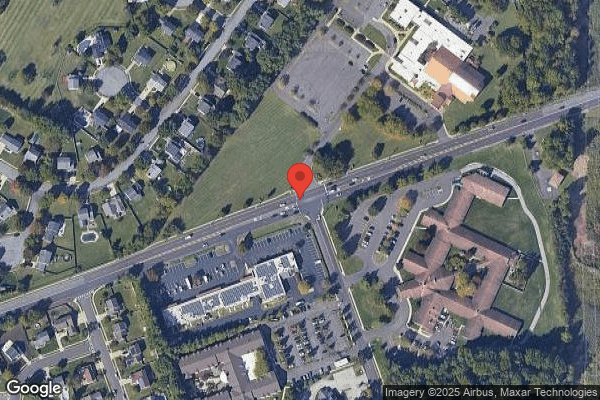
Jun 2022 7 deficiencies
CONCERN (D)

Potential for Harm - no one hurt, but risky conditions existed

Deficiency F0658 (Tag F0658)

Could have caused harm · This affected 1 resident

Based on observation, interview, record review and review of other facility documents, it was determined that the facility failed to obtain a physician's order for the use of bed siderails. This defic...

Read full inspector narrative →
Based on observation, interview, record review and review of other facility documents, it was determined that the facility failed to obtain a physician's order for the use of bed siderails. This deficient practice was observed for 1 of 2 residents (Resident #14) reviewed for position/mobility and was evidenced by the following: Reference: New Jersey Statutes, Annotated Title 45, Chapter 11. Nursing Board. The Nurse Practice Act for the state of New Jersey states: The practice of nursing as a registered professional nurse is defined as diagnosing and treating human responses to actual or potential physical and emotional health problems, through such services as case finding, health teaching, health counseling and provision of care supportive to or restorative of life and wellbeing, and executing medical regimes as prescribed by a licensed or otherwise legally authorized physician or dentist. Reference: New Jersey Statutes, Annotated Title 45, Chapter 11. Nursing Board. The Nurse Practice Act for the state of New Jersey states: The practice of nursing as a licensed practical nurse is defined as performing tasks and responsibilities within the framework of case finding, reinforcing the patient and family teaching program through health teaching, health counseling and provision of supportive and restorative care, under the direction of a registered nurse or licensed or otherwise legally authorized physician or dentist. On 05/23/2022 at 10:23 AM, the surveyor observed Resident #14 lying in bed. A half bed siderail was attached to the left side (window side) of the bed and the right side of the bed was observed to be against the wall. According to the admission Record, Resident #14 was admitted to the facility with diagnoses that included, but were not limited to, cerebral palsy, vascular dementia, quadriplegia, hemiplegia and hemiparesis, spastic quadriplegia cerebral palsy, and unspecified dementia without behavioral disturbance. Review of the Annual Minimum Data Set (MDS), an assessment tool utilized to facilitate the management of care, dated 05/24/2022, reflected that Resident #14 had a Brief Interview for Mental Status score of one indicating severe cognitive impairment. On 05/24/2022 at 1:16 PM, the surveyor interviewed the Physical Therapy Assistant (PTA) regarding a bedrail assessment completed by physical therapy on 02/20/2022 for Resident #14. The PTA provided the following information, That the physical therapist covered for somebody in the building on that day. She is not here now. The resident was evaluated for bedrail use. He/she did not need a bedrail, as he/she is a two-person assist for bed mobility and Hoyer (type of lift) transfer. He/she doesn't need a bedrail, however, we left it there, so they have a sense of security and something to grab onto and hold if need be. I think they also rock against it to gain staff attention at times. On 06/01/2022 at 12:09 PM, the surveyor reviewed the medical record. The following order was observed and dated 05/27/2022: Bed Enablers for spatial awareness and comfort. On 06/02/2022 at 1:12 PM, the surveyor conducted an interview with the Administrator concerning Resident #14's bedrail usage. The surveyor questioned the Administrator whether the use of bed siderails required a physician's order. The Administrator explained, Bed siderails require a physician's order. On 06/03/2022 at 10:14 AM, the surveyor interviewed the Director of Nursing (DON) and Administrator. The surveyor explained that the physical therapy bedrail assessment conducted on 02/10/2022 revealed that Resident #14 had a bedrail in place, however there was no physician order for the bedrail use until 05/27/2022. The surveyor requested the staff to find a physician's order for bedrail use prior to 05/27/2022. The DON responded, I was not able to locate an order for the timeframe you asked yesterday. There was an assessment completed on 03/30/2022 in addition to the consent form. We have not been able to locate a previous physician order for bed siderails. The surveyor questioned the DON if Resident #14 should have had a physician's order for the bedrail. The DON replied, Yes, there should have been a physicians order for the bed siderail. We only know that he/she had the siderail in place since the PT evaluation conducted on 02/10/2022. Review of the facility's policy titled, Proper Use of Side Rails, updated 03/2022, did not include any documentation requiring a physician's order for bedrail use. NJAC 8:39-27.1 (a)
CONCERN (D)

Potential for Harm - no one hurt, but risky conditions existed

Pressure Ulcer Prevention (Tag F0686)

Could have caused harm · This affected 1 resident

**NOTE- TERMS IN BRACKETS HAVE BEEN EDITED TO PROTECT CONFIDENTIALITY** Based on observation, interview, record review and review of other pertinent facility documents, it was determined that the faci...

Read full inspector narrative →
**NOTE- TERMS IN BRACKETS HAVE BEEN EDITED TO PROTECT CONFIDENTIALITY** Based on observation, interview, record review and review of other pertinent facility documents, it was determined that the facility failed to follow a physician's order to offload a resident's heels. The deficient practice was observed for 1 of 3 residents (Resident #6) investigated for Pressure Ulcer/Injury and was evidenced by the following: On 05/19/22 at 11:03 AM, during the initial tour, the surveyor observed Resident #6 in bed. Resident #6's legs appeared to be contracted. At this time, the surveyor observed a heel boot (a cushion that protects the heels by relieving excess heel pressure from ulcers and pressure injuries) on the nightstand. On the same date at 11:20 AM, the surveyor observed no off-loading support was in place on Resident #6's heels. On 05/23/22 at 8:39 AM, the surveyor observed Resident #6 in bed. The resident did not have heel boots on or off-loading support for his/her heels. On 5/24/22 at 11:23 AM, the surveyor observed Resident #6 in bed. The resident did not have heel boots on or off-loading support for his/her heels. A heel boot was observed on the nightstand. On 5/25/22 at 8:59 AM, in the presence of the surveyor, Licensed Practical Nurse #4 (LPN) removed Resident #6's bed sheet from his/her feet. The surveyor observed that Resident #6 did not have heel boots on or off-loading support in place for resident's heels. On the same date at 10:26 AM in Resident #6's room, during an interview with the surveyor, Registered Nurse #5 (RN) stated that Resident #6 had a physician's order to support his/her heels. RN #5 further stated that a pillow or rolled blanket would be used to support Resident #6's heels. At this time, in the presence of the surveyor, RN #5 confirmed that Resident #6 did not have any heel supports currently on and confirmed that the comprehensive care plan included preventative measures to offload or float resident's heels while in bed. On the same date at 10:41 AM, during an interview with the surveyor, Licensed Practical Nurse/Unit Manager #1 (LPN/UM) stated that Resident #6 did not have a pressure ulcer (an open ulcer, the appearance of which will vary depending on the stage) or pressure injury (a reddened area over a boney prominence). She stated that she thinks Resident #6 used heel boots. She further stated that staff should float resident's heels while resident was in bed. LPN/UM #1 affirmed that the nurse and CNA were responsible that Resident #6 had heel boots on. On 05/25/22 at 11:59 AM, during an interview with the surveyor, LPN/UM #1 revealed that she could not say why Resident #6 did not wear heel boots because she usually had something. On 06/01/22 09:45 AM, during an interview with the surveyor, Certified Nursing Assistant #2 (CNA) revealed that Resident #6 did wear heel boots but sometimes, kicked them off. Review of the admission Record revealed that resident had a diagnoses that included, but were not limited to, unspecified symptoms and signs involving cognitive functions following cerebral infarction (disruption of blood to the brain), diabetes mellitus type II (disease that results in too much sugar in the blood), cerebral atherosclerosis (thickening and hardening of the walls of the arteries in the brain), vascular dementia without behavioral disturbance, heart disease and cerebrovascular disease (stroke). Review of the Quarterly Minimum Data Set (MDS), an assessment tool utilized to facilitate the management of care, dated 05/17/22, and a Significant Change MDS, dated [DATE], reflected that Resident #6 did not have pressure ulcers or injuries and was at risk for pressure ulcers or injuries. Each MDS further revealed that resident utilized a pressure reducing device in bed. The MDSs revealed Resident #6 was receiving hospice (a type of health care that focuses on the palliation of a terminally ill patient's pain and symptoms). Review of Resident #6's physician orders located in the Electronic Medical Record (EMAR), revealed the following orders: - an order dated 01/31/22 reflected hospice as of 01/31/22, and - an order started on 10/18/20 to float resident's heels while in bed. Review of Resident #6's Comprehensive Care Plan located in the EMAR, revealed a focus initiated on 11/08/19 that resident is at risk or has actual skin breakdown with an intervention initiated on 04/26/21 to off load or float his/her heels while in bed. Review of Resident #6's Treatment Administration Record for May 2022 revealed the order to float heels while in bed. On 06/02/22 at 12:46 PM, during an interview with the surveyor, the Director of Nursing (DON) stated that her expectation of off-loading heels was using heel boots or utilizing a pillow. Review of the facility policy titled, Prevention of Pressure Ulcers/Injuries, updated on 10/19, under the heading, Support Surfaces and Pressure Redistribution, reflected to Select appropriate support surfaces based [on] the resident's mobility, continence, skin moisture and perfusion, body size, weight, and overall risk factors. NJAC 8:39-27.2(a)
CONCERN (D)

Potential for Harm - no one hurt, but risky conditions existed

Deficiency F0688 (Tag F0688)

Could have caused harm · This affected 1 resident

Based on observation, interview, record review, and review of other facility documents, it was determined that the facility failed to follow a physician's order for the application of a palm protector...

Read full inspector narrative →
Based on observation, interview, record review, and review of other facility documents, it was determined that the facility failed to follow a physician's order for the application of a palm protector to the left hand for one resident. This deficient practice was identified for Resident #9, 1 of 2 residents reviewed for limited range of motion and was evidenced by the following: On 05/23/22 at 11:59 AM and 1:06 PM, on 05/24/22 at 10:27 AM and 1:17 PM, on 05/25/22 at 8:05 AM, on 06/01/22 at 8:30 AM and 11:15 AM, and on 06/02/22 at 10:46 AM, the surveyor observed Resident #9 lying in bed with the head of the bed elevated. The surveyor observed the resident's left hand was closed with the fingertips touching the resident's palm with no palm protector in place. The surveyor further observed the resident was nonverbal, confused and could not follow directions to open his/her hand. According to the admission Record, Resident #9 was admitted to the facility with diagnoses that included, but were not limited to, contracture of the left hand. Review of the Quarterly Minimum Data Set (MDS), an assessment tool utilized to facilitate the management of care, dated 02/17/22, reflected that Resident #9 was unable to speak, identified as severely cognitively impaired, totally staff dependent for activities of daily living, and had functional limitations in range of motion of the upper and lower extremities on both sides of the body. Review of the Resident #9's current Care Plan, reflected a focus that resident cannot apply and remove the left palm protector due to functional deterioration with the goal to prevent contractures and maintain skin integrity times 120 days. The Order Summary Report for the Active Orders as of 05/31/22 revealed an order dated 03/31/22 for resident to wear a left palm protector at all times, and to remove for hygiene and skin check only. Review of the March, April, and May 2022 Medication Administration Records (MAR) did not reflect the physician order for a left palm protector for the nurse to sign when applied. Review of the March, April, and May 2022 Treatment Administration Records (TAR) did not reflect the physician order for a left palm protector for the nurse to sign when applied. The March, April, and May 2022 TARs did reflect an undated notation under Unscheduled 'Other' Orders for resident to wear a left palm protector at all times, remove for hygiene and skin check only. The surveyor observed that this notation did not require nurse signatures. During an interview with the surveyor on 06/01/22 at 11:25 AM, the Certified Nursing Assistant #1 (CNA) stated that she had Resident #9 on her assignment and was familiar with the resident. CNA #1 stated that the resident was contracted and required complete care. CNA #1 further stated that she was unaware that the resident was ordered a palm protector to his/her left hand. During an interview with the surveyor on 06/01/22 at 11:31 AM, the Licensed Practical Nurse #1 (LPN) stated that she was an agency nurse and had Resident #9 on her assignment. In the presence of the surveyor, LPN #1 reviewed the resident's current orders and confirmed there was an order for a palm protector to resident's left hand at all times dated 03/31/22. LPN #1 further reviewed the May 2022 MAR and TAR in the electronic medical record and confirmed that the MAR and TAR did not reflect the order. LPN #1 stated that she was unaware of this order, as it was not reflected in the MAR or the TAR for her to sign. LPN #1 further stated that it was important to know what adaptive devices the resident required, and it was also important that the adaptive device were in place, so that the hand did not contract permanently. During an interview with the surveyor on 06/02/22 at 10:57 AM, the LPN/Unit Manager #1 (LPN/UM) reviewed the physician orders and confirmed that Resident #9 had an order for a left palm protector dated 03/31/22. LPN/UM #1 further confirmed that the order was not scheduled for nurse signatures on the May 2022 MAR or TAR. LPN/UM #1 acknowledged that the left palm protector was noted in the May 2022 TAR under Other orders, which did not require nurse signatures. LPN/UM #1 stated that it was important that the left palm protector was in place, as ordered, so that the resident's skin remained intact and the resident's contracture did not worsen. During an interview with the surveyor on 06/02/22 at 1:20 PM, the Director of Nursing (DON) reviewed the physician orders and confirmed that Resident #9 had an order for a left palm protector dated 03/31/22. The DON further acknowledged that the May 2022 TAR reflected the left palm protector order under Other orders, which did not require nurse signatures. The DON stated that she expected that the nurse would apply the palm protector, according to the physician's order, and monitor the resident's skin integrity. The facility failed to provide a policy concerning palm protectors. NJAC 8:39-27.1 (a)
CONCERN (D)

Potential for Harm - no one hurt, but risky conditions existed

Accident Prevention (Tag F0689)

Could have caused harm · This affected 1 resident

Based on observation, interview, and record review, it was determined that the facility failed to a.) follow a physician's order for floor mats to the floor while in bed and b.) follow fall prevention...

Read full inspector narrative →
Based on observation, interview, and record review, it was determined that the facility failed to a.) follow a physician's order for floor mats to the floor while in bed and b.) follow fall prevention interventions as written on the resident's plan of care for a resident that was identified as a higher risk for falls. The deficient practice was identified for 1 of 4 residents reviewed for accidents (Resident #100) and was evidenced by the following: 1. During a tour of the facility on 05/19/22 at 12:10 PM, the surveyor observed Resident #100 with his/her eyes closed in bed, with the head of the bed slightly elevated. The surveyor further observed a blue mattress propped against the wall under the window. The surveyor did not observe floor mats on either side of the resident's bed. According to the Face Sheet, Resident #100 was admitted to the facility with diagnoses that included: Alzheimer's disease, dementia, muscle weakness, lack of coordination and unsteadiness on feet. Review of a Significant Change in Status Minimum Data Set (MDS), an assessment tool used to facilitate the management of care, dated 05/10/22, reflected that staff assessed the resident as moderately cognitively impaired and required extensive assist of one person for transfers and dressing. Review of Resident #100's Fall Risk Assessment (an assessment tool used to score a resident's likelihood of falling), dated 04/03/22, revealed that staff calculated a score of 12, which identified Resident #100 as a higher risk for falls. Review of Resident #100's hospice recommendations, dated 04/27/22, included a recommendation for floor mats to bilateral sides of bed for safety/fall risk. Review of Resident #100's Progress Notes (PN) revealed a 04/48/22 Health Status Note that indicated the resident was admitted to hospice care on 04/27/22, had recommendations that included floor mats to bilateral sides of bed for safety/fall risk, and that the NP [nurse practitioner] was notified. Review of Resident #100's Order Summary Report for Active Physician Orders (orders), on 05/20/22 at 2:06 PM, revealed a 04/28/22 order for Floor mats to B/L [bilateral] sides of bed for safety/fall risk. Review of the April 2022 and May 2022 Treatment Administration Record (TAR) did not include the aforementioned order. Review of Resident #100's Care Plan (CP), on 05/23/22 at 9:30 AM, reflected that Resident #100 had a Focus of high risk for falls related to stroke and poor safety awareness. Review of the interventions did not include the use of floor mats to bilateral sides of bed for safety/fall risk. On 05/23/22 at 9:04 AM, the surveyor observed Resident #100 in bed having his/her breakfast meal. The surveyor did not observe floor mats on either side of the resident's bed. The surveyor further observed a blue mattress propped against the wall under the window. On 05/25/22 9:05 AM, the surveyor observed Resident #100 in bed watching television. The surveyor did not observe floor mats on either side of the resident's bed. During an interview with the surveyor on 05/26/22 at 1:20 PM, the Licensed Practical Nurse #2 (LPN) stated that Resident #100 was on hospice and required one to two persons assist with transfers. LPN #2 further stated the resident was a fall risk and had interventions that included a floor mat to one side of the bed. LPN #2 reviewed Resident #100's orders, in the presence of the surveyor, and stated the resident's floor mat order was updated today, 05/26/22. LPN #2 added that the new order was updated to floor mats to be positioned on both sides of the bed while in bed. During an interview with the surveyor on 05/26/22 at 1:24 PM, the Licensed Practical Nurse/Unit Manager #2 (LPN/UM) stated the resident was on hospice, a fall risk, and had interventions that included the use of floor mats to bilateral sides of bed. LPN/UM #2 added that the resident's 04/28/22 floor mat order was inputted into the electronic medical record under Ancillary and that the nurses were not signing off or accounting for the floor mat placement. LPN/UM #2 explained that orders inputted as Ancillary did not carry over to the TAR and that she updated the resident's order and care plan that day to capture the floor mat order. Review of the facility's Medication and Treatment Orders policy, updated 10/2019, revealed that orders for medications and treatments would be consistent with principles of safe and effective order writing. 2. Review of Resident #100's PN revealed a 02/09/22 PN that Resident #100 sustained a fall while attempting to get up off the couch. The PN further revealed that Resident #100 had on socks at the time of the fall and that staff was educated to ensure that Resident #100 had on non-skid socks or proper shoes. Review of Resident #100's CP, initiated on 10/13/21, reflected that Resident #100 had a Focus of high risk for falls related to stroke and poor safety awareness. The CP included an intervention, initiated on 10/28/21, to ensure the resident wore appropriate footwear (sneaker or non-skid socks) when ambulating or mobilizing in w/c [wheelchair.] Review of Resident #100's 02/10/22 Fall Investigation Report, under the Notes section, revealed that the Interdisciplinary Team discussed Resident #100's 02/09/22 fall and to prevent the potential for future occurrences, staff was to ensure non-skid socks or proper shoes were placed on resident. During an interview with the surveyor on 06/03/22 at 10:15 AM, the Director of Nursing (DON) stated Resident #100's floor mats should mats should have been in place when the resident was in bed. The DON further stated that Resident #100 should have had the appropriate footwear at the time of the 02/10/22 fall. The DON added that appropriate footwear included sneaker, shoes, or non-skid socks. Review of the facility's Falls-Clinical Protocol, updated 10/2019, reflected that staff and physician would identify pertinent interventions to try to prevent subsequent falls and to address the risks of clinically significant consequences of falling. NJAC 8:39-27.1(a)
CONCERN (E)

Potential for Harm - no one hurt, but risky conditions existed

Drug Regimen Review (Tag F0756)

Could have caused harm · This affected multiple residents

Based on interview, record review, and review of other facility documents, it was determined that the consultant pharmacist failed to respond to a medication-related irregularity in a timely and compl...

Read full inspector narrative →
Based on interview, record review, and review of other facility documents, it was determined that the consultant pharmacist failed to respond to a medication-related irregularity in a timely and complete manner. This deficient practice was identified for 1 of 5 residents (Resident #55) reviewed for unnecessary medications and was evidenced by the following: On 05/27/22, the surveyor obtained and reviewed copies of the Consultant Pharmacist's (CP) Monthly Report. (A CP's note is a report of any medication-related irregularity or recommendation that needs to be addressed by the physician.) Review of the Consultant Pharmacist's Monthly Report, dated 04/28/22, revealed a recommendation to, Please update PRN Glucagon to include parameters. (Glucagon is a hormone that works within the body to control blood sugar levels. A medication form of the hormone is typically given when a blood sugar (BS) level is too low to maintain the normal biological functions of the body. Its use is implemented in conjunction with a parameter, a numerical or other measurable factor forming a condition that must be met to use the medication in an effective and therapeutic manner.) The surveyor reviewed the Physician's Order Form (POF) and Medication Administration Record (MAR), a recording document, for Resident #55. Review of the documents revealed diagnoses that included, but were not limited, to Diabetes Mellitus (a disorder in which the body does not produce enough or respond normally to insulin, causing blood sugar (glucose) levels to be abnormally high). The surveyor reviewed the POFs and MARs for the months of January, February, March, and April of 2022. The POF and MAR for the referenced months revealed an order for Glucagon Emergency Kit 1 MG (an abbreviation for milligram), Inject 1 mg intramuscularly every 15 minutes as needed for hypoglycemic [low blood sugar] symptoms difficulty to arouse or unconscious Administer Immediately repeat BS [blood sugar] in 15 min if not response to 1st admin., repeat Glucagon if no response to 2nd inj. [injection] In 15 min repeat blood glucose and start IV access if not presently established and go to next step based on results. Further review of the documentation revealed the referenced order was dated 01/28/22. The surveyor reviewed the POFs and MARs for Resident #55 for the months of May and June of 2022. The POF and MAR for the referenced months revealed an order for Glucagon Emergency Kit 1 MG, Inject 1 mg intramuscularly every 15 minutes as needed for hypoglycemic symptoms difficulty to arouse or unconscious Administer for BS equal to 50 mg/dl. repeat BS in 15 min. if no response to 1st dose, repeat Glucagon. if no response to 2nd inj. In 15 min repeat blood glucose and notify MD/NP immediately. Further review of the documentation revealed the referenced order was dated 05/13/22. During an interview on 06/01/22 at 12:55 PM, the Licensed Practical Nurse/Unit Manager (LPN/UM) reviewed the orders for Resident #55 with the surveyor and confirmed that the order for Glucagon began on 01/28/22 and was then rewritten on 05/13/22. She confirmed that the order during the referenced period had no parameter instructing the nurse when to give the medication with respect to blood sugar levels. The LPN/UM acknowledged that the order should have had a parameter, and this was important so the nurse would know how and when to administer the medication appropriately. She further stated that the lack of a parameter on the order should have been detected before April of 2022, since the order was written in January of 2022. During the same interview, the LPN/UM acknowledged that the most recent order for the Glucagon was written and implemented on 05/13/22 and, in this case, there was a parameter present on the order. The LPN/UM stated that the updated order should have been more specific, indicating to administer the Glucagon for a blood sugar level less than or equal to 50 mg/dl (an abbreviation for milligram/decilitre, a unit of measurement). The LPN/UM further stated that the order, as written, could lead to ambiguous situations and potential medication administration errors. The order, according to the LPN/UM, would have only been given for a blood sugar level equal to 50 mg/dl as written and reiterated that this could potentially be problematic. During an interview with the survey team and facility administration on 06/02/22 at 12:50 PM, the Director of Nursing (DON) stated that it would be her expectation for a lack of a blood sugar parameter on a Glucagon order to be addressed before April of 2022, if written in January of 2022. It should have been addressed in January or at least during the review period following January, after the order was written. In addition, the DON acknowledged that administering Glucagon for a blood sugar equal to 50 mg/dl was incomplete and the order should have been more specific, referencing a blood sugar less than or equal to 50 mg/dl. Review of the facility's policy titled, Medication and Treatment Orders, updated 03/2022, revealed that medications and treatments will be consistent with principles of safe and effective order writing. The policy did not address the use of parameters in conjunction with medication administration. Review of the facility's policy titled, Administering Medications updated 03/2022, revealed that medications shall be administered in a safe and timely manner, and as prescribed. The policy did not address the use of parameters in conjunction with medication administration. NJAC 8:39-29.3(a)(1)
CONCERN (E)

Potential for Harm - no one hurt, but risky conditions existed

Deficiency F0760 (Tag F0760)

Could have caused harm · This affected multiple residents

Based on interview, record review, and review of other facility documents, it was determined that the facility failed to a.) accurately transcribe a physician's order and b.) ensure that the resident ...

Read full inspector narrative →
Based on interview, record review, and review of other facility documents, it was determined that the facility failed to a.) accurately transcribe a physician's order and b.) ensure that the resident received the psychotropic medication in accordance with the psychiatric recommendation. This deficient practice was identified for 1 of 5 residents (Resident #87) reviewed for unnecessary medications and was evidenced by the following: According to the admission Record, Resident #87 was admitted to the facility with diagnoses that included, but were not limited to, Major Depressive Disorder and generalized Anxiety Disorder. 1. Review of the Psychiatric Evaluation dated 03/11/22 revealed Resident #87's current mediation orders for Ativan (an antianxiety medication) 0.5 mg (abbreviation for milligram) every six hours PRN (as needed) times 14 days for diagnosis Anxiety and Lexapro (an antidepressant medication) 10 mg daily for diagnosis Depression. After the psychiatrist evaluated the resident, the Plan was to Extend PRN Ativan order for an additional 30 days as a bridge therapy for anxiety, while Lexapro takes effect. Review of the electronic medical record Order Details revealed an order for Ativan 0.5 mg by mouth PRN every six hours for Anxiety with a start date of 03/13/22 and an end date of indefinite. The Admin [Administration] Note reflected Ativan 0.5 mg by mouth as needed for 30 days as bridge therapy while Lexapro takes effect. The surveyor observed the order did not include the end date of 30 days. Review of the Order Summary Report for the order date range of 03/01/22 - 05/31/22 reflected an order dated 03/13/22 for Ativan 0.5 mg, give one tablet by mouth every six hours as needed for Anxiety. The surveyor observed the order did not include an end date of 30 days. Review of the March, April, and May 2022 Medication Administration Records (MAR) revealed the physician's order dated 03/13/22 for Ativan 0.5 mg, give one tablet by mouth every six hours as needed for anxiety. The surveyor observed that the order did not include an end date of 30 days. 2. Review of Resident #87's Order Summary Report for the order date range of 03/01/22 - 05/31/22 reflected an order dated 03/13/22 for Ativan 0.5 mg, give one tablet by mouth every six hours as needed for Anxiety. The surveyor observed the order did not include an end date of 30 days. Review of the March, April, and May 2022 MARs revealed the physician's order dated 03/13/22 for Ativan 0.5 mg, give one tablet by mouth every six hours as needed for anxiety. The surveyor observed that the order did not include an end date of 30 days. Review of the March, April, and May 2022 MARs revealed that Resident #87 received the as needed Ativan 0.5 mg, after the 30-day end date of 04/12/22, on the following dates and times: 04/14/22 at 8:42 AM and 8:56 PM, 04/22/22 at 12:57 PM, 04/24/22 and 5:00 AM, 05/02/22 at 8:49 AM, 05/05/22 at 11:50 AM and 6:41 PM, 05/07/22 at 9:43 AM, 05/08/22 at 8:54 AM, 05/11/22 at 6:23 PM, 05/14/22 at 7:57 AM and 5:00 PM, 05/15/22 at 5:45 PM, and 05/18/22 at 5:33 PM. During an interview with the surveyor on 05/27/22 at 10:27 AM, the Licensed Practical Nurse/Unit Manager #2 stated that the end date for the Ativan order dated 03/13/22 should have been 04/12/22 and acknowledged that Resident #87 received the as needed Ativan after 04/12/22. During an interview with the surveyor on 06/01/22 at 12:57 PM, the Director of Nursing (DON) stated that when the nurse transcribed the Ativan order, she did not include the end date. The DON further stated that when the facility staff reviewed the Ativan order, the order should have included an end date. Review of the facility's Medication Therapy policy, updated in March 2022, indicated that periodically, the staff and practitioner will review the medication regimen for proper dosage and duration. NJAC 8:39- 29.2(d)
CONCERN (E)

Potential for Harm - no one hurt, but risky conditions existed

Food Safety (Tag F0812)

Could have caused harm · This affected multiple residents

Based on observation, interview and document review, it was determined that the facility failed to handle potentially hazardous foods and maintain sanitation in a safe and consistent manner. This defi...

Read full inspector narrative →
Based on observation, interview and document review, it was determined that the facility failed to handle potentially hazardous foods and maintain sanitation in a safe and consistent manner. This deficient practice was evidenced by the following: On 05/19/22 from 11:00 AM to 11:22 AM, the surveyor, accompanied by the Food Service Director (FSD), Executive Chef (EC), and District Manager in Training observed the following in the kitchen: 1. A stand up mixer on top of a wheeled cart was covered with a clear plastic bag. The mixer was cleaned and sanitized. Upon removal of the plastic cover, the surveyor observed unidentified debris and dead flies in the base of the bowl, which is a food contact surface. On 06/03/22 during a follow up interview, the EC stated, We haven't used this in two years. We put plastic wrap over the bowl to protect it. 2. The surveyor opened the lid to the bulk ice machine. The surveyor observed unidentified black debris on the white drip plate which was above the ice supply. The surveyor then obtained a paper towel and wiped the drip plate. The paper towel was soiled with the unidentified black debris. On interview the FSD stated, The ice machine was cleaned on 04/27/2022. On 06/01/2022 from 10:14 AM to 10:26 AM the surveyor, accompanied by the Licensed Practical Nurse #3 (LPN), observed the following on 200/300 unit pantry: 1. In the refrigerator on a middle shelf, a plastic-sealed container contained a garden salad. The salad had no dates and the lettuce was observed to be turning brown. LPN #3 stated, Usually the aides check the refrigerator. A tan plastic bag contained previously opened containers of tuna salad and a container of chicken salad. The containers had no dates. In addition, a plastic zip lock type bag contained what appeared to be Habanero peppers. The peppers were observed to be slimy and had a brownish liquid in the bag. LPN #3 stated, I don't know what they are and I don't want to know. On the side of the refrigerator door, two peanut butter and jelly sandwiches were wrapped with plastic wrap. When interviewed, LPN #3 stated, I'm not sure who checks the refrigerators. Usually the aides check the refrigerator. The surveyor questioned LPN #3 whether the facility had provided in-service training in regard to the facility policy for monitoring of pantry refrigerators. LPN #3 responded, No. A green sign on the freezer door revealed the following under Pantry Rules: All food must be labeled with date/name After 48 hours anything will be thrown out On 06/02/2022 from 10:24 AM to 10:36 AM, the surveyor, accompanied by the Executive Chef (EC) observed the following in the kitchen: 1. A cleaned and sanitized meat slicer was observed to be bagged on top of a metal counter. The surveyor lifted the plastic bag that was covering the meat slicer and observed a clear, wet, water-like substance on the base of the meat slicer and the slicing surface adjacent to the blade that would be a food contact surface. The EC stated, We are gonna re-wash and sanitize the slicer parts. We will completely air dry them before reassembling and covering the slicer. The parts should be completely air dried prior to reassembly. The surveyor reviewed the facility policy titled Foods Brought by Family/Visitors, updated 10/2019. The policy revealed the following under the heading Policy Interpretation and Implementation: 7. Food brought by the family/visitors that is left with the resident to consume later would be labeled and stored in a manner that it is clearly distinguishable from facility-prepared food. b. Perishable foods must be stored in re-sealable containers with tightly fitting lids in a refrigerator. Containers will be labeled with the resident's name, the item and the use by date. 8. The nursing staff will discard perishable foods on or before the use by date. 9. The nursing and/or food service staff will discard any foods prepared for the resident that show obvious signs of potential foodborne danger (for example, mold growth, foul odor, past due package expiration dates.) NJAC 8:39-17.2(g)
Understanding Severity Codes (click to expand)
Life-Threatening (Immediate Jeopardy)
J - Isolated K - Pattern L - Widespread
Actual Harm
G - Isolated H - Pattern I - Widespread
Potential for Harm
D - Isolated E - Pattern F - Widespread
No Harm (Minor)
A - Isolated B - Pattern C - Widespread

Questions to Ask on Your Visit

  • "What changes have you made since the serious inspection findings?"
  • "Why is there high staff turnover? How do you retain staff?"
  • "Can I speak with families of current residents?"
  • "What's your RN coverage like on weekends and overnight?"

Our Honest Assessment

Strengths
  • • Licensed and certified facility. Meets minimum state requirements.
Concerns
  • • Multiple safety concerns identified: 1 life-threatening violation(s), $41,098 in fines, Payment denial on record. Review inspection reports carefully.
  • • 34 deficiencies on record, including 1 critical (life-threatening) violation. These warrant careful review before choosing this facility.
  • • $41,098 in fines. Higher than 94% of New Jersey facilities, suggesting repeated compliance issues.
  • • Grade F (38/100). Below average facility with significant concerns.
Bottom line: Trust Score of 38/100 indicates significant concerns. Thoroughly evaluate alternatives.

About This Facility

What is Complete Care At Voorhees, Llc's CMS Rating?

CMS assigns COMPLETE CARE AT VOORHEES, LLC an overall rating of 3 out of 5 stars, which is considered average nationally. Within New Jersey, this rating places the facility higher than 0% of the state's 100 nursing homes. This mid-range rating indicates the facility meets federal standards but may have areas for improvement.

How is Complete Care At Voorhees, Llc Staffed?

CMS rates COMPLETE CARE AT VOORHEES, LLC's staffing level at 2 out of 5 stars, which is below average compared to other nursing homes. Staff turnover is 68%, which is 22 percentage points above the New Jersey average of 46%. High turnover can affect care consistency as new staff learn residents' individual needs. RN turnover specifically is 66%, which is notably high. RNs provide skilled clinical oversight, so turnover in this role can affect medical care quality.

What Have Inspectors Found at Complete Care At Voorhees, Llc?

State health inspectors documented 34 deficiencies at COMPLETE CARE AT VOORHEES, LLC during 2022 to 2025. These included: 1 Immediate Jeopardy (the most serious level, indicating potential for serious harm or death) and 33 with potential for harm. Immediate Jeopardy findings are rare and represent the most serious regulatory concerns. They require immediate corrective action.

Who Owns and Operates Complete Care At Voorhees, Llc?

COMPLETE CARE AT VOORHEES, LLC is owned by a for-profit company. For-profit facilities operate as businesses with obligations to shareholders or private owners. The facility is operated by COMPLETE CARE, a chain that manages multiple nursing homes. With 190 certified beds and approximately 176 residents (about 93% occupancy), it is a mid-sized facility located in VOORHEES, New Jersey.

How Does Complete Care At Voorhees, Llc Compare to Other New Jersey Nursing Homes?

Compared to the 100 nursing homes in New Jersey, COMPLETE CARE AT VOORHEES, LLC's overall rating (3 stars) is below the state average of 3.3, staff turnover (68%) is significantly higher than the state average of 46%, and health inspection rating (2 stars) is below the national benchmark.

What Should Families Ask When Visiting Complete Care At Voorhees, Llc?

Based on this facility's data, families visiting should ask: "What changes have been made since the serious inspection findings, and how are you preventing similar issues?" "How do you ensure continuity of care given staff turnover, and what is your staff retention strategy?" "Can you walk me through typical staffing levels on day, evening, and night shifts?" "Can I visit during a mealtime to observe dining assistance and food quality?" These questions are particularly relevant given the facility's Immediate Jeopardy citations, the facility's high staff turnover rate, and the below-average staffing rating.

Is Complete Care At Voorhees, Llc Safe?

Based on CMS inspection data, COMPLETE CARE AT VOORHEES, LLC has documented safety concerns. Inspectors have issued 1 Immediate Jeopardy citation (the most serious violation level indicating risk of serious injury or death). The facility has a 3-star overall rating and ranks #100 of 100 nursing homes in New Jersey. Families considering this facility should ask detailed questions about what corrective actions have been taken since these incidents.

Do Nurses at Complete Care At Voorhees, Llc Stick Around?

Staff turnover at COMPLETE CARE AT VOORHEES, LLC is high. At 68%, the facility is 22 percentage points above the New Jersey average of 46%. Registered Nurse turnover is particularly concerning at 66%. RNs handle complex medical decisions and coordinate care — frequent RN changes can directly impact care quality. High turnover means new staff may not know residents' individual needs, medications, or preferences. It can also be disorienting for residents, especially those with dementia who rely on familiar faces. Families should ask: What is causing the turnover? What retention programs are in place? How do you ensure care continuity during staff transitions?

Was Complete Care At Voorhees, Llc Ever Fined?

COMPLETE CARE AT VOORHEES, LLC has been fined $41,098 across 1 penalty action. The New Jersey average is $33,490. While any fine indicates a compliance issue, fines under $50,000 are relatively common and typically reflect isolated problems that were subsequently corrected. Families should ask what specific issues led to these fines and confirm they've been resolved.

Is Complete Care At Voorhees, Llc on Any Federal Watch List?

COMPLETE CARE AT VOORHEES, LLC is not on any federal watch list. The most significant is the Special Focus Facility (SFF) program, which identifies the bottom 1% of nursing homes nationally based on persistent, serious quality problems. Not being on this list means the facility has avoided the pattern of deficiencies that triggers enhanced federal oversight. This is a positive indicator, though families should still review the facility's inspection history directly.