WHITING GARDENS REHABILITATION AND NURSING CENTER
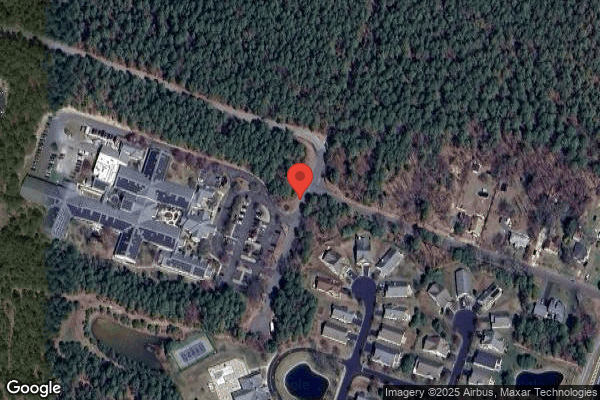

3000 HILLTOP ROAD, WHITING, NJ 08759 (732) 849-4400
For profit - Limited Liability company 200 Beds Independent Data: November 2025 3 Immediate Jeopardy citations
Trust Grade
0/100
#344 of 344 in NJ
Last Inspection: January 2025

Within standard 12-15 month inspection cycle. Federal law requires annual inspections.

Overview

Whiting Gardens Rehabilitation and Nursing Center has received a Trust Grade of F, indicating significant concerns about the quality of care provided. Ranking #344 out of 344 facilities in New Jersey places them in the bottom tier, with no other local options worse than this facility. The situation appears to be worsening, with reported issues increasing from 11 in 2024 to 13 in 2025. While staffing is rated average with a 3/5 star rating and a turnover rate of 50%, which is close to the state average, the facility has concerning RN coverage that is lower than 82% of state facilities. Alarmingly, the facility has incurred $221,906 in fines, higher than 94% of New Jersey facilities, raising red flags about compliance issues. Specific incidents include a resident being pepper-sprayed by staff and another resident eloping from the facility due to inadequate supervision, both of which pose serious risks to resident safety. Overall, while there are some aspects of staffing that are acceptable, the many critical deficiencies highlight significant areas of concern for families considering this nursing home for their loved ones.

Trust Score
F
0/100
In New Jersey
#344/344
Bottom 1%
Safety Record
High Risk
Review needed
Inspections
Getting Worse
11 → 13 violations
Staff Stability
⚠ Watch
50% turnover. Above average. Higher turnover means staff may not know residents' routines.
Penalties
✓ Good
$221,906 in fines. Lower than most New Jersey facilities. Relatively clean record.
Skilled Nurses
⚠ Watch
Each resident gets only 19 minutes of Registered Nurse (RN) attention daily — below average for New Jersey. Fewer RN minutes means fewer trained eyes watching for problems.
Violations
⚠ Watch
35 deficiencies on record. Higher than average. Multiple issues found across inspections.
★☆☆☆☆
1.0
Overall Rating
★★★☆☆
3.0
Staff Levels
★☆☆☆☆
1.0
Care Quality
★☆☆☆☆
1.0
Inspection Score
Stable
2024: 11 issues
2025: 13 issues

The Good

  • Full Sprinkler Coverage · Fire safety systems throughout facility
  • No fines on record

Facility shows strength in fire safety.

The Bad

1-Star Overall Rating

Below New Jersey average (3.2)

Significant quality concerns identified by CMS

Staff Turnover: 50%

Near New Jersey avg (46%)

Higher turnover may affect care consistency

Federal Fines: $221,906

Well above median ($33,413)

Significant penalties indicating serious issues

The Ugly 35 deficiencies on record

3 life-threatening 5 actual harm
Apr 2025 2 deficiencies 2 IJ
CRITICAL (J) 📢 Someone Reported This

A family member, employee, or ombudsman was alarmed enough to file a formal complaint

Immediate Jeopardy (IJ) - the most serious Medicare violation

Free from Abuse/Neglect (Tag F0600)

Someone could have died · This affected 1 resident

**NOTE- TERMS IN BRACKETS HAVE BEEN EDITED TO PROTECT CONFIDENTIALITY** Complaint #: NJ00184635 Based on observations, interviews, review of medical records, and pertinent facility documentation on 03...

Read full inspector narrative →
**NOTE- TERMS IN BRACKETS HAVE BEEN EDITED TO PROTECT CONFIDENTIALITY** Complaint #: NJ00184635 Based on observations, interviews, review of medical records, and pertinent facility documentation on 03/26/25, the facility failed to: a.) ensure the safety of a moderately cognitively impaired resident with aggressive behaviors from a staff member who pepper sprayed the Resident in the face and b.) follow their, Abuse, Neglect, and Exploitation of Residents and Unmanageable Residents policies. The deficient practice resulted in Resident #6 being treated for chemical conjunctivitis and pain to the left eye. This deficient practice was identified for 1 out 2 residents (Resident #6) who were reviewed for abuse and was evidenced by the following: A review of the Facility Reportable Event (FRE), a New Jersey Department of Health (NJDOH) document used by facilities to report incidents, revealed that on 3/19/25, Resident #6 was standing at the nurse's station grabbing at electronics/equipment, smashing it, and attempting to hit staff. The FRE further revealed that the Licensed Practical Nurse (LPN) #1 proceeded to get a bottle of pepper spray from her personal bag and sprayed Resident #6 to diffuse the situation. Additionally, the FRE revealed that the local police department was notified, and the Resident was transferred to the emergency room (ER) for treatment. On 03/26/25, at 11:33 A.M., during a tour of the dementia/locked unit, the surveyor observed Resident #6 sitting in a chair near the nurse's station. The surveyor asked Resident #6 questions and observed delayed responses for answers during this interview. The Resident was able to answer a few questions after much thought. Resident #6 reported that he/she felt ok. When asked if the Resident felt safe at the facility, the Resident responded, yes. According to the admission Record (AR), Resident #6 was admitted to the facility with diagnoses that included but were not limited to Dementia with severe mood disturbances and Major Depressive Disorder. According to the admission Minimum Data Set (MDS), an assessment tool dated 03/09/25, Resident #6 had a Brief Interview for Mental Status (BIMS) score of 12 out of 15, which indicated that the Resident was moderately cognitively impaired. The MDS further indicated that Resident #6 was experiencing delusions and had physical and verbal behaviors towards others. A review of Resident #6's Care Plan (CP) revealed a focus, initiated on 03/03/25, that indicated that the Resident could be verbally abusive towards others, combative towards the staff, had poor impulse control by throwing or destroying furniture, and lying down on the ground when upset. An intervention initiated on 03/03/25 included, If I become agitated, aggressive, or combative [,] maintain safety for all [,] keep at least 4 arm's length apart from me, decrease my stimuli and allow me to calm. During an interview on 03/26/25 at 12:01 P.M., the Certified Nursing Assistant (CNA) #1 stated that on 03/19/25, she worked a double shift [7 A.M. - 11 P.M.], and the Resident displayed no behaviors. She stated that although Resident #6 was not assigned to her, she was familiar with the Resident's behaviors. CNA #1 stated it was never appropriate to use pepper spray on a resident and that if she encountered an aggressive resident, she would step away and let them calm down. She further stated that she was educated on abuse and the prohibited use of pepper spray immediately post-incident. During an interview on 3/26/25, at 12:40 P.M., LPN #2 stated that she was assigned to Resident #6 on 03/19/25 for the day shift [7 A.M.- 3 P.M.] and that no behaviors were displayed during that time. She stated that using pepper spray on a resident was just wrong. During an interview with the surveyor on 03/26/25 at 1:23 P.M. with the DON and the Assistant Director of Nursing (ADON), they both stated that the camera footage was reviewed the next day, on 03/20/25, with the local police. They further stated that the police confiscated the footage, so it was not available for the surveyor to review. The DON and the ADON proceeded to describe the camera footage on 3/19/25. -Around 7:44 P.M., Resident #6 was seen at the nurse's station grabbing things and throwing them, and LPN #1 was behind the nurse's station. -Resident # 6 was then seen ripping the mouse from the computer and observed walking away from the nurse's station toward his/her room while twirling the mouse in the air. -LPN #1 was observed walking out of camera range and heading towards what they described as the med room [medication room]. -LPN #1 reappeared on camera at 8:04 P.M., running towards Resident #6 from behind. LPN #1 then ran in front of the Resident and sprayed the Resident with pepper spray three times. -Resident #6 was seen collapsing to the floor, holding his/her eyes, and appeared to be coughing. The facility provided Resident #6's hospital discharge paperwork for review, dated 03/19/25, that revealed that the Resident was treated for chemical conjunctivitis and pain to the left eye. The ADON stated that LPN #1 was suspended pending the outcome of the investigation. Upon the investigation, LPN #1 was terminated on 3/26/25, and a complaint form with the Board of Nursing was completed on the same date. Both the DON and the ADON stated that it was not acceptable for staff to use pepper spray on residents nor bring it into the facility. They further stated there was no policy reflecting this. A Police Report from the responding police department included a Supplement which documented their review of the surveillance footage of the event. The video spanned from 7:53 P.M. to 8:56 P.M. and captured key moments as follows: At approximately 8:07 P.M., the footage shows the victim, [Resident name], standing in the hallway of the west wing. Certified Nursing Assistant (CNA) [CNA name] is [was] seen engaging in conversation with [Resident name]. At this point, [Resident name] does not appear to pose any threat. As [Resident name] is standing, Licensed Practical Nurse (LPN) [LPN name] approaches [him/her] and proceeds to spray [him/her] directly in the face, mere inches from [his/her] eyes with her own personal Oleoresin Capsicum spray (OC spray) [Pepper Spray]. In response, [,] [Resident name] attempts to defend [him/herself] by swinging a computer mouse with [his/her] right hand to create distance from [LPN name]. Despite [Resident name] attempts to cover [his/her] face and posing no threat, [LPN name] continues spraying [him/her] multiple times. [Resident name] then collapses to the floor, visibly in pain and discomfort, covering [his/her] eyes. Both [CNA name] and [LPN name] walk away from [Resident name], [,] leaving him on the floor without any medical assistance. [He/she] remains there, in obvious distress as other employees pass by without offering help. At 8:14 [P.M.,] the video shows [Resident name] attempting to crawl to an adjacent room [Resident name] appearing disoriented, tries to enter [Room number], which is adjacent to his own. At this point, [CNA name] sees [him/her,] grabs [him/her,] and brings [him/her] to the ground The footage shows [CNA name] and [LPN name] dragging [Resident name] across the floor by [his/her] sweatshirt and sweatpants, with [CNA name] holding [his/her] right side and [LPN name] holding [his/her] left arm. They pull [him/her] back to [his/her] room at 8:15 P.M. and immediately leave, closing the door behind them. No care is provided to [Resident name] during the brief moment they are in the room. It appears no one else enters [Resident's name] room until [Police Department] and Emergency Medical Services arrive at 8:53 P.M. Review of the facility policy titled, Abuse, Neglect, and Exploitation of Residents, revised 04/03/21, revealed under the Policy Statement that, It is the policy of the facility that acts of physical, verbal, mental and financial abuse including neglect and exploitation directed against residents is absolutely prohibited. Additionally, under the Definitions section it revealed that, Physical abuse is the inappropriate physical contact with a resident which harms or is likely to harm the resident. A review of the undated Unmanageable Residents policy, revealed under section 2 of Policy Interpretations and Implementation, that, Should the resident pose an immediate danger, or become violent or beyond control of the facility, local law enforcement agencies may be called for assistance. The facility was notified of the Immediate Jeopardy (IJ) on 3/26/25 at 4:03 P.M. The Director of Nursing (DON) was presented with the IJ template. The Administrator was not able to attend. An acceptable removal plan was electronically mailed to the surveyor on 03/31/25 at 1:48 P.M. The facility implemented a corrective action plan to remediate the deficient practice. The surveyor verified the removal plan on-site and determined the IJ for F600 was removed as of 04/02/25. The Removal Plan was as follows: 1. The facility implemented a new policy, Weapons Prohibition Policy and Procedure, that included weapons are not permitted on the premises nor to be used against a resident. 2. The facility initiated in-services with the staff on Weapons Prohibition Policy and Procedure and placed signage at the staff entrance and the time clock regarding the prohibition of weapons. 3. The facility-initiated in-servicing for all staff departments on Managing Aggressive Behaviors and Responding to Challenging Behaviors. 4. The facility initiated audits on care plans and incident investigations. N.J.A.C. 8:39-4.1 (a)(5)
CRITICAL (J) 📢 Someone Reported This

A family member, employee, or ombudsman was alarmed enough to file a formal complaint

Immediate Jeopardy (IJ) - the most serious Medicare violation

Accident Prevention (Tag F0689)

Someone could have died · This affected 1 resident

Complaint #NJ00183371 Based on observations, interviews, review of the medical record and other pertinent facility records on 3/6/25 and 3/7/25, it was determined on 3/7/25 that the facility failed to...

Read full inspector narrative →
Complaint #NJ00183371 Based on observations, interviews, review of the medical record and other pertinent facility records on 3/6/25 and 3/7/25, it was determined on 3/7/25 that the facility failed to provide adequate supervision of a severely cognitively impaired resident with a known history of exit seeking which resulted in the resident eloping from the facility on 2/10/25 for 1 of 4 residents (Resident #1). The resident was located at an off-site location by an unidentified caller and returned to the facility on 2/10/25 at approximately 5:58 P.M. by the local police department. The facility's failure to provide adequate supervision to a cognitively impaired resident who was at risk for elopement posed a likelihood of serious harm, injury, impairment or death. This deficient practice placed Resident #1 and all other residents who were at risk or who had a known history of wandering or elopement in an Immediate Jeopardy (IJ) situation. The deficient practice was evidenced by the following: A Facility Reportable Event (FRE) sent to the New Jersey Department of Health dated 2/10/25, indicated that the nursing supervisor reported that the resident had been found outside of the facility after dinner at approximately 5:30 P.M. The nursing staff brought the resident back into the facility. The resident had no apparent physical injuries. The FRE did not indicate how the resident exited the facility. On 3/06/25 at 4:30 P.M. the surveyor observed Resident #1 awake, alert and fully dressed wearing a jacket. A wander guard was observed on resident's left wrist. The Resident was ambulating without the use of assistive devices. Resident #1 was socializing with another resident. The surveyor interviewed the resident who was able to state that he/she liked it at the facility. When the surveyor asked another question, the resident answered with a rambling response. It was determined he/she would not be able to continue the interview. On 3/7/25 at 9:50 A.M., during a tour of the Dementia/locked unit, the surveyor observed Resident #1 sitting in the dayroom watching television. The surveyor observed a wander guard on the resident's left wrist. According to the admission Record face sheet (an admission summary) Resident #1 was admitted with diagnoses that included but were not limited to, unspecified dementia (a group of symptoms that affect memory, thinking and social abilities), Schizophrenia (a chronic mental disorder characterized by symptoms such as hallucinations, delusions, and cognitive challenges) and Schizoaffective disorder (a mental disorder in which a person experiences a combination of symptoms of schizophrenia and mood disorder). A review of the admission Minimum Data Set (MDS), an assessment tool, dated 1/23/25, revealed that Resident #1 had a Brief Interview for Mental Status (BIMS) score of 6 out of 15 which indicated that the resident was severely cognitively impaired. Further review of the MDS record indicated that the resident was independent with ambulation without any assistive devices. A review of the Care Plans for Resident #1 indicated that an elopement care plan was initiated on 1/15/25. Interventions listed for the resident were: Wander guard to the left wrist; check for placement per order; Frequently monitor resident's whereabouts; Document wandering behavior and attempted diversional interventions in behavior log. A Progress Note dated 2/10/25, at 6:17 P.M., written by a Licensed Practical Nurse (LPN) caring for Resident # 1 indicated the resident was observed missing at 4:45 PM. All staff were told to look for the resident. The staff received a call that Resident #1 was observed at an offsite location. Two nurses from the facility drove to the offsite location to retreive the resident. According to this note, On arrival patient [sic] was in an Ambulance accompanied by 2 EMTs (Emergency Medical Technicians) and 2 Police Officers. Patient was received awake and alert, pleasantly confused. patient [sic] assisted into police car, patient was met at facility. During an interview with the Administrator on 3/7/25, at 1:40 P.M., he provided a map of the facility. He indicated on the map the exit door locations and stated that there are cameras both inside and outside of the facility, however, the resident was not captured exiting on any of the cameras. The Administrator did not indicate that there were any adjustments made to the cameras post incident. During an interview with the Director of Maintenance (DOM) on 3/7/25, at 2:02 P.M., he revealed that the wander guard system was on the front door, the west wing door and two other doors on the west unit. He indicated that he tested the system on Fridays. He stated that if a resident wearing a wander guard was close to the door, it still should not open. He further revealed that he was made aware of the elopement the following day, 2/11/25, during morning meeting. He stated that he did not check and wasn't asked by the administrative staff to check the wander guard system and/or the doors immediately after the incident. He did continue with his weekly check on Friday, 2/14/25. During the interview, the DOM provided a log documenting the doors being tested weekly. The DOM then explained the process of how he would check the operations of the door's magnetic locks, delayed egress doors, pin pad key locks, testing of the door's hardware for proper function and condition. He would then complete the log. A review of the documentation provided by the DOM revealed testing of the function of the doors were performed prior to the incident on 2/07/2025 and after the incident on 2/14/2025. When the surveyor asked the DOM why the doors were not tested at that time, he stated he was not asked to do so. The Director of Nursing (DON) during an interview on 3/7/25, at 2:38 P.M., revealed that she was made aware of the incident around 6:00 P.M. after the situation had been resolved. The Incident Report, which contradicts the FRE, provided by the facility dated 2/10/25 revealed that .initially the supervisor reported that no staff noticed that the resident was not on the floor until a phone call from an unidentified caller received that the resident was found. No alarms reported as sounding. All egress doors functional . The DON stated that she tried to get a timeline from the Nursing Supervisor but was unable. The DON further stated that other than the statements provided she did not interview any other staff on the unit. The DON revealed that the videos were viewed while trying to figure the root-cause analysis, but they were unable to see how the resident exited the facility. She stated that they did not test the doors or the wander guard system but rather relied on natural occurrence, which she explained as watching the staff to see how quickly they responded to door alarms. However, the DON stated that the root-cause analysis later revealed that Resident #1 left via an egress door, but the doors were not tested after the elopement. During an interview with the Administrator on 3/7/25, at 4:59 P.M., he stated that he was contacted via the phone by the DON after the incident occurred. He further stated that the Interdisciplinary Team met on 2/11/25 to collaborate but could not determine how Resident #1 exited the facility from the camera footage and the staff statements. He revealed that they still did not know how the resident got out of the facility. During an interview with CNA #2 on 3/7/25, at 5:43 P.M., she stated that she was familiar with the resident who wandered a lot and goes into other resident's rooms, and to the exit doors. She stated she did not see the resident when she entered the unit for the 3:00 P.M. to 11:00 P.M. shift on 2/10/25. I went to search for the resident and could not find him. I asked the other girls to help me look for the resident. When we were unable to locate the resident, I told the Nurse and the Nursing Supervisor who called the code. CNA #1 stated that other residents have tried to leave via the exit doors but that the alarm sounded, and they were stopped. She stated that she did not hear the alarm during the shift and is unsure of how Resident #1 exited the facility. During an interview with Unit Manager (UM) on 3/07/25 at 2:54 p.m., she stated that the UM's are responsible for care planning and that the DON and the Assistant Director of Nursing (ADON) oversee them. She stated that the CNAs were made aware of new interventions because she adds that information to the daily assignments. In the presence of the surveyor, the UM reviewed Resident #1's care plan intervention that read frequent monitoring of whereabouts and stated that it should be documented in the chart. She stated that the CNAs would not document anywhere it would be the nurse's responsibility. Review of the resident's electronic medical record did not reveal this documentation. According to CNA #3 during an interview with the surveyor on 3/7/25, at 6:16 P.M., he was working the evening of the incident. He did not recall seeing the resident nor hearing any alarm sounding during the shift. The Director of Social Services (DSS) during an interview with the surveyor on 3/8/2024 at 11:17 A.M., stated that she participated in elopement drills. She stated that her participation would be to contact the family regarding the incident if the staff were not able to. She revealed that she was made aware of the incident the next day 2/11/25, in morning meeting. The team discussed how the resident may have gotten out, however, she was unaware if it was identified. She revealed that she was not asked to meet with the resident for any follow up. She stated that if there was any follow up it would have been documented in the progress notes. A review of facility's undated document titled Elopement Drill Process revealed under #6 that when .the resident is located, the Social Service designee assesses the resident for emotional distress . In the presence of the surveyor, she reviewed the process and stated that she did not meet with or assess the resident, nor did she designate her co-worker to do so as indicated in step #6 of the protocol. Review of the progress notes did not indicate that a social service assessment was completed. During a follow-up interview with the DON and the ADON on 3/8/25, at 1:32 P.M., the ADON described the procedure for monitoring the wander guards. They both confirmed that the wander guard system was functioning during the weekly checks performed on 2/7/25 and 2/14/25. There was no documentation of the wander guard being tested after the incident. When asked why no post incident testing was performed the DON stated that there .was no failure with the doors. The ADON additionally stated that education for all staff was initiated after the incident. The surveyor reviewed facility in-service documents signed by facility staff dated 2/11, 2/12, 2/17, 2/19/25 titled Elopement Drill Practices. The surveyor reviewed sign-in sheets for the in-services completed and noted there were no 11-7 signatures. When surveyor questioned the ADON if the 11:00 P.M. to 7:00 A.M. shift was in-serviced his response was I was going to do it next month. During an interview with CNA #4 on 3/8/25, at 2:42 P.M., she stated we try to have the residents go to the dayroom where they can be watched but we can't force them. She further explained that staff are familiar with the resident. When asked what does frequent observation mean, the CNA stated staff sees the resident during rounds every 2 hours or if staff interact with them. She further stated that CNAs did not document this information anywhere. The CNA could not recall the last time was she saw Resident #1 on the day if the incident. During an interview on 3/8/25, at 2:46 P.M., with LPN #3 she stated she was familiar with the resident. She stated that the unit manager was responsible for initiating and updating care plans. She stated that frequent observation would be for residents at an increased risk for falls, behaviors or elopement. She stated frequent observation had no formal documentation or set time for how often to monitor. During a follow-up interview with the DON and ADON on 3/8/25, at 3:29 P.M., both stated that UMs were responsible for initiating the care plans and updating them. When asked what frequently monitor meant the ADON responded that it was subjective and then stated, I don't know. The DON stated that frequently was an alert word used to keep an eye out for the residents. It is a high alert word. The surveyor questioned the DON to clarify what the behavior log was and where information was documented. The DON responded, the behavior log is a progress note and the responsibility of the cart nurse. No documentation was noted in the progress notes nor was a behavior log provided. The surveyor attempted to reach the nursing supervisor and left a voice message; however, it was not returned. A review of the facility policy, titled Wander guard Policy dated 1/25, revealed under the policy statement that .it is the objective of the facility to ensure the safety and protection of wandering residents by preventing their exit from the building. Under the policy interpretation and implementation #5 a personalized care plan addressing the issue shall be developed for the identified resident. A review of the facility policy titled Care Plans Comprehensive, revised 2/01/18, revealed under the purpose of the care plan to incorporate identified problem areas and incorporate risk factors with identified problems. It revealed under the care plan intervention section that care plan interventions are designed after careful consideration of the relationship between the problem areas and their causes. When possible, interventions address then underlying source(s) of the problem area(s) rather than addressing only the symptoms or triggers. A review of Resident #1's care plan did not indicate any specific interventions to monitor the resident's whereabouts. The care plan did not indicate any specific interventions to distract Resident #1 from wandering or exit seeking behaviors. A review of the facility's undated C.N.A. job description stated under job expectations that the C.N.A. care rounds each shift every 2 hours. The facility was notified of the Immediate Jeopardy (IJ) on 3/7/25 at 5:43 P.M. The DON was presented with the IJ template. The Administrator was not able to attend. An acceptable removal plan was electronically mailed to the surveyor on 3/10/25 at 9:31 A.M. indicating that the action the facility would take to prevent serious harm from occurring or recurring. The facility implemented a corrective action plan to remediate the deficient practice. The surveyor verified the removal plan on-site on 3/14/25 and determined the IJ was removed as of 3/14/25. The Removal Plan is as follows: 1. The ADON educated the CNA, Nurse, Supervisor, and DOM on the Elopement Drill Process. The facility provided an email which reflected the request for the agency nurse assigned to the resident not to return to the facility. 2. The facility implemented revised a protocol to include: Post an elopement maintenance or a designee will check all egress doors, window audit and wander guard function which will be documented in the facility's electronic record. 3. The facility initiated in-servicing for all staff on the facility's Elopement Drill Process. 4. The facility initiated in-servicing with all Nurses and Administrative staff the review of Incident Protocol and Care Plan Policy. 5. Facility initiated audits on wander guards, care plans, egress doors, elopement investigations. N.J.A.C. 8:39-27.1(a)
Jan 2025 11 deficiencies
CONCERN (D)

Potential for Harm - no one hurt, but risky conditions existed

Resident Rights (Tag F0550)

Could have caused harm · This affected 1 resident

Based on observation, interview and review of other facility documentation, it was determined that the facility failed to ensure residents were treated with dignity whole being assisted with a meal. T...

Read full inspector narrative →
Based on observation, interview and review of other facility documentation, it was determined that the facility failed to ensure residents were treated with dignity whole being assisted with a meal. This deficient practice was identified for 1 of 3 units, [NAME] wing and was evidenced by the following: On 01/15/2025 at 12:38 PM, the surveyor observed the Infection Preventionist (IP) assisting a resident with their meal who was seated in his/her Geri chair. The IP was standing over the resident while feeding her/him. During an interview at that time, the IP said yes I attempting to feed resident. When asked how should you be positioned when feeding a resident and he replied I would like to be head level with resident but I don't have a chair. On 01/16/2025 at 08:25 AM, Certified Nursing Assistant (CNA #1) was observed to be standing while assisting a resident to eat who was seated in a Geri chair in the west unit dining room. After CNA #1 completed assisting the 1st resident, CNA #1 proceeded to move to a 2nd resident and stood while feeding him/her. There was a chair observed to be available for CNA #1 to sit in while assisting a resident to eat. On 01/16/2025 at 12:16 PM, during a lunch meal observation on the west wing, the surveyor observed CNA #1 to be assisting a resident to eat their entire meal from a standing position. The resident was seated in a Geri chair. During an interview with the surveyor on 01/22/2025 at 01:41 PM, the Licensed Nursing Home Administrator and Director of Nursing were asked is it appropriate for a staff to stand while assisting a resident with their meal. The LNHA responded no, staff is supposed to be sitting while assisting residents with their meals. A review of a facility policy on 01/22/2025 at 12:16 PM, titled [facility name] Feeding Assistance Guidance undated. The list of the guidance indicated that sit facing the resident at eye level. NJAC8:39-4.1(a)(12)
CONCERN (D)

Potential for Harm - no one hurt, but risky conditions existed

Safe Environment (Tag F0584)

Could have caused harm · This affected 1 resident

Based on observation, interview and review of other facility documentation, it was determined that the facility failed to ensure residents were treated with dignity while being assisted with a meal an...

Read full inspector narrative →
Based on observation, interview and review of other facility documentation, it was determined that the facility failed to ensure residents were treated with dignity while being assisted with a meal and creating a homelike environment during dining by removing the food from the tray. This deficient practice was identified for 2 of 3 units, [NAME] wing and South wing and was evidenced by the following: 1. On 01/15/2025 at 12:38 PM, Surveyor #1 observed the Infection Preventionist (IP) assisting a resident with their meal who was seated in his/her Geri chair. The IP was standing over the resident while feeding her/him. During an interview at that time, the IP said yes I attempting to feed resident. When asked how should you be positioned when feeding a resident and he replied I would like to be head level with resident but I don't have a chair. 2. On 01/16/2025 at 08:25 AM, Certified Nursing Assistant (CNA #1) was observed to be standing while assisting a resident to eat who was seated in a Geri chair in the west unit dining room. After CNA #1 completed assisting the 1st resident, CNA #1 proceeded to move to a 2nd resident and stood while feeding him/her. There was a chair observed to be available for CNA #1 to sit in while assisting a resident to eat. On 01/16/2025 at 12:16 PM, during a lunch meal observation on the west wing, Surveyor #1 observed CNA #1 to be assisting a resident to eat their entire meal from a standing position. The resident was seated in a Geri chair. 3. On 01/15/2025 at 12:16 PM, Surveyor #2 observed the South Unit dining room at the lunch meal. Eight (8) residents were observed to be seated in the South unit dining room across from nurse's station. The second meal cart arrived at 12:19 PM and staff were observed to hold the meal trays to ensure all trays were able to be passed at the same time. Trays were passed to the eight residents at 12:23 PM, by 4 unit staff. 8 of 8 residents present in the dining room were served their lunch meal on the tray. The food was not removed from the tray when placed on the table. 4. On 01/16/2025 at 12:26 PM, Surveyor #2 arrived on the South unit and observed the lunch meal on the South Unit dining room. The meal had already been served prior to the surveyor arriving on the unit and the 4 of 4 residents present in the dining room received their lunch meal on a tray. 5. On 01/21/2025 at 12:12 PM, Surveyor #2 observed the South Unit dining room at the lunch meal. 7 residents were observed in the South unit dining room and were served the lunch meal on the tray. During an interview with the survey team on 01/22/2025 at 01:38 PM, the Licensed Nursing Home Administrator (LNHA) and the Director of Nursing (DON) were notified of the above mentioned meals and the practice of facility staff standing while assisting residents with meals and serving meals on trays. Surveyor #1 asked if it was appropriate for staff to be standing while feeding a resident. The LNHA responded no, staff is supposed to be sitting while assisting resident during meals. Surveyor #2 asked the LNHA if serving meals on trays in the dining room created a home-like environment for the residents. The LNHA responded, To be honest I think that is the way that they have always done it. A review of a facility policy on 01/22/2025 at 12:16 PM, titled [facility name]Feeding Assistance Guidance undated. The list of the guidance indicated that sit facing the resident at eye level. N.J.A.C. 8:39-4.1(a)(12)
CONCERN (D)

Potential for Harm - no one hurt, but risky conditions existed

Deficiency F0658 (Tag F0658)

Could have caused harm · This affected 1 resident

Based on observation, interview, and review of pertinent documents, it was determined that the facility failed to follow hold parameters for the administration of a blood pressure medication in accord...

Read full inspector narrative →
Based on observation, interview, and review of pertinent documents, it was determined that the facility failed to follow hold parameters for the administration of a blood pressure medication in accordance with professional standards of practice. This deficient practice was identified for 1 of 28 residents (Resident #46) reviewed for standards of practice and was evidenced by the following: Reference: New Jersey Statutes Annotated, Title 45. Chapter 11. Nursing Board. The Nurse Practice Act for the State of New Jersey states: The practice of nursing as a registered professional nurse is defined as diagnosing and treating human responses to actual and potential physical and emotional health problems, through such services as casefinding, health teaching, health counseling, and provision of care supportive to or restorative of life and wellbeing, and executing medical regimens as prescribed by a licensed or otherwise legally authorized physician or dentist. Reference: New Jersey Statutes Annotated, Title 45, Chapter 11. Nursing Board. The Nurse Practice Act for the State of New Jersey states: The practice of nursing as a licensed practical nurse is defined as performing tasks and responsibilities within the framework of casefinding; reinforcing the patient and family teaching program through health teaching, health counseling and provision of supportive and restorative care, under the direction of a registered nurse or licensed or otherwise legally authorized physician or dentist. On 1/15/25 at 11:20 AM, the surveyor observed Resident #46 in their room seated in a high back wheelchair. Resident #46 stated they were a dialysis patient and went to the facility three times a week. The surveyor reviewed the medical record for Resident #46. A review of the admission Record face sheet reflected the resident was admitted to the facility in July of 2023 with diagnoses which included chronic kidney disease, dependence on renal dialysis, and hypotension (low blood pressure). A review of the most recent comprehensive Minimum Data Set (MDS), and assessment tool dated 11/28/24, reflected a brief interview for mental status (BIMS) score of 9 out 15, which indicated a moderately impaired cognition. A further review reflected the resident received dialysis treatments. A review of the individualized person-centered care plan reflected a focus area initiated 9/6/23, for hemo-dialysis three times a week related to renal failure/disease. Interventions included monitor vital signs. Notify MD (physician) of significant abnormalities. A review of the Order Summary Report (OSR) included a physician's order (PO) dated 10/9/24, Vital signs every shift- if SBP (systolic blood pressure) under 100 [mmHg millimeters of mercury]- See PRN (as needed) order for Midodrine every 8 hours. The corresponding Midodrine order was as follows: Midodrine oral tablet 5 mg (milligram); give one tablet by mouth every 8 hours as needed for b/p (blood pressure); give if SBP less than 100 [mmHg]. A review of the corresponding November 2024 Medication Administration Record (MAR) revealed the resident's blood pressure (SBP) was less than 100 and the resident did not receive Midodrine on the following days: 10:00 PM; 11/19/24, 11/23/24, 11/26/24, 11/20/24. A review of the corresponding December 2024 Medication Administration Record (MAR) revealed the resident's blood pressure (SBP) was less than 100 and the resident did not receive Midodrine on the following days: 2:00 PM; 12/11/24, 12/12/24, 12/16/24 10:00 PM; 12/9/24, 12/10/24, 12/18/24, 12/19/24, 12/24/24 A review of the corresponding January 2025 Medication Administration Record (MAR) revealed the resident's blood pressure (SBP) was less than 100 and the resident did not receive Midodrine on the following days: 2:00 PM; 1/18/25 10:00 PM; 1/9/25, 1/10/25, 1/18/25, 1/19/25 Further review of the December 2024 and January 2025 MAR revealed the resident had received Midodrine when the SBP was above 100 and should not have been given on the following days: 12/11/24 at 8:11 AM 12/28/24 at 12:49 PM 1/12/25 at 10:17 AM, 1/14/25 at 12:27 PM, and 1/17/25 at 11:17 AM During an interview with the surveyor on 01/22/2025 at 11:14 AM, Licensed Practical Nurse # 4 (LPN #4) stated the resident received dialysis three times a week and took Midodrine for their blood pressure. At that time the surveyor and LPN #4 reviewed the resident's MARs. LPN #4 acknowledged the resident had not received Midodrine when their SBP was less than 100 on multiple occasions and had received Midodrine when the dose should have been held based on the physician's hold parameters. During an interview with the surveyor on 01/22/2025 at 11:28 AM, Licensed Practical Nurse/ Unit Manager #2 (LPN/UM #2) and the surveyor reviewed the resident's MARs and confirmed the nurses were not following the physician's hold order parameters for Midodrine on multiple dates. During a meeting with the survey team on 01/22/2025 at 2:21 PM, with the Licensed Nursing Home Administrator (LNHA) and the Director of Nursing (DON). The DON stated the nurses should follow the parameters of the physician's orders like indicated in the Midodrine order for Resident #46. A review of the facility's Medication Pass policy dated reviewed 2023, included .Hold Parameters: check blood pressure and/or pulse rate immediately prior to pouring . The policy did not include following physician's order regarding medication hold parameters. NJAC 8:39-11.2(b); 27.1(a)
CONCERN (D)

Potential for Harm - no one hurt, but risky conditions existed

Deficiency F0688 (Tag F0688)

Could have caused harm · This affected 1 resident

**NOTE- TERMS IN BRACKETS HAVE BEEN EDITED TO PROTECT CONFIDENTIALITY** Based on observation, interview, review of the medical record, and other facility documentation, it was determined that the faci...

Read full inspector narrative →
**NOTE- TERMS IN BRACKETS HAVE BEEN EDITED TO PROTECT CONFIDENTIALITY** Based on observation, interview, review of the medical record, and other facility documentation, it was determined that the facility failed to ensure that a resident who was identified as having a contracture (a condition of shortening and hardening of muscles, tendons, or other tissue, often leading to deformity or rigidity of joints) received services to prevent further decreased Range of Motion (ROM). This deficient practice was identified for 1 of 1 resident reviewed for limited ROM, (Resident #78) and was evidenced by the following: On 01/15/2025 at 10:04 AM during the initial tour of the facility, Resident #78 was observed by the surveyor sleeping with right arm bent at the elbow close to their body. Their right hand was clenched in a fist. There was no observed splint, handroll, rolled towel or napkin on the right hand. During an interview with the surveyor on 01/15/2025 at 12:36 PM, the resident family stated that no splint or hand roll was being applied to resident's right hand. The family said that Resident #78 used to roll a napkin with their left hand to put in their right hand, but someone removed it. The family went on to say they were told that they were going to be replaced with the appropriate device, but no device was provided. On 01/16/2025 at 08:10 AM, the surveyor observed Resident #78 in bed sleeping with right arm bent at the elbow close to their body and their right hand clenched in a fist. There was no splint or handroll noted on their right hand. On 01/16/2025 at 08:11 AM, the surveyor observed resident #78 eating breakfast with their left hand using a fork. Their right arm was bent at the elbow closed to their body. Their right hand had no splint or handroll. A review of Resident #78's admission Record, in the Electronic Medical Record (EMR) reflected that the resident was admitted to the facility with diagnoses that included but not limited to; Cerebral Infarction (blood vessel blockage in the brain) and Major Depression (a mental health condition that involves a persistent low mood and loss of interest in activities). A review of the most recent Quarterly Minimum Data Set (QMDS), an assessment tool used to manage care, dated 11/01/2024, reflected a Brief Interview of Mental Status (BIMS) score of 6/15 which indicated that the resident's cognition was moderately impaired. Further review of the QMDS under Section O.0500 Restorative Nursing Programs, did not include documentation of wearing splint or brace. A review of the active Physician Orders on 01/16/2025 at 12:21 PM did not reveal order for any care or treatment for the contracture of the right hand. A review of Resident #78's Care Plan initiated on 06/29/2023, with focus for limited physical mobility related to Stroke included the following goal: To remain free of complications related to immobility, including contractures Interventions included: Monitor/document/report as needed any signs and symptoms of immobility: contractures forming or worsening, thrombus formation, skin-breakdown, fall related injury; Provide gentle range of motion as tolerated with daily care; Provide supportive care, assistance with mobility as needed; Document assistance as needed; and PT, OT referrals as ordered as needed. The ongoing care plan did not reveal a specific intervention for the resident's right upper extremity impairment or the contracture of the right hand. A review of the Physician's History and Physical progress notes by Advanced Practice Nurses (APN) dated 01/04/2024, 02/02/2024, 02/27/2024, 03/14/2024, 04/08/2024, 05/15/2024, 06/06/2024, 07/01/2024, 07/22/2024, 08/08/2024, 09/13/2024, 10/07/2024, 11/05/2024, 12/12/2024 and 01/06/2025 revealed assessments of the muscular system to have right-sided weakness with contracture of the right upper extremity (RUE). There was no treatment plan addressing the contracture of the RUE in the notes. During an interview with the surveyor on 01/21/2025 at 10:18 AM, the head therapist stated that the most recent date that the resident was on therapy was on 01/09/2024 to 02/07/2024. A review of the Occupational Therapy (OT) notes revealed the reason for therapy was because the resident was at risk for further contracture. Discharge recommendations included: Patient agreed to don and maintain wearing of right handroll for 4 hours per day with daily caregiver skin checks. During an interview with the surveyor on 01/21/2025 at 10:15 AM, Certified Nursing Assistant (CNA #3) stated that they washed the resident, set up their tray and let them stay in bed per resident's preference. During an interview with the surveyor on 01/21/2025 at 10:23 AM, CNA #4 stated that they took care of the resident in coordination with the hospice aide. They also stated that there were no devices being applied to the resident. During an interview with the surveyor on 01/21/2025 at 11:47 AM, Licensed Practical Nurse/ Unit Manager (LPN/UM #1) stated that they had a handroll and a splint for the resident before, but the resident would not wear them. When asked what the staff were doing at present for the contracture, LPN/UM #1 stated that they would ask the APN to examine the resident for any recommendations. LPN/UM #1 further stated that they did not know what happened with the recommendations as she was not working during that time period. During an interview with the surveyor on 01/22/2025 at 10:20 AM, hospice aide (HA #1) was asked what care she provided to the resident. HA#1 stated that they had to put washcloth in the right hand to clean it because the resident was stiff in the hand. HA#1 further stated that it was difficult to clean under because it was bent at the elbow close to the body. During a telephone interview with the surveyor on 01/22/2025 at 11:03 AM, the APN #1 stated that hospice followed up the resident and that the hospice aide placed rolls of towel in the resident's hand. During an interview with the survey team on 01/22/2025 at 11:32 AM, the Director of Nursing (DON) was asked how the facility addressed residents with contractures. The DON stated that the following interventions were being practiced: Residents were encouraged to reposition, staff anticipated their needs all shifts, the residents were encouraged to get out of bed, follow up with psychiatry if the residents were not compliant, pain will be addressed by the Nurse Practitioners, therapy referral if related to mobility. The DON further stated that these interventions are in the care plans and orders of the EMR. A review of an undated facility policy on 01/21/2025 at 12:42 PM titled [facility name] Assistive Device Policy under Covered Indications revealed on the third paragraph: The clinician, (therapy department or clinician designee) will usually initiate the discussion and consideration of [NAME] (mobility assistive equipment) use. Sequential consideration of the questions below provides clinical guidance for the coverage of equipment of appropriate type and complexity to restore the beneficiary's ability to participate in MRADLs (mobility-related activities of daily living) such as toileting, feeding, dressing, grooming, and bathing. N.J.A.C. 8:39-27.1(a), 27.2(m)
CONCERN (D)

Potential for Harm - no one hurt, but risky conditions existed

Incontinence Care (Tag F0690)

Could have caused harm · This affected 1 resident

Based on observations, interview, record review, and review of other facility documentation, it was determined that the facility failed to maintain an indwelling urinary catheter tubing off the floor ...

Read full inspector narrative →
Based on observations, interview, record review, and review of other facility documentation, it was determined that the facility failed to maintain an indwelling urinary catheter tubing off the floor to prevent the spread of infection. This deficient practice was identified for 1 of 2 residents (Resident #261) reviewed for catheter care and was evidenced by the following: On 1/15/25 at 11:14 AM, during initial tour the surveyor observed Resident #261 seated in a wheelchair self ambulating using his/her feet down the hallway. The resident was wearing shorts and the tubing of the urinary collection bag was visible hanging out of their shorts and the tubing was dragging on the ground below the chair. The surveyor reviewed the medical record for Resident #261 as follows: A review of the admission Record face sheet reflected that the resident was admitted to the facility with diagnoses which included urinary tract infection, dementia, and neuromuscular dysfunction of the bladder. A review of the most recent comprehensive Minimum Data Set (MDS), an assessment tool dated 12/21/24, reflected that the resident had a brief interview for mental status (BIMS) score of 14/15, which indicated a fully intact cognition. It further included that the resident had an indwelling catheter. A review of the resident's individualized person-centered Care Plan (CP) included a focus area initiated on 12/18/24 for utilizing an indwelling catheter related to a diagnosis of neurogenic bladder (bladder dysfunction caused by the nervous system). Interventions included to: monitor, document, notify medical doctor of signs and symptoms of complication; assess for urine characteristics (volume, color, clarity, odor) and document; keep drainage bag off the floor and cover for dignity; and change bag per facility protocol. During an interview with the surveyor on 01/22/2025 at 2:23 PM, the Infection Preventionist (IP) stated nothing should touch the floor, the tubing and bag should fit in the privacy bag, its important because you don't want cross contamination and germs spread and don't want the resident to get an infection. During an interview with the surveyor on 01/22/2025 at 10:29 AM, Licensed Practical Nurse (LPN #5) stated the urinary collection tubing should never touch the ground. If the tubing did touch the floor the nurse should replace it. During an interview with the surveyor on 01/22/2025 at 10:57 AM, Licensed Practical Nurse/Unit Manager (LPN/UM #2) stated the urinary collection tubing and bag should be placed beneath the resident's bladder and in a privacy bag. The tubing should never touch the ground, its an infection control issue, the catheter bag should then be changed. During an interview with the survey team on 01/22/2025 at 2:23 PM, the Licensed Nursing Home Administrator (LNHA) and the Director of Nursing (DON) were questioned on if it was appropriate for catheter tubing to touch the floor. The DON stated urinary collection tubing should never be on the floor, its an infection control and dignity concern. The nurse should then change the tubing for the resident. A review of the facility's undated Foley Catheter Care policy included . The drainage bag must not touch the floor at any time . The policy did not include that the tubing must also be maintained off the floor. NJAC 8:39- 19.4 (a)5; 27.1 (a)
CONCERN (D)

Potential for Harm - no one hurt, but risky conditions existed

Respiratory Care (Tag F0695)

Could have caused harm · This affected 1 resident

Based on observation, interview, review of the medical record and review of other facility documentation, it was determined that the facility failed implement infection control measures for the handli...

Read full inspector narrative →
Based on observation, interview, review of the medical record and review of other facility documentation, it was determined that the facility failed implement infection control measures for the handling and storage of respiratory equipment for 1 of 3 residents reviewed for respiratory care reviewed (Resident #53). This deficient practice was evidenced by the following: During the initial tour on 01/05/2025 at 09:26 AM, the surveyor interviewed Resident #53 who stated that they had COPD (Chronic Obstructive Pulmonary Disease), (a lung disease causing restricted airflow when breathing). During the interview, the surveyor observed a nebulizer mask ( a machine and tubing used to deliver an inhaled solution into the lungs) was face down inside the bedside on top of the resident's belongings including a book, mirror, napkins, and bracelet. The mask was exposed and was undated. On 01/16/2025 at 08:09 AM, the surveyor observed Resident #53 eating breakfast in bed. A nebulizer mask connected to the machine was observed inside the side table drawer exposed and undated on top of the side table. On 01/17/2025 at 09:40 AM, the surveyor observed that the resident was out of the room and the nebulizer mask laying inside the half-open bedside drawer exposed. A review of the admission Record revealed Resident #53 was admitted to the facility with diagnoses including but not limited to; Atrial Fibrillation (condition where the heart's upper chamber beats irregularly and rapidly), and COPD. A review of the most recent comprehensive Minimum Data Set (MDS), an assessment tool dated 12/19/2024, reflected a Brief Interview for Mental Status (BIMS) score of 13/15, which indicated that the resident was cognitively intact. A further review of Section O reflected the resident had not received any respiratory therapy during a seven day look back period. A review of the Order Summary Report (OSR) dated as of 07/06/2024 included the following: A Physician Order dated 07/05/2024 for Albuterol Sulfate Inhalation Nebulization Solution (a medication used to treats lung conditions like asthma. It works by opening your airways to make breathing easier.) (2.5 milligram/ 3 milliliter) 0.083% (Albuterol Sulfate) 1 dose orally via nebulizer every 6 hours as needed for wheezing. A further review of the OSR showed the order for the nebulizer was discontinued on 08/05/2025. A review of the August 2024 Medication Administration Record (MAR) indicated the last time the resident had received the albuterol solution nebulization was 08/02/2024. A review of the individualized person-centered care plan included a focus for COPD which included an intervention for administration of aerosol or bronchodilators as ordered. On 01/21/2025 at 10:28 AM, the surveyor and the resident's Licensed Practical Nurse (LPN #1) together observed the exposed nebulizer mask in the resident's side table. LPN #1 stated that the mask should have been bagged and labeled. On 01/22/2025 at 01:55 PM, in the presence of the survey team, the Director of Nursing (DON) stated that the nebulizer mask should be put in a bag when not in use. A review of the undated facility's Oxygen Administration policy did not address the care or storage of nebulizers. NJAC 8:39-27.1 (a)
CONCERN (D)

Potential for Harm - no one hurt, but risky conditions existed

Deficiency F0698 (Tag F0698)

Could have caused harm · This affected 1 resident

Based on observation, interview, review of the electronic medical record (EMR) and review of other facility documentation, it was determined that the facility failed to consistently ensure communicati...

Read full inspector narrative →
Based on observation, interview, review of the electronic medical record (EMR) and review of other facility documentation, it was determined that the facility failed to consistently ensure communication with a contracted dialysis facility according to facility policy and procedure. This deficient practice was evidenced for 1 of 2 residents (Resident #88) reviewed for dialysis. This deficient practice was evidenced by the following: 1. On 01/15/2025 at 10:31 AM, during the initial tour of the facility, the surveyor interviewed Resident #88 room and asked if he/she had any concerns with their dialysis treatment. Resident #88 stated that he/she attends dialysis 4 days per week. Resident #88 stated that they had been receiving dialysis treatment for approximately 5 years. A review of Resident #88's admission Record revealed that he/she had been admitted to the facility with the following but not limited to diagnoses: Type 2 diabetes mellitus with diabetic chronic kidney disease, end stage renal disease, and dependence on renal dialysis (a treatment to remove extra fluid and waste when kidneys fail). According to the quarterly Minimum Data Set (MDS), an assessment tool, dated 12/28/2024, Resident #88 had a Brief Interview for Mental Status score of 15/15 indicating intact cognition. Section O of the MDS revealed that Resident #88 received dialysis. According to the Order Summary Report with active orders as of 01/22/2025, Resident #88 had the following physician order: Dialysis on Mon, Tues, Thurs, Sat at [facility name] 5 AM pickup. Order date: 01/17/2025. A review of Resident #88's comprehensive care plan revealed a care planned Focus of: I [resident name] receive hemo-dialysis 3x/week related to renal disease (long duration) with an initiated ate of 09/28/2023. The following was listed as a care planned Intervention: Monitor VITAL SIGNS (Notify MD (medical doctor) of significant abnormalities. Date initiated: 09/28/2023. The care planned interventions did not reference the use of a communication record. On 01/21/2025 at 10:32 AM the surveyor reviewed the Nursing Facility/Dialysis Center Communication Records for Resident #88 via the EMR, as the forms had been scanned into the EMR by the facility. The surveyor reviewed the past 60 days of communication records up to the present date (11/2/2024-11/30/2024, 12/2/2024 - 12/30/2024 and 01/01/2025 - 01/22/2025). A review of the dialysis communication forms revealed that the facility did not document the following information to the dialysis center on the following dates for Resident #88: Information From Sending Facility; Temperature, Blood Pressure #, Pulse, Access Site Status, and Any Problems/Patient complaints or Other Concerns Since Last Dialysis Treatment on the following dates: 11/21/2024, 11/23/2024, 12/3/2024, 12/5/2024, 12/16/2024, 12/21/2024, and an undated communication record that was scanned into the EMR on 1/20/2025. During an interview with surveyor on 01/21/2025 at 10:44 AM, Licensed Practical Nurse (LPN#3) who was assigned to Resident #88 was asked what the facility process was for residents who received dialysis and the use of the Nursing Facility/Dialysis Center Communication Records. LPN#3 told the surveyor we send a dialysis book with the resident. It's a full sheet that we document vitals before leaving and we can also report pain or details concerning the dialysis port if needed. LPN#3 further explained the dialysis center is to provide information such as pre and post weights, medications provided, vital signs and any other pertinent recommendations. The surveyor then asked LPN#3 if the top portion of the communication form in the information from sending facility section was to be completed by the assigned nurse prior to the resident attending dialysis treatment. LPN#3 stated Yes, the top portion of the form should be filled out by nurses at the facility. LPN#3 also explained that if the dialysis center forgets to document the information from dialysis center section I will call the dialysis center and obtain the necessary information. During an interview with the survey team on 01/22/2025 at 01:51 PM, the Licensed Nursing Home Administrator (LNHA) and the Director of Nursing (DON), the surveyor asked the DON what facility process was for documenting on dialysis communication forms prior to the resident leaving the facility for dialysis treatment. The DON told the surveyor we utilize a communication book, but urgent communications would be conducted by phone call to the dialysis facility or to the facility by dialysis. The facility is responsible for looking at the book, the weight before, and vitals before dialysis. The surveyor asked the DON if the sending nurse was responsible to fill out the Information from Sending Facility prior to dialysis treatment. The DON responded, They (nursing staff) are to ensure that the form is completed. There shouldn't be blank forms before the resident goes to dialysis. It would be good; it should be filled out. A review of a facility provided policy titled [facility name] Dialysis Policy, undated, revealed under General Statement of Policy: [Facility Name] has established standards of care for the dialysis resident. Designated Licensed Nurse will maintain the established standard of care. Section F of the policy titled Communication revealed the following: Communication with the dialysis center will be maintained through the use of a communication book. The book is located at the nurse's station and is clearly labeled with the resident's name. The communication book is sent with the resident each time they are transported to dialysis. The nursing staff and the dialysis center will communicate any pertinent information through the communication book. The communication book will be reviewed by the licensed nurse upon return from dialysis. N.J.A.C. 8:39-27.1 (a)
CONCERN (D)

Potential for Harm - no one hurt, but risky conditions existed

Deficiency F0849 (Tag F0849)

Could have caused harm · This affected 1 resident

Based on observation, interview, review of the medical record and other facility documentation, it was determined that the facility failed to maintain a Hospice Communication Record for 1 of 1 residen...

Read full inspector narrative →
Based on observation, interview, review of the medical record and other facility documentation, it was determined that the facility failed to maintain a Hospice Communication Record for 1 of 1 resident (Resident #85) reviewed for Hospice Services. This deficient practice was evidenced by the following: During the initial tour of the North Unit on 01/15/2025 at 10:19 AM, the surveyor observed Resident #85 in his/her room with no concerns. At that time, Resident #85 was identified as having Hospice Services. A review of the admission record, revealed Resident # 85 was admitted with diagnoses including but not limited to; Encounter for Palliative Care, Depression, and Sacral Wounds. A review of the most recent comprehensive Minimum Data Set (MDS), an assessment tool used to facilitate care, dated 12/14/24 indicated that Resident #85 was on Hospice Care. A review of Resident #85's individual comprehensive care plan (ICCP) on 01/16/2025 at 11:39 AM, included a focus area, dated 12/6/24, that indicated resident #85 was on Hospice. Interventions included to coordinate Care Plan with Hospice, evaluate effectiveness of medications/interventions to address comfort, and to notify hospice of any change in condition or medication changes. During an interview with the surveyor on 01/17/2025 at 9:22 AM, the Licensed Practical Nurse/Unit Manager ( LPN/UM #2) was asked to provide Resident #85's Hospice Communication Book. At that time, LPN/UM#2 stated that she would have to get permission from her Director of Nursing. LPN/UM #2 then provided the Hospice Communication Book and upon review of the book, there were only 2 documents found that included a facility billing notification and a symptom management recommendation. When further questioned, LPN/UM #2 was unable to provide any additional documentation or communication from the Hospice providers. A review of the facility's Hospice Program policy, with a review date of 5/2023, included, Communicating with the hospice provider (and documenting such communication) to ensure that the needs of the resident are addressed and met 24 hours per day . NJAC 8:39-27.1(a)
CONCERN (E)

Potential for Harm - no one hurt, but risky conditions existed

Accident Prevention (Tag F0689)

Could have caused harm · This affected multiple residents

**NOTE- TERMS IN BRACKETS HAVE BEEN EDITED TO PROTECT CONFIDENTIALITY** Based observation, interview, record review and review of other facility documentation, it was determined that the facility fail...

Read full inspector narrative →
**NOTE- TERMS IN BRACKETS HAVE BEEN EDITED TO PROTECT CONFIDENTIALITY** Based observation, interview, record review and review of other facility documentation, it was determined that the facility failed to consistently perform quarterly smoking assessments according to facility policy for residents designated as active smokers. This deficient practice occurred for 3 of 3 residents (Resident #30, #58, and #127) reviewed for smoking. This deficient practice was evidenced by the following: 1. On 01/15/2025 at 10:21 AM, Surveyor #1 observed Resident #30 in his/her room getting a haircut. Resident #30 stated that he/she was a smoker, and that the facility staff held their smoking materials. Resident told Surveyor #1 that he/she had designated smoke times, and they could not smoke whenever they wanted to. On 01/16/25 at 12:44 PM, Surveyor #1 reviewed the electronic medical record (EMR) as follows; A review of the admission Record revealed Resident #30 was admitted to the facility with the following but not limited to diagnoses: Parkinson's disease, dementia, anxiety disorder, and depression. A review of the Minimum Data Set (MDS), an assessment tool, dated October 19, 2024, revealed that Resident #30 had a Brief Interview for Mental Status score of 10, indicating moderate cognitive impairment. According to Section J Resident #30 was an active smoker. A review of Resident #30's comprehensive care plan revealed the following care plan Focus: I [resident name]am a smoker of long duration. The following were listed as Interventions: Smoking supplies are stored in the activity office, instruct resident about smoking risks and hazards and about smoking cessation aids that are available, instruct resident about the facility policy on smoking: locations, times, safety concerns, monitor oral hygiene, notify charge nurse immediately if it is suspected resident has violated facility smoking policy. and observe clothing and skin for signs of cigarette burns, date initiated: 04/22/2024. The care plan did not address quarterly smoking assessments. The EMR revealed that Resident #30's original smoking contract was completed and signed on 10/16/23. Resident #30 had quarterly smoking assessments completed on 01/18/24, 04/22/2024, and 08/22/2024. Review of the Assmt (assessment)tab in the EMR revealed no quarterly smoking assessment had been completed since 08/22/2024 (approximately 5 months) for Resident #30. 2. On 01/16/2025 at 01:22 PM, Resident #127 was observed by Surveyor #1 outside in the designated smoking area without staff supervision. On 01/17/2025 at 08:39 AM, Resident #127 was observed lying in bed and watching television. Resident #127 told Surveyor #1 that he/she does not possess their smoking materials in their room or on their person. Resident #127 explained that they must pay for their own cigarettes and that staff holds them until the designated smoke time which was like 5 times per day. Staff would provide cigarette and lighter to resident at designated smoke times. According to the admission Record Resident #127 was admitted to the facility with the following but not limited to diagnoses; Traumatic subdural hemorrhage without loss of consciousness (bleeding in the area between the brain and the skull), seizures, type 2 diabetes mellitus, and alcohol abuse. A review of the comprehensive MDS dated [DATE], Resident #127 had a Brief Interview for Mental Status score of 14, which indicated intact cognition. Section J of the MDS revealed that Resident #127 was a current tobacco user. According to Resident #127's comprehensive care plan date initiated: 08/14/2024 revealed the following care plan Focus: I [resident name] am a smoker. Review of the care planned interventions did not address quarterly smoking assessments. A review of the EMR revealed Resident #127 had their initial smoking safety evaluation completed on 08/14/2024. According to the EMR on 01/16/2025 at 01:30 PM under the heading Next Assessment Due Resident #127's Smoking Safety Evaluation V 2.0: was 63 days overdue - with a due date of 11/14/2024. During an interview with Surveyor #1 on 01/17/2025 at 08:44 AM, the corporate activity director (CAD) was asked what the facility process was for residents who were active smokers. The CAD told the surveyor that we purchase the cigarettes for the residents, and we also possess smoking materials which are locked away during non-smoking times. The CAD further stated that we distribute smoking materials to smokers at designated smoke times and the smoke monitor will supervise during the designated times. We have a designated smoke monitor. When asked who was responsible for completing smoking assessments the CAD stated nursing completes the smoking evaluations. During an interview with Surveyor #1 on 01/17/2025 at 08:50 AM, Licensed Practical Nurse/Unit manager (LPN/UM#1) was asked asked who was responsible for the completion of smoking assessments. LPN/UM #1 told the Surveyor #1 that initial and quarterly smoking assessments are completed by activities staff. She further stated that nursing does not complete the smoking evaluations but if I see something wrong, I will give them my input. During an interview with the survey team on 01/17/2025 at 10:41 AM, Surveyor #1 asked the Director of Nursing (DON) who was responsible for the completion of smoking assessments. The DON replied, our activities department completes the smoking evaluations, and the MDS coordinator assists as needed. During an interview with Surveyor #1 on 01/17/25 at 10:45 AM, the Licensed Nursing Home Administrator (LNHA) was made the LNHA aware that resident smoking assessments that were reviewed were noted to not been completed timely. The LNHA told the surveyor that the facility activities director left around a month ago and moved out of state. The LNHA told the surveyor We are actively seeking a new director. 3. On 01/15/2025 at 10:50 AM, during the initial tour, Surveyor #2 observed Resident # 58 in his/her room. Resident #58 stated that he/she smokes during scheduled times and that the activities staff holds his/her cigarettes and lighter. He/she added that staff is always present during smoking times. On 01/15/2025 at 01:51 PM, Surveyor #2 reviewed the Electronic Medical Record (EMR) for Resident #58 as follows; A review of the admission record reflected that Resident #58 was admitted to the facility with a diagnosis that included but not limited to, Metabolic Encephalopathy ( a brain condition that occurs when there is an imbalance of chemicals in the blood), Major Depressive Disorder, Polyneuropathy ( disease that affects peripheral nerves, causing weakness, numbness, and pain), Opioid Induced Disorder, Personality Disorder, and Anxiety. A review of the most recent MDS dated [DATE], indicated that Resident # 58 had a BIMS score of 13/15 indicating Resident #58 was cognitively intact, and under section J indicated that Resident #58 was a current smoker. A review of Resident #58's Comprehensive Care Plan had a focus area indicating, [residents name] am a smoker of long duration . A review of Resident #58's admission Smoking Safety Evaluation, with an effective date of 08/22/24, indicated that Resident # 58 was an unsafe smoker. A further review of the EMR for Resident #58 did not include any further smoking evaluations. A review of the facility policy titled Smoking Policy - Residents, Staff and Visitors, undated. The following was revealed under the Policy Interpretation and Implementation: 5. The resident will be evaluated on admission to determine if he or she is a smoker or non-smoker. If a smoker, the evaluation will include: a. Current level of tobacco consumption. b. Method of tobacco consumption (traditional cigarettes; electronic cigarettes; pipe, etc.). c. Desire to quit smoking if a current smoker; and d. Ability to smoke safely with or without supervision (per a completed Smoking Evaluation). e. All residents that smoke are required to sign a smoking agreement contract. f. All residents that smoke are required to purchase their own smoking materials. 7. A resident's ability to smoke safely will be re-evaluated quarterly, upon a significant change (physical or cognitive) and as determined by the staff. N.J.A.C. 8:39-31.6 (e)
CONCERN (E)

Potential for Harm - no one hurt, but risky conditions existed

Deficiency F0712 (Tag F0712)

Could have caused harm · This affected multiple residents

Based on observation, interview, and review of the Electronic Medical Record (EMR), and review of other facility documentation, it was determined that the facility failed to ensure that the physician ...

Read full inspector narrative →
Based on observation, interview, and review of the Electronic Medical Record (EMR), and review of other facility documentation, it was determined that the facility failed to ensure that the physician responsible for supervising the care of residents conducted face to face visits and wrote progress notes at least once every 30 days for the first 90 days after admission and at least once every 60 days thereafter. This deficient practice continued over several months for 8 of 35 sampled residents (Resident #1, Resident #31, Resident #53, Resident #59, Resident #78, Resident # 79, Resident #120, and Resident#139) and was evidenced by the following: 1.) On 01/21/2025 at 09:01 AM, a review of the EMR for Resident # 139 revealed the following: According to the admission Record, Resident #139 was admitted to the facility with diagnoses including but not limited to: Dementia with other behavioral disturbance, anxiety disorder. A review of the EMR revealed that there was no documentation to indicate Resident #139 was seen by attending physician at any time from 06/10/2024 thru 01/08/2025. Resident #139 was seen by the Advanced Practice Nurse (APN) on 11/20/2024, 12/16/2024, and 01/08/2025. 2.) On 01/16/2025 at 10:22 AM, a review of the EMR for Resident #79 revealed the following: According to the admission Record, Resident #79 was admitted to facility with diagnoses including but not limited to Bipolar Disorder and Neuropathy. A review of the EMR for Resident #79 did not include documentation that Resident 379 was seen by the attending physician since 07/07/2024. Resident #79 was seen by the APN on 08/29/2024, 09/30/2024, 10/22/2024, 12/23/2024, and 01/14/2025. 3.) On 01/17/2025 at 09:41 AM, a review of the EMR for Resident #59 revealed the following: According to the admission Record, Resident #59 was admitted to facility with diagnoses including but not limited to Bipolar Disorder (a mental illness that causes extreme shifts in mood) and Non-Alzheimer's Dementia (a variety of Dementia not caused by Alzheimer's Disease). A review of the EMR for Resident #59 did not include documentation that Resident #59 was seen by the attending physician in greater than the past 60 days Resident #59 was seen by the APN on 01/16/2024, 02/15/2024, 03/29/2024, 04/25/2024, 05/03/2024, 06/11/2024, 07/01/2024, 08/01/2024, 09/11/2024, 10/03/2024, 10/31/2024, 11/13/2024, 12/09/2024, and 01/08/2025. 4.) On 01/15/2025 at 01:44 PM, a review of the EMR for Resident #120 revealed the following: According to the admission Record, Resident #120 was admitted to facility with diagnoses including but not limited to Cauda Equina Syndrome (a serious condition that occurs when the nerves in the lower back are compressed) and Obstructive Uropathy (a condition that occurs when urine flow is blocked, causing urine to build up in the kidney). A review of the EMR for Resident #120 did not include documentation that Resident #120 was seen by the attending physician since 10/17/2024. Resident #120 was seen by the APN on 10/21/2024, 10/28/2024, 10/30/2024, 11/7/2024, 11/25/2024, 12/11/2024, 01/03/2025 and 01/06/2025. 5.) On 01/20/2025 at 09:23 AM, a review of the EMR for Resident #31 revealed the following: According to the admission Record, Resident #31 was admitted to facility with diagnoses including but not limited to Chronic Obstructive Pulmonary Disease (COPD), a lung disease causing restricted airflow and breathing problems, and Atrial Fibrillation (irregular heartbeat). A review of the EMR for Resident #31 did not include documentation that Resident #31 was seen by the attending physician from 10/23/2024 through 12/04/2024. Resident #31 was seen by the APN on 10/23/2024, 10/31/2024, 11/11/2024, 12/10/2024,12/26/2024, and 01/02/2025. 6.) On 01/20/2025 at 02:09 PM, a review of the EMR for Resident #1 revealed the following: According to the admission Record, Resident #1 was admitted to facility with diagnoses including but not limited to Depression and Weakness. A review of the EMR for Resident #1 did not include documentation that Resident #1 was seen by the attending physician in greater than 60 days. Resident #31 was seen by the APN on 08/01/2024, 08/15/2024, 08/22/2024, 08/23/2024, 08/26/2024, 08/28/2024, 09/05/2024, 09/30/2024, 10/08/2024, 10/17/2024, 10/24/2024, 11/05/2024, 12/11/2024, 12/18,2024, and 01/17/2025. 7.) On 01/16/2025 at 12:39 PM, a review of the EMR for Resident #78 revealed the following: According to the admission Record, Resident #78 was admitted to facility with diagnoses including but not limited to Cerebral Infarction (blood vessel blockage in the brain) and Major Depression (a mental health condition that involves a persistent low mood and loss of interest in activities). A review of the EMR for Resident #78 did not include documentation that Resident #78 was seen by the attending physician in greater than 60 days. Resident #78 was seen by the APN on 08/08/2024, 09/13/2024, 10/07/2024, 11/05/2024, 12/12/2024, and 01/06/2025. 8.) On 01/16/2025 at 11:58 AM, a review of the EMR for Resident #53 revealed the following: According to the admission Record, Resident #53 was admitted to facility with diagnoses including but not limited to Chronic Obstructive Pulmonary Disease (COPD), a lung disease causing restricted airflow and breathing problems and Atrial Fibrillation (condition where the heart's upper chamber beat irregularly and rapidly). A review of the EMR for Resident #53 did not include documentation that Resident #53 was seen by the attending physician in greater than 60 days. Resident #53 was seen by the APN on 08/05/2024, 08/14/2024, 08/16/2024, 08/22/2024, 09/03/2024, 09/24/2024, 09/30/2024, 10/07/2024, 10/10/2024, 10/19/2024, 11/19/2024, 11/21/2024, 12/10/2024, 12/18/2024, and 01/03/2025. On 01/21/2025 at 09:59 AM, the surveyor interviewed Licensed Practical Nurse (LPN#2) who stated that all physicians document their notes in the EMR since they have access to it. On 01/21/2025 at 10:03 AM, the surveyor interviewed LPN #3 who stated that all doctors' notes are in the EMR. LPN #3 further stated that if some people could not access it, the handwritten notes are scanned to the EMR, and that the facility did not have paper charts. On 01/21/2025 at 11:47 AM, the surveyor interviewed Licensed Practical Nurse/Unit Manager (LPN/ UM #1) who stated that the doctors' notes were in the EMR under progress notes section. On 01/22/2025 at 12:45 PM, Surveyors #1 and #2 interviewed the Medical Director (MD) who stated that he see's their patients every other month or every third month. MD stated that they usually see their patients in the hospital. The MD confirmed that they do not write physician notes and instead the APNs write the physician notes in the EMR. During an interview with the survey team on 01/22/2025 at 01:55 PM, the Director of Nursing (DON) stated that the APNs visit the residents twice a week and that the medical director could be contacted anytime. The DON further stated that the physician notes were in the EMR which included the History and Physical Examination, diagnosis list, medication review, current complaints, and laboratory findings. A review of a facility provided policy titled Physician Services revised in April 2013 under Policy Interpretation and Implementation included 5. Physician visits, frequency of visit, emergency care of residents, etc. are provided in accordance with current OBRA (Omnibus Budget Reconciliation Act) regulations and facility policy. Consultative services shall be made available from community-based consultants or from a local or medical center. NJAC 8:39-23.2 (b), 23.2 (d)
CONCERN (E)

Potential for Harm - no one hurt, but risky conditions existed

Food Safety (Tag F0812)

Could have caused harm · This affected multiple residents

Based on observation, interview, and document review, it was determined that the facility failed to handle potentially hazardous foods and maintain sanitation in a safe and consistent manner. This def...

Read full inspector narrative →
Based on observation, interview, and document review, it was determined that the facility failed to handle potentially hazardous foods and maintain sanitation in a safe and consistent manner. This deficient practice was evidenced by the following: On 01/15/2025 at 09:16 AM, the surveyor, accompanied by the Food Service Director (FSD) observed the following in the kitchen: 1. A meat slicer was observed on a metal table in the cook's area. The meat slicer was not covered and was exposed to the air. The surveyor asked the facility cook if she had used the meat slicer at any point this AM for food production. The cook stated that she had not utilized the meat slicer for food production this AM. The surveyor asked the FSD if the meat slicer was cleaned and sanitized and he said yes that it was cleaned and sanitized. The table behind the blade guard/slicer wheel had unidentified food debris and a white slimy substance present when observed. The meat slicer was not covered while not in use and was exposed to contamination. The cook then further clarified to the surveyor that she had not used the meat slicer today. When interviewed the FSD confirmed that the meat slicer was cleaned and sanitized and stated it was not going to be used any time soon. The FSD then told a kitchen staff to re-clean and sanitize the meat slicer and cover it when not in use. 2. On a lower shelf of what the FSD identified as Drying Rack number 2 a stack of approximately 8 deep 1/4 pans were in the inverted position. The surveyor lifted the top quarter pan and observed a wet water-like substance on the pan directly below in the stack, commonly known in the food service industry as wet nesting (the practice of stacking wet dishes or pots and pans together, which prevents them from drying and creates an environment where bacteria and other microorganisms can grow). The FSD told the surveyor there wet when he observed the stack of deep 1/4 pans. The surveyor and FSD touched with their finger the 1/4 pans and agreed that the pans were not completely air dried prior to stacking. The top 4 pans in the stack were all observed to be wet with a clear, water-like liquid. The deep 1/4 pans were removed from the rack and returned to the dish room to be rewashed and sanitized and completely air dried prior to stacking. On 01/21/2025 from 09:21 to 09:34 AM, the surveyor, accompanied by the Licensed Practical Nurse/Unit Manager (LPN/UM #2), observed the following on the North Pantry/Nourishment room: 1. The surveyor observed a thick buildup (about a 1/4 inch) of ice on the bottom of the freezer. Embedded in the ice was a white plastic spoon and what appeared to be several pieces of white napkin, aluminum foil, and what appeared to be Styrofoam pieces. There were also bagged ice packs stored in the freezer with resident food. When interviewed the LPN/UM #2 did not know who was responsible for the maintenance of the pantry/nourishment room freezer. A review of the facility policy titled Foods Brought by Family/Visitors, reviewed 5/2023, failed to identify who was responsible for the maintenance and sanitation of the facility resident nourishment refrigerators. A review of a facility provided policy titled [facility name] Sanitization/Cleanliness, revised November 2024, revealed under Policy Interpretation and Implementation: 7. Food preparation equipment and utensils that are manually washed are allowed to air dry whenever practical. Drying food preparation equipment and utensils with a towel or cloth may increase risks for cross contamination. 8. When cleaning fixed equipment (e.g., mixers, slicers, and other equipment that cannot readily be immersed in water), the removable parts are: a. washed and sanitized and non-removable parts cleaned with detergent and hot water, rinsed, air-dried, and sprayed with a sanitizing solution (at the effective concentration); and b. the equipment is reassembled and any food contact surfaces that may have been contaminated during the process are re-sanitized (according to the manufacturer's instructions). N.J.A.C. 8:39-17.2(g)
Oct 2024 9 deficiencies 1 IJ
CRITICAL (J) 📢 Someone Reported This

A family member, employee, or ombudsman was alarmed enough to file a formal complaint

Immediate Jeopardy (IJ) - the most serious Medicare violation

Free from Abuse/Neglect (Tag F0600)

Someone could have died · This affected 1 resident

**NOTE- TERMS IN BRACKETS HAVE BEEN EDITED TO PROTECT CONFIDENTIALITY** Complaint#: NJ#162903, NJ#173303, NJ#175318, NJ#177086 Based on interviews, Medical Records (MRs) review, and review of other pe...

Read full inspector narrative →
**NOTE- TERMS IN BRACKETS HAVE BEEN EDITED TO PROTECT CONFIDENTIALITY** Complaint#: NJ#162903, NJ#173303, NJ#175318, NJ#177086 Based on interviews, Medical Records (MRs) review, and review of other pertinent facility documents on 09/30/24, 10/01/24, 10/02/24, 10/3/24, and 10/04/24, it was determined that the facility failed to protect two residents (Resident #16 and Resident #7) from physical abuse from Resident #14, who was non-compliant with his/her Psychotropic medication, required close supervision and has a known history of aggressive behavior and diagnoses of Dementia with Anxiety Disorder, Schizophrenia and Other Specified Mental Disorders due to known psychological conditions. According to the MRs, on 04/24/24, Resident #14 physically attacked Resident #16 by punching Resident #16 in the face with a closed fist and became verbally aggressive. The residents were separated, the Physician was notified and ordered Resident #14 to be sent to the local hospital for evaluation and treatment. Further review of the MRs revealed on 07/01/24, Resident #14 was observed hitting Resident #7 with a closed fist and pulling the Resident's hair, causing him/ her to fall to the ground screaming. The residents were separated by facility staff, and Resident #14 went into his/her room and slammed the door. Resident #7 sustained a laceration to the forehead and was sent to the emergency room (ER) for evaluation. He/She returned from the ER with a diagnosis of left orbital laceration with hematoma. The police were called, and Resident #14 was taken to the Psychiatric Emergency Screening Services (PESS) unit for evaluation. The facility's failure to protect Resident #7 and Resident #16 from physical abuse and failure to ensure Resident #14 plan of care was revised to address the Resident's needs, implement the recommendation for Supervision placed Resident #7, Resident #16 and all other residents in an Immediate Jeopardy situation. The Immediate Jeopardy began on 04/24/24 through 07/03/24, when Resident #14 was discharged from the facility. The facility also failed to protect Resident #13 and Resident #19 from staff to resident physical and verbal abuse. According to a facility's incident report, which included a witness statement by Certified Nursing Assistant (CNA #12), on 09/16/24 at approximately 8:25 p.m., she saw Resident #19 walk behind the nurse's station and tap the Licensed Practical Nurse (LPN#10) on the shoulder. LPN #10 then pushed Resident #19 and yelled, Get away from here; you are not supposed to be back here. CNA #12 stated she reported the incident to her supervisor. A second incident report, which included a witness statement written by LPN #11 dated 9/17/24, revealed on the following day, Resident #13 grabbed a binder from the nurse's station counter, and LPN #10 tried to pull the binder from Resident #13. LPN #10 yelled at Resident #13, Leave the s--- [expletive] alone, she then swiped the binder away from Resident #13, hitting the Resident's hand, then yelled, Get the f--- [expletive] out of here! LPN #11 tried to separate LPN #10 and Resident #13 and then reported the incident to the Unit Manager (LPN #12). The facility's failure to ensure Resident #19 and Resident #13 was protected from physical and verbal abuse from LPN #10, placed Resident #13, Resident #19 and all other residents at risk for physical and verbal abuse and in an IJ situation. The IJ was determined to exist as of 09/16/24 through 9/17/24. for Freedom from Abuse, Neglect, and Exploitation at a Scope and Severity (S/S) of a J. The Immediate Jeopardies (IJs) was identified and reported to the facility's Director of Nursing (DON) on 10/02/24 at 9:12 p.m. The DON was presented with the IJ templates, which included information about the issues. On 10/11/24, the Surveyor did a revisit to verify the Removal Plan was implemented. The facility implemented the Removal Plan, which included educating the DON and Assistant Director of Nursing (ADON) on investigating allegations of abuse, reviewing and revising policies, and staff education on abuse. After the removal of the IJ, the noncompliance remained at a scope and severity level of G (Actual harm that is not immediate jeopardy). This deficient practice was identified for 4 of 29 residents, Resident #7, Resident #13, Resident #16, and Resident #19, and was evidenced by the following: 1. According to the Electronic Medical Record (EMR), Resident #14 was admitted with a diagnosis of Schizophrenia. The Minimum Data Set (MDS), with an Assessment Reference Date (ARD) of 01/20/24, indicated the Resident had a Brief Interview for Mental Status (BIMS) score of 15 out of 15, which indicated the Resident was cognitively intact. The assessment indicated the Resident had no hallucinations or delusions and was not a threat to self or others. According to Resident # 14's care plan (CP) dated 1/12/2024, included under Focus,: I (Resident #14) have a long Hx (history) of Mental Illness with behaviors. My behaviors can include: periods of increased agitation, periods of increased anxiety, can be physically/ verbally aggressive, assaultive, throws furniture, bangs/ slams doors, yells/ screams out, responds to internal stimuli, Delusional thinking, refuses Meds (medication) / TX (treatment), conflicts with peers/ roommate, and Low tolerance for cognitive impaired peers. Under Goal, indicated: My mood/ behaviors will remain stable with my baseline . Under Interventions included: alert to impending violence aggressive behaviors, maintain safety for all, remove all objects that can harm (him/ her) or others, keep 4 arm's length apart, decrease his/her stimuli, attempt to verbally de-escalate . Further review of the CP revealed Under Interventions, Resident #14 had an altercation with a peer on 04/24/25. According to the interventions, the Resident assaulted his/her peer and had verbal aggression. The CP interventions indicated that safety maintained for all, the police were called, and the primary care physician (PCP) orders were obtained to send the Resident to the local hospital; the Resident refused to go, pending PESS evaluation, to follow-up with the psychiatric team, and to attempt to identify antecedents to behavior. A review of Resident #14's Progress Note (PN) revealed the following: On 3/12/24, the Psychiatry Progress Note (PPN), written by psychiatric Nurse Practitioner (NP) #1, revealed Resident #14 had fair awareness of events, fair impulse control, and poor judgment. The NP also indicated the Resident had a diagnosis of Schizophrenia with anxiety and was not cooperative during the interview. Medication compliance should be encouraged at this time, and staff should send Resident #14 out to PESS if the Resident becomes a danger to self or others. On 04/24/24 at 10:18 p.m., revealed Resident #14 slapped Resident #16's face with a closed fist and became verbally aggressive. The police were notified. The Physician was notified and ordered Resident #14 to be sent to the local hospital for evaluation and treatment. On 04/25/24 at 7:35 a.m., indicated on 04/24/24 at 11:30 p.m., the emergency medical technicians (EMTS) and the police arrived at the facility to transfer Resident #14 to the hospital, but the Resident refused. The Resident screamed at EMTS, telling them to get out, and slammed the door. The police were unable to take him/ her to the hospital because of his/her refusal unless PESS determined the Resident required hospitalization. At the time of PESS, they determined that the Resident was calm and did not need to go to the hospital. The note indicated the Resident remained calm for the rest of the shift. At 12:59 p.m., the Resident was .being aggressive and combative with behaviors, attempting to hit staff, throwing items unable to redirect .Unable to redirect, 1:1 was placed outside the room for safety. On 04/26/24 at 10:47 a.m., the PPN, written by NP #3, revealed she met with the Resident to assess him/her. The Resident continued to refuse his/her medications and had intermittent outbursts of aggressive behaviors. The NP noted the Resident was evaluated by S-cope on 04/25/24, and due to severe paranoid delusion, it was recommended the Resident be evaluated for a behavioral health nursing home. The Resident is currently on one-to-one. On 4/26/24 at 1:04 p.m., written by the Nurse Manager, the PN revealed, .At times would yell out for no specific reason, throwing food and drinks on the floor. Staff supervised at a distance . On 04/30/24 at 3:46 p.m., the Social Services PN (SSPN) indicated the facility heard back from the Resident's case manager and was informed the Resident did not meet the criteria for behavioral health placement. On 5/2/24 at 1:52 p.m., written by LPN #1, Resident #14 was accosting Resident #7; the police were called, and the police advised that they could do nothing at this time. On 5/09/24 at 7:26 a.m., Resident had an episode of combative, aggressive behavior w/[with] hostile verbal outburst, throwing objects at this writer . On 05/13/24, the PPN written by NP #2 revealed Resident # 14 was seen for follow-up medication management due to refusal of all medications and schizophrenia paranoid type. The note indicated the Resident was agitated, unpredictable, impulsive, and suspicious and slammed the door in front of NP #2. The note continued that the Resident had a history of hitting staff, throwing items, and making multiple calls to the police and PESS. The note revealed the Resident was not taken to the hospital after a PESS evaluation since the Resident refused to go. NP #2 indicated the Resident had poor insight, judgment, and impulse control and directed the facility to call PESS if the Resident became a danger to self or others. On 5/16/24 at 12:44 a.m., Resident #14 got into a verbal altercation with Resident #7. On 5/25/24 at 2:47 p.m., the Resident continued to yell at self-picks up objects and slam them down. On 05/29/24 at 9:50 a.m., the PPN, written by NP #3, revealed the Resident refused his/her physical exam and directed the clinical staff to continue with the Resident's current care plan and encourage medication compliance. 05/29/24 at 2:26 p.m., the PN indicated a housekeeper entered the Resident's room to empty a trashcan. The Resident jumped out of his/her bed, chased the housekeeper, and attempted to throw the trashcan at the staff. The housekeeper twisted her ankle after this encounter. On 06/10/24 at 9:32 a.m., the PPN written by NP #4 revealed the NP attempted to meet with Resident #14. The Resident had his/her head covered with a blanket and refused to answer her questions about the status of his/her health. NP #4 directed the clinical staff to continue medication compliance. On 06/19/24 at 1:36 p.m., Resident #14 was yelling and slamming items in his/her room. After the noise subsided, a nurse entered the Resident's room and found two holes in the wall. Further review of the PN on 06/19/24 revealed that the Resident threw a knife in the hallway and continued to threaten staff and residents verbally and physically. On 06/20/24 at 12:06 p.m., the PNs revealed Resident #14 kicked a garbage can at a CNA, took off his/her belt, swung it at the CNA, and stated he/she was going to beat her with it. According to the note, residents and housekeeping witnessed this incident. PESS was again notified, the Resident was assessed, and the Resident was transported to the hospital. The Resident returned to the facility the same day and showed no behaviors. On 06/29/24 at 10:03 p.m., written by the LPN revealed Resident #14 came out of his/her room and threatened to kill staff if they ever entered his/her room and touched his/her belongings. Further review of the PN showed no evidence that this behavior was addressed. On 07/01/24 at 11:12 p.m., the PNs revealed Resident #14 was seen in the hallway hitting Resident #7 in the face with a closed fist and pulling Resident #7's hair, which caused him/her to fall to the floor. Resident #14 then slammed the door to his/her room. The police were called, and the Resident was taken to the PESS unit for evaluation. Both the Resident's medical provider and responsible parties were notified. On 07/03/24 at 8:00 a.m., the PNs written by LPN #2 indicated Resident #14 was discharged to a behavioral health center. A review of a document provided by the facility titled Statewide Clinical Outreach Program for the Elderly (S-cope), dated 04/25/24, indicated the outreach program screened Resident #14 due to the Resident's continuation of refusals of his/her medications, agitation, and delusional thinking. S-cope made the following recommendations: to continue one-to-one to ensure safety; to follow up with the facility's psychiatrist/physician about lifting the one-on-ones; to utilize ABC tracking (tracking of activity, antecedent, behavior, and consequences related to behaviors) to identify trends and triggers in Resident #14's behaviors; to utilize this method for five days, and then fax the completed forms to S-cope. Review of a second S-cope document dated 06/21/24 indicated the clinician made the following recommendations for the Resident's mental health needs: continue to provide one-on-one to the Resident; utilize the ABC to track and trend the Resident's behaviors, utilize and fax the completed ABC form to S-cope; and to have the facility's psychiatrist follow-up with the Resident and refusals of medications. Review of the EMR revealed no documented evidence that the Physician was notified, and an order was obtained to stop the one-on-one Supervision. In addition, the facility was unable to provide evidence that behavior tracking was forwarded to S-cope as recommended. Review of Resident #14's Medication Administration Record (MAR) dated 3/1/2024 - 3/31/2024 indicated the Resident refused his/her medications as follows: Aricept (used for dementia) Oral Tablet 5 (milligram) mg 1 tablet by mouth at bedtime 9:00 p.m. Refused on 3/2-3/6, 3/9, 3/10, 3/12 - 3/18, 3/20 and 3/22- 3/31/2024. Risperidone (used to treat symptoms of Schizophrenia) Oral Solution 1 mg/ml. Give 1 milliliter (ml) by mouth two times a day at 9:00 a.m. and 9:00 p.m. Refused 9:00 a.m. dose from 3/1- 3/31/2024. Refused 9:00 p.m. dose on 3/2 -3/7, 3/9, 3/10, 3/12-3/18, 3/20 and 3/22-3/31/2024. Review of Resident #14's MAR dated 4/1-4/30/2024 indicated the resident refused the following medications: Aricept Oral Tablet 5 (milligram) mg 1 tablet by mouth at bedtime 9:00 p.m., on 4/1-4/6, 4/8-4/14, 4/16-4/19 and 4/21-4/30/2024. Risperidone Oral Solution 1 mg/ml. Give 1 ml by mouth two times a day at 9:00 a.m. and 9:00 p.m., 9:00 a.m. dose on 4/1-4/5, 4/7, 4/8, 4/10-4/20, 4/22-4/26 and 4/28-4/30/2024, and 9:00 p.m. dose on 4/1-4/6, 4/8-4/14, 4/16-4/19, 4/21-4/25 and 4/27-4/30/2024. Review of Resident #14's MAR dated 5/1-5/31/2024 indicated the resident refused the medications as follows: Aricept Oral Tablet 5 mg 1 tablet by mouth at bedtime 9:00 p.m., on 5/1-5/12, 5/14-5/17, 5/19-5/22, 5/24-5/27 and 5/29 -5/31/2024. Risperidone Oral Solution 1 mg/ml. Give 1 ml by mouth two times a day at 9:00 a.m. and 9:00 p.m. Refused 9:00 a.m. dose from 5/1-5/31/2024, 9:00 p.m. dose on 5/1-5/12, 5/14-5/17, 5/19-5/22, 5/24, 5/25, 5/27, 5/29 and 5/31/2024. Review of Resident #14's MAR dated 6/1-6/30/2024 revealed the resident refused the following medications: Aricept Oral Tablet 5 mg 1 tablet by mouth at bedtime 9:00 p.m., from 6/1-6/30/2024. Risperidone Oral Solution 1 mg/ml. Give 1 ml by mouth two times a day at 9:00 a.m. and 9:00 p.m., at 9:00 a.m. 6/1-6/3, 6/5-6/12, 6/14-6/25 and 6/27-6/30/2024, and 9:00 p.m. dose on 6/1-6/19 and 6/21-6/30/2024. Review of Resident #14's MAR dated 7/1-7/31/2024 indicated the Resident refused the medications as follows: Aricept Oral Tablet 5 mg 1 tablet by mouth at bedtime 9:00 p.m. Risperidone Oral Solution 1 mg/ml. Give 1 ml by mouth two times a day at 9:00 a.m. and 9:00 p.m. on 7/1/2024. There was no evidence that the resident's plan of care was revised or the Physician was notified for all of the aforementioned refusals. 2. Review of the EMR, revealed Resident #16's was admitted with a diagnosis chronic kidney disease, high blood pressure and anxiety disorder. The MDS dated [DATE] showed the Resident had a BIMS score of 15 out of 15, which indicated the Resident was cognitively intact. A review of the CP dated 04/22/24 revealed that Resident #16 was identified as at risk for falls or injury related to decreased mobility, deconditioning and poor safety and at risk for bruising or bleeding and had the potential for alteration in his/her mood due to a diagnosis of anxiety disorder. A review of the PN dated 04/24/24 at 10:27 p.m., revealed that Resident #16 was walking into nourishment room when Resident #14 started yelling at Resident #16 and hit her/his face with a closed fist. The residents were separated and Resident #16 stated [She/he] wanted to press charges. Call to police Ice applied to red area on Resident #16's face. 3. Review of the EMR revealed Resident #7 was admitted with a diagnosis of chronic obstructive pulmonary disease (COPD). The quarterly MDS, with an ARD of 04/19/24, indicated the Resident had a BIMS score of 15 out of 15, which revealed the Resident was cognitively intact. A review of the PNs dated 07/01/24 at 11:00 p.m. revealed that Resident #7 was screaming in the hallway. Facility staff responded and separated Resident #7 and Resident #14. The police were notified, and Resident #14 was removed from the facility. In addition, the RN revealed that Resident #7 sustained a laceration on his/her forehead and was sent to the ER for evaluation and treatment of head injury. Further review of the PN dated 07/02/24, at 4:56 a.m., revealed Resident #7 returned from the hospital with a left orbital laceration with a hematoma. During an interview on 09/30/24 at 6:02 p.m., the ADON stated he expected PESS to be contacted when there was aggressive behavior by a resident to decide if the Resident was a threat. However, there was no evidence provided that PESS was notified every time Resident #14 had changes in his/her behavior. During an interview on 09/30/24 at 6:42 p.m., Resident #7 stated he/she remembered Resident #14. Resident #7 explained that the Resident left his/her room to get a soda, and Resident #14 jumped him/her from behind. Resident #7 explained he/she fell to the floor, was sent to the emergency room, and the staff glued a large gash on his/her forehead. During an interview on 10/01/24 at 10:22 a.m., CNA #3 stated he worked with Resident #14 and stated the Resident would throw things at him and was very violent with both staff and residents. CNA #3 stated that anything would set the Resident off, and he/she would just flip. According to the CNA, Resident #14 would punch holes in the walls of the Resident's room. During an interview on 10/01/24 at 11:10 a.m., Resident #16 confirmed Resident #14 punched him/her in the face. Resident #16 stated it was painful, and the punch took him by surprise. During an interview on 10/01/24 at 11:19 a.m., NP #1 confirmed he remembered Resident #14. According to NP #1, Resident #14 would refuse medications and punch people in the face. NP #1 stated that there were staff who were too scared to enter the Resident's room. He did not make any medication recommendations since it did not matter if he did since Resident #14 did not take his/her psychotropic medications to treat his/her behaviors. During an interview on 10/01/24 at 12:34 p.m., CNA #4 stated she witnessed the assault from Resident #14 to Resident #7. According to the CNA, Resident #14 punched Resident #7, the Resident then fell to the ground, and Resident #14 proceeded to kick the Resident. CNA #4 further stated Resident #7 sustained a cut close to the eye, and the area was bleeding and swollen. The CNA stated the facility was not providing one-on-ones for Resident #14 prior to this incident. During an interview on 10/01/24 at 2:13 p.m., in the presence of the DON and ADON, the Administrator stated that the facility receives recommendations from S-cope for residents and does not keep a resident on one-on-one forever. At the time of the interview, a request was made for evidence of the one-on-one Supervision, why Resident #14 was taken off one-on-one Supervision, and about ABC tracking. The Administrator stated he would have to ask the nursing staff. The Surveyor also requested any psychiatric assessment after the 04/24/24 incident and before the psychiatric NP visit with Resident #14 on 05/13/24 and to provide any information related to safety measures taken with Resident #14 after 04/24/24 when he/she hit Resident #16. However, the facility was unable to provide the requested information. During a second interview on 10/01/24 at 3:34 p.m., the Administrator brought in copies of Resident #14's nursing PNs and stated the Resident had no behaviors after 04/24/24, and the one-on-ones were stopped. He also presented a document from S-cope dated 04/25/24 and stated he believed S-cope came out again prior to 05/13/24. According to the Administrator, Resident #14 refused all of his/her medications. The ABC tracking was used to document all of the resident behaviors. The Administrator stated that S-cope was coming out all the time and providing direction to the facility staff on a regular basis. During an interview on 10/02/24 at 9:59 a.m., the Mental Health Clinician (MHC) with S-cope stated that she assessed Resident #14 on 04/25/24 and again on 06/21/24. The MHC stated she met with the Resident four times between 04/25/24 and 07/01/24 and made the same recommendations on 06/21/24 as on 04/25/24. MHC stated the Resident was determined not to be a danger to others when she met with Resident #14. During an interview on 10/02/24 at 10:14 a.m., Licensed Practical Nurse (LPN) #1 stated he worked the night shift and was not aware Resident #14 was on Supervision. During an interview on 10/02/24 at 10:48 a.m., the Medical Director (MD) stated he was familiar with Resident #14 and was his Primary Care Physician (PCP). According to the MD, he was surprised to hear that the Resident could refuse to go with the EMTs and police, which he had never seen before. The MD stated he remembered getting on the phone with the EMTs, and the EMTs informed him that if Resident #14 refused to be taken to the hospital, they could not force the Resident to do so. The MD stated the only way for the Resident to receive treatment was for the Resident to totally decompensate in his/her condition. Regarding the issue with Resident #14 refusing his/her psychotropic medications, he stated the facility could only monitor his/her condition. During an interview on 10/2/24 at 4:20 p.m., the DON stated that if a resident required one-on-one Supervision, they were not appropriately placed in the facility and needed a higher level of care. She stated the Resident would not be safe, and their needs were too high of an acuity for the facility. According to the DON, If someone needs that one-on-one monitoring, this is not the place for them. Review of the facility's reported incident investigation, provided by the Administrator revealed that two staff to Resident witnessed abuse occurred with Resident #19 and Resident #13 involving the same nurse (LPN #10). According to a witness statement from CNA #12 dated 09/16/24 at approximately 8:25 p.m., Resident #19 walked behind the nurse's station and tapped LPN #10 on the shoulder. LPN #10 then pushed Resident #19 and yelled, Get away from here, you are not supposed to be back here. Review of the second facility's incident investigation dated 09/17/24 revealed a witness statement from LPN #11, which showed on 09/17/24 at 7:00 a.m., she was standing at the medication cart, saw Resident #13 grab a binder from the nurse's station counter, and LPN #10 tried to pull the binder from Resident #13. According to the statement, LPN #10 yelled Leave the s--- [expletive] alone, swiped the binder away from Resident #13, hitting his/her hand, then yelled, Get the f--- [expletive] out of here! LPN #11 also indicated she tried to break them up and then reported the incident to the Unit Manager. 4. Review of Resident #19's EMR showed the Resident was admitted to the facility with diagnoses that included Alzheimer's disease with late onset, anxiety disorder, and major depression. According to the MDS, Resident #19 had a BIMS score of 2 out of 15, which indicated the Resident was severely cognitively impaired. A review of Resident #19's nursing PN dated 09/17/24 at 4:51 p.m. revealed, . Investigating staff reported aggressive behavior from staff to Resident. Witnessed incident with no injuries noted. The assigned nurse was noted to act in a confrontational manner towards [Resident #19]. Other staff members quickly de-escalated the incident. R#19 is unable to verbalize any details r/t [related to] incident but can answer simple yes or no questions. The RN assessed Resident #19, and no injury was noted. NP notified and assessed . Review of R #19's CP dated 09/17/24 revealed a long history of behaviors related to dementia problem area with an intervention of, . victim of incident 09/16/24 follow-up with psych services as needed and provide emotional support to [the] resident . Review of Resident #19's CP date initiated 12/28/23, revealed a long history of behaviors related to dementia. Interventions to include Caregivers to provide opportunity for positive interaction, explain all procedures to the Resident before starting and allow the Resident to adjust to changes. 5. Review of the EMR revealed Resident #13 was admitted with diagnoses that included dementia without behavioral disturbance, anxiety disorder, and depression. The annual MDS, with an ARD of 08/22/24 showed a BIMS score of one out of 15, which indicated Resident #13 was cognitively intact. A review of Resident #13's Physicians Progress Note, dated 09/17/24 at 10:17 a.m., revealed that the . [Resident] was seen ambulating on the unit. Says he/she is feeling well. No c/o [complaints of] pain or discomfort. It was reported to me by the DON [Director of Nursing] that [the] patient [Resident] was pushed by a staff member. The Resident does not remember the incident. No injuries noted . Plan: . Continue current medications .fall precautions. Monitor for bleeding . Review of Resident #13's nursing PNs dated 09/19/24 revealed, .Seen by [Psychiatric Provider]. Xanax [an antianxiety medication] 0.25 mg [milligrams] daily PRN [as needed] anxiety and increase in Buspar [an antianxiety medication] 15 mg BID [twice a day]. Behavior charting for anxiety X [times] 14 days . Review of Resident #13's CP dated 09/17/24 revealed a care area focus of history of behaviors related to dementia with an intervention of, . a victim of incident 9/17/24 follow-up with psych services as needed provide ongoing emotional support to [the] resident, administer medications as ordered, and monitor/document side effects and effectiveness . Review of Resident # 13's CP with a revision date on 11/28/23 revealed, Focus: history of behaviors related to dementia with behaviors that can include periods of increased restlessness, periods of increased anxiety and enters peer's personal spaces. Interventions: Attempt to identify antecedents to my behavior and monitor for wandering into other personal spaces, redirect him/her to his/her own personal space or common area. It was recorded the police were contacted on 09/19/24, and all staff were trained on abuse and neglect on 09/17/24. Both incident investigations revealed the staff to Resident abuse for Resident #19 and Resident #13 was substantiated. LPN #10 was suspended on 09/17/24 while the investigation was in progress. LPN #10 did not work after this date and was terminated on 09/23/24. The documentation further revealed that the DON/ADON was aware of the incidents on 09/17/24. During a combined interview on 09/30/24 at 2:10 p.m., the Administrator and DON revealed that she [DON] was notified of the abuse allegation when she arrived at the facility on 9/17/24 at 8:00 a.m., and the ADON was notified when he arrived at 7:30 a.m. The DON notified the Administrator as soon as it was reported to her. The DON stated LPN #10 was already gone for the day; he was suspended during the investigation and asked to come to the facility to write a statement, and then was terminated on 09/23/24. According to the Administrator, he watched the camera and saw LPN #10 and Resident #13 close to each other at the nurse's station but could not see what occurred. The DON stated the ADON interviewed the residents in the memory care unit, and there was no reported abuse by LPN #10. During an interview on 10/04/24 at 11:30 a.m., CNA #12 stated on 09/16/24 at approximately 8:25 p.m., she saw Resident #19 walk behind the nurse's station, tap LPN #10 on the shoulder, then LPN #10 pushed Resident #19 and yelled, Get away from here, you are not supposed to be back here. CNA #12 stated she did report the allegation to her supervisor. However, LPN #10 continued to provide care for other residents. During a combined interview on 09/30/24 at 2:10 p.m., the DON revealed they were made aware of the abuse allegation when the ADON found a note under his door from Registered Nurse (RN) #3 with a witness statement attached prior to his arrival on 09/17/24. The Administrator confirmed he received LPN #10's statement on 09/17/24. The DON stated she reported the incident to the State Survey Agency (SSA) on 09/17/24. The DON stated she instructed CNA #12 to report allegations of abuse immediately. The DON stated she provided training to all staff members regarding reporting allegations of abuse immediately. A review of the facility's policy titled, Abuse, Neglect, Exploitation and Misappropriation Prevention Program, with a review date of 05/2023, revealed the following: Under Policy Statement included Residents have the right to be free from abuse, neglect .This includes but is not limited to freedom from corporal punishment, involuntary seclusion, verbal, mental, sexual, or physical abuse . Under Policy Interpretation and Implementation included The resident abuse, neglect and exploitation prevention program consists of a facility-wide commitment and resource allocation to support the following objectives: 1. Protect residents from abuse, neglect exploitation and mistreatment of property by anyone including but not necessarily limited to: a. facility staff; b. other residents .e. staff from other agencies .j. any other individual .2. Develop and implement policies and protocols to prevent and identify: a. abuse or mistreatment of residents . N.J.A.C.: 8:39-4.1 (a) 5
SERIOUS (G) 📢 Someone Reported This

A family member, employee, or ombudsman was alarmed enough to file a formal complaint

Actual Harm - a resident was hurt due to facility failures

Deficiency F0603 (Tag F0603)

A resident was harmed · This affected 1 resident

Complaints #: NJ162903, NJ166982, NJ168479 NJ172819, NJ172820, NJ173142 NJ173303, NJ175318, NJ175692 NJ177086 Based on interviews, review of the Medical Records (MR), and other pertinent facility docu...

Read full inspector narrative →
Complaints #: NJ162903, NJ166982, NJ168479 NJ172819, NJ172820, NJ173142 NJ173303, NJ175318, NJ175692 NJ177086 Based on interviews, review of the Medical Records (MR), and other pertinent facility documentation on 9/30/24, 10/01/24, 10/02/24, 10/03/24, and 10/04/24, it was determined that the facility failed to ensure that Resident #10 was free from involuntary seclusion. On 4/19/24, a Certified Nursing Aide (CNA #1) placed Resident #10 in the dayroom of the [NAME] Unit. CNA #1 shut and blocked the door, sat outside the dayroom to prevent Resident #10 from exiting. According to Resident #10, she/he begged and was terrified when the CNA would not let her/him leave the day room. In addition, the facility failed to follow its policies titled PHYSICAL RESTRAINTS and Abuse, Neglect, Exploitation, and Misappropriation Prevention Program for 1 of 29 residents (Resident #10) reviewed for incident and accident. This deficient practice was evidenced by the following: A review of the REPORTABLE EVENT RECORD (RER), a New Jersey Department of Health (NJDOH) document used by the healthcare facilities to report incidents, dated 4/19/2024, completed by the former DON (FDON), revealed that on 4/19/24 at around 7:30 am, Resident #10 reported that CNA #1, who was assigned to the Resident on 4/19/24 for shift of 11:00 am to 7:00 am, had placed him/her in the day room and would not let the Resident out. The RER further indicated that the CNA was suspended. A review of the [Long Term Care] Reportable Event Survey (LTCRES), also known as RER, dated 4/19/24, completed by the FDON, provided by the facility, revealed Resident #10 reported on 4/19/24 at around 3:00 a.m., CNA #1 put the Resident in the room and blocked the door so he/she could not leave. Further review of the LTCRES included an Investigative Summary (IS), dated 4/19/24, completed by the FDON, indicated that Resident #10 reported to the nurse that he/she was placed in the day room with the door closed, preventing the resident from exiting the dayroom. The IS further indicated during an interview conducted by the FDON and Social Services (SS), Resident #10 reported he/she was in the hallway around 3:00 a.m. and was looking to leave the nursing area. According to the IS, Resident #10 said the aide took the resident and placed him/her in the day room. The Resident explained that he/she did not want CNA #1 to be outside the door blocking the resident's ability to exit. The IS further indicated that Resident #10 stated, After a period of time, the nurse on duty brought the Resident back to [his/her] room. The conclusion indicated, Upon completing this investigation, reading statements that have been provided by staff and Social Service follow-up, it is in my opinion that [Resident #10] was kept in the room against [her/his] wishes . According to the admission RECORD (AR), Resident #10 was admitted with diagnosis which included but not limited to Huntington's disease and Asthma. The Minimum Data Set (MDS), an assessment tool dated 4/4/24, revealed that Resident #10 had a Brief Interview for Mental Status (BIMS) score of 15/15, indicating Resident #1's cognition was intact. A review of Resident #10's Care Plan (CP) initiated on 4/28/24 revealed under Focus: Resident #10 was left in the dayroom against the Resident's wishes. Under Goal, indicated: [The Resident] will remain free from emotional distress. My safety will be maintained within the facility. Under Interventions, it included: Allow Resident time to answer and verbalize [their] feeling and perception as needed. Analyze key times, places, circumstances, and triggers, de-escalate behavior, and document. Arrange for psychotherapy follow-up as indicated .Monitor and document resident's feelings relative to the event . A review of the Disciplinary Action Form, dated 4/19/24, included: Under Nature of Offense, noted Patient Rights and Resident Abuse or Neglect was checked off as the issues. Under: Detailed description of offense . included Resident [#10] stated [CNA #1] put her in the dayroom and would not let her out. Under Action Taken, the Suspension start date of 4/19/24. Review of CNA #1's statement, dated 4/19/24, the CNA wrote I worked on 4/18/24 on the Dementia floor of the [NAME] Wing. The patient [Resident #10] tried to go to the [NAME] wing at [3:00 a.m.], which was not [her/his first] attempt. The nurse advised me to retrieve [her/him] from South wing [and] direct [her/him] into the dayroom where the other [patients] with behaviors were being monitored [and] so i [I] did. Before [Resident #10] was in the room the nurse instructed us to keep the door closed because they are fall risks to ensure their safety. When the said [Resident #10] asked to leave the room the nurse [escorted her/him to her/his] room. No force was used there was no body to body contact. The resident did say [she/he] was gonna tell the unit manager I hurt her hand so I could get fired. When the door was closed, I was on the other side of [the] door sitting to ensure the safety of the Residents and keep an eye on them as well. A review of Resident #10's Progress Notes revealed the following: On 4/18/24 at 11:50 a.m., the Social Worker wrote, Met with Resident following up on [the] incident that occurred last night. Resident not in any distress. On 4/19/24 at 1:08 p.m., written by the Licensed Practical Nurse (LPN), LPN #14 revealed a Head to toe assessment [was] done, [and there was] no signs of physical harm observed. No further concerns [were] voiced by resident. NP and MD made aware. During an interview on 09/30/24 at 5:25 p.m., Resident #10 stated he/she was not permitted to leave the dayroom. Resident #10 further stated that when he/she asked to leave the area, the CNA told him/her to remain in the day room area. During a second interview on 10/01/24 at 11:52 a.m., Resident #10 stated he/she was terrified when [CNA #1] sat in front of the door while he/she begged CNA #1 to let him/her out. During an interview on 10/01/24 at 5:30 p.m., the LNHA stated that he viewed the surveillance camera. According to the LNHA, he saw that Resident #10 was locked in the dayroom. CNA #1 was sitting outside the door, and Resident #10 attempted to open the door. Review of an undated policy provided by the facility titled PHYSICAL RESTRAINTS undated, indicated, .Devices are considered restraints when they impede the residents' ability to maintain independence and/or mobility . A review of a policy provided by the facility titled, Abuse, Neglect, Exploitation and Misappropriation Prevention Program, dated 05/2023, indicated, .Residents have the right to be free from Abuse, neglect, misappropriation of resident property and exploitation. This includes but is not limited to freedom from corporal management, involuntary seclusion, verbal, mental, sexual, or physical abuse .The Resident Abuse, neglect and exploitation prevention program consists of a facility wide commitment and resource allocation to support the following objectives: 1. Protect residents from Abuse, neglect .by anyone including, but not necessarily limited to: a. facility staff .5. Establish and maintain a culture of compassion and caring for all residents and particularly those with behavioral, cognitive, or emotional problems . NJAC 8:39-4.1 (a)
SERIOUS (G) 📢 Someone Reported This

A family member, employee, or ombudsman was alarmed enough to file a formal complaint

Actual Harm - a resident was hurt due to facility failures

Quality of Care (Tag F0684)

A resident was harmed · This affected 1 resident

Complaints #: NJ173888 Based on interviews, record reviews, and review of other pertinent facility documents on 9/30, 10/1, 10/2, 10/3, and 10/4/2024, it was determined that the facility failed to ass...

Read full inspector narrative →
Complaints #: NJ173888 Based on interviews, record reviews, and review of other pertinent facility documents on 9/30, 10/1, 10/2, 10/3, and 10/4/2024, it was determined that the facility failed to assess and monitor for delayed complications after a resident fell from a geriatric chair in the day room and sustained a hematoma. The facility also failed to follow its policy titled Assessing Falls and their Causes. This deficient practice was identified for 1 of 3 residents (Resident #11) reviewed for falls and was evidenced by the following: A review of the facility's undated policy titled Assessing Falls and their Causes revealed, . Steps in the Procedure After a fall . 6. Observe for delayed complications of a fall for approximately forty-eight (48) hours after an observed or suspected fall and will document findings in the medical record. 7. Document any observed signs of symptoms of pain, swelling, bruising, deformity, and/or decreased mobility; and any changes in level of responsiveness/consciousness and overall function. Note the presence or absence of significant findings . A review of Resident #11's electronic medical record (EMR) revealed the Resident was admitted with diagnoses that included traumatic brain injury (TBI) and unspecified dementia with other behavior disturbances. Resident #11 expired on 05/14/24. Review of the admission Minimum Data Set (MDS), with an Assessment Reference Date (ARD) of 05/04/24, revealed Resident #11 had a Brief Interview for Mental Status (BIMS) score of 0/15, which indicated the Resident could not be interviewed and was assessed to be severely impaired in decision making. This MDS revealed Resident #11 had physical, verbal, and behavioral symptoms directed towards others and was dependent on staff for eating, oral hygiene, toileting, bathing, and dressing. Review of the Nursing Progress Note (NPN), dated 05/07/24, revealed, This nurse was made aware by the CNA [Certified Nurse Aide] on duty that [the] patient [Resident #11] fell out of [the] Geri [geriatric] chair in [the] day room. The NPN further showed the Resident was found lying on the left side in the day room. A second CNA reported she did not see when the Resident fell out of the chair but heard it. Resident #11 sustained a hematoma to the forehead. A review of Resident #11's Fall Investigation, dated 05/07/24 and provided by the facility, revealed no evidence that a neurological assessment was completed after the fall. A review of Resident #11's NPN revealed no documentation status after the fall on 05/07/24. Further review of the NPN dated 05/10/24 revealed Resident #11 was admitted to hospice. Review of Resident #11's Physicians Progress Note, dated 05/08/24, revealed, . As per nursing staff, patient continues to be aggressive, easily agitated, confused, combative, unable to redirect. Fell last night. Has some scattered bruising to [the] forehead. Will make medication adjustments . Past medical history: dementia with behavioral disturbances, aggression, TBI, MVA [motor vehicle accident] . Plan: discontinued Seroquel [an antipsychotic medication used for major depression], start Zyprexa [an antipsychotic medication] . Review of Resident #11's NPN, dated 05/14/24, revealed, . Resident expired . Review of Resident #11's EMR showed no documented evidence that a neurological assessment was completed or the facility's policy was implemented after the fall on 5/7/24. During an interview on 10/01/24 at 4:14 p.m., Family Member (F) #2 stated Resident #11 could not swallow . food was drooling from his/her mouth, lost weight, had bruises on the forehead, and was not alert when she visited after the fall on 05/07/24. During an interview on 10/02/24 at 12:37 p.m., the Medical Director stated Resident #11 had suffered three falls within a week and could have suffered a subdural hematoma (bleeding in the brain), but the family refused to send him/her to determine that. The Medical Director stated Resident #11 declined after the last fall, and staff should have assessed and monitored for a brain bleed after the fall. During an interview on 10/02/24 at 1:34 p.m., Registered Nurse (RN) #1 stated she was the Nurse who assessed Resident #11 after his/her fall on 05/07/24 and that she completed a neurological assessment on the Resident after the fall. She further stated she should have documented the completed assessment in the progress notes, and the assessment should have been added to the fall investigation packet and given to the unit manager. During an interview on 10/03/24 at 10:12 a.m., F #1 stated she placed Resident #11 on hospice after the last fall on 05/07/24 because she thought they would be at the facility daily to feed Resident #11. F #1 stated Resident #11 could speak some words when he/she was admitted to the facility, but after the last fall, he/she lay in bed or in the geriatric chair and was not alert. During an interview on 10/03/24 at 10:15 a.m., CNA #6 stated that Resident #11 chewed and swallowed food and was more alert prior to the last fall on 05/07/24. CNA #6 also stated Resident #11 had bruises on his/her forehead, slept more, and could not chew his/her food or swallow it after the last fall on 05/07/24. During an interview on 10/03/24 at 11:06 a.m., CNA #9 stated Resident #11 was on hospice when the CNA was assigned to care for him/her. According to CNA #9, Resident #11 could not swallow his food, was drooling, and was not alert. During an interview on 10/03/24 at 5:27 p.m., the Director of Nursing (DON) stated she expected the Nurses to complete a neurological assessment after a fall on the paper neurological flow sheet. The DON stated she expected staff to monitor and document the neurological status, vital signs, and any other complications in the NPN so that care interventions could be rendered after Resident #11 experienced falls. NJAC 8:39-27.1(a)
SERIOUS (G) 📢 Someone Reported This

A family member, employee, or ombudsman was alarmed enough to file a formal complaint

Actual Harm - a resident was hurt due to facility failures

Accident Prevention (Tag F0689)

A resident was harmed · This affected 1 resident

**NOTE- TERMS IN BRACKETS HAVE BEEN EDITED TO PROTECT CONFIDENTIALITY** C#: NJ173888 Based on interviews, record review, and review of other pertinent facility documents on [DATE], [DATE], [DATE], 10/...

Read full inspector narrative →
**NOTE- TERMS IN BRACKETS HAVE BEEN EDITED TO PROTECT CONFIDENTIALITY** C#: NJ173888 Based on interviews, record review, and review of other pertinent facility documents on [DATE], [DATE], [DATE], 10/3, and [DATE], it was determined that the facility failed to provide adequate supervision to prevent falls, determine the root cause of the falls, and implement effective interventions to prevent further falls. The facility also failed to follow its policy titled Falls and Fall Risk, Managing. This deficient practice was identified for 1 of 3 residents (Resident #11) reviewed for falls and was evidenced by the following: Review of the facility's policy titled, Falls and Fall Risk, Managing, dated [DATE] provided by the facility, revealed, . Based on previous evaluations and current data, the staff will identify interventions related to the Resident's specific risks and causes to try to prevent the Resident from falling and to try to minimize complications from falling . Policy Interpretation and Implementation Prioritizing Approaches to Managing falls and Fall Risk . 4. If falling recurs despite initial interventions, staff will implement additional or different interventions, or indicate why the current approach remains relevant . Monitoring Subsequent Falls and Fall Risk. The staff will monitor and document each Resident's response to interventions intended to reduce falling or the risks of falling . 3. If the Resident continues to fall, staff will re-evaluate the situation and determine whether it is appropriate to continue or change current interventions . A review of the electronic medical record (EMR) revealed Resident #11 was admitted with diagnoses that included traumatic brain injury (TBI) and unspecified dementia with other behavior disturbances. Resident# 11 expired on [DATE]. Review of the admission Minimum Data Set (MDS), with an Assessment Reference Date (ARD) of [DATE], revealed a Brief Interview for Mental Status (BIMS) score of 0/15, which indicated Resident #11 could not be interviewed and was assessed to be severely impaired in decision making. This MDS revealed Resident #11 had physical, verbal, and behavioral symptoms directed towards others and was dependent on staff for eating, oral hygiene, toileting, bathing, and dressing. Review of the facility's Fall Investigation (FI), for Resident #11 revealed the following: On [DATE], CNA #11 witnessed Resident #11 stand up from the wheelchair, fall on his/her back, and then bleed from the side of his/her head. On [DATE], Licensed Practical Nurse #7 witnessed Resident #11 get out of the geriatric chair and hit his/her head on the wall. It was recorded that Resident #11 did not suffer any injuries. The root cause of the fall was not documented on the fall investigation. On [DATE], interviews were conducted with six Nurse Aides on the 3:00 p.m. to 11:00 p.m. shift, but they did not witness Resident #11's fall in the day room. The fall investigation stated CNA #10 found Resident #11 on the floor in the day room when she entered at 5:30 p.m. The root cause of the fall was not documented on the fall investigation. Review of Resident #11's progress note (PN) revealed the following: On [DATE] at 12:00 p.m., the Certified Nurse Aide (CNA) #11 alerted Licensed Practical Nurse (LPN) #9 that Resident #11 fell and hit his/her head when he/she got up from the wheelchair in the dayroom. Resident #11 was transported to the emergency room for treatment and returned with one staple to the right side of the head. On [DATE] at 12:30 p.m., Resident #11 had a witnessed fall in the dayroom out of his/her geriatric chair and hit his/her head on the wall. On [DATE] at 5:30 p.m., Resident #11 fell out of the geriatric chair in the day room and sustained a hematoma to his forehead. Review of Resident #11's care plan (CP) dated [DATE], revealed the Resident was care planned for risk for falls with interventions of activities, physical therapy (PT), safe environment, call light within reach, wear proper footwear, and bed in low position. Further review of the CP dated [DATE] revealed no new interventions were added after the fall on [DATE]. Further review of the CP dated [DATE] revealed the fall risk CP was updated with an intervention to monitor frequently for safety in relation to the fall that occurred on [DATE]. At the time of the survey, the facility could not provide evidence that the resident's CP was being implemented for frequent monitoring on [DATE]. During an interview on [DATE] at 12:37 p.m., the Medical Director confirmed falls were discussed in the quality assurance meetings, and interventions were discussed to prevent further falls. The Medical Director stated that if Resident# 11 kept falling out of the geriatric chair, either the Resident needed adequate supervision or the intervention needed to be changed because it was not effective. During an interview on [DATE] at 9:58 a.m., LPN #7 stated she witnessed Resident #11 get out of the geriatric chair and hit his/her head on the wall when she entered the room to administer medications to a resident on [DATE]. LPN #7 stated a nurse aide was in the room, but she was not sitting next to the Resident during the day. LPN #7 stated the nurse aide was responsible for feeding and watching all the residents. LPN #7 indicated there were approximately ten high-fall-risk residents in the day room at the time of Resident #11's fall, and it was difficult to keep the residents safe during mealtimes. During an interview on [DATE] at 4:20 p.m., LPN #6, former Unit Manager on the [NAME] Unit, stated Resident #11 fell out of a geriatric chair twice, was very combative, and was always trying to get out of the bed and wheelchair, and geriatric chair because he wanted to talk. LPN #6 indicated Resident #11 should have been supervised while in the wheelchair and geriatric chair in the dayroom. LPN #6 stated after Resident #11's second fall in the day room, another CNA was added to the day room to provide one-to-one observations of Resident #11 and another resident so that the other CNA could watch the other residents in the day room. According to the LPN, the CNAs were responsible for feeding and watching the residents during meal times. LPN #6 confirmed the former Director of Nursing (DON) completed the fall investigations. Falls were discussed at the morning meetings, but the Interdisciplinary Team (IDT) did not meet on every fall to discuss interventions to prevent falls or re-evaluate interventions to prevent further falls. LPN #6 verified that the interventions were not effective in preventing falls for Resident #11. During a combined interview on [DATE] at 2:10 p.m., the Assistant Director of Nursing (ADON) and DON, both employed for three months, stated the staff held fall huddles after a resident's fall to determine the cause and implement interventions to prevent further falls. The DON stated the IDT meets to discuss the falls, re-evaluate fall interventions and change the interventions if they were not effective in preventing further falls.
SERIOUS (H) 📢 Someone Reported This

A family member, employee, or ombudsman was alarmed enough to file a formal complaint

Actual Harm - a resident was hurt due to facility failures

Investigate Abuse (Tag F0610)

A resident was harmed · This affected multiple residents

Complaints #: NJ162903, NJ166982, NJ168479 NJ172819, NJ172820, NJ173142 NJ173303, NJ175318, NJ175692 NJ177086 610 S/S H Based on interviews, review of medical records (MR), and other facility documen...

Read full inspector narrative →
Complaints #: NJ162903, NJ166982, NJ168479 NJ172819, NJ172820, NJ173142 NJ173303, NJ175318, NJ175692 NJ177086 610 S/S H Based on interviews, review of medical records (MR), and other facility documentation on 9/30/24, 9/30/24, 10/01/24, 10/02/24, 10/03/24, and 10/04/24, it was determined that the facility failed to ensure residents' safety by not initiating a thorough and complete investigation was completed for employee-to-resident and resident-to-resident abuse allegation. Specifically, the facility failed to conduct a thorough investigation when Resident #10 was placed in involuntary seclusion, and Resident #14 threw a knife into the hallway and continued to display verbal and physical threats toward staff and other residents. The facility also failed to implement its policy and procedure titled Abuse, Neglect, Exploitation and Misappropriation Prevention Program. This deficient practice was identified for 2 of 29 residents (Resident #10 and Resident #14) and was evidenced by the following 1. According to the admission RECORD (AR), Resident #10 was admitted with diagnoses which included but not limited to Huntington's disease, Muscle Weakness, Gait instability, and Anxiety Disorder. The Minimum Data Set (MDS), an assessment tool dated 4/4/24, revealed that Resident #10 had a Brief Interview for Mental Status (BIMS) score of 15/15, indicating Resident #1's cognition was intact. The Care Plan (CP), dated 4/22/24, indicated that Resident #10 was left in the dayroom against her/his wishes. Review of the REPORTABLE EVENT RECORD (RER), a New Jersey Department of Health (NJDOH) document used by the healthcare facilities to report incidents dated 4/19/2024, revealed that Resident #10 reported around [7:30 a.m. Resident #10] reported that the [CNA #1] assigned last night placed [her/him] in the day room and would not let [her/him] out. A review of the [Long Term Care] Reportable Event Survey (LTCRES), also known as RER, dated 4/19/24, completed by the former Director of Nursing, provided by the facility, revealed Resident #10 reported that around 3:00 a.m., [the] [CNA] c.n.a. on duty put the Resident in the room and blocked the door so [he/she] could not leave. Further review of the LTCRES included an Investigative Summary (IS). According to the IS, on 4/19/24, Resident #10 reported to the nurse that he/she was placed in the day room with the door closed, preventing the Resident from exiting the dayroom. In addition, the IS indicated that during an interview conducted by the former Director of Nursing (DON) and Social Services (SS), Resident #10 reported he/she was in the hallway around 3:00 a.m. and was looking to leave the nursing According to the IS, Resident #10 said the aide took the Resident and placed him/her in the day room. The Resident explained that he/she did not want to be outside the door blocking the Resident's ability to exit. The IS further indicated that Resident #10 stated, After a period of time, the nurse on duty brought the Resident back to [his/her] room. The conclusion indicated, Upon completing this investigation, reading statements that have been provided by staff and Social Service follow-up, it is in my opinion that [Resident #10] was kept in the room against [her/his] wishes . Review of CNA #1's statement, dated 4/19/24, the CNA wrote I .worked on 4/18/24 on the dementia floor of the [NAME] Wing. The patient [Resident #10] tried to go to the west wing at [3:00 a.m.] which was not [her/his first] attempt. The nurse advised me to retrieve [her/him] from south wing [and] direct [her/him] into the dayroom where the other [patients] with behaviors were being monitored [and] so i [I] did. Before [Resident #10] was in the room the nurse instructed us to keep the door closed because they are fall risks to ensure their safety. According to the statement, when [Resident #10] asked to leave the room, the nurse [escorted her/him to her/his] room. No force was used. There was no body-to-body contact. The Resident did say [she/he] was gonna [going to] tell the unit manager I hurt her hand so I could get fired. The CNA further explained that when the door was closed, she was sitting on the other side to ensure the residents' safety and to keep an eye on them. A review of the Disciplinary Action Form, dated 4/19/24, included: Under Nature of Offense, noted Patient Rights and Resident Abuse or Neglect was checked off as the issues. Under: Detailed description of offense . included Resident [#10] stated [CNA #1] put her in the dayroom and would not let her out. Under Action Taken, showed a Suspension start date of 4/19/24. During an interview on 09/30/24 at 5:25 p.m., Resident #10 stated he/she was not permitted to leave the visitation area. Resident #10 further stated that when he/she asked to leave the area, the CNA told her/him to remain in the dayroom area. During a second interview on 10/01/24 at 11:52 a.m., Resident #10 stated that he/she was terrified when [CNA #1] sat in front of the door while she 'begged' the CNA to let him/her out. During an interview on 10/01/24 at 5:30 p.m., the Administrator stated that he reviewed the surveillance camera and saw Resident #10 was locked in the room. The CNA was sitting outside the door, and Resident #10 attempted to open the door. The Administrator further stated that other residents were also in the day room, and a staff member was inside the dayroom with the residents. At the time of the survey, the facility could not provide documented evidence that a complete and thorough investigation was completed for the 4/19/24 incident involving Resident #10 and other residents locked in the day room at 3:00 a.m. and that the facility assessed and ensured the safety of the residents. The facility also could not provide evidence that the nurse and staff in the day room were identified, interviewed, and educated. 2. According to Resident #14's AR indicated the Resident was admitted with diagnoses which included but not limited to Schizophrenia and Anxiety disorder. Review of Resident #14's progress notes (PN), dated 6/19/24 at 2:27 p.m., documented by LPN #5 [Resident #14] was observed throwing a knife into the hallway. [Resident #14] continues to display verbal and physical threats towards staff and other residents records that the Resident threw a knife in the hallway and made verbal and physical threats to staff and to residents. The facility was unable to provide documented evidence that when Resident #14 made verbal and physical threats to staff and to residents was thoroughly investigated to ensure other residents safety. During an interview on 10/01/24 at 5:30 p.m., the Administrator stated that the process for investigating resident/staff allegations is to pull the staff off of the unit and interview the staff and the other residents. The Administrator further stated he would ask staff for written statements and to interview other residents. However, the facility failed to provide documented evidence that the aforementioned incident was thoroughly investigated for safety. During an interview on 10/02/24 at 12:05 p.m., the DON stated she had no control over what happened prior to her hire but stated she would have begun an investigation, which would have included both staff and Resident interviews. A review of a policy provided by the facility titled, Abuse, Neglect, Exploitation and Misappropriation Prevention Program, dated 05/2023, indicated, .Residents have the right to be free from abuse, neglect, misappropriation of resident property and exploitation. This includes but is not limited to freedom from corporal management, involuntary seclusion, verbal, mental, sexual or physical abuse .The resident abuse, neglect and exploitation prevention program consists of a facility wide commitment and resource allocation to support the following objectives: 1. Protect residents from abuse, neglect .by anyone including, but not necessarily limited to: a. facility staff b. other residents .c staff from other agencies .j. any other individual .5. Establish and maintain a culture of compassion and caring for all residents and particularly those with behavioral, cognitive or emotional problems . NJAC: 8:39-27.1 (a)
SERIOUS (H) 📢 Someone Reported This

A family member, employee, or ombudsman was alarmed enough to file a formal complaint

Actual Harm - a resident was hurt due to facility failures

Administration (Tag F0835)

A resident was harmed · This affected multiple residents

**NOTE- TERMS IN BRACKETS HAVE BEEN EDITED TO PROTECT CONFIDENTIALITY** Complaint #: NJ#162903, NJ#166982, NJ#168479, NJ#172819, NJ#172820, NJ#173142, NJ#173303, NJ#175318, NJ#175692, NJ#177086 Based...

Read full inspector narrative →
**NOTE- TERMS IN BRACKETS HAVE BEEN EDITED TO PROTECT CONFIDENTIALITY** Complaint #: NJ#162903, NJ#166982, NJ#168479, NJ#172819, NJ#172820, NJ#173142, NJ#173303, NJ#175318, NJ#175692, NJ#177086 Based on interviews, record review, and review of other pertinent facility documentation, it was determined that the Licensed Nursing Home Administrator (LNHA) failed to ensure 1) residents' safety and well-being were maintained for physical and verbal abuse. The LNHA also failed to ensure the facility's policies titled Physical Restraints, Abuse, Neglect, Exploitation, and Misappropriation Prevention Program, and the Administrator job description were followed. This deficient practice was identified for 5 of 29 residents (Resident #7, Resident #10, Resident #13, Resident 16, and Resident #19) and was evidenced by the following: A review of Resident #14's Progress Note (PN) revealed the following: 1. According to the Electronic Medical Records (EMR), Resident #14 was admitted with a diagnosis of Schizophrenia. The Minimum Data Set (MDS), an assessment tool with an Assessment Reference Date (ARD) of 01/20/24, indicated the Resident had a Brief Interview for Mental Status (BIMS) score of 15 out of 15, which indicated the Resident was cognitively intact. The assessment indicated the Resident had no hallucinations or delusions and was not a threat to self or others. According to Resident # 14's care plan (CP) dated 1/12/2024, included under Focus,: I (Resident #14) have a long Hx (history) of Mental Illness with behaviors. My behaviors can include: periods of increased agitation, periods of increased anxiety, Can be physically/ verbally aggressive, assaultive, throws furniture, bangs/ slams doors, yells/ screams out, responds to internal stimuli, Delusional thinking, refuses Meds (medication) / Tx (treatment), conflicts with peers/ roommate, and Low tolerance for cognitive impaired peers. Under Goal, indicated: My mood/ behaviors will remain stable with my baseline . Under Interventions included: alert to impending violence aggressive behaviors, maintain safety for all, remove all objects that can harm (him/ her) or others, keep 4 arm's length apart, decrease his/her stimuli, attempt to verbally de-escalate . Further review of the CP revealed Under Interventions, Resident #14 had an altercation with a peer on 04/24/25. According to the interventions, the Resident assaulted his/her peer and had verbal aggression. The CP interventions indicated that safety maintained for all, the police were called, and the primary care physician (PCP) orders were obtained to send the Resident to the local hospital; the Resident refused to go, pending PESS evaluation, to follow-up with the psychiatric team, and to attempt to identify antecedents to behavior. On 3/12/24, the Psychiatry Progress Note (PPN), written by psychiatric Nurse Practitioner (NP) #1, revealed Resident #14 had fair awareness of events, fair impulse control, and poor judgment. The NP also indicated the Resident had a diagnosis of Schizophrenia with anxiety and was not cooperative during the interview. Medication compliance should be encouraged at this time, and staff should send Resident #14 out to PESS if the Resident becomes a danger to self or others. On 04/24/24 at 10:18 p.m., revealed Resident #14 slapped Resident #16's face with a closed fist and became verbally aggressive. The police were notified. The Physician was notified and ordered Resident #14 to be sent to the local hospital for evaluation and treatment. On 04/25/24 at 7:35 a.m., indicated on 04/24/24 at 11:30 p.m., the emergency medical technicians (EMTS) and the police arrived at the facility to transfer Resident #14 to the hospital, but the Resident refused. The Resident screamed at EMTS, telling them to get out, and slammed the door. The police were unable to take him/ her to the hospital because of his/her refusal unless PESS determined the Resident required hospitalization. At the time of PESS, they determined that the Resident was calm and did not need to go to the hospital. The note indicated the Resident remained calm for the rest of the shift. At 12:59 p.m., the Resident was .being aggressive and combative with behaviors, attempting to hit staff, throwing items unable to redirect .Unable to redirect, 1:1 was placed outside the room for safety. On 04/26/24 at 10:47 a.m., the PPN, written by NP #3, revealed she met with the Resident to assess him/her. The Resident continued to refuse his/her medications and had intermittent outbursts of aggressive behaviors. The NP noted the Resident was evaluated by S-cope on 04/25/24, and due to severe paranoid delusion, it was recommended the Resident be evaluated for a behavioral health nursing home. The Resident is currently on one-to-one. On 4/26/24 at 1:04 p.m., written by the Nurse Manager, the PN revealed, .At times would yell out for no specific reason, throwing food and drinks on the floor. Staff supervised at a distance . On 04/30/24 at 3:46 p.m., the Social Services PN (SSPN) indicated the facility heard back from the Resident's case manager and was informed the Resident did not meet the criteria for behavioral health placement. On 5/2/24 at 1:52 p.m., written by LPN #1, Resident #14 was accosting Resident #7; the police were called, and the police advised that they could do nothing at this time. On 5/09/24 at 7:26 a.m., Resident had an episode of combative, aggressive behavior w/[with] hostile verbal outburst, throwing objects at this writer . On 05/13/24, the PPN written by NP #2 revealed Resident # 14 was seen for follow-up medication management due to refusal of all medications and schizophrenia paranoid type. The note indicated the Resident was agitated, unpredictable, impulsive, and suspicious and slammed the door in front of NP #2. The note continued that the Resident had a history of hitting staff, throwing items, and making multiple calls to the police and PESS. The note revealed the Resident was not taken to the hospital after a PESS evaluation since the Resident refused to go. NP #2 indicated the Resident had poor insight, judgment, and impulse control and directed the facility to call PESS if the Resident became a danger to self or others. On 5/16/24 at 12:44 a.m., Resident #14 got into a verbal altercation with Resident #7. On 5/25/24 at 2:47 p.m., the Resident continued to yell at self-picks up objects and slam them down. On 05/29/24 at 9:50 a.m., the PPN, written by NP #3, revealed the Resident refused his/her physical exam and directed the clinical staff to continue with the Resident's current care plan and encourage medication compliance. 05/29/24 at 2:26 p.m., the PN indicated a housekeeper entered the Resident's room to empty a trashcan. The Resident jumped out of his/her bed, chased the housekeeper, and attempted to throw the trashcan at the staff. The housekeeper twisted her ankle after this encounter. On 06/10/24 at 9:32 a.m., the PPN written by NP #4 revealed the NP attempted to meet with Resident #14. The Resident had his/her head covered with a blanket and refused to answer her questions about the status of his/her health. NP #4 directed the clinical staff to continue medication compliance. On 06/19/24 at 1:36 p.m., Resident #14 was yelling and slamming items in his/her room. After the noise subsided, a nurse entered the Resident's room and found two holes in the wall. Further review of the PN on 06/19/24 revealed that the Resident threw a knife in the hallway and continued to threaten staff and residents verbally and physically. On 06/20/24 at 12:06 p.m., the PNs revealed Resident #14 kicked a garbage can at a CNA, took off his/her belt, swung it at the CNA, and stated he/she was going to beat her with it. According to the note, residents and housekeeping witnessed this incident. PESS was again notified, the Resident was assessed, and the Resident was transported to the hospital. The Resident returned to the facility the same day and showed no behaviors. On 06/29/24 at 10:03 p.m., written by the LPN revealed Resident #14 came out of his/her room and threatened to kill staff if they ever entered his/her room and touched his/her belongings. Further review of the PN showed no evidence that this behavior was addressed. On 07/01/24 at 11:12 p.m., the PNs revealed Resident #14 was seen in the hallway hitting Resident #7 in the face with a closed fist and pulling Resident #7's hair, which caused him/her to fall to the floor. Resident #14 then slammed the door to his/her room. The police were called, and the Resident was taken to the PESS unit for evaluation. Both the Resident's medical provider and responsible parties were notified. On 07/03/24 at 8:00 a.m., the PNs written by LPN #2 indicated Resident #14 was discharged to a behavioral health center. A review of Resident #14's Progress Note (PN) revealed the following: On 3/12/24, the Psychiatry Progress Note (PPN), written by psychiatric Nurse Practitioner (NP) #1, revealed Resident #14 had fair awareness of events, fair impulse control, and poor judgment. The NP also indicated the Resident had a diagnosis of Schizophrenia with anxiety and was not cooperative during the interview. Medication compliance should be encouraged at this time, and staff should send Resident #14 out to PESS if the Resident becomes a danger to self or others. On 04/24/24 at 10:18 p.m., revealed Resident #14 slapped Resident #16's face with a closed fist and became verbally aggressive. The police were notified. The Physician was notified and ordered Resident #14 to be sent to the local hospital for evaluation and treatment. On 04/25/24 at 7:35 a.m., indicated on 04/24/24 at 11:30 p.m., the emergency medical technicians (EMTS) and the police arrived at the facility to transfer Resident #14 to the hospital, but the Resident refused. The Resident screamed at EMTS, telling them to get out, and slammed the door. The police were unable to take him/ her to the hospital because of his/her refusal unless PESS determined the Resident required hospitalization. At the time of PESS, they determined that the Resident was calm and did not need to go to the hospital. The note indicated the Resident remained calm for the rest of the shift. At 12:59 p.m., the Resident was .being aggressive and combative with behaviors, attempting to hit staff, throwing items unable to redirect .Unable to redirect, 1:1 was placed outside the room for safety. On 04/26/24 at 10:47 a.m., the PPN, written by NP #3, revealed she met with the Resident to assess him/her. The Resident continued to refuse his/her medications and had intermittent outbursts of aggressive behaviors. The NP noted the Resident was evaluated by S-cope on 04/25/24, and due to severe paranoid delusion, it was recommended the Resident be evaluated for a behavioral health nursing home. The Resident is currently on one-to-one. On 4/26/24 at 1:04 p.m., written by the Nurse Manager, the PN revealed, .At times would yell out for no specific reason, throwing food and drinks on the floor. Staff supervised at a distance . On 04/30/24 at 3:46 p.m., the Social Services PN (SSPN) indicated the facility heard back from the Resident's case manager and was informed the Resident did not meet the criteria for behavioral health placement. On 5/2/24 at 1:52 p.m., written by LPN #1, Resident #14 was accosting Resident #7; the police were called, and the police advised that they could do nothing at this time. On 5/09/24 at 7:26 a.m., Resident had an episode of combative, aggressive behavior w/[with] hostile verbal outburst, throwing objects at this writer . On 05/13/24, the PPN written by NP #2 revealed Resident # 14 was seen for follow-up medication management due to refusal of all medications and schizophrenia paranoid type. The note indicated the Resident was agitated, unpredictable, impulsive, and suspicious and slammed the door in front of NP #2. The note continued that the Resident had a history of hitting staff, throwing items, and making multiple calls to the police and PESS. The note revealed the Resident was not taken to the hospital after a PESS evaluation since the Resident refused to go. NP #2 indicated the Resident had poor insight, judgment, and impulse control and directed the facility to call PESS if the Resident became a danger to self or others. On 5/16/24 at 12:44 a.m., Resident #14 got into a verbal altercation with Resident #7. On 5/25/24 at 2:47 p.m., the Resident continued to yell at self-picks up objects and slam them down. On 05/29/24 at 9:50 a.m., the PPN, written by NP #3, revealed the Resident refused his/her physical exam and directed the clinical staff to continue with the Resident's current care plan and encourage medication compliance. 05/29/24 at 2:26 p.m., the PN indicated a housekeeper entered the Resident's room to empty a trashcan. The Resident jumped out of his/her bed, chased the housekeeper, and attempted to throw the trashcan at the staff. The housekeeper twisted her ankle after this encounter. On 06/10/24 at 9:32 a.m., the PPN written by NP #4 revealed the NP attempted to meet with Resident #14. The Resident had his/her head covered with a blanket and refused to answer her questions about the status of his/her health. NP #4 directed the clinical staff to continue medication compliance. On 06/19/24 at 1:36 p.m., Resident #14 was yelling and slamming items in his/her room. After the noise subsided, a nurse entered the Resident's room and found two holes in the wall. Further review of the PN on 06/19/24 revealed that the Resident threw a knife in the hallway and continued to threaten staff and residents verbally and physically. On 06/20/24 at 12:06 p.m., the PNs revealed Resident #14 kicked a garbage can at a CNA, took off his/her belt, swung it at the CNA, and stated he/she was going to beat her with it. According to the note, residents and housekeeping witnessed this incident. PESS was again notified, the Resident was assessed, and the Resident was transported to the hospital. The Resident returned to the facility the same day and showed no behaviors. On 06/29/24 at 10:03 p.m., written by the LPN revealed Resident #14 came out of his/her room and threatened to kill staff if they ever entered his/her room and touched his/her belongings. Further review of the PN showed no evidence that this behavior was addressed. On 07/01/24 at 11:12 p.m., the PNs revealed Resident #14 was seen in the hallway hitting Resident #7 in the face with a closed fist and pulling Resident #7's hair, which caused him/her to fall to the floor. Resident #14 then slammed the door to his/her room. The police were called, and the Resident was taken to the PESS unit for evaluation. Both the Resident's medical provider and responsible parties were notified. On 07/03/24 at 8:00 a.m., the PNs written by LPN #2 indicated Resident #14 was discharged to a behavioral health center. A review of a document provided by the facility titled Statewide Clinical Outreach Program for the Elderly (S-cope), dated 04/25/24, indicated the outreach program screened Resident #14 due to the Resident's continuation of refusals of his/her medications, agitation, and delusional thinking. S-cope made the following recommendations: to continue one-to-one to ensure safety; to follow up with the facility's psychiatrist/physician about lifting the one-on-ones; to utilize ABC tracking (tracking of activity, antecedent, behavior, and consequences related to behaviors) to identify trends and triggers in Resident #14's behaviors; to utilize this method for five days, and then fax the completed forms to S-cope. Review of a second S-cope document dated 06/21/24 indicated the clinician made the following recommendations for the Resident's mental health needs: continue to provide one-on-one to the Resident; utilize the ABC to track and trend the Resident's behaviors, utilize and fax the completed ABC form to S-cope; and to have the facility's psychiatrist follow-up with the Resident and refusals of medications. Review of the EMR revealed no documented evidence that the Physician was notified, and an order was obtained to stop the one-on-one Supervision. In addition, the facility was unable to provide evidence that behavior tracking was forwarded to S-cope as recommended. Review of Resident #14's Medication Administration Record (MAR) dated 3/1/2024 - 3/31/2024 indicated the Resident refused his/her medications as follows: Aricept (used for dementia) Oral Tablet 5 (milligram) mg 1 tablet by mouth at bedtime 9:00 p.m. Refused on 3/2-3/6, 3/9, 3/10, 3/12 - 3/18, 3/20 and 3/22- 3/31/2024. Risperidone (used to treat symptoms of Schizophrenia) Oral Solution 1 mg/ml. Give 1 milliliter (ml) by mouth two times a day at 9:00 a.m. and 9:00 p.m. Refused 9:00 a.m. dose from 3/1- 3/31/2024. Refused 9:00 p.m. dose on 3/2 -3/7, 3/9, 3/10, 3/12-3/18, 3/20 and 3/22-3/31/2024. Review of Resident #14's MAR dated 4/1-4/30/2024 indicated the resident refused the following medications: Aricept Oral Tablet 5 (milligram) mg 1 tablet by mouth at bedtime 9:00 p.m., on 4/1-4/6, 4/8-4/14, 4/16-4/19 and 4/21-4/30/2024. Risperidone Oral Solution 1 mg/ml. Give 1 milliliter (ml) by mouth two times a day at 9:00 a.m. and 9:00 p.m., 9:00 a.m. dose on 4/1-4/5, 4/7, 4/8, 4/10-4/20, 4/22-4/26 and 4/28-4/30/2024, and 9:00 p.m. dose on 4/1-4/6, 4/8-4/14, 4/16-4/19, 4/21-4/25 and 4/27-4/30/2024. Review of Resident #14's MAR dated 5/1-5/31/2024 indicated the resident refused the medications as follows: Aricept Oral Tablet 5 (milligram) mg 1 tablet by mouth at bedtime 9:00 p.m., on 5/1-5/12, 5/14-5/17, 5/19-5/22, 5/24-5/27 and 5/29 -5/31/2024. Risperidone Oral Solution 1 mg/ml. Give 1 milliliter (ml) by mouth two times a day at 9:00 a.m. and 9:00 p.m. Refused 9:00 a.m. dose from 5/1-5/31/2024, 9:00 p.m. dose on 5/1-5/12, 5/14-5/17, 5/19-5/22, 5/24, 5/25, 5/27, 5/29 and 5/31/2024. Review of Resident #14's MAR dated 6/1-6/30/2024 revealed the resident refused the following medications: Aricept Oral Tablet 5 (milligram) mg 1 tablet by mouth at bedtime 9:00 p.m., from 6/1-6/30/2024. Risperidone Oral Solution 1 mg/ml. Give 1 milliliter (ml) by mouth two times a day at 9:00 a.m. and 9:00 p.m., at 9:00 a.m. 6/1-6/3, 6/5-6/12, 6/14-6/25 and 6/27-6/30/2024, and 9:00 p.m. dose on 6/1-6/19 and 6/21-6/30/2024. Review of Resident #14's MAR dated 7/1-7/31/2024 indicated the Resident refused the medications as follows: Aricept Oral Tablet 5 (milligram) mg 1 tablet by mouth at bedtime 9:00 p.m. Risperidone Oral Solution 1 mg/ml. Give 1 milliliter (ml) by mouth two times a day at 9:00 a.m. and 9:00 p.m. on 7/1/2024. There was no evidence that the resident's Physician was notified oo the aforementioned medications refusals refusals. 2. Review of the EMR, revealed Resident #16's was admitted with a diagnosis chronic kidney disease, high blood pressure and anxiety disorder. The MDS dated [DATE] showed the Resident had a BIMS score of 15 out of 15, which indicated the Resident was cognitively intact. A review of the CP dated 04/22/24 revealed Resident #16 was identified as at risk for falls or injury related to decreased mobility, deconditioning and poor safety and at risk for bruising or bleeding and had the potential for alteration in his/her mood due to a diagnosis of anxiety disorder. A review of the PN dated 04/24/24 at 10:27 p.m. revealed Resident #16 entered the nourishment room and walked by Resident #14, who then punched Resident #16 in the face. Both residents were separated. Resident #16 sustained no injuries. 3. Review of the EMR revealed Resident #7 was admitted with a diagnosis of chronic obstructive pulmonary disease (COPD). The quarterly MDS, with an ARD of 04/19/24, indicated the Resident had a BIMS score of 15 out of 15, which revealed the Resident was cognitively intact. A review of the PNs dated 07/01/24 at 11:00 p.m. revealed that Resident #7 was screaming in the hallway. Facility staff responded and separated Resident #7 and Resident #14. The police were notified, and Resident #14 was removed from the facility. In addition, the RN revealed that Resident #7 sustained a laceration on his/her forehead and was sent to the ER for evaluation and treatment of head injury. Further review of the PN dated 07/02/24, at 4:56 a.m., revealed Resident #7 returned from the hospital with a left orbital laceration with a hematoma. During an interview on 09/30/24 at 6:02 p.m., the Assistant Director of Nursing (ADON) stated he expected PESS to be contacted when there was aggressive behavior by a resident to decide if the Resident was a threat. However, there was no evidence provided that PESS was notified every time Resident #14 had changes in his/her behavior. During an interview on 09/30/24 at 6:42 p.m., Resident #7 stated he/she remembered Resident #14. Resident #7 explained that the Resident left his/her room to get a soda, and Resident #14 jumped him/her from behind. Resident #7 explained he/she fell to the floor, was sent to the emergency room, and the staff glued a large gash on his/her forehead. During an interview on 10/01/24 at 10:22 a.m., CNA #3 stated he worked with Resident #14 and stated the Resident would throw things at him and was very violent with both staff and residents. CNA #3 stated that anything would set the Resident off, and he/she would just flip. According to the CNA, Resident #14 would punch holes in the walls of the Resident's room. During an interview on 10/01/24 at 11:10 a.m., Resident #16 confirmed Resident #14 punched him/her in the face. Resident #16 stated it was painful, and the punch took him by surprise. During an interview on 10/01/24 at 11:19 a.m., NP #1 confirmed he remembered Resident #14. According to NP #1, Resident #14 would refuse medications and punch people in the face. NP #1 stated that there were staff who were too scared to enter the Resident's room. He did not make any medication recommendations since it did not matter if he did since Resident #14 did not take his/her psychotropic medications to treat his/her behaviors. During an interview on 10/01/24 at 12:34 p.m., CNA #4 stated she witnessed the assault from Resident #14 to Resident #7. According to the CNA, Resident #14 punched Resident #7, the Resident then fell to the ground, and Resident #14 proceeded to kick the Resident. She further stated Resident #7 sustained a cut close to the eye, and the area was bleeding and swollen. The CNA stated the facility was not providing one-on-ones for Resident #14 prior to this incident. During an interview on 10/01/24 at 2:13 p.m., in the presence of the Director of Nursing (DON) and ADON, the LNHA stated that the facility receives recommendations from S-cope for residents and does not keep a resident on one-on-one forever. At the time of the interview, a request was made for evidence of the one-on-one Supervision, why Resident #14 was taken off one-on-one Supervision, and about ABC tracking. The LNHA stated he would have to ask the nursing staff. The Surveyor also requested any psychiatric assessment after the 04/24/24 incident and before the psychiatric NP visit with Resident #14 on 05/13/24 and to provide any information related to safety measures taken with Resident #14 after 04/24/24 when he/she slapped Resident #16. However, the facility was unable to provide the requested information. During a second interview on 10/01/24 at 3:34 p.m., the LNHA brought in copies of Resident #14's nursing PNs and stated the Resident had no behaviors after 04/24/24, and the one-on-ones were stopped. He also presented a document from S-cope dated 04/25/24 and stated he believed S-cope came out again prior to 05/13/24. According to the LNHA, Resident #14 refused all of his/her medications. The ABC tracking was used to document all of the resident behaviors. The LNHA stated that S-cope was coming out all the time and providing direction to the facility staff on a regular basis. During an interview on 10/02/24 at 9:59 a.m., the Mental Health Clinician (MHC) with S-cope stated that she assessed Resident #14 on 04/25/24 and again on 06/21/24. The MHC stated she met with the Resident four times between 04/25/24 and 07/01/24 and made the same recommendations on 06/21/24 as on 04/25/24. MHC stated the Resident was determined not to be a danger to others when she met with him. During an interview on 10/02/24 at 10:14 a.m., LPN #1 stated he worked the night shift and was not aware Resident #14 was on one-on-one Supervision. During an interview on 10/02/24 at 10:48 a.m., the Medical Director (MD) stated he was familiar with Resident #14 and was his Primary Care Physician (PCP). According to the MD, he was surprised to hear that the Resident could refuse to go with the EMTs and police, which he had never seen before. The MD stated he remembered getting on the phone with the EMTs, and the EMTs informed him that if Resident #14 refused to be taken to the hospital, they could not force the Resident to do so. The MD stated the only way for the Resident to receive treatment was for the Resident to totally decompensate in his/her condition. Regarding the issue with Resident #14 refusing his/her psychotropic medications, he stated the facility could only monitor his/her condition. During an interview on 10/2/24 at 4:20 p.m., the DON stated that if a resident required one-on-one Supervision, they were not appropriately placed in the facility and needed a higher level of care. She stated the Resident would not be safe, and their needs were too high of an acuity for the facility. According to the DON, If someone needs that one-on-one monitoring, this is not the place for them. Review of the facility's reported incident investigation, provided by the LNHA revealed that two staff witnessed abuse that occurred with Resident #19 and 13 involving the same nurse (LPN #10). According to a witness statement from CNA #12 dated 09/16/24 at approximately 8:25 p.m., Resident #19 walked behind the nurse's station and tapped LPN #10 on the shoulder. LPN #10 then pushed Resident #19 and yelled, Get away from here, you are not supposed to be back here. Review of the second facility's incident investigation dated 09/17/24 revealed a witness statement from LPN #11, which showed on 09/17/24 at 7:00 a.m., she was standing at the medication cart, saw Resident #13 grab a binder from the nurse's station counter, and LPN #10 tried to pull the binder from Resident #13. According to the statement, LPN #10 yelled Leave the shit alone, swiped the binder away from Resident #13, hitting his/her hand, then yelled, Get the fuck out of here! LPN #11 also indicated she tried to break them up and then reported the incident to the UM. 4. Review of Resident #19's EMR showed the Resident was admitted to the facility with diagnoses that included Alzheimer's disease with late onset, anxiety disorder, and major depression. According to the MDS, Resident #19 had a BIMS score of 2 out of 15, which indicated the Resident was severely cognitively impaired. A review of Resident #19's nursing PN dated 09/17/24 at 4:51 p.m. revealed, .Investigating staff reported aggressive behavior from staff to Resident. Witnessed incident with no injuries noted. The assigned nurse was noted to act in a confrontational manner towards [Resident #19]. Other staff members quickly de-escalated the incident. Resident #19 is unable to verbalize any details r/t [related to] incident but can answer simple yes or no questions. The RN assessed Resident #19, and no injury was noted. NP notified and assessed . Review of Resident #19's CP dated 09/17/24 revealed a long history of behaviors related to dementia problem area with an intervention of, .victim of incident 09/16/24 follow-up with psych services as needed and provide emotional support to [the] resident . Review of Resident #19's CP date initiated 12/28/23, revealed a long history of behaviors related to dementia. Interventions to include Caregivers to provide opportunity for positive interaction, explain all procedures to the Resident before starting and allow the Resident to adjust to changes. 5. Review of the EMR revealed Resident #13 was admitted with diagnoses that included dementia without behavioral disturbance, anxiety disorder, and depression. The annual MDS, with an ARD of 08/22/24 showed a BIMS score of one out of 15, which indicated Resident #13 was cognitively intact. A review of Resident #13's Physicians Progress Note, dated 09/17/24 at 10:17 a.m., revealed that the .[Resident] was seen ambulating on the unit. Says he/she is feeling well. No c/o [complaints of] pain or discomfort. It was reported to me by the DON [Director of Nursing] that [the] patient [Resident] was pushed by a staff member. The Resident does not remember the incident. No injuries noted .Plan .Continue current medications .fall precautions. Monitor for bleeding . Review of Resident #13's nursing PNs dated 09/19/24 revealed, .Seen by [Psychiatric Provider]. Xanax [an antianxiety medication] 0.25 mg [milligrams] daily PRN [as needed] anxiety and increase in Buspar [an antianxiety medication] 15 mg BID [twice a day]. Behavior charting for anxiety X [times] 14 days . Review of Resident #13's CP dated 09/17/24 revealed a care area focus of history of behaviors related to dementia with an intervention of, .a victim of incident 9/17/24 follow-up with psych services as needed provide ongoing emotional support to [the] resident, administer medications as ordered, and monitor/document side effects and effectiveness . Review of Resident # 13's CP with a revision date on 11/28/23 revealed, Focus: history of behaviors related to dementia with behaviors that can include periods of increased restlessness, periods of increased anxiety and enters peers' personal spaces. Interventions: Attempt to identify antecedents to my behavior and monitor for wandering into other personal spaces, redirect him/her to his/her own personal space or common area. It was recorded the police were contacted on 09/19/24, and all staff were trained on abuse and neglect on 09/17/24. Both incident investigations revealed the staff to Resident abuse for Resident #19 and Resident #13 was substantiated. LPN #10 was suspended on 09/17/24 while the investigation was in progress. LPN #10 did not work after this date and was terminated on 09/23/24. The documentation further revealed that the DON/ADON was aware of the incidents on 09/17/24. During a combined interview on 09/30/24 at 2:10 p.m., the LNHA and DON revealed that she [DON] was notified of the abuse allegation when she arrived at the facility on 9/17/24 at 8:00 a.m., and the ADON was notified when he arrived at 7:30 a.m. The DON notified the LNHA as soon as it was reported to her. The DON stated LPN #10 was already gone for the day; he was suspended during the investigation and asked to come to the facility to write a statement, and then was terminated on 09/23/24. According to the LNHA, he watched the camera and saw LPN #10 and Resident #13 close to each other at the nurse's station but could not see what occurred. The DON stated the ADON interviewed the residents in the memory care unit, and there was no reported abuse by LPN #10. During an interview on 10/04/24 at 11:30 a.m., CNA #12 stated on 09/16/24 at approximately 8:25 p.m., she saw Resident #19 walk behind the nurse's station, tap LPN #10 on the shoulder, then LPN #10 pushed Resident #19 and yelled, Get away from here, you are not supposed to be back here. CNA #12 stated she did report[TRUNCATED]
CONCERN (D) 📢 Someone Reported This

A family member, employee, or ombudsman was alarmed enough to file a formal complaint

Potential for Harm - no one hurt, but risky conditions existed

Deficiency F0727 (Tag F0727)

Could have caused harm · This affected 1 resident

Based on interviews, review of facility staffing records, and pertinent facility documents on 09/30/2024, 10/01/2024, 10/02/2024, 10/03/2024 and 10/4/2024, it was determined that the facility failed t...

Read full inspector narrative →
Based on interviews, review of facility staffing records, and pertinent facility documents on 09/30/2024, 10/01/2024, 10/02/2024, 10/03/2024 and 10/4/2024, it was determined that the facility failed to ensure the services of a Registered Nurse (RN) for at least eight consecutive hours a day, seven days a week on 08/29/23. This deficient practice had the potential to affect all 157 residents residing in the facility. This deficient practice was evidenced by the following: Review of a document provided by the facility titled Facility Assessment, dated 01/25/24, indicated, .We provide adequate staffing to meet its resident's daily needs, preferences, and routines. This includes services of a registered nurse for at least eight (8) consecutive hours a day, 7 days a week . A review of a facility document titled Nurse Staffing Report, dated 08/29/23, indicated no RN coverage for at least eight consecutive hours. During an interview on 10/04/24 at 9:33 a.m., Unit Secretary/Staffing Coordinator (US/SC) stated she typically schedules RN coverage for eight hours per day, seven days a week. US/SC stated she did not remember why there was no RN coverage on 8/29/23. During an interview on 10/04/24 at 3:31 p.m., the Director of Nursing stated the expectation was for the facility to be compliant federally. NJAC 8:39-25.2(h)
CONCERN (E) 📢 Someone Reported This

A family member, employee, or ombudsman was alarmed enough to file a formal complaint

Potential for Harm - no one hurt, but risky conditions existed

Report Alleged Abuse (Tag F0609)

Could have caused harm · This affected multiple residents

**NOTE- TERMS IN BRACKETS HAVE BEEN EDITED TO PROTECT CONFIDENTIALITY** Complaints #: NJ162903, NJ166982, NJ168479 NJ172819, NJ172820, NJ173142 NJ173303, NJ175318, NJ175692 NJ177086 Based on intervie...

Read full inspector narrative →
**NOTE- TERMS IN BRACKETS HAVE BEEN EDITED TO PROTECT CONFIDENTIALITY** Complaints #: NJ162903, NJ166982, NJ168479 NJ172819, NJ172820, NJ173142 NJ173303, NJ175318, NJ175692 NJ177086 Based on interviews and record review, as well as a review of pertinent facility documents on 9/30/24, 10/01/24, 10/02/24, 10/03/24, and 10/04/24, it was determined that the facility failed to report an allegation of abuse in a timely manner to the New Jersey Department of Health (NJDOH). The facility also failed to implement its policy and procedure titled Abuse, Neglect, Exploitation, and Misappropriation Prevention Program. This deficient practice was identified for 3 of 29 residents(Residents #1, #2, and #14) reviewed for incident and accident and was evidenced by the following: A review of a policy provided by the facility titled, Abuse, Neglect, Exploitation, and Misappropriation Prevention Program, dated 05/2023, indicated, .9. Investigate and report any allegations within timeframes required by federal requirements . A review of the REPORTABLE EVENT RECORD/REPORT (RERR), completed by the facility's Administrator on 3/27/23, revealed that the incident occurred on 3/26/23 at 8:30 p.m. and it was called in to NJDOH on 3/27/23 at around 12:30 p.m. The RERR further revealed that the event was a Resident-to-Resident Abuse at Around 8:30 p.m. Saturday [night Resident #2] was observed touching [Resident #1] inappropriately. Attached to the RERR was the facility's Investigation Summary and Conclusion (ISC), dated 3/26/23. The ISC indicated that the Administrator concluded that after a staff member investigation observed Resident #2 touched Resident #1 inappropriately while both residents were fully clothed. Both residents were assessed and separated. 1. According to the admission RECORD (AR), Resident #1' was admitted with a diagnosis which included but was not limited to Dementia. The Minimum Data Set (MDS), an assessment tool dated 9/6/24, revealed that Resident #1 had a Brief Interview for Mental Status (BIMS) score of 1/15, indicating the Resident's cognition was severely impaired and they were dependent on Activities of Daily Living (ADLs). A review of Resident #1's care plan (CP), initiated on 11/7/19 and revised on 3/27/23, showed, I was touched by [female/male] peer. 2. According to the AR, Resident #2 was admitted with a diagnosis which included but was not limited to Dementia. The MDS, dated [DATE], revealed that Resident #2 had memory problem. A review of the CP initiated and revised on 12/11/23 indicated that Resident #2 had a long history of behaviors related to Dementia, mood disorder, and a history of sexually inappropriate behaviors. Review of the form INCIDENT/ACCIDENT STAFF/RESIDENT/WITNESS STATEMENT, dated 3/26/23 at 8:30 p.m., completed by CNA #17. The CNA indicated that she witnessed Resident #2's hands rubbing Resident #1's chest and groin. The CNA removed Resident #2 from the dayroom and reported to the nurse. The facility reported the aforementioned event to NJDOH on 3/27/23 at 12:30 p.m., which was more than 2 hours from the incident time, which was not according to the facility policy as as required by federal requirements. 3. According to the AR, Resident #14 was admitted with diagnosis which included but was not limited to Schizophrenia and Anxiety Disorder. Review of Resident # 14's progress notes (PN), dated 6/19/24 at 2:27 p.m., documented by LPN #5. The LPN documented, It was reported to this nurse [that the] Resident was observed throwing a knife into the hallway. He continues to display verbal and physical threats towards staff and other residents. The facility could not provide documented evidence that the verbal threats towards staff and other residents were reported to NJDOH, which was not according to their policy. During an interview on 9/30/24 at 1:53 p.m., the Director of Nursing (DON) confirmed abuse allegations had to be reported to NJDOH within two hours, and the final report had to be completed within five days after the initial report. During a follow-up interview with the DON on 10/02/24 at 12:05 p.m., The DON stated that all resident-to-residents allegations of abuse, such as yelling or making threatening remarks, are to be reported to the DON immediately and reported to NJDOH within two hours. The DON further stated that when there is an allegation of abuse from Resident to Resident, she calls in the allegation to NJDOH as soon as she finds out. During an interview on 9/30/24 at 5:44 p.m., in the presence of the DON and Assistant DON (ADON), the Administrator indicated that the 3/27/23 incident was not reportable since the Resident did not touch anyone else. NJAC 8:39-9.4 (f) NJAC 8:39-27.1(a)
CONCERN (F) 📢 Someone Reported This

A family member, employee, or ombudsman was alarmed enough to file a formal complaint

Potential for Harm - no one hurt, but risky conditions existed

Deficiency F0730 (Tag F0730)

Could have caused harm · This affected most or all residents

Based on interview and review of facility's documents on 9/30/24, 10/1/24, 10/2/24, 10/3/24, and 10/4/24, it was determined that the facility failed to evaluate the performance of all Certified Nursin...

Read full inspector narrative →
Based on interview and review of facility's documents on 9/30/24, 10/1/24, 10/2/24, 10/3/24, and 10/4/24, it was determined that the facility failed to evaluate the performance of all Certified Nursing Assistant (CNAs) on an annual basis. This deficient practice was identified for 5 of 5 CNAs (CNAs #3, #13, #14, #15, and #16) reviewed for personnel records. This deficient practice was evidenced by the following: The Surveyor reviewed the employee file (Efile) presented by the facility. 1. According to CNA #3's Efile, revealed date of hire (DOH) was 10/19/19 and the Performance Evaluation for Non-Exempt Employees (PENEE) was signed and dated 2/13/23 to indicated that the CNA #3's PENEE was completed. The facility was unable to provide documented evidence that the PENEE was completed for CNA #3 for the year of 2/2024. 2. According to CNA #13's Efile revealed, DOH was 10/19/19 and the PENEE was signed and dated 3/14/22 to indicated that the CNA #13's PENEE was completed. The facility was unable to provide documented evidence that the PENEE was completed for CNA #13 for the year of 3/2023 and 3/2024. During an interview on 10/04/24 at 3:24 p.m., CNA #13 stated her annual review was completed last year and had not had one this year. 3. According to CNA #14, CNA #15, and CNA #16's Efile, revealed DOHs were 10/1/19 and the PENEE were signed and dated 2/28/22 to indicated that the CNAs PENEEs were completed. During an interview on 10/04/24 at 3:14 p.m., CNA #14 stated she did not recall if a performance review was completed last year, and one had not been completed this year. The facility was unable to provide documented evidence that the PENEEs were completed for CNA #14, CNA #15, and CNA #16's for the year of 2/2023 and 2/2024. During an interview on 10/04/24 at 11:41 a.m., Registered Nurse (RN #2), Unit Manager, stated she had not completed the CNAs PENEEs reviews in a couple of years and did not know who was responsible for completing them. During an interview on 10/04/24 at 2:00 p.m., the Director of Nursing (DON) stated the direct managers would complete the yearly PENEE reviews for the CNAs which were coordinated through Human Resources (HR). During an interview on 10/04/24 at 2:08 p.m., the Assistant Director of Nursing (ADON) confirmed he could not find the 2023 annual performance reviews and the HR Director could not find them. The ADON also stated he could not locate a performance review policy. During an interview on 10/04/24 at 2:10 p.m., the HR Director stated either the former DON or Unit Manager on the units were responsible for completing the annual PENEE for the CNAs. The HR Director also stated that she looked for the files but was unable to find them, and the ones that were provided to her were placed in the CNAs personnel file. N.J.A.C.: 8:39-43.17 (b)
Sept 2024 2 deficiencies
CONCERN (D) 📢 Someone Reported This

A family member, employee, or ombudsman was alarmed enough to file a formal complaint

Potential for Harm - no one hurt, but risky conditions existed

Notification of Changes (Tag F0580)

Could have caused harm · This affected 1 resident

Complaint # NJ00172931 Based on interviews, medical record review, and review of other pertinent facility documents on 09/25/2024, it was determined that the facility failed to notify a resident's po...

Read full inspector narrative →
Complaint # NJ00172931 Based on interviews, medical record review, and review of other pertinent facility documents on 09/25/2024, it was determined that the facility failed to notify a resident's power of attorney (POA) of a room change and document notification in the progress notes. The facility also failed to follow Mandatory Resident Rights. This deficient practice was identified for 1 of 1 resident (Resident # 1) reviewed for room changes. This deficient practice was evidence by the following: According to the admission record (AR), Resident #1 was admitted to facility with diagnoses which included but were not limited to, Unspecified dementia (loss of thinking ability, memory, attention, logical reasoning, and other mental abilities), Major Depressive Disorder (a mood disorder that causes a persistent feeling of sadness and loss of interest), and Hypertension. A review of Resident #1's most recent Quarterly Minimum Data Set (MDS), an assessment tool dated 09/12/2024 revealed that the resident had a Brief Interview for Mental Status (BIMS) score of 9 out of 15, which indicated the resident's cognition was moderately impaired. The MDS further revealed under section E that resident had physical and verbal behaviors towards others. A review of Resident #1's Progress Notes (PN) revealed on 09/29/23 that Resident #1 had a physical altercation with another resident that resulted in Resident #1's room to be changed. The PN further revealed no documentation of Resident #1's POA being notified of room change. During an interview with the surveyor on 09/25/2024 at 10:37 AM, the Licensed Practical Nurse Unit Manger (LPN UM #1) stated that when a resident's room must be changed, the family must be notified. LPN UM #1 further stated the resident's family had to be called prior to room change and resident should be moved after discussion with family. LPN UM #1 stated family notification for room changes were documented in the progress notes. During an interview with the surveyor on 09/25/2024 at 1:59 PM, in the presence of the Director of Nursing (DON), the Licensed Nursing Home Administrator (LNHA) stated that a resident's family was notified when room changes occurred. The LNHA further stated that after a resident's family was notified of a room change it was documented in the resident's progress notes. The LNHA stated that after a resident-to-resident altercation, the facility must make the decision to change a resident's room, but family notification must be documented in resident's progress notes. The DON and LNHA both stated that it was important to notify a resident's family of a room change because it was a resident's right. The DON brought the surveyor a copy of a facility document titled Subchapter 4: Mandatory Resident Rights on 09/25/2024 at 11:28 AM. The DON stated the facility did not have a policy on room changes and notification of room changes. Review of facility documentation titled Subchapter 4: Mandatory Resident Rights revealed under (a) Each resident shall be entitled to the following rights: 13. To receive notice of an intended transfer from one room to another within the facility or a change in roommate, including a right to an informal hearing with the administrator prior to the transfer as well as a written statement of the reasons for such transfer. NJAC 8:39-4.1 (a) (13)
CONCERN (D) 📢 Someone Reported This

A family member, employee, or ombudsman was alarmed enough to file a formal complaint

Potential for Harm - no one hurt, but risky conditions existed

Comprehensive Care Plan (Tag F0656)

Could have caused harm · This affected 1 resident

Complaint #: NJ00172931 Based on interviews, medical record review, and review of other pertinent facility documents on 09/25/2024, it was determined that the facility failed to develop and implement ...

Read full inspector narrative →
Complaint #: NJ00172931 Based on interviews, medical record review, and review of other pertinent facility documents on 09/25/2024, it was determined that the facility failed to develop and implement Care Plan (CP) interventions for a resident after a fall. The facility also failed to follow its policy titled Care Plans, Comprehensive Person-Centered. This deficient practice was identified for 1 of 3 residents (Resident # 3) reviewed for care plans. This deficient practice was evidence by the following: According to the admission Record (AR), Resident # 3 was admitted to facility with diagnoses which included but were not limited to, Dementia (loss of thinking ability, memory, attention, logical reasoning, and other mental abilities), Unspecified Depression, and Unspecified Anxiety Disorder. A review of Resident # 3's most recent 5-day admission Assessment Minimum Data Set (MDS), an assessment tool dated 08/26/2024 revealed that the resident had a Brief Interview for Mental Status (BIMS) score of 9 out of 15, which indicated the resident's cognition was moderately impaired. A review of Resident # 3's Progress Notes (PN) revealed that resident had a fall on 09/8/2024. A review of Resident #3's CP initiated on 07/26/2023 revealed under Focus, that Resident #3 had been identified to be at risk for falls and injury. Resident # 3's fall CP further revealed no interventions had been implemented or updated since 01/29/2024. During an interview with the surveyor on 09/25/2024 at 10:37 AM, the Licensed Practical Nurse Unit Manager (LPN UM #1) stated the care plans were updated as needed. LPN UM #1 stated UM was responsible for updating care plans. LPN UM #1 further stated the care plan should be updated as soon as an incident occurs. During an interview with the surveyor on 09/25/2024 at 1:35 PM, the LPN UM #1 stated that care plans should be updated within 24 hours of an incident including falls. LPN UM #1 further stated it was important to update the care plan after an incident, so that staff were aware of interventions that had to be implemented for the residents. LPN UM #1 confirmed Resident #3's care plan was not updated with interventions after the fall on 09/08/2024. LPN UM #1 stated Resident #3's care plan should have been updated after the fall occurred. During an interview with the surveyor on 09/25/2024 at 1:59 PM in the presence of the Licensed Nursing Home Administrator (LNHA), the Director of Nursing (DON) stated the UM and unit nurses were responsible for updating the care plans. The DON stated that the care plans were updated when there was a significant change, falls, or change in diet. The DON further stated that interventions were discussed during falls huddle meetings. The DON stated interventions would be discussed prior to implementing interventions. The DON stated the expectation was that the care plan should be updated within 48 hours after an incident occurred. The DON confirmed that Resident #3's fall care plan had no interventions added after the fall that occurred on 09/08/2024. Review of facility policy titled Care Plans, Comprehensive Person-Centered with an updated date of 10/2022 revealed under Policy Interpretation and Implementation, 13. Assessments of residents are ongoing and care plans are revised as information about the residents and the resident's conditions change. 14. The Interdisciplinary Team must review and update the care plan: a. when there has been a significant change in the resident's condition; c. when the resident has been readmitted to the facility from a hospital stay; d. at least quarterly, in conjunction with the required quarterly MDS assessment. NJAC 8:39-11.2 (e) (2)
Mar 2023 10 deficiencies
CONCERN (D)

Potential for Harm - no one hurt, but risky conditions existed

Deficiency F0578 (Tag F0578)

Could have caused harm · This affected 1 resident

**NOTE- TERMS IN BRACKETS HAVE BEEN EDITED TO PROTECT CONFIDENTIALITY** Based on record review, staff interviews, and policy review, the facility failed to ensure the physician completed documentation...

Read full inspector narrative →
**NOTE- TERMS IN BRACKETS HAVE BEEN EDITED TO PROTECT CONFIDENTIALITY** Based on record review, staff interviews, and policy review, the facility failed to ensure the physician completed documentation on the Physician's Orders for Life-Sustaining Treatment (POLST-used as directions to emergency health personnel in the event of cardiac or respiratory failure) for one of four residents (Resident (R) 309) reviewed for advance directives in a total sample of 34 residents. This failure created the potential for residents to not have their wishes honored by emergency personnel should they suffer a health emergency. Findings include: Review of R309's profile, provided by the facility, revealed R309 was admitted to the facility on [DATE] with diagnoses that included encounter for orthopedic aftercare, essential primary hypertension, displaced fracture of surgical neck of left humerus (upper arm), dementia, generalized muscle weakness, and difficulty in walking. Review of R309's POLST, located in R309's medical record provided by the facility, revealed under the signatures section for the physician's printed name, phone number, date/time and a professional license number. The section revealed a signature and date, but failed to reveal the physician's printed name, physician's phone number, time, or the physician's professional license number. Under section A of the POLST, DNR/DNI/DNH (Do not resuscitate, do not intubate, do not hospitalize) was handwritten. R308 expired in the facility on [DATE]. During an interview on [DATE] at 11:26 AM, the Director of Social Services (DSS) stated she reviews the POLST with the resident and/or their representative, and ensure the document is filled and signed according to the resident's wishes for treatment. The SSD then flags the document in the resident's chart for the physician's signature. The SSD admitted that the POLST was a doctor's order and since it was never filled out by the physician, with his license number, phone number and name, it was not a valid order. During an interview with the attending physician (MD1) on [DATE] at 2:23 PM, MD1 stated he recalled R309. MD1 stated no one told him he needed to fill in every field in the POLST. MD1 verified that the POLST was an order that is flagged in the resident's chart for his signature. MD1 stated someone else explains the details to the family, obtains their signature, and flags it for his signature. MD1 stated he also enters an order and documents in the physician's progress notes and enters a code status according to the resident's wishes. MD1 admitted the POLST document is not valid if not filled out with all required information. Review of undated policy provided by the facility titled Do Not Resuscitate Order revealed as follows: Our facility will not use cardiopulmonary resuscitation and related emergency measures to maintain life functions on a resident when there is a Do Not Resuscitate Order in effect . l. Do not resuscitate orders must be signed by the resident's Attending Physician on the physician's order sheet maintained in the resident's medical record. 2. A Physician Orders for Life-Sustaining Treatment (POLST) order form must be completed and signed by the Attending Physician and resident (or resident's legal surrogate, as permitted by State law) and placed in the front of the resident's medical record. a. Use only State-approved forms. 3. Should the resident be transferred to the hospital, a photocopy of the POLST order form must be provided to the personnel transporting the resident to the hospital. NJAC 8:39-4.1(a)2 NJAC 8:39-9.6(a) NJAC 8:39-35.2(d)14
CONCERN (D)

Potential for Harm - no one hurt, but risky conditions existed

Notification of Changes (Tag F0580)

Could have caused harm · This affected 1 resident

**NOTE- TERMS IN BRACKETS HAVE BEEN EDITED TO PROTECT CONFIDENTIALITY** Based on interviews, record review, and facility policy review, the facility failed to ensure Licensed Practical Nurse (LPN#3) n...

Read full inspector narrative →
**NOTE- TERMS IN BRACKETS HAVE BEEN EDITED TO PROTECT CONFIDENTIALITY** Based on interviews, record review, and facility policy review, the facility failed to ensure Licensed Practical Nurse (LPN#3) notified one resident's (Resident (R) 2) legal guardian out of a total sample of 34 residents, immediately of a change in condition, which required physician ordered treatment. Findings include: Review of R2's electronic medical record (EMR) titled admission Record, located under the Profile tab, indicated the resident was admitted to the facility on [DATE] with a diagnosis of Alzheimer's disease. Review of R2's EMR quarterly Minimum Data Set (MDS) with an Assessment Reference Date (ARD) of 12/26/22 indicated a Brief Interview for Mental Status (BIMS) score of three out of 15 which revealed R2 was severely cognitively impaired. The assessment indicated R2 required extensive assistance of two for bed mobility and transfers. The assessment indicated R2 was assessed for the development of pressure ulcers, was at risk for the development of pressure ulcers, and had no pressure ulcers. Review of R2's EMR titled nursing Progress Notes, located under the Prog (Progress) tab and dated 02/18/23, indicated LPN3 was notified by a Certified Nursing Assistant (CNA) that R2 had reddened areas on the left lateral ankle and left heel. LPN 3 indicated the resident had no open areas and obtained an order to apply skin prep on the areas and to offload pressure from R2's heels. Review of R2's EMR titled nursing Progress Notes, located under the Prog tab and dated 02/21/23, indicated a nurse notified the resident's legal guardian three days after the change in condition. During an interview on 03/09/23 at 9:31 AM, LPN 4, who was also the Unit Manager on the memory care unit, stated she was the one who notified R2's legal guardian on 02/21/23. During an interview on 03/09/23 at 10:00 AM, LPN 3 confirmed she was the nurse who was notified by a CNA of R2's reddened areas on his left lower extremity. LPN 3 stated she typically does notify a resident's representative immediately when there was new treatment ordered for a resident. During an interview on 03/09/23 at 1:00 PM, the Director of Nursing (DON) stated staff were to notify the resident's representative when there was any change in condition. Review of a document provided by the facility titled Change in Resident's Condition or Status, dated 10/19, indicated .Our facility shall promptly notify the resident, his or her Attending Physician, and representative (sponsor) of changes in the resident's medical/mental condition and/or status.A 'significant change' of condition is a major decline or improvement in the resident's status that.Will not normally resolve itself without intervention by staff or by implementing standard disease-related clinical interventions. NJAC 8:39-13.1(c)
CONCERN (D)

Potential for Harm - no one hurt, but risky conditions existed

Assessment Accuracy (Tag F0641)

Could have caused harm · This affected 1 resident

**NOTE- TERMS IN BRACKETS HAVE BEEN EDITED TO PROTECT CONFIDENTIALITY** Based on record review and interviews, the facility failed to accurately code the Minimum Data Set (MDS) assessment for one of t...

Read full inspector narrative →
**NOTE- TERMS IN BRACKETS HAVE BEEN EDITED TO PROTECT CONFIDENTIALITY** Based on record review and interviews, the facility failed to accurately code the Minimum Data Set (MDS) assessment for one of three residents (Resident (R) 108) reviewed for discharge out of a total sample of 34 residents. Findings include: Review of the facility provided Face Sheet revealed that R108 was admitted on [DATE] with a diagnosis of dementia, depression, and muscle weakness. Further review revealed that R108 was discharged on 02/06/23. Review of the facility provided, discharged Return Not Anticipated MDS tracking assessment dated [DATE] revealed that R108 had a planned discharge to the acute hospital. Review of the Clinical Physician Orders, facility provided and dated 02/06/23, revealed that R108 was discharged home with home care not to an acute hospital. Review of the Progress Note, facility provided and dated 02/03/23, revealed that The social worker made a call to R108's granddaughter to present R108's Notice of Medicare Coverage (NOMNC) with last covered date (LCD) of 02/05/23. She provided education on appeal and R108's granddaughter said that she would have to speak with R108's daughter. Said that she spoke with daughter, who said that an appeal was filed. R108 lost the appeal and will be discharged home on [DATE], which the granddaughter will transport. Review of the Discharge Instructions, facility provided and dated 02/06/23, revealed that R108 was discharged home with family. R108 was referred to home care services and was to follow up with primary physician in one to two weeks after discharge. Interview with the Director of Social Services on 03/07/23 at 2:13 PM, confirmed that R108 was discharged home with her granddaughter. Interview with the MDS Coordinator on 03/07/23 at 2:48 PM, confirmed that R108 was discharged home with family not to the hospital. The MDS Coordinator verified that the MDS was not coded accurately for discharge. NJAC 8:39-33.2(d)
CONCERN (D)

Potential for Harm - no one hurt, but risky conditions existed

Deficiency F0657 (Tag F0657)

Could have caused harm · This affected 1 resident

**NOTE- TERMS IN BRACKETS HAVE BEEN EDITED TO PROTECT CONFIDENTIALITY** Based on record review, interviews, and facility policy review, the facility failed to ensure one of three residents (Residents ...

Read full inspector narrative →
**NOTE- TERMS IN BRACKETS HAVE BEEN EDITED TO PROTECT CONFIDENTIALITY** Based on record review, interviews, and facility policy review, the facility failed to ensure one of three residents (Residents (R) 48) reviewed for care planning out of a total of 34 residents was invited to participate in their quarterly care plan meetings. Findings include: Review of R48's electronic medical record (EMR) admission Record, located under the Profile tab, indicated the resident was admitted to the facility on [DATE]. Review of R48's EMR quarterly Minimum Data Set (MDS) with an Assessment Reference Date (ARD) date of 01/07/23 indicated a Brief Interview for Mental Status (BIMS) score of 14 out of 15 which revealed R48 was cognitively intact. During an interview with R48 on 03/06/23 at 10:38 AM, the resident stated he was not sure he was invited to his quarterly care plan meeting. During an interview on 03/07/23 at 4:16 AM, Social Services Assistant (SSA) stated R48 was not invited to his care conference. SSA stated she normally invites residents and/or the family members on a quarterly basis and just missed inviting R48 to his care plan meeting. During an interview on 03/09/23 at 1:01 PM, the Director of Nursing (DON) stated the resident and their representative were to be invited to their care conference meetings. Review of a document provided by the facility titled Care Planning, dated 10/21, indicated . Our facility's Care Planning/Interdisciplinary 'Team is responsible for the development of an individualized comprehensive care plan for each resident.The resident, the resident's family and/or the resident's legal representative/guardian or surrogate are encouraged to participate in the development of and revisions to the resident's care plan. The policy failed to address the care conferences were to be held after each assessment (annual, quarterly) of the resident. NJAC 8:39-4.1(a)3 NJAC 8:39-13.2(a)
CONCERN (D)

Potential for Harm - no one hurt, but risky conditions existed

Drug Regimen Review (Tag F0756)

Could have caused harm · This affected 1 resident

**NOTE- TERMS IN BRACKETS HAVE BEEN EDITED TO PROTECT CONFIDENTIALITY** Based on record review, interview, and policy review, the facility failed to ensure the attending physician provided a clinical ...

Read full inspector narrative →
**NOTE- TERMS IN BRACKETS HAVE BEEN EDITED TO PROTECT CONFIDENTIALITY** Based on record review, interview, and policy review, the facility failed to ensure the attending physician provided a clinical rationale for declining the pharmacist recommendation for one of five residents (Resident (R)309) reviewed for unnecessary medications out of a total sample of 34 residents. This failure increased the risk that residents will continue to receive unnecessary medications that potentially could cause serious adverse effects. Findings include: Review of R309's profile, provided by the facility, revealed R309 was admitted to the facility on [DATE] with diagnoses that included encounter for orthopedic aftercare, essential primary hypertension, displaced fracture of surgical neck of left humerus (upper arm), dementia, generalized muscle weakness, and difficulty in walking. Review of Physician Orders, under the Orders tab in the electronic medical record (EMR), revealed R309's medication regimen included the following medication order, dated 02/24/23: Quetiapine Fumarate (used to treat bipolar disorder [depressive and manic episodes] and schizophrenia) Tablet 25 MG-Give 1 tablet by mouth at bedtime for behavior management. Review of the document labeled Electronic Pharmacist Information Consultant, located in the Miscellaneous tab of the EMR and dated 02/25/23, revealed a note from the consultant pharmacist as follows: In the geriatric population, Quetiapine increased risk of CVA (cerebrovascular accident, i.e., a stroke), mortality in persons with dementia, exacerbation of delirium, falls, EPS (Extrapyramidal side effects - drug-induced movement disorder) and SIADH (Syndrome of inappropriate antidiuretic hormone secretion - occurs when excessive levels of antidiuretic hormones are produced). If continuing present therapy. Please document risk vs. benefit. The document revealed the physician's response was not accepted with no rationale provided for not accepting the pharmacist's recommendation. The document was signed by the physician and dated 03/01/23. During an interview with the attending physician (MD1) on 03/09/23 at 2:23 PM, MD1 stated whenever he was present in the facility, he signed pending orders flagged for his signature, and did not recall needing to fill in a rationale for a pharmacist recommendation. Review of policy titled Medication Therapy, updated 1/2023, revealed . 3. Upon or shortly after admission, and periodically thereafter, the staff and practitioner (assisted by the consultant pharmacist) will review an individual's current medication regimen, to identify whether a. there is a clear indication for treating that individual with the medication; b. the dosage is appropriate; c. the frequency of administration and duration of use are appropriate; and d. Potential or suspected Sid effects are present . 4. Periodically, and when circumstances are present that represent a greater risk of medication-related complications, the staff and practitioner will review the medication regimen for continued indications, proper dosage and duration, and possible adverse consequences. 5. The physician will identify situations where medications should be tapered, discontinued, or changed to another medication, for example : a. when a medication is being given in excessive doses, for excessive periods of time, without adequate monitoring, or in the absence of a valid clinical rationale . NJAC 8:39-23.2(a)(b)
CONCERN (D)

Potential for Harm - no one hurt, but risky conditions existed

Medication Errors (Tag F0758)

Could have caused harm · This affected 1 resident

**NOTE- TERMS IN BRACKETS HAVE BEEN EDITED TO PROTECT CONFIDENTIALITY** Based on record review, interviews, review of the Food and Drug Administration (FDA) warning (www.fda.gov), and policy review, t...

Read full inspector narrative →
**NOTE- TERMS IN BRACKETS HAVE BEEN EDITED TO PROTECT CONFIDENTIALITY** Based on record review, interviews, review of the Food and Drug Administration (FDA) warning (www.fda.gov), and policy review, the facility failed to ensure one (Resident (R) 73) of six residents reviewed for unnecessary medications out of a total of 34 residents, had adequate indications for use and behavior monitoring for an antipsychotic (Seroquel) medication. Findings include: Review of R73's electronic medical record (EMR) admission Record, located under the Profile tab, indicated the resident was admitted to the facility on [DATE] with schizoaffective disorder (mental disorder of psychosis (out of touch with reality) and unstable mood). Review of R73's EMR Care Plan, located under the Care Plan tab and dated 12/01/22, indicated the resident received a psychotropic medication due to his diagnosis of schizoaffective disorder. Review of R73's EMR Medication Administration Record (MAR), located under the Orders tab and dated 12/01/22 through 03/06/23, indicated R73 received Seroquel extended release 50 milligrams (mg) one tablet twice a day to treat his diagnosis of schizoaffective disorder. The MAR revealed the resident's behaviors such as verbal aggression, undressing, and/or hallucinations (seeing, hearing, smelling, tasting objects not there) were to be monitored. There was no evidence of aggression, undressing, or hallucinations. Review of R73's EMR nursing Progress Notes, located under Prog (Progress) Notes and dated 12/01/22 through 03/06/23, indicated the resident had no documented behaviors of aggression, undressing, or hallucinations. Review of R73's EMR physician Orders, located under the Orders tab and dated 12/04/22, revealed the resident received Seroquel extended release 50 mg one tablet twice a day to treat his schizoaffective disorder. Review of R73's EMR admission Minimum Data Set (MDS) with an Assessment Reference Date of 12/08/23 indicated a Brief Interview for Mental Status (BIMS) score of 11 out of 15 which revealed R73 was moderately cognitively impaired. The assessment indicated R73 had a diagnosis of schizoaffective disorder. The assessment indicated the resident was on an antipsychotic medication. Review of a document provided by the facility titled, [name] Elder & Behavioral Health, dated 02/07/23, indicated R73 was evaluated by a psychiatric Nurse Practitioner (NP). The NP indicated in his report the resident had no history of schizoaffective disorder and had even reached out to the resident's Family Member (FM) 1 to verify this information. NP indicated in the report to taper the Seroquel off and to replaced with an antidepressant for R73's anxiety/depression/nerve pain. Review of a document provided by the facility titled Report of Consultation, dated 02/07/23 and signed off by the NP, indicated R73 had no history of hallucinations or delusions (firmly held beliefs that are not reality). A hand-written note, dated 02/08/23 on the lower part of this document, indicated a nurse contacted the resident's primary care physician. The hand-written note revealed the resident had no new behaviors and was stable. Review of R73's EMR nursing Progress Notes, located under Prog Notes and dated 02/08/23, indicated the nurse spoke with the R73's primary care physician about the NP's recommendations and there were no new orders since R73's behaviors had been stable. During an interview on 03/07/23 at 2:59 PM, Registered Nurse (RN) 1, who was also the Unit Manager, stated R73 was not known to hallucinate or have delusions. During an interview on 03/07/23 at 4:19 PM, the NP confirmed he was the one who completed the psychotropic medication review dated 02/07/23 for R73. The NP stated he spoke with the resident's FM1 who confirmed the resident had no psychiatric history such as schizoaffective disorder. The NP stated the resident's primary care physician did not agree with his recommendations. The NP stated R73 shared with him that he has difficulty with anxiety. During an interview on 03/08/23 at 1:58 PM, FM1 stated R73 had no history of schizoaffective disorder. FM 1 stated the resident had no history of aggression towards others, was not a threat to himself or others. FM 1 stated the resident needs an antianxiety medication. During an interview on 03/09/23 at 12:43 PM, R73's primary care physician stated he was the one who requested a medication evaluation from the NP. The physician stated the resident required the use of Seroquel for behaviors related to dementia and was a very anxious man. During an interview on 03/09/23 at 1:02 PM, the Director of Nursing (DON) stated the diagnosis of schizoaffective disorder was to be removed from the clinical record. Review of FDA warning located at www.fda.gov, dated 2009, indicated .WARNING: INCREASED MORTALITY IN ELDERLY PATIENTS WITH DEMENTIA.Antipsychotic drugs are associated with an increased risk of death.Quetiapine (Seroquel) is not approved for elderly patients with Dementia Related Psychosis.Indication. Schizophrenia.Adults.Bipolar Mania.Adults.Bipolar Depression. Review of a document provided by the facility titled Medication Therapy, dated 01/23, indicated .Each resident's medication regimen shall include only those medications necessary to treat existing conditions and address significant risks.Medications use shall be consistent with an individual's condition, prognosis, values, wishes, and responses to such treatments. NJAC 8:39-29.2(d)
CONCERN (D)

Potential for Harm - no one hurt, but risky conditions existed

Infection Control (Tag F0880)

Could have caused harm · This affected 1 resident

**NOTE- TERMS IN BRACKETS HAVE BEEN EDITED TO PROTECT CONFIDENTIALITY** Based on observations, interviews, and policy review, the facility failed to perform hand hygiene and glove changes during treat...

Read full inspector narrative →
**NOTE- TERMS IN BRACKETS HAVE BEEN EDITED TO PROTECT CONFIDENTIALITY** Based on observations, interviews, and policy review, the facility failed to perform hand hygiene and glove changes during treatment to pressure ulcers in one of four residents (Resident (R) 3) reviewed for pressure ulcers in a total sample of 34 residents. This failure increased the risk of contamination and infection of the pressure ulcers. Findings include: Review of facility provided Face Sheet revealed that R3 was admitted to the facility on [DATE] with a diagnosis that included osteoporosis, anxiety, dementia, and mild-calorie malnutrition. Further review revealed R3 was placed in hospice on 11/28/22. During wound observation with Licensed Practical Nurse (LPN) 2 on 03/08/23 at 10:15 AM, along with LPN 4 assisting, LPN2 started with the left lateral foot wound, where she removed R3's old dressing, cleaned the wound, and then re-dressed the wound per physician orders, all with the same gloves. LPN2 placed all unused items back into a zip loc baggie, then removed her gloves and washed her hands. LPN2 placed on new gloves, after getting a zip loc baggie from the treatment cart and loosened the old dressing on R3's right medial lower leg. Wearing the same gloves, LPN2 went back to the overbed table and opened all the treatment packages out of the zip loc baggie. Then she helped LPN4 re-position R3 in the bed, all with the same gloves. After re-positioning R3, LPN2 finished removing the old dressing, then cleaned the wound, patted dry and dressed the wound per physician orders, all with the same gloves. After dressing the wound, LPN2 placed all unused items back into the zip loc baggie, changed her gloves, and washed her hands. LPN2 placed on new gloves and obtained items in a zip loc baggie for R3's wound on her right knee. LPN2 removed R3's old dressing, cleaned the wound and dressed per physician orders; however, with the same gloves, LPN2 was observed digging into her right pocket for a pen to write the date on the dressing. LPN2, then replaced all unused items back into the zip loc baggie. This all was done wearing the same gloves. LPN2 then removed her gloves, washed her hands, and applied a new set of gloves before she obtained from the treatment cart the zip loc baggie for R3's wound on the upper medial right leg. This was a new wound that was irregular in shape and had no drainage present. LPN4 said that she would call the NP and get an order for the wound; however, in the meantime, LPN2 cleaned the wound with acetic acid .25% solution, placed Medi-honey on the wound and placed a dry dressing over the wound, all with the same gloves. LPN2 removed her gloves, washed her hands, and obtained supplies from the treatment cart for R3's sacral wound. Upon returning to the room, LPN2 placed on new gloves, placed items from a zip loc baggie onto the overbed table, then assisted with moving R3 up in the bed, unfastened R3's incontinent brief, and noticed that R3 had a bowel movement (BM). LPN2 removed her gloves at this point and replaced them with new gloves. LPN4 went to get the hospice Certified Nursing Assistant (CNA) CNA1, who arrived in R3's bedroom already with her Personal Protective Equipment (PPE) on, including gloves. CNA1 obtained all supplies and began to clean BM off of R3. While cleaning R3, CNA1 had visible BM on her gloves, so CNA1 was observed wiping off her gloves, kept wiping the resident, without changing her current gloves. She then pat dried the resident, and went to the bathroom to empty the water, all with the same gloves. CNA1 then brought back the basin, placed it in R3's nightstand, then changed her gloves. After the hospice CNA1 was finished, the LPN2 went on to address R3's sacral wound. The old dressing was removed by CNA1 while cleaning up R3. LPN2 changed her gloves, applied new gloves, and cleaned the bigger than a half dollar sized wound with undermining all the way around the wound, along with beefy granulated tissue in the wound bed. With the same gloves, LPN2 applied collagen powder to the wound bed, placed Medi-honey on the new dressing and applied the new dressing, all without changing her gloves. With the same gloves, she placed unused items in the zip loc baggie, and then assisted CNA1 in adjusting R3 in the bed again. With the same gloves, LPN2 removed the old dressing on the right outer ankle wound, and then went through the zip loc baggie, pulling out some items. She then changed her gloves, cleaned the wound with .25% acetic acid solution, patted the wound dry, and applied Medi-honey on the new dressing and placed the new dressing on the wound. Without changing her gloves, LPN2 dug into her right pants pocket, obtained a pen and wrote the date on the new dressing. She then removed her gloves and washed her hands. Then returned the unused items into the zip loc baggie, placing the baggie in the treatment cart. Review of the facility provided Relias Transcript for hospice CNA1 revealed that she did the on-line training for hand hygiene on 07/22/22 without an agenda attached. Review of the Clinical Competency Validation: Hand Hygiene, provided by the facility and dated 03/29/22, revealed that LPN2 met competence. During further review, there was no agenda attached. Review of the Center for Disease Control (CDC) Train Module Seven: Hand Hygiene, facility provided and dated 07/30/22, revealed that LPN2 completed the training, but no agenda attached. Review of the Hand Hygiene In-Service, facility provided and dated 12/21/22, revealed that LPN2 attended; however, no agenda attached. During an interview on 03/08/23 at 2:25 PM, LPN2 stated that she would change her gloves between treatments, when moving to a new wound. During an interview on 03/08/23 at 2:30 PM, LPN4 confirmed that after removing an old dressing, gloves should be changed prior to cleaning the wound. Said that gloves should be changed after cleaning the wound and before applying a new dressing. Interview with the Assistant Director of Nursing (ADON) on 03/08/23 at 4:02 PM, confirmed that staff are to change gloves when going from a dirty to a clean area. Interview with the Director of Nursing (DON) on 03/08/23 at 4:26 PM, confirmed that gloves should be changed when going from a dirty area to a clean area Review of the facility provided policy titled, Wound Care, revised 05/21, revealed The purpose of this procedure is to provide guidelines for the care of wounds to promote healing. Put on clean gloves. Loosen tape and remove dressing. Pull glove over dressing and discard into appropriate receptacle. Wash and dry hands thoroughly. Wear clean gloves for holding gauze to catch irrigation solutions that are poured directly over the wound. Wear clean gloves when physically touching the wound or holding a moist surface over the wound. NJAC 8:39-19.4(a)
CONCERN (F)

Potential for Harm - no one hurt, but risky conditions existed

Food Safety (Tag F0812)

Could have caused harm · This affected most or all residents

Based on observations, interview, record review, and policy review, the facility failed to ensure that the kitchen was maintained in a sanitary manner for 104 out of 105 residents (one resident was re...

Read full inspector narrative →
Based on observations, interview, record review, and policy review, the facility failed to ensure that the kitchen was maintained in a sanitary manner for 104 out of 105 residents (one resident was receiving nutrition through tube feeding). Specifically, ice machines in the kitchen and unit pantries were not found to be kept in a sanitary manner, food items were found in dry and cold storage to be passed their use by dates, and refrigerators were found to contain unlabeled food items brought in by residents' family and were observed to have grime and food residue on the inside. Findings include: 1. During the initial kitchen tour on 03/06/23 at 9:20 AM with the Food Service Director (FSD) the following observations were recorded: In the second of two designated dry storage areas, a 10 pound, opened plastic bag of whole grain rotini pasta with a use by date of 01/22/23 was observed. The FSD stated it should have gone in the garbage and that he is the person in charge of discarding expired food items. The ice machine was observed with a black, spotty residue on the interior curtain panel. The FSD stated it was cleaned once a month and the cleaning log indicates it was last cleaned on 03/01/23. The FSD indicated that the kitchen was responsible for cleaning the ice machine and that he didn't know if the residue was mold. During a follow up visit to the kitchen on 03/07/23 at 4:17 PM, the ice machine was observed with less black, spotty, residue. The FSD stated that maintenance came, cleaned it and stated that it wasn't mold. 2. During a follow up visit to the kitchen and an initial tour of the three-unit pantries with the FSD on 03/08/23 at 10:13 AM the following observations were made: In the first of two designated dry storage areas a 12-pack of hamburger buns was observed with a use by date of 03/07/23. On the Star unit the ice machine was observed with a white residue on the front, bottom, and sides of unit. The ice and water chutes were encrusted with a hardened substance. The FSD stated he was not sure who oversaw the unit ice machines but that the machines looked like they needed to be wiped down. On the 2-South unit the ice machine was observed with a white residue on the bottom tray of the unit. The unit refrigerator contained a 16-ounce potato salad labeled with a first name only and no room number on the food item. Licensed Practical Nurse (LPN) 5 was interviewed immediately, she stated she did not label that food item, but that when food is received on the unit, the staff label and date it. On the West Wing unit the ice machine was observed with a white residue on the bottom tray of the unit. The unit refrigerator contained an 8-ounce Styrofoam bowl of applesauce for med pass with a use by date of 03/07/23. The FSD stated that the applesauce should be thrown out. The refrigerator also contained a 16-ounce salad that had a first name only and no room number on the food item. There was no staff readily available on the unit at that time. The FSD stated he wasn't sure who was in charge of the food items in the refrigerators on the units but that the facility did have a policy on food from outside. During an interview on 03/08/23 at 12:49 PM with the Maintenance Director (MD) it was revealed that his department oversees cleaning the ice machines. He stated that he looked at the machine on the Star unit and that's a buildup in that tray., He stated that monthly checks were conducted on the ice machine and deep cleanings were due quarterly. He indicated that I don't have any idea what it was (referring to the spotty residue on the kitchen ice machine), we had the regional director come in as well, they said that it wasn't mold, but some kind of residue, but not mold, it should be cleaned though, the machine is only six months old. The MD said the ice machines on the units with crust-like buildup had been cleaned and they cleared the caps. On 03/09/2023 at 12:59 PM during a follow up interview with the FSD he stated that the policy on Receiving Goods is the same policy as Dry Storage as it covered all food items that the facility received. He stated that items that come in get a label indicating received date, once the product is opened it gets an opened and used by date. The FSD indicated that he maintains the outside of the ice machine in the kitchen, the inside is their (maintenance's) responsibility. The ice machines on the unit are entirely maintenance's responsibility. The kitchen is only responsible for the food that they deliver to the unit for residents. Review of the undated facility's policy titled, Foods Brought by Family/Visitors, revealed, Food brought to the facility by visitors and family is permitted. Facility staff will strive to balance resident choice and a homelike environment with the nutritional and safety needs of resident . Safe food handling practices are explained to family/visitors in a language and format they understand .Food brought by family/visitors that is left with the resident to consume later is labeled and stored in a manner that it is clearly distinguishable from facility-prepared food . Perishable foods are stored in re-sealable containers with tightly fitting lids in a refrigerator. Containers are labeled with the resident's name, the item and the use by date . Review of the undated facility's paper policy titled, Water Management Plan revealed lce machines: ice machines are on a 3-month cleaning cycle that includes emptying the ice bin and disinfecting with a Quat Disinfectant eco-lab oasis #146 and running a clean/wash cycle through cube cell evaporator with Nickel-safe ice machine cleaner (food grade) Manitowoc de-scaler and sanitizer. A copy of the maintenance cleaning logs were requested from the MD but not provided. Review of the facility's paper policy titled, Receiving Goods, created 2/7/22, revealed, Kitchen will receive, inspect delivery of all goods in a safe fashion and sharing quality of foods and packaging. Procedure: Ensure that all foods arc securely covered, dated, and labeled. NJAC 8:39-17.2(g) NJAC 8:39-19.7(d)
CONCERN (F)

Potential for Harm - no one hurt, but risky conditions existed

QAPI Program (Tag F0867)

Could have caused harm · This affected most or all residents

Based on interview and review of facility documentation, the Quality Assurance (QA) committee failed to identify quality deficiencies related to the facility's Infection Control program and take corre...

Read full inspector narrative →
Based on interview and review of facility documentation, the Quality Assurance (QA) committee failed to identify quality deficiencies related to the facility's Infection Control program and take corrective action to ensure that all pneumonia vaccinations were offered and provided in accordance with recognized national standards. This failure had the potential to affect all residents who were eligible for the Pneumococcal polysaccharide vaccine (PPSV23), Prevnar13 (PCV13), prior to 10/21. The facility failed to offer all residents, who qualified, Pneumococcal 15-valent Conjugate Vaccine (PCV15) or one dose of Prevnar 20 (PCV20) in accordance with nationally recognized standards, which was updated 10/21. Findings include: Review of a document provided by the facility titled Quality Assurance and Performance Improvement (QAPI) Program, dated 11/22, indicated . This facility shall develop, implement, and maintain an ongoing, facility-wide, data-driven (QAPI) program that is focused on indicators of the outcomes of care and quality of-life for our residents.Provide a means to measure current and potential indicators for outcomes of care and quality of life. During an interview on 03/09/23 at 1:05 PM, with the following Department Heads: Administrator, Director of Nursing (DON), Activity Director, Registered Dietician, Director of Rehabilitation, Assistant Director of Nursing, and the Infection Control Preventionist, the DON stated the pneumococcal vaccines was brought to QAPI but was not identified as a formal issue. The DON stated the facility began to audit for compliance but did not carry it through. Cross Reference: F883 Influenza and Pneumococcal Immunizations NJAC 8:39-33.2(a)
CONCERN (F)

Potential for Harm - no one hurt, but risky conditions existed

Deficiency F0883 (Tag F0883)

Could have caused harm · This affected most or all residents

**NOTE- TERMS IN BRACKETS HAVE BEEN EDITED TO PROTECT CONFIDENTIALITY** Based on interview, record review, review of the Centers for Disease Control and Prevention (CDC) guidelines, and facility polic...

Read full inspector narrative →
**NOTE- TERMS IN BRACKETS HAVE BEEN EDITED TO PROTECT CONFIDENTIALITY** Based on interview, record review, review of the Centers for Disease Control and Prevention (CDC) guidelines, and facility policy review, the facility failed to offer five of five residents (Resident (R) 60, R18, R33, R29, and R43) reviewed for flu/pneumonia vaccinations and/or their representatives out of a total sample of 34 residents, the opportunity for the resident to be vaccinated in accordance with nationally recognized standards. The facility failed to offer R60, R18, R33, and R29 the opportunity to be vaccinated with Pneumococcal conjugate vaccine PCV13 (Prevnar13), prior to 10/21/21. The facility failed to offer R43 the opportunity to be vaccinated with Pneumococcal polysaccharide vaccine (PPSV23) prior to 10/21/21. The facility failed to offer all five residents with Pneumococcal 15-valent Conjugate Vaccine (PCV15) or one dose of Prevnar 20 (PCV20) in accordance with nationally recognized standards. This practice had the potential to increase the risk for these residents to contract pneumonia. Findings include: 1. Review of R60's EMR admission Record, located under the Profile tab, indicated the resident was initially admitted to the facility on [DATE] and most recently admitted on [DATE]. The resident was over the age of 65 at the time of his admission to the facility. Review of R60's EMR Immunization, located under the Immun (Immunization) tab, indicated the resident received PPSV 23 on 11/16/17. Review of a document provided by the facility titled Resident Pneumococcal Vaccination Informed Consent, handwritten as dated 04/21/22, indicated the resident received a pneumococcal vaccine on 11/16/17 but the form did not identify which vaccination the resident previously received nor did the form identify what pneumococcal vaccine the resident was offered. 2. Review of R18's EMR admission Record, located under the Profile tab, indicated the resident was admitted to the facility on [DATE]. The resident was over the age of 65 at the time of her admission to the facility. Review of R18's EMR Immunization, located under the Immun tab, indicated the resident received PPSV 23 on 11/18/18. Review of a document provided by the facility titled Resident Pneumococcal Vaccination Informed Consent, handwritten as dated 04/21/22, indicated the resident received a pneumococcal vaccine on 11/18/18 but the form did not identify which vaccination the resident previously received nor did the form identify what pneumococcal vaccine the resident was offered. 3. Review of R33's EMR admission Record, located under the Profile tab, indicated the resident was initially admitted to the facility on [DATE] and most recently admitted on [DATE]. The resident was over the age of 65 at the time of her admission to the facility. Review of R33's EMR Immunization, located under the Immun tab, indicated the resident received PPSV 23 on 12/24/20. 4. Review of R29's EMR admission Record, located under the Profile tab, indicated the resident was initially admitted to the facility on [DATE] and most recently admitted on [DATE]. The resident was over the age of 65 at the time of her admission to the facility. Review of R29's EMR Immunization, located under the Immun tab, indicated the resident received PPSV 23 on 01/14/20. 5. Review of R43's EMR admission Record, located under the Profile tab, indicated the resident was re-admitted to the facility on [DATE]. The resident was over the age of 65 at the time of her admission to the facility. Review of R43's EMR Immunization, located under the Immun tab, indicated the resident received PCV13 on 03/14/19. During an interview on 03/06/23 at 3:12 PM, the Director of Nursing (DON) stated she did not know the newest pneumococcal vaccination recommendations from the CDC. During an interview on 03/06/23 at 3:27 PM, the Infection Control Preventionist (ICP) stated he was aware the pneumococcal vaccines were important to residents who were over the age of 65. The ICP stated he was not aware of the updated CDC recommendations to offer either the PCV15 or PCV20. During an interview on 03/07/23 at 9:49 AM, the ICP stated he did not do any audit of the current residents and whether they had received the most current recommended pneumococcal vaccinations. During an interview on 03/07/23 at 9:55 AM, the Medical Director stated the facility will periodically check to see if the residents were offered the PCV13 or PPSV23. The Medical Director stated his expectations for the facility was to ensure the residents were offered PCV13 or PPSV23. The Medical Director stated he did not expect the facility to offer the residents either the PCV15 or one dose of PCV20 since these were new recommendations from the CDC. During an interview on 03/08/23 at 10:09 AM, the Minimum Data Set (MDS) Coordinator, who was the previous ICP, stated she did not complete any audit for the pneumococcal vaccinations. The MDS Coordinator stated she was unaware of the updated CDC recommendations for the PCV15 or the PCV20. The MDS Coordinator confirmed there was no specific information in the consents for R60 and R18 did not identify which vaccination the residents previously received nor did the form identify what pneumococcal vaccine the residents were offered. Review of the CDC recommendations, revised on 02/13/23, indicated .CDC recommends pneumococcal vaccination for all adults 65 years or older.For adults 65 years or older who have not previously received any pneumococcal vaccine +, CDC recommends you.Give 1 dose of PCV15 or PCV20.If PCV15 is used, this should be followed by a dose of PPSV23 at least 1 year later. The minimum interval is 8 weeks and can be considered in adults with an immunocompromising condition, cochlear implant, or cerebrospinal fluid leak.If PCV20 is used, a dose of PPSV23 is NOT indicated. For adults 65 years or older who have only received PPSV23, CDC recommends you.Give 1 dose of PCV15 or PCV20. The PCV15 or PCV20 dose should be administered at least 1 year after the most recent PPSV23 vaccination. Regardless of if PCV15 or PCV20 is given, an additional dose of PPSV23 is not recommended since they already received it. For adults 65 years or older who have only received PCV13, CDC recommends you either.Give 1 dose of PCV20 at least 1 year after PCV13.or Give 1 dose of PPSV23 at least 1 year after PCV13. Review of a document provided by the facility titled Pneumococcal Vaccine, dated 01/22, indicated .All residents will be offered pneumococcal vaccines to aide in preventing pneumonia/pneumococcal infections.Prior to or upon admission, residents will be assessed for eligibility to receive the pneumococcal vaccine series, and when indicated, will be offered the vaccine series within thirty (30) days of admission to the facility unless medically contraindicated or the resident has already been vaccinated.Administration of the pneumococcal vaccines or revaccinations will be made in accordance with current Centers for Disease Control and Prevention (CDC) recommendations at the time of the vaccinations. NJAC 8:39-19.4(i)
Mar 2021 1 deficiency
CONCERN (D)

Potential for Harm - no one hurt, but risky conditions existed

Infection Control (Tag F0880)

Could have caused harm · This affected 1 resident

Based on observation, interview, review of medical records, and other pertinent facility documentation, it was determined two facility staff members failed to don (put on) appropriate Personal Protect...

Read full inspector narrative →
Based on observation, interview, review of medical records, and other pertinent facility documentation, it was determined two facility staff members failed to don (put on) appropriate Personal Protective Equipment (PPE) while in the room of a resident on Transmission-based precautions (TBP - standard, contact, droplet) for Extended-Spectrum Beta-Lactamase (ESBL) of the urine (a condition wherein ESBL bodies are found in the urine which is normally not present in a healthy individual) who resided on the non-ill unit. This deficient practice was identified for 2 of 2 staff members on 1 of 3 units, during a focused infection control survey for COVID-19, as evidenced by the following: 1) On 3/17/21 at 8:23 AM, the surveyor observed Resident #43's room on the non-ill unit. Resident #43's room was observed to have a STOP see nurse standard and droplet precaution sign at the room entrance; a PPE bin in front of the door contained alcohol-based hand rub (ABHR), PPE gowns, gloves, and surgical masks. The surveyor observed Resident #43 sitting in a chair with an incontinent brief down around their lower legs. The surveyor observed a certified nursing assistant (CNA) wearing an N95 mask with a surgical mask over it and goggles. The surveyor observed the CNA walk into the room without a PPE gown. Resident #43 requested help with the incontinent brief and was helped to stand up by the CNA. The CNA pulled the incontinent brief up from behind the resident using direct resident contact, with no PPE gown. The CNA then removed the breakfast tray from Resident #43's overbed table and took it to the food cart just outside the resident's door. As CNA approached the resident door, the surveyor interviewed her. On 3/17/21 at 8:25 AM, the CNA stated she was an agency employee who had worked at the facility for 3-4 weeks and had been a CNA for two years. The CNA said Resident #43 was on special precautions and that she should have worn a PPE gown into the room to stop the spread of infection. The CNA stated she would be informed of isolation rooms and precautions by first being told during the change of shift report and observing the signs on the resident door and the bin of PPE. The CNA stated she had been trained on isolation and PPE from her agency and the facility. The CNA said that since she had touched Resident #43, she should have had donned a PPE gown. A review of Resident #43's admission Record revealed the resident was recently re-admitted to the facility with diagnoses that included but were not limited to ESBL of the urine and need for assistance with personal care. Resident #43 had a physician's order dated 3/8/21, which revealed contact precautions ESBL of the urine every shift for isolation precautions. Resident #43 had results from a urinalysis collected 3/4/21 that revealed Final Report: EXTENDED SPECTRUM BETA LACTAMASE (ESBL)-POSITIVE; ESBL is an enzyme that causes an organism to become resistant to extended-spectrum cephalosporins, monobactams, and extended-spectrum penicillins; Contact precautions indicated. Resident #43's Care Plan revealed an entry date initiated 3/8/21, which revealed the resident had ESBL and an intervention of contact precautions. On 3/17/21 at 8:28 AM, the LPN unit manager (LPN/UM) on the non-ill unit approached and observed Resident #43's room. The LPN/UM stated Resident #43 was on contact isolation for ESBL of the urine. The LPN/UM said staff should perform hand hygiene, wear a PPE gown and gloves into the room, doff (remove) the PPE gown and gloves and perform hand hygiene when exiting the room. The LPN/UM stated Resident#43 was on contact precautions for ESBL of the urine, and the PPE was to protect the staff and other residents from infection. The CNA left the resident room with the LPN/UM. On 3/17/21 at 8:47 AM, the Director of Nursing (DON) stated the staff was able to identify any TBP rooms from the signs posted on the door and the carts outside of the rooms with PPE supplies. The DON stated staff should already be wearing an N95 mask, surgical mask, and goggles and should wear PPE gown and gloves according to the signs on the door. The DON stated agency staff was trained on PPE and isolation precautions as well as the facility staff. The DON said the staff also would receive a report at the change of shift to let them know of isolation precaution residents. The DON further stated the precautions would be indicated on the CNA assignment sheet. On 3/17/21 at 9:24 AM, the Registered Nurse Infection Preventionist (RN/IP) stated the staff would identify isolation rooms by the signs outside the room or if the room was on a specific isolation unit. The RN/IP said staff should be wearing an N95 mask, surgical mask, and goggles around the facility. The RN/IP stated if staff were assisting a resident with ESBL of the urine, the staff should also wear a PPE gown and gloves whether there was direct resident contact or environmental contact because ESBL may be on surfaces in the room. The RN/IP stated that staff who would pull up an incontinent brief of a resident with ESBL or remove the room's breakfast tray should have had a PPE gown and gloves on. On 3/17/21 at 10:15 AM, the surveyor was walking down the hall on the non-ill unit and observed Resident #43's room with signage for standard and droplet precaution and with a PPE bin that contained gloves gowns, and surgical masks. The surveyor observed a staff member in the room wearing an N95 mask with a surgical mask over it and goggles. The staff member was picking up a food tray on Resident #43's dresser in front of the door. The staff member's body was near the dresser, and her bare hands came in contact with the dresser when picking up the food tray. The staff member turned to exit the room, and the surveyor went to interview the staff member. The staff member identified herself as an LPN. As the surveyor attempted to ask some questions, the LPN stated, you have to walk with me and began to walk away. The LPN walked past two resident doors towards the nursing station and placed the tray on the food cart. The LPN went to the nurse's station and did not enter any other resident rooms, and there were no residents in the food cart area. During an interview with the surveyor at that time, the LPN stated that she just saw the tray and figured she would grab it. The LPN said she knew the room was an isolation room and, I'm sorry, I should have worn a gown and gloves into the room. The LPN acknowledged she was in contact with Resident #43's dresser and environment and should have worn the PPE gown and gloves so she didn't spread any infection. The LPN further stated she had been in-serviced and educated on PPE and isolation. On 3/17/21 at 10:21 AM, the LPN/UM was with the LPN and stated the LPN should have worn a PPE gown and gloves into Resident #43's room because even the environment was considered contaminated. On 3/17/21 at 2:21 PM, the DON stated the facility did not have an ESBL policy but provided the surveyor the facility, Multidrug-Resistant Organisms policy updated 01/2021, which included but was not limited to indicate implement a multi-disciplinary process to monitor and improve staff adherence to recommended practices for standard and contact precautions. Enhanced Infection Control Precautions: Use of Contact Precaution 2. because environmental surfaces and medical equipment, especially those in close proximity to the resident, may be contaminated, don gowns and gloves before or upon entry to the resident's room. A review of the CNA's assignment sheet provided for 3/17/21 revealed that Resident #43 was noted to be on Contact precautions. A review of the CNA's facility, Agency Self-Study Orientation Packet, signed by the CNA on 2/12/21, revealed infection prevention and included but was not limited to transmission-based precautions, contact wear gloves when in a room, strict handwashing, and dedicated equipment. Review of the CNA's facility, Record of Staff Education, dated 2/12/21, revealed in-serviced on PPE, COVID dirty PPE, PUI-donning, doffing, PPE; and a competency on how to don and doff PPE that the CNA was noted to have met the criteria. A review of the LPN's facility, 2021-2022 Annual Education Record, revealed the LPN had education on donning and doffing, use of PPE, transmission-based precautions. The LPN also had a competency on how to don and doff PPE, and the LPN was noted to have met the criteria, dated 3/17/21. Review of the facility policy titled, Isolation-Categories of transmission-based Precautions, revised/reviewed 1/2021, included but was not limited to the following: transmission-based precautions shall be used when caring for residents who are documented or suspected to have communicable diseases or infections that can be transmitted to others; contact precautions- residents known or suspected to be infected with microorganisms that can be transmitted by direct contact with the resident or indirect contact with environmental surfaces or resident-care items in the resident's environment, wear gloves when entering the room, wear a disposable gown upon entering the contact precautions room. N.J.A.C. 8:39-19.4 (a)(b)(c)(d); 27.1 (a)
Understanding Severity Codes (click to expand)
Life-Threatening (Immediate Jeopardy)
J - Isolated K - Pattern L - Widespread
Actual Harm
G - Isolated H - Pattern I - Widespread
Potential for Harm
D - Isolated E - Pattern F - Widespread
No Harm (Minor)
A - Isolated B - Pattern C - Widespread

Questions to Ask on Your Visit

  • "What changes have you made since the serious inspection findings?"
  • "What safeguards are in place to prevent abuse and neglect?"
  • "Can I speak with families of current residents?"
  • "What's your RN coverage like on weekends and overnight?"

Our Honest Assessment

Strengths
  • • Licensed and certified facility. Meets minimum state requirements.
Concerns
  • • Multiple safety concerns identified: Federal abuse finding, 3 life-threatening violation(s), 5 harm violation(s), $221,906 in fines. Review inspection reports carefully.
  • • 35 deficiencies on record, including 3 critical (life-threatening) violations. These warrant careful review before choosing this facility.
  • • $221,906 in fines. Extremely high, among the most fined facilities in New Jersey. Major compliance failures.
  • • Grade F (0/100). Below average facility with significant concerns.
Bottom line: This facility has a substantiated abuse finding. Extreme caution advised. Explore alternatives.

About This Facility

What is Whiting Gardens Rehabilitation And Nursing Center's CMS Rating?

CMS assigns WHITING GARDENS REHABILITATION AND NURSING CENTER an overall rating of 1 out of 5 stars, which is considered much below average nationally. Within New Jersey, this rating places the facility higher than 0% of the state's 100 nursing homes. A rating at this level reflects concerns identified through health inspections, staffing assessments, or quality measures that families should carefully consider.
How is Whiting Gardens Rehabilitation And Nursing Center Staffed?

CMS rates WHITING GARDENS REHABILITATION AND NURSING CENTER's staffing level at 3 out of 5 stars, which is average compared to other nursing homes. Staff turnover is 50%, compared to the New Jersey average of 46%.

What Have Inspectors Found at Whiting Gardens Rehabilitation And Nursing Center?

State health inspectors documented 35 deficiencies at WHITING GARDENS REHABILITATION AND NURSING CENTER during 2021 to 2025. These included: 3 Immediate Jeopardy (the most serious level, indicating potential for serious harm or death), 5 that caused actual resident harm, and 27 with potential for harm. Immediate Jeopardy findings are rare and represent the most serious regulatory concerns. They require immediate corrective action.

Who Owns and Operates Whiting Gardens Rehabilitation And Nursing Center?

WHITING GARDENS REHABILITATION AND NURSING CENTER is owned by a for-profit company. For-profit facilities operate as businesses with obligations to shareholders or private owners. The facility operates independently rather than as part of a larger chain. With 200 certified beds and approximately 176 residents (about 88% occupancy), it is a large facility located in WHITING, New Jersey.
How Does Whiting Gardens Rehabilitation And Nursing Center Compare to Other New Jersey Nursing Homes?

Compared to the 100 nursing homes in New Jersey, WHITING GARDENS REHABILITATION AND NURSING CENTER's overall rating (1 stars) is below the state average of 3.2, staff turnover (50%) is near the state average of 46%, and health inspection rating (1 stars) is much below the national benchmark.

What Should Families Ask When Visiting Whiting Gardens Rehabilitation And Nursing Center?

Based on this facility's data, families visiting should ask: "What changes have been made since the serious inspection findings, and how are you preventing similar issues?" "What safeguards and monitoring systems are in place to protect residents from abuse or neglect?" "Can I visit during a mealtime to observe dining assistance and food quality?" "How do you handle medical emergencies, and what is your hospital transfer rate?" These questions are particularly relevant given the facility's Immediate Jeopardy citations and the substantiated abuse finding on record.

Is Whiting Gardens Rehabilitation And Nursing Center Safe?

Based on CMS inspection data, WHITING GARDENS REHABILITATION AND NURSING CENTER has documented safety concerns. The facility has 1 substantiated abuse finding (meaning confirmed case of resident harm by staff or other residents). Inspectors have issued 3 Immediate Jeopardy citations (the most serious violation level indicating risk of serious injury or death). The facility has a 1-star overall rating and ranks #100 of 100 nursing homes in New Jersey. Families considering this facility should ask detailed questions about what corrective actions have been taken since these incidents.

Do Nurses at Whiting Gardens Rehabilitation And Nursing Center Stick Around?

WHITING GARDENS REHABILITATION AND NURSING CENTER has a staff turnover rate of 50%, which is about average for New Jersey nursing homes (state average: 46%). Moderate turnover is common in nursing homes, but families should still ask about staff tenure and how the facility maintains care continuity when employees leave.

Was Whiting Gardens Rehabilitation And Nursing Center Ever Fined?

WHITING GARDENS REHABILITATION AND NURSING CENTER has been fined $221,906 across 4 penalty actions. This is 6.3x the New Jersey average of $35,298. Fines at this level are uncommon and typically indicate a pattern of serious deficiencies, repeated violations, or failure to correct problems promptly. CMS reserves penalties of this magnitude for facilities that pose significant, documented risk to resident health or safety. Families should request specific documentation of what issues led to these fines and what systemic changes have been implemented.

Is Whiting Gardens Rehabilitation And Nursing Center on Any Federal Watch List?

WHITING GARDENS REHABILITATION AND NURSING CENTER is not on any federal watch list. The most significant is the Special Focus Facility (SFF) program, which identifies the bottom 1% of nursing homes nationally based on persistent, serious quality problems. Not being on this list means the facility has avoided the pattern of deficiencies that triggers enhanced federal oversight. This is a positive indicator, though families should still review the facility's inspection history directly.