Betty Dare Wellness & Rehabilitation LLC
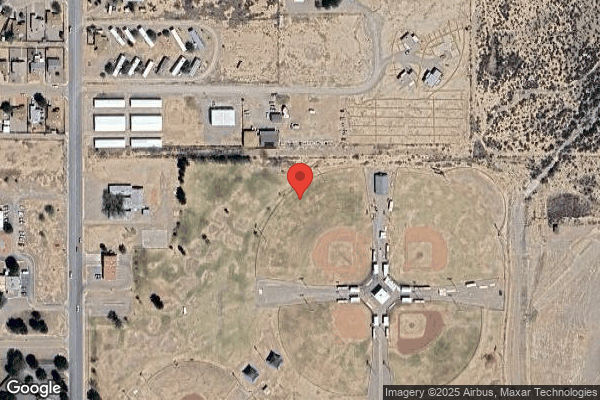
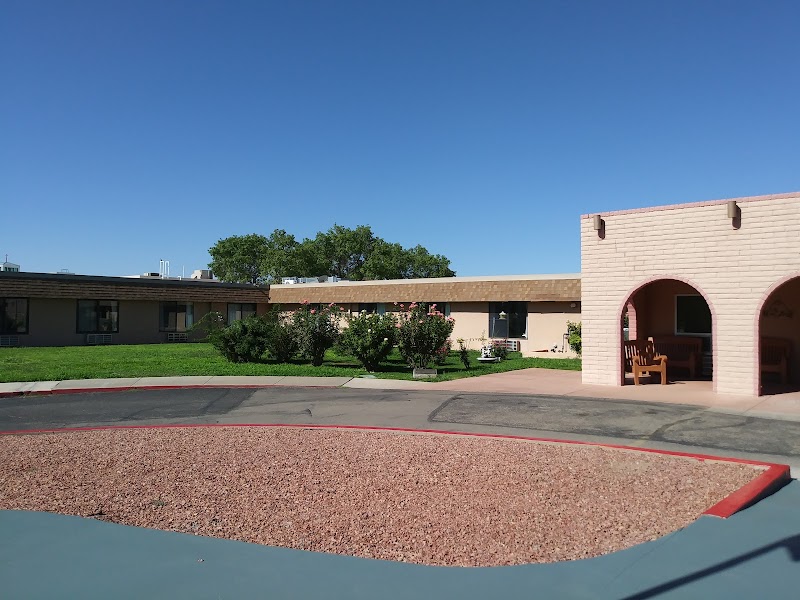
3101 North Florida Avenue, Alamogordo, NM 88310 (575) 434-0033
Non profit - Corporation 90 Beds Independent Data: November 2025
Trust Grade
50/100
#26 of 67 in NM
Last Inspection: August 2024

Within standard 12-15 month inspection cycle. Federal law requires annual inspections.

Overview

Betty Dare Wellness & Rehabilitation LLC has a Trust Grade of C, which means it is average and sits in the middle of the pack when compared to other facilities. It ranks #26 out of 67 nursing homes in New Mexico, placing it in the top half, and is #1 out of 3 in Otero County, indicating it has the best local option available. The facility is improving, as it reduced its number of issues from 9 in 2024 to 8 in 2025, although staffing is a concern with a rating of 2 out of 5 stars and a high turnover rate of 74%, significantly above the state average. While there have been no fines, which is a positive sign, there were serious concerns noted during inspections, such as unsecured medication carts that could lead to medication errors and a lack of registered nurse coverage on several occasions, risking the quality of care for residents. Overall, while there are strengths in its local ranking and absence of fines, families should be aware of staffing challenges and specific incidents that could affect care quality.
Trust Score
C
50/100
In New Mexico
#26/67
Top 38%
Safety Record
Low Risk
No red flags
Inspections
Getting Better
9 → 8 violations
Staff Stability
⚠ Watch
74% turnover. Very high, 26 points above average. Constant new faces learning your loved one's needs.
Penalties
✓ Good
No fines on record. Clean compliance history, better than most New Mexico facilities.
Skilled Nurses
○ Average
Each resident gets 40 minutes of Registered Nurse (RN) attention daily — about average for New Mexico. RNs are the most trained staff who monitor for health changes.
Violations
⚠ Watch
52 deficiencies on record. Higher than average. Multiple issues found across inspections.
★★★☆☆
3.0
Overall Rating
★★☆☆☆
2.0
Staff Levels
★★★☆☆
3.0
Care Quality
★★★☆☆
3.0
Inspection Score
Stable
2024: 9 issues
2025: 8 issues

The Good

  • Full Sprinkler Coverage · Fire safety systems throughout facility
  • No fines on record

Facility shows strength in fire safety.

The Bad

3-Star Overall Rating

Near New Mexico average (2.9)

Meets federal standards, typical of most facilities

Staff Turnover: 74%

28pts above New Mexico avg (46%)

Frequent staff changes - ask about care continuity

Staff turnover is very high (74%)

26 points above New Mexico average of 48%

The Ugly 52 deficiencies on record

Jul 2025 1 deficiency
CONCERN (F) 📢 Someone Reported This

A family member, employee, or ombudsman was alarmed enough to file a formal complaint

Potential for Harm - no one hurt, but risky conditions existed

Deficiency F0761 (Tag F0761)

Could have caused harm · This affected most or all residents

Based on observation, and interview, the facility failed to secure medications in a medication cart and a treatment cart for all 61 residents (residents were identified by the census list provided by ...

Read full inspector narrative →
Based on observation, and interview, the facility failed to secure medications in a medication cart and a treatment cart for all 61 residents (residents were identified by the census list provided by the Administrator on 07/09/25). This deficient practice could result in residents obtaining medication not prescribed to them resulting in adverse side effects. The findings are:A. On 07/09/25 at 10:03 AM, during an observation of the 100 hallway revealed a medication cart was unlocked. B. On 07/09/25 at 10:08 AM, during an interview, LPN #28 confirmed the medication cart on 100 hallway was left unlocked. LPN #28 also confirmed the medication carts should be locked when unattended. C. On 07/09/25 at 11:50 AM, during an observation of a treatment cart, located across from the nurse’s station in between all floors, was unlocked and was not in staff control. The following medications were in the treatment cart: Aspercreme (pain relief cream used for temporary relief of minor aches and pains), coloplast (related to intimate healthcare needs, including ostomy care, continence care, wound care, and interventional urology), triamcinolone acetonide (corticosteroid with anti-inflammatory properties used to treat a variety of conditions, including skin conditions, allergies), and gentamicin sulfate cream (topical antibiotic used to treat a variety of bacterial skin infections). D. On 07/09/25 at 11:55 AM, during an interview LPN #8 confirmed the treatment cart across from the nurse's station was unlocked. E. On 07/09/25 at 1:05 PM, during an interview, the Administrator said treatment carts should be locked if they have medication in them and are left unattended. F. On 07/09/25 at 2:02 PM, during an interview with the Administrator, he stated his expectation is that medication carts and treatment carts be locked when unattended at all times.
May 2025 7 deficiencies
CONCERN (D) 📢 Someone Reported This

A family member, employee, or ombudsman was alarmed enough to file a formal complaint

Potential for Harm - no one hurt, but risky conditions existed

Notification of Changes (Tag F0580)

Could have caused harm · This affected 1 resident

**NOTE- TERMS IN BRACKETS HAVE BEEN EDITED TO PROTECT CONFIDENTIALITY** Based on record review and interview, the facility failed to notify the provider of R #25's blood pressure medication was not av...

Read full inspector narrative →
**NOTE- TERMS IN BRACKETS HAVE BEEN EDITED TO PROTECT CONFIDENTIALITY** Based on record review and interview, the facility failed to notify the provider of R #25's blood pressure medication was not available and had a high blood sugar level greater than 400 (normal range of blood sugar levels of 80-130) for 1 (R #25) of 3 (R #1, R #16 and R #25) residents reviewed for neglect. This deficient practice could likely result in residents not receiving necessary care or worsening medical conditions due to lack of or changes in treatment. The findings are: A. Record review of R #25's admission record (no date) revealed the following: 1. R #25 was admitted to the facility on [DATE]. 2. R #25 had the following diagnoses: a. Essential (Primary) Hypertension. b. Type 2 Diabetes Mellitus without complications. B. Record review of R #25's physician orders, dated 02/13/25, revealed the following: 1. Diltiazem (blood pressure medication) 90 mg oral tablet 1.5 tab oral 2 times per day. 2. Insulin Lispro Injection solution 11 UNIT/ML inject per sliding scale if 0-150=0, 151-200=1, 201-250=2, 251-300=3, 301-350=4,351-400=5, administer 6 units of insulin for blood sugar greater than 400 and call physician, subcutaneously before meals and at bedtime for Diabetes. C. Record review of R #25's MAR, dated February 2025, revealed staff documented the following: 1. On 02/13/25 for diltiazem dose scheduled for Hour of Sleep (HS) administration, staff documented (code 9 other/see nurse note effective). 2. On 02/14/25 for diltiazem dose morning (AM) administration, staff documented code 9. 3. On 02/15/25 for diltiazem morning AM administration, staff documented code 9. 4. On 02/16/25 for diltiazem AM administration, staff documented code 9. 5. On 02/17/25 for diltiazem morning AM administration, staff documented code 9. 6. On 02/20/25 at 11:30 AM, for insulin administration, staff documented code 9. 7. On 02/20/25 at 9:00 PM, for insulin administration the nurse administered 6 units of insulin. 8. On 2/21/2025 at 4:30 PM, for insulin administration, staff documented code 9. 9. On 02/22/25 at 11:30 PM, for insulin administration, staff documented code 9. 10. On 2/23/2025 at 11:30 AM for insulin administration no documentation that medication was given to R #25 or physician was not notified. 11. On 02/25/2025 at 4:30 PM for insulin administration, staff documented code 9. 12. On 02/27/25 at 1130 pm, for insulin administration, staff documented code 9. D. Record review of R #25's progress notes for February 2025, revealed staff did not notify the physician of the following: 1. R #25's medication not being available on the following dates: a. 02/13/25, b. 02/14/25, c. 02/15/25, d. 02/16/25, e. 02/17/25, 2. R #25's elevated blood sugar (BS higher than 400) on the following dates: a. 02/20/25 at 11:30 AM, blood sugar level at 402. b. 02/20/25 at 9:00 PM, blood sugar level at 545. c. 02/21/25 at 4:30 PM, blood sugar level at 420. d. 02/22/25 at 11:30 AM, blood sugar level at 406. e. 02/23/25 at 11:30 AM, blood sugar level at 468. f. 02/25/25 at 4:30 PM blood sugar level at 499. E. On 05/29/25 at 2:14 PM, during an interview with DON and regional nurse confirmed the following: 1. Staff did not document that they contacted R #25's provider for R #25's medications diltiazem not being available and the high blood sugar level. 2. R #25's order indicated that staff are to call physician when blood sugar is greater than 400. 3. Staff should have notified the provider that R #25's Diltiazem was not available. 4. Staff did not call the physician as indicated per order.
CONCERN (D) 📢 Someone Reported This

A family member, employee, or ombudsman was alarmed enough to file a formal complaint

Potential for Harm - no one hurt, but risky conditions existed

Safe Environment (Tag F0584)

Could have caused harm · This affected 1 resident

Recite from 08/15/24 Based on observation and interview, the facility failed to provide a homelike environment that was in good condition for 1 (R #1) of 1 (R #1) resident randomly sampled by not repa...

Read full inspector narrative →
Recite from 08/15/24 Based on observation and interview, the facility failed to provide a homelike environment that was in good condition for 1 (R #1) of 1 (R #1) resident randomly sampled by not repairing the wall behind R #1's bed, ensuring electrical outlets have covers, and removing Velcro stuck onto wall. Failure to maintain and provide a comfortable environment is likely to result in residents feeling unimportant and undervalued. The findings are: A. On 05/29/25 at 12:53 PM, during an interview with R #1, she pointed to the wall near her window and stated the velcro had been on the wall since she moved into the room approximately 2 months ago, she also stated that the wall behind her bed was scraped and the electrical outlet behind her bed did not have a cover on it. B. On 05/29/25 at 12:53 AM, an observation of R #1's room revealed the wall near her window had 4 pieces of velcro on it, the wall behind her bed had several deep scratches and missing paint and the electric outlet behind her bed where R #1 had her cell phone charger plugged in did not have an outlet cover on it. C. On 05/30/25 at 2:40 PM, during an interview with the Administrator, he confirmed R #1's wall did have velcro on it, the wall behind her bed was scraped and was missing paint and the outlet did not have a cover on it. The administrator stated the velcro was used to hang an activities calendar, but there was no calendar hanging and stated he was unaware of the wall being scraped or the outlet not having a cover on it.
CONCERN (D) 📢 Someone Reported This

A family member, employee, or ombudsman was alarmed enough to file a formal complaint

Potential for Harm - no one hurt, but risky conditions existed

Comprehensive Care Plan (Tag F0656)

Could have caused harm · This affected 1 resident

**NOTE- TERMS IN BRACKETS HAVE BEEN EDITED TO PROTECT CONFIDENTIALITY** Recite from 08/15/24 Based on record review and interview, the facility failed to develop an accurate, person-centered comprehen...

Read full inspector narrative →
**NOTE- TERMS IN BRACKETS HAVE BEEN EDITED TO PROTECT CONFIDENTIALITY** Recite from 08/15/24 Based on record review and interview, the facility failed to develop an accurate, person-centered comprehensive care plan for 1 (R #16) of 6 (R #1, R #2, R #3, R #16, R #25, and R #26) residents reviewed for comprehensive care plans (plan that has measurable goals and timeframes to meet a resident's medical, nursing, mental health and psychosocial needs). This deficient practice could likely result in staff being unaware of the current and actual needs of the residents. The findings are: A. Record review of R #16's admission record, no date, revealed the following: 1. R #16 was admitted to the facility on [DATE]. 2. R #16 had the following diagnoses: a. Unsteadiness on feet. b. Fracture of unspecified part of neck of left femur, subsequent encounter for closed fracture with routine healing (a break in the neck of the long bone in the leg with normal healing). c. Unspecified fall. d. Other abnormalities of gait and mobility (an unusual walking pattern). e. Need for assistance with personal care. B. Record review of R #16's admission Minimum Data Set (MDS) Assessment (a federally mandated assessment instrument completed by facility staff), dated 01/24/25, revealed R #16 had the following functional abilities for Activity of Daily Living (ADL, fundamental skills needed to take care of oneself): 1. Eating: Setup or clean-up assistance (Helper sets up or cleans up; resident completes activity. Helper assists only prior to or following the activity). 2. Oral hygiene: Setup or clean-up assistance 3. Toileting hygiene: Partial/moderate assistance (Helper does less than half the effort. Helper lifts, holds, or supports trunk or limbs, but provides less than half the effort). 4. Shower/bathe self: Partial/moderate assistance. 5. Upper body dressing: Setup or clean-up assistance. 6. Lower body dressing: Partial/moderate assistance. 7. Putting on/taking off footwear: Partial/moderate assistance. 8. Personal hygiene: Setup or clean-up assistance. 9. Roll left and right: Supervision or touching assistance (Helper provides verbal cues and/or touching/steadying and/or contact guard assistance as resident completes activity. Assistance may be provided throughout the activity or intermittently). 10. Sit to lying: Supervision or touching assistance. 11. Lying to sitting on side of bed: Supervision or touching assistance. 12. Sit to stand: Supervision or touching assistance. 13. Chair/bed-to-chair transfer: Supervision or touching assistance. 14. Toilet transfer: Not Attempted due to medical condition or safety concerns. 15. Tub/shower transfer: Not Attempted due to medical condition or safety concerns. C. Record review of R #16's care plan, dated 01/14/25, revealed staff did not document R #16's functional level and the assistance needed to complete ADL's. D. On 05/29/25 at 2:01 PM, during an interview, the DON confirmed that R #16's care plan did not include the resident's functional abilities. He was unsure whether the care plan should include functional abilities. E. On 05/29/25 at 2:06 PM, during an interview, the corporate nurse confirmed that care plans should include resident's functional abilities.
CONCERN (D) 📢 Someone Reported This

A family member, employee, or ombudsman was alarmed enough to file a formal complaint

Potential for Harm - no one hurt, but risky conditions existed

Deficiency F0658 (Tag F0658)

Could have caused harm · This affected 1 resident

**NOTE- TERMS IN BRACKETS HAVE BEEN EDITED TO PROTECT CONFIDENTIALITY** Based on record review and interview, the facility failed to meet professional standards of practice for 2 (R #16 and R #25) of ...

Read full inspector narrative →
**NOTE- TERMS IN BRACKETS HAVE BEEN EDITED TO PROTECT CONFIDENTIALITY** Based on record review and interview, the facility failed to meet professional standards of practice for 2 (R #16 and R #25) of 3 (R #1, R #16 and R #25) residents reviewed for neglect, when staff failed to: 1. Enter an order for urinalysis (a test of your urine. It is often done to check for a urinary tract infection, kidney problems, or diabetes) and urine culture (a test healthcare providers use to check for a urinary tract infection (UTI) by seeing if bacteria or fungi can grow from a sample of your pee. A urine culture test can also identify bacteria or yeast causing a UTI and which drugs work best to treat the infection) for R #16. 2. Collect urine for urinalysis and urine culture for R #16. 3. Administer R #25's blood pressure medication and insulin as ordered by the physician. These deficient practices could likely lead to the resident having worsening of their medical conditions, adverse (unwanted, harmful, or abnormal result) side effects or not receiving the desired therapeutic effect of the medication due to it not being administered. The findings are: R #16 A. Record review of R #16's medical record, no date, revealed the following: 1. R #16 was admitted to the facility on [DATE]. 2. R #16 was discharged from the facility on 02/08/25. B. Record review of R #16's progress note dated 02/07/25, revealed staff documented R #16 had burning during urination. C. Record review of R #16's On-Call physician note dated 02/07/25, revealed the provider ordered a urinalysis and urine culture due to dysuria (pain during urination). D. Record review of R #16's physician's orders, no date, revealed staff did not enter an order for a urinalysis or urine culture. E. Record review of R #16's entire medical record, no date, revealed R #16's medical record did not contain any documentation that urine was collected from R #16. F. On 05/29/25 at 11:17 AM, during an interview, LPN #16 stated the following: 1. She did not remember R #16. 2. She did not remember if she contacted the provider about R #16 having burning during urination. 3. She confirmed R #16 did not have an order for a urinalysis or urine culture. 4. Staff did not document in R #16's medical record whether urine was collected from R #16. 5. When staff obtain an order from the provider, they are expected to enter the order in the resident's electronic medical record (EMR). G. On 05/29/25 at 11:27 AM, during an interview, the DON and the corporate nurse confirmed the following: 1. The on-call physician's note dated 02/07/25, had an order for a urinalysis and urine culture for R #16. 2. The on-call physician's note was a scanned in document, and staff do not check scanned documents for orders. 3. R #16's EMR did not have an order for a urinalysis or urine culture. 4. R #16's EMR did not contain documentation that urine was collected from R #16. 5. Staff were expected to enter orders that were received from the on-call provider in the EMR. 6. Staff were expected to collect urine from R #16 for the urinalysis and urine culture that were ordered and document in the EMR. R #25 H. Record review of R #25's admission record (no date) revealed the following: 1. R #25 was admitted to the facility on [DATE]. 2. R #25 had the following diagnoses: a. Essential (Primary) Hypertension. b. Type 2 Diabetes Mellitus without complications. I. Record review of R #25's physician orders, dated 02/13/25, revealed the following: 1. Diltiazem 90 mg oral tablet two times per day. 2. Insulin Lispro Injection solution 11 UNIT/ML inject per sliding scale if 0-150=0, 151-200=1, 201-250=2, 251-300=3, 301-350=4,351-400=5, administer 6 units of insulin for blood sugar greater than 400 and call physician, subcutaneously before meals and at bedtime for Diabetes. J. Record review of R #25's MAR, dated February 2025, revealed staff documented the following: 1. On 02/13/25 for diltiazem dose scheduled for Hour of Sleep (HS) administration, staff documented code 9; (other/see nurse note effective.) 2. On 02/14/25 for diltiazem dose morning (AM) administration, staff documented code 9. 3. On 02/15/25 for diltiazem morning AM administration, staff documented code 9. 4. On 02/16/25 for diltiazem, morning AM administration, staff documented code 9. 5. On 02/17/25 for diltiazem morning AM administration, staff documented code 9. 6. On 02/20/25 at 11:30 AM for insulin administration, staff documented code 9. 7. On 02/20/25 at 9:00 PM for insulin administration the nurse administered 6 units of insulin. 8. On 2/21/2025 at 4:30 PM for insulin administration, staff documented code 9. 9. On 02/22/25 at 11:30 PM for insulin administration, staff documented code 9. 10. On 2/23/2025 at 11:30 AM for insulin administration no documentation that medication was given to R #25 or physician was not notified. 11. On 02/25/2025 at 4:30 PM for insulin administration, staff documented code 9. 12. On 02/27/25 at 1130 PM for insulin administration, staff documented code 9. K. Record review of R #25's progress notes for February 2025, revealed staff did not notify the physician of the following: 1. R #25's diltiazem medication not being available on the following dates: a. 02/13/25, b. 02/14/25, c. 02/15/25, d. 02/16/25, e. 02/17/25, 2. R #25's elevated blood sugar (BS higher than 400) on the following dates: a. 02/20/25 at 11:30 AM, blood sugar level at 402. b. 02/20/25 at 9:00 PM, blood sugar level at 545. c. 02/21/25 at 4:30 PM, blood sugar level at 420. d. 02/22/25 at 11:30 AM, blood sugar level at 406. e. 02/23/25 at 11:30 AM, blood sugar level at 468. f. 02/25/25 at 4:30 PM blood sugar level at 499. L. Record Review of R #25's entire record, multiple dates, revealed that the provider was not notified of medication not given to R #25 and blood sugar levels higher than 400. M. On 05/29/25 at 2:00 PM during an interview with LPN #27, she stated that anytime there is medication not available, and a resident has high blood sugar the physician is to be notified. N. On 05/29/25 at 2:14 PM, during an interview with DON and regional nurse confirmed the following: 1. Staff did not document that they contacted R #25's provider for R #25's medications diltiazem not being available and the high blood sugar level. 2. R #25's order indicated that staff are to call physician when blood sugar is greater than 400. 3. Staff should have notified the provider that R #25's Diltiazem was not available. 4. Staff did not call the physician as indicated per order.
CONCERN (D) 📢 Someone Reported This

A family member, employee, or ombudsman was alarmed enough to file a formal complaint

Potential for Harm - no one hurt, but risky conditions existed

ADL Care (Tag F0677)

Could have caused harm · This affected 1 resident

**NOTE- TERMS IN BRACKETS HAVE BEEN EDITED TO PROTECT CONFIDENTIALITY** Based on record review and interview, the facility failed to provide activities of daily living (ADL; activities related to pers...

Read full inspector narrative →
**NOTE- TERMS IN BRACKETS HAVE BEEN EDITED TO PROTECT CONFIDENTIALITY** Based on record review and interview, the facility failed to provide activities of daily living (ADL; activities related to personal care such as bathing, showering, dressing, walking, toileting, and eating) assistance for baths or showers for 1 (R #16) of 3 (R #16, R #25, and R #26) residents reviewed for ADL care. This deficient practice is likely to affect the dignity and health of the residents. The findings are: A. Record review of R #16's medical record, no date, revealed the following: 1. R #16 was admitted to the facility on [DATE]. 2. R #16 was discharged from the facility on 02/08/25. 3. R #16 had the following diagnoses: a. Unsteadiness on feet. b. Fracture of unspecified part of neck of left femur, subsequent encounter for closed fracture with routine healing (a break in the neck of the long bone in the leg with normal healing). c. Unspecified fall. d. Other abnormalities of gait and mobility (an unusual walking pattern). e. Need for assistance with personal care. B. Record review of R #16's admission Minimum Data Set (MDS) Assessment (a federally mandated assessment instrument completed by facility staff), dated 01/24/25 revealed R #16 required partial/moderate assistance (Helper does less than half the effort. Helper lifts, holds, or supports trunk or limbs, but provides less than half the effort) for showers/baths. C. Record review of R #16's documentation summary report (spreadsheet for staff to document resident's ADL's), dated January 2025, revealed the following: 1. On 01/22/25, R #16 received a shower/bath. 2. On 01/28/25, R #16 received a shower/bath. D. Record review of R #16's documentation summary report dated February 2025 staff documented Not Applicable (NA) for R #16's shower/bath on 02/07/25. E. Record review of R #16's shower sheets, multiple dates, revealed the following: 1. On 01/14/25, R #16 refused shower and said she had one the day before. 2. On 01/22/25, R #16 received a shower. 3. On 01/28/25, R #16 received a shower. F. Record review of the shower schedule, no date, revealed the following: 1. Residents housed in even numbered rooms are supposed to receive showers on Mondays, Wednesdays, and Fridays. 2. Residents housed in odd numbered rooms are supposed to receive showers on Tuesdays, Thursdays, and Saturdays. 3. Residents are to be showered on an as needed basis. 4. All shower refusals are to be documented in the electronic medical record progress notes. G. Record review of R #16's progress notes, multiple dates, revealed the following: 1. On 01/14/25, staff documented that R#16 refused a shower. 2. On 01/22/25, staff documented that R #16 received a shower. 3. On 01/28/25, staff documented that R #16 received a shower. H. On 05/29/25 at 12:46 PM during an interview, the DON confirmed the following: 1. R #16 refused a shower on 01/14/25. 2. R #16 received a shower on 01/22/25 and 01/28/25. 3. According to the documentation R #16 only received 2 showers between her admission on [DATE] and her discharge on [DATE]. 4. CNA's are responsible for completing resident showers according to the shower schedule. 5. Based on the shower schedule, residents are expected to receive showers three times a week. 6. CNA's are expected to document showers in the EMR and on shower sheets. 7. CNA's are supposed to document when a resident refuses a shower and notify the nurse.
CONCERN (D) 📢 Someone Reported This

A family member, employee, or ombudsman was alarmed enough to file a formal complaint

Potential for Harm - no one hurt, but risky conditions existed

Medical Records (Tag F0842)

Could have caused harm · This affected 1 resident

**NOTE- TERMS IN BRACKETS HAVE BEEN EDITED TO PROTECT CONFIDENTIALITY** Based on record review and interview, the facility failed to ensure medical records were complete and accurate for 1 (R #16) of ...

Read full inspector narrative →
**NOTE- TERMS IN BRACKETS HAVE BEEN EDITED TO PROTECT CONFIDENTIALITY** Based on record review and interview, the facility failed to ensure medical records were complete and accurate for 1 (R #16) of 1 (R #1, R #16, and R #25) residents reviewed for neglect. This deficient practice has the potential to negatively impact on the care staff provide to meet residents' needs due to missing or inaccurate records and resident information. The findings are: A. Record review of R #16's admission record, no date, revealed R #16 was admitted to the facility on [DATE]. B. Record review of R #16's progress note dated 02/07/25 revealed staff documented R #16 had burning during urination. C. Record review of R #16's On-Call physician note dated 02/07/25 revealed the provider ordered a urinalysis and urine culture due to dysuria (pain during urination). D. Record review of R #16's entire medical record, no date, revealed the following: 1. Staff did not document that the provider was notified about R #16 having burning during urination. 2. Staff did not enter any orders that were received when the provider was contacted about R #16 having burning during urination. E. On 05/29/25 at 11:17 AM during an interview, LPN #16 stated the following: 1. She did not remember R #16. 2. She did not remember if she contacted the provider about R #16 having burning during urination. 3. She confirmed that R #16's electronic medical record (EMR), did not have documentation that the provider was notified about R #16 having burning during urination. 4. She confirmed R #16's EMR did not have an order for a urinalysis or urine culture. 5. Staff are expected to document contact with the provider in the resident's EMR, document what the provider said, enter any orders in the EMR, and complete any orders that were ordered. F. On 05/29/25 at 11:27 AM, during an interview, the DON and the corporate nurse, confirmed the following: 1. Staff documented that R #16 had burning during urination. 2. The on-call physician's note dated 02/07/25 had an order for a urinalysis and urine culture for R #16. 3. The on-call physician's note was a scanned in document that staff would not see (the nurse contacted the on-call provider and the provider provided the note for the medical record after the conversation). 4. R #16's EMR did not contain documentation that the provider was contacted regarding R #16 having burning during urination. 5. R #16's medical record did not have an order for a urinalysis or urine culture. 6. Staff were expected to document any contact with the provider in the EMR. 7. Staff were expected to enter orders that were received from the on-call provider in the EMR. 8. Staff were expected to collect urine from R #16 for the urinalysis and urine culture that were ordered and document in the EMR.
CONCERN (E) 📢 Someone Reported This

A family member, employee, or ombudsman was alarmed enough to file a formal complaint

Potential for Harm - no one hurt, but risky conditions existed

Deficiency F0657 (Tag F0657)

Could have caused harm · This affected multiple residents

**NOTE- TERMS IN BRACKETS HAVE BEEN EDITED TO PROTECT CONFIDENTIALITY** Based on record review and interview, the facility failed to ensure care plan revisions occurred for 1 (R #1) of 3 (R #1, R #2 a...

Read full inspector narrative →
**NOTE- TERMS IN BRACKETS HAVE BEEN EDITED TO PROTECT CONFIDENTIALITY** Based on record review and interview, the facility failed to ensure care plan revisions occurred for 1 (R #1) of 3 (R #1, R #2 and R #3) residents when staff failed to revise the care plan with the most current resident information. This deficient practice could likely result in the care plan not being updated with the most current resident conditions and appropriate interventions, staff being unaware of changes in care provided, and residents not receiving the care related to changes in their health status or healthcare decisions. The findings are: A. Record review of R #1's admission Record (no date) revealed R #1 was admitted to the facility on [DATE]. B. Record review of R #1's shower sheet forms dated 02/22/25 through 05/26/25 revealed the following: 1. R #1 was offered showers twelve times. 2. R #1 refused her showers six of the twelve times showers were offered to her. C. Record review of R #1's care plan dated 02/24/25 revealed the following: 1. R #1 requires partial/moderate assistance with bathing/showering. 2. R #1's care plan was not revised to include residents' refusal of showers and what actions staff could take to encourage her to shower. D. On 05/30/25 at 12:45 PM, during an interview, the Regional Nurse Consultant confirmed that R #1's care plan was not revised to include her refusal of care (refusing to shower) and actions that staff could take to assist her to agree to shower.
Aug 2024 9 deficiencies
CONCERN (D)

Potential for Harm - no one hurt, but risky conditions existed

Resident Rights (Tag F0550)

Could have caused harm · This affected 1 resident

**NOTE- TERMS IN BRACKETS HAVE BEEN EDITED TO PROTECT CONFIDENTIALITY** Based on interview, record review, and facility policy review, the facility failed to provide care for one of 18 sample resident...

Read full inspector narrative →
**NOTE- TERMS IN BRACKETS HAVE BEEN EDITED TO PROTECT CONFIDENTIALITY** Based on interview, record review, and facility policy review, the facility failed to provide care for one of 18 sample residents (Resident (R) 100) as requested which left R100 feeling undignified and upset. R100 requested a shower prior to a doctor's appointment which was not provided. Findings include: Review of R100's Admission document located under the Profile tab in the electronic medical record (EMR) revealed R100 was admitted on [DATE] with diagnosis that included acute and chronic respiratory failure with hypoxia. Review of the Progress Notes, located under the Progress Note tab in the EMR from 07/30/24 through 08/13/24 that R100 was alert and oriented to person, place, time, and situation. Review of the Care Plan, located in the EMR under the RAI tab, dated 08/13/24, noted R100 requires extensive assistance with bathing. During an interview on 08/14/24 at 9:20 AM, R100 stated, I didn't get a shower last night (Tuesday) or this morning (Wednesday) at 6:30 AM. I was told they only had one CNA (certified nursing assistant) to get me up and into the wheelchair. R100 began to cry and said, Someone screwed up. I was supposed to have a shower last night, but nobody gave me one. I was told it would be in the morning at 6:30 AM. No one came this morning to give me a shower. I was already dressed by 7:30 to 8:00AM, when they asked, and I said I can't do that now, my appointment is at 9:30 AM. R100 continued to cry. She stated I asked for a shower last night, before my doctor's appointment today. I wanted to be clean for my appointment. On 08/14/24 at 10:56 AM, CNA2 said, I came on at 6:00 AM. No one told me the resident was supposed to have a shower or I would have done it. When I found out after 8:00 AM, I couldn't get it done. I was passing trays. I got report from the night person on this hall, they didn't say nothing. Review of the bathing task sheet, located in the EMR under the task tab, a 30 day lookback, revealed only two notations both for 08/11/24 marked resident refused. There were no other entries on the record to show that a shower had been given, or bed bath offered, since admission on [DATE]. R100 was to have a shower on Tuesday, Thursday, and Saturday on the day shift. Interview on 08/14/24 at 3:00 PM with the day unit nurse, Licensed Practical Nurse (LPN)1 who was on duty from 6:00 AM to 6:00 PM, LPN1 stated, The day nurse was told the evening shift on Tuesday was to give the shower. LPN1 said she was not aware they had not given the shower until R100 told her when getting up for the day. LPN1 said, A shower was offered maybe at 8:00 AM, but the resident was already dressed and didn't want it. LPN1 confirmed that the resident wanted the shower before her doctor's appointment. LPN1 said, The resident said it was too hard for her to get undressed, shower, and redress again. On 08/15/24 at 11:13 AM, the Director of Nurses (DON) said, The resident is on the shower schedule for twice a week which is decided upon admission, how often they want a shower. The DON was not aware R100 had not been given a shower as requested. On 08/15/24 at 11:37 AM, the evening shift nurse (LPN3), on duty from 6:00 PM to 6:00 AM, said, The resident was supposed to have a shower, refused the first time, and they asked again. I just assumed they did it, I didn't know it didn't happen, she must have refused then. LPN3 did not know why the night CNA did not report to the next shift that the shower did not occur. On 08/15/24 at 4:30 PM, R100 and two family members (F2 and F3) were interviewed. R100 said she had been given only one shower since her admission. R100 denied being offered bed baths. R100 said, I think I'm getting stinky; I would like a bed bath. F2 and F3 confirmed that only one shower had been given and no bed baths. R100 said, F3 gives me a washcloth every day so I can wash my face. F3 stated, that's all I can do. On 08/15/24 at 4:40 PM, LPN1 said, I didn't think R100 liked bed baths, I don't know if they have been offered or not. Review of the facility's policy titled Resident Dignity, dated 11/16/23 indicated, Will promote care for residents in a manner and in an environment that maintains or enhances each resident's dignity and respect in full recognition of his or her individuality.
CONCERN (D)

Potential for Harm - no one hurt, but risky conditions existed

Deficiency F0554 (Tag F0554)

Could have caused harm · This affected 1 resident

Based on observation, record review, interviews, and facility policy review, the facility failed to assess one of one (Resident (R)3) resident for self-administration of medication in the sample of 18...

Read full inspector narrative →
Based on observation, record review, interviews, and facility policy review, the facility failed to assess one of one (Resident (R)3) resident for self-administration of medication in the sample of 18 residents. This had the potential to affect the residents' medication safety at the facility. Findings include: Review of R3's undated admission Record in the Profile tab of the electronic medical record (EMR) revealed most recent admission date of 06/15/23 and initial admission date of 11/09/21. The admission Record revealed a diagnosis of myocardial infarction. Review of R3's quarterly Minimum Data Set (MDS) with an Assessment Reference Date (ARD) of 07/24/24, located in the EMR MDS tab, revealed a Brief Interview for Mental Status (BIMS) score of 15 out of 15 which indicated R3 was cognitively intact. During an observation and interview on 08/12/24 at 8:12 AM, two white tablets in a medicine cup on top of R3's bedside table. R3 stated, Those are Tums. They bring them when they bring my morning medication, and I think I'm supposed to take them. Sometimes I chew them and get rid of them through the morning. During an observation on 08/12/24 at 08:25 AM, R3 was using her motorized wheelchair on 300 hall returning to her room. Two white tablets were in a medicine cup on R3's bedside table. Review of the EMR Physician Orders under the Orders tab revealed, Tablet (Calcium Carbonate (Antacid)) Give 1000 mg [milligram] by mouth in the morning for stomach upset related to GASTRO-ESOPHAGEAL REFLUX DISEASE dated 02/10/24. During an interview on 08/12/24 at 08:29 AM, Licensed Practical Nurse (LPN) 2 stated, The resident wants me to leave the Tums on her bedside table, because she takes them after she eats. Then I will go back and check on her after the breakfast trays are picked up, to see if she has taken them. She is cognizant enough to know what her medications are and what each of her medications are for. LPN2 reviewed R3's EMR and stated I don't see a doctor's order or anything on her care plan to keep medication at her bedside. We're not allowed to leave meds at the bedside, but the resident gets mad if we take them away. During an interview on 08/12/24 at 8:39 AM, the Minimum Data Set Coordinator (MDSC), stated, We absolutely do not leave medications at the bedside. Those looks like Tums in her medicine cup. She has no order to leave at bedside. During an interview on 08/15/24 at 10:13 AM, the Director of Nursing (DON) stated, I wasn't aware that resident kept medications at her bedside until they told me about the recent incident. The staff told me the daughter brings them in sometimes. I've always told my staff to never leave the resident without making sure they take all of their medicine first and if they find any that family bring it, to let nursing know. Review of the facility's policy titled, Resident Self-Administration of Medication - R/S, LTC, revised on 10/30/23, indicated, under the section Procedure: 1. Complete the Resident Self-Administration of Medications UDA to determine if the resident can safely administer medications and to create a plan to assist the resident to be successful in this process. The interdisciplinary team must determine whether each resident who expresses a desire to self-administer medications can do this safely. 7. A physician's order must be obtained prior to the resident self-administering medications. a. The order must be specific to the medications being self-administered. May be kept at bedside for self-administration or, May have all oral medications at bedside for self-administration). Update with new orders as needed. 8. The care plan must indicate which medications the resident is self-administering, where they are kept, who will document the medication and the location of administration, if applicable .
CONCERN (D)

Potential for Harm - no one hurt, but risky conditions existed

Assessment Accuracy (Tag F0641)

Could have caused harm · This affected 1 resident

Based on observations, record review, interviews, facility policy review, and review of the Resident Assessment Instrument (RAI) Manual, the facility failed to accurately code the Minimum Data Set (MD...

Read full inspector narrative →
Based on observations, record review, interviews, facility policy review, and review of the Resident Assessment Instrument (RAI) Manual, the facility failed to accurately code the Minimum Data Set (MDS) for two of two residents (Residents (R) 10 and R34) receiving hospice services and one of four residents (R17) receiving oxygen therapy of 18 sampled residents. By not ensuring the accuracy of the MDS these failures could potentially place the residents at risk for unmet care needs not being addressed. Findings include: Review of the MDS-3.0 RAI Manual-v1.17.1, October 2019, under Section J1400 Prognosis: indicated, Definition: Condition of chronic disease that may result in a life expectancy of less than 6 months; In the physician's judgement, the resident has a diagnosis or combination of clinical conditions that have advanced or will continue to advance to a point that the average resident with that level of illness would not be expected to survive more than 6 months. This judgement should be sustained by a physician note .Steps for Assessment: 1. Review the medical record for documentation by the physician that the resident's condition of chronic disease may result in a life expectancy of less than 6 months, or that they have a terminal illness. 2. If the physician states that the resident's life expectancy may be less than 6 months, request that he or she document this in the medical record. 3. Review the medical record to determine whether the resident is receiving the hospice services. Coding Instructions: Code 0, no: if the medical record does not contain physician documentation that the resident is terminally ill and the resident is not receiving hospice services. Code 1, yes: if the medical record includes physician documentation: 1) that the patient is terminally ill; or 2) the resident is receiving hospice services . Section O0100K, Hospice Care, Code residents identified as being in a hospice program for terminally ill persons where an array of services is provided for the palliation and management of terminal illness and related conditions. Further review of the RAI Manual indicated under Section O0100 Special Treatments, Procedures, and Programs: indicated, Steps for Assessment: 1. Review the resident's medical record to determine whether or not the resident received or performed any of the treatments, procedures, or programs within the last 14 days. It indicated, O0100C, Oxygen therapy- code continuous or intermittent oxygen administered via mask, cannula, etc., delivered to a resident to relieve hypoxia in this item .This item may be coded if the resident places or removes his/her own oxygen mask, cannula. Review of the facility's policy titled, MDS 3.0 (Minimum Data Set) RAI (Resident Assessment Instrument)-Rehab/Skilled & Therapy and Rehab, revised 07/01/24, indicated During the observation period each team member will review the EMR [electronic medical record] to determine if there is accurate documentation to support coding for the MDS. Validation verification must be completed after each discipline has coded and signed their section. The policy further indicated, Procedure: Significant Correction .2. A Significant error is an error in an assessment where: a. The resident's overall clinical status is not accurately represented (i.e., miscoded) on the assessment; and b. the error has not been corrected via submission of a more recent assessment. Review of the facility's policy titled, admission Criteria and Process, Hospice-Enterprise, revised 04/11/24, indicated Policy: Patients are admitted for Hospice care who have a terminal illness .The Medical Director considers the following information when reaching a decision to certify that a patient is terminally ill: Diagnosis of the terminal condition, other health conditions, either related to unrelated to the terminal illness, clinically relevant information supporting all diagnoses .admission Criteria: The patient has a life-limiting illness with a life expectancy of 6 months or less, as certified by the hospice Medical Director and hospice attending physician, if any. 1. Review of R10's undated Profile page, under the Profile tab in R10's electronic medical record (EMR) indicated R10 was receiving hospice services. Review of Physician orders, dated 04/30/24, located in R10's EMR under the Orders tab, indicated, Resident admitted to [name of hospice company] on 04/30/24. Review of a Hospice Physician Order located in a red [name of hospice agency] hospice binder located at the nurse's station dated 05/01/24 and signed by the Hospice physician on 05/14/24, indicated, Terminal Dx [diagnosis] is Senile Degeneration of the Brain. The hospice physician order further indicated, I certify that the patient's prognosis is six months or less if the disease runs its normal course. Review of R10's quarterly MDS located in the EMR under the MDS tab, with an Assessment Reference Date (ARD) of 07/31/24, revealed Section J and Section O of the MDS were completed by the MDS Coordinator (MDSC) on 08/06/24. Section J1400 of the MDS Prognosis was coded as No for R10 not having a terminal condition or chronic disease that may result in a life expectancy of less than 6 months. Hospice of the MDS was coded as While a resident at the facility R10 was also not receiving hospice services. The quarterly MDS was identified as being coded incorrectly as R10 had been continually receiving hospice services since 05/01/24. During an interview on 08/14/24 at 11:50 AM, regarding the coding of the MDS for R10, the MDSC stated R10 was admitted to hospice services 04/30/24. MDSC confirmed that she completed Section J1400 Prognosis and Hospice on the quarterly MDS for R10 on 08/06/24. The MDSC stated, I review the nurses notes, medications, diagnosis and I look through the hospice binder. When reviewing the inaccurate coding with the MDS Coordinator from the 07/31/24 quarterly MDS, she stated, I marked 'No' under the terminal prognosis and that must have been a typo on my part. For some reason, I marked it as no. I also marked 'No' for hospice and I don't know why. During an interview on 08/14/24 at 12:27 PM, the Director of Nursing (DON) stated, She [referring to R10] is on hospice. The MDSC is the one who completes the MDS assessments, and she does have access to the hospice binders. We have clinical meetings every day and if any changes arise, we talk about those. The DON confirmed that R10 has been receiving hospice services since 05/01/24. During a phone interview on 08/14/24 at 2:15 PM, Registered Nurse (RN)3 stated, [name of R10] went onto hospice services at the first of May 2024 and has been receiving hospice services ever since. 2. Review of R34's undated admission Record in the Profile tab in the EMR revealed an admission date of 01/09/23 revealed a diagnosis of Parkinson's disease without dyskinesia, without mention of fluctuations. Review of R34's quarterly MDS with an ARD of 06/11/24, located in the EMR MDS tab, revealed a Brief Interview for Mental Status (BIMS) score of eight out of 15 which indicated R34 was moderately cognitively impaired. During an interview on 08/15/24 at 12:50 PM, the MDSC stated, Yes I missed coding it for hospice. During an interview on 08/15/24 at 1:10 PM, the DON stated, The MDSC is responsible for completing the MDS, then corporate double checks the MDS for accuracy, and sends an email of any errors. Hospice being coded must have been missed. 3. During an observation and interview on 08/12/24 at 1:00 PM, R17 was observed in her room lying in bed and an oxygen concentrator was next to R17's bed. During an interview R17 stated that she has been on oxygen since returning from the hospital and only prefers to wear it sometimes. Review of R17's medical diagnoses under the Med Diag tab located in R17's EMR indicated diagnoses to include chronic obstructive pulmonary disease and unspecified asthma with (acute) exacerbation. Review of the Physician Orders, dated 03/26/24, located in R17's EMR under the Orders tab indicated, Oxygen at 2LPM [liters per minute] per nasal cannula. Review of R17's quarterly MDS located in the EMR under the MDS tab, with an ARD date of 06/04/24, revealed the section of Oxygen of the MDS was completed by the MDSC on 06/07/24. Oxygen of the MDS was coded as While a resident at the facility, R17 was not receiving any oxygen therapy. The quarterly MDS was identified as being coded incorrectly as R17 was receiving oxygen therapy since being ordered on 03/26/24. During an interview on 08/14/24 at 12:36 PM, the MDSC stated that R17 was receiving oxygen therapy and confirmed that she completed the Oxygen portion of the quarterly MDS for R17 on 06/04/24. During the interview, the MDSC stated, I coded it as 'No' for receiving oxygen and I must have missed this one. I do see there is a continuous order for it too. I see the physician order in March, and I would have had that information when I completed the quarterly on 06/04/24.
CONCERN (D)

Potential for Harm - no one hurt, but risky conditions existed

Comprehensive Care Plan (Tag F0656)

Could have caused harm · This affected 1 resident

Based on record review, interviews, and facility policy review, the facility failed to develop a person-centered comprehensive care plan with measurable goals, specific objectives, and interventions f...

Read full inspector narrative →
Based on record review, interviews, and facility policy review, the facility failed to develop a person-centered comprehensive care plan with measurable goals, specific objectives, and interventions for one of two residents (Residents (R)10) receiving hospice services of 18 sampled residents. By not developing a person-centered care plan the resident may not be receiving the appropriate interventions to achieve the highest practicable well-being. Findings include: Review of the facility's policy titled, Care Plan-R/S, LTC, Therapy & Rehab, revised 11/01/23, indicated Purpose: To develop a comprehensive care plan using an interdisciplinary team approach .Definitions: Comprehensive Care Plan-includes measurable objectives and timeframe's to meet a resident's medical, nursing, and mental and psychosocial needs that are identified in the comprehensive assessment. Person-centered care-a focus on the resident as the locus of control and supporting the resident in making his or her own choices and having control over their daily life. The policy further indicated, Each resident will have an individualized, person-centered, comprehensive plan of care that will include measurable goals and timetables directed toward achieving and maintaining the resident's optimal medical, nursing, physical, functional, spiritual, emotional, psychosocial, and educational needs. It further indicated, The comprehensive plan of care will be finalized during the interdisciplinary care team conference no later than seven days after completion of the comprehensive resident assessment .The plan of care will be modified to reflect the care currently required/provided for the resident. The care plan will emphasize the care and development of the whole person ensuring that the resident will receive appropriate care and services. It will address the relationship of items or services required and facility responsibility for providing these services. Review of R10's undated Profile page, under the Profile tab in R10's electronic medical record (EMR) indicated R10 was receiving hospice services. Review of Physician orders dated 04/30/24, located in R10's EMR under the Orders tab, indicated, Resident admitted to [name of hospice company] on 04/30/24. Review of a Hospice Physician Order located in a red [name of hospice agency] hospice binder located at the nurse's station dated 05/10/24 and signed by the Hospice physician on 05/14/24, indicated Terminal Dx [diagnosis] is Senile Degeneration of the Brain. Review of a Hospice Certification and Plan of Care located in a red [name of hospice agency] hospice binder located at the nurse's station and signed by the physician on 05/14/24, indicated that the hospice Start of Care [SOC] date was 05/01/24. It further indicated R10's diagnoses, frequency of hospice visits to be made from hospice nurses, hospice social workers, hospice home health aides and chaplain. The Hospice Certification and Plan of Care further indicated R10's medications, specific goals, objectives, durable medical equipment (DME), functional limitations, safety measures, activities, nutritional requirements, mental status of R10 and specific duties of the hospice agency and nursing facility. Review of an additional Hospice Interdisciplinary Group (IDG) Comprehensive Assessment and Plan of Care Update Report located in a red [name of hospice agency] hospice binder located at the nurses station dated 06/11/24 with benefit period dates from 05/01/24 to 07/29/24, indicated information such as R10's diagnoses, frequency of hospice visits to be made from hospice nurses, hospice social worker, hospice home health aide, and chaplain. It further listed R10's medications, and hospice visits and specific duties of the hospice agency and nursing facility. Review of a facility Comprehensive Care Plan, revised on 05/09/24, and located in R10's EMR under the Care Plan tab, indicated Advanced Directive. It further indicated the [name of the hospice agency] and address. Interventions listed were: Staff will report any changes to hospice nurse, hospice comfort pack and hospice nurse and CNA to do rounds. There was no further documentation in the care plan to indicate the development of a person-centered care plan with measurable goals, objectives, and interventions for the care of R10 who was receiving hospice services. During an interview on 08/14/24 at 11:50 AM, the Minimum Data Set Coordinator (MDSC) stated, Once we find out a resident will be going onto hospice services and I start the care plan right away. The MDSC stated that R10 went onto hospice services on 04/30/24. The MDSC reviewed R10's Care Plan and stated, The care plan for hospice is under Advanced directives. There are no more specifics than that. She then indicated, Hospice would have their own care plan. During an interview on 08/14/24 at 12:27 PM, the Director of Nursing (DON) stated, We have the hospice care plan. Review of R10's Care Plan in the EMR, the DON stated, This is our care plan [referring to just the name of hospice company, and address under Advanced Directives] there is nothing further than that. We have talked about this in the past with our previous clinical consultant.
CONCERN (D)

Potential for Harm - no one hurt, but risky conditions existed

Respiratory Care (Tag F0695)

Could have caused harm · This affected 1 resident

Based on observations, record review, interviews, and facility policy review, the facility failed to ensure oxygen (O2) concentrators had dust free filters, and were free of a buildup of heavy lint an...

Read full inspector narrative →
Based on observations, record review, interviews, and facility policy review, the facility failed to ensure oxygen (O2) concentrators had dust free filters, and were free of a buildup of heavy lint and dirt on the inlet where the air came into the machine for two of four residents (Residents (R) 21 and R25) receiving oxygen therapy out of a sample of 18 sampled residents. This deficient practice had the potential to allow an increased chance of infection and unnecessary respiratory treatment. Findings include: Review of the facility's policy titled Oxygen Administration, Safety, Mask Types-Rehab/Skilled, LTC, Therapy & Rehab revised 07/08/24 indicated, Purpose- To administer and store oxygen in a safe manner, to keep oxygen equipment clean and maintained in a good condition .,All oxygen therapy equipment will be clean, safe, and functional at all times .Document cleaning of concentrator and filters where appropriate . 1. During an observation on 08/12/24 at 11:44 AM, on 08/13/24 at 8:58 AM, and on 08/13/24 at 12:30 PM, R21's oxygen concentrator filter located on the right bottom side of the concentrator was observed to be very dirty, dusty, and brown. The filter was observed to be full of thick white lint. During an interview on 08/12/24 at 3:30 PM, R21 stated, I use oxygen at night with my CPAP [continuous positive airway pressure]. I'm on two liters. Review of the undated Medical Diagnosis located in R21's electronic medical record (EMR) under the Med Diag tab, indicated diagnoses to include, hypoxemia, sleep apnea, and dyspnea. Review of Physician Orders, dated 06/13/24 and located in R21's EMR under the Orders tab indicated Oxygen via nasal cannula at 2 liters per minute as needed for dyspnea, hypoxia or acute angina. During an interview on 08/13/24 at 12:44 PM, Registered Nurse (RN) 1 was asked who cleans the oxygen concentrator filters. RN1 stated, I honestly don't know. 2. During an observation made on 08/12/24 at 10:30 AM and on 08/13/24 at 9:00 AM, R25's grey oxygen concentrator filter that was located on the back of the concentrator revealed to have a very thick buildup of white lint on it. The heavy buildup of lint was stuck to the grey filter. During an interview on 08/12/24 at 2:48 PM, R25 stated, I only use my oxygen at night if I need it. Review of the undated Medical Diagnosis located in R25's EMR under the Med Diag tab, indicated diagnoses to include shortness of breath. Review of Physician Orders, dated 08/27/22 and located in R25's EMR under the Orders tab, indicated Oxygen at 2 LPM per nasal cannula, via 02 concentrator for oxygen saturation less than 88%. During an observation and interview on 08/13/24 at 3:19 PM, the DON was asked if R21 and R25's oxygen concentrator filters were being cleaned. The DON stated, No. During an observation in the presence of the DON of R21 and R25's oxygen concentrator filters, both had the same thick heavy buildup of dirt and lint on the filter. At this time, the DON stated, It's dirty. I never thought it should be something that we should be doing. I was not aware of it.
CONCERN (D)

Potential for Harm - no one hurt, but risky conditions existed

Medication Errors (Tag F0758)

Could have caused harm · This affected 1 resident

Based on record review, interviews, and policy review, the facility failed to provide documentation of behavior monitoring for the continued use of psychoactive medications for two of five residents (...

Read full inspector narrative →
Based on record review, interviews, and policy review, the facility failed to provide documentation of behavior monitoring for the continued use of psychoactive medications for two of five residents (Resident (R) 7 and R19) reviewed for unnecessary medications. Failure to provide quantitative data regarding target behavior reduction/management has the potential to affect the resident receiving the lowest dose possible of a psychoactive medication. Findings include: 1. Review of R7's undated admission Record in the Profile tab of the electronic medical record (EMR) revealed an admission date of 06/11/24. The admission Record revealed a diagnosis of pneumonia, unspecified organism. Review of R7's admission Minimum Data Set (MDS) with an Assessment Reference Date (ARD) of 07/25/24, located in the EMR MDS tab, revealed a Brief Interview for Mental Status (BIMS) score of 15 out of 15 which indicated R7 was cognitively intact. Review of R7's August 2024 Medication Administration Record (MAR) under the report tab of the EMR revealed the following current psychotropic medication orders: Lamotrigine (mood stabilizer medication) 200 milligrams (MG) dated 06/20/2024 to be given in the morning for bipolar disorder. Seroquel (Antipsychotic medication), 200 mg dated 07/25/2024 to be given at bedtime for bipolar disorder Duloxetine (antidepression medication) delayed release 60 mg dated 06/19/2024 to be given in the morning and evening for depressive episodes Review of R7's EMR Physician's orders under the Orders tab revealed there was no order to monitor or document the resident's behaviors related to the use of her psychotropic medications. 2. Review of R19's undated admission Record in the Profile tab of the EMR revealed an admission date of 07/15/24. The admission Record revealed a diagnosis of other disorders of phosphorus metabolism. Review of R19's admission MDS with an ARD of 07/21/24, located in the EMR MDS tab, revealed a BIMS score of 99 out of 15 which indicated R19 was severely cognitively impaired. Review of R19's August 2024 MAR under the report tab of the EMR revealed the following current psychotropic medication orders: Mirtazapine (antidepression medication) 15 mg dated 07/15/24 to be given at bedtime for agitation. Review of R19's EMR Physician's orders under the Orders tab revealed there was no order to monitor or document the resident's behaviors related to the use of her psychotropic medications. During an interview on 08/14/24 at 07:12 AM, Licensed Practical Nurse (LPN) 1 stated, We chart all the behaviors for the residents in the progress notes and it's only when they have them. During an interview on 08/15/24 at 01:10 PM, the Director of Nursing (DON) stated, Yes we have two residents that we never did behavior monitoring on. They were both planned to be short term only and were going to be discharged before now. Since they're still here and we don't know for how long now, we have to get the orders now and start documenting their behaviors. Review of the facility's policy titled, Psychotropic Medications - Rehab / Skilled revised on 12/06/23, indicated Policy: Each resident's drug regimen must be free from unnecessary drugs. An unnecessary drug is any drug when used: without adequate monitoring. The facility's policy further indicated Procedure: 9. Throughout the administration of the psychotropic medications, the following must be completed: a. Mood and behavior documentation must continue in order to monitor the effect the medication has on the behavior; b. Monitor for side effects of the medication .; d. Monitor for effectiveness and potential adverse consequences .
CONCERN (E)

Potential for Harm - no one hurt, but risky conditions existed

Safe Environment (Tag F0584)

Could have caused harm · This affected multiple residents

Based on observation, interviews, and facility policy review, the facility failed to ensure a clean, environment for two of four hallways (hall one and hall leading to the dining room) and one residen...

Read full inspector narrative →
Based on observation, interviews, and facility policy review, the facility failed to ensure a clean, environment for two of four hallways (hall one and hall leading to the dining room) and one resident (Resident (R) 31) room in the sample of 18 by heavily using disinfectant sprays. Findings include: 1. During the initial tour of the facility made on 08/12/24 at 10:15 AM, a strong smell of urine at the entrance to the 100 unit near the nurse's station. The facility was observed at this time to have carpet in the building in the day area, nurses station and 100/200 units. During an observation made on 08/12/24 at 3:00 PM, Housekeeper 2 (HSG2) was observed walking up and down the 100-hall spraying Lysol in the hallway and into the entrance of the residents' rooms. HSG2 was observed spraying the can of Lysol up into the air, and down onto the carpet from one end of the 100-hallway spraying from left to right. At this time, there were no residents observed in the hallway or sitting in the entrance of their rooms and the smell of Lysol was very strong and pungent. During an interview on 08/13/24 at 9:07 AM, HSG2 stated, We have a designated housekeeping person that uses a machine to clean the carpets every Tuesday and Thursday. To clean, we use a 73 Disinfecting Acid Bathroom cleaner, Windex, and a Bio-Enzymatic Odor Eliminator that I use in the rooms and hallways. During an interview on 08/13/24 at 9:22 AM, HSG1 stated, I clean the carpets on Tuesdays and Thursdays. During an interview on 08/14/24 at 7:57 AM, when HSG2 was asked why she was spraying Lysol up and down the 100 unit, she stated, I just wanted to sanitize everything. Everything like my cart, the doorknobs, just everything. When HSG2 was asked if she normally sprays Lysol up and down the units and into the entrance of the resident rooms, she stated, No, normally we don't use Lysol, but I did. I just wanted to go around and sanitize everything here. 2. During an observation on 08/13/24 at 12:18 PM, a facility van driver (driver) was observed vigorously spraying up and down the hall leading to the dining room. The driver was asked what was being sprayed and why. The driver stated, Lysol, because I thought I should for the odors. I saw others doing it [spraying Lysol], so I did. During an observation on 08/13/24 at 12:21 PM, Registered Nurse (RN2) was observed spraying a dark brown bottle at the ceiling near the nurse's station. RN2 was asked what was being sprayed and why. RN2 stated, good stuff [cologne] because it stinks in here. During an interview and observation on 08/13/24 at 12:25 PM, HSG1 stated, this is what we're supposed to use, showing a bottle of Bio-Enzymatic Odor Eliminator. HSG1 proceeded to spray the bottle, at approximately four feet off the ground, around the carpeted lounge area and the nurse's station. A snack cart, a rolling metal cart with covered drinks and wrapped snacks, was in front of the nurse's station in proximity to the spray. On 08/13/24 at 1:15 PM, a family member (F1) stated when the staff spray, whatever they spray, in the resident's room it is overpowering, it's too much. On 08/13/24 at 2:36 PM, the Administrator and Director of Nurses (DON) stated, staff are not allowed to just spray anywhere. During an interview with R31 about sprays used in his room on 08/14/24 at 7:36 AM, R31 said yes, they spray, it's too strong, chokes me. On 08/15/24 at 10:05 AM, the Maintenance Director (MD), in charge of the housekeeping staff, stated, staff are not supposed to mask or cover up odors. The shampooer was used on the carpet and had old water in it which caused the odor. Review of the undated facility policy provided by the MD titled Managing Odors indicated, The primary method of controlling odors is to have a thorough and systematic cleaning program that addresses the material that causes malodors. Use of deodorizers (air fresheners) is not recommended to control odors due to their direct contribution to the indoor air contaminant load via the chemicals used to create the deodorizer.
CONCERN (E)

Potential for Harm - no one hurt, but risky conditions existed

Infection Control (Tag F0880)

Could have caused harm · This affected multiple residents

**NOTE- TERMS IN BRACKETS HAVE BEEN EDITED TO PROTECT CONFIDENTIALITY** Based on observation, interviews, record review, review of facility policies and Centers for Disease Control and Prevention guid...

Read full inspector narrative →
**NOTE- TERMS IN BRACKETS HAVE BEEN EDITED TO PROTECT CONFIDENTIALITY** Based on observation, interviews, record review, review of facility policies and Centers for Disease Control and Prevention guidance, the facility failed 1. to ensure that staff wore appropriate Personal Protective Equipment (PPE) for three of twelve residents (Resident (R) 31, 200, and 41) reviewed for enhanced barrier precautions (EBP) when providing care, 2. to clean and disinfect patient equipment after use for one of eight residents (R15) reviewed for infection control 3. To follow hand hygiene practices during medication pass for one of five residents (R15) reviewed for medication administration. These failures could promote the spread of multi drug resistant organisms (MDROs) throughout the facility. Findings include: 1. Review of R31's undated admission Record in the Profile tab of the electronic medical record (EMR) revealed an admission date of 06/06/22. The admission Record revealed a diagnosis of chronic obstructive pulmonary disease. Review of R31's annual Minimum Data Set (MDS) with an Assessment Reference Date (ARD) of 06/04/24, located in the EMR MDS tab, revealed a Brief Interview for Mental Status (BIMS) score of 12 out of 15 which indicated R31 was moderately cognitively impaired. During an observation in doorway of R31 on 08/13/24 at 7:16 AM revealed, Licensed Practical Nurse (LPN) 1 cleaned the blood pressure cuff and let air dry prior to entering room. LPN1 performed hand hygiene and took R31's vital signs. She performed hand hygiene again after obtaining vitals. LPN1 did not wear a gown throughout patient care. R41 had a foley catheter requiring the use of EBP. A STOP EBP sign was on door frame and isolation cart was inside room. 2. Review of R200's undated admission Record in the Profile tab of the EMR revealed an admission date of 07/26/2024. The admission Record revealed a diagnoses of infection following surgical procedure to the right toe and gas gangrene/acute osteomyelitis to the right ankle and foot. Review of R200's admission MDS with an ARD of 08/01/24, located in the EMR MDS tab, revealed a BIMS score of 15 out of 15 which indicated R200 was cognitively intact. During an observation in the doorway of R200 on 08/13/24 at 7:33 AM revealed LPN 1 cleaned the glucometer machine with a Sani-wipe, let it air dry for two minutes, then proceeded to knock and enter R200 room. R200 performed hand hygiene, donned gloves, checked her blood sugar using the glucometer machine, laid it on a clean paper towel, and performed hand hygiene. LPN1 picked up paper towel holding the dirty glucometer machine and set it on her medication cart. She used hand sanitizer, donned gloves, cleaned glucometer machine with a Sani-wipe, and set it on top of new paper towel on med cart to allow it to air dry. LPN1 performed hand hygiene again. LPN1 did not wear a gown throughout patient care. R200 had a recent partially right foot amputation requiring wound care treatments that required EBP. R200 had a STOP EBP sign on her door with an isolation cart inside her room. 3. Review of R41's undated admission Record in the Profile tab of the EMR revealed an admission date of 02/01/2024. The admission Record revealed a diagnosis of Wernicke's encephalopathy. Review of R41's quarterly MDS with an ARD of 08/01/24, located in the EMR MDS tab, revealed a BIMS score of seven out of 15 which indicated R41 was severely cognitively impaired. During observation of R 41 while lying in her bed on 08/13/24 at 9:52 AM, LPN 1 was observed disconnecting R41 tube feeding, flushing with water, administering medications via G-tube, and providing Flovent breathing treatment. LPN1 performed hand hygiene before patient care, changed gloves during patient care, and performed hand hygiene after patient care, but did not wear a gown care. R41 had a G-tube and Foley catheter requiring the use of EBP. A STOP EBP signage was on door frame and isolation cart was inside room. During an interview on 08/14/24 at 8:28 AM, R200 stated, I don't know what that EBP sign is on the door. The staff never wear gowns or masks. I don't know why the isolation cart is in our rooms. They said there is one in every room. During an interview on 08/14/24 10:52 AM, LPN1 stated, We only wear PPE according to what the sign on the door indicates. LPN1 stated that EBP isn't required when doing accuchecks or checking vital signs because they aren't on the list. During an interview on 08/14/24 11:25 AM, Infection Preventionist (IP) stated, I do training with my staff when I see there is something going on that needs corrected. I give documents out to staff and have them sign off that they read them and received them. First EBP training was done in April when it rolled out. On June 5th we hit the EBP hard. I can't tell you exactly what we covered. My expectation is EBP is required when they have an indwelling catheter, feeding tube, chronic wound and surgical wounds. We consider high contact any kind of touching and wound changing. The IP stated that PPE is not required when taking vitals or doing accuchecks. We refer to the CDC guidelines on the door signs as to when to use to PPE. During an interview on 08/15/24 01:10 PM, the DON stated, We follow EBP and use PPE according to the sign on the door only. Review of the facility's policy titled, Standard and Transmission-Based Precautions, All Service Lines-Enterprise, revised on 04/02/2024, indicated, under the section Policy/Procedure; Enhanced barrier precautions expand the use of PPE beyond situations in which exposure to blood and body fluids is anticipated and refer to the use of gown and gloves during high- contact resident care activities that provide opportunities for transfer of MDROS [Multi-Drug Resistant Organisms] to staff hands and clothing Enhanced Barrier Precautions are needed for residents with chronic wounds (Pressure Ulcers, Diabetic Foot Ulcers, Unhealed surgical wounds, and venous statis ulcers) and Residents with Indwelling Medical devices (central lines, hemodialysis catheters, indwelling urinary catheters, feeding tubes, and tracheotomies). Enhanced Barrier Precautions are Intended to be used for the duration of a resident's stay. EBP can be discontinued if a resident is on EBP solely due to an indwelling medical device or open wound and the device is removed, or the wound heals. Enhanced Barrier Precautions are also needed for residents with CDC-targeted and epidemiologically important (facility discretion) MDRO Infection and colonization, when contact precautions do not apply. See MDRO policy. High-contact Resident care activities include transfers, dressing, assisting during bathing, providing hygiene, changing briefs, or assisting with toileting, working with resident in therapy gym, specifically when anticipating close physician contact while assisting with transfers and mobility, changing linens, device care or use (central line, urinary catheter, feeding tube, tracheostomy) and wound care . Review of the Centers for Disease Control and Prevention (CDC) website and Prevention (CDC) website https://www.cdc.gov/long-term-care-facilities/hcp/ prevent-mdro/PPE.html, titled, Implementation of Personal Protective Equipment Use in Nursing Homes to Prevent Spread of Multi-drug resistant Organisms, updated: 04/02/24 revealed, Enhanced Barrier Precautions expand the use of PPE and refer to the use of gown and gloves during high-contact resident care activities that provide opportunities for transfer of MDROs to staff hands and clothing. MDROs may be indirectly transferred from resident-to-resident during these high-contact care activities. Nursing home residents with wounds and indwelling medical devices are at especially high risk of both acquisition of and colonization with MDROs. The use of gown and gloves for high-contact resident care activities is indicated, when Contact Precautions do not otherwise apply, for nursing home residents with wounds and/or indwelling medical devices regardless of MDRO colonization as well as for residents with MDRO infection or colonization. Examples of high-contact resident care activities requiring gown and glove use for Enhanced Barrier Precautions include: Dressing Bathing/showering Transferring Providing hygiene Changing linens Changing briefs or assisting with toileting Device care or use: central line, urinary catheter, feeding tube, tracheostomy/ventilator wounds and indwelling medical devices are at especially high risk of both acquisition of and colonization with MDROs. The use of gown and gloves for high-contact resident care activities is indicated, when Contact Precautions do not otherwise apply, for nursing home residents with wounds and/or indwelling medical devices regardless of MDRO colonization as well as for residents with MDRO infection or colonization . Because Enhanced Barrier Precautions do not impose the same activity and room placement restrictions as Contact Precautions, they are intended to be in place for the duration of a resident's stay in the facility or until resolution of the wound or discontinuation of the indwelling medical device that placed them at higher risk. 4. Review of R15's undated admission Record in the Profile tab of the EMR revealed an admission date of 11/20/23. The admission Record revealed a diagnosis of chronic obstructive pulmonary disease. Review of R15's Prospective Payment System (PPS) five-day scheduled assessment for a Medicare Part A Stay MDS with an ARD of 06/16/24, located in the EMR MDS tab, revealed a BIMS score of 13 out of 15 which indicated R15 was cognitively intact. During observation on 08/12/24 at 3:41 PM AM, R15 was seated in her wheelchair outside of doorway to her room. LPN2 retrieved the portable vital sign machine/equipment on wheels. LPN 2 attempted to apply the blue regular size blood pressure cuff on resident's upper left arm. The regular size cuff is too small and LPN2 removed it and returned it to the basket on the portable machine. She retrieved the gray larger size blood pressure cuff from the same basket and applied it to R15's upper left arm. The portable machine displayed error on attempt to obtain blood pressure reading. LPN2 removed the large blood pressure cuff from R31's arm and returned it to the basket. LPN2 stated that she was going to go get a stethoscope and manual blood pressure cuff. LPN2 returned and applied the manual cuff on R15's upper arm. She used the stethoscope and manually obtained blood pressure reading. LPN2 removed the manual cuff and put it in the basket on portable machine, along with the stethoscope. LPN2 performed hand hygiene but did not clean patient care equipment after use. During an observation on 08/12/24 at 3:58 PM, R15 returned to nurses' med cart and stated that she was ready for her medications now. LPN2 administered R15 her Symbicort inhaler. LPN2 picked up two cups off her medication cart with one containing a small amount of water and the other cup was empty. LPN2 asks R15 to swish the water from one cup and holds empty cup under R15's mouth asking her to spit it out. LPN2 was observed pouring contents of cups into sink in hallway used to wash hands. LPN2 did not perform hand hygiene. She continued to move onto the next resident preparing his medications. During an interview on 08/12/24 4:00 PM, LPN2 stated, Yes, I forgot to clean and disinfect the blood pressure cuffs. I always do it any other time. LPN2 stated that she didn't realize she forgot to do hand hygiene after R15 used the inhaler and had to swish and spit. During an interview on 08/14/24 11:25 AM, the IP stated, My expectation is that all patient care equipment be cleaned before and after and in between each use. My expectation is staff do hand hygiene every time and in between patient care and passing trays in between residents. I don't remember how many times they can sanitize before washing their hands to be honest. I think it's ten. But I know it's between five to ten times and always when they come out of the resident room. During an interview on 08/15/24 01:10 PM, the DON stated, My expectation is that staff always perform hand hygiene before and after care, in between residents, and whenever they touch a resident or their personal item. They are required to wash their hands after using hand sanitizer three times or when they're visibly soiled. Review of the facility's policy titled, Hand Hygiene - Enterprise, revised on 03/29/22, indicated, under the Policy section, All employees in patient care areas (unless otherwise noted in their policy) will adhere to the 4 Moments of Hand Hygiene and 2 Zones of Hand Hygiene. 1. Entering room [ROOM NUMBER]. Before Clean Task 3. After Bodily Fluid/Glove Removal 4. Exiting room [ROOM NUMBER]. Zones: Patient zone and Health-care zone.
CONCERN (F)

Potential for Harm - no one hurt, but risky conditions existed

Deficiency F0727 (Tag F0727)

Could have caused harm · This affected most or all residents

Based on document review, interviews, and facility policy review, the facility failed to ensure Registered Nurse (RN) coverage was provided eight hours a day seven days a week. The failure created the...

Read full inspector narrative →
Based on document review, interviews, and facility policy review, the facility failed to ensure Registered Nurse (RN) coverage was provided eight hours a day seven days a week. The failure created the potential for 48 residents, residing in the facility, not to receive appropriate care and oversight. Findings include: Review of the Fiscal Year Quarter 2 Payroll Based Journal (PBJ) of the Certification and Survey Provider Enhanced Reports (CASPER), submitted by the facility, identified no RN coverage on the following dates: 01/21/24, 02/17/24, 02/18/24, and 03/16/24. On 08/15/24 at 9:06 AM, the Infection Preventionist (IP), responsible for staffing, confirmed that there was no RN coverage, on 02/17/24 and 02/18/24. The IP provided Timecard Report to show RN coverage was provided on 01/21/24 and 03/16/24. On 08/15/24 at 1:02 PM, the Business Office Manager (BOM) confirmed that he submits the PBJ reports and that there was no RN coverage on 02/17/24 and 02/18/24. The resident census on 02/17/24 and 02/18/24 was 48 per the BOM records. On 08/15/24 at 12:43 PM, the Director of Nurses (DON) confirmed that there was no RN coverage on 02/17/24 and 02/18/24. The DON stated, It has been difficult to hire nurses in their community. Review of the facility policy titled Nursing Services Staff, dated 10/30/23 provided by the DON, read, Purpose: To provide appropriate staff for resident care in the nursing services department. The facility must have sufficient nursing staff with the appropriate competencies and skills sets to provide nursing and related services to assure resident safety and attain or maintain the highest practicable physical, mental, and psychosocial well-being of each resident . the services of a registered nurse for at least eight consecutive hours a day, seven days a week.
Oct 2023 18 deficiencies
CONCERN (D)

Potential for Harm - no one hurt, but risky conditions existed

Notification of Changes (Tag F0580)

Could have caused harm · This affected 1 resident

Based on interview and record review, the facility failed to notify the resident representative of resident change in condition which required a hospice consult for 1 (R #30) of 1 (R #30) residents re...

Read full inspector narrative →
Based on interview and record review, the facility failed to notify the resident representative of resident change in condition which required a hospice consult for 1 (R #30) of 1 (R #30) residents reviewed for notification of change. This deficient practice could likely result in the resident representative being unable to provide advocacy and make medical decisions when needed. The findings are: A. On 10/02/23 at 12:44 am, during an interview with R #30's daughter, she stated staff did not notify her or her sister about R #30's change in condition or that the provider ordered a hospice referral for R #30. R #30's daughter stated she only found out about hospice when the hospice facility called her to have her sign paperwork. B. Record review of Nursing Progress Notes for R #30 revealed: 1. 08/07/23 at 8:39 PM, MD (medical doctor) notified of change in condition for resident . MD notified of the confusion and refusal of the medication. MD was also notified of visual signs of weight loss. MD requested for a hospice referral. Will cont. (continue) to follow up if needed. 2. The record did not contain documentation the staff notified the family regarding the resident's change of condition or hospice referral. C. Record review of R #30's Physician orders revealed the following: 1. 08/07/23, Hospice referral for evaluation and treatment for change in condition. 2. 08/31/22, Resident admitted to hospice on 08/21/23 with [name of hospice provider]. D. On 10/04/23 at 10:59 AM, during an interview with the DON, she confirmed that on 08/07/23 the primary physician ordered a hospice consult, because R #30 was not eating and was declining. The DON confirmed there was no documentation the staff notified the family about residents change in condition. She stated the documentation would be in the resident's progress notes. E. On 10/04/23 at 11:46 AM, during an interview with the Administrator, he confirmed staff should notify the resident's family when there is a change of condition and if a hospice referral is made.
CONCERN (D)

Potential for Harm - no one hurt, but risky conditions existed

Deficiency F0637 (Tag F0637)

Could have caused harm · This affected 1 resident

Based on interview and record review, the facility failed to complete a significant change (major decline or improvement in the patient's health status) MDS in a timely manner (within 14 days after th...

Read full inspector narrative →
Based on interview and record review, the facility failed to complete a significant change (major decline or improvement in the patient's health status) MDS in a timely manner (within 14 days after the facility determines, or should have determined, there has been a significant change in the resident's physical or mental condition) for 1 (R #30) of 1 (R #30) residents sampled for hospice (care that focuses on alleviating symptoms of the terminally ill). This deficient practice could likely result in the resident not receiving the appropriate care and services they need. The findings are: A. Record review of R #30's Physician's Orders revealed: 1. On 08/07/22, a hospice referral was ordered for R #30. 2. On 08/21/23, R #30 was admitted to hospice. B. Record review of R #30's change of condition MDS assessment, dated 09/21/23, revealed R #30 had a significant change. The record did not contain documentation that R #30 started hospice service. C. On 10/04/23 at 11:13 AM, during an interview with the MDS coordinator, she confirmed staff should complete a significant change of condition MDS within 14 days of identification of a change of condition. The MDS coordinator confirmed staff completed R #30's significant change of condition MDS on 9/21/23.
CONCERN (D)

Potential for Harm - no one hurt, but risky conditions existed

Deficiency F0660 (Tag F0660)

Could have caused harm · This affected 1 resident

**NOTE- TERMS IN BRACKETS HAVE BEEN EDITED TO PROTECT CONFIDENTIALITY** Based on record review and interview, the facility failed to develop an effective discharge plan for 1 (R #54) of 1 (R #54) resi...

Read full inspector narrative →
**NOTE- TERMS IN BRACKETS HAVE BEEN EDITED TO PROTECT CONFIDENTIALITY** Based on record review and interview, the facility failed to develop an effective discharge plan for 1 (R #54) of 1 (R #54) residents reviewed for discharge planning (the process of transitioning a resident from one level of care to the next). This deficient practice could likely result in complicated and/or unsafe transitions from the facility to the residents' post-discharge settings. The findings are: A. Record review of R #54's face sheet revealed: 1. admitted to the facility on [DATE], 2. Medical diagnoses: a. Gout, unspecified (a disease in which defective metabolism of uric acid causes arthritis, especially in the smaller bones.) b. Hypokalemia (a lower than normal potassium level in your bloodstream.) c. Hypocalcemia (a treatable condition that happens when the levels of calcium in your blood are too low.) d. Essential hypertension (high blood pressure that is multi-factorial and does not have one distinct cause.) e. Gastro-esophageal reflux (a digestive disease in which stomach acid or bile irritates the food pipe lining.) f. Nasal congestion (occurs when the tissues lining it become swollen.) g. Allergic rhinitis, unspecified (inflammation of the inside of the nose caused by an allergen, such as pollen, dust, mold, or flakes of skin from certain animals.) h. Unspecified lesions of oral mucosa [an epithelial break (ulcer) or an alteration in thickness, texture or color (white, red or pigmented lesion)]. i. Rash (any area of irritated or swollen skin on your body) and other nonspecific skin eruption. j. Insomnia (a sleep disorder characterized by difficulty falling asleep, staying asleep, or both, even if you have ample time and a bedroom environment conducive to restful sleep.) k. Nausea with vomiting. B. Record review of R #54's discharge MDS, dated [DATE], revealed she was discharged to the community. C. Record review of R #54's progress note by the Business Office Manager (communication with resident), dated 07/17/2023, Discussed AMA (against medical advice) options with resident, due to her request to discharge, discussion about referral for caregiver and medications prior to discharge. D. Record review of R #54's Medical Record revealed the record did not contain a discharge plan. E. Record review of R #54's Care Plan, dated 07/09/23, revealed the care plan did not contain a discharge plan. F. On 10/11/23 at 2:20 PM during an interview, the DON confirmed that R #54 did not have a discharge plan.
CONCERN (D)

Potential for Harm - no one hurt, but risky conditions existed

Deficiency F0661 (Tag F0661)

Could have caused harm · This affected 1 resident

**NOTE- TERMS IN BRACKETS HAVE BEEN EDITED TO PROTECT CONFIDENTIALITY** Based on record review and interview, the facility failed to ensure a discharge summary that included a recapitulation (a summar...

Read full inspector narrative →
**NOTE- TERMS IN BRACKETS HAVE BEEN EDITED TO PROTECT CONFIDENTIALITY** Based on record review and interview, the facility failed to ensure a discharge summary that included a recapitulation (a summary describing the resident's course of treatment while residing in the facility) was completed for 1 (R #54) of 1 (R #54) residents sampled for discharge from the facility. This deficient practice could likely lead to the receiving facility or hospital not knowing what the current care needs and significant medical history are for the resident. The findings are: A. Record review of R #54's face sheet revealed: 1. admitted to the facility on [DATE], 2. Medical diagnoses: a. Gout, unspecified (a disease in which defective metabolism of uric acid causes arthritis, especially in the smaller bones.) b. Hypokalemia (a lower than normal potassium level in your bloodstream.) c. Hypocalcemia (a treatable condition that happens when the levels of calcium in your blood are too low.) d. Essential hypertension (high blood pressure that is multi-factorial and does not have one distinct cause.) e. Gastro-esophageal reflux (a digestive disease in which stomach acid or bile irritates the food pipe lining.) f. Nasal congestion (occurs when the tissues lining it become swollen.) g. Allergic rhinitis, unspecified (inflammation of the inside of the nose caused by an allergen, such as pollen, dust, mold, or flakes of skin from certain animals.) h. Unspecified lesions of oral mucosa [an epithelial break (ulcer) or an alteration in thickness, texture or color (white, red or pigmented lesion)]. i. Rash (any area of irritated or swollen skin on your body) and other nonspecific skin eruption. j. Insomnia (a sleep disorder characterized by difficulty falling asleep, staying asleep, or both, even if you have ample time and a bedroom environment conducive to restful sleep.) k. Nausea with vomiting. B. Record review of R #54's discharge MDS, dated [DATE], revealed she was discharged to the community. C. Record review of R #54's progress note by Business Office Manager (communication with resident), dated 07/17/2023, Discussed AMA (against medical advice) options with resident, due to her request to discharge, discussion about referral for caregiver and medications prior to discharge. D. Record review of R #54's Medical Record revealed, the record did not contain a discharge summary. E. On 10/11/23 at 2:20 PM during an interview, the DON confirmed that R #54's discharge was initiated by the resident, and R #54's record did not have a discharge summary.
CONCERN (E)

Potential for Harm - no one hurt, but risky conditions existed

Deficiency F0577 (Tag F0577)

Could have caused harm · This affected multiple residents

Based on interview and observation, the facility failed to post notice of the availability of the most recent state survey in areas of the facility that were prominent and accessible to residents and ...

Read full inspector narrative →
Based on interview and observation, the facility failed to post notice of the availability of the most recent state survey in areas of the facility that were prominent and accessible to residents and the public. This could affect all 50 residents in the facility (residents were identified by the Census Report provided by the Administrator on 10/01/23). If residents are unable to locate the latest survey conducted by State Surveyors, then residents, representatives, and visitors are likely unable to know how the facility is doing and make decisions accordingly. The findings are: A. On 10/05/23 at 10:27 AM, during the Resident Council meeting, R #15, R #18, R #23, R #26, R #37, R #38, R #49, R #50, and R #110 revealed: 1. Residents were not aware that they had access to the most recent state survey results. 2. The residents did not know where the latest state survey results were located. B. On 10/05/23 at 11:45 AM, an observation revealed a survey binder in a hanging wall file not marked and behind a laminated paper. C. On 10/10/23 at 1:52 PM, during an interview with Medical Records, she confirmed that the survey binder was covered with a paper, in an unidentified hanging file, and not in plain sight. Medical Records said the survey binder should be in plain sight so that they are accessible to the residents and the public.
CONCERN (E)

Potential for Harm - no one hurt, but risky conditions existed

Safe Environment (Tag F0584)

Could have caused harm · This affected multiple residents

**NOTE- TERMS IN BRACKETS HAVE BEEN EDITED TO PROTECT CONFIDENTIALITY** Based on observation and interview, the facility failed to provide a comfortable and homelike environment for the 28 residents o...

Read full inspector narrative →
**NOTE- TERMS IN BRACKETS HAVE BEEN EDITED TO PROTECT CONFIDENTIALITY** Based on observation and interview, the facility failed to provide a comfortable and homelike environment for the 28 residents on the 100 Unit (Resident were identified by the Census list provided by the DON on 10/01/23), when they failed to keep the 100 unit free from institutional odors. This failed deficient practice could likely lead to an unsanitary and uncomfortable environment. The findings are: A. On 10/01/23 at 2:36 PM, during an observation, the 100 hall contained a strong odor of urine between room [ROOM NUMBER] and room [ROOM NUMBER]. B. On 10/02/23 at 10:40 AM, during an a family interview, the relative (R #19's) revealed the 100 hall smells of urine when she goes to visit. C. On 10/02/23 at 11:26 AM, during an observation, the 100 hall contained a strong odor of urine between room [ROOM NUMBER] and room [ROOM NUMBER]. D. On 10/02/23 at 11:48 AM, during an interview with R #32, she stated the 100 hallway smells of urine. D. On 10/03/23 at 12:34 PM, during an observation, the 100 hall contained a strong odor of urine. E. On 10/04/23 at 10:37 AM, during an observation, the 100 hall contained a strong odor of urine in the area between room [ROOM NUMBER] to 108. E. On 10/04/23 at 10:52 AM, during an interview, the Housekeeper confirmed there was a smell on the 100 hall that was especially strong near room [ROOM NUMBER]. The Housekeeper stated when she came across the smell, she looked around the room for the source (trash cans or dirty briefs). The Housekeeper stated sometimes it was the resident's sheets or clothing.
CONCERN (E)

Potential for Harm - no one hurt, but risky conditions existed

Comprehensive Assessments (Tag F0636)

Could have caused harm · This affected multiple residents

**NOTE- TERMS IN BRACKETS HAVE BEEN EDITED TO PROTECT CONFIDENTIALITY** Based on record review and interview, the facility failed to ensure a comprehensive assessment (complete assessment that include...

Read full inspector narrative →
**NOTE- TERMS IN BRACKETS HAVE BEEN EDITED TO PROTECT CONFIDENTIALITY** Based on record review and interview, the facility failed to ensure a comprehensive assessment (complete assessment that included not only the traditional care of the resident, but also the prevention and early detection of disease and rehabilitation) was completed and accurate for 3 (R #31, R #46 and R #48) of 6 (R #31, R #46, R #47, R #48, R #49, and R #107) residents reviewed for activities. When they failed to: 1. Complete MDS Section F, Preferences for Customary and Routine activities, for R #31 and R #46; 2. Complete the Interview for Daily Preferences on the MDS for R #48. This deficient practice could likely result in residents' preferences and needs not being met. The findings are: R #31 A. Record review of R #31's Annual MDS, dated [DATE], revealed staff did not complete the following areas of Section F, Preferences for Customary and Routine activities: 1. F0300 Should interview for daily activities preferences be conducted? 2. F0400 Interview for Daily Preferences, Show resident the response options and say: While you are in this facility . 3. F0500 Interview for Activity Preferences, Show resident the response options and say: While you are in this facility . R #46 B. Record review of R #46's Quarterly MDS, dated [DATE], revealed staff did not complete the following areas of Section F, Preferences for Customary and Routine activities: 1. F0300 Should interview for daily activities preferences be conducted? 2. F0400 Interview for Daily Preferences, Show resident the response options and say: While you are in this facility . 3. F0500 Interview for Activity Preferences, Show resident the response options and say: While you are in this facility . R #48 C. Record review of R #33's Electronic Medical Record (EMR) revealed: 1) admission date of 04/18/23, 2) Diagnoses: 1. Legal blindness (central visual acuity of 20/200 or less in the better eye with the use of correcting lens), 2. Central retinal vein (an eye condition that affects the retina - the light-sensitive layer of tissue in the back of your eye), 3. Type 2 diabetes mellitus (a disease in which your blood glucose, or blood sugar, levels are too high), 4. Vitamin D deficiency, 5. Unilateral primary osteoarthritis (the result of articular cartilage degeneration without any known reason) right knee, 6. Benign prostatic hyperplasia (a condition in men in which the prostate gland is enlarged and not cancerous), 7. Without lower urinary tract symptoms, 8. Constipation, unspecified, 9. Pain, unspecified, 10. Heartburn. D. Record review of R #48's admission MDS, dated [DATE], revealed the following: the following areas of Section F: F0400-Interview for Daily Preferences were not completed: 1) F0500 Interview for Activity Preferences, 2) F0600 Daily and Activity Preferences Primary Respondent. E. On 10/11/23 at 2:21 PM, during an interview, the DON confirmed the assessments for R #31, R #46, and R #48 were inaccurate/incomplete, and staff needed more education on completing the MDS assessments. Surveyor: [NAME], [NAME]
CONCERN (E)

Potential for Harm - no one hurt, but risky conditions existed

Assessment Accuracy (Tag F0641)

Could have caused harm · This affected multiple residents

**NOTE- TERMS IN BRACKETS HAVE BEEN EDITED TO PROTECT CONFIDENTIALITY** Based on interview and record review, the facility failed to ensure the MDS assessments were accurate for 3 (R #1, R #30, and R ...

Read full inspector narrative →
**NOTE- TERMS IN BRACKETS HAVE BEEN EDITED TO PROTECT CONFIDENTIALITY** Based on interview and record review, the facility failed to ensure the MDS assessments were accurate for 3 (R #1, R #30, and R #31) of 4 (R #1, R #30, R #31, and R #48) residents sampled for MDS accuracy. This deficient practice could likely result in residents not receiving the care and treatment they need. The findings are: R #1 A. Record review of R #1's Care Plan, dated 03/23/23, revealed: [name of R #1] is at risk for falls R/T (related to) Confusion, Gait (walking)/balance problems, Incontinence (involuntary urination). 03/24/23 found on floor no apparent injuries. B. Record review of R #1's Quarterly MDS, dated [DATE], revealed Question J1800 Has the resident had any falls since admission/entry or reentry, or the prior assessment was answered 0-No. R #30 C. Record review of R #30's Physician's Orders revealed: Order Date 08/07/23 - Hospice referral to evaluate and treat for change in condition. D. Record review of R #30's significant change of condition MDS, completed on 09/21/23, revealed: Section O: Special Treatments, Procedures, and Programs, question O0100 Other was not marked to indicate that R #30 received Hospice Care. E. On 10/04/23 at 11:13 AM, during an interview, the MDS coordinator confirmed that the significant change of condition MDS did not reflect that R #30 received hospice care and should have been included in the MDS. R #31 F. Record review of R #31's Annual MDS, dated [DATE], revealed Question J0100B, At any time in the last 5 days, has the resident received PRN (as needed) pain medications or was offered and declined? was answered 0-No. G. Record review of R #31's Medication Administration Record (MAR), for July 2023, revealed R #31 took PRN acetaminophen (medication to treat mild to moderate pain) as follows: 1. 650 mg (dose of acetaminophen) on 07/01/23 at 8:39 PM. 2. 650 mg on 07/02/23 at 3:08 PM. 3. 650 mg on 07/03/23 at 7:48 PM. H. On 10/11/23 at 2:21 PM, during an interview, the DON confirmed the MDS assessment was inaccurate/incomplete for R #1 and R #31.
CONCERN (E) 📢 Someone Reported This

A family member, employee, or ombudsman was alarmed enough to file a formal complaint

Potential for Harm - no one hurt, but risky conditions existed

Deficiency F0655 (Tag F0655)

Could have caused harm · This affected multiple residents

**NOTE- TERMS IN BRACKETS HAVE BEEN EDITED TO PROTECT CONFIDENTIALITY** Based on record review and interview, the facility failed to create a Baseline Care Plan (Plan that includes the instructions ne...

Read full inspector narrative →
**NOTE- TERMS IN BRACKETS HAVE BEEN EDITED TO PROTECT CONFIDENTIALITY** Based on record review and interview, the facility failed to create a Baseline Care Plan (Plan that includes the instructions needed to provide effective and person-centered care upon admission) within 48 hours of admission for 1 (R #156) of 3 (R #107, R #109, and R #156) residents sampled for Baseline Care Plans. When they failed to: 1) Develop R #156's baseline care plan within 48 hours after admission, 2) Create a plan of care for R #156's pressure ulcers. This deficient practice could likely result in residents not receiving the appropriate care and services and may place residents at risk of an adverse event (An event, preventable or nonpreventable, that caused harm to a patient as a result of medical care or lack of medical care) or worsening of current condition after admission. The findings are: A. Record review of R #156's admission Record, (no date) revealed R #156 was admitted on [DATE]. B. Record review of R #156's admission MDS, dated [DATE], Section I Active Diagnoses revealed: 1. Question I8000E, additional active diagnoses, PRESSURE ULCER (injuries to skin and underlying tissue resulting from prolonged pressure on the skin) OF RIGHT BUTTOCK, UNSTAGEABLE [ulcers that cannot be staged due to the bottom of the wound being covered with slough (layer of tan/yellow dead skin that can slow or prevent healing) or eschar (dry, dead tissue within a wound that is typically dark tan, brown, or black in color and can slow or prevent healing)] C. Record review of R #156's Electronic Medical Record revealed that the baseline care plan was initiated on 04/07/23 (greater than 48 hours after admission). The baseline care plan did not include a plan for R #156's diagnosis of PRESSURE ULCER OF RIGHT BUTTOCK, UNSTAGEABLE. D. On 10/11/23 at 2:04 PM, during an interview, the DON confirmed that there was not a specific care plan for the care R #156 would need for the pressure ulcer.
CONCERN (E)

Potential for Harm - no one hurt, but risky conditions existed

Comprehensive Care Plan (Tag F0656)

Could have caused harm · This affected multiple residents

Based on record review and interview, the facility failed to develop and implement a comprehensive person-centered care plan for 2 (R #46 and R #107) of 7 (R #1, R #14, R #15, R #31, R #46, R #49 and ...

Read full inspector narrative →
Based on record review and interview, the facility failed to develop and implement a comprehensive person-centered care plan for 2 (R #46 and R #107) of 7 (R #1, R #14, R #15, R #31, R #46, R #49 and R #107) residents reviewed for Comprehensive Care Plans. Failure to develop a comprehensive person-centered care plan could likely result in staff's failure to understand the needs, preferences, and treatments for residents to achieve their highest level of well-being. The findings are: R #46 A. Record review of R #46's admission Minimum Data Set (MDS: resident assessment, completed by staff), dated 12/22/22, revealed: 1. Section L Oral/Dental Status was answered: D. obvious or likely cavity or broken natural teeth. 2. Section V Care Area Assessment (CAA; triggered areas indicating a care plan is necessary) Summary revealed: V0200 15. Dental care was marked for care area triggered and care planning decision. B. Record review of R #46's Care Plan, dated 12/23/22, revealed the careplan did not include oral/dental care. C. On 10/11/23 at 2:09 PM, during an interview, the DON confirmed there was no care plan in place for oral/dental care as indicated per the MDS assessment and required per the CAA. R #107 D. Record review of R #107's Physician's Orders, dated 09/22/23, revealed oxygen per nasal cannula, every shift, related to chronic obstructive pulmonary disease (disease that cause airflow blockage and breathing-related problems). E. Record review of R #107's care plan dated 10/03/23 revealed staff had not care planned her oxygen. F. On 10/11/23 at 2:09 PM, during an interview, the DON confirmed that care plans should be updated with the residents most current orders.
CONCERN (E)

Potential for Harm - no one hurt, but risky conditions existed

Deficiency F0679 (Tag F0679)

Could have caused harm · This affected multiple residents

Based on record review and interview, the facility failed to provide an ongoing activity program to support residents in their choice of activities designed to support their physical, mental, and psyc...

Read full inspector narrative →
Based on record review and interview, the facility failed to provide an ongoing activity program to support residents in their choice of activities designed to support their physical, mental, and psychosocial well-being for 1 (R #48) of 5 (R #31, R #46, R #47, R #48 and R #49) residents reviewed for activities. If the facility does not ensure that all residents are receiving an ongoing activity program, documenting resident refusals, and making in-room activity accommodations, then residents are likely to demonstrate an increase in isolation and depression and could likely experience a decline in independence. The findings are: R #48 G. On 10/02/23 at 2:57 PM, during an interview, R #48 revealed he was not offered activities for vision impaired. He stated the staff are not trained to help him appropriately, because he is blind. H. Record review of the Activities calendar, for the month of October 2023, revealed it did not contain activities for the vision impaired, and nothing on the activities was altered for visually impaired. I. Record review of R #48's care plan, dated 05/21/23, revealed: 1. The resident has alteration in activity involvement related to hearing deficits and visual impairments. J. On 10/05/23 at 11:05 AM, during an interview, the Activity Director, confirmed she did not have activities altered for the visually impaired. The Activity Director stated R #48 liked to listen to music or play his harmonica. The Activities Director also confirmed the activity staff, including herself, did not have training to assist the visually impaired.
CONCERN (E)

Potential for Harm - no one hurt, but risky conditions existed

Accident Prevention (Tag F0689)

Could have caused harm · This affected multiple residents

Based on observation and interview, the facility failed to keep residents free from accidents for all 41 residents in the facility (residents were identified by the Census Report provided by the Admin...

Read full inspector narrative →
Based on observation and interview, the facility failed to keep residents free from accidents for all 41 residents in the facility (residents were identified by the Census Report provided by the Administrator on 10/01/23), when they failed to secure a treatment cart. This deficient practice could likely result in residents obtaining medical equipment that could be harmful to them resulting in injury. The findings are: A. On 10/01/23 at 9:42 AM, during an observation, the nurse's station area revealed a treatment cart unlocked. No staff were present. B. On 10/01/23 at 9:43 AM, during an interview, CNA #11 confirmed that the treatment cart was unlocked. C. On 10/02/23 at 9:24 AM, during an observation, the nurse's station area revealed a treatment cart unlocked, and no staff were present. D. On 10/02/23 at 9:25 AM, during an interview, CNA #12 confirmed the treatment cart was unlocked and said it is supposed to be locked. E. On 10/05/23 at 1:29 PM, during an interview, the DON confirmed that treatment carts and medication carts should be locked when not in use.
CONCERN (E)

Potential for Harm - no one hurt, but risky conditions existed

Incontinence Care (Tag F0690)

Could have caused harm · This affected multiple residents

Based on interview and record review, the facility failed to ensure appropriate treatment and services for Foley catheter tubing and collecting bag (soft plastic or rubber tube that is inserted into t...

Read full inspector narrative →
Based on interview and record review, the facility failed to ensure appropriate treatment and services for Foley catheter tubing and collecting bag (soft plastic or rubber tube that is inserted into the bladder to drain the urine and is connected to a collecting bag) care for 1 (R #47) of 1 (R #47) resident sampled for urinary catheter, when they failed to complete Foley catheter care and flushes as ordered. This deficient practice could likely result in residents getting infections. The findings are: A. On 10/01/23 at 12:25 PM, during an interview with R #47, she stated: 1. Staff do not always drain her catheter bag at night, and it leaked due to over filling. 2. She had a lot of sediment in her urine which clogged up the catheter if it is not flushed correctly twice daily. B. On 10/02/23 at 10:45 AM, during an interview with R #47, she stated: 1. Staff do not always backflush (define for the public is this different from the flush stated above) the catheter. 2. When flushed correctly, she is able to keep the Foley catheter for 30 days. C. Record review of R #47's active orders revealed the following: 1. Flush catheter with Toomay (syringe used for removing debris during endosurgical resection and clots from the bladder) syringe, 2 oz at a time, agitate 10-12 strokes to break up mucous. PRN (as needed). AT LEAST ONE TIME WEEKLY, one time a day every Mon (Monday), for KEEPING FOLEY PATENT (Open, unobstructed, affording free passage). Start date 07/10/23. 2. Foley Cath care q (every) shift . Start date 03/30/23. 3. Sodium Chloride Flush Solution 0.9 %. Use 60 ml (milliliter) via irrigation every shift for catheter irrigation. D. Record review of R #47's Treatment Administration Record (TAR) for August 2023 revealed the following: 1. Treatment order: Flush Catheter with 60 cc (cubic centimeters, unit of measure) of NS (normal saline) q (every) shift every shift. Start date 03/30/23. D/C (discontinue) date 09/17/23. a. Staff did not complete catheter flush 8 (08/12/23, 08/16/23, 08/17/23, 08/22/23, 08/25/23, 08/26/23, 08/29/23, and 08/31/23) out of 31 day shifts. b. Staff did not complete catheter flush 3 (08/15/23, 08/16/23, and 08/22/23) out of 31 night shifts. 2. Treatment order: Foley Cath care q shift every shift. a. Staff did not complete catheter care 8 (08/12/23, 08/16/23, 08/17/23, 08/22/23, 08/25/23, 08/26/23, 08/29/23, and 08/31/23) out of 31 day shifts. b. Staff did not complete catheter care 3 (08/15/23, 08/16/23, and 08/22/23) out of 31 night shifts. 3. Treatment order: Sodium Chloride Flush Solution 0.9%. Use 60 ml via irrigation every shift for Catheter irrigation. Start date 4/10/2023. a. Staff did not complete catheter flush 8 (08/12/23, 08/16/23, 08/17/23, 08/22/23, 08/25/23, 08/26/23, 08/29/23, and 08/31/23) out of 31 day shifts. b. Staff did not complete catheter flush 3 (08/15/23, 08/16/23, and 08/22/23) out of 31 night shifts. 4. A treatment order for flushing catheter with Toomay syringe was not identified on the August 2023 TAR. E. Record review of R #47's September 2023 TAR revealed the following: 1. Treatment order: Flush Catheter with 60 cc (cubic centimeters, unit of measure) of NS q (every) shift every shift. Start date 03/30/23. D/C (discontinue) date 9/17/2023. a. Staff did not complete catheter flush 5 (09/04/23, 09/05/23, 09/08/23, 09/09/23, and 09/10/23) out of 17 day shifts. b. Staff did not complete catheter flush 2 (09/01/23 and 09/16/23) out of 16 night shifts. 2. Treatment order: Foley Cath care q (every) shift every shift. a. Staff did not complete catheter care 5 (09/04/23, 09/05/23, 09/08/23, 09/09/23, and 09/10/23) out of 30 day shifts. b. Staff did not complete catheter care 2 (09/01/23 and 09/16/23) out of 30 night shifts. 3. Treatment order: Sodium Chloride Flush Solution 0.9%. Use 60 ml via irrigation every shift for catheter irrigation. Start date 04/10/23. a. Staff did not complete catheter flush 5 (090/4/23, 09/05/23, 090/8/23, 09/09/23, and 09/10/23) out of 30 day shifts. b. Staff did not complete catheter flush 2 (9/1/23 and 9/16/23) out of 30 night shifts. 4. A treatment order for flushing catheter with Toomay syringe was not identified on the September 2023 TAR. F. On 10/05/23 at 9:48 AM, during an interview with RN #31, she: 1. Described R #47's catheter care as: make sure it is clean from insertion site, flush with 60 cc's normal saline, and empty bag. 2. Confirmed R #47 had a lot of sediment in her urine, and that is why it must be flushed every shift. 3. Confirmed there were several shifts in August and September 2023 that staff did not complete Foley catheter care and Foley catheter flushes. 4. Confirmed there was an active order to use Toomay syringe and agitation with 2 oz at a time, agitate 10-12 strokes to break up mucous PRN, at least one time weekly every Monday. 5. Confirmed the order for Toomay syringe with agitation did not appear in the TAR. 6. Confirmed she was unaware of the order to use Toomay syringe with agitation and did not complete this task. G. On 10/05/23 at 11:05 AM, during an interview, the DON confirmed: 1. There was an order in R #47's record for Toomay syringe with 2 oz and agitation 10-12 times, PRN, at least once weekly on Monday, was ordered to begin 07/10/23. 2. The order for the Toomay syringe was not showing up on the TAR. 3. The nurses would be unaware of the order since it was not in the TAR. 4. There were several Foley catheter flushes and catheter care treatments that staff did not complete for both shifts in August and September 2023. 5. Catheter care and flushes are expected to be completed as ordered. 6. Failure to complete catheter care and flushes as ordered could result in a urinary tract infection.
CONCERN (E)

Potential for Harm - no one hurt, but risky conditions existed

Drug Regimen Review (Tag F0756)

Could have caused harm · This affected multiple residents

**NOTE- TERMS IN BRACKETS HAVE BEEN EDITED TO PROTECT CONFIDENTIALITY** Based on record review and interview, the facility failed to ensure staff acted upon pharmacy recommendations when they failed t...

Read full inspector narrative →
**NOTE- TERMS IN BRACKETS HAVE BEEN EDITED TO PROTECT CONFIDENTIALITY** Based on record review and interview, the facility failed to ensure staff acted upon pharmacy recommendations when they failed to: 1. Have the physician review and sign off on the pharmacy recommendations for residents reviewed by the consult pharmacist for medication regimen reviewed in July 2023. 2. Follow the pharmacist recommendation for maximum recommended dose for R #15's acetaminophen. This deficient practice could affect all 50 residents in the facility (residents were identified on the resident matrix provided by the Administrator on 10/01/23). This deficient practice could likely result in residents being at a higher risk of adverse (undesired harmful effect resulting from medication) side effects. The findings are: R #15 A. Record review of R #15's Order Summary report for active orders as of 10/05/23 revealed: Tylenol (brand name of acetaminophen), oral tablet, 325 mg (dosage of medication). (acetaminophen) Give 650 mg by mouth every 4 hours as needed for pain. No maximum dosage listed. B. Record review of Pharmacy Recommendations for R #15, dated 09/17/23, revealed: 1. The maximum recommended chronic dose of acetaminophen is 4 grams per without liver impairment. Consideration for a maximum dose of 3 grams per day when used for therapy longer than 2 weeks is a prudent approach. Residents who are frail, aged >/=80 (greater than or equal to [AGE] years old) with significant organ dysfunction (condition where an organ does not perform its expected function), or at risk for hepatotoxicity (state of toxic damage to the liver) should have a maximum of 2 grams per day. Please verify total max daily dose and include on order and MAR (medication administration record). 2. The form was not signed as reviewed by the Medical Director. C. Record review of R #15's Electronic Medical Record (EMR) revealed no documentation from the Medical Director regarding the recommendation for 09/17/23. R #37 D. Record review of Pharmacy Recommendations for R #37, dated 07/12/23, revealed: 1. Consider modifications to R #37's diabetes medication therapy to minimize or eliminate the use of sliding scale insulin therapy (increasing administration of pre-meal insulin dose based on the blood sugar level before a meal). 2. The physician did not acknowledge whether they agreed or disagreed with the pharmacy recommendations. E. Record review of R #37's EMR revealed no changes to R #37's diabetes treatment orders in July or August 2023. F. On 10/10/23 at 12:05 PM, during an interview, the DON confirmed: 1. The physician did not sign or acknowledge any of the Pharmacy recommendations for July 2023. 2. Staff did not complete changes to R #37's diabetes treatment in July or August 2023. 3. R #15's orders did not include a maximum dosage of acetaminophen.
CONCERN (E)

Potential for Harm - no one hurt, but risky conditions existed

Deficiency F0757 (Tag F0757)

Could have caused harm · This affected multiple residents

Based on record review and interview, the facility failed to provide a drug regimen that was free from unnecessary medication for 1 (R #25) of 1 (R #25) residents reviewed for anticoagulants (a group ...

Read full inspector narrative →
Based on record review and interview, the facility failed to provide a drug regimen that was free from unnecessary medication for 1 (R #25) of 1 (R #25) residents reviewed for anticoagulants (a group of medications that decrease your blood's ability to clot) when they prescribed R #25 an anticoagulant for hypertension (when the pressure in your blood vessels is too high). This deficient practice could likely cause R #25 to receive medication he does not need or no longer needed. The findings are: A. Record review of R #25's Physicians Orders revealed Apixaban (anticoagulant) tablet, 2.5 mg, (milligram, a unit of measurement of mass in the metric system equal to a thousandth of a gram) related to essential hypertension, dated 09/13/22. B. On 10/04/23 at 1:57 PM, during an interview with the DON, she confirmed the order for Apixaban was prescribed for hypertension. The DON stated that Apixaban should not be prescribed for hypertension.
CONCERN (E)

Potential for Harm - no one hurt, but risky conditions existed

Deficiency F0761 (Tag F0761)

Could have caused harm · This affected multiple residents

Based on observation and interview, the facility failed to properly store medications, when they failed to: 1. Dispose of loose tablets stored in the medication carts for the 300 unit. 2. Properly la...

Read full inspector narrative →
Based on observation and interview, the facility failed to properly store medications, when they failed to: 1. Dispose of loose tablets stored in the medication carts for the 300 unit. 2. Properly label open bottles of medications stored in the medication carts for the 100 and 300 units. 3. Ensure medication was not expired in the Pyxis (medication management software and medication dispensing machine). This could affect all 41 residents in the 100 unit and 300 unit of the facility (Residents were identified by the resident matrix provided by the Administrator on 10/01/23). These deficient practices could likely result in residents obtaining medications that are no longer effective or that are not prescribed to them resulting in adverse side effects. The findings are: 300 Unit Medication Cart A. On 10/05/23 at 10:01 AM, during an observation of the 300 unit medication cart revealed the following: 1. 1 open bottle acetaminophen, 500 mg, with no open date. 2. 1 open bottle Vitamin D, 25 mcg (microgram), with no open date. 3. 1 bottle melatonin (supplement given to regulate sleep), 5 mg, with no open date. 4. 1 bottle mucous relief (Guaifenesin), 400 mg, with no open date. 5. 1 bottle probiotic, 10 billion CFU (colony forming unit, unit commonly used to estimate the concentration of microorganisms in a test sample), with no open date. B. On 10/05/23 at 10:10 AM, during an interview, RN #31 confirmed there were no open dates on acetaminophen 500 mg, Vitamin D 25 mcg, melatonin 5 mg, mucous relief (Guaifenesin) 400 mg, and Probiotic 10 billion CFU bottles of medications. Confirmed that all open bottles of medication should be labeled with the date they were opened. Medication Storage Room C. On 10/05/23 at 10:35 AM, an observation of the Pyxis in the Medication Storage Room revealed the following: 1. 5 tablets fluconazole (medication used to treat and prevent fungal infections), 100 mg, expired 06/02/23. 2. 6 tablets amitriptyline (medication used to treat depression and/or nerve pain), 25 mg, expired 06/09/23. 3. 3 tablets phytonadione (medication that is used to help blood clot better and prevent bleeding problems), 5 mg, expired 06/15/23. D. On 10/05/23 at 10:40 AM, during an interview, the DON: 1. Confirmed fluconazole, amitriptyline, and phytonadione medications were expired. 2. Stated she was responsible to remove expired medications from the Pyxis. 3. Stated she had not gone through Pyxis since April 2023. 4. Confirmed if medications run out on the medication carts then the nurses would go to the Pyxis to get more. 5. Confirmed the nurses would not have access to medications if they run out of the medication in the carts and they are expired in the Pyxis. 100 Unit Medication Cart E. On 10/05/23 at 10:47 AM, an observation of the 100 unit medication cart revealed the following: 1. 1 open bottle cetirizine hcl (medication used to treat allergy symptoms), 10 mg, with no open date. 2. 1 open bottle Vitamin D, 25 mcg (micrograms), with no open date. 3. 1 bottle melatonin 5 mg with no open date. 4. 1 bottle probiotic, 10 billion CFU, with no open date. 5. 2 loose tablets in the medication cart. F. On 10/05/23 at 10:55 AM, during an interview, the DON confirmed: 1. There were no open dates on cetirizine hcl, Vitamin D 25 mcg, melatonin 5 mg, and probiotic 10 billion CFU bottles of medications 2. There were two loose tablets in the medication cart. 3. Staff should remove any loose pills and dispose of them appropriately. 4. Staff should label medications with the date they open the bottle. 5. She had put a note in the medication carts to remind staff to date medications once they are opened in the carts. 6. She showed the note that was in the medication cart to the surveyor.
CONCERN (F)

Potential for Harm - no one hurt, but risky conditions existed

Food Safety (Tag F0812)

Could have caused harm · This affected most or all residents

Based on observation and interview, the facility failed to ensure food was stored properly for all 50 residents who eat food prepared in the kitchen (residents were identified by the Census list provi...

Read full inspector narrative →
Based on observation and interview, the facility failed to ensure food was stored properly for all 50 residents who eat food prepared in the kitchen (residents were identified by the Census list provided by the Administrator on 10/01/23), when they failed to label and date food items in the pantry and in the refrigerator. These deficient practices could lead to residents becoming sick from foodborne illnesses. The findings are: A. On 10/02/23 at 11:28 AM, during an observation of the Kitchen pantry revealed: 1. A package of linguini noodles opened with no date, 2. A package of spiral noodles opened with no date, 3. An open bag of tortillas chips no date, 5. A package of bologna no label and no date, 6. A parmesan cheese no date, 7. A block of yellow cheese (unidentified) with no label and no date. B. On 10/02/23 at 11:37 AM, during an observation, the kitchen's refrigerator revealed a bag of shredded lettuce with no label and no date with some pieces looking brown in color. C. On 10/01/23 at 11:40 AM, during an interview, the Dietary Manager confirmed the food items are expected to have labels to identify the food item and opened dates to determine expirations.
MINOR (B)

Minor Issue - procedural, no safety impact

Resident Rights (Tag F0550)

Minor procedural issue · This affected multiple residents

Based on record review and interview, the facility failed to ensure residents were treated with respect and dignity for 28 (R #1, R #2, R #3, R #6, R #7, R #8, R #11, R #13, R #14, R #15, R #18, R#19,...

Read full inspector narrative →
Based on record review and interview, the facility failed to ensure residents were treated with respect and dignity for 28 (R #1, R #2, R #3, R #6, R #7, R #8, R #11, R #13, R #14, R #15, R #18, R#19, R #22, R #23, R #24, R #26, R #27, R #28, R #31, R #32, R #35, R #36, R #37, R #43, R #45, R #46, R #48, R #49) of 28 (R #1, R #2, R #3, R #6, R #7, R #8, R #11, R #13, R #14, R #15, R #18, R#19, R #22, R #23, R #24, R #26, R #27, R #28, R #31, R #32, R #35, R #36, R #37, R #43, R #45, R #46, R #48, R #49) residents randomly sampled, when the facility failed to: 1. Refer to residents in a dignified manner, 2. Provide privacy for R #48 to use his urinal. This deficient practice could likely to result in residents feeling embarrassed, angry, and that their feelings and preferences are unimportant to the facility staff. The findings are: A. On 10/01/23 at 10:06 AM, during an observation of the 100 hall, CNA #11 referred to the residents at the feeder table while talking to staff in the 100 hall. B. On 10/01/23 at 10:07 AM, during an interview with CNA #11, she confirmed that she was referring to the residents in the dining room that needed assistance with eating when she said the feeder table. C. On 10/01/23 at 10:09 AM, during an interview with the DON, she confirmed staff should not use the term feeder table when referring to residents who needed assistance with eating. R #48 D. Record review of R #48's admission record revealed: 1. An admission date 04/18/23 2. Diagnosis: legal blindness and central retinal vein occlusion (an eye condition that affects the retina - the light-sensitive layer of tissue in the back of your eye.) E. Record review of R #48's care plan, dated 09/27/23 revealed: [name of resident]has impaired visual function R/T (related to) DX (diagnosis) of legally blind E/B severely impaired vision. F. On 10/02/23 at 09:40 AM during observation in the 100 hall, R #48 (visually impaired) stood up next to his bed, faced the door that was open to the hall, and used his urinal. The HIM (Health information manager) walked by R #48's room and noticed R #48 used his urinal with the door open. She immediately closed his door. G. On 10/02/23 at 09:45 AM during an interview, the HIM Director (she also covered medical records and transportation), witnessed and confirmed the resident's door and curtain were open while he used his urinal on his bedside table. H. On 10/02/23 at 09:48 AM during an interview with R #48, he revealed that he did not know his curtain and door were open while he used his urinal. He stated he depended on staff to provide his privacy due to being blind.
May 2023 7 deficiencies
CONCERN (D) 📢 Someone Reported This

A family member, employee, or ombudsman was alarmed enough to file a formal complaint

Potential for Harm - no one hurt, but risky conditions existed

Free from Abuse/Neglect (Tag F0600)

Could have caused harm · This affected 1 resident

Based on interview, observation and record review the facility failed to keep residents free from abuse for 1 (R #2) of 3 (R #1, R #2 and R #3) residents reviewed for abuse when the facility failed to...

Read full inspector narrative →
Based on interview, observation and record review the facility failed to keep residents free from abuse for 1 (R #2) of 3 (R #1, R #2 and R #3) residents reviewed for abuse when the facility failed to protect a resident from physical abuse and mental anguish. This deficient practice could likely result in residents feeling anger, shame, anxiety, embarrassment or fear. The findings are: A. Record review of HFLC (Health Facility Licensing and Certification) Incident Report date 04/20/23 revealed: 1. Consumer information: [Name of R #2] 2. Description of Incident: Type of alleged incident; abuse. [name of CNA #1] removed the bed linen covering [name of R #2]. CNA #1 opened his brief and lifted his (R #2's) genitals to show the ladies (NA [Nursing Assistant] #1 and PTA [Physical Therapy Assistant] #1) that [name of R #2] was not wet. [name of PTA #1 & name of NA #1] state that CNA #1 then slapped [name of R #2] on the penis so hard that the sound of his hand striking [name of R #2] flesh could be heard. [name of PTA #1 & name of NA #1] report that [name of R #2] immediately sat up in bed screaming out in pain while yelling at [name of CNA #1]. B. On 05/10/23 at 4:07 PM, during an observation and interview with R #2, R #2 appeared visibly upset (put his head down, sighed) when I asked about the incident with CNA #1. R #2 put his head down and stated Oh, I remember, [name of CNA #1] was jerking me around. R #2 states that CNA #1 slapped him on the penis and I never had any problems with anyone except him. C. On 05/11/23 at 2:51 PM, during a phone interview, NA #1 stated I went to find [name of CNA #1] to assist [name of R #2] because as a nursing assistant I was unable to assist him myself due to not being certified yet. I found him and he (CNA #1) said 'are you [expletive] serious? I just changed him.' He made it known in his behavior that he didn't want to be bothered with helping [Name of R #2]. [Name of CNA #1] opened up [Name of R #2]'s brief and he was aggressive in handling [Name of R #2] and [Name of CNA #1] said '[name of R #2] you are not even wet' then slapped him on his penis with an open hand and walked out of the room almost bumping into me on his way out. I was so shocked and upset by what had just happened I walked out of the room and went outside to compose myself. I was in tears. D. On 05/11/23 at 3:29 PM, during an interview with the MDS Coordinator, stated I was covering the floor that evening [of the incident]. [Name of NA #1] came out of the room and was very upset. I then saw [Name of PTA #1] at the nurse's station in tears and she explained to me what happened with [Name of CNA #1] and [Name of R #2]. I then walked [name of PTA #1] to the administrator's office so that she could report the incident. I know that after the administrator spoke to her (name of PTA #1) he (CNA #1) was walked out of the building a little after 5:00 PM E. On 05/11/23 at 4:07 PM, during an interview, PTA #1, stated I had gone into [Name of R #2]'s room to get him to go to therapy. He said he 'messed his bed' and needed it to be changed. I found [Name of NA #1] and she said she needed to get [name of CNA #1] and would be back to help. [Name of CNA #1] and [Name of NA #1] then came back to the room the door behind them was still open. [Name of CNA #1] then said to me 'He [R #2] ain't dirty, I already changed him! Why don't you put gloves on and check him?' [Name of CNA #1] then put gloves, pulled the sheet off [Name of R #2], opened his brief, lifted his genitals and said 'see I told you he ain't dirty' then slapped [name of R #2]'s penis hard enough to hear the sound it made when he made contact with his skin. [Name of R #2] started yelling at [name of CNA #1] and CNA threw his hands up and said 'I'm out of here' and walked out of the room. [Name of NA #1] covered her mouth in shock at what had just occurred. [Name of CNA #1] didn't close the door behind him and someone's family member walked by and looked into the room. [name of CNA #1] didn't close [Name of R #2]'s brief so I closed it and that is when I noticed that [Name of R #2]'s bed was saturated in urine. F. On 05/11/23 at 4:07 PM, during an interview with the Administrator, the Administrator stated that PTA #1 was upset and had been crying when she came to report the incident that occurred between CNA #1 and R #2. [name of PTA #1] told me that [name of CNA #1] had been asked to help change [Name of R #2] and that he (CNA #1) was angry about being called into the room. [Name of PTA #1] stated that [Name of CNA #1] slapped [Name of R #2']s penis. I interviewed [Name of CNA #1] and he said that he felt like 'The lady [PTA #1] was implying that he had not done his job' when I interviewed him [Name of CNA #1] didn't know if [Name of PTA #1] was staff, family member, he just didn't know who she was and still exposed [Name of R #2] to her. After I interviewed everyone, I escorted [Name of CNA #1] out of the facility and completed my initial report. The police did not file a report because they said no crime had occurred and [Name of R #2] had chosen not to press charges. The administrator confirmed that based on her investigation the report of abuse was substantiated.
CONCERN (D) 📢 Someone Reported This

A family member, employee, or ombudsman was alarmed enough to file a formal complaint

Potential for Harm - no one hurt, but risky conditions existed

Infection Control (Tag F0880)

Could have caused harm · This affected 1 resident

**NOTE- TERMS IN BRACKETS HAVE BEEN EDITED TO PROTECT CONFIDENTIALITY** Based on observation, and interview, the facility failed to follow proper infection control practices, when a staff member to re...

Read full inspector narrative →
**NOTE- TERMS IN BRACKETS HAVE BEEN EDITED TO PROTECT CONFIDENTIALITY** Based on observation, and interview, the facility failed to follow proper infection control practices, when a staff member to remove gloves after patient care and entering another resident's room without performing proper hand hygiene identified during randomly observation. This deficient practice is likely to result in the spread of infections and illness between resident. The findings are: A. On 05/10/23 at 10:38 PM during observation, CNA #22 was seen exiting room [ROOM NUMBER] wearing blue surgical gloves and walked across the hall into room [ROOM NUMBER]. B. On 05/10/23 at 10:39 PM during an interview, CNA #22 stated he knew he should have removed his gloves before exiting room [ROOM NUMBER] and entering room [ROOM NUMBER]. C. On 05/10/23 at 3:22 PM during an interview, the DON confirmed that staff should not be going from one room to another with the same gloves on.
CONCERN (E) 📢 Someone Reported This

A family member, employee, or ombudsman was alarmed enough to file a formal complaint

Potential for Harm - no one hurt, but risky conditions existed

Deficiency F0557 (Tag F0557)

Could have caused harm · This affected multiple residents

Based on record review, observation and interview, the facility failed to ensure a resident was treated with respect and dignity for 1 (R #2) of 1 (R #2) residents reviewed for neglect. This deficient...

Read full inspector narrative →
Based on record review, observation and interview, the facility failed to ensure a resident was treated with respect and dignity for 1 (R #2) of 1 (R #2) residents reviewed for neglect. This deficient practice could likely create a feeling of frustration, embarrassment, and disappointment. The findings are: A. Record review R #2's Care Plan dated 02/20/23, revealed that R #2 is continent of bladder and bowel. It also stated that R #2 uses a urinal and to assist with toileting as needed due to diagnosis of acquired absence of left leg below knee. B. On 05/10/23 at 11:30 AM, during an observation of R #2's it was observed that R #2 had a catheter (a flexible tube inserted through a narrow opening into a body cavity, particularly the bladder, for removing fluid). C. On 05/10/23 at 2:27 PM, during an interview with LPN #11 she said that R #2 is continent, but he returned from the hospital with a catheter on 05/09/23, and there is no order for it. LPN #11 stated that they are going to remove the catheter. LPN #11 said R #2 uses a urinal and that he will let them know verbally when he has to have a bowel movement and staff will assist him to the bathroom. When asked why R #2 is wearing a brief if he is continent, LPN #2 said that staff put R #2 in a brief because he has Parkinson's Disease (a progressive disease of the nervous system marked by tremor, muscular rigidity, and slow, imprecise movement) and shakes and will spill his urinal sometimes. There is no order for briefs. LPN #11 said she doesn't know if the briefs are care planned for and she doesn't know when staff started putting him in briefs, LPN # 11 said, We've always just done it that way because he spills the urinal. LPN #11 said when [Name of R #2] does make a mess, he will let them know and they will go change him and clean him up. C. On 05/10/23 at 4:32 PM, during an interview and observation with R #2 it was observed that he had a brief on. R #2 said the staff puts him in a brief because it is easier for them. R #2 said that he does know when he has to urinate and have a bowel movement. R #2 stated it takes staff a long time to answer the call light and because of that he will have an accident. R #2 stated that when he does have an accident, he has to lay in it for a long time because he they don't answer the call light. R #2 stated that it takes them a long time, sometimes an hour, to answer the call light. R #2 said he has boxers and was wearing them, but they started putting him in a brief at night and now he wears them all the time. R #2 said he doesn't like the brief and he feels like crap when they put a brief on him. R #2 said he would rather wear underwear. D. On 05/11/23 at 9:30 AM, during an interview with the Director of Nursing (DON), she said if a resident is continent it depends on whether or not they are able to wake up at night to tell staff if they need to go to the bathroom if they wear a brief or not. DON said if a resident does not want to wear a brief it is their right and the staff won't put one on them. DON stated that putting a brief on a resident because they spill due to hands shaking is not a reason. DON said she was not aware that R #2 was being put in briefs and that R #2 did not want to be in a brief. E. On 05/11/23 at 10:06 AM, during an interview with the DON, she stated she had talked to R #2 and that he did tell her he prefers to wear his boxers. DON said that staff was changing R #2 into his boxers. F. On 05/11/23 at 11:27 AM, the DON came to tell the surveyors that R #2 is incontinent because he had his boxers on and when the CNA's went to get him for lunch that R #2 had had a bowel movement in his boxers and didn't even know that he had had one. The DON said they had put him back into a brief. G. On 05/11/23 at 12:55 PM, during an observation of R #2, it was revealed that R #2 had a brief on. H. On 05/11/23 at 12:56 PM, during an interview with R #2, he said he knows when he has to have a bowel movement. R #2 said he usually doesn't potty in his drawers and he doesn't like it and doesn't want to. R #2 said that when he waits for a long time, he can't hold it and he just goes. R #2 appeared to be embarrassed and apologized for having an accident. R #2 said that when they put him in a brief that he can't get it off when he does have to go. R #2 stated that if they don't come when his call light is on then he can't hold it. R #2 said he knows when he needs to go and does go but they make it hard when they don't answer the light in a timely manner. I. On 05/11/23 at 3:29 PM, during an interview with the DON, she stated that R #2 is continent of his bladder but not of his bowels. The DON said that the Care Plan should be updated to indicate R #2 is incontinent. She also stated that they do a bowel and bladder evaluation during admission and then quarterly, if there is a question about bowel and bladder continence, they will do one sooner. The DON said that a bowel and bladder assessment for R #2 had not been done yet. The DON said that if the resident is continent they should not be in a brief unless they request it. When asked why R #2 was in a brief when he had said he didn't want to be, the DON replied, because he was put in his boxers (on 05/11/23) and had an accident then he was put back in a brief (on 05/11/23) and they will do an evaluation. J. Record review of Resident's Rights for Skilled Nursing Facility dated 11/16 revealed the following: A. The resident has the right to exercise his or her rights as a resident of the facility and as a citizen or resident of the United States. 1. The facility must ensure that the resident can exercise his or her rights without interference, coercion, discrimination, or reprisal from the facility. 2. The resident has the right to be free of interference, coercion, discrimination, and reprisal from the facility in exercising his or her rights and to be supported by the facility in the exercise of his or her rights.
CONCERN (E) 📢 Someone Reported This

A family member, employee, or ombudsman was alarmed enough to file a formal complaint

Potential for Harm - no one hurt, but risky conditions existed

Deficiency F0558 (Tag F0558)

Could have caused harm · This affected multiple residents

**NOTE- TERMS IN BRACKETS HAVE BEEN EDITED TO PROTECT CONFIDENTIALITY** Based on record review and interview, the facility failed to provide reasonable accomodation of resident needs for 7 (R #2, R #1...

Read full inspector narrative →
**NOTE- TERMS IN BRACKETS HAVE BEEN EDITED TO PROTECT CONFIDENTIALITY** Based on record review and interview, the facility failed to provide reasonable accomodation of resident needs for 7 (R #2, R #12, R #13, R #21 R #22, R #23 and R #24) of 7 (R #2, R #12, R #13, R #21, R #22, R #23 and R #24) residents reviewed for care when the facility: 1. Failed to ensure call-lights were answered timely when a resident needed assistance for R #2, 12, 13, 14,15, and 21. 2. Failed to provide supervision in the dining room for R #22, 23 and 24 and have staff availbale to assist residents out of the dining room when desired. These deficient practices could result in the residents' needs not being met, leaving them at risk for accidents, incontinence (lack of voluntary control over urination or defecation) and falls. The findings are: Dining Room A. On 5/11/23 at 1:10 PM during an observation of dining room revealed: 1. R #22, R #23 and R #24 sitting in the dining room and no staff was present, 2. R #22 was sitting in her Geri chair (large padded chair with wheels) expressed her desire to be helped out of the dining room, 3. R #23 was sitting in her wheelchair at her table and was visibly upset and mumbling fast (she in non veral). 4. R #24 was sitting in her wheelchair at her table and she wanted to go to her room. B. On 05/11/23 at 1:15 PM during an interview, the DON revealed that the restorative aide is assigned to stay with resident in the dining room and she had a family emergancy and had left early. Call Lights R #2 B. On 05/10/23 at 4:32 PM, during an interview, R #2 stated that it takes staff a long time, 30 minutes to an hour, to answer the call light and sometimes he can't hold it (bladder and bowel) and by the time they do answer he wasn't able to hold it and he will have an accident (of bladder and bowel). R #2 said that he will push the light and they won't answer so he will have to lay in it (urine and feces). C. Record review of R #2's face sheet revealed an admission date of 02/28/23. D. Record review of R #2's MDS dated [DATE] revealed a BIMS (The Brief Interview for Mental Status is a structured evaluation aimed at evaluating aspects of cognition in elderly patients) score of 13 (Scores closer to 0 indicate severe cognitive impact and scores closer to 15 indicate an intact cognitive response). R #12 E. On 05/11/2023 at 11:24 AM, during random observation revealed: the call light for R #12 was on from 11:24 AM until 11:42 AM, wait time 18 minutes. R#13 F. On 05/11/2023 at 2:34 PM, during random observation, the call light for R #13 was on from 2:30 PM until 2:47 PM, wait time 17 minutes. R #14 G. On 05/11/2023 at 3:47 PM, during random observation the call light for R #14 was on from 3:47 PM until 4:03 PM, wait time 16 minutes. R #15 H. On 05/11/2023 at 3:47 PM, during random observation, the call light for R #15 was on from 3:47 PM until 4:05 PM, wait time 18 minutes. R #21 I. On 05/11/2023 at 3:52 PM, during an interview, R #21 stated that he has to wait 30 minutes to an hour for his call light to be answered when he has a soiled brief. J. On 05/11/2023 at 3:29 PM, during an interview with the DON, she stated that she does not have any expectation of specific times for answering the call lights. DON said it is difficult to put a time on it. If staff is just sitting down watching the call light, then that is not ok. K. Record review of the Call Light, Therapy & Rehab Policy date revised 10/21/22 revealed To promptly answer resident's call light.
CONCERN (E) 📢 Someone Reported This

A family member, employee, or ombudsman was alarmed enough to file a formal complaint

Potential for Harm - no one hurt, but risky conditions existed

Deficiency F0583 (Tag F0583)

Could have caused harm · This affected multiple residents

Based on observation and interview, the facility failed to safeguard resident medical record information for all 27 residents on the 100 hallway, residents were identified by the Resident Matrix provi...

Read full inspector narrative →
Based on observation and interview, the facility failed to safeguard resident medical record information for all 27 residents on the 100 hallway, residents were identified by the Resident Matrix provided by the DON on 05/08/23. This deficient practice could likely result in the residents' information being viewed by unauthorized residents, visitors, and staff. The findings are: A. On 05/10/23 at 10:35 PM, during an observation of the medication cart revealed: 1. LPN #21 left the computer on the medication cart open and resident information visible to other residents or visitors. B. On 05/10/23 at 10:39 PM, during an interview with LPN #21 confirmed that she left the computer screen open with resident information visible. C. On 05/11/23 at 03:15 PM, during an interview the DON confirmed that the computer screen should not be open with resident information exposed.
CONCERN (E) 📢 Someone Reported This

A family member, employee, or ombudsman was alarmed enough to file a formal complaint

Potential for Harm - no one hurt, but risky conditions existed

Comprehensive Care Plan (Tag F0656)

Could have caused harm · This affected multiple residents

Based on record review, observation, and interview, the facility failed to develop and implement a comprehensive person-centered care plan for 2 (R #2 and R #11) of 2 (R #2 and R #11) residents review...

Read full inspector narrative →
Based on record review, observation, and interview, the facility failed to develop and implement a comprehensive person-centered care plan for 2 (R #2 and R #11) of 2 (R #2 and R #11) residents reviewed for neglect: 1. Not developing a care plan for the use of briefs when R #2 is continent of bowel and bladder and briefs are not needed. 2. Not implementing the monitoring of R #11's Oxygen (O2) as per care plan. Failure to develop a resident centered care plan is likely to result in staff's failure to understand and implement the needs and treatments for residents to achieve their highest level of well-being. The findings are: R #2 A. Record review R #2's Care Plan dated 02/20/23 revealed that he is continent of bladder and bowel. It also stated that he uses a urinal and to assist with toileting as needed due to diagnosis of acquired absence of left leg below knee. B. On 05/09/23 at 9:42 AM, during a random observation, R #2 had a brief on. C. On 05/10/23 at 2:27 PM, during an interview with LPN #2, she stated that staff put R #2 in a brief because he has Parkinson's Disease (a progressive disease of the nervous system marked by tremor, muscular rigidity, and slow, imprecise movement) and shakes and will spill his urinal sometimes. LPN #11 said she did not know if it was in the care plan or when they started putting R #2 in a brief. LPN #11 said that staff has just always put R #2 in a brief because of the spills. D. On 05/11/23 at 3:29 PM, during an interview with the DON, she said that R #2 is continent of bladder but not of bowels. DON stated that the Care Plan should be updated to for the use of briefs and to indicate R #2's incontinence. She said that there is not a current bowel and bladder assessment for R #2 R #11 E. Record review of R #11's Care Plan dated 09/20/23, revealed the following: 1. Monitor O2 Sats Q Shift and prn (Oxygen saturation is a measure of ho much hemoglobin is currently bound to oxygen, every shift as needed), per provider's orders. 2.Call provider with oxygen saturation less than 88% 30 minutes after initiating oxygen therapy . F. During record review of R #11's grievance statement dated 10/27/22 revealed that on 10/23/22, R #11's was not wearing her oxygen cannula (medical device to provide supplemental oxygen therapy to people who have lower oxygen levels) and that R #11's Oxygen dropped down to 70%. G. On 05/09/23 at 2:45 PM, during an interview with the DON, she stated that she did not see that R #11's oxygen was being documented as being monitored as per the Care Plan. The DON said that there is no documentation that the physician was notified of Oxygen saturation less than 88%. H. On 05/10/23 at 4:32 PM, during an interview with RN #11, she stated that she doesn't remember if she documented R #11 not wearing the oxygen cannula. RN #11 also stated that if the resident was removing her oxygen then she would have documented it in the progress notes and contacted the doctor. RN #11 said I wrote down whatever happened and I don't remember, I don't even remember what happened yesterday.
CONCERN (E) 📢 Someone Reported This

A family member, employee, or ombudsman was alarmed enough to file a formal complaint

Potential for Harm - no one hurt, but risky conditions existed

Deficiency F0657 (Tag F0657)

Could have caused harm · This affected multiple residents

Based on record review and interview, the facility failed to revise the Care Plan for 1 (R #11) of 1 (R #11) residents reviewed for neglect, when they failed to revise R #11's care plan to reflect R #...

Read full inspector narrative →
Based on record review and interview, the facility failed to revise the Care Plan for 1 (R #11) of 1 (R #11) residents reviewed for neglect, when they failed to revise R #11's care plan to reflect R #11 non-compliance with wearing her oxygen as ordered. This deficient practice could likely result in staff being unaware of changes in care being provided and residents not receiving the care related to changes in their health status or healthcare decisions. The findings are: A. Record review of R #11's Care Plan dated 09/20/22 revealed the following: 1. Monitor O2 Sats Q Shift and prn, per provider's orders. B. During record review of R #11's grievance statement dated 10/27/22 revealed that on 10/23/22 R #11's was not wearing her oxygen cannula (medical device to provide supplemental oxygen therapy to people who have lower oxygen levels) and that R #11's Oxygen dropped down to 70%. C. On 05/10/23 at 4:32 PM, during an interview with RN #11, she stated that she doesn't remember if she documented R #11 not wearing the oxygen cannula. RN # 11 said that if the resident was removing her oxygen then she would have documented it in the progress notes and contacted the doctor. RN #11 said I wrote down whatever happened, and I don't remember, I don't even remember what happened yesterday. D. Record review of the Progress notes dated 10/27/22. Revealed the following: 1. Walked into the resident's room at 8:30 pm to check her blood sugar and she had her oxygen tubing above her head and not on her nose to be used for its purpose. I let her know that it is so important to keep it on at all times and she stated what will happen if I take it off and I said she would die possibly due to no oxygen to all her body tissues and she said well I have to die sometime. E. On 05/09/23 at 2:45 PM, during an interview with the DON, she stated that it was not documented that R #11 was not being compliant in wearing her oxygen and interventions were not revised.
Oct 2022 10 deficiencies
CONCERN (D)

Potential for Harm - no one hurt, but risky conditions existed

Deficiency F0561 (Tag F0561)

Could have caused harm · This affected 1 resident

Based on observation and interview, the facility failed to ensure that a resident was getting in and out of bed according to her preferences for 1 (R #39) of 2 (R #9 and R #39) residents reviewed for ...

Read full inspector narrative →
Based on observation and interview, the facility failed to ensure that a resident was getting in and out of bed according to her preferences for 1 (R #39) of 2 (R #9 and R #39) residents reviewed for choices. This deficient practice could likely result in residents feeling that their preferences do not matter. The findings are: A. On 10/04/22 at 8:35 AM, during an observation and interview, R #39 stated she ate breakfast and wanted to lay down. She pushed her call light to have staff assist her to lay down. B. On 10/04/22 at 10:20 AM, during an observation and interview, the call light outside of R #39's room was noted to be on again. R #39's roommate stated she pressed her own call light because R #39 was still waiting to lay down. R #39 stated they turned off her call light earlier but did not assist her to bed. C. On 10/04/22 at 10:22 AM, during an interview, CNA #1 stated that R #39 had not been assisted to bed because she had an appointment and had to leave at 10:30 AM (R #39 had requested to be laid down about 2 hours prior to her scheduled appointment). D. On 10/07/22 at 2:35 PM, during an interview, the Interim DON stated that if there is a reason to keep a resident up out of bed such as for an appointment, they (staff) will not assist them to bed if the appointment is within 45 minutes to an hour because it may lead to the resident missing an appointment if staff are busy and unable to assist with getting resident ready for the appointment just prior to them having to leave.
CONCERN (D)

Potential for Harm - no one hurt, but risky conditions existed

Comprehensive Care Plan (Tag F0656)

Could have caused harm · This affected 1 resident

Based on record review, and interview, the facility failed to develop and implement care plans for 2 (R #17 and R #33) of 2 (R #17 and R #33) residents reviewed for care plans, when they failed to: 1)...

Read full inspector narrative →
Based on record review, and interview, the facility failed to develop and implement care plans for 2 (R #17 and R #33) of 2 (R #17 and R #33) residents reviewed for care plans, when they failed to: 1) Develop a Care Plan for R #17's diagnosis of Dementia (a chronic or persistent disorder of the mental processes caused by brain disease or injury and marked by memory disorders, personality changes, and impaired reasoning.) 2) Implement a Care Plan for R #33's Fall Risk interventions This deficient practice could likely result in staff's failure to understand and implement the needs and treatments of the residents. The findings are: R #17 A. Record review of R #17's Face Sheet no date revealed an admission date of 10/08/21. B. Record review of R #17's Medical Record revealed a diagnosis of UNSPECIFIED DEMENTIA WITH BEHAVIORAL DISTURBANCE (agitation including verbal and physical aggression, wandering, and hoarding). C. Record review of R #17's Care Plan revised date of 08/30/22 revealed no care plan for R #17's diagnosis on Dementia. R #33 D. Record review of R #33's Face Sheet, no date revealed an admission date of 08/08/22. E. Record review of R #33's Care Plan revised date of 08/11/22 revealed: 1) Focus: High Risk for Fall-Related Injuries R/T (related to) Decreased Mobility secondary to Left Hemiplegia (severe or complete loss of strength or paralysis on one side of the body.) /Hemiparesis (is a slight weakness such as mild loss of strength in a leg, arm, or face. It can also be paralysis on one side of the body)and Left Tibia (The tibia also known as the shinbone or shank bone, is the larger, stronger, and anterior (frontal) of the two bones in the leg below the knee). Intervention ENVIRONMENTAL: Remove environmental hazards and modify environment to maximize safety. (low bed, mat with non-slip material, noise reduction, lighting, room temp, etc.). F. On 10/04/22 at 11:30 AM, during an observation of R #33's room, it was noted that her bed was in the highest position. G. On 10/06/22 at 9:00 AM, during an observation of R #33's room it was noted that her bed was in the highest position. H. On 10/06/22 at 9:01 AM, during an interview CNA #20 confirmed that R #33's bed was in the highest position.
CONCERN (E)

Potential for Harm - no one hurt, but risky conditions existed

Transfer Notice (Tag F0623)

Could have caused harm · This affected multiple residents

**NOTE- TERMS IN BRACKETS HAVE BEEN EDITED TO PROTECT CONFIDENTIALITY** Based on record review, and interview, the facility failed to ensure residents, their representatives, or the Ombudsman received...

Read full inspector narrative →
**NOTE- TERMS IN BRACKETS HAVE BEEN EDITED TO PROTECT CONFIDENTIALITY** Based on record review, and interview, the facility failed to ensure residents, their representatives, or the Ombudsman received a written notice of transfer as soon as practicable for 2 (R #17 and R #41) of 3 (R #17, R #19, and R #41) residents reviewed for discharge. This deficient practice could likely result in the resident and/or their representative not knowing the reason or location that the resident was discharged . The findings are: R #17 A. Record review of R #17's Nursing Progress Notes revealed: 1) On 10/04/22 R #17 was transferred to the hospital with a possible injury to her left hip and returned the same day. 2) On 10/05/22 revealed: R #17's spouse was not notified and was not aware of the transfer. B. On 10/06/22 at 3:45 pm, during an interview the Administrator was asked about the Notice of transfer for R #17. She stated that R #17 was not given a written notice. The Administrator continued to state that R #17 would probably not understand it due to cognition. C. Record review of Notification of Transfer or Discharge was completed on 10/06/22. R #41 D. Record review of R #41's Progress Notes revealed R #41 went to the hospital on [DATE]. E. Record review of R #41's Medical Record revealed no documentation of a written Notice of Transfer for R #41. F. On 10/06/22 at 12:55 pm, during an interview the IDON confirmed that R #41's Notice of Transfer was only verbal to the family. The DON was asked about the Ombudsman notification, the IDON confirmed that the facility was working on notifying the Ombudsman but had not been. G. Record review of [name of facility's] Discharge and Transfer policy revised on 12/28/21 revealed: 1) .when a resident is temporary transferred on an emergency basis to an acute care center .Copies of notices for emergency transfers must be provided to the resident and the resident representative as soon as practicable.
CONCERN (E)

Potential for Harm - no one hurt, but risky conditions existed

Deficiency F0679 (Tag F0679)

Could have caused harm · This affected multiple residents

Based on observation, record review, and interview, the facility failed to ensure activities were available for 8 (R #11, R #15, R #16, R #29, R #45, R #34, R #35 and R #44) of 10 (R #2, R #11, R #15,...

Read full inspector narrative →
Based on observation, record review, and interview, the facility failed to ensure activities were available for 8 (R #11, R #15, R #16, R #29, R #45, R #34, R #35 and R #44) of 10 (R #2, R #11, R #15, R #16, R #22, R #29, R #45, R #34, R #35, and R #44) residents reviewed for activities, when they failed to: 1) Have 1 to 1 activities (1 staff conducts activities with 1 resident) for R #35, 2) Have weekend activities. This deficient practice could likely result in increased boredom, isolation, and depression. The finding are: R #35 A. On 10/04/22 at 9:05 AM, during an observation, R #35 was sitting in her bed picking at her breakfast. She did not respond to Surveyor. B. On 10/04/22 at 11:25 AM, during an interview with R #35's son, he stated that R #35 was severely depressed and not sure if they (facility staff) go do activities with her in her room. C. Record review of R #35's care plan revealed: FOCUS: resident has alteration in activity involvement R/T (related to) Anxiety, Disinteres (sic) E/B (evidenced by) unable to pursue activity interest, has difficulty initiating stimulation and socialization, has a flat and quite (sic) effect (sic) (flat and quiet affect; lack of emotion to incidents or events which normally elicit emotion) naps, 1:1 conversation, has a phone line to talk to her son. INTERVENTIONS: Provide weekly 1:1 visits and she has phone line in her room to talk to her son. Encourage and monitor independent interests, assist with resources as needed. turn on TV or find channels of interest, provide reading material/puzzle books/jigsaw puzzles, assist with Wi-Fi or PC (personal computer) as needed. FOCUS: The resident has potential for activity deficit R/T dementia (group of symptoms that affects memory, thinking and interferes with daily life) shortness of breath E/B limited interests and limited requests. INTERVENTIONS: Assist with arranging community activities. Arrange transportation. Introduce resident to residents with similar background, interests, and encourage/facilitate interaction. D. On 10/06/22 at 9:16 AM, during an observation and interview, R #35 was observed lying in bed with her eyes closed. She did not respond to Surveyor. R #35's roommate stated that R #35 doesn't like to talk much, she just lies in her bed. No reading materials, puzzles or computer were noted to be on her side of the room. E. On 10/07/22 at 2:05 PM, during an observation, R #35 was observed lying in bed. She did not respond to Surveyor. F. Record review of R #35's Medical Record did not reveal documentation regarding resident's participation in activities or that 1 on 1 activities/visits were occurring with R #35. Weekend Activities G. On 10/07/22 at 11:13 AM, during an interview the Activities Director (AD) was asked about activities on the weekend, she stated that there have been no activities on the weekend because she is the only one working in activities. The AD continued to state that she only works M-F, so no one is working on the weekend. The AD was asked how long there had been no activities on the weekend, she stated since she has started back with the facility roughly a year. H. On 10/07/22 at 2:08 PM, during an interview with R #11, R #15, R #16, R #29, R #45, R #34, and R #44 during activities, residents were asked as a group if there were activities on the weekend, all 7 residents stated there were no activities on the weekend. They also stated that the door to the activities room is not even open to get things or to do activities on their own.
CONCERN (E)

Potential for Harm - no one hurt, but risky conditions existed

Deficiency F0685 (Tag F0685)

Could have caused harm · This affected multiple residents

Based on interview and record review, the facility failed to ensure that residents receive proper treatment to maintain vision for 1 (R #2) of 1 (R #2) residents sampled for vision, when they failed t...

Read full inspector narrative →
Based on interview and record review, the facility failed to ensure that residents receive proper treatment to maintain vision for 1 (R #2) of 1 (R #2) residents sampled for vision, when they failed to arrange for transportation to and from the eye doctor's office for R #2. This deficient practice could likely result in residents becoming depressed or anxious because they cannot see clearly. The findings are: A. On 10/04/22 at 12:11 PM, during an interview R #2 stated that the facility was not able to transport her to the eye doctor in the next town recently. R #2 stated that she had gone to this eye doctor for many years while being in the facility. B. Record review of the Clinical Referral dated 03/28/22 for R #2 revealed following: 1) R #2 had been seen at the eye doctor on 03/28/22. 2) Eye doctor referred R #2 to retina specialist. 3) Next appointment 07/27/22 at 9:10 am (regular eye doctor). C. On 10/06/22 at 10:12 AM, during an interview the Health Information Manager (HIM) confirmed that that she took over transportation after the regular transportation staff could no longer work. HIM was asked about R #2's follow up appointment on 07/27/22, She stated that it had been canceled by the facility. The HIM explained that because the eye doctor was in a different town, they did not have anyone to take residents out of town. HIM continued that the current driver would only take resident in town to appointments, as a result some appointments had to be canceled. The HIM also could not find an appointment for the retina specialist, I could not find anything. D. Record review of an email dated 07/21/22 from the Business Office Manager (BOM) to the HIM revealed the following: 1) There is a transportation company that can help take residents to their appointments. 2) The BOM estimates company just needs 24-48 hours' notice before the appointment. 3) The BOM also states that there is also an insurance that will provide transportation as well. E. On 10/19/22 at 10:40 am, during an interview, the Administrator confirmed that that R #2 had a follow up scheduled with the retina specialist in August 2022 (the HIM was not aware). The Administrator explained that the even though the facility driver did not transport resident out of town the facility should have been using resident insurance to obtain transportation for out of town appointments like the email form the BOM stated. The Administrator also confirmed she had called the transportation company that would have taken R #2 to her appointments in July and August, but they did not have any appointments to transport for any of R #2's appointments in July 2022 or August 2022 the facility should have arranged for.
CONCERN (E)

Potential for Harm - no one hurt, but risky conditions existed

Deficiency F0688 (Tag F0688)

Could have caused harm · This affected multiple residents

**NOTE- TERMS IN BRACKETS HAVE BEEN EDITED TO PROTECT CONFIDENTIALITY** Based on record review, and interview, the facility failed to ensure that resident's received appropriate treatment and services...

Read full inspector narrative →
**NOTE- TERMS IN BRACKETS HAVE BEEN EDITED TO PROTECT CONFIDENTIALITY** Based on record review, and interview, the facility failed to ensure that resident's received appropriate treatment and services to prevent further decrease in range of motion for 2 (R #14 and R #39) of 3 (R #14, R #35, and R #39) residents reviewed for ADL's (Activities of Daily Living), when they failed to initiate restorative care (nursing service that often follows skilled rehabilitation services provided by physical or occupation therapists with the goal to maximize function and prevent functional decline in residents dependent on staff for certain actions) for R #14 and R #39. This deficient practice could likely result in decreased mobility or a decrease in residents abilities to participate or perform their own ADL's. The finding are: R #14 A. On 10/04/22 at 9:59 AM, during an observation and interview, R #14 was sitting in her wheelchair with her oxygen on and stated, I've been declining, my COPD (Chronic obstructive pulmonary disease; a common disease that is characterized by persistent respiratory symptoms like progressive breathlessness and cough) is much worse and I need more help for everything. I haven't had therapy since the beginning of this year. B. Record review of R #14's PT (physical therapy) progress and Discharge summary dated [DATE] revealed, Discharge plans and instructions: D/C (discharge) to same SNF (skilled nursing facility) with RNP (Restorative nursing program). C. Record review of R #14'S Care Plan revealed: FOCUS: Limited Physical Mobility and ADL Self-Care Performance Deficit R/T (related to) R (right)Hip Pain, COPD with Supplemental Oxygen Use, Muscle Spasms and Generalized Weakness. D. Record review of R #14's Medical Record revealed no documentation or plan for restorative nursing. R #39 E. On 10/04/22 at 10:25 AM, during an observation and interview, resident was sitting in her wheelchair and stated I'm waiting to be helped to bed. I can't get around or do things without staff helping me. F. Record review of R #39's PT progress and Discharge summary dated [DATE] revealed, Discharge plans and instructions: D/C to same SNF with RNP. G. Record review of R #39'S care plan revealed: FOCUS: Limited Physical Mobility and ADL Self-Care Performance Deficit R/T (related to) CHF (progressively worsening condition in which the heart becomes weak and unable to pump inefficiently), inoperable fracture to R (right) femur (broken thigh bone that cannot be corrected by operation), Dementia, pain, and Generalized Weakness. H. Record review of R #39's Medical Record revealed no documentation or plan for restorative nursing. I. On 10/07/22 at 2:35 PM, during an interview, the Interim DON confirmed that R #14 and R #39 had not participated in restorative nursing to prevent further decrease in range of motion for the year of 2022.
CONCERN (E)

Potential for Harm - no one hurt, but risky conditions existed

Respiratory Care (Tag F0695)

Could have caused harm · This affected multiple residents

Based on observation, record review and interview, the facility failed to provide respiratory care consistent with professional standards for 1 (R #14) of 1 (R #14) residents reviewed for oxygen care,...

Read full inspector narrative →
Based on observation, record review and interview, the facility failed to provide respiratory care consistent with professional standards for 1 (R #14) of 1 (R #14) residents reviewed for oxygen care, when they failed to follow R #14's Physician's orders to document R #14's oxygen saturation (oxygen levels), pulse (heart beats per minute), respirations, and lung sounds before and after giving Albuterol Sulfate and the time spent with R #14 on treatment. This deficient practice could likely lead to nursing staff being unaware or having an inaccurate assessment of the resident's respiratory status. The finding are: A. On 10/04/22 at 9:59 AM, during an observation and interview, resident was sitting in her wheelchair with her oxygen on and stated, I've been declining my COPD (Chronic Obstructive Pulmonary Disease; (a common disease that is characterized by persistent respiratory symptoms like progressive breathlessness and cough) is much worse and I need more help for everything. B. Record review of R #14's Physician's orders revealed: 1. Order Date 05/20/22 Oxygen via nasal cannula (oxygen delivered through tubing via the nose) 1-4 liters per minute as needed for dyspnea (difficult or labored breathing, commonly called shortness of breath), hypoxia (O2 saturation (oxygen level) less than 88%) or acute angina (chest discomfort or shortness of breath caused when heart muscles receive insufficient oxygen-rich blood). 2. Order Date 07/13/22 Albuterol Sulfate Nebulization Solution (medication used to treat wheezing [high-pitched whistling sound made while breathing, often associated with difficulty breathing] and shortness of breath caused by breathing problems such as asthma, chronic obstructive pulmonary disease) (2.5 MG/3 ML [indicates how many milligrams of medication in 3 milliliters of liquid) 0.083% (strength of albuterol medication) 1 dose inhale orally via nebulizer (device for producing a fine spray of liquid, used for inhaling medication) four times a day for dyspnea related to CHRONIC OBSTRUCTIVE PULMONARY DISEASE, UNSPECIFIED. Document oxygen saturation, pulse, respirations, and lung sounds pre (before) & post (after) administration and record the total time (minutes) nursing spent with resident on treatment. C. Record review of R #14's Medication Administration Record (MAR; document that nursing staff use to record that a medication was given) revealed: 1. August 2022 R #14 received Albuterol Sulfate four times daily from 08/16/22 through 08/31/22. 2. September 2022 R #14 received Albuterol Sulfate four times daily from 09/01/22 through 09/14/2022, 09/16/22 through 09/22/22 and 09/26/22 through 09/30/2022. Once daily on 09/15/2022 and three times daily on 09/21/22, 09/23/22 and 09/25/22. 3. October 2022 R #14 received Albuterol Sulfate four times daily from 10/01/22 through 10/06/22. D. Record review of R #14's Progress Notes revealed no documentation regarding residents oxygen saturation levels, pulse, respirations, lungs sounds before or after the administration of Albuterol sulfate, or the time spent on R #14's treatment. E. On 10/7/22 at 2:54 PM, during an interview, the IDON confirmed that there was no nursing documentation regarding the resident's respiratory status and the administration of the Albuterol Sulfate. The IDON stated that she would expect nursing staff to document the resident's respiratory status so that everyone knows what is going on with the resident.
CONCERN (E)

Potential for Harm - no one hurt, but risky conditions existed

Medication Errors (Tag F0758)

Could have caused harm · This affected multiple residents

**NOTE- TERMS IN BRACKETS HAVE BEEN EDITED TO PROTECT CONFIDENTIALITY** Based on record review and interview, the facility failed to ensure residents were free from unnecessary psychotropic medication...

Read full inspector narrative →
**NOTE- TERMS IN BRACKETS HAVE BEEN EDITED TO PROTECT CONFIDENTIALITY** Based on record review and interview, the facility failed to ensure residents were free from unnecessary psychotropic medication for 2 (R #17, and R #27) of 5 (R #2, R #5, R #17, R #27, and R #33) resident sampled for unnecessary medications, when they failed to 1) have a specific diagnosis and document in the medical record R #17's antipsychotic medication (are a class of psychotropic medication primarily used to manage psychosis) Seroquel, and 2) have a correct diagnosis and document in the medical record for R #27's antipsychotic medication Risperdal. This deficient practice could like cause residents to receive psychotropic for the wrong reason. The findings are: R #17 A. Record review of R #17's Physicians' Orders revealed the following: 1) 04/13/22 SEROquel Tablet 25 MG (QUEtiapine Fumarate) Give 1 tablet by mouth one time a day related to UNSPECIFIED MOOD [AFFECTIVE] DISORDER (F39) B. Record review of R #17's Medication Administration Record (MAR) for [DATE] revealed the following: 1) Seroquel Tablet 25 MG was documented as given as ordered. C. On 10/07/22 at 3:12 PM, during an interview the DON confirmed that R #17's unspecified mood disorder is not one of the appropriate diagnosis that [name of federal agency] say is correct for those drugs. R #27 D. Record review of R #27's Physician Orders revealed the following: 1) 09/10/22 Risperdal Tablet 0.25 MG (risperiDONE) Give 2 tablet by mouth two times a day for restless leg related to RESTLESS LEGS SYNDROME (G25.81) E. Record review of R #27's MAR for [DATE] revealed the following: 1) Risperdal 0.25 MG was documented as given as ordered. F. Record review of R #27's Care Plan dated 09/12/22 revealed the following: 1) Psychotropic Medications Prescribed: Anti-Psychotic (Risperdal) for Restless Leg Syndrome (clarification requested and pending), G. On 10/05/22 at 2:45 PM, during an interview the DON confirmed that restless leg syndrome is not the correct diagnosis for an antipsychotic. The DON stated that R #27 came from the hospital with the order.
CONCERN (E)

Potential for Harm - no one hurt, but risky conditions existed

Deficiency F0761 (Tag F0761)

Could have caused harm · This affected multiple residents

Based on observation and interview, the facility failed to properly store medications in the medication carts for all residents on 200 and 300 unit hallways (residents were identified by the resident ...

Read full inspector narrative →
Based on observation and interview, the facility failed to properly store medications in the medication carts for all residents on 200 and 300 unit hallways (residents were identified by the resident matrix provided by the Administrator on 10/04/22) that were randomly sampled, when they: 1) failed to Secure a medication cart on 200 hallway, and 2) Stored loose medications: a. ½ tablet loose in the medication cart on the 200 unit, and b. 1 ½ tablets loose in the medication cart on the 300 unit. This deficient practice could result in residents obtaining medication not prescribed to them resulting in adverse side effects. The findings are: Med Cart Unlocked A. On 10/06/22 at 1:14 PM, during an observation of the medication cart on 200 hallway revealed the medications cart unlocked no staff present. B. On 10/06/22 at 1:15 PM, during an interview LPN #5 confirmed that the medication cart was unlocked. LPN #5 confirmed that the following residents we in the immediate area: R #6, R #12, R #17, R #42, and R #150. 200 Med Cart C. On 10/07/22 at 10:20 AM, during an observation of the med cart on 200 revealed the following: 1) ½ of a tablet loose medication. D. On 10/07/22 at 10:32 AM, during an interview LPN #5 confirmed the ½ a tablet loose in the medication cart. 300 Med Cart E. On 10/07/22 at 10:16 AM, during an observation of the med cart on 300 hallway revealed the following: 1) ½ a tablet loose medication, 2) 1 tablet loose medication. F. On 10/07/22 at 10:17 AM, during an interview LPN #5 confirmed the 1½ loose tablets in the medication cart. G. On 10/07/22 at 11:03 AM, during an interview The DON confirmed that the medication carts should not be unlocked when not in use. The DON also confirmed that the loose tablets should be disposed of.
CONCERN (E)

Potential for Harm - no one hurt, but risky conditions existed

Menu Adequacy (Tag F0803)

Could have caused harm · This affected multiple residents

Based on interview, and record review, the facility failed to update the menu periodically resulting in complaints of lack of variety of meals from 3 (R #2, R #14, and R #41) of 3 (R #2, R #14 and R #...

Read full inspector narrative →
Based on interview, and record review, the facility failed to update the menu periodically resulting in complaints of lack of variety of meals from 3 (R #2, R #14, and R #41) of 3 (R #2, R #14 and R #41) sampled for food. This deficient practice could result in residents losing weight or not eating because there is not enough variety in their meals. The findings are: R #2 A. On 10/04/22 at 12:09 PM, during an interview R #2 stated that the facility has the same food month after month and would like different food. R #14 B. On 10/04/22 at 9:56 AM, during an interview, R #14 stated There is no variety, always the same thing. If they run out of hamburger buns we will starve, that is all we get. Lots of sandwiches with hamburger buns. C. On 10/07/22 at 12:15 PM, during an observation of lunch, lunch consisted of a hamburger, with lettuce and tomato and french fries. R #41 D. On 10/05/22 at 10:47 AM, during an interview R #41 stated that the menu it is the same all the time, there is no change. R #41 continued that when looking at the menu from last month, it is the same as this month. E. On 10/05/22 at 11:48 AM, during an interview the Dietary Manager (DM) confirmed that the menu does get repeated every month. The DM stated they use an electronic system that creates the menus, and they repeat every month for a season. The DM continued spring menu would be the same for a few months and summers menu would be the same for a few months and the same for the rest of the seasons. The DM also confirmed that the resident used to have a food committee that would meet to make suggestions on the food but that has not happened for a while because of Covid 19.
Understanding Severity Codes (click to expand)
Life-Threatening (Immediate Jeopardy)
J - Isolated K - Pattern L - Widespread
Actual Harm
G - Isolated H - Pattern I - Widespread
Potential for Harm
D - Isolated E - Pattern F - Widespread
No Harm (Minor)
A - Isolated B - Pattern C - Widespread

Questions to Ask on Your Visit

  • "Why is there high staff turnover? How do you retain staff?"
  • "Can I speak with families of current residents?"
  • "What's your RN coverage like on weekends and overnight?"

Our Honest Assessment

Strengths
  • • No major safety red flags. No abuse findings, life-threatening violations, or SFF status.
  • • No fines on record. Clean compliance history, better than most New Mexico facilities.
Concerns
  • • 52 deficiencies on record. Higher than average. Multiple issues found across inspections.
  • • Grade C (50/100). Below average facility with significant concerns.
  • • 74% turnover. Very high, 26 points above average. Constant new faces learning your loved one's needs.
Bottom line: Mixed indicators with Trust Score of 50/100. Visit in person and ask pointed questions.

About This Facility

What is Betty Dare Wellness & Rehabilitation Llc's CMS Rating?

CMS assigns Betty Dare Wellness & Rehabilitation LLC an overall rating of 3 out of 5 stars, which is considered average nationally. Within New Mexico, this rating places the facility higher than 99% of the state's 100 nursing homes. This mid-range rating indicates the facility meets federal standards but may have areas for improvement.
How is Betty Dare Wellness & Rehabilitation Llc Staffed?

CMS rates Betty Dare Wellness & Rehabilitation LLC's staffing level at 2 out of 5 stars, which is below average compared to other nursing homes. Staff turnover is 74%, which is 28 percentage points above the New Mexico average of 46%. High turnover can affect care consistency as new staff learn residents' individual needs. RN turnover specifically is 78%, which is notably high. RNs provide skilled clinical oversight, so turnover in this role can affect medical care quality.

What Have Inspectors Found at Betty Dare Wellness & Rehabilitation Llc?

State health inspectors documented 52 deficiencies at Betty Dare Wellness & Rehabilitation LLC during 2022 to 2025. These included: 51 with potential for harm and 1 minor or isolated issues. While no single deficiency reached the most serious levels, the total volume warrants attention from prospective families.
Who Owns and Operates Betty Dare Wellness & Rehabilitation Llc?

Betty Dare Wellness & Rehabilitation LLC is owned by a non-profit organization. Non-profit facilities reinvest revenue into operations rather than distributing to shareholders. The facility operates independently rather than as part of a larger chain. With 90 certified beds and approximately 53 residents (about 59% occupancy), it is a smaller facility located in Alamogordo, New Mexico.

How Does Betty Dare Wellness & Rehabilitation Llc Compare to Other New Mexico Nursing Homes?

Compared to the 100 nursing homes in New Mexico, Betty Dare Wellness & Rehabilitation LLC's overall rating (3 stars) is above the state average of 2.9, staff turnover (74%) is significantly higher than the state average of 46%, and health inspection rating (3 stars) is at the national benchmark.

What Should Families Ask When Visiting Betty Dare Wellness & Rehabilitation Llc?

Based on this facility's data, families visiting should ask: "How do you ensure continuity of care given staff turnover, and what is your staff retention strategy?" "Can you walk me through typical staffing levels on day, evening, and night shifts?" "Can I visit during a mealtime to observe dining assistance and food quality?" "How do you handle medical emergencies, and what is your hospital transfer rate?" These questions are particularly relevant given the facility's high staff turnover rate and the below-average staffing rating.

Is Betty Dare Wellness & Rehabilitation Llc Safe?

Based on CMS inspection data, Betty Dare Wellness & Rehabilitation LLC has a clean safety record: no substantiated abuse findings (meaning no confirmed cases of resident harm), no Immediate Jeopardy citations (the most serious violation level indicating risk of serious injury or death), and is not on the Special Focus Facility watch list (a federal program monitoring the lowest-performing 1% of nursing homes). The facility has a 3-star overall rating and ranks #1 of 100 nursing homes in New Mexico. While no facility is perfect, families should still ask about staff-to-resident ratios and recent inspection results during their visit.

Do Nurses at Betty Dare Wellness & Rehabilitation Llc Stick Around?

Staff turnover at Betty Dare Wellness & Rehabilitation LLC is high. At 74%, the facility is 28 percentage points above the New Mexico average of 46%. Registered Nurse turnover is particularly concerning at 78%. RNs handle complex medical decisions and coordinate care — frequent RN changes can directly impact care quality. High turnover means new staff may not know residents' individual needs, medications, or preferences. It can also be disorienting for residents, especially those with dementia who rely on familiar faces. Families should ask: What is causing the turnover? What retention programs are in place? How do you ensure care continuity during staff transitions?

Was Betty Dare Wellness & Rehabilitation Llc Ever Fined?

Betty Dare Wellness & Rehabilitation LLC has no federal fines on record. CMS issues fines when nursing homes fail to meet care standards or don't correct problems found during inspections. The absence of fines suggests the facility has either maintained compliance or corrected any issues before penalties were assessed. This is a positive indicator, though families should still review recent inspection reports for the full picture.

Is Betty Dare Wellness & Rehabilitation Llc on Any Federal Watch List?

Betty Dare Wellness & Rehabilitation LLC is not on any federal watch list. The most significant is the Special Focus Facility (SFF) program, which identifies the bottom 1% of nursing homes nationally based on persistent, serious quality problems. Not being on this list means the facility has avoided the pattern of deficiencies that triggers enhanced federal oversight. This is a positive indicator, though families should still review the facility's inspection history directly.