
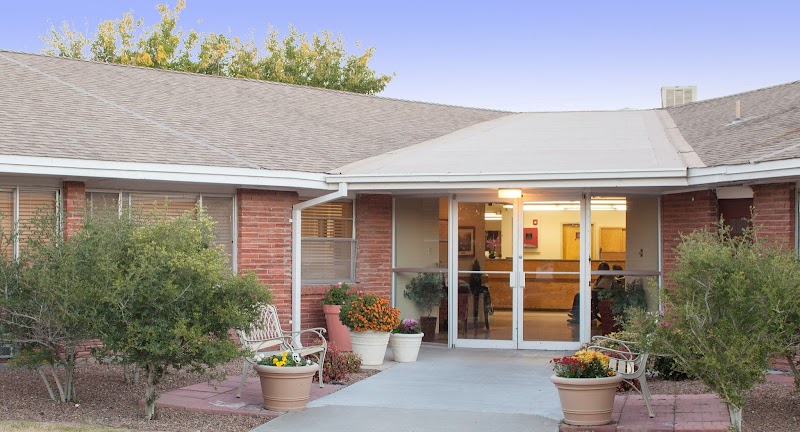


Casa Del Sol Center

2905 East Missouri Avenue, Las Cruces, NM 88011 (575) 522-0404
For profit - Limited Liability company 62 Beds GENESIS HEALTHCARE Data: November 2025
Trust Grade
58/100
#29 of 67 in NM
Last Inspection: March 2025

Within standard 12-15 month inspection cycle. Federal law requires annual inspections.

Overview

Casa Del Sol Center has a Trust Grade of C, which means it is average and sits in the middle of the pack among nursing homes. It ranks #29 of 67 in New Mexico, placing it in the top half of facilities in the state, and is the top option out of 6 in Dona Ana County. Unfortunately, the facility is worsening, with reported issues increasing from 11 in 2023 to 23 in 2025. Staffing is a concern here, with a rating of 2 out of 5 stars and a high turnover rate of 50%, although this is slightly better than the state average. There have been significant compliance problems, as evidenced by fines totaling $9,750, and the facility has less RN coverage than 89% of facilities in New Mexico, which may affect the quality of care. Specific incidents include improper medication storage, which risks residents receiving ineffective treatments, and overcrowding in the dining area that poses mobility challenges for residents. Overall, while there are some strengths, including a good quality measures score, there are notable weaknesses that families should consider carefully.

Trust Score
C
58/100
In New Mexico
#29/67
Top 43%
Safety Record
Low Risk
No red flags
Inspections
Getting Worse
11 → 23 violations
Staff Stability
⚠ Watch
50% turnover. Above average. Higher turnover means staff may not know residents' routines.
Penalties
○ Average
$9,750 in fines. Higher than 68% of New Mexico facilities. Some compliance issues.
Skilled Nurses
⚠ Watch
Each resident gets only 21 minutes of Registered Nurse (RN) attention daily — below average for New Mexico. Fewer RN minutes means fewer trained eyes watching for problems.
Violations
⚠ Watch
46 deficiencies on record. Higher than average. Multiple issues found across inspections.
★★★☆☆
3.0
Overall Rating
★★☆☆☆
2.0
Staff Levels
★★★★☆
4.0
Care Quality
★★★☆☆
3.0
Inspection Score
Stable
2023: 11 issues
2025: 23 issues

The Good

  • 4-Star Quality Measures · Strong clinical quality outcomes
  • Full Sprinkler Coverage · Fire safety systems throughout facility
  • No fines on record

Facility shows strength in quality measures, fire safety.

The Bad

3-Star Overall Rating

Near New Mexico average (2.9)

Meets federal standards, typical of most facilities

Staff Turnover: 50%

Near New Mexico avg (46%)

Higher turnover may affect care consistency

Federal Fines: $9,750

Below median ($33,413)

Minor penalties assessed

Chain: GENESIS HEALTHCARE

Part of a multi-facility chain

Ask about local staffing decisions and management

The Ugly 46 deficiencies on record

Mar 2025 23 deficiencies
CONCERN (D)

Potential for Harm - no one hurt, but risky conditions existed

Resident Rights (Tag F0550)

Could have caused harm · This affected 1 resident

Based on observation and interview, the facility failed to ensure a resident was treated with respect and dignity for 1 (R #23) of 1 (R #23) resident when the staff failed to sit next to the resident ...

Read full inspector narrative →
Based on observation and interview, the facility failed to ensure a resident was treated with respect and dignity for 1 (R #23) of 1 (R #23) resident when the staff failed to sit next to the resident while assisting them to eat. This deficient practice could likely result in residents feeling embarrassed, angry, and that their feelings are unimportant to the facility staff. The findings are: A. On 03/10/25 at 12:11 PM, during an observation of lunch, CNA #9 assisted R #23 with eating his lunch. CNA #9 stood over R #23. CNA #9 was not sitting down beside R #23 while she fed him. CNA #9 left the dining area and asked CNA #16 to assist R #23 with his lunch. CNA #16 stood over the resident to feed him also. B. On 03/13/25 at 8:56 AM, during an interview, CNA #16 confirmed that she did assist R #23 during lunch on 03/10/25. CNA #16 confirmed she stood over R #23. CNA #16 said they are supposed to be sitting down next to the resident, but the dining area was so crowded that she ended up standing instead of sitting down next to the resident. C. On 03/13/25 at 9:32 AM, during an interview, CNA #9 confirmed that she assisted R #23 while eating lunch on 03/10/25. CNA #9 said she usually sits down beside R #23, but if she can't find a chair, she will stand to feed him. D. On 03/17/25 at 2:41 PM, during an interview, the DON said her expectation is that when R #23 is being assisted with meals staff should sit down with the resident at eye level.
CONCERN (D)

Potential for Harm - no one hurt, but risky conditions existed

Safe Environment (Tag F0584)

Could have caused harm · This affected 1 resident

Based on observation and interview, the facility failed to provide a homelike environment that was in good condition for 1 (R #18) of 1 (R #18) resident reviewed for a homelike environment by not repa...

Read full inspector narrative →
Based on observation and interview, the facility failed to provide a homelike environment that was in good condition for 1 (R #18) of 1 (R #18) resident reviewed for a homelike environment by not repairing the trimming on the windowsill in R #18's room. Failure to maintain and provide a comfortable environment is likely to result in residents feeling unimportant and undervalued. The findings are: A. On 03/12/25 at 9:34 AM, during an interview with R #18 she pointed to her windowsill which had areas of trimming that were broken off. R #18 stated trimming on her windowsill had been broken off for months but could not remember exactly how long. B. On 03/12/25 at 9:34 AM, an observation of R #18's revealed a section of the trimming on the windowsill was broken off near R #18's bed. C. On 03/14/25 at 3:03 PM, during an interview with the Maintenance Director, he confirmed R #18's windowsill trim was broken and needed to be replaced again. The Maintenance director stated it had been replaced in the past because it has been broken due to R #18's bed being moved up and down and scraping the windowsill trimming off.
CONCERN (D) 📢 Someone Reported This

A family member, employee, or ombudsman was alarmed enough to file a formal complaint

Potential for Harm - no one hurt, but risky conditions existed

Report Alleged Abuse (Tag F0609)

Could have caused harm · This affected 1 resident

Based on record review the facility failed to report the results of all the investigations of misappropriation of resident property (the deliberate misplacement, exploitation, or wrongful, temporary, ...

Read full inspector narrative →
Based on record review the facility failed to report the results of all the investigations of misappropriation of resident property (the deliberate misplacement, exploitation, or wrongful, temporary, or permanent use of a resident's belongings or money without the resident's consent) and allegations of abuse within five days of the incident to the State Agency for 2 (R #20 and R #58) of 2 (R #20 and R #58) residents reviewed for reporting. If the facility fails to report the results of the investigations to the State Agency within five (5) days, then corrective action may not be taken, and residents may suffer serious bodily injury due to abuse or suffer increased anxiety and financial hardship. The findings are: Misappropriation of Resident Property R #20 A. Record review of the initial incident report, dated 02/20/25, revealed R #20 reported that 45.00 dollars was taken from her purse. R #20 was unsure when it was taken or by whom it was taken. B. Record review of R #20's facility 5-day follow-up report revealed the administrator completed the investigation on 03/18/25. C. Record review of the fax transmission report to the State Agency Incident Management, dated 03/18/25, revealed the facility did not submit the follow-up report for the allegation of abuse for R #58 within 5 days. D. Record review of an email from the administrator to the State Agency Surveyor, dated 03/18/25, the administrator confirmed the follow-up report for R #20's allegation of misappropriation of property was submitted to the State Agency Incident Management on 03/18/25. Allegations of Abuse R #58 E. Record review of the initial incident report, dated 02/10/25, revealed R #58 reported that on 02/09/25, a staff member performed an improper transfer which caused her pain. F. Record review of R #58's facility 5-day follow-up report, dated 02/14/25, revealed the administrator completed the investigation on 02/14/25. G. Record review of an email from the administrator to the State Agency Incident Management, dated 03/11/25, revealed the facility did not submit the follow-up report for the allegation of abuse for R #58 within 5 days. H. Record review of an email from the administrator to the State Agency Surveyor, dated 03/18/25, the administrator confirmed the follow-up report for R #58's allegation of abuse was submitted to the State Agency Incident Management on 03/11/25.
CONCERN (D)

Potential for Harm - no one hurt, but risky conditions existed

Transfer Notice (Tag F0623)

Could have caused harm · This affected 1 resident

**NOTE- TERMS IN BRACKETS HAVE BEEN EDITED TO PROTECT CONFIDENTIALITY** Based on record review and interview, the facility failed to notify the resident and the resident's representative(s) of the tra...

Read full inspector narrative →
**NOTE- TERMS IN BRACKETS HAVE BEEN EDITED TO PROTECT CONFIDENTIALITY** Based on record review and interview, the facility failed to notify the resident and the resident's representative(s) of the transfer in writing for 1 (R #35) of 1 (R #35) resident sampled for hospitalization when staff failed to: 1. Notify the resident and resident's representative(s) of the resident's transfer to the hospital in writing and in a language and manner they understand. 2. Send a written copy of the Transfer to the Ombudsman. These deficient practices could likely result in the resident and/or their representative not knowing the reason for a transfer, the location of the transfer, and their rights to advocate and make informed decisions regarding the resident's healthcare. The findings are: A. Record review of R #35's medical record revealed the following: 1. On 01/07/25, R #35 was sent to the hospital for altered mental status (change in mental function that stems from illnesses, disorders and injuries affecting your brain which can lead to changes in awareness, movement and behaviors). 2. On 02/06/25, R #35 was sent to the hospital to be evaluated for Percutaneous Endoscopic Gastrostomy tube (PEG, a thin, flexible tube inserted directly into the stomach through the abdominal wall. It is used to provide nutrition and medication to individuals who cannot eat or drink adequately) placement. 3. On 02/23/25, R #35 was sent to the hospital due to abnormal vital signs. 4. The medical record did not contain a written transfer notice for R #35's transfer to the hospital on [DATE]. 5. The medical record did not contain documentation that a copy of the written transfer notices for R #35's transfer to the hospital on [DATE], 02/06/25, or 02/23/25 were sent to the Ombudsman. B. On 03/13/25 at 12:20 PM, during an interview with the administrator, he confirmed the facility did not complete a transfer notice for R #35's transfer to the hospital on [DATE] and should have. C. On 03/17/25 at 2:46 PM, during an interview with the Ombudsman, she stated that she has not received written copies of transfer notices from the facility. D. On 03/17/25 at 5:13 PM, during an interview with the social services worker, he confirmed he has not been sending a written copy of the transfer notices to the Ombudsman.
CONCERN (D)

Potential for Harm - no one hurt, but risky conditions existed

Comprehensive Assessments (Tag F0636)

Could have caused harm · This affected 1 resident

Based on record review and interview, the facility failed to ensure a comprehensive Minimum Data Set (MDS; a federally mandated assessment instrument completed by facility staff) was completed within ...

Read full inspector narrative →
Based on record review and interview, the facility failed to ensure a comprehensive Minimum Data Set (MDS; a federally mandated assessment instrument completed by facility staff) was completed within 14 calendar days after admission for 1 (R #162) of 4 (R #13, R #17, R #60 and R #162) residents reviewed. This deficient practice could likely result in residents' preferences and care needs not being met. The findings are: A. Record review of R #162's admission record revealed an admission date of 12/29/24. B. Record review of R #162's admission MDS assessment revealed the admission MDS assessment was completed on 01/21/25. C. On 03/21/25 at 9:43 AM, during an interview with the MDS Coordinator, she confirmed R #162's admission MDS assessment was not completed within 14 days of admission. The MDS Coordinator confirmed that the admission MDS assessments should be completed within 14 days of admission.
CONCERN (D)

Potential for Harm - no one hurt, but risky conditions existed

Deficiency F0637 (Tag F0637)

Could have caused harm · This affected 1 resident

**NOTE- TERMS IN BRACKETS HAVE BEEN EDITED TO PROTECT CONFIDENTIALITY** Based on record review and interview, the facility failed to complete and transmit (electronically sending encoded information) ...

Read full inspector narrative →
**NOTE- TERMS IN BRACKETS HAVE BEEN EDITED TO PROTECT CONFIDENTIALITY** Based on record review and interview, the facility failed to complete and transmit (electronically sending encoded information) a Significant Change (major decline or improvement in the patient's health status) Minimum Data Set assessment within 14 days after the facility determined a significant change in the resident's physical or mental condition for 1 (R #32) of 1 (R #32) resident reviewed for MDS assessment timing. This deficient practice could likely result in the residents not receiving the appropriate care and services they need. The findings are: A. Record review of R #32's nursing progress note dated 11/13/24 revealed R #32 was admitted to hospice. B. Record review of R #32's change of condition MDS assessment dated [DATE], revealed the MDS assessment was not completed and signed off by the Registered Nurse (RN) until 12/19/24. C. On 03/17/25 at 2:08 PM, during an interview with the MDS Coordinator, she confirmed R #32's was admitted to hospice on 11/13/24 and that the Significant change MDS assessment for R #32 was not completed within 14 days of hospice admission.
CONCERN (D)

Potential for Harm - no one hurt, but risky conditions existed

Assessment Accuracy (Tag F0641)

Could have caused harm · This affected 1 resident

**NOTE- TERMS IN BRACKETS HAVE BEEN EDITED TO PROTECT CONFIDENTIALITY** Based on record review and interview, the facility failed to ensure the Minimum Data Set Assessment (MDS; a standardized, compre...

Read full inspector narrative →
**NOTE- TERMS IN BRACKETS HAVE BEEN EDITED TO PROTECT CONFIDENTIALITY** Based on record review and interview, the facility failed to ensure the Minimum Data Set Assessment (MDS; a standardized, comprehensive assessment of an adult's functional, medical, psychosocial, and cognitive status) was accurate for 3 (R #13, R #17, and R #60) of 7 (R #7, R #8, R #13, R #17, R #18, R #20 and R #60) residents reviewed for accurate MDS assessments. This deficient practice could likely result in the facility not having an accurate assessment of the residents' needs. The findings are: R#13 A. Record review of R #13's admission record revealed R #13 was admitted to the facility on [DATE]. B. Record review of R #13's physician's orders revealed the following: 1. An order, dated 03/21/23, pregabalin (nerve pain medication) capsule 150 mg give 1 capsule by mouth two times a day for neuropathy (damage, disease, or dysfunction of one or more nerves which can cause burning or shooting pain, numbness and/or tingling) 2. An order, dated 12/16/22, for clopidogrel (antiplatelet medication that reduces the chance that a harmful blood clot will form by preventing platelets from clumping together in the blood) 75 mg give 1 tablet by mouth every Monday, Wednesday, and Friday. C. Record review of R #13's Annual MDS, dated [DATE], revealed the following: 1. Section J0100: Pain Management a. Staff documented that R #13 did not receive scheduled pain medication. 2. Section N0415: High-Risk Drug Classes: Use and Indication. a. Staff documented that R #17 was taking an antiplatelet. D. On 03/17/25 at 2:13 PM, during an interview with the MDS coordinator, she confirmed the following: 1. R#13 did take scheduled pregabalin medication to treat neuropathy (nerve pain) and staff inaccurately documented that R #13 did not receive scheduled pain medication on R #13's Annual MDS, dated [DATE]. 2. Clopidogrel is an antiplatelet medication and should not be coded as an anticoagulant medication. 3. Staff inaccurately documented that R #13 was taking an anticoagulant on R #13's Annual MDS, dated [DATE]. R#17 E. Record review of R #17's admission record revealed R #4 was admitted on [DATE]. F. Record review of R #17's medical record, no date, revealed R #17 had a diagnosis of Pneumonitis (selling and irritation of lung tissue, which can lead to lung damage if left untreated) due to inhalation of food and vomit with an onset date of 12/30/23. G. Record review of R #17's physician's orders, multiple dates, revealed the following: 1. An order, dated 03/08/24, for Levaquin (antibiotic that treats bacterial infections) 500 Mg every morning for Pneumonitis due to inhalation of food and vomit for 5 days. 2. An order, dated 05/19/24, for Paxlovid (Paxlovid is an antiviral medication used to treat COVID-19 (an infectious disease caused by the SARS-CoV-2 virus)) twice a day for 5 days due to COVID-19. 3. An order, dated 12/29/23, for Clopidogrel Bisulfate (a platelet inhibitor that reduces the chance that a harmful blood clot will form by preventing platelets from clumping together in the blood) 75 mg to be taken daily for blood clot prevention. H. Record review of R #17's Quarterly MDS, dated [DATE], revealed the following: 1. The Assessment Reference End Date was 01/20/25. 2. Section I: Active Diagnoses Active Diagnoses in the last 7 days-Check all that apply. a. Staff checked Pneumonia. 3. Section N0415: High-Risk Drug Classes: Use and Indication. a. Staff documented that R #17 was taking an anticoagulant. b. Staff documented that R #17 was taking an antiplatelet. I. Record review of the entire medical record, no date, revealed the following: 1. The medical record did not contain documentation that R #17 had pneumonia in the 7 days prior to the MDS Assessment Reference End Date (01/20/25). 2. The medical record did not contain documentation that R #17 was taking an anticoagulant. J. On 03/17/25 at 1:51 PM, during an interview with the MDS coordinator, she confirmed the following: 1. R#17 did not have pneumonia within 7 days prior to the MDS Assessment Reference End Date (01/20/25). 2. Staff inaccurately documented the diagnosis of Pneumonia on R #17's Quarterly MDS, dated [DATE]. K. On 03/17/25 at 1:53 PM, during an interview with the Unit Manager, she confirmed the following: 1. R #17 did not have orders for anticoagulant medication. 2. Clopidogrel is an antiplatelet medication and should not be coded as an anticoagulant medication. 3. Staff inaccurately documented that R #17 was taking an anticoagulant on R #17's Quarterly MDS, dated [DATE]. R #60 L. Record review of R #60's admission record revealed R #60 was admitted on [DATE]. M. Record review of R #60's discharge MDS dated [DATE], revealed R #60 was discharged on 02/11/25 to a short-term general hospital. N. Record review of R #60's discharge plan dated 02/11/25, revealed R #60 was discharged home to Pennsylvania with R #60's daughter. O. On 03/14/25 at 10:15 AM, during an interview, the Unit Manager (UM) said that R #60 was at the facility for a short time and R #60's daughter decided it was best to take her home to Pennsylvania. The UM stated that R #60 was discharged home with her daughter. P. On 03/14/25 at 2:58, during an interview, the DON confirmed that the resident was discharged home and not to a hospital. The DON said that her expectation is that the documentation be accurate.
CONCERN (D)

Potential for Harm - no one hurt, but risky conditions existed

Comprehensive Care Plan (Tag F0656)

Could have caused harm · This affected 1 resident

**NOTE- TERMS IN BRACKETS HAVE BEEN EDITED TO PROTECT CONFIDENTIALITY** Based on record review and interview, the facility failed to develop an accurate, person-centered comprehensive care plan for 1 ...

Read full inspector narrative →
**NOTE- TERMS IN BRACKETS HAVE BEEN EDITED TO PROTECT CONFIDENTIALITY** Based on record review and interview, the facility failed to develop an accurate, person-centered comprehensive care plan for 1 (R #56) of 3 (R #15, R #49, and R #56) residents reviewed for care plans. This deficient practice could likely result in staff being unaware of the current and actual needs of the residents. The findings are: A. Record review of R #56's admission record (no date) revealed the following: 1. R #56 was admitted to the facility on [DATE]. 2. Diagnoses: a. Traumatic subdural hemorrhage without loss of consciousness (bleeding between the brain and the dura mater (the outermost layer of tissue covering the brain) caused by a head injury, where the person remains alert and conscious). b. Acute Embolism and Thrombosis of Right Axillary Vein (a type of deep vein thrombosis (DVT, blood clot) that specifically affects the axillary vein, located in the armpit) c. Thrombocytopenia (abnormally low number of platelets in the blood. Platelets are small blood cells that play a crucial role in blood clotting). d. Neuromuscular dysfunction of bladder a condition where bladder control is impaired due to damage to the nerves or brain that control bladder function). B. Record review of R #56's orders, multiple dates, revealed the following: 1. Order dated 02/19/25 for foley catheter (a thin, flexible tube inserted into the bladder through the urethra to drain urine) change every month on the 17th for neurogenic bladder (bladder dysfunction caused by nervous system conditions). 2. Order dated 02/25/25, for Lasix (antidiuretic medication used to treat fluid retention (edema) and swelling caused by congestive heart failure, liver disease, kidney disease, and other medical conditions) 40 mg twice a day for fluid retention (an accumulation of fluid in body tissues and cavities). 3. Order dated 02/25/25, for Eliquis (an anticoagulant medication used to treat and prevent blood clots and to prevent stroke in people with nonvalvular atrial fibrillation) 5 mg twice a day for cerebrovascular accident (CVA, commonly known as a stroke, is a medical condition where blood flow to the brain is interrupted, leading to brain damage and potential neurological problems). B. Record review of R #56's admission Minimum Data Set (MDS, federally mandated process for clinical assessment of all residents in Medicare or Medicaid-certified nursing homes) Assessment, dated 02/26/25, revealed the following: 1. Section H- Bladder and Bowel: H0100 Appliances; Staff selected Indwelling catheter (foley catheter). 2. Section N- Medications: N0415 High-Risk Drug Classes; Staff selected anticoagulant and diuretic. C. Record review of R #56's care plan, dated 02/21/25, revealed staff did not document the following: 1. R #56's had a foley catheter for neurogenic bladder. 2. R #56 had an order for the high-risk medication Eliquis for CVA. 3. R #56 had an order for the high-risk medication Lasix for fluid retention. D. On 03/13/25 at 9:52 AM, during an interview with RN #16, she confirmed the following: 1. R #56 had a foley catheter. 2. R #56's care plan did not include that she had a foley catheter or interventions in place to care for R #56's foley catheter. E. On 03/17/25 at 1:45 PM, during an interview with the MDS coordinator, she confirmed the following: 1. R #56's admission MDS dated [DATE] indicated that R #56 had a foley catheter. 2. R #56's comprehensive care plan should have included R #56's foley catheter and interventions in place to care for the foley catheter. F. On 03/17/25 at 2:06 PM, during an interview with the Unit Manager (UM), she confirmed the following: 1. R #56 had an order for Eliquis, which is a high-risk medication. 2. R #56 had an order for Lasix, which is a high-risk medication. 3. R #56's care plan did not include that she was taking Eliquis or Lasix. 4. High-risk medications should be included on resident care plans.
CONCERN (D)

Potential for Harm - no one hurt, but risky conditions existed

Deficiency F0658 (Tag F0658)

Could have caused harm · This affected 1 resident

Based on record reviews, and interviews, the facility failed to meet professional standards of quality for 1 (R #49) of 1 (R #49) residents when staff failed to administer medications according to phy...

Read full inspector narrative →
Based on record reviews, and interviews, the facility failed to meet professional standards of quality for 1 (R #49) of 1 (R #49) residents when staff failed to administer medications according to physician's orders. If the facility is not providing care that meets professional standards of quality, then residents are likely to experience adverse effects, worsening of their condition, and potential complications from not receiving the care ordered by the physician. The findings are: A. Record review of R #49's admission record, no date, revealed R #49 was admitted to the facility 06/11/24. B. Record review of R #49's physician order, dated 12/06/25, for Renvela (is used to control phosphorus levels in adults with chronic kidney disease) 800 mg three times a day with meals for end stage renal disease (ESRD, a condition in which the kidneys lose the ability to remove waste and balance fluids). C. Record review of R #49's medication administration record (MAR; a form used to document medication administration), dated March 2025, revealed staff documented the following: 1. On 03/10/25 at 700 AM, renvela, staff documented not administered, see nurses note (NN). 2. On 03/10/25 at 12:30 AM, renvela, staff documented NN. 3. On 03/10/25 at 12:30 AM, renvela, staff documented NN. 4. On 03/11/25 at 700 AM, renvela, staff documented NN. D. Record review of R #49's progress notes for March 2025, revealed staff documented the following for R #49's renvela medication: 1. On 03/10/25 at 8:03 AM, awaiting on med from pharmacy. 2. On 03/10/25 at 12:13, awaiting med from pharmacy. 3. On 03/11/25 at 7:23 AM, awaiting med from pharmacy. 4. On 03/11/25 at 1:09 PM, awaiting med from pharmacy. E. On 03/14/25 at 10:11 AM, during an interview with CMA #16, she stated the following: 1. When medications get to the last 7 doses, the medication aids or nurses are expected to reorder the medication in the electronic medical record (EMR). 2. She confirmed that R #49 did not receive her renvela on 03/10/25 and 03/11/25 due to the medication being unavailable. 3. She stated that she notified the Unit Manager (UM) on 03/10/25 that R #49's renvela had not arrived from the pharmacy. F. Record review of R #49's order summary for renvela, dated 03/14/25, revealed staff reordered R #49's renvela on 03/10/25 and it was received on 03/11/25. G. Record review of the electronic shipping manifest, dated 03/11/25, revealed R #49's renvela was received by the facility on 03/11/25 at 11:06 PM. H. On 03/17/25 at 2:14 PM, during an interview with the UM, she confirmed the following: 1. Staff are expected to reorder medication when there are 9 pills left. 2. Staff did not reorder R #49's renvela until 03/10/25.
CONCERN (D)

Potential for Harm - no one hurt, but risky conditions existed

ADL Care (Tag F0677)

Could have caused harm · This affected 1 resident

**NOTE- TERMS IN BRACKETS HAVE BEEN EDITED TO PROTECT CONFIDENTIALITY** Based on record review and interview, the facility failed to provide activities of daily living (ADL) assistance for 1 (R #23) o...

Read full inspector narrative →
**NOTE- TERMS IN BRACKETS HAVE BEEN EDITED TO PROTECT CONFIDENTIALITY** Based on record review and interview, the facility failed to provide activities of daily living (ADL) assistance for 1 (R #23) of 1 (R #23) residents reviewed for ADL care when staff failed to assist R #23 with brushing his teeth at night. This deficient practice is likely to affect the dignity and health of the residents. The findings are: A. On 03/11/25 at 11:02 AM, during an interview, R #23's sister said R #23 doesn't get his teeth brushed on a regular basis. B. Record review of R #23's Quarterly Minimum Data Set (MDS) dated [DATE] revealed R #23 required assistance is dependent for ADL care. C. On 03/12/25 at 3:23 PM, during an interview, CNA #8 said she sometimes brushes R #23's teeth at night if it is needed. CNA #8 said she usually rinses R #8 mouth out but she doesn't brush his teeth regularly. CNA #8 said that the morning shift usually brushes the resident's teeth. D. Record review of R #23's ADL sheet, dated February 2025, revealed that oral care is not being documented. E. On 03/12/25 at 3:39 PM, during an interview, the Unit Manager (UM) said R #23's teeth should be brushed twice a day. The UM said confirmed that the documentation does not show if R #23 is getting his teeth brushed twice a day or not. F. On 03/13/25 at 9:47 AM, during an interview, the DON said the expectation is that resident's teeth get brushed at least twice a day and that it be documented when it is done. G. Record review of the facility's oral health policy dated 09/01/25 revealed that oral hygiene will be performed, at a minimum, two times a day. Oral hygiene should be done to maintain the mouth in a clean and intact condition and to prevent or reduce systemic diseases (conditions that affect multiple organs or systems in the body).
CONCERN (D)

Potential for Harm - no one hurt, but risky conditions existed

Pressure Ulcer Prevention (Tag F0686)

Could have caused harm · This affected 1 resident

**NOTE- TERMS IN BRACKETS HAVE BEEN EDITED TO PROTECT CONFIDENTIALITY** Based on record review and interview, the facility failed to ensure wound care orders were obtained and implemented timely for 1...

Read full inspector narrative →
**NOTE- TERMS IN BRACKETS HAVE BEEN EDITED TO PROTECT CONFIDENTIALITY** Based on record review and interview, the facility failed to ensure wound care orders were obtained and implemented timely for 1 (R #7) of 5 (R #1, R #7, R #34, R #35 and R #49) residents reviewed for pressure ulcers (damage to an area of the skin caused by constant pressure on the area for a long time), when staff failed to: 1. Have wound care orders obtained and implemented for R #7's pressure wound on the sacrum (area of spinal column just above the coccyx) for 2 days after R #7 was admitted . 2. Have wound care orders obtained and implemented for R #7's pressure wounds on the Left and Right heel for 3 days after being admitted . These deficient could likely result in the provider being unaware of the resident's current condition, leading to inconsistent interventions and worsening of pressure ulcers. The findings are: A. Record review of R #7's admission record (no date) revealed R #7 was admitted to the facility on [DATE]. B. Record review of R #7's Convalescent Care Orders (admission orders provided to the nursing home) dated 01/07/25 revealed the following: Does the patient have any wounds? Yes C. Record review of R #7's Clinical Admission, dated 01/08/25 revealed the following: 1. Skin: a. left heel pressure ulcer present on admission. b. right heel pressure ulcer present on admission. c. sacrum pressure ulcer present on admission. D. Record review of R #7's Dietitian assessment note dated 01/10/25 revealed the following: 1. R #7 has pressure ulcers to sacrum and bilateral heels. 2. R #7 is at nutritional risk due to skin breakdown. E. Record review of R #7's Nursing Progress Notes dated 01/08/25 through 01/09/25 revealed staff did not consult with the facility provider to obtain wound care orders. F. Record review of R #7's physician's orders revealed the following: 1. An order dated 01/10/25, Sacrum wound- clean with normal saline (saltwater solution used to cleanse), pat dry, apply Santyl (enzyme ointment used to treat skin ulcers by helping to remove dead skin tissue and aid in wound healing) nickel thick (thickness of a nickel approximately 2 millimeters) to wound bed, cover with 4x4 (gauze dressing that measures 4 inches by 4 inches), moistened with Dakin's (diluted bleach solution used in wound treatment to prevent and treat skin and tissue infections), 4x4 and Meditape (medical-grade cotton with strong adhesiveness that is primarily used to secure dressings) every day shift for wound care. 2. An order dated 01/11/25, Bilateral heels clean with normal saline, pat with iodine (antiseptic solution use to keep area dry and skin intact) moistened gauze, do not cover (open to the air) every day shift. G. Record review of R #7's Treatment Administration Record (TAR, electronic document where facility staff document wound care was completed) for January 2025 revealed the following; 1. Facility staff did not have orders in place for treatment of R #7's sacrum pressure ulcer until 01/10/25 (two days after admission). 2. Facility staff did not have orders in place for treatment of R #7's left and right heel pressure ulcers until 01/11/25 (three days after admission). H. On 01/30/25 at 4:12 PM, during an interview, the facility wound care nurse, stated the following: 1. Nursing staff completing the admission should contact the provider to obtain wound care orders. 2. Nursing staff did not obtain orders for R #7's pressure ulcers which were present on admission. 3. It is her expectation that orders be obtained on admission if residents are admitted with pressure ulcers.
CONCERN (D)

Potential for Harm - no one hurt, but risky conditions existed

Deficiency F0697 (Tag F0697)

Could have caused harm · This affected 1 resident

**NOTE- TERMS IN BRACKETS HAVE BEEN EDITED TO PROTECT CONFIDENTIALITY** Based on record review and interview, the facility failed to effectively (use of different techniques and medication to reduce a...

Read full inspector narrative →
**NOTE- TERMS IN BRACKETS HAVE BEEN EDITED TO PROTECT CONFIDENTIALITY** Based on record review and interview, the facility failed to effectively (use of different techniques and medication to reduce and control the amount of pain a person experiences) manage pain for 1 (R #13) of 2 (R #13 and R #46) residents reviewed for pain when the facility failed to implement orders for treatment of pain for 17 days after R #13's appointment with her provider. This deficient practice could likely result in residents experiencing unnecessary pain. The findings are: A. On 03/10/25 at 3:31 PM, during an interview, R #13 stated she is always in pain. R #13 stated she has had pain in her nose and tongue for several months. B. Record review of R #13's admission record revealed R #13 was admitted to the facility on [DATE]. C. Record review of R #13's Ear, Nose and Throat (ENT) Institute (specialist in the treatment of the ears, nose, throat, sinuses, head and neck) provider progress note, dated 01/29/25, revealed the following: 1. Chief complaint: Patient is here for pain in her nose and throat. Pain is daily. 2. R #13 had a diagnosis of atypical facial pain (chronic, constant pain in the absence of any apparent cause in the face or brain). 3. Assessment/plan: Start R #13 on amitriptyline (antidepressant medication often used to help treat chronic pain) 10 mg and increase by 10 mg each week until she reaches a dose of 50 mg daily. D. Record review of R #13's physician orders revealed an order start date 02/14/25, amitriptyline 10 mg give 1 tablet by mouth one time a day. E. Record review of R #13's Medication Administration Record (MAR; the form used to document medication administration), dated February 2025, revealed R #13 received her first dose of amitriptyline on 02/14/25. F. On 03/17/25 4:09 PM, during an interview with the unit manager and DON they confirmed that there was a delay in starting the amitriptyline prescribed by the ENT provider at R #13's visit on 01/29/25 and R #13 received her first dose of the medication sixteen (16) days after her appointment.
CONCERN (D)

Potential for Harm - no one hurt, but risky conditions existed

Deficiency F0711 (Tag F0711)

Could have caused harm · This affected 1 resident

**NOTE- TERMS IN BRACKETS HAVE BEEN EDITED TO PROTECT CONFIDENTIALITY** Based on record review and interview, the facility failed to ensure residents have a written, signed, and dated progress notes a...

Read full inspector narrative →
**NOTE- TERMS IN BRACKETS HAVE BEEN EDITED TO PROTECT CONFIDENTIALITY** Based on record review and interview, the facility failed to ensure residents have a written, signed, and dated progress notes at each visit from the provider (physician or nurse practitioner) for 1 (R #7) of 1 (R #7) resident reviewed for physician's visits, when they failed to have R #7's provider: 1. Sign their progress notes at the time of the visit. 2. Provide their progress note at the time of the visit. This deficient practice could likely result in the residents' needs not being met due to facility not having written, signed, and dated progress notes from the provider. A. Record review of R #7's admission record (no date) revealed R #4 was admitted to the facility on [DATE]. B. On 03/13/25 at 10:06 AM, during an interview with Medical Records staff, she confirmed there were no wound care consultation progress notes scanned into R #7's medical record. C. Record review of R #7's wound care consultant (outside provider coming to facility to provide wound care treatment) progress notes revealed: 1. Nurse Practitioner (NP) note: visit date 02/06/25. The NP did not electronically sign the note until 02/09/25 and the note was not sent to the facility until 02/20/25. 2. NP note: visit date 02/20/25. The NP did not electronically sign the note until 02/22/25 and the note was not sent to the facility until 03/14/25. 3. NP note: visit date 02/27/25. The NP did electronically sign the note on 02/27/25, but the note was not sent to the facility until 03/14/25. 4. NP note: visit date 03/06/25. The NP did electronically sign the note on 03/06/25, but the note was not sent to the facility until 03/14/25. 5. NP note: visit date 03/13/25. The NP did not electronically sign the note until 03/14/25 and the note was not sent to the facility until 03/14/25. D. On 03/17/25 at 3:31 PM, during an interview with the facility wound care nurse, she stated she completed resident rounds (visits to assess wounds) with the wound care consultant. The wound care consultant then provides her with verbal orders for wound care. The wound care nurse confirmed that they do not get the wound care consultant progress notes on the day of the visit.
CONCERN (D)

Potential for Harm - no one hurt, but risky conditions existed

Medical Records (Tag F0842)

Could have caused harm · This affected 1 resident

**NOTE- TERMS IN BRACKETS HAVE BEEN EDITED TO PROTECT CONFIDENTIALITY** Based on record review and interview, the facility failed to ensure medical records were complete and accurate for 1 (R #56) of ...

Read full inspector narrative →
**NOTE- TERMS IN BRACKETS HAVE BEEN EDITED TO PROTECT CONFIDENTIALITY** Based on record review and interview, the facility failed to ensure medical records were complete and accurate for 1 (R #56) of 2 (R #15 and R #56) residents reviewed for documentation accuracy. This deficient practice has the potential to negatively impact the care staff provide to meet residents' needs due to missing or inaccurate records and resident information. The findings are: A. Record review of R #56's admission record (no date) revealed the following: 1. R #56 was admitted to the facility on [DATE]. 2. Diagnoses: a. Traumatic subdural hemorrhage without loss of consciousness (bleeding between the brain and the dura mater (the outermost layer of tissue covering the brain) caused by a head injury, where the person remains alert and conscious). b. Acute Embolism and Thrombosis of Right Axillary Vein (a type of deep vein thrombosis (DVT, blood clot) that specifically affects the axillary vein, located in the armpit) c. Thrombocytopenia (abnormally low number of platelets in the blood. Platelets are small blood cells that play a crucial role in blood clotting). B. Record review of R #56's physician order, dated 02/25/25, revealed an order for Eliquis (an anticoagulant medication used to treat and prevent blood clots and to prevent stroke in people with nonvalvular atrial fibrillation) 5 mg twice a day for cerebrovascular accident (CVA, commonly known as a stroke, is a medical condition where blood flow to the brain is interrupted, leading to brain damage and potential neurological problems). C. Record review of R #56's entire medical record, no date, revealed staff did not document monitoring of resident for the use of anticoagulants. D. On 03/13/25 at 9:52 AM, during an interview with RN #16, she stated the following: 1. CNA's monitor R #16 for blood in stool or urine. 2. She stated the nurses document monitoring for bleeding for all residents that are taking anticoagulants in the electronic medical record. 3. She confirmed staff had not documented that R #56 was being monitored for bleeding since she arrived on 02/19/25. E. On 03/17/25 at 2:08 PM, during an interview with the Unit Manager, she confirmed the following: 1. All residents who take an anticoagulant should be monitored for bleeding. 2. Staff are expected to document that the resident's are being monitored for bleeding in the electronic medical record. 3. Staff did not document that R #56 was being monitored for bleeding between 02/19/25 and 03/13/25.
CONCERN (D)

Potential for Harm - no one hurt, but risky conditions existed

Deficiency F0949 (Tag F0949)

Could have caused harm · This affected 1 resident

**NOTE- TERMS IN BRACKETS HAVE BEEN EDITED TO PROTECT CONFIDENTIALITY** Based on record review and interview, the facility failed to provide behavioral health training (training that helps staff recog...

Read full inspector narrative →
**NOTE- TERMS IN BRACKETS HAVE BEEN EDITED TO PROTECT CONFIDENTIALITY** Based on record review and interview, the facility failed to provide behavioral health training (training that helps staff recognize and respond to various behavioral and mental health issues that residents may present with) for 1 (CNA #8) of 3 (CNA #8, CNA #10, and CNA #11) staff sampled for training. This deficient practice could likely result in residents not receiving the services necessary to attain or maintain their physical, mental, and psychosocial (involving both psychological and social aspects) well-being. The findings are: A. Record review of R #19's admission record, (no date) revealed that she was admitted to the facility on [DATE] with the diagnosis of Anxiety disorder, unspecified (condition where individuals experience anxiety-like symptoms that cause severe distress or impairment). B. Record review of R #23's admission record, (no date) revealed that he was admitted to the facility on [DATE] with the diagnosis of schizophrenia (chronic mental disorder characterized by disruptions in thought processes, perceptions, emotions, and social interactions). C. Record review of R #35's admission record, (no date) revealed that she was admitted to the facility on [DATE] with the diagnosis of dementia, unspecified severity, with anxiety (cognitive disorders that cause a progressive decline in memory, thinking, and other mental abilities that interfere with daily life), and depression (mental health condition characterized by a persistent feeling of sadness, loss of interest, and changes in mood, behavior, and thinking), and anxiety. D. Record review of staff training records revealed CNA #8 did not complete training for behavioral health needs. E. On 03/14/25 at 3:51 PM, during an interview, the Nurse Practice Educator (NPE) confirmed CNA #8 did not have behavioral health training.
CONCERN (E)

Potential for Harm - no one hurt, but risky conditions existed

Deficiency F0657 (Tag F0657)

Could have caused harm · This affected multiple residents

**NOTE- TERMS IN BRACKETS HAVE BEEN EDITED TO PROTECT CONFIDENTIALITY** Based on record review and interview, the facility failed to ensure care plan requirements were met for 6 (R #8, R #15, R #18, R...

Read full inspector narrative →
**NOTE- TERMS IN BRACKETS HAVE BEEN EDITED TO PROTECT CONFIDENTIALITY** Based on record review and interview, the facility failed to ensure care plan requirements were met for 6 (R #8, R #15, R #18, R #49, R #56, and R #162) of 10 (R #7, R #8, R #13, R #15, R #18, R #20, R #32, R #49, R #56, and R #162) residents reviewed for care plans when staff failed to: 1. Have the required Interdisciplinary Team (IDT, team members from different disciplines working collaboratively, with a common purpose, to set goals, make decisions and share resources and responsibilities) members participate in the care plan meeting for R #15 and R #49. 2. Ensure the care plan meeting was held after the completion of the admission Minimum Data Set Assessment (MDS; a standardized, comprehensive assessment of an adult's functional, medical, psychosocial, and cognitive status) when creating the care plan for R #8, R #15, R #18, R #49, R #56, and R #162. 3. Revise the care plan with the most current resident information for R #56. These deficient practices could likely result in the care plan not being updated with the most current resident conditions and appropriate interventions, staff being unaware of changes in care provided, and residents not receiving the care related to changes in their health status or healthcare decisions. The findings are: IDT Team R #15 A. Record review of R #15's care plan meeting notes, dated 12/09/24, revealed the individuals that were present at the meeting were: R #15's family member, the Unit Manager (UM), the Social Services Worker (SSW), and the Medical Records Clerk (MRC). R #49 B. Record review of R #49's care plan meeting note, dated 10/15/24, revealed the individuals that were present at the meeting were: R #49, the UM and the SSW. Timing R #8 C. On 03/10/25 at 3:02 PM, during an interview with R #8, she stated she had not participated in a care plan meeting since she was admitted to the facility on [DATE]. D. Record review of R #8's admission MDS, dated [DATE], revealed the assessment was signed by the Registered Nurse (RN) on 02/21/25. E. Record review of R #8's entire medical record, no date, revealed staff did not document that an IDT meeting took place within seven days after the completion of R #8's admission MDS on 02/11/25. F. On 03/14/25 at 2:42 PM, during an interview with the Social Services staff, he confirmed that there was no plan meeting after R #8's admission MDS was completed. R #15 G. Record review of R #15's quarterly MDS, dated [DATE], revealed it was signed by the nurse on 01/24/25. H. Record review of R #15's entire medical record, no date, revealed staff did not document that an IDT meeting took place within seven days after the completion of R #15's quarterly MDS on 01/24/25. R #18 I. On 03/12/25 at 9:31 AM, during an interview with R #18, she stated she had not participated in a care plan meeting in several months. J. Record review of R #18's Annual MDS, dated [DATE], revealed it was signed by the RN on 02/27/25. K. Record review of R #18's entire medical record, no date, revealed staff did not document that an IDT meeting took place within seven days after the completion of R #18's Annual MDS on 01/21/25. L. On 03/14/25 at 2:45 PM, during an interview with the Social Services staff, he confirmed that there was no documentation in R #18's medical record stating that she had a care plan meeting after her Annual MDS was completed. He stated that her last meeting was held 09/10/24. R #49 M. Record review of R #49's admission record, no date, revealed R #49 was admitted to the facility on [DATE]. N. Record review of R #49's quarterly MDS, dated [DATE], revealed it was signed by the nurse on 12/31/24. O. Record review of R #49's entire medical record, no date, revealed staff did not document that an IDT meeting took place within seven days after the completion of R #49's quarterly MDS on 12/31/24. R #56 P. On 03/10/25 at 3:30 PM, during an interview with R #56, she stated that she had not participated in a care plan meeting since she arrived on 02/19/25. Q. Record review of R #56's admission MDS, dated [DATE], revealed it was signed by the nurse on 03/04/25. R. Record review of R #56's entire medical record, no date, revealed staff did not document that an IDT meeting took place within 7 days after the completion of R #56's admission MDS on 03/04/25. R #162 S. Record review of R #162's admission record, no date, revealed R #162 was admitted to the facility on [DATE]. T. Record review of R #162's admission MDS, dated [DATE], revealed it was signed by the nurse on 01/21/25. U. Record review of R #162's entire medical record, no date, revealed staff did not document that an IDT meeting took place within 7 days after the completion of R #162's admission MDS on 01/21/25. V. On 03/14/25 at 1:07 PM, during an interview, with the SSW, he confirmed that the care plan meeting are determined by the MDS completion, but wasn't sure of the timing. The SSW said that he was new to the position and that he had created a spreadsheet and was trying to keep track of the care plan meetings that were due using the spreadsheet. The SSW said that he was not aware that R #162's did not take place seven days after the MDS assessment. Revisions R #56 W. Record review of R #56's admission documents, no date, revealed R #56 was admitted to the facility on [DATE]. X. Record review of R #56's physician order, dated 03/05/25, revealed an order for Bactrim DS (antibiotic used to treat infections caused by bacteria) every 12 hours for urinary tract infection (UTI, an infection of the urinary tract, which includes the kidneys, ureters, bladder, and urethra) for 10 days. Y. Record review of R #56's care plan, dated 02/20/25, revealed staff did not revise R #16's care plan to include that R #16 had a UTI on 03/05/25. Z. On 03/17/25 at 1:45 PM, during an interview with the MDS coordinator, she confirmed the following: 1. R #56 had an order for Bactrim to treat a diagnosed UTI starting on 03/05/25. 2. R #56's care plan did not include her diagnosis and treatment of a UTI. 3. R #56's care plan should have been revised to include her diagnosis and treatment of a UTI. AA. On 03/17/25 at 1:58 PM, during an interview with UM, the following was confirmed: 1. She stated the individuals who are invited to care plan meetings include the resident and their representatives, the UM, therapy, activities, SSW, Infection prevention if needed, and the MDS nurse. 2. She confirmed that a CNA with responsibility for the resident is not typically invited to the care plan meeting. 3. She confirmed that the provider is not typically invited to the care plan meeting. 4. R #15's last care plan meeting was held on 12/09/25. 5. R #49's last care plan meeting was held on 10/15/25. 6. The facility did not complete an IDT care plan meeting for R #56 since she arrived on 02/19/25. BB. On 03/18/25 at 8:33 AM, during an interview with SSW, he confirmed the following: 1. He was responsible for scheduling care plan meetings. 2. He does not typically invite the provider or CNA's. 3. He stated that he has been behind scheduling care plan meetings.
CONCERN (E)

Potential for Harm - no one hurt, but risky conditions existed

Deficiency F0726 (Tag F0726)

Could have caused harm · This affected multiple residents

Based on interview and record review, the facility failed to ensure the CNA's are able to demonstrate competency in skills and techniques necessary to care for residents' needs for 3 (CNA #8, CNA #9, ...

Read full inspector narrative →
Based on interview and record review, the facility failed to ensure the CNA's are able to demonstrate competency in skills and techniques necessary to care for residents' needs for 3 (CNA #8, CNA #9, and CNA #16) of 3 (CNA #8, CNA #9, and CNA #16) CNAs reviewed for competent nursing staff, when they failed to: 1. Have a competency evaluation (the facility's way to measure an individual's knowledge and skills as related to safe, competent performance through demonstration of those skills) for CNA #8, CNA #9, and CNA #16 at the time of hire before they start to work with residents. 2. Have a competency evaluation for CNA #8, CNA #9, and CNA #16 routinely after hire. These deficient practices could likely result in CNA's working with residents without adequate knowledge to do so; likely resulting in injury or inappropriate care being provided to the residents. The findings are: A. Record review of CNA #8's personnel files revealed the following: 1. CNA #8 was hired on 12/03/24. 2. Staff did not document that a competency evaluation was completed for CNA #8 demonstrating their knowledge, ability, and skills to care for residents. B. Record review of CNA #9's personnel files revealed the following: 1. CNA #9 was hired on 11/14/18. 2. Staff did not document that a competency evaluation was completed for CNA #9 demonstrating their knowledge, ability, and skills to care for residents. C. Record review of CNA #16's personnel files revealed the following: 1. CNA #16 was hired on 02/25/19. 2. Staff did not document that a competency evaluation was completed for CNA #16 demonstrating their knowledge, ability, and skills to care for residents. D. On 03/14/25 at 3:51 PM, during an interview, the Nurse Practice Educator (NPE) confirmed CNA #8, CNA #9, and CNA #16 did not have a competency evaluation. E. On 03/17/25 at 2:48 PM, during an interview, the DON said that competency evaluations should be carried out before staff start working the floor. The DON said that staff should have an onboarding competency evaluation to demonstrate that they are proficient in resident care before they start providing resident care.
CONCERN (E)

Potential for Harm - no one hurt, but risky conditions existed

Deficiency F0730 (Tag F0730)

Could have caused harm · This affected multiple residents

Based on interview and record review, the facility failed to complete performance reviews at least every 12 months for 2 (CNA #10 and CNA #16) of 3 (CNA #8, CNA #10, and CNA #16) CNAs sampled for 12 h...

Read full inspector narrative →
Based on interview and record review, the facility failed to complete performance reviews at least every 12 months for 2 (CNA #10 and CNA #16) of 3 (CNA #8, CNA #10, and CNA #16) CNAs sampled for 12 hours of annual training. This deficient practice could likely result in staff being undertrained and providing inadequate care. The findings are: A. Record review of the employee files revealed the following: 1. CNA #10's hire date was 11/14/2018 2. There are no performance evaluations for CNA #10. 3. CNA #16's hire date was 02/25/2019. 4. There are no performance evaluations for CNA #16. B. On 03/17/25 at 3:51 PM, during an interview, the Nurse Practice Educator (NPE) confirmed that there were not any performance evaluations for CNA #10, and CNA #11.
CONCERN (E)

Potential for Harm - no one hurt, but risky conditions existed

Medication Errors (Tag F0758)

Could have caused harm · This affected multiple residents

**NOTE- TERMS IN BRACKETS HAVE BEEN EDITED TO PROTECT CONFIDENTIALITY** Based on record review and interview, the facility failed to keep resident free from psychotropic medications (antidepressants, ...

Read full inspector narrative →
**NOTE- TERMS IN BRACKETS HAVE BEEN EDITED TO PROTECT CONFIDENTIALITY** Based on record review and interview, the facility failed to keep resident free from psychotropic medications (antidepressants, anti-anxiety medications, stimulants, antipsychotics, and mood stabilizers) for 3 (R #13, R #15, and R #19) of 4 (R #13, R #15, R #19 and R #20) residents reviewed for unnecessary psychotropic medications when they failed to: 1) Have the consents of resident/representative for psychotropic medications for R #13 and R #15. 2) R #19 did not receive psychotropic medications unless the medication was necessary to treat a specific psychiatric diagnosis and was documented in the medical record. These deficient practices could likely result in residents receiving medications without a medical reason and being at a higher risk of adverse side effects (unwanted, harmful, or abnormal result). The findings are: R #13 A. Record review of R #13's medical record, no date, revealed following diagnosis: 1. Major Depressive Disorder, single episode, unspecified (diagnosis used when an individual experiences a single episode of major depression without specific details about the severity or duration of episode). 2. Anxiety disorder, unspecified (condition in which individuals experience significant distress and impairment in daily life due to anxiety symptoms that do not align with other defined anxiety disorders). B. Record review of R #13's physician's orders revealed the following: 1. Order dated 01/07/23, for melatonin (dietary supplement used to help treat individuals who have trouble sleeping) tablet, give 10 mg by mouth at bedtime for sleep. 2. Order dated 12/19/23, for mirtazapine (antidepressant medication used to treat major depression that can stimulate appetite and promote weight gain) tablet, give 7.5 mg by mouth one time a day for appetite stimulant. 3. Order dated 12/28/24, for clonazepam (benzodiazepine medication that slows down activity in your brain and nervous system used to treat anxiety) 0.25 mg, give 1 tablet by mouth three times a day for anxiety with agitation. C. Record review of R #13's Psychotropic Medication Administration Disclosure (consent form), no date, revealed the following: 1. Staff circled Remeron (brand name for mirtazapine), Klonopin (brand name for clonazepam) and melatonin on the disclosure. 2. The disclosure did not include R #13's signature or the signature of R #13's representative. 3. The disclosure did not include a date. R #15 D. Record review of R #15's medical record, no date, revealed following diagnosis: 1. Major Depressive Disorder, Recurrent (a mental health disorder characterized by persistently depressed mood or loss of interest in activities, causing significant impairment in daily life). 2. Dementia (loss of cognitive functioning-thinking, remembering, and reasoning- to such an extent that it interferes with a person's daily life and activities), unspecified severity, without behavioral disturbance, psychotic disturbance, mood disturbance, and anxiety. E. Record review of R #15's physician's order dated 03/03/25, revealed an order for Aripiprazole (antipsychotic medication that can treat schizophrenia, bipolar disorder, depression, and Tourette syndrome) 5 mg once a day for depression. F. Record review of R #15's Psychotropic Medication Administration Disclosure, no date, revealed the following: 1. Staff circled Aripiprazole and Fluoxetine (an antidepressant medication) on the disclosure. 2. The disclosure did not include R #15's signature or the signature of R #15's representative. 3. The disclosure did not include a date. G. On 03/17/25 at 2:16 PM, during an interview with the Unit Manager, she confirmed the following: 1. R #15's consent to take Aripiprazole did not have a signature or a date. 2. Any time a resident starts taking a psychotropic medication the resident or their representative must sign a consent prior to starting the psychotropic medication. H. On 03/21/25 at 12:48 PM, during an interview with the DON, she confirmed the following: 1. R #15 had an order for Aripiprazole for depression. 2. Depression was not an appropriate diagnosis for the use of an antipsychotic. R #19 I. Record review of R #19's admission record, no date, revealed the following: 1. R #19 was admitted to the facility on [DATE]. 2. R #19 had a diagnosis of anxiety disorder, unspecified. J. Record review of R #19's physician's order revealed the following 1. An order dated 02/10/25 for Seroquel 200 mg by mouth at bedtime for major depressive disorder. 2. An order dated 02/01/25 for Sertraline 100 mg by mouth one time a day for depression. K. Record review of R #19's Medication Administration Record, dated February 2025, revealed the following: 1. Staff documented R #19 was administered Seroquel every evening beginning on 02/10/25. 2. Staff documented R #19 was administered Sertraline every morning beginning on 02/01/25. L. Record review of R #19's Medication Administration Record, dated March 2025, revealed the following: 1. Staff documented R #19 was administered Seroquel every evening beginning on 03/01/25. 2. Staff documented R #19 was administered Sertraline every morning beginning on 03/01/25. M. On 03/14/25 at 9:26 AM, during an interview, the DON confirmed that R #19 was ordered Seroquel for major depressive disorder and Sertraline for depression. The DON confirmed R #19 does not have a diagnosis of major depressive disorder or depression documented. The DON said that residents should have a diagnosis or a rational for the medication that is ordered for them.
CONCERN (E)

Potential for Harm - no one hurt, but risky conditions existed

Dental Services (Tag F0791)

Could have caused harm · This affected multiple residents

Based on record review and interview the facility failed to ensure residents obtained dental services for 2 (R #18 and R #23) of 3 (R #18, R #23 and R #46) residents sampled for dental services, when ...

Read full inspector narrative →
Based on record review and interview the facility failed to ensure residents obtained dental services for 2 (R #18 and R #23) of 3 (R #18, R #23 and R #46) residents sampled for dental services, when they failed to ensure residents receive routine dental care to include an annual inspection of the mouth for signs of disease, dental cleaning, fillings, or minor partial or full denture adjustments. This deficient practice is likely to cause the resident unnecessary pain, embarrassment over the condition/appearance of teeth, and potential dental or oral complications. The findings are: R #18 A. On 03/12/25 at 9:32 AM, during an interview, R #18 stated one of her teeth fell out approximately a week ago and she has not been to the dentist since her admission to the facility. B. Record review of R #18's admission Record, no date, revealed an admission date of 11/03/23. C. Record review of R #18's physician's order dated 11/03/23 revealed dental, obtain consult as needed/indicated and treatment for patient health and comfort. D. On 03/17/25 at 11:58 AM, during an interview with Medical Records staff, she confirmed R #18 had not been seen by a dentist since her admission. R #23 E. Record review of R #23's medical record revealed an admission date of 02/14/24. F. On 03/11/25 at 11:02 AM, during an interview, R #23's sister said staff don't brush R #23's teeth on a regular basis and R #23 has not been to the dentist since his admission to the facility. G. Record review of R #23's physician's order dated 09/06/24 revealed dental as needed/indicated and treatment for patient health and comfort. H. On 03/13/25 at 10:06 AM, during an interview, the Records Manger (RM) stated R #23 had not seen a dentist for routine dental care since his admission date of 02/14/24. The RM said if the resident asks to see a dentist that she will make an appointment. She said if the resident is not able to tell her they need an appointment, she leaves it up to the family to decide if the resident needs care.
CONCERN (E)

Potential for Harm - no one hurt, but risky conditions existed

Food Safety (Tag F0812)

Could have caused harm · This affected multiple residents

Based on observation and interview, the facility failed to serve food under sanitary conditions by professional standards of food service safety for 4 (R #15, R #23, R #42, and R #54) of 4 (R #15, R #...

Read full inspector narrative →
Based on observation and interview, the facility failed to serve food under sanitary conditions by professional standards of food service safety for 4 (R #15, R #23, R #42, and R #54) of 4 (R #15, R #23, R #42, and R #54) residents when staff failed to perform hand hygiene prior to assisting residents with eating and drinking. If the facility fails to adhere to safe food handling practices and hygiene practices, residents could likely be exposed to foodborne illnesses (illness caused by food contaminated with bacteria, viruses, parasites, or toxins). The findings are: A. On 03/10/25 at 12:17 PM, during an observation of the dining room the following was revealed: 1. CNA #16 assisted R #42 with eating and drinking. 2. CNA #16 assisted R #15 with cutting her sandwich, she did not perform hand hygiene prior to assisting R #15. 3. CNA #16 returned to assist R #42 with eating and drinking, she did not perform hand hygiene prior to returning to assist R #42. 4. CNA #16 returned to assist R #15 with placing her drink closer to R #15, she did not perform hand hygiene prior to assisting R #15. 5. CNA #16 returned to assist R #42 with eating and drinking, she did not perform hand hygiene prior to returning to assist R #42. 6. CNA #16 assisted R #54 with moving her food on her plate using R #54's fork, she did not perform hand hygiene prior to assisting R #54. 7. CNA #16 returned to assist R #42 with eating and drinking, she did not perform hand hygiene prior to returning to assist R #42. 8. CNA #16 got a refill for R #38's drink, then performed hand hygiene. 9. CNA #16 returned to assist R #42 with eating and drinking. 10. CNA #16 returned to assist R #15 placing R #15's bag of chips closer to her and cutting R #15's sandwich, she did not perform hand hygiene prior to assisting R #15. 11. CNA #16 returned to assist R #54 with eating and drinking, she did not perform hand hygiene prior to assisting R #54. 12. CNA #16 returned to assist R #15 with cutting her sandwich, she did not perform hand hygiene prior to assisting R #15. 13. CNA #16 touched R #20's wheelchair. 14. CNA #16 assisted R #23 with eating and drinking, she did not perform hand hygiene prior to assisting R #23. B. On 03/10/25 at 1:10 PM, during an interview with CNA #16, she stated the following: 1. She did not perform hand hygiene prior to assisting each resident with eating and drinking. 2. She performed hand hygiene two times during the lunch meal. 3. She was supposed to perform hand hygiene prior to assisting each resident. C. On 03/10/25 at 1:11 PM, during an interview with the infection control nurse, he confirmed staff were expected to perform hand hygiene prior to assisting each resident with eating and drinking.
CONCERN (F)

Potential for Harm - no one hurt, but risky conditions existed

Deficiency F0761 (Tag F0761)

Could have caused harm · This affected most or all residents

Based on observation and interview, the facility failed to properly store medications, when staff failed to: 1. Dispose of a loose tablet stored in the medication chart for the D Unit. 2. Ensure open...

Read full inspector narrative →
Based on observation and interview, the facility failed to properly store medications, when staff failed to: 1. Dispose of a loose tablet stored in the medication chart for the D Unit. 2. Ensure open medication had an open date for B Unit Medication Cart 3. Document temperatures for the medication refrigerators. This could affect all 57 residents in the facility (Residents were identified by the resident matrix provided by the Administrator on 03/10/25). These deficient practices could likely result in residents obtaining medications that are no longer effective or that are not prescribed to them resulting in adverse side effects. The findings are: A. On 03/17/25 at 2:02 PM, during an observation of the B Unit Medication Cart revealed the following: 1. Lactulose solution 10 g was open and did not have an open date. 2. Enulose 10 g was open and did not have an open date. B. On 03/17/25 at 2:02 PM, during an observation of the D Unit Medication Cart revealed the following: 1. One loose white round tablet with no markings in the medication cart. 2. Lactulose solution 10 g open and did not have an open date. C. On 03/17/25 at 2:14 PM, during an observation of the medication storage room revealed the following: 1. The black medication refrigerator had insulin, gabapentin 250 mg, and suppositories. 2. The white locked medication refrigerator had bisacodly suppositories, morphine, and flu vaccines. D. Record review of the temperature logs of the medication refrigerator revealed the following: 1. Staff did not document temperatures on the black medication refrigerator on 03/15/25, 03/16/25, and 03/17/25. 2. Staff did not document temperatures on the white locked medication refrigerator on 03/15/25, 03/16/25, and 03/17/25. E. On 03/17/25 at 2:23 PM, during an interview, CMA #8 confirmed the open medications in both Unit B and D medication cart did not have open dates. CMA # 8 confirmed there was a loose pill in the D Unit medication cart. CMA #8 further confirmed that the temperatures for the medication refrigerator had not been documented that they were checked since 03/14/25. F. On 03/17/25 at 2:38, during an interview, the DON said that medication should be dated with the open date once they are open. The DON confirmed there should not be any loose pills in the med carts. The DON said the refrigerator temperatures should be checked and documented every shift. The DON said that the medication in the refrigerators could be out of temperature range and spoil if they aren't checked.
CONCERN (F)

Potential for Harm - no one hurt, but risky conditions existed

Deficiency F0920 (Tag F0920)

Could have caused harm · This affected most or all residents

Based on observation and interview, the facility failed to provide sufficient space for dining. This failure has the potential to affect all 57 (as listed on the Resident Census provided by the Admini...

Read full inspector narrative →
Based on observation and interview, the facility failed to provide sufficient space for dining. This failure has the potential to affect all 57 (as listed on the Resident Census provided by the Administrator on 03/10/25) and could likely hinder safe movements and disrupt residents dining experience. The findings are: A. On 03/10/25 at 12:11 pm, during lunch, the following observation was made: 1. The dining area was very crowded with residents' wheelchairs and walkers, making moving around difficult to include serving and assisting the residents with dining, and exiting the area after the meal was complete. 2. A resident was trying to get to a table and his wheelchair wheels got caught up on another resident's wheelchair wheels. 3. Staff were assisting residents with eating while standing up beside them. B. On 03/13/25 at 12:26 pm, during lunch, the following observation was made: 1. The dining area was crowded with residents. 2. One resident had a difficult time leaving the area after he finished eating. 3. Staff were assisting a resident in a Geri chair (a large, padded chair that is designed to help seniors with limited mobility). Staff had to move several residents away from the table to try to get the residents through. Staff had to choose another way out and had to move a tray with drinks to get him out of the dining area. C. On 03/13/25 at 8:56 AM, during an interview, CNA #16 confirmed she did assist R #23 during lunch on 03/10/25. CNA #16 confirmed that she was standing over R #23. CNA #16 said that they are supposed to be sitting down next to the resident but that the dining area is so crowded that she ends up standing instead of sitting down next to the resident. D. On 03/13/25 at 9:32 AM, during an interview, CNA #9 confirmed she assisted R #23 while eating lunch on 03/10/25. CNA #9 said she usually sits down beside R #23, but if she can't find a chair, and if it is too crowded, she will stand to feed him. E. On 03/17/25 at 2:41 PM, the DON said that the expectation during meals is that residents have an easier flow for getting in and out. The DON said that if resident's are being assisted, staff should sit and be at eye level so that they can assess them better. The DON said that they are in the process of freeing up some room to make it easier for residents and staff during mealtimes.
Dec 2023 11 deficiencies
CONCERN (D)

Potential for Harm - no one hurt, but risky conditions existed

Deficiency F0582 (Tag F0582)

Could have caused harm · This affected 1 resident

**NOTE- TERMS IN BRACKETS HAVE BEEN EDITED TO PROTECT CONFIDENTIALITY** Based on record review and interview, the facility failed to inform residents when changes in coverage were made to items and se...

Read full inspector narrative →
**NOTE- TERMS IN BRACKETS HAVE BEEN EDITED TO PROTECT CONFIDENTIALITY** Based on record review and interview, the facility failed to inform residents when changes in coverage were made to items and services covered by Medicare and/or by Medicaid for 1 (R #2) of 3 (R #2, R #8, and R #56) residents reviewed for beneficiary notices when they failed to provide R #2 with Form CMS-10055- Skilled Nursing Facility (SNF) Advanced Beneficiary Notice (ABN) of Non-Coverage [form used to inform the beneficiary (resident) about potential non-coverage and the option to continue services with the beneficiary accepting financial liability for those services.] This deficient practice can likely result in confusion for the resident or their representative as to what services they receive or do not have financial coverage for under Medicare and/or Medicaid. The findings are: A. Record review of R #2's Electronic Medical Record revealed: 1. R #2 was admitted to the facility on [DATE] to continue skilled therapy services (Physical Therapy). 2. R #2 was discharged from Physical Therapy on 11/30/23 but would not be discharged from the facility. 3. R #2 was provided with Form CMS 10123-NOMNC (Notice of Medicare Non-Coverage; form given by the facility to all Medicare beneficiaries at least two days before the end of a Medicare covered stay) but not provided with Form CMS-10055 SNF ABN which reviewed the specific dollar amount for skilled services that R #2 would be liable to pay. B. On 12/18/23 at 3:43 PM, during an interview, the Business Office Manager (BOM) stated she did not provide R #2 with Form CMS-10055.
CONCERN (D)

Potential for Harm - no one hurt, but risky conditions existed

Safe Environment (Tag F0584)

Could have caused harm · This affected 1 resident

Based on observation and interview, the facility failed to provide a comfortable and homelike environment for 1 (R #48) of 3 (R #3, R #37, and R #48) residents sampled for environment, when they faile...

Read full inspector narrative →
Based on observation and interview, the facility failed to provide a comfortable and homelike environment for 1 (R #48) of 3 (R #3, R #37, and R #48) residents sampled for environment, when they failed to repaint the walls after repairs. This deficient practice could likely cause residents to feel like they are not living in a comfortable home-like environment and like they are not valued. The findings are: A. On 12/13/23 at 3:29 PM, an observation of R #48's room revealed 4 large white patches on two walls that did not match the paint on the rest of the wall. B. On 12/14/23 at 1:31 PM, during an interview, the Maintenance Director confirmed the wall near the side of bed and the wall next to the headboard of R #48's bed had been patched and not repainted.
CONCERN (D)

Potential for Harm - no one hurt, but risky conditions existed

Transfer Notice (Tag F0623)

Could have caused harm · This affected 1 resident

**NOTE- TERMS IN BRACKETS HAVE BEEN EDITED TO PROTECT CONFIDENTIALITY** Based on record review and interview, the facility failed to ensure residents and their representatives received a written notic...

Read full inspector narrative →
**NOTE- TERMS IN BRACKETS HAVE BEEN EDITED TO PROTECT CONFIDENTIALITY** Based on record review and interview, the facility failed to ensure residents and their representatives received a written notice of transfer as soon as practicable for 1 (R #51) of 1 (R #51) residents reviewed for hospitalization. This deficient practice could likely result in the resident and/or their representative not knowing the reason or location the resident was transferred or discharged . The findings are: A. Record review of R #51's medical record revealed the following: 1) The facility transferred R #51 to the hospital on [DATE]. 2) The record did not contain a written transfer notice. B. On 12/18/23 at 3:14 PM, during an interview, the Administrator confirmed the facility did not provide R #51 with a written notice of transfer.
CONCERN (D)

Potential for Harm - no one hurt, but risky conditions existed

Deficiency F0625 (Tag F0625)

Could have caused harm · This affected 1 resident

**NOTE- TERMS IN BRACKETS HAVE BEEN EDITED TO PROTECT CONFIDENTIALITY** Based on record review and interview, the facility failed to ensure residents or their representatives received a written notice...

Read full inspector narrative →
**NOTE- TERMS IN BRACKETS HAVE BEEN EDITED TO PROTECT CONFIDENTIALITY** Based on record review and interview, the facility failed to ensure residents or their representatives received a written notice of the bed hold policy which indicated the duration the bed would be held for 1 (R #51) of 1 (R #51) residents reviewed for hospitalization. This deficient practice could likely result in the resident and/or their representative being unaware of the bed hold policy upon return from the hospital. The findings are: A. Record review of R #51's medical record revealed the following: 1) The facility transferred R #51 to the hospital on [DATE]. 2) The record did not contain a written notice of bed hold policy. B. On 12/18/23 at 3:14 PM, during an interview, the Administrator confirmed R #51 was not given a written notice of the bed hold policy at the time of transfer.
CONCERN (E)

Potential for Harm - no one hurt, but risky conditions existed

Assessment Accuracy (Tag F0641)

Could have caused harm · This affected multiple residents

**NOTE- TERMS IN BRACKETS HAVE BEEN EDITED TO PROTECT CONFIDENTIALITY** Based on record review and interview, the facility failed to ensure the Minimum Data Set (MDS; a federally mandated assessment i...

Read full inspector narrative →
**NOTE- TERMS IN BRACKETS HAVE BEEN EDITED TO PROTECT CONFIDENTIALITY** Based on record review and interview, the facility failed to ensure the Minimum Data Set (MDS; a federally mandated assessment instrument completed by facility staff) accurately reflected the resident's status at the time of the assessment for 1 (R #46) of 3 (R #1, R #46, and R #55) residents sampled for MDS accuracy. This deficient practice could likely result in residents not receiving the care and treatment they need. The findings are: A. Record review of R #46's progress notes revealed a medical provider note, dated 09/01/23, which documented R #46 had a diagnosis of depression. B. Record review of R #46's physician orders revealed an active order, dated 11/11/23, for sertraline HCL (medication used to treat depression). Give one tablet by mouth once a day for depression. C. Record review of R #46's care plan, initiated 02/17/22, revealed the following: 1. Administer medication for major depression. 2. [Name of local behavioral health service provider] consult related to major depression (mental condition characterized by a persistently depressed mood and long-term loss of pleasure or interest in life). D. Record review of R #46's quarterly MDS, dated [DATE], Section I, Active Diagnoses, revealed the box I5800 Depression (other than bipolar) was not selected. E. On 12/14/23 at 2:38 PM during an interview with the MDS Coordinator, he confirmed the following: 1. R #46 had an active order for sertraline HCL for depression. 2. R #46's quarterly MDS assessment, dated 11/27/23, did not include a diagnosis of depression. 3. R #46's quarterly assessment should have included a diagnosis of depression.
CONCERN (E)

Potential for Harm - no one hurt, but risky conditions existed

Comprehensive Care Plan (Tag F0656)

Could have caused harm · This affected multiple residents

**NOTE- TERMS IN BRACKETS HAVE BEEN EDITED TO PROTECT CONFIDENTIALITY** Based on record review and interview, the facility failed to develop and implement a comprehensive person-centered care plan for...

Read full inspector narrative →
**NOTE- TERMS IN BRACKETS HAVE BEEN EDITED TO PROTECT CONFIDENTIALITY** Based on record review and interview, the facility failed to develop and implement a comprehensive person-centered care plan for 2 (R #1 and R #38) of 5 (R #1, R #4, R #8, R #38 and R #46) residents reviewed for comprehensive care plans. Failure to develop a comprehensive person-centered care plan could likely result in staff's failure to understand the needs, preferences, and treatments for residents to achieve their highest level of well-being. The findings are: R #1 A. On 12/11/23 at 3:39 PM, during an interview with R #1, she reported she had two falls in the bathroom. R #1 stated the staff told her she needed to press call bell when she wanted to go to the bathroom. B. Record review of R #1's admission Record, undated, revealed an admission date of 08/12/23. B. Record review of R #1's progress notes revealed, the resident fell on [DATE], 09/28/23, and 10/12/23. C. Record review of R #1's Quarterly Minimum Data Set (MDS; a federally mandated assessment instrument completed by facility staff), dated 11/13/23, revealed the resident had two or more falls without injury since the previous assessment. D. Record review of physiatry (branch of medicine that aims to treat physical pain or limited movement nonsurgically) progress notes for R #1, dated 09/27/23, 10/04/23, 10/11/23, 10/16/23, 10/25/23, 11/01/23, 11/16/23, 11/19/23, and 11/29/23, revealed R #1 was a fall risk. E. Record review of R #1's Care Plan, initiated 08/13/23, revealed the document did not contain a care plan for falls. F. On 12/14/23 at 2:34 PM, during an interview, the DON confirmed the following: 1. R #1 fell on [DATE], 09/28/23, and 10/12/23. 2. R #1 did not have a care plan in place for risk for falls. 3. Residents who are at risk for falls should have a care plan in place to reduce the risk of falls. R #38 G. On 12/11/23 at 3:08 PM, during an interview with R #38, she reported she bruised easily. H. Record review of R #38's admission Record, undated, revealed an admission date of 02/14/23. I. Record review of R #38's Physician's Orders revealed an order, dated 02/14/23, Eliquis tablet (an anticoagulant; medication used to prevent blood from clotting), two times a day for deep vein thrombosis prevention (DVT; condition in which blood clots form in veins located deep inside the body, usually in the thigh or lower legs). J. Record review of R #38's Quarterly MDS Assessment, dated 11/24/23, revealed in Section N - High Risk Medications, the resident took an anticoagulant. K. Record review of R #38's Care Plan, initiated 02/14/23, revealed the document did not contain a care plan for the high-risk medication Eliquis. L. On 12/18/23 at 12:30 PM, during an interview, the DON confirmed the following: 1. R #38 did not have a care plan in place for Eliquis. 2. Residents taking anticoagulants should have a care plan in place due to risk for bleeding.
CONCERN (E)

Potential for Harm - no one hurt, but risky conditions existed

Deficiency F0657 (Tag F0657)

Could have caused harm · This affected multiple residents

Based on record review and interview, the facility failed to revise the care plan for 1 (R #8) of 5 (R #1, R #4, R #8, R #38, and R #46) residents reviewed for care plan revisions. This deficient prac...

Read full inspector narrative →
Based on record review and interview, the facility failed to revise the care plan for 1 (R #8) of 5 (R #1, R #4, R #8, R #38, and R #46) residents reviewed for care plan revisions. This deficient practice could likely result in staff being unaware of changes in care being provided, and residents not receiving the care related to changes in their health status or healthcare decisions. The findings are: A. Record review of R #8's Physician's orders revealed and order, dated 10/13/23. Apply hearing aid in the morning and remove at bedtime. B. Record review of R #8's Care Plan, initiated 06/24/22, revealed: 1. Focus: Resident/Patient has impaired communication as evidenced by impaired hearing. 2. Interventions: a. Speak in a normal tone voice clearly and slowly. b. Reduce external noise when communicating with patient (i.e. Turn off TV or radio). c. Speak facing the patient. C. On 12/18/23 at 2:54 PM, during an interview,the Unit Manager confirmed R #8 did have hearing aids, and staff did not revise the care plan to include assisting the resident with applying and removing her hearing aids as ordered.
CONCERN (E)

Potential for Harm - no one hurt, but risky conditions existed

Pressure Ulcer Prevention (Tag F0686)

Could have caused harm · This affected multiple residents

Based on observation, record review, and interview, the facility failed to ensure 2 (R #4 and 18) of 2 (R #4 and 18) residents reviewed received the care necessary to promote the prevention of pressur...

Read full inspector narrative →
Based on observation, record review, and interview, the facility failed to ensure 2 (R #4 and 18) of 2 (R #4 and 18) residents reviewed received the care necessary to promote the prevention of pressure ulcer/injury development. If the facility is not implementing preventative measures, then residents are likely at risk of the development of pressure injuries. The findings are: R #4 A. Record review of R #4's face sheet, undated, revealed an admission date of 01/20/22. B. Record review of R #4's Braden Scale for Predicting Pressure Sore Risk (a tool developed to foster early identification of patients at risk for forming pressure sores), dated 10/26/23, revealed R #4 had a score of 14 which indicated R #4 had a moderate risk for the development of pressure ulcers. C. Record review of R #4's physician's orders revealed an order, dated 05/08/23, for a pressure-redistribution mattress (specialized mattress used for residents with decreased bed mobility that redistributes pressure evenly across the body instead to decrease the pressure to one area). D. On 12/11/23 at 3:02 PM, during an observation of R #4's room, the following was revealed: 1. The pressure-redistribution mattress was too short for the bed. 2. A rectangular pad was placed between the end of the mattress and the foot board to fill the gap (identified by central supply manager as a mattress extender). 3. The heels of R #4's feet rested on the pad and not air mattress. E. On 12/11/23 at 3:02 PM, during an interview, R #4 stated the mattress and pad had been like that since he was admitted . F. On 12/14/23 at 1:43 PM, during an interview with Central Supply Manager, he confirmed the following: 1. R #4's mattress was too short for his bed. 2. There was a mattress extender between the mattress and the footboard of the bed. 3. R #4's feet rested on the mattress extender. G. On 12/14/23 at 2:12 PM, during an interview, the Administrator confirmed R #4 had a physician's order for a pressure-redistribution mattress. R #18 H. Record review of R #18's face sheet, undated, revealed an admission date of 11/11/22. I. Record review of R #18's Braden Scale for Predicting Pressure Sore Risk, dated 10/24/23, revealed R #18 had a score of 18 which indicated R #18 had a mild risk for the development of pressure ulcers. J. Record review or R #18's physician's order, dated 11/11/22, revealed an order for a pressure-redistribution mattress to the bed. K. On 12/11/23 at 2:56 PM, during an observation of R #18's room, the following was revealed: 1. R #18's pressure-redistribution mattress was too short for the bed. 2. There was a mattress extender between the mattress and the footboard of the bed. L. On 12/12/23 at 12:05 PM, during an interview, R #18 stated the mattress and mattress extender had been like that since he was admitted . M. On 12/14/23 at 1:38 PM, during an interview with Central Supply Manager, he confirmed the following: 1. R #18's mattress was too short for his bed. 2. There was a mattress extender between the mattress and the footboard of the bed. N. On 12/14/23 at 2:12 PM, during an interview, the Administrator confirmed the following: 1. R #18 had a physician's order for a pressure-redistribution mattress. 2. Mattress extenders did not provide pressure redistribution. 3. A longer mattress should be provided when the mattress did not fit a resident's bed.
CONCERN (E)

Potential for Harm - no one hurt, but risky conditions existed

Deficiency F0688 (Tag F0688)

Could have caused harm · This affected multiple residents

**NOTE- TERMS IN BRACKETS HAVE BEEN EDITED TO PROTECT CONFIDENTIALITY** Based on record review and interview, the facility failed to start restorative services (nursing interventions that promote the ...

Read full inspector narrative →
**NOTE- TERMS IN BRACKETS HAVE BEEN EDITED TO PROTECT CONFIDENTIALITY** Based on record review and interview, the facility failed to start restorative services (nursing interventions that promote the resident's ability to adapt and adjust to living as independently and safely as possible and focuses on achieving and maintaining optimal physical, mental, and psychosocial functioning) for 2 (R #8 and R #38) of 6 (R #4, R #5, R #8, R #21, R #38, and R #47) residents reviewed for activities of daily living (ADL's; daily self-care activities such as eating, dressing and using the toilet). This deficient practice could likely result in residents not receiving services as needed or ordered to improve or maintain their physical functional ability. The findings are: R #8 A. Record review of R #8's Quarterly Minimum Data Set (MDS; comprehensive assessment), dated 06/18/23, Section G: Functional Status revealed: 1. Question G0110.A - Bed Mobility; The resident was independent and required no staff assistance. 2. Question G0110.B - Transfer; The resident required supervision to move between surfaces such as from bed to chair or into a standing position. 3. Question G0110.G - Dressing; The resident required limited assistance from one staff. 4. Question G0110.H - Eating; The resident required set-up help but was independent in eating. 5. Question G0110.I - Toilet use; The resident required limited assistance from one staff. B. Record review of R #8's Quarterly MDS, dated [DATE], Section G: Functional Status revealed: 1. Question G0110.A - Bed Mobility; The resident required limited assistance from one staff. 2. Question G0110.B - Transfer; The resident required limited assistance from one staff. 3. Question G0110.G - Dressing; The resident required extensive assistance from one staff. 4. Question G0110.H - Eating; The resident required limited assistance and setup. 5. Question G0110.I - Toilet use; The resident required extensive assistance from one staff. C. Record review of R #8's Physical Therapy (PT) Discharge summary, dated [DATE], revealed: 1. Patient progress: Patient has reached maximum potential with skilled services. 2. Discharge Recommendations: Restorative Nursing Program (RNP) R #38 D. On 12/11/23 at 3:10 PM, during an interview, R #38 stated she had difficulty moving and repositioning herself in bed. E. Record review of R #38's Quarterly MDS, dated [DATE], Section GG0170 Mobility revealed: 1. Roll left and right: The ability to roll from lying on back to left and right side and return to lying on back on the bed. The resident required substantial/maximal assistance (helper did more than half the effort). 2. Sit to lying: The ability to move from sitting on side of bed to lying flat on the bed. The resident required partial/moderate assistance (helper did less than half the effort). 3. Lying to sitting on side of bed: The ability to move from lying on the back to sitting on the side of the bed and with no back support. The resident required partial/moderate assistance. F. Record review of R #38's PT Discharge summary dated [DATE] revealed: 1. Patient progress: Patient has reached maximum potential with skilled services. 2. Discharge Recommendations: Restorative Nursing Program (RNP) G. On 12/18/23 at 12:10 PM, during an interview, the administrator stated she would have the the Director of Rehabilitative (DOR) Services (therapy department) follow up with me regarding restorative services because they manage the residents on restorative nursing program. H. On 12/18/23 at 12:51 PM, during an interview, the DOR stated he was unaware of R #8's decline in ADLs as noted in the MDS. He confirmed R #8 did not receive therapy services since February 2023 and never received RNP services. The DOR also confirmed R #38 did not start the RNP program as recommended per her PT Discharge Summary.
CONCERN (E)

Potential for Harm - no one hurt, but risky conditions existed

Deficiency F0698 (Tag F0698)

Could have caused harm · This affected multiple residents

Based on record review and interview, the facility failed to obtain a physician's order for dialysis treatment or monitoring after dialysis treatment for the resident who received dialysis (clinical p...

Read full inspector narrative →
Based on record review and interview, the facility failed to obtain a physician's order for dialysis treatment or monitoring after dialysis treatment for the resident who received dialysis (clinical purification of blood as a substitute for the normal function of the kidney) for 1 (R #7) of 1 (R #7) residents reviewed for dialysis care. This deficient practice could likely result in residents not receiving dialysis treatment or the care and monitoring they need after dialysis treatment. The findings are: A. Record review of R #7's diagnoses revealed resident had a diagnosis of end stage renal disease (ESRD; chronic irreversible kidney failure). B. Record review of R #7's physician orders revealed the record did not contain an order for dialysis treatment or monitoring after dialysis treatment. C. Record review of R #7's progress notes revealed R #7 had a dialysis fistula (a special connection that is made by joining a vein onto an artery, usually in the arm which creates a large, robust blood vessel that can be needled regularly for use during dialysis) in the right arm. D. Record review of R #7's Care Plan, dated 11/15/23, revealed he received dialysis at a local dialysis center on Monday, Wednesday, and Friday every week. E. On 12/14/23 at 10:42 AM, during an interview, LPN #31 confirmed the following: 1. R #7 went to dialysis at 4:00 AM on Mondays, Wednesdays, and Fridays. 2. R #7 did not have an order for dialysis treatment. 3. R #7 did not have an order for care after return from dialysis treatment. F. On 12/14/23 at 2:26 PM, during an interview, the DON confirmed the following: 1. R #7 did not have an order for dialysis treatment. 2. R #7 did not have an order for assessment or care after returning from dialysis services. 3. The expectation was for there to be physician's order related to dialysis services.
CONCERN (E)

Potential for Harm - no one hurt, but risky conditions existed

Deficiency F0919 (Tag F0919)

Could have caused harm · This affected multiple residents

Based on observation and interview, the facility failed to ensure there was a functioning call light system that allowed residents to call for assistance for 1 (R #12) of 1 (R #12) residents reviewed ...

Read full inspector narrative →
Based on observation and interview, the facility failed to ensure there was a functioning call light system that allowed residents to call for assistance for 1 (R #12) of 1 (R #12) residents reviewed for call lights. If the facility does not have a functioning call light system then residents are unlikely to get their immediate needs met by facility staff. The findings are: A. On 12/11/23 at 3:17 PM, during an interview with R #12, she stated the staff did not come when she pushed the call light. She stated the staff did not come when she pushed the call light for as long she can remember. B. On 12/11/23 at 3:19 PM, an observation of R #12's room revealed the call light did not turn on when R #12 pushed the button. C. On 12/11/23 at 3:29 PM, CNA #31 checked the call light and confirmed R #12's call light did not function. CNA #31 stated when R #12 needed something, the resident went to the nurses station or flagged down a staff member when they passed her room. D. On 12/14/23 at 11:29 AM, during an interview with the Maintenance Director, he confirmed R #12's call light was replaced on 12/13/23, because it did not function due to a hole in it.
Nov 2022 12 deficiencies
CONCERN (D)

Potential for Harm - no one hurt, but risky conditions existed

Resident Rights (Tag F0550)

Could have caused harm · This affected 1 resident

Based on observation, interviews, and record review the facility failed to treat residents with respect and dignity for 1 (R #53) of 1 (R #53) resident sampled for dignity, when they failed to clean R...

Read full inspector narrative →
Based on observation, interviews, and record review the facility failed to treat residents with respect and dignity for 1 (R #53) of 1 (R #53) resident sampled for dignity, when they failed to clean R #53, who is dependent on staff for assistance, after breakfast leaving him with food and nasal discharge in the common TV room. This deficient practice could cause resident to become depressed and anxious if residents do not get the help cleaning themselves after meals. The findings are: A. Record review of R #53's Care Plan dated 07/14/22 revealed the following: 1) [Name of R #53] exhibits decreased ability to perform ADL (Activities of Daily Living)(s) in bathing, grooming, personal hygiene, dressing, eating, bed mobility, transfer, locomotion, and toileting related to: History of CVA (Cerebrovascular Accident Stroke) . B. On 11/15/22 at 12:24 PM, during observation in the dining room, prior to being served lunch, R #53 was covered with a black fleece blanket that was draped over his lap and was visibly dirty with white stains that looked like dried food. C. On 11/16/22 at 8:53 AM, during an observation of the common TV area revealed R #53 had some nasal discharge and food on his face. D. On 11/16/22 at 8:55 AM, during an interview the Social Services Director (SSD) confirmed R #53 had some nasal discharge and food on his face and he was unable to clean it himself. E. On 11/18/22 12:15 PM during observation of the dining room, R #53 was observed with a fleece blanket on his lap and it was dirty from what appeared to be old dry food stains. F. On 11/18/22 12:49 PM during an interview, the DON confirmed that R #53's blanket was dirty and staff should not be using soiled blankets to cover residents.
CONCERN (D)

Potential for Harm - no one hurt, but risky conditions existed

Grievances (Tag F0585)

Could have caused harm · This affected 1 resident

Based on record review and observation, the facility failed to make prompt efforts to resolve grievances the resident may have for 1 (R #3) of 1 (R #3) residents sampled for missing property, when sta...

Read full inspector narrative →
Based on record review and observation, the facility failed to make prompt efforts to resolve grievances the resident may have for 1 (R #3) of 1 (R #3) residents sampled for missing property, when staff were made aware of R #3's missing remote for his TV and did not assist him in finding it until the next day. This deficient practice could likely result in emotional anguish for resident whom having missing property and are unable to find them. The findings are: A. On 11/15/22 at 2:08 PM, during an interview R #3 stated the remote to his TV was missing, and he told staff about it being missing. B. On 11/15/22 at 2:08 PM, during an observation of R #3's room no TV remote was visible. C. On 11/17/22 at 8:32 AM, during an interview the Social Services Director (SSD) confirmed that R #3 had told the Activities Director who then told her on 11/16/22. The SSD stated that she was going to look into finding R #3's remote because she had not yet done so. D. On 11/17/22 at 11:02 AM, the SSD stated she had found R #3's TV remote.
CONCERN (D)

Potential for Harm - no one hurt, but risky conditions existed

Report Alleged Abuse (Tag F0609)

Could have caused harm · This affected 1 resident

Based on interview and record review, the facility failed to report allegations of abuse to the State Agency within 2 hours for 1 (R #22) of 1 (R #22) residents review for abuse. This deficient practi...

Read full inspector narrative →
Based on interview and record review, the facility failed to report allegations of abuse to the State Agency within 2 hours for 1 (R #22) of 1 (R #22) residents review for abuse. This deficient practice could likely result in resident continuing to be abuse if allegations go unreported. The findings are: A. On 11/15/22 at 10:38 AM during an interview R #22 stated that 2 CNAs verbally abused her. R #22 stated that she did report the incident to the facility. R #22 was not sure of when and to whom she reported the allegation to. B. On 11/15/22 at 11:06 AM during an interview with the Administrator he stated that the facility was not aware of the allegation of verbal abuse regarding the two CNAs. The Administrator stated that the facility will investigate. C. Record review of the facility incident report dated 11/15/22 showed a time stamp of 3:58 pm (almost 5 hours after the facility was made aware). D. On 11/16/22 at 2:06 PM, during an interview the Administrator confirmed that the facility did not report the allegation of abuse within 2 hours. E. On 11/16/22 at 2:13 PM, during an interview the Administrator stated that the facility fax machine was an hour off due to daylight savings time making the reporting 2:58 pm.
CONCERN (D)

Potential for Harm - no one hurt, but risky conditions existed

Deficiency F0657 (Tag F0657)

Could have caused harm · This affected 1 resident

**NOTE- TERMS IN BRACKETS HAVE BEEN EDITED TO PROTECT CONFIDENTIALITY** Based on record review, and interview, the facility failed to revise the care plan for 3 (R #14, R #26, and R #36) of 3 (R #14, ...

Read full inspector narrative →
**NOTE- TERMS IN BRACKETS HAVE BEEN EDITED TO PROTECT CONFIDENTIALITY** Based on record review, and interview, the facility failed to revise the care plan for 3 (R #14, R #26, and R #36) of 3 (R #14, R #26 and R #36) resident reviewed for care plans, when they failed to: 1) Revise R #14's care plan to discontinue the use of Heperin (an anticoagulant A substance that is used to prevent and treat blood clots in blood vessels and the heart. Used to decrease the clotting ability of the blood and help prevent harmful clots from forming in blood vessels blood thinner). 2) Revise R #26's care plan to add weekly counseling. 3) Revise R #36's care plan to add any ADL(Activities of Daily Living). This deficient practice could likely result in the care plan not reflecting resident's current goals and care needs preventing residents from gaining and/or maintaining their highest practicable level of well-being. The findings are: R #14 A. Record review of R #14's Face Sheet revealed she was readmitted to the facility on [DATE] after being hospitalized . B. Record review of R #14's Physicians Orders dated 09/12/22 revealed an order to discontinue the use Heparin. C. Record review of R #14's Care Plan revealed: 1. an initiated/created date of 09/02/22, Intervention: administer heparin SQ (that prevents the formation of blood clots . used to treat and prevent blood clots caused by certain medical conditions or medical procedures.) related to DVT (Deep vein thrombosis is a type of venous thrombosis involving the formation of a blood clot in a deep vein, most commonly in the legs or pelvis.). D. On 11/18/22 at 12:49 PM, during an interview, the ADON confirmed that R #14's Care Plan was not updated to reflect the discontinued use of Heparin. R #26 E. Record review of R #26's Face Sheet revealed he was admitted to the facility on [DATE]. F. Record review of R #26's Care Plan initiated 06/07/22 revealed: 1. [name of resident] is at risk for or is experiencing adjustment issues related to: Change in customary lifestyle and routines and/or difficulty accepting placement in center. 2. Evaluate mood state or behavioral symptoms impacting social isolation 3. Evaluate need for Psych/Behavioral Health consult. G. On 11/17/22 at 11:04 AM, during an interview, SSD (Social Services Director) revealed that she meets with R #26 weekly or upon his request. SSD also reported that R #26 has been participating in counseling once a week with a therapist from an outside agency since 06/16/22. H. On 11/18/22 12:51 PM, during an interview, the DON confirmed that R #26 is participating in weekly therapy and confirmed that his care plan has not been updated to reflect his participation in weekly therapy. R #36 I. Record review of R #36's MDS revealed R #36 required assistance with personal hygiene. J. Record review of R #36's Care Plan revealed no interventions for ADLS. K. On 11/17/22 at 10:56 AM, during an interview the MDS Coordinator confirmed there was no interventions for R #36's ADLs.
CONCERN (D)

Potential for Harm - no one hurt, but risky conditions existed

Drug Regimen Review (Tag F0756)

Could have caused harm · This affected 1 resident

Based on record review and interview the facility failed to have the attending physician document his or her rationale in the resident's medical record when responding to the pharmacy recommendations ...

Read full inspector narrative →
Based on record review and interview the facility failed to have the attending physician document his or her rationale in the resident's medical record when responding to the pharmacy recommendations for 1 (R #3) of 5 (R #3, R #14, R #28, R #46, R #47) residents reviewed for unnecessary medications. This deficient practice could likely result in residents receiving medications longer than needed. The findings are: A. Record review of R #3's Pharmacy Recommendations for September 2022 revealed the following recommendations: 1) R #3 receives three or more CNS active (drugs that work on the Central Nervous System) medications . Hydroxyzine . risperidone . recommendation to reduce R #3's risperidone from 0.5 mg twice a day to 0.25 mg every morning and 0.5 mg in the evening. The decline box was handwritten as selected and written below decrease hydroxyzine to 25 mg every 8 hrs. No rationale documented. Provider signature dated 09/30/22. DON noted on 10/10/22. 2) R #3 receives three or more CNS active medications . Hydroxyzine . risperidone . recommendation to reduce R #3's risperidone from 0.5 mg twice a day to 0.25 mg every morning and 0.5 mg in the evening (the same recommendation as finding 1). The accept box was checked. Provider signature dated 10/24/22. DON noted on 10/28/22. B. Record review of R #3's Physician orders revealed the following: 1) 11/01/22 risperiDONE Oral Tablet 0.25 MG (Risperidone) Give 0.25 mg by mouth in the morning . 2) 10/31/22 risperiDONE Oral Tablet 0.5 MG (Risperidone) Give 0.5 mg by mouth at bedtime . C. On 11/17/22 at 2:36 PM, during an interview the DON and the ADON confirmed there were no rationale as to why the provider disagreed was documented in R #3's medical record. The DON and ADON stated they were unsure why the provider declined and then accepted. When asked about the dates, the DON stated that they implemented them when got them in October for Septembers recommendations.
CONCERN (E)

Potential for Harm - no one hurt, but risky conditions existed

Comprehensive Assessments (Tag F0636)

Could have caused harm · This affected multiple residents

**NOTE- TERMS IN BRACKETS HAVE BEEN EDITED TO PROTECT CONFIDENTIALITY** Based on record review an interview the facility failed to have an accurate resident assessment for 1 (R #46) of 1 (R #46) resid...

Read full inspector narrative →
**NOTE- TERMS IN BRACKETS HAVE BEEN EDITED TO PROTECT CONFIDENTIALITY** Based on record review an interview the facility failed to have an accurate resident assessment for 1 (R #46) of 1 (R #46) resident review for accuracy of assessment, when they failed to remove R #46's pneumonia infection (an infection that inflames the air sacs in one or both lungs) from the MDS assessment. This deficient practice could likely result in staff being unaware of residents needs if the assessment in not accurate. The Finding are: A. Record review of R #46's MDS dated [DATE] revealed active diagnosis of pneumonia. B. On 11/16/22 at 8:46 AM, during an interview R #46 was asked when she had pneumonia, she stated, about year and half ago. C. On 11/16/22 at 2:32 PM, during an interview the MDS Coordinator (MDSC) confirmed that R #46's active diagnosis for pneumonia was incorrect and should have been taken off her assessment. The MDSC confirmed that R #46 had pneumonia roughly a year/year and half ago but has since recovered. The MDSC explained that the MDS auto-populated it and he failed to remove it on R #46's subsequent MDS.
CONCERN (E)

Potential for Harm - no one hurt, but risky conditions existed

Deficiency F0685 (Tag F0685)

Could have caused harm · This affected multiple residents

Based on interview and record review, the facility failed to ensure that residents receive proper treatment to maintain vision for 1 (R #36) for 1 (R #36) resident sampled for vision, when they failed...

Read full inspector narrative →
Based on interview and record review, the facility failed to ensure that residents receive proper treatment to maintain vision for 1 (R #36) for 1 (R #36) resident sampled for vision, when they failed to follow up with R #36's eye doctor after he requested from the nurse to know why he not received his eye glasses several days after his appointment. This deficient practice could likely result in resident losing some independence if they cannot see. The findings are: A. On 11/15/22 at 11:23 AM, during an interview R #36 stated he went to the eye doctor but hasn't received his glasses yet. B. Record review of R #36's Progress Notes revealed the following: 1) On 10/02/22 at 2:40 pm, General Note: Resident requested eye doctor visit. Stated not able to see with current eyeglasses. 2) On 10/13/22 at 8:59 am, General Note: Optomology (Eye doctor) appointment scheduled . on Thursday November 3, 2022 @ (at)10:00 am. 3) RN #5 documented on 11/13/22 at 2:14 pm, General Note: Resident states that after visiting eye doctor he is expecting new eyeglasses to improve his vision . C. On 11/16/22 at 11:42 AM, during a interview the Medical Record Manager (MRM) stated that R #36's eye doctor appointment had to be reschedule from 11/03/22 to 11/09/22. The MRM stated he should have come back with a document, but he did not. The MRM also state that RN #5 should have told her about R #36's asking about his glasses so she could have call the eye doctor. The MRM stated she was going to call the eye doctor at that time. D. On 11/16/22 at 11:48 AM, during an interview the MRM stated that the reason R #36 has not received his glasses is that the eye doctor needs R #36 to take a low vision aide test. This test could not be done in their office and they are looking for a place he can go. E. On 11/17/22 at 10:11 AM, during an interview RN #5 confirmed that R #36 inquired about his glasses on 11/13/22 but she did not notify anyone. RN #5 stated that the DON reviews all her notes and would therefore have been notified. F. On 11/17/22 at 10:15 AM, during an interview the DON confirmed that she does not read all the nursing notes. The DON confirmed that RN #5 should have notified the MRM to follow up.
CONCERN (E)

Potential for Harm - no one hurt, but risky conditions existed

Deficiency F0726 (Tag F0726)

Could have caused harm · This affected multiple residents

Based on interview and record review, the facility failed to ensure that the nurses aides had competencies (is a measurable pattern of knowledge, skills, abilities, behaviors, and other characteristic...

Read full inspector narrative →
Based on interview and record review, the facility failed to ensure that the nurses aides had competencies (is a measurable pattern of knowledge, skills, abilities, behaviors, and other characteristics that an individual needs to perform work roles or occupational functions successfully) in skills necessary to care for resident needs for 2 (CNA #7, and CNA #8) of 3 (CNA #6, CNA #7, and CNA #8) CNAs sampled for competency. This deficient practice could likely result in staff working who are not competent to give care to residents. The findings are: A. Record review of CNA #7's personnel file revealed 1) No CNA competencies were found. B. Record review of CNA #8's personnel file revealed 1) No CNA competency were found. C. On 11/17/22 at 2:43 PM, during an interview Human Resources confirmed that CNA #7 and CNA #8 did not have any of the CNA competencies.
CONCERN (E)

Potential for Harm - no one hurt, but risky conditions existed

Deficiency F0730 (Tag F0730)

Could have caused harm · This affected multiple residents

Based on interview and record review the facility failed to have performance reviews every 12 months for 2 (CNA #7, and CNA #8) of 3 (CNA #6, CNA #7, and CNA #8) CNAs sampled for 12 hours of annual tr...

Read full inspector narrative →
Based on interview and record review the facility failed to have performance reviews every 12 months for 2 (CNA #7, and CNA #8) of 3 (CNA #6, CNA #7, and CNA #8) CNAs sampled for 12 hours of annual training. This deficient practice could likely result in staff being under trained and providing inadequate care. The findings are: A. Record review of CNA #7's personnel file revealed 1) No performance evaluation. B. Record review of CNA #8's personnel file revealed 1) No performance evaluations. C. On 11/17/22 at 2:43 PM, during an interview Human Resources confirmed that CNA #7 and CNA #8 did not have a performance evaluation.
CONCERN (E)

Potential for Harm - no one hurt, but risky conditions existed

Deficiency F0761 (Tag F0761)

Could have caused harm · This affected multiple residents

Based on observation and interview, the facility failed to properly store medication in a medication cart for all 17 residents on 100 hall (residents were identified by the resident matrix provided by...

Read full inspector narrative →
Based on observation and interview, the facility failed to properly store medication in a medication cart for all 17 residents on 100 hall (residents were identified by the resident matrix provided by the Administrator on 11/15/22) that were randomly sampled, when they failed to lock the medication cart when not in use. This deficient practice could result in residents obtaining medication not prescribed to them resulting in adverse side effects. The findings are: A. On 11/17/22 at 8:28 AM, during an observation of the 100 hallway revealed the medication cart unlocked. No staff were present. B. On 11/17/22 at 8:30 AM, during an interview RN #5 confirmed the cart was unlocked. C. On 11/17/22 at 10:20 AM, during an interview the DON confirmed that the medication cart should be locked when not in use.
CONCERN (E)

Potential for Harm - no one hurt, but risky conditions existed

Infection Control (Tag F0880)

Could have caused harm · This affected multiple residents

Based on observation, interview, and record review, the facility failed to follow proper infection control practices for 2 (R #21 and R #28) of 2 (R #21 and R #28) residents identified during random o...

Read full inspector narrative →
Based on observation, interview, and record review, the facility failed to follow proper infection control practices for 2 (R #21 and R #28) of 2 (R #21 and R #28) residents identified during random observation when the facility failed to: 1) Ensure R #21's nasal cannulas (flexible tubing that sits inside the nostrils and delivers oxygen) were not on the floor. 2) Ensure R #28's Nebulizer masks (nebulizer is a device that turns the liquid medicine into a mist which is then inhaled through a mouthpiece or a mask) were covered when not in use. These deficient practices could likely result in the spread of contagious and resistant illnesses to other residents. The findings are: R #21 A. On 11/16/22 at 12:30 PM, during observation by the main entrance of the building, R #21 was sitting in her wheelchair waiting for the Transporter to change the tubing to her portable oxygen when the tubing connected to the portable oxygen tank was seen laying on the floor. B. On 11/16/22 at 12:35 PM, during an interview, the Transporter revealed that he did not notice the tubing on the floor due to being in a rush. R #25 C. On 11/16/22 at 9:02 AM, during observation of R #28's room revealed his nebulizer was on his nightstand uncovered. D. On 11/16/22 at 9:05 AM, during an interview CNA #21 confirmed that R #28's nebulizer was uncovered on the nightstand. E. On 11/17/22 at 2:41 PM, during an interview the IP confirmed that the nebulizers should be stored covered and the oxygen tubing should never be left dragging on the floor
CONCERN (F)

Potential for Harm - no one hurt, but risky conditions existed

Deficiency F0947 (Tag F0947)

Could have caused harm · This affected most or all residents

Based on interview and record review, the facility failed to have 12 hours of annual training that is associated with the facility assessment for 3 (CNA #6, CNA #7, CNA #8) of 3 (CNA #6, CNA #7, and C...

Read full inspector narrative →
Based on interview and record review, the facility failed to have 12 hours of annual training that is associated with the facility assessment for 3 (CNA #6, CNA #7, CNA #8) of 3 (CNA #6, CNA #7, and CNA #8) CNAs sampled for 12 hours of annual training. This deficient practice could likely result in staff being under trained and providing inadequate care. The findings are: A. Record review of CNA #6's personnel file revealed 1) 12 hours of annual training. B. Record review of CNA #7's personnel file revealed 1) 12 hours of annual training. C. Record review of CNA #8's personnel file revealed 1) 12 hours of annual training. D. On 11/17/22 at 2:43 PM, during an interview Human Resources (HR) was asked how the facility develops their 12 hours of annual training for CNAs, she stated that the facility uses a computer based training platform that provides the curriculum. HR was asked how the facility incorporated the facility assessment into the 12 hours of training, she was not sure and stated that the DON may know. E. On 11/18/22 at 9:20 AM, during an interview the DON was asked how the facility incorporated the facility assessment into the 12 hours of training, she confirmed that the facility was not using the facility assessment as part of their 12 hours of annual training.
Understanding Severity Codes (click to expand)
Life-Threatening (Immediate Jeopardy)
J - Isolated K - Pattern L - Widespread
Actual Harm
G - Isolated H - Pattern I - Widespread
Potential for Harm
D - Isolated E - Pattern F - Widespread
No Harm (Minor)
A - Isolated B - Pattern C - Widespread

Questions to Ask on Your Visit

  • "Can I speak with families of current residents?"
  • "What's your RN coverage like on weekends and overnight?"

Our Honest Assessment

Strengths
  • • No major safety red flags. No abuse findings, life-threatening violations, or SFF status.
Concerns
  • • 46 deficiencies on record. Higher than average. Multiple issues found across inspections.
  • • Grade C (58/100). Below average facility with significant concerns.
Bottom line: Mixed indicators with Trust Score of 58/100. Visit in person and ask pointed questions.

About This Facility

What is Casa Del Sol Center's CMS Rating?

CMS assigns Casa Del Sol Center an overall rating of 3 out of 5 stars, which is considered average nationally. Within New Mexico, this rating places the facility higher than 99% of the state's 100 nursing homes. This mid-range rating indicates the facility meets federal standards but may have areas for improvement.

How is Casa Del Sol Center Staffed?

CMS rates Casa Del Sol Center's staffing level at 2 out of 5 stars, which is below average compared to other nursing homes. Staff turnover is 50%, compared to the New Mexico average of 46%.

What Have Inspectors Found at Casa Del Sol Center?

State health inspectors documented 46 deficiencies at Casa Del Sol Center during 2022 to 2025. These included: 46 with potential for harm.

Who Owns and Operates Casa Del Sol Center?

Casa Del Sol Center is owned by a for-profit company. For-profit facilities operate as businesses with obligations to shareholders or private owners. The facility is operated by GENESIS HEALTHCARE, a chain that manages multiple nursing homes. With 62 certified beds and approximately 57 residents (about 92% occupancy), it is a smaller facility located in Las Cruces, New Mexico.

How Does Casa Del Sol Center Compare to Other New Mexico Nursing Homes?

Compared to the 100 nursing homes in New Mexico, Casa Del Sol Center's overall rating (3 stars) is above the state average of 2.9, staff turnover (50%) is near the state average of 46%, and health inspection rating (3 stars) is at the national benchmark.

What Should Families Ask When Visiting Casa Del Sol Center?

Based on this facility's data, families visiting should ask: "Can you walk me through typical staffing levels on day, evening, and night shifts?" "Can I visit during a mealtime to observe dining assistance and food quality?" "How do you handle medical emergencies, and what is your hospital transfer rate?" "Can I speak with family members of current residents about their experience?" These questions are particularly relevant given the below-average staffing rating.

Is Casa Del Sol Center Safe?

Based on CMS inspection data, Casa Del Sol Center has a clean safety record: no substantiated abuse findings (meaning no confirmed cases of resident harm), no Immediate Jeopardy citations (the most serious violation level indicating risk of serious injury or death), and is not on the Special Focus Facility watch list (a federal program monitoring the lowest-performing 1% of nursing homes). The facility has a 3-star overall rating and ranks #1 of 100 nursing homes in New Mexico. While no facility is perfect, families should still ask about staff-to-resident ratios and recent inspection results during their visit.

Do Nurses at Casa Del Sol Center Stick Around?

Casa Del Sol Center has a staff turnover rate of 50%, which is about average for New Mexico nursing homes (state average: 46%). Moderate turnover is common in nursing homes, but families should still ask about staff tenure and how the facility maintains care continuity when employees leave.

Was Casa Del Sol Center Ever Fined?

Casa Del Sol Center has been fined $9,750 across 1 penalty action. This is below the New Mexico average of $33,176. While any fine indicates a compliance issue, fines under $50,000 are relatively common and typically reflect isolated problems that were subsequently corrected. Families should ask what specific issues led to these fines and confirm they've been resolved.

Is Casa Del Sol Center on Any Federal Watch List?

Casa Del Sol Center is not on any federal watch list. The most significant is the Special Focus Facility (SFF) program, which identifies the bottom 1% of nursing homes nationally based on persistent, serious quality problems. Not being on this list means the facility has avoided the pattern of deficiencies that triggers enhanced federal oversight. This is a positive indicator, though families should still review the facility's inspection history directly.