WESTERN NEW YORK STATE VETERANS HOME

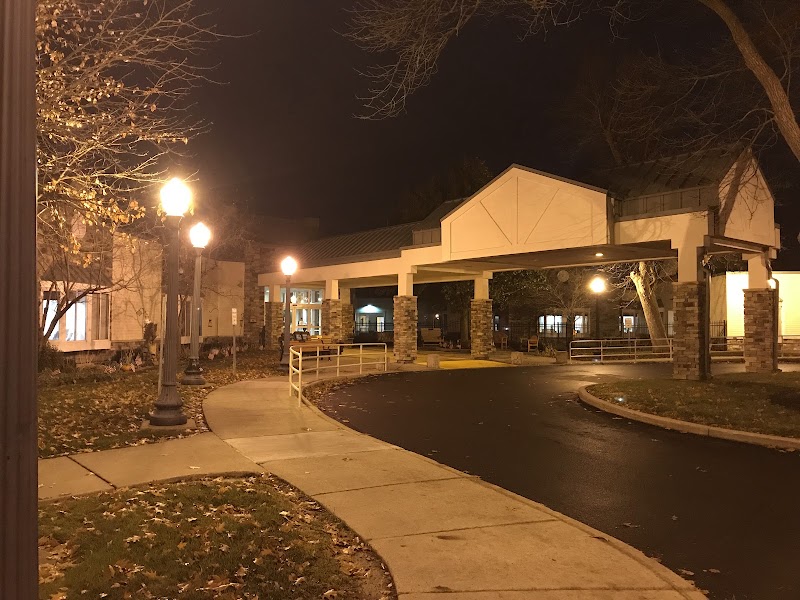
220 RICHMOND AVENUE, BATAVIA, NY 14020 (585) 345-2076
Government - State 126 Beds STATE OF NEW YORK COMPTROLLER'S OFFICE Data: November 2025
Trust Grade
90/100
#128 of 594 in NY
Last Inspection: November 2023

Within standard 12-15 month inspection cycle. Federal law requires annual inspections.

Overview

The Western New York State Veterans Home in Batavia has received an impressive Trust Grade of A, indicating an excellent reputation and a high level of care. Ranked #128 out of 594 facilities in New York places it in the top half, and it stands as the second best option among four local homes in Genesee County. While the facility has an average staffing rating of 3 out of 5 stars and a turnover rate of 42%, it does not have any fines on record, which is a positive sign. However, there was a concern raised during the latest inspection regarding a resident who was not provided with a lid on their hot beverage mug, despite a care plan specifying the need for one to prevent spills. Overall, the home exhibits strengths in its excellent health inspection and quality measures, while also showing room for improvement in resident supervision.

Trust Score
A
90/100
In New York
#128/594
Top 21%
Safety Record
Low Risk
No red flags
Inspections
Too New
0 → 1 violations
Staff Stability
○ Average
42% turnover. Near New York's 48% average. Typical for the industry.
Penalties
✓ Good
No fines on record. Clean compliance history, better than most New York facilities.
Skilled Nurses
○ Average
Each resident gets 32 minutes of Registered Nurse (RN) attention daily — about average for New York. RNs are the most trained staff who monitor for health changes.
Violations
✓ Good
Only 1 deficiencies on record. Cleaner than most facilities. Minor issues only.
★★★★★
5.0
Overall Rating
★★★☆☆
3.0
Staff Levels
★★★★★
5.0
Care Quality
★★★★★
5.0
Inspection Score
Stable
: 0 issues
2023: 1 issues

The Good

  • 5-Star Quality Measures · Strong clinical quality outcomes
  • Full Sprinkler Coverage · Fire safety systems throughout facility
  • No fines on record
  • Staff turnover below average (42%)

    6 points below New York average of 48%

Facility shows strength in quality measures, fire safety.

The Bad

Staff Turnover: 42%

Near New York avg (46%)

Typical for the industry

Chain: STATE OF NEW YORK COMPTROLLER'S OFF

Part of a multi-facility chain

Ask about local staffing decisions and management

The Ugly 1 deficiencies on record

Nov 2023 1 deficiency
CONCERN (D)

Potential for Harm - no one hurt, but risky conditions existed

Accident Prevention (Tag F0689)

Could have caused harm · This affected 1 resident

**NOTE- TERMS IN BRACKETS HAVE BEEN EDITED TO PROTECT CONFIDENTIALITY** Based on observation, interview, and record review conducted during a Standard survey completed on 11/17/23, the facility did no...

Read full inspector narrative →
**NOTE- TERMS IN BRACKETS HAVE BEEN EDITED TO PROTECT CONFIDENTIALITY** Based on observation, interview, and record review conducted during a Standard survey completed on 11/17/23, the facility did not ensure each resident receives adequate supervision and assistance devices to prevent accidents for one (Resident #14) of five residents reviewed. Specifically, Resident #14 was care planned to receive a straw lid mug for hot beverages due to a history of spilling hot liquids and on observations, the resident received the mug with a hot liquid in it and there was no lid on the mug. The finding is: The policy and procedure (P&P) titled Food & Nutrition Services- Preparation and Service of Meals revised date 8/2023 documented it is the policy of the facility to maximize an individual's degree of independence in self-feeding. Each resident will be screened by Occupational Therapy (OT) upon admission/ readmission to facility with regards to their self-feeding skills and the need for adaptive devices to facilitate self-feeding. Reassessment at a later date will be done upon referral from the dietitian or nursing, rehabilitation maintenance check, and/or physician's recommendation. Once the OT has assessed the safest, highest practical level of independence able to be demonstrated by each individual resident, the OT will initiate an ADL (activities of daily living) care plan, including functional feeding levels, in addition to adaptive equipment as required to maintain resident goals. Recommendations for adaptive devices will be communicated to the Dietary Department by OT. Nutrition and Food Services will be responsible for placing the assistive device on the resident's tray when the trays are prepared in the Nutrition and Food Service's Kitchen. The P&P titled Adaptive Devices revised date 3/8/17 documented OT shall fabricate and purchase adaptive devices to enhance proper sitting/ supine posture, prevent further contractures or skin break-down, to support upper/lower extremities and to enhance independent function in ADL skills. The OT and/or COTA (certified occupational therapy assistant) will assess and issue adaptive devices to residents as needed. Device are monitored for appropriateness and effectiveness jointly by OT and Nursing Department. Devices are documented in OT evaluations, daily notes, progress notes, nursing assistant and resident chart care plans as needed. 1. Resident #14 has diagnoses including dysphagia (difficulty swallowing), Alzheimer's disease, and dementia. The Minimum Data Set (MDS- a resident assessment tool) dated 11/16/23 documented Resident #14 was understood, usually understands and severely cognitively impaired. Resident's functional status with eating was supervision with set- up help. The comprehensive care plan titled Plan of Care dated 3/4/23 documented resident had a potential for alteration in nutrition, hydration, and impaired skin due to hot beverage spills with incident dates of 4/8/21, 10/28/22, 12/15/22, and 4/21/23 all with no injuries. Under ADL function resident was self-care deficit with an intervention for adaptive feeding equipment recommendation of a straw lid mug with no straw for hot beverage- resident has history of removing lids. If falls asleep during meal, please remove cup from hand to prevent spilling. Review of the CP (care plan) Tasks dated 11/16/23 revealed under ADL Eating: Straw lid mug with no straw for hot beverage- resident has history of removing. If falls asleep during meals, please remove cup from hand to prevent spilling. During a lunch observation on 11/13/23 between 12:00 PM and 1:15 PM in the [NAME] (Unit 2) dining room Resident #14 was sitting at the table. The tray was served to the resident who received a plastic blue handled mug with a dark hot liquid in it. There was no cover on the mug or on the tray. The meal ticket with Resident #14's name on it documented Regular Diet-Pureed Honey and Straw Lid Mug for hot beverages. During a lunch observation on 11/16/23 between 12:00 PM and 12:35 PM in the [NAME] (Unit 2) dining room Resident #14 was sitting at their table and Licensed Practical Nurse (LPN) #1 brought over their tray and assisted them with set-up. Resident #14 received a blue plastic handle mug with hot liquid in it and no cover. Observation of the tray itself had no cover on it. Review of the resident's meal ticket revealed Straw Lid Mug for hot beverages. After alerting the staff they place a lid on the mug. Resident was accepting of the lid. Review of the Minor Incident Report dated 12/15/22 revealed Resident #14 spilled coffee on the front of their shirt with no injury noted. Care plan was followed. Resident received a straw lid mug with the lid on and was noted to have removed the cover and attempted to place the cover back on then proceeded to attempt to take a drink spilling coffee on the front of their shirt. Care plan was updated to reflect upright position in wheelchair (w/c). Review of the Minor Incident Report dated 4/21/23 revealed Resident #14 was at breakfast holding their coffee when they fell asleep, and the coffee spilled onto their upper thighs. Mug w/ lid noted to be on, some spilled out of the mouthpiece. No injuries were noted. Intervention included therapy referral which indicated resident to be appropriate for mug cups with lids, with no straws for beverages. Care plan modified for table change to move to a more central table. Review of the progress notes titled Occupational Therapy Note dated 5/1/23 revealed Resident #14 continues to be appropriate for mug cups with lids, with no straws for beverages. They continue to be independent following set up for meals. Review of the progress note titled Quarterly Nutritional Review dated 8/18/23 revealed under adaptive equipment; sectional plate, straw lid mug for hot beverages (h/o-history of removing lid), no straw. During an interview on 11/16/23 at 12:38 PM, the Diet Technician (DTR) stated by looking at the ticket I would think the Resident #14 should have a lid on their mug. The resident sometimes removes the lid. The staff preparing the tray and the staff member who was serving the tray should be double checking the ticket making sure the proper equipment was being provided. During an interview on 11/16/23 at 12:51 PM, LPN #1 stated they accidentally missed the cover for the straw lid mug. They stated they should have looked at the ticket and made sure the adaptive equipment matched what was on the tray to possibly help prevent injury. During an interview on 11/16/23 at 2:36 PM, the OT stated they recommended the straw lid mug for Resident #14's hot beverages because the resident has a history of spilling beverages on themselves. They expected the staff to be providing it with all hot beverages as it was to protect the resident from possible injuries. During an interview on 11/16/23 at 3:37 PM, Registered Nurse (RN) #1 Unit 2 Manger stated they would expect their staff to verify the meal ticket with what was on the tray to make sure the resident received the recommended adaptive equipment. They stated Resident #14 should have had a lid on the mug for their safety as there would be a risk of them spilling the liquid and possibly burning themselves. During an interview on 11/16/23 at 3:53 PM, the Director of Nursing (DON) stated they would expect their staff to review the tray ticket for accuracy. They stated the mug should have had a secured lid on it to help prevent spillage and could possibly cause a burn. They stated, It is unacceptable to provide the mug without the lid. 10 NYCRR 415.12(h)(2)
Understanding Severity Codes (click to expand)
Life-Threatening (Immediate Jeopardy)
J - Isolated K - Pattern L - Widespread
Actual Harm
G - Isolated H - Pattern I - Widespread
Potential for Harm
D - Isolated E - Pattern F - Widespread
No Harm (Minor)
A - Isolated B - Pattern C - Widespread

Questions to Ask on Your Visit

  • "Can I speak with families of current residents?"
  • "What's your RN coverage like on weekends and overnight?"

Our Honest Assessment

Strengths
  • • Grade A (90/100). Above average facility, better than most options in New York.
  • • No major safety red flags. No abuse findings, life-threatening violations, or SFF status.
  • • No fines on record. Clean compliance history, better than most New York facilities.
  • • Only 1 deficiencies on record. Cleaner than most facilities. Minor issues only.
Concerns
  • • No significant concerns identified. This facility shows no red flags across CMS ratings, staff turnover, or federal penalties.
Bottom line: Generally positive indicators. Standard due diligence and a personal visit recommended.

About This Facility

What is Western New York State Veterans Home's CMS Rating?

CMS assigns WESTERN NEW YORK STATE VETERANS HOME an overall rating of 5 out of 5 stars, which is considered much above average nationally. Within New York, this rating places the facility higher than 99% of the state's 100 nursing homes. This rating reflects solid performance across the metrics CMS uses to evaluate nursing home quality.

How is Western New York State Veterans Home Staffed?

CMS rates WESTERN NEW YORK STATE VETERANS HOME's staffing level at 3 out of 5 stars, which is average compared to other nursing homes. Staff turnover is 42%, compared to the New York average of 46%. This relatively stable workforce can support continuity of care. RN turnover specifically is 58%, which is notably high. RNs provide skilled clinical oversight, so turnover in this role can affect medical care quality.

What Have Inspectors Found at Western New York State Veterans Home?

State health inspectors documented 1 deficiencies at WESTERN NEW YORK STATE VETERANS HOME during 2023. These included: 1 with potential for harm.

Who Owns and Operates Western New York State Veterans Home?

WESTERN NEW YORK STATE VETERANS HOME is owned by a government entity. Government-operated facilities are typically run by state, county, or municipal agencies. The facility is operated by STATE OF NEW YORK COMPTROLLER'S OFFICE, a chain that manages multiple nursing homes. With 126 certified beds and approximately 125 residents (about 99% occupancy), it is a mid-sized facility located in BATAVIA, New York.

How Does Western New York State Veterans Home Compare to Other New York Nursing Homes?

Compared to the 100 nursing homes in New York, WESTERN NEW YORK STATE VETERANS HOME's overall rating (5 stars) is above the state average of 3.1, staff turnover (42%) is near the state average of 46%, and health inspection rating (5 stars) is much above the national benchmark.

What Should Families Ask When Visiting Western New York State Veterans Home?

Based on this facility's data, families visiting should ask: "Can I visit during a mealtime to observe dining assistance and food quality?" "How do you handle medical emergencies, and what is your hospital transfer rate?" "Can I speak with family members of current residents about their experience?"

Is Western New York State Veterans Home Safe?

Based on CMS inspection data, WESTERN NEW YORK STATE VETERANS HOME has a clean safety record: no substantiated abuse findings (meaning no confirmed cases of resident harm), no Immediate Jeopardy citations (the most serious violation level indicating risk of serious injury or death), and is not on the Special Focus Facility watch list (a federal program monitoring the lowest-performing 1% of nursing homes). The facility has a 5-star overall rating and ranks #1 of 100 nursing homes in New York. While no facility is perfect, families should still ask about staff-to-resident ratios and recent inspection results during their visit.

Do Nurses at Western New York State Veterans Home Stick Around?

WESTERN NEW YORK STATE VETERANS HOME has a staff turnover rate of 42%, which is about average for New York nursing homes (state average: 46%). Moderate turnover is common in nursing homes, but families should still ask about staff tenure and how the facility maintains care continuity when employees leave.

Was Western New York State Veterans Home Ever Fined?

WESTERN NEW YORK STATE VETERANS HOME has no federal fines on record. CMS issues fines when nursing homes fail to meet care standards or don't correct problems found during inspections. The absence of fines suggests the facility has either maintained compliance or corrected any issues before penalties were assessed. This is a positive indicator, though families should still review recent inspection reports for the full picture.

Is Western New York State Veterans Home on Any Federal Watch List?

WESTERN NEW YORK STATE VETERANS HOME is not on any federal watch list. The most significant is the Special Focus Facility (SFF) program, which identifies the bottom 1% of nursing homes nationally based on persistent, serious quality problems. Not being on this list means the facility has avoided the pattern of deficiencies that triggers enhanced federal oversight. This is a positive indicator, though families should still review the facility's inspection history directly.