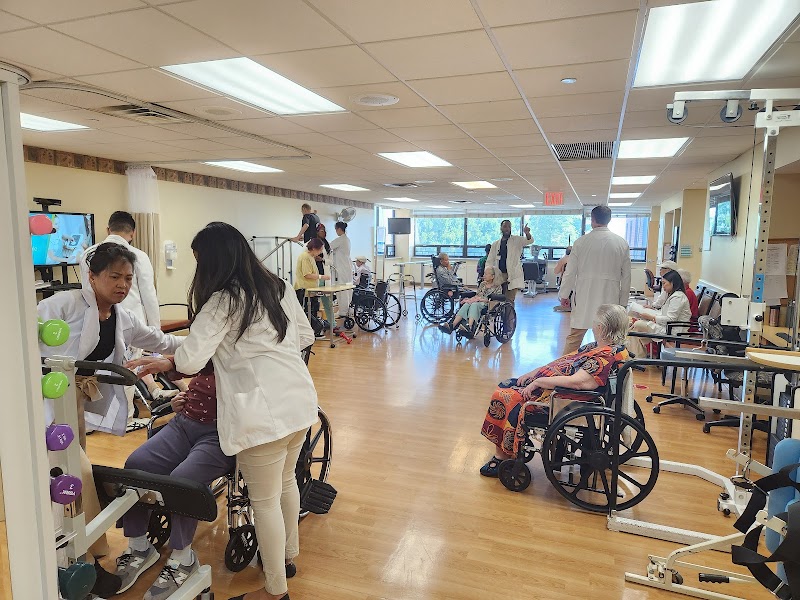
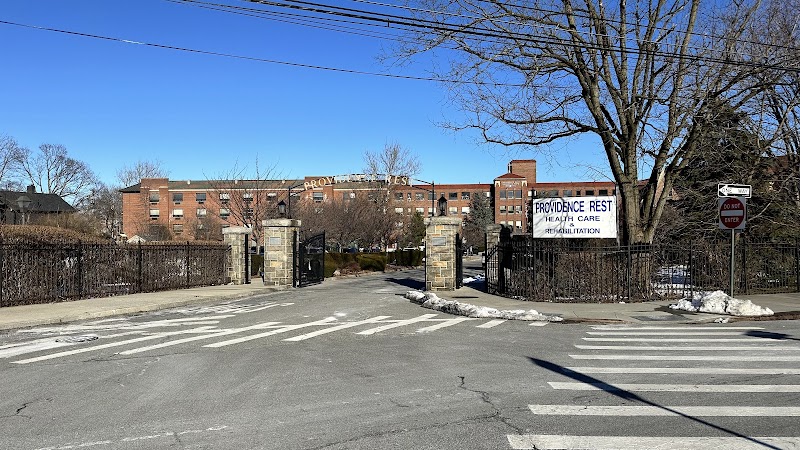
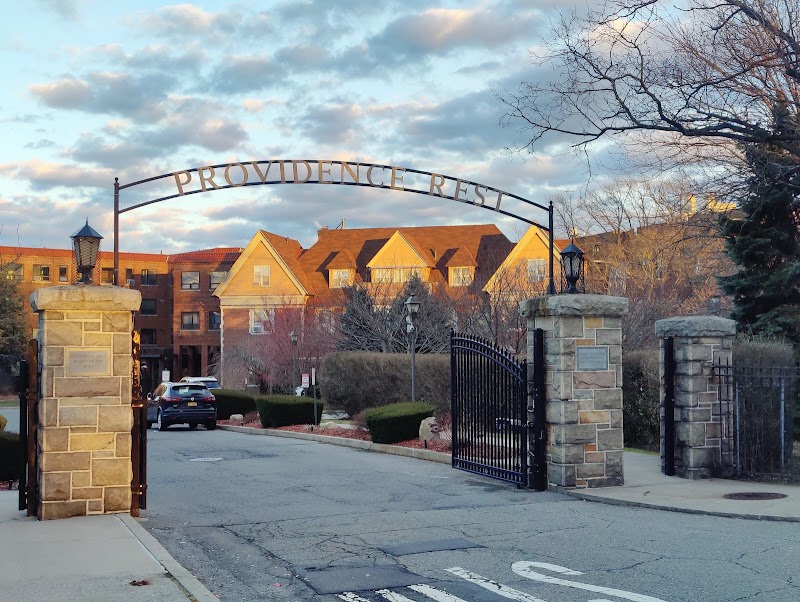
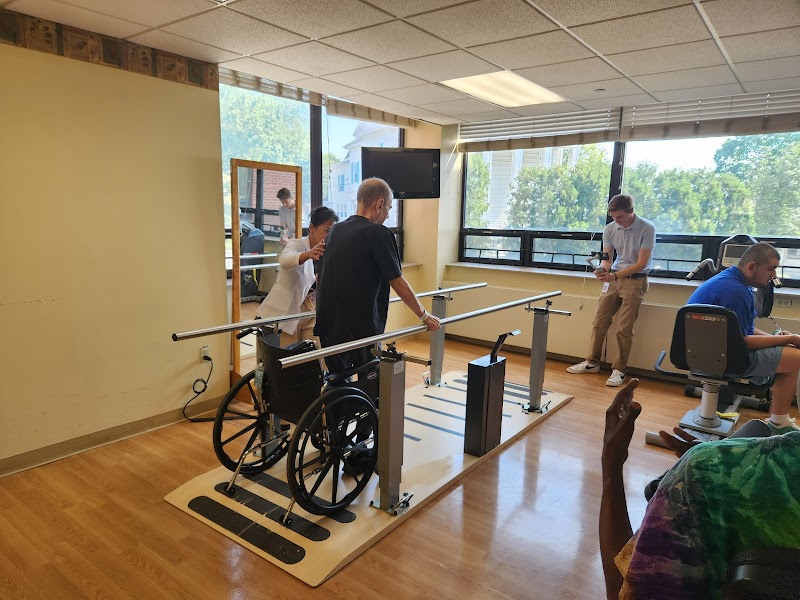
ARCHCARE AT PROVIDENCE REST

3304 WATERBURY AVENUE, BRONX, NY 10465 (718) 931-3000
Non profit - Corporation 200 Beds ARCHCARE Data: November 2025
Trust Grade
80/100
#4 of 594 in NY
Last Inspection: March 2025

Within standard 12-15 month inspection cycle. Federal law requires annual inspections.

Overview

ArchCare at Providence Rest in the Bronx has received a Trust Grade of B+, indicating it is above average and recommended for families considering nursing home options. It ranks #4 out of 594 facilities in New York, placing it well within the top tier, and is the top choice among 43 facilities in Bronx County. The facility is improving, with a decrease in reported issues from 8 in 2023 to 7 in 2025. Staffing is rated average with a turnover of 36%, which is better than the state average, and they have good RN coverage, exceeding 90% of New York facilities. However, there have been concerning incidents, such as a resident who fell and fractured their femur due to inadequate supervision and a lack of sufficient staff to maintain the well-being of all residents. Overall, while there are strengths, particularly in their rankings and RN coverage, families should be aware of staffing concerns and specific incidents that indicate room for improvement.

Trust Score
B+
80/100
In New York
#4/594
Top 1%
Safety Record
Moderate
Needs review
Inspections
Getting Better
8 → 7 violations
Staff Stability
○ Average
36% turnover. Near New York's 48% average. Typical for the industry.
Penalties
✓ Good
No fines on record. Clean compliance history, better than most New York facilities.
Skilled Nurses
✓ Good
Each resident gets 54 minutes of Registered Nurse (RN) attention daily — more than average for New York. RNs are trained to catch health problems early.
Violations
⚠ Watch
18 deficiencies on record. Higher than average. Multiple issues found across inspections.
★★★★★
5.0
Overall Rating
★★★☆☆
3.0
Staff Levels
★★★★★
5.0
Care Quality
★★★★☆
4.0
Inspection Score
Stable
2023: 8 issues
2025: 7 issues

The Good

  • 5-Star Quality Measures · Strong clinical quality outcomes
  • Full Sprinkler Coverage · Fire safety systems throughout facility
  • No fines on record
  • Staff turnover below average (36%)

    12 points below New York average of 48%

Facility shows strength in quality measures, fire safety.

The Bad

Staff Turnover: 36%

Near New York avg (46%)

Typical for the industry

Chain: ARCHCARE

Part of a multi-facility chain

Ask about local staffing decisions and management

The Ugly 18 deficiencies on record

1 actual harm
Mar 2025 7 deficiencies 1 Harm
SERIOUS (G)

Actual Harm - a resident was hurt due to facility failures

Accident Prevention (Tag F0689)

A resident was harmed · This affected 1 resident

**NOTE- TERMS IN BRACKETS HAVE BEEN EDITED TO PROTECT CONFIDENTIALITY** Based on observation, record review, and interviews during the Recertification Survey conducted from 03/02/2025 to 03/07/2025, t...

Read full inspector narrative →
**NOTE- TERMS IN BRACKETS HAVE BEEN EDITED TO PROTECT CONFIDENTIALITY** Based on observation, record review, and interviews during the Recertification Survey conducted from 03/02/2025 to 03/07/2025, the facility did not ensure a resident received adequate supervision to prevent an accident. This was evident in one (1) (Resident #79) of six (6) residents reviewed for accidents out of 38 total sampled residents. Specifically, Resident #79, who was identified as high risk for falls and had a history of multiple falls, was not provided adequate monitoring or supervision. Subsequently, on 01/15/2025 at approximately 9:10 AM, Resident #79 had an unwitnessed fall in their room and sustained a fracture of the left femur (commonly known as the thigh bone). This resulted in actual harm to Resident #79 that was not Immediate Jeopardy. The findings are: The facility's policy titled Falls and Risk Management with a last revision date of 02/01/2024 documented staff will identify interventions related to the resident's specific risks and causes to try to minimize the risk of resident from falling and to try to minimize complications from falling. Resident #79 had diagnoses of Non-Alzheimer's Dementia (loss of memory and other intellectual functions), Anxiety, and Depression. The Significant Change (a major decline or improvement in a resident's status) Minimum Data Set Assessment (assessment tool used to assess resident status) dated 01/13/2025 documented Resident #79 had severely impaired cognition and required partial/moderate assistance for all activities of daily living. Resident #79 was able to walk 10 feet with partial/moderate assistance and required the use of wheelchair for mobility. The assessment documented Resident #79 had a fall with minor injury since the last quarterly assessment completed on 11/11/2024. A Fall Risk Assessment form completed by Registered Nurse #3 on 01/08/2025 documented Resident #79 was at high risk for falls. The fall risk assessment documented Resident #79 had 1-2 falls in the past 3 months, had intermittent confusion, and had balance problems while walking and standing. A Comprehensive Care Plan for falls was initiated for Resident #79 on 11/28/2022. The care plan documented Resident #79 was at risk for falls due to history of falls, impaired mobility, and on cardiac and psychotropic medications. The facility interventions included keeping bed in low position and lock, nonskid socks while in bed, and provide ongoing assessment of risk factors. A Plan of Care Note documented by Minimum Data Set Coordinator #3 dated 12/31/2024 documented Resident #79 had a fall on 12/30/2024 at 9:40 AM while attempting to toilet without supervision. An Accident/Investigation Form dated 01/08/2025 documented on 01/08/2025 at approximately 11:05 AM, Housekeeper #1 reported that Resident #79 was observed sitting on the floor in the day room. A medical note dated 01/08/2025 at 4:42 PM documented Resident #79 did not sustain injury. A review of the Daily Day Room Assignment dated 01/08/2025 showed that the dayroom was not consistently monitored. There was no evidence of staff supervision from 9:30 AM - 10:00 AM and from 10:30 AM to 11:00 AM. A review of the care plan for falls showed no documented evidence that Resident #79's fall interventions were reviewed and there was no new intervention added to address the cause of Resident #79's fall occurrences on 12/30/2024 and 01/08/2025. There was no documented evidence of how often Resident #79 was monitored or supervised to prevent falls. A 24-hour report dated 01/15/2025 at 1:22 PM by Registered Nurse #3 documented Registered Nurse #3 was called to the resident's room by Certified Nursing Assistant #7 who reported that Resident #79 was on the floor. Resident #79 was unable to state what occurred. The resident was assessed with findings of a scrape and bruising to the left side of the scalp and complained of left leg and left hip pain. The Investigation Summary completed by Assistant Director of Nursing #1 dated 01/15/2025 documented on 01/15/2025 Resident #79 was observed in their room laying on the floor. The investigation findings documented Resident #79 got out of bed unsupervised, attempted to ambulate, and fell over on their side. The investigation findings documented Resident #79 was last seen by staff at 9:05 AM and fell at 9:10 AM. Resident #70 complained of pain on the left hip, Resident was assessed by the physician and was transferred to the hospital on [DATE]. A Hospital Discharge summary dated [DATE] documented Resident #79 was admitted on [DATE], sustained displaced fracture of the left lesser trochanter (area on the thigh bone) from a fall at the nursing home. The resident was taken to the operating room on 1/17/2025 for a left femur open reduction and internal fixation (repair of broken bone). During an interview on 03/06/2025 at 4:21 PM, Housekeeper #1 stated on 1/08/2025 they were cleaning the room next to the dining room when they heard someone weeping. Housekeeper #1 stated they checked the dining room and found Resident #79 on the floor by the door. They further stated there were other residents in the dining room and there was no staff present. During an interview on 03/06/2025 at 4:46 PM, Certified Nursing Assistant #7 stated on 1/15/2025 in the morning (they could not recall specific time) they were passing by Resident #79's room and heard someone screaming for help. Certified Nursing Assistant #7 stated they found Resident #79 on the floor, in their room, and called for the nurse. During an interview on 03/07/2025 at 10:56 AM, Certified Nursing Assistant #6 stated they were Resident #79's assigned aide on 01/15/2025 and had taken Resident #79 to the bathroom and provided morning personal care. Certified Nursing Assistant #6 stated they assisted Resident #79 in bed, left the room, and five minutes later Certified Nursing assistant #7 found Resident #79 lying on the floor in their room. During an interview on 03/07/2025 at 12:38 PM, Registered Nurse #3, who was the Nursing Supervisor, they stated on 01/08/2025 Resident #79 had an unwitnessed fall in the day room because Certified Nursing Assistant #6, who was assigned to monitor the residents, left the room unattended to take another resident to the bathroom. Registered Nurse #3 stated on 01/15/2025, Resident #79 received morning care around 8:00 AM and was left in bed. Shortly after, Resident #79 was found on the floor in their room and sustained a fractured leg. Resident #79 was transferred to the hospital and had surgery. Registered Nurse #3 further stated there is no schedule for safety rounding on the units, and they could not provide a specific rounding or monitoring schedule for Resident #79. During an interview on 03/07/2025 at 1:16 PM, the Director of Nursing stated Resident #79 is very impulsive and tries to get up from their bed and wheelchair without assistance. Resident #79 was previously ambulatory and started to decline prior to the fall on 01/15/2025 when they sustained a hip fracture. During an interview on 03/07/2025 at 1:33 PM, the Administrator stated, Resident #79 had fall occurrences that were discussed during morning report with all disciplines. The Administrator stated on 01/08/2025, the aide should have not left the residents alone in the day room. 10 NYCRR 415.12(h)(2)
CONCERN (D)

Potential for Harm - no one hurt, but risky conditions existed

Deficiency F0577 (Tag F0577)

Could have caused harm · This affected 1 resident

Based on observations and interviews conducted during the Recertification Survey from 03/02/2025 to 03/07/2025, the facility did not ensure that that the notice of the availability of the most recent ...

Read full inspector narrative →
Based on observations and interviews conducted during the Recertification Survey from 03/02/2025 to 03/07/2025, the facility did not ensure that that the notice of the availability of the most recent New York State Department of Health survey report and plan of correction, was posted in areas that are prominent and readily accessible to the public. Specifically, there were no prominent postings of notices of availability throughout the facility and no posting in the facility lobby which is readily accessible to the public. In addition, members of the Resident Council who were interviewed, were unable to identify locations where signs or postings documented the availability and location of the survey results. The findings are: The Facility Policy and Procedure titled Posting and Availability of Survey Results and Complaint Investigations, revised 01/2025, documented that the facility is committed to transparency and regulatory compliance by: Posting a notice in prominent areas to inform individuals of the availability of survey reports, certifications and complaint investigations from the past three years. Notices informing residents, family members and legal representatives of the availability of survey reports, certifications, and complaint investigations will be prominently posted in key areas such as: Main lobby/reception area, Resident activity room, and Staff bulletin board. The Administrator/Designee will ensure the overall implementation and compliance with this policy and monitor postings and notices. On 03/02/2025 and 03/03/2025 multiple observations of the entire facility lobby were performed. There were no notices of availability posted throughout the facility lobby. On 03/04/25 at 10:00 AM, A Resident Council meeting was held. 12 Residents were in attendance: Residents # 3, #26, #43, #53, #113, #114, #120, #135, #142, #144, #150, #153. None of 12 the Residents present were able to affirm that they had seen a sign or posting that documented the availability and location of the New York State Department of Health survey results. The 12 council members were also unable able to identify where they would be able to locate the actual survey report. On 03/04/25 at 2:24 PM, The Director of Nursing was interviewed and stated that the signage/posting of the availability and location of the New York State Department of Health survey results must be posted and was posted in the lobby near the glass table and on the units. An observation of the entire facility lobby including the reception desk, bulletin boards and tables was performed with the Director of Nursing, There was no signage or posting located. An observation of the 2nd floor bulletin board and activity room (unit 2C) was performed with the Director of Nursing. There was no signage or posting located. Afterwards the Director of Nursing further stated that they observed that the signage was not present and that they will repost the signage documenting that the survey results are available to be viewed in the first-floor lobby. On 03/04/25 at 2:54 PM, The Facility Administrator was interviewed and stated that the location of survey results must be posted in a general area for all to see. Afterwards, another observation of Unit 2C was performed with the Administrator and the Director of Nursing. A bulletin board was observed by the elevator. From behind the bulletin board glass, the Administrator provided a half sheet of paper documenting under General Information, that the results of the Department of Health survey can be found on the credenza in the lobby. The Administrator then stated that the posting had fallen down where it could not be seen or read and that they will make the sign bigger on the floors, place signs on the bulletin boards and replace the signage in the lobby that is no longer there. The Administrator further stated that they were unsure of what happened to the signage in the lobby, and that the last time they saw the sign was 2 weeks ago as someone must have removed it. On 03/05/25 at 8:05 AM, An observation of the facility lobby was performed. There were no notices of availability and location of the most recent New York State Department of Health survey results posted. 415.3(1)(c)(1)(v)
CONCERN (D)

Potential for Harm - no one hurt, but risky conditions existed

Report Alleged Abuse (Tag F0609)

Could have caused harm · This affected 1 resident

**NOTE- TERMS IN BRACKETS HAVE BEEN EDITED TO PROTECT CONFIDENTIALITY** Based on interview and record review conducted during the Recertification Survey from 3/02/2025 to 3/07/2025, the facility did n...

Read full inspector narrative →
**NOTE- TERMS IN BRACKETS HAVE BEEN EDITED TO PROTECT CONFIDENTIALITY** Based on interview and record review conducted during the Recertification Survey from 3/02/2025 to 3/07/2025, the facility did not ensure that all alleged violations involving abuse, neglect, including injuries of unknown source were reported immediately, but not later than 2 hours after the allegation was made, if the events that cause the allegation involve abuse or result in serious bodily injury, or not later than 24 hours if the events that cause the allegation do not involve abuse and do not result in serious bodily injury, to the New York State Department of Health. This was evident for 1 (Resident #79) out of 6 residents reviewed for Accidents out of 38 total sampled residents. Specifically, Resident #79 had an unwitnessed incident on 1/15/2025 when Resident was observed on the floor with mild bleeding to the back of their head and resident complained of pain to the left hip area. X-ray report showed acute, mild displaced avulsion periprosthetic fracture of the lesser Trochanter of the left femur. Resident #79 was unable to explain the occurrence. The incident was not reported to the New York State Department of Health. The findings are: The facility's policy titled Identification, Investigation, Protection, and Reporting Physical Abuse, Mistreatment, and Neglect of Residents revised 11/2024 documented all alleged violations involving abuse, neglect, exploitation or mistreatment, including injuries of unknown source and misappropriation of Resident property, are reported immediately, but not later than 2 hours after the allegation is made, if the events that cause the allegation involve abuse or result in serious bodily injury, or not later than 24 hours if the events that cause the allegation do not involve abuse and do not result in serious bodily injury, to the administrator of the facility and to other officials (including to the State Survey Agency) through Health Commerce System-Herds Incident Report. Resident #79 had diagnoses of Non-Alzheimer's Dementia, Anxiety, and Depression. The Significant Change in Status Minimum Date Set 3.0 assessment dated [DATE] documented Resident #79 had severely impaired cognition. Resident #79 required moderate assist to roll left and right, sit to lying and lying to sitting on side of bed, chair to bed transfer, and walk 10 feet. The Comprehensive Care Plan created 11/28/2022 and last revised 1/22/2025 documented Resident #79 was at risk for falls due to history of falls, impaired mobility, and psychotropic medication. Interventions included keep bed in low position and lock, nonskid socks while in bed, and provide ongoing assessment of risk factors. The Accident Investigation dated 1/15/2025 documented at 9:10 AM Resident #79 had an unwitnessed fall in their room. Certified Nursing Assistant #6 last saw Resident #79 in bed at 9:05 AM. Resident #79 complained of pain to the left hip area and there was mild bleeding noted on the back of resident's head. Resident's statement did not explain the occurrence/injury. Resident #79 was transferred to the hospital and admitted due to a fracture of the left hip. The Investigation Summary completed 1/15/2025 documented on 1/15/2024 at 9:10 AM Resident #79 had an unwitnessed fall and was found on the floor in their room. Resident #79 complained of pain to the left hip area and there was mild bleeding noted on the back of resident's head. Resident #79 did not provide any explanation/statement about the occurrence. The Conclusion documented Resident #79 was observed multiple times by staff in the past getting out of bed without calling for assistance related to diagnosis of anxiety disorder. Review of the camera shows, there were no other staff, or resident that went inside the room from the time the resident was last seen, up to the time the resident fell. There is no evidence of abuse, neglect, mistreatment, or care plan violation. Upon return to the facility the plan of care will be updated. A Hospital Discharge summary dated [DATE] documented Resident #79 sustained trauma from a mechanical fall at the nursing home. The resident was taken to the operating room on 1/17/2025 for a left open reduction and internal fixation. There was no documented evidence the facility reported Resident #79's unwitnessed fall incident, resulting in major injury, to the New York State Department of Health. On 3/07/2025 at 1:47 PM, the Director of Nursing was interviewed and stated they completed their investigation and reviewed the video footage which revealed no one entered Resident #79's room before the fall. The Director of Nursing further stated they did not report this unwitnessed fall with major injury to the Department of Health because of the video footage. On 3/07/2025 at 1:59 PM, the Administrator was interviewed and stated they are not sure if the fall that occurred on 1/15/2025 should or was reported to the Department of Health. The Director of Nursing is responsible for the reporting. On 3/07/2025 at 2:47 PM, the Administrator was interviewed again and stated the video on 1/15/2025 that shows the hallway outside Resident #79's room before the fall was deleted as the machine self-deletes in order to save space. 10 NYCRR 415.4(b)(2)
CONCERN (D)

Potential for Harm - no one hurt, but risky conditions existed

Assessment Accuracy (Tag F0641)

Could have caused harm · This affected 1 resident

**NOTE- TERMS IN BRACKETS HAVE BEEN EDITED TO PROTECT CONFIDENTIALITY** Based on record review and interviews during the Recertification Survey conducted from 03/02/2025 to 03/07/2025, the facility di...

Read full inspector narrative →
**NOTE- TERMS IN BRACKETS HAVE BEEN EDITED TO PROTECT CONFIDENTIALITY** Based on record review and interviews during the Recertification Survey conducted from 03/02/2025 to 03/07/2025, the facility did not ensure that Minimum Data Set assessments accurately reflected the Resident's status. This was evident in 1 (Resident #116) of 38 total sampled residents. Specifically, the Minimum Data Set assessment for Resident #116 did not accurately reflect the Resident's use of a feeding tube. The findings are: The facility policy titled Minimum Data Set Coding, last revised 01/16/2025, documented that the interdisciplinary team will conduct a comprehensive assessment to identify each Resident's preference and goals of care, functional, and health status. The minimum data set assessments coordinator ensures the interdisciplinary team completes the resident's assessments and reviews promptly according to the Center for Medicaid and Medicare Services guidelines. Resident #116 was admitted to the facility with diagnoses that include Atrial Fibrillation, Chronic Obstructive Pulmonary Diseases, and Dysphagia. The Minimum Data Set quarterly assessment dated [DATE] did not document a feeding tube. The Medical Doctor's Monthly note dated 02/11/2025 at 4:08 PM documented enteral tube was in place. Annual Nutrition Assessment Note dated 11/20/2024 at 4:07 PM documented that Resident #116 depends on eternal feeding and water flushes for 100% nutritional and fluid needs. On 03/07/2025 at 11:13 AM, Certified Nursing Assistant # was interviewed and stated that Resident # 116 receives tube feeding. The Resident has been on tube feeding since admission. On 03/07/2025 at 1:03 PM, Registered Nurse Supervisor #1 was interviewed and stated that Resident # 116 has been on tube feeding since admission and tolerates it well. On 03/06/2025, at 2:23 PM, the Registered Dietician #1 was interviewed and stated that the Dietician completed the nutrition section of the minimum data set assessment. Resident #116 receives tube feeding and do not know why it was not coded. Usually, the minimum data set coordinator would inform us if something was wrong, and then we would correct it. On 03/07/2025 at 9:01 AM, Registered Dietician #2 was interviewed and stated that they completed the nutrition section of the assessment. Resident #116 is on the tube feed and in, but it was not coded. I might have checked the wrong box. The minimum data set coordinator checks the coding, and if there is a discrepancy, they will reach out to us to review it and correct it. On 03/06/2025 at 2:08 PM, the Minimum Data set Coordinator was interviewed and stated that Resident # 116 was on tube feeding. The Dietician completes the nutrition section of the assessment. Tube feeding was not coded. It should have been coded. The minimum data set coordinator ensures the assessment is coded accurately before submission. 10 NYCRR 415.11 (b)
CONCERN (D)

Potential for Harm - no one hurt, but risky conditions existed

Deficiency F0655 (Tag F0655)

Could have caused harm · This affected 1 resident

**NOTE- TERMS IN BRACKETS HAVE BEEN EDITED TO PROTECT CONFIDENTIALITY** Based on record review and staff interviews conducted during the Recertification Survey from 03/02/2025 to 03/07/2025, the facil...

Read full inspector narrative →
**NOTE- TERMS IN BRACKETS HAVE BEEN EDITED TO PROTECT CONFIDENTIALITY** Based on record review and staff interviews conducted during the Recertification Survey from 03/02/2025 to 03/07/2025, the facility did not ensure that residents' and their representatives were provided with a written summary of the Baseline Care Plan. This was evident in 1 (Resident #10) of 2 residents reviewed for Tube Feeding out of 38 total sampled residents. Specifically, residents or their representatives did not receive a copy of their baseline care plan. The findings are. The facility policy and procedure titled Baseline Care Plan Comprehensive Care Plan with the last revised date March 2019 documented Baseline Care Plan will be develop and implemented within 48 hours for all newly admitted residents. A copy of the baseline care plan will be provided to the resident/representative on or before the scheduled Initial Comprehensive Care Plan Meeting by the RN Manager or Designee. The family will then sign that they have received a copy of the said care plan. In some cases, wherein our staff could not reach a family member, the Medical Records Dept will send a copy of Baseline Care Plan through mail within 2 weeks from the day of admission. Resident #10 was admitted to the facility on [DATE] with the diagnoses that include Multiple Sclerosis and Depression. The admission Minimum Data Set assessment dated [DATE] documented Resident #10's cognition as severely impaired with a Brief Interview for Mental Status score of 4. A Baseline Care Plan form dated 08/01/2024 and 08/02/2024 was completed for Resident #10 with signatures of interdisciplinary staff. There was no signature of Resident #10 or the resident's family representative. There was no documented evidence that Resident #10's family representative was provided with a written copy of the Baseline Care Plan. On 03/07/2025 at 2:18 PM the Minimum Data Set Coordinator #2 was interviewed and stated that Resident #10's baseline care plan was initiated the same day that the resident was admitted . The interdisciplinary team met with Resident #10 at the bedside on 08/02/2024 and explained fall protocol and went over the medications with the resident. Resident #10 was cognitively impaired and we were not able to reach the family. A copy of the Baseline Care Plan was left at the bedside. On 03/07/2025 at 3:33 PM the Director of Social Service was interviewed and stated that the morning after the resident was admitted , the interdisciplinary team met with the resident at the bedside and introduced themselves. Resident #10 was cognitively impaired, and they had a difficult reaching the family. The resident family representative said that that they will come and visit so we left a copy of the Baseline Care Plan at the bedside. We always leave a copy with the resident at the bedside. The Director of Social Service and the Minimum Data Set Coordinator are responsible to ensure the baseline care plan is provided to the residents and resident family representative. On 03/07/2025 at 1:55 PM the Director of Nursing was interviewed and stated that Resident #10's Baseline Care Plan was completed the first day after admission. The interdisciplinary team met with the resident at the bedside and went over the medication and explained fall protocol to the resident. A copy Resident # 10's Baseline Care Plan was left at the bedside for the family representative. 10 NYCRR 415.11 (c)
CONCERN (D)

Potential for Harm - no one hurt, but risky conditions existed

Comprehensive Care Plan (Tag F0656)

Could have caused harm · This affected 1 resident

**NOTE- TERMS IN BRACKETS HAVE BEEN EDITED TO PROTECT CONFIDENTIALITY** Based on observation, record review and staff interviews during the Recertification Survey conducted from 3/2/2025 to 3/7/2025, ...

Read full inspector narrative →
**NOTE- TERMS IN BRACKETS HAVE BEEN EDITED TO PROTECT CONFIDENTIALITY** Based on observation, record review and staff interviews during the Recertification Survey conducted from 3/2/2025 to 3/7/2025, the facility did not ensure that a person-centered comprehensive care plan was developed and implemented to address the resident's medical, physical, mental, and psychosocial needs. Specifically, comprehensive care plan was not developed and implemented for a resident prescribed an antibiotic for urinary tract infection. This was evident in 1(Resident #179) of 4 residents reviewed for Urinary Tract Infections out of total 37 sampled residents. The findings are: The facility's policy and procedure titled Comprehensive Care Plan revised 3/5/2024 documented, each resident will have a comprehensive care plan developed and will be updated on an on-going basis. Resident #179 was admitted to the facility with Diabetes Mellitus, Cerebrovascular Accident, and Hypertension. The Minimum Data Set, dated [DATE] documented resident had severely impaired cognition. The Physician Order initiated 2/25/2025 documented Amoxicillin Clavulanate Potassium 875-125 MG, 1 tablet twice daily for urinary tract infection. The Medication Administration Record from 2/25/2025 to 3/4/2025 documented Amoxicillin Clavulanate Potassium 875-125 MG, 1 tablet was administered twice daily. The Nursing Note dated 2/25/2025 documented Resident #179's urine culture noted positive with E. Coli and Klebsiella Pneumonia. Informed resident representative via phone call. Nurse Practitioner notified and ordered resident to start Augmentin 875-125 mg twice daily for 7 days. The Physician Note dated 2/26/2025 documented Resident #179 was followed up for urinary tract infection. Resident started on Amoxicillin/Potassium Clavulanate 875-125 mg 1 tablet every 12 hours and to monitor. The Nursing Note date 3/5/2025 documented resident completed Amoxicillin/Potassium Clavulanate 875-125 mg 1 tablet twice daily for urinary tract infection with duration for 7 days, ending on 3/4/2025. Review of the Comprehensive Care Plans dated 2/18/2025 revealed that no care plan for antibiotic therapy for urinary tract infection was ever created for Resident #179. On 3/6/2025 at 2:14 PM, Registered Nurse #1 stated Resident #179 was on antibiotic therapy for urinary tract infection and finished the antibiotic this week. On 3/5/2025 at 2:26 PM, Registered Nurse #2 stated they were not aware that Resident #179's care plan for antibiotic treatment was not initiated. Registered Nurse #2 stated they do not know why it was not initiated but it should have been created. Registered Nurse #2 further stated that all care plans are being initiated and updated by the Minimum Data Set Coordinators. On 3/7/2025 at 10:38 AM, Minimum Data Set Coordinator #1 stated Resident #179 started on Amoxicillin for UTI and no care plan was created for the antibiotic usage as per their record review. Minimum Data Set Coordinator #1 stated they discuss new admissions, incident/accidents, any changes related to the residents during their morning report and notified via telephone call. Minimum Data Set Coordinator #1 stated they do not recall getting any notification about Resident #179 starting antibiotic for urinary tract infection; therefore, the care plan was probably not developed for this resident. On 3/7/2025 at 9:56 AM, Director of Nursing Services was interviewed and stated, any change in condition or new admissions are discussed with the interdisciplinary team every morning. The interdisciplinary team includes Minimum Data Set Coordinators who are currently responsible for developing and updating the resident's care plans. Director of Nursing Services stated there is currently no care plan for Resident #179's antibiotic therapy for a urinary tract infection but it should have been initiated when resident started the antibiotic treatment. 10 NYCRR 415.11(c)(1)
CONCERN (F)

Potential for Harm - no one hurt, but risky conditions existed

Deficiency F0725 (Tag F0725)

Could have caused harm · This affected most or all residents

**NOTE- TERMS IN BRACKETS HAVE BEEN EDITED TO PROTECT CONFIDENTIALITY** Based on the interviews, observations and record reviews conducted during the Recertification Survey from 3/02/2025 to 3/07/2025...

Read full inspector narrative →
**NOTE- TERMS IN BRACKETS HAVE BEEN EDITED TO PROTECT CONFIDENTIALITY** Based on the interviews, observations and record reviews conducted during the Recertification Survey from 3/02/2025 to 3/07/2025, the facility did not ensure that it had sufficient staff to provide nursing care and services to maintain the highest practicable physical, mental and psychosocial well-being of each resident. Specifically, the CASPER Payroll Based Journal Staffing Data report for 4th quarter 2024 triggered for low weekend staffing and review of staffing indicated that actual staffing levels were not maintained at par levels indicated in the Facility Assessment. The findings are: The facility document titled Staffing Plan reviewed in July 2024 stated that the policy is that the facility will have sufficient staff to provide nursing and related services to maintain the highest practicable physical, mental and psychosocial well-being of each resident The document also stated that each nursing unit is staffed by a nurse and certified nursing assistants. The facility staffing sheets outlined 6 resident units. The Payroll Based Journal Staffing Data Report CASPER Report 1705D Fiscal Year Quarter 4 2024 (July 1-September 30) triggered for excessively low weekend staffing. During the Resident Council Facility Task, Resident #114 stated that staffing issues continue in 2025. Resident #114 also stated that there used to be 5 Certified Nursing Assistants assigned to their unit, but now there are only 2 during the day shift at times, particularly on weekends when a resident can wait for an hour or more for a call bell to be answered. Resident #144 further stated that on weekends staff do not cover for one another during breaks. The Facility assessment dated [DATE] documented that the general staffing plan to ensure there is sufficient staff to meet the needs of residents at any given time was as follows: Licensed Nurses: RN (Registered Nurse), LPN (Licensed Practical Nurse) Days: 1-3 Evenings: 1-2 Nights: 1 Registered Nurse Wound Nurse 1 (Monday to Friday) Direct care staff- C.N.A. (Certified Nursing Assistant) Certified Nursing Assistants: Days: 18 Evenings: 18 Nights: 16 Staffing sheets were reviewed for the 4th quarter of 2024 (July 1- September 30) weekends and revealed the following: Saturday, 07/06/2024: Day shift: 15 Certified Nursing Assistants Sunday, 07/07/2024: Night: 12 Certified Nursing Assistants Saturday, 07/13/2024: Night: 11 Certified Nursing Assistants Sunday, 07/14/2024: Night: 10 Certified Nursing Assistants Saturday, 07/21/2024: Night: 11 Certified Nursing Assistants Sunday, 07/22/2024: Night: 9 Certified Nursing Assistants Saturday, 07/27/2024: Night: 10 Certified Nursing Assistants Sunday, 07/28/2024: Night: 11 Certified Nursing Assistants Saturday, 08/03/2024: Night: 11 Certified Nursing Assistants Sunday, 08/04/2024: Day shift: 14 Certified Nursing Assistants Night: 9 Certified Nursing Assistants Saturday, 08/10/2024: Night: 11 Certified Nursing Assistants Sunday, 08/11/2024: Day shift: 16 Certified Nursing Assistants Evening: 15.5 Certified Nursing Assistants Night: 5 nurses and 12 Certified Nursing Assistants Saturday, 08/17/2024 Night: 12 Certified Nursing Assistants Sunday, 08/18/2024: Day shift: 15 Certified Nursing Assistants Evening: 15 Certified Nursing Assistants Night: 6 Certified Nursing Assistants Saturday, 08/24/2024: Night: 8 Certified Nursing Assistants Sunday, 08/25/2024: Day shift: 4 nurses and 15 Certified Nursing Assistants Night: 11 Certified Nursing Assistants Saturday, 08/31/2024: Day shift: 5 nurses Night: 7 Certified Nursing Assistants Saturday, 09/07/2024: Evening: 13 Certified Nursing Assistants Night: 11 Certified Nursing Assistants Sunday, 09/08/2024: Day shift: 15 Certified Nursing Assistants Night: 9 Certified Nursing Assistants Saturday, 09/14/2024: Night: 11 Certified Nursing Assistants Sunday, 09/15/2024: Day shift: 3 nurses and 14 Certified Nursing Assistants Night: 9 Certified Nursing Assistants Saturday, 09/21/2024: Night: 5 nurses and 10 Certified Nursing Assistants Sunday, 09/22/2024: Day shift: 5 nurses Evening: 10 Certified Nursing Assistants Night: 5 nurses and 7 Certified Nursing Assistants Sunday, 09/29/2024: Day shift: 5 nurses and 17 Certified Nursing Assistants Evening: 12 Certified Nursing Assistants Night: 5 nurses and 8 Certified Nursing Assistants During the 4th quarter of 2024, there was less than 1 nurse per unit on 5 day shifts and 4 night shifts, below 18 Certified Nursing Assistants on 8 day shifts and 5 evening shifts and below 16 Certified Nursing Assistants on 23 night shifts. Additionally, staffing sheets were reviewed for 7 days before and during the Recertification survey and revealed the following: Wednesday, 02/25/2025: Night: 13 Certified Nursing Assistants Friday, 02/27/2025: Night: 3 nurses and 15 Certified Nursing Assistants Saturday, 02/28/2025: Night: 5 nurses and 15 Certified Nursing Assistants Sunday, 03/01/2025: Night: 12 Certified Nursing Assistants Monday, 03/02/2025: Night: 5 nurses and 14 Certified Nursing Assistants During this period, there was less than 1 nurse per unit on one day shift and one night shift and was below 16 Certified Nursing Assistants on 5 night shifts. On 03/06/2025 at 9:33 AM, Licensed Practical Nurse #1 was interviewed and stated that sometimes during the week there are two nurses on the unit on their shift, but most of the time and particularly on weekends, they are working alone. Licensed Practical Nurse #1 also stated that when they are the only nurse on the unit, it is not possible to complete morning medications for all the unit residents on time since some of the medications need to be specially prepared and some of the residents also need their vitals taken. On 03/06/2025 at 2:42 PM, the Staffing Coordinator was interviewed and stated that the facility has been chronically understaffed since Spring 2024 when the facility lost access to most of its staffing agencies because their contracts were not renewed on the corporate level. The Staffing Coordinator also stated that when a last-minute callout occurs, they see how many staff members on the previous shift are willing to work overtime and then use a call list of employees who can come in on their off days. Many times, voicemail messages are left, and their calls are not returned. The Staffing Coordinator further stated that the corporate division is recruiting nursing staff at this time, but retention is an issue because the facility is difficult to reach by public transportation. On 03/07/2025 at 9:57 AM, Registered Nurse #5 was interviewed and stated that they are a nursing supervisor but were passing medications on one unit because there was no medication nurse available for the shift. Registered Nurse #5 also stated that they also assist the Certified Nursing Assistants with whatever tasks they require two assists for or are unable to complete. Registered Nurse #5 further stated that it is tough to do their jobs and also someone else's. On 03/07/2025 at 11:29 AM, Certified Nursing Assistant #9 was interviewed and stated that staff try their best to work as a team, but it is hard, especially on weekends, and they are not able to finish their work on time because there is not enough staff to meet everyone's needs. On 03/07/2025 at 10:17 AM, Licensed Practical Nurse #2 was interviewed and stated that on their unit, they have 3 Certified Nursing Assistants assigned and are able to handle medications for the residents with no trouble, but that on some weekends when there are only 2 Certified Nursing Assistants, they have to fill in whenever anyone needs help and medications are not given on time. Licensed Practical Nurse #2 also stated it gets very hectic, everybody is rushing, and that is not a good atmosphere on the unit. On 03/07/2025 at 10:52 AM, Certified Nursing Assistant #10 was interviewed and stated that they usually go home on weekends very downhearted because they feel they have not given their residents optimal care. Certified Nursing Assistant #10 also stated they want to care for residents the way we would care for our parents, but it is impossible when you are running to finish your work. On 03/07/2025 at 12:56 PM, the Director of Nursing was interviewed and stated that the facility now has a dedicated staff recruiter who is working hard but that the facility is often seen as less attractive to staff because of the location. The Director of Nursing also stated that nursing management often comes in on their off days and covers for staff nurses. On 03/07/2025 at 1:04 PM, the Administrator was interviewed and stated that the inaccessibility of the facility has been a real hurdle in recruiting and keeping nursing staff. The facility has used multiple hiring agencies and online platforms, offered employees sign-on bonuses for recommending friends and put up print advertisements on local bus shelters as well as in newspapers. The Administrator also stated that they have gone to six or seven nursing schools to recruit new graduates and raised salaries in order to offset travel costs. The Administrator further stated that so far in 2025, the facility was able to put 4-5 Certified Nursing Assistants on each floor in the larger building and 2-3 in the smaller building. 10 NYCRR 415.13(a)(1)(i-iii)
Jan 2023 8 deficiencies
CONCERN (D)

Potential for Harm - no one hurt, but risky conditions existed

Resident Rights (Tag F0550)

Could have caused harm · This affected 1 resident

**NOTE- TERMS IN BRACKETS HAVE BEEN EDITED TO PROTECT CONFIDENTIALITY** Based on observations and interviews conducted during the Recertification survey from 01/19/2023 to 01/26/2023, the facility did...

Read full inspector narrative →
**NOTE- TERMS IN BRACKETS HAVE BEEN EDITED TO PROTECT CONFIDENTIALITY** Based on observations and interviews conducted during the Recertification survey from 01/19/2023 to 01/26/2023, the facility did not ensure each resident was treated with respect and dignity and cared for in a manner that promoted maintenance or enhancement of their quality of life. Specifically, the facility did not ensure the resident was appropriately dressed to maintain privacy and was not exposed to passersby in the hallway when wearing a hospital gown. This was evident for 1 of 2 residents reviewed for Dignity out of a sample of 38 residents. (Resident # 351) The findings are: The facility policy and procedure titled Respect and Dignity dated 7/95 with a revision date of 8/2022 documented that all residents will be treated with respect and dignity, ensuring the residents has their correct clothing, neat and well groomed. Resident #351 was admitted to the facility with the diagnoses of Unspecified Depression, Muscle Weakness, Syncope and Collapse, Benign Prostatic Hyperplasia, Retention of Urine. The Minimum Data Set (MDS) dated [DATE] documented that the resident had moderately impaired cognitive status. The MDS also documented the resident required extensive assistance with one-person physical assist on toilet use, and extensive assistance with 2-person physical assist for bed mobility and dressing. During an observation on 01/19/2023 at 10:46 AM and at 3:50 PM, Resident #351 was observed in bed, with no clothing on the upper part of the body and wearing an incontinence brief only. Resident was visible to passersby from the hallway. On 1/20/2023 at 9:52 AM, accompanied by the Registered Nurse Supervisor (RNS) #2, Surveyor observed Resident # 351 lying in bed wearing a hospital gown drawn up to their shoulder exposing the chest and abdominal area. Resident #351 was also wearing only an incontinence brief and the privacy curtain was open so Resident #351 was visible to passersby in the hallway. RNS #2 immediately pulled the hospital gown to cover resident's upper body and called the staff to care for Resident #351. During an interview on 1/26/2023 at 11:46 AM Certified Nursing Assistant (CNA) #5 stated Resident #351 verbalized to them that they feel hot and so raises their clothing up. CNA #5 also stated that resident has their own clothes and they did not know where the hospital gown came from. ON 1/26/2023 at 11:48 AM, RNS# 2 was interviewed and stated not properly dressing resident is not acceptable, they should be dressed appropriately, and an in-service will be given to staff to promote and maintain resident's dignity. During an interview on 1/26/2023 at 2:07 PM, the Director of Nursing (DON) stated they are aware that Resident #351's privacy was not maintained and staff were in serviced that respect and dignity must be observed at all times. 415.5(a)
CONCERN (D) 📢 Someone Reported This

A family member, employee, or ombudsman was alarmed enough to file a formal complaint

Potential for Harm - no one hurt, but risky conditions existed

Notification of Changes (Tag F0580)

Could have caused harm · This affected 1 resident

**NOTE- TERMS IN BRACKETS HAVE BEEN EDITED TO PROTECT CONFIDENTIALITY** Based on record review and staff interview conducted during the Recertification and Complaint Survey (NY00295200) from 1/19/23 t...

Read full inspector narrative →
**NOTE- TERMS IN BRACKETS HAVE BEEN EDITED TO PROTECT CONFIDENTIALITY** Based on record review and staff interview conducted during the Recertification and Complaint Survey (NY00295200) from 1/19/23 to 1/26/23, the facility did not ensure that the resident and the resident representative was promptly notified when there was a need to alter treatment significantly (that is, a need to adjust an existing medication, and to commence a new form of treatment). Specifically, the facility did not notify the resident's representative when Resident's medication was increased. This was evident for 1 of 1 resident reviewed for Notification of Change out of a sample of 38 residents (Resident #61). The findings are: The facility Policy titled Change in Resident dated 02/2017, last revised 06/2022 documented that family members will be advised if there is a change in resident condition- this includes clinical changes, medication changes, weight changes etc. Resident #61 was admitted to the facility with diagnoses that included Seizure Disorder, Non-Alzheimer's Dementia, and Hemiplegia or Hemiparesis. The Quarterly Minimum Data Set (MDS) dated [DATE] documented the resident had severe impairment in cognition with long and short-term memory problems and required total dependence of staff for most activities of daily living. Intake Information received for Complaint #NY00295200 dated 5/2/22, documented that the complainant reported that Resident #61 has been over medicated without consulting the power of attorney. The Complainant reported that the facility did not call or notify the family of the increase nor the reason for the increase of the dosage. The Complainant also stated that Divalproex 250 mg was ordered to be given 3 times daily when the resident was in the hospital and the facility decided to increase it to 500 mg every 12 hours without consulting with the family. The Physician's order dated 07/21/2021 documented: Depakote 250 mg tab PO 3 times per day for Gen idiopathic epilepsy; Citalopram 10 mg PO daily for Major depressive disorder. The Medication Administration Record (MAR) dated from 07/21/2021 to 02/20/2022 documented that resident was administered Depakote 250 mg tab PO 3 times per day. The Physician's order dated 02/21/2022 documented Divalproex Sodium 500mg tab PO every 12 hours, (Discontinued 4/22/2022). Medication Administration Record (MAR) dated from 02/21/2022 to 04/22/2022 documented that resident was administered Depakote 500 mg PO every 12 hours. The Physician's Order dated 11/03/2022: Valproic Acid (As Sodium Salt) (Valproic Acid) 250 MG/5ML, Give 250 mg (5 mL) per tube Every 12 Hours. On 01/19/23 at 11:24 AM, the Complainant was interviewed and stated that Resident #61 was admitted to the facility and prescribed Divalproex sodium 250 mg 1 tablet 3 times per day and this was increased to 500mg every 12 hours by the facility without notifying the family members of the increase and the reason for the change of the medication. The Complainant further stated that the medication increase reacted on the resident which led to the resident's hospitalization. Progress note Medical dated 2/24/2022 documented 2/16/22 Psych consult - continue with Celexa 20 mg daily, change Depakote from 250 mg PO TID to 500mg Q12 hrs. VPA (Valproic Acid Level) 53.4, therapeutic. There was no documented evidence that family was notified when the medication was increased. The Progress Note Nursing dated 2/23/2022 14:25 documented that Resident remain calm with no behavior display, last Psych consult done 2/14/22. Divalproex increased from 250mg to 500mg. There was no documented evidence that the family was informed about the increase in medication dosage. The Progress Note Nursing dated 2/23/2022 22:36 documented that Resident remained calm with no behavior displayed, in bed visiting with their child. Divalproex increase from 250mg to 500mg. There was no documented evidence that the family was notified of the change in dosage. On 01/24/23 at 12:44 PM, an interview was conducted with the Registered Nurse (RN) #1. RN #1 stated that Resident #61 has been on Depakote 250mg via GT every 12 hours for Seizure activities since they have been providing care for the resident. RN #1 also stated that whenever there is a change in resident's medication or resident's condition, the family member is notified to get the approval, if the family is not in agreement, the doctor will be informed to speak with the family. RN #1 stated that she/he did not know that Resident #61's family was not made aware when the medication was changed. On 01/24/23 at 12:11 PM, an interview was conducted with the Registered Nurse Supervisor, (RNS) #1. RNS #1 stated that resident's family was supposed to have been notified when the medication was changed but they did not know why this was not done. RNS #1 stated that resident was on another unit when the medication was changed. RNS further stated that a note from the Psych dated 2/16/2022 documented recommendation to increase the Depakote from 250mg and MD note of 2/21/2022 documented that resident's medication was changed from 250mg TID to 500mg Q12H, but there was no note that documented that the family had been notified. RNS #1 further stated that the nurse that picks up the recommendation of the Psych is supposed to notify the family, and the resident if alert, to see if they agree with recommendation, and then notify the physician to get the order. On 01/24/23 at 02:03 PM, an interview was conducted with the Psychiatric Medical Doctor (PMD). The PMD stated that Resident #61's Depakote was recommended to be increased in February 2022 because of resident's increased aggressive behavior to staff during care. The PMD also stated that the family was expected to be notified by the nursing or by the ordering physician when the recommendation was approved and ordered. On 01/24/23 at 02:18 PM, an interview was conducted with the Medical Doctor (MD) #1. MD #1 stated that Resident's medication was increased based on the recommendation from the Psychiatrist and they could not remember or recall speaking with the resident's family member then, as it had been almost a year now. MD #1 also stated that the Psychiatrist could have informed the family when the recommendation was made. On 01/26/23 at 09:55 AM, an interview was conducted with the Director of Nursing (DON). The DON stated that the family is supposed to be notified by the physician or the nurse if there is a change in the resident's medication. The DON also stated that they were not aware of the problem, but whoever initiated the change in the medication should have notified the family member. 415.3(f)(2)(ii)(c)
CONCERN (D)

Potential for Harm - no one hurt, but risky conditions existed

Incontinence Care (Tag F0690)

Could have caused harm · This affected 1 resident

**NOTE- TERMS IN BRACKETS HAVE BEEN EDITED TO PROTECT CONFIDENTIALITY** Based on observation, interview and record review conducted during a Recertification survey from 01/19/2023 to 01/26/2023, the f...

Read full inspector narrative →
**NOTE- TERMS IN BRACKETS HAVE BEEN EDITED TO PROTECT CONFIDENTIALITY** Based on observation, interview and record review conducted during a Recertification survey from 01/19/2023 to 01/26/2023, the facility did not ensure that residents received appropriate care and treatment to prevent potential urinary tract infections. Specifically, 1). There was no physician order for care and treatment of the Nephrostomy tube (a Nephrostomy tube is a thin plastic tube that is passed from the back, through the skin and then through the kidney, to the point where the urine collects), and 2). Proper infection control measures were not maintained to prevent the potential development and transmission of infections for a resident with a urinary catheter connected to a drainage bag which was not properly monitored. This was evident for 2 of 4 residents reviewed for Urinary Catheter or UTI out of a sample of 38 residents. (Resident # 5 and #351) The finding is: 1. The facility policy titled Reconciliation of Physician Orders revised 7/2022 documented; it is the policy of this organization that based on hospital paperwork, consultant recommendation orders will be entered into Wellsky if attending physician is in agreement and to ensure that there are no discrepancies. The facility policy titled Foley Catheter/Suprapubic Catheter Drainage/Nephrostomy Tube: Insertion and Care created 6/2014 and revised 7/2021 documented that the nurse should check the physician order for purpose of catheterization, type, and size of catheter. Resident #5 was readmitted to the facility on [DATE] with diagnoses which included Acute Kidney Failure, local infection of the skin, Type 2 Diabetes Mellitus, and Cerebral palsy. On 1/23/2023 at 11 AM, Resident #5 was observed with a drainage bag that was attached to the catheter connected to the resident's back area on the right side. Review of the hospital Patient Review Instrument (PRI) dated 1/3/2023 documented Resident with nephrostomy tube and treated with 7-day course of Bactrim for possible pyelonephritis, to continue care and treatment of nephrostomy tube. Review of physician Order Summary Report dated 1/3/2023 revealed no documentation of any orders related to care and treatment of the Nephrostomy tube. Physician notes dated 1/4/2023 documented Resident #5 was recently admitted to the hospital for UTI (Urinary Tract Infection) associated with nephrostomy catheter-resolved as of 1/1/ 2023. The Comprehensive Care Plan (CCP) dated 1/4/2023 documented Resident #5 has nephrostomy tube. The CCP documented a goal that the resident will be free from infection. Review of the Physician Progress Notes dated 1/11/2023 revealed there was no documentation that Resident #5 had a nephrostomy tube in place. There was no documented evidence that Nephrostomy care had been provided. During an interview on 1/26/2023 at 9:49 AM, Certified Nursing Assistant (CNA) #4 stated Resident #5 has a drainage bag that has urine in it and resident does not complain of any discomfort. During an interview on 1/25/2023 at 11:43 AM, the Medical Director stated there should be an order for nephrostomy tube, care, and treatment. The Medical Director also stated this was missed upon admission and the primary doctors must review orders from hospital upon the resident's admission to the facility. During an interview on 1/25/2023 at 12:34 PM, the Director of Nursing (DON) stated an order should have been written upon admission and it was an oversight. The DON further stated an in-service will be conducted to ensure staff properly document residents who have a nephrostomy tube, and the care and treatment that is to be given. 2. The facility policy and procedure titled Foley Catheter Care dated 6/2014 revised 07/2021, documented keep drainage bag below level of the bladder and off the floor. Resident #351 was admitted to the facility with diagnoses that included Benign Prostatic Hyperplasia, Retention of urine, Essential Hypertension and Muscle Weakness. The Minimum Data Set (MDS) dated [DATE] documented that the resident had moderately impaired cognitive status. The MDS also documented the resident required extensive assistance with one person physical assist for toilet use and that the resident has an indwelling catheter. The Comprehensive Care Plan dated 1/1/2023 for indwelling catheter documented goal was that the resident will be free of infection and interventions were to ensure tubing is free of kinks, below level of bladder and drainage bag off the floor. The Physician's Order dated 01/11/2023 documented Foley Care every shift. On 01/19/2023 at 10:46 AM and 01/20/2023 at 9:23 AM, Resident #351 was observed in bed with the lower half of the foley drainage bag containing approximately 200 ccs of yellow colored urine laying on the floor. On 01/20/2023 at 2:20 PM, during an observation with Registered Nurse (RN) #2, the foley drainage bag was observed laying on the floor. RN #2 immediately took the drainage bag off the floor and attached it to the lower side of bed so it no longer touched the floor. On 01/26/2023 at 11:46 AM, an interview was conducted with Certified Nursing Assistant (CNA) #5. CNA#5 stated the resident needs extensive assistance for care and there are times the foley drainage bag is observed on the floor and they put it up so as not to touch the floor. CNA #5 also stated the hook of the drainage bag might have been dislodged and that is why the bag was on the floor sometimes. On 01/26/2023 at 2 :30 PM, an interview was conducted with the unit Registered Nurse (RN) #2. RN #2 stated that the staff were in-serviced that the foley drainage bag must always be off the floor. RN #2 further stated that the foley drainage bag was repositioned when it was found on the floor in the presence of the surveyor. On 01/26/2023 at 3:07 PM, an interview was conducted with the Infection Control Preventionist (ICP) who is also the Director of Nursing (DON). The ICP/DON stated that the nurses on the units, the supervisors are responsible for ensuring that staff are observing infection control practices when giving care to the residents. The ICP/DON also stated that the problem was brought to their attention today, and they will ensure that the resident and staff are re-educated on proper infection prevention protocols. 415.12(d)(1)
CONCERN (D)

Potential for Harm - no one hurt, but risky conditions existed

Drug Regimen Review (Tag F0756)

Could have caused harm · This affected 1 resident

**NOTE- TERMS IN BRACKETS HAVE BEEN EDITED TO PROTECT CONFIDENTIALITY** Based on record review and staff interviews conducted during the Recertification survey from 1/19/23 to 1/26/23, the facility di...

Read full inspector narrative →
**NOTE- TERMS IN BRACKETS HAVE BEEN EDITED TO PROTECT CONFIDENTIALITY** Based on record review and staff interviews conducted during the Recertification survey from 1/19/23 to 1/26/23, the facility did not ensure that irregularities identified by the pharmacist and forwarded to the facility were acted upon. Specifically, the facility failed to document in the resident's medical record that irregularities identified by the Consultant Pharmacist had been reviewed and what, if any, action had been taken to address the irregularities. This was evident for 1 of 5 residents reviewed for Unnecessary Medications out of a sample of 38 residents. (Resident # 88) The finding is: The Long Term Solutions Pharmaceutical Consultant Policy and procedure for Drug Regimen Review provided by the facility on 01/26/2023 documented: .Drug regimen reviews (DRR) that require physician intervention will be responded to by the physician/designee within 7 days. The attending physician/designee completes the DRR and accepts or rejects the consultant pharmacist recommendations. If the recommendation is declined, the physician/designee provides a rational for refusal of the recommendation in the medical record. Resident #88 was admitted to the facility with diagnoses that included Non-Alzheimer's Dementia, Anxiety disorder, Depression, Psychotic Disorder. The Annual Minimum Data Set (MDS) dated [DATE] documented the resident had severe impairment in cognition. The MDS also documented Antipsychotic and Antidepressant were administered on a routine basis only; gradual dose reduction (GDR) has not been attempted, and GDR has not been documented by a physician as clinically contraindicated. Psychiatry note dated 8/30/22 documented that Resident #88 had no behavioral issues and denied confusion and psychotic symptoms. The note also documented that resident was not as animated as usual and reported low mood. Psychiatrist's recommendation included increase Lexapro to 10mg daily for depressed mood and continue Risperdal 1mg in AM and 2mg at bedtime. On 09/12/2022, the Medication Regimen Review (MRR) documented: Please note: The resident was seen by Psych on 8/30/22 and recommendations are noted. Please address. Physician's order dated 10/12/2022 documented: Risperidone (Risperdal) 2 mg by mouth twice daily. Escitalopram Oxalate (Escitalopram Oxalate) 5 mg, by mouth daily. Physician/Prescriber Response dated 10/31/2022, over 48 days later, documented Agree. There was no documented evidence that resident's medication had been adjusted nor was there documentation as to why action was not going to be taken. On 01/10/2023, the MRR documented: Please consider trial GDR (Gradual Dose Reduction) Risperdal in lethargic resident on Palliative care. No noted behaviors. There was no documented evidence that a follow up Psych consult had been ordered for possible review or consideration of trial GDR as recommended on the MRR. On 01/25/23 at 11:21 AM, an interview was conducted with the Registered Nurse Supervisor (RNS) #1. RNS #1 stated that they just returned to work and was not aware that a GDR was not done for the resident's psychotropic medication. RNS #1 also stated that from review of the resident's chart, Resident #88 had not been displaying any behavior problem recently and had not been re-assessed by the Psych MD for over 3 months. RNS #1 further stated that pharmacy recommendations regarding MRR are usually sent to the Director of Nursing (DON) and MD to address. RNS #1 stated that they were not aware that pharmacy recommendations had not been addressed until now. On 01/26/23 at 09:21 AM, an interview was conducted with the MDS Coordinator (MDSC). The MDSC stated that Resident #88's psychotropic medication was expected to be tapered, and if not, there should be documentation why the GDR was not done. The MDSC was unable to explain why MRR recommendation was not acted upon by the physician. On 01/26/23 at 09:41 AM, an interview was conducted with the Director of Nursing (DON). The DON stated that the Consulting Pharmacist reviews the resident's medication regimen every month, and their recommendation is documented in the resident's medical record. The DON also stated that an email is sent to the Director of Nursing and the Medical Director that there are recommendations in the resident's chart to be reviewed. The medical team reviews the recommendations to make sure the recommendations are addressed. The DON further stated that they do not know and cannot explain why the GDR was not done for Resident #88. On 01/26/23 at 11:16 AM, an interview was conducted with the Attending Physician (MD #2). MD #2 stated that the Pharmacist recommendation is received from the computer, and action is taken within 3 days. Most of the time the recommendation is reviewed the next day, but sometimes when they are at the meeting when the recommendation is received, it can be missed. MD #2 also stated that when a Psych consult is recommended, it is usually ordered immediately, and the psych consult is usually done within 2 weeks. MD #2 further stated that the Pharmacy recommendation for the resident psych consult was missed because the resident was re-admitted . 415.18 (c)(2)
CONCERN (D)

Potential for Harm - no one hurt, but risky conditions existed

Deficiency F0757 (Tag F0757)

Could have caused harm · This affected 1 resident

**NOTE- TERMS IN BRACKETS HAVE BEEN EDITED TO PROTECT CONFIDENTIALITY** Based on record review and staff interview conducted during the Recertification survey from 1/19/23 to 1/26/23, the facility did...

Read full inspector narrative →
**NOTE- TERMS IN BRACKETS HAVE BEEN EDITED TO PROTECT CONFIDENTIALITY** Based on record review and staff interview conducted during the Recertification survey from 1/19/23 to 1/26/23, the facility did not ensure that the residents drug regimens were free from unnecessary drugs. Specifically, the facility did not document the diagnosed condition for which a medication is prescribed. This was evident for 1 of 5 residents reviewed for Unnecessary Medication out of a sample of 38 residents (Resident #20). The findings are: A facility policy titled Admission/readmission Monthly Physician Orders, revised September 2022, states That all orders will be reviewed monthly and approved by the physician. The purpose is to ensure proper documentation of resident's orders. Resident #20 was admitted to the facility with diagnoses that included Hypertension, Non-Alzheimer's Dementia, and Depression. The admission Minimum Data Set 3.0 (MDS) dated [DATE] documented that Resident #20 had severely impaired cognition, and trouble concentrating and moving/speaking slowly 12-14 days and there were no behaviors exhibited. The Physician's orders dated 10/14/22 documented Aricept 10 mg at bedtime order for encounter for general adult medical examination with abnormal findings and Namenda 10 mg twice daily for encounter for general adult medical examination with abnormal findings. The Pharmacist Medication Regiment Review dated 10/14/22 and 12/20/22 did not reflect any recommendations for the need for appropriate diagnosis for either of these medications. The facility did not document the diagnosed condition for which a medication was prescribed. During an interview conducted on 1/25/23 at 10:15 AM, Registered Nurse (RN) #2 stated that the doctor gives the diagnosis for the medication and a nurse cannot just enter a diagnosis. During an interview conducted on 1/25/23 at 11:00 AM, the Assistant Director of Nursing Services (ADNS) stated the hospital discharge paperwork is reviewed and a diagnosis is attached to the prescribed medications. The ADNS also stated that the RN admitting the resident can match the medication to the diagnosis list that is included in the discharge paperwork and they will also call the physician for the diagnosis. The ADNS further stated that the monthly orders are reviewed by the Pharmacist to ensure that the medication diagnosis is correct. The ADNS reviewed the electronic medical record and stated that the diagnosis entered for Aricept and Namenda was not appropriate. During an interview conducted via telephone, on 1/25/23 at 10:54 AM, the Medical Doctor (MD) #1 stated that when they see the resident, they review medication and blood results. MD #1 also stated that they check the dosage of medication and they usually do not check the diagnosis. The Supervisor puts the diagnosis in on admission. MD #1 further stated that the Well Sky (electronic medical records program) is a problem as they enter the ICD 10 codes and sometimes the diagnosis does not come up the right. The Pharmacy will call, and I will correct the diagnosis. MD#1 reviewed the diagnosis attached to Namenda and stated it was not an appropriate diagnosis. 415.12(l)(1)
CONCERN (E)

Potential for Harm - no one hurt, but risky conditions existed

Deficiency F0657 (Tag F0657)

Could have caused harm · This affected multiple residents

**NOTE- TERMS IN BRACKETS HAVE BEEN EDITED TO PROTECT CONFIDENTIALITY** 3. Resident #140 had diagnoses which included Parkinson's disease, Cerebrovascular disease, and Type 2 Diabetes Mellitus. The Q...

Read full inspector narrative →
**NOTE- TERMS IN BRACKETS HAVE BEEN EDITED TO PROTECT CONFIDENTIALITY** 3. Resident #140 had diagnoses which included Parkinson's disease, Cerebrovascular disease, and Type 2 Diabetes Mellitus. The Quarterly Minimum Data Set (MDS) assessment dated [DATE] documented that Resident #140 was cognitively intact with a Brief Interview for Mental Status (BIMS) score of 15/15. Section Q of the MDS also documented that the resident had participated in the assessment, and family or significant other had not participated in the assessment. On 1/20/2023 at 10:23 AM, Resident #140 was interviewed and stated that they were only invited to 1 care planning meeting in the last 3 years. A Social Service Care Conference note dated 3/30/2022 documented a care plan meeting was held today with Resident #140 via teleconference. A document titled Weekly Care Plan Meeting dated 3/30/2022 documented Resident #140 attended their annual care plan meeting. There was no documented evidence in the medical records that Resident #140 was invited to participate in the review and revision of comprehensive care plans or attended quarterly care plan meetings. On 1/25/2023 at 4:08 PM, Social Worker (SW) #1 was interviewed and stated residents and their representatives are invited to initial, annual, and Significant Change care plan meetings, and are not invited to participate in quarterly meetings. On 1/26/2023 at 11:22 AM, the SW Director (SWD) was interviewed and stated the last time Resident #140 was invited to a care plan meeting was the Annual which was held on 3/30/2022. The SWD also stated that residents are invited to the initial, annual, and significant change care plan meetings. The SWD further stated we do not invite to residents to quarterly meetings unless the resident or their representative requests a meeting. On 01/26/23 at 10:02 AM, an interview was conducted with the Director of Nursing (DON). The DON stated that Social Services (SS) in coordination with the MDS generates the list of residents due for care plan meeting. The DON also stated that the SS team notifies the resident/family and should document it in the residents' medical records. The DON further stated that residents are only invited to the initial, significant change and annual meetings and they are not invited to attend quarterly meetings. 415.11(c)(2)(i-iii) Based on record review, and staff interviews conducted during the Recertification survey conducted from 1/19/2023 to 1/26/2023, the facility did not ensure that Resident or Resident's representative were offered the opportunity to participate in the revision and/or review of the comprehensive care plan. Specifically, resident and resident's representatives were not consistently invited to participate in their care plan meetings. This was evident for 3 of 3 residents reviewed for Care Planning out of 38 residents sampled (Residents #159, #160 and #140). The findings are: The facility Policy on Comprehensive Care Plan (CCP) dated 09/2007, last revised 06/2022 documented the Resident is afforded the right to participate in the care planning or was consulted about care and treatment changes .Social Service Secretary sends letter of invite to the designated Resident representative .uploads copy of invite into the document tab in the residents' EMR; Maintains CCP log of contact information dates, times, etc. and maintains in Social Service office for 1 year . 1. Resident #159 was admitted to the facility with diagnoses that included Coronary Artery Disease (CAD), Cerebrovascular Accident (CVA), Hemiplegia, Asthma, Chronic Obstructive Pulmonary Disease (COPD). The Quarterly Minimum Data Set (MDS) dated [DATE] documented that the resident had intact cognitive status with a Brief Interview for Mental Status (BIMS) score of 14/15 and required extensive assistance or was totally dependent on staff for most activities of daily living. Section Q of the MDS also documented that the resident and family or significant other participated in the assessment. The MDS Assessments dated 12/11/21, 3/7/22, 4/20/22 and 7/21/22 also documented that resident had intact cognition with a BIMS score of 14 or 15. On 01/19/23 at 10:48 AM, Resident #159 was observed in their room during the initial pool process and interviewed. Resident #159 stated that they sometimes hear the announcement over the air that a meeting is going on, but they have never been invited to any of the meetings and was not aware that any of the family members has been invited. There was no documented evidence that the resident or family had been invited to or participated in any of the care plan meetings since admission. Social Services progress note dated 01/18/2023 at 11:13 AM documented that a care plan meeting was held with Resident #159's family members via conference call with the clinical team present. There was no documented evidence that Resident #159 was notified of the quarterly meetings or given the opportunity to participate in the review and revision of comprehensive care plans despite having intact cognitive status. Progress note Dietary dated 01/18/2023 12:30 PM documented that care plan meeting held with Resident's family members via phone. Primary nutrition source is enteral feeding/H20 flushes. Pleasure feedings provided with minimal intake. Family requesting swallowing re-evaluation to encourage increased PO intake. SLP notified. There was no documented evidence that Resident #159 was notified of the meeting or given an opportunity to discuss their choice of feeding. Progress Note Nursing dated 01/19/2023 08:34 AM documented that IDT care plan meeting conducted with team and family member. Resident was receiving Atorvastatin. Reconciled with MD, resident no longer requires Atorvastatin. Cholesterol is controlled. Atorvastatin Discontinued. There was no documented evidence that Resident #159 was given an opportunity to discuss about the medication being administered despite being cognitively intact. 2. Resident #160 was admitted to the facility with diagnoses that included Hypertension, Diabetes Mellitus, and Non-Alzheimer's Dementia. The Quarterly Minimum Data Set (MDS) dated [DATE] documented the resident had severe impairment in cognition and required extensive assistance/total dependence of staff for most activities of daily living. MDS section Q0100 documented that resident and resident's family or significant other participated in the assessment. On 01/19/23 at 12:01 PM, Resident #160's family member was interviewed and stated that they were last invited for and participated in the resident's CCP meeting almost a year ago. There was no documented evidence that Resident #160's family member was afforded the opportunity to participate in the review and revision of comprehensive care plans or attended quarterly care plan meetings. On 01/24/23 at 12:51 PM, an interview was conducted with the Registered Nurse (RN) #1. RN #1 stated that the interdisciplinary team members will inform the resident and the family members of the meeting prior the meeting, and document on the resident's chart if resident/family member were invited and attended the meeting. On 01/25/23 at 10:34 AM, an interview was conducted with the Assistant Director of Nursing (ADON) who stated that the list of residents scheduled for care plan meeting is prepared by the MDS staff. The list is given to the Social Worker to notify the resident, if a resident is alert and oriented, and to the family member if resident is not alert and oriented. This is supposed to be documented in the resident's medical record by the Social Services. The ADON also stated that they were not aware that Resident #160 was not being invited to participate in CCP meetings. On 01/25/23 at 11:22 AM, an interview was conducted with Social Worker (SW) #1. SW #1 stated that they call the family and speak with the residents that are cognitively intact, and sometimes they take the residents to their care plan meeting, unless the resident declines or if the family say they want to represent the resident. SW #1 also stated that Resident #159 was asked some time ago to attend the meeting, but will always ask the family to attend on their behalf. SW #1 further stated that they cannot remember if it was documented that Resident #159 preferred the family to represent them at the CCP meeting. There was no documented evidence that Resident #159 had been invited to and declined to attend any meeting. On 01/26/23 at 09:07 AM, an interview was conducted with the MDS Coordinator (MDSC). The MDSC stated the MDS staff will set up the schedule of CCP meetings for the residents which is then given to Interdisciplinary Team (IDT) members. The IDT clerk will notify the family and document it in the logbook and the Social Worker will notify the cognitively intact residents verbally and document it, and they will document the attendance after the meeting. The MDSC further stated that the resident and the family members are invited for the comprehensive CCP meetings such as the initial, annual, and significant change, and they were not sure if the resident and the family members are being invited to quarterly CCP meetings.
CONCERN (E) 📢 Someone Reported This

A family member, employee, or ombudsman was alarmed enough to file a formal complaint

Potential for Harm - no one hurt, but risky conditions existed

Medication Errors (Tag F0758)

Could have caused harm · This affected multiple residents

**NOTE- TERMS IN BRACKETS HAVE BEEN EDITED TO PROTECT CONFIDENTIALITY** 2. Resident #107 was admitted to the facility on [DATE] with diagnoses that included Anxiety Disorder, muscle weakness, Unspecif...

Read full inspector narrative →
**NOTE- TERMS IN BRACKETS HAVE BEEN EDITED TO PROTECT CONFIDENTIALITY** 2. Resident #107 was admitted to the facility on [DATE] with diagnoses that included Anxiety Disorder, muscle weakness, Unspecified Dementia, history of falling. Complaint intake for NY00307787 dated 12/30/22 documented a family member reported that Resident #107 had multiple falls and had a language barrier as they spoke Spanish only. The admission MDS dated [DATE] documented that Resident #107 had a diagnosis of Dementia and Anxiety Disorder and was not prescribed antipsychotic, antianxiety or antidepressant medication during the last 7 days or since admission or re-entry. The MDS also documented that resident's preferred language was Spanish and resident needed an interpreter to communicate with a doctor or healthcare staff. The Minimum Data Set (MDS) assessment dated [DATE], documented the resident had moderately impaired cognition, did not have any behaviors for that time period, and had diagnoses that included Dementia, Anxiety disorder and Depression. The MDS also documented that the resident received Antipsychotic medication on 4 of 7 days and Antidepressant medication on 3 of 7 days during the assessment period. On 01/20/23 at 11:27 AM, Resident #107 was observed seated in the common area in their wheelchair. Resident was calm, no signs of distress noted. On 1/23/2023 at 10:30 AM, Resident #107 was observed in bed, and stated they were doing fine and had no complaint. Resident was calm with no signs of agitated or aggressive behavior observed. On 1/24/2023 at 11:30 AM, Resident #107 was observed in the dining room and stated they were waiting for lunch. Resident was calm and was able to answer simple questions and displayed no aggressive or agitated behavior. The [NAME] (used by Certified Nursing Assistants {CNA} to guide daily care) dated 6/23/2022 to 01/25/2023 did not include documentation regarding any behaviors or resident specific interventions if behaviors were displayed. The Occurrence Report dated 7/29/2022, documented resident was observed on the floor of the bathroom with no injury noted. Preventative measures included resident needs for toiletings were anticipated and encouraged to use call bell. The Occurrence Report dated 8/16/2022 documented resident was found sitting on the floor near bed at 1:10 PM, no injury noted. Investigation documented resident was attempting to transfer back to bed from wheelchair and fell to the floor, PT and OT were ordered for evaluation for safe transfers. The Occurrence Report dated 10/25/2022 documented resident attempted to stand up while sitting in wheelchair and fell to the floor. Bleeding from nose was observed and resident was sent to hospital for evaluation, returned the following day. The Occurrence Report also documented that Lexapro was discontinued at the hospital. The Occurrence report dated 12/1/2022 documented resident attempted to transfer self from wheelchair to bed and was found on the floor. No injury was noted. Resident continues PT and OT. Review of Occurrence report dated 12/18/2022 documented resident was found on the floor in their room with skin tear at the back of the head. Resident was sent to the hospital and returned to facility the following day. There was no documented evidence that Resident #107's medication regimen was reviewed following each fall incident to determine whether use of psychotropic medication use contributed to frequent falls. The Order list dated 6/23/22 to 10/24/22 provided by the facility contained no documented evidence that Resident #107 was prescribed an antipsychotic medication on admission to the facility. The Order list documented the following orders and diagnoses: Quetiapine Fumurate (Seroquel) Give 25mg by mouth at bedtime with a start date of 7/7/22 and an end date of 8/18/22 for Depression unspecified. Escitalopram Oxalate give 5mg by mouth daily with a start date of 7/8/22 and an end date of 7/26/22 for Depression unspecified. Quetiapine Fumurate (Seroquel) Give 12.5mg by mouth every morning with a start date of 7/22/22 and an end date of 9/15/22 for Anxiety Disorder Unspecified. Escitalopram Oxalate give 10mg by mouth daily every morning with a start date of 7/27/22 and an end date of 8/26/22 for Anxiety Disorder unspecified. Quetiapine Fumurate (Seroquel) Give 25mg by mouth at bedtime with a start date of 8/13/22 and an end date of 9/30/22 for Depression unspecified. Escitalopram Oxalate give 15mg by mouth daily every morning with a start date of 8/26/22 and an end date of 10/26/22 for Anxiety Disorder unspecified. Quetiapine Fumurate (Seroquel) Give 25mg by mouth twice daily with a start date of 9/30/22 and an end date of 10/25/22. There was no diagnosis indicated. Quetiapine Fumurate (Seroquel) Give 12.5mg by mouth daily at 0800 with a start date of 10/1/22 and an end date of 10/26/22. There was no diagnosis indicated. Quetiapine Fumurate (Seroquel) Give 12.5mg by mouth daily at 0800 with a start date of 10/27/22 and an end date of 12/18/22 for a diagnosis of Schizophrenia unspecified. Psychiatry note dated 7/13/22 documented resident had diagnoses of anxiety and dementia and was on psych meds. The note also documented that Resident was recently started on Lexapro and Seroquel per out patient provider recommendation and per chart patient has been confused which interferes with treatment. The note also documented that the resident was not able to provide details about history, unable to state how long in nursing home or why there and denied psychiatric symptoms or other concerns. Resident denied depression, confusion, psychotic symptoms, and memory deficits. The note also documented it would be preferable to titrate Lexapro to a therapeutic dose and aim for GDR of Seroquel given risk of cardiovascular events in dementia patients. Psychiatry note dated 7/26/22 documented resident had diagnoses of anxiety and dementia and was on psych meds. Case was discussed due to persistent agitation including screaming, which is disruptive to other residents, subsequently Seroquel 12.5mg every morning was added. The note also documented that resident is confused, agitated, yelling out, not redirectable and antipsychotic will be used temporarily while titrating the antidepressant medication. Lexapro increased to 10mg. Psychiatry note dated 8/24/22 documented resident continues to frequently yell out for help, often not verbally redirectable and had a fall on 8/16/22. Plan included increasing Lexapro again for better effect on anxiety, after 2 weeks can begin GDR of Seroquel. Increase Lexapro to 15mg PO daily for Anxiety. After 2 weeks on higher dose of Lexapro discontinue AM dose of Seroquel and continue Seroquel 25mg at bedtime. Psychiatry note dated 9/14/22 documented per chart no aggression or overt behavioral outburst. The note also documented Lexapro at a therapeutic dose which should allow for GDR of Seroquel. The note also documented consider discontinuing AM dose of Seroquel and continuing Seroquel 25 mg at bedtime to reduce risks of falls and adverse cardiovascular events. If pt having frequent behavioral issues can continue morning dose and will re-assess at next visit. Psychiatry note dated 9/14/22 documented resident was post antibiotic therapy for Urinary Tract Infection. The note also documented resident was still having behavioral issues despite adequate dosing of Lexapro. The note also documented repeat urinalysis and culture to ensure UTI has fully cleared. Psychiatry note dated 10/5/22 documented resident is intermittently restless and calls out for help though the resident s more familiar with the people and environment. The psych note also documented resident denied symptoms and was not displaying aggression. Review of Nursing Progress notes dated 6/23/2022 to 01/19/2023 contained no consistent documentation regarding resident's behavior and non-pharmacological interventions utilized to manage the resident's behaviors prior to the use of psychotropic medication. There was no documented evidence that Resident #107 displayed psychotic behaviors or that an appropriate diagnosis was documented when an antipsychotic medication was prescribed for a resident with a diagnosis of Dementia. There was no evidence that a complete psychiatric evaluation utilizing standardized screening tools was conducted prior to entering a diagnosis of Schizophrenia when using an antipsychotic medication for a resident diagnosed with Dementia. During an interview conducted on 01/26/2023 at 11:38 AM, Certified Nursing Assistant (CNA) #4 stated that Resident #107 had fallen a few times and they always check the resident. CNA #4 also stated Resident #107 sometimes yells but they had not seen any behavior in a while. During an interview conducted on 01/26/2023 01:48 PM, Registered Nurse (RN) #1 stated Resident #107 displays behaviors at times and nursing should document this in behavioral notes in the medical record. RN #1 also stated that in reviewing the medical record, they were only able to find one note per month where Resident #107's behaviors were documented and the documentation did not include non-pharmacological approaches. During an interview conducted on 01/26/2023 at 3:16 PM, the Director of Nursing (DON) stated that behavior as exhibited by residents must be documented timely and proper use of psychotropic medications and adherence to state and federal guidelines must be followed. During an interview conducted on 01/26/2023 at 3:30 PM, Resident #107's Physician who is also the facility Medical Director (MD) stated that they usually have nursing link medication orders to a legitimate diagnosis and that themedical staff should have documented the appropriate diagnosis/condition. The MD also stated that they try to attempt gradual dose reductions and review the resident's behaviors with the nurses and Behavioral Health Team. The MD further stated that they do try to keep medications in their notes updated but sometimes mistakes are made, and they will need to do a better job at documenting behaviors. 415.12(1)(2)(ii) Based on observation, record reviews, and staff interviews conducted during the Recertification/Complaint Survey (NY00307787), the facility did not ensure that each resident's drug regimen remained free from unnecessary drugs and residents who use psychotropic drugs receive behavioral interventions, unless clinically contraindicated, in an effort to discontinue these drugs. Specifically, 1). A gradual dose reduction was not done for a resident as recommended by the Psychiatrist for a resident without behavioral symptoms, and 2). Antipsychotic medication was used without an appropriate diagnosis and there was no documentation of behaviors or non-phamacological interventions utilized. This was evident for 2 of 5 residents reviewed for Unnecessary Medications out of 38 sampled residents. (Residents #88, and #107) The findings are: 1. The facility Policy and Procedure for Psychotropic Medication management dated 12/10/2017, last revised 2/22/2018 documented that the facility will ensure that each resident's drug regimen is free from unnecessary psychotropic drugs, and from excessive doses or duration of psychotropic drugs; to ensure that adequate monitoring of psychotropic drugs is in effect and has the proper indication for use; to ensure in the presence of adverse consequences the dose of psychotropic drugs is reduced or discontinued, and to ensure that gradual dose reduction (GDR) is attempted as per regulations unless contraindicated, as determined by the medical provider. Resident #88 was admitted to the facility on [DATE], with diagnoses that included Non-Alzheimer's Dementia, Anxiety disorder, Depression, Psychotic Disorder. The Annual Minimum Data Set (MDS) dated [DATE] documented the resident had severe impairment in cognition. The MDS documented Antipsychotic and Antidepressant were administered on a routine basis only; gradual dose reduction (GDR) had not been attempted, and a GDR had not been documented by a physician as clinically contraindicated. On 01/25/23 at 09:34 AM, Resident #88 was observed for Wound Care done by the unit RN. Resident was alert and verbally responsive and able to answer to Yes or No questions. Resident was calm and cooperative and followed directions during the wound care observation, no behavior problem displayed by the resident. The Comprehensive Care Plan (CCP) for Psychiatric Drug Use dated 10/23/2022 documented that Resident has potential for adverse effect of Psych meds. Goals included: - Resident will have reduced incidents of mood or behavior change by 4/11/2023 and will demonstrate decreased need for psychoactive medication. Interventions included document resident's behavior pattern; Establish appropriate diagnosis for medication use; Assess need for psychotherapeutic medication; Evaluate for reduction of medication dose; Assess behavior pattern daily; Assess effectiveness of medication. Psychiatry note dated 6/8/22 documented that resident was seen on 6/6/22 based on a referral after Resident # 88 had multiple falls. Psychiatry recommendation was DECREASE Risperdal 1mg PO (orally) q (every) AM + 2mg PO HS (at bedtime). Behavior Note dated 7/20/2022 documented that Resident is on Risperidone 2 mg PO BID (twice daily) as per psych visit of 6/8/22 .Resident remains alert, oriented and responsive, no signs of aggressive behavior at this time, very calm and cooperative . Behavior Notes dated 7/7/2022, 7/20/2022, 9/29/2022, 10/14/2022, 11/10/2022, 12/8/2022, and 1/4/2023 documented that Resident #88 had not displayed behavior that has impact on resident or others. Psychiatry note dated 8/30/22 documented that Resident #88 had no behavioral issues and denied confusion and psychotic symptoms. The note also documented that resident was not as animated as usual and reported low mood. Psychiatrist's recommendation included increase Lexapro to 10mg daily for depressed mood and continue Risperdal 1mg in AM and 2mg at bedtime. The Physician's order dated 10/12/2022 documented: Risperidone (Risperdal) 2 mg by mouth twice daily (for Psychotic Disorder). Escitalopram Oxalate (Escitalopram Oxalate) 5 mg, by mouth daily (for Depression). Review of the Medication Administration record from June 2022 to January 2023 documented that resident continued to receive Risperdal 2mg orally twice daily. There was no documented evidence that resident exhibited behaviors that supported ongoing use of an antipsychotic medication. There was no documented evidence that antipsychotic medication was decreased as recommended by the Psychiatrist on 6/8/22 or adjusted as recommended on 8/30/22. On 01/10/2023, the MRR documented: Please consider trial GDR Risperdal in lethargic resident on Palliative care. No noted behaviors. There was no documented evidence that any action had been taken on the pharmacist's recommendation regarding a dosage reduction for an antipsychotic medication. During an interview conducted on 01/24/23 at 11:55 AM, Certified Nursing Assistant (CNA) #1 stated that they have been assigned to the resident on a monthly rotational basis since Resident #88 was admitted to the unit over 2 years ago. CNA #1 also stated that in the past Resident #88 was able to perform most activities of daily living by self, able to wheel self on and off unit downstairs independently, but now resident has declined, and requires extensive assistance for all activities of living. CNA #1 further stated that resident is very calm and has not been noted with any behavior issues during care. During an interview conducted on 01/24/23 at 12:33 PM, Registered Nurse (RN) #1 stated that Resident #88 is on Citalopram 5 mg PO daily for depression and Risperidone 2mg PO BID for Bipolar disorder. RN #1 also stated that resident used to be aggressive with other residents and would be shouting at other residents when they are talking. RN #1 further stated that Resident #88 is quieter now, and has been observed with significant change in status, declining in most activities of daily living. Staff has been monitoring resident's behavior and has been documenting in the behavioral notes that resident is cooperative and calm with no negative behavior, and no behavioral issues noted during care. RN #1 was unable to explain why the Resident #88 had not been re-evaluated by the Psychiatrist for possible GDR since MRR's recommendation. During an interview conducted on 01/25/23 at 11:21 AM, Registered Nurse Supervisor (RNS) #1 stated that they just returned to work and was not aware that a GDR had not been conducted for Resident #88. RNS #1 reviewed the resident's chart and stated that Resident #88 had not been displaying any behavior problem recently, and had not been re-assessed by the Psych MD for over 3 months. During an interview conducted on 01/26/23 at 09:21 AM, the MDS Coordinator (MDSC) stated that resident's psychotropic meds is expected to be reduced and if not, there should be documentation as to why the GDR was not done. The MDSC also stated that during the MDS assessment, the Assessor goes by what is documented in the resident's chart and they noted that no GDR was done, and that there was no reason documented why the GDR had not been done. The MDSC further stated they were unable to explain why the pharmacy recommendations were not acted upon by the physician. During an interview conducted on 01/26/23 at 09:41 AM, the Director of Nursing (DON) stated that the Consulting Pharmacist reviews the resident's medication regimen every month, and their recommendation is documented in the resident's medical record. The medical team reviews the recommendations to make sure the recommendations are addressed. The DON further stated that they do not know and cannot explain why the GDR was not done for the resident. During an interview conducted on 01/26/23 at 11:16 AM, the Attending Physician (MD #2) stated the Pharmacist recommendation is received from the computer, and action is taken within 3 days, most of the time the recommendation is reviewed the next day, but sometimes when they are at the meeting when the message is received, it can be missed. MD also stated that when the Psych consult is recommended, it is usually ordered immediately, and the psych consult is usually done within 2 weeks. MD #2 further stated that the Pharmacy recommendation for the resident psych consult was missed, and in error the Psychiatric consult had not been ordered for possible GDR since the resident was re-admitted .
MINOR (B)

Minor Issue - procedural, no safety impact

MDS Data Transmission (Tag F0640)

Minor procedural issue · This affected multiple residents

**NOTE- TERMS IN BRACKETS HAVE BEEN EDITED TO PROTECT CONFIDENTIALITY** Based on record review and staff interview conducted during the Recertification survey conducted from [DATE] to [DATE], the faci...

Read full inspector narrative →
**NOTE- TERMS IN BRACKETS HAVE BEEN EDITED TO PROTECT CONFIDENTIALITY** Based on record review and staff interview conducted during the Recertification survey conducted from [DATE] to [DATE], the facility did not ensure that within 7 days after a facility completes a resident's assessment, they encoded and transmitted a subset of data upon a resident's transfer, reentry, discharge, and death. This was evident for 3 of 5 residents reviewed for Resident Assessment out of a sample of 39 residents. Specifically, there was no evidence that a Discharge Minimum Data Set (MDS) was submitted for Residents #80 and #179, and that a Death in Facility MDS was submitted for Resident #68. The findings are: The Archcare and Affiliated Entities policy, titled PDPM, MDS Completion, last revision/review date of [DATE], documented that the MDS is completed on all residents according to a mandated assessment schedule, ensure all MDS assessments are completed timely and transmitted to CMS. The policy also documented that the MDS Coordinator's responsibility is to complete a schedule for MDS assessment reference date and completion, ensure all assessments are submitted to CMS within 14 days of MDS completion and check the QIES system for the CASPER reports to ensure that all assessments have been submitted timely. 1. Resident #80 was admitted to the facility on [DATE]. A Nursing Progress Note dated [DATE] documented that Resident #80 was discharged to the community. There was no documented evidence that a Discharge MDS had been submitted following the resident's discharge. 2. Resident #179 was admitted to the facility on [DATE]. A Nursing Progress note dated [DATE] documented that Resident #179 was discharged to another nursing home. There was no documented evidence that a Discharge MDS had been submitted following the resident's discharge. 3. Resident #68 was admitted to the facility on [DATE]. A Medical Progress note dated [DATE] documented that resident expired in the facility on that date. There was no documented evidence that a Death in the Facility MDS had been submitted following the resident's death. On [DATE] at 03:13 PM, an interview was conducted with the MDS Director (MDSD) who stated that there are two full time and two per diem assessors who are assigned to different units. The MDSD also stated the WellSky (electronic medical record program) triggers for missing assessments and they get a report at the end of the day which indicates which MDS assessments have been completed. The MDSD also stated that late reports should be flagged in the system and will alert if an assessment is missing. The MDSD further stated that all assessors can complete discharge MDS assessments and they did not know how these MDS assessments had been missed.
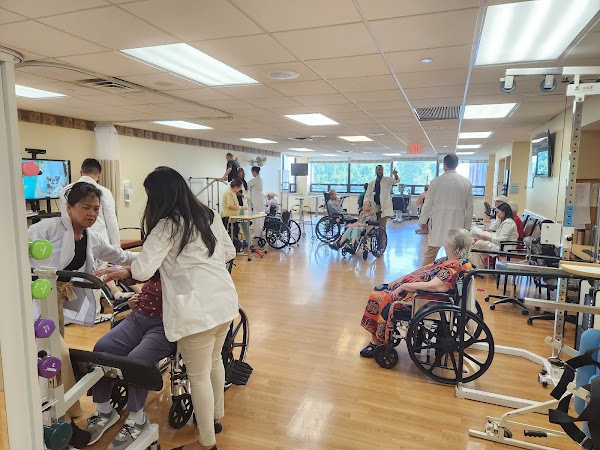
Jan 2020 3 deficiencies
CONCERN (D)

Potential for Harm - no one hurt, but risky conditions existed

Deficiency F0657 (Tag F0657)

Could have caused harm · This affected 1 resident

**NOTE- TERMS IN BRACKETS HAVE BEEN EDITED TO PROTECT CONFIDENTIALITY** (2) Resident #60 was admitted to the facility with diagnoses that include Anemia; Non-Alzheimer's Dementia; Failure to thrive; w...

Read full inspector narrative →
**NOTE- TERMS IN BRACKETS HAVE BEEN EDITED TO PROTECT CONFIDENTIALITY** (2) Resident #60 was admitted to the facility with diagnoses that include Anemia; Non-Alzheimer's Dementia; Failure to thrive; weakness. The quarterly Minimum Data Set 3.0 (MDS) assessment dated [DATE] documented the resident had moderate cognitive impairment. Mood, no issues. Behavior, no issues. The Psychiatry consult dated 9/27/19 documented the resident was seen for behavioral issues of refusing to cooperate and getting into arguments. The resident's diagnoses were Cognitive disorder NOS (Not otherwise Specified) and Mood d/o (Disorder) secondary to General Medical Condition. The psychiatrist recommended increasing Remeron to 15 mg (milligrams) HS (at bedtime) to decrease symptoms. The note further documented resident should be monitored for sedation. The Physician's orders dated 9/30/19 documented orders for Mirtazapine 15 mg tablet, give 1 tablet (15mg ) by oral route once daily at bedtime for Major depressive disorder, single episode, severe w/psychotic features. The Comprehensive Care Plan (CCP) for Psychotropic Drug Use dated 3/7/19 was not reviewed and revised to reflect the increased dose of Mirtazapine. A Care Plan notes dated 10/23/19 documented the resident was on Mirtazapine tablet 7.5 mg by oral route once daily which was noted to be effective. On 01/10/20 at 11:49 AM an interview was conducted with the Charge Nurse (RN #2) who reported that he had been working in the facility since October 2019. He suggested that the SA (State Agent) speak with the MDS Coordinator in regards to updating the Care Plan. On 01/10/20 at 12:16 PM, an interview was conducted with the MDS Coordinator, who stated that the medication was increased in September from 7.5mg oral route once per day to 15mg oral route once per day. She stated that the Care Plan is updated quarterly or as needed if there are changes. If the psychiatrist enters a change in the medication regimen, then it should be noted and documented by the charge nurse and has to be updated in the care plan. The person responsible for this MDS, the MDS Assessor, is part time per diem in the evenings. She went on to state that she thinks the MDS assessor missed the change. On 01/10/20 at 03:01 PM, RN #3 (MDS Assessor) was interviewed and stated that she completed the MDS last October (2019) for the resident. Her routine is to go to the resident, talk to them or ask team nurse if the resident is unable to participate in the interview. She asks the team nurse how the resident eats, the resident's ADL's, she documents, look at nurses notes, progress notes, doctors notes, pertinent behavior, overall that impacts residents and then she updates care plan. In this situation, she stated that this was an oversight. She checks the Care Plan every 3 months, sometimes earlier, if there is a significant change and adds notes to care plan. She will make the correction. This one was done earlier than 3 months, but that was not due to the medication change. She will be coming in later this afternoon and will make the correction. (3) Resident #45 was admitted to the facility with diagnoses including Renal Insufficiency; Polynephritis; Seizure Disorder; History of Right Hydronephrosis s/p Nephrostomy Tube. The resident was readmitted s/p nephrostomy replacement. The Quarterly MDS dated [DATE] documented resident had severe cognitive impairment. requires extensive assistance with two persons physical assist. The resident has an indwelling catheter. The physician's standing order dated 1/3/19 documented Cleanse R. Nephrostomy site with NSS and apply DSD and cover with silicone bordered gauze weekly and PRN (make sure the tub is out of her sight, but also not kinked under the bordered gauze) Unspecified hydronephrosis; Other artificial openings of urinary tract status; Document Nephrostomy urine output at the end of he shift. Acute kidney failure, unspecified. There was no active/updated Care Plan to address the care needs of the resident's nephrostomy. A review of the Archived (discontinued) Care Plan for Polynephritis effective 7/25/19, last update 9/4/19 documented interventions including administer medication as ordered; monitor VS as ordered; notify MD if no drainage in nephrostomy bag; observe for placement of tube and refer to MD if dislodged. On 1/13/2020 at 10:59 AM, an interview was conducted with the Charge Nurse (RN #2) who reports that the resident has history of right hydronephrosis s/p nephrostomy tube. He reported that 1/1/2020, the nephrostomy tube was dislodged and the resident was transferred to hospital, and 1/3/2020, the resident returned to the facility. RN #2 reviewed the resident's Care Plan and immediately initiated the Care Plan for nephrostomy tube for the resident. 415.11(c)(2)(i-iii) Based on record reviews and staff interviews during the re-certification survey, the facility did not ensure comprehensive care plans were developed, reviewed, and revised by the interdisciplinary team after each assessment including both the comprehensive and quarterly review assessments. Specifically (1) a comprehensive care plan for psychotropic drug use was not reviewed and revised for approximately eight months from May 10, 2019 to January 8, 2020 to reflect the resident's current status and medication dosage (Resident #43), (2) care plan updates did not reflect a resident's psychotropic medication increase, indicating the resident was on the same dosage (Resident #60); (3) a care plan was not developed to reflect the care needs of a resident's nephrostomy (Resident #45). This was evident for 3 of 38 residents reviewed in the final sample (Resident #s 43, 60, and 45). The findings are: The facility policy and procedure titled, Comprehensive resident Care Plan (Dated 8/99) documented the Comprehensive Care Plan will be developed upon admission, within 7 days of MDS completion, upon significant change, quarterly, and annually. The care plan will be periodically reviewed and revised by the CCP team after each assessment, and the care plan will be updated on an on-going basis. The facility policy does not specifiy who is responsible for ensuring the care plan is developed, and it does not specify who is responsible for updating/revising the care plan on an on-going basis, quarterly, and annually. (1) Resident #43 was admitted on [DATE] with diagnoses including but not limited to Depression other than bipolar. The Minimum Data Set 3.0 (MDS) Annual and Quarterly assessments dated 02/07/2019 and 10/17/2019 respectively were reviewed. Resident has intact cognition with a mood score of 1 and then a 0 and no behaviors indicated. The Comprehensive Care Plan (CCP) titled, Psychotropic Drug Use: Anxiety/Depression (effective date 08/08/2015 and review date 01/08/2020) was reviewed and documented the following. Resident is on anti-depressant medication related to diagnosis of anxiety/depression .Remeron 15 mg PO Q HS initiated on 12/14/2017. Interventions included psychiatric consult as needed, assess need for psychotherapeutic medication, and evaluate for reduction of medication dose. The CCP notes were updated quarterly on 02/20/2019 and 05/10/2019. There were no updates between 05/10/2019 to 01/08/2020. The Physician's Orders dated 12/18/2019 documented the resident was prescribed Mirtazapine 15 milligram (mg) Tablet, give 1.5 tablets (22.5 mg) by oral route once daily at bedtime. The initial order date was 08/08/2018. On 01/09/2020 at 09:45 AM and 11:11 AM, the Registered Nurse Manager (RNM #1) was interviewed. RNM #1 stated the resident is on Remeron for depression and will verbalize sadness. RNM #1 stated the CCP's are updated by either herself or the MDS coordinators. She further stated the care plan was not updated due to an oversight. On 01/13/2020 at 09:45 AM, the MDS Coordinator was interviewed. She stated the RNM are responsible for updating care plans as there are changes and the MDS assessors and coordinators update the CCPs quarterly. On 01/13/2020 at 11:46 AM, the Director of Nursing (DON) was interviewed. He stated the RNM and MDS Coordinators and Assessors are responsible for updating CCPs.
CONCERN (D)

Potential for Harm - no one hurt, but risky conditions existed

Drug Regimen Review (Tag F0756)

Could have caused harm · This affected 1 resident

Based on record review and staff interview during the re-certification survey, the facility did not ensure that the attending physician documented in the medical record that an identified irregularity...

Read full inspector narrative →
Based on record review and staff interview during the re-certification survey, the facility did not ensure that the attending physician documented in the medical record that an identified irregularity in the drug regimen review was reviewed and what, if any, action has been taken to address it. This was evident for 1 of 5 residents reviewed for unnecessary medications out of a final sample of 38 residents (Resident #43). The finding is: Resident #43 was admitted with diagnoses which include Depression other than bipolar. The Minimum Data Set 3.0 (MDS) Annual and Quarterly assessments dated 02/07/2019 and 10/17/2019 respectively were reviewed. Resident has intact cognition and has a mood score of 1 and then a 0 and no behaviors indicated. Resident also received seven days of anti-depressant medication. The Comprehensive Care Plan (CCP) titled, Psychotropic Drug Use: Anxiety/Depression (effective date 08/08/2015 and review date 01/08/2020) documented the following: Resident is on anti-depressant medication related to diagnosis of anxiety/depression .Remeron 15 mg PO Q HS initiated on 12/14/2017. Interventions included establishing appropriate diagnosis for medication use, psychiatric consult as needed, administer medications as ordered, assess need for psychotherapeutic medication, evaluate for reduction of medication dose, assess effectiveness of medication, monitor for side effects of medication such as lethargy, psychology consult and follow ups as ordered, and allow resident to vent feeling and give emotional support. Notes were updated quarterly on 02/20/2019 Resident continues to receive antidepressant medication. Last seen by psychiatry on 1/9/19 . and 05/10/2019 Stable continue plan. There were no further updates between 05/10/2019 to 01/08/2020. The Physician's orders were reviewed. The resident was prescribed Mirtazapine 15 milligram (mg) Tablet, give 1.5 tablets (22.5 mg) by oral route once daily at bedtime. Initial order date was 08/08/2018 and was most recently renewed on 12/18/2019. A psychiatry consult completed on 01/09/2019 documented the resident had a principal diagnosis of depressive disorder. The psychiatrist indicated resident on increased Remeron 22.4 mg and is less depressed. The psychiatrist recommended to continue with current medication and to follow up in three months. There were no further Psychiatric consults for the resident. The Pharmacy Drug Regimen Reviews (DRRs) from the last six months from 07/02/2019 to 12/02/2019 were reviewed. A recommendation to consider a gradual dose reduction (GDR) of Remeron was made on 09/06/2019. There was no documented evidence the physician reviewed and responded to the recommendation. On 01/09/2020 at 11:44 AM, the NP was interviewed and stated the monthly assessment of residents includes a review of consults and medications. The NP stated the resident is on Remeron for depression and has been stable. She stated she only assesses residents and will not make recommendations for medication changes including GDR's because it is up to the Psychiatrist to make recommendations. The NP further stated she is not responsible for putting in psychiatric consult orders and doesn't know why the MD has not put in an order. On 01/09/2020 at 12:24 PM, the MD was interviewed and stated the monthly assessments completed for each resident includes a review of consults and pharmacy reviews. The resident is on Remeron for depression and has been stable on it. MD stated both himself and the psychiatrist can review for the continued need for Remeron and make a decision to do a gradual dose reduction. The MD further stated resident is stable therefore the reduction was not completed. On 01/10/2020 at 11:35 AM, the Pharmacist Supervisor was interviewed and stated as part of their monthly reviews, they check to see if a resident was seen by the Psychiatrist if on psychotropic medications, check for behavior documentation, and then would make a recommendation for the physician to follow up and evaluate. The pharmacist will not force the MD to agree to their recommendations after making attempts. On 01/13/2020 at 08:30 AM and 01/13/2020 at 11:46 AM, the Director of Nursing (DON) was interviewed and stated pharmacy reviews are completed monthly and the MD documents their response on the pharmacy report itself or in the progress note. 415.18(c)(2)
CONCERN (D)

Potential for Harm - no one hurt, but risky conditions existed

Medication Errors (Tag F0758)

Could have caused harm · This affected 1 resident

**NOTE- TERMS IN BRACKETS HAVE BEEN EDITED TO PROTECT CONFIDENTIALITY** Based on observations, record review, and staff interviews during the re-certification survey, the facility did not ensure that ...

Read full inspector narrative →
**NOTE- TERMS IN BRACKETS HAVE BEEN EDITED TO PROTECT CONFIDENTIALITY** Based on observations, record review, and staff interviews during the re-certification survey, the facility did not ensure that a resident receiving psychotropic drugs received adequate monitoring and gradual dose reductions (GDR) in an effort to discontinue these drugs. Specifically, a resident with depression has been on an anti-depressant medication, Remeron 22.5 milligram (mg) daily, from 08/08/2018 to 01/13/2020 without a gradual dose reduction or monitoring for the effectiveness and continued need for the medication. This was evident for 1 of 5 residents reviewed for unnecessary medications out of a final sample of 38 residents (Resident #43). The finding is: The facility policy and procedure titled, Psychotropic Medication Usage (Dated 09/07) documented the following: Our professional team evaluated each resident's drug therapy for excessive drug duration and appropriate monitoring. Gradual dose reductions (GDRs) are attempted before a conclusion is made that reduction is clinically contraindicated. Residents will be evaluated for psychotropic med use based on a comprehensive assessment. Routine monitoring will be conducted for any adverse side effects and therapeutic effects. Residents will be routinely evaluated for possible drug reductions. Periodically, the team will review the comprehensive care plan and incorporate the psychotropic drug regimen into the plan. Residents receiving psychotropic drugs will periodically be seen by the consulting psychiatrist for treatment input. Resident #43 was admitted on [DATE] with diagnoses including but not limited to Depression other than bipolar. From 01/07/2020 at 09:45 AM to 01/13/2020 at 08:30 AM, the resident was observed multiple times in her room and dining room. The resident was calm and pleasant but presented with a flat facial affect. On 01/07/2020 at 09:45 AM and 01/09/2020 at 08:34 AM, the resident was interviewed and stated she wasn't sure if she is taking medication for her sadness. She has difficulty coping at times with being in the facility. The Minimum Data Set 3.0 (MDS) Annual and Quarterly assessments dated 02/07/2019 and 10/17/2019 respectively were reviewed. Resident has intact cognition and has a mood score of 1 and then a 0 and no behaviors indicated. Resident also received seven days of anti-depressant medication. The Comprehensive Care Plan (CCP) titled, Psychotropic Drug Use: Anxiety/Depression (effective date 08/08/2015 and review date 01/08/2020) documented the following: Resident is on anti-depressant medication related to diagnosis of anxiety/depression .Remeron 15 mg PO Q HS initiated on 12/14/2017. Interventions included establishing appropriate diagnosis for medication use, psychiatric consult as needed, administer medications as ordered, assess need for psychotherapeutic medication, evaluate for reduction of medication dose, assess effectiveness of medication, monitor for side effects of medication such as lethargy, psychology consult and follow ups as ordered, and allow resident to vent feeling and give emotional support. Notes were updated quarterly on 02/20/2019 Resident continues to receive antidepressant medication. Last seen by psychiatry on 1/9/19 . and 05/10/2019 Stable continue plan. There were no further updates between 05/10/2019 to 01/08/2020. The Physician's orders were reviewed. The resident was prescribed Mirtazapine 15 milligram (mg) Tablet, give 1.5 tablets (22.5 mg) by oral route once daily at bedtime. Initial order date was 08/08/2018 and was most recently renewed on 12/18/2019. A psychiatric consult completed on 01/09/2019 documented the resident had a principal diagnosis of depressive disorder. The psychiatrist indicated resident on increased Remeron 22.4 mg and is less depressed. The psychiatrist recommended to continue with current medication and to follow up in three months. There were no further Psychiatric consults for the resident. The Physician (MD) and Nurse Practitioner (NP) monthly assessments were reviewed from 01/16/2019 to 01/13/2020. The Physician and NP documented the resident had stable depression. There was no GDR evaluation or a recommendation or referral for psychiatric follow-up to evaluate the resident for a GDR. The Pharmacy Drug Regimen Reviews (DRRs) from the last six months from 07/02/2019 to 12/02/2019 were reviewed. A recommendation to consider a gradual dose reduction of Remeron was made on 09/06/2019. There was no documented evidence the physician reviewed and responded to the recommendation. There was no documentation of weekly behavior notes completed by nursing from 01/01/2019 to 01/13/2020. On 01/09/2020 at 10:15 AM, the Certified Nursing Assistant (CNA #1) was interviewed and stated the resident's mood is on and off where she sometimes looks sad. The resident also sits by herself and her face looks droopy. CNA #1 stated she engages in conversation with the resident and give her snacks she likes to eat. On 01/09/2020 at 10:59 AM, the Licensed Practical Nurse (LPN #1) was interviewed and stated she is familiar with the resident. The resident has not verbalized that she is depressed, but she seems sad because she prefers to be alone. She further stated behaviors are documented on weekly behavior notes, but none were completed for resident because she was not on the list of residents with behaviors. On 01/09/2020 at 09:45 AM and 01/09/2020 at 11:11 AM, the Registered Nurse Manager (RNM #1) was interviewed. The RNM stated the resident is on Remeron for depression and verbalizes sadness. The resident's mood should have been documented and monitored through weekly behavior notes, but it wasn't. The resident is followed monthly by the Nurse Practitioner (NP) and the Medical Doctor (MD). The NP is responsible for reviewing the resident's chart, including consults, and would order a new consult if needed. The MD is responsible for overseeing the NP. RNM #1 stated the resident was last seen by the Psychiatrist on 01/09/2019. The RNM did not know why the resident has not been seen since that time. On 01/09/2020 at 11:44 AM, the NP was interviewed and stated the monthly assessment of residents includes a review of consults and medications. The NP stated the resident is on Remeron for depression and has been stable. She stated she only assesses residents and will not make recommendations for medication changes including GDR's because it is up to the Psychiatrist to make recommendations. The NP further stated she is not responsible for putting in psychiatric consult orders and doesn't know why the MD has not put in an order. On 01/09/2020 at 12:10 PM, the Psychiatrist was interviewed and stated the resident is on Remeron for depression and has improved with no acute conditions. The recommendation was for quarterly follow up for monitoring. The MD and RNM reviews his consults and will place a follow up order in the record. The psychiatrist further stated the resident should've been seen quarterly to be evaluated for a gradual dose reduction. On 01/09/2020 at 12:24 PM, the MD was interviewed and stated the monthly assessments completed for each resident includes a review of consults and pharmacy reviews. The resident is on Remeron for depression and has been stable on it. MD stated both himself and the psychiatrist can review for the continued need for Remeron and make a decision to do a gradual dose reduction. The MD further stated resident is stable therefore the reduction was not completed. The MD also stated usually the RNM enters consult orders in the record for him if needed. On 01/09/2020 at 12:44 PM, the Medical Director was interviewed and stated residents who are on psychotropic medications, including anti-depressants, should be evaluated quarterly and for a gradual dose reduction at least annually. On 01/10/2020 at 11:35 AM, the Pharmacist Supervisor was interviewed and stated as part of their monthly reviews, they check to see if a resident was seen by the Psychiatrist if on psychotropic medications, check for behavior documentation, and then would make a recommendation for the physician to follow up and evaluate. The pharmacist will not force the MD to agree to their recommendations after making attempts. On 01/13/2020 at 08:30 AM and 01/13/2020 at 11:46 AM, the Director of Nursing (DON) was interviewed and stated there should be behavior documentation for residents taking anti-depressant medication completed by nursing. Pharmacy reviews are completed monthly and the MD documents their response on the pharmacy report itself or in the progress note. The nurses should also inform the MD if there were recommendations for follow-up made after a consult is completed, and the nurses can put in an order for the follow-up consult. The DON further stated there should've been a psychiatric consult to review the resident for a gradual dose reduction. 415.12(l)(2)(ii)
Understanding Severity Codes (click to expand)
Life-Threatening (Immediate Jeopardy)
J - Isolated K - Pattern L - Widespread
Actual Harm
G - Isolated H - Pattern I - Widespread
Potential for Harm
D - Isolated E - Pattern F - Widespread
No Harm (Minor)
A - Isolated B - Pattern C - Widespread

Questions to Ask on Your Visit

  • "Can I speak with families of current residents?"
  • "What's your RN coverage like on weekends and overnight?"

Our Honest Assessment

Strengths
  • • Grade B+ (80/100). Above average facility, better than most options in New York.
  • • No fines on record. Clean compliance history, better than most New York facilities.
  • • 36% turnover. Below New York's 48% average. Good staff retention means consistent care.
Concerns
  • • 18 deficiencies on record, including 1 serious (caused harm) violation. Ask about corrective actions taken.
Bottom line: Generally positive indicators. Standard due diligence and a personal visit recommended.

About This Facility

What is Archcare At Providence Rest's CMS Rating?

CMS assigns ARCHCARE AT PROVIDENCE REST an overall rating of 5 out of 5 stars, which is considered much above average nationally. Within New York, this rating places the facility higher than 99% of the state's 100 nursing homes. This rating reflects solid performance across the metrics CMS uses to evaluate nursing home quality.

How is Archcare At Providence Rest Staffed?

CMS rates ARCHCARE AT PROVIDENCE REST's staffing level at 3 out of 5 stars, which is average compared to other nursing homes. Staff turnover is 36%, compared to the New York average of 46%. This relatively stable workforce can support continuity of care.

What Have Inspectors Found at Archcare At Providence Rest?

State health inspectors documented 18 deficiencies at ARCHCARE AT PROVIDENCE REST during 2020 to 2025. These included: 1 that caused actual resident harm, 16 with potential for harm, and 1 minor or isolated issues. Deficiencies causing actual harm indicate documented cases where residents experienced negative health consequences.

Who Owns and Operates Archcare At Providence Rest?

ARCHCARE AT PROVIDENCE REST is owned by a non-profit organization. Non-profit facilities reinvest revenue into operations rather than distributing to shareholders. The facility is operated by ARCHCARE, a chain that manages multiple nursing homes. With 200 certified beds and approximately 191 residents (about 96% occupancy), it is a large facility located in BRONX, New York.

How Does Archcare At Providence Rest Compare to Other New York Nursing Homes?

Compared to the 100 nursing homes in New York, ARCHCARE AT PROVIDENCE REST's overall rating (5 stars) is above the state average of 3.1, staff turnover (36%) is near the state average of 46%, and health inspection rating (4 stars) is above the national benchmark.

What Should Families Ask When Visiting Archcare At Providence Rest?

Based on this facility's data, families visiting should ask: "Can I visit during a mealtime to observe dining assistance and food quality?" "How do you handle medical emergencies, and what is your hospital transfer rate?" "Can I speak with family members of current residents about their experience?"

Is Archcare At Providence Rest Safe?

Based on CMS inspection data, ARCHCARE AT PROVIDENCE REST has a clean safety record: no substantiated abuse findings (meaning no confirmed cases of resident harm), no Immediate Jeopardy citations (the most serious violation level indicating risk of serious injury or death), and is not on the Special Focus Facility watch list (a federal program monitoring the lowest-performing 1% of nursing homes). The facility has a 5-star overall rating and ranks #1 of 100 nursing homes in New York. While no facility is perfect, families should still ask about staff-to-resident ratios and recent inspection results during their visit.

Do Nurses at Archcare At Providence Rest Stick Around?

ARCHCARE AT PROVIDENCE REST has a staff turnover rate of 36%, which is about average for New York nursing homes (state average: 46%). Moderate turnover is common in nursing homes, but families should still ask about staff tenure and how the facility maintains care continuity when employees leave.

Was Archcare At Providence Rest Ever Fined?

ARCHCARE AT PROVIDENCE REST has no federal fines on record. CMS issues fines when nursing homes fail to meet care standards or don't correct problems found during inspections. The absence of fines suggests the facility has either maintained compliance or corrected any issues before penalties were assessed. This is a positive indicator, though families should still review recent inspection reports for the full picture.

Is Archcare At Providence Rest on Any Federal Watch List?

ARCHCARE AT PROVIDENCE REST is not on any federal watch list. The most significant is the Special Focus Facility (SFF) program, which identifies the bottom 1% of nursing homes nationally based on persistent, serious quality problems. Not being on this list means the facility has avoided the pattern of deficiencies that triggers enhanced federal oversight. This is a positive indicator, though families should still review the facility's inspection history directly.