BAINBRIDGE NURSING & REHABILITATION CENTER
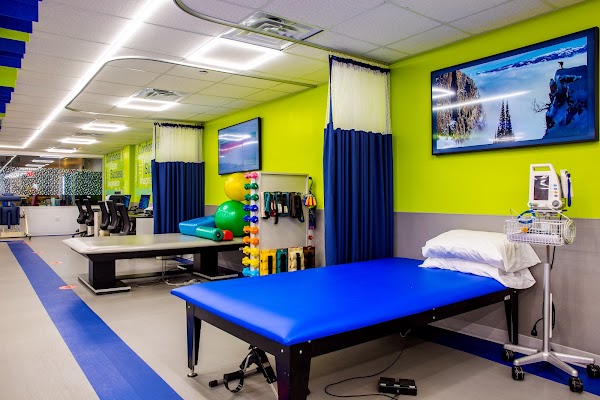
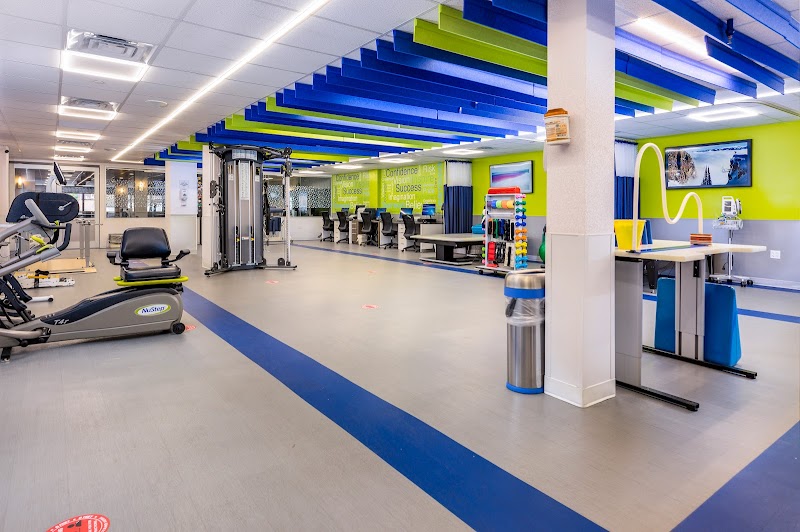
3518 BAINBRIDGE AVENUE, BRONX, NY 10467 (718) 655-1991
For profit - Limited Liability company 200 Beds Independent Data: November 2025
Trust Grade
90/100
#6 of 594 in NY
Last Inspection: April 2023

Over 2 years since last inspection. Current conditions may differ from available data.

Overview

Bainbridge Nursing & Rehabilitation Center has an excellent Trust Grade of A, indicating a high level of care and reliability. It ranks #6 out of 594 facilities in New York, placing it well within the top tier of nursing homes in the state, and #2 out of 43 in Bronx County, suggesting that it is one of the best local options available. However, the facility is trending worse over time, as issues have increased from 1 in 2020 to 2 in 2023. Staffing is average with a rating of 3 out of 5 stars and a turnover rate of 36%, which is slightly better than the state average, but there is room for improvement in staff retention. Notably, there have been no fines, which is a positive sign, and the facility has average RN coverage, meaning they have a standard level of nursing oversight. Despite these strengths, there are some concerning incidents. For example, a resident’s hip fracture was not reported to health authorities within the required time frame, which raises alarms about compliance with safety protocols. Additionally, the care plan for another resident was not updated to reflect their self-care capabilities, potentially impacting their care quality. Lastly, a previous finding noted that a resident was not given breaks from a physical restraint as needed, which could affect their comfort and well-being. Overall, while there are commendable aspects of care at Bainbridge, families should be aware of these deficiencies when considering the facility for their loved ones.

Trust Score
A
90/100
In New York
#6/594
Top 1%
Safety Record
Low Risk
No red flags
Inspections
Getting Worse
1 → 2 violations
Staff Stability
○ Average
36% turnover. Near New York's 48% average. Typical for the industry.
Penalties
✓ Good
No fines on record. Clean compliance history, better than most New York facilities.
Skilled Nurses
○ Average
Each resident gets 33 minutes of Registered Nurse (RN) attention daily — about average for New York. RNs are the most trained staff who monitor for health changes.
Violations
✓ Good
Only 3 deficiencies on record. Cleaner than most facilities. Minor issues only.
★★★★★
5.0
Overall Rating
★★★☆☆
3.0
Staff Levels
★★★★★
5.0
Care Quality
★★★★★
5.0
Inspection Score
Stable
2020: 1 issues
2023: 2 issues

The Good

  • 5-Star Quality Measures · Strong clinical quality outcomes
  • Full Sprinkler Coverage · Fire safety systems throughout facility
  • No fines on record
  • Staff turnover below average (36%)

    12 points below New York average of 48%

Facility shows strength in quality measures, fire safety.

The Bad

Staff Turnover: 36%

Near New York avg (46%)

Typical for the industry

The Ugly 3 deficiencies on record

Apr 2023 2 deficiencies
CONCERN (D) 📢 Someone Reported This

A family member, employee, or ombudsman was alarmed enough to file a formal complaint

Potential for Harm - no one hurt, but risky conditions existed

Report Alleged Abuse (Tag F0609)

Could have caused harm · This affected 1 resident

**NOTE- TERMS IN BRACKETS HAVE BEEN EDITED TO PROTECT CONFIDENTIALITY** Based on interviews and record review conducted during the Recertification/Complaint survey (NY00291223) from 4/3/2023 to 4/11/2...

Read full inspector narrative →
**NOTE- TERMS IN BRACKETS HAVE BEEN EDITED TO PROTECT CONFIDENTIALITY** Based on interviews and record review conducted during the Recertification/Complaint survey (NY00291223) from 4/3/2023 to 4/11/2023, the facility did not ensure all alleged violations involving injuries of unknown source were reported immediately, but not later than 2 hours after the allegations were made to the New York State Department of Health (NYSDOH). This was evident for 1 (Resident # 58) out of 3 residents reviewed for Abuse. Specifically, the facility did not report Resident #58's right hip fracture to the NYSDOH within 2 hours. The findings are: The facility's policy titled Abuse Prohibition- Prevention and Reporting last revised January 2023 documented injuries of unknown source are reported immediately, but not later than 2 hours after the allegation is made, if the events that cause the allegation involve abuse or result in serious bodily injury. Resident #58 had diagnoses of bipolar disorder and paraplegia. The Minimum Data Set 3.0 (MDS) dated [DATE] documented Resident #58 was cognitively intact, required the assistance of 2 people to complete activities of daily living. The MDS also documented behavioral, verbal, and other behavioral symptoms occurring daily, putting Resident #58 at significant risk for physical illness or injury and rejection of care occurring daily. A Nursing Note dated 02/13/22 documented that resident #58 called 911 and reported their hips were broken while being turned during care. The Nursing Supervisor was notified, and Resident #58 was transferred to the hospital. The Accident/Incident (A/I) report dated 02/13/22 documented Resident #58 was overheard calling 911 after care was provided and complained their hip was broken. Resident #58 was transferred to the hospital. The Hospital After Visit Summary dated 02/14/22 revealed Resident # 58 sustained an impacted comminuted right intertrochanteric fracture. The NYSDOH intake dated 02/15/22 at 12:31PM documented the date and time of Resident #58's hip fracture as 02/13/22 at 11:20PM, more than 24 hours after the incident occurred. On 04/11/23 at 11:07 AM, the Director of Nursing (DNS) was interviewed and stated the DNS is responsible for reporting injuries of unknown origin to the NYSDOH. The DNS could not recall what transpired and the reason the case of Resident #58 was reported late. The incident occurred 2/13/22 and was reported to the NYSDOH on 2/15/22. The DNS stated they do their best to ensure incidents involving injury of unknown origin are reported to the NYSDOH within2 hours. The Administrator is made aware of reports being submitted to the NYSDOH. On 04/11/23 at v11:22 AM, the Administrator was interviewed and stated that they are aware of the time frame for reporting and that the DNS collaborates with them when a report must be made. The Administrator stated they knew they had to report the allegation of injuries of unknown source to NYSDOH within 2 hours after the allegation was made. 415.4 (b)(2)
CONCERN (D)

Potential for Harm - no one hurt, but risky conditions existed

Deficiency F0657 (Tag F0657)

Could have caused harm · This affected 1 resident

**NOTE- TERMS IN BRACKETS HAVE BEEN EDITED TO PROTECT CONFIDENTIALITY** Based on observation, record review, and interviews conducted during a Recertification survey from 4/3/23 through 4/11/23, the f...

Read full inspector narrative →
**NOTE- TERMS IN BRACKETS HAVE BEEN EDITED TO PROTECT CONFIDENTIALITY** Based on observation, record review, and interviews conducted during a Recertification survey from 4/3/23 through 4/11/23, the facility did not ensure a resident's Comprehensive Care Plan (CCP) was reviewed and revised by the interdisciplinary team to reflect changes in the resident's needs. This was evident in 1 out of 1 resident(s) reviewed for Urinary Catheter out of 38 total sampled residents (Resident # 154). Specifically, Resident # 154's CCP was not reviewed and revised to reflect that the resident performs self-catheter care. The findings are. The facility policy titled Interdisciplinary Care Planning dated March 2023 documented that the facility utilizes an interdisciplinary team to provide an individualized comprehensive resident assessment and a person-centered care planning process to maximize and maintain every resident's functional potential and quality of life. Each resident's care plan identifies goals that reflect the resident's unique needs. The care plan is revised when appropriate to reflect the resident's current needs, based on the evaluation of progress toward goals, response to care, and treatment. The facility did not have a policy for self-catheter care. Resident # 154 had diagnoses of obstructive reflux uropathy, acute kidney failure, and bladder neck obstruction. The Minimum Data Set 3.0 (MDS) assessment dated [DATE] documented Resident #154 was cognitively intact, was independent in Activities of Daily Living (ADL), and had an indwelling catheter. On 4/06/23 at 8:48 AM and 04/07/23 at 2:44 PM, Resident #154 was interviewed and stated they have a Foley catheter connected to a leg bag. Resident #154 empties the leg bag and changes the bag without staff assistance. The staff showed them how to change the leg bag. The leg bag is changed once a week and when the leg bag plastic gets loose. The Comprehensive Care Plan titled Bladder Continence/Indwelling Catheter was initiated on 10/26/21 and documented interventions to monitor for signs and symptoms of urinary tract infection (UTI), pain, increased temperature, and confusion. The quarterly review care plan note dated 1/14/23 documented that Foley is in place, draining well, and remains free from UTI. The physician orders dated 3/26/23 documented Foley care every shift. There was no documented evidence Resident #154's CCP related to Bladder Continence/Indwelling Catheter was revised to include interventions for self catheter care. On 4/7/23 at 2:45 PM, an interview was conducted with the Certified Nursing Assistant (CNA) #3 who stated Resident #154 had a Foley catheter. The resident is independent and empties the leg bag themselves. The resident does not allow them to empty the leg bag. On 4/11/23 at 9:47 AM, an interview was conducted with Licensed Practical Nurse (LPN) #1 who stated Resident #154 is alert and empties the catheter bag themselves. Resident #154 asks for a new bag when they need it. LPN #1 has not changed Resident #154's leg bag. LPN #1 has never seen Resident #154 changing or emptying the leg bag and does not know if the resident uses a glove. On 04/07/23 at 2:51 PM, an interview was conducted with Registered Nurse Manager (RNM) #2 who stated Resident # 154 emptied and changed the leg bag themselves. It is not included in the CCP that the resident can change the bag themselves. There should have been an education and intervention documented in the resident's CCP. On 04/11/23 at 12:54 PM, an interview was conducted with the Director of Nursing (DNS) who stated Resident #154 has a care plan for indwelling catheters, but it did not reflect that the resident is doing self-catheter care. The CCP should have reflected Resident #154's self-catheter care. 415.11(c)(2)(i-iii)
Sept 2020 1 deficiency
CONCERN (D)

Potential for Harm - no one hurt, but risky conditions existed

Deficiency F0604 (Tag F0604)

Could have caused harm · This affected 1 resident

**NOTE- TERMS IN BRACKETS HAVE BEEN EDITED TO PROTECT CONFIDENTIALITY** Based on observations, record reviews, and interviews conducted during the Recertification survey, the facility did not ensure a...

Read full inspector narrative →
**NOTE- TERMS IN BRACKETS HAVE BEEN EDITED TO PROTECT CONFIDENTIALITY** Based on observations, record reviews, and interviews conducted during the Recertification survey, the facility did not ensure a resident's physical restraint was used for the least amount of time. Specifically, a resident's rear buckle restraint seat belt was not released every 2 hours for 15 minutes for a range of motion and during meals as ordered and periodic re-evaluation of the ongoing need for the restraint was not completed. This was evident for 1 of 2 residents reviewed for Physical Restraints out of a total sample of 38 residents. (Resident #137) The finding is: The facility policy entitled: Physical Restraints, dated 09/20/11, documented that: all residents with restraints will be monitored for continued need, and justification, as needed, arises. Documentation by nursing and physician shall state the medical symptom requiring the need for the restraint and the need for continued use in the CCP and all other relevant documentation. Seatbelts with buckle or Velcro closures that can be self-released by the resident at will are not considered restraints. The resident must be cognitively able to do so and can release the belt at will. Each individual with a restraint must have the restraint released every two (2) hours between fifteen (15) thirty to (30) minutes for the prescribed exercise and activity (e.g., ROM, feeding, hygiene, etc.). The resident's response must be documented appropriately by nursing on an ongoing basis. Restraints will be released at meals and during care. In addition, the clinical record shall include documentation of periodic re-evaluation of the need for the restraints and efforts made to substitute alternate measures. Resident #137 was admitted with diagnoses of Dementia without Behavioral Disturbance, Anxiety disorder due to known physiological condition and Schizophrenia. The Quarterly Minimum Data Set 3.0 (MDS) dated [DATE] documented that Resident #137 had severely impaired cognition with short and long-term memory problems. The resident required extensive assistance of 2 staff persons for bed mobility, transfer, and toilet use. On 9/9/2020, from 11:38 AM to 2:27 PM, the resident was observed seated in a reclining wheelchair (w/c) with a rear buckle restraint seat belt in place in their room. The seat belt was not released during this time frame. At 12:24 PM, the resident was observed eating lunch in their room with the seat belt in place. On 9/10/2020, from 11 AM to 2:34 PM, the resident was observed in their room seated in a reclining w/c with the restraint seat belt in place with no release. At 12:30 PM, the Certified Nursing Assistant (CNA#1) was observed entering the residents room with the lunch tray. CNA #1 placed a clothing protector on the resident, placed the meal tray in front of the resident, and exited the room without releasing the seat belt. On 9/11/2020, from 10 AM to 2 PM, the resident was observed in their room seated in a reclining w/c with the seat belt in place. The seat belt was not released during this time frame. At 12:32 PM, CNA #1 entered the room with the resident's lunch tray, placed a clothing protector on the resident, and left without releasing the seat belt. The Comprehensive Care Plan (CCP) Restraint/Seat Belt dated 6/16/2020 documented that the resident was unaware of safety boundaries and had poor trunk and body control. Interventions included releasing the restraint every 2 hours for 15 minutes for range of motion exercise, toileting, ambulation, and at mealtimes. The Physician's Orders dated 5/24/2019 to 7/29/2020 documented monitoring instructions for the resident's rear-facing seat belt restraint. The orders documented the seat belt restraint should be released every two (2) hours for 15 minutes for range of motion, toileting, hygiene, nourishment, and mealtimes. The Restraint Initiation/Reduction document dated 4/3/2019 and completed on 4/6/2019 documented that lap buddy removal assessment was done for three days. The resident made numerous attempts to stand and was redirected by staff. The Restraint Initiation/Reduction document dated 4/6/2019 and completed on 4/10/2019 documented that lap buddy removal assessment was done for three days. The resident continues to get out of the chair unassisted needing continuous monitoring. The Restraint Initiation/Reduction document dated 4/10/2019 and completed on 4/14/2019 documented that resident continued to stand up from the chair and was redirected by staff for safety numerous times. The Restraint Initiation/Reduction document dated 2/20/2020 documented that resident is alert and oriented and seatbelt removal trial day 1 to 3 was performed. The resident continues to stand up despite the seatbelt. The Restraint Evaluation Monthly document dated 3/31/2020 documented that resident is alert with confusion with diagnoses that included Dementia, Depression, Schizophrenia, Pseudobulbar affect and a rear facing seatbelt restraint was ordered due to Dementia, repeated falls with injury, lack of awareness of safety boundaries, repeated attempts to stand from locked wheelchair despite unsteady gait. Continued use and needs Quarterly review. The evaluation further documented the rationale for rear seatbelt restraints was that the resident continued to rock back and forth and attempted to stand and move locked wheelchair. This was discussed with resident legal/designated representative including discussion of risk, benefits and alternatives. The Restraint Removal Assessment and Observation dated 7/29/2020 completed by the RN/Manager documented that the resident continued to require seatbelt daily as per plan of care. Restraint removal unsuccessful. There was no documented evidence that ongoing need for restraint had been re-evaluated periodically between April 2019 and February 2020. The Resident Medication Administration Record (MAR) dated July 2020, August 2020, and September 2020, documented a rear-facing seat belt was in place while in a wheelchair and should be released every 2 hours for 15 minutes for range of motion, toileting, hygiene, nourishment, and mealtimes due to the history of falling. The time frames listed were 7:30 to 3:30 PM, 3:30 PM to 11:30 PM, 11:30 PM to 7:30 AM. There was no documentation on the MAR that seat belt had been released every two (2) hours. The CNA Accountability Records (CNAAR) dated August 2020 and September 2020 contained no documentation regarding the use of the rear buckle restraint seat belt. On 9/10/2020 at 12:38 PM, an interview was conducted with CNA #1. CNA#1 stated that the resident is always strapped with the restraint seat belt at all times, and she did not know when it would be released. The CNA looked at her CNA Accountability instructions and stated there was nothing mentioned regarding when the seat belt should be released. The CNA did not know how often or when the seat belt needed to be released. On 9/10/2020 at 12:50 PM, an interview was conducted with Registered Nurse (RN#1). RN#1 stated that the resident should be released every two hours as per the care plan. RN #1 also stated that when she look at the CNAAR and CNA Documentation History Details there is no task for releasing the resident's seat belt restraints, therefore the CNAs would not know it needed to be done because it is not on their task. RN#1 further stated the only restraint evaluation documents for the resident were completed on 4/6/19, 4/10/2019, 4/14/2019, 2/23/2020 and 3/31/2020 and could not explain why it had not been completed between April 2019 and February 2020. On 9/11/2020 at 12:50 PM, the Registered Nurse (RN#1) was interviewed after observing Resident #137 eating lunch in their room with the rear buckle seat belt restraint in place. RN #1 stated the seat belt should be released during mealtimes and every two hours. On 09/14/2020 at 10:59 AM, an interview was conducted with the Director of Nursing (DON). The DON stated that Resident #137's physician order and care plan documented that the resident will have to be released every two hours for 15 minutes for range of motion, care, and meals. The DON also stated that the resident should be evaluated and assessed every month for the continued use of the restraint. The restraint order for every two hours release can be found on the Medication Administration Record. The DON stated that the restraint release schedule should have been documented on the MAR every two hours under restraint monitoring, not as 7:30 to 3:30 PM, 3:30 PM to 11:30 PM, and 11:30 to 7 30 AM which would only be documentation once per shift. The DON further stated that the CNA's would not know when to release the resident's seatbelt restraint because it is found only in the Medication Administration Record. On 09/14/2020 at 11:28 AM, an interview was conducted with the Attending Physician (AP). The AP stated that the resident had a history of falls, and they had attempted different interventions for the resident. The physician ordered the rear buckle seat belt restraint for the resident, and it is to be released every two hours for a range of motion, care, and during mealtime. The AP also stated that the last monthly restraint evaluation was completed on 3/31/2020. The AP further stated the resident was evaluated during this period but he had not completed the monthly restraint evaluation form until 9/12/20. 09/14/2020 at 12:07 PM, an interview was conducted with the Rehabilitation Director (RD). The RD stated that the resident used to have a lap buddy, which was ineffective. The rear buckle seat belt helped prevent the resident from falling. The RD added that during their care plan meetings, it was very clear that the resident had to be released every two hours for a range of motion when receiving care and during meals. The Interdisciplinary Team decided that the resident will have a rear seat belt restraint that should be released every two hours. 415.4(a) (2-7)
Understanding Severity Codes (click to expand)
Life-Threatening (Immediate Jeopardy)
J - Isolated K - Pattern L - Widespread
Actual Harm
G - Isolated H - Pattern I - Widespread
Potential for Harm
D - Isolated E - Pattern F - Widespread
No Harm (Minor)
A - Isolated B - Pattern C - Widespread

Questions to Ask on Your Visit

  • "Can I speak with families of current residents?"
  • "What's your RN coverage like on weekends and overnight?"

Our Honest Assessment

Strengths
  • • Grade A (90/100). Above average facility, better than most options in New York.
  • • No major safety red flags. No abuse findings, life-threatening violations, or SFF status.
  • • No fines on record. Clean compliance history, better than most New York facilities.
  • • Only 3 deficiencies on record. Cleaner than most facilities. Minor issues only.
Concerns
  • • No significant concerns identified. This facility shows no red flags across CMS ratings, staff turnover, or federal penalties.
Bottom line: Generally positive indicators. Standard due diligence and a personal visit recommended.

About This Facility

What is Bainbridge Nursing & Rehabilitation Center's CMS Rating?

CMS assigns BAINBRIDGE NURSING & REHABILITATION CENTER an overall rating of 5 out of 5 stars, which is considered much above average nationally. Within New York, this rating places the facility higher than 99% of the state's 100 nursing homes. This rating reflects solid performance across the metrics CMS uses to evaluate nursing home quality.
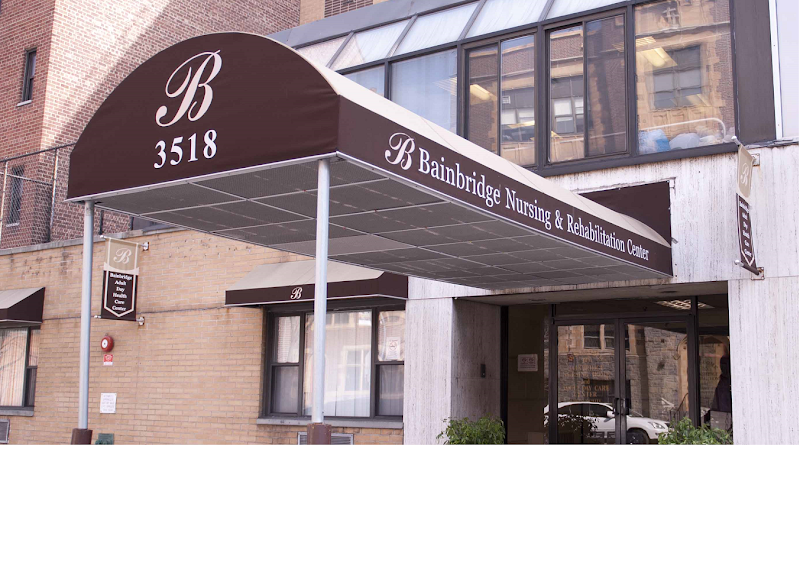
How is Bainbridge Nursing & Rehabilitation Center Staffed?

CMS rates BAINBRIDGE NURSING & REHABILITATION CENTER's staffing level at 3 out of 5 stars, which is average compared to other nursing homes. Staff turnover is 36%, compared to the New York average of 46%. This relatively stable workforce can support continuity of care.

What Have Inspectors Found at Bainbridge Nursing & Rehabilitation Center?

State health inspectors documented 3 deficiencies at BAINBRIDGE NURSING & REHABILITATION CENTER during 2020 to 2023. These included: 3 with potential for harm.
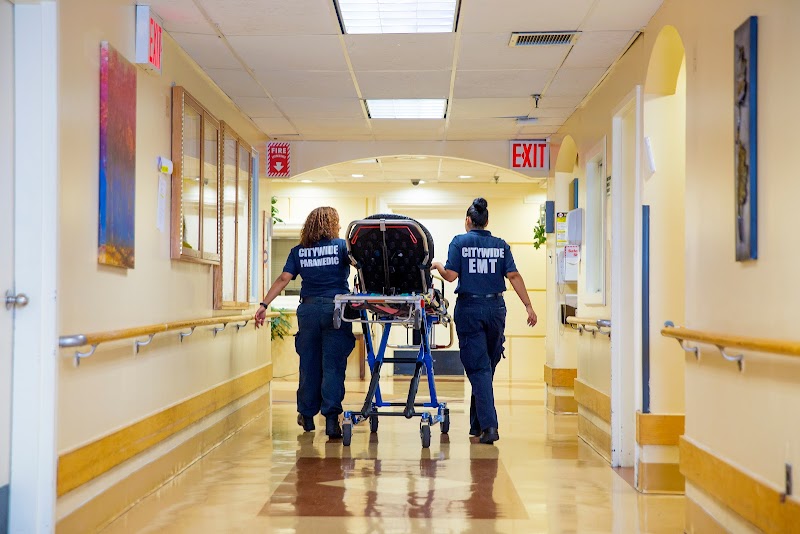
Who Owns and Operates Bainbridge Nursing & Rehabilitation Center?

BAINBRIDGE NURSING & REHABILITATION CENTER is owned by a for-profit company. For-profit facilities operate as businesses with obligations to shareholders or private owners. The facility operates independently rather than as part of a larger chain. With 200 certified beds and approximately 192 residents (about 96% occupancy), it is a large facility located in BRONX, New York.
How Does Bainbridge Nursing & Rehabilitation Center Compare to Other New York Nursing Homes?

Compared to the 100 nursing homes in New York, BAINBRIDGE NURSING & REHABILITATION CENTER's overall rating (5 stars) is above the state average of 3.1, staff turnover (36%) is near the state average of 46%, and health inspection rating (5 stars) is much above the national benchmark.

What Should Families Ask When Visiting Bainbridge Nursing & Rehabilitation Center?

Based on this facility's data, families visiting should ask: "Can I visit during a mealtime to observe dining assistance and food quality?" "How do you handle medical emergencies, and what is your hospital transfer rate?" "Can I speak with family members of current residents about their experience?"

Is Bainbridge Nursing & Rehabilitation Center Safe?

Based on CMS inspection data, BAINBRIDGE NURSING & REHABILITATION CENTER has a clean safety record: no substantiated abuse findings (meaning no confirmed cases of resident harm), no Immediate Jeopardy citations (the most serious violation level indicating risk of serious injury or death), and is not on the Special Focus Facility watch list (a federal program monitoring the lowest-performing 1% of nursing homes). The facility has a 5-star overall rating and ranks #1 of 100 nursing homes in New York. While no facility is perfect, families should still ask about staff-to-resident ratios and recent inspection results during their visit.

Do Nurses at Bainbridge Nursing & Rehabilitation Center Stick Around?

BAINBRIDGE NURSING & REHABILITATION CENTER has a staff turnover rate of 36%, which is about average for New York nursing homes (state average: 46%). Moderate turnover is common in nursing homes, but families should still ask about staff tenure and how the facility maintains care continuity when employees leave.

Was Bainbridge Nursing & Rehabilitation Center Ever Fined?

BAINBRIDGE NURSING & REHABILITATION CENTER has no federal fines on record. CMS issues fines when nursing homes fail to meet care standards or don't correct problems found during inspections. The absence of fines suggests the facility has either maintained compliance or corrected any issues before penalties were assessed. This is a positive indicator, though families should still review recent inspection reports for the full picture.

Is Bainbridge Nursing & Rehabilitation Center on Any Federal Watch List?

BAINBRIDGE NURSING & REHABILITATION CENTER is not on any federal watch list. The most significant is the Special Focus Facility (SFF) program, which identifies the bottom 1% of nursing homes nationally based on persistent, serious quality problems. Not being on this list means the facility has avoided the pattern of deficiencies that triggers enhanced federal oversight. This is a positive indicator, though families should still review the facility's inspection history directly.