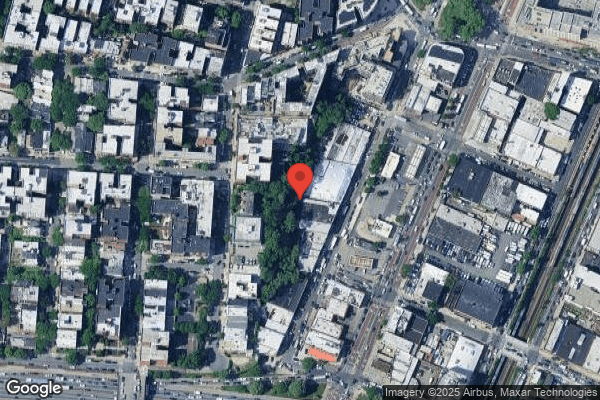
CASA PROMESA

308 EAST 175 STREET, BRONX, NY 10457 (718) 960-7603
Non profit - Corporation 108 Beds Independent Data: November 2025
Trust Grade
68/100
#145 of 594 in NY
Last Inspection: December 2024

Within standard 12-15 month inspection cycle. Federal law requires annual inspections.

Overview

Casa Promesa in the Bronx has a trust grade of C+, indicating it is slightly above average among nursing homes. It ranks #145 out of 594 facilities in New York, placing it in the top half, and #15 out of 43 in Bronx County, meaning only a few local options are better. The facility is showing an improving trend, with issues decreasing from 10 in 2023 to 9 in 2024. Staffing is a strong point, rated 5 out of 5, with a turnover rate of 33%, which is lower than the state average, suggesting a stable workforce. However, the facility has concerning fines totaling $12,740, which is higher than 79% of New York facilities, and it has less RN coverage than 90% of state facilities, raising questions about nursing oversight. Specific incidents of concern include a resident throwing water at another resident, which highlights potential issues with resident interactions, and failures in medication storage, such as keeping expired syringes and improperly storing food items. Additionally, expired food was found in the kitchen, indicating a need for better adherence to food safety protocols. While Casa Promesa has strengths in staffing and overall care quality, families should weigh these concerns carefully when considering this facility for their loved ones.

Trust Score
C+
68/100
In New York
#145/594
Top 24%
Safety Record
Low Risk
No red flags
Inspections
Getting Better
10 → 9 violations
Staff Stability
○ Average
33% turnover. Near New York's 48% average. Typical for the industry.
Penalties
⚠ Watch
$12,740 in fines. Higher than 87% of New York facilities, suggesting repeated compliance issues.
Skilled Nurses
⚠ Watch
Each resident gets only 23 minutes of Registered Nurse (RN) attention daily — below average for New York. Fewer RN minutes means fewer trained eyes watching for problems.
Violations
⚠ Watch
25 deficiencies on record. Higher than average. Multiple issues found across inspections.
★★★★☆
4.0
Overall Rating
★★★★★
5.0
Staff Levels
★★★★★
5.0
Care Quality
★★☆☆☆
2.0
Inspection Score
Stable
2023: 10 issues
2024: 9 issues

The Good

  • 5-Star Staffing Rating · Excellent nurse staffing levels
  • 5-Star Quality Measures · Strong clinical quality outcomes
  • Full Sprinkler Coverage · Fire safety systems throughout facility
  • No fines on record
  • Staff turnover below average (33%)

    15 points below New York average of 48%

Facility shows strength in staffing levels, quality measures, fire safety.

The Bad

Staff Turnover: 33%

13pts below New York avg (46%)

Typical for the industry

Federal Fines: $12,740

Below median ($33,413)

Minor penalties assessed

The Ugly 25 deficiencies on record

Dec 2024 8 deficiencies
CONCERN (D)

Potential for Harm - no one hurt, but risky conditions existed

Deficiency F0561 (Tag F0561)

Could have caused harm · This affected 1 resident

**NOTE- TERMS IN BRACKETS HAVE BEEN EDITED TO PROTECT CONFIDENTIALITY** Based on record review and interviews conducted during the Recertification Survey from 12/02/2024 to 12/09/2024, the facility di...

Read full inspector narrative →
**NOTE- TERMS IN BRACKETS HAVE BEEN EDITED TO PROTECT CONFIDENTIALITY** Based on record review and interviews conducted during the Recertification Survey from 12/02/2024 to 12/09/2024, the facility did not ensure that it promoted and facilitated a resident's right to self-determination through support of resident's choice. This was evident for 1 (Resident #43) of 2 residents reviewed for choices out of 20 total sampled residents. Specifically, Resident #43's choice to refuse care was not respected. The findings are: The facility's policy titled Resident's [NAME] of Rights dated 10/2022 documented that the facility assures that all residents are guaranteed the right to a dignified existence, self-determination, respect, full recognition of their individuality, consideration and privacy in treatment and care while at the facility. Resident #43 was admitted to the facility with diagnoses of Malignant Neoplasm of Endocervix, Obstructive Uropathy, and Depression. The quarterly Minimum Data Set assessment dated [DATE] documented that Resident #43 had intact cognition and was dependent on staff for personal hygiene, lower body dressing, shower, and toileting/hygiene. The assessment documented that Resident #43 had no behavioral symptoms and had not rejected care. On 12/04/2024 at 10:21 AM, Resident #43 was observed in their room. Resident #43 was interviewed and stated that some months ago, Certified Nursing Assistant #2 came in to provide care and Resident #43 told the aide they did not want to be changed at that time. Certified Nursing Assistant #2 insisted to give the care; went ahead to forcefully removed their cover and was got thrown over to the side of the bed. Resident #43 stated they reported the incident to the Administration. A comprehensive care plan for activities of daily living function, self-care deficit, was initiated on 04/12/2024. The care plan documented Resident #43 required extensive care in some areas of activities of daily living. Resident #43 required total assist for dressing, hygiene, toileting, and bathing. The facility interventions include to encourage resident to make choices associated with activities of daily living where possible. A Grievance/Complaint Report form dated 01/09/2024 documented that Resident #43 made a complaint about Certified Nursing Assistant #2. The grievance documented that on the night of 01/08/2024, Certified Nursing Assistant #2 came to Resident #43's room. Resident #43 told Certified Nursing Assistant #2 they do not want to be changed but the aide proceeded anyway. Certified Nursing Assistant #2 ripped the covers off the Resident, put them on their side and held them down, ripped their incontinence briefs off and aggressively wiped their private area with a wet cloth. Resident #43 stated they yelled at Certified Nursing Assistant #2 to stop and asked the nurse to have another aide take care of them. On 12/05/2024 at 10:50 AM, Certified Nursing Assistant #2 was interviewed and stated that they worked a double shift, from 8:00AM to 12:00 AM, on the day of the incident. They stated, on the day of the incident, Resident #43 refused care all day and would not allow any staff to do the care. Certified Nursing Assistant #2 stated Resident #43 refused care during the 8:00 AM - 4:00 PM shift and still refused care on the following shift. Certified Nursing Assistant #2 stated Resident #43 was then forced to be changed because they were concerned about the Resident's skin breaking down. Certified Nursing Assistant #2 stated they had not reported Resident #43's care refusal to the nurse. On 12/05/2024 at 11:06 AM, Licensed Practical Nurse #2 was interviewed and stated that Resident #43 will sometimes refuse care. They stated they will usually leave the resident and come back later to encourage and re-offer care. Licensed Practical Nurse #2 stated they were not on duty when Resident #43 was forced to change by a Certified Nursing Assistant, otherwise they would have not allowed it. They stated they would speak with the Resident and if they still refuse, they will report the behavior to the nursing supervisor. On 12/05/2024 at 11:13 AM, Registered Nurse #2 stated they were not on duty when the incident occurred. Registered Nurse #2 stated the Certified Nursing Assistant should have reported Resident #43's refusal for care instead of forcing the resident. On 12/06/2024 at 11:09 AM, the Director of Nursing stated Resident #43 filed a grievance against Certified Nursing Assistant #2 being rough with care. The stated they investigated the incident and Certified Nursing Assistant #2 stated they insisted on changing Resident #43 because they were worried that Resident #43's skin might breakdown if not changed for so long. On 12/06/2024 at 11:18 AM, the Administrator was interviewed and stated that Resident #43 reported that a staff was rough when they were being changed. The Administrator stated Resident #43 had history of refusing care, and they explained to the staff that residents have the right to refuse. 10 NYCRR 415.5(b) (1-3)
CONCERN (D)

Potential for Harm - no one hurt, but risky conditions existed

Respiratory Care (Tag F0695)

Could have caused harm · This affected 1 resident

**NOTE- TERMS IN BRACKETS HAVE BEEN EDITED TO PROTECT CONFIDENTIALITY** Based on observation, record review, and interview conducted during the Recertification Survey from 12/04/2024 to 12/09/2024, th...

Read full inspector narrative →
**NOTE- TERMS IN BRACKETS HAVE BEEN EDITED TO PROTECT CONFIDENTIALITY** Based on observation, record review, and interview conducted during the Recertification Survey from 12/04/2024 to 12/09/2024, the facility did not ensure residents received necessary respiratory care consistent with professional standards of practice. This was evident for 1 (Resident #36) of 4 residents reviewed for Respiratory Care out of 20 total sampled residents. Specifically, Resident #36 received oxygen at a flow rate that was not consistent with physician's order and there was no documented evidence that oxygen tubing was being changed. The findings are: The facility's policy and procedure titled Oxygen Therapy dated 01/2021 documented that oxygen therapy must be ordered by a Medical Provider to provide resident with a concentration of oxygen that is higher than room air and to supply oxygen to body tissues that are receiving insufficient amounts from the circulating blood. The resident receiving oxygen therapy will be checked at regular intervals by the licensed nursing staff. Resident #36 was admitted to the facility with diagnosis of Chronic Obstructive Pulmonary Disease, Hypertension, and Chronic Kidney Disease. The Minimum Data Set assessment dated [DATE] documented Resident #36 had intact cognition and was receiving continuous oxygen therapy. On 12/04/2024 at 11:56 AM, Resident #36 was observed in bed with nasal cannula attached to the oxygen concentrator at bedside. Resident #36 was receiving 5 liters per minute of oxygen. There was no date noted on the oxygen tube indicating when it was last changed. On 12/05/2024 at 12:29 PM and on 12/06/2024 at 10:31 AM, Resident #36 was observed resting in bed and was receiving oxygen at 5 liters per minute. There was no date noted on the oxygen tube indicating when it was last changed. A Comprehensive Care Plan for impaired respiratory status with a last revised date of 09/19/2024 documented Resident #36 was receiving continuous oxygen via nasal cannula and had acute bronchial spasm. The facility interventions include to provide treatments per physician's order. The Physician's Order dated 10/15/2024 and was renewed on 11/15/2024 documented to administer nasal oxygen continuously at 3 to 4 liters per minute every shift for dependence on supplemental oxygen. The Treatment Administration Record for 11/01/2024 to 12/06/2024 documented Resident #36 received nasal oxygen at 3 to 4 liters per minute every shift. Review of the electronic medical record contained no documented evidence that the physician ordered to increase oxygen flow rate to 5 liters per minute. Furthermore, there was no documented evidence of when oxygen tubing was last changed for Resident #36. On 12/06/2024 at 10:21 AM, Licensed Practical Nurse #4 stated Resident #36's oxygen concentrator is checked every shift to ensure water tank is filled and working properly. They stated the oxygen is set as per physician's order and that Licensed Practical Nurse #4 had not changed the setting. Licensed Practical Nurse #4 stated they were not aware that the oxygen flow rate was increased to 5 liters per minute and was not able to tell when the tube was last changed. On 12/06/2024 at 10:26 AM, Licensed Practical Nurse #1 stated Resident #36 had an order to receive oxygen 3 to 4 liters per minute and was not able to explain why Resident #36's oxygen was set at 5 liters per minute. On 12/09/2024 at 11:12 AM, Registered Nurse #1 stated the unit nurse is responsible to ensure residents receive oxygen according to the physician's order. Registered Nurse #1 stated Resident #36's oxygen flow should have not been adjusted without proper assessments and without physician's order. Registered Nurse Manager #1 stated nurses change the oxygen tubing weekly and it must be dated. Registered Nurse #1 was not able to explain when Resident #36's tubing was last changed since they have not been documenting the tube change in the medical record. On 12/09/2024 at 11:37 AM, the Director of Nursing Service stated residents are provided with oxygen as per physician's treatment order and it must be checked daily by the unit nurse. The tubing is also changed weekly and dated by the nurse to indicate staff initials and the date it was changed. 10 NYCRR 415.12 (k)(6)
CONCERN (D)

Potential for Harm - no one hurt, but risky conditions existed

Deficiency F0882 (Tag F0882)

Could have caused harm · This affected 1 resident

Based on record review and interviews conducted during the Recertification Survey from 12/02/2024 to 12/09/2024, the facility did not ensure that the Infection Preventionist had completed specialized ...

Read full inspector narrative →
Based on record review and interviews conducted during the Recertification Survey from 12/02/2024 to 12/09/2024, the facility did not ensure that the Infection Preventionist had completed specialized infection prevention and control training. This was evident during the review of the Infection Control Task. Specifically, the facility's designated Infection Preventionist did not have documented evidence of completing specialized infection prevention and control training. The findings are: The Centers for Medicare and Medicaid Services Center for Clinical Standards and Quality Safety by Oversight Group (QSO-19-10-NH), dated 03/11/2019, documented that effective 11/28/2019, the final requirement includes specialized training in infection prevention and control for the individual(s) responsible for the facility's infection prevention and control program. The facility's Infection Preventionist Job Description documented that the Infection Preventionist, under the direction of the Director of Nursing Services, is responsible for developing, directing, implementing, managing, and operating infection prevention in the long-term care facility. The candidate must have completed specialized training in infection prevention. The facility submitted the Infection Preventionist certificate in Infection Control and Barrier Precautions with four contact hours dated 02/28/2023. There was no documented evidence that the Infection Preventionist had completed a specialized training in infection control. On 12/05/24 at 2:32 PM, the Infection Preventionist was interviewed and stated they had been the Infection Preventionist since early 2023. The Infection Preventionist stated they were unaware of the specialized training requirement before assuming the infection preventionist role. On 12/09/2024 at 10:31 AM, the Director of Nursing was interviewed and stated the Infection Preventionist assumed the role since 2023. The Director of Nursing stated they were not aware that Infection Preventionists require a specialized training. On 12/09/2024 at 11:27 AM, the Administrator was interviewed and stated that the Infection Preventionist assumed the role in September 2023. The Administrator stated they were not aware that Infection Preventionist require specialized training before assuming the position. 10 NYCRR 415.19
CONCERN (E)

Potential for Harm - no one hurt, but risky conditions existed

Deficiency F0657 (Tag F0657)

Could have caused harm · This affected multiple residents

**NOTE- TERMS IN BRACKETS HAVE BEEN EDITED TO PROTECT CONFIDENTIALITY** The facility Investigation Summary dated 09/27/2024 documented that on 09/21/2024 at 6:00 PM, Resident #61 threw water into Resi...

Read full inspector narrative →
**NOTE- TERMS IN BRACKETS HAVE BEEN EDITED TO PROTECT CONFIDENTIALITY** The facility Investigation Summary dated 09/27/2024 documented that on 09/21/2024 at 6:00 PM, Resident #61 threw water into Resident #50's face without seeming cause. Both residents were sent to their room after the Licensed Practical Nurse intervened. 3. Resident #50 had diagnoses of Hypertension, Major Depressive Disorder, and Chronic Viral Hepatitis. The quarterly Minimum Data Set assessment dated [DATE] documented that Resident #50 had severe impairment in cognition. A nurse's progress note dated 09/21/2024 at 11:59 PM documented that at 6:00 PM, Resident #50 was in the hallway talking to Resident #61, when all of a sudden, Resident #61 threw their drinking water to Resident #50's face. Residents were asked to stay away from each other. There was no documented evidence that Resident #50's comprehensive care plan was reviewed and revised with new interventions following the occurrence of resident-to-resident physical altercation on 09/21/2024. 4. Resident #61 had diagnoses of Alcohol Dependence, Cerebral Infarction, and Other Psychoactive Substance Dependence. The quarterly Minimum Data Set assessment dated [DATE] documented that Resident #61 had intact cognition. A nurse's progress note dated 09/21/2024 at 8:17 PM documented that Resident #61 was in the hallway talking to Resident #50 when all of a sudden Resident #61 threw water onto Resident #50's place. A care plan for potential for abuse and neglect was initiated for Resident #61 on 07/05/2024. There was no documented evidence that the care plan was reviewed and revised following the 09/21/2024 incident. There was no documented evidence that Resident #61's comprehensive care plan was reviewed and revised with new interventions following the occurrence of resident-to-resident physical altercation on 09/21/2024. On 12/09/2024 at 9:44 AM, the Director of Social Services was interviewed and stated that if a resident has aggressive behaviors prior to admission, the Social Services must document and initiate the care plan on behavior. The Director of Social Services stated if a resident displayed an abusive behavior or if there is any abuse concern after the resident has already been admitted to the nursing home, either the Social Services or Nursing can initiate the care plan as a multidisciplinary approach. The Director of Social Services stated they were not aware that Resident #50's comprehensive care plan was not reviewed and care plan for behavior not initiated after their altercation with Resident #61. On 12/09/2024 at 8:53 AM, the Director of Nursing was interviewed and stated that Social Services is responsible for reviewing the comprehensive care plan after the altercation and initiating the behavioral and abuse care plan. The Director of Nursing stated nurses can also initiate and update the care plan if there is any episodic behavior or abuse incident. The Director of Nursing further stated they are not aware that Resident #50's comprehensive care plan was not reviewed after the incident and that care plan for potential for abuse was not initiated after the incident on 09/21/2024. 10 NYCRR 415.11(c)(2)(i-iii) Based on record review and interviews conducted during the Recertification and Complaint (NY00355130, NY00355122) Survey from 12/02/2024 to 12/09/2024, the facility did not ensure that each resident's comprehensive care plans were reviewed and revised by the interdisciplinary team to reflect a change in resident's status. This was evident in 4 (Residents #42, #51, #50, #61) of 20 total sampled residents. Specifically, the comprehensive care plans for Residents #42, #51, #50, and #61 were not reviewed and revised following their involvement in a resident to resident altercation. The findings are: The facility titled Comprehensive Care Plan with a reviewed date of 09/2023 documented that the care plan is reviewed monthly and revised after each assessment, at least quarterly, annually, and as changes in the resident's condition dictates. The facility Investigation Summary dated 09/27/2024 documented that on 09/21/2024 at 6:30 PM, Resident #51 approached Resident #42 and accused them of sending texts with a threatening message. Staff intervened and directed Resident #51 to their room. The facility concluded that the allegations were verified. The text messages sent by Resident #42 were transphobic and referenced physical harm to Resident #51. Resident #42 was remorseful and apologetic for actions taken in anger. Mediation with both residents was made by the Director of Social Services. 1. Resident #42 had diagnoses of Bipolar Disorder and Anxiety Disorder. The quarterly Minimum Data Set assessment dated [DATE] documented Resident #42 had intact cognition. A nurse's progress note dated 09/21/2024 at 9:53 PM documented that around 6:45 PM, Resident #42 was going up and down, screaming, cursing, calling names, was very agitated, and had a verbal altercation with another resident. There was no documented evidence that Resident #42's comprehensive care plan was reviewed and revised with new interventions following the occurrence of resident-to-resident verbal altercation on 09/21/2024. 2. Resident #51 had diagnoses of Peripheral Vascular Disease and Post Traumatic Stress Disorder. The quarterly Minimum Data Set assessment dated [DATE] documented that Resident #51 had intact cognition. A nurse's progress note dated 09/21/2024 at 9:47 PM documented that at 6:45 PM, loud voices were coming from the front lounge. Resident #51 was observed standing very close to Resident #42, while Resident #42 remained seated. Resident #51 stated the disagreement resulted from a text message received from Resident #42. A comprehensive care plan related to behavior symptoms, potential for abuse and neglect was initiated for Resident #51 on 05/14/2024. There was no documented evidence that Resident #51's comprehensive care plan was reviewed and revised with new interventions following the occurrence of resident-to-resident verbal altercation on 09/21/2024. On 12/09/2024 at 9:30 AM, the Director of Social Service was interviewed and stated that there was a misunderstanding between Residents #42 and #51. They stated that they were not on duty when the incident occurred and was made aware after the fact. The Director of Social Service stated they are responsible for updating Resident #42 and #51's care plan on behavior. On 12/09/2024 at 10:52 AM, the Director of Nursing was interviewed and stated that they were aware that Resident #42 and #51's care plan was not updated after the incident on 09/21/2024. The Director of Nursing stated it is the Social Services department's responsibility to update the care plan on resident's behavior and that the interdisciplinary team must ensure that all department heads update the care plans.
CONCERN (E)

Potential for Harm - no one hurt, but risky conditions existed

Deficiency F0761 (Tag F0761)

Could have caused harm · This affected multiple residents

Based on observation, record review, and interviews conducted during the Recertification Survey from 12/02/2024 to 12/09/2024, the facility did not ensure medications and biologicals were stored in ac...

Read full inspector narrative →
Based on observation, record review, and interviews conducted during the Recertification Survey from 12/02/2024 to 12/09/2024, the facility did not ensure medications and biologicals were stored in accordance with professional standards of practice. This was evident in 2 (3rd and 4th Floor) of 3 units. Specifically, 1.) Expired Heparin lock flush syringes were stored in the medication room. 2.) Food items were stored together with the intravenous bags in the medication room. The findings are: The facility policy on Medication Storage and Handling with a last revision date of 01/2024 documented that medications, biologicals, and intravenous sections having an expiration date are removed from storage and usage and properly disposed of after such date. On 12/06/2024 at 11:05 AM, an observation of the 4th Floor Medication Room was conducted with Registered Nurse #2. Nineteen (19) Heparin lock flush syringes with expiration dates of 07/31/2024 and 11/30/2024 were observed in the Medication Room drawer. Registered Nurse #2 was immediately interviewed after the observation and stated that medications should be used by the expiration date, or it might not be effective. On 12/06/2024 at 11:24 AM, an observation of the 3rd Floor Medication Room was conducted. Food items (plastic containers of coffee and containers of coffee creamer) were observed stored next to the intravenous fluid bags inside the cabinet. On 12/06/2024 at 3:21 PM, Registered Nurse #3 was interviewed and stated there should be no food stored in the Medication Room. On 12/09/2024 at 1:25 PM, the Director of Nursing was interviewed and stated that there should be no food kept in the Medication Storage areas. 10 NYCRR 415.18(e)(1-4)
CONCERN (E)

Potential for Harm - no one hurt, but risky conditions existed

Food Safety (Tag F0812)

Could have caused harm · This affected multiple residents

Based on observations, record review, and interview conducted during the Recertification Survey from 12/02/2024 to 12/09/2024, the facility did not ensure that food was stored in accordance with profe...

Read full inspector narrative →
Based on observations, record review, and interview conducted during the Recertification Survey from 12/02/2024 to 12/09/2024, the facility did not ensure that food was stored in accordance with professional standards for food service safety. This was evident during the Kitchen Task. Specifically, there were multiple cans of expired beef stew in the emergency food storage and expired frozen omelets stored past the expiration date in the kitchen freezer. The findings are: The undated facility policy titled Food Storage documented sufficient storage facilities are provided to keep food safe, wholesome, and appetizing. All stock must be rotated with each new order received. Rotating stock is essential to ensure the freshness and highest quality of all foods. Old stock is always used first, First in - First out method. Food should be dated as it is placed on the shelves. Date marking to indicate the date or day by which a ready to eat, potentially hazardous food should be consumed, sold or discarded will be visible on all high-risk foods. An initial tour of the kitchen was conducted on 12/02/2024 from 9:42 AM to 10:01 AM with the Assistant Food Manager. The following was observed: 14 cans of 6.63 pound cans of beef stew with a best by date of 01/28/2024. In the freezer, the following was observed: 2 boxes of frozen omelets with a use by date of 07/28/2024, 15.75-pound box of frozen folded plain omelet with a use by date 07/28/2024, a box of frozen egg patty with a use by date of 05/24/2024, and cooked eggs dated 11/26/2024 in the refrigerator. During an interview on 12/06/2024 at 02:52 PM, the Assistant Food Manager stated the expired food was an oversight and that they did not look at the date when they did rounds. 10 NYCRR 415.14(h)
MINOR (B)

Minor Issue - procedural, no safety impact

Deficiency F0582 (Tag F0582)

Minor procedural issue · This affected multiple residents

**NOTE- TERMS IN BRACKETS HAVE BEEN EDITED TO PROTECT CONFIDENTIALITY** Based on record review and interviews conducted during the Recertification Survey from 12/04/2024 to 12/09/2024, the facility di...

Read full inspector narrative →
**NOTE- TERMS IN BRACKETS HAVE BEEN EDITED TO PROTECT CONFIDENTIALITY** Based on record review and interviews conducted during the Recertification Survey from 12/04/2024 to 12/09/2024, the facility did not ensure appropriate liability and appeal notices to Medicare beneficiaries were provided. This was evident for 2 (Residents #24 and #36) of 3 residents reviewed for Beneficiary Protection Notification Rights, out of 20 total sampled residents. Specifically, the facility did not provide residents with Skilled Nursing Facility Advance Beneficiary Notice (SNF ABN- form CMS-10055) at the termination of their Medicare Part A benefits. The residents remained in the facility. The findings are: The Form Instructions Skilled Nursing Facility Advanced Beneficiary Notice of Non-coverage (SNF-ABN) Form CMS -10055 (2024) documented that Medicare requires Skilled Nursing Facilities to issue the Skilled Nursing Facility Advanced Beneficiary Notice of Non-coverage to Original Medicare, also called fee-for-service, patients prior to providing care that Medicare usually covers, but may not pay for in this instance because the care is not medically reasonable and necessary or considered custodial. The Skilled Nursing Facility Advanced Beneficiary Notice of Non-coverage is a Centers for Medicare and Medicaid Services-approved model notice and should be replicated as closely as possible when used as a mandatory notice. Failure to use this notice or significant alterations of the Skilled Nursing Facility Advanced Beneficiary Notice of Non-coverage could result in the notice being invalidated and/or the skilled nursing facility being held liable for the care in question. The Skilled Nursing Facility must give the applicable Medicare coverage guideline(s) and a brief explanation of why the resident's medical needs or condition do not meet Medicare coverage guidelines. The reason must be sufficient and specific enough to enable the patient to understand why Medicare may deny payment. The facility's policy and procedure titled Advanced Beneficiary Notice with a review date of 11/2024 documented that the Advanced Beneficiary Notice is issued by the facility to original Medicare beneficiaries in situations where Medicare payment is expected to be denied. The facility's policy included a procedure of when to issue the Advanced Beneficiary Notice and a copy of the form CMS-10055 that must be used. Resident #24 was admitted to the facility on [DATE] and started Medicare Part A Skilled Services on 10/08/2024. Resident #24's last covered day for Medicare Part A Skilled Services was on 11/06/2024 with 69 days remaining. Resident #24 remained in the facility. There was no documented evidence that form CMS-10055 was given to the resident, informing them of their potential liability for payment. Resident #36 was admitted to the facility on [DATE] and started Medicare Part A Skilled Services on 10/15/2024. Resident #36's last covered day for Medicare Part A Skilled Services was on 11/13/2024 with 70 days remaining. Resident #36 remained in the facility. There was no documented evidence that form CMS-10055 was given to the resident, informing them of their potential liability for payment. On 12/05/2024 at 10:08 AM, the Minimum Data Set Coordinator was interviewed and stated they are responsible for informing residents of their Medicare coverage, when it takes effect and when it ends. The Minimum Data Set Coordinator stated Skilled Nursing Facility Advanced Beneficiary Notice of Non-coverage has not been issued to Residents #24 and #36 because they were not aware of this requirement. On 12/09/2024 at 11:37 AM, the Director of Nursing Services was interviewed and stated that they are not involved in the beneficiary notification process and that it is handled by the Minimum Data Set Coordinator. 10 NYCRR 415.3(h)(2)(i)
MINOR (C)

Minor Issue - procedural, no safety impact

Assessment Accuracy (Tag F0641)

Minor procedural issue · This affected most or all residents

**NOTE- TERMS IN BRACKETS HAVE BEEN EDITED TO PROTECT CONFIDENTIALITY** Based on record review and interviews conducted during the Recertification Survey from 12/02/2024 to 12/09/2024, the facility di...

Read full inspector narrative →
**NOTE- TERMS IN BRACKETS HAVE BEEN EDITED TO PROTECT CONFIDENTIALITY** Based on record review and interviews conducted during the Recertification Survey from 12/02/2024 to 12/09/2024, the facility did not ensure that the assessment accurately reflected each resident's status. This was evident in 4 (Residents #1, #36, #42, and #54) of 20 total sampled residents. Specifically, 1.) Resident #1, #36, and #42's antiviral medication use was inaccurately documented in the Minimum Data Set assessment, and 2.) Resident #54's assessment inaccurately documented that the Resident had diagnosis of Dementia. The findings are: The facility policy Minimum Data Set Functional Coding with a revision date of 02/11/2024 documented that the policy ensures that all Minimum Data Set assessments are completed accurately, on time, and in compliance with the Centers for Medicare and Medicaid Services guidelines. Coding will be based on direct observation, medical records documentation, staff interviews, and resident input. 1. Resident #1 was admitted with diagnoses of Peripheral Vascular Disease, Hypertension, and Opioid Dependence. A physician's order with a renewal date of 11/26/2024 documented Biktarvy 50 milligram - 200 milligram - 25 milligram tablet (an anti-viral medicine) by mouth once daily for 12 months. The Minimum Data Set assessment dated [DATE] and 10/19/2024 documented that Resident #1 received antibiotics. A review of Resident #1's physician orders and progress notes from 11/01/2024 to 11/23/2024 had no documentation that Resident #1 received antibiotics. 2. Resident #36 was admitted with diagnoses of Calculus of Gall Bladder, Chronic Obstructive Pulmonary Disease, and Chronic Viral Hepatitis. A physician's order with an original date of 10/15/2024 and renewal date of 11/15/2024 documented Tivicay 50 milligram tablet (an antiviral medicine) by oral route once daily. The Minimum Data Set assessment dated [DATE] and 11/13/2024 documented that Resident #36 received antibiotics. A review of Resident #36's physician's order and progress notes dated 11/04/2024 to 11/26/2024 had no documentation that Resident #36 received antibiotics. 3. Resident #42 had diagnoses of Bipolar disorder, Unspecified Dementia, and Chronic Obstructive Pulmonary Disease. A physician's order with an original start date of 08/18/2024 and renewal date of 11/18/2024 documented Tivicay 50 milligram tablet (an antiviral) by oral route twice daily. The quarterly Minimum Data Set assessment dated [DATE] and 11/16/2024 documented that Resident #42 received antibiotics. A review of Resident #42's physician's orders and progress notes from 11/08/2024 to 11/18/2024 had no documentation that Resident #42 received antibiotics. On 12/04/2024 at 11:29 AM, Registered Nurse #1, who was the Nurse Unit Manager, was interviewed and stated that antiviral medications are considered antibiotics. Registered Nurse #1 stated their electronic medical record system classifies antivirals as antibiotics. On 12/04/2024 at 9:51 AM, the Minimum Data Set Coordinator was interviewed and stated that it is the Nurse Manager's responsibility to complete the medication section of the Minimum Data Set assessment. The Coordinator stated that antivirals were coded as antibiotics. The Minimum Data Set Coordinator stated that anti-viral medications are automatically triggered as antibiotics in the electronic medical record system. On 12/05/2024 at 11:08 AM, during a subsequent interview with The Minimum Data Set Coordinator, they stated that the Resident Assessment Instrument manual does not classify antivirals as antibiotics, it was the electronic medical record system that triggers the antivirals as antibiotics. On 12/09/2024 at 11:04 AM, the Director of Nursing was interviewed and stated that antiviral medicates fall under antibiotics in the Centers for Medicare and Medicaid Services guidelines. On 12/09/2024 at 11:59 AM, the Administrator was interviewed and stated that the Minimum Data Set Coordinator is responsible for the accuracy of each resident's Minimum Data Set assessments. 4. Resident #54 was admitted with diagnoses of Bipolar Disorder and Diabetes Mellitus. The quarterly Minimum Data Set assessment dated [DATE] documented that Resident #54 has Non-Alzheimer's Dementia. A review of Resident #54's diagnoses sheet and physician assessments had no documentation that Resident #54 had Non-Alzheimer's Dementia. On 12/06/2024 at 10:44 AM, Registered Nurse #1, who was the Nurse Unit Manager, was interviewed and stated that Non-Alzheimer's Dementia was checked off in the Minimum Data Set assessment because Resident #54 has mild cognitive impairment. On 12/06/2024 at 9:47 AM, Physician Assistant #1 was interviewed and stated that Resident #54 although cognitively impaired, is alert and oriented to person, time, and place. Physician Assistant #1 stated Resident #54 has no diagnosis of Dementia. On 12/09/2024 at 11:04 AM, the Director of Nursing was interviewed and stated that they did not see in the medical records that Resident #54 had diagnosis of Dementia. On 12/09/2024 at 11:59 AM, the Administrator was interviewed and stated that the Minimum Data Set Coordinator is responsible for the accuracy of each resident's Minimum Data Set assessments. 10 NYCRR 415.11 (b)
Nov 2024 1 deficiency
CONCERN (D) 📢 Someone Reported This

A family member, employee, or ombudsman was alarmed enough to file a formal complaint

Potential for Harm - no one hurt, but risky conditions existed

Report Alleged Abuse (Tag F0609)

Could have caused harm · This affected 1 resident

**NOTE- TERMS IN BRACKETS HAVE BEEN EDITED TO PROTECT CONFIDENTIALITY** Based on record review and staff interview during the Abbreviated Complaint survey (NY00345861) conducted between 11/25/2024 and...

Read full inspector narrative →
**NOTE- TERMS IN BRACKETS HAVE BEEN EDITED TO PROTECT CONFIDENTIALITY** Based on record review and staff interview during the Abbreviated Complaint survey (NY00345861) conducted between 11/25/2024 and 11/26/2024, the facility did not ensure that all alleged violations involving abuse were reported immediately but not later than 2 hours after the allegation was made. This was evident for 1 resident investigated for Abuse out of 10 complaints investigated. (Resident #15). Specifically, the facility did not report an allegation of Resident Verbal or Mental Abuse to the New York State Department of Health within 2 hours after the allegation was made. The findings are: The facility's policy and procedure titled Abuse, Neglect and Mistreatment of Residents/Clients dated 01/2021 documented that The facility must ensure that all alleged violations involving mistreatment, neglect, or abuse, including injuries of unknown source and misappropriation of resident property are reported immediately to the administrator of the facility and to other officials in accordance with State law through established procedures (including to the State survey and certification agency). Resident #15 was admitted to the facility with diagnoses including Persistent mood disorder, Aphasia following unspecified Cerebrovascular disease. The Quarterly Minimum Data Set, dated [DATE] documented that Resident #15 has intact cognitive status, normally used wheelchair for mobility, and required Partial/moderate or supervision of staff for most Activities of Daily Living. The Comprehensive Care Plan for Behavior Symptoms dated 5/21/24 documented Resident has behavioral symptoms; Documented with measurable goals and interventions. The Facility Incident Report Summary dated 6/26/2024 documented that Resident #15 reported alleged verbal abuse by a Certified Nursing Assistant that occurred 6/11/24 to the Social Worker on 6/18/24; the Director of Nursing received the report on 6/20/24; and reported to the Department of Health on 6/21/24. The incident was reported late, more than 24 hours after the alleged incident. The Facility Submission Report (Intake Information) documented that the report was submitted to the New York State Department of Health on 06/21/2024; The Director of Nursing received grievance on 6/20/24 in mailbox at around 8PM regarding verbal abuse that occurred on 6/11/24. In this grievance, Resident #15 alleged that Certified Nursing Assistant was verbally degrading, and maliciously bullying the resident; Grievance was recorded on 6/11/24 by the Social Worker. On 11/26/2024 at 11:42, the Director of Social Services was interviewed and stated that the Social Worker received the grievance from Resident #15 on 6/18/24 for the incident that reportedly occurred on 6/11/24; Social Worker reportedly dropped the resident's grievance statement in the Director of Nursing's mailbox. The Director of Nursing saw the report late on 6/20/24, notified the Department of Health and started the investigation. The Director of Social Services further stated that the Social Worker supposed to have reported to them immediately, even on phone, as they can be reached 24 hours a day by phone. Director of Social Service stated that any allegation of resident abuse is supposed to be reported immediately to the Department of Health while investigation is ongoing to verify the allegations. On 11/26/2024 at 12:03PM, The Director of Nursing was interviewed and stated that Resident #15 alleged that the incident occurred on 6/11/24 but did not report to the Social Worker on time until 6/18/24. Director of Nursing stated that the Social Worker grievance incident report was received in the mailbox very late on 6/20/24 after closing and reported to the Department of Health in the early hours of 6/21/24. Director of Nursing stated that they are aware that the report was submitted late to the Department of Health, but they tried to submit it as soon as they were made aware of the incident. On 11/26/2024 at 12:13PM, the Administrator was interviewed and stated the alleged abuse was reported to the Department of Health late because their Social Worker did not report the incident to them when the alleged allegation was received from the resident; Social Worker stated that they put the grievance in the Director of Nursing's mailbox. The Administrator stated that the Social Worker could have reported in person or on phone to the Director of Nursing or to the Administrator the same day the alleged allegation of abuse was received from the resident. 11/26/2024 12:15 and 2:17PM several attempts made to speak with the social worker, via telephone unsuccessful. [10 NYCRR 415.4(b)(2)]
Sept 2023 10 deficiencies
CONCERN (D)

Potential for Harm - no one hurt, but risky conditions existed

Safe Environment (Tag F0584)

Could have caused harm · This affected 1 resident

**NOTE- TERMS IN BRACKETS HAVE BEEN EDITED TO PROTECT CONFIDENTIALITY** 2) On 09/10/23 at 10:19 AM, Resident #12's room was observed. The bathroom door was rusty and had missing paint. The walls had p...

Read full inspector narrative →
**NOTE- TERMS IN BRACKETS HAVE BEEN EDITED TO PROTECT CONFIDENTIALITY** 2) On 09/10/23 at 10:19 AM, Resident #12's room was observed. The bathroom door was rusty and had missing paint. The walls had paint peeling and missing plaster. The floor in the corner by the closet was dirty and stained. The light fixtures dusty, and a water stain was observed on the bulletin board. On 09/13/23 at 12:15 PM, an interview was conducted with the Certified Nursing Assistant (CNA) CNA #5 who stated they did not notice any environmental concerns in Resident #12's room. On 09/15/23 at 10:08 AM an interview was conducted with Licensed Practical Nurse (LPN), LPN #2 regarding the concerns in the resident (Resident #12) room. LPN #2 stated that every morning the resident complains about the room being dirty. When the housekeepers go in to clean, Resident #12 tells them what to do. LPN #2 stated that they have not witnessed or heard of the resident refusing cleaning or repairs in the room. LPN #2 stated that the Housekeeper goes in when the resident is present to give directions only because the resident will not be satisfied with how it is done. During an interview on 09/13/23 at 01:58 PM, Maintenance staff (Other Staff #10) stated that in the beginning of July, Resident #12 refused to allow staff to complete repairs in the room. Resident #12 did not want to come out of the room to allow repairs to be done because Resident #12 wanted to oversee the work due to concerns regarding their personal property. When Resident #12 refused the repairs, the supervisor was informed. Today, when they went to the room, Resident #12 refused the repairs because Resident #12 was going out. The Maintenance staff member stated they repaired the bathroom door and took pictures for the supervisor after Resident #12 left. During an interview on 09/13/23 at 11:49 AM, the Facility Supervisor (FS) stated all staff can email environmental concerns to the facility department or create a work order at the nursing station. The FS stated they did not have a work order for Resident #12's room. On 09/14/23 at 10:43 AM, and interview was conducted with the Facility Administrator (FA) regarding the environmental concerns in Residents #12's room. The FA Stated that a work order was completed during rounds when the resident verbalized concerns about the smell of onions, and Resident #12 always has a concern. The FA stated that staff informed then Resident #12 denies access to the room, at times. 415.5(h)(2) Based on observation, record review and staff interview the facility did not ensure a safe, clean, comfortable, and homelike environment was provided or exercise reasonable care for the protection of the resident's personal property from loss or theft. This was evident for 2 of 20 sampled residents (Resident #3 and Resident #12). Specifically, Resident #3 had a fanny pack taken from their room, and Resident #12's room was observed with missing wall paint, a rusty door, missing wall plaster, dirty floors, and other concerns. The findings are: 1) Resident # 3 was admitted to the facility with diagnoses which include Hypertension, Osteoporosis, and bipolar disorder. The Minimum Data Set 3.0 (MDS) assessment dated [DATE] documented the resident had intact cognition and was independent with most Activities of Daily Living (ADLS). During the initial tour of the facility on 09/11/2023, Resident #3 stated someone took their fanny pack from their room. Resident #3 stated they reported it to the Social Worker, and they have not received a response regarding the investigation. Review of the Grievance /Complaint report submitted by the resident documented that the report was initiated on 08/01/2023 and written by the Director of Social Services (DSS). Resident #3 reported they went to bed on 7/31/2023 at 6:00 PM, and when Resident #3 woke up on 8/1/2023 at 2:00 AM, they noticed the fanny pack was missing from the wheelchair in their room. There was no documented evidence the grievance investigation was fully completed, and no resolution was communicated to Resident #3. During an interview on 09/14/23 at 12:36 PM, the DSS stated Resident #3 told them about the missing fanny pack, and they emailed the Head of Security (HOS) on 8/1/2023 to request video footage. The HOS responded to the request on 8/15/2023, but when the DSS reviewed the video, they realized the HOS provided camera footage from the wrong angle. The DSS stated they requested additional footage, but they did not receive it yet. The DSS acknowledged grievances should be resolved in 14 days, and it had been 42 days since the grievance was reported. The DSS stated they were relying on the video footage to help with the investigation. The DSS stated no staff interviews or statements were completed. During an interview on 09/14/23 at 12:51 PM, the HOS stated they oversee the camera footage for the entire organization, not just the facility. The length of time it takes to respond to requests depends on the priority. The HOS stated they receive 6 to 10 requests per day, and some are related to a subpoena and take priority. The footage was provided 8/15/2023.
CONCERN (D) 📢 Someone Reported This

A family member, employee, or ombudsman was alarmed enough to file a formal complaint

Potential for Harm - no one hurt, but risky conditions existed

Grievances (Tag F0585)

Could have caused harm · This affected 1 resident

**NOTE- TERMS IN BRACKETS HAVE BEEN EDITED TO PROTECT CONFIDENTIALITY** Based on observation, record review and staff interview the facility did not ensure prompt efforts were made to resolve a reside...

Read full inspector narrative →
**NOTE- TERMS IN BRACKETS HAVE BEEN EDITED TO PROTECT CONFIDENTIALITY** Based on observation, record review and staff interview the facility did not ensure prompt efforts were made to resolve a resident's grievance. This was evident for 1 (Resident #3) of 20 sampled residents. Specifically, the facility did not complete their investigation and respond to Resident #3's grievance that a fanny pack was taken from their room. The finding is: The facility policy titled Grievance/Complaint dated 11/01 documented residents are encouraged to verbalize any grievances or complaints without retaliation. Designated staff are assigned to intervene in resolving the issues. Resolution should be attempted immediately but should not take longer than fourteen days. Procedure # 2 documented, the resident /Significant other has the right to present a grievance or complaint directly to administration or to any other staff member. Staff at any level upon hearing a grievance or complaint, will be responsible to respond immediately and try to resolve the issue at the lowest level. Staff member will notify the Nursing Supervisor of the complaint. The Director of Social Services (DSS) is responsible for assigning a resolution date which should not take longer than 14 days. Resident # 3 was admitted to the facility with diagnoses which include Hypertension, Osteoporosis, and bipolar disorder. The Minimum Data Set 3.0 (MDS) assessment dated [DATE] documented the resident had intact cognition and was independent with most Activities of Daily Living (ADLS). During the initial tour of the facility on 09/11/2023, Resident #3 stated someone took their fanny pack from their room. Resident #3 stated they reported it to the Social Worker, and they have not received a response regarding the investigation. Review of the Grievance /Complaint report submitted by the resident documented that the report was initiated on 08/01/2023 and written by the Director of Social Services (DSS). Resident #3 reported they went to bed on 7/31/2023 at 6:00 PM, and when Resident #3 woke up on 8/1/2023 at 2:00 AM, they noticed the fanny pack was missing from the wheelchair in their room. There was no documented evidence the grievance investigation was fully completed, and no resolution was communicated to Resident #3. During an interview on 09/14/23 at 12:36 PM, the DSS stated Resident #3 told them about the missing fanny pack, and they emailed the Head of Security (HOS) on 8/1/2023 to request video footage. The HOS responded to the request on 8/15/2023, but when the DSS reviewed the video, they realized the HOS provided camera footage from the wrong angle. The DSS stated they requested additional footage, but they did not receive it yet. The DSS acknowledged grievances should be resolved in 14 days, and it had been 42 days since the grievance was reported. The DSS stated they were relying on the video footage to help with the investigation. The DSS stated no staff interviews or statements were completed. During an interview on 09/14/23 at 12:51 PM, the HOS stated they oversee the camera footage for the entire organization, not just the facility. The length of time it takes to respond to requests depends on the priority. The HOS stated they receive 6 to 10 requests per day, and some are related to a subpoena and take priority. The footage was provided 8/15/2023. 415.3(c)(1)(ii)
CONCERN (D)

Potential for Harm - no one hurt, but risky conditions existed

Pharmacy Services (Tag F0755)

Could have caused harm · This affected 1 resident

Based on observation, record review and interview during the Recertification/Complaint survey, the facility did not ensure that drug records are in order and that an account of all controlled drugs is...

Read full inspector narrative →
Based on observation, record review and interview during the Recertification/Complaint survey, the facility did not ensure that drug records are in order and that an account of all controlled drugs is maintained as per standard of practice. Specifically recount and reconciliation of Narcotics and Controlled Medications were observed not being done by two (2) Licensed Nurses. This was evident for 1 of the 3 units observed for medication storage and labelling. The findings are: The facility Policy and Procedure for Narcotics and Controlled Medications dated May 2022 documented: Two (2) Licensed or registered nurses should always be present to conduct a handoff when shifts are changed, or in the case of an emergency - resulting in an early departure from the facility. On 09/11/23 at 08:29 AM, One (1) nurse, (LPN #2) was observed counting the Control medications in the medication room alone. LPN #2 was interviewed and stated that the night Nurse, (LPN #3) left earlier before they could get to the unit to count the narcotics. LPN # 2 stated that they worked previous shift on another unit, and they were waiting for the incoming nurse to take over before coming down to the unit to count the narcotics. On 09/13/23 at 07:58 AM, an interview was conducted with the Licensed Practical Nurse, LPN #3. LPN #3 stated that the incoming nurse, LPN #2 worked overnight on another unit upstairs, came down to collect the key and went back up without counting the control medications together. LPN #3 stated that they know that narcotics counting should be done by 2 nurses, but they thought the counting will be done by LPN #2 with the Supervisor because they needed to leave on time for another job. LPN #3 further stated that most of the time there is no nurse on the unit to hand over to when it is time to go, and sometimes it is difficult to wait indefinitely when they need to get to other job on time. On 09/11/23 at 09:02 AM, an interview was conducted with the supervisor, RN #1. RN #1 stated that Narcotic Counting is supposed to be done by 2 Nurses as per protocol. RN #1 stated that they are not aware that the Night Nurse did not count with the incoming Nurse when they were doing handing over. On 09/13/23 at 11:47 AM, the Director of Nursing, DON was interviewed and stated that if the outgoing LPN is to go before the arrival of the incoming Nurse, they have to do narcotic count with RN Supervisor. DNS stated that the LPN counting the control medication alone did not follow proper procedure. DNS also stated that they are not aware that the counting of control meds is not done by 2 nurses due to late arrival of the incoming nurse. DNS stated the problem has not been brought to their attention before. 415.18(a)
CONCERN (D)

Potential for Harm - no one hurt, but risky conditions existed

Food Safety (Tag F0812)

Could have caused harm · This affected 1 resident

Based on observations, interviews, and record review conducted during the recertification survey from 9/10/2023 to 9/15/2023, the facility did not ensure that food was stored according to professional...

Read full inspector narrative →
Based on observations, interviews, and record review conducted during the recertification survey from 9/10/2023 to 9/15/2023, the facility did not ensure that food was stored according to professional standards for food safety. This was evident for 1 (2nd Floor) of 3 units. Specifically, the pantry refrigerator on the 2nd Floor was used to store staff food items, contained undated resident food, contained unlabeled, undated, and uncovered bowls of ice, and was not within acceptable temperature range. The findings are: The facility policy titled Unit Pantries and Food Safety dated 08/15/2023 documented staff will refrigerate the labelled and dated prepared items in the pantry refrigerator. Staff are prohibited from storing their personal food items within the pantry at any time. On 09/10/2023 at 09:28 AM, the 2nd Floor pantry was observed with 1 full-sized refrigerator at 50 F internal temperature containing an undated sandwich for Resident #62, an undated package of food for Resident #55, an unlabeled and undated package of food for Licensed Practical Nurse (LPN) #2, and an undated, unlabeled cup of apple sauce. A supplement refrigerator was observed with an internal temperature of 45 F. On 09/11/2023 at 11:03 AM, the 2nd Floor pantry full-sized refrigerator was observed with undated food packages for Resident #62, #55, and #33, 2 unlabeled and undated breakfast sandwiches, 7 undated and unlabeled bowls of ice, and 1 uncovered bowl of ice. On 09/15/2023 at 10:11 AM, an interview was conducted with LPN #2 who stated the 2nd Floor pantry contains a refrigerator for nourishment and supplement refrigerator for resident food, juice, milk, and apple sauce for medication administration. Items should be labeled with resident name and dated. Staff are not supposed to store food there. LPN #2 stated they worked overtime and stored their personal food in the refrigerator because it would have gone bad. LPN #2 did not date their food because they did not store it for a long period of time. On 09/13/2023 at 12:40 PM, an interview was conducted with Registered Nurse (RN) #2 who stated supplements, juice, and ice are stored in the unit pantry refrigerators and discarded after 3 days. Food with mold and bubbles needs to be discarded. Name and dates are labeled on the food. Temperatures of the refrigerators should be between 35 F and 42 F. Staff food should not be stored in pantry refrigerator. On 09/14/2023 at 10:50 AM, an interview was conducted with the Director of Nursing (DON) who stated the pantries contain 1 refrigerator for supplements and 1 refrigerator to store resident food. Food should be labeled, dated, and discarded after 2 days. Staff food should not be stored in the pantry refrigerators. 415.14(h)
CONCERN (E)

Potential for Harm - no one hurt, but risky conditions existed

Deficiency F0577 (Tag F0577)

Could have caused harm · This affected multiple residents

Based on observations, record review and interview conducted during the recertification survey from 9/10/23 to 9/15/23, the facility did not ensure that the results of the most recent survey report an...

Read full inspector narrative →
Based on observations, record review and interview conducted during the recertification survey from 9/10/23 to 9/15/23, the facility did not ensure that the results of the most recent survey report and any plan of correction in effect were posted in a place readily accessible to residents, and family members and legal representatives of residents. This was evident for all residents, including 10 of 10 attendees of the Resident Council Meeting. Specifically, the results of the most recent state survey were not posted. The findings are: Policy and Procedure dated 8/1/2, titled Posting of Nursing Home Inspection documented: Notice of the reports are posted for all residents and/or visitors in the lobby area (entrance) of the facility, and the binder of the complete list of deficiencies and corrective plans implemented is kept and readily accessible at the security station. On 9/10/23 at 10:54 AM, the lobby area was observed with a sign posted inside a locked glass bulletin board located on the wall by the main lobby elevators, directing people that survey results were available by request at the security desk. There were no survey results posted. On 09/12/23 at 10:32 AM, during the Resident Council meeting, 10 out of 10 residents stated that there was a sign posted by the elevator in the main lobby that informs them survey results are available upon request. On 09/13/23 at 12:55 PM, the surveyor requested the survey results according to posted instructions. Security personnel presented a binder with survey results dated 5/13/2022. The survey binder was kept on the counter behind the security desk. On 09/15/23 at 10:53 AM an interview was conducted with the Facility Administrator (FA). The FA stated that there is a posted in the main lobby with directions to request survey results from any staff member or security. The FA understood survey results should be available, however, they were not aware that survey results should not have to be requested. 415.3(d)(1)(v)
CONCERN (E)

Potential for Harm - no one hurt, but risky conditions existed

Deficiency F0645 (Tag F0645)

Could have caused harm · This affected multiple residents

**NOTE- TERMS IN BRACKETS HAVE BEEN EDITED TO PROTECT CONFIDENTIALITY** 2) Resident #12 was admitted [DATE], and the PASARR was completed 9/7/23. 3) Resident #2 was admitted [DATE], and the PASARR was...

Read full inspector narrative →
**NOTE- TERMS IN BRACKETS HAVE BEEN EDITED TO PROTECT CONFIDENTIALITY** 2) Resident #12 was admitted [DATE], and the PASARR was completed 9/7/23. 3) Resident #2 was admitted [DATE], and the PASARR was completed 8/25/14. 4) Resident #34 was admitted [DATE], and the PASARR was completed 8/2/10 On 09/15/23 at 11:21 AM, an interview was conducted with the Unit Case Manager (Other staff #8). The Case Manager stated that they are responsible for completing the PASARR screens for the residents. The Case Manager stated that residents are usually admitted with a screen. They complete the screen upon admission or within 72 hours if the resident is alert and oriented and does not come with a screen. On 09/15/23 at 11:29 AM, the Administrator was interviewed and stated that the facility recently revamped the admission process in the past month. Consultants are in the facility to provide training. A supervisor was completing the screens, but there was a concern. 415.11(e) Based on interview and record review during the Recertification Survey, the facility did not ensure each resident was screened for a mental disorder or intellectual disability prior to admission for 4(Resident #s 2,3,12 and 34) of 20 residents reviewed for DOH-695 (Department of Health) Pre-admission Screening and Record Review (PASRR, a federal requirement to ensure that residents were not inappropriately placed in a skilled nursing facility). Specifically, there was no documentation the facility reviewed and maintained DOH-695 PASRR screens prior to admission to the facility for Resident #s 2,3,12 and 34. The findings include but are not limited to: The facility policy on Pre-admission Screening and Record Review approved in 2021 stated as follows: The admission Coordinator then generates an identification card and initiates a PASRR form and an admission date corresponding to the medical orders. 1) Resident #3 was admitted to the facility on [DATE] with diagnoses which include Bipolar Disorder, Mood Disorder, and Hypertension. The Minimum Data Set 3.0 (MDS) assessment dated [DATE] identified the resident as alert and oriented to person, place and time with a score of 15 on the Brief Interview For Mental Status (BIMS) and independent with most Activities of Daily Living (ADLS). On 09/13/2023 at 12:30P, there was no PASRR in Resident #3's medical record. On 09/13/2023 at 1:00PM, a request for a printed copy of the PASRR was made to the Director of Social Services. The Director provided a PASRR dated 9/6/2023. There was no documented evidence the resident was screened prior to admission.
CONCERN (E)

Potential for Harm - no one hurt, but risky conditions existed

Accident Prevention (Tag F0689)

Could have caused harm · This affected multiple residents

Based on observation, record review and interviews conducted during the Recertification Survey 9/10/23 - 9/15/23, the facility did not ensure adequate supervision was provided and equipment was availa...

Read full inspector narrative →
Based on observation, record review and interviews conducted during the Recertification Survey 9/10/23 - 9/15/23, the facility did not ensure adequate supervision was provided and equipment was available to prevent accidents. This was evident for 1 (Unit 2) of 3 units and the Main Dining Room observed for Dining. Specifically, the facility did not have suction equipment accessible in the Unit 2 common dining area, and there was no nurse staffing providing supervision during meal service on Unit 2 and in the Main Dining Room. The findings are: Policy and Procedure titled Unit Dining, last revised January in 2023, stated as follows: At least one person will be stationed in the dining room during meal service to assist individuals with eating and to handle any emergency situation that might arise. Policy and Procedures titled Nutrition Services last revised in January 2023 stated as follows: Meals will be distributed promptly with supervision as needed by nursing staff (Close supervision may be needed for those with feeding difficulties). At least one person will be stationed in the dining room during meal service to assist individuals with eating and to handle any emergencies that might arise. 1) During the meal observations on Unit 1 on 09/11/2023, 09/12/2023 and 09/13/2023 from 11:45 AM to 12:45 PM, lunch was served to 4 to 6 residents in the common area There was no licensed nurse present during the distribution and during the meals. Certified Nursing Assistant (CNAs) were observed going around distributing lunch trays to other residents in their rooms. 2) On 09/10/23 at 11:20 AM and on 09/12/23 at 11:54 AM, the Unit 2 dining area was observed during lunch. There was no suction equipment in the room, and no licensed nurse was providing supervision in the dining room. On 09/10/23 at 11:33 AM, lunch in the Main Dining Room was observed, and there was no licensed nurse providing supervision during the meal service. On 09/13/23 at 12:34 PM, an interview was conducted with Registered Nurse (RN) Manager, RN #2. RN #2 stated that either a Licensed Practical Nurse (LPN) or Certified Nursing Assistant (CNA) can observe meals however, usually a nurse must observe that the order is what is being served. Residents that need to be fed or observed will get support from a staff member. Most of the residents on this floor eat independently, only one resident needs to be observed for choking on Unit 2. Staff may have forgotten to place the suction equipment in the common area where residents are eating. On 09/14/23 at 10:50 AM an interview was conducted with the Director of Nursing (DON). The DON stated that there should be suction equipment on every unit. Resident mealtime should be observed by a Certified Nursing Assistant (CNA) and when short staffed, a Licensed Practical Nurse (LPN) can observe. The staff who observe meals are certified in Basic Life Support (BLS). 415.12(h)(2)
CONCERN (E)

Potential for Harm - no one hurt, but risky conditions existed

Deficiency F0725 (Tag F0725)

Could have caused harm · This affected multiple residents

Based on observation, record review, and interviews conducted during the recertification survey from 09/10/2023 to 09/15/2023, the facility did not ensure sufficient nursing staff to provide nursing o...

Read full inspector narrative →
Based on observation, record review, and interviews conducted during the recertification survey from 09/10/2023 to 09/15/2023, the facility did not ensure sufficient nursing staff to provide nursing or related services to assure resident safety and to attain or maintain highest practicable well-being of each resident. This was evident for 3 of 3 resident units (Unit 1, 2, and 3). Specifically: 1) During meal observations, there was no Licensed Professional Nurse or Certified Nursing Assistant available to monitor the residents in the common dining areas. 2) Actual nurse staffing was less than projected staffing on multiple occasions, based on the Facility Assessment Tool document submitted to the survey team. The findings are: The Facility Assesment tool provided to the survey team dated 8/30/2023 did not include a breakdown of who many staff are required per unit on each shift. The Facility Assessment Tool dated 9/13/2023 documented the facility assessment is utilized to support decision -making regarding staffing and other imminent requirements to retain the safety of the residents and staff. The Staffing Plan describes the number of staff available to meet residents' needs. Nursing, nutrition services and housekeeping staffing is evaluated at the beginning of each shift and adjusted as needed to meet the care needs and acuity of the resident population. The Staffing Plan for Nursing the following: 12 AM - 8 AM: 1 Registered Nurse (RN) Supervisor, 4 Licensed Practical Nurses (LPN), 7 Certified Nursing Assistants (CNA) 8 AM - 4 PM: 2 RN Managers, 2 LPNs, 16 CNAs 4 PM - 12 AM: 1 RN Supervisor, 4 LPNs, 13 CNAs There was no staff breakdown documented in the facility assessment. 1.) During the meal observations on Unit 1 on 09/11/2023, 09/12/2023 and 09/13/2023 from 11:45 AM to 12:45 PM, lunch was served to 4 to 6 residents in the common area There was no licensed nurse on the unit during the meal distribution and the duration of the meals. Certified Nursing Assistant (CNAs) were observed going around distributing lunch trays to other residents in their rooms. 2) On 09/10/23 at 11:20 AM and on 09/12/23 at 11:54 AM, the Unit 2 dining area was observed during lunch. There was no licensed nurse providing supervision in the dining room. On 09/10/23 at 11:33 AM, lunch in the Main Dining Room was observed, and there was no licensed nurse providing supervision during the meal service. On 09/13/23 at 12:34 PM, an interview was conducted with Registered Nurse (RN) Manager, RN #2. RN #2 stated that either a Licensed Practical Nurse (LPN) or Certified Nursing Assistant (CNA) can observe meals however, usually a nurse must observe that the order is what is being served. Residents that need to be fed or observed will get support from a staff member. Most of the residents on this floor eat independently, only one resident needs to be observed for choking on Unit 2. On 09/14/23 at 10:50 AM an interview was conducted with the Director of Nursing (DON). The DON stated that there should be suction equipment on every unit. Resident mealtime should be observed by a Certified Nursing Assistant (CNA) and when short staffed, a Licensed Practical Nurse (LPN) can observe. The staff who observe meals are certified in Basic Life Support (BLS). 2.) The Actual Staffing Sheets from 09/01/2023 to 09/13/2023 documented that for 117 total shifts, there were 73 scheduled CNAs that did not work and were not replaced. Many night shifts only had 1 CNA per unit scheduled for a total of 3 CNAs, which is under the required 7 CNAs per the Facility Assessment. The staffing sheets also documented some of the day shift CNAs are assigned to be escorts, meaning they were not be available to provide care for a portion of the day because they were assigned to take residents to appointments. On 09/12/23, 09/13/23, 09/14/23 and 09/15/23, the actual staffing sheets documented 1 LPN was assigned to Unit 1 on the 8AM to 4 PM shift. On 09/13/2023 at 2:45 PM, Licensed Practical Nurse (LPN) # 5 was interviewed and stated the facility is always short of nursing staff. The assigned CNAs on the Unit are used as escort first and then when they come back, they will be on the unit. With the breaks and all, by the time that is over, it is time to go home. Some days, we will have 2 to 3 actual CNAs on Unit 1. During an interview on 09/15/23 at 2:35 PM, the Director of Nursing (DON) stated the staffing breakdown on each unit is as follows: Night Shift (12:00 AM to 8:00 AM) - Units 1, 2, and 3 required 1 LPN and 2 CNAs per unit. Day Shift (8:00 AM to 4:00 PM) - Units 1, 2, and 3 required 1 LPN each, and Unit 1 required 4 to 6 CNAs, Unit 2 required 5 CNAs, and Unit 3 required 4 CNAs. Evening Shift (4:00 PM to 12:00 AM) - Units 1, 2, and 3 required 1 LPN and 3 CNAs per unit. The DON stated staffing is a challenge. The facility supplements the staffing with overtime and giving out some freebies to our staff. The facility has arrangements with agencies, but they cannot always supply the staff. The CNAs on the schedule are also used to escort residents to outside medical appointments or dialysis if there is no available escort. The surveyor pointed out to the DON that on the Night shift, there is usually only 1 CNA per unit instead of 2. The DON sated that unfortunately, the CNAs call in sick, and the agency cannot provide a replacement and no one volunteers to stay over. 415.13 (a)(1)(i-ii)
CONCERN (E)

Potential for Harm - no one hurt, but risky conditions existed

Deficiency F0919 (Tag F0919)

Could have caused harm · This affected multiple residents

Based on observation, interviews, and record review conducted during the recertification survey on 09/10/23 - 09/15/23, the facility did not ensure that a resident's room was adequately equipped to ca...

Read full inspector narrative →
Based on observation, interviews, and record review conducted during the recertification survey on 09/10/23 - 09/15/23, the facility did not ensure that a resident's room was adequately equipped to call for assistance through a communication system that relays the call directly to a staff member or to a centralized staff work area. This was evident for 2 (Resident #12 and Resident #62) of 20 sampled residents. Specifically, the emergency call device located in Resident #12's bathroom was not working on multiple observations during the survey. The emergency call device in Resident #62's bathroom was missing a pull cord. The findings are: The Policy and Procedure titled Resident Call System, last revised in January 2021, documented it is the facility policy to ensure that resident care systems are operational, at all times. Support Services are responsible for the ongoing testing and maintenance of the resident call system. 1) During an observation on 09/10/23 at 10:19 AM, Resident #12 pulled the call bell cord in their bathroom, and there was no light activated above Resident #12's room door. No response from staff was observed. On 09/10/23 at 10:34 AM, Resident #12 pressed the call bell again, and there was no light activated. On 09/10/23 at 10:42 AM, the Surveyor observed Licensed Practical Nurse (LPN) LPN #2, came into the resident room to administer scheduled medication. There was no inquiry about the previous calls for assistance. On 09/11/23 at 09:31 AM, the Surveyor observed Resident #12 pulling the emergency cord in the bathroom, there was no light activated above the room door. On 09/13/23 at 12:15 PM, an interview was conducted with the Certified Nursing Assistant (CNA) CNA #5 regarding the call device in Resident #12's room. CNA #5 stated they were not aware the emergency call device not working, and Resident #12 usually comes to the nursing station for assistance. CNA #5 stated there was no work order for the call bell, and they have not noticed any environmental concerns in the room. On 09/15/23 at 10:08 AM an interview was conducted with Licensed Practical Nurse (LPN), LPN #2 regarding the concerns in Resident #12's room. LPN #2 stated they never witnessed Resident #12 refusing any repairs in the room. During an interview on 09/13/23 at 01:58 PM, Maintenance staff (Other Staff #10) stated that in the beginning of July, Resident #12 refused to allow staff to complete repairs in the room. Resident #12 did not want to come out of the room to allow repairs to be done because Resident #12 wanted to oversee the work due to concerns regarding their personal property. When Resident #12 refused the repairs, the supervisor was informed. Today, when they went to the room, Resident #12 refused the repairs because Resident #12 was going out. The Maintenance staff member stated that a reset of the call bell was done about 2 days ago after a nurse informed them of the issue. There was no work order for Resident #12's call bell. A housekeeper was present when the call bell was reset, but the Maintenance staff could not remember their name. The Maintenance staff member stated they repaired the bathroom door and took pictures for the supervisor after Resident #12 left. 2) On 09/13/23 at 09:23 AM, the Surveyor observed that the emergency call device located in a resident (Resident #62) was missing a pull cord. On 09/15/23 at 09:37 AM, the Surveyor observed a new cord attached to the Emergency Call device in the resident (Resident #62) bathroom. On 09/13/23 at 12:24 PM, an interview was conducted with Certified Nursing Assistant (CNA) CNA #5 regarding the call device in Resident #62's room. CNA #5 stated they were not aware the emergency call device was missing a pull cord. During an interview on 09/13/23 at 11:49 AM, the Facility Supervisor (FS) stated the broken call bell in Resident #12's room was not reported prior to yesterday. All staff can email environmental concerns to the facility department or create a work order at the nursing station. The FS stated they did not have a work order for Resident #12's room. The FS stated they did not know the call bell in Resident #62's room was missing a pull cord. They did not receive a work order or report about this concern from staff, but they were in Resident #62's room recently to address a bedrail concern. On 09/13/23 at 01:58 PM, an interview was conducted with the Maintenance staff (Other Staff #10) regard the concerns in the resident (Resident #12), Other Staff #10 stated that in the beginning of July the resident (Resident #12) refused to allow staff to complete repair because the resident (Resident #12) does not want to come out of the room to allow repair can be done. Wants to oversee work with concern for personal property. When resident (Resident #12) refused supervisor was informed. Other Staff #10 stated that went there today, but because resident (Resident #12) was going out of the facility, refused work. Other Staff #10 stated that after resident left the facility, went into repair bathroom door and took pictures for supervisor. Other Staff #10 stated that a reset of the bathroom call bell was done about 2 days ago after made aware buy a nurse, there was no work order, could identify the nurse. Other Staff #10 stated that the housekeeper was present during the time of the reset, however could not identify the staff member. On 09/14/23 at 10:43 AM, and interview was conducted with the Facility Administrator (FA) regarding the environmental concerns in the resident (Residents #12) room. The FA Stated that a work order was conducted during rounds when the resident verbalized concerns about the smell of onions and that the resident (Resident #12) always has a concern. The FA stated that was told by staff that the resident denies access to her room. The FA stated that was not aware that the emergency call device was not working. 415.29
MINOR (C)

Minor Issue - procedural, no safety impact

Room Equipment (Tag F0908)

Minor procedural issue · This affected most or all residents

42 CFR 483.90(d)(2) Maintain all mechanical, electrical, and patient care equipment in safe operating condition. 10NYCRR 415.29 Physical environment. The nursing home shall be designed, constructed, e...

Read full inspector narrative →
42 CFR 483.90(d)(2) Maintain all mechanical, electrical, and patient care equipment in safe operating condition. 10NYCRR 415.29 Physical environment. The nursing home shall be designed, constructed, equipped, and maintained to provide a safe, health, functional, sanitary, and comfortable environment for residents, personnel, and the public. Based on staff interview and document review conducted during the Life Safety Code recertification survey, the facility did not maintain all mechanical, electrical, and patient care equipment in safe operating condition. Reference is made to the following: 1. It could not be verified that the building's backflow devices on the domestic water supply and Sprinkler system (devices that stop the undesirable reversal of flow of liquids, gases, or suspended solids into the potable water supply) were inspected annually. The finding is: During document review on 09/22/2023 between 09:00AM - 01:00PM, it was noted that annual inspection and testing records were missing for two backflow preventer devices installed on domestic and sprinkler system. In an interview on 09/22/2023 at approximately 01:45PM, the Assistant Administrator Facilities stated they would provide the annual inspection reports. Facility did not provide any additional documents. 42 CFR 483.90(d)(2) 415.29(f)(4)
May 2022 6 deficiencies
CONCERN (D)

Potential for Harm - no one hurt, but risky conditions existed

Assessment Accuracy (Tag F0641)

Could have caused harm · This affected 1 resident

**NOTE- TERMS IN BRACKETS HAVE BEEN EDITED TO PROTECT CONFIDENTIALITY** Based on observation, record review, and interviews conducted during the recertification survey, the facility did not ensure the...

Read full inspector narrative →
**NOTE- TERMS IN BRACKETS HAVE BEEN EDITED TO PROTECT CONFIDENTIALITY** Based on observation, record review, and interviews conducted during the recertification survey, the facility did not ensure the Minimum Data Set 3.0 (MDS) Assessments accurately reflected residents' status. This was evident for 2 of 35 residents reviewed (Resident #29 and Resident #67). Specifically, 1) the MDS for Resident #29 did not document the dialysis treatment; and 2) the MDS for Resident #67 did not document tracheostomy care. The findings are: The facility policy titled MDS Assessments dated 01/2021 documented the facility will ensure accurate assessments of each resident. 1) Resident #29 had diagnoses of anemia, heart failure, and end stage renal disease (ESRD). The MDS dated [DATE] documented Resident #29 was cognitively intact and did not document Resident #29 received dialysis treatment. On 05/09/22 at 06:37 AM, Resident #29 was interviewed and stated they receive dialysis treatment three times weekly on Monday, Wednesday, and Friday. The Comprehensive Care Plan (CCP) related to renal disease initiated 12/11/2020 documented Resident #29 received dialysis treatment three times weekly. Physician's order dated initiated 03/30/2021 and renewed 04/22/2022 documented Resident #29 was weighed before and after dialysis treatment on Monday, Wednesday, and Friday. 2) Resident #67 had diagnoses of anxiety disorder, asthma, and chronic obstructive pulmonary disease (COPD). The MDS dated [DATE] documented the Resident #67 was cognitively intact and did not document Resident #67 received tracheostomy care. On 05/09/2022 at 08:59 AM, Resident #67 was observed with a tracheostomy in place. The CCP related to respiratory/tracheostomy status initiated 12/9/2020 and reviewed 4/19/2022 documented Resident #67 required tracheostomy care. Physician's order dated initiated 08/14/2020 and renewed 04/21/2022 documented Resident #67 received tracheostomy care. On 05/11/22 at 11:34 AM, Registered Nurse (RN) #1 was interviewed and stated Resident #29 has received dialysis treatment for over two years. Resident #67 has received tracheostomy care since their admission to the facility. It was an oversight that Resident #29's dialysis treatment and Resident #67's tracheostomy care was not reflected in their MDS assessments. The MDS Coordinator (MDSC) is responsible for reviewing the accuracy of MDS assessments prior to their submission. On 05/12/22 at 10:04 AM, the MDSC was interviewed and stated there were errors in the MDS assessment for Resident #29 and Resident #67 and the MDS did not accurately reflect the residents' conditions. 415.11(b)
CONCERN (D)

Potential for Harm - no one hurt, but risky conditions existed

Deficiency F0657 (Tag F0657)

Could have caused harm · This affected 1 resident

**NOTE- TERMS IN BRACKETS HAVE BEEN EDITED TO PROTECT CONFIDENTIALITY** Based on record review and interviews conducted during the recertification survey, the facility did not ensure residents were in...

Read full inspector narrative →
**NOTE- TERMS IN BRACKETS HAVE BEEN EDITED TO PROTECT CONFIDENTIALITY** Based on record review and interviews conducted during the recertification survey, the facility did not ensure residents were invited to participate in comprehensive care plan (CCP) meetings with the interdisciplinary team (IDT). This was evident for 2 of 25 residents reviewed (Resident #29 and Resident #71). Specifically, 1) Resident #29 was not invited to attend CCP meetings with the IDT; and 2) Resident #71 was not invited to attend CCP meetings with the IDT. The findings include: The facility policy titled Resident Care Plan dated 01/2021 documented residents are involved in decisions regarding their care and are invited to attend and provide input with the planning. 1) Resident #29 had diagnoses anxiety, bipolar disorder, and end stage renal disease. The Minimum Data Set 3.0 (MDS) dated [DATE] documented Resident #29 was cognitively intact. On 05/09/22 at 06:41 AM, Resident #29 was interviewed and stated the IDT no longer invited them to CCP meetings. There was no documented evidence in the medical record Resident #29 was invited to attend scheduled CCP meetings with the IDT. 2) Resident #71 had diagnoses diabetes mellitus, anxiety, and bipolar disorder. The MDS dated [DATE] documented Resident #71 was cognitively intact. On 05/09/22 at 06:52 AM, Resident #71 was interviewed and stated they were not invited to CCP meetings with the IDT since their admission to the facility. There was no documented evidence in the medical record Resident #71 was invited to attend scheduled CCP meetings with the IDT. On 05/12/22 at 09:26 AM, the Case Manager (CM) was interviewed and stated residents are invited to all CCP meetings with the IDT as per MDS Coordinator's (MDSC) schedule. The CM does not document whether a resident was invited to or attended the CCP meetings. On 05/12/22 at 09:49 AM, The MDSC was interviewed and stated all residents are informed upon admission that they can attend CCP meetings. The Social Services (SS) department was responsible for informing the residents of the scheduled CCP meetings. The MDSC was unable to documented evidence Resident #29 or Resident #71 was invited to or attended CCP meetings. On 05/12/22 at 10:20 AM, the Director of SS (DSS) was interviewed and stated residents receive a verbal invitation to CCP meetings, but the invitation and whether the resident attends the CCP meetings was not documented in the residents'' medical record. 415.11(c)(2) (i-iii).
CONCERN (D)

Potential for Harm - no one hurt, but risky conditions existed

Staffing Information (Tag F0732)

Could have caused harm · This affected 1 resident

Based on observations, interviews, and record review conducted during a recertification survey, the facility did not ensure actual nursing staffing data was posted accurately and was not posted in a p...

Read full inspector narrative →
Based on observations, interviews, and record review conducted during a recertification survey, the facility did not ensure actual nursing staffing data was posted accurately and was not posted in a prominent place in view of all visitors and residents. This was evident during observations of the facility lobby and 2 of 3 residential units (lobby, 3rd floor, 4th floor). Specifically, 1) the lobby and 4th floor of the facility were observed with no daily staffing nursing; and 2) nursing staffing data observed on the 3rd floor did not reflect actual staffing. The findings are: 1) On 05/09/2022 at 7:05 AM, there were no postings of nursing staffing data in facility lobby and the 4th floor residential. On 05/11/2022 at 11:38 AM, Certified Nursing Assistant (CNA) #2 was interviewed and stated nursing staffing data was not posted on the 4th floor due to construction and is posted on the 3rd floor residential unit. 2) On 05/11/2022 at 4:10 PM, a whiteboard posted in the hallway of the 3rd floor residential unit was observed with names of 3 CNAs scheduled to work on the evening shift. There was 1 CNA observed working on the unit. On 05/11/2022 at 4:17 PM, Licensed Practical Nurse (LPN) #5 was interviewed and stated they were the charge nurse for the 3rd floor. The whiteboard with nursing staffing data posted was not accurate and contained projected staffing levels. There was only 1 CNA working on the evening shift and the posted staffing was often inaccurate. On 05/12/2022 at 11:56 AM, the Director of Nursing (DON) was interviewed and stated nursing staffing data was posted inside the locked nursing office and was not accessible to residents or visitors. Nursing staffing data only listed projected staffing for the day and the DON was unaware the nursing staffing data had to be posted with actual staffing data and in public view for residents and visitors. 415.13
CONCERN (D)

Potential for Harm - no one hurt, but risky conditions existed

Pharmacy Services (Tag F0755)

Could have caused harm · This affected 1 resident

Based on observations, interviews, and record review conducted during the recertification survey, the facility did not ensure an account of all controlled drugs was maintained and periodically reconci...

Read full inspector narrative →
Based on observations, interviews, and record review conducted during the recertification survey, the facility did not ensure an account of all controlled drugs was maintained and periodically reconciled. This was evident for 1 of 6 medication carts reviewed (Unit 2) and 2 of 4 residents reviewed out of a sample of 25 residents (Resident #8 and Resident #65). Specifically, 1) Resident #8 was administered Clonazepam 0.5 mg without accurate reconciliation on the facility's Controlled Substance Records/Narcotic Sheets (CSRNS); and 2) Resident #65 was administered Oxycodone-Acetaminophen 10-325mg without accurate reconciliation on the CSRNS. The findings include: The facility policy titled Narcotics and Controlled Medications revised 05/2022 documented accountability, security, and retrievability of narcotic records and controlled substances in the facility are ensured under the custodianship of the Department of Nursing. Licensed Nurses are responsible for recounting and inspecting the cabinet/safe before starting the scheduled shift. Two licensed or registered nurses will always be present to conduct a handoff when shifts are changed. On 05/11/2022 at 10:25AM the Unit 2 medication cart was observed and contained a blister pack of Clonazepam 0.5 mg for Resident #8 with 39 tablets and a blister pack of Oxycodone-Acetaminophen 10-325mg for Resident #65 with 45 tablets. The CSRNS documented Resident #8's Clonazepam 0.5 mg blister pack had 40 tablets remaining and Resident #65's Oxycodone-Acetaminophen 10-325mg blister pack had 46 tablets remaining. Resident # 8 had diagnoses of chronic pain in the left leg and diabetes mellitus. A Physician Order dated 04/22/2022 documented Resident #8 received Clonazepam 1 tablet (0.5 mg) by oral route 3 times a day (every day at 9:00 AM, 1:00 PM, 5:00 PM). The Medication Administration Record (MAR) dated 05/11/2022 documented that Resident # 8 received Clonazepam at 9:00 AM. The Clonazepam 0.5mg CSRNS for Resident #8 dated 05/10/2022 did not document a signature from the nurse for the 4PM-12PM shift and did not document a signature from the nurse on 05/11/2022 for the 8AM-4PM shift. Resident # 65 had diagnoses of asthma and opioid dependence. A Physician Order dated 04/30/2022 documented Resident #65 received Oxycodone-Acetaminophen 10-325mg 1 tablet by oral route every 12 hours as needed. The MAR dated 05/10/2022 documented Resident #65 received Oxycodone-Acetaminophen 10-325mg at 9:25 AM. The Oxycodone-Acetaminophen 10-325mg CSRNS for Resident #65 did not document a nurse signature on 05/10/2022 for the 4PM-12PM shift and did not document a nurse signature on 05/11/2022 for the 8AM-4PM shift. On 05/11/2022 at 10:26 AM, the Licensed Practical Nurse (LPN) #4 was interviewed and stated the narcotics were already counted when LPN # 4 came on duty because LPN #4 was called in to work on the unit and LPN #4 arrived late. Two nursing staff are required to count the narcotics in the blister packs during a shift change, reconcile with the CSRNS, and sign the sheet. On 05/11/2022 at 10:41 AM, LPN # 3 was interviewed and stated the narcotics were counted and reconciled with nurse on the 12AM-8AM shift. The LPN is supposed to check the front and back of the CSRNS, compare it with the blister pack, and sign. LPN #3 stated the medications for Resident #8 and Resident #65 were administered but were not recorded on the CSRNS. LPN #3 had worked on the unit only once before, was not familiar with Resident #8 or Resident #65, had to work alone, and was trying to get the medication pass completed. The nurse on the 12AM-8AM shift did not administer the narcotic medication to the residents. The medication was administered by the nurse on the 4PM-12AM shift. LPN # 3 did not receive inservice and education from the facility re: medication administration and controlled narcotics medication. On 05/11/2022 at 11:09 AM, the Registered Nurse Manager (RNM) was interviewed and stated two nursing staff are supposed to count the narcotics together, reconcile with the CSRNS, and sign the sheets. The LPN knows the system about the reconciling the narcotics count and signing of the CSRNS sheets. On 05/11/2022 at 11:25 AM, the Director of Nursing was interviewed and stated narcotics are counted together during shift change by two nurses, reconciled with the CSRNS and both nurses are required to sign the sheet. 415.18(b)(1)(2)(3)
CONCERN (E)

Potential for Harm - no one hurt, but risky conditions existed

Deficiency F0725 (Tag F0725)

Could have caused harm · This affected multiple residents

Based on observations, interviews, and record review conducted during a Recertification and Complaint (#NY00269873) survey, the facility did not ensure that there was sufficient staff available to mee...

Read full inspector narrative →
Based on observations, interviews, and record review conducted during a Recertification and Complaint (#NY00269873) survey, the facility did not ensure that there was sufficient staff available to meet the residents' needs in a manner that promotes each resident's rights, physical, mental, and psychosocial well-being. This was evident for 1 of 2 residents reviewed out of a sample of 25 residents (Resident #52). Specifically, there was no documented evidence the facility provided Resident #52 with assistance to with Activities of Daily Living (ADL) to be showered in October 2021 and November 2021 due to insufficient staff. The findings are: The facility's undated policy titled Staffing for Facility documented the facility ensures it is sufficiently staffed and equipped to manage the care of individuals who require a level of care in compliance with the codes, rules and regulation set by the New York State Department of Health for standards of health services. On 05/09/2022 at 8:06 AM, Resident #52 was interviewed and stated they were supposed to receive a shower on Mondays, Wednesdays and Fridays on the evening shift but could not rely on getting one because there was not enough staff. Resident #52 stated they did not receive many showers during October and November 2021 while residing on Unit 1. The 2022 Facility Assessment documented the facility capacity was 120 residents. The staffing plan, based on the resident population and their needs for care and support, projects a par level of 32 Certified Nursing Assistants (CNAs) for the facility over a 24-hour period - 15 on the day shift, 10 on the evening shift and 7 on the night shift. During the week of 05/09-13/2022, the facility's census was 79 residents dispersed onto 3 units with 27 residents on Unit 1, 28 on Unit 2 and 24 on Unit 3. The facility had calculated its par level for a census of 79 to be 23 CNAs over the 24-hour period. Actual staffing sheets for the week were reviewed and revealed that on 05/09/2022, Unit 1 had 3 CNAs on the day shift, 2 CNAs on the evening shift and 1 CNA on the night shift. Unit 2 had 2 CNAs on the day shift, 1 CNA on the evening shift and 1 CNA on the night shift. Unit 3 had 3 CNAs on the day shift, no CNAs marked as present on the evening shift and 1 CNA on the night shift, with a total of 14 CNAs for that time period. On 05/10/2022, Unit 1 had 2 CNAs on the day shift, 2 CNAs on the evening shift and 1 CNA on the night shift. Unit 2 had 1 CNA on the day shift, 3 CNAs on the evening shift and 2 CNAs on the night shift. Unit 3 had 3 CNAs on the day shift, 2 CNAs on the evening shift and 1 CNA on the night shift, with a total of 17 CNAs for the 05/10-11 time period. On 05/11/2022, Unit 1 had 4 CNAs on the day shift, no CNAs marked as present on the evening shift and 1 CNA on the night shift. Unit 2 had 4 CNAs on the day shift, no CNAs marked as present on the evening shift and 1 CNA on the night shift. Unit 3 had 4 CNAs on the day shift, no CNAs marked as present on the evening shift and 1 CNA on the night shift, with a total of 15 CNAs. On 05/12/2022, Unit 1 had 4 CNAs on the day shift, no CNAs marked as present on the evening shift and 1 CNA on the night shift. Unit 2 had 4 CNAs on the day shift, no CNAs marked as present on the evening shift and 1 CNA on the night shift. Unit 3 had 4 CNAs on the day shift, no CNAs documented as present on the evening shift and 1 CNA on the night shift, with a total of 15 CNAs. The actual staffing levels were consistently under the projected staffing levels needed for the facility. CNA Documentation Report for October and November 2021 did not document Resident #52 received showers from 10/01/2021 through 11/18/2021. Actual staffing sheets for October and November 2021 were requested but could not be found by the facility. On 05/13/2022 at 9:41 AM, the Director of Nursing (DON) was interviewed and stated they began working for the facility in December 2021 and were aware of the staffing shortage. The facility was fully staffed at times. Staffing levels were affected when staffing was at a crisis level. On 05/13/2022 at 10:30 AM, the Staffing Coordinator (SC) was interviewed and stated to have begun working in the facility in December 2021 when staffing was already in crisis. The day shift is currently averaging 2 CNAs per unit and the evening and night tours are averaging 1 CNA per unit. Employees have been practicing 'no call no shows' for many years, which does not allow the SC to plan for absences and arrange for agency substitutes. CNAs are encouraged to work overtime and the SC calls staff who do not show for work to ensure they know their schedule. Sometimes this encourages the less reliable employees to come in for their assigned shifts, sometimes not. The facility has 2 new hires starting soon, an interview scheduled on Monday and an employee from another part of the facility's network seeking to come to the facility to work. On 05/13/2022 at 11:35 AM, the Administrator was interviewed and stated that the requested staffing sheets from 2021 were missing because there had been a lot of staff turnover during the past 3 years. Staffing has been a constant issue, with many staff members staying home without calling out and then coming in days later without explanation. The facility in the past turned a blind eye toward these 'no call no shows' but is now beginning to ask staff to accept responsibility for their time. The facility is actively recruiting and are interviewing every day for new staff. The previous administration did not make the Human Resources Department aware of staff attrition so it has now fallen on a new Administrator to tighten communication among the departments in order to increase and maintain staffing levels. 415.13(a)(1)(i-iii)
CONCERN (E)

Potential for Harm - no one hurt, but risky conditions existed

Infection Control (Tag F0880)

Could have caused harm · This affected multiple residents

(2) The facility's Policy and procedure titled Immunizations and Vaccinations: Influenza and Pneumococcal dated 11/03/21, documented: our policy is to protect our residents, clients and Staff by ensur...

Read full inspector narrative →
(2) The facility's Policy and procedure titled Immunizations and Vaccinations: Influenza and Pneumococcal dated 11/03/21, documented: our policy is to protect our residents, clients and Staff by ensuring that Influenza and Pneumococcal vaccination coverage is highest during the winter seasons and reduces and prevents invasive pneumococcal disease per federal, state, and local laws and regulations. It also documented that Staff may obtain the vaccine from their private physician if proof is given to Employee Health Services. Employee #3 Influenza record was reviewed for Immunizations. The facility's 2020/2021 Influenza Consent form documented a check off I already received the vaccine. Review of the record revealed no documented medical evidence that the employee did receive the Influenza Vaccine. Employee #6 Influenza record was reviewed for Immunizations. The facility's 2020/2021 Influenza Consent form documented a check off I already received the vaccine. Review of the record revealed no documented medical evidence that the employee did receive the Influenza Vaccine. Employee #8 Influenza record was reviewed for Immunizations. The facility's 2020/2021 Influenza Consent form documented a check off I already received the vaccine. Review of the record revealed no documented medical evidence that the employee did receive the Influenza Vaccine. Employee #9 Influenza record was reviewed for Immunizations. The facility's 2020/2021 Influenza Consent form documented a check off I already received the vaccine. Review of the record revealed no documented medical evidence that the employee did receive the Influenza Vaccine. Employee #10 Influenza record was reviewed for Immunizations. The facility's 2020/2021 Influenza Consent form documented a check off I already received the vaccine. Review of the record revealed no documented medical evidence that the employee did receive the Influenza Vaccine. On 05/11/22 at 12:34 PM, the Infection Preventionist/Medical Director (MD) was interviewed and stated the facility was responsible for offering and giving staff the influenza vaccinations. Prior to 2021, MD maintained records of staff influenza vaccinations, including staff that received the influenza vaccines from their private physician, and provided records to the Employee Health Services. Currently the facility's Human Resources (HR) department offers the staff influenza vaccinations and maintaining the consent forms. The HR department did not provide the facility with proof of vaccination from staff's private physicians. On 05/13/22 at 01:25 PM, the Administrator was interviewed and stated the corporate HR department was responsible for administering staff influenza vaccinations at the corporate clinic. HR then maintains records of the staff who received influenza vaccinations. The HR department did not follow up with staff who received vaccinations from their private physicians to ensure documented proof of vaccination was obtained. 415.19(a)(b) (1-3) Based on observation, interviews, and record review conducted during the Recertification, the facility did not ensure infection control practices were maintained. This was evident for 4 of 4 residents observed for blood glucose monitoring (Resident #22, #21, #10, #57) and 5 of 10 employees reviewed for influenza vaccination (Employees #3, #6, #8, #9, #10). Specifically, 1) a Licensed Practical Nurse (LPN) was observed not sanitizing a glucometer in between blood glucose readings for Resident #22, #21, #10, and #57; and 2) there was no documented evidence Employees #3, #6, #8, #9, #10 received the influenza vaccine for the 2020/2021 flu season. The findings are: The facility policy titled Glucometer Use dated 9/8/2020 documented clean the glucometer with an antiseptic swab or alcohol swab and prepare for use. Read the result, turn off the monitor, and wipe down the glucometer with alcohol or an antiseptic swab. The facility policy titled Immunizations and Vaccinations: Influenza and Pneumococcal dated 11/03/21 documented protection of residents and staff is ensured through Influenza and Pneumococcal vaccination during the winter seasons per federal, state, and local laws and regulations. Staff may obtain the vaccine from their private physician if proof is given to Employee Health Services. 1) On 05/09/22 at 07:04AM, Licensed Practical Nurse (LPN) #2 was observed taking a glucometer and checking Resident #22's fingerstick blood sugar (FSBS) prior to administration of insulin. LPN #2 did not sanitize the glucometer prior to use with Resident #22. The glucometer was placed in the medication cart, insulin was administered to Resident #22 and, at 07:16AM, LPN #2 took the glucometer from the medication cart and used it to read the FSBS of Resident #21. LPN #2 placed the glucometer in the medication cart and administered insulin to Resident #21. At 07:23AM, LPN #2 took the glucometer from the medication cart and took the FSBS reading of Resident #10. The glucometer was placed in the medication cart, and at 07:38AM, LPN #2 took the glucometer from the medication cart to check the FSBS of Resident #57. The glucometer was not sanitized before or after each use with Residents #22, #21, #10, and #57. On 05/09/22 at 07:45 AM, LPN #2 was interviewed and stated the glucometer was sanitized in the medication room before the start of FSBS checks on the residents. LPN #2 forgot to sanitize the glucometer in between use with each resident. On 05/11/22 at 11:58 AM, Registered Nurse (RN) #1 was interviewed and stated the glucometer is sanitized after each resident use. The RN Supervisors spot check the LPNs to ensure infection control practices are maintained and reinforce teaching as needed. Infection control inservice was provided to staff approximately one year ago. On 05/11/22 at 12:34 PM, the Infection Control Preventionist/Medical Director (MD) was interviewed and stated glucometers are sanitized in between each resident use as part of infection prevention protocol and the MD makes daily rounds on the units to observe staff. On 05/13/22 at 11:45 AM, Director of Nursing (DON) was interviewed and stated they make rounds on the units at least twice daily to ensure staff are practicing proper infection control. Infection control and prevention inservice was not provided to staff but new hires received a copy of the policy to read.
Understanding Severity Codes (click to expand)
Life-Threatening (Immediate Jeopardy)
J - Isolated K - Pattern L - Widespread
Actual Harm
G - Isolated H - Pattern I - Widespread
Potential for Harm
D - Isolated E - Pattern F - Widespread
No Harm (Minor)
A - Isolated B - Pattern C - Widespread

Questions to Ask on Your Visit

  • "Can I speak with families of current residents?"
  • "What's your RN coverage like on weekends and overnight?"

Our Honest Assessment

Strengths
  • • No major safety red flags. No abuse findings, life-threatening violations, or SFF status.
  • • 33% turnover. Below New York's 48% average. Good staff retention means consistent care.
Concerns
  • • 25 deficiencies on record. Higher than average. Multiple issues found across inspections.
  • • $12,740 in fines. Above average for New York. Some compliance problems on record.
Bottom line: Mixed indicators with Trust Score of 68/100. Visit in person and ask pointed questions.

About This Facility

What is Casa Promesa's CMS Rating?

CMS assigns CASA PROMESA an overall rating of 4 out of 5 stars, which is considered above average nationally. Within New York, this rating places the facility higher than 99% of the state's 100 nursing homes. This rating reflects solid performance across the metrics CMS uses to evaluate nursing home quality.

How is Casa Promesa Staffed?

CMS rates CASA PROMESA's staffing level at 5 out of 5 stars, which is much above average compared to other nursing homes. Staff turnover is 33%, compared to the New York average of 46%. This relatively stable workforce can support continuity of care.

What Have Inspectors Found at Casa Promesa?

State health inspectors documented 25 deficiencies at CASA PROMESA during 2022 to 2024. These included: 22 with potential for harm and 3 minor or isolated issues.

Who Owns and Operates Casa Promesa?

CASA PROMESA is owned by a non-profit organization. Non-profit facilities reinvest revenue into operations rather than distributing to shareholders. The facility operates independently rather than as part of a larger chain. With 108 certified beds and approximately 86 residents (about 80% occupancy), it is a mid-sized facility located in BRONX, New York.

How Does Casa Promesa Compare to Other New York Nursing Homes?

Compared to the 100 nursing homes in New York, CASA PROMESA's overall rating (4 stars) is above the state average of 3.1, staff turnover (33%) is significantly lower than the state average of 46%, and health inspection rating (2 stars) is below the national benchmark.

What Should Families Ask When Visiting Casa Promesa?

Based on this facility's data, families visiting should ask: "Can I visit during a mealtime to observe dining assistance and food quality?" "How do you handle medical emergencies, and what is your hospital transfer rate?" "Can I speak with family members of current residents about their experience?"

Is Casa Promesa Safe?

Based on CMS inspection data, CASA PROMESA has a clean safety record: no substantiated abuse findings (meaning no confirmed cases of resident harm), no Immediate Jeopardy citations (the most serious violation level indicating risk of serious injury or death), and is not on the Special Focus Facility watch list (a federal program monitoring the lowest-performing 1% of nursing homes). The facility has a 4-star overall rating and ranks #1 of 100 nursing homes in New York. While no facility is perfect, families should still ask about staff-to-resident ratios and recent inspection results during their visit.

Do Nurses at Casa Promesa Stick Around?

CASA PROMESA has a staff turnover rate of 33%, which is about average for New York nursing homes (state average: 46%). Moderate turnover is common in nursing homes, but families should still ask about staff tenure and how the facility maintains care continuity when employees leave.

Was Casa Promesa Ever Fined?

CASA PROMESA has been fined $12,740 across 1 penalty action. This is below the New York average of $33,206. While any fine indicates a compliance issue, fines under $50,000 are relatively common and typically reflect isolated problems that were subsequently corrected. Families should ask what specific issues led to these fines and confirm they've been resolved.

Is Casa Promesa on Any Federal Watch List?

CASA PROMESA is not on any federal watch list. The most significant is the Special Focus Facility (SFF) program, which identifies the bottom 1% of nursing homes nationally based on persistent, serious quality problems. Not being on this list means the facility has avoided the pattern of deficiencies that triggers enhanced federal oversight. This is a positive indicator, though families should still review the facility's inspection history directly.