EAST HAVEN NURSING & REHABILITATION CENTER
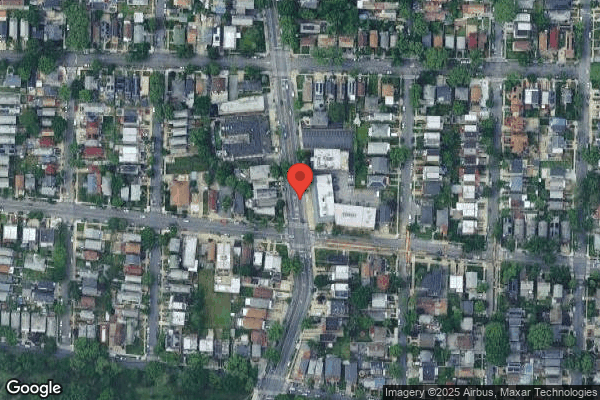

2323 EASTCHESTER ROAD, BRONX, NY 10469 (718) 655-2848
For profit - Limited Liability company 200 Beds Independent Data: November 2025
Trust Grade
51/100
#391 of 594 in NY
Last Inspection: February 2025

Within standard 12-15 month inspection cycle. Federal law requires annual inspections.

Overview

East Haven Nursing & Rehabilitation Center has a Trust Grade of C, which means it is average and sits in the middle of the pack compared to other facilities. They rank #391 out of 594 in New York, placing them in the bottom half of state facilities, and #34 out of 43 in Bronx County, indicating only a few local options are better. The facility is worsening, with issues increasing from 7 in 2023 to 10 in 2025. Staffing is a relative strength, rated 3 out of 5 stars with a turnover rate of 27%, which is lower than the New York average. However, they have incurred $14,819 in fines, which is concerning as it is higher than 76% of other facilities in the state, suggesting potential compliance issues. Specific incidents include reports of cockroaches and rodents in resident units, indicating a failure to maintain an effective pest control program. Additionally, there were concerns over food sanitation, as cold sandwiches were not kept at safe temperatures, and kitchen staff did not follow proper handwashing guidelines. Lastly, residents were not able to send and receive mail promptly, with the facility lacking a procedure for mail delivery on Saturdays, which raises questions about residents' rights to privacy and communication. Overall, while there are some positives like staffing levels, the facility has notable weaknesses that families should consider.

Trust Score
C
51/100
In New York
#391/594
Bottom 35%
Safety Record
Low Risk
No red flags
Inspections
Getting Worse
7 → 10 violations
Staff Stability
✓ Good
27% annual turnover. Excellent stability, 21 points below New York's 48% average. Staff who stay learn residents' needs.
Penalties
⚠ Watch
$14,819 in fines. Higher than 80% of New York facilities, suggesting repeated compliance issues.
Skilled Nurses
○ Average
Each resident gets 39 minutes of Registered Nurse (RN) attention daily — about average for New York. RNs are the most trained staff who monitor for health changes.
Violations
⚠ Watch
26 deficiencies on record. Higher than average. Multiple issues found across inspections.
★★☆☆☆
2.0
Overall Rating
★★★☆☆
3.0
Staff Levels
★★★★☆
4.0
Care Quality
★★☆☆☆
2.0
Inspection Score
Stable
2023: 7 issues
2025: 10 issues

The Good

  • 4-Star Quality Measures · Strong clinical quality outcomes
  • Low Staff Turnover (27%) · Staff stability means consistent care
  • Full Sprinkler Coverage · Fire safety systems throughout facility
  • No fines on record
  • Staff turnover is low (27%)

    21 points below New York average of 48%

Facility shows strength in quality measures, staff retention, fire safety.

The Bad

2-Star Overall Rating

Below New York average (3.1)

Below average - review inspection findings carefully

Federal Fines: $14,819

Below median ($33,413)

Minor penalties assessed

The Ugly 26 deficiencies on record

Feb 2025 10 deficiencies
CONCERN (D)

Potential for Harm - no one hurt, but risky conditions existed

Deficiency F0568 (Tag F0568)

Could have caused harm · This affected 1 resident

**NOTE- TERMS IN BRACKETS HAVE BEEN EDITED TO PROTECT CONFIDENTIALITY** Based on observation, record review, and interview during the Recertification Survey conducted from 02/18/2025 to 02/25/2025, th...

Read full inspector narrative →
**NOTE- TERMS IN BRACKETS HAVE BEEN EDITED TO PROTECT CONFIDENTIALITY** Based on observation, record review, and interview during the Recertification Survey conducted from 02/18/2025 to 02/25/2025, the facility did not ensure that resident or resident representatives receive their personal funds account statements on a quarterly basis. This was evident in 2 (Resident #79 and Resident #37) of 3 residents reviewed for Personal Funds out of 38 total sampled residents. The findings are: The undated facility policy titled Resident Accounts documented that the facility will assure proper handling of residents' funds and enable each resident to benefit from their funds in a manner which is in their best interest. Upon written authorization from the resident, the facility will hold, safeguard, manage, and account for personal funds of the residents. Residents will be provided with itemized quarterly financial statements by Social Service. 1. Resident #79 was admitted to the facility with diagnoses including Diabetes Mellitus, Hyperlipidemia, Hypertension. The Minimum Data Set, dated [DATE] documented Resident #79 had intact cognition. On 02/19/2025 at 12:19 PM, Resident #79 stated they have not seen their account balance in a long time and would like to know their balance. The Resident stated the facility will only provide the statement with the balance when requested and not consistently provided every quarter. The Resident Funds Ledgers dated 01/01/2023 to 03/31/2024 and 04/01/2024 to 06/30/2024 documented that Resident #79 was given 1st and 2nd quarter statements on 7/25/2024. It did not contain Resident #79's signature. The Resident Funds Ledgers dated for 07/01/2024 to 09/30/2024 and for 10/01/2024 to 12/31/2024 documented that Resident #79 signed for 3rd quarter statement and for 4th quarter statement. There was no documented date to indicate when Resident #79 received these statements. On 02/24/2025 at 9:53 AM, Social Worker #2 was interviewed and stated the Business Office sends the printed statements to the Social Work Department every quarter. These quarterly statements are distributed to residents who are able, and for those who are not capable, will be given to their representatives. The Social Worker stated they are not sure if they provided statements to residents after every quarter and was not able to explain orverify if Resident #79 was provided the statements every quarter. Social Worker stated they were not aware that Resident #79 had any concerns about their financial statement. On 02/24/2025 at 10:05 AM, the Director of Social Services was interviewed and stated resident's financial statements are provided to residents/representatives at every quarter. The residents who are capable to receive their statement will sign for their statements. The Director stated they do not know why resident's signatures were not always obtained when statements were provided to the residents and stated there are some residents who refuse to sign but are still given their statements. They stated if a resident refused to sign when they receive their statements, it will be documented as such. The Director of Social Services stated they had a delay in distributing statements last year and that the 1st and 2nd quarter statements were distributed together. Resident #37 was admitted to the facility with diagnoses including Chronic Respiratory Disorder and Cerebellar Stroke Syndrome. The Quarterly Minimum Data Set assessment dated [DATE] documented that Resident #37 had moderate cognitive impairment. On 02/18/2025 at 09:42 AM, Resident #37 was interviewed and stated they did not consistently receive banking statements from the facility. The Resident Funds Ledgers dated 01/01/2023 to 03/31/2024 and 04/01/2024 to 06/30/2024 documented that Resident #79 was given 1st and 2nd quarter statements on 07/25/2024. The Resident Funds Ledgers dated 07/01/2024 to 09/30/2024 and 10/01/2024 to 12/31/2024 revealed Resident #37 signed for 3rd and 4th quarter statements. There was no documented date to indicate when Resident #37 received these statements. On 02/24/2025 at 11:46 AM, Social Worker #1 was interviewed and stated it is the responsibility of the Director of Social Services to provide residents with their quarterly statements. Social Worker #1 stated they only distribute quarterly statements if the Director of Social Services is on vacation. Social Worker #1 was unable to provide an explanation for why Resident #37 did not consistently receive quarterly banking statements. 10 NYCRR 415.26(h)(5)(i)
CONCERN (D) 📢 Someone Reported This

A family member, employee, or ombudsman was alarmed enough to file a formal complaint

Potential for Harm - no one hurt, but risky conditions existed

Safe Environment (Tag F0584)

Could have caused harm · This affected 1 resident

**NOTE- TERMS IN BRACKETS HAVE BEEN EDITED TO PROTECT CONFIDENTIALITY** Based on observation, record review, and interview during the Recertification and Complaint (NY00354174) Survey conducted from 0...

Read full inspector narrative →
**NOTE- TERMS IN BRACKETS HAVE BEEN EDITED TO PROTECT CONFIDENTIALITY** Based on observation, record review, and interview during the Recertification and Complaint (NY00354174) Survey conducted from 02/18/2025 to 02/25/2025, the facility did not ensure the residents' right to a safe, clean and comfortable environment was maintained. This was evident in 1 (Unit 1) of 4 units. Specifically, room [ROOM NUMBER]P was observed with chipped wall surfaces, partially detached top dresser, stained ceiling, and peeling non-slip tape on the bathtub. The findings are: The facility's policy titled Homelike Environment with a reviewed date of 06/10/2024 documented residents are provided with a safe, clean, comfortable, and homelike environment. The facility's policy titled Maintenance with a reviewed date of 04/12/2024 documented Maintenance Department shall ensure that the facility is functional, comfortable, and hazard free. Resident #164 was admitted to the facility with diagnoses of Diabetes Mellitus, Hypertension, Hyperlipidemia. The Minimum Data Set, dated [DATE] documented Resident #164 had intact cognition. During observation on 02/19/2025 at 12:36 PM and on 02/21/2025 at 10:02 AM, Resident #164 stated they are extremely dissatisfied about the condition of their room. room [ROOM NUMBER]P was observed with multiple chipped/broken wall surfaces, partially detached top dresser next to the bed, brown stained tile lowered from the ceiling above the bathtub, and peeling non-slip tape in the bathtub. The Maintenance Issue Log for Unit 1 dated 07/09/2024 to 02/19/2025 documented issues pertaining to the television in room [ROOM NUMBER]P. There was no documentation of any other maintenance work requested for room [ROOM NUMBER]P. On 02/24/2025 at 10:27 AM, the Maintenance Director was interviewed and stated they are aware that the walls behind the headboard are often getting damaged because the bed was hitting against the wall. but was not aware of the chipped wall, broken dresser, stained ceiling tile, and peeling tape in the bathtub in room [ROOM NUMBER]P. On 02/25/2025 at 12:29 PM, the Administrator was interviewed and stated they were recently made aware of the problems in room [ROOM NUMBER]P and stated the issues are being addressed. 10 NYCRR 415.5(h)(2)
CONCERN (D) 📢 Someone Reported This

A family member, employee, or ombudsman was alarmed enough to file a formal complaint

Potential for Harm - no one hurt, but risky conditions existed

Deficiency F0804 (Tag F0804)

Could have caused harm · This affected 1 resident

Based on observation, record review, and interviews during the Recertification and Complaint (NY00354174) Survey conducted from 02/18/2025 to 02/25/2025, the facility did not provide food and drink th...

Read full inspector narrative →
Based on observation, record review, and interviews during the Recertification and Complaint (NY00354174) Survey conducted from 02/18/2025 to 02/25/2025, the facility did not provide food and drink that were palatable and at a safe and appetizing temperature. This was evident in 1 (Unit 4) of 1 unit observed during dining. Specifically, food served during lunch had suboptimal temperatures and were not appetizing or palatable. The findings include but are not limited to: The undated facility policy titled Food Temperatures documented the facility maintains system to ensure that food served to the residents is held at safe holding temperatures. Hot foods should be maintained at 140 degrees Fahrenheit or above and cold foods should be at 41 degrees Fahrenheit or below. On 02/18/2025 at 12:24 PM, during dining observation, Resident #96's next of kin was observed waiting by the meal truck for Resident #96's meal tray. They stated they visit daily to get the Resident's meal tray and deliver it to the Resident because the food becomes cold if they wait for the staff to deliver it. During an interview on 02/18/2025 at 10:56 AM, Resident #79 stated the items served for meal are not palatable and not appetizing. During an interview on 2/19/2025 at 10:17 AM, Resident #100 stated food is served cold most of the time. During dining observation on 02/20/2025 from 12:28 PM to 12:50 PM, food trucks were delivered to Unit 4 and the staff delivered the lunch trays to residents in the dining and resident's room. At 12:50 PM, test trays were conducted on Unit 4 and the food temperature were as follows: 1. Puree diet meal consisted of pureed beef at 101 degrees Fahrenheit, pureed cabbage 98 degrees Fahrenheit, mashed potato 115 degrees Fahrenheit, pureed soup 119 degrees Fahrenheit and coffee 128 degrees Fahrenheit 2. Chopped diet meal consisted of chopped chicken at 90 degrees Fahrenheit, mashed potato 98 degrees Fahrenheit, chopped peas and carrot 95 degrees Fahrenheit, soup 118 degrees Fahrenheit, and apple sauce 58 degrees Fahrenheit 3. Regular diet meal consisted of cabbage, peas and carrots at 104 degrees Fahrenheit, stewed chicken at 118 degrees Fahrenheit, white rice at 101 degrees Fahrenheit, soup at 130 degrees Fahrenheit, and canned fruit at 60 degrees Fahrenheit. On 02/20/2025 at 12:50 PM, the Food Service Director was interviewed and stated food should be measured above 150 degrees Fahrenheit during kitchen assembly line and should be served to residents at 135 degrees Fahrenheit or above for hot foods. The Food Service Director stated they are having food supply issue that was why listed menu items are being replaced. They stated today's regular diet meal consists of stew chicken, cabbage mixed with carrot, peas, and white rice and that the stewed chicken appeared tough and dry because the kitchen staff did not pour the sauce over the chicken. On 02/20/2025, the Director for Dietary Services was interviewed right after taking the test tray temperature. They stated the appropriate and optimum food temperature for hot food should be at 135 degrees Fahrenheit and cold food should be below 41 degrees Fahrenheit. They stated that the elevators are extremely cold in the winter and that could be a reason why the food arrives cold. On 02/25/2025 at 12:29 PM, the Administrator was interviewed and stated they were not aware of any food related complaints. 10 NYCRR 415.14(d)(1)(2)
CONCERN (D)

Potential for Harm - no one hurt, but risky conditions existed

Food Safety (Tag F0812)

Could have caused harm · This affected 1 resident

Based on observation, record review, and interview during the Recertification Survey conducted from 02/18/2025 to 02/25/2025, the facility did not ensure food service equipment are properly cleaned an...

Read full inspector narrative →
Based on observation, record review, and interview during the Recertification Survey conducted from 02/18/2025 to 02/25/2025, the facility did not ensure food service equipment are properly cleaned and sanitized. This was evident during the Kitchen Task. The findings are: The undated facility policy titled General Food Preparation and Handling documented that all food service equipment should be cleaned, sanitized, dried and reassembled after each use. The undated facility policy titled Cleaning and Sanitizing of Meat Slicer documented that all removeable parts of the slicer should be put into the pot wash sink and washed, and all stationary parts should be scrubbed with a cellulose pad moistened with detergent, rinsed with water and sanitized. The instruction manual for the Globe Model 3600N Slicer documented that the entire slicer must be both cleaned and sanitized after use to prevent the spread of foodborne illness. The removeable parts should be placed in a dishwasher or a three-compartment sink with warm water and mild detergent, soaked and thoroughly scrubbed, then rinsed with fresh clean water. The other parts of the slicer as well as the slicer table should be cleaned with a clean cloth soaked in mild detergent, wiped down and rinsed. On 02/21/2025 at 1:03 PM, Dietary Aide #1 was observed cleaning the meat slicer. The Dietary Aide disconnected the removable parts of the slicer and sprayed the parts with sanitizer and used a disposable towel to wipe down the slicer. The aide also used the spray sanitizer to clean the blade and the rest of the slicer. The Dietary Aide did not use soap or detergent throughout the procedure. Following the procedure, the Dietary Aide was interviewed and stated they never use water on the slicer because it is electric, and water should not be used on anything electric. On 02/24/2025 at 3:11 PM, the Director for Dietary Services was interviewed and stated that all dietary personnel are instructed to use soap and water on the slicer; the only time they may not do so is when the slicer is actually plugged in. The procedure is to run the removeable parts through the dishwasher. 10 NYCRR 415.14 (h)
CONCERN (D)

Potential for Harm - no one hurt, but risky conditions existed

Deficiency F0868 (Tag F0868)

Could have caused harm · This affected 1 resident

Based on record review and interview during the Recertification Survey conducted from 02/18/2025 to 02/25/2025, the facility did not ensure that the Infection Preventionist was a member of the facilit...

Read full inspector narrative →
Based on record review and interview during the Recertification Survey conducted from 02/18/2025 to 02/25/2025, the facility did not ensure that the Infection Preventionist was a member of the facility's Quality Assessment and Assurance committee and reported to the committee on the Infection Prevention and Control Program on a regular basis. Specifically, the Infection Preventionist had not participated in any of the Quality Assurance & Performance Improvement meetings held between 02/20/2024 and 01/28/2025. The findings are: The 2024 Quality Assurance and Performance Improvement Plan effective December 2024 documented that the Quality Assurance and Performance Improvement Committee reports to the executive leadership and Governing Body and shall meet, minimally, four times per year to identify, screen, evaluate and key facility functions. It documents that the Quality Assurance and Performance Improvement Committee's members included the Infection Prevention and Control Officer. The document titled Quality Assurance and Performance Improvement dated 02/18/2025 did not list the Infection Preventionist as a member of the committee. A review of the Quality Assurance and Performance Improvement attendance sheets revealed that the Infection Preventionist did not sign the attendance sheets for the following meetings: 02/24/2024, 05/07/2024, 06/18/2024, 07/10/2024, 09/20/2024, 10/22/2024, 11/26/2024, and 01/28/2025. There was no documented evidence that the Infection Preventionist attended the Quality Assurance & Performance Improvement meetings. Multiple attempts were made on 02/24/2025 and 02/25/2025 to reach the Infection Preventionist for interview was unsuccessful. On 02/25/2025 at 11:05 AM, the Director of Nursing Services was interviewed and stated that the Infection Preventionist did not attend Quality Assurance and Performance Improvement meetings. The Director of Nursing stated that the Infection Preventionist was employed at the facility on a part time basis and is not scheduled to work on the days that meetings are held. On 02/25/2025 at 11:45 AM, the Administrator was interviewed and stated that the Infection Preventionist did not attend Quality Assurance and Performance Improvement meetings but should have been attending them. 10 NYCRR 483.80(c)
CONCERN (E)

Potential for Harm - no one hurt, but risky conditions existed

Deficiency F0576 (Tag F0576)

Could have caused harm · This affected multiple residents

Based on observation, record review, and interview during the Recertification Survey conducted from 02/18/2025 to 02/25/2025, the facility did not ensure that residents had the right to send and promp...

Read full inspector narrative →
Based on observation, record review, and interview during the Recertification Survey conducted from 02/18/2025 to 02/25/2025, the facility did not ensure that residents had the right to send and promptly receive mail. This was evident in 9 (Residents: #12, #13, #17, #80, #103, #105, #112, #151, #154) out of 39 total sampled residents. Specifically, the facility did not have a procedure in place for residents to send and receive mail on Saturday. The findings are: The facility policy titled Mail/Package Delivery with a last reviewed date of 06/10/2024 documented that it is the policy of the facility to ensure that each resident's rights to personal privacy is respected, including the right to send and promptly receive unopened mail and other letters, packages, and other materials delivered to the facility for the resident. Promptly means delivery of mail or other materials to the resident within 24 hours of delivery by the postal service. On 02/19/2025 at 10:30 AM during the Resident Council Meeting, Residents #12, #13, #17, #80, #103, #105, #112, #151, and #154 stated the facility does not deliver mail to residents on Saturday. They stated this was because the social workers who deliver mail during the week does not work on the weekend. On 02/21/2025 at 2:22 PM, Social Worker #2 was interviewed and stated that mails delivered to the facility on Saturdays are not distributed to the residents until the following Monday. Social Worker #2 stated this delay occurs because mail is delivered to residents by Social Worker #1, Social Worker #2, and the Director of Social Services, and none of them work on the weekend. On 02/21/2025 at 2:33 PM, the Receptionist was interviewed and stated they work every other Saturday. They stated if if a resident receives mail on Saturday, it is left in the Business Office until Monday, when the social workers will then deliver it to residents. On 02/24/2025 at 9:57 AM, the Director of Social Services was interviewed and stated that mails delivered to the facility on the weekend is held until Monday, when it will then be delivered to residents. On 02/25/2025 at 11:50 AM, the Administrator was interviewed and was unable to provide an explanation for why residents had not been receiving mails within 24 hours of its delivery to the facility on the weekends. 10 NYCRR 415.3(e)(2)(i)
CONCERN (E)

Potential for Harm - no one hurt, but risky conditions existed

Menu Adequacy (Tag F0803)

Could have caused harm · This affected multiple residents

**NOTE- TERMS IN BRACKETS HAVE BEEN EDITED TO PROTECT CONFIDENTIALITY** Resident #79 was admitted to the facility with diagnoses that include Diabetes Mellitus, Hyperlipidemia, and Hypertension. The ...

Read full inspector narrative →
**NOTE- TERMS IN BRACKETS HAVE BEEN EDITED TO PROTECT CONFIDENTIALITY** Resident #79 was admitted to the facility with diagnoses that include Diabetes Mellitus, Hyperlipidemia, and Hypertension. The Minimum Data Set assessment dated [DATE] documented Resident #79 had intact cognition. During dining observation on 02/18/2025 at 12:48 PM, Resident #79's lunch tray was observed with turkey wings, cabbage, rice and beans, chicken noodle soup, banana and cup of tea with sugar. The Weekly Menu was posted on the wall next to the nursing station which documented Lunch Menu for 2/18/2025 were chicken noodle soup, turkey wings, Italian vegetable mix, brown rice, fresh fruit and coffee/tea. There were no Italian vegetable mix, or brown rice observed on the tray for Resident #79. Resident #79 stated they were not notified of the menu change. During dining observation on 02/20/2025 at 12:38 PM, Resident #79's lunch tray was observed consisting of chicken legs without any sauce/gravy, cabbage mixed with peas, carrots and white rice. The Weekly Menu documented Lunch Menu for 02/20/2025 were stewed chicken, steamed rice, and zucchini. There was no zucchini observed on Resident #79's plate. Resident #79 stated they were not notified of the menu change. On 02/21/2025 at 12:34 PM, Resident #79's lunch tray was observed with breaded fish, yam and mix vegetables. The Weekly Menu documented Lunch Menu for 02/21/2025 were tilapia with dill sauce, fresh yams, and oriental vegetable. There was no dill sauce or any type of sauce for the breaded fish. Resident #79 stated they were not notified of the menu change. On 02/20/2025 at 12:50 PM, the Food Service Director stated they are currently undergoing some food shortage and ordering issue and are not able to prepare the proposed menu items. They stated they were posting menu changes daily on the units next to the weekly menu. On 02/25/2025 at 12:29 PM, the Administrator was interviewed and stated they have not heard of any food related complaints or that there was any food ordering/supply issue until recently. The Administrator stated they do not know why there was any food shortage and supply issue since they order everything from the food vendor. 10 NYCRR 415.14(c)(1-3) Based on observation, record review, and interviews during the Recertification Survey conducted from 02/18/2025 to 02/25/2025, the facility did not ensure that posted menu items were served, that notification was provided when menu items were substituted and that individual food preferences were honored. This was evident in 3 Residents (Resident #96, #129 and #79) of 6 residents observed during dining, out of 35 total sampled residents. Specifically, residents were not served posted menu items, food preferences, or food items that were listed on the meal tray tickets. Additionally, residents were not notified of menu substitutions. The findings are: The undated facility policy titled Menu Planning documented that menus are planned to meet the guidelines as established by current federal and state regulations. Menus are written at least 2 weeks in advance and are distributed to residents and posted in the resident's dining rooms at least three days before service. The individual preferences are considered in meal planning. Appropriate food items are prepared at each of the three daily meals to allow for choices and to accommodate individual preferences. Alternate food items must be prepared to substitute for food residents' dislike. The undated facility policy titled Food Preferences documented that a meal identification ticket will be used to properly identify everyone's needs including food and beverage preferences. Meal tickets will include any therapeutic diet, consistency, preferences and requests. Meal tickets are to be served with the corresponding meal. Meal tickets will be used during meal service to ensure the appropriate diet is being served and food preferences are honored as feasible. The undated facility policy titled Menu Substitution documented that menu substitutions are noted in writing on the posted weekly and daily menus, the reason for the change also must be noted. When making a substitution, consideration is given to residents' likes and dislikes. A menu substitution must be made from the same food group as the removed item. If the item removed is a raw fruit or vegetable, another raw fruit or vegetable should replace the item. This will help ensure adequate intake of vitamins and fiber. 1). Resident #129 was admitted to the facility with diagnoses that include Diabetes Mellitus and Hyperlipidemia. The Quarterly Minimum Data Set assessment dated [DATE] documented Resident #129 had intact cognition. On 02/18/2025 at 10:35 AM, Resident #129 was interviewed and stated that the food they receive is not good for them, sometimes they go days without eating and despite speaking with the dietician, nothing changes. During dining observation on 02/18/2025 at 12:35 PM, a meal tray was delivered to Resident #129. The meal ticket documented No Fish, No Pasta, No Meat and send 2x salad with dressing. The meal ticket listed tossed salad 2 cups with dressing and 1 slice of wheat bread as items that were served. No salad and no wheat bread were observed on the meal tray. During dining observation on 02/19/2025 at 9:00 AM, a meal tray was delivered to Resident #129. The meal ticket documented Cold Cereal Only Double Entrée, Scrambled Eggs Only. The resident's tray was observed with 1 cup of Hot Oatmeal Cereal. There was no cold cereal observed on the meal tray. During dining observation on 02/21/2025 at 1:03 PM, a meal tray was delivered to Resident #129. The meal ticket documented No Fish, No Pasta, No Meat and send 2x salad with dressing. The meal ticket listed tossed salad 2 cups with dressing and (1) 6 ounce serving of juice as items that were served. There was no salad, and no juice observed on the meal tray. During dining observation on 02/25/2025 at 12:30 PM, a meal tray was delivered to Resident #129. The meal ticket documented No Fish, No Pasta, No Meat and send 2x salad with dressing. The meal ticket listed items served as 2-piece chicken patty, tossed salad 2 cups with dressing and wheat Bread 1 slice. No salad and no bread were observed on the meal tray. Two (2) brown colored meat items were observed on the tray. An undated facility document titled Food Preferences for Resident #129, documented likes: cold cereal, scrambled eggs, cream cheese, salad, ice cream and bread. Dislikes: Fish, buttered noodles. A dietary progress note dated 02/14/2025, documented that Resident #129 had intake that varied and that they complained about the food, food preferences was updated. 2). Resident #96 was admitted to the facility with diagnoses that include Heart Failure and Dementia. The Significant Change Data Set assessment dated [DATE] documented Resident #96 had moderate cognitive impairment. During dining observation on 02/18/2025 at 12:24 PM, a meal tray was delivered to Resident #96. The meal ticket listed items served as rice and beans and chopped zucchini. The menu items posted on Unit 4 to be served on Tuesday, 02/18/2025 were Italian vegetable mix and brown rice. There was no brown rice observed on the meal tray. The vegetable items served were peas and carrots. The meal ticket did not match the items served or the posted menu. There was no menu substitutions posted on Unit 4. During dining observation on 02/19/2025 at 9:30AM, Resident #96 was observed with a meal tray that contained 1 bowl of Hot Oatmeal Cereal. The meal ticket did not list Oatmeal as an item served. During dining observation on 02/21/2025 at 12:30 PM, Resident #96's meal tray was observed containing boiled cabbage. The Resident's meal ticket documented vegetable items served as fresh yams and oriental mixed vegetable. The menu items posted on Unit 4 to be served on Friday, 02/21/2025 were fresh yams and oriental mixed vegetables. There was no menu substitutions posted in Unit 4. Resident #96 tray was not observed to contain fresh Yams or oriental mixed vegetables. On 02/24/2025 at 2:34 PM, the Dietician was interviewed and stated they meet with residents at admission or readmission to ask about their food preferences. The food preferences are entered into meal tracker along with other specific requests and those appear on the meal ticket. The Dietician stated they perform daily rounds but they do not look at the meal ticket. They stated the Certified Nursing Assistants, nursing supervisors, and the kitchen staff are responsible for the accuracy of every meal. On 02/25/2025 at 12:35 PM, Certified Nursing Assistant #2 was interviewed and stated the menu is not always correct and the changes are not always posted. Certified Nursing Assistant #2 stated they inform the nursing supervisor when menu items or tray tickets do not match the food. Certified Nursing Assistant #2 further stated a lot of times Resident #129 does not receive their salad. On 02/25/2025 at 12:45 PM, Registered Nurse #4, who was the nursing supervisor, was interviewed and stated they were en route to the kitchen to retrieve salad and bread that did not arrive on Resident #129's meal tray. Registered Nurse #4 also that Certified Nursing Assistants inform them when the residents do not receive the food items in their meal ticket and the kitchen is called. On 02/20/25 at 12:50 PM, The Director for Dietary Services was interviewed and stated when meal tickets do not match the food items served or menus, it is because the menu is being revamped based on preferences. They stated preferences are placed on the menu, but the food items have not been delivered to the facility yet. The Director stated it may be an ordering or supply issue. They stated that the meal ticket is read in the kitchen and the supervisor ensures it matches the menu and the food items served. The Director for Dietary Services stated they make rounds every other day and sends dietary staff to the units to check if residents are getting food items in their meal ticket according to the menu, but there are still issues with matching items.
CONCERN (E)

Potential for Harm - no one hurt, but risky conditions existed

Deficiency F0847 (Tag F0847)

Could have caused harm · This affected multiple residents

Based on record review and interview during the Recertification Survey from 02/18/2025 to 02/25/2025, the facility did not ensure the Binding Arbitration Agreement granted the residents and/or their d...

Read full inspector narrative →
Based on record review and interview during the Recertification Survey from 02/18/2025 to 02/25/2025, the facility did not ensure the Binding Arbitration Agreement granted the residents and/or their designated representatives the right to rescind the agreement within 30 calendar days of signing it. This was evident in 3 (Resident #77, #109, #163) of 38 total sampled residents. Specifically, the Binding Arbitration Agreement signed by Residents #77, #109, and #163 did not grant the residents and/or their designated representatives 30 calendar days to rescind the agreement. The findings are: The facility policy titled Arbitration Agreements with effective date of 10/17/2024 and a last reviewed date of 10/18/2024 documented the arbitration agreement shall explicitly grant resident or his/her representative the right to rescind the agreement within 30 calendar days of signing it. The Schedule 22 of Binding Arbitration Agreement in the admission package was reviewed. The Binding Arbitration Agreement did not document residents and/or their designated representatives had the right to rescind the agreement within 30 calendar days of signing it. The signed Binding Arbitration Agreements for Resident #77, Resident #109, and Resident #163 were reviewed. There was no documented evidence in the agreement that the residents and/or their designated representatives were provided 30 calendar days to rescind the agreements. On 02/25/2025 at 10:10 AM, the Director of Admissions was interviewed and stated they were responsible to explain the admission package including the attachment of Schedule 22 about Binding Arbitration Agreement to the residents and/or their designated representatives upon their admission to the facility.They stated the residents and/or their representatives signed the Arbitration Agreement separately from other parts of admission package. Director of Admissions stated they verbally informed the residents and/or their representatives that they had 30 calendar days to rescind the agreements. Director of Admissions also stated it was not documented in the Binding Arbitration Agreement that residents and/or their designated representative had 30 calendar days to rescind the agreements. On 02/25/2025 at 10:35 AM, the Administrator was interviewed and stated they knew the Binding Arbitration Agreement the facility is using is non-compliant and that they are in the process of revising the agreement.The Administrator further stated the residents' right to rescind the Arbitration Agreement within thirty (30) calendar days of signing was not in the current arbitration agreement and it will be incorporated into the revised Arbitration Agreement. The Administrator stated the facility would keep on using the current Binding Arbitration Agreement until the revised one was ready. 10 NYCRR 415.30
CONCERN (E)

Potential for Harm - no one hurt, but risky conditions existed

Deficiency F0848 (Tag F0848)

Could have caused harm · This affected multiple residents

Based on record review and interview during the Recertification Survey conducted from 02/18/2025 to 02/25/2025, the facility did not ensure the Binding Arbitration Agreement provides for the selection...

Read full inspector narrative →
Based on record review and interview during the Recertification Survey conducted from 02/18/2025 to 02/25/2025, the facility did not ensure the Binding Arbitration Agreement provides for the selection of a neutral arbitrator agreed upon by both parties and the agreement provides for the selection of a venue that is convenient to both parties. This was evident in 3 (Resident #77, #109, #163) of 38 total sampled residents. Specifically, the Binding Arbitration Agreement signed by Residents #77, #109, and #163 had no documented evidence the agreement addresses the selection of a neutral arbitrator agreed upon by both parties and the selection of a venue that is convenient to both parties. The findings are: The facility policy titled Arbitration Agreements with effective date 10/17/2024 and last review date 10/18/2024 documented the agreement shall specifically provide for the selection of a neutral arbitrator agreed upon by both parties. It also documented the agreement shall specifically provide for the selection of a venue that is agreed upon and convenient to both parties. The Schedule 22 of Binding Arbitration Agreement in the admission package was reviewed. The Binding Arbitration Agreement documented all arbitrations shall take place at a mutually agreed upon location in New York County, New York, unless the parties agree otherwise. The Binding Arbitration Agreement also documented the parties agree to appoint a panel of three (3) arbitrators. The Parties will each select a single arbitrator, and these two (2) arbitrators will select a third arbitrator. Scheduled 22 Binding Arbitration Agreement signed by Residents # 109, # 77, and # 163 were reviewed. The Binding Arbitration Agreement documented all arbitrations shall take place at a mutually agreed upon location in New York County, New York, unless the parties agree otherwise. The Binding Arbitration Agreement also documented the parties agree to appoint a panel of three (3) arbitrators. The Parties will each select a single arbitrator, and these two (2) arbitrators will select a third arbitrator. On 02/25/2025 at 10:10 AM, Director of Admissions was interviewed and stated they were responsible to explain the admission package including the attachment of Schedule 22 about Binding Arbitration Agreement to the residents and/or their designated representatives upon their admission to the facility. Director of Admissions also stated the residents and/or their representatives signed the Arbitration Agreement separately from other parts of admission package. Director of Admissions stated they explained to the residents and/or their designated representatives that all arbitrations shall take place in New York County of New York State if both parties were unable to agree on a convenient venue. Director of Admissions also stated it meant the arbitration will be in New York County of New York State if the facility disagree a venue proposed by the residents and/or their representatives. Director of Admissions stated the Binding Arbitration Agreement documented resident and the facility will each select a single arbitrator, and these two arbitrators will select a third arbitrator. Director of Admissions had no explanation how the arbitrator selected by the facility will remain neutral in the arbitration process. On 02/25/2025 at 10:35 AM, the Administrator was interviewed and stated the Binding Arbitration Agreement the facility is using is non-compliant and that they are in th eprocess of revising the agreement. The opportunity to select a neutral arbitrator and a convenient venue will be included in the revised Binding Arbitration Agreement. The Administrator stated the facility would keep on using the current Binding Arbitration Agreement until the revised one was ready. 10 NYCRR 415.30
CONCERN (F)

Potential for Harm - no one hurt, but risky conditions existed

Deficiency F0925 (Tag F0925)

Could have caused harm · This affected most or all residents

**NOTE- TERMS IN BRACKETS HAVE BEEN EDITED TO PROTECT CONFIDENTIALITY** Based on observation, record review, and interview during the Recertification Survey conducted from 02/18/2025 to 02/25/2025, th...

Read full inspector narrative →
**NOTE- TERMS IN BRACKETS HAVE BEEN EDITED TO PROTECT CONFIDENTIALITY** Based on observation, record review, and interview during the Recertification Survey conducted from 02/18/2025 to 02/25/2025, the facility did not maintain an effective pest control program so that the facility is free of pests and rodents. This was evident in 4 of 4 resident units. Specifically, multiple residents reported cockroach and rodent sightings. In addition, the facility's pest control service record documented pest sightings in 4 resident units. The findings include but are not limited to: The facility policy titled Pest Control with a last reviewed date 08/14/2024 documented it is the policy of the facility to maintain a pest free environment as best as possible. A review of Service Tickets documented that the pest management company provided pest management services to the facility on [DATE], 01/07/2025, 01/14/2025-01/15/2025, 01/28/2025-01/29/2025, 02/04/2025-02/05/2025, 02/11/2025, and 02/20/2025. The Service Tickets documented services provided included installing rodent bait stations and gel bait for cockroaches. On 02/20/2025 at 10:52 AM, multiple cockroaches were observed in the hallway on Unit 2, including one that entered room [ROOM NUMBER]. Registered Nurse #1 was notified of the observance and responded to the area, locating and stepping on one of the cockroaches. A review of Unit 1's Pest Control Service Record indicated that the following pest sightings were reported on Unit 1: mice and cockroaches on 11/4/2024, cockroaches on 11/7/2024, cockroaches on 01/02/2025, and pests in the pantry on 01/02/2025. A review of Unit 2's Pest Control Service Record indicated that the following pest sightings were reported on Unit 2: a rat on 08/03/2024, cockroaches on 01/14/2025, cockroaches on 02/03/2025, cockroaches and mice on 02/04/2025, and cockroaches on 02/20/2024. A review of the Unit 3 Pest Control Service Record indicated that the following pest sightings were reported on Unit 3: cockroaches on 06/23/2024, mice on 08/17/2024, mice on 09/05/2024, and mice on 01/27/2025. A review of the Unit 4 Pest Control Service Record indicated that the following pest sightings were reported on Unit 4: a rat on 04/19/2024, mice on 01/13/2025, mice on 01/14/2025, mice on 01/15/2025, cockroaches on 02/13/2025. On 02/21/2025 at 2:00 PM, Resident #172 was interviewed and stated they have observed cockroaches in their room typically at night. On 02/21/2025 at 2:11 PM, Resident #181's next of kin was interviewed and stated they had observed cockroaches in the facility. They reported that they stepped on and killed the cockroaches and did not notify the facility of the sighting. On 02/21/2024 at 2:14 PM, Resident #11 was interviewed and stated they observed mice running around their room at night. They stated the facility placed mice traps in their room but they continue to observe mice in the room at night. On 02/21/2025 at 2:18 PM, Resident #46 was interviewed and stated they observed mice in their room during the night time hours. On 02/20/2025 at 10:56 AM, Registered Nurse #1 was interviewed and stated there were cockroach sightings within the facility and that the facility's maintenance team was aware of the cockroach issue and regularly sprayed pest control substances in the facility. On 02/20/2025 at 11:42 AM, Licensed Practical Nurse #1 was interviewed and stated they had received some complaints from residents related to cockroaches during the evening shift. They stated that residents typically see the cockroaches in the evening if they get up to use the restroom. On 02/24/2025 at 09:33 AM, the Director of Operations was interviewed and stated the facility uses a contracted pest control company that makes weekly visits to provide pest management services. In between the pest control company's visits, the facility also used pest control management tactics including using glue traps, Raid spray, electric rodent traps, and filling gaps in baseboards. The Director of Operations stated pest control is an ongoing job for the facility and that while there are still sightings of pests, they feel that the facility has improved over the past few months. On 02/25/2025 at 11:43 AM, the Administrator was interviewed and stated that they are aware of cockroach and rodent sightings within the facility. They stated that pest control company comes on a weekly basis, and that Environmental Services staff also conducts pest control. They stated they believed the increase in pest sightings was related to construction that was occurring in the area. 10 NYCRR 415. (5) (h)(1)
Mar 2023 7 deficiencies
CONCERN (D)

Potential for Harm - no one hurt, but risky conditions existed

Report Alleged Abuse (Tag F0609)

Could have caused harm · This affected 1 resident

**NOTE- TERMS IN BRACKETS HAVE BEEN EDITED TO PROTECT CONFIDENTIALITY** Based on observation, record review and staff interview during the recertification survey, the facility did not ensure that all ...

Read full inspector narrative →
**NOTE- TERMS IN BRACKETS HAVE BEEN EDITED TO PROTECT CONFIDENTIALITY** Based on observation, record review and staff interview during the recertification survey, the facility did not ensure that all alleged violations involving abuse, neglect, exploitation or mistreatment, including injuries of unknown source, are reported immediately, but not later than 2 hours after the allegation, if the allegation involves abuse or results in serious bodily injury, to the state agency. This was evident for 1 (Resident #63) of 2 residents reviewed for accident. Specifically, an incident where Resident #62 was found on the floor, near the exit door, with a hematoma was not reported to New York State Departement of Health (NYS DOH). The finding is: The facility policy on Accident and Incident Reporting, revised 7/13/22 documented: Our facility strives to make the environment as free from accident hazards as possible. Resident safety and supervision and assistance to prevent accidents are facility-wide priorities. Resident #62 was admitted to the facility with diagnoses that included Depression, Non- Alzheimer's Dementia, and Difficulty in Walking. The Minimum Data Set (MDS) 3.0 assessment dated [DATE] documented the resident had intact cognition. Resident #62 required extensive assist of one person with walking, dressing, and using the bathroom. During an interview on 03/02/2023 at 12:16 PM, Resident #62 stated they did not remember having a fall. The resident had a very short attention span during the interaction. The Accident/Incident report documented Resident #62 was found on the floor near the exit door on 01/11/2023 at 6:05 AM, during unit staff regular rounding. Immediate assessment of the resident revealed swelling of the left forehead. The Attending Physician was immediately notified by the Nursing Supervisor, and the resident was transferred to the hospital emergency room. Resident #62 was received a Computer Tomography (CT) scan and was diagnosed with a hematoma to the forehead with no intracranial hemorrhage. Resident #62 was treated conservatively and transferred back to the facility with a diagnosis of syncope. There was no documented evidence this injury of unknown origin was reported to NYS DOH within 2 hours. During an interview on 03/02/2023 at 3:00PM, the Assistant Director of Nursing(ADNS) stated the incident was investigated and statements were taken from staff. The ADNS further stated they were not aware the incident should be reported to the NYS DOH because Resident #62 fell and sustained a hematoma. 415.4(b)(2)
CONCERN (D) 📢 Someone Reported This

A family member, employee, or ombudsman was alarmed enough to file a formal complaint

Potential for Harm - no one hurt, but risky conditions existed

Investigate Abuse (Tag F0610)

Could have caused harm · This affected 1 resident

**NOTE- TERMS IN BRACKETS HAVE BEEN EDITED TO PROTECT CONFIDENTIALITY** Based on observations, record review and staff interviews during the recertification and complaint survey (NY#00311731) conducte...

Read full inspector narrative →
**NOTE- TERMS IN BRACKETS HAVE BEEN EDITED TO PROTECT CONFIDENTIALITY** Based on observations, record review and staff interviews during the recertification and complaint survey (NY#00311731) conducted from 2/27/23 to 3/6/23, the facility did not ensure that an alleged violation of abuse, neglect, exploitation, or mistreatment was thoroughly investigated. This was evident for 1 (Resident #394) of 8 residents investigated for Abuse out of a sample 41 residents. Specifically, 1) The facility did not initiate an investigation until five days after an alleged resident to resident incident was reported. 2) There was no documented evidence that the investigation of an alleged resident to resident incident was thoroughly investigated to include witness statements and that interventions were implemented promptly to protect Resident #394. The findings are: The facility policy and procedure titled Abuse Investigation and Reporting revised 2/20/23 documented that all reports of resident abuse, neglect, exploitation, misappropriation of resident property, and mistreatment shall be thoroughly investigated by facility management. Resident #394 was admitted to the facility on [DATE] with diagnoses of left artificial knee joint, morbid obesity, and post operative of total right knee replacement. The social services assessment dated [DATE] documented Resident #394 was alert and oriented times 3. The capacity assessment dated [DATE] documented the resident had intact cognition with a Brief Interview of Mental Status score of 15 out of 15. On 2/28/23, the Complainant reported the alleged violation to the New York State Department of Health (NYSDOH) Hotline. The Aspen Complaint Tracking System intake documented that on 2/25/23, there was an incident of another resident entering Resident #394's room uninvited, and no staff came to Resident #394's room to intervene. During a phone interview on 3/8/23 at 3:24 PM, the complainant stated that their concerns related to the incident were initially reported to the nurse supervisor, and they asked to submit a formal complaint to the facility on 2/25/23. However, the complainant stated that the facility did not make prompt efforts to address their concerns, and they were not made aware if a grievance or investigation was initiated. During an interview on 3/3/23 at 10:40 AM, Resident #394 stated that on 2/25/23 between 1:00 PM and 2:00 PM, they heard a loud commotion out in the hallway. A few minutes later, Resident #181 came into their room uninvited, swearing profanity, being verbally aggressive towards Resident #394. Resident #394 stated they are totally bed bound and not ambulatory; therefore, they were not able to move themselves out of the room. Resident #394 called for help using the call bell but no staff came into the room. Resident #394 stated Resident #181 eventually walked out of the room, and there was still no staff member around. This incident was reported to the nurse supervisor on that day, but they were not given any assurance that it will not occur again. Resident #394 stated they do not feel safe in the room. Resident #394 stated they were not aware if a grievance or investigation was initiated for the incident. The Comprehensive Care Plan (CCP) for Potential Resident Abuse initiated 2/23/23, last revised on 2/24/23, was not updated to reflect the verbal resident-to-resident altercation that occurred on 2/25/23. There were no new interventions implemented to ensure safety of Resident #394 following the incident on 2/25/23. The interdisciplinary progress notes from 2/25/23 to 3/3/23 contained no documented evidence the incident occurred or that Resident #394 was evaluated and monitored for any signs and symptoms of emotional distress following the incident. The undated Grievance Reporting and Response Form completed by Director of Nursing (DON), documented that on 2/25/23, the DON received a phone call from Resident #394's church sister, who is also staff member at the facility. The church sister reported Resident #394 informed them that a man entered their room being verbally loud and erratic. It documented that upon investigation, there was no credible evidence that abuse, neglect, exploitation, mistreatment, or misappropriation of property occurred. The form was missing signatures of Resident #394 and the church sister for acknowledgement of the complaint and the final disposition of the complaint. The form was signed by the Administrator on 3/6/23. The Resident to Resident Incident Report completed 3/4/23 by the Assistant Director of Nursing (ADON) documented that the investigation revealed that the incident did not constitute physical abuse, and no physical abuse occurred. The facility's Investigation Form dated 3/3/23 documented that the allegation was refuted by the evidence collected during the investigation; therefore, it was determined no abuse, neglect, or mistreatment occurred. The form was signed by the facility investigator, the ADON, on 3/6/23. There was no documented evidence that an investigation was initiated and completed within 5 days after the allegation was reported on 2/25/23. In addition, there was no documented evidence a thorough investigation, including statements from Resident #394, CNAs, LPNs, RNs, and other staff on the unit at the time of the incident was completed. During an interview on 3/6/23 at 12:06 PM, the Director of Social Worker (DSW) stated they were not informed of the allegation until 3/2/23. On 3/2/23, they visited Resident #394 to discuss the incident that took place on 2/25/23. The DSW stated Resident #394 was very upset that no staff came to the room when they used the call bell during the incident. Resident #394 still feels a little shaky when someone walks past the room. On 3/6/23 at 12:21 PM, the Registered Nurse Supervisor (RNS #4) was interviewed and stated RNS #4 was on duty when the incident occurred. RNS #4 visited Resident #394 multiple times and spoke to the daughter on the phone because Resident #394 was concerned and upset about the occurrence. RNS #4 stated they assured Resident #394 that Resident #181 would not return to thier room, as Resident #181 was not currently in the facility. RNS #4 further stated that there were staff around when Resident #181 went into Resident #394's room, and ackknowledged that staff did not go into the room to redirect/escort Resident #181 out of the room. RNS #4 recalled this day as chaotic and busy as they were checking upon other residents and staff on the unit following the incident. RNS #4 stated that they should have documented the incident in the electronic medical record and completed the incident report, but that was not done. RNS #4 stated they informed the Director of Nursing (DON) about the incident and Resident #394's emotional state/concerns so that someone could follow-up on Resident #394 since RNS #4 was not scheduled to work. During an interview on 3/6/23 at 1:57 PM, the interim Director of Nursing (DON) stated they were informed of the incident by the resident's church sister who is also a staff member at the facility on 2/25/23. The DON instructed the nurse supervisor on duty to check on Resident #394 and find out more information. On the following day, the DON instructed the nurse supervisor to initiate the investigation on 2/26/23. The DON did not know an investigation was not initiated until 3/2/23, after the surveyor asked the investigation. The DON acknowledged that it should have initiated immediately. The DON further stated that staff statements were obtained, but they did not have the actual written statements. The DON stated they were still waiting for the written statements to be sent by the staff via fax. 415.4(b)(3)
CONCERN (D) 📢 Someone Reported This

A family member, employee, or ombudsman was alarmed enough to file a formal complaint

Potential for Harm - no one hurt, but risky conditions existed

Transfer Notice (Tag F0623)

Could have caused harm · This affected 1 resident

**NOTE- TERMS IN BRACKETS HAVE BEEN EDITED TO PROTECT CONFIDENTIALITY** Based on record review and staff interviews during the Recertification and complaint Survey (NY00311545) initiated on 02/27/2023...

Read full inspector narrative →
**NOTE- TERMS IN BRACKETS HAVE BEEN EDITED TO PROTECT CONFIDENTIALITY** Based on record review and staff interviews during the Recertification and complaint Survey (NY00311545) initiated on 02/27/2023 and completed on 03/06/2023, the facility did not ensure that a copy of the notice of transfer or discharge was sent to the Office of the State Long-Term Care Ombudsman. This was identified for 1 (Resident #141) of 3 residents reviewed for hospitalization. Specifically, the facility did not notify the Office of the State Long-Term Care Ombudsman of Resident #141's facility-initiated transfer and discharge to the hospital on 2/16/23. The finding is: The facility policy dated titled Admissions, Transfers, Discharges: Transfer/Discharge Notice, revised 1/2023, documented that a resident, and/or his or her representative (sponsor), will be given a thirty (30)-day advance notice of an impending transfer or discharge from our facility. The notice will be given as soon as it is practicable but before the transfer or discharge, which includes an immediate transfer or discharge required by the resident's urgent medical needs; and that a copy of the notice will be sent to the Office of the State Long-Term Care Ombudsman. Resident #141 was admitted with diagnoses that included Bipolar Disorder and Diabetes Mellitus. The Quarterly Minimum Data Set 3.0 (MDS) assessment dated [DATE] documented the resident's cognition as modified independence, no behaviors, no wandering, no set up help provided for bed mobility, transfers, not set with supervision for eating, extensive assistance with one person's physical assist for toilet use. The discharge MDS dated [DATE] documented that resident was discharged with return anticipated. A nurse's note dated 2/16/23 documented that the resident was being transferred to the hospital for further evaluation. A nurse's note dated 2/23/23 documented that the resident returned to the facility. A Physician's progress note dated 02/19/23 documented the resident was seen for post-admission follow-up and interim review of the current plan of care as resident #141 was recently hospitalized for Diabetic Ketoacidosis, and those medications and treatments were reviewed and to continue with current management and continue to offer current medications. There was no documented evidence that the Office of the State Long-Term Care Ombudsman was given a copy of the notice of transfer when the resident was transferred to the hospital on [DATE]. During an interview on 03/06/2023 at 3:12 PM, the Social Worker (SW2) was interviewed and stated that they were not aware that they were supposed to notify the Ombudsman's office of a facility-initiated resident transfer or discharge to the hospital. The SW stated that they (SW) do not send any notification or a copy of the notice of transfer or discharge to the Ombudsman's office when a resident is transferred to the hospital, and that this is done only when the resident is discharged out of the facility. During an interview on 03/06/23 03:17 PM, the Director of Nursng (DON) stated that they were not aware the Ombudsman's office must be informed of hospital discharges, but the social workers are responsible for the notification. 415.3(h)(1)(iii) (a-c)
CONCERN (D) 📢 Someone Reported This

A family member, employee, or ombudsman was alarmed enough to file a formal complaint

Potential for Harm - no one hurt, but risky conditions existed

Comprehensive Care Plan (Tag F0656)

Could have caused harm · This affected 1 resident

**NOTE- TERMS IN BRACKETS HAVE BEEN EDITED TO PROTECT CONFIDENTIALITY** Based on observation, record review and staff interview conducted during the Recertification survey, the facility did not ensure...

Read full inspector narrative →
**NOTE- TERMS IN BRACKETS HAVE BEEN EDITED TO PROTECT CONFIDENTIALITY** Based on observation, record review and staff interview conducted during the Recertification survey, the facility did not ensure that person-centered care plans with measurable goals, time frames and interventions were developed to meet resident's medical, mental and psychosocial needs. This was evident for 1 of 41 sampled residents (Resident #41). Specifically, comprehensive care plans with measurable goals, objectives, and interventions were not developed to address Resident #41's Neurogenic Bladder with foley catheter and newly diagnosed seizure disorder. The finding is: The facility policy on Care Plans, revised on 02/15/2023, documented: A Comprehensive, person-centered care plan that includes measurable objectives and timetables to meet the resident's physical, psychosocial and functional needs is developed and implemented for each resident. The comprehensive, person-centered care plan is developed within 7 days of the completion of the required comprehensive assessment. Assessments of residents are ongoing, and care plans are revised as information about the residents and the residents' conditions change. Resident #41 was admitted to the facility with diagnoses of Bladder Uropathy, Neurogenic Bladder with Urinary Tract Infection, and Seizure Disorder. The Minimum Data Set 3.0 (MDS) assessment dated [DATE] documented that resident had intact cognition with a Brief Interview for Mental status (BIMS ) score of 15 out of 15. The resident required extensive to total assist of one to two persons for Activities of Daily Living (ADLs). On 03/02/2023 at 3:22 PM, Resident #41 was observed and interviewed in their room. The resident was watching TV, friendly, and conversant. A foley catheter was connected to a drainage bag with yellow colored urine output approximately 300 cubic centimeters (CC). Resident #41 reported no pain or burning sensation. The resident stated they had no seizures since readmission. The Physician's order dated 02/27/2023 documented : Catheter care and monitoring every shift and as per facility protocols. Review of the Comprehensive Care Plans (CCP) reveals no CCP was initiated for the diagnoses of Neurogenic Bladder, Bladder Uropathy and new diagnosis of Seizure. During an interview on 03/032023 at 3:30PM, the Registered Nurse (RN #1) stated care plans for admissions or readmissions are initiated and completed by the Minimum Data Set (MDS) staff. Upon reviewing the CCP of Resident #41, RN #1 acknowledged that she did not see a care plan related to Neurogenic Bladder or Seizure Disorder. RN #1 stated the included the catheter in the Bowel/Bladder elimination care plan. It was overlooked. Resident #41 was sent to the hospital and readmitted . RN #1 stated they did not retrieve the CCP from the previous admission where they addressed the Neurogenic Bladder. 415.11(c)(1)
CONCERN (D)

Potential for Harm - no one hurt, but risky conditions existed

Deficiency F0744 (Tag F0744)

Could have caused harm · This affected 1 resident

**NOTE- TERMS IN BRACKETS HAVE BEEN EDITED TO PROTECT CONFIDENTIALITY** Based on observations, interviews, and record review conducted during a Recertification Survey, the facility did not ensure a re...

Read full inspector narrative →
**NOTE- TERMS IN BRACKETS HAVE BEEN EDITED TO PROTECT CONFIDENTIALITY** Based on observations, interviews, and record review conducted during a Recertification Survey, the facility did not ensure a resident who is diagnosed with dementia, receives the appropriate treatment and services to attain or maintain his or her highest practicable physical, mental, and psychosocial well-being. This was evident for 1 (Resident #114) out of 5 residents reviewed for Unnecessary Medications. Specifically, a Comprehensive Care Plans (CCP) related to Dementia was not developed for Resident #114. The findings are: The facility policy titled Dementia- Clinical Protocol last dated 02/15/23 documented the following: For individual with confirmed dementia, the interdisciplinary Team (IDT) will identify a resident-centered care plan to maximize remaining function and quality of life. Resident #114 had diagnoses which include Dementia, Depression, and Bipolar Disorder. The most recent Minimum Data Set 3.0 (MDS) assessment dated [DATE] documented Resident #114's cognition was severely impaired. The MDS also indicated that the resident required extensive assistance with one person when performing Activities of Daily Livings (ADLS). On 03/01/23 at 11:04 AM, Resident #114 was observed participating in an activity titled the memory program Other residents were present during activities. On 03/03/23 at 12:07 PM, Resident #114 was observed participating in group activities at the memory program. The resident log book from 1/2/23 to 3/6/23 documented Resident #114 attended activities 5 times per week. The Physician's Order dated 2/2/23 documented orders for Aripiprazole 5 milligrams (mg) tablet, give 1 tablet (5 mg) by oral route once daily for Psychosis and Benztropine 0.5 mg tablet, give 1 tablet (0.5 mg) by oral route 2 times per day Extrapyramidal and movement disorder. A Physician Progress Note dated 2/10/23 documented that the resident was seen and examined after nursing requested an evaluation for behavioral disturbance. According to nursing, the resident becomes easily agitated, angry, was shouting at staff, and resisting care. Monitor mood and behavior changes. Psychiatry follow up as needed. A Psychiatric Consult dated 2/21/2023 documented that the resident with psychiatric history of Major Depressive Disorder with psychotic symptoms. The consult also documented that the resident expressed relating their depression to current medical/physical condition and being unable to walk or support themselves independently. Resident expressed their wishes to resume Physical Therapy to become more physically active. Staff reported intermittent mood/behavioral symptoms as the resident becomes agitated, angry and yells at staff. Occasionally resisting care. Resident will most likely benefit from psychotherapy to validate emotions and encourage verbalizing feelings and identify positive supports that are in place. Otherwise, support continuation of the current psychotropic regimen as it appears of benefit in addressing psychotic/mood/impulsive symptoms. Gradual Dose Reduction not indicated at this time. The psychiatrist recommended the following plans: Continue Abilify 5 mg daily, Mirtazapine 45 mg every hours of sleep, Wellbutrin 150 mg daily, Benztropine 0.5 mg 2 times a day, and Melatonin 5 mg every hour of sleep. Kindly refer to psychologist for further evaluation and psychotherapy per psychologist's discretion. There were no behavioral notes documented for Resident #114 in the medical record. There was no documented evidence that a person-centered comprehensive care plan for dementia care needs with individualized interventions related to the resident's symptoms and rate of progression was developed. During an interview on 03/03/23 at 11:42 AM, the RN supervisor (RN #3) stated that the RNs are responsible for the development of care plans and care plan updates. RN #3 stated care plans are developed and updated after the admission, quarterly, and significant change assessments by the interdisciplinary team. The RN #3 concluded by saying that they cover several units and could not tell who was responsible for creating and updating the care plan. During an interview on 03/06/23 at 10:47 AM, the assigned Certified Nursing Assistant (CNA #7) stated that the resident sometimes appeared depressed and was not willing to go out of the unit despite encouragement from staff. CNA #7 stated that the resident spends most of their time in the memory program downstairs. During an interview on 03/06/23 at 02:54 PM, the Recreational Director stated that the resident attended the memory program which runs 7 days a week. They stated that the memory program accommodates all residents with dementia and behavioral problems. The Recreation Director also stated that the resident attended the program very often and participated in the program. 415.11(c)(2)
CONCERN (D)

Potential for Harm - no one hurt, but risky conditions existed

Unnecessary Medications (Tag F0759)

Could have caused harm · This affected 1 resident

Based on observations, record reviews and interviews conducted during the Recertification survey from 2/27/23 to 3/6/23, the facility did not ensure that medication error rates were not 5 percent or g...

Read full inspector narrative →
Based on observations, record reviews and interviews conducted during the Recertification survey from 2/27/23 to 3/6/23, the facility did not ensure that medication error rates were not 5 percent or greater. This was evident for 2 of 26 medication observations conducted during the Medication Administration task. Specifically, medications were not administered as ordered by the physician: 1). Fluoxetine 20 mg 1 capsule was administered to resident #43 instead of 3 capsules (60 mg). and 2). Brimonidine/Alphagan P 0.15 % eye drops were omitted for Resident #87, leading to a medication error rate of 7.69%. The findings are: 1.) Resident #43 was admitted to the facility with diagnoses that included Generalized Osteoarthritis and Pressure Ulcers. The Physician order dated 5/31/22, last renewed on 3/1/23 documented the following: Fluoxetine 20 mg capsule give 3 capsules (60 mg) by oral route once daily. The medication was scheduled for 09:00 AM On 03/02/23 at 10:12 AM during a medication administration observation conducted on Unit 2, the Licensed Practical Nurse (LPN) #3 administered Fluoxetine 20 mg 1 capsule to Resident #43 instead of 3 capsules (60 mg). LPN #3 signed the Medication Administration Record confirming 3 capsules of Fluoxetine 20 mg were administered. On 03/02/23 at 10:30 AM, the LPN# 3 was interviewed and stated that they were the regular LPN on the floor and familiar with every resident on the unit. LPN #3 explained medication administration protocols and stated that they follow the 5 rights of medication administrations, which include making sure they have the correct resident, time, dose and route and dates. The LPN #3 could not explain why they missed 2 capsules. They concluded by saying, Maybe I'm nervous, 2)Resident #87 was admitted to the facility with diagnoses which include: Dementia, Schizoaffective disorder, Legal Blindness, Major depressive disorder. The Physician order dated 01/31/2023, last renewed on 3/1/23 documented the following: Brimonidine 0.15 % eye drops, instill 1 drop by Ophthalmic (eye) route in each eye 3 times per day. The medication was scheduled as followed: 10:00AM, 2:00 PM, and 6:00 PM. On 03/03/23 09:45 at AM, during a medication administration observation conducted on Unit 2, the Licensed Practical Nurse (LPN #4) did not administer Brimonidine/Alphagan P 0.15 % eye drops to Resident #87. It was omitted. On 03/03/23 at 10:15 AM, an interview was conducted with LPN #4. They stated they could not find the Brimonidine/Alphagan P 0.15 % eye drops for Resident #87. The LPN #4 stated that the medication was last administered on 3/2/23 and it ran out. The medication was reordered and should arrive later today. LPN #4 also stated that the medication should have been reordered when the nurse noticed the supply was low. They could not explain why it was not ordered. During an interview on 03/03/23 12:53 PM, RN Supervisor (RNS) #3 stated that they provide supervision to the nurses and do a medication pass competency check list at least every year. RNS #3 also stated that the Brimonidine/Alphagan P 0.15 % eye drops were actually in the medication cart, but the LPN# 4 failed to locate it them. Instead, LPN #4 reordered them. RNS #1 further stated that nurses have to check the 5 rights of medication administration before giving medication. RNS #1 stated they completed random observations of staff during medication administration in the past and did not identified any concerns. 415.12(m)(1)
CONCERN (E) 📢 Someone Reported This

A family member, employee, or ombudsman was alarmed enough to file a formal complaint

Potential for Harm - no one hurt, but risky conditions existed

Deficiency F0657 (Tag F0657)

Could have caused harm · This affected multiple residents

**NOTE- TERMS IN BRACKETS HAVE BEEN EDITED TO PROTECT CONFIDENTIALITY** Based on observation, record review, and interviews conducted during the Recertification and Complaints survey (NY#00311731) fro...

Read full inspector narrative →
**NOTE- TERMS IN BRACKETS HAVE BEEN EDITED TO PROTECT CONFIDENTIALITY** Based on observation, record review, and interviews conducted during the Recertification and Complaints survey (NY#00311731) from 02/27/2323 through 03/06/2023, the facility did not ensure that (1) residents' Comprehensive Care Plans (CCP) were reviewed and revised after each assessment, and (2) each resident or resident representative was offered the opportunity to participate in the review of their CCP. This was evident for 5 of 8 residents reviewed for Abuse, 1 of 5 residents reviewed for unnecessary Medication, and 1 of 2 resident review for care planning out 41 residents. (Resident #12, #40, # 173, #181, and #390) Specifically: (1) Care plans for Abuse were not revised quarterly and as needed for Residents # 40, and # 173. (2) Care plan for behavior and abuse was not revised to reflect Resident #181 aggressive behavior. (3) Care plan for behavior and psychotropic drug use was not revised quarterly for Resident # 390. (3) Residents # 12 was not invited to their care plan meetings. The findings include but are not limited to: 1.) Resident # 40 was admitted to the facility with diagnoses that include Parkinson's Disease, Bipolar Disorder, and schizoaffective disorder. The Quarterly Minimum Data Set 3.0 (MDS) assessment completed on 12/02/2022 identified Resident #40 as moderately cognitively impaired with a Brief Interview for Mental Status (BIMS) score of 11 out of 15. The Comprehensive Care Plan (CCP) titled Risk for Abuse, Neglect, Mistreatment was initiated on 05/19/2021 and was last revised on 09/29/2022. There was no documented evidence that the comprehensive care plan for abuse was reviewed and revised after the MDS assessment on 12/02/2022. A Nurse's Progress Note dated 12/05/2022 at 2:19 PM documented that Resident #40 got into a physical altercation with Resident #173 on the unit. There was no documented evidence that the risk-for-abuse care plan was revised after the physical altercation on 12/05/2022. The risk for abuse care plan was updated on 02/27/2023, two months after Resident # 40 had a physical altercation with Resident # 173. 2) Resident # 173 was admitted to the facility with diagnoses that include Psychosis, and Dementia. The quarterly MDS dated [DATE] identified Resident # 173 as cognitively intact with a BIMS score of 13. The Altercation, Victimization, and Abuse CCP initiated on 10/17/2022 documented that Resident # 173 was involved in an altercation with another resident. A Nurse's progress Note dated 12/05/2022 at 2:44 PM documented that Resident # 173 had a physical altercation with another resident on the unit. There was no documented evidence that the abuse CCP was revised after the physical altercation on 12/05/2022. The abuse CCP was updated on 02/27/2023. Two months after, Resident # 173 had a physical altercation with Resident # 40. During an interview on 03/06/2023 at 9:45 AM, the Registered Nurse Supervisor #3 (RNS #3) stated that the nurses are responsible for updating the care plan. Resident # 173 had a physical altercation with Resident #40 on 12/05/2022. The abuse care plan was not updated. The care plan was updated on 02/27/2023. The CCP is updated as needed, quarterly and annually. The supervisors are responsible for ensuring that the CCP is updated. RNS #3 does not know why the CCP was not updated. The abuse care plan should have been updated when the incident occurred. During an interview on 03/06/2023 at 1:34 PM, RNS #2 stated that the incident happened during the day shift, and RNS #2 worked on the evening shift. RNS #2 initiated the incident report but did not update the care plan because the residents were already out of the facility. During an interview on 03/03/2023 at 12:26 PM, the Assistant Director of Nursing (ADNS) stated that the RNs are responsible for initiating and updating the care plan. The RNS on duty should have reviewed and revised the care plan. The care plans are reviewed and revised as needed and quarterly. Resident #40 and Resident #173 had an altercation on 12/05/2022, but their abuse care plan was not updated until 2/27/2023. The care plan should have been revised with new interventions when the incident occurred. During an interview on 03/06/2023 at 11:51 AM, the Director of Nursing (DON) stated that care plan revision and updates are done quarterly and as needed. Resident #40 and Resident #173 had an altercation on 12/05/2022, and their care plans were updated on 02/27/2023. There are no notes that the care plan was updated when the incident occurred on 12/5/2022. The ADNS is responsible for ensuring that the care plans are updated. It should have been updated when the incident occurred. 3) Resident # 12 was admitted to the facility with diagnoses which include Diabetes Mellitus, Anxiety Disorder, and Major Depressive Disorder. The quarterly Minimum Data Set 3.0 (MDS) assessment dated [DATE] documented that Resident #12 is cognitively intact with a BIMS score of 14 out of 15. On 02/28/2023 at 9:41 AM, an interview was conducted with Resident #12. Resident #12 stated they were not invited to the care plan meeting. A quarterly CCP meeting note dated 11/03/2021 documented that Resident #12 was discussed for review. The resident was alert and oriented and able to make needs and feelings known. The attendance record had no documented evidence that the resident or the designated representative attended the CCP meeting. A quarterly CCP meeting note dated 01/26/2022 documented that Resident #12 was discussed in the CCP meeting. The attendance record has no documented evidence that Resident # 12 or the resident family representative attended the CCP meeting. A quarterly CCP meeting note dated 03/23/2022 documented that Resident # 12 is alert, oriented, and can make needs and feelings known. The resident was assessed and discussed. The attendance record has no documented evidence that Resident # 12 or the family representative attended the CCP meeting. A quarterly CCP meeting note dated 09/14/2022 documented that Resident # 12 was assessed and reviewed. The attendance record has no documented evidence that Resident # 12 or the resident family representative participated in the CCP meeting. A quarterly CCP meeting note dated 12/13/2022 documented that Resident # 12 is alert, oriented, and can make needs and feelings known. The resident was assessed and reviewed. The attendance record has no documented evidence that Resident # 12 or the resident family representative participated in the CCP meeting A review of the social service notes from 11/01/2021 to 12/31/2022 has no documented evidence that Resident #12 or their designated representative were invited to the care plan meeting. During an interview on 03/03/2023 at 3:40 PM, the Social Worker (SW) stated that residents and their families are invited to annual care plan meetings. Resident #12 was invited to the care plan meeting but declined to attend it and asked the SW to invite their designated representative. Resident #12's representative is in a different time zone, so they cannot invite them to the CCP meeting. The SW stated that they are unsure which care plan meeting Resident # 12 was invited to because it is not documented that the resident was invited to any of the care plan meetings. The SW further said it had not been their practice to invite residents to the quarterly CCP meeting. During an interview on 03/06/2023 at 12:11 PM, the Director of Nursing (DON) stated that there should be documentation that Resident #12 was invited to the care plan meeting. The attendance records show no documentation that Resident #12 participated in the CCP meeting. Resident #12 should have been invited to the care plan meeting. During an interview on 03/06/2023 at 12:28 PM, the Director of Social Services (DSS) stated families and residents should be invited to participate in all care plan meetings. Care plan meetings are held upon admission, quarterly, significant change, and annually. The notes do not indicate that Resident # 12 or the family representative was invited to the CCP meeting. There should have been documentation regarding the invitation and attendance at the CCP meeting. The DSS ensures the residents, and their families are invited to the CCP meeting. 415.11(c)(2) (i-iii)
Feb 2020 9 deficiencies
CONCERN (D)

Potential for Harm - no one hurt, but risky conditions existed

Resident Rights (Tag F0550)

Could have caused harm · This affected 1 resident

**NOTE- TERMS IN BRACKETS HAVE BEEN EDITED TO PROTECT CONFIDENTIALITY** Based on observations, record review, and interviews conducted during the recertification survey, the facility did not ensure th...

Read full inspector narrative →
**NOTE- TERMS IN BRACKETS HAVE BEEN EDITED TO PROTECT CONFIDENTIALITY** Based on observations, record review, and interviews conducted during the recertification survey, the facility did not ensure that each resident was treated with respect and dignity and cared for in a manner that promotes his or her quality of life. Specifically, a nurse did not knock on the resident's door prior to entering, verbally address the resident, or explain the procedure being done when they provided tracheostomy (trach) care. This was evident for 1 of 1 residents reviewed for Dignity (Resident #82). The findings are: Resident #82 had a diagnosis of pneumonia, lower respiratory infection, and acute respiratory failure with hypoxia. The Quarterly Minimum Data Set 3.0 (MDS) assessment dated [DATE] documented the resident had severely impaired cognition, and the resident required oxygen therapy, suctioning, and tracheostomy care while a resident. On 02/18/20 at 03:26 PM, Registered Nurse (RN #3) was observed wheeling a treatment cart to the room of Resident #82. RN #3 began to prepare to change the resident's trach collar by taking out the hand sanitizer from the cart and entered the resident's room without knocking. She proceeded to set up supplies and perform the suctioning without speaking to the resident. The resident's right arm was contracted and bent in a way that caused her right hand to rest near the trach collar. The RN grabbed the resident's right hand and attempted to pull it away from the trach collar area while she suctioned the resident. RN #3 did not address the resident, speak to her, or explain what was being done to her throughout the entire procedure. The Physician's Orders, renewed 2/10/20, documented that the resident has a trach tube portex size 7 ref # 526070, the tracheostomy collar is to be changed every 3 days, and trach care to be done every shift. An interview was conducted with RN #3 on 02/18/20 at 03:53 PM and 02/19/20 at 11:54 AM. RN #3 stated that she has been the nurse manager of the unit for approximately 1 month. This is her first time doing trach care for a resident. A pamphlet on how to provide trach care was provided to her in her orientation packet. RN #3 stated that she usually explains the procedure and addresses the resident during any type of treatment. She does this with all residents regardless of their cognitive status. This was not done with Resident #82 because she was nervous. Explaining procedures to residents helps to keep them calm and let them know what to expect. Inservices on dignity were part of the orientation packet. An interview was conducted with RN #2, the Assistant Director of Nursing/Infection Control Preventionist on 02/19/20 at 12:01 PM. RN #2 stated that he started working at the facility on 9/2019. There are customer service based inservices that include education on treating residents with dignity and maintaining their privacy. A resident's dignity is maintained during treatments by having staff talk to the resident and communicate what is going to take place during the treatment. This information is included with a staff member's orientation packet. 415.3(c)(1)(i)
CONCERN (D)

Potential for Harm - no one hurt, but risky conditions existed

Deficiency F0583 (Tag F0583)

Could have caused harm · This affected 1 resident

**NOTE- TERMS IN BRACKETS HAVE BEEN EDITED TO PROTECT CONFIDENTIALITY** Based on observations, record review, and interviews conducted during the recertification survey, the facility did not ensure th...

Read full inspector narrative →
**NOTE- TERMS IN BRACKETS HAVE BEEN EDITED TO PROTECT CONFIDENTIALITY** Based on observations, record review, and interviews conducted during the recertification survey, the facility did not ensure that a resident's personal privacy was respected during care. Specifically, a resident received tracheostomy (trach) care with the door open and within view of visitors, staff, and residents. This was evident for 1 of 1 residents reviewed for Privacy (Resident #82). The findings are: The policy and procedure related to Tracheostomy was dated 3/20/19 and documented that nursing staff should identify the resident and provide privacy prior to providing tracheostomy (trach) care. Resident #82 had a diagnosis of pneumonia, lower respiratory infection, and acute respiratory failure with hypoxia. The Quarterly Minimum Data Set 3.0 (MDS) assessment dated [DATE] documented the resident had severely impaired cognition, and the resident required oxygen therapy, suctioning, and tracheostomy care while a resident. On 02/18/20 at 03:26 PM, the Registered Nurse (RN #3) was observed wheeling a treatment cart and stationing it outside the doorway to the private room of Resident #82. RN #3 entered the room without knocking and provided tracheostomy care, which included suctioning and a trach collar change. The door to the resident's room was left open throughout the entire procedure. The resident's room was located across the hall from the elevator bank, and multiple residents, visitors, and staff were observed peering into the room and obtaining a full view of the resident receiving the care. The Physician's Orders, renewed 2/10/20, documented orders for the tracheostomy collar to be changed every 3 days and trach care to be done every shift. An interview was conducted with RN #3 on 02/18/20 at 03:53 PM. RN #3 stated that she has been the nurse manager of the unit for approximately 1 month. This is her first time doing trach care for a resident. She assists the treatment nurse by providing trach care or wound care when needed. Whenever RN #3 does any type of treatment, she closes the door to maintain the resident's privacy. She got nervous and did not do so in this case. The policy on privacy was part of her orientation packet. An interview was conducted with RN #2, the Assistant Director of Nursing/Infection Control Preventionist on 02/19/20 at 12:01 PM. RN #2 stated that he started working at the facility on 9/2019. He has not performed any competencies in relation to trach care or wound care. There are customer service based in-services that include education on treating residents with dignity and maintaining their privacy. A resident's privacy should be maintained during treatments by having the privacy curtain pulled or closing the door. This is information that is included with a staff member's orientation packet. 413.3(d)(1)(ii)
CONCERN (D)

Potential for Harm - no one hurt, but risky conditions existed

Accident Prevention (Tag F0689)

Could have caused harm · This affected 1 resident

**NOTE- TERMS IN BRACKETS HAVE BEEN EDITED TO PROTECT CONFIDENTIALITY** Based on observations, interviews, and record review conducted during the recertification survey, the facility did not ensure th...

Read full inspector narrative →
**NOTE- TERMS IN BRACKETS HAVE BEEN EDITED TO PROTECT CONFIDENTIALITY** Based on observations, interviews, and record review conducted during the recertification survey, the facility did not ensure that a resident received adequate supervision to prevent accidents. Specifically, a resident receiving 1:1 supervision fell in her room, and an investigation was not initiated. This was evident for 1 of 4 residents reviewed for Accidents (Resident #114). The findings are: The policy and procedure related to 1:1 Companion, last updated 2/10/18, documented that the private aide/companion should assist the resident in and out of bed, provide personal care, and observe residents when giving care and report changes to the Charge Nurse. The policy and procedure related to Accidents/Incidents dated 4/3/19 documented that when an accident/incident occurs, the Charge Nurse will complete the accident/incident report form. The form will be reviewed and signed by the Registered Nurse Supervisor. The completed Accident/Incident (A/I) report form and all pertinent statements will be given to the Director of Nursing (DNS) or designee, Administrator, and Medical Director within five days of the occurrence. Resident #114 had diagnoses which include Dementia, History of Falls, and fracture of 7th disc of vertebrae. The Minimum Data Set (MDS) dated [DATE] documented that the resident was severely cognitively impaired and had one fall prior to the assessment that resulted in no injury. On 02/13/20 at 09:49 AM, Resident #114 was observed sitting in the Recreation Room in her wheelchair at a table with one other resident beside her. She had a soft neck brace around her neck. The Comprehensive Care Plan (CCP) related to Falls/injuries, initiated on 2/20/18, documented that the resident has poor judgment, incontinence, poor safety awareness, wandering, and confusion. Interventions included anticipating needs, assisting with activities of daily living, putting the call bell within reach, close visual monitoring, diagnostic testing, monitoring for steadiness, and providing a safe environment. A CCP note dated 11/12/19 documented that the resident remains a fall risk, and the plan of 1:1 observation at night and close observation in the day time through the memory care program should continue. A CCP note dated as created 11/16/19 but modified 11/15/19, documented that the resident was observed lying on the floor with no injury, and the staff will place the resident in close/visual monitoring. A CCP intervention of close/visual monitoring was added 11/15/19. A note dated 5/9/19, on the Wandering CCP, documented the resident was readmitted [DATE] and wandered on the unit. The resident had a potential to wander into unspervised areas and was going into other resident rooms. The plan was to continue the memory care program in the daytime and povide a private companion from 8pm to 8am. An additional note dated 11/12/19 documented the residen twas no longer wandering, but the potential for wandering remained. The 1:1 observation at night and memory care program would continue. The 1:1 Schedule for Resident #114 documented that the resident had a Certified Nursing Assistant (CNA) or Home Health Aide (HHA) assigned to supervise her from 8 AM to 8 PM daily, including on 11/15/19. A Nursing Note entered 11/15/19 at 7:18AM, documented that the resident was on a 1:1 monitoring. A Nursing Note entered 11/15/19 at 8:51PM, documented the resident was found lying on the left side on the floor with her left hand under her head. The resident was unable to verbalize what happened and there was no apparent injury noted. A Nursing Briggs Fall Risk assessment dated [DATE] documented that the resident was disoriented times three at all times and ambulatory/incontinent. The resident had 3 or more falls in the past 3 months, adequate vision, and a balance problem while walking. The resident scored a 19 on the fall risk assessment, indicating they were a high risk for falls. A Nursing Comprehensive assessment dated [DATE] documented that the resident is a fall risk secondary to being disoriented X3 at all times, had 1-2 falls within the past 3 months, has a balance problem, and scored an 18 for fall risks which is considered to be a high risk. A Medical Doctor Note (MD) dated 11/18/19 documented that the resident had a fall on 11/15/19. There were no new recommendations. There was no A/I Investigation completed for the incident that occurred on 11/15/19. On 02/19/20 at 12:07 PM, an interview was conducted with the Assistant Director of Nursing (ADNS)designated to complete and review A/I Investigation. This resident had an issue with repeated falls due to wandering behavior and was on 1:1 supervision at night so that she could be closely monitored. It was difficult to redirect her due to her cognitive status. The ADNS stated that he recalls that Resident #114 fell at night on 11/15/19 and that she was found sitting on the floor. He believes that she must have tried to get up from her bed, but that the fall was unwitnessed, so he is not certain of this. The ADNS stated that he will have to check the A/I report for 11/15/19 because the nursing note documented that the resident was found on the floor and not that the 1:1 aide assigned to the resident actually witnessed the fall. The 1:1 aide is usually stationed at the door to the resident's room and is responsible for constantly supervising and observing the resident. Follow-up interviews were conducted with the ADNS on 02/19/20 at 2:51 PM and 3:58 PM. The ADNS stated that he cannot find any A/I Investigation Summary Report related to the incident on 11/15/19. He does not recall the interventions or outcome of the investigation. He believes that an investigation was done but cannot provide any information as to how the resident was found on the floor when a 1:1 aide was scheduled to be watching her. The 1:1 was initiated on 5/8/19 and was to take place from 8PM to 8AM overnight to address the resident's wandering behavior. The 1:1 was discontinued on 1/4/20 since the resident had a change in condition and was no longer wandering at night. There are no Physician's Orders for the 1:1 supervision. It was a team intervention. He stated that an A/I Investigation is to be initiated and completed by the nursing supervisor once they have been made aware that a resident has had an incident or accident. After the report is completed, the ADNS is responsible for reviewing the A/I, and the care plan is updated with any new interventions that have been put in place as a result of the investigation. The ADNS or the nursing supervisor updates the CCP. The CNA or other staff member assigned to provide the resident with 1:1 supervision only signs in and out for the start and end of their shift. They do not sign a log, and the assignment is not included in the resident tasks or in the electronic medical record. 415.12(h)(2)
CONCERN (D)

Potential for Harm - no one hurt, but risky conditions existed

Deficiency F0726 (Tag F0726)

Could have caused harm · This affected 1 resident

Based on observation and interview conducted during a recertification survey, the facility did not ensure that licensed nurses have the specific competencies and skill sets necessary to care for resid...

Read full inspector narrative →
Based on observation and interview conducted during a recertification survey, the facility did not ensure that licensed nurses have the specific competencies and skill sets necessary to care for residents' needs, as identified through resident assessments, and described in the plan of care. Specifically, the facility did not provide documentation to verify that a newly hired registered nurse observed making breaches in infection control and using improper technique during wound care completed a wound care competency. This was evident for one nurse providing wound care to 1 of 3 residents reviewed for Pressure Ulcer (#334) . The finding is: Resident #334 was admitted with diagnoses which include Parkinson, Bipolar Disorder, and left arm fracture. The 2/8/20 admission Minimum data Set 3.0 (MDS) assessment documented the resident had severely impaired cognition. The resident had two Stage 1, one Stage 2, and three unstageable pressure ulcers present upon admission. The 2/20/20 physician's orders included treament orders to cleanse the left heel, left proximal lateral foot, left distal foot, right hip, and sacrum with normal saline (NS) and apply skin prep/border gauze daily. During wound observation on 2/19/20 at 12:59 PM, the Registered Nurse (RN#4) washed her hands for 15 seconds, reached for a paper towel at the empty wall dispenser, shook her hands and turned the faucet off. She donned gloves and used her right hand to remove the resident's heel bootie, the dressing from the left proximal lateral foot, the left heel, and then the left distal foot. RN #4 then placed the left foot directly on the bed without using an infection protective barrier. RN# 4 removed the gloves, washed her hands, dried her hands and used the used wet paper towel to turn the faucet off. RN #4 then donned gloves lifted the left foot up off the bed, used a 4x4 with NS and blotted the heel (the same spot) multiple times. RN #4 placed the left foot on the bed without a protective barrier, removed the gloves, washed hands at the sink, turned the water off with the used wet paper towel, donned gloves, dried the heel (rubbing the same area) multiple times, and placed the heel on the bed without an infection protective barrier. During an interview conducted on 2/19/20 at 1:19 PM, RN #4 stated she had been an RN for less then a year and had worked at the facility since November 2019. When asked if she had been provided in-service and competencies at the facility regarding infection control and performing wound care, she stated she thought the ADON had covered those areas. During an interview on 2/19/20 at 1:30PM, the Assistant Director of Nursing (ADON) stated new nurses had a professional staff orientation checklist. He stated the checklist was given to the supervisor, and during probation, task completion and comfort level in performing tasks was observed. He further stated the shift supervisor was responsible for signing off the competencies and forwarding the completed checklist to the ADON. He stated when RN #4 was hired the facility did not have a day supervisor. He stated on 11/18/29 he had signed that the orientation checklist for RN #4 was completed in entirety. He further stated he did not observe a wound dressing performed by RN #4. 483.35 (a)(3)
CONCERN (D)

Potential for Harm - no one hurt, but risky conditions existed

Pharmacy Services (Tag F0755)

Could have caused harm · This affected 1 resident

Based on observation, record review, and staff interview during the recertification survey, the facility did not ensure that narcotics administered to residents were recorded and reconciled on the nar...

Read full inspector narrative →
Based on observation, record review, and staff interview during the recertification survey, the facility did not ensure that narcotics administered to residents were recorded and reconciled on the narcotics record. Specifically, the Licensed Practical Nurse (LPN #1) administered Narcotic medications to Resident # 1(Tramadol), Resident #2 ((Hydrocodone), and Resident #3 (Alprazolam) without an accurate reconciliation on the narcotic record. This was evident for 3 resident narcotic records on 1 of 4 floors reviewed for the Medication Storage task (1st floor). The findings are: The Facility's Policy and Procedure titled Administration of Medications dated 03/27/2019 documented that a Narcotic record is kept for each narcotic administered. During a medication storage observation conducted on 02/19/2020 at 3:00 PM, three resident narcotics reconciliation records did not reflect the number of tablets remaining in the blister pack. The following narcotic reconciliation records and blister packs were reviewed: 1) A Tramadol blister pack for Resident #1 contained 25 tablets. The Controlled Substance Record dated 02/19/2020 documented 26 tablets remaining. A Physician Order dated 01/31/2020 documented orders for Tramadol 50mg every 8 hours for Chronic pain. The February 2020 Medication Administration Record (MAR) documented Tramadol 50mg was last administered on 2/19/20 at 2:00 PM. 2) The Hydromorphone blister pack for Resident #2 contained 88 tablets left in the blister pack. A review of the Controlled Substance Record dated 02/19/2020 documented 90 tablets remaining. A Physician Order dated 01/31/2020 documented Hydromorphone 2mg tablets (4mg) every 4 hours for Acute Pain due to Trauma. The February 2020 MAR documented Hydromorphone 4mg was last administered on 2/19/2020 at 2:00 PM. 3) The Alprazolam blister pack for Resident #3 contained 17 tablets remaining in the blister pack. A review of the Controlled Substance Record dated 02/19/2020 documented 18 tablets remaining. A Physician Order dated 02/18/2020 revealed Alprazolam 2mg tablet by oral route three times a day for Generalized Anxiety disorder. The February 2020 MAR documented Alprazolam 2mg was last administered on 2/19/20 at 2:00 PM. LPN #1 was interviewed on 02/19/2020 at 3:24 PM. She stated that she documents the medication on the computer once she administers the medication to the resident. Then, she signs the blister pack and records the remaining amount on the narcotic record. She noted that when she takes the medication out of the blister pack, she gives it to the resident, and then if the resident refuses, she will call the supervisor and discard the medication. The LPN said that she already administered all the narcotics due at 2:00 PM but did not record it on the narcotic record. She noted that she was going to record them later. The Director of Nursing (DON) was interviewed on 02/19/2020 at 4:20 PM. She stated that the policy of narcotic administration is that once the nurse pops up the medication from the blister pack, it should be documented in the narcotic record with the deduction. Once the nurse administers the pill, it has to be signed on the computer. She acknowledged that the LPN should have recorded the narcotic on the narcotic record once she popped the medication from the blister pack. 415.18(b)(1)(2)(3)
CONCERN (D)

Potential for Harm - no one hurt, but risky conditions existed

Medical Records (Tag F0842)

Could have caused harm · This affected 1 resident

Based on interview and record review conducted during recertification survey, the facility did not ensure medical records that are accurately documented were maintained. This was evident for 1 of 7 re...

Read full inspector narrative →
Based on interview and record review conducted during recertification survey, the facility did not ensure medical records that are accurately documented were maintained. This was evident for 1 of 7 residents (#75) reviewed for unnecessary medications and 1 of 3 residents (#334) reviewed for pressure ulcers out of a total sample of 38 residents. The findings are: 1.) Resident #75 was admitted to the facility with diagnoses including Depression, Neuralgia and Neoplasm of the ovary. The 9/18/19 admission Minimum data Set (MDS: an assessment tool) revealed resident #75 was cognitively intact and received 7 days of antidepressant therapy. The current physician's orders documented medication orders for Clonazepam 0.5 mg (milligrams) twice daily (initiated 10/16/19) and Gabapentin 400mg 3 times daily (initiated 1/27/20). Review of the 2/2020 Medication Administration Record (MAR) documented that on 2/15/20 and 2/16/20 the Gabapentin and Clonazepam with an administration time of 6PM was signed off as being administered on 2/15/20 and 2/16/20 at 6AM. 2) Resident #334 was admitted with diagnoses of Parkinson's, Bipolar Disorder, and fractured left arm The 2/8/20 admission MDS revealed resident #334 had severe cognitive impairment. The 2/2020 physician's orders documented an order for Requip 0.25mg three times daily (initiated 1/31/20). The 2/20 MAR revealed that on 2/17/20 the Requip with an administration time of 6PM was signed off as being administered on 2/17/20 at 6AM. During a telephone interview on 2/19/20 at 11:11AM with the unit Licensed Practical Nurse (LPN #2), she stated she had given the medications at 6PM and could not explain why the administration time indicated the medications were administered during the AM. During a follow up interview on 2/19/20 at 4:15PM with LPN #2 she stated she had administered the medications outside the allowed one hour window for medication administration. She stated she edited the administration time and was not aware the pre-populated edit box needed to be changed from AM to PM. 415.12(a)(1-4)
CONCERN (E)

Potential for Harm - no one hurt, but risky conditions existed

Comprehensive Care Plan (Tag F0656)

Could have caused harm · This affected multiple residents

**NOTE- TERMS IN BRACKETS HAVE BEEN EDITED TO PROTECT CONFIDENTIALITY** Based on observations, record review, and interviews conducted during the recertification survey, the facility did not ensure th...

Read full inspector narrative →
**NOTE- TERMS IN BRACKETS HAVE BEEN EDITED TO PROTECT CONFIDENTIALITY** Based on observations, record review, and interviews conducted during the recertification survey, the facility did not ensure that a comprehensive person-centered care plan to meet a resident's medical and nursing needs as identified in the comprehensive assessment was developed for each resident. Specifically, (1) a resident with a tracheostomy (trach) did not have a comprehensive care plan (CCP) related to tracheostomy care; (2) a resident's Dialysis CCP had interventions for an av shunt when the resident had a permacath; and (3) a resident's Urinary Incontinence/Indwelling Catheter CCP did not include interventions to address the care needs for a capped Suprapubic catheter and Foley catheter. This was evident for 3 out of 38 sampled residents (Resident #s 82, 434, and 9). The findings are: 1) Resident #82 had a diagnosis of pneumonia, lower respiratory infection, and acute respiratory failure with hypoxia. The Quarterly Minimum Data Set 3.0 (MDS) assessment dated [DATE] documented the resident had severely impaired cognition, and the resident required oxygen therapy, suctioning, and tracheostomy care while a resident. The Physician's Orders, renewed 2/10/20, documented that the resident had a trach tube portex size 7 ref # 526070. The orders further documented the tracheostomy collar should be changed every 3 days, and trach care should be done every shift. The Treatment Administration Record for February 2020 documented that the trach collar was being changed every 3 days. There was no Comprehensive Care Plan (CCP) related to tracheostomy care or respiratory status. On 02/18/20 at 11:55 AM, an interview was conducted with RN #5, the MDS Assessor. RN #5 stated that the other MDS Assessor left the facility 3 weeks prior, and she is the only MDS Assessor in the facility. She completed and signed-off on the resident's MDS dated [DATE]. She is responsible for ensuring that a CCP regarding trach card is in the medical record after completing the MDS. The Assessor confirmed that there was no respiratory or tracheostomy CCP in the resident's record. RN #5 stated that it must not have been reactivated when the resident was readmitted from the hospital in December. She stated she will reactivate and update the CCP now. 2) A policy and procedure related to Care of Resident on Dialysis dated 3/2/18 and did not document care planning related to dialysis treatment. Resident #434 had diagnoses which include chronic kidney disease, end stage renal disease, and acute kidney failure. The Minimum Data Set 3.0 (MDS) assessment dated [DATE] documented that the resident was cognitively intact and received dialysis treatment. On 02/19/20 at 10:33 AM, Resident #434 was observed to be sitting in his wheelchair in his room. He had a permacath on the right side of his upper chest. There was no AV shunt observed. The Physician Orders dated 1/31/20 from admission documented orders for Hemodialysis biweekly (Tuesdays and Saturdays) and perma catheter checks every shift. A Nursing Note dated 1/31/20 documented that the resident had a right upper chest permacath for dialysis treatment. The Comprehensive Care Plan (CCP) related to dialysis/renal dysfunction, initiated on 2/4/20, inaccurately documented that the resident had an AV shunt for dialysis access. The interventions addressed care needs for an AV shunt. The CCP did not address the care needs for a permacath. An interview was conducted with Registered Nurse (RN) #4 on 02/19/20 at 10:38 AM. RN #4 was the nurse who filled out the resident's CCPs, including the CCP related to dialysis. She reviewed the CCP and stated that she can see what the discrepancy is. The resident has a permacath, not an AV shunt. When she documents on the resident's CCP, she looks at the resident's history and picks interventions that are listed in a library in the electronic medical record. RN #4 stated that she reviews the CCPs monthly, but the resident has not had one yet because they are newly admitted . Her documentation was a mistake. 3) Resident #9 was admitted to the facility with diagnosis of Hypertension, Diabetes, and Malignant Neoplasm of Prostate. The 1/31/20 admission Minimum Data Set 3.0 (MDS) assessment documented resident #9 was cognitively intact and had an indwelling catheter. Physician's Order dated 1/17/20 documented orders to change suprapubic catheter as needed (PRN) when problems such as blockage, minimal drainage, leakage, or large amount of sediment in the tube arise. The Physician's Orders dated 1/24/20 documented orders for Foley Catheter care every shift. The CCP for Urinary Incontinence/Indwelling Catheter dated 1/24/20 documented the resident's suprapubic catheter was capped secondary to blockag, and a new foley catheter was placed. The CCP included the following interventions: assess skin daily, maintain skin integrity x 90 days, and urology consult as needed. The urinary incontinence/indwelling catheter care plan did not include resident-centered interventions for the care of the capped suprapubic catheter and newly placed Foley catheter. On 2/18/20 at 4:57PM, the Registered Nurse Manager (RN # 3) was interviewed. She stated the indwelling catheter care plan did not have interventions for the care of the catheter. She further stated she had recently started working at the facility and would now be responsible for reviewing and revising the care plans. 415.11(c)(1)
CONCERN (E)

Potential for Harm - no one hurt, but risky conditions existed

Infection Control (Tag F0880)

Could have caused harm · This affected multiple residents

**NOTE- TERMS IN BRACKETS HAVE BEEN EDITED TO PROTECT CONFIDENTIALITY** Based on observations, record review, and interviews conducted during the recertification survey, the facility did not ensure th...

Read full inspector narrative →
**NOTE- TERMS IN BRACKETS HAVE BEEN EDITED TO PROTECT CONFIDENTIALITY** Based on observations, record review, and interviews conducted during the recertification survey, the facility did not ensure that infection control practices were maintained. Specifically, proper hand washing technique between glove changes during tracheostomy (trach) care, maintaining a sanitized barrier for supplies during catheter care, and creating a sanitary barrier for a resident's wound during wound care were not observed. This was evident for 3 of 38 sampled residents observed for Infection Control (Resident #82, #9, and #334), The findings are: 1. ) A facility policy and procedure related to Tracheostomy was dated 3/20/19 and documented that the nursing staff are to clean and dry the overbed table prior to providing trach care and should remove gloves and wash hands prior to donning new gloves. A policy and procedure related to Infection Control - Hand Washing was dated 6/21/18 and documented that hands should be decontaminated after removing gloves and between glove changes. Resident #82 had a diagnosis of pneumonia, lower respiratory infection, and acute respiratory failure with hypoxia. A Quarterly Minimum Data Set (MDS) dated [DATE] documented that the resident was severely cognitively impaired, required oxygen therapy, required suctioning, and required tracheostomy care while a resident. On 02/18/20 at 03:26 PM, Registered Nurse (RN) #3 was observed wheeling a treatment cart to the room of Resident #82. RN #3 began to prepare to change the resident's trach collar by taking out the hand sanitizer from the cart and entering the resident's room without knocking. She then began washing her hands at the sink in the resident's room. RN #3 went back to the treatment cart at the entrance of the resident's room, opened the drawer, and took out a drape, gauze, and small bottle of normal saline. She placed the items on top of an overbed table that was in the resident's room at the foot of the bed. She then took gloves from a glove box that was affixed to the resident's wall and placed them onto the table. After opening the gauze and new trach collar and placing them on the table, the RN used gel hand sanitizer to cleanse her hands. She opened the treatment cart drawer again but did not remove anything from the drawer. The RN washed her hands for 5 seconds at the sink in the resident's room and then donned gloves. She disconnected the oxygen from the resident's trach and removed gauze from between the resident's neck and trach collar. She cleansed that resident's neck area with normal saline on a gauze, dried the area with a dried piece of gauze, removed her gloves, and then donned new gloves without washing her hands in between glove changes. The RN placed the new trach collar around the resident's neck and then removed the old trach collar once the new one was in place. She then changed gloves again without washing her hands in between. RN #3 then opened the drawer to the resident's bedside table and turned on the suction machine. The resident's right arm was contracted and bent in a way that caused her right hand to rest near the trach collar. The RN grabbed the resident's right hand and attempted to pull it away from the trach collar area while she suctioned the resident. Physician's Orders renewed 2/10/20 documented that the resident has a trach tube portex size 7 ref # 526070, the tracheostomy collar is to be changed every 3 days, and trach care to be done every shift. An interview was conducted with RN #3 on 02/18/20 at 03:53 PM. RN #3 stated that she has been the nurse manager of the unit for approximately 1 month. This is her first time doing trach care for a resident. The treatment nurse usually does the trach collar change for this resident, but she ran out of time and could not complete it today. RN #3 also assists with wound care for residents on her unit when the treatment nurse cannot get to them. A pamphlet on how to provide trach care was provided to her in her orientation packet. She is aware that accepted infection control practice is to wash hands between glove changes, but she thought that this only applied after she touched the resident. She did not know that hands must be washed or sanitized between all glove changes. Clorox wipes are also usually used to wipe down and sanitize the overbed table prior to placing the drape on it, but she did not do that in this case. Infection control inservices, including hand washing, was provided in the orientation packet. An interview was conducted with RN #2, the Assistant Director of Nursing/Infection Control Preventionist on 02/19/20 at 12:01 PM. He has been working at the facility since 9/2019. He has provided inservice to nursing staff regarding infection control practices a few times within the last few months. He has not performed any competencies in relation to trach care or wound care. Hand washing should occur in between glove changes. This is also information that is included with a staff member's orientation packet. 2.) Resident #9 was admitted to the facility with diagnoses of Hypertension, Diabetes, and Malignant Neoplasm of Prostate. The 1/31/20 admission MDS documented Resident #9 was cognitively intact and had an indwelling catheter. The 2/2020 physician's orders included catheter care every shift, and left groin saline flush before packing wound with Iodoform daily every shift. During wound observation on 2/19/20 at 9:12AM, RN #3 placed a clean drape on the blowing air conditioner vent, placed unopened treatment supplies on the barrier, and washed hands at the sink. With her lab coat brushing across the top of the drape, she proceeded to open the treatment supplies onto the barrier and placed a plastic bag on the far right side, touching the top of the barrier. RN #3 cleaned her hands with sanitizer, donned gloves, removed the left groin dressing, and blotted the open area with a 4x4. She removed the gloves, cleaned hands with hand sanitizer, donned gloves, and cleaned the left groin wound with a NS soaked 4x4. She cleaned hands with sanitizer, removed gloves from the wall box (touching the metal wall holder and outside the glove box), donned gloves, obtained a 4x4 from the barrier (lab coat leaning on and over the barrier), and prepared and placed the left groin dressing. She then removed gloves, cleaned hands with sanitizer, donned gloves, poured NS on to a 4x4, cleaned suprapubic site, discarded the 4x4, removed gloves, and cleaned hands with sanitizer. During an interview on 2/19/20 at 10:03AM with RN #3, she stated she had placed the barrier on the blowing air conditioner vent because there was not enough room to place the over bed table on the left side of the resident's bed. She stated she had not reported this information to the facility administration. She further stated she was not aware the lab coat had contaminated the infection control barrier. 3.) Resident #334 was admitted with diagnoses which include Parkinson, Bipolar, and left arm fracture. The 2/8/20 admission MDS documented Resident #334 had severe cognitive impairment, and the resident had two stage 1, one stage 2, and three unstageable pressure ulcers present on admission. The 2/20/20 physician's orders included cleanse the left heel, left proximal lateral foot left distal foot, right hip, and sacrum with normal saline (NS) and apply skin prep/border guaze daily. During wound observation on 2/19/20 at 12:59PM Registered Nurse (RN#4) washed her hands for 15 seconds, reached for a paper towel at the empty wall dispenser, shook her hands and turned the faucet off. She donned gloves and used her right hand to remove the resident's heel bootie, the dressing from the left proximal lateral foot, the left heel, and then the left distal foot. RN #4 then placed the left foot directly on the bed without using a protective barrier. RN# 4 removed the gloves, washed her hands, dried her hands and used the used wet paper towel to turn the faucet off. RN #4 then donned gloves, lifted the left foot up off the bed, used a 4x4 with NS and blotted the heel (the same spot) multiple times. RN #4 placed the left foot on the bed without a protective barrier, removed the gloves, washed the hands at the sink, turned the water off with the used wet paper towel, donned gloves dried the heel (rubbing the same area) multiple times, and placed the heel on the bed without an infection protective barrier. During an interview conducted on 2/19/20 at 1:19PM RN #4 stated the facility treatment nurse usually did resident treatments. When asked she stated she should not have turned the faucet off with the used wet paper towel or shake wet hands after performing hand washing. RN #4 further stated she was aware she should have used a protective barrier on the bed during the treatment but was very nervous. 415.19(b)(4)
CONCERN (F)

Potential for Harm - no one hurt, but risky conditions existed

Food Safety (Tag F0812)

Could have caused harm · This affected most or all residents

Based on observations, interview, and record review conducted during the recertification survey, the facility did not ensure that food was prepared and served in a sanitary manner. Specifically, 1) co...

Read full inspector narrative →
Based on observations, interview, and record review conducted during the recertification survey, the facility did not ensure that food was prepared and served in a sanitary manner. Specifically, 1) cold sandwiches were not maintained at the proper temperature of 41 degrees Fahrenheit (F) or below; and 2) kitchen staff were observed not following proper handwashing guidelines. The findings are: 1) The facility policy and procedure related to Recording-Food Temperatures Prior to Meal Services dated 10/20/19 documented that all food temperatures will be recorded immediately before serving all meals. Cold items should be between 38 and 40 F. On 02/13/20 at 11:14 AM, the Food Service Director (FSD) was observed calibrating a thermometer in the kitchen to test food items that were being served on for the lunch meal. An egg salad sandwich that was sitting on the food prep station, waiting to be transported to the floor for a snack later was tested with the thermometer. The reading was 52 F. A second egg salad sandwich was obtained from inside the kitchen refrigerator and tested with the same thermometer. The reading for the second sandwich was 51 F. A third tuna salad sandwich was obtained from the kitchen refrigerator and was tested with the same thermometer. The reading for the third sandwich was 50 F. The FSD stated that he would try a different thermometer and obtained another thermometer from his pocket. He placed this thermometer in the tuna fish sandwich and the reading was 20 F. He then obtained a third thermometer from the cook and tested the same sandwich. The third thermometer reading was 30 F. All three thermometers had different readings and were inserted into the same tuna sandwich at the same time. On 02/14/20 at 11:27 AM, a bologna sandwich that was sitting on a resident's tray on the food truck was tested with a calibrated thermometer. The reading for the bologna sandwich was 51 F. 2) The policy and procedure related to Infection Control - Hand Washing dated 6/21/18 documented that hands should be washed after removing gloves and between glove changes. On 02/14/20 at 11:27 AM, [NAME] #1 was observed in the food prep area preparing to make the plates for the residents' lunch trays. He removed his gloves and donned new gloves without washing his hands in between. He then began serving food. At 11:45AM, the FSD was observed washing his hands for approximately 8 seconds. At 11:51 AM, [NAME] #1 washed his hands for 10 seconds and turned off the water faucet with his bare right hand. At 11:52 AM, [NAME] #2 was observed at the sink. She washed her hands for approximately 12 seconds and turned off the faucet with her bare right hand. On 02/19/20 at 11:12 AM, an interview was conducted with [NAME] #1. He stated that he checks the food temperatures of the hot food. He also prepares the cold cereal in the morning and knows that this must be below 40 F. He does not test the sandwiches in the kitchen. He stated that he only checks the temperatures of the refrigerators to ensure that they are holding at the proper temperature. [NAME] #1 is aware that he must lather up and wash his hands for at least 20 seconds and turn off the water faucet with a dry towel in his hand. He stated that the kitchen has now been equipped with a foot pedal system so that the staff no longer have to turn off the faucets with their hands. An interview was conducted with [NAME] #2 on 02/19/20 at 11:20 AM. [NAME] #2 stated that she makes the cold sandwiches in the morning and places them in the freezer. She checks the temperature of the sandwiches while they are in the freezer to ensure that they are at a safe temperature. She does not test the sandwiches prior to serving them. [NAME] #2 is aware that proper hand washing technique is to use soap and water for at least 20 seconds. The faucet must be turned off with a paper towel in hand. The kitchen no longer has faucets and uses a foot panel. On 02/19/20 at 11:26 AM, the FSD was interviewed. The FSD stated that the chicken, tuna, and egg salad have been placed in the freezer to ensure that they maintain a safe temperature before being served to the residents on the units. The cold cuts, such as the bologna on the bologna sandwich, have not been placed in the freezer to ensure that they maintain a temperature below 41 F prior to serving residents. The kitchen staff are now instructed to place these sandwiches in the freezer as well. The kitchen has not had any issue with testing for food temperatures or with thermometer accuracy prior to survey. The kitchen obtains new thermometers all the time. Once the issue was identified with three different thermometers providing three different readings, the FSD tested the thermometers and threw out the defective ones. The thermometers are tested every day for accuracy. Cold foods, such as sandwiches, should be kept at 40 F or below. In the last month, the kitchen has had 3 in-services on hand washing. One was from an outside consultant, and another was done by the FSD. The FSD performs competencies all the time on the kitchen staff to ensure that they observe proper hand washing protocol and has not had any concerns prior to survey. 415.14(h)
Understanding Severity Codes (click to expand)
Life-Threatening (Immediate Jeopardy)
J - Isolated K - Pattern L - Widespread
Actual Harm
G - Isolated H - Pattern I - Widespread
Potential for Harm
D - Isolated E - Pattern F - Widespread
No Harm (Minor)
A - Isolated B - Pattern C - Widespread

Questions to Ask on Your Visit

  • "Can I speak with families of current residents?"
  • "What's your RN coverage like on weekends and overnight?"

Our Honest Assessment

Strengths
  • • No major safety red flags. No abuse findings, life-threatening violations, or SFF status.
  • • 27% annual turnover. Excellent stability, 21 points below New York's 48% average. Staff who stay learn residents' needs.
Concerns
  • • 26 deficiencies on record. Higher than average. Multiple issues found across inspections.
  • • $14,819 in fines. Above average for New York. Some compliance problems on record.
  • • Grade C (51/100). Below average facility with significant concerns.
Bottom line: Mixed indicators with Trust Score of 51/100. Visit in person and ask pointed questions.

About This Facility

What is East Haven Nursing & Rehabilitation Center's CMS Rating?

CMS assigns EAST HAVEN NURSING & REHABILITATION CENTER an overall rating of 2 out of 5 stars, which is considered below average nationally. Within New York, this rating places the facility higher than 0% of the state's 100 nursing homes. A rating at this level reflects concerns identified through health inspections, staffing assessments, or quality measures that families should carefully consider.
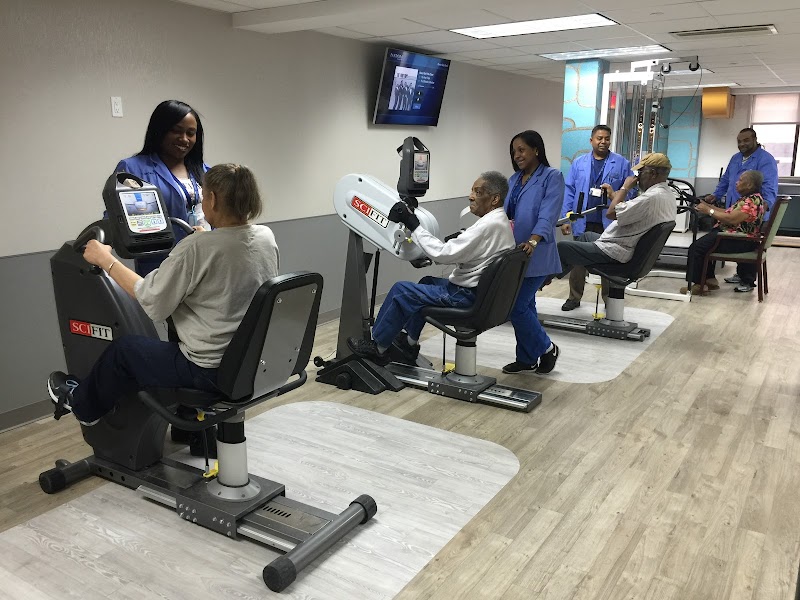
How is East Haven Nursing & Rehabilitation Center Staffed?

CMS rates EAST HAVEN NURSING & REHABILITATION CENTER's staffing level at 3 out of 5 stars, which is average compared to other nursing homes. Staff turnover is 27%, compared to the New York average of 46%. This relatively stable workforce can support continuity of care.

What Have Inspectors Found at East Haven Nursing & Rehabilitation Center?

State health inspectors documented 26 deficiencies at EAST HAVEN NURSING & REHABILITATION CENTER during 2020 to 2025. These included: 26 with potential for harm.
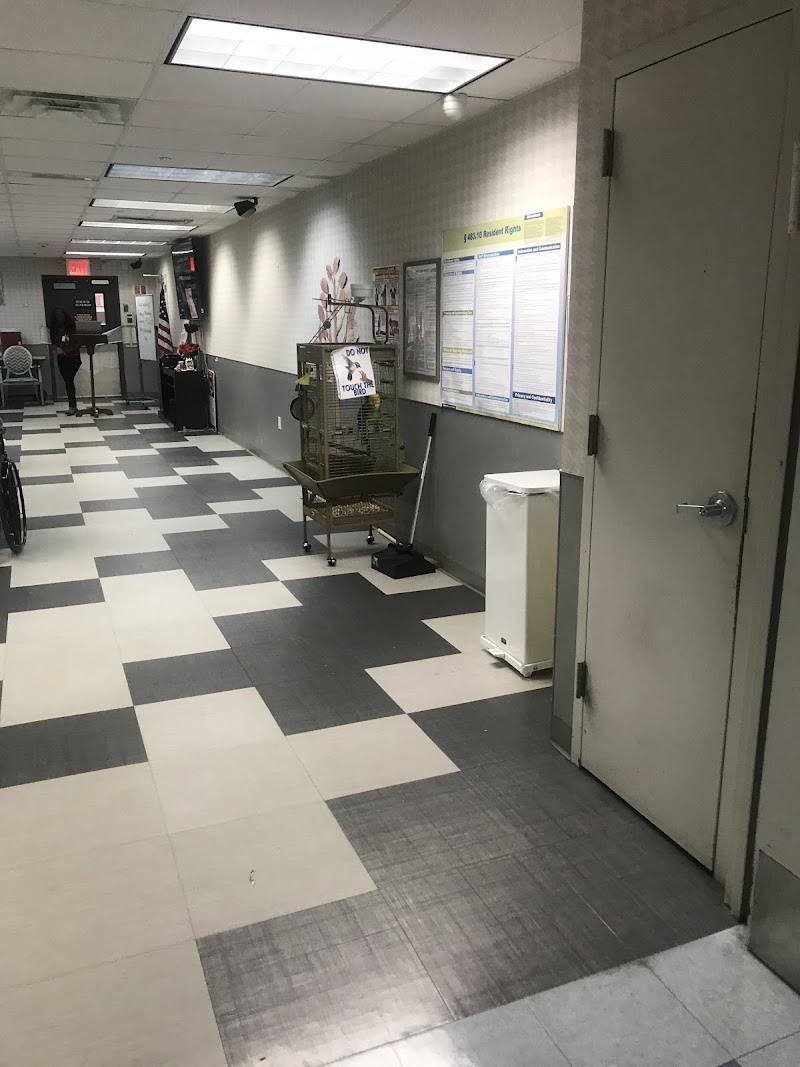
Who Owns and Operates East Haven Nursing & Rehabilitation Center?

EAST HAVEN NURSING & REHABILITATION CENTER is owned by a for-profit company. For-profit facilities operate as businesses with obligations to shareholders or private owners. The facility operates independently rather than as part of a larger chain. With 200 certified beds and approximately 191 residents (about 96% occupancy), it is a large facility located in BRONX, New York.
How Does East Haven Nursing & Rehabilitation Center Compare to Other New York Nursing Homes?

Compared to the 100 nursing homes in New York, EAST HAVEN NURSING & REHABILITATION CENTER's overall rating (2 stars) is below the state average of 3.1, staff turnover (27%) is significantly lower than the state average of 46%, and health inspection rating (2 stars) is below the national benchmark.

What Should Families Ask When Visiting East Haven Nursing & Rehabilitation Center?

Based on this facility's data, families visiting should ask: "Can I visit during a mealtime to observe dining assistance and food quality?" "How do you handle medical emergencies, and what is your hospital transfer rate?" "Can I speak with family members of current residents about their experience?"

Is East Haven Nursing & Rehabilitation Center Safe?

Based on CMS inspection data, EAST HAVEN NURSING & REHABILITATION CENTER has a clean safety record: no substantiated abuse findings (meaning no confirmed cases of resident harm), no Immediate Jeopardy citations (the most serious violation level indicating risk of serious injury or death), and is not on the Special Focus Facility watch list (a federal program monitoring the lowest-performing 1% of nursing homes). The facility has a 2-star overall rating and ranks #100 of 100 nursing homes in New York. While no facility is perfect, families should still ask about staff-to-resident ratios and recent inspection results during their visit.

Do Nurses at East Haven Nursing & Rehabilitation Center Stick Around?

Staff at EAST HAVEN NURSING & REHABILITATION CENTER tend to stick around. With a turnover rate of 27%, the facility is 19 percentage points below the New York average of 46%. Low turnover is a positive sign. It means caregivers have time to learn each resident's needs, medications, and personal preferences. Consistent staff also notice subtle changes in a resident's condition more quickly.

Was East Haven Nursing & Rehabilitation Center Ever Fined?

EAST HAVEN NURSING & REHABILITATION CENTER has been fined $14,819 across 5 penalty actions. This is below the New York average of $33,227. While any fine indicates a compliance issue, fines under $50,000 are relatively common and typically reflect isolated problems that were subsequently corrected. Families should ask what specific issues led to these fines and confirm they've been resolved.

Is East Haven Nursing & Rehabilitation Center on Any Federal Watch List?

EAST HAVEN NURSING & REHABILITATION CENTER is not on any federal watch list. The most significant is the Special Focus Facility (SFF) program, which identifies the bottom 1% of nursing homes nationally based on persistent, serious quality problems. Not being on this list means the facility has avoided the pattern of deficiencies that triggers enhanced federal oversight. This is a positive indicator, though families should still review the facility's inspection history directly.