MOSHOLU PARKWAY NURSING & REHABILITATION CENTER

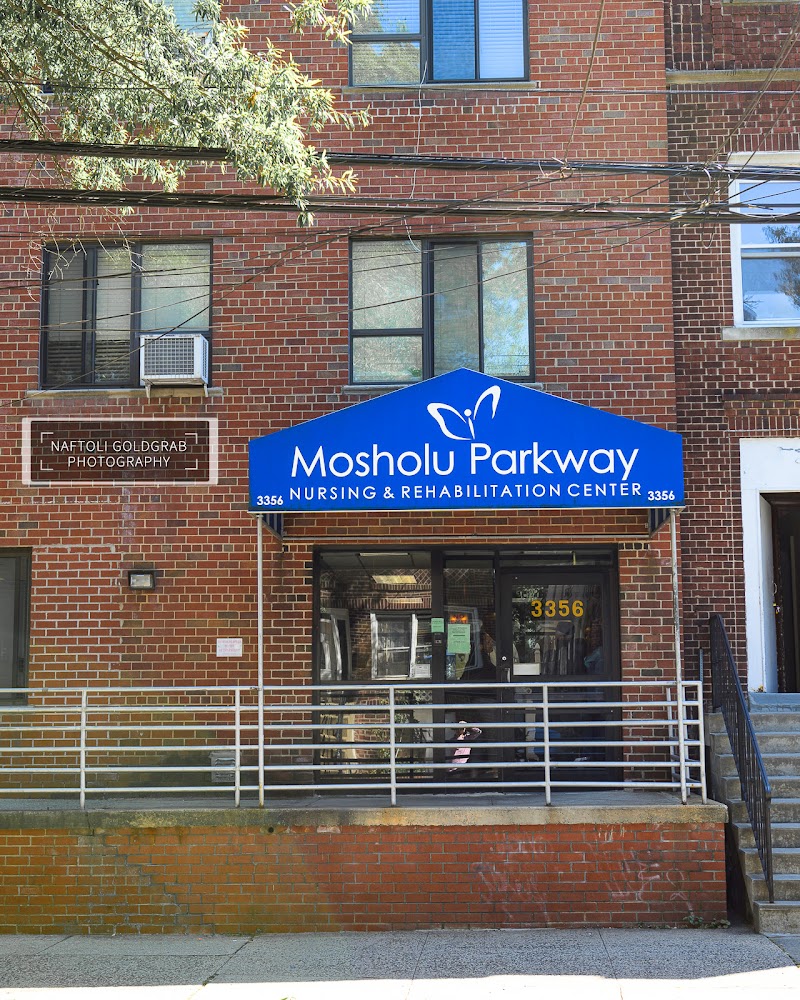
3356 PERRY AVENUE, BRONX, NY 10467 (718) 655-3568
For profit - Corporation 122 Beds Independent Data: November 2025
Trust Grade
48/100
#424 of 594 in NY
Last Inspection: August 2024

Within standard 12-15 month inspection cycle. Federal law requires annual inspections.

Overview

Moshulu Parkway Nursing & Rehabilitation Center has a Trust Grade of D, which indicates below-average performance with some concerns. It ranks #424 out of 594 facilities in New York, placing it in the bottom half, and is #38 out of 43 in Bronx County, suggesting few better local options. While the facility has shown improvement in addressing issues, decreasing from 13 to 2 problems recently, it still has serious health inspection and staffing ratings of 1 out of 5 stars, indicating significant weaknesses in these areas. Staffing turnover is at 41%, which is slightly above the state average, and the facility has troubling findings, including improper food storage and unsanitary garbage disposal practices, as well as pest problems in food areas. Despite these issues, the facility has a solid quality measure rating of 5 out of 5 stars, indicating some strengths in the care provided.

Trust Score
D
48/100
In New York
#424/594
Bottom 29%
Safety Record
Low Risk
No red flags
Inspections
Getting Better
13 → 2 violations
Staff Stability
○ Average
41% turnover. Near New York's 48% average. Typical for the industry.
Penalties
✓ Good
$3,174 in fines. Lower than most New York facilities. Relatively clean record.
Skilled Nurses
⚠ Watch
Each resident gets only 20 minutes of Registered Nurse (RN) attention daily — below average for New York. Fewer RN minutes means fewer trained eyes watching for problems.
Violations
⚠ Watch
24 deficiencies on record. Higher than average. Multiple issues found across inspections.
★★☆☆☆
2.0
Overall Rating
★☆☆☆☆
1.0
Staff Levels
★★★★★
5.0
Care Quality
★☆☆☆☆
1.0
Inspection Score
Stable
2024: 13 issues
2025: 2 issues

The Good

  • 5-Star Quality Measures · Strong clinical quality outcomes
  • Full Sprinkler Coverage · Fire safety systems throughout facility
  • No fines on record
  • Staff turnover below average (41%)

    7 points below New York average of 48%

Facility shows strength in quality measures, fire safety.

The Bad

2-Star Overall Rating

Below New York average (3.1)

Below average - review inspection findings carefully

Staff Turnover: 41%

Near New York avg (46%)

Typical for the industry

Federal Fines: $3,174

Below median ($33,413)

Minor penalties assessed

The Ugly 24 deficiencies on record

Jul 2025 2 deficiencies
CONCERN (D) 📢 Someone Reported This

A family member, employee, or ombudsman was alarmed enough to file a formal complaint

Potential for Harm - no one hurt, but risky conditions existed

Report Alleged Abuse (Tag F0609)

Could have caused harm · This affected 1 resident

**NOTE- TERMS IN BRACKETS HAVE BEEN EDITED TO PROTECT CONFIDENTIALITY** Based on record review, and interviews conducted during an Abbreviated Survey (NY00373522), the facility did not ensure that all...

Read full inspector narrative →
**NOTE- TERMS IN BRACKETS HAVE BEEN EDITED TO PROTECT CONFIDENTIALITY** Based on record review, and interviews conducted during an Abbreviated Survey (NY00373522), the facility did not ensure that all alleged violations involving abuse, neglect, exploitation, mistreatment, or misappropriation of resident property were reported immediately, but not later that two (2) hours after the allegation is made, if the events that caused the allegation involved abuse or resulted in serious bodily injury, or not later than 24 hours if the events that caused the allegation do not involved abuse and do not involve serious bodily injury, to the administrator of the facility and to other officials (including to the State Agency). This was evident for one (1) out of three (4) residents (Resident #2) sampled. Specifically, Resident #2 was observed sitting on the floor close to their bed with their rolling walker close by. Milk was spilled from an opened container that was in Resident #2's basket (attached to rolling walker) at approximately 4:25 PM on 02/22/2025. Resident #1 had no visible injuries. However, on 02/25/2025 at approximately 5:00 PM, Resident #2 was observed with grimacing while they were attempting to stand. An x-ray result dated 02/26/2025 documented an acute fracture of the left femur with osteoporosis. Resident #2 was transferred to the hospital on [DATE] at 11:20 PM where they subsequently underwent a closed reduction internal fixation (surgical procedure where metal implants hold broken bones together as they heal) surgical procedure of the left hip. The facility did not report the fracture (injury of unknown origin) within 2-hours to the New York State Department of Health. The facility became aware of the fracture on 02/26/2025 (unsure of time) and reported the fracture to the Department of Health on 02/27/2025 at 1:31 PM. The findings are: The facility's policy and procedure entitled Abuse Prevention, last reviewed 12/2018, documents that all alleged violations involving abuse, neglect, exploitation or mistreatment, including injuries of unknown source and misappropriation of resident property, are reported immediately, but no later than 2 hours after the allegation is made. If the events that cause the allegation do not involve abuse and do not result serious bodily injury, to the administrator of the facility and other officials (including to the State Survey Agency and adult protective services where state law provides for jurisdiction in long-term facilities) in accordance with State law through established procedures. The facility's Policy and Procedure titled Resident Accident and Incident with a review date of 10/20/2024 documented that it is the policy of this facility to assess all residents of the facility on admission, readmission. Whenever a change of condition occurs, to identify risk factors, and to implement appropriate interventions to decrease or to prevent incidents/accidents. All Accident and Incident Reports will have supportive documentation in the nursing progress notes that describes the occurrences, the vital signs, full physical assessment, interventions, and notification of the family/designated representative and the physician. For all accidents, the resident will be carried on the report for 72 hours. The Charge Nurse will revise the Certified Nursing Accountability Record, including pertinent preventative measures, as needed. The Comprehensive Care Plan will be reviewed and revised as needed to reflect the occurrence and preventative measures. Resident #2 was admitted to the facility with diagnoses including Alzheimer's Dementia, Cancer, and Diabetes Mellitus. The Minimum Data Set, an assessment tool, dated 11/02/2024 documented Resident #2 had severely impaired cognition. The facility's Summary of Investigation dated 02/26/2025 documented on 02/22/2025 at 4:25 PM Resident #2 had an unwitnessed fall. Resident #2 was observed sitting on the floor near their bed with their rolling walker nearby and an opened container of milk spilling as it was leaning on its side in Resident #2's basket. Resident #2 was noted with no injuries and denied of pain. Range of motion was performed to both upper and lower extremities with no pain observed. On 02/25/2025 at 11: 17 PM Resident #2 was observed with grimacing when they attempted to ambulate. On 02/26/2025 at 4:55 PM, the (x-ray) result showed a hairline fracture of the proximal left femur with osteoporosis. Resident #2 was sent to the hospital on [DATE] at 6:00 PM. The facility investigation concluded that abuse, neglect, or mistreatment did not occur. Resident #2's bed was in a low position, and they were wearing nonskid socks. The floor prior to the incident was clean and dry and without clutter. A radiology report dated 02/26/2025 at 4:55 PM documented that an x-ray was completed of Resident #2' bilateral hip. The x-ray results showed an acute fracture of the left femur with osteoporosis. The right hip had no fracture. Osteophyte (bone spur) formation. During a telephone interview on 06/17/2025 at 3:41 PM, the Assistant Director of Nursing stated that the Director of Nursing was not at the facility at the time of the incident and that they were responsible for reporting the fracture. The Assistant Director of Nursing stated the incident was not reported to the New York State Department of Health, because it was their understanding they were supposed to report within 24 hours not within the two (2) hours window after identifying an injuries days after the incident. The Assistant Director of Nursing stated they misinterpreted the policy on reporting because initially when the incident happen Resident #2 was assessed with no injuries or pain. The Assistant Director of Nursing stated the facility became aware of the fracture of the left femur three (3) days after the incident. During a telephone interview on 06/18/2025 at 12:25 PM, the Administrator stated they do not know why the incident was not reported within 2 hours because they were not the acting Administrator at the time of the incident. The Administrator stated that the result of a serious bodily injury, an injury of unknown origin or if an abuse was caused by neglect or mistreatment should be reported within two (2) hours to the New York State Department of Health. 10 NYCRR 415.4 (b)
CONCERN (D) 📢 Someone Reported This

A family member, employee, or ombudsman was alarmed enough to file a formal complaint

Potential for Harm - no one hurt, but risky conditions existed

Quality of Care (Tag F0684)

Could have caused harm · This affected 1 resident

**NOTE- TERMS IN BRACKETS HAVE BEEN EDITED TO PROTECT CONFIDENTIALITY** Based on observation, record review, and interviews conducted during an abbreviated survey (NY00370671 and NY00373522), the faci...

Read full inspector narrative →
**NOTE- TERMS IN BRACKETS HAVE BEEN EDITED TO PROTECT CONFIDENTIALITY** Based on observation, record review, and interviews conducted during an abbreviated survey (NY00370671 and NY00373522), the facility did not ensure that a resident received the necessary care and treatment in a timely manner and in accordance with professional standards of practices. This was evident in two (2) out of five (5) residents (Resident #1 and Residents #2) sampled. Specifically, 1.) on 01/30/2025 at 12 midnight Certified Nursing Assistant #1 observed Resident #1 at the sink in their room holding their right hand under the cold water. According to Certified Nursing Assistant #1, they observed Resident #1's right hand to be a little red but they did not report it to the nurse. At 4:30 AM on 01/30/2025, Certified Nursing Assistant #2 observed Resident #1 at the sink in their room holding their right hand under the cold water. Certified Nursing Assistant #2 stated that Resident #1's right was bloody, swollen, and red. Registered Nurse Supervisor #1 was notified, and Resident #1 was transferred to the hospital on [DATE] at 9:45 AM. The Emergency Department to Hosp-admission discharged summary dated 01/30/2025 documented that Resident #1 sustained an unwitnessed one percent, second degree superficial partial thickness burn due to putting their hand in hot water. Resident #1 was first observed at midnight with redness to their right hand, the charge nurse or nursing supervisor was not notified, and there were no interventions implemented. Additionally, Resident #1 was not transferred to the hospital timely. 2.) Registered Nurse Supervisor #2 stated that while they were conducting rounds on 02/25/2025 at 9:00 AM they observed Resident #2 with facial grimacing; they notified Medical Doctor #1 after morning report ended (unsure of time), and Medical Doctor #1 ordered a STAT x-ray on 02/25/2025 (unsure of time). The Physician's Order dated 02/25/2025 revealed that the x-ray was ordered at 3:02 PM. The diagnostic x-ray results revealed that the x-ray was done on 02/26/2025 and the diagnostic medical doctor signed off on the results at 4:57 PM. The x-ray results revealed that Resident #1 sustained an acute fracture of the left femur in normal alignment with osteoporosis. The facility received the x-ray results at 4:55 PM on 02/26/2025. There was no documented evidence to support that a STAT x-ray was ordered. Resident #2 was transferred to the hospital on [DATE] at 6:00 PM where they subsequently underwent a closed reduction internal fixation (surgical procedure used to treat bone fractures).The findings include: The facility's Policy and Procedure titled Resident Accident and Incident with a review date of 10/20/2024 documented that it is the policy of this facility to assess all residents of the facility on admission, readmission. Whenever a change of condition occurs, to identify risk factors, and to implement appropriate interventions to decrease or to prevent incidents/accidents. All Accident and Incident Reports will have supportive documentation in the nursing progress notes that describes the occurrences, the vital signs, full physical assessment, interventions, and notification of the family/designated representative and the physician. For all accidents, the resident will be carried on the report for 72 hours. The Charge Nurse will revise the Certified Nursing Accountability Record, including pertinent preventative measures, as needed. The Comprehensive Care Plan will be reviewed and revised as needed to reflect the occurrence and preventative measures. The facility's Policy and Procedure titled STAT X-rays with a revised date of 09/18/2024 documented to ensure timely and appropriate ordering, communication, and completion of STAT X-rays for residents, ensuring promptly diagnosis and treatment while minimizing risk to resident health and safety. The nurse must notify the radiology vendor via telephone of the need for a STAT X-ray. The radiology vendor must provide the nurse a STAT confirmation number. The time of order, notification, and vendor acknowledged must be documented. The facility's Policy and Procedure titled [NAME] in Condition with a review date of 08/24/2024 documented the facility promptly will notifies the resident's attending physician, and the resident representative of changes in the resident's medical/mental condition and/or status. Resident #1 was admitted to the facility with diagnoses including Major Depressive disorder, Diabetes Mellitus, non-Alzheimer Disease. The Minimum Data Set, an assessment tool, dated 11/02/2024 documented that Resident #1 had moderately impaired cognition The facility's Summary of Investigation dated 01/31/2025 documented that on 01/30/2025 at 4:30 AM, Resident #1 was observed running their right hand under cold water in the sink in their room. Upon inspection of the right hand, Certified Nursing Assistant #2 observed Resident #2's right hand to be red and swollen. Certified Nursing Assistant #2 called out to Licensed Practical Nurse #1 on the unit to report their finding. Upon the assessment by Registered Nurse Supervisor #1, Resident #1's right hand was observed to be red, swollen, bleeding, and the skin peeling. The area was cleansed, and dressing was provided to the right hand. Resident #1 was transfer to the hospital for treatment of burn to the right hand. The facility concluded that there was no evidence to substantiate abuse, neglect, or mistreatment. It was determined that Resident #1 had sustained the burn to their right hand on 01/29/2025 at approximately 10:30 PM by running their right hand under the hot water for a prolong time which led to the flood in their room. There was no mental, psychosocial or psychological harm or distress to Resident #1. The water temperature was taken in all residents' rooms and bathrooms where residents have access to running water. All the water temperatures noted to be under 118 degrees. There was no documented evidence to support that Resident #1 held their right hand under the hot water for a prolong time on 01/29/2025 at 10:30 PM. A Nursing Progress note by Licensed Practical Nurse #1 dated 01/30/2025 at 8:03 AM documented that they observed Resident #1 sitting on their buttocks in front of the sink (time documented). Resident #1 was assessed with no visible injuries noted from the fall. Resident #1's right hand appeared red, swollen with skin peeling. Resident #1 complained of pain upon touch. Medical Doctor #1 was informed and ordered a wound consult. Resident #1's right hand was cleansed and covered with a gauze dressing. A Nursing Progress note by Assistant Director of Nursing dated 01/30/2025 at 7:57 PM documented that the writer was called to the unit by Licensed Practical Nurse #2 at 8:50 AM to assess Resident #1's right hand. The assessment showed redness to the full length of fingernails and palm of hand, swelling at the affected area was observed above as well as seeping onto Resident #1's gown. Resident #1 had no signs of pain (no crying, moaning or needed to be consoled). Resident #1 was repeatedly attempting to pick at the skin on the affected hand. The writer immediately wrapped the hand with saline soaked rolled gauze and prepped Resident #1 for transfer to the hospital. Resident #1 was sent to the hospital at 9:45 AM. An Emergency Department to Hosp-admission discharged summary dated 01/30/2025 documented one percent, second degree superficial partial thickness burn due to putting their hand in hot water. No signs of gross infections. Incident was unwitnessed. During an interview on 06/17/2025 at 2:30 PM Certified Nursing Assistant #1 stated that they were assigned to Resident #1 on 01/29/2025 on the 11:00 PM-7:00 AM shift (into the morning of 01/30/2025 at 7:00 AM). Certified Nursing Assistant #1 stated that they frequently made rounds but was unsure of the time that they last saw Resident #1 in their room. Certified Nursing Assistant #1 stated during their rounds at around 12 midnight on 01/30/2025, they observed Resident #1 at the sink in their room holding their right hand under the water. Certified Nursing Assistant #1 stated that they tested the water, and it was cold. Certified Nursing Assistant #1 stated that when they turned off the cold water, they observed that Resident #1 was picking at their right thumb and the right hand was a little red. Certified Nursing Assistant #1 stated that they called Certified Nursing Assistant #2 and showed them Resident #1's hand, but they did not report the redness to Licensed Practical Nurse #1 because Resident #1 always picked on their hands. During a telephone interview on 06/24/2025 at 8:30 AM, Certified Nursing Assistant #2 stated that they worked from 12 midnight 01/30/2025 to 8:00 AM on 01/30/2025. Certified Nursing Assistant #2 stated that Certified Nursing Assistant #1 called them and showed them Resident #1's right hand that was a little red with the skin peeling. Certified Nursing Assistant #2 stated that Certified Nursing Assistant #1 also redirected Resident #1 back into their bed. Certified Nursing Assistant #2 stated that they were not assigned to Resident #1 and that they did not report the redness to Licensed Practical Nurse #1. Certified Nursing Assistant #2 stated that they made rounds at 4:00 AM on 01/30/2025 and that Resident #1 was asleep in their bed. However, when they made rounds again at approximately 4:30 AM they heard water running in Resident #1's room and went to see what was happening. Certified Nursing Assistant #2 stated that they observed Resident #1 standing at the sink with their right hand under the water and they were picking on their right hand. Certified Nursing Assistant #2 stated that they checked the water temperature, and the water was cold. Certified Nursing Assistant #2 stated that after they turned the water off, they observed that Resident #1's right hand was red, swollen, and appeared to be bloody and they called out for Licensed Practical Nurse #1. Certified Nursing Assistant #2 stated that while they were waiting for Licensed Practical Nurse #1, they observed a resident ambulating with unsteady gait in the hallway and they went and attend to that resident in the hallway. Certified Nursing Assistant #2 stated when they returned to Resident #1's room, they observed Resident #1 sitting on the floor in front of the sink. There was no water on the floor. During a telephone interview on 06/17/2025 at 2:47 PM, Registered Nurse Supervisor #1 stated that they worked from midnight to 8:00 AM on 01/30/2025. Registered Nurse Supervisor #1 stated on 01/30/2025 at 4:30 AM they responded to Resident #1's room and observed Resident #1 sitting on the floor by the sink in their room. Registered Nurse Supervisor #1 stated that Resident #1's nightgown had red stains at the lower portions of the nightgown. Registered Nurse Supervisor #1 stated that they assessed Resident #1 and whose right hand (palm, front, back, and fingers) had peeling skin that left the right-hand red staining anything that the hand touched. Registered Nurse Supervisor #1 stated that Licensed Practical Nurse #1, Certified Nursing Assistants #1 and Certified Nursing Assistant #2 were all trying to find out what caused the skin on Resident #1's right hand to be peeling. Registered Nurse Supervisor #1 stated that the hot water pipe was turned off from under the sink prior to staff observing Resident #1 at the skin. Registered Nurse Supervisor #1 stated that a picture of Resident #1's right hand with the fall report was texted to Medical Doctor #1 who ordered an x-ray. Registered Nurse Supervisor #1 stated that they were not clear as to why Medical Doctor #1 ordered an x-ray; so, they called Medical Doctor #1 and spoke with them about Resident #1's right hand. Registered Nurse Supervisor #1 stated that it was discussed that a wound consultant would be better. Registered Nurse Supervisor #1 stated they endorsed the report to the incoming morning shift nurse for further action. Registered Nurse Supervisor #1 stated that they called the Director of Nursing and the Administrator (unsure of time), but there were no answers. During a telephone interview on 06/26/2025 at 9:52 AM the Assistant Director of Nursing stated that they became aware of the incident at 9:15 AM on 01/30/2025. The Assistant Director of Nursing stated that they were instructed to check on Resident #1 and they went to the unit to check Resident #1. The Assistant Director of Nursing stated that palm, fingers on Resident #1's right hand was red and swollen. There was no bleeding. The Assistant Director of Nursing stated that they cleansed Resident #1's right hand with Normal Saline and wrapped the hand with a saline soaked gauzed. The Assistant Director of Nursing stated that they suspected that Resident #1 sustained a burn to the right hand and that they immediately transferred Resident #1 to the hospital for further evaluation. During an interview on 06/16/2025 at 1:29 PM, the Director of Nursing stated that the Assistant Director of Nursing notified them between 9:30 AM and 10:00 AM on 01/30/2025 while Resident #1 was being transferred to the hospital. The Director of Nursing stated that during their investigation it was revealed that staff observed water overflowing from the sink in Resident #1's room on 01/29/2025 at around 10:30 PM. The Director of Nursing stated that Resident #1 was not assessed at the time because no one saw Resident #1 at the sink, and no one knew that Resident #1 was burned. The Director of Nursing stated that Certified Nursing Assistant #1 and Certified Nursing Assistant #2 should have reported to the redness to Licensed Practical Nurse #1 when they first observed Resident #1's hand. The Director of Nursing stated that Resident #1 was on supervision at the nursing station until bedtime. The Director of Nursing stated that the hot water temperature in random rooms, bathrooms, and shower rooms was checked, and no issues were identified. During a telephone interview on 06/23/2025 at 8:40 AM Medical Doctor 1 stated that they are no longer employed at the facility and that they are unsure of the information because they no longer have access to Resident #1's medical record. However, they recalled Licensed Practical Nurse 1 reporting to them that Resident #1's right hand was swollen and that they ordered an x-ray of the right hand. Medical Doctor #1 stated that Licensed Practical Nurse #1 did not mention to them that Resident #1's hand was red or bloody. Medical Doctor #1 stated that they received another call from Registered Nurse Supervisor #1 (unsure of time) early that morning (01/30/2025) and they ordered for the resident to be transferred to the hospital. Resident #2 was admitted to the facility with diagnoses including Alzheimer's Dementia, Cancer, and Diabetes Mellitus. The Minimum Data Set, an assessment tool, dated 11/02/2024 documented Resident #2 had severe cognitive impairment. Resident #2 used a rolling walker and required supervision. Resident #2 required supervision to walk 10 feet, 50 feet with two turns, and to walk 150 feet in corridor or similar space. Resident #2 also required set supervision or touching assistance for eating and drinking liquid. A Fall Risk Assessment/Quarterly document dated 08/20/2024 documented Resident #2 scored 15 denoting high risk for fall. A Fall Risk Assessment/Quarterly document dated 08/20/2024 documented Resident #2 scored 15 denoting high risk for fall. A Fall Care Plan dated 08/21/2024 documented interventions for staff to provide a safe, secure, and clutter free environment. Place call bell within reach and answered promptly. A Nursing Note by Assistant Director of Nursing dated 02/22/2025 at 7:39 PM documented Resident #2 was observed sitting on the floor near their bed with arms and legs extended outward. The rolling walker was nearby, and an opened container of milk spilling as it was leaning on its side in Resident #2's basket. Resident #2 denied of pain, no distress noted. Medical Doctor #1 was notified. An unwitnessed Report (Accident/Incident) and Summary of Report dated 02/22/2025 documented at 4:25 PM Resident #2 slipped and fell to the ground as they were walking with an opened container of milk. The floor was noted with trail of spilled milk, no clutter noted. Resident #2 was assessed with no injury noted and denied of pain. The investigation concluded that the opened container of milk (in Resident #2's rolling walker) had contributed to the fall. An Occupational note by Occupational Therapist #1 dated 02/25/2025 at 1:10 PM documented range of motion and muscle movement test continue to remain the same. No visible injury noted. Resident #2 did not complain of pain after the fall and no fundamental changes noted. Resident #2 continue to ambulate around the facility with supervision using a rolling walker. A Physician's Order dated 02/25/2025 at 3:05 PM documented Femur (two view) anterior/posterior and lateral.There was no documented evidence the x-ray was ordered as STAT. A Nursing Progress note by Licensed Practical Nurse #6 dated 02/25/2025 at 5:02 PM documented status post day 3/3 fall incident. An x-ray was ordered to bilateral hip and lower extremities. Resident #1 was observed grimacing in pain when standing or moving their lower extremities. Tylenol 650 milligram given for pain. A Nursing Progress note by Licensed Practical Nurse #9 dated 02/25/2025 at 11:17 PM documented Resident #1 was alert and responsive, status post fall 3/3. X-ray was ordered to bilateral hips and lower extremities, waiting for technician. Resident #1 was observed with pain when standing or moving lower extremities, Tylenol 650 milligram for pain effective. Will continue to monitor. The facility's Summary of Investigation dated 02/26/2025 documented on 02/22/2025 at 4:25 PM Resident #2 had an unwitnessed fall. Resident #2 was observed sitting on the floor near their bed with their rolling walker nearby. An opened container of milk was spilling as the container was leaning on its side in Resident #2's basket (basket attached to rolling walker). Resident #2 was observed with no injuries and denied pain. Ranged of motion was performed to both upper and lower extremities and no pain was observed. On 02/25/2025 at 11:17 PM Resident #2 was observed with grimacing when they were attempting to ambulate. On 02/26/2025 at 4:55 PM result (x-ray) showed hairline fracture of proximal left femur with osteoporosis. Resident #2 was sent to the hospital on [DATE] at 6:00 PM. The facility investigation concluded that abuse, neglect, or mistreatment did not occur. Resident #2 bed was in low position, and they were wearing nonskid socks. The floor prior to the incident was clean, dry and without clutter. A Nursing Progress note by Licensed Practical Nurse #2 dated 02/26/2025 at 8:06 AM documented status post fall/incident on 02/22/2025 grimacing when standing. Medical Doctor #1 ordered an x-ray to bilateral hip and lower extremities waiting for technician. Tylenol ongoing for pain. A Nursing Progress note by Registered Nurse Supervisor #2 dated 02/26/2025 at 11:25 AM documented writer followed up with STAT x-ray to bilateral hip and lower extremities that was not completed on 02/25/2025. As per technician unfortunately there are a lot of STAT x-ray orders yesterday (02/25/2025), and that Resident #2 was on schedule for today (02/26/2025). There was no documented evidence that Medical Doctor #1 was notified that the x-ray was delayed. A Nursing Progress note by Licensed Practical Nurse #10 dated 02/26/2025 at 11:20 PM documented status post incident x-ray done to bilateral hip and lower extremities. Medical Doctor #1 ordered to transfer Resident #1 to the hospital for fractured x-ray results. During a telephone interview on 06/25/2025 at 1:20 PM, Registered Nurse Supervisor #2 stated that they worked from 8:00 AM-4:00 PM on 02/25/2025. Registered Nurse Supervisor #2 stated during their morning arounds at around 9:00 AM on Resident #2's unit they observed Resident #2 with facial grimacing. Registered Nurse Supervisor #2 stated that Resident #2 reported that they have not being able to walk the way they used to since the fall. Registered Nurse Supervisor #2 stated that they did not receive any complaints from the staff regarding Resident #2 grimacing with pain. Registered Nurse Supervisor #2 stated that they told rehab during their morning report (unsure of time) that Resident #2 was not walking as they used to before the fall. Registered Nurse Supervisor #2 stated that they did not assessed Resident #2 because they were just conducting their regular rounds on the unit. Registered Nurse Supervisor #2 state that they called and notified Medical Doctor #1 (unsure of time) that Resident #2 was grimacing with pain, and that Resident #2 reported they have not been able to walk the way they used to since the fall. Registered Nurse Supervisor #2 stated that Medical Doctor #1 ordered for STAT x-ray of bilateral hip and pelvis view. Registered Nurse Supervisor #2 stated every time a STAT order is placed in the computer, the STAT order shows up as standing order. Registered Nurse Supervisor #2 stated that they called the lab on 02/26/2025 (unsure of time) to follow up on the STAT order and was told by a lab technician that the lab was backed up and there was a delay. They do not know the exact time, but the x-ray will be done on 02/26/2025. During a follow up interview on 07/24/2025 at 3:34 PM, Registered Nurse Supervisor #2 stated they notified the Medical Doctor #1 about the delay. During a telephone interview on 06/26/2025 at 2:57 PM, Occupational Therapist #1 stated that they received a verbal order from their Rehab supervisor on 02/25/2025 (unsure of time) before midday for them perform a screen on Resident #2. Occupational therapist #1 stated a Range of Motion/Muscle Movement testing screening were performed on Resident #2 to ascertain if there was any limitation since the fall on 02/22/2025. Occupational Therapist #1 stated based on their screen, Resident #2 continue to remain the same and there was no visible injury noted. Occupational Therapist #1 stated Resident #2 did not complaint of pain while they were being screened. Occupational Therapist #1 stated Resident #2 continued to ambulate around the facility with supervision using their rolling walker. Occupational Therapist #1 stated they recommended that the unit staff to keep an eye on Resident #2 and to check on the resident from time to time or every (two) 2 hours to promote and prevent fall and injury. Occupational Therapist #1 stated that no additional interventions were needed at time. During a telephone interview on 06/23/2025 at 8:30 AM, Medical Doctor #1 stated they are no longer working in the facility and do not have access to Resident #2's medical record. Medical Doctor #1 stated that the nurse (unsure of name) notified them of the incident and that they ordered an x-ray of bilateral hip. Medical Doctor #1 stated at the time of the fall Resident #2 was not observed in distress and did not have any visible injuries and none had reported them. Medical Doctor #1 stated that Resident #2 was transferred to the hospital because the x-ray result revealed a fracture of femur. Medical Doctor #1 stated that Resident #2's activity level had changed after the surgery but had improved after Resident #2 received physical therapy.During a follow up telephone interview on 07/24/2025 at 2:12 PM, Medical Doctor #1 stated they were not informed of the delay in x-ray. Medical Doctor #1 stated if they were informed, they would have immediately ordered the resident to be transferred out to the hospital and documented it in their notes. During a telephone interview on 06/18/2025 at 2:41 PM, the Assistant Director of Nursing stated that they conducted the investigation of the fall on 02/22/2025 and that Resident #2 was assessed with no visible injuries. The Assistant Director of Nursing also stated that Resident #2 was monitored for 72 hours post fall and did not verbalize any complaints of pain until 02/25/2025 at 5:02 PM. The Assistant Director of Nursing stated Tylenol was given for pain and that Medical Doctor #1 was notified and ordered an x-ray of the bilateral hips and bilateral lower extremity. During a follow up telephone interview on 07/24/2025 at 3:21 PM, Assistant Director of Nursing stated Registered Nurse Supervisor #2 should have notified Medical Doctor #1 of the delayed x-ray STAT order. 10 NYCRR 415.12
Aug 2024 13 deficiencies
CONCERN (D)

Potential for Harm - no one hurt, but risky conditions existed

Deficiency F0561 (Tag F0561)

Could have caused harm · This affected 1 resident

**NOTE- TERMS IN BRACKETS HAVE BEEN EDITED TO PROTECT CONFIDENTIALITY** Based on record review and interviews conducted during the Recertification survey from 08/12/2024 to 08/16/2024, the facility di...

Read full inspector narrative →
**NOTE- TERMS IN BRACKETS HAVE BEEN EDITED TO PROTECT CONFIDENTIALITY** Based on record review and interviews conducted during the Recertification survey from 08/12/2024 to 08/16/2024, the facility did not ensure that it promoted and facilitated resident self-determination by supporting resident choice. Specifically, residents' bathing preferences were not honored. This was evident for one of the residents reviewed for Choices out of 27 sampled residents (Resident #76). The findings are: The facility's undated policy and procedure, Bath, Shower/Tub, documented that the facility provides showers two to three times a week and as requested (preference) by the resident/designated representative. Resident #76 was admitted with the diagnoses that include Hypertension and Depression. The quarterly Minimum Data Set assessment dated [DATE] documented Resident #76's cognition as severely impaired and never/rarely made decisions. The resident requires substantial/maximal assistance with showering/bathing self. On 08/13/2024 at 9:10 AM, Resident #76's family representative was interviewed and stated they did not know if they shower the resident. They use a cloth to wash the resident in bed. I would like the resident to get a shower. The Resident Nursing Instruction dated 01/12/2024 documented that Resident #76 is scheduled for showers every Monday and Thursday during the 7:00 AM to 3:00 PM shift. The Resident CNA Documentation History Detail Report dated 07/01/2024 to 08/13/2024 has no documented evidence that showers were provided on Mondays and Thursdays. A review of the progress notes dated 07/16/2024 to 08/05/2024 has no documented evidence that Resident #76 refused to shower. On 08/15/2024 at 11:14 AM, Certified Nursing Assistant # 3 was interviewed, and stated that they had the resident for a month. The resident gets a shower only when they mess up. Resident #76 is usually washed in bed; a bed bath is given in the morning. The resident messed up this morning, so I gave them a shower. I do not know the resident's shower schedule. On 08/16/2024 at 9:16 AM, the Assistant Director of Nursing was interviewed and stated that the unit's supervisors and nurse ensure that care is provided as ordered. The nurses on the unit and the supervisors are supposed to monitor and ensure that the Certified Nursing Assistant documentation is done and completed. There is no code that Resident #76 refused to shower. There is no documentation of the shower on the accountability. There should have been a code if the resident refused to shower. Resident #76 is supposed to get a shower on Mondays and Thursdays. I am surprised that the regularly assigned aide did not know the resident's shower days. On 08/16/2024 at 10:09 AM, the Director of Nursing was interviewed and stated that the Certified Nursing Assistant's assignment is in the instructions, and nurse's aides must read it and follow the instructions. The unit nurse is responsible for ensuring that care is being provided for the residents and that the documentation is done. Resident # 76 is scheduled for showers on Mondays and Thursdays during the day shift. The staff told me that the resident has been refusing showers, but the accountability and progress notes do not document the resident's refusal. It should have been documented that the resident refused to shower. 10 NYCRR 415.5(b) (1-3)
CONCERN (D)

Potential for Harm - no one hurt, but risky conditions existed

Report Alleged Abuse (Tag F0609)

Could have caused harm · This affected 1 resident

**NOTE- TERMS IN BRACKETS HAVE BEEN EDITED TO PROTECT CONFIDENTIALITY** Based on interviews, observations and record reviews made during the Recertification and Complaint Survey (NY00330894) from 8/12...

Read full inspector narrative →
**NOTE- TERMS IN BRACKETS HAVE BEEN EDITED TO PROTECT CONFIDENTIALITY** Based on interviews, observations and record reviews made during the Recertification and Complaint Survey (NY00330894) from 8/12/24 - 8/16/24 the facility did not ensure that all alleged violations including injuries of unknown origin were reported immediately but not later than 2 hours if the event that caused the allegation involved abuse or caused serious bodily injury. Specifically, a resident (Resident #12) sustained a scratch and possible bruise that were not reported to the New York State Department of Health. The findings are: The facility's policy and procedure entitled Abuse Prevention, last reviewed 12/2018, documents that each covered individual must report immediately but not later than 2 hours after forming the suspicion if the events that cause the suspicion result in serious bodily injury or not later than 24 hours if the events that cause the suspicion do not result in serious bodily injury. Resident #12 was admitted to the facility on [DATE] with diagnoses including Osteoporosis and Alzheimer's Disease. A Nursing progress note dated 01/01/2024 at 4:13 PM documented that the resident was observed with a linear scratch across the left cheek. The area was cleansed with normal saline and the resident was resting with a family member at their side. Family member requested a copy of the incident report but the Assistant Director of Nursing explained to them that any medical records would need to be requested tomorrow. An Occurrence Report was initiated on 01/01/2024 and a written statement was made by the resident's assigned caregiver, who stated that the scratch was noted at 2:30 PM, and the resident had last been seen by the aide at 1:00 PM, when they participated in the resident's care alone with a second caregiver. The aide said that they did not notice any scratch at that time. The Nursing Supervisor documented that the resident had a history of grabbing at items and staff and that their fingernails were kept short but that on assessment, they were observed with a sharp edge to one fingernail. The Director of Nursing concluded that no abuse or mistreatment had taken place on 01/03/2024. However, no report was made to the Department of Health between 01/01 and 01/03/2024. On 08/13/2024 at 11:03 AM, the resident's family member was interviewed and stated that when they visited the resident on 01/01/2024, they noticed that the resident had a fresh scratch on their cheek as well as a bruise on their forehead and asked the nurse how these had occurred, but the nurse was unable to tell them how this had happened. The Nursing Supervisor was unable to provide any documentation of the previous 24 hours either, so the family member reported the incident to the Department of Health as an allegation of possible abuse. On 08/13/2024 at 11:13 AM, Resident #12 was observed seated in the unit hallway. The resident had no visible bruises or scratches and showed no fear of passing staff members. The resident's fingernails were observed to be long but shaped. On 08/15/2024 at 8:11 AM, the Assistant Director of Nursing was interviewed and stated that they were the Nursing Supervisor at the time of the incident, but that the Director of Nursing would have had the responsibility of reporting the incident to the Department of Health if it appeared to be evidence of possible abuse. In the case of Resident #12, further investigation showed that there was no evidence of a bruise to the resident's forehead and the most likely explanation for the scratch to their cheek was that the resident had scratched themselves with a fingernail. On 08/16/2024 at 11:26 AM, the Director of Nursing was interviewed and stated that they were not working in the facility on 01/01/2024. However, in the event of any injury of unknown origin, it would be necessary to first report the to the Department of Health and then to investigate the possibility of abuse. The time frame for reporting a serious injury would be two hours, but a minor injury like Resident #12's scratch should still have been reported within 24 hours. 10 NYCRR 415.4 (b)
CONCERN (D) 📢 Someone Reported This

A family member, employee, or ombudsman was alarmed enough to file a formal complaint

Potential for Harm - no one hurt, but risky conditions existed

Investigate Abuse (Tag F0610)

Could have caused harm · This affected 1 resident

**NOTE- TERMS IN BRACKETS HAVE BEEN EDITED TO PROTECT CONFIDENTIALITY** Based on interviews, observations and record reviews made during the Recertification and Complaint Survey (NY00330894) from 8/12...

Read full inspector narrative →
**NOTE- TERMS IN BRACKETS HAVE BEEN EDITED TO PROTECT CONFIDENTIALITY** Based on interviews, observations and record reviews made during the Recertification and Complaint Survey (NY00330894) from 8/12/24 to 8/16/24 the facility did not ensure that an alleged of abuse was thoroughly investigated. Specifically, a resident (Resident #12) with a reported injury of unknown origin had only one written statement gathered from staff and no written investigation summary. The findings are: The facility's policy and procedure entitled Investigating Unexplained Injuries, last reviewed 12/2018, documents that a listing of all personnel including consultants, contract employees, visitors, family members etc. who have had contact with the resident during the past 24-48 hours will be compiled and provided to the person conducting the investigation. Resident #12 was admitted to the facility on [DATE] with diagnoses including Osteoporosis, Repeated Falls and Alzheimer's Disease. A Nursing progress note dated 01/01/2024 at 4:13 PM documents the resident was observed with a linear scratch across their left cheek. An Occurrence Report dated 01/01/2024 at 2:50 PM documents that a physical assessment was completed and the unit physician was notified. A written statement was provided by a Certified Nursing Assistant who stated that they had become aware of the incident at 2:30PM and had last seen the resident at 1:00 PM when they provided care to the resident along with the unit nurse. No other employee statements were documented. The Occurrence Report was signed by the Director of Nursing on 01/03/2024 and documented that the resident had a history of grabbing onto items and, on assessment, was observed to have a sharp edge to one of their fingernails. A check box documented that Determination of Investigation was that no abuse or mistreatment had occurred. However, no investigation summary was documented. Staffing sheets were reviewed for 12/31/2023 and 01/01/2024 and revealed that the staff member named in the Occurrence Report had not worked anywhere in the facility on either of those dates. On 08/15/2024 at 8:11 AM, the Assistant Director of Nursing was interviewed and stated that the nursing supervisor is responsible for filling out the Incident Report but the facility doesn't have a regular supervisor on the day shift. The Assistant Director stated that when an Incident Report is done, employee statements are always gathered; however, the Director of Nursing at the time of the incident did not want anyone other than themselves to document any conclusions. On 08/15/2024 at 11:26 AM, the Director of Nursing was interviewed and stated that when an investigation of an injury is done, the facility starts with the shift at the time of the observation and goes backwards to establish a time frame for when the injury could have occurred. If the resident is able to explain what happened, they are interviewed, but in this case the resident was nonverbal for the most part. Their roommates are usually also interviewed to determine if they witnessed the incident, but in this case neither of the two roommates was alert. The Director stated that they were not working in the facility at the time of the incident and could not locate any other written statements. 10 NYCRR 415.4(b)(3)
CONCERN (D) 📢 Someone Reported This

A family member, employee, or ombudsman was alarmed enough to file a formal complaint

Potential for Harm - no one hurt, but risky conditions existed

Deficiency F0657 (Tag F0657)

Could have caused harm · This affected 1 resident

**NOTE- TERMS IN BRACKETS HAVE BEEN EDITED TO PROTECT CONFIDENTIALITY** Based on record reviews and interviews made during the Recertification Survey from 8/12/24 to 8/16/24, the facility did not ensu...

Read full inspector narrative →
**NOTE- TERMS IN BRACKETS HAVE BEEN EDITED TO PROTECT CONFIDENTIALITY** Based on record reviews and interviews made during the Recertification Survey from 8/12/24 to 8/16/24, the facility did not ensure that a person-centered comprehensive care plan was reviewed and revised to accurately reflect a resident's current status. Specifically, a resident with a new skin break (Resident #12) did not have their Skin Integrity Care Plan updated to reflect the change. The findings are: Resident #12 was admitted to the facility on [DATE] with diagnoses including Osteoporosis, Diabetes and Alzheimer's Disease. A Skin Integrity Care Plan was initiated for the resident on 09/19/2018 with interventions including: completing skin assessments, monitoring resident's skin during care, encouraging fluid intake and food consumption, keeping skin clean and dry, arranging podiatry consults, providing pressure relieving mattress and devices when out of bed, and applying barrier cream. A Nursing Note dated 01/01/2024 at 4:13 PM documents that Resident #12 was observed with a linear scratch across their left cheek. An Occurrence Report was initiated on 01/01/2024 in which it was noted that the resident's care plan had been updated. Resident #12's care plans were reviewed. Their Impaired Skin Integrity care plan was noted to have been updated on 01/05/2024 and documented that their skin was intact and made no mention of any scratch to their face. None of the resident's other care plans noted the scratch either. On 08/15/2024 at 8:11 AM, the Assistant Director of Nursing was interviewed and stated the usually the Registered Nurse on the unit is responsible for updating a resident's care plans. However, there is no regular Registered Nurse on duty on the day shift. Documentation of a scratch would either be found in the nursing notes or in the care plan. On 08/16/2024 at 11:26 AM, the Director of Nursing was interviewed and stated that they were not yet working in the facility when the incident with Resident #12 occurred. Care plans are reviewed quarterly to determine if updates are needed and are reviewed and updated when needed. The Director stated, In this case, the care plan should have been updated. 10 NYCRR 415.11(c)(2)(i-iii)
CONCERN (D)

Potential for Harm - no one hurt, but risky conditions existed

Deficiency F0688 (Tag F0688)

Could have caused harm · This affected 1 resident

**NOTE- TERMS IN BRACKETS HAVE BEEN EDITED TO PROTECT CONFIDENTIALITY** Based on observations, record reviews and interviews conducted during the Recertification survey from 8/12/24 to 8/16/24, the fa...

Read full inspector narrative →
**NOTE- TERMS IN BRACKETS HAVE BEEN EDITED TO PROTECT CONFIDENTIALITY** Based on observations, record reviews and interviews conducted during the Recertification survey from 8/12/24 to 8/16/24, the facility did not ensure that a resident with limited range of motion received appropriate treatment and services to prevent a further decrease in range of motion. This was evident for 1 (Resident # 16) of 2 residents reviewed for Position/Mobility out of a sample of 27 residents. Specifically, Resident # 16 had an active Physician order for bilateral hand gauze to both hands to prevent flexion contracture at the digits, to be worn at all times and remove for Activities of Daily Living (ADL) and skin check. Both hands were observed without the hand gauze on multiple occasions. The findings are: The policy titled Adaptive Device effective 1/15/2020 documents it is the policy of the facility to provide proper adaptive device such as splint, orthosis to maintain or improve residents functional well being and or prevent or slow down the disease process. Resident # 16 diagnoses include: Non-Alzheimer's Dementia, Depression, Bipolar disorder, and Parkinson's Disease The Minimum Data Set 3.0 assessment dated [DATE] documented Resident #16's cognitive level as severe impaired cognition. Resident # 16 had impairment on both sides of upper and lower extremities with orthotics device use by the resident. Resident #16 required substantial assistance for eating, toileting as well as upper and lower body dressing. A Physician's Order initiated on 12/03/2021and last renewed on 8/12/2024 documented to apply bilateral hand gauze to prevent flexion contracture at the digits, to be worn at all times, remove for Activities of Daily Living care and skin checks. The Comprehensive Care Plans Titled Rehab Potential/ ADL Functions and Impaired Skin Integrity initiated on 09/06/2018 updated on 03/01/24 documented: the resident to always have bilateral hand gauze to prevent flexion contracture at the digits to be worn at all times and remove for ADL care and skin care. On 08/12/24 at 10:16 AM, 08/13/24 at 10:14 AM, 08/14/24 at 2:11 PM and 08/15/24 at 10:12 AM. Resident # 16 was observed with contracture of both hands. Bilateral hand gauze were not in place. On 08/15/24 at 09:34 AM Licensed Practical Nurse (LPN) #3 was interviewed and stated they put the hand roll gauze in the resident hands just today, they were not applied since Monday and they do not know why, They were instructed by other staff that Resident #16 needs to have the roll gauze at all times and remove during skin check because it can prevent further contracture and there was an order for that. On 08/15/24 at 09:55 AM Occupational Therapist #1 was interviewed and stated there is an order to apply roll gauze on both hands of Resident #16, to be worn at all times and to be removed during skin care. On 08/15/24 at 10:15 AM Rehab Supervisor #1 was interviewed and stated when there is an order for a device to be applied to the resident. The unit staff applied them and my staff in the rehab department check them to see if they are properly applied. On 08/16/24 at 10:54 AM Certified Nurse Assistant #4 was interviewed and stated they are new on this floor and they saw the hand roll gauze by the bed side table. After washing Resident #16 they put the hand roll gauze in the resident's hands. The nurse did not tell us to apply them, we just saw it there so we put them in the resident's hands. On 08/16/24 at 11:44 AM LPN #4 was interviewed and stated I am not sure what device the resident is wearing for her contracted hands. I float on all floors and they do not remember what device the resident has. On 08/16/24 at 12:49 PM the Director of Nursing was interviewed and stated they were not aware that the hand rolls were not applied to Resident #16, but going forward they will audit together will the Rehab staff for devices that must be in place as ordered by the doctor. 10 NYCRR 415.12(e)(1)
CONCERN (D) 📢 Someone Reported This

A family member, employee, or ombudsman was alarmed enough to file a formal complaint

Potential for Harm - no one hurt, but risky conditions existed

Accident Prevention (Tag F0689)

Could have caused harm · This affected 1 resident

**NOTE- TERMS IN BRACKETS HAVE BEEN EDITED TO PROTECT CONFIDENTIALITY** Based on interviews, observations and record reviews made during the Recertification and Complaint(NY00326358) survey from 8/12/...

Read full inspector narrative →
**NOTE- TERMS IN BRACKETS HAVE BEEN EDITED TO PROTECT CONFIDENTIALITY** Based on interviews, observations and record reviews made during the Recertification and Complaint(NY00326358) survey from 8/12/24 to 8/16/24, the facility did not ensure that each resident received adequate supervision to prevent accidents. Specifically, on 10/18/2023, a resident (Resident #99) eloped from the facility. The findings are: The facility's policy and procedure entitled Wandering Resident/Elopement, last reviewed 04/20/2023, states that each resident will be assessed for wandering behavior and elopement potential on admission. The receptionist monitors the front door 24 hours a day. The front door is kept locked and can be opened by reception only. If the receptionist leaves the front desk for any reason or any period of time, a trained replacement employee must be stationed at the front desk. The reception person must assure that all visitors sign in and out in the designated log book at the reception area. Pictures of residents at risk are taken by nursing staff and posted at the front desk. Resident #99 was admitted to the facility on [DATE] with diagnoses including; Seizure Disorder, Vascular Dementia with Restlessness and Agitation. The Minimum Data Set 3.0 (a resident assessment tool) dated 10/09/2023 documented the resident as severely cognitively impaired. A Social Work note dated 10/04/2023 documents that prior to their admission, the resident had been living in a shelter in [NAME] and was for short-term placement. A Psychiatry Consult dated 10/06/2023 documents that the resident was very confused and restless, with poor attention and concentration, poor impulse control, poor insight and judgment, and had been taking Risperdal 1 mg twice a day for agitation. The Psychiatrist recommended that since the resident had no mental health diagnosis other than depression, the Risperdal be reduced and then discontinued. Instead, they recommended starting Mirtazapine 15 mg at bedtime and Trazodone 25 mg twice a day for depression. Nursing Notes dated 10/13/2023 and 10/17/2023 documented that the resident was observed wandering at night, once stating they were going to the store and the other time that they were going to the kitchen, and each time were returned to bed. A Nursing Note dated 10/18/2023 at 7:17 PM documents that a Code Grey was activated at about 2:00 PM when Resident #99 was reported missing. The premises inside and outside were searched, as was the surrounding neighborhood. The resident's family was contacted and provided their last known addresses, which were also checked. A Nursing Note dated 10/18/2023 at 10:05 PM documents that the resident was located at their previous shelter in [NAME] and was picked up and returned to the facility, having refused to be transported to the hospital for evaluation. A Nursing Note dated 10/18/2023 at 10:43 PM documents that the resident was fitted with a Wanderguard which was applied to their left arm and staff was made aware. The resident was confused and was unable to state how they had gotten from the Bronx to their residence in [NAME]. An Occurrence Report dated 10/18/2023 documents that the resident was reported missing at 2:40 PM. A written statement by the desk attendant documented that they stopped the resident at the exit and asked where they were going. The resident replied that they were a visitor and were leaving. The attendant, who was a porter filling in for a regular receptionist, allowed the resident to leave without checking the photos of new admissions at the desk or the visitors log. The entrance door was unlocked because the buzzer was not working. Following the incident, the porter was terminated. A Psychiatry Consult dated 10/19/2023 documents that the resident was seen following an elopement, was restless, depressed and very confused. The psychiatrist recommended increasing their dose of Trazodone to 50 mg twice a day to address depression and to consider Namenda 5 mg daily x 7 days, then increased to 5 mg twice a day, then 10 mg twice a day for confusion. An Elopement care plan was initiated for the resident on 10/18/2023 and last reviewed 07/16/2024 with a note stating that the resident's Wanderguard had been replaced. Interventions included checking the Wanderguard every shift, being aware of the resident's whereabouts at all times, ensuring hourly monitoring sheets were in use, involving the resident in recreation and encouraging them to eat in the main dining room or a visible area on the unit. On 08/15/2024 at 10:10 AM, Certified Nursing Assistant #7 was interviewed and stated that on 10/18/2023, the rehab therapist escorted the resident to the rehab gym after assisting them with morning care. The resident typically returned to the unit for lunch, and when the lunch trays were collected and the aide realized that Resident #99's tray had not been touched, they called rehab to see if the therapist had brought the resident to the main dining room after their session. Then the aide went to all the other units to search for the resident, went into all the bathrooms, the lobby and the basement. After this, they phoned the Director of Nursing, who called a Code Grey. The aide stated that they then checked the neighborhood down to the Number 2 subway station, the local supermarkets and Montefiore Hospital. The aide stated that after about a three-hour search, they went home, and upon entering the facility on 10/09/2023, they saw the resident back on the unit wearing a Wanderguard. The aide stated that they did not document the resident's whereabouts on any monitoring sheet and that the resident was not on a formal monitoring program following the elopement. On 08/15/2024 at 10:17 AM, Licensed Practical Nurse #5 was interviewed and stated to have been the charge nurse on the unit on 10/18/2023. The nurse stated that in the two weeks or so that Resident #99 had been in the facility, the resident always stayed in their room when they weren't in the rehab gym or the bathroom. There were no wandering episodes during the day and the hospital hadn't mentioned any in the admission paperwork. The nurse stated that therapy doesn't work with residents on a tight schedule, so when the resident was late for lunch on 10/18/2023, they assumed that they were still in the gym. But when the resident never returned to eat, a code was called and the resident was not found anywhere inside or outside the facility. The nurse stated that the resident is now monitored closely although not on a formal schedule and that they mostly stay in their room watching TV. On 08/15/2024 at 11:08 AM, the Occupational Therapist was interviewed and stated that on 10/18/2023, they were working with Resident #99 on ambulation with a Rollator and the safest way to enter and exit an elevator. They then returned the resident to the unit but did not endorse them to any unit staff. The Occupational Therapist stated, The next day when I came to work I was told the resident had eloped to their home, and they wrote me up, but they were self ambulatory. They checked the security video and it turned out that they eloped more than an hour after I brought them back to the unit. On 08/15/2024, two attempts were made to reach the porter who was at the main desk on 10/18/2023, at 12:26 PM and at 1:34 PM, but they were unsuccessful. On 08/16/2024 at 11:39 AM, the Director of Nursing was interviewed and stated that employees who are asked to sit at the reception desk are cross-trained to follow reception protocols. Photos are kept at the front desk of all known wanderers as well as all new admissions whose wandering behavior is unknown. and must be checked whenever there is a suspicion that a resident is attempting to elope. Anyone who notices that any locks are non-functional must immediately report it to Maintenance. 10 NYCRR 415.12(h)(2)
CONCERN (D)

Potential for Harm - no one hurt, but risky conditions existed

Medical Records (Tag F0842)

Could have caused harm · This affected 1 resident

**NOTE- TERMS IN BRACKETS HAVE BEEN EDITED TO PROTECT CONFIDENTIALITY** Based on observation, record review, and interview conducted during a Recertification Survey from 08/12/2024 to 08/16/2024 the f...

Read full inspector narrative →
**NOTE- TERMS IN BRACKETS HAVE BEEN EDITED TO PROTECT CONFIDENTIALITY** Based on observation, record review, and interview conducted during a Recertification Survey from 08/12/2024 to 08/16/2024 the facility did not ensure that medical records were maintained in accordance with accepted professional standards and practices and that they were complete and accurately documented for each resident. This was evident for 1 (Resident #42) of 1 resident reviewed for Dialysis out of 27 sampled residents. Specifically, Resident #42 had a right upper chest central venous catheter for hemodialysis, but the documentation showed an AV Fistula. The findings include: The facility policy and procedure titled Charting and Documentation, last revised 01/05/2024, states that all services provided to the resident, progress towards the care plan goals, or any changes in the resident's medical, physical, functional, or psychosocial condition shall be documented on the resident's medical record. Resident #42 was admitted with a diagnosis of End-Stage Renal Disease (ESRD) and Diabetes Mellitus. The quarterly Minimum Data Set 3.0 assessment dated [DATE] documented that Resident #42 is cognitively intact with a Brief Interview for Mental Status score of 13. The resident is on Dialysis. On 08/12/2024 at 7:20 AM, Resident #42 was observed resting in bed with a right upper chest wall catheter in place. On 08/13/2024 at 10:12 AM, Resident #42 was interviewed and stated that I go to dialysis three times a week, and they use the catheter on my chest. They do not use my arm. A Medical Doctor's Order dated 08/02/2024 documented Non-Functioning Left AV Fistula and a Right 14F 19 cm tunneled central venous catheter in Place for hemodialysis, monitors for Infection daily. The Nurse Progress Notes, dated 08/05/2024 to 08/15/2024, documented the dialysis assessment: AV fistula/AV shunt, bruit/thrill present. The progress notes dated 08/05/2024 to 08/15/2024 did not document that Resident #42 has a central venous catheter for dialysis. On 08/16/2024 at 1:35 PM, Licensed Practical Nurse #2 was interviewed and stated that Resident # 42 went for dialysis. The resident has a left arm fistula, and I felt the bruit and thrill, which I documented in the chart. I know the resident has a central venous catheter to the chest wall. I did not add the catheter when documenting it on the resident record this morning. I overlooked and did not document that the resident had a catheter. On 08/16/2024 at 10:22 AM, the Director of Nursing was interviewed and stated that Resident # 42 is on dialysis thrice a week. The resident has a dialysis catheter on his right upper chest wall. The resident has an AV fistula, but it is not being used. It stopped working, so they put the catheter in for the dialysis. The staff is documenting that the AV shunt/AV fistula is being used for the dialysis, but it is not working. 10 NYCRR 415.22(a)(1-4)
CONCERN (D)

Potential for Harm - no one hurt, but risky conditions existed

Deficiency F0924 (Tag F0924)

Could have caused harm · This affected 1 resident

Based on observation, interview, and record review conducted during the recertification survey from 08/12/2024 to 08/16/2024, the facility did not ensure handrails were firmly affixed and secured to t...

Read full inspector narrative →
Based on observation, interview, and record review conducted during the recertification survey from 08/12/2024 to 08/16/2024, the facility did not ensure handrails were firmly affixed and secured to the wall. This was evident for 1 (Unit #2) of 4 resident units observed during the environmental tour. Specifically, 2 sections of handrails were observed loose and not fully connected to the wall in the hallway of Unit 2. The findings are: Policy and Procedure titled Homelike Environment which is undated documents residents are provided with a safe environment. During multiple observations on Unit #2 between 08/12/2024 at 10:00 AM to 08/15/2024 at 1:00 PM, a handrail in the hallway near the elevator had 2 sections that were loose and not fully linked at a joint connection. There was no documented evidence of the loose handrail was reported in the Maintenance Logbook from December 2023 to August 15, 2024. On 08/15/2024 at 10:45 AM, Certified Nursing Assistant #1 was interviewed and stated they call the maintenance worker when something needs to be fixed and was not aware of a Maintenance Logbook used to report repair concerns. On 08/15/2024 at 11:14 AM the Maintenance Worker was interviewed and stated they addressed repair concerns left in the Maintenance logbook and performed unit rounds daily. Their daily rounds included observations of the handrails on resident units. Maintenance worker also stated they were unable to fix loose handrails because there is only one worker in the maintenance department. On 08/16/2024 at 12:44 PM, The Administrator was interviewed and stated they will talk to the owner of the facility to replace loose hand rails because they are aware if handrails cannot be fixed then they have to be replaced because handrails are important for residents safety. The Administrator also stated they are looking to hire an additional worker for the maintenance department. 10 NYCRR 415.29
CONCERN (E) 📢 Someone Reported This

A family member, employee, or ombudsman was alarmed enough to file a formal complaint

Potential for Harm - no one hurt, but risky conditions existed

Comprehensive Care Plan (Tag F0656)

Could have caused harm · This affected multiple residents

**NOTE- TERMS IN BRACKETS HAVE BEEN EDITED TO PROTECT CONFIDENTIALITY** 2) Resident #85 was admitted to the facility on [DATE] with diagnoses including Diabetes Mellitus, Liver Cirrhosis and Schizoaff...

Read full inspector narrative →
**NOTE- TERMS IN BRACKETS HAVE BEEN EDITED TO PROTECT CONFIDENTIALITY** 2) Resident #85 was admitted to the facility on [DATE] with diagnoses including Diabetes Mellitus, Liver Cirrhosis and Schizoaffective Disorder. The resident's Minimum Data Set (a resident assessment tool) dated 08/14/2024 documented that the resident used hypoglycemic medication. A Physician's Order dated 08/13/2024 for Lantus U100 - 50 units at bedtime and an order dated 08/12/2024 for Humalog U100 - 15 units 3 times a day before meals were in place. The resident's care plans were reviewed and revealed that no care plans was in place for either Diabetes or Insulin Use. On 08/15/2024 at 8:11 AM, the Assistant Director of Nursing was interviewed and stated that when a resident is admitted , their baseline care plan must be completed within 48 hours of their admission and must reflect each of their diagnoses. The Registered Nurse is usually responsible for initiating the care plan, and it is reviewed at the resident's first interdisciplinary care plan meeting. In the case of Resident #85, the unit has no regular Registered Nurse and supervisors have been taking turns providing coverage. On 08/16/2024 at 11:26 AM, the Director of Nursing was interviewed and stated that each resident has an individual plan of care based on the resident's needs. Then each care plan is reviewed on a quarterly basis and is updated as needed. The Director was unable to state why Resident #85 had no Diabetes care plan and stated that it would have been an oversight. 10 NYCRR 415.11(c)(1) Based on record review and interviews conducted during the Recertification and Complaint (NY00330928, and NY00330894) Survey from 08/12/2024 to 08/16/2024, the facility did not ensure a person-centered comprehensive care plan was developed and implemented to meet a resident's needs. This was evident for 2 of 3 residents (Resident #76, and #85) reviewed for care planning out of 27 total sampled residents. Specifically, 1) A comprehensive care plan related to abuse was not developed and implemented for Resident #76 following a resident to resident altercation, and 2) A comprehensive care plan was not developed and implemented to address Resident #85 insulin use. The findings are. The facility's undated policy and procedure titled Care Plans, Comprehensive Person - Centered documented that a comprehensive person-centered care plans that include measurable objectives and time frame to meet resident physical psychosocial and functional needs is developed and implemented for each resident. 1) Resident #76 was admitted with the diagnoses that include Hypertension and Depression. The quarterly Minimum Data Set assessment dated [DATE] documented Resident #76's cognition as severely impaired and never/rarely made decisions. A Nurse's progress note dated 01/03/2024 at 3:59 PM documented that the writer was notified by the porter around 2:20 PM that Resident #24 slapped Resident # 76 in their face in the hallway during a verbal exchange. The facility Summary of Investigation dated 01/03/2024 concluded that there was evidence that abuse, neglect, mistreatment has occurred. There was no documented evidence that a comprehensive care plan was developed with interventions following the resident-to-resident altercation. On 08/16/2024 at 9:02 AM, the Assistant Director of Nursing was interviewed and stated that the registered nurses are responsible for initiating and updating care plans. I am not aware that Resident #76 had no abuse care plan in place. An abuse care plan should have been initiated when the incident occurred. Generally, they are supposed to run through the care plan and ensure that all the care plans are in place. On 08/16/2024 at 10:02 AM, the Director of Nursing was interviewed, and stated that after an incident, if an abuse care plan is in place, it will be updated; if there is no care plan, we will initiate one right away. I was unaware that the care plan was not initiated after the incident. They should have initiated abuse care plan after the incident. The social worker was responsible for ensuring that an abuse care plan was initiated after the incident.
CONCERN (E)

Potential for Harm - no one hurt, but risky conditions existed

Infection Control (Tag F0880)

Could have caused harm · This affected multiple residents

**NOTE- TERMS IN BRACKETS HAVE BEEN EDITED TO PROTECT CONFIDENTIALITY** Resident #36 was admitted with diagnoses of Heart Failure and Peripheral Vascular disease with bilateral below the knee amputati...

Read full inspector narrative →
**NOTE- TERMS IN BRACKETS HAVE BEEN EDITED TO PROTECT CONFIDENTIALITY** Resident #36 was admitted with diagnoses of Heart Failure and Peripheral Vascular disease with bilateral below the knee amputations. An initial wound Care assessment dated [DATE] documented a skin tear type 3 to the Right Below the Knee Amputation site. A Physician Order dated 07/16/2024, documented wound treatment to the skin tear on the Right Below the Knee Amputation site as normal saline cleanse, application of Xeroform gauze and a dry protective gauze daily. On 08/15/2024 at 10:07 AM, an observation was performed with Licensed Practical Nurse #4 performing wound care. Licensed Practical Nurse #4 was observed not wearing a gown and did not change gloves or perform hand washing after removal of the soiled dressings from the wound bed. There was no posting of signage that Enhanced Barrier Precautions were in place for Resident #36 and that personal protective equipment was required for high contact resident care activities. Licensed Practical Nurse #4 was interviewed on 08/15/2024 at 10:20 AM and stated that they did not wear a gown when they performed the wound care treatment because they had no knowledge on Enhanced Barrier Precautions as they were not in serviced on the topic. Licensed Practical Nurse #4 also stated that there was no posting on the resident's door or personal protective equipment cart placed outside of the door and if they would have known, they would have worn a gown. Licensed Practical Nurse #4 further stated that after they performed the wound care treatment, they acknowledged that they should have performed handwashing after removal of the old dressing. On 08/16/24 at 09:03 AM, the Director of Nursing, who is also the Infection Control Preventionist, was interviewed and stated that staff was in-serviced that Enhanced Barrier Precautions was only put in place for residents with MDRO and that staff must be re-inserviced for implementation of Enhanced Barrier Precautions for all resident with indwelling medical devices and wounds. 10 NYCRR 415.19(a)(1-3) Resident #218 was admitted to the facility on [DATE] with diagnoses including Benign Prostatic Hyperplasia, Urinary Retention and Urinary Tract Infection. The resident was admitted with a Foley catheter and an Indwelling Catheter Care Plan was initiated for the resident on 08/07/2024 with interventions including keeping the catheter anchored to prevent excessive tension and changing the catheter on the first of each month. On 08/12/2024 at 10:30 AM, the resident's urinary drainage bag was observed unanchored and on the floor. On 08/14/2024 at 9:13 AM, Certified Nursing Assistant # 8 was interviewed and stated to be the resident's assigned caregiver. The aide stated that they worked with the resident on 08/12/2024 as well but were assigned to the evening shift on that date. The aide stated that the protocol for catheter care were for the drainage bag to be kept off the floor and clipped to the bed frame and said they would be emptying the drainage bag in a few minutes. On 08/14/2024 at 10:25 AM, Certified Nursing Assistant #8 was observed providing catheter care. The aide applied gloves but no other Personal Protective Equipment. They stated that the resident was not on any precautions so they needed no other protection. Subsequently, they touched multiple surfaces including a bedside chair, the bed curtain and the overbed table with their gloved hands before setting out the new packaged catheter tube and bag. The aide then doffed the gloves and applied new ones without washing their hands, and again touched numerous surfaces including the bedside table. Then they opened the packaging, cleansed the area and changed the tube. They again changed gloves without washing their hands and cleaned up the discarded packaging, removing the contents of the old urinary bag to a urinal. They opened the door and carried the soiled items to a communal bathroom while still wearing the same gloves, emptied the contents of the urinal, rinsed the urinal using a handheld shower while still wearing the same gloves, and then doffed the gloves but did not wash their hands. When asked about this, the aide stated that their hands were clean because they had just given the resident a complete bed bath. On 08/16/2024 at 8:49 AM, Licensed Practical Nurse #5 was interviewed and stated that they are responsible for making sure that catheter care is done appropriately. When an aide goes to change the catheter bag, they must wash their hands and put on gloves. Then they must change the gloves whenever they start a new procedure. The drainage bag must be kept off the floor. The nurse stated that they were not working on 08/12/2024 and stated, I do not know what happened on Monday, it was an oversight. On 08/16/2024 at 9:11 AM, Certified Nursing Assistant #9 was interviewed and stated that this was their first day with Resident #218, they were new to the facility and had only done a catheter change once before. The aide stated that they had been taught to wear a gown, gloves and a mask for the procedure and to wash their hands before applying or changing the gloves. The aide said they were also told to attach the new drainage bag to the clip on the bed frame. On 08/16/2024 at 11:49 AM, the Director of Nursing was interviewed and stated that all facility aides are taught based on the standards for catheter care, how to clean a catheter, how to change the bag and the importance of infection control. They are trained to use Personal Protective Equipment, a gown and a mask as well as gloves, but that no residents had been placed on Enhanced Barrier Precautions and that this was an oversight on my behalf. Based on observation, record review, and interviews conducted during the Recertification survey from 08/12/2024 to 08/16/2024, the facility did not ensure that infection control prevention practices and procedures were maintained to provide a safe and sanitary environment to help prevent the development and transmission of communicable diseases and infections. Specifically. Enhanced Barrier Precautions were not maintained 1) during wound care, 2) during foley catheter care and 3) during care of a resident with central venous catheter insertion. This was evident in 3 out of 27 sampled residents, (Resident #36,42, and #218). The findings are but not limited to: The Centers for Medicare and Medicaid Services (CMS) memo titled Center for Clinical Standards and Quality/Quality, Safety & Oversight Group. Ref: QSO-24-08-NH dated 03/20/2024 documented Enhanced Barrier Precautions recommendation now includes using enhanced barrier precautions for residents with chronic wounds or indwelling medical devices during high-contact resident care activities regardless of their multidrug-resistant organism status-effective 04/01/2024. The facility policy and procedure tilted Enhanced Barrier Precautions with the last revised date 04/01/2024 documented that enhanced barrier precaution is an infection control measures designed to reduce transmission of multidrug -resistant organism (MDRO) in the nursing home. Enhanced Barrier Precautions involved gown and glove use during high-contact resident care activities, for residents known to be colonized or infected with multidrug-resistant organism as well as those at risk for multidrug-resistant organism acquisition. (for example, residents with wounds or indwelling medical devices) 1) Resident #42 was admitted with diagnosis of End-Stage Renal Disease (ESRD). Medical Doctor's order dated 08/02/2024 documented right upper Chest Tunneled Central Venous catheter in place for hemodialysis. On 08/12/2024 at 9:28 AM and 08/15/2024 at 9:35 AM, Certified Nursing Assistant #1 gave morning care to Resident #42 and was observed not wearing gown during the care. There was no signage at the resident's room that Enhanced Barrier Precautions were in place or that personal protective equipment was required. On 08/15/2024 at 10:46 AM Certified Nursing Assistant #2 was interviewed and stated that they do not know about Enhanced Barrier Precautions. There are no residents with catheter or pressure ulcer on the unit. Resident #42 is not on Enhanced Barrier Precautions. On 08/15/2024 at 11:35 AM, Certified Nursing Assistant #1 was interviewed and stated that we do not have anyone on the unit on Enhanced Barrier Precautions. Resident #42 is not on Enhanced Barrier Precautions. On 08/15/2024 at 12:25 PM, Licensed Practical Nurse #1 was interviewed and stated that Resident #42 is not on Enhanced barrier Precautions. There are no residents on the unit who requires Enhanced Barrier Precautions. On 08/15/2024 at 3:19 PM, the Director of Nursing who is also the Infection Preventionist was interviewed and stated that Enhanced Barrier Precautions is used for residents with multidrug-resistant organism. We have one resident with Methicillin-resistant Staphylococcus aureus (MRSA) in the urine, and the resident is on Enhanced Barrier Precautions. We have residents with indwelling medical devices, but they do not have multidrug-resistant organism (MDRO), so they are not on Enhanced barrier Precautions. 10 NYCRR 415.19(b)(4)
CONCERN (F)

Potential for Harm - no one hurt, but risky conditions existed

Food Safety (Tag F0812)

Could have caused harm · This affected most or all residents

**NOTE- TERMS IN BRACKETS HAVE BEEN EDITED TO PROTECT CONFIDENTIALITY** Based on observation, record review, and interviews conducted during the Recertification Survey from 8/12/2024 to 8/16/2024, the...

Read full inspector narrative →
**NOTE- TERMS IN BRACKETS HAVE BEEN EDITED TO PROTECT CONFIDENTIALITY** Based on observation, record review, and interviews conducted during the Recertification Survey from 8/12/2024 to 8/16/2024, the facility did not ensure that food was stored, prepared, distributed and served in accordance with professional standards for food service safety. This was evident during the kitchen and food service observations. Specifically, 1.) The dairy and meat walk-in refrigerators contained opened cans and undated, unlabeled, expired food items. 2.) There were no thermometers located in the walk-in and ice cream freezers. 3.) The unit refrigerator temperatures were not maintained, and contained spilled, spoiled, undated and unlabeled food items. 4.) During meal service, staff was observed handing resident's food with bare hands. The findings are: The facility's policy and procedure titled Refrigerator Storage with revision date of 1/1/2018 documented that standards must be followed to ensure the proper storage of refrigerated items. Each refrigerator must have a thermometer that is easily visible. Ideally all perishable foods should be stored at 33 to 41 degrees Fahrenheit and must be below 41 degrees Fahrenheit. All cooked foods must be labeled and dated. Opened, unused portions of packaged foods should be dated to ensure that they will be used first. Recommended refrigerated storage periods are as follows: leftover cooked meats - 2-3 days, cold cuts/deli meats 3-5 days, eggs in shell follow expiration date, fish 2-3 days, casseroles -serve the same day as prepared, uncooked casseroles - serve within 24 hours. The facility's policy and procedure titled Food Entering the Facility with revision date of 10/04/2019 documented that food stored in refrigerators are good for no more than 48-72 hours and will be discarded. Perishable foods must be stored in resealable containers in the refrigerator. Containers will be labeled with resident's name & the use by date. Nursing staff is responsible for discarding perishable foods on or before the use by date or any food that shows obvious signs of food borne danger, Ex: mold growth, foul odor, or past due expiration date. The facility's undated policy and procedure titled Resident Dining Services documented Licensed Nurses will supervise meal service. 1.) On 8/12/2024 at 6:22 AM, an initial kitchen observation was conducted with the dietary aide and the following were observed: The Dairy Walk-in Refrigerator was malodorous and contained: 1 opened 6 pounds of canned of pineapples covered with aluminum foil that was undated. 1 tray of meat, tuna, and peanut butter sandwiches that was undated. 3 half gallon cartons labeled whole eggs with citric acid, degraded and leaking in a metal pan that was dated 7/31, without a year. 1 tray of 30 eggs that was undated. 1 tray of pudding cups dated 8/8/2024. The Meat Walk-in Refrigerator contained: 1 half of a roll of Turkey Bologna in a plastic wrap dated 7/31/2024. 2 plastic bins labeled sliced cold cuts dated 8/5/2024. Multiple plastic bags of white hamburger rolls labeled with manufacturers use by date of 8/8/2024. 3 undated open packs of hamburger rolls. 1 metal pot of prepared chicken soup covered with foil and undated. On 08/12/2024 at 8:17 AM, the Director of Food Service was interviewed and stated that the opened cans of fruits must not be stored in the refrigerator in the original metal container. Leftovers must be transferred to a plastic container with lid and must be dated and discarded if not used within 24 hours. The trays of eggs must be dated. Sandwiches must be labeled, dated, and discarded within 24 hours. The Director stated that the date labeled 7/31 on the egg cartons was the date they were taken out, it should have been discarded by the 3rd day and the pan cleaned. The open bread packages must be dated, pudding cups dated 8/8/2024 should have been discarded. The cold cuts and turkey bologna roll should have been discarded. The Director of Food Service stated they do not work on the weekends and there was no kitchen supervision during the weekend. They were not sure why the food items that must be discarded were still there. 2.) The Dietary Aide was unable to locate a thermometer in the meat walk-in refrigerator or in the ice cream freezer during the initial kitchen observation. There was no posted refrigerator temperature logs. An undated, unsigned copy of the Supervisor Critical Monitoring Form was provided by the Director of Food Service. There was no documented/logged evidence that refrigerators and freezers temperatures were consistently measured and maintained. On 8/12/2024 at 10:00 AM, the Director of Food Service stated during the interview that thermometers were behind the boxes and that they placed a new one. On 8/13/2024 at 9:10 AM, the Director of Food Service stated during the interview that daily refrigerator and freezer temperatures are measured and recorded by the [NAME] and the Director of Food Service. They stated they had only been working 2-3 days a week and that was probably why there was no refrigerator temperature log posted. On 8/13/2024 at 9:11 AM, the [NAME] was interviewed and stated they do not work in the facility on Fridays and Saturdays and that no one measures the refrigerator and freezer temperatures on those days. They stated that food that needs to be discarded were still in the refrigerator because they were shorthanded. 3.) On 8/12/2024 at 9:15 AM, the 4th floor pantry refrigerator temperature was observed at 50 degrees Fahrenheit. A brown liquid was adhered to the bottom shelf. The refrigerator had the following contents: one 4 ounce pudding dated 08/10/2024, 1 liquefied baked potato in a plastic bag that was unlabeled and undated, 1 paper shopping bag labeled room [ROOM NUMBER] dated 8/10/2024 containing 3 tacos in aluminum foil, 2 apples, 1 [NAME], three 3.5 ounce containers of whole milk and fruit smoothies with a manufacturer's expiration date of 9/4/2024. On 8/12/2024 at 10:13 AM, the 3rd floor pantry refrigerator was observed with Licensed Practical Nurse #4. Food was observed in a bowl dated 8/9/2024 and the refrigerator was visibly dirty. On 8/12/2024 at 10: 15AM, Licensed Practical Nurse #4 was interviewed and stated food is supposed to be in the refrigerator only for 48 hours. They stated that the overnight nursing staff is responsible for cleaning the pantry refrigerator daily. On 8/14/2024 at 8:53 AM, the Director of Nursing was interviewed and stated that the pantry refrigerator must be checked every shift and the temperature maintained between 36 - 42 degrees Fahrenheit. They stated that food items that are unlabeled, undated, and are over 48 hours old must be discarded. 4.) On 8/15/2024 at 8:02 AM, during dining observation, Certified Nursing Assistant #5 was observed in room [ROOM NUMBER] buttering bread with bare hands and Certified Nursing Assistant #6 was observed buttering bread with bare hands in room [ROOM NUMBER]. Certified Nursing Assistant #5 and #6 were interviewed on 8/15/2024 at 8:10 AM and both stated they were not provided food handling gloves but should have worn other gloves if the resident wanted buttered bread. On 8/16/2024 at 9:14 AM, the Director of Nursing was interviewed and stated staff should have worn clean vinyl gloves when handling food. The Director of Nursing also stated that the nurse should have assisted with dining and ensured infection control practices were being maintained. On 8/14/2024 at 9:23 AM, the facility Administrator was interviewed and stated that the Director of Food Service works 5 days a week, Monday through Friday and that they do not know what happened to the refrigerator and freezer thermometers and that it is unacceptable that food is not discarded and was stored incorrectly. 10 NYCRR 415.14(h)
CONCERN (F)

Potential for Harm - no one hurt, but risky conditions existed

Garbage Disposal (Tag F0814)

Could have caused harm · This affected most or all residents

Based on observation, record review, and interviews conducted during the Recertification Survey from 08/12/2024 to 08/16/2024, the facility did not ensure that the garbage storage areas were maintaine...

Read full inspector narrative →
Based on observation, record review, and interviews conducted during the Recertification Survey from 08/12/2024 to 08/16/2024, the facility did not ensure that the garbage storage areas were maintained in sanitary condition. This was evident during the Kitchen Observation. Specifically, garbage was not properly contained outside of the facility or disposed of properly. The outside garbage dumpsters were uncovered, and the trash can inside the kitchen was not covered. The findings are: The facility policy and procedure titled Food-Related Garbage and Refuse Disposal, revised January 2024, documented food-related garbage, and refuse are disposed of in accordance with current state laws. All food waste shall be kept in containers. All garbage and refuse containers are provided with tight- fitting lids or covers and must be kept covered when stored or not in continuous use. Garbage and refuse containers will be emptied daily and as needed. Outside dumpsters provided by garbage pick up services will be kept closed and free of surrounding litter On 08/14/24 at 11:00 AM, An observation of outside garbage dumpsters was conducted with The Director of Food Service. Four outside dumpsters were observed, Three were open and uncovered. One dumpster was observed to be overflowing with black and clear plastic bags. One dumpster was observed overflowing with cardboard and one dumpster was observed three quarters full with white plastic bags. The Food Service Director stated the dumpsters are supposed to be covered. On 08/14/24 at 11:15AM, An interview was performed with the facility Administrator who stated 2 of the outside garbage dumpster lids are broken. The Administrator also stated that neighborhood residents are placing their garbage in the facility bins. During a garbage disposal observation conducted on 08/14/2024 at 12:11PM with a Food Service Worker and the Director of Food Service, A kitchen trash can with contents was removed from the kitchen to the outside dumpster, emptied and returned to the kitchen without a lid. The Food Service Worker was observed not wearing gloves throughout the observation. An immediate interview was performed with The Director of Food Service on 08/14/2024 at 12:20 PM who stated that kitchen garbage lids and dumpsters should always be covered. There was no documented evidence provided that the 2 facility garbage dumpsters lids that were broken were scheduled for repair or replacement. 10 NYCRR 415.14(h)
CONCERN (F)

Potential for Harm - no one hurt, but risky conditions existed

Deficiency F0925 (Tag F0925)

Could have caused harm · This affected most or all residents

**NOTE- TERMS IN BRACKETS HAVE BEEN EDITED TO PROTECT CONFIDENTIALITY** Based on observation, record review and staff interview conducted during the Recertification Survey from 08/12/2024 to 08/16/202...

Read full inspector narrative →
**NOTE- TERMS IN BRACKETS HAVE BEEN EDITED TO PROTECT CONFIDENTIALITY** Based on observation, record review and staff interview conducted during the Recertification Survey from 08/12/2024 to 08/16/2024, the facility did not maintain an effective pest control program so that the facility is free of pests and rodents. This was evident during the kitchen observation. Specifically, multiple dead cockroaches, water bugs, spiders and silverfish were observed in the food storage room. The findings include but are not limited to: The facility policy titled Pest Control with a revision date of January 2024, documented that the facility shall maintain an effective on-going pest control program to keep the building free of insects and rodents. Pest control services are provided by JB Pest Control. An unsigned document titled Terms and Conditions of JB Pest Control Service Agreement, dated January 1, 2019, documented weekly servicing of the kitchen, dining areas, dietary and storage rooms with chemicals and baits. Glue boards will be refilled as needed. All areas serviced will be logged. This log will be maintained and consulted prior to service. A service log will be kept with the facility staff to register complaints. The closing of large openings (over ¼) will be the responsibility of management, On 08/12/24 at 06:22 AM, during the kitchen observation with the Dietary Aide, the food storage room was observed with 2 glue boards dated 7/30/2024 that contained multiple dead cock roaches, water bugs, spiders, and silver fish. Several dead roaches were also observed on the floor. A document titled Service Ticket, dated 8/13/2024, documented general comments/instructions from JP Pest Control Management Corp to the facility: Next week would like maintenance or administration to walk around with me. Notified them that water bugs from the pump room are in the basement every time I spray. They are coming up through the pipelines and all the cracks and crevices that are open in the room, baseboards that are falling apart, voids and through the heating systems. The 4th Floor Pest Control Logbook dated August 2024, documented roaches in room [ROOM NUMBER], the common hallway, and in the nurse's station. On 8/10/2024 a mouse was documented to be seen at the nurse's station. On 08/12/24 at 08:17 AM, The Food Service Director was interviewed and stated, roaches are in the kitchen because of the rain. They are coming in from the basement, and they keep coming up in the dish room. The Food Service Director also stated that they are setting traps and the open roach traps should be discarded every day. The Food Service Director further stated all those roaches you saw on the trap were there for 1 day. I kill multiple roaches when I see them crawling from the sewer drains. On 08/14/24 at 09:23 AM, the Administrator was interviewed and stated they are aware of the pest situation and that it is more than unacceptable. There should be no roaches, and that they do see some and have spoken with their pest control company last week. On 08/16/24 at 03:16 PM, after multiple requests, the Administrator stated that they were unable to produce a Pest Control Log for the Kitchen. 10 NYCRR 415. (5) (h)(1)
Sept 2022 7 deficiencies
CONCERN (D)

Potential for Harm - no one hurt, but risky conditions existed

Deficiency F0582 (Tag F0582)

Could have caused harm · This affected 1 resident

**NOTE- TERMS IN BRACKETS HAVE BEEN EDITED TO PROTECT CONFIDENTIALITY** Based on interviews and record review conducted during the recertification survey from 8/25/22 to 9/1/22, the facility did not e...

Read full inspector narrative →
**NOTE- TERMS IN BRACKETS HAVE BEEN EDITED TO PROTECT CONFIDENTIALITY** Based on interviews and record review conducted during the recertification survey from 8/25/22 to 9/1/22, the facility did not ensure resident were provided with a Skilled Nursing Facility (SNF) Advanced Beneficiary Notice of Non-coverage (ABN) at the termination of Medicare Part A benefits. This was evident for 2 (Residents #54 and #94) of 3 residents reviewed for Skilled Nursing Facility Beneficiary Protection Notification out of a total sample of 27 residents. Specifically, 1) Resident #54 remained in the facility after being discharged from skilled rehabilitation services and was not provided with a SNFABN; and 2) Resident #94 remained in the facility after being discharged from skilled rehabilitation services and was not provided with a SNFABN. The findings are: The facility policy titled Medicare Policy & Procedure last revised 7/2022, documented the clinical disciplines identify residents who are covered by Medicare Part A and Rehab/Nursing Minimum Data Set 3.0 (MDS) are responsible for resident's SNFABN letters. 1) Resident # 54 was admitted to the facility on [DATE] with diagnoses of diabetes mellitus and depression. The facesheet for Resident #54 did not document a next of kin or designated representative. The Minimum Data Set 3.0 assessment dated [DATE] documented Resident #54 was moderately cognitively impaired. The SNF Beneficiary Protection Notification Review form documented skilled nursing services for Resident #54 began 5/21/22 and the last Medicare Part A covered day was 6/24/22. A Notice of Medicare Non-Coverage (NOMNC) form was signed by Resident #54 on 6/22/22. Occupational Therapy note dated 6/24/22 documented Resident #54 was discharged from skilled rehabilitation services. There was no documented evidence Resident #54 was provided with a SNFABN. 2) Resident # 94 was admitted to the facility on [DATE] with diagnoses of epilepsy and diabetes mellitus. The Minimum Data Set 3.0 (MDS) assessment dated [DATE] documented Resident #94 was severely cognitively impaired. The SNF Beneficiary Protection Notification Review form documented skilled services for Resident #94 began 7/30/22 and the last Medicare Part A covered day was 8/27/22. A Notice of Medicare Non-Coverage (NOMNC) dated 8/24/22 documented Resident #94's designated representative was provided with the NOMNC via email. There was no documented evidence Resident #94 was provided with a SNFABN. On 08/26/22 at , the MDS Coordinator was interviewed and stated the SNFABN are only provided if the resident and/or family appeal the ending of their Medicare Part A coverage. On 08/30/22 at , the MDS Coordinator stated SNFABN notices are only provided to residents and/or family if the resident is covered under Medicare part B benefits. On 09/01/22 at , the Administrator was interviewed and stated the facility has only been providing SNFABN notices to residents who are covered under Medicare Part B. The facility does not have residents covered under Medicare Part A often. 415.3(g)(2)(i)
CONCERN (D)

Potential for Harm - no one hurt, but risky conditions existed

Report Alleged Abuse (Tag F0609)

Could have caused harm · This affected 1 resident

**NOTE- TERMS IN BRACKETS HAVE BEEN EDITED TO PROTECT CONFIDENTIALITY** Based on record review and interviews conducted during the Recertification and Complaint (NY00275338) Survey, the facility did n...

Read full inspector narrative →
**NOTE- TERMS IN BRACKETS HAVE BEEN EDITED TO PROTECT CONFIDENTIALITY** Based on record review and interviews conducted during the Recertification and Complaint (NY00275338) Survey, the facility did not ensure that an allegation of abuse involving an injury of unknown origin was reported to the New York State Department of Health (NYSDOH) immediately, but no later than 2 hours, after the allegation was made. This was evident for 1 (Resident #264) of 6 residents investigated for accidents out of 27 sampled residents. Specifically, the facility did not report Resident #264's abrasion to the back of their head, an injury of unknown origin, to the NYSDOH. The findings are: The facility policy titled Accident and Incident-Investigating and Reporting dated 04/2018 documented the Administrator/Director of Nursing (DON) will report injuries of unknown origin to the NYSDOH within 2 hours. Resident #264 had diagnoses hypertension and Alzheimer's disease. The Minimum Data Set 3.0 (MDS) dated [DATE] documented Resident #264 was severely cognitively impaired, exhibited wandering behavior daily, and required the extensive assistance of one person when performing Activity of Daily Livings (ADLs). On 04/29/21, the complainant reported to the New York State Department of Health (NYSDOH) Aspen Complaint Tracking System (ACTS) that Resident #264 was hospitalized following an injury to and bleeding at the back of the head. A Nursing Note dated 04/12/21 documented the Registered Nurse (RN) observed Resident #264 with a cut and blood at the back of their head from an unknown origin. Medical Doctor (MD) was made aware and ordered Resident #264 be transferred to the hospital for further evaluation. The Hospital Discharge Record dated 04/12/21 documented facility staff reported Resident #264 had a laceration at the back of the head. The Hospital MD noted Resident #264 had a small abrasion to back of head, a small amount of blood, and a concern with head trauma as resident was unable to explain what happened. A CT scan of head and spine was completed with no need to repair. A Nursing Note dated 4/12/21 documented Resident #264 returned from hospital in a stable condition with no intracranial bleed or fracture and will be monitored. There was no documented evidence that facility reported Resident #264's abrasion to the back of their head, an injury of unknown origin, to the NYSDOH. On 08/31/22 at 11:44 AM, RN #2 was interviewed and stated they were called by a Certified Nursing Assistant (CNA) on 4/12/21 to assess Resident #264 who was bleeding from the back of head. RN #2 observed a small cut with a small amount of blood, was unable to determine the extent of the injury, and sent Resident #264 to the hospital to rule out head trauma. RN #2 was unable to determine depth, measurement, and how the injury occurred. The DON and the Administrator are responsible for reporting incidents to the NYSDOH. On 08/31/22 at 12:27 PM, the DON was interviewed and stated they were not employed by the facility at the time of Resident #264's incident on 4/12/21. The abrasion to the back of Resident #264's head was not reported to the NYSDOH because Resident #264 was sent to the hospital with a concern of head trauma, and it was determined the resident had a simple abrasion. On 09/01//22 at 1:30 PM, The Administrator was interviewed and stated the hospital reported Resident #264 was stable and it appeared as if the resident scratched their head on something. The Administrator did not consider this an injury that required reporting to the NYSDOH. 415.4(b)(1)(i)
CONCERN (D)

Potential for Harm - no one hurt, but risky conditions existed

Investigate Abuse (Tag F0610)

Could have caused harm · This affected 1 resident

**NOTE- TERMS IN BRACKETS HAVE BEEN EDITED TO PROTECT CONFIDENTIALITY** Based on record review and interviews conducted during the Recertification and Complaint (NY00275338) survey, the facility did n...

Read full inspector narrative →
**NOTE- TERMS IN BRACKETS HAVE BEEN EDITED TO PROTECT CONFIDENTIALITY** Based on record review and interviews conducted during the Recertification and Complaint (NY00275338) survey, the facility did not ensure that all allegations of abuse, including injuries of unknown origin, were thoroughly investigated. This was evident for 1 (Resident #264) of 6 residents investigated for accidents out of 27 sampled residents. Specifically, there was no documented evidence an investigation was conducted when Resident #264 sustained an abrasion to the back of their head. The findings are: The facility policy titled Abuse Prohibition-Prevention and Reporting dated 04/2018 documented investigations of any incident will be completed within five (5) days of the first report. Occurrences of unknown origin are investigated by the Director of Nursing and Nursing Supervisor. Resident #264 had diagnoses hypertension and Alzheimer's disease. The Minimum Data Set 3.0 (MDS) dated [DATE] documented Resident #264 was severely cognitively impaired, exhibited wandering behavior daily, and required the extensive assistance of one person when performing Activity of Daily Livings (ADLs). On 04/29/21, the complainant reported to the New York State Department of Health (NYSDOH) Aspen Complaint Tracking System (ACTS) that Resident #264 was hospitalized following an injury to and bleeding at the back of the head. A Nursing Note dated 04/12/21 documented the Registered Nurse (RN) observed Resident #264 with a cut and blood at the back of their head from an unknown origin. Medical Doctor (MD) was made aware and ordered Resident #264 be transferred to the hospital for further evaluation. The Hospital Discharge Record dated 04/12/21 documented facility staff reported Resident #264 had a laceration at the back of the head. The Hospital MD noted Resident #264 had a small abrasion to back of head, a small amount of blood, and a concern with head trauma as resident was unable to explain what happened. A CT scan of head and spine was completed with no need to repair. A Nursing Note dated 4/12/21 documented Resident #264 returned from hospital in a stable condition with no intracranial bleed or fracture and will be monitored. There was no documented evidence that facility conducted a thorough investigation of Resident #264's abrasion to the back of the head, an injury of unknown origin, to rule out abuse. On 08/31/22 at 11:44 AM, RN #2 was interviewed and stated they were called by a Certified Nursing Assistant (CNA) on 4/12/21 to assess Resident #264 who was bleeding from the back of head. RN #2 was unable to recall the name of the CNA. RN #2 observed a small cut with a small amount of blood and was unable to determine the extent, depth, measurement, and origin of the injury. Resident #264 was sent to the hospital to rule out head trauma. Incident reports are conducted for injuries of unknown origin. When an incident occurs, the RN calls the Director of Nursing (DON) and initiates an incident report. Statements are collected from staff/witnesses and the incident report is provided to the DON. RN #2 could not recall if an incident report was initiated or when the DON was informed of the incident. On 08/31/22 at 12:27 PM, the DON was interviewed and stated they were not employed at the facility on 4/12/21 when Resident #264 was found with an abrasion to the back of the head. The DON stated an investigation of Resident #264's injury was not necessary because Resident #264 was sent to the hospital and only had a simple abrasion. On 09/01//22 at 1:30 PM, The Administrator was interviewed and stated the hospital reported Resident #264 was stable and it appeared as if the resident scratched their head on something. The Administrator did not consider this an injury that required investigation. 415.4(b)(3)
CONCERN (D)

Potential for Harm - no one hurt, but risky conditions existed

Deficiency F0657 (Tag F0657)

Could have caused harm · This affected 1 resident

**NOTE- TERMS IN BRACKETS HAVE BEEN EDITED TO PROTECT CONFIDENTIALITY** Resident #16 Based on observation, record review, and interviews conducted during the rectification survey, the facility did not...

Read full inspector narrative →
**NOTE- TERMS IN BRACKETS HAVE BEEN EDITED TO PROTECT CONFIDENTIALITY** Resident #16 Based on observation, record review, and interviews conducted during the rectification survey, the facility did not ensure that Comprehensive Care Plans (CCP) were reviewed and revised by the interdisciplinary team (IDT). This was evident for 1 (Resident #16) of 1 resident(s) reviewed for urinary catheter and 1 (Resident #264) of 6 residents reviewed for accidents out of 27 sampled residents. Specifically, (1) the CCP related to bladder incontinence was not revised to address Resident #16's Foley catheter (FC) use; and (2) the CCP related to falls/accidents was not revised following Resident #264's abrasion to the back of their head. The findings are: The facility policy titled CCP dated 01/2010 documented the facility will develop CCPs are updated as needed: for example, as conditions change, goals are met, interventions are determined to be ineffective, or as specific treatable causes related problems for monitoring progress. (1) Resident #16 had diagnoses which include malignant neoplasm of prostate and seizure disorder. The Minimum Data Set 3.0 assessment dated [DATE] documented Resident #16 was cognitively intact and had an indwelling FC. On 08/26/22 at 11:25 AM, Resident #16 was observed in bed with a FC in place and a drainage bag attached to the bed rail. The CCP related to bladder incontinence/indwelling initiated 03/04/2022 and last updated 5/30/2022 documented Resident #16 was occasionally incontinent daily but had some control. Interventions included providing Residnt #77 with a bedpan, bedside commode, and/or urinal upon request. Physician's Orders (PO) dated 6/25/22 and renewed 8/16/22 documented Resident #16 was ordered to have an indwelling FC. Physician progress note dated 6/27/22 documented Resident #16 was evaluated by Oncology, had urinary retention, had FC inserted, and urine output will be recorded every shift. There was no documented evidence the IDT reviewed and revised Resident #16's CCP related to bladder incontinence/indwelling after resident was ordered to have a indwelling FC. On 08/29/22 at 11:00 AM, an interview conducted with Registered Nurse (RN) #1 who stated that RNs are responsible for revising CCPs. Resident #16 had a FC since 6/2022 and their CCP related to bladder incontinence should have been updated when the FC was ordered. RN #2 was unable to provide a reason Resident #16's CCP was not reviewed and revised. On 08/31/22 at 12:27 PM, an interview conducted with the Director of Nursing (DON) who stated once there is a change in a resident's condition, such as Resident #16 newly placed FC, the CCP should be revised so the resident's goals are met. The DON was unable to provide a reason Resident #16's CCP related to bladder incontinence was not revised to address FC placement. (2) Resident #264 had diagnoses of hypertension and Alzheimer's disease. The Minimum Data Set 3.0 (MDS) dated [DATE] documented Resident #264 was severely cognitively impaired, exhibited wandering behavior daily, and required the extensive assistance of one person when performing Activity of Daily Livings (ADLs). On 04/29/21, the complainant reported to the New York State Department of Health (NYSDOH) Aspen Complaint Tracking System (ACTS) that Resident #264 was hospitalized following an injury to and bleeding at the back of the head. A Nursing Note dated 04/12/21 documented the Registered Nurse (RN) observed Resident #264 with a cut and blood at the back of their head from an unknown origin. Medical Doctor (MD) was made aware and ordered Resident #264 be transferred to the hospital for further evaluation. The Hospital Discharge Record dated 04/12/21 documented facility staff reported Resident #264 had a laceration at the back of the head. The Hospital MD noted Resident #264 had a small abrasion to back of head, a small amount of blood, and a concern with head trauma as resident was unable to explain what happened. A CT scan of head and spine was completed with no need to repair. A Nursing Note dated 4/12/21 documented Resident #264 returned from hospital in a stable condition with no intracranial bleed or fracture and will be monitored. The CCP related to falls/accidents initiated 1/22/21 and last revised 5/18/21 did not document Resident #264's abrasion to the back of their head and hospital evaluation. There was no documented evidence CCPs related to falls/accidents were reviewed and revised when Resident #264 sustained an abrasion to the back of their head on 4/12/21. On 08/29/22 at 11:00 AM, an interview conducted with RN# 1 who stated they were not in facility during Resident #264's stay and was unable to provide a reason Resident #264's CCP was not updated to reflect an abrasion to the back of the head and hospital evaluation. On 08/31/22 at 12:27 PM, an interview conducted with the Director of Nursing (DON) who stated once there is a change in a resident's condition, the CCP should be revised so the resident's goals are met. 415.11(c)(2)(i-iii)
CONCERN (D)

Potential for Harm - no one hurt, but risky conditions existed

Drug Regimen Review (Tag F0756)

Could have caused harm · This affected 1 resident

**NOTE- TERMS IN BRACKETS HAVE BEEN EDITED TO PROTECT CONFIDENTIALITY** Based on observation, record review, and staff interviews conducted during a recertification survey from 8/25/22 to 9/01/22, the...

Read full inspector narrative →
**NOTE- TERMS IN BRACKETS HAVE BEEN EDITED TO PROTECT CONFIDENTIALITY** Based on observation, record review, and staff interviews conducted during a recertification survey from 8/25/22 to 9/01/22, the facility did not ensure the attending physician documented in the resident's medical record the identified pharmacy irregularity and action taken , if any, to address it. This was evident for 1 (Resident #77) of 5 residents reviewed for unnecessary medication out of 27 sampled residents. Specifically, the Medical Doctor (MD) did not act upon a pharmacy reccomendation for Resident #77 to receive BP monitoring. The findings are: Resident # 77 had diagnoses of hypertension and diabetes mellitus (DM). The Minimum Data Set 3.0 (MDS) assessment dated [DATE] documented Resident #77 had severely impaired cognition. Medical Doctor Order (MDO) dated 6/25/22 documented Resident #77 was ordered to receive Metoprolol Tartrate 25 mg once daily for hypertension and have vital signs, including BP, monitored every shift for 3 days. The BP Log documented BP monitoring for Resident #77 each shift from 6/26/22 to 6/29/22. Pharmacy Consultant Recommendations (PCR) dated 07/15/22 documented Resident #77 receives Metoprolol daily BP should be monitored for this medication. An undated Medical Doctor (MD) signature was next to Resident #77's name and recommendation. There was no documented evidence the MD provided adequate BP monitoring of Resident #77 to determine the efficacy and adverse consequences of Metoprolol Tartrate for Resident #77. On 08/31/2022 at 11:45 AM, the Licensed Practical Nurse (LPN) #1 was interviewed and stated BP is monitored in accordance with MDO. Resident receiving BP medication should have daily BP monitoring. LPN #1 stated there was no MDO for Resident #77 to receive BP monitoring and was unable to provide an explanation Resident #77 did not have their BP monitored when Resident #77 is receiving Metoprolol. On 09/01/22 at 02:28 PM, the MD was interviewed and stated they are not included on the email communication from the Pharmacy re: the monthly PCRs. The Director of Nursing (DON) and the Administrator receive the PCRs, print them, and leave them in a mailbox for the MD to review. The MD reviews the PCR, signs it, and makes comments if necessary. The MD stated the DON is responsible for following up on any PCRs. Resident #77's PCR dated 7/15/22 was signed by MD and the nursing staff should have ordered BP monitoring and the MD would have signed the MDO. Resident #77 should have received BP monitoring for Metoprolol use. On 09/01/22 at 4:00 PM, The Medical Director was interviewed and stated the Medical Director is not included on the emails from the Pharmacy containing PCRs. The MD is responsible for reviewing, signing, and placing the order for PCRs. The nursing staff is not responsible for reviewing and responding to or writing orders for the PCRs. 415.18(c)(2)
CONCERN (D)

Potential for Harm - no one hurt, but risky conditions existed

Deficiency F0757 (Tag F0757)

Could have caused harm · This affected 1 resident

**NOTE- TERMS IN BRACKETS HAVE BEEN EDITED TO PROTECT CONFIDENTIALITY** Based on observation, record review, and staff interviews conducted during a recertification survey from 8/25/22 to 9/01/22, the...

Read full inspector narrative →
**NOTE- TERMS IN BRACKETS HAVE BEEN EDITED TO PROTECT CONFIDENTIALITY** Based on observation, record review, and staff interviews conducted during a recertification survey from 8/25/22 to 9/01/22, the facility did not ensure a resident was adequately monitored for efficacy and adverse effects while receiving blood pressure (BP) medication. This was evident for 1 (Resident #77) of 5 residents reviewed for unnecessary medication out of 27 sampled residents. Specifically, Resident #77 received Metoprolol Tartrate 25mg daily as per Medical Doctor Order (MDO) without BP monitoring. The findings are: The facility policy titled BP dated 3/1998 documented BP will be taken in accordance with the resident's plan of care and recorded in the resident's medical record. Resident # 77 had diagnoses of hypertension and diabetes mellitus (DM). The Minimum Data Set 3.0 (MDS) assessment dated [DATE] documented Resident #77 had severely impaired cognition. MDO dated 6/25/22 documented Resident #77 was ordered to receive Metoprolol Tartrate 25 mg once daily for hypertension and have vital signs, including BP, monitored every shift for 3 days. The BP Log documented BP monitoring for Resident #77 each shift from 6/26/22 to 6/29/22. Pharmacy Consultant Recommendations (PCR) dated 07/15/22 documented Resident #77 receives Metoprolol daily BP should be monitored for this medication. An undated Medical Doctor (MD) signature was next to Resident #77's name and recommendation. There was no documented evidence the MD provided adequate BP monitoring of Resident #77 to determine the efficacy and adverse consequences of Metoprolol Tartrate for Resident #77. On 08/31/2022 at 11:45 AM, the Licensed Practical Nurse (LPN) #1 was interviewed and stated BP is monitored in accordance with MDO. Resident receiving BP medication should have daily BP monitoring. LPN #1 stated there was no MDO for Resident #77 to receive BP monitoring and was unable to provide an explanation Resident #77 did not have their BP monitored when Resident #77 is receiving Metoprolol. On 09/01/22 at 01:00 PM, LPN #2 was interviewed and stated Resident #77's BP is monitored but was unable to provide documented evidence of BP monitoring. LPN #2 stated there was nowhere to enter Resident #77's BP into the medical record but any resident receiving BP medications should have their BP monitored. On 09/01/22 at 02:28 PM, the MD was interviewed and stated they are not included on the email communication from the Pharmacy re: the monthly PCRs. The Director of Nursing (DON) and the Administrator receive the PCRs, print them, and leave them in a mailbox for the MD to review. The MD reviews the PCR, signs it, and makes comments if necessary. The MD stated the DON is responsible for following up on any PCRs. Resident #77's PCR dated 7/15/22 was signed by MD and the nursing staff should have ordered BP monitoring and the MD would have signed the MDO. Resident #77 should have received BP monitoring for Metoprolol use. On 09/01/22 at 03:40 PM, the DON was interviewed and stated Resident #77 should have their BPO monitored because they are receiving BP medication. On 09/01/22 at 4:00 PM, The Medical Director was interviewed and stated the Medical Director is not included on the emails from the Pharmacy containing PCRs. The MD is responsible for reviewing, signing, and placing the order for PCRs. The nursing staff is not responsible for reviewing and responding to or writing orders for the PCRs. 415.12(I)(1)
CONCERN (D)

Potential for Harm - no one hurt, but risky conditions existed

Medical Records (Tag F0842)

Could have caused harm · This affected 1 resident

**NOTE- TERMS IN BRACKETS HAVE BEEN EDITED TO PROTECT CONFIDENTIALITY** Based on record review and interviews conducted during a Recertification Survey from 8/25/22 to 9/01/22, the facility did not en...

Read full inspector narrative →
**NOTE- TERMS IN BRACKETS HAVE BEEN EDITED TO PROTECT CONFIDENTIALITY** Based on record review and interviews conducted during a Recertification Survey from 8/25/22 to 9/01/22, the facility did not ensure medical records were complete and accurate in accordance with professional standards and practice. This was evident for 2 (Resident #77 and #76) of total sampled residents. Specifically, 1) there was no documented evidence a Health Shake 180 ml was offered to Resident #77 twice daily (BID) as ordered by the Medical Doctor (MD); and, 2) nursing staff documented Resident #76 had a left wrist wanderguard (WG) and Resident #76 was observed on multiple occasions with right ankle WG. The findings are: The facility policy titled Nutritional Care dated 7/11 documented residents receive nourishments twice daily according to prescription. The undated facility policy titled Wandering Resident/Elopement documented an alarm device will be placed on the resident to audibly alert staff of any attempts by the resident to exit exterior doors. 1) Resident # 77 had diagnoses of cerebrovascular accident (CVA) and diabetes mellitus (DM). The Minimum Data Set 3.0 (MDS) assessment dated [DATE] documented Resident #77 was severely cognitively impaired and required extensive assistance of 1 person for feeding. MD Order dated 8/16/22 documented Resident #77 was to receive Health Shake 180 ml BID. Dietary note dated 8/18/22 documented Resident #77 was ordered Health Shake 180 ml BID and was accepting it well. There was no documented evidence Resident #77 was administered Health Shake 180 ml BID in accordance with MD Order. On 08/31/2022 at 10:49 AM, Licensed Practical Nurse (LPN) #1 was interviewed and stated all MD Orders are reflected on the Medication Administration Record (MAR). LPN #1 signs the MAR when medication is administered and was unable to explain lack of documentation Resident #77 received their Health Shake BID. A computer problem could have prevented the nurses from signing the MAR. On 09/01/22 at 01:00 PM, LPN #2 was interviewed and stated they administer Health Shake 180 ml BID to Resident #77 per MD Order. LPN #2 did not realize the resident's MAR did not reflect the MD Order for Health Shake, which would have provided LPN #2 with an opportunity to document administration of Health Shake in the Resident #77's medical record. On 09/01/22 at 01:20 PM, Registered Nurse (RN) #1 was interviewed and stated the nurse who entered the MD Order for Health Shake in Resident #77's medical record did not complete the process for the MD Order to be reflected on the MAR, preventing nursing staff from having an opportunity to sign that Health Shake was administered to Resident #77. RN #1 stated Resident #77 does receive Health Shake BID and it is an error that it is not reflected on the MAR. 2) Resident #76 was diagnosed with Parkinson's disease and schizophrenia. The Minimum Data Set 3.0 (MDS) assessment dated [DATE] documented Resident #76 had moderately impaired cognition and wandered daily. On 08/26/22 at 11:34 AM, Resident #76 was observed in the hallway with WG to their right ankle. On 08/30/22 at 01:08 PM, Resident #76 was observed in their room with a WG to their right ankle. Licensed Practical Nurse (LPN) #1 was present during the observation. MD Order to check for left wrist WG placement on Resident #76 was initially ordered 05/26/2021 and last renewed 8/26/2022. Behavior Note dated 05/27/22 documented Resident #76 keeps removing the WG on their wrist. The WG is being kept in the medication cart and the nursing supervisor was made aware. Nursing note dated 5/28/22 documented the Resident refuses to keep their WG on and the WG is being kept in the medication cart. The July and August 2022 Medication Administration Record (MAR) documented every shift that Resident #76 was observed with a left wrist WG in place. 09/01/22 at 01:00 PM, LPN #1 was interviewed and stated Resident #76 has an ongoing behavior of removing the WG and the nursing supervisor is aware. LPN #1 documents their observation of Resident #76 with WG in place and did not realize the MAR still documented the WG was on the resident's left wrist. The WG has been on Resident #76's right ankle for a few months. 09/01/22 at 01:20 PM, Registered Nurse (RN) #1 was interviewed and stated Resident #76 removes their WG often and nursing staff placed the WG on the resident's right ankle to prevent Resident #76 from removing the WG again. RN #1 stated they mistakenly forgot to revise the MD Order to reflect the change in WG placement. 415.22(a)(1-4)
Nov 2019 2 deficiencies
CONCERN (D)

Potential for Harm - no one hurt, but risky conditions existed

Investigate Abuse (Tag F0610)

Could have caused harm · This affected 1 resident

**NOTE- TERMS IN BRACKETS HAVE BEEN EDITED TO PROTECT CONFIDENTIALITY** Based on observations, interviews, and record review conducted during the recertification survey, the facility did not ensure th...

Read full inspector narrative →
**NOTE- TERMS IN BRACKETS HAVE BEEN EDITED TO PROTECT CONFIDENTIALITY** Based on observations, interviews, and record review conducted during the recertification survey, the facility did not ensure that an incident involving a resident was thoroughly investigated to rule out abuse. Specifically, the facility did not initiate an investigation after a resident was found with a foreign object in his anal cavity (Resident #73). This was evident for 1 of 1 resident reviewed for Abuse (Resident #73). The findings are: A facility policy and procedure related to Occurrence Reporting for residents and dated 2/26/16 documented that an occurrence is an unplanned event which results in any type of injury or has the potential to cause injury to a resident. The documented procedure is for the unit charge nurse to identify when an occurrence occurs and notify the Nursing Supervisor and request an Occurrence Report. The Registered Nurse (RN) Supervisor then obtains the report from the Nursing Office and assess the resident. Resident #73 was admitted to the facility on [DATE] and has a diagnosis of unspecified dementia with behavioral disturbance, schizophrenia, and insomnia. The most recent Minimum Data Set (MDS) dated [DATE] documented that the resident is severely cognitively impaired, exhibited fluctuating inattention and disorganized thinking, and had exhibited physical and verbal behavioral symptoms directed towards others 4-6 days out of the 7 days prior to assessment. The MDS also documented that the identified behavioral symptoms put the resident at significant risk for physical illness or injury, significantly interfering with the resident's care and participation in activities/social interactions, and significantly intruding on the privacy/activity of others or disrupting the care and living environment. The resident is also documented as having displayed wandering behavior 4-6 days of the 7 days prior to the MDS assessment that placed the resident at significant risk of getting to a potentially dangerous place. The resident required extensive assistance of 1 person to toilet, care for personal hygiene, and bathe. A Comprehensive Care Plan (CCP) related to Cognitive Status/Dementia was initiated on 9/11/18 and documented that the nursing staff was to administer and evaluate effectiveness of medication as ordered and nursing and social service were to redirect negative or inappropriate behaviors. A CCP related to Behavior: Resists Care was initiated on 9/10/2018 and documented that the resident dismantles furniture in his room. The Certified Nursing Assistant (CNA) and Nursing staff are to talk to resident during care and inform the resident of care to e given before starting. Activities, Nursing, and Social Service are to maintain a calm environment, praise efforts to comply with care regimen, and explain need for care regimen. The CCP was updated on 6/20/19 and documented that there was no change in the resident's behavior pattern, and he continues to refuse care. A CCP related to Psychotropic Drug Use & Risk for Side Effects was initiated on 9/10/18 and documented that the Nursing staff should monitor the resident's behavior, report changes in behavior to the Medical Doctor (MD) and obtain a psychiatry consult. The CCP was last updated on 9/18/19 and documented that the resident was seen by the Psychiatrist with a recommendation to increase Melatonin to 6mg at night. A CCP related to the Residents Alternate Choice was initiated on 9/10/18 and documented that the Nursing staff are to strive to maintain positive compliance. The CCP was updated on 10/11/19 and documented that the resident it not easily redirected. A Nursing Note dated 10/1/19 documented that the resident was seen with a spoon in his anal region. The spoon was pulled out and no visible injuries or active blood noted. An MD Note dated 10/1/19 documented that the resident had a spoon in his anal region, and it was removed. No injury was observed. The MD documented that the patient has severe dementia with behavior problems and that Psychiatry will follow up. A MD Note dated 10/11/19 documented Consultation: Psychiatry. After reviewing the resident's Accident/Incident Investigations from 8/2019 to 11/1/19, there is no documented evidence that the facility conducted an Accident/Incident Investigation on 10/1/19 in response to the resident being observed with a spoon in his anal cavity. On 11/05/19 at 11:40 AM, an interview was conducted with CNA #1, the CNA assigned to the resident since 11/1/19. CNA #1 stated that she has worked with the resident on rotation for approximately 6 months and is familiar with him and his behavior. The resident can become agitated and aggressive when he is asked to take a shower or get washed. Sometimes, the CNA will offer some candy to Resident #73 if he will take a shower. The resident only becomes agitated and curses when he is refusing care. The resident has known behaviors of trying to destroy or break apart all the furniture in his room. CNA #1 was made aware that the resident had an incident where he was found with a spoon in his rectum. This was the first time that CNA #1 heard of the resident having a behavior like this. CNA #1 has never observed or been made aware of resident placing any other item in his rectum. The resident normally gets plastic utensils with his meals that he eats in the Main Dining Room on the 6th floor; however, the CNA stated that she has not been made aware of any changes to the resident's plan of care as a result of the incident that took place on 10/1/19. On 11/05/19 at 02:40 PM, an interview was conducted with Registered Nurse (RN) #1, the Charge Nurse on the resident's unit. RN #1 stated that she has been working at the facility since 9/2019. She stated that the resident has a behavior where he likes to take things apart in his room. RN #1 believes that the resident used to be a handy man or mechanic and attempts to deconstruct furniture in his room. The resident does display verbal abuse and profane language when interacting with staff members during care but does not become physically aggressive. RN #1 stated that she was present when the spoon was found in the resident's anal cavity. It was found early in the morning when the CNA was providing the resident with care. The Licensed Practical Nurse (LPN) removed the spoon after the CNA observed and reported it. I am not aware of Resident #73 ever previously displaying behaviors where he inserts objects into his orifices. RN #1 stated that three was no investigation initiated to determine how or when the spoon was inserted into the resident's rectum. The resident did not state that he did this to himself. RN #1 stated that the incident was reported in morning report where all disciplines gather to share information about residents; however, no directive was given to her to start an investigation. The team did not come to a consensus on how to address this behavior to prevent it from occurring again. RN #1 stated that she is not certain what the facility policy and procedure is for addressing a resident who has been found with a foreign object inserted into any orifice. On 11/06/19 at 11:26 AM, a telephone interview was conducted with the resident's MD. The MD stated that he is familiar with the resident and knows that he is diagnosed with advanced dementia. The resident is usually not cooperative during medical exams. The MD stated that he does recall an incident where the resident had a spoon in his anal cavity. He evaluated the resident and determined that there was no injury. The resident could not express what happened or how the spoon came to be in his anal cavity. The resident is severely psychotic. The MD stated that the spoon was found by nursing and the MD was made aware. He is not aware whether the facility initiated an Accident/Incident Investigation into the incident. An interview was conducted with the Director of Nursing (DNS) on 11/06/19 at 11:55 AM. The DNS is familiar with the resident and his behaviors. The DNS stated that she is not aware of any incident involving the resident being observed with a spoon in his rectum. If a resident is observed with a foreign object in any orifice, the charge nurse on the unit should do an assessment. The MD should be made aware and the charge nurse then ensures that administration and the DNS is aware. An investigation should then be initiated. The DNS is not aware of Resident #73 displaying any behavior like this before and an investigation would be needed to rule out any abuse. The DNS stated that if she were made aware, then an investigation would have been initiated. The staff can verbally communicate issues like this or report them in morning report with the other disciplines present. The resident's CCP should also be updated to reflect this behavior if it is determined that it was caused by the resident's behavior. An interview was conducted with the Administrator on 11/06/19 at 01:43 PM. The Administrator stated that she was not made aware of an incident where Resident #73 was observed with a spoon in his anal cavity. The Administrator stated that this resident is someone that does exhibit behaviors. In a situation like this, the MD should be made aware, the resident should be placed on 24-hours monitoring, and Accident/Incident Investigation should be completed. There have not been any other reports of history of Resident #73 inserting a foreign object into his anal cavity. An investigation must be completed to rule out abuse or mistreatment. 415.4(b)(1)(i)
CONCERN (D)

Potential for Harm - no one hurt, but risky conditions existed

MDS Data Transmission (Tag F0640)

Could have caused harm · This affected 1 resident

**NOTE- TERMS IN BRACKETS HAVE BEEN EDITED TO PROTECT CONFIDENTIALITY** Based on record review and interview during the recertification survey, the facility did not ensure that a Minimum Data Set (MDS...

Read full inspector narrative →
**NOTE- TERMS IN BRACKETS HAVE BEEN EDITED TO PROTECT CONFIDENTIALITY** Based on record review and interview during the recertification survey, the facility did not ensure that a Minimum Data Set (MDS) 3.0 was electronically transmitted to Quality Improvement Evaluation System (QIES) Assessment Submission and Processing (ASAP) system and submitted in a timely manner. Specifically, the admission MDS for Resident #1 was not and transmitted within 14 calendar days from MDS completion date. This was evident for 1 of 1 resident reviewed for the Resident Assessment task out a total sample of 27 residents (Resident #1). The finding is: Resident #1 was admitted to the facility on [DATE]. The Minimum Data Set 3.0 (MDS) assessment with an Assessment Reference Date (ARD) date of 6/17/19 had a Care Area Assessment (CAA) completion date of 6/21/19. The MDS was submitted on 7/13/19 which was (8) eight days late. On 11/06/19 at approximately 10:07 AM an interview with the MDS Coordinator, a Registered Nurse, was conducted. He stated that he started approximately one week ago, and the MDS coordinator, who was responsible to submit the MDS, no longer works at this facility. He reviewed the Resident Assessment Summary and confirmed that the final validation report documented that the CAA completion date was 6/21/19. He continued to state they have 14 days from that date to submit the MDS which was 7/5/19. And, lastly he stated the MDS was submitted on 7/13/19 which was (8) days late. 415.11(a)(1-5)
Understanding Severity Codes (click to expand)
Life-Threatening (Immediate Jeopardy)
J - Isolated K - Pattern L - Widespread
Actual Harm
G - Isolated H - Pattern I - Widespread
Potential for Harm
D - Isolated E - Pattern F - Widespread
No Harm (Minor)
A - Isolated B - Pattern C - Widespread

Questions to Ask on Your Visit

  • "Can I speak with families of current residents?"
  • "What's your RN coverage like on weekends and overnight?"

Our Honest Assessment

Strengths
  • • No major safety red flags. No abuse findings, life-threatening violations, or SFF status.
  • • $3,174 in fines. Lower than most New York facilities. Relatively clean record.
  • • 41% turnover. Below New York's 48% average. Good staff retention means consistent care.
Concerns
  • • 24 deficiencies on record. Higher than average. Multiple issues found across inspections.
  • • Grade D (48/100). Below average facility with significant concerns.
Bottom line: Trust Score of 48/100 indicates significant concerns. Thoroughly evaluate alternatives.

About This Facility

What is Mosholu Parkway Nursing & Rehabilitation Center's CMS Rating?

CMS assigns MOSHOLU PARKWAY NURSING & REHABILITATION CENTER an overall rating of 2 out of 5 stars, which is considered below average nationally. Within New York, this rating places the facility higher than 0% of the state's 100 nursing homes. A rating at this level reflects concerns identified through health inspections, staffing assessments, or quality measures that families should carefully consider.
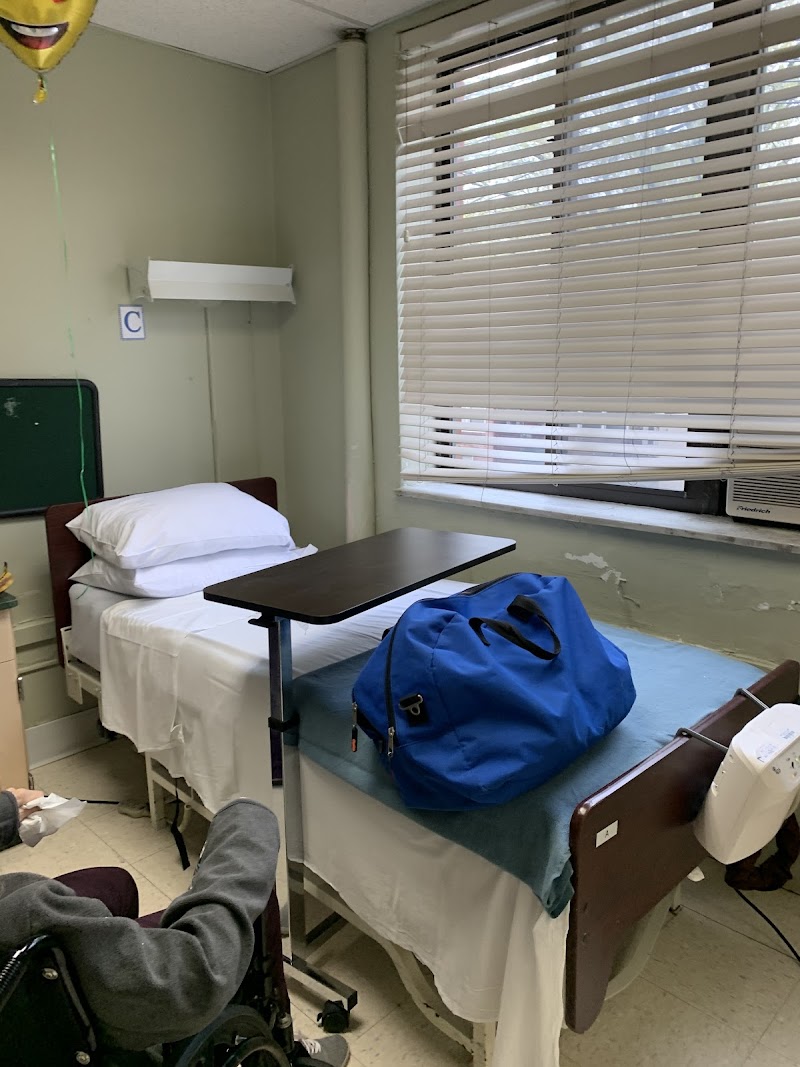
How is Mosholu Parkway Nursing & Rehabilitation Center Staffed?

CMS rates MOSHOLU PARKWAY NURSING & REHABILITATION CENTER's staffing level at 1 out of 5 stars, which is much below average compared to other nursing homes. Staff turnover is 41%, compared to the New York average of 46%. This relatively stable workforce can support continuity of care. RN turnover specifically is 67%, which is notably high. RNs provide skilled clinical oversight, so turnover in this role can affect medical care quality.

What Have Inspectors Found at Mosholu Parkway Nursing & Rehabilitation Center?

State health inspectors documented 24 deficiencies at MOSHOLU PARKWAY NURSING & REHABILITATION CENTER during 2019 to 2025. These included: 24 with potential for harm.
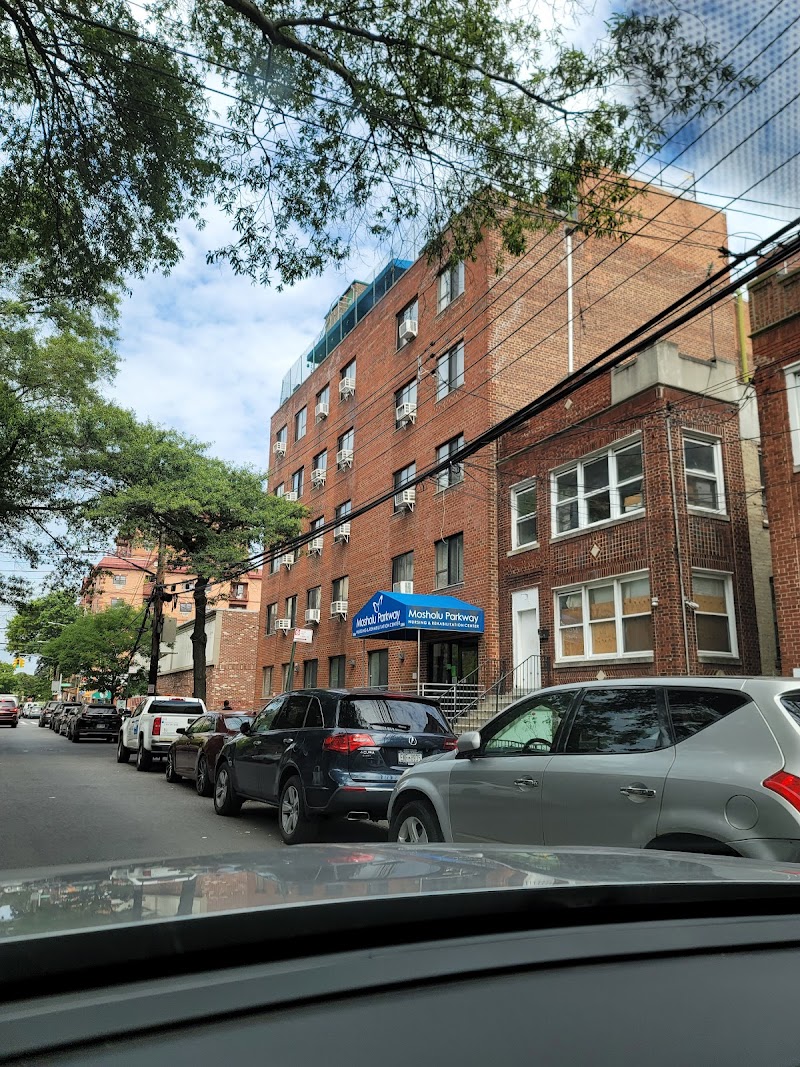
Who Owns and Operates Mosholu Parkway Nursing & Rehabilitation Center?

MOSHOLU PARKWAY NURSING & REHABILITATION CENTER is owned by a for-profit company. For-profit facilities operate as businesses with obligations to shareholders or private owners. The facility operates independently rather than as part of a larger chain. With 122 certified beds and approximately 115 residents (about 94% occupancy), it is a mid-sized facility located in BRONX, New York.
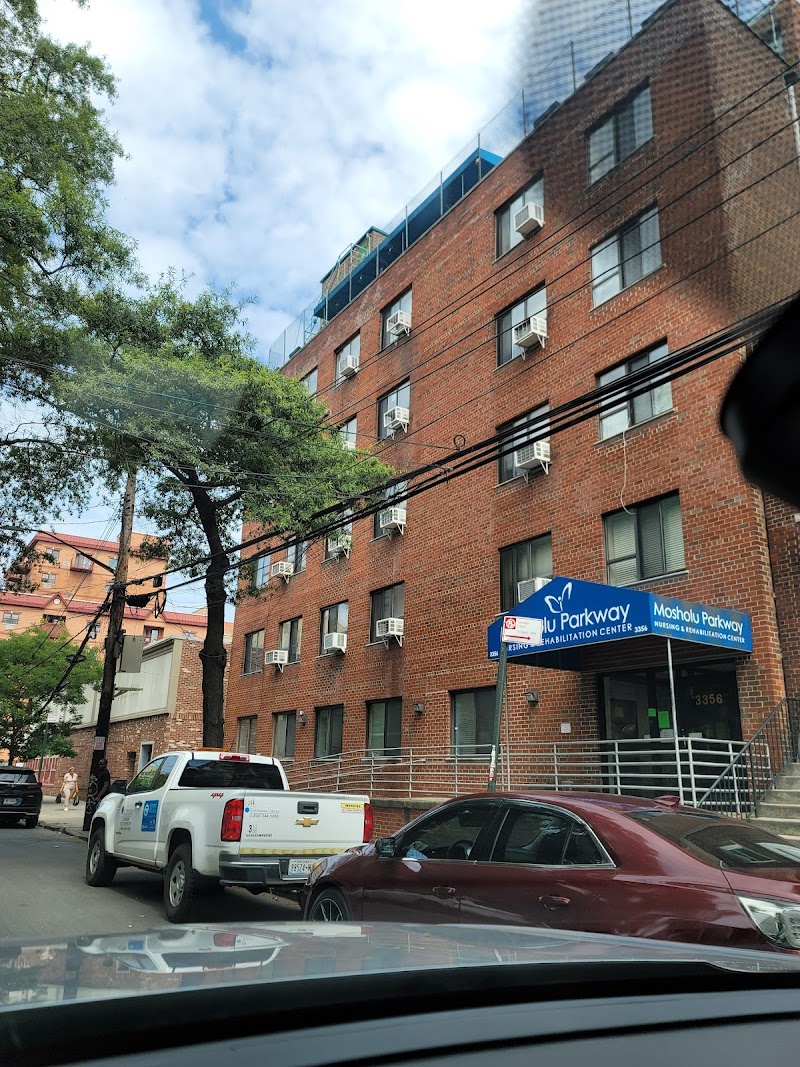
How Does Mosholu Parkway Nursing & Rehabilitation Center Compare to Other New York Nursing Homes?

Compared to the 100 nursing homes in New York, MOSHOLU PARKWAY NURSING & REHABILITATION CENTER's overall rating (2 stars) is below the state average of 3.1, staff turnover (41%) is near the state average of 46%, and health inspection rating (1 stars) is much below the national benchmark.

What Should Families Ask When Visiting Mosholu Parkway Nursing & Rehabilitation Center?

Based on this facility's data, families visiting should ask: "Can you walk me through typical staffing levels on day, evening, and night shifts?" "Can I visit during a mealtime to observe dining assistance and food quality?" "How do you handle medical emergencies, and what is your hospital transfer rate?" "Can I speak with family members of current residents about their experience?" These questions are particularly relevant given the below-average staffing rating.

Is Mosholu Parkway Nursing & Rehabilitation Center Safe?

Based on CMS inspection data, MOSHOLU PARKWAY NURSING & REHABILITATION CENTER has a clean safety record: no substantiated abuse findings (meaning no confirmed cases of resident harm), no Immediate Jeopardy citations (the most serious violation level indicating risk of serious injury or death), and is not on the Special Focus Facility watch list (a federal program monitoring the lowest-performing 1% of nursing homes). The facility has a 2-star overall rating and ranks #100 of 100 nursing homes in New York. While no facility is perfect, families should still ask about staff-to-resident ratios and recent inspection results during their visit.

Do Nurses at Mosholu Parkway Nursing & Rehabilitation Center Stick Around?

MOSHOLU PARKWAY NURSING & REHABILITATION CENTER has a staff turnover rate of 41%, which is about average for New York nursing homes (state average: 46%). Moderate turnover is common in nursing homes, but families should still ask about staff tenure and how the facility maintains care continuity when employees leave.

Was Mosholu Parkway Nursing & Rehabilitation Center Ever Fined?

MOSHOLU PARKWAY NURSING & REHABILITATION CENTER has been fined $3,174 across 1 penalty action. This is below the New York average of $33,111. While any fine indicates a compliance issue, fines under $50,000 are relatively common and typically reflect isolated problems that were subsequently corrected. Families should ask what specific issues led to these fines and confirm they've been resolved.

Is Mosholu Parkway Nursing & Rehabilitation Center on Any Federal Watch List?

MOSHOLU PARKWAY NURSING & REHABILITATION CENTER is not on any federal watch list. The most significant is the Special Focus Facility (SFF) program, which identifies the bottom 1% of nursing homes nationally based on persistent, serious quality problems. Not being on this list means the facility has avoided the pattern of deficiencies that triggers enhanced federal oversight. This is a positive indicator, though families should still review the facility's inspection history directly.