PELHAM PARKWAY NURSING CARE & REHAB FACILITY L L C
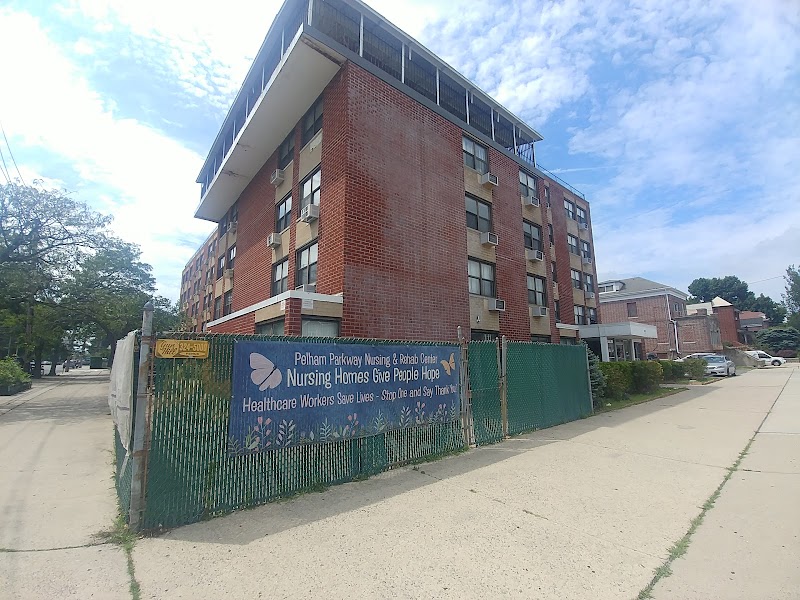
2401 LACONIA AVE, BRONX, NY 10469 (718) 798-8600
For profit - Partnership 200 Beds Independent Data: November 2025
Trust Grade
65/100
#315 of 594 in NY
Last Inspection: June 2023

Over 2 years since last inspection. Current conditions may differ from available data.

Overview

Pelham Parkway Nursing Care & Rehab Facility has a Trust Grade of C+, which means it is slightly above average but not exceptional. It ranks #315 out of 594 facilities in New York, placing it in the bottom half, and #29 out of 43 in Bronx County, meaning only a few local options are better. The facility's performance is stable, with the same number of issues reported in 2021 and 2023. Staffing is a concern here, earning only 2 out of 5 stars, while turnover is relatively low at 23%, which is better than the state average. Notably, there were no fines issued, which is a positive sign. However, there are some weaknesses to consider. The facility has less RN coverage than 82% of New York facilities, which may affect the quality of care. Specific incidents noted by inspectors include a lack of a qualified dietician on staff for nearly a year, failing to inform residents of their rights and available advocacy resources, and food safety violations where cold sandwiches were not stored at safe temperatures. While there are strengths in staffing stability and no fines, families should weigh these concerns carefully when considering this facility for their loved ones.

Trust Score
C+
65/100
In New York
#315/594
Bottom 47%
Safety Record
Low Risk
No red flags
Inspections
Holding Steady
8 → 8 violations
Staff Stability
✓ Good
23% annual turnover. Excellent stability, 25 points below New York's 48% average. Staff who stay learn residents' needs.
Penalties
✓ Good
No fines on record. Clean compliance history, better than most New York facilities.
Skilled Nurses
⚠ Watch
Each resident gets only 17 minutes of Registered Nurse (RN) attention daily — below average for New York. Fewer RN minutes means fewer trained eyes watching for problems.
Violations
⚠ Watch
23 deficiencies on record. Higher than average. Multiple issues found across inspections.
★★★☆☆
3.0
Overall Rating
★★☆☆☆
2.0
Staff Levels
★★★★★
5.0
Care Quality
★★☆☆☆
2.0
Inspection Score
Stable
2021: 8 issues
2023: 8 issues

The Good

  • 5-Star Quality Measures · Strong clinical quality outcomes
  • Low Staff Turnover (23%) · Staff stability means consistent care
  • Full Sprinkler Coverage · Fire safety systems throughout facility
  • No fines on record
  • Staff turnover is low (23%)

    25 points below New York average of 48%

Facility shows strength in quality measures, staff retention, fire safety.

The Bad

3-Star Overall Rating

Near New York average (3.1)

Meets federal standards, typical of most facilities

The Ugly 23 deficiencies on record

Jun 2023 8 deficiencies
CONCERN (D)

Potential for Harm - no one hurt, but risky conditions existed

Deficiency F0572 (Tag F0572)

Could have caused harm · This affected 1 resident

**NOTE- TERMS IN BRACKETS HAVE BEEN EDITED TO PROTECT CONFIDENTIALITY** Based on observation, interview, and record review conducted during the recertification survey, the facility did not ensure a re...

Read full inspector narrative →
**NOTE- TERMS IN BRACKETS HAVE BEEN EDITED TO PROTECT CONFIDENTIALITY** Based on observation, interview, and record review conducted during the recertification survey, the facility did not ensure a resident received notice of their rights and services upon admission. This was evident for 1 of 30 total sampled residents. Specifically, Resident #64 was not provided with an admission Agreement explaining their rights and services upon admission to the facility. The findings are: The facility policy titled Resident Rights and dated 1/23 documented each resident has the right to exercise their personal rights and to not be discriminated against for admission to the facility. Resident #64 was admitted to the facility on [DATE] with diagnoses of diabetes mellitus and osteomyelitis. The Minimum Data Set 3.0 (MDS) assessment dated [DATE] documented Resident #64 was cognitively intact. On 6/16/23 at 11:01 AM, Resident Council Meeting was held with Resident #64 in attendance. Resident #64 stated they were not aware of their rights and responsibilities as a resident and had not signed an admission agreement since heir admission a few weeks prior. There was no documented evidence Resident #64 was provided with an admission Agreement defining their rights and responsibilities as a resident of the facility. On 06/16/23 at 12:10 PM and 06/21/23 at 02:20 PM, the Admissions Director (AD) was interviewed and stated Resident #64 did not have an admission Agreement signed and the AD was in the process of going to meet with the resident to them sign. The AD stated they complete admission Agreements with new admissions to the facility timely, within 3 weeks of admission, but the AD is the only one reviewing there admission Agreements with residents and their families. On 06/21/23 at 03:23 PM, the Administrator was interviewed and stated Administration was responsible for putting together the admission and contents. If there is a change in resident rights it will be reviewed at resident council meetings. 415.3(g)(2)(i)
CONCERN (D)

Potential for Harm - no one hurt, but risky conditions existed

PASARR Coordination (Tag F0644)

Could have caused harm · This affected 1 resident

**NOTE- TERMS IN BRACKETS HAVE BEEN EDITED TO PROTECT CONFIDENTIALITY** Based on observation, interviews, and record review conducted the recertification survey from 6/13/23 to 6/21/23, the facility d...

Read full inspector narrative →
**NOTE- TERMS IN BRACKETS HAVE BEEN EDITED TO PROTECT CONFIDENTIALITY** Based on observation, interviews, and record review conducted the recertification survey from 6/13/23 to 6/21/23, the facility did not ensure incorporate the recommendations from the Pre-admission Screening and Resident Review) PASARR level II determination into the resident's assessment, care planning, and transitions of care. This was evident for 1 (Resident #123) of 30 total sampled residents. Specifically, The facility did not obtain a neurology consult for Resident #123 after the resident was admitted with a PASARR level II recommendation for a neurology consult. The findings are: The facility policy titled SCREEN dated 2/20 documented the Social Worker (SW) will make sure that the PASARR recommendation are incorporated in the resident's care plan. Resident #123 was admitted [DATE] with diagnoses of anxiety disorder and schizophrenia. The Minimum Data Set 3.0 (MDS) dated [DATE] documented Resident #123 was cognitively intact and received antipsychotic 7 out of 7 days prior to the assessment. On 06/14/23 at 01:45 PM, Resident #123 was interviewed and stated they were having right hand tremors that started upon their admission to the facility. Resident #123 stated they were recently hospitalized in a psychiatric facility, is receiving psychotropic medication, and requested to see the neurologist over a month ago. A Notice of PASRR Level II Outcome dated 11/24/22 documented Resident #123 will need to be provided with a neurology consult to evaluate cognition due to the diagnosis of dementia. Physician Orders renewed 5/23/23 documented Resident #123 received Donepezil 10mg daily for Alzheimer's dementia, Zyprexa 10mg at bedtime and 5 mg daily (12/21/22). Psychiatry consult as needed. No order for Neurology consult. NP note dated 5/1/23, 5/16/23, 5/24/23 and 6/7/23 documented Resident #123 had a right arm resting tremor with no evidence of metabolic changes and no dyskinesia. On multiple medications that may cause Parkinson/tremors. Psychiatry consult ordered to reduce medication however no recommendation for dose decrease or alternative made. Neurology consult placed. NP Note dated 2/17/23 documented Resident #123 was exhibiting right hand tremor and psychiatry consult will be placed. The NP Note also documented Resident #123 exhibited right hand tremor on 3/29/23, 3/15/23, 4/25/23. A Neurology Consult form dated 4/25/23 documented Resident #123 was referred to the neurology clinic and had an appointment schedule for 12/4/23 at 10:45 AM. There was no documented evidence the facility followed the PASARR level II recommendation for Resident #123 to have a neurology consult upon admission not the facility. On 06/21/23 at 11:52 AM, the Director of Social Work (DSW) was interviewed and stated, as soon as the admission department send them a an expected admission's medical records's fro the hospital, the DSW checks the SCREEN's for any resident that trigger a level II evaluation. There is a log that DSW keeps of all residents with level II recommendations. The DSW evaluates the PASARR and lets the interdisciplinary team know so that recommendations can be followed. The DSW does not really seeing Resident #123's PASARR level II recommendation for the resident to have a neurology consult. The nurses really should be reading through this and addressing the medical concerns. The SW Department ensures that psychological and behavioral recommendations are addressed but it is a team effort and the nursing should be looking through for medical recommendations. It is part of the admission record and the team looks at it to address what their discipline is responsible for. On 06/20/23 at 11:50 AM, an interview was conducted with the Nurse Practitioner (NP) who stated the PASARR level II recommendations are generally reviewed by the SW upon admission. The NP was unaware Resident #123's PASARR level II recommended for the resident to have a neurology consult. Resident #123 has a neurology appointment in December 2023 and this is not an acceptable time for a resident to wait for an appointment to see a specialist. On 06/21/23 at 03:00 PM, the Director of Nursing (DNS) was interviewed and stated the SW is responsible for reviewing the SCREEN and PASARR level II recommendations for prospective admissions to the facility. The SW is involved when the resident has a psychiatric diagnosis. Prior to a resident's admission to the facility, the DNS reviews the hospital information. 415.11(e)
CONCERN (D)

Potential for Harm - no one hurt, but risky conditions existed

Comprehensive Care Plan (Tag F0656)

Could have caused harm · This affected 1 resident

**NOTE- TERMS IN BRACKETS HAVE BEEN EDITED TO PROTECT CONFIDENTIALITY** Based on observation, interviews, and record review conducted during the recertification survey from 6/13/23 to 6/21/23 the faci...

Read full inspector narrative →
**NOTE- TERMS IN BRACKETS HAVE BEEN EDITED TO PROTECT CONFIDENTIALITY** Based on observation, interviews, and record review conducted during the recertification survey from 6/13/23 to 6/21/23 the facility did not ensure a Comprehensive Care Plan (CCP) was developed and implemented to address resident needs. This was evident for 1 (Resident #149) of 30 total sampled residents. Specifically, a CCP related to oxygen use was not developed and implemented for Resident #149. The findings are: The facility policy titled Respiratory Therapy and Evaluation dated 4/2014 documented the resident's respiratory status will be monitored pre and post therapy and documented in the medical record. The nurse will notify the primary medical doctor regarding any unstable resident conditions and follow up as directed. Resident #149 had diagnoses of hydrocephalus, shortness of breath and intracerebral hemorrhage. The Minimum Data Set 3.0 (MDS) dated [DATE] documented Resident #149 was severely cognitively impaired and did not have shortness of breath. On 06/14/23 at 01:30 PM, Resident #149 was observed lying in bed with oxygen flowing from an oxygen concentrator at 3 Liters Per Minute (LPM) to the resident via tubing and a full facemask. On 06/14/23 at 11:48 AM, Resident #149 was observed in a recliner in the floor dayroom without oxygen in place. On 06/14/23 at 01:33 PM, Resident #149 was observed in recliner in the hallway with no oxygen in place. On 06/15/23 at 12:24 PM, Resident #149 was observed lying in bed with the oxygen full facemask pulled down under their chin and oxygen flowing at 2 LPM. On 06/20/23 at 12:46 PM, Resident #149 was observed in a recliner in their room. Licensed Practical Nurse was administering a supplement to the Resident #149 via their feeding tube. Resident #149 was receiving oxygen via a full facemask at 2 LPM. The Medical Doctor Orders (MDO) dated 5/19/23 documented Resident #149 was to receive oxygen at 2 LPM via nasal canula every shift. There was no MDO for oxygen saturation monitoring. Treatment Administration Record (TAR) for June 2023 documented Resident #149 had oxygen tubing changed weekly and received oxygen via nasal canula per shift. There was no documented evidence a CCP related to oxygen use was developed and implemented for Resident #149. On 06/20/23 at 03:08 PM, Registered Nurse (RN) #3 was interviewed and stated RN #3 is responsible for completing the CCPs for the residents on the unit. After checking Resident #149's CCPs, RN #3 stated there is no CCP related to respiratory therapy or oxygen care. RN #3 missed the CCP by mistake. RN #3 did not admit Resident #149 from the hospital but subsequent RNs should pick up that a resident is missing a CCP even if the admission nurse misses one. When the resident is admitted , the RN does the initial baseline care plan. Then the RN will initiate the longer term CCPs. 415.11(c)(1)
CONCERN (D)

Potential for Harm - no one hurt, but risky conditions existed

Deficiency F0657 (Tag F0657)

Could have caused harm · This affected 1 resident

**NOTE- TERMS IN BRACKETS HAVE BEEN EDITED TO PROTECT CONFIDENTIALITY** Resident #21 had diagnoses of non-Alzheimer's dementia and DM. The Minimum Data Set 3.0 (MDS) assessment dated [DATE] documente...

Read full inspector narrative →
**NOTE- TERMS IN BRACKETS HAVE BEEN EDITED TO PROTECT CONFIDENTIALITY** Resident #21 had diagnoses of non-Alzheimer's dementia and DM. The Minimum Data Set 3.0 (MDS) assessment dated [DATE] documented Resident #21 was cognitively intact and received insulin injections 5 of 7 days prior to the assessment. A physician's order dated 4/21/23 documented Resident #21 was ordered 4 units of Lantus 100 units/ml subcutaneously every night for DM. On 6/8/23, the Lantus insulin was discontinued and Resident #21 was started on Farxiga 5 mg daily for DM. The Medication Administration Record (MAR) for June 2023 documented Resident #21 received DM medications according to physician's order. A physician's note dated 6/8/23 documented Lantus was to be discontinued and Farxiga started at 5mg by mouth daily. The CCP related to Diabetes Mellitus initiated 2/1/22 documented Resident #21 was receiving Lantus insulin. The CCP was last updated on 3/2/23. There was no documented evidence the CCP related to Resident #21's DM diagnosis was reviewed and revised upon MDS assessment and change in DM medication. On 06/21/23 at 11:49 AM, Registered Nurse (RN) #1 was interviewed and stated they are still learning the computer system for medical record documentation. CCPs are initiated by RNs on admission according to diagnosis, behaviors, and medications. CCPs are revised every 90 days and if there is a change in a medication. The CCP related to DM should have been updated for Resident #21 because they are not on insulin anymore. If a resident's insulin is discontinued and switched to oral medications, the CCP should be updated. On 6/20/23 at 3:21 PM and 06/21/23 at 1:26 PM, the Director of Nursing (DNS) was interviewed and stated Resident #21's CCP related to DM should have been updated to reflect the change in their medication. It seems there was a miscommunication between the doctor, the nurse, and the RN Manager. The facility increased their RN Managers and hired new staff and they are behind on CCP updates but are catching up now. The RN Managers do the CCPs which are updated with a change of condition/acute issue, significant change, readmission, and with the MDS schedule. CCPs are audited via a list from MDS of outstanding CCPs or anything that needs to be updated. The DNS stated the MDSC would not update the care plan unless there is a change. An interview was conducted on 6/20/23 at 3:39 pm with the Administrator who stated that they were not aware of a larger issue with CCPs and the facility has been working on making sure that CCPs are up to date. 415.11(c)(2) (i-iii) Based on observation, interviews, and record review conducted during the recertification survey from 6/13/23 through 6/21/23, the facility did not ensure the comprehensive care plans (CCP) were reviewed and revised after each assessment. This was evident for 2 of 2 residents (#101 and #21) reviewed for Nutrition out of 30 total sampled residents. Specifically, 1) the CCP related to oral care/dental and cancer for Resident #101 were not reviewed upon significant change assessment, and 2) the CCP related to diabetes mellitus (DM) was not reviewed or reviewed or revised upon change in the resident's medication regime. The findings are: A facility policy titled Comprehensive Assessment and Care Planning dated 5/9/21 documented the resident is assessed in keeping with regulatory requirements, and when the resident/patient's physical, psychosocial, functional, or nutritional status significantly changes. The Interdisciplinary Team (IDT) updates the CCP for readmissions, hospital returns, and episodic events. 1. Resident #101 had a diagnoses of Basal cell carcinoma and thrombocytopenia. The Minimum Data Set 3.0 (MDS) assessment dated [DATE] and significant change MDS dated [DATE] documented Resident #101 was severely cognitively impaired with likely cavities of broke natural teeth. The CCP related to Oral Care/Dental initiated 3/20/20 was last reviewed 3/23/23, Resident #101 had a likely cavity or broken natural teeth and was at risk for decline related to cognitive deficit. The CCP related to Cancer (Basal cell carcinoma of Resident #101's left cheek) initiated 5/19/21, was last reviewed 3/23/23, and documented a goal that resident will be able to express fears/concerns surrounding the cancer diagnosis. There was no documented evidence the CCPs related to oral/dental and cancer were reviewed and revised upon each MDS assessment. On 6/20/23 at 9:53 AM, the Registered Nurse (RN) #2 was interviewed and states the RN is responsible for completing, updating, and initiating the CCPs. The RN assesses the resident and devises the CCP. CCPs are updated every quarterly and if there is any change in condition. RN #2 stated they update the CCPs every time an MDS is done. On 6/20/23 at 10:02 AM, the MDSC was interviewed and stated initiating CCPs is done by RNs. The review and revision is based on the changes in the resident condition and on a quarterly basis based on the dashboard on the electronic medical record. The MDSC stated updating care plans does not have anything to do with the MDS schedule. CCPs are updated based on the date of the target goals. The MDSC checks to make sure CCPs are updated and current when they complete the MDS. CCPs are expected to be updated upon a resident's readmission. After reviewing Resident #101's CCPs related to cancer and oral/dental status, the MDSC stated the CCPs should have been reviewed and revised when Resident #101 was readmitted to the hospital and upon significant change.
CONCERN (D)

Potential for Harm - no one hurt, but risky conditions existed

Quality of Care (Tag F0684)

Could have caused harm · This affected 1 resident

**NOTE- TERMS IN BRACKETS HAVE BEEN EDITED TO PROTECT CONFIDENTIALITY** Based on observation, interview, and record review conducted during the recertification survey from 6/13/23 to 6/21/23, the faci...

Read full inspector narrative →
**NOTE- TERMS IN BRACKETS HAVE BEEN EDITED TO PROTECT CONFIDENTIALITY** Based on observation, interview, and record review conducted during the recertification survey from 6/13/23 to 6/21/23, the facility did not ensure a resident received treatment and care in accordance with professional standards of practice. This was evident for 1 (Resident #123) of 30 total sampled residents. Specifically, Resident #123 was delayed in receiving an appointment to be seen by the neurologist. The findings are: The facility policy titled Communication with Physician Consultants dated 7/22/01 documented timely discussion between a resident's primary care physician and the consultant are important. Consultation sheets are to be given to the nursing office who will schedule appointments. Resident #123 was admitted to the facility 12/20/22 with diagnoses of anxiety disorder and schizophrenia. The Minimum Data Set 3.0 (MDS) dated [DATE] documented Resident #123 was cognitively intact, did not exhibit behavior, had trouble sleeping and disrupted appetite, and received antipsychotic medications 7 out of 7 days prior to the assessment. On 06/14/23 at 01:45 PM, Resident #123 was interviewed and stated they have a right hand tremor that began after being admitted to the facility from a psychiatric hospital on psychotropic medication. Resident #123 requested to see the neurologist over a month ago and stated the tremor is uncomfortable. Resident #123 stated no one followed up with them about scheduling a neurology consult. A Notice of PASARR Level II Outcome dated 11/24/22 documented Resident #123 will need to be provided with a neurology consult to evaluate cognition due to the diagnosis of dementia. Physician Orders renewed 5/23/23 documented Resident #123 received Donepezil 10mg daily for Alzheimer's dementia, Zyprexa 10mg at bedtime and 5 mg daily (12/21/22). Psychiatry consult as needed. No order for Neurology consult was documented. Comprehensive Care Plan (CCP) related to psychotropic drug use initiated 12/21/22 documented Resident #123 has a diagnosis of schizophrenia, receives antipsychotic medication, and should be observed for signs of inventory movement. The CCP was updated 5/11/23 with the Psychiatrist recommendation for Resident #123 to have Melatonin. NP Note dated 2/17/23 documented Resident #123 was exhibiting right hand tremor and psychiatry consult will be placed. Tremor also documented 3/29/23, 3/15/23, 4/25/23, Psychiatry consult dated 3/17/23 and 5/10/23 documented Resident #123 reported feeling better. The Psychiatrist documented Resident #123 did not display akathesia, Parkinson, or tardive dyskinesia. There was no documentation referencing NP recommendation for medication review or resident's right hand tremors. NP note dated 5/1/23, 5/16/23, 5/24/23 and 6/7/23 documented Resident #123 had a right arm resting tremor with no evidence of metabolic changes and no dyskinesia. Resident #123 was on multiple medications that may cause Parkinson/tremors. Psychiatry consult ordered to reduce medication however no recommendation for dose decrease or alternative made. Neurology consult placed. A Neurology Consult form dated 4/25/23 documented Resident #123 was referred to the neurology clinic and had an appointment schedule for 12/4/23 at 10:45 AM. There was no documented evidence a neurology consult was obtained within timely manner for Resident #123's right hand tremors. On 06/20/23 at 02:59 PM, the Registered Nurse (RN) #3 was interviewed and stated there was no Medical Doctor Order for Resident #123 to have a neurology consult. It takes a long time for the Nursing Secretary to schedule clinic appointments. The RN gets alerted to orders for consults when the Medical Doctor (MD) writes an order and it is flagged to be cosigned. Then the RN prints out the consult and send it to the Nursing Secretary to make the appointment and arrangements. Sometimes the MD might write the note and forget to write the order. RN #3 was unable to find a consult request for Resident #123 to have a neurology consult and was unaware Resident #123 was referred for a neurology consult. The resident has been having right hand tremors. On 06/21/23 at 02:27 PM, the Nursing Secretary was interviewed and stated they referred Resident #123 for a neurology consult on 4/25/23. When the Nursing Secretary requested an appointment, they were originally told there were no appointments at all for Resident #123 to see the neurologist. The neurology clinic found another location and, a few weeks ago, was able to get Residnt #123 an appointment 12/4/2023. The Nursing Secretary is uncertain who requested for Resident #123 to use an outside clinic. On 06/20/23 at 11:50 AM, the NP was interviewed and stated they did not see a recommendation for Resident #123 to have a neurology consult in their admission level II referral. Resident #123 was referred to Psychiatry to evaluate their medication regime since Zyprexa can cause tremors. The NP then reviewed the Psychiatrist consult that recommended to continue with medications and then decided to order the neurology consult. Resident #123 has an appointment to see the neurologist in December 2023. NPO stated that wither they or the Nursing Secretary will attempt to get Resident #123 a sooner appointment. Residnt #123 did discuss the discomfort and concern with right hand tremors. This is not acceptable time for a resident to wait for specialist referrals. On 06/21/23 at 12:45 PM, the Medical Doctor (MD) was interviewed and stated they do not recall a recommendation from admission that Resident #123 see the neurologist. Resident #123 began to show right hand tremors in March/[DATE]. Because the tremor was not deemed to be an acute life threatening condition, the psychiatrist was asked to give their advice whether a reduction of antipsychotic medication would be indicated. The outcome was that it was not indicated. The MD does not recall speaking with the psychiatrist about their recommendation. Neurology consult was then recommended. This is to see if any medication could be causing the tremor and if they can be reduced. The expectation is that the consult would be obtained. It is disappointing that Resident #123 is scheduled for a neurology appointment 6-7 months out. On 06/21/23 at 03:00 PM, the Director of Nursing (DNS) was interviewed and stated resident should not have to wait extensive periods of time for outside clinic appointments. The NP recommended for Resident #123 to see a specific Neurology Clinic. The DNS was unable to say what specialty within neurology and was unable to give a reason the resident was referred for neurology consult with an outside clinic. The DNS then stated the facility has a in-house neurologist that would be able to see Resident #123 within 2 weeks of a referral for evaluation. The DNS stated they are going to determine whether Resident #123 can be seen by the facility's neurologist. 415.12
CONCERN (D)

Potential for Harm - no one hurt, but risky conditions existed

Respiratory Care (Tag F0695)

Could have caused harm · This affected 1 resident

**NOTE- TERMS IN BRACKETS HAVE BEEN EDITED TO PROTECT CONFIDENTIALITY** Based on observation, interviews, and record review conducted during the recertification survey from 6/13/23 to 6/21/23 the faci...

Read full inspector narrative →
**NOTE- TERMS IN BRACKETS HAVE BEEN EDITED TO PROTECT CONFIDENTIALITY** Based on observation, interviews, and record review conducted during the recertification survey from 6/13/23 to 6/21/23 the facility did not ensure a resident was provided with respiratory care in accordance with professional standards of practice. This was evident for 1 (Resident #149) of 30 total sampled residents. Specifically, Resident #149 was ordered to receive oxygen via nasal canula and was observed with a oxygen face mask and received no oxygen saturation monitored. The findings are: The facility policy titled Respiratory Therapy and Evaluation dated 4/2014 documented the resident's respiratory status will be monitored pre and post therapy and documented in the medical record. The nurse will notify the primary medical doctor regarding any unstable resident conditions and follow up as directed. Resident #149 had diagnoses of hydrocephalus, shortness of breath and intracerebral hemorrhage. The Minimum Data Set 3.0 (MDS) dated [DATE] documented Resident #149 was severely cognitively impaired and did not have shortness of breath. On 06/14/23 at 01:30 PM, Resident #149 was observed lying in bed with oxygen flowing from an oxygen concentrator at 3 Liters Per Minute (LPM) to the resident via tubing and a full facemask. On 06/14/23 at 11:48 AM, Resident #149 was observed in a recliner in the floor dayroom without oxygen in place. On 06/14/23 at 01:33 PM, Resident #149 was observed in recliner in the hallway with no oxygen in place. On 06/15/23 at 12:24 PM, Resident #149 was observed lying in bed with the oxygen full facemask pulled down under their chin and oxygen flowing at 2 LPM. On 06/20/23 at 12:46 PM, Resident #149 was observed in a recliner in their room. Licensed Practical Nurse was administering a supplement to the Resident #149 via their feeding tube. Resident #149 was receiving oxygen via a full facemask at 2 LPM. The Medical Doctor Orders (MDO) dated 5/19/23 documented Resident #149 was to receive oxygen at 2 LPM via nasal canula every shift. There was no MDO for oxygen saturation monitoring. Treatment Administration Record (TAR) for June 2023 documented Resident #149 had oxygen tubing changed weekly and received oxygen via nasal canula per shift. There was no documented evidence a CCP related to respiratory therapy of oxygen use was developed for Resident #149. There was no documented evidence oxygen saturation monitoring was done since Resident #149's admission to the facility on 5/11/23 until 6/20/23. On 06/20/23 at 02:40 PM, the Licensed Practical Nurse (LPN) #4 was interviewed and stated they take Resident #149's vitals every morning. If the oxygen saturation drops below 90, then Resident #149 will be provided with oxygen therapy. When medications are given to Resident #149, their oxygen saturation is assessed while oxygen therapy is ongoing. Resident #149 frequently removes the oxygen mask. Every nurse is responsible for checking the settings for the flow rate of the oxygen to ensure the LPM are according to MDO. Sometimes patients play with oxygen concentrator and the flow rate gets turned up or down inadvertently. The face mask and the nasal canula are interchangeable. Resident #149 might have a face mask instead of nasal canula because the nasal canula may have gotten dirty. The resident did not have a face mask on this morning when I rounded. Unless the MDO says as needed, the oxygen should be provided continuously. Resident #149 had a standing order for continuous oxygen. Regardless of oxygen saturation, the resident should be getting oxygen. The only thing I can think of is that the nasal canula got dirty or something happened to it so we replaced the face mask. If the Medical Doctor (MD) does not specify parameters, the basic protocol is to call the MD if below 90. On 06/20/23 at 03:08 PM, Registered Nurse (RN) #3 was interviewed and stated Resident #149 was admitted from the hospital on oxygen therapy. There is no reason the Resident #149 should have a face mask instead of nasal canula when the MDO says nasal canula. Resident #149 is ordered to receive oxygen continuously. Oxygen saturation is to be taken every shift depending on what the MDO says. If the oxygen saturation is improving, then the MD is made aware. If the oxygen saturation is below 90 then the MD should be contacted. Oxygen saturation is taken with the vital signs. Resident #149 does not have a MDO in place to monitor their oxygen saturation. If the MD does not write the oxygen sat monitoring MDO, the nurse still checks the vital signs as part of the protocol. Even with that, the MD needs to order the parameters. On 06/21/23 at 02:39 PM, the Director of Nursing (DNS) was interviewed and stated when a resident is admitted on oxygen, the nurse obtains the oxygen, transcribes the order, and the MD signs. The MD reviews the transcribed order to determine if adequate and changes may be needed. Oxygen was given to Resident #149 as a comfort measure. The DNS stated that when they have observed Resident #149, the resident appear short of breath. Acceptable oxygen saturation would be 92 and above. This would be determined upon assessment by the nurse or MD. If their oxygen saturation is high then the nurse may tell the MD and the oxygen maybe changed to as needed. The oxygen saturation is taken with the vitals upon admission for at least for 3 days. The MD order states oxygen via nasal canula In an emergency situation, staff can use the face mask instead of nasal canula. If the oxygen saturation is below 90, the MD should be contacted. It should be in the facility policy. This applies to every resident. oxygen saturation should be read for Resident #149 every shift. The facility policy does not require the nurses to take oxygen saturation readings for residents who are on oxygen. An MD order would communicate to the nurse the frequency and parameters of treatment. On 06/20/23 at 01:03 PM, the MD #2 was interviewed and stated Resident #149 uses oxygen to keep their oxygen saturation at 90-92. There is no need for face mask. Nasal canula would be better. Resident #149 is supposed to be receiving oxygen as needed but MD #2 stated they did not pay attention to how the MDO was written. Any oxygen saturation over 90 is okay. Oxygen saturation monitoring is automatic from admission. MS #2 does not need to write orders for monitoring. Resident #149 is not on oxygen saturation monitoring. MD #2 checks the nursing notes for oxygen saturation readings. Nursing should know if the oxygen saturation falls below 90, they call the MD. The general practice us that if oxygen saturation is high enough, then possibly no oxygen is needed. MD #2 will tell the nurses to check the oxygen saturation. 415.12(k)(6)
CONCERN (E)

Potential for Harm - no one hurt, but risky conditions existed

Deficiency F0574 (Tag F0574)

Could have caused harm · This affected multiple residents

Based on observations, interviews, and record review conducted during the recertification survey from 6/13/23 to 6/21/23, the facility did not ensure residents received notices orally and in writing w...

Read full inspector narrative →
Based on observations, interviews, and record review conducted during the recertification survey from 6/13/23 to 6/21/23, the facility did not ensure residents received notices orally and in writing with the list of names and addresses of the State regulatory agencies, resident advocacy groups, and Ombudsman information. This was evident for 6 (Resident #s 133, 113, 64, 30, 96, 109) of 8 residents in attendance at Residnt Council out of 30 total sampled residents. Specifically, Resident #s 133, 113, 64, 30, 96, and 109 stated they were not aware of their rights and were not provided with contact information for State agencies and advocates. The findings are: The facility policy titled Resident Rights dated 1/23 did not document the method or procedure of informing and educating residents of their rights. On 6/16/23 at 11:01 AM, Resident Council Meeting was held with 8 residents in attendance. The Council was asked whether their resident rights had been reviewed with them and provided to them in a format an language they can understand. There were 6 (Resident #s 133, 113, 30, 109, and 96) of the 8 residents that stated they did not recall being educated about their resident rights and were not provided with the contact information for State agencies of the Ombudsman. There was no documented evidence Resident #64 was provided with an admission Agreement with the resident's rights included. The facility admission Agreement sample documented a section for your Rights and Protection as a Nursing Home Resident. The admission Agreement did not contain written information related to State agency contact numbers and the Ombudsman contact information. An admission Agreement dated 7/23/12 documented Resident #30's signature with a [NAME] of Rights included and no contact information for State agencies or the Ombudsman. - signed and bill of rights included. An admission Agreement dated 12/7/21 did not document Resident #96's or a designated representative's signature confirming receipt of the admission Agreement. An admission Agreement dated 2/17/21 documented Resident #109's signature with a [NAME] of Rights included and no contact information for State agencies or the Ombudsman. - signed and bill of rights included. An admission Agreement dated 3/24/21 documented Resident #113's signature with a [NAME] of Rights included and no contact information for State agencies or the Ombudsman. - signed and bill of rights included. An admission Agreement dated 11/4/22 documented Resident #133's signature with a [NAME] of Rights included and no contact information for State agencies or the Ombudsman. - signed and bill of rights included. Resident Council Meeting Minutes dated 3/6/23, 4/3/23, 5/3/23, and 6/5/23 were reviewed with no mention of educating or informing residents of their rights as a resident of a facility. On 06/16/23 at 12:10 PM and 06/21/23 at 02:20 PM, the admission Director (AD) was interviewed and stated the only patient [NAME] of Rights they are of is in the admission Agreement that is provided to a resident when they are admitted to the facility. The Administrator compiled the admission Agreement. There have been changes to the admission Agreement over the years and the patient [NAME] of Rights was revised 7/29/2020. On 06/21/23 at 12:06 PM, the Director of Social Work (DSW) was interviewed and stated Administration determined the appropriateness of documents provided to residents in their admission package upon admission. The DSW reviewed the Your Rights and Protection as a Nursing Home Resident and they are the correct version of resident rights for nursing home residents. Admissions reviews the admission package with the residents. During the admission assessment, the Social Worker (SW) verbally tells the resident about their rights. Recreation reviews the resident rights at resident council meetings. The residents are informed of their rights upon admission and they are told that the rights are posted on each floor. The DSW would have to check with recreation to find out when they last reviewed resident rights at resident council. The residents do not sign that their rights were reviewed with them except upon admission. Resident rights are only verbally discuss with them. The DSW was not sure if the resident rights were available in multiple languages. The DSW stated the resident rights are only available in English. On 06/21/23 at 03:23 PM, the Administrator was interviewed and stated they were responsible for putting together the admission Agreements. The version of Your Rights and Protection as a Nursing Home Resident is a version the facility determined was appropriate and the Administrator was unable to recall how the facility came across the current version of resident rights they use in their admission Agreement but believes they were given to the facility by another facility. The admission package was updated 7/2020 but the Administrator was unable to say when the resident rights section was updated. If the resident does not speak English, a translator will be used to interpret the admission Agreement and the facility only uses a English version for resident to sign. If there is a change in resident rights, this is discussed during resident council meeting. Residents do not get regular reeducation of their resident rights they do not receive it in writing. The resident bill of Rights should be posted on every unit. 415.3
CONCERN (E)

Potential for Harm - no one hurt, but risky conditions existed

Food Safety (Tag F0812)

Could have caused harm · This affected multiple residents

Based on observation, interviews, and record review conducted during the recertification survey from 6/13/23 through 6/21/23, the facility did not ensure that food was prepared, distributed, and serve...

Read full inspector narrative →
Based on observation, interviews, and record review conducted during the recertification survey from 6/13/23 through 6/21/23, the facility did not ensure that food was prepared, distributed, and served in accordance with professional standards for food service safety. This was evident during the Kitchen facility task. Specifically, 2 cold sandwiches were not held at a safe temperature of 41 F or below. The findings are: A undated facility policy titled Food Temperatures documented cold foods are kept refrigerated and are taken out in small batches to maintain a temperature of 40 degrees Fahrenheit or lower during meal service. Daily temperatures are recorded at meals to ensure proper procedure is being followed. On 6/20/23 at 10:53 AM, lunch meal service was being observed in the Kitchen and a dietary aide was observed making cold sandwiches and placing them in the refrigerator. On 6/20/23 at 11:07 AM, dietary staff were observed taking the prepared cold sandwiches out of the refrigerator. The cold sandwiches were lying on a pan of ice. Staff began placing the cold sandwiches onto residnt trays. The temperature of 2 random sample sandwiches (1 turkey and 1 tuna) were taken and both sandwiches were at 65 F. On 06/20/23 at 11:10 am, the Food Service Director (FSD) was interviewed and stated they do not typically check the temperature of the sandwiches. The sandwiches are usually made before 9:30 AM. The FSD did not know why the dietary aide was still making sandwiches so late. 415.14
Apr 2021 8 deficiencies
CONCERN (D)

Potential for Harm - no one hurt, but risky conditions existed

Deficiency F0551 (Tag F0551)

Could have caused harm · This affected 1 resident

Based on record review and staff interview during the recertification and abbreviated survey (#NY00253374), the facility did not ensure that the resident's representative has the right to exercise the...

Read full inspector narrative →
Based on record review and staff interview during the recertification and abbreviated survey (#NY00253374), the facility did not ensure that the resident's representative has the right to exercise the resident's rights to the extent those rights are delegated to the representative of the resident. Specifically, the facilty presented the spouse of Resident#44 with change of Health Insurance forms to sign, however the spouse was not the resident's representative to excercise those rights. The resident had two chidren designated as Health Care Proxies and one child was also designated as the resident's Power of Attorney. Neither were presented with information regarding change of Health Insurance. The change in health coverage was executed without their permission. This was evident for 1 of 3 residents reviewed for Notification of Changes out of a sample of reviewed for Resident rights. The finding is: A facility policy for notification of changes was requested, there was no policy specific to providing information to elect change of health care insurance. Resident #44 had diagnoses which included Cerebrovascular Accident. The Minimum Data Set 3.0 (MDS) (a ressident assessment tool) dated 02/21/2021 documented the resident had severely impaired cognition and was completely dependent on staff for all activities of daily living (ADLS ). During a telephone interview on 04/13/2021 at 11:59 AM, the resident's son and complainant stated that they were the appointed Health Care Proxy (HCP) and Power of Attorney (POA). The HCP/POA shared the HCP responsibility with the primary HCP who is their sister. The facility gave the resident's spouse, papers to sign to change the resident's health insurance proviider without explaining, the spouse is not the HCP or POA The resident's spouse did not know what they were signing. They stated that the facility did not discuss changing the resident's health insurance carrier with either of them. The son stated that they would not have agreed to the change because the resident's spouse is covered under the former plan. Once the insurance provider was changed the spouse's coverage was cancelled. The Comprehensive Care Plan (CCP) for Advance Directive, updated on 02/21/2021, documented the resident's daughter as one of the HCPs and the son as the other HCP and the POA. The resident's spouse was not listed as a HCP or POA. The HCP form documented the daughter and son as the primary and secondary decision- makers, respectively. The physician's orders dated 03/29/2021 documented the resident had a HCP and POA under Advance Directives. The resident's face sheet documented the resident had Emblem Health as Medicaid plan upon admission. The resident was changed to Optum-United Health Medicaid plan in May 2019. There was no documented evidence in the medical record that the HCPs/POA were contacted regarding changing the resident's health insurance provider. The facility could not provide a copy of th eenrollment form the resident's spouse signed to consent to the change in health insurance. On 04/13/2021 at 10:49 AM, the Social Worker (SW) #7 assigned to the Unit was interviewed and stated the resident had Emblem Health (HIP), and the facility offers Optum-United Health. The SW stated, I notify residents' representatives by calling and speaking to them directly and give them information about Optum-United Health. If they are interested, I submit their name to the Insurance Representative, who meets and discusses with them further regarding the package. The SW could not explain why the resident's spouse was contacted when he was not the HCP or POA. The SW could not provide a copy of the signed enrollment form. 415.3(c)(1)(iii)
CONCERN (D)

Potential for Harm - no one hurt, but risky conditions existed

Deficiency F0692 (Tag F0692)

Could have caused harm · This affected 1 resident

Based on observation, record review and staff interview conducted during the recertification survey, the facility did not ensure that each resident maintained acceptable parameters of nutritional stat...

Read full inspector narrative →
Based on observation, record review and staff interview conducted during the recertification survey, the facility did not ensure that each resident maintained acceptable parameters of nutritional status such as usual body weight range and electrolyte balance. Specifically, a resident with significant weight loss and decreased meal intake was not reassessed timely to determine whether changes to the nutritional plan of care were warranted. This was evident for 1 of 2 residents reviewed for nutrition hydration (Resident #21). The finding is: Resident #21 was a resident admitted to the facility with diagnoses which include: Dysphagia, Unstable Angina, and Type 1 Diabetes Mellitus. The Minimum Data Set 3.0 (MDS) assessment dated 01/21 2021 documented the resident had intact cognition. The resident required the extensive assist of one person for Activities of Daily Living (ADLs). On 04/07/2021 at 12:13 PM, the resident was observed in their room, seated in a wheelchair. After the lunch tray was set up, the resident fed themselves. The lunch meal tray of puree consistency was hardly touched except for the drinks and yogurt. The resident's supplement on the table was half empty. On 04/09/2021 at 3:00 PM, the resident was observed in their room. A Suplena supplement and a sandwich were on the table. The Comprehensive Care Plan for nutrition dated 2/3/21, updated 3/19/21, documented the resident was at risk for dehydration due to Adult Failure to Thrive and Diabetes. The resident required supervision for eating. The goals included to maintain a weight within 5 lbs (pounds) of 142 lbs. The interventions included monitor laboratory results, provide diet counseling, provide food preferences, monitor oral intake, provide supplements, and weights as ordered. Review of the resident's weight record reveals that there was a significant weight loss in the last 6 months from 10/2020 to 2/2021, which triggered a significant change MDS assessment. The Weight Record documented that on 10/01/2020 resident weighed 154 pounds (LBS) and a month later on 11/02/2020 was 140 lbs a weight lost of 14 lbs. The resident continued losing weight monthly. The biggest lost occurred between 01/04/2021 (142 lbs) and 02/01/2021 (124 lbs), a weight loss of 18 lbs in 1 month. The resident lost a total of 41 lbs in 6 months (26.4%). Review of the dietary notes dated 02/03/2021 documented that an interdisciplinary meeting was held. The resident had a significant weight loss and was placed on a 3-day calorie count. The note further documented the resident received a supplement 3 times per day and yogurt two times per day. The resident was compliant with medications. There was no documented evidence in the medical record that the resident's weight loss was evaluated and addressed from November 2020 to February 2021. The 3-day calorie count was not done in February, and no new interventions were put in place. The Dietary Note dated 03/11/2021 documented the resident's weight was 114 lbs after a re-weigh. The resident had a BMI of 20.2. The resident had significant weight loss of 10 lbs (8%) x 1 month and 41 lbs (26.4 %) x 6 months. The plan was to conduct another 3-day calorie (cal) count (ct), weekly weights for (x) 4 weeks. Resident received Suplena 8 ounces (oz) three times a day (TID) which provide 1275 cal and 31.8 grams (gm) protein. On 03/15/2021 resident was seen and evaluated by the Speech Pathologist. Diagnosis was dysphagia with recommendation that resident was able to manage soft sandwich with distant intermittent supervision. Resident was also placed on Speech therapy restorative for swallow therapy and training strategies. The Dietary Note dated 03/19/2021 documented the results of the 3-day calorie count. The resident had 25-49% meal completion and 75-100% supplement intake resulting in 1791 caloric intake. The resident's current weight was 117 lbs. Resident needs 1329-1595 cal to maintain weight. Resident received Suplena 8 oz TID with 1275 cal and 31.8 gm Protein. On 04/13/2021 at 4:36 PM the Certified Nursing Assistant (CNA #3) assigned to the resident was interviewed and stated sometimes the resident normally consumes 50 to 75% of their food. The resident is able to make his needs known and will tell staff what they want. The resident is given a sandwich 2 times per day, and the resident always picks at their food. CNA #3 stated they have to go in and out to encourage the resident to eat. On 04/08/2021 at 12:45 PM the Dietician was interviewed and stated they were away for months, and there was another Registered Dietician covering in February 2021. The Dietician could not find any evidence that the February 2021 calorie count was done when the resident was identified as having significant weight loss. The Dietician stated on 03/19/2021 a 3-das calorie count was done, and the resident's nutritional needs were identified and supplements were added. With the resident's increased intake of supplements, the weight increased by 4 lbs in 1 month. On 04/08/2021 the dietician re-evaluated the resident after the State Agency (SA) interview. The Resident's current weight was 123 lbs with BMI of 21.8 There was an increase of 4 lbs with 75-100 % consumption of the supplement. The recommendation was to increase the Suplena 8 oz to four times a day (QID), increasing the calorie intake to 1700 cal and 42 gm's protein. Currently, resident's desirable weight was changed to 120-140 lbs . As per recommendation of the speech therapist, crushed egg salad sandwich was added to the resident's snack at 10:00 am and at 2:00 PM. 415.12( i)( 2)
CONCERN (D)

Potential for Harm - no one hurt, but risky conditions existed

Deficiency F0711 (Tag F0711)

Could have caused harm · This affected 1 resident

**NOTE- TERMS IN BRACKETS HAVE BEEN EDITED TO PROTECT CONFIDENTIALITY** Based on observation, record review and staff interview during the recertification survey and abbreviated survey (# NY00267480),...

Read full inspector narrative →
**NOTE- TERMS IN BRACKETS HAVE BEEN EDITED TO PROTECT CONFIDENTIALITY** Based on observation, record review and staff interview during the recertification survey and abbreviated survey (# NY00267480), the facility did not ensure that the residents' attending physicians reviewed the total program of care at each visit. Specifically, the physician increased psychotropic medications twice within four months to treat a resident with Dementia and dementia-related behaviors. This was evident for 1 of 31 residents reviewed in the investigation sample (Resident #74). The finding is: The facility Policy and Procedure titled Psychotropic Drugs dated 11/2018 documents and quotes the F758 of the State Operation Manual (SOM), Appendix PP (Rev. 11-22-17), that residents who use psychotropic drugs receive gradual dose reductions, and behavioral interventions, unless clinically contraindicated, in an effort to discontinue these drugs. The Psychotropic Drug policy also documented that, within the first year in which a resident is admitted on a psychotropic drugs, the facility must attempt a Gradual Dose Reduction (GDR) in two separate quarters ( with at least one month between the attempts), unless clinically contraindicated. After the first year, a GDR must be attempted annually, unless clinically contraindicated. Ref. FDA ALERT [6/16/2008]: FDA is notifying healthcare professionals that both conventional and atypical antipsychotics are associated with an increased risk of mortality in elderly patients treated for dementia related psychosis. In April 2005, FDA notified healthcare professionals that patients with dementia-related psychosis treated with atypical antipsychotic drugs are at an increased risk of death. Since issuing that notification, FDA has reviewed additional information that indicates the risk is also associated with conventional antipsychotics. Antipsychotics are not indicated for the treatment of dementia-related psychosis. The resident had diagnoses which include Dementia, Major Depressive Disorder, Schizoaffective Disorder, and Heart Failure. The most recent Minimum Data Set Assessment (MDS) dated [DATE] documented the resident had severely impaired cognition, and the resident required total assistance with bed mobility, transfer, toilet use, bathing, and personal hygiene. The MDS further documented that the resident had range of motion impairment on upper and lower extremities. On 04/08/21 at 2:00PM, an interview conducted with the resident's daughter who stated that the resident started to scream after she was admitted to the nursing home. She stated the resident is a pleasant person. On 04/05/21, from 11:00 AM to 12: 00 PM, the resident was observed in Geri chair, alert and awake, unable to communicate effectively. The resident was screaming and continued to scream for no apparent reason. Contractures noted to bilateral upper and lower extremities. On 04/05/21, from 2:30 PM to 1:30PM, the resident was observed in bed, alert and awake. Upon entering the room, the resident started screaming and appeared in need. A staff member walked into the room and asked the resident if they needed anything. The resident did not say anything. The staff adjusted the resident's pillow in bed and repositioned resident. The resident stopped screaming. On 04/06/21at 9:00 AM and 10:45 AM, the resident was observed in bed quietly. Resident was alert and awake. On 04/07/21 at 02:25 PM, the resident was observed in the Geri- chair screaming. CNA #1 entered the resident's room and asked the resident, What do you need? The resident stared at the air conditioner toward the window. CNA #1 turned on the air conditioner and stated that the resident was screaming because she was hot. The resident stopped screaming. On 04/08/21, a review of physician's order was conducted. The resident was currently receiving the following medications: Remeron 30mg (milligrams) 1 tablet by mouth at bedtime for Major Depressive Disorder (started 9/29/20), Haldol 2mg/ml (milliliter)-give 0.5ml by mouth in the morning and 1ml by mouth at bedtime for Schizoaffective Disorder (started 11/3/20?), and Duloxetine HCL 30mg 1 tablet by mouth (PO) 2 times a day (BID) for Major Depressive Disorder (started 1/17/21). The orders documented that current Remeron dosage was an increase from the previous dosage of 15 mg daily. The current Haldol dose as also an increase. The current Duloxetine HCL dose was an increase from 30 mg daily to BID. Haldol is an antipsychotic medication indicated to treat Schizophrenia. Duloxetine HCL and Remeron are anti-depressant medications. A review of Psychotropic care plan dated 11/12/2020, last revised 01/18/2021, documented the resident had Major Depressive Disorder and Schizoaffective Disorder. The interventions included: Monitor for changes in behavior, side effects of medication, signs, and symptoms of adverse reactions; Monitor ongoing assessment of behavior and need for continued treatment and/or change in meds as needed; Provide emotional support; Psychiatric evaluation with follow-up as needed. A Psychiatry consult note dated 09/23/20 documented the following: Received a request from the Primary physician that the resident continues to make destructive sounds. Resident would not stop screaming. Resident is a [AGE] years old suffering from iron deficiency, Dysphagia, Hypothyroidism, Major Depressive Disorder, Joint pain, Major Depressive Disorder, Schizoaffective Disorder. Resident alert, very depressed, no pain. Resident screams through the day without apparent cause. No gradual dose reduction attempted in the last 4 to 6 months because resident is very depressed and Haldol was decreased in the past, resident will benefit from an increase Haldol. A behavioral note dated 11/28/2020 documented that the resident alert and responsive with diagnosis of schizoaffective disorder and major depressive disorder. Resident presently being treated with haloperidol lactate 1 mg every day and 2 mg every evening, Cymbalta 30 mg every evening and Remeron 30 mg at bedtime. Resident was seen by psychiatry on 9/23/20. Haldol 2mg/ml daily was increased to Haldol 2mg/ml give (0.5ml) by mouth in the morning and (1ml) by mouth at bedtime. Remeron was also increased from 15mg to 30mg daily. The resident continues to have periods of unprovoked screaming. No signs of self-harming behavior observe. Compliant with medications. Emotional support, care and needs attended. Resident sleep all through the night. No signs of distress noted from resident. A behavioral note dated 12/21/20 documented the following: Resident alert and responsive to all stimuli, with diagnosis of Major Depressive Disorder and Schizophrenia treated with Remeron 30mg at HS, Cymbalta 30mg and Haldol 1mg AM and 2mg HS. Resident remain with periods of unprovoked screaming and yelling and crying. Encourage to verbalize feelings, not easily calmed. Reassurance and emotional support offered. Resident pushes themselves from bed and Geri chair- reposition as needed. A Psychiatry Consult dated 1/13/21 documented that staff reported intermittent period of verbal agitation, and upon interview, the resident was not verbally engaging but appeared somewhat sullen/anxious. The resident was encouraged to make her needs known. Resident stands to benefit from increasing Duloxetine 30mg to two times a day. Support continuation of Haldol and Remeron at current doses. A review of behavioral note dated 02/03/21 documented the following: Resident alert and responsive to all stimuli, with diagnoses of Major Depressive Disorder and Schizophrenia. Resident currently receiving Remeron 30mg at HS, Cymbalta 30mg twice a day and Haldol 1mg AM and 2mg HS. Resident was seen by Psychiatrist on 11/13/20. Resident remain with periods of unprovoked screaming and yelling and crying. Care needs provided, no sleep issues or sleep pattern change noted. A behavioral note dated 3/31/21 documented the following: Resident alert and responsive to all stimuli, with diagnoses of Major Depressive Disorder and Schizophrenia. Resident currently receiving Remeron 30mg at HS, Cymbalta 30mg twice and Haldol 1mg AM and 2mg HS. Resident was seen by Psychiatrist on 11/3/20. Resident remains with periods of unprovoked screaming and yelling and crying, encourage to verbalize feelings, reassurance and emotional support offered. Resident remained compliant with medications. There was no documented evidence that the resident was monitored and evaluated to determine the effectiveness of the medications. The resident's Dementia-related behavior symptoms of screaming, yelling, and crying continued despite the antidepressant and antipsychotic medication increases. There was no documented evidence that the physician reviewed the plan of care to ensure that the antidepressant and antipsychotic medications were indicated to treat the resident's symptoms prior to ordering the medication increases. On 04/05/21 at 12:52 PM, the Certified Nursing Assistance (CNA #11) was interviewed. CNA #11 stated their assignment rotates every 3 months, and they were assigned to the resident more than once. CNA #11 began to work with resident again this April. CNA #11 stated that the resident screams for no reasons. Sometimes the resident likes people to be present in the room. The CNA stated she does not believe the resident is always in pain when she screams. It is a behavioral problem. The CNA stated the resident was never an aggressive person, never hit or attempted to hit anyone. All the resident does is scream. On 04/07/21 at 02:27 PM, CNA #1 was interviewed and stated she has known the resident for over a year now. CNA #1 stated that the resident screams a lot, even while in bed. Sometimes she just wants you around; she likes to seek people's attention. She stated that the resident was never aggressive to anyone. On 04/07/21 at 02:32 PM, an interview was conducted with the Licensed Practical Nurse (LPN #8), who stated that she sees resident's cries as behavioral issues. The resident has no pain all the time. The resident cries while in bed and chair, but mostly, the resident doesn't want to be in the chair. The resident needs a lot of attention. Many times, the resident cries for no reason. On 04/07/21 at 02:37 PM, an interview conducted with the CNA #2 who stated the resident cries for everything she wants and sometimes for no reason. On 04/07/21 at 02:40 PM, an interview was conducted with the Director of Recreation. She stated that the resident likes to yell. The resident is aware of their environment. Sometimes, the resident can make needs known by facial gestures. The Director said she was never witnessed any other behavior other than screaming. On 04/08/21 at 2:20 PM, an interview was conducted with the Registered Nurse (RN #5) who stated that the resident received pain medication three times a day, for potential pain due to contractures. RN #5 stated that the resident's screaming is a behavioral problem; the resident screams all the time, even when they need something. RN #5 stated she has never witnessed any agitation with the resident. The RN also stated that resident is seen by the psychiatrist as planned, and they followed their recommendations. On 04/12/21 at 03:37 PM, an interview conducted with the Medical Director (MD) who stated the facility just terminated the previous psychiatrist who had been there for 20 years. He stated that the old psychiatrist was not communicating very appropriately, and many recommendations were not followed-up on. A new Psychiatrist was hired in February 2021. On 04/13/21 at 02:46 PM, an interview conducted with the psychiatrist who stated that he started seeing Resident #74 as of [DATE]th, 2020. He stated that he reviewed the chart and stated that he saw a note from the previous psychiatrist. He stated that the 2nd time he saw the resident was when he recommended a Duloxetine increased. He further stated that Duloxetine is Federal Drug Agency (FDA) approved for depression. He stated that the resident appeared depressed, with a sad facial expression. He stated is up to the Primary Care Physician (PCP) to consider my recommendations. He saw that the resident takes Haldol, and he thought the resident would benefit from Cymbalta. On 04/13/21 at 03:18 PM, an interview was conducted with the primary physician for Resident # 74, who stated that he has been seeing the resident for almost 2 years. He stated that the resident was doing well before. He stated that the screaming is a behavior, no pain. He stated that the resident has advanced dementia and was unable to communicate. The constant screaming was due to advanced dementia. The Physician stated he followed the psychiatrist's recommendations. He stated they don't want to over-medicate the resident, but the screaming continues. A resident with advanced dementia and receiving Haldol is not what he would follow on his own. He stated he does not think he has ever disagreed with psychiatry's recommendation. 415.15 (b) (2)(iii)
CONCERN (D)

Potential for Harm - no one hurt, but risky conditions existed

Medication Errors (Tag F0758)

Could have caused harm · This affected 1 resident

**NOTE- TERMS IN BRACKETS HAVE BEEN EDITED TO PROTECT CONFIDENTIALITY** Based on observations, record reviews, and staff interviews conducted during an Abbreviated (NY00267480) and Recertification Sur...

Read full inspector narrative →
**NOTE- TERMS IN BRACKETS HAVE BEEN EDITED TO PROTECT CONFIDENTIALITY** Based on observations, record reviews, and staff interviews conducted during an Abbreviated (NY00267480) and Recertification Survey, the facility did not ensure a resident was free from unnecessary medications. Specifically, a resident with a diagnosis of Dementia was given increased dosages of psychotropic medications to treat the dementia-related behavior of screaming. This was evident for 1 of 6 residents reviewed for Unnecessary Medications (Resident #74). The Finding is: The facility Policy and Procedure titled Psychotropic Drugs dated 11/2018 documents and quotes the F758 of the State Operation Manual (SOM), Appendix PP (Rev. 11-22-17), that residents who use psychotropic drugs receive gradual dose reductions, and behavioral interventions, unless clinically contraindicated, in an effort to discontinue these drugs. The Psychotropic Drug policy also documented that, within the first year in which a resident is admitted on a psychotropic drugs, the facility must attempt a Gradual Dose Reduction (GDR) in two separate quarters ( with at least one month between the attempts), unless clinically contraindicated. After the first year, a GDR must be attempted annually, unless clinically contraindicated. Ref. FDA ALERT [6/16/2008]: FDA is notifying healthcare professionals that both conventional and atypical antipsychotics are associated with an increased risk of mortality in elderly patients treated for dementia related psychosis. In April 2005, FDA notified healthcare professionals that patients with dementia-related psychosis treated with atypical antipsychotic drugs are at an increased risk of death. Since issuing that notification, FDA has reviewed additional information that indicates the risk is also associated with conventional antipsychotics. Antipsychotics are not indicated for the treatment of dementia-related psychosis. The resident had diagnoses which include Dementia, Major Depressive Disorder, Schizoaffective Disorder, and Heart Failure. The most recent Minimum Data Set Assessment (MDS) dated [DATE] documented the resident had severely impaired cognition, and the resident required total assistance with bed mobility, transfer, toilet use, bathing, and personal hygiene. The MDS further documented that the resident had range of motion impairment on upper and lower extremities. On 04/08/21 at 2:00PM, an interview conducted with the resident's daughter who stated that the resident started to scream after she was admitted to the nursing home. She stated the resident is a pleasant person. On 04/05/21, from 11:00 AM to 12: 00 PM, the resident was observed in Geri chair, alert and awake, unable to communicate effectively. The resident was screaming and continued to scream for no apparent reason. Contractures noted to bilateral upper and lower extremities. On 04/05/21, from 2:30 PM to 1:30PM, the resident was observed in bed, alert and awake. Upon entering the room, the resident started screaming and appeared in need. A staff member walked into the room and asked the resident if they needed anything. The resident did not say anything. The staff adjusted the resident's pillow in bed and repositioned resident. The resident stopped screaming. On 04/06/21at 9:00 AM and 10:45 AM, the resident was observed in bed quietly. Resident was alert and awake. On 04/07/21 at 02:25 PM, the resident was observed in the Geri- chair screaming. CNA #1 entered the resident's room and asked the resident, What do you need? The resident stared at the air conditioner toward the window. CNA #1 turned on the air conditioner and stated that the resident was screaming because she was hot. The resident stopped screaming. On 04/08/21, a review of physician's order was conducted. The resident was currently receiving the following medications: Remeron 30mg (milligrams) 1 tablet by mouth at bedtime for Major Depressive Disorder (started 9/29/20), Haldol 2mg/ml (milliliter)-give 0.5ml by mouth in the morning and 1ml by mouth at bedtime for Schizoaffective Disorder (started 11/3/20?), and Duloxetine HCL 30mg 1 tablet by mouth (PO) 2 times a day (BID) for Major Depressive Disorder (started 1/17/21). The orders documented that current Remeron dosage was an increase from the previous dosage of 15 mg daily. The current Haldol dose is also an increase. The current Duloxetine HCL dose was an increase from 30 mg daily to BID. Haldol is an antipsychotic medication indicated to treat Schizophrenia. Duloxetine HCL and Remeron are anti-depressant medications. A review of Psychotropic care plan dated 11/12/2020, last revised 01/18/2021, documented the resident had Major Depressive Disorder and Schizoaffective Disorder. The interventions included: Monitor for changes in behavior, side effects of medication, signs, and symptoms of adverse reactions; Monitor ongoing assessment of behavior and need for continued treatment and/or change in meds as needed; Provide emotional support; Psychiatric evaluation with follow-up as needed. A Psychiatry consult note dated 09/23/20 documented the following: Received a request from the Primary physician that the resident continues to make destructive sounds. Resident would not stop screaming. Resident is a [AGE] years old suffering from iron deficiency, Dysphagia, Hypothyroidism, Major Depressive Disorder, Joint pain, Major Depressive Disorder, Schizoaffective Disorder. Resident alert, very depressed, no pain. Resident screams through the day without apparent cause. No gradual dose reduction attempted in the last 4 to 6 months because resident is very depressed and Haldol was decreased in the past, resident will benefit from an increase Haldol. A behavioral note dated 11/28/2020 documented that the resident alert and responsive with diagnosis of schizoaffective disorder and major depressive disorder. Resident presently being treated with haloperidol lactate 1 mg every day and 2 mg every evening, Cymbalta 30 mg every evening and Remeron 30 mg at bedtime. Resident was seen by psychiatry on 9/23/20. Haldol 2mg/ml daily was increased to Haldol 2mg/ml give (0.5ml) by mouth in the morning and (1ml) by mouth at bedtime. Remeron was also increased from 15mg to 30mg daily. The resident continues to have periods of unprovoked screaming. No signs of self-harming behavior observe. Compliant with medications. Emotional support, care and needs attended. Resident sleep all through the night. No signs of distress noted from resident. A behavioral note dated 12/21/20 documented the following: Resident alert and responsive to all stimuli, with diagnosis of Major Depressive Disorder and Schizophrenia treated with Remeron 30mg at HS, Cymbalta 30mg and Haldol 1mg AM and 2mg HS. Resident remain with periods of unprovoked screaming and yelling and crying. Encourage to verbalize feelings, not easily calmed. Reassurance and emotional support offered. Resident pushes themselves from bed and Geri chair- reposition as needed. A Psychiatry Consult dated 1/13/21 documented that staff reported intermittent period of verbal agitation, and upon interview, the resident was not verbally engaging but appeared somewhat sullen/anxious. The resident was encouraged to make her needs known. Resident stands to benefit from increasing Duloxetine 30mg to two times a day. Support continuation of Haldol and Remeron at current doses. A review of behavioral note dated 02/03/21 documented the following: Resident alert and responsive to all stimuli, with diagnoses of Major Depressive Disorder and Schizophrenia. Resident currently receiving Remeron 30mg at HS, Cymbalta 30mg twice a day and Haldol 1mg AM and 2mg HS. Resident was seen by Psychiatrist on 11/13/20. Resident remain with periods of unprovoked screaming and yelling and crying. Care needs provided, no sleep issues or sleep pattern change noted. A behavioral note dated 3/31/21 documented the following: Resident alert and responsive to all stimuli, with diagnoses of Major Depressive Disorder and Schizophrenia. Resident currently receiving Remeron 30mg at HS, Cymbalta 30mg twice and Haldol 1mg AM and 2mg HS. Resident was seen by Psychiatrist on 11/3/20. Resident remains with periods of unprovoked screaming and yelling and crying, encourage to verbalize feelings, reassurance and emotional support offered. Resident remained compliant with medications. There was no documented evidence that the resident was monitored and evaluated to determine the effectiveness of the medications. The resident's Dementia-related behavior symptoms of screaming, yelling, and crying continued despite the antidepressant and antipsychotic medication increases. On 04/05/21 at 12:52 PM, the Certified Nursing Assistance (CNA #11) was interviewed. CNA #11 stated their assignment rotates every 3 months, and they were assigned to the resident more than once. CNA #11 began to work with resident again this April. CNA #11 stated that the resident screams for no reasons. Sometimes the resident likes people to be present in the room. The CNA stated she does not believe the resident is always in pain when she screams. It is a behavioral problem. The CNA stated the resident was never an aggressive person, never hit or attempted to hit anyone. All the resident does is scream. On 04/07/21 at 02:27 PM, CNA #1 was interviewed and stated she has known the resident for over a year now. CNA #1 stated that the resident screams a lot, even while in bed. Sometimes she just wants you around; she likes to seek people's attention. She stated that the resident was never aggressive to anyone. On 04/07/21 at 02:32 PM, an interview was conducted with the Licensed Practical Nurse (LPN #8), who stated that she sees the resident's cries as behavioral issues. The resident has no pain all the time. The resident cries while in bed and chair, but mostly, the resident doesn't want to be in the chair. The resident needs a lot of attention. Many times, the resident cries for no reason. On 04/07/21 at 02:37 PM, an interview conducted with the CNA #2 who stated the resident cries for everything she wants and sometimes for no reason. On 04/07/21 at 02:40 PM, an interview was conducted with the Director of Recreation. She stated that the resident likes to yell. The resident is aware of their environment. Sometimes, the resident can make needs known by facial gestures. The Director said she was never witnessed any other behavior other than screaming. On 04/08/21 at 2:20 PM, an interview was conducted with the Registered Nurse (RN #5) who stated that the resident received pain medication three times a day, for potential pain due to contractures. RN #5 stated that the resident's screaming is a behavioral problem; the resident screams all the time, even when they need something. RN #5 stated she has never witnessed any agitation with the resident. The RN also stated that resident is seen by the psychiatrist as planned, and they followed their recommendations. On 04/12/21 at 03:37 PM, an interview conducted with the Medical Director (MD) who stated the facility just terminated the previous psychiatrist who had been there for 20 years. He stated that the old psychiatrist was not communicating very appropriately, and many recommendations were not followed-up on. A new Psychiatrist was hired in February 2021. On 04/13/21 at 02:46 PM, an interview conducted with the Psychiatrist who stated that he started seeing Resident #74 as of [DATE]th, 2020. He stated that he reviewed the chart and stated that he saw a note from the previous psychiatrist. He stated that the 2nd time he saw the resident was when he recommended a Duloxetine increase. He further stated that Duloxetine is Federal Drug Agency (FDA) approved for depression. He stated that the resident appeared depressed, with a sad facial expression. He stated is up to the Primary Care Physician (PCP) to consider my recommendations. He saw that the resident takes Haldol, and he thought the resident would benefit from Cymbalta. On 04/13/21 at 03:18 PM, an interview was conducted with the primary physician for Resident # 74, who stated that he has been seeing the resident for almost 2 years. He stated that the resident was doing well before. He stated that the screaming is a behavior, no pain. He stated that the resident has advanced dementia and was unable to communicate. The constant screaming was due to advanced dementia. The Physician stated he followed the Psychiatrist's recommendations. He stated they don't want to over-medicate the resident, but the screaming continues. A resident with advanced dementia and receiving Haldol is not what he would follow on his own. He stated he does not think he has ever disagreed with Psychiatry's recommendation. 415.12(l)(2)(i)
CONCERN (D)

Potential for Harm - no one hurt, but risky conditions existed

Deficiency F0761 (Tag F0761)

Could have caused harm · This affected 1 resident

Based on observation and staff interview the facility did not ensure that drugs and biologicals used in the facility were stored and labeled in accordance with currently accepted professional principl...

Read full inspector narrative →
Based on observation and staff interview the facility did not ensure that drugs and biologicals used in the facility were stored and labeled in accordance with currently accepted professional principles, and include the appropriate accessory and cautionary instructions, and the expiration date when applicable. Specifically, open insulin was not labeled with an expiration date or discarded after expiration. This was evident for 1 of 4 units observed for Medication Storage (Unit 2). The finding is: The Medication Storage Policy of the facility revised on 06/2019 states : Pelham Parkway Nursing Care shall store all drugs and biologicals in a safe, secure and orderly manner. Policy Interpretation and Implementation # 3 Medication Labeling Certain medications such as insulin, eye drops and inhalers need to be dated as per manufacturer's recommendation and discarded as per manufacturer recommendation. During the initial tour of Unit 2 on 04/05/2021 at 12:26 PM in the medication room refrigerator were 2 vials of opened insulin. Lantus 1 vial with written open date of 02/24/2021 Humalog 1 vial with a written open date of 02/23/2021 The manufacturers package insert on Lantus documents, Opened vials whether or not refrigerated must be used within 28 days. They must be discarded if not used within 28 days. The manufacturers package insert on Humalog documents, Opened vials must be used within 30 days. An immediate interview was conducted with the Medication Licensed Practical Nurse (LPN) #11 who stated, I am a floater and my daily assignment is on different floors . Today, I am here, but I did not have the time to check on the medications today. As per facility policy we are supposed to check the multi-dose medications, date when opened and when to discard every shift . On 04/06/2021 at 11:00 AM LPN # 1 was interviewed on the facility policy of checking medications in the refrigerator and stated, I am a floater and I believe it has to be done daily . On 04/07/2021 at 12:30 PM, the Unit Registered Nurse Supervisor # 1 was interviewed and stated, The Medication LPN should be checking the medications every shift. 415.18 (d)
CONCERN (E)

Potential for Harm - no one hurt, but risky conditions existed

Deficiency F0657 (Tag F0657)

Could have caused harm · This affected multiple residents

**NOTE- TERMS IN BRACKETS HAVE BEEN EDITED TO PROTECT CONFIDENTIALITY** 3) Resident #46 was admitted [DATE] with diagnosis of Major Depressive Disorder, Auditory Hallucinations, and Dementia with Lewy...

Read full inspector narrative →
**NOTE- TERMS IN BRACKETS HAVE BEEN EDITED TO PROTECT CONFIDENTIALITY** 3) Resident #46 was admitted [DATE] with diagnosis of Major Depressive Disorder, Auditory Hallucinations, and Dementia with Lewy Bodies. The Annual MDS dated [DATE] documented resident with moderate impaired cognition. Mood included feeling depressed for 7-11 days, having trouble falling/staying asleep/feeling tired little energy 2-6 days. The MDS documented the resident required extensive assist for bed mobility, eating and toilet use, and limited assist for transfer. The resident received Antipsychotic and Antidepressant for 7 days. The CCP Psychotropic Drug use dated 3/18/20 documented goal included will be free from negative effects and interventions documented to assess for changes in behavior and mood, observe for signs of involuntary movement, and observe for side effects of medication. The CCP Behavioral Symptoms dated 3/20/20 documented goal included episodes of behavior will be reduced and not interfere with plan of care. Interventions included to use calm gentle approach, monitor for changes in cognition, behavior and or mood, and implement behavior modification technique. The CCP are not documented as reviewed/revised after initiation in March 2020. Nursing note dated 3/20/20 documented patient is verbally aggressive at times. Nursing notes dated 8/3/20 and 8/10/20 documented resident displays auditory hallucination, behavior is unpredictable, close behavioral monitoring continues. Nursing notes dated 8/2/20 and 9/5/20 documented periods of confusion, displays auditory hallucination, and is now resting, close behavioral monitoring continues. Nursing note dated 9/30/20, 12/13/20, and 12/6/20 documented resident observed occasionally talking to self, spends time in her room and denies being depressed. On 04/13/21 at 03:10 PM, an interview was conducted with RN supervisor (RN 1) who stated the CCP is updated every 3 months, with the interdisciplinary team during plan on care which includes the care plan being reviewed and documented in progress notes as well as in the evaluation section of the CCP. RN 1 reviewed CCP for Behavior symptoms and Psychotropic Medication Use care plan stated both were not updated. RN 1 stated for CCP needs to evaluate the patient/change in medication/new behavior/new or stopped behavior and indicate in the CCP. RN 1 stated he forgot to update the care plan, and stated it is the responsibility of the RN to update the care plans. On 04/13/21 at 05:13 PM, RN 3 stated being aware of CCP issues and said it will be part of the QAPI. 415.26(h)(5) Based on record review and staff interview during the recertification survey, the facility did not ensure that the comprehensive care plans were reviewed and/or revised after each assessment and as needed. Specifically, the care plan was not reviewed and/or revised (1) after a resident on isolation for an infection kept leaving the room, (2) after a resident had multiple falls, and (3) after quarterly and annual assessment. This was evident for 3 out of 31 sampled residents. (Resident #s 126, 137, and 46). The findings are: Review of the facility policy on Comprehensive Care Plan revised on 01/19 documents: The purpose is to establish an individualized resident centered interdisciplinary plan of care for each resident with the policy a resident's comprehensive care plan will be completed upon admission, quarterly , annually and significant change and as needed and reviewed with resident/representative within 21 days of admission . 1.) Resident #126 was admitted to the facility with diagnoses which include: Alzheimer's Diseases , Non-Alzheimer's Dementia, and Herpes Zoster. The Minimum Data Set 3.0 ( MDS ) assessment dated [DATE] identified the resident with moderate impairment of cognition with Brief Interview for Mental Status (BIMS ) score of 9 out of 15. On activities of daily living (ADLS) identified as independent with some personal care and needing supervision with some. The Comprehensive Care Plan (CCP) for Non -Compliance dated 2/20/20 and revised 3/2/21 documented that the resident refused to stay in his room. The interventions included: accept resident's right if he refuses care and show respect of decision, inform risk of non- compliance, offer alternatives and encourage resident decision. Review of the nurses notes from 02/01/2021 to 03/30/2021 documented that in March 2021, the resident was transferred to another unit for isolation purposes due to a Herpes Zoster flare -up. A Nursing Note dated 3/10/21 documented the resident kept leaving the room despite their isolation status. The resident resident left the unit and wandered around the building. The resident was accompanied back to the unit by a Certified Nursing Assistant (CNA) from the floor where the previously resided. There was no documented evidence that the CCP was reviewed and revised with new interventions to address the resident leaving the room while on isolation. On 04/09/2021 at 3;11 PM, the Registered Nurse (RN#5) was interviewed and stated that the CCP should have been updated after the incident. RN #5 confirmed there was no update on the CCP. RN #5 stated the Unit Nurse Managers are responsible for updating the care plan. On 04/09/2021 at 3:46 PM, RN # 1 was interviewed and stated, There was no incident report made when resident left the unit and was found on the 1st floor . What the licensed nurse wrote is all that we had. I know that the CCP should have been updated on the resident's wandering and interventions of monitoring. I have reviewed the CCP and there was no update made. I am supposed to do that, and it should have been done . 2) Resident # 137 was admitted to the facility with diagnoses which include: Seizures, Cognitive Communication Deficit, and Cerebral Infarct secondary to Embolism. The Minimum Data Set 3.0 (MDS) assessment dated [DATE] documented the resident had intact cognition. The resident had 2 falls since admission, and a fall on 12/26/20 resulted in injury. Review of the Comprehensive Care Plan (CCP) dated 12/20/2020 documented the following: The CCP for Seizures documented included the following interventions: monitor resident / administer medications as ordered by medical doctor (MD) monitor effectiveness of medications / keep resident safe during occurrence of seizures. The CCP for Behavior -Non-compliance related to medications and treatment included the interventions of : respect resident's right to treatment / listen and discuss his reasons and fears /give positive feedback of resident's compliance educate of risk and benefits / meeting with the family. The CCP for Falls documented the resident had falls related to seizures and a history of Cerebro-Vascualr Accident. The interventions included: assess for fall / ensure call lights are accessible / keep pathway clear /provide proper lightning . On 04/07/2021 at 12:01 PM, resident was observed in his room , single bedded , seated in his wheelchair watching TV . Resident was observed several times at different times during this survey , with his helmet at times he is wearing or besides him . he listens to music and watches TV daily shows . Review of the physician's order on 03/27/2021 documented , Phenobarbital 32.4 milligram (mg) 1 tablet (tab) at bedtime (HS) , Valproic acid 250 mg 3 capsules (cap) every 12 hours for seizures . The Nurses Notes from 12/19/2020 to 04/12/2021 documented the resident was found on the floor or on the floor on the following dates: On 12/26/2020, the resident was observed on the floor next to his bed. The resident had bleeding from a laceration to left forehead - 2 cm in size. The Physician (MD) was informed, and the resident was sent to the hospital for evaluation. The resident returned on the same day after receiving suturing of laceration. On 02/12/2021, the resident was found on the left side of the bed asleep on the floor. When awakened, the resident stated I tried to transfer to my bed from my WC. On 02/15/2021, the resident was found on the floor. On 04/09/2021, the resident was found on the floor with a laceration and was transferred to [NAME] hospital for evaluation. No seizures activities. The resident returned back to the facility on [DATE] at 11:34 pm with 3 steristrips. The CCP was not reviewed and revised after these 4 falls. On 04/09/2021 at 4:30pm, the Registered Nurse Supervisor (RNS #1) was interviewed and stated the resident has frequent seizures and some of them result in falls. Some falls are witnessed, but sometimes the resident is found on the floor. The RNS stated that she should have updated the care plan after the falls, but no updates were done.
CONCERN (E)

Potential for Harm - no one hurt, but risky conditions existed

Pharmacy Services (Tag F0755)

Could have caused harm · This affected multiple residents

**NOTE- TERMS IN BRACKETS HAVE BEEN EDITED TO PROTECT CONFIDENTIALITY** Based on record review and interview, during a Recertification survey, the facility did not ensure that pharmaceutical services ...

Read full inspector narrative →
**NOTE- TERMS IN BRACKETS HAVE BEEN EDITED TO PROTECT CONFIDENTIALITY** Based on record review and interview, during a Recertification survey, the facility did not ensure that pharmaceutical services (including procedures that assure the accurate acquiring, receiving, dispensing, and administering of all drugs and biologicals) were provided to meet the needs of each resident. Specifically (1). Systems in place did not prevent diversion of controlled medications on 2 resident units, (2). Systems in place did not prevent diversion of controlled medications from the nursing office and (3). Medications were not removed timely from the narcotic cabinet on resident units resulting in diversion of narcotics. This was evident on Unit 5, Unit 2, and the Nursing Office. The findings are: The facility policy and procedure titled Controlled Substances last revised 7/07 documented all control substances shall be counted at the change of each shift by the incoming or outgoing nurse. The policy also documented that all controlled substances no longer needed will be forwarded by the supervisor to the Director of Nursing or Designee and stored in the double door, double locked cabinet or safe in the Director of Nursing office until disposed of in accordance with NYS regulations. 1.The undated Summary of Investigation documented on 10/8/20 Licensed Practical Nurse (LPN) #10 reported discrepancy in narcotic count on 5th Floor to the DNS. 6 blister packs had been delivered on 10/1/20 and were to be started on 10/1/20. Physician's Order for Resident #66 dated 9/15/20 documented Oxycodone-Acetaminophen 5-325mg (Percocet) 2 tabs by mouth 3 times daily at 6:00am, 12:00pm, 6:00pm. The summary further documented that on 10/8/20 count reflected 138 left however only 137 blue pills were actually observed. Card #1 was not available Blister # 7 of Card# 2 was missing. Pack had 29 pills present 27 pills were not Percocet. Card #3 had 18 pills in it-9 were not Percocet. Card #4 had 30 pill in it; all 30 were not Percocet. Card #5 had 30 pills in it; 26 pills were not Percocet. Card #6 had 30 pill; all 30 were Percocet. The summary also documented that there appeared to be diversion of over 90 pills for Resident # 64. Statements were obtained, policy reviewed and in-service done. Incident was reported to DEA. The undated Summary of Investigation documented that on 12/23/20 LPN # 3 and LPN # 5 who worked on Unit 2 reported to RN manager, ADNS, and DNS that the Oxycodone 5mg Blister Pack #1 showed evidence of tampering. The Physician's order for Resident # 64 dated 9/10/20 documented Oxycodone Hcl Oral tablet 5mg (Roxicodone) 1 tab by mouth every evening. Blister Pack #1 had 7 pills that were identified as Metoprolol, 2 pills identified as Lasix, 10 other pills which could not be identified. The summary also documented that there appeared to be diversion of over 17 pills. Statements were obtained, policy reviewed and in-service done. Incident reported to DEA. 2. The Report of Theft or Loss of Controlled Substances dated 2/16/21 documented that the pharmacy supplies the nursing home with an emergency first dose kit. The suspected diversion occurred at the facility and involved 3 tablets of controlled medication contained within the kit. An unknown individual with access made a small, unseen incision in the blister bubble containing the controlled substance. Controlled substance was replaced with a tablet of similar size. 3. (i). Physician's Order dated 9/28/20 documented Resident #67 who resided on the 5th Floor was prescribed Percocet Oral Tablet 5-325mg on 9/28/20. The order was discontinued on 10/4/20. The undated Summary of Investigation documented that discontinued medications for Resident #67 were received in the nursing office on 10/8/20. The summary also documented that the blister pack for Resident #67 showed signs of diversion as it had 8 pills, 4 of which were not Percocet. (ii). A Physician's order documented that Oxycodone- Acetaminophen Oral Tablet 5-325mg was ordered for Resident #74 on 3/20/20 and discontinued on 4/15/20. The undated Summary of Investigation documented that discontinued medications from the 5th Floor for Resident #74 were received in nursing office on 10/8/20. The summary also documented that examination of the blister pack revealed that all 30 pills were not Percocet and active diversion had occurred. The facility did not ensure that measures were implemented that effectively prevented the diversion of narcotics on multiple occasions. On 04/12/21 at 03:11 PM, an interview was conducted with Licensed Practical Nurse (LPN) #4 who worked on the 7am-3pm shift on Unit 5 from 10/2/20-10/5/20. LPN # 4 stated that narcotics are counted by 2 nurses at the beginning of the shift. The blister packs are checked and I look for any openings, discoloration, or signs of tampering. If identified, I report immediately. LPN #4 stated she did not observe anything unusual about the count. If there is tape noted on the blister packs, I bring it to the attention of the supervisor. LPN#4 also stated that if she is going on break and leaving the building, she would take the keys to the supervisor, count before and after which she did on 10/5/20. On 04/12/21 at 03:23 PM, an interview was conducted with LPN #3 who worked on the 3pm-11pm shift on the 2nd Floor on 12/13/20, 12/17/20, 12/22/20, and 12/23/20. LPN #3 stated that 2 nurses have to witness the count together and verify that the pills are correct. If there are any concerns, I report to the supervisor or Director. I give the keys to the supervisor before going on break and do the count again upon return from break. LPN #3 also stated that while doing the count on 12/23/20 she noticed there were 2 different types of pills in the blister pack. The pills looked very similar. I noticed 3 white pills that were switched around. I reported this to the nursing supervisor. LPN #3 also stated she did not notice anything out of the ordinary when doing the count on 12/22/20. On 04/12/21 on 03:31 PM, an interview was conducted with LPN #5 who worked the 3pm-11pm shift on Unit 2 on 12/23/20. LPN #5 stated when she arrives on the unit, she looks at all the narcotics together with the outgoing nurse. LPN #5 also stated that she looks at the prescription number, the label and look at the labelling on each pill. I check the back to see there is no opening and look at the front to see if it is pierced. If there is tape on the package, the supervisor is notified right away. On 12/23/20 the other nurse noticed there was a wrong pill in the pack and we notified the supervisor. On 04/12/21 at 03:54 PM, an interview was conducted with LPN #6 who worked the 3pm to 11pm shift on the 5th Floor on 10/1/20, 10/2/20, 10/5/20, 10/6/20 and 10/7/20. LPN #6 stated at the beginning of the shift, 2 nurses count together, check blister packs for any break in seals and ensure pills are the same, numbers are the same, and prescription number matches. If there is any tape, we report it immediately. We have been in-serviced recently. LPN #6 also stated she worked 2 days prior the incident in October 2020 and there were no issues with the narcotic blister packs. There were no concerns. We were all in-serviced about making sure count is correct and blister packs are intact. On 04/13/21 at 12:02 PM, an interview was conducted with LPN #7 who worked the 3pm-11pm shift on Unit 2 on 12/14/20, 12/15/20, 12/16/20, 12/18/20, 12/19/20. LPN #7 stated he recalled an incident in December when he left the unlocked medication cart in the medication room. The medication room and narcotic box on the cart was locked and I had my keys. When the night nurse came on duty, we did the count and that was when we discovered there was one pill missing. LPN #7 also stated that the nursing supervisors had keys for the cart and the medication room. The supervisor had keys for the room. LPN# 7 further stated that a similar incident occurred sometime later where narcotics were discovered missing from the medication room after he returned from break and he resigned his position at the facility as he felt his license was unsafe there. LPN#7 also stated that medications such as Metformin, Levodopa, Metoprolol would go be missing and he reported this to supervisors but nothing was done. On 04/13/21 at 01:58 PM, an interview was conducted with Registered Nurse Supervisor (RN) #1. RN #1 stated all supervisors go into the nursing office and whoever comes into the office first counts the narcotics that are in the nursing office. I will count with the night supervisor and we sign the book. In the evening count is done with incoming supervisor. The nurse who arrives first will be the nurse who keeps the keys for that shift. RN #1 also stated when doing the count, he looks at the color, size and name of the medication as well as any alteration and any breakage. RN#1 further stated that he was not aware that medication had been tampered with in the nursing office and stated that now there are cameras in the office and a magnifier glass is used with each count. On 04/13/21 at 02:06 PM, an interview was conducted with LPN #1 who worked the 7am-3pm shift on 10/7/20 and the 3pm to 7pm shift on 12/20/20. LPN#1 stated he works per diem and floats to different units. LPN#1 also stated that when counting narcotics with the other nurse they look at each blister pack from front to back to see if there are any breaks in the blister pack and if there is anything off in the markings on the medication. LPN#1 further stated that he did not notice any irregularities on either of the days that he worked prior to the incident. LPN #1 stated each room was provided with new magnifying glasses which some people use but he had not felt the need to use it. On 04/12/21 at 02:34 PM, an interview was conducted with the Pharmacy Consultant (PC). The PC stated that when monthly audits are conducted the medications rooms and carts are checked for expired or discontinued medication. If there are expired medications in nurses are reminded to return to nursing office. The PC also stated he checks the narcotic inventory book, and make sure 2 nurses are signing and he checks the integrity of the blister packs. If there is a tape placed on any blister pack, investigate to make sure it is correct and if correct and if hole is too big have DNS witness and destroy. Blister packs with tape are not allowed. If punctured, the DNS should be called because nurses are not allowed to put the tape on it. Ensure it is the correct medication before destruction. When medication is discontinued it should be removed on week days and then locked up in the cabinet in the nursing office until it can be returned to the pharmacy. The PC stated when he was called in on 10/12/20 he found that 4 of 5 blister packs had been tampered with over 90 pills of Percocet had been diverted and replaced. Inservice was conducted and recommendation was made to install cameras in the medication rooms and provide magnifying glasses to assist in narcotics count. A full house audit was conducted at that time. The PC also reported that he was contacted on 12/25/20 and came to the facility on [DATE] to conduct an audit. At first glance everything looked the same. When I looked closer at the number then I noticed the differences. In-service was conducted. Pharmacy audits were increased to twice weekly and there have been no negative findings. The PC also stated that he was informed on 1/25/21 expired Tylenol with Codeine had been returned with and three pills had been diverted. This resulted in additional audits as this instance occurred in the nursing office so the emergency medications were added to the twice monthly audits. On 04/13/21 at 3:29 PM, an interview was conducted with the Director of Nursing (DNS). The DNS stated when the narcotics count is being done the nurse from incoming and outgoing shift count together. They are supposed to check the front and back of blister pack for any tampering and notify supervisor immediately when discovered. There were 3 incidents that occurred with medication. The DNS stated that prior to the incidents, pharmacy would come in once monthly to do checks, and she would do spot checks intermittently during rounds but she was unaware if other nursing supervisors were doing the same thing as it was not a requirement. The DNS also stated that after the first incident, an audit was done of full house and medications were found in narcotics cabinets that had not been returned to the nursing office and had subsequently been diverted. The DNS stated that medications should be brought down the same day or next once it has been discontinued but this was not being done during COVID. Installation of cameras was started but was not completed and the cameras were not activated. Locks were changed on narcotics boxes and a magnifier glass was placed in each medication room however nurses were not required to use it. The DNS also stated that after the second incident, pharmacy inspections were increased to twice monthly. Camera installation was completed and activated and are reviewed by the Administrator. The DNS also stated that she was not aware of nursing supervisors having additional keys to the medication room or narcotics cabinets or of other non-narcotic medication going missing. The third incident was reported after expiring medication was returned to the pharmacy and the pharmacy reported that three pills had been diverted from the emergency narcotic supply in the nursing office. No one had noticed that the blister pack had been tampered with. All incidents were reported to the Bureau of Narcotics. 415.18 (b)(1)(2)(3)
CONCERN (F)

Potential for Harm - no one hurt, but risky conditions existed

Deficiency F0801 (Tag F0801)

Could have caused harm · This affected most or all residents

Based on interview and record review conducted during the Recertification survey conducted 4/5/21 to 4/13/21, the facility did not ensure that a qualified dietician was employed either full time, part...

Read full inspector narrative →
Based on interview and record review conducted during the Recertification survey conducted 4/5/21 to 4/13/21, the facility did not ensure that a qualified dietician was employed either full time, part time, or on a consultant basis. Specifically, the facility did not have the services of a Registered Dietician (RD) from April 2020 to March 2021. The finding is: During the tour of the Kitchen on 4/13/21 at 11:30 AM, the facility provided a resume which documented that the dietician had a Bachelor of Arts in Home Economics and had completed Master Program and courses in clinical nutrition. Administrator stated that the facility did not have any additional documentation regarding the dietician being certified or registered. ServSafe Food Handler Certificate issued 8/25/18 expiration date 8/25/2021 and Certificate for Techniques of Cooking dated 6/7/2006 were provided for the Food Service Director. There were no other credentials relative to nutrition and or dietetics provided for the Food Service Director. A review of The Facility Survey Report (a New York State Department of Health required report) dated 2/23/20 documented that the Dietary Supervisor was not certified or registered with the NYS Education Department. The Dietary Supervisor had a Master's Degree in Dietetics (DPD). The qualifications of the full-time dietetic supervisor (Food Service Director) was not documented. On 04/13/21 at 11:55 AM, an interview was conducted with the Facility Administrator (FA). The FA stated that the Registered Dietician who had been on staff stopped coming to the facility in April 2020 due to COVID-19. The FA also stated that the dietician who was onsite during this time has worked at facility for over 10 years, was not registered as a dietician with the State of New York, but did all the nutritional assessments of residents during this period. The FA further stated she was unsure of when she became aware that the RD would not be returning and subsequently retained the services of an RD on a consultant basis on 3/21/21. On 04/13/21 at 01:19 PM, an interview was conducted with the Dietician. The Dietician stated she had been employed by the facility for the past 15 years. The Dietician also stated that she received a Bachelor's degree in Home Economics in 1986 which included education in nutrition. The Dietician further stated she pursued a Master's Degree 28 years ago, but was short 2 classes before she stopped attending and has not not pursued any licensure or certification since then. The Dietician stated that she worked along with facility physicians who would sign off on any recommendations that she had. The Dietician also stated that she was out of work during the month of February, 2 weeks due to COVID-related illness and she provided services remotely for the other 2 weeks. 415.14(a)(1)(2)
Feb 2020 7 deficiencies
CONCERN (D)

Potential for Harm - no one hurt, but risky conditions existed

Safe Environment (Tag F0584)

Could have caused harm · This affected 1 resident

**NOTE- TERMS IN BRACKETS HAVE BEEN EDITED TO PROTECT CONFIDENTIALITY** Based on observations, record review, and staff interviews during the recertification and abbreviated survey, the facility did n...

Read full inspector narrative →
**NOTE- TERMS IN BRACKETS HAVE BEEN EDITED TO PROTECT CONFIDENTIALITY** Based on observations, record review, and staff interviews during the recertification and abbreviated survey, the facility did not ensure necessary maintenance and housekeeping services were provided to maintain a safe, clean, comfortable, and homelike environment. Specifically, 3 resident rooms were observed with dirty and damaged furniture, dirty floors and moldings, unfinished paint, loose floor tiles, cracked tiles, a loose outlet cover, and urine odors. This was evident for 1 of 5 units observed for the Environment (Unit #3). The findings are: The Housekeeping Intensive Room Cleaning Schedules policy (Dated 3/25/17) documented that the facility is committed to maintaining a pleasant, clean, and home-like environment for the residents. One of the ways that can be achieve is to keep the environment clean by intensive cleaning that consist of washing all items in the room including waste basket, hampers, chairs, over bed tables, drawers, tv sets and moving all the furniture to properly wash the floor, all corners must be washed and any wax build up must be scraped off. Bathroom floors and toilets are to be scrubbed. The Medical Equipment Management Plan (Dated 12/2019) documented medical equipment management plan defines the process which this facility provides for the safe and proper use of medical equipment used in caring for the residents. The goals include to minimize the clinical and physical risk of equipment through inspection, testing and regular maintenance. Under Assessing and minimizing clinical and physical risks of equipment through inspection, testing, and maintenance documented that all other non-clinical electrically powered equipment will receive preventive maintenance annually and will be reviewed annually for incidents. This equipment will include but not be limited to lamps, televisions, calculators, radios, and computers. This equipment will also be safety inspected annually by the engineering department, and a tag or sticker will be affixed. The 7-3 Special Cleaner job description (Dated 12/2019) documented floors are stripped and waxed two days per week on Mondays and Fridays. One room will be stripped and waxed each day. The schedule of which rooms to be strip and waxed will be determined by the Environmental Services Director (ESD). This includes washing floors, dusting everything in the hallway, scrub the bathrooms, and cleaning. The 7-3 special cleaner position will also thoroughly clean the room after discharge, including but not limited to washing the bed frames, side rails, drawers, closets, and floors. There is no policy or schedule for stripping and cleaning the room as per Housekeeping director and Administrator. The housekeeping staffing schedule on the third floor documented only one housekeeper and porter were assigned during the day shift. On 02/24/2020 at 9:45 AM, 02/25/2020 at 11:00 AM, and 02/25/2020 at 10:00 AM, environmental tours were conducted on the 3rd floor. The following were observed: room [ROOM NUMBER] has entrance floor tiles popping out of the floor with dirt and debris. There is old paint compiling and molding on the floor next to the resident's bathroom. room [ROOM NUMBER] has two resident side tables with a sticky stain on the table surface, and peeling side table edges. The bed A electric outlet cover is detached from the wall. room [ROOM NUMBER], a 4-bed room, has two side tables with a sticky stain on the surface. The wall cabinet, next to the bathroom, was observed peeling with a splash of wall paint all over the side facing the bathroom. The wall right next to the bathroom has unfinished wall paint. Some of the floor tiles were observed popping out of the floor. The residents' bathroom has a strong urine odor. An additional observation was done on 02/26/2020 at 11:11 AM on the 3rd-floor rooms #305, 316, and 318 with the housekeeping and maintenance Director. All observations written above on each room was confirmed by the housekeeping and maintenance director. On 02/26/2020 at 11:06 AM, an interview was conducted with the third-floor housekeeper #2. He stated each morning he would clean the residents' tables, floors, and walls. He tried to clean as much as he can every day, but some floors, such as room [ROOM NUMBER], really need mopping and thorough cleaning. Housekeeper #2 also stated he cleans the floor as much as he could. Unfortunately, some debris, such as droplet paints all over the floor, are tough to remove and clean. On 02/26/2020 at 11:11 AM, an interview was conducted with the housekeeping and maintenance director. He stated daily environmental rounds are conducted by collecting and reviewing maintenance log books and distribute tasks to the staff. There is one housekeeper and one porter assigned per unit. There is one maintenance person for the entire building. The housekeeper is responsible for cleaning room by room which consists of wiping down surface areas and mopping the floors. The porter collects trash most of the time only. The maintenance person is responsible for addressing the issues in the maintenance log book. The director further stated resident rooms needs to be cleaned more thoroughly. The tiles and electric outlet needs to be repaired as soon as possible. He further stated there are no schedules for stripping and waxing the resident rooms. On 2/27/2020 at 10:35 AM, an interview with the 3rd-floor nurse supervisor RN #1 was conducted. She stated every morning she would stop by at the unit to review the 24-hour report. RN #1 tours the unit and will report any observed concerns to the assigned unit housekeeper. She also stated the certified nursing assistant (CNA) is responsible to clean any nightstand and monitor the residents' environment conditions. The CNA's are the first staff who will see all the issues before her, and if the CNAs find any problems, the CNA will report the issue to the housekeeping department. On 02/27/2020 at 11:02 AM, an interview with CNA #1 was conducted and stated she will clean any dirt or debris on the table is she sees it. She will also inform the housekeeper if there are dirt found in the day room. On 02/27/2020 at 11:07 AM, an interview with the Infection control nurse/DON was conducted. The CNA is responsible for cleaning the top surfaces to make sure it is clean with no sticky stuff or food residues. CNA's should also report to the nurse who will document in the maintenance book any chipped or broken furniture. The maintenance staff will review the report daily. 415.5(h)(2)
CONCERN (D)

Potential for Harm - no one hurt, but risky conditions existed

Comprehensive Care Plan (Tag F0656)

Could have caused harm · This affected 1 resident

**NOTE- TERMS IN BRACKETS HAVE BEEN EDITED TO PROTECT CONFIDENTIALITY** Based on staff interview and record review conducted during a recertification and abbreviated survey, the facility did not ensur...

Read full inspector narrative →
**NOTE- TERMS IN BRACKETS HAVE BEEN EDITED TO PROTECT CONFIDENTIALITY** Based on staff interview and record review conducted during a recertification and abbreviated survey, the facility did not ensure that person-centered care plans with measurable goals, time frames and interventions were developed to address a resident's needs. Specifically, a care plan was not developed to address the use of an anticoagulant and psychotropic medication. This was evident for 2 of 38 sampled residents (Resident #29 and #138). The findings are: The facility policy and procedure titled Comprehensive Care Plan Policy and Procedure dated 8/2018 and revised on 1/2019 documented a resident comprehensive care plan will be completed upon admission, quarterly, annually and a significant change and as needed and reviewed with resident/representative within 21 days of admission 1) Resident #29 was admitted to the facility with diagnoses which include Pulmonary Embolism, Hypertension, and Anemia. The Quarterly Minimum Data Set, dated [DATE] documented the resident had intact cognition and received anticoagulant medication for 7 of 7 days during the review period. The Physician's order form documented the the resident was started on Eliquis 2.5 mg (milligrams) two times per day related to Pulmonary Embolism on 9/20/19. Eliquis is an anticoagulant medication. There was no documented evidence that a care plan addressing the care needs for anticoagulant use was developed. On 02/27/2020 at 12:25 PM, an interview was conducted with the Registered Nurse (RN #3) who stated that the care plan should be initiated upon admission and reviewed within 21 days of admission. She further stated that the resident was admitted with Eliquis, and there was no care plan for Eliquis. On 2/27/2020 at 2:46 PM, an interview was conducted with the Assistant Director of Nursing who stated that care plans should be initiated on the same day of admission. She further stated that the resident's anticoagulant care plan should have been done, but it was not there. There was no care plan created to address the use of anticoagulant for the diagnosis of Pulmonary Embolism. Based on interviews , record review during the recertification Survey , the facility did not ensure a care plan was developed . Specifically a resident receiving anti psychotropic meds Seroquel 25mg by mouth at bedtime , a care plan was not created to reflect the medication added to resident #138 meds regimen . The findings are : Resident # 138 was readmitted to the facility on [DATE] from Montefiore hospital on Seroquel 25mg PO (by mouth) at bedtime . The comprehensive care plan dated 2/13/20 documented no evidence resident has a diagnosis indicating the need for use of anti psychotic meds ,Seroquel 25mg PO Resident #138 is an [AGE] years old male admitted to facility readmitted to facility with diagnoses that included Hypertension , Diabetes Mellitus ,Hyperlipidemia , CVA ,Non-Alzheimer's Dementia ,Depression ,, Pacemaker-Atypical atrial flutter The admission Minimum Data Set, dated [DATE] documented modified independence cognitive skills with some difficulties in new situation only . Revieuw of the Order Summary Report documented the following medication on 1/30.20 Seroquel 25mg by mouth HS , at bedtime . Revieuw of the Medication Administration Record documented that resident had received the ordered medication daily since ordered on 1/30/20 The Comprehensive Care Plan was reviewed to ensure all care plans were included to address care issues related to the resident's diagnoses and medications There was no documented evidence that care plans with measurable objectives , time frames and appropriate interventions were developed to address of the resident receiving antipsychotic medication. On 2/26/20 at 11:15 AM , an interview was conducted with the Registered Nurse (RN) 3 who stated she was not aware a care plan this particular medication (Seroquel) was not developed , and if she was would have done it especially resident has to be be monitored for side effects. , 2) Resident #138 was readmitted to facility 1/30/20 with diagnoses which include Urinary Tract Infection (UTI), Seizures, and Non-Alzheimer's Dementia. The admission Minimum Data Set 3.0 (MDS) assessment dated [DATE] documented the resident had moderately impaired cognition. The MDS further documented the resident received antipsychotic medication daily. The Physician's Order Summary Report documented Seroquel 25mg (milligrams) by mouth HS (at bedtime) was started on 1/30/20. There was no documented evidence that a comprehensive care plan (CCP) was developed to address the care needs of the resident receiving antipsychotic medication. On 2/26/20 at 11:15 AM, an interview was conducted with the Registered Nurse (RN #3) who stated she was not aware a care plan for Serqoquel was not developed. This should have been done, especially since the resident has to be monitored for side effects. 415.11(c)(1)
CONCERN (D)

Potential for Harm - no one hurt, but risky conditions existed

Deficiency F0688 (Tag F0688)

Could have caused harm · This affected 1 resident

**NOTE- TERMS IN BRACKETS HAVE BEEN EDITED TO PROTECT CONFIDENTIALITY** Based on observation, record review and interview during the recertification and abbreviated survey, the facility did not ensure...

Read full inspector narrative →
**NOTE- TERMS IN BRACKETS HAVE BEEN EDITED TO PROTECT CONFIDENTIALITY** Based on observation, record review and interview during the recertification and abbreviated survey, the facility did not ensure that a resident with limited range of motion received appropriate treatment and services to prevent further decrease in range of motion. Specifically, a resident with contractures and orders for bilateral hand carrots was observed on multiple occasions without the devices in place. This was evident for 1 of 1 resident reviewed for Limited Range of Motion (ROM) (Resident #55). The finding is: Resident #55 had diagnoses which include Contracture, Heart Failure, and Hypertension. The Quarterly Minimum Data Set 3.0 (MDS) assessment dated [DATE] documented the resident had severely impaired cognition. The resident required the total assist of two people for transfer, bed mobility, and toileting. The resident was totally dependent on staff for bed mobility, transfer, eating and toileting. Required extensive assist of 1 person for dressing and personal hygiene. The MDS further documented that the resident had contractures and bilateral limitations in range of motion for the upper and lower extremities. On 02/23/20 at 10:40 AM, the resident was observed in bed with contractures on both hands. No devices were in place to relieve or reduce the complications of contractures. On 02/25/20 at 11:02 AM, the resident was observed in bed with no devices in her hands. The Comprehensive Care Plan for Total Self-Care Deficit updated 1/21/2020 documented that resident required assistance for all ADLs (Activities of Daily Living). The interventions included receiving bilateral hand carrots at all times with removal for hygiene, ROM and skin checks daily to prevent further tightness and contractures. The Current Physician's Orders as of 2/25/20 documented orders for a right hand carrot, initiated 6/19/19, and left hand carrot, initiated 8/15/19. Both hand carrots should be worn at all times and removed for hygiene, ROM, and skin checks daily. On 2/26/2020 at 12:12 PM, the Physical Therapist (PT#6) was interviewed at 12:12 PM and stated that the resident has an order to have a carrot in the left and right hands at all the times except for when doing hygiene and ROM. She was sorry to hear that the carrots were not in use. She stated in-services will be given to all CNAs as of today to make sure that all devices are placed properly according to the orders. She will also talk to the nursing supervisor as well. On 2/26/2020 at 12:30 PM, the RN supervisor (RN#3) was interviewed and stated that when there is a rehab order for a device, Nurses place the order in the CNA accountability book. Rehab staff will teach the CNA the proper way of putting the device on. When she made rounds in the morning, she checked on the devices. She was sorry she missed checking the resident's devices. On 2/26/2020 at 2:34 PM, the Certified Nursing Assistant (CNA#5) was interviewed. She stated that she does everything for the resident including AM care, showers, passive ROM on upper and lower extremities, transferring resident out of bed, and feeding. She stated she missed the carrots. 415.12(e)(2)
CONCERN (D)

Potential for Harm - no one hurt, but risky conditions existed

Deficiency F0710 (Tag F0710)

Could have caused harm · This affected 1 resident

**NOTE- TERMS IN BRACKETS HAVE BEEN EDITED TO PROTECT CONFIDENTIALITY** Based on observation, record review and interview during the recertification survey, the facility did not ensure that the medica...

Read full inspector narrative →
**NOTE- TERMS IN BRACKETS HAVE BEEN EDITED TO PROTECT CONFIDENTIALITY** Based on observation, record review and interview during the recertification survey, the facility did not ensure that the medical care of each resident is supervised by a physician. Specifically, the physician did not evaluate a resident's need for an antipsychotic medication that was intiated during a hospitalization. The medication was continued without a clinical diagnosis or psychiatric consult. This was evident for 1 of 5 residents reviewed for Unnecessary Medications (Resident #138). The findings are: Resident #138 is was initially admitted to the facility on [DATE]. The resident was readmitted to the facility on [DATE] with diagnoses which include Urinary Tract Infection, Altered Mental Status (AMS) secondary to Seizures, and Non-Alzheimer's Dementia. The admission Minimum Data Set 3.0 (MDS) assessment dated [DATE] documented the resident had moderately impaired cognition. The MDS further documented the resident received antipsychotic medication daily. On 2/23/20 at 10:45 AM, the resident was observed drawing in the dayroom. He responded when greeted and was calm and happy to display his drawing. On 2/25/20 at 12:30 PM, the resident was observed sitting calmly among his peers having lunch. On 2/27/20, the resident was observed sitting in the dayroom quietly drawing. No behavioral problems were noted. The Nurse Practitioner (NP) readmission Progress Note dated 1/30/20 documented the resident was hospitalized [DATE] to 1/29/20 for AMS and change in Level of Consciousness (LOC). The resident had a positive urine culture treated with antibiotics, and the resident had witnessed tonic clonic seizures and was started on Keppra. The NP documented the resident was agitated during the hospitalization and started on Seroquel 25 mg QHS. The resident was calm with no reported agitation or aggressive behavior. The plan was to monitor the resident. Seroquel is an antipsychotic medication used to treat Schizophrenia and Bipolar Disorder. The Food and Drug Administration (FDA) black box warning for Seroquel documents that antipsychotic drugs are associated with an increased mortality in elderly patients with Dementia-Related Psychosis. Seroquel is not approved for elderly patients with Dementia-Related Psychosis. Agitation is not an indication for using Seroquel. The Physician's Order Summary Report documented Seroquel 25mg (milligrams) by mouth HS (at bedtime) was started on 1/30/20. The Medication Administration Records (MARs) dated January 2020 and February 2020 documented that resident had received Seroquel 25 mg daily, as ordered, from 1/30/20 to 2/25/20. There was no documented evidence that a comprehensive care plan (CCP) was developed to address the care needs of the resident receiving antipsychotic medication. The progress notes from 1/30/20 to 2/26/20 documented resident is calm, with no behavior problem. There was no documentation of any psychiatric diagnosis or clinical rationale for administering Seroquel to the resident. There was no documented evidence that the resident was evaluated by a psychiatrist or the physician to determine the need for Seroquel. The resident never received any antipsychotic medication prior to the readmission. On 2/2/25/20 at 11:05 AM, the Certified Nursing Assistant (CNA #5) was interviewed and stated she has never observed the resident being agitated. The resident is always calm and pleasant. An interview was conducted with the Registered Nurse (RN #3) on 2/25/20 at 11:00 AM. She stated she has never observed the resident being agitated. An interview was conducted with the Nurse Practitioner on 2/25/20 at 11:35 AM (Staff #6). She stated the resident was discharged from the hospital on Seroquel 25mg by mouth at bedtime. It was given to the resident because he was agitated and restless in the hospital. Upon readmission, she just renewed the medication. She should have requested a psychiatric consultation. On 2/26/20 at 11 :00 AM, an interview was conducted with Physician (Staff #7). He stated that resident was discharged from a very reputable hospital with competent staff. Based on experience and knowledge, he does see the need to override the hospital physician's decision by discontinuing the medication or requesting a psychiatric evaluation. 415.15(b)(1)(i)(ii)
CONCERN (D)

Potential for Harm - no one hurt, but risky conditions existed

Medication Errors (Tag F0758)

Could have caused harm · This affected 1 resident

**NOTE- TERMS IN BRACKETS HAVE BEEN EDITED TO PROTECT CONFIDENTIALITY** Based on observation, record review, and interview during the recertification survey, the facility did not ensure that residents...

Read full inspector narrative →
**NOTE- TERMS IN BRACKETS HAVE BEEN EDITED TO PROTECT CONFIDENTIALITY** Based on observation, record review, and interview during the recertification survey, the facility did not ensure that residents who have not used psychotropic drugs are not given these drugs unless the medication is necessary to treat a specific condition as diagnosed and documented in the clinical record. Specifically, a resident was re-admitted to the facility on a newly prescribed antipsychotic, Seroquel, with no diagnosis or clinical rationale documented to support use of the medication. This was evident for 1 of 5 residents reviewed for Unnecessary Medications (Resident #138). The findings are: Resident #138 is was initially admitted to the facility on [DATE]. The resident was readmitted to the facility on [DATE] with diagnoses which include Urinary Tract Infection, Altered Mental Status (AMS) secondary to Seizures, and Non-Alzheimer's Dementia. The admission Minimum Data Set 3.0 (MDS) assessment dated [DATE] documented the resident had moderately impaired cognition. The MDS further documented the resident received antipsychotic medication daily. On 2/23/20 at 10:45 AM, the resident was observed drawing in the dayroom. He responded when greeted and was calm and happy to display his drawing. On 2/25/20 at 12:30 PM, the resident was observed sitting calmly among his peers having lunch. On 2/27/20, the resident was observed sitting in the dayroom quietly drawing. No behavioral problems were noted. The Nurse Practitioner (NP) readmission Progress Note dated 1/30/20 documented the resident was hospitalized [DATE] to 1/29/20 for AMS and change in Level of Consciousness (LOC). The resident had a positive urine culture treated with antibiotics, and the resident had witnessed tonic clonic seizures and was started on Keppra. The NP documented the resident was agitated during the hospitalization and started on Seroquel 25 mg QHS. The resident was calm with no reported agitation or aggressive behavior. The plan was to monitor the resident. Seroquel is an antipsychotic medication used to treat Schizophrenia and Bipolar Disorder. The Food and Drug Administration (FDA) black box warning for Seroquel documents that antipsychotic drugs are associated with an increased mortality in elderly patients with Dementia-Related Psychosis. Seroquel is not approved for elderly patients with Dementia-Related Psychosis. Agitation is not an indication for using Seroquel. The Physician's Order Summary Report documented Seroquel 25mg (milligrams) by mouth HS (at bedtime) was started on 1/30/20. The Medication Administration Records (MARs) dated January 2020 and February 2020 documented that resident had received Seroquel 25 mg daily, as ordered, from 1/30/20 to 2/25/20. There was no documented evidence that a comprehensive care plan (CCP) was developed to address the care needs of the resident receiving antipsychotic medication. The progress notes from 1/30/20 to 2/26/20 documented resident is calm, with no behavior problem. There was no documentation of any psychiatric diagnosis or clinical rationale for administering Seroquel to the resident. There was no documented evidence that the resident was evaluated by a psychiatrist or the physician to determine the need for Seroquel. The resident never received any antipsychotic medication prior to the readmission. On 2/2/25/20 at 11:05 AM, the Certified Nursing Assistant (CNA #5) was interviewed and stated she has never observed the resident being agitated. The resident is always calm and pleasant. An interview was conducted with the Registered Nurse (RN #3) on 2/25/20 at 11:00 AM. She stated she has never observed the resident being agitated. An interview was conducted with the Nurse Practitioner on 2/25/20 at 11:35 AM (Staff #6). She stated the resident was discharged from the hospital on Seroquel 25mg by mouth at bedtime. It was given to the resident because he was agitated and restless in the hospital. Upon readmission, she just renewed the medication. She should have requested a psychiatric consultation. On 2/26/20 at 11 :00 AM, an interview was conducted with Physician (Staff #7). He stated that resident was discharged from a very reputable hospital with competent staff. Based on experience and knowledge, he does see the need to override the hospital physician's decision by discontinuing the medication or requesting a psychiatric evaluation. 415.12(l)(2)(i) ,
CONCERN (E)

Potential for Harm - no one hurt, but risky conditions existed

Deficiency F0582 (Tag F0582)

Could have caused harm · This affected multiple residents

**NOTE- TERMS IN BRACKETS HAVE BEEN EDITED TO PROTECT CONFIDENTIALITY** Based on interviews and record review during the recertification survey, the facility did not provide the appropriate liability ...

Read full inspector narrative →
**NOTE- TERMS IN BRACKETS HAVE BEEN EDITED TO PROTECT CONFIDENTIALITY** Based on interviews and record review during the recertification survey, the facility did not provide the appropriate liability notice to Medicare beneficiaries. Specifically, the facility did not provide residents/representatives with the written Notice of Medicare Non-Coverage (NOMNC) at the termination of Medicare Part A benefits. This was evident for 2 of 3 residents reviewed for Skilled Nursing Facility Beneficiary Protection Notification out of a total sample of 35 residents (Resident #39 and #43). The findings are: The facility Notice of Medicare Non Coverage, Benefits Exhaust Letter documented to give a completed copy of CMS 10123, the generic notice, to beneficiaries receiving skilled services and have benefits remaining but are being discharge from Part A services and is leaving the facility immediately following the last covered skilled day no later than two days before the termination of services. This notice must be validly delivered, which means that the beneficiary must be able to understand the purpose and contents of the notice in order to sign for receipt of it. If the beneficiary is not able to comprehend the contents of the notices, it must be delivered to and signed by a representative. A phone call will be made of the representative to inform and explain details of the notice of non-coverage. The date of the conversation is the date of receipt of the notice and will also include the name of the representative contacted, time of the contact, telephone number called, and name of MDS coordinator/ Social worker initiating the contact. All notices will be kept in a binder in the MDS office. Benefits exhaust letter is given as a courtesy to inform beneficiaries or designated representative that 100 days of Medicare Part A Services have been used. Notification is either in person or through telephone. 1.) Resident #39 was admitted with diagnoses which includes paranoid schizophrenia, psychotic disorder, Parkinson's disease, blindness on both eyes The Minimum Data Set, dated [DATE] documented that Resident #39 had moderately impaired cognition with a Brief Interview of Mental Status score of 8 out of 15. The resident had diagnoses which include psychotic disorder and schizophrenia. The Skilled Nursing Facility (SNF) Beneficiary Protection Notification Review form (form CMS -20052) provided for the resident documented Medicare Part A skilled services began 8/28/19, and the last covered day was 09/06/19. The form documented the facility/provider-initiated discharge from Medicare Part A Services when benefit days were not exhausted. The Medicare Part A service Termination / Discharge form was filed because the resident refused to participate in skilled services and refused services. The NOMNC form dated 9/6/19 documented on 9/3/19 the social worker informed the resident of NOMNC, and the resident refused to sign. The Social worker called the resident's Health Care Proxy (HCP) and a detailed message was left, including if she would like to appeal the NOMNC. The Skilled Nursing Facility Advance Beneficiary Notice of Non-Coverage (SNFABN) dated 9/7/19 documented Medicare May Not Pay skilled care due to residents' refusal to participate in rehab and refused treatment on the surgical wound. The Social Worker progress note dated 9/3/19 documented that the resident received a NOMNC, and the social worker explained the notice to the resident and if he would like to appeal. The Resident refused to appeal and sign the form. The social worker called the residents' girlfriend and left a detailed message. There was no documented evidence that a Notice of Medicare Non-coverage (NOMNC) letter was sent via certified mail to the HCP to confirm notification. 2.) Resident #43 was admitted with diagnoses which include vascular dementia with behavioral disturbance, psychosis, and major depressive disorder. The Minimum Data Set, dated [DATE] documented that Resident # 43 had a diagnosis, including non-Alzheimer's dementia with short- and long-term memory impairment. The Skilled Nursing Facility (SNF) Beneficiary Protection Notification Review form (form CMS -20052) provided for the resident documented Medicare Part A skilled services began 7/29/19, and the last covered day was 09/09/19. The form documented the facility/provider-initiated discharge from Medicare Part A Services when benefit days were not exhausted. The NOMNC form dated 9/9/19 documented on 9/6/19 the social worker informed the residents' health care proxy of the NOMNC. The health care proxy requested to appeal NOMNC, and Social service provided NOMNC telephone number to do the appeal. The Social Worker progress note dated 9/10/19 documented that the resident received a NOMNC on 9/6/19 with a skilled date ended on 9/9/10. The social services called the residents' sister and informed her about NOMNC. The residents' sister requested to appeal the decision. The social worker gave the sister the phone number to appeal the decision. Documentation was fax, and the resident lost the appeal. The residents' daughter was made aware. There was no documented evidence that a Notice of Medicare Non-coverage (NOMNC) letter was mailed to the resident or family member of the day of the telephone conversation to confirm notification. On 02/27/2020 at 10:07 AM, an interview was conducted with the MDS Coordinator (RN #2) who is responsible for NOMNC notification and letter. She stated that when a resident is cut off from the benefits she will write a reason why it was cut off and give the letter to social services to get in touch with the resident and resident's family. When social service is done contacting the resident and residents' family regarding the NOMNC, RN #2 will collect the NOMNC letter and file it in a binder. We did not send any letter to the family since we contact them directly via phone. RN #2 stated the facility did not mail the letters to the families. On 02/27/2020 at 10:26 AM, an interview was conducted with the Director of Social Services and stated that when residents are alert and oriented, we just go to see them and explain the NOMNC information to them. We also informed the resident regarding the skill services, cutoff dates, and let them sign the documents. We always make a copy and give it to the resident and give it back to the MDS coordinator. If the resident is cognitively impaired and unable to understand, we call whoever is the resident's financial representative or Health care proxy and explain the NOMNC to them. After we meet with the resident or call the healthcare proxy, the assigned social worker will write a note in the resident's social service progress notes about the NOMNC. We do not send any letters to anyone regarding NOMNC since it is the MDS coordinator who is in charge of mailing the letters. On 02/27/2020 at 11:07 AM, an interview was conducted with the facility Director of Nursing and stated that the NOMNC is about the residents' insurance. A NOMNC notification must be provided for the resident and resident's family before the insurance ends. If the resident is alert and oriented, you can have the NOMNC form signed by them on the spot. If the resident is unable to understand or comprehend, the resident's health care proxy should receive a follow-up call, and I think the NOMNC letter must be sent to the healthcare proxy and resident's family.
CONCERN (E)

Potential for Harm - no one hurt, but risky conditions existed

Infection Control (Tag F0880)

Could have caused harm · This affected multiple residents

Based on observations, record review, and staff interviews during the recertification and abbreviated survey, the facility did not ensure infection control practices and procedures were maintained and...

Read full inspector narrative →
Based on observations, record review, and staff interviews during the recertification and abbreviated survey, the facility did not ensure infection control practices and procedures were maintained and followed to help prevent the development and transmission of communicable disease and infection. Specifically, (1) 2 Certified Nursing Assistant (CNA) staff, 1 escort, 2 residents (resident #149 and resident #40), and 1 resident visitor were observed opening the clean linen curtain and taking clean linens such as towels, gowns, blankets, and bed sheets with unwashed bare hands. (2) A resident's nebulizer mask was observed touching the table without a plastic barrier on several occasions (Resident #165). This was observed on 1 of 5 resident floors for infection control practices (floor 3). The findings are: The facility Linen Service Policy (undated) documented that clean linen is brought to the residents' floors by the housekeeping department twice a day and should supply run out before linen is brought again, request for linen is given to the housekeeper on duty. There is no policy regarding infection control and handling and distribution of clean linens as per administrator and director of nursing. The policy and procedure on the use of Nebulizers (dated 7/2012) documented that at the time of nebulizer administration, the LPN disassembles the nebulizer and check for cleanliness. The mask or mouthpiece is rinsed and dried after each use. The nebulizer set is discarded weekly, and a new one is placed in the resident's room every Tuesday Morning by the 11-7 shift. (1) On 2/24/2020 at 10:34 AM, CNA #1 was observed coming from the dining room to the clean linen area. She was observed holding the curtain open and grabbing the clean linens with her bare hands from the clean linen cart. The clean linens were observed touching her uniform as she went into a resident's room. On 02/25/2020 at 10:13 AM, another observation was made of CNA #1 where she was inside the 3rd-floor tub and shower room pushing out a hoyer lift with her bare hands. While she was on her way out the door, CNA #1 pushed the hoyer lift with her left hand while grabbing clean towels inside the clean linen cart with her right hand. She then continued pushing the hoyer lift while the clean towels was touching the hoyer lift. On 02/25/2020 at 09:30 AM, resident #149 was observed in her wheelchair coming from the dining room towards the clean linen cabinet. She pulled the curtain to the side, and started grabbing clean towels off the shelves, unfolding the towels, then returning the towels to the cabinet. She placed the towels she liked on her lap and started going towards her room. On 02/25/2020 at 11:12 AM, resident #149 was observed again opening the clean linen cabinet and started touching the clean towels before taking one towel and returned to her room. On 02/27/2020 at 11:45 AM, resident # 149 was observed coming out from her room, heading straight to the clean linen cabinet, then started pulling and returning towels. On 02/27/2020 at 11:43 AM, resident #40 was observed ambulating with his walker from the dining room towards the clean linen room. He was observed opening the clean linen cabinet and touching the clean towels. Resident #40 did not take any items. On 02/26/2020 at 10:38 AM, a visitor for resident #150 was observed getting off the elevator wearing her winter coat and headed straight to the linen cabinet. The visitor opened the curtain to grab a few towels and went to the resident's room. On 02/25/2020 at 11:37 AM, observed an escort getting off the elevator wearing his winter coat and backpack and headed towards the clean linen cabinet. He grabbed a towel, briefs, and clean paper towel for the resident. On 02/26/2020 at 11:28 AM, CNA #3 was observed getting off the elevator with her coat on and headed straight to the clean linen room to get some gloves and went back to the resident's room. Then at 11:39 AM, CNA #3 was observed still wearing her coat, walking back to the clean linen cabinet, and started touching some linens before deciding to grab a towel for the resident. On 02/25/2020 at 10:40 AM, an interview with the escort stated he always grabbed things for the resident before coming to his room, so the resident will have extra towels while in transit to his appointments. On 02/25/2020 at 11:16 AM, an interview with RN #2 was conducted. She stated residents should not take any clean linens or towels on their own. If residents need any clean linens or towels, they should request it from nursing staff who will give the linens to them. On 02/26/2020 at 11:30 AM, CNA #3 was interviewed and stated she was supposed to wear her gloves or wash her hands before taking anything from the clean linen room. On 2/27/2020 at 10:42 AM, the third floor nurse supervisor (RN #1) stated the unit has one clean linen cart which is found in the shower and tub room. Only nursing staff are allowed to take the linens. Hand washing should be performed before removing any clean linens from the cabinet and placing it in plastic bags or carts. On 02/27/2020 at 10:56 AM, an interview was conducted with CNA #1. She stated she is supposed to get clean and packed linen items first, then place it inside the cart, and park the cart right beside the resident's room when giving care. On 2/27/2020 at 11:13 AM, the DON was interviewed and stated there should be at least three clean linen carts in the unit for each CNA to use. Each CNA should be taking the linen pack and place it on their charts to transport around the unit if needed. The DON further stated no one other than the nursing staff should be taking any clean linens from the linen cabinet. On 02/27/2020 at 12:11 PM, the Administrator was interviewed and stated that clean linens should be stored and transported in the carts or in plastic bags. Only nursing and housekeeping should be entitled to touch the clean linens. 2) Resident #165 was admitted to the facility with a diagnoses including but not limited to Chronic Obstructive pulmonary disease (COPD), shortness of breath, and gout. On 02/24/2020 at 11:00 AM, resident #165 nebulizer mask was observed placed on the side table cabinet drawer surface without any protective barrier. On 02/25/2020 at 2:30 PM, a nebulizer mask placed on the side table cabinet surface without any protective barrier touching the side table surface. On 02/26/2020 at 12:36 PM, a nebulizer mask was observed inside the resident's side table cabinet drawer that was half-opened since the tube was connected to the mask. The nebulizer mask was observed touching the resident's personal items. The physician orders dated 3/11/2019 was reviewed. Resident to receive Ipratropium - Albuterol 2.5 mg/3ml, 1 unit via nebulizer every 6 hours as needed for COPD. On 02/26/2020 at 12:37 PM, an interview with RN# 2 was conducted. She stated the nebulizer mask should be washed, clean, and placed inside a bag after each use and not left exposed inside the side table cabinet drawer that is half open with the resident's personal belongings. On 02/27/2020 at 11:13 AM, the DON was interviewed and stated that all nebulizer masks should be clean after each use, air dry, and placed in a bag. On 02/27/2020 at 12:11 PM, the Administrator was interviewed and stated the nurse is responsible for cleaning the mask, washing, and air drying after each use. Once the nebulizer mask is clean, then it will be placed in a clean bag for protection. 415.19(a)(1-3) and (c)
Understanding Severity Codes (click to expand)
Life-Threatening (Immediate Jeopardy)
J - Isolated K - Pattern L - Widespread
Actual Harm
G - Isolated H - Pattern I - Widespread
Potential for Harm
D - Isolated E - Pattern F - Widespread
No Harm (Minor)
A - Isolated B - Pattern C - Widespread

Questions to Ask on Your Visit

  • "Can I speak with families of current residents?"
  • "What's your RN coverage like on weekends and overnight?"

Our Honest Assessment

Strengths
  • • No major safety red flags. No abuse findings, life-threatening violations, or SFF status.
  • • No fines on record. Clean compliance history, better than most New York facilities.
  • • 23% annual turnover. Excellent stability, 25 points below New York's 48% average. Staff who stay learn residents' needs.
Concerns
  • • 23 deficiencies on record. Higher than average. Multiple issues found across inspections.
Bottom line: Mixed indicators with Trust Score of 65/100. Visit in person and ask pointed questions.

About This Facility

What is Pelham Parkway Nursing Care & Rehab Facility L L C's CMS Rating?

CMS assigns PELHAM PARKWAY NURSING CARE & REHAB FACILITY L L C an overall rating of 3 out of 5 stars, which is considered average nationally. Within New York, this rating places the facility higher than 0% of the state's 100 nursing homes. This mid-range rating indicates the facility meets federal standards but may have areas for improvement.
How is Pelham Parkway Nursing Care & Rehab Facility L L C Staffed?

CMS rates PELHAM PARKWAY NURSING CARE & REHAB FACILITY L L C's staffing level at 2 out of 5 stars, which is below average compared to other nursing homes. Staff turnover is 23%, compared to the New York average of 46%. This relatively stable workforce can support continuity of care.

What Have Inspectors Found at Pelham Parkway Nursing Care & Rehab Facility L L C?

State health inspectors documented 23 deficiencies at PELHAM PARKWAY NURSING CARE & REHAB FACILITY L L C during 2020 to 2023. These included: 23 with potential for harm.
Who Owns and Operates Pelham Parkway Nursing Care & Rehab Facility L L C?

PELHAM PARKWAY NURSING CARE & REHAB FACILITY L L C is owned by a for-profit company. For-profit facilities operate as businesses with obligations to shareholders or private owners. The facility operates independently rather than as part of a larger chain. With 200 certified beds and approximately 189 residents (about 94% occupancy), it is a large facility located in BRONX, New York.
How Does Pelham Parkway Nursing Care & Rehab Facility L L C Compare to Other New York Nursing Homes?

Compared to the 100 nursing homes in New York, PELHAM PARKWAY NURSING CARE & REHAB FACILITY L L C's overall rating (3 stars) is below the state average of 3.1, staff turnover (23%) is significantly lower than the state average of 46%, and health inspection rating (2 stars) is below the national benchmark.

What Should Families Ask When Visiting Pelham Parkway Nursing Care & Rehab Facility L L C?

Based on this facility's data, families visiting should ask: "Can you walk me through typical staffing levels on day, evening, and night shifts?" "Can I visit during a mealtime to observe dining assistance and food quality?" "How do you handle medical emergencies, and what is your hospital transfer rate?" "Can I speak with family members of current residents about their experience?" These questions are particularly relevant given the below-average staffing rating.

Is Pelham Parkway Nursing Care & Rehab Facility L L C Safe?

Based on CMS inspection data, PELHAM PARKWAY NURSING CARE & REHAB FACILITY L L C has a clean safety record: no substantiated abuse findings (meaning no confirmed cases of resident harm), no Immediate Jeopardy citations (the most serious violation level indicating risk of serious injury or death), and is not on the Special Focus Facility watch list (a federal program monitoring the lowest-performing 1% of nursing homes). The facility has a 3-star overall rating and ranks #100 of 100 nursing homes in New York. While no facility is perfect, families should still ask about staff-to-resident ratios and recent inspection results during their visit.

Do Nurses at Pelham Parkway Nursing Care & Rehab Facility L L C Stick Around?

Staff at PELHAM PARKWAY NURSING CARE & REHAB FACILITY L L C tend to stick around. With a turnover rate of 23%, the facility is 23 percentage points below the New York average of 46%. Low turnover is a positive sign. It means caregivers have time to learn each resident's needs, medications, and personal preferences. Consistent staff also notice subtle changes in a resident's condition more quickly. Registered Nurse turnover is also low at 27%, meaning experienced RNs are available to handle complex medical needs.

Was Pelham Parkway Nursing Care & Rehab Facility L L C Ever Fined?

PELHAM PARKWAY NURSING CARE & REHAB FACILITY L L C has no federal fines on record. CMS issues fines when nursing homes fail to meet care standards or don't correct problems found during inspections. The absence of fines suggests the facility has either maintained compliance or corrected any issues before penalties were assessed. This is a positive indicator, though families should still review recent inspection reports for the full picture.

Is Pelham Parkway Nursing Care & Rehab Facility L L C on Any Federal Watch List?

PELHAM PARKWAY NURSING CARE & REHAB FACILITY L L C is not on any federal watch list. The most significant is the Special Focus Facility (SFF) program, which identifies the bottom 1% of nursing homes nationally based on persistent, serious quality problems. Not being on this list means the facility has avoided the pattern of deficiencies that triggers enhanced federal oversight. This is a positive indicator, though families should still review the facility's inspection history directly.