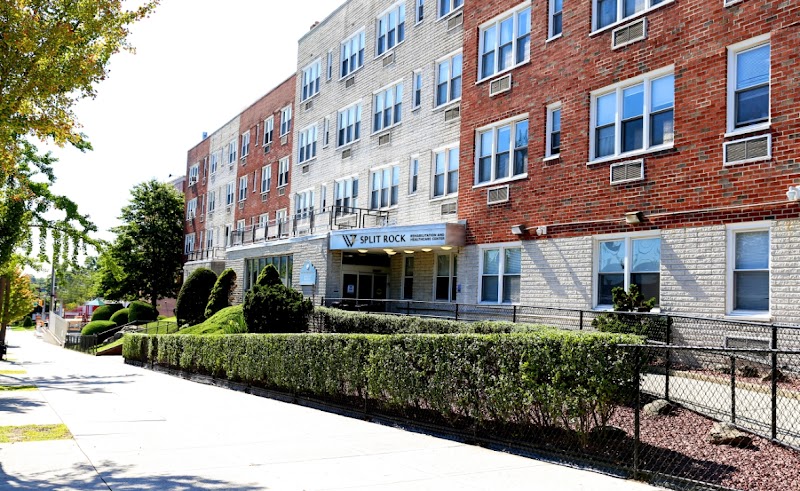
SPLIT ROCK REHABILITION AND HEALTH CARE CENTER
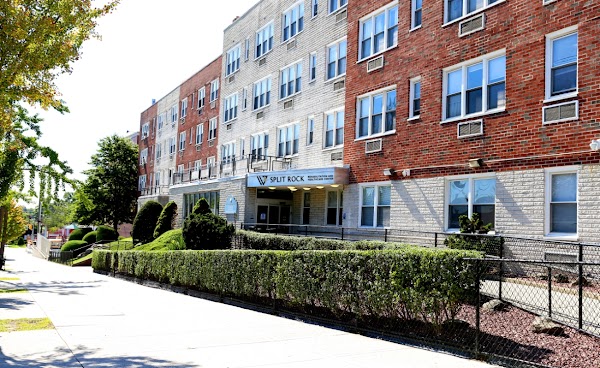
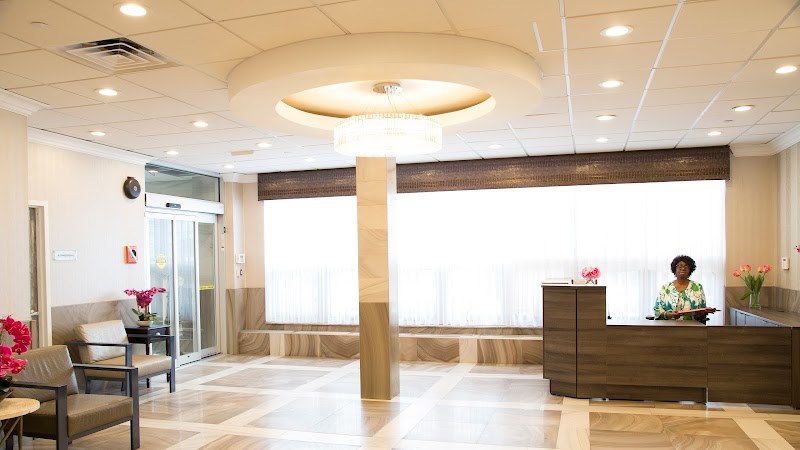
3525 BAYCHESTER AVE, BRONX, NY 10466 (718) 798-8900
For profit - Limited Liability company 240 Beds Independent Data: November 2025
Trust Grade
90/100
#99 of 594 in NY
Last Inspection: September 2024

Within standard 12-15 month inspection cycle. Federal law requires annual inspections.

Overview

Split Rock Rehabilitation and Health Care Center has an excellent Trust Grade of A, indicating a high level of quality care. It ranks #99 out of 594 nursing facilities in New York, placing it in the top half of all state facilities, and #9 out of 43 in Bronx County, meaning only eight other local options are better. The facility is improving, with issues decreasing from 2 in 2024 to 1 in 2025. Staffing is a mixed picture; it has a decent rating of 3 out of 5 stars, with a turnover rate of 34%, which is better than the state average. Notably, there have been no fines recorded, which is a positive sign. However, there are serious concerns regarding the handling of abuse allegations, where the facility failed to report and investigate incidents properly, highlighting a significant area for improvement. Overall, while there are strengths in staffing and care quality, families should consider the serious concerns raised regarding safety protocols.

Trust Score
A
90/100
In New York
#99/594
Top 16%
Safety Record
Low Risk
No red flags
Inspections
Getting Better
2 → 1 violations
Staff Stability
○ Average
34% turnover. Near New York's 48% average. Typical for the industry.
Penalties
✓ Good
No fines on record. Clean compliance history, better than most New York facilities.
Skilled Nurses
✓ Good
Each resident gets 56 minutes of Registered Nurse (RN) attention daily — more than average for New York. RNs are trained to catch health problems early.
Violations
⚠ Watch
11 deficiencies on record. Higher than average. Multiple issues found across inspections.
★★★★★
5.0
Overall Rating
★★★☆☆
3.0
Staff Levels
★★★★★
5.0
Care Quality
★★★★☆
4.0
Inspection Score
Stable
2024: 2 issues
2025: 1 issues

The Good

  • 5-Star Quality Measures · Strong clinical quality outcomes
  • Full Sprinkler Coverage · Fire safety systems throughout facility
  • No fines on record
  • Staff turnover below average (34%)

    14 points below New York average of 48%

Facility shows strength in quality measures, fire safety.

The Bad

Staff Turnover: 34%

12pts below New York avg (46%)

Typical for the industry

The Ugly 11 deficiencies on record

May 2025 1 deficiency
CONCERN (D) 📢 Someone Reported This

A family member, employee, or ombudsman was alarmed enough to file a formal complaint

Potential for Harm - no one hurt, but risky conditions existed

Report Alleged Abuse (Tag F0609)

Could have caused harm · This affected 1 resident

Based on record review and interviews conducted during an Abbreviated Survey (NY00373021), the facility failed to report the results of all investigations to the administrator or his or her designated...

Read full inspector narrative →
Based on record review and interviews conducted during an Abbreviated Survey (NY00373021), the facility failed to report the results of all investigations to the administrator or his or her designated representative and to other officials in accordance with State law, including to the State Survey Agency, within 5 working days of the incident, and if the alleged violation is verified appropriate corrective action must be taken. This was evident in one (1) out of five (5) residents sampled (Resident #1). Specifically, on 02/26/2025 at approximately 3:30 PM, Resident #1 reported to Social Worker #1 that they were missing seven thousand dollars, and that Certified Nursing Assistant #1 took their money during care. The facility completed their investigation on 03/11/2025 and submitted the findings to New York State Department of Health on 03/11/2025 at 4:23 PM. The facility did not complete and submit their investigation report within 5 working days to New York State Department of Health. The findings include: The Facility's Policy and Procedure on Abuse, Neglect, Mistreatment and Exploitation dated 03/11/2024 documented the facility will report the results of all reportable investigations to the State Survey Agency, Law Enforcement if needed and the follow up report to the State Agency, within 5 working days of the incident, and if the alleged violation is verified appropriate corrective action must be taken. Resident #1 was admitted to the facility with diagnoses including Multiple Sclerosis and Adult Failure to Thrive. The Minimum Data Set (an assessment tool) dated 12/21/2024 documented Resident #1 was assessed with intact cognition. The Resident/Family Complaint/Grievance Form dated 02/26/2025 (no time) documented Resident #1 reported that their seven thousand dollars was missing, and that Certified Nursing Assistant #1 took the money when they were provided care to them. The Facility Summary of Investigation dated 03/11/2025 documented Certified Nursing Assistant #1 was not familiar with Resident #1. The work schedule for Certified Nursing Assistant #1 confirmed that they did not work on Resident #1 unit during the month of January 2025 and at no time was assigned to Resident #1. The facility concluded that there was no corroborating evidence to support Resident #1's claim of missing money or alleged involvement of Certified Nursing Assistant #1. The facility staff were educated on abuse prevention and misappropriation of property. A Webform Submission from the Nursing Home Facility Incident Report showed that the facility submitted their completed investigation to New York State Department of Health on 03/11/2025 at 4:23 PM. During an interview on 05/20/2025 at 2:00 PM, the Director of Nursing stated they were not aware that the follow up report of investigation must be submitted within five business days to the Department of Health. The Director of Nursing stated they submitted the completed investigation on 03/11/2025 at 4:23 PM which was considered late submission. During an interview on 05/20/2025 at 3:00 PM, the Administrator stated that the completed investigation should have been submitted to the Department of Health within five business days. The Administrator stated that they were aware that they submitted the investigation late. 10 NYCRR 415.4 (b)(1)(ii)
Sept 2024 2 deficiencies
CONCERN (E)

Potential for Harm - no one hurt, but risky conditions existed

Report Alleged Abuse (Tag F0609)

Could have caused harm · This affected multiple residents

**NOTE- TERMS IN BRACKETS HAVE BEEN EDITED TO PROTECT CONFIDENTIALITY** Based on record review and interviews conducted during the Recertification Survey from 09/03/2024 to 09/10/2024, the facility fa...

Read full inspector narrative →
**NOTE- TERMS IN BRACKETS HAVE BEEN EDITED TO PROTECT CONFIDENTIALITY** Based on record review and interviews conducted during the Recertification Survey from 09/03/2024 to 09/10/2024, the facility failed to ensure that all alleged violations involving abuse were reported immediately, but not later than 2 hours after the allegations of abuse were made to the New York State Department of Health. This was evident in 1 (Resident #140) of 4 residents reviewed for Abuse out of 36 total sampled residents. Specifically, 1.) On 09/03/2023, Resident #140 alleged that they were inappropriately touched by a staff. 2.) On 09/05/2024, Resident #140 alleged that, months ago, they were sexually assaulted by a male Certified Nursing Assistant who worked on the evening shift. The facility did not report both allegations to the New York State Department of Health. The findings are: The facility's policy and procedure titled Abuse, Neglect, Mistreatment, and Exploitation Prohibition with an implementation date of 03/11/2024 documented that all allegations of abuse must be immediately reported to the Administrator and no later than 2 hours to other officials, including to the State Survey Agency, after the allegation was made. Resident #140 had diagnoses which included Chronic Inflammatory Demyelinating Polyneuritis, Diabetes Mellitus, and Muscle Weakness. The Minimum Data Set assessment dated [DATE] documented that Resident #140 was cognitively intact, had no physical or verbal behavioral symptoms directed towards others, and had not rejected care. On 09/05/2024 at 12:47 PM, Resident #140 was interviewed and stated that they were sexually assaulted months ago by a male Certified Nursing Assistant who worked on the evening shift. Resident #140 could not recall when this occurred but stated that it occurred multiple times. Resident #140 stated that the Certified Nursing Assistant would stick their fingers in their butt while providing care. Resident #140 stated that after this occurred for the final time, they confronted the Certified Nursing Assistant and threatened to punch them in the face if the sexual assault occurred again. Resident #140 stated that the nurse informed them that the Certified Nursing Assistant would never touch them again and that the Certified Nursing Assistant never provided care or was assigned to them again. 1.) A nurse's progress notes dated 09/03/2023 at 11:53 AM by Licensed Practical Nurse #1 documented that Resident #140 complained that they were inappropriately touched by a staff. The nursing supervisor was made aware and went in for the Resident to explain. Resident #140 refused to talk. An Incident / Accident Investigation Report Summary dated 09/03/2023 documented that Resident #140 refused care from Certified Nursing Assistant #2 on 09/03/2023. Licensed Practical Nurse #1 went in to speak with the Resident, but Resident refused to speak. The investigative summary concluded that no abuse or mistreatment occurred. Review of the facilities investigative report and staff written statements showed no documented evidence that Resident #140's allegation of being inappropriately touched by staff was addressed. On 09/10/2024 at 12:38 PM, Licensed Practical Nurse #1 was interviewed and stated that they wrote a progress note about Resident #140 claiming that Certified Nursing Assistant #2 inappropriately touched them in the groin area. Licensed Practical Nurse #1 stated they reported the allegation to the nursing supervisor. On 09/10/2024 at 12:53 PM, the Administrator was interviewed and stated that on 09/03/2023, Resident #140 stated they were inappropriately touched by Certified Nursing Assistant #2. The Administrator stated that the allegation was not reported because there was nothing to report. The Administrator stated that Resident #140 was not touched. They stated Resident #140 was being cleaned and because of their behavior, Resident #140 claimed it was abuse. 2.) The facility had not provided documented evidence that Resident #140's allegation that they were sexually assaulted by a male Certified Nursing Assistant was investigated. On 09/05/2024 at 02:11 PM, Licensed Practical Nurse #1 was interviewed and stated that months ago, they heard about an accusation made by Resident #140 regarding a Certified Nursing Assistant inappropriately touching Resident #140's buttocks. Licensed Practical Nurse #1 identified the Certified Nursing Assistant being accused as Certified Nursing Assistant #1. Licensed Practical Nurse #1 stated they were unsure if this was reported. On 09/09/2024 at 05:15 PM, Certified Nursing Assistant #1 was interviewed and stated that they cared for Resident #140 until about a year ago when Resident #140 changed rooms and was no longer on their assignment. Certified Nursing Assistant #1 denied ever touching Resident #140 inappropriately or being aware of any accusations made by Resident #140 against them. On 09/09/2024 at 11:27 AM, the Director of Social Services was interviewed and stated that they were unaware of Resident #140's statement that Certified Nursing Assistant #1 sexually assaulted them until Resident #140 reported it to the State Surveyor on 09/05/2024. The Director of Social Services stated they met with Resident #140 on 09/06/2024 to discuss this concern and Resident #140 reported that Certified Nursing Assistant #1 inappropriately touched Resident #140's anus. The Director of Social Services stated that Resident #140 stated that Resident #140 feels that the concern was resolved since Certified Nursing Assistant #1 no longer provided care for them. The Director of Social Services stated that when they receive allegations of abuse, the Director of Nursing is notified, the facility collects statements from staff, and it is reported to the New York State Department of Health. The Director of Social Services stated they were unsure if this concern had been reported to the New York State Department of Health. On 09/10/2024 at 10:08 AM, the Administrator was interviewed and stated that they were not made aware of Resident #140's accusation against Certified Nursing Assistant #1 until it was shared with the State Surveyor. The Administrator stated that they believe the accusation is untrue based on his past behaviors of refusing care, exposing themself, and throwing items. The Administrator stated the allegation was not reported to the New York State Department of Health because they believed that the claim was related to their other claim from a year ago. 10 NYCRR 415.4(b)
CONCERN (E)

Potential for Harm - no one hurt, but risky conditions existed

Investigate Abuse (Tag F0610)

Could have caused harm · This affected multiple residents

**NOTE- TERMS IN BRACKETS HAVE BEEN EDITED TO PROTECT CONFIDENTIALITY** Based on record review and interviews conducted during the Recertification Survey from 09/03/2024 to 09/10/2024, the facility di...

Read full inspector narrative →
**NOTE- TERMS IN BRACKETS HAVE BEEN EDITED TO PROTECT CONFIDENTIALITY** Based on record review and interviews conducted during the Recertification Survey from 09/03/2024 to 09/10/2024, the facility did not ensure that all allegations of abuse were thoroughly investigated. This was evident for 1 (Resident #140) of 4 residents reviewed for Abuse out of 36 total sampled residents. Specifically, 1.) On 09/03/2023, Resident #140 alleged that they were inappropriately touched by a staff. The facility investigation did not address the allegation. 2.) On 09/05/2024, Resident #140 alleged that, months ago, they were sexually assaulted by a male Certified Nursing Assistant who worked on the evening shift. There was no documented evidence that the allegation was investigated. The findings are: The facility's policy and procedure titled Abuse, Neglect, Mistreatment, and Exploitation Prohibition with an implementation date of 03/11/2024 documented that the Nursing Department with facility Administration will coordinate the investigation of all allegations of physical or verbal abuse. The Director of Nursing is responsible for coordinating a timely and thorough investigation. The investigation should be conducted as soon as possible after the allegation of abuse is made. Resident #140 had diagnoses which included Chronic Inflammatory Demyelinating Polyneuritis, Diabetes Mellitus, and Muscle Weakness. The Minimum Data Set assessment dated [DATE] documented that Resident #140 was cognitively intact, had no physical or verbal behavioral symptoms directed towards others, and had not rejected care. 1.) A nurse's progress notes dated 09/03/2023 at 11:53 AM by Licensed Practical Nurse #1 documented that Resident #140 complained that they were inappropriately touched by a staff. The nursing supervisor was made aware and went in for the Resident to explain. Resident #140 refused to talk. An Incident / Accident Investigation Report Summary dated 09/03/2023 documented that Resident #140 refused care from Certified Nursing Assistant #2 on 09/03/2023. Licensed Practical Nurse #1 went in to speak with the Resident, but Resident refused to speak. The investigative summary concluded that no abuse or mistreatment occurred. Review of the facilities investigative report and staff written statements showed no documented evidence that Resident #140's allegation of being inappropriately touched by staff was addressed. On 09/10/2024 at 12:38 PM, Licensed Practical Nurse #1 was interviewed and stated that they wrote a progress note about Resident #140 claiming that Certified Nursing Assistant #2 inappropriately touched them in the groin area. Licensed Practical Nurse #1 stated they reported the allegation to the nursing supervisor. On 09/10/2024 at 12:53 PM, the Administrator was interviewed and stated that on 09/03/2023, Resident #140 alleged that Certified Nursing Assistant #2 had inappropriately touched them. The Administrator stated that Resident #140 does not want to be cleaned after having diarrhea, so they claimed they were inappropriately touched. The Administrator stated they knew it was not inappropriate touching because Certified Nursing Assistant #2 reported what had occurred. 2.) On 09/05/2024 at 12:47 PM, Resident #140 was interviewed and stated that they were sexually assaulted months ago by a male Certified Nursing Assistant who worked on the evening shift. Resident #140 could not recall when this occurred but stated that it occurred multiple times. Resident #140 stated that the Certified Nursing Assistant would stick their fingers in their butt while providing care. Resident #140 stated that after this occurred for the final time, they confronted the Certified Nursing Assistant and threatened to punch them in the face if the sexual assault occurred again. Resident #140 stated that the nurse informed them that the Certified Nursing Assistant would never touch them again and that the Certified Nursing Assistant never provided care or was assigned to them again. The facility had not provided documented evidence that Resident #140's allegation that they were sexually assaulted by a male Certified Nursing Assistant was investigated. On 09/05/2024 at 02:11 PM, Licensed Practical Nurse #1 was interviewed and stated that months ago, they heard about an accusation made by Resident #140 regarding a Certified Nursing Assistant inappropriately touching Resident #140's buttocks. Licensed Practical Nurse #1 identified the Certified Nursing Assistant being accused as Certified Nursing Assistant #1. Licensed Practical Nurse #1 stated they were unsure if this was reported. On 09/09/2024 at 05:15 PM, Certified Nursing Assistant #1 was interviewed and stated that they cared for Resident #140 until about a year ago when Resident #140 changed rooms and was no longer on their assignment. Certified Nursing Assistant #1 denied ever touching Resident #140 inappropriately or being aware of any accusations made by Resident #140 against them. On 09/09/2024 at 11:27 AM, the Director of Social Services was interviewed and stated they were unaware of Resident #140's statement that Certified Nursing Assistant #1 sexually assaulted them until Resident #140 reported it to the State Surveyor on 09/05/2024. The Director of Social Services stated they met with Resident #140 on 09/06/2024 to discuss this concern and Resident #140 reported that Certified Nursing Assistant #1 inappropriately touched Resident #140's anus. The Director of Social Services stated that Resident #140 stated that the Resident felt that the concern was resolved since Certified Nursing Assistant #1 no longer provided care for them. On 09/10/2024 at 9:59 AM, the Director of Nursing was interviewed and stated this was the first time they heard about Resident #140's allegation, that the Resident was sexually assaulted by a male Certified Nursing Assistant. The Director of Nursing stated they were investigating the allegation but had not provided documented evidence of investigation. On 09/10/2024 at 12:53 PM, the Administrator was interviewed and stated they believed that the sexual abuse claim related to Certified Nursing Assistant #1 was part of the same allegation that Resident #140 made on 09/03/2023 when they alleged of being inappropriately touched. The Administrator stated that Resident #140 was a homosexual and fantasizes about some of this activity. The Administrator stated they were not looking into this allegation any further because it happened a year ago, and that Resident #140 does not remember when the allegation occurred. The Administrator further stated So what am I supposed to do? Take statements a year later when Resident #140 cannot even recall when it was? 10 NYCRR 415.4(b)(3)
Jun 2022 1 deficiency
CONCERN (D)

Potential for Harm - no one hurt, but risky conditions existed

Infection Control (Tag F0880)

Could have caused harm · This affected 1 resident

**NOTE- TERMS IN BRACKETS HAVE BEEN EDITED TO PROTECT CONFIDENTIALITY** 2) The facility policy titled Pressure Ulcer Prevention and Treatment dated 1/12/22 documented professional standards of nursing...

Read full inspector narrative →
**NOTE- TERMS IN BRACKETS HAVE BEEN EDITED TO PROTECT CONFIDENTIALITY** 2) The facility policy titled Pressure Ulcer Prevention and Treatment dated 1/12/22 documented professional standards of nursing practice were used to prevent development of pressure ulcers. Resident #5 had diagnoses of cerebral infarction and sacral pressure ulcer. The MDS dated [DATE] documented Resident #5 was severely cognitively impaired and had a stage 4 pressure ulcer requiring ointment application. Physician's Orders dated 6/1/22 documented Resident #5 was ordered to have sacral area cleansed with normal saline, silver alginate dressing applied, and cover with silicone foam daily and as needed. On 06/07/22 at 10:21 AM, RN #2 was observed entering Resident's #5's room with a plastic bag of supplies to prepare for changing the resident's sacral wound dressing. RN #2 placed the plastic bag on an air conditioner shelf that was not cleaned or sanitized and removed wound care supplies from the bag (drape, gauze, and silver alginate). After performing wound care on Resident #5, RN #2 took a garbage bag with soiled dressing and the plastic bag with unused supplies from the top of the unsanaitized air conditioner shelf in the same hand and left the room. RN #2 then placed the plastic bag of unused supplies into a medication cart drawer. RN #2 was interviewed during the observation and stated the plastic bag of wound care supplies were labeled with Resident #5's name and kept in the medication cart. On 06/08/22 at 12:44 PM, the RN Nurse Manager was interviewed and stated wound care supplies were placed in plastic bags, labeled with the resident's name, and stored in the medication cart. The plastic bags stay in the medication cart. Supplies from the plastic bag are transferred to a tray and the tray is brought into the resident's room when wound care is being performed. On 06/08/22 at 02:33 PM, the DNS was interviewed and stated nurses use a tray to transfer wound care supplies from the medication cart to the resident's room. The plastic bag of wound care supplies is kept in the medication cart and should not be removed or brought into the resident's room. 415.19(a)(1-3) Based on observation, interviews, and record review conducted during the Recertification survey from 6/1/2022 to 6/8/2022, the facility did not ensure infection control practices were maintained. This was evident for 1 (Resident #8) of 1 resident reviewed for respiratory care and 1 (Resident #5) of 4 residents reviewed for pressure ulcers. Specifically, 1) there were multiple observations of Resident #8 with undated oxygen tubing in use; and 2) Registered Nurse (RN) #2 was observed placing a bag of wound care supplies on an unsanitized surface in Resident #5's room and then returning the plastic bag to a medication cart. The findings are: 1) The facility policy titled Oxygen Therapy dated 04/2022 documented all oxygen tubing will be labeled and changed weekly. Resident # 8 had diagnoses of respiratory failure and lung disease. The Minimum Data Set 3.0 (MDS) dated [DATE] documented Resident #8 was cognitively intact and received oxygen therapy. On 06/03/22 at 11:00 AM and 06/07/22 at 02:08 PM, Resident # 8 was observed in the dining room with undated oxygen tubing connected to their tracheostomy. On 06/06/22 at 09:15 AM, Resident # 8 was observed sitting in their room with undated oxygen tubing connecting the oxygen concentrator to their tracheostomy. Physician's Orders renewed 05/26/22 documented Resident #8's oxygen tubing was ordered to be changed and labeled weekly on Tuesday. On 06/06/22 at 02:07 PM, an interview was conducted with RN #1 who stated the respiratory therapists (RT) change all the oxygen tubing. On 06/06/22 at 02:26 PM, an interview was conducted with RT Supervisor who stated they change the oxygen tubing every Tuesday and Resident #8's oxygen tubing was replaced the prior week. Nursing staff are responsible for changing the tubing connected to the oxygen tank. There was no date on the tubing connected to the portable oxygen tank and the oxygen concentrator because someone may have changed it. On 06/06/22 at 02:48 PM, an interview was conducted with RN Nurse Manager who stated Resident #8 has a tracheostomy and resides on the respiratory unit therefore the RTs are responsible for changing all the oxygen tubing. On 06/08/22 at 09:37 AM and 11:03 AM, an interview was conducted with the Director of Nursing Services (DNS) who stated RT is responsible for changing a resident's oxygen tubing if they have a tracheostomy. Resident #8 is non-complaint and has a behavior of changing the tubing.
Aug 2019 7 deficiencies
CONCERN (D)

Potential for Harm - no one hurt, but risky conditions existed

Resident Rights (Tag F0550)

Could have caused harm · This affected 1 resident

**NOTE- TERMS IN BRACKETS HAVE BEEN EDITED TO PROTECT CONFIDENTIALITY** Based on observation and interviews conducted during the recertification survey, the facility did not ensure that each resident ...

Read full inspector narrative →
**NOTE- TERMS IN BRACKETS HAVE BEEN EDITED TO PROTECT CONFIDENTIALITY** Based on observation and interviews conducted during the recertification survey, the facility did not ensure that each resident was treated with dignity and respect during care. Specifically, during an observation of Tracheostomy care, the Respiratory Therapist failed to knock on the door before entering the resident's room. This was evident for 1 of 2 residents reviewed for Dignity (Resident #155). The finding is: The facility policy entitled Dignity, Privacy and Confidentially dated 8/20/2019 documented: it is our policy to provide care and services to residents in a manner and in an environment that maintains or enhances each resident's dignity and respect in full recognition of his or her individuality. It is our policy to maintain residents personal privacy and confidentiality, in all care and communication settings. Bullet number six (6) documented All interaction with resident will be conducted in full recognition of his/her privacy. Resident #155 was admitted to facility on 6/18/2018 with diagnoses which include Acute Respiratory Failure with Hypoxia or Hypercapnia, s/p (status post) Tracheostomy, and Anoxic Brain Damage. The Quarterly Minimum Data Set 3.0 (MDS) assessment dated [DATE] documented the resident had severely impaired cognition with long and short term memory problems. The MDS documented the resident was receiving Oxygen, Suctioning, Tracheostomy Care, and ventilator or Respirator while a resident. On 08/15/19 at 02:58 PM, the resident was observed lying in bed attached to a ventilator. The resident was able to communicate and stated she was ok. On 08/19/19 at 09:56 AM, the Respiratory Therapist (RT) was observed preparing for the resident's tracheostomy care. The RT gathered equipment from the cart in the hallway and proceeded to enter the resident's room without knocking on the door. On 08/19/19 at 10:23 AM, the Respiratory Therapist (RT) was interviewed. The RT stated when she is going into a room to suction a patient she should gather all her equipment, knock on the door, wash her hands, introduce self and let the patient know she is here to perform suctioning. 415.5(a)
CONCERN (D)

Potential for Harm - no one hurt, but risky conditions existed

Deficiency F0583 (Tag F0583)

Could have caused harm · This affected 1 resident

**NOTE- TERMS IN BRACKETS HAVE BEEN EDITED TO PROTECT CONFIDENTIALITY** Based on observation and interviews conducted during the recertification survey, the facility did not ensure that each resident ...

Read full inspector narrative →
**NOTE- TERMS IN BRACKETS HAVE BEEN EDITED TO PROTECT CONFIDENTIALITY** Based on observation and interviews conducted during the recertification survey, the facility did not ensure that each resident was provided with personal privacy during care. Specifically, during observations of Tracheostomy care and suctioning for two residents, the Respiratory Therapist did not close the door and draw the curtain. This was evident for 1 of 3 residents reviewed for Ventilator/Tracheostomy (Resident #155) and one random observation (Resident #116). The findings are: The facility policy entitled Dignity, Privacy and Confidentiality dated 8/20/2019 documented: it is our policy to provide care and services to residents in a manner and in an environment that maintains or enhances each resident's dignity and respect in full recognition of his or her individuality. It is our policy to maintain residents personal privacy and confidentiality, in all care and communication settings. Bullet number six (6) documented All interaction with resident will be conducted in full recognition of his/her privacy. 1) Resident #155 was admitted to facility on 6/18/2018 with diagnoses which include Acute Respiratory Failure with Hypoxia or Hypercapnia, s/p (status post) Tracheostomy, and Anoxic Brain Damage. The Quarterly Minimum Data Set 3.0 (MDS) assessment dated [DATE] documented the resident had severely impaired cognition with long and short term memory problems. The MDS documented the resident was receiving Oxygen, Suctioning, Tracheostomy Care, and ventilator or respirator while a resident. On 08/15/19 at 02:58 PM, the resident was observed lying in bed attached to a ventilator. The resident was able to communicate and stated she was ok. On 08/19/19 at 09:56 AM, the Respiratory Therapist (RT) was observed doing the resident's Tracheostomy care and suctioning. Resident #155 is in a room with three other residents. The RT entered the room, set up the supplies, and proceeded to perform care without closing the door or drawing the curtain to provide privacy. 2) Resident #116 was admitted to the facility on [DATE] with diagnoses which include Respiratory Failure, s/p (status post) Tracheostomy, and Schizophrenia. The Quarterly Minimum Data Set 3.0 (MDS) assessment dated [DATE] documented the resident is cognitively intact. The MDS documented the resident received Oxygen, Suctioning, Tracheostomy care, and Ventilator or Respirator while a resident. On 08/14/19 at 10:36 AM, the resident was observed lying in bed attached to a ventilator in no distress. The resident was able to communicate well and verbalized she was ok. On 08/19/2019 at 10:15 AM, the Respiratory Therapist (RT) was observed doing the resident's Tracheostomy care and suctioning. The RT performed the resident's care with the door and privacy curtain open. On 08/19/19 at 10:23 AM, the Respiratory Therapist (RT) was interviewed. The RT stated she had an in-service and competency on privacy, suctioning and sexual harassment some time in July before going on vacation. The RT stated she respects patient right for privacy. The RT stated, for example, if there are people in the room, such as family members, she will ask them to leave and call them back into the room when the care is finished. The RT stated sometimes, she will pull the curtains to make the resident feel comfortable, and she closes the door sometimes. She stated that she leaves the door open sometimes just in case there is an emergency and she needs help with the resident. On 08/19/19 at 11:03 AM, the Director of Respiratory Care (RTD) was interviewed. The Respiratory Director stated he is responsible for monitoring the Respiratory Therapist through observations and annual competencies. The RTD stated the competencies for the RT were done before the RT went on vacation. The RTD stated the competencies cover multiple areas including suctioning, Ventilator care, Trach Care, and Oxygen. The RTD stated it is a big package that is reviewed with each Respiratory Therapist, and they sign off when it is done. The RTD stated part of the process is respecting resident privacy by closing the door or pulling the privacy curtain. RTD stated if the door is closed, no one would be able to hear the staff call for assistance, but the curtain must be drawn for privacy when giving care if the door remains open. 413.3(d)(1)(ii)
CONCERN (D)

Potential for Harm - no one hurt, but risky conditions existed

Comprehensive Care Plan (Tag F0656)

Could have caused harm · This affected 1 resident

**NOTE- TERMS IN BRACKETS HAVE BEEN EDITED TO PROTECT CONFIDENTIALITY** Based on observations, record review and interviews, the facility did not develop and implement a Comprehensive person-centered ...

Read full inspector narrative →
**NOTE- TERMS IN BRACKETS HAVE BEEN EDITED TO PROTECT CONFIDENTIALITY** Based on observations, record review and interviews, the facility did not develop and implement a Comprehensive person-centered Care Plan that includes measurable objectives and time frames to meet a resident's medical, nursing, and mental and psychosocial needs that are identified in the comprehensive assessment. Specifically, no care plan to address the care concerns for restraint use was developed for a resident with a hand mitten (Resident #165). The finding is: The facility policy entitled Physical Restraints documented under the section Philosophy All residents with restraints will be monitored for continued need and justification as need arises. Documentation by nursing and physician shall state the medical symptom requiring the needs for the restraint and the need for the restraint and the continued use in the CCP and all other relevant documentation. The facility policy went on to document restraints shall be defined as any manual method of physical, mechanical device, material or equipment, and/or adjacent to the resident's body that the individual cannot remove easily or restricts freedom of movement or normal access to one's body (Federal Interpretive Guidelines). Resident #165 was admitted to the facility on [DATE] with diagnoses which included Respiratory Failure, s/p (status post) Tracheostomy and Gastronomy, and Non-Alzheimer's Dementia. The Minimum Data Set 3.0 (MDS) assessments dated 4/1/19, 5/6/19 5/10/10, 5/17/19, 5/27/19, 6/5/19, 7/1/19, and 7/9/19 documented the resident had severely impaired cognition with long and short term memory problems. The assessments further documented the resident had no restraints or alarms used. On 8/15/2019 at 03:02 PM, 8/16/2019 at 08:36 AM and 3:12 PM, and 8/19/2019 at 08:33 AM and 11:30 AM, the resident was observed lying in bed. The resident had a white mitten on the right hand. The facility document entitled Resident Notification of Restraint Use dated 8/27/17 with signatures identified as Resident/Designated Representative and Social Worker documented restraint use Right (R) Hand Mitten and Medical reason Pulling on Trach and GT (Gastronomy Tube). The Comprehensive Care Plan (CCP) for Hand Mitten, initiated 8/27/17, documented the resident had a right hand mitten in place to prevent the resident from dislodging the tracheostomy and gastronomy tubes. The CCP had the following intervention: Mitten applied to resident right hand every shift , release every two hours for 15 minutes during ADL care and meals. The CCP was last reviewed 8/10/19. The active Physician's Order dated 8/2/19 documented: Place hand Mittens to right hand to ensure safety and to prevent from pulling out his Trach, remove every 2 to 3 hours for hygiene and inspection and Range of Motion (ROM). The order was initiated 5/10/19. The Resident Nursing Instructions report generated 8/20/19 documented the resident had a right hand mitten restraint. The schedule for the restraint was last changed in the medical record on 8/25/17, and the type of restraint was last changed in the medical record on 9/20/17. There was no documented evidence that a Comprehensive Care Plan with goals and interventions for Restraints had been developed. On 08/20/19 at 11:02 AM, the Registered Nurse MDS Coordinator (RN #4) was interviewed. The MDS Coordinator stated as per MDS language, if the mitten is tied to the bed it is a restraint. As long as the resident is able to move their hands and touch his or her body, she does not consider the hand mitten a restraint. MDS language documents if the resident has limitations in the hands, the hand mitten should be considered a restraint. The resident has a history of pulling the G- Tube and the Trach, and the resident has had the hand mitten since since 2017. The RN stated the mitten is not tied to the siderails, and the resident can move his hands. Therefore, it is not a restraint. The MDS Coordinator added she gets the definition of restraint from the MDS manual, CMS (Centers for Medicare & Medicaid Services) guidelines, and her supervisor. On 08/20/19 at 11:29 AM, the Director of MDS was interviewed. The MDS Director stated he reviewed the RAI manual for coding restraints in the MDS. He stated Chapter 3- Section P entitled Restraints and Alarms on page 6 documents that hand mittens is not restraints. The MDS Director stated the hand mitten the patient has and how it is attached is not considered a hand restraint. The resident cannot remove the mitten, and it is for a safety issue. The resident cannot use his hands. He does not consider the mitten as a limb restraint based on how he read the guidelines in the MDS RAI Manual. The MDS Director stated he is responsible for the in-service of the MDS staff, and he was educated that if the mitten is not tied to anything, it does not restrict movement. The MDS Director stated a restraint is when a patient is tied down. On 08/20/19 at 12:33 PM, the Registered Nurse Unit Manager (RN #1) was interviewed. The RN stated that the resident has had a right hand mitten since she began working on the unit a year ago. The resident has a right hand mitten to prevent him from pulling at the Tracheostomy and Gastronomy tubes. Unit Manager stated the mitten is not a restraint because the resident is still able to move his hand. The mitten is used to cover all the resident's fingers so he will not be able to pull at his trach. The RN stated it is not a restraint, and the resident has a care plan for Mitten. 415.11(c)(1)
CONCERN (E)

Potential for Harm - no one hurt, but risky conditions existed

Safe Environment (Tag F0584)

Could have caused harm · This affected multiple residents

**NOTE- TERMS IN BRACKETS HAVE BEEN EDITED TO PROTECT CONFIDENTIALITY** 2). The following observations were made on the 3rd floor: On 08/14/19 at 9:58 AM, in room [ROOM NUMBER] Bed C- the bedside cabi...

Read full inspector narrative →
**NOTE- TERMS IN BRACKETS HAVE BEEN EDITED TO PROTECT CONFIDENTIALITY** 2). The following observations were made on the 3rd floor: On 08/14/19 at 9:58 AM, in room [ROOM NUMBER] Bed C- the bedside cabinet had a broken bottom drawer, the privacy curtains were missing hooks. room [ROOM NUMBER] privacy curtains for Bed A, B, C and D were missing hooks. On 08/14/19 at 10:39 AM, the privacy curtain for room [ROOM NUMBER]-Bed A was missing 2 rings, rings were affixed separately from privacy curtain and the privacy curtain for Bed C and Bed D had 1 privacy curtain ring that was not affixed to the curtain. On 08/14/19 at 11:18 AM, in room [ROOM NUMBER]-both of the resident's bedside tables at the door had chipped surfaces in the top and corners and the overhead privacy curtain was missing hooks. room [ROOM NUMBER]-privacy curtains for window bed was hanging with missing hooks and the privacy curtain was ripped at the top. The privacy curtain around the bed by the entrance door had damaged fabric and was missing 2 hooks. On 08/15/2019 at 09:33 AM, in room [ROOM NUMBER]- privacy curtains for window bed was missing hooks and the privacy curtain was ripped at the top. The privacy curtain around the bed by the entrance door had damaged fabric and was missing 2 hooks. On 8/15/19 at 08:50 AM, 08/15/19 at 02:51 PM, 08/16/19 at 03:19 PM, 08/19/19 at 08:54 AM, 08/20/19 at 01:04 PM and 08/20/19 at 04:24 PM-room [ROOM NUMBER]-Privacy curtains hanging with missing hooks for Bed A. On 08/20/19 at 01:18 PM, in room [ROOM NUMBER]-Bed C-lower drawer on resident's dresser was broken. On 08/20/19 at 04:24 PM, in room [ROOM NUMBER]-privacy curtains for Bed A, B, C and D were missing hooks. On 08/20/19 at 04:24, in room [ROOM NUMBER] the privacy curtains for Bed A were missing hooks, and in room [ROOM NUMBER] the privacy curtains for Bed C and D were missing hooks. On 8/20/19 at 4:20 PM, the State Agent reviewed the maintenance log for Unit 3 South. There was no documented evidence that any of these concerns had been identified and addressed by staff. On 8/20/19 at 04:29 PM, an interview was conducted with the Housekeeping Supervisor (HS). The HS stated that he makes facility rounds daily, checks to make sure areas are clean, checks for broken furniture and follows up on reports of housekeeping issues. The HS also stated that his staff make rounds and refer to the maintenance log for work orders to be completed. The HS further stated that he is aware of privacy curtains with missing hooks and is in the process of transitioning to getting new curtains. The clips are available and a special project person has been assigned to replace the hooks. On 8/20/19 at 04:41 PM, an interview was conducted with the Maintenance Manager (MM). The MM stated he is notified of maintenance projects via the maintenance book and from overhead pages. The MM also stated that he takes a walk on the floor every day but does not go into every room. Once an issue is noted in the maintenance book, if the item is in stock the issue is fixed the same day. If replacement parts have to be ordered, the repairs will be made once the parts become available. The MM further stated that he was not aware of the broken dresser in room [ROOM NUMBER]. On 8/20/2019 at 04:38 PM, an interview was conducted with the Housekeeping Director (HD). The HD stated that rooms are observed on a daily basis by him and by the porters who will report to him if anything is broken. The HD also stated Maintenance staff check the maintenance log books on the unit and follow up on issues reported. The HD further stated that the privacy curtains are missing hooks because they are being tugged on by staff and residents, and the facility is going to be changing the system and curtains. The HD stated that new curtains and hooks were delivered to the facility last week and are being replaced according to the priority list that was created. State Agent reviewed the priority list provided by the Maintenance Manager, however none of the rooms listed above were included on this list. 415.5(h)(2) Based on observations and interviews during the recertification survey, the facility did not ensure that a clean, comfortable, and homelike environment was provided. Specifically, dirty chairs were observed on the 4th floor, broken furniture and privacy curtains loosely hung with missing hooks on the 3rd floor (Rooms 329, 330, 331, 332, 337). This was evident for 4 out of 6 units reviewed for Environmental Observations (Units 3 North, 3 South, 4 North, and 4 South). The findings are: The facility Policy and Procedure for General repairs on Resident Units dated April 17, 2019 was reviewed. The policy documents it is the policy of the facility that all common rooms, resident rooms, unit equipment and unit furnishings be maintain in proper condition. Procedure #4 Maintenance staff members will check the unit log book daily and complete the repairs. When the repairs is complete they will sign off on the log sheet. 1). On 08/15/2019 at 10:15 AM and 08/16/2019 at 8:30 AM, the following were observed on 4 North and 4 South dining room: - 4 South noted with twenty (20) chairs that were in disrepair with the chair arms torn. One chair had no chair back, the back was torn off, and there were three with missing screws. 4 North noted with twelve (12) chairs in the dining room, of which ten (10) were in disrepair with the chair arms torn and five with loose screws. On 08/19/19 at 08:01 AM, the Maintenance Supervisor was interviewed. He stated he does a walk through daily and checks the chairs and other furniture. He also stated I must have missed those chairs. I removed the torn chairs and replaced them with new ones. On 8/20/2019 at 1:10 PM, the RN Nurse Manager for 4 North and South, RN #6 was interviewed and stated she did see the disrepair and torn chairs arms, but did not log it in the log book because she did not know such small tears and disrepair needed to be reported.
CONCERN (E)

Potential for Harm - no one hurt, but risky conditions existed

Assessment Accuracy (Tag F0641)

Could have caused harm · This affected multiple residents

**NOTE- TERMS IN BRACKETS HAVE BEEN EDITED TO PROTECT CONFIDENTIALITY** 2) Resident #143 was admitted to the facility on [DATE] with active diagnoses that included Chronic Respiratory Failure with Hyp...

Read full inspector narrative →
**NOTE- TERMS IN BRACKETS HAVE BEEN EDITED TO PROTECT CONFIDENTIALITY** 2) Resident #143 was admitted to the facility on [DATE] with active diagnoses that included Chronic Respiratory Failure with Hypoxia or Hypercapnia, Tracheostomy Status, and Seizure Disorder. The Significant Change Minimum Data Set (MDS) dated [DATE] documented the resident is in a persistent vegetative state. The Quarterly Minimum Data Set 3.0 (MDS) assessment dated [DATE] documented the resident is in a persistent vegetative state. The MDS further documented the resident was receiving dialysis while a resident in Section O. On 8/145/2019 at 09:36 AM, resident observed lying in bed with Home Health Aide (HHA) sitting at bedside. The Physician's orders renewed 8/2/2019 documented an order for hospice care that was initiated on 3/25/2019. There were no orders for dialysis. On 08/19/19 at 12:25 PM, the Registered Nurse MDS Coordinator (RN #5) was interviewed. The RN stated this was an error. She meant to check hospice, but she checked Dialysis instead because the line is so close. The MDS Coordinator stated the resident is not on dialysis, and she will modify the MDS now. On 08/20/19 at 04:14 PM, an interview was conducted with the MDS Coordinator. The Coordinator stated monitoring for accuracy includes three parts. There is a monthly MDS audit for all Medicare Part A patients that correlates the information coded with documentation in the record such as Activities of Daily Living, Medicare certifications, and Notice of Medicare Non-Coverage letters and skilled documentation through an auditing company. The MDS Coordinator personally monitors validation reports, completion dates, and any warnings from CMS through an internal review of MDS completion and submission logs on a weekly basis. Ten randomly selected charts are reviewed for MDS accuracy weekly. 3) Resident #165 was admitted to the facility on [DATE] with diagnoses which include Respiratory Failure, s/p (status post) Tracheostomy and Gastronomy, and Non- Alzheimer's Dementia. The Minimum Data Set 3.0 (MDS) assessments dated 4/1/19, 5/6/19 5/10/10, 5/17/19, 5/27/19, 6/5/19, 7/1/19, and 7/9/19 documented the resident had severely impaired cognition with long and short term memory problems. The assessments further documented the resident had no restraints or alarms used in Section P. On 8/15/2019 at 03:02 PM, 8/16/2019 at 08:36 AM and 3:12 PM, and 8/19/2019 at 08:33 AM and 11:30 AM, the resident was observed lying in bed in no distress with a white mitten on the right hand. The Comprehensive Care Plan (CCP) for Hand Mitten, initiated 8/27/17, documented the resident had a right hand mitten in place to prevent the resident from dislodging the tracheostomy and gastronomy tubes. The CCP was last reviewed 8/10/19. The Resident Nursing Instructions report generated 8/20/19 documented the resident had a right hand mitten restraint. The schedule for the restraint was last changed in the medical record on 8/25/17, and the type of restraint was last changed in the medical record on 9/20/17. The active Physician's Order dated 8/2/19 documented: Place hand Mittens to right hand to ensure safety and to prevent from pulling out his Trach, remove every 2 to 3 hours for hygiene and inspection and Range of Motion (ROM). The order was initiated 5/10/19. On 08/19/19 at 12:29 PM, the Registered Nurse MDS Coordinator (RN #5) was interviewed. The RN stated the resident does not have a restraint. She stated that hand mittens that are attached to the side rails and prevent the patient from touching their body are restraints. Hand mittens are not restraints if the resident can touch part of the body and can elevate their arm. The RN stated that her supervisor in-serviced her on restraints. On 08/20/19 at 11:02 AM, the Registered Nurse MDS Coordinator (RN #4) was interviewed. The MDS Coordinator stated as per MDS language, if the mitten is tied to the bed it is a restraint. As long as the resident is able to move their hands and touch his or her body, she does not consider the hand mitten a restraint. MDS language documents if the resident has limitations in the hands, the hand mitten should be considered a restraint. The resident has a history of pulling the G- Tube and the Trach, and the resident has had the hand mitten since since 2017. The RN stated the mitten is not tied to the siderails, and the resident can move his hands. Therefore, it is not a restraint. The MDS Coordinator added she gets the definition of restraint from the MDS manual, CMS (Centers for Medicare & Medicaid Services) guidelines, and her supervisor. On 08/20/19 at 11:29 AM, the Director of MDS was interviewed. The MDS Director stated he reviewed the RAI manual for coding restraints in the MDS. He stated Chapter 3- Section P entitled Restraints and Alarms on page 6 documents that hand mittens is not restraints. The MDS Director stated the hand mitten the patient has and how it is attached is not considered a hand restraint. The resident cannot remove the mitten, and it is for a safety issue. The resident cannot use his hands. He does not consider the mitten as a limb restraint based on how he read the guidelines in the MDS RAI Manual. The MDS Director stated he is responsible for the in-service of the MDS staff, and he was educated that if the mitten is not tied to anything, it does not restrict movement. The MDS Director stated a restraint is when a patient is tied down. 415.11(b) Based on observation, record review, and interview conducted during the recertification survey, the facility did not ensure that the assessment accurately reflected the resident's status. Specifically, (1) the Minimum Data Set (MDS) assessment incorrectly coded a resident received dialysis when they did not and (2) the MDS did not capture a resident's hand mitten as a restraint. This was evident for 3 out of 38 sampled residents (Resident #s 223, 143, and 165). The facility policy for MDS Completion /Transmission revised/reviewed 10/2018 documented every department will be responsible for accurate completion of assigned MDS sections. The findings are: 1) Resident #223 is a resident, admitted [DATE], with diagnoses which include Residual Schizophrenia, Alzheimer's Disease, and Polyosteoarthritis. The admission Minimum Data Set 3.0 (MDS) dated [DATE] documented the resident had severely impaired cognition with long and short-term memory problems. The MDS did not document Dialysis care in the Special Treatment section O for the resident. The Quarterly Minimum Data Set 3.0 (MDS) dated [DATE] documented the resident had severely impaired cognition with long and short-term memory problems. The MDS documented the resident received dialysis care while a resident. The Physician's Orders dated 8/7/19 documented no order for dialysis. On 8/19/19 at 11:27 AM, an interview was conducted with the Licensed Practical Nurse (LPN). The LPN stated the resident is not on dialysis. On 08/20/19 at 09:45 AM, an interview was conducted with MDS Assessor. The MDS Assessor stated the resident is not on dialysis, and it was a mistake that dialysis was checked. The MDS assessor stated when completing the MDS, she meant to check hospice due to the Physician's Orders for a hospice referral, but upon further review of the notes, she learned the resident was not approved for hospice. She did not go back to Section O to correct it. The MDS assessor stated the MDS will be modified. The MDS assessor stated she is responsible for ensuring that the MDS is accurate. The Coordinator oversees and schedules the MDS and care planning.
CONCERN (E)

Potential for Harm - no one hurt, but risky conditions existed

Food Safety (Tag F0812)

Could have caused harm · This affected multiple residents

Based on observation and staff interview during the recertification survey, the facility did not ensure that all equipment was being maintained in a clean, sanitary manner. Specifically, the robot cou...

Read full inspector narrative →
Based on observation and staff interview during the recertification survey, the facility did not ensure that all equipment was being maintained in a clean, sanitary manner. Specifically, the robot coupe R6N was still covered with grime and debris after staff cleaned it. This was evident for the Kitchen Observation task. The finding is: On 08/16/19 at 04:26 PM and 08/19/19 at 03:28 PM, the robot coupe was observed with brown grime around the on and off knobs. On 08/19/19 at 03:28 PM, the Dietary Aide (DA) was interviewed. The DA stated equipment is cleaned and sanitized at night and sanitized in the morning before use. The DA was observed cleaning the robot coupe, with a toothbrush brushing around the metal pole in the center of the base. The DA wiped the base with soap and water, sanitized, and wiped the dry. The DA stated that the substance around the knobs was rust and discoloration. The DA stated she only needed to clean the top of the base, and the cooks clean the machine after use. The DA stated that an in-service on how to clean equipment is given every Wednesday. On 08/19/19 at 03:50 PM, an interview was conducted with the Food Service Director (FSD). The FSD stated the Robot coupe R65 is used for therapeutic consistency either puree or chopped mechanical soft. The FSD stated an in-service on cleaning specialized equipment is done every other Wednesday. The FSD was asked to observe the robot coupe knobs. The FSD stated it was clean and was observed clean that morning. On 08/20/19 at 04:32 PM, a follow-up interview was conducted with the FSD. The FSD stated equipment is physically inspected to ensure there are no food particles and the equipment is dry and ready for use by the following shift prior to closing the kitchen. The inspection is documented on the Supervisor checklist. If the equipment is dirty on inspection, the supervisor/manager will clean and sanitize the equipment. 415.14(h)
CONCERN (E)

Potential for Harm - no one hurt, but risky conditions existed

Infection Control (Tag F0880)

Could have caused harm · This affected multiple residents

**NOTE- TERMS IN BRACKETS HAVE BEEN EDITED TO PROTECT CONFIDENTIALITY** Based on observation, record review and interviews during the recertification survey, the facility did ensure that Infection Con...

Read full inspector narrative →
**NOTE- TERMS IN BRACKETS HAVE BEEN EDITED TO PROTECT CONFIDENTIALITY** Based on observation, record review and interviews during the recertification survey, the facility did ensure that Infection Control protocols were maintained to help prevent the development and transmission of communicable disease and infections. Specifically, (1) a Respiratory Therapist (RT) did not practice appropriate hand hygiene before and during Tracheostomy care for two residents (Resident #155 and #116); and, (2) a Licensed Practical Nurse did not practice appropriate hand hygiene during a dressing change (Resident # 125). This was evident for 2 of 2 residents observed during Tracheostomy care and 1 of 2 residents observed during wound care out of a sample of 38 residents. The findings are: The facility policy and procedure titled Infection Control/Respiratory Equipment, from the Respiratory Care Policy and Procedure Manual, dated October 2018 documented all respiratory Care Personnel should wash their hands frequently as it is the most important means of preventing infection. The facility policy and procedure titled Infection Control and Prevention dated 7/14/16 documented change gloves during patient care if moving from a contaminated body site to a clean body site. Remove gloves promptly after use before touching non-contaminated items and environmental surfaces, and before after caring for another patient. Decontaminate hands after removing gloves. 1. Resident #155 is a [AGE] year old admitted to the facility on [DATE] with diagnoses that included Acute Respiratory Failure, Anoxic Brain Damage, and Tracheostomy Status. The Quarterly Minimum Data Set (MDS) assessment dated [DATE] documented the resident had severe cognitive impairment and received suctioning and Tracheostomy care. Active Physician orders documented Suction Tracheostomy every shift and as needed. On 08/19/19 at 09:56 AM, an observation of Tracheostomy care was conducted with a Respiratory Therapist (RT) who was providing care on Unit 3. The RT gathered equipment from a cart in the hallway, carried the equipment in her hands and entered the resident's room. The RT washed her hands appropriately at the sink located in resident room and donned clean gloves which she removed from a box on the wall. The RT then greeted the resident, placed a clear plastic bag on the resident bed's, and placed a small plastic drape sheet on the bed next to the bag. The RT donned gloves, opened drain sponges, a bottle of Normal Saline Solution (NSS) and placed items on the drape sheet. The RT opened the resident's bedside drawer with gloved hands, rummaged through the drawer and retrieved a vial of NSS (individual pink vial). The RT informed the resident what she was going to do and proceeded to suction the resident. The RT did not remove gloves or perform hand hygiene after setting up the supplies and touching other objects in the room and before suctioning the resident. The RT completed a second round of suctioning, removed her gloves, washed her hands and left the room. She returned with a suction catheter, placed it under her arms while she washed her hands and donned clean gloves. The RT then placed the suction catheter on the drape sheet with the other supplies. The RT removed the dressing at the Tracheostomy site, cleansed the site with sterile water, applied a new dressing and changed the Tracheostomy ties, applying new ties one at a time with the same gloves. The RT then removed her soiled gloves and opened a packet containing sterile blue gloves which she donned. She then proceeded to remove the inner cannula and replaced it with a new inner cannula, suctioned the resident's oral cavity with Suction catheter suction catheter, changed the resident's humidifier then gathered and discarded soiled items removed gloves and washed hands. The RT did not perform hand hygiene when moving from dirty to clean areas and before opening and donning sterile gloves. 2. Resident # 116 is a [AGE] year old admitted to facility on 4/10/02 with diagnoses that included Respiratory Failure and Tracheostomy Status. The Quarterly Minimum Data Set (MDS) dated [DATE] documented resident as cognitively intact and received suctioning, Tracheostomy care, Ventilator or respirator for resident. Active Physician order document Suction Tracheostomy and orally every shift and as needed. On 08/19/2019 at 10:15 AM, an observation of Tracheostomy care was conducted with the Respiratory Therapist (RT) who was providing care on Unit 3. The RT gathered equipment, washed her hands and placed a drape on the resident's thigh. RT donned gloves, then opened a drawer in the resident's bedside dresser and removed a pink unit dose vial of Normal Saline Solution (NSS). The RT then opened the NSS, placed in Tracheostomy and proceeded to suction the resident. The RT proceeded to clean Tracheostomy area with a drain sponge moistened with sterile water. The RT placed the soiled drain sponge on the drape sheet. RT placed a new tie around neck, removed old tie and cleaned the area. The old ties were removed, new ties attached and the resident's neck was cleansed and a clean drain sponge was applied to the resident's neck. The RT then removed her soiled gloves and proceeded to open a package containing sterile gloves, donned the sterile gloves, removed inner cannula and attached a new inner cannula. The RT then proceeded to attach a new humidifier to Tracheostomy. The RT then gathered and removed the equipment which she placed in a garbage can and proceeded to wash her hands and exit the residents room. Breaks in infection control were observed which included the RT's failure to perform hand hygiene and change gloves after touching the resident's drawer and before performing suctioning, after suctioning and before cleansing the Tracheostomy site, before applying a clean dressing, and before opening and donning sterile gloves. On 08/19/19 at 10:23 AM, an interview was conducted with the RT. The RT stated she had completed a competency on suctioning in July. The RT also stated when she going to suction a patient, she gathers her equipment, washes her hands, and informs the resident that she is here to perform suctioning. The RT further stated she will suction the patient, clean the Tracheostomy and when finished will removed the discarded items and gloves and then wash her hands. The RT stated she changes her gloves and washes hands as needed as it is a closed suction system. On 08/19/19 at 11:03 AM, an interview was conducted with the Director of Respiratory (DOR). The DOR stated she monitors the work of the Respiratory Therapists through direct observation and completion of competencies. The DOR also stated the competencies are done annually and as needed and had been completed for this RT in July. The DOR further stated the competencies cover multiple areas of Respiratory Care including suctioning, Ventilator care, Tracheostomy care and Oxygen. The facility uses a closed suctioning system so once you start suctioning you are with that patient. The DOR also stated handwashing is a vital part of this process and if there is any break in the process of administering the care then the Respiratory Therapist must start over beginning with the washing of hands. In addition, handwashing should occur whenever moving from a clean to dirty area. 3. Resident # 125 is a [AGE] year old admitted to facility on 04/30/19, with diagnoses which include Anemia, Neurogenic Bladder, Diabetes Mellitus, Dementia, and Respiratory Failure. The Significant Change in Status Minimum Data Set (MDS) dated [DATE] documented the resident with severe cognitive impairment. The MDS also documented in section M Skin Conditions the resident had five (5) Stage 4 pressure ulcers that were present upon admission. Physician's order dated 08/02/2019 documented the following treatment for the resident Pressure Ulcers care : Hydrogel, Cleanse Sacrum with NS (Normal Saline), pat dry apply Hydrogel and Calcium Alginate then cover with Mepilex twice daily and as needed (BID/PRN). Santyl 250 unit/gram topical ointment, Cleanse Left hip (3.2 x 3.5 x 1.0) with NS, pat dry apply Santyl and Bactroban and Calcium Alginate, then cover with foam dressing daily and as needed (QD/PRN). Mupirocin 2% topical cream, Cleanse Left hip with NS, pat dry apply Santyl and Bactroban and Calcium Alginate, the cover with foam dressing daily and as needed (QD/PRN). On 08/19/19 at 08:39 AM, a wound care observation was conducted with the Licensed Practical Nurse (LPN #1). The LPN explained the procedure to the resident, washed hands, set up the supplies needed. The LPN donned clean hand gloves, removed the soiled dressing on the resident's left hip stage 4 pressure ulcer site. The LPN cleansed the site with gauze moistened with normal saline solution. The LPN then removed the gloves, performed hand hygiene, donned clean gloves and applied treatment and clean dressing to the site. The LPN did not perform hand hygiene after removing the soiled dressing and before cleansing the wound site. On 08/19/19 at 09:39 AM, an interview was conducted with LPN #1. The LPN stated that she has been working in the facility for the past five (5) years. LPN #1 also stated that resident was admitted with Stage 4 pressure ulcers on the sacrum and the bilateral hips, and stated that any change in resident's skin condition is reported to the wound nurse, unit manager and the physician for further assessments. LPN #1 further stated she realized that the same gloves used for removing dirty dressing from the resident's left hip pressure ulcer was used to cleanse the wound site. LPN #1 stated that she made the mistake because she was nervous at the beginning of the procedure, and was able to regain confidence and carry out proper hand hygiene when doing the second site. On 08/20/19 at 10:48 AM, an interview was conducted with the Infection Control Coordinator (ICC). The ICC stated that there has been infection control problem regarding the respiratory and is currently being followed up by the QAA (Quality Assessment and Assurance). The ICC stated that she was not aware of infection control issues regarding wound care dressing change and hand washing. ICC stated that spot checking is done every unit shift by the nursing supervisors and the unit manager to ensure that the staff are practicing the correct hand hygiene. If any staff is noted to break the protocol, in-service is done to correct the situation and prevent re-occurrence The ICC stated that the concern will be followed up by re-educating the staff on the need for proper hand sanitization. 415.19 (b) (4)
Understanding Severity Codes (click to expand)
Life-Threatening (Immediate Jeopardy)
J - Isolated K - Pattern L - Widespread
Actual Harm
G - Isolated H - Pattern I - Widespread
Potential for Harm
D - Isolated E - Pattern F - Widespread
No Harm (Minor)
A - Isolated B - Pattern C - Widespread

Questions to Ask on Your Visit

  • "Can I speak with families of current residents?"
  • "What's your RN coverage like on weekends and overnight?"

Our Honest Assessment

Strengths
  • • Grade A (90/100). Above average facility, better than most options in New York.
  • • No major safety red flags. No abuse findings, life-threatening violations, or SFF status.
  • • No fines on record. Clean compliance history, better than most New York facilities.
  • • 34% turnover. Below New York's 48% average. Good staff retention means consistent care.
Concerns
  • • 11 deficiencies on record. Higher than average. Multiple issues found across inspections.
Bottom line: Generally positive indicators. Standard due diligence and a personal visit recommended.

About This Facility

What is Split Rock Rehabilition And Health's CMS Rating?

CMS assigns SPLIT ROCK REHABILITION AND HEALTH CARE CENTER an overall rating of 5 out of 5 stars, which is considered much above average nationally. Within New York, this rating places the facility higher than 99% of the state's 100 nursing homes. This rating reflects solid performance across the metrics CMS uses to evaluate nursing home quality.
How is Split Rock Rehabilition And Health Staffed?

CMS rates SPLIT ROCK REHABILITION AND HEALTH CARE CENTER's staffing level at 3 out of 5 stars, which is average compared to other nursing homes. Staff turnover is 34%, compared to the New York average of 46%. This relatively stable workforce can support continuity of care.

What Have Inspectors Found at Split Rock Rehabilition And Health?

State health inspectors documented 11 deficiencies at SPLIT ROCK REHABILITION AND HEALTH CARE CENTER during 2019 to 2025. These included: 11 with potential for harm.
Who Owns and Operates Split Rock Rehabilition And Health?

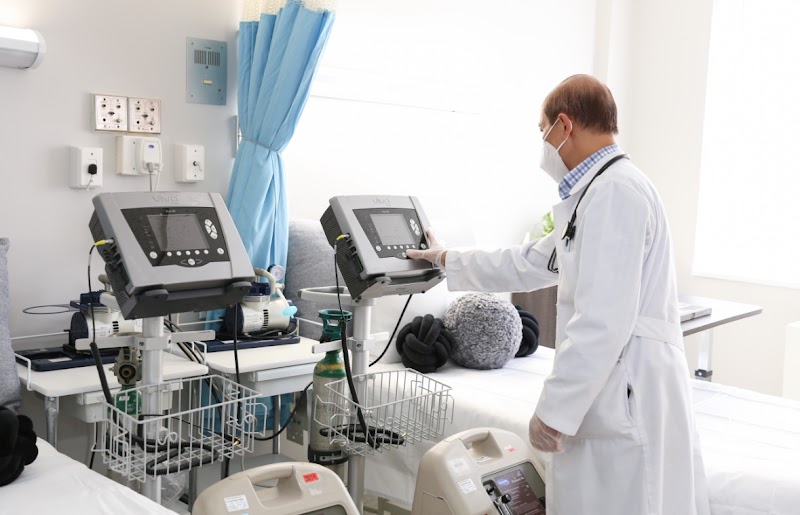
SPLIT ROCK REHABILITION AND HEALTH CARE CENTER is owned by a for-profit company. For-profit facilities operate as businesses with obligations to shareholders or private owners. The facility operates independently rather than as part of a larger chain. With 240 certified beds and approximately 227 residents (about 95% occupancy), it is a large facility located in BRONX, New York.
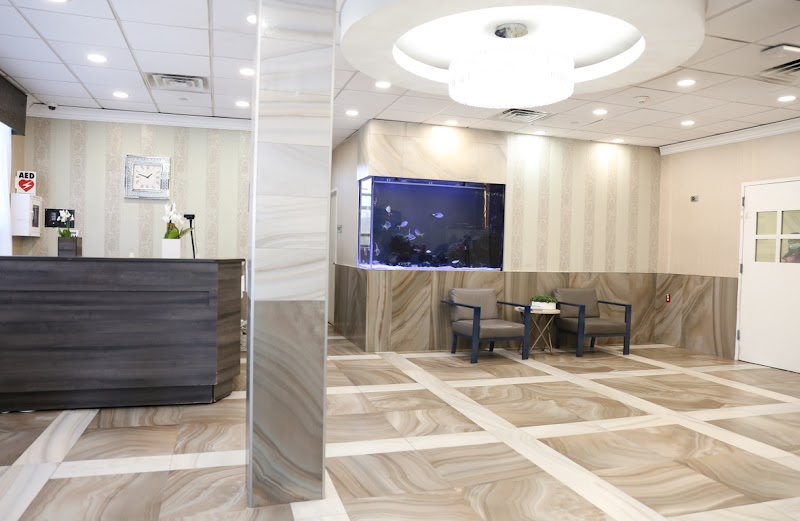
How Does Split Rock Rehabilition And Health Compare to Other New York Nursing Homes?

Compared to the 100 nursing homes in New York, SPLIT ROCK REHABILITION AND HEALTH CARE CENTER's overall rating (5 stars) is above the state average of 3.1, staff turnover (34%) is significantly lower than the state average of 46%, and health inspection rating (4 stars) is above the national benchmark.

What Should Families Ask When Visiting Split Rock Rehabilition And Health?

Based on this facility's data, families visiting should ask: "Can I visit during a mealtime to observe dining assistance and food quality?" "How do you handle medical emergencies, and what is your hospital transfer rate?" "Can I speak with family members of current residents about their experience?"

Is Split Rock Rehabilition And Health Safe?

Based on CMS inspection data, SPLIT ROCK REHABILITION AND HEALTH CARE CENTER has a clean safety record: no substantiated abuse findings (meaning no confirmed cases of resident harm), no Immediate Jeopardy citations (the most serious violation level indicating risk of serious injury or death), and is not on the Special Focus Facility watch list (a federal program monitoring the lowest-performing 1% of nursing homes). The facility has a 5-star overall rating and ranks #1 of 100 nursing homes in New York. While no facility is perfect, families should still ask about staff-to-resident ratios and recent inspection results during their visit.

Do Nurses at Split Rock Rehabilition And Health Stick Around?

SPLIT ROCK REHABILITION AND HEALTH CARE CENTER has a staff turnover rate of 34%, which is about average for New York nursing homes (state average: 46%). Moderate turnover is common in nursing homes, but families should still ask about staff tenure and how the facility maintains care continuity when employees leave.

Was Split Rock Rehabilition And Health Ever Fined?

SPLIT ROCK REHABILITION AND HEALTH CARE CENTER has no federal fines on record. CMS issues fines when nursing homes fail to meet care standards or don't correct problems found during inspections. The absence of fines suggests the facility has either maintained compliance or corrected any issues before penalties were assessed. This is a positive indicator, though families should still review recent inspection reports for the full picture.

Is Split Rock Rehabilition And Health on Any Federal Watch List?

SPLIT ROCK REHABILITION AND HEALTH CARE CENTER is not on any federal watch list. The most significant is the Special Focus Facility (SFF) program, which identifies the bottom 1% of nursing homes nationally based on persistent, serious quality problems. Not being on this list means the facility has avoided the pattern of deficiencies that triggers enhanced federal oversight. This is a positive indicator, though families should still review the facility's inspection history directly.