ST VINCENT DEPAUL RESIDENCE
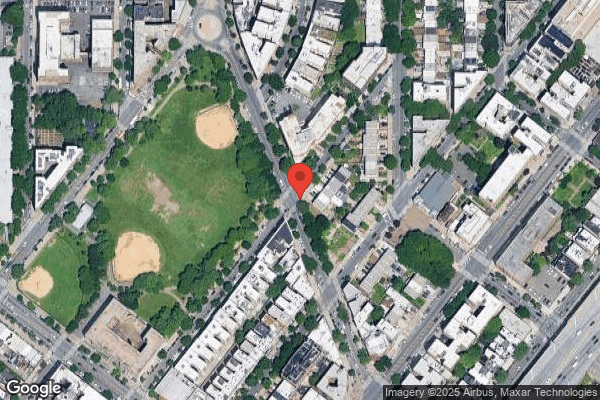
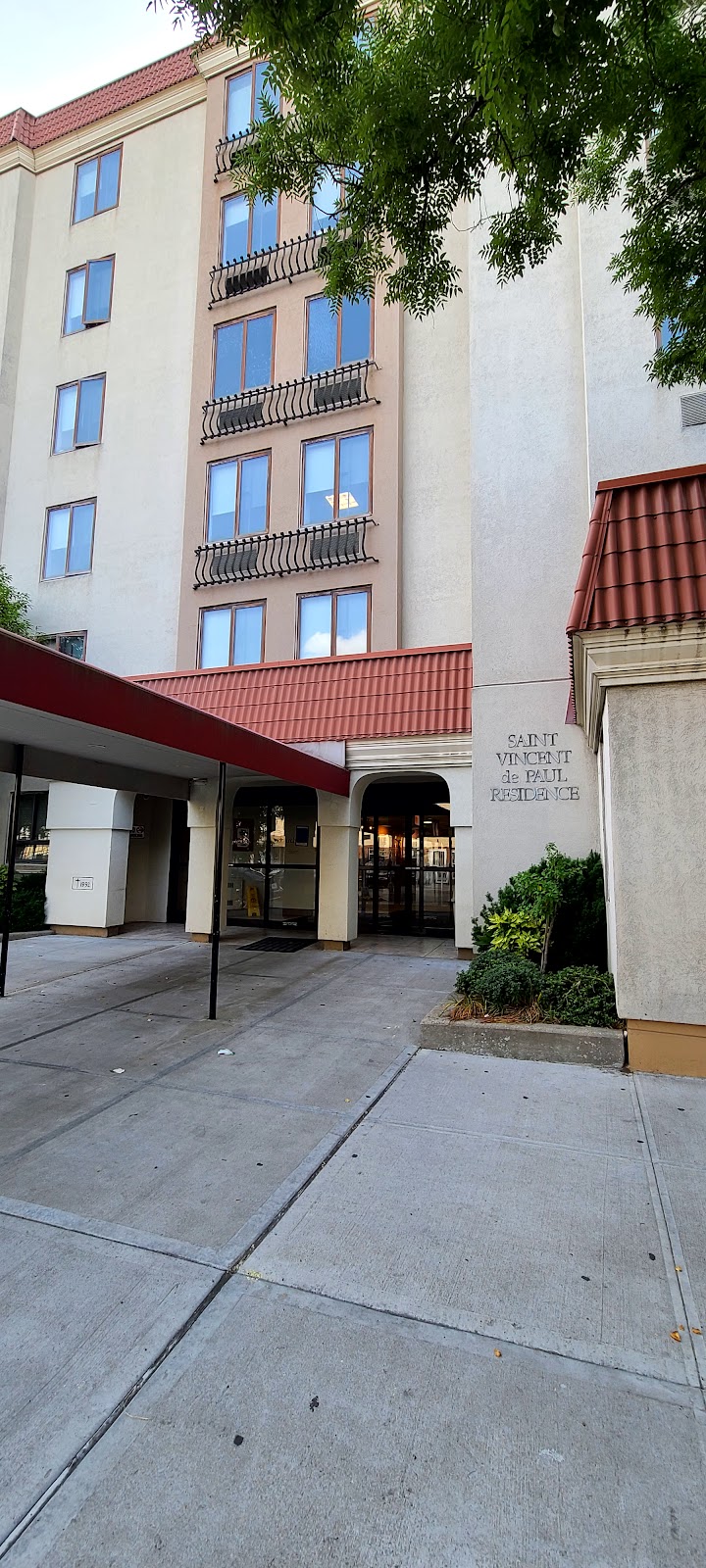
900 INTERVALE AVENUE, BRONX, NY 10459 (718) 589-6965
Non profit - Corporation 200 Beds ARCHCARE Data: November 2025
Trust Grade
60/100
#335 of 594 in NY
Last Inspection: January 2025

Within standard 12-15 month inspection cycle. Federal law requires annual inspections.

Overview

St. Vincent DePaul Residence has a Trust Grade of C+, which means it is considered decent and slightly above average among nursing homes. It ranks #335 out of 594 facilities in New York, placing it in the bottom half overall, and #30 out of 43 in Bronx County, indicating that there are better local options available. Unfortunately, the facility is experiencing a worsening trend, as the number of issues identified increased from 2 in 2024 to 9 in 2025. Staffing is average, with a 3/5 rating, and a turnover rate of 44% is about the same as the state average. However, the nursing home has good RN coverage, surpassing 93% of New York facilities, which is a positive aspect since RNs can identify problems that may be missed by other staff. On the downside, there have been concerning incidents reported. For example, expired food items were found in storage, including raw shrimp, which raises food safety concerns. Additionally, cold sandwiches were not kept at the proper temperature, which could pose health risks. Lastly, maintenance issues were noted, such as dirty air conditioning units and damaged screens, which could affect residents' comfort and safety. Overall, while there are some strengths, the facility has significant areas that need improvement.

Trust Score
C+
60/100
In New York
#335/594
Bottom 44%
Safety Record
Low Risk
No red flags
Inspections
Getting Worse
2 → 9 violations
Staff Stability
○ Average
44% turnover. Near New York's 48% average. Typical for the industry.
Penalties
✓ Good
No fines on record. Clean compliance history, better than most New York facilities.
Skilled Nurses
✓ Good
Each resident gets 59 minutes of Registered Nurse (RN) attention daily — more than average for New York. RNs are trained to catch health problems early.
Violations
⚠ Watch
21 deficiencies on record. Higher than average. Multiple issues found across inspections.
★★★☆☆
3.0
Overall Rating
★★★☆☆
3.0
Staff Levels
★★★★★
5.0
Care Quality
★★☆☆☆
2.0
Inspection Score
Stable
2024: 2 issues
2025: 9 issues

The Good

  • 5-Star Quality Measures · Strong clinical quality outcomes
  • Full Sprinkler Coverage · Fire safety systems throughout facility
  • No fines on record
  • Staff turnover below average (44%)

    4 points below New York average of 48%

Facility shows strength in quality measures, fire safety.

The Bad

3-Star Overall Rating

Near New York average (3.1)

Meets federal standards, typical of most facilities

Staff Turnover: 44%

Near New York avg (46%)

Typical for the industry

Chain: ARCHCARE

Part of a multi-facility chain

Ask about local staffing decisions and management

The Ugly 21 deficiencies on record

Jan 2025 9 deficiencies
CONCERN (D)

Potential for Harm - no one hurt, but risky conditions existed

Deficiency F0582 (Tag F0582)

Could have caused harm · This affected 1 resident

Based on interviews and record review conducted during the Recertification Survey from 01/02/2025 to 01/08/2025, the facility did not ensure residents, or their designated representatives were provide...

Read full inspector narrative →
Based on interviews and record review conducted during the Recertification Survey from 01/02/2025 to 01/08/2025, the facility did not ensure residents, or their designated representatives were provided appropriate notification at the termination of Medicare Part A benefits. This was evident in 2 (Resident #36 and Resident #55) of 3 residents reviewed for Beneficiary Notification out of 23 total sampled residents. Specifically, the facility did not ensure that Notice of Medicare Non-Coverage were mailed to the residents' representatives on the same day telephone notification was made. The findings are: The facility policy titled Advanced Beneficiary Notice of Medicare Non Coverage Benefit Exhaust Letters with effective date 9/14 and last revision date of 12/23 documented the Advanced Beneficiary Notice required by the Centers of Medicare and Medicaid services are distributed to residents within the required time frames. The policy also documented the Benefit Exhaust Letters are sent to Residents/Representatives to inform them that Medicare A is no longer covering the skilled stay. The policy further documented to mail notice if necessary, following phone call under the section of Procedure. The Form Instructions for the Notice of Medicare Non-Coverage (NOMNC) CMS-10123 states that the form must be delivered at least two calendar days before Medicare covered services end and included the requirement that notification of changes in coverage for an institutionalized beneficiary/enrollee who is not competent be made to a representative. The instructions also stated that if the provider is personally unable to deliver a Notice of Medicare Non-Coverage to a person acting on behalf of an enrollee, then the provider should telephone the representative to advise them when the enrollee's services are no longer covered. The date of the conversation is the date of the receipt of the notice. Confirm the telephone contact by written notice mailed on that same date. The instructions also state that when direct phone contact cannot be made, the notice should be sent to the representative by certified mail, return receipt requested. 1) Resident #55 was discharged from Medicare skilled services on 07/17/2024 and remained in the facility. The Notice of Medicare Non-Coverage documented that Resident #55's designated representative was called on 07/15/2024 and a voice message was left. The Skilled Nursing Facility Advance Beneficiary Notice of Non-coverage documented Resident #55's designated representative was called on 07/15/2024 and informed that Resident #55's coverage will end on 07/17/2024. There was no documented evidence that the notices were mailed to Resident #55's representative on the same day that telephone notification was made. 2) Resident #36 was discharged from Medicare skilled services on 11/4/2024 and remained in the facility. The Notice of Medicare Non-Coverage and the Skilled Nursing Facility Advance Beneficiary Notice of Non-coverage documented Resident #36's designated representative was called on 11/1/2024 and informed that Resident #36's coverage will end on 11/4/2024. There was no documented evidence that the notices were mailed to Resident #36's representative on the same day that telephone notification was made. On 01/08/2025 at 09:09 AM, Minimum Data Set Coordinator was interviewed and stated they had a utilization review meeting every week to discuss the resident discharge from Medicare Part A. Minimum Data Set Coordinator also stated that residents who will be discharged from Medicare Part A services are given at least 48-hour notice and that their right to appeal is explained. Minimum Data Set Coordinator stated that if a resident is cognitively intact, they ask them to sign the Notice of Medicare Non-Coverage and/or the Skilled Nursing Facility Advance Beneficiary Notice of Non-coverage. Minimum Data Set Coordinator also stated that if a resident is cognitively impaired to make decisions, they notify the resident's designated representative by phone call and did not mail them the notices unless the representatives requested the notices. Minimum Data Set Coordinator further stated they mailed the notices with certified mail receipt on same day if they were not able to reach the impaired resident's representative by phone call. Minimum Data Set Coordinator stated they spoke to the representatives of Resident # 55 and Resident # 36 and the representatives stated they did not want to receive the notices. Minimum Data Set had no proof of the refusal to receive the notices. On 01/08/2025 at 09:32 AM, the Administrator was interviewed and stated the Minimum Data Set Coordinator was responsible for providing Notice of Medicare Non-Coverage and/or the Skilled Nursing Facility Advance Beneficiary Notice of Non-coverage notices to residents and/or designated representatives to review and sign before discharging them from Medicare Part A. The Administrator also stated they should mail, email, or use other methods so the representative can receive the forms and keep a proof of it. 10 NYCRR 415.3(g)(2)(i)
CONCERN (D)

Potential for Harm - no one hurt, but risky conditions existed

Assessment Accuracy (Tag F0641)

Could have caused harm · This affected 1 resident

**NOTE- TERMS IN BRACKETS HAVE BEEN EDITED TO PROTECT CONFIDENTIALITY** 2) Resident #6 was admitted to the facility on [DATE] with diagnoses including Aphasia and Dysphagia Following Cerebral Infarcti...

Read full inspector narrative →
**NOTE- TERMS IN BRACKETS HAVE BEEN EDITED TO PROTECT CONFIDENTIALITY** 2) Resident #6 was admitted to the facility on [DATE] with diagnoses including Aphasia and Dysphagia Following Cerebral Infarction. A Communication Care Plan was initiated for the resident on 09/02/2024 due to impaired ability to make self-understood secondary to slurred speech and was last reviewed 11/29/2024. However, the Minimum Data Set booklet dated 09/04/2024 documented the resident as having clear speech with ability to make self-understood. The Minimum Data Set booklet dated 11/29/2024 did the same. On 01/03/2025 at 10:58 AM, Resident #6 was observed seated in a wheelchair at the unit nursing station attempting to communicate with a staff member by rubbing their chin and shrugging their shoulders, then pointing to a passing aide. The staff member told the resident that they did not understand what the resident was trying to say, and the resident appeared frustrated, finally conveying through gestures only that they felt they had been shaved sloppily and would like an aide to go over their unshaven spots. On 01/07/2024 at 10:42 AM, Registered Nurse Supervisor #1 was interviewed and stated that Resident #6 had an unsuccessful trial of speech therapy following their admission but remained essentially nonverbal, able to grunt or scream but not to articulate words. The resident is cognitively intact and was subsequently provided with a communication board but refused to use it. They prefer to use gestures to convey their ideas, and most staff members have become adept at figuring out what their gestures mean. Those who aren't able call upon other staff until the resident's meaning becomes clear. On 01/07/2025 at 11:15 AM, the MDS Coordinator was interviewed and stated that Resident #6 and Resident #36's Minimum Data Set booklets were completed by the MDS Assessor, a Registered Nurse who was currently out on medical leave. The Coordinator stated that the nurse followed the progress notes, physician orders and care plans to fill out the booklets as well as meeting with the residents themselves. In the case of Residents #6 and #36, the Coordinator stated that they did not know how the nurse came to document their booklets so incorrectly as they are responsible for their accuracy but that the nurse is currently not available to discuss their line of thought. On 01/07/2025 at 1:54 PM, the Director of Nursing was interviewed and stated that the Nursing Department collaborates with the MDS Department in ensuring the accuracy of the information documented in the Minimum Data Set booklets. The MDS Coordinator directly oversees the MDS Assessor. 10 NYCRR 415.11(b) Based on observations, record reviews, and interviews during a Recertification Survey from 1/02/2025 to 1/08/2025, the facility did not ensure that assessments accurately reflected the residents' status. This was evident for 2 (Resident #36 and Resident #6) out of 23 total sampled residents. Specifically, 1) The Minimum Data Set 3.0 assessment did not document Resident #36's use of a Wanderguard and 2) The Minimum Data Set 3.0 assessment inaccurately documented Resident #6 as having clear speech, with ability to make self-understood. The findings are: The facility policy titled, Minimum Data Set Assessment Completion, last reviewed/revised 9/2023 documented, the interdisciplinary team will conduct comprehensive assessments as part of an ongoing process to identify each resident's preferences and goals of care, functional and health status, strengths, and needs, as well as offering guidance for further assessment once problems have been identified. 1) Resident #36 had diagnoses of Non-Alzheimer's Dementia, Schizophrenia, and Seizure Disorder. The Annual Minimum Data Set assessment dated [DATE] documented Resident #36 had severely impaired cognition and did not use a Wander/elopement alarm. On 1/02/2025 at 3:05 PM, 1/03/2025 at 9:39 AM, and 1/07/2025 at 10:59 AM, Resident #36 was observed with a Wanderguard to their right ankle. The Comprehensive Care Plan related to wandering and elopement initiated 9/20/2024 and last reviewed 12/21/2024, documented Resident #36 had a Wander Alert Bracelet to their right ankle. An admission Nursing Note dated 9/21/2024 documented Wanderguard on Resident #36's right ankle per history of wandering behavior. The Physician Orders dated 9/21/2024 documented check Resident #36's Wanderguard placement/function every shift.
CONCERN (D)

Potential for Harm - no one hurt, but risky conditions existed

Deficiency F0868 (Tag F0868)

Could have caused harm · This affected 1 resident

Based on record review and interview conducted during the Recertification Survey from 1/2/2025 to 1/8/2025, the facility did not ensure that the Quality Assurance & Performance Improvement (QAPI) and ...

Read full inspector narrative →
Based on record review and interview conducted during the Recertification Survey from 1/2/2025 to 1/8/2025, the facility did not ensure that the Quality Assurance & Performance Improvement (QAPI) and Quality Assessment & Assurance (QAA) committee consisted at a minimum of the Medical Director, or their designee attended 4 quarterly meetings. Specificially, the Medical Director has not participated in Quality Assurance & Performance Improvement (QAPI) and Quality Assessment & Assurance (QAA) meetings for 2 out of the 4 meetings as required. The findings: The policy and procedure entitled Quality Assurance and Performance Improvement dated 08/15 documented Quality Assurance Performance Improvement shall have a committee consisting of, at a minimum, of Executive Director/Administrator, Director of Nursing, Medical Director, Quality Coordinator/Director, and Compliance Director. Each facility shall meet at least quarterly. Review of the Monthly Meeting Attendance Sheets entitled Quality Assurance and Assessment Committee revealed the Medical Director did not sign the attendance sheet for the following Quality Assurance & Performance Improvement meetings on 1/31/2024, 2/16/2024, 3/27/2024, 4/18/2024, June 20, 2024, 07/25/2024, 08/15/2024, 09/19/2024, 10/18/2024. Clinical Assistant attended the meeting in place of Medical Director on 5/16/2024 and 12/19/2024. There is no documented evidence that the Medical Director attended the Quality Assurance & Performance Improvement meeting via Microsoft teams or in person for 2 out the 4 quarterly meetings. On 01/08/25 at 11:14 AM interview with the Attending Physician stated has been working at the facility since 2020 and has not attended any Quality Assurance & Performance Improvement meetings. On 01/08/25 at 11:51 AM interview with the Medical Director stated they attend the Quality Assurance & Performance Improvement meetings monthly, however, does always attend in person. Gets invited via email and attends via Microsoft teams. If cannot attend the meeting, the Clinical Assistant will stand in their place. The Attending Physician does not attend the Quality Assurance & Performance Improvement meetings. On 01/08/25 at 12:23 PM interview with the Administrator stated that the Quality Assurance & Performance Improvement meetings are held monthly and that the Medical Director gets invited via email. The meetings are also held in person, by telephone and via Microsoft teams. The Clinical Assistant to the Medical Director will attend the meetings if the Medical Director cannot attend. The Attending Physician has not attended the meetings. On 01/10/2025 at 3:00 PM an interview with the Clinical Assistant who stated that their role as a Clinical Assistant is more of an Administrative Role. They input documents into the electronic Medical Record, does not give medications, provide care, or medical assistive care to the Medical Director. The Clinical Assistant stated they attend Quality Assurance & Performance Improvement meetings when the Medical Director cannot attend, which is not that many. The Clinical Assistant stated that they do not attend the Quality Assurance & Performance Improvement meetings as much and is not that familiar with the facility's policies, procedures, and practices. 10 NYCRR 415.15(a)
CONCERN (D)

Potential for Harm - no one hurt, but risky conditions existed

Infection Control (Tag F0880)

Could have caused harm · This affected 1 resident

Based on observations, record review, and interviews conducted during the Recertification Survey from 1/02/2025 to 12/08/2025 the facility did not ensure that food was served in accordance with profes...

Read full inspector narrative →
Based on observations, record review, and interviews conducted during the Recertification Survey from 1/02/2025 to 12/08/2025 the facility did not ensure that food was served in accordance with professional standards for food service safety to prevent foodborne illness and ensure that infection control practices were maintained. Specifically, a Certified Nursing Assistant #4 was observed assisting multiple residents with dining room in preparation for dining did not perform hand hygiene between residents. This was evident for 10 residents (of 23 total sampled residents for dining Resident # 7, #18, #19, #38, #39, #49, #52, #70, #72 and #87). (2) the facility did not ensure that disinfecting germicidal wipes, hand sanitizing solution was discarded by the manufacturer discharge date . This was evident for the infection control task. The findings are: The facility policy and procedure titled Uniform Dress Code revised 1/2021 documented facial hair must be kept neatly trimmed, restrain all facial hair with heard net/restraint associates while working with food. The facility policy and procedure titled Hand Hygiene. Handwashing revised on November 27, 2024, documented all personnel will perform hand hygiene appropriately in accordance with current standards of practice and Centers of Disease Control guidelines to prevent he transmission of organisms that cause infections. To reduce the risk of healthcare-associated infection by decreasing the risk of transmission of pathogenic microorganisms to resident and the persons within the health are setting. The facility considers hand hygiene for the prevention of healthcare associated infections. When to employ before and after resident contact, before/after meals of handling food items, after removing gloves. The facility policy and procedure titled Purchasing, Stocking Inventory Control (re-Order Points Procedure was last reviewed /revised 10/18/2019 documented the supply chain manager request that inventory supplies are ordered as they are needed (when reorder point is reached. In addition, The Central Purchasing Office has major input into the inventory control system for establishing reorder points and reorder quantities based on delivery lead times, quantity discount, contract purchases, promotional sales and institutions cash flows. The Central Purchasing in conjunction with the facility Supply Chain Manager is responsible. The policy does not state what specific inventory control measures systems are utilized for the facility purchasing, stocking inventory control. 1. During an observation of dining on the 2nd floor on 0102/2025 from 1143 AM-1149 AM, Certified Nursing Assistant # 4 was observed assisting multiple residents in the 2nd floor dining room in preparation for dining. Certified Nursing Assistant # 4 with bare hands assisted Resident # 52 to clean their hands with a hand wipe, gave a hand wipe to Resident # 39, gave hand wipe to Resident # 87 and assisted Resident # 38 to clean their hands. Certified Nursing Assistant #4 with bare hands assisted Resident #49 to clean their hands then gave a hand wipe to Resident # 19 and then assisted Resident # 7 to clean their hands. Certified Nursing Assistant #4 did not perform hand hygiene between residents. Certified Nursing Assistant # 4 then applied a glove on their left hand and cleaned the hands for Resident # 70 and wipe their hands and they gave a hand wipe to Resident #18 with left glove still on their on hand. Certified Nursing Assistant #4 did not perform hand hygiene between residents. Certified Nursing Assistant # 4 with the same glove on their left hand only cleaned Resident # 72 hands, and then cleaned Resident # 49 hands and then assisted Resident #38 to clean their hands. Certified Nursing Assistant #4 did not perform hand hygiene between residents. Certified Nursing Assistant # 4 then proceeded to wash their hands in the handwashing sink in the 2nd floor pantry area. During an interview on 01/02/2025 at 11:50 AM, Certified Nursing Assistant # 4 was interviewed and stated that before and after a meal they clean their hands. They forgot to change gloves and had a new pair and then stated they did not change gloves between residents. Certified Nursing Assistant # 4 stated they needed to wash their hands to prevent cross contamination and for infection control. Further stated they should have sanitized or washed their hands when they take off gloves and put on a new pair. During an interview on 01/02/2025 at 12:30 PM, the Registered Nurse # 2 was interviewed and stated that when they monitor the dining room at lunch time, they observe staff performing hand hygiene. Staff are supposed to clean their hands before assisting residents, before they touch resident's trays, in-between residents, when they feed residents, assisting a resident in finishing a task and sanitize hands between residents for infection control. During an interview on 1/08/2025 at 11:43 AM, the Infection Preventionist was interviewed and stated they do rounds during the day when they come in to work Monday to Friday. They stated that they observe hand hygiene during meals 3-4 times a week. There were no concerns related to hand hygiene that they identified. Hand hygiene is an infection control practice to prevent cross contamination of food. Further stated they did staff inservice on hand hygiene in the last 3 months. 2. On 01/06/2025 at 11:25 AM, in the medication room on the 2nd floor the hand sanitizer was observed to be expired with an expiration date of 08/2024. During an observation on 01/07/2025 at 03:58 PM the 3rd floor pantry was observed and in the lower left cabinet facing the nurses station side there was and opened container of disinfecting wipes lot #112923C with expiration date of 11/29/2024. During an observation on 01/08/2025 at 12:18 PM to 12:23 PM, the central supply room in the basement was observed and the following was found: antimicrobial skin cleanser antiseptic hand sanitizer at doorway by desk with expiration date of 2/2023. There were 3 sealed boxes with disinfecting wipes on the shelf containing germicidal wipes with 150 count sheets and each box contained 24 containers with lot numbers 112523 and 113023C with expiration date of 11/30/2024. On 01/08/2025 at 12:18 PM, the Central Supply Representative was interviewed and stated, that the units are provided supplies daily and as needed. They stated that they did not look at the date on the sanitizer and the wipes and as you can see the boxes were still sealed. The wipes that are expired are the old supply and we have new supply on the shelf. On 01/08/2025 at 12:33 PM, the Infection Preventionist was interviewed and stated if expired hand sanitizer or disinfecting wipes supplies are used they won't be as effective. They stated that they have not looked at the sanitizing wipes, disinfecting wipes or hand sanitizer and that central supplies/housekeeping look at these supplies. On 01/08/2025 at 12:06 PM and 1:01PM, the Director of Plant Operations and Maintenance was interviewed and stated, that the housekeeper changes sanitizer dispensers as needed once they are empty. If they need to be replaced such as if the sanitizer dispenser is not working then maintenance takes a look at the dispenser to see if they need to be replaced. The Central supply in the basement gives out germicidal wipes. Further stated that the central supply person is in charge of the supplies, and they look at it and they will check to see if the supplies are expired. 10 NYCRR 415.19(a)(1)(b)(4)
CONCERN (E)

Potential for Harm - no one hurt, but risky conditions existed

Safe Environment (Tag F0584)

Could have caused harm · This affected multiple residents

**NOTE- TERMS IN BRACKETS HAVE BEEN EDITED TO PROTECT CONFIDENTIALITY** 3). During observations made from 1/2/2025 at 3:34PM through 1/8/2025 at 12:28 PM, the following was observed on the 2nd Floor U...

Read full inspector narrative →
**NOTE- TERMS IN BRACKETS HAVE BEEN EDITED TO PROTECT CONFIDENTIALITY** 3). During observations made from 1/2/2025 at 3:34PM through 1/8/2025 at 12:28 PM, the following was observed on the 2nd Floor Unit: a. On 01/02/2024 at 3:34 PM, 01/02/25 03:44 PM, 01/03/25 12:05 PM, 01/06/25 11:16 AM, and 01/08/25 10:08 AM the 2nd Floor dining window screen lower bottom edge cracked. b. On 01/02/25 12:47 PM, 01/03/25 09:44 AM and 01/08/25 10:25 AM, room [ROOM NUMBER] Air conditioning/heater was noted with debris inside that included a sugar wrapper, purple crayon, dust coils left side and vents, and the room was noted with missing baseboard forming gaps along the room wall edges and behind headboard for B bed. c. On 01/02/25 12:42 PM, 01/02/25 03:23 PM, 01/03/25 09:47 AM, 01/08/25 10:28 AM, 01/02/25 12:42 PM, 01/02/25 03:23 PM, 01/03/25 09:47 AM, 01/08/25 10:28 AM - room [ROOM NUMBER] was observed with air conditioning/heater unit that was dusty. Baseboards in room coming off wall by the dresser between the A and B beds, peeling baseboards not affixed to the wall under Bed B headboard, by closet not affixed to wall and by door leading to the bathroom. Scratched dry wall observed in room to left of headboard. Baseboards not affixed to wall, peeled under headboard and by closet not affixed to wall and by door leading to bathroom not affixed to wall. d. On 01/02/2025 at 09:49 AM and 01/08/25 10:31 AM, room [ROOM NUMBER] footboard on bed veneer scratched on top, sides, outside and bottom edges and bathroom pipe faucet dripping water and left faucet could not be closed to stop water from dripping. e. On 01/03/2025 at 09:53 AM, room [ROOM NUMBER] was observed. Resident room baseboard behind headboard not affixed to wall and the dry wall behind headboard damaged, missing paint. Fall matt with curled edges on all 4 ends. f. On 01/02/25 03:41 PM and 01/03/25 09:57 AM and screen the same., room [ROOM NUMBER] - room window screen torn on left edge in 2 areas making up greater than 1/2 of the left side, missing rubber right side area, air conditioner/heater unit with 2 round items on top, g. On 01/07/25 at 03:43 PM - Fly noted flying in the dining room on the 2nd floor. On 01/08/25 10:43 AM black fly flying in 2nd floor hallway by nurses station leading to dining room. h. On 01/07/25 at 03:44 PM and On 01/08/25 at 10:12 AM the 2nd floor dining room pantry was observed and there was white colored granules on the corners and back of the left and right shelves and black colored stain on the outer edge of the middle right cabinet outer edge. On 01/08/25 10:58 AM, Certified Nursing Assistant #3 was interviewed and stated they had not noticed the window and due to it being cold they try not to expose residents too much to the cold air outside. The window is defective, and the end is broken and most of the time maintenance comes around the unit. The window looks like it has normal wear and tear. On 1/08/2025 at 11:10 AM and 2:46PM, the Maintenance tTechnician was interviewed and stated that they only correct issues when they have a work order. If staff don't notify them they do not know an issue had to be fixed. The Director of Plant Operations and Maintenance is in charge of checking for environment issues. The air conditioning/heater were looked at recently and the Facilities Director has the paperwork. The window screens have been there since 1992 and they did not notice issues with resident window screens that are damaged. The only way they are aware of anything that needs to be fixed is when reported to them or if they are notified by nursing staff. Someone came to look at window screens recently and the window screens do not close all the way. The bed in room [ROOM NUMBER] needs to be replaced and the water valve for hot water is bad and needs to be replaced. The air conditioning/heater was cleaned recently, and the Facilities Director has paperwork. Housekeeping can also clean the air conditioning/heater unit and if they need help with loosening the screws they can contact them. The resident's rooms need to be homelike since they live here. Any work done is done per a work order and if no work order they will not know what needs to be fixed. The last time they looked at the room baseboards was before November 2024. In relation to the spacing between the baseboards, the glue used was wrong and the last time the baseboards were worked on was 3 ½ to 4 years ago and whoever installed them did it wrong. They are not sure when the window screens were last looked at and they have worked on the screens in the past they have changed the wire mesh to a plastic mesh in some areas. They look at the screens for holes and they look at the windows in resident rooms to see if they are damaged and the work on the windows. Resident can open the windows and damage the screens. They painted some room walls recently about 2 weekends ago. When the windows are damaged insects such as mosquitos and leaves can come into resident's rooms and the facility. There are only 2 maintenance persons for the building. Flies come in when we open the window and since the mesh does not close all the way they come in from outside. Staff should engage the latch to make sure the windows close completely. On 01/08/25 at 12:06 PM, the Director of Plant Operations and Maintenance was interviewed and stated the do rounds weekly. They do rounds on the 4th floor on Friday and round the other floors on Monday to Thursday. They look at residents rooms to include ceiling tiles, walls to make sure they are not damaged since residents beds can hit the wall behind causing scrapes and peeling paint. The air conditioning/heater units they check when they go check resident rooms and the last time they checked they documented it in their rounding binder. The air conditioning/heater units were cleaned last week and all air conditioning/heaters were cleaned throughout the facility and they are unsure of the date it was done. There was an audit list of the window screens done 1 month ago throughout the building and the vendor is coming to repair the ones on the list to be repaired and some window screens are damaged or missing and had to be taken down due to this damage. The air conditioning/heater are working, and we make sure it has the outer piece and are wiped down. We have a list of units that have concerns and are in the process of addressing that. The Director of Plant Operations and Maintenance stated work was done 2-3 months ago on the air conditioning/heater units and they will provide invoices for window work. 10 NYCRR 415.5(h)(2) Based on observation, interview, and record review conducted during the Recertification Survey from 01/02/2025 to 01/08/2025, the facility failed to maintain a clean, orderly, functional, and sanitary (homelike) environment for the residents. The deficient practice was identified for multiple resident rooms/units inspected: 1) room [ROOM NUMBER] had no hot water supply for about 3 weeks, 2) room [ROOM NUMBER] and shared shower room on Unit 3 were observed in disrepair/damaged/discolored/ dirt and dust accumulation, 3) 2nd floor dining room and rooms 201/202/210/211/212 were observed in disrepair/damaged/discolored. The findings are: The facility policy titled Hot Water Temperature with undated effective date documented the Department of Engineering is responsible for prompt follow-up on any problem, including investigation, repair or other action as appropriate. The facility policy titled Work Order Procedure with undated effective date documented this procedure will govern the insurance of engineering work orders for the safety, preventive maintenance, repair, facility modification and emergency work, indicating on what authority a work order needs to be approved, and prior to being scheduled into the department workload. 1) On 01/02/2025 during the initial pool process around 11:34 AM to 11:43 AM, and subsequent visit on 01/03/2025 around 10:38 AM to 10:43 AM, the surveyor conducted an environmental tour in the room [ROOM NUMBER] and observed there was no hot water coming out when the handle of the hot water faucet was turned on at the sink in the bathroom. On 01/02/2025 at 11:34 AM, Resident # 57 was interviewed and stated there was no hot water from the sink in the bathroom of room [ROOM NUMBER] for 3 weeks. Resident # 57 also stated the sink fell and broke about 3 weeks ago. Resident # 57 further stated the facility installed a new sink the next day and there was no hot water since then. Resident # 57 stated the Certified Nursing Assistant and themselves had to go to the bathing room across the hallway to get hot water when needed and it was very inconvenient. On 01/02/2025 at 11:43 AM, Resident # 95 was interviewed stated there had been no hot water in the bathroom sink of room [ROOM NUMBER] since the facility replaced the broken sink about 3 weeks ago. Resident # 95 also stated the Certified Nursing Assistant and themselves had to go to the bathing room across hallway to get hot water. Resident # 95 further stated they needed hot water supply in the room to wash hands and other purposes in the wintertime. The maintenance book was reviewed and had no documentation about hot water supply problem in the room [ROOM NUMBER]. The Maintenance Repair Requisition form documented the sink in room [ROOM NUMBER] became loose on 12/4/2024. The form also documented by Maintenance Department on 12/5/2024 that a sink was reinstalled, waterline was tied in, and sink was in working condition. On 01/07/2025 at 09:29 AM, Certified Nursing Assistant # 5 was interviewed and stated they were assigned to Resident # 57 and Resident # 95 in the room [ROOM NUMBER] in December 2024. Certified Nursing Assistant # 5 also stated they were aware there was no hot water supply in the room [ROOM NUMBER] during the morning report meeting from the nurse in December 2024 and did not recall the exact date or which nurse gave the report. Certified Nursing Assistant # 5 further stated they thought the hot water issue was known to the nurse already and did not follow up on the repair of hot water issue in room [ROOM NUMBER]. Certified Nursing Assistant # 5 stated they should report to the nurse in a few days if there was still no hot water supply in the room [ROOM NUMBER]. On 01/07/2025 at 09:52 AM, the Housekeeper was interviewed and stated they recalled there was no hot water in room [ROOM NUMBER] at least since the last week of December 2024. The Housekeeper also stated they did not report the problem to anyone as they saw someone was fixing the sink and was not sure who was fixing the sink. The Housekeeper further stated they thought the hot water problem was taken care by someone already. On 01/07/2025 at 03:40 PM, Certified Nursing Assistant # 6 was interviewed and stated they were newly hired and worked in the evening shift on the unit for a few weeks. Certified Nursing Assistant # 6 also stated they shadowed Certified Nursing Assistant # 7 and were assigned to residents in room [ROOM NUMBER]. Certified Nursing Assistant # 6 further stated they recalled the room [ROOM NUMBER] had no hot water supply at least starting the last week of December 2024. Certified Nursing Assistant # 6 stated they did not report the disrepair as they thought Certified Nursing Assistant # 7 was going to report the disrepair. On 01/07/2025 at 10:01 AM, Registered Nurse # 4 was interviewed and stated they made rounds on the floor at least 3 times a day to check if resident's room and bathroom were clean, resident care, and resident safety. Registered Nurse # 4 also stated they did not check water supply in the resident rooms and was not aware nor received any report that there was no hot water in the room [ROOM NUMBER]. Registered Nurse # 4 further stated they were not aware the Maintenance Department changed the sink in room [ROOM NUMBER]. Registered Nurse # 4 stated they would transfer both Resident # 57 and Resident # 95 to another room if they knew there was no hot water in the room [ROOM NUMBER]. Registered Nurse # 4 also stated there were empty rooms on the unit for a transfer if needed. On 01/07/2025 at 03:16 AM, the Maintenance Mechanic staff was interviewed and stated the unit staff called them for urgent repairs and documented non-urgent repair in the maintenance book. The Maintenance Mechanic staff stated they replaced the sink in room [ROOM NUMBER] on 12/5/2024. The Maintenance Mechanic staff also stated there was no problem for both hot and cold water supply in the room [ROOM NUMBER] before they left. The Maintenance Mechanic staff further stated they did not receive any report that there was no hot supply in the room [ROOM NUMBER] afterward. On 01/07/2025 at 10:14 AM, Director of Plant Operation and Maintenance was interviewed and stated the sink in the room [ROOM NUMBER] fell on [DATE] and they replaced a new one next morning on 12/5/2024. Director of Plant Operation and Maintenance also stated they did not receive any report until 1/3/2025 that there was not hot water coming out in the sink of room [ROOM NUMBER]. Director of Plant Operation and Maintenance stated they checked the issue and found out it was the speedy valve problem in the pipe running hot water to the room [ROOM NUMBER]. Director of Plant Operation and Maintenance also stated they would have the outside plumber to fix the problem if they were notified of the hot water problem in room [ROOM NUMBER]. On 01/07/2025 at 11:52 AM, the Administrator was interviewed and stated they were not aware there was no hot water supply in the room [ROOM NUMBER] until 1/3/2025. The Administrator also stated every room should have a hot water supply. 2) During the Unit Tour on 1/3/2024 and 1/7/2025 of Unit 3 the following was observed: room [ROOM NUMBER] the wall behind the resident bed has multiple, deep, scratches with white substance exposed on the wall. The brown headboard has scrapings on it. Panel molding coming off the base of the floor. Located behind the entrance door is a large, white, spot, surrounded by pink colored paint. A review of the Unit 3 Maintenance log found no documented evidence that room [ROOM NUMBER] and the resident shared bathroom was in need of repairs. Resident shared shower room on Unit 3 was observed to have broken yellow tiles in the shower stall, shower head on the floor due to missing clamp holder, brownish to black substance observed in the corners of the shower stall and on the white wall tiles. [NAME] screen with dust on them, dead bees lying on the floor and brown colored stains observed on the white ceiling tiles. On 1/7/2025 at 12:25 PM interview with Maintenance Technician and stated the office management located on the 5th floor is responsible for doing a walkthrough of the resident rooms. The management staff consist of nursing, directors, and management. They will assign staff to go into the rooms to see what is going on. The maintenance logs are used for the overnight staff when on one is around. In the morning, the staff will call me, and I will come to see what needs repairing. My job is to make repairs, paint, fix lights, windows, fix the tiles and walls and any repairs that need to be done. Not aware of any of the listed items that need repair. On 01/07/25 at 01:54 PM the Director of Housekeeping and Maintenance was interviewed and stated, it is their responsibility to ensure that the common areas, hallways, and resident rooms are clean and in good repair. The rounds are done on a weekly basis by the Director of Housekeeping and Maintenance and nursing department. There are maintenance logs on every unit and those logs get check every morning by the maintenance workers. The Housekeeper on the unit is also supposed to check for any environmental issues and report as needed. On 01/07/2025 at 03:00 PM Registered Nurse #4, who is also the Nursing Supervisor for Unit 3, was interviewed and stated, that the nursing staff and supervisors make rounds of the unit daily to see if there are any issues and any need of repairs and write it in the maintenance logbook for maintenance to address.
CONCERN (E)

Potential for Harm - no one hurt, but risky conditions existed

Deficiency F0847 (Tag F0847)

Could have caused harm · This affected multiple residents

**NOTE- TERMS IN BRACKETS HAVE BEEN EDITED TO PROTECT CONFIDENTIALITY** Based on interviews and record reviews made during a recertification survey (BYS411), the facility did not ensure that the Arbit...

Read full inspector narrative →
**NOTE- TERMS IN BRACKETS HAVE BEEN EDITED TO PROTECT CONFIDENTIALITY** Based on interviews and record reviews made during a recertification survey (BYS411), the facility did not ensure that the Arbitration Agreement was explained to residents or their representatives in a form or manner that they understood. This was true in 3 of 21 residents sampled for Arbitration (Residents #22, 57 and 206). The findings are: The facility's policy and procedure entitled admission Procedures, last reviewed 07/2019, states that the Admissions Director discusses the admission Agreement with the resident and/or designated representative after admission to the facility. The facility includes a Binding Arbitration Agreement within its admission Agreement which is written in legal language. The facility's admission packet was reviewed and revealed a brochure entitled, Your Rights as an ArchCare Resident which included the right to receive an explanation about care in a manner the resident can understand. On 01/07/2025 at 2:20 PM, the Admissions Director was interviewed and stated that when they explain the Arbitration Agreement, they let the resident know who they can talk to for legal advice and refers them to the corporate finance department for any questions. If the resident is unable to understand the legal language of the agreement, the Admissions Director stated that they read it out loud for them but do not paraphrase and stated, It's written for lawyers, but that's what we read. The Admissions Director stated that no one is obligated to sign as a condition of admission and that some residents do opt not to sign. The Surveyor obtained a list of recently admitted residents who had participated on their own or with their families in the admissions process. Resident #22 was admitted to the facility on [DATE] and as per their Minimum Data Set (a resident assessment tool), was mentally intact. On 01/08/2025 at 9:55 AM, Resident #22 was interviewed and stated that they did not know what papers were signed at the time they were admitted but that their family member, who was visiting, was aware. On 01/08/2025 at 9:57 AM, the resident's family member was interviewed and stated that they signed the admission Agreement but that it was not explained to them. The family member stated, I would know about arbitration because I used to work in the public schools and I was part of the union. I has to do with dispute resolution, but I don't know exactly what it means. The family member stated that they were not told on admission that they had the right to refuse to sign or that if they signed the Arbitration Agreement, they were relinquishing the right to an attorney, and stated, They just told me to sign and I signed. The resident's admission Agreement had been marked 'signed' but no signature was observed on the copy. Resident #206 was admitted to the facility on [DATE] with a Minimum Data Set documenting that the resident was mentally intact. On 01/08/2025 at 10:02 AM, Resident #206 was interviewed and stated, I remember signing that paper, but I don't know what it said, they didn't talk to me about it. I thought I had to sign or I would have to go back to the hospital, so I signed. The resident's admission Agreement had been initialed by the resident. Resident #57 was admitted to the facility on [DATE] and was documented on their Minimum Data Set as moderately cognitively impaired. On 01/08/2025 at 10:04 AM, Resident #57 was interviewed and stated, I never sign anything, I won't do it. They wanted me to sign but I wouldn't. I am visually impaired and if I can't read it, I won't sign it. But they didn't even tell me what it was about. The facility submitted a statement that the resident refused to sign and their representative, who had not been present on admission, had also refused. On 01/08/2024 at 10:27 AM, the Administrator was interviewed and stated that the facility has never had any arbitrations. The Administrator stated that the admission Agreement should be explained to the resident or their representative and that they should be given the opportunity to ask any questions. They should be referred to corporate finance only if there are questions that Admissions is unable to answer. The Administrator stated that the Agreement should be explained in its entirety including the Arbitration Agreement and that they would meet with Admissions to emphasize the need to explain it in simple language, not in legalese. 10 NYCRR 415.26
CONCERN (E)

Potential for Harm - no one hurt, but risky conditions existed

Deficiency F0883 (Tag F0883)

Could have caused harm · This affected multiple residents

**NOTE- TERMS IN BRACKETS HAVE BEEN EDITED TO PROTECT CONFIDENTIALITY** Based on record review and interviews during the recertification survey conducted from 01/02/2025 to 01/08/2025, the facility di...

Read full inspector narrative →
**NOTE- TERMS IN BRACKETS HAVE BEEN EDITED TO PROTECT CONFIDENTIALITY** Based on record review and interviews during the recertification survey conducted from 01/02/2025 to 01/08/2025, the facility did not ensure that each resident was offered the Pneumococcal immunization. This was observed in 3 of 5 residents (Residents #6, #84, #96) sampled for Immunizations out of a total of 23 sampled residents. Specifically, there was no documented evidence that Residents #6, #84, and #96 were offered or educated on the Pneumococcal immunization. The facility policy titled Resident Immunizations effective 05/2014 documented that all residents will receive immunizations as recommended by the Immunization Practices Advisory Committee (ACIP) of the U.S. Department of Health and Human Resources. The resident's status regarding the Pneumococcal vaccine will be obtained and documented in the electronic medical record. If needed, the resident will be offered the Pneumococcal vaccine unless the resident declines or previously received it. Each resident will receive a fact sheet about the vaccine. If the resident received the vaccine in another facility or in the community, an attempt will be made to obtain that information and it will be documented in the electronic medical record. If the resident refuses the vaccine, the reason for the refusal will be documented in the medical record. Findings include: Resident #6 was admitted to the facility on [DATE] and had diagnoses including Non-Alzheimer's Dementia, and Hemiplegia and Hemiparesis following Cerebral Infarction. The Minimum Data Set Quarterly assessment dated [DATE] documented that Resident #6 had severe cognitive impairment. It also documented that Resident #6's Pneumococcal vaccination status was not up to date, with no reason documented for why the resident was not up to date on the Pneumococcal vaccination. Resident #84 was admitted to the facility on [DATE] and had diagnoses including Non-Alzheimer's Dementia and Type 2 Diabetes Mellitus. The Minimum Data Set Quarterly assessment dated [DATE] documented that Resident #84 had severe cognitive impairment. It also documented that Resident #84's Pneumococcal vaccination status was not up to date, with no reason documented for why the resident was not up to date on the Pneumococcal vaccination. Resident #96 was admitted to the facility on [DATE] and had diagnoses including Zygomatic Fracture, Hypertension, and Muscle Weakness. The Minimum Data Set Quarterly assessment dated [DATE] documented that Resident #96 was cognitively intact. It also documented that Resident #84's Pneumococcal vaccination status was not up to date, with no reason documented for why the resident was not up to date on the Pneumococcal vaccination. On 01/08/2025 at 11:03 AM, Resident #96 was interviewed and stated that they were educated on and received the Pneumococcal vaccine on 01/07/2025 but could not recall if they had been offered the vaccination prior to that. On 01/07/2025 at 11:06 AM, the Infection Preventionist was interviewed and stated that they had stepped into the Infection Preventionist role a few weeks ago after the facility's previous Infection Preventionist was unexpectedly no longer able to fill the position. They stated that the facility's policy was to offer the Pneumococcal vaccination to all residents on admission and annually after that if they declined on admission. The Infection Preventionist stated that after the surveyor requested resident Pneumococcal vaccination records on 01/06/2025, they realized that they did not have recent records reflecting that residents had been offered the vaccination so they immediately began to audit immunization records and offer the Pneumococcal vaccination to those who had not been offered it. The Infection Preventionist was unsure if the previous Infection Preventionist had been offering the vaccination to residents and was unable to produce documentation showing that it had been offered. On 01/08/25 at 10:58 AM, the Director of Nursing was interviewed and stated that the Infection Preventionist is responsible for ensuring residents receive immunizations. The Director of Nursing stated that they oversee the work done by the Infection Preventionist. They stated that the Infection Preventionist verified in the Citywide Immunization Record that it did not look like Residents #6, #84, and #96 had received the Pneumococcal vaccination, and they were unable to find documentation showing that it had been offered and declined. The Director of Nursing stated that the Pneumococcal vaccination should have been offered to these residents during admission and annually if they declined during admission, but based on the lack of documentation, it did not look like the residents had been offered the vaccination. They were unable to provide a reason for why this occurred. On 01/08/2025 at 11:14 AM, the Administrator was interviewed and stated that they believed that the lapse in the Pneumococcal vaccination being offered to residents was related to the unexpected change in staff members in the Infection Preventionist role. They stated that they believed that the previous Infection Preventionist may have been offering the vaccination to residents as per the facility's policy but they were unable to locate documentation reflecting that, because it was not in the electronic medical record. They stated that moving forward, the Infection Preventionist will ensure that residents' Pneumococcal immunization status is tracked and stored in the electronic medical record. 10NYCRR 415.19 (a) (1-3)
CONCERN (F)

Potential for Harm - no one hurt, but risky conditions existed

Food Safety (Tag F0812)

Could have caused harm · This affected most or all residents

Based on observations, record review, and interviews conducted during the Recertification Survey 1/02/2025 -1/09/2025, the facility did not ensure that food was stored and prepared in accordance with ...

Read full inspector narrative →
Based on observations, record review, and interviews conducted during the Recertification Survey 1/02/2025 -1/09/2025, the facility did not ensure that food was stored and prepared in accordance with professional standards for food service safety. Specifically, (1) there were boxes containing food stored past their use by/best by date. There was an open box containing mirepoix vegetable soup mix, an open box Capi vegetable blend, open box with coleslaw stored. There was also an open box containing expired raw frozen shrimp in the freezer. (2) a dietary staff with a beard and mustache was observed in the process of preparing food without a beard net. This was evident in the kitchen observation. The findings are: The facility policy titled Food and Supply Storage revised 1/2023 documented all food used for food preparation shall be stored in such a manner as o prevent contamination to maintain the safety and wholesomeness of the food for human consumption. Most, but not all, products contain an expiration date. The words sell by, best by enjoy by or use by should proceed the date The 'sell by date is the last date that food can be sold or consumed. Food past the use by, sell-by, best-by or enjoy by date should be discarded. Date and rotate items first in first out. Discard food past the use by or expiration date. The facility policy titled Food Handling Guidelines Hazard Analysis Critical Control Points (HACCP) revised 1/2021 documented food is handled using Hazard Analysis Critical Control Points process in accordance with regulatory guidelines. Proper handling procedures and techniques are visually monitored on an ongoing basis. The Director of Food and Nutrition Services/Dining Services and The Executive Chef are responsible for the execution and monitoring Critical Control Points and records associated with safe food handling procedures. The individual responsible for maintaining the records should initial the form weekly verifying that proper procedures are been followed. The policy only mentions the use of single use disposable gloves in food preparation and no other uniform items are mentioned for food preparation persons to wear. The facility policy titled Uniform Dress code revised 1/2021 documented personal cleanliness and a neat appearance are essential for the food service worker. Facial hair must be kept neatly trimmed, hair must be neat and glean, good grooming and personal hygiene is mandatory. Restrain all facial hair with a beard net/restraint. Because everything on this subject cannot possibly be addressed, Associates with questions about the appropriateness of a particular items should speak with the manger before wearing certain articles. The facility in-service on hairnet and beard guards dated 7/12/2024 documented 12 employees and 1 manager attended the training. The facility in-service on food safety and quality assurance dated 9/3/2024 was signed by 9 dietary staff. 1. An initial tour of the kitchen was conducted on 1/2/2025 from 09:44 AM-10:10AM with the Director of Patient Food Services. The following were observed in the refrigerator: mirepoix veg soup mix 1/2 inch 4 x 5 pound use by 1/1/25 lot number167566, 4 bags of veg blend capri 5 way with lot number 169697 2/5 pound box with a best if enjoyed by date of 12/24/24 and the open box dated 12/20/24, 1 ½ bags of coleslaw salad mix G/R cab/car 4 x 5 pound with a use by date of 12/31/24 lot number WO108-000166229 and the box was dated 12/20/24. The following was observed in the kitchen freezer an open box containing frozen raw deveined white shrimp 31/40 count with a best if used by 3/5/24 with product number 22124 and purchase order #P101423. During an interview on 1/02/2025 at 10:14 AM, the Food Service Worker was interviewed and stated they did not look at the food items on the shelf. The facility gets food deliveries on Tuesday and Friday and looked at 12/26/2024 with use by date of 12/29/2024. They stated the food items mirepoix veg soup, vegetable blend capri 5 way and coleslaw salad mix should not be on the shelf. They look at items in the refrigerator and the cook informs them in they will use the item or not. It is important that food is used timely, so it does not expire and make people sick. We use the older stock first and then we use the newer food items. They stated they have not had training on food safety yet. During an interview on 01/2/2025 at 10:28AM, the Food Service Supervisor stated that they look at the refrigerator and freezer 3 times a day. They also look at the refrigerator and freezer when they get food deliveries on Tuesday and Friday. They did not notice that anything in the refrigerator and freezer were expired. They stated they worked yesterday and did not notice any expired items and they looked at the freezer yesterday and they did not notice the expired food items. The food items should not be in the refrigerator and/or freezer due to food contamination, don't want to create foodborne illness and they had food safety training 1 month ago. On 01/02/2025 at 10:34 AM, [NAME] #1was interviewed and stated, the shrimp is not cooked and the last time they prepared shrimp was 5 months ago on their shift. [NAME] #1 stated that the night cook prepares the vegetables for the meals. They look at date on food items daily and they are not aware of any food items that are expired. When the food comes in, it is used up. We don't want to use expired food because we don't want to get residents sick and it is a hazard. On 1/02/2025 at 10:48 AM, the Food Service Manager was interviewed and stated, they look at the refrigerator/freezer when they open the kitchen daily. When they look at food items, they look for the expiration date, food appearance, received date and rotate food items when needed by the food best by date. If the food item is closed item, then the discard date would be based by the foods shelf life. Food stored in the refrigerator is dated for 3 days and anything opened dated 3 days for items start use date. If the food items are in a box we go by the receive date. The mirepoix veg soup mix is in the box and for prepackaged food items received and from the day the food item is open it is labeled for 3 days so it can be discarded on day 3. If the food item is unopened, we go by the receive date and if a food item is closer to date of discard we go by manufacturer date. The best by and use by dates are similar and they are based on manufacturer term. They looked at the freezer yesterday and yesterday shrimp was on the menu and some residents may have an allergy to shrimp and there are alternative foods available for residents with food allergies. They are not sure of the last time they looked at the raw shrimp. Expired food items could get residents sick, and this is why we keep fresh items in house instead of spoiled that can make residents sick. On 1/08/2025 at 11:23AM, the Director of Patient Food Services was interviewed and stated, that they look at the refrigerator and freezer every morning and also at night. They stated they never noticed the shrimp before, and it is a catering item. We use the raw shrimp right away and the item is used quickly, and they contacted the vendor, and the food item needs to have more shelf life. For food safety of the residents we need to make sure food items are used timely. Last in-service that was done was on food inventory which has to be rotated using first in first out. 2. On 01/06/2025 at 10:47 AM-10:58 AM [NAME] #2 was observed with a beard and mustache on their face approximately ½ inch to 1 inch in length in the kitchen not wearing beard net in kitchen. [NAME] #2 was observed with a closed box of chocolate brownie mix which was later opened and placed in a silver bowl and grabbing a spatula opposite the stove and going back to the prep area on the office side of the kitchen. On 1/06/2025 at 11:30 AM, [NAME] #2 was interviewed and stated, they had a beard net on earlier but removed it and they were suppose to have one on their face. They don't want any hair to go in the food. On 1/06/2025 at 11:02 AM, the Food Service Supervisor was interviewed and stated, staff with facial hair are required to wear a beard net. If staff have ½ inch to 1 inch of hair on their face they should wear a beard guard. They did not notice staff without a beard guard. Hair can fall into the food and it should be covered at all times and should be worn when entering the kitchen as this is part of the staff uniform. On 1/08/2025 at 11:26AM, the Director of Patient Food Services was interviewed and stated, dietary staff uniforms includes hair nets, beard guards and non-slip shoes are part of the uniform. Dietary staff need to wear and use hair nets and beard nets When preparing and handling food so no hair will get in the food, staff should be using hair and beard covers. We always make sure staff have on their hair nets/beard nets and we are adamant about this. On 1/08/2025 at 11:39 AM, the Infection Preventionist was interviewed and stated, they do kitchen rounds less often at least once every 2 weeks. They look for infection control such as use of hair nets, beard nets. There were no issues with hair nets/beard nets. Hair nets and beard nets need to be worn to avoid cross contamination of the food. 10 NYCRR 415.14(h)
MINOR (C)

Minor Issue - procedural, no safety impact

Deficiency F0577 (Tag F0577)

Minor procedural issue · This affected most or all residents

Based on observations, record review, and interviews conducted during the Recertification Survey from 01/02/2025 to 01/08/2025, the facility did not ensure that the last 3 years of facility survey res...

Read full inspector narrative →
Based on observations, record review, and interviews conducted during the Recertification Survey from 01/02/2025 to 01/08/2025, the facility did not ensure that the last 3 years of facility survey results were posted in a place readily accessible to residents, family members, public, and legal representatives of the residents, where individuals wishing to examine survey results do not have to ask to see them. This was evident for 5 (#15, #49, #96, #29, #42) out of 11 residents attending the Resident Council meeting. Specifically, survey results were posted at the resident courtesy phone located on the left-hand side of the unit, not in plain view. The findings are: The facility policy titled Posting and Availability of Survey Results and Complaint Investigations effective 01/2025 documented the facility is committed to transparency and regulatory compliance by: Posting the results of the most recent survey in a location readily accessible to residents, family members, and legal representatives. Making survey reports, certifications, and complaint investigations from the past three years available upon request. Posting a notice in prominent areas to inform individuals of the availability of these documents. On 01/02/25 at 10:02 AM, The Department of Health Survey results are displayed on the wall adjacent to the security front desk in a blue binder that included the following surveys: 11/2/2023 survey results of Life Safety Code that was done on 9/5/2023. 10/3/2023 survey results of Recertification and Complaint Surveys performed on 08/07/023, 06/28/2023 results of Complaint Survey and 03/27/2023 to 3/29/2023 results of Complaint Survey. On 01/02/2025 and 01/03/202524 between 10:00 AM and 11:00 AM, a sign was posted in a cubby area located near the resident courtesy telephone on the left-hand side coming off the elevator in a non-visible area on Units 2, 3, and 4. Multiple observations were conducted on Units 2, 3, and 4 on 01/02/2025 and 01/03/2025 and there were no documented evidence that the last 3 years of Recertification Survey results were posted. Observed to be posted was survey results from 11/2/2023 of Life Safety Code, 10/3/2023 survey results of Recertification and Complaints, 06/28/2023 survey results of Complaint Survey and 3/27/2023 to 3/29/2023 Complaint Survey results. There was no evidence that the survey results from the year 2022 was posted. A review of the last 3 months of the Resident Council Meeting Minutes revealed there is no documented evidence that the location or the postings of the survey results were discussed at the Resident Council Meetings. On 1/3/2024 at 10:15 AM, a Resident Council Meeting was held with 11 residents. Resident #15, #49, #96, #29, and #42 stated during the meeting they do not know where they can find the survey results without asking. On 01/08/2025 at 11:50 AM interview with the Administrative Coordinator stated you are right, the last 3 years of the results of the survey should have been posted since 2022. On 01/08/25 at 12:20 PM interview with the Director of Nursing stated the survey results are usually posted on all the units. It is usually 3 years of postings. On 01/08/2025 at 02:19 PM the Administrator was interviewed and stated, the survey results are discussed in the minutes in resident council meetings and on admission as well. There is a sign of the posting of the survey results downstairs and near the courtesy phone. 415.3(1)(c)(1)(v)
Dec 2024 2 deficiencies
CONCERN (D) 📢 Someone Reported This

A family member, employee, or ombudsman was alarmed enough to file a formal complaint

Potential for Harm - no one hurt, but risky conditions existed

Notification of Changes (Tag F0580)

Could have caused harm · This affected 1 resident

**NOTE- TERMS IN BRACKETS HAVE BEEN EDITED TO PROTECT CONFIDENTIALITY** Based on observation, record review, and interviews conducted during an Abbreviated Survey (NY00358734), the facility did not en...

Read full inspector narrative →
**NOTE- TERMS IN BRACKETS HAVE BEEN EDITED TO PROTECT CONFIDENTIALITY** Based on observation, record review, and interviews conducted during an Abbreviated Survey (NY00358734), the facility did not ensure the resident was immediately informed, consult with the resident's physician, and notify, consistent with their authority, the resident representative when there was need to alter treatment significantly. This was evident in 1 of 3 residents sampled (Resident #1). Specifically, on 08/07/2024, the Medical Doctor #1 ordered a urine test to rule out Urinary Tract Infection. On 08/11/2024, the positive urine test results were reported to the facility and the Medical Doctor was not informed. On 09/04/2024 at 1:55 PM, the Medical Doctor #2 reviewed the laboratory results and ordered antibiotic treatment for Urinary Tract Infection on 09/05/2024. Resident #1 's family was not notified about the positive urinary results on 08/11/2024 and on 09/05/2024, the family was not notified that antibiotic treatment was ordered,. The findings include: The facility Policy and Procedure entitled Notification of Changes Protocol, Policy, and Procedure, last reviewed/revised on 02/01/2022, documented it is the policy of the facility that changes in the resident's condition or treatment are immediately shared with the resident and/or the resident representative, and reported to the attending physician or delegate. The resident and /or resident representative will be educated about the treatment options and supported to make an informed choice about care preferences when there are multiple care options available. All pertinent information will be made available to the provider by the facility staff. Resident #1 was admitted to the facility on [DATE], with diagnoses that include Type 2 Diabetes Mellitus, Dementia, and Anxiety. The Minimum Data Set (a resident assessment tool) dated 10/21/2024, documented Resident #1 as severely cognitive impaired. A Medical Doctor's note dated 08/07/2024 at 5:12 PM, written by Medical Doctor #1 documented that a urinalysis (urine test) to rule out Urinary Tract Infection was ordered. A Physician Order dated 08/07/2024 at 5:14 PM, documented a Urine routine, Culture, and Sensitivity lab draw for Urinary Tract Infection. The laboratory results dated [DATE], documented that urine was collected on 08/08/2024, and the result showed Escherichia coli greater than 100.000 Colony-Forming Unit/Milliliter Escherichia coli. Specimen was collected on 08/08/2024, reported on 08/11/2024 and Medical Doctor #2 reviewed on 09/04/2024 at 1:55 PM. A review of the nursing progress notes from 08/08/2024 to 9/05/2024, reveals no documented evidence that nursing staff notified the Medical Doctor about urinary laboratory results dated [DATE]. There was no documented evidence that Resident #1's representative was notified about urinary laboratory test results dated 08/11/2024. A Medical Doctor's note dated 09/05/2024 at 3:53 PM, written by Medical Doctor #2 documented Resident #1 was seen due to a Urinary Tract Infection. Urinalysis on 08/08/2024 showed greater than 100.000 Colony-Forming Unit/Milliliter Escherichia coli, sensitive to Nitrofurantoin. The order was placed for Macrobid 100 mg, one tab twice daily for seven days. A Physician Order dated 09/05/2024 documented Nitrofurantoin Monohyd/M -Cyst (Macrobid) 100 miligrams give 100 milligrams twice daily for Urinary Tract Infection. There was no documented evidence that the Medical Doctor notified Resident #1's representative that the Resident #1 was diagnosed with a Urinary Tract Infection and antibiotic treatment had been ordered on 09/05/2024. During an interview on 11/20/2024 at 11:00 AM, the Complainant stated they were told in August a urine test will be ordered to check for Urinary Tract Infection. The Complainant stated the facility did not notify them about the result of the urine test. The Complainant stated they don't know if the urine test was ordered. During a telephone interview on 11/24/2024 at 1:50 PM, Registered Nurse #1, who worked on 08/11/2024 during the 7:00 AM-3:00 PM shift, stated the Unit Manager was responsible for following up with labs and calling the Medical Doctor and the family and taking the orders if any. Registered Nurse #1 stated they were not aware of Resident #1's laboratory results that came on 08/11/2024. During an interview on 11/20/2024 at 2:10 PM, Registered Nurse Unit Manager #3, stated when there are abnormal laboratory test results the medical doctor should be notified immediately by the Registered Nurse or Registered Nurse Manager. Unit Manager #3 stated that when the medical doctor ordered new treatment, the charge nurse or nurse manager was supposed to notify the resident's representative. Unit Manager #3 stated that the Medical Doctor would be the best option to notify the resident's representative, but most of the time, they endorse nurses to inform the family. During an interview on 11/21/2024 at 11:41 AM, Medical Doctor #2 stated Resident #1's representative should have been called about abnormal results and ordered antibiotic treatment. Medical Doctor #2 stated that Medical Doctor #1, who was covering for them in August, did not feel it necessary to address the laboratory test dated 08/11/2024 because the resident was asymptomatic. Medical Doctor #2 stated that they were supposed to inform Resident #1's representative when they reviewed the laboratory result and ordered antibiotic treatment for Urinary Tract Infection on 09/05/2024, but they don't remember if they called, and they did not document it in the resident medical record. During an interview on 11/21/2024 at 10:57 AM, The Director of Nursing stated Medical Doctor #1 was covering on 08/07/2024 and saw Resident #1 for an episode of unresponsiveness on 08/06/2024. The Director of Nursing stated the resident's adult child knew about the episode on 08/06/2024 and that laboratory tests were ordered. The Director of Nursing stated it was not documented that the resident's child was notified that a urine test was ordered. The Director of Nursing stated that charge nurses or medical doctors are supposed to call the family about abnormal laboratory test results and treatment or care plans and document it in the resident medical records. The Director of Nursing stated it was not done after the laboratory reported that the urine test was abnormal on 08/11/2024. The Director of Nursing stated on 09/05/2024, the primary Medical Doctor #2 reviewed the laboratory results of a urine test and started antibiotic treatment because the family insisted, but Medical Doctor #2 did not document the progress note that the family insisted on. The Director of Nursing stated Resident #1' s Representative should have been notified about abnormal urine results on 08/11/2024 and that treatment of antibiotics that was ordered on 09/05/2024. 10 NYCRR 415.3(e) (2) (ii) (b)
CONCERN (D) 📢 Someone Reported This

A family member, employee, or ombudsman was alarmed enough to file a formal complaint

Potential for Harm - no one hurt, but risky conditions existed

Quality of Care (Tag F0684)

Could have caused harm · This affected 1 resident

**NOTE- TERMS IN BRACKETS HAVE BEEN EDITED TO PROTECT CONFIDENTIALITY** Based on record review and interviews conducted during an abbreviated survey (NY00358734), the facility failed to ensure that re...

Read full inspector narrative →
**NOTE- TERMS IN BRACKETS HAVE BEEN EDITED TO PROTECT CONFIDENTIALITY** Based on record review and interviews conducted during an abbreviated survey (NY00358734), the facility failed to ensure that residents receive treatment and care in accordance with professional standards of practice, the comprehensive person-centered care plan. This was evident in 1 out of 3 residents sampled (Resident #1). Specifically, on 08/07/2024, the Medical Doctor #1 ordered a urine test to rule out Urinary Tract Infection. On 08/11/2024, a positive urine test results were reported to the facility for Escherichia coli (greater than 100.000 Colony-Forming Unit/Milliliter Escherichia coli). On 09/04/2024 at 1:55 PM, Medical Doctor #2 reviewed the urine test results, and ordered antibiotic treatment for Urinary Tract Infection which started on 09/05/2024, this resulted in 26 days delayed in treatment for Urinary Tract Infection. The findings are: The facility's Policy and Procedure entitled Urinary Tract Infection, effective date 03/27/2007, documented the purpose of the policy is to establish clear guidelines and procedures for the prevention, identification, and management of Urinary Tract infections among residents. This document also revealed the physician would order appropriate treatment for verified or suspected Urinary Tract Infections and/or urosepsis based on a pertinent assessment. Resident #1 was admitted to the facility on [DATE] with diagnoses that include Type 2 Diabetes Mellitus, Dementia, and Anxiety. The Minimum Data Set (a resident assessment tool) dated 10/21/2024, documented Resident #1 as severely cognitive impaired. A Medical Doctor's note dated 08/07/2024 at 5:12 PM, written by Medical Doctor #1 documented that a urinalysis (urine test) to rule out Urinary Tract Infection was ordered. A Physician Order dated 08/07/2024 at 5:14 PM documented a Urine routine, Culture, and Sensitivity lab draw for Urinary Tract Infection. A laboratory results dated [DATE], documented that urine was collected on 08/08/2024, and the result showed Escherichia coli greater than 100.000 Colony-Forming Unit/Milliliter Escherichia coli. The urine specimen was collected on 08/08/2024, reported to the facility on [DATE] and Medical Doctor #2 reviewed the results on 09/04/2024 at 1:55 PM. A review of the nursing progress notes from 08/08/2024 to 9/04/2024 reveals no documented evidence that nursing staff followed up with urine test results. There was no documented evidence that the Medical Doctor evaluated Resident #1 after the laboratory sent urine test results on 08/11/2024. A Physician Order dated 09/05/2024, documented Macrobid (antibiotic) 100 milligram give twice daily for Urinary Tract Infection. A Medical Doctor's note dated 09/05/2024 at 3:53 PM, written by Medical Doctor #2 documented Resident #1 was seen due to a Urinary Tract Infection. Urinalysis on 08/08/2024 showed greater than 100.000 Colony-Forming Unit/Milliliter Escherichia coli, sensitive to Nitrofurantoin. The order was placed for Macrobid 100 milligram, one tab twice daily for seven days. A Care Plan for Antibiotic Treatment dated 09/06/2024, related to Urinary Tract Infection as evidenced by Escherichia coli, resolved on 11/05/2024. Interventions included monitoring vital signs and administering antibiotic therapy as ordered. During an interview on 11/20/2024 at 11:00 AM, the Complainant stated they were told in August a urine test to check for Urinary Tract Infection will be done. The Complainant stated the facility did not notify them about the result of the urine test. The Complainant stated they don't know if the urine test was ordered. During a telephone interview on 11/24/2024 at 1:50 PM, Registered Nurse #1, who worked on 08/11/2024, stated the Unit Manager was responsible for following up with labs and calling the Medical Doctor and family and taking the orders if any. Registered Nurse #1 stated they were not aware of Resident #1's urine test results that came on 08/11/2024. During an interview on 11/21/2024 at 10:16 AM, Registered Nurse Unit Manager #1 stated when laboratory results were ready, the laboratory would send results to the computerized resident Electronic Medical Record, and the charge nurse was supposed to check and follow up with the result and notify the Medical Doctor immediately. The Registered Nurse Manager #1 also stated sometimes, the laboratory would call if the result were positive or critical. The Registered Nurse Manager #1 stated they were not aware of the urinalysis result on 08/11/2024. During a telephone interview on 12/10/2024 at 11:46 PM, Registered Nurse Unit Manager #2, who worked on the 08/11/2024, stated the laboratory would normally call them if there were abnormal labs. Registered Nurse Unit Manager #2 stated they did not receive a call from the laboratory and did not look at the computer. Registered Nurse Unit Manager #2 stated that both Registered Charge Nurses and Registered Nurse Unit Managers are responsible for checking the computer to see if there are results and to following up. Registered Nurse Unit Manager #2 stated they were supposed to check the labs on the computer, call the Medical Doctor, and notify the family about the laboratory results and what the Medical Doctor ordered. Registered Nurse Unit Manager #2 stated they and all nurses were in-serviced to follow-up with the labs. During an interview on 11/21/2024 at 11:41 AM, Medical Doctor #2 stated on 08/07/2024, Medical Doctor #1 was covering and evaluated Resident #1 for an episode of unresponsiveness on 08/06/2024. Medical Doctor #2 stated that Medical Doctor #1 ordered intravenous fluids, blood work, and a urinary analysis to rule out urinary tract infections. Medical Doctor #2 stated they were on vacation from 08/07/2024 to 08/23/2024 and saw laboratory results on 09/05/2024 were not addressed. Medical Doctor #2 stated they reviewed the laboratory results, and it qualified for antibiotic treatment. Medical Doctor #2 stated that the facility procedure is if the Medical Doctor orders the labs when the result comes, the nurses on the floor should notify the doctor of the result, and the doctor will give the appropriate order. Medical Doctor #2 stated it was not done until 09/05/2024. Medical Doctor #2 stated that they rely on the nurses to call with the results of the laboratory results for a fast response. Medical Doctor #2 stated that every Medical Doctor could check laboratory results on the computer, but the results are not always immediately posted. During an interview on 11/21/2024 at 10:57 AM, the Director of Nursing stated that when the laboratory results are ready, the medical doctors can see them online right away. The Director of Nursing stated that the charge nurse or manager on duty can also receive the result, call the doctor, and anticipate orders, if any. The Director of Nursing stated they didn't know why the charge nurse did not call the doctor about the result of positive Urine Tract Infection urine laboratory results on 08/11/2023. The Director of Nursing stated Medical Doctor #1 was covering on 08/07/2204 and saw Resident #1 for an episode of unresponsiveness on 08/06/2024. The Director of Nursing stated the laboratory results should be reviewed by Medical Doctor #1 as soon as possible. On 09/05/2024, primary Medical Doctor #2 reviewed laboratory results and started antibiotic treatment because the family insisted, but Medical Doctor #2 did not document the progress note that the family insisted on. 10 NYCRR 415.12
Aug 2023 5 deficiencies
CONCERN (D)

Potential for Harm - no one hurt, but risky conditions existed

Assessment Accuracy (Tag F0641)

Could have caused harm · This affected 1 resident

**NOTE- TERMS IN BRACKETS HAVE BEEN EDITED TO PROTECT CONFIDENTIALITY** Based on observations, record reviews, and interviews during a Recertification survey, the facility did not ensure that assessme...

Read full inspector narrative →
**NOTE- TERMS IN BRACKETS HAVE BEEN EDITED TO PROTECT CONFIDENTIALITY** Based on observations, record reviews, and interviews during a Recertification survey, the facility did not ensure that assessments accurately reflected the residents' status. This was evident for 2 (Resident #39 and #64) 38 total sampled residents. Specifically, The Minimum Data Set 3.0 (MDS) assessment did not document Resident #39 and Resident #64's use of Wander Alert Device (WAD). The findings are: 1) Resident #39 had diagnoses of schizophrenia and End Stage Renal Disease (ESRD). The MDS assessment dated [DATE] documented Resident #39 had moderately impaired cognition and did not use a WAD. On 08/01/2023 at 12:42 PM, Resident # 39 was observed in the hallway with a WAD on their left ankle. The Comprehensive Care Plan (CCP) related to wandering and elopement initiated 10/5/2020 and last revised 4/1/2021, documented Resident #39 had a WAD to the left ankle. The Elopement assessment dated [DATE] documented Resident #39 was at high risk for elopement and had a WAD in place. The physician order's dated 06/06/2023 documented check Resident #39's WAD every shift. 2) Resident # 64 had diagnoses of dementia and depression. The MDS assessment dated [DATE] documented Resident #64 was cognitively impaired and did not have a WAD in place. On 08/02/2023 at 10:39 AM, Resident #64 was observed with a WAD to their left ankle. The Comprehensive Care Plan related to wandering and elopement initiated 10/5/2020 and last revised 4/1/2021 documented Resident #64 had a WAD to their left ankle. The physician order's dated 03/02/2021 documented Resident #64 have their WAD checked every shift. On 08/07/23 at 12:01 PM, the MDS Coordinator was interviewed, and they could not explain the reason the WAD was not captured on the MDS assessments for Resident #39 and Resident #64. The MDS Assessor who completed the MDS no longer works at the facility. The MDS Assessor is responsible for assessing the residents and completing the MDS. 415.11 (b)
CONCERN (D)

Potential for Harm - no one hurt, but risky conditions existed

Deficiency F0655 (Tag F0655)

Could have caused harm · This affected 1 resident

**NOTE- TERMS IN BRACKETS HAVE BEEN EDITED TO PROTECT CONFIDENTIALITY** Based on record review and interviews conducted during a Recertification survey from 8/1/2023 to 8/7/2023, the facility did not ...

Read full inspector narrative →
**NOTE- TERMS IN BRACKETS HAVE BEEN EDITED TO PROTECT CONFIDENTIALITY** Based on record review and interviews conducted during a Recertification survey from 8/1/2023 to 8/7/2023, the facility did not ensure that the resident and/or their representative were provided with a written summary of the baseline care plan (BCP). This was evident for 1 (Resident # 219) 27 total sampled residents. Specifically, there is no documented evidence Resident #219, and their representative were provided with a copy of the resident's BCP within 48 hours of the admission to the facility. The findings are: The facility policy titled BCP dated 12/03/2018 documented the resident and the representative, if applicable, is provided with a written summary of the BCP from the Minimum Data Set (MDS) or Social Worker (SW). Resident # 219 was admitted [DATE] with diagnoses of unspecified cord compression and muscle weakness. The MDS assessment dated [DATE] documented Resident # 219 was cognitively intact, and Resident # 219 and their representative participated in the assessment. On 08/01/2023 at 10:55 AM, Resident #219's representative was interviewed and stated they did not recall the facility providing them with a written copy of Resident #219's BCP. The BCP created on 7/13/2023 and completed on 7/15/2023 did not document a signature of Resident #219 or their representative acknowledging receipt of the BCP. There was no documented evidence Resident #219, or their representative was provided with a copy of the BCP within 48 hours of admission to the facility. On 08/03/2023 at 02:48 PM, Registered Nurse (RN) #3, also the nurse manager for day shift, was interviewed and stated the nurse manager on duty during the resident's admission created the BCP assessment. The other disciplines complete their respective sections in the BCP within 48 hours of the resident admission to the facility. RN #3 stated the SW was responsible for providing a copy of the BCP to the resident and/or their representative. RN #3 did not know if the SW documented this in the medical record. On 08/03/2023 at 03:37 PM, the SW was interviewed and stated the interdisciplinary team (IDT) meets with the resident and/or their designated representative on the 1st or 2nd day of admission to complete the BCP assessment. The SW is responsible for providing a copy of the BCP to the resident and/or designated representative and documenting this in the medical record as a proof it was provided. The SW reviewed Resident # 219's medical record and stated they were unable to find documented evidence a copy of the BCP was provided to Resident # 219 and/or their designated representative. The SW stated they were unable to provide a reason it was not documented in Resident # 219's medical record that the resident and their representative received a copy of the BCP. On 08/04/2023 at 09:52 AM, the Director of Social Services (DSS) was interviewed and stated the SW is responsible for providing a copy of the BCP to residents and their representatives. The DSS stated the SW Department did not document it in the medical record as evidence that the BCP was provided to the resident and/or their designated representative. The DSS stated they believed a copy of BCP was provided to Resident # 219 and/or their representative because the representative visited Resident # 219 every day in the facility. On 08/04/2023 at 10:34 AM, the Administrator was interviewed and stated the SW was responsible for providing the BCP to newly admitted residents and/or their representative. The MDS Coordinator previously facilitated the process but not for the past several months. The former MDS Coordinator left the facility about 4 months ago and the new MDS Coordinator was not familiar with the BCP process yet. The SW must document in the resident's medical record when the BCP is provided to the resident and/or their representative. 415.11 (c)
CONCERN (E)

Potential for Harm - no one hurt, but risky conditions existed

Comprehensive Care Plan (Tag F0656)

Could have caused harm · This affected multiple residents

**NOTE- TERMS IN BRACKETS HAVE BEEN EDITED TO PROTECT CONFIDENTIALITY** 3) Resident #91 had diagnoses of peripheral vascular disease and hypertension. The Minimum Data Set 3.0 (MDS) assessment dated ...

Read full inspector narrative →
**NOTE- TERMS IN BRACKETS HAVE BEEN EDITED TO PROTECT CONFIDENTIALITY** 3) Resident #91 had diagnoses of peripheral vascular disease and hypertension. The Minimum Data Set 3.0 (MDS) assessment dated [DATE] documented Resident #91 received AC medication daily. The Physician's Order initiated 5/31/2023 documented Resident #91 receive Xarelto 2.5 mg daily. The Medication Administration Record (MAR) for July 2023 documented Resident #91 received Xarelto daily according to Physician Order. There was no documented evidence a CCP related to AC therapy was developed for Resident #91. On 8/7/2023 at 11:51 AM, the Assistant Director of Nursing (ADON) was interviewed, and stated Resident #91 is receiving AC medication and does not have a CCP related to AC therapy in place. The ADON stated Resident #91 should have a CCP developed for AC therapy. 415.11(c)(1) Based on observation, record review, and interviews conducted during the Recertification survey from 08/01/2023 to 08/07/2023, the facility did not ensure that person-centered comprehensive care plans (CCP) were developed to address the residents' medical, physical, mental, and psychosocial needs. This was evident for 3 (Resident # 40, # 98, and # 91) out of 5 residents reviewed for Unnecessary Medications out of 27 total sampled residents. Specifically, 1) a CCP related to anticoagulant (AC) therapy was not developed for Resident #40, 2) a CCP related to AC therapy was not developed for Resident #98, and 3) a CCP related to AC therapy was not developed for Resident #91. The findings are: The facility policy titled CCP dated 6/23/2020 documented the CCP will be initiated by the interdisciplinary team (IDT) members on admission, quarterly, readmission, significant change, or any change in resident's plan of care. 1) Resident #40 had diagnoses of chronic atrial fibrillation and congestive heart failure. The Minimum Data Set 3.0 (MDS) assessment dated [DATE] documented Resident #40 was moderately cognitively impaired and received AC medication daily. The Physician Order dated 9/16/2022 documented Resident #40 received Rivaroxaban (Xarelto) 20mg daily. The Medication Administration Record (MAR) for July 2023 documented Resident #40 received Xarelto 20mg daily according to Physician Order. There was no documented evidence a CCP related to AC medication use was developed for Resident #40. 2) Resident #98 had diagnoses of cerebral infarction and diabetes mellitus. The Minimum Data Set 3.0 (MDS) assessment dated [DATE] documented Resident #98 was cognitively impaired and received AC medication daily. The Physician Order dated 6/29/2023 documented Resident #98 received Heparin Sodium 5000/ML injection 5000 unit (1 mL) subcutaneously twice daily. The Medication Administration Record (MAR) for July 2023 documented Resident #98 received Heparin injections twice daily according to Physician Order. There was no documented evidence a CCP related to AC therapy was developed for Resident #98. On 08/03/2023 at 02:45 PM, Registered Nurse (RN) #3, also the nurse manager of day shift, was interviewed and stated they were responsible for creating, reviewing, and updating resident CCPs. Resident diagnoses, medications, and change of condition were used for CCP creation and update. CCPs were created and updated after each MDS assessment and as needed. A resident receiving AC therapy should have a CCP related to AC therapy in place. RN #3 reviewed the medical record of Resident #40 and #98 and stated they did not have a CCP related to AC therapy in place. RN #3 stated they must have overlooked Resident #40 and #98 and inadvertently did not create their CCPs. On 08/04/2023 at 10:42 AM, the Director of Nursing (DON) was interviewed and stated the nurse managers were responsible for creating, reviewing, and updating the CCPs after the initial and quarterly CCP meeting and as needed. Residents #40 and #98 had CCPs related to AC therapy in place but the CCPs were resolved and discharged from their medical record in error. A CCP related to AC therapy should be in place for any resident receiving AC medication. The DON was not able to explain the reason Residents #40 and #98 did not have CCPs related to AC therapy in place.
CONCERN (E)

Potential for Harm - no one hurt, but risky conditions existed

Infection Control (Tag F0880)

Could have caused harm · This affected multiple residents

Based on observations, record review, and interviews conducted during the Recertification survey from 08/01/2023 to 08/07/2023, the facility did not ensure infection control practices and procedures w...

Read full inspector narrative →
Based on observations, record review, and interviews conducted during the Recertification survey from 08/01/2023 to 08/07/2023, the facility did not ensure infection control practices and procedures were maintained. This was evident for 3 (Resident #100, #103, and #42) of 27 total sampled residents. Specifically, Registered Nurse (RN) #1 was observed using the same Blood Pressure (BP) cuff with Resident #100, #103, and #42 without cleaning and disinfecting the BP cuff in between each resident. The findings are: The facility's policy titled Disinfection of Reusable Medical Equipment dated 3/2020 documented the BP cuff will be sanitized after each use. Staff members will wash hands, wipe down the equipment with micro kill wipes, and let air dry. On 08/04/2023 at 09:16 AM, RN #1 was observed in Resident #100's room with the BP machine. RN #1 did not sanitize the BP cuff prior to placing the BP cuff on Resident #100's right arm. RN#1 finished taking Resident #100's BP and rolled the BP machine into the hallway next to the medication cart. RN #1 did not sanitize the BP cuff or machine and rolled the BP machine into Resident #42's room, applied the BP cuff to the resident's arm, finished taking the residents BP, and rolled the BP machine out of Resident #42's room without sanitizing the BP cuff or machine. RN #1 rolled the BP machine into Resident #103's room and placed the BP cuff on Resident #103's right arm without sanitizing the BP cuff or machine. On 08/04/2023 at 10:23 AM, an interview was conducted with RN#1 who stated they were taught to clean the BP machine and cuff after each resident use to promote infection control. RN #1 stated they did not sanitize the BP cuff in between resident use with Resident #100, #42, and #103. On 08/04/2023 at 04:16 PM, an interview was conducted with the Assistant Director of Nursing (ADON) who stated RN#1 was given general training and competencies regarding proper sanitizing practices for BP cuffs. On 08/07/2023 at 02:39 PM, the Director of Nursing Services (DNS) was interviewed and stated the nurses are aware, and in-services were given that BP cuffs and machines be sanitized before use. The nurses know they need to wipe and clean the cuffs with bactericidal wipes. 415.19 (b)(4)
CONCERN (F)

Potential for Harm - no one hurt, but risky conditions existed

Food Safety (Tag F0812)

Could have caused harm · This affected most or all residents

Based on observation, record review, and interviews conducted during the recertification survey from 8/1/2023 to 8/7/2023, the facility did not ensure that food was stored, prepared, distributed, and ...

Read full inspector narrative →
Based on observation, record review, and interviews conducted during the recertification survey from 8/1/2023 to 8/7/2023, the facility did not ensure that food was stored, prepared, distributed, and served in accordance with professional standards for food service safety. This was evident during observation of the kitchen. Specifically, cold sandwiches were not maintained at the proper temperature of 41 degrees Fahrenheit (F) or below. The findings are: The facility policy titled Food Handling Guidelines dated 2/2023 documented food is handled in accordance with regulatory guidelines. Proper handling procedures and techniques are visually monitored on an ongoing basis. During an observation of the kitchen on 8/2/2023 at 11:38 AM, the Food Service Director (FSD) was observed calibrating a thermometer in the kitchen to test food items on the tray line. The FSD removed two ham/cheese sandwiches and one tuna salad sandwich from the cold prep refrigerator. Temperature checks of the cold food items revealed that 1) ham/cheese sandwich measured 54.8 degrees F, 2) tuna salad sandwich measured 41.9 degrees F, and 3) second ham/cheese sandwich measured 57.3 degrees F. On 8/7/2023 at 9:31 AM, the FSD was interviewed and stated the temperature of the ham and cheese and tuna sandwiches were above the acceptable range because the sandwiches were just made and put away in the refrigerator. Salads, meats, and cheeses are kept on ice while sandwiches are being made. Cold sandwiches should be held at 40 degrees F or below. The FSD also consulted with a technician to see if there is a temperature problem with the kitchen refrigerator. 415.14(h)
Apr 2023 1 deficiency
CONCERN (D) 📢 Someone Reported This

A family member, employee, or ombudsman was alarmed enough to file a formal complaint

Potential for Harm - no one hurt, but risky conditions existed

Notification of Changes (Tag F0580)

Could have caused harm · This affected 1 resident

Based on observation, staff interviews, and record review conducted during an abbreviated survey (Case # NY00311094), the facility failed to notify a resident representative that the resident was bein...

Read full inspector narrative →
Based on observation, staff interviews, and record review conducted during an abbreviated survey (Case # NY00311094), the facility failed to notify a resident representative that the resident was being given an increased dose of a medication. This was evident in 1 out of 4 residents sampled (Resident #1). Specifically, on 09/08/2022, Resident #1's Health Care Proxy (HCP) was notified, by Licensed Practical Nurse (LPN) #1, that the Psychiatrist recommended that Paxil (Paroxetine HCL, for Depression) be increased from 10 Milligram (mg) to 20mg, and the HCP stated that they did not want the Paxil to be changed. The facility ordered and administered Paxil 20mg daily by mouth from 09/09/2022 to 09/26/2022 without notifying the HCP. The HCP became aware that Resident #1 was receiving Paxil 20mg during a Care Plan Meeting on 09/27/2022. The findings are: The facility Policy and Procedure titled Clinical, NOTIFICATION OF CHANGES Protocol, Policy, and Procedure (All Nursing Homes) which was last reviewed on 02/01/2022, states that changes in resident's condition or treatment are immediately shared with the resident or resident representative and reported to the attending physician/delegate. The resident or resident representative will be educated about treatment options and supported to make an informed choice about care preferences when there are multiple care options available. Notification is provided to the physician to facilitate continuity of care and obtain input from the physician about changes, additions to or discontinuation of treatments. Notification is provided to residents and /or the resident representative(s) to promote the resident's right to make choices about care and treatment and to keep them informed of the resident's current health status. The facility Policy and Procedure titled Health Care Proxy last revised on 04/2022, states Health Care Proxy Law, Article 29-C of the New York Public Health Law, enables competent adults to protect their health care wishes by appointing someone they trust - a health care agent - to decide about treatment on their behalf when they are unable to decide for themselves. Resident #1 was admitted to the facility with diagnoses including Essential Hypertension, Congestive Heart Failure (CHF), and Unspecified Atrial Fibrillation. Review of the Minimum Data Set (MDS, a resident assessment tool) dated 06/18/2022, documented that Resident #1 was severely impaired. A Psychiatry Consult dated 09/07/2022, documented that Resident #1 has disruptive behavior, has been screaming, confused, and not physically aggressive. The Resident was started on Paxil due to anxiety and irritability. The Resident had been calmer but continues with screaming, cursing, and making allegations. The plan was to consider increasing Paxil to 20mg at night to target irritability and anxiety. A Medical Note dated 09/08/2022 at 3:32pm, documented that Resident #1 was seen by the Psychiatrist on 09/07/2022 and that they agreed with the plan to consider increasing Paxil to 20 mg at night to target the Resident's anxiety and irritability. A Nursing Note, by LPN #1, dated 09/08/2022 at 5:03pm, documented that Resident #1's HCP was notified that Resident #1's Paxil was increased to 20 mg. It is documented that the HCP said to not change the order and that they would get back to the facility. A Pharmacy Order, by MD, dated 09/09/2022 documented Paxil 20 mg, give 20mg (1 tablet) by mouth daily at 9:00pm. A MAR dated from 09/09/2022 to 09/26/2022, documented that Resident #1 received Paxil 20mg. Paxil was not administered on 09/14/2022 and 09/16/2022 because Resident #1 refused the medications. A Nursing Note, by LPN #2, dated 09/27/2022 at 1:24pm, documented that Resident #1 was observed to be on Paxil 20mg by mouth that was recommended by the Psychiatrist. The Paxil was not approved by the HCP. The Assistant Director of Nursing (ADON) spoke with the HCP regarding the issue and Paxil was decreased back to 10mg. A Pharmacy Order dated 09/27/2022, documented that Paxil 20mg was discontinued effective 09/27/2022. During an interview on 03/24/2023 at 11:16 am, Resident #1's HCP stated that the facility increased Resident #1's Paxil from 10 mg to 20 mg without family's consent. The HCP stated that they received a call from a nurse stating that Resident #1 was seen by psychiatry on 09/07/2022 and that the Psychiatrist recommended to increase the Paxil dose. The HCP stated that they informed the nurse to hold off on increasing Paxil to 20 mg. The HCP stated that they became aware that Resident #1 was receiving the increased Paxil during the care plan meeting (09/27/2022). During an interview on 03/24/2023 at 2:24pm, the MD stated that Resident #1 has behavior issues and was seen by the Psychiatrist for evaluation. The MD stated that they reviewed the psychiatry consult report and the Psychiatrist recommended to increase Paxil to 20 mg and they agreed and ordered the increase. The MD stated that they did not discuss the medication dosage change with the family member and that they were not aware that the HCP did not want to increase the Paxil dosage. The MD stated that they cannot recall the nurse informing them that the family declined the dosage increase. The MD stated that they discontinued Paxil 20 mg as soon as they became aware that the family member did not agree with the dose increase. During an interview on 04/03/2023 at 4:58 pm, the DON (Director of Nursing) stated that they read the note that Resident #1's Paxil dose was increased without permission from Resident #1's next of kin and knew that it was an issue. The DON explained that when the psychiatry consult has a recommendation, the nursing staff reviews the recommendation with the MD. The DON further stated that the nurse will obtain an order from the MD but will notify the family before the order is processed. The DON stated that if a family member declines, the nurse notifies the MD about the family's decision. The DON stated that they are not sure of what happened in Resident #1's case. During an interview on 04/04/2023 at 1:43 pm, the Administrator stated that the facility's policy is to notify the resident or their representative of any changes in treatment or medication before proceeding. 10 NYCRR: 415.3 (f)(2)(ii) (c)
Aug 2021 4 deficiencies
CONCERN (D)

Potential for Harm - no one hurt, but risky conditions existed

Safe Environment (Tag F0584)

Could have caused harm · This affected 1 resident

**NOTE- TERMS IN BRACKETS HAVE BEEN EDITED TO PROTECT CONFIDENTIALITY** Based on observations, record reviews, and interviews conducted during the recertification survey, the facility did not ensure t...

Read full inspector narrative →
**NOTE- TERMS IN BRACKETS HAVE BEEN EDITED TO PROTECT CONFIDENTIALITY** Based on observations, record reviews, and interviews conducted during the recertification survey, the facility did not ensure that necessary housekeeping services were provided to maintain a safe, clean, comfortable, and homelike environment. Specifically, a corroded radiator cover, unpainted areas, and mis-matched paint on the walls were observed in residents' areas and rooms. This was evident in multiple rooms on the 2nd floor. (Day room, Rooms 201, 203, 215, 216, 221). The findings are: The facility policy and procedure for Housekeeping Request dated 1992 documented the cleanliness of the facility is dependent upon two general elements: (1) The thoroughness and follow-through of the Housekeeping schedule, and (2) Feedback given to the housekeeping department by all personnel regarding areas in need of attention On 07/29/21 at 10:50 AM, in room [ROOM NUMBER], mismatched paint was noted on the wall at the head of resident's bed. Resident # 16 stated the wall had been like this for a long and they did not know when it was going to be fixed. In addition, the floor of the room had a colorless sticky substance which was felt when walked on by the surveyor. On 07/29/21 at 10:55 AM, in room [ROOM NUMBER], multiple small breaks were observed in the wall at head of Bed A and mismatched paint was noted on the wall at the head of Bed B. On 07/29/21 at 11:57 AM, representative for Resident #21 who was visiting the facility was interviewed. The resident's representative stated that the resident's plastic clothes hamper and garbage can were dirty. The garbage can located in the bathroom was observed to be heavily stained with a brownish colored substance on the exterior. A whitish, grayish mold-like looking substance was observed on the baseboards at the head of bed 221A. Multiple small breaks were observed in the wall at the head of both residents' beds. On 07/30/21 at 07:49 AM, the floor in room [ROOM NUMBER] was observed with about 4 black/brown spots between the resident's bed and bathroom. The floor was sticky when walked on by the surveyor. On 08/03/21 at 07:37 AM, the garbage can in room [ROOM NUMBER] was observed to be heavily stained with a brownish substance on the exterior. On 08/03/21 at 10:24 AM, the bathroom in room [ROOM NUMBER] was observed with blackish marks noted on the wall below the soap canister, 2 ceiling tiles were observed with water stains, and peeling paint was observed on the walls. Mismatched paint was also observed on the wall by the television. Peeling paint was observed on the walls at the head of Bed B. On 08/03/21 at 10:26 AM, in room [ROOM NUMBER], a broken panel was observed on the wall by the head of bed B. During multiple observations from 7/29/21 to 8/3/21, the 2nd Floor day room air conditioner top panel was observed to be blackened and appeared corroded. Seals at the base of the air conditioner were broken and torn off. The Work Maintenance Book on the 2nd Floor was reviewed and there was no documentation regarding the above observations. On 08/03/21 at 10:36 AM, an interview was conducted with Certified Nursing Assistant (CNA) #7. CNA #7 stated that if anything is noted that needs to be repaired in the residents' room or environment, like missing tiles, burnt bulbs, bed control not working well, the charge nurse or the supervisor is notified, and the issue is documented in the maintenance book for the Engineering Department to carry out the repair. On 08/03/21 at 10:53 AM, an interview was conducted with the Housekeeper (HSK #1). HSK#1 stated that the unit floor is swept daily, any urine on the floor is promptly mopped up, and garbage cans are emptied. HSK #1 was shown the soiled garbage can that had been observed daily since 7/29/2021. HSK #1 stated that they tried to clean the garbage cans as often as possible but sometimes may miss out some. On 08/03/21 at 11:38 AM, an interview was conducted with the Facility Manager (FM). The FM stated that nursing staff or any staff member will provide work order for any job to be done on the unit. Engineering also conducts daily rounds on the floors to see what needs to be repaired. Staff goes through each log book on the unit to see when a new work order has been added. Engineering staff has been trying to work around the staff schedule to see that any work that needs to be done is completed. The FM further stated that the garbage can is supposed to be cleaned periodically, and the staff will be educated on the need to get the cans and other resident's frequently used items cleaned regularly. Staff will also be educated to use the maintenance book to report any issues noted on the unit. On 08/04/21 at 08:24 AM, the Administrator was interviewed. The Administrator stated that they were aware that there were environmental concerns in the building as some issues had been raised in the morning reports, and efforts had been made to rectify the problems. The Administrator also stated the Facility Manager is responsible to see that the residents' environment are well maintained and had been spoken to about their role. 415.5(h)(2)
CONCERN (D)

Potential for Harm - no one hurt, but risky conditions existed

Deficiency F0604 (Tag F0604)

Could have caused harm · This affected 1 resident

**NOTE- TERMS IN BRACKETS HAVE BEEN EDITED TO PROTECT CONFIDENTIALITY** Based on observations, record review, and interviews conducted during the recertification survey, the facility did not ensure th...

Read full inspector narrative →
**NOTE- TERMS IN BRACKETS HAVE BEEN EDITED TO PROTECT CONFIDENTIALITY** Based on observations, record review, and interviews conducted during the recertification survey, the facility did not ensure that residents were free of physical restraints. Specifically, hand mittens were not released every two hours as ordered by the physician. This was evident for 1 of 1 resident reviewed for Physical Restraints out of total sample of 25 residents (Resident #67). The findings are: The facility's policy & procedure titled Restraints Protocol dated 11/02/2016, last revised on 09/02/2020 documented: Restraints will be utilized only when the benefits outweigh the risk and there is not another safer or less restrictive alternative. Alternative measures must be attempted and documented before ordering a physical restraint. The Licensed Nurse, CNA and Clinical Staff will: Check the restraining device at least Q2H (every two hours) for safety and effectiveness, as well as for proper positioning; Remove restraining device during meals and/or every 2 hours for 10-15 minutes, apply lotion to skin areas, change position, ROM (Range of Motion) exercises. Restraints should be removed during supervised activities such as, but not limited to, meals and one-to-one recreational visits. Resident #67 was admitted to the facility with diagnoses that included Aphasia, Cerebrovascular Accident (CVA), Non-Alzheimer's Dementia, and Seizure Disorder. The Quarterly Minimum Data Set (MDS) dated [DATE] documented that resident had severe cognitive impairment with long and short-term memory problems. The MDS documented that resident is total dependent on staff for all Activities of Daily Living. Section P of the MDS documented that a limb restraint was used in Chair or Out of Bed on a daily basis. Physician's order revised on 7/21/2021 documented: Left hand mittens- resident attempts to remove peg tube. Remove every 2 hours for 15 minutes for skin check, hygiene, and range of motion. On 07/29/21, between 10:20 AM and 01:07 PM, resident was in bed lying supine. A mitten was observed on resident's left hand. The resident was awake and not verbally responsive. On 07/30/21, between 08:15 AM and 10:01 AM, resident observed lying supine, mitten applied on the left hand, rested on resident's chest. On 08/02/21 at 08:56 AM, resident was in room, with mitten on left hand. On 8/02/2021 at 10:15 AM, resident was taken out of bed to reclining chair and taken to the day room with left-hand mitten still in place continuously until 12:09 PM. At 12:10 PM, the resident was moved from the day room and placed in the hallway near the resident's room door. Left hand mitten was observed to still be in place. Resident was observed in the hallway until 02:20 PM with mitten in place. On 08/03/21 at 08:05 AM, resident was observed in bed sleeping. At 10:20 AM, the CNA was observed to have just completed giving morning care to the resident in the room. Mitten was observed on residents left hand. On 08/03/21 at 02:53 PM, resident was in bed with hand mitten. During the above observations staff was not observed removing the mitten, doing skin checks, or performing range of motion every two hours as per MD order. The Comprehensive Care Plan (CCP) for Left Hand Mitten dated 10/21/2019 last revised on 3/28/21 documented that left hand mitten is in use while tube feeding is in progress due to repeated attempts to remove, has diagnosis of CVA defects. Goals included: resident will not remove feeding tube while feeding is in progress daily for 90 days. Interventions included: place mitten on left hand, educate family not to remove hand mitten while feeding is on, remove the mitten q 2 hours for 15 min and inspect the skin and provide ROM, and ensure that mitten is placed properly during rounds. The CCP Evaluation note dated 11/17/2020 documented resident pulled out the G-tube on 11/3/2020 despite wearing mitten. Resident has the ability to manipulate the mitten so that it could be removed. The mitten was changed to one better suited to prevent the resident from taking off the mitten. Current plan of care will continue. The CCP Evaluation note dated 3/28/2021 documented: Resident pulled out the G-tube on 11/3/2020 despite wearing her mitten . The Resident CNA Documentation Record dated the June 2021 to August 2021 contained no documented evidence that resident's left-hand mitten was being consistently removed for skin check as per the physician's order. On 08/02/21 at 02:21 PM, an interview was conducted with the Certified Nursing Assistant (CNA) #1) assigned to the resident. CNA #1 stated that they have been taking care of the resident since the resident was admitted to the floor. Resident is taken out to day room, and when it is time for meals, resident is taken out and placed in the hallway or by the nursing station because resident is fed by tube feeding. CNA #1 also stated that the glove on the resident's left hand is taken off daily when giving care in the morning to clean the hands and put back on to prevent resident from taking out the tube. CNA#1 further stated that activities done for the resident are documented in the CNA accountability. On 08/03/21 at 11:41 AM, an interview was conducted with unit RN/Nurse Manager, (RN) #1. RN #1 stated that the resident's family requested that the resident be given the hand mitten, as they are concerned about the resident removing the feeding tube. There is an order in place to apply the mitten and remove every 2 hours for 15 minutes. RN#1 also stated that the mitten is placed on the resident's hand to prevent the resident from removing the tube and is documented in the CNA Accountability Record (CNAAR), and in the Care Plan that is updated quarterly. RN#1 further stated that the staff worked as a team to ensure that whatever order given is carried out and interventions implemented by the staff. CNAs are monitored through visual check and by checking the CNAAR to see that interventions are carried out as per the plan of care. On 08/04/21 at 12:02 PM, an interview was conducted with the Assistant Director of Nursing (ADON). The ADON stated that the instructions/directives for the interventions to be provided for every resident is documented in the CNAAR. Every CNA assigned has been educated to check the record for the care and interventions to be provided for the resident and to document appropriately after the interventions are performed for the residents. The system dashboard is supposed to be checked by the nurse in charge or the Unit Manager, and to monitor the staff to see if the interventions have been completed as per the plan of care. 415.4 (a)(2-7)
CONCERN (D)

Potential for Harm - no one hurt, but risky conditions existed

Quality of Care (Tag F0684)

Could have caused harm · This affected 1 resident

**NOTE- TERMS IN BRACKETS HAVE BEEN EDITED TO PROTECT CONFIDENTIALITY** Based on observation, record review and staff interview conducted during the Recertification and complaints survey, the facility...

Read full inspector narrative →
**NOTE- TERMS IN BRACKETS HAVE BEEN EDITED TO PROTECT CONFIDENTIALITY** Based on observation, record review and staff interview conducted during the Recertification and complaints survey, the facility did not ensure that residents receive treatment and care in accordance with professional standards of practice, the comprehensive person-centered care plan, and the residents' choices. Specifically, there was no documented evidence of medical follow-up for a resident admitted with a diagnosis of Diabetes Mellitus who had elevated blood glucose levels daily and an elevated Hemoglobin A1C. This was evident for 1 of 5 residents reviewed for Unnecessary Medications out of a sample of 25 residents (Resident #40). The finding is: The facility policy titled Diabetes Management Protocol revised in 07/2011 documented to consistently and in an organized fashion manage residents with diabetes and to document such care, the facility has established a diabetic protocol. The protocol also documented if the blood sugar is over 300, unless specified in orders or if coverage indicates, the Medical Provider will be notified. Resident # 40 was admitted to the facility with diagnoses that included Diabetes Mellitus, Hypertension, and Depression. The Minimum Data Set (MDS) 3.0 assessment dated [DATE] documented resident had severe cognitive impairment and required supervision with most activities of daily living. On 08/03/2021 at 12:00 PM, the resident was observed outside bedroom, seated in a standard chair. After meal tray set-up, resident ate independently and consumed 85 % of the meal tray. The Comprehensive Care Plan titled Injury from Hypoglycemia related to Diabetes Mellitus dated 05/18/2021 documented a goal of resident will be free from adverse effects related to hypoglycemia, will maintain normal blood glucose level for 90 days. Interventions included encourage rest as appropriate, listen to complaints of symptoms of hypoglycemia/hyperglycemia, monitor blood sugar levels and monitor normal eating habits, referral to dietician to provide counseling. The Physician's order dated 07/20/2021 documented: Humalog U-100 inject 5 units by subcutaneous route 3 times per day at 7:00am, 11:00am, 4:00pm Lantus inject 25 units by subcutaneous route once daily at bedtime FSBG (Finger Stick Blood Glucose) monitoring three times daily at 7:00am, 11:00am, 4:00pm; and Tradjenta 5mg orally once daily. The Glycohemoglobin A1C (HGBA1C), (a blood test that measures the average blood sugar levels over the past 3 months) documented the following results: 01/28/2020 -- 8.4 % (< 5.7 % -- range of reference) 07/20/2020---10.6% 12/15/2020---10.5% 04/27/2021---10.7 % 05/21/2021---10.5% The HGBA1C remained elevated for a resident with Diabetes Mellitus during this period. Review of the resident's daily BG readings done three times daily before meals from June 2021 to July 2021 documented the following: -06/01/2021 to 06/30/2021 - before breakfast, the highest recorded result was 600 milligram per dilution (mg/dL) on 06/05/2021 and the lowest was at 215 mg/dL on 06/30/2021. The average BG in the morning was 407 mg/dL. -Before lunch the highest recorded result was 454 mg/dL on 06/07/2021 and the lowest was 230 mg/dL on 06/27/2021. The average BG was 386 mg/dL. -Before dinner the highest recorded result was 398 mg/dl on 06/05/2021 and the lowest was 197 mg/dL on 06/11/2021. The average BG was 297 mg /dL. -From 07/01/2021 to 07/31/2021 - before breakfast, the highest recorded result was 487 mg/dL on 07/26/2021 and the lowest was 111 mg/dL on 07/09/2021. The average BG was 298 mg/dL. -Before lunch, the highest recorded result was 411 mg/dL on 07/23/2021 and the lowest at 158 mg/dL on 07/11/2021. The average BG was 284 mg/dL. -Before dinner, the highest recorded result was 390 mg/dL on 07/14/2021 and the lowest was 133 mg/dL on 07/13/2021. The average BG was 261 mg/dL. Review of the Physician's Orders contained no documented evidence that changes were made in the treatment plan to address the consistently elevated blood glucose levels. There was no documented evidence of a sliding scale order for elevated blood sugars and the fingerstick order did not contain any parameters for when physician should be notified about elevated blood sugar levels. There was no documented evidence that physician was consistently notified according to facility Diabetes protocol when blood glucose levels were over 300mg/dL. There was no documented evidence that resident had been referred to an Endocrinologist for evaluation of uncontrolled Diabetes Mellitus. On 08/05/2021 at 1:25 PM, Registered Nurse (RN) #3 was interviewed. RN #3 stated that blood glucose levels were assessed for the resident in the morning and before lunch and on occasion the resident would refuse to have test completed. RN #3 also stated that if the resident's blood glucose levels were below 70mg/dL or above 400mg/dL, the physician was notified. RN #3 further stated that the physician's order did not have any parameters that stated when the physician should be contacted. On 08/05/2021 at 2:00 PM, the Attending Physician (AP) was interviewed. The AP stated the resident is non-compliant with care and does not take prescribed medications. The AP also stated that sometimes the nurse will call me if the blood sugar is 400 and above and I will order additional insulin. The AP further stated they had not written any parameters for notification but would like to have the resident's blood glucose level at 200 mg/dl and below and will refer the resident for an Endocrinology consult. 415.12
CONCERN (E)

Potential for Harm - no one hurt, but risky conditions existed

Comprehensive Care Plan (Tag F0656)

Could have caused harm · This affected multiple residents

**NOTE- TERMS IN BRACKETS HAVE BEEN EDITED TO PROTECT CONFIDENTIALITY** 2. Resident #83 was admitted to the facility with diagnoses that included Non-Alzheimer's Dementia, Depression, Constipation, an...

Read full inspector narrative →
**NOTE- TERMS IN BRACKETS HAVE BEEN EDITED TO PROTECT CONFIDENTIALITY** 2. Resident #83 was admitted to the facility with diagnoses that included Non-Alzheimer's Dementia, Depression, Constipation, and Irritable Bowel Syndrome without diarrhea. The Annual Minimum Data Set (MDS) dated [DATE] documented the resident was cognitively intact and required extensive assistance of one staff for Activities of Daily Living, including toilet use and personal hygiene. The MDS also documented resident was frequently incontinent of bowel and bladder and there was no constipation present. On 07/29/21 at 12:31 PM, Resident # 83 was interviewed. Resident stated I have been getting medications to help me go for a long time but it has not been really been helping me much. Sometimes I cannot go for 3 days, and I have been telling them. On 08/03/21 at 07:43 AM, Resident #83 was observed wheeling self to the dining room and stated, I had no bowel movement on Saturday, Sunday and Monday, I just had a little one this morning. Physician's order dated: 7/9/2021 documented the following: Polyethylene glycol 3350 17-gram oral powder packet give 1 packet (17 g) by g-tube route once daily - mix with 8 oz water at bedtime Senna with Docusate Sodium 8.6 mg-50 mg tablet give 4 tablets by oral route once daily at bedtime Sorbitol 70 % solution 45 ml by GT route daily at bedtime The Resident CNA Documentation Record of resident's bowel movements reviewed from July 1 to August 3, 2021, revealed no documented evidence that resident had regular bowel movements every two to three days. There was no documented evidence of a Comprehensive Care Plan that addressed the resident's diagnosis of chronic constipation or evidence that resident was being monitored for the effectiveness of the medication. On 08/02/21 at 02:34 PM, an interview was conducted with Certified Nursing Assistant (CNA #1). CNA #1 stated that resident #83 can say when they needed to use the bathroom. CNA#1 also stated that resident prefers to have a bowel movement every day and resident is given prune juice in addition to the medication given by the nurse. CNA#1 further stated that the nurse is notified whenever the resident complains of difficulty moving their bowels. On 08/03/21 at 03:20 PM, an interview was conducted with the Registered Nurse/Unit Manager, (RN #1). RN #1 stated that the resident has been on different medications to enable easy bowel movement but will sometimes refuse to take the medication when offered as per the MD order. RN #1 also stated that the medications given have been effective, resident record of bowel movement is documented and monitored in the CNA accountability record and reviewed by the Nurse Manager to ensure accurate and proper documentation of resident record of BM. RN #1 further stated that the resident's care plan is supposed to be initiated by the RN Supervisors or Unit Manger and updated quarterly, when there is significant change or when there is episodic problem noted. RN stated that MDS Coordinator comes regularly to check and give a list of care plan that need to be updated. RN stated that a lot of care plans that are not in place or have not been updated are being reviewed and are currently being worked on. On 08/04/21 at 12:02 PM, an interview was conducted with the Assistant Director of Nursing (ADON). The ADON stated that updating of the CCP is done quarterly, for significant changes and for episodic issues. ADON also stated that the RN Manager/Supervisors are responsible for initiating and updating care plans, while the ADON and Director of Nursing are responsible to see it is done. On 08/05/21 at 11:33 AM, an interview was conducted with the Director of Nursing (DON). The DON stated that the Nursing supervisors and the Interdisciplinary Team members are supposed to initiate the comprehensive care plan upon resident's admission based on resident's diagnosis and conditions, and to update the care plan when there is significant change in resident's status or for episodic problems. DON also stated that a lot of issues and concerns have been identified, including the care plan initiation/update, and they are giving in-service and re-educating the staff to ensure that necessary interventions are carried and properly documented. 415.11(c)(1) Based on staff interview and record review conducted during a recertification survey, the facility did not ensure that a person-centered care plan with measurable goals, time frames and interventions were developed to address resident concerns. Specifically, 1). a care plan was not developed and implemented for a resident with diagnoses of Bipolar Disorder, and Fracture of Right Patella and 2). a care plan was not developed and implemented to provide the appropriate care and services for a resident with chronic constipation. This was evident for 1 of 1 resident reviewed for Advanced Directives and 1 of 1 resident reviewed for Constipation/Diarrhea out of a sample of 25 Residents. (Resident #156, and Resident #83) The findings included but were not limited to: The facility policy and procedure titled Comprehensive Care Plan last revised on 06/23/2020 documented residents will have a Comprehensive Care Plan (CCP) completed in accordance with the Federal and State requirements. The CCP will include measurable objectives and timetables to meet the resident's medical, nursing, psychosocial needs, cultural and trauma informed care if appropriate that are identified from the comprehensive assessment. The CCP will be initiated by the interdisciplinary team members on admission as follows: quarterly, readmission, significant change, or any change in resident's plan of care. 1. Resident # 156 was admitted to the facility with diagnoses that included Deep Vein Thrombosis, Fracture Right Patella, Depression and Bipolar Disorder. The Minimum Data Set (MDS) 3.0 assessment dated [DATE] documented the resident was cognitively intact and required dependent assistance of 1 staff for transfer and locomotion on and off unit and the resident used a wheelchair. On 08/03/2021 at 2:30PM, Resident #156 was interviewed while seated in a wheelchair. Resident stated they are able to self-propel wheelchair but needed assistance for transfer from bed to the wheelchair due to fracture of the right Patella which prevents standing and use of the right leg. Review of the Comprehensive Care Plans (CCP) revealed no documented evidence of a care plan developed and implemented for the resident's diagnoses of Depression and Fracture of Right Patella, which contributed to immobility and use of a wheelchair. On 08/05/2021 at 1:00 PM, the Registered Nurse Unit Manager (RN) #5 was interviewed. RN #5 stated that all supervisors are responsible for completing care plans upon admission, quarterly, significant change and annually. Care plans are based on the resident's diagnoses, medications, Minimum Data Set information and the resident's preferences. RN #5 also stated that they could not locate a care plan for Resident #156 that addressed the diagnoses of Right Patella Fracture and Depression.
Understanding Severity Codes (click to expand)
Life-Threatening (Immediate Jeopardy)
J - Isolated K - Pattern L - Widespread
Actual Harm
G - Isolated H - Pattern I - Widespread
Potential for Harm
D - Isolated E - Pattern F - Widespread
No Harm (Minor)
A - Isolated B - Pattern C - Widespread

Questions to Ask on Your Visit

  • "Can I speak with families of current residents?"
  • "What's your RN coverage like on weekends and overnight?"

Our Honest Assessment

Strengths
  • • No major safety red flags. No abuse findings, life-threatening violations, or SFF status.
  • • No fines on record. Clean compliance history, better than most New York facilities.
  • • 44% turnover. Below New York's 48% average. Good staff retention means consistent care.
Concerns
  • • 21 deficiencies on record. Higher than average. Multiple issues found across inspections.
Bottom line: Mixed indicators with Trust Score of 60/100. Visit in person and ask pointed questions.

About This Facility

What is St Vincent Depaul Residence's CMS Rating?

CMS assigns ST VINCENT DEPAUL RESIDENCE an overall rating of 3 out of 5 stars, which is considered average nationally. Within New York, this rating places the facility higher than 0% of the state's 100 nursing homes. This mid-range rating indicates the facility meets federal standards but may have areas for improvement.
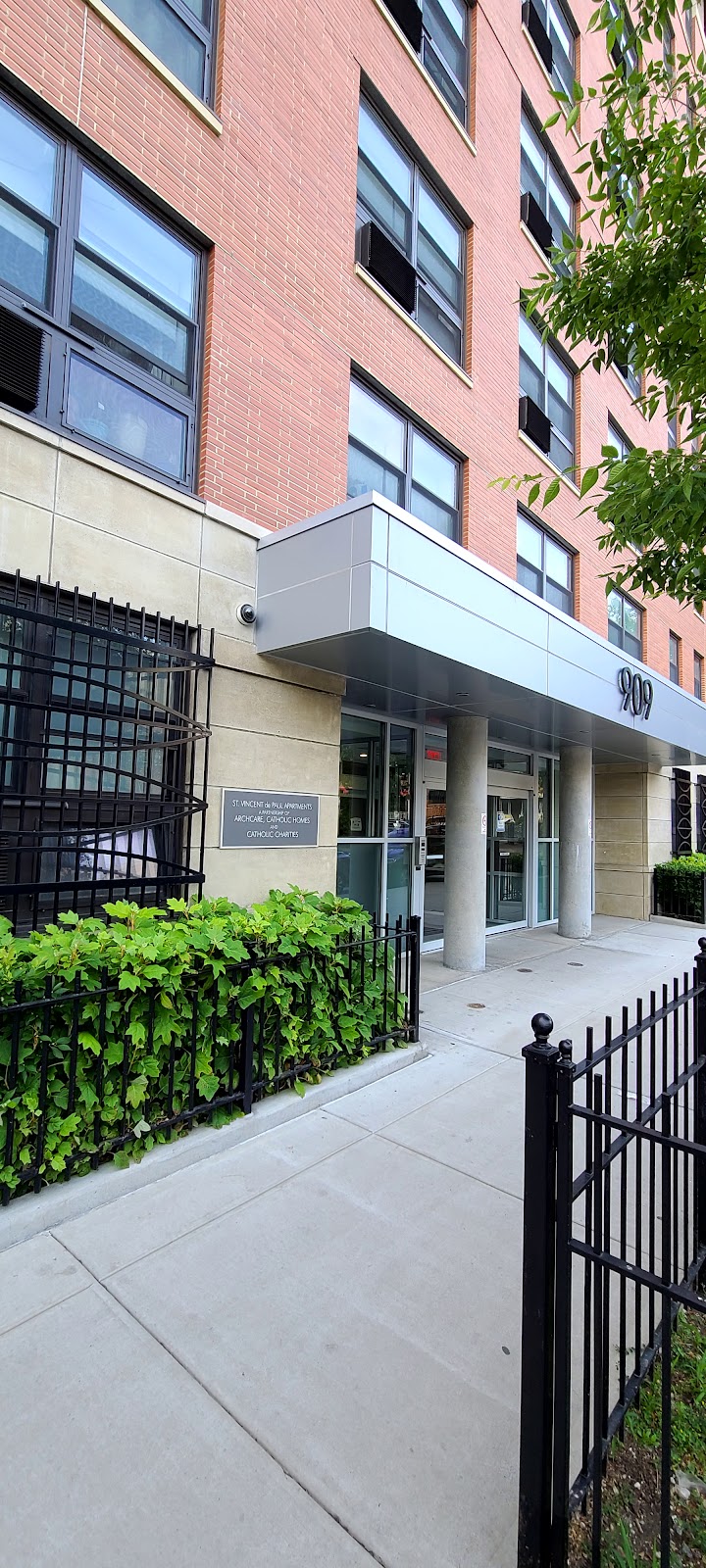
How is St Vincent Depaul Residence Staffed?

CMS rates ST VINCENT DEPAUL RESIDENCE's staffing level at 3 out of 5 stars, which is average compared to other nursing homes. Staff turnover is 44%, compared to the New York average of 46%. This relatively stable workforce can support continuity of care.

What Have Inspectors Found at St Vincent Depaul Residence?

State health inspectors documented 21 deficiencies at ST VINCENT DEPAUL RESIDENCE during 2021 to 2025. These included: 20 with potential for harm and 1 minor or isolated issues.
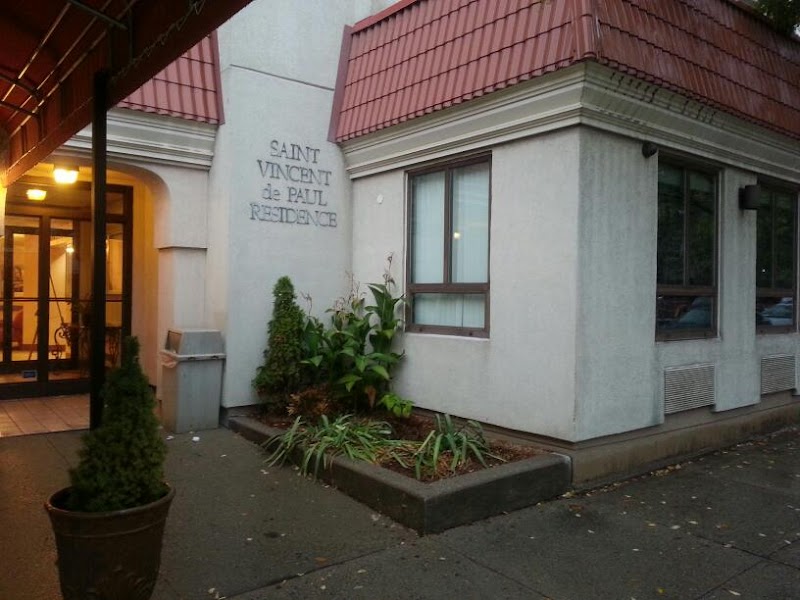
Who Owns and Operates St Vincent Depaul Residence?

ST VINCENT DEPAUL RESIDENCE is owned by a non-profit organization. Non-profit facilities reinvest revenue into operations rather than distributing to shareholders. The facility is operated by ARCHCARE, a chain that manages multiple nursing homes. With 200 certified beds and approximately 87 residents (about 44% occupancy), it is a large facility located in BRONX, New York.
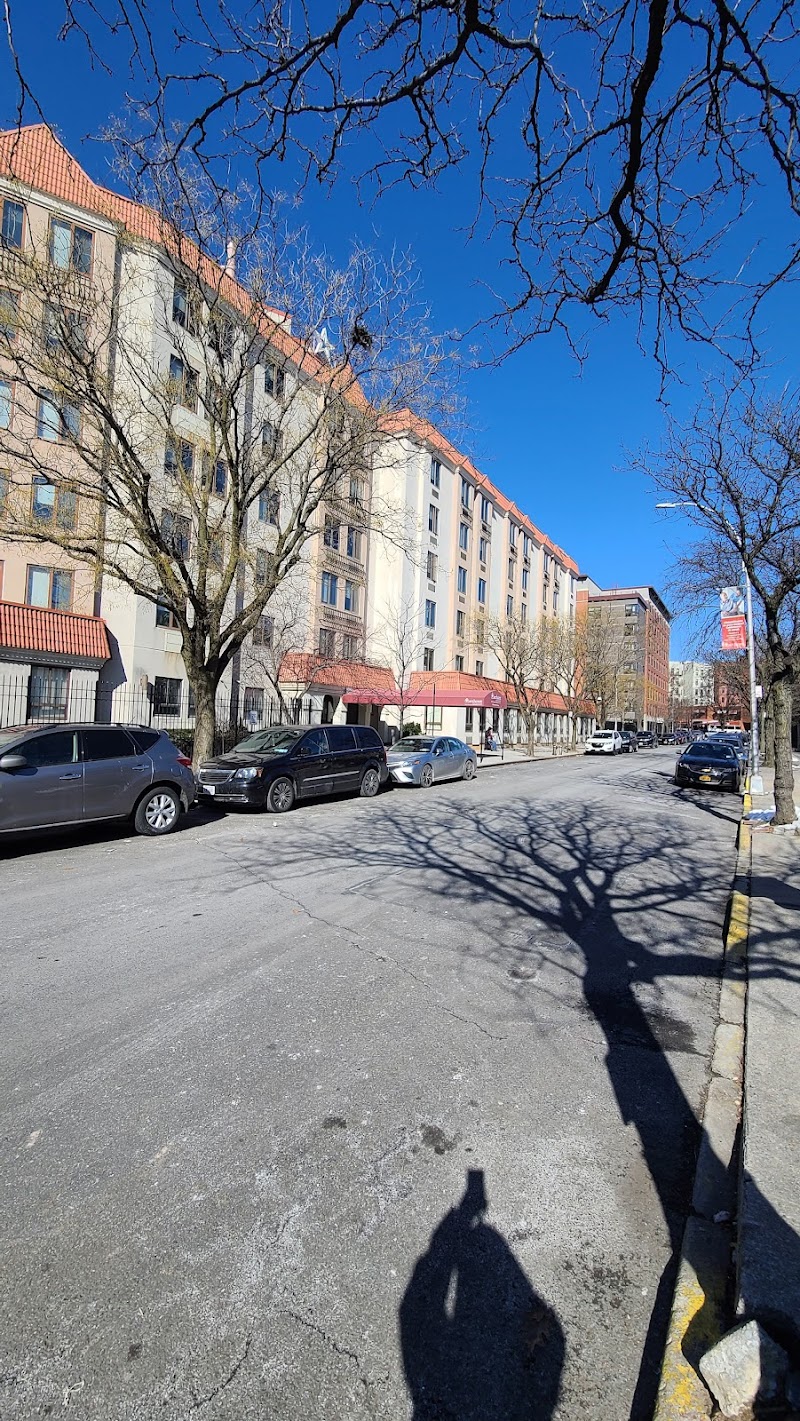
How Does St Vincent Depaul Residence Compare to Other New York Nursing Homes?

Compared to the 100 nursing homes in New York, ST VINCENT DEPAUL RESIDENCE's overall rating (3 stars) is below the state average of 3.1, staff turnover (44%) is near the state average of 46%, and health inspection rating (2 stars) is below the national benchmark.

What Should Families Ask When Visiting St Vincent Depaul Residence?

Based on this facility's data, families visiting should ask: "Can I visit during a mealtime to observe dining assistance and food quality?" "How do you handle medical emergencies, and what is your hospital transfer rate?" "Can I speak with family members of current residents about their experience?"

Is St Vincent Depaul Residence Safe?

Based on CMS inspection data, ST VINCENT DEPAUL RESIDENCE has a clean safety record: no substantiated abuse findings (meaning no confirmed cases of resident harm), no Immediate Jeopardy citations (the most serious violation level indicating risk of serious injury or death), and is not on the Special Focus Facility watch list (a federal program monitoring the lowest-performing 1% of nursing homes). The facility has a 3-star overall rating and ranks #100 of 100 nursing homes in New York. While no facility is perfect, families should still ask about staff-to-resident ratios and recent inspection results during their visit.

Do Nurses at St Vincent Depaul Residence Stick Around?

ST VINCENT DEPAUL RESIDENCE has a staff turnover rate of 44%, which is about average for New York nursing homes (state average: 46%). Moderate turnover is common in nursing homes, but families should still ask about staff tenure and how the facility maintains care continuity when employees leave.

Was St Vincent Depaul Residence Ever Fined?

ST VINCENT DEPAUL RESIDENCE has no federal fines on record. CMS issues fines when nursing homes fail to meet care standards or don't correct problems found during inspections. The absence of fines suggests the facility has either maintained compliance or corrected any issues before penalties were assessed. This is a positive indicator, though families should still review recent inspection reports for the full picture.

Is St Vincent Depaul Residence on Any Federal Watch List?

ST VINCENT DEPAUL RESIDENCE is not on any federal watch list. The most significant is the Special Focus Facility (SFF) program, which identifies the bottom 1% of nursing homes nationally based on persistent, serious quality problems. Not being on this list means the facility has avoided the pattern of deficiencies that triggers enhanced federal oversight. This is a positive indicator, though families should still review the facility's inspection history directly.