WAYNE CENTER FOR NURSING & REHABILITATION

3530 WAYNE AVENUE, BRONX, NY 10467 (718) 655-1700
For profit - Limited Liability company 243 Beds Independent Data: November 2025
Trust Grade
65/100
#365 of 594 in NY
Last Inspection: January 2025

Within standard 12-15 month inspection cycle. Federal law requires annual inspections.

Overview

Wayne Center for Nursing & Rehabilitation has a Trust Grade of C+, indicating it is slightly above average but not exceptional. It ranks #365 out of 594 nursing homes in New York, placing it in the bottom half of facilities statewide, and #32 out of 43 in Bronx County, meaning only a few local options are better. The facility is currently worsening, with reported issues rising from 7 in 2022 to 9 in 2025. Staffing is a relative strength, with a 3/5 rating and a turnover rate of 35%, which is below the state average of 40%. However, the facility has received concerns regarding insufficient nursing staff on weekends, improper food storage practices leading to expired items, and poor sanitation in garbage areas, indicating areas for improvement despite having no fines or critical issues reported.

Trust Score
C+
65/100
In New York
#365/594
Bottom 39%
Safety Record
Low Risk
No red flags
Inspections
Getting Worse
7 → 9 violations
Staff Stability
○ Average
35% turnover. Near New York's 48% average. Typical for the industry.
Penalties
✓ Good
No fines on record. Clean compliance history, better than most New York facilities.
Skilled Nurses
✓ Good
Each resident gets 68 minutes of Registered Nurse (RN) attention daily — more than 97% of New York nursing homes. RNs are the most trained staff who catch health problems before they become serious.
Violations
⚠ Watch
18 deficiencies on record. Higher than average. Multiple issues found across inspections.
★★★☆☆
3.0
Overall Rating
★★★☆☆
3.0
Staff Levels
★★★★★
5.0
Care Quality
★★☆☆☆
2.0
Inspection Score
Stable
2022: 7 issues
2025: 9 issues

The Good

  • 5-Star Quality Measures · Strong clinical quality outcomes
  • Full Sprinkler Coverage · Fire safety systems throughout facility
  • No fines on record
  • Staff turnover below average (35%)

    13 points below New York average of 48%

Facility shows strength in quality measures, fire safety.

The Bad

3-Star Overall Rating

Near New York average (3.1)

Meets federal standards, typical of most facilities

Staff Turnover: 35%

10pts below New York avg (46%)

Typical for the industry

The Ugly 18 deficiencies on record

Jan 2025 9 deficiencies
CONCERN (D)

Potential for Harm - no one hurt, but risky conditions existed

Comprehensive Care Plan (Tag F0656)

Could have caused harm · This affected 1 resident

**NOTE- TERMS IN BRACKETS HAVE BEEN EDITED TO PROTECT CONFIDENTIALITY** Based on record review and interviews conducted during a Recertification Survey from 01/13/2025 to 01/21/2025, the facility did ...

Read full inspector narrative →
**NOTE- TERMS IN BRACKETS HAVE BEEN EDITED TO PROTECT CONFIDENTIALITY** Based on record review and interviews conducted during a Recertification Survey from 01/13/2025 to 01/21/2025, the facility did not ensure that a comprehensive care plan was developed and implemented to meet each resident's needs. This was evident in 1 (Resident #46) out of 38 sampled residents. Specifically, Resident #46 who had diagnosis of Osteoporosis had no care plan developed and implemented. The findings are: The facility policy and procedure titled Care Plans Comprehensive Person - Centered with the last revised date January 2023, documented that a comprehensive person-centered care plan that include measurable objectives and timetables to meet the resident physical, psychosocial and functional needs is developed and implemented for each resident. The facility's policy and procedure entitled Baseline Care Plan, approved 03/2018, states that the care plan will include conditions and risks affecting the resident's health and safety. Resident #46 was admitted to the facility on [DATE] with diagnoses including Dementia with Psychosis, Alzheimer's Disease, Hypertension, Bipolar Disorder, Seizure Disorder, Chronic Obstructive Pulmonary Disease and Osteoporosis. The resident had physician orders in place for each medical condition, including an order dated 12/25/2024 for Alendronate 70 mg once a week for Osteoporosis. The resident had care plans in place for Cognitive Loss, Hypertension, Psychotropic Drug Use, Alteration in Neurological Status and Alteration in Respiratory Status. However, there was no care plan reflecting the resident's diagnosis of Osteoporosis. On 01/16/2025 at 10:58 AM, Registered Nurse Manager #1 was interviewed and stated that the Registered Nurses are responsible for initiating all care plans. The Nurse Manager stated that the Osteoporosis Care Plan had been put in place for Resident #46 in 2020, but the resident had been hospitalized in 2023 and upon their return in November of that year, the Osteoporosis care plan was not reactivated. The Nurse Manager had no explanation for why it had not been done. On 01/21/2025 at 9:52 AM, the Director of Nursing was interviewed and stated that when a resident is admitted to the hospital, they are discharged from the facility and their care plans are discontinued; when they return, all their care plans are reinstated. The Director stated that there was no specific regulation that every physician order had to have a separate care plan and looked on their screen, noting that the resident's osteoporosis diagnosis was mentioned on their Pain and Discomfort care plan. The surveyor's copy of the plan of care did not mention the diagnosis on the Pain/Discomfort care plan, and the Director stated that it must have been put in when the Nurse Manager was made aware that the Osteoporosis care plan had not been reactivated into the current plan of care. 10NYCRR415.11(c)(1)
CONCERN (D)

Potential for Harm - no one hurt, but risky conditions existed

Deficiency F0657 (Tag F0657)

Could have caused harm · This affected 1 resident

**NOTE- TERMS IN BRACKETS HAVE BEEN EDITED TO PROTECT CONFIDENTIALITY** Based on record reviews and interviews conducted during the Recertification Survey between 01/13/2025 and 01/21/2025, the facili...

Read full inspector narrative →
**NOTE- TERMS IN BRACKETS HAVE BEEN EDITED TO PROTECT CONFIDENTIALITY** Based on record reviews and interviews conducted during the Recertification Survey between 01/13/2025 and 01/21/2025, the facility did not ensure that resident's Comprehensive Care Plan was reviewed and revised by the interdisciplinary team after each assessment, including quarterly review assessments. 1) Resident #74 Self care Comprehensive Care Plan was last reviewed 8/1/2024, and not updated quarterly, 2) Resident #187 who was maintained on Oxygen Therapy the Alteration in Cardiopulmonary Care Plan was not updated. This was evident for 1 of 5 residents of reviewed for Activities of daily Living (Resident #74), and 1 out of 3 resident review for oxygen (Resident #187) out of an investigative sample of 37 residents. The findings are: The facility policy and procedure titled Care Plans Comprehensive Person-Centered dated reviewed 7/16/2024 documented the Interdisciplinary Team must review and update the care plan at least quarterly, in conjunction with the required quarterly MDS assessment. 1. Resident #74 was admitted to the facility with diagnoses that included Persistent vegetative state, Nontraumatic intracerebral hemorrhage, Diabetes and Seizure Disorder. The Quarterly Minimum Data Set, dated [DATE] documented that Resident #74 had Short-term Memory and Long-Term Memory Problem, with no memory recall, and is severely impaired-never/rarely made decisions. The Comprehensive care Plan titled Self-Care Deficit dated effective 3/13/2018 and last evaluation note 8/1/2024 with interventions including Dependent of two plus staff, for bed mobility, dressing, locomotion, personal hygiene, toilet use and , transfer with Hoyer lift. The Quarterly Minimum Data Set Assessments were completed on 10/29/2024. There was no documented evidence that the care plans were reviewed and revised after each assessment for Resident #74 On 01/21/25 at 01:54 PM, during the Quality Improvement Performance Improvement (QAPI) interview, the Director of Nursing stated, care plans are reviewed quarterly, annually for significant change as needed. The Director of Nursing did not explain why care plans was not completed as least quarterly. On 01/21/25 at 09:43 AM, The Director of Rehab was interviewed and stated the resident who is total care with Activities of Daily Living. Director of Rehab stated the resident is screened quarterly and as needed, Director of Rehab stated the resident is also on passive range of motion which is done during activities of daily living care. Director of Rehab stated this resident had no functional abilities on own and needs staff assistance for everything, and resident cannot follow commands secondary to medical conditions. Director of Rehab stated Rehab goes to each care planning meeting and is part of the care planning process. Director of Rehab stated if a resident is on therapy the Rehab will create own care plan for physical and occupational therapy with goals and interventions. Director of Rehab stated once the goal has been reached Rehab will discharge the care plan. Director of Rehab stated Rehab is not responsible for creating and or updating the Self Care Deficit care plan and stated Rehab creates their own care plans only if the resident is on therapy, and discharged when goals are reached. On 01/17/25 at 10:08 AM, Registered Nurse #7 and was interviewed and stated the resident is total care with all activities of daily living, takes nothing by mouth and gets feeding via GT. Registered Nurse #7 stated the resident is nonverbal and unable to make all needs known, and staff anticipates all needs. Registered Nurse #7 stated all care plan including self-care deficit care plans are updated quarterly, annually, significant changes and as needed. Registered Nurse #7 looked at the Self Care deficit Care plan and stated the last evaluation note was in 8/1/2024. Registered Nurse #7 stated Rehab and Nursing are responsible for updating the Self Care deficit care plans. Registered Nurse #7 stated nursing is responsible for overseeing that all the care plans are updated to reflect the status of the resident and if the care plans are not updated Nursing will update the care plans. Registered Nurse #7 stated the care plans are reviewed in care planning meetings and not sure why this care plan was not updated. Registered Nurse #7 stated they will update the care plan now. 2) Resident #187 was admitted with diagnoses that include Hypertension and Peripheral Vascular Disease The Quarterly Minimum Data Set assessment dated [DATE] documented Resident #187 had severely impaired cognition skills for daily decision making. The most recent Annual Minimum Data Set Assessment was completed on 07/05/2024. The most recent Quarterly Minimum Data Set Assessment was completed on 10/04/2024. The Care Plan Activity Report titled Alteration in Cardio/Pulmonary Status dated active and effective 06/30/2024, documented the last quarterly review done 08/26/2024. Goals that documented that Resident #187 will be free of signs and symptoms of cardiac distress and interventions that documented for nursing to observe for signs/symptoms of cardiac distress were active and effective 06/30/2023 with no review or revision dates entered. There was no documented evidence that the care plans including goals and interventions were reviewed and revised after each assessment for Resident #187. On 01/21/25 at 1:54 PM, during QAPI interview the Director of Nursing stated care plans are reviewed quarterly, annually for significant change as needed. The Director of Nursing did not explain why care plans was not completed as least quarterly. 10 NYCRR 415.11(c)(2) (i-iii)
CONCERN (D) 📢 Someone Reported This

A family member, employee, or ombudsman was alarmed enough to file a formal complaint

Potential for Harm - no one hurt, but risky conditions existed

Quality of Care (Tag F0684)

Could have caused harm · This affected 1 resident

**NOTE- TERMS IN BRACKETS HAVE BEEN EDITED TO PROTECT CONFIDENTIALITY** Based on observations, record review and interviews conducted during the Recertification Survey from 01/13/2025 to 01/21/20245, ...

Read full inspector narrative →
**NOTE- TERMS IN BRACKETS HAVE BEEN EDITED TO PROTECT CONFIDENTIALITY** Based on observations, record review and interviews conducted during the Recertification Survey from 01/13/2025 to 01/21/20245, the facility did not ensure that a resident received treatment and care in accordance with professional standards of practice. This was evident for 1 (Resident #187) of 35 total sampled residents. Specifically, Resident #187 did not receive monitoring and maintenance of the peripheral intravenous site for the infusion of fluids and antibiotics. The finding is: The facility's policy and procedure titled Administration, Monitoring and Maintenance of Intravenous Therapy, undated, documented that the facility shall have a system in place for the administration, monitoring and maintenance of Intravenous therapy. Intravenous tubings shall be labeled with the date and time change. The Intravenous site and dressing shall be labeled with the date and time the needle/catheter was inserted, the gauge of the needle/catheter, and the date and time the dressing was changed. The nurse or physician who changes a dressing after the initial insertion must relabeled the dressing with the date of the initial insertion and needle gauge, and the date the dressing was changed. All must be documented on the medical record. The nurse must notify the physician to change the peripheral intravenous needle/catheter or heparin lock after 3 days (72 hours). Transparent dressings shall be changed and relabeled every 72 hours as per procedure. At the time of the dressing change the insertion site is to be observed for signs of phlebitis, infection, or infiltration and the insertion site cleansed per procedure. Resident #187 was admitted with diagnoses that include Hypertension and Peripheral Vascular Disease The Quarterly Minimum Data Set assessment dated [DATE] documented Resident #187 had severely impaired cognition skills for daily decision making. On 01/15/25 at 11:16 AM, Resident #187 was observed in bed with an undated dressing covering a left upper extremity peripheral intravenous catheter. On 01/15/25 at 02:52 PM, Resident #187 was observed in bed with an undated dressing covering a left upper extremity peripheral intravenous catheter. On 01/16/25 at 12:18 PM, Resident #187 was observed in bed with an undated dressing covering a left upper extremity peripheral intravenous catheter. On 01/16/25 at 1:10PM Resident #187 was observed in bed with an undated dressing covering a left upper extremity peripheral intravenous catheter in the presence of Registered Nurse #4, the unit manager. The Physician Order dated 01/11/2025 at 5:29PM, documented for the administration of Dextrose 5% and 0.45% Sodium Chloride intravenous solution to be infused at 60 cubic centimeters per hour for 72 hours. The Physician Order dated 01/11/2025 at 5:31PM, documented for the administration of Zosyn 3.375 grams/50mililiters in Dextrose intravenous piggyback every 8 hours for 5 days. The Physician Order dated 01/16/2025 at 2:21PM, documented for the treatment of the Peripheral Intravenous Line: Dressing Change Now for 1 treatment then every 3 days and as needed. The Resident Medication Administration Record dated January 2025 documented that Resident #187 received administrations of Zosyn 3.375 grams/50ml in Dextrose intravenous 01/11/2025 thru 01/16/2025. The Resident Medication Administration Record dated January 2025 documented that Resident #187 peripheral intravenous line dressing change treatment was initially performed on 01/16/2025. The Care Plan Activity report dated 01/11/2025, documented that the first dose of Zosyn was administered intravenously 01/11/2025. The Care Plan Activity report dated 01/16/2025, documented that the peripheral intravenous line was removed 01/16/2025. Prior to 01/16/2025, There is no documented evidence that the peripheral intravenous line dressings were changed nor is there documented evidence that the peripheral intravenous insertion site was assessed. On 01/16/25 at 1:20PM Registered Nurse #4, the unit manager, was Interviewed and stated that the intravenous infusion through the left peripheral line was started on 01/11/2024 for resident #187, but until today the dressing at the insertion site had not been changed. Registered Nurse #4 also stated that the nurse who inserted the peripheral intravenous line was responsible to date the dressing and that the dressing is to be changed and dated every 72 hours per the policy and procedure. Registered Nurse #4 also stated that the intravenous medication was infused three times a day and no one observed that the dressing was not dated and had not been changed. The dressing change should have been documented in the progress notes and the order for the dressing changes should have been entered at the initiation of the IV medication, but neither are in the computer system. Registered Nurse #4 further stated that it is their responsibility to round daily and assess that the Intravenous dressings are changed, dated and that the documentation and orders are entered into the electronic medical record. On 01/17/25 at 10:09 AM, The Director of Nursing was interviewed and stated that regarding peripheral intravenous lines, the insertion site is rotated every 3 days and that collaborates with the dressing change so essentially the dressing should be changed every 3 days. The Director of Nursing also stated that the ideal practice is to date the dressing when it is changed and enter that date in the Treatment Activity Record with documentation of the insertion site assessment. The physician should be made aware if there is difficulty with the insertion and the physician order be for dressing changes then should be changed to every 5 days. The Director of Nursing further stated that outside of the nurse who changes the dressing, the nurse manager should be looking for evidence of this during their daily rounds and when they run the Treatment Activity Report at the end of each day. 10NYCRR 415.12
CONCERN (D) 📢 Someone Reported This

A family member, employee, or ombudsman was alarmed enough to file a formal complaint

Potential for Harm - no one hurt, but risky conditions existed

Accident Prevention (Tag F0689)

Could have caused harm · This affected 1 resident

**NOTE- TERMS IN BRACKETS HAVE BEEN EDITED TO PROTECT CONFIDENTIALITY** Based on observation, record review interviews, and record review conducted during the recertification and complaints (NY0034265...

Read full inspector narrative →
**NOTE- TERMS IN BRACKETS HAVE BEEN EDITED TO PROTECT CONFIDENTIALITY** Based on observation, record review interviews, and record review conducted during the recertification and complaints (NY00342658) survey from 01/13/2025 to 01/21/2025, the facility did not ensure a resident remained free of accident hazards. This was evident for 1 (Resident #290) of 3 residents reviewed for accidents out of 38 sampled residents. Specifically, Resident #290 fell out of bed and sustained a 2.5 cm skin tear to the forehead during care when one staff provided care without a second staff member. The Findings are: The facility policy and procedure titled Accident Prevention Reporting and Investigation, last revised June 6, 2021, documented that the purpose is to provide an environment free from accident hazards for the safety of the residents and staff. Identify the cause of an accident and obtain appropriate care for the injury. Resident #290 was admitted to the facility with diagnoses that include Hemiplegia or Hemiparesis, Respiratory Failure, and Dependence on respirator [ventilator] status. The quarterly Minimum Data Set assessment dated [DATE] documented Resident #290's cognition as severely impaired and never/rarely made decisions. The resident was dependent and requires one person assistance with personal care and two persons for bed mobility. The Comprehensive Care Plan for Falls/Injury, initiated on 12/31/2020 and last revised on 05/19/2024, documented that while certified nursing assistant #3 was providing care, the unit nurse was alerted that the resident had fallen out of bed. The Resident Nursing Instruction for Certified Nurse Aid dated 09/25/2023 documented that Resident #290 is dependent and requires two-person assistance for bed mobility and one-person assistance for personal hygiene. The Certified Nursing Assistant (CNA) Documentation History Detail dated 05/01/2024 to 05/31/2024 documented personal hygiene support provided one-person physical assistance. The Nursing Note dated 05/20/2024 at 3:37 PM documented that on 05/19/2024 at 9:40 AM, certified nursing assistant # 3 called the writer's attention to Resident #290's room. The writer immediately went to the room and found out the resident was on the floor. Upon assessment, Resident #290 was conscious and alert; a skin tear was noted on the left side of the forehead with slight swelling measuring 2.5cm x 1.0cm. The area was cleansed with normal saline, and Steri strips were applied. The nursing supervisor was made aware, and the physician and the family were notified. The facility Resident Incident/Accident Report dated 05/19/2024 at 9:40 AM documented that Certified Nursing Assistant # 3 stated that while giving care to Resident #290, the resident was turned to the left side, and the resident got agitated and fell out of bed. The resident was unable to state what had happened. Resident # 290 sustained a 2.5 cm x 1 cm abrasion and skin tear to the forehead. The facility Summary of Occurrence concluded that Certified Nursing Assistant #3 did not intentionally harm Resident #290. However, given the circumstances and information gathered, the incident met the criteria of Department of Health incident reporting for not following the plan of care. On 01/17/2025 at 3:14 PM, Certified Nursing Assistant #3 was interviewed and stated that I was providing care for Resident #290, who was on a ventilator. I turned the resident, and the resident started shaking and then fell. It was only me taking care of the resident. I do not know if they changed it now, but when I looked at the computer, it was one person's assistant for care. I did not get the time to call someone to assist me when the resident became agitated and was shaking. I went to inform the nurse immediately. The nurse and the manager came to see the resident before we put the resident back to bed. On 01/16/2025 at 2:54 PM, Registered Nurse #3 was interviewed and stated that certified nursing assistant #3 called that Resident #290 was on the floor. I assessed the resident; the resident had a small abrasion on the forehead. I called the supervisor and reported to the doctor. We transferred the resident back to bed after the assessment. On 01/21/2025 at 11:40 AM, the Director of Nursing was interviewed and stated that Resident #290 fell during care. They investigated the fall and concluded that there was no intentional harm, but the incident met the criteria for Department of Health reporting for not following the plan of care. Certified Nursing Assistant # 3 was sent home immediately and was suspended for three days. Certified Nursing Assistant # 3 was educated upon return. Resident #290 requires two-person assistance for bed mobility and one person for personal hygiene. Certified Nursing Assistant # 3 was providing care and tried to turn the resident, but the resident became agitated and fell. They will increase the staff for personal hygiene to coincide with the care for bed mobility. 10 NYCRR 415.12(h)(1)
CONCERN (D)

Potential for Harm - no one hurt, but risky conditions existed

Respiratory Care (Tag F0695)

Could have caused harm · This affected 1 resident

**NOTE- TERMS IN BRACKETS HAVE BEEN EDITED TO PROTECT CONFIDENTIALITY** Based on observation, record review, and interviews conducted during the recertification Survey from 01/13/2025 to 01/21/2025, t...

Read full inspector narrative →
**NOTE- TERMS IN BRACKETS HAVE BEEN EDITED TO PROTECT CONFIDENTIALITY** Based on observation, record review, and interviews conducted during the recertification Survey from 01/13/2025 to 01/21/2025, the facility did not ensure a resident who needed respiratory care was provided such care, consistent with professional standards of practice. This was evident for 2 (Resident # 19 and #187) out of 6 residents reviewed for respiratory care out of 38 sampled residents. Specifically, 1) Resident # 19 was observed using oxygen via the Nasal Cannula (NC) at 2 liters with no Medical Doctor's Order (MDO), and 2) Resident # 187 was observed using oxygen via undated nasal cannula tubing. The findings are: The facility's undated policy and procedure, Supplemental Oxygen, documented that oxygen therapy is administered to residents with medical conditions in which an enriched oxygen atmosphere will benefit them. Depending on the residents' inspiratory flow demands, oxygen can be administered using low-flow or high-flow oxygen delivery devices. The procedure is to check the resident chart for a physician's order. The facility's undated policy and procedure, Supplemental Oxygen, documented that a nasal cannula will deliver low concentration of oxygen at flow rates of 1-6 liters per minute. Infection Control: disposable equipment should be changed according to the equipment change schedule. The facility's undated policy and procedure titled Supply Change Standards, documented that respiratory supplies must be routinely changed to maintain proper infection control procedure and hygienic standards. Respiratory supplies will be changed according to the schedule listed below to reduce the risk of infection. Nasal Cannula change frequency - Weekly and as needed. 1. Resident #19 was admitted to the facility with diagnoses that include Non-Alzheimer's Dementia and Seizure Disorder. The quarterly Minimum Data Set assessment dated [DATE] documented Resident # 19 cognition as moderately impaired with a Brief Interview for Mental Status score of 12. On 01/13/2025 at 11:40 AM, Resident #19 was observed out of bed in a wheelchair in their room, using oxygen at 2 liters via nasal cannula. On 01/14/2025 at 9:43 AM, Resident #19 was observed out of bed in a wheelchair in their room, using oxygen at 2 liters via nasal cannula. The Medical Doctor's Orders dated 12/09/2024 to 01/13/2025 have no documented evidence that Resident #19 was receiving oxygen. The Medical Doctor's Order dated 01/14/2025 documented oxygen inhalation via Nasal Cannula at 2-3 liter/minute for oxygen saturation below 95%. The Nursing Note dated 12/16/2024 at 10:41 PM documented that at around 9:00 PM, Resident #19 complained of chest pain and described pain as heavy and in the middle of their chest. The registered nurse supervisor was notified and assessed the resident. I informed the doctor with an order to give a 0.4 mg of nitroglycerin sublingual tablet in one dose and administer oxygen. The order was carried out and endorsed. Nitroglycerin was given with relief of the chest pain and oxygen via nasal cannula at 2 liters/minute in progress and well tolerated. The Nursing Note dated 12/19/2024 at 6:21 AM documented that oxygen via nasal cannula was in progress, with oxygen saturation at 98%. The Nursing Note dated 12/23/2024 at 10:20 AM documented Resident#19 on the bed, not in distress, on oxygen inhalation via nasal cannula at 2 liters. On 01/17/2025 at 11:53 AM, Licensed Practical Nurse #3 was interviewed and stated that Resident #19 was on oxygen at 2 liters as needed. The resident went to the hospital and returned about three weeks ago with 2 liters of oxygen as needed. The resident did not have oxygen before but has been using it since returning from the hospital. Resident # 19 has an order for 2 liters of oxygen. It was ordered on 01/14/2025. On 01/21/2025 at 12:39 PM, Licensed Practical Nurse #4 was interviewed, and stated that that Resident #19 complained of chest pains on 12/16/2024 after 8:00 PM. I took the vitals and reported them to the doctor. The doctor ordered Nitroglycerine and oxygen. I put the resident on oxygen at 2 liters. I forgot to write the order for the oxygen; it skipped my mind. I did not follow up the next day to see if the order was in place. I should have written the order for the oxygen. On 01/17/2025 at 12:51 PM, Registered Nurse #5, the unit manager, was interviewed and stated that Resident # 19 had been on oxygen since the resident was readmitted on [DATE]. Oxygen 2 liters via nasal cannula was ordered on 01/14/2025. There was no order for the oxygen, so I put an order in on 01/14/2025. The oxygen was started on 12/16/2024 by the evening nurse. I did not check to see if an order was in place for the oxygen. I missed it because it did not occur on my shift. On 01/21/2025 at 12:03 PM, the Director of Nursing was interviewed and stated that an order for oxygen administration must be obtained. Before a resident is placed on oxygen, an assessment should be done and report to the doctor, and an order must be obtained. The oxygen is ordered based on the resident's clinical condition. There is a note that the doctor was notified and gave an order. It should have been ordered. They will reinforce documentation. 2. Resident #187 was admitted with diagnoses that include Hypertension and Peripheral Vascular Disease. The Quarterly Minimum Data Set assessment dated [DATE] documented Resident #187 had severely impaired cognition skills for daily decision making. On 01/15/25 at 11:16 AM, Resident #187 was observed in bed with an undated nasal cannula tubing inserted that was infusing humidified oxygen at 5 liters per minute. On 01/15/25 at 02:52 PM, Resident #187 was observed in bed with an undated nasal cannula tubing inserted that was infusing humidified oxygen at 5 liters per minute. On 01/16/25 at 12:18 PM, Resident #187 was observed in bed with an undated nasal cannula tubing inserted that was infusing humidified oxygen at 5 liters per minute. On 01/16/25 at 1:10PM, Resident #187 was observed in bed with an undated nasal cannula tubing inserted that was infusing humidified oxygen at 5 liters per minute, in the presence of Registered Nurse #4, the unit manager. The Physician Order dated 09/24/2024 at 3:58PM, and renewed 12/04/2024 at 11:42 AM, documented for the administration of Oxygen at 2-3 liters per minute as needed per nasal cannula every shift. The Resident Treatment Administration Record dated January 2025, had no nursing documentation entries that Resident #187 was administered Oxygen in the month of January or that oxygen tubing was dated or changed. On 01/16/25 at 1:25PM, Registered Nurse #4, the unit manager, was Interviewed and stated that the oxygen tubing connected to the nasal cannula should be dated and changed every 7 days but that they observed that there was no date on the tubing today. On 01/21/25 at 10:30 AM, The Director of Nursing was interviewed and stated that the oxygen/nasal cannula tubing has to be dated and changed every 7 days by the night shift staff and documented on an oxygen therapy list. The Director of Nursing further stated that is the day shift nurse manager who is responsible to observe for compliance during rounds and update the oxygen therapy list weekly. There was no documented evidence that the nasal cannula or oxygen tubing used for administration of Oxygen to resident #187 was dated or changed weekly or as needed. 415.12(k)(6)
CONCERN (D)

Potential for Harm - no one hurt, but risky conditions existed

Deficiency F0841 (Tag F0841)

Could have caused harm · This affected 1 resident

**NOTE- TERMS IN BRACKETS HAVE BEEN EDITED TO PROTECT CONFIDENTIALITY** Based on interviews and record review conducted during the Recertification Survey from 01/13/2025 to 01/21/2025, the facility di...

Read full inspector narrative →
**NOTE- TERMS IN BRACKETS HAVE BEEN EDITED TO PROTECT CONFIDENTIALITY** Based on interviews and record review conducted during the Recertification Survey from 01/13/2025 to 01/21/2025, the facility did not ensure that the Medical Director participated in the Quality Assurance and Performance Improvement quarterly meetings. This was evident during review of the attendance sheets for the last four quarterly meetings, and the facility provided list of members of the Quality Assurance and Performance Improvement Committee, and through interview with the Medical Director and other members of the Quality Assurance Committee. Specifically, the Medical Director stated that they do not attend the Quality Assurance quarterly meetings, and the Administrator stated that the Medical Director was too busy to attend the Quarterly Assurance quarterly meetings. The findings are: The undated policy titled Quality Assurance and Performance Improvement Program documented; that the Quality Assurance and Performance Improvement Program is designed to provide an ongoing, coordinated systematic and objective approach to monitor, evaluate, and improve [NAME]'s performance. The Quality Assurance and Performance Improvement Committee meets at least quarterly and as needed to coordinate and evaluate activities under the Quality Assurance and Performance program. [NAME] maintains a QAPI Committee consisting at minimum of the: Director of Nursing, Assistant Director of Nursing, Medical Director/Designee, Infection Preventionist, Administrator, Assistant Administrator, Director of Social Work, and at least two other members of the facility's staff. The undated document titled QAPI Committee documented; that the Quality Assurance and Performance Improvement Committee consisted of the: Administrator, Director of Nursing, Assistant Director of Nursing, Director of Admissions, Director of Social Work, Minimum Data Set Coordinator, Director of Recreation, Director of Rehabilitation, and Dietician. The QAPI Committee document did not include the Medical Director as a member of the Quality Assurance and Performance Improvement Committee. Review of the Quality Assurance and Performance Improvement Committee Meeting Sign-In Sheets documented that the Medical Director did not attend the Quality Assurance and Performance Improvement meetings on 02/06/2024, 05/03/2024, 07/25/2024, and 11/01/2024. On 01/17/2025 at 02:20 PM, the Director of Nursing was interviewed and stated that the Medical Director does not attend the quarterly Quality Assurance and Performance Improvement meetings. On 01/21/2025 at 09:33 AM, the Administrator was interviewed and stated that the Medical Director has not attended the last four Quality Assurance and Performance Improvement meetings because the Medical Director is too busy to attend them. The Administrator stated that they send the Medical Director copies of the meeting notes from each Quality Assurance and Performance Improvement meeting after each meeting to inform the Medical Director of what was discussed during each meeting. The Administrator stated that ideally, the Medical Director would attend the quarterly Quality Assurance meetings, but the Medical Director is so busy that it is difficult to schedule a time where they can attend. On 01/21/2025 at 11:58 AM, the Medical Director was interviewed and stated that they do not attend the quarterly Quality Assurance and Performance Improvement meetings. They stated that instead of attending the meetings with the committee, they meet with the Director of Nursing and are briefed on what was discussed in the meetings afterwards. 10 NYCRR 415.15(a)
CONCERN (E)

Potential for Harm - no one hurt, but risky conditions existed

Deficiency F0725 (Tag F0725)

Could have caused harm · This affected multiple residents

**NOTE- TERMS IN BRACKETS HAVE BEEN EDITED TO PROTECT CONFIDENTIALITY** Based on record review and interviews conducted during the Recertification Survey from 01/13/2025 to 01/21/2025, the facility di...

Read full inspector narrative →
**NOTE- TERMS IN BRACKETS HAVE BEEN EDITED TO PROTECT CONFIDENTIALITY** Based on record review and interviews conducted during the Recertification Survey from 01/13/2025 to 01/21/2025, the facility did not ensure sufficient nursing staff were available to provide nursing and related services to assure resident safety and attain or maintain the highest practicable physical, mental, and psychosocial well-being of each resident. Specifically, the facility reported short staffing on weekends confirmed by a review of the Daily Staffing and the Payroll Based Journal Staffing Data Report. The findings include: The undated facility policy titled Staffing of Nursing Service Personnel documented; each nursing home reports daily staffing hours to Medicare. Medicare calculates a ratio of staffing hours per resident day, the percent of nurse staff that stop working at the facility, and the number of administrators who have left the facility within a given year. These types of staff are included in the nursing home staffing information: Registered Nurses, Licensed Practical Nurses, and Certified Nurse Aides. The Payroll Based Journal Staffing Data Report for the 4th quarter of 2024 (07/01/2024 - 09/30/2024) documented that excessively low weekend staffing was triggered. The undated Facility Assessment Survey documented facility capacity of 243 residents with a weekend staffing plan by shift distributed as follows: Day shift (7 AM to 3 PM) by units: 2nd Floor (ventilator unit): 3 Registered Nurses, 1 Licensed Practical Nurse, 6 Certified Nurse Aides 3rd Floor: 2 Registered Nurses, 1 Licensed Nurse, 5 Certified Nurse Aides 4th Floor: 1 Licensed Practical Nurse, 4 Certified Nurse Aides 5th Floor: 1 Licensed Practical Nurse, 4 Certified Nurse Aides 6th Floor: 1 Licensed Practical Nurse, 4 Certified Nurse Aides 7th Floor: 1 Licensed Practical Nurse, 4 Certified Nurse Aides Evening shift (3 PM to 11 PM) by units: 2nd Floor (ventilator unit): 3 Registered Nurses, 1 Licensed Practical Nurse, 5 Certified Nurse Aides 3rd Floor: 2 Registered Nurses, 1 Licensed Practical Nurse, 4 Certified Nurse Aides 4th Floor: 1 Licensed Practical Nurse, 3 Certified Nurse Aides 5th Floor: 1 Licensed Practical Nurse, 3 Certified Nurse Aides 6th Floor: 1 Licensed Practical Nurse, 3 Certified Nurse Aides 7th Floor: 1 Licensed Practical Nurse, 3 Certified Nurse Aides Night shift (11 PM to 7 AM) by units: 2nd Floor (ventilator unit): 3 Registered Nurses, 1 Licensed Practical Nurse, 4 Certified Nurse Aides 3rd Floor: 1 Registered Nurse, 1 Licensed Practical Nurse, 3 Certified Nurse Aides 4th Floor: 1 Licensed Practical Nurse, 2 Certified Nurse Aides 5th Floor: 1 Licensed Practical Nurse, 2 Certified Nurse Aides 6th Floor: 1 Licensed Practical Nurse, 2 Certified Nurse Aides 7th Floor: 1 Licensed Practical Nurse, 2 Certified Nurse Aides Review of the actual weekend facility staffing schedule from 07/06/2024 to 09/29/2024 documented the following: On 07/06/2024 on the 11 PM to 7 AM shift, there was a shortage of 1 Licensed Practical Nurse on the 2nd Floor (ventilator unit). On 07/13/2024 on the 11 PM to 7 AM shift, there was a shortage of 1 Licensed Practical Nurse on the 2nd Floor (ventilator unit). On 07/13/2024 on the 7 AM to 3 PM shift, there was a shortage of 1 Certified Nurse Aide on the 2nd Floor (ventilator unit). On 07/14/2024 on the 11 PM to 7 AM shift, there was a shortage of 1 Licensed Practical Nurse on the 2nd Floor (ventilator unit). On 07/20/2024 on the 11 PM to 7 AM shift, there was a shortage of 1 Licensed Practical Nurse on the 2nd Floor (ventilator unit). On 07/21/2024 on the 11 PM to 7 AM shift, there was a shortage of 1 Licensed Practical Nurse on the 2nd Floor (ventilator unit). On 07/27/2024 on the 11 PM to 7 AM shift, there was a shortage of 1 Registered Nurse on the 2nd Floor (ventilator unit). On 07/28/2024 on the 11 PM to 7 AM shift, there was a shortage of 1 Registered Nurse on the 2nd Floor (ventilator unit). On 08/04/2024 on the 11 PM to 7 AM shift, there was a shortage of 1 Licensed Practical Nurse on the 2nd Floor (ventilator unit). On 08/10/2024 on the 11 PM to 7 AM shift, there was a shortage of 1 Registered Nurse on the 2nd Floor (ventilator unit). On 08/11/2024 on the 11 PM to 7 AM shift, there was a shortage of 1 Registered Nurse on the 2nd Floor (ventilator unit). On 08/17/2024 on the 11 PM to 7 AM shift, there was a shortage of 1 Licensed Practical Nurse on the 2nd Floor (ventilator unit). On 08/18/2024 on the 11 PM to 7 AM shift, there was a shortage of 1 Licensed Practical Nurse on the 2nd Floor (ventilator unit). On 08/24/2024 on the 11 PM to 7 AM shift, there was a shortage of 1 Licensed Practical Nurse on the 2nd Floor (ventilator unit). On 08/25/2024 on the 11 PM to 7 AM shift, there was a shortage of 1 Licensed Practical Nurse on the 2nd Floor (ventilator unit). On 08/31/2024 on the 11 PM to 7 AM shift, there was a shortage of 1 Licensed Practical Nurse on the 2nd Floor (ventilator unit). On 09/01/2024 on the 11 PM to 7 AM shift, there was a shortage of 1 Registered Nurse and 1 Licensed Practical Nurse on the 2nd Floor (ventilator unit). On 09/072024 on the 11 PM to 7 AM shift, there was a shortage of 1 Licensed Practical Nurse on the 2nd Floor (ventilator unit). On 09/07/2024 on the 3 PM to 11 PM shift, there was a shortage of 1 Certified Nurse Aide. On 09/08/2024 on the 11 PM to 7 AM shift, there was a shortage of 1 Licensed Practical Nurse on the 2nd Floor (ventilator unit). On 09/142024 on the 3 PM to 11 PM shift, there was a shortage of 1 Certified Nurse Aide on the 2nd Floor (ventilator unit). On 09/15/2024 on the 11 PM to 7 AM shift, there was a shortage of 1 Licensed Practical Nurse on the 2nd Floor (ventilator unit). On 09/21/2024 on the 11 PM to 7 AM shift, there was a shortage of 1 Registered Nurse on the 2nd Floor (ventilator unit). On 09/21/2024 on the 7 AM to 3 PM shift, there was a shortage of 1 Licensed Practical Nurse on the 2nd Floor (ventilator unit). On 09/22/2024 on the 11 PM to 7 AM shift, there was a shortage of 1 Registered Nurse on the 2nd Floor (ventilator unit). On 09/28/2024 on the 11 PM to 7 AM shift, there was a shortage of 1 Licensed Practical Nurse on the 2nd Floor (ventilator unit). On 09/29/2024 on the 11 PM to 7 AM shift, there was a shortage of 1 Licensed Practical Nurse on the 2nd Floor (ventilator unit). Review of the actual weekend facility staffing schedule from 07/06/2024 to 09/29/2024 revealed that the facility had an ongoing pattern of shortage of nursing staff. Resident #98 was admitted to the facility on [DATE] with diagnoses including Peripheral Vascular Disease and Renal Insufficiency. The Comprehensive Minimum Data Set assessment dated [DATE] documented that Resident #98 was cognitively intact. On 01/17/2025 at 12:48 PM, Resident #98 was interviewed and stated that they believed the facility was sometimes understaffed at night. They stated that there had been an incident where it took three hours for a Certified Nurse Aide to provide them with a new gown after they notified the Certified Nurse Aide that they had spilled something on the one they were wearing. They stated that on a separate occasion, it took multiple hours for a staff member to assist them to the bathroom on the night shift. Resident #203 was admitted to the facility on [DATE] with diagnoses including Diabetes Mellitus and Hypertension. The Comprehensive Minimum Data Set assessment dated [DATE] documented Resident #203 had moderate cognitive impairment. On 01/17/2025 at 02:33 PM, Resident #203 was interviewed and stated that the facility is very understaffed. They stated that they notice this on all shifts but that it is worse during the night shift and on weekends. They stated that this affects timeliness of receiving food, being cleaned, and being provided incontinence care. Resident #176 was admitted to the facility on [DATE] with diagnoses including Malignant Neoplasm of the Left Lung and Chronic Obstructive Pulmonary Disease. The Quarterly Minimum Data Set assessment dated [DATE] documented that Resident #176 was cognitively intact. On 01/17/2025 at 02:44 PM, Resident #176 was interviewed and stated that the facility is understaffed on the weekends. They stated that when they use the call bell to request water or to notify staff that they are feeling unwell, it sometimes takes 30 to 40 minutes for someone to answer the call bell to see what the resident needs assistance with, which the resident finds to be unsettling. Resident #132 was admitted to the facility on [DATE] with diagnoses including Cerebral Infarction and Diabetes Mellitus. The Quarterly Minimum Data Set assessment dated [DATE] documented that Resident #132 was cognitively intact. On 01/17/2025 at 02:50 PM, Resident #132 was interviewed and stated that the facility did not have enough staff members. They stated that the staffing issue was worse on the night shift and impacts the timeliness of being provided incontinence care after having a bowel movement. Resident #157 was admitted to the facility on [DATE] with diagnoses including Chronic Respiratory Failure, Malignant Pleural Effusion, and Dependence on Ventilator. The Quarterly Minimum Data Set assessment dated [DATE] documented that Resident #157 had severe cognitive impairments. On 01/21/2025 at 12:04 PM, Resident #157's relative was interviewed and stated that they believed the facility could improve their staffing practices. They stated that on multiple occasions when they have come to visit Resident #157, they will find the resident in need of incontinence care. They stated that staff are also not consistently able to transfer Resident #157 out of bed in a timely manner. On 01/21/2025 at 09:50 AM, Certified Nursing Assistant #5 was interviewed and stated that they work on the night shift and are typically assigned twenty residents. They stated that they are typically able to complete most tasks but sometimes struggle to ensure that all residents are clean and dry by the end of the shift and that they cannot always get to every resident. On 01/21/2025 at 10:12 AM, Certified Nursing Assistant #4 was interviewed and stated that the night shift was understaffed. They stated that they worked on the day shift and consistently start their shift to find that residents are soaked in urine because the staff on the night shift were unable to provide care to every resident due to the size of their assignments. On 01/21/2025 at 09:22 AM, the Administrator was interviewed and stated that the facility's Staffing Coordinator was out on medical leave and their Medical Records Employee was now managing the scheduling. However, the Medical Records Employee was on vacation, so the Administrator was assisting with scheduling. The Administrator stated that they did not know why the facility was triggered for low weekend staffing by the Payroll Based Journal. They stated that it is difficult to find nursing staff due to competition with other facilities and hospitals, union restrictions on using agencies, and the increasing cost of staffing. They stated that the facility receives around 30 Certified Nursing Assistant callouts per week. They stated that the facility offers bonuses and financial incentives, uses agencies, and works with Certified Nursing Assistant schools to improve staffing levels but struggles due to competition with other facilities who are facing similar staffing issues. On 01/21/2025 at 10:45 AM, the Director of Nursing was interviewed and stated that they believed that the low weekend staffing was triggered in the Payroll Based Journal report because the facility only schedules one Registered Nurse Supervisor for the building on the weekends, instead of one Registered Nurse Supervisor for each floor, like they do during the week. They stated that the facility is calmer on the weekends, so they do not need a Registered Nurse Supervisor for every floor. They stated that they believe that the facility is staffed safely and that they inflated the necessary staffing ratios in their facility assessment to receive additional money for their staffing budget. The Director of Nursing denied being aware of staff or resident concerns related to care being provided in a timely manner. 10 NYCRR 415.13(a)(1)(i-iii)
CONCERN (E)

Potential for Harm - no one hurt, but risky conditions existed

Food Safety (Tag F0812)

Could have caused harm · This affected multiple residents

Based on observation, record review, and interviews conducted during the Recertification Survey from 1/13 /2025 to 1/21/2025, the facility did not ensure that food was stored, prepared, distributed an...

Read full inspector narrative →
Based on observation, record review, and interviews conducted during the Recertification Survey from 1/13 /2025 to 1/21/2025, the facility did not ensure that food was stored, prepared, distributed and served in accordance with professional standards for food service safety. This was evident during the kitchen and pantry observations. Specifically, 1.) The dairy walk-in refrigerator contained opened and expired loaves of bread and bags of rolls. 2.) 2 of 6 pantry unit refrigerators contained expired milk as well as spilled, spoiled, undated and unlabeled food items. The findings are: The facility policy and procedure titled Dry Storage with revision date of 01/01/2023 documented; that all dry goods must be stored in a safe and secure environment. New stock must be stored behind old stock so oldest items will be used first. Products should be dated to ensure First In-First Out. The Food Items Expiration Date Audit Tool documented that all areas must be inspected at least weekly to ensure that there are no expired food items. Any items that are expired must be immediately discarded. The facility's policy and procedure titled Food Receiving and Storage, undated, documented; Food shall be received and stored in a manner that complies with safe food handling practices. Food services or designated staff will maintain clean food storage areas at all times. When food is delivered to the facility it will be inspected for safe transport and quality before being accepted. All foods stored in the refrigerator or freezer will be covered, labeled and dated with the use by date. Other opened containers must be dated and sealed or covered during storage. Partially eaten food may not be kept in the refrigerator. Food items and snacks kept on the nursing units must be maintained as indicated: Refrigerators must have working thermometers and be monitored for temperature according to state specific guidelines. All foods belonging to residents must be labeled with the resident's name, the item and the use by date. Beverages must be dated when opened and discarded after (72) hours. Other open containers must be dated and sealed or covered. The facility's policy and procedure titled Personal Food Safety/Food entering the Facility, undated, documented that it is the policy of the facility to limit entry of food into the facility. Food storage in the units will be monitored by the nursing staff. Quantities should be limited to a reasonable size to prevent spoilage of leftovers. All prepared food stored in the refrigerator will be discarded after 72 hours. Perishable foods must be stored in resealable containers in the refrigerator. Containers will be labelled with the resident's name, room number, and the date. The nursing staff is responsible for discarding perishable food on or before the sell by date, or any food that shows signs of food borne danger, for example mold growth or foul odor. The nursing department will monitor and document the internal temperature of the refrigeration units daily. Units must maintain safe internal temperatures in accordance with the State and Federal guidelines (41 degrees Fahrenheit or below). The refrigerators will be cleaned and defrosted by the Nursing and housekeeping staff will assist as needed. 1) On 01/13/2025 at 9:23AM, an initial kitchen observation was conducted with the Dietary Supervisor. The walk-in dairy refrigerator was found to contain One box of (8) 24 packages of hot dog rolls labeled with the manufacturer's use by date of 01/6/2025, One open/unsealed and undated package of 10 hamburger rolls, originally listed to contain 12 rolls. Two plastic bags torn open/unsealed and undated containing partial loaves of bread. On 01/13/2025 at 9:30AM, the Dietary Supervisor was interviewed and stated, that they inspect all refrigerator and food storage areas weekly for expired food items and would have discarded the expired bread but did not see the items as they were contained in an undated, unlabeled box on the top shelf. On 01/13/2025 at 9:40AM, the Director of Food Service was interviewed and stated that once a week a Dietary Supervisor checks the entire kitchen for the expiration dates of food items, discards expired foods and documents the dates of inspection on an audit tool that they review. The Director of Food Service further stated that the expired bread observed in the walk-in refrigerator was simply missed as the Dietary Supervisor did not notice the box with the expired open items because it was on the top shelf. 2) On 01/14/25 at 9:19 AM, the 7th floor pantry refrigerator was observed with Registered Nurse #4 the unit manager. A malodourous beige tinged liquid was observed on the bottom of the refrigerator unit. The refrigerator unit was also observed to be overpacked, containing 11 seperate bags of food containers labeled with room numbers only. No bags or containers were observed to be labelled with names or dates. One large bag of contents included a glass bowl of degraded soup and or vegetables. The additional bags were observed to contain multiple cooked food items. On 01/14/25 at 9:25 AM, Registered Nurse #4, the unit manager was interviewed and stated, that the certified nursing assistants are responsible to have food dated and labeled when placed in the pantry refrigerator, but essentially it is everyone's responsibility. The unit manager also stated that the refrigerator unit temperatures are checked and logged at night by nursing staff, the housekeeping porter is responsible to clean the refrigerator unit daily and the certified nursing assistant is to throw the food out daily that is not labeled, dated and or has been in the refrigerator unit longer than 2 days. Registered Nurse #4 further stated that overall the pantry unit refrigerator is the responsibility of the unit manager and It was an oversight that they did not look at the refrigerator during daily rounds to ensure compliance. 3) On 01/14/25 at 9:56 AM, the 5th floor pantry unit refrigerator was observed with the Registered Nurse #1, the unit manager. The contents included one half pint of expired milk with manufacturer's expiration date of 12/12/2024. (1) 24 oz jar of opened mayonnaise undated and unlabeled with manufacturers expiration date of 12/2024, (1) 8oz plastic cup of cream cheese unopened with manufacturer's expiration date of 10/27/24, 4 undated unlabeled bags containing various cooked food items including 1 quart of brown rice, multiple fried shrimp, scoops of collard greens, 2 turkey wings and scoops of yams. The refrigerator shelf was observed with a spilled clear liquid. On 1/14/2025 at 9:45 AM, Registered Nurse #1, the unit manager was interviewed and stated that all contents of the unit refrigerators should be dated and labeled with the resident's name or room number and the items should be discarded within 2-3 days by a certified nursing assistant who is assigned to check the unit daily and the housekeeping staff should clean the refrigerator daily. The unit manager further stated that it is their responsibility during daily rounds to ensure that the unit is checked but they became tied up with other issues. On 01/15/25 at 08:29 AM, The Director of Nursing was interviewed and stated that the pantry refrigerator process includes temperature checking and inside cleaning by the night nurses and the certified nursing assistants. While staff is checking the unit temperatures, the Director of Nursing stated that they should also discard all food items that are not labeled and any that are dated outside of 48-72 hours. The Director of Nursing also stated that any staff member who receives food from the outside should label the items with the resident's name, room number and the date prior to placing the items in the pantry unit refrigerator and that external cleaning of the refrigerator unit is the responsibility of the housekeeping porter. The Director of Nursing further stated that the morning shift nurse manager should round daily and make sure the refrigerator unit is clean, that food is discarded and that the temperatures are checked. On 01/21/25 at 10:20 AM The facility Administrator was interviewed and stated that they would follow up with the food service director for clarification on the findings. 10 NYCRR 415.14(h)
CONCERN (E)

Potential for Harm - no one hurt, but risky conditions existed

Garbage Disposal (Tag F0814)

Could have caused harm · This affected multiple residents

Based on observation, record review, and interviews conducted during the Recertification Survey from 01/13/2025 to 01/21/2025, the facility did not ensure that the garbage storage areas were maintaine...

Read full inspector narrative →
Based on observation, record review, and interviews conducted during the Recertification Survey from 01/13/2025 to 01/21/2025, the facility did not ensure that the garbage storage areas were maintained in sanitary condition. This was evident during the Kitchen Observation. Specifically, kitchen waste was not disposed of properly and the outside garbage compacter lid was left open and uncovered. The findings are: The facility policy and procedure titled Solid Waste and Pick-up, dated 07/11/2024, documented that the assigned dietary staff removes solid waste from all dietary areas. Solid waste is transported in covered receptacles and disposed of in the compactor. The outdoor compactor side lid must be kept always closed except when emptying trash bins or washing of dumpsters. On 01/15/2025 at 11:26AM During the kitchen observation of lunch preparation with Dietary Supervisor #1, Dietary Aide #1 was observed transporting an uncovered garbage can from the outside trash compactor past the food preparation area while lunch was being prepared. On 01/15/2025 at 11:30AM, an interview was performed with Dietary Aide #1 who stated that anytime they take the garbage out and bring the can back into the kitchen, they are supposed to place the garbage bag inside the can and cover the can with the garbage can lid before they bring the can back into the kitchen from the outside trash compactor. Dietary Aide #1 further stated that they did not put the lid on the garbage can prior to transporting it back into the kitchen from the outside trash compactor because they were in a rush. On 01/15/2025 at 11:49AM, an Interview was performed with Dietary Supervisor #1 who was present during the observation. They stated, that after emptying the trash in the outside trash compactor, the dietary aide is supposed to enter the kitchen from the outside with the garbage can lid covering the garbage can because the garbage can is unsanitary and is passing by the food. Dietary Supervisor #1 further stated that typically, when the dietary staff takes out the trash from the kitchen, they monitor them to ensure a lid is on top of the garbage can before and after disposal. There was no documented evidence of monitoring of trash containment or disposal. 01/21/25 at 9:50 AM, the Food Service Director was interviewed, and stated, I have no comments regarding the garbage disposal and compactor observations findings as it just shouldn't have happened. On 01/15/2025 at 11:55AM, An observation of the outside garbage compactor was conducted with Dietary Supervisor #1 and Dietary Aide #1, The compactor lid was observed to be open and uncovered. Dietary Supervisor #1 stated that the compactor lid is supposed to be kept closed when not in use. On 08/14/24 at 11:15AM, An interview was performed with the facility Administrator who stated that they will clarify and discuss the findings with the Food Service Director. 10 NYCRR 415.14(h)
Dec 2022 7 deficiencies
CONCERN (D)

Potential for Harm - no one hurt, but risky conditions existed

Deficiency F0604 (Tag F0604)

Could have caused harm · This affected 1 resident

**NOTE- TERMS IN BRACKETS HAVE BEEN EDITED TO PROTECT CONFIDENTIALITY** 2. Resident # 112 was admitted to the facility with the diagnoses, which include Anoxic Brain Damage and Epilepsy. The Quarterl...

Read full inspector narrative →
**NOTE- TERMS IN BRACKETS HAVE BEEN EDITED TO PROTECT CONFIDENTIALITY** 2. Resident # 112 was admitted to the facility with the diagnoses, which include Anoxic Brain Damage and Epilepsy. The Quarterly Minimum Data Set (MDS) assessment dated [DATE] documented that Resident # 112 is severely impaired-never/rarely made decisions and required extensive assistance with two people for bed mobility, transfer, and toilet use and one person assist for personal hygiene. On 12/12/2022 at 10:15 AM and 12/13/2022 at 9:28 AM, Resident #112 was observed lying in bed with four side rails up with blue padding. On 12/14/2022 at 9:35 AM, 12/15/2022 at 10:26 AM, and 12/16/2022 at 9:44 AM, Resident #112 was observed sleeping in bed with four side rails up and blue padding. A Physician Order dated 01/26/2022, revised 11/29/2022 documented bilateral lower and upper side rails up to define bed boundaries due to involuntary movements. A Physician Order dated 01/26/2022, revised 11/29/2022 documented bilateral bed rails wedge padding to define bed boundaries due to involuntary movements. The Comprehensive Care Plan (CCP) titled Device, initiated on 11/28/2017-revised 07/22/2022 documented that Resident #112 had a diagnosis of Epilepsy and Anoxic Brain Damage. Resident # 112 has bilateral upper and lower side rails and bilateral bed rails wedge padding. The interventions included Occupational therapy/Physical therapy evaluation/screen, evaluating the need for continued use of the device quarterly/as necessary and appropriate, and maintaining family contact concerning the use of the device. The care plan note dated 07/22/2022 documented that Resident #112 was still noted with mild involuntary movement. Bilateral lower and upper side rails up with padding as ordered to define bed boundaries due to involuntary movements. The care plan note dated 12/15/2022 documented that Resident # 112 is maintained on the bilateral lower and upper side rails with paddings due to involuntary movement. The bed is at the lowest height position. Side Rails assessment dated [DATE] documented bilateral side rails with padding used in bed mobility to define bed boundaries secondary to involuntary movements. Review of the medical records from 02/04/2022 to 12/15/2022 revealed no documented evidence of the ongoing evaluation for the continued use of the bilateral lower and upper side rails and wedge padding. On 12/15/2022 at 12:12 PM, an interview was conducted with Certified Nursing Assistant (CNA) # 4 who stated that Resident #112 has bilateral lower and upper side rails up because the resident has involuntarily body movements. The resident will fall out of the bed if the side rails are not there. CNA #4 also stated that Resident #112 kicks at times and can get hurt and the padding is there to prevent the resident from injuring themselves. On 12/15/2022 at 12:24 PM, an interview was conducted with Licensed Practical Nurse (LPN) #2 who stated that Resident #112 has involuntary movement, that is why bilateral lower and upper side rails up are used. LPN #2 also stated that Resident # 112 always moves in bed when awake but is sturdy when sleeping. On 12/19/2022 at 2:05 PM, an interview was conducted with the Medical Doctor (MD). The MD stated that rehab recommended that Resident #112 have four side rails. Resident # 112 has involuntary movement at times and sometimes hits the side rails, so the padding serves as protection for the resident. Resident # 112 had been noted with a bruise on the hands before and it was assumed that the resident might have hit part of the body on the bed. The MD also stated that the use of the bed rail is not considered as a restraint but as protection for the resident. On 12/19/2022 at 9:59 AM, an interview was conducted with the Director of Nursing (DON) who stated that Resident #112 has involuntary movements, and that is why the resident has four side rails up. The side rails are mainly used because of the involuntary movement. The DON also stated the side rails assessment is incorporated with the quarterly evaluation, but it had not been completed; the last one was completed on 02/04/2022. 415.4(a)(2-7) Based on observations, record reviews, and interviews conducted during the Recertification survey from 12/12/22 to 12/19/22, the facility did not ensure each resident remained free from physical restraints. Specifically, there were no ongoing re-evaluation assessments conducted for the need for bilateral upper and lower side rails for Residents #58 and #112. The two residents were observed on several occasions in bed with bilateral upper and lower side rails in use. This was evident for 2 out of 7 residents reviewed for Physical restraints out of a sample of 39 residents. The findings are: The facility policy titled Restraints/Devices Physical dated 4/2/19 documented a physical restraint is any manual method, or physical or mechanical device, material or equipment attached or adjacent to the Resident's body that the Resident cannot remove easily and restricts freedom of movement or normal access to the Resident's body; it cannot be removed by the Resident in the same manner as it was applied by staff. The Resident is assessed by Rehab Therapy for the use of the device. The Physician orders the use of the device and reason for use and Licensed Nurse/Rehab put orders in the Resident's chart and update Resident's care plan. 1.Resident #58 had diagnoses which included Athetoid Cerebral Palsy, Dementia, and Cerebrovascular Accident (CVA). The Minimum Data Set (MDS) 3.0 assessment dated [DATE] documented that the resident had impaired cognition and required total assistance of two persons for transfers and toilet use. The MDS also documented that bed rails were not used for this resident. On 12/12/22 between the hours of 9:55 AM and 12:56 PM, Resident #58 was observed in bed, alert and awake. Padded bilateral upper and lower side rails were observed while the resident in bed. The resident appeared confused and could not communicate verbally. On 12/13/22 between the hours of 10:33 AM and 12:30 PM, Resident #58 was again observed in bed, alert and awake. Padded bilateral upper and lower side rails were up while the resident in bed. The resident occasionally moved their legs and arms involuntarily. Physician's Order dated 5/28/18 renewed 11/29/22 documented the following: Bilateral lower and upper side rails up to define bed boundaries due to involuntary movements secondary to diagnoses of Athetoid Cerebral Palsy and also to aid during turning and positioning. The Siderail Assessment dated 5/14/22 documented that the resident does not have the ability to rise from bed independently without a side rail. The assessment also documented that the resident/family/HCP expressed a desire to have side rails raised while in bed. Siderail Assessment Section 3 which was the physical assessment of the resident's ability to utilize the side rail was incomplete. The section of the assessment titled Conclusions which indicated the need for siderail use was also incomplete. On the Siderail Assessment completed 8/11/22, the section of the assessment titled Conclusions which indicated the need for siderail use was incomplete. The Siderail Assessment dated 10/10/2022 documented that side rails are used as a bed boundary due to presence of involuntary movement related to resident's neurological condition. This does not restrict freedom of movement in bed. The section of the assessment titled Conclusions which indicated the need for siderail use was incomplete. An inactive comprehensive care plan titled Restraint dated 11/17/2017, last revised 1/23/20 documented the following interventions: Apply as per MD order, explain to resident/family risk/benefit and alternative, observe for changes in ADL, cognition and/or behavior, release side rails every 2 hours for 15 minutes for Range of Motion (ROM) exercise, toileting, and ambulation. The CCP titled Devices dated 9/20/22, last updated 12/13/22 documented that Bilateral lower and upper side rails up to define bed boundaries due to involuntary movements secondary to diagnoses of Athetoid Cerebral Palsy and also to aid during turning and positioning. The CCP further documented that the resident CCP & Safety committee evaluation as needed. There was no documented evidence the ongoing evaluation of the continued use of the physical restraint was conducted by the interdisciplinary team. On 12/15/22 at 10:41 AM, an interview was conducted with the assigned CNA #6 who stated that Resident #58 cannot stay in bed without the side rails. If they place Resident #58 in a chair, the resident slides down. The resident is safer while in bed with the side rails with padding. The resident throw hands and legs often. CNA #6 also stated that when they pull the rail down, they cannot move away because the resident will fall out of the bed. On 12/16/22 the Licensed Practical Nurse (LPN) #4 was interviewed and stated Resident #58 has involuntary body movements and moves often while in bed so they need the side rails. LPN #4 also stated that they make sure that the resident is in bed and ensure the CNAs repositioned the resident every 2 hours. The resident had no recent fall or injury. On 12/16/22 at 12:38 PM, Registered Nurse (RN) #3 was interviewed and stated Resident #58 has involuntary body movements that may cause the resident to fall out of bed. They also stated that the resident moves around and up and down, and the side rails are there to prevent falls. RN #3 also stated that the side rails assessment is supposed to be completed every quarter and it is the responsibility of the nursing department to have them completed. RN #3 also stated that the rehab only get involved in the beginning of the siderail use but with residents who have been using rails for a long time, the nursing staff is responsible to complete the ongoing assessment of the rails. RN #3 further stated that if the resident is able to get out of bed independently it is not considered a restraint. If the family/resident agrees to side rails, then we continue with the rest of the assessment. On 12/19/22 at 01:56 PM, an interview was conducted with the Medical Doctor (MD) who stated that they see Resident #58 at least once a week. The MD also stated that Rehab recommended that resident have four side rails as Resident #58 always has involuntary movements and they have tried using pillows before but that did not work. The MD further stated that the nursing and rehab are responsible for the on-going assessment of the side rails.
CONCERN (D) 📢 Someone Reported This

A family member, employee, or ombudsman was alarmed enough to file a formal complaint

Potential for Harm - no one hurt, but risky conditions existed

Report Alleged Abuse (Tag F0609)

Could have caused harm · This affected 1 resident

**NOTE- TERMS IN BRACKETS HAVE BEEN EDITED TO PROTECT CONFIDENTIALITY** Based on interview and record review conducted during a Recertification and Complaint survey (NY00303408) conducted from 12/12/2...

Read full inspector narrative →
**NOTE- TERMS IN BRACKETS HAVE BEEN EDITED TO PROTECT CONFIDENTIALITY** Based on interview and record review conducted during a Recertification and Complaint survey (NY00303408) conducted from 12/12/22 to 12/19/2022, the facility did not ensure all alleged violations involving abuse were reported immediately, but not later than 2 hours after the allegation is made, to the State Survey Agency. Specifically, the facility did not report an allegation of resident-to-resident abuse to the New York State Department of Health (NYSDOH) within 2 hours. This was evident for two allegations for 2 of 2 residents reviewed for Abuse out of a sample of 39 residents. (Resident #49 and Resident #148) The findings are: The undated policy and procedure titled Abuse Prevention documented the facility ensures that all alleged violations involving abuse, neglect, exploitation, or mistreatment including injuries of unknown source and misappropriation of resident property are reported in adherence with the current regulatory guidelines for incident reporting set forth by the NYSDOH: immediately, but no later than 2 hours after the allegation is made, if the events that cause the allegation involve abuse or result in serious bodily injury. Resident #148 had diagnoses which include Depression, Psychotic Disorder, and Aphasia. The Quarterly Minimum Data Set (MDS) assessment dated [DATE] documented resident had moderately impaired cognition. Resident #49 had diagnosis which included Cerebrovascular Accident, Hemiplegia and Diabetes Mellitus. The Annual Minimum Data Set (MDS) dated [DATE] documented the resident was cognitively intact and had no behavioral concerns. There was no psychosis, behavioral concerns, rejection of care or wandering noted on the assessment. The facility Accident/Incident Investigation Summary of Investigation dated 10/4/2022 documented the following: the incident occurred on 10/4/2022 at 7:50 PM and occurred at room [ROOM NUMBER], resident alert and confused. Incident type: behavior problem. Incident description: Resident #148 was noted to have picked up rolling stool and threw it at another resident striking the other resident on their left knee. A Nursing progress note dated 10/5/2022 at 12:05 AM documented at 7:50 PM, Resident #49 was sitting outside their room in their wheelchair. Another resident picked up a rolling stool and threw it at Resident #49 and it struck Resident #49 on their left knee. Resident #49 was noted with swelling and discoloration to their left knee. Ice pack was applied. Doctor was notified of incident with new order for x-ray of left knee, ice pack to left knee for 15 minutes every 2 hours for 24 hours, Tylenol 650mg every 6 hours as needed for pain. Resident #49 was noted to have called 911 for police assistance. Officers arrived and talked to Resident #49 with no further incident. Review of the NYS DOH Automated Complaint Tracking System (ACTS) Complaint/ Incident Investigation Report for complaint NY00303408 documented the Assistant Director of Nursing reported the altercation which occurred between Resident #148 and Resident #49 on 10/04/2022 at 7:50 PM to NYSDOH on 10/06/2022 at 3:58 PM. The allegation of resident-to-resident abuse was reported 44 hours and 08 minutes after the reported incident. On12/15/22 at 04:51 PM, Registered Nurse (RN) #2 was interviewed and stated they were working the 4-11 shift and they were called to the unit by the Licensed Practical Nurse (LPN) #1. They were told that Resident #148 picked up a stool and threw it across the hall hitting Resident #49 who was sitting in their wheelchair striking them on their knee. RN #2 stated the Assistant Director of Nursing (ADON) was contacted right away and notified that the incident had occurred and they were informed by the ADON that they had to do the two incident reports. On 12/16/22 at 04:33 PM, the Assistant Director of Nursing (ADON) was interviewed and stated RN #2 communicated with them after the incident as they were offsite at the time. The ADON also stated they were informed that Resident #148 threw something across the hallway and Resident #49 who was sitting in doorway, was hit, and had discoloration or redness to knee after the incident. The ADON further stated that the reporting time frame for abuse is 2 hours and 24 hours if not clear-cut case. The ADON also stated that they have access to the reporting system from home to report incidents and this incident may have been reported by the Administrator. On 12/16/22 at 04:45 PM, the Director of Nursing was interviewed and stated they were informed of the incident with Resident #148 and Resident #49 but they were not working at the time of the incident and the ADON and Administrator addressed the issue. The DON also stated that the reporting time frame for an allegation of abuse which caused bodily injury is within 2 hours and if allegation of abuse within 24 hours without bodily injury. On 12/19/2022 at 02:31 PM, the Administrator was interviewed and stated that they are aware of the incident as they were called and notified. For incident reporting the ADON, DON and Administrator are the backup reporting person. The Administrator also stated that for a resident to resident incident, they have 24-48 hours to report to the Department of Health. The Administrator further stated that for incidents of abuse the reporting time frame is a 2 hours and the facility has had no issues with timely reporting of incidents and staff are good at letting the Administrator know what is happening. 415.4(b)(1)(i)
CONCERN (D)

Potential for Harm - no one hurt, but risky conditions existed

Assessment Accuracy (Tag F0641)

Could have caused harm · This affected 1 resident

**NOTE- TERMS IN BRACKETS HAVE BEEN EDITED TO PROTECT CONFIDENTIALITY** Based on record review and staff interview conducted during a Recertification survey from 12/12/2022 to 12/19/2022, the facility...

Read full inspector narrative →
**NOTE- TERMS IN BRACKETS HAVE BEEN EDITED TO PROTECT CONFIDENTIALITY** Based on record review and staff interview conducted during a Recertification survey from 12/12/2022 to 12/19/2022, the facility did not ensure that each portion of the Minimum Data Set (MDS) assessment accurately reflects the resident's status. Specifically, 1). the MDS did not accurately document falls for a resident with a history of falls, and 2). MDS assessments did not accurately document that four side rails were used with a resident. This was evident for 1 of 4 residents reviewed for Accidents and 2 of 7 residents reviewed for Physical Restraints out of a of 39 sample residents. (Resident #37, #112, and #58). The findings are: The facility policy titled Minimum Data Set (MDS) Completion Policy and Procedure last revised 07/2022 documented the purpose to identify each resident's needs, problems, and strengths in order to establish a course of action through an individualized comprehensive care plan. To achieve the highest possible level of functioning through proper implementation of the care plan. The MDS Assessor/Coordinator responsibilities include checks the ARD for accuracy, the assessment needs to represent an accurate picture of the resident's status during the observation period. 1). The Centers for Medicare and Medicaid Services Long Term Care Facility Resident Assessment Instrument 3.0 User's manual Version 1.17.1 October 2019 documented Section J: Health conditions: Fall history on admission/entry or reentry under rationale falls are a leading cause of injury, mobility, and mortality in older adults. A previous fall, especially a recent fall, recurrent falls and falls with significant injury are most important predictors of risk for future falls and injurious falls. The manual also documented that the steps for assessment include a review of all relevant medical records received from facilities, also review any medical records received for evidence of one or more falls. Resident #37 had diagnoses which included Dementia, Cerebrovascular Accident and Diabetes Mellitus. The Nursing Progress note dated 5/23/2022 at 3:52 PM documented Resident #37 status post fall incident. Resident continues with complaint of pain to left leg. Xray to left leg done this tour with impression of Fracture to Lower Femur. MD made aware and ordered to transfer resident to hospital. The Nursing Progress note dated 5/31/2022 at 11:16 PM documented Resident #37 was admitted from the hospital due to fall with left distal femur fracture status post open reduction internal fixation of left femur on 05/25/2022. The Significant Change MDS completed on 6/7/2022 documented in Section J: J1900- no falls. There was no documented evidence that the fall with major injury was captured on the MDS assessment. The Nursing Progress note dated 8/1/2022 at 12:33 PM documented Resident #37 s/p fall to the floor via Hoyer lift during transfer. The Quarterly MDS dated [DATE] documented in Section J1700A that the resident had no falls in the last month, J1700B that the resident had no falls in last 2-6 months. There was no documented evidence that the fall sustained on 8/1/22 was captured on the subsequent MDS assessement. On 12/16/2022 at 12:52 PM, the Director of MDS (DMDS) was interviewed and stated there is only 1 full time Assessor and 1 Coordinator and two Per Diem assessors who do not have a fixed schedule. On 12/19/22 at 01:53 PM, the MDS Assessor (MDSA) was interviewed and stated Resident #37 had a fall on 8/1/2022. The look back period is from 6/7/2022 -8/29/2022. It should have been coded as a fall and was not coded as a fall. The MDSA also stated they had training on MDS accuracy in 2021. On 12/19/22 at 02:12 PM, the Director of MDS (DMDS) was re-interviewed and stated they review MDS assessments and do random check on RAI for completeness. MDS assessors should be coding the MDS correctly. The DMDS also stated they are aware that the resident had a fall and but was not aware that it was not captured on the MDS. Resident # 112 was admitted to the facility with the diagnoses, which include Anoxic Brain Damage and Epilepsy. The Quarterly Minimum Data Set (MDS) assessment dated [DATE] documented that Resident # 112 is severely impaired-never/rarely made decisions. The resident is dependent and required extensive assistance with two people for bed mobility, transfer, and toilet use and one person assist for personal hygiene. On 12/12/2022 at 10:15 AM and 12/13/2022 at 9:28 AM, Resident #112 was observed lying in bed with four side rails up with blue padding. On 12/14/2022 at 9:35 AM, 12/15/2022 at 10:26 AM, and 12/16/2022 at 9:44 AM, Resident #112 was observed sleeping in bed with four side rails up and blue padding. A Physician Order dated 01/26/2022, revised 11/29/2022 documented bilateral lower and upper side rails up to define bed boundaries due to involuntary movements. A Physician Order dated 01/26/2022, revised 11/29/2022 documented bilateral bed rails wedge padding to define bed boundaries due to involuntary movements. The Comprehensive Care Plan (CCP) titled Device, initiated on 11/28/2017 documented that Resident # 112 has Epilepsy and Anoxic Brain Damage. Resident # 112 has bilateral upper and lower side rails and bilateral bed rails wedge padding. The interventions include Occupational therapy/Physical therapy evaluation/screen, evaluating the need for continued use of the device quarterly/as necessary and appropriate, and maintaining family contact concerning the use of the device. The care plan note dated 07/22/2022 documented that Resident # 112 was still noted with mild involuntary movement. Bilateral lower and upper side rails up with padding as ordered to define bed boundaries due to involuntary movements. Section P of the MDS did not document that bed rails were used with Resident #112. On 12/15/2022 at 12:12 PM, an interview was conducted with Certified Nursing Assistant (CNA) # 4 who stated that Resident # 112 has bilateral lower and upper side rails up because the resident has involuntary body movements. On 12/15/2022 at 12:24 PM, an interview was conducted with Licensed Practical Nurse (LPN) #2 LPN who stated that Resident # 112 has involuntary movement, that is why the resident has bilateral lower and upper side rails up. On 12/19/2022 at 2:05 PM, an interview was conducted with the Medical Doctor (MD). The MD stated that rehab recommended that Resident # 112 have four side rails. Resident # 112 has involuntary movement at times. Resident # 112 has had the four side rails up since admission. On 12/19/2022 at 9:49 AM, an interview was conducted with the Director of MDS (DMDS). The DMDS stated they use the RAI manual to complete the MDS assessment. Resident #112 care plan documented that the side rails are not a restraint but a device to define bed boundaries. In addition, based on the RAI manual, the side rails are not considered a restraint. They are not restricting the resident, that is why it was not coded on the MDS. On 12/19/2022 at 9:59 AM, an interview was conducted with the Director of Nursing (DON). The DON stated that the side rails are not used as a restraint. They follow the RAI guideline, that is why the side rails were not coded in the MDS. 415.11 2. Resident #58 had diagnoses which included Athetoid Cerebral Palsy, Dementia, and Cerebrovascular Accident (CVA). The Minimum Data Set (MDS) 3.0 assessment dated [DATE] documented that the resident had impaired cognition and required total assistance of two persons for transfers and toilet use. The MDS also documented that bed rails were not used for this resident. On 12/12/22 between the hours of 9:55 AM and 12:56 PM, Resident #58 was observed in bed, alert and awake. Padded bilateral upper and lower side rails were observed while the resident in bed. The resident appeared confused and could not communicate verbally. On 12/13/22 between the hours of 10:33 AM and 12:30 PM, the Resident #58 was again observed in bed, alert and awake. Padded bilateral upper and lower side rails were up while the resident in bed. The resident occasionally moved their legs and arms involuntarily. Physician's Order dated 5/28/18 renewed 11/29/22 documented the following: Bilateral lower and upper side rails up to define bed boundaries due to involuntary movements secondary to diagnoses of Athetoid Cerebral Palsy and also to aid during turning and positioning. Section P of the MDS did not document that bed rails were used with Resident #58.
CONCERN (D)

Potential for Harm - no one hurt, but risky conditions existed

Deficiency F0657 (Tag F0657)

Could have caused harm · This affected 1 resident

**NOTE- TERMS IN BRACKETS HAVE BEEN EDITED TO PROTECT CONFIDENTIALITY** 2. Resident #37 was admitted with Nontraumatic intracerebral hemorrhage, Unspecified Vascular Dementia and Peripheral Vascular D...

Read full inspector narrative →
**NOTE- TERMS IN BRACKETS HAVE BEEN EDITED TO PROTECT CONFIDENTIALITY** 2. Resident #37 was admitted with Nontraumatic intracerebral hemorrhage, Unspecified Vascular Dementia and Peripheral Vascular Disease. The Quarterly Minimum Data Set 3.0 (MDS) assessment dated [DATE] documented that the resident had moderately impaired cognition and required limited to extensive assistance with most activities of daily living (ADLs). The resident participated in the assessment and no family or significant other or guardian or legal representative participated in the assessment. The Significant Change Minimum Data Set 3.0 (MDS) assessment dated [DATE] documented the resident had moderately impaired cognition and required supervision to total assistance with activities of daily living (ADLs). The resident participated in the assessment and no family or significant other or guardian or legal representative participated in the assessment. An interview was conducted with Resident #37 on 12/13/2022 at 09:55 AM, who stated that they are in charge of their own care and that resident representative emergency contact #1 (EC#1) is informed when anything happens to them and they cannot recall the last time they went to a care planning meeting. The Quarterly CCP meeting note dated 1/27/2022, 04/07/22 and 9/8/2022 documented which members of the interdisciplinary team including Social Services, Activities/Therapy, Recreation staff, Rehab staff, Nursing staff and a Dietitian participated in the care planning meetings. There was no documented evidence that the resident or their representative were invited to or attended the care planning meeting and participated in the review and revision of the care plan. On 12/19/2022 at 03:23 PM, the Social Worker was interviewed and stated that residents are invited to the initial, annual, and significant change meetings and if the resident has questions or concerns about care they can be included in an ad hoc meeting. The SW also stated that the facility policy is that residents are not invited to participate in quarterly meetings. On 12/19/2022 at 4:14 PM, the Director of Social Services (DSS) was interviewed and stated residents are invited to the initial, comprehensive, annual, and ad hoc meetings. The DSS stated that during the quarterly meetings, if there are no changes, the resident is discussed with the team and the family is notified after the meeting. 415.11(c)(1) Based on the record review and interview conducted during a Recertification survey from 12/12/2022 to 12/19/2022, the facility did not ensure that each resident or resident representative was offered the opportunity to participate in the review of their Comprehensive Care Plan (CCP). Specifically, resident and their representatives were not invited to participate in the review and revision of the residents' care plan. This was evident 2 of 4 residents reviewed for Care Planning out of 39 sampled residents. (Resident #112, and #37) The findings are: The facility policy and procedure, Invitations Comprehensive Care Plan (CCP) dated 12/07/2021, documented that resident are scheduled for CCP during the following times: initial assessment, quarterly, annually, or for a significant change in status. The facility's policy is to extend an invitation to residents and family members/Next of Kin (NOK) for the initial assessment, annual assessment, and significant change. If the resident and family request to be invited to the quarterly assessment meeting, an invitation will also be extended. 1.Resident # 112 was admitted to the facility with the diagnoses, which include Anoxic Brain Damage and Epilepsy. The Quarterly Minimum Data Set (MDS) assessment dated [DATE] documented that Resident # 112 was severely cognitively impaired-never/rarely made decisions. On 12/13/2022 at 11:41 AM, an interview was conducted with Resident #112's Next of Kin (NOK) who stated that they were not invited to the care plan meeting. The NOK also stated that the facility used to invite them to attend meetings but did not do so anymore. An Annual Care Plan meeting note dated 02/10/2022 documented that a care plan meeting was held to discuss the plan of care. The social worker could not invite the NOK by phone to the meeting. A message was left to contact the facility for updates on Resident #112. Quarterly Care Plan meeting notes dated 05/12/2022, 08/04/2022 and 10/05/2022 documented that care plan meetings were held with the interdisciplinary team to discuss the plan of care/complete the quarterly care plan. The attendance record had no documented evidence that Resident #112's NOK was invited to or attended the meeting. There was no documented evidence that the resident's representative had been invited to participate in care planning meetings and participated in the review and revision of the care plan. On 12/16/2022 at 10:37 AM, an interview was conducted with the Director of Social Services (DSS) who stated that Resident #112's NOK was invited to the annual care plan meeting but could not attend. The DSS also stated that residents and families are invited to the initial, annual, and significant change care plan meetings. They do not invite the family or the resident to the quarterly meeting, which is why Resident #112's family was not invited. The DSS further stated that inviting the resident or the family representative to the quarterly meeting was not the facility policy and they were not aware that resident/family members are to be invited to all care plan meetings. On 12/19/2022 at 12:55 PM, an interview was conducted with the Assistant Director of Nursing (ADON) who stated that residents and family representatives do not participate in the quarterly assessment. On admission, the family is told there will be a quarterly meeting for the resident. The family can request to attend the meeting. On 12/19/2022 at 9:59 AM, an interview was conducted with the Director of Nursing (DON) who stated that on admission, residents' families are informed that they have quarterly meetings, so if they have concerns, they will review them with them. The DON also stated they inform the family that they have a review every 90 days and that the regulation says that the family is to be invited to the annual meeting. It does not say the family should be invited to the quarterly meeting.
CONCERN (D)

Potential for Harm - no one hurt, but risky conditions existed

Deficiency F0688 (Tag F0688)

Could have caused harm · This affected 1 resident

**NOTE- TERMS IN BRACKETS HAVE BEEN EDITED TO PROTECT CONFIDENTIALITY** Based on observations, interviews, and record review conducted during the Recertification survey from 12/12/22 to 12/19/22, the ...

Read full inspector narrative →
**NOTE- TERMS IN BRACKETS HAVE BEEN EDITED TO PROTECT CONFIDENTIALITY** Based on observations, interviews, and record review conducted during the Recertification survey from 12/12/22 to 12/19/22, the facility did not ensure a resident with limited range of motion received treatment and services to maintain or improve mobility. This was evidenced by 1 of 3 residents reviewed for Mobility out of 39 sampled residents (Resident #208). Specifically, there was no documented evidence that Resident #208 right knee orthosis was applied in accordance with a physician's order. The findings are: The facility policy titled Adaptive Devices dated 1/15/20 and revised 02/14 2022, documented that as part of the procedure, a Medical Doctor's order will be obtained with the wearing schedule, inservice will be given to the nursing Staff, and nursing instructions will be updated. Resident #208 was admitted to the facility with diagnoses that included Dependence on respirator [ventilator] status, Cerebral infarction, and Acute respiratory failure with hypoxia. The Quarterly Minimum Data Set (MDS) 3.0 assessment dated [DATE] documented that resident had severely impaired cognition, required total assistance of 2 persons for bed mobility and toilet use, extensive assistance of 2 persons for transfer, and had impairment on both sides of the lower and upper extremities. The Physician's order dated 10/17/22 and renewed 12/06/22 documented resident to wear right knee orthosis for 8 hours daily with close monitoring for skin breakdown, redness, or irritation after removal. On 12/13/22 at 10:20 AM, Resident #208 was observed receiving Range of Motion exercises with a therapist. There was no right knee Orthosis observed applied to resident's knee On 12/15/22 at 11:56 AM, Resident #208 was observed in bed, awake. There was no right knee Orthosis observed applied to resident's knee. There was no documented evidence in the Certified Nursing Assistant Accountability Record (CNAAR) for December 2022 of application of the right knee orthosis. The Comprehensive Care Plan (CCP) titled Self-care deficit created on 07/12/22, revised 12/17/22 documented physical limitation as evidenced by bed bound and on ventilator dependent. Goals included that the resident will not develop contractures as possible X 90 days. Interventions included range of motion to prevent contractures. A Physical Therapist's (PT) note dated 10/19/22 documented PT screen completed status post re-admission from hospital. PT note also documented to continue nursing maintenance splinting program with use of Right knee extension splint to optimize joint alignment and prevent further limitations of the joints. On 12/19/22 at 01:15 PM, Registered Nurse (RN) #1 was interviewed and said that every day they print out the CNAAR for the devices and splints and place it in a 'Splint Book'. The Certified Nursing Assistants (CNAs) sign the book indicating that the Splints are applied. RN #1 stated that this is done for checks and balances to make the CNAs aware that the devices are to be applied. RN #1 also stated that they were not aware that the splint was not on the CNAAR for Resident #208, so when they printed the sheet with the devices, it was not included. RN #1 further stated that the CNAs did not inform them that this device for Resident #208 was not being signed off and they did not cross reference the devices with the Physician's orders. RN #1 stated that the PT should have put the order in the system, to have it generated on the CNAAR. The Rehab department should have linked it and then the nurses would have signed it. On 12/19/22 at 01:34 PM, CNA #5 was interviewed and stated that they were usually assigned to Resident #208 and was not aware that they had a right knee Orthosis. CNA #5 also stated that they have a Splint book on the unit, where there is a log of all the splints and devices that are used for the residents, and these splints and devices are also recorded in the CNAAR. Devices and splints are documented once they are applied on the residents. CNA #5 further stated they did not apply a splint for Resident #208 since there was no documentation of a splint on the CNAAR, and if there was a splint and they were unable to document for it, they would let the Charge Nurse know to have it corrected. On 12/19/22 at 01:46 PM, the Senior Physical Therapist (SPT) was interviewed and stated that when the PT places an order for a splint, the Nurses will pick up the order and then enter it on the CNAAR. The order should be linked so the CNAs can document and sign off that the splint was applied. The SPT also stated that if the order is not linked to the CNAAR, there is no place for the CNAs to sign and this is an issue. If no one is notified that the splint or devices are not linked, then it goes unattended. The SPT further stated that once the order is picked up, then the Nursing department would have to link it to the CNAAR and had they been made aware of the situation, it would have been resolved, and it would not have been missed. On 12/19/22 at 02:36 PM, the Director of Nursing (DNS) stated that when a resident is admitted , the Rehab department would assess the need for a Splint and once it is needed, they would coordinate with Nursing and obtain a physician's order for the splint. The DNS also stated that the Nursing department would activate the instructions to be reflected on the CNAAR and there is a backup system whereby they have a Splint Binder on the unit, as a reminder to the CNAs, to apply the devices. The DNS further stated that both the Rehab and Nursing department ensure that the orders are in place for the devices, and that they are linked to the CNAAR. The DNS stated that they cannot say why Resident #208's device was not linked to the CNAAR and this should have been checked since there was a Physician's order for the device. 415.12(e)(2)
CONCERN (D) 📢 Someone Reported This

A family member, employee, or ombudsman was alarmed enough to file a formal complaint

Potential for Harm - no one hurt, but risky conditions existed

Accident Prevention (Tag F0689)

Could have caused harm · This affected 1 resident

**NOTE- TERMS IN BRACKETS HAVE BEEN EDITED TO PROTECT CONFIDENTIALITY** Based on record review and interviews conducted during the Recertification and Complaint Survey (NY00303509) from 12/12/22 to 12...

Read full inspector narrative →
**NOTE- TERMS IN BRACKETS HAVE BEEN EDITED TO PROTECT CONFIDENTIALITY** Based on record review and interviews conducted during the Recertification and Complaint Survey (NY00303509) from 12/12/22 to 12/19/22, the facility did not ensure the resident environment remained as free of accident hazards as is possible. This was evident for 1 Resident (#178) of 39 sampled residents. Specifically, a Maintenance Employee was replacing a ceiling tile while Resident #178 was still in the room. The findings are: The facility policy titled Construction Safety and Health Management System (Accident Prevention Program) dated 8/2018 documented the [NAME] Center will utilize job safety analysis to determine potential hazards and identify methods to reduce exposure to the hazards. If work is to be completed in resident areas, steps must be taken to remove residents to a safe area to prevent accidents Resident #178 had diagnoses of Respiratory failure, Tracheostomy, and Dependence on respirator. The Minimum Data Set (MDS) 3.0 dated 7/05/22 documented Resident #178 had moderate cognitive impairment and required extensive to total assistance of 1 to 2 persons with Activities of Daily Living (ADL). The MDS further documented in Section O that Resident #178 received Invasive Mechanical Ventilator treatment. The Resident Grievance/Complaint Form dated 9/26/22 documented Social Worker (SW) received a call from Resident #178's daughter reporting a Maintenance Employee was changing ceiling tiles on 9/24/22 while Resident was in the room. Resident's daughter further stated there was debris on Resident's bed and floor in the room. The Maintenance Employee admitted to doing this work while resident was still in the room and was disciplined regarding the incident. Disciplinary Notice dated 9/28/22 documented Maintenance employee was spoken to about carelessness on 9/24/2022 and was instructed to ask the nurse and Respiratory Therapist to move the Resident out of the room before replacing ceiling tiles. The Comprehensive Care Plan (CCP) Titled Risk for abuse, neglect, and mistreatment initiated 3/23/22 revised 10/12/22 documented Resident #178 is vulnerable due to cognitive deficits and physical disabilities and intervene as necessary to ensure safety of Resident. On 12/15/22 at 10:19 AM, an interview was conducted with a Maintenance Employee who stated the wet tile that needed replacement was near the entrance of the room, and Resident #178 was in the back of that room. The Maintenance Employee further stated normally when a Resident is in the room, they have to be removed before work is done. The Maintenance Employee also added that they did not think Resident #178 needed to be moved since the resident was far from the area where the tile was being replaced. On 12/15/22 at 12:15 PM, an interview was conducted with the Registered Nurse Supervisor (RNS) who stated the charge nurse on Resident #178's floor reported maintenance was in Resident's room working on a ceiling tile while resident was in the room. The RNS stated that the Maintenance Employee was asked why they did not inform nurse of the scheduled tile replacement so the resident could be moved out of the room. The RNS further stated that the Maintenance Employee was instructed that no construction is allowed while a resident is in the room as the resident could be harmed by the debris and dust. The RNS stated the tiles were on the floor near the entrance to the room and not near the resident's bed. On 12/16/22 at 9:48 AM, an interview was conducted with the Director of Operations (DO) who stated we always ask the nurse to move the resident out of the room before starting construction. Prior to this incident, the Maintenance Employee was instructed on the facility's policy on construction and therefore, was given a verbal warning. On 12/16/22 at 3:37 PM, an interview was conducted with the Director of Nursing (DNS) who stated the RNS instructed the Maintenance Employee that work cannot be done while Resident #178 is in the room due to safety concerns. The nurse assessed the resident and determined there was no injury. The Respiratory Therapist monitored Resident #178 and had no concerns. 415.12(h)(2)
CONCERN (E)

Potential for Harm - no one hurt, but risky conditions existed

Food Safety (Tag F0812)

Could have caused harm · This affected multiple residents

**NOTE- TERMS IN BRACKETS HAVE BEEN EDITED TO PROTECT CONFIDENTIALITY** Based on observations, record review, and interviews conducted during the Recertification survey from 12/12/2022 to 12/19/2022, ...

Read full inspector narrative →
**NOTE- TERMS IN BRACKETS HAVE BEEN EDITED TO PROTECT CONFIDENTIALITY** Based on observations, record review, and interviews conducted during the Recertification survey from 12/12/2022 to 12/19/2022, the facility did not ensure safe food storage and infection control was practiced. Specifically, (1) expired pancake and waffle syrup, gallon bottles of distilled vinegar, and teriyaki sauce were observed in the dry storage room and expired cottage cheese was observed in the refrigerator, and (2) staff did not perform hand hygiene after handling a cup that touched the floor and in between serving residents lunch trays. This was evident during the Kitchen Observation and Dining Task. The findings are: 1.The facility policy titled 4.6 -Refrigerator Storage implementation/revision date 1/1/2018 documented upon receipt, immediately refrigerate perishable foods (eggs, milk, etc.). Rotate older items to the front so that they are used first. Date the opened, unused portions of packaged foods to ensure they will be used first. The facility policy titled 4.4- Dry Storage implementation/revision date 1/1/2018 documented new stock must be stored behind the old stock so older items will be used first. Products should be dated to ensure First In- First Out. The expiration dates must be checked on commercial formulas such as enteral feedings or supplements. The policy does not mention checking the expiration dates of other items stored in the dry storage area. On 12/12/2022 between 09:31 AM and 10:12 AM during the tour of the dry storage room, the following was observed: seven bottles of 1 gallon pancake and waffle syrup with a best by date of 6/4/2022- unopened, 4 gallons of distilled white vinegar with a best by date of 4/19/22 and a bottle of teriyaki sauce lot #TK16720 with a best if used by date of 12/15/21. On 12/14/22 at 09:48 AM, during an additional kitchen tour of the refrigerator #4, two 5-pound plastic containers of Hood 1% low fat cottage cheese were observed with a date of [DATE] stamped below the lid of both containers. On 12/12/2022 at 10:27 AM, an interview was conducted with Dietary Aide (DA) #1 who stated they are in charge of the storeroom and they do not use the syrup and vinegar anymore but they did not discard it. DA #1 also stated that items are supposed to be used until the expiry date and they have to notify the supervisor before any food item is discarded. On 12/12/22 at 10:25 AM, an interview was conducted with the Food Service Director (FSD) who stated the facility no longer uses the large bottle of the pancake and waffle syrup and instead use individual sized pouches of syrup. The FSD also stated that both items are expired. On 12/14/2022 at 10:17 AM and 3:24 PM, the Dietary Supervisor (DS) was interviewed and stated that the storeroom person checks food items and dates should be on the box of when the item was received. The DS also stated that they last checked dry storage last Friday and there were no expired items. The DS further stated that they check dates of items in the kitchen 1-2 times a week and they depend on the storeroom person to do their checks. The DS further stated they had checked the dates on the cottage cheese recently. On 12/14/2022 at 3:27 PM, a follow-up interview was conducted with the Food Service Director (FSD) who stated the two containers of cottage cheese are expired and they did not check them properly. The FSD also stated that do refrigerator checks when they are ordering once a week and when they do inventory. On 12/15/22 at 11:00 AM, a follow-up interview was conducted with (DA) #1 who stated that they did not notice the date on the 2 containers of cottage cheese. The DA #1 further stated that had the items been used timely, it would not have had time to expire. 2. The facility policy titled Hand Hygiene effective 08/2018 and revised 1/12/2022 documented the facility considers hand hygiene the primary means to prevent the spread of infections. All personnel shall follow the handwashing/hand hygiene procedures to help prevent the spread of infections to other personnel, residents, and visitors. Hand hygiene products and supplies (sinks, soap, towels, alcohol based hand rub, etc.) shall be readily accessible and convenient for staff use to encourage compliance with hand hygiene policies. During dining observations conducted on the 5th Floor unit on 12/12/22 from 12:26 PM -12:38 PM, the following was observed: Certified Nursing Assistant (CNA) #1 picked up a dropped coffee cup off the floor and placed it on the coffee tray on the meal cart after they dropped off a tray for a resident before they picked up the dropped coffee cup off the floor. CNA #1 picked up a new coffee cup with bare hands and dispensed coffee into the new cup for resident #163 without performing hand hygiene at 12:28PM. From 12:29 PM, CNA # 1 then delivered trays to three and moved an overbed table before removing the lid off of ice-cream for another resident. CNA #1 did not perform hand hygiene and then proceeded to remove the wrapping off a salad, remove the lid off an ice-cream, prepared coffee and gave a weighted spoon to Resident #76. CNA #1 then retrieved two trays from the meal cart and delivered to two other residents in their rooms before retrieving a tray from the meal cart for Resident #117 who was seated in the hallway. CNA #1 prepared coffee and removed a lid from the soup and placed a spoon in the soup and provided Resident #117 with a fork. CNA #1's hands were bare and no hand hygiene was observed being performed during meal service. On 12/12/2022 at 2:18 PM, an interview was conducted with CNA # 1 who stated that they were was supposed to do hand hygiene and were in the middle of giving a resident food so that is the reason why they did not do hand hygiene. CNA #1 stated they did perform hand hygiene after distributing all the lunch trays but should have washed or sanitized their hands in between residents. On 12/19/2022 at 4:26 PM, the Registered Nurse Supervisor (RNS) #2 was interviewed and stated staff should be cleaning hands between resident trays to prevent the transmission of germs to residents and between residents. RNS #2 also stated they emphasize to staff that this should be done during dining when trays are passed out as they do not want to spread germs between residents. 415.14 (h)
Jan 2020 2 deficiencies
CONCERN (D)

Potential for Harm - no one hurt, but risky conditions existed

Deficiency F0688 (Tag F0688)

Could have caused harm · This affected 1 resident

**NOTE- TERMS IN BRACKETS HAVE BEEN EDITED TO PROTECT CONFIDENTIALITY** Based on observation, interview, and record review conducted during the recertification survey, the facility did not ensure that...

Read full inspector narrative →
**NOTE- TERMS IN BRACKETS HAVE BEEN EDITED TO PROTECT CONFIDENTIALITY** Based on observation, interview, and record review conducted during the recertification survey, the facility did not ensure that a resident received services to prevent a further reduction in mobility. Specifically, a resident with an order for splinting devices to prevent worsening of contractures to bilateral upper extremities was observed on multiple occasions without splinting devices in place. This was evident for 1 of 2 residents reviewed in the areas of Position/Mobility (Resident #53). The findings are: A policy and procedure related to Orthotic Devices dated 4/8/16 documented that the Nursing department will pick up the request for orthotic device order and document the use of orthotic device in the Certified Nursing Assistant (CNA) accountability documentation. Resident #53 had a diagnosis of chronic obstructive pulmonary disease and contracture of unspecified joint. On 1/07/20 at 9:42 AM, 1/08/20 at 11:25 AM, 1/09/20 at 11:16 AM, and 1/10/20 at 11:21 AM, Resident #53 was observed lying in bed with both of his elbows bent inwards towards his chest and contractures to his bilateral hands. There were no splint devices applied to his hands or elbows. There were no splint devices observed in the resident's room. The admission Minimum Data Set (MDS) dated [DATE] documented that the resident is severely cognitively impaired, totally dependent on staff for activity of daily living care and does not receive any range of motion exercises nor splint or brace assistance. A Comprehensive Care Plan (CCP) related to contractures was initiated on 10/19/19. The CCP was updated on 11/6/19 and documented that the resident was to receive bilateral elbow extension splints as tolerated to be removed at bedtime and released for hygiene, range of motion, and skin checks. The resident was also to receive a left resting hand splint and right dorsal hand splint daily as tolerated to be removed at bedtime and released for hygiene, range of motion and skin checks. The Certified Nursing Assistant (CNA) and Nurse are documented as the disciplines responsible for overseeing the resident's splint devices. The Physician's Orders renewed on 1/6/19 documented that the resident was to receive bilateral elbow extension splints as tolerated to be removed at bedtime and released for hygiene, range of motion, and skin checks. The resident was also ordered to receive a left resting hand splint and right dorsal hand splint daily as tolerated to be removed at bed time, released for hygiene, range of motion and skin checks. Both orders were originally placed on 11/6/19. An Occupational Therapy Discharge Note dated 11/4/19 documented that the resident presented with increased joint stiffness and increased contracture of the bilateral upper extremities. The resident will demonstrate donning/doffing of left resting hand splint, right dorsal splint, and bilateral elbow extension splints as needed to prevent further limitation of joints. The resident was able to tolerate splinting devices for up to 4 hours. The note also documented that the general long-term goal is for the resident to have bilateral splinting devices in places for 6 hours. A Medical Doctor Note dated 11/19/19 documented that the resident had contractures to both upper extremities. There were no Nursing notes that documented the usage of splint devices for Resident #53. The Resident CNA Documentation Record for January 2020 documented that the Nursing Rehab Splint/Brace devices were placed on the resident for 15 minutes on 1/2 through 1/6/2020 and not performed on 1/7/2020 on the 7AM to 3PM shift. The 3PM to 11PM CNA documented that the splints were not provided to the resident on 1/1/2020 and 1/3/2020 through 1/8/2020. The 11PM to 7AM CNA documented that the splinting devices were not provided to the resident on 1/2, 1/4, 1/7 and 1/8/2020. The Resident Nursing Instructions for January 2020 was printed on 1/10/20 and documented that the CNA is responsible for applying bilateral knee extension orthotics to prevent further limitations of joints. The Nursing Rehab/Splint Brace section did not document splinting devices ordered for the resident's bilateral upper extremities. On 01/10/20 at 11:27 AM, an interview was conducted with CNA #2 who had been working with Resident #53 for approximately 2 months. CNA #2 stated that the resident does have hand splints that should be applied every morning after the resident receives morning care. The resident only has hand splints and does not receive any elbow or leg splints. The devices are to stay in place until the evening shift comes in at 3 PM. The splints should be released during skin checks and for hygiene when the CNA is changing the resident. CNA #2 stated that she is planning to apply the splints now but was unable to find any splints in the resident's room. The splints must have been misplaced yesterday or sent down for washing. Usually, the Rehabilitation Department will provide a replacement for splints that go for washing. The CNA was unable to find any splints. She stated the CNA Documentation Record only documents that the resident is supposed to get splints but does not specify what kind of splints should be applied and to what part of the body. On 1/10/20 at 11:38 AM, an interview was conducted with Registered Nurse (RN) #2, the charge nurse responsible for overseeing the medication nurses and CNAs on the resident's unit. RN #2 referred to the resident's Physician's Orders and stated that the resident should receive bilateral knee extension splints, bilateral elbow extension splints, a left resting hand splint, and a right dorsal hand splint. These should be applied by the CNA daily and removed at bedtime. The nursing staff are made aware of a resident's order for splinting devices by looking at the Physician's Orders and through verbal communication from the Rehabilitation Department. Rehab will bring the splints to the unit and put them at the resident's bedside so that the CNAs know to use them. They also in-service the nursing staff to ensure they know how to use the splints. RN #2 stated that she tries to do frequent rounds on the unit to check each resident and ensure that they are wearing their orthotics. She did not do rounds on Resident #53 this morning, and she did not know if the resident was wearing his splint devices. Most of the time he is wearing them, but if she checks him before morning care has been provided, then they will not be in place because the CNA has not attended to him as of yet. On Wednesday, 1/8/20, the resident was wearing his splinting devices at around 1 PM when she checked him after giving morning medication. The CNAs inform the RN if there are any issues with the resident being able to tolerate wearing the splints, but no one has informed her of any issues with the resident being able to tolerate his splints. RN #2 stated that she called someone from housekeeping this morning to pick up the resident's splints for cleaning, but she could not remember who she spoke to. She also spoke with someone from the Rehabilitation Department in order to obtain replacements for the splint devices while they were being washed, but she did not receive any replacement splints as of yet. RN #2 was unable to provide any explanation as to why the resident did not have splints in place on 1/7, 1/8, or 1/9/20. An interview was conducted with the Occupational Therapist (OT) on 1/10/20 at 12:28 PM. The OT stated that when orthotics and splinting devices are recommended for a resident, the OT will document this in their discharge summary and verbally inform the nursing staff on the resident's unit. Prior to this, the OT will inservice and educate the staff on how to use the device. The resident's CCP will also be updated. The CNAs and Nurses are then responsible for ensuring daily usage of the ordered devices. Nursing will inform the Rehabilitation Department if there is any issue with the resident tolerating the devices by referring the resident to OT for screening. If a splinting device requires cleaning, the nursing staff sends the splint to the housekeeping department and the device should return within 24 hours. Although it would be ideal to have a replacement splint available while a resident's other splint is being cleaned, this is not possible because a resident's insurance does not cover for them to have two splinting devices. Typically, splinting devices should be worn for 8-10 hours per day, and a resident's tolerance of a device will be documented on their OT discharge summary. The nursing department does not call down to the Rehab Department each time that a resident's device goes for washing. The OT stated that she has not been contacted by anyone in the nursing department regarding obtaining replacement devices for Resident #53 while his splints are in the wash. The nursing department will let the OT know if a device is missing and then the OT will attempt to search for the device and replace it if necessary. There is no reason that a resident's splint devices should be missing for 4 days. On 01/13/20 at 01:28 PM, the Director of Nursing (DNS) was interviewed and stated that when a splinting device is ordered for a resident, the charge nurse is responsible for updating the CNA Instructions to reflect the Physician's Order for the splinting device. The DNS stated that it would be ideal if the Rehabilitation Department had 2 splinting devices for residents so that if one goes down for washing, a replacement will be on hand. She has discussed this with the Rehabilitation Department. 415.12(e)(2)
CONCERN (D)

Potential for Harm - no one hurt, but risky conditions existed

Infection Control (Tag F0880)

Could have caused harm · This affected 1 resident

**NOTE- TERMS IN BRACKETS HAVE BEEN EDITED TO PROTECT CONFIDENTIALITY** Based on observation, record review, and interviews conducted during the recertification survey, the facility did not ensure tha...

Read full inspector narrative →
**NOTE- TERMS IN BRACKETS HAVE BEEN EDITED TO PROTECT CONFIDENTIALITY** Based on observation, record review, and interviews conducted during the recertification survey, the facility did not ensure that infection control practices were maintained. Specifically, a resident's oxygen tubing was observed to be laying on the floor in the resident's room. This was evident for 1 of 3 residents reviewed for Respiratory Care (Resident #187). The findings are: An undated facility policy and procedure related to Respiratory Care documented that disposable equipment should be free of contaminants and changed once exposed to contaminants. Resident #187 had diagnoses of non-Alzheimer's dementia and respiratory failure. On 1/08/20 at 10:21 AM, Resident #187 was observed to be lying in bed in his room with an oxygen concentrator providing oxygen to his trach collar via oxygen tubing. The oxygen tubing was observed to be laying on the floor between the resident's bed and oxygen concentrator. Registered Nurse (RN) #1 was standing next to the resident's bed in front of the oxygen concentrator. The RN washed his hands and left the resident's room without addressing the oxygen tubing on the floor. The Quarterly Minimum Data Set (MDS), dated [DATE], documented that the resident was severely cognitively impaired, totally dependent on staff for activities of daily living care, and received oxygen, suctioning, and tracheostomy care. A Comprehensive Care Plan (CCP) related to respiratory: tracheostomy was initiated on 1/23/18 and documented that the resident has inability to maintain his airway. Interventions include that Nursing and Respiratory Therapy staff will maintain sterile technique during suctioning and provide respiratory treatments as ordered by the Medical Doctor (MD). The Physician's Orders renewed on 1/6/2020 documented that the resident oxygen via a trach collar at 35% continuously for respiratory failure. An interview was conducted with RN #1 on 01/08/20 at 10:25 AM. After pointing out that the resident's oxygen tubing was on the floor, RN #1 stated that he had done his rounds at 9 AM and had not observed the tubing on the floor. The oxygen tubing may have fallen onto the floor while the resident was receiving care, and he did not notice it while he was in the room a few minutes ago. RN #1 stated that he will have to replace the oxygen tubing to maintain infection control. On 01/13/20 at 09:57 AM, an interview was conducted with CNA #1. She stated that there are times that the oxygen tubing for this resident may fall on the floor due to his involuntary movements while lying in bed. Whenever the CNA notices that the tubing is on the floor, she informs the nurse so that they can change it. An interview was conducted with the Director of Nursing (DNS) on 01/13/20 at 01:26 PM. The DNS stated that she has identified that there is an issue with oxygen tubing coming into to contact with the floor while care is being provided for residents. She has now devised a zip tie system in order to ensure that the oxygen tubing is suspended in the air and attached to the siderail of the bed. 415.19(b)(4)
Understanding Severity Codes (click to expand)
Life-Threatening (Immediate Jeopardy)
J - Isolated K - Pattern L - Widespread
Actual Harm
G - Isolated H - Pattern I - Widespread
Potential for Harm
D - Isolated E - Pattern F - Widespread
No Harm (Minor)
A - Isolated B - Pattern C - Widespread

Questions to Ask on Your Visit

  • "Can I speak with families of current residents?"
  • "What's your RN coverage like on weekends and overnight?"

Our Honest Assessment

Strengths
  • • No major safety red flags. No abuse findings, life-threatening violations, or SFF status.
  • • No fines on record. Clean compliance history, better than most New York facilities.
  • • 35% turnover. Below New York's 48% average. Good staff retention means consistent care.
Concerns
  • • 18 deficiencies on record. Higher than average. Multiple issues found across inspections.
Bottom line: Mixed indicators with Trust Score of 65/100. Visit in person and ask pointed questions.

About This Facility

What is Wayne Center For Nursing & Rehabilitation's CMS Rating?

CMS assigns WAYNE CENTER FOR NURSING & REHABILITATION an overall rating of 3 out of 5 stars, which is considered average nationally. Within New York, this rating places the facility higher than 0% of the state's 100 nursing homes. This mid-range rating indicates the facility meets federal standards but may have areas for improvement.

How is Wayne Center For Nursing & Rehabilitation Staffed?

CMS rates WAYNE CENTER FOR NURSING & REHABILITATION's staffing level at 3 out of 5 stars, which is average compared to other nursing homes. Staff turnover is 35%, compared to the New York average of 46%. This relatively stable workforce can support continuity of care.

What Have Inspectors Found at Wayne Center For Nursing & Rehabilitation?

State health inspectors documented 18 deficiencies at WAYNE CENTER FOR NURSING & REHABILITATION during 2020 to 2025. These included: 18 with potential for harm.

Who Owns and Operates Wayne Center For Nursing & Rehabilitation?

WAYNE CENTER FOR NURSING & REHABILITATION is owned by a for-profit company. For-profit facilities operate as businesses with obligations to shareholders or private owners. The facility operates independently rather than as part of a larger chain. With 243 certified beds and approximately 237 residents (about 98% occupancy), it is a large facility located in BRONX, New York.
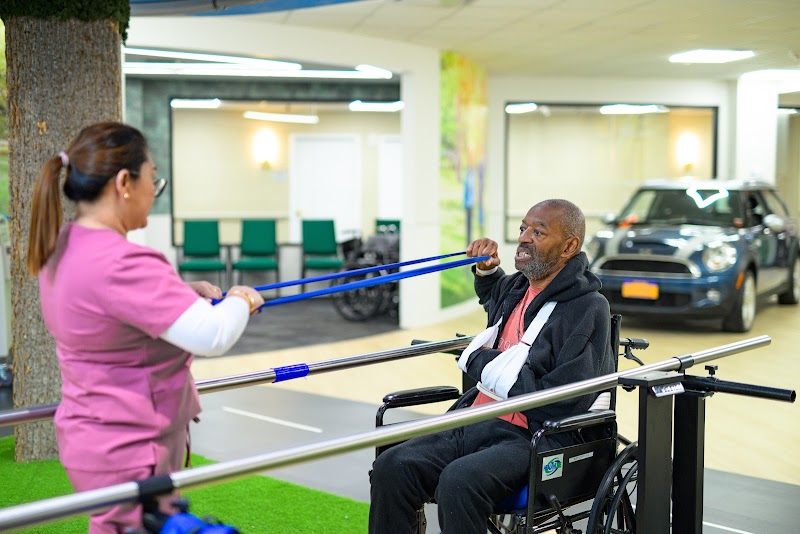
How Does Wayne Center For Nursing & Rehabilitation Compare to Other New York Nursing Homes?

Compared to the 100 nursing homes in New York, WAYNE CENTER FOR NURSING & REHABILITATION's overall rating (3 stars) is below the state average of 3.1, staff turnover (35%) is significantly lower than the state average of 46%, and health inspection rating (2 stars) is below the national benchmark.

What Should Families Ask When Visiting Wayne Center For Nursing & Rehabilitation?

Based on this facility's data, families visiting should ask: "Can I visit during a mealtime to observe dining assistance and food quality?" "How do you handle medical emergencies, and what is your hospital transfer rate?" "Can I speak with family members of current residents about their experience?"

Is Wayne Center For Nursing & Rehabilitation Safe?

Based on CMS inspection data, WAYNE CENTER FOR NURSING & REHABILITATION has a clean safety record: no substantiated abuse findings (meaning no confirmed cases of resident harm), no Immediate Jeopardy citations (the most serious violation level indicating risk of serious injury or death), and is not on the Special Focus Facility watch list (a federal program monitoring the lowest-performing 1% of nursing homes). The facility has a 3-star overall rating and ranks #100 of 100 nursing homes in New York. While no facility is perfect, families should still ask about staff-to-resident ratios and recent inspection results during their visit.

Do Nurses at Wayne Center For Nursing & Rehabilitation Stick Around?

WAYNE CENTER FOR NURSING & REHABILITATION has a staff turnover rate of 35%, which is about average for New York nursing homes (state average: 46%). Moderate turnover is common in nursing homes, but families should still ask about staff tenure and how the facility maintains care continuity when employees leave.

Was Wayne Center For Nursing & Rehabilitation Ever Fined?

WAYNE CENTER FOR NURSING & REHABILITATION has no federal fines on record. CMS issues fines when nursing homes fail to meet care standards or don't correct problems found during inspections. The absence of fines suggests the facility has either maintained compliance or corrected any issues before penalties were assessed. This is a positive indicator, though families should still review recent inspection reports for the full picture.

Is Wayne Center For Nursing & Rehabilitation on Any Federal Watch List?

WAYNE CENTER FOR NURSING & REHABILITATION is not on any federal watch list. The most significant is the Special Focus Facility (SFF) program, which identifies the bottom 1% of nursing homes nationally based on persistent, serious quality problems. Not being on this list means the facility has avoided the pattern of deficiencies that triggers enhanced federal oversight. This is a positive indicator, though families should still review the facility's inspection history directly.