WILLIAMSBRIDGE CENTER FOR REHABILITATION AND NRSG


1540 TOMLINSON AVENUE, BRONX, NY 10461 (718) 892-6600
For profit - Corporation 77 Beds CENTERS HEALTH CARE Data: November 2025
Trust Grade
75/100
#252 of 594 in NY
Last Inspection: January 2025

Within standard 12-15 month inspection cycle. Federal law requires annual inspections.

Overview

Williamsbridge Center for Rehabilitation and Nursing has a Trust Grade of B, which indicates it is a good choice, solidly positioned above average. It ranks #252 out of 594 facilities in New York, placing it in the top half, and #22 out of 43 in Bronx County, meaning only one local option is better. The facility is improving, as the number of reported issues decreased from 11 in 2023 to just 4 in 2025. While the staffing rating is below average at 2 out of 5 stars, with a turnover rate of 41%, the absence of fines is a positive sign. However, there are concerns regarding RN coverage, as they have less RN presence than 86% of facilities in New York, which may impact care quality. Specific incidents noted during inspections included failures in infection control practices during medication administration, lack of assistance with hand hygiene before meals, and unsanitary conditions in the kitchen and resident bathrooms, indicating areas for improvement. Overall, while there are strengths in their trust grade and fine history, families should be aware of the staffing issues and cleanliness concerns.

Trust Score
B
75/100
In New York
#252/594
Top 42%
Safety Record
Low Risk
No red flags
Inspections
Getting Better
11 → 4 violations
Staff Stability
○ Average
41% turnover. Near New York's 48% average. Typical for the industry.
Penalties
✓ Good
No fines on record. Clean compliance history, better than most New York facilities.
Skilled Nurses
⚠ Watch
Each resident gets only 23 minutes of Registered Nurse (RN) attention daily — below average for New York. Fewer RN minutes means fewer trained eyes watching for problems.
Violations
⚠ Watch
17 deficiencies on record. Higher than average. Multiple issues found across inspections.
★★★★☆
4.0
Overall Rating
★★☆☆☆
2.0
Staff Levels
★★★★★
5.0
Care Quality
★★★☆☆
3.0
Inspection Score
Stable
2023: 11 issues
2025: 4 issues

The Good

  • 5-Star Quality Measures · Strong clinical quality outcomes
  • Full Sprinkler Coverage · Fire safety systems throughout facility
  • No fines on record
  • Staff turnover below average (41%)

    7 points below New York average of 48%

Facility shows strength in quality measures, fire safety.

The Bad

Staff Turnover: 41%

Near New York avg (46%)

Typical for the industry

Chain: CENTERS HEALTH CARE

Part of a multi-facility chain

Ask about local staffing decisions and management

The Ugly 17 deficiencies on record

Jan 2025 4 deficiencies
CONCERN (D)

Potential for Harm - no one hurt, but risky conditions existed

Deficiency F0657 (Tag F0657)

Could have caused harm · This affected 1 resident

**NOTE- TERMS IN BRACKETS HAVE BEEN EDITED TO PROTECT CONFIDENTIALITY** Based on record review and interviews conducted during the Recertification Survey from 01/02/2025 to 01/08/2025, the facility di...

Read full inspector narrative →
**NOTE- TERMS IN BRACKETS HAVE BEEN EDITED TO PROTECT CONFIDENTIALITY** Based on record review and interviews conducted during the Recertification Survey from 01/02/2025 to 01/08/2025, the facility did not ensure that residents' comprehensive care plans were reviewed and revised by the interdisciplinary team after each assessment and as needed. This was evident in 2 of 22 sampled residents (Residents #35, #18). Specifically, 1.) Resident #35's care plan related to Smoking was not reviewed and revised quarterly after each assessment, and 2.) Resident #18's care plan was not reviewed and revised after a fall occurrence. The findings are: The facility policy and procedure titled Care Plans Comprehensive with a last revised date of 08/02/2024 documented that a comprehensive person-centered care plan that includes measurable objectives to meet the resident's physical, psychosocial, and functional needs is developed and implemented for each resident. The interdisciplinary team reviews and updates the care plan when there has been a significant change in the resident's condition, the desired outcome is not met, and at least quarterly, with a scheduled quarterly minimum data set assessment. 1). Resident #35 was admitted with diagnoses that include Diabetes Mellitus, Seizure Disorder, and Depression. The quarterly Minimum Data Set assessment dated [DATE] documented Resident #35's cognition was intact. The annual Minimum Data Set assessment dated [DATE] documented that Resident #35 uses tobacco. A care plan related to Smoking was initiated for Resident #35 on 10/17/2019. The care plan documented that Resident #35 is a smoker and uses a cigarette holder during smoke sessions. The interventions include educating the resident on the benefits of the smoking cessation program, the rules/ policy, designated smoking areas, and that they will be regularly assessed for safety. The care plan was last revised on 03/08/2023. There was no documented evidence that the comprehensive care plan related to Smoking was reviewed and revised after each quarterly review assessments dated 01/13/2024, 04/14/2024, 07/15/2024, and 10/15/2024. On 01/08/2025 at 11:58 AM, Registered Nurse #1, who was the unit manager, was interviewed. Registered Nurse #1 stated that Resident #35 is a smoker and smokes in the smoking room. Registered Nurse #1 stated that the overnight nursing supervisor is responsible for updating the care plans. They stated that it is not documented that the care plan has been reviewed and revised. On 01/08/2025 at 12:16 pm, the Recreation Director was interviewed and stated that the nurse is responsible for initiating and updating the smoking care plan. On 01/08/2025 at 12:24 PM, the Director of Nursing was interviewed and stated that care plans are updated quarterly and as needed. The Unit Managers, Nursing Supervisors, and the Minimum Data Set Coordinator are responsible for updating the care plan. 2). Resident #18 was admitted to the facility with diagnoses that include Coronary Artery Disease, Arthritis, and Asthma/Chronic Obstructive Pulmonary Disease. On 01/02/2025 at 11:23 AM, Resident #18 was interviewed and stated they fell before admission and also fell in the facility one time shortly after admission. The admission Minimum Data Set assessment dated [DATE] documented that Resident #18 had intact cognition and had impairment on one side of upper extremity. The assessment documented the resident required substantial/partial/moderate assistance and was dependent on staff for most activities of daily living. The care plan for fall dated 11/16/2024 documented that Resident #18 was at risk for falls/ had an actual fall related to deconditioning, gait/balance problems. A Registered Nurse Narrative Assessment note dated 11/18/2024 at 5:34 AM documented Resident #18 was observed sitting in wheelchair at nursing station and wheeled to the room by a Certified Nursing Assistant, where resident attempted to rise from wheelchair without applying the brakes. The note documented that at approximately 11:20 PM, Resident #18 was observed sitting on the floor on the left side of the bed. Resident had no injury noted on assessment, no complaint of pain or discomfort. There was no documented evidence that Resident #18's comprehensive care plan was reviewed and revised after the fall occurrence. On 01/07/2025 at 11:30 AM, Licensed Practical Nurse #1 was interviewed and stated that Resident #18's fall that occurred in November should have been documented and updated in the resident's care plan for fall. On 01/08/2025 at 11:30 AM, the Director of Nursing was interviewed and stated that a resident's comprehensive care plan is initiated and updated by the Unit Manager. The Director of Nursing also stated that the Minimum Data Set Coordinator also ensure that residents' care plans are in place, and they are expected to review the resident's care plan quarterly and ensure that appropriate care plans are implemented for the residents. On 01/08/2025 at 12:20 PM, Minimum Data Set Coordinator was interviewed and stated that the Registered Nurse Managers are the ones that initiate and update the care plans. They stated that they make sure they do a quick review to check if there are missing care plans or if there is any care plan that needs to be updated and send the findings to the Director of Nursing or the Administrator. 10 NYCRR415.11(c)(2)(i-iii)
CONCERN (E)

Potential for Harm - no one hurt, but risky conditions existed

Food Safety (Tag F0812)

Could have caused harm · This affected multiple residents

Based on observation, record review, and interviews conducted during the Recertification Survey from 01/02/2025 to 01/08/2025, the facility did not ensure that food was stored, prepared, distributed a...

Read full inspector narrative →
Based on observation, record review, and interviews conducted during the Recertification Survey from 01/02/2025 to 01/08/2025, the facility did not ensure that food was stored, prepared, distributed and served in accordance with professional standards for food service safety. This was evident during the kitchen observation. Specifically, 1.) The walk-in refrigerator contained undated items. 2.) A unit refrigerator contained spilled liquids and undated fruit cups and open drinks items. The findings are: The facility's policy titled Food Storage with a revision date of 05/10/2024 documented that food will be stored in an area that is clean, dry, and free from contaminants, stored at appropriate temperatures, and by methods designed to prevent contamination or cross contamination. All refrigerator units will be kept clean and in good working condition at all times. Perishable foods such as meat, poultry, fish, dairy products, fruits, and vegetables must be stored in the refrigerator immediately after receipt to assure nutritive value and quality. All food should be covered, labeled, and dated. All foods will be checked to assure that foods will be consumed by their safe use by date or discarded. Leftover food items will be stored in covered containers or wrapped carefully and securely. Each item will be clearly labeled and dated before being refrigerated. The undated facility's policy and procedure titled Food Storage Policy Quick Reference that was posted on the walk-in refrigerator documented: Sliced Deli Meat - date the day sliced - use by 2 days; Eggs - date the day received - use by 2 weeks of delivery; and Prepared Foods - date the day prepared - use by 2 days. The facility's policy and procedure titled Food-From Outside with a reviewed date of 06/01/2024 documented that all refrigerated foods will be discarded within 48 hours. Nursing staff will monitor the pantry refrigeration units for food and beverage disposal. The nursing staff will discard perishable foods on or before the discard date. 1.) On 01/02/2025 at 9:17 AM, an initial kitchen observation was conducted with the Dietary Director and the following were observed: 5 trays (24 per tray) of unpackaged eggs that were undated, 4 undated bologna and cheese sandwiches, 1 open 5-pound container of peanut butter undated, the expiration date was unreadable. On 01/02/2025 at 9:35 AM, the Dietary Director was interviewed and stated that there should be dates on all refrigerated items; there should be a preparation date, open date, or the date the item was refrigerated. All these items should have been dated prior to storing the food in the refrigerator so they can be discarded within 48-72 hours. The Dietary Director further stated that it is their responsibility to ensure that all refrigerated items are labeled with dates. 2.) On 01/02/2025 at 10:39 AM, the South Unit refrigerator was observed with spilled tan colored liquid on the bottom, two 4-ounce cups of facility prepared peaches that were undated and one 64-ounce cranberry juice that was open and undated. Registered Nurse #1 was interviewed and stated that all food should be clearly dated with the resident's name and date before it is placed in the refrigerator, all liquids should be dated with the opened date, and the refrigerator should have no standing liquids in the bottom as was observed. They stated that housekeeping cleans the unit refrigerator daily, but all the nurses on the floor should ensure contents of the refrigerator are correctly labeled and dated and discarded within 72 hours. On 01/06/2025 at 10:20 AM, the Associate Administrator was interviewed and stated that all food should be dated, sandwiches need a preparation date, and fruit cups and eggs should be dated if removed from the original containers with expiration dates on them. They stated that the peanut butter should be labeled with the date the jar was opened and then discarded on the manufacturer's expiration date. The Associate Administrator further stated that all dated food should be discarded in 48 hours. 01/07/2025 at 08:10 AM, the Director of Nursing Services was interviewed and stated that the nursing staff should discard any food or liquid found in the unit refrigerators that is not dated. They stated nursing supervisors are to ensure that this is performed daily during rounds and housekeeping should be notified if the refrigerator needs to be cleaned. 10 NYCRR 415.14(h)
CONCERN (F)

Potential for Harm - no one hurt, but risky conditions existed

Infection Control (Tag F0880)

Could have caused harm · This affected most or all residents

**NOTE- TERMS IN BRACKETS HAVE BEEN EDITED TO PROTECT CONFIDENTIALITY** Based on observation, record review, and interviews conducted during the Recertification Survey from 01/02/2025 to 01/08/2025, t...

Read full inspector narrative →
**NOTE- TERMS IN BRACKETS HAVE BEEN EDITED TO PROTECT CONFIDENTIALITY** Based on observation, record review, and interviews conducted during the Recertification Survey from 01/02/2025 to 01/08/2025, the facility did not ensure infection control practices and procedures were maintained to provide a safe and sanitary environment to help prevent the development and transmission of communicable diseases and infections. Specifically, 1.) Infection prevention and control practices were not maintained during medication administration. This was evident in 1 of 3 nurses observed for medication administration. 2.) Staff failed to assist residents with hand washing or hand hygiene before meals. This was evident in 2 of 2 units observed during meals. 3.) A resident's urinary drainage bag was observed touching the floor. This was evident in 1 (Resident #4) of 3 residents reviewed for Urinary Catheter out of 22 sampled residents. The findings are: 1.) The facility's policy titled Infection Prevention and Control Program with a last revision date of 05/30/2024 documented that the facility adheres to an Infection Prevention and Control Program designed to provide a safe, sanitary, and comfortable environment and to help prevent the development and transmission of communicable diseases and infections. On 01/02/2025 at 12:54 PM, during medication administration observation, Licensed Practical Nurse #1 was observed administering Resident #3's finger stick blood sugar. Licensed Practical Nurse #1 placed the glucometer and insulin pen on Resident #3's blanket prior to checking the resident's blood sugar. The nurse then took the glucometer from the blanket, and without sanitizing, used it to check the resident's blood sugar. The nurse then took the insulin pen from the resident's blanket and without sanitizing, drew the units to inject to the resident. Licensed Practical Nurse #1 was interviewed and stated they should have used the resident's overbed table to place the glucometer and insulin pen. Licensed Practical Nurse #1 stated they usually use the table and a barrier to place the equipment, but the resident was using the table to eat, that was why they placed it on the resident's blanket. On 01/08/2025 at 11:39 AM, the Director of Nursing was interviewed and stated that the Nurse should know better that the glucometer and resident's insulin should not be placed on the resident's bed. 2.) The facility policy titled Hand Hygiene with a revision date of 05/30/2024 documented the facility adheres to recommendations by the Center for Disease Control for the practice of hand hygiene in accordance with standard, enhanced barrier, and transmission-based precautions. The facility provides access to necessary supplies for hand hygiene for healthcare personnel, residents, and visitors. Hand hygiene facilities including sinks with soap, running water, disposable paper towels and alcohol-based hand rub are accessible in resident care areas and other areas of the facility as necessary. Residents are assisted with and or reminded to perform hand hygiene before and after meals and as needed or requested. On 01/02/2025 at 12:13 PM, during dining observation of the North and South units, Certified Nursing Assistants #2, #3, #4, and #5 were observed delivering and setting up meal trays in residents' rooms (Residents #41, #37, #72, #17, #54, and #24). The Certified Nursing Assistants did not assist the residents with hand hygiene, nor did they provide reminder to the residents to perform hand hygiene or wash their hands prior to eating lunch. Certified Nursing Assistant #2 was interviewed and stated they were supposed to give out sanitizing wipes to the residents with the meal trays, but they forgot to put wipes in the cart. Certified Nursing Assistant #3 and #4 were interviewed and both stated they were supposed to wash the residents' hands or use wipes if residents are unable to wash their own hands, but they forgot to provide the wipes. Certified Nursing Assistant #5 was interviewed and stated they thought someone else was doing the residents' hand hygiene prior to them delivering the meal trays. On 01/07/2025 at 08:19 AM, The Director of Nursing Services was interviewed and stated that the Certified Nursing Assistants are to provide sanitizing hand wipes to residents or assist the residents in sanitizing their hands prior to eating. 3.) The facility policy titled Urinary Catheter Guidelines with a last revision date of 09/11/2023 stated not to position urinary catheter drainage bag on the floor. On 01/06/2025 at 09:55 AM and at 10:18 AM, Resident #4 was observed lying in bed with their urinary catheter drainage bag and tubing touching the floor. Resident #4 was admitted to the facility with diagnoses of Unstageable Pressure Ulcer of Sacral Region, Vascular Dementia, and Muscle Weakness. The Minimum Data Set assessment dated [DATE] documented that Resident #4 was cognitively impaired and was dependent in all activities of daily living, had a urinary catheter, and always incontinent of bowel. The physician orders dated 11/14/2024 documented indwelling catheter with 30 milliliter balloon, French 16, to change every 30 days to promote healing of pressure ulcer. The physician orders also included catheter care every shift. On 01/06/2025 at 10:19 AM, Licensed Practical Nurse #3 was interviewed and stated that the catheter tubing and drainage bag touching the floor is not a good practice. Licensed Practical Nurse #3 stated that the urine can backflow and go back up into the bladder which is an issue. They stated there is also an issue with sterility as catheter tubing and drainage bags should not be touching the floor putting the resident at risk for infections. On 01/06/2025 at 10:24 AM, Registered Nurse #1, who was the unit manager, was interviewed and stated that catheter tubing and bag touching the floor is an infection control issue. Registered Nurse #1 stated that all staff are aware that the catheter should be off the bed hanging below the level of the bladder without touching the floor. Registered Nurse #1 stated this is a very serious infection control issue particularly if a resident has a urinary tract infection as the urine can travel back up into their system. The bag touching the floor can introduce other types of bacteria into the catheter. On 01/07/2025 at 11:52 AM, the Director of Nursing was interviewed and stated that the catheter bag and tubing touching the floor was an unintentional act, and that it was a result of the staff putting the bed in the lowest position. The Director of Nursing stated that it was a breach in infection control. 10 NYCRR 415.19 (a) (1-3)
MINOR (C)

Minor Issue - procedural, no safety impact

Staffing Information (Tag F0732)

Minor procedural issue · This affected most or all residents

Based on observations, record review, and interviews conducted during the Recertification Survey from 01/02/2025 to 01/08/2025 the facility did not ensure the daily nurse staffing information included...

Read full inspector narrative →
Based on observations, record review, and interviews conducted during the Recertification Survey from 01/02/2025 to 01/08/2025 the facility did not ensure the daily nurse staffing information included all the required information. Specifically, the daily posting of nurse staffing information did not include the actual number of hours worked by the licensed and unlicensed nursing staff directly responsible for resident care. This was evident during the review of the Staffing Task. The findings are: The facility policy and procedure titled Staffing- Posting of Hours, Payroll Based Journal Submission with a last revised date of 10/2022 documented staffing posting should include the facility name, current date, resident census, facility specific shift scheduled for the 24 hour period and the number and actual hours worked by the following categories of nursing staff employed or contracted by the facility directly responsible for resident care per shift: Registered Nurses, Licensed Practical Nurses and Certified Nurse's Aides. During multiple observations from 01/02/2025 through 01/07/2025, nurse staffing information was posted in the lobby near to the entrance of the building. The information that was documented on the form included the facility name, current date, number of nursing staff working and resident census. There was no documentation of the actual hours worked by the nursing staff. On 01/07/2025 at 11:42 AM, the Staffing Coordinator #1 was interviewed and stated they are responsible for posting the staffing schedules but was unaware that actual hours worked by nursing staff daily had to be listed. On 01/07/2025 at 11:52 AM, the Director of Nursing #1 was interviewed and stated that the total number of actual hours worked by nursing staff should be included in the nursing staffing information. 10 NYCRR 415.13
Jun 2023 11 deficiencies
CONCERN (D)

Potential for Harm - no one hurt, but risky conditions existed

Report Alleged Abuse (Tag F0609)

Could have caused harm · This affected 1 resident

**NOTE- TERMS IN BRACKETS HAVE BEEN EDITED TO PROTECT CONFIDENTIALITY** Based on interviews and record review conducted during the Recertification Survey from 6/1/23 to 6/21/23, the facility did not e...

Read full inspector narrative →
**NOTE- TERMS IN BRACKETS HAVE BEEN EDITED TO PROTECT CONFIDENTIALITY** Based on interviews and record review conducted during the Recertification Survey from 6/1/23 to 6/21/23, the facility did not ensure all alleged violations involving injuries of unknown source were reported immediately, but not later than 2 hours after the allegations were made to the New York State Department of Health (NYSDOH). This was evident for 1 (Resident # 6) out of 5 residents reviewed for Accidents of 21 total sampled residents. Specifically, the facility did not report an unwitnessed incident resulting in bilateral eye ecchymosis and frontal hematoma to Resident #6. The findings are: The facility policy titled Abuse last revised 01/2023 documented the Administrator/Director of Nursing (DNS) is responsible for investigation and reporting all allegations of suspected abuse, neglect, mistreatment, distortion, injury of unknown origin, misappropriation shall be promptly and thoroughly investigated by facility management. The Administrator shall report to the local police department, the ombudsman, and the state licensing certification agency within 2 hours of the results of the completed investigation, as indicated to the stated survey and certification agency within five (5) days of the completion of the investigation. Resident #6 had diagnoses of dementia and Parkinson's disease. The Minimum Data Set 3.0 (MDS) dated [DATE] documented that Resident #6 had severely impaired cognition and required extensive assistance with activities of daily living. On 06/13/2023 at 09: 45 AM, 06/14/23 at 11:18 AM, and 06/16/23 at 03:01 PM, Resident #6 was observed in the dining area in no distress and appropriately dressed. The Comprehensive Care Plan (CCP) related to falls initiated 2/5/2018 and last updated 6/7/2023 documented Resident # 6 had an actual fall related to poor balance, history of Parkinson's, cataract, and hearing loss. Resident #6 had a fall with minor injury on 4/21/2023. The Facility Incident Report dated 4/21/2023 documented at 6:30 PM, Resident #6 was observed with ecchymosis area to forehead and around both eyes. Nursing progress note dated 04/21/2023 documented Resident #6 was alert, verbally responsive, and noted with bruises on her forehead and around both eyes. The DNS was informed and an order to transfer Resident #6 to the hospital was obtained. There was no documented evidence the facility reported Resident #2 ecchymosis area to forehead and around both eyes of unknown origin from an unwitnessed incident to the NYSDOH. On 06/21/23 at 01:23 PM, an interview was conducted with Registered Nurse Manger (RN) #3, the former facility DNS, who stated they were called by staff that Resident #6 had bruising to their forehead. Resident #6 was cognitively impaired and was not able to state what occurred. Resident #6 was visually impaired and may have fallen because the resident was known to attempt to get up without staff assistance. The facility investigation concluded the injury was most likely due to an unwitnessed fall. RN #3 stated they did not report this incident to the NYSDOH because RN #3 attributed the injury to an unwitnessed fall and ruled out abuse. On 06/21/23 at 04:04 PM, the Administrator was interviewed and stated if abuse is suspected or there is an injury of unknown origin, the incident is reported to the NYSDOH within 2 hours. The Administrator stated the facility does their investigation and then reports to the NYSDOH. In the case of Resident #6, the investigation concluded it was an unwitnessed fall because the resident was visually impaired and had a history of falling. 415.4(b)
CONCERN (D)

Potential for Harm - no one hurt, but risky conditions existed

Comprehensive Care Plan (Tag F0656)

Could have caused harm · This affected 1 resident

**NOTE- TERMS IN BRACKETS HAVE BEEN EDITED TO PROTECT CONFIDENTIALITY** Based on record review and interviews conducted during the recertification survey from 06/13/23 to 06/21/23, the facility did no...

Read full inspector narrative →
**NOTE- TERMS IN BRACKETS HAVE BEEN EDITED TO PROTECT CONFIDENTIALITY** Based on record review and interviews conducted during the recertification survey from 06/13/23 to 06/21/23, the facility did not ensure a person-centered Comprehensive Care Plans (CCP) was developed and implemented to meet the resident's goal, and address the resident's medical, physical, mental, and psychosocial needs. This was evident for 1 (Resident #24) of 21 total sampled residents. Specifically, a CCP related to Resident #24's behavior of emptying their urine and feces into the garbage bin in their room. The findings are: The facility policy titled Care Plans Comprehensive last revised 1/2019, documented a Comprehensive, person-centered care plan that includes measurable objectives and timetables to meet the resident's physical, psychosocial and functional needs is developed and implemented for each resident. The facility policy titled Behavior Management dated last revised 1/2023, documented behavioral symptoms and approaches shall be planned in the resident-specific plan of care and communicated to the care staff and other departments, as appropriate. Resident #24 had diagnoses of peripheral vascular disease and diabetes. The Minimum Data Set 3.0 (MDS) dated [DATE] documented Resident #24 was moderately cognitively impaired, required limited assistance of one person for toilet use, and was always continent of bowel and bladder. On 06/21/23 at 09:35 AM, Resident #24 was interviewed and stated if the staff do not provide the resident with the urinal, Resident #24 will urinate in the garbage bin. Nursing Note dated 1/19/2023 documented Resident #24 pours urine from their urinal into their garbage pail instead of the toilet. Interdisciplinary Team (IDT) Meeting dated 06/16/2023 documented Resident #24 has been urinating in their urinal and then pouring it into their trash can despite being discouraged and redirected. There was no documented evidence that a care plan with measurable objectives, time frames and appropriate interventions were developed to address the care of the resident with a with behavior so pouring urine/feces in garbage bin at bedside. On 06/15/23 at 11:03 AM, an interview conducted with the Housekeeper #2 who stated Resident #24's room is cleaned 3 times a day. Resident #24 puts feces and urine in their garbage bin so the room needs to be cleaned more often. On 06/16/23 at 10:09 AM, an interview was conducted with Certified Nursing Assistant (CNA) #1 who stated Resident #24 is noncompliant and does not want anyone to clean them or give care. Sometimes, the room has flies because the resident spills urine on their floor and in their garbage can. On 06/21/23 at 10:19 AM, an interview was conducted Registered Nurse (RN) #3/Nurse Manger who stated RN #3 is aware of Resident #24's unsanitary behavior of putting urine and feces in the trash can at their bedside. This is not a recent behavior and Resident #24 has a known history of this behavior. All supervisors and/or managers are responsible for initiating and updating CCPs. RN #3 was unable to give a reason Resident #24 did not have a CCP documenting their behavior. On 06/21/23 at 03:26 PM, an interview was conducted with Director of Nursing Services (DNS) who stated the entire IDT is responsible for care planning. The Nursing Department is responsible for initiating CCPs related to behavior. The resident's issue is brought to the morning meeting and followed up by the IDT. The DNS was unable to state the reason Resident #24 did not have a behaviors CCP. 415.11(c)(1)
CONCERN (D)

Potential for Harm - no one hurt, but risky conditions existed

Quality of Care (Tag F0684)

Could have caused harm · This affected 1 resident

**NOTE- TERMS IN BRACKETS HAVE BEEN EDITED TO PROTECT CONFIDENTIALITY** Based on observation, record review, and interviews conducted during the recertification from 6/13/23 to 6/21/23, the facility d...

Read full inspector narrative →
**NOTE- TERMS IN BRACKETS HAVE BEEN EDITED TO PROTECT CONFIDENTIALITY** Based on observation, record review, and interviews conducted during the recertification from 6/13/23 to 6/21/23, the facility did not ensure a resident received treatment and care in accordance with professional standards of practice. This was evident for 1 (Resident #27) of 2 residents reviewed for Edema out of 21 total sampled residents. Specifically, Resident #27 was observed on multiple occasions without Thrombo-Embolic Deterrent (TED)/compression stockings in place according to Medical Doctor Order (MDO). The findings are: Resident #27 had diagnoses of localized edema, diabetic peripheral angiopathy, and venous insufficiency. The Minimum Data Set 3.0 (MDS) assessment dated [DATE] documented Resident #27 had moderately impaired cognition and required extensive assistance from 1 person to dress. On 6/14/2023 at 12:45 PM, 6/15/2023 at 2:43 PM, 6/16/2023 AT 9:55 AM, Resident #27 was observed sitting in their room, alert, watching TV, and without bilateral TED stockings on their legs. The MDO documented Resident #27 was ordered to wear compression stockings for pedal edema daily and to have them removed at bedtime. There was no documented evidence Resident #27 refused to wear TED stockings. On 6/21/23 at 1:37 PM, the Certified Nursing Assistant (CNA) #2 was interviewed and stated that most of the time, Resident #27 refused to put the TED stockings on. There is no documentation that Resident #27 has been refusing to wear the TED stocking. On 6/21/2023 at 1:34 PM, Registered Nurse #2 was interviewed and stated staff are supposed to follow the TED stocking MDO which says the stockings are to be removed at bedtime. On 6/21/23 at 3:21 PM, the Director of Nursing was interviewed and stated the TED stocking is part of the MDOs for Resident #27 and needs to be applied to the resident. 415.12
CONCERN (D) 📢 Someone Reported This

A family member, employee, or ombudsman was alarmed enough to file a formal complaint

Potential for Harm - no one hurt, but risky conditions existed

Pressure Ulcer Prevention (Tag F0686)

Could have caused harm · This affected 1 resident

**NOTE- TERMS IN BRACKETS HAVE BEEN EDITED TO PROTECT CONFIDENTIALITY** Based on record reviews and interviews during the Recertification and Abbreviated (#NY00317505) survey, the facility did not ens...

Read full inspector narrative →
**NOTE- TERMS IN BRACKETS HAVE BEEN EDITED TO PROTECT CONFIDENTIALITY** Based on record reviews and interviews during the Recertification and Abbreviated (#NY00317505) survey, the facility did not ensure a resident with pressure ulcers received necessary treatment and services, consistent with professional standards of practice, to promote healing, prevent infection and prevent new ulcers from developing. This was evident for Resident #18 reviewed for Notification of Change of a sample of 38 residents. Specifically, the resident's representative was not notified after Resident #18 developed right hip and left hip Pressure Ulcers (PU). The findings are: Resident #18 had diagnoses of paraplegia and multiple sclerosis. The Minimum Data Set 3.0 (MDS) assessment dated [DATE] documented Resident #18 had mild cognitive impairments and was totally dependent on staff to perform Activities of Daily Living (ADL). On 06/14/23 at 11:31 AM, the complainant was interviewed and stated Resident #18 was requesting to be changed and reported not being cleaned for 2 days on 5/28/23. Resident #18 developed two new stage 2 PUs on their buttocks in April 2023. Resident #18 would sit in the wheelchair all day and should be repositioned every 2 hours. The complainant stated Resident #18's PUs got worse because of lack Turning and Positioning (TP). The hospital Patient Review Instrument (PRI) dated 3/29/23 documented Resident #18 had a right lateral ankle stage 3 PU and right posterior thigh stage 2 PU. The nursing admission Evaluation dated 03/31/2023 documented Resident #18 had a PU to the right outer ankle and the right posterior thigh. The evaluation did not document the stage of the Resident #18's PUs. The nursing Wound Documentation dated 4/7/23 documented Resident #18 had a stage 2 right ankle PU, stage 4 right posterior thigh PU, and stage 4 right buttock PU. The Medical Doctor Orders (MDO) dated 4/17/23 documented Resident #18 was to receive TP. The nursing Wound Documentation dated 4/18/23 documented Resident #18 had a stage 4 right ankle PU, stage 3 right outer ankle PU, and stage 4 right buttock PU. Repositioning bony prominences, padded pressure relieving wheelchair seat cushion, and specialty mattress were documented as interventions in place. Wound assessment dated [DATE] documented the resident developed two additional stage 2 pressure ulcers. One on right hip measuring 3.5 cm in length and 3 cm in width another stage 2 pressure ulcer on left hip measuring 3 cm in length and 1.5 cm in width. The nursing Would Documentation dated 4/26/23 documented Resident #18 had a stage 2 right hip PU, stage 2 left hip PU, stage 2 right buttock PU, and stage 3 right ankle PU. Documented interventions included repositioning bony prominences, padded pressure relieving wheelchair, specialty mattress, labs as ordered, protein supplements, and resident education. Medical Doctor (MD) was notified. The Weekly Skin Monitoring note dated 4/28/23 documented Resident #18 had a previously noted skin alteration with no comments documented. The Weekly Skin Monitoring note dated 5/4/23 documented Resident #18 had a skin alteration to the right buttock, right hip, right outer ankle, and left hip. Treatment is in place. The Certified nursing Assistant (CNA) Documentation Survey Report (DSR) for April 2023 documented starting 4/17/23, nursing staff assisted Resident #18 with TP was every 2 hours as tolerated and as needed. There is no documented evidence Resident #18 received treatment and services to prevent new stage 2 PUs from forming on their right and left hips. During an interview with the resident on 06/14/23 at 12:16 PM, the resident stated that they don't change his brief often. The resident stated that he gets changed once in the morning and once in the evening. During an interview with CNA # 2 on 06/20/23 at 10:30 AM, CNA #2 stated that she provides total care for the resident. The resident is assisted with ADL Care as needed. The resident he is repositioned every two hours. Turning and positioned is supposed to be documented in the CNA Accountability. On 06/20/23 at 10:37 AM, Registered Nurse (RN) #4 was interviewed and stated Resident #18 was admitted with three PUs - one on right ankle, another one right posterior thigh and the third one on the right buttocks. RN#4 stated Resident #18 developed two new PUs on the left and right hip on 4/20/23. Resident #18 is supposed to be TP every two hours. CNAs are supposed to document when the resident is TP. The resident has a history of refusing care and refusing to be put back in bed. RN Managers are supposed to ensure CNAs are documenting care provided in the medical record. On 06/21/23 at 09:44 AM, RN #3 was interviewed and stated when a resident is admitted to the facility with skin impairments TP protocol every two hours is initiated. The RNs anticipate what interventions are needed for residents at risk for PU development. RN #3 stated the Rns don't wait for the wound care doctor to write an order for pressure relieving measures before we start implementing pressure relieving interventions. Resident #18 should have been TP every two hours and as tolerated. There should be a impaired skin integrity CCP with appropriate interventions to prevent the PUs from getting worse and to prevent further skin breakdown. The interventions should include TP, offload heals, nutrition supplements, and an air mattress. On 06/21/23 at 01:21 PM, the Director of Nursing (DNS) was interviewed and stated that the RN spoke to the complainant and the complainant told the RN Resident #18 needed to be repositioned. Resident #18 refused to be repositioned at times and the resident's advocate requested that the resident remains in the wheelchair until late evening. The resident uses an air mattress and, once the air mattress is in place, TP every two hours is not needed. During the day, Resident #18 wants to sit in their wheelchair. After the two new PUs developed, Resident #18's time in the wheelchair was reduced to prevent further breakdown. 415.12 (c) (1-2)
CONCERN (D) 📢 Someone Reported This

A family member, employee, or ombudsman was alarmed enough to file a formal complaint

Potential for Harm - no one hurt, but risky conditions existed

Accident Prevention (Tag F0689)

Could have caused harm · This affected 1 resident

**NOTE- TERMS IN BRACKETS HAVE BEEN EDITED TO PROTECT CONFIDENTIALITY** Based on observation, interviews, and record review conducted during the recertification and complaint (NY00291600) from 6/13/23...

Read full inspector narrative →
**NOTE- TERMS IN BRACKETS HAVE BEEN EDITED TO PROTECT CONFIDENTIALITY** Based on observation, interviews, and record review conducted during the recertification and complaint (NY00291600) from 6/13/23 to 6/21/23, the facility did not ensure each resident received adequate supervision to prevent accidents. This was evident for 1 (Resident #40) of 21 total sampled residents. Specifically, Resident #40 was found in possession of blister packs and narcotics medication. The findings are: Resident #40 has diagnoses of history of drug abuse, schizophrenia, and bipolar disorder. The Minimum Data Set 3.0 (MDS) dated [DATE] documented Resident #40 was cognitively intact. On 06/16/23 at 02:27 PM, Resident #40 was interviewed and stated they do not clearly remember the incident and they found the medication on the floor by the nursing station. Nursing Note dated 02/21/22 documented Resident #40 was observed by staff with partial blister pack of narcotic medication which contained 5 tablets of Klonopin 0.5 mg in their clothing. The Facility Investigation dated 2/21/22 documented on 02/21/22 at 10:00 AM, Resident #40 was discovered with torn blister pack of nine (9) Klonopin 0.5 mg tab, with 5 of the tablets intact and four (4) tablets missing. The 5 intact tablets were found in the pocket of Resident #40's pants in their room. Resident #40 had a history of drug-seeking behavior, stated they found the blister pack of Klonopin in the hallway, and stated they threw the remaining pills from the blister pack in the garbage. Extensive searches for remaining blister pack of missing narcotics were futile. A written statement from Registered Nurse (RN) #4 dated 2/21/22 documented that when Resident #40 went to the bathroom RN #4 found a pack of pills which contained 5 orange tablets that appeared to be narcotics. RN #4 immediately notified the Director of Nursing (DNS). A Medical Doctor (MD) note dated 02/21/22 documented Resident #40 was found with a blister pack of pills, was lethargic, had a room search, and became visibly upset when asked about the blister pack in their possession. Resident #40 has a history of drug abuse and denied using narcotics. Narcan was given 2/21/22. Social Work Note dated 3/2/22 documented Resident #40 stated they found the narcotics outside of their room by the nurse's station. Resident #40 stated they picked it up and put it in their pants. Resident #40 stated they should have given the medication to the nurse. On 06/21/23 at 10:43 AM, Licensed Piratical Nurse (LPN) #2 was interviewed and stated that the narcotics went missing on the day shift. Resident #40 was observed drowsy and it prompted a search of the resident's room for the missing narcotics. On 06/20/23 at 09:18 AM, RN #4 stated that Resident #40 appeared drowsy when they came on shift and RN #4 heard narcotics were missing. They asked permission to search the resident's room and found the medications in the resident's jeans. All nurses were inserviced re: the incident. RN #4 does not know how Resident #40 came into possession of the narcotics. All nurses were trained about ensuring narcotics are double locked and narcotics must be counted with two nurses at the beginning of the shift and at the end of the shift. On 06/20/23 at 12:12 PM, the Current DNS stated Resident #40 reported they found d the medication and staff were unable to determine how the resident found the medication. The nurse could have dropped it from the medication cart. There wa no video footage of the incident. The Drug Enforcement Agency (DEA) was informed. On 06/21/23 at 12:09 PM, the Former DNS stated narcotics medication went missing on the day shift and was found with Resident #40 on the evening shift. The facility was unable to determine what time the medication went missing on 2/21/22 and when Resident #40 came into possession of the narcotics. The day shift nurse found Klonopin in Resident #40's possession on the evening shift. We could not determine when the resident picked up the medication or when exactly the medication went missing. As a result of the investigation, the facility suspended the two nurses without pay and re-trained all nursing staff on narcotics management. 415.12(h)(1)
CONCERN (D) 📢 Someone Reported This

A family member, employee, or ombudsman was alarmed enough to file a formal complaint

Potential for Harm - no one hurt, but risky conditions existed

Deficiency F0761 (Tag F0761)

Could have caused harm · This affected 1 resident

**NOTE- TERMS IN BRACKETS HAVE BEEN EDITED TO PROTECT CONFIDENTIALITY** Based on record reviews and staff interviews conducted during a recertification and complaint (NY00291600) survey, the facility ...

Read full inspector narrative →
**NOTE- TERMS IN BRACKETS HAVE BEEN EDITED TO PROTECT CONFIDENTIALITY** Based on record reviews and staff interviews conducted during a recertification and complaint (NY00291600) survey, the facility did not ensure that all medications and biologicals were stored properly and permit only authorized personnel to have access to controlled medications. This was evident for 1 (Resident #40) of 21 total sampled residents. Specifically, the facility reported Resident #40 was found with five (5) Klonopin pills, a controlled substance, in their possession. The findings are: The facility policy titled Medication-Storage dated January 2023 documented all medications will be stored in a manner that maintains the integrity of the product and ensures the safety of the residents and is in accordance with the Department of Health. All medications will be stored in a locked cabinet, cart or medication room that is only accessible to authorized personnel. Resident #40 had diagnoses of history of drug abuse, schizophrenia, and bipolar disorder. The Minimum Data Set 3.0 (MDS) dated [DATE] documented Resident #40 was cognitively intact. On 06/16/23 at 02:27 PM, Resident #40 was interviewed and stated they do not clearly remember the incident and they found the medication on the floor by the nursing station. Nursing Note dated 02/21/22 documented Resident #40 was observed by staff with partial blister pack of narcotic medication which contained 5 tablets of Klonopin 0.5 mg in their clothing. The Facility Investigation dated 2/21/22 documented on 02/21/22 at 10:00 AM, Resident #40 was discovered with torn blister pack of nine (9) Klonopin 0.5 mg tab, with 5 of the tablets intact and four (4) tablets missing. The 5 intact tablets were found in the pocket of Resident #40's pants in their room. Resident #40 had a history of drug-seeking behavior, stated they found the blister pack of Klonopin in the hallway, and stated they threw the remaining pills from the blister pack in the garbage. Extensive searches for remaining blister pack of missing narcotics were futile. A written statement from Registered Nurse (RN) #4 dated 2/21/22 documented that when Resident #40 went to the bathroom RN #4 found a pack of pills which contained 5 orange tablets that appeared to be narcotics. RN #4 immediately notified the Director of Nursing (DNS). Social Work Note dated 3/2/22 documented Resident #40 stated they found the narcotics outside of their room by the nurse's station. Resident #40 stated they picked it up and put it in their pants. Resident #40 stated they should have given the medication to the nurse. On 06/21/23 at 10:43 AM, Licensed Piratical Nurse (LPN) #2 was interviewed and stated that the narcotics went missing on the day shift. Resident #40 was observed drowsy and it prompted a search of the resident's room for the missing narcotics. On 06/20/23 at 09:18 AM, RN #4 stated that Resident #40 appeared drowsy when they came on shift and RN #4 heard narcotics were missing. They asked permission to search the resident's room and found the medications in the resident's jeans. All nurses were inserviced re: the incident. RN #4 does not know how Resident #40 came into possession of the narcotics. All nurses were trained about ensuring narcotics are double locked and narcotics must be counted with two nurses at the beginning of the shift and at the end of the shift. On 06/21/23 at 12:09 PM, the Previous DNS stated that she recalled that narcotics went missing on the day shift. The medication was found by a nurse on the evening shift. We are not sure what time the medication went missing on 2/21/222. The former DNS stated that the day shift nurse found Klonopin in resident's possession on the evening shift. We could not determine when the resident picked up the medication or when exactly the medication went missing. As a result, we suspended the two nurses without pay. We re-trained all nursing staff on narcotics management. On 06/20/23 at 12:12 PM, the Current DNS stated Resident #40 reported they found d the medication and staff were unable to determine how the resident found the medication. The nurse could have dropped it from the medication cart. There wa no video footage of the incident. The Drug Enforcement Agency (DEA) was informed. 415.18(d)
CONCERN (D)

Potential for Harm - no one hurt, but risky conditions existed

Safe Environment (Tag F0921)

Could have caused harm · This affected 1 resident

Based on observation, record review, and interviews conducted during the recertification survey from 6/13/23 to 6/21/23, the facility did not ensure a safe, functional, sanitary, and comfortable envir...

Read full inspector narrative →
Based on observation, record review, and interviews conducted during the recertification survey from 6/13/23 to 6/21/23, the facility did not ensure a safe, functional, sanitary, and comfortable environment was provided for residents, staff, and public. This was evident in stairwell of facility that is used by staff and visitors to access the basement. Specifically, the stairwell used to enter and exit the resident unit was soiled and dirty with debris. The findings are: Between 06/13/23 12:43 PM and 06/16/23 at 09:57 AM, multiple observations of the facility stairwell used to travel from the resident unit to the staff locker room and conference room were made. The stairs had black dirt ground into the floor and stuck on each step. There were multiple steps with two-tone patches of flooring. Dust buildup was present on each step of the stairs. There were 2 dark mats at the foot of stairs, stuck to the floor and built up with dirt. On 06/21/23 at 03:26 PM, an interview was conducted with Director of Maintenance/Housekeeper who stated they are aware the stairs have mismatched floor colors and had no explanation for the dirt and dust buildup. On 06/21/23 at 04:04 PM, the Administrator was interviewed and stated the stairwell is very old, but it is not dirty. 415.29
CONCERN (D)

Potential for Harm - no one hurt, but risky conditions existed

Deficiency F0925 (Tag F0925)

Could have caused harm · This affected 1 resident

**NOTE- TERMS IN BRACKETS HAVE BEEN EDITED TO PROTECT CONFIDENTIALITY** Based on observation, record review, and interviews conducted during the recertification survey from 06/13/23 through 06/21/23, ...

Read full inspector narrative →
**NOTE- TERMS IN BRACKETS HAVE BEEN EDITED TO PROTECT CONFIDENTIALITY** Based on observation, record review, and interviews conducted during the recertification survey from 06/13/23 through 06/21/23, the facility did not maintain an effective pest control program so that the facility is free of pests and rodents. This was evident for 1 (South Unit) of 2 resident units. Specifically, multiple gnats were observed room [ROOM NUMBER] and #20 on the South Unit. The findings are: The facility policy titled Pest Control dated 11/2021 documented the facility shall maintain an effective and ongoing pest control program to ensure the building is kept free form pests and rodents. On 06/13/23 at 10:00 AM, multiple gnats were observed on an uncovered sandwich in room [ROOM NUMBER]B on the South Unit. On 06/13/23 03:12 PM, 06/14/23 at 09:48 AM, 06/15/23 09:07 AM, and 06/21/23 09:35 AM multiple gnats and flies were observed resting on an empty urinal on the side of bed in 20 C on the South Unit. The facility document titled Pest Management dated 6/2/2023, 6/6/2023 documented the facility was treated got gnats and flies on 6/2/2023 in the Soiled Linen Room. There was no documented evidence the facility provided pest control to gnats and flies observed in resident rooms on the South Unit. On 06/16/23 at 10:09 AM, an interview was conducted with Certified Nursing Assistant (CNA) #1 who stated they saw flies in resident rooms but did not report the flies to the nurse. The room sometimes has flies because the resident spills urine on the floor and in the garbage can. CNA #1 stated if see flies will ask the resident to get out of bed to clean the room open window so the flies can get out and will let the housekeeper know to clean the room and keep the window open. There is a maintenance book, but the housekeeper is right on the unit and CNA #1 just tells the housekeeper. CNA #1 did not notice the flies when making rounds this morning. On 06/16/23 at 02:13 PM, Registered Nurse (RN) #1 was interviewed and stated they were not aware of the flies in resident rooms but will speak to the Administrator to have the Exterminator come to the facility. RN #1 is not aware of a book on the unit to log any pest issues, but stated if they see any flies, they tell the housekeeper to clean up area and will report to the Administrator for follow up. On 06/21/23 at 09:31 AM, an interview was conducted with Housekeeper (HK#1) who stated there were flies in room [ROOM NUMBER], HK #1 told the supervisor, the Pest Control Company was called, and the company came in a week ago. room [ROOM NUMBER] has flies because the resident in the room throws the urine and food on the floor and in the garbage. HK #1 stated they clean the resident's room now, but always must recheck to make sure the room is clean. HK #1 stated once they see flies, they tell their supervisor right away and supervisor will call the company to come in. On 06/21/23 at 01:18 PM, an interview was conducted with the Director of Maintenance /Housekeeping (DMH) who stated the Pest Control Company comes to the facility once a week. The DMH tells the company they need to go to each affected room to treat them for pests. The big problem is that a resident will drink half a soda and leave it in the room, and this causes flies to gather when not the soda is left uncovered. DMH stated the resident will also leave food. DMH stated one this is the care will tell housekeeping staff to clean the area with bleach. DMH stated the company gave the facility a special liquid cleaner to clean the floor and all areas within the facility. DMH stated aware of flies in the facility and the housekeeper empties the garbage 4-5 times a day in the problem rooms. DMH stated the protocol is when the staff see flies or any vermin, they will tell the DMH, and DMH will call the company or can put traps of mice if seen. DMH stated will then instruct the housekeeper to clean the entire room. DMH stated aware of the problem room [ROOM NUMBER], #20 and #45. 415.29(j)(5)
CONCERN (E)

Potential for Harm - no one hurt, but risky conditions existed

Safe Environment (Tag F0584)

Could have caused harm · This affected multiple residents

Based on observations, interviews, and record review conducted during the Recertification Survey from 6/13/23 to 6/21/23, the facility did not ensure the resident's right to a safe, clean, comfortable...

Read full inspector narrative →
Based on observations, interviews, and record review conducted during the Recertification Survey from 6/13/23 to 6/21/23, the facility did not ensure the resident's right to a safe, clean, comfortable, and homelike environment. This was evident 1 (South Unit) of 2 resident units. Specifically, the make resident bathroom was observed to be dirty. The findings are: On 6/15/2023 at 12:39 PM and on 6/16 /2023 at 11: 40 AM, Male Resident's Bathroom on the South Unit was observed dirty and stained, with rust colored stains throughout the entire inside of the bathroom. On 6/21/2023 at 3:26 PM, the Director of Maintenance and Housekeeping (DOMH) was interviewed and stated they visit the resident's rooms twice daily. The resident bathrooms are cleaned every shift. The DOMH stated the bathrooms will be inspected more often to make sure they stay clean. 415.29(j)(1)
CONCERN (E)

Potential for Harm - no one hurt, but risky conditions existed

Food Safety (Tag F0812)

Could have caused harm · This affected multiple residents

Based on observations, record review, and interviews conducted during the Recertification survey from 06/13/2023 to 06/21/2023, the facility did not ensure that a safe food storage was practiced. This...

Read full inspector narrative →
Based on observations, record review, and interviews conducted during the Recertification survey from 06/13/2023 to 06/21/2023, the facility did not ensure that a safe food storage was practiced. This was evident during the Kitchen Observation. Specifically, expired water was observed in the kitchen's Emergency Food Storage Room (EMSR). The findings are: The facility policy titled Disaster/Plan dated 01/2023 documented in an emergency, the facility will have emergency food, water, and supplies for 3 days. This should include adequate water for additional people like staff, family members, rescue workers, and evacuees. On 06/20/2023 at 10:56 AM during the tour of the EMSR observation, there was an unopened box of 6 gallons of water with a use by date of 5/13/2022. On 06/21/2023 at 2:47 PM, an interview was conducted with the Food Service Director who stated they always look at the expiration date every time an order comes to the facility. They usually rotate all boxes in the central storage and the EMSR. These expired bottles of water were given to the facility from another facility and all the expired water was discarded. 415.14 (h)
CONCERN (E)

Potential for Harm - no one hurt, but risky conditions existed

Infection Control (Tag F0880)

Could have caused harm · This affected multiple residents

Based on observations, record review, and interviews conducted during the Recertification survey from 6/13/23 to 6/21/23, the facility did not ensure infection control practices and procedures were ma...

Read full inspector narrative →
Based on observations, record review, and interviews conducted during the Recertification survey from 6/13/23 to 6/21/23, the facility did not ensure infection control practices and procedures were maintained. This was evident for 2 (Resident #70 and #26) of 21 total sampled residents. Specifically, blood pressure (BP) cuffs were not cleaned and disinfected between use with Resident #70 and Resident #26. The findings are: The facility policy titled COVID-19 Environmental Management dated 2/1/2023 documented equipment/device that cannot be dedicated should be cleaned disinfected between each patient use. On 06/15/23 at 09:26 AM, Licensed Practical Nurse (LPN) #3 was observed on the resident unit using the BP cuff and machine to take Resident #26's in the resident's room. LPN #3 placed the BP cuff on Resident #26's left arm without sanitizing the BP cuff prior to placement. LPN #3 then rolled the BP machine into the hallway next to the cart without sanitizing the cuff. At 09:39 AM, LPN #3 did not sanitize the BP machine and placed the BP cuff onto Resident #70 to take their BP. On 06/15/23 at 10:14 AM, an interview was conducted with LPN #3 who stated the BP cuff must be cleaned after each resident use. LPN #3 stated did not clean the BP cuff after each resident use because they were nervous, they were being observed. Cleaning of the BP cuff is to help prevent infections. On 06/16/23 at 02:06 PM, an interview was conducted with Registered Nurse (RN) #1 who stated LPN #3 is supposed to clean the BP cuff after every resident use. Staff use sanitizing wipes to clean the cuff and prevent infection. RN #1 stated they monitor the nurses are doing the right practices by making spot checks and making rounds. RN #1 stated LPN #3 was nervous today because every other day LPN #3 cleans the BP cuff in between residents. On 06/21/2023 at 3:26 PM, the Director of Nursing was interviewed and stated all multi-use equipment must be cleaned in between resident use. All nurses were inserviced about BP cuff use. 415.19 (b)(4)
May 2021 2 deficiencies
CONCERN (D)

Potential for Harm - no one hurt, but risky conditions existed

Deficiency F0697 (Tag F0697)

Could have caused harm · This affected 1 resident

**NOTE- TERMS IN BRACKETS HAVE BEEN EDITED TO PROTECT CONFIDENTIALITY** Based on record review and interviews conducted during the Recertification and Abbreviated survey, the facility did not ensure t...

Read full inspector narrative →
**NOTE- TERMS IN BRACKETS HAVE BEEN EDITED TO PROTECT CONFIDENTIALITY** Based on record review and interviews conducted during the Recertification and Abbreviated survey, the facility did not ensure that pain management was provided to a resident who required such services, consistent with professional standards of practice, the comprehensive person-centered care plan, and the resident's goals and preferences. Specifically, a resident with chronic pain reported continued pain to the staff despite pain management. The nursing staff did not assess the resident's reported pain, complete pain assessments as ordered, or report the pain to the physician for follow-up. This was evident for 1 of 3 residents reviewed for pain management (Residents #273). The finding is: The facility policy, titled Pain Management dated 07/2019 documented the following: The facility is committed to reducing physical and psychosocial symptoms associated with pain to assist the resident in achieving their highest practicable level of functioning. The Pain management policy also documented that the facility would evaluate alleviating and/or exacerbating factors of pain, assess resident by using pain scale of 0-10 for intact resident, review effectiveness of pain, and determine the resident's pain goal and acceptable level of pain. The policy further documented that the facility would revise the resident's plan of care and communicate with staff as necessary. Resident #273 was admitted to facility on 05/19/21 with diagnoses which include Myelopathy, Muscle Weakness (generalized), Neuromuscular Dysfunction of bladder, Unspecified, Chronic Pain, Paraplegia, Unspecified. On 05/24/21 at 12:30 PM, the resident was observed in bed, alert and awake. The resident was interviewed and stated they had lower back pain. The resident rated the pain as an 8 on a pain scale of 0-10. The resident further stated that pain medication (Gabapentin) was administered this morning, and it was not enough. The resident also stated they informed the Licensed Practical Nurse (LPN#1) that the medication was not enough. On 05/25/21 at 11:32 AM, a follow-up interview was conducted with the resident. The resident stated their pain continues despite Gabapentin. They stated they were having a lot of pain. Resident stated they did not want any other pain medication, but they only wanted the Gabapentin to be increased. The resident further stated they would ask for Tylenol for a headache, but they have not had a headache since admission. The Comprehensive Care Plan (CCP) for pain dated 5/19/21 documented the following: Alteration in comfort R/T (potential/actual) Disease process (specify),Neuropathic/Myelopathy /Muscle spasm. Residents on pain medications. Goals: Residents pain goal is to have tolerable level from pain during movement through the review date. Intervention include: Administer medications as ordered, Evaluate the effectiveness of pain interventions as needed. Review for compliance, alleviating of symptoms, dosing schedules and resident satisfaction with results, impact on functional ability and impact on cognition, Identify and record previous pain history and management of that pain and impact on function. Identify previous response to analgesia including pain relief, side effects and impact on function. Identify, record and treat the resident's existing conditions which may increase pain and or discomfort, Monitor for evidence of exacerbation of trauma. Monitor/document for probable cause of each pain episode. Remove/limit causes where possible. The Registered Nurse (RN) admission assessment dated [DATE] documented the following: resident was admitted to facility with the Generalized weakness, Myelopathy, history of paraplegia, and chronic pain. The RN admission note also documented that the resident was alert and oriented times 3 ( orientation to person, place, and time). The note further documented that the resident required extensive assistance in all areas of Activity of Daily Livings (ADLs). The admission Pain assessment dated [DATE] documented that the resident has a diagnosis that is contributing to pain. The pain assessment also documented that the resident has an additional contributing diagnosis of Muscle Spasms to the lower extremities, causing pain. The pain affects the resident's sleep pattern, therefore the resident required a PRN (as needed) medication. There was no documentation of a pain scale of 0-10 on the admission pain assessment. The Physician's Order dated 5/19/21 documented orders for Gabapentin 100 mg (milligrams) by mouth (PO) every 12 hours for Neuro pain, Acetaminophen 325mg 2 tablets every 6 hours as needed for pain, and a pain evaluation to be completed and recorded every shift on a 0-10 pain scale. The Physician's Order dated 5/20/21 documented an order for an increase in Gabapentin to 600 mg 1 tablet PO three times per day for Neuro Pain. On 05/25/21, a review of Medication Administration Record (MAR) was conducted. It was revealed that the LPNs documented zero on a pain scale of 0-10 record from 5/20/21 to 5/25/21. The Acetaminophen was not administered, and the Gabapentin was administered as ordered. There was no documented evidence that the PRN Acetaminophen for pain was offered or refused. There was no documented evidence in the medical record that the resident reported any ongoing pain to therapy or nursing. There was no documented evidence that that the physician was informed of any ongoing complaints of pain. On 05/25/21 at 12:57 PM, an interview conducted with the LPN#1. LPN #1 stated they ask residents if they are in pain during medication administration. If resident's memory is intact, they ask for a pain scale and document in the MAR of any pain scale. The LPN further stated that Resident #273 always compliant of pain since she was admitted and never asked for Tylenol. LPN #1 stated they offered Tylenol, but Resident #273 stated they only need Tylenol for headaches. LPN #1 stated they never asked the resident for a pain scale and that was why they documented zero. LPN #1 stated that was an error. The resident had pain. On 05/27/21 at 02:52 PM, the RN supervisor was interviewed and stated Resident #273 never complained to her. The RN Supervisor stated the resident complained about their Gabapentin that was 100mg and Motrin. The resident stated they take Tylenol for headaches. The RN stated they discussed with the LPN to let them know if the resident refused meds. The LPN should let them know of medication refusals and document it appropriately. On 05/27/21 at 03:01 PM, the Physical Therapist (PT) was interviewed and stated that the resident always complains of lower back pain and lower leg pain. The PT stated the resident has a spinal issue. The PT stated they saw the resident before 2 pm and the resident still complained of pain when moving the legs. The PT stated they discussed it with the nurses and asked if the resident takes medication for pain. [10 NYCRR 415.12]
CONCERN (D)

Potential for Harm - no one hurt, but risky conditions existed

Infection Control (Tag F0880)

Could have caused harm · This affected 1 resident

**NOTE- TERMS IN BRACKETS HAVE BEEN EDITED TO PROTECT CONFIDENTIALITY** Based on observation, record review and interview during the recertification survey, conducted on 5/28/2021, the facility failed...

Read full inspector narrative →
**NOTE- TERMS IN BRACKETS HAVE BEEN EDITED TO PROTECT CONFIDENTIALITY** Based on observation, record review and interview during the recertification survey, conducted on 5/28/2021, the facility failed to establish and maintain an infection prevention and control program designed to provide a safe, sanitary and comfortable environment and to help prevent the development and transmission of communicable diseases and infections. Specifically, 1) contracted vendors were not wearing the proper personal protective equipment (PPE) while working in the room of a resident on contact and droplet precautions; and 2) a resident's indwelling catheter drainage bag was on the floor on multiple occasions. This was evident for random observations of 2 residents (Resident #71 and Resident #222) on 1 of 2 units (1 South Unit). The findings are: The Centers for Disease Control and Prevention (CDC) Guidance titled Transmission-Based Precautions (undated), provides: Use personal protective equipment (PPE) appropriately, including gloves and gown. Wear a gown and gloves for all interactions that may involve contact with the patient or the patient's environment. Donning Personal Protective Equipment (PPE) upon room entry and properly discarding before exiting the patient room is done to contain pathogens. The Centers for Disease Control and Prevention (CDC) guidance titled Using Personal Protective Equipment (PPE), updated 08/19/2020, further documents that gloves and gown shall be removed (doffed) before exiting a patient's room. The Centers for Disease Control and Prevention (CDC) guidance titled Interim Infection Prevention and Control Recommendations for Patients with Suspected or Confirmed Coronavirus Disease 2019 (COVID-19) in Healthcare Settings, dated 2/23/2021, recommended the following additional strategies to minimize chances for exposure to COVID-19: Hand Hygiene: HCP [healthcare personnel] should perform hand hygiene before and after all patient contact, contact with potentially infectious material, and before putting on and after removing PPE, including gloves. Hand hygiene after removing PPE is particularly important to remove any pathogens that might have been transferred to bare hands during the removal process. The Centers for Disease Control and Prevention (CDC) guidance titled, Interim Infection Prevention and Control Recommendations to Prevent SARS-CoV-2 Spread in Nursing Homes, updated on 3/29/2021 provides: Because of the high risk of unrecognized infection among residents, a single new case of SARS-CoV-2 infection in any HCP (healthcare provider), or a nursing home-onset SARS-CoV-2 infection in a resident should be evaluated as a potential outbreak and although most care activities require close physical contact between residents and HCP, when possible, maintaining physical distance between people (at least 6 feet) is an important strategy to prevent SARS-CoV-2 transmission. The CDC guidance also documented: -HCP should care for residents using an N95 or higher-level respirator, eye protection (i.e., goggles or a face shield that covers the front and sides of the face), gloves, and gown. -Residents should generally be restricted to their rooms and serial SARS-CoV-2 testing performed. -Consideration should be given to halting social activities and communal dining; if these activities must continue for uninfected residents, they should be conducted using source control and physical distancing for all participants. The New York State Department of Health (NYSDOH) Revised Health Advisory entitled COVID-19 Cases in Nursing Homes and Adult Care Facilities, dated 3/13/20 and updated 7/10/2020, documented that if there are confirmed cases of COVID-19 in a Nursing Home, all residents on affected units should be placed on droplet and contact precautions, regardless of the presence of symptoms and regardless of COVID-19 status. HCP and other direct care providers should wear gown, gloves, eye protection (goggles or a face shield), and N95 respirators (or equivalent) if the facility has a respiratory program with fit tested staff and N95s. Otherwise, HCP and other direct care providers should wear gown, gloves, eye protection, and facemasks. Facilities may implement extended use of eye protection and facemasks/N95s when moving from resident to resident (i.e. do not change between residents) unless other medical conditions which necessitate droplet precautions are present. However, gloves and gowns must be changed, and hand hygiene must be performed. The facility policy on Isolation-Room Placement, revised 4/9/2021, documented new admissions that are fully vaccinated and asymptomatic do not require a 14-day isolation. They can room with other residents who are negative for COVID-19, asymptomatic and fully vaccinated. New admissions who are not fully vaccinated or recovered from COVID-19 should be placed on droplet and isolation precautions for 14 days even if negative for COVID-19 upon admission. The facility's COVID-19 Infection Control Rounding Tool, dated 05/24/2021, documented yes, as the answer to the following two questions: (1) staff wearing mask appropriately-covering full face (not under nose on chin etc ), and (2) supplies necessary for adherence to proper PPE use (e.g., gloves, gowns, masks) are readily accessible in resident care areas (for example nursing units, therapy rooms). 1) Resident #222 was admitted on [DATE]. The Care Plan titled At Risk for Cross Infection related to actual/potential exposure to COVID-19 dated 5/20/2021 included the intervention that the resident would be maintained on contact and droplet precautions. The admission note dated 5/21/2021 documented the resident was on droplet precautions. On 05/24/2021 at 09:40 AM, maintenance vendors were observed working on the overhead call light in the hallway for Resident #222's room. The room was labeled with a sign for contact/droplet precautions. Maintenance Vendor #1 (MV #1) was observed inside the room wearing a surgical mask only while working on the circuit above Resident #222's headboard. Resident #222 was in bed during the observation wearing a face mask and they were talking to MV#1 during the repairs. MV #1 picked up an electrical wire that was resting on the right side of the resident's bed. MV #1 exited the room and building to retrieve additional equipment. MV#1 did not wash their hands upon exiting the room. MV #2 was in the resident's room continuing the electrical work wearing only a surgical mask with no eye protection/face shield, gown, or gloves. MV #2 was speaking with the resident. MV #2 was checking the electrical circuit then touching a white wire that was resting on the right side of the resident's bed. During an observation on 05/24/2021 at 11:10 AM, MV #1 exited the resident's room and exited the building. No hand hygiene noted upon exiting the room. At 11:12 AM, MV #2 in room working on electrical circuit wearing surgical mask, no eye protection and speaking with resident in the room. During an observation on 05/24/2021 at 11:17 AM, MV #1 walked back to the unit. Before MV #1 entered Resident #222's room, the nurse offered MV #1 a face shield and blue apron to don (apply). On 05/24/2021 at 12:12 PM, Registered Nurse (RN) #1 was interviewed and stated there are 3 resident rooms on isolation and 1 additional room on contact isolation for new admission. Resident #222 was on the unit for 1 week, and persons entering Resident #222's room should wear a gown, face shield, and mask per the sign on the room. The RN stated the vendors were there to fix the call light in the resident's room. On 05/25/2021 at 09:45 AM, MV #1 was interviewed via phone and stated, the Maintenance Director told them they needed to wear PPE for rooms on isolation precautions and was shown the location of the PPE container. They were provided a face shield by staff and told they needed to wear gloves, not to touch the resident, and to wash their hands. On 05/25/2021 at 09:48 AM, MV #2 was interviewed via phone and stated, the Maintenance Director told them they needed to wear PPE for rooms on isolation precautions and was shown the location of the PPE container. MV #2 stated they received specialized training regarding what to do in and outside room on isolation precautions. They were taught about cleaning solutions chlorine, disinfectant, alcohol-based hand sanitizer. MV #2 stated nurses supply the PPE if they need to use in a specific isolation room. On 05/26/2021 at 11:12 AM, the Maintenance Director (DOM) was interviewed and stated the vendors know they have to wear a gown, face shield and mask if working in isolation areas. The Vendors were supposed to wear a gown and face shield in addition to the face mask. There was a precaution sign on the resident's door. The DOM stated they ensure vendors are wearing the correct PPE before coming in, either a surgical mask or N95 if needed. The DOM stated they make sure they are with the vendors at all times and make sure they change their gowns in between rooms. On 05/27/2021 at 10:34 AM, the Director of Nursing/Infection Preventionist (DON/IP) was interviewed and stated they monitor consultants and give them a list of who is on contact/droplet precautions. The DON/IP stated vendors use the back entrance and don't really enter the building but there are signs on doors and a maintenance person should be monitoring the vendors. Using the proper PPE prevents spread of infections. A face shield should be used if in contact with resident, if person coughing and potential for COVID-19. Not wearing PPE could potentially expose yourself and spread it to someone else. 2). The facility policy on Catheter Guidelines created 08/2019 documented under infection control that urine catheter tubing and drainage bag are kept off the floor. Resident #71 had diagnoses which include Benign Prostate Hyperplasia (BPH) with lower urinary tract symptoms, personal history of urinary tract infections and quadriplegia. The Quarterly MDS dated [DATE] documented the resident had an indwelling catheter During an observation on 05/26/21 at 08:00 AM, Resident #71's catheter bag on the right side of the resident's bed was touching the floor. During an observation on 05/27/2021 at 11:07 AM, Resident #71's catheter bag on the right side of the resident's bed was touching the floor. During an observation on 05/28/2021 at 12:38 PM, Resident #71's catheter bag on the left side of the resident's bed was touching the floor. The catheter bag was picked up off the floor by Certified Nursing Assistant (CNA #4). On 05/28/2021 at 12:28 PM, CNA #4 was interviewed and stated the resident had catheter in place and they empty the urine bag twice per shift. The CNA #4 stated that they looked at the location of the resident's catheter bag that morning, and it should have been hooked on the side of the bed and never on the floor. On 05/27/2021 at 3:10 PM, during an interview with Licensed Practical Nurse (LPN # 1) stated that they looked to make sure that the resident's catheter bag is not on the floor. On 05/27/2021 at 3:46 PM, during an interview with Registered Nurse (RN) #1 stated the catheter bag must be low but not on the floor to maintain infection control. RN #1 stated that monitoring of catheter/bags was preformed, and they have not noticed the resident's catheter bag on the floor. On 05/28/2021 at 10:03 AM, an interview was conducted with the Director of Nursing/Infection Preventionist (DON/IP). The DON/IP stated there are three residents with catheters in building and none with infection at this time. The DON/IP stated that urinary catheter bags should not be touching the floor at any point due to infection control. The catheter bag should be hung on the bed to keep it off the floor. The DON/IP stated the nurse managers perform daily rounds at least once per shift to monitor infection prevention. 415.19(a)(1),(b)(4); 400.2
Understanding Severity Codes (click to expand)
Life-Threatening (Immediate Jeopardy)
J - Isolated K - Pattern L - Widespread
Actual Harm
G - Isolated H - Pattern I - Widespread
Potential for Harm
D - Isolated E - Pattern F - Widespread
No Harm (Minor)
A - Isolated B - Pattern C - Widespread

Questions to Ask on Your Visit

  • "Can I speak with families of current residents?"
  • "What's your RN coverage like on weekends and overnight?"

Our Honest Assessment

Strengths
  • • No major safety red flags. No abuse findings, life-threatening violations, or SFF status.
  • • No fines on record. Clean compliance history, better than most New York facilities.
  • • 41% turnover. Below New York's 48% average. Good staff retention means consistent care.
Concerns
  • • 17 deficiencies on record. Higher than average. Multiple issues found across inspections.
Bottom line: Generally positive indicators. Standard due diligence and a personal visit recommended.

About This Facility

What is Williamsbridge Center For Rehabilitation And Nrsg's CMS Rating?

CMS assigns WILLIAMSBRIDGE CENTER FOR REHABILITATION AND NRSG an overall rating of 4 out of 5 stars, which is considered above average nationally. Within New York, this rating places the facility higher than 99% of the state's 100 nursing homes. This rating reflects solid performance across the metrics CMS uses to evaluate nursing home quality.

How is Williamsbridge Center For Rehabilitation And Nrsg Staffed?

CMS rates WILLIAMSBRIDGE CENTER FOR REHABILITATION AND NRSG's staffing level at 2 out of 5 stars, which is below average compared to other nursing homes. Staff turnover is 41%, compared to the New York average of 46%. This relatively stable workforce can support continuity of care.

What Have Inspectors Found at Williamsbridge Center For Rehabilitation And Nrsg?

State health inspectors documented 17 deficiencies at WILLIAMSBRIDGE CENTER FOR REHABILITATION AND NRSG during 2021 to 2025. These included: 16 with potential for harm and 1 minor or isolated issues.
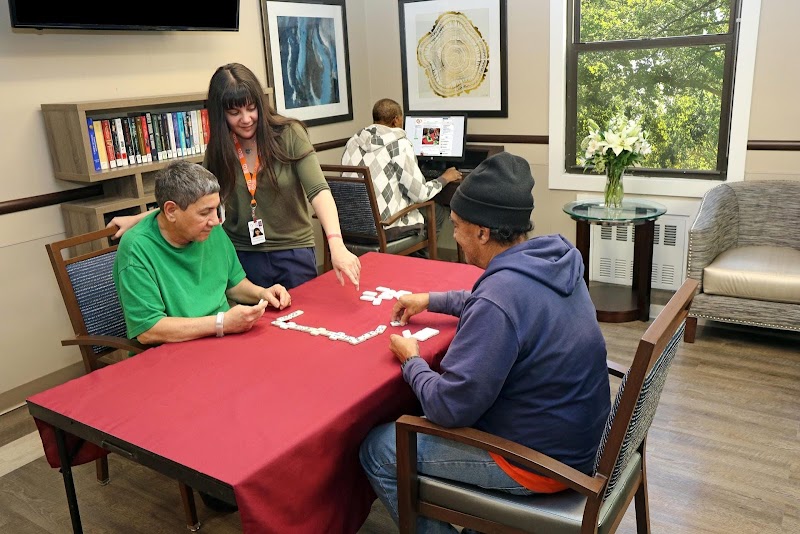
Who Owns and Operates Williamsbridge Center For Rehabilitation And Nrsg?

WILLIAMSBRIDGE CENTER FOR REHABILITATION AND NRSG is owned by a for-profit company. For-profit facilities operate as businesses with obligations to shareholders or private owners. The facility is operated by CENTERS HEALTH CARE, a chain that manages multiple nursing homes. With 77 certified beds and approximately 74 residents (about 96% occupancy), it is a smaller facility located in BRONX, New York.
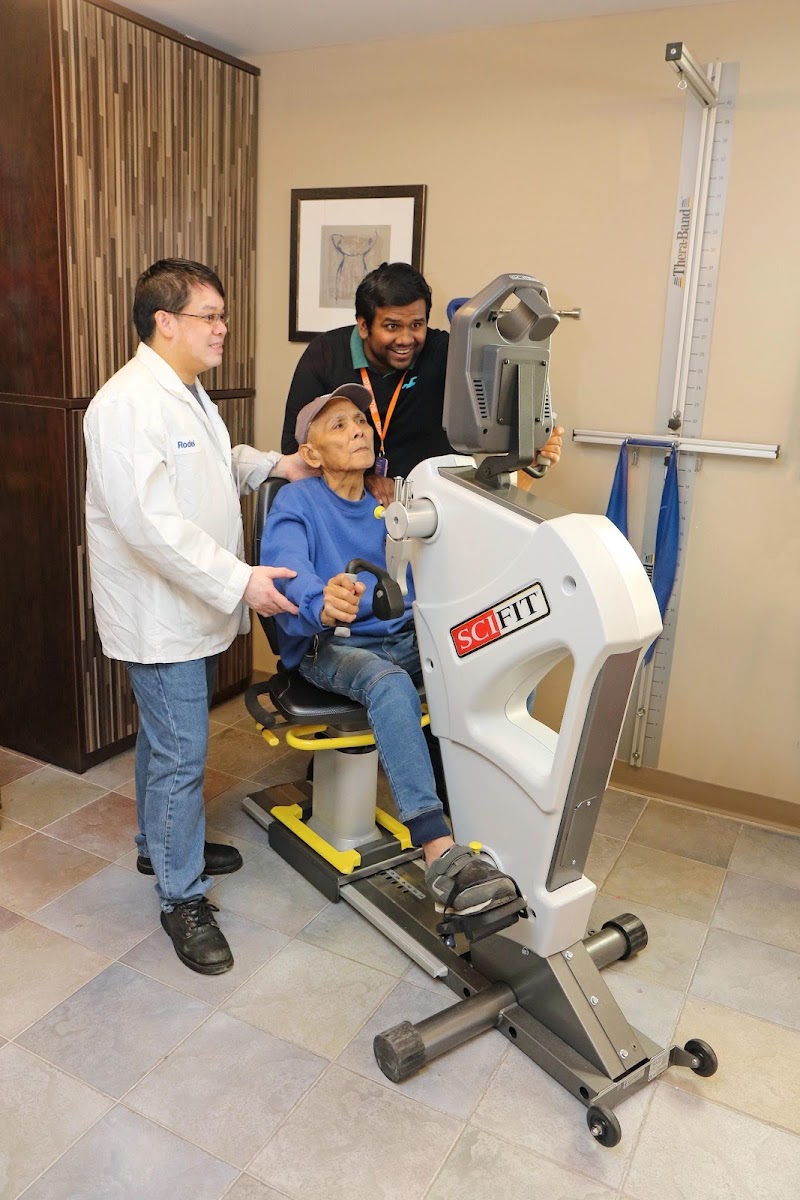
How Does Williamsbridge Center For Rehabilitation And Nrsg Compare to Other New York Nursing Homes?

Compared to the 100 nursing homes in New York, WILLIAMSBRIDGE CENTER FOR REHABILITATION AND NRSG's overall rating (4 stars) is above the state average of 3.1, staff turnover (41%) is near the state average of 46%, and health inspection rating (3 stars) is at the national benchmark.

What Should Families Ask When Visiting Williamsbridge Center For Rehabilitation And Nrsg?

Based on this facility's data, families visiting should ask: "Can you walk me through typical staffing levels on day, evening, and night shifts?" "Can I visit during a mealtime to observe dining assistance and food quality?" "How do you handle medical emergencies, and what is your hospital transfer rate?" "Can I speak with family members of current residents about their experience?" These questions are particularly relevant given the below-average staffing rating.

Is Williamsbridge Center For Rehabilitation And Nrsg Safe?

Based on CMS inspection data, WILLIAMSBRIDGE CENTER FOR REHABILITATION AND NRSG has a clean safety record: no substantiated abuse findings (meaning no confirmed cases of resident harm), no Immediate Jeopardy citations (the most serious violation level indicating risk of serious injury or death), and is not on the Special Focus Facility watch list (a federal program monitoring the lowest-performing 1% of nursing homes). The facility has a 4-star overall rating and ranks #1 of 100 nursing homes in New York. While no facility is perfect, families should still ask about staff-to-resident ratios and recent inspection results during their visit.

Do Nurses at Williamsbridge Center For Rehabilitation And Nrsg Stick Around?

WILLIAMSBRIDGE CENTER FOR REHABILITATION AND NRSG has a staff turnover rate of 41%, which is about average for New York nursing homes (state average: 46%). Moderate turnover is common in nursing homes, but families should still ask about staff tenure and how the facility maintains care continuity when employees leave.

Was Williamsbridge Center For Rehabilitation And Nrsg Ever Fined?

WILLIAMSBRIDGE CENTER FOR REHABILITATION AND NRSG has no federal fines on record. CMS issues fines when nursing homes fail to meet care standards or don't correct problems found during inspections. The absence of fines suggests the facility has either maintained compliance or corrected any issues before penalties were assessed. This is a positive indicator, though families should still review recent inspection reports for the full picture.

Is Williamsbridge Center For Rehabilitation And Nrsg on Any Federal Watch List?

WILLIAMSBRIDGE CENTER FOR REHABILITATION AND NRSG is not on any federal watch list. The most significant is the Special Focus Facility (SFF) program, which identifies the bottom 1% of nursing homes nationally based on persistent, serious quality problems. Not being on this list means the facility has avoided the pattern of deficiencies that triggers enhanced federal oversight. This is a positive indicator, though families should still review the facility's inspection history directly.