HAYM SOLOMON HOME FOR THE AGED

2340 CROPSEY AVENUE, BROOKLYN, NY 11214 (718) 373-1700
For profit - Partnership 240 Beds Independent Data: November 2025
Trust Grade
68/100
#288 of 594 in NY
Last Inspection: November 2024

Within standard 12-15 month inspection cycle. Federal law requires annual inspections.

Overview

Haym Solomon Home for the Aged has a Trust Grade of C+, which means it is slightly above average but not outstanding. It ranks #288 out of 594 nursing homes in New York, placing it in the top half of facilities in the state, but it is #28 out of 40 in Kings County, indicating there are better local options available. The facility is improving, with a decrease in issues from 5 in 2022 to 4 in 2024, though it still has a low staffing rating of 1 out of 5 stars, suggesting challenges in this area. However, the turnover rate is only 17%, which is well below the state average, indicating that many staff members remain long-term. There were some concerning incidents, such as staff handling raw chicken and fish without gloves, which raises food safety issues, and the use of side rails for residents without proper risk assessments, which could lead to entrapment risks. While the overall health inspection rating is good at 4 out of 5 stars, the facility has incurred fines totaling $8,512, suggesting some compliance issues that families should consider.

Trust Score
C+
68/100
In New York
#288/594
Top 48%
Safety Record
Low Risk
No red flags
Inspections
Getting Better
5 → 4 violations
Staff Stability
✓ Good
17% annual turnover. Excellent stability, 31 points below New York's 48% average. Staff who stay learn residents' needs.
Penalties
○ Average
$8,512 in fines. Higher than 72% of New York facilities. Some compliance issues.
Skilled Nurses
○ Average
RN staffing data not reported for this facility.
Violations
⚠ Watch
15 deficiencies on record. Higher than average. Multiple issues found across inspections.
★★★☆☆
3.0
Overall Rating
★☆☆☆☆
1.0
Staff Levels
★★★★☆
4.0
Care Quality
★★★★☆
4.0
Inspection Score
Stable
2022: 5 issues
2024: 4 issues

The Good

  • 4-Star Quality Measures · Strong clinical quality outcomes
  • Low Staff Turnover (17%) · Staff stability means consistent care
  • Full Sprinkler Coverage · Fire safety systems throughout facility
  • No fines on record
  • Staff turnover is low (17%)

    31 points below New York average of 48%

Facility shows strength in quality measures, staff retention, fire safety.

The Bad

3-Star Overall Rating

Near New York average (3.1)

Meets federal standards, typical of most facilities

Federal Fines: $8,512

Below median ($33,413)

Minor penalties assessed

The Ugly 15 deficiencies on record

Nov 2024 4 deficiencies
CONCERN (D)

Potential for Harm - no one hurt, but risky conditions existed

Deficiency F0568 (Tag F0568)

Could have caused harm · This affected 1 resident

**NOTE- TERMS IN BRACKETS HAVE BEEN EDITED TO PROTECT CONFIDENTIALITY** Based on record review and staff interviews conducted during the Recertification survey from 10/31/2024 and 11/07/2024, the faci...

Read full inspector narrative →
**NOTE- TERMS IN BRACKETS HAVE BEEN EDITED TO PROTECT CONFIDENTIALITY** Based on record review and staff interviews conducted during the Recertification survey from 10/31/2024 and 11/07/2024, the facility did not ensure individual resident financial records were made available to resident and resident representatives through quarterly statements. This was evident for 2 (Residents #60 and #174) of 2 residents reviewed for Personal Funds out of a total sample of 38 residents. Specifically, quarterly statements were not provided in writing to residents and/or resident representatives within 30 days after the end of the quarter. The findings are: The facility policy and procedure titled Resident's Personal Funds Account dated 05/2018, last revised 05/2024 documented that the resident and/or Designated Representative will receive an account statement on a quarterly basis, and all inquiries will be addressed in a timely fashion. The Residents Fund Listing printed 11/05/2024 documented that Residents #60 and #174 had active accounts and funds with the facility. 1. The Quarterly Minimum Data Set assessment dated [DATE] documented that Resident #60 had intact cognition and participated in their assessment and goal setting. On 10/31/24 at 11:09 AM, Resident #60 was interviewed and stated that they have an account with the facility, but they have never received any statement from the facility. There was no documented evidence provided that Resident #60 or their representative had been provided with copies of their quarterly statements. 2. The Quarterly Minimum Data Set assessment dated [DATE] documented that Resident #174 had intact cognition and participated in their assessment and goal setting. On 10/31/24 at 11:25 AM, Resident #174 was interviewed and stated that they have an account but cannot recollect when last their statement was given. There was no documented evidence provided that Resident #174 or their representative had been provided with copies of their quarterly statements. On 11/04/24 at 01:24 PM, an interview was conducted with Social Worker #1 who stated that resident's fund and their statements are handled by the business office. Social Worker #1 also stated that they intervene if residents complain of not getting their funds, but residents have not been reporting that they are having problem getting their money, and they are not aware that the statements are not being given to the residents. On 11/04/24 at 02:38 PM an interview was conducted with the Director of Finance who stated that residents' statements are mailed to the resident's family and also mailed to the alert residents in the facility every quarter, the recreation staff delivers the statements to the residents in the facility when they are delivering their mails, and if any resident requests for the copy of the statement, it is given to them at any time. The Director of Finance further stated that there is no way the facility can confirm if the statements are received or not, because they use the regular mails to send to the family and the alert residents in the facility receive the statement with their other regular mails which they don't sign for. The Director of Finance stated that they follow the procedure of mailing the statements out, and they do not document it in the residents' chart but only save the copy of the statement mailed out in the logbook. On 11/05/24 at 09:55 AM, the Director of Recreation was interviewed and stated that mails are delivered to the residents every morning which include their financial statements. The Director of Recreation also stated that they are notified by the Finance department whenever residents' statements are generated, and they are physically hand delivered to the residents. The Director of Recreation further stated that the statements are usually delivered to the residents with their other regular mails, but the residents are not made to sign for the statements, and they are not documenting the delivery of the statement in the residents' charts. On 11/05/24 at 11:54 AM, the Administrator was interviewed and stated that they believe the business office keep the log of the statements mailed out to the residents and the residents' family members. The Administrator could not explain why there was no documentation in the residents' charts when the statements are mailed out to the residents. 10 NYCRR 415.26(h)(5)(i)
CONCERN (D)

Potential for Harm - no one hurt, but risky conditions existed

Deficiency F0570 (Tag F0570)

Could have caused harm · This affected 1 resident

**NOTE- TERMS IN BRACKETS HAVE BEEN EDITED TO PROTECT CONFIDENTIALITY** Based on record review and staff interviews conducted during the Recertification survey between 10/31/24 and 11/07/24, the facil...

Read full inspector narrative →
**NOTE- TERMS IN BRACKETS HAVE BEEN EDITED TO PROTECT CONFIDENTIALITY** Based on record review and staff interviews conducted during the Recertification survey between 10/31/24 and 11/07/24, the facility did not ensure that a surety bond or similar protection with the amount equal to at least the current total amount of resident's funds was obtained to assure the security of all personal funds of residents deposited with the facility. This was evident for 81 residents who maintained personal funds accounts with the facility. Specifically, the surety bond obtained by the facility was not sufficient to cover the total held in all resident's accounts. The findings are: The facility policy and procedure titled Resident's Personal Funds Account dated 05/2018, revised 05/2024 documented that the facility purchases a surety bond to assure the security of all funds which residents have deposited with the facility. The Residents Fund Listing printed documented resident's funds which totaled $191,407.87, The bond #10BSBEX0694 created October 4, 2023, to cover the period January 2024 to December 2024 was in the amount of $175,000 and was insufficient to cover the total balance of all resident's accounts. On 11/04/2024 at 02:38 PM, an interview was conducted with the Director of Finance who stated that they have a current bond which covers the funds up to January 1, 2025. The Director of Finance also stated that they received notice of the cancellation of the bond which will be effective as of 01/01/2025, and they are already shopping for another insurance company through their insurance [NAME] to get another bond before the current bond expires. The Director of Finance further stated that when preparing the 3rd Quarter resident funds statements in October they realized that the surety bond amount was not enough to cover the residents' total fund and they are already making arrangement to increase the amount of the bond. On 11/05/2024 at 11:54 AM, the Administrator was interviewed and stated that they were just informed by the Director of Finance that the surety bond value is not enough to cover the current residents' fund, and they are already making efforts to adjust the bond accordingly. 10 NYCRR 415.26(h)(5)(v)
CONCERN (D) 📢 Someone Reported This

A family member, employee, or ombudsman was alarmed enough to file a formal complaint

Potential for Harm - no one hurt, but risky conditions existed

Report Alleged Abuse (Tag F0609)

Could have caused harm · This affected 1 resident

**NOTE- TERMS IN BRACKETS HAVE BEEN EDITED TO PROTECT CONFIDENTIALITY** 2. Resident #130 (NY00353026) had diagnoses including Diabetes Mellitus, Non-Alzheimer's Dementia, and Muscle Weakness. The Min...

Read full inspector narrative →
**NOTE- TERMS IN BRACKETS HAVE BEEN EDITED TO PROTECT CONFIDENTIALITY** 2. Resident #130 (NY00353026) had diagnoses including Diabetes Mellitus, Non-Alzheimer's Dementia, and Muscle Weakness. The Minimum Data Set Quarterly assessment dated [DATE] documented that Resident #130 had moderate cognitive impairment and was assessed to require dependent two-person assistance for transfers. The Physician's Order dated 10/20/2023 documented that Resident #130 required two-person dependent assistance using a Hoyer lift for transfers. An Accident/Incident Report dated 10/23/2023, which included Date/Time of Incident as 10/23/2023 at 10:00 AM, documented that Resident #130 was observed with a hematoma and ecchymosis to the outer side of the left lower extremity below the knee. Resident #130 denied falling and stated that it may have happened during a transfer with the Chinese guy but could not describe the allegation more specifically. The Investigation Summary also documented that the facility concluded that there was reasonable cause to believe that the injury occurred on 10/22/2023 at 04:00 PM during a Hoyer lift transfer completed by Certified Nursing Assistant #3 and Certified Nursing Assistant #2, when the resident's left leg encountered a surface during the transfer. The Nursing Home Facility Incident Report Submission documented that the Director of Nursing submitted a report to the New York State Department of Health on 10/25/2023 at 15:55 PM related to Resident #130's hematoma of unknown origin. The Incident Report documented that the Director of Nursing became aware of Resident #130's injury on 10/23/2023 at 10:00 AM. On 11/05/2024 at 04:25 PM, Certified Nursing Assistant #3 was interviewed and stated that they assisted Certified Nursing Assistant #2 with a Hoyer lift transfer for Resident #130 on 10/22/2023. Resident #130 was assigned to Certified Nursing Assistant #2 on this shift but because Resident #130 requires a two person assist for Hoyer lift transfers, Certified Nursing Assistant #3 was assisting as the second person in the transfer. Certified Nursing Assistant #3 also stated that they transferred Resident #130 without issue or concern and that they did not recall Resident #130's leg encountering a surface during the transfer. On 11/05/2024 at 04:33 PM, Certified Nursing Assistant #2 was interviewed and stated that on 10/22/2023, they transferred Resident #130 from their wheelchair to their bed with the assistance of Certified Nursing Assistant #3. Certified Nursing Assistant #2 also stated that they held the resident's legs while Certified Nursing Assistant #3 operated the Hoyer lift. Certified Nursing Assistant #2 further stated that Resident #130's leg did not encounter any surfaces during the transfer. Certified Nursing Assistant #2 stated that they worked with Resident #130 for approximately three hours after the transfer and Resident #130 did not complain to them about leg pain. On 11/06/2024 at 09:46 AM, Licensed Practical Nurse #5 was interviewed and stated that on 10/23/2023 at 02:00 AM, they were providing incontinence care to Resident #130 with Certified Nursing Assistant #5 and observed a hematoma on the resident's left leg. Licensed Practical Nurse #5 also stated that they notified their supervisor of this finding but was unable to recall which supervisor they notified. Licensed Practical Nurse #5 further stated that they were unable to recall if they documented the finding in Resident #130's electronic medical record. An Accident/Incident Report Employee Statement completed by Certified Nursing Assistant #4 on 10/23/2023 documented that Certified Nursing Assistant #4 was providing personal hygiene care to Resident #130 at around 08:30 AM on 10/23/2023 when they observed the hematoma on Resident #130's leg. The statement documented that Certified Nursing Assistant #4 had provided care to Resident #130 on 10/22/2023 and had not observed the hematoma during that shift. On 11/06/2024 at 10:14 AM, the Director of Nursing was interviewed and stated that they became aware of the hematoma on 10/23/2023 at around 10:00 AM and reported it to the New York State Department of Health on 10/25/2023 at 03:55 PM. Certified Nursing Assistant #4 observed the hematoma and notified Registered Nurse Supervisor #2, who immediately notified Medical Doctor #2. Resident #130 was seen by Medical Doctor #2 who ordered an X-ray and CT scan. The X-ray was completed on 10/23/2023 and revealed no fractures. The CT scan was completed on 10/26/2023 and revealed that the injury was a superficial hematoma. The Director of Nursing also stated that when they first became aware of the hematoma, it was an injury of unknown origin. The Director of Nursing further stated that they did not report this to the Department of Health within two hours because they did not know how Resident #130 had developed the injury. The Director of Nursing stated that the facility's typical procedure is to wait until after they receive the results of the X-ray and understand the severity of the injury before they report it, unless the resident verbalizes that someone harmed them. The Director of Nursing also stated that abuse could not be ruled out until the investigation was completed but that at the time of the incident, Resident #130 was not reporting that they had been abused. On 11/07/2024 at 11:18 AM, the Administrator was interviewed and stated that they are not involved in making reports to the Department of Health. The Administrator also stated that the Director of Nursing will make them aware of concerns within the facility, but the responsibility of reporting in a timely manner falls on the Director of Nursing. 10 NYCRR 415.12(h)(1) Based on observations, record reviews and interviews during the Recertification and Abbreviated Survey (NY00341031, NY00353026) conducted from 10/31/2024 to 11/07/2024 the facility did not ensure that injuries of unknown origin were reported immediately but not later than 2 hours after the allegation was made, if the events that cause the allegations involve abuse or result in serious bodily injury, or not later than 24 hours if the events that caused the allegation do not involve abuse and do not result in serious bodily injury, to the New York Department of Health. This was evident for 2 (Resident #144 and #130) of 2 residents reviewed for Abuse out of 38 total sampled residents. Specifically, 1). on 04/29/2024 at 10:00 AM Resident #144 observed with large bluish/purple discoloration to the left breast and yellowish fading discoloration to the chest area that were not reported to the New York State Department of Health in a timely manner, and 2). on 10/23/2023 at 10:00 AM, Resident #130 was observed with a hematoma on left lower leg of unknown origin and the facility failed to report to the State Survey Agency within 2 hours of becoming aware of the injury. The findings are: The facility's policy titled Abuse, Neglect, Mistreatment, Exploitation and Misappropriation of Resident Property - Investigation and Reporting last revised 09/2024 documented that if the Administrator, Director of Nursing, or Grievance Officer has reasonable cause to believe that abuse, neglect, or misappropriation of resident property took place, they will report to the New York State Department of Health and take all necessary corrective action depending on the results of the investigation. The policy did not outline any timeframes for reporting incidents to the Department of Health 1. Resident #144 (NY00341031) was admitted with diagnoses including Non-Alzheimer's Dementia, Old Rib Fractures, and Muscle Wasting. The Quarterly Minimum Data Set assessment dated [DATE] identified Resident #144 as severely cognitively impaired with no physical or verbal behavioral symptoms directed toward others. The Quarterly Minimum Data Set Assessment also documented that Resident #144 required dependent assistance with personal hygiene and toileting hygiene, substantial/maximal assistance with sit to stand, chair/bed-to-chair transfer and toilet transfer with Activities of Daily Living. A Nursing note dated 04/29/2024 at 12:49 PM documented Resident #144 was observed with large bruising involving the left breast. The note also documented that Resident #144 was on Eliquis 2.5 milligram which put Resident #144 at risk for bruise formation. The Full Quality Assurance Report dated 04/29/2024 at 10:00 AM documented that Resident #144 was observed with large bruising involving left breast and bruise on sternum yellowish fading discolorations. The Medical Doctor, Director of Nursing and family were notified. The Registered Nurse Supervisor #1 and Director of Nursing reassessed Resident #144 and observed with a large area of purplish discoloration extended from areola to the lateral side of the left breast, however in the evening, the discoloration had spread to the right breast and right axillary swelling noted. Resident #144 observed with behavior of repetitive uncontrolled movements, moving back and forth, rubbing, and stroking the table with their hands while leaning forward to the table. Resident #144 was on long term Eliquis therapy. The Medical Doctor examined Resident #144 and noted with chest hematoma, upper area of chest with yellow-greenish discoloration, both breasts with dark blue, non-tender and right axillary area with cystic lesion. On 04/30/2024 approximately 7:15 AM, Resident #144 observed with extensive ecchymosis to both breast and sternal area with multiple diffused ecchymosis to upper chest wall. A nursing note titled Resident Transfer Summary dated 04/30/2024 documented Resident #144 was transferred to hospital on [DATE] and left unit at 6:30 PM due to bilateral breast hematoma. The Webform Submission from Nursing Home Facility Incident Report emailed to Director of Nursing documented the incident was submitted to the New York State Department of Health on 05/02/2024 at 13:43. On 11/05/2024 at 11:57 AM, Registered Nurse Supervisor #1 was interviewed and stated they were called on 04/29/2024 at 10:00 AM to Resident #144's room and observed Resident #144 with yellowish-greenish discoloration on chest area and large bruising, purplish discoloration on the left breast. Registered Nurse Supervisor #1 called Certified Nursing Assistant #7 who worked on 04/28/2024 on the 11PM-7AM shift who stated they did not observe any skin discoloration on Resident #144. Registered Nurse Supervisor #1 also stated they did not observe signs of pain, and nobody knew how Resident #144 sustain the discoloration. Registered Nurse Supervisor #1 further stated that by the morning of 04/30/2024 the discoloration had spread to Resident #144's right breast and right arm, so they initiated the report, and the Director of Nursing followed it up and reported to the Department of Health. On 11/05/2024 at 4:19 PM, the Director of Nursing was interviewed and stated they started their investigation on 04/29/2024, and they gathered statements and interviewed staff who had direct contact from 04/27/2024 and 04/28/2024 and documented they did not observe discoloration on Resident #144's skin. The Director of Nursing stated they did not report to the Department of Health because they thought Resident #144 was having blood dyscrasia (a disease or disorder of the blood, bone marrow or lymph nodes) and because Resident #144 was on long term use of Eliquis with a behavior of leaning towards the table. The Director of Nursing stated as the day progressed the discoloration became more pronounced, and Resident #144 was transferred to the hospital on [DATE] at 6:30 PM. On 05/02/2024 at approximately 10:30 AM, the hospital Case Worker called them and reported Resident #144 had right chest wall hematoma which appeared to be trauma and a left acute pelvic fracture. The Director of Nursing stated they reported to Department of Health on 05/02/2024 at 1:43 PM. The Director of Nursing stated there was no witness to how Resident #144 sustained the injury, no report of fall, and they had no evidence to conclude the investigation and that is why they then reported to the Department of Health. On 11/06/2024 at 2:39 PM, the Administrator was interviewed and stated they were notified of the incident when discoloration and hematoma on the chest wall was discovered. The Administrator also stated it was not reported to Department of Health because they did not know the cause. The Administrator further stated it started as slight discoloration on the chest wall and when they noticed it was spreading further, Resident #144 was sent to the hospital. The Administrator stated since it was a slight discoloration, the facility would do investigation and if they determined that there was an abuse, it must be reported to the Department of Health within two hours.
CONCERN (D) 📢 Someone Reported This

A family member, employee, or ombudsman was alarmed enough to file a formal complaint

Potential for Harm - no one hurt, but risky conditions existed

Deficiency F0697 (Tag F0697)

Could have caused harm · This affected 1 resident

**NOTE- TERMS IN BRACKETS HAVE BEEN EDITED TO PROTECT CONFIDENTIALITY** Based on observation, interview, and record review conducted during the Recertification and Abbreviated (NY00330333) survey from...

Read full inspector narrative →
**NOTE- TERMS IN BRACKETS HAVE BEEN EDITED TO PROTECT CONFIDENTIALITY** Based on observation, interview, and record review conducted during the Recertification and Abbreviated (NY00330333) survey from 10/31/2024 to 11/07/2024, the facility did not ensure pain management was provided to residents who require such services, consistent with professional standards of practice, the comprehensive person-centered care plan, and the residents' goals and preferences. This was evident for 1 (Resident #3) of 6 residents reviewed for Pain out of 38 sampled residents. Specifically, Resident #3 had a Morphine pump installed in 7/2020, and there was no documented evidence that the cartridge of the pump was changed and or refilled as required every 6 months, or that Resident #3 had been referred to pain management in over 12 months. In addition, there was no documented evidence that Resident #3's had an active order for the morphine pump or as needed pain medication as documented monthly by the physician. The findings are: The facility policy titled Pain Assessment and Management revised 5/2024 stated that residents who experience pain will have a comprehensive assessment of pain and a treatment plan established for his/her pain. The policy also stated ongoing assessment shall be done to evaluate the changing nature of pain as well as the effectiveness of the treatment of the pain. The facility policy titled Infusion Therapy Continuous Ambulatory Delivery Device Patient Controlled Infusion Pump effective 9/22/2023 documented the resident should be under the care of a Licensed physician familiar with intrathecal therapy including indications, contraindications, administration, monitoring, and potential adverse reactions. The policy also documented prescription guidelines should include medication, length and frequency of therapy and parameters for notifying the physicians, order for Narcan, lab work and order for antiemetic as needed. Resident #3 was admitted to facility with diagnosis including Low Back Pain, Rheumatoid Lung Disease, and Benign Prostatic Hyperplasia. The Minimum Data Set assessment dated [DATE] documented Resident #3 was cognitively intact, received a pain medication regime, was not offered pain medication as needed, did not receive nonpharmacological interventions for pain, and experienced moderate pain frequently. The Complaint Intake Form dated 12/21/2023 documented that Resident #3 complained of being in pain due to back surgery, and the facility had not offered them anything other than Tylenol for pain and seemed unconcerned with their pain. On 11/05/2024 at 09:07 AM, Resident #3 was observed lying in bed awake and stated they are reading prayers. Resident #3 also stated they are always in pain but is not sharp pain, because the pump takes care of the sharp pain. Resident #3 pointed to a pump placed in their left lower abdomen, and stated the pump is for lifelong use to help control pain. On 11/05/2024 at 11:40 AM, Resident #3 was interviewed and stated they have a morphine pump in their left lower abdomen which was placed by their private doctor who had cared for them for many years. Resident #3 also stated had they had multiple back surgeries, and the morphine pump takes away most of the pain, but not all the pain and they may have called the Department Of Health on one of those days when they had shooting pain. Resident #3 further stated that every 6 months their doctor comes to the facility to replace the cartridge and they were not sure what dosage of medication they were receiving. Resident #3 stated the pump itself needs to be replaced every 5 or 6 years and they were not sure when it was last replaced. Resident #3 was unable to recall the last time the pump was changed and showed the State Surveyor a card which stated the pump was last refilled in May 2023. Resident #3 stated that their pain today is 6/10 and they are resting in bed as this is what relieves most of their pain now. The Comprehensive Care Plan titled Pain Management Advance Disease process Low Back Pain status post L4 laminectomy and T4-T5 fusion. Resident is on a morphine Pump dated effective 09/25/2016 and last evaluation dated 09/4/2024 with interventions including Morphine pump is pre-set up for automatically delivered morphine, as prescribed, via pump and adjust medications and non-medication interventions. Non-pharmacological interventions to address pain were not documented. The Physician Orders last reviewed 10/16/2024 contained no current orders for a Morphine pump. The Physician orders 6/8/2021 and last reviewed on 10/16/2024 documented Lyrica 50 mg capsule give 1 capsule (50 mg) by oral route once daily at bedtime for low back pain. The Physician Monthly notes dated 10/27/2024, 09/21/2024, 08/17/2024, 08/17/2024, 06/25/2024, 07/23/2024, 06/25/2024 and 05/21/2024 under the section title Active Diagnosis and Plan of Care documented continue with Lyrica, Tylenol as needed, status post intrathecal Morphine pain pump implant replacement, pain management follow up. Review of the medical record revealed no orders for Tylenol as needed or for monitoring of pain. The Nursing progress note dated 5/23/2023 documented as per resident private doctor came today and refilled resident's medication pump. There was no documented evidence that Resident #3's morphine pump was refilled after 05/23/2023. The Pain Management consult dated 10/6/2022 documented pain management follow up. Pain control stable, no changes to pump regimen. Pump refill without complications. Hydromorphone 1.0mg/1ml. Current setting reservoir: 20.0 ml. Duration: 12:00 AM -12:00am 24 hours. 0.2002 mg (0.0083 mg/hour. 24-hour dose: 0.2002 mg/day. Estimated replacement 2029. There was no documented evidence that Resident #3 had been evaluated by pain management since 10/06/2022. Pain monitoring entered on the Medication Administration Record rating of 2/10 for Lyrica to high of 6/10. On 11/05/2024 at 09:19 AM, Certified Nursing Assistant #1 was interviewed and stated Resident #3 is alert, able to speak all needs, but needs assistance with Activities of Daily Living and they must do everything for them because they have difficulty moving. Certified Nursing Assistant #1 also stated Resident #3 requests a bed bath every morning after which they get dressed for the day. Certified Nursing Assistant #1 further stated that Resident #3 used to go to religious services every day at 8:00 am but now gets ready and sits in the room on the bed and does prayers there. Certified Nursing Assistant #1 stated that Resident #3 does not like to sit in the chair for long periods and will always request to go back to bed, as they prefer to sit on their bed or lie in bed throughout the day, their back hurts if they sit in the chair for too long. Certified Nursing Assistant #1 also stated Resident #3 does not complain of pain during care. Certified Nursing Assistant #1 further stated that Resident #3 has a machine on the left side of their abdomen that beeps at times, and they are not sure what it is. Certified Nursing Assistant #1 further stated they did not ask the nurse about the machine and was not told about it. On 11/05/2024 at 10:19 AM, Licensed Practical Nurse #1 was interviewed and stated Resident #3 is alert and oriented, able to make needs known, and has pain in their back. Licensed Practical Nurse #1 also stated that Resident #3 does not receive pain medication on the day shift and Resident #3 stated when they feel pain, they take a walk on the unit and then lie down. Licensed Practical Nurse #1 further stated that they believe Resident #3 has a morphine pump in their back. Licensed Practical Nurse #1 stated they have nothing to do with the pump, never saw the pump, did not ask Resident #3 about the pump, are not sure how to monitor the pump and was not inserviced about it. Licensed Practical Nurse #1 stated that they ask Resident #3 every day about pain and Resident #3 stated that when they walk, they feel better. On 11/05/2024 at 10:45 AM, Registered Nurse Supervisor #1 was interviewed and stated Resident #3 is alert and oriented, is on Lyrica at bedtime for pain, and takes the pain medication as ordered. Registered Nurse Supervisor #1 also stated that Resident #3 displayed no non-verbal signs of pain and the morphine pump in place relieves the pain. Registered Nurse Supervisor #1 further stated that Resident #3 was seen by psychiatry and is receiving medication based on complaints of pain secondary to spine operation which they had prior to coming to the facility. The Attending Physician manages the Resident #3's pain and Resident #3 refused Tylenol and has been receiving Lyrica since June 2021. Registered Nurse Supervisor #1 stated Resident #3 participates in regular activities and is very vocal about their needs. Registered Nurse Supervisor #1 also stated that Resident #3 has a morphine pump on the right side of their stomach which is replaced every 5 years, and the cartridges are replaced every 6 months by Resident #3's pain management doctor. Registered Nurse Supervisor #1 further stated they were not sure when the cartridge was last replaced. Registered Nurse Supervisor #1 stated that the pump is automatic and is set up to deliver the medications, and there is no monitoring being done for the pump and they are not sure what needs to be done with it. Registered Nurse Supervisor #1 also stated that they have been in the role as supervisor since April 2024, and was aware that the morphine pump was in place. On 11/05/2024 at 12:47 PM, the Attending Physician for Resident #3 was interviewed via telephone and stated that Resident #3 has a history of refusing care such as lab work and was non-compliant with medical care on occasion such as refusing x-rays after multiple falls. The Attending Physician also stated that they examined Resident #3 recently for complaint of insomnia on 10/24/2024, and Resident #3 was stable and not in pain. The Attending Physician further stated that Resident #3s' morphine pump was placed in 2022 because Resident #3 had a lot of pain due to back surgery, and Resident #3's pain is controlled with Lyrica and Resident #3 does not currently complain about pain. The Attending Physician stated Resident #3 morphine cartridge needs to be replaced every 6 months and they last spoke to Resident #3's private doctor in May 2023 when the pump was last changed, and that physician has since moved to New Jersey and no longer takes Resident #3's insurance. The Attending Physician also stated that they are not sure who the pain management specialist is that will replace the pump. The Attending Physician stated that the facility has monitored Resident #3's pain by checking labs, and through vital signs which have been stable and Resident #3 attends recreational activities and does not stay in their room all the time, so they believe that Resident #3 is not in any pain. The Attending Physician further stated that Resident #3 will be referred to pain management. On 11/05/2024 at 03:35 PM, Licensed Practical Nurse #2 was interviewed and stated they have worked as a float nurse and has administered medications to Resident #3 on multiple occasions. Licensed Practical Nurse #2 also stated that Resident #3 is alert and oriented and able to verbalize all needs. Licensed Practical Nurse #2 further stated that Resident #3 will complain about pain and was prescribed pain and at one point Resident #3 was refusing the patches, and medication was changed to Lyrica at bedtime. Licensed Practical Nurse #2 also stated Resident #3 takes their medication and does not complain of pain. Licensed Practical Nurse #2 further stated that they were not aware that Resident #3 had a morphine pump until today, as this was reported to them by the outgoing day shift nurse. Licensed Practical Nurse #2 stated they never saw the pump, and was not provided in-service on the pump, or on how to monitor a resident on a morphine pump. On 11/05/2024 at 03:38 PM, Licensed Practical Nurse #3 for the evening shift was interviewed and stated they have worked on the unit as a float nurse on multiple occasions in the past but was not aware until today that Resident #3 had a morphine pump in place. Licensed Practical Nurse #3 also stated that Resident #3 is alert and able to make all needs known, is prescribed Lyrica for pain and has voiced no complaint of pain to Licensed Practical Nurse #3. Licensed Practical Nurse #3 further stated they did not receive in-service on the morphine pump or how to monitor a resident on a morphine pump. On 11/06/2024 at 11:24 AM, the Director of Nursing was interviewed and stated they were not aware that Resident #3 had a morphine pump in place and were informed of this by staff on 11/05/2024. The Director of Nursing also stated that they have worked at the facility since January 2023, and they never heard of any complaints about pain for Resident #3 or staff reporting that Resident #3 was in uncontrolled pain in morning report. Care of any resident in pain is discussed in the morning meeting and the resident is referred to pain management for follow up. The Director of Nursing further stated that a resident with a morphine pump should have been discussed in morning report, to ensure they are followed by pain management, and staff is inserviced on the pump. The Director of Nursing stated that after becoming aware of the morphine pump, they realized that Resident #3 had no orders in place for the morphine, or orders in place to monitor the resident. The Director of Nursing also stated they also learned that morphine pump was last refilled in May 2023, and no follow up has been done after that date, and Resident #3 is only receiving Lyrica for pain control at present. The Director of Nursing further stated that if a resident was admitted on a morphine pump, the Director of Nursing would be made aware before the resident is admitted to the facility, would in-service the staff, and ensure that pain management is in place to follow up, as well as physician orders to monitor resident. The Director of Nursing also stated that they had not been informed by the two prior Directors of Nursing that there was a resident with a morphine pump in the facility. 10 NYCRR 415.12
Sept 2022 5 deficiencies
CONCERN (D)

Potential for Harm - no one hurt, but risky conditions existed

Deficiency F0655 (Tag F0655)

Could have caused harm · This affected 1 resident

**NOTE- TERMS IN BRACKETS HAVE BEEN EDITED TO PROTECT CONFIDENTIALITY** Based on record review and staff interviews conducted during a Recertification/Complaint Survey from 9/19/2022 to 9/26/2022, the...

Read full inspector narrative →
**NOTE- TERMS IN BRACKETS HAVE BEEN EDITED TO PROTECT CONFIDENTIALITY** Based on record review and staff interviews conducted during a Recertification/Complaint Survey from 9/19/2022 to 9/26/2022, the facility did not ensure that a resident's designated representative was provided with a written summary of the baseline care plan. This was evident for 1 of 2 residents reviewed for Care Plan out of 40 sampled residents. (Residents # 431). The findings are: The facility policy titled Baseline Care Plan (BCP) created 10/7/2017 and updated September 1, 2022 documented that the completed BCP will be provided to the resident and/or designated representative within 5-7 days. It also documented that Evidence of completion of the baseline care plan with notification to resident/des.rep of BCP will be in the assessment section of the EMR and in the Social Service section of the hard copy chart. Resident # 431 was admitted to the facility on [DATE] with diagnoses that included Hemiplegia, unspecified affecting left nondominant side; Pain, unspecified; and Unspecified atrial fibrillation. The admission Minimum Data Set (MDS) dated [DATE] documented Resident # 431 had a Brief Interview of Mental Status (BIMS) score of 3 out of 15, indicating Resident #431 had severely impaired cognition. The MDS also documented Resident # 431 and family or significant other participated in the assessment. On 09/19/22 at 11:03 AM, the designated representative was interviewed and stated Resident # 431 was admitted to the facility on [DATE]. The representative stated they made decisions for Resident # 431 and did not recall receiving a written summary of the initial care plan since Resident # 341 was admitted to the facility. The Baseline Care Plan (BCP) was dated as created on 9/9/2022 and completed on 9/18/2022. The acknowledgement of receipt section of the BCP had a Social Worker signature on 9/13/2022. There was no resident or representative signature on it. The progress notes from 9/9/2022 to 9/23/2022 in the Electronic Medical Record (EMR) and Social Service section of the hard copy chart contained no documented evidence the designated representative was provided with a copy of or signed the baseline care plan. On 09/21/22 at 09:52 AM, Registered Nurse (RN) # 3 was interviewed and stated that the Baseline Care Plans (BCP) are provided to the resident and/or designated representative by the Social Work Department after completion. RN # 3 also stated they did not know when the Social Worker gave the BCP to the resident and/or representative or where this would be documented in the medical record. On 09/21/22 at 10:06 AM, Assistant Director of Social Work (ADSW) was interviewed and stated they had 2 days to complete the BCP and then gave a copy of BCP to residents. The ADSW also stated the residents had to sign it and then a copy was filed to the medical chart and another copy was given to resident. The ADSW stated Resident # 431 was cognitively unable to sign the BCP and they called the representative and left a copy of BCP in Resident # 431's room for pick-up. The ADSW also stated they did not follow up with representative to see if they received the copy or not. The ADSW further stated that there was no documentation in their notes regarding the BCP, when they left the copy of BCP in Resident # 431's room, or if the representative actually picked up the copy or not. On 09/21/22 at 10:36 AM, Social Work Director (SWD) was interviewed and stated they completed the BCP and gave a copy of it to residents and/or representatives within 48 hours. The SWD also stated the residents/representative have to sign the BCP, then the BCP is filed in the medical record and a copy is given to the resident. The SWD further stated the Social Workers (SW) call the representative to ask if they prefer a copy of the BCP is left in the resident's room or mailed to them if the resident is confused. The SWD stated the SW should document the communication with the representative in the medical record regarding the BCP. The SWD also stated that there was no documentation in Resident # 431's medical chart regarding the BCP, SW not being able to give the BCP copy to representatives, when SW left the BCP copy in Resident # 431's room, or if the representative was provided copies of the BCP. 415.11 (c)
CONCERN (D)

Potential for Harm - no one hurt, but risky conditions existed

Deficiency F0711 (Tag F0711)

Could have caused harm · This affected 1 resident

**NOTE- TERMS IN BRACKETS HAVE BEEN EDITED TO PROTECT CONFIDENTIALITY** Based on observations, record reviews and interviews during the recertification survey the facility failed to ensure that the ph...

Read full inspector narrative →
**NOTE- TERMS IN BRACKETS HAVE BEEN EDITED TO PROTECT CONFIDENTIALITY** Based on observations, record reviews and interviews during the recertification survey the facility failed to ensure that the physician reviewed the resident's total program of care, including medications and treatments, at each visit. Specifically, the physician did not review the Rehab assessment and place order for the resident's use of bed side rails. This was evident for 1 of 5 residents reviewed for Accidents out of a sample of 40 residents. (Resident #156). The findings are: The facility Policy on Physicians/Rehab Recommendation Orders, dated 11/2020, last reviewed on 06/22 documented: Recommendation for rehabilitative services (including Nursing Rehabilitation) will be reviewed and included in the medical record as signed orders or telephone orders within 24 hours after being recommended by the rehab therapist. Resident #156 was admitted to the facility 08/10/2022, with diagnoses that included Anemia, Coronary Artery Disease (CAD), Hypertension, BPH, Hip Fracture. The admission Minimum Data Set 3.0 (MDS) assessment dated [DATE] documented that the resident had intact cognition and required extensive assistance from staff for most Activities of daily Living. On 09/19/22 at 12:21 PM, Resident #156 was observed in bed with 2 upper side rails up. Resident stated that the side rails are used to pull up and reposition self while in bed and has been using the side rails since admission. On 09/20/22 at 12:13 PM, and 09/21/22 08:10 AM, the Resident was also observed in bed, with the 2 upper side rails up. The Rehab Side Rail Assessment Form dated 8/10/2022 documented Resident #156 verbalized a need for a side rail as an enabler, resident was assessed, and 2 upper side rails were recommended by the Rehab as enablers in bed mobility rolling or positioning. The Resident Bed Rail Consent Form dated 8/11/2022 documented that Resident #156 had the cognitive capacity to utilize side rails and signed the consent. Physician's Order dated 08/10/2022, last reviewed 09/11/2022 documented no order for the Resident's use of 2 upper side rails. On 09/22/22 at 11:27 AM, an interview was conducted with the Certified Nursing Assistant CNA #1. CNA #1 stated that he/she has been giving care to the resident since the resident was transferred to the unit. CNA also stated that resident uses the side rails to turn and reposition in bed and can hold on to the side rail when changing the resident in bed. CNA further stated that resident has been using the side rails since resident was admitted . On 09/23/22 at 10:20 AM, an interview was conducted with the Licensed Practical Nurse, LPN #1. The LPN stated that resident can wheel self on the unit, is transferred from bed to chair with 1 staff assist, able to turn with minimum assistance in bed with the use of the upper side rails as enablers. LPN #1 further stated that they are not allowed to touch the Resident's Care plan, LPN stated that the care plan and physician's order is strictly done and reviewed by the RN Charge nurse or the RN supervisor. On 09/23/22 at 10:52 AM, an interview was conducted with the Registered Nurse in charge, RN #2. RN #2 stated that Resident was recently admitted on [DATE], has been attending therapy daily with a lot of improvement, now able to turn and reposition self in bed. RN stated that resident was admitted to the 3rd floor and did not realize that resident is using the side rail. RN stated that most of the time the Supervisor is responsible for checking the resident care plan for update and to get doctor's order if needed as most of the time the charge nurse is busy passing the medication or doing treatment for the residents. On 09/23/22 at 11:25 AM, an interview was conducted with the Director of Rehab (DOR), stated that resident was assessed by Rehab staff for safe use of both upper side rails and was given consent to sign. DOR stated that the staff should have gotten the physician's order for the side rail after the assessment was completed but was omitted. The DOR further stated that the nursing is expected to put in the care plan for the side rail after the assessment and Physician's order, were in place. On 09/23/22 at 11:39 AM, an interview was conducted with the RN Nursing Supervisor, RN #1. RN #1 stated that any RN in the building can initiate and update the care plan for the residents, and any licensed nurse can get telephone order from the physician if the physician is not present in the facility at the time the order is needed. RN #1 further stated that when information is received from the rehab by the nursing, the RN is supposed to initiate the CCP and get the order for the resident's side rail. RN #1 also stated that the nurse supposed to make rounds to see if the resident is having side rail and place the order and initiate the CCP accordingly. RN #1 stated that as a supervisor, they usually make rounds on the units but did not realize that resident is having the side rail on, and they are not aware that there was no CCP and Physician's order in place for the side rail use. O 09/23/22 at 11:52 AM, an interview was conducted with the Director of Nursing, DNS. The DNS stated that when the Rehab staff evaluates and assesses the resident to be fit for, and in need of the side rail, the consent is received from the resident, Rehab should contact the nursing to get the order from the doctor, and the nursing should initiate the care plan for the resident's side rail. The DNS stated that there has been ongoing evaluation to assess what is missing, and needed to be done, and the facility has not been able to get to that to see the missing order and the missing CCP for the side rail. The DNS stated that the team supposed to have been going round to discover the missing items. On 09/23/22 at 12:28 PM, an interview was conducted with the Medical Director. The MD stated that they come to the facility every day in the evening to examine the residents, review the orders and sign off the orders that are pending. MD stated that the facility has protocol for ordering the lab works and Rehab evaluations needed. MD further stated that Rehab comes in to evaluate the resident to ensure that the resident is alert enough to use the side rails safely, gets resident's consent and communicates with Nursing to place the order to be signed by the physician. MD stated that the missing Physician's order for the resident's side rail must have been an oversight, because the order is supposed to be in place for the resident to use the side rails. 415.15(b)(2)(iii)
CONCERN (D)

Potential for Harm - no one hurt, but risky conditions existed

Food Safety (Tag F0812)

Could have caused harm · This affected 1 resident

Based on observations, record review, and interviews conducted during the Recertification and Complaint survey, the facility did not ensure safe food handling and storage was practiced to prevent food...

Read full inspector narrative →
Based on observations, record review, and interviews conducted during the Recertification and Complaint survey, the facility did not ensure safe food handling and storage was practiced to prevent food-borne illness. Specifically, two expired boxes of enteral feeding was found in the central supply storage room on the 2nd floor in the enteral feeding and liquid nutritional supplement storage area on the main floor of the facility. This was evident during the Kitchen Observation task. The findings are: The Facility Policy and Procedure titled Securing and Storage of Tube Feeding reviewed 03/22 documented when residents are discharged unused feeding will be returned to storage area, The Facility Policy and Procedure titled Storage and Distribution Enteral Feeding Products reviewed 1/3/2022 documented Nursing will pick up the enteral feeds from the second floor as needed and check the date to ensure formula has not expired. Any expired enteral feed will be discarded, purchasing will check the storage area every two weeks to ensure all products are up to date. Nursing staff will check the expiration date of all enteral feedings before removing them from storage. On 09/19/2022 at 09:36AM an initial tour of the kitchen was done. At 10:18AM the enteral storage area and 2 expired boxes of enteral feeding were observed. One box of Peptide Sole Source Nutrition Formula with a best by date of 02/22/2022 and one box of Peptide Sole Source Nutrition Formula with a best by date of 09/18/2022 were noted in the storage room. Each box contained 12 cartons of 11-ounce enteral feeding formula per box . On 9/19/2022 at 10:21AM, an interview was conducted with Central Supply Person who stated they have to throw it away as it's expired. On 09/19/2022 at 10:22AM, an interview was conducted with the Director of Food Service (DFS) who stated the resident who used the tube feeding formula is no longer in the facility, and he/she was not sure when they left. On 09/21/2022 at 3:37PM, an additional interview was conducted with the Central Supply Person who stated their supervisor orders the enteral feeding and nursing distributes the enteral feeding. When the enteral feeding arrives, they put it on the shelf and organize it. They check the dates all the time and this is what we are supposed to do. When receive a new supply we check dates and sometimes the product is expired. We have to keep our eyes open for this. If items are expired, we throw them away because they cannot give expired product to the residents. On 09/21/2022 at 04:02PM, an interview was conducted with the Central Supply Supervisor (CSS) who stated they are in charge of the delivery of enteral feedings. They check the stock every 2 weeks and need to send an inventory to the enteral feeding company to let them know what feedings they have on hand, They inventory the emergency stock and go thru the stock thoroughly. They look for expired items every 2 weeks. The CSP delivers enteral feeding to the storeroom and looks at the enteral feeding on the units and removes items that are expired. They have been expired items found in the 2nd floor closet. They pay attention to what is printed on each bottle with the date. The ordered enteral feeding that was expired was received in January 2022, and it was specially ordered for the resident. It should have been removed, and it is no longer part of their ordering template. 415.14 (h)
CONCERN (E)

Potential for Harm - no one hurt, but risky conditions existed

Comprehensive Care Plan (Tag F0656)

Could have caused harm · This affected multiple residents

**NOTE- TERMS IN BRACKETS HAVE BEEN EDITED TO PROTECT CONFIDENTIALITY** 2) Resident #522 was admitted to the facility on [DATE] with diagnoses which include non-Alzheimer's dementia, hypertension, and...

Read full inspector narrative →
**NOTE- TERMS IN BRACKETS HAVE BEEN EDITED TO PROTECT CONFIDENTIALITY** 2) Resident #522 was admitted to the facility on [DATE] with diagnoses which include non-Alzheimer's dementia, hypertension, and hip fracture. The admission Minimum Data Set (MDS) 3.0 assessment dated [DATE] documented the resident had severely impaired cognition. No behaviors, rejection of care or wandering were documented. Resident required extensive assistance and 2-person assist with bed mobility, transfer, and toilet use, and extensive assistance and 1-person assist with dressing and personal hygiene. Resident was always incontinent for urine and bowels. No restraints or alarms were used. On 09/19/22 at 11:17 AM and 03:18 PM, 09/20/22 at 11:25 AM, and 09/21/22 at 11:19 AM and 04:04 PM, resident #522 was observed in bed with bilateral half side rails up. 09/22/22 at 10:04 AM, an interview was conducted with Resident #522's family member, who stated the side rails have been up all the time. He/she also stated that facility staff explained how to use the side rails properly to the family, but nobody explained the risks of having them there. He/she stated, [Resident #522] has a little dementia but can understand when things are explained, maybe they explained it to them. Resident #522 fell at home, fractured their hip and had surgery before coming here. The Comprehensive Care Plan (CCP) dated 9/1/22 identified the resident at risk for falls. The CCP did not document or instruct that side rails should be used as an intervention for falls for the resident. Further review of the CCP did not provide documented evidence that side rails were to be used as an intervention for any other identified concern, including during Activities of Daily Living (ADL) care or assistance in positioning the resident. There was no documented evidence in the medical record that the resident was assessed for risk of entrapment from bed rails prior to installation or use. There was also no documented evidence that facility staff reviewed the risks and benefits of bed rails with the resident or resident representative and obtained informed consent prior to installation or use. The Physician's Orders from admission until 9/19/22 were reviewed. There were no orders for side rails. There were no accident reports for resident #522 since admission. On 09/22/22 at 10:17 AM, an interview was conducted with CNA #3 who stated resident #522 uses siderails to go back to bed and has remote control for siderails. CNA #3 stated that siderails are used to prevent falls and that they received in service on use of siderails, but they don't remember when. 3) Resident #519 was admitted to the facility on [DATE] with diagnoses that included malignant neoplasm of brain, COPD and epilepsy. The admission Minimum Data Set (MDS) 3.0 assessment dated [DATE] documented the resident had severely impaired cognition. No behaviors, rejection of care or wandering were documented. Resident required total dependence and 2-person assist with transfer, extensive assistance and 2-person assist with toilet use and bed mobility. Resident was always incontinent for bowels and had indwelling urinary catheter. The MDS documented that there were no restraints or alarms used. On 09/21/22 at 04:02 PM, Resident #519 was observed in bed, with bilateral half side rails up. On several other observations between 9/20/22 and 9/23/22, the resident's bed was observed with bilateral half side rails up while resident #519 was sitting in a wheelchair next to the bed. The Comprehensive Care Plan (CCP) dated 8/26/22 identified the resident at risk for falls. The CCP did not document or instruct that side rails should be used as an intervention for falls for the resident. Further review of the CCP did not provide documented evidence that side rails were to be used as an intervention for any other identified concern, including during Activities of Daily Living (ADL) care or assistance in positioning the resident. There was no documented evidence in the medical record that the resident was assessed for risk of entrapment from bed rails prior to installation or use. There was also no documented evidence that facility staff reviewed the risks and benefits of bed rails with the resident or resident representative and obtained informed consent prior to installation or use. The Physician's Orders from admission until 9/19/22 were reviewed. There were no orders for side rails. There were no accident reports for resident #519 since admission. On 09/22/22 at 10:39 AM, an interview was conducted with CNA #2, who stated resident #519 can hold on to the siderails while being turned in bed. CNA further stated siderails are used when resident needs help to hold on to get up. On 09/22/22 at 10:51 AM, an interview was conducted with LPN #3 who stated: They took out some of the siderails 3-4 months ago. They left some up because residents are very alert, and families request them. They are a kind of restraint. When CNAs are doing ADL care, the residents can use them to hold on to. The ones that are left is because they were requested. Every resident who requests siderails gets them. The social worker talks to residents to make sure they are aware they are on. The residents need to be very alert in order to use them. They are a restraint, and we don't want the residents to get hurt. Maintenance installs the siderails and takes them out. They need to have orders and care plans. On 09/22/22 at 11:01 AM, an interview was conducted with RN #5, who stated, It was recently brought to our attention that siderails can be harmful for residents, so we had to take them out. It is frustrating with some residents because they can use them during care, and it helps them. Now siderails are only for very alert and oriented residents who request them. The families sign a consent that they agree and request to install the siderails. In my practice nobody was injured by siderails. For a siderail to be present on a bed, they would have an order, resident would have to verbalize that they want them. We speak to social work, RN supervisor, and we make a decision to put the order in. Then we put the order. I know which resident can use them. Final decision is made by director and supervisor. Care plan should be there as well. We have several people in the team: Nurse, supervisor, DNS. IT director monitors orders and gives us input. If we have orders, we have care plans. Maintenance department checks siderails if they don't work properly. Also install and uninstall. Every person who has siderails now should have order and care plan. Assessment is usually done by nurse. PT might recommend, but they don't usually assess. RN #5 agreed that residents 522, 184, 218, 519 and 87 should have orders and care plans and could not answer why they didn't. On 09/21/22 at 03:25 PM, the Information Technology (IT) Nurse was interviewed and stated he/she creates care plans in the electronic record. The IT Nurse stated the facility does not use siderails for restraints, only for bed mobility and repositioning. The facility utilizes assessments, care plans, and orders for siderails, but first the residents get evaluated by rehab for ability to turn and positioning using the siderails. Those residents who don't use siderails, don't have siderails on the bed at all because they are removed from the bed. Residents should not be confused in order to use the siderails. On a second interview on 09/22/22 at 12:25 PM, IT/nursing person stated Some of our beds are special hospital beds, for which we cannot remove the siderails. They come attached to the bed and cannot be removed. They are not like regular beds. We only have those beds on this floor, which is the rehab floor. Resident #184 has a regular bed with siderails. I don't see orders or care plans, but they should be there. On 09/23/22 at 02:54 PM, the DNS was interviewed and stated siderails are not used as restraints. They are used for bed mobility. The residents have to be able to use them, demonstrate they can use them for mobility. Rehab does assessment, then we get consent from resident and order from doctor, and we develop a care plan. We don't use them as restraints. We are working on the residents who didn't have orders. Sometimes they move the beds. When the residents move to another room sometimes the bed stays in the room. It's an ongoing process. 415.11(c)(1) Based on observation, record review and staff interviews during the recertification survey, the facility did not ensure that person-centered comprehensive care plan (CCP) was developed and implemented to address the resident's medical, physical, mental, and psychosocial needs. This was evident for 5 of 5 residents reviewed for Accidents out of a sample of 40 residents (Resident #s 156, 184, 218, 519, 522). Specifically, no CCP was developed and implemented for residents' use of side rails. The findings include but are not limited to: The facility Policy on Comprehensive Care Plan (CCP), last reviewed on 01/22 documented: Each resident shall have a Comprehensive care Plan that includes the strengths and weakness measurable objectives, and timetables to meet medical, nursing, and psychological needs that are identified in the MDS assessment and review of the triggered RAPS. 1) Resident #156 was admitted to the facility 08/10/2022, with diagnoses that included Anemia, Coronary Artery Disease (CAD), Hypertension, BPH, Hip Fracture. The admission Minimum Data Set (MDS) dated [DATE] documented that the resident had Intact cognitive status and required the Extensive Assistance of staff for most Activities of daily Living. On 09/19/22 at 12:21 PM, Resident #156 was observed in bed with 2 upper half side rails up. Resident #156 stated they use the side rails to pull up and reposition themselfes in bed, and they have been using the [NAME] rails since admission. On 09/20/22 at 12:13 PM, and 09/21/22 08:10 AM, the Resident was also observed in bed, with the 2 upper side rails up. The Side Rail Assessment Form dated 8/10/2022 documented Resident #156 verbalized a need for a side rail as an enabler. A Resident Bed Rail Consent Form dated 8/11/2022 was signed by Resident #156. The Comprehensive Care Plan (CCP) for Accident dated 8/10/22 documented that Resident is at risk for accident/falls/injury. Goals included: Resident will be free of falls through the next review date Interventions included: - Complete Fall Risk Assessment and review quarterly as necessary; Maintain a clear pathway, free of obstacles; Keep personal items - eyeglasses, TV remote control, within reach; Keep bed/ wheelchair in locked position; Avoid repositioning furniture; Keep call bell within reach. There was no documented evidence a Comprehensive Care Plan was developed to include the use of side rails as an enabler. On 09/22/22 at 11:27 AM, an interview was conducted with the Certified Nursing Assistant CNA #1. CNA #1 stated that he/she has been giving care to the resident since the resident was transferred to the unit. CNA also stated that resident uses the side rails to turn and reposition in bed and can hold on to the side rail when changing the resident in bed. CNA further stated that resident has been using the side rails since resident was admitted . On 09/23/22 at 10:20 AM, an interview was conducted with the Licensed Practical Nurse, LPN #1. The LPN stated that resident can wheel self on the unit, is transferred from bed to chair with 1 staff assist, able to turn with minimum assistance in bed with the use of the upper side rails as enablers. LPN #1 further stated that they are not allowed to touch the Resident's Care plan, LPN stated that the care plan and physician's order is strictly done and reviewed by the RN Charge nurse or the RN supervisor. On 09/23/22 at 10:52 AM, an interview was conducted with the Registered Nurse in charge, RN #2. RN #2 stated that Resident was recently admitted on [DATE], has been attending therapy daily with a lot of improvement, now able to turn and reposition self in bed. RN stated that resident was admitted to the 3rd floor and did not realize that resident is using the side rail. RN stated that most of the time the Supervisor is responsible for checking the resident care plan for update and to get doctor's order if needed as most of the time the charge nurse is busy passing the medication or doing treatment for the residents. On 09/23/22 at 11:25 AM, an interview was conducted with the Director of Rehab (DOR), stated that resident was assessed by Rehab staff for safe use of both upper side rails and was given consent to sign. DOR stated that the staff should have gotten the physician's order for the side rail after the assessment was completed but was omitted. The DOR further stated that the nursing is expected to update the care plan with the side rail after the assessment and Physician's order are in place. On 09/23/22 at 11:39 AM, an interview was conducted with the RN Nursing Supervisor, RN #1. RN #1 stated that any RN in the building can initiate and update the care plan for the residents, and any licensed nurse can get a telephone order from the physician. RN #1 further stated that when information is received from rehab by nursing, the RN is supposed to initiate the CCP and get the order for the resident's side rail. RN #1 also stated that the nurse is supposed to make rounds to see if the resident has a side rail, place the order, and initiate the CCP accordingly. RN #1 stated they usually make rounds on the units, but RN #1 did not realize that the resident has a side rail, and they were not aware that there was no CCP and Physician's order in place for side rail use. O 09/23/22 at 11:52 AM, an interview was conducted with the Director of Nursing, DNS. The DNS stated that when the Rehab staff evaluates and assesses the resident to be fit for, and in need of the side rail, the consent is received from the resident, Rehab should contact the nursing to get the order from the doctor, and the nursing should initiate the care plan for the resident's side rail. The DNS stated that there has been ongoing evaluation to assess what is missing, and needed to be done, and the facility has not been able to get to that to see the missing order and the missing CCP for the side rail. The DNS stated that the team supposed to have been going round to discover the missing items.
CONCERN (E)

Potential for Harm - no one hurt, but risky conditions existed

Deficiency F0700 (Tag F0700)

Could have caused harm · This affected multiple residents

**NOTE- TERMS IN BRACKETS HAVE BEEN EDITED TO PROTECT CONFIDENTIALITY** Based on observations, record reviews, and staff interviews conducted during the recertification survey, the facility did not en...

Read full inspector narrative →
**NOTE- TERMS IN BRACKETS HAVE BEEN EDITED TO PROTECT CONFIDENTIALITY** Based on observations, record reviews, and staff interviews conducted during the recertification survey, the facility did not ensure that residents observed using bed side rails were appropriately assessed for risk of entrapment or that the risks and benefits of side rail use was explained to the resident and/or representative. This was evident for 4 of 7 residents reviewed for accidents out of a sample of 40 residents (residents #184, #218, #519, #522) The findings include but are not limited to: The facility's Policy and Procedure for side rail usage, last reviewed 3/1/22, documented that it is the policy of the facility to ensure residents attain and maintain their highest practicable level of well-being and be free of restraints. Each resident will be assessed for functional status on admission, readmission and quarterly, for any significant change as needed. A resident will only use partial side rails to assist with his or her bed mobility in accordance with individual facility IDT team assessment. Partial side rails will not interfere with the resident's ability to egress from the bed surface. Partial siderails will be analyzed for safety and prevention of entrapment utilizing the guidelines of the USFDA. 1) Resident #522 was admitted to the facility on [DATE] with diagnoses which include non-Alzheimer's dementia, hypertension, and hip fracture. The admission Minimum Data Set (MDS) 3.0 assessment dated [DATE] documented the resident had severely impaired cognition. No behaviors, rejection of care or wandering were documented. Resident required extensive assistance and 2-person assist with bed mobility, transfer, and toilet use, and extensive assistance and 1-person assist with dressing and personal hygiene. Resident was always incontinent for urine and bowels. No restraints or alarms were used. On 09/19/22 at 11:17 AM and 03:18 PM, 09/20/22 at 11:25 AM, and 09/21/22 at 11:19 AM and 04:04 PM, resident #522 was observed in bed with bilateral half side rails up. 09/22/22 at 10:04 AM, an interview was conducted with Resident #522's family member, who stated the side rails have been up all the time. He/she also stated that facility staff explained how to use the side rails properly to the family, but nobody explained the risks of having them there. He/she stated, [Resident #522] has a little dementia but can understand when things are explained, maybe they explained it to them. Resident #522 fell at home, fractured their hip and had surgery before coming here. The Comprehensive Care Plan (CCP) dated 9/1/22 identified the resident at risk for falls. The CCP did not document or instruct that side rails should be used as an intervention for falls for the resident. Further review of the CCP did not provide documented evidence that side rails were to be used as an intervention for any other identified concern, including during Activities of Daily Living (ADL) care or assistance in positioning the resident. There was no documented evidence in the medical record that the resident was assessed for risk of entrapment from bed rails prior to installation or use. There was also no documented evidence that facility staff reviewed the risks and benefits of bed rails with the resident or resident representative and obtained informed consent prior to installation or use. The Physician's Orders from admission until 9/19/22 were reviewed. There were no orders for side rails. There were no accident reports for resident #522 since admission. On 09/22/22 at 10:17 AM, an interview was conducted with CNA #3 who stated resident #522 uses siderails to go back to bed and has remote control for siderails. CNA #3 stated that siderails are used to prevent falls and that they received in service on use of siderails, but they don't remember when. 2) Resident #519 was admitted to the facility on [DATE] with diagnoses that included malignant neoplasm of brain, COPD and epilepsy. The admission Minimum Data Set (MDS) 3.0 assessment dated [DATE] documented the resident had severely impaired cognition. No behaviors, rejection of care or wandering were documented. Resident required total dependence and 2-person assist with transfer, extensive assistance and 2-person assist with toilet use and bed mobility. Resident was always incontinent for bowels and had indwelling urinary catheter. The MDS documented that there were no restraints or alarms used. On 09/21/22 at 04:02 PM, Resident #519 was observed in bed, with bilateral half side rails up. On several other observations between 9/20/22 and 9/23/22, the resident's bed was observed with bilateral half side rails up while resident #519 was sitting in a wheelchair next to the bed. The Comprehensive Care Plan (CCP) dated 8/26/22 identified the resident at risk for falls. The CCP did not document or instruct that side rails should be used as an intervention for falls for the resident. Further review of the CCP did not provide documented evidence that side rails were to be used as an intervention for any other identified concern, including during Activities of Daily Living (ADL) care or assistance in positioning the resident. There was no documented evidence in the medical record that the resident was assessed for risk of entrapment from bed rails prior to installation or use. There was also no documented evidence that facility staff reviewed the risks and benefits of bed rails with the resident or resident representative and obtained informed consent prior to installation or use. The Physician's Orders from admission until 9/19/22 were reviewed. There were no orders for side rails. There were no accident reports for resident #519 since admission. 3.) Resident # 218 was admitted to the facility on [DATE] with diagnoses that included polyarthritis, type 2 diabetes, and hypertensive heart disease. The admission Minimum Data Set (MDS) 3.0 assessment dated [DATE] documented the resident had moderately impaired cognition with a Brief Interview of Mental Status (BIMS) score of 12 out of 15. The MDS further documented the resident had no behaviors, rejection of care or symptoms of psychosis. The MDS documented the resident required extensive assistance and 1-person assist with bed mobility, transfer, dressing, personal hygiene, and toilet use. Resident was always continent for urine and bowels. The MDS documented that there were no restraints or alarms used. On 09/19/22 at 03:16 PM and 09/20/22 at 11:34 AM, Resident #218 was observed in bed with bilateral half siderails up. Resident stated siderails stay up all the time and help them move in bed. The Comprehensive Care Plan (CCP) dated 8/22/22 identified the resident at risk for falls. The CCP did not document or instruct that side rails should be used as an intervention for falls for the resident. Further review of the CCP did not provide documented evidence that side rails were to be used as an intervention for any other identified concern, including during Activities of Daily Living (ADL) care or assistance in positioning the resident. There was no documented evidence in the medical record that the resident was assessed for risk of entrapment from bed rails prior to installation or use. There was also no documented evidence that facility staff reviewed the risks and benefits of bed rails with the resident or resident representative and obtained informed consent prior to installation or use. The Physician's Orders from admission until 9/19/22 were reviewed. There were no orders for side rails. There were no accident reports for Resident #218 since admission. On 09/22/22 at 10:51 AM, an interview was conducted with LPN #3 who stated: They took out some of the siderails 3-4 months ago. They left some up because residents are very alert, and families request them. They are a kind of restraint. When CNAs are doing ADL care, the residents can use them to hold on to. The ones that are left is because they were requested. Every resident who requests siderails gets them. The social worker talks to residents to make sure they are aware they are on. The residents need to be very alert in order to use them. They are a restraint, and we don't want the residents to get hurt. Maintenance installs the siderails and takes them out. They need to have orders and care plans. On 09/22/22 at 11:01 AM, an interview was conducted with RN #5, who stated It was recently brought to our attention that siderails can be harmful for residents, so we had to take them out. It is frustrating with some residents because they can use them during care, and it helps them. Now siderails are only for very alert and oriented residents who request them. The families sign a consent that they agree and request to install the siderails. In my practice nobody was injured by siderails. For a siderail to be present on a bed, they would have an order, resident would have to verbalize that they want them. We speak to social work, RN supervisor, and we make a decision to put the order in. Then we put the order. I know which resident can use them. Final decision is made by director and supervisor. Care plan should be there as well. We have several people in the team: Nurse, supervisor, DNS. IT director monitors orders and gives us input. If we have orders, we have care plans. Maintenance department checks siderails if they don't work properly. Also install and uninstall. Every person who has siderails now should have order and care plan. Assessment is usually done by nurse. PT might recommend, but they don't usually assess. Nurse agreed that residents 522, 184, 218, 519 and 87 should have orders and care plans and could not answer why they didn't. On 09/21/22 at 03:25 PM, the Information Technology (IT) Nurse was interviewed and stated he/she creates care plans in the electronic record. The IT Nurse stated the facility does not use siderails for restraints, only for bed mobility and repositioning. The facility utilizes assessments, care plans, and orders for siderails, but first the residents get evaluated by rehab for ability to turn and positioning using the siderails. Those residents who don't use siderails, don't have siderails on the bed at all because they are removed from the bed. Residents should not be confused in order to use the siderails. On a second interview on 09/22/22 at 12:25 PM, IT/nursing person stated Some of our beds are special hospital beds, for which we cannot remove the siderails. They come attached to the bed and cannot be removed. They are not like regular beds. We only have those beds on this floor, which is the rehab floor. Resident #184 has a regular bed with siderails. I don't see orders or care plans, but they should be there. On 09/23/22 at 02:54 PM, the DNS was interviewed and stated siderails are not used as restraints. They are used for bed mobility. The residents have to be able to use them, demonstrate they can use them for mobility. Rehab does assessment, then we get consent from resident and order from doctor, and we develop a care plan. We don't use them as restraints. We are working on the residents who didn't have orders. Sometimes they move the beds. When the residents move to another room sometimes the bed stays in the room. It's an ongoing process. On 09/26/22 at 10:24 AM, the Director of Maintenance was interviewed and stated that Physical Therapy decides if the bedrails need to be installed. For new residents, the default is that there are no siderails. If we get an order, we have to install them. We test the siderails on the bed when the resident is not on the bed. I make sure there is no entrapment risk. I measure that there are no more than 4 inches between head of bed and start of rail. The holes in the rails should be smaller than 4 inches, so that resident's head can't get trapped in there. Every month I check beds for safety: electrical, no loose parts, bed is secure.
Dec 2019 6 deficiencies
CONCERN (D)

Potential for Harm - no one hurt, but risky conditions existed

Deficiency F0688 (Tag F0688)

Could have caused harm · This affected 1 resident

**NOTE- TERMS IN BRACKETS HAVE BEEN EDITED TO PROTECT CONFIDENTIALITY** Based on observation and staff interview, the facility did not ensure that residents who have limited range of motion received a...

Read full inspector narrative →
**NOTE- TERMS IN BRACKETS HAVE BEEN EDITED TO PROTECT CONFIDENTIALITY** Based on observation and staff interview, the facility did not ensure that residents who have limited range of motion received appropriate treatment and services to increase range of motion and/or to prevent further decrease in range of motion. Specifically, a resident with contractures was not observed wearing a hand splint device as ordered by the physician. This was evident for 1 of 3 resident reviewed for Position/Mobility out of a sample of 39 residents. (Resident #135) The findings are: Resident # 135 was admitted to the facility on [DATE] with diagnoses that included Cerebral Vascular Accident (CVA), Transient Ischemic Attack (TIA) and Hemiplegia. On 12/02/2019 at 02:42 PM and on 12/03/2019 at 02:32 PM, resident was observed in the dining area sitting in a wheel chair, engaged in a music activity. Resident was observed with right hand contracture without a hand splint or hand roll. Resident was observed with right elbow brace only. On 12/4/2019 at 2:32 PM, resident was observed in the Day room during lunch time. Resident was observed with other residents watching TV and being monitored by a Certified Nursing Assistant. Resident was observed without right hand splint or hand roll. Resident was only observed with right elbow brace. The Annual Minimum Data Set (MDS) assessment dated [DATE] documented resident with severely impaired cognition, required extensive assistance of staff for Activities of Daily Living and had functional limitation on one side for both upper and lower extremity. The MDS also documented resident received Occupational Therapy, Restorative Nursing program and used a splint device. Physician's Order dated 11/13/2019 documented resident to wear adaptive hand device/roll to be worn at all times except removal for Range of Motion (ROM), hygiene and skin inspection daily. The Activities of Daily Living (ADL) Impaired Physical Mobility Care plan dated 7/17/2019 documented resident has impaired physical mobility related to poor balance as decreased strength. Interventions include Adaptive/Assisted device to apply hand roll at all times except removal for ROM, hygiene and skin inspection daily. On 12/3/2019 at 3:48 PM, Certified Nursing Assistant (CNA) #2 was interviewed. CNA# 2 stated she is responsible for providing ADL care to the resident and Range of Motion activities which include applying splint devices. CNA#2 also stated that she provides range of motion exercises with his arms and hands during daily ADL and applies an elbow brace to better support his arm and for better positioning in his chair. CNA #2 further stated that the resident uses a hand splint to keep his hand open and this is applied in the morning and is removed when resident is in bed and during sleeping hours. On 12/4/2019 at 5:30 PM, State Agent and Licensed Practical Nurse (LPN) #4 observed the resident in bed without hand device. State Agent inquired about the resident's splint device. LPN #4 looked in the resident's dressing drawer and clothing cabinet but could not locate any hand splint or hand roll device in the resident's room. 415.12(e)(2)
CONCERN (D)

Potential for Harm - no one hurt, but risky conditions existed

Deficiency F0761 (Tag F0761)

Could have caused harm · This affected 1 resident

Based on observation, and staff interviews during the re-certification survey, the facility did not ensure medical supplies containing biologicals were stored with appropriate pharmacy labels, followi...

Read full inspector narrative →
Based on observation, and staff interviews during the re-certification survey, the facility did not ensure medical supplies containing biologicals were stored with appropriate pharmacy labels, following cautionary and expiration instructions. Specifically, 2 insulin pens were observed in a plastic bag with the name and room number of a resident. There were no pharmacy issued labels affixed and pens did not contain an opened or discard date. This was evident for 1 medication cart on the 6th Floor during the Medication Storage Task. The undated facility policy and procedure titled Medication Storage documented prior to and after opening, all medications shall expire on the date specified by the manufacturer on the product label, unless the manufacturer has specifically indicated a shortened expiration once opened on the product label itself. On 12/04/19 at 02:39 PM, during the Medication Observation task, a clear plastic bag containing 1 NovoLog Flex Pen 70/30 and 1 Tresiba U-100 Flex Touch pen was observed in a medication cart on Unit 6. Affixed to the bag was a hand-written label with the resident's last name and room number. Neither pen had a pharmacy label attached and there was no labeling that documented when the pens were opened and needed to be discarded. An interview was conducted immediately with Licensed Practical Nurse (LPN#1). LPN #1 stated the insulin pens should have name of the resident, date opened and date to be discarded. Oncoming shift must check the medication cart. LPN #1 also stated she was not the one who signed off and check the medication cart, so she did not see the unlabeled flex pens. LPN #1 stated that there is a task sign-off in the Electronic Health Record (EHR) for medication storage which she showed to State Agent. The task sign-off did not include a field for checking of medications. On 12/4/2019 at 3:03 PM, an interview was conducted with Registered Nurse (RN #1). RN#1 stated medication carts should be checked daily by the medication nurses. Nurses should be checking for expired medications and ensuring that medications are labeled and dated. RN #1 stated that she does not usually check the medication carts unless she is giving medications. Insulin pens should be labeled and dated when opened. Unlabeled insulin pens must be discarded and reordered. On 12/5/19 at 3:56 PM, an interview was conducted with the Assistant Director of Nursing (ADN). The ADN stated she checks the medication carts and refrigerators from time to time for expired medications and to ensure that medication is labeled properly. Pharmacy also checked the carts for expired medications. The ADN also stated the nurses are supposed to check the medication carts every shift before they start giving medications. Insulin pens are for individual patient use and have to be labeled individually and dated when opened. the ADN further stated all medication should contain labeling from the pharmacy and not just be handwritten on the plastic bag. 415.18 (e)(1-4)
CONCERN (D)

Potential for Harm - no one hurt, but risky conditions existed

Infection Control (Tag F0880)

Could have caused harm · This affected 1 resident

**NOTE- TERMS IN BRACKETS HAVE BEEN EDITED TO PROTECT CONFIDENTIALITY** Based on observation and staff interview during the recertification survey, the facility did not ensure that infection control p...

Read full inspector narrative →
**NOTE- TERMS IN BRACKETS HAVE BEEN EDITED TO PROTECT CONFIDENTIALITY** Based on observation and staff interview during the recertification survey, the facility did not ensure that infection control practices were maintained. Specifically, a housekeeper was observed removing waste from the rooms of residents who were maintained on Contact Precautions and did not perform hand hygiene. This was observed during the Infection Control task. The findings are: The facility policy and procedure Infection Prevention and Control Program Title: Hand Hygiene dated 11/01/2019 documented hands must be washed before and after administering care and services and should be washed before and after entering isolation precaution settings. On 12/04/2019 at 08:30 AM, Housekeeper # 1 was observed on the 5th Floor collecting waste from isolation rooms on the floor. He donned Personal Protective Equipment (PPE) which included a blue plastic gown, gloves and a blue mask with nose bridge. Staff was observed at room [ROOM NUMBER] P where a resident was maintained on Contact Precautions removing Personal Protective Equipment (PPE) except mask and handling red bag with bare hands after gown and gloves were removed. The red bag was placed on top of a large black trash container. The housekeeper then proceeded to room [ROOM NUMBER] where a resident was maintained on Contact Precautions and donned a blue gown and gloves. He removed 2 red bags from room and removed PPE at door way of the room. The Housekeeper proceeded to take the isolation waste to the basement area of the facility, where he again donned PPE. He prepared cardboard boxes, placed 3 bags of waste in the boxes, sealed them with tape. He then discarded 5 other bags of the isolation waste. The Housekeeper was not observed performing hand hygiene before entering or leaving multiple rooms of residents maintained on contact precautions, and before donning and after doffing PPE. On 12/04/2019 at 08:37 AM, Housekeeper (HSK) #1 was interviewed. HSK #1 stated he has received training on the handling of waste from isolation rooms but was not here when training was done recently, however his supervisor reviewed the training with him when he returned. He also stated that after he finishes collecting the infectious waste, he washes his hands and proceeds with his other duties On 12/04/2019 at 09:00 AM, the Director of Housekeeping (DOH) was interviewed. The DOH stated he in-services his staff every 6 months and instructs all staff to use mask, protective gloves, and gowns. He stated that staff are required to complete a training to handle biohazardous waste. He also stated that the housekeeper should be wearing PPE when handling biohazardous waste. Staff is expected to use hand sanitizer and wash their hands before and after picking up hazardous waste. On 12/04/2019 at 2:30 PM, the Director of Nursing Services/Infection Control Manager was interviewed. The DNS stated she does environmental rounds and has started doing isolation rounds to make sure rooms are set up properly in relation to PPE and signage. She stated staff are to put on PPE, wash hands, do gloves when precaution signs are posted. She stated that she has observed Housekeeping staff pick up and dispose of isolation waste and did not observe any breaks in infection control. She stated that hands should be washed in between handling the red bags, and hand hygiene should be performed when staff move from one room to the next. 415.19 (b)(4)
CONCERN (E)

Potential for Harm - no one hurt, but risky conditions existed

Comprehensive Care Plan (Tag F0656)

Could have caused harm · This affected multiple residents

**NOTE- TERMS IN BRACKETS HAVE BEEN EDITED TO PROTECT CONFIDENTIALITY** Based on observations, interviews, and record review conducted during the recertification survey, the facility did not ensure th...

Read full inspector narrative →
**NOTE- TERMS IN BRACKETS HAVE BEEN EDITED TO PROTECT CONFIDENTIALITY** Based on observations, interviews, and record review conducted during the recertification survey, the facility did not ensure that a Comprehensive Care Plan (CCP) was developed and implemented. Specifically, 1). care plans were not developed to address Diabetes Mellitus and the use of anticoagulant, anti-hypertensive medication, and diuretic medication, and 2). Care plans were not developed to address the use of anticoagulant and diuretic medication. This was evident for 2 of 5 residents reviewed for Unnecessary Medications out of a sample of 39 residents. (Resident #110 and #610) The findings are: The undated facility policy and procedure titled Comprehensive Care Plan documented the care plan shall be initiated by a professional nurse upon admission of the resident/patient; must be a current reflection of the needs, problems, concerns, strengths, and plan of care; and shall be revised and updated on an ongoing basis by the interdisciplinary team, as appropriate. 1. Resident #110 was admitted on [DATE] with diagnoses which includes Coronary Artery Disease (CAD), Atrial Fibrillation, Hypertension (HTN), Heart Failure, and Diabetes Mellitus. The admission Minimum Data Set (MDS) dated [DATE] documented the resident received 3 insulin injections during the last 7 days, received an anticoagulant on 1 of 7 days and a diuretic on 4 of 7 days. Physician's Orders dated 11/18/19 documented Furosemide 40 mg once daily (a diuretic medication), Aspirin 81 mg once daily, Eliquis 2.5 twice a day ((an anticoagulant medication), Lactulose 30 ml once a day (a medication used to treat constipation), and Metoprolol 25 mg daily (an anti-hypertension medication). Orders also included: Finger sticks three times a day, Monitor BP and Pulse weekly on Sunday, Orthostatic BP monthly and notify MD if systolic BP 160 or below 100 and pulse below 50. There was no documented evidence that comprehensive care plans had been developed to address the condition of Diabetes Mellitus and the use of anticoagulant, anti-hypertensive medication, and diuretic medication. 2. Resident #610 was admitted to the facility on [DATE] with diagnoses that included Atrial Fibrillation, Heart Failure, and Hypertension. The admission Minimum Data Set (MDS) assessment dated [DATE] documented the resident received an anticoagulant on 7 of 7 days and a diuretic on 6 of 7 days. Physicians Order dated 11/18/2019 documented resident was ordered Furosemide 40 mg daily and Eliquis 5 mg daily. There was no documented evidence that a comprehensive care plan had been developed to address the use of anticoagulant or diuretic medication. On 12/5/2019 at 9:46 AM, the Registered Nurse (RN) #1 (Unit Manager) was interviewed. RN #1 stated care plans are initiated on admission and the Unit Manager is responsible for checking and completing the care plans. All diagnoses, medications and other patient conditions must have a care plan. The MD progress notes must also be checked for additional pertinent resident information. The RN reviewed the electronic medical record and acknowledged that Resident #110 has missing care plans implemented, which includes anticoagulant, diabetes, hypertension and constipation and Resident #610 had missing care plans for use of an anticoagulant and a diuretic medication. The RN also stated this was an oversight and all nurses should be checking to ensure that all care plans are done as this is a busy floor and it is possible for things to be missed. On 12/5/19 at 10:46 AM, the Assistant Director of Nursing (ADON) was interviewed. The ADON stated that she provides supervision for the entire building. When new admissions come in, I look over care plans to see the care plan has been developed and even created a tool for the supervisors to make sure that the care plan is done. The ADON also stated there is only one RN Unit Manager per floor and that RN is responsible for ensuring all care plans are done in addition to other duties. MDS staff also check the care plans and let us know what is done and what needs to be done. On 12/05/19 at 02:59 PM, the RN- MDS coordinator was interviewed. The MDS Coordinator stated the RN on- duty is responsible for admission of the resident and initiating the care plan. The Unit Manager continues the care plan the next day. All disciplines complete their pertinent sections of the MDS assessment and initiate their respective care plan. The MDS Coordinator stated that his department is not involved in the creation of care plans after the MDS is completed. 415.11 (c)(1)
CONCERN (E)

Potential for Harm - no one hurt, but risky conditions existed

Deficiency F0657 (Tag F0657)

Could have caused harm · This affected multiple residents

**NOTE- TERMS IN BRACKETS HAVE BEEN EDITED TO PROTECT CONFIDENTIALITY** 2). Resident #107 was admitted to the facility on [DATE] with diagnoses which included Cerebrovascular Accident, Hemiplegia, Sep...

Read full inspector narrative →
**NOTE- TERMS IN BRACKETS HAVE BEEN EDITED TO PROTECT CONFIDENTIALITY** 2). Resident #107 was admitted to the facility on [DATE] with diagnoses which included Cerebrovascular Accident, Hemiplegia, Septicemia, and Wound Infection. admission MDS dated [DATE] documented resident with intact cognition. On 12/02/19 at 10:26 AM, during an interview the resident stated that he had not attended the care-planning meeting. The resident also stated they told me there will be a meeting, but they didn't invite me to come and I did not hear anything else about it The Invitation to Comprehensive Care Plan meeting form dated 11/4/19 documented the initial meeting was scheduled for 11/12/19. The Social Service section of the form dated 11/12/19, contained a check mark for yes response for resident attended meeting. In addition, the form was signed by the resident's representative. There is no documented evidence in the medical record that the resident attended the care planning meeting. On 12/5/2019 at 10:11 AM, Social Worker (SW) #2 was interviewed. SW #2 stated on short term units the resident and family are invited. The invitation is also sent by mail to representative; representatives are invited regardless of the cognitive status of the residents. The resident is physically invited to attend. SW#2 also stated that the representative for Resident #107 attended the care planning meeting, but did not offer an explanation as to why the resident had not been included in the meeting. 415.11(c)(2)(i-iii) Based on record review and interview conducted during recertification survey, the facility did not ensure cognitively intact residents were afforded the opportunity to participate in care planning meetings. This was evident for 2 of 3 residents reviewed for Care Plan out of a sample size of 39 residents. (Resident #176 & #107) The findings are: The undated facility policy and procedure titled Care Planning and Notification of Care Plan meetings to Families and Residents documented the Social worker will encourage resident/designated representative attendance in the CCP meeting and will emphasize the importance of resident/family involvement in resident care planning. The CCP meetings attendance sheet will indicate the responses of resident/designated representative to said invitation. 1). Resident #176 was admitted to the facility on [DATE] with diagnoses that included Coronary Artery Disease, Renal Insufficiency, End Stage Renal Disease, Diabetes Mellitus, Seizure Disorder, Anxiety Disorder and Depression. The admission Minimum Data Set (MDS) dated [DATE] documented resident with intact cognition and required extensive assistance of one staff with Activities of Daily Living. The MDS also documented that resident was receiving Dialysis treatment. On 12/3/19 at 11:00 AM, during an interview Resident #176 stated that she wanted to attend the Care planning meeting but was not able to do so as it was held on a day that she was scheduled to receive Dialysis treatment. The resident further stated that the meeting was held without her. The facility document Invitation to Comprehensive Care Plan (CCP) Meeting form signed by the Social Worker and dated 5/23/2019 documented resident was invited to attend initial/readmission meeting on 5/29/2019. The form further documented the resident did not attend the meeting and resident's spouse attended the CCP meeting. A handwritten note on the form documented will meet with resident on 5/30 as per resident request. There was no documented evidence that any other meeting occurred with the resident. On 12/05/2019 at 11:31 AM, Social Worker (SW) #3 was interviewed. SW #3 stated that upon admission residents are invited to attend the care planning meeting. A letter of invitation is usually sent a week in advance of the meeting. SW #3 also stated that if the resident is not able to attend on that date, the meeting would be rescheduled to accommodate the resident. SW #3 stated that care plan meetings were scheduled on that unit on Mondays, Wednesdays and Fridays and so was planned for 5/29/19. SW #3 could not provide a reason why the meeting was not rescheduled to accommodate the resident's dialysis schedule and stated that she planned to meet with the resident on the following day. SW#3 could not confirm whether or not the meeting had occurred and could not provide documented evidence of the meeting.
CONCERN (F)

Potential for Harm - no one hurt, but risky conditions existed

Food Safety (Tag F0812)

Could have caused harm · This affected most or all residents

Based on observation and staff interviews during recertification survey, the facility did not ensure that raw food was handled appropriately during food preparation in accordance with professional sta...

Read full inspector narrative →
Based on observation and staff interviews during recertification survey, the facility did not ensure that raw food was handled appropriately during food preparation in accordance with professional standards for food service safety. Specifically, potentially hazardous raw chicken and raw fish were handled with bare hands during food preparation. This was evident during the Kitchen Observation facility task. The findings are: 1) The policy and procedure titled Handwashing Policy For All Employees last reviewed 11/01/2019, documented the purpose of the handwashing was to prevent of spread of microorganisms, to prevent incidence of cross-contamination and to remove dirt and possible pathogenic organisms present on skin. The policy and procedure titled Safe Food handling effective 1/31/2019 documented gloves and hairnets will be worn when handling food. Hands will be washed prior to putting on gloves and changed each time a task is changed. On 12/04/2019 between 9:12 AM and 10:37 AM, [NAME] #1 was observed preparing and chopping raw chicken in the cook's area with bare hands in metal pans on the metal counter top and on a metal cart. [NAME] #1 was not wearing gloves while preparing the raw chicken. Raw chicken was noted in the sink under running water. [NAME] #1 covered the raw chicken in the metal pan with a piece of cardboard. [NAME] #1 donned gloves, placed chicken in metal pans, and Butcher's paper was observed touching the cooks chef jacket. The pan was covered with aluminum foil, dated and placed in the meat refrigerator. The metal pan was taken to the dish washing area behind cook's area before dish washing area on meat side of kitchen gloves removed and metal pan touched with bare hands that had chicken remnants on it. The [NAME] was noted touching the metal edge of the sink that had the raw chicken with bare hands when wiping it down with cloths and dish washing soap. The [NAME] then picked cardboard off the floor and placed it in a plastic bag. The cardboard was then taken to the trash bin outside the kitchen door. [NAME] # 1 returned to the kitchen after disposing of the cardboard in the trash bin outside of the kitchen. The [NAME] then proceeded to move the Wet Floor and mopped the kitchen floor with a mop. Cook #1 was not observed performing hand hygiene after handling the raw chicken and upon return to the kitchen after disposing of the cardboard trash. On 12/04/2019 at 10:27 AM, [NAME] # 1 was observed opening a cardboard box that contained raw fish. The cook removed the fish from the box with his bare hands, opened the refrigerator, took out 2 lemons, cut them in half and squeezed them over the raw fish. He then added water to the fish, threw off the water and rinsed his hands in the sink. The cook then mixed pureed garlic, paprika, onion, pureed ginger in a metal cup and added to the raw fish. He then placed the fish on a metal pan and placed it in the oven. Cook #1 was not observed wearing gloves when handling the raw fish and the seasoning containers. In addition, no hand washing was observed before or after handling the raw fish. Record Review of Training Record for [NAME] # 1 documented that Competency Validation on hand hygiene was completed on 01/16/2019. On 12/04/2019 at 10:27 AM, an interview was conducted with [NAME] # 1. [NAME] #1 stated when he is cleaning the chicken, he does not use gloves as it is difficult to remove the feathers and when he is finished prepping the chicken he puts on gloves. [NAME] #1 also stated that raw meat including chicken should be handled with gloved hands. He stated that gloves are used so you do not contaminate anything and get residents sick. On 12/09/2019 at 2:38 PM, an interview was conducted with the Director of Nutrition (DON). The DON stated that she provides job specific training for staff and handwashing in-service is done yearly by Nursing. Staff should be wearing gloves in the kitchen and if hands are dirty the are expected to change gloves and wash hands as necessary. Gloves should be worn when handling chicken and when gloves are removed hands should be washed. 415.14(h)
Understanding Severity Codes (click to expand)
Life-Threatening (Immediate Jeopardy)
J - Isolated K - Pattern L - Widespread
Actual Harm
G - Isolated H - Pattern I - Widespread
Potential for Harm
D - Isolated E - Pattern F - Widespread
No Harm (Minor)
A - Isolated B - Pattern C - Widespread

Questions to Ask on Your Visit

  • "Can I speak with families of current residents?"
  • "What's your RN coverage like on weekends and overnight?"

Our Honest Assessment

Strengths
  • • No major safety red flags. No abuse findings, life-threatening violations, or SFF status.
  • • 17% annual turnover. Excellent stability, 31 points below New York's 48% average. Staff who stay learn residents' needs.
Concerns
  • • 15 deficiencies on record. Higher than average. Multiple issues found across inspections.
Bottom line: Mixed indicators with Trust Score of 68/100. Visit in person and ask pointed questions.

About This Facility

What is Haym Solomon Home For The Aged's CMS Rating?

CMS assigns HAYM SOLOMON HOME FOR THE AGED an overall rating of 3 out of 5 stars, which is considered average nationally. Within New York, this rating places the facility higher than 0% of the state's 100 nursing homes. This mid-range rating indicates the facility meets federal standards but may have areas for improvement.

How is Haym Solomon Home For The Aged Staffed?

CMS rates HAYM SOLOMON HOME FOR THE AGED's staffing level at 1 out of 5 stars, which is much below average compared to other nursing homes. Staff turnover is 17%, compared to the New York average of 46%. This relatively stable workforce can support continuity of care.

What Have Inspectors Found at Haym Solomon Home For The Aged?

State health inspectors documented 15 deficiencies at HAYM SOLOMON HOME FOR THE AGED during 2019 to 2024. These included: 15 with potential for harm.

Who Owns and Operates Haym Solomon Home For The Aged?

HAYM SOLOMON HOME FOR THE AGED is owned by a for-profit company. For-profit facilities operate as businesses with obligations to shareholders or private owners. The facility operates independently rather than as part of a larger chain. With 240 certified beds and approximately 232 residents (about 97% occupancy), it is a large facility located in BROOKLYN, New York.
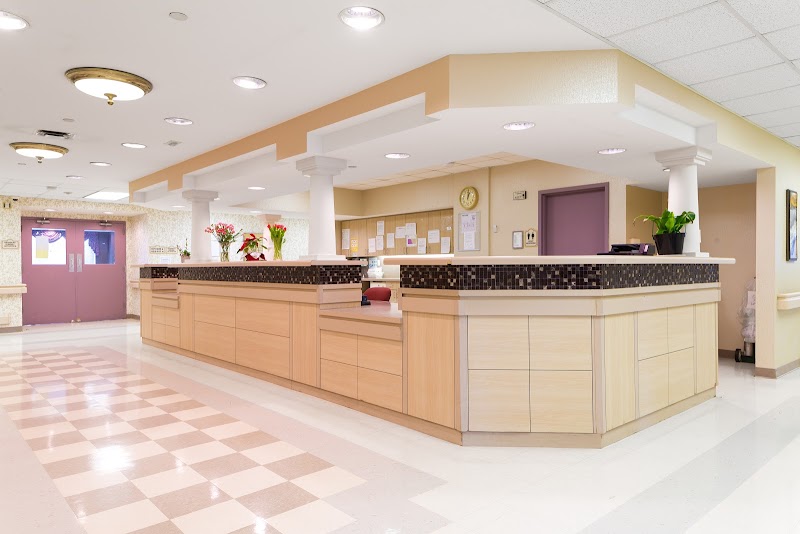
How Does Haym Solomon Home For The Aged Compare to Other New York Nursing Homes?

Compared to the 100 nursing homes in New York, HAYM SOLOMON HOME FOR THE AGED's overall rating (3 stars) is below the state average of 3.1, staff turnover (17%) is significantly lower than the state average of 46%, and health inspection rating (4 stars) is above the national benchmark.

What Should Families Ask When Visiting Haym Solomon Home For The Aged?

Based on this facility's data, families visiting should ask: "Can you walk me through typical staffing levels on day, evening, and night shifts?" "Can I visit during a mealtime to observe dining assistance and food quality?" "How do you handle medical emergencies, and what is your hospital transfer rate?" "Can I speak with family members of current residents about their experience?" These questions are particularly relevant given the below-average staffing rating.

Is Haym Solomon Home For The Aged Safe?

Based on CMS inspection data, HAYM SOLOMON HOME FOR THE AGED has a clean safety record: no substantiated abuse findings (meaning no confirmed cases of resident harm), no Immediate Jeopardy citations (the most serious violation level indicating risk of serious injury or death), and is not on the Special Focus Facility watch list (a federal program monitoring the lowest-performing 1% of nursing homes). The facility has a 3-star overall rating and ranks #100 of 100 nursing homes in New York. While no facility is perfect, families should still ask about staff-to-resident ratios and recent inspection results during their visit.

Do Nurses at Haym Solomon Home For The Aged Stick Around?

Staff at HAYM SOLOMON HOME FOR THE AGED tend to stick around. With a turnover rate of 17%, the facility is 29 percentage points below the New York average of 46%. Low turnover is a positive sign. It means caregivers have time to learn each resident's needs, medications, and personal preferences. Consistent staff also notice subtle changes in a resident's condition more quickly. Registered Nurse turnover is also low at 11%, meaning experienced RNs are available to handle complex medical needs.

Was Haym Solomon Home For The Aged Ever Fined?

HAYM SOLOMON HOME FOR THE AGED has been fined $8,512 across 1 penalty action. This is below the New York average of $33,164. While any fine indicates a compliance issue, fines under $50,000 are relatively common and typically reflect isolated problems that were subsequently corrected. Families should ask what specific issues led to these fines and confirm they've been resolved.

Is Haym Solomon Home For The Aged on Any Federal Watch List?

HAYM SOLOMON HOME FOR THE AGED is not on any federal watch list. The most significant is the Special Focus Facility (SFF) program, which identifies the bottom 1% of nursing homes nationally based on persistent, serious quality problems. Not being on this list means the facility has avoided the pattern of deficiencies that triggers enhanced federal oversight. This is a positive indicator, though families should still review the facility's inspection history directly.