HOPKINS CENTER FOR REHABILITATION AND HEALTHCARE
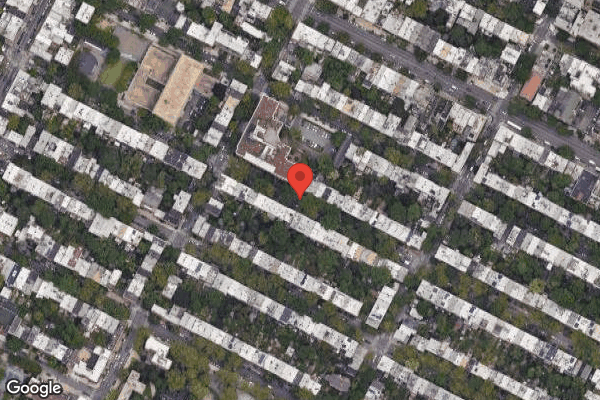
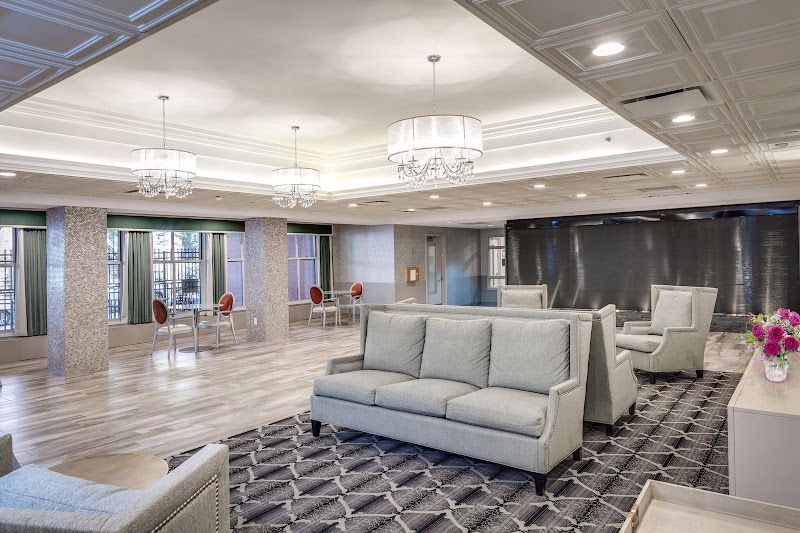
155 DEAN STREET, BROOKLYN, NY 11217 (718) 694-6700
For profit - Corporation 288 Beds CENTER MANAGEMENT GROUP Data: November 2025
Trust Grade
86/100
#50 of 594 in NY
Last Inspection: April 2024

Within standard 12-15 month inspection cycle. Federal law requires annual inspections.

Overview

Hopkins Center for Rehabilitation and Healthcare has a Trust Grade of B+, which means it is above average and recommended for families looking for care. It ranks #50 out of 594 nursing homes in New York, placing it in the top half of facilities in the state, and #5 out of 40 in Kings County, indicating there are only a few better local options. The facility shows an improving trend, with issues decreasing from five in 2022 to just two in 2024. While it has a strong overall rating of 5 out of 5 stars for quality measures, its staffing rating is only 2 out of 5 stars, reflecting below-average performance, although a turnover rate of 27% is better than the state average. However, the facility has faced some concerns, including not adequately informing residents about their rights to file complaints and failing to make survey results easily accessible to residents. Additionally, there was an issue where a resident's smoking agreement was not properly documented, which could lead to safety concerns. Overall, while there are strengths in quality of care, families should be aware of these weaknesses and ensure they are addressed.

Trust Score
B+
86/100
In New York
#50/594
Top 8%
Safety Record
Low Risk
No red flags
Inspections
Getting Better
5 → 2 violations
Staff Stability
✓ Good
27% annual turnover. Excellent stability, 21 points below New York's 48% average. Staff who stay learn residents' needs.
Penalties
⚠ Watch
$4,226 in fines. Higher than 97% of New York facilities. Major compliance failures.
Skilled Nurses
⚠ Watch
Each resident gets only 27 minutes of Registered Nurse (RN) attention daily — below average for New York. Fewer RN minutes means fewer trained eyes watching for problems.
Violations
⚠ Watch
14 deficiencies on record. Higher than average. Multiple issues found across inspections.
★★★★★
5.0
Overall Rating
★★☆☆☆
2.0
Staff Levels
★★★★★
5.0
Care Quality
★★★★★
5.0
Inspection Score
Stable
2022: 5 issues
2024: 2 issues

The Good

  • 5-Star Quality Measures · Strong clinical quality outcomes
  • Low Staff Turnover (27%) · Staff stability means consistent care
  • Full Sprinkler Coverage · Fire safety systems throughout facility
  • No fines on record
  • Staff turnover is low (27%)

    21 points below New York average of 48%

Facility shows strength in quality measures, staff retention, fire safety.

The Bad

Federal Fines: $4,226

Below median ($33,413)

Minor penalties assessed

Chain: CENTER MANAGEMENT GROUP

Part of a multi-facility chain

Ask about local staffing decisions and management

The Ugly 14 deficiencies on record

Apr 2024 2 deficiencies
CONCERN (D)

Potential for Harm - no one hurt, but risky conditions existed

Infection Control (Tag F0880)

Could have caused harm · This affected 1 resident

Based on observations, record review, and interviews conducted during the Recertification Survey from 04/07/2024 to 04/12/2024, the facility did not ensure infection control practices were followed. T...

Read full inspector narrative →
Based on observations, record review, and interviews conducted during the Recertification Survey from 04/07/2024 to 04/12/2024, the facility did not ensure infection control practices were followed. This was evident during the Dining Task for 1 of 4 dining rooms. Specifically, Certified Nursing Assistant #8 did not perform hand hygiene in between residents while assisting multiple residents with hand hygiene prior to lunch being served. The findings are: The facility policy titled Hand Washing/Hand Hygiene that was revised on 02/2023 documented that facility considers hand hygiene the primary means to prevent the spread of infections. All personnel shall follow the handwashing/hand hygiene procedures to help prevent the spread of infections to other personnel, residents, and visitors. The policy stated to use an alcohol-based hand rub containing at least 62% alcohol or alternatively soap (antimicrobial or nonantimicrobial) and water before and after direct contact with residents, after contact with a resident's intact skin, before and after assisting a resident with meals. During dining observation on 04/09/2024 between 12:54 PM and 12:59 PM, Certified Nursing Assistant #8 was observed passing out hand wipes and assisting residents with hand hygiene in the dining room with bare hands. Certified Nursing Assistant #8 assisted Resident #61 in cleaning their hands with wipes, then proceeded to clean Resident #163's hands without performing hand hygiene in between residents. Certified Nursing Assistant then took clean hand wipes from the container and passed the wipes to Residents #221, #40, and #212. Certified Nursing Assistant #8 picked up a used hand wipe from the table and cleaned their hands with a hand sanitizer. During an interview on 04/09/2024 at 1:06 PM, Certified Nursing Assistant #8 stated they were supposed to clean their hands in-between residents to prevent the spread of germs from one resident to another. Certified Nursing Assistant #8 stated they did hand hygiene after they noticed they had not performed hand hygiene in between residents. During an interview on 04/10/2024 at 03:47 PM, Assistant Director of Nursing #1, who was the Infection Preventionist, was interviewed and stated staff should perform hand hygiene before contact with each resident. They stated hand hygiene should be performed to prevent the spread of infection to staff and residents in the facility. 415.19(b)(4)
MINOR (C)

Minor Issue - procedural, no safety impact

Staffing Data (Tag F0851)

Minor procedural issue · This affected most or all residents

Based on interviews and record review conducted during the Recertification Survey conducted from 04/07/2024 through 04/12/2024, the facility did not ensure that the direct care staffing information ba...

Read full inspector narrative →
Based on interviews and record review conducted during the Recertification Survey conducted from 04/07/2024 through 04/12/2024, the facility did not ensure that the direct care staffing information based on payroll data was submitted based on the schedule specified by the Centers for Medicare and Medicaid Services. Specifically, the facility failed to submit the direct care staffing data for 10/01/2023 - 12/31/2023 timely. The findings are: The Centers for Medicare & Medicaid Services Electronic Staffing Data Submission Payroll-Based Journal, Long Term Care Facility Policy Manual version 2.6 dated 06/2022 documented Section 6106 of the Affordable Care Act requires facilities to electronically submit direct care staffing information (including agency and contract staff) based on payroll and other auditable data. Direct care staffing and census data will be collected quarterly and is required to be timely and accurate. Staffing and census data will be collected for each fiscal quarter. The deadline for submissions must be received by the end of the 45th calendar day (11:59 PM Eastern Time) after the last day in each fiscal quarter in order to be considered timely. The facility policy titled Payroll-Based Journal with a last revised date of 09/13/2023 documented that the Payroll Based Journal report will be submitted electronically to the Centers for Medicare and Medicaid Services via the designated submission portal by the 45th day following the close of each fiscal quarter by the facility designated person. The Centers for Medicare and Medicaid Services Payroll Based Journal Staffing Data Report documented that there was no data submitted by the facility for the fiscal year quarter 1 2024 (10/01 - 12/31). An email correspondence that was addressed to the Administrator of the facility dated 02/15/2024 at 12:07 am documented that the facility's Payroll Based Journal submission had failed because Centers for Medicare and Medicaid Services was no longer accepting submissions for the reporting quarter. The report was submitted to CMS on 02/15/2024 at 12:01 am. An email correspondence from Centers for Medicare and Medicaid Services Nursing Home Staffing that was addressed to the Administrator dated 02/15/2024 at 10:30 am documented it was not possible to submit or correct Payroll Based Journal data once a submission deadline had passed. During an interview on 04/07/2024 at 1:55 pm, the Administrator stated they were responsible for submitting the staffing data to Centers for Medicare and Medicaid Services. They stated they tried to submit the staffing data for the first quarter a minute late, but it did not go through. The Administrator stated they attempted to resubmit and contacted the Centers for Medicare and Medicaid Services, but they received a message that it was too late to submit the quarterly staffing. The Administrator stated they were aware of the deadline to submit the data but did not give a reason why the staffing data was submitted late. 10 NYCRR 400.2
Mar 2022 5 deficiencies
CONCERN (D)

Potential for Harm - no one hurt, but risky conditions existed

ADL Care (Tag F0677)

Could have caused harm · This affected 1 resident

**NOTE- TERMS IN BRACKETS HAVE BEEN EDITED TO PROTECT CONFIDENTIALITY** Based on observations, record review, and interviews conducted during the recertification and abbreviated survey, the facility d...

Read full inspector narrative →
**NOTE- TERMS IN BRACKETS HAVE BEEN EDITED TO PROTECT CONFIDENTIALITY** Based on observations, record review, and interviews conducted during the recertification and abbreviated survey, the facility did not ensure that a resident who is unable to carry out Activity of Daily Living (ADL) receives the necessary services to maitain personal hygiene. Specifically, Resident #44 was not provided assistance with toileting as recommended in the resident's Activity of the Daily Living. This was evident for 1 resident reviewed for Activity of Daily Living out of a sample of 38 Residents The facility's policy, procedure, and information titled Activity of the Daily Living was reviewed on 12/2021. The policy documented Purpose: is to support the resident who is certain to decline in order to lessen the likelihood of complications e.g. pressure ulcers and contractures. Procedure: The nursing assistant will follow the plan of care as per instruction and document in plan of care. The nurses notes will indicate the resident's performance, the resident' participation and the resident's refusal. The finding is Resident #44 was [AGE] years old with diagnoses which included: Protein-calorie Malnutrition, Vitamin D Deficiency, Hemiplegia and Hemiparesis following cerebral infarction affecting right dominant side. The Quarterly Minimum Data Set (MDS) dated [DATE] documented the resident had a Brief Interview of Mental Status (BIMS) score of 11/15, indicating moderately impaired cognition. The resident required extensive assistance of 2 people for transfers and toileting and limited assistance of one person for personal hygiene. On 3/15/2022 at 4:45 PM, Resident #44 was observed laying in bed on a wet sheet. The residents daughter was visiting at the time. The residents daughter was upset about the condition she had found the resident in and showed the surveyor a wet diaper that she had just changed herself without telling anyone. Resident was laying in bed all day, refusing to get out of bed. The Comprehensive Care Plan dated 3/1/22 documented the resident requires extensive assistance of 2 persons for toilet use. The goal is for the resident to remain clean, neat and odor free. The evaluation was for staff to continue assisting the resident with anticipated needs. On 3/15/2022 at 4:48 PM, the resident's daughter was interviewed and stated she had found the resident wet in bed. The residents daughter stated she visits her father once or twice a week. The residents daughter further stated over the course of a month she will find the resident wearing a soaked diaper once or twice. On observation, resident noted with no skin breakdown but some redness. On 3/15/2022 at 6:11 PM, Certified Nursing Assistant (CNA) #8 was interviewed. CNA #8 stated the resident did not ask for assistance to be changed today. CNA #8 further stated the resident usually asks for assistance when they want to be changed. Furthermore, CNA #8 stated that they did not know if the resident needed to be changed. The CNA assigned to the resident stated they usually checks for wet diapper 2-3 times during the shift. On 3/16/2022 at 10:18 AM, CNA #9 was interviewed. and stated on 3/15/2022 during the 7-3 shift, resident was changed once in the morning at around 10:30 AM. CNA #9 stated the resident refused to be changed a second time after lunch and it was not documented. CNA #9 furthermore, she stated when the resident refused, they should have reported it to the nurse. CNA # 9 reported the resident has a history of refusing ADL care. On 3/15/2022 at 5:38 PM, the Registered Nurse (RN) manager #7 was interviewed. The RN manager stated during the shift, they will check on the CNAs while they are working in the rooms with the residents to make sure residents are getting the proper care. 415.12(a)(3)
CONCERN (D)

Potential for Harm - no one hurt, but risky conditions existed

Deficiency F0688 (Tag F0688)

Could have caused harm · This affected 1 resident

**NOTE- TERMS IN BRACKETS HAVE BEEN EDITED TO PROTECT CONFIDENTIALITY** Based on observations, record review, and staff interviews during the recertification survey, the facility did not ensure a resi...

Read full inspector narrative →
**NOTE- TERMS IN BRACKETS HAVE BEEN EDITED TO PROTECT CONFIDENTIALITY** Based on observations, record review, and staff interviews during the recertification survey, the facility did not ensure a resident with limited Range of Motion (ROM) received appropriate treatment and services to increase ROM and/or to prevent further decrease in ROM. Specifically, a resident with a left-hand contracture was not provided with a splint device/Rolled Gauze as per physician order. This was evident in 1 of 1 resident reviewed for physical restraint, out of 38 sample residents. (Resident # 144) The finding is. Resident # 144 had diagnoses which include Dementia, Contracture of Joints, and Osteoarthritis. The most Minimum Data Sets Assessment (MDS) dated [DATE] documented the resident had severely impaired cognition. The MDS further documented the resident required a total assistance when performing Activity of Livings (ADLS), and the resident had impairment on both upper extremities and lower extremities. On 03/11/22 between 11:29 AM and 12:45 PM, the resident was observed on the recliner wheelchair in the day room. The resident's left hand was observed to be contracted with no splint device/rolled gauze in place. Subsequent observations of the resident were also made on 03/14/22 at 10:41 AM and 03/14/22 at 11:53 AM where the resident was observed not wearing a splint device/rolled gauze. A Physician's Order dated 02/24/22 documented the following: Therapeutic Devices Using rolled gauze. Apply gauze roll to left hand at all times. Remove daily and replace for skin check, hygiene, and range of Motion (ROM) as ordered. A review of Rehabilitation Note titled Discharge Accommodations and Status dated 11/04/20 to 12/2/20 documented the following: Functional maintenance program established and trained to nursing: Using rolled gauze apply to left hand at all times, remove daily and replace for skin check, hygiene and during range of motion exercise. On 03/15/22, a review of the Certified Nursing Assistant (CNA) records dated from 02/01/22 to 3/15/22 revealed the following: Apply gauze roll to left hand at all times. Remove daily and replace for skin check, hygiene and range of Motion (ROM) as ordered. A further review revealed no documentation the daily application of gauze to left hand was completed. On 03/15/22 at 12:04PM, an interview conducted with CNA #1. CNA #1 stated they were assigned to resident #144. CNA #1 stated resident #144 was initially admitted to another unit and stated they were never made aware the resident uses hand rolls. CNA #1 stated they were made aware of the splint on Monday 03/14/22 during the morning meeting. CNA #1 also stated that, usually they get reports from the nurse manager, but never received a report from anyone that the resident does have a rolling gauze order. When asked if the application of left hand gauze is on the CNA task, they replied No. On 03/16/18 at 11:54 AM, the Registered Nurse Supervisor (RNS) was interviewed. RNS #1 stated the resident has a left hand and arm contracture which is treated with a rolling gauze. RNS #1 stated the CNA receives morning report, and they are fully aware of any devices on their daily tasks that need to be carried out. RNS #1 also stated they supervise the CNAs when they make rounds. However, RNS #1 could not tell how they did not know the resident was not receiving the left hand gauze. On 03/17/22 at 2:30 PM, the DON (Director of Nursing) was interviewed during the QA meeting. The DON stated they conduct daily rounds to make sure residents have on their splint devices. The DNS stated they remind nursing staff which residents need to have a splints on. The DON further stated they were not sure why resident the did not have a splint on. 415.12(e)(2)
CONCERN (D)

Potential for Harm - no one hurt, but risky conditions existed

Medical Records (Tag F0842)

Could have caused harm · This affected 1 resident

**NOTE- TERMS IN BRACKETS HAVE BEEN EDITED TO PROTECT CONFIDENTIALITY** Based on interviews and record review conducted during the recertification survey the facility did not ensure that medical recor...

Read full inspector narrative →
**NOTE- TERMS IN BRACKETS HAVE BEEN EDITED TO PROTECT CONFIDENTIALITY** Based on interviews and record review conducted during the recertification survey the facility did not ensure that medical records were maintained in accordance with accepted professional standards and practices that were complete and accurately documented for each resident. Specifically, Certified Nursing Assistants (C.N.A'S) documented completion of application of gauze roll to left hand in the medical record when they were not being provided. This was evident in 1 of 1 resident reviewed for physical restraint, out of 38 sample residents. (Resident # 144) The finding is. Resident # 144 had diagnoses which include Dementia, Contracture of Joints, and Osteoarthritis. As per the most Minimum Data Sets assessment dated [DATE] documented that the resident had severely impaired cognition. The MDS also documented the resident required a total assistance when performing Activity of Livings (ADLS). The MDS further documented that the resident had impairment on both upper extremities and lower extremities. On 03/11/22 between 11:29 AM and 12:45 PM, the resident was observed on the recliner wheelchair in the day room. The resident's left hand was observed to be contracted with no splint device in place. Subsequent observations of the resident were also made on 03/14/22 at 10:41 AM and 03/14/22 at 11:53 AM without a splint device in place. A Physician order dated 02/24/22 documented the following: Therapeutic Devices Using rolled gauze Apply gauze roll to left hand at all times. Remove daily and replace for skin check, hygiene and range of Motion (ROM) as ordered. A review of rehab note titled Discharge Accommodations and Status dated 11/04/20 to 12/2/20 documented the following: Functional maintenance program established and trained to nursing: Using rolled gauze apply to left hand at all times, remove daily and replace for skin check, hygiene and during range of motion exercise. On 03/15/22, a review of the C.N.A records dated from 02/01/22 to 3/15/22 revealed the following: Apply gauze roll to left hand at all times. Remove daily and replace for skin check, hygiene and range of Motion (ROM) as ordered. A further review of the CNA records also revealed daily documentation that the daily application of gauze to left hand was applied. On 03/15/22 at 12:04 PM, an interview conducted with the Certified Nursing Assistant (CNA) #1 stated they are assigned to and are familiar with resident. CNA #1 stated the resident was initially admitted to another unit and that I was never aware that the resident uses hand rolls. CNA #1 stated they were made aware about the gauze roll on Monday 03/14/22 during the morning meeting. CNA #1 also stated they usually get reports from the nurse manager, but I never received such from anyone that the resident has a rolling gauze order. When asked CNA #1 if the application is on the C.N.A task, they replied No. On 03/16/18 at 11:54 AM, the Registered Nurse Supervisor (RNS #1) was interviewed.and stated the resident has a left hand and arm contracture which is treated with a rolling gauze. They stated the CNA receives morning report making them aware of devices, and they are fully aware of any devices on their daily tasks need to be carried out. RNS#1 stated they supervise the CNAs by making rounds. However, RNS#1 could not tell the surveyor why they did not know the resident was not receiving the device On 03/17/22 at 2:30 PM, the DON (Director of Nursing) was interviewed during the QA meeting and stated they conduct daily rounds to make sure residents have on their splint devices. The DON stated they remind nursing staff which residents need to have a splints on. The DON further stated they are not sure why resident the did not have a splint on. 415.22(a)(1,2)
CONCERN (E)

Potential for Harm - no one hurt, but risky conditions existed

Accident Prevention (Tag F0689)

Could have caused harm · This affected multiple residents

**NOTE- TERMS IN BRACKETS HAVE BEEN EDITED TO PROTECT CONFIDENTIALITY** 2) Resident #203 was admitted to the facility on [DATE] with diagnoses of Paranoid Schizophrenia, Chronic Kidney Disease, and Ch...

Read full inspector narrative →
**NOTE- TERMS IN BRACKETS HAVE BEEN EDITED TO PROTECT CONFIDENTIALITY** 2) Resident #203 was admitted to the facility on [DATE] with diagnoses of Paranoid Schizophrenia, Chronic Kidney Disease, and Chorinic Obstructive Pulminary Disease. The most recent MDS assessment dated [DATE] documented resident #203 had a BIMS score of 10, significant for moderate cognitive impairment. Resident #203 had participated in the assessment, no family of significant other participated in the assessment and resident has no guardian or legally authorized representative. It also documented that resident had clear speech, was able to make self-understood, and was usually able to understand others. Smoking assessment dated [DATE] documented the resident is considered safe to smoke. It also documents that education was provided, smoking rules were given and that a smoking contract was signed. A smoking agreement was not located in the paper chart for Resident #203. On 3/17/22 at 2:10pm, the Director of Social Work (DSW) brought a copy of a smoking agreement for Resident #203 to the conference room. The DSW stated the resident did not sign agreement because they have trouble with their hands. Additionally, the DWS stated the reason the resident did not sign was because the resident is not a smoker and that the cigarettes in his night table must have been over a year old. Social Services Care Plan titled Smoking established 9/20/21 documented the resident is an independent smoker and requests that the facility purchase cigarettes on their behalf. Goals are that resident will not present a danger to self or others due to unsafe smoking for (90) days and resident will comply with smoking policy for (90) days. Interventions included educate resident and family/friends on bringing cigarettes to facility for resident use, observe resident for safe smoking habits and provide direction as needed, provide resident with a copy of the smoking contract, review and obtain signature, provide resident with a smoking apron while smoking. Social Work Progress Notes dated 9/20/21 at 4:51:27PM and 11/2/21 at 12:10:41PM documented that Resident #203 is a smoker and smoking rules and policies were discussed, and he/she was in agreement. Observation made on 3/11/22 at 2:10PM revealed that Resident #203 had smoking materials in their possession. Specifically, an open pack of [NAME] cigaretts box in the top night table drawer in a Ziploc bag. Observation was made with Certified Nursing Aide #1 (CNA #1). The resident did not respond to questions regarding smoking. On 03/16/22 at 09:49AM CNA #2 was interviewed. CNA #2 stated he/she helps Resident #203 with several care areas. CNA #2 stated the residents are not supposed to smoke indoors, the facility will provide a cover up while they smoke. CNA #2 stated first admitted , Resident #203 used to smoke often. CNA#2 stated he/she can wheel himself to go downstairs. Resident #203 is smoking less on the 7AM-3PM shift, normally the nurse keeps the cigarettes. If residents are alert enough, they get to keep their own cigarettes, otherwise security keeps the product downstairs. Smoking materials are labeled with the person's room number in a cabinet in the medication room On 03/16/22 at 11:40 AM the Registered Nurse Supervisor (RNS) was interviewed. The RNS stated he/she started in November 2021. Resident #203 is not a smoker. The RNS stated they never saw the resident go downstairs to smoke. Per the smoking policy, the paraphernalia is supposed to be downstairs, they have certain set smoking times that they go downstairs for smoking. The RNS knows the known smokers that go down every day. RNS stated that they never hold any smoking equipment on the unit. She has never been told that Resident #203 was a smoker. The RNS stated they never looked into it. The RNS stated they will tell the social worker and he/she will take the cigarettes out. The RNS stated he/she doesn't remember about the in-services regarding smoking. When asked how residents may have gotten the cigarettes, the RNS stated the family brings them and residents sometimes give cigaretts to friends. The Social Worker does the care plan for smoking and handles it if there's an issue with smoking. On 03/16/22 at 11:55 AM the Social Worker (SW) was interviewed. The SW stated Resident #203 has days where he doesn't want to be bothered and can be moody. SW states that when Resident #203 first came in they said they were a smoker, but the resident has never smoked since they began working in the facility. The SW stated if the resident decides to start smoking again the care plan is there. The SW stated the care plan doesn't state how they would receive cigarettes. The SW stated the policy for smoking in the facility is the cigarettes must be stored in a locked box. On 03/16/22 12:05PM the Director of Social Work (DSW) was interviewed. The DSW stated he/she has worked at the facility since August 2021. DSW stated that Resident #203 is not a smoker. On 03/17/22 at 12:00 PM the Security Guard (SG) was interviewed. The SG stated they worked at the facility for 6 years. The SG stated Resident #203 doesn't come down to smoke, SG shows this writer the smoking log book. The book only has current day and yesterday documented. Resident #203's name is on the list of smokers, nothing is checked off for him. SG stated that the process is that SW holds the cigarettes when resident is first admitted and brings the cigarettes to the security desk. They are kept in a lock box. The resident's don't wear anything to prevent themselves from lighting themselves on fire. They are very alert. On 03/17/22 at10:52 AM the Director of Nursing (DON) was interviewed. The DON stated that the RNS recently started working at the facility, the reason they didn't know about the smoking was because Resident #203 doesn't come off of the unit. The DON reported the RNS should have been aware the cigarettes were in the resident's night table. The DON stated residents should not have cigarettes in their possession. DON stated that the facility doesn't provide or buy cigarettes for residents. 3) Resident #62 was admitted to the facility with diagnosis which include Other Chronic Pain, Malignant Neoplasm of Prostate, and Anemia. Quarterly Minimum Data Set (MDS) dated [DATE] documented adequate vision and no corrective lenses, intact cognition, and independent with ADLs. A review of the most recent resident smoking assessment dated [DATE] documented the resident was considered safe to smoke. Education was provided and smoking rules given, contract signed copy in chart, smoking care plan initiated. The Smoking Contract documented the following I am not permitted to hold my own lighting materials (matches, lighter, etc). Staff will keep my lighter in a safe place. Staff will give it to me during smoking opportunity at designated area. I clearly understand staff will monitor my smoking practices to ensure abide by the rules and regulations governing smoking safety that may include environmental round in my room and adjacent common area. The smoking assessment was done on 3/11/2022 and documented Resident #62 signed a smoking contract and a copy was in the chart. The Smoking Care Plan dated 10/27/2021 documented, interventions include counsel resident on appropriate behavior while waiting to smoke in the smoking area, monitor behavior in the designated smoking area and provide direction, report behavior problems to social services. Observe resident for safe smoking habits and provide direction as needed. Report any unsafe smoking behavior to social services. Provide resident with a copy of the smoking contract, review, and obtain signature. Show the resident where the designated smoke area is located and how to access and provide resident with a smoking apron while smoking. Evaluation notes on 10/27/2021 documented resident is a smoker did not present a danger to self or others due to unsafe smoking. On 12/29/21 Quarterly Assessment for ARD dated 12/28/21 documented the resident is a smoker and did not present a danger to self or others due to unsafe smoking. On 03/11/22 02:16 PM, Resident #62 was observed with 1 full pack [NAME] cigarettes in their closet. On 03/11/2022 at 02:03PM and on 03/15/2022 at 04:50PM Resident #62 was interviewed and stated they keep their own cigarettes keep in their pocket. The resident stated they have [NAME] cigarettes and security keep the lighter. Resident #62 stated that they are not a heavy smoker, have been smoking for years, and have been smoking since they got to the facility. The resident stated they don't smoke in their room. On 03/15/2022 at 05:33PM, Certified Nursing Assistant (CNA ) #5 was interviewed and stated resident #62 smokes. CNA # 5 denied seeing any cigarettes in the residents room or on the resident. CNA #5 stated they are aware of the smoking protocol that residents are not supposed to smoke in the nursing home, and they have a designated smoking area. On 03/17/2022 at 12:12PM, Social Worker (SW) # 1 was interviewed. SW #1 stated resident #62 smokes. SW #1 stated all smoking materials should be locked in the lockbox downstairs. SW #1 stated they do not give out smoking materials to residents. They last saw Resident #62 on 12/29/2021 for a smoking assessment and they have a smoking agreement in place. SW#1 did not report being notified resident #62 had smoking materials in their posession. On 03/17/2022 at 12:50PM, Registered Nurse (RN #4) was interviewed and stated that resident #62 is a smoker. They in-service staff about smoking policy, orientation for staff, let know residents who smokes, smoking time, and residents should not have cigarettes in their room. Residents are not allowed to smoke in the facility, they are only allowed to smoke outside. RN #4 reported when they provide care they check to see if residents have any smoking materials (lighters, paper rolls for smoking, cigarettes, cigars and electronic cigarettes). RN #4 reported if they find anything they would inform nurse in charge and nurse would document and inform the social worker also. RN #4 reported they get annual in-service on the smoking policy. RN #4 reported rounds done a few times during the day do spot checks on the unit look to see if smell smoke on the unit. If notice any concerns they inform DON and SW about it and they will call security and check search resident room and remove items. RN #4 reported there have been no smoking concerns on this unit that have been reported to them. 4) Resident #65 was admitted to the facility with diagnosis that includes End Stage Renal Disease, Muscle Weakness Generalized, , Major Depressive Disorder single episode unspecified, and Type 2 Diabetes Mellitus. The admission Minimum Data Set (MDS) dated [DATE] documented the resident had adequate vision, no corrective lenses with intact cognition and required extensive assistance with bed mobility/transfer/dressing/personal hygiene. The Quarterly Smoking assessment on 10/26/2021 documented the resident becomes aggressive when redirected about smoking habit, smokes in unauthorized areas, sells/distributes cigarettes to other residents, receptive to using a cigarette holder. Decision: education provided, and smoking rules given, contract signed copy in chart. Smoking care plan initiated. The Assessment titled Resident Smoking dated 01/11/2021 and 03/15/2021 documented the resident is considered a safe smoker and education provided and smoking rules given, contract signed copy in chart and smoking care plan initiated and was signed by social worker, activity representative and registered nurse. The signed smoking agreement for independent smokers documented I am not permitted to hold my own lighting materials (matches, lighter, electronic-cigarette, etc). Staff will keep my lighter in a safe place. Staff will give me during smoking opportunity at designated area. The Annual, Quarterly, Episodic Smoking Agreement Review paper documented that it was signed on 01/11/2021 and 03/15/2021 by Resident #65. The Smoking Care Plan dated 12/24/2021 and interventions documented include monitor behavior in the designated smoking area and provide direction. Report behavior problems to social services, observe resident for safe smoking habits and provide direction as needed. Report any unsafe smoking behavior to social services, provide resident with a copy of the smoking contract review and obtain signature. Show resident where the designated smoke area is located and how to access. Evaluation notes include initial assessment on 12/27/2021 resident is independent smoking, compliant with smoking agreement, and continues to follow facility rules for smoking. Evaluation on 3/13/2022 documented resident participated in smoking policy and procedures. Focused meeting on 3/11/2022 documented as an outcome of the meeting resident signed new smoking contract which outlines their responsibilities to comply with safe smoking practices. Continue to monitor for ongoing compliance completed by the DSW. On 03/15/22 01:00 PM the resident was observed in the smoking area taking out cigars out of their pocket and lighting one. Security staff present in smoking area were looking at residents in the area. On 03/10/22 at 04:11 PM, the resident stated the security guard holds lighter and cigars. On 03/11/2022 at 01:54PM, Certified Nursing Assistant (CNA) # 4 was interviewed and stated they are aware that Resident #65 smokes and goes downstairs to smoke. CNA #4 reported there were no smoking materials in the residents room. On 03/11/2022 at 11:02AM, Security Guard (SG# 1) was interviewed. SG #1stated their job includes checking the patio area for smoking cigarette butts on patio. Security holds onto smoking materials for residents. All materials are labeled and kept in a lock box. Resident #65 smoked this morning and the resident prefers to hold onto their own smoking materials. SG #1 stated the social worker or recreation department give zip lock bag with smoking materials to the security guard. SG #1 stated they can't force resident to give smoking materials to security. On 03/11/2022 at 01:59PM, Licensed Practical Nurse (LPN) # 5 was interviewed. LPN #5 stated Resident #65 is a smoker. LPN #5 reported they have not noticed resident with smoking material. LPN #5 reported residents smoke on the patio and security keep cigarettes. Residents do not keep cigaretts or lighter, security does. On 3/17/2022 at 12:23PM, Social Worker (SW # 1) was interviewed and stated the resident is a smoker. The last smoking assessment for the resident was on 3/11/2022 and prior assessment was on 12/27/2021. SW #1 reported there were no smoking related concerns and resident is compliant with smoking. Materials for smoking kept downstairs in security lock box. 5) Resident #119 was admitted to the facility with diagnosis that included Opioid Abuse Uncomplicated, Heart Disease Unspecified, and Unspecified Asthma. The most recent Quarterly Minimum Data Set (MDS) dated [DATE] and Annual MDS on 1/17/2022 documented the resident had adequate vision and no corrective lenses, intact cognition and required supervision with Activity of Daily Living and had impairment on one side of upper extremity. The resident did not have a smoking contract on file secondary to refusal to sign smoking contract as per the DSW. The Resident Smoking assessment dated [DATE] documented resident is considered a safe smoker, education provided, and smoking rules given, contract signed copy in chart and smoking care plan initiated. The Smoking Care Plan as of 6/10/2021 documented interventions monitor behavior in the designated smoking area and provide direction. Report behavior problems to social services. Provide resident with a copy of the smoking contract. Review and obtain signature. Provide resident with a smoking apron while smoking. Evaluations documented on 7/16/2021 resident is a smoker and following facility smoking rule. On 10/27/2021 and 1/17/2022 document resident is independent smoking compliant with smoking agreement and continue to follow facility rules of smoking. The Smoking care plan as of 9/8/2017 documented goals included resident independent smoker (6/10/2021), resident receives cigarette from family/friends, resident has been incompliant with smoking policy. Interventions include counsel resident on appropriate behavior while waiting to smoke or in smoking area, observe for safe smoking habits and provide direction as needed. Report any unsafe smoking behavior to social services, suspend or terminate smoking privileges if violations to policy occur, provide resident with a copy of the smoking contract review and obtain signature. The Smoking Care Plan dated 6/10/2021 documented the following interventions: Counsel resident on appropriate behavior while waiting to smoke or in the smoking area, monitor behavior in the designated smoking area and provide direction, report behavior problems to social services. Observe resident for safe smoking behavior to social services. Provide resident with a copy of the smoking contract, review and obtain signature. Show resident where the designated smoke area is located and how to access. Suspend or terminate smoking privilege if violations to policy occur. Evaluations: 7/16/2021 Quarterly for ARD resident is a smoker and following facility policy rule. On 03/11/22 at 02:21 PM the resident was interviewed and stated that they smoke a few times a day, they hold own lighter, and cigarettes did not sign any smoking agreement for giving up their rights. During the interview the resident was observed with 10 cigars in their room wall locker and a lighter in possession. In a second interview on 03/11/22 10:38 AM, Resident #119 stated they are a smoker and hold own smoking materials. Resident #119 was observed with a used cigar with about 1/3 remaining in metal container and had a lighter in their pocket. Resident stated that they did not sign a smoking contract. They go downstairs to smoke in the terrace. They stated that no smoking apron offered and that they have not burned clothes or hands. They stated that they smoke daily goes to smoke before their visitor arrives. In a third interview on 03/15/22 at 05:02 PM, the resident stated they have never smoked in their room, but they smoke in the lobby. They stated that no one bothers them when they smoke, and they smoke on the downlow. The resident stated they have a cigar and metal container to keep safe and keep it in their pocket. The resident stated they keep my own cigars and lighter. On 03/15/2022 at 05:37PM, Certified Nursing Assistant (CNA) #5 was interviewed and stated resident #119 smokes. CNA #5 stated they have smelled smoke when walking into resident room and the resident smokes all the time. CNA #5 reported if they see a resident smoking they have to report it. On 03/17/2022 at 12:02PM, Social Worker (SW #1) was interviewed and stated the smoking assessment are done to ensure residents are safe to smoke. SW# 1 stated they assess the resident to see if they are able to smoke with supervision. SW #1 stated cigars and cigarettes should be locked in the lockbox and residents should return cigarettes and lighters into the lock box when they are done smoking. SW #1 stated they are not aware of residents keeping their smoking materials and not returning them to the security guards. It is a safety hazards for resident and the entire facility if resident does not comply with the smoking policy. They do observations of the smoking area on the 1st floor to observe smoking residents. If notified that a residents has any cigarettes we have to go to room and ask resident to show items in draws, pockets and ask them to hand over item. They have not spoken with Resident #119 about safe smoking, and they have noticed the resident smoking in a designated smoking area on the 1st floor. On 03/11/2022 at 01:41PM, Security Guard (SG # 2) was interviewed and stated they observe resident smoking from 0900-930AM, 100-130PM and 600-630PM. SG #2 stated they do not hold smoking material for all the residents. Residents who can't understand we have materials in the pan and we have to keep materials for them. The security guard checked off the residents who keep their own smoking materials from this list and stated they keep smoking materials for two residents who are not considered safe smokers. 415.12(h)(1) Based on observation, record review, and interviews conducted during the Recertification Survey the facility did not ensure each resident received adequate supervision to prevent accidents. Specifically, multiple residents were observed with smoking materials (packs of cigarettes and lighters) in their possessions. The facility allowed residents to keep packs of cigarettes and lighters in their clothing and closets, and the facility security personnel allowed residents to leave the smoking room with smoking materials. This was evident for 5 of 5 residents reviewed for accident hazards, out of 38 sampled residents. (Residents # 62, #65, #80,#119, #203) The findings are: 1) The facility policy and procedures titled Smoking Policy first dated 04/25/11, revised 06/03/21 documented the following: Facility is a smoke free facility, and the residents and families are advised of this practice during the pre-admission screenings and in the facility admission agreement. The policy also documented that the residents are only allowed to smoke in the smoking designated area with staff supervision. The policy further documented that a resident who smokes will enter a smoking contract, indicating that residents will not be permitted to hold lighting materials ( matches, lighter, cigarettes etc). Facility staff will keep their lighting materials in a safe place and staff to give it to residents during smoking. Resident # 80 was admitted to the facility on [DATE] with diagnoses which include, Coronary Artery Disease (CAD), Hypertension (HTN), and Depression. The most recent Minimum Data Set (MDS) assessment dated [DATE], documented the resident's cognitive status was intact, and the resident required supervision when performing Activity of Daily Livings (ADLS). A review of the most recent resident's smoking assessment dated [DATE] documented the resident is a safe smoker. The assessment also documented the resident received safe smoking education. A review of the most recent resident smoking contact agreement dated 2/21/22, documented the following I must not permit to hold my own lighting materials ( matches, lighter cigarettes etc). Staff will keep my smoking materials in a safe place. Staff will also give them to me during smoking time at the designated smoking area. Comprehensive Care Plan (CCP) for Smoking dated 10/27/21 documented the following: Resident will not present a danger to self or others due to unsafe smoking. Interventions include counsel resident on appropriate behavior while waiting to smoke or in the smoking area, observe resident for safe smoking habits and provide direction as needed, report any unsafe smoking behavior to social services. On 03/11/22 01:50 PM, the resident was observed in his room with smoking materials in his pocket (2 packs of [NAME] cigarettes and 2 lighters). The resident stated they had just came back from the smoking room, and they keep their smoking materials at all time. The resident further stated the staff and the security guard were aware the resident kept their own smoking materials. The resident then brought out 2 packs of [NAME] cigarettes, one was full and the other one was half full. The resident was also noted with 2 lighters in their pockets. On 03/11/22 at 01:50 PM, an immediate interview was conducted with the Certified Nursing Assistant (CNA) who was in the room at the time of the observation. The CNA stated they were not aware the resident had cigarettes in their pocket and that they suppose to keep it by the security. On 03/15/22 at 02:37 PM, an interview conducted with Director of Social Worker (DSW). The DSW stated they started working at the facility in August 2021. The DSW stated they should assess resident for smoking safety quarterly and as needed. The DSW stated the residents must comply with the rules and should not have smoking materials by themselves. The DSW stated the security personnel monitor the residents and keep the lock box for smoking materials. The DSW stated they were never aware that some residents have smoking materials in their rooms. On Friday 3/11/22 a meeting was held with all the smokers and and review the policy and procedure with them. All residents signed the contact agreement and everyone is clear about the requirements. On 03/16/22at 04:11 PM an interview was conducted with the Administrator. The Administrator stated the facility is a smoking facility and residents have to supervised by staff. The Administrator also stated they were not aware of resident having their own smoking materials. The Administrator stated the residents are allowed to get cigarrete anywhere, the facility must make sure the residents provide us with the materials so that we can secured them. The Admisntrator further stated the smoking concerns were never brought to them at the Quality Assusrance (QA) meeting. The Administrator reported the Aide will start doing inventory of smoking materials.
CONCERN (E)

Potential for Harm - no one hurt, but risky conditions existed

Food Safety (Tag F0812)

Could have caused harm · This affected multiple residents

Based on observations, record review, and interviews conducted during the Recertification survey, the facility did not ensure safe food handling and storage was practiced to prevent food-borne illness...

Read full inspector narrative →
Based on observations, record review, and interviews conducted during the Recertification survey, the facility did not ensure safe food handling and storage was practiced to prevent food-borne illness. Specifically, (1) expired food was found stored in the kitchen refrigerator and (2) 5-gallon bottles of emergency water were expired. This was evident during the Kitchen Observation task. The findings are: 1. The facility policy and procedure titled Food Safety Requirements dated 7/2021 documented food will be stored, prepared, and served in accordance with professional standards for food service safety. Food service safety refers to handling, preparing and storing food in ways that prevent foodborne illness. Refrigerated storage labeling, dating, and monitoring refrigerated food, including, but not limited to leftovers, so it is used by date, or frozen (where applicable)/discarded. On 03/10/2022 at 10:06AM during the initial tour of the kitchen in the walk-in refrigerator #1 the following was observed: sliced bologna labeled on 3/6/2022, a seprate container contained 3 bologna sandwhices and 3 bologna and cheese sandwhiches dated 3/11/2022. On 03/10/2022 at 10:14AM, the Dietary Aide was interviewed and stated they used the bologna that was dated 3/6/22 to make the 3 bologna sandwiches and 3 bologna and cheese sandwhiches. The Dietary Aide stated meat should be held for 2/3 days and then discarded. The Dietary Aide stated they receive food safety training daily. On 03/10/2022 at 10:42AM, the Acting Food Service Director (AFSD), was interviewed and stated the meat should have been discarded on 3/9/2022. The AFSD stated they do rounds of the walk in refrigerators daily to ensure food is labeled and dated. the AFSD stated they were busy this morning and did not check the refrigerators yet. On 03/11/2022 at 08:43AM, The Administrator came to the surveyor conference room and stated that they wanted to discuss the bologna that was found in the kitchen. The Administrator stated they should have done better and granted the lunchmeat should have been discarded on the night shift on the 9th and kitchen staff were in-serviced yesterday in regard to this. This should not rise to the level of deficiency that the facility should be cited. 2. The facility policy and procedure titled Emergency Water Supply revised on 1/01/2022 documented the policy of this facility to establish procedures to ensure that water is available to essential areas when there is a loss of normal water supply. The Dietary Manager maintains a 3-day supply of bottled water for drinking and cooking but no less than as specified by stated regulations. This water is stored 200 gallons with emergency food/paper product supply. The policy also documented if water is found to be discolored, it will be rotated out and used for non-portable water (emergency flushing of toilets etc)/. The facility policy and procedure titled Food and Nutrition Disaster Plan revised 11/2021 documented Emergency food, water and supplies for the planned menu pattern for 3 days. Water needed is 1 gallon per resident per day, for three days. The facility Emergency Water company memorandum dated 3/01/2022 documented that bulk quantities of 5000 gallon per truckload provided you have storage for it. In the event you don't have the storage capabilities, water packaged in 5-gallon returnable containers or cases of 1-gallon nonreturnable containers are available in whatever quantities you may require. The list provided of the Emergency 5-gallon bottles documented there were 51 bottles that expired on 2/4/2021 and the emergency water had expiration dates in 2016, 2018 and 2019. On 03/15/2022 at 11:45AM, the Emergency Water supply was observed and 52- 5-gallon bottles were dated 9/26/2016. Other bottles were noted with the expiration date of 02/2021. On 03/10/2022 at 10:26AM, and on03/15/2022 at 11:54AM and 2:40PM the AFSD was interviewed. The AFSD stated there are 240 gallons of water in dietary dry storage room and maintenance stores the 5 gallon bottles. The AFSD also stated the responsibility for the emergency water is shared between the Dietary and Maintenance Department. On 03/15/2022 at 02:44PM, the Director of Maintenance (DOM) was interviewed and stated the 5 gallon bottles of water have been stored in the holding room since they started working at the facility. The holding room is where water is stored for emergency when building shut down. The DOM reported some times expired residents are brought to the holding room where the water is kept if their bodies cannot be picked up right away. On 03/15/2022 at 02:59PM, the Assistant Administrator was interviewed and stated the emergency is water has been in the holding room for 1 year. The Assistant Administrator reported at tiimes expired residents are also stored in the holding room as well. On 03/17/2022 at 01:01PM, The Infection Preventionist was interviewed and stated they do rounds of the food storage two times a week with the Food Service Director. Look for expired items and discard right away. The Infection Preventionist stated they have not looked at the emergency water to see if it is expired. They stated a new water system was set up 1 month ago. Emergency water should not be stored in area where expired bodies are stored. The area is not cleaned and not safe for emergency water and may be exposed to the deceased process (breakdown of body, comorbidities before expiration) if the resident if emergency water stored in the area. 415.14 (h)
Aug 2019 7 deficiencies
CONCERN (D)

Potential for Harm - no one hurt, but risky conditions existed

Resident Rights (Tag F0550)

Could have caused harm · This affected 1 resident

**NOTE- TERMS IN BRACKETS HAVE BEEN EDITED TO PROTECT CONFIDENTIALITY** Based on observations and interview conducted during the Recertification survey, the facility did not ensure that a resident was...

Read full inspector narrative →
**NOTE- TERMS IN BRACKETS HAVE BEEN EDITED TO PROTECT CONFIDENTIALITY** Based on observations and interview conducted during the Recertification survey, the facility did not ensure that a resident was cared for in a manner that that maintained or enhanced his or her dignity. Specifically, a resident's Foley catheter bag and tubing were left uncovered and exposed to public view. This was evident for 1 of 2 residents reviewed for Dignity (Residents # 269). The findings are: Review of facility's policy Appropriate use of Indwelling catheters revised in March 2019 documented the nursing staff will ensure and maintain privacy of all residents with the use of dignity bags when the residents are out of bed to the wheelchair. Resident # 269 was admitted on [DATE] with diagnoses which include hemiplegia, hypertension, BPH, Renal insufficiency, septicemia, UTI, hyperlipidemia, aphasia, CVA and depression. The Minimum Data Set 3.0 (MDS) assessment dated [DATE] documented that the resident's cognitive level is severely impaired. The resident requires extensive assistance and two person assist for most activities of daily living. On 07/25/19 at 02:48 PM, 07/26/19 at 11:12 AM, 7/29/19 at 10:44 AM, and 07/30/19 at 11:07 AM, the resident was observed lying in the bed closest to the door of the room. The resident's Foley catheter drainage bag and catheter tubing were on the the side of the bed facing the door (right side). There was yellow urine draining into the uncovered catheter bag, and the catheter bag and tubing were visible from the hallway. On 07/30/19 at 11:22 AM, the Certified Nursing Assistant (CNA #1) was interviewed. CNA #1 stated that when a resident has an indwelling catheter, she ensures that there are no kinks and empties the Foley catheter bags when needed. When the residents are out of their rooms and in the wheelchairs, we would ensure the Foley catheter drainage bag is covered. While the residents are in bed, we place the Foley catheter drainage bag and tubing to the right side of the bed and off the floor. The Foley catheter drainage bag and tubing are not supposed to be covered while the residents are in bed. CNA # 1 also stated that Nursing administration have not informed her that the Foley catheter drainage bag and tubing are supposed to be covered at all times. On 07/30/19 at 11:53 AM, the Registered Nurse (RN #1) was interviewed. RN #1 stated that she supervises the LPNs and CNAs on the unit. RN #1 stated that when a resident has an indwelling Foley catheter, a privacy bag is used when the resident is out of the room. While the resident is in the bed, we ensure the resident is in a comfortable position. We place the Foley catheter bag and tubing to the right side of the bed. When the resident is in bed, the catheter bag and the tubing are not covered. RN #1 further stated that we only use privacy bags to cover the catheter drainage bag and tubing when the resident is sitting in the wheelchair and out of the room. On 08/01/19 at 01:17 PM, the Director of Nursing Services (DON) was interviewed. The DON stated that the policy of the facility is that when residents are taken out of the room, the catheter drainage bag and tubing have to be covered. While the residents are in bed, the catheter drainage bag and the tubing do not need to be covered. 415.5 (a)
CONCERN (D)

Potential for Harm - no one hurt, but risky conditions existed

Safe Environment (Tag F0584)

Could have caused harm · This affected 1 resident

**NOTE- TERMS IN BRACKETS HAVE BEEN EDITED TO PROTECT CONFIDENTIALITY** Based upon observation, record review and staff interview during the recertification survey, the facility did not ensure that ne...

Read full inspector narrative →
**NOTE- TERMS IN BRACKETS HAVE BEEN EDITED TO PROTECT CONFIDENTIALITY** Based upon observation, record review and staff interview during the recertification survey, the facility did not ensure that necessary housekeeping services to maintain a clean, sanitary, and comfortable interior were provided. Specifically, a resident's room and the common area in front of the elevators had a strong odor of urine. This was evident for 1 of 8 resident units observed for Environmental Observations (Unit 3W). The finding is: The facility policy titled Routine Cleaning and Disinfection dated 3/24/11 documented it is the facility's policy to ensure the provision of routine cleaning and disinfection of odor to provide a safe, sanitary environment and to prevent the development and transmission of infection to the extent possible. Consistent surface clearing and disinfection will be conducted with detail focus on high touch areas to include, but not limited: Toilet flush handles, Bed rails, Tray tables, Call buttons, TV remote, Telephone, Toilet seats, Monitor controls panels, touch screen and cables, Resident chair, IV poles, Blood Pressure cuffs, sinks and faucets, Light Switches and door knobs and levers. In the event a resident's room needs more frequent terminal cleaning, the Director of Environmental Services and the nursing staff would determine the frequency the rooms need additional housekeeping services to be rendered. Resident will be notified and special attention will be given to the bed, mattress, bathroom walls, handles, faucets sinks and laundry hamper. On 07/30/19 at 11:02 AM, the State Agent (SA) observed a urine smell upon entering the 3rd floor from the elevator. As the SA approached room [ROOM NUMBER], the urine smell became stronger and appeared to be coming from the room. The surveyor greeted the resident and entered the room. The urine odor was very strong inside. The bed was not made and there was a soiled diaper on the bed. There were numerous small black fruit flies on the bed concentrated in one area. The bed had a rumpled blanket and clothing items on top. There was a small portable machine blowing air in the far left corner of the room. There were no puddles of urine observed. The bathroom door was opened, and the bathroom had a faint smell of urine, but appeared to be clean. There was a soiled diaper in the bathroom wastebasket. On 07/30/19 at 12:20 PM, 1:06 PM, and 1:20 PM, room [ROOM NUMBER] was observed. The strong urine odor continued to be present in the room. The machine blowing air in the corner was still on. The flies that were concentrated on the area on the bed dispersed to the bed rails, walls, and other areas of the room. On 07/30/19 at 01:20 PM, a Certified Nursing Assistant (CNA) was observed changing the bed linens in room [ROOM NUMBER]. The CNA removed the soiled linen and put clean linen on the bed. The soiled linen was placed in a plastic bag. On 07/30/19 at 04:09 PM, the common area in front of the 3rd floor elevators and room [ROOM NUMBER] still smelled of urine. room [ROOM NUMBER] still had a very strong urine odor, and flies were still visible in the room on the wall. On 07/31/19 at 10:28 AM, a strong urine odor was observed upon entering Unit 3W from the elevator. There were 13 Residents seated in the area in front of the elevators. On 7/31/19 at 10:40 AM, the SA observed a faint urine odor upon entering the third floor from the elevator. Residents were seated in the common area in front of the elevator. On 07/31/19 at 10:41 AM and 12:29 PM, the daytime Certified Nursing Assistant (CNA #5) was interviewed. She is assigned to the resident every three months in a rotation. CNA #5 stated that the resident's bed is stripped every day and the floor is mopped daily. If the bed is heavily soaked or there is a heavy urine smell, maintenance is called and the bed is cleaned (wiped down) with bleach solution. If the urine smell is not severe, the bed is cleaned with a wet cloth by the CNA. On 07/31/19 at 12:33 PM, Housekeeper (Staff #5) was interviewed. He is assigned to the west side of the building which includes room [ROOM NUMBER]. SA asked Housekeeper # 5 about his cleaning routine for his assigned rooms and the floor. Housekeeper#5 stated that he dusts and mops the rooms every day. The floors are mopped with soap and water in conjunction with a concentrated disinfectant product called 3M deodorizer. He stated that sometimes he has to clean room [ROOM NUMBER] three times a day. He uses the same cleaning products, but puts the deodorizer specifically in the corners of the room. He also stated that he uses an extra product called Cherry Flow in the drain to combat the smell. On 07/31/19 at 01:04 PM, the Director of Facilities Management was interviewed (DFM). He stated that daily cleaning is done for each resident. The room is mopped, swept and garbage is removed. Priority is given to the residents that tend to take all meals in their room and food hoarders. Room cleaning is started at 10:00 AM (breakfast shift) and resumed at 1:00PM after lunch. This also includes the common areas as well. SA asked the DFM about the strong urine odor in room [ROOM NUMBER]. The DFM stated that room [ROOM NUMBER] is a special case, and the room is treated differently. The DFM stated that room [ROOM NUMBER] is fully sanitized every Wednesday. This means that the floors, walls, doors, and all surfaces that the resident touches in the room are sanitized. The DFM stated that the room is equipped with specialized air sanitizer that takes in the bad air and sends out clean air. The DFM stated that there is also a secondary air freshener located outside the door to deodorize the common area outside of the room. One housekeeper is assigned (Housekeeper-Staff #8) to do a through sanitization of the room. SA asked the DFM if there were any products specifically used to address urine odors, and he stated that he orders products that the vendor carries. The DFM provided documentation of a log used to track the cleaning and disinfecting of room [ROOM NUMBER]. The log was started 1/9/19. The DFM also provided informational labels for the deodorizer and disinfectants used for cleaning. No products specifically developed to treat urine odors were provided. He also provided information regarding the air purifier machine (RXAir) in the resident's room from an internet website about air purifiers. The information was not from the manufacturer. On 07/31/19 at 01:11 PM, the SA made an observation of the room sanitization conducted by the Housekeeper (Staff # 8). She was observed cleaning the resident's room with a water and a disinfectant solution. SA asked housekeeper how she disinfects the room and she replied that she cleans all the walls doors, drains and shower. If the bed is stripped, then she will disinfect the bed as well. She states that she targets the floor especially because the resident urinates constantly on the floors and they are always sticky. The Housekeeper showed SA that she uses HCD disinfectant germicide with water concentrate and disinfectant #5 3M concentrate with water to clean. 415.29 (c) (1-4)
CONCERN (D)

Potential for Harm - no one hurt, but risky conditions existed

Comprehensive Care Plan (Tag F0656)

Could have caused harm · This affected 1 resident

**NOTE- TERMS IN BRACKETS HAVE BEEN EDITED TO PROTECT CONFIDENTIALITY** Based on record review and staff interviews during the recertification survey, the facility did not ensure that a person-centere...

Read full inspector narrative →
**NOTE- TERMS IN BRACKETS HAVE BEEN EDITED TO PROTECT CONFIDENTIALITY** Based on record review and staff interviews during the recertification survey, the facility did not ensure that a person-centered care plans with measurable goals, time frames and interventions were developed to address a resident's concerns. Specifically, there was no documented evidence that the comprehensive care plan included individualized, person-centered interventions to address a resident's Dementia. This was evident for 1 resident out of a total of 38 sampled residents (Resident #110). The finding are: Resident # 110 was originally admitted to the facility on [DATE] with diagnoses which include Dementia, Depression, and Hypertension. The Quarterly MDS dated [DATE] documented that the resident cognitively level is moderately impaired and the resident requires extensive assistance and two person assist for most activities of daily living. The CCP (Comprehensive Care Plan) for Dementia dated 5/12/19 documented the following generic interventions: addressing the resident in a quiet manner, anticipates needs, maintain calm environment, provide resident with appropriate orientation, allow time to responds, engage in activities that reduce frustration, redirect negative or inappropriate behavior, provide medication as ordered, and invite family to attend family group meetings. The interventions were not person-centered to reflect the preferences of the resident. On 07/30/19 at 03:40 PM, the Certified Nursing Assistant (CNA #4) was interviewed. She has been providing care to the resident for approximately one month. CNA #4 stated the resident can be combative from time to time. She stated that the resident will scream and come behind you with her wheelchair. CNA #4 stated that at bath time may yell, scream, hit, or throw water on the CNA. Staff# 4 CNA stated that they try to redirect her behaviors by giving her juice or a cookie or talking with the resident. Staff#4 CNA stated that this is successful half the time. On 07/31/19 at 10:41 AM, CNA #5 was interviewed. She has been providing care to the resident every three months. CNA #5 stated that the resident is not always receptive to care so she will have to return to her 15 to 20 minutes later. The resident prefers to be taken to the bathroom in the morning. The resident is not always cooperative with going to the bathroom for a shower, and in that case she is given a bed bath. CNA #5 stated that the resident does not like to go to activities, but she can wheel herself to common areas on the unit. The resident can be verbally disruptive to other residents at times, and when this happens, they move the targeted resident out of the way and redirect her by talking to her. The resident likes to look out the window and talk to her dolls in her room most of the time. At times, the resident is only able to communicate in Spanish, so they will get another staff member to interpret in order to communicate with her. They also engage with the resident by playing with her dolls. On 8/1/19 at 1:31 PM, the Registered Nurse (RN #3) was interviewed. The resident gets agitated at times, and sometimes, you can speak to her. She has dolls and she likes to feed them. She will refuse AM care, you have to keep encouraging her. We have to get interpreter to speak to her sometimes. When she takes her meds and we are able to provide care. When the resident does not take her meds, she is more difficult to care for. She might refuse medication for one or two days, but you have to keep going back to get her to take them. The staff try to encourage the resident to sit in the common area, but she mostly stays in her room and doorway. The staff also get Spanish speaking staff to talk to her. The resident is very involved with her dolls, and they clean the dolls every week. They tell the resident that they need to give them a bath, because the resident likes to feed her dolls and food gets on them. RN #3 stated that the resident loves her dolls and they can use the dolls to get the resident to cooperate. RN #3 stated she may also call the daughter and have her speak to the resident. The charge RN Charge Nurse does the care planning. The RN Charge Nurse that does the care planning is not here, but the care plan should be individualized specific to the resident. 415.11 (c) (2) (i-iii)
CONCERN (D)

Potential for Harm - no one hurt, but risky conditions existed

Deficiency F0925 (Tag F0925)

Could have caused harm · This affected 1 resident

**NOTE- TERMS IN BRACKETS HAVE BEEN EDITED TO PROTECT CONFIDENTIALITY** Based on observation, record review and staff interview conducted during the recertification surrey, the facility did not mainta...

Read full inspector narrative →
**NOTE- TERMS IN BRACKETS HAVE BEEN EDITED TO PROTECT CONFIDENTIALITY** Based on observation, record review and staff interview conducted during the recertification surrey, the facility did not maintain an effective pest control program so that the facility is free of pests and rodents. Specifically, a resident room was noted with numerous flies on several occasions. This was evident for 1 out of 8 units observed for Environmental Observations (Unit 3W). The finding is: The facility policy titled Pest Control Program, revised 11/28/2018, documents Hopkins Center will maintain an effective pest control program that eradicates and contains the common household pests. Hopkins Center has a written agreement with a qualified outside pest service to provide comprehensive pest control services on a weekly basis to Hopkins Center. The facility will receive weekly pest control service and the kitchen will receive [NAME] services in the evening, a communication book is maintained on all units as a way of communicating any problems that staff may have. Hopkins Center will ensure that appropriate chemicals are used to control pests but can be used safely inside the building without compromising resident health. Hopkins Center will maintain a report system of issues that may arise in between scheduled visits with the outside pest service and treat as indicated. Hopkins Center will utilize a variety of methods in controlling certain seasonal pests i.e.; flies. This will involve indoor and outdoor methods that are deemed appropriate by the outside pest service and state and federal regulations. On 07/30/19 at 11:02 AM, the State Agent (SA) observed room [ROOM NUMBER]. The surveyor greeted the resident and entered the room. There were numerous small black fruit flies on the bed concentrated in one area. On 07/30/19 at 12:20 PM, 1:06 PM, 1:20 PM, and 4:09 PM, additional observation of room [ROOM NUMBER] were conducted. The flies that were concentrated on the area on the bed dispersed to the bed rails, walls, and other areas of the room. On 07/31/19 at 12:33 PM, the Housekeeper (Staff #5) was interviewed. He is assigned to the west side of the building, which includes room [ROOM NUMBER]. He stated that he cleans room [ROOM NUMBER], and he has not noticed any flies or rodents in the room. On 07/31/19 at 12:29 PM, the Certified Nursing Assistant (CNA #5) was interviewed. She is the daytime CNA for the resident in room [ROOM NUMBER]. She stated that there have always been flies in the room on and off. CNA #5 stated she did not know why there were flies in the room. On 07/31/19 at 01:04 PM, the Director of Facilities Management (DFM) was interviewed. He stated that he is aware of this situation and they are addressing this by extensive monitoring and cleaning of the resident's room. He stated that the exterminator comes to the resident's room at least once per week (on Wednesdays or Thursdays) to exterminate. He stated that documentation of treatments done to the room is kept by the contracted extermination company and that he would need to request for this information. The exterminator only signs a log book. The SA requested documentation from the contracted extermination company, and the DFM only provided the facilities policy on pest control. No documentation was provided to the SA from the contracted extermination company or facility sign-in logs. 415.(5) (h)(1),415.5 (h) (1)
CONCERN (E)

Potential for Harm - no one hurt, but risky conditions existed

Infection Control (Tag F0880)

Could have caused harm · This affected multiple residents

**NOTE- TERMS IN BRACKETS HAVE BEEN EDITED TO PROTECT CONFIDENTIALITY** 2) The facility's policy and procedure titled Enteral Feedings effective 05/2015, documented that nursing staff may utilize glov...

Read full inspector narrative →
**NOTE- TERMS IN BRACKETS HAVE BEEN EDITED TO PROTECT CONFIDENTIALITY** 2) The facility's policy and procedure titled Enteral Feedings effective 05/2015, documented that nursing staff may utilize gloves while administering feedings via enteral feeding device. The policy did not mention hand hygiene. The facility's policy and procedure titled Hand Hygiene, revised 12/2018, documented that staff involved in direct resident contact will perform hand hygiene procedures to prevent the spread of infection to other personnel, residents and visitors. The hand hygiene table included in the policy indicates the condition when in doubt and when during resident care and moving from a contaminated body site to a clean body site. On 07/30/2019 at 4:56 P.M. The Survey Agent (SA) observed the Registered Nurse (RN #2) performing administration of enteral feeding to resident #34. Staff was noted to perform hand hygiene, then don gloves, gathered needed supplies and assess the patient for enteral feeding and establish sterile field over the enteral feeding site. The RN then reassessed the resident's comfort level in bed and adjusted the pillow under the resident's shoulder and touched the top of the resident's head making contact with the resident's hair with her gloved hand. She then proceeded to connect the enteral feeding pump tubing to the residents enteral feeding site. RN #2 did not perform hand hygiene again in the resident's restroom until after she gathered the used patient treatment supplies for disposal. On 08/01/2019 at 3:34 PM, RN #2 was interviewed in relation to hand hygiene and enteral feeding administration. Staff stated that if she touched a patient during enteral feeding, she would perform hand hygiene. 3) On 07/26/2019 at 11:28 AM, the SA observed the a Certified Nursing Assistant (CNA #3) on 2W entering the room of a resident who was on contact precautions without donning the required personal protective equipment (PPE) to answer the resident's call bell (gown and gloves). She was noted washing her hands in the resident's bathroom before exiting the room. CNA #3 was interviewed on 07/26/2019 at 11:33 AM. She stated that she went into the room to answer the resident's call bell, and she was aware that she needed to wear the PPE upon entering the patient's room. 415.19(a)(1-3) Based on observations, and staff interviews during the recertification survey, the facility did not ensure that infection control practices and procedures were maintained. Specifically, (1) oxygen tubing was observed touching the floor on several occasions; (2) Certified Nursing Assistant (CNA) was observed going into a resident's room on contact precautions without wearing a gown and gloves; and (3) A RN was observed touching a resident's head and and bedding with gloves on prior to connecting tube feeding without performing hand hygiene and donning clean gloves. This was evident for 2 out of 38 residents reviewed in the investigation sample (Resident # 268, Resident #34) and one random observation (Unit 2W) . The findings are: 1) Resident # 268 was admitted on [DATE] with diagnoses which include acute respiratory distress, Chronic Obstructive Pulmonary Disease, shortness of breath, asthma, and hypoxemia. The Minimum Data Set 3.0 (MDS) assessment dated [DATE] documented the resident is alert and oriented and she requires extensive assistance and one person assist with most Activities of Daily Living (ADLs). On 07/25/19 11:45 AM, on 07/26/19 10:40 AM, on 07/29/19 10:48 AM and on 07/30/19 11:09 AM, the resident's oxygen tubing was observed touching the floor. On 07/30/19 at 11:12 AM CNA #1 stated she is responsible to help the residents with whatever they need. CNA #1 stated that when a resident is receiving oxygen, she ensures that the oxygen machine is working. If the oxygen machine is not on, she would inform the nurse. If the oxygen tubing is not in use, she would ensure it is secured in a bag. CNA #1 further stated that oxygen tubing is not supposed to be on the floor. CNA #1 stated that the resident moves around a lot and that is the reason why the tubing was found on the floor. CNA #1 stated that the resident was educated about keeping the oxygen tubing off the floor. CNA #1 further stated that she would check on the resident more often to ensure the oxygen tubing is not touching the floor. On 07/30/19 at 12:35 PM, RN #1 stated that she supervise the Licensed Practical Nurses (LPN) and CNAs on the unit. RN #1 stated that she do rounds multiple times on the unit. if the resident are in continuous oxygen, she would ensure there are no kinks, tubing is dated, and she would also ensure that the oxygen tubing is not touching the floor. RN #1 further stated that she ensures all tubings are in a bag if not in use. RN #1 stated that the oxygen tubing was found on the floor because the resident moves around a lot. RN # 1 further stated that in the future, she would ensure that the tubing is placed in a way so it does not touch the floor. RN #1 stated that she has provided education to the resident about not allowing the oxygen tubing to touch the floor. RN #1 also stated that she informed the resident verbally to ensure the oxygen tubing does not end up on the floor, but she did not document it in the progress notes. On 07/30/19 at 02:35 PM, The Infection Control Nurse stated that when a resident is on oxygen, the tubing should be kept off the floor. The resident and the staff were educated about not leaving the oxygen tubing on the floor. All tubing should be off the floor. The infection control Nurse further stated that the tubing may need to be shorter. The infection Control Nurse stated that she will get the resident shorter tubing so it does not end up on the floor.
CONCERN (F)

Potential for Harm - no one hurt, but risky conditions existed

Deficiency F0574 (Tag F0574)

Could have caused harm · This affected most or all residents

**NOTE- TERMS IN BRACKETS HAVE BEEN EDITED TO PROTECT CONFIDENTIALITY** Based on observation, record review, and staff interview conducted during the recertification survey, the facility did not ensur...

Read full inspector narrative →
**NOTE- TERMS IN BRACKETS HAVE BEEN EDITED TO PROTECT CONFIDENTIALITY** Based on observation, record review, and staff interview conducted during the recertification survey, the facility did not ensure that residents were informed orally and in writing about their right to file a complaint with the state survey agency and provided with contact information on how to do so (New York State Nursing Home Complaint Hotline). The findings are: The facility policy and procedure for Federal Rights of Residents, revised 01/01/18, documented the following: The facility must furnish a written description of legal rights which includes a posting of names, addresses, and telephone numbers of all pertinent State client advocacy groups such as the State Survey and certification agency, the State licensure office, the State ombudsman program, the protection and advocacy network, and the Medicaid fraud control unit. On 07/29/19 at 10:25 AM, the State Agent (SA) held a Resident Council Meeting interview with 11 residents. Four of the residents regularly attend the Resident Council meeting. The residents stated that they were not aware of how to file a complaint directly with New York State Department of Health (NYSDOH). They stated that they were not provided with the number of the NYSDOH Nursing Home Complaint Hotline. On 07/29/19 at 11:33 AM, the SA observed the first floor lobby and second floor immediately after the interview. There was no posting of the NYSDOH Nursing Home Complaint Hotline. The only complaint number posted was for the facility's internal corporate complaince. On 07/30/19 at 03:39 PM, the 3rd, 4th, and 5th floors were observed. There was no posting with the NYSDOH Nursing Home Complaint Hotline number. The SA noted that an Elder Justice Act posting containing a NYSDOH number that was not for the Nursing Home Surveillance program or Complaints. The internal coporate complaince number was posted throughout the facility. A facility admission Packet, which contains the information provided to residents upon admission, was reviewed. The Admissions Agreement, revised [DATE], contained a signature page where the resident/designated representative signs for receipt of various documents and information, including the NYSDOH Hotline telephone number and New York Stae Office of the Aging Ombudsman Program telephone number. The information printed in the packet did not contain the numbers. An interview was conducted with the Medicaid Coordinator on 07/30/19 at 5:55 PM. The Medicaid Coordinator stated that the contents of the admission packet provided to the State Agent (SA) contained all items provided to admitted residents. She stated that the contents of the admissions packet folder was reviewed with the resident/resident representative, and contact numbers for state agencies are provided to the resident/resident representative upon request. An interview was conducted with the Administrator on 07/31/19 at 05:09 PM. The Administrator stated that the new residents are provided a copy of the facility Policy and Procedure, contact number for hotline, ombudsman, state, mental health, Adult Protective Services (APS) numbers in the welcome packet. She stated that Recreation and Administration are responsible for ensuring signs are posted in the facility. She stated that the Ombudsman comes in to see that the signs are posted. She stated that Administration is responsible for postings on the 1st floor, and the Recreation department makes sure signs are posted in the other locations. 415.3(c)(1)(vi) 415.3(c)(2)(i)(b)
CONCERN (F)

Potential for Harm - no one hurt, but risky conditions existed

Deficiency F0577 (Tag F0577)

Could have caused harm · This affected most or all residents

Based on observations, record review, and staff interviews conducted during the recertification survey, the facility did not ensure that the survey results were posted in a place readily accessible to...

Read full inspector narrative →
Based on observations, record review, and staff interviews conducted during the recertification survey, the facility did not ensure that the survey results were posted in a place readily accessible to residents, resident representatives or legal representatives without having to ask for them. Specifically, the survey results were located in a folder placed inside a wall-mounted plastic bin above a counter-height security desk. The finding is: The facility policy and procedure titled Federal Rights of Residents reviewed on 01/01/2018 documented: the resident has the right to examine the results of the most recent survey of the facility conducted by Federal or State surveyors and any plan of correction in effect with respect to the facility. The facility must make the results available for examination in a place readily accessible to residents and must post notice of their availability. On 07/29/19 at 11:31 AM, the facility lobby was observed. The survey results were inside a folder labled Do Not Remove that was placed inside a wall-mounted plastic box above the security desk. The security desk was a counter-height surface, and the survey results would only be able to be reached by someone in a standing position. On 07/31/19 at 02:17 PM an interview was conducted with the Administrator. The Administrator stated that the survey posting was available to all families who sign in electronically at the front desk, and they can access the survey results located on the wall in a plastic holder inside a manila folder. She also stated that the results can be retrieved by the security guard upon request if the resident family member is not able to reach it. 415.3(1)(c)(1)(v)
Understanding Severity Codes (click to expand)
Life-Threatening (Immediate Jeopardy)
J - Isolated K - Pattern L - Widespread
Actual Harm
G - Isolated H - Pattern I - Widespread
Potential for Harm
D - Isolated E - Pattern F - Widespread
No Harm (Minor)
A - Isolated B - Pattern C - Widespread

Questions to Ask on Your Visit

  • "Can I speak with families of current residents?"
  • "What's your RN coverage like on weekends and overnight?"

Our Honest Assessment

Strengths
  • • Grade B+ (86/100). Above average facility, better than most options in New York.
  • • No major safety red flags. No abuse findings, life-threatening violations, or SFF status.
  • • $4,226 in fines. Lower than most New York facilities. Relatively clean record.
  • • 27% annual turnover. Excellent stability, 21 points below New York's 48% average. Staff who stay learn residents' needs.
Concerns
  • • 14 deficiencies on record. Higher than average. Multiple issues found across inspections.
Bottom line: Generally positive indicators. Standard due diligence and a personal visit recommended.

About This Facility

What is Hopkins Center For Rehabilitation And Healthcare's CMS Rating?

CMS assigns HOPKINS CENTER FOR REHABILITATION AND HEALTHCARE an overall rating of 5 out of 5 stars, which is considered much above average nationally. Within New York, this rating places the facility higher than 99% of the state's 100 nursing homes. This rating reflects solid performance across the metrics CMS uses to evaluate nursing home quality.
How is Hopkins Center For Rehabilitation And Healthcare Staffed?

CMS rates HOPKINS CENTER FOR REHABILITATION AND HEALTHCARE's staffing level at 2 out of 5 stars, which is below average compared to other nursing homes. Staff turnover is 27%, compared to the New York average of 46%. This relatively stable workforce can support continuity of care.

What Have Inspectors Found at Hopkins Center For Rehabilitation And Healthcare?

State health inspectors documented 14 deficiencies at HOPKINS CENTER FOR REHABILITATION AND HEALTHCARE during 2019 to 2024. These included: 13 with potential for harm and 1 minor or isolated issues.
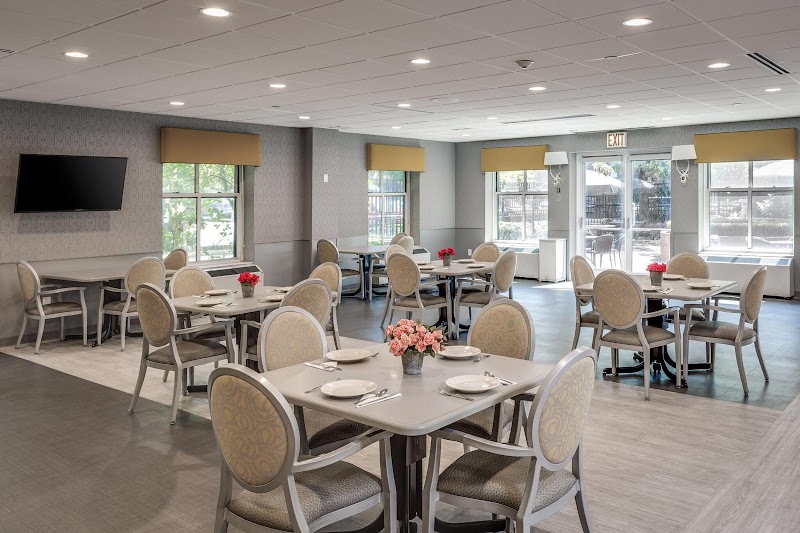
Who Owns and Operates Hopkins Center For Rehabilitation And Healthcare?

HOPKINS CENTER FOR REHABILITATION AND HEALTHCARE is owned by a for-profit company. For-profit facilities operate as businesses with obligations to shareholders or private owners. The facility is operated by CENTER MANAGEMENT GROUP, a chain that manages multiple nursing homes. With 288 certified beds and approximately 286 residents (about 99% occupancy), it is a large facility located in BROOKLYN, New York.
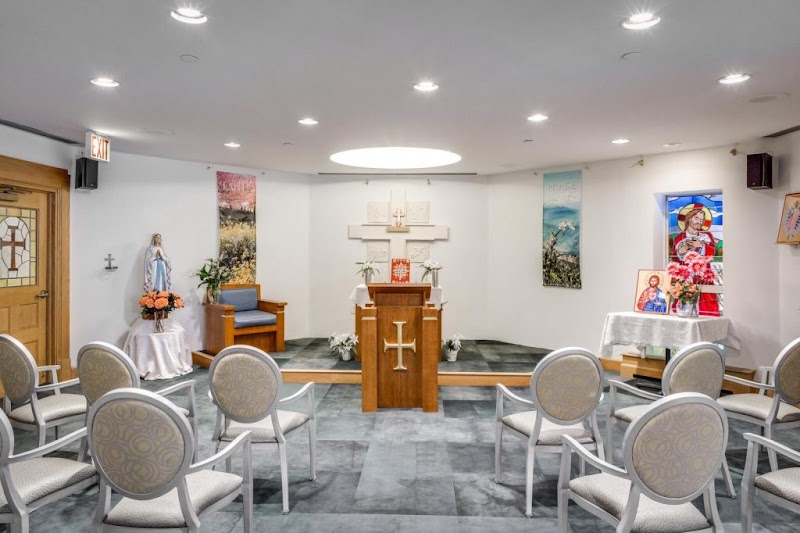
How Does Hopkins Center For Rehabilitation And Healthcare Compare to Other New York Nursing Homes?

Compared to the 100 nursing homes in New York, HOPKINS CENTER FOR REHABILITATION AND HEALTHCARE's overall rating (5 stars) is above the state average of 3.1, staff turnover (27%) is significantly lower than the state average of 46%, and health inspection rating (5 stars) is much above the national benchmark.

What Should Families Ask When Visiting Hopkins Center For Rehabilitation And Healthcare?

Based on this facility's data, families visiting should ask: "Can you walk me through typical staffing levels on day, evening, and night shifts?" "Can I visit during a mealtime to observe dining assistance and food quality?" "How do you handle medical emergencies, and what is your hospital transfer rate?" "Can I speak with family members of current residents about their experience?" These questions are particularly relevant given the below-average staffing rating.

Is Hopkins Center For Rehabilitation And Healthcare Safe?

Based on CMS inspection data, HOPKINS CENTER FOR REHABILITATION AND HEALTHCARE has a clean safety record: no substantiated abuse findings (meaning no confirmed cases of resident harm), no Immediate Jeopardy citations (the most serious violation level indicating risk of serious injury or death), and is not on the Special Focus Facility watch list (a federal program monitoring the lowest-performing 1% of nursing homes). The facility has a 5-star overall rating and ranks #1 of 100 nursing homes in New York. While no facility is perfect, families should still ask about staff-to-resident ratios and recent inspection results during their visit.

Do Nurses at Hopkins Center For Rehabilitation And Healthcare Stick Around?

Staff at HOPKINS CENTER FOR REHABILITATION AND HEALTHCARE tend to stick around. With a turnover rate of 27%, the facility is 19 percentage points below the New York average of 46%. Low turnover is a positive sign. It means caregivers have time to learn each resident's needs, medications, and personal preferences. Consistent staff also notice subtle changes in a resident's condition more quickly.

Was Hopkins Center For Rehabilitation And Healthcare Ever Fined?

HOPKINS CENTER FOR REHABILITATION AND HEALTHCARE has been fined $4,226 across 1 penalty action. This is below the New York average of $33,121. While any fine indicates a compliance issue, fines under $50,000 are relatively common and typically reflect isolated problems that were subsequently corrected. Families should ask what specific issues led to these fines and confirm they've been resolved.

Is Hopkins Center For Rehabilitation And Healthcare on Any Federal Watch List?

HOPKINS CENTER FOR REHABILITATION AND HEALTHCARE is not on any federal watch list. The most significant is the Special Focus Facility (SFF) program, which identifies the bottom 1% of nursing homes nationally based on persistent, serious quality problems. Not being on this list means the facility has avoided the pattern of deficiencies that triggers enhanced federal oversight. This is a positive indicator, though families should still review the facility's inspection history directly.