NORWEGIAN CHRISTIAN HOME AND HEALTH CENTER

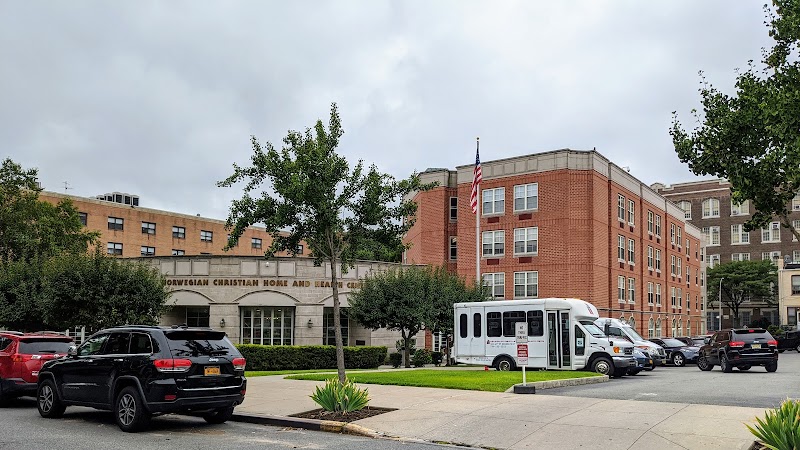
1250 67TH STREET, BROOKLYN, NY 11219 (718) 232-2322
Non profit - Corporation 135 Beds Independent Data: November 2025
Trust Grade
83/100
#206 of 594 in NY
Last Inspection: August 2024

Within standard 12-15 month inspection cycle. Federal law requires annual inspections.

Overview

Norwegian Christian Home and Health Center has a Trust Grade of B+, indicating that it is above average and recommended for families considering care options. It ranks #206 out of 594 facilities in New York, placing it in the top half of all nursing homes in the state, and #20 out of 40 in Kings County, meaning only 19 local options are better. The facility is improving, having reduced the number of issues from three in 2022 to two in 2024. Staffing levels are average with a 3/5 rating and a turnover rate of 28%, which is better than the state average of 40%, indicating some staff stability. There have been no fines recorded, which is a positive sign, and the facility has more RN coverage than 76% of other facilities, providing better oversight for residents. However, there are some concerns. Recent inspections revealed issues with infection control, as urinary drainage bags were found on the floor, which could lead to infections. Additionally, one resident did not receive a summary of their baseline care plan, which is essential for their ongoing treatment. Lastly, another resident was found without their call bell within reach multiple times, posing a risk for falls. These incidents highlight areas for improvement, even as the overall care environment shows positive trends.

Trust Score
B+
83/100
In New York
#206/594
Top 34%
Safety Record
Low Risk
No red flags
Inspections
Getting Better
3 → 2 violations
Staff Stability
✓ Good
28% annual turnover. Excellent stability, 20 points below New York's 48% average. Staff who stay learn residents' needs.
Penalties
✓ Good
No fines on record. Clean compliance history, better than most New York facilities.
Skilled Nurses
✓ Good
Each resident gets 46 minutes of Registered Nurse (RN) attention daily — more than average for New York. RNs are trained to catch health problems early.
Violations
○ Average
8 deficiencies on record. Average for a facility this size. Mostly minor or procedural issues.
★★★★☆
4.0
Overall Rating
★★★☆☆
3.0
Staff Levels
★★★☆☆
3.0
Care Quality
★★★★☆
4.0
Inspection Score
Stable
2022: 3 issues
2024: 2 issues

The Good

  • Low Staff Turnover (28%) · Staff stability means consistent care
  • Full Sprinkler Coverage · Fire safety systems throughout facility
  • No fines on record
  • Staff turnover is low (28%)

    20 points below New York average of 48%

Facility shows strength in staff retention, fire safety.

The Bad

No Significant Concerns Identified

This facility shows no red flags. Among New York's 100 nursing homes, only 1% achieve this.

The Ugly 8 deficiencies on record

Aug 2024 2 deficiencies
CONCERN (D)

Potential for Harm - no one hurt, but risky conditions existed

Deficiency F0655 (Tag F0655)

Could have caused harm · This affected 1 resident

**NOTE- TERMS IN BRACKETS HAVE BEEN EDITED TO PROTECT CONFIDENTIALITY** Based on record review and staff interviews conducted during the Recertification Survey from 08/12/2024 to 08/16/2024, the facil...

Read full inspector narrative →
**NOTE- TERMS IN BRACKETS HAVE BEEN EDITED TO PROTECT CONFIDENTIALITY** Based on record review and staff interviews conducted during the Recertification Survey from 08/12/2024 to 08/16/2024, the facility did not ensure that the resident and their representative were provided with a summary of the baseline care plan. This was evident in 1 (Resident #9) of 2 residents reviewed for Comprehensive Care Plan out of 31 total sampled residents. Specifically, Resident #9 was not provided a written summary of their baseline care plan. The findings are: The facility's policy titled Care Planning - Baseline with a revised date of 04/2022 documented that a baseline care plan for each resident is developed within 48 hours of completion of the resident assessment. The resident/family must be provided a signed copy of the baseline care plan. Resident #9 was admitted to the facility with diagnoses that included Cancer, Coronary Artery Disease (CAD), and Non-Alzheimer's Dementia. The Minimum Data Set assessment dated [DATE] documented that Resident #9 had intact cognition and participated in assessment and goal setting. A Baseline Care Plan form was completed for Resident #9 with signatures of interdisciplinary staff dated 02/09/2024, 02/10/2024 and 02/12/2024. There was no documented evidence that Resident #9 was provided with a written copy of the baseline care plan. On 08/12/2024 at 8:19 AM, Resident #9 was interviewed and stated they had been in the facility for about 2 years and had not been invited to a care plan meeting. Resident #9 stated they had not received a written summary of their baseline care plan since they had been admitted . On 08/15/2024 at 11:09 AM, an interview was conducted with Registered Nurse #2, who was the nurse manager, and stated that different team members complete the initial base line care plan, but they are not sure who gives the copy to the residents. On 08/15/2024 at 11:46 AM, an interview was conducted with the Director of Social Services. They stated that baseline care plan is completed within 48 hours of residents' admission by the interdisciplinary team members. They stated that a copy of the care plan summary should be printed and provided to the resident/resident's family during their initial care plan meeting. The Director of Social Services further stated that they could not locate the signed copy of Resident #9's base line care plan in the chart. The Director stated that there has been no specific person responsible for giving the summary to the resident. On 08/16/2024 at 12:02 PM, the Director of Nursing was interviewed and stated that the interdisciplinary team members meet within 48 hours of resident's admission to complete and review the resident's baseline care plan prior to meeting with the residents' and their family. The Director of Nursing stated they are not sure when the copy of the summary of baseline care plan is given but they know that social workers are responsible for ensuring that a copy is provided to the residents. 10 NYCRR 415.11 (c)
CONCERN (E)

Potential for Harm - no one hurt, but risky conditions existed

Infection Control (Tag F0880)

Could have caused harm · This affected multiple residents

**NOTE- TERMS IN BRACKETS HAVE BEEN EDITED TO PROTECT CONFIDENTIALITY** Based on observations, record review, and interview conducted during the Recertification Survey from 08/12/2024 to 08/16/2024, ...

Read full inspector narrative →
**NOTE- TERMS IN BRACKETS HAVE BEEN EDITED TO PROTECT CONFIDENTIALITY** Based on observations, record review, and interview conducted during the Recertification Survey from 08/12/2024 to 08/16/2024, the facility did not ensure infection prevention and control practices and procedures were maintained to provide a safe and sanitary environment to help prevent the development and transmission of communicable diseases and infections. This was evident in 2 (Residents #4 and #123) of 2 residents reviewed for Urinary Catheter. Specifically, Resident #4's and #123's urinary drainage bags were observed on the floor in multiple occasions. The findings are: The facility's policy and procedure titled Urinary Catheter Care with a revised date of 04/02/2024 documented that the purpose of the policy and procedure is to prevent catheter-associated urinary tract infections. The policy documented to use standard precautions when handling or manipulating the drainage system and to be sure that catheter tubing and drainage bag are kept off the floor. 1.) Resident #4 was admitted to the facility with diagnoses that included Renal Insufficiency, Renal Failure, End Stage Renal Disease, Obstructive Uropathy, and Neurogenic Bladder. The Quarterly Minimum Data Set assessment dated [DATE] documented that Resident #4 had moderate impairment in cognition. Resident was totally dependent on staff, does none of the effort to complete the activity; and required the assistance of 2 or more helpers to complete all activities of daily living. During an observation on 08/12/2024 at 7:25 AM and on 08/14/2024 at 9:51 AM, Resident #4's urinary drainage bag was observed on the left side of the bed touching the floor. A Comprehensive Care Plan for indwelling catheter related to benign prostatic hyperplasia / urinary retention, and for being at risk for urinary tract infection was initiated for Resident #4 on 10/10/2022 and was last reviewed on 07/15/2024. The facility interventions include monitoring for signs of urinary tract infection and discomfort. A comprehensive care plan for at risk for urinary tract infection was initiated on 06/24/2016 and was last reviewed on 07/15/2024. The facility interventions include to monitor for possible sign of infection and maintain infection control techniques. 2.) Resident #123 was admitted to the facility with diagnoses that included Renal Insufficiency, Obstructive Uropathy, and Cerebrovascular Accident. The Quarterly Minimum Data Set (MDS) assessment dated [DATE] documented Resident #123 had moderate impairment in cognition and was totally dependent on staff for toileting and hygiene and required substantial/maximal assistance for other activities of daily living. During an observation on 08/12/2024 at 7:32 AM and on 08/14/2024 at 9:54 AM, Resident #123's urinary drainage bag was observed touching the floor. On 08/12/2024 at 10:01 AM and on 08/13/2024 at 10:07 AM, Resident #123's urinary drainage bag was observed resting on the floor mat. A Comprehensive Care Plan for indwelling catheter due to neurogenic bladder was initiated on 12/28/2023 and was last reviewed on 07/12/2024. The facility interventions include monitoring for signs and symptoms of urinary tract infection. On 08/14/2024 at 11:11 AM, an interview was conducted with Certified Nursing Assistant #1, who was assigned to Residents #4 and #123. The Certified Nursing Assistant stated the urinary drainage bag should hang below the bladder and should not be allowed to touch the floor. Certified Nursing Assistant further stated they had not notice that residents' Foley bags were on the floor. On 08/14/2024 at 11:27 AM, Registered Nurse #1 was interviewed and stated that both Residents #4 and #123 were admitted with the Foley catheter. Registered Nurse #1 stated they instructed the Certified Nursing Assistants not to allow the catheter bags to touch the floor to prevent infection. Registered Nurse #1 stated the blue bags were provided yesterday to keep the resident's urinary drainage bag and could not understand why the urinary drainage bags were still kept resting on the floor. On 08/14/2024 at 11:50 AM, Registered Nurse #2, who was the nurse manager, was interviewed and stated they were surprised that residents' urinary drainage bags were allowed to be on the floor by the staff. On 08/16/2024 at 11:55 AM, an interview was conducted with the Director of Nursing who stated that urinary drainage bags must be covered and not placed on the floor. They stated the Registered Nurses are responsible for ensuring that the Certified Nursing Assistants are following this protocol. The Director of Nursing stated they were surprised that staff are not practicing proper infection control after they had been trained. 10 NYCRR 415.19(a)(1-3)
Sept 2022 3 deficiencies
CONCERN (D)

Potential for Harm - no one hurt, but risky conditions existed

Deficiency F0558 (Tag F0558)

Could have caused harm · This affected 1 resident

**NOTE- TERMS IN BRACKETS HAVE BEEN EDITED TO PROTECT CONFIDENTIALITY** Based on observations, interviews, and record review conducted during the recertification survey from 9/19/22 to 9/26/22, the fa...

Read full inspector narrative →
**NOTE- TERMS IN BRACKETS HAVE BEEN EDITED TO PROTECT CONFIDENTIALITY** Based on observations, interviews, and record review conducted during the recertification survey from 9/19/22 to 9/26/22, the facility did not ensure a resident received a reasonable accommodation of their needs. This was evident for 1 (Resident #124) of 28 sampled residents. Specifically, Resident #124 was observed on multiple occasions without their call bell within reach. The findings are: The facility policy titled Fall Risk Management Program last revised 12/09 documented interventions may include functioning and available call bells to prevent the resident from overreaching for the bell and falling over. Resident #124 had diagnoses of cerebral ischemia and fracture of clavicle, sacrum, pelvis, and vertebra. Minimum Data Set 3.0 (MDS) assessment dated [DATE] documented Resident #124 had moderate cognitive impairment, required extensive assistance of 2 people to complete most activities of daily living, and had no falls since their last admission to the facility. On 09/22/22 at 11:16 AM, Resident #124 was observed lying in bed and a call bell cord and button were tied around the siderail on the right side of the bed next to the resident's head. Resident #124 was interviewed and stated they use the call bell if they need to get the nurse. Resident #124 reached their right arm back, attempted to grab the call bell, and was unable to reach it. 09/22/22 at 11:51 AM, Resident #124 was observed sitting up in bed eating lunch from a tray on the overbed table in front of them. Certified Nursing Assistant (CNA) #5 was on the resident's right side adjusting the head of the bed. The call bell cord and button continued to be tied to the right siderail at the head of Resident #124's bed. CNA #5 finished adjusting Resident #124, exited the room, and stated they were not assigned to Resident #124 and were only serving the resident lunch. On 09/23/22 at 11:04 AM, Resident #124 was observed lying in bed and the call bell cord and button were on a bedside dresser against the wall on the right side of Resident #124's head of bed. The call bell was out of Resident #124's reach. The medication nurse entered the room, administered medication to Resident #124's roommate, provided water to Resident #124, and exited the room without addressing the call bell out of Resident #124's reach. On 09/23/22 at 11:56 AM, CNA #3 was observed wheeling Resident #124 from the shower room to the resident's room. Resident #124's wheelchair was placed in front of their lunch tray on an overbed table on the left side of their bed. CNA #3 assisted with tray setup. On 09/23/22 at 01:01 PM, Resident #124 was observed in their wheelchair in their room on the left side of their bed and the lunch tray was no longer present. The call bell button and cord were lying on the bed behind Resident #124's wheelchair and out of their reach. The Comprehensive Care Plan (CCP) related to Activities of Daily Living initiated 8/3/22 and last revised 8/28/22 documented staff to encourage Resident #124 to use the call bell for assistance. The CCP related to falls initiated 8/3/22 and revised 8/14/22 documented nursing intervention to reeducate Resident #124 to use call bell for staff assistance. On 9/11/22, the CCP was revised to include nursing intervention to reeducate Resident #124 to call for assistance with ambulation. Hospital Discharge Instructions dated 8/24/22 documented Resident #124 was a high fall risk. Fall Risk Assessment (FRA) dated 9/19/22 documented Resident #124 was a high risk for falls. Nursing Note dated 9/19/22 documented Resident #124 was found on the floor and call bell was actively working. Nursing Note dated 9/20/22 documented Resident #124 had their call bell within reach. On 09/23/22 at 02:54 PM, CNA #3 was interviewed and stated they were filling in for Resident #124's regular aide but has been assigned to Resident #124 previously. The CNA Accountability Record (CNAAR) informs CNA #3 of a resident's ambulatory status and fall risk. Resident #124 fidgets in their wheelchair and CNA #3 ensures Resident #124's phone is nearby when the resident is in bed. CNA #3 stated floor mats were in place to help prevent Resident #124 from getting injured because Resident #124 tends to get out of bed unassisted. On 09/26/22 at 11:36 AM, the nursing supervisor of Resident #124's unit, Registered Nurse (RN) #2, was interviewed and stated Resident #124 was alert and could follow instructions but began overestimating their abilities once they began a physical therapy program. Resident #124 has been observed getting up on their own and attempting to use the bathroom without assistance. Resident #124 is cognitively intact enough to understand how to use the call bell and there is no reason the call bell should be out of Resident #124's reach because it is one of the interventions to prevent Resident #124 from falling. Resident #124 must also be able to reach the call bell button while in their wheelchair. On 09/26/22 at 01:38 PM, the Assistant Director of Nursing (ADNS) was interviewed and stated Resident #124 has fallen in the past, was considered at high risk or falls, and falls prevention interventions included reinforcing the resident's use of the call bell. The call bell should always be within Resident #124's reach. 415.5(e)(1)
CONCERN (D)

Potential for Harm - no one hurt, but risky conditions existed

Accident Prevention (Tag F0689)

Could have caused harm · This affected 1 resident

**NOTE- TERMS IN BRACKETS HAVE BEEN EDITED TO PROTECT CONFIDENTIALITY** Based on observation, interview, and record review conducted during the recertification survey, the facility did not ensure each...

Read full inspector narrative →
**NOTE- TERMS IN BRACKETS HAVE BEEN EDITED TO PROTECT CONFIDENTIALITY** Based on observation, interview, and record review conducted during the recertification survey, the facility did not ensure each resident receives adequate supervision to prevent accidents. This was evident for 1 (Resident #124) of 1 resident(s) reviewed for Accidents. Specifically, staff left the call bell out of reach for Resident #124, a resident with multiple falls and a care plan intervention to encourage the resident to call for help. In addition, the facility did not monitor care plan interventions for effectiveness or modify the interventions despite repeated falls, often repeating previous interventions of frequent monitoring, redirection, and education. The findings are: The facility policy titled Accidents and Supervision dated 12/16/21 documented staff will monitor the effectiveness and modify the interventions as necessary in accordance with the current standards of practice to prevent unavoidable accidents. Resident #124 had diagnoses of cerebral ischemia, fracture of clavicle, sacrum, pelvis, and vertebra. The Minimum Data Set 3.0 (MDS) assessment dated [DATE] documented Resident #124 had moderate cognitive impairment, required extensive assistance of 2 people to complete most activities of daily living (ADL) , and had no falls since the last admission to the facility. On 09/22/22 at 11:16 AM, Resident #124 was observed lying in bed. The call bell cord and button were tied around the siderail on the right side of the bed next to the resident's head. Resident #124 was interviewed and stated they use the call bell if they need to get the nurse. Resident #124 reached their right arm back, attempted to grab the call bell, and was unable to reach it. Bilateral floor mats were in place. On 09/22/22 at 11:51 AM, Resident #124 was observed sitting up in bed eating lunch. Certified Nursing Assistant (CNA) #5 was on the resident's right side adjusting the head of the bed. The call bell cord and button continued to be tied to the right siderail at the head of Resident #124's bed. CNA #5 finished adjusting Resident #124, exited the room, and stated they were not assigned to Resident #124 and were only serving the resident lunch. Bilateral floor mats were in place. On 09/23/22 at 11:04 AM, Resident #124 was observed lying in bed and the call bell cord and button were on a bedside dresser against the wall on the right side of Resident #124's head of bed. The call bell was out of Resident #124's reach. The medication nurse entered the room, administered medication to Resident #124's roommate, provided water to Resident #124, and exited the room without addressing the call bell out of Resident #124's reach. Bilateral floor mats were also in place. On 09/23/22 at 11:56 AM, CNA #3 was observed wheeling Resident #124 from the shower room to the resident's room. Resident #124's wheelchair was placed in front of their lunch tray on an overbed table on the left side of their bed. CNA #3 assisted with tray setup. On 09/23/22 at 01:01 PM, Resident #124 was observed sitting in the wheelchair in their room on the left side of the bed. The resident's lunch tray was no longer in the room. The call bell button and cord were lying on the bed behind Resident #124's wheelchair out of reach. The Comprehensive Care Plan (CCP) related to Activities of Daily Living (ADLs), initiated 8/3/22, documented the intervention to encourage resident to use call bell for assistance. The CCP related to Falls, initiated 8/3/22, documented Resident #124 had falls on 8/3/22, 8/14/22, 8/19/22, 9/11/22, 9/16/22, and 9/19/22. The CCP interventions initiated 8/3/22 included assess judgment and metal status, provide assistance in accordance with resident's needs, investigate cause of falls, bed in lowest position, keep items within reach, orient frequently, provide assistance with ambulation, provide an obstacle-free and save environment, and teach actions that minimize hypotension when changing positions. The interventions of re-education for resident and family to use the call bell for assistance with transfer and ambulation, frequent monitoring, and redirection were added 8/14/22. After the falls on 8/19/22, 9/11/22, 9/16/22, and 9/19/22, the CCP was updated with repeat interventions already on the care plan. The repeat interventions included frequent monitoring, re-education about call bell use, redirection, and education about safety. Accident/Incident (A/I) Investigation Reports dated 9/11/22, 9/16/22, and 9/19/22 documented Resident #124 fell in their room and was found lying on the floor next to their bed. The investigations dated 9/11/22 and 9/16/22 documented Resident #124 was found on the floor mat, and the investigation dated 9/19/22 did not document whether floor mats were in place. The documented plan to prevent recurrence for the falls on 9/11/22, 9/16/22, and 9/19/22 included ongoing monitoring, redirection, and staff teaching. A Physical Medicine Rehabilitation Doctor note dated 9/11/22 documented Resident #124 should have call bell at bedside, avoid clutter at bedside, and avoid trip hazards. A Nursing Note dated 9/19/22 documented Resident #124 was found on the floor with call bell working and the room was free of clutter. The CNA [NAME] (instructions for the CNA) as of 9/13/22 did not include floor mats as an intervention to be implemented. The CCP did not include the bilateral floor mats in place during the observations, and there was no documented evidence Resident #124 was assessed for floor mat use to determine whether or not the floor mats would be a trip hazard. There was no documented evidence the facility attempted to re-evaluate the effectiveness of the care plan interventions and look at the circumstances of each fall to develop new interventions to prevent additional falls. In addition, staff did not implement the care plan by leaving the call bell out of Resident #124's reach on multiple occasions. On 09/23/22 at 02:54 PM, Certified Nursing Assistant (CNA) #2 was interviewed and stated Resident #124 has floor mats in place to protect them when they try to get out of bed. The nursing supervisor decides if a resident requires floor mats. The floor mats are not documented on the CNA Accountability Record for Resident #124 but CNA #2 knew the resident was supposed to have floor mats because they were already in place when CNA #2 came to take care of Resident #124 at the start of shift this morning. On 09/26/22 at 11:36 AM, Registered Nurse (RN) Supervisor, RN #2, was interviewed and stated Resident #124 is a high fall risk because they overestimate their abilities. Resident #124 can understand using the call bell and there is no reason the call bell should be left out of reach of the resident. Resident #124's last fall was on 9/19/22 and the resident did not suffer any injury so there were no changes in fall interventions and resident was only encouraged to use the call bell. Resident A/I reports are initiated by the RN Supervisor on duty when a fall occurs. The RN gathers statements from all staff working on the unit even if they are not assigned to the resident's area. The RN also updates the CCP related to falls with any new interventions. The A/I is then had delivered to the Assistant Director of Nursing (ADON) or Director of Nursing (DON). The RN or Physical Therapy (PT) can recommend a resident receive floor mats to prevent falls. They are kept in the nursing supply closet and can be used immediately if a resident is at high risk or falls. The CNA Accountability Record is updated to show CNA floor mats as a task. No other documentation needs to be made re: the assessment of or application of floor mats. Floor mats can be a hazard and should not be used with residents who attempt to get out of bed by walking. It is not safe if a resident walks on the floor mat. On 09/26/22 at 01:38 PM, the ADON was interviewed and stated they were responsible for reviewing and completing a thorough investigation into falls. The resident's CCP is reviewed and revised by the RN Supervisor and/or ADON. The ADON reviews the staff statements prior to concluding a A/I investigation, and the 9/11/22 A/I Report for Resident #124 does not include staff statements. Resident #124 was placed on frequent monitoring and re-educated re: use of the call bell. Staff should always ensure the call bell is reachable. The RN determines whether floor mats are necessary. The RN assesses for appropriateness and safety of floor mats. Floor mats are not indicated for everyone. PT evaluates for use of floor mats, documents, and lets the nurse know whether floor mats are indicated. The CNA Accountability Record should also document use of floor mats. There is no place for staff to document whether floor mats are in place. The ADON was unable to provide documented evidence Resident #124 was evaluated for floor mat use. The Medical Doctor also needs to be aware of floor mats being in place. Falls CCP would have documentation of floor mats as an intervention. ADON was unable to find documentation of floor mat intervention on Resident #124's CCP related to falls. On 09/26/22 at 02:17 PM, the Director of Rehabilitation (DOR) was interviewed and stated the RNs determine floor mat use and application. PT never does an assessment for floor mats. PT does not write the order for floor mats. Floor mats are in place for residents at risk for falls, periods of confusion, non-weight bearing status, and agitated residents. Floor mats are not appropriate for everyone. If the resident can walk or use a rolling walker, they can trip over the floor mat. The assessment of safety and appropriateness is solely done by the nursing dept. On 09/26/22 at 02:26 PM, the DON was interviewed and stated floor mat use is a nursing and PT decision and is based on the resident's ambulatory status. If a resident cannot walk but attempts to get out of bed often, floor mat use can put them at higher risk for falls. The CNA Accountability Record is updated by nursing or rehab to reflect floor mat intervention. Floor mats is an intervention and should be on the CCP. Resident environment needs to be assessed. Fall interventions are updated for appropriateness and after every fall. Sometimes the interventions are reused like monitoring. Facility tries to do new interventions but sometimes the next step would be something too restrictive for the resident. 415.14(a)(2)(7)
CONCERN (D)

Potential for Harm - no one hurt, but risky conditions existed

Infection Control (Tag F0880)

Could have caused harm · This affected 1 resident

**NOTE- TERMS IN BRACKETS HAVE BEEN EDITED TO PROTECT CONFIDENTIALITY** Based on observation, record review, and interview conducted during the recertification survey, the facility did not ensure an i...

Read full inspector narrative →
**NOTE- TERMS IN BRACKETS HAVE BEEN EDITED TO PROTECT CONFIDENTIALITY** Based on observation, record review, and interview conducted during the recertification survey, the facility did not ensure an infection prevention and control program designed to provide a safe, sanitary, and comfortable environment to help prevent the development and transmission of communicable diseases and infections was maintained. This was evident for 1 (Unit 4) of 3 units. Specifically, the Housekeeper on the 4th floor was observed wearing gloves and picking up garbage cans from multiple resident rooms without sanitizing their hands in between. The findings are: On 09/23/22 at 12:01 PM, the Housekeeper was observed with gloves on and resident garbage can in hand going from room [ROOM NUMBER] to the cleaning cart. The Housekeeper dumped the contents into a large black garbage bag tied to the end of the cart and returned the garbage can to room [ROOM NUMBER]. The Housekeeper went to room [ROOM NUMBER] and carried a resident garbage can in his hand to the cleaning cart. The Housekeeper emptied the resident garbage can into the garbage bag tied to the cleaning cart and returned the garbage can to room [ROOM NUMBER]. The Housekeeper repeated the same actions with a resident garbage can from 408 and did not remove their gloves or sanitize hands in between emptying garbage cans from each resident room. On 09/23/22 at 02:37 PM, the Housekeeper was interviewed and stated they wear gloves and sanitize their hands every time they enter a resident's room and when they exit a resident's room. They pick up the resident garbage can and dump it into the bag on the side of the cart and changes gloves and sanitizes their hands in between the resident rooms. 415.19(b)(4)
Jan 2020 3 deficiencies
CONCERN (D)

Potential for Harm - no one hurt, but risky conditions existed

MDS Data Transmission (Tag F0640)

Could have caused harm · This affected 1 resident

**NOTE- TERMS IN BRACKETS HAVE BEEN EDITED TO PROTECT CONFIDENTIALITY** Based on record review and interviews during the re-certification survey, the facility did not ensure Minimum Data Set (MDS) 3.0...

Read full inspector narrative →
**NOTE- TERMS IN BRACKETS HAVE BEEN EDITED TO PROTECT CONFIDENTIALITY** Based on record review and interviews during the re-certification survey, the facility did not ensure Minimum Data Set (MDS) 3.0 assessments were electronically transmitted to the Quality Improvement Evaluation System (QIES) Assessment Submission and Processing (ASAP) system in a timely manner. Specifically, the Discharge MDS assessment was not submitted and transmitted within 14 calendar days from the MDS Completion Date. This was evident for 1 of 1 resident reviewed for the Resident Assessment Facility Task out of a sample size of 28 residents. (Resident #1) The findings are: The CMS RAI Version 3.0 Manual (Dated October 2018), Chapter 5 titled Submission and Correction of the MDS Assessments documented the MDS completion date must be no later than 14 days after the assessment reference date (ARD) for all non-admission, OBRA, and PPS assessments. The MDS completion date must be no later than 13 days after the entry date for admission assessments. Comprehensive assessments must be transmitted electronically within 14 days of the care plan completion date. All other MDS assessments must be submitted within 14 days of the MDS completion date. Resident #1 was admitted to the facility on [DATE] and was discharged to the community on 8/16/19. The Discharge MDS assessment with an ARD date of 08/16/19 was completed on 08/29/19 and was not submitted until 01/03/20 after the surveyor made the facility staff aware that the assessment had not been submitted. The MDS confirmation page dated 01/03/2020 documented the discharge MDS was submitted on 1/3/2020. An interview was conducted with the MDS Coordinator (MDSC). The MDSC stated the MDS assessment was supposed to be submitted 7 days after the MDS was completed. The MDSC also stated that she periodically checks the CASPER report but unfortunately, she does not know why that one was missed. The MDSC further stated that the assessment had been completed but had not been submitted and would be submitted right away.
CONCERN (D)

Potential for Harm - no one hurt, but risky conditions existed

Assessment Accuracy (Tag F0641)

Could have caused harm · This affected 1 resident

Based on staff interview and record review conducted during a Recertification and abbreviated survey, the facility did not ensure that each portion of the MDS assessment accurately reflect the residen...

Read full inspector narrative →
Based on staff interview and record review conducted during a Recertification and abbreviated survey, the facility did not ensure that each portion of the MDS assessment accurately reflect the resident's status. Specifically, the most recent MDS did not accurately document that the resident had mobility limitations. This was evident for 1 of 2 residents reviewed for Position/Mobility out of a sample of 28 residents. (Resident # 8). The finding is: 1) Resident #8 was admitted to the facility with diagnoses that included Contracture of Left Hand, Contracture of left and Right Knee, Generalized Muscle Weakness, Rheumatoid Vasculitis with Rheumatoid Arthritis of Left Hand. Rehabilitation Screening Form dated 9/16/2019 documented left-hand contracture, bilateral knee flexion contracture, bed mobility-extensive assist 2 plus persons assist and transfer-total dependence 2 plus persons assist. Medical diagnosis includes left hand contracture, right hand contracture, left knee contracture and right knee contracture. Comprehensive Care Plan (CCP) The resident has an alteration in musculoskeletal status r/t contracture of left hand initiated 01/03/2020 documented the following goal: the resident will remain free of injuries or complications related to presence of contracture of left hand and bilateral knees by review date. The Quarterly Minimum Data Set (MDS) Assessment 3.0 dated 09/19/2019 documented severe cognitive impairment, extensive assist of 2 persons for bed mobility, total dependence of 2 plus persons for transfer. Active Diagnoses documented included Contracture of Left Hand, and Contracture of Left Knee and Contracture of Right Knee. Section G- Functional Limitation in Range of Motion was coded no impairment and did not document the resident's impairment in Range of Motion. The MDS did not accurately document the resident's diagnosis in relation to hand contractures. On 01/03/2020 at 09:06 AM, an interview was conducted with the MDS Coordinator (MDSC). The MDSC stated the assessor who completed the assement was not availale for interview. The MDSC stated the resident has contractures and has had them for quite some time. The MDSC also stated that it is not possible to review every single MDS for accuracy as there are only three people in the MDS department one of whom works part-time. The MDS coordinator stated the staff that incorrectly coded the MDS when they checked no limitation in relation to range of motion. 415.11 (b)
CONCERN (D)

Potential for Harm - no one hurt, but risky conditions existed

Deficiency F0688 (Tag F0688)

Could have caused harm · This affected 1 resident

Based on observations, staff interview and record review conducted during a Recertification and Abbreviated survey, the facility did not ensure a resident with limited mobility received appropriate se...

Read full inspector narrative →
Based on observations, staff interview and record review conducted during a Recertification and Abbreviated survey, the facility did not ensure a resident with limited mobility received appropriate services, equipment, and assistance to maintain or improve mobility. Specifically, residents were observed without splint devices in place as ordered. This was evident for 2 of 2 residents reviewed for Position/Mobility out of 24 sampled residents. (Resident #8 and Resident # 46). The findings are: The Facility Policy Appliances- Splints, Braces, Slings revised December 2018 documented in order to protect the safety and well-being of residents, and to promote quality care, this facility uses appropriate techniques and devices for appliances, splints, braces and slings. The policy also documented the Nursing ensures proper schedule for donning and doffing appliance is known by CNA staff and provides appropriately sign off of task options, ensure staff is aware where device is to be stored and cared for, check skin integrity at least before and after application, release devices/appliances per physician order. 1. Resident #8 was admitted to the facility with diagnoses that included Contracture of Left Hand, Contracture of left and Right Knee, Generalized Muscle Weakness, Rheumatoid Vasculitis with Rheumatoid Arthritis of Left Hand. On 12/30/2019 at 3:15 PM, resident was observed seated in a wheelchair in the dayroom. No hand devices were observed in either hand. On 12/31/2019 between 01:29 PM and 03:15 PM the resident was noted awake and seated in the dayroom. No hand devices were observed in place. On 01/02/2020 between 08:51 AM and 03:34 PM, resident was observed seated in the dayroom. No hand devices were observed in either hand. The Quarterly Minimum Data Set (MDS) Assessment 3.0 dated 09/19/2019 documented severe cognitive impairment, extensive assist of 2 persons for bed mobility, total dependence of 2 plus persons for transfer. Active Diagnoses documented included Contracture of Left Hand, and Contracture of Left Knee and Contracture of Right Knee. The Comprehensive Care Plan (CCP) The resident has an alteration in musculoskeletal status realted to contracture of left hand initiated 01/03/2020 documented the following goal: the resident will remain free of injuries or complications related to presence of contracture of left hand and bilateral knees by review date. Interventions included apply left hand carrot to be worn at all times with removal for hygiene/skin care daily during AM/PM care. On 01/02/2020 at 04:31 PM, an interview was conducted with Certified Nursing Assistant (CNA # 2). CNA #2 stated that the resident has limitations in their hands and feet, is unable to comb her hair or brush her teeth and needs assistance with turning and positioning. CNA #2 also stated the resident should have a carrot device for her hands however, the resident refuses the carrot device for her hand. CNA #2 further stated that she reports changes to the nurse but had not reported the resident's refusal to wear the device. On 01/02/2020 at 04:59 PM, an interview was conducted with Registered Nurse (RN) #1. RN #1 stated the resident has contractures and is ordered a carrot splint device for her left hand. He stated that the resident was referred to rehabilitation for increased muscle tightness and poor sitting balance. RN #1 also stated that spot checks are done for the carrot splint device, but the resident takes it off sometimes but most of the time the resident is wearing the carrot splint device. 2. Resident #46 was admitted with diagnosis of Generalized Muscle Weakness and Contracture of Left Hand. Observations for Resident # 46, On 12/30/19 between 10:05 AM and 2:40 PM no hand roll or splint device was noted on residents' hands. On 12/31/2019 at 08:17 AM and 10:16 AM no hand roll was noted on the resident's right hand. On 12/31/2019 at 2:40 PM no hand roll on right hand and at 3:16 PM no hand rolls on either hand. On 01/02/2020 between 08:55 AM and 09:57 AM no devices were noted on residents' bilateral hands. On 01/02/2020 at 10:45 AM and 12:58 PM no devices were noted on the resident's right hand and at 02:47 PM no devices noted on residents' hands as resident was sleeping. On 12/30/2019 between 10:05 AM and 2:40 PM , resident was observed sitting in bed in her room. No hand devices were observed in either hand. On 12/31/2019 between 08:17 AM and 10:16 AM, resident was observed sitting in bed and between 2:40 PM and 3:16 PM resident was observed seated in dayroom. No hand roll was observed in either hand. On 01/02/2020 between 08:55 AM and 2:47 PM, resident was observed sitting on bed in bedroom, No hand devices were observed in either hand. The Quarterly Minimum Data Set (MDS) Assessment 3.0 dated 10/28/2019 documented no rejection of care, extensive assistance of 2 staff persons for bed mobility, total dependence of 2 staff persons for transfer, and upper and lower extremity impairment on both sides. Diagnosis of Contracture of the Left Hand was documented. The Occupational Therapy Plan of Care dated 6/13/2019 documented under Orthotic/Prosthetic STG under current level of function stated the resident is able to wear hand roll with daily skin checks and hygiene routine and the goal of the patient will safely wear hand roll with daily hygiene routine performed and skin checks. The Rehabilitation Screening Form on 10/29/2019 documented hand range of motion impaired on one side and limited range of motion to lower extremity (hip, knee ankle and foot, bed mobility and transfer - total dependence 2 plus persons physical assistance. The Orthotic/Prosthetic Devices documented bilateral hand rolls, remove for skin checks to be worn at all times, remove for hygiene. The Physician's order dated 11/06/2019 documented Posey Hand Roll for bilateral hand to be worn at all times, taken off hands for routine skin checks and hand hygiene. The Physician's order dated 12/30/2019 documented Device: Positioning/Splint: Right hand roll for right hand and left carrot hand splint to be worn at all times, taken off for routine skin checks and hand hygiene. CNA Accountability for January 2020 documented under Device-Protective/Positioning/Splint Right Hand Roll to Right hand and Left carrot hand splint to be worn at all times, taken off for routine skin checks and hand hygiene. On 01/02/2020 at 05:13 PM, an interview was conducted with RN #1. RN # 1 stated the resident receives physical therapy 5 times a week, and is ordered right hand roll splint and left-hand carrot roll splint. RN #1 also stated he performs spot checks for the resident devices. RN #1 stated that he had not been informed that the resident had been refusing the splint devices. 415.11 (b)
Understanding Severity Codes (click to expand)
Life-Threatening (Immediate Jeopardy)
J - Isolated K - Pattern L - Widespread
Actual Harm
G - Isolated H - Pattern I - Widespread
Potential for Harm
D - Isolated E - Pattern F - Widespread
No Harm (Minor)
A - Isolated B - Pattern C - Widespread

Questions to Ask on Your Visit

  • "Can I speak with families of current residents?"
  • "What's your RN coverage like on weekends and overnight?"

Our Honest Assessment

Strengths
  • • Grade B+ (83/100). Above average facility, better than most options in New York.
  • • No major safety red flags. No abuse findings, life-threatening violations, or SFF status.
  • • No fines on record. Clean compliance history, better than most New York facilities.
  • • 28% annual turnover. Excellent stability, 20 points below New York's 48% average. Staff who stay learn residents' needs.
Concerns
  • • No significant concerns identified. This facility shows no red flags across CMS ratings, staff turnover, or federal penalties.
Bottom line: Generally positive indicators. Standard due diligence and a personal visit recommended.

About This Facility

What is Norwegian Christian Home And's CMS Rating?

CMS assigns NORWEGIAN CHRISTIAN HOME AND HEALTH CENTER an overall rating of 4 out of 5 stars, which is considered above average nationally. Within New York, this rating places the facility higher than 99% of the state's 100 nursing homes. This rating reflects solid performance across the metrics CMS uses to evaluate nursing home quality.
How is Norwegian Christian Home And Staffed?

CMS rates NORWEGIAN CHRISTIAN HOME AND HEALTH CENTER's staffing level at 3 out of 5 stars, which is average compared to other nursing homes. Staff turnover is 28%, compared to the New York average of 46%. This relatively stable workforce can support continuity of care.

What Have Inspectors Found at Norwegian Christian Home And?

State health inspectors documented 8 deficiencies at NORWEGIAN CHRISTIAN HOME AND HEALTH CENTER during 2020 to 2024. These included: 8 with potential for harm.
Who Owns and Operates Norwegian Christian Home And?

NORWEGIAN CHRISTIAN HOME AND HEALTH CENTER is owned by a non-profit organization. Non-profit facilities reinvest revenue into operations rather than distributing to shareholders. The facility operates independently rather than as part of a larger chain. With 135 certified beds and approximately 131 residents (about 97% occupancy), it is a mid-sized facility located in BROOKLYN, New York.

How Does Norwegian Christian Home And Compare to Other New York Nursing Homes?

Compared to the 100 nursing homes in New York, NORWEGIAN CHRISTIAN HOME AND HEALTH CENTER's overall rating (4 stars) is above the state average of 3.1, staff turnover (28%) is significantly lower than the state average of 46%, and health inspection rating (4 stars) is above the national benchmark.

What Should Families Ask When Visiting Norwegian Christian Home And?

Based on this facility's data, families visiting should ask: "Can I visit during a mealtime to observe dining assistance and food quality?" "How do you handle medical emergencies, and what is your hospital transfer rate?" "Can I speak with family members of current residents about their experience?"

Is Norwegian Christian Home And Safe?

Based on CMS inspection data, NORWEGIAN CHRISTIAN HOME AND HEALTH CENTER has a clean safety record: no substantiated abuse findings (meaning no confirmed cases of resident harm), no Immediate Jeopardy citations (the most serious violation level indicating risk of serious injury or death), and is not on the Special Focus Facility watch list (a federal program monitoring the lowest-performing 1% of nursing homes). The facility has a 4-star overall rating and ranks #1 of 100 nursing homes in New York. While no facility is perfect, families should still ask about staff-to-resident ratios and recent inspection results during their visit.

Do Nurses at Norwegian Christian Home And Stick Around?

Staff at NORWEGIAN CHRISTIAN HOME AND HEALTH CENTER tend to stick around. With a turnover rate of 28%, the facility is 17 percentage points below the New York average of 46%. Low turnover is a positive sign. It means caregivers have time to learn each resident's needs, medications, and personal preferences. Consistent staff also notice subtle changes in a resident's condition more quickly. Registered Nurse turnover is also low at 24%, meaning experienced RNs are available to handle complex medical needs.

Was Norwegian Christian Home And Ever Fined?

NORWEGIAN CHRISTIAN HOME AND HEALTH CENTER has no federal fines on record. CMS issues fines when nursing homes fail to meet care standards or don't correct problems found during inspections. The absence of fines suggests the facility has either maintained compliance or corrected any issues before penalties were assessed. This is a positive indicator, though families should still review recent inspection reports for the full picture.

Is Norwegian Christian Home And on Any Federal Watch List?

NORWEGIAN CHRISTIAN HOME AND HEALTH CENTER is not on any federal watch list. The most significant is the Special Focus Facility (SFF) program, which identifies the bottom 1% of nursing homes nationally based on persistent, serious quality problems. Not being on this list means the facility has avoided the pattern of deficiencies that triggers enhanced federal oversight. This is a positive indicator, though families should still review the facility's inspection history directly.