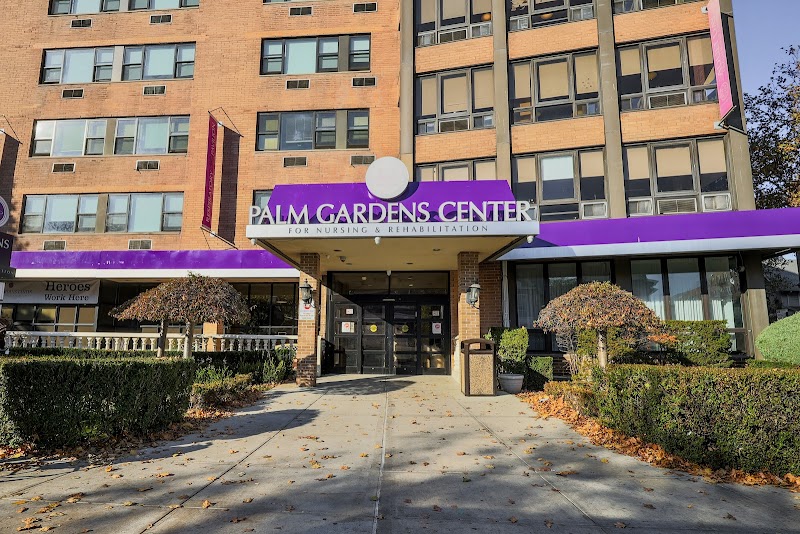
PALM GARDENS CENTER FOR NURSING AND REHABILITATION

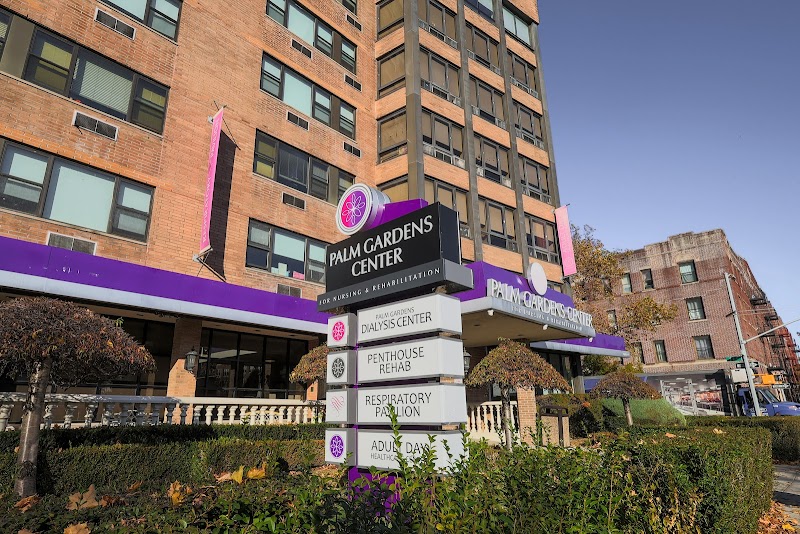
615 AVENUE C, BROOKLYN, NY 11218 (718) 633-3300
For profit - Individual 240 Beds SHIMON LEFKOWITZ Data: November 2025
Trust Grade
63/100
#433 of 594 in NY
Last Inspection: August 2023

Over 2 years since last inspection. Current conditions may differ from available data.

Overview

Palm Gardens Center for Nursing and Rehabilitation has a Trust Grade of C+, which means it is considered decent and slightly above average compared to other facilities. In New York, it ranks #433 out of 594, placing it in the bottom half, and #34 out of 40 in Kings County, indicating that there are only a few local options that perform better. Unfortunately, the facility’s trend is worsening, having increased from 1 issue in 2021 to 6 in 2023. Staffing is a relative strength, with a turnover rate of 27%, which is well below the New York average of 40%, although the overall staffing rating is only 2 out of 5 stars. There have been no fines recorded, which is encouraging, but the facility does have some concerning incidents, such as failing to secure a surety bond for residents' personal funds and not accurately assessing a resident's mobility needs, which could lead to further complications. Overall, while there are some positive aspects regarding staffing and fines, there are significant weaknesses in compliance and quality of care that families should consider.

Trust Score
C+
63/100
In New York
#433/594
Bottom 28%
Safety Record
Low Risk
No red flags
Inspections
Getting Worse
1 → 6 violations
Staff Stability
✓ Good
27% annual turnover. Excellent stability, 21 points below New York's 48% average. Staff who stay learn residents' needs.
Penalties
✓ Good
No fines on record. Clean compliance history, better than most New York facilities.
Skilled Nurses
✓ Good
Each resident gets 47 minutes of Registered Nurse (RN) attention daily — more than average for New York. RNs are trained to catch health problems early.
Violations
○ Average
10 deficiencies on record. Average for a facility this size. Mostly minor or procedural issues.
★★☆☆☆
2.0
Overall Rating
★★☆☆☆
2.0
Staff Levels
★☆☆☆☆
1.0
Care Quality
★★★☆☆
3.0
Inspection Score
Stable
2021: 1 issues
2023: 6 issues

The Good

  • Low Staff Turnover (27%) · Staff stability means consistent care
  • Full Sprinkler Coverage · Fire safety systems throughout facility
  • No fines on record
  • Staff turnover is low (27%)

    21 points below New York average of 48%

Facility shows strength in staff retention, fire safety.

The Bad

2-Star Overall Rating

Below New York average (3.1)

Below average - review inspection findings carefully

Chain: SHIMON LEFKOWITZ

Part of a multi-facility chain

Ask about local staffing decisions and management

The Ugly 10 deficiencies on record

Aug 2023 6 deficiencies
CONCERN (D)

Potential for Harm - no one hurt, but risky conditions existed

Assessment Accuracy (Tag F0641)

Could have caused harm · This affected 1 resident

**NOTE- TERMS IN BRACKETS HAVE BEEN EDITED TO PROTECT CONFIDENTIALITY** Based on observation, record review and interview conducted during the recertification and abbreviated survey, the facility did ...

Read full inspector narrative →
**NOTE- TERMS IN BRACKETS HAVE BEEN EDITED TO PROTECT CONFIDENTIALITY** Based on observation, record review and interview conducted during the recertification and abbreviated survey, the facility did not ensure that the Minimum Data Set 3.0 (MDS) assessment accurately reflected a resident's status. This was evident for 1 of 1 Residents reviewed for position and mobility out of a sample of 35 residents (Resident #12). Specifically, Resident #12's left upper extremity Range of Motion (ROM) impairment was not captured in the annual MDS assessment. The findings are: The facility policy and procedure titled Completion and Transmission of MDS Assessment, last revised January 2023, documented that each staff member assesses, codes and completes their assigned portion of the MDS to the best of their ability Resident #12 was admitted to the facility on [DATE] with diagnoses of Cerebral infarction affecting the left non dominant side, Multiple Sclerosis, and Paraplegia. The annual Minimum Data Set (MDS) dated [DATE] documented that the Resident #12 had severely impaired cognition. The MDS further documented that the resident required the total assist of 2 people for bed mobility, transfer, dressing and toilet use. The MDS further documented the resident had no range of motion impairment in the upper extremities. On 8/29/23 at 10:10 AM and 8/30/23 at 10:32 AM, Resident #12 was observed with left upper extremity impairment. The Comprehensive Care Plan, last reviewed on 7/13/23, documented Resident #12 was admitted with a left hand contracture related to a Cerebrovascular accident. On 8/31/23 at 10:54 AM, the Physical Therapist Assistant was interviewed and stated that Resident #12 has ROM impairment on the left upper extremity. The MDS says no impairment which is a mistake. On 8/31/23 at 11:09 AM, the MDS Coordinator was interviewed and agreed that the resident's left upper extremity ROM impairment was not captured which is a mistake. 415.11(b)
CONCERN (D)

Potential for Harm - no one hurt, but risky conditions existed

Deficiency F0688 (Tag F0688)

Could have caused harm · This affected 1 resident

**NOTE- TERMS IN BRACKETS HAVE BEEN EDITED TO PROTECT CONFIDENTIALITY** Based on observations, interviews, and record review during the recertification and abbreviated survey, the facility did not ens...

Read full inspector narrative →
**NOTE- TERMS IN BRACKETS HAVE BEEN EDITED TO PROTECT CONFIDENTIALITY** Based on observations, interviews, and record review during the recertification and abbreviated survey, the facility did not ensure that a resident with limited mobility received appropriate services and assistance to prevent further contractures. This was evident for 1 of 1 resident reviewed for positioning and mobility (Resident #12). Specifically, Resident #12, a resident with a left hand contracture, was observed without a left palm grip hand roll (dole roll) in place as ordered. The findings are: The facility Policy and Procedure titled Special Devices-Rehab reviewed in August 2023 documented: the unit Coordinator/Charge Nurse is responsible for checking daily that all Residents with prescribed special devices have them and are being applied as ordered. Nursing staff will follow instructions and/wear schedule as the Rehab Therapist recommended. Resident #12 was admitted to the facility on [DATE] with diagnoses of Cerebral infarction affecting the left non dominant side, Multiple Sclerosis, and Paraplegia. The annual Minimum Data Set (MDS) dated [DATE] documented that the Resident #12 had severely impaired cognition. The MDS further documented that the resident required the total assist of 2 people for bed mobility, transfer, dressing and toilet use. The MDS further documented the resident had no range of motion impairment in the upper extremities. A Comprehensive Care Plan (CCP) last updated on 7/13/23 documented Resident #12 was admitted with a contracture of left hand related to a Cerebrovascular Accident (CVA), and the Resident was at risk for further contracture. The goal was to prevent further contracture. The CCP intervention was to apply a plam grip hand roll at all times, and remove for skin check, hygiene and range of motion. On 8/29/23 at 10:10 AM, Resident #12 was observed in a lounge chair in the hallway with the left hand contracted. There was no left palm grip hand roll in place. On 8/30/23 at 10:32 AM, Resident #12 was observed in bed sleeping with the left hand contracted. There was no left palm grip hand roll in place. Physician Orders dated 8/16/23 documented a palm grip hand roll (dole roll) should be applied to the left hand, and the roll shuld be worn at all times and removed for skin checks and hygiene to prevent further contracture. On 8/31/23 at 10:54 AM, an interview was conducted with the Physical Therapist Assistant (PTA) who stated, Resident #12 has an impairment on the left hand. Resident #12 has an order to have a hand roll on the left hand to prevent further contracture. The roll should be worn at all times and removed for skin checks and hygiene. On 8/31/23 at 2:18 PM, an interview was conducted with Registered Nurse (RN #3) who stated that the hand roll is usually put in the Resident's hand in the morning. RN #3 further stated that maybe it was removed during care. 415.12(e)(2)
CONCERN (D)

Potential for Harm - no one hurt, but risky conditions existed

Pharmacy Services (Tag F0755)

Could have caused harm · This affected 1 resident

Based on observation, record review, and interviews conducted during the recertification survey from 8/24/2023 to 8/31/2023, the facility did not ensure an account of all controlled drugs was maintain...

Read full inspector narrative →
Based on observation, record review, and interviews conducted during the recertification survey from 8/24/2023 to 8/31/2023, the facility did not ensure an account of all controlled drugs was maintained and periodically reconciled. This was evident for 1 of 6 units (Unit 6) observed for Medication Storage. Specifically, a Licensed Nurse (LPN) on Unit 6 did not reconcile a narcotics supply count for Resident #184. The findings are: The facility policy titled Individual Narcotic Record dated 8/2022 documented the facility was to maintain a narcotic record. All medications are counted on each tour of duty by the nurse coming on duty with the nurse going off duty. The nurse in charge is responsible for making entries when medications are taken. Entries must be accurate. The nurse giving the narcotic shall enter the date & time it was administered, number of tablets given, route, nurses signature and amount remaining. Resident #184 had diagnoses of Narcolepsy and non-Alzheimer's Dementia. On 08/29/2023 at 12:14 PM, an observation of the medication cart on Unit 6 was made with Licensed Practical Nurse (LPN) #1. The narcotic record for Resident #184 documented there were 23 tablets of Modafinil currently left. The blister pack of Resident #184's Modafinil was observed with 24 pills remaining. LPN #1 stated they administered Resident #184 a tablet of Modafinil in the morning and must have miscounted the pills remaining in the blister pack. A Physician's Order dated 09/14/2022 documented Resident #184 was ordered to receive Modafinil 100 mg once daily. The Medication Administration Record (MAR) dated 8/29/2023 documented Resident #184 was given 1 tablet of Modafinil 100mg at 9:00 AM. On 08/29/2023 at 02:37 PM, the Assistant Director of Nursing (ADON) was interviewed and stated they were informed of the narcotics medication count discrepancy for Resident #184. The ADON stated they called the doctor who ordered a 1 time only dose of the medication to be administered. The nurse should check the resident, check the order, medication, route, adverse reactions before taking the medication from the blister pack to give to the resident and documenting in the MAR. On 08/30/2023 at 03:12 PM, the Director of Nursing (DON) was interviewed and stated that LPN #1 has worked at the facility for a very long time and never had any issues or write-ups. LPN #1 informed the DON that a CNA asked them a question as they were about to administer the Modafinil to Resident #184, and they got distracted. The facility has a system for counting the narcotics to check for errors. Education was given to LPN #1. 415.18(b)(1)(2)(3)
CONCERN (D)

Potential for Harm - no one hurt, but risky conditions existed

Drug Regimen Review (Tag F0756)

Could have caused harm · This affected 1 resident

**NOTE- TERMS IN BRACKETS HAVE BEEN EDITED TO PROTECT CONFIDENTIALITY** Based on record review and staff interviews conducted during the Recertification/Complaint survey, the facility did not ensure t...

Read full inspector narrative →
**NOTE- TERMS IN BRACKETS HAVE BEEN EDITED TO PROTECT CONFIDENTIALITY** Based on record review and staff interviews conducted during the Recertification/Complaint survey, the facility did not ensure that irregularities identified by the pharmacist and forwarded to the facility were acted upon. Specifically, the facility failed to document in the resident's medical record that irregularities identified by the Consultant Pharmacist had been reviewed and what, if any, action has been taken to address the issues. This was evident for 1 out of 5 residents reviewed for Unnecessary Medications out of a sample of 35 residents. (Resident # 199) The finding is: The facility's Policy and procedure for Medication Regimen Review dated 11/28/2017, last revised 08/2022 documented: .The drug regimen of each resident must be reviewed at least once a month by a licensed pharmacist .The pharmacist must report any irregularities to the attending physician's, medical director and director of nursing, and the reports must be acted upon .The attending physician must document in the resident's medical record that the identified irregularity has been reviewed and what if any, action has been taken to address it. Resident #199 was admitted to the facility 01/31/2023, with diagnoses that included Anemia, Atrial Fibrillation, Non-Alzheimer's Dementia, Depression and Insomnia. The Quarterly Minimum Data Set (MDS), dated [DATE] documented the resident had severe impairment in cognition with long and short-term memory problems, had adequate hearing, sometimes understands - responds adequately to simple, direct communication only, able to recall color after cueing; MDS also documented that Antipsychotic and Antidepressant were being administered on a routine basis. The Comprehensive Care Plan (CCP) for Dementia dated 1/31/2023 documented that Resident had Potential/Actual dementia as evidenced by short and long-term term memory problems and moderately impaired decision making skills. The CCP goals included: Resident will make minor decisions in ADLs (Activities of Daily Living) and assist in self-care ADLs within limitations. Interventions included: - Provide ongoing assessment of cognitive needs; Monitor changes in functioning level; Review psychotropic drug profile; Positive reinforcement/reassurance/support; Maintain calm environment The Comprehensive Care Plan (CCP) for Psychoactive Medication dated 1/31/2023 documented that Resident needs to use Psychotropic medication related to Anxiety, Depression, Sleep disorder. Goals included: - Resident will be on the lowest therapeutic dose of psych meds x 90 days. Interventions included: - Administer meds as per MD order; Obtain a psychiatry consult and follow up; Observe for side effects of meds; Review psych meds monthly. The Comprehensive Care Plan (CCP) for Behavior dated 2/06/3023 documented that resident has behavior of physically abusive; resist ADL assistance, related to Dx of Anxiety, Depression, Goals included: - Resident will not harm self or others; Will demonstrate acceptable coping behavior; Will understand risk versus benefits of treatment/care. Physician's order dated 8/23/2023 documented: Mirtazapine 7.5 mg tablet1 tablet (7.5 mg) by g-tube route once daily at bedtime for Major depressive disorder, single episode, unspecified Namenda 10 mg tablet by g-tube route once daily for Alzheimer's disease, unspecified Quetiapine 25 mg 1 tablet (25 mg) by g-tube route once daily for Restlessness and agitation Quetiapine 50 mg 1 tablet (50 mg) by g-tube route once daily at bedtime Valproic acid (as sodium salt) 250 mg/5 mL oral solution 2.5 milliliters (125 mg) by g-tube route every 8 hours for psych disorder. On 06/26/2023, the Pharmacy Medication Regimen Review (MRR) documented: Quetiapine is ordered for Dx Anxiety as per MD order. This DX does not agree with 5/23/Psych Dx MDD. There was no documented evidence that in the resident's medical record that the identified irregularity has been reviewed and what if any, action has been taken to address it. Physician's order renewed 08/23/2023 8:31 PM documented Quetiapine 50 mg tab via g-tube route at bedtime for Diagnosis of Anxiety disorder, unspecified; Original Order date: 01/31/2023. On 08/28/23 at 09:51 AM, an interview was conducted with the Assistant Director of Nursing, (ADON). ADON stated that when Pharmacy recommendation is collected from the DON, the Nursing on the floor calls the attending physician and the psychiatrist to let them know about the recommendation. DON stated that the Physicians were notified of the pharmacy recommendation, they just forget to document it in the resident's medical record. On 08/30/23 at 12:31 PM, an interview was conducted with the Psychiatrist. The Psychiatrist stated that Quetiapine is supposed to be used for diagnosis psychosis, they are not aware of the pharmacy recommendation, and could not recall seeing the pharmacy medication Regimen Review (MRR). On 08/30/23 at 02:39 PM. The Attending Physician was interviewed, stated that the medication was not being used for anxiety as wrongly indicated in the order but is used for delusional and agitational behavior which place the resident at risk of injury self or the staff. Attending Physician stated that they were notified of the MRR by the nurse, it was an error to keep on documenting that the medication is used for anxiety. On 08/31/23 at 11:53 AM, an interview was conducted with the Director of Nursing DNS. DNS stated that Pharmacy's recommendation is sent via email, it is printed out and given to the Nursing Supervisor to give and discuss it with the physician. The physician is expected to act on the recommendation, will accept or reject the recommendation and may give telephone order to the effect. DNS was unable to explain why there was no documentation in the resident's medical record for the action taken on pharmacy recommendation. 415.18 (c)(2)
CONCERN (D)

Potential for Harm - no one hurt, but risky conditions existed

Medication Errors (Tag F0758)

Could have caused harm · This affected 1 resident

**NOTE- TERMS IN BRACKETS HAVE BEEN EDITED TO PROTECT CONFIDENTIALITY** Based on observation, record reviews, and staff interviews during the Recertification / Complaint Survey, the facility did not e...

Read full inspector narrative →
**NOTE- TERMS IN BRACKETS HAVE BEEN EDITED TO PROTECT CONFIDENTIALITY** Based on observation, record reviews, and staff interviews during the Recertification / Complaint Survey, the facility did not ensure that residents were free from unnecessary antipsychotic medications. This was evident for 2 of 5 residents reviewed for Unnecessary Medications out of 35 sample residents. (Residents #199, and #206) Specifically, (1) Resident #199 was given antipsychotic medication (Quetiapine) for a documented indication of anxiety when the medication was being used for dementia-related behaviors without documented evidence of ongoing behaviors and the effectiveness of nonpharmacological interventions applied address them. Resident #199 did not receive a gradual dosage reduction of Quetiapine when the psychiatrist first recommended it, and there were no behaviors or rationale documented to explain why the reducation was not done. The findings are: The facility Policy and Procedure for Psychoactive medications dated 3/15/16, last revised 08/2022 documented: Each resident will receive only those medications, in doses and for the duration clinically indicated to treat the resident's assessed conditions .Each resident's drug regimen must be free from unnecessary drug. An unnecessary drug is any drug when used: in excessive dose; or without adequate monitoring; or without adequate indication for its use. 1) Resident #199 was admitted to the facility 01/31/2023, with diagnoses that included Non-Alzheimer's Dementia, Depression, and Insomnia. The Quarterly Minimum Data Set (MDS) assessment dated [DATE] documented the resident had severely impaired cognition with long and short-term memory problems. The resident displayed no hallucinations, delusions, mood symptoms, or behavior symptoms. The resident had diagnoses of Depression and Non-Alzheimer's Dementia, and they received Antipsychotic and Antidepressant medication daily. The last Gradual Dose Reduction (GDR) was done 7/10/23. The Comprehensive Care Plan (CCP) for Dementia Care dated 1/31/2023 documented that Resident #199 had dementia as evidenced by short-term memory problems, long-term memory problems, and moderately impaired decision-making skills. No behaviors secondary to dementia were selected on the CCP. The CCP goas were for Resident #199 to make minor decisions in (Activities of Daily Living) ADLs and assist in self-care in ADLs within limitations. The interventions included: Provide ongoing assessment of cognitive needs; Monitor changes in functioning level; Review psychotropic drug profile; Positive reinforcement, reassurance, and support; Maintain calm environment. The Comprehensive Care Plan (CCP) for Psychoactive Medication dated 1/31/2023 documented that Resident received Psychotropic medication related to Anxiety, Depression, and Insomnia. The CCP goals were for the resident to be on the lowest therapeutic dose and to be free from side effects of psych meds x 90 days. The interventions (effective since 2/5/2023) included: Administer medications per MD order, obtain a psychiatry consult and follow up, observe for side effects of meds, review psych meds monthly, and recreational activities. The Comprehensive Care Plan (CCP) for Behavior (Actual) dated 2/06/3023 documented Resident #199 was physically abusive (hitting) and resisted ADL (Activities of Daily Living) assistance (refusing tube feeding) related to Diagnoses of Anxiety, Depression, Schizophrenia, and bipolar disorder. The CCP goals were for Resident #199 to not harm self or others, demonstrate acceptable coping behavior, and understand the risks versus benefits of their treatment/care. The interventions included ongoing assessment of the behaviors, administer medication as ordered, assess response to the medication, anticipate needs/interests, psychiatric follow-up, and social services intervention. On 08/28/23 at 09:19 AM, Resident #199 was observed sitting in the hallway in front of their room. The resident was alert and verbally responsive. Resident #199 stated they have been in the facility for a while and would like to go home. The resident's behavior was consistent with Dementia. Resident #199 was observed further during the survey period, and they were calm with no agitation or behavior problems observed. The Physician's renewal orders dated 8/23/2023 documented Resident #199 received the following: Quetiapine 25 milligrams (mg) by gastronomy tube (GT) once daily at 9:00 AM for restlessness and agitation (initiated 8/22/23). Quetiapine 50 mg by GT once daily at bedtime (HS) for anxiety disorder (initiated 1/31/23). Mirtazapine 7.5 mg tablet by GT once daily at bedtime for Major depressive disorder, single episode, unspecified (initiated 7/3/23). Valproic acid (as sodium salt) 250 mg/5 mL (milliliters) oral solution 2.5 milliliters (125 mg) by GT every 8 hours for psych disorder not due to a substance or known physiological condition (initiated 2/13/23). Memantine 10 milligrams (mg) tablet by GT once daily (OD) for Alzheimer's disease. The Physician's Order detail documented Resident #199 previously received Quetiapine 50 mg by GT once daily at 9:00 AM from 1/31/2023 to 7/10/1013 for anxiety disorder, unspecified. Quetiapine is an antipsychotic medication used to treat Schizophrenia and Bipolar Disorder. The Food and Drug Administration (FDA) black box warning for Quetiapine documents there is increased mortality in elderly patients with dementia-related psychosis, and Elderly patients with dementia-related psychosis treated with antipsychotic drugs are at an increased risk of death. Quetiapine is not approved for use in elderly patients with dementia-related psychosis. Anxiety disorder, restlessness, and agitation are not accepted indications for Quetiapine per the FDA. A Nursing Note dated 2/6/2023 at 2:07 PM documented Resident #199 was combative and swung at the nurse. The resident refused all medications and bolus feeding. A Nursing Behavioral Note dated 2/6/2023 at 1:55pm documented the nurse contacted Resident #199's family because the resident was very combative, verbally aggressive, and refused all bolus feeding. The family member was aware of the behavior and reported Resident #199 had this behavior at their previous skilled nursing facility. A Nursing Behavior Note dated 2/7/2023 at 2:28 AM documented Resident #199 refused bolus feeding at 6 AM, and they were very combative, displaying punching, hitting, and kicking. Resident #199 did not want to be touched and threatened to call the police. There were no attempted nonpharmacological interventions documented in these nursing notes to address the resident's behaviors. A Psychiatry Consult dated 2/13/2023 documented Resident #199 was evaluated for agitation. Resident #199's current medications were Quetiapine 50 mg am and HS, Donepezil 10 mg daily, Memantine 10 mg daily, Melatonin 3 mg HS, and Mirtazapine 7.5 mg HS, and the resident had a history of Dementia and agitation. Resident #199 had agitated behavior refusing bolus feeding and an anxious and angry mood. The Hallucination section was left blank. Resident #199 was diagnosed with Psychosis Not Otherwise Specified (NOS), Neurocognitive Disorder with agitation, and Depression. The psychiatrist recommended adding Valproic acid (VPA) 125 mg via GT every 8 hours, lowering Quetiapine to 25 mg twice per day (BID), and continuing other psychiatric medication. There was no documented evidence that resident's Quetiapine was reduced to 25 mg BID per the psychiatrist's recommendations, and there was no documented reason why the recommendations were not followed. A Nursing Behavior Note dated 3/21/2023 documented Resident #199 calm and quiet in bed. The resident received Melatonin 3 mg via GT at bedtime for Insomnia, Namenda 10mg daily for Alzheimer's disease, Quetiapine 50 mg 9 am and 9pm for Anxiety disorder, Valproic Acid 5ml every 8 hours (q8hrs) for other Psych disorder. The Nursing Behavior Notes from 03/2023 to 08/31/2023 contained no documented evidence Resident #199 displayed ongoing behavior problems since 2/7/2023 to justify continued use of psychotropic medications to manage the resident's dementia-related behaviors. A Psychiatry Consult dated 4/03/2023 documented Resident #199 was seen and evaluated for agitation/poor appetite. Resident #199's current psychotropic medications were: Quetiapine 50 mg am and HS, Donepezil 10 mg daily, Memantine 10 mg daily, Melatonin 3 mg HS, and VPA 125 mg q8hrs. Resident #199 had agitated behavior and refused bolus feeding. Their mood was described as anxious and angry. The hallucination section was blank. Resident #199's diagnoses remained Psychosis NOS, Neurocognitive Disorder with agitation, and Depression. The psychiatrist recommended adding Mirtazapine 7.5 mg HS. A Psychiatry Consult dated 5/22/2023 documented Resident #199 was evaluated for agitation, poor appetite, anxiety. Resident #199's current medications were Quetiapine 50 mg BID, Donepezil 10 mg daily, Memantine 10 mg daily, Melatonin 6 mg HS, VPA 125 mg via GT q 8hrs, and Mirtazapine 7.5 mg HS. Resident #199 had agitated behavior with anxious and angry mood. The psychiatrist recommended to continue the current medications for Depressive Disorder NOS, Neurocognitive Disorder with agitation, and Insomnia. On 06/26/2023, the Pharmacy Medication Regimen Review, MRR documented: Quetiapine is ordered for Dx Anxiety as per MD order. This DX does not agree with 5/23/Psych Dx MDD. There was no documented evidence that in the resident's medical record that the identified irregularity was reviewed and what if any, action was taken to address it. A Psychiatry Consult dated 07/10/2023 documented Resident #199 was seen and evaluated by for agitation, poor appetite, and anxiety. Resident #199's current Psychoactive Medications were Quetiapine 50 mg BID, Donepezil 10 mg qd, Memantine 10 mg qd, Melatonin 6 mg HS, VPA 125 mg via GT q 8hrs, Mirtazapine 7.5 mg HS. Resident #199 had agitation with angry and anxious mood. Resident #199 was diagnosed with Depressive Disorder NOS, Neurocognitive Disorder with agitation, and Insomnia. The psychiatrist recommended lowering Quetiapine to 25 mg in the AM and continue other medications. Quetiapine 25 mg by GT once daily at 9:00 AM was ordered from 7/10/2023 to 8/22/2023 for anxiety disorder, unspecified and other psych disorder not due to a substance or known physiological condition. On 08/28/23 at 09:40 AM, an interview was conducted with Certifies Nursing Assistant CNA #3. CNA #3 they have been taking care of the resident for about 5 months, Resident is given care, washed, showered, and taken out of bed every morning, on GT, and also eat by mouth, able to feed self with tray set up. CNA stated that resident sometimes refuses care, when resident is noted to be agitating during care, it is reported to the nurse, and will later return to resident when resident is calm. On 08/28/23 at 09:45 AM, an interview was conducted with LPN #2. LPN #2 stated that they have been taking care of the resident for about 2 months; LPN stated that resident likes to talk, will be calling mama, mama, do you want me to do laundry; LPN stated that resident has not been displaying any aggressive behavior, has not noticed resident refusing care for the last 2 months. On 08/28/23 at 09:51 AM, an interview was conducted with the Nursing Supervisor/Assistant Director of Nursing, (ADON). ADON stated that resident has dementia, agitation and anxiety, emotional support given to the resident, talks to the resident when noticed with agitation, redirected, offer some fluid, family involved in talking to the resident. Sometimes resident is very restless, trying to get up from chair/bed unassisted; ADON further stated that resident was admitted with Seroquel 50 mg in the morning and 50mg night, was seen by Psych MD in February for initial assessment/evaluation, recommended to start on Valproic Acid low dose, Resident is being monitored by Psychiatrist, Seroquel has been reduced from 50mg to 25mg in the morning, and is being monitored for further reduction when behavior improves. ADON was unable to state why there was no behavior notes in the Nursing progress notes and, in the Resident's, MDS assessment documentation to justify continuous use of Antipsychotic medications. On 08/30/23 at 12:31 PM, an interview was conducted with the Psychiatrist. The Psychiatrist stated that resident was admitted with Quetiapine 50mg at 9am and 9pm, resident has dementia and refusing the bolus feed, and also have agitative behavior that could not be managed with non-pharmacology; They tried to lower the Seroquel but agitation behavior got worse, and has to put resident back on 50 mg; Resident was seen again in April and May, Seroquel was reduced to 25mg in AM and 50mg HS; and will be followed up to see if it can be tapered off. The Psychiatrist further stated that Quetiapine is supposed to be used for diagnosis of psychosis, they are not aware of the pharmacy recommendation, and could not recall seeing the pharmacy medication Regimen Review (MRR). The Psychiatrist was unable to explain why Quetiapine was still being documented for diagnosis of Anxiety in the current Physician's order and Medication Administration order. On 08/30/23 at 02:39 PM. The Attending Physician was interviewed, stated that the medication was not being used for anxiety as wrongly indicated in the order, but is used for delusional and agitational behavior which place the resident at risk of causing injury to self or to the staff. Attending Physician stated that they were notified of the MRR by the nurse, it was an error to keep on documenting that the medication is used for anxiety. The attending Physician stated that resident has psychosis and they belief benefits of Seroquel being administered to resident outweigh the risks. The Attending Physician was unable to state why there was no behavior notes in the progress notes and, in the Resident's, MDS assessment documentation to justify continuous use of Antipsychotic medications. On 08/31/23 at 11:53 AM, an interview was conducted with the Director of Nursing DNS. DNS stated that Pharmacy's recommendation is sent via email, it is printed out and given to the Nursing Supervisor to give and discuss it with the physician. The physician is expected to act on the recommendation, will accept or reject the recommendation and may give telephone order to the effect. DNS stated that the Physicians are responsible for proper documentation of adequate indication of the medication ordered. DNS was unable to explain why there was no documentation in the resident's medical record for the action taken on pharmacy recommendation. 415.12(1)(2)(i)(a-d)(ii)
CONCERN (F)

Potential for Harm - no one hurt, but risky conditions existed

Deficiency F0570 (Tag F0570)

Could have caused harm · This affected most or all residents

Based on observation, record review, and interviews during the recertification survey from 8/24/23 - 8/31/23 the facility did not ensure that a surety bond was purchased to assure the security of all ...

Read full inspector narrative →
Based on observation, record review, and interviews during the recertification survey from 8/24/23 - 8/31/23 the facility did not ensure that a surety bond was purchased to assure the security of all personal funds of residents deposited with the facility. This was evident for 60 residents with personal needs accounts (PNA) of 226 total residents. Specifically, the facility had a surety bond for an amount less than the total of all resident PNAs being held by the facility. The findings are: The facility policy titled Access and Management of Resident's Funds dated 08/2022 documented resident funds/accounts shall be safeguarded, properly managed. The facility Resident PNA Balance dated 8/7/2023 documented 60 resident accounts held by the facility totaled $212,913.77. The Surety Bond dated 4/2/2022 documented the resident PNAs were insured for $100,000.00. There was no documented evidence the facility had a surety bond to cover the PNA total being managed by the facility. On 08/31/2023 at 10:35 AM, an interview was conducted with the PNA Coordinator who stated, they do not know what the amount the facility's surety bond should be. The billing company is responsible for the surety bond. On 08/31/2023 at 12:03 PM, an interview was conducted with the Administrator who stated there have been a lot of admissions of residents on ventilators and this made the PNA accounts total more than the facility's surety bond amount. It was an oversight to not update the facility's surety bond to cover the current balance. 10 NYCRR 415.26(h)(5)(v)
Jun 2021 1 deficiency
CONCERN (D)

Potential for Harm - no one hurt, but risky conditions existed

Deficiency F0761 (Tag F0761)

Could have caused harm · This affected 1 resident

**NOTE- TERMS IN BRACKETS HAVE BEEN EDITED TO PROTECT CONFIDENTIALITY** Based on observation, record review, and staff interview conducted during the Recertification survey, the facility did not ensur...

Read full inspector narrative →
**NOTE- TERMS IN BRACKETS HAVE BEEN EDITED TO PROTECT CONFIDENTIALITY** Based on observation, record review, and staff interview conducted during the Recertification survey, the facility did not ensure that medication and biologicals were discarded by expiration date. Specifically, a bottle of expired eye vitamins was observed in the stock medications in the medication room. This was evident on 1 of 6 units reviewed for Medication Storage (Unit 2). The findings are: The Medication Storage and Labeling Policy dated 03/2021 documented in house medication bottles is labeled with red ink as an identifier of the expiration date. When delivered upstairs and ready to use, Licensed nurse must label the bottle with open date with black ink as the identifier. The procedures for Licensed Nurses documented that medications and biologicals are labeled in accordance with currently accepted professional principles and include the expiration date, when applicable. On 06/16/2021 at 4:55 PM, an observation of the medication room on the 2nd floor was conducted with the RN Supervisor (RN# 1) due to LPN#1 conducting medication pass on the unit. One bottle of Systane I-Cap Eye Vitamin and Mineral Supplement Age Related Eye Disease Study (AREDS) Coated tablets with an expiration date of 08/2019 was noted in the medication room cabinet. RN#1 noted that the medication was expired and needed to be discarded. Inservice training on Medication Storage and Labeling dated 08/18/2020 documented that LPN#1 attended the training. The Pharmacy Nursing Station Evaluation form for the 2nd Floor dated 06/02/2021 was reviewed and documented that there were expired medications that were located in the medication room to include insulin, sodium chloride and , inner nasal cannula. On 06/16/2021 at 5:03 PM, an interview was conducted with the Licensed Practical Nurse (LPN #1). LPN#1 stated it is the responsibility of the LPN to check the medication room every time they work, and if they have time, they organize vitamins and liquids and check expiration dates. They stated that the item was on the shelf in the back and they were not aware the item was expired. When giving medications to residents check the expiration date and label and verify the expiration date is correct. If giving a medication after the expiration date, the medication can have a different effect and may not be good for the patient. The chemical may be dangerous to patient. Expired medication should not be given to the patient. On 06/17/2021 at 3:39 PM, an interview was conducted with RN #2. RN#2 stated that they supervise the 2nd and 3rd floor. RN#2 stated that they do not use vitamin medications a lot. RN#2 stated that the LPNs check the med room and expiration dates of medication weekly, but it is not mandatory. RN#2 stated that the RNs conduct a random monthly check at the beginning of the month. If expired medication is found, they conduct an in-service. It is important to check dates to make sure we do not give expired medications to the patient, to prevent adverse reactions or harm to the residents. LPN #1 checks the expiration dates of items in the medication cart and medication room [ROOM NUMBER] days per week. On 06/18/2021 at 9:35 AM, an interview was conducted with the Assistant Director of Nursing (ADNS). The ADNS stated that the medications should be checked every shift and every day. The medication nurse should check the medication room for expiration date because we don't want to have any expired medication. It is checked so we do not have a medication error and have to contact the medical doctor and decide how to evaluate the resident if we administer an expired medication. The facility has a system in place, and staff were in-serviced. When the nurse comes on duty, they check the refrigerator temperature, check liquid medication and storage medications. ADNS stated that they audit the medication rooms, and the supervisor does daily checks. The ADNS stated they perform random checks of the medication room every 2-3 months. On 06/18/2021 at 9:47 AM and 11:54 AM, a telephone interview was conducted with the Pharmacy Consultant Supervisor (PCS) secondary to the facility pharmacy consultant not being available. The PCS stated that they come to the facility once a month and check the medication room, medication cart, narcotic cabinet, and insulin refrigerator. PCS stated that the medication room is checked, and a report is provided to the facility. If expired items are found, they are taken off the shelf and brought to the nurse's office. They also inform the facility of medications about to expire so that they can order a replacement. PCS stated that on the most recent inspection, expired items were located in the medication room on the 2nd floor. PCS stated that they are provided a copy of the inspection report monthly from the assigned pharmacy consultant. On 06/18/2021 at 2:23 PM, an interview was conducted with the Director of Nursing Services (DNS) who stated the checking of medications should be done weekly and whatever we have on the chart should be checked to ensure they are not expired. Pharmacist check done monthly. We also implemented that any medication that comes in is labeled in red ink to show expiration date and black is the open date. We encourage the nurse to check meds frequently, and we insist that they check meds as often as possible. 415.18 (e) (1-4)
Apr 2019 3 deficiencies
CONCERN (D)

Potential for Harm - no one hurt, but risky conditions existed

Assessment Accuracy (Tag F0641)

Could have caused harm · This affected 1 resident

**NOTE- TERMS IN BRACKETS HAVE BEEN EDITED TO PROTECT CONFIDENTIALITY** Based on observations, record review, and staff interviews during the recertification survey, the facility did not ensure that t...

Read full inspector narrative →
**NOTE- TERMS IN BRACKETS HAVE BEEN EDITED TO PROTECT CONFIDENTIALITY** Based on observations, record review, and staff interviews during the recertification survey, the facility did not ensure that the resident's assessment accurately reflected his health care condition. Specifically, The most recent assessment as recorded on the Significant Change Minimum Data Set (MDS) documented that Resident #22 had a diagnosis of Non-Alzheimer's Dementia. However, interviews of clinical staff, that include Registered Nurses, and Psychiatrist as well as reviews of the attending physician's notes did not substantiate this assessment. This was evident of 1 out of 35 sampled residents. The findings are: Resident # 22 was admitted to the facility on [DATE] with the following diagnosis: Diabetes due to underlying condition. Major Depressive Disorder single episode mild, Other Chronic Pain, Acute Respirator Failure, Dependence on Respirator. A diagnosis of mild cognitive impairment was initiated on 10/16/18. No diagnosis of Non-Alzheimer's dementia was documented. The most recent assessment as documented on the Significant change MDS dated [DATE]; documented the resident as having an active diagnosis of Non-Alzheimer's Dementia. Resident diagnosis report from 8/31/18-4/4/19- does not list Non-Alzheimer's Dementia as either an active or inactive diagnosis. The physician's notes do not document a diagnosis of Non-Alzheimer's Dementia. Initial Minimum Data Set (MDS) dated [DATE] does not document Non-Alzheimer's Dementia as an active diagnosis. Quarterly MDS dated [DATE] does not not document Non-Alzheimer's Dementia as an active diagnosis. During a review of the Comprehensive Care Plans (CCP) that there resident has Non-Alzheimer's Dementia. The Social Services Note dated 9/18/18 documented that the resident appears to be adjusting to placement as capacity permits. Resident is alert and responsive to tactile touches and verbal command, comprehends Mandarin. Resident is moderately impaired in cognition with short term memory problems as per staff assessment secondary to dx (diagnosis) : moderate cognitive impairment. Subsequent Social Services notes dated 9/20/18, 10/9/18, 10/21/18, 11/4/18, 11/11/18, 11/26/18, 12/9/18, 12/27/18, 12/30/18, 1/6/19, 1/17/19, and 1/27/19 have no mention of resident being diagnosed with Non-Alzheimer's Dementia. The Psychiatry Note dated 9/14/18-no known psych history- resident arrived with orders for Seroquel with no specific indication, he is at risk for self-injury if moves around excessively. hospital records reflect he was given Seroquel 100 mg q (every) 12- in facility he was prescribed Seroquel 50 mg q 12, no known history of depression, mania, or psychosis, - behavior is mildly restless, mild cognitive impairment, diagnosis- restlessness and agitation due to General Medical Condition. 10/12/18- Psychiatry Note- patient was re hospitalized due to worsening of physical condition, now readmitted . He continues to pull tubes and now in mitten. Gradual Dose Reduction (GDR) discussed with staff. Staff consensus is that further Seroquel GDR will result in worsening of serious self-endangering behavior. Diagnosis- restlessness and agitation due to general medical condition, mild cognitive impairment. The psychiatrist did not mention a diagnosis of dementia. 12/28/18- Psychiatry Note- no known history of depression, mania or psychosis, history of cognitive decline, Seroquel 37.5 mg q 12. patient was sent to the hospital due to worsening condition and is now readmitted . at this point we can lower the Seroquel to 25 mg am and 37.5 mg hs (at hour of sleep). dx- restlessness and agitation due to general medical condition, moderate cognitive impairment vs mild dementia. The Psychiatrist did not definitively make a diagnosis of Non-Alzheimer's Dementia for this resident. 1/25/19- Psychiatry Note - Seroquel was lowered to 25 mg am and 37.5 mg hs, staff agree with plans to lower Seroquel further to 25 mg am and hs moving forward, dx- restlessness and agitation due to general medical condition, moderate cognitive impairment, possible delirium. 3/1/19- Psychiatry Note - Seroquel lowered to 25 mg am and 25 mg hs. staff agree with plans to lower Seroquel further to 12.5 mg am and 25 mg hs moving forward. dx- restlessness and agitation due to general medical condition, moderate cognitive impairment, possible delirium. On 04/04/19 at 10:54 am and interview was held with Registered Nurse (RN) # 1. RN#1 stated that staff reported the resident is very active and alert. Staff reported resident is being weaned off the ventilator and is tolerating ventilator well. Staff reported that resident is able to make needs known. Staff reports the resident was agitated after he was first admitted , but now he understands what he needs and that it is good for him. Staff reported the resident is able to tell us what he wants like if he wants to be in the wheel chair. RN #1 stated that the resident does not have a diagnosis of dementia. On 04/05/19 at 09:57 am, the MDS coordinator was interviewed and stated that when completing MDS we interview resident/staff/family/significant others, go through hospital records, and then from chart itself and whatever is in the Electronic Medical Record (EMR). MDS assessors are the ones that actual completing the MDS, they are the ones doing the interviews and communicate with staff. If the MDS assessors are not sure about something they will ask me, and I will ask the medical doctor or medical director Dementia diagnosis will come on the Patient Review Instrument (PRI) and then psychiatry will see them and validate that. Sometimes the PRI has dementia and resident goes out and comes back and the dementia diagnosis gets lost. MDS assessor ADL, vision, communication, and other things that will trigger from MDS, Dementia is possibly covered under mood or behavior. For this resident after review there was no dementia care plan. On 04/05/19 at 11:02 am an interview with the psychiatrist was held. The psychiatrist stated that the resident came to the facility from the hospital and had spinal surgery and had multiple medical problems and is cognitively impaired. the psychiatrist stated that he does not know if the res has Alzheimer's, due to multiple medical conditions, and that the resident is definitely cognitively impaired. The psychiatrist did not give a definitive diagnosis of Non-Alzheimer's Dementia for this resident. 415.11 (b)
CONCERN (D)

Potential for Harm - no one hurt, but risky conditions existed

Comprehensive Care Plan (Tag F0656)

Could have caused harm · This affected 1 resident

**NOTE- TERMS IN BRACKETS HAVE BEEN EDITED TO PROTECT CONFIDENTIALITY** Based on records review and interview conducted during the recertification survey; the facility did not develop and implement a ...

Read full inspector narrative →
**NOTE- TERMS IN BRACKETS HAVE BEEN EDITED TO PROTECT CONFIDENTIALITY** Based on records review and interview conducted during the recertification survey; the facility did not develop and implement a comprehensive person-centered care plan for each resident, that includes measurable objectives and timeframes to meet a resident's medical, nursing, and mental and psychosocial needs that are identified in the comprehensive assessment. Specifically, the most recent Comprehensive Assessment of Resident #160 documented that the resident had a diagnosis of Depression. However, there was no documented evidence that a CCP (Comprehensive Care Plan) that included measurable goals and objectives and interventions was developed to address the resident's diagnoses of depression. This was evident for 1 out 35 sampled residents. The finding is The facility policy Care Planning: Interdisciplinary revised 11/01/2017 document the Comprehensive Care Plan will include measurable objectives and timetables in order to meet the Resident's medical, nursing and psychosocial needs that are identified from the Initial Assessment and in conjunction with the Comprehensive Assessment. Resident #5 was originally admitted to the facility on [DATE]. The most recent comprehensive assessment was documented on the Minimum Data Set (MDS) 3.0, dated 03/05/2019. It documented the resident with short-term memory impaired cognition and a diagnosis of Depression (other than bipolar). The CCP for Psychoactive medication documented the need to use psychotropic medication secondary to/related to/ as evidence by depression but does not provide specific interventions or measurable objectives, or goals to address the resident's symptoms of depression. The same can be said for the CCP for behavior. The CCP did not specifically address the resident's mood or behavior as it specifically relates to their diagnosis of Depression. There was no mention of non-pharmacological interventions, or measurable goals that addressed resident's mood as it pertains to depression. On 04/04/19 at 12:58 PM an interview was conducted with Registered Nurse (RN #2) employed by the facility for three years. RN#2 stated on March 11, 2019 the resident was transferred from the 7th floor to 4th floor. RN #2 stated when a resident is transferred to the unit the care plan, immunization, medication, and physician notes (diagnosis and medication related to diagnosis) are reviewed. The care plan is updated when there are changes such as behavior, skin and MDS assessment of the resident. RN #2 stated a care plan specific for depression is not required; the diagnosis of depression was updated in the psychoactive medication care plan initiated on 01/07/19 documented the resident will express his feelings and recreational activities. On 04/04/19 at 02:33 PM, an interview was conducted with RN#3 employed by the facility for seven years. RN #3 stated on the 7th floor, resident #160 was alert, verbally responsive, and confused at times. RN#3 also stated resident #160 would not reply when spoken to or say live me alone on some days. The behavior care plan does not include depression and most of behavior notes are related to combative behaviors stated the RN#3. RN #3 stated at this time there is no active care plan specific to depression, but depression addressed in the psychotherapy medication CCP document verbalization of feelings, recreational activities and social service as interventions. RN#3 stated more details on the signs and symptoms of depression needed to be documented in the care plan. 415.11(c)(1)
CONCERN (D)

Potential for Harm - no one hurt, but risky conditions existed

Medication Errors (Tag F0758)

Could have caused harm · This affected 1 resident

**NOTE- TERMS IN BRACKETS HAVE BEEN EDITED TO PROTECT CONFIDENTIALITY** Based on observation, record review, and staff interviews during the recertification survey the facility did not ensure that a r...

Read full inspector narrative →
**NOTE- TERMS IN BRACKETS HAVE BEEN EDITED TO PROTECT CONFIDENTIALITY** Based on observation, record review, and staff interviews during the recertification survey the facility did not ensure that a resident was free from an unnecessary Antipsychotic medication. Specifically, the indication for the use of the medication Seroquel, the use of non-pharmacological approaches, assessing the resident's underlying condition, current signs, symptoms were not clearly defined. In addition interviews with nursing staff who provide daily care to resident, did not substantiate the psychiatrist's evaluation that the resident had behaviors or delusions that necessitated the use of an antipsychotic medication. This was evident for 1 of 5 sampled residents reviewed for Unnecessary Medications out of a sample of 35 residents. (Resident #22). The finding is: The Food and Drug Administration (FDA) approves the use of the medication Seroquel for schizophrenia in people 13 years or older, bipolar disorder in adults, and manic episodes associated with bipolar 1 disorder in children ages 10-17. Delirium is not indicated as a indication for the use of Seroquel. The FDA warns that Seroquel may cause serious side effects, including: Risk of death in the elderly with dementia. Medicines like Seroquel can increase the risk of death in elderly people who have memory loss (dementia). Seroquel is not for treating psychosis in the elderly with dementia. Risk of suicidal thoughts or actions (antidepressant medicines, depression and other serious mental illnesses, and suicidal thoughts or actions) The DSM 5 (Diagnostic and Statistical Manual of Mental Disorders) lists the following diagnostic criteria for delirium: 1) Disturbance of consciousness (ie, reduced clarity of awareness of the environment) occurs, with reduced ability to focus, sustain, or shift attention. Change in cognition (eg, memory deficit, disorientation, language disturbance, perceptual disturbance) occurs that is not better accounted for by a preexisting, established, or evolving dementia. It goes on to say, the disturbance develops over a short period (usually hours to days) and tends to fluctuate during the course of the day. 2) Evidence from the history, physical examination, or laboratory findings is present that indicates the disturbance is caused by a direct physiologic consequence of a general medical condition, an intoxicating substance, medication use, or more than one cause. Resident # 22 was admitted to the facility on [DATE] with diagnosis including Dependence on Respirator, Major Depressive Disorder Single Episode Mild, Diabetes Mellitus, Chronic Pain Syndrome. On 04/03/19 at 11:07 am the resident observed resting in bed with blanket on, resident waved to state agent. Resident appears comfortable, alert, and calm. Later that day, 4/3/19, around 3 PM the resident was observed sitting in geri-chair in the hallway calmly interacting with Certified Nursing Aids (CNA). The Baseline Care Plan dated 9/7/2018 documented the resident is alert and cognitively intact, resident is non-verbal, resident has no behavior concerns, resident has no mental health needs, PASSAR (Preadmission Screening and Resident Review) level II n/a The Annual Assessment as documented in the Minimum Data Set (MDS) 3.0 dated 9/14/2018 documents the following Hearing- adequate, no hearing aide. No speech. Sometimes understood. Sometimes understands. Moderately impaired vision with no corrective lenses. Cognitive Patterns- Brief Interview for Mental Status (BIMS) score= 99. Unable to complete interview. Delirium- the following behaviors were NOT present - Inattention, Disorganized thinking and Altered level of consciousness. Cognitive skills for daily decision making - moderately impaired - decisions poor, cues' supervision required. Mood- Total Mood Severity Score = 0. Behavior- No hallucinations. No delusions. Other behavioral symptoms not directed towards others occurred 1-3 days. The MDS documented that the resident rejected care 1-3 days no other behaviors noted. The resident is totally dependent on staff for most of his ADLs (Activities of Daily Living). It documented active diagnosis- Diabetes Mellitus and Respiratory Failure. Additional active diagnosis- Restlessness and agitation, Encounter for attention to tracheostomy, Dependence on respirator (ventilator) status, Unspecified displaced fracture of second cervical vertebra sequela. Medications- Antipsychotic 7 in last 7 days, Diuretic 7 in last 7 days, and Opioid 7 in last 7 days. The MDS Quarterly assessment dated [DATE] documents- the same except for the following- impaired vision, Mood- Total Mood Severity Score = 02- which entails, moving or speaking so slowly that other people have noticed. Or the opposite- being so fidgety or restless that s/he has been moving around a lot more than usual. The MDS documented that the resident exhibited these symptom a frequency of 2-6 days. Under Active diagnoses were: mild cognitive impairment, Enterocolitis due to Clostridium difficile recurrent. Medications received- Anticoagulant 6 of the past 7 days, Antibiotic 7 of last 7 days. Last Gradual Dose Reduction (GDR) 11/2/2018)) The MDS Significant Change assessment dated [DATE] documents- the same except for the following in regards to Mood. Total Mood Severity Score = 00. However, he did reject care daily, and behavior has gotten worse, Active diagnosis- Peripheral Vascular Disease, Non-Alzheimer's Dementia. Last GRD 12/28/2018. Care Area Assessment (CAA) in Significant Change MDS dated [DATE] documents Behavioral symptoms- Delirium, Restlessness and Agitation- risk factors related the to the care area treatment include increase behavior, worsening medical condition. Psychotropic drug use- Delirium, Restlessness and Agitation- risk factors related to care area treatment include- side effect of medications, psych prn The Comprehensive Care Plan (CCP) dated 10/19/18 for Behavior- Actual behavior of refusing to put Miami J collar in place- on going assessment of behavior problem. Interventions include- elicit family participation, 30-minute checks, monitor for behaviors CCP for Communication dated 9/9/2018- documented resident does not speak, speaks foreign language, problem understanding others, trach/vent. Interventions- monitor for any changes in functional level, anticipate needs, allow time for resident to respond to questions. The CCP for Psychoactive medication dated 9/9/2018 documented depression, restlessness and agitation. Interventions include- monitor weight, assess effectiveness of medications, obtain psychiatric consult and follow up, recreation activities, social service intervention, review psychotropic medications monthly with medical doctor. The CCP for Behavior dated 10/19/2018 documented resident is refusing to put Miami J Collar in place. Interventions include ongoing assessment of behavior problem, acknowledge behavior as an attempt to communicate needs, check every 0 minutes, monitor and assess behaviors/identify patterns/causes, elicit family participation in care planning. The CCP for Alteration in cognition date 9/18/2018 documented short-term memory problems, impaired decision making- moderate, decreased safety awareness, difficulty sequencing related to diagnosis of respiratory failure. Interventions include- maintain calm environment, use simple words/sentences, maintain consistent routine, orient frequently, encourage family support, advocate for resident's needs. The Physicians Monthly Orders dated September 2018 documents Psychological Evaluation, Psychiatric Consultation, Seroquel 50 mg- give 1 tablet (50mg) by g-tube every 12 hours for Major Depressive Disorder. The Medication Administration Records dated September 2018 documents the resident received Seroquel 50 mg tablet- give one tablet every 12 hours for Major Depressive Disorder, single episode, mild from 9/8/18- 9/18/2018 secondary to resident being hospitalized [DATE]- 10/8/2018. The Physicians Monthly Orders dated October 2018 documents psychiatric consults follow up in 2 weeks, Seroquel 50 mg tablet- give 1 tablet by g-tube every 12 hours for Major Depressive Disorder, single episode The Medication Administration Records dated October 2018 documents the resident received Seroquel 50 mg tablet- give 1 (50mg ) tablet by g-tube every 12 hours for major depressive disorder, single episode, mild from 10/8/18 evening dose to 10/31/18. Physicians Monthly Orders dated November 2018 documents psychiatric consultation follow up in 2 weeks, Seroquel 50 mg - give 1.5 tablets (37.5mg) by g-tube every 12 hours for Delirium due to known physiological condition Medication Administration Records dated November 2018 documents the resident received Seroquel 25 mg tablet- give 1.5 tablets (37.5mg( by peg tube every 12 hours for delirium due to physiological condition from 11/2/18 evening dose to 11/30/18. Physicians Monthly Orders dated December 2018 documents Seroquel 25 mg tablet- give 1.5 tablets (37.5 mg) by peg tube once every 12 hours for Delirium due to physiological condition. Medication Administration Records dated December 2018 documents the resident received Seroquel 25 mg tablet- give 1.5 tablet (37.5 mg) by peg tube every 12 hours for delirium due to known physiological condition at 12/1/18-12/20/18. From 12/26/18-12/28/18 resident received Seroquel 25 mg tablet - give 1.5 tablet (37.5 mg) by peg tube every 12 hours for Delirium due to known physiological condition. 12/28/18-12/31/18 the resident received Seroquel 25 mg tablet- give 1.5 tablet (37.5 mg) by peg tube once daily at bed time and Seroquel 25 mg - give 1 tablet (25 mg) by peg tube once daily for delirium due to physiological condition. Physician Monthly Orders dates January 2019 documents Psychiatry follow up consultation in 2-4 weeks, Seroquel 25 mg tablet - give 1.5 tablets (37.5 mg) by peg tube once daily at bedtime for Delirium due to known physiological condition Medication Administration Records dated January 2019 documents Seroquel 25 mg tablet- give 1 tablet (25 mg) by peg tube once daily for Delirium due to known physiological causes from 1/1/19-1/31/19, Seroquel 25 mg tablet -give 1.5 tablets (37.5 mg) by peg tube once daily at bedtime from 1/1/19-1/24/19. Seroquel 25 mg tablet- give 1 tablet (25 mg) by peg tube once daily at bedtime due to Delirium due to known physiological condition. Medication Administration Records dated February 2019 documents Seroquel 25 mg tablet -give 1 tablet (25 mg) by peg tube once daily at bedtime due to Delirium due to known physiological condition from 2/1/19-2/28/19, Seroquel 25 mg tablet- give 1 tablet (25 mg) by peg tube once daily bedtime due to Delirium due to known physiological condition from 2/1/19-2/28/19. Physician Monthly Orders dated March 2019 documents, Seroquel 25 mg tablet- give 1 tablet (25 mg) by peg tube once daily at bedtime for due to Delirium due to known physiological condition, Seroquel 25 mg tablet- give 0.5 tbalet (12.5 mg) by peg tube once daily Delirium due to known physiological condition. Medication Administration Records dated March 2019 documents Seroquel 25 mg tablet- give 0.5 tablet (12.5 mg) by peg tube once daily for Delirium due to known physiological condition from 3/1/19-3/31/19, , Seroquel 25 mg tablet- give 1 tablet (25 mg) by peg tube once daily bedtime due to Delirium due to known physiological condition from 3/1/19-3/31/19. Physician Monthly Orders dated April 2019 documents Psychiatry follow up consultation in 4 weeks. Medication Administration Records dated April 2019 documents documents Seroquel 25 mg tablet- give 0.5 tablet (12.5 mg) by peg tube once daily for Delirium due to known physiological condition from 4/1/19-4/4/19, , Seroquel 25 mg tablet- give 1 tablet (25 mg) by peg tube once daily bedtime due to Delirium due to known physiological condition from 4/1/19-4/4/19. Pasaar level 1 screen dated 9/7/18 documented that the resident had no diagnosis of dementia or serious mental illness. The interdisciplinary Progress Notes were reviewed. They revealed the following: 9/7/18- Nursing admission Assessment- resident is alert, passive, reluctantly answers questions, and is unable to understand, 9/7/18- Nursing admission Note- no mention of non-Alzheimer's dementia, delirium, or restlessness/agitation 9/9/18- Medical Note-psychotropic meds- none, no mention of dementia 9/10/18- Social Services Note- no mention of psych meds or dementia, 9/14/18- Behavioral Note- resident noted to attempt to pull out trach, res has bilateral hand mittens, able to pull mittens out with legs. 9/18/18- Medical Note- no mention of behavior or psych meds 9/18/18- Social Services Note- not present with behavioral concerns, receiving psychotropic meds for history of restlessness, 10/9/18- Behavioral Note- res was observed touching trach and peg, per md order b/l hand mitten is on for protection and released as per protocol, res is on 3 days of behavior monitoring for mittens. 10/9/18- Pharmacy Note- see report for irregularities October Medication Review Report- resident on Seroquel, orthostatic bp monthly, please have psychiatry re-evaluate for possible dose reduction of Seroquel as per his notes, 10/11/18- Behavior Note- touching of trach when mitten off, mittens applied immediately- risk and benefit explained 10/22/18- Nursing Note- 3 days behavior monitoring for bilateral hand mitten reduction 10/23/18- Nursing Note- 3 days behavior monitoring for bilateral hand mitten reduction as per MD order, continue monitoring q shift 10/27/18 Nursing Note- post discontinuation hand mitten 3-day monitoring. Resident observed comfortable and sleeping on and off, no abnormal behavior noted 11/3/18- Pharmacy Medication Regimen Review- no irregularities in medication regimen 11/22/18- Neurology Consult- patient wishes to have collar removed 11/23/18- Behavior Note- patient observed with Miami j collar in place and open all vent tubing's connected, trach in place and trying to sit up at the edge of the bed with both legs dangling while holding left 1/2 side rail. redirected, encouraged to ring call bell 11/23/18- Nursing Note- resident was showing finger on stomach and trying to get out of bed. Ordered to transfer to hospital to rule out changes to mental status 1/5/19- Nursing Note- behavior note- resident is on Seroquel 25 mg q 12 hr for delirium, continue monitoring abnormal behavior 1/14/19- Nursing note- resident refusing to put on neck collar, risk and benefit were explained but still keep refusing MD made aware 1/15/19- Nursing Note- resident refuses to put on Miami j collar, md made aware risk and benefit were explained 1/17/19- Behavior Note- resident refused to put on Miami j collar, MD made aware, risk and benefit were explained, will monitor 1/4/19- Social Services Quarterly Note- resident has no episodes of behavior- no mood indicators observed as per staff assessment, he continues to receive psychotropic medications, no side effects noted February nursing notes- resident still refusing to wear Miami j collar 2/15/19 Behavior Note- patient disconnected vent tubing from trach and trying to put right hand behind trach collar. vent tubing recommenced. redirected and instructed not to touch the trach. monitor closely 3/5/19- Behavior Note- resident refused to wear Miami j collar. risk and benefit explained 4/3/19- Behavior Note- refused to wear Miami j collar. risk and benefit explained The Psychiatry Note dated 9/14/18-no known psych history- resident arrived with orders for Seroquel with no specific indication, he is at risk for self-injury if moves around excessively. hospital records reflect he was given Seroquel 100 mg q 12- in facility he was issues Seroquel 50 mg q 12, no known history of depression, mania, or psychosis, - behavior is mildly restless, mild cognitive impairment, diagnosis- restlessness and agitation due to General Medical Condition, mild cognitive impairment. Seroquel issued so that patient does not inadvertently damage surgical repair and make his condition worse. He can be seen in 2 weeks to see if we can lower Seroquel dose The Psychiatry Note dated 10/12/18- patient was re hospitalized due to worsening of physical condition, now readmitted . He continues to pull tubes and now in mitten. Gradual Dose Reduction (GDR) discussed with staff. Staff consensus is that further Seroquel GDR will result in worsening of serious self-endangering behavior. Plan- Seroquel is issued so that patient does not inadvertently damage surgical repair and make his condition worse. he can be seen in 2 weeks to see if we can lower Seroquel dose Psychiatry Note dated 12/28/18 documented no known history of depression, mania or psychosis, history of cognitive decline, Seroquel 37.5 mg q 12. patient was sent to the hospital due to worsening condition and is now readmitted . at this point we can lower the Seroquel to 25 mg am and 37.5 mg hs. dx- restlessness and agitation due to general medical condition, moderate cognitive impairment vs mild dementia. he can be seen in 2-4 weeks to see if we can lower the Seroquel dose. Psychiatry Note dated 1/25/19 documented Seroquel was lowered to 25 mg am and 37.5 mg hs, staff agree with plans to lower Seroquel further to 25 mg am and hs moving forward, dx- restlessness and agitation due to general medical condition, moderate cognitive impairment, possible delirium. plan/recommendation- Seroquel is issued so that patient does not inadvertently damage the surgical repair and make condition worse. date of next revisit- 4 weeks Psychiatry Note dated 3/1/19- Seroquel lowered to 25 mg am and 25 mg hs. staff agree with plans to lower Seroquel further to 12.5 mg am and 25 mg hs moving forward. dx- restlessness and agitation due to general medical condition, moderate cognitive impairment, possible delirium. plan/recommendation- Seroquel is used so that patient does not inadvertently damage the surgical repair or make condition worse. He can be seen in 4 weeks to see if we can lower the Seroquel dose. The psychiatrist notes do not have documented evidence that an evaluation as to how the benefits of Seroquel outweighed the risks to this resident whose medical record did not indicate a psychotic disorder, did not indicate he suffered from delirium. On 04/04/19 at 10:40 AM Certified Nursing Assistant (CNA) # 1 was interviewed. CNA #1 stated that the resident is alert and is extensive assistance for ADLs and he can explain to you what he wants. Residents main language is Mandarin. Staff reports the resident can use call bell and will call when he sees you pass by the door and he will point to his briefs to be changed. Staff reports they check on the resident every 2-3 hours and as needed. Staff reports the resident will say 'thank you' when you are done with care. Staff reports they understand residents body language and cues and can understand what he needs. Staff reports the resident does not get agitated, the resident is not currently agitated and has not been agitated since he has been here. Staff reports the resident doesn't ever seem nervous or anxious. Staff reports if res is not comfortable he will let you know. Staff reports the resident doesn't refuse care, only used to refuse the neck collar, but not anymore. Staff reports the resident does not wear mittens anymore, he used to pull out the trach when he first came, but not anymore. Staff reports the resident has never been aggressive and is a nice guy. Staff reports that they have never gotten report that resident has any behavioral issues. On 04/04/19 at 10:54 am an interview with Registered Nurse (RN) #1 was conducted. RN #1 reports the resident is very active and alert. Staff reports the resident wants to go home, and his family doesn't come that often. Staff reports the resident has brace and then after a few weeks he was refusing to wear it and he sent out to hospital for scan to make sure the fracture healed. Staff reports the resident will still refuse to wear collar,but does not refuse medications. Staff reports before when the resident had tubes he would ask to have tubing taken out. Resident is being weaned off the ventilator and he has plan to go to the hospital to get scan to see if he has to wear the neck collar anymore. Staff reports the resident is able to make needs known. Staff reports the resident was agitated after he was first admitted , but now he understands what he needs and that it is good for him. Staff reports resident does not current have an behaviors of delirium. Staff reports resident was delirious one or two times in the beginning, but not now. Staff reports the resident is on Seroquel and sees the psychiatrist regularly and as needed and if we observe anything we will put the consult in. for Seroquel we are monitoring for agitation and monitoring his cbc. The psychiatrist will tell us special test so we do that. Staff reports the behavior we are watching to see what they are doing- fighting, combative, refusing care, refusing to get out of bed, touching vent. Staff reports the resident had those behaviors of dangling foot and touching trach, previously. A second interview was conducted with RN #1 on 04/05/19 at 12:55 pm. RN #1 stated that when a patient comes on the stretcher nursing takes the vitals and prepare things. Nursing puts resident in their room and then put the respiratory orders in. Within 30 minutes nursing staff do a skin assessment and then do cleaning. Staff reports that when nursing puts patients in the system they call the pharmacy and then call the medical doctor with all the medications and diagnosis. Nursing checks the PRI (Patient Review Instrument)i and discharge instructions and talk to doctor about it and they will tell us if its ok to put orders in the system. When doctor comes to see them and he will make rounds with nursing and open computer and check the chart. The medical doctor checks diagnosis and medications. On 04/05/19 at 11:02 am an interview was conducted with the Psychiatrist. The psychiatrist stated that the resident came to the facility from hospital and had spinal surgery and had multiple medical problems and is cognitively impaired. He stated the resident arrived to the facility on Seroquel per hospital record and they issued it for restlessness. He further stated that the Seroquel was a large dose and it was a significant risk for him damaging the surgical site and we've been lowering it. Hestated I have no understanding of who puts the diagnosis maybe the RN supervisor who processes the information. Initially I do not give the diagnosis for the medication. Staff reports that if they are writing it or ordering the medication they will see what the medication indication was for it or correct it if need. When asked about the Delirium diagnosis he stated, My guess is that they have automatic diagnosis assignment for the medication. Whoever is doing the intake will look at the medications and orders. When asked how does he determine a resident has delirium. The psychiatrist stated that at times the delirium waxes and wanes, can be less active and more active. He further stated It's not all the time he's got multiple medical problem. The psychiatrist reported that he does not know if the resident has Alzheimer's, due to multiple medical conditions, but the resident is definitely cognitively impaired. He stated their role is to try to lower the medication if possible and residents arrive on medications that are for non-psychiatric reasons all the time who have had major body surgeries. They are not able to tolerate lying or sitting still, and it becomes day to day challenge to provide medical care. Their task is lower the medication. Seroquel is being prescribed for a non-FDA approved indication, delirium. The Comprehensive Care Plans did not document delirium or a diagnosis for the indication of the use of Seroquel. There were no behavioral notes that documented delirium. There were no nursing notes that documented delirium. Psychiatrist follow up consults documented possible delirium. No clear indication how delirium was diagnosed, or monitored and assessed. Psychiatry notes stated Seroquel is issued so that patient does not inadvertently damage the surgical repair and make condition worse. The facility did not provide evidence that the use of the antipsychotic medication was used to treat delirium. The review of the resident's medical record and the interviews with medical or nursing staff did not reveal observations of delusions. A review of the medical record reveals no prior delirium behavior documented or reported by staff. A review of the medical record revealed no documented evidence or signs and symptoms of delirium for this resident. 415.18(c)(1)
Understanding Severity Codes (click to expand)
Life-Threatening (Immediate Jeopardy)
J - Isolated K - Pattern L - Widespread
Actual Harm
G - Isolated H - Pattern I - Widespread
Potential for Harm
D - Isolated E - Pattern F - Widespread
No Harm (Minor)
A - Isolated B - Pattern C - Widespread

Questions to Ask on Your Visit

  • "Can I speak with families of current residents?"
  • "What's your RN coverage like on weekends and overnight?"

Our Honest Assessment

Strengths
  • • No major safety red flags. No abuse findings, life-threatening violations, or SFF status.
  • • No fines on record. Clean compliance history, better than most New York facilities.
  • • 27% annual turnover. Excellent stability, 21 points below New York's 48% average. Staff who stay learn residents' needs.
Concerns
  • • No major red flags. Standard due diligence and a personal visit recommended.
Bottom line: Mixed indicators with Trust Score of 63/100. Visit in person and ask pointed questions.

About This Facility

What is Palm Gardens Center For Nursing And Rehabilitation's CMS Rating?

CMS assigns PALM GARDENS CENTER FOR NURSING AND REHABILITATION an overall rating of 2 out of 5 stars, which is considered below average nationally. Within New York, this rating places the facility higher than 0% of the state's 100 nursing homes. A rating at this level reflects concerns identified through health inspections, staffing assessments, or quality measures that families should carefully consider.
How is Palm Gardens Center For Nursing And Rehabilitation Staffed?

CMS rates PALM GARDENS CENTER FOR NURSING AND REHABILITATION's staffing level at 2 out of 5 stars, which is below average compared to other nursing homes. Staff turnover is 27%, compared to the New York average of 46%. This relatively stable workforce can support continuity of care.

What Have Inspectors Found at Palm Gardens Center For Nursing And Rehabilitation?

State health inspectors documented 10 deficiencies at PALM GARDENS CENTER FOR NURSING AND REHABILITATION during 2019 to 2023. These included: 10 with potential for harm.
Who Owns and Operates Palm Gardens Center For Nursing And Rehabilitation?

PALM GARDENS CENTER FOR NURSING AND REHABILITATION is owned by a for-profit company. For-profit facilities operate as businesses with obligations to shareholders or private owners. The facility is operated by SHIMON LEFKOWITZ, a chain that manages multiple nursing homes. With 240 certified beds and approximately 228 residents (about 95% occupancy), it is a large facility located in BROOKLYN, New York.

How Does Palm Gardens Center For Nursing And Rehabilitation Compare to Other New York Nursing Homes?

Compared to the 100 nursing homes in New York, PALM GARDENS CENTER FOR NURSING AND REHABILITATION's overall rating (2 stars) is below the state average of 3.1, staff turnover (27%) is significantly lower than the state average of 46%, and health inspection rating (3 stars) is at the national benchmark.

What Should Families Ask When Visiting Palm Gardens Center For Nursing And Rehabilitation?

Based on this facility's data, families visiting should ask: "Can you walk me through typical staffing levels on day, evening, and night shifts?" "Can I visit during a mealtime to observe dining assistance and food quality?" "How do you handle medical emergencies, and what is your hospital transfer rate?" "Can I speak with family members of current residents about their experience?" These questions are particularly relevant given the below-average staffing rating.

Is Palm Gardens Center For Nursing And Rehabilitation Safe?

Based on CMS inspection data, PALM GARDENS CENTER FOR NURSING AND REHABILITATION has a clean safety record: no substantiated abuse findings (meaning no confirmed cases of resident harm), no Immediate Jeopardy citations (the most serious violation level indicating risk of serious injury or death), and is not on the Special Focus Facility watch list (a federal program monitoring the lowest-performing 1% of nursing homes). The facility has a 2-star overall rating and ranks #100 of 100 nursing homes in New York. While no facility is perfect, families should still ask about staff-to-resident ratios and recent inspection results during their visit.

Do Nurses at Palm Gardens Center For Nursing And Rehabilitation Stick Around?

Staff at PALM GARDENS CENTER FOR NURSING AND REHABILITATION tend to stick around. With a turnover rate of 27%, the facility is 19 percentage points below the New York average of 46%. Low turnover is a positive sign. It means caregivers have time to learn each resident's needs, medications, and personal preferences. Consistent staff also notice subtle changes in a resident's condition more quickly.

Was Palm Gardens Center For Nursing And Rehabilitation Ever Fined?

PALM GARDENS CENTER FOR NURSING AND REHABILITATION has no federal fines on record. CMS issues fines when nursing homes fail to meet care standards or don't correct problems found during inspections. The absence of fines suggests the facility has either maintained compliance or corrected any issues before penalties were assessed. This is a positive indicator, though families should still review recent inspection reports for the full picture.

Is Palm Gardens Center For Nursing And Rehabilitation on Any Federal Watch List?

PALM GARDENS CENTER FOR NURSING AND REHABILITATION is not on any federal watch list. The most significant is the Special Focus Facility (SFF) program, which identifies the bottom 1% of nursing homes nationally based on persistent, serious quality problems. Not being on this list means the facility has avoided the pattern of deficiencies that triggers enhanced federal oversight. This is a positive indicator, though families should still review the facility's inspection history directly.