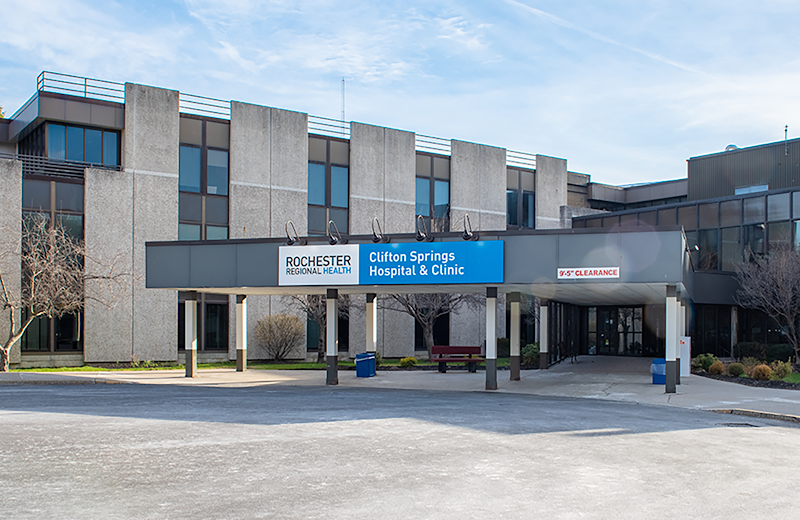
Clifton Springs Hospital and Clinic Extended Care
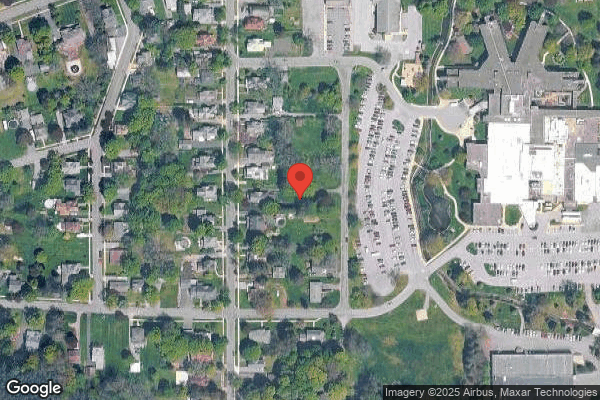
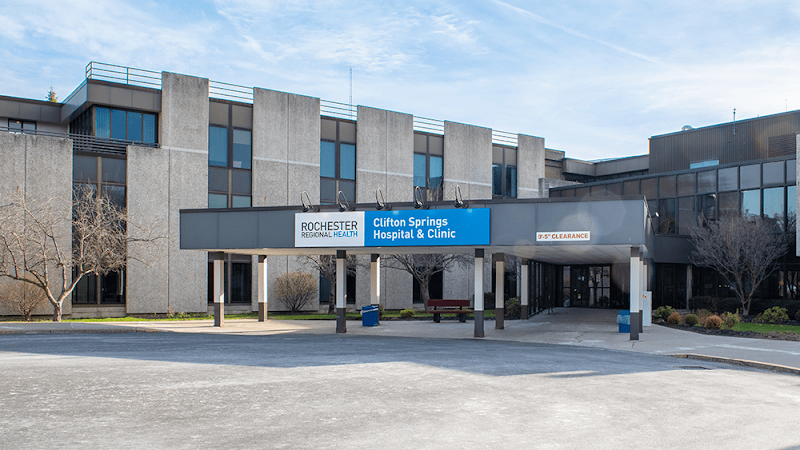
2 Coulter Road, Clifton Springs, NY 14432 (315) 462-0557
Non profit - Corporation 108 Beds ROCHESTER REGIONAL HEALTH Data: November 2025
Trust Grade
80/100
#155 of 594 in NY
Last Inspection: November 2024

Within standard 12-15 month inspection cycle. Federal law requires annual inspections.

Overview

Clifton Springs Hospital and Clinic Extended Care has a Trust Grade of B+, which means it is above average and generally recommended for families considering care options. It ranks #155 out of 594 facilities in New York, placing it in the top half, and is the best option among five county facilities. However, the facility is experiencing a concerning trend, with issues increasing from 1 in 2023 to 5 in 2024. Staffing is rated at 4 out of 5 stars, which is good, but turnover is at 46%, about average for the state, indicating some staff instability. Notably, there are no fines on record, which suggests compliance is better than many other facilities. On the downside, the facility has been cited for several concerning issues. For instance, they failed to notify the medical team promptly after a significant medication error, which could have led to serious side effects for a resident. Additionally, care plans for some residents were incomplete, lacking specific goals and interventions for their medical needs, which could affect their overall care quality. Overall, while there are strengths in staffing and financial compliance, families should be aware of the recent trend of increasing issues and specific care plan deficiencies.
Trust Score
B+
80/100
In New York
#155/594
Top 26%
Safety Record
Low Risk
No red flags
Inspections
Getting Worse
1 → 5 violations
Staff Stability
⚠ Watch
46% turnover. Above average. Higher turnover means staff may not know residents' routines.
Penalties
✓ Good
No fines on record. Clean compliance history, better than most New York facilities.
Skilled Nurses
✓ Good
Each resident gets 44 minutes of Registered Nurse (RN) attention daily — more than average for New York. RNs are trained to catch health problems early.
Violations
⚠ Watch
12 deficiencies on record. Higher than average. Multiple issues found across inspections.
★★★★☆
4.0
Overall Rating
★★★★☆
4.0
Staff Levels
★★★☆☆
3.0
Care Quality
★★★★☆
4.0
Inspection Score
Stable
2023: 1 issues
2024: 5 issues

The Good

  • 4-Star Staffing Rating · Above-average nurse staffing levels
  • Full Sprinkler Coverage · Fire safety systems throughout facility
  • No fines on record

Facility shows strength in staffing levels, fire safety.

The Bad

Staff Turnover: 46%

Near New York avg (46%)

Higher turnover may affect care consistency

Chain: ROCHESTER REGIONAL HEALTH

Part of a multi-facility chain

Ask about local staffing decisions and management

The Ugly 12 deficiencies on record

Nov 2024 5 deficiencies
CONCERN (D)

Potential for Harm - no one hurt, but risky conditions existed

Notification of Changes (Tag F0580)

Could have caused harm · This affected 1 resident

Based on interviews and record review conducted during the Recertification Survey from 11/07/2024 to 11/15/2024, for one (Resident #93) of nine residents reviewed, the facility did not ensure that the...

Read full inspector narrative →
Based on interviews and record review conducted during the Recertification Survey from 11/07/2024 to 11/15/2024, for one (Resident #93) of nine residents reviewed, the facility did not ensure that the medical team was notified in a timely manner following a significant medication error. Specifically, the medical team was not notified timely when a medication had not been administered according to physician's orders resulting in potentially serious side effects. This is evidenced by the following: The facility policy Event Reporting revised October 2023, documented the definition of an error was a mistake in process that was made, regardless of impact to the patient, that should not have been present and caused harm. Examples of errors includes medication variances. Any error, close calsl, or other safety event should be reported and appropriate follow-up services as necessary. Resident #93 had diagnosis including hypertension (high blood pressure), transient ischemic attack (mini stroke), and myocardial infarction (heart attack). The Minimum Data Set Resident Assessment, dated 09/03/2024, documented the resident was cognitively intact and had orthostatic hypotention (low blood pressure with position changes). Medical orders, dated 07/24/2024 and signed by Nurse Practitioner #1, included midodrine for orthostatic hypotention 2.5 milligrams three times daily and to hold the medication if the resident's systolic blood pressure is greater than 140 or their diastolic blood pressure is greater than 80. Review of the resident's Medication Administration Record, dated 08/21/2024, documented midodrine 2.5 milligram tablet was administered at 9:20 PM. Review of the Default Flowsheet Data (vital signs record) in the resident's electronic medical record revealed on 08/21/2024 at 9:20 PM, Resident #93's blood pressure was 165/100. A progress note written by Registered Nurse #1 on 08/21/2024 at 9:28 PM documented Resident #93 received their midodrine 2.5 milligram tablet, their blood pressure was 165/100, and the supervisor was notified. A progress note written by Registered Nurse Clinical Leader #1 on 08/21/2024 at 9:33 PM documented they were notified Resident #93 was administered midodrine with a blood pressure of 166/98 and the provider was notified via a communication log (a book on the unit for staff to leave messages for the medical team to review the following day). A progress note written by Licensed Practical Nurse #3 on 08/22/2024 at 2:45 AM documented the resident requested their blood pressure to be taken as they felt it was high and complained of nausea and feeling flushed. Resident #93's blood pressure was 198/116 which was rechecked 10 minutes later and was 188/118. Resident #93 began to complain of chest pressure and heart palpitations, the provider was notified, and the resident was transported to the emergency department. During an interview on 11/15/2024 at 9:23 AM, Registered Nurse Clinical Leader #1 stated nurses should let the provider know of medication errors as soon as they are aware of the error. If midodrine was given out of physician's parameters as ordered, the nurse should let the provider know right away as it could raise the resident's blood pressure even more than it already was. Registered Nurse Clinical Leader #1 said Resident #93's blood pressure should have been monitored. During an interview on 11/15/2024 at 11:20 AM, the Director of Nursing stated the communication log is seen by the provider the next day, writing the error in the communication log would not have notified the provider timely, and they were unsure why this was not done immediately. 10 NYCRR 415.3(f)(2)(ii)(a)
CONCERN (D)

Potential for Harm - no one hurt, but risky conditions existed

Comprehensive Care Plan (Tag F0656)

Could have caused harm · This affected 1 resident

Based on observations, interviews, and record review conducted during the Recertification Survey from 11/07/2024 to 11/15/2024, for three (Residents' #16, #43, and #86) of 23 residents reviewed, the f...

Read full inspector narrative →
Based on observations, interviews, and record review conducted during the Recertification Survey from 11/07/2024 to 11/15/2024, for three (Residents' #16, #43, and #86) of 23 residents reviewed, the facility did not develop and/or implement comprehensive person-centered care plans that included measurable goals and interventions to meet the residents' medical, nursing, and psychosocial needs as identified in their comprehensive assessments. Specifically, the comprehensive care plan for Resident #16 did not include goals or interventions related to their respiratory function and tracheostomy (a surgically created opening in the neck and into the windpipe to help with breathing and remove secretions). For Residents #43 and #86, the comprehensive care plan did not include measurable goals or interventions related to active skin impairments. This is evidenced by the following. Review of the facility policy Comprehensive Person-Centered Care Planning Process, dated March 2024, included a comprehensive person-centered interdisciplinary care plan will be developed for each individual receiving care, which includes measurable objectives and timetables to meet an individual's medical, nursing, nutritional, rehabilitative, cultural, psychosocial, and as applicable trauma informed needs and preferences that are identified in the comprehensive assessment. All Care Area Assessments that are triggered by the Minimum Data Set Assessment will require a care plan to be developed or an explanation in writing of why it was determined not to proceed. Care needs or risks identified through the Minimum Data Set process that do not trigger a Care Area Assessments will also require a care plan to be developed or an explanation in writing of why it was determined not to proceed. 1. Resident #16 had diagnoses that included chronic obstructive pulmonary disease, chronic respiratory failure, and cerebral palsy (a group of neurological disorders that affect a person's ability to swallow, move, balance, and maintain posture). The Minimum Data Set Resident Assessment, dated 10/03/2024, documented Resident #16 was cognitively intact, had a tracheostomy and was on a mechanical ventilator (a medical device that helps a person breathe by moving air into and out of their lungs). Review of the current Comprehensive Care Plan did not include any measurable goals or interventions related to the resident's tracheostomy and ventilator use, monitoring of, or complications to monitor for. The current Interdisciplinary Care Card (care plan used by the Certified Nursing Assistants) included oxygen therapy with interventions to maintain oxygen saturation above 90%, to provide tracheostomy care in the AM and PM and as needed, and full ventilator support at night. During an interview on 11/15/2024 at 10:49 AM, Registered Respiratory Therapist #1 stated residents who have a tracheostomy and are on the ventilator should have their own person-centered care plan as the care and needs they have may be very different based on their individual needs. During an interview on 11/15/2024 at 11:06 AM, Registered Nurse Manager #1 stated Resident #16 should have a care plan specific to their respiratory needs that included the tracheostomy and ventilator, their specific problem, goals, and interventions including what staff should monitor and report. 2. Resident #86 had diagnoses that included a stroke, chronic respiratory failure, and obesity. The Minimum Data Set Resident Assessment, dated 10/10/2024, documented the resident had severely impaired cognitive skills and a deep tissue injury. During an observation on 11/12/2024 at 11:09 AM, Resident #86 had an unstageable (wound unable to be staged due to the presence of dead tissue) pressure injury approximately one inch by one inch to the left buttocks. Review of the Comprehensive Care Plan and Interdisciplinary Care Card included interventions to prevent skin breakdown. The Care Plans did not include Resident #86 had a current pressure injury, goals, and/or interventions for monitoring the pressure injury, or reporting issues with the pressure injury. During an interview on 11/15/2024 at 11:06 AM, Registered Nursing Manager #1 stated Resident #86 had the skin breakdown since admission from the hospital (approximately a month ago) and had not been care planned for the skin impairment at that time nor when it worsened (10/17/2024). They also stated they should have implemented and started a care plan for the actual skin impairment at the time of admission and updated the care plan as needed. 3. Resident #43 had diagnoses that included meningioma (a benign tumor that grows in the membranes that surround the brain and spinal cord), mechanical ventilator dependence, and obesity. The Minimum Data Set Resident Assessment, dated 10/01/2024, documented the resident was moderately impaired of cognitive skills. During an observation on 11/07/2024 at 3:20 PM, Resident #43 had a quarter-sized, red, open skin impairment to the right temple. Review of Resident #86's electronic medical record revealed they had been followed by dermatology (skin doctor) since June 2021 for a lesion on the right side of the head that was potentially a basal cell carcinoma (skin cancer). Documented communication with Resident #86's family on 11/30/2021 revealed the family declined to biopsy the lesion and would continue conservative treatment. Review of the Comprehensive Care Plan and Interdisciplinary Care Card did not include that the resident had a skin lesion, goals, or interventions related to the skin impairment to the right temple, or potential skin cancer. During an interview on 11/15/2024 at 11:06 AM, Registered Nurse Manager #1 stated Resident #86 should have had a care plan for the skin lesion and potential skin cancer that included measurable goals and interventions for the lesion, what to monitor for, and when and to whom to report any changes or concerns. During an interview on 11/15/2024 at 10:42 AM, Certified Nursing Assistant #3 stated they used the Interdisciplinary Care Cards to know how to take care of each resident and everything they needed to know and monitor should be on the care cards. They also stated if they did not see something on the care card, they would not know what to do without asking. During an interview on 11/15/2024 at 10:35 AM, Licensed Practical Nurse #5 stated the Comprehensive Care Plans and the Interdisciplinary Care Cards are important because they tell you how to take care of each resident and the services and care they need. They stated the nurse manager completes the Comprehensive Care Plan. During an interview on 11/15/2024 at 11:55 PM, the Director of Nursing stated care plans should be created from the Minimum Data Set Resident Assessment as well as based off each resident's needs and history. They also stated each care plan needed to be specific to the resident and include the problem, measurable goals, and interventions. Additionally, residents with a tracheostomy and using a ventilator and residents with active skin impairments should have specific care plans for those issues. 10 NYCRR 415.11(c)(1)
CONCERN (D)

Potential for Harm - no one hurt, but risky conditions existed

Deficiency F0658 (Tag F0658)

Could have caused harm · This affected 1 resident

Based on observations, interviews, and record review conducted during the Recertification Survey from 11/07/2024 to 11/15/2024, the facility did not ensure that services were provided to meet professi...

Read full inspector narrative →
Based on observations, interviews, and record review conducted during the Recertification Survey from 11/07/2024 to 11/15/2024, the facility did not ensure that services were provided to meet professional standards of quality for one (Resident #93) of two residents reviewed during medication administration pass. Specifically, Resident #93 had a medication signed off as administered but was omitted during the observed medication pass. Additionally, Resident #93 had multiple doses of a medication that had been signed off as administered, but were not administered, due to not being available, with no evidence that the medical team had been notified. This is evidenced by the following: The facility policy Medication Administration revised February 2020, included the six rights of medication administration as the right patient, right medication, right dose, right time, right route, and right documentation. Resident #93 had diagnoses that included stroke, diabetes, and constipation. The Minimum Data Set Resident Assessment, dated 09/03/2024, revealed Resident #93 was cognitively intact. Current physician's orders included polyethylene glycol 17 grams daily scheduled at 9:00 AM for constipation and brinzolamide (Azopt) 1% ophthalmic suspension one drop to the right eye three times a day ordered on 08/12/2024 for glaucoma and may use resident's own medication. The eye drops were scheduled for 9:00 AM, 1:00 PM, and 5:00 PM daily. During observation of medication administration pass on 11/13/2024 at 8:30 AM, Licensed Practical Nurse #1 stated Resident #93's brinzolamide eye drops were not available, the medication was not carried by the facility's pharmacy, and they were waiting for the resident's relative to pick it up and bring to the facility (from an outside pharmacy). Additionally, Licensed Practical Nurse #1 did not prepare and administer the polyethylene glycol dose scheduled to be given at 9:00 AM. Review of the Medication Administration Report from 11/05/2024 to 11/13/2024, revealed out of 25 opportunities for administration of brinzolamide eye drops, 19 opportunities were documented as not given, including all three doses on 11/07/2024, 11/08/2024, and 11/09/2024. Licensed Practical Nurse #2 documented that on 11/10/2024 and 11/11/2024, the 5:00 PM dose of the brinzolamide eye drops were administered but the 9:00 AM and 1:00 PM doses on those days were documented as not given, not available. Additionally, Licensed Practical Nurse #1 documented the polyethylene glycol dose on 11/13/2024 was administered at 8:42 AM. The brinzolamide was documented as not given. Review of Interdisciplinary Progress Notes, dated 11/01/2024 to 11/13/2024, revealed no documented evidence that a covering medical provider had been notified that Resident #93's brinzolamide eye drops were not available. During an interview on 11/13/2024 at 11:57 AM, Licensed Practical Nurse #1 stated if a medication was due to be given and was not available, they would indicate this in the electronic Medication Administration Record, send a message to Pharmacy that the medication was missing, and let Registered Nurse Clinical Lead #1 know the medication was unavailable. Licensed Practical Nurse #1 stated there should be documentation in the medical provider book (if the provider was notified of an unavailable medication), which they thought was done, but could not recall when. Licensed Practical Nurse #1 also stated they did not know how long the eye drops had been unavailable, and that the Assistant Director of Nursing was aware they were unavailable. Licensed Practical Nurse #1 stated they could not remember if they gave Resident #93 the polyethylene glycol (on 11/13/2024 during morning medication pass). Review of the medical provider book from 11/10/2024 to 11/13/2024 revealed no entries related to Resident #93's brinzolamide eye drops being unavailable. During an interview on 11/13/2024 at 12:27 PM, Registered Nurse Clinical Leader #1 stated entries in the medical provider book are usually shredded when they are a week old because there are a lot of entries. Registered Nurse Clinical Leader #1 stated they had trouble getting the brinzolamide eye drops, and they were not sure how long it had been unavailable, but they were working on it. During an interview on 11/14/2024 at 8:42 AM, Resident #93 stated they did not like to take the polyethylene glycol and had told them (nurses) that they do not want it. Resident #93 stated they received three different eye drops to their right eye and could not remember which eye drops were given. During an interview on 11/14/2024 at 4:26 PM, Licensed Practical Nurse #2 stated they worked the evening shifts on 11/10/2024 and on 11/11/2024, and did not give the brinzolamide eye drops and must have (accidently) documented them as given. During an interview on 11/15/2024 at 8:32 AM, the Assistant Director of Nursing stated when administering medications, the nurse should give the medication and then document it was given. They also stated if a medication was due to be given and it was unavailable, the nurse should attempt to find out why, contact the pharmacy to see if they could get it, and check the satellite pharmacy (Omnicell, an automatic medication dispensing machine). The Assistant Director of Nursing stated if a medication was consistently unavailable, the medical provider should be notified to see if something different (alternative medication) could be ordered. During an interview on 11/15/2024 at 11:21 AM, the Director of Nursing stated the nurses should document after a medication is given to the resident (to ensure accurate documentation) and should not expect a nurse to document that a medication was given if it was not administered. During an interview on 11/15/2024 at 12:01 PM, Nurse Practitioner #1 stated Resident #93 had come from the emergency room with the brinzolamide eye drops which the facility was going to use since they did not carry the medication. Nurse Practitioner #1 also stated they were not aware that Resident #93 had not been receiving the brinzolamide eye drops, and if they had been made aware, they would have ordered a comparable medication. 10 NYCRR 415.11(c)(3)(i)
CONCERN (D)

Potential for Harm - no one hurt, but risky conditions existed

Accident Prevention (Tag F0689)

Could have caused harm · This affected 1 resident

Based on observations, interviews, and record review conducted during the Recertification Survey from 11/07/2024 to 11/15/2024, for one (Resident #16) of nine residents reviewed, the facility did not ...

Read full inspector narrative →
Based on observations, interviews, and record review conducted during the Recertification Survey from 11/07/2024 to 11/15/2024, for one (Resident #16) of nine residents reviewed, the facility did not ensure each resident received adequate supervision to prevent accidents. Specifically, Resident #16 was identified to be a high risk for aspiration (accidental inhalation of food or drink into the airway) that required full supervision with meals and was observed not supervised at mealtime. This is evidenced by the following: The facility policy Aspiration Precautions/Dysphagia dated March 2024, included residents with dysphagia (difficulty swallowing) and/or at risk for aspiration are assessed and appropriate resident centered interventions are incorporated into the resident's care plan. Enteral feed/ventilator/tracheostomy residents must be on aspiration precautions and the care plan team will determine what mealtime supervision the resident requires, considering any recommendations from the speech therapist, and the registered nurse will add the mealtime supervision requirement to the care plan and care card. Resident #16 had diagnoses that included a stroke, dysphagia, and cerebral palsy (a group of neurological disorders that affect a person's ability to swallow, move, balance, and maintain posture). The Minimum Data Set Resident Assessment, dated 10/03/2024, documented Resident #16 was cognitively intact, had a tracheostomy (a surgically created opening in the neck and into the windpipe to help with breathing and remove secretions), and was on a mechanical ventilator (a medical device that helps a person breathe by moving air into and out of their lungs). Review of the physician orders, dated 09/03/2024, revealed a mechanically altered diet, no straws, nectar thick liquids, chopped meats, and that the resident had feeding guidelines. Review of the facility document Recommended Feeding Guidelines signed by Speech and Language Therapist #1 on 08/30/2024, revealed Resident #16 had multiple feeding recommendations including, but not limited to the following: 1. Mechanical soft diet with nectar thick liquids. 2. Out of bed for meals. 3. No straws. 4. Full supervision. 5. Set me up for oral care at least twice daily. 6. Encourage me to alternate solids/liquids. 7. Encourage me to use small bites/sips. 8. Encourage me to use a slow rate of intake. The Interdisciplinary Care Card (a care plan used by the Certified Nursing Assistants for daily care), dated 9/03/2024, included Resident #16 required full supervision for meals. During an observation on 11/12/2024 at 8:14 AM, Resident #16 was in a recliner chair in their room eating breakfast. No staff were in the room to provide supervision. During a continuous observation on 11/12/2024 from 11:42 AM to 12:17 PM, Resident #16 received their lunch tray, had their tray set up by a Certified Nursing Assistant, and ate their lunch. There were no nursing staff in the resident's room or visible in the hallway to provide full supervision during the meal. During an interview on 11/12/2024 at 11:58 AM and again at 12:59 PM, Certified Nursing Assistant #1 stated Resident #16 was on their assignment and they review the resident's care cards daily to review how to take care of each resident. They also stated the care cards included diet consistency and any guidelines or recommendations made by the speech therapist. Certified Nursing Assistant #1 stated full supervision would mean a staff member should be present with the resident for the entirety of the meal. They also stated they had not been in Resident #16's room during their meal, but should have been. During an interview on 11/12/2024 at 1:18 PM, Licensed Practical Nurse #4 stated Resident #16 had a history of aspiration, was a high risk for choking, and often needed to be suctioned after meals. Additionally, Resident #16 required full supervision for meals, the assigned Certified Nursing Assistant should have provided supervision per the care card, and the assigned nurse is responsible to ensure supervision is occurring. Licensed Practical Nurse #4 stated they were not aware Resident #16 had not received full supervision with their meals. During an interview on 11/15/2024 at 1:55 PM, Speech and Language Therapist #1 stated residents on the ventilator with a trach (tracheostomy) were at a very high risk for aspiration and were assessed by speech therapy to determine safety and develop recommendations and guidelines for feeding. Additionally, Resident #16 received a lot of speech therapy in order to eat, was at high risk for aspiration and potential complications related to aspiration, and needed to have a staff member in the room at all times while they were eating. Speech and Language Therapist #1 stated staff members should encourage and cue the resident to follow the speech therapy recommendations and guidelines and should observe for resident safety so they can respond promptly to any issues or concerns. During an interview on 11/15/2024 at 10:35 AM, Registered Nurse Manager #1 stated nursing staff are expected to follow the care plan and interdisciplinary care card including supervision with meals and speech therapy recommendations and guidelines. 10 NYCRR 415.12(h)(2)
MINOR (B)

Minor Issue - procedural, no safety impact

Staffing Information (Tag F0732)

Minor procedural issue · This affected multiple residents

Based on observations, interviews, and record reviews conducted during a Recertification Survey from 11/07/2024 to 11/15/2024, the facility did not ensure the daily nurse staffing information was cons...

Read full inspector narrative →
Based on observations, interviews, and record reviews conducted during a Recertification Survey from 11/07/2024 to 11/15/2024, the facility did not ensure the daily nurse staffing information was consistently posted to include the daily resident census, the total number and actual hours worked by the licensed and certified nurses at the beginning of each shift on a daily basis, and that they were readily accessible to residents and visitors. Specifically, the nursing staff information was not posted in a readily accessible location for all residents and visitors, the information was not completed or updated for night shift and on weekends, and the information posted was not updated or consistently accurate. This is evidenced by the following: The facility policy Long Term Care Nursing Services - Posting of Nurse Staffing Information dated October 2024, included the posting will include the total number and actual hours worked of licensed and unlicensed staff directly responsible for resident care per shift, the facility will post the nurse staffing data on a daily basis at the beginning of each shift, and the data will be posted in a prominent place readily accessible to residents and visitors. During observations on 11/07/2024 at 12:10 PM and 11/12/2021 at 11:01 AM, the posted nurse staffing numbers were located in the second-floor hallway prior to entering the 2200 resident care unit. Residents and visitors for resident care units 2300 and 2400 on the second floor and resident care units 3100, 3200, and 3300 on the third floor would not pass the posting or be able to visualize the posted nursing staffing unless going to the 2200 resident unit. Review of the posted daily nurse staffing information from 11/01/2024 to 11/13/2024 revealed 6 of 11 days did not include the accurate number of Licensed Practical Nurses and/or Certified Nursing Assistants when reviewed with the staffing schedules for those days. Review of the posted daily nurse staffing information from 08/01/2024 through 11/14/2024 revealed no documented evidence that the required nurse staffing information had been completed for any weekends during that time. During an interview on 11/12/2024 at 1:32 PM, the Nursing Staffing Coordinator stated they are responsible for completing the posted nursing information and posting the information. They stated they complete the information for all shifts and update day shift and evening shift as needed; they do not update the night staffing information. The Nursing Staffing Coordinator also stated the posted staffing is not updated for the night shift and is not completed when they are not in the building (weekends or vacations). The Nursing Staffing Coordinator stated the information is not easily accessible to residents and visitors on the third floor or for resident care units 2300 and 2400. During an interview on 11/15/2024 at 11:55 AM, the Director of Nursing stated they are not involved with the posted nursing information and were not aware of any issues with the postings. During an interview on 11/15/2024 at 12:18 PM, the Operations Supervisor stated they occasionally help cover the posting when the Nursing Staffing Coordinator is not available, and were not aware of any issues with updating or posting the information. 10 NYCRR 415.13
Mar 2023 1 deficiency
CONCERN (D) 📢 Someone Reported This

A family member, employee, or ombudsman was alarmed enough to file a formal complaint

Potential for Harm - no one hurt, but risky conditions existed

Accident Prevention (Tag F0689)

Could have caused harm · This affected 1 resident

**NOTE- TERMS IN BRACKETS HAVE BEEN EDITED TO PROTECT CONFIDENTIALITY** Based on observations, interviews and record review conducted during the Recertification Survey completed on 3/3/23, it was dete...

Read full inspector narrative →
**NOTE- TERMS IN BRACKETS HAVE BEEN EDITED TO PROTECT CONFIDENTIALITY** Based on observations, interviews and record review conducted during the Recertification Survey completed on 3/3/23, it was determined that for two of six residents reviewed for accidents, the facility did not ensure that the resident's environment remained as free of accident hazards as possible. Specifically, Resident #36 was not appropriately assessed, and care planned to have medications left at their bedside for self- administration and Resident # 28 was served and consumed a meal tray that contained an inaccurate diet consistency. This is evidenced by the following: 1.Resident #36 had diagnoses including end stage renal disease requiring dialysis, hypertension, diabetes, and depression. The Minimum Data Set (MDS) assessment dated [DATE], documented that Resident #36 was cognitively intact. Record Review on 3/1/23 of Resident #36's Comprehensive Care Plan (CCP) revealed no information, including goals, interventions, or assessments for safe self-administration of medications or for medications left at the bedside. During an observation on 3/1/23 at 8:57 a.m. Resident #36 was in bed eating breakfast. During an observation on 3/2/23 at 9:47 a.m., approximately nine or ten pills were observed in a medicine cup at Resident #36's bedside table while they were asleep in bed. There was no staff in the room. During an interview on 3/2/23 at 10:48 a.m., Licensed Practical Nurse (LPN) #1 stated that they had left Resident #36's morning medications at their bedside and thought the resident was care planned for such. Additionally, when asked, LPN #1 stated that there were three residents who wanders on the unit and specified that one of the residents is likely to go into other resident's rooms. Review of Resident #36's Medication Administration Record revealed their morning medications included but not limited to, Florastor (a probiotic) with physician instructions to wear gloves and wash hands when administering, Effexor (anti-depression medication) with physician instructions to give daily with breakfast, and Synthroid (scheduled for 6:00 a.m.), three different cardiac medications and a medication for diabetes. Synthroid was signed off as given on 3/3/23 at 6:07 a.m. and the rest of the medications were signed off as administered at 7:32 a.m. When interviewed on 3/2/23 at 11:34 a.m., and again on 3/3/23 at 8:50 a.m., Resident #36 said that they had asked the nurses not to wake them but to leave their medications at their bedside. Resident #36 stated the pills included their Synthroid (from night shift), Effexor, a diabetes pill, their blood pressure pills and Tylenol among others. Resident #36 said that no one had ever discussed with them the safety of leaving medications at their bedside. Resident #36 said that last week another resident, who was friendly but confused, came in their room uninvited and sat on their bed and they had to call staff to come and remove the resident. When interviewed on 3/3/23 at 9:18 a.m., the Director of Nursing (DON) said that Resident #36 had been self-administering medications for a long time per the resident's preference but could not confirm that the Interdisciplinary Team (IDT) had assessed the resident to self-administer medications safely or have them left at their bedside. The DON said that they would expect that before leaving medications at the bedside unsupervised, the IDT would have assessed the resident for safety and education along with ensuring the safety of other residents on the unit since there were wanderers. 2.Resident #28 had diagnoses including Parkinson's disease, bipolar disorder (form of mental illness), hypertension, and a risk for malnutrition. The MDS assessment dated [DATE] documented that Resident #28 was severely impaired cognitively. Review of current the physician's orders revealed a diet order for puree food with nectar thickened liquids. The CCP dated 2/21/23 and the current Certified Nursing Assistant (CNA) care plan documented that Resident #28 was at risk for malnutrition, was on aspiration precautions and required total feeding assistance. Interventions included pureed diet with nectar thick liquids and to follow recommendations from Speech Therapy (ST). Review of Recommended Feeding Guidelines, dated 12/16/22 revealed Resident #28 was recommended a pureed diet and out of bed with head elevated 90° for feeding. Review of a ST Discharge summary dated [DATE] revealed that Resident #28 had been evaluated for dysphagia (difficulty swallowing) and included that Resident #28 was without teeth or dentures and due to the resident swallowing the food whole and chewing either very minimally or not at all, mechanical soft foods are a choking hazard at this time and with increased risk for aspiration. Discharge level of diet was pureed food with nectar thick liquids. During an observation on 3/1/23 at 12:11 p.m., CNA #1 came out of Resident #48's room carrying a meal tray and said that Resident #48 had eaten their lunch. The meal ticket on the tray included Resident #28's name and the diet listed as pureed. Further investigation revealed that CNA #1 had fed Resident #48 with Resident #28's meal tray, and Resident #28 was fed Resident #48's meal tray which was a mechanical soft diet. When observed at this time the mechanical soft diet tray consisted of sliced carrots, mashed potatoes (not pureed), chopped up chicken tenders, fruit cocktail, nectar thickened dairy drink and an eight-ounce cup of creamy, white in color liquid that was half- spilled on tray. During an interview on 3/1/23 at 12:16 p.m. and 12:56 p.m., CNA #1 stated that they accidentally gave Residents #28 and #48 the wrong trays but that Resident #28 did not each much. CNA #1 stated that they were not normally assigned to this unit, but that CNAs should check the binder with the resident care cards to know what the residents' needs are. LPN #2 stated at this time that CNAs need to read the tickets for each resident prior to giving it to the resident. During an interview on 3/1/23 at 2:04 p.m. the Speech Pathologist (SP) stated that Resident #28's was edentulous (without teeth) and did not have dentures. Resident #28 had been ordered a mechanical soft diet but could not chew their food and that mechanical soft foods were identified as high risk for aspiration. The SP said that if a resident with a puree diet was given mechanical soft foods, they could choke or also pocket food in their mouth causing bacteria to form, leading to aspiration pneumonia. During an interview on 3/3/23 at 12:36 p.m., the Registered Nurse Manager (RNM) said they would expect that when delivering meal trays, staff read the names carefully to ensure that each resident receive the correct tray, and all residents who are supposed to be out of bed for meals are seated in the dining room. During an interview on 3/3/23 at 1:30 p.m., the DON said they would expect that residents with aspiration precaution be fed according to feeding guidelines. They would also expect staff to know what contributes to aspiration and report any concerns. 10 NYCRR415.12(h)(1)
May 2021 6 deficiencies
CONCERN (D)

Potential for Harm - no one hurt, but risky conditions existed

Notification of Changes (Tag F0580)

Could have caused harm · This affected 1 resident

Based on interviews and record reviews conducted during the Recertification Survey completed on 5/18/21, it was determined for one (Resident #31) of one resident reviewed the facility did not notify t...

Read full inspector narrative →
Based on interviews and record reviews conducted during the Recertification Survey completed on 5/18/21, it was determined for one (Resident #31) of one resident reviewed the facility did not notify the resident of new treatment plans. Specifically, test results and treatment plans were not reviewed with the resident following a cardiology consult. This is evidenced by the following: Review of a facility policy, Notification of Changes in Resident Status, dated February 2018, included to notify residents, families and/or the resident representative, according to their authority, of changes in the resident's status and that the facility must immediately inform the resident, consult with the resident's physician and notify, consistent with his or her authority, the resident representative (s) regardless of resident's competency when there is a need to alter treatment significantly. A need to alter treatment significantly means a need to stop a form of treatment or commence a new form of treatment to deal with a problem. The notification will be documented in the interdisciplinary progress notes and is to include date, time and person notified. Resident #31 had diagnoses including a history of heart attacks, cardiomyopathy and heart failure. The Minimum Data Set Assessment, dated 3/4/21, revealed the resident was cognitively intact and was on an anticoagulant medication (used to prevent blood clots) daily. In a cardiology consultation note, dated 4/23/21, the cardiologist documented that Resident #31 was to be scheduled for an echocardiogram (ECHO) (an advanced test to show the internal structure of the heart) and a nuclear stress test. The cardiologist wrote that if there were areas of ischemia (inadequate blood supply) around the heart, an angiogram would need to be considered. Review of facility interdisciplinary progress notes, dated 4/23/21 to 5/17/21, revealed that the ECHO was completed on 4/26/21 with the report to follow. There was no documented evidence that the resident was notified of the test results or of any future tests being scheduled. During an interview on 5/14/21 at 10:21 a.m., Resident #31 said communication at the facility was a problem. Resident #31 said they had an electrocardiogram (EKG) and thought they were supposed to have another test (stress test) but that no one had told them when it was scheduled or came to get them and it was missed. In an interview on 5/17/21 at 3:38 p.m., the Director of Nursing (DON) said she expects that someone would have reported the results of the ECHO and the follow up plan to the resident. The DON said either the cardiologist or the unit secretary will usually schedule follow up appointments. She added if the cardiologist or one of the facility medical providers did not talk with the resident, the nurse manager would do that. In an interview on 5/18/21 at 11:07 a.m., the Registered Nurse Manager (RNM) said it is the responsibility of the facility medical team to notify residents of test results and follow up appointments and document the conversation in a progress note. The RNM reviewed progress notes and said there was no documentation that the resident was notified of any results or future tests. He said the cardiology notes did not include resident notification either. The RNM also said that the ECHO report did not have any provider initials or date on it to represent it was reviewed by the facility medical provider. In an interview on 5/18/21 at 11:15 a.m., the Physician's Assistant (PA) said a follow up visit and stress test that had been scheduled had to be pushed out till 6/17/21. She said the tests were to determine the need for an angiogram. She said the facility procedure is for cardiology to fax test results and notes directly to the medical providers so that results can be discussed with the resident and this was not done. [10NYCRR 415.3(c)(2)(ii)(c)]
CONCERN (D)

Potential for Harm - no one hurt, but risky conditions existed

Deficiency F0657 (Tag F0657)

Could have caused harm · This affected 1 resident

Based on observations, interviews and record review conducted during the Recertification Survey completed on 5/19/21, it was determined for one (Resident #18) of one resident reviewed the facility did...

Read full inspector narrative →
Based on observations, interviews and record review conducted during the Recertification Survey completed on 5/19/21, it was determined for one (Resident #18) of one resident reviewed the facility did not review and revise the resident's care plan (with input from the resident or resident representative, to the extent possible), if necessary to meet the resident's needs. Specifically, Resident #18 complained to the facility that they required more assist with brushing their teeth than staff were providing, and the resident's care plan was not revised to meet the resident's needs. This is evidenced by the following: Resident #18 had diagnoses including gingivitis with advanced gum disease, dry mouth, and anxiety disorder. A Minimum Data Set Assessment, dated 5/8/21, revealed the resident was cognitively intact, required set up help for personal hygiene, and no rejections of cares. The resident's current Comprehensive Care Plan and the Interdisciplinary Care Card (both direct daily care), for oral care included that the resident had their own teeth, was independent with brushing after set up, for staff to please cue the resident morning and evening, observe for any bleeding and if any to report it. Review of dental notes, dated 3/26/21 and 4/30/21, included that the resident had advanced gum disease and that better oral care was discussed with the resident and with staff. Review of a Grievance Resolution Letter, dated 5/4/21, revealed that on 4/19/21, Resident #18 filed a grievance that included they were not receiving staff assistance with teeth brushing. The facility response was to update the care plan to reflect the assistance needed for teeth brushing. In an observation and interview on 5/14/21 at 9:23 a.m., Resident #18 was dabbing a tissue against their teeth that was soiled with blood. Resident #18 said they have very sensitive teeth and was told by a dental hygienist to brush at least once a day with staff assistance. Resident #18 said the staff should help them, but they do not. There was an empty tube of toothpaste and two dry toothettes observed in the bathroom at this time. In an observation and interview on 5/17/21 at 11:45 a.m., Resident #18 had a tissue on the overbed table that was spotted with blood. Resident #18 said that they did not brush today as they could not get any toothpaste out of the tube. The resident again stated that staff are supposed to help them. Observation at this time revealed whitish orange creamy debris or plaque around both upper and lower teeth. In an interview on 5/17/21 at 11:51 a.m., Certified Nursing Assistant (CNA)#1 said Resident #18 usually does their own oral care and calls for help if needed. CNA#1 said she was not aware of any update to assist the resident with tooth brushing but that she knows the resident has trouble getting the toothpaste out of the tube. In an interview on 5/17/21 at 12:00 p.m., CNA#2 said she had not provided any help to Resident #18 this morning as they can brush their own teeth. CNA#2 said she was not aware that the resident's oral care needs had changed as the CNA care card did not reflect that. In an interview on 5/18/21 at 10:21 a.m., the Social Worker said the Grievance Resolution Letter is given to the Registered Nurse Manager (RNM) in order to implement and change the resident's care plan and direct staff of the care the residents require. In an interview on 5/18/21 at 10:24 a.m., the Dentist said that the registered hygienist had recently seen Resident #18 on 4/30/21 and had advised staff to assist the resident with oral care. He said updating the resident's care plan is essential. In an interview on 5/18/21 at 11:42 a.m., the RNM said he did get an email to update Resident #18's care plans but did not update them because he thought that it had already been done. [10NYCRR 415.11(c)(2)(i-iii)
CONCERN (D)

Potential for Harm - no one hurt, but risky conditions existed

ADL Care (Tag F0677)

Could have caused harm · This affected 1 resident

Based on observations, interviews and record reviews conducted during the Recertification Survey completed on 5/18/21, it was determined that for one (Resident #22) of three residents reviewed, the fa...

Read full inspector narrative →
Based on observations, interviews and record reviews conducted during the Recertification Survey completed on 5/18/21, it was determined that for one (Resident #22) of three residents reviewed, the facility did not provide the necessary services to maintain good grooming and personal hygiene. Specifically, Resident #22 did not receive nail care or shaving per their preferences. This is evidenced by the following: Resident #22 had diagnoses including vascular dementia without behavioral disturbance, a stroke and muscle weakness. The Minimum Data Set Assessment, dated 2/23/21, documented that Resident #22 was cognitively intact and required assistance of one person for grooming and personal hygiene. The facility policy Quality of Life and Quality of Care , dated January 2020, included the resident who is unable to carry out activities of daily living shall receive the necessary services to maintain good grooming and personal and oral hygiene. Review of the current Comprehensive Care Plan and the Certified Nursing Assistant (CNA) Care Card included the resident required assistance of one staff for personal hygiene. During observations on 05/13/21 at 12:32 p.m., on 05/14/21 at 01:49 p.m., and on 05/17/21 at 10:44 a.m., Resident #22 was observed with long, untrimmed, and jagged fingernails on both hands with dark brown debris underneath them. The resident was also unshaven with elongated facial hair stained yellow in places. During an interview and joint observation on 05/17/21 at 10:44 a.m., the CNA, after observing the resident's nails and facial hair, stated that the resident's nails on both hands were long and dirty and that the resident needed to be shaved. When interviewed at this time, Resident #22 stated their nails were dirty and needed to be cleaned and that they had asked staff to shave their beard, but no one has done it yet. When interviewed on 05/17/21 at 12:55 p.m., the Nurse Manager (NM) stated it was the expectation that staff perform nail care and shave the residents unless the resident refuses. The NM stated that if the resident is a one assist staff should assist the resident in completing task that they cannot do for themselves on a daily basis and follow the care plan at all times. [10NYCRR 415.12(a)(3)]
CONCERN (D)

Potential for Harm - no one hurt, but risky conditions existed

Deficiency F0698 (Tag F0698)

Could have caused harm · This affected 1 resident

**NOTE- TERMS IN BRACKETS HAVE BEEN EDITED TO PROTECT CONFIDENTIALITY** Based on observations, interviews and record reviews conducted during the Recertification Survey, completed on 5/19/21, it was d...

Read full inspector narrative →
**NOTE- TERMS IN BRACKETS HAVE BEEN EDITED TO PROTECT CONFIDENTIALITY** Based on observations, interviews and record reviews conducted during the Recertification Survey, completed on 5/19/21, it was determined that for one of one resident (Resident #44) the facility did not provide care and services consistent with professional standards of care to meet the needs of a resident on dialysis. Specifically, the facility did not monitor the resident's fluid restriction os ordered and did not provide ongoing monitoring and care of the resident's vascular access. This is evidenced by the following: A facility policy, Hemodialysis Guidelines, dated April 2017, directs staff that upon the residents return from dialysis and at least daily, to feel lightly with fingertips over the fistula (a surgical graft used for dialysis) for a thrill (vibration) and auscultate (listen) for a bruit (swishing sound). Staff should document on the treatment sheet that both are present. If there is no bruit and/or thrill present, they should notify the medical provider. Staff are to monitor the site after each dialysis treatment for signs of bleeding, redness, warmth, swelling, tenderness or pain at the site and if any signs are present, to notify the medical provider. If the resident has a dressing over the fistula when returning to facility, it can be removed the following day. Monitor and record intake daily if the resident is placed on a fluid restriction. Resident #44 had diagnoses including end stage renal disease requiring dialysis three times per week and an arterial venous fistula in the right arm. The Minimum Data Set Assessment, dated 4/5/21, revealed the resident was cognitively intact, required set up assist for eating and was receiving dialysis treatments. Current Physician orders included a fluid restriction of 1500 milliliters (mls) per day and a renal diet. The current Comprehensive Care Plan (CCP) and Bedside [NAME] (directs daily care) included that Resident #44 was at risk for fluid imbalance. Interventions included to monitor labs and hydration status, to provide a renal diet of low potassium, controlled carbohydrate, and 1500 mls fluid restriction daily, and has dialysis treatments three days per week. Neither care plan directed staff to monitor the bruit and thrill or the fistula site for complications. Review of fluid intake flowsheets (in the electronic medical record), and the floor intake/output (I/O) sheets (on paper), dated 4/15/21 to 5/15/21, revealed incomplete or no documentation of the resident's fluid intake or 24-hour totals for 30 of 31 days. Review of Resident #44 medical record (electronic and paper) revealed no documentation that the resident's bruit and thrill or the fistula site were being checked or monitored on a consistent basis. In an interview on 5/18/21 at 11:05 a.m., Resident #44 said they are on a fluid restriction, but they do not know specifically what that amount is. The resident said they could have three cups a day pointing to a 16-ounce cup. Resident #44 added that the nurses do not check their fistula for bruit or thrill. In an interview on 5/18/21 at 11:08 a.m., Certified Nursing Assistant (CNA) #1 and CNA #2 both said the resident is on a fluid restriction of 1500 mls per day and they document on the I/O sheets after each meal. A review of the I/O sheets at this time revealed fluid documentation for each meal but did not include any fluid intake with medication pass or other fluids given between meals. In an interview on 5/18/21 at 12:07 p.m., and again at 3:33 p.m., the Registered Nurse Manager (RNM) said nursing should document the bruit and thrill in the electronic medical record (EMR) and after review, said it was incomplete and not documented since 4/3/21. He said the facility staff do not do anything with the bandage, only dialysis staff and that dietary is responsible to monitor the daily fluid intake. In an interview on 5/18/21 at 12:35 p.m., the Director of Nursing (DON) said she expects the fluid restriction, which is on the care plan, to be implemented and monitored by staff. She said nursing staff records the fluid intake using a combination of electronic and paper charting and the evening or night nurse should be reviewing the daily 24 hour intake to see if the resident is meeting or exceeding the fluid restriction and to notify a medical provider and dietary if not. The DON said the facility is currently trying to find a new, more simple standardized fluid intake recording system to use to but has not found one yet. She said she expects the bruit and thrill to be monitored once a shift at the facility. In an interview on 5/18/21 at 12:47 p.m., Registered Dietitians (RD)#1 and RD#2 both said Resident #44 gets a total of 720 mls per day with their meals and nursing should use the remaining fluid allowance for medication pass and between meal drinks. They said typically fluid intakes are documented on the floor I/O sheets not the computer and that nursing reviews them. In an interview on 5/18/21 at 1:32 p.m., and at 2:52 p.m., Licensed Practical Nurse (LPN)#1 said the CNAs document fluids on the I/O sheets, but the night nurse uses a different form known as the breakfast-lunch-dinner-medications sheet. LPN#1 said the evening nurse is supposed to review these sheets and enter the information into the computer and report pertinent information to the next shift. LPN #1 said no one has directed her to check the bruit, thrill, or the fistula site. In an interview on 5/18/21 at 1:49 p.m., the Dialysis Registered Nurse Clinical Manager said Resident #44 is on a 1500 mls fluid restriction daily. She said facility staff should check the fistula bruit and thrill once daily and check the site for complications after removal of the bandage at bedtime. She said Resident #44's fluid intake has been manageable so far despite coming to dialysis every Monday with excess fluids related to the weekend intake. [10NYCRR 415.12]
MINOR (B)

Minor Issue - procedural, no safety impact

Transfer Notice (Tag F0623)

Minor procedural issue · This affected multiple residents

Based on interviews and record reviews conducted during the Recertification Survey, completed on 5/18/21, it was determined for two of two residents, the facility did not ensure that the residents or ...

Read full inspector narrative →
Based on interviews and record reviews conducted during the Recertification Survey, completed on 5/18/21, it was determined for two of two residents, the facility did not ensure that the residents or resident's representatives were notified in writing of the reason for a transfer or discharge from the facility. Specifically, Resident #7 and Resident # 91 were transferred to the hospital and there was no documented evidence that the residents or their representatives received a copy of the written transfer notice. The facility policy Notice of Transfer, Discharge or Bed Hold, dated May 2018, included the nursing home must issue a valid discharge notice to the resident, and if known, to a family member or legal representative of the resident. For urgent transfers out of the facility: a copy of the notice of discharge form should be sent with the resident at the time of transfer/discharge. Social Work or Nursing should notify the resident's responsible party via phone of the discharge and document notification or attempt to notify in the medical record and Social Work will follow up with the resident or representative on the next business day with a phone call to discuss bed hold options. The Social Worker will also mail a copy of the discharge notice to the resident/responsible party and document the notification in the medical record. 1. Resident #7 has diagnoses including type 2 diabetes mellitus, chronic obstructive pulmonary disease, and atrial fibrillation. The Minimum Data Set (MDS) Assessment, dated 5/4/21, revealed the resident had moderately impaired cognition. Review of the medical record revealed Resident #7 was transferred to the hospital on 4/13/21 and again on 4/25/21. The Urgent Notice of Transfer, Discharge, Therapeutic Leave forms, dated 4/13/21 and 4/25/21, included that a transfer or discharge to the hospital was required by the resident's medical needs. The resident was unable to sign the form at the time of discharge. Review of the medical record from 4/13/21 to 4/30/21 did not include any documented evidence that the resident or resident's representative was notified in writing of the reason for the transfer or discharge to the hospital. 2. Resident #91 has diagnoses including type 2 diabetes mellitus, malnutrition, and septic shock. The MDS Assessment, dated 4/27/21, revealed the resident may have difficulty making decisions in new situations. Review of the medical record revealed Resident #91 was transferred to the hospital on 4/2/21. The Urgent Notice of Transfer, Discharge, Therapeutic Leave form, dated 4/2/21, included a transfer or discharge to the hospital was required by the resident's medical needs. The form was signed by a facility staff member. Review of the medical record from 4/1/21 to 4/3/21 did not include any documented evidence that the resident or resident's representative was notified in writing of the reason for the transfer or discharge to the hospital. When interviewed on 5/18/21 at 11:25 a.m., the Social Worker (SW) stated that she provides a copy of the written notice of a transfer to resident's families by mail. The SW stated that there was no documented evidence that the written notice of the transfer was provided for these two residents. When interviewed on 5/18/21 at 2:30 p.m., the Administrator stated that Social Work is responsible for ensuring that the transfer notice is done, but there is no process in place to ensure that a written copy of the notice is provided to the resident or representative. [10NYCRR 415.3 (h)(1)(iii)(a-c)]
MINOR (B)

Minor Issue - procedural, no safety impact

Deficiency F0625 (Tag F0625)

Minor procedural issue · This affected multiple residents

Based on interviews and record reviews conducted during the Recertification Survey completed on 5/18/21, it was determined for two (Resident #7 and #91) of two residents reviewed, the facility did not...

Read full inspector narrative →
Based on interviews and record reviews conducted during the Recertification Survey completed on 5/18/21, it was determined for two (Resident #7 and #91) of two residents reviewed, the facility did not ensure the residents or the resident's representatives were notified of the facility's bed hold policy per the regulations. Specifically, the residents were transferred to the hospital and there was no documented evidence that the residents or their representatives were notified of the facility's bed hold policy at the time of their hospitalizations. This is evidenced the following: The facility policy Notice of Transfer, Discharge or Bed Hold, dated May 2018, included the nursing home must issue a valid discharge notice to the resident, and if known, to a family member or legal representative of the resident. For urgent transfers out of the facility: a copy of the notice of discharge form should be sent with the resident at the time of transfer/discharge, Social Work or Nursing should notify the resident's responsible party via phone of the discharge and document notification or attempt to notify in the medical record, and Social Work will follow up with the resident or representative on the next business day with a phone call to discuss bed hold options. The Social Worker will also mail a copy of the discharge notice to the resident/responsible party and document the notification in the medical record. 1. Resident #7 has diagnoses including type diabetes mellitus, chronic obstructive pulmonary disease, and atrial fibrillation. The Minimum Data Set (MDS) Assessment, dated 5/4/21, revealed the resident had moderately impaired cognition. Review of the medical record revealed Resident #7 was transferred to the hospital on 4/13/21 and again on 4/25/21. The Urgent Notice of Transfer, Discharge, Therapeutic Leave forms, dated 4/13/21 and 4/25/21, included that a transfer or discharge to the hospital was required by the resident's medical needs but did not include information regarding the facility's bed hold policy. The resident was unable to sign the form at the time of discharge. Review of the medical record from 4/13/21 to 4/30/21 did not include any evidence that Resident #7 or their representative was notified of the facility's bed hold policy at the time of the resident's hospitalizations. 2. Resident #91 has diagnoses including type 2 diabetes mellitus, malnutrition, and septic shock. The MDS Assessment, dated 4/27/21, revealed the resident may have difficulty making decisions in new situations. Review of the medical record revealed the resident was transferred to the hospital on 4/2/21. An Urgent Notice of Transfer, Discharge, Therapeutic Leave form, dated 4/2/21, revealed a transfer or discharge to the hospital was required by the resident's medical needs but did not include information regarding the facility's bed hold policy. The form was signed by a facility staff member. Review of the resident's medical record did not include any evidence that Resident #91 or their representative was notified of the facility's bed hold policy at the time of the resident's hospitalization. When interviewed on 5/18/21 at 11:25 a.m., the Social Worker (SW) stated that a copy of the bed hold policy is provided to all residents at the time of admission and a copy also goes along with the written transfer notice by mail to the family at the time of a transfer. The Social Worker stated that there was no evidence that the bed hold policy was provided for these residents. [10NYCRR 415.3(h)(4)(i)(a)]
Understanding Severity Codes (click to expand)
Life-Threatening (Immediate Jeopardy)
J - Isolated K - Pattern L - Widespread
Actual Harm
G - Isolated H - Pattern I - Widespread
Potential for Harm
D - Isolated E - Pattern F - Widespread
No Harm (Minor)
A - Isolated B - Pattern C - Widespread

Questions to Ask on Your Visit

  • "Can I speak with families of current residents?"
  • "What's your RN coverage like on weekends and overnight?"

Our Honest Assessment

Strengths
  • • Grade B+ (80/100). Above average facility, better than most options in New York.
  • • No major safety red flags. No abuse findings, life-threatening violations, or SFF status.
  • • No fines on record. Clean compliance history, better than most New York facilities.
Concerns
  • • 12 deficiencies on record. Higher than average. Multiple issues found across inspections.
Bottom line: Generally positive indicators. Standard due diligence and a personal visit recommended.

About This Facility

What is Clifton Springs Hospital And Clinic Extended Care's CMS Rating?

CMS assigns Clifton Springs Hospital and Clinic Extended Care an overall rating of 4 out of 5 stars, which is considered above average nationally. Within New York, this rating places the facility higher than 99% of the state's 100 nursing homes. This rating reflects solid performance across the metrics CMS uses to evaluate nursing home quality.
How is Clifton Springs Hospital And Clinic Extended Care Staffed?

CMS rates Clifton Springs Hospital and Clinic Extended Care's staffing level at 4 out of 5 stars, which is above average compared to other nursing homes. Staff turnover is 46%, compared to the New York average of 46%.

What Have Inspectors Found at Clifton Springs Hospital And Clinic Extended Care?

State health inspectors documented 12 deficiencies at Clifton Springs Hospital and Clinic Extended Care during 2021 to 2024. These included: 9 with potential for harm and 3 minor or isolated issues.
Who Owns and Operates Clifton Springs Hospital And Clinic Extended Care?

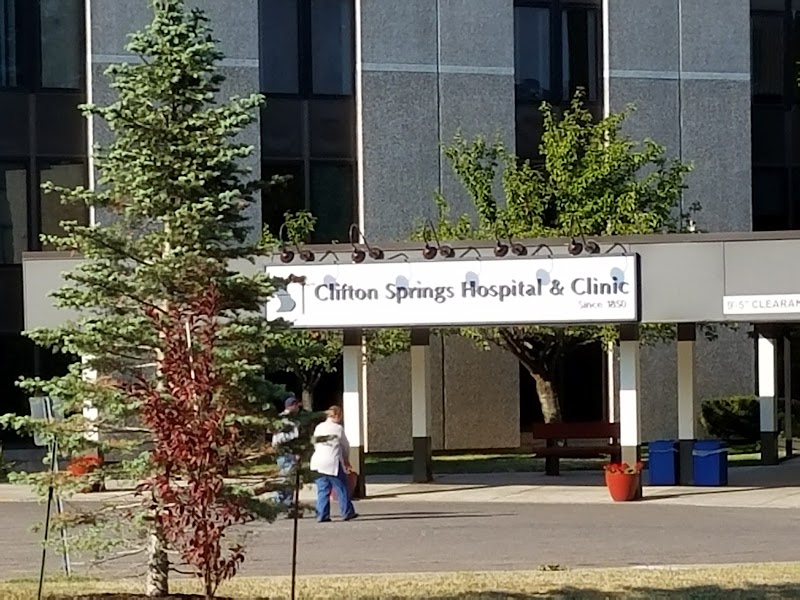
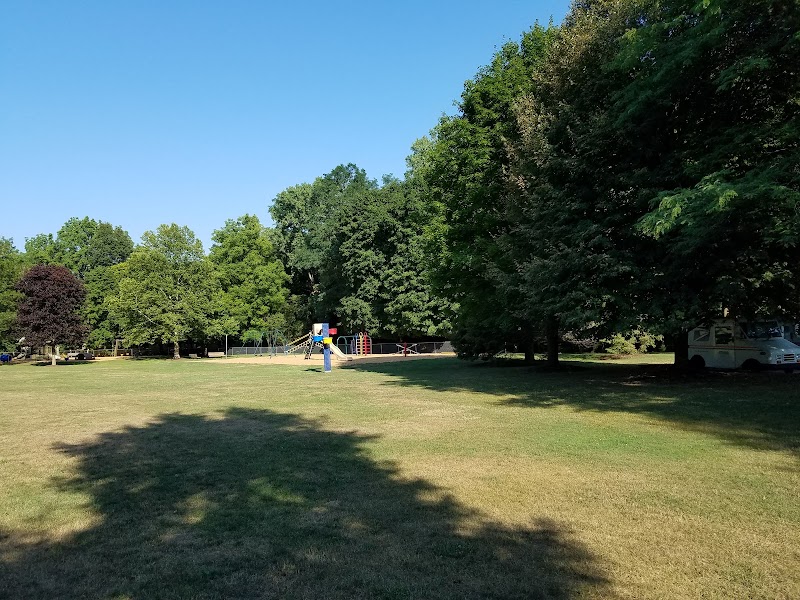
Clifton Springs Hospital and Clinic Extended Care is owned by a non-profit organization. Non-profit facilities reinvest revenue into operations rather than distributing to shareholders. The facility is operated by ROCHESTER REGIONAL HEALTH, a chain that manages multiple nursing homes. With 108 certified beds and approximately 103 residents (about 95% occupancy), it is a mid-sized facility located in Clifton Springs, New York.

How Does Clifton Springs Hospital And Clinic Extended Care Compare to Other New York Nursing Homes?

Compared to the 100 nursing homes in New York, Clifton Springs Hospital and Clinic Extended Care's overall rating (4 stars) is above the state average of 3.1, staff turnover (46%) is near the state average of 46%, and health inspection rating (4 stars) is above the national benchmark.

What Should Families Ask When Visiting Clifton Springs Hospital And Clinic Extended Care?

Based on this facility's data, families visiting should ask: "Can I visit during a mealtime to observe dining assistance and food quality?" "How do you handle medical emergencies, and what is your hospital transfer rate?" "Can I speak with family members of current residents about their experience?"

Is Clifton Springs Hospital And Clinic Extended Care Safe?

Based on CMS inspection data, Clifton Springs Hospital and Clinic Extended Care has a clean safety record: no substantiated abuse findings (meaning no confirmed cases of resident harm), no Immediate Jeopardy citations (the most serious violation level indicating risk of serious injury or death), and is not on the Special Focus Facility watch list (a federal program monitoring the lowest-performing 1% of nursing homes). The facility has a 4-star overall rating and ranks #1 of 100 nursing homes in New York. While no facility is perfect, families should still ask about staff-to-resident ratios and recent inspection results during their visit.

Do Nurses at Clifton Springs Hospital And Clinic Extended Care Stick Around?

Clifton Springs Hospital and Clinic Extended Care has a staff turnover rate of 46%, which is about average for New York nursing homes (state average: 46%). Moderate turnover is common in nursing homes, but families should still ask about staff tenure and how the facility maintains care continuity when employees leave.

Was Clifton Springs Hospital And Clinic Extended Care Ever Fined?

Clifton Springs Hospital and Clinic Extended Care has no federal fines on record. CMS issues fines when nursing homes fail to meet care standards or don't correct problems found during inspections. The absence of fines suggests the facility has either maintained compliance or corrected any issues before penalties were assessed. This is a positive indicator, though families should still review recent inspection reports for the full picture.

Is Clifton Springs Hospital And Clinic Extended Care on Any Federal Watch List?

Clifton Springs Hospital and Clinic Extended Care is not on any federal watch list. The most significant is the Special Focus Facility (SFF) program, which identifies the bottom 1% of nursing homes nationally based on persistent, serious quality problems. Not being on this list means the facility has avoided the pattern of deficiencies that triggers enhanced federal oversight. This is a positive indicator, though families should still review the facility's inspection history directly.