SLATE VALLEY CENTER FOR REHABILITATION AND NURSING
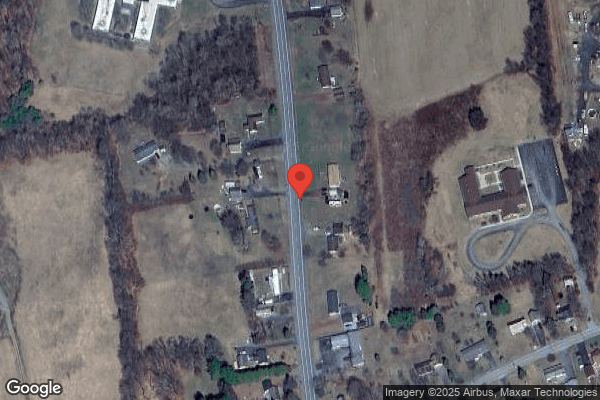
10421 STATE ROUTE 40, GRANVILLE, NY 12832 (518) 642-2346
For profit - Corporation 88 Beds CENTERS HEALTH CARE Data: November 2025
Trust Grade
90/100
#98 of 594 in NY
Last Inspection: April 2025

Within standard 12-15 month inspection cycle. Federal law requires annual inspections.

Overview

Slate Valley Center for Rehabilitation and Nursing in Granville, New York, has an excellent Trust Grade of A, which means it is highly recommended and reflects a strong reputation for quality care. It ranks #98 out of 594 facilities in New York, placing it in the top half, and is the best option among the four nursing homes in Washington County. The facility's performance is stable, with 8 identified issues over the last few years, which suggests that they are not improving or worsening significantly. Staffing is average with a 3/5 star rating and a turnover rate of 50%, which is on par with state averages, indicating that while some staff may leave, there is a reasonable level of experience among caregivers. There have been no fines reported, which is a positive sign, and the RN coverage is also average, meaning that residents receive care from registered nurses, although not at above-average levels. Specific incidents of concern include residents reporting long wait times for care due to short staffing, food safety issues in the kitchen, and a failure to provide necessary vision care for a resident. Overall, while there are some strengths in care quality and no financial penalties, families should be aware of staffing concerns and certain lapses in service.

Trust Score
A
90/100
In New York
#98/594
Top 16%
Safety Record
Low Risk
No red flags
Inspections
Holding Steady
3 → 3 violations
Staff Stability
⚠ Watch
50% turnover. Above average. Higher turnover means staff may not know residents' routines.
Penalties
✓ Good
No fines on record. Clean compliance history, better than most New York facilities.
Skilled Nurses
○ Average
Each resident gets 41 minutes of Registered Nurse (RN) attention daily — about average for New York. RNs are the most trained staff who monitor for health changes.
Violations
○ Average
8 deficiencies on record. Average for a facility this size. Mostly minor or procedural issues.
★★★★★
5.0
Overall Rating
★★★☆☆
3.0
Staff Levels
★★★★★
5.0
Care Quality
★★★★☆
4.0
Inspection Score
Stable
2022: 3 issues
2025: 3 issues

The Good

  • 5-Star Quality Measures · Strong clinical quality outcomes
  • Full Sprinkler Coverage · Fire safety systems throughout facility
  • No fines on record

Facility shows strength in quality measures, fire safety.

The Bad

Staff Turnover: 50%

Near New York avg (46%)

Higher turnover may affect care consistency

Chain: CENTERS HEALTH CARE

Part of a multi-facility chain

Ask about local staffing decisions and management

The Ugly 8 deficiencies on record

Apr 2025 3 deficiencies
CONCERN (D) 📢 Someone Reported This

A family member, employee, or ombudsman was alarmed enough to file a formal complaint

Potential for Harm - no one hurt, but risky conditions existed

Deficiency F0685 (Tag F0685)

Could have caused harm · This affected 1 resident

Based on record review and interview conducted during the recertification and abbreviated (Case #NY00338414) survey, the facility did not ensure residents were provided the proper treatment and assist...

Read full inspector narrative →
Based on record review and interview conducted during the recertification and abbreviated (Case #NY00338414) survey, the facility did not ensure residents were provided the proper treatment and assistive devices to maintain vision for one (1) (Resident #86) of one (1) resident reviewed for vision. Specifically, for Resident #86, the facility did not ensure that the resident ' s glasses were replaced and follow up appointments for optometry were obtained. This is evidenced by: Resident #86 Resident #86 was admitted to the facility with diagnoses of polyneuropathy (multiple peripheral nerves are damaged or diseased, leading to symptoms like weakness, numbness, and burning pain), type 2 diabetes mellitus (a long-term condition in which the body has trouble controlling blood sugar and using it for energy), and chronic obstructive pulmonary disease (a group of lung diseases that block airflow and make it difficult to breathe). The Minimum Data Set (an assessment tool) dated 3/30/2024 documented the resident usually understood others, sometimes was understood by others, and was severely cognitively impaired. The Minimum Data Set documented the resident had moderately impaired vision and used corrective lenses. A Consult Form dated 5/18/2023 documented the resident had been seen by the optometrist with the next follow-up scheduled for 11/2023. A handwritten note at the bottom of the consult dated 12/5/2023 documented the resident would be seen because their glasses were broken. There was no documented evidence of any other consult forms for optometry services. Record review of an email provided by the facility from the optometry service dated 4/18/2025 documented the resident was not seen by the optometrist following the 5/18/2023 visit. During an interview on 4/18/2025 at 11:15 AM, Director of Nursing #1 did not recall this issue with the resident and stated the resident should have had a follow up appointment and should have received new glasses. 10 New York Codes, Rules, and Regulations 415.12(2)(b)
CONCERN (E)

Potential for Harm - no one hurt, but risky conditions existed

Deficiency F0725 (Tag F0725)

Could have caused harm · This affected multiple residents

Based on observation, record review, and interview conducted during the recertification survey, the facility did not ensure the provision of sufficient nursing staff to assure resident safety and atta...

Read full inspector narrative →
Based on observation, record review, and interview conducted during the recertification survey, the facility did not ensure the provision of sufficient nursing staff to assure resident safety and attain or maintain the highest practicable physical, mental, and psychosocial well-being of each resident throughout the facility. Specifically, residents reported during interviews that the facility was short-staffed at times, which resulted d in call bells not being answered in a timely manner with long wait times for care to be provided. An analysis of the actual staffing schedule showed that on 10 occasions from 2/15/2025 to 4/13/2025, the facility did not meet their facility assessment for staffing needs. This is evidenced by: Upon entrance to the facility on 4/15/2025 at approximately 10:00 AM, 86 residents resided in two (2) units. Upon observing and reviewing the Facility Staffing Sheet, nine (9) Licensed Nurses and ten (10) Certified Nurse Aides were on duty. The Facility Assessment, last reviewed on 10/07/2024, documented that the facility's bed capacity was 88. The section titled, Staffing Plan, documented the following: - Day shift required three (3) Registered Nurses, four (4) Licensed Practical Nurses, and 12 Certified Nurse Aides - Evening shift required two (2) Registered Nurses, four (4) Licensed Practical Nurses, and 12 Certified Nurse Aides - Night shift required one (1) Registered Nurse, two (2) Licensed Practical Nurses, and four (4) Certified Nurse Aides - A complete census would require the facility to provide 215.6 hours of direct Certified Nurse Aide care for all residents on that day. A review of staffing sheets provided by the facility from 2/15/2025 through 4/13/2025 documented that they did not meet their assessed minimum staffing on most day and evening shifts, for the following: - On 2/15/2025, the facility census was 83 residents, which required 203.35 hours of direct Certified Nurse Aide care. The facility schedule had 152 hours of direct Certified Nurse Aide care. - On 2/16/2025, the facility census was 83 residents, which required 203.35 hours of direct Certified Nurse Aide care. The facility schedule had 160 hours of direct Certified Nurse Aide care. - On 2/26/2025, the facility census was 87 residents, which required 213.15 hours of direct Certified Nurse Aide care. The facility schedule had 144 hours of direct Certified Nurse Aide care. - On 3/07/2025, the facility census was 88 residents, which required 215.6 hours of direct Certified Nurse Aide care. The facility schedule had 152 hours of direct Certified Nurse Aide care. - On 3/11/2025, the facility census was 88 residents, which required 215.6 hours of direct Certified Nurse Aide care. The facility schedule had 136 hours of direct Certified Nurse Aide care. - On 3/17/2025, the facility census was 88 residents, which required 215.6 hours of direct Certified Nurse Aide care. The facility schedule had 152 hours of direct Certified Nurse Aide care. - On 3/26/2025, the facility census was 85 residents, which required 208.25 hours of direct Certified Nurse Aide care. The facility schedule had 152 hours of direct Certified Nurse Aide care. - On 4/1/2025, the facility census was 85 residents, which required 208.25 hours of direct Certified Nurse Aide care. The facility schedule had 160 hours of direct Certified Nurse Aide care. - On 4/07/2025, the facility census was 84 residents, which required 205.8 hours of direct Certified Nurse Aide care. The facility schedule had 144 hours of direct Certified Nurse Aide care. - On 4/11/2025, the facility census was 83 residents, which required 203.35 hours of direct Certified Nurse Aide care. The facility schedule had 120 hours of direct Certified Nurse Aide care. During a surveyor-led group resident meeting on 4/15/2025 at 10:30 AM, the 7 residents attending the meeting reported insufficient staffing to meet their needs. They often had to wait an extended period of time to get care. They stated staffing was extremely low on weekends when only one (1) or two (2) aides per unit. During an interview on 4/18/2024 at 10:45 AM, Staffing Coordinator #1 stated that a program created the daily schedule via a spreadsheet, created by corporate, that allocated the number of staff personnel per the daily census. They stated that the program does not change, and all they are required to do is input the daily census, and the program would provide the number of Certified Nurse Aides and nursing personnel required. During an interview on 4/18/2025 at 10:45 AM, Director of Nursing #1 stated that they were aware of the federal regulation regarding required hours for Certified Nurse Aides per the census. They stated that the schedule was done by a program created by corporate to determine the number of staff they would require per the daily census. They stated that according to a complete census of 88 residents, the facility was budgeted for six (6) Certified Nurse Aides during the day, six (6) Certified Nurse Aides for the evening, and four (4) Certified Nurse Aides for the night shift. They stated that the staffing would be adjusted when there are call-ins, and they made every attempt to fill in with additional staff. They stated that the pool for additional staffing was relatively small due to their remote location. 10 New York Code Rules and Regulations 415.13(a)(1)(i-iii)
CONCERN (E)

Potential for Harm - no one hurt, but risky conditions existed

Food Safety (Tag F0812)

Could have caused harm · This affected multiple residents

Based on observation, record review, and interview conducted during the recertification survey, the facility did not store, prepare, distribute, and serve food in accordance with professional standard...

Read full inspector narrative →
Based on observation, record review, and interview conducted during the recertification survey, the facility did not store, prepare, distribute, and serve food in accordance with professional standards for food service safety in the main kitchen and two (2) of the two (2) resident unit nourishment rooms. Specifically, in the main kitchen, the dishwashing machine temperature display panel and floors under the dishwashing machine were soiled with food particles or dirt; the storage area for clean pots, pans, and food containers had multiple containers stacked together that were not thoroughly dried and contained moisture. In the A-Unit nourishment room, the refrigerator door gaskets were soiled with food particles, and in the B-Unit nourishment room, the refrigerator and floor were soiled with food particles or dirt. This is evidenced by: The following items were noted during observations on 4/17/2025 at 11:15 AM in the main kitchen and unit nourishment rooms. In the main kitchen, the dishwashing machine temperature display panel and floors under the dishwashing machine were soiled with food particles or dirt; the storage area for clean pots, pans, and food containers had multiple containers stacked together that were not thoroughly dried and contained moisture. The refrigerator door gaskets in the A-Unit nourishment room and the floor in the B-Unit nourishment room were soiled with food particles or dirt. During interviews on 04/17/2025 at 1:23 PM, Food Service Director #1 stated that it is a joint effort between nursing staff on the unit and the kitchen staff to keep the areas clean. They indicated they had placed a cleaning schedule and checklist for the unit's nourishment areas. They stated they did not have the gasket area on the checklist and would need to add it. They stated that the staff will need to be more diligent in placing the pots and pans away to make sure they are completely dry before doing so. They stated that the dishwasher was not getting to the proper temperature for sanitizing and had to be repaired. They stated that the maintenance director had repaired the dishwasher but needed to clean the area after they had finished. They stated that staff would clean the area and instructed the staff to make sure the dishwasher area was clean after each use. 10 New York Code of Rules and Regulations 415.14(h)
Jul 2022 3 deficiencies
CONCERN (D)

Potential for Harm - no one hurt, but risky conditions existed

MDS Data Transmission (Tag F0640)

Could have caused harm · This affected 1 resident

**NOTE- TERMS IN BRACKETS HAVE BEEN EDITED TO PROTECT CONFIDENTIALITY** Based on record reviews and interviews during a recertification survey, the facility did not ensure the Minimum Data Set (MDS - ...

Read full inspector narrative →
**NOTE- TERMS IN BRACKETS HAVE BEEN EDITED TO PROTECT CONFIDENTIALITY** Based on record reviews and interviews during a recertification survey, the facility did not ensure the Minimum Data Set (MDS - an assessment tool) was encoded and transmitted to the Centers for Medicare and Medicaid Services (CMS) system for 1 (Resident #2) of 3 residents reviewed. Specifically, for Resident #2 the facility did not ensure the Discharge - Return Not Anticipated MDS was encoded and transmitted to the CMS system within 14 days. Resident #2 Resident #2 was admitted to the facility with the diagnoses of Parkinson's disease. dementia and adult failure to thrive. The MDS dated [DATE] documented the resident had severely impaired cognition, could understand others and could make themselves understood. The Discharge - Return Not Anticipated MDS had not been encoded and transmitted at the time of the recertification survey which occurred beyond 14 days of Resident #2's discharge. During an interview on 7/28/22 at 1:13 PM the Director of Nursing stated that MDS completion and transmission was not handled on site in the facility but off site. During a telephone interview on 7/28/22 at 1:53 PM, the [NAME] President of Clinical Reimbursement stated the MDS scheduling, completion and transmission was done off site from the facility. Resident #2's Discharge - Return Not Anticipated MDS should have been transmitted within the federal guidelines. The [NAME] President of Clinical Reimbursement stated completion and transmission was often done in batches and this specific MDS may have been missed.
CONCERN (D)

Potential for Harm - no one hurt, but risky conditions existed

Food Safety (Tag F0812)

Could have caused harm · This affected 1 resident

Based on observation, record review, and interviews during the recertification survey, the facility did not store, prepare, distribute and serve food in accordance with professional standards for food...

Read full inspector narrative →
Based on observation, record review, and interviews during the recertification survey, the facility did not store, prepare, distribute and serve food in accordance with professional standards for food service safety in the main kitchen and two (2) of 2 resident unit nourishment rooms. Specifically, cans of sweet potatoes and tuna had unacceptable dents exposing the food to adulteration; ground sausage was not cooled to 41 degrees Fahrenheit (F) within 6 hours; one spray bottle was not labeled; and the concentration of quaternary ammonium compound chemical sanitizing rinse (QAC) was less than that required by the manufacturer. In the main kitchen, the shelf under the window air conditioning unit had raw, unsealed wood; the table mixer, slicer, shelving, dishwashing machine temperature display panel, ventilation duct grate over the dishwashing machine, and floors under the dishwashing machine and stoves were soiled with food particles or dirt; the paper towel dispenser by handwashing sink in dishwashing machine room was empty; and the wall behind preparation table had holes and peeled paint. In the A Unit nourishment room, the refrigerator door gaskets were soiled with food particles, and in the B Unit nourishment room, the refrigerator and floor were soiled with food particles or dirt. This is evidenced as follows: During observations on 07/25/22 at 10:58 AM, in the main kitchen and unit nourishment rooms, the following items were noted. Finding #1 Dented Cans, Cooling Food, and Spray Bottle V-shaped dents were found in the top seams of two #10 cans of sweet potatoes and one can of tuna; all cans were found in the common stock; cooked ground sausage located in the walk-in refrigerator was 52F; and one spray bottle located in dishwashing machine room contained a clear liquid, and the bottle was not labeled. During interviews on 07/25/2022 at 10:58 AM and on 07/26/22 at 11:58 AM, the Food Service Director (FSD) stated the sausage was prepared on 07/24/22, and the spray bottle contained sanitizing solution. Finding #2 Sanitizing Solution The concentration of QAC used to sanitize food contact equipment in the 3-compartment sink was found to be zero (0) parts per million (ppm) when measured at 68 F; when checked after testing the sanitizing solution, the reservoir of QAC concentrate was empty. The document titled Santec eight (not dated), documented that for food contact surfaces sanitization, the sanitizing solution is to be between 200 and 400 ppm. The document titled Greenex Quaternary Sanitizer (the wall poster for sanitizing and solution testing directions; not dated), documents that the sanitizing solution is to be between 150 and 400 ppm; the directions and manufacturer are inconsistent with the Santec eight bottle directions. Finding #3 Cleanliness and Other Concerns In the main kitchen, the shelf under the window air conditioning unit had raw, unsealed wood; the table mixer, slicer, shelving, dishwashing machine temperature display panel, ventilation duct grate over the dishwashing machine, and floors under the dishwashing machine and under stoves were soiled with food particles or dirt; the paper towel dispenser by the handwashing sink in dishwashing machine room was empty; and the wall behind preparation table had holes and peeled paint. In the A-Unit nourishment room, the refrigerator door gaskets were soiled with food particles; and in the B-Unit nourishment room, the refrigerator and floor were soiled with food particles or dirt. During interviews on 07/25/22 at 12:23 PM, the Administrator and FSD stated that in the future staff will be more closely monitored for proper cooling of foods and the cleaning items found; staff will be re-educated on unacceptable dents in cans, checking whether the sanitizer concentrate bottle is full, and on the cleaning items found; the sanitizer concentrate chemical vendor will be contacted to get the correct directions and test kit; all spray bottles will be labeled; and work orders will be submitted to seal the raw wood and repair the wall. 10 NYCRR 415.14(h); Chapter 1 State Sanitary Code Subpart 14-1.32, 14-1.40(b), 14-1.60, 14-1.90, 14-112(c), 14-1.110, 14-1.143(c), 14-1.170, 14-1.171
CONCERN (D)

Potential for Harm - no one hurt, but risky conditions existed

Deficiency F0813 (Tag F0813)

Could have caused harm · This affected 1 resident

Based on observation, record review, and interview during the recertification survey, the facility did not ensure food brought for residents by family or visitors (food) was discarded when expired and...

Read full inspector narrative →
Based on observation, record review, and interview during the recertification survey, the facility did not ensure food brought for residents by family or visitors (food) was discarded when expired and other foods were stored in a way that is either separate or easily distinguishable from facility food. Specifically, a restaurant sandwich and restaurant prepared chicken wings were not labeled with resident names and dated; and one expired restaurant entre labeled with a resident name was not discarded. This is evidenced is as follows: During observations on 07/25/22 at 10:58 AM, in the A-Unit nourishment room refrigerator, a restaurant sandwich and restaurant prepared chicken were not labeled with resident names and were not dated; and one restaurant entre labeled with a resident name was dated 07/20/22 (5 days earlier than survey observations). A document titled Food From Outside and dated 11/2016, documents that food brought by family/visitors that is left with the resident to consume later will be labeled with the resident name, room number, item, date received and discard date to clearly distinguish the item from facility-prepared food; and refrigerated foods brought to residents will be discarded in 48 hours. During interviews on 07/25/22 at 12:33 PM, the Administrator and Food Service Director stated that nursing is responsible to label food brought in for residents with the resident name and date, and the dietary staff are responsible daily to discard any food brought in to residents that are not labeled properly and discard food dated more than 48 hours prior.
Nov 2019 2 deficiencies
CONCERN (D)

Potential for Harm - no one hurt, but risky conditions existed

PASARR Coordination (Tag F0644)

Could have caused harm · This affected 1 resident

Based on record review and interview the facility did not refer residents with newly evident mental illness for a level II review for one (Resident #80) of two residents reviewed for Pre-admission Scr...

Read full inspector narrative →
Based on record review and interview the facility did not refer residents with newly evident mental illness for a level II review for one (Resident #80) of two residents reviewed for Pre-admission Screening and Resident Review (PASRR). Specifically, the facility did not ensure for Resident #80, who was newly diagnosed with a mental illness, received a level 1 screen to determine if a level II screen needed to be done. This is evidenced by: Resident #80: The resident was admitted with diagnoses of generalized anxiety disorder, post polio syndrome and vitamin D deficiency. The Minimum Data Set (MDS - an assessment tool) dated 10/31/19, documented the resident had severe impairment for cognition, was able to sometimes understand others, and sometimes able to be understood by others. The MDS documented the resident had diagnoses of dementia with behavior disturbance, Schizophrenia, Manic Depression (Bipolar disease), anxiety and depression. The facility's Policy and Procedure for Screen/PASRR revised 6/2019, documented: - to identify if a Level II PASRR evaluation is required for a resident who has a newly diagnosed mental illness or mental retardation/developmental disability, a Level 1 screen will be completed by a qualified screener. A new Screen and Level II PASRR Evaluation (if required) must be completed within the required timeframe according to state regulations. - to identify if a Level II PASRR evaluation is required for a resident who has a serious mental illness and/or mental retardation/developmental disability and is identified as having a significant change in physical or mental condition, a Level 1 screen will be completed by a qualified screener. A new Screen and Level II PASARR Evaluation (if required) must be completed within the required timeframe according to state regulations. The Screen Form dated 4/14/14, Level 1 Review for Possible Mental Illness (question #23) documented the resident did not have a serious mental illness. The Resident's Diagnosis Report documented the following diagnoses; Schizophrenia identified 5/7/15, psychosis identified 7/25/14, dementia with behaviors identified 8/21/14, depressive episodes identified 3/20/18, and identified as bipolar 1/10/15. A Physician's Order dated 9/27/19, documented the resident was to receive Seroquel 100 mg every day at 6:00 AM for schizophrenia and psychosis. Physician's Orders dated 9/27/19, documented the resident was to receive; - Seroquel 100 mg (along with 25 mg) to equal 125 mg every day at 12:00 PM for schizophrenia and psychosis. - Seroquel 25 mg (along with 100 mg to equal 125 mg every day at 12:00 PM for schizophrenia and psychosis. - Seroquel XR 150 mg, give one tablet every day at 6:00 PM for schizophrenia and psychosis. - Sertraline 100 mg every day at 12:00 PM for depressive episodes. - Xanax 0.5 mg twice daily at 6:00 AM and 6:00 PM for generalized anxiety disorder. - Cymbalta 60 mg every day at 12:00 PM for polyneuropathy. A Physician's Order dated 9/27/19, documented the resident was to receive a psychiatric consult and treatment 2 to 4 times a month for schizophrenia, anxiety, major depressive disorder and bipolar disorder. A Careplan for Psychosocial-Alteration dated 1/31/17, documented for annual review on 10/29/19, that the resident shows she had difficulty meeting her psychosocial goals due to diagnoses that inhibit her from forming relationships with other residents and staff. Her mood state shows some improvement but she still experiences episodes of weeping and continues to be withdrawn. The resident is maintained on Cymbalta, Xanax, Zoloft and Seroquel for her mental wellbeing but has experienced hallucinations and times of crying out for her mother over the quarter. The medications are proving beneficial and she continues to require psychiatric evaluation. At times she refuses care and becomes confused. There are no new behaviors over review period. A psychiatric note dated 8/09/19, documented the resident has diagnoses of Schizophrenia. Symptoms continue and resident struggles daily with depression and anxiety, has delusional thoughts and hallucinations revolving around her dogs and her father. Patient isolated in room and has little engagement with others or in pleasurable activities. During an interview on 11/21/19 at 09:32 AM, Social Worker #2 stated the resident should definitely have had a new level 1 screen to include new diagnoses of serious mental illness to determine if a level II screen needed to be done. SW #2 did not realize the resident did not have a new screen. 10NYCRR 145.11(e)
CONCERN (D)

Potential for Harm - no one hurt, but risky conditions existed

Infection Control (Tag F0880)

Could have caused harm · This affected 1 resident

Based on record review and interview conducted during the recertification survey, the facility did not ensure an Infection Prevention and Control Program was maintained. Specifically, the facility did...

Read full inspector narrative →
Based on record review and interview conducted during the recertification survey, the facility did not ensure an Infection Prevention and Control Program was maintained. Specifically, the facility did not ensure Infection Control Policy and Procedures were reviewed and/or revised on a yearly basis. This is evidenced by: During an observation on 11/25/19: - Infection Control Program did not include the date it was originated or the date it was updated. - Pneumococcal Vaccine for Residents Policy was dated 10/2016. - Antibiotic Stewardship Policy was dated 10/2017. During an interview on 11/25/19 at 12:01 PM, the Infection Control Coordinator stated she did not know if the Infection Control Policies were reviewed and revised at the corporate level since she noted the dates documented on the Infection Control, Pneumococcal Vaccine and Antibiotic Stewardship Policies were not current. She had previously questioned this herself and stated the policies should be looked at annually. 10NYCRR415.19(a)(1-3)
Understanding Severity Codes (click to expand)
Life-Threatening (Immediate Jeopardy)
J - Isolated K - Pattern L - Widespread
Actual Harm
G - Isolated H - Pattern I - Widespread
Potential for Harm
D - Isolated E - Pattern F - Widespread
No Harm (Minor)
A - Isolated B - Pattern C - Widespread

Questions to Ask on Your Visit

  • "Can I speak with families of current residents?"
  • "What's your RN coverage like on weekends and overnight?"

Our Honest Assessment

Strengths
  • • Grade A (90/100). Above average facility, better than most options in New York.
  • • No major safety red flags. No abuse findings, life-threatening violations, or SFF status.
  • • No fines on record. Clean compliance history, better than most New York facilities.
Concerns
  • • No significant concerns identified. This facility shows no red flags across CMS ratings, staff turnover, or federal penalties.
Bottom line: Generally positive indicators. Standard due diligence and a personal visit recommended.

About This Facility

What is Slate Valley Center For Rehabilitation And Nursing's CMS Rating?

CMS assigns SLATE VALLEY CENTER FOR REHABILITATION AND NURSING an overall rating of 5 out of 5 stars, which is considered much above average nationally. Within New York, this rating places the facility higher than 99% of the state's 100 nursing homes. This rating reflects solid performance across the metrics CMS uses to evaluate nursing home quality.

How is Slate Valley Center For Rehabilitation And Nursing Staffed?

CMS rates SLATE VALLEY CENTER FOR REHABILITATION AND NURSING's staffing level at 3 out of 5 stars, which is average compared to other nursing homes. Staff turnover is 50%, compared to the New York average of 46%.

What Have Inspectors Found at Slate Valley Center For Rehabilitation And Nursing?

State health inspectors documented 8 deficiencies at SLATE VALLEY CENTER FOR REHABILITATION AND NURSING during 2019 to 2025. These included: 8 with potential for harm.

Who Owns and Operates Slate Valley Center For Rehabilitation And Nursing?

SLATE VALLEY CENTER FOR REHABILITATION AND NURSING is owned by a for-profit company. For-profit facilities operate as businesses with obligations to shareholders or private owners. The facility is operated by CENTERS HEALTH CARE, a chain that manages multiple nursing homes. With 88 certified beds and approximately 84 residents (about 95% occupancy), it is a smaller facility located in GRANVILLE, New York.

How Does Slate Valley Center For Rehabilitation And Nursing Compare to Other New York Nursing Homes?

Compared to the 100 nursing homes in New York, SLATE VALLEY CENTER FOR REHABILITATION AND NURSING's overall rating (5 stars) is above the state average of 3.1, staff turnover (50%) is near the state average of 46%, and health inspection rating (4 stars) is above the national benchmark.

What Should Families Ask When Visiting Slate Valley Center For Rehabilitation And Nursing?

Based on this facility's data, families visiting should ask: "Can I visit during a mealtime to observe dining assistance and food quality?" "How do you handle medical emergencies, and what is your hospital transfer rate?" "Can I speak with family members of current residents about their experience?"

Is Slate Valley Center For Rehabilitation And Nursing Safe?

Based on CMS inspection data, SLATE VALLEY CENTER FOR REHABILITATION AND NURSING has a clean safety record: no substantiated abuse findings (meaning no confirmed cases of resident harm), no Immediate Jeopardy citations (the most serious violation level indicating risk of serious injury or death), and is not on the Special Focus Facility watch list (a federal program monitoring the lowest-performing 1% of nursing homes). The facility has a 5-star overall rating and ranks #1 of 100 nursing homes in New York. While no facility is perfect, families should still ask about staff-to-resident ratios and recent inspection results during their visit.

Do Nurses at Slate Valley Center For Rehabilitation And Nursing Stick Around?

SLATE VALLEY CENTER FOR REHABILITATION AND NURSING has a staff turnover rate of 50%, which is about average for New York nursing homes (state average: 46%). Moderate turnover is common in nursing homes, but families should still ask about staff tenure and how the facility maintains care continuity when employees leave.

Was Slate Valley Center For Rehabilitation And Nursing Ever Fined?

SLATE VALLEY CENTER FOR REHABILITATION AND NURSING has no federal fines on record. CMS issues fines when nursing homes fail to meet care standards or don't correct problems found during inspections. The absence of fines suggests the facility has either maintained compliance or corrected any issues before penalties were assessed. This is a positive indicator, though families should still review recent inspection reports for the full picture.

Is Slate Valley Center For Rehabilitation And Nursing on Any Federal Watch List?

SLATE VALLEY CENTER FOR REHABILITATION AND NURSING is not on any federal watch list. The most significant is the Special Focus Facility (SFF) program, which identifies the bottom 1% of nursing homes nationally based on persistent, serious quality problems. Not being on this list means the facility has avoided the pattern of deficiencies that triggers enhanced federal oversight. This is a positive indicator, though families should still review the facility's inspection history directly.