OUR LADY OF PEACE NURSING CARE RESIDENCE
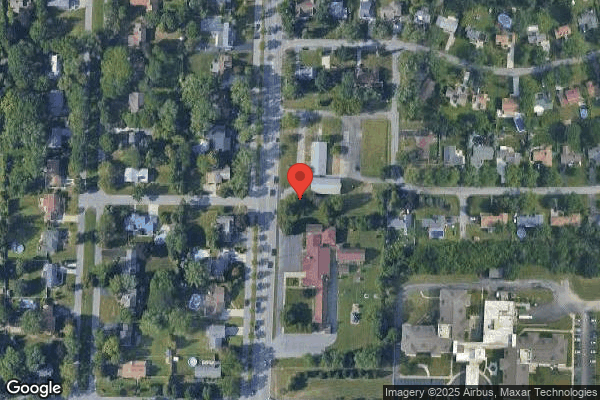
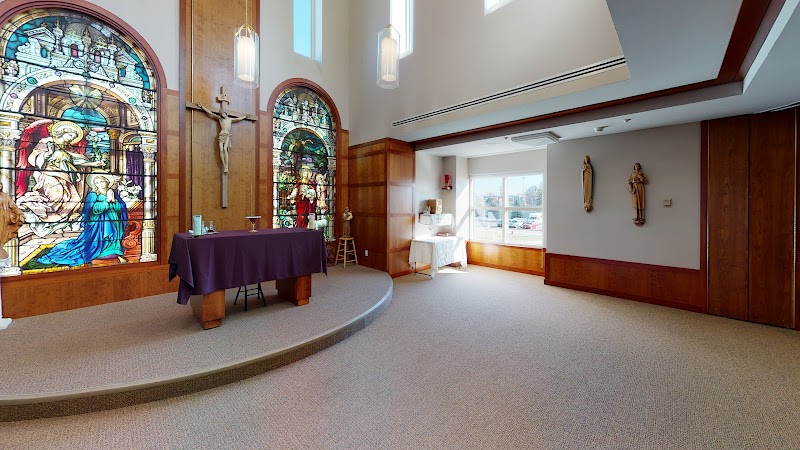
5285 LEWISTON ROAD, LEWISTON, NY 14092 (716) 298-2900
Non profit - Corporation 250 Beds ASCENSION LIVING Data: November 2025
Trust Grade
83/100
#82 of 594 in NY
Last Inspection: October 2024

Within standard 12-15 month inspection cycle. Federal law requires annual inspections.

Overview

Our Lady of Peace Nursing Care Residence in Lewiston, New York, has a Trust Grade of B+, which means it is recommended and above average compared to other facilities. It ranks #82 out of 594 in New York, placing it in the top half of all nursing homes statewide, and is the best option among the 10 facilities in Niagara County. However, the facility is experiencing a worsening trend, with issues increasing from 2 in 2023 to 3 in 2024. Staffing is a relative strength, with a rating of 4 out of 5 stars and a turnover rate of 39%, which is below the state average. On the downside, the facility has $7,901 in fines, which is concerning but average for New York, and it has faced serious issues, including a resident being subjected to mental abuse and neglect and delays in providing personal care for residents, indicating room for improvement in resident treatment and care protocols.

Trust Score
B+
83/100
In New York
#82/594
Top 13%
Safety Record
Moderate
Needs review
Inspections
Getting Worse
2 → 3 violations
Staff Stability
○ Average
39% turnover. Near New York's 48% average. Typical for the industry.
Penalties
⚠ Watch
$7,901 in fines. Higher than 96% of New York facilities. Major compliance failures.
Skilled Nurses
⚠ Watch
Each resident gets only 29 minutes of Registered Nurse (RN) attention daily — below average for New York. Fewer RN minutes means fewer trained eyes watching for problems.
Violations
⚠ Watch
11 deficiencies on record. Higher than average. Multiple issues found across inspections.
★★★★★
5.0
Overall Rating
★★★★☆
4.0
Staff Levels
★★★★★
5.0
Care Quality
★★★★☆
4.0
Inspection Score
Stable
2023: 2 issues
2024: 3 issues

The Good

  • 4-Star Staffing Rating · Above-average nurse staffing levels
  • 5-Star Quality Measures · Strong clinical quality outcomes
  • Full Sprinkler Coverage · Fire safety systems throughout facility
  • No fines on record
  • Staff turnover below average (39%)

    9 points below New York average of 48%

Facility shows strength in staffing levels, quality measures, fire safety.

The Bad

Staff Turnover: 39%

Near New York avg (46%)

Typical for the industry

Federal Fines: $7,901

Below median ($33,413)

Minor penalties assessed

Chain: ASCENSION LIVING

Part of a multi-facility chain

Ask about local staffing decisions and management

The Ugly 11 deficiencies on record

1 actual harm
Oct 2024 3 deficiencies
CONCERN (D)

Potential for Harm - no one hurt, but risky conditions existed

ADL Care (Tag F0677)

Could have caused harm · This affected 1 resident

**NOTE- TERMS IN BRACKETS HAVE BEEN EDITED TO PROTECT CONFIDENTIALITY** Based on observation, interview, and record review conducted during a Standard survey completed on 10/15/24, the facility did no...

Read full inspector narrative →
**NOTE- TERMS IN BRACKETS HAVE BEEN EDITED TO PROTECT CONFIDENTIALITY** Based on observation, interview, and record review conducted during a Standard survey completed on 10/15/24, the facility did not ensure that residents who were unable to carry out activities of daily living received the necessary services to maintain good grooming and personal hygiene for two (Resident #66 and #100) of four residents reviewed. Specifically, Resident #66 was not assisted with removing unwanted facial hair. Resident #100 did not receive incontinent care in a timely manner, received incomplete incontinent care, and staff did not complete proper glove changes and hand hygiene during care. Additionally, moisture barrier cream was not applied to Resident #100 per their care plan. The findings are: The policy and procedure titled AM and HS (morning and night) Care, dated 12/2023, documented during morning care staff are to assist with shaving based on preference/need. The policy documented to wash resident's genital area and buttocks and apply moisture barrier as indicated. The policy and procedure titled, Peri Care revised on 12/2017 documented the purpose of this procedure was to provide cleanliness and comfort to the resident, to prevent infections and skin irritation, and to observe the residents skin condition. Wash the perineal (area of the body between the anus and genitalia) area, wiping from front to back and wash area downward from front to back. Assist or instruct the resident to turn on their side, wipe the rectal area thoroughly, wiping from the base upward and extending over the buttocks. Dry the area thoroughly, remove gloves and discard into designated container. Perform hand hygiene before touching any clean objects. The policy and procedure titled Hand Hygiene, revised on 5/2023, documented hand hygiene was the single most important practice to prevent infections and promote resident safety. Hand hygiene is practiced after contact with blood, body fluids or contaminated surfaces. The policy documented hand hygiene is practiced before moving from work on a soiled body site to a clean body site on the same resident. 1. Resident #66 had diagnoses including unspecified dementia, hypertension (high blood pressure), and type 2 diabetes (body has trouble controlling blood sugar and using it for energy). The Minimum Data Set (a resident assessment tool) dated 8/21/24 documented Resident #66 was severely cognitively impaired, was usually understood and usually understands, required supervision for personal hygiene, and had no behaviors that included refusals of care. The comprehensive care plan dated 4/28/2022 documented Resident #66 needed assistance with daily activities of daily living care. Interventions included supervision assistance with set up staff support for personal hygiene. The Certified Nurse Aide worksheet (guide used by staff to provide care) dated 8/21/24 documented staff were to anticipate needs on routine rounding for Resident #66. Review of Nursing Progress notes dated 9/3/24 to 10/7/24 revealed there was no documented evidence that Resident #66 refused to be shaved. During an observation on 10/7/24 at 10:25 AM, Resident #66 had multiple gray and white facial hairs (0.25-0.5 inches) on their upper lip and multiple long white hairs (0.5 -1 inch) present on their chin. During an observation and interview on 10/7/24 at 11:27 AM, Resident #66' facial hair remained. Resident #66's spouse stated Resident #66 did not like the facial hair and staff have never asked or attempted to shave it. During intermittent observations on 10/8/24 at 8:21 AM, 10/8/24 at 3:38 PM, and 10/9/24 at 8:36 AM, Resident #66 continued to have long facial hairs to their upper lip and chin. During an observation and interview on 10/9/24 at 8:37 AM, Certified Nurse Aide #6 provided morning care to Resident #66. Certified Nurse Aide #6 combed Resident #66's hair then wheeled Resident #66 into the dining area. Certified Nurse Aide #6 returned to the room and started to pick up dirty linen. Certified Nurse Aide #6 did not offer or attempt to remove Resident #66's facial hair, before the completion of morning care. During an interview on 10/9/24 at 8:58 AM, Certified Nurse Aide #6 stated they were finished with care for Resident #66. Certified Nurse Aide #6 stated they noticed the facial hair on Resident #66 and should have asked them if they would like to be shaved. During an interview on 10/9/24 at 11:36 AM, Registered Nurse #2 Unit Manager stated they expected the Certified Nurse Aide to ask residents if they would like to be shaved daily with care and shaving should be done automatically weekly on shower days. During an interview on 10/10/24 at 1:39 PM, the Director of Nursing stated they expected morning care to involve shaving when facial hair is noticed and as long as the resident wanted it done. During an interview on 10/15/24 at 12:54 PM, the Director of Nursing stated there was not a facility educator at the time and the Director of Nursing and Assistant Director of Nursing were filling in as educators. The Director of Nursing stated staff were educated annually and as part of their competencies, and shaving was included in these educations. 2. Resident #100 had diagnoses including unspecified dementia, history of transient ischemic accident (a blockage of blood flow to the brain), and spinal stenosis (the space inside the backbone is too small causing pressure on the spinal cord and nerves that travel through the spine). The Minimum Data Set, dated [DATE], documented that Resident #100 had moderate cognitive impairment, could sometimes understand and could sometimes be understood by others. Resident #100 was incontinent of bowel and bladder and required substantial/maximal assistance for toileting and personal hygiene. Review of the comprehensive care plan dated 9/21/24 documented Resident #100 had the potential for skin breakdown related to a history of pressure ulcers. Skin will remain clean, dry, and free of breakdown related to incontinence. Interventions included perineal cleansing, to apply protective skin barrier after each incontinent episode, and to check and change per protocol. Resident #100 was care planned to be toileted prior to laying down for a nap. A continuous observation on 10/10/24 from 9:50 AM to 10:30 AM of Resident #100 revealed the following: at 9:50 AM Resident #100 was sitting in the common area in front of the television, yelling out, Hey, I have to go to the bathroom, and was trying to get out of their wheelchair, they kept repeating themselves stating, Hello, I have to go to the bathroom. There were not any staff visible in the area to assist the resident. At 10:01 AM, Resident #100 stated repeatedly, Oh boy, oh come on. Certified Nurse Aide #1 was seated ten feet away and did not respond to the resident. At 10:30 AM Resident #100 was taken down to the 2nd floor to participate in activities and was not toileted prior. During an interview and an observation on 10/10/24 at 10:45 AM, Resident #100 was in the 2nd floor activities room, when asked if they had been toileted yet, they stated no. During an interview on 10/10/24 at 12:39 PM, a family member of Resident #100 stated the resident had not been toileted yet and the staff kept the resident parked in front of the television all the time. They stated when Resident #100 had to go to the bathroom they would need to be taken promptly but the staff do not respond soon enough. They stated the resident sat in their soiled brief for hours and caused the resident to get many urinary tract infections since they were admitted to the facility. During an observation of incontinent care on 10/10/24 at 1:08 PM, Resident #100 was taken into their room by Certified Nurse Aide #1 and Certified Nurse Aide #2 after a visitor requested the resident be taken to the restroom. Certified Nurse Aide #2 gathered supplies, filled a basin with water and applied clean gloves. The resident was transferred into their bed by the two staff members using a mechanical lift, a strong urine and feces odor was detected, the resident's pants were soaked through with urine and the resident had had a bowel movement. Resident #100 was positioned towards Certified Nurse Aide #2 while their soiled pants were removed by Certified Nurse Aide #1. Certified Nurse Aide #1 used a washcloth and removed the feces from the resident's buttocks. Perineal care/urinary incontinence care was not performed. While wearing the same gloves, Certified Nurse Aide #1 used a clean towel to dry the resident and did not apply a skin barrier cream. Without changing their gloves and performing hand hygiene, Certified Nurse Aide #1 applied a clean brief and clean pants to the resident. Certified Nurse Aide #1 took the soiled items, placed them on a barrier on the resident's bed, and put them in a garbage bag and removed them from the room without removing/changing their gloves and performing hand hygiene before they exited. Certified Nurse Aide #1 re-entered the room then took the basin to the restroom and dumped dirty water into the toilet, rinsed the basin, removed their gloves, placed basin in the resident's drawer and washed their hands. During an interview on 10/10/24 at 1:26 PM, Certified Nurse Aide #1 stated Resident #100 would try and get out of their wheelchair when they needed to go to the bathroom. They stated the resident was toileted at 8:00 AM this morning and had not been toileted since because Resident #100 did not tell them they had to go, nor did they observe the resident attempting to get out of their wheelchair. They stated that all residents should be toileted every 2-3 hours. When asked why resident #100 was not toileted every 2-3 hours, they stated it was hard to find another staff member to assist the residents who were a two assist. They stated that normally they did perineal care first, but they did not today. They stated the resident was prone to getting urinary tract infections and they should have done perineal care. They stated that they should have changed their gloves after they cleaned the resident's buttocks and before touching the clean items. They stated this was important because cross contamination could occur. During an interview on 10/10/24 at 1:33 PM with Certified Nurse Aide #2 they stated Certified Nurse Aide #1 should have changed their gloves prior to touching clean items. They stated they were uncertain why Certified Nurse Aide #1 only cleaned the resident buttocks and did not perform perineal care. They stated only if a resident had a skin breakdown they would apply a skin barrier cream. They stated it was important to change dirty gloves to decrease the risk of cross contamination. During an interview on 10/10/24 at 1:45 PM, the Assistant Director of Nursing stated the Certified Nurse Aides did their rounds every 2-3 hours to perform incontinent care. They stated they should check the resident's closet care plan for the times they were care planned for as well. The Assistant Director of Nursing stated they expected the Certified Nurse Aides providing incontinent care to use proper technique for females and males, the resident should be cleaned from front to back and would expect them to change their gloves, wash hands, and reapply clean gloves before touching any clean items. They stated Certified Nurse Aide #1 should have cleaned Resident #100's perineal area first with clean gloves front to back, remove gloves and wash hands before they reapplied another pair of clean gloves, and then proceeded to clean the residents' buttocks in an upward motion. They stated Certified Nurse Aide #1 then should have removed their soiled gloves and washed their hands, put on a new pair of clean gloves, and put on a protective barrier cream to the resident's buttocks. During an interview on 10/10/24 at 1:52 PM, the Director of Nursing stated during incontinent care they expected Certified Nurse Aides to explain to the resident what they were doing, perform complete incontinent care thoroughly by cleaning front and back, change soiled gloves, wash hands, reapply clean gloves and apply a barrier cream to protect the skin from break down. They stated it was important to change gloves whenever dirty when providing incontinent care to avoid cross contamination. During an interview 10/11/24 at 12:33 PM, Licensed Practical Nurse #3 stated that the Certified Nurse Aides did not document every time the resident was toileted, and the check and change protocol was for residents to be toileted every 2-3 hours. 10NYCRR 415.12(a)(3)
MINOR (B)

Minor Issue - procedural, no safety impact

Abuse Prevention Policies (Tag F0607)

Minor procedural issue · This affected multiple residents

Based on interview and record review during the Standard survey completed on 10/15/24, the facility did not implement written policies and procedures for screening employees, that would prohibit and p...

Read full inspector narrative →
Based on interview and record review during the Standard survey completed on 10/15/24, the facility did not implement written policies and procedures for screening employees, that would prohibit and prevent abuse, neglect, and exploitation of residents and misappropriation of resident property. Specifically, two (Employee #5, Agency Licensed Practical Nurse and Employee #7, Nutritional Services Aide) of 13 employees that worked in the facility and were subject to the New York State Nurse Aide Registry verification, were reviewed through the New York State Nurse Aide Registry prior to their employment as required. The findings are: 1a. The policy and procedure titled Contingent Worker last approved and last reviewed 9/6/21 documented Contingent Workers include but are not limited to: Agency Workers. Contingent Worker workforce will be tracked in the Human Capital Management System (HCMS) to meet regulatory requirements and manage facility and system access. Appropriate use of Contingent Workers. Contingent Workers generally should be used to provide services for which the Ministry does not otherwise employ resources (e.g., catering, landscaping, maintenance), or when a short-term need for additional resources or special skills exists and the hiring of additional employees is not warranted (e.g., seasonal, high census coverage, immediate need, etc.). Drug Testing and Background Check Requirements for Contingent Workers. Background Checks shall be conducted in accordance with the following: The Third Party who supplies the Contingent Worker must conduct background checks related to criminal history, employment, education, OIG (Office of Inspector General), GSA (General Services Administration) , FDA (Food and Drug Administration) debarment status and the required licenses or certifications (such as MVR (Motor Vehicle Records) and DEA (Drug Enforcement Agency) of a Contingent Worker provided the Ministry to the full extent permitted by federal, state, or local law. When there is not a Third Party, Ascension provides the services as the agency. Background checks must be successfully completed prior to the Contingent Worker's commencement date at the Health Ministry. Criminal History Requirements. Ascension strives to maintain safe and secure working environments for all colleagues, customers, business partners, visitors, and guests. All Third Parties are required to verify criminal records to ensure that Contingent Workers do not pose a safety or security risk to Ministry sites, property, or personnel. If, during an assignment, a disqualifying offense is committed by a Contingent Worker, the Third-Party who is supplying the Contingent Worker must notify the Ministry and determine the appropriate action. The policy contained no documentation regarding the New York State Nurse Aide Registry verification process. Review of Employee #5's (Agency Licensed Practical Nurse) personnel file revealed the employee was hired on 7/14/24. Review of the time sheet information provided by the facility revealed Employee #5 worked in the facility on 7/14/24 from 3:00 PM to 11:00 PM. Review of the New York State Nurse Aide Registry Verification Report for Employee #5 revealed the verification date of the report was 7/23/24. During an interview on 10/10/24 at 11:02 AM, the Associate Experience Advisor stated Employee #5 was an Agency Licensed Practical Nurse, their hire date was 7/14/24, and the employee worked in the facility on 7/14/24. The Associate Experience Advisor further stated the Nurse Aide Registry Verification Report for Employee #5 had been completed on 7/23/24 and the facility had no other evidence that verified a Nurse Aide Registry Verification Report had been completed for the employee before 7/14/24. 1b. The policy and procedure titled New Hire Procedure last approved date 6/4/24 documented the purpose was to establish proper and consistent recruiting and hiring processes, that comply with all federal, state, and local laws and/ or regulations and to attract the most qualified Associates for all approved vacancies. It is the responsibility of the Human Resources department to establish and maintain effective and efficient processes for the recruitment, screening, and employment of the applicants to fill all job vacancies. The hiring process for Contingent Workers is out of scope of this policy and follows a different process. Onboarding. Background checks. Human Resource Talent Acquisition is responsible for coordinating a background check on the selected applicant(s) in consideration. Background checks will include, but are not limited to, verification of employment, education, and professional references. The policy contained no documentation regarding the New York State Nurse Aide Registry verification process. Review of Employee #7's (Nutritional Services Aide) personnel file revealed the employee was hired on 6/25/24. Review of the Direct Supervision of Temporary Employee sheets for Employee #7 revealed they worked in the facility on 6/25/26 from 8:00 AM to 4:00 PM and on 6/26/24 from 11:30 AM to 7:30 PM. Review of the New York State Nurse Aide Registry Verification Report for Employee #7 revealed the verification date was 6/27/24. During an interview on 10/10/24 at 12:10 PM, the Associate Experience Advisor stated Employee #7 was a Nutritional Services Aide, their hire date was 6/25/24, and the employee worked in the facility on 6/25/24 and 6/26/24. The Associate Experience Advisor stated the Nurse Aide Registry Verification Report for Employee #7 had been completed on 6/27/24 and the facility had no other evidence that verified a Nurse Aide Registry Verification Report had been completed before 6/27/24. The Associate Experience Advisor stated the only documentation the facility had for the dates that Employee #7 worked in the facility was documented on the Direct Supervision of Temporary Employee sheets for the employee. During an interview on 10/11/24 at 1:57 PM, the Director of Nutrition stated Employee #7 worked at the Facility as a [NAME] delivering food to the resident units. 10 NYCRR 415.4(b)
MINOR (C)

Minor Issue - procedural, no safety impact

Deficiency F0836 (Tag F0836)

Minor procedural issue · This affected most or all residents

Based on observation, interview, and record review conducted during the Standard survey completed on 10/15/24, the facility did not operate and provide services in compliance with all applicable Feder...

Read full inspector narrative →
Based on observation, interview, and record review conducted during the Standard survey completed on 10/15/24, the facility did not operate and provide services in compliance with all applicable Federal, State, and local laws, regulations, and codes. Specifically, the facility was not in compliance with Section 915 of the 2020 Fire Code of New York State, which requires carbon monoxide detection in all rooms and sleeping areas with fuel-burning appliances and on-going preventative maintenance of carbon monoxide detectors. This affected three (First, Second, and Third Floors) of three resident use floors and one of one Basement. The findings are: According to the 2020 Fire Code of New York State, patient rooms in nursing homes are defined as sleeping units. In residential and commercial buildings that contain a fuel burning appliance, carbon monoxide detection shall be installed in all rooms, occupiable space, dwelling units, sleeping areas, and sleeping units that contain a fuel-burning appliance. Additionally, the 2020 Fire Code of New York State stated carbon monoxide detectors shall be maintained in good working order in accordance with Section 915 of this code, National Fire Protection Association (NFPA) 720 (Standard for the Installation of Carbon Monoxide Detection and Warning Equipment), and the manufacturer's instructions/recommendations. Review of the Combination Photoelectric Smoke and Carbon Monoxide Alarm with Voice Message System, Combo Smoke/CO Alarm User Guide from the manufacturer's website revealed weekly testing is required to ensure proper operation. Testing: Test your alarm by pressing the test button until the unit chirps, then release the test button. The unit will then emit three long beeps, Fire!, three long beeps, short pause, four short beeps, Warning! Carbon Monoxide!, four short beeps, pause, one beep. The alarm and voice will sound if the electronic circuitry, horn, speaker, and battery are working. If the alarm or voice does not sound, the unit must be replaced. Battery. Note: This alarm is powered by a sealed lithium battery system. No battery installation or replacement is necessary for the life of the alarm. After ten (10) years of cumulative power up, this unit will chirp two times every 30 seconds. This is an operational end of life feature which will indicate that it is time to replace the alarm. To help identify the date to replace the unit, a label has been affixed to the side of the alarm. Write the Replace by date (10 years from initial power up) in permanent marker on the label prior to installing the unit. Cleaning your alarm. Your alarm should be cleaned at least once a year. You can clean the interior of your alarm (sensing chamber) by using compressed air or a vacuum cleaner hose and blowing or vacuuming through the openings around the perimeter of the alarm. The outside of the alarm can be wiped with a damp cloth. Use only water to dampen the cloth, use of detergents or cleaners could damage the alarm. After cleaning, test your alarm by using the test button. If cleaning does not restore the alarm to normal operation, the alarm should be replaced. Observations on 10/7/24 between 9:18 AM and 3:05 PM and on 10/8/24 between 8:05 AM and 2:50 PM revealed battery-operated combination photoelectric smoke and carbon monoxide alarms with voice message system were installed on the First, Second, and Third Floors and in the Basement. Further observations revealed the facility had six resident units, (1 East, 1 West, 2 East, 2 West, 3 East, and 3 West), each resident unit had two laundry rooms and each laundry room had a combination photoelectric smoke and carbon monoxide alarm with voice message system installed in it. Continued observations revealed combination photoelectric smoke and carbon monoxide alarms were installed on the First Floor in the Kitchen and Laundry room service area in the Service corridor, and in the Boiler room in the Basement. The observations also revealed natural gas fuel burning appliances were installed on the First, Second, and Third Floors, and in the Basement. During an interview on 10/11/24 at 8:49 AM, the Maintenance Supervisor stated the facility had the same brand of ten-year battery apparated combination photoelectric smoke and carbon monoxide alarms installed on the First, Second, and Third Floors and in the Basement. The Maintenance Supervisor further stated the alarms were tested monthly and the facility had logs for the testing of the alarms. Review of CO (Carbon monoxide) Checks logs revealed the facility's ten-year battery apparated combination photoelectric smoke and carbon monoxide alarms with voice message system had been checked monthly from 1/29/24 through 10/1/24. Review of the Combination Photoelectric Smoke and Carbon Monoxide Alarm with Voice Message System, Combo Smoke/CO Alarm User Guide provided by the facility revealed it was only the first two pages of the User Guide and the first two pages did not have any evidence regarding the testing of the alarms. 42 CFR 483.70(b) 10NYCRR: 415.29(a)(2), 711.2(a)(1) 2020 Fire Code of New York State, Section 915: 915.3.1, 915.6
Jul 2023 2 deficiencies
CONCERN (D) 📢 Someone Reported This

A family member, employee, or ombudsman was alarmed enough to file a formal complaint

Potential for Harm - no one hurt, but risky conditions existed

Investigate Abuse (Tag F0610)

Could have caused harm · This affected 1 resident

Based on observation, interview and record review conducted during an Abbreviated survey (Complaint # NY00318540) completed 7/25/23, the facility did not ensure that all alleged violations of abuse, n...

Read full inspector narrative →
Based on observation, interview and record review conducted during an Abbreviated survey (Complaint # NY00318540) completed 7/25/23, the facility did not ensure that all alleged violations of abuse, neglect or mistreatment including injuries of unknown origin are thoroughly investigated for one (Resident #1) of three residents reviewed for abuse. Specifically, the facility did not review the video surveillance from 6/18/23 to 6/19/23 prior to the completion of their investigation showing employee interviews had inconsistencies in the staff statements versus what was shown on the video surveillance. In addition, not all 7-3 staff working the east unit were interviewed by the facility for an injury of unknown origin, (fracture of the humeral neck (broken top end of the arm bone). The findings are: The policy and procedure (P&P) titled Abuse Investigation and Reporting with last revised date 7/22 documented all reports of resident abuse, neglect, exploitation, and misappropriation of resident property, mistreatment, electronic mail, social media, videotaping, photographing and other imaging of residents, and/or injuries of unknown source shall be promptly reported to local, state and federal agencies and thoroughly investigated by community management. The Administrator or designee will provide any supporting documents relative to the alleged incident to the person in charge of the investigation. The role of the investigator was to interview associate members on all shifts who have had contact with the resident during the period of the alleged incident. The following guidelines should be used when conducting an interview: witness reports will be obtained in writing. Either the witness will write their statement and sign and date it or the investigator may obtain a statement, read it back to the member and have them sign and date it. The P&P titled Abuse Prevention with last revised date 6/2020 documented all residents have the right to be free from abuse, neglect, misappropriation of resident property, and exploitation. This included freedom from corporal punishment, involuntary seclusion, verbal, mental, sexual or physical abuse and physical or chemical restraint. An injury of unknow source is defined as an injury that the source of the injury was not observed by any person, or the source could not be explained by the resident and the injury is suspicious. The community would investigate and report any allegation of abuse within the timeframes as required by federal, state, and local requirements and follow the Abuse Investigation Reporting policy for roles and responsibilities of investigation. 1. Resident #1 had diagnoses including dementia, Parkinson's (tremors and rigidity of movement) disease, and history of malignant neoplasm of brain and breast. The Minimum Data Set (MDS- a resident assessment tool) dated 5/18/23 documented Resident #1 was sometimes understood, sometimes understands, and had severe cognitive impairment. The comprehensive care plan (CCP) titled Care Plan Historical Copy Date: 5/22/23 printed 7/14/2023 documented Resident #1 was alert to person with confusion/forgetfulness and was able to make simple needs know. Resident #1 needed assistance with daily activities of daily living (ADL) care. Interventions included non-ambulatory; total assist of two persons with a mechanical lift for transfers; total assist of one person for hygiene, dressing, toileting, bathing, and bed mobility; and an extensive assist of one person for eating. Observation of the facilities video surveillance coverage that pointed in the direction of Resident #1's room, was reviewed on 7/14/23 at 12:38 PM and 7/18/23 at 9:48 AM. The video footage showed on 6/18/23 at 12:34 PM CNA #1 was noted to push Resident #1 into their room and then left the room. At 1:05 PM it was observed that CNA #1 entered Resident #1's room with the mechanical lift and at 1:13 PM CNA #1 exited the room with the mechanical lift. No second staff member was observed to enter or exit room during that time frame. Review of the footage for the rest of CNA #1's shift revealed the mechanical lift was never brought back into the room. Review of the following Interdisciplinary Notes revealed: -6/19/23 at 6:01 AM, Registered Nurse (RN) #1 documented they were called to the unit by the supervisor (LPN #1) for a brief assessment of Resident #1. RN #1 documented that Resident #1 had a significant change in mental status and skin was pale, eyes were fixed, and was unable to verbalize. Resident's entire right upper extremity from elbow to the armpit had pitting edema and a significant amount of dark purple ecchymosis and showed signs of pain with movement. Resident #1 was sent to the hospital for evaluation. -6/19/23 at 10:18 AM, Licensed Practical Nurse (LPN) #1 documented that around 5:00 AM they were called to the unit by LPN #2 due to a sudden change in condition for Resident #1. LPN #1 documented that Resident #1 appeared pale, had shortness of breath, cyanotic (bluish discoloration of the skin resulting from poor circulation or oxygenation) like discoloration at bridge of nose and around lips. Resident #1 was slow to respond and there were visible purple veins to upper chest and upper right arm with edema from armpit to elbow. The medical doctor was notified and received order to send Resident #1 to the hospital. Review of the facility investigation tilted Case #NY00318540 completed by the Director of Nursing (DON) dated 6/23/23 revealed hospital documentation was reviewed to follow up on Resident #1 after they were sent to the hospital on 6/19/23. The facility investigation documented the hospital obtained an x-ray and a right humeral head fracture; age indeterminate, likely acute was found. The DON documented that review of associates began and statements were obtained. The Employee Statement signed by the Director of Quality (DOQ) dated 6/19/23 documented they spoke with Certified Nurse Aide (CNA) #1 at approximately 1:30 PM. CNA #1denies seeing bruising on arm. Documented resident was place back into bed in the afternoon using a mechanical lift with assist of a 2nd CNA. Review of the statements written by Licensed Practical Nurse (LPN) #3, CNA #2, CNA #4 and CNA # 5 revealed that none of these staff members assisted with Resident #1's afternoon transfer. There was no evidence of written statements or telephone interviews with Registered Nurse (RN) #2 and CNA # 3 who worked the other hallway on the same unit. During an interview on 7/12/23 at 9:30 AM, the Director of Nursing (DON) stated that themselves, along with the Director of Quality (DOQ), completed an investigation on Resident #1 after they became aware Resident #1 had a fracture of the humerus. The DON stated that all staff 24 hours prior to the incident occurring were to be interviewed as part of the investigation. The DON stated that the facility had video surveillance, but they did not review any video footage because they did not have access to view video footage. Review of the Our Lady of Peace Long Team Care Facility, INC (staffing schedule) dated 6/18/23 documented that the following staff on the 2 east unit were: -7:00 AM to 3:00 PM: CNA #1, CNA #2, CNA #3, CNA #4, CNA #5, LPN #3, and RN #2. -3:00 PM to 11:00 PM: CNA #3, CNA #4, CNA #6, CNA #9, LPN #4, and RN #2 (until 7:00pm) then RN #1 (until 11:00 PM). -11:00 PM to 7:00 AM: CNA #7, CNA #8, and LPN #2. During a telephone interview on 7/13/23 at 12:53 PM, CNA #1 stated that an agency CNA helped them transfer Resident #1 into bed after lunch on 6/18/23 and did not know their name. During interviews on 7/13/23 and 7/14/23 with all the 7:00 AM to 3:00 PM scheduled staff who were on 6/18/23, stated they did not help CNA #1 with any transfers after lunch on 6/18/23. During an interview on 7/14/23 at 8:40 AM, the DON stated that they did not have any other investigation notes or interviews to provide for the investigation of injury of unknown origin for Resident #1 from 6/19/23. At 10:35 AM, the DON provided a self-written timeline of video surveillance on Resident #1's room from 7:11 AM on 6/18/23 until 5:59 AM on 6/19/23. The DON stated they watched the video footage on 7/13/23 and noted that CNA #1 made a very poor decision. The DON stated after watching the video footage, CNA #1 was observed to walk into Resident #1 room with the mechanical lift and then was seen walking out of the room with the lift and that no other staff member was observed going into the room during that time period. The DON stated that CNA #1 was not reinterview for further details and that they should have been. During a further interview on 7/14/23 at 3:00 PM the DON stated that they did not review the video footage until 7/13/23 because they did not have access to view video footage. The DON stated that reviewing video footage at the time of the investigation took place would have helped. The DON stated that the DOQ had interviewed CNA #1, but they did read CNA #1 statement along with all of the other staff statements. The DON stated that they do not know who helped CNA #1 with Resident #1 afternoon transfer on 6/18/23 and that with a thorough interview they should have. They stated that after reading the other 7-3 staff member statements they should have followed up with CNA #1. During a telephone interview on 7/25/23 at 10:02 AM, the DOQ stated that one of their duties at the facility is to follow up on incidents that happen in the facility. The DOQ stated they began in person interviews of staff in the facility that could have had contact with Resident #1 in the past 24 hours and then proceeded with telephone interviews. The DOQ stated they did not review video surveillance because they did not have access to the system. They stated that they could have requested to be given access to review the footage but did not. They stated that they did interview CNA #1 via the telephone. The DOQ stated they did not inquire from CNA #1 who the second staff member was that helped with the transfer for Resident #1. They stated they should have inquired and that their interview with CNA #1 was an incomplete interview. During a telephone interview on 7/25/23 at 2:37 PM, the former Interim Executive Director stated that they worked at the facility only for a few weeks and they were working for the facility on 6/19/23. The Interim Executive Director stated that they would expect an injury of unknow origin to be investigated and reported to the Department of Health. They stated that watching the video surveillance would be part of an investigation. The Interim Executive Director stated that they did not have access to the video surveillance system but would expect the staff member that was completing the investigation to watch the footage and/or get access to watch the footage. They stated their expectation for obtaining staff statements during an investigation would be to obtain very specific statements as to who helped with the care, what type of care was given and how the care was rendered. 10 NYCRR 415.4(b)(3)
CONCERN (D) 📢 Someone Reported This

A family member, employee, or ombudsman was alarmed enough to file a formal complaint

Potential for Harm - no one hurt, but risky conditions existed

Comprehensive Care Plan (Tag F0656)

Could have caused harm · This affected 1 resident

Based on observation, interview and record review conducted during an Abbreviated survey (Complaint NY#0000318540) completed on 7/25/23, the facility did not implement a comprehensive person-centered ...

Read full inspector narrative →
Based on observation, interview and record review conducted during an Abbreviated survey (Complaint NY#0000318540) completed on 7/25/23, the facility did not implement a comprehensive person-centered care plan for each resident, consistent with the resident rights and that includes measurable objectives and timeframes to meet a resident's medical, nursing, mental and psychosocial needs for one (Resident #1) of three residents reviewed for care plans. Specifically, Resident #1`s care plan was not implemented in the area of transfers and eating on 6/18/23 and in the area of incontinent care on 6/19/23. The findings are: The policy and procedure (P&P) titled Care Plans-Comprehensive Person-Centered with last revised date of 10/21 documented a comprehensive, person-centered care plan that included measurable objectives and timetables to meet the resident's physical, psychosocial and functional needs, that are identified through evaluation and assessment, is developed, and implemented for each resident. The care plan interventions are derived from a thorough analysis of the information gathered as part of the comprehensive assessment. The care planning process will facilitate resident and representative involvement, include an assessment of the residents' strengths, and needs and incorporate the resident life history, person, and cultural preferences in developing goals of care. The comprehensive care plan (CCP) will: describe the services that are to be furnished to attain or maintain the residents highest practicable physical, mental, and psychosocial well-being; incorporate identified areas and risk factors associated with the problem areas; aid in preventing or reducing decline in the residents' functional status and levels; and reflect currently recognized standards of practice for problem areas and conditions. The P&P titled Procedure: Lifting Machine, Using a Portable with last revised date of 12/17 documented that the general guideline is that two nursing associates are required to perform that procedure. Explain the procedure to the resident, ensure their comfort and understanding of the situation and always have two persons to provide the transfer. The P&P titled Procedure: Assistance with Meals with last revised date of 11/19 documented residents who require assistance with eating should be provided with self-help devices and/or provided help as needed. The residents who are unable to feed themselves should be feed with attention to safety, comfort, and dignity. Unless prohibited by a medical condition, the resident requiring active assistance should eat in a congregate setting. The P&P titled Urinary Continence and Incontinence-Assessment and Management with last revised date of 12/17 documented if the individual remains incontinent despite treating the transient causes of incontinence the staff will initiate a toileting plan. Incontinence care should be individualized at night in order to maintain comfort and skin integrity and minimize sleep disruption. If the resident does not respond and does not try to toilet or for those with such severe cognitive impairment that they cannot either point to an object or say their own name, staff will use a check and change strategy. A check and change strategy involves checking the resident continence status at regular intervals and using incontinences devices or garments. The primary goals are to maintain dignity and comfort and to protect the skin. 1. Resident #1 had diagnoses including dementia, Parkinson's (tremors and rigidity of movements) disease, and history of malignant neoplasm of brain and breast. The Minimum Data Set (MDS- a resident assessment tool) dated 5/18/23 documented they were sometimes understood, sometimes understands, and had severe cognitive impairment. Resident #1 was non-ambulatory; a total of two assist for transfers; and an extensive assist of one for all other activities of daily living (ADL's) and was always incontinent of bladder and bowel. The Care Plan Historical Copy Date: 5/22/23 (the CCP) printed on 7/14/2023 documented Resident #1 was alert to person with confusion/forgetfulness and was able to make simple needs know. Resident #1 needed assistance with ADL care. Interventions included non-ambulatory; a total assist of two persons with a mechanical lift for transfers; total assist of one person for hygiene, dressing, toileting, bathing, and bed mobility; and an extensive assist of one person for eating. Resident #1 was to be out of bed for all meals and had aspiration precautions. Resident #1 had potential for recurrence of a urinary tract infection and was incontinent of bowel and bladder. Interventions included to provided incontinent care every 2-3 hours and as needed with moisture barrier and to wear disposable incontinent products. Review of the facility investigation tilted Case #NY00318540 dated 6/23/23 and signed by the Director of Nursing (DON), documented that hospital documentation was reviewed to follow up on Resident #1 after they were sent to the hospital on 6/19/23. The facility investigation documented that the hospital obtained an x-ray and a right humeral head fracture, age indeterminate, likely acute was found. The DON documented that review of associates began, and statements were obtained. Review of the Employee Statement that was provided in the facility investigation documented the following: -A statement signed by the Director of Quality (DOQ) dated 6/19/23 documented spoke with Certified Nursing Assistant (CNA) #1 approximately 1:30 PM. Denies seeing bruising on arm. States resident placed back into bed in afternoon using a mechanical lift with assist of a 2nd CNA. Review of statements from Licensed Practical Nurse (LPN) #3, CNA #2, CNA #4 and CNA # 5 revealed that none of these staff members assisted with Resident #1's afternoon transfer. -A statement signed by CNA # 6 dated 6/19/23 documented that they took care of Resident #1 yesterday and did not notice anything unusual or bruising on Resident #1 upper body and that Resident #1 was already in bed and they change Resident #1 by themselves. -A statement signed by the DOQ dated 6/19/23 documented they spoke with CNA #8 and obtained a verbal interview. The employee statement documented CNA #8 stated around 9:30-10:00 PM they noted Resident #1 was crooked in bed and the nurse and themselves straighten Resident #1 in bed. It was documented Resident #1 was not wet at 2:00 AM and then at 5:00 AM Resident #1 had vomited, was wet and noted to have a bruise. It was documented that CNA #8 got the nurse. Review of the facility document titled Our Lady of Peace Long Team Care Facility, INC (staffing schedule) with date 6/18/23 documented the following staff on the 2 east unit were: -7:00 AM to 3:00 PM: CNA #1, CNA #2, CNA #3, CNA #4, CNA #5, Licensed Practical nurse (LPN) #3, and Registered Nurse (RN) #2. -3:00 PM to 11:00 PM: CNA #3, CNA #4, CNA #6, CNA #9, LPN #4, and RN #2 (until 7:00pm) then RN #1 (until 11:00 PM). -11:00 PM to 7:00 AM: CNA #7, CNA #8, and LPN #2. The facilities video surveillance coverage that pointed in the direction of Resident #1's room, was reviewed on 7/14/23 at 12:38 PM and 7/18/23 at 9:48 AM. The following was observed in the video footage: -On 6/18/23 at 12:34 PM CNA #1 was noted to push Resident #1 into their room and then left the room. At 1:05 PM it was observed that CNA #1 entered Resident #1 room with the mechanical lift and at 1:13 PM CNA #1 exited the room with the mechanical lift. No second staff member was observed to enter or exit room during that time frame. CNA #1 never reentered the room with mechanical lift during the rest of their shift that day. -On 6/18/23 CNA # 6 was observed to entered Resident #1 room at 5:20 PM with a meal tray. It was observed that CNA #6 exited room at 5:22 PM to get a towel and enter the room again at 5:23 PM and then exited the room. CNA #6 was observed to enter Resident #1 room two additional times for a minute each at 5:25 PM and 5:34 PM. At 5:44 PM CNA #6 entered Resident #1's room and then exited at 5:58 PM with a meal tray. Between this time frame it was not observe the mechanical lift was brought into Resident #1's room. -On 6/18/23 CNA #8 was observed exiting Resident #1's room at 11:10 PM. No staff members were observed to enter Resident #1's room after 11:10 PM until 4:20 AM when LPN # 2 entered the room for two minutes. At 4:57 AM on 6/19/23 CNA #8 was observed to enter Resident #1's room. No staff members were observed to enter Resident #1 room in between those time frames. a) During a telephone interview on 7/13/23 at 12:53 PM, CNA #1 stated that they were the caregiver for Resident #1 on 6/18/23 on the 7 AM to 3 PM shift. They stated that they asked the other CNA that was working in their hallway what residents needed to be out of bed for the day and how they transferred. CNA #1 stated that they did not know that staff members name, but they also gave them their assignment sheet for the day. CNA #1 stated that Resident #1 was a total transfer with a mechanical lift. CNA #1 stated that when a mechanical lift is performed you need, at minimal, an assist of two people. CNA #1 stated Resident #1 needed a one assist for all other care. CNA #1 stated they got Resident #1 out of bed via the mechanical lift in the morning with the staff member that gave me the assignment sheet in the morning. They stated they put Resident back to bed after lunch with a different CNA and they did not know their name. During an interview on 7/13/23 at 1:41 PM, CNA #2 stated they worked 6 AM to 2 PM on 6/18/23. They stated that they worked that hallway of the unit with just CNA #1. CNA #2 stated they gave CNA #1 an assignment sheet and told them what residents had to be up for the morning and how they transferred. CNA #2 stated they helped CNA #1 with Resident #1's transfer out of bed in the morning but did not assist with the afternoon transfer. During an interview on 7/13/23 at 2:35 PM, LPN #3 stated they did not help with transfers or provide any ADL care for Resident #1 on 6/18/23. LPN #3 stated that CNA #1 was Resident #1 caregiver on the day shift and that they instructed CNA #1 to ask them if they had any questions. LPN #3 stated that Resident #1 was a total assist of two staff members with the mechanical lift for transfers and a total care on one staff member for all other ADL's. During interviews on 7/13/23 and 7/14/23 with CNA #3, CNA #4, CNA #5 and RN #2 they stated they did not assist with any transfers with Resident #1 on 6/18/23. b) During a telephone interview on 7/13/23 at 2:57 PM, CNA #6 stated they were the caregiver for Resident #1 on 6/18/23 from 3 PM to 11 PM. They stated that Resident #1 was in bed when they started their shift. CNA #6 stated they did not get Resident #1 out of bed that shift. They stated they assisted Resident #1 in bed for dinner and provided all of Resident #1 care in bed that shift. CNA #6 stated that they usually would assist Resident #1 with the dinner while they were in bed, and they stated that if the resident is in bed when they arrive for their shift, they would not get the resident out of bed unless a nurse told them to do so. CNA #6 stated that they would look at the resident's care plan prior to providing care and the care plans were in the electronic medical record or in the resident's closets. CNA #6 stated they did not know if Resident #1 was care planned to be out of bed for meals. During a telephone interview on 7/24/23 at 2:30 PM, LPN #4 stated on 6/18/23 Resident #1 remained in bed their whole shift. They stated that CNA #6 was Resident #1 caregiver for the 3PM to 11 PM shift. Around 10:00 PM they assisted CNA #8 with incontinent care and repositioning care for Resident #1. In a further telephone interview on 7/25/23 at 1:27 PM LPN #4 stated that Resident #1 ate their dinner in bed. They stated that if the previous shift had Resident #1 out of bed, then they would keep Resident #1 out of bed for dinner but if the pervious shift had them in bed, then the resident would remain in bed. LPN #4 stated that Resident #1 would normally remain in bed for their shift, ate their dinner in bed and was a supervision assist for eating. LPN #4 stated they do not recall if Resident #1 was care planned to be out of bed for meals and if they were care planned to be out of bed for meals, then they should have been out of bed. c) During a telephone interview on 7/13/23 at 3:17 PM, CNA #8 stated that on 6/18/23 into 6/19/23 they worked from 8 PM until 7 AM. CNA #8 stated around 10 PM they provided incontinent care and repositioning to Resident #1 with the help of LPN #4. CNA #8 stated that around 2 AM they checked on Resident #1 and they were not incontinent, so they did not need to provide any incontinent care. CNA #8 stated they did their last rounds on Resident #1 around 5 AM and noted a change in condition, bruising to Resident #1 right arm and they notified the nurse. During an interview on 7/14/23 at 3:00 PM, The DON stated after watching the video footage, CNA #1 was observed to walk into Resident #1 room with the mechanical lift at 1:05 PM, then was seen walking out of the room with the lift at 1:13 PM. The DON stated that no other staff member was observed going into the room during that time period. The DON stated that per their care plan Resident #1's transfer status was a two staff member assist with a mechanical lift. The DON stated that it appeared CNA #1 did not use a two assist to perform the transfer. They stated the purpose of transferring per a resident's care plan is for safety and to prevent accidents. The DON stated that after watching the video coverage CNA # 8 did not provide care to Resident #1 as CNA #8 stated in their employee interview. During a further telephone interview on 7/25/23 at 1:44 PM, the DON stated that per Resident #1's care plan they were an extensive assist of one staff member for eating and were on aspiration precautions and was to be out of bed for all meals. The DON stated that for the dinner meal Resident #1 should be in their wheelchair, that they could be in their room, but they needed one staff member support to assist with eating. The DON stated that after reviewing the video coverage they did not see the mechanical lift go into Resident #1 room since 1:05 PM. They stated CNA #6 did not follow Resident #1 care plan by not getting out of bed for dinner and the importance of following the care plan for eating is for safety and prevent any other issues from happening. The DON stated that per Resident #1's care plan they were to have incontinent care provide every two to three hours and as needed. The DON stated that after watching video coverage, CNA #8 was seen leaving Resident #1 at 11:10 PM and did not go back into Resident #1 until 4:56 AM. The DON stated that per Resident #1 care plan the resident should have been checked to see if incontinent care was needed to be around 2:00 AM. During a telephone interview on 7/25/23 at 2:37 PM the former interim Executive Director stated that their expectation was for all staff to follow the residents care plan. They stated the reason a resident's care plan was put into place was to provide proper care to the resident and if the care plan was not followed, harm could be caused to the resident. 10 NYCRR 415.11(c)(1)
Nov 2022 3 deficiencies 1 Harm
SERIOUS (G)

Actual Harm - a resident was hurt due to facility failures

Free from Abuse/Neglect (Tag F0600)

A resident was harmed · This affected 1 resident

Based on observation, interviews, and record review conducted during a Complaint Investigation (Complaint #NY00280511) completed during a Standard survey started on 11/16/22 and completed 11/23/22, th...

Read full inspector narrative →
Based on observation, interviews, and record review conducted during a Complaint Investigation (Complaint #NY00280511) completed during a Standard survey started on 11/16/22 and completed 11/23/22, the facility failed to protect the residents' right to be free from mental abuse and neglect for one (Resident #27) of 3 residents reviewed for abuse. Specifically, Unit Attendant (UA) #1, who was restricted from interacting with Resident #27, entered Resident #27's room on 7/31/21 on 8 different occasions, sat on the resident's bed and spoke to the resident about harming others and themselves. This resulted in actual psychosocial harm that was not immediate jeopardy to Resident #27 who became fearful, anxious, and was unable to sleep. The finding is: The facility policy and procedure (P&P) last revised 6/2020 titled Abuse Prevention documented residents have the right to be free from abuse, including mental abuse, and neglect. Mental abuse is defined as the use of verbal or nonverbal conduct which causes or has the potential to cause the resident to experience humiliation, intimidation, fear, shame, agitation, or degradation. Neglect is defined as the failure of the community, its employees or service providers to provide goods and services to a resident that are necessary to avoid physical harm, pain, mental anguish, or emotional distress. 1. Resident #27 had diagnoses including anxiety disorder, major depressive disorder, and chronic obstructive pulmonary disease (COPD). The Minimum Data Set (MDS - a resident assessment tool) dated 7/12/21 documented Resident #27 was cognitively intact, exhibited no mood or behaviors, and resided on Unit 3 West. Review of a facility Care Directive dated 7/21/21 and signed by UA #1 and the Director of Nursing (DON) documented Unit Attendant #1 was restricted from Resident #27. During an interview on 11/22/22 at 8:37 AM, the DON stated UA #1 was restricted from Resident #27 on 7/21/21 secondary to an ongoing investigation. On 6/30/21 UA #1 had left a typewritten letter on a facility copier regarding a former employee of the facility. UA #1 was suspended pending administrative review effective 7/1/21. The DON stated Resident #27 had a friendship with the former employee and the former employee visited Resident #27 on occasion. The facility determined it was a conflict of interest, with the potential to put Resident #27 in an uncomfortable situation, if UA #1 were to question Resident #27 about the former employee. UA #1's employee timecard documented they worked 7/31/21 from 1:59 PM to 9:57 PM. The facility handwrote on the timecard Unit Attendant #1 was assigned to Unit 2 [NAME] on 7/31/21. An email dated 8/3/21 at 10:27 AM from the Environmental Services Operations Manager to the Acting Executive Director documented they reviewed the 7/31/21 video coverage of Unit 3 [NAME] and UA #1 entered the room of Resident #27 on 7/31/21 at the following times: In 3:20 PM Out 3:23 PM In 3:29:29 PM Out 3:29:37 PM In 3:36:49 PM Out 3:37:46 PM In 5:22:30 PM Out 5:33:03 PM In 5:38:43 PM Out 5:55:18 PM In 7:31:40 PM Out 7:32:50 PM In 7:39:10 PM Out 7:40:00 PM In 8:45:50 PM Out 8:46:20 PM The Office of the State Long Term Care Ombudsman Case Form dated 8/2/21, completed by the Ombudsman, documented the Ombudsman met with Resident #27 at 11:30 AM. Resident #27 stated UA #1 has been coming into their room on numerous occasions without cause. Resident #27 stated they were scared of UA #1 as the UA spoke of committing suicide and hurting someone. The Ombudsman documented Resident #27 was horrified, having nightmares, and has gone into a panic. Review of the interdisciplinary (IDT) notes for Resident #27 dated 7/22/21 through 8/6/21 revealed that on 8/3/21 Social Services documented they and the ombudsmen met with the resident to discuss and get clarification on a concern brought to the ombudsmen's attention. The situation was reported to the Acting Director, Director of Nursing (DON) and the Assistant DON. All was handled quickly and appropriately. There was no additional documented evidence in the resident's IDT notes regarding the incidents, the resident's concerns and fears. The facility investigation included an email dated 8/2/21 from the Director of Social Services that documented they and the Ombudsman met with Resident #27 at 1:30 PM on 8/2/21. Resident #27 stated they are horrified and scared of UA #1. UA #1 had entered their room, sat on their bed, and spoke to them of shooting people, taking a handful of pills, committing suicide, and an obsession with a fellow employee's daughter. Resident #27 stated they asked UA #1 to leave their room several times without success and they are scared UA #1 would harm them. Additionally, Resident #27 stated they have become very anxious and panicky at night, asking staff to search room to ensure UA #1 was not in the room. The Behavioral Health progress note signed and dated 8/3/21, by the Psychologist documented Resident #27 and facility staff report anxiety and possible panic attacks in response to incidents that resulted because they reported risk factors of a facility employee. The facility Corrective Action Form dated 8/6/21 documented UA #1 was terminated for insubordination secondary to UA #1 was instructed by multiple leaders to not enter Resident #27's room due to an ongoing investigation. UA #1 was observed on video to enter the room of Resident #27 multiple times on 7/31/21. Not following the instructions given by leadership was insubordinate behavior. Entering the room of Resident #27 while an investigation was being completed also created an uncomfortable situation for Resident #27. During an observation and interview of Resident #27 on 11/16/22 at 10:33 AM, the resident was hesitant (slow to answer questions regarding incident with UA #1) and anxious (looking down, not maintaining eye contact) when speaking about UA #1. Resident #27 stated UA #1 stated they were going to shoot up the whole building, but not me. The resident stated they were scared UA #1 was going to harm them, had nightmares, and was unable to sleep because they visualized UA #1 in their sleep. I had staff check my room and under the bed to make sure the UA wasn't in the room, it had me really scared. Additionally, Resident #27 stated they reported UA #1 to the Ombudsman because they would not be able to live with themselves if they did not report, and someone got hurt. During interviews on 11/21/22 at 12:46 PM, the DON stated they had a discussion with UA #1 on 7/21/21 regarding the restriction of UA #1 to enter the room of Resident #27, and UA #1 had a clear understanding of the restriction by signing the facility Care Directive. The DON stated staff were aware of UA #1's restriction from entering the room of Resident #27. The DON stated they considered UA #1's actions caused Resident #27 psychological harm by causing nightmares and the resident to be scared. During a telephone interview on 11/21/21 at 11:20 AM, Licensed Practical Nurse (LPN) #1, Unit Manager at time of incident, stated Resident #27 was extremely afraid of UA #1, and did not want them to enter their room. Additionally, LPN #1 stated the nurses on the floor were aware of UA #1's restriction from entering Resident #27's room. During an interview on 11/22/22 at 8:37 AM, the DON stated the Nursing Supervisors and floor staff were aware of UA #1's restriction from entering Resident #27's room and were expected to provide oversight for UA #1. The DON stated staff did not witness UA #1 enter the room of Resident #27 on 7/31/21. The facility reviewed video coverage of the unit revealing UA #1 entered the unit via a back staircase on multiple occasions and entered Resident #27's room. During an interview on 11/22/22 at 10:07 AM, the Ombudsman stated they met with Resident #27 on 8/2/21 related to the concerns (fear and nightmares) the resident had with UA #1. The resident requested to see the Psychologist for fears of retaliation secondary to reporting the incident. During an interview on 11/22/22 at 11:05 AM, the Psychologist stated they were hesitant to answer questions secondary to confidentiality, however stated they got a 3rd party report from Resident #27 about UA #1 coming into their room and spoke to them about harming themselves. The Psychologist stated Resident #27 had expressed these concerns regarding UA #1 prior to 8/2/21 as well. The Psychologist stated they urged the resident to report the concerns to the facility. The Psychologist denied having any awareness regarding shooting others. Additionally, the Psychologist stated the incident caused the resident definite emotional stress. Attempts to interview UA #1 via telephone on 11/23/22 were unsuccessful. 10 NYCRR 415.4(b)(1)(i)
CONCERN (D)

Potential for Harm - no one hurt, but risky conditions existed

Investigate Abuse (Tag F0610)

Could have caused harm · This affected 1 resident

Based on interviews and record review conducted during a Complaint Investigation (Complaint #NY00280511) completed during a Standard survey started on 11/16/22 and completed 11/23/22, the facility did...

Read full inspector narrative →
Based on interviews and record review conducted during a Complaint Investigation (Complaint #NY00280511) completed during a Standard survey started on 11/16/22 and completed 11/23/22, the facility did not have evidence that all alleged violations of abuse or mistreatment were thoroughly investigated for one (Resident #27) of three residents reviewed. Specifically, there was a lack of statements/interviews with other residents that had the potential for victimization. The finding is: The facility policy and procedure (P&P) titled Abuse Investigation and Reporting, last revised 8/2020, documented all reports of resident abuse shall be thoroughly investigated by community management. The individual conducting the investigation will, at a minimum interview other residents to whom the accused employee provides care or services. Refer to F 600 Free from Abuse and Neglect- scope and severity (S/S) =G 1. Resident #27 had diagnoses including anxiety disorder, major depressive disorder, and chronic obstructive pulmonary disease (COPD). The Minimum Data Set (MDS - a resident assessment tool) dated 7/12/21 documented the resident was cognitively intact, exhibited no mood or behaviors, and resided on Unit 3 West. Review of facility Care Directive dated 7/21/21 and signed by Unit Attendant (UA) #1 and the Director of Nursing (DON) documented Unit Attendant #1 was restricted from Resident #27. UA #1's employee timecard documented they worked 7/31/21 from 1:59 PM to 9:57 PM. The facility handwrote on the timecard Unit Attendant #1 was assigned to Unit 2 [NAME] on 7/31/21. Environmental Services Operations Manager reviewed the video coverage from 7/31/21 of the Unit 3 [NAME] and documented that UA #1 entered the room of Resident #27 on 7/31/21 on 8 separate occasions. The Office of the State Long Term Care Ombudsman Case Form dated 8/2/21, completed by the Ombudsman, documented the Ombudsman met with Resident #27 at 11:30 AM. Resident #27 stated UA #1 has been coming into their room on numerous occasions without cause. Resident #27 stated they were scared of UA #1 as the UA spoke of committing suicide and hurting someone. The Ombudsman documented Resident #27 was horrified, having nightmares, and has gone into a panic. The facility investigation included an email from the Director of Social Services (at the time of the incident) dated 8/3/21 that documented one other resident interviewed. The resident interviewed stated UA #1 had entered their room, spoke to them, and made them worried because UA #1 seemed shaky and kind of off. During an interview on 11/21/22 at 7:44 AM the DON stated, there was no additional documentation other than what was in the resident's medical record and what had already been provided. During an interview on 11/21/22 at 12:04 PM, the Social Worker (SW) stated they were responsible for interviewing residents during the investigation of the incident reported on 8/2/21. The SW stated they interviewed Resident #27 and one other resident because the UA #1 had been terminated. During an interview on 11/22/22 at 8:59 AM, the DON stated the Social Worker was responsible to obtain resident interviews and they (DON) were not involved in the investigation. The facility investigation included the one other resident interview, and no other residents were interviewed during the investigation 415.4(b)(3)
CONCERN (D)

Potential for Harm - no one hurt, but risky conditions existed

Accident Prevention (Tag F0689)

Could have caused harm · This affected 1 resident

Based on observation, interview, and record review conducted during a Standard survey started on 11/16/22 and completed on 11/23/22, the facility did not ensure the resident environment remains as fre...

Read full inspector narrative →
Based on observation, interview, and record review conducted during a Standard survey started on 11/16/22 and completed on 11/23/22, the facility did not ensure the resident environment remains as free from accident hazards as possible and that each resident receives adequate supervision and assistance devices to prevent accidents for one (Resident #104) of four residents reviewed. Specifically, Resident #104 was transferred and ambulated without the use of a gait belt (assistance safety device) as planned. The finding is: Review of the facility policy and procedure titled Safe Lifting and Moving of Patients revised date 12/2019 included the following: In order to protect the safety and well-being of associates (employees) and residents, and promote quality care, this community uses appropriate techniques and devices to lift and move residents. Associates responsible for direct resident care will be trained in the use of manual (gait/transfer belts, lateral boards) and mechanical lifting devices. Review of an undated facility form, titled, Gait Belt Procedures identified by the Therapy Department Director as the current procedure to follow for residents requiring contact guard, limited assist, or extensive assist with transfers and/or ambulation. The form documented resident care providers will use gait belts when ambulating or transferring residents who are unsafe to ambulate /transfer independently. Support at the waist allows the resident to use their arms to help themselves to the extent possible while walking or transferring. 1. Resident #104 has diagnoses which include Alzheimer's disease, unsteady on feet and repeated falls. The Minimum Data Set (MDS - a resident assessment tool) dated 7/29/22 documented Resident #104 was severely cognitively impaired, required extensive assistance of one person to transfer and ambulation. The facility comprehensive Care Plan, identified by the Director of Nursing (DON) as current dated 5/19/22 and 5/25/22 documented Resident #104 required extensive assistance of 1 person with a rolling walker for transfers and ambulation. The Physical Therapy Plan of Care dated 10/12/22 documented Resident #104 required maximum assist of one with rolling walker for transfers and ambulation. An undated education power point slide identified as current by the DON documented, Gait Belts: to be used with all residents requiring contact guard, limited and extensive assistance, stored on the back of each resident's door. During an observation on 11/22/2 at 9:34 AM Certified Nursing Assistant (CNA) # 1 transferred Resident #104 out of bed to a standing position to the rolling walker without a gait belt. While walking Resident # 104 to the bathroom, CNA #1 guided the walker and held onto the resident's right arm in the axilla (armpit) area. Resident #104 shuffled their feet and had an unsteady gait. When CNA #1 guided the resident to sit onto the toilet, the resident's feet slid forward with their legs straight causing the resident to be lowered and sat on the front edge of the toilet in an unsafe position. CNA #1 boosted the resident back onto the toilet seat by grasping the resident under their arms. During an interview on 11/22/22 at 10:04 AM, CNA #1 stated it's the facility's policy to use a gait belt for any resident that requires limited or extensive assistance with transfers. CNA #1 stated Resident #104 was an extensive assist with ambulation and transfers. The CNA stated they should have used a gait belt for the resident's safety. Gait belts were supposed to be stored on the back of the resident's bedroom door, but there was not one there, so they should have retrieved one prior to transferring the resident out of bed. During an interview on 11/22/22 at 1:31 PM, Licensed Practical Nurse (LPN) Unit Manager (UM) #2 stated Resident #104 required extensive assistance of one staff member for transfers and ambulation. The staff were required to use a gait belt for resident's safety to ensure they have a grasp on the resident to provide guidance without pulling on resident's extremities. During an interview on 11/22/22 at 1:42 PM, the Therapy Department Director stated staff were expected to use gait belts for any resident requiring limited to extensive assistance with transfers or ambulation for the resident's safety to provide something for the staff to hold onto for stability. During an interview on 11/23/22 at 10:01 AM, the DON stated CNA #1 should have applied a gait belt to Resident #104 as required for a safe transfer and ambulation. The DON stated the gait belt provides something for the staff member to hold onto and provides more stability to the resident. 415.12 (h)(2)
Jan 2020 3 deficiencies
CONCERN (D)

Potential for Harm - no one hurt, but risky conditions existed

Accident Prevention (Tag F0689)

Could have caused harm · This affected 1 resident

**NOTE- TERMS IN BRACKETS HAVE BEEN EDITED TO PROTECT CONFIDENTIALITY** Based on observation, interview, and record review conducted during a Standard survey completed on 1/10/20, the facility did not...

Read full inspector narrative →
**NOTE- TERMS IN BRACKETS HAVE BEEN EDITED TO PROTECT CONFIDENTIALITY** Based on observation, interview, and record review conducted during a Standard survey completed on 1/10/20, the facility did not ensure that each resident received adequate supervision and assistive devices to prevent accidents for one (Resident #209) of nine residents reviewed for accidents. Specifically, a resident on aspiration precautions and care planned for small bites and sips, alternate solids with liquids, encourage to eat slow, supervision assistance with eating, and one person staff support was not adequately supervised during meals and was observed to cough several times during the breakfast meal on 1/9/20. The findings are: Review of the policy titled Aspiration Precautions last revised 1/2020 revealed under General Guidelines: Consult speech therapist for patients with dysphagia, as needed and as ordered by healthcare provider; Monitor resident when eating/ drinking: follow speech pathology recommendations from swallow assessment and consult when there are changes. Review of Minimum Data Set (MDS, a resident assessment tool) dated 10/ 2019 provided by facility revealed Section G: Functional Status defines Supervision as oversight, encouragement or cueing. Review of ADL (activities of daily living) Crosswalk guide dated 02/2015 provided by facility revealed Supervision- oversight, encouragement or cueing. 1. Resident #209 was admitted to the facility on [DATE] with diagnoses that include dysphagia (difficulty swallowing), pneumonia, and dementia without behavioral disturbances. The Minimum Data Set (MDS, a resident assessment tool) dated 12/18/19 documented the resident had severe cognitive impairment, is usually understood and sometimes understands. Section K: Swallowing/ Nutritional Status documented resident is holding food in mouth/ cheeks or residual food in mouth after meals and coughing or choking during meals or when swallowing medications. Review of the Care Plan printed 1/9/2020 revealed the following approaches: - 5/31/19 Aspiration Precautions: eat upright during and for 30-90 minutes after meal, elevate HOB (head of bed) 30-45 degrees AAT (at all times) except T&P (turning and positioning). - 7/3/19 I need to take small bites and sips and alternate solids and liquids for swallow safety. - 10/30/19 I need supervision assistance with eating. I need 1 person staff support with eating. Encourage to eat slow. Provide scoop plate for all meals. During an observation on 1/9/20 during the breakfast meal the following was observed: 9:10 AM- Resident was given his food for the meal. Resident's wife cut up his banana and placed on his plate with the eggs and toast. The resident began to eat immediately. 9:15 AM- Resident was given his drinks (nectar thick prune juice and milk) for the meal. Resident at that time did not drink his liquids. 9:15 AM to 9:26 AM Resident continue to feed himself his solids. Resident did not drink any of his liquids. No staff came over to encourage him to alternate his solids or liquids or to eat slowly. By this time resident finished at least 50% of his solids and none of his liquids. 9:26 AM- Resident began to cough. The DON (Director of Nursing) walked over to the resident's table and checked on the resident. At 9:27 AM she left the table. 9:27 AM to 9:29 AM- Resident continued to eat, there was no staff intervention. 9:29 AM- Resident began to cough again with no staff intervention. 9:29 AM to 9:49 AM- Resident continued to eat his breakfast food. Resident did not drink any liquids in this timeframe. There was no staff intervention. At 9:48 AM a staff member did sit at the table across form the resident, assisting another resident with their meal. This staff member did not intervene with Resident #209. 9:49 AM- Resident began to cough, there was no staff intervention. Resident took a drink of liquid. 9:50 AM- Resident began to cough again, there was no staff intervention. 9:51 AM- Resident began to cough again with no staff intervention. 9:51 to 9:55 AM Resident drank the rest of his prune juice and then his milk. Review of meal ticket for Breakfast dated Thurday [DATE]/20 revealed Alerts: Aspiration Precautions, No straws, Slow Feeding, Supervision. Review of Physician's Orders for 1/9/2020 revealed an order for a NAS (no added salt) mechanically altered diet, nectar thick liquids, ok toast with crust removed, banana cut up by staff, fried egg, and no straws. Aspiration Precautions. Review of a Nurse Practitioner Routine Visit Note dated 12/9/19 documented under Assessment: Diagnosis of Dysphagia, oropharyngeal phase: stable, the patient continues honey thickened liquids, pureed foods, toast okay with no crust, banana cut up by staff. No straws. Aspiration precautions. Review of Modified Barium Swallow Study dated 9/24/18 revealed moderate oropharyngeal with aspiration and penetration present. Silent aspiration of thin liquid present along with penetration of pharyngeal stasis deemed due to premature spillage of material during lengthy mastication (chewing) of regular solids. Patient had decreased aspiration and penetration with soft solids (enhanced puree) with nectar thick liquid while utilizing small bites/ sips and double swallow. Plan of care: recommend continue enhanced puree diet with nectar thick liquids, encourage small bites/ sips, double swallow and slow rate with all consistencies to assist with clearing potential oral and pharyngeal stasis, Aspiration precautions, recommend patient be followed by speech therapy. Review of Speech Therapy Progress note dated 6/28/19 revealed swallow assessment completed due to referral from nursing wife concern with coughing. Resident with intermittent coughing with and without by mouth intake. Presents with mild to moderate oropharyngeal dysphagia. At this time recommend continue dysphagia mechanically altered solids, nectar thick liquids, ok toast with no crust, ok banana cut up by staff, ok fried egg, no straws, aspiration precautions, and slow eating rate. During an interview on 1/9/20 at 10:33 AM, the Speech Language Pathologist (SLP) stated the resident was on a dysphagia mechanically altered diet, nectar thick liquid consistency. He should be taking small bites and alternating solids and liquids. When alternating solid and liquids it doesn't mean after every bite, he needs to drink something. He could take a few bites and then a sip of liquids. He is supervision with his meals, which means he should be getting more cueing and reminders. Staff should be visually watching him and if he continues to just eat the solids they should intervene and encourage him to drink some liquids. Supervision is keeping a visual eye on him and not to be left alone during meals. I would expect staff to be doing this. His cough is a constant dry cough, he coughs all the time. He has had 2-3 modified barium swallows and I will not change his diet consistency until he was to have another barium swallow. During an interview on 1/9/20 at 10:45 AM, The Director of Rehab and Assistant Director of Rehab stated he is supervision with meals. Supervision means he doesn't have to have someone sitting with him, but as staff circulates the room, they are to give him occasional cues. They should be keeping a general eye on him and doing the cues as needed, such as telling him to drink his liquids after a few bites of solids. 'We would expect staff to be in the dining visually watching him. I do not expect dietary staff to be intervening and giving him the verbal cues as they are not trained for this. During an interview on 1/9/20 at 1:29 PM Registered Nurse (RN #1) Unit Manager, stated the resident is supervision with meals. Supervision is when staff would be watching him. They should go over and encourage him to take sips, but he sometimes will refuse. This morning was unusual as we did not get him up till late. He normally is a night get up, but we had a call in, so he was gotten up later than normal. That is why he was the only one eating in the dining. He coughs all the time and he has never had aspiration pneumonia. I understand though that his care plan was not followed, and we should have been going over and encouraging him and checking on him when he was coughing. The resident can feed himself, he doesn't need help. During an interview on 1/10/20 at 10:13 AM, the DON (Director of Nursing) stated this resident coughs all the time. We just recently had the verbiage changed on the care plan, so no staff member needs to be sitting next to him. The resident himself will refuse help. I did go in there and assist him, and there were other staff members near the dining area. 415.12(h)(2)
CONCERN (D)

Potential for Harm - no one hurt, but risky conditions existed

Drug Regimen Review (Tag F0756)

Could have caused harm · This affected 1 resident

Based on interview and record review conducted during the Standard Survey completed on 1/10/2020 the facility did not ensure the pharmacist reported any irregularities to the attending physician and t...

Read full inspector narrative →
Based on interview and record review conducted during the Standard Survey completed on 1/10/2020 the facility did not ensure the pharmacist reported any irregularities to the attending physician and the facilities Medical Director and Director of Nursing (DON). Specifically, one (Resident #132) of seven resident's residents reviewed for drug regimen reviews had issues involving the lack of Consultant Pharmacist's identification of duplicate therapy of antipsychotic medication, specifically Seroquel and Risperdal for two months. The finding is: The policy and procedure titled Pharmacy Services- Role of the Pharmacy Consultant dated 4/2018 documented the pharmacy consultant determines that drug records are in order and reconciled through a Medication Regime Review (MMR). If any irregularity is noted during the MMR, the pharmacist is required to notify the attending physician, DON and medical director. The MMR will be conducted monthly, irregularities include, but not limited to, the use of any drug that meets the criteria for an unnecessary drug. 1. Resident #132 was admitted to the facility with diagnoses including dementia without behavioral disturbance, major depressive disorder and heart failure. The Minimum Data Set (MDS- a resident assessment tool) dated 5/30/19 documented the resident had severe cognitive impairment, received antipsychotic medication on a routine basis, and had no behavioral symptoms. The Care Plan dated 12/18 documented Behavior Problem resident is pleasant, calls out at times and can scratch and dig in skin without reason at times. The plan included to monitor for changes in mood/behavior; offer reminders and re-direct prn (as needed). The Care Plan documented on 4/18 Psychotropic drug use with the potential for drug related complications associated with use of psychotropic medications. The Care Plan documented medications utilized to address concerns over picking skin. Physician's Order Reconciliation signed by the Physician 7/9/19 revealed an order for Risperdal (antipsychotic) 0.5 mg (milligrams) twice daily for depression with a start date of 3/13/19. In addition, the Physician's Order Reconciliation further revealed an order for Seroquel 12.5 mg every twelve hours for anxiety related to dementia dated 5/15/19. Review of the Medication Administration Record (MAR) from 5/16/19 through 8/28/19 revealed the resident was administerd Seroquel for anxiety related to dementia, in addition to Risperdal for depression. The Consultation Report dated 6/14/19 revealed a pharmacy recommendation to switch the medication diphenhydramine (antihistamine) 25 mg (milligrams) every 12 hours for itching to cetirizine. There were no other irregularities identified. The Consultation Report dated 7/19/19 revealed a pharmacy recommendation but did not include any irregularities related to the duplicative drug therapy of Seroquel and Risperdal. The Consultation Report dated 8/26/19 documented the resident was receiving two antipsychotics: Risperdal and Seroquel. Consider a gradual dose reduction GDR of Risperdal. The rationale documented was due to the risk for drug interactions and cumulative side effects, uncontrollable falls are increased in the presence of duplicate antipsychotic therapy. During interview on 1/9/20 at 10:53 AM, the Consultant Pharmacist stated he had no concern with utilizing two antipsychotic medications simultaneously. The Seroquel and Risperdal were utilized for symptoms related to dementia, combative with care, in addition Psychogenic itch (an excessive impulse to scratch, gouge or pick at skin). Picking at scabs until they bleed is harmful. The Consultant Pharmacist then stated the itching had settled down in August, therefore recommended a gradual dose reduction (GDR) of Risperdal. During interview on 1/10/2020 at 1:57 PM, the Director of Nurses (DON) stated the medical record and physician's orders are expected to be reviewed monthly. Irregularities are expected to be identified and reported to the DON and the physician. There were no irregularities were reported until August and should have been identified sooner. 415.18(c)(2)
CONCERN (D)

Potential for Harm - no one hurt, but risky conditions existed

Medication Errors (Tag F0758)

Could have caused harm · This affected 1 resident

**NOTE- TERMS IN BRACKETS HAVE BEEN EDITED TO PROTECT CONFIDENTIALITY** Based on observation, interview and record review conducted during the Standard survey completed on 1/10/20 the facility did not...

Read full inspector narrative →
**NOTE- TERMS IN BRACKETS HAVE BEEN EDITED TO PROTECT CONFIDENTIALITY** Based on observation, interview and record review conducted during the Standard survey completed on 1/10/20 the facility did not ensure that a resident's drug regimen was free from unnecessary psychotropic medications for two (Resident #132, 149) of seven residents reviewed for unnecessary medications. Specifically, the lack of a documented diagnosis to support the addition of duplicative antipsychotic drug therapy and the lack of non-pharmacological interventions prior to the start of Seroquel (antipsychotic medication) (#132). Additionally, the lack of adequate indications to justify the initiation and continued use of Seroquel antipsychotic medication (#149). The facility policy titled Psychotropic Medication dated 9/2018 documented medications shall generally be used only for the following diagnoses: schizophrenia, delusional disorders, mood disorders, psychosis in the absence of dementia, Huntington's disease, Tourette's syndrome in addition in addition to the following conditions: behavioral symptoms present a danger to the resident/others and symptoms are due to mania or psychosis or behavioral interventions have been attempted and included in the plan of care. Psychotropic medications will not be used if the only symptoms are one or more of the following: wandering, restlessness, mild anxiety, insomnia, fidgeting, nervousness, or uncooperativeness. Nursing shall monitor and report the following side effects and adverse consequences of antipsychotic medications to the health care practitioner. 1. Resident #132 was admitted to the facility with diagnoses including dementia without behavioral disturbance, major depressive disorder and heart failure. The Minimum Data Set (MDS- a resident assessment tool) dated 5/30/19 documented the resident had severe cognitive impairment, received antipsychotic medication on a routine basis, and had no behavioral symptoms. The Care Plan dated 12/18 documented Behavior Problem resident is pleasant, calls out at times and can scratch and dig in skin without reason at times. The plan included to monitor for changes in mood/behavior; offer reminders and re-direct prn (as needed). The Care Plan documented on 4/18: Psychotropic drug use with the potential for drug related complications associated with use of psychotropic medications. The Care Plan documented medications utilized to address concerns over picking skin. There were no non-pharmacological interventions were included on the Care Plan. Further review of the Care Plan dated 4/18 revealed High risk for pressure injury and other skin related injuries related to medications, decreased mobility, and history of wounds. There were no documented non-pharmacological interventions implemented to prevent digging and picking of the skin. Physician's Order Reconciliation signed by the Physician 7/9/19 revealed an order for Risperdal (antipsychotic) 0.5 mg (milligrams) twice daily for depression with a start date of 3/13/19. In addition, there was an order for Seroquel 12.5 mg every twelve hours for anxiety related to dementia dated 5/15/19. Review of the Medication Administration Record (MAR) from 5/16/19 through 8/28/19 revealed the resident was administered received Seroquel for anxiety related to dementia, in addition to Risperdal for depression. Additionally, Behavior Monitoring for Antipsychotics dated 5/1/19 through 5/15/19 revealed there was no documented evidence of behaviors. Review of Interdisciplinary Notes dated 5/1/19 through 5/15/19 revealed there was no documented evidence of behaviors. Review of a Physician's Progress Note dated 5/15/19 documented the resident had issues lately with picking on her skin, most recently on the face. Resident #132 picked their skin on the left cheek and it started bleeding. The resident was started on Seroquel since there is some histamine effect and is on Risperdal. One of these medications can be discontinued depending on the response moving forward. Review of a Gradual Dose Reduction (GDR) signed 5/31/19 revealed a failed GDR of Risperdal 3/14/19 and the resident continued to pick at skin causing open sores. Condition after failed treatment attempts appear behavioral, calling out has increased. Seroquel 12.5 mg started 5/15/19. Further review of the Physician's Progress Notes dated 7/25/19 documented overall clinically stable with dementia with behaviors and will continue Risperdal twice daily as well as Seroquel, no dose reduction will be performed at this time. Further review of the Physician Progress Notes dated 9/24/19 documented the resident had been placed on Seroquel for psychosis. There will be no dose reduction at this time as the patient has an issue with scratching and Seroquel seems to have helped this behavior. During interview on 1/8/20 at 1:36 PM, Licensed Practical Nurse (LPN) #1 stated the resident's behaviors included picking at scabs until they bleed, then would occasionally ingest (eat) the scab. During interview on 1/8/20 at 1:43 PM, Certified Nurse Aide (CNA) #3 stated the resident's behaviors included picking at the scabs on their skin and was unaware of non-pharmacological interventions provided. The nurses applied cream to the face. During interview on 1/8/20 at 1:46 PM, Registered Nurse (RN) #2 stated the resident's behaviors included picking at their skin. The physician prescribed medicated cream to the face, but it was ineffective. It's not like we could use mitts, as this would be restraining. A dermatology consult was done on 11/20/19. Non pharmacological interventions included 1:1 and redirection but these were ineffective due to the dementia and should have been addressed on the comprehensive care plan. RN #2 stated she did not know the reasoning unsure for the delay in the dermatology consult. Report of Consultation dated 11/20/19 documented Neurologic Pruritus, on multiple medications affecting neurotransmitters and recommended Gabapentin (nerve pain medication). During an interview on 1/9/20 at 8:26 AM, LPN #2 stated behaviors included tongue rolling, picking at scabs, Sometimes until they bleed. In addition, LPN #2 stated the resident would occasionally call out, but typically was very pleasant. LPN #2 stated resident #132 did not know why they were scratching and picking at their skin. During an interview on 1/9/20 at 1:11 PM, the Director of Nurses (DON) stated she was told by the family the resident had a history of scratching and picking at scabs on the body prior to admission to the facility. During an interview on 1/9/20 at 10:53 AM, the Consultant Pharmacist stated he had no concern with utilizing two antipsychotic medications simultaneously. The Seroquel and Risperdal were utilized for symptoms related to dementia, combative with care, in addition Psychogenic itch which was detrimental and harmful to Resident #132. Picking at scabs until they bleed is harmful. The Consultant Pharmacist then stated the itching had settled down in August, therefore recommending a gradual dose reduction (GDR) of Risperdal. During an interview on 1/9/20 at 10:12 AM, the Medical Director stated the Seroquel and Risperdal were utilized for dementia with agitation, Meaning having delusions and neurological dermatitis, self-harming as they were scratching until they bled. The intention was to reduce the antipsychotics. Additionally, the Medical Director stated the Effect of the Seroquel acts as a histamine receptor blocker. During an observation and interview on 1/10/20 at 8:58 AM, CNA #1 & CNA #2 repositioned the resident in bed. There were no behaviors present. CNA #1 stated the resident's behaviors included picking skin and eating the scabs, but typically they were pleasant. During an interview on 1/10/20 at 10:05 AM, the Social Worker stated the resident's behaviors included digging and scratching of the skin and felt that Resident #132 was distressed. The Social Worker then stated 1:1 and redirection had been provided but ineffective. The Social Worker further stated, Family stated this behavior had started prior to admission. The Social Worker stated non-pharmacological interventions are expected to be addressed on the care plan and were not. During an interview on 1/10/20 at 1:39 PM the DON stated, Scratching of the skin and picking scabs until they bleed can be detrimental to one's health. The DON stated she was aware of indications for use of antipsychotic medications and considered anxiety related to the dementia caused the scratching and compulsive behavior. The DON further stated between the medication changes, We tried to keep them busy. Involved activities, attempted cream to the face, but would expect documented non-pharmacological interventions prior to the Seroquel. Initially an allergic reaction couldn't be ruled out, this was not the case, it was much worse. 2. Resident #149 was admitted with diagnoses including unspecified dementia without behavioral disturbance, urinary tract infection (UTI), and falls. The MDS dated [DATE] documented the resident was severely cognitively impaired, usually understood and sometimes understands. Section E: documented there were no behaviors. Section N: documented the resident received antipsychotic medications on a routine basis. Review of Interdisciplinary Notes dated 5/10/19 through 5/31/19 revealed the personal care aide reported on 5/18/19 the resident was being combative and attempting to ambulate stating, I have to go to work and the baby was outside the window. Patient resistive to redirection and a one-time dose of Xanax (anti-anxiety medication) 0.5 mg (milligrams) was ordered. There were no further behaviors reported. Review of the Physician's Progress Notes dated 5/19/19 documented dementia with behaviors and was clinically stable. Review of an Interdisciplinary Note (IDT) dated 5/29/19 documented the resident was transferred to another unit for long term care and the resident was oriented to room and surroundings. The Care Plan documented Potential for Falls related to noncompliance and change in environment. The Care Plan further documented Behavior Problem dated 5/31/19 the resident is over all pleasant and can become verbally aggressive and anxious at times. Planned interventions included allow resident to express concerns, monitor for changes in mood and 1:1 visits. An Interdisciplinary Note dated 6/1/19 documented the resident had a witnessed fall on the floor and a urine culture and sensitivity (C&S) was sent to the lab. On 6/2/19 the resident refused to stay in bed, in a wheel chair wandering the unit, trying to leave unit, looking for her daughter, attempting to self-transfer, stating they wanted to go home to spouse and go grocery shopping. 1:1 redirection provided but ineffective. The Medical Director was notified of the resident not sleeping well at night and an order was obtained for Seroquel 25 mg daily and monitor for behavior changes. Review of a Physician's Order dated 6/2/19 revealed an order for Seroquel 25 mg daily for dementia with increased anxiety and behavior. Review of a final Microbiology (urine culture and sensitivity) report dated 6/3/19 revealed 50,000 - 99,999 cfu/ml (colony forming unit/milliliter) (normal - no growth) Staphylococcus aureus, positive for MRSA (Methicillin-resistant Staphylococcus aureus, infection caused by a type of staph bacteria that's become resistant to many of the antibiotics) Further review of the Physician's orders dated 6/3/19 revealed an order for Bactrim DS (antibiotic) 800 mg - 160 mg daily for UTI with a stop date of 6/8/19. Review of the Medication Administration Record dated 6/19 revealed the resident was administered Seroquel 25 mg by mouth daily for dementia with increased anxiety starting 6/2/19. Bactrim DS 800 mg-160 mg daily starting 6/3/19 through 6/7/19 for a urinary tract infection. Report of Consultation Psych dated 6/28/19 documented the patient was not sleeping and getting anxious. Patient with mild side effects of Seroquel, shaking a lot, will hold off on increasing Seroquel. Review of a Gradual Dose Reduction (GDR) form dated 6/26/19 documented Seroquel 25 mg daily for dementia with anxiety and behavior. The Seroquel was started 6/2/19 and increased to Seroquel 50 mg daily on 6/23/19. Additionally, documented the resident was restless at times, wanders and increased anxiety looking for spouse. The resident is redirected with little effect and likes to color. Review of a Gradual Dose Reduction (GDR) form dated 12/18/ 19 documented Seroquel 50 mg for dementia with anxiety and behaviors. Further comments documented included the resident remains pleasant on current therapy. Sleep patterns fluctuate, poor safety awareness and attempts to self ambulates, less anxiety and resident is cooperative with no verbal aggression. Further review of the MAR's dated 6/23/19 to 1/9/20 revealed the resident was still receiving Seroquel at 50 mg daily. During intermittent observations on 1/8/20 at 9:10 AM revealed the resident was eating breakfast in the dining area and was pleasant and calm. On 1/9/20 at 8:46 AM the resident was coloring in the common area and there were no behaviors observed. During an interview on 1/8/20 at 1:58 PM, Licensed practical Nurse (LPN) #1 stated the resident's behaviors included self-transferring. The resident never sits still and is always attempting to stand out of the wheel chair. During interview on 1/9/20 at 8:35 AM, LPN#2 stated the resident's behaviors were self-transferring and toe tapping. That's how I can tell when the resident is anxious. LPN #2 then stated the resident was past employed as a food court worker at a mall and cleaned off tables. They need to keep busy, offering to help. The resident will fold towels and color that seems to help. During interview on 1/9/20 at 9:07 AM, Registered Nurse (RN) #2 stated the resident believed they could still ambulate and that was not the case. Behaviors included self- transferring and picking objects up off the floor. The RN could not recall any additional behaviors. The Seroquel was started on 6/2/19 initially for anxiety more so than aggression. RN#2 stated she did not take into consideration the change in the resident's environment, or the urinary tract infection. The RN was unsure if there could have been a correlation to the positive urine culture. During interview on 1/9/20 at 10:35 AM, CNA #3 stated the resident constantly wanted to get out of the chair and wanted to be busy. During interview on 1/9/20 at 11:06 AM, the Consultant Pharmacist stated the Seroquel was indicated for dementia with increased anxiety. Self-transferring is not an indication for the use of the Seroquel. In this case self-transferring posed a risk to increased falls which was potentially harmful to the resident justifying the use. The Consultant Pharmacist further stated, starting Seroquel on 6/2 and Bactrim DS on 6/3 was appropriate because the medical director treated the symptoms of the urinary tract infection and the anxiety caused daily distress. During interview on 1/9/20 at 2:05 PM, the Medical Director stated the Seroquel was given for behaviors with agitation and depression. The resident must have been symptomatic with a UTI on 6/3 which was treated but he could not recall the symptoms. There is no reason the Seroquel and the Bactrim DS could not be given simultaneously. During interview on 1/10/20 at 1:57 PM, the Director of Nurses (DON) stated she was aware the Seroquel and the Bactrim DS were initiated a day apart; the resident was obviously symptomatic requiring treatment in addition to anxiety and believed to have affected their quality of life. The physician would not order both medications if they were not necessary. The DON stated Resident #149 behaviors included anxiety, insomnia, and self-transferring and has a known improvement with the Seroquel and would expect documentation to justify an adequate indication for the Seroquel. Anxiety, insomnia, or self-transferring are not appropriate indication for the Seroquel. 415.12 (l)(2)
Understanding Severity Codes (click to expand)
Life-Threatening (Immediate Jeopardy)
J - Isolated K - Pattern L - Widespread
Actual Harm
G - Isolated H - Pattern I - Widespread
Potential for Harm
D - Isolated E - Pattern F - Widespread
No Harm (Minor)
A - Isolated B - Pattern C - Widespread

Questions to Ask on Your Visit

  • "Can I speak with families of current residents?"
  • "What's your RN coverage like on weekends and overnight?"

Our Honest Assessment

Strengths
  • • Grade B+ (83/100). Above average facility, better than most options in New York.
  • • 39% turnover. Below New York's 48% average. Good staff retention means consistent care.
Concerns
  • • 11 deficiencies on record, including 1 serious (caused harm) violation. Ask about corrective actions taken.
Bottom line: Generally positive indicators. Standard due diligence and a personal visit recommended.

About This Facility

What is Our Lady Of Peace Nursing Care Residence's CMS Rating?

CMS assigns OUR LADY OF PEACE NURSING CARE RESIDENCE an overall rating of 5 out of 5 stars, which is considered much above average nationally. Within New York, this rating places the facility higher than 99% of the state's 100 nursing homes. This rating reflects solid performance across the metrics CMS uses to evaluate nursing home quality.
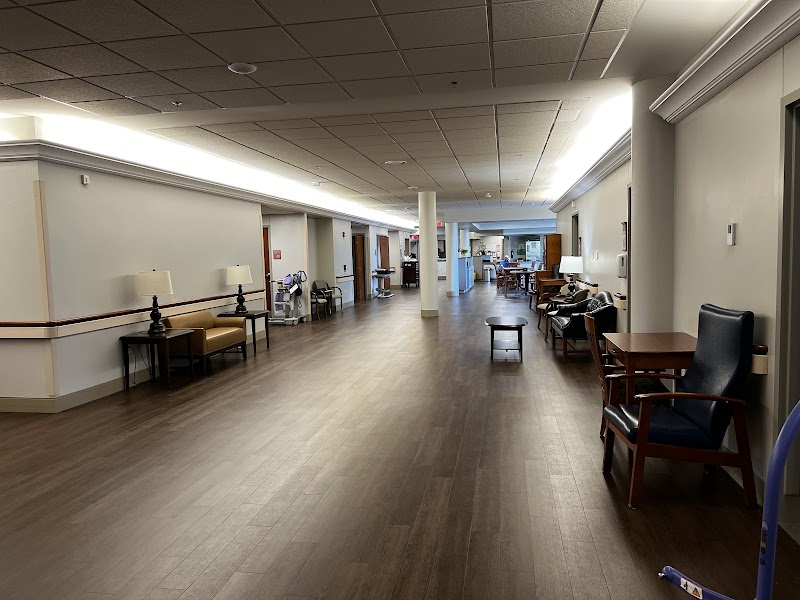
How is Our Lady Of Peace Nursing Care Residence Staffed?

CMS rates OUR LADY OF PEACE NURSING CARE RESIDENCE's staffing level at 4 out of 5 stars, which is above average compared to other nursing homes. Staff turnover is 39%, compared to the New York average of 46%. This relatively stable workforce can support continuity of care.

What Have Inspectors Found at Our Lady Of Peace Nursing Care Residence?

State health inspectors documented 11 deficiencies at OUR LADY OF PEACE NURSING CARE RESIDENCE during 2020 to 2024. These included: 1 that caused actual resident harm, 8 with potential for harm, and 2 minor or isolated issues. Deficiencies causing actual harm indicate documented cases where residents experienced negative health consequences.
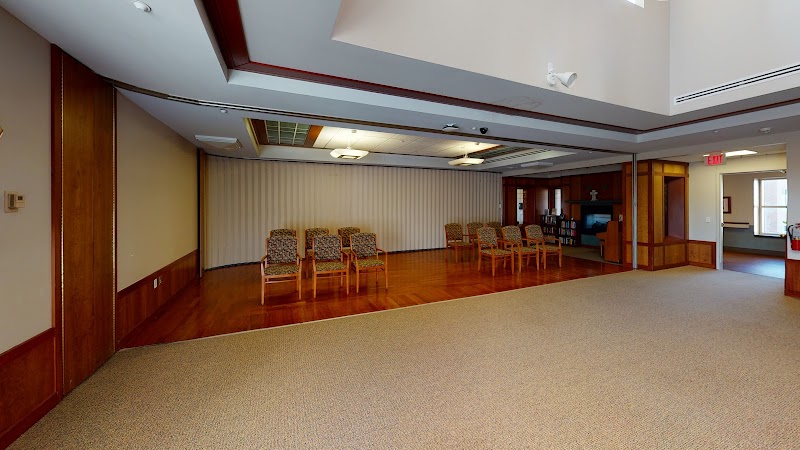
Who Owns and Operates Our Lady Of Peace Nursing Care Residence?

OUR LADY OF PEACE NURSING CARE RESIDENCE is owned by a non-profit organization. Non-profit facilities reinvest revenue into operations rather than distributing to shareholders. The facility is operated by ASCENSION LIVING, a chain that manages multiple nursing homes. With 250 certified beds and approximately 141 residents (about 56% occupancy), it is a large facility located in LEWISTON, New York.
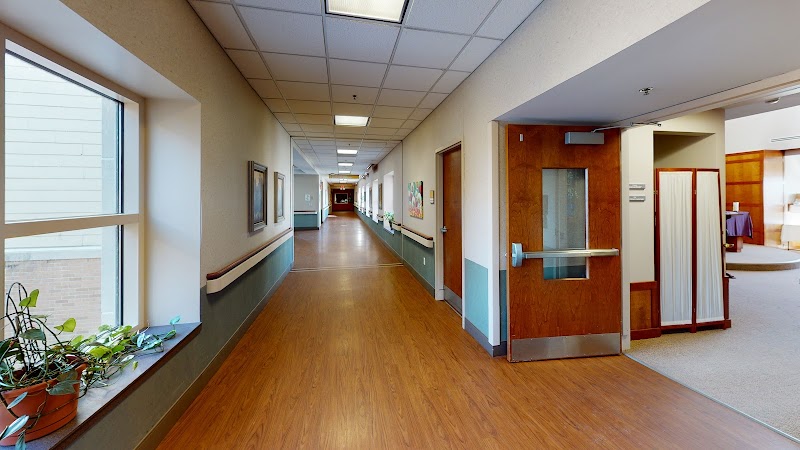
How Does Our Lady Of Peace Nursing Care Residence Compare to Other New York Nursing Homes?

Compared to the 100 nursing homes in New York, OUR LADY OF PEACE NURSING CARE RESIDENCE's overall rating (5 stars) is above the state average of 3.1, staff turnover (39%) is near the state average of 46%, and health inspection rating (4 stars) is above the national benchmark.

What Should Families Ask When Visiting Our Lady Of Peace Nursing Care Residence?

Based on this facility's data, families visiting should ask: "Can I visit during a mealtime to observe dining assistance and food quality?" "How do you handle medical emergencies, and what is your hospital transfer rate?" "Can I speak with family members of current residents about their experience?"

Is Our Lady Of Peace Nursing Care Residence Safe?

Based on CMS inspection data, OUR LADY OF PEACE NURSING CARE RESIDENCE has a clean safety record: no substantiated abuse findings (meaning no confirmed cases of resident harm), no Immediate Jeopardy citations (the most serious violation level indicating risk of serious injury or death), and is not on the Special Focus Facility watch list (a federal program monitoring the lowest-performing 1% of nursing homes). The facility has a 5-star overall rating and ranks #1 of 100 nursing homes in New York. While no facility is perfect, families should still ask about staff-to-resident ratios and recent inspection results during their visit.

Do Nurses at Our Lady Of Peace Nursing Care Residence Stick Around?

OUR LADY OF PEACE NURSING CARE RESIDENCE has a staff turnover rate of 39%, which is about average for New York nursing homes (state average: 46%). Moderate turnover is common in nursing homes, but families should still ask about staff tenure and how the facility maintains care continuity when employees leave.

Was Our Lady Of Peace Nursing Care Residence Ever Fined?

OUR LADY OF PEACE NURSING CARE RESIDENCE has been fined $7,901 across 1 penalty action. This is below the New York average of $33,158. While any fine indicates a compliance issue, fines under $50,000 are relatively common and typically reflect isolated problems that were subsequently corrected. Families should ask what specific issues led to these fines and confirm they've been resolved.

Is Our Lady Of Peace Nursing Care Residence on Any Federal Watch List?

OUR LADY OF PEACE NURSING CARE RESIDENCE is not on any federal watch list. The most significant is the Special Focus Facility (SFF) program, which identifies the bottom 1% of nursing homes nationally based on persistent, serious quality problems. Not being on this list means the facility has avoided the pattern of deficiencies that triggers enhanced federal oversight. This is a positive indicator, though families should still review the facility's inspection history directly.