NORTHERN MANOR GERIATRIC CENTER INC
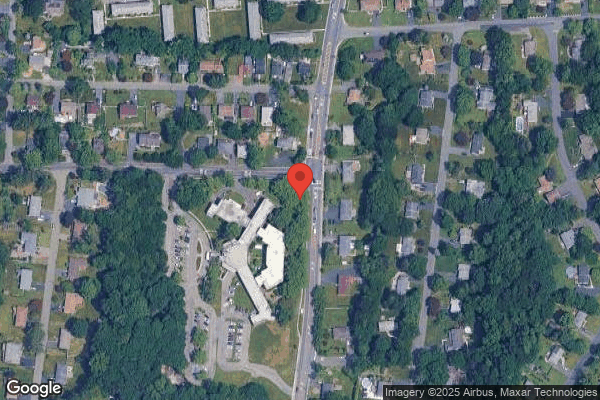
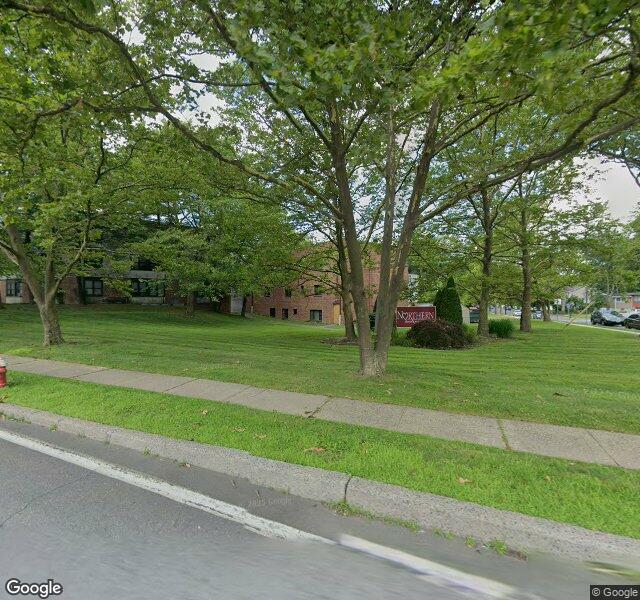
199 N MIDDLETOWN ROAD, NANUET, NY 10954 (845) 623-3904
Non profit - Corporation 231 Beds Independent Data: November 2025
Trust Grade
45/100
#539 of 594 in NY
Last Inspection: December 2024

Within standard 12-15 month inspection cycle. Federal law requires annual inspections.

Overview

Northern Manor Geriatric Center Inc has a Trust Grade of D, indicating below-average quality with some concerns about resident care. Ranking #539 out of 594 in New York places it in the bottom half of facilities in the state, and #7 out of 10 in Rockland County means there are only a couple of local options that are better. The facility's trend is worsening, with reported issues increasing significantly from 3 in 2023 to 23 in 2024. Staffing is relatively strong with a turnover rate of 24%, well below the New York average, but the overall staffing rating is poor at 1 out of 5 stars. There have been no fines recorded, which is a positive sign, but the facility struggles with providing a safe and clean environment, as seen in recent inspections that noted issues like water pooling in the kitchen and the use of disposable dishware during meals, which undermines resident dignity.

Trust Score
D
45/100
In New York
#539/594
Bottom 10%
Safety Record
Low Risk
No red flags
Inspections
Getting Worse
3 → 23 violations
Staff Stability
✓ Good
24% annual turnover. Excellent stability, 24 points below New York's 48% average. Staff who stay learn residents' needs.
Penalties
✓ Good
No fines on record. Clean compliance history, better than most New York facilities.
Skilled Nurses
○ Average
Each resident gets 34 minutes of Registered Nurse (RN) attention daily — about average for New York. RNs are the most trained staff who monitor for health changes.
Violations
⚠ Watch
38 deficiencies on record. Higher than average. Multiple issues found across inspections.
★☆☆☆☆
1.0
Overall Rating
★☆☆☆☆
1.0
Staff Levels
★★★☆☆
3.0
Care Quality
★☆☆☆☆
1.0
Inspection Score
Stable
2023: 3 issues
2024: 23 issues

The Good

  • Low Staff Turnover (24%) · Staff stability means consistent care
  • Full Sprinkler Coverage · Fire safety systems throughout facility
  • No fines on record
  • Staff turnover is low (24%)

    24 points below New York average of 48%

Facility shows strength in staff retention, fire safety.

The Bad

1-Star Overall Rating

Below New York average (3.0)

Significant quality concerns identified by CMS

The Ugly 38 deficiencies on record

Dec 2024 10 deficiencies
CONCERN (D)

Potential for Harm - no one hurt, but risky conditions existed

Deficiency F0582 (Tag F0582)

Could have caused harm · This affected 1 resident

Based on record review and interview during the recertification survey from 12/3/24 to 12/10/24, the facility did not ensure residents and/or their designated representative were fully informed of the...

Read full inspector narrative →
Based on record review and interview during the recertification survey from 12/3/24 to 12/10/24, the facility did not ensure residents and/or their designated representative were fully informed of their right to an expedited review of a service termination. Specifically, for one of three residents (Resident #300) reviewed for Beneficiary Protection, the facility did not ensure the Notice of Medicare Non-Coverage form (CMS-10123) was provided to the resident and/or representative at a minimum of two days prior to the end of Medicare Part A covered services. The findings are: There was no documented evidence of a policy specific to the Notice of Medicare Non-Coverage, and the two-day requirement to provide notice to the beneficiary or representative. The 8/27/24 progress note documented Notice of Medicare Non-Coverage was not provided to Resident #300 and family representative. There was no documented evidence the Notice of Medicare Non-Coverage was provided to the designated representative/contact person for Resident #300. During an interview on 12/6/24 at 3:58 PM, the Minimum Data Set Coordinator stated when a resident was going to be discharged , they were supposed to receive prior notice from the Social Worker verbally or by email. They stated they reminded the Social Worker the Notice of Medicare Non-Coverage must be presented to the resident two days prior to discharge. They stated they checked resident's Brief Interview for Mental Status assessment, or received input from the Social Worker to determine whether the resident was able to understand the notification. If the resident lacked capacity, the family or representative would be notified in person or by telephone, if they were notified by telephone the notification would be sent by certified mail. They stated they were not aware of the pending 8/28/24 discharge for Resident #300 until 8/27/24. They stated they did not issue the Notice of Medicare Non-Coverage because it would not have been received in the required time frame of two days prior. During an interview on 12/6/24 at 4:26 PM the Director of Social Work stated they met with Resident #300's spouse on 8/20/24 to discuss discharge. The resident was cleared for discharge by the doctor on 8/26/24 and discharged on 8/28/24. They stated they did not know why the Minimum Data Set Coordinator was not aware of the resident's pending discharge until 8/27/24. During an interview on 12/10/24 at 11:57 AM the Regional Director of Nursing stated the facility did not have a separate policy for the Notice of Medicare Non-Coverage. 10 NYCRR 415.3 (g)
CONCERN (D) 📢 Someone Reported This

A family member, employee, or ombudsman was alarmed enough to file a formal complaint

Potential for Harm - no one hurt, but risky conditions existed

Deficiency F0625 (Tag F0625)

Could have caused harm · This affected 1 resident

Based on record review and interview during the recertification and abbreviated (NY00360711) surveys from 12/3/24 to 12/10/24, the facility did not ensure residents or resident representatives were no...

Read full inspector narrative →
Based on record review and interview during the recertification and abbreviated (NY00360711) surveys from 12/3/24 to 12/10/24, the facility did not ensure residents or resident representatives were notified in writing of the facility bed hold policy for 4 of 4 residents (Residents #529, #179, #169, and #148) reviewed for hospitalization. Specifically, residents were transferred to the hospital and the facility was unable to provide evidence that written notice of facility bed hold policy was given to the residents or their representatives. The findings are: The facility Bed Hold policy dated 3/2018 documented, 'prior to or at the time of a transfer (or as soon as practicable following an emergency transfer), written information (bed hold information and agreement) will be given to the resident and/or the resident representative that explains in detail: the rights and limitations of the resident regarding bed-holds, reserve bed payment policy as indicated by the resident's primary insurance policy, the resident/representative's option to pay privately to reserve their bed if their primary insurance policy does not provide bed hold coverage. 1). Resident #529 was admitted with diagnoses including cerebral infarct, hemiplegia affecting left non dominant side, and hypertensive heart disease with heart failure. The 11/13/24 Discharge/ Return Anticipated Minimum Data Set Assessment documented Resident #529 was discharged to the hospital. The 11/13/24 Physician Order documented transfer to hospital for evaluation post fall. The 11/13/24 Registered Nurse note documented send Resident #529 to the emergency room for evaluation. There was no documented evidence a written notice of the facility Bed Hold Policy was given to the resident or their representative. During an interview on 12/06/24 at 1:28 PM the Director of Social Work stated nurses were to provide written notice of the facility Bed Hold Policy to the resident and/or resident representative. The Director of Social Work stated there was no documented evidence a written notice of the facility Bed Hold Policy was given to the resident or their representative. 2). Resident #179 was admitted with diagnoses including anemia, urinary tract Infection, schizophrenia. The 9/20/24 Quarterly Minimum Data Set documented the resident had severely impaired cognition. The 10/3/24 Discharge/ Return Anticipated Minimum Data Set Assessment documented Resident # 179 was discharged to the hospital. The 10/3/24 Situation Background Assessment Recommendation Note documented change in condition: behavior symptoms of agitation, throwing objects at staff, kicking furniture, making loud noises, very disruptive to the unit. Nurse Practitioner ordered to send to Hospital for evaluation. On 12/10/24 at 4:07 PM during an interview, the Director of Social Work stated they did not provide a written notice of the facility Bed Hold Policy to Resident # 179 or their representative. 3). Resident #169 was admitted with diagnoses including chronic respiratory failure, muscle wasting and atrophy, and dependence on ventilator. The 9/20/24 Quarterly Minimum Data Set documented Resident # 169 had severely impaired cognition. The 10/22/24 Discharge/ Return Anticipated Minimum Data Set documented Resident # 169 was discharged to the hospital. The 10/22/24 Respiratory Therapist note documented Resident # 169 was transferred to the hospital for fever. During an interview on 12/09/24 at 12:16 PM the Administrator stated they were made aware that the facility had not been providing written notice of the facility Bed Hold Policy to residents or representatives when they were discharged or transferred to the hospital. On 12/10/24 at 2:46 PM, during a follow-up interview with the Assistant Administrator, they stated they did not provide written notice of the facility Bed Hold Policy to any resident or representative prior to 12/9/24. 10NYCRR 415.3 (i)(3)(i)(a)
CONCERN (D)

Potential for Harm - no one hurt, but risky conditions existed

Deficiency F0761 (Tag F0761)

Could have caused harm · This affected 1 resident

Based on observation, record review and interview conducted during the recertification survey from 12/3/24 to 12/10/24, the facility did not ensure all drugs and biologicals in 2 of 4 medication stora...

Read full inspector narrative →
Based on observation, record review and interview conducted during the recertification survey from 12/3/24 to 12/10/24, the facility did not ensure all drugs and biologicals in 2 of 4 medication storage rooms were labeled and stored in accordance with professional standards. Specifically, one bottle of over-the-counter medication and two bottles of tube feeding formula had past due expiration dates. The findings include: The revised-on January 2019 facility policy titled Medication- Storage documented expired, discontinued and/or contaminated medications will be removed from the medication storage areas and disposed of in accordance with facility policy. During observation on 12/05/24 at 1:28 PM, a bottle of Aspirin 325 mg tablets with an expiration date of 10/24 was on the shelf in the Center 1 Unit medication storage room. During an interview on 12/5/24 at 1:28 PM, Licensed Practical Nurse #2 stated the nurse manger was responsible for checking the medications in the medication storage room. During an interview on 12/05/24 at 2:02 PM, Registered Nurse Unit Manager #3 stated they were responsible for checking medications in the medication storage room. They stated all nurses were supposed to check medication/s each shift prior to transferring them from the storage room to their medication carts. During observation on 12/05/24 at 2:25 PM Vital tube feeding formula with a 12/1/24 expiration date and Jevity tube feeding formula with an expiration date of 5/1/24 were observed in the Center 1 North [NAME] Unit medication room. During an interview on 12/05/24 at 2:25 PM Licensed Practical Nurse #9 stated the 2 expired tube feeding formulas were no longer in use and should have been discarded, as the facility currently utilized a different brand of tube feeding. They stated nursing staff were responsible for discarding expired tube feeding formulas. During an interview on 12/06/24 at 10:36 AM the Director of Nursing stated all nurses were responsible for checking medication carts each shift and medication storage rooms should be checked by the nurse managers weekly. They stated Pharmacy should check the medication room and medication carts quarterly to ensure there were no expired medications. They stated the Dietician was responsible for checking tube feeding formulas, but would not check the medication storage rooms. They stated unused medications/ tube feedings should have been discarded by the nurses. 10 NYCRR 415.18(e)(1-4)
CONCERN (D)

Potential for Harm - no one hurt, but risky conditions existed

Food Safety (Tag F0812)

Could have caused harm · This affected 1 resident

Based on observation and interview conducted during the recertification survey from 12/03/24 to 12/10/24, the facility did not ensure food was stored in accordance with professional standards for food...

Read full inspector narrative →
Based on observation and interview conducted during the recertification survey from 12/03/24 to 12/10/24, the facility did not ensure food was stored in accordance with professional standards for food safety practice. Specifically, there was undated food stored in the walk-in refrigerator and in 1 of 3 unit food refrigerators. Findings include: The facility policy titled Food Storage: Refrigerator Food Storage revised May 2024 documented all foods should be covered, labeled, and dated. All foods will be checked to assure that foods (including leftovers) will be consumed by their safe use by dates or frozen (where applicable) or discarded. The facility policy titled Unit Food Storage revised April 2023 documented all resident food items will be dated with a use by date. During observation and interview on 12/03/24 at 9:43 AM, the walk-in refrigerator contained two undated sandwiches on a tray. The Food Service Director stated the sandwiches were made today, and that was the reason there was no date on the sandwiches. Approximately five single cheese slices were observed on a plate with clear wrap which was not dated. The Food Service Director stated they were unable to provide information as to when the cheese was placed in the refrigerator. During an observation/interview on 12/03/24 at 1:00 PM with Certified Nurse Aide #11, an undated, wrapped ham sandwich was observed in the unit refrigerator. Certified Nurse Aide #11 stated they did not know how long the sandwich had been in the refrigerator. 10NYCRR 415.14 (h)
CONCERN (D) 📢 Someone Reported This

A family member, employee, or ombudsman was alarmed enough to file a formal complaint

Potential for Harm - no one hurt, but risky conditions existed

Deficiency F0841 (Tag F0841)

Could have caused harm · This affected 1 resident

**NOTE- TERMS IN BRACKETS HAVE BEEN EDITED TO PROTECT CONFIDENTIALITY** Based on record reviews and interviews conducted during the recertification and abbreviated (NY00348289, NY00348920) surveys fro...

Read full inspector narrative →
**NOTE- TERMS IN BRACKETS HAVE BEEN EDITED TO PROTECT CONFIDENTIALITY** Based on record reviews and interviews conducted during the recertification and abbreviated (NY00348289, NY00348920) surveys from [DATE] to [DATE], the facility did not ensure the Medical Director fulfilled their responsibility for the implementation of resident care when a resident died. This was evident for 1 of 1 residents (Resident #379) reviewed for death. Specifically, the Medical Director was designated as the individual to sign the death certificate for Resident #379. In accordance with State Public Health Law 4041, this was required within 72 hours of death. Resident #379 died on [DATE] and the Medical Director signed the death certificate on [DATE]. Findings include: The facility policy titled - Death- documented for Resident Pronouncement and Release to Mortuary, the primary healthcare provider (or designee) will complete and sign a death certificate in accordance with state or county law (e.g., as soon as possible but not to exceed 72 hours). Resident #379 had diagnoses including subdural hematoma, atrial fibrillation, and coronary artery disease. The Minimum Data Set (an assessment tool) dated [DATE] documented Resident #379's cognition was severely impaired. A progress note dated [DATE] at 10:25 PM documented Resident #379 was found without carotid pulse, pupillary reflex or respirations. In accordance with the Do Not Resuscitate order, no Cardiopulmonary Resuscitation was initiated. Resident #379 was pronounced dead at 9:30 PM and the Medical Director was notified. Next of kin was also notified and stated they would contact the funereal service, and call the facility back with the information. The Director of Nursing and Administrator were made aware. Resident #379's Death Certificate documented the resident died on [DATE] and was signed electronically on by the Medical Director on [DATE]. During a telephone interview on [DATE] at 3:27 PM, Registered Nurse #5 they stated they notified the Medical Director and called the family when the resident died. During an interview on [DATE], the Medical Director stated they looked at the death certificate for Resident #379 and saw that it was signed 7 days after the death. They stated it was an anomaly and had not happened before. During a telephone interview on [DATE] at 12:05 PM, the Director of the funeral home stated they had to call the facility multiple times to get the death certificate signed for Resident #379. They stated the death certificate had to be filed in order to process the body and without a signature, the body of the deceased remained in the freezer at the funeral home. They stated it took 7 days to get the death certificate signed. 10 NYCRR 415.15(a)
CONCERN (D)

Potential for Harm - no one hurt, but risky conditions existed

Deficiency F0883 (Tag F0883)

Could have caused harm · This affected 1 resident

Based on record review and interview during the recertification survey conducted 12/3/24 to 12/10/24, the facility did not ensure each resident was offered pneumococcal immunizations and received educ...

Read full inspector narrative →
Based on record review and interview during the recertification survey conducted 12/3/24 to 12/10/24, the facility did not ensure each resident was offered pneumococcal immunizations and received education regarding the benefits and potential side effects of the immunizations for 1 of 5 residents (Residents #193) reviewed. Specifically, there was no documented evidence Resident #193 was offered, declined, or educated on the pneumococcal immunization. Findings include: The facility policy dated 8/22/24 and titled Resident Vaccines documented the facility will offer immunizations to the residents, following their consent to aid in the prevention of infectious conditions in accordance with the Centers for Disease Control (CDC) and the Advisory Committee for Immunization Practices. Prior to receiving vaccines, the resident will be provided information and education regarding the potential side effects of the vaccination. The facility should collect vaccination history on admission. A provision of education shall be documented in the resident medical record. Historical information data should be entered into the resident's electronic medical record. Resident #193 had diagnoses including intracranial injury with loss of consciousness, respiratory failure and tracheostomy. There was no documented evidence the resident/resident representative received education, was offered the vaccination, or declined the pneumococcal vaccine. During an interview on 12/10/24 at 1:33 PM Registered Nurse Unit Manager #10 stated upon admission vaccines were supposed to be offered to the resident and/or resident' representative and education was to be provided. They stated they should have gotten the resident's vaccine status back in April when they were admitted , but they missed Resident #193. During an interview on 12/10/24 at 2:06 PM, the Infection Preventionist stated nursing collected the vaccine status from records during the admission process. They stated they did not have a record of vaccine status for all in house residents on paper or electronic medical record. The Infection Preventionist stated they did not have a system to track which residents were vaccine eligible or who had declined the vaccine. During an interview on 12/10/24 at 3:23 PM, the Director of Nursing stated vaccines were important, as they were the first line of defense for preventing disease. The Director of Nursing stated the Infection Preventionist was asked during morning report about resident vaccine eligibility, administration and education and had reported there were no problems. The Director of Nursing stated they were not aware vaccine tracking was not being done. 10NYCRR 415.19 (a) (1-3)
CONCERN (E)

Potential for Harm - no one hurt, but risky conditions existed

Resident Rights (Tag F0550)

Could have caused harm · This affected multiple residents

During observation and interview during the Recertification Survey conducted from 12/3/24 through 12/10/24 the facility did not ensure each resident was treated with respect and care in a manner and e...

Read full inspector narrative →
During observation and interview during the Recertification Survey conducted from 12/3/24 through 12/10/24 the facility did not ensure each resident was treated with respect and care in a manner and environment that promoted dignity while dining. Specifically, the facility did not avoid daily use of disposable cutlery and/or dishware for residents on [NAME] 1 and North 1. Residents were observed eating meals from styrofoam plates and/or using plastic utensils on 3 separate days. The findings are: During observation on 12/03/24 at 12:32 PM, of the lunch meal in [NAME] 1 Unit Dining Room, Residents #20, #19, #201, and #180 were served their food on styrofoam plates. During observation on 12/04/24 at 1:09 PM, of the lunch meal in the [NAME] 1 Unit Dining Room, Residents #201, #19, #17, and #180 were served their food on styrofoam plates and were given plastic utensils During observation on 12/06/24 at 8:46 AM, of the breakfast meal on the [NAME] 1 Unit, Resident # 45,#10, #202, #23, and #130 were served their food in styrofoam containers. During observation on 12/06/24 at 8:50 AM, in the hallway outside the North 1 Unit, all breakfast trays had styrofoam containers and plastic utensils. During observation on 12/06/24 at 12:46 PM, in the [NAME] 1 Unit dining room, Residents #19, #17, #201, and #180 were served their meals on styrofoam plates. During interview on 12/06/24 at 1:09 PM, Registered Nurse Unit Manager #1 stated they were unsure of the reason styrofoam dishware was being used for some residents, and stated there was no pattern of use of styrofoam dishware. During interview on 12/06/24 at 3:36 PM, the Dietitian stated the facility was short on regular/non disposable plates and plastic utensils. The Dietitian stated the kitchen was responsible for ordering dishes. During interview on 12/09/24 at 10:32 AM, the covering Food Services Director stated the facility should have had backup dishware. During interview on 12/09/24 at 3:02 PM, the facility Administrator stated they were aware of the facility dish shortage. 10 NYCRR 415.5
CONCERN (E) 📢 Someone Reported This

A family member, employee, or ombudsman was alarmed enough to file a formal complaint

Potential for Harm - no one hurt, but risky conditions existed

Safe Environment (Tag F0584)

Could have caused harm · This affected multiple residents

**NOTE- TERMS IN BRACKETS HAVE BEEN EDITED TO PROTECT CONFIDENTIALITY** Based on observation and interview conducted during the recertification and abbreviated (NY00340747) surveys from 12/3/24 to 12/...

Read full inspector narrative →
**NOTE- TERMS IN BRACKETS HAVE BEEN EDITED TO PROTECT CONFIDENTIALITY** Based on observation and interview conducted during the recertification and abbreviated (NY00340747) surveys from 12/3/24 to 12/10/24, the facility did not ensure residents' rights to a safe, clean, comfortable and homelike environment on 4 units. Specifically, 1) Center 3 Unit, walls were chipped in 3 rooms, holes were observed in 2 rooms, wallpaper was peeling in one room, and paint was peeling in 11 rooms, 2)Resident #578 on the Center 1 Unit stated when showered they sat on a shower chair with a torn seat and wet exposed wood and 3) a dust covered fan was blowing on Resident #42 with a tracheostomy. The findings are: The facility policy, Homelike Environment dated 9/2022 documented residents were provided with a safe, clean, comfortable and homelike environment. The facility policy, Maintenance Services Operations dated 10/12 documented Maintenance Department was responsible for maintaining the buildings, grounds, and equipment in a safe and operable manner at all times. Functions of the maintenance personnel included maintaining the building in good repair and free from hazards. 1). During observation conducted on the Center 3 Unit on 12/04/24 from 10:35 AM until 10:51 AM, the following was observed: room [ROOM NUMBER] walls were chipped, and paint was peeling off the walls behind the door. room [ROOM NUMBER] wall was chipped, and paint was peeling off the wall behind the door. room [ROOM NUMBER] paint was peeling behind the door. room [ROOM NUMBER] paint was scratched behind the door and under the TV by the bed near the window. room [ROOM NUMBER] paint was peeling behind the door. room [ROOM NUMBER] wall had a hole and paint was peeling behind the door. room [ROOM NUMBER] wallpaper was peeling behind the bed/near the sink and the window blind was twisted. room [ROOM NUMBER] paint was peeling behind the door. room [ROOM NUMBER] paint was peeling behind the door and under the TV. room [ROOM NUMBER] paint was peeling behind the door and under the TV, room [ROOM NUMBER] paint was peeling behind the door and there was a hole in the doorway wall. During interview on 12/09/24 at 3:44 PM the Director of Maintenance stated they were not aware of all the concerns on the Center 3 Unit. They stated they completed environmental rounding in resident rooms approximately every 7 weeks, and last completed environmental rounds on unit Center 3 Unit about a month ago. They stated nursing staff should report damage in resident rooms and common areas. During interview on 12/09/24 at 3:57 PM Certified Nurse Aide #6 stated they usually worked in rooms 310-314. They stated they did not observe the above listed damage to the rooms. They stated they would have reported any damage to the nurse manager. During interview on 12/09/24 at 3:59 PM Certified Nurse Aide #7 stated they usually worked in rooms 301-305. They stated they did not observe the above listed damage to the rooms. They stated they would have reported any damage to the nurse. During interview on 12/09/24 at 4:02 PM Registered Nurse Unit Manager #8 stated they did not observe any damage to the rooms on the unit. They stated they would report to the maintenance department either in person or document in the maintenance book. During interview on 12/10/24 at 8:23 AM the facility Administrator stated the maintenance department was responsible to complete environmental rounds on the units and complete the repairs timely. 2). During observation n 12/03/24 at 11:23 AM, 12/05/24 at 2:12 PM, and 12/06/24 at 10:46 AM on the Center 1 Unit, a shower chair was observed with a torn seat and dark- colored, wet exposed wood. During interview on 12/06/24 at 10:46 AM, Resident #579 stated yesterday during their shower they were on a torn shower chair. They stated they tried not to have contact with the torn dark-colored wet exposed wood, but there was no way to avoid their skin coming in contact with the torn seat. During interview on 12/06/24 at 11:09 AM Certified Nurse Aide #17 stated the shower chair with the torn seat and dark- colored, wet, exposed wood was used for residents when they were given showers. During interview on 12/06/24 at 11:19 AM Certified Nurse Aide #18 stated they used the shower chair with the torn seat and dark- colored, wet, exposed wood, when giving resident showers. During interview on 12/06/24 at 11:24 AM Registered Nurse Unit Manager #10 observed the shower chair with the torn seat and dark- colored, wet, exposed wood and stated the Certified Nurse Aides should have told them about it. During interview on 12/06/24 at 11:25 AM the Infection Preventionist/Assistant Director of Nursing stated they were aware of the shower chair with the torn seat and dark- colored, wet, exposed wood, had told administration, but did not take the chair out of service. They stated the shower chair should have been removed from the unit as soon as it was identified. During interview on 12/09/24 at 01:23 PM during an interview, the facility Administrator stated the shower chair should have been taken off the unit. 3) During observation on 12/06/24 at 11:17 AM the fan in room [ROOM NUMBER] was dusty and blowing on Resident #42 with a tracheostomy. During observation and interview in room [ROOM NUMBER] on 12/06/24 at 11:33 AM the Infection Preventionist /Assistant Director of Nursing stated housekeeping was supposed to clean the fans and stated they had already been told to do so. They stated it was concerning for the Resident #42 with a tracheostomy to have a dusty fan blowing on them. 10 NYCRR 415.29
CONCERN (E) 📢 Someone Reported This

A family member, employee, or ombudsman was alarmed enough to file a formal complaint

Potential for Harm - no one hurt, but risky conditions existed

Deficiency F0730 (Tag F0730)

Could have caused harm · This affected multiple residents

Based on observation, interview, and record review conducted during the recertification and abbreviated (NY00340747) surveys from 12/3/2024 to 12/10/2024, the facility did not ensure each nurse aide r...

Read full inspector narrative →
Based on observation, interview, and record review conducted during the recertification and abbreviated (NY00340747) surveys from 12/3/2024 to 12/10/2024, the facility did not ensure each nurse aide received twelve hours of in-service education per year based on their individual performance review. Specifically, 1.) One of five Certified Nurse Aides (#12) did not have the required 12-hour mandatory in service education per year, and 2.) Four of five Certified Nurse Aides (#12, 13, 14 and 15) annual performance reviews were not up to date. Finding Include: Review of Certified Nurse Aides # 12, #13, #14, 15 and #16 in - service records revealed: Certified Nurse Aide #12 was hired 3/30/1998 and there was no documented evidence that inservice was provided in 2023. Review of Certified Nurse Aides # 12, #13, #14, 15 and #16 annual performance evaluations revealed: Certified Nurse Aide #12 was hired 3/30/1998, and there was no documented evidence that a performance evaluation was completed. Certified Nurse Aide #13 was hired 7/11/1993, and their performance evaluation was undated. Certified Nurse Aide #14 was hired 5/20/2023, and their performance evaluation was undated. Certified Nurse Aide #15 was hired 11/6/2012, and their last performance evaluation was dated 11/16/2012. On 12/10/24 at 1:40 PM, the Assistant Director of Nursing stated they were responsible for providing Certified Nurse Aide education. On 12/10/24 at 1:55 PM, the Director of Nursing stated a system had been in place as of 11/1/24 and Certified Nurse Aides should be completing the 12-hour mandatory training in the system. The Director of Nursing stated they were still working on figuring out who was not up to date with their training. The Director of Nursing stated Certified Nurse Aide evaluations should be completed annually and stated they were not up to date. 10 NYCRR 415.26
CONCERN (E)

Potential for Harm - no one hurt, but risky conditions existed

Deficiency F0887 (Tag F0887)

Could have caused harm · This affected multiple residents

Based on interview and record review during the recertification survey conducted 12/3/24-12/10/24, the facility did not ensure each staff and resident was screened, offered the COVID-19 vaccine and pr...

Read full inspector narrative →
Based on interview and record review during the recertification survey conducted 12/3/24-12/10/24, the facility did not ensure each staff and resident was screened, offered the COVID-19 vaccine and provided education regarding the benefits, risks and potential side effects associated with the vaccine for 1 of 5 residents (Resident # 193) and 10 of 10 staff reviewed for COVID vaccines. Specifically, there was no documented evidence of immunization records for COVID vaccine for Resident #193. Additionally, there was no documented evidence of immunization records for COVID vaccine for the Director of Admissions, Certified Nurse Aide #6/#19/#21, Licensed Practical Nurse #22/#23, Occupational Therapist #24, Registered Nurse #25/#10 and Cook, #20. Findings include: The facility policy titled COVID-19 Vaccination for Residents and Staff last revised 11/27/24 documented the facility follows guidance from The Centers for Disease Control as well as Federal and State requirements among residents, staff and others. The facility shall provide education about the importance of receiving the COVID-19 vaccine to residents, resident representatives and staff. Upon admission/readmission the facility shall obtain COVID-19 history to the extent possible. Upon hire, the facility shall obtain COVID-19 vaccine history of new staff. COVID-19 vaccine shall be offered, promoted and encouraged to all eligible residents and staff initiated within 14 of admission and within 14 days of hire for staff. Resident #193 had diagnoses of intracranial injury with loss of consciousness, respiratory failure and tracheostomy. There was no documented evidence the resident/resident representative received education, was offered the vaccination, or declined the COVID vaccine. During the recertification survey the facility was asked to provide the vaccination status for staff for flu, pneumococcal and COVID vaccines. There was no documented evidence the facility had documentation of screening, education offering or current COVID 19 status for the Director of Admissions, Certified Nurse Aide #6,#19 and #21, Licensed Practical Nurse #22, and #23, Occupational Therapist #24, Registered Nurse #25 and #10 and [NAME] #20. During an interview on 12/10/24 at 1:33 PM Registered Nurse Unit Manager #10 stated upon admission vaccines were supposed to be offered to the resident and/or resident representative and education was to be provided. They stated they should have gotten the resident's vaccine status back in April when they were admitted , but they missed Resident #193. During an interview on 12/10/24 at 2:06 PM the Infection Preventionist stated nursing collected the vaccine status from records during the admission process. They stated they did not have a record of vaccine status for all in house residents on paper or electronic medical record. The Infection Preventionist stated they did not have a system to track which residents were vaccine eligible or who had declined the vaccine. During an interview on 12/10/24 at 3:23 PM the Director of Nursing stated vaccines were important, as they were the first line of defense for preventing disease. The Director of Nursing stated the Infection Preventionist was asked during morning report about resident vaccine eligibility, administration and education and had reported there were no problems. The Director of Nursing stated they were not aware vaccine tracking was not being done. 10NYCRR 415.19 (a)(1-3)
Oct 2024 6 deficiencies
CONCERN (D) 📢 Someone Reported This

A family member, employee, or ombudsman was alarmed enough to file a formal complaint

Potential for Harm - no one hurt, but risky conditions existed

Deficiency F0658 (Tag F0658)

Could have caused harm · This affected 1 resident

**NOTE- TERMS IN BRACKETS HAVE BEEN EDITED TO PROTECT CONFIDENTIALITY** Based on record review and interviews during an abbreviated survey (NY00341303) the facility did not ensure that services being ...

Read full inspector narrative →
**NOTE- TERMS IN BRACKETS HAVE BEEN EDITED TO PROTECT CONFIDENTIALITY** Based on record review and interviews during an abbreviated survey (NY00341303) the facility did not ensure that services being provided meet professional standards of quality in clinical practice for 1 out of 16 residents (Resident #16) reviewed for medication administration. Specifically, Resident #16 was noted to have an elevated Prothrombin time (which measures the time it takes for liquid portion of blood to clot) and INR (International Normalizing Ratio (a blood test that measures how long it takes the blood to clot) PT/INR of 71.6/7.4(seconds) on [DATE] with a reference range of (PT-9.9-12.7/INR-0.9-1.1) indicating the blood is taking longer than normal to clot. Resident #16 was ordered to receive 10mg Vitamin K (vitamin needed for blood clotting) to be administered intramuscularly by the physician on [DATE] at 4:47PM. The Vitamin K was not readily available in the facility. Staff did not notify the physician that the Vitamin K was not available. Resident #16's Vitamin K was not administered until 12:58 AM on [DATE]. Resident #1 was found unresponsive in their bed and pronounced dead at 6:50AM on [DATE]. Findings include: The facility Anticoagulation therapy policy dated 7/2015 and last revised 3/2019 documented all residents requiring anticoagulation therapy will have labs drawn as ordered by the physician to determine effectiveness of therapy and subsequent dosages. Clinical staff will monitor Residents as needed for safety of medication therapy. The physician will order appropriate lab testing to monitor anticoagulant therapy and potential complications. The physician will help review the progress of individuals who are being anticoagulated, monitor for potential complications and manage related problems. Resident #16 was admitted with diagnoses including but not limited to Cirrhosis of Liver, Type 2 Diabetes Mellitus and Fracture of Left Femur. Review of a 5-day Minimum Data Set, dated [DATE] documented the resident had a Brief Interview for Mental Status (BIMS, used to determine attention, orientation, and ability to recall information) score of 15/15, associated with intact cognition. No behaviors noted. Ambulated with a walker previously with lower extremity impairment on one side. The resident required supervision for eating, dependent for toileting and transfers and moderate assistance for bed mobility. Review of a risk for bleeding care plan initiated [DATE] documented Resident #16 is at risk for bleeding secondary to Non Steroidal Anti-Inflamatory Drugss/anticoagulant use/status post Deep Vein Thrombosis. The goal was Resident #16 would be free of signs and symptoms of abnormal bleeding through the review date. Interventions listed included handle the resident gently during activities of daily living care and support the extremities under joints during movement, monitor for abnormal signs of bleeding. Review of a Nurse Practitioner #1's progress note dated [DATE] at 4:25PM documented Resident #16's labs were reviewed, and the Prothrombin Time was 71.6/INR was 7.4. Warfarin discontinued and will give Vitamin K 10 mg IM x 1.Will repeat bloodwork in the morning. Resident #16 is stable no signs of bleeding, will start Eliquis to prevent frequent needlesticks. Review of a nurse's progress note dated [DATE] at 11:06PM documented PT/INR abnormal and warfarin on hold. Waiting for Vitamin K to be administered, monitored for bleeding. There was no documented evidence of the Physician being made aware of Vitamin K intramuscular injection not being readily on hand. Review of the pharmacy delivery log dated [DATE] revealed the Vitamin K injection (Phytonadione) 10mg/ml was delivered and signed for on [DATE] at 12:38 AM. Review of a nurse's progress note dated [DATE] at 2:55AM documented Vitamin K 10 mg injected subcutaneously one time only for elevated PT/INR, no adverse reaction noted. Review of the Medication Administration record revealed the Vitamin K was administered at 12:58AM on [DATE]. During an interview on [DATE] at 12:04 PM, Nurse Practitioner #1 stated they were on their way out the building when they were informed about Resident #16's lab results. They ordered for Resident #16 to receive Vitamin K intramuscularly now, and the nurse was supposed to give the Vitamin K to the resident stat, but no one called them and told them the facility did not have it available in the automated dispensing machine system. Nurse Practitioner #1 stated they would have ordered an oral dose if they knew the intramuscular dose was not available. Nurse Practitioner #1 stated they do not believe Resident #16 received the dose of Vitamin K in timely. They were informed in the morning that the resident had expired. Nurse Practitioner #1 stated asked the staff if the resident got the Vitamin K and they stated there was none in the automated dispensing machine, and they asked why they were not notified. Nurse Practitioner #1 stated if they have been informed, they would have sent the resident to the hsopital. They have now resolved to send residents to the hospital. Nurse Practitioner #1 stated the evening and the night shifts do not monitor the residents or communicate about them the way they should. During an interview on [DATE] at 4:06 PM, Licensed Practical Nurse #10 stated they have been working in the facility for 1 year and they remember the resident from Unit 2 west the last time they met them. Licensed Practical Nurse #10 stated the order for Vitamin K arrived/was received in the middle of the night between 12AM and 2AM. The medication was administered to Resident #16, and they did not have any signs of bleeding or adverse effects after the administration. During an interview on [DATE] at 3:10 PM the Director of Nursing stated if staff is given an order for a medication and the medication is not on hand, the nurse is expected to check the automated dispensing machine to see if the medication is available and if the medication is not in the automated dispensing machine, then the nurse needs to call the pharmacy for delivery and notify the Physician to see if there is an alternative medication that can be given. During a telephone interview on [DATE] at 2:52 PM, the Medical Director stated the Vitamin K should have been given when ordered as it is not a routine medication. The Medical Director stated if the resident is not actively bleeding or having any symptoms then an oral dose could be given. The oral dose takes longer to be digested hence the choice to order the medication for intramuscular administration or subcutaneous. The Medical Director stated residents could die with an INR of 3 but that Resident #16 had a history of cirrhosis, and they always had a high INR and no bleeding. The Medical Director stated they do not feel that the delay in treatment caused the resident to expire. The Medical Director stated the INR is usually checked once a week and if the Vitamin K was given right away, and the lab was not drawn within a certain time, there is no way to tell if the medication would have reversed the levels or not. 10 NYCRR 415.11(c)(3)(i)
CONCERN (E) 📢 Someone Reported This

A family member, employee, or ombudsman was alarmed enough to file a formal complaint

Potential for Harm - no one hurt, but risky conditions existed

Notification of Changes (Tag F0580)

Could have caused harm · This affected multiple residents

**NOTE- TERMS IN BRACKETS HAVE BEEN EDITED TO PROTECT CONFIDENTIALITY** Based on record reviews and interviews during an abbreviated survey (NY00333515, NY00331035, NY00327139, NY00321114) the facilit...

Read full inspector narrative →
**NOTE- TERMS IN BRACKETS HAVE BEEN EDITED TO PROTECT CONFIDENTIALITY** Based on record reviews and interviews during an abbreviated survey (NY00333515, NY00331035, NY00327139, NY00321114) the facility did not ensure the resident representative was immediately informed of a significant change in the resident's physical status or a need to alter treatment significantly. This was evident for 3 out of 4 residents (Residents #17, #19, #20) reviewed for notification of changes. Specifically, (1) Resident #17 had an electrocardiogram on 12/22/2023 in the facility which revealed a low heart rate, and their anti-hypertension medication was discontinued, Resident #17's guardian was not informed. (2) Resident #19 on 10/05/2023 was discontinued from the tracheostomy collar oxygenation and was placed on a ventilator, Resident 19's daughter was not notified. (3) Resident #20 had an episode of respiratory distress with decreased oxygen saturation on 07/29/2023, and on 07/30/2023 they vomited x 1 and had decreased oxygen saturations and was placed on a ventilator. There was no documented evidence of Resident #20's family being informed of the resident's change in status/condition. Findings include: The facility Notifications policy dated 04/2019 documented except in a medical emergency, the facility must consult with the resident immediately if the resident is competent and notify the resident's physician and designated representative when there is: (1) a significant improvement or decline in the resident's physical, mental, or psychological status or a need to alter treatment significantly; (2) when there is a significant alteration in treatment a nurse will promptly notify the resident and/or their representative of any changes in the residents care and treatment initiated by nursing measure or a physicians order. Examples of alteration in treatment are change in medication, treatment, and equipment. Notification of a change is documented in the nurse's progress notes and reflects the name of the person notified and the change in condition and/or treatment. 1) Resident #17 and had diagnoses including but not limited to Vascular Dementia, Atherosclerotic Heart Disease and Bradycardia. A Comprehensive Minimum Data Set, dated [DATE] documented the resident had a Brief Interview for Mental Status (BIMS, used to determine attention, orientation, and ability to recall information) score of 07/15, associated with severe cognition impairment (00-07 severe impairment, 08-12 moderate impairment and 13-15 cognitively intact). Review of the electrocardiogram results dated 12/22/2023 documented sinus bradycardia, first degree atrioventricular block, right bundle branch block. If clinically warranted 24-hour [NAME] monitor could be obtained for further evaluation. Review of a nursing progress note dated 12/23/2023 documented Metoprolol discontinued due to bradycardia, electrocardiogram done, pending results. Review of Nurse Practitioner #2's progress note dated 12/25/2023 documented Resident #17 was seen and examined for follow up electrocardiogram done, results stable. Metoprolol discontinued due to bradycardia and staff to monitor blood pressure. There was no documented evidence of Resident #17's representative being notified of their new diagnosis of bradycardia and the changes made to their medication regimen. During a telephone interview on 09/13/2024 at 12:17 PM, Resident #17's representative stated in December of 2023, Resident #17 was found to have a significant low heart rate and they were never notified of this. Resident #17's representative stated they found out about the diagnosis reading the paperwork they were provided to take with them to a doctor's appointment scheduled for the resident. Resident #17's representative stated communication was nonexistent in the facility. They asked the facility in January 2024 if the follow up dental, cardiology and neurology appointments had been scheduled. They were informed it had not been done and Resident #17's guardian stated they scheduled an appointment in February 2024 for the follow up with cardiology, and they brought the resident to the appointment. During the appointment, the cardiologist stated the residents heart rate was very low at 30 and the resident needed to be admitted for further review. The resident was brought to the hospital by the representative and was admitted and a pacemaker was placed to regulate the heart rate. 2) Resident #19 was admitted and had diagnoses including but not limited to Acute and Chronic Respiratory Failure, Dependence on Respirator and Dementia. Review of a Significant Change Minimum Data Set, dated [DATE] documented the resident is rarely/never understood and was severely cognitively impaired for daily decision making. No behaviors noted. The family was involved in care discussions about resident preferences. The resident was on oxygen and suctioning, tracheostomy care and invasive mechanical ventilation. Review of a progress note dated 10/24/2022 at 8:36AM documented on 10/05/2022 revealed that Resident #19 was placed on a ventilator and the tracheostomy collar was discontinued. Review of a progress note dated 10/19/2022 documented Resident #19 was tolerating ventilator settings, and no acute respiratory distress was noted. Review of a pulmonary consult note dated 10/19/2022 documented Resident #19 was very short of breath a few days ago and was attached to the ventilator on assist/control mode, and now they are comfortable. Review of a Minimum Data Set progress note dated 10/20/2022 at 6:19AM documented the nurse in charge reported that Resident #19 is now on a ventilator. Order for vent 10/19/2022, interdisciplinary team made aware. There was no documented evidence that Resident #19's family was made aware of the need to be placed on a ventilator for oxygenation assist/control for respirations. Resident #19's family stated they found the resident on a ventilator and no longer using a tracheostomy collar when they visited the resident. During a telephone interview on 09/17/2024 at 9:34 AM, Resident #19's daughter stated Resident #19 was on a breathing tube to assist them with their breathing and once Resident #19 was changed to 100% ventilator assistance, the facility did not inform them, they came to the facility and found Resident #19 on the ventilator. During an interview on 09/17/2024 at 11:50 AM, the Director of Social Services stated they spoke with the resident's daughter numerous times but it's the physician's or the nurse who should have had informed the family of the change in the resident's condition. 3) Resident #20 had diagnoses but not limited to Contusion and Laceration of Cerebrum, Nontraumatic Intracerebral Hemorrhage and Acute Respiratory Failure with Hypoxia. A 5-day Minimum Data Set, dated [DATE] documented the resident was rarely/never understood and was severely cognitively impaired with daily decision making. The resident had a feeding tube and was receiving oxygen, suctioning, tracheostomy care and IV medication. Review of an impaired cognition care plan initiated 07/27/2023 documented related to non-traumatic intracerebral hemorrhage disease process Resident #20, would maintain their current function. Interventions listed included ask yes/no questions to determine their needs and communicate with the resident or family representative regarding the residents' capabilities. Review of an alteration in respiratory system care plan initiated 07/27/2023 documented Resident #20 had a tracheostomy and would be free of respiratory distress and receive adequate oxygenation through the review period. Interventions listed included administer nebulizer treatments and medications as per the physician's order and educate on interventions to improve gas exchange. Review of a progress note dated 07/29/2023 documented Resident #20 was having a period of respiratory distress during the shift with fluctuating oxygen saturations. The Nurse Practitioner was informed and ordered labs, antibiotics, and a chest x-ray. Review of a respiratory therapist note dated 07/30/2023 at 7:55AM documented Resident #20 vomited on 7/29/2023 around 8:30 PM and their oxygen saturation level was 75%. The resident was bagged with 100% oxygen. After 10 minutes, Resident #20 was placed back on the tracheostomy collar and oxygen saturation still fluctuated in the 80's. Physician made aware, and physician's assistant ordered to place Resident #20 on the ventilator if the oxygen saturation remains below 90%. Review of Nurse progress note dated 7/30/2023 at 5:44PM documented per physician's order, Resident #20 was transferred to the hospital for further evaluation. There was no documented evidence of Resident #20's family being informed of the resident's change in status/condition with vomiting and decreased oxygen saturation on 7/29/2023. During an interview on 09/17/2024 at 3:10 PM, the Director of Nursing stated family notification should be done right away when there is a change in a resident's status or condition. The Director of Nursing stated the physician should be made aware and a progress note should be written to document the notifications. This incident occurred before their tenure. The Director of Nursing stated now they will also schedule a meeting with the family to discuss the changes in condition in person to address issues in real time. 10 NYCRR 415.3(f)(2)(ii)(b)
CONCERN (E) 📢 Someone Reported This

A family member, employee, or ombudsman was alarmed enough to file a formal complaint

Potential for Harm - no one hurt, but risky conditions existed

Deficiency F0602 (Tag F0602)

Could have caused harm · This affected multiple residents

**NOTE- TERMS IN BRACKETS HAVE BEEN EDITED TO PROTECT CONFIDENTIALITY** Based on record reviews and interviews during an abbreviated survey (NY00339693, NY00341303, NY00343390, NY00333515,) the facili...

Read full inspector narrative →
**NOTE- TERMS IN BRACKETS HAVE BEEN EDITED TO PROTECT CONFIDENTIALITY** Based on record reviews and interviews during an abbreviated survey (NY00339693, NY00341303, NY00343390, NY00333515,) the facility did not ensure resident's right to be free from misappropriation of resident property. This was evident for 3 out of 3 residents (Resident #14, #16, #17) reviewed for personal property. Specifically, Resident #14's advocate stated the resident's glasses went missing during one of their hospitalizations and they have not been returned yet. 2) Resident #16's cell phone was not returned to the family after they expired in the facility on [DATE]. Resident #16's family stated the cell phone was being used by someone in the facility after they expired, and they have since had the service turned off. 3)Resident #17's guardian stated the resident's wallet was missing after their admission to the facility. They discovered a charge from the facility on the debit card shortly after their admission to the facility. There was no documented grievances or investigations, or local enforcement referrals initiated into all concerns regarding residents' properties above. Findings include: The facility Personal Property policy dated 10/2016 and last revised [DATE] documented residents are permitted to retain and use personal possession as space and safety regulations may allow. The facility will inventory the residents' personal possessions upon admission. The facility will keep resident's property securely stored for 30 days while the resident is in the hospital or if they are discharged . If the resident has not returned to the facility after 30 days, the facility will contact the resident's representative to make arrangements for the resident's property to be picked up. If a resident is discharged the facility will securely store their property for 30 days, during which time attempts will be made to contact the resident/representative to arrange for their property to be picked up. The facility will promptly investigate any complaints of misappropriation or mistreatment of resident property. 1) Resident #14 was admitted with diagnosis including but not limited to Multiple Sclerosis, Acute Kidney Failure and Acute and Subacute Endocarditis. A Significant Change Minimum Data Set, dated [DATE] documented the resident had a Brief Interview for Mental Status (BIMS, used to determine attention, orientation, and ability to recall information) score of 06/15, associated with severe cognition impairment (00-07 severe impairment, 08-12 moderate impairment and 13-15 cognitively intact). No behaviors noted. The resident required a wheelchair for locomotion, supervision for eating and bed mobility and maximal assistance for toileting and transfers. The resident had a foley catheter and was frequently incontinent of bowels. Review of Resident #14's admission progress note dated [DATE] revealed the resident was admitted wearing glasses, there was no documented description of the glasses. Review of inventory binder at the receptionist desk on [DATE], revealed no inventory form for Resident #14. During a telephone interview on [DATE] at 2:10 PM, Resident #14's advocate stated during one of the resident's hospitalizations their glasses went missing, and they have not been returned yet. Resident #14's advocate stated when the resident returned from the hospital there were glasses on the windowsill, which did not belong to the resident. The facility gave those glasses to the resident, and they are not sure who those glasses belong to because they do not belong to Resident #14. During an interview on [DATE] at 11:40 AM, the Director of Social Work stated they handle the grievances, and they must be completed within 5 days. The Director of Social Services stated the actions that they take are documented on the grievance forms. and they follow up with the resident and the family regarding the outcomes of the grievances. During a follow up interview on [DATE] at 12:14 PM, the Director of Social Services stated they do not have any investigations on file for Resident #14 regarding their glasses. The Director of Social Services stated the receptionist or the nurse on the unit are responsible for the inventory for the residents' personal belongings and if something was to go missing then social work would be involved and investigate. The Director of Social Work stated the inventory list would either be in the resident's chart or uploaded in the miscellaneous section of point click care. The Director of Social Work stated they do not have any investigations on file for Resident #14 regarding missing glasses. During an interview on [DATE] at 12:05 PM, the Receptionist stated when residents are admitted to the facility, and they have personal belongings they are given a clothing inventory checklist to fill out. The Receptionist stated after the form is completed, they are told to take a picture of the form and a copy of the form goes into the clothing inventory book kept at the front desk and the other copy goes down to the laundry department with the clothing. The form has blank areas to add other items besides clothing, and the forms are all kept at the front desk by the receptionist. The Receptionist stated this is the only place the forms would be located. The Receptionist stated if a resident stated their property was missing the first thing they would do is inform the Director of Housekeeping. 2) Resident #16 was admitted with diagnosis including but not limited to Cirrhosis of Liver, Type 2 Diabetes Mellitus and Fracture of Left Femur. Review of a 5-day Minimum Data Set, dated [DATE] documented the resident had a Brief Interview for Mental Status (BIMS score of 15 associated with intact cognition and required supervision for eating and dependent for toileting and transfers. The resident expired in the facility on [DATE]. Review of inventory binder at the receptionist desk on [DATE], revealed no inventory form for Resident #16. During a telephone interview on [DATE] at 12:30 PM, Resident #16's family representative stated after Resident #16 passed someone in the facility was using the residents cell phone. To date, the cell phone is still in use and the facility had not returned it. Resident #16's representative stated they have now had the cell phone service turned off. When the resident passed the phone was being used for a while. During a telephone interview on [DATE] at 12:46 PM, Resident #16's daughter stated someone stole the residents cell phone in the facility and they were using it after the resident passed away. Resident #16's daughter stated the only thing of value the resident had was their cell phone and they tried to reach out to the facility about the cell phone and never got a return call. During an interview on [DATE] at 11:20 AM, the Director of Social Services stated they were never informed about Resident #16's cellphone being missing and there was no investigation on file regarding the cell phone. During an interview on [DATE] at 1:45 PM, the Director of Social Services stated they are not sure if Resident #16 had a cellular phone with them in the facility and that the resident was in the facility for a short time. The Director of Social Services stated they would look into it and reach out to Resident #16's family about the cell phone. 3) Resident #17 was admitted with diagnoses including but not limited to Vascular Dementia, Atherosclerotic Heart Disease and Bradycardia. A Comprehensive Minimum Data Set, dated [DATE] documented the resident had a Brief Interview for Mental Status (BIMS score of 7 indicating severe cognitive impairment. The resident required supervision for eating and bed mobility and maximum assist for toileting. Resident #17's guardian stated Resident #17's wallet was missing, and they found fraudulent charges on Resident #17's debit card shortly after being admitted in the facility, and that there was a charge from the facility on the debit card after their admission to the facility. Review of the inventory binder at the receptionist desk on [DATE], revealed inventory form for clothing which did not include Resident #17's wallet. During an interview on [DATE] at 11:20 AM, the Director of Social Services stated they were never informed about Resident #17's wallet being missing and there were no grievances or investigations on file regarding the wallet. During an interview on [DATE] at 3:10 PM, the Director of Nursing stated they have developed and will be implementing a new inventory log sheet for the residents' personal possessions and that the form will be completed by the nurse during the resident's admission. The Director of Nursing stated the form will be signed by the resident or family and the nurse will have them filed in the resident's chart once completed. The Director of Nursing stated the new form will itemize all belongings as soon as the resident enters the facility, with a detailed description of the items. During a telephone interview on [DATE] at 9:25 AM, the Administrator stated they are involved in all grievances, and they are responsible to sign off on them. The Administrator stated they were never made aware of Resident #17's wallet missing, or any fraudulent charges being made on the resident's debit card from the facility. The Administrator stated they believe a friend got involved with Resident #17 and was requesting reimbursement for somethings at the facility, but it was a fishy case. The Administrator stated they are always cautious when a friend gets involved because they have to look out for the best interest of their residents. The Administrator stated if something like this was brought to their attention, then this would be misappropriation of funds and would be reported and they would have taken it seriously. The Administrator stated if this was something that occurred, they would have remembered, but they do no recall this incident. The Administrator stated they do not recall Resident #16's cell phone being reported missing, and they do not recall speaking with the residents' daughter at any time. 10 NYCRR 415.4(b)
CONCERN (E) 📢 Someone Reported This

A family member, employee, or ombudsman was alarmed enough to file a formal complaint

Potential for Harm - no one hurt, but risky conditions existed

Quality of Care (Tag F0684)

Could have caused harm · This affected multiple residents

**NOTE- TERMS IN BRACKETS HAVE BEEN EDITED TO PROTECT CONFIDENTIALITY** Based on record reviews and interviews during an abbreviated survey (NY00343390, NY00339693, NY00345193, NY00341303, NY00331035,...

Read full inspector narrative →
**NOTE- TERMS IN BRACKETS HAVE BEEN EDITED TO PROTECT CONFIDENTIALITY** Based on record reviews and interviews during an abbreviated survey (NY00343390, NY00339693, NY00345193, NY00341303, NY00331035, NY00325315) the facility did not ensure that residents receive treatment and care in accordance with professional standards of practice for 6 out of 7 residents (Residents #1, #14, #15, #16, #19, #21) reviewed for quality of care. Specifically, (1) Resident #1's certified nurse assistant accountability documentation revealed that in a 2-month period, there were no signatures for bladder/incontinence care being provided on 9 occasions; (2) On 090/06/2024 Resident #14 was observed lying in bed with a catheter draining leg bag in place Review of Resident #15's certified nurse assistant accountability record revealed that in a 3-month period there were no signatures for bladder/bowel incontinence care being provided on 25 occasions; (4) Resident #16's certified nurse assistant accountability report for April 2024 revealed on 5 occasions there was no signature indicating bladder/bowel incontinence care was rendered. (5) Review of Resident #19's certified nurse assistant accountability report for October 2022 revealed no signatures, indicating task completed for the application of heel booties on 3 occasions and turning and positioning on 2 occasions. Review of Resident #19's certified nurse assistant accountability report revealed in a 2-month period there were no signatures for the application of heel booties on 7 occasions and turning and positioning on 6 occasions (6) Resident #21's certified nurse accountability report revealed that in a 2-month period the following tasks were not signed off as completed: bowel/bladder continence, toileting, and skin observation on 7 occasions. Findings include: The facility Activities of Daily Living Care and Support policy dated 08/2016 and last revised 03/13/2024 documented the facility shall provide residents with Activities of Daily Living care and support in accordance with current standards of practice, State and Federal regulations and are based on the resident's assessed needs, personal preference, and goals. Activities of Daily Living care and support will be provided for residents who are unable to carry out Activities of Daily Living independently, with the consent of the resident and in accordance with the resident's assessed needs, personal preferences, and individualized plan of care, that includes but is not limited to supervision and assistance with hygiene and elimination. Nail care should be provided as needed for the resident and may require a licensed nurse to perform if certain medical conditions are present. Toileting/Perineal care/Incontinence care will be provided with care and as needed. 1) Resident #1 was admitted with diagnoses including but not limited to Sickle Cell Disease with Crisis, Chronic Obstructive Pulmonary Disease and Chronic Pain Syndrome. An admission Minimum Data Set, dated [DATE] documented the resident had a Brief Interview for Mental Status (BIMS used to determine attention, orientation, and ability to recall information) score of 15/15, associated with intact cognition). The resident required supervision for eating, dependent for toileting, bed mobility and transfers. Review of a bladder incontinence care plan dated 05/21/2024 documented interventions listed as apply incontinence devices as identified as appropriate for resident, monitor for signs and symptoms of urinary tract infection, bladder/bowel incontinence. Review of a bowel incontinence care plan dated 06/04/2024 documented the resident had bowel incontinence. The goal was the resident would not have any skin breakdown due to incontinence. Interventions listed included check and provided incontinence care every 2-4 hours as tolerated and toilet every 2-4 hours as tolerated during waking hours and assist with toileting as needed. Review of a grievance form dated 06/12/2024 documented Resident #1 was interviewed by Registered Nurse Manager #1 and complained that Certified Nurse Assistant #1 was not providing them with activities of daily living care in a timely manner. Certified Nurse Assistant #1 was in-serviced on customer service and activities of daily living time. Review of Resident #1's certified nurse assistant accountability record for May of 2024 revealed there was no documented evidence of Resident #1 receiving bladder/bowel incontinence care on 3 occasions . Review of the certified nurse aide accountability record for June of 2024 revealed there was no documented evidence of Resident #1 receiving bladder/bowel incontinence care on 9 occasions. During an interview on 09/06/2024 at 4:00 PM, Certified Nurse Assistant #2 stated they were the only certified nurse assistant on Resident #1's unit the night of 06/09/2024, so it was a little harder to get the residents cares done. Certified Nurse Assistant #2 stated when there is one certified nurse assistant it is rough with 36 residents. Certified Nurse Assistant #2 stated they tried their best to do what they could that night, because it is hard to take care of 36 people , and they got to the resident when they could. During an interview on 9/13/2024 at 11:33 AM, Registered Nurse Unit Manager #1 stated they did an in-service with Certified Nurse Assistant #2 because Resident #1 complained that they were not changing them timely. Registered Nurse Unit Manager #1 stated the issue was regarding customer service, and that Resident #1 had complained, and the social worker had written a grievance, because Certified Nurse Assistant #2 was not changing their adult diaper or their sheets on time. 2) Resident #14 was admitted with diagnosis including but not limited to Multiple Sclerosis, Acute Kidney Failure and Acute and Subacute Endocarditis. A Significant Change Minimum Data Set, dated [DATE] documented the resident had a Brief Interview for Mental Status score of 6/15 associated with severe cognitive impairment. The resident required maximal assistance for toileting and transfers. The resident had a foley catheter and was frequently incontinent of bowels. A Quarterly Minimum Data Set, dated [DATE] documented the resident had a Brief Interview for Mental Status score of 9/15 associated with moderate cognitive impairment. The resident required moderate assistance for toileting and bed mobility and maximal assistance for transfers. The resident had a foley catheter and was frequently incontinent of bowel. Review of an Indwelling Foley Catheter for obstructive uropathy care plan initiated 03/11/2024 and last revised 07/30/2024 documented the resident will show no signs and symptoms of urinary tract infection and will remain free from catheter related trauma through the review date. Interventions listed included catheter/perineal care, change catheter as ordered, ensure catheter tubing is anchored to prevent pulling, maintain privacy bag, maintain urine collection bag below the level of the bladder, monitor and document output as per facility policy, monitor/document for pain/discomfort due to catheter, monitor/record/report to physician any signs and symptoms of urinary tract infection, Urology consult as ordered and voiding trail as ordered. During an interview on 09/06/2024 at 10:44 AM, Licensed Practical Nurse #1 stated Resident #14 has a leg bag in place. Licensed Practical Nurse #1 stated Resident #14 is going to be taken out of bed for therapy that is why they have a leg bag on in bed. Resident #14 was observed lying in bed with the leg bag in place in bed in their gown on 09/06/2024 at 10:40AM. During an interview on 09/09/2024 at 1:25 PM, Nurse Practitioner #1 stated as soon as they try to take Resident #14's urinary catheter out, the resident cannot urinate. Nurse Practitioner #1 stated Resident #14 is not mentally able to state they cannot urinate and when they are assessed they are found with a distended abdomen. Nurse Practitioner #1 stated they had to change the resident's urinary catheter the other day because it was not draining and clogged with sediment. Nurse Practitioner #1 stated they do not normally check the status of the urinary catheter to see if it is draining, but the nurses on the unit had not checked it and Resident #14 had started showing signs of an impending infection. Nurse Practitioner #1 stated Resident #14 is followed by Urology and that the resident will drink fluids if they are provided to them. During an interview on 09/09/2024 at 1:30 PM, the Registered Nurse Unit Manager #1 stated the certified nurse assistants empty the Foley catheters and change the bag from a drainage bag to a leg bag when the resident is out of bed. Registered Nurse Unit Manager #1 stated when a resident is going to or coming from therapy, they are always supposed to have a leg bag in place and that the staff are good with changing the bag. 3) Resident #15 was admitted with diagnoses including but not limited to Chronic Respiratory Failure, Chronic Obstructive Pulmonary Disease with Acute Exacerbation and Anxiety Disorder. A Comprehensive Minimum Data Set date 05/28/2024 documented the resident had a Brief Interview for Mental Status score of 15/15, associated with intact cognition. The resident required moderate assistance for toileting and bed mobility and dependent for transfers. A Significant Change Minimum Data Set, dated [DATE] documented the resident had a Brief Interview for Mental Status score of 14/15, associated with intact cognition. The resident required moderate assistance with toileting, bed mobility and transfers. Review of a bladder incontinence care plan dated 05/23/2024 documented Resident #15 would remain free from skin breakdown related to incontinence and brief use. Interventions listed included apply incontinence devices as identified appropriate for the resident, monitor for signs and symptoms of urinary tract infection and monitor/document/report to physician as needed any changes in incontinence. Review of an impaired gastrointestinal function care plan initiated 6/4/2024 documented related to constipation Resident #15 will have regular bowel movements throughout the review date. Interventions listed included administer medications as ordered by the physician, evaluate bowel status with any change in behavior or mental status. During an interview on 9/10/2024 at 4:30 PM, Resident #15 stated they ring their call bell and no one comes in, the staff ignore the call bell and are not attentive to the residents, taking their time to change them. Resident #15 stated they are made to sit in their wet/soiled diaper until the staff are ready to put them back to bed. Resident #15 stated they are afraid to have a bowel movement, because when they ring the call bell no one comes, and they do not want to sit in feces all night. Resident #15 stated it is so bad that they have to get enemas from holding their stool for so long and that they got a urinary tract infection from sitting in their dirty diaper. Resident #15 stated the staff change their diaper for the last time at 6 PM and then they do not get changed again until 5 AM. Review of Resident #15's certified nurse assistant accountability record revealed bladder/bowel incontinence was not signed as being completed as follows: June 2024- 8 occasions, July 24- 7 occasions and in August 24-7 occasions. During an interview on 9/16/2024 at 12:04 PM, Nurse Practitioner #1 stated Resident #15 is monitored well during the day shift, but they may have an issue with having their diaper changed during the evening and night shifts. 4) Resident #16 was admitted with diagnoses including but not limited to Cirrhosis of Liver, Type 2 Diabetes Mellitus and Fracture of Left Femur. Review of a 5-day Minimum Data Set, dated [DATE] documented the resident had a Brief Interview for Mental Status score of 15 associated with intact cognition. No behaviors noted. The resident required supervision for eating and was dependent for toileting and transfers and moderate assistance for bed mobility. Review of a self-care and mobility care plan initiated 4/18/2024 documented the goal was Resident #16's status will improve through the review date. Interventions listed included encourage to participate to the fullest extent possible with each interaction, monitor for changes in status and notify interdisciplinary team as needed, lying to sitting on side of bed dependent with 2 or more staff assistance, toilet transfer with 2 person assist and mechanical lift and bed mobility with substantial assist of 2 staff. During a telephone interview on 9/12/2024 at 12:30 PM Resident #16's family representative stated Resident #16 would lay for hours ringing their call bell, to be changed and no one would come and help them. Resident #16's family representative stated Resident #16 was a clean person and they kept themselves clean and at the facility they just put diapers on the resident and leave them. Resident #16's family representative stated Resident #16 did not like the feeling of being wet and they had wounds that were painful from sitting in wetness. During a telephone interview on 9/12/2024 at 12:46 PM, the Resident #16's daughter stated Resident #16 was unable to get out of bed and sat in soiled diaper for 3 hours. Review of Resident #16's certified nurse assistant accountability report for April 2024 revealed on 5 occasions there was no signature indicating that bladder/bowel incontinence care was rendered. 5) Resident #19 was admitted with diagnoses including but not limited to Acute and Chronic Respiratory Failure, Dependence on Respirator and Dementia. Review of Resident #19's certified nurse assistant accountability report for November 2022 revealed no signatures, indicating task completed for the application of heel booties on 4 occasions and turning and positioning on 4 occasions. Review of an alteration in skin integrity care plan initiated 1/9/2023 documented an actual pressure ulcer to the posterior head. The goal was Resident #19's wound would show improvement appropriately through the review period. Interventions listed included assess wound weekly and document measurements and appearance, monitor dressing daily to ensure clean, dry and intact, monitor wound daily for signs and symptoms of infection and wound care consult as needed. Review of an alteration in skin integrity care plan initiated 1/10/2023 documented an actual pressure ulcer to the left elbow stage 4. The goal was Resident #19's wound would show improvement appropriately through the review period. Interventions listed included assess wound weekly and document measurements and appearance, monitor dressing daily to ensure clean, dry and intact, monitor wound daily for signs and symptoms of infection and wound care consult as needed. Review of an alteration in skin integrity care plan initiated 1/26/2023 documented an actual pressure ulcer right heel blister 2x2.5 cm. The goal was Resident #19's wound would show improvement appropriately through the review period. Interventions listed included monitor dressing daily to ensure clean, dry and intact, and monitor wound daily for signs and symptoms of infection. Review of an alteration in skin integrity care plan initiated 1/26/2023 documented an actual pressure ulcer to the left lateral foot 4x2.5 cm. The goal was Resident #19's wound would show improvement appropriately through the review period. Interventions listed included monitor dressing daily to ensure clean, dry and intact, and monitor wound daily for signs and symptoms of infection. Review of an alteration in skin integrity care plan initiated 1/26/2023 documented an actual pressure ulcer to the left inner heel 2.5x 3 cm. The goal was Resident #19's wound would show improvement appropriately through the review period. Interventions listed included monitor dressing daily to ensure clean, dry and intact, and monitor wound daily for signs and symptoms of infection. Review of Resident #19's's certified nurse accountability report for January 2023 revealed no signature for heel booties, pillows for positioning and turning and positioning on 4 occasions and was not consisitently signed offf. During a telephone interview on 9/17/2024 at 9:34 AM Resident #19's daughter stated Resident #19 was not being turned and positioned while in the facility and had large wounds because of this. Resident #19's daughter stated Resident #19's equipment such as the feeding tube and the tracheostomy were dirty, as well as the heel booties, which were not placed properly. 6) Resident #21 was admitted with diagnoses including but not limited to Unspecified Cord Compression, Peripheral Vascular Disease and Muscle Weakness. A Quarterly Minimum Data Set, dated [DATE] documented the resident had a BIMS score of 9 with no behaviors noted. The resident required extensive assistance with bed mobility and toileting by 2 people, totally dependent for transfers and supervision for eating. Review of a bladder incontinence care plan initiated 8/23/2023 documented related to Type 2 Diabetes Mellitus the goal was Resident #21 would maintain incontinence through the waking hours through the review date. Interventions listed included apply incontinence devices as identified as appropriate for resident, monitor for signs and symptoms of urinary tract infection, monitor/document/report as need to physician any changes in incontinence. Review of a bowel incontinence care plan initiated 8/26/2023 related to medication side effects documented Resident #21's incontinence would be managed in a timely manner through the review period. Interventions listed included bowel retraining program, check resident every 2 hours and assist with toileting as needed, provide peri-care after each incontinence episode. Review of an activities of daily living care plan initiated 8/26/2023 documented the goal was Resident #21's activities of daily living status would improve, and they would maintain the current status through review date. Interventions listed included encourage to participate to the fullest extent possible with each interaction, encourage to use call bell for assistance. Review of Resident #21's certified nurse accountability report for September 2023 revealed tasks were not signed as completed for the following activities: bowel/bladder continence, toileting, and skin observation on 6 occasions. Review of Resident #21's certified nurse accountability report for October 2023 revealed tasks were not signed as completed for the following activities: bowel/bladder continence, toileting, and skin observation on 1 occasion. During an interview on 9/6/2024 at 11:00 AM, Registered Nurse Unit Manager #1 stated on the certified nurse assistant accountability sheet reflects each task a resident is to be provided and that states if a task is scheduled for every shift, then each box should have a signature in the box. Registered Nurse Unit Manager #1 stated if there is no signature in a box, then it means the task was not done. During an interview on 9/16/2024 at 1:12 PM Licensed Practical Nurse Unit Manager #1 stated in the certified nurse assistant accountability record if a task is scheduled for every shift, then there should be a entry at least one time per shift that the task was completed. Licensed Practical Nurse Unit Manager #1 stated this documentation is monitored via the dashboard, and if everything is completed then it will appear green. During an interview on 9/17/2024 at 3:10 PM the Director of Nursing stated the call bell response is an issue, staff were not responding in a timely manner. The Director of Nursing stated they are addressing leadership styles and ensuring hand off is effective and incorporating teamwork. The Director of Nursing stated the residents were complaining of not being changed in a timely manner and their call bell response has not been in a timely manner. The Director of Nursing stated the staff have been in serviced on incontinence care and call bell response. Stated they have checked all the call bells to ensure they are working appropriately. The Director of Nursing stated they are also making off hour rounds to ensure the residents are cared for properly. 10 NYCRR 415.12
CONCERN (E) 📢 Someone Reported This

A family member, employee, or ombudsman was alarmed enough to file a formal complaint

Potential for Harm - no one hurt, but risky conditions existed

Deficiency F0760 (Tag F0760)

Could have caused harm · This affected multiple residents

Based on record review and interviews during an abbreviated survey (NY00343390, NY00345193, NY00341303, NY00339693, NY00333515, NY00331035, NY00327139, NY00321114, NY00325315), the facility did not en...

Read full inspector narrative →
Based on record review and interviews during an abbreviated survey (NY00343390, NY00345193, NY00341303, NY00339693, NY00333515, NY00331035, NY00327139, NY00321114, NY00325315), the facility did not ensure residents were free from significant medication errors. This was evident for 13 (Residents #1, #2, #3, #4, #5, #6, #7, #8, #9, #10, #11, #12, #13) out of 19 residents reviewed for medication administration. Specifically, the Residents on the Center 2 Unit did not receive their scheduled medications on 06/09/2024 during the 7:30 AM to 3:30 PM shift. There was no evidence in the Medication Administration record that the scheduled physician prescribed medications were administered to the residents and no notification to the physician the medications were missed or not administered. Findings include: The Facility Medication Administration policy dated 09/2015 and last revised 08/2019 documented Licensed Nurses must ensure that prior to the end of their shift all medications administered/refused/held etc., are properly documented on the Medication Administration Record. Failure to do so is considered an omission in the medical record. When the medication pass is complete, the nurse is to recheck the Medication Administration records to make sure all medications have been administered and documented appropriately. The Nurse will follow up and document appropriately on medications that were administered but not documented. The facility will utilize the Clinical Dashboard electronic medication administration record completion report during daily clinical meeting for review of potential omissions of documentation. Nursing Management will follow up with the nurse within 24 hours to correct documentation if applicable. 1) Resident #1 had diagnoses including but not limited to Sickle Cell Disease with Crisis, Chronic Obstructive Pulmonary Disease and Chronic Pain Syndrome. The Physician's order dated 6/4/2024 documented Hydrocodone-Acetaminophen 5-325 milligram tablet give 1 tablet by mouth every 6 hours for pain. Review of Resident #1's medication administration record for June 2024 revealed no documented evidence of the pain medication being administered on 06/09/2024 or signed out as administered on the narcotic log sheet for Resident #1's scheduled 12:00 PM dose. 2) Resident #2 had diagnoses including but not limited to Chronic Obstructive Pulmonary Disease, Major Depressive Disorder and Anxiety Disorder. The Physician's order dated 4/21/2024 documented Buspirone HCL 5 mg- 1 tablet by mouth 3 times daily for anxiety. Review of Resident #2's medication administration record for June 2024 revealed the 9 AM and 1 PM doses were not signed as administered on 06/09/2024. 3) Resident #3 had diagnoses including but not limited to Type 2 Diabetes Mellitus, Embolism and Thrombosis of Arteries of the Lower Extremities and Cerebral Infarction. The Physician's order dated 6/5/2024 documented Ceftriaxone 2 gm intravenously daily for 26 days for infection. Review of Resident #3's medication administration record for June 2024 revealed dose omissions on 06/09/2024. The Physician's order dated 6/5/2024 documented Gabapentin 100 mg capsule give 1 capsule by mouth 3 times daily for pain. Review of Resident #3's medication administration record for June 2024 revealed the medication was not signed out as administered 9 AM or 12 PM on 6/9/2024. The Physician's order dated 6/5/2024 documented Levetiracetam 500 mg 1 tablet by mouth 2 times daily for seizures. Review of Resident #3's medication administration record for June 2024 revealed the medication was not signed out as administered at 9 AM on 6/9/2024. The Physician's order dated 6/7/2024 documented Lovenox injection solution 120mg/0.8 ml inject 0.8 ml subcutaneously daily for cerebral vascular accident and atrial fibrillation. Review of Resident #3's medication administration record for June 2024 revealed the medication was not signed out as administered at 9 AM on 6/9/2024. The Physician's order dated 6/5/2024 documented Humalog Kwikpen subcutaneous solution 100U/ml inject as per sliding scale. Review of Resident #3's medication administration record for June 2024 revealed no documented evidence of the resident's blood sugar being logged or insulin signed out as being administered at 8 AM and 12 PM on 6/9/2024. 4) Resident #4 had diagnoses including but not limited to Dementia, Schizophrenia and Anxiety disorder. The Physician's order dated 5/2/2024 documented Lamotrigine 200 mg 1 tab let by mouth 2 times a day for seizures. Review of Resident #4's medication administration record for June 2024 revealed the medication was not signed out as administered on 6/9/2024 at 9 AM. The Physician's order dated 6/5/2024 documented Tramadol 100 mg 1 tab let by mouth every 12 hours for pain. Review of Resident #4's medication administration record for June 2024 revealed the medication was not signed out as administered at 9 AM on 6/9/2024 or signed out as administered on the narcotic log sheet for Resident #4's scheduled 12:00 PM dose. The Physician's order dated 5/2/2024 documented Enoxaparin Sodium 40mg/0.4 ml inject 40 mg subcutaneously every 12 hours to prevent blood clots. Review of Resident #4's medication administration record for June 2024 revealed the medication was not signed out as administered at 9 AM on 6/9/2024. 5) Resident #5 had diagnoses including but not limited to Metabolic Encephalopathy, Type 2 Diabetes Mellitus and Parkinson's disease. The Physician's order dated 6/4/2024 documented Humalog injection solution 100U/ml inject as per sliding scale. Review of Resident #5's medication administration record for June 2024 revealed no documented evidence of the resident's blood sugar being logged or insulin signed out as being administered at 8 AM and 12 PM on 6/9/2024. The Physician's order dated 6/4/2024 documented Carbidopa-Levodopa 25-100 tablet 1 via gastrostomy tube 4 times daily for Parkinson's. Review of Resident #5's medication administration record for June 2024 revealed the medication was not signed out as administered at 9 AM and 1 PM on 6/9/2024. 6) Resident #6 had diagnoses including but not limited to Myasthenia Gravis, Secondary Parkinsonism and Spinal Stenosis. The Physician's order dated 4/17/2024 documented Carbidopa-Levodopa 25-100 tablet 1 tablet by mouth 3 times daily for Parkinson's Disease. Review of Resident #6's medication administration record for June 2024 revealed the medication was not signed out as administered at 10 AM and 2 PM on 6/9/2024. The Physician's order dated 4/17/2024 documented Gabapentin 600 mg 1 tablet by mouth every 8 hours for back pain. Review of Resident #6's medication administration record for June 2024 revealed the medication was not signed out as administered at 2 PM on 6/9/2024. 7) Resident #7 had diagnoses including but not limited to Fracture of Right Femur, Pain in Leg and Low Back Pain. The Physician's order dated 6/6/2024 documented Oxycodone-Acetaminophen 5-325 mg 1 tablet by mouth every 12 hours for pain. Review of Resident #7's medication administration record for June 2024 revealed the medication was not signed out as administered at 9 AM on 6/9/2024 or signed out as administered on the narcotic log sheet for Resident #7's scheduled 9 AM dose. 8) Resident #8 had diagnoses including but not limited to Displaced Subtrochanteric Fracture of Left Femur, Type 2 Diabetes Mellitus and Venous Insufficiency. The Physician's order dated 2/23/2024 documented Eliquis 5 mg 1 tablet 2 times daily for deep vein thrombosis. Review of Resident #8's medication administration record for June 2024 revealed the medication was not signed out as administered at 9 AM on 6/9/2024. 9) Resident #9 had diagnoses including but not limited to Fracture of Unspecified Part of Neck of Left Femur, Primary Hypertension and Schizophrenia. The Physician's order dated 5/20/2024 documented Eliquis 5 mg 1 tablet 2 times daily for deep vein thrombosis. Review of Resident #9's medication administration record for June 2024 revealed the medication was not signed out as administered at 9 AM on 6/9/2024. 10)Resident #10 had diagnoses including but not limited to Convulsions, Fracture of Unspecified Part of Neck of Left Femur and Severe Intellectual Disabilities. The Physician's order dated 4/11/2024 documented Carbamazepine ER 12 Hour 400 mg 1 tablet by mouth 2 times daily for Seizures. Review of Resident #10's medication administration record for June 2024 revealed the medication was not signed out as administered at 9 AM on 6/9/2024. The Physician's order dated 4/11/2024 documented Gabapentin 300 mg 1 capsule by mouth 2 times a day for pain. Review of Resident #10's medication administration record for June 2024 revealed the medication was not signed out as administered at 9 AM on 6/9/2024. The Physician's order dated 4/11/2024 documented Methocarbamol 750 mg 1 tablet by mouth 3 times a day for pain. Review of Resident #10's medication administration record for June 2024 revealed the medication was not signed out as administered at 9 AM or 1 PM on 6/9/2024. 11)Resident #11 had diagnoses including but not limited to Muscle Weakness, Other Cervical Disc Degeneration and Opioid Abuse. The Physician's order dated 3/6/2024 documented Gabapentin 300 mg 1 capsule by mouth every 8 hours for neuropathy. Review of Resident #11's medication administration record for June 2024 revealed the medication was not signed out as administered at 2 PM on 6/9/2024. 12)Resident #12 had diagnoses including but not limited to Unspecified Intellectual Disabilities, Hydrocephalus and Anxiety Disorder. The Physician's order dated 5/8/2024 documented Clonazepam 0.5 mg 1 tablet by mouth every morning and at bedtime for anxiety. Review of Resident #12's medication administration record for June 2024 revealed the medication was not signed out as administered at 9 AM on 6/9/2024 or signed out as administered on the narcotic log sheet for Resident #12's scheduled 9 AM dose. 13) Resident #13 had diagnoses including but not limited to Intervertebral Disc Disorders with Radiculopathy, Low Back Pain and Spinal Stenosis. The Physician's order dated 9/17/2022 documented Gabapentin 300 mg 2 capsules by mouth 3 times a day for pain. Review of Resident #13's medication administration record for June 2024 revealed the medication was not signed out as administered at 9 AM or 1 PM on 6/9/2024. Review of the daily staffing sheet for 6/9/2024 revealed Licensed Practical Nurse #1 was a no show for the 7 AM- 3 PM shift and was scheduled to work on the Center 2 unit. Licensed Practical Nurse #1 was noted on the staffing schedule as working the 3PM-11PM shift on 6/9/2024. During an interview on 9/6/2024 at 12:00 PM the Nurse Practitioner stated they were never called and informed that Resident #1 never received any of their daytime medication, including their narcotic on 6/9/2024. The Nurse Practitioner stated that the nurses in the facility have been better with informing them about refused or missed medications in general, but they were not informed about the missed doses on 6/9/2024. During an interview on 9/5/2024 at 12:32 PM Licensed Practical Nurse #1 stated they do not recall Resident #1 or working with the resident on 6/9/2024. Licensed Practical Nurse #1 stated that a blank spot on the medication administration record would indicate that the medication was not given. If a narcotic is not administered, they would have to let the physician and the supervisor know. Licensed Practical Nurse #1 stated they would also document that the medication was not given in the medication administration record and in a progress note. During an interview on 9/9/2024 at 1:30 PM the Registered Nurse Unit Manager #1 stated they do not remember an alert that 19 residents on their unit, Center 2, did not get their medications on 6/9/2024.The Registered Nurse Unit Manager #1 Stated when they came in on Monday, 6/10/2024, they were not going to sign for any missed medication, but they did not alert the administration either. During a telephone interview on 9/20/2024 at 2:52 PM the Medical Director stated they were not informed on 6/9/2024 that 19 residents did not receive their medications. The Medical Director Stated they are in the facility on the weekends, and they know that the facility is short staffed. The Medical Director Stated they the nurses will let them know if they are not able to give all medications. The Medical Director stated some medications being missed is not a big deal and no harm is done. It is not best practice, but there is no harm. The Medical Director stated if any medications are missed and they are informed, they will tell the nurse to ensure the residents receives all medications they need. The Medical Director stated they are aware of residents missing some medications at times or delay in administration but best practice is to make sure all residents get their medications timely. The medical director stated there are times when they have been informed that the facility did not have a nurse to administer medications as scheduled, and when a nurse arrives the residents would receive their medications. They were not aware of missed medications for 19 residents on 6/9/2024. During a telephone interview on 9/24/2024 at 12:41 PM the Registered Nurse Supervisor stated they do not recall there being no nurse working on Center 2 unit on 6/9/2024. The Registered Nurse supervisor stated if a nurse did not show up, They would call other staff until they find someone to work. The Registered Nurse Supervisor stated they would also pull another nurse, from another unit to cover the floor that had missing staff. The Registered Nurse supervisor stated they have access to the dashboard which shows if residents did not receive their medications and if the dashboard showed residents had not received their medications, then they would talk to the nurse that was on duty to see why they did not document giving the medication. Registered Nurse supervisor stated they do not recall any of the residents on Center 2 unit missing their medications on 6/9/2024 and if there was no nurse for the unit, then they would give the medications to the resident themself. 10 NYCRR 415.12(m)(2)
CONCERN (F) 📢 Someone Reported This

A family member, employee, or ombudsman was alarmed enough to file a formal complaint

Potential for Harm - no one hurt, but risky conditions existed

Safe Environment (Tag F0921)

Could have caused harm · This affected most or all residents

**NOTE- TERMS IN BRACKETS HAVE BEEN EDITED TO PROTECT CONFIDENTIALITY** Based on observations and interviews during an abbreviated survey (NY00343390, NY00339693), the facility did not ensure the envi...

Read full inspector narrative →
**NOTE- TERMS IN BRACKETS HAVE BEEN EDITED TO PROTECT CONFIDENTIALITY** Based on observations and interviews during an abbreviated survey (NY00343390, NY00339693), the facility did not ensure the environment was functional, sanitary, and comfortable for residents, staff, and the public. Specifically, the kitchen floor by the washing machine had about 2 inches of water pooled, and staff were actively working in the area, multiple areas of the building had chipped paint, scratched paint, scuff marks, visible dirt and stains on the walls and floors, peeling wallpaper and foul odors. Finding include: During an observation in the kitchen on 9/6/2024 at 10:20AM, surveyor observed a pool of water about 2inches on the floor by the wash machine. During an interview on 090/06/2024 at 10:20 AM, the Dietary Aide stated an outside vendor was called to repair the leak from the wash machine which had been leaking for a week. The vendor came in on 9/4/2024 with their supervisor and the repairs was not completed. There was still water on the floor after they left. During a walk through on the units on 09/12/2024 from 10:00 AM until 11:39 AM, the following was observed: -In room [ROOM NUMBER]W, there were scratches along the molding around the walls and holes along with scratched -paint underneath the paper towel dispenser. -In room [ROOM NUMBER]W, there was a black smudge with missing paint on the wall next to the resident's bed. -In room [ROOM NUMBER]W, the molding was off the wall around the entire perimeter of the room behind the resident's beds. -At the Center 2 hallway, the lower portion of the wall and the rubber baseboards had visible dirt, scuff marks and stains. - At the dining room, the walls were dirty with some chipped paint on the walls and around the windows. -Along the corridor of Center 2, observed chipped paint on the walls. -At the Center 1 hallways, the walls had visible debris, dirt, and scuff marks. - At the Center 1, the floor by the elevator was visibly dirty and had chipped paint on the walls as well as dirty baseboards -In room [ROOM NUMBER], the wallpaper was peeling, and paint chipped at room entry During a walk through on the 3rd floor unit on 09/13/2024 from 11:53 AM until 11:56 AM the following was observed: - At the 3rd floor unit, there was an odor of urine and multiple visible stains on the floor. - At the 3rd floor unit, walls of the corridor were visibly soiled and had chipped plaster and paint. - At the 3rd floor unit, below the handrail down the entire hallway the paint was scratched off. - At the 3rd floor unit, the radiator in the hallway had paint scrapped off and a piece of duct tape was in place holding the panel in place -Outside of room [ROOM NUMBER], there was bubbled up wallpaper with a brown stain going down the wall - At the 3rd floor unit, emergency exit door had chipped paint around the window and was visibly dirty with stains - At the 3rd floor unit, the base board of unit manager's office door had visible dirt and stains - At the 3rd floor unit, there was a brown stain on the wall near the treatment cart. - At the 3rd floor unit, the paint was scrapped off sections of the handrail. - At the 3rd floor unit, there was a large area of paint peeled off the wall by the radiator, and the wall behind the radiator was visibly dirty on the 3rd floor unit During a walk-through on the unit 2 North [NAME] on 9/16/2024 at 1:35 PM the floor was noted to be sticky, and the hall smelled of feces and urine. During an interview on 09/10/2024 at 10:14 AM, the Director of Maintenance stated each unit and the kitchen have a book for work order requests. The Director of Maintenance stated their staff check the book daily and sign off the sign in sheet. The Director of Maintenance stated throughout the day the facility staff will call them to inform them of any environmental issues in the facility and they or their staff will respond. The Director of Maintenance stated they follow up with repairs within the next day or if it is something that can be handled immediately, then they will address it right away. The Director of Maintenance stated if a room needed to be painted then they let the nurse manager know and request the resident be moved out the room, for the room to be painted. The Director of Maintenance stated they make environmental rounds with the staff and the Administrator weekly to see if the rooms need to be repainted or refreshed. The Director of Maintenance stated they know some of the rooms need touch up paint jobs, but the residents are in the rooms and that they are working on it right now, but it is a work in progress and that they work on about 2 rooms per week. The Director of Maintenance stated the last time they did any work in the kitchen was last week, the sink was dripping, and they had to change the entire unit. The Director of Maintenance stated they were unaware of the pool of water on the floor in the kitchen by the dishwashing area. After walkthrough with surveyor through the kitchen, the Director of Maintenance stated they never received a work order request for that and that they would call the vendor and have someone come out right away to repair. During an interview on 9/17/2024 at 3:10 PM, the Director of Nursing stated they are part of the environmental rounds. The Director of Nursing stated they go around and check the rooms to ensure the resident is safe, that there are no smells and if any safety issues are observed, they are addressed by the department it belongs to. The Director of Nursing stated they will follow up before the end of the day to ensure they are in compliance. The Director of Nursing stated if it is something out of their control then they bring it to the administrator. The Director of Nursing stated they text the department head immediately if they see something. During a telephone interview on 10/31/2024 at 9:25 AM, the Administrator stated environmental rounds are done in the facility daily for the past year and a half and that they take the facility very seriously. The Administrator stated they have been working on keeping the facility up and making it aesthetically appeasing. The Administrator stated the Director of Nursing, Director of Housekeeping and the Maintenance Director make the environmental rounds with them. The Administrator stated that they pick certain units weekly with maintenance and housekeeping and they make thorough rounds on the units and with that schedule, the entire building should be covered at least once a month. The Administrator stated when a repair is needed sometimes it takes a day or 2 for the work to get completed. The Administrator stated a reasonable time for repairs to be done is within 24 hours and that sometimes residents need to be moved from rooms for repairs to be made. The Administrator stated sometimes a repair may require more time, for example if a wall needs to be plastered. The maintenance department would have to allow time for the plaster to dry before they could re-paint. The Administrator stated identified concern areas were probably in the process of being repaired and that they would go and inspect the areas, but a lot have been addressed. The Administrator stated they were informed of the water on the floor in the kitchen, and they went down and saw it, and the vendor came and fixed it. 10 NYCRR 415.29
May 2024 5 deficiencies
CONCERN (D) 📢 Someone Reported This

A family member, employee, or ombudsman was alarmed enough to file a formal complaint

Potential for Harm - no one hurt, but risky conditions existed

Grievances (Tag F0585)

Could have caused harm · This affected 1 resident

Based on record review and interviews conducted during an abbreviated survey (NY00312813), the facility did not ensure grievances were resolved in a timely manner. This was evident for 1 of 3 resident...

Read full inspector narrative →
Based on record review and interviews conducted during an abbreviated survey (NY00312813), the facility did not ensure grievances were resolved in a timely manner. This was evident for 1 of 3 resident (Resident # 3) reviewed for grievances/complaints. Specifically, there was no documented evidence that a thorough investigation was completed after Resident #1 and family representative reported missing clothing's. The findings are: The facility Policy and Procedure titled Investigation of Grievance/concerns dated 3/2016, reviewed on 1/18/2023 documented that the facility residents and representatives may submit a grievance orally, in writing and anonymously. The Director of Social Work is the facility's Grievance Officer and is responsible for facilitating the complaint/grievance process, and the corresponding department will investigate the allegation(s) and submit a written report of such findings within 7 business days. Resident # 3 was admitted with diagnoses including but not limited to Urinary tract infection, benign neoplasm of the meninges (brain), and seizures. The admission Minimum Data Set (MDS, an assessment tool) dated 1/30/2023 documented the resident was cognitively intact and able to make self-understood and understands others. Review of the Social Services Progress Note from 02/01/2023 to 03/31/2023 revealed no documented evidence pertaining to Resident #3 grievance and missing property complaint. During a record review of the clothing inventory log for Resident #3, the property inventory log form dated 2/2/2023 revealed a documentation the residents clothing not logged. During an interview on 4/26/2024 at 2:33 pm, Staff # 1 (certified nurse assistant) stated that resident clothing need to be labeled, goes to the receptionist then it goes to housekeeping. During an interview on 04/30/2024 at 11:04 am, Social Worker # 2 stated they were not aware of missing property, and if a resident or family member is complaining about missing property, they ask them if they want to file a grievance. The family member was in contact with the administrator, and the administrator never told them to complete a grievance form. Social worker #2 stated they are the grievance officer, and any grievance form is returned to them to contact the family with the results within 7 days. All grievances are kept in one binder in the director of social services office; if the form was not initiated, filed or in the binder, no grievance was filed. During an interview on 4/30/2024 at 3:10 pm, the Front Desk Receptionist stated they have been working at the facility for 6 months and when someone brings items in, they give them a form to complete, the yellow copy goes in a bag and kept behind the desk for housekeeping and the white copy is placed in a binder at the front desk. They stated there is a form for Resident # 3 dated 2/2/2023 but clothing not logged was written in marker that is not timed or indicate the person who wrote the information. During an interview on 05/9/2024 at 10:46 am, the Administrator stated the social worker completes a missing property form and missing items are investigated when residents have missing property issues. If they are aware of the missing property themselves then they would ask the social worker to write up a grievance. If a grievance was not documented, then they are not sure why. During an interview on 5/9/2024 at 11:04 am, the Director of Housekeeping and Laundry stated that clothing is logged in on a (triplicate) form at the front desk by the family member and the front desk staff. One copy is placed in the clothing bag; the second copy is given to the family; and the third is placed in a binder at the front desk. There must have been a complaint by Resident # 1 or the family of missing property because the process is that when there is a complaint, they check the laundry and the clothing inventory log form in the binder at the front desk. If there is no form, they write on a new clothing inventory log form clothing not logged. At that point, the social worker would be told by them; however, they do not recall the incident. 10 NYCRR 483.10(j)(2)
CONCERN (D) 📢 Someone Reported This

A family member, employee, or ombudsman was alarmed enough to file a formal complaint

Potential for Harm - no one hurt, but risky conditions existed

Report Alleged Abuse (Tag F0609)

Could have caused harm · This affected 1 resident

**NOTE- TERMS IN BRACKETS HAVE BEEN EDITED TO PROTECT CONFIDENTIALITY** Based on record review and interviews during an abbreviated survey (NY0333863), the facility did not ensure that an alleged viol...

Read full inspector narrative →
**NOTE- TERMS IN BRACKETS HAVE BEEN EDITED TO PROTECT CONFIDENTIALITY** Based on record review and interviews during an abbreviated survey (NY0333863), the facility did not ensure that an alleged violation involving abuse was reported to the New York State Department of Health. In addition, the results of all investigation were not reported within 5 working days of the incident with corrective action taken to the New York State Department of Health in accordance with State law. This was evident for 1 (Resident# 1) out of 3 residents reviewed for abuse. Specifically, Resident #1 alleged they reported that they were sexually assaulted 3 times by facility staff on 12/2/23 and 12/3/23, there was no documented evidence that the allegation was reported to the New York State Department of Health. Findings include: Resident#1 had diagnoses that included dependence on respirator [ventilator] status, neuromuscular dysfunction of the bladder and legal blindness. The Discharge Minimum Data Set (MDS, an assessment tool) dated 12/7/23 documented that the resident had a Brief Interview for Mental Status (BIMS, used to determine attention, orientation, and ability to recall information) score of 13/15, associated with intact cognition (00-7 severe impairment, 08-12 moderate impairment and 13-15 cognitively intact), had unclear speech but is usually understood and understands with severely impaired vision. The resident had impairment to both upper and lower extremities and was dependent for toileting, personal hygiene, dressing, bed mobility and transfers. The resident had a gastrostomy tube for feedings, an indwelling catheter and was frequently incontinent of bowels. Section E documented no psychosis or behavioral symptoms exhibited. During an interview on 3/19/24 at 11:10 AM, the Director of Nursing stated the Administrator said that they reported the allegation. The Director of Nursing stated they left a voicemail on the hotline, and the allegation was investigated. The Director of Nursing stated the police report may not be on file, but they had a badge number in their statements. During a follow up interview on 3/19/24 at 4:10 PM, the Director of Nursing stated the facility process is that any allegation of abuse is reported to the administration. The allegation will be investigated. Staff may need to be suspended depending on the findings. The allegation is then called in and reported to the New York State Department of Health, then a facility Accident/Incident report is completed. A determination is then made as to whether it rises to a reportable incident. The Director of Nursing stated if the allegation is reported through the New York State website, there is a printout of the confirmation receipt. If the report is completed through the hotline, the State will call back to confirm that the call was received. During an interview on 3/19/24 at 4:48 PM, the Administrator stated they called the allegation into the State on a Sunday. The Administrator stated they called it into the hotline and left a voicemail, then followed up with a call to the Metropolitan Area Regional Office ([NAME]) office a few days later. The Administrator stated they did not recall the name of the person they spoke with, but inquired about the reporting and was instructed to call the number again. The Administrator stated when they and their assistant administrator heard about the allegation, and they called it in right away. The Administrator stated they have the investigation conclusion which states when they called in the report on a word document. On 3/20/24 at 10:15 AM, the Director of Nursing showed the Administrators phone call log, which revealed the call to the New York State hotline. The call log revealed a 3-minute call to a [PHONE NUMBER] number (which is not a New York State Department of Health phone number) at 3:11 PM. There was no documentation of confirmation that information was received, and no documentation of 5-day investigative result report submitted available for review. The facility did not provide documentation that the alleged incident that was reported to New York State Department of Health. 10 NYRCC 415.4(b)(1)(i)
CONCERN (D) 📢 Someone Reported This

A family member, employee, or ombudsman was alarmed enough to file a formal complaint

Potential for Harm - no one hurt, but risky conditions existed

Investigate Abuse (Tag F0610)

Could have caused harm · This affected 1 resident

**NOTE- TERMS IN BRACKETS HAVE BEEN EDITED TO PROTECT CONFIDENTIALITY** Based on record review and interviews during the an abbreviated survey (NY03333863) , the facility did not ensure that an allege...

Read full inspector narrative →
**NOTE- TERMS IN BRACKETS HAVE BEEN EDITED TO PROTECT CONFIDENTIALITY** Based on record review and interviews during the an abbreviated survey (NY03333863) , the facility did not ensure that an alleged violation involving abuse was reported to the New York State Department of Health. In addition, the results of all investigation were reported within 5 working days of the incident with corrective action taken to the New York State Department of Health in accordance with State law. This was evident for 1 (Resident# 1) out of 3 residents reviewed for abuse. Specifically, Resident #1 alleged they were sexually assaulted 3 times by facility staff on 12/2/23 and 12/3/23, there was no documented confirmation or receipt of reporting of the allegation or the results of the allegation to the New York State Department of Health. Findings include: Resident#1 was admitted to the facility on [DATE] with diagnoses that included dependence on respirator [ventilator] status, neuromuscular dysfunction of the bladder and legal blindness. The Discharge Minimum Data Set (MDS, an assessment tool) dated 12/7/23, documented that the resident had a Brief Interview for Mental Status (BIMS, used to determine attention, orientation, and ability to recall information) score of 13/15, associated with intact cognition (00-7 severe impairment, 08-12 moderate impairment and 13-15 cognitively intact), had unclear speech, but is usually understood and understands with severely impaired vision. The resident had impairment to both upper and lower extremities and was dependent for toileting, personal hygiene, dressing, bed mobility and transfers. The resident had a gastrostomy tube for feedings, a indwelling catheter and was frequently incontinent of bowels. Section E documented no psychosis or behavioral symptoms exhibited. During an interview on 3/19/24 at 11:10 AM the Director of Nursing stated the Administrator said that they reported the allegation to the New York State Departent of Health. Stated they left a voicemail on the hotline, and the allegation was investigated. Stated the police report may not be on file, but they had a badge number in their statements. During a follow up interview on 3/19/24 at 4:10 PM the Director of Nursing stated from their expectation is that any allegation of abuse would be reported to administration, then the allegation will be investigated. Staff may need to be suspended depending on the situation. The allegation is then called in and reported to the New York State Department of Health, then a facility Accident/Incident report is completed. A determination is then made to see if the criterion for abuse is met for reportable incidents. If the allegation is reported through the New York State website, there is a printout of the confirmation of receipt. If the report is completed through the hotline, the State will call back to confirm the call was received and follow up. During an interview on 3/19 at 4:48PM the Administrator stated they called the allegation into the State on a Sunday. The Administrator stated they called it into the hotline and left a voicemail, then followed up with a call to the Metropolitan Area Regional Office ([NAME]) office a few days later. Stated they did not recall the name of the person they spoke with, but inquired about the reporting and was instructed to call the number again. Stated when they and their assistant administrator heard about the allegation, and they called it in right away. Stated they have the investigation conclusion which states when they called in the report on a word document. On 3/20/24 at 10:15 AM the Director of Nursing delivered the Administrators phone call log, stating it reveals the call to the New York State hotline, The call log revealed a 3-minute call to [PHONE NUMBER] at 3:11 PM. There was no documentation of confirmation that information was received, and no documentation of 5-day investigative result report submitted available for review. Additional Medical records requested from the hospital was not received. 10 NYCRR 415.4(b)(1)(i)
CONCERN (D) 📢 Someone Reported This

A family member, employee, or ombudsman was alarmed enough to file a formal complaint

Potential for Harm - no one hurt, but risky conditions existed

Deficiency F0657 (Tag F0657)

Could have caused harm · This affected 1 resident

Based on record review and interviews conducted during an abbreviated survey (NY00312813), the facility did not ensure that a resident was given the opportunity to participate in their care plan meeti...

Read full inspector narrative →
Based on record review and interviews conducted during an abbreviated survey (NY00312813), the facility did not ensure that a resident was given the opportunity to participate in their care plan meeting. This was evident for 1 out of 3 residents (Resident #3) reviewed for care plans. Specifically, there was no documented evidence that the resident and resident representative/family was invited and/or attended a care plan meeting during their stay in the facility. The findings are: Resident # 3 was admitted with a diagnosis including but not limited to Urinary tract infection, benign neoplasm of the meninges (brain), and seizures. The admission Minimum Data Set (MDS, an assessment tool) dated 1/30/2023 documented the resident was cognitively intact and was able to make self-understood and understands others. Record review of the Social Services Progress Notes revealed no documented evidence that Resident #3 participated in any interdisciplinary care plan meeting during their stay in the facility from 01/30/2023 to 03/16/2023. During an interview on 4/30/24 at 11:04 am, Social Worker # 2 stated there are documented notes that a care plan meeting was scheduled for 2/28/2023 for Resident #3 but the meeting never happened, and they are not sure why. Social Worker # 2 stated that Social Worker #1 usually does the invitation to the Care Plan meeting which normally consist of the social worker, the resident, the resident's representative/family, nursing, the dietician, the physical therapist. There was no documentation on why the care plan meeting did not take place or any rescheduling done. 10 NYCRR 483.21(b)(2)
CONCERN (D) 📢 Someone Reported This

A family member, employee, or ombudsman was alarmed enough to file a formal complaint

Potential for Harm - no one hurt, but risky conditions existed

Incontinence Care (Tag F0690)

Could have caused harm · This affected 1 resident

**NOTE- TERMS IN BRACKETS HAVE BEEN EDITED TO PROTECT CONFIDENTIALITY** Based on record reviews and interviews conducted during an abbreviated survey (NY0333863), the facility did not ensure a residen...

Read full inspector narrative →
**NOTE- TERMS IN BRACKETS HAVE BEEN EDITED TO PROTECT CONFIDENTIALITY** Based on record reviews and interviews conducted during an abbreviated survey (NY0333863), the facility did not ensure a resident that had an indwelling catheter received appropriate treatment and services as evidenced for 1 (Resident #1) out of 3 residents reviewed for indwelling catheter care. Specifically, Resident #1 who had a history neuromuscular dysfunction of the bladder had no documented evidence of receiving indwelling catheter care every day and every shift as ordered on 7 occasions in December 2023 and subsequently was diagnosed with a urinary tract infection. Findings include: Review of the catheter care policy dated 7/2016 and last revised 5/2019 documented that the purpose of the procedure is to prevent catheter-associated urinary tract infections and provide required care of resident's who have an indwelling catheter. Resident#1 was admitted to the facility on [DATE] with diagnoses that included dependence on respirator [ventilator] status, neuromuscular dysfunction of the bladder and legal blindness. The Discharge Minimum Data Set (MDS), an assessment tool) dated 12/7/2023, documented that the resident had a Brief Interview for Mental Status (BIMS, used to determine attention, orientation, and ability to recall information) score of 13/15, associated with intact cognition (00-7 severe impairment, 08-12 moderate impairment and 13-15 cognitively intact), had unclear speech, but is usually understood and understands with severely impaired vision. The resident had impairment to both upper and lower extremities and was dependent for toileting, personal hygiene, dressing, bed mobility and transfers. The resident had a gastrostomy tube for feedings, an indwelling catheter and was frequently incontinent of bowels A physician's order dated 12/1/2023 documented catheter care every day every shift. A physician's order dated 12/1/2023 documented catheter- urinary, change urinary collection bag if soiled, broken, leaking or with a catheter change. Review of the Certified Nurse Aide Accountability documentation for December 2023 revealed no documented evidence of the resident was receiving catheter care on the following dates: 12/2/2023 11:30 PM - 7:30 AM shift; 12/3/2023 3:30 PM-11:30 PM and 11:30 PM-7:30 AM shift; 12/4/2023 7:30 AM - 3:30 PM; 12/5/2023 7:30 AM - 3:30 PM shift and 11:30 PM -7:30 AM shift and 12/6/2023 11:30 PM-7:30 AM shift. Review of Nurse Practitioner #2's progress note dated 12/5/2023 documented the resident was seen and examined today after they spiked a low-grade temperature of 99 and will obtain a urinalysis and culture and give Tylenol. Ordered for labs to be repeated in the morning. Review of the resident's lab results of a blood sample collected on 12/6/2023 and reported on 12/7/2023 documented a white blood cell count 15.30 (elevated-indicating infection). Review of the Nurse Practitioner #2's progress note dated 12/7/2023 documented the resident continued to spike a low-grade temperature of 99 today and their white blood cell count increased to 15. Documented will start the resident on Levaquin antibiotic for presumed urinary tract infection. Review of the resident's urinalysis results collected 12/7/2023 documented the following: urine cloudy, large amount of leukocyte esterase (normal negative; detects a substance that suggests there are white blood cells in the urine), urine white blood cells 11-20 (high- normal range 0-5), urine red blood cell 6-10 (normal 0-2), urine bacteria many (normal-none seen), hyaline casts 3-5 (normal 0-20. Urine culture result identified the microorganism as enterococcus and yeast and antibiotic susceptibilities listed. During an interview on 3/19/2024 at 11:10 AM, the Director of Nursing stated the Resident #1 was being monitored, due to spiking fevers, and elevated white blood cells (WBC), and they did test positive for a urinary tract infection, which may have caused them some confusion. During an interview on 3/20/2024 at 10:34 AM, the Attending Physician stated they were made aware of a change in Resident #1's condition. The Attending Physician stated the resident was spiking low-grade temperatures and had a catheter related infection, there was no indication of anything relating to limitation of cares provided. The Attending Physician stated they were going to treat the resident for the urinary tract infection, but the resident went to the hospital. During a telephone interview on 3/20/2024 at 11:12 AM, Nurse Practitioner #2 stated that Resident #1 was spiking a fever and they wanted to start an antibiotic to treat them. The resident's spouse wanted them transferred out. Nurse Practitioner #2 stated the resident was lethargic, according to their spouse, but that was their usual state as viewed by staff. Nurse Practitioner #2 stated could not recall any other specifics, would need to review the chart. During a telephone interview on 3/20/24 at 1:02 PM, Staff #7 (Certified Nurse Assistant) stated nothing happened with Resident #1 on the night shift. Staff #7 stated they always worked with another staff when providing cares on the vent unit. Staff #7 stated they worked on the unit the night in question and did not know anything about the allegation made by Resident #1. Staff #7 stated there are no male certified nurse aides working on their unit. Staff #7 stated they always work on the unit with Staff #8 (certified nurse aide). Staff #7 stated the resident's spouse always complained about the evening shift not the night shift. Staff #7 stated the husband always complained and calls the police. Staff #7 stated if the catheter bag is full, they will empty it and if it leaks on the floor, they will report it to the nurse. The nurse would change the bag and the catheter if needed. Staff #7 stated would then have the housekeeper clean the spill in the morning. Staff #7 stated that if there is no signature in the box, then the assignment was not done. Attempts to reach Staff #8 by phone on 3/20/24, 4/19/24, was unsuccessful. 10 NYRCC 415.12(d)(2)
Apr 2024 2 deficiencies
CONCERN (E) 📢 Someone Reported This

A family member, employee, or ombudsman was alarmed enough to file a formal complaint

Potential for Harm - no one hurt, but risky conditions existed

Deficiency F0725 (Tag F0725)

Could have caused harm · This affected multiple residents

**NOTE- TERMS IN BRACKETS HAVE BEEN EDITED TO PROTECT CONFIDENTIALITY** Based on observation, interview and record review conducted during the abbreviated survey (NY00334847), the facility did not ens...

Read full inspector narrative →
**NOTE- TERMS IN BRACKETS HAVE BEEN EDITED TO PROTECT CONFIDENTIALITY** Based on observation, interview and record review conducted during the abbreviated survey (NY00334847), the facility did not ensure sufficient nursing staff to provide nursing care to assure resident safety and attain or maintain the highest practicable physical, mental, and psychosocial well-being for 7 of 7 residents (Resident #1, Resident #2, Resident #3, Resident #4, Resident #5, Resident #6, and Resident #7). Specifically, on 3/3/2024 during the 11:30 PM to 7:30 AM shift the residents who resided on the third-floor dementia unit did not receive their scheduled medications due to inadequate staffing. The scheduled licensed practical nurse for the unit did not arrive for their shift and the night nursing supervisor was not able to administer the resident's medications, due to being called to other units. The findings include: Review of the facility Policy and procedure titled, Staffing Hours revised on 04/2019 documented 1. Our facility maintains adequate staffing on each shift to ensure that our resident's needs and services are met. Licensed registered nursing and licensed nursing staff are available to provide and monitor the delivery of resident care services. Review of Facility assessment dated [DATE] staffing plan documented Center 3 was a Dementia unit with bed count of 37. Day shift indicated zero Registered Nursing (RN) Staff, one (1) Licensed Practical Nurse (LPN) for day, evening, and night shift and three (3) Certified Nursing Aides (CNA) for days and evenings, Two (2) CNA for nights. Review of the Staffing Sign-In Sheet dated 03/02/2024 revealed there was no Licensed Practical Nurse and four (4) certified nurse aide staff scheduled on the 3:30 PM to 11:30 PM shift, for the Center 3 unit. Review of the Staffing Sign-In Sheet dated 03/02/2024 revealed there was no Licensed Practical Nurse and two (2) certified nurse aide staff scheduled on the 11:30 PM to 7:30 AM shift, for the Center 3 unit. Review of the Staffing Sign-In Sheet dated 03/03/2024 revealed there was one (1) Licensed Practical Nurse and four (4) certified nurse aide staff scheduled on the 3:30 PM to 11:30 PM shift, for the Center 3 unit. Review of the Staffing Sign-In Sheet dated 03/03/2024 revealed there was no Licensed Practical Nurse and two (2) CNA staff scheduled on the 11:30 PM to 7:30 AM shift, for the Center 3 unit. Resident #1 admitted to the facility with diagnosis including schizoaffective disorder, post-traumatic stress disorder and seizures. Review of the Medication Administration Record (MAR) dated March 2024, for Resident #1, revealed there was no documented evidence that medications were signed out as being administered as follows: 4 medications on 3/2/24, 6 medications on 3/3/24, 3 medications on 3/4/24 and 1 medication on 3/7/24. Resident #2 admitted to the facility with diagnosis and conditions of but not limited to dementia, anxiety and insomnia. Review of the Medication Administration Record (MAR) dated March 2024, for Resident #2, revealed there was no documented evidence that medications were signed out as being administered as follows: 4 medications on 3/2/24 and 4 medications on 3/3/24. Resident #3 admitted to the facility with diagnosis and conditions of but not limited to dementia, hypertension, and anxiety. Review of the Medication Administration Record (MAR) dated March 2024, for Resident #3, revealed there was no documented evidence that medications were signed out as being administered as follows: 6 medications on 3/2/24, 7 medications on 3/3/24, 1 medication on 3/4/24 and 1 medication on 3/7/24. Resident #4 admitted to the facility with diagnosis and conditions of but not limited to dementia, glaucoma, and hypertension. Review of the Medication Administration Record (MAR) dated March 2024, for Resident #4, revealed there was no documented evidence that medications were signed out as being administered as follows: 4 medications on 3/2/24 and 3 medications on 3/3/24. Resident #5 admitted to the facility with diagnosis and conditions of but not limited to dementia, hypertension, and glaucoma. Review of the Medication Administration Record (MAR) dated March 2024, for Resident #5, revealed there was no documented evidence that medications were signed out as being administered as follows: 7 medications on 3/2/24 and 7 medications on 3/3/24. Resident #6 admitted to the facility with diagnosis and conditions of but not limited to dementia, schizophrenia, and insomnia. Review of the Medication Administration Record (MAR) dated March 2024, for Resident #6, revealed there was no documented evidence that medications were signed out as being administered as follows: 3 medications on 3/2/24, and 3 medications on 3/3/24. Resident #7 admitted to the facility with diagnosis and conditions of but not limited to Alzheimer's, diabetes mellitus and hypertension. Review of the Medication Administration Record (MAR) dated March 2024, for Resident #7, revealed there was no documented evidence that medications were signed out as being administered as follows: 8 medications on 3/2/24 and 8 medications on 3/3/24. During an interview on 03/07/2024 at 11:47 AM with Registered Nurse Supervisor #1, they stated the staffing coordinator was currently on vacation and they were covering the position. Registered Nurse #1 stated last week the staffing coordinator printed out the schedules and instructed them to fill in any openings on the schedule, they were to try to find staff to fill in. Registered Nurse #1 stated they notified the Director of Nursing on 03/01/2024 that they were unable to fill the openings on the schedule for 3/3/2024. Registered Nurse #1 stated the Director of Nursing told them they would work on filling the openings. Registered Nurse #1 confirmed that if the schedule had a blank space on it, that indicated there was no staff for that shift. They stated that all nurses can pass medications if needed during the day, but they did not have the staff at night to assist when needed. During an interview on 03/07/2024 at 4:30 PM with Staff #2 (certified nurse aide) stated they worked on Center 3 on 03/03/2023, from 3:30 PM to 7:30 AM. Staff #2 stated there was no nurse on 03/03/2024 and no one administered the residents' medications that day from 3:30 PM to 7:30 AM. Staff #2 stated the nursing supervisor for the 3:30 PM to 11:30 PM shift, was Registered Nurse Supervisor #3 and the nursing supervisor for the 11:30 PM to 7:30 AM shift was Registered Nurse Supervisor #2. During an interview on 03/08/2024 at 09:58 AM the Registered Nurse Supervisor #2, stated they were the nursing supervisor on 3/3/2024, on the 11:30 PM to 7:30 AM shift. Registered Nurse Supervisor #2 stated there was no nurse for units South 1, South 3 and Center 3. They stated they called the nurses that where on the schedule to work that day, but no one answered. Registered Nurse Supervisor #2 stated they then did their rounds and observed no nurses present on units South 1, South 3 and Center 3. Registered Nurse Supervisor #2 then stated they administered medications on the units South 1 and South 2 and instructed the staff on the units to notify them if anything was needed. Registered Nurse Supervisor #2 stated some residents on Center 3 received their medications, but some did not due to them being called away for supervisory duties and staff on other units needing assistance. Registered Nurse Supervisor #2 stated they have been the night shift nursing supervisor for a year now and sometimes they are responsible for other units as well as being the supervisor. Registered Nurse Supervisor #2 could not state how many nights they were without nursing staff on different units in the facility. Registered Nurse Supervisor #2 stated they were unable to complete their supervisory duties as well as cover scheduled duties for multiple units as well. During an interview on 03/08/2024 at 12:00 PM the Nurse Practitioner stated a lot of times medications are not given due to staffing issues. The Nurse Practitioner stated they had been having issues with medications not being administered for about 3 to 6 months now. The Nurse Practitioner stated they did not expect staff to notify them every time a medication was not administered because they would be called quite frequently. During an interview on 03/08/2024 at 1:49 PM the Attending Physician stated they are at the facility every Sunday and Registered Nurse Supervisor #3 was there. They stated the weekends are tough and the facility had been short staffed since the COVID-19 pandemic. During an interview on 03/13/2024 at 12:37 PM with Registered Nurse Supervisor #3, stated they work per diem at the facility and had worked the 3:30 PM to 11:30 PM shift on 3/3/2024. Registered Nurse Supervisor #3 stated they could not really recall what happened that day, but stated they always get report from the previous shift and then they check the staffing schedule for the units. They stated the staffing on the weekends at the facility has been a problem for about a year and that is why they started working per diem status. They stated often the schedule is left blank for nursing staff on the weekends and it is the expectation that the Registered Nurse supervisor will get the shifts filled. They stated normally they can talk nursing staff into doing double shifts or calling in other staff members to fill the openings. Registered Nurse supervisor#3 stated they had no issue with the certified nurse aide staffing on the weekends. They stated if there were medications not administered on 3/3/2024 it was more than likely due to their being no nurse for that unit. Stated they are expected to let the Director of Nursing or Administrator know if they are unable to fill missing openings on the schedule and that they are aware of the issue because they leave the schedule on Friday for the weekends. Registered Nurse supervisor #3 stated on Sunday's there are normally 2 to 3 units that do not have a nurse and it is difficult to complete supervisory duties as well as the nursing unit duties at the same time. 10NYCRR 415.13 (A)(1)(i-iii)
CONCERN (E) 📢 Someone Reported This

A family member, employee, or ombudsman was alarmed enough to file a formal complaint

Potential for Harm - no one hurt, but risky conditions existed

Deficiency F0760 (Tag F0760)

Could have caused harm · This affected multiple residents

Based on record review and interview conducted during an abbreviated survey (NY00334847), the facility did not ensure that residents were free of significant medication errors. This was evident for 7 ...

Read full inspector narrative →
Based on record review and interview conducted during an abbreviated survey (NY00334847), the facility did not ensure that residents were free of significant medication errors. This was evident for 7 of 7 Residents (#1, #2, #3, #4, #5, #6 and #7) reviewed for medication administration. Specifically, a registered Nurse did not follow physician orders to administer scheduled medications during the 11:30pm to 7am shift on 2/2/2024, 2/3/2024, 2/4/2024, 2/5/2024, 2/8/2024, 3/2/2024, 3/3/2024, 3/4/2024, and 3/7/2024. There was no evidence in the Medication Administration record that the scheduled physician prescribed medications were administered to the residents. The findings are: The facility Policy titles Medication Errors dated 10/2015 and revised 8/2019 stated the staff and practitioner shall try to prevent medication errors and adverse medication consequences and shall strive to identify and manage them appropriately when they occur. The Director of Nursing should investigate the error. Counsel staff members as needed. Educate staff members on how to avoid making similar errors in the future. File the report according to state and federal regulations. Share the report with the Quality Assurance department, Administrator, Medical Director, and Safety Committee for facility statistics and a Plan of Correction on improving facility practices. Maintain the report on file in the Director of Nursing's office according to state and federal regulations. Resident #1 was admitted to the facility with diagnosis and conditions including schizoaffective disorder, post-traumatic stress disorder and seizures. Review of the February 2024 Medication Administration record for Resident #1 revealed the following medications were not signed out as being administered: Levoxyl 125 mcg tablet on 2/3/2024, 2/4/2024, 2/5/2024 and 2/8/2024 at 5 AM; Valproic acid 250 mg/5 ml solution on 2/2/2024 at 10 PM and on 2/3/2024, 2/4/2024, 2/5/2024 and 2/8/2024 at 6 AM; Keppra 500 mg tablet on 2/2/2024 at 9 PM; Nitrofurantoin Macrocrystal capsule 100 mg on 2/8/2024 at 12 AM and 6 AM. Review of the March 2024 Medication Administration record for Resident #1 revealed the following medications were not signed as being administered: Levoxyl 125 mcg tablet on 3/3/2024, 3/4/2024 and 3/7/2024 at 5 AM; Onfi 10 mg tablet on 3/2/2024 and 3/3/24 at 5 PM; Valproic acid 250 mg/5 ml solution on 3/2/24 at 10 PM, on 3/3/2024 at 6AM and 10 PM and on 3/4/2024 at 6 AM; Ezetimibe 10 mg tab on 3/3/2024 and 3/4/2024 between 7PM-10PM; Keppra 500 mg tablet on 3/2/24 and 3/3/2024 at 9 PM; Midodrine HCL 5 mg tablet on 3/2/2024 and 3/3/2024 at 5 PM. Resident #2 was admitted to the facility with diagnosis and conditions including dementia, anxiety, and insomnia. Review of the February 2024 Medication Administration record for Resident #2 revealed the following medications were not signed out as being administered: Melatonin 10 mg tablet on 2/2/24 at 9 PM; Mirtazapine 15 mg tablet on 2/2/24 at 10 PM; Mirtazapine 7.5 mg on 2/2/24 at 10 PM. Review of the March 2024 Medication Administration record for Resident #2 revealed the following medications were not signed as being administered: Melatonin 10 mg tablet on 3/2/24 and 3/3/24 between 7 PM-10 PM; Alprazolam 0.25 mg tablet on 3/2/24 and 3/3/24 at 5 PM; Mirtazapine 15 mg tablet on 3/2/2024 and 3/3/2024 between 7 PM-10 PM; Mirtazapine 7.5 mg on 3/2/2024 and 3/3/2024 between 7 PM-10PM (dose is given combined for a total dose of 22.5 mg). Resident #3 was admitted to the facility with diagnosis including dementia, hypertension and anxiety. Review of the February 2024 Medication Administration record for Resident #3 revealed the following medications were not signed out as being administered: Levothyroxine sodium 200 mcg tablet on 2/3/24, 2/4/24, 2/5/24 and 2/8/24 at 5 AM. Review of the March 2024 Medication Administration record for Resident #3 revealed the following medications were not signed as being administered: Ativan 0.5 mg tablet on 3/2/2024 and 3/3/2024 at 5 PM; Lipitor 40 mg tablet on 3/2/2024 and 3/3/2024 between 7 PM-10 PM; Melatonin 3 mg tablet(2 tablets) on 3/2/2024 and 3/3/2024 between 7 PM- 10 PM; Levothyroxine sodium 200 mcg tablet on 3/3/2024, 3/4/2024 and 3/7/2024 at 5 AM; Metoprolol Tartrate 12.5 mg tablet on 3/2/2024 and 3/3/2024 between 7 PM- 10 PM; Mirtazapine 15 mg tablet on 3/2/2024 and 3/3/2024 between 7 PM-10 PM. Resident #4 was admitted to the facility with diagnosis and conditions including dementia, glaucoma and hypertension. Review of the March 2024 Medication Administration record for Resident #4 revealed the following medications were not signed out as being administered: Latanoprost solution 0.005% on 3/2/2024 and 3/3/2024 between 7 PM- 10 PM; Valsartan 40 mg tablet on 3/2/2024 and 3/3/2024 between 7 PM- 10 PM. Resident #5 was admitted to the facility with diagnosis including but not limited to dementia, hypertension and glaucoma. Review of the March 2024 Medication Administration record for Resident #5 revealed the following medications were not signed out as being administered: Seroquel 25 mg tablet on 3/2/2024 and 3/3/2024 at 9 PM; Dorzolamide HCL- Timolol Mal Ophthalmic solution 22.3-6.8 mg/ml on 3/2/2024 and 3/3/2024 between 7 PM- 9 PM; Clonidine HCL 0.1 mg tablet on 3/2/2024 and 3/3/2024 at 9 PM; Labetalol HCL 100 mg tablet on 3/2/2024 and 3/3/2024 at 9 PM; Latanoprost solution 0.005% on 3/2/2024 and 3/3/2024 between 7 PM- 10 PM; Melatonin 3 mg on 3/2/2024 and 3/3/2024 between 7 PM- 10 PM. Resident #6 was admitted to the facility with diagnosis including but not limited to dementia, schizophrenia, and insomnia. Review of the March 2024 Medication Administration record for Resident #6 revealed the following medications were not signed out as being administered: Seroquel 75 mg tablet on 3/2/2024 and 3/3/2024 at 9 PM; Clonazepam 0.5 mg on 3/2/2024 and 3/3/2024 at 5 PM; Trazodone HCL 150 mg on 3/2/2024 and 3/3/2024 between 7 PM and 10 PM. Resident #7 was admitted to the facility with diagnosis including but not limited to Alzheimer's, diabetes mellitus and hypertension. Review of the February 2024 Medication Administration record for Resident #7 revealed the following medications were not signed out as being administered: Novolog (Insulin aspart) per sliding scale on 2/3/2024, 2/4/2024, 2/5/2024 and 2/8/2024 at 6 AM. Review of the March 2024 Medication Administration record for Resident #7 revealed the following medications were not signed as being administered: Lantus insulin 6 units on 3/2/2024 and 3/3/2024 between 7 PM- 10 PM; Eliquis 2.5 mg tablet on 3/2/2024 and 3/3/2024 between 7 PM and 9 PM; Atorvastatin calcium 40 mg tablet on 3/2/2024 and 3/3/2024 between 7 PM- 10 PM; Carvedilol 6.25 mg tablet on 3/2/2024 and 3/3/2024 between 7 PM- 9 PM; Clonazepam 0.5 mg tablet on 3/2/2024 and 3/3/2024 at 9 PM; Clonidine HCL 0.1 mg tablet on 3/2/2024 and 3/3/2024 between 7 PM- 9 PM; Quetiapine fumarate 25 mg tablet on 3/2/2024 and 3/3/2024 between 7 PM - 10 PM; Sevelamer carbonate 800 mg tablet on 3/2/2024 and 3/3/2024 at 5 PM. During an interview on 03/08/2024 at 9:58 AM, the Registered Nurse supervisor-night shift stated they did not have a nurse on 3 units, South 1, South 2 and Center 3, on Sunday 3/3/2024. The Registered Nurse supervisor-night shift stated they texted the Director of Nursing to inform them they needed help with staff in the building. The Registered Nurse supervisor-night shift stated they texted them back, but they do not remember what they said as they continued to work. The Registered Nurse supervisor-night shift stated they administered the medications on South 1 and South 2 but were only able to administer some resident's medication on Center 3, due to being called to different units. The Registered Nurse supervisor-night shift stated occasionally they are without a nurse on the floors at night. The Registered Nurse supervisor-night shift stated when there are no nurses, not all residents are going to receive their medications. One person cannot administer medications on all units alone. During an interview on 3/8/2024 at 12:00 PM, the Nurse Practitioner stated they were not notified that no medications were administered on Sunday evening or night shift. The Nurse Practitioner stated a lot of times medications are not given because of staffing issues. The Nurse Practitioner stated if a psychiatric medication was not administered by the floor nurse, the nursing supervisor should be informed. The Nurse Practitioner Stated that the staffing issue and medication not being administered has been ongoing for about 3 to 6 months now. During an interview on 3/8/2024 at 12:34 PM, the Director of Nursing stated the nursing supervisor will assist to make sure medications are administered. Director of Nursing Stated they expect that if a medication is not administered then the staff would contact the physician for an appropriate intervention. The Director of Nursing stated they did not run a medication administration report for this weekend but would expect to be contacted if there was an issue. The Director of Nursing stated they did receive a text from the nursing supervisor but did not get it until early the next morning. The Director of Nursing stated ideally, the supervisor is to try to call in the staff who are not in the building to see if they can come and cover. Supervisors are expected to try and fill the spot if there is a call out. The supervisor in the building will assist to make sure the medications are given and complete their supervisory activities. The Director of Nursing stated if they are made aware of a situation of a call out, they would also assist in trying to reach out to staff, as they have a roster for all staff with their contact numbers at home. The Director of Nursing stated unfortunately, on this day, they were asleep when they were texted. They stated that they were not aware that medications were not administered. During an interview on 3/8/2024 at 1:49 PM, the Attending physician stated that weekend staffing is tough, and the facility is usually short staffed. This has been going on since COVID. The Attending Physician Stated generally staff is expected to call them when a medication is not administered. Generally, if a medically necessary medication for seizures, blood pressure or oral diabetic medication is not administered, the staff is expected to inform the physician. If it is a medication that is not medically necessary, then they will okay the delay until the medication can be given. During an follow up interview with the Director of Nursing on 4/1/24 at 9:30 AM, they stated they looked at the medication administration report from the weekend of the incident and saw there were medications that were not administered. The Director of Nursing stated that the medical team was made aware of the missed medications and the residents were assessed, but their vital signs and overall clinical presentation were not found with any gross variances from their baselines. The Director of Nursing stated the medication administration report is routinely run to identify missed medications. If it is determined that medications are missed, the medical team is made aware and the medical team decide what the next steps should be. The Director of Nursing stated education is provided to the staff to ensure they are aware of what to do to prevent reoccurrence but they were not sure if there is a facility policy regarding missed medications. The Director of Nursing stated some of the reasons for a medication not been administered could be lack of staffing. The facility is doing its best to to mitigate the staffing issues, they are trying to fill positions and staff each unit and shift adequately. 10NYCRR 415.12(m)(2)
Aug 2023 3 deficiencies
CONCERN (D) 📢 Someone Reported This

A family member, employee, or ombudsman was alarmed enough to file a formal complaint

Potential for Harm - no one hurt, but risky conditions existed

Deficiency F0557 (Tag F0557)

Could have caused harm · This affected 1 resident

Based on observation and interview conducted during and abbreviated survey (NY00317907), the facility did not ensure that a resident was cared for in a manner that maintained or enhanced their dignity...

Read full inspector narrative →
Based on observation and interview conducted during and abbreviated survey (NY00317907), the facility did not ensure that a resident was cared for in a manner that maintained or enhanced their dignity. This was evident for 1 of 3 residents (Resident # 6) reviewed for dignity. Specifically, Resident #6's foley catheter bag and tubing were not covered and was visible from the hallway. The findings are: The facility policy and procedure titled Resident Rights created on 9/2013, last revised 2/2020 documented employees shall treat all residents with kindness, respect, and dignity. Residents of this facility has the right to privacy and confidentiality. Resident #6 was admitted to the facility with diagnoses that included urinary tract infection, sepsis, schizoaffective disorder. The admission Minimum Data Set (MDS, an assessment tool) dated 6/27/2023, documented Resident #6 was severely impaired of cognitive function. Resident #6 had a foley catheter and required extensive assist of 2 staff for bed mobility, dressing, and toileting. During an observation conducted on 7/27/2023 at 10:45 AM, Resident # 6 was lying in bed with their foley catheter drainage bag containing urine in full view from the hallway and was positioned on top of the blanket covering the resident. No dignity cover was on the drainage bag. During an interview conducted with the Licensed Practical Nurse (LPN #2 - nurse assigned to Resident #6) on 7/27/2023 at 10:50AM, LPN #2 stated the foley catheter drainage bag should have a privacy cover. LPN #2 stated someone must have forgotten to cover it. During an interview conducted with Registered Nurse Unit Manager (RNUM #1) on 7/27/2023 at 12:41PM, RNUM #1 stated that dignity bag covering for foley drainage bags and tubing were supposed to be applied by the nurses. RNUM #1 stated nurses called for supplies from the central supply staff who replenished supplies every day. During an interview conducted with the Director of Nursing (DON) on 8/04/2023 at 4:01PM, the DON stated that the nurses were aware that the privacy bags needed to be applied to cover foleys. The DON stated the foley bag and tubing should have had a cover for the resident's privacy. 415.5(a)
CONCERN (D) 📢 Someone Reported This

A family member, employee, or ombudsman was alarmed enough to file a formal complaint

Potential for Harm - no one hurt, but risky conditions existed

Safe Environment (Tag F0584)

Could have caused harm · This affected 1 resident

Based on observations, interview, and record review conducted during an abbreviated survey (NY00317907), the facility did not ensure residents were provided a clean, safe, and homelike environment for...

Read full inspector narrative →
Based on observations, interview, and record review conducted during an abbreviated survey (NY00317907), the facility did not ensure residents were provided a clean, safe, and homelike environment for residents who resided on the dementia unit. Specifically, the dining room on center 3 where residents were being monitored was dirty, with multiple puddles of liquid and trash on the floor, and body fluids on the table. The findings are: The facility policy and procedure on Cleaning and Disinfection of Environmental Surfaces created 10/2015, last revised 6/13/2023 documented that the facility will clean and disinfect environmental surfaces according to current Centers for Disease Control and Prevention (CDC) recommendations for disinfection of healthcare facilities. Floors and tabletops will be cleaned and disinfected on a regular basis when spills occur and when the surfaces are visibly soiled. During an observation conducted on 7/26/2023 at 11:15AM on Unit Center 3 (dementia unit) dining room, the survey team observed 9 residents present, 4 were sitting at the table and others were sitting on chairs and wheelchairs. There were clear liquid puddles on the floor located next to the residents with pieces of brown paper towel partially covering them. There was a large, uncovered puddle of clear liquid under one resident's wheelchair that was positioned at the table. There was brown paper towel on the table where one resident was seated, the resident was actively drooling large amounts on to brown paper towel on the table. There were pieces of trash on the floor in the dining room and by the door just outside the dining room. There was a Certified Nursing Assistant (CNA #3) in the dining room who stated they were there to monitor the residents for 30-minute rotation, with CNA #4 who was on orientation. Both CNAs stated they did not know what the puddles of liquid were. During an interview conducted with the Housekeeping Director (HD) on 7/28/2023 at 1:27PM, the HD stated there was 1 housekeeper for each wing, 1 floor staff, 1 trash staff, and 1 evening porter. On the third floor there was an assigned housekeeper 5 days /week, their duties included cleaning of all resident's room and common area. The housekeepers cleaned the dining room before breakfast then after meals were served and several times during the day depending on the unit. The HD conducted audits of the units and reviewed 5-7 rooms/week. The HD stated if they saw the dining room as described by the Surveyor, they would inquire where the housekeeper was to ensure they cleaned the area. During an interview conducted with the Assistant Director of Nursing (ADON) on 8/03/2023 at 3:23PM, the ADON stated they were the Infection Preventionist (IP) for 2 years, they ensured all protocols were adhered to. The ADON stated that the residents on the dementia unit had behaviors that made it more difficult to clean. The ADON stated that the common area (dining room) should not be dirty. The ADON stated that the porter was responsible for cleaning the floors. 415.5(h)(2)
CONCERN (D) 📢 Someone Reported This

A family member, employee, or ombudsman was alarmed enough to file a formal complaint

Potential for Harm - no one hurt, but risky conditions existed

Quality of Care (Tag F0684)

Could have caused harm · This affected 1 resident

Based on observations, interviews, and record reviews conducted during an Abbreviated Survey (NY00317907), it was determined that for 1 of 3 residents (Resident #4) reviewed for Quality of Care, the f...

Read full inspector narrative →
Based on observations, interviews, and record reviews conducted during an Abbreviated Survey (NY00317907), it was determined that for 1 of 3 residents (Resident #4) reviewed for Quality of Care, the facility did not ensure the resident received treatment and care in accordance with professional standards of practice and their comprehensive person-centered care plan. Specifically, Residents on enteral feedings did not have the appropriate labeling of the enteral feeding and free water supply. The findings are: The facility policy and procedure titled Infection Prevention and Control created 10/2015, last revised 4/26/2023 documented this facility follows infection prevention and control policies, procedures, and practices intended to maintain a safe, sanitary, and comfortable environment while helping to prevent the development and transmission of communicable diseases and infections. This facility follows standards of practice in regards to infection and prevention and control guidance. The facility policy and procedure titled Enteral Feedings created 1/2015, last revised 4/2020 documented feeding tube is a medical device used to provide nutrition to a resident by bypassing oral intake. Procedure includes replace tubing and feeding sets every 24 hours or if contamination has occurred before that time. Resident # 4 was admitted to the facility with diagnoses that included but were not limited to cerebral infarct (stroke) with right hemiplegia, gastrostomy, and respiratory tuberculosis. The Quarterly Minimum Data Set (MDS, an assessment tool) dated 5/09/2023 documented Resident #4 had severely impaired cognitive skills and a gastrostomy tube for enteral feeding. Resident #4 was dependent on 1 staff for eating. During an observation conducted on 7/26/2023 at 11:05AM, Resident # 4 was non-verbal, dressed appropriately in own clothing and was sitting next to their bed. Resident #4's enteral feeding of Jevity was infusing at 60 cc/hour via gastrostomy tube. The label on the feeding was dated 7/23/2023, there was no label on the water bag. During random observations conducted on 7/26/2023 from 11:05 to 12:00PM of residents on enteral feeding located throughout the facility revealed that there were no labels on the feed and the free water bag that identified the resident, the date, the time it was opened, and the initials of the nurse who connected the feed. During an interview conducted with Registered Nurse Unit Manager (RNUM #3) on 7/26/2023 at 11:10AM, the Surveyor informed RNUM #3 of the enteral feed labels that was dated 3 days earlier found on Resident #6's enteral feeding today, they responded that the bottle was usually hung by the night staff, they did not know why it had a date of 3 days ago. RNUM #3 stated they thought probably it was stopped and re-started, it ' s very outdated. RNUM #1 stated the nurses were trained to label the enteral feedings and most mornings and RNUM #3 should have checked the enteral feedings during rounds. During an interview with the Assistant Director of Nursing (ADON) conducted on 8/3/2023 at 3:23PM, the ADON stated they were the Infection Preventionist (IP) for 2 years, they managed the antibiotic stewardship, ensured all protocols were adhered to, and ensure all isolation practices were followed. The ADON stated they monitored and ensured that staff was dating the enteral feedings daily and they held the RNUMs responsible. The enteral feeds were hung by 5PM each day, the RNUM was supposed to make round and ensure the feedings were labeled. The ADON stated that every Tuesday the RNUMs did special rounds on the units to enforce and observe for infection control problems and notified the IP of any concerns. The nurse was expected to ensure the right enteral feeding solution was administered and applied labels that were filled out completely, the same labeling was also required to be on the water bags. 415.12
Jul 2022 3 deficiencies
CONCERN (D)

Potential for Harm - no one hurt, but risky conditions existed

ADL Care (Tag F0677)

Could have caused harm · This affected 1 resident

**NOTE- TERMS IN BRACKETS HAVE BEEN EDITED TO PROTECT CONFIDENTIALITY** Based on observation, interview, and record review conducted during the 6/27/2022-7/6/2022 Recertification Survey, the facility ...

Read full inspector narrative →
**NOTE- TERMS IN BRACKETS HAVE BEEN EDITED TO PROTECT CONFIDENTIALITY** Based on observation, interview, and record review conducted during the 6/27/2022-7/6/2022 Recertification Survey, the facility did not ensure residents who were unable to carry out activities of daily living (ADLs) received the necessary services to maintain grooming and personal hygiene for one of three residents (resident #97) reviewed for ADL's. Specifically, resident #97 had long and dirty fingernails during multiple observations. The findings are: The facility Policy and Procedure (P&P) titled ADL Support dated 10/2019, revised 3/2022 documented residents who are unable to carry out activities of daily living independently will receive the services necessary to maintain good nutrition, grooming and personal and oral hygiene. Additionally, if residents with cognitive impairment or dementia resist care, staff will attempt to identify the underlying cause of the problem and not just assume is refusing or declining care. Resident #97 had diagnoses including chronic obstructive pulmonary disease (unspecified), muscle weakness (generalized), and schizophrenia (unspecified). The Minimum Data Set (MDS, a resident assessment tool) dated 5/7/22 documented resident #97 had intact cognition and required extensive assistance of one person for personal hygiene. The ADL Comprehensive Care Plan dated 4/30/20, revised 4/29/22 documented resident #97 had an ADL function/mobility deficit and required assistance with ADLs related to weakness and morbid (severe) obesity. The care plan documented encourage resident to participate in ADLs. The Behavior Comprehensive Care Plan dated 4/30/20, revised 6/10/22 did not document any behaviors or interventions related to the refusal of cares. The untitled [NAME] dated 6/30/22 documented resident #97 should be assisted with hand hygiene. The [NAME] also documented schedule ADL care during periods when resident #97 has the most energy. There was no documented evidence in the Electronic Medical Record (EMR) that nail care was being provided regularly to resident #97. During intermittent observations on 6/27/22 at 11:14 AM, 6/28/22 at 8:54 AM, and 7/1/22 at 12:26 PM revealed resident #97 had long fingernails (beyond the fingertips) on both hands. Both the right hand and left hand fingernails were dirty with dark brown/black debris. On 7/1/22 at 12:55 PM, resident #97 was observed with dirty fingernails eating a grilled cheese sandwich. During an interview on 7/1/22 at 12:49 PM, Certified Nursing Assistant (CNA #4) stated the CNA's are responsible for providing ADL cares but resident #97 often refuses to have their nails cut. CNA #4 stated they inform the nurse whenever resident #97 refuses cares but was not sure if the refusals were addressed. CNA #4 could not recall to whom they reported this to. CNA #4 stated the dirty nails could be old food stains. During an interview on 7/1/22 at 12:37 PM, Licensed Practical Nurse (LPN #3) stated they were not sure if resident#97 refused nail care. LPN #3 stated CNAs should maintain ongoing communication regarding resident cares with the nurse during their shifts; especially if additional help is needed. The nurse would then step in to assist and explore reasons for refusals. LPN #3 stated nail care should be provided regularly and as needed. Nail care should be a part of resident's daily care. If a resident is diabetic the nurse must provide the nail care. If a resident is not diabetic, the CNA can cut the resident's nails. LPN #3 observed resident #97's fingernails and stated the resident's fingernails on both hands were long and dirty and needed to be cleaned and trimmed. During an interview 07/05/22 at 12:03 PM, the Director of Nursing (DON) stated it is expected that all resident's fingernails are clean and trimmed for safety and infection control purposes. Resident nails should be cut during shower/bathing times. The nurse managers and DON are responsible for ensuring proper care is provided to residents. They physically check residents and if there is a concern regarding care, they will speak with the CNAs to find out what is going on. Staff nurses are responsible for ensuring the CNAs are completing all ADL tasks. If a resident refuses cares, the nurse managers should be informed so that an alternative plan is explored. The DON stated if a resident refuses cares, the care plans should be updated to reflect any refusals. 415.12 (a)(3)
CONCERN (D)

Potential for Harm - no one hurt, but risky conditions existed

Drug Regimen Review (Tag F0756)

Could have caused harm · This affected 1 resident

Based on record review, observation and interview conducted during the Recertification Survey started on 6/27/22 and completed on 7/6/22, the facility did not ensure the Consultant Pharmacist reported...

Read full inspector narrative →
Based on record review, observation and interview conducted during the Recertification Survey started on 6/27/22 and completed on 7/6/22, the facility did not ensure the Consultant Pharmacist reported irregularities to the attending physician and the facilities Medical Director and Director of Nursing (DON) for one (Residents #68) of five residents reviewed for drug regimen reviews. Specifically, the lack of Consultant Pharmacist's identification and recommendation regarding the continued use of Risperdal (antipsychotic medication) without attempt of a gradual dose reduction (GDR) for resident #68. The findings are: The policy and procedure (P&P) titled Antipsychotic Medication Use revision dated 2/2022 documented antipsychotic medication will be prescribed at lowest possible dosage for the shortest period of time and are subject to gradual dose reduction and re-review. Diagnoses alone do not warrant the use of antipsychotic medication. Antipsychotic medications will generally only be considered if the following if the following criteria are also met: a. The behavioral symptoms present a danger to the resident or others; AND: (1) The symptoms are identified as being due to mania or psychosis (such as auditory, visual, or other hallucinations; delusions, paranoia, or grandiosity); or (2) Behavioral interventions have been attempted and included in the plan of care, except in an emergency. The P&P titled Psychotropic Medication - Gradual Dose Reduction revision dated 2/2022 documented residents who use psychotropic medications, including antipsychotics, shall receive gradual dose reductions and behavioral interventions, unless clinically contraindicated, in an effort to discontinue these drugs. The staff and practitioner will consider tapering under certain circumstances, including when: The resident's clinical condition has improved or stabilized. For any individual who is receiving an antipsychotic medication to treat behavioral symptoms related to dementia, the GDR may be considered clinically contraindicated if: The physician has documented the clinical rationale for why any additional attempted dose reduction at that time would be likely to impair the resident's function or increase distressed behavior. The undated Consultant Pharmacist Job Description documented the primary purpose of your position is to plan, organize, develop and direct our facility's Pharmaceutical Services in accordance with current federal, state, and local standards, guidelines, and regulations that govern nursing care facilities to ensure that the highest degree of quality care can be provided to our residents at all times. Reviews each medication of all residents in the facility once per month to examine: Periodic Gradual Dose reductions attempted; reports any irregularities, issues, or problems to the resident's physician and the Director of Nursing; and ensures these reports are acted upon. 1. Resident #68 had diagnoses including Dementia with Behavioral Disturbance, Parkinson's Disease, and Chronic Obstructive Pulmonary Disease. The Minimum Data Set (MDS, a resident assessment tool) dated 4/23/22 documented the resident had severe cognitive impairment, and the resident exhibited no signs and symptoms (s/s) of delirium, hallucinations, delusions, nor behavioral symptoms. The comprehensive care plan (CCP) dated 6/8/18 documented the resident received psychotropic medications related to psychotic disorder, paranoid delusions, auditory and visual hallucinations, major depressive disorder (MDD), and insomnia. Goals included the resident will show decreased s/s depression, psychosis, and negative behaviors. Interventions included monitor/record occurrence of target behavior symptoms: screaming, scratches self, pulls hair, disrobing, tearing of adult briefs, inappropriate response to verbal communication, violence/aggression towards self, etc., and document per facility protocol. The Clinical Physician Orders documented physicians orders for Risperdal tablet 2 mg (milligram) by mouth at bedtime for Major Depressive Disorder (MDD) and psychosis dated start date 11/29/19 through 12/17/19, start date 12/17/19 through 3/4/20, and an active physician order start date 3/4/20. The Medication Administration Records (MAR) dated May 2022 through July 4, 2022, documented the resident was administered Risperdal 2 mg daily for MDD with psychotic features. The Pharmacist Consultant Notes dated 6/20/21 through 6/22/22 documented NIF (no issues/irregularities found). There was no documented evidence the risks outweighed the benefits. There was no documented evidence in the electronic medical record (EMR) that Resident #68 experienced mood/behaviors, delusions, hallucinations, nor psychosis 6/20/21 through 6/22/22. The Psychiatry notes dated 6/27/21 through 6/24/22 documented GDR clinically contraindicated - depression/psychosis. There was no documented the clinical rationale for why any additional attempted dose reduction at that time would be likely to impair the resident's function or increase distressed behavior. During intermittent observations of resident #68 6/27/22 through 7/6/22, between 7:30 AM and 4:30 PM, the resident was pleasant and cooperative with staff and other residents. There no observed behaviors exhibited by Resident #68. During an interview on 6/30/22 at 9:34 AM, Certified Nurse Assistant (CNA) #2 stated they were unaware of Resident #68 exhibiting any behaviors. During an interview on 6/30/22 at 10:15 AM, Licensed Practical Nurse (LPN) #2 stated they were unaware of Resident #68 exhibiting any behaviors. During an interview on 6/20/22 at 10:16 AM Registered Nurse (RN) #1, Unit Manager stated they have worked at the facility for two years and Resident #68 had not exhibited any behavior issues, hallucinations, delusions, nor psychosis. Additionally, RN #1 stated a GDR had not been attempted for resident #68. During an interview on 7/1/22 at 10:24 AM the Director of Social Work stated Resident #68 had exhibited no mood/behaviors, delusions, hallucinations, nor psychosis, adding the resident had been stable over the past year. During an interview on 7/1/22 at 10:38 AM the Nurse Practitioner (NP) stated Resident 68's mood/behaviors have been well controlled on current medication regimen, adding the Resident #68 exhibits no behaviors, no verbalizations of depression, and had never been a threat to self or others. During a telephone interview on 7/1/22 at 12:30 PM the Consultant Pharmacist stated there was no hard and fast rule for when GDR's are required. Additionally, the Consultant Pharmacist stated they would not request a GDR if the Psychiatrist documents a GDR is clinically contraindicated. During a telephone interview on 7/6/22 at 9:20 AM the Psychiatrist stated a GDR should be attempted every six months, a GDR for Resident #68 had not been attempted for three years, and mood/behaviors, delusions, hallucinations, and psychosis would be documented by the facility nurses. 415.18(c)(2)
CONCERN (D)

Potential for Harm - no one hurt, but risky conditions existed

Menu Adequacy (Tag F0803)

Could have caused harm · This affected 1 resident

Based on record review, observation and interview conducted during the Recertification Survey started on 6/27/22 and completed on 7/6/22, the facility did not meet the nutritional needs of residents i...

Read full inspector narrative →
Based on record review, observation and interview conducted during the Recertification Survey started on 6/27/22 and completed on 7/6/22, the facility did not meet the nutritional needs of residents in accordance with established national guidelines and follow the prepared menus. Specifically, three (North 1, Center 1, and South 1) of seven units were not served proper portion size of starch (mashed potatoes) during the lunch meal on 6/29/22. The finding is: The policy and procedure (P&P) titled Portion Control Policy updated 9/2021 documented menu items shall be served according to pre-determined portion size. Portion size on spreadsheet reflects the amount of the menu item required to provide nutrient standards for that item when prepared according to the standardized recipe. Appropriate serving utensil is used to accurately serve designated portion size. The undated Portion Control Guide documented the portion size for starches, including mashed potatoes, was ½ cup, #8 scoop (gray scoop) or 4 oz (ounce) spoodle (green spoodle). The undated Scoops, Ladles & Proper Portion Control by Color & Ounces documented starch = 4oz (grey or green handle); Eggs = 2oz (blue handle). The In-Service Attendance Record dated 6/29/22 documented dietary staff was educated on portion control awareness to identify and use accurate serving utensil to ensure proper portion control. During an observation of the lunch tray line on 6/29/22 between 11:41 AM and 12:20 PM, the Dietary Aide was observed serving the mashed potatoes for units North 1, Center 1, and South 1 utilizing a blue scoop, providing one scoop of mashed potatoes. During an interview on 6/29/22 at 12:11 PM the Dietary Supervisor, observing the lunch meal tray line, stated mashed potatoes were considered a starch and a grey or green handle utensil is used to ensure proper portion size of 4 oz. Additionally, they stated the blue handled scoop portion size was 2oz. During an interview on 6/29/22 at 12:20 PM the Dietary Aide stated the portion size for starch is 4 oz using a green handle scoop. Additionally, they stated they utilized one 2 oz (blue) scoop for three (North 1, Center 1, and South 1) of seven units lunch meals because the scooped mashed potatoes presented better on the plate. They stated two 2 oz scoops of mashed potatoes should have been provided to equal a 4 oz portion. During an interview on 6/30/22 Registered Dietician (RD) #1 stated one blue scoop of mashed potatoes was equivalent to 2 oz and two blue scoops of mashed potatoes would have to be provided to ensure proper portion size. Additionally, the residents served one blue scoop of mashed potatoes on 6/29/22 received less than the planned portion size of starch for the lunch meal. RD #1 stated all dietary staff were educated on proper portion control on 6/29/22. During an interview on 7/6/22 at 10:17 AM the Administrator stated they expected dietary staff to know the different scoop sizes to ensure residents are receiving the proper amount of nutrition. 415.14(c)(1)
Jan 2019 9 deficiencies
CONCERN (D)

Potential for Harm - no one hurt, but risky conditions existed

Deficiency F0561 (Tag F0561)

Could have caused harm · This affected 1 resident

**NOTE- TERMS IN BRACKETS HAVE BEEN EDITED TO PROTECT CONFIDENTIALITY** Based on interview and record review conducted during the recertification survey, the facility did not ensure that each resident...

Read full inspector narrative →
**NOTE- TERMS IN BRACKETS HAVE BEEN EDITED TO PROTECT CONFIDENTIALITY** Based on interview and record review conducted during the recertification survey, the facility did not ensure that each resident has the right to make choices about aspects of life that are significant to the resident. Specifically, a resident who requested more than one shower a week was not accommodated by the nursing staff. This was evident for 1 resident reviewed for choices.(Resident #86). The findings are: Resident # 86 was admitted to the facility on [DATE] with diagnoses including major depressive disorder and traumatic brain injury During an interview on 12/31/18 at 10:00 AM the resident stated that he only gets one shower per week, though he had requested 2 showers weekly. A review of the admission Minimum Data Set (MDS, a resident assessment tool) dated 11/9/18 revealed that the Brief Interview for Mental Status(BIMS) score was a 15 out of a possible score of 15 indicating the resident is cognitively intact. The interview for daily preferences documented that it was very important to the resident to choose between a shower and a bath. Further review of the MDS revealed the resident is totally dependent on two staff to assist with bathing. A review of the Comprehensive Care Plan (CCP) dated 11/2/18 indicated that the resident required assistance with all activities of daily living related to altered weight bearing status and impaired balance. The CCP further documented that the resident was totally dependent on 2 staff for bathing Review of the Certified Nursing Assistant (CNA) documentation revealed on 1/9/19 that CNA #2 gave the resident a shower. In an interview with CNA #2 on 1/8/19 at 1:43 PM she stated she showered the resident on that date but had not yet documented it. She was not able to show the surveyor the documentation to review past showers the resident had received. According to the documentation presented he was scheduled to receive showers on Tuesday mornings and Thursday evenings. The Assistant Director of Nursing (ADON) was interviewed on 1/8/19 at 2:00 PM and stated that once the CNA documented the care she provided in the computer it could be viewed under tasks. Review of the tasks under the bathing category revealed the following; SHOWER THE RESIDENT TUES AM AND THURS EVE. Further review revealed no documentation that this resident received showers on those days. The ADON stated that the Information Technician input the showering schedule into the computer system where it currently appeared upon surveyor intervention. There was no documented evidence that the resident was showered twice weekly since admission per his request. The ADON attempted to access the resident's shower schedule and was not able to do so. The ADON was able to produce documentation that the resident was showered on 1/9/19. There was no other evidence that the resident has been showered as scheduled above. In a follow-up interview with the resident on 1/9/19 at 2pm he stated when he asks for a shower staff usually tell him he must take it on another day, but most of the time he does not receive a second shower each week. 415.5 (b)(1,3)
CONCERN (D)

Potential for Harm - no one hurt, but risky conditions existed

Deficiency F0578 (Tag F0578)

Could have caused harm · This affected 1 resident

**NOTE- TERMS IN BRACKETS HAVE BEEN EDITED TO PROTECT CONFIDENTIALITY** Based on observations, interviews and record review conducted during the most recertification survey, the facility did not ensur...

Read full inspector narrative →
**NOTE- TERMS IN BRACKETS HAVE BEEN EDITED TO PROTECT CONFIDENTIALITY** Based on observations, interviews and record review conducted during the most recertification survey, the facility did not ensure that advance directives regarding Cardiopulmonary Resuscitation (CPR) formulated for 3 of 10 would be honored at all times. Specifically, staff did not consitently implement the system developed by the facility to readily identify each resident status regarding CPR in the event that CPR was indicated. The findings are: According to the facility's policy on Advanced Directives a resident with a written consent not to be resuscitated should be identified by the wearing of a red identification band/bracelet. Observation revealed that this policy was not implemented for the following residents: 1. Resident #5 is an [AGE] year old wheelchair bound female with diagnoses to include dementia. The resident has had a written consent for a Do Not Resuscitate (DNR) order since at least [DATE]. On [DATE] at 12:15 PM and on [DATE] in the morning the resident was on observed without any identification bracelet on her person or wheelchair. An interview with the Nurse Manager on [DATE] at 10:31 AM revealed that the resident's bracelet falls off sometimes or is removed by the resident. The care plan dated [DATE] regarding advanced directives states to properly label medical records and follow advanced directives labeling protocol. This plan did not address the resident's removal of the bracelet and alternative method to readily identify the resident in the event that the need for CPR is indicated. 2. Resident #165 is a 90 year male resident who is on comfort care. His current physician's orders included a DNR order. The resident was observed in bed on [DATE] at 11:25 AM and on [DATE] in the afternoon wearing a white identification bracelet. The LPN on the unit (LPN #2) at that time stated that the bracelet should have been white and proceeded to change the color. 3. Resident #163 is a [AGE] year old male whose diagnoses include dementia and schizophrenia. The resident's current physician's orders included a DNR order. The resident was observed on [DATE] at 1:55 PM and [DATE] at 2:30 PM wearing a white identification bracelet. The LPN on the unit (LPN #3) stated at that time that the resident should have a red wrist band to indicate his DNR status. 413.3(e)(1)(ii)
CONCERN (D)

Potential for Harm - no one hurt, but risky conditions existed

Comprehensive Care Plan (Tag F0656)

Could have caused harm · This affected 1 resident

**NOTE- TERMS IN BRACKETS HAVE BEEN EDITED TO PROTECT CONFIDENTIALITY** 2. Resident #113 was admitted with the diagnoses of Dementia and Diabetes Mellitus. The admission Minimum Data Set (MDS-an asses...

Read full inspector narrative →
**NOTE- TERMS IN BRACKETS HAVE BEEN EDITED TO PROTECT CONFIDENTIALITY** 2. Resident #113 was admitted with the diagnoses of Dementia and Diabetes Mellitus. The admission Minimum Data Set (MDS-an assessment tool) dated 7/2/18 revealed that the resident had severe cognitive impairment, required extensive assistance with transfers, ambulation and toileting, used a wheelchair at times for locomotion, was frequently incontinent of bladder, and was not tried on a toileting program. The quarterly MDS dated [DATE] revealed that the resident required supervision with transfers, toileting and ambulation, did not use a wheelchair, was frequently incontinent of urine, and was not placed on a toileting program since admission to the facility. A review of the Certified Nurse Aide (CNA) accountability record showed that for the past 30 days the resident was incontinent of urine 47 times and continent 32 times. Incontinence episodes were noted mostly on the night and day shifts. On 1/9/19 at 11:55 AM the resident's room smelled of urine and pull-ups were noted on his bed. The resident stated at that time that he wets the bed. He was observed wearing pull-ups with a cane hanging from the side of his bed. On 1/9/19 at 12:00 PM a unit LPN (LPN# 5) was interviewed about the resident's level of continence. She stated that the resident was continent during the day and at nights would use a urinal. The odor of urine in the room was caused by the resident spilling urine on the floor when using the urinal. On 1/9/19 at 12:12 PM the Registered Nurse Manager (RNM #5) was interviewed. RNM #5 stated that the resident is continent, goes to the bathroom and uses a urinal. He stated that the resident was not on a toileting program. (A toileting program includes prompted voiding or scheduled toileting.) He provided no justification for this. On 1/9/19 at 12:24 PM CNA #1 assigned to the resident was interviewed. She stated that the resident uses a urinal and pull-ups and that he has accidents and urinates on his bed. A review of the comprehensive care plan revealed that there were no goals and interventions since admission to address or manage the resident's urinary incontinence. Based on record review and interview conducted during a recertification survey, the facility did not develop and implement a person-centered care plan with measurable objectives and time frames in accordance with comprehensive assessments for 1) one of three residents' (R #4) reviewed for behavioral/emotional problems, 2) one of two residents' (R#113) reviewed for bowel and bladder incontinence, and 3) one of two resident's (R#127) reviewed for dementia care. The findings include: 1. Resident #4 was admitted with diagnoses including Non-Alzheimer's Dementia, Schizophrenia and Diabetes. The Annual Minimum Data Set (MDS-a resident assessment and screening tool) of 1/5/19 indicated the resident was receiving antipsychotic and antidepressant medications during the last 7 days of the assessment period. The January 2019 physician's orders indicated the resident's current psychotropic medications included Risperdal, an antipsychotic and Wellbutrin, an antidepressant. Review of the comprehensive care plan (CCP) revealed no documented evidence that a person-centered care plan with measurable objectives, time frames and appropriate interventions was developed to address issues related to the use of psychotropic medications. An interview was conducted with the Registered Nurse Manager (RNM) #2 on 1/7/19 at 1:20 PM and he stated the nurse managers and the admitting nurse were responsible for the completion of care plans. 3. Resident #127 was admitted with diagnoses including; Depression, Anxiety and Dementia. The admission Minimum Data Set ( MDS-a resident assessment tool) dated 8/14/18 did not include Alzheimer's disease or non-Alzheimer's Dementia in the active diagnoses. Preferences for activities included; having books, newspapers and magazines, listening to music, being around animals, keeping up with the news, doing things with groups of people, doing favorite activities, going outside (weather permitting) and participating in religious services. The 30 day assessment dated [DATE] included a diagnosis of Dementia non-Alzheimer's. The care plan for Dementia listed the following interventions: 1) Administer medications as ordered and 2) encourage proper fluid intake and diet as ordered. No interventions were included to address the care of a resident with a diagnosis of dementia In an interview with the RN unit manager on 01/07/19 at 11:35 AM he stated the admission nurse usually creates the care plan. When asked about the interventions not addressing dementia care he stated he would add appropriate interventions. When asked what is done for a resident with a diagnosis of Dementia he stated that usually there are activities for residents with Dementia upstairs in the rotunda. He further stated the resident doesn't like to be up there. The resident was observed on 12/31/18 and 1/3/19 during activities. She was slumped over in her wheel chair, not participating in the activity. The resident was observed again on 1/7/19 at 12:00 PM during the activity. She was in the day room, sitting in her wheelchair listening to the music. She was not participating in the ball game that was going on. In an interview with the activity leader at that time he stated she doesn't like going upstairs to the rotunda. She prefers being here in the day room. She is a passive participant during activities. She mostly likes to move her wheel chair around. 415.11(c)(2)(i-iii)
CONCERN (D)

Potential for Harm - no one hurt, but risky conditions existed

Deficiency F0657 (Tag F0657)

Could have caused harm · This affected 1 resident

**NOTE- TERMS IN BRACKETS HAVE BEEN EDITED TO PROTECT CONFIDENTIALITY** Based on observation, record review, and interview conducted during the recertification survey, the facility did not ensure that...

Read full inspector narrative →
**NOTE- TERMS IN BRACKETS HAVE BEEN EDITED TO PROTECT CONFIDENTIALITY** Based on observation, record review, and interview conducted during the recertification survey, the facility did not ensure that care plans were reviewed and revised based on the comprehensive assessment for 1 of 1 residents (Resident #214) reviewed for tube feeding, 1 of 3 residents (#30) reviewed for respiratory care, and 1 of 5 residents (R#74) reviewed for pressure ulcers. Specifically, no new interventions were initiated to address the 1. care and placement of a g-tube for R#214, 2. to address tracheostomy care for R#30 and 3. to prevent further skin breakdown for R#74. The findings include: 1.Resident #214 had diagnoses and conditions including Non-Alzheimer's Dementia, Anemia, and Atrial Fibrillation. The Annual Minimum Data Set (MDS- a resident screening and assessment tool) of 10/23/18 indicated the resident had severely impaired cognition, received extensive assist x one staff support for eating, had a feeding tube and was on a mechanically altered therapeutic diet. Current Physician's orders included; 5/23/18 -cleanse g tube site with normal saline, pat dry, follow with bacitracin every shift. 9/20/18 Enteral feed order every evening shift g-tube check residual prior to initiating tube feeding. Hold tube feeding one hour for residual of 250 ml or greater. Recheck in one hour. Return aspirate to stomach. Enteral feed order every shift - verify G-tube placement by aspirating. The nutrition care plan initiated 10/25/17 indicated that the resident had a nutrition problem or potential due to Hypertension, Pacemaker and tube feeding placement on 11/6/17. Interventions included, but were not limited to; encourage meal intake and completion, aspiration precautions, receives tube feeding and by mouth intake- tolerating soft ground texture, thin consistency. Identify/honor food preferences, monitor labs as available. The g-tube feeding care plan initiated 11/7/17 indicated the g-tube feeding related to failure to thrive with interventions that included; administer tube feeding and water flushes per Registered Dietician and Physician orders and keep head elevated 30 degrees at all times. A 12/5/18 Gastrografin study indicated a recommendation to follow up Gastrografin exam with variation of imaging technique for better visualization of the catheter and contrast media. The exact location could not be defined on the current exam. 12/5/18 Radiographs obtained after the administration of Gastrografin through the gastrostomy tube indicated the gastrostomy tube is in the jejunum and a multiradiograph indicated limited assessment secondary to patient's body habits and enterostomy catheter is identified in the area of the duodenum with contrast described. Contrast is not demonstrated within stomach. Review of the comprehensive Care plan revealed no interventions to check the residual and placement of the g-tube. During an interview conducted with Nurse Manager (NM) #2 on 1/7/19 at 1:20 PM he was asked to provide a care plan to address the above. The NM stated he was responsible for the completion of the care plans and the updates had not been added to the care plan. 2. Resident #30 had diagnoses and conditions including Hemiplegia, Cerebrovascular Accident and Respiratory Failure. The Significant Change MDS dated [DATE] was reviewed and indicated the resident was cognitively intact, received extensive assist of two staff support for personal hygiene and received oxygen, ventilator, suction, and tracheostomy cares. The 10/9/18 Quarterly MDS indicated the resident remained cognitively intact and received total assist of one staff support for personal hygiene and received oxygen, suction, tracheostomy and ventilator care. The Physician's orders dated 8/4/18 included; change Yankauer (oral suctioning tool) as needed and every night shift for trach care, #8 shiley trach, keep additional trach at bedside, if decannulation occurs insert appropriate size trach to maintain airway every shift for trach cares and 12/21/18- trach collar 40% as tolerated every shift for oxygenation. The respiratory care plan initiated 7/18/18 indicated that the resident had an alteration in spontaneous ventilation related to acute hypoxic Respiratory Failure with interventions including, but not limited to: administer treatments(nebulizer) and medications as per Physician order, maintain vent settings, provide tracheostomy cares daily and as needed, refer to respiratory therapist as needed, and suction secretions per Physician order. Observations on 1/2/19 at 11:00 AM and 1:30 PM revealed the resident performing self oral suction using the Yankauer catheter and then placing the Yankauer catheter on his overbed table. An interview was conducted on 1/8/19 at 5:21 PM with RN #1 and she stated the resident had been performing his own trach suction for a while, but she was unable to state exactly how long. She added that the care plans did not reflect the resident self suction or monthly reassessment for proper suctioning and infection technique. She further stated she was responsible for checking the accuracy of the unit care plans and would update the care plans to reflect the resident performing his own trach suction. 3. Resident # 74 had diagnoses and conditions including Non-Alzheimer's dementia, Seizure Disorder, and Diabetic Neuropathy. The 11/7/18 Significant Change MDS was reviewed and indicated the resident's cognition could not be determined due to the resident rarely or never being understood, received total assist of two staff support for bed mobility, transfers, eating, and toilet use, had impairment of bilateral upper and lower extremities, had one stage 3 pressure ulcer and one unstageable pressure ulcer upon admission, used a pressure relieving device when in the bed or chair, received nutrition or hydration to manage skin problems and pressure ulcer care. The 1/3/19 Physician's orders included; Skin prep wipes to be applied to left hip topically every shift for prophylaxis,cleanse with normal saline. The skin integrity care plan initiated 10/27/18 indicated the resident to be at risk for impaired skin integrity related to diabetes mellitus, status post-surgical incision to abdomen with interventions including apply protective/preventative skin care, report to physician any signs of deterioration or significant change to area of impairment and skin observation. Review of the Comprehensive Care Plan revealed no interventions for the positioning needs of the resident. The Certified Nursing Assistant Task Accountability Form did not include directives addressing the positioning needs of the resident. During an interview with RN #1 on 1/4/19 at 3:31 PM she stated the resident had an air mattress in place, used heel booties at all times and was turned and positioned every 2 hours. When she was asked about the interventions to prevent further skin breakdown she stated she was responsible for completing and updating the care plans but was unable to locate a care plan to address positioning interventions to prevent skin impairment. 415.11(c)(2)(i-iii)
CONCERN (D)

Potential for Harm - no one hurt, but risky conditions existed

Deficiency F0660 (Tag F0660)

Could have caused harm · This affected 1 resident

**NOTE- TERMS IN BRACKETS HAVE BEEN EDITED TO PROTECT CONFIDENTIALITY** Based on interview and record review conducted during the recertification survey, the facility did not ensure discharge planning...

Read full inspector narrative →
**NOTE- TERMS IN BRACKETS HAVE BEEN EDITED TO PROTECT CONFIDENTIALITY** Based on interview and record review conducted during the recertification survey, the facility did not ensure discharge planning needs were addressed for one of two residents (Resident #87) reviewed for discharge. Specifically, the resident's discharge plan, which noted that he would reside in the facility long term was not updated to address the resident's desire to leave the facility. The findings are: Resident #87 was admitted to the facility on [DATE] with diagnoses including Acute Respiratory Distress, Chronic Obstructive Pulmonary Disease and Schizo-affective Disorder. The admission Minimum Data Set (MDS- an assessment instrument) dated 4/5/18 revealed that the resident achieved a Brief Interview for Mental Status (BIMS) score of 15 which suggested that the resident's cognition was intact for daily decision making; required limited assistance of one-person for bed mobility, transferring, dressing, toileting and hygiene; participated in the assessment process; and expected to remain in the facility long term. The Quarterly MDS dated [DATE] revealed no changes in the resident's BIMS score and activities of daily living noted above. This MDS further revealed that the resident participated in the assessment and goal setting and agreed to speak with someone about the possibility of leaving the facility (returning to live and receive services in the community). The care plan for discharge date d 3/28/18 and in effect at the time of the initial MDS and the quarterly MDS of 11/11/18 stated that the resident's placement at the facility was long term. This plan was not updated to reflect the resident's desire to be discharged to a lower level of care. On 1/02/19 at 2:09 PM during an interview the resident stated that he was at the facility for eight months and wanted to go back to the assisted living where he was residing prior to his admission to the facility. The resident also stated that he had spoken to the Social Worker (SW) and the assisted living was not able to manage his oxygen. The Director of Social Services (DSS) and the SW were interviewed on 1/8/19 at 12:19 PM. The DSS stated that for the past few weeks she was aware that the resident had requested to be discharged back to his previous assisted living facility. When asked why the resident's plan was not updated to reflect goals and measures to achieve the resident's request, both the DSS and SW did not give a response. This interview further revealed that on 1/7/19 the DSS contacted a durable medical equipment company to explore if the resident was a candidate for a portable ventilation system which would allow for his discharge to an assisted living facility in the community. The company evaluated the resident on that date and it was determined that he was a candidate for the device. 415.11(d)(3)
CONCERN (D)

Potential for Harm - no one hurt, but risky conditions existed

Accident Prevention (Tag F0689)

Could have caused harm · This affected 1 resident

**NOTE- TERMS IN BRACKETS HAVE BEEN EDITED TO PROTECT CONFIDENTIALITY** Based on observations, record review and interview conducted during a recertification survey, the facility did not ensure that s...

Read full inspector narrative →
**NOTE- TERMS IN BRACKETS HAVE BEEN EDITED TO PROTECT CONFIDENTIALITY** Based on observations, record review and interview conducted during a recertification survey, the facility did not ensure that safe and effective assistive devices were provided to each resident when indicated to prevent accidents. Specifically, one of three residents reviewed for accidents (Resident #33) reported a fall that occurred 12/4/2018 during transfer out of bed to wheelchair with a mechanical (Hoyer) lift utilizing a sling. The facility did not ensure that 1) the sling was laundered according to the manufacture's instructions, 2) staff was trained on how to check the sling for functionality and durability before use, 3) and that a system was in place to routinely inspect all slings. As a result of the fall, the resident sustained a fracture of the left femur revealed by an x-ray and was transferred to a hospital where an open reduction and internal fixation (ORIF) procedure was done. Complaint ID #: NY00230705 The findings are: Resident #33 was admitted to the facility on [DATE] with diagnoses including Injury at unspecified level of Cervical Spinal Cord, Essential Hypertension, and Morbid Obesity. The Quarterly Minimum Data Set (MDS- a resident assessment tool) dated 10/13/2018 documented that the resident had a BIMS (Brief Interview for Mental Status) score of 15/15 (indicating that the resident was able to communicate her needs) and had total dependence for transfer, toileting and dressing with two persons physical assistance. The Comprehensive Care plan (CCP) dated 3/14/2018 indicated that the resident was at risk for falls related to immobility and gait/balance problems. The goal for the resident was to be free of falls and injury. The CCP also indicated that the resident needed total assistance in most activities of daily living. Review of an Accident/Incident (A/I) report revealed that the resident fell on [DATE] during transfer from bed to wheelchair. The investigation of this fall revealed that one of the hooks of the slings for the Hoyer lift used to transfer the resident out of bed to the wheelchair broke. The resident sustained a fracture to the left hip and was transferred to the hospital. Written statements by two housekeeprs were reviewed. The statements are as follows: Housekeeper #1 documented that he always washed the Hoyer slings and that the washing cycle was for 47 minutes. He did not remember seeing a temperature for the washing machine. He further dcocumented that he remembered that the slings can dry in 10 minutes and that at times the houskeeping staff would keep the slings in the drier for more than 10 minutes. He also documented that he did not remember what temperature the housekeeping staff used to dry the slings; he just went by minutes. He also noted that the housekeeping staff sometimes kept the sling in the drier for more than 10 minutes and he did not remember what temperature was used to dry the sling. Housekeeper #2 documented that the dryers have low, medium and high settings. He washed the slings and linen for 47 minutes and usually dried them on the high setting for 15 to 25 minutes. Sometimes when all the itmes were not dried he would increase the drying time. According to the manufacturer's washing instructions the slings are to be machine washed in warm or cold water then air dryed or tumble dried on very low temperature. Specific washing times noted are: 160 degrees F for 3 minutes and 145 degrees F for 10 minutes. The washing instructions also specifically noted that high temperature should not be used to tumble dry. The above written statements revealed that these instructions were not followed by the housekeeping staff. On 1/3/19 at at 12:11 PM during an interview with the resident she reported that she did sustain a fracture while being transfered with a Hoyer lift. An interview took place on 1/7/2019 at 12:35 PM with the Licensed Practical Nurse (LPN #4) who assisted with the transfer. LPN #4 stated that while she and the primary care certified nursing assistant (CNA #3) were taking the resident out of bed to a wheelchair the sling hook under the resident's left thigh broke. Both staff attempted to break the fall but were unsuccessful. An interview took place with the nursing supervisor ( a registered nurse) on 1/7/2019 at 1:35 PM. She stated that the LPN involved in the incident informed her that while she and CNA #3 were taking the resident out of bed one of the Hoyer lift hooks broke and the resident fell onto the legs of the Hoyer lift. The Nurse Practitioner was made aware and ordered x-rays of the pelvis and thighs. The x-rays revealed a fracture of the left hip. On 1/8/2019 at 10:30AM Housekeeper #1 was interviewed regarding the procedure for laundering and maintaining the slings. He stated that when the slings were washed they were put in a cool dryer to absorb excess water for about 5 minutes and then put to air dry. This is not consistent with his written statement mentioned above. When asked how he checked if the slings were still intact, he stated that a nursing supervisor used to checks all slings for malfunction three times weekly. This stopped when the supervisor stopped working at the facility. Additonally, if a sling was not intact staff were to inform the housekeeping supervisor. (Housekeeper #2 was not available to be interviewed.) An interview took place on 1/8/2019 at 11:10AM with the Director of Nursing (DON). The DON stated that prior to the incident there were no procedures in place for checking if sling was intact, but CNAs (certified nurse aides) would report to the supervisor if the slings needed to be replaced. An interview with the CNA (CNA #3) who was involved with the fall took place on 1/9/2019 at 4:15 PM. CNA #3 stated that she would just look to see if the sling was ripped prior to using it. She did not routinely tug on the hooks to check for durability but at the time of the incident she did do a visual inspection. The hooks used were intact. On 1/9/2019 at 4:30 PM the Nurse Educator was interviewed regarding any training staff may have received to check the slings durability in terms of strength. Specifically, were the staff trained to tug on the slings and hooks for durability. She replied that no training of this type was offered to the staff. The sling involved in the incident was inspected on 1/9/19 in the afternoon. The hook that broke was noted to be made of a durable polyester material (polypropylene) and observed to have a clean break. The hook next to it was noted to be frayed on both sides. 415.12(h)(1)
CONCERN (D)

Potential for Harm - no one hurt, but risky conditions existed

Incontinence Care (Tag F0690)

Could have caused harm · This affected 1 resident

**NOTE- TERMS IN BRACKETS HAVE BEEN EDITED TO PROTECT CONFIDENTIALITY** Based on observation, interviews and record review conducted during the re-certification survey, the facility did not ensure tha...

Read full inspector narrative →
**NOTE- TERMS IN BRACKETS HAVE BEEN EDITED TO PROTECT CONFIDENTIALITY** Based on observation, interviews and record review conducted during the re-certification survey, the facility did not ensure that one of two residents reviewed for urinary incontinence (resident #113) was provided the necessary care to decrease his level of urinary incontinence. Specifically, the nursing staff did not develop and implement a person-centered toileting program for the resident who is cognitively impaired and had multiple episodes of incontinence in order to attempt to decrease the frequency of incontinence. The findings are: Resident #113 was admitted to the facility on [DATE] with diagnoses of Dementia and Diabetes Mellitus. The Minimum Data Set (MDS-an assessment tool) dated 7/2/18 revealed that the resident had severe cognitive impairment, required extensive assistance with transfers, ambulation and toileting, used a wheelchair at times for locomotion, was frequently incontinent of bladder, and was not placed on a toileting program. The most recent quarterly MDS dated [DATE] revealed that the resident required supervision (oversight) with transfer, toileting and ambulation, did not use a wheelchair, was frequently incontinent of urine and was not placed on a toileting program since admission to the facility. A review of the comprehensive care plan revealed that there were no goals and interventions since admission to address or manage the resident's urinary incontinence. A review of the Certified Nurse Aide (CNA) accountability record showed that for the past 30 days the resident was incontinent of urine 47 times and continent 32 times. Incontinence episodes were noted mostly on the night and day shifts. On 1/9/19 at 11:55 AM the resident's room smelled of urine and pull-ups were noted on his bed. The resident stated at that time that he wets the bed. He was observed wearing pull-ups. On 1/9/19 at 12:00 PM LPN# 5 was interviewed about the resident's level of continence. She stated that the resident was continent during the day and at nights would use a urinal. The odor of urine in the room was caused by the resident spilling urine on the floor when using the urinal. On 1/9/19 at 12:12 PM the Registered Nurse/Manager (RNM #5) was interviewed. RNM #5 stated that the resident is continent and goes to the bathroom and uses a urinal. He stated that the resident was not on a toileting program. (A toileting program includes prompted voiding or scheduled toileting.) RNM #5 provided no justification as to why the resident was not on a toileting program. On 1/9/19 at 12:24 PM CNA #1 assigned to the resident was interviewed. She stated that the resident uses a urinal and pull-ups and that he has accidents and urinates on his bed. 415.12(d)(2)
CONCERN (D)

Potential for Harm - no one hurt, but risky conditions existed

Respiratory Care (Tag F0695)

Could have caused harm · This affected 1 resident

Based on observations, record review and interview conducted during the recertification survey, it was determined that for one of three residents reviewed for respiratory care, the facility did not pr...

Read full inspector narrative →
Based on observations, record review and interview conducted during the recertification survey, it was determined that for one of three residents reviewed for respiratory care, the facility did not provide care consistent with professional standards of practice and the comprehensive person-centered care plan. Specifically, the resident was performing self suctioning without physician's orders and without a Comprehensive Care Plan. (Resident #30). The findings are: Resident #30 had diagnoses and conditions including Hemiplegia, Cerebrovascular Accident and Respiratory Failure. Review of the 7/9/18 Significant Change MDS (minimum data set-a resident assessment tool) indicated the resident was cognitively intact, received total assist x two for personal hygiene, had diagnoses including Pneumonia, CVA, and Hemiplegia, and received oxygen, ventilator, suctioning and tracheostomy cares. The 10/9/18 Quarterly MDS indicated the resident was cognitively intact, received total assist x one staff support for personal hygiene, had diagnoses including Hemiplegia, CVA, and Respiratory Failure, and received oxygen, suctioning, tracheostomy, and ventilator cares. Physician Orders Included: 8/5/18 Shiley Trach keep additional trach at bedside if decannulation occurs, insert appropriate size trach to maintain airway. 8/6/18 Suction orally as needed. 12/21/18 Trach collar 40% as tolerated. Review of the comprehensive care plan revealed; 7/18/18 Mechanical Ventilation Alteration in spontaneous ventilation r/t acute hypoxic respiratory failure. Interventions included administer treatments and medications as ordered, provide tracheostomy cares daily and PRN using aseptic technique, refer to respiratory therapist and suction secretions per MD order and as needed via trach, orally or nasopharyngeal, assess for relief. Review of the progress notes dated 1/4/19 revealed the Respiratory Therapist taught the patient how to suction himself orally and he was being observed doing so without any problem. Further review revealed 1/8/19- patient orally suctions himself. During an interview conducted on 1/8/19 at 4:40 PM with the Respiratory Therapist #1 (RT#1) she stated when a resident was taught self suction it was a team effort and when the resident was capable, education would be provided and a physician order would be obtained. She further stated the resident had been suctioning himself for a while, since he started using the trach collar. The Therapist was unable to locate documentation of the above. During an interview on 1/8/19 at 5:00 PM with Respiratory Therapist#2 (RT#2) he stated the Physician, Nursing and Respiratory completed rounds and would determine resident capabilities regarding self suction, directives would be given and observations would be conducted. He stated the staff would teach the resident proper technique and occasionally they return for follow up. He further stated the Physician's order needed to be obtained prior to the resident being allowed to self suction. He was unable to locate documentation of the above. During an interview on 1/8/19 at 5:10 PM with the Pulmonologist, he stated that the resident had been suctioning himself for a few months but he did not know the exact date it had started. He further stated the technique should be clean and that there should be clean space to prevent infection. He further added that many residents were self suctioning to allow for control of their status. During an interview on 1/8/19 at 5:21 PM with Nurse manager #1, she stated she did not remember when the resident started to suction himself. She further stated the team made the decision if a resident could self suction. She stated the resident had been suctioning orally prior to the date the order was obtained. During an interview on 1/9/19 at 10:30 AM with Resident #30 who responded by using gestures he stated he did not wash his hands in the bathroom and that he used hand sanitizer to clean his hands. When asked where he kept the suction catheter he motioned to his lap as he was lying in bed. During a follow-up interview on 1/9/19 at 11:08 AM with Nurse Manager #1 she stated that she had been provided the self medication/care policy on the prior evening. She stated she was unable to locate documentation to address education and/or demonstration for Resident #30 regarding self suction status. She stated that prior to that time there had not been a policy in place for self-suctioning. Observations on 1/2/19 at 11:00AM and 1:30PM, 1/8/19 at 6:30PM and 1/9/19 at 10:37 AM the resident was observed suctioning himself and then placing the suction catheter on his overbed table . 415.12(K)(5)(4)
CONCERN (D)

Potential for Harm - no one hurt, but risky conditions existed

Infection Control (Tag F0880)

Could have caused harm · This affected 1 resident

Based on observation and interview conducted during the most recent recertification survey, the facility did not ensure that nursing staff followed proper hand hygiene while administering medications....

Read full inspector narrative →
Based on observation and interview conducted during the most recent recertification survey, the facility did not ensure that nursing staff followed proper hand hygiene while administering medications. The findings are: On 1/3/19 at 1:05 PM a Licensed Practical Nurse (LPN #4) was observed administering Medication to Resident #190. LPN #4 used hand sanitizer prior to pouring the resident's medication. After administering the medications to Resident #190, LPN#4 discarded the empty medication and water cups, wiped top of the resident's night stand and pushed the medication cart to the front of resident #140's room. Without washing her hands LPN #4 proceeded to administer medications to Resident #140. Immediately after the LPN finished administering medications to Resident #140, the surveyor informed the Director of Nursing (DON) of the failure of the LPN to wash her hands before administering medications to Resident #140. The DON then proceeded to address this matter with LPN #4. The DON later that day informed the surveyor that the LPN stated that she was not aware that she should have washed before administering medications to the other resident (Resident #140).
Understanding Severity Codes (click to expand)
Life-Threatening (Immediate Jeopardy)
J - Isolated K - Pattern L - Widespread
Actual Harm
G - Isolated H - Pattern I - Widespread
Potential for Harm
D - Isolated E - Pattern F - Widespread
No Harm (Minor)
A - Isolated B - Pattern C - Widespread

Questions to Ask on Your Visit

  • "Can I speak with families of current residents?"
  • "What's your RN coverage like on weekends and overnight?"

Our Honest Assessment

Strengths
  • • No major safety red flags. No abuse findings, life-threatening violations, or SFF status.
  • • No fines on record. Clean compliance history, better than most New York facilities.
  • • 24% annual turnover. Excellent stability, 24 points below New York's 48% average. Staff who stay learn residents' needs.
Concerns
  • • 38 deficiencies on record. Higher than average. Multiple issues found across inspections.
  • • Grade D (45/100). Below average facility with significant concerns.
Bottom line: Trust Score of 45/100 indicates significant concerns. Thoroughly evaluate alternatives.

About This Facility

What is Northern Manor Geriatric Center Inc's CMS Rating?

CMS assigns NORTHERN MANOR GERIATRIC CENTER INC an overall rating of 1 out of 5 stars, which is considered much below average nationally. Within New York, this rating places the facility higher than 0% of the state's 100 nursing homes. A rating at this level reflects concerns identified through health inspections, staffing assessments, or quality measures that families should carefully consider.

How is Northern Manor Geriatric Center Inc Staffed?

CMS rates NORTHERN MANOR GERIATRIC CENTER INC's staffing level at 1 out of 5 stars, which is much below average compared to other nursing homes. Staff turnover is 24%, compared to the New York average of 46%. This relatively stable workforce can support continuity of care.

What Have Inspectors Found at Northern Manor Geriatric Center Inc?

State health inspectors documented 38 deficiencies at NORTHERN MANOR GERIATRIC CENTER INC during 2019 to 2024. These included: 38 with potential for harm.

Who Owns and Operates Northern Manor Geriatric Center Inc?

NORTHERN MANOR GERIATRIC CENTER INC is owned by a non-profit organization. Non-profit facilities reinvest revenue into operations rather than distributing to shareholders. The facility operates independently rather than as part of a larger chain. With 231 certified beds and approximately 224 residents (about 97% occupancy), it is a large facility located in NANUET, New York.

How Does Northern Manor Geriatric Center Inc Compare to Other New York Nursing Homes?

Compared to the 100 nursing homes in New York, NORTHERN MANOR GERIATRIC CENTER INC's overall rating (1 stars) is below the state average of 3.0, staff turnover (24%) is significantly lower than the state average of 46%, and health inspection rating (1 stars) is much below the national benchmark.

What Should Families Ask When Visiting Northern Manor Geriatric Center Inc?

Based on this facility's data, families visiting should ask: "Can you walk me through typical staffing levels on day, evening, and night shifts?" "Can I visit during a mealtime to observe dining assistance and food quality?" "How do you handle medical emergencies, and what is your hospital transfer rate?" "Can I speak with family members of current residents about their experience?" These questions are particularly relevant given the below-average staffing rating.

Is Northern Manor Geriatric Center Inc Safe?

Based on CMS inspection data, NORTHERN MANOR GERIATRIC CENTER INC has a clean safety record: no substantiated abuse findings (meaning no confirmed cases of resident harm), no Immediate Jeopardy citations (the most serious violation level indicating risk of serious injury or death), and is not on the Special Focus Facility watch list (a federal program monitoring the lowest-performing 1% of nursing homes). The facility has a 1-star overall rating and ranks #100 of 100 nursing homes in New York. While no facility is perfect, families should still ask about staff-to-resident ratios and recent inspection results during their visit.

Do Nurses at Northern Manor Geriatric Center Inc Stick Around?

Staff at NORTHERN MANOR GERIATRIC CENTER INC tend to stick around. With a turnover rate of 24%, the facility is 21 percentage points below the New York average of 46%. Low turnover is a positive sign. It means caregivers have time to learn each resident's needs, medications, and personal preferences. Consistent staff also notice subtle changes in a resident's condition more quickly.

Was Northern Manor Geriatric Center Inc Ever Fined?

NORTHERN MANOR GERIATRIC CENTER INC has no federal fines on record. CMS issues fines when nursing homes fail to meet care standards or don't correct problems found during inspections. The absence of fines suggests the facility has either maintained compliance or corrected any issues before penalties were assessed. This is a positive indicator, though families should still review recent inspection reports for the full picture.

Is Northern Manor Geriatric Center Inc on Any Federal Watch List?

NORTHERN MANOR GERIATRIC CENTER INC is not on any federal watch list. The most significant is the Special Focus Facility (SFF) program, which identifies the bottom 1% of nursing homes nationally based on persistent, serious quality problems. Not being on this list means the facility has avoided the pattern of deficiencies that triggers enhanced federal oversight. This is a positive indicator, though families should still review the facility's inspection history directly.