Pelican Health Randolph LLC
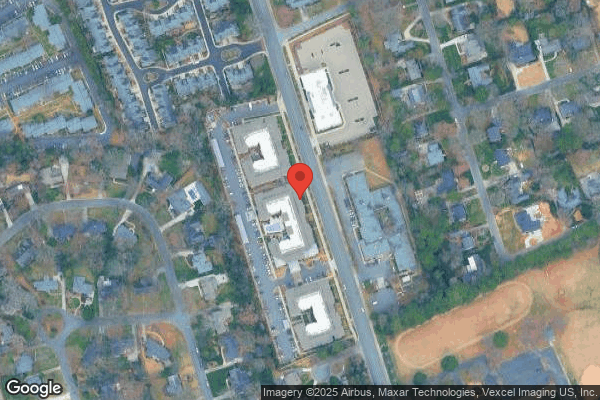
4801 Randolph Road, Charlotte, NC 28211 (704) 364-8363
For profit - Corporation 100 Beds SIMCHA HYMAN & NAFTALI ZANZIPER Data: November 2025 2 Immediate Jeopardy citations
Trust Grade
24/100
#179 of 417 in NC
Last Inspection: September 2025

Inspected within the last 6 months. Data reflects current conditions.

Overview

Pelican Health Randolph LLC has received a Trust Grade of F, indicating significant concerns about the facility's overall performance. Ranking #179 out of 417 facilities in North Carolina places it in the top half, but the low trust grade suggests it may not be a safe choice. The trend is worsening, with issues increasing from 11 in 2024 to 15 in 2025, highlighting ongoing problems. Staffing is a major weakness, rated at 0 out of 5 stars, with a troubling turnover rate of 76%, far above the state average. There have been serious incidents, including a failure to assess a resident after a fall during transport, which could have led to serious health risks. While the facility has an excellent rating for quality measures, its health inspection rating is below average, and the presence of fines totaling $23,391 raises further concerns about compliance and care standards.

Trust Score
F
24/100
In North Carolina
#179/417
Top 42%
Safety Record
High Risk
Review needed
Inspections
Getting Worse
11 → 15 violations
Staff Stability
⚠ Watch
76% turnover. Very high, 28 points above average. Constant new faces learning your loved one's needs.
Penalties
✓ Good
$23,391 in fines. Lower than most North Carolina facilities. Relatively clean record.
Skilled Nurses
○ Average
RN staffing data not reported for this facility.
Violations
⚠ Watch
51 deficiencies on record. Higher than average. Multiple issues found across inspections.
★★★☆☆
3.0
Overall Rating
☆☆☆☆☆
0.0
Staff Levels
★★★★★
5.0
Care Quality
★★☆☆☆
2.0
Inspection Score
Stable
2024: 11 issues
2025: 15 issues

The Good

  • 5-Star Quality Measures · Strong clinical quality outcomes
  • Full Sprinkler Coverage · Fire safety systems throughout facility
  • No fines on record

Facility shows strength in quality measures, fire safety.

The Bad

3-Star Overall Rating

Near North Carolina average (2.8)

Meets federal standards, typical of most facilities

Staff Turnover: 76%

30pts above North Carolina avg (46%)

Frequent staff changes - ask about care continuity

Federal Fines: $23,391

Below median ($33,413)

Minor penalties assessed

Chain: SIMCHA HYMAN & NAFTALI ZANZIPER

Part of a multi-facility chain

Ask about local staffing decisions and management

Staff turnover is very high (76%)

28 points above North Carolina average of 48%

The Ugly 51 deficiencies on record

2 life-threatening
Sept 2025 15 deficiencies
CONCERN (D) 📢 Someone Reported This

A family member, employee, or ombudsman was alarmed enough to file a formal complaint

Potential for Harm - no one hurt, but risky conditions existed

Deficiency F0558 (Tag F0558)

Could have caused harm · This affected 1 resident

**NOTE- TERMS IN BRACKETS HAVE BEEN EDITED TO PROTECT CONFIDENTIALITY** Based on observations, resident and staff interviews, the facility failed to ensure a dependent resident could access the call l...

Read full inspector narrative →
**NOTE- TERMS IN BRACKETS HAVE BEEN EDITED TO PROTECT CONFIDENTIALITY** Based on observations, resident and staff interviews, the facility failed to ensure a dependent resident could access the call light device for 1 of 2 residents reviewed for accommodation of needs (Resident #5).The findings included: Resident #5 was admitted to the facility on [DATE] with diagnoses that included cervical spinal cord injury and quadriplegia. The quarterly Minimum Data Set (MDS) assessment dated [DATE] revealed Resident #5 was cognitively intact. The MDS indicated Resident #5 was unable to use upper and lower extremities and required maximum assistance for all activities of daily living. An observation was conducted on 9/10/2025 at 2:15 PM of Nurse Aide (NA) #1 providing catheter care to Resident #5. The call button was not in view during the observation. NA #1 completed catheter care and began to exit Resident #5's room without providing Resident #5 with a call button. Surveyor asked if Resident #5 had a way to call staff for assistance. NA #1 looked behind Resident #5's nightstand and retrieved the call button. NA #1 set the call button on the right side of Resident #5's head and asked him to press the button. Resident #5 pressed the button with the right side of his head. NA #1 checked to see if the indicator light was activated on the outside of Resident #5's room prior to leaving the room. An interview was conducted with NA #1 on 9/10/2025 at 2:45 PM. NA #1 stated that she did not normally work with Resident #5; however, was familiar with the special call button and Resident #5 used his head to activate the button. NA #1 stated she was distracted by completing catheter care for survey observation and forgot to give Resident #5 his call button prior to Surveyor asking about the call button. Another observation was conducted on 9/10/2025 at 8:10 PM. While Surveyor stood in the lobby of the facility, Resident #5 was heard yelling for help from his room at the end of the hall. Upon entry to Resident #5's room, the call button was observed hanging off the right side of his bed, out of Resident #5's reach. NA #3 was observed in the hall transporting a resident in a wheelchair. NA #3 entered Resident #5's room, asked Resident #5 how he could assist and gave Resident #5 his call button. NA #3 assisted Resident #5 in removing dentures and confirmed that Resident #5 could access his call button. An interview was conducted with Resident #5 on 9/8/2025 at 11:00 AM. Resident #5 stated that staff did not like to give him his call button. Resident #5 stated that he could not care for himself because he was paralyzed from the chest down to his feet and that he depended on staff for assistance. An interview with NA #3 revealed that he was assigned as Resident #5's NA. NA #3 reported he forgot to give Resident #5 his call button because he was trying to get all his residents in bed, and he knew that he would return to Resident #5 shortly after placing another resident in bed. NA #3 stated that he normally gave Resident #5 his call button prior to leaving Resident #5's room. An interview was conducted with the Director of Nursing (DON) on 9/12/2025 at 1:45 PM. The DON stated she expected staff to be attentive to residents' environment and ensure that each resident had access to call for assistance if needed. DON stated that NA #1 and NA #3 should have given Resident #5 his button prior to leaving Resident #5's room. During an interview with the Administrator on 09/12/2025 at 2:05 PM, she stated she expected staff to ensure each resident had a call bell in reach prior to leaving the room.
CONCERN (D) 📢 Someone Reported This

A family member, employee, or ombudsman was alarmed enough to file a formal complaint

Potential for Harm - no one hurt, but risky conditions existed

Free from Abuse/Neglect (Tag F0600)

Could have caused harm · This affected 1 resident

**NOTE- TERMS IN BRACKETS HAVE BEEN EDITED TO PROTECT CONFIDENTIALITY** Based on observation, record review, resident, responsible party, and staff interviews, the facility failed to protect a residen...

Read full inspector narrative →
**NOTE- TERMS IN BRACKETS HAVE BEEN EDITED TO PROTECT CONFIDENTIALITY** Based on observation, record review, resident, responsible party, and staff interviews, the facility failed to protect a resident's right to be free from resident to resident sexual abuse when Nurse Aide #7 and Floor Technician #1 observed Resident #22, a male resident, fondle a severely cognitively impaired female resident (Resident #27) when he placed his hand under her shirt near/on her bare breast. Resident #27 did not have the cognitive capacity to consent to this intimate sexual contact. This deficient practice affected 1 of 3 residents reviewed for resident-to-resident abuse (Resident #27).The findings included:Resident #22 was admitted to the facility on [DATE] with diagnoses which included encephalopathy (a broad term for any brain disease that alters brain function or structure) and cognitive communication deficit.A quarterly Minimum Data Set (MDS) assessment dated [DATE] indicated Resident #22 was cognitively intact. Resident #22 propelled himself independently in his wheelchair.A Nurse Practitioner progress note dated 6/3/2025 at 7:55 AM indicated Resident #22 was alert and oriented to person, place and time. Resident #22 was stable with no acute concerns.A Psychiatric-Mental Health Nurse Practitioner follow up assessment note dated 6/3/2025 at 10:13 AM revealed Resident #22 was alert and oriented to person, place, time and situation. Resident #22's concentration/attention span, immediate, recent and remote memory were within normal limits. Resident #22's abstract reasoning was assessed as within normal limits.A review of Resident #22's active care plan as of 6/9/2025 indicated the resident had no care plan related to sexually inappropriate behaviors.Resident #27 was admitted to the facility on [DATE] with diagnoses which included a history of a cerebral infarction, dementia, and cognitive communication deficit.A quarterly MDS assessment dated [DATE] indicated Resident #27 had both short- and long-term memory deficits and severely impaired cognitive skills for daily decision making. She could feed herself with set up/supervision but otherwise required total assistance with all Activities of Daily Living (ADL). Resident #27 was dependent on staff for mobility as she could not propel herself in a wheelchair.A review of the 24-hour Initial Allegation Report dated 6/9/2025 at 11:55 AM indicated a Nurse Aide (NA) (NA #7) had notified the Administrator that a male resident (Resident #22) had been observed fondling a female resident (Resident #27). The NA immediately separated the residents and notified the Administrator. The State Agency was notified on 6/9/2025 at 12:37 PM. Local law enforcement was notified on 6/9/2025 at 1:30 PM. The initial report was signed by the Administrator.A review of a local Law Enforcement Incident Report dated 6/9/2025 at 4:12 PM revealed on 6/9/2025 at 1:20 PM the reporting person (the facility Administrator) reported the victim (Resident #27) had been sexually battered by the known suspect (Resident #22). Resident #22 had used his hand to fondle the outer exterior area of Resident #27's upper private regions. Resident #27 had various cognitive developments, physical disability, and poor health/illness. The case was exceptionally cleared (the law enforcement agency had identified an offender and gathered sufficient evidence to support an arrest and charge, but an external factor beyond the agency's control prevented the arrest or formal prosecution of the offender) on 6/12/2025 as Resident #27/Resident #27's representative chose not to prosecute Resident #22.A Psychiatric Mental Health Nurse Practitioner follow up assessment note dated 6/10/2025 at 10:03 AM revealed Resident #27 was alert and oriented only to person. Resident #27 appeared to be calm and relaxed while sitting in her wheelchair. Staff reported no mood issues, no behavioral issues and no new concerns. Resident #27's concentration/attention were assessed as impaired. Resident #27's immediate memory, recent memory and remote memory were all assessed as impaired. Plan was to follow up in 4 weeks.A social services note dated 6/11/2025 at 11:07 AM indicated Resident #27 had been observed over the past couple of days participating in activities, laughing and watching television. Overall, Resident #27's mood appeared to be good.A review of the 5 Day Investigation Report dated 6/13/2025 at 12:25 PM indicated the Administrator was notified on 6/9/2025 at 11:55 AM by Nursing Aide (NA) #7 that she had observed Resident #22 sitting in the hallway rubbing Resident #27's breast. NA #7 immediately removed Resident #27 from the situation and notified the Administrator. Resident #22 was immediately taken to the Administrator's office and interviewed. A review of the interview statement dated 6/9/2025 indicated Resident #27 stated he did not fondle Resident #22 but was rubbing her arm because she was rubbing his arm. Resident #22 was asked if Resident #27 had given him permission to rub her arm and Resident #22 did not answer the question and stated he had rubbed her arm because she had rubbed his arm. The interview statement was signed by the Administrator, the Director of Nursing and the Social Worker. Resident #22 was placed under constant supervision by the Administrator or Receptionist from the time of the incident until he went on 15 minute checks by nursing staff for 48 hours. A review of the every 15 minute checks log indicated Resident #22 was on 15 minute checks from 6/9/2025 at 3:00 PM to 6/11/2025 at 3:30 PM. A written witness statement dated and signed on 6/9/2025 from NA #7 revealed she had witnessed Resident #22 touching Resident #27's breast. She observed that Resident #22 had looked around to see if anyone saw him. NA #7 immediately removed Resident #27 from the situation and immediately reported the incident to the Administrator. NA #7 stated she did not observe Resident #27 touch Resident #22. Resident #27 had her hands in her lap and did not seem to pay attention to Resident #22 at all. A written witness statement dated and signed on 6/9/2025 from Floor Technician #1 described he was cleaning the floor and observed Resident #22 touching on Resident #27 after rolling his wheelchair up next to Resident #27. Floor Technician #1's statement indicated Resident #27 was not observed touching Resident #22 and she kept her hands to herself. Floor Technician #1's statement indicated NA #7 was also a witness and had reported the incident to the Administrator. A skin check was performed on Resident #27 on 6/9/2025 at 1:00 PM and no concerns were noted. Included in the 5 Day Investigation were Brief Interview for Mental Status (BIMS) assessments dated 6/9/2025 that indicated Resident #22 had moderate cognitive impairment and Resident #27 had severe cognitive impairment. An interview on 9/9/2025 at 11:48 AM with NA #7 indicated Resident #27 was always very confused and was placed at the nurse's station for supervision on a daily basis if not with a staff member or in an activity. Resident #27 was unable to self-propel her wheelchair and was dependent for all care. NA #7 observed on 6/9/2025 before lunch that Resident #22 had propelled his wheelchair next to Resident #27 to sit closely on her right side. Both residents were facing forward toward the rooms across from the nurse's station. NA #7 stated she was checking on the resident in the room across from where Resident #22 and Resident #27 were seated. She stated she observed from the room Resident #22 look up and down the hall as if to see if anyone was watching, then he placed his left hand on Resident #27's right leg and moved his hand up and under Resident #27's shirt toward her breast. NA #7 stated she exited the room immediately and told Resident #22 to stop and asked what he was doing. Resident #22 initially stated nothing then he said he was touching Resident #27 because she was touching him. NA #7 stated Resident #27 was not observed touching Resident #22 and had her hands in her lap. NA #7 stated she was unsure if Resident #27 even knew Resident #22 was sitting beside her. NA #7 believed Resident #22 knew what he was doing especially since he had looked around to see if anyone could see him. NA #7 indicated she was unsure if Resident #22's hand touched Resident #27's breast but stated Resident #27 did not wear a bra under her shirts. NA #7 immediately separated Resident #22 and Resident #27 and notified the Administrator. Resident #22 was placed under continuous supervision. NA #7 stated the only other witness was Floor Technician #1 who had been working down the hallway. NA #7 stated she and Floor Technician #1 had both provided written witness statements. NA #7 indicated she had not noted any changes in Resident #27 after the incident, and she seemed at her baseline.On 9/9/2025 at 2:07 PM a telephone call was placed to Floor Technician #1 who was no longer employed at the facility. The call disconnected after 3 rings. A re-dial attempt resulted in the same disconnection. Subsequent attempts to reach Floor Technician #1 resulted in the calls being disconnected.An interview attempted on 9/8/2025 at 2:09 PM with Resident #27 revealed she was alert but could not provide any information or answer questions in a logical manner. She smiled and spoke in a nonsensical way and could not be understood. A telephone interview on 9/8/2025 at 3:23 PM with Resident #27's Responsible Party (RP) revealed she was contacted very quickly regarding Resident #27 being fondled by Resident #22 on 6/9/2025. She stated she spoke with the local Law Enforcement Officer who responded to the call and had been asked if she wished to pursue charges against Resident #22. The RP chose not to prosecute Resident #22. The RP stated she understood that inappropriate contact could occur in the nursing home setting and there had been no injury. The RP felt the facility staff had intervened quickly and kept Resident #27 safe. Resident #27 had not shown any change in her baseline behavior during RP visits.An interview with Resident #22 on 9/8/2025 at 2:55 PM revealed he recalled the incident when he was accused of inappropriately touching a female resident. He indicated he knew exactly who the female resident was (Resident #27). Resident #22 stated he did nothing wrong, just patted Resident #27 on the arm twice. He indicated he now only spoke to a female resident if spoken to first. He stated he no longer sat with Resident #27 or the other female residents as he once did.An observation on 9/11/2025 at 11:45 AM revealed Resident #22 on the unit and interacting with other male residents and staff.An interview on 9/9/2025 at 3:59 PM with Nurse #1 revealed she knew Resident #22 well. Nurse #1 indicated Resident #22's cognition could fluctuate on a daily basis. She stated she had never witnessed any inappropriate sexual touching between Resident #22 and the female residents. Nurse #1 reported she also cared for Resident #27. Nurse #1 stated Resident #27 required almost total dependent care. She stated staff always kept Resident #27 under close supervision as she was not ambulatory, could not propel herself in her wheelchair and was consistently confused. Nurse #1 indicated she had never seen Resident #27 touch anyone inappropriately and did not believe Resident #27 would have initiated any physical contact with Resident #22.An interview on 9/10/2025 at 1:03 PM with Nurse Aide (NA) #8 revealed she had not observed or heard of any other inappropriate sexual behavior involving Resident #22. NA #8 stated Resident #22's cognition and behavior did fluctuate from day to day. She believed the interaction between Resident #22 and Resident #27 was an isolated event. An interview on 9/10/2025 at 4:30 PM with the Administrator indicated Resident #22 was not cognitively intact and his cognition fluctuated often. She did not feel resident to resident abuse had occurred due to Resident #22 having a BIMS score that indicated he had moderate cognitive impairment on the day of the event. She stated the responding Law Enforcement Officer had told her Resident #22 was confused and there was nothing he could do with the accusation. She stated she felt staff had acted appropriately and separated the residents immediately. Resident #22 had been interviewed, his statement taken and placed on one to one supervision while waiting for the police. Staff had performed skin checks on Resident #27 and other cognitively impaired residents with no concerns noted. Resident interviews regarding abuse were conducted with cognitively intact residents with no concerns noted. Staff witness statements were obtained. The Administrator stated there was not a Plan of Correction as their investigation had not substantiated abuse.A follow up interview on 9/12/2025 at 2:45 PM with the Administrator indicated she felt Resident #22 was not in his right mind when he inappropriately touched Resident #27 on 6/9/2025. She stated Resident #22's cognition fluctuated on a daily basis. She stated she did not believe abuse had occurred due to both residents being cognitively impaired at the time of the incident.On 9/12/2025, several attempts to reach the Former Director of Nursing by phone were unsuccessful.
CONCERN (D) 📢 Someone Reported This

A family member, employee, or ombudsman was alarmed enough to file a formal complaint

Potential for Harm - no one hurt, but risky conditions existed

Report Alleged Abuse (Tag F0609)

Could have caused harm · This affected 1 resident

**NOTE- TERMS IN BRACKETS HAVE BEEN EDITED TO PROTECT CONFIDENTIALITY** Based on record review and staff interviews, the facility failed to report an allegation of resident to resident sexual abuse to...

Read full inspector narrative →
**NOTE- TERMS IN BRACKETS HAVE BEEN EDITED TO PROTECT CONFIDENTIALITY** Based on record review and staff interviews, the facility failed to report an allegation of resident to resident sexual abuse to Adult Protective Services (APS) for 1 of 3 residents reviewed for resident to resident abuse (Resident #27).The findings included:The facility's abuse policy revised on 10/20/2022 indicated all alleged violations involving abuse are reported immediately, but no later than 2 hours after the allegation is made, to APS where state law provides for jurisdiction in long-term care facilities in accordance with State law.Resident #27 was admitted to the facility on [DATE].The 24-hour Initial Allegation Report dated 6/9/2025 at 11:55 AM indicated a Nurse Aide (NA) #7 had notified the Administrator that a male resident (Resident #22) had been observed fondling a female resident (Resident #27). The State Agency was notified on 6/9/2025 at 12:37 PM. Local law enforcement was notified on 6/9/2025 at 1:30 PM. The initial report was signed by the Administrator.The 5 Day Investigation Report dated 6/13/2025 at 12:25 PM indicated the Administrator was notified on 6/9/2025 at 11:55 AM by NA #7 that she had observed Resident #22 sitting in the hallway rubbing Resident #27's breast. The incident was not reported to the Department of Social Services/APS. The 5 Day Investigation Report was signed on 6/13/2025 by the Administrator.An interview with the Administrator on 9/12/2025 indicated she did not know she was required to report allegations of abuse to Adult Protective Services or she would have done so.
CONCERN (D) 📢 Someone Reported This

A family member, employee, or ombudsman was alarmed enough to file a formal complaint

Potential for Harm - no one hurt, but risky conditions existed

Deficiency F0628 (Tag F0628)

Could have caused harm · This affected 1 resident

**NOTE- TERMS IN BRACKETS HAVE BEEN EDITED TO PROTECT CONFIDENTIALITY** Based on record review and staff and Ombudsman interviews, the facility failed to notify the Ombudsman in writing of the residen...

Read full inspector narrative →
**NOTE- TERMS IN BRACKETS HAVE BEEN EDITED TO PROTECT CONFIDENTIALITY** Based on record review and staff and Ombudsman interviews, the facility failed to notify the Ombudsman in writing of the resident's discharge home for 1 of 3 residents reviewed for discharge (Resident #88). The findings included: Resident #88 was admitted to the facility on [DATE]. A nursing note dated 7/22/25 at 10:11 AM stated Resident #88 was discharged from the facility to his home on 7/22/25 at 10:00 AM with his family member. Education on self-care provided and understanding was verbalized. A review of Resident #88's electronic medical record (EMR) revealed no transfer or discharge notice was issued to Resident #88. A telephone interview on 9/10/25 at 10:41 AM with the Ombudsman revealed she had not received a transfer or discharge list from the facility since May 2025 and was not familiar with Resident #88's discharge home. A telephone interview on 9/12/25 at 3:36 PM with the former Social Worker (SW) revealed she was employed at the facility from June 2025 to the end of August 2025 and was still in training for her position during that time. The former SW indicated she did not send notifications of transfers or discharges to the Ombudsman and did not know about this requirement. The former SW indicated the Administrator handled the details for transfers and discharges in the facility. A telephone interview on 9/15/25 at 3:35 PM with the Administrator revealed the facility currently did not have a SW, but she had the expectation that the facility would communicate with the Ombudsman a list of transfers and discharges. The Administrator indicated she has since been in contact with the Ombudsman and sent her transfer and discharge lists. A telephone interview on 9/17/25 at 1:13 PM with the former Director of Nursing (DON) indicated that Resident #88 had been at the facility for long term antibiotic treatment, which he completed and had a planned to discharge home. She indicated the former SW was responsible for communicating information to the Ombudsman regarding all transfers and discharges.
CONCERN (D) 📢 Someone Reported This

A family member, employee, or ombudsman was alarmed enough to file a formal complaint

Potential for Harm - no one hurt, but risky conditions existed

Deficiency F0658 (Tag F0658)

Could have caused harm · This affected 1 resident

**NOTE- TERMS IN BRACKETS HAVE BEEN EDITED TO PROTECT CONFIDENTIALITY** Based on observations, record review, and family and staff interviews, the facility failed to provide treatment to a resident's ...

Read full inspector narrative →
**NOTE- TERMS IN BRACKETS HAVE BEEN EDITED TO PROTECT CONFIDENTIALITY** Based on observations, record review, and family and staff interviews, the facility failed to provide treatment to a resident's bilateral legs for arterial and venous ulcers (an ulcer due to inadequate blood supply) as specified in the physician orders for 1 of 2 residents reviewed for arterial and venous wounds (Resident #2). In addition, the facility failed to ensure transportation was arranged for a resident to attend a scheduled appointment with a Gastroenterologist (doctor who specializes in gastrointestinal issues). This occurred for 1 of 3 residents reviewed for medical appointments (Resident #97). The findings included: Resident #2 was admitted to the facility on [DATE] diagnoses which included peripheral vascular disease, peripheral arterial disease, edema, and muscle weakness. Review of Resident #2’s quarterly Minimum Data Set (MDS) assessment dated [DATE] revealed he was cognitively intact and required assistance with most activities of daily living. The assessment also indicated he had wounds to his bilateral lower extremities and required wound care. Review of Resident #2’s care plan dated 03/31/25 and revised on 07/31/25 revealed a focus area for the resident having skin impairment upon admission of bilateral lower extremities. The goal was for the resident’s wounds to resolve without complications. The interventions included: Enhanced barrier precautions Refer to wound physician as needed Treatment as ordered Weekly skin observations Review of a physician order dated 04/07/25 read: bilateral unna boots (a semi-rigid compression bandage often called a boot made of zinc oxide-impregnated gauze that hardens as it dries, applied from the foot to below the knee to treat venous leg ulcers) from toes to knees per vascular surgeon appointment on 04/07/25, resident is to have wound cleanser to bilateral lower legs, wrapped with unna boots from toes to knees, then apply self-adherent wrap, changed on Mondays and Thursdays every day shift and as needed (PRN) for soiled or off. An observation on 09/10/25 at 12:01 PM of wound care performed by the Wound Nurse on Resident #2 was made. The Wound Nurse gathered her supplies and proceeded into Resident #2’s room to provide his wound care to his bilateral lower legs. Upon entering the room, Resident #2 was sitting in his recliner with his feet dependent on the floor and there was no dressing on his bilateral legs. The Wound Nurse instructed Resident #2 to sit back in his recliner and lift the foot rest of his recliner. Resident #2 lifted his foot rest and the Wound Nurse proceeded to put a clean towel under his right foot on the foot rest. The Wound Nurse with gloves on dabbed the open ulcers on his leg with wound cleanser-soaked gauze and then proceeded to apply the unna boot to the right leg. The right leg was not cleaned with wound cleanser to clean the dry skin patches noted on his lower right leg before the Wound Nurse applied the unna boot. The unna boot was completed on the right leg and the self-adherent wrap (a brand of self-adherent wrap, a type of elastic bandage that sticks only to itself, not to skin, hair or other materials) wrapped around the unna boot for mild compression and taped into place. The Wound Nurse then moved to the left leg and placed a clean towel under the leg and proceeded with gloves on and dabbed the open areas with the wound cleanser-soaked gauze and then proceeded to apply the unna boot to the left leg. The left leg was not cleaned with wound cleanser to clean the dry skin patches noted on his lower left leg before the Wound Nurse applied the unna boot. The unna boot was completed on the left leg and the self-adherent wrap wrapped around the unna boot for mild compression and taped into place. An interview was conducted with Wound Nurse on 09/11/25 at 3:46 PM. The Wound Nurse stated she was not used to doing Resident #2’s wound care and said she “didn’t feel comfortable doing his wounds” on 09/10/25. The Wound Nurse further stated she had been taught when doing unna boots to only cleanse the open areas so that is what she had done. She indicated the order for the wound care was not clear to her and she should have called the surgeon’s office and clarified the order so she would know if the entire lower legs had to be cleansed with wound cleanser or just the open areas. An interview was conducted with the Director of Nursing (DON) who also served as the Infection Preventionist (IP). The DON reported that she started in October 2024 as the IP. The DON stated the Wound Nurse should have cleansed Resident #2’s? the entire lower extremities prior to applying the unna boots and further stated if the Wound Nurse was not clear about the orders she should have contacted the surgeon’s office and clarified the order. The DON indicated she expected the Wound Nurse to follow the physician’s order for wound care. An interview with the Administrator on 09/12/24 at 2:23 PM revealed it was her expectation for the Wound Nurse to follow the physician’s order when performing wound care on Resident #2. She stated if the Wound Nurse was not clear about the orders she should have contacted the surgeon’s office and clarified the order prior to providing wound care to Resident #2. 2. Resident #97 was admitted to the facility on [DATE] with diagnoses that included generalized muscle weakness and dysphagia (difficulty swallowing food or liquids) and was discharged on 3/07/25. Resident #97’s admission minimum data set (MDS) assessment dated [DATE] revealed she was severely cognitively impaired, dependent for all care and mobility and was coded for having a feeding tube. A care plan dated 11/27/24 revealed Resident #97 had a goal to remain free of side effects or complications related to tube feeding. A review of Resident #97’s electronic medical record revealed a physician’s order entered on 1/5/25 for a GI consultation (medical consultation with a gastroenterologist). There was no physician progress note that explained the need for the consultation. Review of the facility appointment book revealed Resident #97’s name written in on 1/15/25 at 10:40 AM for a “gastro” appointment and “EMS” (Emergency Medical Services). On 9/10/25 at 9:59 AM a phone interview with Family Member #1 revealed she was aware that Resident #97 had missed her gastroenterology appointment, but no explanation was given as to why transportation had not been set up for the appointment. A phone interview on 9/11/25 at 3:42 PM with the appointment scheduler at the gastroenterologist’s office revealed Resident #97 had an appointment on 1/15/25 at 11:00 AM and no one showed up for the appointment or had called to cancel it. She indicated Resident #97 did not have any other appointments scheduled with their office. An interview with the facility Transportation Scheduler on 9/15/25 at 1:39 PM revealed he did not schedule appointments for residents but did schedule transportation to appointments. He indicated his process was to look through the facility appointment book daily and make transportation arrangements for residents who had appointments scheduled. The Transportation Scheduler did not recall Resident #97, did not recall making transportation arrangements for her to attend her appointment on 1/15/25 and did not know why she didn’t get scheduled for transportation. The Transportation Scheduler indicated that if he saw an appointment in the book with EMS written beside it, he didn’t do anything as he didn’t schedule for EMS transportation and did not know who was supposed to be doing the scheduling for EMS transportation. He further voiced he transported residents to dialysis appointments in the facility van and used contracted transportation services for all other appointments. An attempt made on 9/16/25 at 11:11 AM to speak with former Social Worker #2 who was employed at the time of the missed appointment on 1/15/25 was unsuccessful. An interview on 9/17/25 at 11:28 AM with the former Assistant Director of Nursing (ADON) who was the ADON at the time of the missed appointment and the current Director of Nursing revealed she recalled Resident #97 but did not recall any issues with her feeding tube and didn’t know why she was not scheduled for transportation to her appointment. She indicated the Social Worker would make appointments for residents and write them in the appointment book and the Transportation Scheduler would make the necessary transportation arrangements. A phone interview with the Administrator on 9/15/25 at 3:46 PM She indicated she was not the administrator at the time of Resident #97’s missed appointment on 1/15/25 but her expectation was residents would have transportation scheduled to not miss appointments. The Administrator revealed it would have been the Social Worker at the time who scheduled appointments and wrote them in the appointment book. Attempts to speak with the former Medical Director on 9/12/25 at 11:22 AM and 9/16/25 at 11:40 AM were unsuccessful.
CONCERN (D) 📢 Someone Reported This

A family member, employee, or ombudsman was alarmed enough to file a formal complaint

Potential for Harm - no one hurt, but risky conditions existed

Quality of Care (Tag F0684)

Could have caused harm · This affected 1 resident

**NOTE- TERMS IN BRACKETS HAVE BEEN EDITED TO PROTECT CONFIDENTIALITY** Based on record review, family member, staff, Nurse Practitioner, wound care physician, and Assisted Living Facility Executive D...

Read full inspector narrative →
**NOTE- TERMS IN BRACKETS HAVE BEEN EDITED TO PROTECT CONFIDENTIALITY** Based on record review, family member, staff, Nurse Practitioner, wound care physician, and Assisted Living Facility Executive Director interviews, the facility failed to identify, assess, and obtain wound care orders for a wound on the left ankle for 1 of 5 residents reviewed for wound care (Resident #89).The findings included: Review of Resident #89's hospital Discharge summary dated [DATE] revealed Resident #89 would be discharged to the facility but had no documentation of any wounds when discharged from the hospital. Resident #89 was admitted to the facility on [DATE] with diagnoses that included: diabetes mellitus (DM), and vascular dementia. Review of the facility's admission nursing assessment dated [DATE] at 9:15 PM by Nurse #3 revealed Resident #89 had bilateral upper extremity bruising and bruising to her left ankle. Review of the facility's admission nursing note dated 02/06/2025 at 9:15 PM by Nurse #3 revealed Resident #89 arrived at the facility via wheelchair. Resident #89 was alert and oriented, pleasant with calm affect, and able to make her needs known. Scattered bruising was noted to Resident #89's bilateral upper extremities (arms) and Resident #89's left ankle was covered with a brace, and some was bruising noted. Review of Resident #89's physician orders from 02/06/2025 to 02/24/2025 revealed there were no physician orders for wound care. The admission Minimum Data Set (MDS) assessment dated [DATE] and the discharge MDS dated [DATE] revealed Resident #89 had moderately impaired cognition and required moderate assistance with bathing, and maximum assistance with toileting, dressing, bed mobility, and transfers. The 5-day admission MDS and the discharge MDS revealed Resident #89 had no pressure ulcers or wounds. Review of the daily skilled nursing notes dated 02/08/2025, 02/11/2025, 02/12/2025, 02/13/2025, 02/14/2025, 02/15/2025, 02/16/2025, 02/17/2025, and 02/19/2025 revealed Resident #89 had no skin conditions. Review of the Physical Therapy note dated 02/13/2025 at 2:32 PM by the Director of Rehabilitation revealed Resident #89 was assessed for her left lower extremity brace for fit and comfort. The brace was adjusted for fit due to it being too tight. The Director of Rehabilitation doffed (removed) the brace to inspect Resident #89's skin. Resident #89's skin was intact. The Director of Rehabilitation reviewed the hospital records to see any indications for the brace; no indications for the brace were found. The Director of Rehabilitation telephoned Resident #89's family member to inquire about the brace. The family member stated that Resident #89 had an old fracture in September 2024, and the brace was provided by her orthopedic doctor. The family member stated that Resident #89 could bear full weight on both legs and only used the brace occasionally. Review of Resident #89's weekly skin assessment dated [DATE] by Nurse #3 revealed no abnormal skin issues were identified. There was not a weekly skin assessment documented on 2/24/25. Review of Resident #89's care plan dated 02/17/2025 revealed Resident #89 was at high risk for pressure ulcer development and skin impairment related to advanced age, chronic health conditions, cognitive impairment, dry fragile skin, immobility, and impaired healing from diabetes. The interventions included to assess Resident #89 for risk of skin breakdown, assist with turning and positioning, keep skin clean and dry, utilizing pressure reducing mattress, and perform weekly skin assessments. The care plan did not reveal any abnormal skin conditions, pressure ulcers, or wounds. Review of a nursing note dated 02/24/2025 at 4:09 PM by Nurse #3 revealed Resident #89 was discharged to an assisted living facility. There was no documentation about any abnormal skin conditions, pressure ulcers, or wounds. Multiple unsuccessful attempts were made to contact and interview Nurse #3. An interview was conducted with Nurse Aide (NA) #2 on 09/11/2025 at 1:13 PM who routinely worked on the hallway where Resident #89 resided. NA #1 stated that he did not recall or remember anything about Resident #89. An interview was conducted with NA #3 on 09/11/2025 at 3:15 PM who routinely worked on the hallway where Resident #89 resided. NA #2 stated that she did not remember Resident #89. An interview was conducted with the facility's Wound Nurse on 09/11/2025 at 3:46 PM. The Wound Nurse stated she was not aware that Resident #89 had any skin issues or areas of breakdown. The Wound Nurse explained that she had not seen or treated Resident #89 for any type of skin concerns or wounds. An interview was conducted with the Wound Care Physician on 09/09/2025 at 2:15 PM. The Wound Care Physician stated that she had not been consulted to evaluate or treat Resident #89 for any wounds. The Physician explained that she had not seen or treated Resident #89 for any type of skin concerns or wounds and Resident #89 had never been on her wound care case load. An interview was conducted with the Director of Rehabilitation on 09/11/2025 at 4:10 PM. The Director of Rehabilitation stated that Resident #89 had a left ankle brace due to an old left ankle fracture. The Director of Rehabilitation stated that she had worked with Resident #89 on one occasion to adjust her brace because Resident #89 would have periodic swelling to her lower extremities and she wanted to make sure the brace fit correctly. The Director of Rehabilitation stated that she removed the brace and inspected Resident #89's skin and her skin was intact on 02/13/2025. The Director of Rehabilitation explained that she adjusted the brace which was a little too tight and she applied the brace to Resident #89's left ankle. The Director of Rehabilitation also stated that Resident 89's family member had told her that she only wore the brace occasionally, could bear full weight on both legs and had no specific restrictions. Multiple unsuccessful attempts to contact the previous DON were made. A telephone interview was conducted with the Nurse Practitioner (NP) on 09/15/2025 at 10:38 AM. The NP stated that she did not recall Resident #89 having any wounds or skin alterations. The NP stated that the nursing staff would have notified her of any abnormality with Resident #89's skin assessment and she would have consulted the wound care physician for further care and treatment. Review of the facility's Discharge summary dated [DATE] at 3:05 PM by the former Social Worker #2 revealed Resident #89 was discharged to an assisted living facility. There was no documentation about any abnormal skin conditions or wound care orders. A telephone interview was conducted with the former SW #2 on 09/11/2025 at 4:33 PM. SW #2 stated that she did not remember Resident #89. Review of Resident #89's assisted living facility's progress note entered by a Medication Aide dated 02/25/2025 at 4:46 PM revealed Resident #89 was admitted on [DATE] with an open wound on her left foot. The assisted living facility was not made aware of the wound and Resident #89's family had not been made aware of the wound. The Medication Aide no longer worked for the assisted living facility and could not be contacted for interview. Review of the assisted living facility's physician order dated 02/25/2025 revealed an order for Home Health to evaluate and treat Resident #89's left heel wound. During an interview with the Family Member on 09/10/2025 at 7:45 AM, the Family Member stated when Resident #89 was discharged from the facility to an assisted living facility on 02/24/2025, the nurse at the assisted living facility observed Resident #89 had an open wound to the back of her left ankle. The Family Member stated the wound was about the size of a fifty-cent piece with a dark center. The Family Member also revealed the wound was deep through several layers of skin and there was clear drainage coming from the wound. The Family Member further explained that Resident #89's sock was stuck to the wound. The Family Member stated that there was no mention of the left ankle wound in Resident #89's discharge paperwork and the skilled nursing facility had not been treating the wound and had not notified her that Resident #89 had developed a wound while in the facility. The Family Member stated that the assisted living facility's physician stated to the family member that Resident #89's wound was a diabetic wound. The Family Member stated that she did not know when the wound developed. The Family Member also revealed that Resident #89 had broken her left ankle about a year ago and had been fitted with an ankle brace which she still wore occasionally. An interview was conducted with the Executive Director of the assisted living facility on 09/15/2025 at 4:35 PM. The Executive Director also stated that the nurse that admitted Resident #89 to the assisted living facility was no longer employed with the facility, and she was unable to contact her. The Executive Director further revealed that Resident #89's medical record revealed that Resident #89 was admitted to the facility on [DATE] with a wound on her left foot and remained in the assisted living facility and home health nursing services provided Resident #89's wound care that was required.
CONCERN (D)

Potential for Harm - no one hurt, but risky conditions existed

Deficiency F0687 (Tag F0687)

Could have caused harm · This affected 1 resident

**NOTE- TERMS IN BRACKETS HAVE BEEN EDITED TO PROTECT CONFIDENTIALITY** Based on observations, staff, resident, and Nurse Practitioner (NP) interviews and record review, the facility failed to assess ...

Read full inspector narrative →
**NOTE- TERMS IN BRACKETS HAVE BEEN EDITED TO PROTECT CONFIDENTIALITY** Based on observations, staff, resident, and Nurse Practitioner (NP) interviews and record review, the facility failed to assess resident's feet to determine if nail care was needed, ensure resident's toenails were trimmed and podiatry services were arranged for 2 of 2 residents reviewed for foot care (Resident #3 and Resident #2). The findings included: 1. Resident #3 was admitted to the facility on [DATE]. Resident #3 had diagnoses which included cerebral infarction (occurs when blood flow to the brain is interrupted causing damage to brain tissue) with hemiplegia (a condition that causes paralysis on one side of the body), and diabetes mellitus (DM). Resident #3’s care plan dated 02/17/2025 and revised on 08/03/2025 revealed Resident #3 was care planned for activities of daily living (ADL) self-care performance deficits related to her disease processes. The goals included total staff assistance in all aspects of daily care to ensure all needs were met. Interventions included staff to provide grooming and personal hygiene. Review of Resident #3’s quarterly Minimum Data Set (MDS) assessment dated [DATE] revealed Resident #3 was severely cognitively impaired and was rarely/never understood. The MDS also revealed Resident #3 was dependent for all ADL. Review of Resident #3’s weekly skin assessments from 05/01/2025 through 09/12/2025 revealed no notation that her toenails were long and thick and needed trimmed. Review of the facility’s podiatry clinic schedule for 08/18/2025, revealed Resident #3 was not seen by the podiatrist. Review of the facility’s podiatry clinic schedule for 10/28/2025 revealed Resident #3 was not scheduled to see the podiatrist. There were no consultation reports or notations in Resident #3’s Electronic Medical Record (EMR) that she had been seen by a podiatrist. An observation of Resident #3’s feet was conducted on 09/08/2025 at 3:10 PM. Resident #3’s toes revealed thick, long toenails that extended ½ inch beyond the tip of her toes and were curled downward. Resident #3 also had a light brown crusty material located underneath her toenails. An interview and observation of Resident #3’s feet were conducted with Nurse #1 on 09/11/2025 at 9:25 AM. Nurse #1 stated that Resident #3 toenails were too long and very thick and beginning to curl downward. Nurse #1 also revealed that Resident #3 would need to be seen by the podiatrist because she was diabetic. An interview was conducted with the Director of Nursing (DON) on 09/11/2025 at 11:01 AM. The DON stated that she was unaware that Resident #3 needed to see the podiatrist. The DON also stated that the facility’s Social Worker (SW) was responsible for scheduling residents for podiatry services, but the facility had not had a SW for about a month, and some residents may not have gotten placed on the upcoming podiatry schedule. The DON also explained that the podiatry clinic was held every 3 months. The DON indicated she expected all residents to receive podiatry services when needed. An interview was conducted with the Administrator on 09/15/2025 at 9:01 AM. The Administrator stated that she expected all residents to receive podiatry services as needed and depending on the situation, the resident could be sent out for an outpatient podiatry appointment, if need. An interview was conducted with the Nurse Practitioner (NP) on 09/15/2025 at 10:38 AM. The NP stated that she was not aware that Resident #3’s toenails were long and thick, but she did try to check all diabetic resident’s feet during her assessments. The NP also stated that the nursing staff should not attempt to cut or trim Resident #3’s toenails but should have had Resident #3 seen by the podiatrist. The NP stated that all diabetic residents should be referred to the podiatrist for care and treatment of their toenails. 2. Resident #2 was admitted to the facility on [DATE] with diagnoses which included polyosteoarthritis, peripheral vascular disease, peripheral arterial disease, and muscles weakness among others. Resident #2’s care plan dated 03/31/2025 and revised on 07/31/2025 revealed Resident #2 was care planned for requiring assistance with activities of daily living (ADL) related to chronic health conditions, congestive heart failure and muscle weakness. The goal was for the resident to maintain his current level of function as able through the review date. The interventions included provide ADL assistance as needed, independent for transfers, provide setup for meals and independent for bed mobility. Review of Resident #2’s quarterly Minimum Data Set (MDS) assessment dated [DATE] revealed Resident #2 was cognitively intact The MDS also revealed Resident #2 required substantial to moderate assistance with bathing and showering and personal hygiene. Review of Resident #2’s weekly skin assessments from 03/21/2025 through 08/22/25 revealed no notation that his toenails were long and thick and needed trimmed. Review of the facility’s podiatry clinic schedule for 08/18/2025, revealed Resident #2 was not seen by the podiatrist. Review of the facility’s podiatry clinic schedule for 10/28/2025 revealed Resident #2 was not scheduled to see the podiatrist. There were no consultation reports or notations in Resident #2’s Electronic Medical Record (EMR) that he had been seen by a podiatrist. An observation of Resident #2’s feet was conducted on 09/08/2025 at 11:58 AM. Resident #2’s toes revealed thick, long pointed toenails that extended ¼ inch beyond the tip of his toes and were jagged on most of his toes. Resident #2 also had a light brown crusty material located underneath his toenails. An interview was conducted with Resident #2 on 09/09/2025 at 11:00 AM. Resident #2 stated he would like for his toenails to be trimmed but said he could not get down to reach his toes and trim them. Resident #2 stated he could ask his sister to cut them but said he would prefer for the facility staff to cut them for him or be seen by a podiatrist to get them cut. An interview and observation of Resident #2’s feet was conducted with Nurse #1 on 09/11/2025 at 2:06 PM. Nurse #1 stated that Resident #2 toenails were long and very thick. Nurse #1 also revealed that Resident #2 would need to be seen by the podiatrist even though he was not diabetic because they were too thick to be cut by the nurse. An interview and observation was conducted with the Director of Nursing (DON) on 09/12/2025 at 3:37 PM. The DON stated that she was unaware that Resident #2 needed to see the podiatrist. The DON also stated that the facility’s Social Worker (SW) was responsible for scheduling residents for podiatry services, but the facility had not had a SW for about a month, and some residents may not have gotten placed on the upcoming podiatry schedule. The DON also explained that the podiatry clinic was held every 3 months. The DON indicated she expected all residents to receive podiatry services when needed. An interview was conducted with the Administrator on 09/15/2025 at 9:01 AM. The Administrator stated that she expected all residents to receive podiatry services as needed and depending on the situation, the resident could be sent out for an outpatient podiatry appointment, if needed. An interview was conducted with the Nurse Practitioner (NP) on 09/15/2025 at 10:38 AM. The NP stated that she was not aware that Resident #2’s toenails were long and thick, but she did try to check all resident’s feet during her assessments. The NP also stated that the nursing staff should not attempt to cut or trim Resident #2’s toenails if they were thick but should have had Resident #2 seen by the podiatrist. The NP stated that all residents with thick toenails should be referred to the podiatrist for care and treatment of their toenails.
CONCERN (D) 📢 Someone Reported This

A family member, employee, or ombudsman was alarmed enough to file a formal complaint

Potential for Harm - no one hurt, but risky conditions existed

Accident Prevention (Tag F0689)

Could have caused harm · This affected 1 resident

**NOTE- TERMS IN BRACKETS HAVE BEEN EDITED TO PROTECT CONFIDENTIALITY** Based on observation, record review, resident and staff interviews, the facility failed to provide safe mechanical lift transfer...

Read full inspector narrative →
**NOTE- TERMS IN BRACKETS HAVE BEEN EDITED TO PROTECT CONFIDENTIALITY** Based on observation, record review, resident and staff interviews, the facility failed to provide safe mechanical lift transfers when the lift swung and hit the resident on the forehead resulting in a hematoma (collection of blood outside of a blood vessel) (Resident #56). In addition, staff failed to follow manufacturer guidelines for the use of a mechanical lift (Resident #5). This affected 2 of 3 residents reviewed for free of accident hazards, supervision and devices (Resident #56 and Resident #5). The findings included: A review of the undated Safe Lifting of Residents policy revealed that floor based and overhead full-body sling lifts (i.e. mechanical lift) required a minimum of two person assist, and the manufacturer’s guidance/instructions would be followed on all other types of lifts. 1. Resident #56 was admitted to the facility on [DATE] with diagnoses which included quadriplegia (a condition when a person experiences the partial or total loss of function and feeling in all four limbs and torso), history of seizure, history of traumatic brain injury and chronic respiratory failure. An annual Minimum Data Set (MDS) assessment dated [DATE] indicated Resident #56 was cognitively intact. Resident #56 had impaired range of motion (ROM) in all extremities. Resident #56 could feed herself and perform oral hygiene with set up assistance using her left hand but was dependent with all other Activities of Daily Living (ADL). Resident #56 was dependent for all transfers which required a mechanical lift. Resident #56 was not taking an anticoagulant on [DATE] as this medication had been on hold since [DATE] due to the pre-surgical protocol for a planned surgery later in [DATE]. A review of Resident #56’s care plan dated [DATE] revealed a focus area for a risk to fall related to deconditioning and quadriplegia with a goal of Resident #56 being free of falls through the review period. Interventions included anticipating and meeting the resident’s needs, always have the call bell within reach and resident needed 2 persons with bed mobility and transfers. A nursing note dated [DATE] at 9:20 PM revealed Nurse #4 was called into Resident #56’s room on [DATE] at 7:31 PM and observed Resident #56 lying on the floor near her bed with the mechanical lift pad underneath her. Nurse Aide (NA) #5 stated there was a mechanical lift failure during the transfer so Resident #56 was eased/lowered to the floor. Resident #56 was observed with a hematoma on her forehead. Resident #56 reported she did not fall, she was lowered to the floor and said the hematoma on her forehead was obtained when the mechanical lift hit her in the head. No other apparent injury noted at the time of the assessment. Neurological checks were initiated. The Nurse Practitioner (NP) was notified at 7:35 PM and provided orders to send Resident #56 to the hospital for evaluation. The Responsible Party (RP) was contacted. Emergency Medical Services (EMS) arrived and transported Resident #56 to the hospital at 8:00 PM. A telephone interview on [DATE] at 11:13 AM with Nurse #4 revealed she had been called to the Resident #56’s room on the evening of [DATE]. Nurse #4 stated when she arrived in the room, Resident #56 was on the floor, lying on the mechanical lift sling. NA #5 reported the battery had failed on the mechanical lift and NA #5 had lowered Resident #56 who was still in the sling attached to the mechanical lift to the floor. Resident #56 stated she did not fall, that the mechanical lift had swung and hit her in the forehead. Nurse #4 immediately noted the hematoma on Resident #56’s forehead and notified the provider who gave orders to send Resident #56 to the hospital. Nurse #4 stated she did not know if NA #5 had performed the mechanical lift transfer alone as she had been called after Resident #56 was already on the floor. An Incident Witness Statement dated [DATE] taken by the former Director of Nursing from NA #5 indicated he was transferring Resident #56 back to bed with the assist from another NA (NA #6). When the mechanical lift battery died and while trying to maneuver the lift machine, the geriatric recliner fell over and the resident hit her head on the lift machine. NA #5 lowered Resident #56 to the floor due to the battery being dead. The statement was signed by the former Director of Nursing. A telephone interview on [DATE] at 5:11 PM with NA #5 indicated he had previously worked at the facility. He stated he recalled Resident #56. When NA #56 was asked about what happened on [DATE] with the mechanical lift, NA #5 disconnected the call. A redial attempt was not answered. Several attempts to reach NA #5 again were not successful. An Incident Witness Statement dated [DATE] taken by the former Director of Nursing from NA #6 indicated that NA #6 was not present during the transfer of Resident #56 on the noted incident date ([DATE]). The statement was signed by the former Director of Nursing. A telephone interview on [DATE] at 11:04 AM with NA #6 revealed she was previously employed at the facility and recalled Resident #56. NA #6 stated on [DATE] in the evening, NA #5 had come to the room where NA #6 and the Scheduler (who was working as an NA at that time) were assisting another resident. NA #6 told NA #5 that she would help him with Resident #56 and the mechanical lift transfer when she had finished care with the resident she was currently with. She stated a few minutes passed and NA #5 was back at the doorway and stated he needed help quickly with Resident #56. NA #6 went to the doorway of Resident #56’s room and observed Resident #56 on the floor. NA #5 was the only staff member in the room. NA #6 immediately called Nurse #4. NA #6 stated that NA #5 had asked her to say she was with him during the mechanical lift transfer but NA #6 stated she would not do that. NA #6 found out that NA #5 had told the Director of Nursing (DON) that NA #6 had been with him during the mechanical lift transfer. NA #6 stated she provided her own statement to the DON that she had not been present during the mechanical lift transfer with Resident #56. An interview on [DATE] at 9:15 AM with the Scheduler indicated on the evening of [DATE] she was with NA #6 performing care with another resident when NA #5 had asked for assistance with Resident #56. NA #5 had been told to wait for assistance. The Scheduler and NA #6 had just finished care when NA #5 came back asking for help. The Scheduler went to Resident #56’s room and observed Resident #56 on the floor, lying on the mechanical lift sling. No other staff was present in the room. She noted the injury to Resident #56’s forehead and Nurse #4 was notified. The Scheduler stated NA #6 had been assisting her the entire time and was not involved in the mechanical lift transfer for Resident #56 on [DATE]. A review of the hospital emergency department records dated [DATE] at 8:41 PM indicated that both Emergency Medical Services (EMS) and Resident #56 reported that Resident #56 had been hit in the head by the mechanical lift while being transferred back to bed by the mechanical lift. Resident #56 had been lowered to the floor and stayed on the floor until EMS arrived and transported Resident #56 to the hospital. Resident #56 had an obvious hematoma to her forehead and complained of a headache of 7 on a 0 to10 pain scale. Resident #56 was not on any anticoagulants, had no nausea or vomiting and denied seeing double. Resident #56 did not lose consciousness during the incident. A review of the Computed Tomography (CT) of the head and CT of the facial bones dated [DATE] at 9:19 PM indicated soft tissue swelling of the forehead and a hematoma on the forehead. No acute fracture of the maxillofacial bones noted. No intracranial hemorrhage or other injuries were noted. No new orders were noted. A nursing note dated [DATE] at 11:45 PM indicated Resident #56 had returned to the facility from the hospital. There were no new orders regarding care of the hematoma on Resident #56’s forehead. A Nurse Practitioner progress note dated [DATE] at 8:17 AM indicated Resident #56 had been sent to the hospital on [DATE] after being hit in the head by the mechanical lift during a mechanical lift transfer. A Computed Tomography (CT) scan was performed and no acute fracture noted. The small hematoma on her forehead was being monitored and pain management provided as needed. A nursing note dated [DATE] at 9:52 PM indicated Resident #56 was alert and oriented with no acute distress noted. The bruise remained on Resident #56’s forehead but no complaints of pain or discomfort when touched. Resident #56 continued on neurological checks and all were within normal limits. No other concerns noted. A telephone interview on [DATE] at 2:43 PM with the Nurse Practitioner (NP) revealed she had been called on [DATE] and notified of the mechanical lift transfer accident. Resident #56 had been sent to the hospital and returned to the facility later that night. The NP had seen Resident #56 on [DATE], [DATE] and [DATE] to monitor the status of the forehead hematoma, Resident #56’s cognition and neurological status. Nursing continued to perform neurological checks during this time and provided pain management as needed. An interview on [DATE] at 11:03 AM with Resident #56 revealed she required a mechanical lift transfer into the geriatric recliner when she chose to get out of bed. Resident #56 stated a few months ago there had been a mechanical lift accident when Nursing Aide (NA) #5 had tried to use the lift by himself. On the evening of the accident, Resident #56 stated she had requested to get back into bed after sitting up in the geriatric recliner. NA #5 had used the mechanical lift without a second staff member present. Resident #56 stated the mechanical lift battery had stopped working and NA #5 was trying to move the sling closer to the bed which got caught on the geriatric recliner and caused the bar to swing and hit Resident #56 in the forehead resulting in a hematoma. NA #5 lowered Resident #56 to the floor and went to seek assistance. Resident #56 stated she was transferred to the hospital for an assessment. Resident #56 indicated she now knew two staff members were required for mechanical lift transfers at all times. Resident #56 stated since the accident there have always been two staff members present when using the mechanical lift. An interview on [DATE] at 3:59 PM with Nurse #1 revealed she was not working when the mechanical lift accident occurred but she had heard about it. Nurse #1 stated staff had been educated over and over regarding proper mechanical lift procedure and that two trained staff members should be present for all mechanical lift transfers. An Interdisciplinary Team (IDT) note dated [DATE] indicated the IDT met and discussed educating staff on the importance of ensuring that the mechanical lift battery was fully charged and worked properly prior to transferring a resident as NA #5 had reported the battery stopped working when he was transferring Resident #56 on [DATE]. An interview on [DATE] at 3:02 PM with the Administrator revealed that two issues were investigated regarding the mechanical lift accident. The first issue was whether or not there were two staff members present for the mechanical lift transfer performed on [DATE] with Resident #56. The Administrator stated NA #5 had reported in his statement that NA #6 had been present. NA #6 reported in her statement that she had not assisted with the mechanical lift transfer and was not in the room at the time of the mechanical lift accident. The Administrator indicated that until [DATE], Resident #56 had always told the Administrator that there were two staff members in the room on [DATE] when the mechanical lift was used. When the Administrator spoke with Resident #56 on [DATE], Resident #56 stated there was only one staff member present. The second issue addressed during the investigation was that NA #5 indicated that the battery on the mechanical lift had stopped during the mechanical lift transfer and had slowly lowered Resident #56 to the floor. The Administrator stated the mechanical lift had been inspected and no obvious issues were noted but the facility had deemed that the lift not to be used in the future to be extra cautious. The Administrator stated the facility developed a Plan of Correction (POC) to reeducate staff regarding mechanical lift use and the need for staff to check if the battery was fully charged prior to use to ensure resident safety. A follow-up interview on [DATE] at 2:45 PM with the Administrator revealed there should be two staff members present for all mechanical lift transfers and staff should check to ensure the battery is fully charged prior to use. An interview on [DATE] at 2:30 PM with the Director of Nursing (DON) indicated she was not working in the facility at the time of the mechanical lift accident. The DON stated there should always be two staff members assisting with a mechanical lift transfer. Several attempts to reach the former Director of Nursing (DON) were unsuccessful. 2. Review of the mechanical lift user manual without a date provided by the facility, revealed in section 7.1 titled “Lifting the Patient”, Step 1. With the legs of the base open and locked, use the steering handle to push the patient lift into position. Step 2. Lower the patient lift for easy attachment of the sling. “WARNING”: The legs of the lift must be in the maximum open position and the shifter handle locked in place for optimum stability and safety. Resident #5 was admitted to the facility on [DATE] with diagnoses which included cervical spinal cord injury and quadriplegia. The quarterly Minimum Data Set (MDS) assessment dated [DATE] revealed Resident #5 was cognitively intact. The MDS indicated Resident #5 was unable to use upper and lower extremities and required maximum assistance for all activities of daily living. Resident #5’s care plan dated [DATE] included the goal to provide assistance with activities of daily living (ADL) related to quadriplegia. The interventions included Resident #5 requires a mechanical lift for all transfers and the use of two people. An observation of a mechanical lift transfer for Resident #5 was conducted on [DATE] at 11:30 AM. Nurse Aide (NA) #2 and #5 were observed as they transferred Resident #5 from his wheelchair to his bed using a mechanical lift. NA #5 locked the wheels to Resident #5’s wheelchair as NA #2 positioned the mechanical lift around Resident #5’s wheelchair without widening/opening or locking the base of the mechanical lift. The mechanical lift was pushed tightly around Resident #5’s wheelchair causing the base of the lift to get stuck in the wheelchair. NA #2 and NA #5 attached Resident #5’s mechanical lift sling support to the mechanical lift. NA #1 and NA #2 tried to move the lift to Resident #5’s bed and could not pull the mechanical lift away from Resident #5’s wheelchair. The East Unit Manager maneuvered Resident #5’s wheelchair from side to side to release the wheelchair from the mechanical lift. NA #1 and NA #2 transferred Resident #5 from the mechanical lift to his bed without widening the mechanical lift base or locking the base of the mechanical lift. An interview was conducted on [DATE] at 5:45 PM with NA #5. NA #5 reported while using a mechanical lift and transferring residents, the base of mechanical lift should be widened as needed for the size of the chair and the wheels to the mechanical lift should be locked. NA #5 reported she connected the sling to Resident #5 and guided his legs while NA #2 controlled the lift and did not think to look at the lift to assure the base was in a widen position or if the wheels were locked while connecting the resident to the lift. A phone interview was conducted on [DATE] at 3:22 PM with NA #2. NA #2 stated the procedure when transferring a resident using a mechanical lift should include widening the base of the mechanical lift, placing the lift around the wheelchair and locking the wheels to the lift. NA #2 reported she could not recall opening the base or locking wheels to the mechanical lift. An interview was completed on [DATE] at 6:06 PM with the East Unit Manager. The East Unit Manager stated she recalled pulling Resident #5’s wheelchair from side to side because the mechanical lift was tight around the wheelchair. The East Unit Manager stated if the base was in widened position, she could have removed the wheelchair with more ease. The East Unit Manager reported she did not think to widen the base of the mechanical lift or lock the wheels to the mechanical lift at the time. An interview with the Director of Nursing (DON) on [DATE] at 5:30 PM revealed the staff were just educated on [DATE] regarding Mechanical lift transfers. The DON stated NA #2, NA #5, and the East Unit Manager should have widened the base and locked the wheels to the mechanical lift when transferring Resident #5 on [DATE] at 11:30 AM. An interview was conducted on [DATE] at 2:18 pm with the Administrator. The Administrator stated staff received education about mechanical lifts and transfers upon hire and on an as needed basis. The Administrator stated she expected staff to follow the policy for mechanical lift transfers.
CONCERN (D) 📢 Someone Reported This

A family member, employee, or ombudsman was alarmed enough to file a formal complaint

Potential for Harm - no one hurt, but risky conditions existed

Incontinence Care (Tag F0690)

Could have caused harm · This affected 1 resident

**NOTE- TERMS IN BRACKETS HAVE BEEN EDITED TO PROTECT CONFIDENTIALITY** Based on observations, record review, and staff interviews, the facility failed to empty urinary drainage bag and secure urinary...

Read full inspector narrative →
**NOTE- TERMS IN BRACKETS HAVE BEEN EDITED TO PROTECT CONFIDENTIALITY** Based on observations, record review, and staff interviews, the facility failed to empty urinary drainage bag and secure urinary catheter tubing with anchoring device to prevent trauma to urinary opening or dislodgment of the catheter. The deficient practice occurred for 1 of 2 residents reviewed for urinary catheter care (Resident #5).The findings included: Resident #5 was admitted to the facility on [DATE] with diagnoses which included cervical spinal cord injury and neurogenic bladder (a disorder or problem with the nerve control of continence and voiding function). The quarterly Minimum Data Set (MDS) assessment dated [DATE] revealed Resident #5 was cognitively intact. The MDS indicated Resident #5 was unable to use upper and lower extremities and required maximum assistance for all activities of daily living. He was documented as having an indwelling urinary catheter. Resident #5's care plan dated 9/8/25 included the goal to provide urinary catheter to Resident #5 for neurogenic bladder. The interventions included catheter anchor/securement device, and provide catheter care every shift. An observation was conducted on 9/08/2025 at 1:22 PM. Resident #5's urinary bag was 100% full and hanging below his bladder level on the left side of Resident #5's bed on a hook. The urine drainage bag capacity was 2000 milliliters, and urine was observed backed up halfway in the tubing. An interview with Resident #5 was conducted on 9/08/2025 at 1:23 PM. Resident #5 stated that he had seen staff come in his room once or twice a day to empty his urine bag. Resident #5 reported he had not noticed urine in the urine drainage tubing. Resident #5 reported that he had not noticed a device to secure the urinary device tubing in place and could not tell if the urinary device was pulling. On 9/8/2025 at 3:15 PM another observation revealed Resident #5's urinary drainage bag was empty. An observation was conducted on 9/09/2025 at 12:30 PM when the Medication Aide (MA) #1 provided catheter care to Resident #5. Resident #5 had an indwelling urinary catheter connected to a bedside urinary drainage bag that was half full. Resident #5's urethral opening had a healed split at the base of the urethra opening. There was no observation of a leg strap or urinary anchor to secure the indwelling catheter tubing in place. The MA #1 emptied the urine drainage bag when she completed the catheter care. An interview was conducted with the MA on 09/09/2025 at 12:50 PM. The MA stated Resident #5 had not had a catheter anchor when she provided catheter care in the past. MA #1 reported Resident #5 had an issue with catheter becoming dislodged when the catheter was placed last year which caused a slit at the urinary opening. The MA reported that the staff try to empty Resident #5's urine bag during rounds if full and at the end of each shift. MA reported she tried to ensure that Resident's #5's urinary devices was not pulling on Resident's #5 urinary opening when providing care. MA #1 reported she was not aware that Resident #5 required a urinary catheter anchor and would make sure she adjusted the urinary device tubing to assure the catheter tubing did not cause tension on Resident #5's urethral (urinary opening). A follow-up observation was conducted on 09/10/2025 at 1:03 PM of Resident #5's indwelling urinary drainage system when the Wound Nurse provided Resident #5's wound care with the assistance of the [NAME] Unit Manager. The bedside drainage bag was positioned below his bladder hanging on the side of his bed. The urine bag appeared to be a quarter full, and Resident #5 did not have a leg strap or anchor in place to secure the urinary catheter tubing. The [NAME] Unit Manager confirmed that there was not a urinary securement device on Resident #5. The nurse assigned to Resident #5 on 9/10/25 from 7:00 AM to 3:00 PM was unable to be interviewed during the survey. The Wound Nurse was accompanied to Central Supply room on 09/11/2025 at 8:38 AM where one urinary leg strap and three adhesive urinary securement devices were observed. An observation on 9/11/2025 at 10:15 AM revealed Resident #5 had a leg strap securement device to his left leg to secure urinary catheter tubing. An interview was completed with Wound Nurse on 09/11/2025 at 3:46 PM. The Wound Nurse stated she had been assigned to Resident #5 in past and was only assigned to complete Resident #5's wound care for 09/10/2025. The Wound Nurse reported that the assigned nurse for Resident #5 should obtain a urinary securement device from Central Supply and apply to Resident #5. An interview was completed with Nurse Aide (NA) #3 on 09/10/2025 at 3:45 PM. NA #3 confirmed he was assigned to Resident #5 and reported he would empty urine collection bags during his rounds every 2 hours and would empty urine bag prior to transferring Resident #5 to avoid extra tension pulling on Resident #5's catheter tubing. NA #3 stated he had not noticed a securement device for Resident #5's catheter tubing and just made sure the urinary catheter tubing was not pulling on Resident #5's urinary opening. An interview with the Director of Nursing (DON) was conducted on 9/11/2025 at 2:40 PM. The DON reported she began working at the facility in October 2024 and 9/10/2025 was her first day as DON. The DON stated that the nurse aides should empty the urinary bags when they round every 2 hours and at the end of the shift. The nurses were expected to follow the medical orders and care plans. The DON stated that since Resident #5 had an order and care plan for a catheter anchor/securement device, the nurse should have placed the anchor or delegated to a nurse aide to place the anchor on Resident #5. A phone interview with Nurse Practitioner #1 was completed on 9/15/25 at 5:13 pm. Nurse Practitioner #1 stated Resident #5 was followed by urology for chronic urinary tract infections (UTI) and neurogenic bladder. Nurse Practitioner stated Resident #5 had not had urinary device dislodgement since she began working with the resident January 2025. A phone interview was completed with the Medical Director on 09/16/2025 at 11:31 AM. The Medical Director stated that he wrote an order for catheter leg anchor because it was best practice to have a urinary securement device to prevent injury to urethra and prevent the urinary catheter from becoming dislodged when Resident #5 was repositioned. The Medical Director reported that a full urinary bag would add more tension to the urinary catheter tubing that could add to the potential for trauma and the potential for stagnant urine to backflow into the bladder.
CONCERN (D)

Potential for Harm - no one hurt, but risky conditions existed

Tube Feeding (Tag F0693)

Could have caused harm · This affected 1 resident

**NOTE- TERMS IN BRACKETS HAVE BEEN EDITED TO PROTECT CONFIDENTIALITY** Based on observations, record review, and staff interviews, the facility failed to follow procedure for labeling a continuous ga...

Read full inspector narrative →
**NOTE- TERMS IN BRACKETS HAVE BEEN EDITED TO PROTECT CONFIDENTIALITY** Based on observations, record review, and staff interviews, the facility failed to follow procedure for labeling a continuous gastrostomy tube (a tube surgically placed in the stomach to provide nutrition, hydration, and medications) feeding. This deficient practice was for 1 of 2 residents reviewed for enteral (the administration of nutrients directly into the gastrointestinal tract through a tube) feeding management (Resident #3). The findings included: Resident #3 was admitted to the facility on [DATE]. Resident #3 had diagnoses which included chronic respiratory failure with hypoxia, diabetes mellitus (DM), and gastrostomy tube status. A review of Resident #3's Physician orders revealed:1. 01/20/2025 Nothing by mouth (NPO).2. 01/30/2025 Change enteral feeding pump tubing, solution, and piston syringe (used for flushing gastrostomy tubes) nightly. 3. 01/30/2025 Water flush of 200 milliliters every 3 hours via feeding pump.4. 04/07/2025 Enteral nutritional feeding continuously via gastrostomy tube at 45 milliliters (ml)/hour (rate of infusion for the continuous feeding). A review of Resident #3's care plan dated 02/17/2025 and revised on 08/03/2025 revealed a plan for risk of malnutrition due to gastrostomy tube as the primary source of nutrition. The stated goal was to prevent weight loss. Interventions included elevated head of bed at 45 degrees during and thirty minutes after tube feed. Monitor for any signs of aspiration (fever, shortness of breath), dislodged feeding tube, infection at g-tube site, g-tube malfunction, abnormal lung sounds, abdominal pain or distension, constipation or fecal impaction, diarrhea, or nausea and vomiting. Review of Resident #3's quarterly Minimum Data Set (MDS) assessment dated [DATE] revealed Resident #3 was rarely/never understood, had severely impaired cognitive skills for daily decision making, and was dependent for all activities of daily living. The MDS also revealed Resident #3 was unable to eat by mouth and received all her nutrition through her gastrostomy tube. An observation of Resident #3 was conducted on 09/08/2025 at 11:47 AM. Resident #3 was lying in bed with the head of bed elevated. Resident #3's enteral feeding was infusing at 45 ml/hour via a feeding pump. The enteral feeding bag contained a light tan liquid and was labeled with 09/08/2025. No other information was noted on the enteral feeding bag. An additional observation of Resident #3 was conducted on 09/09/2025 at 1:06 PM. Resident #3 was lying in bed with the head of bed elevated. Resident #3's enteral feeding was infusing at 45 ml/hour via a feeding pump. The enteral feeding bag contained a light tan liquid and was labeled with 09/09/2025 and Resident #3's room number. No other information was noted on the enteral feeding bag. An observation and interview were conducted on 09/10/2025 at 2:06 PM with Nurse #1 who was assigned to Resident #3 on 09/08/2025, 09/09/2025, and 09/10/2025 during the 7:00 AM to 3:00 PM shift. Nurse #1 stated that night shift changed the tube feeding solution, the tubing, and the piston syringe every morning at 6:00 AM. Nurse #1 stated that the night shift nurse had asked her to label Resident 3's tube feeding during her shift report, but she had not had time to label the feeding yet. Nurse #1 stated that all tube feedings should have a white label on the bag or bottle which included the resident's name and room number, the type of feeding solution, if any additives were added, the name of the nurse who prepared the tube feeding, and the rate and method of infusion. Multiple unsuccessful attempts were made to contact the night shift nurse. An interview was conducted with the Director of Nursing (DON) on 09/11/2025 at 11:47 AM. The DON stated that she was new to the facility and that she had recently put together a list of responsibilities for the night shift which included changing tube feeding set ups and proper labeling of the tube feeding set up. The DON stated that all tube feedings should be labeled with the resident's name and room number, the type of feeding solution and the rate and method of infusion, and the name of the nurse who prepared the feeding set up. The DON further stated that she expected all tube feeding preparations be labeled appropriately. An interview was conducted with the Nurse Practitioner (NP) on 09/15/2025 at 10:38 AM. The NP stated that she was not aware that Resident #3's enteral feeding had not been labeled. The NP stated that all enteral feedings should be labeled with the type of nutritional formula used and if any additives or medications were added to the feeding solution. The NP further explained that it was important to note the type of feeding the residents were receiving because some residents were diabetic and required a special diabetic formula for their enteral feeding.
CONCERN (D)

Potential for Harm - no one hurt, but risky conditions existed

Respiratory Care (Tag F0695)

Could have caused harm · This affected 1 resident

**NOTE- TERMS IN BRACKETS HAVE BEEN EDITED TO PROTECT CONFIDENTIALITY** Based on observations, record reviews, and staff and Nurse Practitioner (NP) interviews, the facility failed to ensure oxygen wa...

Read full inspector narrative →
**NOTE- TERMS IN BRACKETS HAVE BEEN EDITED TO PROTECT CONFIDENTIALITY** Based on observations, record reviews, and staff and Nurse Practitioner (NP) interviews, the facility failed to ensure oxygen was delivered at the prescribed rate for 1 of 4 residents reviewed for respiratory care and services (Resident #3). The findings included:Resident #3 was admitted to the facility on [DATE]. Resident #3 had diagnoses which included chronic respiratory failure with hypoxia and cerebral infarction (occurs when blood flow to the brain is interrupted causing damage to brain tissue) with hemiplegia (a condition that causes paralysis on one side of the body). Review of Resident #3's electronic medical record (EMR) revealed a physician's order dated 01/29/2025 for oxygen at 2 liters per minute (LPM) via nasal cannula continuously. Review of the care plan revised on 08/03/2025 revealed Resident #3 was at risk for respiratory complications secondary to chronic respiratory failure with hypoxia requiring supplemental oxygen. The interventions included to administer oxygen as ordered and to observe for signs and symptoms of respiratory complications. Review of Resident #3's quarterly Minimum Data Set (MDS) assessment dated [DATE] revealed Resident #3 was rarely/never understood and the Brief Interview for Mental Status (a cognitive screening tool used to assess a resident's memory and orientation) (BIMS) assessment was unable to be conducted. Resident #3's cognitive skills for daily decision making was severely impaired. The MDS also revealed Resident #3 was dependent for all activities of daily living (ADL). The MDS indicated Resident #3 was receiving oxygen. Observations of Resident #3 were completed on 09/08/2025 at 11:49 AM, 09/09/2025 at 2:45 PM, 09/10/2025 at 12:12 PM, and 09/11/2025 at 7:59 AM. During each of the observations Resident #3 was observed in bed with her nasal cannula in her nostrils and the oxygen concentrator was set at 1 LPM.An interview was completed on 09/11/2025 at 9:01 AM with Nurse #1 who was assigned to care for Resident #3 on 09/08/2025, 09/09/2025, 09/10/2024, and 09/11/2025 during the 7:00 AM to 3:00 PM shift. Nurse #1 stated that all residents receiving oxygen should have a physician's order for oxygen which would include the flow rate. Nurse #1 also stated the flow rate on the oxygen concentrator should be set as ordered by the physician. Nurse #1 further stated she reviewed Resident #3's physician's orders and stated that Resident #3 should be on 2 LPM of continuous oxygen via her nasal cannula. Nurse #1 further explained that she had not checked Resident #3's oxygen flow rate on the morning of 09/11/2025 and she did not remember checking Resident #3's oxygen flow rate on 09/08/2025, 09/09/2025, or 09/10/2024. Nurse #1 stated that she should have checked Resident #3's oxygen flow rate every morning during her initial assessment to ensure Resident #3 was receiving the correct prescribed rate of oxygen. An interview was completed on 09/11/2025 at 11:01 AM with the Director of Nursing (DON). The DON stated Resident #3 was dependent with all ADL and she was unable to change the flow rate on the oxygen concentrator. The DON stated she expected the nursing staff to check the physician's order for the prescribed oxygen flow rate and check to make sure residents were receiving the correct oxygen flow rate. The DON further explained that four days of observations for an incorrect oxygen flow rate was not acceptable nursing practice.A telephone interview was conducted on 09/15/2025 at 9:01 AM with the Administrator. The Administrator stated she expected all staff to follow the physician's order for oxygen settings. A telephone interview was conducted with the Nurse Practitioner (NP) on 09/15/2025 at 10:38 AM. The NP stated all residents receiving oxygen required an active physician's order for the prescribed liters per minute of oxygen they were to receive. The NP further stated nursing staff should follow the physician's orders for providing oxygen including the correct prescribed flow rate.
CONCERN (D) 📢 Someone Reported This

A family member, employee, or ombudsman was alarmed enough to file a formal complaint

Potential for Harm - no one hurt, but risky conditions existed

Infection Control (Tag F0880)

Could have caused harm · This affected 1 resident

Based on observations, record reviews and staff interviews, the facility failed to follow their Enhanced Barrier precaution policy when Nurse #2 did not don (put on) a gown to administer medications v...

Read full inspector narrative →
Based on observations, record reviews and staff interviews, the facility failed to follow their Enhanced Barrier precaution policy when Nurse #2 did not don (put on) a gown to administer medications via gastrostomy (tube in the stomach) tube and Nurse Aide (NA) #1 did not don a gown to provide care to a urinary catheter for Resident #5. Additionally, the facility did not follow their hand hygiene policy or their clean dressing policy when the Wound Nurse failed to clean and sanitize her hands while preparing for a wound dressing after coming in contact with unclean surfaces. The deficient practice occurred for 3 of 10 staff (Nurse #2, NA #1, and Wound Nurse) observed for infection control. The findings included: The findings included: 1. Review of the facility’s infection control policy titled, Enhanced Barrier Precautions (EBP) dated 03/28/2024 read in part, “Criteria for implementing EBP include residents with indwelling medical devices including feeding tubes. EBP will be utilized to provide targeted gown and glove use during high-contact resident care activities to reduce the transmission of multidrug-resistant organisms (MDROs) within the facility”. An observation on 09/10/2025 at 4:01 PM revealed Nurse #2 sanitized her hands and put on clean gloves but did not put on a gown to administer medications to Resident #72 via his gastrostomy tube (g-tube) (a tube surgically placed in the stomach to deliver nutrition, fluids, and medications). The EBP sign was posted above Resident #72’s bed and there was no personal protective equipment (PPE) located in or outside of Resident #72’s room. An interview was conducted with Nurse #2 on 09/10/2025 at 4:10 PM. Nurse #2 stated that she did not see the EBP sign located above Resident #72’s bed. Nurse #2 further stated that the EBP sign should be placed on Resident #72’s door so the sign could be seen when entering the room. Nurse #2 stated that she knew about EBP, but she did not realize caring for feeding tubes required the use of gowns. An interview was conducted with the Director of Nursing (DON) who also served as the facility’s Infection Preventionist on 09/11/2025 at 11:47 AM. The DON stated that she was aware of the regulation and the Center for Disease Control’s (CDC) recommendations for EBP. The DON explained that she was new to the facility, and the previous DON had taken all the EBP signs off of the resident’s doors and placed them above the resident’s beds due to privacy concerns. The DON further explained that the previous DON had also removed all of the PPE which had been located in the hallways to a storage room on each hallway. The DON further stated that she was in the process of placing all EBP signs on the resident’s doors and returning the PPE to the hallways so the staff would have easier access to the PPE. The DON further explained that she expected staff to follow EBP guidelines for appropriate PPE usage. Multiple unsuccessful attempts were made to contact the previous DON. A telephone interview was conducted with the Administrator on 09/15/2025 at 9:15 AM. The Administrator stated that she knew about the regulation concerning EBP and that she expected staff to follow the guidelines on the EBP signage. The Administrator further explained that she did expect the facility to be in compliance with all infection control regulations including the implementation of EBP. 2. Review of the facility’s infection control policy titled, “Enhanced Barrier Precautions (EBP)” dated 03/28/2024 read in part, “Criteria for implementing EBP include residents with indwelling medical devices including feeding tubes and indwelling catheters. EBP will be utilized to provide targeted gown and glove use during high-contact resident care activities to reduce the transmission of multidrug-resistant organisms (MDROs) within the facility.” An observation on 09/09/2025 at 12:30 PM revealed Nurse Aide (NA) #1 sanitized her hands with soap and water but did not put on gown to provide urinary catheter care for Resident #5. There was no available personal protective equipment (PPE) observed inside or outside Resident #5’s room. The EBP sign was on the wall behind the head of Resident #5’s bed. NA #1 read aloud the EBP sign after she completed the catheter care. An interview was completed with NA #1 on 09/09/2025 at 12:50 PM. NA #1 stated that after she read the EBP sign above Resident #5’s bed, she had forgotten to put on a gown before providing catheter care. NA #1 stated she normally would obtain gown and any other PPE from the Central Supply room before providing care to Resident #5. An interview with the Director of Nursing (DON) who also served as the facility’s Infection Preventionist was completed on 09/12/2025 at 2:17 PM. The DON stated she was aware of the EBP policy and NA #1 should have worn a gown while providing urinary catheter care. An interview with the Administrator on 09/12/2025 at 2:25 PM revealed that she expected NA #1 to follow the EBP policy and infection control regulations to prevent the spread of any multidrug-resistant organisms. 3. Review of the facility’s policy without a date, titled “Clean Dressing” included “Clean technique involves meticulous handwashing, maintain a clean environment by preparing a clean field, using clean gloves and preventing direct contamination of materials and supplies. Review of the facility’s infection control policy without a date titled, “Hand Hygiene” read in part: “Alcohol-based hand sanitizers are the most effective products for reducing the number of germs on the hands of health care providers.” “Specific Procedures/Guidance” 1. All staff are responsible for following hand hygiene procedures: d. After contact with inanimate objects (including medical equipment) in the immediate vicinity of the resident. An observation was conducted on 09/10/25 at 10:30 AM of wound care being provided to Resident #93 for her sacral pressure wound. The Wound Nurse was observed preparing wound supplies outside of Resident #93’s room on top of the treatment cart. The Wound Nurse applied alcohol-based hand sanitizer to both hands, opened drawer of the treatment cart and placed a wax paper barrier on top of treatment cart. Next, she opened two other drawers to remove a stack of gauze, wound cleanser, one calcium alginate dressing, and one 4 x 4-inch border gauze dressing. The Wound Nurse filled a 30 milliliter (ml) medicine cup with wound cleanser. The Wound Nurse did not sanitize her hands after gathering supplies and touching the outside of the treatment cart and the Wound Nurse used her ungloved index and middle fingers to press the gauze down into the wound cleanser. The Wound Nurse proceeded into the room with her supplies on wax paper and laid the supplies on the wax paper onto the overbed table. The overbed table had visible spills that had not been cleaned prior to placing the supplies on the table. The Wound Nurse washed her hands with soap and water and donned gown and clean gloves and proceeded to use the wound cleanser-soaked gauze she had prepared with her two fingers without gloves to clean the inside of Resident #93’s sacral wound. The Wound Nurse then proceeded to use gauze to dry the wound and to apply the calcium alginate in the wound and secured it with a bordered foam dressing. The Wound Nurse then gathered her supplies and trash, doffed her gloves and gown, washed her hands with soap and water and left the resident’s room. An interview was conducted with Wound Nurse on 09/11/2025 at 3:46 PM. The Wound Nurse stated that her hands were cleaned with alcohol-based hand sanitizer prior to preparing the wound care supplies. The Wound Nurse reported she had always prepared her wound cleanser and gauze solution without gloves and that “it had never been a problem in the past”. The Wound Nurse reported she wore gloves to complete Resident #93’s wound care once she was in the resident’s room. An interview was conducted on 09/12/2025 at 2:17 PM with the Director of Nursing (DON) who also served as the Infection Preventionist (IP). The DON reported that she started in October 2024 as IP. The DON stated that the Wound Nurse should have sanitized her hands and worn gloves when touching wound cleanser solution to clean the residents’ wounds. An interview with the Administrator on 09/12/2025 at 2:23 PM revealed that she expected the Wound Nurse to follow infection control and clean dressing policies and procedures to prevent the spread of any multidrug-resistant organisms.
CONCERN (D)

Potential for Harm - no one hurt, but risky conditions existed

Deficiency F0919 (Tag F0919)

Could have caused harm · This affected 1 resident

**NOTE- TERMS IN BRACKETS HAVE BEEN EDITED TO PROTECT CONFIDENTIALITY** Based on observations, resident, and staff interviews, the facility failed to ensure the call light system was functioning prope...

Read full inspector narrative →
**NOTE- TERMS IN BRACKETS HAVE BEEN EDITED TO PROTECT CONFIDENTIALITY** Based on observations, resident, and staff interviews, the facility failed to ensure the call light system was functioning properly for 1 of 2 residents who required assistance for activities of daily living (Resident #66). The findings included:Resident #66 was admitted on [DATE] with diagnoses including cerebral infarction, hypertensive heart disease and dysphagia.Review of quarterly Minimum Data Set (MDS) assessment dated [DATE] revealed Resident #66 was assessed as cognitively intact and needed partial assistance from staff with bed to chair and toilet transfers. In addition, the quarterly MDS assessment indicated he was occasionally incontinent of bowel and coded Resident #66 as having an indwelling catheter. Review of the care plan focus area for activities of daily living revised on 6/18/25 described Resident #66 as requiring assistance with his activities of daily living (ADL). Interventions put in place included partial assistance with transfers, supervision assistance with bed mobility and bathing. An observation of the call light for Resident #66 was made on 9/10/25 at 8:42 PM. The call light at the bedside was engaged. The light above the room entry door lit up but no alarm sounded. The communication panel at the nurse's station lit up, but no sound was audible when the bedside alarm was engaged. There was not a manual hand bell present for Resident #66's use.An interview was conducted on 9/10/25 at 8:42 PM with Nurse Aide (NA) #8. NA #8 stated the call bell system at the facility had not worked correctly for quite some time. She explained the system was supposed to ring or alarm at the room when the call bell was engaged and the light up on the panel at the nurse's station and the light above the door of each room was supposed to go off, but they didn't always work. NA #8 stated she just rounded very two hours to check on the residents since the bells did not work correctly. An interview with Resident #66 on 9/10/25 at 8:43 PM revealed he was able to locate and engage the call light at the bedside but did not hear a noise when he pressed the button. He stated that sometimes it took a long time for staff to respond to help him when he pressed his call light. He was not aware that his call bell did not make a sound to alert staff. Resident #66 also stated he had never had a manual handbell to use to call staff for assistance. An interview with Nurse #1 on 9/12/25 at 11:30 AM revealed the call system in the facility had been giving them trouble for quite a while and was not working properly. She stated the system did not work properly in certain rooms such as Resident #66's room. She stated since the system was not working properly, the staff just checked on the residents when rounding. An interview was conducted on 9/11/25 at 9:36 AM with the Regional Maintenance Director. The Regional Maintenance Director explained the facility had been having issues with the call bell system for quite some time with certain rooms not lighting up and other rooms not making alarm sounds. He explained they were in process of obtaining quotes from three different companies to replace and upgrade the system in the building. He stated after the quotes were obtained, he would then forward the quotes to his upper management for approval. The Regional Maintenance Director explained he used TELS (a web-based maintenance software) and if there were concerns, any staff member could alert the Maintenance staff when there was a concern. The Regional Maintenance Director indicated the call bell system was an ongoing concern in the building. A review of three quotes from different call bell companies was completed. These quotes were obtained on 8/20/25, 8/28/25, and 9/12/25.A facility tour was conducted on 9/12/2025 at 10:58 AM which included the Maintenance Director, Regional Maintenance Director, Administrator and Administrator in Training. The concerns with the call bell system in Resident #66 room were discussed. The Surveyor brought to the group's attention that no manual handbell was placed in Resident #66's room.A telephone interview was conducted on 9/15/2025 3:29 PM with the Administrator. She stated she expected any staff member to report any concerns regarding the call bell system to Maintenance. The Administrator stated she was aware the call bell system was not functioning correctly and stated residents would be given a hand bell to use to call staff. She also stated they were working on quotes to replace the call bell system.
CONCERN (E) 📢 Someone Reported This

A family member, employee, or ombudsman was alarmed enough to file a formal complaint

Potential for Harm - no one hurt, but risky conditions existed

Safe Environment (Tag F0584)

Could have caused harm · This affected multiple residents

**NOTE- TERMS IN BRACKETS HAVE BEEN EDITED TO PROTECT CONFIDENTIALITY** Based on observations, residents and staff interviews, the facility failed to fill the gaps around the packaged terminal air con...

Read full inspector narrative →
**NOTE- TERMS IN BRACKETS HAVE BEEN EDITED TO PROTECT CONFIDENTIALITY** Based on observations, residents and staff interviews, the facility failed to fill the gaps around the packaged terminal air conditioners (PTACs) to separate the exterior environment from the interior of the residents' rooms and failed to secure the seal around the PTACs (rooms #108, #110, #135, #151) for 4 of 8 rooms on 3 of 4 halls reviewed for homelike environment. The findings included:a. An observation conducted on 9/12/25 at 9:32 AM in room [ROOM NUMBER] revealed the PTAC unit did not align against the wall and there was an approximately one-inch gap across the top of PTAC unit where the remaining insulation was observed to be in a crumbled condition. Through the gap daylight from the exterior of the building was visible from the interior of the resident room.b. An observation conducted on 9/12/25 at 9:43 AM in room [ROOM NUMBER] revealed the PTAC unit did not align with the wall across the top of the unit. The PTAC unit stuck out approximately one inch from the wall which created a gap where the resident room was not sealed from the outside. Through the gap daylight from the exterior of the building was visible from the interior of the resident room. c. An observation conducted on 9/12/2025 at 9:48 AM in room [ROOM NUMBER] revealed there was a two-inch gap across the top of the PTAC unit and the wall. The PTAC unit was not aligned with the wall and the top portion of the unit leaned inwards towards the room. There was a large open area on the right side of the unit where the unit was not sealed to the wall. There were wet, soiled towels and sheets at the time of the observation with brown stains on them, present underneath the PTAC unit. d. An observation on 9/12/25 at 9:58 AM in room [ROOM NUMBER] revealed the PTAC unit had a two-inch gap across the top of the unit and the wall. The insulation in the gap was observed to be crumbled as evidenced by smaller pieces of the insulation in the vicinity of main piece of insulation. A second observation of rooms 108, 110, 135, and 151 and facility tour with the Maintenance Director, Regional Maintenance Director, and the Administrator occurred on 9/12/25 at 10:58 AM. The PTAC unit placement in each resident room remained unchanged from the first observation. The Maintenance Director, Regional Maintenance Director and the Administrator explained they were not aware of the PTAC unit gaps in rooms 108, 110, 135, or 151. During the facility tour, the Regional Maintenance Director indicated the PTAC unit electrical cords had been replaced recently and the PTAC units were removed from the wall and put back into place. The PTAC units had a middle, top and bottom screw attachment and after the plugs were replaced, only the middle screws were secured when the units were re-installed. The Regional Maintenance Director indicated the PTAC unit in room [ROOM NUMBER] was leaning to the point that water was leaking form the unit and that was why there were towels and sheets underneath the PTAC unit.An interview with the Administrator on 9/12/25 at 11:15 AM revealed she expected the PTAC units to be installed correctly in residents' rooms and that the Maintenance staff would make the repairs in the appropriate rooms.
CONCERN (E) 📢 Someone Reported This

A family member, employee, or ombudsman was alarmed enough to file a formal complaint

Potential for Harm - no one hurt, but risky conditions existed

Deficiency F0925 (Tag F0925)

Could have caused harm · This affected multiple residents

**NOTE- TERMS IN BRACKETS HAVE BEEN EDITED TO PROTECT CONFIDENTIALITY** Based on observations, record review and resident, staff and Pest Control Technician interviews, the facility failed to maintain...

Read full inspector narrative →
**NOTE- TERMS IN BRACKETS HAVE BEEN EDITED TO PROTECT CONFIDENTIALITY** Based on observations, record review and resident, staff and Pest Control Technician interviews, the facility failed to maintain an effective pest control program to prevent the presence of roaches and/or flies that were observed in 1 of 1 conference room, 1 of 1 lobby, 2 of 2 resident hallways (East and [NAME] hallways), and 4 of 4 resident rooms (Rooms 108, 109, 113, and 134). The findings included: A review of the pest control Commercial Services Agreement dated 12/24/24 revealed service for roaches, common ants, rats and mice and common spiders, and the service would occur two times per month. A review of the semi-monthly pest control service report dated 7/30/25 read: Inspected and serviced interior as requested. Left monitor boards (glue traps), applied gel bait throughout requested areas. The service report noted a recommendation to add/repair door sweep to address a door gap and indicated it was the customer's responsibility. The door was not specified, and no pest activity or problem areas were noted. A review of the semi-monthly pest control service report dated 8/12/25 read: Inspected and services business as requested, general pest treatment throughout interior of business, inspected requested rooms, left monitoring boards, inspected kitchen areas, and common areas for general pest activity. The service report noted a recommendation to add/repair door sweep to address a door gap and indicated it was the customer's responsibility. The door was not specified, and no pest activity or problem areas were noted. A review of the semi-monthly pest control service report dated 8/19/25 read: Treated business per scope. The service report noted a recommendation to add/repair door sweep to address a door gap and indicated it was the customer's responsibility. The door was not specified, and no pest activity or problem areas were noted. a. An observation of the East hallway next to the housekeeping closet on 9/08/25 at 11:18 AM revealed a roach approximately one inch long, dark brown, thin, and had antennae that were approximately half an inch long crawling along the baseboard. The roach crawled under the door of the housekeeping closet. b. An observation of the conference room, which was located on the East Hallway next to resident rooms on 9/09/25 at 2:23 PM revealed a roach crawling across the table. The roach was pea-sized, dark brown and had antenna. c. An observation of the [NAME] Hallway on 9/10/25 at 10:34 AM revealed a roach approximately two inches long, dark brownish red, with wings and antennae approximately one-inch-long crawling across the floor. The [NAME] Unit Manager attempted to kill the roach with her shoe when it crawled up the wall. d. An observation of room [ROOM NUMBER] on 9/10/25 at 11:32 AM revealed a roach crawling across the floor and disappearing underneath the Packaged Terminal Air Conditioner (PTAC) unit affixed to the outer lower wall of the room. The roach was approximately one inch long, dark brown with wings and antennae approximately half an inch long. e. An observation of the front lobby on 9/10/2025 at 2:19 PM revealed several flies, too numerous to count, flying around the lobby area around residents who were sitting in their wheelchairs. f. An observation of room [ROOM NUMBER] on 9/10/25 at 8:24 PM revealed a roach approximately two inches in length on the floor next to Resident #23's nightstand. The roach was dark brown, approximately one inch in length with antennae approximately one inch in length. g. An observation of room [ROOM NUMBER] on 9/11/25 at 9:12 AM revealed a large roach crawling on the floor along the baseboard. The roach was dark brown, approximately one inch in length with antennae approximately one inch in length. An interview on 9/10/25 at 8:24 PM with Resident #23 who lived in room [ROOM NUMBER] revealed there were always roaches and bugs in the facility and his room, especially at night. An interview on 9/12/25 at 9:32 AM with Resident #6 revealed he had been seeing lots of roaches near his PTAC unit, but none were observed at this time.An interview and observation in room Resident #66 on 9/12/2025 at 9:43 AM revealed a glue trap on the floor next to the PTAC unit covered in dead ants and roaches in numbers too numerous to count. Resident #66 indicated he had seen lots of small bugs near his bed. An interview with the Pest Control Technician on 9/11/25 at 11:16 AM revealed the company he worked for was contracted to provide services at the facility twice a month and when there were call-backs for pest sightings in between those visits. He indicated on each of the two monthly visits he would spray the common areas, kitchen, and office areas and check the rodent bait traps around the exterior of the facility. He stated he sprayed the resident rooms on the East hallway rooms one visit, and the resident rooms on the [NAME] hallway the next visit. He indicated spraying a room included spraying the bathroom, under beds, dressers, nightstands, and under the PTAC unit. The Pest Control Technician stated there were gaps in the seals around the PTAC units in almost all the resident rooms that would allow pests to enter the building, so he placed glue traps under the PTAC units. He indicated the seal around the front door was compromised and a door sweep strip affixed to this door would help fix to keep bugs out. He revealed the main pest problems at the facility were palmetto bugs (cockroaches) and water bugs. An interview on 9/11/2025 at 1:58 PM with the Regional Director of Maintenance revealed he had only been assigned to the facility for about two months. He indicated the pest control company came bi-weekly and sprayed half the resident rooms visit and the other resident rooms on the next visit, the common areas, and kitchen were always sprayed every visit. He believed the roach problem was based on bugs coming indoors more as the weather was getting cooler and stated the facility did not have any issues with flies. The Regional Director of Maintenance revealed there were no fly traps at the front doors because there were a double set of doors that kept flies out. On 9/11/2025 at 2:12 PM an interview with the Maintenance Director revealed he had not seen roaches or flies in the facility. He indicated each visit the pest control company would spray the common areas, offices, kitchen, and one of the two resident hallways alternating on each visit. The Maintenance Director revealed he had been talking with management about having an air curtain (fan-powered device that creates an invisible air barrier over a doorway) installed on the front door, but no decision had been made yet. He indicated he was not familiar with the gaps around the PTAC units. An interview on 9/12/2025 at 5:46 PM with the Administrator revealed she had been monitoring pest activity in the facility and was concerned about the effectiveness of their current pest control efforts. She indicated she planned to assess the services of their current pest control provider and ask what else needed to be done to better control the pests in and around the facility and do something different.
Jun 2024 5 deficiencies
CONCERN (D)

Potential for Harm - no one hurt, but risky conditions existed

Deficiency F0578 (Tag F0578)

Could have caused harm · This affected 1 resident

**NOTE- TERMS IN BRACKETS HAVE BEEN EDITED TO PROTECT CONFIDENTIALITY** Based on record review and staff interviews, the facility failed to have advanced directives accurate throughout the medial reco...

Read full inspector narrative →
**NOTE- TERMS IN BRACKETS HAVE BEEN EDITED TO PROTECT CONFIDENTIALITY** Based on record review and staff interviews, the facility failed to have advanced directives accurate throughout the medial record for 2 of 3 residents (Resident #47 and Resident #45) reviewed for advanced directives. The findings included: 1. Resident #47 was admitted to the facility on [DATE]. A review of Resident #47's health directive Medical Orders for Scope of Treatment (MOST) revealed that on 5/13/24 Resident #47 wanted his health directive to change from a Full Code to a Do Not Resuscitate (DNR). The MOST form was signed by Resident #47 on 5/13/24 and in the health directive binder at the nurse's desk. The care plan with a revision date of 5/31/24 stated that Resident #47 health directive was a full code. An intervention was the health directive should be reviewed quarterly and as directed. An interview on 6/26/24 at 11:53 AM was conducted with the Social Services Director. She stated that she reviews health directives at admission, care plan meetings and re-admission from the hospital. The social services director reviews the current code status and if the resident would want to make any changes. If there were any changes to the health directive the social services director updates the care plan. The health directive for Resident #47 should be the same in the medical record, the care plan and health directive binder. In each of these areas the health directive should match. Resident #47's health directive was not matching in the 3 areas. An interview on 6/26/24 at 11:11 AM with the Administrator revealed that the staff are now doing a building wide audit to ensure all health directives are correct. The Administrator stated that a revision was made to Resident #47's health directive and the care plan is now showing he is a DNR. The Administrator stated that there was inconsistency in the health directive for Resident #47. 2. A review of Resident #45's physician orders dated 3/1/24 revealed an order for Do Not Resuscitate (DNR) A review of Resident #45's care plan last revised on 1/2/24 revealed her advanced directive code status as Full Code. On 6/27/24 at 9:19 AM the Social Services Director (SSD) stated she was responsible for updating the advanced directive code status care plan for all residents. She stated Resident #45's care plan was not updated when Resident #45's code status was changed from Full Code to Do Not Resuscitate (DNR) on 3/1/24. The SSD stated she normally updated the care plans quarterly and during care plan meetings. Resident #45's quarterly care plan meeting was scheduled to be completed during the current month (June). The Administrator stated on 6/27/24 at 2:04 PM Resident #45's care plan should have been updated to indicate the change in advance directive code status when the code status was changed.
CONCERN (D)

Potential for Harm - no one hurt, but risky conditions existed

Unnecessary Medications (Tag F0759)

Could have caused harm · This affected 1 resident

**NOTE- TERMS IN BRACKETS HAVE BEEN EDITED TO PROTECT CONFIDENTIALITY** Based on observations, record review, staff, Nurse Practitioner (NP), and Pharmacist interviews the facility failed to maintain ...

Read full inspector narrative →
**NOTE- TERMS IN BRACKETS HAVE BEEN EDITED TO PROTECT CONFIDENTIALITY** Based on observations, record review, staff, Nurse Practitioner (NP), and Pharmacist interviews the facility failed to maintain a medication error rate of less than 5% by having 2 errors out of 27 opportunities which resulted in an 7.41% medication error rate. This affected 1 of 3 residents observed for medication administration (Resident # 14). The findings included: Resident #14 was admitted to the facility on [DATE]. Her medical diagnoses included: hypertension (high blood pressure), history of transient ischemic attacks (mini stroke), cerebral infarction (stroke). Dry eye syndrome of bilateral lacrimal glands. a. A Physician's order dated 8/11/21 read please crush medications and administer in applesauce, every shift for difficulty swallowing. A physician's order dated 8/12/23 read Nifedipine (blood pressure medication) extended release (ER) 24-hour oral 30 milligram (mg) tablet, give one tablet by mouth one time a day for hypertension give with 90 mg tablet to equal total combined daily dose of 120 mg. A Physician's order dated 5/22/24 read please crush medications as appropriate. An observation and interview were made on 6/26/24 at 10:12 AM of Nurse #1 preparing Resident #14's medication. She removed one Nifedipine ER 90 mg tablet and one Nifedipine ER 30 mg tablet from Resident #14's blister card and placed them into the medication cup along with all of Resident #14's other prepared medications. Nurse #1 said Resident #14 wanted her medications crushed due to swallowing difficulty. She then proceeded to place all the medications from the medication cup into the clear plastic pill crushing pouch. Nurse #1 placed the pouch containing all of resident #14's medications into the slot of the pill crusher and lifted the handle of the pill crusher to bring it down to crush the medications. Nurse #1 was stopped and asked if all of Resident #14's medications could be crushed. Nurse #1 checked Resident #14's medication administration record (MAR) and then proceeded again to perform the motion of crushing Resident #14's medications. Nurse #1 was stopped again and asked if all the medications could be crushed. She again checked Resident #14's MAR and then proceeded for a third time to perform the motion of crushing Resident #14's medications. Nurse #1 was stopped and asked if Resident #14's ER medications were okay to be crushed. Nurse #1 stated ER medications could not be crushed. She reviewed Resident #14's MAR again and removed the Nifedipine ER 30 mg and 90 mg tablets from the pill crush pouch. Nurse #1 stated extended-release medications could not be crushed because they were supposed to be released slowly for absorption over 24-hours. She said if the ER medication were crushed all the medication would be released all at once. Nurse #1 said she had missed that the Nifedipine was an ER tab. A phone interview was conducted with the Pharmacist on 6/26/24 at 4:42 PM. The Pharmacist stated Nifedipine ER should not be crushed. She said Nifedipine ER was designed to be released over an extended time. The Pharmacist said if Nifedipine ER were crushed the medication would be released all at once. She said the medication being released all at once and Resident #14 not getting a steady release of the medication over 24-hours, could cause blood pressure issues for Resident #14. An interview was conducted with the Director of Nursing (DON) on 6/27/24 at 9:39 AM. The DON said ER medications should not be crushed. The DON said the provider should have been contacted to find an alternative medication that could be crushed. A phone interview was conducted with the NP on 6/27/24 at 1:56 PM. She stated if Nifedipine ER was crushed it could cause Resident #14's blood pressure to drop. She said she was not aware of any blood pressure issues for Resident #14. An interview was conducted with the Administrator on 6/27/24 at 2:08 PM. The Administrator said she had been notified by the DON of the Nifedipine ER medication error today (6/27/24). She said she thought Nurse #1 needed more education on medications that could or could not be crushed. b. A Physician's order dated 8/8/23 read Artificial Tears Ophthalmic solution 0.2-0.2-1% (Glycerin-Hypromellose-polyethylene glycol 400) instill one drop in both eyes three times a day for dry eyes. An observation and interview were made on 6/26/07 at 10:12 AM of Nurse #1 preparing and administering Resident #14's medications. Nurse #1 was unable to locate Resident #14's Artificial Tears on the medication cart. She left the cart to look for Resident #14's Artificial Tears, she returned to the cart with a box of Lubricating Plus generic for refresh (Carboxymethylcellulose sodium 0.5 %) drops. Nurse #1 stated the Lubricating Plus drops were the same as the Artificial Tears ordered for Resident #14. Nurse #1 was observed to administer one drop of Lubricating Plus generic for refresh (Carboxymethylcellulose sodium 0.5 %) into each of Resident #14's eyes. A telephone interview was conducted on 6/26/24 4:42 PM with the Pharmacist. She said Artificial Tears Ophthalmic solution 0.2-0.2-1% (Glycerin-Hypromellose-polyethylene glycol 400) and Lubricating Plus generic for refresh (Carboxymethylcellulose sodium 0.5 %) were not the same medication. The Pharmacist stated that the medication in the two eye drops were different but served the same purpose of lubricating the eye and would not harm Resident #14. An interview was conducted with the Director of Nursing (DON) on 6/27/24 at 9:39 AM. She said Nurse #1 should have clarified if the eye drops were the same medications. A telephone interview was conducted on 6/27/24 1:56 PM with the NP. She said the Lubricating Plus generic for refresh (Carboxymethylcellulose sodium 0.5 %) drops were a different lubricating eye drop than the Artificial Tears ordered for Resident #14. She said Nurse #1 would need to call her to get an order to use a different eye drop medication than what was ordered. An interview was conducted on 06/27/24 at 2:13 PM with the Administrator. She said she was not aware that the wrong eye drops had been administered to Resident #14. She stated Nurse #1 should have clarified if the Lubricating Plus generic for refresh (Carboxymethylcellulose sodium 0.5 %) was the correct eye drop medication.
CONCERN (D)

Potential for Harm - no one hurt, but risky conditions existed

Infection Control (Tag F0880)

Could have caused harm · This affected 1 resident

**NOTE- TERMS IN BRACKETS HAVE BEEN EDITED TO PROTECT CONFIDENTIALITY** Based on observations, record review, staff, and Nurse Practitioner (NP) interview the facility failed to wear personal protecti...

Read full inspector narrative →
**NOTE- TERMS IN BRACKETS HAVE BEEN EDITED TO PROTECT CONFIDENTIALITY** Based on observations, record review, staff, and Nurse Practitioner (NP) interview the facility failed to wear personal protective equipment (PPE) while providing wound care for a resident requiring Enhanced Barrier Precautions (EBP). This deficit practice occurred for 1 of 3 residents reviewed for EBP (Resident #68). The findings included: Review of the facility's policy and procedure revised on 3/1/2023, entitled Enhanced Barrier Precautions read in part: - It is the policy of this facility to implement enhanced barrier precautions for the prevention of transmission of multidrug-resistant organisms. -Enhanced Barrier Precautions (EBP) refer to an infection control intervention designed to reduce transmission of multidrug-resistant organisms (MDROs) that employs targeted gown and glove use during high-contact resident care activities. -Initiation of EBP- An order for EBP will be obtained for residents with any of the following: wounds (e.g., chronic wounds such as pressure ulcers, diabetic foot ulcers, unhealed surgical wounds, and chronic venous stasis ulcers) and/or indwelling medical devices even if the resident is not known to be infected or colonized with a MDRO. -Implementation of EBP- Make gowns and gloves available immediately near or outside of the residents room. Personal protective equipment (PPE) for enhanced barrier precautions is only necessary when performing high-contact care activities. -High-contact resident care activities include- Dressing, Bathing, Transferring, providing hygiene, Changing Linens, Changing briefs or assisting with toileting, Device care or use: central line, urinary catheter, feeding tube, tracheostomy/ ventilator, Wound care: any skin opening requiring a dressing. Resident #68 was re-admitted to the facility on [DATE]. Her medical diagnoses included a chronic ulcer of left heel. An observation was completed on 6/24/26 at 10:36 AM and revealed Resident #68 had a dressing in place to her left foot. The dressing on her left foot had visible seepage of yellow/tan colored drainage on the outside of the dressing. Resident #68 had a pillow on the bed next to her left foot with approximately a 10-inch area of visible yellow/ tan colored drainage on the pillowcase. There were no PPE supplies observed in resident #68's room, in her bathroom, or outside of her door. No signage for EBP was present in Resident #68's room or on the door. An observation was performed on 6/25/23 at 10:00 AM of the Wound Care Nurse performing a dressing change to Resident #68's left foot. The Wound Care Nurse was observed at the foot of Resident #68's bed leaning over the foot board of the bed. The dressing to Resident 68's left foot was observed to be unwrapped. The Wound Care Nurse was observed to be holding up Resident #68's left foot and applying a new absorbent dressing pad to the ulcer on her left heel. The Wound Care Nurse was observed to be wearing gloves. The Wound Care Nurse lifted the absorbent dressing pad away from Resident #68's left heel ulcer for the wound to be visualized. The wound covered the surface area of Resident #68's entire heel and was open with areas of necrotic tissue visible. The Wound Care Nurse was not observed to be wearing a gown. An additional observation was completed on 6/26/24 at 9:20 AM of Resident #68's room. There was no PPE equipment present in her room, outside the room, or in the bathroom. No EBP signage was present. A follow up observation was completed on 6/27/24 at 11:16 AM of Resident 68's room. There was no PPE equipment present in her room, outside the room, or in the bathroom. No EBP signage was present. An observation was completed on 6/27/24 at 11:16 AM of the Wound Care Nurse performing wound care to Resident #68's left heel ulcer. The Wound Care Nurse performed hand hygiene and donned gloves and a gown before proceeding to provide wound care to Resident #68's left heel ulcer. There was a PPE cart observed in Resident #68's room and new EBP signage on Resident #68's door. There were no issues noted during the wound care procedure. An interview was conducted on 6/27/24 at 11:32 AM with the Wound Care Nurse. She stated she wore a gown today while performing Resident #68's wound care because she was on EBP. The Wound Care Nurse stated anyone who had a wound was supposed to have EBP in place. She said she was unsure why Resident #68 did not have PPE equipment or a sign on her door for EBP before today. The Wound Care Nurse verbalized Resident #68 did not have EBP in place or PPE equipment in her room on Tuesday (6/25/24) when she performed the wound care to her left heel ulcer. She stated Resident #68 should have had EBP in place due to her wound and that she should have worn gloves and a gown when she performed Resident #68's wound care on 6/25/24. An interview was conducted on 6/27/24 at 11:57 AM with the Infection Preventionist (IP). The IP stated that residents with wounds and indwelling medical devices should have EBP in place. The IP said staff should use EBP when performing high-contact care activities, using devices, or performing wound care. She stated EBP were not in place for Resident #68 before today because she did not realize she had a wound. The IP stated she did not have a good process for re-admissions needing EBP and it was missed. She stated that Resident #68 should have had EBP in place for her wound. The IP said that the Wound Care Nurse should have worn gloves and a gown when she performed Resident #68's wound care. An interview was performed with the Director of Nursing (DON) on 6/27/24 at 12:31 PM. The DON stated EBP were needed for residents with indwelling devices and wounds. She said staff should wear gloves and a gown when they were doing direct care with a resident who had EBP in place. She explained direct care would include dressing, transferring, bed changes, providing incontinent care, using the device, or changing wound dressings. The DON stated she was not aware Resident #68 did not have EBP in place until today. She said Resident #68 should have been on EBP for her wound. The DON said the Wound Care Nurse should have worn gloves and a gown when performing Resident #68's wound care. An interview was performed on 6/27/24 at 1:53 PM with the NP. She said she was aware the facility used EBP. She stated EBP applied to residents with indwelling devices and wounds. The NP stated Resident #68 needed EBP and should have had EBP in place for her wound. An interview was performed on 6/27/24 at 2:18 AM with the Administrator. She stated residents with wounds and devices needed EBP. The Administrator stated EBP should have been in place for Resident #68 due to her wound. She said she was unsure how EBP not being in place for Resident #68 had been missed. The Administrator stated EBP was new and was hard to manage and maintain. She stated the facility needed to come up with a process to manage EBP.
CONCERN (E)

Potential for Harm - no one hurt, but risky conditions existed

Medication Errors (Tag F0758)

Could have caused harm · This affected multiple residents

**NOTE- TERMS IN BRACKETS HAVE BEEN EDITED TO PROTECT CONFIDENTIALITY** Based on record reviews, and interviews with staff, Hospice Nurse, Medical Director and Consultant Pharmacist, the facility fail...

Read full inspector narrative →
**NOTE- TERMS IN BRACKETS HAVE BEEN EDITED TO PROTECT CONFIDENTIALITY** Based on record reviews, and interviews with staff, Hospice Nurse, Medical Director and Consultant Pharmacist, the facility failed to limit the duration of an antipsychotic medication (a drug that affects brain activities associated with mental processes and behaviors) ordered on an as needed (PRN) basis to 14 days and failed to monitor for abnormal involuntary movements on a resident receiving an antipsychotic medication (Resident #63) for 1 of 5 residents reviewed for unnecessary medications. The findings included: Resident #63 was admitted to the facility on [DATE] with diagnoses that included major depressive disorder and anxiety disorder. Review of Resident #63's care plan revised 2/23/24 revealed Resident #63 had been care planned for psychotropic/ antipsychotic medication use. The care plan interventions included to monitor effects related to psychotropics. The quarterly Minimum Data Set, dated [DATE] indicated Resident #63 was cognitively impaired and coded for behaviors that included hallucinations. She had no rejection of care documented and was not coded as receiving antipsychotic medication. a. Review of Resident #63's active physician orders for June 2024 revealed: - An order dated 5/16/24 for Haloperidol (antipsychotic medication) oral tablet 0.5 milligram (mg) give one table by mouth every 6 hours for anxiety/ agitation okay to dissolve in 0.25 milliliters (ml) of water and give sublingual (SL). - An order dated 5/16/24 for Haloperidol oral tablet 0.5 mg give one tablet by mouth every 4 hours as needed (PRN) for anxiety/ agitation okay to dissolve in 0.25 ml of water and give SL. The PRN Haloperidol physician's order did not contain a stop date for the medication. A review of Resident #63's electronic Medication Administration Record (eMAR) for the months of June 2024 and May 2024 revealed she had not received a PRN dose of Haloperidol. An interview was performed with Nurse #1 on 6/25/24 at 1:16 PM. Nurse #1 stated she thought PRN antipsychotic and psychotropic medications did not need a stop date. She said she thought the PRN orders for antipsychotic medications were indefinite. A telephone interview was performed with the Hospice Nurse on 6/25/24 at 1:25 PM. She stated that Resident #63's Haloperidol had been ordered by hospice. She stated that hospice would add a stop date to PRN antipsychotic medication orders if the facility required a stop date. She said if a PRN antipsychotic had a stop date, at the end of the stop date hospice would re-evaluate the need for the medication and write a new order for the medication if it was still needed. The Hospice Nurse stated she did not recall that the facility had asked for PRN antipsychotic medications to have a stop date. She stated she was the routine Hospice Nurse for the facility and would have been aware if the facility had made a request for stop dates to be included on PRN antipsychotic medication orders. A telephone interview was performed with the Consultant Pharmacist on 6/25/24 at 2:17 PM. She stated that if the PRN was an antipsychotic medication it had to have a stop date of 14 days and then the order would have to be rewritten. She stated that residents who received hospice services were not exempt from needing a 14 day stop date on PRN antipsychotic medications. She said a pharmacy review with recommendations had been completed for Resident #63 on 6/18/24. The Consultant Pharmacist stated that the recommendations included: Haloperidol should be limited to 14 days and asked for an AIMs assessment to be completed. She stated the Pharmacy recommendations had been sent to the facility on 6/18/24. A review of pharmacy recommendations for Resident #63 was completed. A Pharmacy recommendation dated 6/18/24 read in part - Physician recommendation: PRN antipsychotics orders are limited to 14-day duration and cannot be renewed unless: 1) the prescriber evaluated the resident for the appropriateness of PRN antipsychotic administration and 2) a new order is generated to extend the PRN antipsychotic beyond 14 days. The pharmacy recommendation had not been completed by the provider. - Nurse recommendation: Please obtain an abnormal involuntary movement scale (AIMS) and place in the chart to monitor for side effects associated with antipsychotic drug therapy. The pharmacy recommendation had not yet been completed. A telephone interview was conducted on 6/25/24 at 3:30 PM with the Medical Director. He stated residents receiving hospice did not need a stop date for PRN antipsychotics because they were terminal. He said that if PRN antipsychotic medications had a stop date the medication would fall off the MAR and not be available when needed by the resident for terminal changes. b. Review of Resident #63's active physician orders for June 2024 revealed: - An order dated 5/16/24 for Haloperidol (antipsychotic medication) oral tablet 0.5 milligram (mg) give one table by mouth every 6 hours for anxiety/ agitation okay to dissolve in 0.25 milliliters (ml) of water and give sublingual (SL). - An order dated 5/16/24 for Haloperidol oral tablet 0.5 mg give one tablet by mouth every 4 hours as needed (PRN) for anxiety/ agitation okay to dissolve in 0.25 ml of water and give SL. The PRN Haloperidol physician's order did not contain a stop date for the medication. A review of resident #63's electronic medical record revealed an abnormal involuntary movement scale (AIMS) assessment (an assessment used to monitor for a movement disorder that sometimes develops as a side effect of antipsychotic medications) had not been completed for Resident #63. An interview was conducted with the Director of Nursing (DON) on 6/26/24 at 2:23 PM. She said PRN antipsychotic medications should have a stop date of 14 days. She stated that an AIMS assessment should be completed for residents who received routine and/or PRN antipsychotic medication when the medication was started and then every 3 months. She reviewed Resident #63's medical record and was unable to locate an AIMS assessment. The DON said Resident #63 should have had an AIMS assessment completed when she was started on Haloperidol in May. She said she was unsure why Resident #63 had not had an AIMS assessment completed, that it had been missed. She did not say who was responsible for completing the AIMs assessment. The DON stated that she had received the pharmacy recommendations for Resident #63 on 6/18/24. She stated she was working on the recommendations but had not yet completed them. An interview was conducted on 6/27/24 at 2:15 PM with the Administrator. The Administrator said she thought PRN antipsychotic medications had to be reviewed by the physician every 14 days but did not have to have a stop date part of the order. The Administrator stated she did not think residents who received hospice services needed a stop date due to terminal changes. The Administrator said she had been notified by the DON that Resident #63 had not had an AIMS assessment completed. She said Resident #63 should have had an AIMS assessment completed when she was started on the antipsychotic medication.
CONCERN (E)

Potential for Harm - no one hurt, but risky conditions existed

Deficiency F0760 (Tag F0760)

Could have caused harm · This affected multiple residents

**NOTE- TERMS IN BRACKETS HAVE BEEN EDITED TO PROTECT CONFIDENTIALITY** Based on record review and staff, Medical Director, Vascular Physician Assistant (PA), Nurse Practitioner (NP) interviews, the f...

Read full inspector narrative →
**NOTE- TERMS IN BRACKETS HAVE BEEN EDITED TO PROTECT CONFIDENTIALITY** Based on record review and staff, Medical Director, Vascular Physician Assistant (PA), Nurse Practitioner (NP) interviews, the facility failed to prevent a significant medication error when a resident did not receive an antiplatelet medication as ordered. This deficient practice occurred for 1 of 1 resident (Resident #68) reviewed for significant medication errors. The findings included: Resident #68 was re-admitted to the facility on [DATE]. Her medical diagnoses included: chronic ulcer of left heel, peripheral vascular disease/ severe peripheral arterial disease (decrease blood flow to the lower extremities), cerebral infarction (stroke). A review of Resident #68's hospital Discharge summary dated [DATE] revealed she was hospitalized from [DATE] to 6/5/24 for peripheral arterial disease (PAD) with chronic heel ulcer. She was seen by vascular surgery during her hospitalization and had a drug coated balloon angioplasty (a procedure used to open an artery to re-establish blood flow to tissues) procedure performed on 5/31/24 to her left leg. Her discharge summary included she will continue Plavix and that she was at high risk for left lower extremity limb loss per vascular surgery. Review of the medication orders on the discharge summary revealed under New Mediations there was an order that read: Clopidogrel bisulfate (Plavix) 75 milligrams (mg) tablet, take one tablet (75 mg dose) by mouth daily, start date: 6/5/24; End date: 6/5/25. Review of the quarterly Minimum Data Set (MDS) dated [DATE] revealed Resident #68 was cognitively impaired. She was coded for a diabetic foot ulcer. Resident #68 was not coded as receiving an antiplatelet medication. A review of Resident #68's active and inactive physician orders for June 2024 was completed. An order for Plavix was unable to be located. A review of Resident #68's medication administration record (MAR) for June 2024 revealed there was not an order for Plavix on the MAR. An interview was performed with Nurse #2 on 6/25/26 at 3:46 PM. Nurse #2 stated he worked the evening shift on 6/5/24 when Resident #68 was re-admitted to the facility and had entered Resident #68's admission orders into the electronic computer system from her hospital discharge summary. He stated he remembered the Plavix order for Resident #68. Nurse #2 revealed he did not enter the Plavix order into the electronic computer system because when he had looked at the order the start date and stop date for the Plavix order were the same. He explained he had thought the Plavix had been a one-time order she had received at the hospital. Nurse #2 stated he did not see that the start date year and end date year were different. The interview further revealed Nurse #2 did not remember clarifying the Plavix order when he had verified the new admission orders with the provider. He stated new admission orders were supposed to be checked by two nurses and he was not sure who had checked Resident #68's admission orders after him. An NP progress note dated 6/6/24 included in the note continues Plavix per vascular surgery she is at high risk for left lower extremity limb loss. A telephone interview was performed with the vascular surgery Clinical Supervisor on 6/25/26 at 2:51 PM. She stated Resident #68 had been seen in the office on 6/19/24 for a follow up appointment. She said the provider note from the visit stated Resident #68 had a strong multiphasic (having more than one phase or component) pulse to her left top foot and that she had an active order for Plavix on her medication profile. The Clinical Supervisor stated Resident #68 had an angioplasty procedure completed during her hospitalization and that Plavix was part of the standard protocol after an angioplasty. A telephone interview was performed with the Vascular PA on 6/25/24 at 3:00 PM. The PA stated that Resident #68 had a drug coated balloon angioplasty procedure to her left lower extremity during her hospital stay. She said Resident #68 did not have a stent (a small mesh tube typically used to hold open passages in the body, such as weak or narrowed blood vessels) placed during the procedure. She stated the drug coated balloon procedure was used to open the blood flow to the lower extremity. The PA stated that the blood vessel leading to the top of Resident #68's left foot was the only blood vessel that was able to be successfully opened by the procedure. She said the two blood vessels leading to Resident #68's left heel were unable to be opened during the angioplasty due to the occlusion being too hard to get the balloon through. The PA stated Resident #68 was supposed to be taking Plavix. She explained during the first 30 days after an angioplasty there was a risk of the blood vessel that had been opened re-occluding, and the Plavix helped to prevent that from happening. She stated when Resident #68 was seen in the office on 6/19/24 for her follow up visit she had a strong signal (pulse) to the top of her left foot, which indicated the blood vessel was still open. The PA explained in Resident #68's case the problem was that she did not have blood flow to the back of her left heel. She stated Resident #68 did not have blood flow to the back of her left heel to begin with because they had not been able to open the blood vessels leading to the back of her left heel during the procedure. The PA stated Resident #68's upcoming left leg amputation was due to the occlusion of the blood vessels leading to her left heel and that not having blood flow to her left heel prevented her wound from healing. The PA stated since Resident #68 never had blood flow to her left heel to begin with, her receiving or not receiving the Plavix would not have had an impact on her needing an amputation of the left leg. The PA stated unfortunately the blood flow re-established to the top of Resident #68's left heel was not enough for her wound to heel. The PA stated that Resident #68's left heel wound would never be able to heel due to the lack of blood flow to the back of her left heel and that was why she needed the amputation. A telephone interview was performed on 6/25/24 at 9:09 AM with the NP. She stated Resident #68 was scheduled for a left leg amputation on 7/1/24. The NP said she had seen Resident #68 yesterday (6/24/24) and that her left lower extremity was warm and she was able to feel a pedal pulse. The NP stated Plavix was prescribed after the balloon procedure to prevent post-op complications such as blood clots. She stated the presence or lack of presence of the Plavix would not make a significant impact for Resident #68. She stated the Plavix did not prevent the deterioration of the blood vessels. The NP stated the occlusion to Resident #68's left lower extremity was more from atherosclerosis (a buildup of cholesterol plaque in the walls of arteries causing obstruction of blood flow) not a blood clot. The NP stated Resident #68 should have been started on Plavix when she returned to the facility from the hospital. She stated there was not an indication for it to be discontinued. A telephone interview was conducted on 6/25/24 at 3:30 PM with the Medical Director. He stated he was unaware that Resident #68 had not received the Plavix that had been ordered on her hospital discharge summary since she had been re-admitted to the facility on [DATE]. The Medical Director said the Plavix order being missed was a significant medication error. An interview was performed with the Director of Nursing (DON) on 6/27/24 at 9:45 AM. The DON stated she had been notified by the Administrator on 6/26/24 of the Plavix error for Resident #68. The DON explained the process for new admission orders. She said the nurse would call and verify the new admission orders from the hospital discharge summary with the provider and then enter the orders into the electronic computer system. She stated then another nurse would perform a second order check by comparing the orders that had been entered into the electronic computer system against the hospital discharge summary orders. The DON further explained new admission orders were usually verified and entered by the charge nurse and then a floor nurse would perform the second check. She said she was unsure how the Plavix order for Resident #68 had been missed when she was re-admitted to the facility. An interview was performed on 6/27/24 at 2:04 PM with the Administrator. The Administrator stated she had been notified of the Plavix error for Resident #68 by Nurse #2 on 6/25/24. The Administrator said she was unsure how the order for Plavix had been missed.
May 2024 3 deficiencies
CONCERN (D) 📢 Someone Reported This

A family member, employee, or ombudsman was alarmed enough to file a formal complaint

Potential for Harm - no one hurt, but risky conditions existed

Incontinence Care (Tag F0690)

Could have caused harm · This affected 1 resident

**NOTE- TERMS IN BRACKETS HAVE BEEN EDITED TO PROTECT CONFIDENTIALITY** Based on observations, record review, resident and staff interviews, the facility failed to keep a urinary catheter drainage bag...

Read full inspector narrative →
**NOTE- TERMS IN BRACKETS HAVE BEEN EDITED TO PROTECT CONFIDENTIALITY** Based on observations, record review, resident and staff interviews, the facility failed to keep a urinary catheter drainage bag off the floor to reduce the risk of infection for 1 of 2 residents reviewed with urinary catheters (Resident 2). The findings included: Resident #2 was admitted to the facility on [DATE]. Her cumulative diagnoses included obstructive and reflux uropathy (blockage in the urinary tract), overactive bladder, severe chronic kidney disease, stage 4, and a history of urinary tract infections (UTIs). Resident #2's catheter care plan revised 7/3/23 included the use of a suprapubic catheter related to her diagnosis of obstructive uropathy and history of UTIs. Staff interventions included monitoring for conditions and complications that may contribute to urinary infections. A 3/12/24 quarterly Minimum Data Set (MDS) assessment, indicated Resident #2 had adequate hearing/vision, able to understand and be understood, clear speech, intact cognition, and no impairment in upper body range of motion. The MDS recorded that Resident #2 required partial/moderate staff assistance with upper/lower body dressing, toileting, transfers, and personal hygiene. The MDS assessed Resident #2 with an indwelling urinary catheter. A continuous observation of Resident #2 occurred on 4/30/24 from 1:05 PM until 1:12 PM. During the continuous observation, Resident #2 propelled independently from the dining room to her room. While Resident #2 propelled from the dining room to her room, the catheter drainage bag was observed attached to the center section of her wheelchair underneath the seat, with approximately one inch of the bottom portion of the catheter drainage bag dragging on the floor as she propelled herself to her room. On 4/30/24 at 1:15 PM, the Rehab Director measured the distance from the dining room to Resident #2's room at the surveyor's request and stated the distance was 226 feet. Resident #2 was observed and interviewed in her room on 4/30/24 at 1:16 PM while seated in her wheelchair. Resident #2 stated that she was not aware that her catheter drainage bag was touching the floor because she could not see underneath her wheelchair. She further stated that sometimes in the past, staff have repositioned the catheter drainage bag because staff have said it was on the floor. Resident #2 said she was fine with her catheter drainage bag positioned underneath her wheelchair and stated, As long as it is not on the floor, I don't want to get an infection. She stated that sometimes staff positioned the catheter drainage bag to the side of her wheelchair to keep it off the floor, but when staff position it next to the wheel of her wheelchair, it gets caught in the wheel and she moves it. She also stated that sometimes, I move it to the side of my wheelchair when I need to get in bed or go to the bathroom, but I did not move it today, it's been in the same place since I got in my chair this morning. An observation of Resident #2 in her wheelchair in her room and an interview with Nurse #1 occurred on 4/30/24 at 1:20 PM. Nurse #1 stated that she worked at the facility through a staffing agency, and it was her first day as the Nurse for Resident #2. Nurse #1 observed the catheter drainage bag for Resident #2 and stated that she had not observed Resident #2 that day in her wheelchair with the catheter drainage bag touching floor. When asked by the surveyor to describe what she saw, Nurse #1 stated that the catheter drainage bag was positioned in the center section of the Resident's wheelchair underneath the seat and that it was touching the floor. Nurse #1 said that the drainage bag should be positioned below the bladder but not touching the floor for infection control prevention to prevent UTIs. An observation of Resident #2 in her wheelchair in her room and an interview with Nurse Aide (NA) #1 occurred on 4/30/24 at 1:22 PM. NA #1 stated she was the assigned NA to care for Resident #2 that day. She observed Resident #2 and stated that The catheter drainage bag is touching the floor, but it should not be on the floor. NA #1 further stated I put it in the middle of the chair underneath her seat at the cross bars, that's where I usually put it, she propels all around the facility and sometimes it will shift to the left or the right, when it does it will touch the floor at times, and I have to reposition it. NA #1 stated that the catheter drainage bag was still in the same position where she attached it that morning around 11:00 AM when she assisted Resident #2 to her wheelchair. NA #1 stated that she did not realize that the catheter drainage bag was touching the floor when she attached it to the wheelchair. NA #1 stated she received a recent in-service on catheters related to infection control and to keep them off the floor. An interview with the Infection Control Preventionist (ICP)/Assistant Director of Nursing (ADON) on 4/30/24 at 4:45 PM revealed that Resident #2 at times repositioned her catheter drainage bag because she did not like it to touch the floor or the wheels of her wheelchair. The ICP/ADON also stated that Resident #2 moved the catheter drainage bag when she transferred herself to her bed or to the commode. The ICP/ADON stated that the catheter drainage bag should be positioned below the Resident's bladder but not on the floor. She stated that the floor is an infection control issue because the floor is very dirty. The ICP/ADON stated that she provided a staff in-service on 2/21/24 on infection control related to catheters and reminded staff that the catheter drainage bag should not be on the floor. The ICP/ADON provided a copy of the 2/21/24 staff in-service and record of staff attendance which included NA #1's signature. Resident #2 was observed in her wheelchair in her room with the Director of Nursing (DON) on 4/30/24 at 1:25 PM. During the observation the DON stated that regarding the positioning of the catheter drainage bag, It should be higher than that and not on the floor to prevent infections or UTIs for this resident and for other residents. The DON repositioned the drainage bag to left side of the wheelchair underneath the seat, near the wheel and stated to Nurse #1, If it stays positioned there, it will not move. Resident #2 asked the DON where she positioned the catheter drainage bag and the DON stated, next to your wheel. The DON stated that Resident #2 rolled herself around the facility and when the catheter drainage bag was positioned in the center section underneath the wheelchair seat at the cross bars, it will move around. During a follow up interview with the DON on 4/30/24 at 1:45 PM, the DON stated that Resident #2 at times repositioned the catheter drainage bag when she transferred to the commode or to her bed or if it was attached next to the wheel of her wheelchair because she did not like for it to touch her wheels. The DON stated that Resident #2 had just moved her catheter drainage bag after the DON moved it because the DON positioned it near the wheel of her wheelchair.
MINOR (B) 📢 Someone Reported This

A family member, employee, or ombudsman was alarmed enough to file a formal complaint

Minor Issue - procedural, no safety impact

Deficiency F0657 (Tag F0657)

Minor procedural issue · This affected multiple residents

**NOTE- TERMS IN BRACKETS HAVE BEEN EDITED TO PROTECT CONFIDENTIALITY** Based on observation, staff interviews and record review, the facility failed to update the comprehensive person-centered indivi...

Read full inspector narrative →
**NOTE- TERMS IN BRACKETS HAVE BEEN EDITED TO PROTECT CONFIDENTIALITY** Based on observation, staff interviews and record review, the facility failed to update the comprehensive person-centered individualized care plan to reflect an assessment to self-administer medications. This failure occurred for 1 of 1 sampled resident reviewed for self-administration of medications (Resident #3). The findings included: Resident #3 was admitted to the facility on [DATE] with diagnoses that included neuralgia and neuritis (nerve pain caused by inflammation of the nerves). A 1/10/24 quarterly Minimum Data Set (MDS) assessment evaluated Resident #3 with adequate hearing and vision, clear speech, made self-understood, able to understand others, intact cognition, no upper extremity impairment, and no behavior symptoms. A review of the care plan revised on 2/28/24 for Resident #3 revealed it did not reflect that Resident#3 was approved to self-administer medication. A 3/11/24 Self Administration of Medications assessment, completed by the Assistant Director of Nursing (ADON) recorded that Resident #3 was assessed by the interdisciplinary team (IDT) as approved to self-administer pain relief creams. A 3/11/24 nurse progress note written by the ADON recorded Nurse Practitioner (NP) was aware and approved of pain relief creams that Resident #3 had ordered and requested to use. An observation on 4/30/24 at 12:01 PM of Resident #3's room revealed two pain relief creams were both stored on the over-bed table. During an interview with Resident #3 on 4/30/24 at 1:27 PM, he stated that he ordered pain relief creams that he administered to himself during the night and early in the morning for the relief of neuropathy pain (a condition that causes weakness, numbness, and pain) in his legs. The ADON stated in an interview on 4/30/24 at 4:42 PM that she completed the 3/11/24 Self Administration of Medications assessment for Resident #3 at his request to apply pain relief creams. The ADON stated that she educated Resident #3 on the process of administering medications to himself, but that she did not update the care plan. During a follow up phone interview on 5/3/24 at 12:14 PM, the ADON stated that the Self Administration of Medications assessment for Resident #3 was discussed during a clinical morning meeting, but that it was up to the MDS Nurse to decide whether or not to update the care plan as she was not the MDS Nurse and was not sure if the care plan should reflect Resident #3's Self Administration of Medications assessment. During a phone interview on 5/3/24 at 11:10 AM, the MDS Nurse stated that she was in the second week as the MDS Nurse for facility, this was her first position as a MDS Nurse and that she was training in her role. She stated that she had not yet been trained in the process to complete care plans, but that she would receive training on how to complete care plans later that day (5/3/24). The MDS Nurse stated that care plans were the responsibility of the IDT. An interview with the Director of Nursing (DON) occurred on 5/1/24 at 6:30 PM, the DON stated that the IDT, which included the DON, ADON, and MDS Nurse, discussed Resident #3's ability to self-administer medications and that he independently completed most of his activities of daily living (ADL). The DON stated his ADL care plan could have included the task that he was able to administer medications, but it did not and that he did not have a care plan to self-administer medications. She stated she could not say if the task to self-administer medications should have been added to the Resident's care plan. The NP stated during a phone interview on 5/2/24 at 11:26 PM that Resident #3 was competent and assessed to administer pain relief creams to himself. The NP stated that Resident #3 should have a care plan to address his ability to safely administer pain relief cream medications. The Administrator stated during a phone interview on 5/3/24 at 1:35 PM that the facility was not required to develop a care plan for Resident #3 to self administer medication, but rather the facility was required to complete an IDT assessment which was completed. The Administrator futher stated that the NP was not the person to ask about the requirement to develop care plans.
MINOR (C) 📢 Someone Reported This

A family member, employee, or ombudsman was alarmed enough to file a formal complaint

Minor Issue - procedural, no safety impact

Staffing Information (Tag F0732)

Minor procedural issue · This affected most or all residents

Based on observations, staff interviews and record review, the facility failed to post nurse staffing data at the beginning of each shift for 2 of 2 days of the survey. The findings included: On 4/30...

Read full inspector narrative →
Based on observations, staff interviews and record review, the facility failed to post nurse staffing data at the beginning of each shift for 2 of 2 days of the survey. The findings included: On 4/30/24 at 11:00 AM nurse staffing data was observed posted for 4/28/24 and recorded the census of 85. The first shift staff was recorded as 1 Registered Nurse (RN), 5 Licensed Practical Nurses (LPN), and 9 Nurse Aides (NA). The second shift staff was recorded as 0 RN, 5 LPN, and 8 NA. The third shift staff was recorded as 0 RN, 3 LPN, and 5 NA. On 5/1/24 at 10:37 AM nurse staffing data was observed posted for 4/30/24 and recorded the census of 82. The first shift staff was recorded as 0 RN, 5 LPN, and 9 NA. The second shift staff was recorded as 1 RN, 5 LPN, and 8 NA. Third shift staff was recorded as 1 RN, 2 LPN, and 5 NA. An interview on 5/1/24 at 5:45 PM with the Scheduler revealed she typically worked from 8:30 AM or 9:00 AM until 4:30 PM or 5:00 PM. The Scheduler stated she was responsible for posting nurse staffing data daily once she arrived at work. She stated she was aware that the nurse staffing data was to be posted daily but that she was not aware of the requirement to post it at the beginning of each shift. She said she only posted the nurse staffing data once daily each day and that if there were any staffing changes, she did not adjust the data per shift on the nurse staff posting once it was posted. The Scheduler stated that she did not arrive at work until after the first shift started and usually left during the second shift. The Scheduler stated that she was on vacation Saturday 4/20/24 through Monday 4/29/24. When she returned to work on Monday (4/29/24) she arrived at work about 11:45 AM and stated that she did not remember if she paid attention to the nurse staff posting because she arrived to work so late that day. She stated, I did not pay it any attention. She stated that on Tuesday (4/30/24), she was off that morning for an appointment, so she printed the nurse staffing data for 4/30/24, the day before (4/29/24), and placed it in the sign placard behind the other postings. The Scheduler stated that when she was off or on vacation, she communicated via an email to the Receptionist, the Assistant Director of Nursing (ADON), the Director of Nursing (DON), and the Administrator to let them know she would be off and that someone would need to post the nurse staffing data in her absence. The Scheduler stated that when she came to work on 5/1/24, the nurse staffing data for 4/30/24 was posted and that she posted the nurse staffing data for 5/1/24 sometime after 10:00 AM or so that morning. The Receptionist was interviewed on 5/1/24 at 5:50 PM and stated that she would post nurse staffing data if she was asked to, but that she had not been asked. She stated she did not realize it was not posted correctly that morning (5/1/24) until she saw the Surveyor look at it. The ADON stated in an interview on 5/1/24 at 6:00 PM the Scheduler sent an email that included the ADON when she was off or absent regarding posting of the daily nurse staffing data in her absence. The ADON stated the email was sent to all the managers and that the manager who arrived at work first should post the nurse staffing data. The ADON stated that she did not typically check the posting of nurse staffing data to make sure it was posted unless she was responsible for putting the nursing assignment sheets out. The ADON stated she was aware of the requirement to post nurse staffing data at the beginning of each shift. The nursing shifts were identified as 7A to 3P, 3P to 11P, and 11P to 7A. The DON stated in an interview on 5/1/24 at 6:30 PM that nurse staffing data was usually posted daily by the Scheduler. The DON said she was not sure who was responsible to post the nurse staffing data in the Scheduler's absence. The DON stated that the Scheduler communicated vacation plans to the Administrator, and that staff vacations were posted on a calendar so the managers could see when staff were on vacation. The DON stated that she was not sure why the nurse staffing data was not posted daily and up to date. The Administrator stated on 5/1/24 at 5:37 PM in an interview that the nurse staffing data should be posted daily. The Administrator stated that the Scheduler was responsible for posting nurse staffing data daily. The Administrator reviewed the regulatory requirement during the interview and stated that she saw the requirement to post nurse staffing data at the beginning of the shift, but her expectation was for her staff to post it daily, not necessarily at the beginning of the shift.
Apr 2024 3 deficiencies 2 IJ
CRITICAL (J) 📢 Someone Reported This

A family member, employee, or ombudsman was alarmed enough to file a formal complaint

Immediate Jeopardy (IJ) - the most serious Medicare violation

Quality of Care (Tag F0684)

Someone could have died · This affected 1 resident

**NOTE- TERMS IN BRACKETS HAVE BEEN EDITED TO PROTECT CONFIDENTIALITY** Based on record review, observations, and resident and staff interviews, Transporter #1 failed to call emergency medical service...

Read full inspector narrative →
**NOTE- TERMS IN BRACKETS HAVE BEEN EDITED TO PROTECT CONFIDENTIALITY** Based on record review, observations, and resident and staff interviews, Transporter #1 failed to call emergency medical services (EMS) or have a resident assessed by a medical professional before moving Resident #1 after his wheelchair tipped over and he fell to the floor of a transportation van. On 1/19/24 Transporter #1 pulled out of the dialysis center parking lot and Resident #1's wheelchair tipped backwards, and he hit the left occipital region of his head. Transporter #1 pulled the transportation van over to a parking lot and pulled the resident back up into a sitting position and transported Resident #1 8.4 miles back to the facility. The transporter was not qualified to provide a competent physical assessment to determine if there was an adverse outcome for this resident who was on Plavix (anti-platelet medication that can have a side effect of bleeding). Once back at the nursing home, Resident #1 was assessed to have a bump on his head behind his left ear and he reported head pain and nausea. Resident #1 was sent to the hospital for an evaluation and the CT scan of the head completed at the hospital was negative and the resident returned to the hospital the same day. This was for 1 of 3 residents reviewed for accidents. The findings included: The facility transportation vehicle policy and procedure dated 10/2018 was reviewed. The policy read, in part, .drivers are trained to halt any transport that seems unsafe whether because of securing methods .any . incident will be reported to the Administrator . as well as any appropriate authorities or agencies. Resident #1 was admitted to the facility on [DATE] with diagnoses including acute posthemorrhagic anemia, end stage renal disease, dialysis, peripheral vascular disease, and diabetes. A physician order dated 12/15/2023 ordered Plavix 75 milligrams to be administered once per day. The admission Minimum Data Set (MDS) assessment dated [DATE] assessed Resident #1 to be cognitively intact without behaviors. The MDS documented Resident #1 had limited range of motion of one side of his upper body and both sides of his lower body. The MDS documented Resident #1 used a manual wheelchair for mobility and was non-ambulatory. The medical record documented Resident #1 had a below the knee amputation of the right leg. An incident report dated 1/19/2024 documented the former Director of Nursing (DON) #1 received a phone call from Transporter #1 who reported Resident #1's wheelchair tipped over while she was driving the van. The transporter reported she had pulled over on the side of the road and assisted Resident #1 back into his wheelchair and secured the straps. Transporter #1 then notified the facility of the incident. The incident report documented Resident #1's statement we were driving, and my chair fell backwards, and I hit my head. The actions taken were documented in the incident report: immediately assessed Resident #1 upon his arrival back to the facility; Resident #1 noted to have a small quarter size knot to the right side of the back of his head. Upon palpitation, the resident stated, It hurts a little bit. Emergency Medical Services (EMS) notified for transportation to the emergency room for evaluation. Vital signs were blood pressure 100/81, pulse 76, respirations 18, temperature 97.8, oxygen saturation 94% and no bleeding was noted from the bump on his head. The incident report noted the family member, and the medical provider were notified of the incident. The emergency room notes dated 1/19/2024 at 6:06 PM documented Resident #1 was evaluated in the emergency room. The note documented (Resident #1) was on his way home on the transport van after dialysis where somehow the wheelchair he was residing in bumped and fell back and hit the back of his head. He is on (blood thinner). EMS noted no signs of trauma or injury . (Resident #1) reported some blurred vision earlier, but denies any complaints currently . Vital signs for Resident #1 were blood pressure 120/63, pulse 67, respiration 16, temperature 98.1, and oxygen saturation 96%. His head was assessed to be without obvious abnormalities and atraumatic (no trauma noted). Resident #1 was noted to be alert and oriented with no deficits. A computed tomography (CT) scan (a diagnostic imaging) of his head revealed it was negative for acute findings. Resident #1 was discharged back to the facility without new medications. Resident #1 was interviewed on 3/10/2024 at 11:17 AM. Resident #1 reported he was able to remember the incident on the van. Resident #1 reported he was not certain of the time of day, but he had completed his dialysis treatment. Resident #1 stated he remembered he was in the van, and they had just left the parking lot. Resident #1 reported he did not notice anything unusual about the way Transporter #1 secured his wheelchair straps. Resident #1 explained the van turned to the right and his wheelchair tipped over and went straight back to the floor and he hit the left side of his head behind the ear. Resident #1 was not certain what he hit his head on. Resident #1 reported he yelled for the driver, and she looked back and saw he was on the floor, so she pulled into a parking lot. Resident #1 described how Transporter #1 rushed to his side and pulled his wheelchair back into a sitting position. Resident #1 explained he told her to get him up from the floor of the van. Resident #1 explained Transporter #1 called the facility and they told her to call EMS, but she was already on her way back to the facility. Resident #1 stated EMS came when he got back to the facility, and he was transported to the hospital emergency room. Resident #1 explained he was not in the emergency room for very long, and he returned to the facility without any new medications. Transporter #1 was interviewed on 3/10/2024 at 1:47 PM. Transporter #1 reported she had been at the facility as a transporter for almost 16 months and she had been a transporter at other facilities for the past 5 years. Transporter #1 reported she was trained when she was hired at the facility and explained she had never had an incident or accident transporting residents in the 5 years she had been a transportation aide. Transporter #1 explained she had picked Resident #1 up from dialysis on 1/19/2024 and she had strapped his wheelchair in and made certain the wheels were locked and the straps were secure before she started the van. Transporter #1 explained she pulled out of the dialysis parking lot and onto the road when she heard Resident #1 say her name, and when Transporter #1 looked into the rearview mirror, she couldn't see Resident #1. Transporter #1 described pulling over into a parking lot, stopping the van and going to Resident #1, who said, Sit me up! Sit me up! Transporter #1 explained she was so upset by the incident, she forgot she was supposed to call for EMS to assess Resident #1 for injuries before she moved the resident. Transporter #1 reported she had Resident #1 back to a sitting position and she asked if he was doing ok, he told her he was fine. Transporter #1 explained she was talking to Unit Manager #1 on the phone as she got Resident #1 into a sitting position. Transporter #1 reported she started driving back to the facility. Transporter #1 reported she should have called EMS after she pulled the van over and waited for EMS before Resident #1 was sat back up in the wheelchair. The Unit Manager was interviewed on 3/11/2024 at 11:07 AM. The Unit Manager reported she received a phone call from Transporter #1, who reported Resident #1 had tipped over in the van. The Unit Manager explained she went directly to the Administrator to tell her about the event, and the Administrator said Transporter #1 should have called EMS. Unit Manager reported she had not been present when the transport van, Resident #1, and Transporter #1 returned to the facility. The Unit Manager reported Transporter #1 should have called EMS for Resident #1 to be assessed before moving him off the floor of the van. A phone interview was conducted with DON #1 on 3/10/2024 at 2:25 PM. DON #1 reported she was employed by the facility on 1/19/2024 and she was in the building when Transporter #1 called the Unit Manager to report an incident on the van. DON #1 explained the ADON performed the assessment and DON #1 completed the paperwork related to the incident. DON #1 reported she did not assess Resident #1 after the incident, and he was sent to the hospital emergency room for evaluation. An interview was conducted with the ADON on 3/10/2024 at 2:31 PM. The ADON explained DON #1 asked her to go outside to assess Resident #1 when he returned in the transporter van after he had experienced a fall. The ADON reported she and the Unit Manager met the van when Transporter #1 arrived with Resident #1 and completed an assessment of him immediately. The ADON reported Resident #1 had a small bump behind his right ear, but he denied pain. Resident #1 told the ADON he did not want to go to the hospital, but the ADON convinced him to go to be evaluated. The Medical Director (MD) was interviewed by phone on 3/11/2024 at 1:25 PM. He further explained Resident #1 could have sustained a serious injury during a fall on the van due to his medications and medical history. The MD reported Resident #1 should have been assessed by EMS before being moved up off the van floor. The MD explained there would be a concern about injury any time a resident had a fall and was taking a blood thinner. An interview was conducted with the Administrator on 3/11/2024 at 5:40 PM and she described the afternoon of 1/19/2024 when the Unit Manager received a phone call from Transporter #1. The Administrator explained the Unit Manager came into her office and told her Transporter #1 was on the phone and reported Resident #1 had tipped over in his wheelchair in the transport van. The Administrator asked the Unit Manager if Resident #1 was hurt and asked where Transporter #1 was located. The Unit Manager relayed Transporter #1 was enroute back to the facility and the Administrator had stated Transporter #1 should have called EMS and waited for them to assess Resident #1 before moving him up off the floor. The Administrator reported she asked the DON and the ADON to wait outside with the Maintenance Director for Transporter #1 and Resident #1 to arrive. The Administrator reported Resident #1 was assessed by the ADON and transferred to the hospital for evaluation by EMS. The Administrator reported after the incident, the facility conducted an ad hoc Quality Assurance Performance Improvement (QAPI) meeting to discuss the incident and develop a plan of correction. The Administrator explained Transporter #1 returned to her position on 1/23/2024 and completed re-training and was observed for 2 transport trips by the Maintenance Director. The Administrator reported she knew Transporter #1 received training on hire, but was not certain about the annual training, as the facility was under different management at that time. The Administrator reported the facility had their monthly QAPI meeting in February to discuss the incident, the audits, and the plan of correction. The Administrator was notified of immediate jeopardy on 4/24/2024 at 1:10 PM. The facility provided the following corrective action plan with a completion date of 01/24/24. Address how corrective action will be accomplished for those residents found to have been affected by the deficient practice. Resident #1 was picked up from dialysis 1/19/24 by Transporter #1 and secured into the van utilizing the securement straps. The Transporter proceeded to pull away, Resident #1's chair tipped backwards causing Resident #1 to fall backward and resulted in Resident #1 hitting the right side of his head on the floor of the van. The transporter failed to call emergency services at time fall. Transporter #1 pulled over, asked Resident #1 if they were okay and Resident #1 stated he was fine and insisted the Transporter return him to the facility. Transporter #1 assisted Resident #1 back into seated position in the wheelchair, replaced the security straps and began to drive to the facility. Upon return to the facility the Director of Nursing/Assistant Director of Nursing (DON/ADON) assessed Resident #1, He was alert, oriented and able to answer all questions. Resident #1 reported that he hit his head and pointed to a spot on the back right side of his head. ADON/DON assessed a raised area at that location with no other injuries noted. Resident #1's physician was notified and received orders to send Resident #1 to the emergency room (ER) for evaluation and 911 was contacted. Resident #1's family was notified. Resident #1 was alert and oriented at the time Emergency Medical Services (EMS) arrived and transported to the ER. The ER evaluation revealed no laceration, no head trauma or other injury from the fall. Resident #1 returned from the ER at 10:14 PM after evaluation from fall. Address how the facility will identify other residents having the potential to be affected by the same deficient practice. All residents being transported by the Facility Transporter have the potential to be affected. On 1/19/2024 all residents transported by the facility Transporter were interviewed by the DON and ADON to ensure no unreported incidents occurred during facility transportation requiring notification of emergency services. No other residents were affected by this deficient practice. Address what measures will be put into place or systemic changes made to ensure that the deficient practice will not recur. The facility currently does not utilize any contracted transportation services. On 1/19/24 the Nursing Home Administrator provided one on one education to transporter regarding facility policy of the following: In the event of a transportation related incident, resident is not to be moved until a licensed professional can assess for injuries and to contact emergency services immediately. The facility suspended the in-house transportation program and outsourced all transports to a contracted vendor from 1/19/24 through 1/23/24. A full Investigation was completed, and a plan of correction was initiated. On 1/22/2024 the [NAME] President of Maintenance (VPM) educated the Facility Maintenance Director on the following: 1. Current Policy and Procedure of Facility Transportation Vehicle dated 10/2018, emphasizing. Calling 911 with any incidents in the van with a resident, emphasizing Drivers are trained to halt any transport that seems unsafe whether because of securing methods, behavior or health conditions of a resident, severe weather, or traffic conditions. Driver will contact the facility Administrator/DON/Unit Manager, even if after hours prior to resuming transport to advise of conditions that halted the transport and the reasons the driver feels safe beginning again. If necessary, a second person will be dispatched to assist the driver/transporter. On 1/23/24 Transporter #1 was re-educated on the following by the Maintenance Director: 1. Current Policy and Procedure of Facility Transportation Vehicle dated 10/2018. Calling 911 with any incidents in the van with a resident, emphasizing Drivers are trained to halt any transport that seems unsafe whether because of securing methods, behavior or health conditions of a resident, severe weather, or traffic conditions. Driver will contact the facility Administrator, DON/Unit Manager, even if after hours prior to resuming transport to advise of conditions that halted the transport and the reasons the driver feels safe beginning again. If necessary, a second person will be dispatched to assist the driver/transporter. On 1/22/24 education was provided to all nurse managers by the NHA on the following: In the event that the transport driver notifies the facility regarding a transportation related incident, inform them to contact emergency services and not move resident until a licensed professional can assess them. Effective 1/23/24 Residents being transported are verbally made aware by transporter/LNHA, DON/Designee prior to transportation that if an incident shall occur, emergency services will be contacted for assessment by licensed professional. The facility has 2 trained transporters: The Maintenance Director and Transporter#1 Systematic Changes New Transporters will be trained by the Maintenance Director prior to any transports and all transporters will be trained on an annual basis on the following: 1. Current Policy and Procedure of Facility Transportation Vehicle dated 10/2018. Calling 911 with any incidents in the van with a resident, emphasizing Drivers are trained to halt any transport that seems unsafe whether because of securing methods, behavior or health conditions of a resident, severe weather, or traffic conditions. Driver will contact the facility Administrator or his/her designee prior to resuming transport to advise of conditions that halted the transport and the reasons the driver feels safe beginning again. If necessary, a second person will be dispatched to assist the driver/transporter. The Maintenance Director is responsible for tracking and completing annual training. Indicate how the facility plans to monitor its performance to make sure that solutions are sustained. On 1/22/2024 an Ad hoc Quality Assurance Performance Improvement (QAPI) meeting was held to review the incident and Plan of Correction. Utilizing the transportation logs NHA / Designee will randomly choose one resident to interview weekly for twelve weeks to ensure if an incident occurred during transportation the policy / procedure related to a resident being assessed by a licensed professional prior to repositioning the resident was followed. These reviews will be reported by the Administrator at the monthly QAPI meeting for 3 months and reviewed by the committee to ensure compliance is maintained. IJ removal date on 1/24/24. The Administrator is the individual responsible for compliance with this action plan. On 3/11/2024 the facility's correction action plan for immediate jeopardy removal was validated by the following: The facility provided documentation to support their corrective action plan including education provided to the Maintenance Director and Transporter #1. The pre-trip inspections were completed prior to any transportation in the van by Transporter #1. The Maintenance Director audited these inspections 3 times per week from 1/23/2024 to 3/11/2024. Transporter #1 and the Maintenance Director were interviewed and were able to state the correct steps for any incident or accident involving the transportation van and a resident(s). Interviews were conducted with DON #2, the ADON, the Unit Manager, and Nurse # 2 who reported if they received a phone call from a transporter reporting an accident with the transportation van, they would instruct the transporter to call EMS and not to move the resident until EMS was able to assess the resident. QAPI meetings were discussed with the Administrator and meeting notes were reviewed. The facility's date of 1/24/2024 for the corrective action plan was validated on 3/11/2024.
CRITICAL (J) 📢 Someone Reported This

A family member, employee, or ombudsman was alarmed enough to file a formal complaint

Immediate Jeopardy (IJ) - the most serious Medicare violation

Accident Prevention (Tag F0689)

Someone could have died · This affected 1 resident

**NOTE- TERMS IN BRACKETS HAVE BEEN EDITED TO PROTECT CONFIDENTIALITY** Based on record review, observation, resident, and staff interviews, the facility failed to provide safe transportation for Resi...

Read full inspector narrative →
**NOTE- TERMS IN BRACKETS HAVE BEEN EDITED TO PROTECT CONFIDENTIALITY** Based on record review, observation, resident, and staff interviews, the facility failed to provide safe transportation for Resident #1 when he was being transported from dialysis back to the facility on 1/19/2024. Transporter #1 pulled out of the parking lot of the dialysis center and Resident #1's wheelchair tipped over, and he hit the left side of his head. Transporter #1 pulled the transportation van over to a parking lot, where Resident #1 insisted upon Transporter #1 sitting him back upright, and Transporter #1 pulled the resident back up into a sitting and upright position. Transporter #1 then transported Resident #1 8.4 miles back to the facility where he was assessed by the Assistant Director of Nursing (ADON) to have a bump on his head behind his left ear and he reported head pain and nausea after the fall. It was determined by the ADON Resident #1 needed to go to the hospital for evaluation. There was a high likelihood of a serious adverse outcome for Resident #1 due to hitting his head when his wheelchair tipped over in the transportation van. Resident #1 was prescribed and received Plavix (a blood thinning medication). The CT scan completed at the hospital was negative for head injury. This was for 1 of 3 residents reviewed for accidents. The findings included: The Vehicle Anchorages for the 4-point Wheelchair Securement Systems manual dated 2020 was reviewed. The illustrated manual provided directions for securing wheelchairs for transport in the transportation van. Tracks on the floor of the van (L-track) where the pin connectors of the retractors locked in place and straps connected to the wheelchair by a J-hook (a J-shaped metal hook affixed to the fabric straps that were attached to the connector pins). The manual illustrated the position of the pin connectors indicated two rear connectors were directly behind the wheelchair and the two front pin connectors were secured to the front and side of each side of the wheelchair. The instructions directed to follow the tie down angles in the illustration and attached the J-hooks on the wheelchair frame in the proper locations. Resident #1 was admitted to the facility on [DATE] with diagnoses including acute posthemorrhagic anemia, end stage renal disease, dialysis, peripheral vascular disease, and diabetes. The admission Minimum Data Set (MDS) assessment dated [DATE] assessed Resident #1 to be cognitively intact without behaviors. The MDS documented Resident #1 had limited range of motion of one side of his upper body and both sides of his lower body. The MDS documented Resident #1 used a manual wheelchair for mobility and was non-ambulatory. The medical record documented Resident #1 had a below the knee amputation of the right leg. An incident report dated 1/19/2024 at 3:33 PM documented the former Director of Nursing (DON) #1 received a phone call from the Transporter #1 that Resident #1's wheelchair tipped over while she was driving the van. Transporter #1 reported that she had pulled over on the side of the road and assisted Resident #1 back into his wheelchair and secured the straps. Transporter #1 then notified the facility of the incident. The incident report documented Resident #1's statement we were driving, and my chair fell backwards, and I hit my head. The actions taken were documented in the incident report: immediately assessed Resident #1 upon his arrival back to the facility; Resident #1 noted to have a small quarter size knot to the right side of the back of his head. Upon palpitation, the resident stated, It hurts a little bit. Emergency Medical Services (EMS) notified for transportation to the emergency room for evaluation. No bleeding was noted from the bump on his head. The incident report noted the family member, and the medical provider were notified of the incident. Resident #1 was interviewed on 3/10/2024 at 11:17 AM. Resident #1 reported he was able to remember the incident on the van. Resident #1 reported he was not certain of the date or time of day, but he had completed his dialysis treatment. Resident #1 stated he remembered he was in the van, and they had just left the parking lot. Resident #1 reported that he did not notice anything unusual about the way Transporter #1 secured his wheelchair straps. Resident #1 explained the van turned to the right and his wheelchair tipped over and went down to the floor and he hit the left side of his head behind the ear. Resident #1 was not certain what he hit his head on. Resident #1 reported he yelled for the driver, and she looked back and saw he was on the floor, so she pulled into a parking lot. Resident #1 described how Transporter #1 rushed to his side and pulled his wheelchair back into a sitting position. Resident #1 explained Transporter #1 called the facility and they told her to call EMS, but she was already on her way back to the facility. Resident #1 explained he had pain in his head from hitting it and he felt queasy after he hit his head and during the ride back to the facility. Resident #1 reported the pain in his head was 8 (out of 10; 0 no pain, 10 most intense pain). EMS came when Resident #1 returned to the facility with Transporter #1, and he was taken to the hospital emergency room. Resident #1 explained he was not in the emergency room for very long, and he returned to the facility without any new medications. Resident #1 explained he was mostly pain free by the time he returned to the facility after the evaluation at the hospital and described his head as feeling tender. Transporter #1 was interviewed on 3/10/2024 at 1:47 PM. Transporter #1 reported she had been at the facility as a transporter for almost 16 months and she had been a transporter at other facilities for the past 5 years. Transporter #1 reported she was trained when she was hired at the facility and explained she had been at the facility since November 2022, and she had never had an incident or accident transporting residents in the 5 total years she had been a transportation aide. Transporter #1 explained she had arrived at the dialysis center for Resident #1 on the afternoon of 1/19/2024 and she had used the securement straps to secure his wheelchair and made certain the wheels were locked and the securement straps were secure before she started the van and prepared to leave the dialysis parking lot. Transporter #1 explained she pulled out of the dialysis parking lot and onto the road when she heard Resident #1 say her name, and when Transporter #1 looked into the rearview mirror, she couldn't see Resident #1. Transporter #1 described pulling over into a parking lot, stopping the van and going to Resident #1, who said, Sit me up! Sit me up! Transporter #1 explained she was so upset by the incident, she forgot that she was supposed to call for EMS before she moved the resident, but the resident kept demanding to sit him up, she repositioned Resident #1 back to a sitting position. Transporter #1 asked if Resident #1 was doing ok, he told her that he was fine. Transporter #1 explained she was talking to Unit Manager #1 on the phone as she got Resident #1 into a sitting position. Transporter #1 reported she started driving back to the facility. An observation of the transportation van was conducted on 3/10/2024 at 2:05 PM with Transporter #1, the Maintenance Director, and the Administrator. Transporter #1 demonstrated how she had secured Resident #1's wheelchair on 1/19/2024 using the securement system. Transporter #1 locked the wheels on the wheelchair and secured the 4 securement straps using the pin connectors in the L-track and the J-hooks connected to the wheelchair as well as the shoulder harness and lap belt and then wiggled the wheelchair back and forth to demonstrate it was secured. The Maintenance Director then explained the right front securement strap was too far to the side and when the wheelchair was moved side to side, the securement strap was not secure, and the wheelchair was able to tip over when Resident #1 was in the wheelchair. The Maintenance Director then moved the wheelchair from side-to-side and the wheelchair was able to move, and the J-hook with the securement strap slid on the wheelchair frame. An interview was conducted with the ADON on 3/10/2024 at 2:31 PM. The ADON reported she and the Unit Manager met the van when Transporter #1 arrived with Resident #1 and completed an assessment of him immediately. The ADON reported Resident #1 had a small bump behind his right ear, but he denied pain. Resident #1 told the ADON he did not want to go to the hospital, but the ADON convinced him to go be evaluated. The ADON explained the Maintenance Director visually inspected the pin connectors and wheelchair straps, and he was able to identify the connector pins were not positioned correctly for one side of the wheelchair. During an interview with the Maintenance Director on 3/10/2024 at 2:13 PM, he explained when Transporter #1 returned to the facility with Resident #1 on 1/19/2024, he immediately inspected the position of the pin connectors and the J-hooks and discovered the front right pin connector was positioned at an angle that allowed the J-hook securement strap to move on the wheelchair frame, which allowed the side to side movement of the wheelchair. The Maintenance Director reported he provided re-education to Transporter #1 on 1/23/2024 as well as videos about the pin connectors, J-hooks, L-track, and straps and their use. The Maintenance Director reported since the incident he was checking the van daily at different times to monitor the use of the pin connectors and straps. The Medical Director (MD) was interviewed by phone on 3/11/2024 at 1:25 PM. The MD explained there would be a concern about injury any time a resident would fall and was taking a blood thinner. He further explained Resident #1 could have sustained a serious injury during a fall on the van due to his medications and medical history. An interview was conducted with the Administrator on 3/11/2024 at 5:40 PM and she described the afternoon of 1/19/2024 when the Unit Manager received a phone call from Transporter #1. The Administrator explained the Unit Manager came into her office and told her Transporter #1 was on the phone and reported Resident #1 had tipped over in his wheelchair in the transport van. The Administrator asked the Unit Manager if Resident #1 was hurt and asked where Transporter #1 was located. The Unit Manager relayed that Transporter #1 was enroute back to the facility and the Administrator had stated that Transporter #1 should have called EMS. The Administrator reported she asked the DON and the ADON to wait outside with the Maintenance Director for Transporter #1 and Resident #1 to arrive. The Administrator reported Resident #1 was assessed by the ADON and transferred to the hospital for evaluation by EMS. The Administrator explained after Resident #1 was sent to the hospital, she and the Maintenance Director discussed the issue and Transporter #1 was suspended during the facility investigation. The Administrator explained the issue was identified as the pin connector was placed in the wrong L-track which allowed the wheelchair to tip over. The Administrator reported after the incident, the facility conducted an ad hoc Quality Assurance Performance Improvement (QAPI) meeting to discuss the incident and develop a plan of correction. The Administrator explained Transporter #1 returned to her position on 1/23/2024 and completed re-training and was observed for 2 transport trips by the Maintenance Director. The Administrator reported she knew Transporter #1 received training on hire was not certain about the annual training, as the facility was under different management at that time. The Administrator reported the facility had their monthly QAPI meeting in February to discuss the incident, the audits, and the plan of correction. The Administrator was notified of immediate jeopardy on 3/10/2024 at 4:15 PM. The facility provided the following corrective action plan with a completion date of 01/24/24. Address how corrective action will be accomplished for those residents found to have been affected by the deficient practice. Resident #1 was picked up from dialysis 1/19/24 by Transporter #1 and secured into the van utilizing the securement straps. The Transporter proceeded to pull away, Resident #1's chair tipped backwards causing Resident #1 to fall backward and resulted in Resident #1 hitting the right side of his head on the floor of the van. Transporter #1 pulled over, asked Resident #1 if they were okay and Resident #1 stated he was fine and insisted the Transporter return him to the facility. Transporter #1 assisted Resident #1 back into seated position in the wheelchair, replaced the security straps and began to drive to the facility. Transporter #1 notified the Unit Manager (UM) Resident #1 fell in the van via cell phone. The UM asked if the resident was injured, and Transporter #1 stated he was not injured. The UM reported the incident to the Director of Nursing (DON), she immediately walked into the Nursing Home Administrator's (NHA) office while on the phone with Transporter #1. UM informed the NHA of a fall in the van, NHA asked if resident was injured, and Transporter #1 stated he was not. The UM informed NHA that the transporter was already driving back to the facility after assisting resident back into the seated position in the wheelchair and securing him in the van with the security straps. The UM directed Transporter #1 to return to the facility and remain in the van with the resident until the DON arrived to assess. Transporter #1 pulled up to the facility, the DON/Assistant Director of Nursing (ADON)/Maintenance Director were waiting outside to assess Resident #1. The DON/ADON assessed Resident #1, He was alert, oriented and able to answer all questions. Resident #1 reported that he hit his head and pointed to a spot on the back right side of his head. The ADON/DON assessed a raised area at that location with no other injuries noted. While Resident #1 was being assessed by Nursing, the Maintenance Director observed the front securement straps were not secured per the manufacturer's recommendations. Transporter #1 incorrectly connected the securement straps to the wheelchair's side frame bar, therefore allowing the securement straps to slide and not remain taut. Resident #1's physician was notified and received orders to send Resident #1 to the emergency room (ER) for evaluation and 911 was contacted. Resident #1's family was notified. Resident #1 was alert and oriented at the time Emergency Medical Services (EMS) arrived and transported to the ER. The ER evaluation revealed no laceration, no head trauma or other injury from the fall. Resident #1 returned from the ER at 10:14 PM after evaluation from fall. Address how the facility will identify other residents having the potential to be affected by the same deficient practice. All residents being transported by the Facility Transporter have the potential to be affected. On 1/19/2024 all residents who have been transported in the last 30 days by the facility Transporter were interviewed by the DON and ADON to ensure no unreported incidents have occurred during any facility transportation. No other residents were affected by this deficient practice. Address what measures will be put into place or systemic changes made to ensure that the deficient practice will not recur. On 1/19/24 the NHA interviewed the Maintenance Director and completed a review of the manufacturer securement manual including the placement of securement straps and wheelchair placement. A root cause analysis of the event was completed, and it was determined to be a result of the placement of the front wheel straps. These straps were not placed further to the front of the security track on the floor of the van. Per the manufacturer's securement system manual, the securement straps should be located as far to the front track as possible with the webbing as tight as allowed. Transporter #1 failed to follow the process for securing a resident seated in a wheelchair in the van per the manufacturer's instructions prior to moving the van. The facility suspended the in-house transportation program and outsourced all transports to a contracted vendor from 01/19/24 through 01/23/24. A full Investigation was completed, and a plan of correction was initiated. On 1/22/2024 the [NAME] President of Maintenance (VPM) educated the Facility Maintenance Director on the following: 1. Van safety includes the use of the lift, use and the placement of securement straps. 2. Current Policy and Procedure of Facility Transportation Vehicle dated 10/2018, emphasizing. Drivers are trained to halt any transport that seems unsafe whether because of securing methods, behavior or health conditions of a resident, severe weather or traffic conditions. Driver will contact the facility Administrator or his/her designee prior to resuming transport to advise of conditions that halted the transport and the reasons the driver feels safe beginning again. If necessary, a second person will be dispatched to assist the driver/transporter. 3. Transportation Driver Skills Assessment- a comprehensive checklist used with return demonstration to validate Transportation Drivers prior to transport. 4. Transportation Safety Observation Report - a review of securing the wheelchair and using the lift, with loading and unloading for transport. 5. Daily Pre-Trip Inspection - a step by step review of key functions of the van and review of securing the wheelchair prior to leaving the facility. The following videos were viewed: 1. Manufacturer's Commercial Wheelchair Lift Operators Video Part 1 & 2, 2. How to Operate a Wheelchair Lift 3. Manufacturer Restraint System Training Program. On 1/22/2024 Maintenance Director was trained to manage the Facility Transportation Program and to provide training and complete skills check off with return demonstration for all Transporters by the VPM. On 1/23/24 Transporter #1 was re-educated on the following by the Maintenance Director: 1. Van safety including the use of the lift, use and placement of securement straps including a return demonstration. 2. Current Policy and Procedure of Facility Transportation Vehicle dated 10/2018. Calling 911 with any incidents in the van with a resident, emphasizing Drivers are trained to halt any transport that seems unsafe whether because of securing methods, behavior or health conditions of a resident, severe weather or traffic conditions. Driver will contact the facility Administrator or his/her designee prior to resuming transport to advise of conditions that halted the transport and the reasons the driver feels safe beginning again. If necessary, a second person will be dispatched to assist the driver/transporter. 3. Transportation Driver Skills Assessment- a comprehensive checklist used with return demonstration to validate Transportation Drivers prior to transport. 4. Transportation Safety Observation Report - a review of securing the wheelchair and using the lift, with loading and unloading for transport. 5. Daily Pre-Trip Inspection - a step by step review of key functions of the van and review of securing the wheelchair prior to leaving the facility. The following videos were viewed: A Commercial Wheelchair Lift Operators Video Part 1 & 2, How to Operate a Wheelchair Lift and a manufacturer's Restraint System Training Program. The viewing of these videos takes place in the facility and is confirmed by skills return demonstration with the Maintenance Director. The facility has 2 trained transporters: The Maintenance Director and Transporter#1 Systematic Changes New Transporters will be trained by the Maintenance Director prior to any transports and on an annual basis on the following: re-education on the Facility Van Manual and placement of the securement straps, current Policy and Procedure of Facility transportation Vehicle dated 10/2018, daily pre-trip inspection completion, calling 911 with any incidents in the van with a resident. A Transportation Driver Skills Assessment will be completed, Transportation Safety Observation Report completed, Safety observation report completed. The following videos will be viewed: The Commercial Wheelchair Lift Operators Video Part 1 & 2, How to Operate a Wheelchair Lift and the manufacturers Restraint System Training Program. The Maintenance Director is responsible for tracking and completing annual training. Indicate how the facility plans to monitor its performance to make sure that solutions are sustained. Effective 1/23/2024 the pre-trip inspection will be completed daily by the transporter. The Maintenance Director will review weekly for 12 weeks to ensure the pre-trip inspection is completed by the transporter. Effective 1/23/2024 3 times per week for 12 weeks the Maintenance Director will inspect a random resident with their placement in the van to ensure the straps are securely placed with the appropriate placement per the manufacturer's instructions. On 1/22/2024 an Ad hoc QAPI meeting was held to review the incident and Plan of Correction. These audits will be reported by the Maintenance Director at the monthly QAPI meeting for 3 months and reviewed by the committee for further recommendations as needed. The date of Completion is 1/24/2024. The Administrator is the individual responsible for compliance with this action plan. On 3/11/2024 the facility's correction action plan for immediate jeopardy removal was validated by the following: The facility provided documentation to support their corrective action plan including education provided to the Maintenance Director and Transporter #1. The pre-trip inspections were completed prior to any transportation in the van by Transporter #1. The Maintenance Director audited these inspections 3 times per week from 1/23/2024 to 3/11/2024. An observation was conducted of Transporter #1 and the Maintenance Director who both demonstrated the correct method to restrain a wheelchair with a resident into the transportation van using the securement straps, the L-track, pin connectors, and J-hooks. QAPI meetings were discussed with the Administrator and meeting notes were reviewed. The facility's date of 1/24/2024 for the corrective action plan was validated on 3/11/2024.
CONCERN (D) 📢 Someone Reported This

A family member, employee, or ombudsman was alarmed enough to file a formal complaint

Potential for Harm - no one hurt, but risky conditions existed

Deficiency F0554 (Tag F0554)

Could have caused harm · This affected 1 resident

**NOTE- TERMS IN BRACKETS HAVE BEEN EDITED TO PROTECT CONFIDENTIALITY** Based on record review, observations, resident and staff interviews, the facility failed to assess whether the self-administrati...

Read full inspector narrative →
**NOTE- TERMS IN BRACKETS HAVE BEEN EDITED TO PROTECT CONFIDENTIALITY** Based on record review, observations, resident and staff interviews, the facility failed to assess whether the self-administration of medications was clinically appropriate for 1 of 1 resident (Resident #1) who was observed to have a medication at bedside. The findings included: Resident #1 was admitted to the facility on [DATE] with diagnoses including acute posthemorrhagic anemia, end stage renal disease, dialysis, peripheral vascular disease, and diabetes. Resident #1 was readmitted to the facility on [DATE] and 2/23/24. The admission Minimum Data Set (MDS) assessment dated [DATE] assessed Resident #1 to be cognitively intact without behaviors. Medication orders for Resident #1 revealed the following were ordered to be administered in the morning: Calcitriol 0.25 milligrams (mg) daily at 8:00 AM Clopidogrel 75 mg daily at 8:00 AM Edurant 25 mg daily at 8:00 AM Juluca 50/25 mg daily at 8:00 AM Nifedipine ER 60 mg daily at 8:00 AM Aspirin 81 mg daily at 8:00 AM Carvedilol 6.25 mg daily at 8:00 AM Cephalexin 500 mg daily at 8:00 AM Nortriptyline 10 mg twice daily at 8:00 AM and 8:00 PM Sevelamer Carbonate 800 mg daily with meals at 8:00 AM, 12:00 PM, and 5:00 PM A review of Resident #1's medical record revealed there was no physician order for Resident #1 to self-administer his medications. There was no care plan in place for Resident #1 to self-administer medications. Resident #1 was observed in bed on 3/10/2024 at 9:07 AM. Resident #1 was eating breakfast. A medication cup with 10 medications was noted to be sitting on his over-the-bed table beside his meal tray. Resident #1 explained he didn't want to take his medications when the nurse brought them in, and he told her to leave the medication cup on the table and he would take them later. Resident #1 was observed again at 9:28 AM and the medication cup was gone from his table. Resident #1 reported he had taken his medications. Nurse #1 was interviewed on 3/10/2024 at 9:30 AM. Nurse #1 reported she was assigned to Resident #1 and had administered his medications this morning. Nurse #1 explained that Resident #1 insisted she leave the medications on the table, and he would take them after he ate breakfast. Nurse #1 reported she had returned to Resident #1's room a few minutes ago and he had taken the medications. Nurse #1 explained she thought leaving the medications at the beside would be fine because Resident #1 was alert and oriented. Nurse #2 was interviewed on 3/11/2024 at 10:56 AM. Nurse #2 reported he was the charge nurse on day shift (7:00 AM to 3:00 PM) and he assisted the floor nurses. Nurse #2 explained he had not seen medications left at the bedside of residents. An interview was conducted with the Unit Manager on 3/11/2024 at 11:07 AM. The Unit Manager reported she monitored the nursing staff for leaving medications at the bedside and had not observed any instances of medications left for residents to self-administer. The Director of Nursing (DON) #2 was interviewed on 3/11/2024 at 11:23 AM. DON #2 reported medications should not be left at the bedside and she was not certain why Nurse #1 left the medications for Resident #1 to self-administer. DON #2reported she talked to Nurse #1 on 3/10/2024 and Nurse #1 reported Resident #1 insisted she leave the medications and Nurse #1 did not want to upset Resident #1. DON #2 explained an assessment would be completed for a resident to self-administer medications and Resident #1 had not been assessed. DON #2 reported she expected no residents to have their medications left at the bedside if they were not assessed to be able to safely self-administer. During an interview with the Nurse Practitioner (NP), she reported she had been told by nursing staff that Resident #1 would refuse his medications at times. The NP explained that missing one dose of medications would not have harmed Resident #1. The Administrator was interviewed on 3/11/2024 at 4:10 PM. The Administrator reported she visited with Resident #1 daily and had not observed medications left at the bedside. The Administrator reported she expected residents to be assessed for the ability to safely self-administer medications and if they were not assessed, no medications to be left at the beside.
May 2023 4 deficiencies
CONCERN (D) 📢 Someone Reported This

A family member, employee, or ombudsman was alarmed enough to file a formal complaint

Potential for Harm - no one hurt, but risky conditions existed

Deficiency F0561 (Tag F0561)

Could have caused harm · This affected 1 resident

**NOTE- TERMS IN BRACKETS HAVE BEEN EDITED TO PROTECT CONFIDENTIALITY** Based on observations, record review, resident and staff interviews, the facility failed to provide Resident #70 with their pref...

Read full inspector narrative →
**NOTE- TERMS IN BRACKETS HAVE BEEN EDITED TO PROTECT CONFIDENTIALITY** Based on observations, record review, resident and staff interviews, the facility failed to provide Resident #70 with their preferred method of bathing for 1 of 7 sampled residents reviewed for choices. Findings included: Resident #70 was admitted to the facility on [DATE] with diagnoses that included history of colitis, depression, and hemiplegia. A quarterly Minimum Data Set assessment dated [DATE] indicated Resident #70 had moderate cognitive impairment and required extensive assistance with bed mobility, transfers, dressing, toileting, and personal hygiene; She also required total assistance with bathing. A revised care plan dated 3/23/23 indicated Resident #70 preferred to have showers four times a week on the day shift. During and interview on 5/16/23 at 10:50 AM Resident #70 revealed she was supposed to receive showers 4 times a week according to her preferences. However, she had one shower the week of 5/8/23 and that she seldom refused her showers. She further revealed she may not have received her showers as preferred because staff did not have time. During an interview on 5/18/23 at 3:23 PM the Scheduler/Staff Coordinator indicated she developed the shower team. However, the shower team was recently stopped (week of 5/1/23) due to census decisions and nurse aide assignments. During a phone interview on 5/23/23 at 3:16 PM Nurse Aide (NA) #2 revealed she worked for a staffing agency and was part of the 2-person shower team assigned to Resident #70. She further revealed she had not worked at the facility in recent weeks due to a change in agencies and that the shower team consisted of agency nurse aides. She stated that she usually completed a shower sheet when she gave residents their showers or bed baths and if she did not complete a sheet, then she did not give the shower or bed bath. She could not recall if Resident #70 had ever refused a shower. She also could not recall the last time she gave the Resident a shower. During an interview on 5/17/23 at 12:20 PM NA #1 revealed she was assigned to Resident #70 on a regular basis and that she provided her with a shower on 5/17/23 since the shower team was not on the schedule for the week. She further revealed she reviewed the Activities of Daily Living (ADL) computer portal (utilized by nurse aides) that indicated Resident #70 received bed baths instead of showers on 5/8, 5/9, 5/10, 5/11. She was not made aware the shower team had been dismantled and that she was responsible for giving Resident #70 her showers going forward. During an interview on 5/17/23 at 4:52 PM the [NAME] Unit Manager indicated she was not aware Resident #70 did not receive 4 showers per week according to her preferences indicated in the medical record and according to the recent Plan of Correction. She further indicated she was responsible for monitoring different residents for 13 weeks to assure their preferences were being honored. During an interview on 5/17/23 at 5:00 PM the East Unit Manager revealed Resident #70 was very vocal and able to make her needs known on a regular basis. She further revealed Resident #70 had not reported that she did not receive showers 4 times a week according to her preferences and that she was not known to refuse care. The East Unit Manager indicated she could only locate two of Resident #70's bath sheets that were completed by Nurse Aides on 5/8/23 (shower given) and 5/11/23 (bed bath given). She further indicated the facility was in the process of moving away from the use of shower sheets to electronic ADL documentation. She could not provide an explanation regarding the disparities in the shower sheets and electronic ADL documentation portal used by nurse aides. During an interview on 5/18/23 at 2:02 PM the Interim Director of Nursing indicated Resident #70's preferences to receive showers 4 times a week should have been honored as indicated in the electronic medical record and recent Plan of Correction. She further indicated the shower team was recently dismantled due to an increase in resident to nurse aide assignments. Therefore, each nurse aide was responsible for providing showers to their assigned residents. During and interview on 5/18/23 at 4:40 PM the Administrator revealed she started working at the facility on 5/8/23 and was not yet familiar with the shower schedule process or how the breakdown in communication between staff may have occurred.
CONCERN (D) 📢 Someone Reported This

A family member, employee, or ombudsman was alarmed enough to file a formal complaint

Potential for Harm - no one hurt, but risky conditions existed

QAPI Program (Tag F0867)

Could have caused harm · This affected 1 resident

Based on observations, staff interviews and record reviews the facility's Quality Assurance and Performance Improvement (QAPI) committee failed to maintain implemented procedures and monitor intervent...

Read full inspector narrative →
Based on observations, staff interviews and record reviews the facility's Quality Assurance and Performance Improvement (QAPI) committee failed to maintain implemented procedures and monitor interventions for choices put in place after the recertification and complaint survey dated 2/28/23 and on the current revisit and complaint survey dated 5/16/23. The continued failure of the facility during two federal surveys of record showed a pattern of the facility's inability to sustain an effective QAPI program. Findings included: F561 Based on observations, record review, resident and staff interviews, the facility failed to provide Resident #70 with their preferred method of bathing for 1 of 7 sampled residents reviewed for choices. During the recertification and complaint investigation survey on 2/28/23, the facility failed to provide residents with their preferred method of bathing for 5 of 8 residents reviewed for choices. During an interview on 5/23/23 at 4:31 PM the Administrator stated the Quality Assurance (QA) committee meets weekly on Tuesdays to discuss deficiencies. Those in attendance included Social Worker, Activities Director, Assistance Director of Nursing, Director of Nursing, Housekeeping Supervisor, Unit Managers, and the Medical Director. She further stated having agency workers makes things more complicated. Therefore, educating every person who starts employment, whether agency or permanent will be mandatory. The Administrator revealed repeat deficiencies were being reviewed through audits and monitoring. She could not provide an explanation for the repeat tags since she began employment on 5/8/23. However, she planned to review the communication/documentation process and accountability. Her expectation was for the preferences of all residents to always be honored and all resident rooms and common areas to be that of homelike environment.
MINOR (B) 📢 Someone Reported This

A family member, employee, or ombudsman was alarmed enough to file a formal complaint

Minor Issue - procedural, no safety impact

Deficiency F0571 (Tag F0571)

Minor procedural issue · This affected multiple residents

**NOTE- TERMS IN BRACKETS HAVE BEEN EDITED TO PROTECT CONFIDENTIALITY** Based on interviews with staff, the responsible party, and record review, the facility failed to remove physical therapy and roo...

Read full inspector narrative →
**NOTE- TERMS IN BRACKETS HAVE BEEN EDITED TO PROTECT CONFIDENTIALITY** Based on interviews with staff, the responsible party, and record review, the facility failed to remove physical therapy and room and board charges after an appeal to the Notice of Medicare Non-Coverage (NOMNC) was granted. Resident #149 received a bill from the facility for $1375.00 accrued during a Medicare covered stay at the facility. This occurred for 1 of 3 sampled residents reviewed for NOMNC (Resident #149). The findings included: Resident #149 was admitted to the facility on [DATE]. An admission Minimum Data Set assessment dated [DATE] assessed Resident #149 with severely impaired cognition. Medical record review for Resident #149 revealed a family member recorded as responsible party (RP). A NOMNC letter dated 1/20/23 was completed by the Social Worker (SW) and recorded the effective date coverage of current skilled nursing facility (SNF) services would end on 1/22/23. The NOMNC recorded the right to an immediate, independent medical review (appeal) of the decision to end Medicare coverage of services and recorded that services would continue during the appeal. The RP requested to appeal the end of SNF services. Review of an appeal letter written to Resident #149 dated 1/22/23 recorded that based on review, the end of SNF services was not appropriate. A review of a facility bill recorded that between 3/31/23 and 4/1/23, Resident #149 was charged $1375 for physical therapy and room/board during the period of 1/23/23 - 1/27/23. A phone interview with Resident #149's RP on 5/17/23 at 11:23 AM revealed Resident #149 was admitted to the facility for therapy and then planned to discharge. The RP stated that Resident #149 received a bill in April 2023 that included incorrect charges. The RP requested clarification from the facility before the bill was paid, but clarification was never provided, so the bill remained unpaid. The Social Worker (SW) was interviewed on 5/16/23 at 3:15 PM and stated that it was part of her responsibility to notify residents or their RP of the NOMNC, advise them of the appeal process and assist with discharges. The SW stated that she received the NOMNC for Resident #149 on 1/20/23 and notified the RP. The RP requested an appeal and won the appeal. The SW stated she provided a copy of the NOMNC for Resident #149 to the Business Office Manager but could not recall if she provided the Business Office Manager with a copy of the appeal or a copy of the notice that the appeal was granted. A phone interview occurred on 5/22/23 at 4:02 PM with the prior Business Office Manager. The prior Business Office Manager stated she was employed in that role at the facility from February 2023 until May 2023. She stated that she spoke to the RP for Resident #149 regarding her personal funds account, entered the payer source for Resident #149 in her medical record and sent bills to the regional billing office for resident billing. She stated that it was possible she sent a bill in error to the regional billing office because when she started, she identified many errors in the billing department that required correction. A phone interview occurred on 5/18/23 at 2:45 PM with the Regional Accounts Receivable Supervisor. She stated that the regional billing department received the NOMNC from the facility electronically and Medicare coverage dates were entered into the billing system based on the dates on the NOMNC. The Regional Accounts Receivable Supervisor stated if a resident appealed a NOMNC and won, the regional billing department would not be aware without notice from the facility. She stated that the regional billing department was not made aware that Resident #149 appealed the NOMNC dated 1/22/23 and won the appeal. The Administrator was interviewed on 5/18/23 at 1:30 PM and stated that Resident #149 was admitted to the facility for Medicare covered services, when the services ended the family appealed and won. She stated that the business office staff was responsible for notifying the corporate business office of any NOMNC appeals that were approved, so that adjustments could be made to the bill. The Administrator stated the corporate business office was not notified that the appeal was approved for Resident #149, so the family received a bill that included Medicare covered charges in error. The Administrator further stated that the business office staff at the facility billed Resident #149 for Medicare covered services during 1/23/23 to 1/27/23 which should not have been billed.
MINOR (B) 📢 Someone Reported This

A family member, employee, or ombudsman was alarmed enough to file a formal complaint

Minor Issue - procedural, no safety impact

Safe Environment (Tag F0584)

Minor procedural issue · This affected multiple residents

**NOTE- TERMS IN BRACKETS HAVE BEEN EDITED TO PROTECT CONFIDENTIALITY** Based on observations, record review, and staff interviews, the facility failed to replace broken blinds and patch/repair the wa...

Read full inspector narrative →
**NOTE- TERMS IN BRACKETS HAVE BEEN EDITED TO PROTECT CONFIDENTIALITY** Based on observations, record review, and staff interviews, the facility failed to replace broken blinds and patch/repair the walls in 1 of 8 rooms reviewed for orderly interior (room [ROOM NUMBER]). Findings included: A observation on 5/16/23 from 11:30 AM to 11:45 AM of room [ROOM NUMBER] revealed the window blinds were missing 5 slats (about 2.5 inch per slat), causing the occupied resident room to be exposed to the outside by the uncovered section of the window. The observation further revealed the walls were battered and in need of patching/repair and paint. A second observation on 5/17/23 at 10:37 AM of room [ROOM NUMBER] revealed the window blind had not been repaired or replaced and the walls had not been patched/repaired or painted. A review of the maintenance log entry on 3/17/23 indicated the walls in room [ROOM NUMBER] needed to be spot painted. The log further indicated the problem/ repair was completed on 3/18/23. A review of the maintenance log entry on 4/6/23 indicated the walls in room [ROOM NUMBER] needed to be painted and the base boards needed to be replaced. The log further indicated the problem/ repair was completed on 4/12/23. During a tour of room [ROOM NUMBER] on 5/17/23 at 3:30 PM with the Maintenance Director, the following concerns were found: a) broken blinds b) walls in need of repair and paint. During an interview on 5/17/23 at 3:58 PM Nurse #1 stated she observed the broken blinds in room [ROOM NUMBER] a long while ago but could not recall how long and that she may have mentioned it to maintenance but did not complete a maintenance repair request. During an interview on 5/17/23 at 3:05 PM, the Maintenance Director indicated there was a maintenance book located at each nurse's station and that there had been no maintenance request for the blinds or wall repair in room [ROOM NUMBER]. He further indicated after a repair is completed by himself or his assistant, he would mark off the maintenance log entry as completed. However, he could not provide an explanation related to the status of broken blinds and unrepaired walls. During an interview on 5/17/23 at 3:12 PM the Regional Maintenance Director revealed repairs should be taken care of in a timely manner when it is brought to the attention of the Maintenance Director. He further revealed the facility planned to reinstate an improved process of communication and streamline maintenance repairs.
Feb 2023 21 deficiencies
CONCERN (D) 📢 Someone Reported This

A family member, employee, or ombudsman was alarmed enough to file a formal complaint

Potential for Harm - no one hurt, but risky conditions existed

Resident Rights (Tag F0550)

Could have caused harm · This affected 1 resident

**NOTE- TERMS IN BRACKETS HAVE BEEN EDITED TO PROTECT CONFIDENTIALITY** Based on observations and staff interviews, the facility failed to maintain a resident's dignity by not providing incontinence c...

Read full inspector narrative →
**NOTE- TERMS IN BRACKETS HAVE BEEN EDITED TO PROTECT CONFIDENTIALITY** Based on observations and staff interviews, the facility failed to maintain a resident's dignity by not providing incontinence care and oral hygiene when needed, ensuring bed linen and fall mat were clean and free of food debris, and ensuring the room was free of odor for 1 of 12 residents reviewed for dignity (Resident #48). The reasonable person concept was applied to this deficiency. Individuals would expect to receive care needed and would be upset if observed with dried food debris on their mouth, bed, and floor; lying on bed linen that was not clean; and if their room smelled of urine. Findings included: Resident #48 was admitted to the facility 08/16/19 with diagnoses including cerebrovascular accident (abbreviated as CVA and meaning a stroke) and non-Alzheimer's dementia. The quarterly Minimum Data Set (MDS) dated [DATE] revealed Resident #48 was severely cognitively impaired, had no behaviors or rejection of care, required set-up assistance with eating, and was always incontinent of bladder. a. While touring the 100 hall on 02/20/23 at 10:16 AM Resident #48 was observed to be in bed with his eyes closed and a strong odor or urine was noted in his room. An observation of Nurse Aide (NA) #8 on 02/20/23 at 10:52 AM revealed she entered Resident #48's room and pulled back his top sheet. Lying in bed beside Resident #48 was a urine saturated incontinence brief. Resident #48 was partially lying on a bath blanket being used as a bed pad and the bath blanket contained a dried ring of urine. No bottom sheet was on Resident #48's bed and a large moist area was noted to his mattress below the bath blanket. An interview with NA #8 on 02/20/23 at 10:58 AM revealed she reported for work around 08:30 AM the morning of 02/20/23. She stated she checked Resident #48 shortly after arriving for her shift and noted he had been incontinent of urine. NA #8 stated she did not provide incontinence care to Resident #48 when she noted he was wet because breakfast trays arrived on the hall and she could not perform incontinence care while trays were on the hall. She stated after breakfast was served, she began her incontinence round at room [ROOM NUMBER] and was working her way down the hall to Resident #48's room. NA #8 stated she did not ask another staff member for assistance with providing incontinence care to Resident #48. She stated she had not provided any incontinence care to Resident #48 on 02/20/23 until she was observed providing incontinence care at 10:52 AM. NA #8 confirmed there was a dried ring of urine on Resident #48's bath blanket. An interview with the Director of Nursing (DON) on 02/21/23 at 5:00 PM revealed NA #8 should have performed an incontinence round before breakfast and after breakfast. She stated NAs could stop passing meals trays to provide incontinence care if needed. The DON stated NA #8 should have provided incontinence care when it was known Resident #48 was wet or asked another staff member for assistance. An interview with the Administrator on 02/21/23 at 5:06 PM revealed NA #8 should have provided incontinence care to Resident #48 at the time she discovered he was wet or she could have asked her peers for assistance with passing meal trays or providing incontinence care. She stated NA #8 could have notified Resident #48's nurse he had been incontinent and asked her for assistance with providing incontinence care. b. An observation of Resident #48 on 02/21/23 at 2:43 PM revealed he was lying in bed with his eyes closed and his mouth open. Dried food particles were noted to the corners of his mouth and partially chewed food was lying on his bottom sheet next to his head. Pieces of food were lying on the fall mat beside Resident #48's bed. A strong odor of urine was noted in Resident #48's room but no evidence of incontinence was observed. A bath blanket was being used as a bed pad underneath Resident #48. An interview with the Director of Nursing (DON) on 02/21/23 at 3:13 PM was conducted at Resident #48's bedside. At the time of the interview the food had been removed from Resident #48's bottom sheet but dried food particles remained at the corners of his mouth, food pieces remained on the fall mat beside his bed, and the odor of urine remained in his room. The DON stated, Oh, that's just how he is and she would get someone to clean his mouth up and clean his fall mat. She stated Resident #48 frequently had an odor of urine about him and refused incontinence care at times. The DON stated Resident #48 had been given around 3 new mattresses since admission to try to reduce the odor of urine and she would bring the issue of the continued odor of urine to the Interdisciplinary Team for discussion. She confirmed bath blankets were being used instead of bed pads and stated bed pads could probably decrease the amount of urine soaking into the mattress but she had been told by the Housekeeping Manager there was no room in the budget for bed pads and they could not be ordered. During an interview with the Director of Environmental Services on 02/24/23 at 10:15 AM he confirmed he had asked corporate multiple times for bed pads and had been told they were not in the budget.
CONCERN (D) 📢 Someone Reported This

A family member, employee, or ombudsman was alarmed enough to file a formal complaint

Potential for Harm - no one hurt, but risky conditions existed

Deficiency F0554 (Tag F0554)

Could have caused harm · This affected 1 resident

**NOTE- TERMS IN BRACKETS HAVE BEEN EDITED TO PROTECT CONFIDENTIALITY** Based on observations, record review, resident and staff interviews, the facility failed to assess the ability of a resident to ...

Read full inspector narrative →
**NOTE- TERMS IN BRACKETS HAVE BEEN EDITED TO PROTECT CONFIDENTIALITY** Based on observations, record review, resident and staff interviews, the facility failed to assess the ability of a resident to self-administer medications for 1 of 2 residents reviewed for self-administration of medications (Resident # 186). Resident #186 was admitted to the facility on [DATE]. Review of the admission Minimum Data Set, dated [DATE] revealed Resident #186 was assessed as being cognitively intact. Review of Resident #186's medical records revealed no assessment for self-administering medications was included. Review of physician orders revealed on 02/15/23 an order was written for triamcinolone acetonide external lotion 0.1 % to apply to affected area topically two times a day for 14 days for atopic dermatitis. On 02/17/23 and order was written for regular strength suspension 200-200-20 milligram (mg)/5 milliliters (ml) of Aluminum and Magnesium Hydroxide-Simethicone give 30 ml every 4 hours as needed for indigestion and do not exceed 6 doses in 24 hours. An observation and interview were conducted on 02/21/23 at 8:42 AM with Resident #186. Observation of the bedside table in Resident #186's room revealed a 16-ounce bottle labeled Stomach Relief Bismuth Subsalicylate 525mg/ml and a bottle labeled triamcinolone acetonide lotion 0.1%. Resident #186 revealed his wife brought the bottle of Bismuth Subsalicylate to him from home and he had taken it a couple times a day. Resident #186 revealed he used the triamcinolone acetonide lotion for his eczema and stated it was given to him by someone at the facility. Resident #186 revealed he took the medications on his own with no assistance from the nursing staff. An interview and observation with the Director of Nursing (DON) on 02/21/23 at 11:21 AM revealed the bottles of medications remained on the bedside table in Resident #186's room. The nightstand drawer was ajar and contained a bottle labeled micro daily dietary supplements 180 capsules. The DON removed all bottles observed and stated she would discuss this with Resident #186 and his wife. DON stated the morning nurse should have removed the bottles from the bedside table and nurses just received in-service training about medications left at the bedside. An interview was conducted on 02/21/23 at 11:29 AM with Nurse #7. Nurse #7 confirmed she was the morning nurse for Resident #186 and had been in the room multiple times. Nurse #7 stated she didn't observe medications left on the bedside table and didn't open the nightstand drawer to check for any. Nurse #7 revealed she did receive an in-service yesterday (02/20/23) related to medications being left at the bedside and did a bird's eye view in her assigned resident rooms but Resident #186 was not on her assignment. Nurse #7 stated Resident #186 was able to open and close the drawers to the nightstand and move about in his room and could have been storing the bottles of medication out of her sight. An interview was conducted on 02/23/23 at 3:21 PM with the Nurse Practitioner (NP). The NP explained the nurses typically let her know when a resident brought medications into the facility from home they wanted to continue taking. The NP revealed either her or the nurse would assess the abilities of a resident to self-administer, and stated Resident #186 was capable. The NP explained a self-administer assessment was completed to ensure the medication the resident wanted to use wasn't contraindicated with other medications they were currently taking, and medications should be stored on the medication cart. A joint interview was conducted on 02/24/23 at 3:59 PM with the Administrator, DON, and Corporate Nurse Consultant. The Corporate Nurse Consultant explained the family had brought the medication and supplements into the facility and staff weren't aware Resident #186 had those in his room therefore the assessment to self-administer wasn't done.
CONCERN (D) 📢 Someone Reported This

A family member, employee, or ombudsman was alarmed enough to file a formal complaint

Potential for Harm - no one hurt, but risky conditions existed

Deficiency F0578 (Tag F0578)

Could have caused harm · This affected 1 resident

**NOTE- TERMS IN BRACKETS HAVE BEEN EDITED TO PROTECT CONFIDENTIALITY** Based on record review and staff interviews, the facility failed to maintain accurate advanced directives throughout the medical...

Read full inspector narrative →
**NOTE- TERMS IN BRACKETS HAVE BEEN EDITED TO PROTECT CONFIDENTIALITY** Based on record review and staff interviews, the facility failed to maintain accurate advanced directives throughout the medical record for 2 of 32 residents reviewed (Residents #18 and #29). Findings included: 1. Resident #18 was admitted on [DATE]. A DNR (Do Not Resuscitate) form dated 11/2/22 for Resident #18 was located in the advance directive book at the nurses' station. A review of Resident #18's medical record revealed a physician's order dated 11/2/22 for a DNR. Resident #18's care plan dated 2/15/23 revealed her to be a full code. The MDS Coordinator stated on 2/21/23 at 3:32 PM Resident #18's advance directive code status change should have occurred in real-time when the physician's order was signed. When the care plan was reviewed on 2/15/23, the advance directive code status should have been changed by the MDS coordinator who updated the care plan. The Administrator was interviewed on 2/24/23 at 4:13 PM and stated Resident #18's advance directive should have been reflected on the care plan with a goal and interventions. The care plan should be updated quarterly or as needed. 2. Resident #29 was admitted to the facility on [DATE] with multiple diagnoses that included cerebral infarction (stroke) and heart failure. The significant change Minimum Data Set (MDS) dated [DATE] assessed Resident #29 with moderate impairment in cognition. Review of Resident #29's medical record revealed a physician's order dated 12/28/22 for a code status of Do Not Resuscitate (DNR). Review of the Code Status book for residents kept at the nurses' station revealed Resident #29 had a DNR form in place effective 12/28/22. Review of Resident #4's comprehensive care plans, last revised 01/21/23, revealed a care plan with a focus of Advanced Directive - Full Code. Interventions included to review Resident #29's advanced directives quarterly and/or as needed. During an interview on 02/21/23 at 3:32 PM, MDS Nurse #1 explained when notified of a code status change for a resident, she first checked the resident's chart to ensure there was a physician's order and then updated the resident's advanced directive care plan. MDS Nurse #1 was not sure how the code status change for Resident #29 was missed and stated his advance directive care plan should have been updated on 12/28/22 when the physician order for DNR was received. During an interview on 02/24/23 at 3:54 PM, the Administrator stated Resident #29's advance directive care plan should have been updated when his code status changed and was most likely an oversight.
CONCERN (D) 📢 Someone Reported This

A family member, employee, or ombudsman was alarmed enough to file a formal complaint

Potential for Harm - no one hurt, but risky conditions existed

Deficiency F0582 (Tag F0582)

Could have caused harm · This affected 1 resident

**NOTE- TERMS IN BRACKETS HAVE BEEN EDITED TO PROTECT CONFIDENTIALITY** Based on record review and staff interviews, the facility failed to provide a Centers for Medicare and Medicaid Services (CMS) N...

Read full inspector narrative →
**NOTE- TERMS IN BRACKETS HAVE BEEN EDITED TO PROTECT CONFIDENTIALITY** Based on record review and staff interviews, the facility failed to provide a Centers for Medicare and Medicaid Services (CMS) Notice of Medicare Non-coverage (NOMNC) and Skilled Nursing Facility Advanced Beneficiary Notice (SNF ABN) prior to discharge from Medicare Part A skilled services to 1 of 3 residents reviewed for beneficiary notification review (Resident #27). The Findings Included: Resident #27 was admitted to the facility on [DATE]. A review of Resident #27's medical record revealed no evidence a NOMNC and SNF ABN were provided to her or her Responsible Party (RP) which explained Medicare Part A coverage for skilled services would end on 10/31/22. Resident #27 remained in the facility. A joint interview was conducted with the Social Worker (SW) and Minimum Data Set (MDS) Nurse #1 on 02/22/23 at 9:36 AM. MDS Nurse #1 explained the Business Office Manager was responsible for issuing the SNF ABN when notified a resident had received a NOMNC. During an interview on 02/23/23 at 3:44 PM, the SW confirmed she was responsible for issuing residents or their RP a NOMNC when notified Medicare Part A services were ending. The SW stated she did not recall issuing Resident #27 a NOMNC and was unable to explain why the required NOMNC was not provided. The Business Office Manager was no longer employed and unable to be interviewed. During an interview on 02/24/23 at 3:54 PM, the Administrator stated Resident #27 should have received a NOMNC and SNF ABN per regulatory guidelines prior to Medicare Part A services ending. The Administrator explained there had been a change in the Business Office Manager position which contributed to the breakdown in the process.
CONCERN (D) 📢 Someone Reported This

A family member, employee, or ombudsman was alarmed enough to file a formal complaint

Potential for Harm - no one hurt, but risky conditions existed

Free from Abuse/Neglect (Tag F0600)

Could have caused harm · This affected 1 resident

**NOTE- TERMS IN BRACKETS HAVE BEEN EDITED TO PROTECT CONFIDENTIALITY** Based on observations and staff interviews the facility failed to ensure that a resident was free from neglect when it failed to...

Read full inspector narrative →
**NOTE- TERMS IN BRACKETS HAVE BEEN EDITED TO PROTECT CONFIDENTIALITY** Based on observations and staff interviews the facility failed to ensure that a resident was free from neglect when it failed to provide incontinence care for 1 of 3 residents reviewed for incontinence care (Resident #48). The reasonable person concept was applied to this deficiency. Individuals would expect to receive the care needed and would be upset if left in a wet bed. Findings included: Resident #48 was admitted to the facility 08/16/19 with diagnoses including cerebrovascular accident (abbreviated as CVA and meaning a stroke) and non-Alzheimer's dementia. The quarterly Minimum Data Set (MDS) dated [DATE] revealed Resident #48 was severely cognitively impaired, had no behaviors or rejection of care, and was always incontinent of bladder. Review of Resident #48's care plan last revised 01/18/23 revealed he was incontinent of bowel and bladder and interventions included checking him frequently and assisting with toileting as needed; providing incontinence briefs per manufacturer's recommendation; providing loose-fitting, easy to remove clothing; and providing peri-care (cleaning private areas) after each incontinent episode. An observation of Resident #48 on 02/20/23 at 10:16 AM revealed he was lying in bed with his eyes closed and a strong odor of urine was noted in his room. An observation of Nurse Aide (NA) #8 on 02/20/23 at 10:52 AM revealed she entered Resident #48's room and pulled back his top sheet. Lying in bed beside Resident #48 was a urine saturated incontinence brief. Resident #48 was partially lying on a bath blanket being used as a bed pad and the bath blanket contained a dried ring of urine. No bottom sheet was on Resident #48's bed and a large moist area was noted to his mattress below the bath blanket. An interview with NA #8 on 02/20/23 at 10:58 AM revealed she reported for work around 8:30 AM the morning of 02/20/23. She stated she checked Resident #48 shortly after arriving for her shift and noted he had been incontinent of urine. NA #8 stated she did not provide incontinence care to Resident #48 when she noted he was wet because breakfast trays arrived on the hall and she could not perform incontinence care while trays were on the hall. She stated after breakfast was served, she began her incontinence round at room [ROOM NUMBER] and was working her way down the hall to Resident #48's room. NA #8 stated she did not ask another staff member for assistance with providing incontinence care to Resident #48. She stated she had not provided any incontinence care to Resident #48 on 02/20/23 until she was observed providing incontinence care at 10:52 AM. NA #8 confirmed there was a dried ring of urine on Resident #48's bath blanket. An interview with the Director of Nursing (DON) on 02/21/23 at 5:00 PM revealed NA #8 should have reported for work at 07:00 AM on 02/20/23, performed an incontinence round before breakfast, and performed an incontinence round after breakfast. She stated NAs could stop passing meals trays to provide incontinence care if needed. The DON stated NA #8 should have provided incontinence care when it was known Resident #48 was wet or asked another staff member for assistance. An interview with the Administrator on 02/21/23 at 5:06 PM revealed NA #8 should have provided incontinence care to Resident #48 at the time she discovered he was wet or she could have asked her peers for assistance with passing meal trays or providing incontinence care. She stated NA #8 could have notified Resident #48's nurse he had been incontinent and asked her for assistance with providing incontinence care.
CONCERN (D) 📢 Someone Reported This

A family member, employee, or ombudsman was alarmed enough to file a formal complaint

Potential for Harm - no one hurt, but risky conditions existed

Comprehensive Assessments (Tag F0636)

Could have caused harm · This affected 1 resident

**NOTE- TERMS IN BRACKETS HAVE BEEN EDITED TO PROTECT CONFIDENTIALITY** Based on record review and staff interviews, the facility failed to complete comprehensive Minimum Data Set (MDS) assessments wi...

Read full inspector narrative →
**NOTE- TERMS IN BRACKETS HAVE BEEN EDITED TO PROTECT CONFIDENTIALITY** Based on record review and staff interviews, the facility failed to complete comprehensive Minimum Data Set (MDS) assessments within 14 days of the Assessment Reference Date (abbreviated as ARD and referring to the last day of the assessment period) for 2 of 32 sampled residents (Residents #75 and #135). Findings included: 1. Resident #75 was admitted to the facility on [DATE]. Review of Resident #75's medical record at revealed an admission MDS assessment with an ARD of 12/11/22 was marked as completed on 12/27/22. During a telephone interview on 02/24/23 at 12:03 AM, MDS Nurse #2 explained she worked for the facility remotely, usually in the evenings or weekends, on a part-time basis assisting with MDS assessments. MDS Nurse #2 verified Resident #75's admission MDS assessment dated [DATE] was not completed within the regulatory time frame but was not sure why. During an interview on 02/24/23 at 3:54 PM, the Administrator stated Resident #75's admission MDS assessment should have been completed within the regulatory time frame. 2. Resident #135 was admitted to the facility on [DATE]. Review of Resident #135's medical record on 02/23/23 at 10:24 PM revealed an admission MDS assessment with an ARD of 02/14/23 had a status of in progress. During a telephone interview on 02/24/23 at 12:03 AM, MDS Nurse #2 explained she worked for the facility remotely, usually in the evenings or weekends, on a part-time basis assisting with MDS assessments. MDS Nurse #2 verified Resident #135's admission MDS assessment dated [DATE] was late and not completed within the regulatory time frame because another contributor had not finished their sections of the MDS assessment. During an interview on 02/24/23 at 3:54 PM, the Administrator stated Resident #135's admission MDS assessment should have been completed within the regulatory time frame.
CONCERN (D) 📢 Someone Reported This

A family member, employee, or ombudsman was alarmed enough to file a formal complaint

Potential for Harm - no one hurt, but risky conditions existed

Assessment Accuracy (Tag F0641)

Could have caused harm · This affected 1 resident

**NOTE- TERMS IN BRACKETS HAVE BEEN EDITED TO PROTECT CONFIDENTIALITY** 2. Resident #34 was admitted to the facility 02/14/22 with diagnoses including Parkinson's disease and non-Alzheimer's dementia....

Read full inspector narrative →
**NOTE- TERMS IN BRACKETS HAVE BEEN EDITED TO PROTECT CONFIDENTIALITY** 2. Resident #34 was admitted to the facility 02/14/22 with diagnoses including Parkinson's disease and non-Alzheimer's dementia. Review of a hospice Discharge-Transfer Summary Report dated 11/21/22 revealed Resident #34 began receiving hospice services 03/11/22 and was discharged from hospice care 11/04/22. The quarterly Minimum Data Set (MDS) dated [DATE] revealed Resident #34 received hospice services. An interview with MDS Nurse #2 on 02/24/23 at 12:03 PM revealed she coded Resident #34's quarterly MDS dated [DATE] to reflect he was receiving hospice services. She explained she wasn't sure if Resident #34 was still receiving hospice services and asked a staff member who told her Resident #34 was still under hospice care, and she took him at his word. She confirmed that since Resident #34 was discharged from hospice on 11/04/22 he should not have been coded as receiving hospice. During an interview with the Administrator on 02/24/23 at 5:33 PM she stated Resident #34's quarterly MDS dated [DATE] should have been accurately completed and should not have indicated he was receiving hospice services since he had previously been discharged from hospice. Based on record review and staff interviews, the facility failed to accurately code Minimum Data Set (MDS) assessments in the areas of Preadmission Screening and Resident Review (PASRR) and hospice for 2 of 32 sampled residents reviewed for MDS accuracy (Resident #45 and #34). Findings included: 1. Review of Resident #45's medical record revealed a North Carolina Medicaid Long Term Care form (a preadmission form which describes a patient's medical condition and the amount of care they need when placed in a long term care facility) dated 10/18/21 that indicated Resident #45 had a time-limited Level II PASRR determination. Resident #45 was admitted to the facility on [DATE]. Her diagnoses included schizoaffective disorder and major depressive disorder. The annual MDS assessment dated [DATE] indicated Resident #45 was not currently considered by the state Level II PASRR process to have a serious mental illness. During a telephone interview on 02/24/23 at 12:03 AM, MDS Nurse #2 reviewed the MDS annual assessment dated [DATE] for Resident #45 and confirmed it did not accurately reflect Resident #45 had a Level II PASRR, and it had been an oversight. During a telephone interview on 02/27/23 at 12:52 PM, MDS Nurse #1 explained the Admissions Director or Social Worker notified MDS when a resident had a Level II PASRR determination and when made aware, it was marked on the MDS assessment. MDS Nurse #1 stated she was not made aware Resident #45 had a Level II PASRR determination which was why the MDS annual assessment dated [DATE] was not completed accurately. During an interview on 02/24/23 at 3:54 PM, the Administrator stated Resident #45's annual MDS assessment dated [DATE] should have been accurately completed to reflect she had a Level II PASRR determination.
CONCERN (D) 📢 Someone Reported This

A family member, employee, or ombudsman was alarmed enough to file a formal complaint

Potential for Harm - no one hurt, but risky conditions existed

PASARR Coordination (Tag F0644)

Could have caused harm · This affected 1 resident

**NOTE- TERMS IN BRACKETS HAVE BEEN EDITED TO PROTECT CONFIDENTIALITY** Based on record review and staff interviews, the facility failed to request a Preadmission Screening and Resident Review (PASRR)...

Read full inspector narrative →
**NOTE- TERMS IN BRACKETS HAVE BEEN EDITED TO PROTECT CONFIDENTIALITY** Based on record review and staff interviews, the facility failed to request a Preadmission Screening and Resident Review (PASRR) before the expiration date for 1 of 3 residents reviewed with a Level II PASRR (Resident #45). Findings included: Resident #45 was admitted to the facility on [DATE]. Her diagnoses included schizoaffective disorder and major depressive disorder. Review of Resident #45's medical record revealed a North Carolina Medicaid Long Term Care form (a preadmission form which describes a patient's medical condition and the amount of care they need when placed in a long term care facility) dated [DATE] that indicated Resident #45 had a time-limited Level II PASRR ending in an E. Review of the North Carolina Skilled Nursing Facility PASRR authorization codes document revealed a PASRR ending in E indicated Level II: 30-day rehabilitation services authorization only. Review of Resident #45's medical record on [DATE] at 12:57 PM revealed no evidence a PASRR evaluation was requested or a new PASRR had been obtained. During an interview on [DATE] at 2:04 PM, the Corporate Consultant stated she reviewed Resident #45's medical record and could not find any evidence a PASRR evaluation was requested for Resident #45's expired Level II PASRR. During an interview on [DATE] at 3:54 PM, the Administrator explained the Social Worker was responsible for requesting PASRR evaluations prior to the expiration date and could not speak as to why it was not done. The Administrator explained they had recently completed an audit of current residents' Level II PASRR's and Resident #45's expired Level II PASRR just got missed.
CONCERN (D) 📢 Someone Reported This

A family member, employee, or ombudsman was alarmed enough to file a formal complaint

Potential for Harm - no one hurt, but risky conditions existed

Deficiency F0646 (Tag F0646)

Could have caused harm · This affected 1 resident

**NOTE- TERMS IN BRACKETS HAVE BEEN EDITED TO PROTECT CONFIDENTIALITY** Based on record review and staff interviews, the facility failed to request a Preadmission Screening and Resident Review (PASRR)...

Read full inspector narrative →
**NOTE- TERMS IN BRACKETS HAVE BEEN EDITED TO PROTECT CONFIDENTIALITY** Based on record review and staff interviews, the facility failed to request a Preadmission Screening and Resident Review (PASRR) re-evaluation after a significant change in physical status for 1 of 3 residents diagnosed with a mental health disorder (Resident #29). Findings included: Resident #29 was admitted to the facility on [DATE]. His diagnoses included schizoaffective disorder. A PASRR determination notification letter dated 09/21/21 indicated Resident #29 had a Level 1 PASRR effective 09/21/21 with no expiration date and noted in part, no further PASRR screening is required unless a significant change occurs with the individual's status. The North Carolina Medicaid Uniform Screening Tool (NC MUST) inquiry dated 02/21/23 revealed Resident #29 had a PASRR review on 09/21/21. There were no requests for re-evaluation after 09/21/21. The significant change Minimum Data Set (MDS) assessment dated [DATE] revealed Resident #29 was not currently considered by the state Level II PASRR process to have a serious mental illness. During an interview on 02/23/23 at 3:44 PM, the Social Worker (SW) confirmed she was responsible for requesting PASRR re-evaluations and was aware a PASRR request for re-evaluation needed to be submitted after a significant change in a resident's mental or physical status. The SW stated she was not informed Resident #29 had a significant change in status and confirmed she did not submit a request for a PASRR re-evaluation for Resident #29 after the significant change MDS assessment dated [DATE]. During an interview on 02/24/23 at 3:54 PM, the Administrator explained the Social Worker was responsible for requesting PASRR reevaluations when needed and could not speak as to why it was not done. The Administrator stated a request should have been made to PASRR for an evaluation when Resident #29 had a significant change in condition.
CONCERN (D) 📢 Someone Reported This

A family member, employee, or ombudsman was alarmed enough to file a formal complaint

Potential for Harm - no one hurt, but risky conditions existed

Comprehensive Care Plan (Tag F0656)

Could have caused harm · This affected 1 resident

**NOTE- TERMS IN BRACKETS HAVE BEEN EDITED TO PROTECT CONFIDENTIALITY** Based on record review and staff interviews, the facility failed to develop a comprehensive, individualized care plan that addre...

Read full inspector narrative →
**NOTE- TERMS IN BRACKETS HAVE BEEN EDITED TO PROTECT CONFIDENTIALITY** Based on record review and staff interviews, the facility failed to develop a comprehensive, individualized care plan that addressed Preadmission Screening and Resident Review (PASRR) Level II status for 1 of 3 sampled residents reviewed for PASRR (Resident #45). Findings included: Review of Resident #45's medical record revealed a North Carolina Medicaid Long Term Care form (a preadmission form which describes a patient's medical condition and the amount of care they need when placed in a long term care facility) dated 10/18/21 which indicated Resident #45 had a 30-day Level II PASRR determination. Resident #45 was admitted to the facility on [DATE]. Her diagnoses included schizoaffective disorder and major depressive disorder. Review of Resident #45's active care plans, last reviewed/revised 01/21/23, revealed no care plan that addressed the Level II PASRR determination. During a telephone interview on 02/27/23 at 12:52 PM, MDS Nurse #1 explained the Admissions Director or Social Worker notified MDS when a resident had a Level II PASRR. MDS Nurse #1 stated she was not made aware Resident #45 had a Level II PASRR determination which was why a care plan was not developed. During an interview on 02/24/23 at 3:54 PM, the Administrator stated it was her expectation that residents with a Level II PASRR determination would have care plans developed that reflected their PASRR needs.
CONCERN (D) 📢 Someone Reported This

A family member, employee, or ombudsman was alarmed enough to file a formal complaint

Potential for Harm - no one hurt, but risky conditions existed

Accident Prevention (Tag F0689)

Could have caused harm · This affected 1 resident

**NOTE- TERMS IN BRACKETS HAVE BEEN EDITED TO PROTECT CONFIDENTIALITY** Based on observations, record review, resident and staff interview the facility failed to supervise 1 of 4 residents reviewed fo...

Read full inspector narrative →
**NOTE- TERMS IN BRACKETS HAVE BEEN EDITED TO PROTECT CONFIDENTIALITY** Based on observations, record review, resident and staff interview the facility failed to supervise 1 of 4 residents reviewed for smoking (Resident #22). The findings included: Resident #22 was admitted to the facility on [DATE] with diagnoses that included chronic obstructive pulmonary disorder (COPD), and cognitive communication deficit. The annual Minimum Data Set (MDS) dated [DATE] revealed Resident #22 was cognitively intact and was coded for current tobacco use. Review of the care plan dated 12/15/22 for Resident #22 revealed he was a supervised smoker and would not smoke without supervision. Interventions included to instruct the resident about the facility policy on smoking, locations, times, safety concerns, monitor oral hygiene, notify charge nurse immediately if resident is suspected of violating the smoking policy, observe clothing and skin for signs of cigarette burns, and staff will supervise resident during smoking sessions for safety. Review of the smoking assessment dated [DATE] revealed Resident #22 was a supervised smoker. Review of the list of residents who smoked at the facility updated 12/16/22 revealed Resident #22 was listed as a supervised smoker. An interview with Resident #22 on 2/20/23 at 3:15 PM revealed he smoked whenever he wanted to and kept his smoking supplies himself. An observation on 2/20/23 at 3:40 PM revealed Resident #22 sitting outside in his wheelchair on the smoking patio smoking. No staff were present. Resident #22 was observed to finish smoking and put the cigarette out in the designated ashtray. An interview on 2/22/23 at 2:10 PM with Nurse Aide #5 revealed all smokers needed to be supervised when they went out to smoke. Nurse Aide #5 stated the nurses kept the cigarettes and lighters at the nurse station and the residents would have to go to the nurse's station and ask for their supplies. An interview on 2/22/23 at 3:28 PM with Nurse Aide #1 revealed most of the residents at the facility were independent smokers. An interview on 2/22/23 at 4:24 PM with Nurse #1 revealed there was a list of residents who were smokers, but she was not sure where that list was located. Nurse #1 stated there was an assessment that was completed on admission that would determine if a resident was independent or supervised for smoking. An interview on 2/23/23 at 3:00 PM with the Director of Nursing (DON) revealed staff kept the smoking supplies at the nurse's station on the [NAME] Side. The DON stated Resident #22 was a supervised smoker and staff should be going out with him when he smoked. The DON also stated he had been caught smoking in his room and had to be a supervised smoker.
CONCERN (D) 📢 Someone Reported This

A family member, employee, or ombudsman was alarmed enough to file a formal complaint

Potential for Harm - no one hurt, but risky conditions existed

Medication Errors (Tag F0758)

Could have caused harm · This affected 1 resident

**NOTE- TERMS IN BRACKETS HAVE BEEN EDITED TO PROTECT CONFIDENTIALITY** Based on record review and Pharmacy Consultant, Nurse Practitioner (NP), and staff interviews the facility failed to attempt a g...

Read full inspector narrative →
**NOTE- TERMS IN BRACKETS HAVE BEEN EDITED TO PROTECT CONFIDENTIALITY** Based on record review and Pharmacy Consultant, Nurse Practitioner (NP), and staff interviews the facility failed to attempt a gradual dose reduction (GDR) of antipsychotic ordered 07/27/22 and antidepressant medication ordered 03/12/22 for 1 of 5 residents reviewed for unnecessary medication (Resident #34). Findings included: Resident #34 was admitted to the facility 02/14/22 with diagnoses including non-Alzheimer's dementia and encephalopathy (a disturbance in brain functioning). Review of Resident #34's orders revealed an order dated 03/12/22 for Mirtazapine (an antidepressant) 30 milligrams (mg) at bedtime for encephalopathy. Resident #34 also had an order dated 07/27/22 for Quetiapine Fumarate (an antipsychotic) 25 mg 1 tablet twice a day for agitation. Review of Resident #34's Medication Administration Records (MARs) from March 2022 through February 2023 revealed he received Mirtazapine and Quetiapine Fumarate as ordered. The quarterly Minimum Data Set (MDS) dated [DATE] revealed Resident #34 was severely cognitively impaired and had verbal behaviors 1 to 3 days during the look back period. The MDS indicated Resident #34 received antidepressant and antipsychotic medications 7 out of 7 days during the look back period, received antipsychotics on a routine basis, a GDR had not been attempted, and the Physician had not documented a GDR as clinically contraindicated. An interview with the NP on 02/23/23 at 2:48 PM revealed Resident #34 was taking Mirtazapine as an appetite stimulant and Quetiapine Fumarate for agitation. She stated she just hadn't thought about doing a GDR of Mirtazapine or Quetiapine Fumarate for Resident #34, but he would be appropriate for a GDR for both medications because his appetite was fine and he was recently discharged from hospice. The NP stated pharmacy had not prompted her to consider a GDR for either medication. An interview with the Pharmacy Consultant on 02/24/23 at 9:57 AM revealed a GDR should be suggested every 6 months for psychotropic medications (medications that cause changes in awareness, mood, feelings, or behavior) and she confirmed she did not ask the NP or Physician to consider a GDR for Mirtazapine or Quetiapine Fumarate. The Pharmacy Consultant stated she usually read through the resident's progress notes to see if a GDR should be suggested and it looked like Resident #34 still had some behaviors, so she did not suggest a GDR. An interview with the Administrator, Director of Nursing (DON), and Corporate Nurse Consultant on 02/24/23 at 05:33 PM revealed the pharmacy should have prompted the NP or Physician to consider a GDR every 6 months for antidepressant and antipsychotic medications.
CONCERN (D) 📢 Someone Reported This

A family member, employee, or ombudsman was alarmed enough to file a formal complaint

Potential for Harm - no one hurt, but risky conditions existed

Deficiency F0761 (Tag F0761)

Could have caused harm · This affected 1 resident

**NOTE- TERMS IN BRACKETS HAVE BEEN EDITED TO PROTECT CONFIDENTIALITY** 2. Resident #1 was admitted to the facility 7/31/15 with diagnoses that included age-related cognitive decline. Review of the qu...

Read full inspector narrative →
**NOTE- TERMS IN BRACKETS HAVE BEEN EDITED TO PROTECT CONFIDENTIALITY** 2. Resident #1 was admitted to the facility 7/31/15 with diagnoses that included age-related cognitive decline. Review of the quarterly Minimum Data Set (MDS) dated [DATE] revealed Resident #1 was cognitively intact. Review of the medical record revealed Resident #1 had not been assessed for self-administration of medications since 2/3/16. That assessment revealed Resident #1 had no interest in self-administering medications. An observation of Resident #1's bedside table on 2/20/23 at 2:05 PM revealed 1 blue, 1 orange, and 3 white pills in a medication cup. An interview with Resident #1 on 2/20/23 at 2:05 PM revealed those were her medications from yesterday, 2/19/23. Resident #1 stated staff did not observe her take her medications and she could throw them in the trash if she wanted to. An interview with Medication Aide #1 on 2/20/23 at 2:10 PM revealed the medications were probably from 2nd shift yesterday. The Medication Aide #1 stated she did not see the medications in the cup at the bedside that morning. She also stated the nursing staff should not leave medications at the bedside. An interview with the Director of Nursing (DON) on 2/20/23 at 3:02 PM revealed she believed the medications that were left at the bedside in Resident #1's room were from 2nd shift the day before. The DON stated no medications should be left at the bedside. The DON revealed if a resident expressed a desire to administer their own medications, they would need to be assessed for safety, get a physician's order saying the resident could have the medication at the bedside, and the resident would need to keep the medication safely locked up. The DON stated Resident #1 could not self-administer her medications. Based on observations and staff interviews the facility failed to keep unattended medications stored in a locked medication cart for of 1 of 4 medication carts (East A medication storage cart) and they failed to ensure medications were under direct observation by the administering nurse who left medications unattended at the bedside for 1 of 2 residents (Resident #1) reviewed for medication storage. Findings included: 1. A continuous observation of the East A medication cart on 02/24/23 from 11:12 AM until 11:29 AM revealed there were 7 medication cards lying on top of the medication cart and Nurse #8 was not in view of the medication cart. During the observation 1 resident in a wheelchair propelled by the medication cart, 1 resident using a rolling walker walked by the medication cart, and 4 staff members walked by the medication cart. No residents or staff members noticed the unattended medications. The medications were within reach of every person that passed by the East A medication cart on 02/24/23 from 11:12 AM to 11:29 AM. Medication blister cards containing the following were left unattended on the East A medication cart on 02/24/23: 1 tablet of Chlorthalidone 25 milligrams (a blood pressure medication) 3 tablets of Amitriptyline 50 milligrams (an antidepressant) 1 tablet of Ondansetron 4 milligrams (a medication for nausea) 1 tablet of Bumetanide 1 milligram (a diuretic) 4 tablets of Eliquis 5 milligrams (a blood thinner) 1 tablet of Folic Acid 1 milligram 5 tablets of Ondansetron 4 milligrams On 02/24/23 at 11:29 AM Nurse #8 returned to the East A medication cart. During an interview with Nurse #8 at the same time and date, she confirmed she was assigned to the East A medication cart. Nurse #8 stated she placed the medication blister cards on top of the East A medication cart to remind her to order refills of the medications from pharmacy and then left the medication cart to speak with a state surveyor. She stated she should not have left unattended medications on top of the medication cart. An interview with the Director of Nursing (DON) on 02/24/23 at 5:33 PM revealed medications should not be left unattended on a medication cart. She stated medications could be re-ordered from the pharmacy through the electronic medication record (EMAR) and did not have to be removed from the medication cart to be re-ordered.
CONCERN (D) 📢 Someone Reported This

A family member, employee, or ombudsman was alarmed enough to file a formal complaint

Potential for Harm - no one hurt, but risky conditions existed

Deficiency F0919 (Tag F0919)

Could have caused harm · This affected 1 resident

**NOTE- TERMS IN BRACKETS HAVE BEEN EDITED TO PROTECT CONFIDENTIALITY** Based on observations, resident, and staff interviews, the facility failed to ensure the call light annunciator panel located at...

Read full inspector narrative →
**NOTE- TERMS IN BRACKETS HAVE BEEN EDITED TO PROTECT CONFIDENTIALITY** Based on observations, resident, and staff interviews, the facility failed to ensure the call light annunciator panel located at the nurses' station functioned to identify the room number and sound an alarm and failed to ensure the light above the room entry door worked when the call light at the bedside and bathroom were engaged for 1 of 17 residents (Resident #16) reviewed for call lights on 1 of 2 wings (West Wing). The findings included: Resident #16 was admitted on [DATE] with diagnoses including debility and heart failure. Review of quarterly Minimum Data Set, dated [DATE] revealed Resident #16 was assessed as having moderately impaired cognition and was independent with bed mobility and needed supervision with transfers and extensive assistance with toilet use. Review of the care plan focus area for activities of daily living revised on 07/09/22 described Resident #16 as having a self-care deficit related to an intolerance to activity due to diagnoses. Interventions put in place included encourage Resident #16 to use the call bell and call for assistance. An observation of the call lights for Resident #16 was made on 02/20/23 at 2:30 PM. The call light in the bathroom and at the bedside were engaged. The light above the room entry door didn't work and there was no sound of an alarm to indicate either of the call lights were engaged. An observation made on 02/22/23 at 9:58 AM revealed when the bathroom call light for Resident #16 was engaged the light above the entry door didn't work and the call light annunciator panel didn't sound an alarm or light the room number to indicate it was engaged. During an interview and observation on 02/22/23 at 10:39 AM Resident #16 revealed she often performed her own activities of daily living task including toileting herself. Resident #16 explained she would self-transfer from the wheelchair to the toilet and rarely used the call light. Resident #16 was able to locate and engage the call light at the bedside. When engaged the light above the room entry door didn't work and the call light annunciator panel at the nurses' station did not light or sound an alarm to indicate Resident #16 had engaged the bedside call light. An interview was conducted on 02/23/23 at 12:02 PM with the Maintenance Director. The Maintenance Director explained there was a power surge early in the week either on 02/20/23 or 02/21/23 when the floors were being buffed. The Maintenance Director stated he just found out about the power surge but wasn't aware the call light annunciator panel or light above Resident #16's entry door was affected. The Maintenance Director explained he used TELS (a web-based maintenance software) that included random call light checks and described he checked 8 resident rooms to ensure the call lights in the bathroom and at the beside functioned and stated those checks were done each month but had no documentation to show it was done. An observation and interview were conducted with the Maintenance Director on 02/24/23 at 8:36 AM. The Maintenance Director revealed he relied on staff to report environment issues and there was a maintenance logbook kept at each nurse station for them to do so and was checked each morning. Observation of the call light in the bathroom of Resident #16 revealed when it was engaged the light above the entry door worked. The call light annunciator panel at the nurses' station identified Resident #16 room number and an alarm sounded. The call light at the bedside was engaged and the light above the entry door and the call light annunciator panel at the nurses' station did not work and no alarm sounded to identify Resident #16 call light at the bedside was engaged. The Maintenance Director revealed he replaced the bulb above the entry door and the pull station/call light box in the bathroom but did not at the bedside. An interview was conducted on 02/24/23 at 9:02 AM with Nurse Aide (NA) #7. NA #7 explained she either verbally told maintenance or wrote a work order to inform them of environment issues. NA #7 revealed she was made aware the call light didn't work in Resident #16's bathroom due to a power surge but was unsure of the date. NA #7 explained Resident #16 does toilet herself and staff knew to go check the room. A joint interview was conducted on 02/24/23 at 5:38 PM with the Administrator, Director of Nursing, and Corporate Nurse Consultant. The Administrator revealed staff should notify the maintenance when there were issues noted in a resident's room and bathrooms and could do so either verbally or write a work order in the maintenance book kept at each nurse station.
CONCERN (E) 📢 Someone Reported This

A family member, employee, or ombudsman was alarmed enough to file a formal complaint

Potential for Harm - no one hurt, but risky conditions existed

Deficiency F0561 (Tag F0561)

Could have caused harm · This affected multiple residents

**NOTE- TERMS IN BRACKETS HAVE BEEN EDITED TO PROTECT CONFIDENTIALITY** 6. Resident #70 was admitted to the facility with diagnoses that included hemiplegia and hemiparesis of the right side, stroke, ...

Read full inspector narrative →
**NOTE- TERMS IN BRACKETS HAVE BEEN EDITED TO PROTECT CONFIDENTIALITY** 6. Resident #70 was admitted to the facility with diagnoses that included hemiplegia and hemiparesis of the right side, stroke, debility, muscle weakness, and depression. An admission Minimum Data Set for Resident #70 dated 2/1/23 revealed she was cognitively intact with no behaviors or rejection of care. The resident required extensive 1 person assist for bed mobility and extensive 2 person assist for transfers. The care plan for Resident #70 dated 2/4/23 revealed Resident #70 had an activity of daily living (ADL) self-care performance deficit related to stroke and right hemiparesis. The interventions included Resident #70 required assistance by staff to move between surfaces. During an interview on 02/20/23 at 10:54 AM Resident #70 revealed she needed help to get out of bed because of her stroke. On the weekends she had to stay in bed all day because there was not enough staff to get her up. She stated that residents that could not get up on their own were left in bed on the weekend. When she asked staff to help her get up on the weekend, she was told they were short staffed, or staff would say they were the only one on the unit. She further stated there were activities on the weekends that she and others would like to participate in, but she could not because she could not get up on her own. She explained that this occurred mostly on the weekend. During the week she had to wait to get up, but staff would eventually get her up. She stated on that day she was supposed to be going to therapy, but she had not been gotten up yet. She further stated the NA would get her up on that day, but it sometimes took them a while, it's worse on the weekend. During an interview on 2/23/23 at 12:56 PM Nurse Aide (NA) #7 revealed on this past weekend the facility was short staffed. She stated she cared for the residents on the East unit where Resident #70 resided, and she did not get Resident #70 out of bed. She explained she had approximately 20 residents to care for. When she had to care for that number of resident's it was difficult to complete all her duties including getting residents out of bed. She stated she did not recall resident #70 requesting to get out of bed. During an interview on 2/23/23 at 2:25pm Resident #70 revealed she asked staff to get her out of bed the past weekend, but no one got her up, they never get us up on the weekend. She stated she had only been gotten out of bed once on the weekend since she had been in the facility. An interview was conducted on 2/23/23 at 4:00 PM with Nurse #6. She revealed she worked the weekend and was the nurse for the East unit where Resident #70 resided. She stated staffing was low and it was challenging. She remembered Resident #70 did not get out of bed. She was not aware that the resident wanted to get up. She further stated if she knew that Resident #70 wanted to get out of bed, she would have assisted her. During an interview on 2/24/23 at 3:52 PM the Director of Nursing revealed that residents should be able to get out of bed when they like. If staff were busy, or needed help, they should ask for help from their teammates. During an interview on 02/27/23 at 1:31 PM the Regional Director of Clinical Services revealed if staff could not get residents up out of bed on the weekend, or get assistance to get that resident up, they should notify the DON. The DON was on-call on the weekends and could come in to assist if needed. 2. Resident #1 was admitted to the facility on [DATE] diagnoses that included multiple sclerosis, epilepsy, and age-related cognitive decline. Review of the Quarterly Minimum Data Set (MDS) dated [DATE] revealed Resident #1 was cognitively intact. Review of Resident #1's active care plan, last reviewed 5/21/22 included a focus area for Activities of Daily Living (ADL) self-care performance deficit. Review of the master Shower Schedule revealed Resident #1 was to receive showers Wednesday and Saturday evenings. Review of the December 2022 bathing documentation for Resident #1 revealed no showers were given. There was no documentation of any shower refusals. Review of the December 2022 bathing documentation for Resident #1 revealed bed baths were given 12/2/22, 12/3/22, 12/4/22, 12/5/22, 12/7/22, 12/8/22, 12/9/22, 12/11/11, 12/12/22, 12/13/22, 12/17/22, 12/19/22, 12/20/22, 12/21/22, 12/22/22, 12/24/22, 12/26/22, 12/27/22, 12/28/22, and 12/31/22. Review of the January 2023 bathing documentation for Resident #1 revealed no showers were given. There was no documentation of any shower refusals. Review of the January 2023 bathing documentation for Resident #1 revealed bed baths were given 1/1/23, 1/3/23, 1/4/23, 1/5/23, 1/6/23, 1/8/23, 1/12/23, 1/13/23, 1/16/23, 1/18/23, 1/19/23, 1/22/23, 1/24/23, 1/25/23, 1/26/23, 1/28/23, and 1/30/23. Review of the February 2023 bathing documentation for Resident #1 revealed 1 shower was given 2/11/23. There was no documentation of any shower refusals. Review of the February 2023 bathing documentation for Resident #1 revealed bed baths were given 2/2/23, 2/3/23, 2/5/23, 2/6/23, 2/9/23, 2/13/23, 2/17/23, and 2/21/23. Review of the December 2022 through February 2023 progress notes for Resident #1 revealed no documentation of shower refusals. An interview with Resident #1 on 2/20/23 at 3:52 PM revealed she was supposed to get a shower on Wednesday and Saturday but had not received one in 2 weeks. Resident #1 stated she had gotten bed baths, but her preference was to get showers. Resident #1 also stated staff told her there was not enough staff working to give her a shower. An interview on 2/24/23 at 7:03 AM with Nurse Aide #2 revealed she did not recall why she gave Resident #1 a bed bath on her scheduled shower day 12/21/22. Nurse Aide #2 stated staff had problems with completing their ADL care when the facility was understaffed and they completed the basic care of making sure the residents were dry, fed, and turned. An interview on 2/24/23 at 11:39 AM with Nurse Aide #3 revealed she usually gave her showers and was not sure why she gave Resident #1 a bed bath instead of a shower on 12/7/22. Nurse Aide #3 did state she could have given Resident #1 a bed bath instead of a shower on 12/7/22 due to a lack of staffing. Nurse Aide #3 revealed Resident #1 was a 2 person lift to get up and if the facility was understaffed that day it would have been difficult to get to her shower. An interview on 2/24/23 at 3:51 PM with the Director of Nursing (DON), Corporate Nurse Consultant, and Administrator revealed the nurse aides should be going to the nurses if they needed help to get showers completed. The Administrator stated the residents who requested a shower should be given a shower instead of a bed bath because that is their preference. 3. Resident #12 was admitted to the facility 6/18/21 with diagnoses that included traumatic brain injury, and quadriplegia (paralysis of all four limbs). Review of the annual MDS dated [DATE] revealed Resident #12 was cognitively intact. Review of Resident #12's active care plan, last reviewed 10/8/22 included a focus area for ADL self-care performance deficit. Review of the master Shower Schedule revealed Resident #12 was to receive showers Tuesday and Thursday evenings. Review of the December 2022 bathing documentation for Resident #12 revealed showers were given 12/2/22, 12/9/22, 12/12/22, 12/22/22, and 12/27/22. There was no documentation of any shower refusals. Review of the December 2022 bathing documentation for Resident #12 revealed bed baths were given 12/3/22, 12/4/22, 12/5/22, 12/13/22, 12/14/22, 12/17/22, 12/18/22, 12/21/22, 12/24/22, 12/26/22, 12/28/22, and 12/31/22. Review of the January 2023 bathing documentation for Resident #12 revealed showers were given 1/12/23 and 1/18/23. There was no documentation of any shower refusals. Review of the January 2023 bathing documentation for Resident #12 revealed bed baths were given 1/2/23, 1/3/23, 1/4/23, 1/5/23, 1/6/23, 1/8/23, 1/10/23, 1/16/23, 1/22/23, 1/24/23, 1/26/23, and 1/28/23. Review of the February 2023 bathing documentation for Resident #12 revealed one shower was given 2/21/22. There was no documentation of any shower refusals. Review of the February 2023 bathing documentation for Resident #12 revealed bed baths were given 2/2/23, 2/6/23, 2/9/23, 2/10/23, 2/13/23, 2/14/23, 2/17/23, and 2/20/23. Review of the December 2022 through February 2023 progress notes for Resident #12 revealed no documentation of shower refusals. An interview with Resident #12 on 2/20/23 at 11:11 AM revealed she was to get her showers Tuesday and Thursday but she only got 1 shower a week. Resident #12 stated she would get offered bed baths, but she preferred to get a shower. An interview on 2/24/23 at 3:51 PM with the Director of Nursing (DON), Corporate Nurse Consultant, and Administrator revealed the nurse aides should be going to the nurses if they needed help to get showers completed. The Administrator stated the residents who requested a shower should be given a shower instead of a bed bath because that is their preference. 4. Resident #58 was admitted to the facility on [DATE] with diagnoses that included cerebral infarction, diabetes type 2, and muscle weakness. Review of the quarterly MDS dated [DATE] revealed Resident #58 was cognitively intact. Review of Resident #58's active care plan, last reviewed 9/27/22 included a focus area for ADL self-care performance deficit. Review of the master Shower Schedule revealed Resident #58 was to receive showers Tuesday and Thursday evenings. Review of the December 2022 bathing documentation for Resident #58 revealed showers were given 12/6/22, 12/12/22, 12/22/22, and 12/29/22. There was no documentation of any shower refusals. Review of the December 2022 bathing documentation for Resident #58 revealed bed baths were given 12/4/22, 12/9/22, 12/13/22, 12/14/22, 12/21/22, and 12/24/22. Review of the January 2023 bathing documentation for Resident #58 revealed showers were given 1/3/23, 1/10/23, 1/12/23, 1/17/23, 1/24/23, and 1/26/23. There was no documentation of any shower refusals. Review of the January 2023 bathing documentation for Resident #58 revealed bed baths were given 1/4/23, 1/5/23, 1/6/23, 1/8/23, 1/16/23, 1/18/23, 1/22/23, and 1/30/23. Review of the February 2023 bathing documentation for Resident #58 revealed 1 shower was given 2/21/23. There was no documentation of any shower refusals. Review of the February 2023 bathing documentation for Resident #58 revealed bed baths were given 2/2/23, 2/6/23, 2/9/23, 2/13/23, 2/17/23, and 2/20/23. Review of the December 2022 through February 2023 progress notes for Resident #58 revealed no documentation of shower refusals. An interview with Resident #58 on 2/20/23 at 11:45 AM revealed she was to receive her showers on Tuesday and Thursdays. Resident #58 stated she would ask to get her showers, but did not get them. Resident #58 also stated she would get a washup in the bathroom, but that it was not worthwhile. An interview on 2/24/23 at 3:51 PM with the Director of Nursing (DON), Corporate Nurse Consultant, and Administrator revealed the nurse aides should be going to the nurses if they needed help to get showers completed. The Administrator stated the residents who requested a shower should be given a shower instead of a bed bath because that is their preference. 5. Resident #284 was admitted to the facility on [DATE] with diagnoses that included chronic respiratory failure with hypoxia (the absence of enough oxygen in the tissues to sustain bodily functions), chronic bronchitis, and diabetes type 2. The quarterly MDS dated [DATE] revealed Resident #284 was cognitively intact. Review of Resident #284's active care plan, last reviewed 9/27/22 included a focus area for ADL self-care performance deficit. Review of the master Shower Schedule revealed Resident #284 was to receive showers Monday and Friday evenings. Review of the December 2022 bathing documentation for Resident #284 revealed no showers were given. There was no documentation of any shower refusals. Review of the December 2022 bathing documentation for Resident #284 revealed bed baths were given 12/2/22, 12/6/22, 12/7/22, 12/8/22, 12/9/22, 12/13/22, 12/14/22, 12/15/22, 12/17/22, 12/20/22, 12/21/22, 12/22/22, 12/27/22, 12/28/22, 12/29/22, and 12/31/22. Review of the January 2023 bathing documentation for Resident #284 revealed showers were given 1/13/23, 1/18/23, 1/25/23, and 1/29/23. There was no documentation of any shower refusals. Review of the January 2023 bathing documentation for Resident #284 revealed bed baths were given 1/2/23, 1/3/23, 1/4/23, 1/11/23, 1/17/23, 1/19/23, 1/20/23, 1/21/23, 1/23/23, 1/24/23, 1/26/23, 1/28/23, and 1/31/23. Review of the February 2023 bathing documentation for Resident #284 revealed no showers were given. There was no documentation of any shower refusals. Review of the February 2023 bathing documentation for Resident #284 revealed bed baths were given 2/1/23, 2/2/23, 2/3/23, 2/4/23, 2/6/23, 2/11/23, 2/13/23, 2/17/23, and 2/21/23. Review of the December 2022 through February 2023 progress notes for Resident #284 revealed no documentation of shower refusals. An interview with Resident #284 on 2/20/23 at 1:13 PM revealed she only received a shower about once a month. Resident #284 stated she preferred to get showers and not bed baths. An interview on 2/22/23 at 2:10 PM with Nurse Aide #5 revealed if a resident refused a shower it would be documented and the nurse notified of the refusal. Nurse Aide #5 stated sometimes it was impossible to give the residents their showers when they had to take care of 17-20 residents or more. An interview on 2/24/23 at 9:01 AM with Nurse #4 revealed a bed bath was not a substitute for a shower, and it was expected showers were completed on shower days. Nurse #4 was not sure why Resident #1, Resident #12, Resident #58, and Resident #284 were not getting their showers. An interview on 2/24/23 at 3:51 PM with the Director of Nursing (DON), Corporate Nurse Consultant, and Administrator revealed the nurse aides should be going to the nurses if they needed help to get showers completed. The Administrator stated the residents who requested a shower should be given a shower instead of a bed bath because that is their preference. Based on record review, observations, resident and staff interviews, the facility failed to provide residents with their preferred method of bathing (Residents #135, #1, #12, #58, and #284) and failed to accommodate a resident's request to be assisted out of bed (Resident #70) for 6 of 8 residents reviewed for choices and dignity. Findings included: 1. Resident #135 was admitted to the facility on [DATE] with multiple diagnoses that included arthritis, left hand cellulitis, heart failure, and hypertension. The Nursing admission assessment dated [DATE] noted Resident #135 was alert and oriented to person, place and situation. The baseline care plan dated 02/07/23 revealed Resident #135 could communicate easily with staff, understand others and his daily preferences included receiving a shower. The undated Master Shower Schedule provided by the facility revealed Resident #135 was scheduled to receive his showers on Mondays and Fridays during the hours of 3:00 PM and 11:00 PM. Review of the February 2023 Nurse Aide (NA) bathing documentation report for Resident #135 revealed bed baths were documented as provided on 02/08/23, 02/09/23, 02/11/23, 02/12/23, 02/14/23, 02/15/23, 02/16/23, 02/17/23, 02/19/23, 02/20/23, 02/21/23, 02/22/23, and 02/23/23. There were no showers documented as provided. During an interview on 02/20/23 at 2:08 PM, Resident #135 voiced he had not received a shower since admitting to the facility approximately 2 to 3 weeks ago. Resident #135 stated staff cleaned him up here and there but he wanted to have a shower. During a telephone interview on 02/27/23 at 1:40 PM, Resident #135's Responsible Party (RP) stated Resident #135 preferred showers instead of bed baths and had mentioned not getting his showers. During an interview on 02/24/23 at 9:28 AM, NA #10 revealed she had been working at the facility since the end of October 2022 through a staffing agency. NA #10 confirmed she had been assigned to provide care to Resident #135 but could not state for certain why he was provided bed baths instead of showers. NA #10 explained there were times the facility was short-staffed and she would have 18 or more residents on her assignment, which made it difficult to get all resident care provided. NA #10 stated when working short-staffed, she might not be able to get the resident up out of bed but she made sure they were kept turned, clean and fed and while they might not get a shower they did get a complete bed bath. Telephone attempts made on 02/24/23 at 1:48 PM and 02/27/23 at 9:15 AM for interview with NA #12 who had provided care to Resident #135 were unsuccessful. During a telephone interview on 02/27/23 at 11:53 AM, NA #11 revealed she worked various shifts at the facility through a staffing agency and when she had worked evening shifts during the hours of 3:00 PM to 11:00 PM, there were often only 3 to 4 NAs scheduled for the entire building which was not enough. NA #11 explained when working short-staffed, she was not able to assist residents with getting up out of bed and bed baths were provided instead of a shower. NA #11 confirmed she often worked on the rehab hall where Resident #135 resided but could not specifically recall him or the care she may have provided. A joint interview was conducted with the Director of Nursing, Administrator and Corporate Consultant on 02/24/23 at 3:54 PM. The Administrator stated the NAs should be going to their nurse and asking for help if they were having trouble getting their work done or resident care provided. The Administrator further stated all residents should be receiving a shower instead of a bed bath if that was their preference.
CONCERN (E) 📢 Someone Reported This

A family member, employee, or ombudsman was alarmed enough to file a formal complaint

Potential for Harm - no one hurt, but risky conditions existed

Safe Environment (Tag F0584)

Could have caused harm · This affected multiple residents

**NOTE- TERMS IN BRACKETS HAVE BEEN EDITED TO PROTECT CONFIDENTIALITY** 8. An observation of a resident's room (131-B) on 2/20/23 at 10:39 AM revealed the plastic covering on the pillow had multiple c...

Read full inspector narrative →
**NOTE- TERMS IN BRACKETS HAVE BEEN EDITED TO PROTECT CONFIDENTIALITY** 8. An observation of a resident's room (131-B) on 2/20/23 at 10:39 AM revealed the plastic covering on the pillow had multiple cracks, rips, and tears. The resident was resting in bed with her head on the pillow with the pillowcase covering half of the pillow. On 2/21/23 at 9:51 AM the resident was resting in bed with her head on the same pillow, with the pillowcase covering the pillow. The resident had no visible skin irritations. On 2/23/23 at 12:56 PM Nurse Aide #7 was interviewed and confirmed she was assigned to the resident in 131-B. She stated that the bed linens were changed every shower day or as needed when soiled. Nurse Aide #7 said when a pillow was in disrepair, she went to laundry to get a new pillow. She reported she did not know the pillow was damaged and did not know why the pillow was not replaced when the resident's linen was changed during the week. The Housekeeping (HK) Manager was interviewed on 2/23/23 at 10:40 AM and stated that all facility staff were responsible for monitoring the pillows and notifying him when a pillow needed to be replaced. He said the facility kept a stash of pillows in the laundry room that were used to replace damaged pillows. The HK Manager reported that he had not been notified of damaged pillows during the current week. A tour with the HK Manager on 2/23/23 at 10:43 AM of room [ROOM NUMBER]-B revealed the damaged pillow remained on the bed with the resident laying on it. The HK manager removed the pillow and replaced it with an extra pillow found in the room. When the pillow was removed from the pillowcase, the bottom seam of the pillow was split, and the stuffing was hanging out of the pillow. The HK manager said the pillow should have been replaced. The Administrator stated on 2/24/23 at 4:13 PM that the resident's pillow should have been replaced by facility staff when it was found damaged, and it was not done. 4. An observation of the right side rail of the bed in room [ROOM NUMBER]-A on 02/20/23 at 10:18 AM revealed dried brown material on the side rail. Additional observations of the right side rail of the bed in room [ROOM NUMBER]-A on 02/21/23 at 9:04 AM, on 02/22/23 at 9:00 AM, on 02/23/23 at 10:21 AM, and on 02/24/23 at 8:09 AM revealed the dried brown material remained on the side rail. An interview with the Director of Environmental Services on 02/23/23 at 10:32 AM revealed housekeeping staff worked 7 days a week and cleaned each resident room daily using a 7-step process. He explained the process included emptying the trash; checking/refilling paper towel dispensers; checking/refilling soap dispensers; dusting each surface; wiping down and cleaning all surfaces in the rooms, including resident beds; dust-mopping; and mopping the floors. A follow-up interview with the Director of Environmental Services on 02/24/23 at 10:15 AM revealed he expected bed rails to be clean and free of debris. An interview with the Administrator on 02/24/23 at 5:33 PM revealed side rails on resident beds should be clean and free of debris. 5. (a) An observation of the shared bathroom of room [ROOM NUMBER] on 02/20/23 at 2:17 PM revealed 3 unlabeled and uncovered bath basins stacked inside each other sitting on the back of the toilet. Additional observations of the shared bathroom of room [ROOM NUMBER] revealed the following: -On 02/21/23 at 9:02 AM 3 unlabeled and uncovered bath basins were stacked inside each other and were sitting on the back of the toilet. -On 02/22/23 at 8:51 AM 2 covered and unlabeled bath basins were stacked inside each other and were sitting on the back of the toilet. -On 02/23/23 at 10:19 AM 2 covered but unlabeled bath basins were stacked inside each other and were sitting on the back of the toilet. -On 02/24/23 at 8:16 AM 3 covered and unlabeled bath basins were stacked inside each and were sitting inside another covered and unlabeled bath basin on the back of the toilet. (b) An observation of the shared bathroom of room [ROOM NUMBER] on 02/20/23 at 10:24 AM revealed 2 unlabeled and uncovered bath basins stacked inside each other sitting on the floor. Additional observations of the shared bathroom of room [ROOM NUMBER] revealed the following: -On 02/21/23 at 9:09 AM 2 unlabeled and uncovered bath basins were stacked inside each other and were sitting on the back of the toilet. -On 02/22/23 at 12:23 PM 2 covered and unlabeled bath basins were stacked inside each other and were sitting on the back of the toilet. -On 02/23/23 at 10:44 AM 2 covered and unlabeled bath basins were partially stacked inside each other and were sitting on the back of the toilet. -On 02/24/23 at 8:10 AM 2 covered and unlabeled bath basins were partially stacked inside each other and were sitting on the back of the toilet. (c) An observation of the shared bathroom of room [ROOM NUMBER] on 02/20/23 at 10:41 AM revealed 2 unlabeled and uncovered bath basins stacked inside each other sitting in a wheelchair and an unlabeled and uncovered bath basin sitting on the floor. Additional observations of the shared bathroom of room [ROOM NUMBER] revealed the following: -On 02/21/23 at 9:18 AM 2 unlabeled and uncovered bath basins were stacked inside each other and were sitting in a wheelchair and an unlabeled and uncovered bath basin was sitting on the floor. -On 02/22/23 at 8:56 AM revealed 2 unlabeled and uncovered bath basins were stacked inside each and were sitting in a wheelchair. -On 02/23/23 at 10:25 AM revealed 2 covered and unlabeled bath basins were stacked inside each other and were sitting in a wheelchair. -On 02/24/23 at 8:12 AM revealed 2 covered and unlabeled bath basins were stacked inside each other and were sitting on the floor beside the sink. An interview with the Director of Nursing (DON) on 02/24/23 at 2:11 PM revealed all bath basins should be labeled and covered, should not be stored on the floor, and should not be stacked inside each other. She stated it was the responsibility of nurse aides (NAs) to make sure personal care equipment was labeled, covered, and stored appropriately. 6. (a) An observation of the bathroom of room [ROOM NUMBER] on 02/20/23 at 10:41 AM revealed no functioning overhead light. Additional observations of the bathroom of room [ROOM NUMBER] on 02/21/23 at 9:18 AM, 02/22/23 at 8:56 AM and 02/23/23 at 10:25 AM revealed no functioning overhead light. (b) An observation of the bathroom of room [ROOM NUMBER] on 02/20/23 at 2:17 PM revealed no functioning overhead light. Additional observations of the bathroom of room [ROOM NUMBER] on 02/21/23 at 9:02 AM, 02/22/23 at 8:51 AM, and 02/23/23 at 10:19 AM revealed no functioning overhead light. An interview with the Maintenance Director on 02/23/23 at 3:24 PM revealed Monday through Friday he did a walk-through of all resident rooms on the east side of the building and the Director of Environmental Services did a walk-through of all resident rooms on the west side of the building to check for any issues that need to be addressed. He stated he also relied on other departments to report any issues with resident rooms, including burned out light bulbs. The Maintenance Director stated he only became aware of the bathroom light of room [ROOM NUMBER] not functioning on 02/23/23 and was not aware of the bathroom light of room [ROOM NUMBER] not functioning. He stated all bathroom lights should be in working order. An interview with the Administrator on 02/24/23 at 5:33 PM revealed all resident bathroom lights should be in working order. 7. (a) A check of the soap dispenser in the bathroom of room [ROOM NUMBER] on 02/22/23 at 8:45 AM revealed no soap came out of the dispenser. An additional check of the soap dispenser of the bathroom of room [ROOM NUMBER] on 02/24/23 at 8:19 AM revealed no soap came out of the dispenser. (b) A check of the soap dispenser in the bathroom of room [ROOM NUMBER] on 02/20/23 at 2:17 PM revealed no soap came out of the dispenser. Additional checks of the soap dispenser in the bathroom of room [ROOM NUMBER] at 02/22/23 at 8:48 AM, 02/23/23 at 9:58 AM, and 02/24/23 at 8:19 AM revealed no soap came out of the dispenser. During an interview with the Director of Environmental Services on 02/24/23 at 10:15 AM he checked the soap dispenser in the bathroom or room [ROOM NUMBER] and confirmed there was no soap in the dispenser. He checked the soap in the dispenser of the bathroom of room [ROOM NUMBER] and it was full of soap but he was unable to get the soap to come out of the dispenser. The Director of Environmental Services stated soap dispensers should be checked/refilled daily and all soap dispensers should be in working order. An interview with the Administrator on 02/24/23 at 5:33 PM revealed all soap dispensers should contain soap and should be in working order. Based on observations and staff interviews the facility failed to repair jagged and splintered edges on the middle and lower portion of a bathroom door in the residents shared bathroom (room [ROOM NUMBER]); failed to clean the air vents and filters of the air condition and heating units in resident rooms (rooms 102, 106, 108, and 109); failed to maintain walls in good repair in a resident's room (room [ROOM NUMBER]-B) on 1 of 2 wings (West Wing). The facility failed to maintain a clean and sanitary side rail for a resident's bed (room [ROOM NUMBER]-A); failed to appropriately label and store personal care equipment in residents shared bathrooms (rooms [ROOM NUMBER]); failed to maintain functioning overhead lights in residents bathrooms (rooms [ROOM NUMBERS]); failed to provide functioning soap dispensers in residents bathrooms (rooms [ROOM NUMBERS]); and failed to provide a resident a pillow in good condition (room [ROOM NUMBER]-B) on 1 of 2 wings (West Wing). The findings included: 1. An observation on 02/20/23 at 3:07 PM of the bathroom door in room [ROOM NUMBER] revealed near the middle and lower section of the door there were two circular shaped areas where the wood was missing. Approximately 3 to 4 inches of the wood was missing, and the edges were jagged and splintered. A second observation on 02/22/23 at 10:34 AM revealed no change in the condition of the bathroom door in room [ROOM NUMBER]. 2. a. An observation on 02/20/23 at 11:32 AM revealed the air/heat unit in room [ROOM NUMBER] had a buildup of dust and debris inside the vents and a buildup of lint like debris covering the air filter. A second observation on 02/22/23 at 10:49 AM revealed no change in the condition of the air/heat unit in room [ROOM NUMBER]. b. An observation on 02/20/23 at 2:53 PM revealed the air/heat unit in room [ROOM NUMBER] had a buildup of dust and debris inside the vents and a buildup of lint like debris covering the air filter. A second observation made on 02/22/23 at 10:46 AM revealed no change in the condition of the air/hear unit vent or filter in room [ROOM NUMBER]. c. An observation on 02/21/23 at 8:39 AM revealed the air/heat unit in room [ROOM NUMBER] had a buildup of dust and debris inside the vents and a buildup of lint like debris covering the air filter. A second observation on 02/22/23 at 11:03 AM revealed no change in the condition of the air/heat unit in room [ROOM NUMBER]. d. An observation on 02/21/23 at 3:48 PM revealed the air/heat unit in room [ROOM NUMBER] had a buildup of dust and debris inside the vents and a buildup of lint like debris covering the air filter. A second observation on 02/22/23 at 10:47 AM revealed no change in the condition of the air/heat unit in room [ROOM NUMBER]. 3. An observation made on 02/20/23 at 11:32 AM of room [ROOM NUMBER]-B revealed behind the bed on the lower half of the wall was a large area of unpainted spackling and damaged sheetrock with deep gouges into the wall. A second observation on 02/22/23 at 10:32 AM revealed no change in the condition of the wall behind the bed in room [ROOM NUMBER]. During an interview on 02/23/23 at 10:08 AM the Maintenance Director revealed he was under the impression Housekeeping cleaned the air filters and vents on the units in resident rooms and didn't know maintenance was responsible for cleaning those on a regular basis until last week. The Maintenance Director observed the damage to the wall in room [ROOM NUMBER] and explained the resident would need to be out of the room for approximately two days and he had to wait for that to happen which caused a standstill for repairs when maintenance couldn't gain access to the room as needed. He confirmed he wasn't aware of the damaged area behind the bed in room [ROOM NUMBER] and stated the sheetrock and spackling needed to be repaired and painted. The Maintenance Director explained he used TELS (a maintenance software system) to monitor work orders and relied on staff to notify maintenance of any environment issues they identified. He explained staff could either verbally tell maintenance or write a note in the logbook kept at each nurse station that was checked in the morning. An interview and observation were conducted on 02/23/23 at 10:38 AM with the Maintenance Assistant. The Maintenance Assistant revealed he was aware maintenance was responsible for cleaning the air condition and heating units in resident rooms. He explained a vacuum cleaner was used to remove dust and debris from the air vents and the filters were sprayed off then wash with hot water and air dried then replaced. The Maintenance Assistant stated he cleaned all the air condition and heating units in resident rooms monthly and it took approximately two days. The Maintenance Assistant observed the units in rooms [ROOM NUMBERS] had a buildup of dust and debris in the air vent and lint like dust and debris covering the air filter. The Maintenance Assistant revealed he was aware the air condition and heating units on the [NAME] Wing were dirty and not been cleaned this month and stated the dust builds up quick. An observation of room [ROOM NUMBER] and interview were conducted on 02/24/23 at 8:36 AM with the Maintenance Director. The Maintenance Director revealed he wasn't aware of the damaged areas on the bathroom door. The Maintenance Director stated he would smooth the wood and fix it so there wouldn't be jagged or splintered edges. A joint interview was conducted on 02/24/23 at 5:38 PM with the Administrator, Director of Nursing, and the Corporate Nurse Consultant. The Administrator revealed the Maintenance Assistant cleaned the air filters in January, but it hadn't been done for February. The Corporate Nurse Consultant stated if cleaning once a month didn't keep the units clean maintenance may need to clean those more than once a month. The Administrator stated the environment concerns would be addressed and explained staff should be notifying maintenance of issues noted in the residents rooms and bathrooms and could do so either verbally or write a note for a work order.
CONCERN (E) 📢 Someone Reported This

A family member, employee, or ombudsman was alarmed enough to file a formal complaint

Potential for Harm - no one hurt, but risky conditions existed

ADL Care (Tag F0677)

Could have caused harm · This affected multiple residents

**NOTE- TERMS IN BRACKETS HAVE BEEN EDITED TO PROTECT CONFIDENTIALITY** 2. Resident #487 was admitted to the facility on [DATE] with diagnoses that included end stage renal disease, heart failure, deb...

Read full inspector narrative →
**NOTE- TERMS IN BRACKETS HAVE BEEN EDITED TO PROTECT CONFIDENTIALITY** 2. Resident #487 was admitted to the facility on [DATE] with diagnoses that included end stage renal disease, heart failure, debility, and muscle weakness. An admission Minimum Data Set, dated [DATE] for Resident #487 revealed he was cognitively intact with no behaviors or rejection of care. Resident #487 required extensive 2 person assist for personal hygiene. The care plan for Resident #487 updated on 2/14/23 revealed he had an activity of daily living (ADL) self-care performance deficit related to end stage renal disease, wounds, abdominal abscess, and heart failure. The interventions included the resident required assistance from staff for personal hygiene. Check nail length and trim and clean on bath day and as necessary. Report any changes to the nurse. An observation and interview were conducted on 2/21/23 at 11:08 AM. Resident #487 was observed with long jagged nails that extended approximately ¼ inch beyond his fingertips. His nails were observed with brown matter underneath. Resident #487's beard was long and appeared unshaved. Resident #487 revealed he had been in the facility for a few weeks and his nails had not been trimmed since he had been there. He further revealed he would like to have his nails trimmed. He also wanted to be shaved; he did not usually let his beard grow; he preferred a close shave. An observation on 2/22/23 at 12:29pm revealed Resident #487 was in bed watching television, his nails were long with brown matter underneath and Resident #487 had not been shaved. During an interview on 02/23/23 at 10:45 AM Nurse #5 revealed nurse aides (NA) and nurses provided nail care. Nail care was provided on an as needed basis and included cleaning and trimming. She stated if we see it needs to be done, we do it. Nurse aides could not trim nails for diabetics. If a resident was diabetic the NA should report it to her, and she would trim that resident's nails. Nurse #5 revealed shaving should be done as needed and on shower days by the NA. An observation and interview were conducted with Nurse #5 on 2/23/23 at 10:50 AM. Resident #487's nails and beard were observed by Nurse #5, and she stated the resident's nails needed to be trimmed and cleaned and he needed to be shaved. Nurse #5 asked Resident #487 if he would like to be shaved. The resident stated yes, he would like to be shaved. He had his own electric razor beside his bed it just needed to be plugged in to charge. Nurse #5 stated she would let the NA know the resident needed his nails cleaned, trimmed, and he needed to be shaved. During and observation and interview on 2/23/23 at 10:55 AM NA #6 revealed NA's provided nail care unless the resident was a diabetic. She stated she provided nail care when she recognized the resident needed it. She further stated that when she noticed her resident had a lot of hair on their face, she would offer to shave them. Resident #487 was observed by NA #6, and she stated his nails were long and needed to be trimmed, cleaned and he needed to be shaved. NA #6 further stated she did not notice the resident's beard or nails when she cared for him on 2/22/23 on the 3:00 PM - 11:00 PM shift. During an interview on 2/24/23 at 3:52 PM the Director of Nursing revealed that residents should receive nail care with ADL care and staff should offer to shave residents on shower days. 3. Resident #61 was admitted to the facility on [DATE] with diagnoses that included stroke, respiratory failure, generalized weakness, and schizophrenia. An admission Minimum Data Set for Resident #61 dated 2/8/23 revealed he was cognitively intact with no behaviors or rejection of care. Resident #61 required extensive 1 person assist with personal hygiene. The care plan for Resident #61 updated on 2/13/23 revealed Resident #61 had an ADL self-care performance deficit related to respiratory failure, stroke, and schizophrenia. The interventions included check nail length, trim and clean on bath day and as necessary. Report any changes to the nurse. Resident #61 required assistance with personal hygiene. An observation and interview were conducted on 2/20/23 at 11:45 AM. Resident #61's was in his room sitting on the edge of his bed. His nails were observed long and jagged with brown matter underneath. His fingernails extended approximately ½ inch beyond his fingertips. Resident #61 stated his nails were too long, but no one had offered to trim them since he arrive at the facility. He further stated he like to have them trimmed. An observation on 2/21/23 at 11:15 AM revealed Resident #61's nails were long, jagged, and untrimmed. An observation made on 2/22/23 at 8:40 AM revealed Resident #61's nails were long and jagged. His fingernails extended approximately ½ inch beyond his fingertips. An observation and interview on 2/22/23 at 12:23 PM revealed Resident #61's nails were trimmed. Resident #61 stated an NA had come in and trimmed his nails. During an interview on 2/22/23 at 2:00 PM NA #5 revealed she provided nail care when she saw it needed to be done. She further revealed she noticed Resident #61's nails needed to be trimmed on that day. She stated that Resident #61's nails were long, so she trimmed them. She further stated she was very busy on the day before (2/21/23) and did not notice his nails. She explained she had last trimmed his nails about 3 weeks ago. During an interview on 02/23/23 at 10:45 AM Nurse #5 revealed nurse aides and nurses provided nail care. Nail care was provided on an as needed basis and included cleaning and trimming. She stated if we see it needs to be done, we do it. Nurse aides could not trim nails for diabetics. If a resident was diabetic the NA should report it to her, and she would trim that resident's nails. During an interview on 2/24/23 at 3:52 PM the Director of Nursing revealed that residents should receive nail care with ADL care. 4. Resident #54 was admitted to the facility on [DATE] with diagnoses that included lung cancer with metastasis to the liver and bone, stroke, heart failure, and respiratory failure. An admission Minimum Data Set for Resident #54 dated 2/3/23 revealed he was cognitively intact with no behaviors or rejection of care. Resident #54 required extensive 1 person assist for personal hygiene. The care plan for Resident #54 updated 2/4/23 revealed Resident #54 had an ADL self-care performance deficit related to cancer and its disease process. The interventions included provide assistance with ADL's as needed. An observation and interview were conducted on 2/20/23 at 11:55 AM. Resident #54 was laying in his bed watching television. His nails were observed long and extended approximately ¼ inch beyond his fingertips. His nails were observed with brown matter underneath. Resident #54 revealed staff had never trimmed his nails and he would like to have them trimmed. An observation on 2/21/23 at 11:20 AM revealed Resident #54's nails were long, jagged, untrimmed and had brown matter underneath. An observation made on 2/22/23 at 8:50 AM revealed Resident #54's nails were long, jagged and had brown matter underneath. An observation and interview on 2/22/23 at 12:30 PM revealed Resident #54's nails were trimmed and cleaned. Resident #54 stated an NA had come in and trimmed and cleaned his nails. During an interview on 2/22/23 at 2:00 PM NA #5 revealed she provided nail care when she saw it needed to be done. She further revealed she noticed Resident #54's nails needed to be trimmed and cleaned on that day. NA #5 stated Resident #54's nails were long and dirty, so she trimmed and cleaned them. She further stated she was very busy on the day before (2/21/23) and did not notice his nails. She explained she had last trimmed his nails about 3 weeks ago. During an interview on 02/23/23 at 10:45 AM Nurse #5 revealed nurse aides and nurses provided nail care. Nail care was provided on an as needed basis and included cleaning and trimming. She stated if we see it needs to be done, we do it. Nurse aides could not trim nails for diabetics. If a resident was diabetic the NA should report it to her, and she would trim that resident ' s nails. During an interview on 2/24/23 at 3:52 PM the Director of Nursing revealed that residents should receive nail care with ADL care. Based on observations, record review, and resident and staff interviews the facility failed to provide incontinence care (Resident #48), nail care (Resident #487, Resident #61, Resident #54, and Resident #185), and a shave (Resident #487) for 5 of 14 dependent residents reviewed for activities of daily living (ADL). Findings included: 1. Resident #48 was admitted to the facility 08/16/19 with diagnoses including cerebrovascular accident (abbreviated as CVA and meaning a stroke) and non-Alzheimer's dementia. The quarterly Minimum Data Set (MDS) dated [DATE] revealed Resident #48 was severely cognitively impaired, had no behaviors or rejection of care, and was always incontinent of bladder. Review of Resident #48's care plan last revised 01/18/23 revealed he was incontinent of bowel and bladder and interventions included checking him frequently and assisting with toileting as needed; providing incontinence briefs per manufacturer's recommendation; providing loose-fitting, easy to remove clothing; and providing peri-care (cleaning private areas) after each incontinent episode. An observation of Resident #48 on 02/20/23 at 10:16 AM revealed he was lying in bed with his eyes closed and a strong odor of urine was noted in his room. An observation of Nurse Aide (NA) #8 on 02/20/23 at 10:52 AM revealed she entered Resident #48's room and pulled back his top sheet. Lying in bed beside Resident #48 was a urine saturated incontinence brief. Resident #48 was partially lying on a bath blanket being used as a bed pad and the bath blanket contained a dried ring of urine. No bottom sheet was on Resident #48's bed and a large moist area was noted to his mattress below the bath blanket. No redness or open areas were noted to Resident #34's skin. An interview with NA #8 on 02/20/23 at 10:58 AM revealed she reported for work around 8:30 AM the morning of 02/20/23. She stated she checked Resident #48 shortly after arriving for her shift and noted he had been incontinent of urine. NA #8 stated she did not provide incontinence care to Resident #48 when she noted he was wet because breakfast trays arrived on the hall and she could not perform incontinence care while trays were on the hall. She stated after breakfast was served, she began her incontinence round at room [ROOM NUMBER] and was working her way down the hall to Resident #48's room. NA #8 stated she did not ask another staff member for assistance with providing incontinence care to Resident #48. She stated she had not provided any incontinence care to Resident #48 on 02/20/23 until she was observed providing incontinence care at 10:52 AM. NA #8 confirmed there was a dried ring of urine on Resident #48's bath blanket. An interview with the Director of Nursing (DON) on 02/21/23 at 5:00 PM revealed NA #8 should have reported for work at 7:00 AM on 02/20/23, performed an incontinence round before breakfast, and performed an incontinence round after breakfast. She stated NAs could stop passing meals trays to provide incontinence care if needed. The DON stated NA #8 should have provided incontinence care when it was known Resident #48 was wet or asked another staff member for assistance. An interview with the Administrator on 02/21/23 at 5:06 PM revealed NA #8 should have provided incontinence care to Resident #48 at the time she discovered he was wet or she could have asked her peers for assistance with passing meal trays or providing incontinence care. She stated NA #8 could have notified Resident #48's nurse he had been incontinent and asked her for assistance with providing incontinence care. 5. Resident #185 was admitted to the facility on [DATE] with diagnoses including heart failure, acute respiratory failure, and diabetes mellitus. Review of the care plan initiated on 12/06/22 revealed Resident #185 had the potential and actual skin integrity impairment related to lymphedema (swelling caused by increased body fluids) affecting the bilateral lower extremities. Interventions included Resident #185 should avoid scratching and fingernails should be kept short. Review of the quarterly Minimum Data Set, dated [DATE] revealed Resident #185 was assessed as being cognitively intact with no rejection of care behaviors and required extensive assistance with personal hygiene and total assistance with bathing. Review of Resident #185's shower days revealed bathing was scheduled on Tuesday and Thursday during day shift. An observation on 02/20/23 at 2:27 PM revealed Resident #185 fingernails on both hands were extend pass the fingertips approximately 2 centimeters. An interview and observation were conducted on 02/22/23 at 10:06 AM with Resident #185. The length of Resident #185's fingernails had not changed. Resident #185 explained a shower was provided yesterday (02/21/23) but no staff offered to trim her fingernails. Resident #185 stated her nails were long and needed to be cut and filed. She wanted her nails trimmed because of the areas on her lower legs that itch, and she didn't want to scratch and cause an open sore. Resident #185 confirmed she got a shower twice a week and staff had mentioned they would like to trim her fingernails but haven't. An observation and interview were conducted on 02/24/23 at 9:00 AM. There was no change in the length of Resident #185's fingernails and right thumb nail was broken and jagged. Resident #185 revealed she was bathed yesterday (02/23/23) but wasn't sure if she asked the Nurse Aid (NA) to cut her fingernails and stated her nails were long and needed trimmed. An observation and interview were conducted on 02/24/23 at 9:45 AM with NA #9. There was no change in the length of Resident #185's fingernails. NA #9 confirmed she assisted Resident #185 with a bed bath on 02/23/23. NA #9 stated a bed bath included nail care either clipping or filing. NA #9 observed Resident #185's fingernails and confirmed the nails were long and needed to be trimmed. NA #9 stated she didn't notice and didn't offer to have Resident #185's fingernails trimmed nor did the resident request to have her fingernails trimmed. During an interview on 02/23/23 at 10:45 AM Nurse #5 revealed NA staff and nurses provided nail care as needed. Nurse #5 stated NA staff couldn't trim fingernails for diabetics that was done by the nurses. A joint interview was conducted on 02/24/23 at 5:33 PM with the Administrator, Director of Nursing, and Corporate Nurse Consultant. The Administrator stated nail care was included as part of the shower and bed bath and should be offered when needed. The Administrator revealed she wouldn't expect a resident would have to ask for basic care.
CONCERN (E) 📢 Someone Reported This

A family member, employee, or ombudsman was alarmed enough to file a formal complaint

Potential for Harm - no one hurt, but risky conditions existed

Deficiency F0712 (Tag F0712)

Could have caused harm · This affected multiple residents

**NOTE- TERMS IN BRACKETS HAVE BEEN EDITED TO PROTECT CONFIDENTIALITY** 3. Resident #16 was admitted to the facility on [DATE] with diagnoses including hypertension, heart failure, dementia, and debil...

Read full inspector narrative →
**NOTE- TERMS IN BRACKETS HAVE BEEN EDITED TO PROTECT CONFIDENTIALITY** 3. Resident #16 was admitted to the facility on [DATE] with diagnoses including hypertension, heart failure, dementia, and debility. Review of the quarterly Minimum Data Set, dated [DATE] revealed Resident #16 was assessed as having moderately impaired cognition and received antidepressant, antianxiety, and diuretic medications. Review of Resident #16's medical records revealed the physician progress notes for the most recent visits by the Medical Director (MD) were dated 03/16/22 and 04/19/22. The medical records revealed the dates the Family Nurse Practitioner (FNP) saw Resident #16 were consecutively each month from 05/16/22 through 02/06/23. During a telephone interview on 02/23/23 at 4:47 PM the MD explained him and the FNP kept track of when residents needed to be seen for their regulatory visits. The MD stated the FNP was an extension of his practice and would reach out to him if there were any issues and per their contract and his understanding of the Centers for Medicare and Medicaid Services (CMS) regulation for regulatory physician visits he didn't have to alternate visits with the FNP. A joint interview was conducted on 02/24/23 at 3:54 PM with the Administrator, Corporate Nurse Consultant and Director of Nursing. The Administrator and Corporate Nurse Consultant were aware of the CMS regulation for regulatory physician visits and stated the MD should be alternating visits with the FNP. During an interview on 02/28/23 at 9:38 AM the Assistant Director of Nursing confirmed the MD hadn't seen Resident #16 since 04/2022. Based on record review and staff interviews, the facility failed to ensure physician visits were alternated with the Family Nurse Practitioner's visits every 60 days for 3 of 3 sampled residents reviewed for physician visits (Residents #3, #39 and #16). Findings included: 1. Resident #3 was admitted to the facility on [DATE]. Her diagnoses included cerebral infarction (stroke), hypertension, and dysphagia (trouble swallowing). The significant change Minimum Data Set (MDS) dated [DATE] indicated Resident #3 had moderate impairment in cognition. Review of Resident #3's Electronic Medical Record (EMR) revealed she was seen by the Medical Director on 03/03/22 and 04/07/22. There were no other progress notes of physician visits conducted by the Medical Director. Review of Resident #3's EMR revealed she was seen by the Family Nurse Practitioner (FNP) on 05/12/22, 05/30/22, 06/20/22, 06/23/22, 07/25/22, 08/22/22, 08/29/22, 09/22/22, 10/20/22, 11/17/22, 12/12/22, 01/10/23, and 02/02/23. During a telephone interview on 02/23/23 at 4:47 PM, the Medical Director explained he and the FNP kept track of when residents needed to be seen for regulatory visits and facility staff notified them when residents needed to be seen for acute visits. The Medical Director stated Resident #3 was seen monthly by the FNP, who was an extension of his practice, and based on his understanding of the regulation he did not need to alternate regulatory visits with the FNP. A joint interview was conducted with the Director of Nursing (DON), Administrator, and Corporate Consultant on 02/24/23 at 3:54 PM. The Administrator and Corporate Consultant both stated the Medical Director should be alternating resident visits with the FNP per regulatory guidelines. 2. Resident #39 was admitted to the facility on [DATE]. Her diagnoses included adult failure to thrive and dementia without behavioral disturbance. The quarterly Minimum Data Set (MDS) dated [DATE] indicated Resident #39 had severe impairment in cognition. Review of Resident #39's Electronic Medical Record (EMR) revealed she was seen by the Medical Director on 03/17/22, 04/22/22, and 05/17/22. There were no other progress notes of physician visits conducted by the Medical Director. Review of Resident #39's EMR revealed she was seen by the Family Nurse Practitioner (FNP) on 06/20/22, 07/21/22, 08/22/22, 09/19/22, 10/20/22, 11/21/22, 12/19/22, 01/12/23, and 02/09/23. During a telephone interview on 02/23/23 at 4:47 PM, the Medical Director explained he and the FNP kept track of when residents needed to be seen for regulatory visits and facility staff notified them when residents needed to be seen for acute visits. The Medical Director stated Resident #39 was seen monthly by the FNP, who was an extension of his practice, and based on his understanding of the regulation he did not need to alternate regulatory visits with the FNP. A joint interview was conducted with the Director of Nursing (DON), Administrator, and Corporate Consultant on 02/24/23 at 3:54 PM. The Administrator and Corporate Consultant both stated the Medical Director should be alternating resident visits with the FNP per regulatory guidelines.
CONCERN (E) 📢 Someone Reported This

A family member, employee, or ombudsman was alarmed enough to file a formal complaint

Potential for Harm - no one hurt, but risky conditions existed

Deficiency F0725 (Tag F0725)

Could have caused harm · This affected multiple residents

Based on observations, record review, resident, family and staff interviews, the facility failed to provide sufficient nursing staff resulting in residents not having their choices honored for bathing...

Read full inspector narrative →
Based on observations, record review, resident, family and staff interviews, the facility failed to provide sufficient nursing staff resulting in residents not having their choices honored for bathing and not receiving transfer assistance when requested for 6 of 8 sampled residents (Residents #135, #1, #12, #58, #284, and #70). Findings included: This tag is cross referenced to: F561: Based on record review, observations, resident and staff interviews, the facility failed to provide residents with their preferred method of bathing (Residents #135, #1, #12, #58, and #284) and failed to accommodate a resident's request to be assisted out of bed (Resident #70) for 6 of 8 residents reviewed for choices and dignity. During a telephone interview on 02/24/23 at 2:18 PM, Medication Aide (MA) #1 revealed since the previous survey, she had been assisting with coordinating the nursing staff schedule. MA #1 explained she used staffing agencies as needed to supplement the nursing staff schedule and tried to have a minimum of 7 to 8 Nurse Aides (NA) for the day shift, 7 NA for the evening shift, and 5 NA on the night shift. MA #1 stated for a while, she was able to pack the building with staff, including a shower team, and only recently was instructed to scale back on staffing. MA #1 stated on most days she was able to meet the preferred minimums for each shift and if there were call-outs, she would reach out to staffing agencies, call other staff or filled in herself in order to get the shift covered. MA #1 stated she was unaware of staff having issues with not getting resident care provided due to lack of staff. During an interview on 02/24/23 at 2:27 PM, the Director of Nursing (DON) revealed the number of staff scheduled per shift was based on the current resident census and MA #1 was very good to try and ensure they had the preferred minimums of 7 to 8 NA on the day shift, 7 NA on the evening shift and 5 NA on the night shift. The DON stated there was a recent change in corporate structure and they were given new staffing recommendations which included replacing agency staff with facility hired staff. She explained they have advertised job openings on social media, reached out to local schools, posted a banner outside the facility, and held job fairs but finding applicants had been difficult. The DON stated they still used staffing agencies to supplement the nursing staff schedule; however, agency staff would sign up for a shift and then cancel at the last minute making it a challenge to get the shift covered. The DON stated due to staffing challenges, there were times when the preferred staffing minimums were not met. A joint interview was conducted with the DON, Administrator and Corporate Consultant on 02/24/23 at 3:54 PM. The Corporate Consultant explained the number of nursing staff scheduled was based off the current resident census and she was not aware of staff not being able to provide resident care due to being short-staffed. She stated they offered bonuses to staff for picking up extra shifts when needed and if unable to get the shift covered other staff, such as Medical Records and Central Supply, could fill in to ensure the facility was adequately staffed. During a telephone interview on 02/27/23 at 4:07 PM, the Administrator revealed she was unaware of any staffing concerns at the facility and explained on any given day, including the weekends, there was enough staff scheduled to ensure resident care was provided. She explained if for some reason the facility was short-staffed and the NAs were having trouble getting their work completed, they could have notified her or the DON and she would have approved overtime and/or getting additional agency staff to come in and assist.
CONCERN (E) 📢 Someone Reported This

A family member, employee, or ombudsman was alarmed enough to file a formal complaint

Potential for Harm - no one hurt, but risky conditions existed

Food Safety (Tag F0812)

Could have caused harm · This affected multiple residents

Based on observations and staff interviews the facility failed to date and label opened food and remove expired food from 1 of 3 reach-in refrigerators. This practice had the potential to affect food ...

Read full inspector narrative →
Based on observations and staff interviews the facility failed to date and label opened food and remove expired food from 1 of 3 reach-in refrigerators. This practice had the potential to affect food served to residents. Findings included: On 2/20/23 at 9:57 AM an observation of the kitchen reach-in cooler #3 revealed one 5-quart square plastic container located on the top shelf that was approximately 1/8 full of grape jelly. The container was covered with plastic wrap and did not contain a label or use by date. A quart size food storage plastic bag contained sliced deli meat on the bottom shelf that did not contain a label or use by date and an open bag of pre-cut slaw mix was missing a label and use by date. Additionally, the same reach-in refrigerator contained a head of cabbage with dried and yellow outer shell. The Dietary Manager (DM) stated in an interview on 2/20/23 at 12:46 PM that the food items missing labels and use by dates should have been dated and labeled before placed into the reach-in refrigerator. The cabbage head should have been thrown away when the cook checked the food storage areas and refrigerators at the beginning of his shift. The DM stated she checked the food storage and refrigerators every morning she worked. The food storage and refrigerated areas had not yet been checked and should have been by the cook and herself. The Administrator stated in an interview on 2/24/23 at 4:46 PM that when a food item was opened for use it should be dated and labeled before storing and expired or spoiled food should be disposed of.
CONCERN (E) 📢 Someone Reported This

A family member, employee, or ombudsman was alarmed enough to file a formal complaint

Potential for Harm - no one hurt, but risky conditions existed

QAPI Program (Tag F0867)

Could have caused harm · This affected multiple residents

Based on observations, record review, and staff interviews, the facility's Quality Assessment and Assurance (QAA) Committee failed to maintain implemented procedures and monitor the interventions that...

Read full inspector narrative →
Based on observations, record review, and staff interviews, the facility's Quality Assessment and Assurance (QAA) Committee failed to maintain implemented procedures and monitor the interventions that the committee put into place following a recertification and complaint investigation survey completed on 11/22/21 and a complaint investigation survey completed on 02/17/22. This was for one repeat deficiency in the area of activities of daily living provided for dependent residents originally cited on 11/22/21 during a recertification and complaint investigation survey and on 02/17/22 during a complaint investigation survey. In addition, there were four repeat deficiencies in the areas of comprehensive assessments and timing, accuracy of assessments, free of accident hazards/supervision/devices, and sufficient nursing staff that were originally cited on 11/22/21 during a recertification and complaint investigation survey and/or complaint investigation survey on 02/17/22. The continued failure of the facility during three federal surveys of record show a pattern of the facility's inability to sustain an effective Quality Assessment and Assurance Program. The findings included: This tag is cross referenced to: F636: During the recertification and complaint investigation survey of 02/28/23, the facility failed to complete comprehensive Minimum Data Set (MDS) assessments within 14 days of the Assessment Reference Date (abbreviated as ARD and referring to the last day of the assessment period) for 2 of 32 sampled residents (Residents #75 and #135). During complaint investigation survey of 02/17/22, the facility failed to complete annual MDS assessments within 14 days of the ARD. F641: During the recertification and complaint investigation survey of 02/28/23, the facility failed to accurately code Minimum Data Set (MDS) assessments in the areas of Preadmission Screening and Resident Review (PASRR) and hospice for 2 of 32 sampled residents reviewed for MDS accuracy (Resident #45 and #34). During the recertification and complaint investigation survey of 11/22/21, the facility failed to accurately code MDS assessments in the area of smoking. During the complaint investigation survey of 02/17/22, the facility failed to accurately code MDS assessments in the area of pressure ulcers. F677: During the recertification and complaint investigation survey of 02/28/23, the facility failed to provide incontinence care (Resident #48), nail care (Resident #487, Resident #61, Resident #54, and Resident #185), and a shave (Resident #487) for 6 of 14 dependent residents reviewed for activities of daily living (ADL). During the recertification and complaint investigation survey of 11/22/21, the facility failed to provide nail care to residents dependent on staff for ADL assistance. During the complaint investigation survey of 02/17/22, the facility failed to provide incontinence care to residents dependent on staff for ADL assistance. F689: During the recertification and complaint investigation survey of 02/28/23, the facility failed to supervise 1 of 4 residents reviewed for smoking (Resident #22). During the recertification and complaint investigation survey of 11/22/21, the facility failed to provide enteral feedings and pleasure foods only to a resident assessed as unsafe for consuming fluids by mouth and failed to complete and document resident quarterly smoking assessments. F725: During the recertification and complaint investigation survey of 02/28/23, the facility failed to provide sufficient nursing staff resulting in residents not having their choices honored for bathing and not receiving transfer assistance when requested for 6 of 8 sampled residents (Residents #135, #1, #12, #58, #284, and #70). During the complaint investigation survey of 02/17/22, the facility failed to have sufficient nursing staff to provide incontinence care and pressure ulcer care. During a telephone interview on 02/27/23 at 4:07 PM, the Administrator revealed she started her employment in December 2021 and could not speak as to what processes were put into place following the recertification survey in November 2021 or why the concerns identified continued to be an issue on subsequent recertification and/or complaint investigation surveys. The Administrator explained the QAPI committee met the third Thursday of each month and each department head brought concerns identified from the month prior for the committee to discuss and develop plans on how to address. The Administrator stated on any given day, including the weekends, there was enough staff scheduled to ensure resident care was provided and felt staff were just not communicating if they were having trouble getting their work done as no staff had reported not being able to provide resident care due to lack of staff.
Understanding Severity Codes (click to expand)
Life-Threatening (Immediate Jeopardy)
J - Isolated K - Pattern L - Widespread
Actual Harm
G - Isolated H - Pattern I - Widespread
Potential for Harm
D - Isolated E - Pattern F - Widespread
No Harm (Minor)
A - Isolated B - Pattern C - Widespread

Questions to Ask on Your Visit

  • "What changes have you made since the serious inspection findings?"
  • "Why is there high staff turnover? How do you retain staff?"
  • "Can I speak with families of current residents?"
  • "What's your RN coverage like on weekends and overnight?"

Our Honest Assessment

Strengths
  • • Licensed and certified facility. Meets minimum state requirements.
Concerns
  • • Multiple safety concerns identified: 2 life-threatening violation(s), Payment denial on record. Review inspection reports carefully.
  • • 51 deficiencies on record, including 2 critical (life-threatening) violations. These warrant careful review before choosing this facility.
  • • $23,391 in fines. Higher than 94% of North Carolina facilities, suggesting repeated compliance issues.
  • • Grade F (24/100). Below average facility with significant concerns.
Bottom line: Trust Score of 24/100 indicates significant concerns. Thoroughly evaluate alternatives.

About This Facility

What is Pelican Health Randolph Llc's CMS Rating?

CMS assigns Pelican Health Randolph LLC an overall rating of 3 out of 5 stars, which is considered average nationally. Within North Carolina, this rating places the facility higher than 99% of the state's 100 nursing homes. This mid-range rating indicates the facility meets federal standards but may have areas for improvement.

How is Pelican Health Randolph Llc Staffed?

Staff turnover is 76%, which is 30 percentage points above the North Carolina average of 46%. High turnover can affect care consistency as new staff learn residents' individual needs. RN turnover specifically is 67%, which is notably high. RNs provide skilled clinical oversight, so turnover in this role can affect medical care quality.

What Have Inspectors Found at Pelican Health Randolph Llc?

State health inspectors documented 51 deficiencies at Pelican Health Randolph LLC during 2023 to 2025. These included: 2 Immediate Jeopardy (the most serious level, indicating potential for serious harm or death), 45 with potential for harm, and 4 minor or isolated issues. Immediate Jeopardy findings are rare and represent the most serious regulatory concerns. They require immediate corrective action.

Who Owns and Operates Pelican Health Randolph Llc?

Pelican Health Randolph LLC is owned by a for-profit company. For-profit facilities operate as businesses with obligations to shareholders or private owners. The facility is operated by SIMCHA HYMAN & NAFTALI ZANZIPER, a chain that manages multiple nursing homes. With 100 certified beds and approximately 0 residents (about 0% occupancy), it is a mid-sized facility located in Charlotte, North Carolina.

How Does Pelican Health Randolph Llc Compare to Other North Carolina Nursing Homes?

Compared to the 100 nursing homes in North Carolina, Pelican Health Randolph LLC's overall rating (3 stars) is above the state average of 2.8, staff turnover (76%) is significantly higher than the state average of 46%, and health inspection rating (2 stars) is below the national benchmark.

What Should Families Ask When Visiting Pelican Health Randolph Llc?

Based on this facility's data, families visiting should ask: "What changes have been made since the serious inspection findings, and how are you preventing similar issues?" "How do you ensure continuity of care given staff turnover, and what is your staff retention strategy?" "Can I visit during a mealtime to observe dining assistance and food quality?" "How do you handle medical emergencies, and what is your hospital transfer rate?" These questions are particularly relevant given the facility's Immediate Jeopardy citations and the facility's high staff turnover rate.

Is Pelican Health Randolph Llc Safe?

Based on CMS inspection data, Pelican Health Randolph LLC has documented safety concerns. Inspectors have issued 2 Immediate Jeopardy citations (the most serious violation level indicating risk of serious injury or death). The facility has a 3-star overall rating and ranks #1 of 100 nursing homes in North Carolina. Families considering this facility should ask detailed questions about what corrective actions have been taken since these incidents.

Do Nurses at Pelican Health Randolph Llc Stick Around?

Staff turnover at Pelican Health Randolph LLC is high. At 76%, the facility is 30 percentage points above the North Carolina average of 46%. Registered Nurse turnover is particularly concerning at 67%. RNs handle complex medical decisions and coordinate care — frequent RN changes can directly impact care quality. High turnover means new staff may not know residents' individual needs, medications, or preferences. It can also be disorienting for residents, especially those with dementia who rely on familiar faces. Families should ask: What is causing the turnover? What retention programs are in place? How do you ensure care continuity during staff transitions?

Was Pelican Health Randolph Llc Ever Fined?

Pelican Health Randolph LLC has been fined $23,391 across 4 penalty actions. This is below the North Carolina average of $33,313. While any fine indicates a compliance issue, fines under $50,000 are relatively common and typically reflect isolated problems that were subsequently corrected. Families should ask what specific issues led to these fines and confirm they've been resolved.

Is Pelican Health Randolph Llc on Any Federal Watch List?

Pelican Health Randolph LLC is not on any federal watch list. The most significant is the Special Focus Facility (SFF) program, which identifies the bottom 1% of nursing homes nationally based on persistent, serious quality problems. Not being on this list means the facility has avoided the pattern of deficiencies that triggers enhanced federal oversight. This is a positive indicator, though families should still review the facility's inspection history directly.