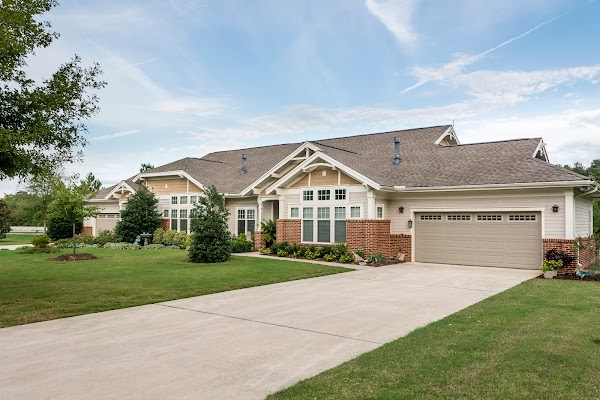
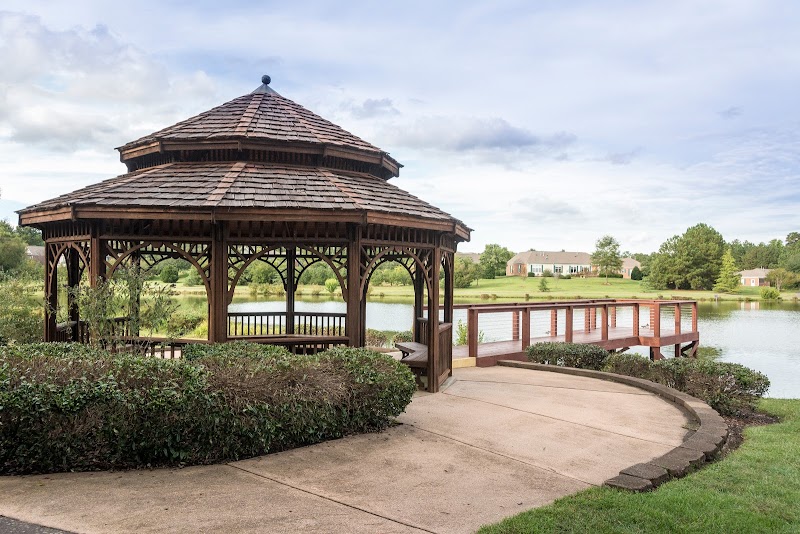

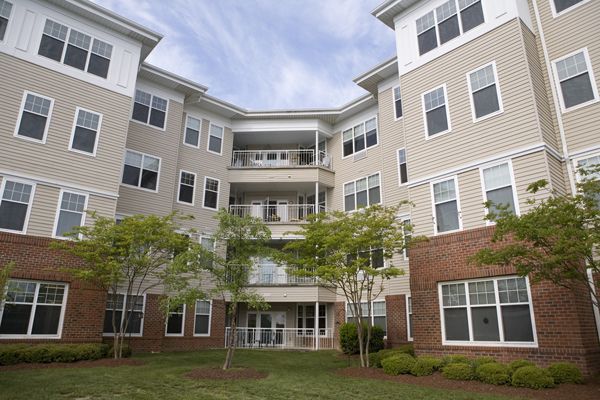
Croasdaile Village

2600 Croasdaile Farm Parkway, Durham, NC 27705 (919) 384-2304
Non profit - Corporation 102 Beds LIFE CARE SERVICES Data: November 2025
Trust Grade
88/100
#22 of 417 in NC
Last Inspection: August 2025

Inspected within the last 6 months. Data reflects current conditions.

Overview

Croasdaile Village in Durham, North Carolina, has a Trust Grade of B+, indicating it's above average and recommended for families seeking care. Ranked #22 out of 417 facilities in North Carolina, this places them in the top half, and they are the best option among 13 local facilities in Durham County. However, the facility's trend is worsening, with the number of issues increasing from one in 2024 to two in 2025. Staffing is relatively strong with a 4 out of 5 star rating, although the 50% turnover rate is slightly above the state average. The facility has received $15,405 in fines, which is around the average for North Carolina, suggesting some compliance issues exist. It is concerning that RN coverage is less than 78% of facilities statewide, as RNs are crucial for catching potential problems. Specific incidents include a medication error rate of 10.7% for one resident, meaning medications were administered incorrectly, and a failure to administer an anticoagulant medication for ten days for another resident, which could lead to serious health risks. Additionally, a quarterly assessment for a resident was not completed on time, which can impact ongoing care. While there are notable strengths, such as excellent overall ratings, these incidents raise valid concerns about the quality of care provided.

Trust Score
B+
88/100
In North Carolina
#22/417
Top 5%
Safety Record
Low Risk
No red flags
Inspections
Getting Worse
1 → 2 violations
Staff Stability
⚠ Watch
50% turnover. Above average. Higher turnover means staff may not know residents' routines.
Penalties
⚠ Watch
$15,405 in fines. Higher than 83% of North Carolina facilities, suggesting repeated compliance issues.
Skilled Nurses
○ Average
Each resident gets 34 minutes of Registered Nurse (RN) attention daily — about average for North Carolina. RNs are the most trained staff who monitor for health changes.
Violations
✓ Good
Only 5 deficiencies on record. Cleaner than most facilities. Minor issues only.
★★★★★
5.0
Overall Rating
★★★★☆
4.0
Staff Levels
★★★★☆
4.0
Care Quality
★★★★★
5.0
Inspection Score
Stable
2024: 1 issues
2025: 2 issues

The Good

  • 4-Star Staffing Rating · Above-average nurse staffing levels
  • 4-Star Quality Measures · Strong clinical quality outcomes
  • Full Sprinkler Coverage · Fire safety systems throughout facility
  • No fines on record

Facility shows strength in staffing levels, quality measures, fire safety.

The Bad

Staff Turnover: 50%

Near North Carolina avg (46%)

Higher turnover may affect care consistency

Federal Fines: $15,405

Below median ($33,413)

Minor penalties assessed

Chain: LIFE CARE SERVICES

Part of a multi-facility chain

Ask about local staffing decisions and management

The Ugly 5 deficiencies on record

Aug 2025 2 deficiencies
CONCERN (D)

Potential for Harm - no one hurt, but risky conditions existed

Deficiency F0638 (Tag F0638)

Could have caused harm · This affected 1 resident

Based on record reviews and staff interviews, the facility failed to complete a quarterly Minimum Data Set (MDS) assessment within the required time frame for 1 of 7 residents (Resident #45) reviewed ...

Read full inspector narrative →
Based on record reviews and staff interviews, the facility failed to complete a quarterly Minimum Data Set (MDS) assessment within the required time frame for 1 of 7 residents (Resident #45) reviewed for resident assessments. Findings included:Record review revealed Resident 45's admission MDS assessment was dated 4/2/25. There was no quarterly MDS assessment within 92 days available for review. On 8/14/25 at 2:10 PM, during an interview, the MDS Coordinator indicated that Resident #45 was discharged and readmitted three times in two months. After the 4/2/25 admission MDS assessment, the quarterly MDS assessment should have been set up within 92 days, on 7/3/25, but it was missing. On 8/14/25 at 2:30 PM, during an interview, the Administrator indicated MDS assessments should be completed and transmitted timely.
MINOR (B)

Minor Issue - procedural, no safety impact

MDS Data Transmission (Tag F0640)

Minor procedural issue · This affected multiple residents

**NOTE- TERMS IN BRACKETS HAVE BEEN EDITED TO PROTECT CONFIDENTIALITY** Based on record reviews and staff interviews, the facility failed to transmit quarterly Minimum Data Set (MDS) assessments withi...

Read full inspector narrative →
**NOTE- TERMS IN BRACKETS HAVE BEEN EDITED TO PROTECT CONFIDENTIALITY** Based on record reviews and staff interviews, the facility failed to transmit quarterly Minimum Data Set (MDS) assessments within the required time frame for 2 of 7 residents (Resident #53, Resident #68) reviewed for resident assessments. Findings included: 1. Resident #53 was admitted on [DATE]. Review of Resident 53's quarterly MDS assessment, dated 6/26/25, revealed the MDS assessment was signed as completed by the MDS Coordinator on 7/1/25 and indicated as ready to export. The MDS assessment was transmitted to the national database on 8/12/25.On 8/14/25 at 1:55 PM, during an interview, the MDS Coordinator indicated the 6/26/25 assessment was completed and signed on 7/1/25 and should have been transmitted within 14 days of completion. MDS Coordinator further stated that the facility was transitioning from old to new electronic medical records program, and the transmission process was not triggered. He found that it was missing and transmitted the MDS on 8/12/25. The MDS Coordinator continued that all completed MDS assessments were transmitted every other week. On 8/14/25 at 2:30 PM, during an interview, the Administrator indicated MDS assessments should be completed and transmitted timely. 2. Resident #68 was admitted on [DATE].Review of Resident 68's quarterly MDS assessment, dated 7/7/25, revealed it was signed as completed by the MDS Coordinator on 7/2/25 and indicated as ready to export, but was not transmitted to the national database. On 8/14/25 at 2:00 PM, during an interview, the MDS Coordinator indicated that the Assessment Reference Date (ARD) for the quarterly MDS assessment was 7/7/25. Due to transition process from old to new electronic medical records program in the facility, the 7/7/25 quarterly MDS assessment was signed late, on 7/12/25, and the transmission process was not triggered. The MDS Coordinator continued that all completed MDS assessments were transmitted every other week.On 8/14/25 at 2:30 PM, during an interview, the Administrator indicated MDS assessments should be completed and transmitted timely.
Jul 2024 1 deficiency
MINOR (B)

Minor Issue - procedural, no safety impact

MDS Data Transmission (Tag F0640)

Minor procedural issue · This affected multiple residents

**NOTE- TERMS IN BRACKETS HAVE BEEN EDITED TO PROTECT CONFIDENTIALITY** Based on record reviews and staff interviews, the facility failed to transmit Quarterly Minimum Data Set (MDS) assessments withi...

Read full inspector narrative →
**NOTE- TERMS IN BRACKETS HAVE BEEN EDITED TO PROTECT CONFIDENTIALITY** Based on record reviews and staff interviews, the facility failed to transmit Quarterly Minimum Data Set (MDS) assessments within the required time frame for 2 of 3 residents (Resident #16, Resident #67) selected to be reviewed for Resident Assessments. Findings included: 1. Resident #16 was admitted on [DATE]. Review of Resident 16's most recent MDS assessment revealed an Assessment Reference Date (ARD) of 5/8/24 and was coded as a quarterly assessment. The MDS was signed as completed by the MDS Coordinator on 5/9/24 and indicated as ready to export. The MDS assessment was transmitted to the national database on 7/10/24. On 7/11/24 at 1:55 PM, during an interview, the MDS coordinator indicated the assessment was completed and signed on 5/9/24. The MDS coordinator stated the assessment should have been transmitted within 14 days of completion. The submit by date was 5/23/24. MDS coordinator further stated that the nurse, who signed the completed MDS assessment, did not trigger the transmission process. He found that it was missing and transmitted the MDS on 7/10/24. The MDS coordinator mentioned that all completed MDS assessments were transmitted every other week. On 7/11/24 at 2:35 PM, during an interview, the Administrator expected that all MDS assessments should be completed and transmitted on time. 2. Resident #67 was admitted on [DATE]. Review of Resident 67's most recent MDS assessment revealed an Assessment Reference Date (ARD) of 5/5/24 and was coded as a quarterly assessment. The MDS was signed as completed by the MDS Coordinator on 5/6/24 and indicated as ready to export. The MDS assessment was transmitted to the national database on 7/10/24. On 7/11/24 at 1:55 PM, during an interview, the MDS coordinator indicated the assessment was completed and signed on 5/6/24. The MDS coordinator stated the assessment should have been transmitted within 14 days of completion. The submit by date was 5/20/24. MDS coordinator further stated that the nurse, who signed the completed MDS assessment, did not trigger the transmission process. He found that it was missing and transmitted the MDS on 7/10/24. The MDS coordinator mentioned that all completed MDS assessments were transmitted every other week. On 7/11/24 at 2:35 PM, during an interview, the Administrator expected that all MDS assessments should be completed and transmitted on time.
Feb 2023 2 deficiencies
CONCERN (E)

Potential for Harm - no one hurt, but risky conditions existed

Unnecessary Medications (Tag F0759)

Could have caused harm · This affected multiple residents

**NOTE- TERMS IN BRACKETS HAVE BEEN EDITED TO PROTECT CONFIDENTIALITY** Based on observations, staff interviews, and record review, the facility failed to have a medication error rate of less than 5% ...

Read full inspector narrative →
**NOTE- TERMS IN BRACKETS HAVE BEEN EDITED TO PROTECT CONFIDENTIALITY** Based on observations, staff interviews, and record review, the facility failed to have a medication error rate of less than 5% as evidenced by 3 medication errors out of 28 opportunities, resulting in a medication error rate of 10.7% for 1 of 3 residents (Resident #20) observed during medication pass. The findings included: 1. Resident #20 was admitted to the facility on [DATE]. Her cumulative diagnoses included Parkinson's disease and atherosclerotic heart disease (a build-up of plaque in the arteries). On 2/21/23 at 9:11 AM, Nurse #1 (an agency nurse) was observed as she prepared and administered 10 oral medications for administration to Resident #20. The medications included two - 25 milligram (mg) / 100 mg tablets of carbidopa/levodopa (an immediate release formulation of a medication indicated to treat Parkinson's disease). No carbidopa/levodopa Extended Release (ER) tablets were observed to have been pulled from the medication cart for administration to the resident. A review of Resident #20's current physician's orders revealed her medications included the following, in part: one - 25 mg carbidopa / 100 mg levodopa tablet (immediate release formulation or IR) to be given by mouth four times a day for Parkinson's disease; and two - 25 mg carbidopa / 100 mg levodopa Extended Release (ER) tablets to be given 5 times a day for Parkinson's disease. An interview was conducted with Nurse #2 (a staff nurse) on 2/21/23 at 10:01 AM. During the interview, inquiry was made with regards to the discrepancy observed between the physician's orders for carbidopa/levodopa and the medications administered to Resident #20. Nurse #2 reviewed the resident's electronic medical record (EMR) and reported Resident #20 should have received both the IR and ER formulations of carbidopa/levodopa, including one - 25 mg carbidopa / 100 mg levodopa IR tablet and two - 25 mg carbidopa / 100 mg levodopa ER tablets. On 2/21/23 at 10:03 AM, Nurse #2 was accompanied as she approached the hall medication (med) cart where Nurse #1 was working. As an observation of the medication cards on the hall med cart was initiated, Nurse #1 stated, I didn't see an extended release [carbidopa/levodopa formulation] in here [referring to the med cart]. The observation conducted at that time revealed both the IR and ER formulations of carbidopa/levodopa were stored on the med cart. When the medication orders for Resident #20 were discussed, Nurse #1 reported she gave Resident #20 two carbidopa/levodopa ER tablets but missed giving the IR formulation of the medication to the resident. Upon sharing the observation made during the resident's medication pass, Nurse #1 again stated she was certain she gave two ER tablets of the carbidopa/levodopa but none of the immediate release tablets to Resident #20. An interview was conducted with the facility's Interim Director of Nursing (DON) on 2/22/23 at 2:45 AM. During the interview, the concern(s) involving med administration observations for Resident #20 were discussed. The Interim DON stated she would expect nursing staff administering medications to observe the administration rights (referring to the right patient, the right drug, the right dose, the right route, and the right time). 2. Resident #20 was admitted to the facility on [DATE]. Her cumulative diagnoses included Parkinson's disease and atherosclerotic heart disease (a build-up of plaque in the arteries). On 2/21/23 at 9:11 AM, Nurse #1 (an agency nurse) was observed as she prepared 10 oral medications for administration to Resident #20. The medications included one - 10 milliequivalent (mEq) Extended Release (ER) tablet of potassium chloride. Nurse #1 was observed as she placed all of the oral tablets into one of 3 small plastic pouches used for crushing medications. On 2/21/23 at 9:29 AM, the nurse was observed as she crushed 4 of the tablets together (including the ER potassium chloride tablet). On 2/21/23 at 9:32 AM, a request was made for the nurse to stop prepping the medications for administration and to review the medication bubble pack card containing the potassium chloride ER tablets. The medication card had an auxiliary sticker placed on it by the dispensing pharmacy which indicated the medication should not be crushed or chewed. Upon review of the medication card, inquiry was made as to who the nurse could go to with questions about medication administration. Nurse #1 left the med cart to get a staff nurse. After she returned to the med cart, Nurse #2 joined her. Nurse #2 confirmed at that time the potassium chloride Extended Release tablet should not be crushed. Nurse #2 instructed Nurse #1 to re-pull the medications and to administer all of Resident #20's oral medications whole, stating the resident did not require her meds to be crushed. Nurse #1 re-pulled the medications as instructed and administered them to Resident #20 on 2/21/23 at 9:41 AM. The resident was observed to take her oral medications whole with water and without difficulty. A review of Resident #20's current physician's orders revealed her medications included 10 mEq potassium chloride ER to be given as one tablet by mouth every day for hypokalemia (low potassium level in the blood). According to Lexi-comp, a comprehensive electronic medication database, potassium chloride ER tablets should be swallowed whole; tablets should not be crushed, chewed, or sucked on. An interview was conducted with the facility's Interim Director of Nursing (DON) on 2/22/23 at 2:45 AM. During the interview, the concern(s) involving the med administration observations for Resident #20 were discussed. The Interim DON stated the nursing staff should be aware of which medications could and could not be crushed when they administered meds to a resident. 3. Resident #20 was admitted to the facility on [DATE]. Her cumulative diagnoses included Parkinson's disease and atherosclerotic heart disease (a build-up of plaque in the arteries). On 2/21/23 at 9:11 AM, Nurse #1 (an agency nurse) was observed as she prepared 10 oral medications for administration to Resident #20. The medications included one -81 milligram (mg) Delayed Release (DR) tablet of aspirin. Nurse #1 was observed as she placed all of the oral tablets (including the DR aspirin) into one of 3 small plastic pouches used for crushing medications. On 2/21/23 at 9:29 AM, the nurse was observed as she crushed 4 of the tablets together When asked if she was planning to crush all of the tablets placed into the small plastic pouches, she stated she was and reported all medications needed to be crushed for Resident #20. On 2/21/23 at 9:32 AM, a request was made for the nurse to stop prepping the medications for administration and to review the medication bubble pack card containing the 81 mg DR aspirin tablets. The medication card had an auxiliary sticker placed on it by the dispensing pharmacy which indicated the medication should not be crushed or chewed. Upon review of the medication card, inquiry was made as to who the nurse could go to with questions about medication administration. Nurse #1 left the med cart to get a staff nurse. After she returned to the med cart, Nurse #2 joined her. Nurse #2 confirmed at that time the Delayed Release aspirin tablet should not be crushed. Nurse #2 instructed Nurse #1 to re-pull the medications and to administer all of Resident #20's oral medications whole, stating the resident did not require her meds to be crushed. Nurse #1 re-pulled the medications as instructed and administered them to Resident #20 on 2/21/23 at 9:41 AM. The resident was observed to take her oral medications whole with water and without difficulty. A review of Resident #20's current physician's orders revealed her medications included 81 mg aspirin DR to be given as one tablet by mouth every day for coronary artery disease. According to Lexi-comp, a comprehensive electronic medication database, aspirin DR tablets should be swallowed whole; tablets should not be cut, crushed, or chewed. An interview was conducted with the facility's Interim Director of Nursing (DON) on 2/22/23 at 2:45 AM. During the interview, the concern(s) involving the med administration observations for Resident #20 were discussed. The Interim DON stated the nursing staff should be aware of which medications could and could not be crushed when they administered meds to a resident.
CONCERN (E) 📢 Someone Reported This

A family member, employee, or ombudsman was alarmed enough to file a formal complaint

Potential for Harm - no one hurt, but risky conditions existed

Deficiency F0760 (Tag F0760)

Could have caused harm · This affected multiple residents

**NOTE- TERMS IN BRACKETS HAVE BEEN EDITED TO PROTECT CONFIDENTIALITY** Based on facility staff, Nurse Practitioner (NP) and Medical Doctor (MD) interviews and record reviews, the facility failed to a...

Read full inspector narrative →
**NOTE- TERMS IN BRACKETS HAVE BEEN EDITED TO PROTECT CONFIDENTIALITY** Based on facility staff, Nurse Practitioner (NP) and Medical Doctor (MD) interviews and record reviews, the facility failed to administer an anticoagulant medication to a resident for a period of 10 days during his stay in the facility. This occurred for 1 of 6 residents (Resident #240) whose medications were reviewed. The findings included: Resident #240 was admitted to the hospital from [DATE] to 11/17/21. His Hospital Discharge summary dated [DATE] reported the resident was admitted for a diagnoses which included an acute embolic cerebral vascular accident (CVA). An embolic CVA is a stroke caused by a blood clot that formed elsewhere in the body and traveled through the bloodstream to the brain. During his hospital stay, Resident #240 was also diagnosed with new onset atrial fibrillation (a type of irregular heart beat) and started on apixaban (an anticoagulant medication) to help prevent blood clots and strokes due to atrial fibrillation. A notation on the Hospital Discharge Summary read, He should now continue apixaban for embolic CVA. The Hospital Discharge Medication list dated 11/17/21 included, in part, apixaban to be given as one tablet (5 mg [milligram] total) by mouth every 12 hours for 30 days. The resident was admitted to the facility on [DATE]. A review of Resident #240's November 2021 Physician Orders and Medication Administration Records (MAR) revealed a verbal order was received and initiated on 11/17/21 for 5 mg apixaban to be given by mouth every 12 hours for atrial fibrillation/CVA. The apixaban order included an end date of 12/18/21. A review of the resident's admission Minimum Data Set (MDS) assessment dated [DATE] (the date of admission) indicated Resident #240 had moderately impaired cognition and received an anticoagulant medication. A Progress Note dated 11/18/21 and authored by Resident #240's Medical Doctor (MD) at the facility reported his medication list included, in part: 5 mg apixaban twice daily. The resident's history was noted in the Progress Note and read in part, .He should now continue apixaban for embolic CVA. Resident #240's care plan included the following area of focus initiated on 12/12/21: Anticoagulant: I am currently on an anticoagulant and I am at risk for abnormal bleeding. The interventions included, Please provide me my meds as ordered (Start Date 12/12/21). The resident's electronic medical record (EMR) revealed the facility's Nurse Practitioner (NP) saw him on 12/14/21 for follow-up. The progress note reported Resident #240's Medication List included 5 mg apixaban to be given twice daily. A notation made under the topic of Diagnosis and Assessment read, in part: Cerebrovascular accident (CVA) due to bilateral embolism of anterior [towards the front] cerebral arteries continue Eliquis [apixaban] . Resident #240's December 2021 MAR indicated the resident's last dose of apixaban was administered on 12/17/21 at 8:00 PM. Apixaban was discontinued on 12/18/21 in accordance with the stop date of the initial medication order dated 11/17/21. Further review of Resident #240's December 2021 Physician Orders and MAR revealed a verbal order was received on 12/28/21 for 5 mg apixaban to be administered by mouth every 12 hours for history of CVA/atrial fibrillation (with no end date). This MAR indicated apixaban was re-started for Resident #240 on 12/28/21 at 8:00 PM. The MAR also documented no doses of apixaban were administered to Resident #240 from 12/18/21 through 12/27/21 (a period of 10 days). The resident was seen by the NP on 1/3/22 due to his upcoming transfer to an Assisted Living Facility (ALF). The NP's progress note included a notation which read, .continue Eliquis [apixaban] and transfer to ALF . Resident #240 was discharged from the facility on 1/7/22. An interview was conducted on 2/22/23 at 9:40 AM with the facility's NP. During the interview, the discontinuation of Resident #240's apixaban for a period of 10 days during his stay at the facility was discussed. Upon review of the initial order for the apixaban (dated 11/17/21), the NP stated verbal orders were received from an on-call physician for Resident #240's admission medications. The NP reported the hospital MD should not have included an end date in the Discharge Medication List for apixaban. An interview was conducted on 2/23/23 at 9:12 AM with the facility's Interim Director of Nursing (DON) and Administrator. During the interview, the concern regarding a lapse in the medication orders for Resident #240's apixaban was discussed. Information obtained during the NP's interview on 2/22/23 was shared. The NP reported an on-call physician had initially approved the hospital discharge medications at the time of Resident #240's admission. The order for 5 mg apixaban to be given twice a day included times 30 days and was apparently input into the facility's computer system with an end date for the medication as 12/18/21. When asked what their thoughts were, the DON stated the resident would have been seen by the NP or MD within the first 30 days of his stay. The NP or MD would have had an opportunity to review of the resident's medication orders at the time of these visit(s). An interview was conducted on 2/23/23 at 11:41 AM with the resident's MD (who also served as the facility's Medical Director). The MD reported she had been made aware of the concerns expressed about a lapse in Resident #240's apixaban and had an opportunity to review his medical record prior to the interview. The MD reported she was aware the facility had previously encountered some issues with the hospital discharge med orders as a resident was transferred to the facility. She stated the issues were addressed in the past and most of them had been fixed. However, the MD stated, It's up to us as the physicians to catch this. I should have looked at the H&P [History and Physical] and meds to be sure no inappropriate stop date .There's a glitch here and it's fortunate it was caught and not a bad outcome.
Understanding Severity Codes (click to expand)
Life-Threatening (Immediate Jeopardy)
J - Isolated K - Pattern L - Widespread
Actual Harm
G - Isolated H - Pattern I - Widespread
Potential for Harm
D - Isolated E - Pattern F - Widespread
No Harm (Minor)
A - Isolated B - Pattern C - Widespread

Questions to Ask on Your Visit

  • "Can I speak with families of current residents?"
  • "What's your RN coverage like on weekends and overnight?"

Our Honest Assessment

Strengths
  • • Grade B+ (88/100). Above average facility, better than most options in North Carolina.
  • • No major safety red flags. No abuse findings, life-threatening violations, or SFF status.
  • • Only 5 deficiencies on record. Cleaner than most facilities. Minor issues only.
Concerns
  • • $15,405 in fines. Above average for North Carolina. Some compliance problems on record.
Bottom line: Generally positive indicators. Standard due diligence and a personal visit recommended.

About This Facility

What is Croasdaile Village's CMS Rating?

CMS assigns Croasdaile Village an overall rating of 5 out of 5 stars, which is considered much above average nationally. Within North Carolina, this rating places the facility higher than 99% of the state's 100 nursing homes. This rating reflects solid performance across the metrics CMS uses to evaluate nursing home quality.

How is Croasdaile Village Staffed?

CMS rates Croasdaile Village's staffing level at 4 out of 5 stars, which is above average compared to other nursing homes. Staff turnover is 50%, compared to the North Carolina average of 46%.

What Have Inspectors Found at Croasdaile Village?

State health inspectors documented 5 deficiencies at Croasdaile Village during 2023 to 2025. These included: 3 with potential for harm and 2 minor or isolated issues.

Who Owns and Operates Croasdaile Village?

Croasdaile Village is owned by a non-profit organization. Non-profit facilities reinvest revenue into operations rather than distributing to shareholders. The facility is operated by LIFE CARE SERVICES, a chain that manages multiple nursing homes. With 102 certified beds and approximately 85 residents (about 83% occupancy), it is a mid-sized facility located in Durham, North Carolina.

How Does Croasdaile Village Compare to Other North Carolina Nursing Homes?

Compared to the 100 nursing homes in North Carolina, Croasdaile Village's overall rating (5 stars) is above the state average of 2.8, staff turnover (50%) is near the state average of 46%, and health inspection rating (5 stars) is much above the national benchmark.

What Should Families Ask When Visiting Croasdaile Village?

Based on this facility's data, families visiting should ask: "Can I visit during a mealtime to observe dining assistance and food quality?" "How do you handle medical emergencies, and what is your hospital transfer rate?" "Can I speak with family members of current residents about their experience?"

Is Croasdaile Village Safe?

Based on CMS inspection data, Croasdaile Village has a clean safety record: no substantiated abuse findings (meaning no confirmed cases of resident harm), no Immediate Jeopardy citations (the most serious violation level indicating risk of serious injury or death), and is not on the Special Focus Facility watch list (a federal program monitoring the lowest-performing 1% of nursing homes). The facility has a 5-star overall rating and ranks #1 of 100 nursing homes in North Carolina. While no facility is perfect, families should still ask about staff-to-resident ratios and recent inspection results during their visit.

Do Nurses at Croasdaile Village Stick Around?

Croasdaile Village has a staff turnover rate of 50%, which is about average for North Carolina nursing homes (state average: 46%). Moderate turnover is common in nursing homes, but families should still ask about staff tenure and how the facility maintains care continuity when employees leave.

Was Croasdaile Village Ever Fined?

Croasdaile Village has been fined $15,405 across 1 penalty action. This is below the North Carolina average of $33,233. While any fine indicates a compliance issue, fines under $50,000 are relatively common and typically reflect isolated problems that were subsequently corrected. Families should ask what specific issues led to these fines and confirm they've been resolved.

Is Croasdaile Village on Any Federal Watch List?

Croasdaile Village is not on any federal watch list. The most significant is the Special Focus Facility (SFF) program, which identifies the bottom 1% of nursing homes nationally based on persistent, serious quality problems. Not being on this list means the facility has avoided the pattern of deficiencies that triggers enhanced federal oversight. This is a positive indicator, though families should still review the facility's inspection history directly.