Carolina Rehab Center of Cumberland
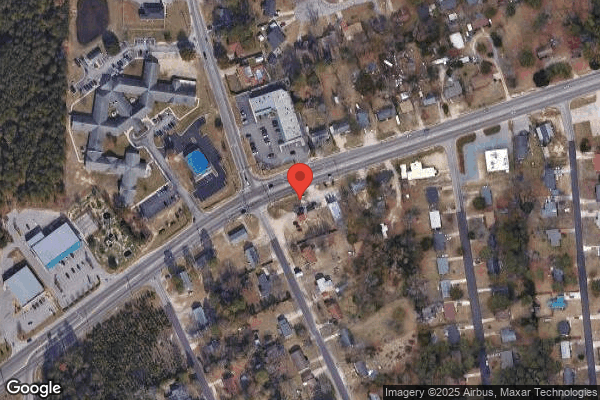

4600 Cumberland Road, Fayetteville, NC 28306 (910) 429-1690
For profit - Corporation 136 Beds LIFEWORKS REHAB Data: November 2025 2 Immediate Jeopardy citations
Trust Grade
0/100
#320 of 417 in NC
Last Inspection: July 2025

Inspected within the last 6 months. Data reflects current conditions.

Overview

Carolina Rehab Center of Cumberland has received a Trust Grade of F, indicating significant concerns about the facility's quality and care. With a state rank of #320 out of 417 in North Carolina, they fall in the bottom half of all facilities, and even more concerning, they rank #9 out of 10 in Cumberland County. Although the facility is showing improvement with issues decreasing from 20 in 2024 to 2 in 2025, it still has critical incidents, including a resident falling during transport due to unsafe practices and another resident being assaulted by a cognitively impaired peer. Staffing is a weakness here, with a low rating of 1 out of 5 and a high turnover rate of 67%, which is well above the state average. Additionally, the facility has incurred $97,936 in fines, suggesting ongoing compliance issues, and while RN coverage is average, this does not fully address the facility’s serious shortcomings.

Trust Score
F
0/100
In North Carolina
#320/417
Bottom 24%
Safety Record
High Risk
Review needed
Inspections
Getting Better
20 → 2 violations
Staff Stability
⚠ Watch
67% turnover. Above average. Higher turnover means staff may not know residents' routines.
Penalties
⚠ Watch
$97,936 in fines. Higher than 84% of North Carolina facilities, suggesting repeated compliance issues.
Skilled Nurses
○ Average
Each resident gets 33 minutes of Registered Nurse (RN) attention daily — about average for North Carolina. RNs are the most trained staff who monitor for health changes.
Violations
⚠ Watch
24 deficiencies on record. Higher than average. Multiple issues found across inspections.
★☆☆☆☆
1.0
Overall Rating
★☆☆☆☆
1.0
Staff Levels
★★★★☆
4.0
Care Quality
★★☆☆☆
2.0
Inspection Score
Stable
2024: 20 issues
2025: 2 issues

The Good

  • 4-Star Quality Measures · Strong clinical quality outcomes
  • Full Sprinkler Coverage · Fire safety systems throughout facility
  • No fines on record

Facility shows strength in quality measures, fire safety.

The Bad

1-Star Overall Rating

Below North Carolina average (2.8)

Significant quality concerns identified by CMS

Staff Turnover: 67%

20pts above North Carolina avg (46%)

Frequent staff changes - ask about care continuity

Federal Fines: $97,936

Well above median ($33,413)

Moderate penalties - review what triggered them

Chain: LIFEWORKS REHAB

Part of a multi-facility chain

Ask about local staffing decisions and management

Staff turnover is elevated (67%)

19 points above North Carolina average of 48%

The Ugly 24 deficiencies on record

2 life-threatening 5 actual harm
Jul 2025 1 deficiency
CONCERN (E)

Potential for Harm - no one hurt, but risky conditions existed

Food Safety (Tag F0812)

Could have caused harm · This affected multiple residents

Based on observations and staff interviews, the facility failed to discard expired food items stored in 3 of 4 nourishment room refrigerators (Unit 1, Unit 2 and Unit 3) . This practice had the potent...

Read full inspector narrative →
Based on observations and staff interviews, the facility failed to discard expired food items stored in 3 of 4 nourishment room refrigerators (Unit 1, Unit 2 and Unit 3) . This practice had the potential to cause foodborne illnesses. Findings included: Observations of the nourishment room refrigerators with the facility's Dietary Manager (DM) on 6/25/25 revealed the following: a. An unopened pack of chicken breast strips and green beans with the use by date of 5/13/25 was observed in the freezer of Unit 1 nourishment refrigerator at 11:53 AM. The DM placed the food item in the trashcan. b. A 10-pack box of prepacked store-bought sandwiches with the best if used by date of 4/27/25 was observed in the freezer of Unit 3 nourishment refrigerator at 12:01 PM. The box was approximately half full. The DM placed the food items in the trashcan. c. Two bottles of nutritional shake with the expiration date of 5/6/25 were observed in Unit 2 nourishment refrigerator at 12:10 PM. The DM placed the food items in the trashcan. The Dietary Manager, who was present during the observations, stated that dietary and nursing staff were supposed to ensure that expired food items in the nourishment refrigerator were discarded. During an interview on 6/25/25 at 2:30 PM with the Director of Nursing (DON), she stated that she expected dietary and nursing staff to inspect the nourishment room refrigerators to ensure expired food items were not left in the refrigerator or freezer. During an interview with the facility Administrator on 6/27/25 at 8:25 AM she indicated her expectation was to have no outdated food items in the refrigerator or freezer and that any expired food items should have been thrown out.
Mar 2025 1 deficiency 1 Harm
SERIOUS (G) 📢 Someone Reported This

A family member, employee, or ombudsman was alarmed enough to file a formal complaint

Actual Harm - a resident was hurt due to facility failures

Quality of Care (Tag F0684)

A resident was harmed · This affected 1 resident

**NOTE- TERMS IN BRACKETS HAVE BEEN EDITED TO PROTECT CONFIDENTIALITY** Based on record review, and staff, Wound Care Nurse Practitioner and Podiatrist interviews, the facility failed to obtain orders...

Read full inspector narrative →
**NOTE- TERMS IN BRACKETS HAVE BEEN EDITED TO PROTECT CONFIDENTIALITY** Based on record review, and staff, Wound Care Nurse Practitioner and Podiatrist interviews, the facility failed to obtain orders to coordinate care with the resident's Podiatrist to ensure care needs were met when a resident was admitted with no orders regarding care to a surgical incision site of the right heel. The surgical dressing was not removed, and no treatment was provided. At the Podiatrist visit on 1/13/25 the wound was significantly macerated (skin had become soft and broken down due to prolonged moisture) that had extended laterally out of the incision. Podiatrist #1 saw Resident #4 on 1/13/25 and started oral antibiotics and treatment orders to the incision site. Podiatrist #2 saw Resident #4 on 1/15/25 and changed the treatment orders to the incision site. Podiatrist #1 saw Resident #4 again on 1/24/25 and started him on another antibiotic along with continuing the first antibiotic. On 1/27/25 Resident #4 was seen by Podiatrist #1 and sent him to the emergency room for admittance into the hospital for a bone biopsy and possible surgery due to infection at the surgical site. Resident #4 required two surgeries to remove all of the hardware from the right ankle and intravenous antibiotics for the infection. This was for 1 of 2 residents reviewed for wound care (Resident #4). Findings included: A review of Resident #4's hospital discharge orders 12/27/24 noted an order for non-weight bearing to his right lower extremity, a follow-up appointment with podiatry scheduled for 1/2/25, and no orders noted regarding care of the surgical incision or soft cast. A review of Resident #4's facility admission orders revealed an order dated 12/27/24 for a wound consultation as needed. Resident #4 was admitted into the facility on [DATE] with diagnoses of a right calcaneus comminuted fracture (a severe break of the heel bone that shatters into multiple pieces) status post open reduction internal fixation surgery with primary subtalar arthrodesis (permanently joining the joint that connects the ankle bone to the heel bone), diabetes and peripheral vascular disease. A review of Resident #4's comprehensive care plan dated 12/28/24 included a focus problem of skin impairment with interventions of notify physician as indicated, observe area for signs of improvement or decline, and treatment as ordered. A focus problem of a risk for pressure ulcers related to chronic health conditions and incontinence with interventions of assessing resident for risk of skin breakdown, keep skin clean and dry as possible, and skin assessments as indicated. On 12/30/24 A focus problem of a surgical wound to his right lower extremity and is at risk for infection and complications was added with interventions of notify physician as indicated, observe surgical site for signs and symptoms of redness/infection, surgeon follow-up as indicated, and treatment as ordered. On 1/2/25 a focus problem of noncompliance related to weight bearing status and getting up unassisted was added with interventions of listen to resident and try to calm, provide repeat education of risk and benefits of following weight bearing status. A review of Resident #4's electronic medical record included progress notes by the Wound Care Nurse Practitioner dated 12/30/24 noted Resident #4 had a full thickness surgical area on right lower leg and documented per Surgeon's request, monitor for signs/symptoms of increased drainage or infection and notify Surgeon of any changes right away and to keep post op wrap in place and there was no evidence of infection noted today upon assessment. A review of Resident #4's admission Minimum Data Set, dated [DATE] indicated he had clear speech, was understood and able to understand and was cognitively intact. He had no behaviors, no rejection of care, had impairment on one side of a lower extremity, and used a wheelchair for mobility. He had one fall since admission with injury, had recent surgical repair of a fracture, a surgical wound, and had received physical therapy for 6 days and occupational therapy for 5 days. A review of Resident #4's electronic medical record included progress notes by the Wound Care Nurse Practitioner dated 1/6/25, noted Resident #4 had a full thickness surgical area on right lower leg and documented per Surgeon's request, monitor for signs/symptoms of increased drainage or infection and notify Surgeon of any changes right away and to keep post operative wrap in place and there was no evidence of infection noted today upon assessment. A review of Resident #4's electronic medical record included progress notes by the Wound Care Nurse Practitioner dated 1/15/25, 1/24/25, and 1/27/25 indicated she did not see Resident #4 due to him being out of the building. A telephone interview with the Wound Care Nurse Practitioner on 3/4/25 at 3:31 PM revealed that she had not removed the soft cast to inspect the incision because she does not carry supplies to replace an orthopedic cast and she had no direction to remove the cast, so she defaulted, due to previous experience, to not removing the soft cast until Resident #4 was seen by the podiatrist. She stated she was aware there were no orders to remove the soft cast, and she further revealed that she had not spoken to the podiatrist in regard to the care of the surgical incision or the removal of the soft cast. The Wound Care Nurse Practitioner further indicated that in her experience a soft cast was kept in place until the resident was seen by the surgeon, so she did not find the lack of treatment orders concerning. She further stated that while she did not speak to the podiatrist, she always used the general terminology of surgeon request in all of her notes. An interview was conducted on 3/4/25 at 2:00 PM with Nurse #1, who admitted Resident #4, stated that he received the order to not change the hospital dressing to the right ankle from the Wound Care Nurse Practitioner on 12/29/24. He explained that after the Wound Care Nurse Practitioner sees a Resident he receives via email the Wound Nurse Practitioner orders which he then transcribes onto the physician order sheet after making the resident's physician aware and gets approval to implement the orders. He further revealed he was notified of the 1/2/25 Podiatrist appointment at the time of the resident's admission. Nurse #1 indicated he was notified by the family member on 1/2/25 of the appointment being rescheduled for 1/13/25 due to insurance issues as the fracture was from a motor vehicle accident and she was still working with the person who caused the accident insurance to ensure payment. A review of the spreadsheet received by Nurse #1 from the Wound Care Nurse Practitioner on 12/30/24 noted an order from the Wound Care Nurse Practitioner to keep the post operative wrap in place. A review of Resident #4's physician orders indicated an order dated 1/1/25 to keep the post operative. wrap in place. A review of Resident #4's Podiatrist #1 progress note dated 1/13/25 revealed Resident #4 stated the facility had completed no dressing changes since the surgical intervention. Podiatrist #1 noted there was significant maceration (skin had become soft and broken down due to prolonged moisture) noted to the lateral extends out of incision and a pressure area on the heel. The incision was cleaned with saline and a topical antiseptic solution-soaked gauze was applied as well as a compressive dressing. Resident #4 was to be strictly non-weightbearing. The note included an order for an antibiotic one tablet twice a day for 10 days and wound care orders were placed for the facility to change the dressing daily. Podiatrist #1 wrote that out of an abundance of caution Resident #4 was to follow up with his colleague on Wednesday for a wound check and dressing change. A review of Resident #4's facility electronic medical record revealed a treatment order dated 1/13/25 for the right heel incision to be cleansed with saline and a topical antiseptic solution-soaked gauze apply abdominal pad and wrap with gauze and compressive dressing three times weekly. A review of Resident #4's treatment administration record noted a treatment dated 1/13/25 for the right heel incision to be cleansed with saline and a topical antiseptic solution-soaked gauze apply abdominal pad and wrap with gauze and compressive dressing daily was completed as ordered. A review of Resident #4's facility electronic medical record revealed a medication order dated 1/13/25 for an antibiotic tablet twice a day for 10 days. A review of Resident #4's medication administration record revealed he received the ordered antibiotic medication twice a day as ordered. A review of Resident #4's Podiatrist #2's progress note dated 1/15/25 indicated Resident #4 complained of pain to the right foot which was sharp with Resident #4 rating the pain as severe. Podiatrist #2 noted there was mild maceration along the central portion of the incision with no incision dehiscence (splitting or bursting open). The sutures were intact and a bullae (fluid filled sac) extended plantarly (sole of the foot). Podiatrist #2 noted edema and erythema (swelling and redness) to the right foot. Podiatrist #2 cleansed the surgical site with saline and a topical antiseptic solution-soaked gauze. Podiatrist #2 wrote Resident #4 has maceration to the incision and recommended a topical antiseptic solution dressing change every 2 days to prevent dehiscence and Resident #4 was to remain absolutely non-weightbearing to the right foot. Podiatrist also wrote Resident #4 was to see Podiatrist #1 next week. A review of Resident #4's facility electronic medical record revealed a treatment order dated 1/15/25 for the right heel incision to be cleansed with saline and a topical antiseptic solution-soaked gauze apply abdominal pad and wrap with gauze and compressive dressing every 2 days. A review of Resident #4's treatment administration record noted a dated 1/15/25 treatment for the right heel incision to be cleansed with saline and a topical antiseptic solution-soaked gauze apply abdominal pad and wrap with gauze and compressive dressing every two days was completed as ordered. A review of Resident #4's Podiatrist #1's progress note dated 1/24/25 revealed Resident #4 complained of severe pain to the right foot and confirmed he was taking the prescribed antibiotic. On examination of the incision to the right foot Podiatrist #1 noted the sutures were intact with maceration along the central portion of the incision. Podiatrist #1 noted the wound did probe (a tool used to determine the extent and depth) but not to bone or hardware, and no dehiscence. Podiatrist #1 also noted edema and erythema to the right foot. Podiatrist #1 cleansed the surgical site with saline and a topical antiseptic solution bandage was applied. Podiatrist #1 sent recommendations for the site to be cleansed with saline and a topical antiseptic solution dressing to be changed daily to prevent dehiscence. Podiatrist #1 also ordered two different antibiotics to be administered orally. A review of Resident #4's facility electronic medical record revealed a treatment order dated 1/24/25 for the right heel incision to be cleansed with saline and a topical antiseptic solution-soaked gauze apply abdominal pad and wrap with gauze and compressive dressing daily. A review of Resident #4's treatment administration record noted a treatment dated 1/24/25 for the right heel incision to be cleansed with saline and a topical antiseptic solution-soaked gauze apply abdominal pad and wrap with gauze and compressive dressing daily was completed as ordered. A telephone interview with Podiatrist #1 on 3/4/25 at 2:15 PM indicated that Resident #4 should have been discharged from the hospital with orders for daily dressing changes to the surgical site. He stated that he was not on duty when Resident #4 was discharged and was unaware that the facility had not received any orders regarding dressing changes. He further indicated that the facility should have called and clarified what wound care was required. Podiatrist #1 further stated that when he saw Resident #4 on 1/13/25 there was serosanguinous drainage and significant maceration on the side of the incision line, and he prescribed an antibiotic for 10 days and orders to clean the incision site daily with saline and a topical antiseptic solution to be done daily. On 1/15/25 Resident #4 was seen by his colleague who changed the wound care orders to clean incision site with saline and a topical antiseptic solution every two days to prevent incision dehiscence. The Podiatrist further indicated he saw Resident #4 again on 1/24/25 and noted there was maceration along the central portion of the incision and noted edema erythema and sent new orders to the facility for two different antibiotics and changed the treatment to the surgical site to cleanse the incision site with saline and a topical antiseptic solution back to daily. When he saw Resident #4 on 1/27/25 he sent him to the emergency room, he was admitted and had two surgeries to remove all of the hardware from the right ankle and intravenous antibiotics for the infection. The Podiatrist further stated that in his opinion if the facility had called for treatment orders when Resident #4 was admitted the infection would have been caught earlier. The Podiatrist said that he could not definitively say that the lack of dressing changes caused the infection but that the changes in the incision would have been caught earlier and treated sooner if the facility had called for orders. A review of the emergency room Physician's provider's note dated 1/27/25 included Resident #4 was being followed by the podiatry clinic after surgery had been performed to the area of the right heel. Resident #4 was sent from Podiatrist office for admission for a bone biopsy and possible surgery due to infection at the surgical site. The focus exam noted swelling, tenderness along the heel and the wound was present with some drainage noted. The emergency room Physician also noted that the podiatry team was in the triage area evaluating and placing orders. An interview with the Director of Nursing on 3/5/25 at 10:26 AM revealed the facility followed the wound care provider's orders which were to keep the soft cast on. The order was noted on the spreadsheet sent by email on 12/30/24 from the Wound Care Nurse Practitioner to the Director of Nursing and Nurse #1. She further stated that she had not received any orders from the Medical Director after he saw Resident #4 on 12/27/24 regarding removing the soft cast. She further revealed that maybe the facility should have questioned the wound care provider after the second time she saw Resident #4 and did not reach out to the Podiatrist and unfortunately with the Wound Care Nurse Practitioner writing per surgeon the facility did not question it. She stated that she was aware of the family member contacting the facility regarding the cancellation of the podiatry appointment on 1/2/25 and rescheduling it for 1/13/25. An interview with the Administrator on 3/5/25 at 8:15 AM indicated that all appointments were discussed at the morning meeting Monday through Friday. This discussion included if the resident made it to the appointment and if the resident had not, was it rescheduled, was paperwork received by the facility from the visit and if not the facility attempted to contact the physician for the information. The units and administration were informed by admissions of any scheduled appointments on the discharge paperwork from the hospital which are then placed on the unit calendar. She further indicated the facility was aware the family member had changed the podiatrist appointment from 1/2/25 to 1/13/25 which was discussed in the morning meeting on 1/3/25 and had called the family member to ensure she would be taking him to the appointment. An interview with the Administrator on 3/5/25 at 10:02 AM indicated that when the Wound Care Nurse Practitioner sees a resident with any type of surgical wound and there were no orders, the wound care provider was responsible for clarifying what orders the surgeon wanted. She further indicated that the facility had a telephone discussion with the wound care company about Resident #4 and the provider stated that orders for wound care needed to be clearly stated on the hospital discharge orders or the Wound Care Nurse Practitioner would be responsible for obtaining and clarifying orders from the surgeon. A telephone interview with the Medical Director on 3/5/25 at 9:05 AM indicated that he made a judgement call to not remove the soft cast and that he did not see an issue with the decision to leave the soft cast in place when he saw Resident #4 on 12/27/24. He further indicated that in hindsight the facility probably should have called and received clarification from the Podiatrist regarding the care of the incision but again he did not see an issue with the soft cast remaining in place. He stated that there was a lack of communication from the hospital and while the Podiatrist may have wanted the soft cast removed and daily dressing changes, this did not mean the discharging physician did. He further stated that it was unusual for the facility to remove a soft cast and start daily treatments. Also, the delay in seeing the Podiatrist due to Resident #4's family member cancelling the 1/2/25 appointment could have played a role in the state of the incision when Resident #4 went to his podiatry appointment.
Nov 2024 3 deficiencies 1 IJ
CRITICAL (J) 📢 Someone Reported This

A family member, employee, or ombudsman was alarmed enough to file a formal complaint

Immediate Jeopardy (IJ) - the most serious Medicare violation

Accident Prevention (Tag F0689)

Someone could have died · This affected 1 resident

**NOTE- TERMS IN BRACKETS HAVE BEEN EDITED TO PROTECT CONFIDENTIALITY** Based on observation of a recorded video, record review and interviews with resident, staff, and a van transportation company, t...

Read full inspector narrative →
**NOTE- TERMS IN BRACKETS HAVE BEEN EDITED TO PROTECT CONFIDENTIALITY** Based on observation of a recorded video, record review and interviews with resident, staff, and a van transportation company, the facility failed to ensure a resident was safely transported to a physician's visit. The facility's contracted transportation company's Van Driver failed to ensure the lift platform was level with the van before rolling Resident # 7 out of the van. The resident fell backwards out of the transport van to a lift platform that was located on the ground approximately 3 feet below the level of the van. Review of the van company's recorded video of the incident revealed the resident could be heard crying and yelling loudly when she hit the ground. Failure to ensure safety when assisting residents onto mechanical van lifts has a high likelihood of resulting in serious resident harm. This was for one (Resident # 7) of three residents reviewed for accidents. The findings included: Resident # 7 was admitted to the facility on [DATE]. The resident's diagnoses in part included a history of stroke. Resident # 7's annual Minimum Data Assessment, dated 8/7/24, coded the resident as cognitively intact. The resident was coded to use a wheelchair, and as needing substantial to maximum assistance to wheel at least 150 feet. Review of Resident # 7's nursing notes revealed an entry on 8/20/24 at 2:58 PM noting It was reported that during transport from an appointment that the resident had a fall. Resident is being transported by EMS (emergency medical services) to the ER (emergency room) for evaluation. A review of hospital records for the dates of 8/20/24 and 8/21/24 revealed the following information. Resident # 7 was seen in the ER on [DATE] following the incident. The physician noted the resident was in no acute distress at the time of the physician's assessment. The physician noted the resident's speech was hard to understand. When she slowed down her speech was not slurred, and she was able to report she had landed on her back inside her wheelchair during a fall from a transport van. The caregiver (transport driver) landed on top of her. The physician further noted, She denies any complaints at this time, no neck pain, no headache, nausea, vomiting, chest pain, reports legs are less painful than they were prior to arrival. A CT (computerized tomography) of her head and cervical spine were ordered and were negative for injury. The resident was discharged back to the facility from the ER on [DATE]. The resident was interviewed on 10/29/24 at 10:47 AM and again on 10/31/24 at 2:40 PM. The resident was observed to talk very fast making it difficult to discern every word. She clearly reported the following information. In August 2024 she had been transported to a doctor's appointment and the Van Driver pushed her out of the van onto the concrete. Before the incident, the Van Driver complained to her that she (the resident) was heavy. Then she fell out of the van. It hurt when she fell, and she had to go to the hospital. An interview was conducted with the Administrator and NA# 1 on 10/31/24 at 3:15 PM. NA (Nurse Aide) # 1 reported and demonstrated the following. NA # 1 had ridden in the van with the contract company to Resident # 7's appointment. Once they arrived at the physician's appointment, she (NA # 1) went into the office to check the resident into the office. She (NA # 1) then came out the door and stood at the doorway while the Van Driver was unlocking and getting Resident # 7 out of the van. She could see the back of the van. The resident and the Van Driver both fell backwards out of the van, and they landed on the lift platform. The wheelchair flipped all the way upside down on top of the resident so that the bottom of the wheelchair seat was facing up in the air and the top of the wheelchair backrest was on the surface of the lift platform. The accident happened very quickly, and she thought the Van Driver had tripped some way and the lift platform was still up in the air when the resident fell backwards. The physician's office staff came to assist with the incident. 911 was called. She called and reported the incident to the facility. She had not observed anything about the Van Driver before the incident which would indicate the Van Driver was not a safe driver. The Administrator reported the facility had used the contracted van company many times and they had given safe and reliable services. The van company had reviewed the incident with her and reported that the Van Driver had not put the lift platform even with the van before rolling the resident out of the van. Instead, the Van Driver had lowered the lift platform all the way to the ground. The van company had reported to the Administrator that there were safety mechanisms in place at the rear of the van, and the Van Driver should have recognized when she met resistance getting the resident out of the van over one of them that there was a possible problem. The Van Company's Director was interviewed on 10/31/24 at 4:53 PM and reported the following information. Their Van Driver had made a mistake and Resident # 7 had fallen out of the transport van. They were very sorry about the incident. They went to check the van at the time of the incident and found nothing mechanically wrong with the lift or the van which led to the incident. The lift was damaged due to the impact of the fall, and it was taken out of service for repair following the incident. She had worked closely with the facility Administrator to try to determine what had happened. There was a video recording from inside of the van which they had watched multiple times to determine what had happened. She and her husband owned the transportation company, and the Director put her husband on the phone call with the surveyor during the interview. Together they reported the following information. The video recorder was facing the rear of the van and therefore the video showed the incident from that angle only. From reviewing the video, they saw NA # 1 had ridden with the resident and the Van Driver. Once they arrived, NA # 1 left the van to go into the doctor's office, and the angle of the video did not pick NA # 1 up until after the incident occurred. After the fall, the video's angle picked up NA # 1 rushing to the back of the van. Upon arrival to the doctor's office, the Van Driver could be seen exiting the van, walking to the rear of the van and letting the lift platform down. The Van Driver then returned inside the van, unlocked the resident's wheelchair's security devices and rolled the resident backwards. While conducting their investigation, they had viewed other transport videos where there had been no incidents. From viewing and comparing the videos where transports were done correctly versus the video where Resident # 7 fell, they were able to see that when the lift platform was even with the van in a safe position to roll residents out, then safety arms on the lift would be visible in all the videos. In viewing the video of Resident # 7's transport, they saw when the Van Driver lowered the lift platform, the safety arms disappeared almost completely. Only a small portion could be seen. This indicated to them that the lift platform had been all the way to the ground instead of level with the back of the van when the resident was rolled backwards. In the video they saw the resident and the Van Driver fall out of the van towards the ground. They estimated that the drop was about 36 inches. They reported they would share the video with the surveyor and a statement from the Van Driver. On 11/1/24 the van company's video was viewed, and the following was observed. Resident # 7 could be seen seated in the rear of the van in a wheelchair. The Van Driver was seated in front and NA # 1 was in the front passenger seat. They came to a stop. NA # 1 stepped out of the van and exited from sight. The video camera no longer was able to capture NA # 1 as she walked into the physician's office to check the resident in. The Van Driver exited the front of the van and opened the back doors of the van. A lift platform could be seen going down at the rear of the van. The arms of the lift faded away from sight as it lowered. There did not appear to be anything in the rear of the van where the lift platform should be. The Van Driver reentered the van and removed the security belts and ties that had kept the resident's wheelchair in place during the transport. She and the resident appeared to be talking. The resident was facing the front of the van and thereby her back was facing the rear of the van. Therefore, the resident could not see where she was headed as she was being rolled backwards in her wheelchair. The Van Driver backed the resident towards the rear of the van. When the Van Driver got to the rear, she appeared to have trouble getting the wheelchair to roll and appeared to be meeting resistance. She readjusted the wheelchair several times pulling it towards her and back again. Then with the last push backwards toward the open rear of the van, the resident fell backwards out of the van in her wheelchair. The Van Driver fell forward out of the van also with the resident. The resident could be heard yelling and crying loudly. After the fall, the resident was out of view from the camera angle. NA # 1 was seen coming into view of the video camera and asking what happened. A gentleman came from one side of the van and physician office staff members were seen coming from the other side to the rear of the van to offer assistance. The wheelchair could be seen lifted up and away. Someone was heard telling the resident they were calling EMS. Someone in the video was heard saying she is on the ground. Once multiple people were attending to the resident, the Van Driver could be seen reentering the front seat of the van and making a phone call to someone. She was heard explaining the incident and stated to the person to whom she was talking that she (the Van Driver) was trying to get Resident # 7 on the lift and couldn't get her. The Van Driver commented, She is so heavy. I was trying to push a little harder. I couldn't rock her because she was so heavy. She then said she tried to rock again and push back again, and the resident fell out of the van and they both hit the ground. The van company also provided a statement from the Van Driver which was in an email from the Van Driver to the Director of the van company on 8/22/24. The emailed statement read as typed, On Tuesday August 20th I [name of van driver] had transported [Resident # 7] to her destination. Once we arrived I locked my breaks, got of my vehicle to go through the proper steps to remove {Resident #7} from the vehicle. The second step was to unfold the lifter and level it so that {Resident # 7} could be placed on the lifter so that I could bring her down to ground level. At the time I didn't realize that I dropped the lifter all the way to the ground instead of keeping it leveled up so that can roll her onto the lifter. Then proceed to unbuckle her restraints so that I could put her onto the lifter upon moving her, not realizing that the lift was ground level, I then proceeded to push her what I thought was on the lifter. Once I started pushing her wheelchair still not realizing that the lifter was down ground level I ended up falling on top of her all the way to the ground. In my mind, I had leveled the lifter but it evident that I didn't, and I fell on top of her going backwards, and we both hit the ground. The van driver ended her statement by saying she had not done anything intentionally to hurt anyone, it had been an unfortunate accident, and she had been properly trained. Interview with the Administrator on 10/31/24 at 3:15 PM revealed the facility identified the incident as needing a plan of correction and they implemented one to ensure residents were safe. The Administrator provided the facility's plan of correction. On 11/1/24 at 11:00 AM the Administrator was notified of immediate jeopardy. The facility's completed corrective action plan was as follows: 1. Address how corrective action will be accomplished for those residents found to have been affected by the deficient practice; On 8/20/2024 resident #7 was being transported by a contracted company to an appointment. During the unloading process, the driver proceeded to lower lift pad to the ground and not level to the van bumper. When the driver proceeded to wheel resident #7 onto lift pad she tripped on safety mechanism and toppled onto resident. This force pushed resident #7 and chair out of the van resulting in a fall in which resident #7 landed on the lift gate landing. On 8/20/2024 resident #7 was not moved until EMS arrived staff helped provide pillows and blankets for dignity until EMS arrived. EMS assisted lowering resident #7 to the ground on the lift gate. Resident #7 was transported to the hospital for further medical treatment. The Driver was suspended on 8/20/2024. The lift gate was damaged during the incident and therefore the van was removed from service until repaired. The driver was drug and alcohol tested on [DATE] with no findings. The driver was interviewed on 8/20/2024 by the contract transport company and maintained that a flap on the van used to keep patients in place failed to drop as expected therefore causing her to trip. On 8/20/2024 the aide who went on transport provided a statement and recollection of the events. She stated she was checking resident #7 into her appointment at the office and was coming out at the time the incident occurred. She stated she saw the driver trip and move forward onto resident #7 at which time the wheelchair tipped backwards and the resident fell. The aide stated that the lift gate was up in the air and that EMS had to assist further lowering it to the ground. On 8/21/2024 the transportation contract company owners came to the facility and brought the van that was part of the incident. The administrator, assistant administrator and owners discussed their findings. The owners stated the van was equipped with video camera that was on the dash and pointed toward the back. They reviewed the video footage however stated it was difficult to fully understand what was happening with the lift gate due to resident #7 and her chair being in the center. They stated they also reviewed footage of her earlier transportations for the day and noticed that the sides of the lift gate were not in visible sight as they had been on her earlier transports for the day. The owners maintain that those flaps only stay up if the lift gate is not level. The driver had received certification upon hire on safety as it relates to ensuring the lift gate is even with the van bumper prior to unrestraining a patient and proceeding with unloading. The owners had implemented a remediation plan of their own after reviewing the tapes starting 8/21/2024. All transports that have a single driver must call dispatch prior to removing the patient from the van to confirm all safety techniques including having the lift gate level are in place prior to unloading a patient. Resident #7 returned to the facility on 8/21/2024 with no injuries. Resident #7 statement was obtained on 8/21/2024 and she stated she remembered talking to the driver and the driver tripped on something causing her to fall backward with the driver on top of her. On 8/21/2024 a trauma screen was performed on resident #7 and she reported no concerns from the incident. On 8/23/2024 during care resident #7 reported the incident again and another trauma screen was completed and she was concerned about future transportation. On 9/12/2024 resident #7 had her first appointment out of the facility since the incident the aide went with her and provided support of her safety during the transport process. Resident #7 expressed no further concern related to transport. The facility failed to ensure resident #7 was safe during the unloading process of transport resulting in fall from the van. 2. Address how the facility will identify other residents having the potential to be affected by the same deficient practice; Any residents receiving transports are affected by this practice. The transport company implemented 8/21/2024 that when working alone all drivers will be required to confirm the lift is floor level by walking on the lift and notifying their administration, prior to unloading all residents, that lift is level and safe. 3. Address what measures will be put into place or systemic changes made to ensure that the deficient practice will not recur; All drivers received education by the transport company owners on Passenger Assistance Safety which includes lift operating procedures and safety harnesses. This was completed 8/22/2024. This was supplied to the facility by the transport company on 8/22/2024. Any new driver will receive education by the transport company in orientation and will be sent to administrator as needed. The center contracts with no other transportation company and therefore no further education was required from other companies. 4. Indicate how the facility plans to monitor its performance to make sure that solutions are sustained; The Quality Assurance Committee (Regional Director of Clinical Services, administrator, Director of Nursing, Assistant Director of Nursing) met on 8/22/2024 to review the findings and initiated a plan. Unit secretary or designee will ride on transport for an audit of 2 transports weekly x 4 weeks, weekly x 8 weeks to ensure the lift gate is level prior to wheeling patient off the van and driver has made all safety checks prior to unloading a patient. The audits will be reported to Quality Assurance for further review quarterly x 2. Include dates when corrective action will be completed. Completion date: 8/23/2024 The facility's corrective action plan was validated by the following: Beginning on 10/29/24 at 9:54 AM a tour of the facility was conducted. Multiple residents, who were interviewed, did not report a problem with safety or transportation. The facility provided documentation they had communicated and worked with their contracted van company to implement their plan of correction. There was documentation the van company provided education to their van drivers and the drivers completed a two day course entitled Passenger Assistance Safety and Sensitivity driver certification program, which included instruction on lift operating procedures, wheelchair and occupant securement training. The van drivers had a certificate of completion awarded from the Community Transportation Association of America. The facility provided evidence of their audits as outlined in their plan of correction. Their audits included checking for ramp and boarding safety, patient securement, and patient assistance. Resident # 7 was part of their audits, and the audit showed the resident had been transported safely following the incident to another office visit. It was confirmed with the Administrator that they only used this transportation company currently for transportation needs, and there had been no further incidents. The facility's correction date of 8/23/24 was validated on 11/1/24.
CONCERN (D) 📢 Someone Reported This

A family member, employee, or ombudsman was alarmed enough to file a formal complaint

Potential for Harm - no one hurt, but risky conditions existed

Deficiency F0583 (Tag F0583)

Could have caused harm · This affected 1 resident

**NOTE- TERMS IN BRACKETS HAVE BEEN EDITED TO PROTECT CONFIDENTIALITY** Based on observation, record review, and interviews with resident and staff the facility failed to afford privacy when a Nurse A...

Read full inspector narrative →
**NOTE- TERMS IN BRACKETS HAVE BEEN EDITED TO PROTECT CONFIDENTIALITY** Based on observation, record review, and interviews with resident and staff the facility failed to afford privacy when a Nurse Aide used a cell phone by video chat in the vicinity of an unclothed resident receiving a shower. This was for one (Resident # 5) of four sampled residents who were interviewed about care. The findings included: Resident # 5 was admitted to the facility on [DATE]. The resident's diagnoses in part included depression and anxiety. Resident # 5's significant change Minimum Data Set assessment, dated 9/11/24, coded the resident as cognitively intact and totally dependent on staff for bathing and showering. Resident # 5's care plan, dated 9/20/24, included information that the resident exhibited manipulative behaviors and had been known to make false statements regarding staff. One of the care plan interventions was to ensure two staff members were in the resident's room when providing care services. This intervention had been added to the care plan on 6/25/24 and remained part of the active care plan. Resident # 5 was interviewed on 10/29/24 at 11:40 AM and again on 10/30/24 at 2:00 PM. Resident # 5 reported the following information. In recent weeks there had been an incident when NA # 3 had been using a cell phone in the shower room while she (Resident # 5) was being showered by NA # 2. At the time she (Resident # 5) was not clothed and was lying on a shower bed while NA # 2 showered her. There was a curtain pulled lengthwise down the long side of the shower bed which afforded privacy if anyone entered the shower room. At the bottom of the shower bed (near her feet), there was a gerichair recliner. During the first part of the shower, NA # 3 was outside of the privacy curtain. She (Resident # 5) could hear NA # 3 using her phone from the other side of the privacy curtain but the privacy curtain was protecting Resident # 5 from being viewed initially when NA # 3 was on the phone. While she was still being showered, NA # 3 came around the privacy curtain and took a seat in the gerichair at the foot of the shower bed while still talking on the phone. She (Resident # 5) lifted her neck and looked down towards the foot of the shower bed where NA # 3 was. NA # 3 had people on her phone and was face timing them while talking to them. The phone was angled so that it was pointed more at her (Resident # 5) than it was at NA # 3. She (Resident # 5) could see heads on the screen of the phone and felt that whoever was on the phone could see her naked on the shower chair. She yelled at NA # 3 to get out of the shower room, and she left. A review of the facility's investigation into the incident revealed the incident date was 9/23/24. The DON (Director of Nursing) and Unit Manager were interviewed on 10/29/24 at 1:00 PM and reported the following. On the date of the incident NA # 3 had been in the shower room as the care planned second staff member for Resident # 5 due to her false accusations. NA # 3 had reported the incident herself when Resident # 5 yelled at her. She had reported she received an emergency phone call about a sick child in her family and reported that was why she took the phone call. The DON reported NA # 3 should have momentarily stepped out of the shower room to afford privacy for Resident # 5, but NA # 3 reported she did not want to leave NA # 2 alone with the resident because that would have placed NA # 2 at risk of having false accusations made against her. On 10/30/24 at 10:20 AM NA # 2 and the DON were accompanied to the shower room where NA # 2 demonstrated and reported the following information she had observed on the incident date. The privacy curtain was pulled down the long length of the shower bed. The other long length of the shower bed was against the wall. She (NA #2) was behind the privacy curtain with Resident # 5 standing at the side of the shower bed near the foot. The bottom privacy curtain was open, enabling her to maneuver around the long shower bed as she worked to shower the resident and shave the resident's legs. Privacy was still afforded with the bottom of the shower curtain open as long as no one came around to the foot of the bed. There was a gerichair near the foot of the shower bed approximately 2 to 3 feet away. It was not facing the shower bed. The left arm of the gerichair would have been towards the shower bed. While she (NA #2) was working to shave Resident # 5's legs, she had her back to the gerichair. She heard Resident # 5 yell at NA # 3. She turned around and saw that NA # 3 had come around the privacy curtain and sat in the gerichair. NA # 3 was not facing or looking at Resident # 5 while doing so. NA # 3 had a cell phone holding it in front of her and looking into the screen of the cell phone. She was talking to someone on the phone while holding it in front of her. She (NA # 2) had not noticed when NA # 3 had received a phone call or what she was doing prior to that because she was shaving Resident # 5's legs and was concentrated on that so as not to cut the resident. She never saw NA # 3 turn the phone towards Resident # 5. When the resident yelled, NA # 3 left. An attempt was made to reach NA # 3 during the survey and she could not be reached for interview. The DON and Administrator were interviewed on 10/30/24 at 5:00 PM. The Administrator reported Resident # 5 did have a history of falsely accusing staff members and that was why NA # 3 had been present. The DON reported NA # 3 was a very good Nurse Aide who had no other problems prior to the incident. Both of the administrative staff members felt the Nurse Aide had taken the call because of an emergency and did not intend to invade Resident # 5's privacy. They had taken corrective action and provided the following plan of correction. 1. Address how corrective action will be accomplished for those residents found to have been affected by the deficient practice; On 9/23/2024 Resident # 5 was receiving a shower by two CNAs when one of them received a personal call from children via video chat and remained in the shower room during the call. The facility failed to provide privacy while the resident was being showered when a staff member used a cell phone in a patient care area. The CNA no longer works in the facility. A trauma screen was performed on 9/24/24 by the Social Worker with no new trauma triggers identified. 2. Address how the facility will identify other residents having the potential to be affected by the same deficient practice; The Quality Assurance Committee (Regional Director of Clinical Services, Administrator, Therapy Manager, Director of Nursing, Assistant Director of Nursing, Medical Director, and Staff Development Coordinator) met on 9/25/2024 to review the findings and initiated a plan. The Administrator reviewed care concerns for the last 30 days on 9/24/24. There were no other concerns regarding cell phone use in patient care areas. 3. Address what measures will be put into place or systemic changes made to ensure that the deficient practice will not recur; The Administrator educated all staff on customer service as it relates to patient care and patient rights to include not using cell phones in resident care areas and privacy. This was completed on 9/26/2024. All newly hired employees will receive this education in orientation prior to assignment. No employee will be allowed to work until they have received this education. 4. Indicate how the facility plans to monitor its performance to make sure that solutions are sustained; When the Quality Assurance Committee (Regional Director of Clinical Services, Administrator, Therapy Manager, Director of Nursing, Assistant Director of Nursing, Medical Director, and Staff Development Coordinator) met on 9/25/2024 to review the findings and initiated a plan, the Quality Assurance Committee also devised a monitoring plan. The DON and nurse managers will ensure cell phones are not being used in resident care areas through rounding, once in the morning and once in the afternoon on every hallway. This will occur 5x/week x 2 weeks, 3x/week x 2 weeks and 2x/week and 4 weeks. The results will be reported to the monthly QAPI committee for review and discussion to ensure substantial compliance. Once the QA Committee determines the problem no longer exists, then review will be completed on a random basis. Compliance: 9/27/24 The facility's plan of correction was validated by the following: Beginning on 10/29/24 at 9:54 AM a tour of the facility was conducted. Multiple residents were interviewed and did not report privacy issues. Staff were observed closing doors during care. There were no staff observed in resident care areas utilizing cell phones. During the interview, which was conducted with Resident # 5 on 10/29/24 at 11:40 AM the resident stated she had reported the 9/23/24 incident and since she had done so she had not experienced staff using their cell phones while providing care or in the vicinity of where care was provided to her. The facility provided documentation of inservice education and audits per the plan of correction. The facility's plan of correction date of 9/27/24 was validated on 10/30/24.
CONCERN (D) 📢 Someone Reported This

A family member, employee, or ombudsman was alarmed enough to file a formal complaint

Potential for Harm - no one hurt, but risky conditions existed

Deficiency F0760 (Tag F0760)

Could have caused harm · This affected 1 resident

**NOTE- TERMS IN BRACKETS HAVE BEEN EDITED TO PROTECT CONFIDENTIALITY** Based on record review and interviews with resident, staff, physician, and pharmacist the facility failed to administer a daily ...

Read full inspector narrative →
**NOTE- TERMS IN BRACKETS HAVE BEEN EDITED TO PROTECT CONFIDENTIALITY** Based on record review and interviews with resident, staff, physician, and pharmacist the facility failed to administer a daily intravenous antibiotic on two consecutive days. This was for one (Resident # 6) of one sampled resident whose medications were reviewed. The findings included: Resident # 6 was admitted to the facility on [DATE]. Review of a hospital Discharge summary, dated [DATE], revealed the following information. Resident # 6 had a stage 4 pressure sore and osteomyelitis. While hospitalized a culture of the sacral pressure sore grew bacteria. One of the bacteria was extended spectrum beta lactamase (ESBL) Escherichia Coli (A type of bacteria which is resistant to several antibiotics). She had also been diagnosed with a urinary tract infection due to (ESBL) Escherichia Coli. A PICC (peripherally inserted central catheterization) was placed for Intravenous antibiotics. According to the discharge summary the resident was scheduled to receive Ertapenem (an antibiotic) for a total of 6 weeks. The course of treatment was to run from 10/6/24 through 11/17/24. Review of Resident # 6's facility admission orders revealed on 10/24/24 Resident # 6 was ordered to receive Ertapenem 1 gram intravenously daily through 11/17/24. Review of Resident # 6's October 2024 Medication Administration Record (MAR) revealed Resident # 6 was not documented as receiving the Ertapenem on 10/26/24 and 10/27/24. Nurse # 1 did not document a check mark on the MAR indicating the IV antibiotic was administered. Resident # 6 was interviewed on 10/29/24 at 10:05 AM and reported the facility had missed giving her antibiotics over the weekend of 10/26/24 and 10/27/24. Nurse # 1 was interviewed on 10/30/24 at 3:41 PM and reported the following information. She confirmed she had not given Resident # 6 the antibiotic Ertapenem on 10/26/24 and 10/27/24. She could not find the antibiotic and had looked for it multiple places. She called the pharmacy and thought there was a problem with processing the medication order. She had let the physician know and spoken to the Director of Nursing. The DON (Director of Nursing) was interviewed on 10/30/24 at 11:55 AM and reported the following information. She had checked with the pharmacy, and they had sent the antibiotic. It would have been at the facility for administration over the weekend of 10/26/24 and 10/27/24. When the issue had first been brought to her attention, she had thought that the missed doses were due to something that had happened on the pharmacy's end. It had just recently been brought to her attention that the antibiotic was actually in the facility and had not been given. She did not know why Nurse # 1 had not administered the antibiotic or why Nurse # 1 was saying that it was a pharmacy issue. A pharmacist from the facility's pharmacy was interviewed on 10/30/24 at 1:15 PM and reported they had sent a four -day supply of Resident # 6's IV Ertapenem to the facility on [DATE] at 5:16 AM. Therefore, the facility would have had antibiotic doses through 10/28/24. Then they sent more doses on 10/29/24. They had no record of a nurse calling over the weekend of 10/26/24 and 10/27/24 about the antibiotic not being at the facility. There had been no processing issues for the delivery of the antibiotic. Resident # 6's physician was interviewed on 10/31/24 at 12:00 PM and reported the following information. He did not recall whether the staff had mentioned to him over the weekend about Resident # 6 missing her antibiotic on 10/26/24 and 10/27/24. He knew staff had mentioned it on Monday (10/28/24) and he had extended the order to include two additional doses to be given at the end of the resident's antibiotic therapy to adjust for the missed doses. He did not feel the two missed doses had adversely affected Resident #6.
Oct 2024 2 deficiencies
CONCERN (D) 📢 Someone Reported This

A family member, employee, or ombudsman was alarmed enough to file a formal complaint

Potential for Harm - no one hurt, but risky conditions existed

Medical Records (Tag F0842)

Could have caused harm · This affected 1 resident

**NOTE- TERMS IN BRACKETS HAVE BEEN EDITED TO PROTECT CONFIDENTIALITY** Based on record review and staff interviews the facility failed to maintain an accurate record regarding medical diagnoses. This...

Read full inspector narrative →
**NOTE- TERMS IN BRACKETS HAVE BEEN EDITED TO PROTECT CONFIDENTIALITY** Based on record review and staff interviews the facility failed to maintain an accurate record regarding medical diagnoses. This was for one (Resident # 1) of one sampled resident reviewed for accurate diagnoses. The findings included: Resident # 1 resided at the facility from 7/15/24 until her discharge on [DATE]. The resident's diagnoses in part included respiratory failure with tracheostomy placement. The resident's hospital Discharge summary, dated [DATE], noted the resident had MRSA (methicillin resistant staphylococcus aureus) pneumonia while hospitalized and had received treatment. A review of the facility's record revealed a list of cumulative diagnoses. MRSA pneumonia was listed as one of the resident's diagnoses while she had been hospitalized . There was an accompanying ICD code (International Statistical Classification of Disease) by the diagnosis of MRSA. (This medical classification system assigns a code for different diagnoses.) A review of the resident's record revealed the resident had three chest x-rays performed while she resided at the facility. These were on 7/21/24, 8/15/24, and 8/29/24. All of the x-rays were negative for pneumonia. On 9/7/24 at 12:11 AM Nurse # 1 documented in a nursing note that Resident # 1 had yellow/green tinged tracheal secretions, and the physician was notified. On 9/7/24 at 12:19 AM Nurse # 1 documented in a nursing note that the physician had ordered the resident to be given Ciprofloxacin 500 milligrams twice per day for 10 days for an upper respiratory infection. (Ciprofloxacin is an antibiotic.) On 9/7/24 Nurse # 1 entered into the resident's medical record, the verbal order for the Ciprofloxacin. The order included the information that Ciprofloxacin was for yellow/green tracheal secretions. It also included an accompanying diagnosis. The diagnosis was listed as MRSA pneumonia. On 9/9/24 the resident' s care plan was updated to reflect the resident had developed pneumonia and was receiving antibiotics for pneumonia. A review of physician notes revealed the resident was seen by the physician on 9/19/24. The physician noted the resident had recently completed the antibiotics secondary to a possible upper respiratory infection and her lungs were clear. The facility's care plan nurse was interviewed on 10/11/24 at 12:43 PM and reported the following information. When verbal orders are entered by a nurse, there is a drop-down box in the electronic system that allows the nurse to tie an order to an ICD diagnostic code in the resident's record. When Nurse # 1 entered the antibiotic order, she had checked the ICD code for MRSA pneumonia which had been entered upon admission to reflect the resident's history of pneumonia while hospitalized . Instead, she should have just entered the order to read that the antibiotic had been ordered for the discolored sputum and concluded the order with that alone. When the care plan nurse looked at the record, it appeared as if the resident was being treated for pneumonia, but she had not been. She (the care plan) nurse had then inaccurately placed on the care plan that the resident had pneumonia. There had been no diagnosis of pneumonia, and it was an error in the record. Resident # 1's Responsible Party (RP) was interviewed on 10/9/24 at 11:34 AM and expressed concern that Resident # 1's facility medical record had inaccurately reflected whether the resident had pneumonia again while she resided at the facility. The RP reported she had talked to facility staff members about Resident # 1 and her status. During conversations staff referenced the resident's medical record to provide her (the RP) information. At one point she had been told Resident # 1 had pneumonia and at another point she had been told the resident did not have pneumonia while she was at the facility. Resident # 1's physician was interviewed on 10/10/24 at 2:00 PM and reported the following information. The resident's RP had been concerned about the color of the resident's mucous and the resident had been placed on antibiotics because of the concern of the color. The resident had not been identified to have pneumonia while she resided at the facility.
CONCERN (E) 📢 Someone Reported This

A family member, employee, or ombudsman was alarmed enough to file a formal complaint

Potential for Harm - no one hurt, but risky conditions existed

Deficiency F0696 (Tag F0696)

Could have caused harm · This affected multiple residents

**NOTE- TERMS IN BRACKETS HAVE BEEN EDITED TO PROTECT CONFIDENTIALITY** Based on record review, and interviews with staff and a prosthetic company employee, the facility failed to facilitate replaceme...

Read full inspector narrative →
**NOTE- TERMS IN BRACKETS HAVE BEEN EDITED TO PROTECT CONFIDENTIALITY** Based on record review, and interviews with staff and a prosthetic company employee, the facility failed to facilitate replacement of a lost prosthetic liner so the resident could use his prosthesis and walk. This was for one (Resident # 4) of one sampled resident who had a prosthesis. The findings included: Resident # 4 was admitted to the facility on [DATE] with diagnoses which in part included diabetes, chronic kidney disease, and left below knee amputation. The resident's quarterly Minimum Data Set assessment, dated 7/27/24, coded the resident as cognitively intact and as not using a prosthesis during the assessment period. The resident was also coded to have moderate impairment of his vision. Review of physical therapy documentation from 7/21/24 through 8/5/24 revealed the following information. Resident # 4 was certified to receive therapy services during the dates of 7/21/24 to 7/31/24. One of his precautions was that he was blind. On 7/29/24 Physical Therapist # 1 documented unable to perform static stand or ambulate for the last 3 days due to inability to locate gel sleeve for prosthesis. DOR (Director of Rehab) notified. On 7/30/24 Physical Therapist # 1 documented treatment time spent on continued search for gel sleeve for prosthesis; therapist searched room again as well as laundry. Unable to locate. Notified DOR again and requested to order another gel sleeve. On 8/5/24 Physical Therapist # 1 completed a discharge summary noting the resident was being discharged from therapy. His ambulation goal had been noted to be 250 feet with forward wheel walker (FWW) and contact guard assistance. At time of discharge, he had not met that goal. The resident was walking 60 to 100 feet with FWW and periods of minimal assistance at time of discharge. Physical Therapist # 1 was interviewed on 10/10/24 at 3:00 PM and reported the following information. The resident needed the gel sleeve (liner) in order to use his prosthesis. It allowed suction between the resident's stump and the prosthetic device so that it would fit correctly. It also prevented the resident from having shearing on his stump. She had looked for the gel sleeve/liner and could not find it. Without it, he could not continue to wear the prosthesis and continue with gait training. She had told the DOR. Not having the liner in order to utilize the prosthesis had hindered his progress with gait training. He also had not made a lot of progress with transfers, and that had not been related to not having the prosthesis liner. He also could not see objects well, and that had also hindered his progress. On 9/3/24 at 12:50 PM Nurse # 2 documented the following information. Resident # 4 called 911 to report his missing prosthetic sleeve/liner. The 911 responders informed the resident that no crime had been committed and to allow the facility to have one delivered for him. On 9/3/24 a facility service concern report for Resident # 4 was completed that noted, Pt. (patient) reports liner to left prosthetic leg has been missing for 30 days. Pt called police to inform them it was missing. 2 officers, DOR, UM (Unit Manager) met with patient officers assured patient that facility directors were on top of the issue and were working to replace the liner as it has not been located. On the service form there was an area noted as action taken. On this part of the form, there was documentation that the DOR contacted a prosthetic company employee who stated they would check to see if the sleeve was in stock. The form further included documentation, awaiting delivery. Resident # 4 was interviewed on 10/9/24 at 12:40 PM and again on 10/10/24 at 5:35 PM and reported the following information. He thought he had two liners for his prosthesis at one time and now he had none. It had been several months since he had a prosthesis liner, and no one had helped him get another one. They had stopped therapy, and he wanted to use the prosthesis and walk. They would tell him his vision was poor, but he could see some things. During one of the interviews the resident pointed out to the surveyor the fire alarm on the wall. He also pointed out the clock, but stated he could not make out the time. He could also see whether the surveyor was wearing white or dark clothing but could not see details of clothing. On 10/10/24 at 11:50 PM the DOR was interviewed and reported the following information. She recalled the resident reporting his liner had been stolen on 9/3/24. She knew the liner had to be ordered. When the resident had the prosthetic liner, he had walked with therapy but was unsteady. He also had visual deficits that contributed to not making progress. During the interview, the DOR reported she would check on the status of the replacement prosthetic liner which had been ordered. On 10/10/24 at 2:40 PM a follow- up interview was conducted with the DOR who reported the following information. The liner had not yet been delivered. It would be delivered later that day (10/10/24). Regarding the lost prosthetic liner, the resident was not able to take off the liner himself and would have needed help. The facility did his laundry, and she did not know what had happened to his last prosthetic liner. The DON (Director of Nursing) was interviewed and reported she first became aware of the issue during a clinical meeting after the resident had called 911 on 9/3/24. She had not been made aware of the problem in July 2024 when the prosthetic liner was lost. An employee at the orthotic's and prosthetics company was interviewed on 10/10/24 at 3:10 PM and reported the following information. The first call they received from the facility requesting the prosthetic liner was on 9/4/24. The company told the facility staff a prescription was needed for the liner. The prescription was sent to the prosthetic company on that afternoon (9/4/24). The liner was not in stock, and it was ordered by the prosthetic company. The facility was notified on 9/19/24 that the prosthetic liner had arrived. A voice mail was left with the DOR on that date. On 10/3/24 the prosthetic company received a call from the facility saying they would call with payment for the liner the next week. They heard nothing further until the current day of 10/10/24 at 1:33 PM when the staff called and submitted payment. According to the prosthetic company employee, delivery was slated for that evening (10/10/24).
Aug 2024 1 deficiency
CONCERN (D) 📢 Someone Reported This

A family member, employee, or ombudsman was alarmed enough to file a formal complaint

Potential for Harm - no one hurt, but risky conditions existed

Accident Prevention (Tag F0689)

Could have caused harm · This affected 1 resident

**NOTE- TERMS IN BRACKETS HAVE BEEN EDITED TO PROTECT CONFIDENTIALITY** Based on record review, and interviews with staff and physician, the facility failed to ensure a Nurse Aide followed a resident'...

Read full inspector narrative →
**NOTE- TERMS IN BRACKETS HAVE BEEN EDITED TO PROTECT CONFIDENTIALITY** Based on record review, and interviews with staff and physician, the facility failed to ensure a Nurse Aide followed a resident's plan of care while transferring the resident. This was for one (Resident # 2) of six sampled residents. The findings included: Record review revealed Resident # 2 was admitted to the facility on [DATE]. The resident's diagnoses in part included Alzheimer's disease, contractures, and failure to thrive. Resident # 2's quarterly Minimum Data Set assessment, dated 7/9/24, coded the resident as severely cognitively impaired and as being totally dependent on staff for transfers. Resident # 2's care plan, dated 7/7/24, directed staff to use two staff members and transfer the resident with a mechanical lift. This had been originally added to the care plan on 4/17/24 and remained part of the resident's active care plan. Resident # 2's weight records included documentation on 8/7/24 that the resident weighed 78 pounds. On 7/18/24 Nurse # 1 noted in a nursing entry that Resident # 2's foot was bluish and swollen. There were no abrasions or outward injuries noted. The physician was notified and an order for x-ray obtained. On 7/19/24 Resident # 2's x-ray of her right ankle was completed. The x-ray report included the notation that Resident # 2's bony structures are osteoporotic. At that time there was no fracture or dislocation identified on the x-ray per the documented report. Nurse # 1 was interviewed on 8/20/24 at 2:10 PM and reported the following information. She had worked with Resident # 1 on 7/18/24 from 7 AM to 7 PM. The resident had not been having problems with her foot in prior days of which she was aware. The assigned Nurse Aide (NA) asked her to look at Resident # 2's foot during the shift. At the time the resident was in bed. The foot appeared reddish and swollen. The physician ordered an x-ray. The resident did not appear to be in any pain. On 8/6/24 at 7:37 PM Nurse # 1 documented the following information. Resident # 2's NA had reported a lump to the resident's right lower extremity. When assessed, the affected area of the leg appeared bluish, swollen, and warm to the touch. The Nurse Practitioner (NP) was notified and ordered an x-ray. After an hour passed, the lump had appeared to increase in size. The NP was again notified and ordered the extremity be elevated. Review of Resident # 2's 8/7/24 x-ray report revealed the resident was identified to have a mildly displaced oblique fracture of the distal diaphysis of the tibia and fibula. (The diaphysis is the long part of a bone. The distal diaphysis of the tibia fibula is the part of the long bone that is closest to the ankle). On 8/8/24 Resident # 2 was ordered to have a splint to the fractured leg for treatment. During the interview with Nurse # 1 on 8/20/24 at 2:10 PM, Nurse # 1 further reported the following information. She had also cared for Resident # 2 on the date of 8/6/24. Earlier on 8/6/24 Resident # 2 had been up in a geri chair. Later in the day, NA # 1 asked her (Nurse # 1) to look at Resident # 2's leg. At that time, Resident # 2 was in bed. There was some swelling in the middle of the resident's right lower leg. NA # 1 did not know how the swelling had happened. When she (Nurse # 1) palpated around the swollen area, the resident did not appear to be in pain. She (Nurse # 1) notified the physician. NA # 1 was interviewed on 8/20/24 at 2:24 PM and reported the following information. She had not noticed anything wrong with Resident # 2 until after she had placed her in bed on the evening of 8/6/24. She (NA # 1) could not find anyone to help her use the mechanical lift to put Resident # 2 back in bed. Resident # 2 was so tiny that she had at other times lifted the resident back in the bed by cradling her in her arms. She also knew other Nurse Aides had lifted her into bed. On the evening of 8/6/24 that was the way she transferred Resident # 2. While doing so, she had put the geri chair right beside the bed and gently lifted her into the bed. None of Resident # 2's extremities hit against anything, and she (NA # 1) did not think lifting her into the bed had anything to do with her leg being broken. She further reported she sincerely cared for Resident # 2 and had taken care of her for a long time. She would never have done anything she thought would have hurt the resident and was always very careful. NA # 1 also further reported the following information. Prior to putting Resident # 2 back to bed, the resident had been sitting in the television room. When NA # 1 had placed Resident # 2 in the television room initially, there were no stacked chairs around her. When she returned later to roll the resident back to her room and place her back to bed, she found several rows of stacked chairs in the television room in the vicinity of the resident. NA # 1 reported that at times Resident # 2 would dangle one of her feet off the side of the geri chair and questioned if the resident's leg could have inadvertently been hit at some time while she was up in the geri chair. Interview with Unit Manager # 1 on 8/20/24 at 3:15 PM revealed NA # 1 should have used a mechanical lift per the resident's plan of care when transferring Resident # 2 to bed on 8/6/24 and there had been staff available that day. Care Plan Nurse # 1 and Care Plan Nurse # 2 were interviewed simultaneously on 8/21/24 at 3:12 PM and reported the following information. The care plan is devised from an interdisciplinary team and the mode of transfer that is placed on a resident's care plan originates from recommendations made by therapy staff. The care plan then generates the [NAME] which Nurse Aides reference so they will know specific directions for the resident. The facility's rehabilitation director was interviewed on 8/21/24 at 2:40 PM and reported the following information. By profession she (the rehab director) was a licensed occupational therapist. Due to Resident # 2's small size/weight she (the rehab director) would not say that lifting and cradling a resident could be considered an incorrect transfer. At times firemen do a lift and carry for individuals in that manner and it can be done safely. With Resident # 2 she was in a semi- fetal position which might indicate the lift could be done. In developing care plans for transfers, the therapy staff take into consideration what is easiest and safest for both the staff performing the transfer and for the resident who is being transferred. Resident # 2's physician, who also serves as the facility's medical director, was interviewed on 8/21/24 at 11:10 AM and reported the following information. Resident # 2 was advanced in age and her bones were brittle due to osteoporosis. There was not anyway to know how the fracture actually occurred. Her legs crossed over due to contractures and just in turning she could have sustained a fracture even if staff were providing correct care. According to the physician something could have happened in July 2024 when the resident's foot was swollen. The tibia and fibula connect into the ankle joint where the resident initially had swelling in July 2024. Therefore, it could not be determined that any trauma on 8/6/24 definitively contributed to the fracture. The fracture may have further manifested itself on that date. The resident had not needed any further treatment other than splinting, and it was a mild fracture. The Administrator was interviewed on 8/20/24 at 11:05 AM and again on 8/21/24 at 2:15 PM and reported the following information. They had completed an investigation into the fracture. It had been determined that NA # 1 had not followed the care plan and transferred Resident # 1 with a mechanical lift, but it could not be definitively proven that this caused her fracture. Staff had been trained to follow the care plan generated [NAME] for all transfers prior to 8/6/24. The Administrator provided documentation that NA # 1 had been trained to follow the care plan and had ignored her training prior to the incident. According to the Administrator, the administrative staff randomly and unannounced did observations of transfers prior to the incident occurring. It was her policy that any staff who were not transferring residents according to the care plan would no longer be employed by the facility. Following the identification of Resident # 2's fracture, the facility completed a plan of correction. On 8/21/24 the Administrator presented the facility had completed a corrective action plan. The corrective action plan included the following: How corrective action will be accomplished for those residents found to have been affected by the deficient practice; The facility failed to ensure Nursing Assistant #1 followed the care plan related to transfers for resident #2 on 8/6/2024. Resident # 2 skin was assessed 8/6/2024 by charge nurse, MD and RP were notified. The care plan was reviewed on 8/6/2024 and was found to be correct with no changes made to transfers. Staff were educated on 8/6/2024 to ensure they understood resident # 2's transfer needs. How the facility will identify other residents having the potential to be affected by the same deficient practice; Skin assessments for all current residents were completed 8/9/2024 by unit managers. Any residents found to have bruising were investigated and linked to a known origin. Care Plans were reviewed for accuracy of how to transfer a resident including mode of transfer and how many staff members it requires on all current residents 8/12/2024. This was completed by the unit manager with the input of the therapy manager. All residents are at risk for this deficient practice of not following the care plan. The measures that will be put into place or systemic changes made to ensure that the deficient practice will not recur. The Quality Assurance Committee (Regional Director of Clinical Services, Assistant Administrator, Therapy Manager, Director of Nursing and medical director) met on 8/9/2024 to review the findings and initiated a plan. All nursing staff were educated on checking the care plan generated [NAME] prior to transfer. This was completed 8/12/2024 by Director of Nursing or designee. All new hires will receive this education in orientation by the staff development coordinator during training. Any employee who has not received the education will not work until completed. How the facility plans to monitor its performance to make sure that solutions are sustained. The unit manager or designee will observe 3 transfers daily Monday-Friday x 4 weeks, 2 transfers 3x a week x 4 weeks, and then 1 transfer weekly x 4 weeks to ensure they are following the care plan. Results will be reported monthly to Quality Assurance committee for review and compliance. Once the Quality Assurance committee determines the problem no longer exists then review will be completed on a random basis. Date of compliance is August 13th 2024 The following was done to validate the facility's corrective action plan. During an initial tour of the facility which began on 8/20/24 at 10:00 AM, residents were interviewed and multiple residents reported no problems with staff following their plan of care. These interviews included interviews with residents who required assistance with transfers. The facility presented documentation to validate they had completed inservice training and audits per their plan of correction. Staff interviews were conducted and validated that staff attended training and were aware they were always to follow a resident's plan of care. On 8/21/24 the facility's plan of correction date of 8/13/24 was validated.
May 2024 10 deficiencies 3 Harm
SERIOUS (G) 📢 Someone Reported This

A family member, employee, or ombudsman was alarmed enough to file a formal complaint

Actual Harm - a resident was hurt due to facility failures

Accident Prevention (Tag F0689)

A resident was harmed · This affected 1 resident

**NOTE- TERMS IN BRACKETS HAVE BEEN EDITED TO PROTECT CONFIDENTIALITY** Based on record review, staff and physician interviews, the facility failed to provide care safely to a dependent resident (Resi...

Read full inspector narrative →
**NOTE- TERMS IN BRACKETS HAVE BEEN EDITED TO PROTECT CONFIDENTIALITY** Based on record review, staff and physician interviews, the facility failed to provide care safely to a dependent resident (Resident #216) when the resident sustained a facial fracture when her face hit the bed side rail during care for 1 of 5 residents reviewed for accidents. Findings included: Resident #216 was admitted to the facility on [DATE] with diagnoses which included cerebral infarct and vascular dementia. The quarterly Minimum Data Set, dated [DATE] indicated that she had severely impaired cognition and was dependent on staff for all activities of daily living (ADL). She was coded to have no behaviors or rejection of care. Resident #216's care plan last revised 3/11/24 had a focus on risk for falls with an intervention for assistance for turning and repositioning in bed. Her care plan also had a focus on ADL care with an intervention for assistance for bathing, hygiene, and dressing. Nursing progress note by Nurse #5 dated 4/08/24 at 11:20 PM revealed Nursing Assistant (NA) #3 called for help when she noted that Resident #216 had blood under and in her mouth. Nurse #5 noted that the resident had a 0.5 centimeter (cm) laceration above her upper lip. Nursing progress note by Nurse #5 dated 4/09/24 at 2:12 AM indicated that Resident #216 had bruising to her chin and side of left check and nose. An interview on 5/01/24 at 6:36 AM with Nurse #5 revealed that on 4/08/24 she was assigned to the hall where Resident #216 resided. She stated that around 11:20 PM on 4/08/24, NA #3 notified her that the resident was bleeding. She assessed the resident and noted a small laceration above her upper lip. She stated that later that night she noted that Resident #216 had developed bruising on her chin and around her left eye. She stated that she notified the Physician of the resident's injury. Nurse #5 stated that Resident #216 was nonverbal and could not turn or reposition herself independently. She also stated that the resident did not have any changes in behavior during the rest of her shift. An interview on 4/30/24 at 9:34 AM with NA #3 revealed that she was assigned to provide care for Resident #216 on 4/08/24. She stated that when she went into the room to provide care, she found the resident with the left side of her face against the left bed side rail around 10:00 PM. She stated that she turned the resident onto her back, and she observed no laceration or blood on the resident's face. NA #3 stated that she started Resident #216's bed bath and when she washed her face, she observed the resident had blood coming from her mouth. She immediately notified the nurse. NA #3 stated she did not know where the blood came from or what caused the laceration. She stated the resident did not use the bed rail or turn herself in bed but sometimes when she coughed it caused her head to move. A Physician's progress note dated 4/09/24 at 9:28 AM revealed that the Physician assessed Resident #216. He noted that she appeared to be in no apparent distress. His physical exam note read in part that the resident had a contusion to the lower eye and left jaw area with no bleeding noted. His plan of care read in part that the resident possibly hit her face on the sidebar rail during treatment and that a facial x-ray would be obtained. A mobile facial x-ray was ordered and completed on 4/09/24. The x-ray impression read there was no acute osseous (bone) or soft tissue abnormality. A nurse's progress note dated 4/10/24 at 4:46 AM revealed that Resident #216 was showing signs of shortness of breath with wheezing and was transported to the hospital. The hospital records for Resident #216's hospitalization were requested during the survey but were not received at the time of exit. The medical record indicated Resident #216 did not return to the facility. A facility investigation report completed by the Administrator on 4/17/24 indicated that on 4/9/24 Resident #216 was identified with bruising to the left side of her face after hitting her face on the side rail during care on 4/08/24. The resident was hospitalized for shortness of breath on 4/10/24 and on 4/11/24 the facility became aware of a right zygomatic arch fracture (facial bone fracture) which was consistent with her face impacting with the bed side rail. Upon initial interview with NA #3 she stated on 4/08/24 Resident #216 coughed and hit the side rail with her face. The investigation resulted in a plan of correction initiated to ensure that bed side rails were only in use after resident assessment of functional capabilities. An interview on 4/30/24 at 3:35 PM with the Physician revealed he had been notified of Resident #216's facial injury and assessed her on 4/09/24. He stated that the resident had light facial swelling and he ordered a facial x-ray. The facial x-ray was completed on 4/09/24 and the results showed no fracture. He stated that Resident #216 was sent to the hospital on 4/10/24 for an unrelated medical condition and the hospital facial x-ray on 4/11/24 revealed a zygomatic arch fracture of unknown age. The Physician stated that he thought there was a low likelihood that the resident turned her head or hit the bed rail by herself. An interview on 5/02/24 at 11:27 AM with the Director of Nursing (DON) and Corporate Nurse Consultant revealed that when Resident #216 was moved from one room to another in the past year, her new bed had side rails. She stated that the bed rails weren't removed from the new bed and they should have been. An interview on 5/01/24 at 8:32 AM with the Administrator revealed that Resident #216 was not supposed to have bed side rails and she felt this was what caused the resident's accident. She stated that last year, the resident's room and bed had changed. She stated there was a process breakdown and the resident had not been assessed for bed rails.
SERIOUS (G) 📢 Someone Reported This

A family member, employee, or ombudsman was alarmed enough to file a formal complaint

Actual Harm - a resident was hurt due to facility failures

Deficiency F0700 (Tag F0700)

A resident was harmed · This affected 1 resident

**NOTE- TERMS IN BRACKETS HAVE BEEN EDITED TO PROTECT CONFIDENTIALITY** 2. Resident #66 was admitted to the facility on [DATE] with a diagnosis of muscle weakness. A review of Resident #66's admission...

Read full inspector narrative →
**NOTE- TERMS IN BRACKETS HAVE BEEN EDITED TO PROTECT CONFIDENTIALITY** 2. Resident #66 was admitted to the facility on [DATE] with a diagnosis of muscle weakness. A review of Resident #66's admission Minimum Data Set (MDS) assessment dated [DATE] revealed in part he was cognitively intact. He was independent with rolling from left to right and from sitting on the side of the bed to lying flat in bed. He required supervision to move from lying to sitting on the side of the bed. He required partial assistance to move from sitting to standing. He was 71 inches tall and weighed 368 pounds. A review of a Bed Side Rail Tool for Resident #66 dated 4/24/24 completed by Nurse #1 revealed in part Resident #66 needed siderails to assist with mobility and positioning. Siderails were his preference. The risk versus the benefits of siderails were discussed with Resident #66 and his consent was obtained. He used 1/8 partial siderails bilaterally. These did not restrict his movement. A review of Resident #66's care plan revealed in part a focus area initiated on 4/29/24 for bilateral side rails. The goal was for Resident #66 to use side rails to assist with turning and repositioning in bed with no incidents through the next review. An intervention was to inform the nurse immediately of any safety concerns while using side rails. On 4/29/24 at 2:49 PM an interview with Resident #66 indicated he had 1/8 siderails on both sides of his bed since his admission to the facility on 3/8/24. He stated these were already on his bed when he came. He went on to say he had problems with the left siderail from the start, as it was loose and swung outward from the bed when he tried to use it. He further indicated the siderail on the right was secure and didn't do this. Resident #66 stated he had been bracing the left siderail with his dresser, so it would be secure and not move when he used it. He went on to say this worked okay, but he knew this wasn't how it was supposed to be. He further indicated he had told an administrative nurse when she came to talk with him and had also told another staff member, but he couldn't recall their names. He stated the Maintenance Director had been in his room recently to repair his bed control, but he had not fixed the side rail. Resident #66 stated no one really came to check the side rails on a regular basis. An observation of Resident #66's 1/8 siderails at the time of the interview revealed the left side rail was attached to the bed with a post at the head of Resident #66's bed that fit onto a hole near the bedframe. The side rail swung freely outward until it was at a 90-degree angle to the bed. There was observed to be a latch pin near the foot side on the rail. One black plastic latch secured near the head of the bed at the bedframe that allowed the side rail to be locked into place with the latch pin when the rail was oriented towards the head of the bed. There was no black plastic latch secured near the foot of the bed on this siderail to allow the rail to be latched into place when oriented towards the foot of the bed. This prevented the side rail on the left from being latched securely in place when oriented towards the foot of the bed in the position that allowed Resident #66 to use the side rail as an assist. The right side rail was observed to be securely latched with the pin into the black plastic latch near the foot of the bed. The right side rail was also observed to have a black plastic latch secured near the head of the bed at the bedframe. On 4/30/24 at 2:10 PM an interview with Nurse #1 indicated she had spoken with Resident #66 around 4/6/24 in his room. She stated Resident #66 had his 1/8 side rails in place at the time. She went on to say Resident #66 had not mentioned any concerns with his side rails to her then, and she herself checked them and they were secure. Nurse #1 stated she completed the Bed Rail Assessment Tool for Resident #66 on 4/24/24, because she was doing an audit to ensure all residents on her unit who had side rails had the correct assessments for them, found Resident #66 did not have one, and completed one. She went on to say normally residents would not have side rails when they were admitted , but at the first assessment meeting at 24 to 48 hours with the resident and/or family, if these were requested or indicated, an assessment would first be done and then maintenance would apply them to the bed. She further indicated Resident #66 should not have had siderails without this assessment in place first. On 5/1/24 at 10:04 AM an interview with Resident #66 indicated he was surprised that the Maintenance Director came in last evening and fixed his left side rail, so it was secure like his right. He stated the Maintenance Director put some nuts and screws in, but it was still the same and not secure. An observation of Resident #66's left side rail at the time of the interview indicated the left side rail to be the same as the observation on 4/29/24, however there was a broken black plastic latch on the floor under the bed. On 5/1/24 at 10:16 AM an observation of Resident #66's left side rail was conducted with the Maintenance Director. A broken black plastic latch was observed on Resident #66's floor under the bed on the left side. The Maintenance Director stated last evening he was passing by Resident #66's room and Resident #66 called him over to ask him to look at his side rail. He went on to say he noticed a black plastic latch was missing, and so he attached one. He further indicated this latch allowed Resident #66's side rail to be secured in a position that allowed Resident #66 to use the side rail as an assist device. He stated he asked Resident #66 if he knew where the black plastic latch had gone, but Resident #66 told him he did not. The Maintenance Director stated there had already been one black plastic latch near the head of the bed, but if the side rail latch pin was secured in this position, it would be too high for Resident #66 to use it. He went on to say the replacement latch he installed last evening had broken. He further indicated he felt Resident #66 must have put too much weight on it. The Maintenance Director stated he had never seen these break before. He went on to say the process for iinitially nstalling side rails was a Nurse would put through a work order for their installation, he would ensure the correct assessments had been done, apply the rails and then check to make sure they were safe and secure. He stated he checked all bed rails in the facility weekly to ensure they were functioning correctly. He went on to say he did not keep a log of the weekly checks but had last checked Resident #66's side rails last week Thursday (4/25/24) and found them to be secure. He further indicated he was not able to find the work order for the initial placement of Resident #66's side rails. The Maintenance Director stated he would not install side rails if there wasn't an assessment in place first. He went on to say he had been trained on the installation of side rails when he started at the facility in August 2023. He further indicated he had extra parts available for the rails in the Maintenance Department. He stated he would have to apply another latch to Resident #66's left side rail. On 5/3/24 at 8:32 AM a follow-up interview with the Maintenance Director indicated he recalled fixing Resident #66's bed a while back, but he did not recall exactly when. He stated Resident #66 did not say anything to him about his side rail at that time. On 5/3/24 at 8:39 AM a review of the work order log provided by the Administrator for Resident #66's room revealed in part on 3/11/24 and on 3/28/24 his electric bed was serviced by the Maintenance Director. There was no record on this log of the initial placement of Resident #66's side rails, or any subsequent service to them. An interview with the Administrator indicated this was a complete listing of all the work orders for Resident #66 since his admission to the facility. A review of the Manufacturer's User Service Manual for Resident #66's bed provided by the Administrator revealed in part the weight capacity for Resident #66's bed was 500 pounds. The Manufacturer's User Service Manual Operation Instructions for Resident #66's side rails revealed in part they were compatible with his bed. The instructions further revealed there was no weight capacity provided in the manual for the side rails. This side rail instruction manual indicated 2 black plastic latches, one near the head of the bed and one near the foot, were to be used to allow the latch pin to lock the side rail, which could rotate 90 degrees either towards the head or the foot of the bed, into place. It further instructed to verify that the side rail was locked prior to leaving any resident unattended. On 5/3/24 at 8:50 AM an interview with Nurse Aide (NA) #6 indicated she regularly cared for Resident #66 since his admission to the facility. She stated he usually had his dresser placed up against the left side rail. She went on to say he never mentioned to her there was any concern about the left side rail not being secure and she had never noticed any concerns. On 5/3/24 at 10:11 AM a telephone interview with Housekeeper #1 indicated she was the regular Housekeeper for Resident #66's unit. She stated more than 2 weeks ago Resident #66 mentioned to her that his side rail was loose, and she noticed there was no black piece holding it in place. She went on to say she asked her supervisor and was told maintenance handled this. She further indicated she let Resident #66's aide that day know about his side rail. Housekeeper #1stated she did not recall which aide, and she did not follow-up to see if Resident #66's side rail got fixed. On 5/3/24 at 9:21 AM an interview with the Administrator indicated Resident #66's side rails were compatible for his bed. She stated there was nothing in the manufacturer's instructions that indicated the side rails had a weight limit, and his bed weight limit was 500 pounds. She went on to say she didn't think Resident #66's side rail should have to be repaired twice in one week, and she would have to contact the manufacturer to get more information about why it failed. Based on observations, record review, staff and Physician interviews, the facility failed to ensure a bedrail device assessment was completed prior to the use of bedrails for 2 of 3 residents (Resident #216 and Resident #66) and failed to ensure bedrails were maintained securely for 1 of 3 residents (Resident #66) reviewed for bedrail use. Resident #216 sustained a facial fracture when her face hit the bedrail during care. Findings included: 1a. Resident #216 was admitted to the facility on [DATE] with diagnoses which included cerebral infarct and vascular dementia. The discharge Minimum Data Set, dated [DATE] indicated that she had severely impaired cognition and was dependent on staff for all activities of daily living. A facility investigation report was completed by the Administrator on 4/17/24 indicated that on 4/9/24 Resident #216 was identified with bruising to the left side of her face after hitting her face on the bedrail during care on 4/08/24. The resident was hospitalized for shortness of breath on 4/10/24 and on 4/11/24 the facility became aware of a right zygomatic arch fracture (facial bone fracture) which was consistent with her face impacting with the bedrail. Upon initial interview with NA #3 she stated on 4/08/24 Resident #216 coughed and hit the bedrail with her face. The investigation resulted in a plan of correction initiated to ensure that bed side rails were only in use after resident assessment of functional capabilities. Review of Resident #216's device assessment dated [DATE] revealed no bedrail device assessment was completed. An interview on 4/30/24 at 3:35 PM with the Physician revealed he had been notified of Resident #216's facial injury and assessed her on 4/09/24. He stated that the resident had light facial swelling and he ordered a facial x-ray. The mobile facial x-ray was completed on 4/09/24 and the results showed no fracture. He stated that Resident #216 was sent to the hospital on 4/10/24 for an unrelated medical condition and the hospital facial x-ray on 4/11/24 revealed a zygomatic arch fracture of unknown age. The Physician stated that he thought it a low likelihood that the resident turned her head or hit the bedrail by herself. A Physician's progress note dated 4/09/24 at 9:28 AM revealed that the Physician assessed Resident #216. He noted that she appeared to be in no apparent distress. His physical exam note read in part that the resident had a contusion to the lower eye and left jaw area with no bleeding noted. His plan of care read in part that the patient possible hit her face on the sidebar rail during treatment and that a facial xray would be obtained. A mobile facial xray was ordered and completed on 4/09/24. The xray impression read there was no acute osseous (bone) or soft tissue abnormality. An interview on 4/30/24 at 9:34 AM with Nursing Assistant (NA) #3 revealed that she was assigned to provide care for Resident #216 on 4/08/24. She stated that when she went into the room to provide care, she found the resident with her face against the left bedrail around 10:00 PM. She stated that when she turned the resident onto her back she observed no laceration or blood on the resident's face. NA #3 stated that she started Resident #216's bed bath and when she washed her face, she observed the resident had blood coming from her mouth. She immediately notified the nurse. NA #3 stated she did not know where the blood came from or what caused the laceration. She stated the resident did not use the bed rail or turn herself in bed but sometimes when she coughed it caused her head to move. Nursing progress note by Nurse #5 dated 4/08/24 at 11:20 PM revealed Nursing Assistant (NA) #3 called for help when she noted that Resident #216 had blood under and in her mouth. Nurse #5 noted that the resident had a 0.5-centimeter (cm) laceration above her upper lip. Nursing progress note by Nurse #5 dated 4/09/24 at 2:12 AM indicated that Resident #216 had bruising to her chin and side of left check and nose. An interview on 5/01/24 at 6:36 AM with Nurse #5 revealed that on 4/08/24 she was assigned to the hall where Resident #216 resided. She stated that around 11:20 PM on 4/08/24, NA #3 notified her that the resident was bleeding. She assessed the resident and noted a small laceration above her upper lip. She stated that later that night she noted that Resident #216 had developed bruising on her chin and around her left eye. She stated that she notified the Physician of the resident's injury. Nurse #5 stated that Resident #216 was nonverbal and could not turn or reposition herself independently. She also stated that the resident did not have any changes in behavior during the rest of her shift. A nurse's progress note dated 4/10/24 at 4:46 AM revealed that Resident #216 showed signs of shortness of breath with wheezing and was transported to the hospital. An interview on 5/01/24 at 8:05 AM with the Maintenance Director revealed that he did not participate in the nursing bedrail assessment process. He stated that he installed or removed bedrails for resident beds based on work orders initiated by staff. An interview on 5/02/24 at 11:27 AM with the Director of Nursing (DON) and Corporate Nurse Consultant revealed that when Resident #216 was moved from one room to another in the past year, her new bed had side rails. She stated that Resident #216 had not been assessed for the use of bedrails and there should not have been bedrails on her bed. An interview on 5/01/24 at 8:32 AM with the Administrator revealed that Resident #216 was not assessed to have bedrails and was not supposed to have bedrails. She stated she felt this was what caused the resident's accident. She stated that last year, the resident's room and bed had changed. She stated there was a process breakdown and the resident had not been assessed for bedrails.
SERIOUS (G) 📢 Someone Reported This

A family member, employee, or ombudsman was alarmed enough to file a formal complaint

Actual Harm - a resident was hurt due to facility failures

QAPI Program (Tag F0867)

A resident was harmed · This affected 1 resident

Based on observations, record review, and interviews with the physician and staff, the facility's Quality Assessment and Assurance (QAA) committee failed to maintain implemented procedures and monitor...

Read full inspector narrative →
Based on observations, record review, and interviews with the physician and staff, the facility's Quality Assessment and Assurance (QAA) committee failed to maintain implemented procedures and monitor interventions that the committee put into place in order to sustain compliance. This included a recited deficiency in the area of Supervision to Prevent Accidents (F689) as evidenced by repeat citations resulting in harm or immediate jeopardy for a high likelihood of harm to residents. During the 6/11/21 recertification and complaint investigation survey, deficient practice at F689 was identified as immediate jeopardy for a high likelihood of harm when a resident was found smoking in their room with oxygen in use on three occasions. During the 11/10/21 complaint investigation survey, deficient practice at F689 was cited for failing to prevent a resident from rolling off the bed during care resulting in right frontal hematoma (a pool of mostly clotted blood that forms in an organ, tissue, or body space), laceration, and right periorbital (around the eyes) swelling. During the 3/25/24 complaint investigation survey, deficient practice at F689 was cited for failing to provide a safe transfer resulting in a leg fracture. On the current recertification and complaint investigation survey of 5/3/24, deficient practice at F689 resulted in the resident sustaining a facial fracture. In addition to the repeat deficiency at F689, the facility had 2 other repeat deficiencies in the areas of Activities of Daily Living Care Provided for Dependent Residents (F677) and Posted Nurse Staffing Information (F732) that were originally cited on the 6/11/21 recertification and complaint investigation survey. The continued failure of the facility during 4 federal surveys of record showed a pattern of the facility's inability to sustain an effective Quality Assurance Program. Findings included: This tag is cross referenced to: F677: Based on observations, staff interviews, and record review the facility failed to ensure peri-care was postponed until the last phase of bathing for 1 of 6 residents reviewed for activities of daily living care. (Resident #49) During the recertification and complaint investigation survey on 6/11/21 the facility failed to shave 2 of 2 dependent male residents. F689: Based on record review, staff and physician interviews, the facility failed to provide care safely to a dependent resident (Resident #216) when the resident sustained a facial fracture when her face hit the bed side rail during care for 1 of 5 residents reviewed for accidents. During the recertification and complaint investigation survey on 6/11/21 the facility was cited for failing to supervise and monitor a resident who was not compliant with the smoking policy and was found smoking in room with oxygen via nasal cannula on three occasions. There was also no system or interventions in place to prevent recurrent noncompliance with the smoking policy by residents. During the complaint investigation survey on 11/10/21 the facility was cited for failing to prevent a resident from rolling off the bed during care which resulted in a right frontal hematoma and laceration, and right periorbital swelling from a fall and hospitalization. During the complaint investigation survey on 3/25/24 facility was citing for failing to ensure transfer a resident safely when the resident sustained a fractured leg when two nursing staff members used a sliding board to transfer for the resident after therapy had determined she did not have the functional ability to use the sliding board safely. F732: Based on staff interviews and record review the facility failed to post accurate Registered Nurse (RN) staffing each shift for 2 of 30 days of posting reviewed. During the recertification and complaint investigation survey on 6/11/21 the facility failed to post the resident census on the daily nursing staffing sheets for 1 of 4 days of the recertification survey. An interview with the Administrator on 5/02/24 at 11:01 AM revealed the facility met monthly and made a good faith attempt to identify areas of concern. She stated the committee members included herself, the Director of Nursing, the Medical Director, the Infection Preventionist as well as other staff members. She also revealed the facility had contacted an independent company to help the facility determine the root causes of their repeat accidents. She stated they had determined the cause to be the lack of Nursing Assistant competency due to the lack of hands-on training during the Covid pandemic. She stated they had increased their training and monitoring program for new hires.
CONCERN (D) 📢 Someone Reported This

A family member, employee, or ombudsman was alarmed enough to file a formal complaint

Potential for Harm - no one hurt, but risky conditions existed

Deficiency F0551 (Tag F0551)

Could have caused harm · This affected 1 resident

**NOTE- TERMS IN BRACKETS HAVE BEEN EDITED TO PROTECT CONFIDENTIALITY** Based on observations, record review, and resident, staff, resident representative (RR), and nurse practitioner (NP) interviews ...

Read full inspector narrative →
**NOTE- TERMS IN BRACKETS HAVE BEEN EDITED TO PROTECT CONFIDENTIALITY** Based on observations, record review, and resident, staff, resident representative (RR), and nurse practitioner (NP) interviews the facility failed to allow a resident's designated representative to decide whether an application for Medicaid would be completed for the resident. This was for 1 of 5 residents (Resident #49) reviewed for personal funds. A reasonable person would feel distressed related to the potential financial consequences to their estate if an application for Medicaid was completed without their consent. Findings included: A review of Resident #49's Hospital Discharge summary dated [DATE] revealed in part Resident #49 understood only basic conversations or simple direct phrases. He frequently required cues to understand. Resident #49 was admitted to the facility on [DATE] with a diagnosis of cerebral infarction (disrupted blood supply to the brain sometimes called a stroke). A review of Resident #49's medical record revealed his family members were his RR#1 and RR#2. A review of a Discharge Planning Psychosocial Assessment form for Resident #49 dated 12/22/23 and signed by Social Worker (SW) #2 revealed in part Resident #49's expected length of stay at the facility would be short term. It further revealed Resident #49 had a stroke and was unable to communicate. He depended on his RR #1 and RR #2 to make his decisions for him. A review of Resident #49's admission Minimum Data Set (MDS) assessment dated [DATE] revealed in part his hearing was adequate. He had no speech. His Brief Interview of Mental Status (BIMS) score was 99 (indicating the BIMS was incomplete and the staff assessment for mental status was completed). The staff assessment indicated Resident #49 was severely cognitively impaired. A review of a Division of Social Services (DSS) form titled Division of Health Benefits (DHB) Appendix C Designation of Authorized Representative for Resident #49 dated 2/7/24 revealed in part the name of the applicant was {Resident #49}. The name of the authorized representative was {the facility's Business Office Manager (BOM)}. It further revealed in part: I understand that by signing this authorization, I am allowing the above-named individual to sign my application, complete my re-enrollment/re-determination, get official information about my case status, and act for me on all future matters with this agency. The form was signed by Resident #49 and the BOM. A further review of additional forms dated 2/7/24 including a form titled DHB 5028 Authorization to Disclose Information, Authorization to Release Information, Consumer Consent and Authorization for Access to Financial Records, a form that listed Resident #49's income and resources including a joint checking and savings account with his family member, and a notice that advised Resident #49 his estate was subject to Medicaid Recovery were signed only by the BOM. On 5/1/24 at 2:00 PM an interview with Social Worker (SW) #1 indicated she was familiar with Resident #49. She further indicated Resident #49 was cognitively impaired. She stated although there was no Power of Attorney (POA) paperwork for the resident, his family member was his RR#1 and his surrogate decision maker as he was unable to do this for himself. She went on to say Resident #49's initial discharge planning on 12/22/23 was completed by SW #2 who no longer worked at the facility. She further indicated she would not be involved in an application for Medicaid for Resident #49, that would be the Business Office. On 5/1/24 at 2:16 PM an interview with the Business Office Manger (BOM) indicated when Resident #49 was first admitted to the facility the plan was for him to be there short term. She stated when that plan changed, she reached out to his RR #1 and RR#2 trying to get the process started for an application for Medicaid to pay for his stay at the facility as the process took a long time. She went on to say she was not getting a response back quickly enough, so she asked the Assistant BOM to talk with Resident #49 about signing the paperwork for this himself. The BOM stated the Assistant BOM had difficulty talking with Resident #49, so she looked at Resident #49's BIMS score. She stated it was 99 and she thought the high score meant that Resident #49 could understand and sign paperwork for himself. She stated although Resident #49 had not been able to speak to her when she talked with him about this, he nodded his head when she explained it all to him and signed the form making her the designated representative to start the Medicaid application process. She stated she just wanted Resident #49 to get the financial assistance he was entitled to. She went on to say Resident #49 and RR#2 had a good relationship and shared a bank account. She further indicated when Resident #49's RR#2 brought in a check to pay for Resident #49's March 2024 bill, she let her know she had gotten Resident #49's signature to apply for Medicaid. She stated she had not spoken with Resident #49's RR #1 or RR#2 prior to obtaining his signature. The BOM went on to say now she understood that a BIMS score of 99 meant that Resident #49 might not be capable of understanding and signing the form giving her permission to be his designated representative in the Medicaid application process, and that she should have reached out to nursing or administration for help determining what to do. On 5/2/24 at 2:14 PM a follow up interview with the BOM indicated when she approached Resident #49 to have him sign the Medicaid application paperwork, she explained to him that whenever someone is in a Long-Term Care facility and had Medicaid, their income minus 30.00 dollars was paid to their bill in the facility. She stated she read the whole application form to him, he nodded, and signed it. She went on to say she took this as him understanding what she read to him. On 5/1/24 at 2:23 PM an interview with the Assistant Business Office Manager (BOM) indicated she had gone to see Resident #49 about signing some paperwork for Medicaid including designating a representative and for access to his banking and other financial information documents, but Resident #49 had not been having a good day. She stated she left telephone messages for his RP and his other family member but hadn't heard back. She went on to say the BOM told her that Resident #49's BIMS score was 99 and so he could sign for himself. She further indicated she had not known you could do that, so the BOM went to have Resident #49 sign the forms. On 5/2/24 at 9:13 AM Resident #49 was observed sitting in his room. During an attempt at interview with Resident #49 regarding his giving the facility permission to apply for Medicaid on his behalf he did not respond verbally but shrugged his shoulders. On 5/1/24 at 3:52 PM a telephone interview with Resident #49's RR#2 indicated when Resident #49 was first admitted to the facility she let them know she had Power of Attorney. She stated they asked her to bring in a copy of the form, but she had not been able to locate this. She went on to say she and Resident #49's RR#1 were responsible for making both financial and health care decisions for Resident #49, as he was not capable of doing this for himself. She further indicated the facility called her when Resident #49 fell, or had other issues, but no one ever called to ask for permission to have him sign an application for Medicaid prior to or even to let her know after they completed his Medicaid application. Resident #49's RR#2 stated while Resident #49 could understand simple things, there was no way he could understand and give permission for an application to Medicaid and the complicated financial things this involved. She went on to say she had called to the facility to ask about Resident #49's bill and had been told by the Assistant BOM that the facility already had him sign an application for Medicaid. She further indicated she had been very upset by this. Resident #49's RR#2 stated when she found out it was the BOM who had him sign the form she spoke with her. She went on to say the BOM told her that a resident who had a BIMS score of 10 could sign things for themselves and because the resident had a score of 9 that was almost a 10 so the BOM had Resident #49 sign the form himself. On 5/2/24 at 1:20 PM a follow up telephone interview with Resident #49's RR#2 indicated she had managed Resident #49's financial affairs since prior to his admission to the facility as he had not been capable of financial management. She stated she and Resident #49 shared a bank account. On 5/1/24 at 4:03 PM a telephone interview with Resident #49's RR#1 indicated she and RR#2 were both Resident #49's representatives. She stated together they had made all Resident #49's financial and heath care decisions since his admission to the facility because he was not able to do this for himself. She went on to say when she found out the facility had Resident #49 sign an application for Medicaid, she was so upset she immediately drove to the facility. She further indicated when she got there, the BOM told her she made a mistake having Resident #49 sign the forms because she thought his BIMS score was higher than it was. Resident #49's RR#1 stated she understood that a BIMS score was an indication of someone's ability to understand and make decisions. She went on to say she had clear conversations with the facility since Resident #49's admission that she and Resident #49's RR#2 were his decision makers. She further indicated the facility did not even call her or Resident #49's RR#2 to ask if they wanted to apply for Medicaid for Resident #49 prior to having him sign the form. On 5/2/24 at 9:37 AM an interview with Nurse #10 indicated she was familiar with Resident #49 and cared for him often since January 2024. She stated he had a family member (RR#1) who was Representative, and another family member (RR#2) involved in his care. She went on to say she had never had any trouble getting in touch with Resident #49's RR#1 or RR#2 to report a fall or other concerns. She further indicated she did not feel Resident #49 had the cognitive ability to make medical or financial decisions for himself. Nurse #10 stated Resident #49 had some negative and inappropriate behaviors that reflected his impaired cognition. On 5/2/24 at 9:44 AM an interview with Nurse Aide (NA) #5 indicated she was familiar with Resident #49 and cared for him often since January 2024. She stated she did not think Resident #49 had the cognitive ability to make medical or financial decisions for himself. She went on to say he understood simple things, but she didn't feel he could understand complicated things like finances. On 5/2/24 at 12:33 PM a telephone interview with SW #2 indicated she completed Resident #49's initial discharge planning meeting on 12/22/23. She stated he was not capable of making medical or financial decisions for himself because of his cognitive status and RR#1 and RR#2 were doing that for him. On 5/1/24 at 2:48 PM an interview with the Administrator indicated if a resident had a BIMS score of 99 that would indicate they did not have the cognitive ability to understand and consent allowing the BOM to be his designated representative. She stated if there were issues that required this type of signature, and the resident had no POA then the facility would need to seek guardianship. On 5/2/24 at 8:58 AM a follow-up interview with the Administrator indicated the facility did not have any signed admission paperwork for Resident #49. She stated Resident #49 was not able to sign it himself when he was admitted to the facility, and RR#2 had not been communicative. On 5/2/24 at 2:09 PM a telephone interview with Resident #49's psychiatric Nurse Practitioner indicated she was familiar with Resident #49. She stated at her assessment of him on 2/15/24 she did not feel he would be capable of making financial or medical decisions for himself. She went on to say because Resident #49 was not verbal, there really would be no way of completing the cognition assessments that would be required to decide that he was.
CONCERN (D) 📢 Someone Reported This

A family member, employee, or ombudsman was alarmed enough to file a formal complaint

Potential for Harm - no one hurt, but risky conditions existed

Deficiency F0567 (Tag F0567)

Could have caused harm · This affected 1 resident

**NOTE- TERMS IN BRACKETS HAVE BEEN EDITED TO PROTECT CONFIDENTIALITY** Based on observations, record review, and resident, staff, responsible party (RP), nurse practitioner (NP), and Physician interv...

Read full inspector narrative →
**NOTE- TERMS IN BRACKETS HAVE BEEN EDITED TO PROTECT CONFIDENTIALITY** Based on observations, record review, and resident, staff, responsible party (RP), nurse practitioner (NP), and Physician interviews the facility failed obtain the permission of the RP prior to opening a Resident Trust Fund account with the facility which allowed for the direct deposit of the resident's Social Security and Veterans Administration benefits and automatically transferred care cost payments to the facility. This was for 1 of 5 residents (Resident #49) reviewed for personal funds. Findings included: A review of Resident #49's Hospital Discharge summary dated [DATE] revealed in part Resident #49 understood only basic conversations or simple direct phrases. He frequently required cues to understand. Resident #49 was admitted to the facility on [DATE] with a diagnosis of cerebral infarction (disrupted blood supply to the brain sometimes called a stroke). A review of a Discharge Planning Psychosocial Assessment form for Resident #49 dated 12/22/23 and signed by Social Worker (SW) #2 revealed in part Resident #49's expected length of stay at the facility would be short term as stated by his Responsible Party (RP). It further revealed Resident #49 had a stroke and was unable to communicate. He depended on his RP and another family member to make his decisions for him. A review of Resident #49's admission Minimum Data Set (MDS) assessment dated [DATE] revealed in part his hearing was adequate. He had no speech. His Brief Interview of Mental Status (BIMS) score was 99. He was severely cognitively impaired. A review of a form titled: Resident Fund Management Service Authorization and Agreement to Handle Resident Funds revealed in part the account type was transferring (automatic transfer of care costs due the facility with a 30.00-dollar monthly allowance). The direct deposit boxes (please enroll my indicated recurring benefit payments for direct deposit) for social security, veterans administration, railroad retirement, supplemental security income, civil service benefits, and [NAME]/black lung were all checked. Above the signature line of the form was a statement that read: Resident's illegible signature or mark (X) requires two witnesses. There was an illegible signature on the resident signature line. There were no witness signatures. The form was dated 2/7/24. A review of Resident #49's medical record on 5/1/24 revealed his family member was his Responsible Party (RP). On 5/1/24 at 2:00 PM an interview with Social Worker (SW) #1 indicated she was familiar with Resident #49. She further indicated Resident #49 was pretty cognitively impaired. She stated although there was no Power of Attorney (POA) paperwork for the resident, his family member was his Responsible Party (RP) and his surrogate decision maker as he was unable to do this for himself. She went on to say Resident #49's initial discharge planning on 12/22/23 was completed by SW #2 who no longer worked at the facility. She further indicated she would not be involved in an application for Medicaid for Resident #49, that would be the Business Office. SW #1 stated she was currently working with Resident #49's family to have him transferred to a Veteran's Administration (VA) facility. On 5/1/24 at 2:16 PM an interview with the Business Office Manager (BOM) indicated when Resident #49 was first admitted to the facility the plan was for him to be there short term. She stated she looked at Resident #49's BIMS score. She stated it was 99 and she thought this high score meant that Resident #49 could understand and sign things for himself. She stated although Resident #49 had not been able to speak to her when she talked with him about signing Medicaid application forms, he nodded his head when she explained it all to him. The BOM went on to say now she understood that a BIMS score of 99 meant that Resident #49 might not capable be of understanding and signing forms giving her permission to be his designated representative in the Medicaid application process, and that she should have reached out to nursing or administration for help determining what to do. On 5/2/24 at 2:14 PM in a follow-up interview the BOM indicated she had Resident #49 sign the Resident Fund management Account agreement on 2/7/24 when she had him sign the Medicaid paperwork. She stated she explained to him that whenever someone is in a Long-Term Care facility and had Medicaid, their income minus 30.00 dollars was paid to their bill in the facility. She stated she read the whole form to him, he nodded, and signed it. She went on to say she took this as him understanding what she read to him. She further indicated the signature of the form was Resident #49's. The BOM stated she had not had Resident #49's RP or other family member sign the forms, because she couldn't get them to come in and do it. She further indicated she thought she let Resident #49's family member know on 4/17/24 when she came to the facility that Resident #49 had a Trust Account with the facility. She went on to say the account had been closed on 4/26/24 when Resident #49's family member came to the facility and let her know Resident #49 would be going to the Veteran's Administration (VA) facility, and she would privately pay until then. The BOM stated Resident #49 would not have had a quarterly statement yet at that time. A review of Resident #49's Resident Statement landscape on 5/2/24 provided by the BOM revealed in part the account was opened on 2/21/24. The account type was transferring. The current balance was zero. The account was closed on 4/26/24. On 5/1/24 a VA Treasury payment of $5232.64 was rejected. On 5/1/23 an Office of Personnel Management (OPM is a retirement benefit paid to retired federal employees) payment of $1507.58 was rejected. There were no transactions on the account. On 5/1/24 at 2:48 PM an interview with the Administrator indicated if a resident had a BIMS score of 99 that would indicate they did not have the cognitive ability to understand and consent allowing the BOM to be his designated representative. She stated if there were issues that required this type of signature, and the resident had no POA then the facility would need to seek guardianship. On 5/1/24 at 7:16 PM a telephone interview with Resident #49's family member indicated she and Resident #49's RP had been making both financial and medical decisions for Resident #49 since his admission to the facility as he was not able to do this for himself. She stated she was not aware Resident #49 had a Resident Trust Account with the facility, she had never given her permission for that, and no one from the facility asked her if this was okay. She went on to say a few weeks ago she got an automated text message that Resident #49's social security and veterans administration funds direct deposit destination changed. She further indicated she had asked the Business Office Manager (BOM) if she knew anything about this when she brought a check to the facility to pay for Resident #49's care, and the BOM told her she didn't know anything about it. On 5/1/24 at 7:26 PM a telephone interview with Resident #49's RP indicated she did not know anything about Resident #49 having a Resident Trust account with the facility. She stated no one from the facility ever asked her about this, and she had not given her permission. She went on to say she and Resident #49's family member were responsible for making all financial and medical decisions for Resident #49, as he was unable to do this himself. She further indicated she had a clear conversation about this with the facility when Resident #49 was first admitted . On 5/2/24 at 9:37 AM an interview with Nurse #10 indicated she was familiar with Resident #49 and cared for him often since January 2024. She stated he had a family member who was his RP, and another family member involved in his care. She went on to say she had never had any trouble getting in touch with Resident #49's family to report a fall or other concerns. She further indicated she did not feel Resident #49 had the cognitive ability to make medical or financial decisions for himself. On 5/2/24 at 9:44 AM an interview with Nurse Aide (NA) #5 indicated she was familiar with Resident #49 and cared for him often since January 2024. She stated she did not think Resident 349 would have the cognitive ability to make medical or financial decisions for himself. On 5/2/24 at 10:09 PM a telephone interview with Resident #49's Physician indicated in February 2024, he felt Resident #49 would have been at his baseline cognition level. He stated if he was making financial and health care decisions for himself prior to this, then he felt Resident #49 would have been capable of doing this in February 2024. On 5/2/24 at 12:33 PM a telephone interview with SW #2 indicated she completed Resident #49's initial discharge planning meeting on 12/22/23. She stated he was not capable of making medical or financial decisions for himself and his RP and another family member were doing that for him. On 5/2/24 at 2:09 PM a telephone interview with Resident #49's psychiatric Nurse Practitioner indicated she was familiar with Resident #49. She stated at her assessment of him on 2/15/24 she did not feel he would be capable of making financial or medical decisions for himself. She went on to say because Resident #49 was not verbal, there really would be no way of completing the cognition assessments that would be required to decide that he was.
CONCERN (D) 📢 Someone Reported This

A family member, employee, or ombudsman was alarmed enough to file a formal complaint

Potential for Harm - no one hurt, but risky conditions existed

Report Alleged Abuse (Tag F0609)

Could have caused harm · This affected 1 resident

Based on record review and staff interviews, The facility failed to notify law enforcement and Adult Protective Services (APS) for an allegation of staff to resident abuse for 1 of 3 residents (Reside...

Read full inspector narrative →
Based on record review and staff interviews, The facility failed to notify law enforcement and Adult Protective Services (APS) for an allegation of staff to resident abuse for 1 of 3 residents (Resident #316) reviewed for abuse. Findings included: A review of the initial report sent to the state regulatory agency by the Administrator revealed the facility became aware of the abuse allegation on 1/30/24 at 10:52 AM. The report further revealed that local law enforcement was not contacted regarding the allegation of staff to resident abuse and did not indicate if APS was notified. The initial report further revealed Resident #316 stated that Nurse Aide #5 was rough with his legs during care. In an interview with the Administrator on 5/1/24 The Administrator revealed she did not notify law enforcement or APS because she thought she had the five days of the investigation to notify them, and Resident #316 retracted his allegation on day 5.
CONCERN (D) 📢 Someone Reported This

A family member, employee, or ombudsman was alarmed enough to file a formal complaint

Potential for Harm - no one hurt, but risky conditions existed

ADL Care (Tag F0677)

Could have caused harm · This affected 1 resident

**NOTE- TERMS IN BRACKETS HAVE BEEN EDITED TO PROTECT CONFIDENTIALITY** Based on observations, staff interviews, and record review the facility failed to ensure peri-care was postponed until the last ...

Read full inspector narrative →
**NOTE- TERMS IN BRACKETS HAVE BEEN EDITED TO PROTECT CONFIDENTIALITY** Based on observations, staff interviews, and record review the facility failed to ensure peri-care was postponed until the last phase of bathing for 1 of 6 residents reviewed for activities of daily living care. (Resident #49) Findings included: Resident #49 was admitted to the facility on [DATE]. Resident #49's Minimum Data Set assessment dated [DATE] revealed he was assessed as severely cognitively impaired. He required maximal assistance with bathing and toileting hygiene. Resident #49's care plan dated 3/23/24 revealed he was care planned for activities of daily living care. The interventions included 1 person assist with toileting, check and change briefs frequently as needed, and provide toileting hygiene with brief changes. During observation on 5/1/24 at 2:08 PM Nurse Aide #5 was observed providing activities of daily living care for Resident #49. Resident #49 was lying on his left side and the nurse aide was cleaning the resident with a washcloth. The nurse aide was observed to wipe the crack of Resident #49's buttock and a slight smear of stool was observed on the washcloth. The nurse aide was observed to then wipe the small of Resident #49's back, both buttocks, and hamstrings with the same washcloth. There was feces visible on the washcloth. The nurse aide then dried Resident #49 and placed a new brief on Resident #49. During an interview on 5/1/24 at 2:24 PM Nurse Aide #5 stated she did not see that there was feces on the washcloth after she wiped between his buttocks. Had she noted the feces on the washcloth she would not have washed the small of his back, buttocks, and hamstrings with the same washcloth. During an interview on 5/1/24 at 2:27 PM the Director of Nursing stated the Nurse Aide should have discarded the washcloth following washing a dirty area (crack of the buttock) and not returned to the cleaner areas of Resident #49's body with the washcloth. This would have prevented the feces from then being spread during care.
CONCERN (E) 📢 Someone Reported This

A family member, employee, or ombudsman was alarmed enough to file a formal complaint

Potential for Harm - no one hurt, but risky conditions existed

Incontinence Care (Tag F0690)

Could have caused harm · This affected multiple residents

**NOTE- TERMS IN BRACKETS HAVE BEEN EDITED TO PROTECT CONFIDENTIALITY** Resident #98 was admitted to the facility on [DATE] and readmitted on [DATE]. His diagnoses included obstructive and reflux urop...

Read full inspector narrative →
**NOTE- TERMS IN BRACKETS HAVE BEEN EDITED TO PROTECT CONFIDENTIALITY** Resident #98 was admitted to the facility on [DATE] and readmitted on [DATE]. His diagnoses included obstructive and reflux uropathy (a condition in which the flow of urine is blocked and can cause urine to back up and injure one or both kidneys). Review of the care plan dated 4/10/24 indicated the resident required a urinary catheter related to obstructive uropathy with a goal that Resident #98 would be free of complications related to urinary catheter use through the next review period. Review of nurse progress notes on 4/23/24 written by Nurse #7 indicated Resident #98 continued on an antibiotic for a UTI. A review of Resident #98's significant change Minimum Data Set (MDS) dated [DATE] revealed Resident #98 was cognitively impaired. He required substantial maximum assistance for toileting, bathing, and transfers. The resident was dependent on staff for Activities of Daily Living (ADLs). The MDS assessment indicated Resident #98 had an indwelling urinary catheter. Review of the facility policy entitled Urinary/Catheter Care item #3 under Procedure read in part that licensed nurses would follow manufacturer's guidelines when preparing and maintaining indwelling urinary catheters. Review of the manufacturer's guidelines directions for use for the urinary drainage bag used for Resident #98 read in part Hang bag utilizing the hanger. Do not place on the floor. Multiple observations were conducted of Resident #98's urinary catheter drainage bag either touching or partially lying on the floor of the resident's room. The urinary catheter bag had a built in non-removable privacy cover. These observations were as follows: --On 4/29/24 at 10:23 AM, an observation was made of Resident #98 as he was lying in bed. The bottom of his urinary catheter drainage bag was observed to touch the floor. The urinary catheter drainage tubing was observed come out of the bottom of Resident #98's pant leg and the drainage bag hanger was not attached to anything. --On 4/29/24 at 2:15 PM, the resident's urinary catheter drainage bag was observed to touch the floor and the bag hanger was not attached to anything. --On 5/2/24 at 9:31 AM, the resident's urinary catheter drainage bag was observed to be partially in contact with the floor of the resident's room as he was lying in bed. Approximately four inches of the bottom of the urinary catheter drainage bag was observed to be lying on the floor. In an interview with the Infection Preventionist (IP) Nurse on 04/29/24 2:17 PM, she stated that orders for indwelling urinary catheters are placed on the MAR for nurses to check the catheter every shift and when they checked it they would ensure the catheter tubing was secured with a catheter anchor (to prevent movement from causing the tubing to tug on the urinary meatus (urethral opening to the outside of the body). She further indicated that the urinary collection bag should be checked to ensure it is not on the floor because this could increase the risk of a UTI. The IP nurse further indicated that nursing staff were educated to ensure a urinary catheter collection bag was not on the floor and the bag should be hung on a section of the bed frame to ensure it did not touch the floor, but that it was difficult with Resident #98 because he was in a low bed. During an observation of Resident #98's urinary catheter drainage bag on 4/29/24 at 2:24 AM an interview with the IP nurse was conducted simultaneously. At this time, the bed was noted to be in a higher position than previously observed on 4/29/24 at 2:17 PM and the urinary catheter drainage bag no longer touched the floor however, the urinary catheter drainage bag hanger was not attached to anything and dangled from Resident #98's pant leg. During the observation, the IP nurse assessed the tubing and urinary catheter drainage bag and discovered that the urinary catheter drainage tubing's anchor had come loose. She attached the urinary catheter drainage bag to the bed frame, retrieved supplies and replaced the urinary catheter anchor on Resident #98's upper thigh. The interview further revealed that Resident #98's bed was in a low position to prevent injury because he was a high fall risk and he tried to get out of bed unassisted. She stated that his urinary catheter drainage bag touched the floor earlier because of the low position of the bed. She stated that to keep the bag off the floor staff would attach the bag to a mattress bracket used to prevent the mattress from sliding and that this kept the bag off the floor and kept the bag below the level of the bladder so it would drain properly. The interview further indicated that Resident #98 recently completed a course of antibiotics for a UTI. Review of the April 2024 Medication Administration Record (MAR) revealed that Resident #98 was prescribed and received an antibiotic twice a day for 10 days from 4/20/24 through 4/29/24 for a UTI as evidenced by nurse's initials being placed in each box on the MAR for every day that the medication was administered. During an observation of indwelling urinary catheter care for Resident #98 on 4/30/24 at 12:45 PM by Nurse #8 and Nurse #9 it was observed that incontinence care was provided prior to urinary catheter care being provided. After care was completed the urinary catheter anchor was changed and the urinary catheter drainage bag was positioned off the floor by attaching the hanger to the mattress bracket on the bed. The bed was placed in a low position. In an interview with Nurse #8 on 04/30/24 at 2:46 PM it was revealed that the catheter urinary drainage bag should not touch the floor. She stated that Resident #98 was in a low bed, and she had not seen an issue where the bag touched the floor. She further indicated that staff were trained on how to perform catheter care monthly by the facility and were taught that the urinary catheter drainage bag should not touch the floor. Nurse #8 stated that if the urinary catheter drainage bag touched the floor that it put the resident at risk for a urinary tract infection. During an interview with NA #1 on 05/01/24 at 8:52 AM it was revealed that NA's complete urinary catheter care and that included keeping the urinary catheter drainage bag off the floor. She indicated that urinary catheter care was done with ADL care each day and as needed. Care included hanging the urinary catheter drainage bag on the metal frame part of the bed so that it did not touch the floor and if it touched the floor that created a risk for infection for the resident. She further indicated she had received training for urinary catheter care and infection control. In an interview with Nurse #7 on 05/01/24 at 3:55 PM she stated that she had never seen the urinary catheter drainage bag touch the floor and she always noted it to be attached to the WC when Resident #98 was out of bed or attached to a metal bar on the bed frame when he was in bed. She indicated that there was a concern for infection for the resident if the drainage bag touched the floor. In an interview with the DON on 05/02/24 at 8:29 AM she stated that the urinary catheter drainage bag should not be in contact with the floor at any time. She indicated it was difficult to keep the urinary catheter drainage bag off the floor for Resident #98 because he was in a low bed. She further stated that the bag should be hung so that it did not touch the floor. She stated if the bag touched the floor the bag could become contaminated and increased the risk of infection for the resident. The interview further indicated that Resident #98 would pull on his catheter and could readjust the position of the catheter himself. She further stated that the IP nurse did the training with nursing staff on infection control related to indwelling urinary catheters. During an observation of Resident #98's urinary catheter drainage bag on 5/2/24 at 9:31 AM an interview with the IP nurse was conducted simultaneously. The urinary catheter drainage bag was noted to be attached to the bed frame and in contact with the floor. The IP nurse stated that the drainage bag should not be in contact with the floor and the drainage bag had not been attached to the correct part of the bed frame. She removed and re-attached the bag to a higher part of the bed frame but the bag remained in contact with the floor. She then raised the bed a few inches until the bag no longer rested on the floor and stated that they could not leave the bed at that height because Resident #98 was at risk for falls and required a low bed. She stated she would speak with other team members to see if they could find a solution. In an interview with the facility Administrator on 05/2/24 at 12:37 PM she stated she was not previously aware of the urinary catheter drainage bag for Resident #98 being on floor, but she has since been made aware. She stated the urinary drainage bag should not have been on the floor. She further indicated that Resident #98's bed was maintained in a low position for his safety and that put the catheter at risk of touching the floor. During an interview with Nurse Practitioner #1 on 05/02/24 at 12:51 PM he stated his concern with catheter drainage bags being in contact with the floor was the urinary catheter drainage bag could become contaminated, and infection was a concern. He further stated that it may or may not contribute to recurrent UTI's because the urinary catheter bag itself was a barrier to prevent infection from anything it comes in contact with. In an interview with NA #2 on 5/3/24 at 10:40 AM revealed that she had worked for the facility for 4 years and cared for Resident #98 on a routine basis. She further indicated she placed the catheter tubing through his pant leg to keep it in place so he could not manipulate the tubing and pull it loose. She further indicated that he would often manipulate his tubing, so she ensured that he had a urinary catheter tubing anchor in place as well. She stated that she kept the bag off the floor and hung it on the bed frame because if it touched the floor, it could become contaminated and lead to an infection for Resident #98. Based on observations, record review, and resident, staff and physician interviews the facility failed to ensure the urine collection bag remained below the level of the resident's bladder by removing a urinary leg bag and applying a urinary drainage bag while the resident remained in bed (Resident #267) and failed to ensure a urinary drainage bag did not come into contact with the floor (Resident #98) for 2 of 3 residents reviewed for indwelling urinary catheters. Findings included: 1. Resident #267 was admitted to the facility on [DATE] with a diagnosis of overactive bladder. A review of a physician's medical note for Resident #267 dated 4/26/24 at 10:21 AM revealed in part Resident #267 was having urinary retention. An indwelling urinary catheter was present. This would have to remain in place for at least 7 to 10 days and then a voiding (urination) trial would occur. A review of Resident #267's admission Minimum Data Set (MDS) assessment dated [DATE] revealed in part she was cognitively intact. She had an indwelling bladder catheter. On 4/30/24 at 7:52 AM an observation of Resident #267 revealed she was lying on her back in bed with the head of her bed elevated at approximately 30 degrees. She had an indwelling urinary catheter attached to a leg bag secured to her left thigh. An interview with Resident #267 at that time indicated her indwelling urinary catheter had been attached to a leg bag for a few days including while she slept at night. She stated she had been told they were out of the hanging drainage bags. On 4/30/24 at 4:00 PM a follow-up observation of Resident #267 revealed she was lying on her back in bed with the head of her bed elevated at approximately 30 degrees. Her indwelling urinary catheter remained attached to a leg bag secured to her left thigh. This leg bag was observed to be approximately half full of clear yellow urine. An interview with Resident #267 at that time indicated she slept with her indwelling urinary catheter attached to her leg bag last night. She stated she had to call for assistance in the middle of the night to have this bag emptied as it was so full she was afraid it would pop. On 4/30/24 at 8:30 PM Resident #267 was observed lying in her bed on her back with the head of her bed at approximately 30 degrees. Her indwelling urinary catheter was observed to be connected to a drainage bag with a privacy cover that was hanging from the bedframe below the level of her bladder. On 4/30/24 at 4:06 PM an interview with Nurse #4 indicated Resident #267 had her indwelling urinary catheter attached to a leg back since she saw her at 7:00 AM that morning. She stated she did not know whether Resident #267 had her urinary catheter attached to a leg bag all night, because she wasn't at the facility. On 4/30/24 at 4:16 PM an interview with the Director of Nursing (DON) indicated for residents who had indwelling urinary catheters, a leg bag was something they would wear during the day to collect their urine while they were up and about. She stated when residents were lying in bed through the night while they slept, this should be changed over to a drainage bag. She stated there were plenty of drainage bags available. On 5/3/24 at 9:17 AM a follow up interview with the DON indicated she had not become aware of the difficulty locating a drainage beg for Resident #267 until 4/30/24 at 4:16 PM. She stated she did not think Resident #267 sleeping in a leg bag would be a good thing because this could cause back flow of urine into the bladder and place Resident #267 at increased risk for a urinary tract infection. On 5/1/24 at 2:58 PM a telephone interview with Nurse #6 indicated she cared for Resident #267 on 4/27/24 from 7PM until 7AM on 4/28/24, and on 4/28/24 from 7PM until 7AM on 4/29/24. She stated on 4/27/24 Resident #267's indwelling urinary catheter was connected to a drainage bag that was hanging below the level of her bladder on the bedframe. She went on to say at some point during the evening, the drainage bag began leaking. She further indicated she had gone to look for another drainage bag but had been unable to find one. Nurse #6 stated she let the Assistant Director of Nursing (ADON) know. She went on to say the ADON told her she also looked but had not been able to find a drainage bag either and the ADON gave her a leg bag to place on Resident #267. She further indicated Resident #267 had her indwelling urinary catheter connected to a leg bag the remainder of her shift on 4/27/24 and 4/28/24 and her entire shift on 4/28/24 through 4/29/24. Nurse #6 stated this had happened once before back in June 2024 although she couldn't recall the name of the resident. She went on to say that time they got more drainage bags in a day or so. On 5/1/24 at 8:31 AM a telephone interview with Nurse #5 indicated she cared for Resident #267 from 4/29/24 at 11PM until 4/30/24 at 7:00 AM. She stated Resident #267 had her indwelling urinary catheter attached to a leg bag all night while she slept in bed. Nurse #5 went on to say she had gone to the supply room to try to find a drainage bag to change Resident #267 from her leg bag that shift but had not been able to find one. She further indicated she had not let anyone know she had been unable to find a urinary drainage bag for Resident #267. On 5/2/24 at 8:17 AM an interview with the ADON indicated she wasn't really familiar with Resident #267. She stated usually residents who were mobile and got up during the day preferred the leg bag for their indwelling urinary catheter as it let them be up and around. She went on to say with a leg bag, when residents were lying down there wasn't much gravity and the collection bag was smaller. She further indicated it was better for residents to wear a drainage bag at night for infection control purposes to prevent the backflow of urine into the bladder. The ADON stated the backflow of urine into the bladder put residents at risk for urinary tract infection and damage to the nerves in the bladder. She went on to say she did recall last Saturday night (4/27/24) a nurse asked her to help find a drainage bag. She further indicated she checked the medication rooms and central supply as these were where the bags would normally be kept found and couldn't find one. The ADON stated she had given the nurse a leg bag instead. She went on to say on Monday (4/29/24) she attempted to determine the reason she could not locate any drainage bags. She further indicated she found out there was a resident who had been requesting their drainage bag be changed daily so more bags were being used than normal. The ADON stated the Central Supply Clerk had since contacted her supplier and an additional shipment of drainage bags was requested. She went on to say she was not aware of this ever happening before. On 5/2/24 at 1:44 PM an interview with the Central Supply Clerk indicated on 4/30/24 she heard about an issue with catheter drainage bags. She stated she went looking and was able to locate one in a medication room under a cabinet. She went on to say this was the only drainage bag she was able to find in the facility. She further indicated this issue with a low supply happened because there was a resident who was requesting their drainage bag be changed daily, so more were being used than had been allotted for. The Central Supply Clerk stated her supplier had a list of all the catheters in the building and allotted the drainage bag supply based on this number, which was updated weekly. She went on to say now she had requested an extra shipment of drainage bags in addition to the usual shipment. She further indicated when a drainage bag was taken from Central Supply, it was supposed to be signed out on the inventory log by the person taking it. The Central Supply Manager stated this kept track of the inventory on hand. She went on to say she monitored this log periodically, although she could not say when she last checked it. She further indicated when she looked at the log after becoming aware of this issue only 2 had been signed out of the facility's usual allotment of 12 per month. The Central Supply Clerk stated she was not aware of this ever being an issue before. On 5/2/24 at 10:09 AM a telephone interview with Resident #267's Physician indicated while Resident #267 wearing a leg bag from 4/27/24 until 4/30/24 including while she slept laying in bed through the night would not be an ideal situation, Resident #267 had not had any negative effects from this. He stated Resident #267 did not currently have a urinary tract infection. On 5/3/24 at 11:21 AM an interview with the Administrator indicated Resident #267 had a leg bag on all throughout the day and at night while she slept, and she shouldn't have. She stated while a drainage bag had eventually been found in the facility for Resident #267, these should be readily available for residents.
CONCERN (E)

Potential for Harm - no one hurt, but risky conditions existed

Deficiency F0760 (Tag F0760)

Could have caused harm · This affected multiple residents

**NOTE- TERMS IN BRACKETS HAVE BEEN EDITED TO PROTECT CONFIDENTIALITY** Based on staff and physician interviews and record review the facility failed to administer prednisone per the resident's hospit...

Read full inspector narrative →
**NOTE- TERMS IN BRACKETS HAVE BEEN EDITED TO PROTECT CONFIDENTIALITY** Based on staff and physician interviews and record review the facility failed to administer prednisone per the resident's hospital discharge summary for 23 days for 1 of 1 resident reviewed for medication reconciliation. (Resident #166) Findings included: Review of Resident #166's discharge medication list from the hospital dated 6/9/23 revealed he was ordered to continue taking prednisone 5 milligrams by mouth once daily. Resident #166 was admitted to the facility on [DATE]. His active diagnoses included encounter for orthopedic aftercare following surgical amputation, peripheral vascular disease or peripheral arterial disease, asthma (COPD) or chronic lung disease, pulmonary fibrosis, and interstitial pulmonary disease. Review of Resident #166's minimum data set assessment dated [DATE] revealed he was assessed as cognitively intact. Review of Resident #166's medication orders during his stay in the facility revealed he was not ordered prednisone 5 milligrams daily until 7/2/23. Review of a nursing note dated 7/3/23 revealed on 7/2/23 Resident #166's family member called and asked if Resident #166 had been taking prednisone and asked to restart this medication. The resident was made aware, and the physician was notified and gave an order to start Resident #166 on prednisone 5 milligrams daily. The family member was called back and notified of the changes. Review of a nursing note dated 7/4/23 revealed the pulmonary physician for Resident #166 updated the order for prednisone to be 10 mg give 3 tablets by mouth one time a day for 28 days then give 2 tablets by mouth one time a day for 14 days then give 1.5 tablets by mouth one time a day. During an interview on 4/30/24 at 3:47 PM the Physician stated Resident #166 was diagnosed with cryptogenic pneumonia, and he was on steroids in the hospital to treat this. The Physician further stated Resident #166 should have been on prednisone since his admission on [DATE] as it was on the discharge summary from the hospital as well as the after-visit sheet provided to the facility from the hospital upon admission. He did not know why the admitting nurse missed this. He stated at some point during the resident's stay the family questioned if prednisone was being given to the resident and at that point, the nurse called him, and he restarted the medication. The Physician stated, in his opinion, the missed prednisone doses did not cause any harm or deterioration to Resident #166. During an interview on 4/30/24 at 4:22 PM with the Director of Nursing she did not recall being made aware of Resident #166 not having his prednisone 5 milligrams per day carried over from his hospital medication list. She stated did not know what medication list was provided from the hospital and was used for medication reconciliation upon admission. She stated the admitting nurse reconciled the medication orders upon admission from the hospital. She concluded prednisone 5 milligrams once a day was documented by the hospital to be continued in the facility on his discharge summary and should have been continued at the facility, but it was missed until the family brought it to their attention in July 2023. Nurse #11 who admitted Resident #166 was unavailable for interview.
CONCERN (E)

Potential for Harm - no one hurt, but risky conditions existed

Deficiency F0883 (Tag F0883)

Could have caused harm · This affected multiple residents

**NOTE- TERMS IN BRACKETS HAVE BEEN EDITED TO PROTECT CONFIDENTIALITY** Based on record review and Physician, resident, and staff interviews the facility failed to document the Pneumococcal and Influe...

Read full inspector narrative →
**NOTE- TERMS IN BRACKETS HAVE BEEN EDITED TO PROTECT CONFIDENTIALITY** Based on record review and Physician, resident, and staff interviews the facility failed to document the Pneumococcal and Influenza vaccines were offered and declined, and the reason. The facility further failed to document that the resident or the resident's representative was provided education regarding the benefits and potential side effects of the vaccine for resident for 5 of 5 residents reviewed (Resident #14, Resident #55, Resident #59, Resident #92, and Resident #96). Findings included: a. Resident #14 was admitted to the facility on [DATE]. She was [AGE] years old. Her active diagnoses included hypertension (high blood pressure) and Parkinson's Disease. Resident #14's quarterly minimum data set assessment (MDS) dated [DATE] revealed she was assessed as not cognitively intact. The immunization record of Resident #14 revealed that the 2023 influenza vaccine was refused, and the pneumococcal 23 vaccine was marked as refused but there was no documented proof of the refusals, reasons refused, or that education was provided regarding the benefits or potential side effects of the vaccines. Review of vaccine consent forms for Resident #14 revealed that she had no pneumococcal or influenza vaccine consent forms on file. Resident #14 was not interviewable and her responsible representative was unable to be reached by phone. b. Resident #55 was admitted to the facility on [DATE]. He was [AGE] years old. His active diagnoses included Diabetes Mellitus, pressure ulcers, and heart failure. Resident #55's admission minimum data set assessment (MDS) dated [DATE] revealed he was assessed as cognitively intact. The immunization record of Resident #55 revealed that he refused the 2023 influenza and the pneumococcal Prevnar 13 vaccine. The vaccines were marked as refused but there was no documented proof of the refusals, reasons refused, or that education was provided regarding the benefits or potential side effects of the vaccines. Review of vaccine consent forms for Resident #55 revealed that he had no influenza or pneumococcal vaccine consent forms on file. Interview with Resident #55 on 5/5/24 at 9:33 am revealed that he was never offered a pneumonia or influenza vaccine and he recalled that he received the influenza vaccine at a local pharmacy before he was admitted to the facility, he was unsure of the date but recalled it was recent. He further stated that he received the pneumococcal vaccine last year and it was good for 5 years. He stated that he takes all recommended vaccines, and he would have remembered if they had offered it to him. c. Resident #59 was admitted to the facility on [DATE]. She was [AGE] years old. Her active diagnoses included cancer of the thorax (the portion of the body between the neck and abdomen) and hypertension (high blood pressure). Resident #59's quarterly minimum data set assessment (MDS) dated [DATE] revealed she was assessed as not cognitively intact. The immunization record of Resident #59 revealed that the pneumovax vaccine was refused but there was no documented proof of the refusal or reason refused and no documented proof that education was provided regarding the benefits or potential side effects of the vaccine. Review of the vaccine consent forms for Resident #59 revealed that she had no pneumococcal vaccine consent form on file. Resident #59 was not interviewable and her responsible representative was unable to be reached by phone. d. Resident #92 was admitted to the facility on [DATE]. She was [AGE] years old. Her active diagnoses included Chronic Kidney Disease, Hypertension (high blood pressure), and Diabetes Mellitus. Resident #92's quarterly minimum data set assessment (MDS) dated [DATE] revealed she was assessed as cognitively intact. The immunization record of Resident #92 revealed that she had not received a pneumococcal vaccine and there was no documented proof of a refusal or reason refused and no documented proof that education was provided regarding the benefits or potential side effects of the vaccine. Review of vaccine consent forms for Resident #92 revealed that she had no pneumococcal vaccine consent form on file. Interview with Resident #92 on 5/3/24 at 10:52 am revealed that she always took vaccines that were offered to her since she had COVID and pneumonia at the same time in the past. She further indicated that she was not offered a pneumonia vaccine and she had not declined to take one while at the facility. She stated that she would not have declined to take a vaccine if it was offered to her. e. Resident #96 was admitted to the facility on [DATE]. He was [AGE] years old. His active diagnoses included Atherosclerosis (the buildup of plaque in the artery walls), Hypertension (high blood pressure), and Cardiomyopathy (a disorder that affects the heart muscle). Resident #96's quarterly minimum data set assessment (MDS) dated [DATE] revealed he was assessed as cognitively intact. The immunization record of Resident #96 revealed that the 2023 influenza vaccine was refused but there was no documented proof of the refusal or reason refused and no documented proof that education was provided regarding the benefits or potential side effects of the vaccine. Review of vaccine consent forms for Resident #96 revealed that he had no pneumococcal vaccine consent form on file. Interview with Resident #96 on 5/3/24 at 9:48 am revealed that he was not offered an influenza vaccine by the facility and he would have taken it if he was offered. In an interview with the Infection Preventionist on 5/1/24 at 2:18 PM she stated she could not determine whether Resident #14, Resident #55, Resident #59, Resident #92, and Resident #96 had consented or refused the influenza and/or pneumococcal vaccines because there was no documented record of a consent or refusal, reason for refusal, or proof that a Vaccine Information Sheet (VIS) was provided to each resident and/or RP regarding the vaccines. She stated she had been in the IP position since 2/19/24 and her process was she offered vaccine to residents and if they declined she got them to sign the VIS to indicate that education was provided on the risks and benefits of the vaccines and she kept the signed VIS consent/declination in a book, but that she did not have a signed VIS consent/declination for Resident #14, Resident #55, Resident #59, Resident #92, or Resident #96. In an interview with the facility Nurse Consultant on 05/01/24 02:27 PM she stated a written refusal should have been signed and kept on file or that an immunization refusal should have been documented in the electronic medical record under the immunization assessment tab. She further indicated that a recent change in the immunization process was they had the resident or RP initial or sign the VIS and the signed VIS was uploaded to the electronic medical record to prove they received education on the risks and benefits of the vaccines. She stated that this had not been done for Resident #14, Resident #55, Resident #59, Resident #92, or Resident #96. During an interview with the Director of Nursing (DON) on 5/2/24 at 8:37 AM it was revealed she was unaware there was no documentation that Resident #14, Resident #55, Resident #59, Resident #92, or Resident #96 were offered and declined vaccination, no documentation of reason for refusal, and no proof education was provided on the risks and benefits of the vaccines. She stated the facility had a new IP and the prior IP no longer was employed by the facility. She stated the current process for immunizations was the IP reviewed newly admitted residents to determine vaccine status, offered vaccines, and educated the resident using the VIS. The resident signed a copy of the VIS to indicate they consented or declined a vaccine and received the education. She further indicated they would write the word declined or refused on the VIS if the resident declined a vaccine and the resident or RP signed the VIS as proof they declined. The interview further revealed the process prior to the employment of the current IP was that the refusal or consent was entered under the immunizations tab in the electronic medical record and there was a notes box where they entered the refusal and reason refused. The DON stated Resident #14, Resident #55, Resident #59, Resident #92, or Resident #96 should have received a VIS and there should have been proof if they declined a vaccine and the reason why. In an interview with the facility Administrator on 5/2/24 at 10:40 AM she stated newly admitted residents were screened for vaccine status through the North Carolina Immunization Registry and the facility provided the VIS to the resident or RP and reviewed it with them. She stated the resident or RP could decline a vaccine but the facility was not required to get a signed declination or consent because it was not required in the regulations. She further indicated it should be documented that a resident consented to or refused a vaccination in the electronic medical record or somewhere and that would be the proof a resident consented or refused. In an interview with Nurse Practitioner on 5/2/24 at 12:53 PM he stated that he recommended residents become vaccinated if it was not contraindicated. He stated he encouraged vaccinations for all residents because most had preexisting conditions that put them at risk of contracting an infection. He stated residents should be offered vaccinations and staff should educate residents or resident representatives on the risks and benefits of the vaccine and if a resident declined that should documented in the medical record they declined and why.
Mar 2024 4 deficiencies 1 IJ
CRITICAL (J) 📢 Someone Reported This

A family member, employee, or ombudsman was alarmed enough to file a formal complaint

Immediate Jeopardy (IJ) - the most serious Medicare violation

Free from Abuse/Neglect (Tag F0600)

Someone could have died · This affected 1 resident

**NOTE- TERMS IN BRACKETS HAVE BEEN EDITED TO PROTECT CONFIDENTIALITY** Based on observation, record review, and interviews with staff, family, residents, the physician and the facility's psychiatric ...

Read full inspector narrative →
**NOTE- TERMS IN BRACKETS HAVE BEEN EDITED TO PROTECT CONFIDENTIALITY** Based on observation, record review, and interviews with staff, family, residents, the physician and the facility's psychiatric provider, the facility failed to protect a cognitively impaired and dependent resident (Resident # 3) from abuse by another cognitively impaired resident (Resident # 2). Resident # 2 was known by staff to display behaviors which included paranoia, delusions, aggression with staff, and exit seeking behaviors. Resident # 2 entered Resident # 3's room while staff were attending to other residents during an evening meal and assaulted Resident # 3 by pulling Resident # 3's wheelchair over on the floor resulting in Resident # 3 landing on the floor; hitting and kicking Resident # 3 in the head; beating Resident # 3 with a meal tray and; hitting Resident # 3 with the door by swinging a door back and forth onto Resident # 3's body while Resident # 3 was on the floor. Resident # 3 sustained a laceration near his eye, multiple areas of bruising, and fear that the incident would occur again. This was for one of three residents sampled for abuse. The findings included: Resident # 2 was admitted to the facility on [DATE] following a hospitalization from 8/28/23 to 9/18/23. According to the hospital Discharge summary, dated [DATE], Resident # 2's diagnoses included hypertension, coronary artery disease, heart failure, atrial fibrillation, history of prostate cancer, failure to thrive with moderate malnutrition. The hospital discharge summary also noted the following. Prior to hospital admission on [DATE] Resident # 2 had resided at home and a neighbor had found Resident # 2 to be confused. He was also febrile. During hospitalization Resident # 2 was determined to have pneumonia which was treated and resolved. Also, while hospitalized Resident # 2 displayed behavioral problems. It was documented Resident # 2 had removed his clothing and barricaded himself and his wife in the hospital room with a trashcan. He was physically restrained at one point and started on antipsychotic medications during hospitalization. On the hospital discharge summary, the physician noted Resident # 2 could have possible dementia, and his antipsychotic medications were to be continued after his hospital discharge. According to facility room assignment reviews, Resident # 2 was admitted to a room in the facility where he resided with his wife. Physician orders revealed Resident # 2 was prescribed Seroquel 25 mg (milligrams) at bedtime for agitation on 9/18/23. (Seroquel is an antipsychotic medication.) Review of the facility record revealed on 9/19/23 Resident # 2 was seen by the facility medical physician who noted Resident # 2 seemed to have delirium while hospitalized , and antipsychotics were started. The physician noted he would try to wean the resident off antipsychotics over the next few days. Resident # 2's admission Minimum Data Set assessment, dated 9/24/23, coded Resident # 2 as severely cognitively impaired. Resident # 2 was assessed to be ambulatory with a walker and displayed the behavior of refusing care. Resident # 2's care plan, reviewed on 10/2/23, included information that Resident # 2 was at risk for complications related to cognitive impairment secondary to his advanced age. Staff were directed to observe for changes in his cognition over time. The care plan also noted he received antipsychotic medications, was at risk for elopement, and that psychiatric services would be provided as needed. On 10/4/23 the physician noted in a progress note that he was following up on Resident # 2's medical issues and his psychosis. The physician further noted there had been no recent agitation issues with the resident. Per physician orders, on 10/7/23 Resident # 2's Seroquel dosage was changed to ½ tablet (12.5 mg) at bedtime. This indicated a dose reduction. Per physician orders on 10/16/23 the dosage was increased back to 25 mg at bedtime. (This dosage amount remaining ordered through 3/9/24). Resident #2's physician noted in a progress note, dated 10/17/23, the following. He was seeing Resident # 2 because of severe agitation in the last couple of days. The resident had a urinalysis completed which was negative, and Resident # 2 had known dementia. The physician directed the resident's daily Seroquel dosage be administered at 6:00 PM rather than at bedtime. On 11/6/23, the Director of Nursing (DON) noted in a nursing note Resident # 2 had stated suicidal ideations but had no plan or means to carry out his ideation. The DON further noted a psych referral would be sent. Interview on 3/21/24 at 4:45 PM with the DON revealed at the time of 11/6/23 Resident # 2 refused to see a psychiatrist, and therefore the psychiatric evaluation did not take place at that time. Resident # 2's physician noted in a progress note, dated 11/19/23, that he was seeing Resident # 2 for a two- month post hospitalization visit for senile dementia and other medical reasons. The physician noted Resident # 2 had an appropriate affect and was in no apparent distress. The physician further documented Resident # 2 would be maintained on Seroquel. Resident # 2's physician noted in a progress note, dated 12/19/23, In follow up of dementia, he does get agitated quite frequently and sometimes have outburst where he resists on seeing the doctor, but today he does not remember anything at all and has really no concerns or complaints while I am in the room. The physician further noted, I will continue Seroquel at this time for agitation. On 12/23/23 a quarterly Minimum Data Set assessment was completed showing the following assessment. Resident # 2 was moderately cognitively impaired, wandered and rejected care 1 to three days during the assessment period, and was ambulatory. Review of physician orders revealed an order on 1/11/24 for a geriatric psychiatric consult for Resident # 2. Review of Resident # 2's medical record revealed a document noting a hearing had been held and Resident # 2 had been deemed incompetent. This document was stamped as filed on 2/2/24. On 2/2/24 the facility's Social Services Director noted there had been a court appointed guardian arranged for Resident # 2. On 2/3/24 at 1:48 AM Nurse # 1 documented in a nursing note the following about Resident # 2. Around 2300 (11:00 PM) resident came up to the nurses' station and started yelling at another nurse and getting in her face. Resident was yelling that it was all the other nurse's fault. Writer got in between resident and nurse and was attempting to calm down the resident. Resident stated the girl he murdered was alive and her and her boyfriend are trying to murder him. Resident stated we needed to call the highway patrol to come protect him. Resident was eventually able to be redirected and clamed down. MD (Medical Doctor) was made aware and PRN (as needed) one time order for Haldol IM (intramuscular) was put in place in case of any more agitation. Resident is now resting in bed. (Haldol is an antipsychotic medication) Nurse # 1 was interviewed on 3/20/24 at 11:00 AM and reported the following. Resident # 2 was not always agitated. Every once in a while he would become confused. She thought Resident # 2 had a history of being in the military police. Routinely he was pleasant around other residents. He knew where his room was and never wandered into other residents' rooms. She never feared for other residents' safety because of any of Resident # 2's behaviors, and he was typically easily redirected if he became confused. On 2/3/24 he had been yelling at another nurse while telling her it was her fault that someone was trying to come kill him. She intervened and gave him a snack. He calmed down and went to bed. She never had to administer the Haldol that was ordered. On 2/11/24 at 4:21 AM Nurse # 2 documented in a nursing note the following about Resident # 2. Resident came to nursing station to use phone to call police. 'I killed my wife.' CNA (certified nursing assistant and I checked and {resident's wife] is asleep. On 2/12/24 at 10:19 PM Nurse # 3 noted the following in a nursing note about Resident # 2. Resident noted with increased confusion this evening refusing medication and ranting of someone coming go kill him, and his wife. Resident was easily redirected. MD notified. Safety measures in place. Nurse # 3 was interviewed on 3/20/24 at 7:30 PM and reported the following. She did not often care for Resident # 2. Initially when she did care for him, he seemed pleasant. One day he was ranting that someone was trying to kill him and stealing his money. She placed a note in the chart, talked to the physician who instructed to monitor Resident # 2. Resident # 2 had refused his medications that day. There was another episode which occurred during the first two weeks of March, 2024 during which he was ranting and trying to leave the facility. He was easily redirected. She would take him by his hand and walk him to his room. Based on his behaviors, she never feared he would hurt another resident. She had never witnessed him hurt or touch any resident. She was not aware of any psychiatric referrals ordered and not completed for the resident. On 2/13/24 at 1:53 AM Nurse # 1 noted the following in a nursing note about Resident # 2. Resident confused said he got a emergency call that stated the jets are on the way to murder him and his wife. Able to calm resident down by talking to him. Resident calm but refusing to go back to his room or bed stated he will leave [his wife] down there alone to get murdered. Resident calm sitting nurses station eating a snack. Resident # 2's physician noted in a progress note, dated 2/19/24, Baseline, very confused and paranoid, in no apparent distress. He has times where he thinks somebody has to murder him and his wife. He can ambulate with a walker Under the physician's plan for the date of 2/19/24, the physician noted he would continue the Seroquel for his behaviors and psychosis and refer to psychiatry. Review of Resident # 2's facility medical record revealed no documentation Resident # 2 was ever seen for a psychiatric consult. On 2/23/24 at 9:29 AM Nurse # 4 noted the following in a nursing note about Resident # 2. Resident complied with medication administration. Increasingly more agitated as the morning goes on. He is unable to verbalize what we can help him with. He wants to leave to find the 'hotel.' Asked how to contact police. Nurse # 4 further noted the physician was contacted and resident was being redirected. On 2/23/24 at 11:32 AM Nurse # 4 noted the physician had ordered lab work for the resident. On 2/26/24 at 1 PM a nursing note was entered documenting the staff had talked with Resident # 2's guardian and informed the guardian Resident # 2 was continuing to refuse lab work to be done. On 2/26/24 at 3:16 PM Nurse # 4 noted the following in a nursing note about Resident # 2. Resident had been exit seeking. Continuing to redirect with very little effect. Resident has continued to refuse to give a urine sample for UA (urinalysis). Change of shift report communicated that we are to re-attempt once the resident has calmed down. During last exit seeking attempt resident stated when he gets back, he will come back with a 'gun.' Resident was returned to room. Put music on for resident that seemed to calm resident. Safety measures in place. Nurse # 4 was interviewed on 3/20/24 at 11:10 AM and reported the following. She worked part time and worked with Resident # 2 about one time per week. At times he appeared frustrated as if he could not say what he wanted to convey. When he mentioned the gun, she knew he had past military experience. He indicated he would not do anything with a gun if he had one. His confusion did not occur on a daily occurrence, and generally he was easy to redirect. She would allow him to voice concerns, deescalate and play music for him. That seemed to help. He never gave any indication he would harm anyone. She never saw him threaten anyone. He never wandered into other residents' rooms or tried to hurt them. She never thought anyone was in danger based on Resident # 2's behaviors. On 2/27/24 at 1:11 PM Nurse # 5 noted in a nursing note that Resident # 2 had been agitated, confrontation, and had lifted his walker and attempted to throw out the glass door. Nurse # 5 further noted diversional conversation was provided and Ativan 1 mg per a one time order was administered and was effective. The resident became calm. Nurse # 5 was interviewed on 3/20/24 at 12:57 PM and reported the following. Resident # 2 was not agitated on a daily basis. He was in the dayroom on 2/27/24 when he became upset on that date. He was typically redirectable. On that day, he took medication and was okay. He calmed down. She had never seen him threaten anyone or harm anyone. He never gave any indication he would hurt anyone. She was not aware of why a psychiatric evaluation had not been done for Resident # 2. Review of physician orders revealed on 2/27/24 Resident # 2 was started on Depakote extended release 250 milligrams twice per day. (Depakote is a medication used as a mood stabilizer). On 3/1/24 Nurse # 6 completed a SBAR communication form (a situation, backgroumd assessment, and recommendation request form). The nurse checked on the form Resident # 2 was having increased verbal and physical aggression, and a danger to self or others. According to the record, after the completion of the form Resident # 2 was sent to the hospital for evaluation. Nurse # 6 was interviewed on 3/21/24 at 11:49 AM and reported the following. She was the staff development coordinator for the facility. Her office was on a different unit than the unit on which Resident # 2 resided. On 3/1/24 she had been in her office when Resident # 2 came walking down the unit where she worked. He was dressed in his coat and toboggan to leave, and his wife was following him. The nurse talked to him and he commented, We are getting out of here. He then told his wife, If you are not coming with me then you are going to pay for this. She knew around the date of 2/28/24 there had been an incident where he had had thrown his walker at an exit door and held his walker up towards staff who were trying to intervene. It had taken about 10 minutes to get him calmed down on that day. She was also aware he had refused lab work to be done. Therefore, she called EMS (Emergency Medical Services) to transfer him to the hospital on 3/1/24. It was her hope that they could medically find if something was causing his confusion and agitation. At the time she did not feel he posed a danger to others, but only to himself because he wanted to leave the facility. She had never seen him threaten or harm another resident when he was agitated. Review of hospital emergency department records, dated 3/1/24, revealed the following. The physician noted Resident # 2 presented for aggressive behavior. Patient was noted to be throwing his walker and furniture at staff attempting to take his wife and leave the facility. On exam patient is moderately confused, oriented to self, reports his wife was being attacked by hospital staff. The physician further noted during his assessment Resident # 2 was calm and cooperative, labs had been done without any significant abnormalities. According to the record, he was returned to the facility with no changes in orders or a psychiatric consult being done. On 3/6/24 Resident # 2's care plan was updated to reflect that Resident # 2 had behaviors related to dementia with psychosis. Some of the interventions included to assign staff that were familiar with the resident when possible and to assure Resident # 2 he was safe if he became distressed. Review of physician orders revealed on 3/9/24 an order for Seroquel 25 milligrams every 12 hours. This indicated an increased dosage. Resident # 2's physician noted in a progress note, dated 3/11/24, Resident # 2 had experienced some syncope episodes. The physician noted that Seroquel was one medication that could contribute to orthostatic hypotension. He further noted Resident # 2 did not respond well to Lorazepam and he would be a good candidate for a lockdown unit. The physician further noted, continue with a referral for psychiatry for further monitoring. On 3/11/24 Resident # 2's Seroquel was discontinued. On 3/12/24 at 7:40 PM Nurse # 7 noted, Late Entry, Resident became aggressive and had an altercation with another resident. Resident was sent to local ER per MD order. RP notified. Review of the facility's investigation into Resident # 2's altercation revealed Resident # 3 was the other Resident involved in the 3/12/24 altercation. A review of Resident # 3's record revealed his diagnoses included in part stroke with hemiplegia/ hemiparesis, dysphagia, and intellectual disability. Resident # 3's quarterly Minimum Data Set assessment, dated 3/2/24, included the information that he was totally dependent on staff for transfers and required substantial to maximum assistance to roll in bed. He was assessed to reject care from staff at times but had no other behaviors on the assessment. According to the record, Resident # 3 resided in the room diagonally across from Resident # 2's room. According to staffing sheets, Nurse # 5 had cared for Resident # 2 from 7 AM to 3 PM on 3/12/24 before the altercation occurred. Nurse # 5 was interviewed on 3/20/24 at 12:57 PM and reported the following. She had also cared for Resident # 2 on the previous day of 3/11/24 and he had been fine on 3/11/24. On 3/12/24 he was also fine all day until he had a moment at the end of the shift. She did not recall the incident in its entirety, and it was brief. She had been seated at the nursing station at the time. Both Resident # 2 and Resident # 3 were in the dayroom which was located adjacent to the nursing station. The dayroom could not be viewed if a staff member was seated. She had been charting and she heard a noise. She stood up and saw that Resident # 2 had moved Resident # 3's wheelchair. Resident # 2 had also said something, but she did not recall what he had said. To her knowledge, Resident # 3 had not done anything, and Resident # 3 was okay. Resident # 3 had just been moved up from where his wheelchair had been. Resident # 2 did seem agitated at the time. She thought she recalled either the Activity Director or the Facility Scheduler had been present at the time and separated Resident # 2 and Resident # 3. She recalled the Activity Director saying Resident # 2 needed his walker. She had gone to Resident # 2's room, obtained his walker, and then walked with Resident # 2 back to his room. He calmed down while she walked with him back to his room. She recalled him saying, I like you because you have a dog. He had not given any indication that he would hurt anyone or become volatile. That was the last time she saw him. She did not report anything to the oncoming Nurse (Nurse # 7) because she recalled Nurse # 7 was standing at the medication cart when the incident moment occurred. The NA (Nurse Aide # 1), who had cared for Resident # 2 during the day shift of 3/12/24, was interviewed on 3/20/24 at 1:30 PM and reported the following. She was familiar with Resident # 2 and knew that at times he felt someone was out to get him. He had never hurt another resident or indicated he would. He never went into other residents' rooms. At times he had stopped in the doorway at the room adjacent to his own and spoken to the residents who resided there in a friendly manner to tell them hello. There were times he would say he felt trapped and would pull on the exit doors to get out. On 3/12/24 during the day shift he had been in the dayroom at one time and was trying to get out. She gave him some cookies and he calmed down. She had never witnessed any incident in the dayroom with Resident # 3. The Activity Director was interviewed on 3/20/24 at 2:10 PM and reported the following. Resident # 2 participated in activities and would talk to other residents in a pleasant manner. He never showed aggression to any residents. On occasion he would say he could not go outside because there was someone out there who was going to get him and his wife. He was not agitated when he mentioned it, and the remark would just seem to come from nowhere. She did not recall an incident at the change of day shift to evening shift on 3/12/24. She did recall Resident # 2 did not have his walker and mentioned this to the nurse. The Scheduler was interviewed on 3/20/24 at 2:18 PM and reported the following. She had been in an office which was near the nursing station at the change of day shift and evening shift on 3/12/24. She recalled Nurse # 5 saying Resident # 2's name and saw her stand up. She (the Scheduler) did not see anything that happened. She left her office when she heard Nurse # 5 say Resident # 2's name to check on things. Resident # 3 was in his wheelchair a couple feet away from Resident # 2 in the dayroom. They were not interacting, and she did not recall Resident # 2 not being calm. Resident # 3's roommate (Resident # 5) was interviewed on 3/20/24 at 9 AM. According to Resident # 5's Minimum Data Set assessment, dated 3/2/24, Resident # 5 was cognitively intact. Resident # 5 reported the following about the evening of 3/12/24 during the interview. Supper meal trays had been served on 3/12/24. He (Resident # 5) was in his bed. Resident # 3 was in his wheelchair watching television when Resident # 2 came into their room. Resident # 2 grabbed Resident # 3's wheelchair and pulled it backwards onto the floor. Resident # 3 fell out of the wheelchair. The intruding resident hit, kicked, and stomped Resident # 3's head. Resident # 2 took Resident # 3's meal tray and beat the heck out of him (Resident # 3). Resident # 2 also took the door to the entrance of their room and hit Resident # 3 with it while Resident # 3 was on the floor. Resident # 2 did this by swinging the door back and forth on Resident # 3's body. Resident # 2 then used the bathroom door to do the same thing. Resident # 2 threw the lid of Resident # 3's supper plate at Resident # 5, but it had missed him and hit the bed. He (Resident # 5) had never seen Resident # 2 before. He (Resident # 5) could not get out of bed by himself to help. He had used his call bell. It seemed like it took 10 to 15 minutes for the staff to come. The nurses did get there and took Resident # 2 away and Resident # 3 was sent to the hospital. On 3/20/24 at 10:00 AM the speech therapist accompanied the surveyor to interview Resident # 3, who was observed to speak in short phrases and at times had unclear words due to his stroke. According to the speech therapist, she had worked with Resident # 3 and was effectively able to communicate with him. Resident # 3 was observed at the time to have a bruised right eye and a small scar where a laceration had healed to the right of his eye. He spoke in short sentences and conveyed the following. The resident, who attacked him, had never been in his room before. He had seen him in a room across the hall from his before the incident. The resident had come in his room and started kicking and hitting him in the face. Resident # 3 pointed to his face as he spoke and to his bruised eye. The resident, who attacked him, used the door to hit his head and it hurt his head. He was afraid now because he worried it could happen again. After the interview, it was confirmed with Resident # 3 and the speech therapist that Resident # 3's comments were understood correctly by the surveyor. Both indicated they had been understood correctly. NA # 2 had been assigned to care for both Resident # 2 and Resident # 3 on the evening shift of 3/12/24. NA # 2 was interviewed on 3/20/24 at 10:15 AM and reported the following. She usually cared for Resident # 3 and described him as a very sweet man. On 3/12/24 she had worked from 7 AM to 7 PM. She had cared for Resident # 3 all during the day and at 3:00 PM assignments were changed for the evening. Resident # 2 was also added to her assignment. She did not consistently care for Resident # 2. To her knowledge Resident # 2 had never threatened or hurt another resident prior. Around 4:00 PM she had seen Resident # 2 walking around the nursing desk. At supper time on 3/12/24 she had been in another resident's room helping them eat their meal. While assisting to help this other resident eat, she thought she heard Resident # 3's voice. Then she heard a noise as if something was falling. She went to look to see what had occurred and found Resident # 2 in Resident # 3's room. Resident # 3 was on the floor curled up in a fetal position. Resident # 2 was swinging the bathroom door back and forth and using the door to hit Resident # 3 in the back. Resident # 3 was crying and there was blood everywhere. She yelled, stop-stop. Resident # 3 raised his arm to swing at her and then exited the room. She looked down the hall and did not see anyone, so she screamed for help. A Nurse Aide on the adjacent hall heard the scream and alerted her nurse. Then other staff came and helped. Nurse # 7 had been assigned to care for Resident # 2 on the evening shift of 3/12/24. Nurse # 7 was interviewed on 3/20/23 at 12:38 PM and reported the following. She routinely worked with Resident # 2 and he was confused every day and would become agitated. He would talk about needing a gun and needing to protect the place where he was. He talked about being in the special military police. He would tell the Nurse Aides at night not to come into his room to care for his wife. He saw himself as the caregiver for his wife and that he was in charge. He had been known to say he would hurt those girls (meaning the aides) if they didn't stop coming into his room. She (Nurse # 7) would have to talk to him and convince him to allow for the staff to care for his wife. Although he would talk to staff about guns, he would not talk to residents about them, and she never knew him to hurt or threaten to hurt another resident prior to 3/12/24. She did not recall anything that had occurred happening between Resident # 2 and Resident # 3 at the beginning of the evening shift or where Resident # 2 was at the beginning of the shift. At the time of the incident, she had been in another resident's room providing care with the door closed. She heard yelling. When she got to the room, other nurses had already arrived. Resident # 2's wife was wandering, and she redirected her and then stayed with Resident # 3 until he was taken to the hospital. NA # 3 was interviewed on 3/21/24 at 10:20 AM and reported the following. She had been working on an adjacent hall to Resident # 2's hall on the evening of 3/12/24 when she heard NA # 2 screaming. She ran to the room and saw NA # 2 trying to get Resident # 2 out of Resident # 3's room. Resident # 2 was agitated when she (NA # 3) arrived but when he saw her (NA # 3), he calmed down and said, There's my sweet heart. She then took him calmly by the hand and led him to his room without a problem, sat him down with his meal tray before him and closed the door. She went back to help with Resident # 3 and try to stop the bleeding while NA # 2 got multiple nurses. They came right away. Nurse # 8 was a nurse who had responded on the date of the incident of 3/12/24 and had been working on the adjacent unit. Nurse # 8 was interviewed on 3/21/24 at 2:30 PM and reported when she heard the call for help, she responded and found Resident # 3 crying on the floor. There was blood in his eyes and his ears . She was familiar with Resident # 2 and was shocked he had attacked Resident # 3. She did not think he had the strength to do what he had done. Nurse # 9, who had been working on another unit and had responded on 3/12/24, was interviewed on 3/21/24 at 3:00 PM. Nurse # 9 reported the following. She heard that they were calling all the nurses to Resident # 2's unit. She ran to Resident # 3's room and saw he had blood in his eyes, ears, and on his arm. One of the Nurse Aides reported he had been beaten. She called 911 for the police and EMS to be dispatched. The facility Social Worker came and stayed with Resident # 2 while she was making calls and getting the paperwork ready for transfer for both residents. Then she took over staying with Resident # 2 until emergency services arrived. At the point where she started watching Resident # 2, he was agitated again and asking if she was going to shoot him while telling her she was an idiot and no good. She had worked with Resident # 2 previously and never known him to be paranoid or have behaviors when she had worked with him previously. He had always been pleasant. Resident # 2's guardian was interviewed on 3/21/24 at 9 AM and reported the following. She had known Resident # 2 and his wife for 37 years and knew them well. He and his wife were very active prior to his September 2023 hospitalization. She described Resident # 2 as very sweet and charitable towards others. He had no history of violent behavior. Historically he had worked for the military police and analyzed spy photographs. In September 2023 he was hospitalized and then he and his wife were placed in the facility. It was during the hospitalization that she first became aware of any confusion. The hospital physician had talked to her and informed her that Resident # 2 was hallucinating and thinking that he and his wife were being kidnapped. She was appointed his guardian in February 2024. She visited two to three times per week. She noticed he was becoming more and more confused, and to her, it appeared to be happening rapidly. He was having a harder time completing sentences. Some days she visited, and he was completely fine. Other days he was paranoid and would talk about being under surveillance through his clock, the smoke detector, or television. She felt as if his memories were becoming mixed up in his head. He never appeared aggressive to her. He appeared fearful. On the day of the incident, she had talked to him about two hours before the altercation. He had been in a great mood and had given no indication he could hurt anyone. She was totally shocked and felt as if he could be placed on the right medications, then he could be helped. She did not recall anyone at the facility talking to her about a psychiatric consult until after the incident. Review of hospital records for Resident # 2 revealed he had a psychiatry consult on 3/13/24 after he was hospitalized . The psychiatric NP (Nurse Practitioner) noted, Patient currently reports he doesn't know where he is or why he is not home. He states they took him out after he had to beat somebody up .He appears confused discussing enemies, traitors, and enemy cots. At the time of the survey, Resident # 2 remained hospitalized . Review of Resident # 3's 3/12/24 emergency department records revealed he was assessed to have a small laceration lateral to the right eye which was closed with skin glue and steri- strips, a skin tear to the elbow, and several abrasions and bruises to the forehead. A CT of Resident # 3's head revealed no fracture or hemorrhage. After treatment, he returned to the facility. The facility Social Service Director was interviewed on 3/20/24 at 4:50 PM and reported the following. She had never witnessed Resident # 2 be aggressive with another resident prior to 3/12/24 or wander into another resident's room. She confirmed a psychiatric consult had never been obtained for Resident # 2 and the referral had been inadvertently missed, but she was unsure how it had been missed. Resident # 2's physician was interviewed on 3/21/24 at 9:45 AM and reported the following. From Resident # 2's initial entry into the facility he had made crazy statements. Although Resident # 2 never received a psychiatric consultation, he (the medical physician) was seeing him and overseeing his medications. The highest likelihood of his psychosis[TRUNCATED]
SERIOUS (G) 📢 Someone Reported This

A family member, employee, or ombudsman was alarmed enough to file a formal complaint

Actual Harm - a resident was hurt due to facility failures

Accident Prevention (Tag F0689)

A resident was harmed · This affected 1 resident

**NOTE- TERMS IN BRACKETS HAVE BEEN EDITED TO PROTECT CONFIDENTIALITY** Based on observation, record review, resident interview, and staff interview the facility failed to ensure a resident was transf...

Read full inspector narrative →
**NOTE- TERMS IN BRACKETS HAVE BEEN EDITED TO PROTECT CONFIDENTIALITY** Based on observation, record review, resident interview, and staff interview the facility failed to ensure a resident was transferred safely. Resident # 1 sustained a fractured leg when two nursing staff members transferred Resident # 1 using a sliding board after therapy had determined Resident # 1 did not have the functional ability to use the sliding board safely. This was for one (Resident # 1) of three sampled residents reviewed for supervision to prevent accidents. The findings included: Resident # 1 was admitted to the facility on [DATE] and had a diagnosis of paraplegia and incomplete quadriplegia. Review of a physical therapy evaluation, which was completed on 2/2/24, revealed Resident # 1 was documented to have impaired strength in all her extremities. Resident # 1's mobility function score was documented as a 2 on a scale of 1 to 12, with the therapist noting that 12 indicated the highest level of mobility functioning. Resident # 1's quarterly Minimum Data Set assessment, dated 2/7/24, coded Resident # 1 as cognitively intact and as totally dependent on staff for transfers. Review of physical therapy progress notes revealed the therapist attempted to work with Resident # 1 with a sliding board for transfers and it was determined not to be an appropriate transfer technique. Specifically, on 2/22/24 Physical Therapist # 1 documented, Due to patient requiring 2-3 persons and total dependence, a slide board transfer is not appropriate at this time and should no longer be used. PT strongly recommends use of mechanical lift for patient safety. Resident # 1's care plan, updated on 2/22/24, noted Resident # 1 exhibited manipulative behavior and was at risk for falls. One of the interventions added to the care plan on 2/22/24 read, Resident often requests slide board to be used for transfer, [mechanical lift] is recommended by therapy for safety, resident aware. On 2/23/24 at 3:22 PM the ADON (Assistant Director of Nursing) entered a nursing entry labeled as late entry. The entry read Resident insisted on the use of the slide board for her transfer from bed to chair, that is what she has used for the last 5 years Physical therapist was asked to come to room. Together we discussed the importance of using [mechanical lift] for safety on all transfers, resident was then transferred to chair from bed with myself and PT. Therapy also repeated the importance of the use of [mechanical lift] for safety. The ADON was interviewed on 3/20/24 at 10:30 AM and reported the following. Around the date of 2/23/24 she was assisting Resident # 1. Resident # 1 wanted the ADON to help her use the sliding board to transfer. The ADON knew Resident # 1 needed a mechanical lift for safety purposes, and this was on Resident # 1's [NAME] instructions as the mode of transfer for nursing staff to use. She (the ADON) asked a therapist to come talk to Resident # 1 about safety. The therapist explained safety concerns to Resident # 1, and Resident # 1 was agreeable to using the mechanical lift. Physical therapist # 1 and Physical therapist # 2 were interviewed on 3/19/24 at 3:00 PM and reported the following. They had both worked with Resident # 1 in therapy. Part of their treatment addressed the evaluation of transfers. Resident # 1 wanted to use a sliding board, and according to the therapists, in order to use a sliding board an individual needed to have enough core body strength that he/or she could sit without leaning. The individual also needed to be able to scoot along with the transfer. Resident # 1 did not physically have this capability. In her right leg she had no movement at all. In her left leg she had a trace of movement and could clench/contract a muscle in her left leg only. The therapists had given her a strap for leg support when they attempted to use the sliding board, and it had taken multiple people to help with the transfer. After working with her on the sliding board, they did not think it was safe because of her limited mobility. Therefore, it had been discussed with Resident # 1 that she needed to use the mechanical lift for safety reasons. That was her established plan of care for transfers. Review of nursing notes revealed on 2/25/24 at 10:45 PM Nurse # 10 documented a nursing entry noting the following information. Resident states her right knee was hurting worse after transferring into the bed. Palpated knee with no signs of swelling or pain. Informed MD (Medical Doctor). New order received to obtain knee x-ray. Resident informed knee x-ray will be done tomorrow. The results of the x-ray, completed on 2/26/24, revealed Resident # 1 had an oblique, moderately displaced fracture of the distal diaphysis of the right femur (leg bone). Review of hospital records revealed Resident # 1 was admitted to the hospital on [DATE] and underwent surgery on 2/27/24 for her femur fracture. On 2/28/24 she was transferred back to the facility for care. Resident # 1 was interviewed on 3/19/24 at 11:22 AM and reported the following. On the evening when she sustained the fracture, a nurse and a NA (Nuse Aide) were helping transfer her with the sliding board. Her right leg got caught between the bed and the chair. She (Resident # 1) thought she heard something make a noise when her leg caught, and she told the nurse and NA that they had broken her leg. Nurse # 11 was the nurse who had helped with the transfer on 2/25/24. Nurse # 11 was interviewed on 3/19/24 at 3:43 PM and reported the following. She had been at the nursing desk when NA # 4 approached the nursing desk and asked for help transferring Resident # 1 from her wheelchair to the bed. She went to Resident # 1's room with NA # 4 to help. Resident # 1 was not assigned to her, and she was not familiar with what the [NAME]/care plan instructions were for Resident # 1. From looking at Resident # 1, Nurse # 11 thought Resident # 1 would require a mechanical lift transfer. She (Nurse # 11) asked NA # 4 how they were going to do the transfer. Resident # 1 was wanting to use the sliding board, and NA # 4 positioned a sliding board, which had been in Resident # 1's room, in the position to use it for a transfer. She and NA # 4 used a draw sheet to move Resident # 1 on the sliding board from her wheelchair into the bed. NA # 4 showed her (Nurse # 11) how to do this. She (the nurse) was on the other side of the bed pulling Resident # 1 with the drawsheet along on the sliding board. NA # 4 was positioned beside Resident # 1's wheelchair. NA # 4 was pushing Resident # 1 along on the sliding board towards the bed and towards Nurse # 11. He was also using the drawsheet on the sliding board to do this. She (Nurse # 11) did not hear a noise or see that Resident # 1's leg got caught during the transfer. When they got Resident # 1 on the bed, they noticed her upper body was not aligned with her legs at the hip area. Resident # 1 called out my leg. They tried to straighten her legs to see if the poor alignment would help her pain. Nurse # 11 was interviewed regarding who had been supporting Resident # 1's legs during the slide and reported her legs did not dangle and no one supported them. Nurse # 11 further reported that once they got her in bed, and the resident was complaining, then she (Nurse # 11) went to obtain Resident # 1's assigned nurse (who was Nurse # 10). NA # 4 was interviewed on 3/19/24 at 5:05 PM and reported the following. He had taken care of Resident # 1 before the date of 2/25/24 and she always wanted to use the sliding board. He did not think it was the greatest idea, but she did not like the mechanical lift. If they did not use the sliding board then Resident # 1 would put up a big fuss about it. He was not aware physical therapy thought the sliding board was unsafe to use or what the instructions were on the [NAME]. Resident # 1 directed her care. On 2/25/24 he and Nurse # 11 used a draw sheet and the sliding board to place Resident # 1 back in the bed from her wheelchair. He had been at the side of the wheelchair pushing Resident # 1 along on the sliding board towards the bed with the draw sheet. Nurse # 11, who was standing on the other side of the bed, was pulling Resident # 1 along on the board using the draw sheet. When Resident # 1 was in the bed, Resident # 1 said she believed her knee was broken. NA # 4 was interviewed regarding who had been supporting Resident # 1's legs as the resident was being slid on the board. NA # 4 reported her legs had not dangled. She was in a wheelchair, which could be put in a reclining position about the same level of the bed. Therefore, they had just scooted her whole body on the draw sheet. NA # 4 further reported that after the transfer, then Nurse # 10 came to check Resident # 1. Nurse # 10 was interviewed on 3/19/24 at 4:30 PM and reported the following. On the night of the incident, NA # 4 and Nurse # 11 had informed her Resident # 1 was in pain after they had transferred her to the bed. She had not been in the room and did not know what had occurred during the transfer. She was not aware physical therapy thought the sliding board was not safe for Resident # 1 to use. After she (Nurse # 10) was informed Resident # 1 was hurting, she went to assess Resident # 1. She palpated Resident # 1's leg, and the resident did not flinch. She saw no physical abnormalities. Resident # 1 normally complained of some pain and muscle spasms, and the resident was ordered PRN (as needed) pain medications. Resident # 1's pain did not seem worse than her usual complaints. Nurse # 10 medicated Resident # 1 per the PRN order as she usually did, and the pain medication was effective. Nurse # 12 had cared for Resident # 1 on the day shift of 2/26/24. Nurse # 12 was interviewed on 3/19/24 at 4:44 PM and reported the following. On 2/26/24 during morning shift, she had been told Resident # 1's leg was hurting, and a mobile x-ray was scheduled. She medicated Resident # 1 for pain. The pain medication seemed to help, and she slept part of the day. She talked to Resident # 1 about the option of going to the hospital or waiting for the mobile x-ray. Resident # 1 opted to wait for the x-ray. When the x-ray was performed, it showed Resident #1 had a fracture. The technician let them know onsite when the x-ray was done that the fracture could be seen, and they transferred Resident # 1 to the hospital. Nurse # 12 further reported the following. The day shift staff nursing staff used a mechanical lift to transfer Resident # 1. Resident # 1 could be manipulative and try to get the staff to use a sliding board, but she (Nurse # 12) was aware that therapy did not allow them to do use it. Nurse # 12 stated a sliding board had not been in her care plan. The Administrator was interviewed on 3/20/24 at 3:20 PM and confirmed that Resident # 1 was to always have been a mechanical lift transfer for safety reasons. That had always been on the [NAME]. The Administrator further reported the following. Resident # 1 was alert and oriented, and her staff always considered residents rights when caring for residents. She thought that had contributed to the incident occurring because her staff members were trying to do what the resident wanted although it was not safe. Following the incident, the facility had implemented a plan of correction. Part of their plan was to educate staff that if a resident insisted on a transfer that was not part of their [NAME]/plan of care, then the staff member was to notify a supervisor. On 3/20/24 the Administrator presented the facility had completed a corrective action plan. The corrective action plan included the following: How corrective action will be accomplished for those residents found to have been affected by the deficient practice; On 2/25/2024 Resident # 1 convinced nursing staff to assist with an unsafe transfer from powerchair to bed using a slide board resulting in a fractured femur. Per resident care plan and [NAME] resident is a two person assist via mechanical lift for transfers. Resident transferred to hospital on 2/26/2024. How the facility will identify other residents having the potential to be affected by the same deficient practice; All residents have the potential to be affected due to staff not following the [NAME]. Care Plans and [NAME] were reviewed for accuracy of how to transfer a resident including mode of transfer and how many staff members it requires for transfers on all current residents 2/28/2024. This was completed by the unit manager with the input of the therapy manager. The measures that will be put into place of systemic changes made to ensure the deficient practice will not recur; DON or designee will provide education to all nursing staff to review the [NAME] for appropriate transfer status and to notify a supervisor if a resident insists on transferring in a route other than what is on the [NAME] by 3/1/2024 Regional Director of Clinical services, Administrator, Therapy Manager and Director of Nursing met on 3/1/2024 and decided to implement QI safe transfer monitoring tool. Nurse managers or designee will perform observation of staff transfers to ensure accuracy according to the [NAME]; this began on 3/4/2024 with 3 transfers 3x per week for x4 weeks, 3 transfers per week x 4 weeks and monthly x 1 month. All new hires after 3/1/2024 will receive training during orientation by the Staff Development Coordinator. How the facility plans to monitor its performance to make sure that solutions are sustained; Part of the Quality Assurance Plan Improvement Committee (Regional Director of Clinical Services, Administrator, Therapy Manager and Director of Nursing) met on 3/1/2024 and decided to audit and monitor transfers as part of Quality Assurance. This Quality Assurance subcommittee introduced the plan to the entire Quality Assurance Committee on 3/5/2024. Results of audits will be reviewed at Quality Assurance Plan Improvement Committee meeting x2 for analysis of patterns, trends or need for further systemic changes. Date of Compliance: 3/2/2024 The following was done to validate the facility's corrective action plan. During an initial tour of the facility, which began on 3/19/24 at 9:42 AM, multiple residents were interviewed. Residents did not report any problems with accidents occurring during care. A sampled dependent resident was observed as two staff members completed a transfer via a mechanical lift on 3/21/24 at 10:10 AM. Prior to the transfer the Nurse Aide located the [NAME] and validated the type of transfer needed. The Nurse Aide validated there had been recent training about transferring residents. The Nurse Aide was interviewed about what she would do if a resident insisted on a transfer other than noted in a resident's plan of care. The Nurse Aide stated she would never do a transfer that was not included in a resident's plan of care. The sampled dependent resident was observed to be safely transferred by use of a mechanical lift per his plan of care. NA # 4 validated during his interview on 3/19/24 at 5:05 PM that following the incident he had received training about transfers. The facility presented documentation of staff inservice education and audits per their plan of correction. On 3/21/24 the facility's plan of correction date of 3/2/24 was validated.
CONCERN (D) 📢 Someone Reported This

A family member, employee, or ombudsman was alarmed enough to file a formal complaint

Potential for Harm - no one hurt, but risky conditions existed

Deficiency F0744 (Tag F0744)

Could have caused harm · This affected 1 resident

**NOTE- TERMS IN BRACKETS HAVE BEEN EDITED TO PROTECT CONFIDENTIALITY** Based on record review, staff interview, family interview, physician interview, and Psychiatric Nurse Practitioner interview, th...

Read full inspector narrative →
**NOTE- TERMS IN BRACKETS HAVE BEEN EDITED TO PROTECT CONFIDENTIALITY** Based on record review, staff interview, family interview, physician interview, and Psychiatric Nurse Practitioner interview, the facility failed to obtain a psychiatric referral as ordered when a dementia resident exhibited signs of psychosis. This was for one (Resident # 2) of one sampled dementia resident who exhibited behavioral disturbances related to psychosis. The findings included: Resident # 2 was admitted to the facility on [DATE] following a hospitalization from 8/28/23 to 9/18/23. According to the hospital Discharge summary, dated [DATE], Resident # 2's diagnoses included hypertension, coronary artery disease, heart failure, atrial fibrillation, history of prostate cancer, failure to thrive with moderate malnutrition. The hospital discharge summary also noted the following. Resident # 2, who had resided at home prior to hospitalization, had possible dementia and had barricaded himself and his wife in the hospital room at one point during his stay. He had required physical restraints and initiation of antipsychotic medication while hospitalized . Physician orders revealed Resident # 2 was prescribed Seroquel 25 mg (milligrams) at bedtime for agitation on 9/18/23 when he was admitted to the facility. (Seroquel is an antipsychotic medication.) Review of the facility record revealed on 9/19/23 Resident # 2 was seen by the facility medical physician who noted Resident # 2 seemed to have delirium while hospitalized , and antipsychotics were started. The physician noted he would try to wean the resident off antipsychotics over the next few days. Resident # 2's admission Minimum Data Set assessment, dated 9/24/23, coded Resident # 2 as severely cognitively impaired. Resident # 2 was assessed to be ambulatory with a walker and displayed the behavior of refusing care. Resident # 2's care plan, reviewed on 10/2/23, included information that Resident # 2 was at risk for complications related to cognitive impairment secondary to his advanced age. Staff were directed to observe for changes in his cognition over time. The care plan also noted he received antipsychotic medications, was at risk for elopement, and that psych services would be provided as needed. On 10/4/23 the physician noted in a progress note that he was following up on both the resident's medical issues and the resident's psychosis. The physician further noted there had been no recent agitation issues with the resident. Per physician orders, on 10/7/23 Resident # 2's Seroquel dosage was changed to ½ tablet (12.5 mg) at bedtime. This indicated a dose reduction. Per physician orders on 10/16/23 the dosage was increased back to 25 mg at bedtime. (This dosage amount remaining ordered through 3/9/24). Resident #2's physician noted in a progress note, dated 10/17/23, the following. He was seeing Resident # 2 because of severe agitation in the last couple of days. The resident had a urinalysis completed which was negative, and Resident # 2 had known dementia. The physician directed the resident's daily Seroquel dosage be administered at 6:00 PM rather than at bedtime. On 11/6/23, the DON (Director of Nursing) noted in a nursing note Resident # 2 had stated suicidal ideations but had no plan or means to carry out his ideation. The DON further noted a psych referral would be sent. Interview on 3/21/24 at 4:45 PM with the DON revealed at the time of 11/6/23, Resident # 2 refused to see a psychiatrist, and therefore the psychiatric evaluation did not take place at that time. Resident # 2's physician noted in a progress note, dated 12/19/23, In follow up of dementia, he does get agitated quite frequently and sometimes have outburst where he resists to seeing the doctor, but today he does not remember anything at all and has really no concerns or complaints while I am in the room. The physician further noted, I will continue Seroquel at this time for agitation. On 12/23/23 a quarterly Minimum Data Set assessment was completed showing the following assessment. Resident # 2 was moderately cognitively impaired, wandered and rejected care 1 to three days during the assessment period, and was ambulatory. Review of physician orders revealed an order on 1/11/24 for a geriatric psychiatric consult. Review of Resident # 2's medical record revealed a document noting a hearing had been held and Resident # 2 had been deemed incompetent. This document was stamped as filed on 2/2/24. On 2/2/24 the facility's Social Services Director noted there had been a court appointed guardian arranged for Resident # 2. On 2/3/24 at 1:48 AM Nurse # 1 documented in a nursing note Resident # 2 was yelling at a nurse that someone was trying to murder him and that a girl he had murdered was still alive. On 2/11/24 at 4:21 AM Nurse # 2 documented in a nursing note that Resident # 2 thought he had killed his wife. On 2/12/24 at 10:19 PM Nurse # 3 noted Resident # 2 was ranting someone was coming to kill him and his wife . On 2/13/24 at 1:53 AM Nurse # 1 noted Resident # 2 thought jets were coming to murder him and his wife. Resident # 2's physician noted in a progress note, dated 2/19/24, Baseline, very confused and paranoid, in no apparent distress. He has times where he thinks somebody has to murder him and his wife. He can ambulate with a walker Under the physician's plan for the date of 2/19/24, the physician noted he would continue the Seroquel for his behaviors and psychosis and refer to psychiatry. Review of Resident # 2's facility medical record revealed Resident # 2 was never seen for a psychiatric consult. On 2/23/24 at 9:29 AM Nurse # 4 noted Resident # 2 was asking how to contact the police and verbalizing he needed to leave to find a hotel. On 2/26/24 at 3:16 PM Nurse # 4 noted Resident # 2 was exit seeking. On 2/27/24 at 1:11 PM Nurse # 5 noted in a nursing note that Resident # 2 had been agitated, confrontational, and had lifted his walker and attempted to throw out the glass door. Review of physician orders revealed on 2/27/24 Resident # 2 was started on Depakote extended release 250 milligrams twice per day. (Depakote is a medication used as a mood stabilizer). On 3/1/24 Nurse # 6 completed a SBAR communication form (a situation, backgroumd assessment, and recommendation request form). The nurse checked on the form Resident # 2 was having increased verbal and physical aggression, and a danger to self or others. According to the record, after the completion of the form Resident # 2 was sent to the hospital. Nurse # 6 was interviewed on 3/21/24 at 11:49 AM and reported the following. She was the staff development coordinator for the facility. Her office was on a different unit than the unit on which Resident # 2 resided. On 3/1/24 she had been in her office when she saw Resident # 2 was trying to leave the facility. She knew that he had refused lab work a few days before and felt his continued attempts to leave might pose a danger to himself. Therefore, the resident was transferred to the hospital by 911 services. Review of hospital emergency department records, dated 3/1/24, revealed the following. The physician noted Resident # 2 presented for aggressive behavior. Patient was noted to be throwing his walker and furniture at staff attempting to take his wife and leave the facility. On exam patient is moderately confused, oriented to self, reports his wife was being attacked by hospital staff. The physician further noted during his assessment Resident # 2 was calm and cooperative, labs had been done without any significant abnormalities. According to the record, he was returned to the facility with no changes in orders. There was no indication a psychiatric consult was obtained while Resident # 2 was at the hospital. Review of physician orders revealed on 3/9/24 an order for Seroquel 25 milligrams every 12 hours. This indicated an increased dosage. Resident # 2's physician noted in a progress note, dated 3/11/24, Resident # 2 had experienced some syncope episodes. The physician noted that Seroquel was one medication that could contribute to orthostatic hypotension. He further noted Resident # 2 did not respond well to Lorazepam and he would be a good candidate for a lockdown unit. The physician further noted, continue with a referral for psychiatry for further monitoring. On 3/11/24 Resident # 2's Seroquel was discontinued. On 3/12/24 at 7:40 PM Nurse # 7 noted Resident # 2 had been involved in an altercation with another resident and wase sent to the emergency room for evaluation secondary to a physician's order. Review of the facility's investigation into Resident # 2's altercation revealed Resident # 3 was the other resident involved in the 3/12/24 altercation. According to the facility's investigation, Resident # 2 had initiated the altercation without provocation from Resident # 3. Review of hospital records for Resident # 2 revealed he had a psychiatry consult on 3/13/24 after he was hospitalized . The psychiatric NP (Nurse Practitioner) noted Resident # 2 was confused and was discussing traitors and enemies. At the time of the survey, Resident # 2 remained hospitalized . The facility Social Service Director was interviewed on 3/20/24 at 4:50 PM and reported the following. She had never witnessed Resident # 2 be aggressive with another resident prior to 3/12/24 or wander into another resident's room. She confirmed a psychiatric consult had never been obtained for Resident # 2 and the referral had been inadvertently missed, but she was unsure how it had been missed. Resident # 2's guardian was interviewed on 3/21/24 at 9 AM and reported the following. She had known Resident # 2 for 37 years and knew him well. He was very active prior to his September 2023 hospitalization. She described Resident # 2 as very sweet and charitable towards others. He had no history of violent behavior. Historically he had worked for the military police and analyzed spy photographs. In September 2023 he was hospitalized and then he and his wife were placed in the facility. It was during the hospitalization that she first became aware of any confusion. The hospital physician had talked to her and informed her that Resident # 2 was hallucinating and thinking that he and his wife were being kidnapped. She was appointed his guardian in February 2024. She visited two to three times per week. She noticed he was becoming more and more confused, and to her, it appeared to be happening rapidly. He was having a harder time completing sentences. Some days she visited, and he was completely fine. Other days he was paranoid and would talk about being under surveillance through his clock, the smoke detector, or television. She felt as if his memories were becoming mixed up in his head. He appeared fearful. He never appeared aggressive to her, and she was shocked that he had been in an altercation with another resident. She did not recall anyone at the facility talking to her about a psychiatric consult until after the incident. Resident # 2's physician was interviewed on 3/21/24 at 9:45 AM and reported the following. From Resident # 2's initial entry into the facility he had made crazy statements. Although Resident # 2 never received a psychiatric consultation, he (the medical physician) was seeing him and overseeing his medications. The highest likelihood of his psychosis was from dementia. He (the physician) had never witnessed any aggression or violence towards others from Resident # 2, and he was 100% shocked that he had initiated an altercation with another resident. From his evaluation he had never seen that Resident # 2 posed a danger to others. The Psychiatric Nurse Practitioner was interviewed on 3/21/24 at 4:50 PM and reported the following. Given Resident # 2's advanced age, if she had received a psychiatric referral for Resident # 2, she would not have referred him for imaging and studies to determine the cause of his dementia. Varying dementia disorders that cause behavioral disturbances are treated with similar medications to help stabilize a resident's mood. There were times that dementia residents had outbursts that could not be predicted by caregivers, and therefore Resident # 2's altercation may have still occurred even if she had evaluated and started treating him. The Administrator was interviewed on 3/20/24 at 3:20 PM and reported the following. They had thoroughly investigated the incident. None of the staff had any indication that the altercation was going to occur. She (the Administrator) had validated with the guardian that Resident # 2 had no history of active combat in the military or a diagnosis of post-traumatic stress disorder. She had found no history of mental illness. The facility had identified the psychiatric referral had not taken place before the altercation and completed a corrective action plan. On 3/22/24 the Administrator presented the facility had completed a corrective action plan. The corrective action plan included the following: How corrective action will be accomplished for those residents found to have been affected by the deficient practice; The facility failed to provide behavioral services to resident #2 to maintain the highest practical wellbeing. Resident # 2 was hospitalized on [DATE] and has not returned. How the facility will identify other residents having the potential to be affected by the same deficient practice; All residents identified as per their comprehensive assessment and care plan are at risk for the deficient practice. 100% audit of all comprehensive assessments and care plans were completed 3/15/2024 to identify the need for behavioral health services by the Regional MDS Consultant. All residents who receive an order for behavioral health service consult are at risk. All Medical Provider notes were reviewed in the last 14 days for order for behavioral health services and referrals made if needed by the Assistant Administrator. This was completed 3/15/2024. The measures that will be put into place or systemic changes made to ensure that the deficient practice will not recur. All social work staff were educated by administrator or designee to review all medical provider progress notes to ensure any behavioral health service consults are addressed and will ensure behavioral health services are in place based on comprehensive assessment. This was completed 3/15/2024 . The Administrator or designee provided training to all current Social Work staff on 3/15/2024 to ensure they will notify Medical Provider and Administrator when a resident or responsible party refuses behavioral health services. The Administrator or designee provided education to all current Medical Providers that they will discuss on a case-by-case basis with the Administrator if services for behavioral health can be managed by the Medical Provider in house or if involuntary commitment is needed to provide behavioral health services. This is for resident or responsible parties who refuse behavioral health services. All Nurses are responsible for notifying Medical Providers of each instance of change in condition which includes dementia behaviors and aggression. This practice is a current process. In reviewing a resident for potential admission, the facility admission staff reviews their history and physical and current hospital documentation including diagnosis and medication management. This process is currently in place. Administrator or designee educated Admissions staff on 3/15/2024 that when admitting a resident that has behaviors such as delusions/paranoia they will interview potential resident responsible party for information regarding current triggers and history of behaviors. This information will be communicated to the Director of Nursing. Administrator or designee educated The Director of Nursing on 3/15/2024 that they will initiate interventions as appropriate at time of admission based on the interview conducted by Admissions staff. How the facility plans to monitor its performance to make sure that solutions are sustained. The results of the audits will be reported to the QAPI committee by the Director of Nursing quarterly x 2 meetings for analysis of patterns, trends, or need for further systemic changes. Any staff found to be non-compliant with the procedure will receive progressive discipline. On 3/14/2024 the quality assurance committee to include Director of Nursing, Assistant Director of Nursing, Director of Admissions, Unit Coordinator, Staff Development Coordinator, Maintenance Director, Medical Records, Director of Social Work, Activities Director, Business Office Manager, Human Resources, Administrator, Assistant Administrator, Director of Rehabilitation Services, Medical Director met and initiated the above monitoring plan. Director of Nursing or designee will audit all medical provider progress notes and ensure that any behavioral health referrals have been consented and sent to behavioral health provider 5x weekly x 4 weeks, then 3x weekly x 4 weeks and then weekly x 4 weeks. Regional Consultant or designee will audit 5 comprehensive assessments for identification of need for behavioral health services based on the assessment and ensure referral has been completed weekly x 4 weeks, 3x weekly x 4 weeks, then weekly x 4 weeks. Date of compliance is March 16th 2024 The facility's corrective action plan was validated by the following. During the initial tour of the facility which began on 3/19/24 at 9:42 AM, there were no residents displaying behaviors of aggression or outbursts. Multiple residents were interviewed. Interviewed residents did not report any social interaction problems with dementia residents. The facility Social Services Director was interviewed on 3/20/24 at 4:50 PM and reported the following. The facility had caught their mistake of not referring Resident # 2 for psychological services and implemented a plan of correction. She validated she had been involved in the plan of correction by reviewing other residents' charts to assure dementia residents with psychological needs were referred. When the lack of referral was caught as an error by the facility, the facility sent the referral for Resident # 2 after the altercation occurred. The facility's provider of psychological services was contacted on 3/20/24 at 3:30 PM and validated they had received the referral for Resident # 2 on 3/13/24 (the day after the altercation had occurred). The provider indicated they would evaluate Resident # 2 when and if he returned to the facility. The facility presented documentation that audits and inservices had been conducted per their plan of correction. The admission Coordinator was interviewed on 3/22/24 at 11:50 AM and validated she had been involved in the new procedure of reviewing possible new admissions for behavioral issues and then talking to the responsible party about behaviors if the hospital records indicated there were behavioral issues and needs. Thus far, the Admissions Coordinator reported since the new procedure had been implemented, the facility had not admitted any dementia residents with behaviors. Her plan was to discuss with the Director of Nursing when a dementia resident with behaviors was asking for admission so that it could be determined if they could care for the resident and meet their needs. On 3/22/24 the facility's corrective action plan date of 3/16/24 was validated.
CONCERN (D) 📢 Someone Reported This

A family member, employee, or ombudsman was alarmed enough to file a formal complaint

Potential for Harm - no one hurt, but risky conditions existed

QAPI Program (Tag F0867)

Could have caused harm · This affected 1 resident

Based on record review, resident interview, and staff interview the facilities Quality Assurance/Performance Improvement (QAPI) Committee failed to maintain implemented procedures and monitor the inte...

Read full inspector narrative →
Based on record review, resident interview, and staff interview the facilities Quality Assurance/Performance Improvement (QAPI) Committee failed to maintain implemented procedures and monitor the interventions that the committee put into place following the recertification and complaint survey of 6/11/21 and the complaint survey of 11/10/21. This was for one repeat deficiency. The area of deficiency dealt with failure to provide supervision to prevent accidents. The continued failure of the facility during three federal surveys over the course of three years showed a pattern of the facility's inability to sustain an effective Quality Assurance/Performance Improvement program. The findings included: This citation is cross referred to: F 689 During the complaint survey of 3/25/24 the facility failed to ensure a resident was transferred safely. Resident # 1 sustained a fractured leg when two nursing staff members transferred Resident # 1 using a sliding board after therapy had determined Resident # 1 did not have the functional ability to use the sliding board safely. This was for one (Resident # 1) of three sampled residents reviewed for supervision to prevent accidents. F 689: During the recertification and complaint survey of 6/11/21 the facility failed to supervise and monitor a resident who was not compliant with the smoking policy and was found smoking in room with oxygen via nasal cannula on three occasions for one of five sampled residents reviewed for smoking compliance. There was also no system or interventions in place to prevent recurrent noncompliance with the smoking policy by residents. F 689 During the complaint investigation of 11/10/21 the facility failed to prevent a resident from rolling off the bed during care which resulted in a right frontal hematoma and laceration, and right periorbital swelling from a fall and hospitalization for 1 of 3 sampled residents reviewed for supervision to prevent accidents. On 3/21/24 at 6:30 PM the Administrator was interviewed regarding the facility's quality assurance program and having a repeat deficiency. The Administrator reported the following. She felt the facility had a very good quality assurance program. They had learned from their mistakes and although there was a repeat citation area, she felt the things that contributed to each of the accidents cited over the past three years were very different. Their quality assurance program had prevented the specific incidents cited in previous years being repeated. When the accident did occur with Resident # 1, their quality assurance program immediately evaluated the accident and put a corrective plan in place. Therefore, she considered that the quality assurance program was effective. She also thought that the accident which had occurred with Resident # 1 was complicated by the issue of the facility staff also wanting to respect a resident's right to have input into their care.
Feb 2023 2 deficiencies
CONCERN (D)

Potential for Harm - no one hurt, but risky conditions existed

Grievances (Tag F0585)

Could have caused harm · This affected 1 resident

**NOTE- TERMS IN BRACKETS HAVE BEEN EDITED TO PROTECT CONFIDENTIALITY** Based on record review, family and staff interviews the facility failed to record and investigate a grievance for 1 of 7 residen...

Read full inspector narrative →
**NOTE- TERMS IN BRACKETS HAVE BEEN EDITED TO PROTECT CONFIDENTIALITY** Based on record review, family and staff interviews the facility failed to record and investigate a grievance for 1 of 7 residents (Resident #428) reviewed for grievances. Findings included: Review of the facility grievance policy dated 1/23/20 indicated a policy statement which stated nursing staff or any other management team member receiving questions or issues of concern regarding care and/or services are to immediately respond at the point of service in an effort to satisfactorily resolve issues of concern. If an issue of concern cannot be immediately or satisfactorily resolved at the point of service, the management staff member will notify the patient/family member that the concern is being submitted to the appropriate department manager and that follow up for resolution will be provided as quickly as possible. The grievance form is to be promptly initiated by the management staff member. Resident #428 was admitted on [DATE] and discharged home on 9/10/22 with diagnoses including heart failure and pulmonary edema. Review of the admission Minimum Data Set (MDS) assessment dated [DATE] for Resident #428 revealed she was moderately cognitively impaired and was able to understand/be understood. Review of the facility grievances log from May 2022 through January 2023 revealed no recorded grievances for Resident #428. Resident #428 passed away on 9/13/22. Review of a handwritten statement by the Administrator dated 9/7/22 at 12:42 PM revealed Resident #428's family member came to the Social Worker (SW) on this date with concerns related to oxygen therapy, request for vital signs, room temperature too cold, and meal tray out of reach. The family member was reminded Resident #428 was weaning from oxygen therapy and vital signs were provided by the SW. Resident #428 was ambulatory and could change the air temperature as well as retrieve her own meal tray. The family member was informed they would ensure Resident #428 was at a comfortable temperature and food was within reach; however, she was eating all her meals. The SW stated the family member was calmed and relieved and was just nervous because of Resident #428's COVID diagnosis and upcoming discharge. A telephone interview was conducted with Resident #428's family member on 1/30/23 at 12:56PM. She revealed she spoke to the SW and Director of Nursing (DON) on a day in between 9/3/22 and 9/1022 about all her concerns related to meal service, incontinence care, and respiratory therapy. The DON told her that she would address the issues. During a follow-up interview with the family member on 2/2/23 at 11:22 AM, she revealed no one from the facility contacted her after she communicated her concerns, and they did not resolve the issues on the day she complained. The family member indicated she did not feel comfortable leaving Resident #428 by herself at the facility. During an interview with the SW on 1/31/23 at 11:08 AM, she revealed she could not recall the concerns brought up by Resident #428's family member on 9/7/23. The SW stated Unit Manager #1 was present during one of the concerned conversations. She further stated she did not file a grievance regarding the family member's concerns, and she needed to improve on her process with concerns and grievances. An interview was conducted with Unit Manager #1 on 2/1/23 at 9:02 AM, and she revealed she could not recall any specifics regarding Resident #428's family member's concerns from 9/7/22. She indicated there was not any documentation written by her in Resident #428's medical record related to complaint details. The DON was interviewed on 2/2/23 at 8:34 AM, and she revealed any complaints brought up by Resident #428 or her family would have been directed to Unit Manager #1 to address directly. She stated she did respond to the family member's concern regarding Resident #428's wet briefs, and she followed up with the nurse aide on duty after she changed Resident #428's briefs. The DON indicated Resident #428, nor her family member seemed upset after she was clean. During an interview with the Administrator on 2/1/23 at 3:06 PM, she revealed her expectation was that if the grievance could be immediately resolved then it would not have followed the service concern process. The service concern process involved initiation of a service concern report, which would be sent to the appropriate department manager for follow-up action within 48 hours. She indicated the issues brought up by Resident #428's family member were resolved at that time because her staff were aware of the process to resolve any issues at the point of concern. During a follow-up interview with the Administrator on 2/1/23 at 3:29 PM, she revealed she could not provide documentation that Resident #428's issues were resolved.
CONCERN (D)

Potential for Harm - no one hurt, but risky conditions existed

Deficiency F0742 (Tag F0742)

Could have caused harm · This affected 1 resident

**NOTE- TERMS IN BRACKETS HAVE BEEN EDITED TO PROTECT CONFIDENTIALITY** Based on record review, observations, and interviews with resident and staff, the facility failed to ensure residents diagnosed ...

Read full inspector narrative →
**NOTE- TERMS IN BRACKETS HAVE BEEN EDITED TO PROTECT CONFIDENTIALITY** Based on record review, observations, and interviews with resident and staff, the facility failed to ensure residents diagnosed with Post-Traumatic Stress Disorder (PTSD) had person-centered care plans developed with individualized approaches that direct staff on how to care for their assessed needs for 1 of 1 resident (Resident #24) reviewed for PTSD. The findings included: Resident #24 was admitted to the facility on [DATE] with multiple diagnoses that included depression and Post Traumatic Stress Disorder (PTSD). The quarterly Minimum Data Set (MDS) assessment dated [DATE] indicated Resident #24's cognition was intact. He had no behaviors and no rejection of care. A review of Resident #24's care plan revised on 11/30/22. Revealed Resident #24 was not care planned for individualized approaches related to her history of trauma. An observation and interview were conducted for Resident #24 on 02/01/2023 at 10:30 AM. The resident was lying in bed and no behavioral symptoms were noted. The resident indicated she was doing fine, and she did not have concerns related to staff caring for her. During an interview with the Social Worker (SW) on 02/01/2023 at 1:00 PM, She verified that Resident #24's care plan included no person centered and individualized approaches to care for Resident #24 in relation to her diagnosis of PTSD. The SW acknowledged that a care plan should be completed for the residents at the facility who have been identified as having PTSD. During an interview with Minimum Data Set (MDS) nurse on 02/01/2023 at 1:15 PM, she verified that Resident #24 had a diagnosis of PTSD. She stated that it was essential for the facility staff to have a care plan in place that provided them with person-centered approaches to care for Resident #24 in relation to her history of PTSD. An interview was conducted with Nursing Assistant (NA) #1 on 02/02/2023 at 10:55 AM. She indicated that she was unaware Resident #24 had a history of PTSD. She further indicated there were no specific interventions or approaches to care for Resident #24. An interview was conducted with Nurse #1 on 02/02/2023 at 11:30 AM. She indicated that she was unaware Resident #24 had a diagnosis of PTSD. She further indicated there were no specific interventions or approaches to care for Resident #24 An interview was conducted with the Director of Nursing (DON) and Administrator on 02/02/2023 at 11:14 AM. They both indicated their expectation was for a care plan to be developed that included person-centered and individualized approaches to care for residents who had a diagnosis of PTSD.
Understanding Severity Codes (click to expand)
Life-Threatening (Immediate Jeopardy)
J - Isolated K - Pattern L - Widespread
Actual Harm
G - Isolated H - Pattern I - Widespread
Potential for Harm
D - Isolated E - Pattern F - Widespread
No Harm (Minor)
A - Isolated B - Pattern C - Widespread

Questions to Ask on Your Visit

  • "What changes have you made since the serious inspection findings?"
  • "Why is there high staff turnover? How do you retain staff?"
  • "Can I speak with families of current residents?"
  • "What's your RN coverage like on weekends and overnight?"

Our Honest Assessment

Strengths
  • • Licensed and certified facility. Meets minimum state requirements.
Concerns
  • • Multiple safety concerns identified: 2 life-threatening violation(s), 5 harm violation(s), $97,936 in fines. Review inspection reports carefully.
  • • 24 deficiencies on record, including 2 critical (life-threatening) violations. These warrant careful review before choosing this facility.
  • • $97,936 in fines. Extremely high, among the most fined facilities in North Carolina. Major compliance failures.
  • • Grade F (0/100). Below average facility with significant concerns.
Bottom line: Trust Score of 0/100 indicates significant concerns. Thoroughly evaluate alternatives.

About This Facility

What is Carolina Rehab Center Of Cumberland's CMS Rating?

CMS assigns Carolina Rehab Center of Cumberland an overall rating of 1 out of 5 stars, which is considered much below average nationally. Within North Carolina, this rating places the facility higher than 0% of the state's 100 nursing homes. A rating at this level reflects concerns identified through health inspections, staffing assessments, or quality measures that families should carefully consider.

How is Carolina Rehab Center Of Cumberland Staffed?

CMS rates Carolina Rehab Center of Cumberland's staffing level at 1 out of 5 stars, which is much below average compared to other nursing homes. Staff turnover is 67%, which is 20 percentage points above the North Carolina average of 46%. High turnover can affect care consistency as new staff learn residents' individual needs. RN turnover specifically is 82%, which is notably high. RNs provide skilled clinical oversight, so turnover in this role can affect medical care quality.

What Have Inspectors Found at Carolina Rehab Center Of Cumberland?

State health inspectors documented 24 deficiencies at Carolina Rehab Center of Cumberland during 2023 to 2025. These included: 2 Immediate Jeopardy (the most serious level, indicating potential for serious harm or death), 5 that caused actual resident harm, and 17 with potential for harm. Immediate Jeopardy findings are rare and represent the most serious regulatory concerns. They require immediate corrective action.
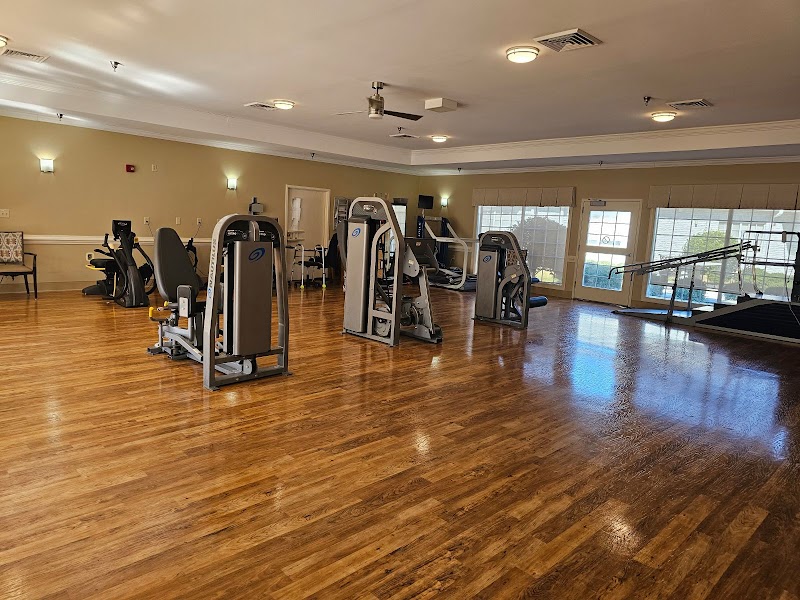
Who Owns and Operates Carolina Rehab Center Of Cumberland?

Carolina Rehab Center of Cumberland is owned by a for-profit company. For-profit facilities operate as businesses with obligations to shareholders or private owners. The facility is operated by LIFEWORKS REHAB, a chain that manages multiple nursing homes. With 136 certified beds and approximately 131 residents (about 96% occupancy), it is a mid-sized facility located in Fayetteville, North Carolina.

How Does Carolina Rehab Center Of Cumberland Compare to Other North Carolina Nursing Homes?

Compared to the 100 nursing homes in North Carolina, Carolina Rehab Center of Cumberland's overall rating (1 stars) is below the state average of 2.8, staff turnover (67%) is significantly higher than the state average of 46%, and health inspection rating (2 stars) is below the national benchmark.

What Should Families Ask When Visiting Carolina Rehab Center Of Cumberland?

Based on this facility's data, families visiting should ask: "What changes have been made since the serious inspection findings, and how are you preventing similar issues?" "How do you ensure continuity of care given staff turnover, and what is your staff retention strategy?" "Can you walk me through typical staffing levels on day, evening, and night shifts?" "Can I visit during a mealtime to observe dining assistance and food quality?" These questions are particularly relevant given the facility's Immediate Jeopardy citations, the facility's high staff turnover rate, and the below-average staffing rating.

Is Carolina Rehab Center Of Cumberland Safe?

Based on CMS inspection data, Carolina Rehab Center of Cumberland has documented safety concerns. Inspectors have issued 2 Immediate Jeopardy citations (the most serious violation level indicating risk of serious injury or death). The facility has a 1-star overall rating and ranks #100 of 100 nursing homes in North Carolina. Families considering this facility should ask detailed questions about what corrective actions have been taken since these incidents.

Do Nurses at Carolina Rehab Center Of Cumberland Stick Around?

Staff turnover at Carolina Rehab Center of Cumberland is high. At 67%, the facility is 20 percentage points above the North Carolina average of 46%. Registered Nurse turnover is particularly concerning at 82%. RNs handle complex medical decisions and coordinate care — frequent RN changes can directly impact care quality. High turnover means new staff may not know residents' individual needs, medications, or preferences. It can also be disorienting for residents, especially those with dementia who rely on familiar faces. Families should ask: What is causing the turnover? What retention programs are in place? How do you ensure care continuity during staff transitions?

Was Carolina Rehab Center Of Cumberland Ever Fined?

Carolina Rehab Center of Cumberland has been fined $97,936 across 5 penalty actions. This is above the North Carolina average of $34,058. Fines in this range indicate compliance issues significant enough for CMS to impose meaningful financial consequences. Common causes include delayed correction of deficiencies, repeat violations, or care failures affecting resident safety. Families should ask facility leadership what changes have been made since these penalties.

Is Carolina Rehab Center Of Cumberland on Any Federal Watch List?

Carolina Rehab Center of Cumberland is not on any federal watch list. The most significant is the Special Focus Facility (SFF) program, which identifies the bottom 1% of nursing homes nationally based on persistent, serious quality problems. Not being on this list means the facility has avoided the pattern of deficiencies that triggers enhanced federal oversight. This is a positive indicator, though families should still review the facility's inspection history directly.