Village Green Health and Rehabilitation
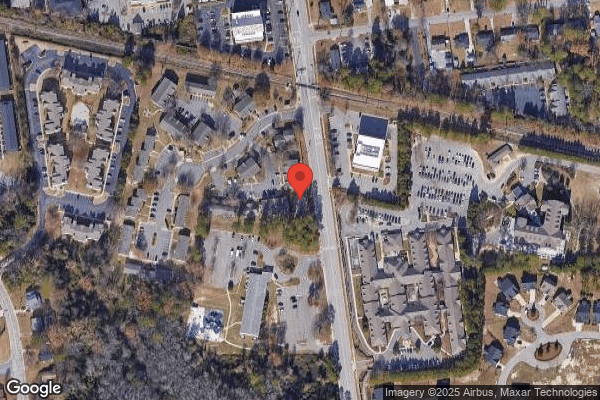
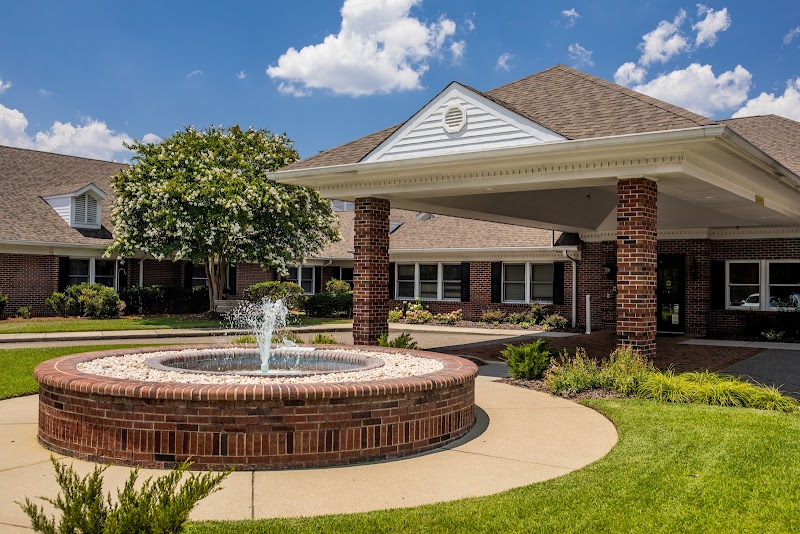
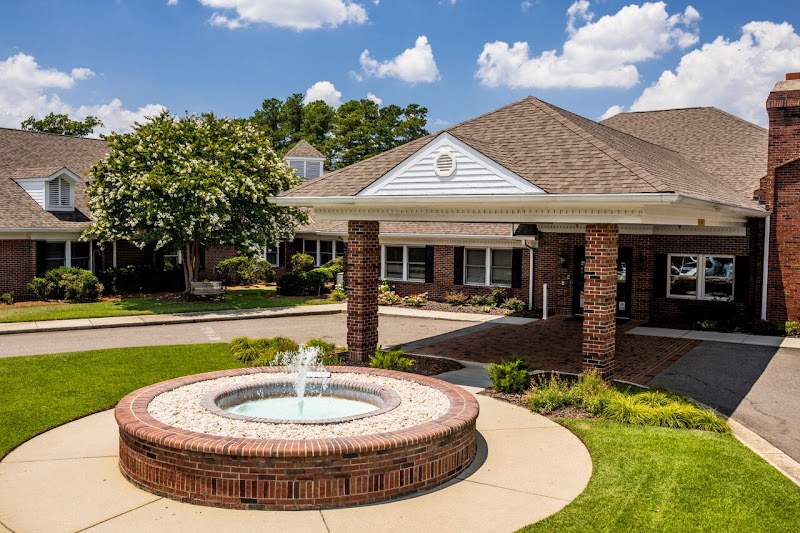
1601 Purdue Drive, Fayetteville, NC 28304 (910) 486-5000
For profit - Limited Liability company 170 Beds SANSTONE HEALTH & REHABILITATION Data: November 2025
Trust Grade
90/100
#71 of 417 in NC
Last Inspection: February 2025

Within standard 12-15 month inspection cycle. Federal law requires annual inspections.

Overview

Village Green Health and Rehabilitation in Fayetteville, North Carolina, has a Trust Grade of A, indicating it is an excellent option for families looking for care. It ranks #71 out of 417 facilities statewide, placing it in the top half, and #4 out of 10 in Cumberland County, suggesting only a few local alternatives are better. However, the facility is facing a concerning trend as issues have increased from 1 in 2024 to 2 in 2025. Staffing is a mixed bag; while turnover is relatively low at 40%, the facility received only 2 out of 5 stars for staffing, indicating room for improvement. On a positive note, there have been no fines reported, which is reassuring. There are some specific concerns noted during inspections, such as improper food storage practices that could potentially affect residents' health and a failure to implement necessary activity interventions for a resident with dementia. Additionally, a resident was not treated with the respect they deserved during a care meeting, raising concerns about staff communication and attitude. Overall, while the facility has strengths in its rating and low fines, families should consider the staffing rating and recent inspection issues when making their decision.
Trust Score
A
90/100
In North Carolina
#71/417
Top 17%
Safety Record
Low Risk
No red flags
Inspections
Getting Worse
1 → 2 violations
Staff Stability
○ Average
40% turnover. Near North Carolina's 48% average. Typical for the industry.
Penalties
✓ Good
No fines on record. Clean compliance history, better than most North Carolina facilities.
Skilled Nurses
○ Average
Each resident gets 32 minutes of Registered Nurse (RN) attention daily — about average for North Carolina. RNs are the most trained staff who monitor for health changes.
Violations
○ Average
8 deficiencies on record. Average for a facility this size. Mostly minor or procedural issues.
★★★★★
5.0
Overall Rating
★★☆☆☆
2.0
Staff Levels
★★★★★
5.0
Care Quality
★★★★☆
4.0
Inspection Score
Stable
2024: 1 issues
2025: 2 issues

The Good

  • 5-Star Quality Measures · Strong clinical quality outcomes
  • Full Sprinkler Coverage · Fire safety systems throughout facility
  • No fines on record
  • Staff turnover below average (40%)

    8 points below North Carolina average of 48%

Facility shows strength in quality measures, fire safety.

The Bad

Staff Turnover: 40%

Near North Carolina avg (46%)

Typical for the industry

Chain: SANSTONE HEALTH & REHABILITATION

Part of a multi-facility chain

Ask about local staffing decisions and management

The Ugly 8 deficiencies on record

Feb 2025 2 deficiencies
CONCERN (D)

Potential for Harm - no one hurt, but risky conditions existed

Comprehensive Care Plan (Tag F0656)

Could have caused harm · This affected 1 resident

**NOTE- TERMS IN BRACKETS HAVE BEEN EDITED TO PROTECT CONFIDENTIALITY** Based on observations, record review and staff and family interviews the facility failed to implement an activity intervention o...

Read full inspector narrative →
**NOTE- TERMS IN BRACKETS HAVE BEEN EDITED TO PROTECT CONFIDENTIALITY** Based on observations, record review and staff and family interviews the facility failed to implement an activity intervention on the comprehensive care plan for 1 of 22 residents (Resident #29). The findings included: Resident #29 was admitted into the facility on [DATE] with a diagnosis of dementia. A review of Resident #29's significant change Minimum Data Set assessment dated [DATE] revealed that she was severely cognitively impaired, had trouble falling or staying asleep, or sleeping too much for 12-14 days, trouble concentrating on things for 12-14 days, was sometimes understood and sometimes understood by others and had impaired vision. She had no behaviors and noted it was very important to have her family be part of the discussions regarding her care. A review of Resident #29's comprehensive care plan updated 12/19/24 revealed a problem of a need for daily stimulation by having her television and lights on daily in the morning. The goal and intervention to the problem included she would have her television and lights on by 10:00 AM each day. An interview was conducted with Resident #29's family member on 2/16/25 at 12:35 PM who indicated a concern of Resident #29 not receiving any type of mental, tactile, or visual stimulation that the family member was aware of. The family member stated they visited the resident at different times during the week and that when they visited they always had to turn on the television and open the window blinds. An observation of Resident #29's room on 2/16/25 at 12:30 PM noted the television and lights were not on, and the window blinds were closed. The resident was lying in bed with her eyes open. Observations of Resident #29's room on 2/17/25 at 11:00 AM and 1:00 PM noted the television and lights were not on, and the window blinds were closed. Resident #29 was lying in bed with her eyes open. An observation of Resident #29's room on 2/18/25 at 10:30 AM noted the blinds were open but the lights and television were not on. Resident #29 was lying in bed with her eyes open. An interview conducted on 2/18/25 at 10:25 AM with Nurse Assistant #1, who was working on Resident #29's hall, revealed that if a resident had a daily task that needed to be completed it was placed on the resident care card at the desk. Nurse Assistant #1 was not aware of any resident's care cards that had a notation of the lights or television turned on by a certain time. An interview conducted on 2/18/25 at 10:30 AM with Nurse Assistant #2, who was working on Resident #29's hall, indicated that any special tasks were on the resident care cards at the desk. She further indicated that she was not aware of any residents that had a certain time for the lights or television to be on. A review of Resident #29's care card did not reveal instructions for the lights and television to be on by 10:00 AM each day. An interview with the Activity Director on 2/18/25 at 12:38 PM revealed that she was not aware the care plan had the problem of the resident need for stimulation by having the lights and television on by 10:00 AM and stated she had not created that care plan, the former Social Service Worker had, and that the former Social Service Worker should have put that on Resident #29's care card so the nursing assistants were aware. She further stated that the activity department provided one-on-one visits to Resident #29 on Tuesdays and Thursdays. A telephone interview with the Administrator on 2/20/25 at 9:44 AM indicated that the Activity Director should have been aware of the care plan problem regarding the lights and television on by 10:00 AM and the information should have been placed on Resident #29's care card so that the nursing assistants were aware.
CONCERN (E)

Potential for Harm - no one hurt, but risky conditions existed

Food Safety (Tag F0812)

Could have caused harm · This affected multiple residents

Based on observations and staff interviews, the facility failed to date opened food items and seal leftover frozen food stored in 1 of 1 reach-in freezer, 1 of 1 walk-in freezer, 1 of 1 dry goods stor...

Read full inspector narrative →
Based on observations and staff interviews, the facility failed to date opened food items and seal leftover frozen food stored in 1 of 1 reach-in freezer, 1 of 1 walk-in freezer, 1 of 1 dry goods storage area and failed to remove a bowl being used as a scoop observed nested in breadcrumbs in one of the dry ingredient storage bins in the kitchen. This practice had the potential to affect foods served to the residents. The findings included: On 02/16/25 at 11:28 A.M., an observation of the kitchen revealed the following: a. Reach-in freezer: - A plastic bag containing slider buns (this item had a label with 8/20/24 written in the shelf life spot on the label and 11/20/24 written in the use by spot on the label) - A zippered type of plastic storage bag containing pork loin with no date on it - A zippered type of plastic storage bag containing pulled chicken with no date on it b. Walk-in freezer: - A box of pre-cooked egg patties - the egg product was in the manufacturer's box and contained inside the box in a plastic bag; both the box and the plastic bag were left open to air and there was no date on it. c. Dry storage area: - An opened package of devil's food cake mix in a plastic package with no date on it. d. On 02/18/25 at 8:42 A.M., an observation of the kitchen revealed one of the white 3-bin dry ingredient storage bins contained a black bowl. The bowl had been left inside the bin and was observed in contact with the breadcrumbs being stored in the bin. The Dietary Manager, who was present during this observation, stated that she thought staff were using the bowl as a scoop and that it should not be stored inside the bin. An interview was conducted with the Dietary Manager (DM) on 02/18/25 at 11:28 A.M. The DM stated she thought staff were moving too fast as a possible reason why opened food items were not labeled or dated. When asked to explain what she meant, the DM gave an example of staff being busy on the line at mealtimes and had to run get an item for a resident and then forgot to go back after the busy period to properly label the food item that had been opened in a hurry. The DM stated it was her expectation that dietary staff seal opened food items appropriately and to label the items with the name of the item, the date it was opened and the expiration date of the item. An interview was conducted with the Administrator on 02/18/25 at 10:16 A.M. The Administrator stated it was her expectation that dietary and nursing staff label opened food items with the date opened and a use-by date. The Administrator also stated that if the opened food item cannot be packaged for storage appropriately, it should be discarded.
Jan 2024 1 deficiency
MINOR (B)

Minor Issue - procedural, no safety impact

Deficiency F0655 (Tag F0655)

Minor procedural issue · This affected multiple residents

**NOTE- TERMS IN BRACKETS HAVE BEEN EDITED TO PROTECT CONFIDENTIALITY** Based on record review, resident, staff and resident representative interviews the facility failed to provide a written summary ...

Read full inspector narrative →
**NOTE- TERMS IN BRACKETS HAVE BEEN EDITED TO PROTECT CONFIDENTIALITY** Based on record review, resident, staff and resident representative interviews the facility failed to provide a written summary of the baseline care plan to the resident or family in 3 out of 3 residents (Resident # 6, Resident # 75, and Resident # 84). Findings included: B. Resident #75 was admitted to the facility on [DATE] with diagnoses including: diabetes and cancer. A review of Resident #75's admission Minimum Data Set, dated [DATE] revealed the resident's cognition was intact. A review of Resident #75's medical record revealed that a 48-hour interim (baseline) care plan was completed on 11/3/23 by the admission Nurse. A review of Resident # 75's facility records indicated a baseline care plan meeting was held on 11/6/2023 and included Resident #75, Resident #75's Representative, and facility staff consisting of the Discharge Planner, Social Services, Assistant Director of Nursing, admission Nurse, and Director of Rehabilitation Services. An interview conducted on 1/16/24 at 1:30 PM with Resident #75 indicated that she had not received a copy or summary of the base line care plan. An interview was attempted with Resident #75's resident representative but she was unavailable. C. Resident #84 was admitted to the facility on [DATE] with diagnoses including: malnutrition and arthritis. A review of Resident 84's admission Minimum Data Set, dated [DATE] revealed the resident's cognition was moderately impaired. A review of Resident 84's facility medical records indicated a baseline care plan meeting was held on 11/17/2023 and included Resident #84 and facility staff consisting of the Discharge Planner, Social Services, Assistant Director of Nursing, admission Nurse, and Director of Rehabilitation Services A review of Resident #84's facility medical record revealed that a 48-hour interim (baseline) care plan was completed on 11/18/23 by the admission Nurse. An interview conducted on 1/17/24 at 11:00 AM indicated that Resident #84 had not received a copy or a summary of the base line care plan. An interview with the admission Nurse on 01/17/24 at 1:52 PM revealed she verbally goes over the resident's baseline care plan with the resident and/or family but she did not provide a summary or a copy of the baseline care plan. An interview with the Director of Nursing conducted on 01/19/24 at 11:15 AM revealed the admission Nurse went over the baseline care plan verbally with the resident and/or family and they did not provide a copy or summary of the baseline care plan to the family and/or resident. An interview with the Administrator was conducted on 01/19/24 at 11: 16 AM and revealed she was aware that the admission Nurse went over the baseline care plan verbally with the resident and/or their family. She further revealed they did not provide a copy or summary of the baseline care plan to the family and/or resident. The administrator stated she did not know that a written summary needed to be provided to the resident and/or family. Based on record review, staff and family interviews the facility failed to provide a written summary of the baseline care plan to the resident or resident representative in 3 out of 3 sampled residents (Resident # 6, Resident # 75, and Resident #84). Findings included: A. Resident #6 was admitted to the facility on [DATE] with diagnoses including: multiple sclerosis, and vascular dementia. A review of Resident 6's admission Minimum Data Set (MDS) dated [DATE] revealed the resident's cognition was intact. A review of Resident #6's medical record revealed that a 48- hour interim(baseline) care plan was completed on 12/15/2023 by admission Nurse. A review of Resident # 6's medical records indicated a care plan meeting was held on 12/15/2023 and included Resident #6's resident representative, Discharge Planner, Assistant Director of Nursing, and Director of Rehabilitation Services. An interview conducted on 01/16/2024 at 11:25 AM with Resident#6's resident representative indicated she had not received a copy or a summary of the base line care plan. An interview conducted on 01/16/2024 at 11:27 AM with Resident #6 revealed she did not receive a copy of or a summary of the baseline care plan. An interview with the admission Nurse on 01/17/24 at 1:52 PM revealed she reviewed with the resident representative and Resident#6's baseline care plan on 12/15/2023 and she indicated that she did not give a summary or a copy of the baseline care plan to the resident or resident's representative. An interview with the Director of Nursing conducted on 01/19/24 at 11:15 AM revealed the admission Nurse went over the baseline care plan verbally with the resident and/or resident representative and she did not provide a copy or summary of the baseline care plan to the resident representative and/or resident. An interview with the Administrator was conducted on 01/19/24 at 11: 16 AM and revealed she was aware that the admission Nurse went over the baseline care plan verbally with the resident and/or resident representative. She further revealed the facility did not provide a copy or summary of the baseline care plan to the resident representative and/or resident. She indicated she was not aware that the copy or summary needed to be provided to the resident and/ or resident representative.
Feb 2023 1 deficiency
CONCERN (D) 📢 Someone Reported This

A family member, employee, or ombudsman was alarmed enough to file a formal complaint

Potential for Harm - no one hurt, but risky conditions existed

Resident Rights (Tag F0550)

Could have caused harm · This affected 1 resident

**NOTE- TERMS IN BRACKETS HAVE BEEN EDITED TO PROTECT CONFIDENTIALITY** Based on record review and resident, family, staff, and Regional Ombudsman interviews the facility failed to assure a resident (...

Read full inspector narrative →
**NOTE- TERMS IN BRACKETS HAVE BEEN EDITED TO PROTECT CONFIDENTIALITY** Based on record review and resident, family, staff, and Regional Ombudsman interviews the facility failed to assure a resident (Resident # 1) was treated respectfully during a meeting held with staff members to discuss her care and concerns. This was for one of one sampled resident who met with administrative staff during a formal meeting. The findings included: Resident # 1 was admitted to the facility on [DATE] for rehabilitation after being hospitalized for a respiratory illness. Resident # 1's admission Minimum Data set assessment, dated 1/16/23, coded Resident # 1 as cognitively intact. Resident # 1 was not coded as displaying any behaviors during the assessment period. Resident # 1's care plan, updated on 2/20/23, noted Resident # 1 suffered from chronic pain. The care plan also addressed that she also displayed manipulative behavior/ attention seeking behaviors. Although not all inclusive, some of the interventions to address behaviors on the care plan were as follows. Staff were directed to determine the reason for any behaviors, approach her in a calm manner, praise for desired behavior, and provide support as needed. Resident # 1 was interviewed on 2/25/23 at 9:40 AM and reported the following. She and two of her family members had a meeting within the past week with administrative staff members to discuss her care and concerns that she and her family had. One of the resident ' s main concerns, which was discussed, was pain management and getting her pain medication timely. The resident also reported that she had concerns that she heard staff talking about her from her room while they were in the hallway, and she did not appreciate that. Prior to the meeting, Nurse # 1 had informed Resident # 1 that upon her initial admission, Resident # 1 acted as if staff should drop everything and attend to her. According to Resident # 1, Nurse # 1 was a direct care nurse and had not been at the meeting. Resident # 1 did not recall anything specifically she had done to give staff this impression, and acknowledged that when she first came, she may not have remembered everything as clearly as she did currently. During the meeting with administrative staff, she stated she spoke up and apologized for anything she had done to upset facility staff. She told the administrative staff that she wanted everyone to get along. During the meeting she recalled the business office manager rolling her eyes during the meeting. She also recalled the social worker sat as if she had a chip on her shoulder and would not look at her. The resident stated it made her feel as if I was beneath them and a nobody to them. Resident # 1's family member was interviewed on 2/24/23 at 10:40 AM and reported the following. Resident #1, another family member, and she had met with several administrative staff members within the past week to discuss Resident # 1's care and concerns they had. The Regional Ombudsman was also present for the meeting. The family member reported the staff members looked down rather than at the resident and rolled their eyes during the meeting. The Regional Ombudsman was interviewed on 2/24/23 at 12:53 PM AM and reported the following. He had been in attendance during the meeting with Resident #1, two family members, and several administrative staff members within the past week. The administrative staff members who were present were the Rehabilitation Director, the Director of Nursing, the Social Worker, and the business officer manager. The Administrator was not physically present and had called in on the speaker phone. The Physician Assistant (PA) came for the first few minutes of the meeting and stepped out after discussing pain management. After the PA left, they further discussed concerns that the resident felt she had waited for care and pain medications, that the resident felt staff were talking about the resident in the hallway when she was not present, discharge planning, and the amount of assistance the resident needed to walk to the bathroom. The Regional Ombudsman corroborated that during the meeting he witnessed the social worker rolling her eyes as Resident # 1 was speaking. He also corroborated some of the administrative staff members would not look at the resident and looked down. The Regional Ombudsman reported Resident # 1 spoke up and said she was not asking for special treatment, but only to be treated the way they would treat their own family member. According to the Regional Ombudsman, none of the staff members spoke up when this was said by the resident. Following the meeting, the Regional Ombudsman stated he had spoken to the Administrator about how the staff had acted during the meeting. The Regional Ombudsman was interviewed again on 2/27/23 at 10:35 AM. The Regional Ombudsman reported the meeting with Resident # 1 and the family lasted approximately one hour and 15 minutes. They had also discussed what the social worker's role was during the meeting. He did see the social worker go up to the resident after the meeting had been concluded and as people were leaving. According to the Regional Ombudsman, as people were leaving the SW told Resident # 1 she cared. The Administrator was interviewed on 2/24/23 at 5:25 PM and again on 2/25/23 at 3:45 PM and reported the following. She had been out of town when the meeting was held. It would have been her preference to have been physically present during the meeting, but she had not wanted to delay the meeting for her return. This was because she wanted any concerns Resident # 1 and her family had to be resolved. Therefore, she had called in by speaker phone and she could not see how her staff were acting nor always hear every detail. Since the meeting, she had followed up with her staff who reported that after the meeting the social worker had tried to reinforce that they cared about Resident # 1.
Aug 2022 4 deficiencies
CONCERN (D)

Potential for Harm - no one hurt, but risky conditions existed

PASARR Coordination (Tag F0644)

Could have caused harm · This affected 1 resident

**NOTE- TERMS IN BRACKETS HAVE BEEN EDITED TO PROTECT CONFIDENTIALITY** Based on record review and staff interviews, the facility failed to refer a resident with a newly evident diagnosis of a serious...

Read full inspector narrative →
**NOTE- TERMS IN BRACKETS HAVE BEEN EDITED TO PROTECT CONFIDENTIALITY** Based on record review and staff interviews, the facility failed to refer a resident with a newly evident diagnosis of a serious mental illness for Preadmission Screening and Resident Review Level II for 1 of 1 resident reviewed for Preadmission Screening and Resident Review (Resident #72). Findings Included: Resident #72 was admitted to the facility on [DATE] with diagnoses which included, in part, unspecified dementia without behavioral disturbance. A record review of Resident #72's Significant Change Minimum Data Set (MDS), dated [DATE], indicated Resident #72 was not currently considered by the State Level II Preadmission Screening and Resident Review (PASRR) process to have a serious mental illness. Diagnoses on the MDS included non-Alzheimer's dementia and psychotic disorder. The MDS also indicated Resident #72 had received antipsychotic medication on a routine basis only. A review of Resident #72's medical doctor's progress notes revealed she was diagnosed with psychotic disorder with hallucinations due to known physiological condition on 04/28/22. In the Plan of Care in the progress note, the medical doctor (MD) indicated Resident #72 was to continue taking her antipsychotic medication daily. On 06/10/22, Resident #72's MD note specified, she has refused treatment and baseline has significant dementia with agitation .will also continue quetiapine (an antipsychotic medication) for psychosis and sertraline (an antidepressant medication) for depression and behaviors. During an interview with the Social Worker (SW) on 07/26/22 at 3:39 p.m., the SW stated she was the person responsible for referring residents with a newly evident diagnosis of a serious mental illness for a PASRR Level II screen. The SW explained she had been unaware Resident #72 had been diagnosed with psychotic disorder with hallucinations due to known physiological condition. The SW was unsure whether psychotic disorder had been erroneously checked on the MDS assessment or not. An interview was held with the MDS Coordinator on 07/26/22 at 4:22 p.m. The MDS Coordinator explained she had indicated Resident #72 had a psychotic disorder on the significant change MDS after reading the new diagnosis on the two MD notes, dated 04/28/22 and 06/10/22. A second interview was held with the SW on 07/27/11 at 11:11 a.m. The SW explained the process she followed for making a PASRR Level II screen on new residents and on established residents. For established residents, she stated she would run a report on all residents which included their diagnoses monthly and provided her most recent report dated 06/30/22. She further explained that residents on the report with newly evident mental illness diagnoses would be referred for a PASRR Level II screen. During the survey, the SW discovered Resident #72's new mental illness diagnosis had not been added to the resident's diagnoses listing in her electronic health record and the opportunity to refer for a PASRR Level II screen was missed. During an interview with the Administrator on 07/28/22 at 12:08 p.m., the Administrator stated after discussion with her interdisciplinary team (IDT), Resident #72 was not referred for a PASRR Level II screen because her newly evident mental illness diagnosis had not been added to the diagnoses listing in her medical record. The Administrator explained going forward, new processes were being put in place to ensure the MD and the IDT communicated new mental health diagnoses to ensure those residents who require a referral for a PASRR Level II screen would be referred.
CONCERN (D)

Potential for Harm - no one hurt, but risky conditions existed

Tube Feeding (Tag F0693)

Could have caused harm · This affected 1 resident

**NOTE- TERMS IN BRACKETS HAVE BEEN EDITED TO PROTECT CONFIDENTIALITY** Based on observation, staff interviews, and record reviews, the facility failed to provide a resident's tube feeding in accordan...

Read full inspector narrative →
**NOTE- TERMS IN BRACKETS HAVE BEEN EDITED TO PROTECT CONFIDENTIALITY** Based on observation, staff interviews, and record reviews, the facility failed to provide a resident's tube feeding in accordance with the physician's order for 1 of 2 residents (Resident #55) reviewed for tube feeding. Findings included: Resident #55 was admitted to the facility on [DATE] with diagnoses that included stroke with difficulty swallowing and feeding tube placement. Review of physician's orders revealed an order dated 6/25/22 for standard tube feeding (TF) formula at 55 milliliters (ml) per hour through her feeding tube over 22 hours per day. A Care Plan dated 6/29/22 focused on tube feeding included a goal for Resident #55 to receive the appropriate number of calories from her tube feeding to maintain weight and hydration. Interventions included provide tube feeding as ordered and notify dietitian, doctor, and family of any weight changes. Resident #55's admission Minimum Data Set (MDS) dated [DATE] indicated a moderate cognitive impairment. She received greater than 51% of her calories and fluid from her TF. An observation was made on 7/25/22 at 12:45 PM of Resident #55 in bed with TF formula running at 60 ml per hour through her feeding tube. During an interview on 7/25/22 at 12:50 PM, Nurse #1 confirmed the TF was ordered for 55 ml per hour. She indicated that it was running at 60 ml per hour when she took over Resident #55's care from night shift and it had been changed by the night shift nurse. She revealed she had checked the TF that morning but was not aware it was not the correct rate. During an interview on 7/26/22 at 1:15 PM, the Director of Nursing (DON) indicated that the nurses should check the order when they start a new bottle of tube feeding formula. The nurses on each shift should confirm the TF was running as ordered. During an interview on 7/26/22 at 3:00 PM, the Administrator revealed TF should run as ordered by a physician. The nurse should have reviewed the order when she changed out the TF bottle.
CONCERN (D)

Potential for Harm - no one hurt, but risky conditions existed

Respiratory Care (Tag F0695)

Could have caused harm · This affected 1 resident

**NOTE- TERMS IN BRACKETS HAVE BEEN EDITED TO PROTECT CONFIDENTIALITY** Based on record review, observations, staff and physician interviews, the facility failed to obtain a physician order to adminis...

Read full inspector narrative →
**NOTE- TERMS IN BRACKETS HAVE BEEN EDITED TO PROTECT CONFIDENTIALITY** Based on record review, observations, staff and physician interviews, the facility failed to obtain a physician order to administer oxygen for 1 of 1 resident (Resident #214) reviewed for respiratory care. The findings included: Resident #214 was admitted to the facility on [DATE]. His diagnoses included acute respiratory failure with hypoxia, acute and chronic respiratory failure with hypercapnia, congestive heart failure, and chronic obstructive pulmonary disease. The most recent comprehensive Minimum Data Set (MDS) assessment dated [DATE] indicated Resident #214 was cognitively impaired and received oxygen therapy. Review of Resident #214's physician orders on 7/25/22 at 09:32 AM revealed no order for oxygen administration. During observation on 07/25/22 09:33 AM Resident #214 was observed with the oxygen nasal canula. Resident #214's oxygen regulator on the concentrator was set at 3 liters/minute when viewed horizontally at eye level. During observation on 07/26/22 09:16 AM Resident #214 was observed with the oxygen nasal canula. Resident #214's oxygen regulator on the concentrator was set at 3 liters/minute when viewed horizontally at eye level. During observation on 07/26/22 11:15 AM Resident #214 was observed with the oxygen nasal canula. Resident #214's oxygen regulator on the concentrator was set at 3 liters/minute when viewed horizontally at eye level. Resident #214's oxygen regulator was verified with Medication Aide #2 to be set at 3 liters/minute. During an interview on 07/26/22 at 11:15 AM with Medication Aide #2, she stated she thought Resident #214 was supposed to be on oxygen at 2 liters/minute via nasal cannula, but she could not locate the order. Medication Aide #2 stated the order would be documented under physician orders and in the Resident 214's medication administration record (MAR). During an interview on 07/26/22 at 11:22 AM with Nurse #2, she stated there was no order for Resident #214's oxygen administration under physician orders and medication administration records. Nurse #2 stated there should have been a physician order to administer the oxygen. An interview was conducted on 07/26/22 12:15 PM with the Director of Nursing (DON). She stated there should have been a physician order to administer oxygen to Resident #214. The DON further stated when the facility utilized standing orders, the standing order would be activated and documented under physician orders. During an interview on 07/26/22 at 12:32 PM with the facility Administrator, she stated she expected nursing staff to obtain a physician order to administer oxygen if there was need for oxygen administration. An interview was conducted on 07/27/22 08:38 AM with the facility Physician. He stated he could not recall if the facility had contacted him for an order to administer oxygen to Resident #214. He further stated if the facility had contacted him for an order, it would be documented under physician orders. The Physician stated he expected nursing staff to administer oxygen with an order and to contact him if there was need for oxygen administration or oxygen titration for any resident in the facility.
MINOR (C)

Minor Issue - procedural, no safety impact

Deficiency F0888 (Tag F0888)

Minor procedural issue · This affected most or all residents

Based on observations, record review and staff interviews, the facility failed to implement the facility policy for unvaccinated employees when 2 of 12 unvaccinated (with exemptions) staff members wer...

Read full inspector narrative →
Based on observations, record review and staff interviews, the facility failed to implement the facility policy for unvaccinated employees when 2 of 12 unvaccinated (with exemptions) staff members were observed wearing KN95 masks instead of N95 masks as an additional precaution for unvaccinated staff members (Patient Care Attendant #1 and Laundry Aide #1). Additionally, the facility failed to track and document the COVID-19 vaccination status for 1 of 2 staff members documented as partially vaccinated (Nursing Assistant #2). The failures occurred when the facility was in COVID-19 outbreak status. Findings included: 1.The facility's COVID-19 Vaccination Policy dated January 2022 indicated additional precautions for staff with COVID-19 vaccination exemption which included, source control by use of the N95 respirator and physical distancing. As requested, on 07/27/22 the Administrator provided a list of unvaccinated employees that included Patient Care Attendant (PCA) #1 and Laundry Aide #1. 1a. An observation of PCA #1, an unvaccinated staff member (with an exemption), was made on 07/25/22 at 08:55 AM. She was observed wearing a KN95 mask while talking to Resident #33 in her room and was within 6 feet of Resident #33. An interview with PCA #1 on 07/25/22 at 09:00 AM revealed she had a COVID-19 vaccination exemption and was aware she was supposed to wear an N95 mask at all times while in the facility but the KN95 mask felt more comfortable for her. She stated she was assigned to pass ice and answer call lights in the 200 hallways. 1b. An observation of Laundry Aide #1, an unvaccinated staff member (with an exemption), was made on 07/26/22 at 11:50 AM. She was observed wearing a KN95 mask while folding laundry in the laundry room within 6 feet of other laundry department employees. During an interview with Laundry Aide #1 on 07/26/22 at 11:50 AM, she indicated she had a COVID-19 vaccination exemption. She stated she was not aware she was required to wear an N95 as an additional precaution while working in the building. She also stated she worked in the laundry room and transported linen to different halls. During an interview with the facility Infection Preventionist (IP) on 07/26/22 at 01:50 PM, she stated all unvaccinated staff members were aware of the requirement to wear an N95 mask at all times while in the facility. She stated all the staff that had been granted a COVID-19 vaccination exemption had signed an acknowledgement of the policy with additional mandated precautions to include donning an N95 mask at all times while working in the facility. During an interview with the facility Administrator on 07/26/22 at 01:55 PM, the Administrator stated unvaccinated staff members were made aware of the requirement to use an N95 mask and signatures were obtained from staff indicating they had been made aware of the policy. 2. The facility's COVID-19 Vaccination Policy dated January 2022 indicated the facility would use a tracker to document employees' date of first vaccine, second vaccine as well as date of additional booster vaccine and securely document the information in employee medical file. As requested, the Administrator provided a list of partially unvaccinated employees that included Nursing Assistant (NA) #2 on 07/27/22. The facility records indicated NA #2 received her 1st vaccination dose of a multi-dose vaccine on 6/16/21. The COVID-19 staff vaccination matrix provided by the facility indicated NA #2 was partially vaccinated. On 08/03/22, the Administrator provided NA #2's COVID-19 Vaccination card which indicated she had received her 1st vaccination dose on 6/16/21 and her 2nd vaccination dose on 7/21/21. During a follow up interview with the Administrator on 08/03/2022 at 09:15 AM, she stated NA #2 had received both doses of a multi-dose COVID-19 vaccine, but the facility failed to track and document it correctly which resulted in NA #2 being documented as partially vaccinated. The Administrator stated the facility should have ensured all staff COVID-19 vaccinations were documented correctly.
Understanding Severity Codes (click to expand)
Life-Threatening (Immediate Jeopardy)
J - Isolated K - Pattern L - Widespread
Actual Harm
G - Isolated H - Pattern I - Widespread
Potential for Harm
D - Isolated E - Pattern F - Widespread
No Harm (Minor)
A - Isolated B - Pattern C - Widespread

Questions to Ask on Your Visit

  • "Can I speak with families of current residents?"
  • "What's your RN coverage like on weekends and overnight?"

Our Honest Assessment

Strengths
  • • Grade A (90/100). Above average facility, better than most options in North Carolina.
  • • No major safety red flags. No abuse findings, life-threatening violations, or SFF status.
  • • No fines on record. Clean compliance history, better than most North Carolina facilities.
  • • 40% turnover. Below North Carolina's 48% average. Good staff retention means consistent care.
Concerns
  • • No significant concerns identified. This facility shows no red flags across CMS ratings, staff turnover, or federal penalties.
Bottom line: Generally positive indicators. Standard due diligence and a personal visit recommended.

About This Facility

What is Village Green Health And Rehabilitation's CMS Rating?

CMS assigns Village Green Health and Rehabilitation an overall rating of 5 out of 5 stars, which is considered much above average nationally. Within North Carolina, this rating places the facility higher than 99% of the state's 100 nursing homes. This rating reflects solid performance across the metrics CMS uses to evaluate nursing home quality.

How is Village Green Health And Rehabilitation Staffed?

CMS rates Village Green Health and Rehabilitation's staffing level at 2 out of 5 stars, which is below average compared to other nursing homes. Staff turnover is 40%, compared to the North Carolina average of 46%. This relatively stable workforce can support continuity of care.

What Have Inspectors Found at Village Green Health And Rehabilitation?

State health inspectors documented 8 deficiencies at Village Green Health and Rehabilitation during 2022 to 2025. These included: 6 with potential for harm and 2 minor or isolated issues.

Who Owns and Operates Village Green Health And Rehabilitation?

Village Green Health and Rehabilitation is owned by a for-profit company. For-profit facilities operate as businesses with obligations to shareholders or private owners. The facility is operated by SANSTONE HEALTH & REHABILITATION, a chain that manages multiple nursing homes. With 170 certified beds and approximately 112 residents (about 66% occupancy), it is a mid-sized facility located in Fayetteville, North Carolina.

How Does Village Green Health And Rehabilitation Compare to Other North Carolina Nursing Homes?

Compared to the 100 nursing homes in North Carolina, Village Green Health and Rehabilitation's overall rating (5 stars) is above the state average of 2.8, staff turnover (40%) is near the state average of 46%, and health inspection rating (4 stars) is above the national benchmark.

What Should Families Ask When Visiting Village Green Health And Rehabilitation?

Based on this facility's data, families visiting should ask: "Can you walk me through typical staffing levels on day, evening, and night shifts?" "Can I visit during a mealtime to observe dining assistance and food quality?" "How do you handle medical emergencies, and what is your hospital transfer rate?" "Can I speak with family members of current residents about their experience?" These questions are particularly relevant given the below-average staffing rating.

Is Village Green Health And Rehabilitation Safe?

Based on CMS inspection data, Village Green Health and Rehabilitation has a clean safety record: no substantiated abuse findings (meaning no confirmed cases of resident harm), no Immediate Jeopardy citations (the most serious violation level indicating risk of serious injury or death), and is not on the Special Focus Facility watch list (a federal program monitoring the lowest-performing 1% of nursing homes). The facility has a 5-star overall rating and ranks #1 of 100 nursing homes in North Carolina. While no facility is perfect, families should still ask about staff-to-resident ratios and recent inspection results during their visit.

Do Nurses at Village Green Health And Rehabilitation Stick Around?

Village Green Health and Rehabilitation has a staff turnover rate of 40%, which is about average for North Carolina nursing homes (state average: 46%). Moderate turnover is common in nursing homes, but families should still ask about staff tenure and how the facility maintains care continuity when employees leave.

Was Village Green Health And Rehabilitation Ever Fined?

Village Green Health and Rehabilitation has no federal fines on record. CMS issues fines when nursing homes fail to meet care standards or don't correct problems found during inspections. The absence of fines suggests the facility has either maintained compliance or corrected any issues before penalties were assessed. This is a positive indicator, though families should still review recent inspection reports for the full picture.

Is Village Green Health And Rehabilitation on Any Federal Watch List?

Village Green Health and Rehabilitation is not on any federal watch list. The most significant is the Special Focus Facility (SFF) program, which identifies the bottom 1% of nursing homes nationally based on persistent, serious quality problems. Not being on this list means the facility has avoided the pattern of deficiencies that triggers enhanced federal oversight. This is a positive indicator, though families should still review the facility's inspection history directly.