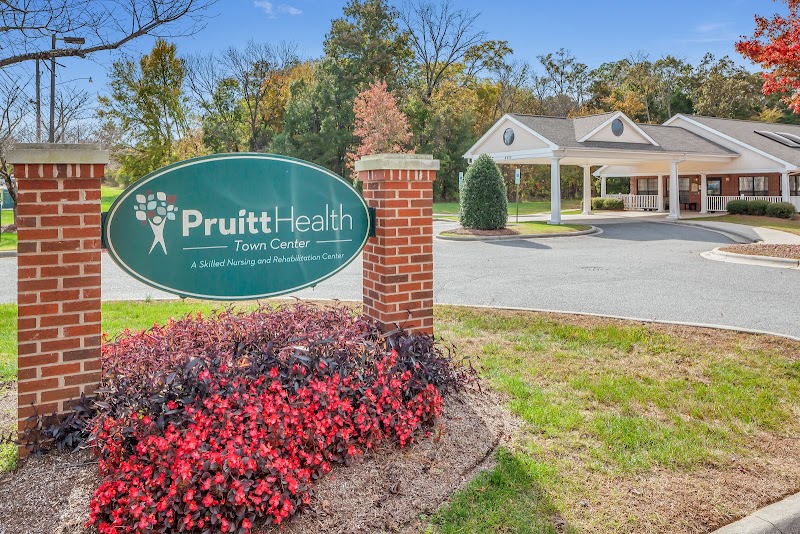
PruittHealth-Town Center
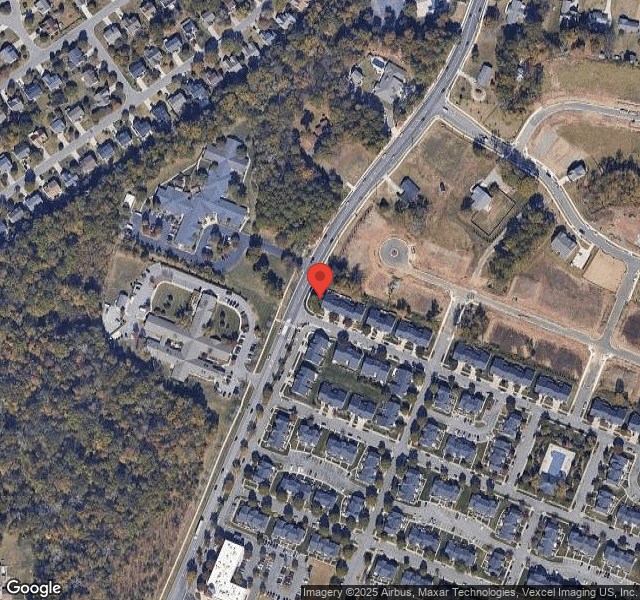

6300 Roberta Road, Harrisburg, NC 28075 (704) 455-5553
For profit - Corporation 70 Beds PRUITTHEALTH Data: November 2025
Trust Grade
58/100
#186 of 417 in NC
Last Inspection: August 2025

Inspected within the last 6 months. Data reflects current conditions.

Overview

PruittHealth-Town Center in Harrisburg, North Carolina has a Trust Grade of C, indicating it is average compared to other facilities, which means it is not outstanding but also not the worst option available. It ranks #186 out of 417 nursing homes in North Carolina, placing it in the top half, and is #3 out of 7 in Cabarrus County, signaling that there are only two local options considered better. The facility is improving, with a decrease in reported issues from five in 2024 to four in 2025. Staffing is relatively strong, with a 4 out of 5 stars rating and turnover at 53%, which is close to the state average and indicates staff stability. However, they have $8,018 in fines, which is concerning as it suggests some compliance issues. Some specific incidents raised during inspections include a serious incident where a resident fell out of bed during care, resulting in a head injury and a neck fracture, and a concern about food safety related to improperly stacked wet pans in the kitchen. While the facility has strengths in staffing and overall care, families should be aware of these issues as they consider their options.
Trust Score
C
58/100
In North Carolina
#186/417
Top 44%
Safety Record
Moderate
Needs review
Inspections
Getting Better
5 → 4 violations
Staff Stability
⚠ Watch
53% turnover. Above average. Higher turnover means staff may not know residents' routines.
Penalties
⚠ Watch
$8,018 in fines. Higher than 86% of North Carolina facilities, suggesting repeated compliance issues.
Skilled Nurses
✓ Good
Each resident gets 51 minutes of Registered Nurse (RN) attention daily — more than average for North Carolina. RNs are trained to catch health problems early.
Violations
⚠ Watch
14 deficiencies on record. Higher than average. Multiple issues found across inspections.
★★★☆☆
3.0
Overall Rating
★★★★☆
4.0
Staff Levels
★★★★☆
4.0
Care Quality
★★★☆☆
3.0
Inspection Score
Stable
2024: 5 issues
2025: 4 issues

The Good

  • 4-Star Staffing Rating · Above-average nurse staffing levels
  • 4-Star Quality Measures · Strong clinical quality outcomes
  • Full Sprinkler Coverage · Fire safety systems throughout facility
  • No fines on record

Facility shows strength in staffing levels, quality measures, fire safety.

The Bad

3-Star Overall Rating

Near North Carolina average (2.8)

Meets federal standards, typical of most facilities

Staff Turnover: 53%

Near North Carolina avg (46%)

Higher turnover may affect care consistency

Federal Fines: $8,018

Below median ($33,413)

Minor penalties assessed

Chain: PRUITTHEALTH

Part of a multi-facility chain

Ask about local staffing decisions and management

The Ugly 14 deficiencies on record

1 actual harm
Aug 2025 4 deficiencies
CONCERN (D)

Potential for Harm - no one hurt, but risky conditions existed

Notification of Changes (Tag F0580)

Could have caused harm · This affected 1 resident

**NOTE- TERMS IN BRACKETS HAVE BEEN EDITED TO PROTECT CONFIDENTIALITY** Based on record review, and Physician and staff interviews, the facility staff failed to notify the physician when 70/30 Insulin...

Read full inspector narrative →
**NOTE- TERMS IN BRACKETS HAVE BEEN EDITED TO PROTECT CONFIDENTIALITY** Based on record review, and Physician and staff interviews, the facility staff failed to notify the physician when 70/30 Insulin (type of insulin used to control blood sugar by providing both immediate and extended insulin action) was not administered or administered late for 1 of 1 resident reviewed for notification (Resident #82). The findings included:Resident #82 was admitted to the facility on [DATE] with diagnoses that included diabetes.Resident #82's physician orders included an order dated 8/20/25 for Humulin 70/30 insulin 90 units to be given at 8:00AM and 5:00PM with blood sugar checks taken before. The August 2025 Medication Administration Record (MAR) for Resident #82 revealed Humulin 70/30 was administered late and not administered on the following dates and times with associated blood sugar values (normal blood sugar levels are between 70 and 99):-On 8/22/25 the ordered 8:00AM Humulin 70/30 90-unit dose was administered at 12:19PM with a recorded blood sugar of 405. The MAR comment specified Administered late.-On 8/24/25 the ordered 5:00PM Humulin 70/30 90-unit dose was not administered with a recorded blood sugar of 420. The MAR comment specified, waiting to receive from pharmacy. -On 8/25/25 the ordered 8:00AM Humulin 70/30 90-unit dose was administered at 10:13AM with a recorded blood sugar of 549. The MAR comment specified, Administered late. Nurse #6 was interviewed on 8/27/25 at 10:27AM. Nurse #6 revealed that she was assigned to Resident #82 on 8/22/25 during day shift and 8/25/25 during day shift, and she administered Resident #82's 8:00AM 70/30 insulin dose about two hours late. Nurse #6 stated she administered medications to residents in numerical room order, which caused Resident #82 70/30 insulin to be administered late. An Interview was conducted with Nurse #8 on 8/28/25 at 11:02AM which revealed Nurse #8 was assigned to Resident #82 on 8/24/25. Nurse #8 stated she administered Resident #82 last dose of 70/30 insulin on 8/24/25 before breakfast. Nurse #8 called the pharmacy after morning medication administration to order additional 70/30 insulin for Resident #82. Nurse #8 stated the pharmacy had not delivered the 70/30 insulin for Resident #82 in time for the 8/24/25 5:00pm medication administration so the 70/30 insulin was not administered. Nurse #8 stated she did not call the physician to inform him Resident #82 missed her 5:00PM dose of 70/30 insulin but stated she should have informed the Physician The Director of Nursing (DON) was interviewed on 8/28/25 at 9:32AM and stated insulin should be given within the window of time of 2 hours, 1 hour before or after a meal and expects nurses to inform leadership if medications are not given on time. A follow-up interview was conducted with the Director of Nursing (DON) on 8/28/25 at 12:07PM that revealed the DON expected nurses to inform the physician if a dose of insulin was not administered. The Physician was interviewed on 8/28/25 at 9:24AM. The Physician indicated it would not be acceptable practice to administer 70-30 insulin after breakfast, and he would expect nursing to inform him if 70/30 insulin was administered two hours late, after breakfast. An additional interview with the Physician on 8/28/25 at 2:03PM revealed the Physician was not notified that the 70/30 insulin dose on 8/24/25 was not administered, and that he expected a missing dose of 70/30 insulin would have been called to him immediately.
CONCERN (D) 📢 Someone Reported This

A family member, employee, or ombudsman was alarmed enough to file a formal complaint

Potential for Harm - no one hurt, but risky conditions existed

Deficiency F0602 (Tag F0602)

Could have caused harm · This affected 1 resident

**NOTE- TERMS IN BRACKETS HAVE BEEN EDITED TO PROTECT CONFIDENTIALITY** Based on observations, record reviews, and resident and staff interviews, the facility failed to protect the resident's right to...

Read full inspector narrative →
**NOTE- TERMS IN BRACKETS HAVE BEEN EDITED TO PROTECT CONFIDENTIALITY** Based on observations, record reviews, and resident and staff interviews, the facility failed to protect the resident's right to be free from misappropriation of controlled opioid pain medication by staff. This affected 1 of 3 residents reviewed for misappropriation of property (Resident #75).The findings included:Resident #75 was admitted to the facility on [DATE] with diagnoses including lumbar stenosis with lumbar fusion (a procedures for severe lumbar spinal stenosis, a condition where the spinal canal in the lower back narrows, compressing nerves). Resident #75 discharged home on 9/25/2024. Resident #75 physician orders dated for 9/10/2024 revealed an order for Oxycodone 5 milligrams (mg) one (1) tablet every 4 hours as needed for moderate pain on a pain scale of 4-6. Resident #75 Minimal Data Set (MDS) dated [DATE] revealed resident was cognitively intact. Resident #75 was coded as receiving opioids and also on a scheduled pain regimen. A review of the Initial Allegation Report completed by the previous Director of Nursing (DON) revealed on 9/16/2024 Resident #75 alleged she had not received her morning pain medication on 9/16/2024 at 6:30 AM. The confirmation sheet for the fax of the Initial Allegation Report indicated the report was submitted to the state on 9/18/24 at 3:27 PM by the previous DON. Review of the Investigation Report dated 9/27/2024 revealed the facility's investigation determined Nurse #9 misappropriated Resident #75's oxycodone and was terminated. The Investigation Report further revealed Nurse #9 admitted to diverting (2) Oxycodone 5mg tablets and was reported to the NC Board of Nursing. A review of Resident #75's controlled drug record for Oxycodone tab 5mg one (1) tab by mouth every 4 hours as needed for pain revealed Nurse #9 signed out four (4) doses of Oxycodone 5mg on 9/16/2024. The times documented on the controlled drug record by Nurse #9 were 12:13 AM, 2:10 AM, 3:46 AM, and 6:30 AM. A review of the Medication Administration Record (MAR) revealed Nurse #9 did not document administration of pain medication Oxycodone 5mg to Resident #75 on 9/15/2024 or 9/16/2024. A telephone interview was conducted with Resident #75 on 8/28/2025 at 9:20 AM. Resident #75 was able to recall not receiving her pain medications as requested on 9/16/2024. Resident #75 reported she did not receive all her pain medication during night shift (7:00 PM on 9/15/2024 through 7:00 AM on 9/16/2024) from Nurse #9. Resident #75 stated she requested pain medication in the early morning but was unable to recall the exact time of the request. Resident #75 indicated she was told that she had received the allotted amount and was not able to have any additional pain medication. Resident #75 further stated she only received 2 doses of the 4 doses she was allowed to receive during the 7:00 PM to 7:00 AM shift. A telephone interview was conducted with the previous DON on 8/27/2025 at 2:07 PM. The DON confirmed that she spoke directly to the accused Nurse (Nurse #9) on 9/18/2024 regarding the allegation of misappropriation of Resident #75's medication. The DON indicated that the accused Nurse (Nurse #9) admitted to using Resident #75's Oxycodone 5mg for personal use. Nurse #9 confirmed she diverted (2) Oxycodone 5mg tablets from Resident #75. The DON stated she reported Nurse #9 to the NC Board of Nursing on 9/18/2024. On 8/27/2025 at 11:24 AM a telephone interview was attempted with Nurse #9 and the telephone number had been restricted. A telephone interview was conducted with the previous Administrator on 8/28/2025 at 9:28 AM. The previous Administrator was unable to recall the entire event, but was able to verify she was notified, and the accused Nurse (Nurse #9) was terminated for misappropriation. The previous Administrator verified there was education during the investigation on misappropriation and monitoring of any other residents potentially affected. She further indicated there were no other residents impacted.
CONCERN (D) 📢 Someone Reported This

A family member, employee, or ombudsman was alarmed enough to file a formal complaint

Potential for Harm - no one hurt, but risky conditions existed

Report Alleged Abuse (Tag F0609)

Could have caused harm · This affected 1 resident

**NOTE- TERMS IN BRACKETS HAVE BEEN EDITED TO PROTECT CONFIDENTIALITY** Based on record review and staff interviews, the facility failed to report an allegation of physical abuse to law enforcement an...

Read full inspector narrative →
**NOTE- TERMS IN BRACKETS HAVE BEEN EDITED TO PROTECT CONFIDENTIALITY** Based on record review and staff interviews, the facility failed to report an allegation of physical abuse to law enforcement and adult protective services (APS) for Resident #10 and report an allegation of misappropriation of medication to the State Survey Agency and local law enforcement within the required time frame and did not report the allegation to adult protective services and for Resident #75. The deficient practice occurred for 2 of 4 residents reviewed for reporting of abuse allegations (Resident #10 and Resident #75). The findings included: 1.Resident #10 was re-admitted to the facility on [DATE]. Review of the Initial Allegation report dated 10/17/2024 and completed by the previous Director of Nursing (DON), and containing the name of the current Administrator, revealed Resident #10 reported “that a man had come to his room the other night and beat him.” The allegation was reported to the DON on 10/17/2024 at 2:00 PM. The State Agency was notified via fax on 10/17/2024 at 2:19 PM. The section of the form that asks if the incident was reported to law enforcement was blank. The facility was unable to show any police report or other documentation indicating that law enforcement and Adult Protective Services (APS) had been contacted by the facility. The Investigation Report dated 10/24/2024 and completed by the previous DON, revealed the abuse allegation was not substantiated. The sections of the form related to notification of APS and Law Enforcement were blank. During an interview on 08/28/2025 at 1:45 PM, the Administrator indicated he did not recall this incident. He stated he did not make any reports to law enforcement or APS and was not aware of any police reports or documentation that APS had been notified. He stated that abuse allegations were to be reported immediately by the Administrator, DON, or Social Worker to Law Enforcement and APS and this reporting would be reflected on the Initial Allegation or Investigation Report indicating when the notification was made. A telephone interview on 8/28/2025 at 3:30 PM with the previous Director of Nursing (DON) confirmed she recalled the allegation made by Resident #10. She stated that she had submitted the investigation reports via fax to the State Agency and conducted the investigation into the alleged abuse incident. She revealed the facility process had been the Administrator was responsible for calling Law Enforcement, and the Social Worker reported to APS. She herself did not make reports to Law Enforcement or APS and was unaware whether the Administrator had called Law Enforcement or if the previous Social Worker had contacted APS. She further explained that if she had reported to Law Enforcement or APS, she would have indicated it on the State reporting forms. Attempts to contact the previous Social Worker by telephone were unsuccessful. The DON was interviewed 8/28/2025 at 1:40 PM. She stated she was not the DON when the incident with Resident #10 occurred and had no knowledge of what had been reported at that time. She said that everyone received education on abuse and neglect and reporting during the new hire orientation and when there was an allegation of abuse. Staff received at the minimum annual training whether there was an allegation or not. She confirmed that it was a requirement to report abuse allegations to the State Agency, law enforcement, and Adult Protective Services. 2.Resident #75 was admitted to the facility on [DATE] and was discharged from the facility on 9/25/2024. A review of the Initial Allegation Report completed by the previous Director of Nursing (DON) revealed on 9/16/2024 Resident #75 alleged she had not received her morning pain medication on 9/16/2024 at 6:30 AM. The confirmation sheet for the fax of the Initial Allegation Report indicated the report was submitted to the state on 9/18/24 at 3:27 PM by the previous DON. Local law enforcement was notified of the allegation on 9/18/2024 at 2:06 PM. Notification of Adult Protective Services was not documented in the Initial Allegation Report. Review of the Investigation Report dated 9/27/2024 revealed the facility’s investigation determined Nurse #9 misappropriated Resident #75’s oxycodone and was terminated. Notification of APS was not documented in the Investigation Report. A telephone interview with previous Administrator on 8/28/2025 at 9:28 AM revealed she recalled Resident #75’s allegation of misappropriation. The previous Administrator stated Local Law Enforcement and Adult Protective Services should have been contacted and did not know why they were not. The previous Administrator confirmed that the previous Director of Nursing completed the Initial Allegation report for the misappropriation allegation. The previous Administrator confirmed that Law Enforcement was called regarding misappropriation for Resident #75, but this was not completed timely. A telephone interview with the previous DON on 8/28/2025 at 2:07 PM revealed she confirmed she sent the Initial Allegation report via fax to the State Agency after receiving the misappropriation allegation from Resident #75. The previous DON was unable to recall the exact date the Initial Allegation report was sent. She stated it was the Administrators responsibility to notify Local Law Enforcement and did not know why Adult Protective Service was not notified. The DON further stated she was not responsible for calling Law Enforcement and the Social Service Director (SSD) was responsible for calling Adult Protective Services. The previous DON indicated she could not recall the regulatory requirements with required time frames for reporting allegations of abuse/misappropriations. The previous SSD was unable to be contacted during the investigation. An interview was conducted with the current Administrator on 8/28/2025 at 1:27 PM, revealed allegations of misappropriation required immediate notification of the allegation within 2 hours to the State Agency, Local Law Enforcement, and Adult Protective Services. The Regional Nurse Consultant stated on 8/28/2025 at 1:27 PM, regardless of the resident’s cognitive status any allegations of abuse and/or misappropriation would be reported to the Administrator, the State Licensure Office, Local Law Enforcement, and to Adult Protective Services. The Regional Nurse Consultant further stated this was the company procedure currently and she was also notified of any allegations.
CONCERN (D)

Potential for Harm - no one hurt, but risky conditions existed

Deficiency F0760 (Tag F0760)

Could have caused harm · This affected 1 resident

**NOTE- TERMS IN BRACKETS HAVE BEEN EDITED TO PROTECT CONFIDENTIALITY** Based on observation, record review, and physician, resident and staff interviews, the facility failed to administer 70/30 Insul...

Read full inspector narrative →
**NOTE- TERMS IN BRACKETS HAVE BEEN EDITED TO PROTECT CONFIDENTIALITY** Based on observation, record review, and physician, resident and staff interviews, the facility failed to administer 70/30 Insulin (type of insulin used to control blood sugar by providing both immediate and extended insulin action) and failed to adhere to administration times as ordered by the physician for 1 of 1 resident reviewed for significant medication errors (Resident #82).The findings included:Resident # 82 was admitted to the facility on [DATE] with diagnoses that included diabetes and hypertension.Resident #82 physician orders included an order dated 8/20/25 for Humulin 70/30 insulin 90 units to be given at 8:00AM and 5:00PM with blood sugars taken before. Resident #82's admission Minimum Data Set (MDS) was in progress. Resident #82's care plan dated 8/22/25 revealed Resident #82 had a goal to maintain appropriate blood glucose levels and Resident #82 would not have diabetic distress that will require hospital stay through next review period. Resident #82 interventions included: - Monitor blood glucose as ordered- Monitor for signs of hyperglycemia (high blood sugar); blood glucose > 140mg/dl; increased thirst; increased urination; increased appetite followed by lack of appetite; nausea, vomiting. - Monitor for signs of hypoglycemia (low blood sugar); blood glucose < 60mg/dl; sweating; cold, clammy skin; numbness of fingers, toes, mouth; rapid heartbeat; nervousness, tremors; faintness, dizziness. -Notify MD of abnormal results. A record review of Resident #82 labs revealed on 8/22/25 Resident #82 had a hemoglobin A1c test result of 11% (average amount of sugar in your blood over the past two to three months. Lower than 5.7% in normal range, 5.7% to 6.4% indicates prediabetes, and greater than 6.4% indicates diabetes).A Nurse Practitioner assessment dated [DATE] indicted Resident #82's mental status was alert and behavior was cooperative. The August 2025 Medication Administration Record (MAR) for Resident #82 revealed Humulin 70/30 was administered late or not administered on the following dates and times with associated blood sugars (BS) values (normal blood sugar levels are between 70 and 99):-On 8/22/25 the ordered 8:00AM Humulin 70/30 90-unit dose was administered at 12:19PM with a recorded BS of 405. -On 8/24/25 the ordered 5:00PM Humulin 70/30 90-unit dose was not administered with a recorded BS of 420. The MAR comment specified, waiting to receive from pharmacy.-On 8/25/25 the ordered 8:00AM Humulin 70/30 90-unit dose was administered at 10:13AM with a recorded BS of 549. An observation of Resident #82 on 8/25/25 at 1:34PM revealed Resident #82 displayed no signs or symptoms of high blood sugar (nausea, vomiting, confusion, or abdominal pain). On 8/26/25 at 10:26AM, an interview occurred with Resident #82 that revealed on 8/22/25 Family Member #1 complained to the facility on Resident #82's behalf that she had not received her 70/30 insulin before meals. An interview was conducted with Nurse #8 on 8/28/25 at 11:02AM which revealed Nurse #8 was assigned to Resident #82 on 8/24/25. Nurse #8 stated she administered Resident #82's last dose of 70/30 insulin on 8/24/25 before breakfast. Nurse #8 called the pharmacy after morning medication administration to order additional 70/30 insulin for Resident #82. Nurse #8 stated the pharmacy had not delivered the 70/30 insulin for Resident #82 in time for the 8/24/25 5:00pm medication administration. Nurse #6 was interviewed on 8/27/25 at 10:27AM. Nurse #6 revealed that she was assigned to Resident #82 on 8/25/25 during the day shift, and she administered Resident #82's 8:00AM 70/30 insulin dose about two hours late. Nurse #6 stated she administered medications to residents in numerical room order, which caused Resident# 82 70/30 insulin to be administered late. The physician was interviewed on 8/28/25 at 9:24AM. The physician indicated it would not be acceptable practice to administer 70-30 insulin after breakfast, and he would expect nursing to inform him if 70/30 insulin was administered two hours late, after breakfast. The physician also stated he was not notified that the 70/30 insulin dose on 8/24/25 was not administered, and that he expected a missing dose of 70/30 insulin would have been called to him immediately. An interview was conducted with the Director of Nursing (DON) on 8/28/25 at 9:32AM. The DON stated that 70/30 insulin would be given within the window of time of two hours, one hour before or after a meal. The DON stated they do not have Humulin 70/30 in the facility as back up. The DON stated Nurse #8 called the pharmacy after the morning med pass to order more Humulin 70/30 and Nurse #8 gave Novolog sliding scale insulin on 08/24/25 at 5:00PM, which was also ordered for Resident 82. The DON stated nurses should inform leadership if medications were not given on time.
Jun 2024 5 deficiencies 1 Harm
SERIOUS (G)

Actual Harm - a resident was hurt due to facility failures

Accident Prevention (Tag F0689)

A resident was harmed · This affected 1 resident

**NOTE- TERMS IN BRACKETS HAVE BEEN EDITED TO PROTECT CONFIDENTIALITY** Based on record review, observations, staff, and physician interviews, the facility failed to provide care in a safe manner when...

Read full inspector narrative →
**NOTE- TERMS IN BRACKETS HAVE BEEN EDITED TO PROTECT CONFIDENTIALITY** Based on record review, observations, staff, and physician interviews, the facility failed to provide care in a safe manner when a resident fell out of bed during incontinence care for 1 of 3 residents reviewed for accidents (Resident #11). Resident #11 sustained a laceration to the right side of his forehead requiring 6 sutures and a C-1 (cervical vertebra #1) fracture that required long-term use of a cervical collar for neck support. Resident #11 did not experience any neurological changes. The findings included: Resident #11 was admitted to the facility 11/6/2019 with diagnoses including Parkinson' disease. A quarterly Minimum Data Set (MDS) assessment dated [DATE] documented Resident #11 was severely cognitively impaired, and he required substantial to maximum assistance for bed mobility and incontinence care. A review of the medications for Resident #11 revealed an order dated 11/19/2019 for aspirin 81 milligrams daily. A nursing note dated 2/15/2024 written by Nurse #1 documented the nurse was called to Resident #11's room by Nursing Assistant (NA) #1 and Resident #11 was on the floor between his bed and the wall and there was a large amount of blood noted. The note documented Resident #11 was turned over to his back and he had a laceration to the right side of his head, and pressure was applied to stop the bleeding. The note documented the facility nurse supervisor was notified, and Emergency Medical Services (EMS) was called. The note documented NA #1 reported she was providing incontinence care to Resident #11, and he slipped off the bed. EMS arrived at the facility and Resident #11 was transported to the hospital for evaluation. Hospital records dated 2/15/2024 documented Resident #11 was evaluated in the emergency room for injuries sustained after he had rolled out of bed. The note documented Resident #11 had a laceration to his right forehead and the CT of his head revealed a scalp contusion without fracture. A CT of his neck revealed nondisplaced fractures of the bilateral C1 posterior arch at the foramen, transverse area (fracture of the first vertebra of the spine). The note documented neurosurgery was consulted and a neck collar was used to provide stabilization to the neck. The note documented Resident #11 was at his neurological baseline. Resident #11 was hospitalized from [DATE] until 2/17/2024. The hospital discharge note dated 2/17/2024 documented Resident #11 had received 6 sutures to the right forehead laceration, and he was to continue wearing the neck collar until his follow up with the neurologist. The discharge note documented Resident #11 was at his baseline and did not have neurological deficits related to the vertebral fracture. The neck collar was the only new order for Resident #11. Care plans for Resident #11 were reviewed and the fall care plan dated 2/16/2024 documented that due to the recent fall of Resident #11, he would require 2-person assistance for all activities of daily living, including bed mobility and incontinence care. The care plan documented the use of the neck collar, fall mats, bed in the low position, and frequent observations for safety. A statement written by NA #1 dated 2/17/2024 documented she was providing Resident #11 with incontinence care and had him turned onto his left side, when he kicked out his leg and rolled out of the bed. The note documented NA #1 yelled for the nurse to come to the room. A follow-up neurologist note dated 4/16/2024 documented Resident #11 was not having pain after the injury and C-1 fracture. The note documented a follow up CT scan of the spine had been completed on 4/4/2024 indicated the spinal alignment was within normal limits and stable. The note indicated a repeat CT scan would be completed 6 weeks later and the plan would be to wean Resident #11 from the neck collar use. The most recent significant change MDS assessment dated [DATE] assessed Resident #1 to be severely cognitively impaired and to require substantial to maximum assistance with incontinence care. A CT scan of the cervical spine completed on 6/6/2024 indicated the spinal alignment was stable. Resident #11 was observed on 6/16/2024 at 11:32 AM sitting up in a geri-chair. Resident #11 was wearing a neck collar, and his feet were elevated. Resident #11's bed was noted to have a scoop mattress in place, fall mats were on the floor, and the bed was in a low position. The facility physician (MD) was interviewed on 6/18/2024 at 10:14 AM. The MD reported Resident #11 had a very serious accident when he rolled out of the bed during incontinence care, and he could have been more seriously injured. The MD reported he was contacted immediately after the accident. Nurse #1 was interviewed on 6/18/2024 at 10:42 AM by phone. Nurse #1 explained she had been in a room across from Resident #11's room on 2/16/2024 and she heard NA #1 calling out for help. Nurse #1 reported she went into Resident #11's room and he was on the floor between the bed and the wall on his stomach. Nurse #11 reported there was a large amount of blood under his head and she and NA #1 turned him over so she could assess the wound on his head. Nurse #1 explained she applied pressure to the laceration to stop the bleeding and called the nurse supervisor and EMS. Nurse #1 revealed they had not attempted to move Resident #11 until EMS arrived because they didn't know the extent of his injuries. A phone interview was conducted with NA #1 on 6/18/2024 at 12:29 PM. NA #1 reported she had provided care to Resident #11 on 2/15/2024 and had been providing incontinence care. NA #1 explained she had provided care to Resident #11 before 2/15/2024 and he was a 1-person assistance with bed mobility and incontinence care. NA #1 reported she had Resident #11 on his side, and she was securing him with her arm when he kicked his leg and rolled out of the bed and fell onto the floor. NA #1 reported she went to the door of the room and yelled for help and Nurse #1 arrived to assess Resident #11. NA #1 reported that after the accident, Resident #11 required 2-person assistance for all activities of daily living. An interview was conducted with the Occupational Therapist on 6/18/2024 at 2:36 PM. The Occupational Therapist explained prior to the accident on 2/15/2024, Resident #11 was safe to use 1 person assistance for bed mobility and care. NA #2 was interviewed on 6/18/2024 at 4:31 PM. NA #2 explained after the accident on 2/15/2024, Resident #11 required 2 people for all activities of daily living. The facility submitted the following corrective action: 1. Address how corrective action will be accomplished for those residents found to have been affected by the deficient practice. On 2/15/24 at 8:45pm nursing assistant (NA) #1was providing resident care when a resident kicked his left leg out and started to roll off the bed. NA #1 attempted to catch the resident but was unable to. The NA #1 got the nurse and assisted with caring for him after the fall until EMS arrived. A nursing note documented at 8:45pm on 2/15/2024, the nurse was called to resident room per NA #1, upon arrival, resident noted laying on his right side on the floor with a large amount of blood present, once resident was turned onto his back, noted a large laceration to right side of head, ice and pressure applied to area, facility nurse supervisor notified, resident remains alert and responsive, ROM and neuro-checks are within resident baseline, V/S 196/84-98.4-70-16-93%, 9pm Medic called, Responsible Party called x5, no answer, at 9:05pm resident out to ER for evaluation, at 9:50pm resident Responsible Party returned call, notified of resident's incident and transfer to ER, CNA stated that while providing incontinent care, she was attempting to turn resident to left side, resident slipped off bed. A root cause analysis was conducted on 2/16/2024. The facility reviewed the training of all staff including NA #1 who had received training on turning and positioning with observations, during general orientation and training, and re-educated on turning the resident toward you never away from you after the event. The Certified Nursing Assistant was found to use poor judgment during care of the resident and no longer worked for the facility. The resident was returned to the facility on 2/17/24 with an open wound to scalp and a closed fracture of the 1st cervical vertebrae with neck collar intact. 2. Address how the facility will identify other residents having the potential to be affected by the same deficient practice. All residents have the potential to be affected. Facility Administrator, Director of Health Services, Clinical Competency Coordinator and Nurse Managers reviewed bed mobility status for all residents in the facility to identify residents' level of assistance required during bed mobility. Of the 69 in-house, 1 resident required a change from 1 person assistance to two-person assistance, 68 residents maintained their current level of bed mobility assistance. The one resident requiring a change to two-person assistance care plan and resident profile was reviewed and updated. 3. Address what measures will be put into place or systemic changes made to ensure that the deficient practice will not recur. The Clinical Competency Coordinator and/ or Nurse Managers began education on 2/17/24 for the Certified Nursing Assistants regarding resident's plan of care to include neck collar, safety bolster cover (a overlay that goes onto the bed with elevated sides to identify the boundaries of the bed), turning and positioning in bed, and 2 staff assist with activities of daily living in bed and transfers. This education continues with newly hired certified nursing assistants. The Clinical Competency Coordinator and/or Nurse Managers began education 2/17/24 related to turning and repositioning a resident was provided through our [NAME] university online learning coordinator module and competencies reviewed with certified nursing assistants by the clinical competency. This education includes turning the resident toward you and asking for assistance from coworkers when two persons assist in required. The Nursing Management Team and/or Administrator began observation of turning and repositioning a resident on 2/17/24. This is completed for 5 residents per week for 1 week, then 3 residents a week for 4 weeks, then 4 residents per month ongoing. 4. Indicate how the facility plans to monitor its performance to make sure that solutions are sustained; and The Nursing Management Team and/or Administrator began observation of turning and repositioning a resident on 2/17/24. This is completed for 5 residents per week for 1 week, then 3 residents a week for 4 weeks, then 4 residents per month ongoing. The Nursing Management and Interdisciplinary team met on 2/21/24 to discuss resident at risk for events and interventions applied. The Interdisciplinary team discussed the Nurse Managers observations of residents being turned and repositioned with the Interdisciplinary team on 2/21/24 to identify any areas requiring revision. The Interdisciplinary team did not identify any revisions to the observation review at that time (2/21/24). The plan of correction compliance was presented to the Quality Assurance Committee on March 12, 2024. The Administrator and or Director of Health Services presented the findings of the observation for turning and positioning to the Quality Assurance and Performance Committee meeting on March 12, 2024, and will continue to report findings monthly for further recommendations. Completion date: February 22, 2024 The facility corrective action plan of 2/22/2024 was validated on 6/18/2024 by reviewing the audits conducted, reviewing the education provided to nurses and NAs, observation of incontinence care and bed mobility for Resident #11, interviewing NAs and nurses, and reviewing the Quality Assurance and Performance Committee meeting notes.
CONCERN (D)

Potential for Harm - no one hurt, but risky conditions existed

Transfer Notice (Tag F0623)

Could have caused harm · This affected 1 resident

Based on record review, Ombudsman, and Social Work interviews, the facility failed to provide a letter of transfer or discharge to residents (Resident #39) for 1 of 3 residents reviewed for transfer a...

Read full inspector narrative →
Based on record review, Ombudsman, and Social Work interviews, the facility failed to provide a letter of transfer or discharge to residents (Resident #39) for 1 of 3 residents reviewed for transfer and discharge and failed to send a summary of discharge and transfer residents to the Ombudsman (Resident #47) for 1 of 2 residents reviewed for hospitalization. The findings included: 1. Resident #39 was admitted to the facility 10/8/2021. Review of the medical record for Resident #39 revealed on 6/7/2024 she was transferred to the hospital for evaluation after experiencing shortness of breath. The medical record documented Resident #39 returned to the facility on 6/17/2024. Review of the medical record for Resident #39 revealed no letter of transfer or discharge was in the medical record. The Social Worker (SW) was interviewed on 6/19/2024 at 11:42 AM. The SW explained the facility had not been sending letters of transfer or discharge to residents who were sent to the hospital for treatment or discharged from the facility. The SW explained she was not aware the letters should be sent. The Senior Nurse Consultant was interviewed on 6/19/2024 at 12:33 PM and she reported it was policy to send a letter of transfer or discharge to any resident who was admitted to the hospital or was discharged from the facility. 2. Resident #47 was admitted to the facility 4/29/2024. Resident #47 was transferred to the hospital on 5/7/2024 and readmitted to the facility 5/14/2024. Review of the hospital discharge note revealed Resident #47 was admitted for complications of post-hemorrhagic anemia. During a phone interview with the Ombudsman on 6/14/2024 at 8:39 AM, she reported the facility had not sent her a monthly report regarding the facility transfers or discharges for many months. The Ombudsman did not recall the last time she received a report from the facility. The Social Worker (SW) was interviewed on 6/19/2024 at 11:42 AM. When asked for the reports of resident transfer and discharge from the facility, the SW provided lists from January 2024 to May 2024 and reported she had just faxed the discharge and transfer lists to the Ombudsman from January 2024 to May 2024 on 6/19/2024. Resident #47 was noted to be included in the transfer list for May 2024. The SW explained she had not sent a transfer or discharge summary to the Ombudsman at all in 2024. The SW was unable to explain why the summary reports were not sent, other than to report she had gotten behind in tasks.
CONCERN (D)

Potential for Harm - no one hurt, but risky conditions existed

Assessment Accuracy (Tag F0641)

Could have caused harm · This affected 1 resident

**NOTE- TERMS IN BRACKETS HAVE BEEN EDITED TO PROTECT CONFIDENTIALITY** Based on observations, record review and staff interview the facility failed to accurately code the significant change in status...

Read full inspector narrative →
**NOTE- TERMS IN BRACKETS HAVE BEEN EDITED TO PROTECT CONFIDENTIALITY** Based on observations, record review and staff interview the facility failed to accurately code the significant change in status Minimum Data Set (MDS) assessments for 1 of 5 residents reviewed for MDS accuracy (Resident #47). Findings included: Resident # 47 was readmitted to the facility on [DATE] with diagnoses that included cognitive communication deficit and cerebral vascular accident (CVA). Review of a form titled Observation Detail List Report dated 05/14/24 at 10:40 PM revealed Resident #47 had moderate difficulty hearing and the speaker had to increase volume and speak distinctly. Resident #47 was recorded to use bilateral hearing aids. A review of the most recent Minimum Data Set (MDS) significant change assessment dated [DATE] revealed Resident # 47 was cognitively intact. The MDS assessment was not coded to reflect Resident #47 had a moderate ability to hear at section B0200 and he utilized hearing Aid or other hearing appliance used to hear at section B0300 as required by the RAI manual (Resident Assessment Instrument). An observation of Resident #47 on 06/16/24 at 11:35AM revealed Resident #47 seated in his room with bilateral hearing aids in place. An interview with Nurse #2 conducted on 06/18/24 at 11:08 AM revealed Resident #47 had always worn bilateral hearing aids and he needed them to be able to hear adequately. An interview conducted with MDS Nurse #1 and MDS Nurse #2 on 06/19/24 at 2:29 PM revealed Residents were coded as they were assessed during the MDS assessment look back review period. The Area [NAME] President was interviewed on 06/19/24 at 4:29 PM. She revealed that MDS coding was to be accurate and reflect each resident's conditions.
CONCERN (E)

Potential for Harm - no one hurt, but risky conditions existed

Respiratory Care (Tag F0695)

Could have caused harm · This affected multiple residents

**NOTE- TERMS IN BRACKETS HAVE BEEN EDITED TO PROTECT CONFIDENTIALITY** 3. Resident #26 was admitted to the facility on [DATE] with diagnoses that included chronic obstructive pulmonary disease (COPD)...

Read full inspector narrative →
**NOTE- TERMS IN BRACKETS HAVE BEEN EDITED TO PROTECT CONFIDENTIALITY** 3. Resident #26 was admitted to the facility on [DATE] with diagnoses that included chronic obstructive pulmonary disease (COPD) with acute exacerbation, acute on chronic respiratory failure with hypoxia, and solitary pulmonary nodule. A review of Resident #26's physician orders dated 06/04/24 revealed an order for continuous oxygen at 5 liters per minute (LPM) via nasal cannula. Resident #26's Oxygen Use care plan dated 06/04/24 revealed that his oxygen use was related to COPD with acute exacerbation, and acute on chronic respiratory failure. Interventions included saturated oxygen monitoring, ample time to perform activities of daily living (ADL), and notifying his physician of any changes. A review of Resident #26's Scheduled 5-day Minimum Data Set (MDS) assessment dated [DATE] rated Resident #26 as cognitively intact. He received oxygen therapy during the MDS assessment period. An observation of Resident #26 on 06/16/24 at 11:22 AM found him sitting in his wheelchair, with his eyes closed and the tv on. Continuous oxygen was being delivered at 5 LPM via nasal cannula; however, there were no precautionary or safety signs to indicate that oxygen was in use posted in his room, on his door, or anywhere in his environment. A subsequent observation of Resident #26 on 06/16/24 at 11:39 AM revealed him sitting up in his wheelchair, talking with visitors. No posted precautionary or safety signs to indicate that oxygen was in use were observed. An interview with Nurse #4 on 06/18/24 at 4:06 PM disclosed that oxygen in use signage was to be posted at admission, by the nurse. She stated she was not sure why no signs were posted on behalf of her residents. In addition, she reported that oxygen signs were moved with residents who changed rooms. An interview with the Director of Nursing on 06/17/24 at 4:40 PM reported that nurses were responsible for posting oxygen signage outside of residents' rooms; and acknowledged that some resident rooms were missed when signage was to have been posted. During an interview with the Area [NAME] President on 06/19/24 at 3:44 PM, she stated the policy was to have No Smoking signs posted at the entrances to the facility, thus signage was not required to be posted at individual rooms of residents receiving oxygen. 4. Resident #20 was admitted to the facility on [DATE] with diagnoses that included chronic obstructive pulmonary disease (COPD) and heart failure. A review of Resident #20's physician orders dated 05/06/24 revealed an order for oxygen at 3 liters per minute (LPM) via nasal cannula continuous. Resident #20's care plan dated 05/06/24 exhibited potential for respiratory distress related to congestive heart failure (CHF), COPD, and atrial fibrillation, with interventions that included encouraging frequent rest periods, saturated oxygen (SaO2) monitoring, daily weights with variances reported, and reportable signs and symptoms. A review of Resident #20's 5-day Minimum Data Set (MDS) assessment dated [DATE] indicated Resident #20 was cognitively intact and received continuous oxygen therapy during the MDS assessment period. An observation of Resident #20 on 06/16/24 at 11:34 AM revealed Resident #20 sitting in her wheelchair. She received 3 LPM of continuous oxygen via nasal cannula. However, no precautionary or safety signs were posted in her room, on her door, or anywhere in her environment. An interview with Nurse #4 on 06/18/24 at 4:06 PM disclosed that oxygen in use signage was to be posted at admission, by the nurse. She stated she was not sure why no signs were posted on behalf of her residents. In addition, she reported that oxygen signs were moved with residents who changed rooms. An interview with the Director of Nursing on 06/17/24 at 4:40 PM reported that nurses were responsible for posting oxygen signage outside of residents' rooms; and acknowledged that some resident rooms were missed when signage was to have been posted. During an interview with the Area [NAME] President on 06/19/24 at 3:44 PM, she stated the policy was to have No Smoking signs posted at the entrances to the facility, thus signage was not required to be posted at individual rooms of residents receiving oxygen. 5. Resident #3 was admitted to the facility on [DATE]. Her diagnoses included chronic obstructive pulmonary disease (COPD), pulmonary embolism without acute cor pulmonale, and acute respiratory failure with hypoxia. A review of Resident #3's physician order dated 06/07/24 included oxygen at 2 liters per minute (LPM) via nasal cannula continuous due to malignant neoplasm of lower lobe, right bronchus or lung, and COPD. A review of Resident #3's Quarterly Minimum Data Set (MDS) assessment dated [DATE] indicated she had mild cognitive impairment and received oxygen therapy during the MDS assessment period. Resident #3's care plan dated 01/12/23 included potential for respiratory declines/distress related to COPD, congestive heart failure (CHF), and history of respiratory failure. Interventions included monitoring oxygen saturation every shift, encouraging frequent rest periods, assessing for changes in level of consciousness, monitoring lung sounds as needed, and reportable signs and symptoms. An observation of Resident #3 on 06/16/24 at 11:32 am found her in bed, sleeping and receiving continuous oxygen via nasal cannula. There were no precautionary or safety signs to indicate that oxygen was in use in her room, on her door, or anywhere in her environment. A subsequent observation of Resident #3 on 6/16/24 at 2:31 pm found her sitting in her wheelchair, outside of her room, coloring. Resident #3 received 2 LPM continuous oxygen via nasal cannula. No posted precautionary or safety signs to indicate that oxygen was in use were observed. An interview with Nurse #4 on 06/18/24 at 4:06 PM disclosed that oxygen in use signage was to be posted at admission, by the nurse. She stated she was not sure why no signs were posted on behalf of her residents. In addition, she reported that oxygen signs were moved with residents who changed rooms. An interview with the Director of Nursing on 06/17/24 at 4:40 PM reported that nurses were responsible for posting oxygen signage outside of residents' rooms; and acknowledged that some resident rooms were missed when signage was to have been posted. During an interview with the Area [NAME] President on 06/19/24 at 3:44 PM, she stated the policy was to have No Smoking signs posted at the entrances to the facility, thus signage was not required to be posted at individual rooms of residents receiving oxygen. Based on observations, record reviews, and staff and resident interviews, the facility failed to post precautionary and safety signs that indicated the use of oxygen for 5 of 5 residents reviewed for respiratory care (Resident #47, Resident #55, Resident # 26, Resident # 20, and Resident # 3). The findings included: 1. Resident # 47 was readmitted to the facility on [DATE] with diagnoses that included bacterial pneumonia, chronic systolic (congestive) heart failure and pneumonitis due to inhalation of food and vomit. A review of the most recent Minimum Data Set (MDS) significant change assessment dated [DATE] revealed Resident # 47 was cognitively intact. Review of Resident # 47's physician orders dated 06/13/24 revealed an order for continuous oxygen delivered at 2 liters per nasal cannula. An observation of Resident #47 on 06/16/24 at 11:35AM revealed Resident #47 seated in his room visiting with family. Resident #47 was observed with oxygen delivered at 2 liters via nasal cannula. There were no precautionary or safety signs to indicate that oxygen was in use noted in Resident #47's room, on his room door, or anywhere near his environment. A review of the care plan for Resident #47 updated 06/17/24 revealed in part that he had the potential respiratory declines and or declines related to chronic systolic congestive heart failure. The goal read in part to maintain adequate air exchange with no respiratory distress. Interventions included assess for fluid excess such as shortness of breath and encourage self-care as tolerated. An interview with Nurse #2 conducted on 06/18/24 at 11:08 AM revealed that oxygen use signs were to be posted outside of each resident's room where oxygen was being utilized and the nurse was to obtain the sign from the oxygen supply room. Nurse #2 revealed she was not aware there was no oxygen safety sign posted outside of individual resident rooms. An interview with Nurse Assistant (NA) #1 on 06/18/24 11:43 AM revealed that she was not aware of the oxygen safety signs and did not pay attention to them. Nurse #1 was interviewed on 06/18/24 at 12:12 PM. Nurse #2 revealed all residents that used oxygen were supposed to have oxygen safety signs posted at the door to their rooms. Nurse #1 was not able to explain why Resident #47 did not have an oxygen safety sign on his door previously because Resident #47 always used oxygen at 2 liters nasal cannula. On 06/19/24 at 2: 57 during an interview conducted with the Director of Nursing revealed in part that it was her understanding if the facility posted no smoking signs on the facility entrance and exit doors that the oxygen safety signs were not required to be posted on individual rooms of residents using oxygen. The Area [NAME] President was interviewed on 06/19/24 at 4:29 PM. She revealed in part that it was her understanding that if the facility posted no smoking signs on the entrance and exit doors of the facility that there was not a need to post oxygen safety signs on each individual resident rooms where oxygen was in use. 2. Resident #55 was readmitted to the facility on [DATE] with diagnoses that included pneumonia, systolic congestive heart failure, acute cough, and chronic obstructive pulmonary disease (COPD). Review of a significant change Minimum Data Set (MDS) assessment dated [DATE] revealed Resident #55 had no cognitive impairment. Review of care plans for Resident #55 initiated 05/30/24 included in part Resident #55 had potential for inadequate air exchange and respiratory decline. With a goal that he would have effective respiratory rate, depth, and rhythm without unresolved shortness of breath. Interventions included to assess signs of ineffective breathing pattern, and to encourage rest periods. A physician order dated 06/16/24 included oxygen at 2 liters via nasal cannula as needed for shortness of breath. An interview with Nurse #2 conducted on 06/18/24 at 11:08 AM revealed that oxygen use signs were to be posted outside of each resident's room where oxygen was being utilized and the nurse was to obtain the sign from the oxygen supply room. Nurse #2 revealed she was not aware there was no oxygen safety sign posted outside of individual resident rooms. An interview with Nurse Assistant (NA) #1 on 06/18/24 11:43 AM revealed that she was not aware of the oxygen safety signs and did not pay attention to them. A subsequent observation and interview with Resident #55 conducted on 06/17/24 at 10:05 AM revealed Resident #55 seated up in bed with oxygen 2 liters nasal cannula. Resident #55 revealed he only used oxygen when he became short of breath. There was a red oxygen safety sign posted on the door of Resident #55's room door. An interview with Nurse #2 conducted on 06/18/24 at 11:08 AM revealed that oxygen use signs were to be posted outside of each resident's room where oxygen was being utilized and the nurse was to obtain the sign from the oxygen supply room. Nurse #2 revealed she was not aware there was no oxygen safety sign posted outside of individual resident rooms. On 06/19/24 at 2: 57 during an interview conducted with the Director of Nursing revealed in part that it was her understanding if the facility posted no smoking signs on the facility entrance and exit doors that the oxygen safety signs were not required to be posted on individual rooms of residents using oxygen. The Area [NAME] President was interviewed on 06/19/24 at 4:29 PM She revealed in part that it was her understanding that if the facility posted no smoking signs on the entrance and exit doors of the facility that there was not a need to post oxygen safety signs on each individual resident rooms where oxygen was in use.
CONCERN (E)

Potential for Harm - no one hurt, but risky conditions existed

Food Safety (Tag F0812)

Could have caused harm · This affected multiple residents

Based on observations and staff interviews, the facility failed to remove a dented canned good item stored for use, seal open-to-air frozen food, ensure pans were dry before being stacked, and cover f...

Read full inspector narrative →
Based on observations and staff interviews, the facility failed to remove a dented canned good item stored for use, seal open-to-air frozen food, ensure pans were dry before being stacked, and cover facial hair for 2 of 2 kitchen observations. These practices had the potential to affect food served to residents in the facility. The findings included: a. The kitchen was toured on 6/16/2024 at 10:55 with the Assistant Dietary Manager. The rack of canned goods was observed, and a can of spaghetti sauce was noted to have a large dent on the side of the can. The dent was approximately 3 inches long and dented approximately ½ inch into the can, and the paper label on the can was torn in the dent. The Assistant Dietary Manager explained dented cans should be removed from the rack and placed on the shelf labeled dented cans. The Assistant Dietary Manager did not know why the can had not been removed. b. The freezer was observed with [NAME] #1 at 11:15 AM on 6/16/2024. The freezer was observed to have an open box of beef patties, an open box of cube steak, and an open box of fish nuggets. Inside each of the open boxes, the plastic bag containing the frozen food was open to air. [NAME] #1 explained when a box was opened from the freezer storage, the bags needed to be closed. [NAME] #1 reported he did not know why the open bags of food were not closed. c. The dry dish rack was observed with the Assistant Dietary Manager at 11:24 AM on 6/16/2024. Five steamer pans were noted to be stacked wet. The Assistant Dietary Manager explained the dishes were to be air dried before they were stacked for storage, and she did not know why the metal steamer pans were stacked wet. d. The kitchen was toured again on 6/17/2024 at 2:07 PM with the Dietary Manager (DM). The freezer was observed to have an open box cube steak with the bag inside the box open. The DM reported the plastic bags should have been closed. e. During the tour of the kitchen on 6/17/20024 at 2:07 PM, the DM and Dietary Aide #1 were noted to have uncovered facial hair. Dietary Aide #1 was observed to serve canned peaches without covering his facial hair and the DM reminded him to cover his facial hair. The DM explained he thought coverings for facial hair were required only when directly preparing food. The Registered Dietitian (RD) was interviewed on 6/19/2024 at 1:35 PM. The RD reported the dented can should have been removed from rack and the plastic bags in the freezer closed. The RD reported the steamer pans should be completely dry before stacking for storage. The Registered Dietician explained the DM had been instructed to cover his facial hair when he was in the kitchen. Dietary Aide #1 was interviewed on 6/19/2024 at 2:21 PM. Dietary Aide #1 explained he was not aware he had to cover his facial hair when in the kitchen. The DM was interviewed on 6/19/2024 at 2:30 PM and he reported the kitchen staff should have removed the dented can and closed the bags of food in the freezer. The DM explained the RD had told the males in the kitchen with facial hair to cover their facial hair, but he thought it was only during food preparation. The DM explained the kitchen had limited drying space for dishes out of the dishwasher and he thought the kitchen staff had stacked the wet metal steamer pans too soon after washing.
Jan 2023 5 deficiencies
CONCERN (E) 📢 Someone Reported This

A family member, employee, or ombudsman was alarmed enough to file a formal complaint

Potential for Harm - no one hurt, but risky conditions existed

Deficiency F0565 (Tag F0565)

Could have caused harm · This affected multiple residents

Based on review of Resident Council Meeting Minutes, resident and staff interviews, the facility failed to resolve repeated concerns voiced at Resident Council meetings regarding call lights not being...

Read full inspector narrative →
Based on review of Resident Council Meeting Minutes, resident and staff interviews, the facility failed to resolve repeated concerns voiced at Resident Council meetings regarding call lights not being answered timely and cold coffee being served for 3 of 6 months (10/27/22, 11/30/22 and 1/4/23) reviewed for Resident Council. Findings Included: A record review of the 10/27/22 Resident Council minutes revealed the following concerns: a. Call lights were being turned off and staff stating they would come back, and they would not come back. The response from nursing was that a nursing staff huddle had been completed to address call lights. A record review of the 11/30/22 Resident Council minutes revealed the following concerns: a. Breakfast and Coffee was cold when received by residents. The response from dietary was the dietary department transfers the food cart immediately to the hall once it is full. Insulated serve ware was being used to retrain heat. The temperatures are checked on the line and the food is hot when it leaves the kitchen. Dietary will discuss the distribution of trays to the residents with the Director of Nursing. b. Call bells were not answered timely on the 3-11 PM weekly shift and all shifts on weekends. Call lights were being turned off by the Nurse and stating the Nurse Aide (NA) will come and the NA would not come back to the resident room. The response form from Nursing was a staff meeting was held to discuss resident council concerns. A record review of the Resident Council minutes for 1/4/23 revealed the following concerns: a. Coffee temperatures were not resolved, but residents had felt that it had improved. b. Call light response time had improved from the last meeting in November 2022 but not resolved. The response from nursing was an in-service was held with staff. A Resident Council meeting was held on 1/25/23 at 1:30 PM. Two out of ten residents (#34 and #42) expressed that staff do not respond to their call light timely and at times, they had to wait close to an hour, NAs would come and turn off the call light and say they would come back, and they do not. The Resident Council President stated that she felt call light response was improving but wait times can vary from 15 minutes, 30 minutes or longer with another resident (#26) agreeing with the Resident Council President and stated the staff are working as hard as they can. Seven out of ten residents stated their coffee was still cold. Residents expressed it had gotten to a point where it was warm but now it had gone back to being cold, and they did not know what they could do about it. An interview was completed with the Dietary Manager (DM) on 1/26/22 at 10:25 AM who stated that they put the food out on the line as hot as it can be but stated the difficulty may be with getting the trays out. The DM stated the coffee is piping hot when it gets poured into carafes and did not know how it could get any hotter. The DM explained that the NA would pour the coffee from the carafe into the cups and put it on the tray and said getting the trays quicker to the residents may need to be the focus but that the NA's are working as hard as they can. An interview was completed with the Activities Director on 1/26/23 at 11:20 AM who stated the residents had expressed the cold coffee had improved somewhat in January but was not resolved. The AD expressed that although nursing in-services had been done regarding call light response, it was still an on-going issue with some improvement noted in January by the residents. An interview was completed with NA #1 On 1/26/23 at 1:30 PM who stated that she had heard complaints from residents that the coffee was not hot, NA #1 would then go into the kitchen and fill their cup from the large coffee pot and the resident was satisfied. An interview was completed with the Administrator on 1/26/23 at 2:00 PM who stated that in response to the cold coffee if the coffee had been sitting for a period of time it will cool and we would be more than happy to re-heat the coffee for the resident. The Administrator stated that related to call lights, we should meet the expectation of the residents upon answering the call light.
CONCERN (F)

Potential for Harm - no one hurt, but risky conditions existed

Food Safety (Tag F0812)

Could have caused harm · This affected most or all residents

Based on observations and staff interviews, the facility failed to dry 6 of 6 steamer pans before stacking for storage. This had the potential to affect food served to all residents. Findings include...

Read full inspector narrative →
Based on observations and staff interviews, the facility failed to dry 6 of 6 steamer pans before stacking for storage. This had the potential to affect food served to all residents. Findings included: The kitchen was observed on 1/23/2023 at 9:12 AM. A metal shelving unit was noted with stacked steamer pans ready for use. Two medium pans were separated and noted to be wet in between the pans. Two large pans were separated and noted to be wet in between the pans, and two small pans were separated and noted to be wet between the pans. The dietary manager (DM) was interviewed at the time of the observation. The DM reported the pans should have been air dried completely before being stacked for storage and use. The DM reported he thought kitchen staff may have been in a hurry to put the pans up for storage. The DM was interviewed again on 1/25/2023 at 1:02 PM. The DM reported he had talked to the kitchen staff and found that the pans were stacked wet because the staff were rushing to tidy the kitchen. The Administrator was interviewed on 1/26/2023 at 1:27 PM. The Administrator reported the pans should be air-dried before they were stacked for use and storage.
MINOR (B)

Minor Issue - procedural, no safety impact

Deficiency F0582 (Tag F0582)

Minor procedural issue · This affected multiple residents

**NOTE- TERMS IN BRACKETS HAVE BEEN EDITED TO PROTECT CONFIDENTIALITY** Based on record review and staff interviews the facility failed to issue the correct form; Skilled Nursing Facility-Advanced Ben...

Read full inspector narrative →
**NOTE- TERMS IN BRACKETS HAVE BEEN EDITED TO PROTECT CONFIDENTIALITY** Based on record review and staff interviews the facility failed to issue the correct form; Skilled Nursing Facility-Advanced Beneficiary Notice (SNF-ABN CMS-10055) to 2 of 3 residents reviewed for Beneficiary Protection Notification (Resident #1 and Resident #9). Findings included: Resident #1 was admitted to the facility on [DATE] with a diagnosis of hemiplegia and hemiparesis following other cerebrovascular disease affecting left non-dominant side. Resident #1 began Medicare Part A skilled services on 11/29/22. The last covered day of Medicare Part A service was 1/11/23. The facility provider initiated the discharge from Medicare Part A services when benefit days were not exhausted and issued a CMS-R-131 form and not a SNF-ABN CMS-10055 form. Resident #1 remained in the facility. Resident #9 was admitted to the facility on [DATE] with a diagnosis of spondylosis lumbosacral region (spinal osteoarthritis). Resident #9 began Medicare Part A skilled services on 11/18/22. The last covered day of Medicare Part A service was 12/22/22. The facility provider initiated the discharge from Medicare Part A services when benefit days were not exhausted and issued a CMS-R-131 form and not a SNF-ABN CMS-10055 form. Resident #9 remained in the facility. A review of the SNF Beneficiary Protection Notification Review form (CMS-20052) provided by the facility revealed a SNF-ABN CMS-10055 was checked yes as being provided to Resident #1 and Resident #9. An interview with the Social Worker (SW) on 1/26/23 at 10:03 AM revealed that she issues the forms but receives the information from the Minimum Data Set (MDS) department. The SW stated she went back and looked at the forms and discovered the facility had been issuing the CMS-R-131 form for the last couple of years and would start to use the correct form. An interview with the Administrator on 1/26/23 at 2:00 PM revealed that it was her expectation that the facility would be utilizing the correct form.
MINOR (B)

Minor Issue - procedural, no safety impact

Assessment Accuracy (Tag F0641)

Minor procedural issue · This affected multiple residents

**NOTE- TERMS IN BRACKETS HAVE BEEN EDITED TO PROTECT CONFIDENTIALITY** 3. Resident #206 was admitted to the facility on [DATE] with diagnose of a leg fracture. An admission Minimum Data Set (MDS) ass...

Read full inspector narrative →
**NOTE- TERMS IN BRACKETS HAVE BEEN EDITED TO PROTECT CONFIDENTIALITY** 3. Resident #206 was admitted to the facility on [DATE] with diagnose of a leg fracture. An admission Minimum Data Set (MDS) assessment dated [DATE] indicated Resident #206 had not received any anticoagulant medications. Review of Resident #206's Physician's Orders revealed an order for Enoxaparin (an anticoagulant medication) 40 milligrams by subcutaneous injection every 12 hours for prophylaxis to prevent deep vein thrombosis which was written on 1/11/2023. Resident #206's Medication Administration Record for 1/2023 was reviewed and indicated she received Enoxaparin 40 milligrams by subcutaneous injection every 12 hours since she was admitted to the facility on [DATE]. During an interview with Minimum Data Set (MDS) Nurse #2 on 1/26/2023 at 9:49 am she stated she completed Resident #206's admission MDS and she overlooked that Resident #206 received Enoxaparin (an anticoagulant medication) and did not code the MDS correctly. MDS Nurse #2 reviewed Resident #206's Medication Administration Record for 1/2023 and stated the medication was administered 1/11/2023 to 1/25/2023. Administrator #1 was interviewed on 1/26/2023 at 1:17 pm and stated the MDS Nurse should have assessed Resident #206 for anticoagulant medication use and coded the admission MDS assessment correctly. Based on observations, record review and staff and resident interview the facility failed to accurately code the Minimum Data Set (MDS) assessments for 3 of 4 residents reviewed for MDS accuracy. Residents # 30 and # 44 were not coded for Level ll Preadmission Screening and Resident Review (PASRR). Resident # 206 was not accurately coded for anticoagulant therapy. Findings included: 1.Resident # 30 was readmitted to the facility on [DATE] with diagnoses that included anxiety, depression and bipolar disorder. A review of a comprehensive annual MDS assessment dated [DATE] revealed Resident # 30 was not coded for PASRR Level ll at section A 1500 for Level ll PASRR screening and Resident # 30 was not coded at section A 1510 for Level ll PASRR conditions as required by the RAI manual (Resident Assessment Manual). A letter dated 07/14/22 to the facility from the North Carolina Department Of Health and Human Services Division of Mental Health, Developmental Disabilities and Substance Abuse Services revealed Resident # 30 had been determined to require a Level ll PASRR. On 01/26/23 at 9:13 AM an interview was conducted with Case Mix Nurse #2. Case Mix Nurse #2 stated that it was likely an over site that the PASRR Level ll for Resident # 30 was not coded on the most recent MDS assessment. The facility administrator was interviewed on 01/26/23 at 11:44 AM and she stated that it was the responsibility of the Case Mix Nurses to accurately code Level ll PASRR status on comprehensive MDS assessments as directed by the RAI manual. 2. Resident # 44 was admitted to the facility on [DATE] with diagnoses that included anxiety, bipolar disorder and psychotic disorder. Review of a comprehensive MDS assessment dated [DATE] revealed Resident # 44 was not coded for PASRR Level ll at section A 1500 for Level ll PASRR screening and Resident # 30 was not coded at section A 1510 for Level ll PASRR conditions as required by the RAI manual (Resident Assessment Manual). A letter dated 11/04/22 to the facility from the North Carolina Department Of Health and Human Services Division of Mental Health, Developmental Disabilities and Substance Abuse Services revealed Resident # 44 had been determined to require a Level ll PASRR. On 01/26/23 at 9:13 AM an interview conducted with Case Mix Nurse # 2 revealed she was not aware that Resident # 44 had received a PASRR Level II status on 11/04/23. Case Mix Nurse #2 revealed prior to completion of the comprehensive MDS admission assessment dated [DATE] she was not aware of a Level II PASRR status for Resident # 44 or aware that a PASRR Level II status was pending for Resident # 44. The facility Administrator was interviewed on 01/26/23 at 11:44 AM and she stated that it was the responsibility of the Case Mix Nurses to accurately code Level ll PASRR status on comprehensive MDS assessments as directed by the RAI manual.
MINOR (C)

Minor Issue - procedural, no safety impact

Staffing Information (Tag F0732)

Minor procedural issue · This affected most or all residents

Based on record review and Director of Nursing interview, the facility failed to post accurate staffing information for licensed and unlicensed nursing staff for 5 of 5 posted daily staffing forms rev...

Read full inspector narrative →
Based on record review and Director of Nursing interview, the facility failed to post accurate staffing information for licensed and unlicensed nursing staff for 5 of 5 posted daily staffing forms reviewed. Findings included: Daily staffing forms for 7/16/2022, 9/22/2022, 10/6/2022, 12/31/2022 and 1/17/2023 were reviewed and revealed the following were not accurate on 5 of 5 dates: a. The nursing schedule for 7/16/2022 was reviewed: * The schedule had 2.5 nursing assistants (NAs) to work the day shift (7:00 AM to 3:00 PM). The posted daily staffing sheet indicated 3 NAs were providing care in the facility. * The schedule for afternoon shift (3:00 PM to 11:00 PM) had 1 Registered Nurse (RN), 2 Licensed Practical Nurses (LPNs) and 4 NAs scheduled to work. The posted daily staffing sheet indicated 2 RNs, 3 LPNs and 5 NAs were providing care for that shift. * The schedule for night shift (11:00 PM to 7:00 AM) had 1 RN, 1 LPN, and 2 NAs scheduled. The posted daily staffing sheet indicated no RN was providing care, 4 LPN, and no NA were providing care in the facility. b. The nursing schedule for 9/22/2022 was reviewed. * The schedule for day shift had 3 LPNs and 3.5 NAs scheduled to work. The posted daily staffing sheet indicated 4 LPNs and 4 NAs were providing care. * The schedule for afternoon shift had 0.5 RN, 2 LPNs scheduled to work. The posted daily staffing sheet indicated 1 RN and 4 LPNs were providing care in the facility. * The schedule for night shift was reviewed and 1 RN, 1 LPN, and 3 NAs were scheduled to work. The posted daily staffing sheet indicated no RN, 2 LPN, and 2 NAs were providing care in the facility. c. The nursing schedule for 10/6/2022 was reviewed. * The schedule for afternoon shift had 1.5 RNs, 1.5 LPNs and 4 NAs scheduled to work. The posted daily staffing sheet indicated 3 RNs, 4 LPNs, and 5 NAs were providing care in the facility. * The schedule for night shift had 2 RNs, 1 LPN, and 2 NAs scheduled to work. The daily posted staffing sheet indicated that 1 RN, 2 LPNs, and 3 NAs were providing care in the facility. d. The nursing schedule for 12/31/2022 was reviewed. * The schedule for day shift had 3.5 NAs scheduled to work. The daily posted staffing sheet indicated 4 NAs provided care that shift. * The schedule for the afternoon shift was reviewed and 0.5 RN, 1.5 LPN, and 3 NAs were scheduled to work. The daily posted staffing sheet indicated 1 RN, 3 LPN, and 5 NAs were providing care during afternoon shift on 12/31/2022. * The schedule for night shift had 3 NAs scheduled to work. The daily posted staffing sheet indicated 4 NAs were providing care in the facility. e. The schedule for 1/17/2023 was reviewed. * The schedule for day shift had 4 NAs scheduled to work. The daily posted staffing sheet indicated no NAs were providing care. * The schedule for afternoon shift had 1 RN, 2 LPNs, and 5.5 NAs scheduled to work. The daily posted staffing sheet indicated 3 RNs, 3 LPNs and no NAs were providing care that shift. * The schedule for night shift had 3 NAs scheduled to work. The daily posted staffing sheet indicated 2 NAs were providing care in the facility that shift. The Director of Nursing (DON) was interviewed on 1/26/2023 at 10:36 AM. The DON reported that she had just started 4 days ago, and the previous DON was not available for interview. The DON explained that she was responsible for scheduling staff and updating the daily posted staffing sheet. The DON reported the staffing sheets had been completed incorrectly. The DON reported the daily posted staffing sheets should accurately reflect the staffing in the facility.
Understanding Severity Codes (click to expand)
Life-Threatening (Immediate Jeopardy)
J - Isolated K - Pattern L - Widespread
Actual Harm
G - Isolated H - Pattern I - Widespread
Potential for Harm
D - Isolated E - Pattern F - Widespread
No Harm (Minor)
A - Isolated B - Pattern C - Widespread

Questions to Ask on Your Visit

  • "Can I speak with families of current residents?"
  • "What's your RN coverage like on weekends and overnight?"

Our Honest Assessment

Strengths
  • • Licensed and certified facility. Meets minimum state requirements.
Concerns
  • • 14 deficiencies on record, including 1 serious (caused harm) violation. Ask about corrective actions taken.
  • • Grade C (58/100). Below average facility with significant concerns.
Bottom line: Mixed indicators with Trust Score of 58/100. Visit in person and ask pointed questions.

About This Facility

What is Pruitthealth-Town Center's CMS Rating?

CMS assigns PruittHealth-Town Center an overall rating of 3 out of 5 stars, which is considered average nationally. Within North Carolina, this rating places the facility higher than 99% of the state's 100 nursing homes. This mid-range rating indicates the facility meets federal standards but may have areas for improvement.

How is Pruitthealth-Town Center Staffed?

CMS rates PruittHealth-Town Center's staffing level at 4 out of 5 stars, which is above average compared to other nursing homes. Staff turnover is 53%, compared to the North Carolina average of 46%.

What Have Inspectors Found at Pruitthealth-Town Center?

State health inspectors documented 14 deficiencies at PruittHealth-Town Center during 2023 to 2025. These included: 1 that caused actual resident harm, 10 with potential for harm, and 3 minor or isolated issues. Deficiencies causing actual harm indicate documented cases where residents experienced negative health consequences.
Who Owns and Operates Pruitthealth-Town Center?

PruittHealth-Town Center is owned by a for-profit company. For-profit facilities operate as businesses with obligations to shareholders or private owners. The facility is operated by PRUITTHEALTH, a chain that manages multiple nursing homes. With 70 certified beds and approximately 64 residents (about 91% occupancy), it is a smaller facility located in Harrisburg, North Carolina.

How Does Pruitthealth-Town Center Compare to Other North Carolina Nursing Homes?

Compared to the 100 nursing homes in North Carolina, PruittHealth-Town Center's overall rating (3 stars) is above the state average of 2.8, staff turnover (53%) is near the state average of 46%, and health inspection rating (3 stars) is at the national benchmark.

What Should Families Ask When Visiting Pruitthealth-Town Center?

Based on this facility's data, families visiting should ask: "Can I visit during a mealtime to observe dining assistance and food quality?" "How do you handle medical emergencies, and what is your hospital transfer rate?" "Can I speak with family members of current residents about their experience?"

Is Pruitthealth-Town Center Safe?

Based on CMS inspection data, PruittHealth-Town Center has a clean safety record: no substantiated abuse findings (meaning no confirmed cases of resident harm), no Immediate Jeopardy citations (the most serious violation level indicating risk of serious injury or death), and is not on the Special Focus Facility watch list (a federal program monitoring the lowest-performing 1% of nursing homes). The facility has a 3-star overall rating and ranks #1 of 100 nursing homes in North Carolina. While no facility is perfect, families should still ask about staff-to-resident ratios and recent inspection results during their visit.

Do Nurses at Pruitthealth-Town Center Stick Around?

PruittHealth-Town Center has a staff turnover rate of 53%, which is 7 percentage points above the North Carolina average of 46%. Moderate turnover is common in nursing homes, but families should still ask about staff tenure and how the facility maintains care continuity when employees leave.

Was Pruitthealth-Town Center Ever Fined?

PruittHealth-Town Center has been fined $8,018 across 1 penalty action. This is below the North Carolina average of $33,159. While any fine indicates a compliance issue, fines under $50,000 are relatively common and typically reflect isolated problems that were subsequently corrected. Families should ask what specific issues led to these fines and confirm they've been resolved.

Is Pruitthealth-Town Center on Any Federal Watch List?

PruittHealth-Town Center is not on any federal watch list. The most significant is the Special Focus Facility (SFF) program, which identifies the bottom 1% of nursing homes nationally based on persistent, serious quality problems. Not being on this list means the facility has avoided the pattern of deficiencies that triggers enhanced federal oversight. This is a positive indicator, though families should still review the facility's inspection history directly.