Emerald Health & Rehab Center

54 Red Mulberry Way, Lillington, NC 27546 (910) 814-8030
For profit - Limited Liability company 96 Beds SABER HEALTHCARE GROUP Data: November 2025
Trust Grade
50/100
#247 of 417 in NC
Last Inspection: July 2025

Inspected within the last 6 months. Data reflects current conditions.

Overview

Emerald Health & Rehab Center has a Trust Grade of C, which means it is average and situated in the middle of the pack among nursing homes. In North Carolina, it ranks #247 out of 417 facilities, placing it in the bottom half, and #3 out of 5 in Harnett County, indicating only two local options are better. The facility is improving, with issues decreasing from 11 in 2024 to 7 in 2025. Staffing, however, is a concern with a rating of 2 out of 5 stars and turnover at 52%, which is around the state average. Although there have been no fines, there were specific incidents where residents did not receive the correct meal portions, and there were concerns regarding inadequate sanitation practices in the kitchen. On the positive side, the facility has decent quality measures, but the overall low star ratings and staffing issues raise questions about the care provided.

Trust Score
C
50/100
In North Carolina
#247/417
Bottom 41%
Safety Record
Low Risk
No red flags
Inspections
Getting Better
11 → 7 violations
Staff Stability
⚠ Watch
52% turnover. Above average. Higher turnover means staff may not know residents' routines.
Penalties
✓ Good
No fines on record. Clean compliance history, better than most North Carolina facilities.
Skilled Nurses
⚠ Watch
Each resident gets only 24 minutes of Registered Nurse (RN) attention daily — below average for North Carolina. Fewer RN minutes means fewer trained eyes watching for problems.
Violations
⚠ Watch
21 deficiencies on record. Higher than average. Multiple issues found across inspections.
★★☆☆☆
2.0
Overall Rating
★★☆☆☆
2.0
Staff Levels
★★★★☆
4.0
Care Quality
★★☆☆☆
2.0
Inspection Score
Stable
2024: 11 issues
2025: 7 issues

The Good

  • 4-Star Quality Measures · Strong clinical quality outcomes
  • Full Sprinkler Coverage · Fire safety systems throughout facility
  • No fines on record

Facility shows strength in quality measures, fire safety.

The Bad

2-Star Overall Rating

Below North Carolina average (2.8)

Below average - review inspection findings carefully

Staff Turnover: 52%

Near North Carolina avg (46%)

Higher turnover may affect care consistency

Chain: SABER HEALTHCARE GROUP

Part of a multi-facility chain

Ask about local staffing decisions and management

The Ugly 21 deficiencies on record

Sept 2025 2 deficiencies
CONCERN (D) 📢 Someone Reported This

A family member, employee, or ombudsman was alarmed enough to file a formal complaint

Potential for Harm - no one hurt, but risky conditions existed

Notification of Changes (Tag F0580)

Could have caused harm · This affected 1 resident

**NOTE- TERMS IN BRACKETS HAVE BEEN EDITED TO PROTECT CONFIDENTIALITY** Based on record review, and interviews with resident, staff, and Physician, the facility failed to communicate with the physicia...

Read full inspector narrative →
**NOTE- TERMS IN BRACKETS HAVE BEEN EDITED TO PROTECT CONFIDENTIALITY** Based on record review, and interviews with resident, staff, and Physician, the facility failed to communicate with the physician and obtain further instructions 1) regarding steps to take when a rehabilitation resident was refusing to cooperate with safety recommendations while experiencing difficulty and pain while transferring in the manner she was attempting and which was not recommended by therapy and 2) when the resident screamed during the transfer, reported pain following the transfer, and requested to go to the hospital. This was for 1 of 3 residents reviewed for accidents (Resident # 1).The findings included:Record review revealed Resident # 1 was admitted to the facility on [DATE] after undergoing a total left knee replacement on 7/3/25 and finding she could not care for herself at home. Additionally Resident # 1 had diagnoses of rheumatoid arthritis, gout, osteoporosis, and muscle weakness.Review of an EMS (Emergency Medical System) report revealed that prior to Resident # 1 residing at the facility, she had problems with her left knee post operatively and had called emergency medical services while residing at home on 8/22/25 after feeling a pop in her left knee and being uncomfortable bearing weight on the leg.Review of the facility physician's 8/29/25 admission note revealed Resident # 1 had x-rays completed in the hospital Emergency Department after the resident felt the pop post operatively on 8/22/25 and there was no evidence of hardware failure.Review of 8/28/25 physician orders revealed Resident # 1 was prescribed acetaminophen 500 milligrams 2 tablets every eight hours on a scheduled basis. Additionally, per physician orders on 8/29/25 Resident # 1 was started on Celecoxib 200 milligrams every day (This is a medication used to relieve pain and inflammation.)Review of Resident # 1's initial 8-28-25 physical therapy evaluation revealed the Physical Therapist # 1 documented the following information. The resident had originally gone to rehabilitation following her 7/3/25 knee replacement and then returned home. She had been upgraded to weight bearing as tolerated at 6 weeks post operative. While home there was a day when she stood up and it sounded like her knee was breaking and painful. X-rays had been done and nothing was broken. She had been admitted to the facility on [DATE] for further therapy.Review of Resident # 1's admission Minimum Data Set assessment, dated 9/2/25, revealed Resident # 1 was cognitively intact. She had no behavioral problems. Transfers were not attempted during the assessment period. She had required substantial to maximum assistance to go from a seated position to a standing position.Physical Therapist # 1 was interviewed on 9/23/25 at 12:20 PM and again on 9/24/25 at 4:19 PM and reported the following information. Resident # 1 was evaluated by her initially to need a mechanical lift. She did improve to the point where she could do a scoot transfer. The resident's arm rests were able to be removed from her wheelchair, and she was instructed on lateral incremental scoot transfers. This entailed using her arms and to some degree her legs in order to move her bottom over in increments until she had maneuvered from one surface to the other. She could also use this technique with the toilet since her arm rests could be removed. At times she could be more tired at night and if she was not able to do incrementally and safely transfer by scooting then the staff were to use a mechanical lift. This information had been relayed to the nursing staff.Nurse Aide (NA) # 3 had cared for Resident # 1 from 7:00 AM to 3:00 PM on 9/5/25. NA # 3 was interviewed on 9/24/25 at 4:35 PM and reported the following information. She had periodically cared for Resident # 1 prior to 9/5/25. Prior to 9/5/25 Resident # 1 was a one person assist to transfer. On 9/5/25 she helped get Resident # 1 out of bed shortly before lunch and the resident could not stand that day. Therefore she (NA # 3) obtained help and used the mechanical lift to get her out of bed.During an interview with Resident # 1 on 9/24/25 at 9:58 AM the resident reported that she in general had pain from her rheumatoid arthritis. On the dayshift of 9/5/25 she had not been experiencing pain at her surgical knee site during the day, but she had chronic pain related to her arthritis. The resident reported her right knee (which had not been replaced) was bone on bone due to her arthritis.Review of progress notes revealed the following entry by Nurse # 1 made on 9/6/25 at 4:52 AM. I was called into [Resident # 1's room] by [NA # 1] to assist her getting [Resident #1] into the bed at 2130 hrs (9:30 PM). [NA #1] suggested that we use [mechanical] lift but the pt (patient) refuse saying that how PT (physical therapy) wanted her to do and she was going to follow the order. After several attempts [NA # 1] again suggested the [mechanical lift] and again she refused saying that all she needed to do was to grab the grab bar and pull herself up and then turn and sit down. Unfortunately, when she stood up and turn she c/o (complained of) pain to her left knee. There was no swelling or discoloration to her left knee and the pt (patient) did not fall. Later that night I was told that she wanted to see me but when I got there she was sleeping and I did not wake her. Around 4 AM the night CNA [NA # 2] said that she had call for a ambulance and wanted to get some x-rays of her knee and to print out her info for the ambulance. The pt (patient) left the facility at 4:25 to go the nearest hospital [name of hospital] and would return later in the morning. Pt provider was informed about her going to the hospital at this time.NA # 1 was interviewed on 9/23/25 at 4:05 PM and reported the following information. It was late in the evening shift and Resident # 1 had called for assistance to get back in bed. The resident indicated she could do everything herself. Resident # 1 tried to use the grip bar on the bed to stand but was not successful in getting up. She (NA #1) offered to use the gait belt to assist the resident, but the resident did not want the gait belt. She moaned as if it was painful to stand and she could not stand up. She (NA # 1) left to get Nurse # 1 who was assigned to Resident # 1. Nurse # 1 came to the room. They offered to use the mechanical lift, but the resident did not want to use the lift. Nurse # 1 told Resident # 1 to put her arms around his neck as if in a hug, look straight forward and not to look down. He then helped lift the resident up from the chair and into the bed. The resident did not seem to cooperate as he was doing this. It seemed to her (NA # 1) that she (Resident # 1) threw herself back in the bed and she was not straight in the bed. Her legs were hanging off the bed. She (NA # 1) helped to put the resident's legs in the bed. As the resident had thrown herself in the bed, then the resident gave a loud scream. The scream was so loud that other residents outside the resident's room heard her scream and wanted to know what was wrong. Nurse # 1 left the room and continued to give medications. After the incident, Resident # 1 seemed mad to her. She kept asking to speak to the supervisor. She let Nurse # 1 know. She continued to check on the resident through the rest of her shift, but Resident # 1 did not seem to want to deal with her. She had only wanted to talk to a supervisor. Nurse # 1 had been assigned to care for Resident # 1 from 7:00 PM on 9/5/25 until 7:00 AM on 9/6/25. He thought Resident # 1 was a mechanical lift. NA # 1 had offered to use the mechanical lift with the resident, and she did not want to use a lift. They were taught to provide service with a smile and Resident # 1 was adamant that she did not want a lift. Resident #1 reported therapy had taught her to stand and transfer and that was what she wanted to do. Therefore, per the resident's direction, he assisted her to stand and pivot to the bed. She was having problems turning. They were trying to keep her from falling forward. The resident had not hit her knee and there had been no trauma during the transfer. In a timeframe of about less than one hour, NA # 1 said Resident # 1 was wanting to speak to him. He went in to speak to the resident. At that time, she was complaining about NA # 1 and appeared hypersensitive about things that NA # 1 had said and done. She had not complained of pain. After talking to her, he again left the room. After that he was pretty sure she went to sleep. Then later NA # 2 came to him during the night and told him that Resident # 1 had called 911. He went in and documented a nursing note about the incident. Nurse # 1 did not report he had called the physician prior to the resident calling 911 herself. NA # 2 was interviewed on 9/24/25 at 9:58 AM and reported the following information. She had been assigned to care for Resident # 1 starting at 11:00 PM on 9/5/25. During first rounds, Resident # 1 was asleep. Then around 12:00 AM to 12:15 AM, Resident # 1 had used her call bell. She reported her leg was hurting and she wanted to go to the hospital. She told Resident # 1 she would let the nurse know. Nurse # 1 was seated at the desk at the time. She told Nurse # 1 what Resident # 1 had said. He sat there and did not get up right away. She had to go and check on another resident which she did and therefore she did not see if Nurse # 1 did go and talk to Resident # 1. About an hour and half later after the resident had called her (NA # 2) the first time, Resident # 1 again called. She again answered the call bell. The resident reported that the nurse had not been in the room. She appeared to be in pain. She still wanted 911 called in order to go to the hospital. Since Nurse # 1 had not called, she told Resident # 1 that she could call 911 herself. The resident did so and the paramedics arrived during the night shift.An attempt was made to speak to Nurse # 1 again on 9/26/25 at 8:53 AM per a phone call in conjunction with the Administrator and DON. The attempt was made in order to clarify what further actions he had taken after NA # 2 told him the resident wanted to go to the hospital and after NA # 2 had left the desk following the delivery of the message. Nurse # 1 could not be reached for further interview.Review of EMS records revealed EMS was called at 3:36 AM on 9/6/25 and arrived at 3:48 AM on 9/6/25. The paramedics documented the following information. The resident's pain was a 4 on a scale of 1 to 10. The paramedic further noted, Patient is alert and oriented times 4. Patient states that she had a total left knee replacement in July and felt like she injured it again two weeks ago, but hospital stated there was nothing wrong. Patient then tonight was being helped back into bed when she twisted that left hip and knee. Facility states she is supposed to be using a [mechanical lift] but patient refuses to use. Patients is supposed to also be non-weight bearing but facility states she also refuses. Patient states that her knee has been hurting since two weeks ago, but tonight made it worse. Patient denies pain anywhere else and has no other complaints. Patient does have normal movement of knee considering the surgery and rehab, but hurts more. Patient was transported routine traffic.Review of hospital ED (Emergency Department) records dated 9/6/25 revealed the physician noted the following information. Upon exam the resident had some swelling, tenderness, and bruising to the lateral side of her knee (outer part of the knee joint). The resident was reluctant to take pain medication but given her level of pain, offered her Percocet and the resident was agreeable to taking the pain medication. Both an x-ray and a computerized tomography exam were done. The x-ray showed a patellar fracture and the CT showed a periprosthetic patellar fracture (a fracture around the kneecap around the knee replacement.) Recommendations were made for a leg immobilizer, ice, elevation, and weight bearing as tolerated with a plan for the resident to follow up with the orthopedic. The resident was sent back to the facility on 9/6/25 with the plan that she would follow up with the orthopedic.Resident # 1 was interviewed via phone on 9/24/25 at 9:58 AM and reported the following information. NA # 1 had cared for her before, and NA # 1 seemed to not always understand like the rest of the staff did in ways to help her. On 9/5/25 around 8:00 PM to 8:30 PM she had called for assistance to get back in bed. She had been working with therapy for over a week, and NA # 1 was not able to assist her like she was accustomed to the other Nurse Aides doing. She asked NA # 1 to go obtain help. NA # 1 obtained Nurse # 1. Nurse # 1 did not seem to know how to help her. Nurse # 1 lifted her to the bed, and she was twisted. She screamed because it hurt as this was done. Once in bed NA # 1 helped put her feet in the bed. Then Nurse # 1 told her that she had said she could scoot so to go ahead and scoot herself in the bed. She did so. He did not offer to call the doctor. She was in shock at the time about what had occurred. The nurse said that he would check on her later and then he left and NA # 1 left. She tried to calm down and think about what to do. She called again and asked to speak to a supervisor. NA # 1 came into the room and told her that the supervisor was busy. She waited about an hour and called again. NA # 1 returned and reported she had delivered the message. At the time, she did not recognize that Nurse # 1 was the supervisor and that was who NA # 1 was going to with the messages. After the second message through NA # 1, Nurse # 1 came to talk to her about 30 to 45 minutes after her second request to NA # 1. She informed him that she was still hurting, and the pain was not going away. She also told him she preferred NA # 1 not care for her again. Nurse # 1 did not offer to call the physician. She did not think she fell asleep. She was upset and hurting. She was trying to decide what to do and wanted to talk to a supervisor. A second Nurse Aide (NA # 2) came on duty at 11:00 PM. She specifically asked NA # 2 to let a supervisor know that she wanted to go to the hospital because her leg was hurting and she wanted to be checked. NA # 2 reported the nurse was busy but that she would relay the message. NA # 2 informed her that she could call herself and she let NA # 2 know that she preferred the supervising nurse call because they would know what happened. Another hour went by and she called again with her call light. NA # 2 returned and said she did not think the nurse had called and didn't think that he was going to do so. NA # 2 again told her that she could go ahead and call 911. She (Resident # 1) waited longer again to see if a nurse would come but no one came. Therefore, she finally called 911 herself. The paramedics came and once at the hospital they found that she had a fracture. She returned to the facility on 9/6/25 (Saturday). The DON had talked to her on 9/8/25 and she had told the DON about what had happened.Review of Resident # 1's 9/8/25 orthopedic follow up following the ED visit revealed the following information. The orthopedic documented that given significant displacement and angulation of the patella fracture that the resident would need further surgery.Review of physician progress notes revealed Resident #1's facility physician saw the resident on 9/9/25 and noted the resident reported to him staff had not been able to help her transfer like she had been doing and the transfer was difficult. She reported that her pain in her left knee immediately worsened with the transfer and continued to be severe overnight. She had requested to go to the ED where the CT showed the patellar fracture.According to the facility's progress note, Resident # 1 was discharged on 9/18/25 for further surgery to the knee.The Director of Nursing (DON) was interviewed on 9/23/25 at 3:27 PM, 9/23/25 at 4:35 PM 9/24/25 at 11:57 AM, and 9/25/25 at 6:00 PM. The DON reported the following information. She had spoken to the resident on 9/8/25 (Monday) and at that time the resident indicated that she thought the fracture had occurred during the transfer. Resident # 1 had not reported that she had hit her knee during the transfer or that she was in pain through the night. The resident reported she had slept and awakened around 3:00 AM and wanted to go to the hospital to have x-rays done. According to the DON, the staff should have stopped if the resident was not complying and consulted with her or the physician about what to do when the resident was having pain with transfer and not wanting to use the lift. He should have been called at that point. The physician should also have been called if the resident was having pain after the transfer and wanting to go to the hospital.Interview with the Administrator in conjunction with the DON on 9/25/25 at 6:00 PM revealed the following information. He had spoken to Resident #1 the following week after 9/5/25. Although she did complain initially to the facility that she felt the injury happened during the transfer, she had never complained to them about problems during the night following the transfer or problems of continued pain without the physician being notified. NA # 2 had never reported a problem to them that the resident had been requesting to go to the hospital and that the nurse did not call the doctor before the resident called 911. The resident had returned to the facility on 9/24/25 and they (the DON and Administrator) had both spoken to her again on 9/24/25 and she had not been consistent in reports to them as reports to the surveyor. According to the Administrator and DON the resident reported that she had been experiencing knee pain for several weeks and she had pain all the time. Resident #1 had reported to them that the pain following the transfer was no different than what she had been experiencing for the past few weeks prior to the transfer. Resident #1 reported that she had gotten worked up because the staff did not know what to do on the evening of 9/5/25 to help her. According to the Administrator she had reported on 9/24/25 that she never asked Nurse # 1 to send her to the hospital and that she had wanted to speak to him about NA # 3.Interview on 9/25/25 at 3:27 PM with Resident # 1's Physician, who serves as the facility's medical director, revealed the following information. They had not called and notified him of problems on the evening of 9/5/25. If a resident was having a decrease in function this was something that needed to be conveyed to the physician and if the decrease in function and pain resulted in a resident being stuck in the wheelchair then there would have been a more urgent need to communicate with the physician about that. If he had been notified, then his instructions would have depended on the degree of pain. Potentially they could have done x-rays at the facility, or he may have instructed the staff to send the resident out to the hospital. It was his opinion that the fracture could have occurred prior to the resident being at the facility and not identified on the x-ray films of 8/22/25 when the resident felt a pop while at home.
CONCERN (D) 📢 Someone Reported This

A family member, employee, or ombudsman was alarmed enough to file a formal complaint

Potential for Harm - no one hurt, but risky conditions existed

Accident Prevention (Tag F0689)

Could have caused harm · This affected 1 resident

**NOTE- TERMS IN BRACKETS HAVE BEEN EDITED TO PROTECT CONFIDENTIALITY** Based on observations, record review, and interviews with resident, staff, and Physician the facility failed to 1) assist a resi...

Read full inspector narrative →
**NOTE- TERMS IN BRACKETS HAVE BEEN EDITED TO PROTECT CONFIDENTIALITY** Based on observations, record review, and interviews with resident, staff, and Physician the facility failed to 1) assist a resident, who had been experiencing problems following surgery, in a transfer manner recommended by physical therapy and 2) failed to stop and communicate with the physician and the Director of Nursing for further directions when a resident was refusing a safe transfer technique before proceeding to attempt the transfer. This was for 1 of 3 residents reviewed for accidents (Resident #1).The findings included:Record review revealed Resident # 1 was admitted to the facility on [DATE] after undergoing a total left knee replacement on 7/3/25 and finding she could not care for herself at home. Additionally, Resident # 1 had diagnoses of rheumatoid arthritis, gout, osteoporosis, and muscle weakness. Review of an EMS (Emergency Medical System) report revealed that prior to Resident # 1 residing at the facility, she had problems with the left knee post operatively and had called emergency medical services while residing at home on 8/22/25 after feeling a pop in her left knee and being uncomfortable bearing weight on the leg.Review of the facility physician's 8/29/25 admission note revealed Resident # 1's x-rays had been done in the Emergency Department after the resident felt the pop post operatively on 8/22/25 and there was no evidence of hardware failure.Review of 8/28/25 physician orders revealed Resident # 1 was prescribed acetaminophen 500 milligrams 2 tablets every eight hours on a scheduled basis. Review of Resident # 1's Medication Administration Record revealed the acetaminophen was scheduled to be given at 6:00 AM, 2:00 PM, and 10:00 PM. Additionally, per physician orders on 8/29/25 Resident # 1 was started on Celecoxib 200 milligrams every day. (This is a medication used to relieve pain and inflammation.)Review of Resident # 1's admission Minimum Data Set assessment, dated 9/2/25, revealed Resident # 1 was cognitively intact. She had no behavioral problems. Transfers had not been attempted during the assessment period. She had required substantial to maximum assistance to go from a seated position to a standing position.Resident # 1's care plan, initiated on 8/29/25, included the information that Resident #1 was to have physical therapy and occupational therapy. According to the care plan, the resident was a transfer with one person assist.On 9/23/25 at 5:15 PM the DON (Director of Nursing) provided a copy of the resident's electronic Kardex used by the Nurse Aides regarding care assistance needed. The Kardex noted the resident was a transfer with assist of 1 person. Start date was noted to be 9/9/25. According to the DON, the information prior to the update on 9/9/25 could not be viewed once the update occurred.Review of Resident # 1's initial 8-28-25 physical therapy evaluation revealed Physical Therapist # 1 documented the following information. The resident had originally gone to a rehabilitation facility following her 7/3/25 knee replacement and then returned home. She had been upgraded to weight bearing as tolerated at 6 weeks post operative. While home there was a day when she stood up and it sounded like her knee was breaking and painful. X-rays had been done and nothing was broken. She had been admitted to the facility on [DATE] for further therapy.Physical Therapist # 1 was interviewed on 9/23/25 at 12:20 PM and again on 9/24/25 at 4:19 PM and reported the following information. Resident # 1 was evaluated by her initially to need a mechanical lift. The facility had a way to communicate the type of transfer residents needed. After the initial evaluation, the type of transfer was communicated verbally to a resident's primary nurse. Also, the therapist, who did the initial evaluation, completed communication paperwork for nursing and rehabilitation and gave it to the rehabilitation director. A general clinical meeting was held daily Monday through Friday which included administrative nursing staff and rehabilitation staff. At the meeting, the rehabilitation director reported what type of transfer the resident was assessed to need. Every Tuesday, the rehab department also had a meeting and discussed progress within their own department. If a resident had graduated to a different mode of transfer this was discussed and then conveyed the next day in clinical meeting so that nursing staff would also know. At time of Resident # 1's initial evaluation, Resident # 1 was recommended to need a mechanical lift transfer. She did improve to the point where she could do an incremental scoot transfer. The resident's arm rests were able to be removed from her wheelchair, and she was instructed on lateral incremental scoot transfers. This entailed using her arms and to some degree her legs in order to move her bottom over in increments until she had maneuvered from one surface to the other. She could also use this technique with the toilet since her arm rests could be removed. She could also stand and take some steps forward but it had not been recommended that she rotate around and pivot on her operative leg. At times she could be more tired at night and if she was not able assist in scooting from surface to surface safely then the staff were to use a mechanical lift. NA # 3 had cared for Resident # 1 from 7:00 AM to 3:00 PM on 9/5/25. NA # 3 was interviewed on 9/24/25 at 4:35 PM and reported the following information. She had periodically cared for Resident # 1 prior to 9/5/25. Prior to 9/5/25 Resident # 1 was a one person assist to transfer when she cared for her. The resident could stand and transfer and did more than just scoot over. As she recalled she thought the resident's armchair rests had been removed during transfers. She did not put weight on her operative leg when she did this. On 9/5/25 she helped get Resident # 1 out of bed shortly before lunch and the resident could not stand that day. Therefore she (NA # 3) obtained help and used the mechanical lift to get her out of bed. She was still up in the chair when she left. She had checked on her that afternoon and she did not need anything and did not complain of leg pain after she was up.Review of Physical Therapist # 1's documentation for the date of 9/5/25 revealed the following information. The resident was able to take 5 steps with a rolling walker. She required maximum assistance to go from a sitting position to a standing position that day from the wheelchair. She complained of left hip pain that day and nursing was made aware.During an interview with Resident # 1 on 9/24/25 at 9:58 AM the resident reported that she in general had pain from her rheumatoid arthritis. On the dayshift of 9/5/25 she had not been experiencing pain at her surgical knee site during the day, but she had chronic pain related to her arthritis. The resident reported her right knee (which had not been replaced) was bone on bone due to her arthritis.Review of progress notes revealed the following entry by Nurse # 1 made on 9/6/25 at 4:52 AM. I was called into [Resident # 1's room] by [NA # 1] to assist her getting [Resident #1] into the bed at 2130 hrs (9:30 PM). The CNA suggested that we use [mechanical] lift but the pt (patient) refuse saying that how PT (physical therapy) wanted her to do and she was going to follow the order. After several attempts [NA # 1] again suggested the [mechanical lift] and again she refused saying that all she needed to do was to grab the grab bar and pull herself up and then turn and sit down. Unfortunately when she stood up and turn she c/o (complained of) pain to her left knee. There was no swelling or discoloration to her left knee and the pt (patient) did not fall. Later that night I was told that she wanted to see me but when I got there she was sleeping and I did not wake her. Around 4 AM the night CNA [NA # 2] said that she had call for a ambulance and wanted to get some x-rays of her knee and to print out her info for the ambulance. The pt (patient) left the facility at 4:25 to go the nearest hospital [name of hospital] and would return later in the morning. Pt provider was informed about her going to the hospital at this time.Review of Resident # 1's September MAR (Medication Administration Record) revealed she received her regularly scheduled dose of acetaminophen at 10:00 PM on 9/5/25.Nurse Aide (NA) #1 was the NA who had cared for Resident # 1 on 9/5/25 from 3:00 PM to 11:00 PM. The facility provided a written copy of a statement written by NA # 1 regarding the occurrences of 9/5/25. In the statement, NA # 1 wrote the following information. Resident # 1 was ready to go to bed, and she (NA # 1) had asked how the resident had progressed. The resident replied she needed assistance. She (NA # 1) had attempted to assist her but the resident did not have enough strength so she (NA # 1) explained she could get a gait belt. The resident did not want a gait belt. She (NA # 1) noticed that the resident's feet and legs were swollen, and she went to get Nurse # 1. Nurse # 1 assisted to offer a pivot transfer, and the resident was reluctant. Nurse # 1 told Resident # 1 to place her arms around his waist and keep her eyes up or straight. She was very dead weight because she could not push hard enough with her legs as Nurse # 1 was trying to pivot her. Resident # 1 grabbed the bed rail and proceeded to pull herself as she struggled with the transfer and she (NA #1) moved the wheelchair from behind her so she would not hurt her legs. Resident # 1 started to verbally express herself because of the pain. The resident attempted to get in bed roughly, sat down and fell back in the bed, screaming and saying her leg popped. The resident blamed her (NA #1). The resident's legs were hanging over the bedside and she (NA # 1) gently moved her legs in the bed. She (NA #1) asked if the resident needed anything and the resident said a supervisor. She (NA # 1) told Nurse # 1. At the time he was passing medications and she (NA # 1) told Resident # 1 that Nurse # 1 would be in soon.NA # 1 was interviewed on 9/23/25 at 4:05 PM and reported the following information. It was late in the shift on 9/5/25 and Resident # 1 had called for assistance to get back in bed. It had been a long time since she had cared for Resident # 1. When she had last cared for the resident, the resident had not gotten in or out of bed. She (NA # 1) had seen in the bathroom where the resident had gone to the bathroom earlier and she thought she had gone on her own. The resident indicated she could do everything herself and the resident appeared intelligent so therefore she (NA # 1) trusted that she was correct in knowing how to transfer. She did not check her plan of care. Resident # 1 tried to use the grip bar on the bed to stand but was not successful in getting up. She (NA #1) offered to use the gait belt, but she did not want the gait belt. She moaned as if it was painful to stand. She (NA # 1) left to get Nurse # 1 who was assigned to Resident # 1. Nurse # 1 came to the room. They offered to use the mechanical lift, but the resident did not want to use the lift. Nurse # 1 told Resident # 1 to put her arms around his neck as if in a hug, look straight forward and not to look down. The wheelchair was not adjacent to the bed. It was perpendicular facing the bed. She (NA # 1) had been standing behind the wheelchair in order to pull it back and away so that the resident would not hit her legs on the wheelchair leg rests once the resident was upright. Nurse # 1 then helped lift the resident up from the chair and into the bed. The resident did not seem to cooperate as he was doing this and kept grabbing for the grab bar on the bed. She seemed to push away from Nurse # 1. Nurse # 1 was able to get Resident # 1 in bed. It seemed to her (NA # 1) that she (Resident # 1) threw herself back in the bed and she was not straight in the bed. Her legs were hanging off the bed. She (NA # 1) helped to put the resident's legs in the bed. As the resident had thrown herself in the bed, then she gave a loud scream. The scream was so loud that other residents outside the resident's room heard her scream and wanted to know what was wrong. Nurse # 1 left the room and continued to give medications. After the incident, Resident # 1 seemed mad to her. She kept asking to speak to the supervisor. She let Nurse # 1 know.Nurse # 1 had been assigned to care for Resident # 1 from 7:00 PM on 9/5/25 until 7:00 AM on 9/6/25. Nurse # 1 was interviewed on 9/23/25 at 1:50 PM and reported the following information. He had cared for Resident # 1 about four times before on 9/5/25. It was routine that the type of transfer residents needed was passed along in a resident's plan of care and he thought Resident # 1 was a mechanical lift. NA # 1 had offered to use the mechanical lift with the resident, and she did not want to use a lift. They were taught to provide service with a smile and Resident # 1 was adamant that she did not want a lift. She reported therapy had taught her to stand and transfer and that was what she wanted to do. He did not know what therapy had been doing with the resident. There was no sling beneath the resident when he entered. Therefore, per the resident's direction, he assisted her to stand and pivot to the bed. She placed her hand on the bed grab bar, and then she turned to the left to turn around onto the bed. It was not an easy transfer. She was having problems turning. They were trying to keep her from falling forward. The wheelchair had been perpendicular to the bed and not adjacent to the bed. After she was in bed, she no longer complained of pain. The resident had not hit her knee and there had been no trauma during the transfer. He did accept responsibility for the difficult transfer and said he should have stopped and used the mechanical lift. He later checked on her and she did not complain of pain.NA # 2 was interviewed on 9/24/25 at 9:58 AM and reported the following information. She had been assigned to care for Resident # 1 starting at 11:00 PM on 9/5/25. During first rounds, Resident # 1 was asleep. Then around 12:00 AM to 12:15 AM, Resident # 1 had used her call bell. She reported her leg was hurting and she wanted to go to the hospital. She told Resident # 1 she would let the nurse know. Nurse # 1 was seated at the desk at the time. She told Nurse # 1 what Resident # 1 had said. He sat there and did not get up right away. She had to go and check on another resident which she did and therefore she did not see if Nurse # 1 did go and talk to Resident # 1. About an hour and half later after the resident had called her (NA # 2) the first time, Resident # 1 again called. She again answered the call bell. The resident reported that the nurse had not been in the room. She appeared to be in pain. She still wanted 911 called in order to go to the hospital. Since Nurse # 1 had not called, she told Resident # 1 that she could call 911 herself. The resident did so and the paramedics arrived during the night shift.Review of EMS records revealed EMS was called at 3:36 AM on 9/6/25 and arrived at 3:48 AM on 9/6/25. The paramedics documented the following information. The resident's pain was a 4 on a scale of 1 to 10. The paramedic further noted, Patient is alert and oriented times 4. Patient states that she had a total left knee replacement in July and felt like she injured it again two weeks ago, but hospital stated there was nothing wrong. Patient then tonight was being helped back into bed when she twisted that left hip and knee. Facility states she is supposed to be using a [mechanical lift] but patient refuses to use. Patients is supposed to also be non-weight bearing but facility states she also refuses. Patient states that her knee has been hurting since two weeks ago, but tonight made it worse. Patient denies pain anywhere else and has no other complaints. Patient does have normal movement of knee considering the surgery and rehab, but hurts more. Patient was transported routine traffic.Review of hospital ED (Emergency Department) records dated 9/6/25 revealed the physician noted the following information. Upon exam the resident had some swelling, tenderness, and bruising to the lateral side of her knee. The resident was reluctant to take pain medication but given her level of pain, offered her Percocet and the resident was agreeable to taking the pain medication. Both an x-ray and a computerized tomography exam were done. The x-ray showed a patellar fracture and the CT showed a periprosthetic patellar fracture (a fracture around the kneecap around the knee replacement.) Recommendations were made for a leg immobilizer, ice, elevation, and weight bearing as tolerated with a plan for the resident to follow up with the orthopedic. The resident was sent back to the facility on 9/6/25 with the plan that she would follow up with the orthopedic.Review of Resident # 1's 9/8/25 orthopedic follow up following the ED visit revealed the following information. The orthopedic documented that given significant displacement and angulation of the patella fracture that the resident would need further surgery.Review of physician progress notes revealed Resident #1's facility physician saw the resident on 9/9/25 and noted the resident reported to him staff had not been able to help her transfer like she had been doing, and the transfer was difficult. She reported that her pain in her left knee immediately worsened with the transfer and continued to be severe overnight. She had requested to go to the ED where the CT showed the patellar fracture.According to the facility's progress note, Resident # 1 was discharged on 9/18/25 for further surgery to the knee.Resident # 1 was interviewed on 9/24/25 at 9:58 AM and reported the following information. She had experienced problems with NA # 1 prior to the date of 9/5/25. NA # 1 seemed not to communicate well and understand how to assist correctly. On 9/5/25 around 8:00 PM to 8:30 PM she had called for assistance to get back in bed. She had been working with therapy for over a week and other Nurse Aides were able to help her without problems. They would take off the arm rest of the wheelchair and put the wheelchair right beside the bed. Then she could scoot onto the bed without a problem. She tried to explain this to NA # 1 but NA # 1 could not remove the armrest. She (NA # 1) tried to lift her up, but it was as if she was just pulling on her shirt. She asked NA # 1 to go obtain help. NA # 1 obtained Nurse # 1. Nurse # 1 did not seem to know how to help her as physical therapy had. He could not remove the armchair rest either. Therefore, he told her he was going to lift her. Instead of helping her to stand, Nurse # 1 lifted her to the bed, and she was twisted. She screamed because it was painful. Once in bed NA # 1 helped put her feet in the bed. Then Nurse # 1 told her that she had said she could scoot so to go ahead and scoot herself in the bed. She did so. She was in shock at the time about what had occurred. Nurse #1 said that he would check on her later and then he left and NA # 1 left. She tried to calm down and think about what to do. Nurse # 1 did return at a later time, and he talked to her. She informed him that she was still hurting, and the pain was not going away. She also told him she preferred NA # 1 not care for her again. He again said he would check on her later and left the room. She did not think she fell asleep. She was trying to decide what to do. Nurse # 1 had not offered to call the physician. She wanted her leg checked and decided to call 911 for transport to the hospital. The paramedics came and transported her to the hospital where they did tests. It was identified she had a fracture and needed further surgery on her knee. At the time of the interview with the surveyor she was on her last hospitalization day, and she had completed the surgery. She was planning to return to the facility later that day.The Director of Nursing (DON) was interviewed on 9/23/25 at 3:27 PM, 9/23/25 at 4:35 PM and again on 9/24/25 at 11:57 AM. The DON reported the following information. The staff had told her on 9/6/25 when the fracture was identified but she knew at times that the hardware would fail. She did not know on 9/6/25 that the resident had problems with a transfer the previous evening. She had spoken to the resident on 9/8/25 (Monday) and at that time the resident said she thought the fracture had occurred during the transfer. This was the first indication to her (the DON) there had been a problem. Resident # 1 had not reported that she had hit her knee during the transfer. When the resident tried to recount the details of the transfer, she was not consistent in relaying the details. She changed her story at different times. The staff had offered to use the mechanical lift, but she had refused. If she had been refusing, then they should have stopped and obtained further direction from her or the physician about what to do. The resident had said she did go to sleep and then awakened around 3:00 AM and wanted to go to the hospital to have x-rays done She then asked to be sent out that night. She had never relayed that she had not been able to sleep because of pain or that pain was severe.Interview with the Administrator in conjunction with the DON on 9/25/25 at 6:00 PM revealed the following information. He had spoken to the resident the following week after 9/5/25. Although she did complain initially to the facility that she felt the injury happened during the transfer, she had never complained to them that she had continued to hurt through the night. They had both spoken to her again on 9/24/25 when she returned from her second surgery and she had not been consistent in reports to them as compared to reports to the surveyor. According to the Administrator and DON the resident reported that she had been experiencing knee pain for several weeks prior to the difficult transfer on 9/5/25, and she had pain all the time which never changed even after the 9/5/25 transfer. She reported that she had gotten worked up because the staff did not know what to do on the evening of 9/5/25 to help her and that had been the issue. They had completed a corrective action plan that addressed transfers following the incident.Interview on 9/25/25 at 3:27 PM with Resident # 1's Physician, who serves as the facility's medical director, revealed the following information. He had seen the resident after she returned from the ED. Prior to the fracture being identified, a Computerized tomography test had not been done when the resident had experienced a pop and pain while residing at home on 8/22/25. He had reviewed the 8/22/25 records from the ED and it was not possible to clearly see the patella on the x-rays. Therefore, it was his opinion that it was plausible that the fracture could have happened prior to the resident coming to the facility and a rough transfer could have moved the fracture further and caused some increased pain. They had not called and notified him of problems on the evening of 9/5/25. If a resident was having a decrease in function this was something that needed to be conveyed to the physician and if the decrease in function and pain resulted in a resident being stuck in the wheelchair then there would have been a more urgent need to communicate with the physician about that.The Administrator and Director of Nursing presented the following corrective action plan they had implemented. How will corrective action be accomplished for those residents found to have been affected by the deficient practice? On 9/5/2025 at approximately 8:30 PM Resident #1 requested assistance transferring from her wheelchair to her bed due to an acute decline in functional ability. Per therapy Resident #1 was an incremental scoot and transfer from surface to surface with the armrest off of the wheelchair. If the resident was tired staff were directed to use the total lift. Resident #1 refused the total lift several times and was eventually transferred to the bed using a stand and pivot technique. Nurse #1 did not contact clinical on call nurse or the provider to report Resident #1's refusal to use the mechanical lift. During the transfer, she complained of left knee pain which subsided, according to nurse #1, who spoke with her after the incident. Director of Nursing interviewed Resident #1 several days after the incident and she mentioned that she fell asleep after the transfer until she woke up later in pain. EMS stated that resident #1 reported she continued to have pain after the transfer incident. Due to inconsistencies in statements, it was hard for the facility to determine the duration or severity of pain for Resident #1. On 9/6/2025 at approximately 4:00 AM Resident #1 called 911 and requested to be sent to the emergency department for imaging. Imaging revealed a left displaced peri-prosthetic fracture. Resident #1 returned to the facility on 9/6/2025 with an order for orthopedic follow up. The Medical Director, Administrator, Director of Nursing, Regional Director of Clinical Services, Regional [NAME] president of Operations, and resident responsible party were notified. On 9/8/2025 Resident #1 was taken to orthopedic appointment and assessed. Resident #1 was sent to the hospital on 9/18/2025 for a scheduled surgical repair. Resident #1 returned to the facility on 9/24/2025. The root cause analysis was discussed by the Quality Assurance Performance Improvement Committee on 9/8/2025 and it was determined that poor transfer technique was a contributing factor as well as the resident's refusal of the lift.How will the facility identify other residents having the potential to be affected by the same deficient practice? Electronic Medical Records from 8/25/2025 through 9/8/2025, for all current residents, were reviewed by the Director of Nursing on 9/8/2025 to ensure there was no documentation that may indicate that a resident was injured during a staff transfer. No further incidents were identified. In addition, the Director of nursing reviewed the care profile for each resident to ensure there was an appropriate transfer status. There were 8 residents with missing transfer status and one that needed clarification. Minimum Data Set Nurse and the therapy director reviewed the resident medical records and therapy documentation to ensure residents had the most appropriate transfer status. What measures will be put into place or systemic changes made to ensure that the deficient practice will not occur?On 9/9/2025 the Director of Nursing began educating all Nursing staff on Safe Patient Handling and Body Mechanics Policy to promote resident safety by implementing and maintaining safe patient handling process, which include recognition and elimination of hazards, and engineering and administrative controls. Nurse staff were educated on viewing the care profile before transferring a resident to ensure they are transferring the resident according to the plan of care and notifying the on call nursing supervisor if a resident refuses the transfer indicated in the plan of care for further instruction. Director of Nursing/Designee reviewed all signatures and cross referenced the nursing employee roster to ensure all nursing staff were educated. To ensure night shift and weekend employees were included additional nurses were trained to provide the education to other members of the nursing team. Staff that were educated via telephone were able to voice and verbalize understanding. All newly hired nursing staff will be educated by the Director of Nursing or designee on Safe Patient Handling and Body Mechanics Policy to promote enhanced resident safety by implementing and maintaining safe patient handling process, which include recognition and elimination of hazards, and viewing the care profile before transferring a resident to ensure they are transferring the resident according to the plan of care and notifying the on call nursing supervisor if a resident refuses the transfer indicated in the plan of care for further instruction. This education will be completed prior to the employee working independently. The staff development nurse will keep track of new employee information and training to ensure this. How will the facility monitor its corrective actions to ensure the deficient practice will not recur? Director of Nursing or designee will observe 5 resident transfers a week over multiple shifts for 12 weeks to ensure staff are transferring the residents according to their plan of care and using proper techniques. If issues are identified during the transfer, the transfer will be stopped, if safe to do so, and re-education will be completed with the staff. Audits will begin on 9/13/2025. Audits will be reviewed in the Quality Assurance Performance Improvement Committee for 3 months. Quality Assurance Performance Improvement Committee team may extend the audits or modify the plan of correction to ensure ongoing compliance. All corrective actions were completed on 9/9/2025.ADHOC QAPI was conducted on 9/8/2025 and the decision was made to implement this plan. Date of alleged compliance: 9/9/2025The facility's corrective action plan was validated by the following measures.Another sampled resident was observed transferred by staff members on 9/23/25. The staff members were observed to follow the plan of care and the resident was observed to be transferred safely. The facility presented documentation of their audits and education per their corrective action plan. Nurses and Nurse Aides from different shifts were interviewed on 9/30/25 and validated they attending training. Nursing staff members, who were interviewed, were able to vocalize points that were covered in the training. Nursing staff members reported if a resident refused a safe transfer they would stop and not proceed and then would go to a supervisor for further direction. The facility's corrective action plan compliance date of 9/9/25 was validated.
Jul 2025 5 deficiencies
CONCERN (D)

Potential for Harm - no one hurt, but risky conditions existed

Deficiency F0578 (Tag F0578)

Could have caused harm · This affected 1 resident

**NOTE- TERMS IN BRACKETS HAVE BEEN EDITED TO PROTECT CONFIDENTIALITY** Based on staff and Resident Representative interviews and record review, the facility failed to maintain accurate code status in...

Read full inspector narrative →
**NOTE- TERMS IN BRACKETS HAVE BEEN EDITED TO PROTECT CONFIDENTIALITY** Based on staff and Resident Representative interviews and record review, the facility failed to maintain accurate code status information throughout the medical record for 1 of 15 residents reviewed for advance directives (Resident #11).The findings included:Resident # 11 was readmitted to the facility on [DATE] with diagnoses of malignant neoplasm of other parts of the uterus, anxiety, depression, and non-Alzheimer's dementia.Resident #11 had a physician's order dated 01/13/2025 for code status of Do Not Resuscitation (DNR).The quarterly Minimum Data Set (MDS) assessment dated [DATE] revealed Resident # 11 was moderately cognitively impaired. Resident #11's care plan updated on 06/02/2025 specified the resident was a full code.On 7/23/2025 at 11:26 AM an interview with Resident #11's Representative revealed Resident #11 had been DNR since her hospital stay in January 2025 and that no changes had been made to her code status since January 2025 and there were no plans to change her code status. On 7/23/2025 at 11:30 AM an interview with Nurse # 1 revealed that in the event a Resident coded staff would check the electronic record for a Resident's code status but ultimately check the red code status binder located at the nurses' station on the 200 Hall's chart rack. Review of the red code status binder on the 200 Hall chart rack revealed Resident # 11's code status was missing from the binder.On 7/23/2025 at 12:03 PM an interview with the Minimum Data Set (MDS) Nurse revealed code status was obtained on admission from a review of the admission/readmission orders and hospital records. The MDS Nurse stated the code status was reviewed with the Resident and/or Responsible Party by the MDS Nurse. The interview further revealed the MDS Nurse was responsible for the care plan update once the admission assessment was completed.On 7/23/2025 at 01:22 PM an interview with the Director of Nursing (DON) revealed on admission the code status was clarified with the Resident if they were cognitively able. If the Resident could not clarify then the code status was clarified with the Resident's Responsible Party or medical power of attorney. The DON also explained the code status was clarified again during a meeting held within 3 days of admission/readmission. Also, the code status was clarified at the Resident's care plan meetings with the Resident and the Responsible Party.
CONCERN (D)

Potential for Harm - no one hurt, but risky conditions existed

Assessment Accuracy (Tag F0641)

Could have caused harm · This affected 1 resident

**NOTE- TERMS IN BRACKETS HAVE BEEN EDITED TO PROTECT CONFIDENTIALITY** Based on record review and staff interviews, the facility failed to accurately code the Minimum Data Set (MDS) assessment in the...

Read full inspector narrative →
**NOTE- TERMS IN BRACKETS HAVE BEEN EDITED TO PROTECT CONFIDENTIALITY** Based on record review and staff interviews, the facility failed to accurately code the Minimum Data Set (MDS) assessment in the area of Swallowing/Nutritional Status for 1 of 24 residents reviewed for accuracy of the MDS (Resident #80).The findings included: Resident #80 was admitted to the facility on [DATE] with diagnoses including severe protein-calorie malnutrition and dysphagia (difficulty swallowing). An RD progress note dated 7/07/25 documented Resident #80 was not on a physician-prescribed weight-loss regimen. Review of Resident #80's comprehensive care plan revised 7/07/25 by the Registered Dietitian (RD) noted Resident #80 had an increased nutritional risk due to factors which included having an unintentional weight loss and being underweight for her age group. The care plan noted an intervention dated 7/07/25 for her to receive fortified foods with all meals due to unintended weight loss. Resident #80's annual Minimum Data Set (MDS) dated [DATE] revealed she had cognitive impairment and had no behaviors or refusals of care. The MDS noted Resident #80 had lost more than 5% or more pounds in one month or 10% or more pounds in the last 6 months and that she was on a physician-prescribed weight-loss regimen. In an interview 7/24/25 at 5:36 PM, the MDS Coordinator stated the RD completed the section of the MDS reflecting Resident #80's weight loss. She stated she had never known Resident #80 to be on a physician-prescribed weight loss program and the RD must have made a mistake when completing the MDS. The MDS Coordinator said she had not noticed the wrong selection had been made. Attempts to reach the RD for interview were unsuccessful. In an interview on 7/24/25 at 4:04 PM, the Medical Director stated Resident #80 had weight loss and malnutrition and needed additional calories to bring her weight up. She was not on a weight loss regimen.
CONCERN (D)

Potential for Harm - no one hurt, but risky conditions existed

Deficiency F0692 (Tag F0692)

Could have caused harm · This affected 1 resident

**NOTE- TERMS IN BRACKETS HAVE BEEN EDITED TO PROTECT CONFIDENTIALITY** Based on observations, record review, and interviews with staff and Medical Director, the facility failed to provide fortified f...

Read full inspector narrative →
**NOTE- TERMS IN BRACKETS HAVE BEEN EDITED TO PROTECT CONFIDENTIALITY** Based on observations, record review, and interviews with staff and Medical Director, the facility failed to provide fortified foods as ordered by the physician for weight loss and wound healing for 2 of 2 residents reviewed for nutrition (Residents #80 and #25).The findings included: 1. Resident #80 was admitted to the facility on [DATE] with diagnoses including stroke, hemiplegia, dementia, Type 2 diabetes, severe protein-calorie malnutrition, and dysphagia (difficulty swallowing). Resident #80's weights from December 2024-July 2025 revealed she had lost 14 pounds or 11.2% of her body weight in 6 months. Resident #80's Minimum Data Set (MDS) dated [DATE] noted she had impaired short and long-term memory impairment and moderately impaired cognitive skills for daily decision making. The MDS noted she required supervision or touching assistance to eat and that she had lost more than 5% in one month or 10% of her weight in 6 months. Resident #80's comprehensive care plan updated 7/07/25 indicated she was at increased nutritional risk due to a mechanically altered diet with dysphagia, unintentional weight loss, being underweight for age group, a need for feeding assistance, dementia, variable meal intakes, and a history of B12 deficiency. Interventions included to provide assistance for meals and for fortified foods with all meals due to unintentional weight loss. A Registered Dietitian (RD) Medical Nutritional Therapy Observation assessment dated [DATE] noted Resident #80 had lost 17 pounds in the past 180 days (6 months), which was a loss of 12.1% of her body weight. Nutritional Interventions included for her to receive fortified foods to all meals. Resident #80's physician's orders documented a dietary order on 7/07/25 for her to receive a pureed texture diet with fortified foods with each meal due to weight loss. In an interview on 7/23/25 at 1:22 PM, [NAME] #2 stated residents who were ordered to have a fortified meal plan or fortified foods at meals would receive fortified pudding (ingredients added to provide extra protein and calories) at the lunch meal. Observation on 7/24/25 at 12:26 PM revealed Resident #80 in bed, her lunch meal sitting on the tray table in front of her. The meal had not been eaten. There was no frozen supplement or cup of pudding on her tray. Resident #80's 7/24/25 tray card (a slip of paper which indicated what she was ordered to receive for that particular meal) indicated for the lunch meal, she should have received one-half cup of fortified pudding. In an interview on 7/24/25 at 12:43 PM, Dietary Aide #3 stated most days, the fortified pudding was not made at lunchtime because the dietary staff were not used to making a fortified food at lunchtime. In an interview on 7/24/25 at 12:45 PM, Dietary Aide #4 and Dietary Aide #5, who served trays on the tray line for lunch that day, stated there was no fortified item like pudding served at lunch. The Dietary Aides said there was no fortified pudding made that day. In an interview on 7/24/25 at 3:30 PM, the Dietary Manager (DM) stated he was not aware the fortified pudding was not made or served at lunch and that the fortified pudding should have been served to residents with an order for fortified foods. In an interview on 7/24/25 at 4:30 PM, the Medical Director, who was Resident #80 had a history of poor intake and weight loss and she was underweight. He stated she needed the extra calories in the fortified meal plan to help her gain weight. Attempts to reach the RD were unsuccessful. 2. Resident #15 was admitted to the facility on [DATE] with diagnoses including a to a stoke, diabetes, hypertension (high blood pressure), coronary artery disease, hyperlipidemia (high cholesterol), anemia, poor meal intakes, unintentional weight loss, moderate protein-calorie malnutrition and dysphagia (trouble swallowing). Resident #15's quarterly Minimum Data Set, dated [DATE] documented he had cognitive impairment and required staff assistance to set up his meal. The MDS noted he had lost 5% of his weight in 1 month or 10% of his weight in 6 months. The MDS documented he was not on a physician prescribed weight loss plan. A Registered Dietitian (RD) progress note dated 6/11/25 for Resident #15 noted he was at increased nutritional risk due to a stoke, diabetes, hypertension, coronary artery disease, hyperlipidemia, anemia, poor meal intakes, unintentional weight loss, moderate protein-calorie malnutrition and dysphagia. The RD noted he had ongoing weight loss with multiple interventions trialed. She documented he had lost 10 pounds (lb.) in 30 days (5/6/25 weight: 145.6lbs), which was a loss of 7.1% of his body weight. She had Resident #15 reweighed, and he weighed 138.2 lb. which confirmed the weight loss. The RD noted he had ongoing poor and variable meal intake. She documented that he met criteria for significant weight loss, and had moderate muscle loss in temples, buccal area, and mid-upper arm, which met criteria for moderate malnutrition in the setting of chronic illness. Her recommendation at that time was to add fortified foods to all meals due to ongoing unintentional weight loss. Resident #15's weights from 4/1/25-7/2/25 indicated he had lost 12 pounds (8 %) since 4/1/25. Resident #15's comprehensive care plan dated 7/14/25 noted he had increased nutrition risks and needs related to stoke, diabetes, hypertension, coronary artery disease, hyperlipidemia, anemia, poor meal intakes, unintentional weight loss, moderate protein-calorie malnutrition and dysphagia. The care plan noted he had significant weight loss over the past 90 days but his weight was stable in the last 30 days. The care plan noted the staff should continue to implement his plan of care. An RD progress note dated 7/14/25 indicated Resident #15 had significant weight loss in the past 90 days of 12 pounds, which was 8% of his body weight. She had no new recommendations. Resident #15's physician's orders dated 7/17/25 documented a diet order for a regular texture diet with a fortified food at each meal for wound healing and weight loss. In an interview on 7/23/25 at 1:22 PM, [NAME] #2 stated residents who were ordered to have a fortified meal plan or fortified foods at meals would receive fortified pudding (ingredients added to provide extra protein and calories). Observation on 7/24/25 at 12:29 PM revealed Resident #15 received a regular meal tray and a regular dessert. There was no frozen supplement or cup of pudding on his tray. Resident #15's 7/24/25 tray card indicated he should have received fortified foods at all meals. In an interview on 7/24/25 at 12:43 PM, Dietary Aide #3 stated most days, the fortified pudding was not made at lunchtime because the dietary staff were not used to making a fortified food item at lunchtime. In an interview on 7/24/25 at 12:45 PM, Dietary Aides #4 and Dietary Aide #5, who served trays on the tray line for lunch that day, stated there was no fortified item like pudding served at lunch. The Dietary Aides said there was no fortified pudding made that day. In an interview on 7/24/25 at 3:30 PM, the Dietary Manager (DM) stated he was not aware the fortified pudding was not made or served at lunch and that the fortified pudding should have been served to residents with an order for fortified foods. In an interview on 7/24/25 at 4:30 PM, the Medical Director, who was Resident #15's primary care physician, stated Resident #15 needed the extra calories of a fortified diet due to his history of poor intake, weight loss, and for wound healing. Attempts to reach the RD were unsuccessful.
CONCERN (F)

Potential for Harm - no one hurt, but risky conditions existed

Menu Adequacy (Tag F0803)

Could have caused harm · This affected most or all residents

Based on observations, records reviews, and staff interviews, the facility failed to follow the approved menu related to portion size. Seven (7) of 7 residents with physician-ordered large or double p...

Read full inspector narrative →
Based on observations, records reviews, and staff interviews, the facility failed to follow the approved menu related to portion size. Seven (7) of 7 residents with physician-ordered large or double portions were served a single portion (Residents #21, #26, #36, #37, #6, #47, and #52). Seven (7) of 7 residents ordered a pureed diet received 4 ounces (oz.) of chili instead of 6 oz as specified on the menu (Residents #22, #2, #11, #1, #74, #80, and #90). Twelve (12) residents with an order for a regular or mechanical soft, low concentrated sweets diet received a full slice of cake rather than a half slice of cake as indicated on the menu (Residents #29, #30, #41, #49, #65, #69, #70, #72, #75, #79, #84, and #93). This deficient practice affected 26 of 91 residents.The findings included: 1. The Facility South Spring/Summer 2025 Diet Guide sheet indicated a single portion of chili with beans to be 6 oz. The facility dietary order list dated 7/24/25 indicated 7 residents had physician orders for double or large portions. The residents on the list included Residents #21, #26, #36, #37, #6, #47, and #52. In continuous observations on 7/23/25 from 12:04 PM to 12:28 PM and 7/23/25 from 12:30 PM to 1:12 PM of the lunch service tray line, [NAME] #1 and [NAME] #2 served portions of chili with beans to residents. During the observations, there were no bowls prepared with double portions or large portions. The Cooks were observed using a single 6-ounce ladle rather than two 6-ounce ladles, as indicated on the diet guide, to portion the chili with beans. All bowls were served with a single portion of chili with beans, instead of 12 oz as specified by the menu. No double portion servings were observed. In an interview on 7/23/25 at 1:13 PM, [NAME] #1 said all residents received one scoop of each item and no double portions or large portions were served. In an interview on 7/23/25 at 1:22 PM, [NAME] #2 stated there were no residents who were supposed to receive double or large portions. In an interview on 7/24/25 at 3:30 PM, the Dietary Manager (DM) stated he was not aware residents with physician-ordered double portions or large portions did not receive those foods. He stated that residents with either double or large portions ordered should have received two servings of the items indicated in the order. 2. The Facility South Spring/Summer 2025 Diet Guide sheet indicated a single portion of pureed chili with beans to be 6 oz. The facility dietary order list dated 7/24/25 indicated 7 residents had physician orders for a pureed diet. The residents on the list included Residents #22, #2, #11, #1, #74, #80, and #90. In continuous observations on 7/23/25 from 12:04 PM to 12:28 PM and 7/23/25 from 12:30 PM to 1:12 PM of the lunch service tray line, Cooks #1 and [NAME] #2 served 4 ounces (a #8 scoop) of chili with beans to residents on a pureed diet. In an interview on 7/23/25 at 1:13 PM, [NAME] #1 said all residents on a pureed diet received one scoop of the #8 scoop. In an interview on 7/24/25 at 3:30 PM, the Dietary Manager (DM) stated he did not realize the wrong portion was served at the lunch meal on 7/23/25. He stated the cooks should have looked at the facility production guide to determine the portion that needed to be served. 3. The Facility South Spring/Summer 2025 Diet Guide sheet noted that residents with a Low Concentrated Sweets (LCS) diet were supposed to receive a half slice of cake as dessert for the 7/23/25 lunch meal. The facility dietary order list dated 7/24/25 indicated 12 residents with an ordered regular or mechanical soft LCS diet order. The residents on the list included Residents #29, #30, #41, #49, #65, #69, #70, #72, #75, #79, #84, and #93. In continuous observations on 7/23/25 from 12:04 PM to 12:28 PM and 7/23/25 from 12:30 PM to 1:12 PM of the lunch service tray line, Dietary Aide #1 and Dietary Aide #2 plated slices of carrot cake for each resident not on a pureed diet. All slices of cake were on sheet pans with no indication that there were differences between the portion size of the cake slices. In an interview on 7/23/25 at 1:11 PM, Dietary Aide #2 stated she had not prepared any tray with half a slice of cake and said all residents received the same sized slice of cake. In an interview on 7/23/25 at 1:12 PM, Dietary Aide #1, who had cut and plated desserts for the trays, stated there were no residents who received half a slice of cake. He stated all slices of cake were the same size. In an interview on 7/24/25 at 12:35 PM, the Dietary Manager (DM) stated he was not aware the portion for residents with physician-ordered Low Concentrated Sweets diet should have received a half-slice of cake per the menu. He stated all residents received the same size piece of cake but should have received the half-slice portion as written on the menu.
CONCERN (F)

Potential for Harm - no one hurt, but risky conditions existed

Food Safety (Tag F0812)

Could have caused harm · This affected most or all residents

Based on observations, record review, and interviews with staff, the facility failed to ensure dishware and cookware were washed and sanitized according to the manufacturer's recommendations for 1 of ...

Read full inspector narrative →
Based on observations, record review, and interviews with staff, the facility failed to ensure dishware and cookware were washed and sanitized according to the manufacturer's recommendations for 1 of 1 dishwashing machine and 1 of 1 three compartment sink. This practice had the potential to affect food served to residents.The findings included: 1. The NSF Machine Operating Requirements as Manufactured by American Dish Service, Model AF3DS Operating Requirements posted information on the dishwasher indicated that wash and rinse cycles should reach a temperature of 120 degrees F. The posted information included the sanitizer level in a low-temperature dish machine was required to be 50 parts per million (ppm). Observations of the dishwasher on 7/23/25 at 11:41 AM revealed the Dietary Manager (DM) ran a load of plate domes (covers to help maintain warm food temperatures), plates, and cups through the dish machine. The wash load temperature was 84 degrees Fahrenheit (F), and the rinse load temperature was 98 degrees F. The DM stated in an interview at that time that it would take a couple of the loads for the dishwasher to get up to the right temperature for washing and rinsing. Continued observations on 7/23/25 at 11:44 AM revealed the wash temperature was 96 degrees F and the rinse cycle was 100 degrees F. The third load of dishes washed at 11:48 AM revealed the wash cycle temperature was 100 degrees F and the rinse cycle temperature was 104 degrees F. The DM measured the sanitizer concentration in the third load using sanitizer test strips, which was 50 ppm. The fourth load of dishes washed at 11:51 AM revealed the wash cycle temperature was 104 degrees F and the rinse cycle temperature was 110 degrees F. The sanitizer concentration on the fourth load was 50-100 ppm. In an interview on 7/23/25 at 11:52 AM, the DM stated the dishwasher was a low temperature machine and he checked the wash and rinse cycle temperatures and the sanitization level every morning. He said on the June 2025 and July 2025 dish machine temperature logs, the Wash column was where he recorded the temperature on the first load rinse cycle and the temperatures under the Final Rinse column were the temperatures on the second load rinse cycle. There were no entries for the wash cycle temperatures for June and July. In an observation on 7/23/25 at 1:24 PM, Dietary Aide #3 began putting a rack of dishes in the dishwasher. During the wash and rinse cycle, the wash temperature was 98 degrees F and rinse cycle temperature was 100 degrees F. During an interview at that time, 7/23/25 at 1:24 PM, Dietary Aide #3 said the temperatures should be 180 over 150. When requested, she looked at the temperature dial and said the temperature of the rinse cycle was 50. When requested she looked at the dial and confirmed the temperature was 100 degrees F. When asked what she should do when the temperatures were not 180/150, she shrugged her shoulders and said she would just keep doing dishes. In a continued observation 7/23/25 at 1:25 PM, Dietary Aide #3 started to put away the dishes that were washed. The DM came over to the dishwasher and Dietary Aide #3 told him the temperature was 100 degrees F and asked him what she should do. He said it was a low temperature machine, and it was fine to keep going. In an interview on 7/23/25 at 1:29 PM, the DM said the dishwasher was a replacement machine for their old machine that was broken. He said the machine was getting replaced the next day (7/24/25). The DM stated he would have the meals served on plasticware until the new dish machine was installed. In an interview on 7/24/25 at 10:35 AM, the acting Administrator stated the dishwasher was not reaching the required temperatures. She stated the facility believed the problem was the water heater to the kitchen. She stated the Maintenance Supervisor and Assistant were working on the water heater because there was a reset indicator repeatedly showing on the dial. She stated the new dish machine had not arrived at the facility yet. She stated the dish machine had been reaching the correct temperatures prior to 7/23/25 and the dietary staff should not have continued washing dishes if the machine was not working properly. Observations and interviews on 7/24/25 prior to exit did not reveal the new dishwasher had been delivered. 2. The instruction sign above the sink, Manual Washing Requirements, indicated the sanitizer levels in the sanitizer should have been 150-200 ppm and all items needed to be left in the sanitizing solution for at least 2 minutes. Observation on 7/23/25 at 1:26 PM, the DM took the level of the sanitizer solution in the 3-compartment sink. The sanitizer level strip indicated the sanitizer level was 100 parts per million (ppm) of quaternary ammonia solution. Observation on 7/23/25 at 1:33 PM, Dietary Aide #3 was washing pots, pans, and cooking utensils in the 3-compartment sink. She washed, rinsed, and put a cooking sheet pan in the sanitizer solution, where it remained from 1:33:50-1:34:13 PM (23 seconds). She then took the sheet pan in the sanitizer and placed it in the drying area to dry. She washed and rinsed a spatula and then dipped the spatula in the sanitizer and immediately put it in the drying area to dry. At 1:26 PM, she took a steam pan, washed, rinsed, and dipped it in the sanitizer and immediately put it into the drying area. In an interview on 7/23/25 at 1:37 PM, Dietary Aide #3 stated she did not know if items had to be left in the sanitizer for a specific length of time. She stated dipping the items into the sanitizer and not soaking them was acceptable because the dishes were still sanitized. In an interview on 7/23/25 at 1:42 PM, after it was requested, she read the instruction sign, Dietary Aide #3 then said she knew they needed to be kept in the sanitizer, but she thought that dipping the items was still acceptable. In an interview on 7/24/25 at 12:35 PM, Dietary Aides #3 and #4, who were washing dishes, stated they were not aware items needed to stay in the sanitizer for more than 2 minutes. In an interview on 7/24/25 at 3:30 PM, the DM stated all staff were trained about dishwashing when they were hired. He stated he internally questioned why the sanitizing concentration was low but stated it was a matter of trying to get the temperature correct in the basin so alternating amounts of hot and cold water were added to the basin which would dilute the sanitizing agent. He could not say why he allowed the aides to continue with the sanitizing process at that time. In an interview on 7/24/25 at 5:35 PM, the acting Administrator stated the DM would need to have to review the proper techniques of using a three compartment sink to ensure the correct sanitizer levels were used.
May 2024 11 deficiencies
CONCERN (D)

Potential for Harm - no one hurt, but risky conditions existed

Deficiency F0657 (Tag F0657)

Could have caused harm · This affected 1 resident

**NOTE- TERMS IN BRACKETS HAVE BEEN EDITED TO PROTECT CONFIDENTIALITY** Based on record reviews, residents and staff interviews, the facility failed to allow a resident to participate in the developme...

Read full inspector narrative →
**NOTE- TERMS IN BRACKETS HAVE BEEN EDITED TO PROTECT CONFIDENTIALITY** Based on record reviews, residents and staff interviews, the facility failed to allow a resident to participate in the development of their care plan for 1 of 6 residents reviewed for care plan participation (Resident # 66). The findings were: Resident #66 was admitted to the facility on [DATE] and was discharged from the facility due to a hospitalization on 11/28/2023. Resident #66 was re-admitted to the facility on [DATE]. Resident #66's initial care plan dated 11/01/2023 had been updated on the following dates: *12/11/2023 to include a focus for bladder incontinence related to immobility. *2/19/2024 to include a focus for long term placement at the facility due to wound care. *3/13/2024 to include a focus for edema. There was no documentation of a care plan meeting that included the resident's participation in Resident #66's medical record since his readmission on [DATE]. Quarterly Minimum Data Set (MDS) assessments were conducted on 12/20/2023 and 02/20/2024 and both indicated Resident #66 was cognitively intact. In an interview with Resident #66 on 5/7/2024 at 8:53 a.m., he stated he attended a care plan meeting but had not had a care plan meeting in a long time. He was unable to recall the date of his last care plan meeting. He stated he needed a care plan meeting to discuss management of his Diabetes Mellitus. In an interview with MDS Nurse #1 on 5/8/2024 at 6:38 a.m., she explained the MDS Nurses were responsible for scheduling and notifying Resident #66 and interdisciplinary team members of a care plan meeting. She stated she could not see where a care plan meeting had been held with Resident #66 since his readmission [DATE]. She explained Resident #66 had been in and out of the facility due to hospitalizations and that shuffled her scheduling of Resident #66's care plan meetings. She stated she tried to schedule quarterly care plan meetings close to the time of the quarterly MDS assessment but had not always met that goal. She explained a Your Path (a short form used for initial 24 to 48-hour care plan meetings) was conducted for readmissions, and she was unable to locate a Your Path form for Resident #66 since 12/1/2023. After reviewing the care plan calendar, she said a care plan meeting had not been scheduled for Resident #66 since readmission. In an interview with the Director of Nursing on 5/9/2024 at 9:01 a.m., she explained the MDS nurses were responsible for organizing and conducting care plan meetings for the residents at least quarterly and when there was a significant change in a resident. She stated Resident #66 should have had a Your Path or a care plan meeting since his readmission to the facility. She stated if a care plan meeting was not found since his readmission, it must have been missed due to his hospitalizations. In an interview with the Administrator on 5/10/2024 at 12:25 p.m., he stated care plan meetings needed to be scheduled and conducted for Resident #66 around the time of the quarterly MDS assessments.
CONCERN (D) 📢 Someone Reported This

A family member, employee, or ombudsman was alarmed enough to file a formal complaint

Potential for Harm - no one hurt, but risky conditions existed

ADL Care (Tag F0677)

Could have caused harm · This affected 1 resident

**NOTE- TERMS IN BRACKETS HAVE BEEN EDITED TO PROTECT CONFIDENTIALITY** Based on record review, resident interview and staff interviews, the facility failed to provide incontinence care to a resident ...

Read full inspector narrative →
**NOTE- TERMS IN BRACKETS HAVE BEEN EDITED TO PROTECT CONFIDENTIALITY** Based on record review, resident interview and staff interviews, the facility failed to provide incontinence care to a resident that was incontinent for 1 of 4 residents dependent on staff for activities of daily living (ADL) care (Resident #244). Findings included: Resident #244 was admitted to the facility on [DATE] to the facility with diagnoses including Diabetes Mellitus and hypertension. Resident #244's care plan dated 4/19/2024 included a focus for assisting with activities of daily living and stated Resident #244 required one person to assist with toileting. The admission Minimum Data Set (MDS) assessment dated [DATE] indicated Resident #244 was cognitively intact, had an indwelling urinary catheter, frequently was incontinent of stool and was dependent on nursing staff for toileting. Physician orders dated 4/30/3024 indicated Resident #244's urinary catheter was discontinued. Physical Therapy Aide (PTA #1) recorded on 5/6/2024 in Resident #244's therapy notes she was tearful and was waiting for incontinent care, and Resident #244 requested not to have therapy. In an interview with Resident #244 on 5/6/2024 at 3:49 p.m., she stated she was wearing an adult brief wet with urine and waited two hours that morning of 5/6/2024 to be changed. There was a clock observed hanging on the wall in front of Resident #244's bed. She explained she used the call bell to notify the nursing staff and when someone came into the room, she told them she needed to be changed and was not changed. She stated a staff member turned off the call bell, told her she would be back and exited the room. Resident #244 did not know the name of the staff member. She stated she did not press the call bell again because she thought a staff member was coming back to change her. She explained during the time she was waiting to be changed, therapy staff came to provide her therapy for the day but she couldn't participate because she needed to be changed. Resident #244 said with a stern voice and serious facial expression that having to wait two hours to change her adult brief and missing her therapy on 5/6/2024 made her feel irritated. Resident #244 did not mention crying or being tearful as a result of the incident. In an interview with Nurse Aide (NA) #6 (who was assigned to Resident #244 on 5/6/2024) on 5/10/2024 at 1:33 p.m., she stated Resident #244 usually got out of the bed early in the mornings due to receiving therapy in the mornings. She explained Resident #244 would use her call bell to inform the nursing staff when she needed to be changed. She stated she could not recall answering Resident #244's call bell on the morning of 5/6/2024 and was not aware that Resident #244 had to wait to receive incontinent care. She explained if she was in another resident's room providing care, she would not be able to answer the call bell. In a follow-up interview with NA #6 on 5/10/2024 at 2;48 p.m., she stated she could not recall whether or not she changed Resident #244 on the morning of 5/6/2024 and stated there were other nursing staff that could answer Resident #244's call bell and change her. In a phone interview with PTA #1 on 5/10/2024 at 2:41 p.m., she stated the morning of 5/6/2024 (she was unable to recall exact time) when she went to provide Resident #244 therapy, she was tearful and upset because she was waiting to receive incontinent care and had been waiting a long time. She was unsure how long she had been waiting. She explained Resident #244 had never refused therapy and due to Resident #244 needing incontinent care on 5/6/2024, she did not want therapy. PTA #1 stated her schedule on 5/6/2024 to provide therapy services to other residents did not allow her to go back and provide Resident #244 her therapy on 5/6/2024. In an interview with Nurse #2 on 5/10/2024 at 3:25 p.m., she stated she answered Resident #244's call bell on the morning of 5/6/2024 and provided her incontinent care. Nurse #2 stated she was unable to recall the exact time of the morning. She said Resident #244 did not complain to her about having to wait to be changed. In an interview with the Director of Nursing (who was present during the interview with Nurse #2) on 5/10/2024 at 3:25 p.m., she explained she was with Nurse #2 on the morning of 5/6/2024 and assisted with Resident #244's incontinent care. She stated she reminded the nurse aides about rounding every two hours on the residents for personal care and incontinent needs. In a follow up interview with the Director of Nursing on 5/10/2024 at 5:52 p.m., she stated she didn't think Resident #244's call bell had been on that long on 5/6/2024 and she also did not think Resident #244 had been waiting 2 hours for incontinent care. She said Resident #244 did not complain about having to wait for incontinent care when she (the DON) assisted Nurse #2 with incontinent care and the adult brief was not saturated with urine. She said she was unaware Resident #244 did not receive her therapy on 5/6/2024 due to not receiving incontinent care timely or that a staff member had turned off her call bell and exited the room. She explained the needs of Resident #244 should be addressed when staff answer the call bell.
CONCERN (D) 📢 Someone Reported This

A family member, employee, or ombudsman was alarmed enough to file a formal complaint

Potential for Harm - no one hurt, but risky conditions existed

Accident Prevention (Tag F0689)

Could have caused harm · This affected 1 resident

**NOTE- TERMS IN BRACKETS HAVE BEEN EDITED TO PROTECT CONFIDENTIALITY** Based on record review, observation, and family, staff and physician interviews, the facility failed to implement interventions ...

Read full inspector narrative →
**NOTE- TERMS IN BRACKETS HAVE BEEN EDITED TO PROTECT CONFIDENTIALITY** Based on record review, observation, and family, staff and physician interviews, the facility failed to implement interventions to reduce the risk for further falls for a resident at high risk for falls for 1 of 4 residents reviewed for accidents (Resident #82). The findings included: Resident #82 was admitted to the facility on [DATE] with diagnoses including encephalopathy (damage or disease that affects the brain), diabetes, Crohn's disease, aphasia (difficulty expressing herself), epilepsy and epileptic syndromes (seizures), right sided paralysis, cerebral infarction (stroke), congestive heart failure, and muscle weakness. Review of Resident #82's comprehensive care plan dated 2/26/24 revealed she needed the assistance of one staff member for transfers. The care plan noted Resident #82 was at risk of falls related to cerebral infarction, muscle weakness, Crohn's Disease and Congestive Heart Failure. Interventions included to minimize risks for falls / minimize injuries, educate resident / family regarding preventative fall interventions / safety devices as appropriate, implement preventative fall interventions / devices, maintain call bell within reach, educate resident to use call bell, maintain resident's needed items within reach, physical therapy (PT), occupational therapy (OT), and speech therapy (ST) to screen and treat as necessary per physician order, visual cues to remind resident to use call light for assistance, non-skid socks when out of bed. Review of Resident #82's physical therapy (PT) assessment dated [DATE] revealed she scored a 2/28 on a balance and gait assessment which indicated she was at high risk of falls. Resident #82 needed moderate assistance for transfers with 75-90% verbal cues for safety. Review of Resident #82's Minimum Data Set (MDS) dated [DATE] revealed she had severe cognitive impairment, fluctuating disorganized thinking, and had an impairment on her upper and lower extremities on one side of her body. She was dependent on others for toileting and dressing. Transfer assistance needs were not assessed on the MDS due to medical condition or safety concerns. The MDS indicated that Resident #82 was incontinent of bowel and bladder and was not on a toileting program. Resident #82 was receiving physical therapy (PT) and occupational therapy (OT) and had not had any falls prior to or since admission. Resident #82 was not receiving an anticoagulant at the time of the assessment. Review of Resident #82's incident report dated 4/28/24 at 11:00 AM completed by Nurse #2 revealed Resident #82 was found on the floor on the left side of her bed. She was not able to say what happened. The incident report noted she was confused, had gait imbalance, and was ambulating without assistance. In an interview on 5/10/24 at 2:49 PM, Nurse #2 said she could not speak to Resident #82's fall. She said she did not work with Resident #82 often but the resident appeared that she would be able to use the call light. She said she was aware of Resident #82's falls on 4/28/24 because the nurses call her to report incidents to her. In an interview on 5/10/24 at 2:52 PM, NA #3 said she remembered hearing Resident #82 yelling out a lot instead of using the call light. NA #3 said Resident #82 was in a room at the far end of the hallway so she had to make sure she went to the end of the hall to check on her. NA #3 said on 4/28/24, Resident #82 was found on the floor in her room. Nurse #8 assessed her and then told the NA to get the resident dressed and to bring her out to the nurses' station. NA #3 took her out to the station and then proceeded with her rounds. Before lunch was served, NA #3 said she saw Resident #82 in her room. She was sitting in her wheelchair with her feet resting on her bed. She was anxious, agitated, and fidgeted a lot. She said she asked Nurse #8 why the resident was in her room and Nurse #8 told her that she had pushed the resident back to her room because she was making too much commotion at the station wanting to go back to her room. NA #3 said Resident #28 had non-skid shoes on and the bed was in the lowest position, but she did not remember if the resident had any other fall prevention interventions in place. In an interview on 5/10/24 at 5:10 PM, Nurse #8 (an agency nurse) said on 4/28/24, Resident #82 was yelling out throughout the morning. Resident #82's room was at the end of the hallway away from the nurses' station. Nurse #8 said that was normal for the resident. Staff would go into the room periodically to see what she needed but the resident would just say she didn't know what she needed or how the staff could help her. At approximately 11:15 AM, Resident #82 was found on the floor on her buttocks. She assessed her and there were no injuries reported. She was put back into bed and told to use the call light. Nurse #8 said Resident #82 was confused and did not know how to use the call light or how to ask for what she needed. She indicated she put the call bell in the resident's hand because she wanted the resident to have it just in case. Resident continued to yell out so the NA brought her out to the nurses station. She continued to yell out and she (Nurse #8) attempted to calm her by explaining they had moved her to keep her safe. Resident #82 didn't stay at the station long and began to wheel herself back to her room scooting her feet to propel her down the hall. Nurse #8 said she followed the resident back to her room and sat with her for approximately 10 minutes, hoping it would make the resident less anxious. Nurse #8 remembered her bed was in the lowest position and the resident had non-skid socks on. Review of Resident #82's incident report dated 4/28/24 at 12:10 PM completed by Nurse #25 revealed Resident #82 had a second fall on 4/28/24. She was found on the floor in her room by Nurse Aide (NA) #3. The resident was noted to be confused with an injury to the right side of her head. Nurse #8 assessed her and the resident was unable to say what happened and her response was a word salad. Resident #28 was sent to the hospital. In an interview on 5/10/24 at 5:10 PM, Nurse #8 said on 4/28/24, at approximately 12:10 PM, Resident #82 was found on the floor again next to her bed on her right side. Nurse #8 assessed her and said she saw blood on the floor and a large bump on her forehead. Nurse #8 called the on-call provider, who said to send the resident to the hospital. Nurse #8 said she did not know what else could have been in place as an intervention. She said the resident did not remember how to use the call bell and didn't know what the red button on the call bell was for. Nurse #8 said she put the call bell in the resident's hand because she wanted the resident to have it just in case. She said the resident wasn't able to fully articulate her needs, so staff checked on her regularly to see if she needed anything such as food, a drink, toileting, or if she was in pain. Nurse #8 said 4/28/24 was her first shift working at the facility. She said the previous shift updated the nurse with information but at report it was not communicated to her that Resident #82 was a high fall risk. Nurse #8 said everyone on the unit was a fall risk and Resident #82 didn't stand out. Review of Resident #82's hospital admission note dated 4/28/24 revealed she was diagnosed with a 2 millimeter subdural hematoma (bleed). While in the hospital, the neurologist ordered to treat her with conservative measures and not to perform surgery. Resident #82's Eliquis was discontinued to prevent further bleeding. Review of Resident #82's nursing notes dated 5/2/24 revealed she was readmitted to the facility. The nursing notes indicated the resident moved to a room closer to the nurses station. Review of Resident #82's fall care plan revealed new interventions initiated 5/2/24 were to move her to a room closer to the nurses' station and for fall mats on the floor by both sides of the bed. An additional intervention was added on 5/7/24 for a perimeter mattress (a mattress with raised sides to help emphasize the boundaries of the bed) to be put on her bed. The intervention for non-skid strips on the floor was removed on 5/7/24. In an interview on 5/7/24 at 04:00 PM, Resident #82's Family Member #1 and Family Member #2 said her health and cognition had been declining. The family said they had spoken with a nurse manager (name unknown) about checking on the resident at least every 1-2 hours but was told staff would not be able to do that. In an interview on 5/9/24 at 2:35 PM, NA #4 said she had worked with Resident #82 several times before her fall on 4/28/24. She said before the fall on 4/28/24, Resident #82 would not be brought out to the nurses station by other staff members when they worked with Resident #82 but it would have helped. NA #4 said she would attempt to bring the resident out of her room and try to reorient and redirect her as needed. In an interview on 5/9/24 at 2:42 PM, NA #5 said he had worked with Resident #82 after she readmitted on [DATE]. He said she would try to get up out of bed on her own. He said they had interventions for her like pillows on her sides to keep her in bed safely. He said she did not use the call bell for help, that she would just yell out for help. An observation on 5/07/24 at 3:45 PM revealed Resident #82 asleep in bed. There was an air mattress on the bed which did not have perimeter supports. There was a fall mat on one side of the bed (by wall) but not on the other side next to roommate. An observation on 5/08/24 at 12:33 PM revealed Resident #82 had an air mattress on her bed which did not have perimeter supports. There was one fall mat on one side of the bed (by wall) but no fall mat on the other side of the bed. In an interview on 5/10/24 at 3:40 PM, MDS Nurse #1 said that Resident #82's initial fall interventions were standard for all residents who admit to the facility as a fall risk. The Interdisciplinary Team (IDT) should have reviewed the care plan and interventions and updated it with every fall. She said the IDT would meet after every fall to discuss interventions. The IDT felt that adding measures such as a perimeter mattress or fall mats could have caused Resident #82 to fall so those interventions were not implemented after her seizure and before the 4/28/24 fall. MDS Nurse #1 said most of her falls were due to her wanting to go to the bathroom, even if she had just been taken by the staff. MDS Nurse #1 said the IDT had difficulty with interventions because her abilities fluctuated so much. Resident #82 had bowel concerns that would make her feel like she needed to go to the bathroom all the time which would cause her to attempt to transfer herself. In an interview on 5/10/24, the Director of Nurses (DON) said all resident falls were discussed with the IDT, which included the nursing unit manager, an MDS nurse, the Administrator, the Social Worker, and the DON. She said other department managers would attend as needed. Fall interventions would be reviewed and implemented based on the resident's cognitive and functional capabilities. The root cause of Resident #82's falls were difficult to determine because they were unwitnessed and the resident did not remember any of the circumstances when questioned. An intervention that the IDT thought would benefit Resident #82 was to bring her out to a common area if she agreed, but she frequently would not allow staff to take her and they could not force her. The facility attempted bright colored tape on the call bell, but staff disagreed on if it was helpful. The DON said there were staff that thought it was beneficial and the visual reminder would help her but other staff thought it was a waste of time. The DON said she was not aware staff felt the resident did not know what to do with the call bell even when put into the resident's hand. The IDT did not determine any kind of patterns to her falls. The DON said they could not identify any additional interventions that would have been beneficial for Resident #82. She said the interventions of the fall mats on both sides of the bed and the perimeter mattress should have been in place. In an interview on 5/10/24 at 10:00 AM, the Medical Director, who was Resident #82's primary doctor, said he was not sure why she had so many falls. He said interventions such as increased supervision could have helped prevent Resident #82's falls.
CONCERN (D)

Potential for Harm - no one hurt, but risky conditions existed

Deficiency F0757 (Tag F0757)

Could have caused harm · This affected 1 resident

Based on record review, and staff and Medical Director (MD) interviews, the facility failed to ensure a resident did not receive anticoagulant medication (blood thinner) that had been discontinued for...

Read full inspector narrative →
Based on record review, and staff and Medical Director (MD) interviews, the facility failed to ensure a resident did not receive anticoagulant medication (blood thinner) that had been discontinued for a resident with a subdural hematoma (brain bleed) and at risk for falls for 1 of 3 residents reviewed for unnecessary medications (Resident #82). The findings were: Resident #82 was admitted to the facility 2/26/24 with diagnoses including epilepsy and epileptic syndromes, hemiplegia and hemiparesis affecting right dominant side, and cerebral infarction (stroke). Review of Resident #82's hospital discharge note dated 5/02/24 revealed she was diagnosed with a 2 millimeter subdural hematoma (brain bleed). While in the hospital, Resident #82's Eliquis was discontinued to prevent further bleeding. Review of Resident #82's physician's orders revealed she was taking Eliquis (a blood thinner) 2.5 mg twice a day. The order was discontinued on 5/2/24. There were no orders to restart the medication. Review of Resident #82's electronic Medication Administration Record (eMAR) for May 2024 on 5/10/24 revealed she was being administered the Eliquis twice a day starting on 5/6/24 through 5/10/24. In an interview on 5/10/24 at 4:52 PM, the Director of Nurses (DON) said when the electronic medical records system was changed, medication orders and eMAR were reconciled by management including corporate management. The DON was not sure how the medication was added back to the eMAR and missed. Resident #82's medication should have been removed from the medication cart when she went to the hospital on 4/28/24 so it would not have been available to give. Staff should have caught that the medication was being given though it had been discontinued. In an interview on 5/10/24 at 10:00 AM, the Medical Director said Eliquis was discontinued after Resident #82 returned from the hospital after sustaining a subdural hematoma and should not have been given the medication due to her high risk of falls. He said there have been medication discrepancies once the pharmacy changed over the medication orders from the old eMAR system to the new system. The pharmacy had used old orders instead of updating with the most current orders.
CONCERN (D)

Potential for Harm - no one hurt, but risky conditions existed

Garbage Disposal (Tag F0814)

Could have caused harm · This affected 1 resident

Based on observations and staff interviews, the facility failed to ensure the area surrounding the one dumpster on the campus was free of debris and the dumpster door was closed for 2 or 2 observation...

Read full inspector narrative →
Based on observations and staff interviews, the facility failed to ensure the area surrounding the one dumpster on the campus was free of debris and the dumpster door was closed for 2 or 2 observations. The findings included: During an observation of the dumpster area on 5/08/24 at 8:10 AM, the dumpster door was open with one disposable glove and one clear plastic trash bag observed beside the dumpster. During an observation of the dumpster area on 5/10/24 at 10:02 AM, the dumpster door was open with one disposable glove, and one clear plastic trash bag observed beside the dumpster. An observation was conducted with the Dietary Manager on 5/10/24 at 10:17 AM and the dumpster area was observed to be in the same condition (with one disposable glove, and one clear plastic trash bag observed beside the dumpster). In an interview on 05/10/24 at 10:17 AM, the Dietary Manager revealed kitchen staff shared responsibility with housekeeping staff to keep the dumpster area clean and door closed. In an interview on 5/10/24 at 12:34 PM, the Administrator indicated he would remind all staff to close the dumpster door.
CONCERN (E)

Potential for Harm - no one hurt, but risky conditions existed

Deficiency F0727 (Tag F0727)

Could have caused harm · This affected multiple residents

Based on record reviews and staff interviews, the facility failed to schedule a Registered Nurse (RN) for at least 8 consecutive hours per day, 7 days a week for 1 of 36 days reviewed for sufficient s...

Read full inspector narrative →
Based on record reviews and staff interviews, the facility failed to schedule a Registered Nurse (RN) for at least 8 consecutive hours per day, 7 days a week for 1 of 36 days reviewed for sufficient staffing (4/13/24). Findings included: A review of the daily nursing staffing sheets for the month of April 2024 and May 1-6,2024 indicated there was no RN scheduled for 4/13/2024. A review of the daily census posting sheets for the month of April 2024 and May 1-6, 2024 recorded there was one RN for eight hours on 4/13/2024 during the day shift (7a.m. to 3 p.m.). The census was recorded as 88 residents on 4/13/2024. There was also no RN recorded for the evening shift (3p.m. to 11p.m.) and the night shift (11p.m. to 7 a.m.) on 4/13/2024. Therefore, on 4/13/2024, there was no RN coverage for 24 hours in the facility. A review of Nurse #1's employee timecard for April 2024 showed no time punch for 4/13/2024. In an interview with the Scheduler on 5/10/2024 at 6:32 p.m., she stated Nurse #1 only worked weekends and should had been recorded on the daily nursing staffing sheet for April 13, 2024. She said Nurse #1 was scheduled to work 4/13/2024 and when she called out on 4/13/2024, there was not a RN available to come in to work. She explained the daily census posting sheet should had been updated to reflect there was no RN for 4/13/2024. In an interview with the Director of Nursing (DON) on 5/10/2024 at 5:27 p.m., she explained Nurse #1 (RN) who was scheduled to work on 4/13/2024 called out of work. She stated she was unable to find a RN to work on 4/13/2024 to cover the eight hours of RN coverage. She also said it was her understanding she could not serve as the eight-hour RN coverage since the census on 4/13/2024 was greater than 60 residents in the facility.
CONCERN (E) 📢 Someone Reported This

A family member, employee, or ombudsman was alarmed enough to file a formal complaint

Potential for Harm - no one hurt, but risky conditions existed

Unnecessary Medications (Tag F0759)

Could have caused harm · This affected multiple residents

**NOTE- TERMS IN BRACKETS HAVE BEEN EDITED TO PROTECT CONFIDENTIALITY** Based on observation, record review, staff interview, pharmacy interview and Physician interview, the facility failed to have a ...

Read full inspector narrative →
**NOTE- TERMS IN BRACKETS HAVE BEEN EDITED TO PROTECT CONFIDENTIALITY** Based on observation, record review, staff interview, pharmacy interview and Physician interview, the facility failed to have a medication error rate less than 5% as evidenced by 6 medication errors out of 29 opportunities, resulting in a medication error rate of 20.69% for 1 of 2 residents observed during the medication administration observations. Finding included: Resident #76 was admitted to the facility on [DATE] with diagnoses including chronic respiratory failure, Myasthenia Gravis (an autoimmune condition that causes muscle weakness that gets worse with activity and better with rest), anxiety disorder and atrial fibrillation (irregular heart rate). The admission Minimum Data Set (MDS) dated [DATE] indicated Resident #76 was cognitively intact was using a gastrostomy tube (a devices surgically placed in the stomach for supplemental feeding, hydration and medications) for a nutritional approach Physician's orders included the following medications for Resident #76: * Amiodarone HCL (used to treat irregular heartbeat) 200 milligram (mg) once a day via gastrotomy tube (g-tube). * Apixaban (a blood thinner) 5mg via g-tube twice a day for atrial fibrillation. *Glycopyrrolate (used to treat lung disease) 1 mg via g-tube four times a day for secretions. * Vitamin D (nutrient that builds healthy bones) 25 micrograms (mcg) via g-tube once a day for health maintenance. *Lorazepam (antianxiety medication) 0.5mg tablet via g-tube every 8 hours as needed for anxiety. * polyethylene glycol powder (a laxative) 17 grams (gm) via g-tube once a day for constipation. Nurse #5 was observed on 5/8/2024 at 7:43 a.m., during medication administration for Resident #76, placing 17 gm of polyethylene glycol powder in a 8-ounce drinking cup and crushing together the following medications and placing in a medication cup: Amiodarone 200 mg tablet, Apixaban 5 mg tablet, Glycopyrrolate 1mg tablet, Vitamin D 25 mcg tablet and Lorazepam 0.5mg tablet. Nurse #5 then added a half cup of water (approximately 120 milliliters) into the polyethylene glycol powder and mixed the crushed medications into the laxative solution. Nurse #5 flushed Resident #76's g-tube with 30 milliliters of water, administered the MiraLAX and crushed medications solution through the gastrotomy tube and flushed the g-tube with 30 milliliters of water. Nurse #5 stated on 5/8/2024 at 7:56 a.m. that when the physician had reviewed Resident #76's medications and it was not contraindicative to give the medications together. In an interview with Nurse #5 on 5/9/2024 at 5:14 p.m., she stated Resident #76's medications could be safely administered at one time unless there was a physician order stating differently. She explained Resident #76's medications had been reviewed by the pharmacy staff and she was not aware of any contraindication with the medications crushed and administered together. She explained she administered the medications together because she misunderstood the order to give all medications by the g-tube as giving all medications at one time. She stated based on the facility's policy; she administered the medications wrong. She explained she should have administered Resident #76's medications one medication at a time flushing before and after each medication. In an interview with the Director of Nursing on 5/9/2024 at 5:50 p.m., she explained Resident #76's medications administered by Nurse #5 should have been individually crushed and dissolved in water and administered individually with flushes of 15 milliliters of water before and after each medication via the g-tube per the facility's policy. In a phone interview with the Pharmacist #1 on 5/10/2024, she explained the medications crushed together would not have caused a drug reaction. She stated the medications should have been individually crushed, dissolved, administered separately and not dissolved in the polyethylene glycol powder and water. In an interview with Physician #1 on 5/9/2024 at 5:30 p.m., he stated his signature on Resident #76's orders represented he had reviewed the orders and did not imply to give all medications together. He explained medications could be crushed, dissolved in water and administered one at a time. He stated medications should not be mixed in the polyethylene glycol powder and water, and it was not recommended to crush and mix medications together. After reviewing Resident #76's orders, he stated there was no order to crush medications and administer medications together via the gastrotomy tube on Resident #76's electronic medical record.
CONCERN (E)

Potential for Harm - no one hurt, but risky conditions existed

Food Safety (Tag F0812)

Could have caused harm · This affected multiple residents

Based on observations and staff interviews, the facility failed to maintain kitchen equipment in a clean and sanitary condition to prevent cross contamination by failing to clean under the shelf of 1 ...

Read full inspector narrative →
Based on observations and staff interviews, the facility failed to maintain kitchen equipment in a clean and sanitary condition to prevent cross contamination by failing to clean under the shelf of 1 of 1 steam table observed. This practice had the potential to affect food served to the residents in the facility. The findings included: During an observation of the kitchen on 5/08/24 at 8:36 AM, the five well steam table was observed with dark dried food particles under the 5-foot steam table shelf. During an observation of the kitchen on 5/10/24 at 8:23 AM, the five well steam table was observed with dark dried food particles under the 5-foot steam table shelf. In an interview with the Dietary Manager on 5/10/24 at 8:39 AM, he indicated he would have staff clean the steam table shelf and start a daily check of the area. In an interview on 5/10/24 at 12:34 PM, the Administrator indicated he would expect the kitchen staff to clean the steam table shelf.
CONCERN (E) 📢 Someone Reported This

A family member, employee, or ombudsman was alarmed enough to file a formal complaint

Potential for Harm - no one hurt, but risky conditions existed

Deficiency F0839 (Tag F0839)

Could have caused harm · This affected multiple residents

**NOTE- TERMS IN BRACKETS HAVE BEEN EDITED TO PROTECT CONFIDENTIALITY** Based on record review, North Carolina Board of Nursing (NCBON) verification registry and staff interviews, the facility failed ...

Read full inspector narrative →
**NOTE- TERMS IN BRACKETS HAVE BEEN EDITED TO PROTECT CONFIDENTIALITY** Based on record review, North Carolina Board of Nursing (NCBON) verification registry and staff interviews, the facility failed to verify a staff member working as a nurse (Nurse Aide #7) had an active professional nursing license with the NCBON for 1 of 4 nursing staff reviewed. NA #7 was in nursing school, did not have a professional nursing license and performed the job responsibilities of a nurse. Findings included: A review of NA #7's application with the facility indicated she was hired as a Nurse Aide on [DATE] and was attending school for nursing. The North Carolina Health Care Professional Registry (NCHCPR) validation inquiry dated [DATE] indicated NA #7's Nurse Aide I Registry listing expired on [DATE]. NA #7 was not listed as a North Carolina Medication Aide on the NCHCPR. An Employee Change of Status form dated [DATE] indicated a promotion for NA #7, and the employment status change was due to NA #7 receiving a licensed practical nursing (LPN) license. There was no LPN licensure verification for NA #7 located in NA #7's employment record. A review of the daily nurse staffing sheets since the last recertification survey on [DATE] recorded NA #7 was assigned as a nurse to the front of the 200-hall on the following days: [DATE], [DATE], [DATE], [DATE], [DATE], [DATE], [DATE], [DATE], [DATE], [DATE], [DATE], [DATE], [DATE] and [DATE]. A review of NA #7 timecard report for [DATE] and February 2023 recorded NA #7 worked the following hours on the following days: *[DATE]: 6:44 am to 6:55 pm. *[DATE]: 6:45 am to 7:00 pm. *[DATE]: 6:45 am to 7:00 pm. *[DATE]: 6:44 am to 7:04 pm. *[DATE]: 6:43 am to 6:55 pm. *[DATE]: 6:42 am to 7:05 pm. *[DATE]: 6:46 am to 6:58 pm. *[DATE]: 6:44 am to 6:49 pm. *[DATE]: 6:47 am to 6:42 pm. *[DATE]: 6:51 am to 6:53 pm. *[DATE]: 6:45am to 6:49 pm. *[DATE]: 6:45am to 6:57 pm. *[DATE]: 6:46 am to 7:36 pm. *[DATE]: 6:45 am to 7:05 pm. Nursing documentation by NA #7 in the medical records of Resident #2, Resident #13 and Resident #42 recorded medications in [DATE] and February 2023 were administered by a LPN (NA #7) and nurse's notes were created and signed by NA #7 as a LPN. A North Carolina Board of Nursing (NCBON) licensure verification dated [DATE] located in NA #7 's employment folder indicated there were no results matching the criteria for NA #7 as a LPN. On [DATE] at 10:47 a.m., the computerized NCBON licensure verification listed no past or present LPN licensure or registered nurse licensure for NA #7. The computerized NCHCPR listed NA #7 as a Nurse Aide I with an expiration date of [DATE]. In a phone interview with NA #7 on [DATE] at 11:00 p.m., NA #7 explained she no longer worked at the facility and her last day was sometime in February 2023 as a Nurse Aide. When asked if she ever worked on the medication cart for the residents on the front 200-hall, she stated as a medication aide. When NA #7 was asked why the Medication Administration Records (MAR) and nurse's notes were signed as NA #7 with the title of LPN, she explained there were members of the staff at the facility that knew she was not licensed as a LPN and was in nursing school. She said they (members of the staff) asked her to work the medication cart because the facility was short staffed. NA #7 stated she was not licensed as a medication aide or LPN when assigned to the medication cart. In an interview with Nurse #2 on [DATE] at 5:53 p.m., she stated NA #7 was hired as a nurse aide and in [DATE] her status changed to LPN status. She stated NA #7 informed the facility she had passed nursing school, and NA #7 was trained by other nurses on the medication cart. Nurse #2 stated that NA #7 worked performing LPN duties (implementing physician orders, documenting resident care, tube feeding, intravenous therapy, tracheostomy care, dressing changes) while employed at the facility. Nurse #2 explained NA #7 's employment ended after she stopped reporting to work in February 2023. Nurse #2 stated she was not aware NA #7 was not a LPN. In an interview with the Administrator on [DATE] at 6:15 p.m., he explained corporate's Human Resource Generalist was notified on [DATE] by an unknown staff member alleging NA #7, who was a nurse aide, worked as a LPN. He stated he had been the facility's Administrator since [DATE], and the administration team of [DATE] did not ensure NA #7 was licensed as a LPN licensure before scheduling her LPN duties in the facility.
CONCERN (E)

Potential for Harm - no one hurt, but risky conditions existed

Medical Records (Tag F0842)

Could have caused harm · This affected multiple residents

**NOTE- TERMS IN BRACKETS HAVE BEEN EDITED TO PROTECT CONFIDENTIALITY** Based on record review, resident interview, staff interviews and Physician #1 interview the facility failed to complete an accur...

Read full inspector narrative →
**NOTE- TERMS IN BRACKETS HAVE BEEN EDITED TO PROTECT CONFIDENTIALITY** Based on record review, resident interview, staff interviews and Physician #1 interview the facility failed to complete an accurate medical record in documenting blood glucose (sugar) levels and sliding scale insulin coverage of blood glucose levels (Resident #66), the administration of enteral feedings (Resident #76), and the administration of medications (Resident #66, Resident #76 and Resident #245) for 3 of 10 residents whose medication regimen was reviewed. Findings included: 1. a. Resident #66 was admitted to the facility on [DATE] with diagnoses including Diabetes Mellitus. Physician's orders dated 12/18/2023 included an order for Humalog (fast acting insulin that lowers the blood glucose level) injection Solution 100 units/milliliter per sliding scale insulin subcutaneously before meals and at bedtime for Diabetes Mellitus. The sliding scale instructions for administration were the following: *If Blood Sugar was 71 to 150, give 0 Units. *If Blood Sugar was 151 to 200, give 2 Units. *If Blood Sugar was 201 to 250, give 4 Units. * If Blood Sugar was 251 to 300, give 6 Units. *If Blood Sugar was 301 to 350, give 8 Units. * If Blood Sugar was 351 to 400, give 10 Units. * Call the Physician if glucose level was less than 70 and/or greater than 400. Resident #66's May 2024 Medication Administration Record (MAR) indicated the blood glucose levels were scheduled daily at 7:00a.m., 11:00 a.m., 4:00 p.m., and 8:00 p.m. on an electronic medical record system (EMR) used at the facility prior to 5/6/2024 with Humalog sliding scale coverage and was scheduled for 7:30 a.m. only on the new EMR system after 5/6/2024 with Humalog sliding scale insulin. The new EMR system recorded a nurse's signature only indicating Resident #66's blood glucose levels with Humalog sliding scale insulin at 7:30 a.m. on 5/7/2024, 5/8/2024, 5/9/2024 were performed. There were no blood glucose levels recorded or administration of Humalog sliding scale insulin documented. The May 2024 MAR recorded a change for scheduled blood glucose levels with Humalog sliding scale insulin coverage before meals and at bedtime on the May 2024 MAR by the new EMR system on 5/9/2024 at 4:00 p.m. On 5/9/2024 at 4:00 p.m. Resident #66's blood glucose reading was recorded as 400 and 10 units of Humalog Sliding scale insulin was administered and physician was notified. After the change, the May 2024 MAR had Resident #66's daily blood glucose levels with Humalog sliding scale insulin scheduled for 7:00 a.m., 11:00 a.m., 4:00 p.m., and 8:00 p.m. There were no blood glucose levels or administration of Humalog sliding scale insulin for Resident #66 on the following dates: *5/6/2024 at 8:00 p.m. *5/7/2024 at 7:00 a.m., 11:00 a.m., 4:00 p.m., and 8:00 p.m. *5/8/2024 at 7:00 a.m., 11:00 a.m., 4:00 p.m., and 8:00 p.m. *5/9/2024 at 7:00 a.m., 11:00 a.m. In a phone interview with Resident #66 on 5/24/2024 at 1:48 p.m., he stated the nursing staff had been conducting blood glucose levels four times a day before meals and at bedtime and covered with Humalog sliding scale insulin as needed. In a phone interview with Nurse #5 on 5/24/2024 at 2.09 p.m., she said when she was assigned to Resident #66 on 5/8/2024 and 5/9/2024 on the day shift (7: 00 a.m. to 7:00 p.m.), she conducted his blood glucose levels before meals and covered with Humalog sliding scale insulin per physician order. She stated she documented conducting his blood glucose levels and administration of the Humalog sliding scale inulin on the new electronic MAR system under the order. She explained she did not document the blood glucose level and the amount of Humalog sliding scale administered on the new electronic MAR system on 5/8/2024 and 5/9/2024 because there was no space on the system to document the blood glucose level and the amount of Humalog sliding scale administered until the order was changed on 5/9/2024. In a phone interview with Nurse #6 on 5/24/2024 at 3:10 p.m., she explained she was familiar with Resident #66 and his blood glucose level schedule. She stated when she was assigned to Resident #66 on 5/7/2024 on the day shift (7: 00 a.m. to 7:00 p.m.), she conducted his blood glucose levels as ordered before meals. She stated she would have documented conducting his blood glucose level and administration of Humalog sliding scale insulin as needed on the new electronic MAR system as scheduled at 7:30 a.m. She explained when Resident #66's blood glucose levels were checked before meals, Humalog sliding scale insulin was given as needed. She said she did not recall anywhere on the new electronic MAR to document the blood glucose levels or the Humalog sliding scale insulin and did not document the blood glucose levels or the amount of Humalog sliding scale insulin given in the nurse progress notes. In a phone interview with Nurse #13 (who was assigned to Resident #66 on 5/6/2024 from 7:00 p.m. to 7:00 a.m.) on 5/24/2024 at 3:32 p.m., she stated she checked Resident #66's blood glucose level on 5/6/2024 at bedtime. She explained according to her worksheet from 5/6/2024 7:00 p.m. to 7:00 a.m., his blood glucose reading was 315 and Humalog sliding scale insulin was administered as ordered. She explained she was checking between the old electronic MAR system and the new electronic MAR system that night to ensure Resident #66 received all his medications. She said she was still learning the new electronic MAR system and could not recall documenting Resident #66's bedtime blood glucose level or administration of Humalog sliding scale insulin on the new electronic MAR system or in the nurse progress notes. Attempts to reach Nurse #4, who was assigned to Resident #66 on 5/7/2024 from 7:00 p.m. to 7:00 a.m. were unsuccessful. In a phone interview with Nurse #14 (who was assigned to Resident #66 on 5/8/2024 from 7:00 p.m. to 7:00 a.m.) on 5/24/2024 at 2:21 p.m., she stated she recalled checking Resident #66's blood glucose level on 5/8/2024 at bedtime. She explained until the new electronic MAR system Resident #66 was scheduled a blood glucose check at bedtime and in the morning before he ate breakfast. She said checking the before breakfast blood glucose level changed to the day shift (7: 00 a.m. to 7:00 p.m.). She stated she documented the blood glucose level in the new electronic MAR system and Humalog sliding scale insulin coverage and was not able to explain why it was not recorded in the new electronic MAR system. In an interview with the Director of Nursing on 5/10/2024 at 1:55 p.m., she explained the blood glucose level and Humalog sliding scale order did not transfer into the new electronic MAR correctly with the changing of EMR systems on 5/6/2024 and the facility reviewed Resident #66's orders and MARs for accuracy on 5/9/2024. In a follow up phone interview with the Director of Nursing on 5/28/2024 at 5:02 p.m., she stated she had not been able to locate documentation of blood glucose levels and administration of Humalog sliding scale insulin from 5/6/2024 at 8:00p.m. to 5/9/2024 at 11:00 a.m. in the new electronic MAR system for Resident #66 because there was no place to record the blood glucose level and administration of Humalog sliding scale insulin when the new electronic MAR system started on 5/6/2024. She stated since 5/24/2024, the facility had added blood glucose levels and the administration of Humalog sliding scale insulin to Resident #66's medical record based on information from the nurse's worksheets. She stated the nursing staff should Resident #66's blood glucose level and administration of Humalog sliding scale insulin in the new electronic MAR system or nursing progress notes. In a phone interview with Physician #1 on 5/28/2024 at 12:00 p.m. he stated the nursing staff needed to document in Resident's #66 electronic medical record blood glucose levels and administration of Humalog sliding scale insulin when performed. b. Physician's orders dated 11/28/2023 included Trulicity 3 milligrams per 0.5 milliliter injections subcutaneously one time a day every seven days for Diabetes Mellitus. The quarterly Minimum Data Set (MDS) assessment dated [DATE] indicated Resident #66 was cognitively intact and was receiving hypoglycemic medications. The Medication Administration Record for April 2024 for Resident #66 did not record Trulicity was administered as scheduled on 4/3/2024 and 4/24/2024. The last dose recorded given on the April 2024 MAR was on 4/17/2024. There was no documentation in the nursing notes that Resident #66 had received Trulicity on or around 4/3/2024 and 4/24/2024. The Medication Administration Record for May 2024 for Resident #66 did not record Trulicity was administered on 5/1/2024 and 5/7/2024 as scheduled or any time from 5/1/2024 to 5/10/2024. There was no documentation in the nursing notes that Resident #66 had received Trulicity from 5/1/2024 to 5/10/2024. In a phone interview with Resident #66 on 5/24/2024 at 1:48 p.m., he stated he had received his medication, Trulicity, weekly. He explained sometimes it was administered on Wednesday (the day it was scheduled) or on Thursday. In a phone interview with Nurse #5 on 5/24/2024 at 2:09 p.m., she stated when she was assigned to Resident #66 on 4/24/2024, 5/1/2024 and 5/8/2024, the medication, Trulicity was not available to administer as scheduled at 8:00 a.m. She explained the medication, Trulicity, was ordered from the pharmacy and was given to Resident #66 when the medication arrived at the facility. Nurse #5 explained the medication, Trulicity, did not always arrive from pharmacy during her shift, so therefore, the next shift nurse assigned to Resident #66 would have to give the medication. She stated when she administered Resident #66's his Trulicity after receiving from pharmacy, she didn't document in Resident #66's medical record the exact time when the medication was administered. In a phone interview with Nurse #14 (who was assigned to Resident #66 on 5/8/2024 from 7:00 p.m. to 7:00 a.m.) on 5/24/2024 at 2:21 p.m., she explained the medication, Trulicity, was scheduled for administration on the day shift (7:00 p.m. to 7:00 p.m.) and there was no need for the night shift (7:00 p.m. to 7:00 a.m.) to administer the medication. She said she did not administer the medication, Trulicity, during her shift on 5/8/2024. In a phone interview with Nurse #15 on 5/24/2024 at 4:21 p.m., she stated she was unable to recall if the medication, Trulicity, was available to administer on 4/3/2024. She explained if the medication was available she would have administered and signed the electronic MAR as documentation as the medication was given. She stated when medication was not available, pharmacy was notified so the medication could be sent to the facility. She explained if the order to give Trulicity on 4/3/2024 was still visible on the electronic MAR when the medication arrived from pharmacy, she would have been able to sign as administered on the electronic MAR. She also explained if unable to sign the medication was administered on the electronic MAR, a new order had to be created to document administration of the medication or documented in the nurse progress notes. She was unable to explain why there was no documentation for the administration of Trulicity on 4/3/2024. In an interview with the Director of Nursing (DON) on 5/10/2024 at 1:55 p.m., she stated she was not aware that Resident #66's had not received Trulicity as scheduled. In a follow up phone interview on 5/28/2024 at 5:02 p.m., the DON said documentation of the medication, Trulicity, was to occur when the medication was administered by the nurse on the electronic MAR. In an interview with Physician #1 on 5/10/2024 at 12:00 p.m., he stated Resident #66's Trulicity medication needed to be administered weekly as ordered and stated he was not aware Resident #66 had not received the medication. In a follow-up interview with Physician #1 on 5/28/2024 at 12 p.m., he stated documentation of the administration of Resident #66's medication, Trulicity, was to be recorded when Resident #66 actually received the medication in his electronic medical record 2. Resident #76 was admitted to the facility on [DATE] with diagnoses including dysphagia (difficulty swallowing). Physician's orders dated 4/15/2024 included an enteral feeding infusion via a gastrotomy tube at 80 milliliters per hour from 6:00 p.m. to 10:00 a.m. daily. Resident #76's April 2024 and May 2024 Medication Administration Records (MAR) indicated on 4/28/2024 and 5/3/2024 she did not receive an enteral feeding as ordered. In a phone interview with NA #2 (who also worked as a medication aide) on 5/10/2024 at 11:32 a.m., she stated she was assigned to Resident #76 on 4/28/2024 and 5/3/2024. She explained the reason the enteral feeding was not documented administered on the April 2024 and May 2024 MARs was because the enteral feeding was administered by the next shift (7:00 p.m. to 7:00 a.m.) nurse. Due to working on transferring other residents out of the facility on 4/28/2024 and 5/3/2024, the enteral feeding had for Resident #76 had not been started and she was told by the next shift (7:00 p.m. to 7:00 a.m.) nurse that she would start the administration of Resident #76's enteral feeding. In a phone interview with Nurse #13 on 5/10/2024 at 11:29 a.m., she explained she worked the 7:00 p.m. to 7:00 a.m. shift and usually when reporting to work Resident #76's enteral feeding was connected and infusing. She explained on 4/28/2024 and 5/3/2024 she started the enteral feedings for Resident #76 because the nursing staff assigned to Resident #76 was busy transferring another resident out to the hospital. She explained due to the enteral feeding scheduled for administration at 6:00 p.m. during the day shift on the MAR, documentation of the enteral feeding did not appear on her electronic MAR to document starting the administration of the enteral feeding for the night shift staff. In an interview with the Director of Nursing on 5/10/2024 at 12:53 p.m., she stated Resident #76's enteral feeding should be documented as administered on the MAR after the enteral feeding was started. 3. Resident #245 was admitted to the facility on [DATE] with diagnoses including a stroke. Resident #245 left the faciity on 4/7/2024. The discharge Minimum Data Set (MDS) assessment dated [DATE] indicated Resident #245 was cognitively intact and received antianxiety medications, hypnotic (to produce sleep) medications. A review of the physician's orders dated 4/4/2024 included the following orders: * Sacubitril-Valsartan (used to treat heart failure) 24-26 milligrams (mg) at bedtime for hypertension (Hold for systolic blood pressure less than 110.) *Metoprolol Succinate Extended Release 24-hour 25 mg for atrial fibrillation. * Torsemide 20 mg tablet. Give 3 tablets (60mg) three times a day every Tuesday, Thursday, Saturday, Sunday for hypertension. * Buspirone HCl 5 mg every 12 hours for anxiety. * Zolpidem Tartrate 5 mg in the evening for insomnia. * Mirtazapine 15 mg in the evening for insomnia. A review of the April 2024 Medication Administration Record (MAR) recorded Resident #245 received the following medications scheduled for 8:00p.m. on 4/4/2024: Metoprolol Succinate Extended Release 24-hour 25 mg tablet, Mirtazapine 15 mg tablet, Sacubitril-Valsartan 24-26mg tablet, Zolpidem Tartrate 5 mg tablet, Buspirone HCl 5 mg tablet. Torsemide 60mg was scheduled for10:00 p.m. on 4/4/2024. A review of Resident #245 Medication Administration Audit report for 4/4/2024 recorded the medications Succinate Extended Release 24-hour 25 mg tablet, Metoprolol Succinate Extended Release 24-hour 25 mg tablet, Mirtazapine 15 mg tablet and Zolpidem Tartrate 5 mg tablet, Buspirone HCl 5 mg tablet that were scheduled for administration at 8:00 p.m. were documented as given at 10:50 p.m. Torsemide 60mg was recorded as administered at 10:50 p.m. In a phone interview with Nurse #4 on 5/10/2024 at 12:45 p.m., she stated Resident #245's medications scheduled for 8:00 p.m. were recorded administered at 10:50 p.m. on 4/4/2024 because she would administer the medications within the scheduled time frame on the MAR and then document on Resident #245's electronic MAR the medications were administered after all residents had received their medications. She explained she should have documented Resident #245's medications on the electronic MAR after the medications were administered. In an interview with the Director of Nursing on 5/10/2024 at 12:53 p.m., she stated Nurse #4 was to document administration of Resident #245's medications at the time administration of the medications were completed.
MINOR (C)

Minor Issue - procedural, no safety impact

Deficiency F0577 (Tag F0577)

Minor procedural issue · This affected most or all residents

Based on observations, resident interviews and staff interviews, the facility failed to display survey results in a location accessible to residents during observations of the facility. This failure a...

Read full inspector narrative →
Based on observations, resident interviews and staff interviews, the facility failed to display survey results in a location accessible to residents during observations of the facility. This failure affected all residents in the facility. The findings included: During a tour of the facility on 5/07/24 at 10:07 AM, the survey results were not located in the building. A Resident Council group meeting was conducted on 5/08/24 at 1:15 PM. During the meeting, the residents indicated the survey results were located on a wall near the nurse's station. Tours of the facility on 5/08/24 at 1:26 PM and 5/10/24 at 8:54 AM revealed the survey inspection results binder were not located in the facility. In an interview on 5/10/24 at 8:54 AM, Nurse #2 stated she was not aware of the location of the survey inspection results. In an interview on 5/10/24 at 8:56 AM, the Social Worker indicated she was not aware of where the survey results were posted and indicated Nurse #2 should know. During an interview and observation conducted with the Administrator on 5/10/24 at 9:11AM, he stated the survey inspection results book was available at the reception desk. An observation of the front reception desk revealed the survey result book was located on the far-left side of the four-foot-high reception desk. A 5 ft. easel and a large leaf plant were observed directly in front of the survey results. There was no signage to designate the location of the survey results. The Administrator indicated he would post a sign and place the survey results on a table within residents' reach.
Jan 2023 3 deficiencies
CONCERN (D) 📢 Someone Reported This

A family member, employee, or ombudsman was alarmed enough to file a formal complaint

Potential for Harm - no one hurt, but risky conditions existed

Resident Rights (Tag F0550)

Could have caused harm · This affected 1 resident

**NOTE- TERMS IN BRACKETS HAVE BEEN EDITED TO PROTECT CONFIDENTIALITY** Based on record review, resident interview and staff interviews, the facility failed to ensure staff spoke to a resident in a re...

Read full inspector narrative →
**NOTE- TERMS IN BRACKETS HAVE BEEN EDITED TO PROTECT CONFIDENTIALITY** Based on record review, resident interview and staff interviews, the facility failed to ensure staff spoke to a resident in a respectful and dignified manner for 1 of 1 resident (Resident #44) reviewed for dignity. Findings included: Resident #44 was admitted to the facility on [DATE] and discharged on 1/4/2023. The admission Minimum Data Set (MDS) assessment dated [DATE] indicated the resident was cognitively intact. In an initial pool interview with Resident #44 on 1/3/2023 at 3:45 p.m., she stated on 12/24/2022 at 8:00 p.m. when she went up to the nursing station and asked the nurse (name unknown) who was head of housekeeping because her room had been nasty for two days. She stated the nurse and her got into a shouting match with each other and stated the nurse asked her, Why you up here at 8:00 p.m. to ask about housekeeping and you had all day. Ain't no nurse going to clean the room tonight. Resident #44 stated she had spoken to Nurse #4 about the incident and was unable to recall exactly when. On 1/6/2023 at 2:00 p.m. in a phone interview with Resident #44, she stated after the incident with Nurse #5 on 12/24/2022, Nurse #5 would get another nurse to administer her medications. She stated the incident was emotionally unnecessary and she felt intimidated, and a sense of trust was lost. She stated the tone Nurse #5 used with her was horrible, and she isolated herself to her room after the incident. Nursing documentation dated 1/4/2023 by Nurse #4 revealed Resident #44 reported verbal aggression from a staff member (Nurse #5). There was no date or time indicate in the nursing documentation when the incident of verbal aggression occurred. Nursing documentation revealed Resident #5 stated the staff member (Nurse #5) was rude and both Resident #44 and the staff member (Nurse #5) raised their voices and engaged in a hollering match. Nurse #4 recorded Resident #44 denied anyone making any physical contact during the time of the incident, but it made the situation awkward when she had to later engage with the staff member (Nurse #5). On 1/6/2023 at 7:39 a.m. in a phone interview with Nurse #5, she stated Resident #44 approached the nursing station on 12/24/2022 at 8:00 p.m. wanting to speak with the housekeeping manager about her room not being cleaned. She stated she informed Resident #44 there was no one there at that time to speak with her and concerns would be addressed the next morning with housekeeping. She stated Resident #44 repetitively continued to ask the same questions about her room being cleaned and started shouting and yelling. Nurse #5 stated she responded to her questions firmly and did not raise her voice. On 1/6/2023 at 12:19 p.m. in an interview with Nurse #6, she stated she witnessed the conversation between Nurse #5 and Resident #44 on 12/24/2022. She stated Resident #44 was at the nursing station asking Nurse #5 who she could talk to about her room not being clean. She stated Nurse #5 was using a normal tone when informing Resident #44 that housekeeping had left for the evening, and there was nothing she could do. She stated Nurse #5 asked Resident #44 why she had not reported it earlier. Nurse #6 stated as the conversation continued, the volumes of both Nurse #5 and Resident #44 voices got higher. She stated the volume of the conversation between Nurse #5 and Resident #44 was high enough, she came out of a room to see what was going on. She stated Nurse #5 was professional in trying to explain herself to Resident #44, and Resident #44 kept interrupting her until both Nurse #5 and Resident #44 were trying to be heard over each other. Nurse #6 stated Resident #44 left the nursing station and returned to her room, and when she administered Resident #44 her medications that night, Resident #44 did not mention the incident with Nurse #5 to her and did not appear in any distress. On 1/6/2023 at 12:49 p.m. in an interview with Nurse #4, she stated when she spoke with Resident #44 sometime the week after Christmas about her concerns with housekeeping and medication administration, Resident #44 stated she and Nurse #5 got into a hollering match over her room not being clean. Nurse #4 stated Resident #44 just wanted someone to know what had happened and never stated she felt verbally abused when speaking with her. She stated she spoke with the nursing staff and Nurse #5 about not raising their voices when talking with residents. She stated hollering was not acceptable behavior, and staff must be respectfully and professional when talking to residents. Nurse #4 stated she did not record Resident #44 concerns or have any documentation of the education provided to the staff. In a follow up interview with Nurse #4 on 1/6/2023 at 1:03p.m., she stated she could not recall what day she spoke with Resident #44 and stated Resident #44 verbalized she was not afraid to reside in the facility. On 1/6/2023 at 1:24 p.m. in an interview with the Administrator, she stated she spoke with Resident #44 on 1/3/2023 evening after learning from the state surveyor on 1/3/2023 at 4;50 p.m. Resident #44 had alleged verbal abuse. The Administrator stated she was aware Resident #44 had been upset about her room not being clean and did not recall Nurse #4 using the verbiage, hollering match when discussing Resident #44 concerns with Administration. She stated when speaking with Resident #44 on the evening of 1/3/2023 about the incident on 12/24/2022 with Nurse #5, Resident #44 did not say she was afraid or fearful of being in the facility and what she gathered was Resident #44 was disrespected by Nurse #5 on 12/24/2022. On 1/6/2023 at 4:22 p.m.in an interview with the Director of Nursing, she stated nursing staff were to provide resident care respectfully and professionally and use a respectful tone when in conversations with Resident #44.
CONCERN (D) 📢 Someone Reported This

A family member, employee, or ombudsman was alarmed enough to file a formal complaint

Potential for Harm - no one hurt, but risky conditions existed

Deficiency F0655 (Tag F0655)

Could have caused harm · This affected 1 resident

**NOTE- TERMS IN BRACKETS HAVE BEEN EDITED TO PROTECT CONFIDENTIALITY** Based on record review and staff interviews, the facility failed to develop and implement an individualized person centered base...

Read full inspector narrative →
**NOTE- TERMS IN BRACKETS HAVE BEEN EDITED TO PROTECT CONFIDENTIALITY** Based on record review and staff interviews, the facility failed to develop and implement an individualized person centered baseline care plan for 1 of 9 residents reviewed for pharmacy services. (Resident #196) Findings included: Resident #196 was admitted to the facility on [DATE]. Resident #196 was discharged from the facility on 5/3/2022. The discharged summary dated 4/22/2022 from the hospital revealed Resident #196 was receiving two seizure medications, Lamictal XR 100 milligrams (mg) and Keppra 1000 mg twice a day. Physician orders dated 4/22/2022 revealed Lamictal 100mg twice a day and Keppra XR 1000mg twice a day were ordered for Resident #196 for seizures. A review of the April 2022 Medication Administration Record revealed Resident #196 started receiving Lamictal and Keppra on 4/23/2022 and continued to receive twice a day while in the facility. The baseline care plan dated 4/23/2022 for Resident #196 included no plan of care for seizures or receiving anti-seizure medication. The care plan was documented as having been most recently reviewed by the facility on 04/30/2022. The admission Minimum Data Set (MDS) assessment dated [DATE] indicated Resident #196 was cognitively intact, and diagnoses included a seizure disorder. On 1/5/2022 at 8:38 a.m. in an interview with MDS Nurse #1, she stated MDS nurses were responsible for development of residents' baseline care plans, and care plans were developed based on the following information: diagnoses, discharge summaries, history and physicals, and physician orders. She stated Resident #196's diagnoses included seizures and was receiving anti-seizure medications, and there was no primary focus for seizures on Resident #196's baseline care plan. She stated she was not taught to include seizures as a separate plan of care and noted seizures with other primary focuses in the care plan like falls related to seizures. On 1/6/2022 at 4:17 p.m. in an interview with the Director of Nursing, she stated Resident #196 had a history of seizures and was receiving medications for seizures. She stated MDS nurses were responsible for developing baseline care plans, and Resident #196 should have had a plan of care for seizures. On 1/5/2022 at 1:58 p.m. in an interview with the Administrator, she stated Resident #196's baseline care plan should be comprehensive and individualized based on diagnoses and the resident's needs.
CONCERN (D)

Potential for Harm - no one hurt, but risky conditions existed

Deficiency F0761 (Tag F0761)

Could have caused harm · This affected 1 resident

Based on observations and staff interviews, the facility failed to discard an expired medication and store Gabapentin liquid, a seizure medication, in the refrigerator as indicated on the pharmacy lab...

Read full inspector narrative →
Based on observations and staff interviews, the facility failed to discard an expired medication and store Gabapentin liquid, a seizure medication, in the refrigerator as indicated on the pharmacy label and bottle of medication for 1 of 2 medications carts observed (Front 300-Hall Medication Cart). Findings included: a. An observation of the Front 300-Hall Medication Cart was conducted on 1/4/2023 at 5:36 a.m. in the presence of Nurse #1. A four ounce opened bottle of Guaiasorb DM (dextromethorphan) liquid, an expectorant cough suppressant, was observed in the facility stock medication drawer for liquids dated opened on 12/20/2022, and the expiration date on the bottle of Guaiasorb DM was 6/2022. The medication was not prescribed to one particular resident. Nurse #1 stated she checked medication expiration dates when administering medications and had not administered the medication to any residents. She stated she had not checked all medications on the cart for expiration dates and was unsure who was responsible for checking the medication cart for expired medications. Nurse #1 disposed of the medication bottle in the medication room. On 1/6/2023 at 9:10 a.m. in an interview with the Director of Nursing (DON) she stated Guaiasorb was a facility stocked medication and there were no residents ordered the medication, Guaiasorb. In a follow up interview with the Director of Nursing on 1/6/2023 at 11:10 a.m., she stated seven residents had received cough suppressants in the month of December 2022. Two of the seven residents received medications from the front 300-hall medication cart. The DON stated she was unaware of any negative outcomes with the identified residents that could have received the medication. On 1/6/2023 at 4:46 p.m. in an interview with the unit manager, she stated the unit manager was responsible for checking medication carts weekly for expired medications. She stated she had not checked the front 300-hall medication cart this week due to conducting other duties. On 1/6/2023 at 4:10 p.m. in an interview with the Director of Nursing, she stated medication carts were checked for expired medications by the pharmacy (The DON could not remember how often pharmacy checked the medication carts), by the unit manager weekly and by the nurses daily when administering medications to residents. She stated the bottle of Guaiasorb DM should have not been used when opened on 12/20/2022 and should had been removed from the front 300-hall medication cart. b. A medication pass observation for Resident #194 was conducted on 1/5/2022 at 2:46 p.m. with Nurse #2. Nurse #2 was observed obtaining a bottle of Gabapentin liquid, a seizure medication, from the front 300-hall medication cart. The Gabapentin bottle label and the pharmacy label was observed with instructions to refrigerate the medication for Resident #194. Nurse #2 stated she was unable to administer Gabapentin to Resident #194 because the pharmacy label and the bottle label stated to refrigerate the medication, and the medication was at room temperature on the front 300-hall medication cart. Nurse #2 stated she did not know how long the Gabapentin liquid bottle had been on the front 300-hall medication cart. The Gabapentin liquid bottle was removed from the front 300-hall medication cart by Nurse #2 and a new bottle of Gabapentin liquid was ordered for Resident #194. On 1/6/2023 at 4:10 p.m. in an interview with the Director of Nursing, she stated Gabapentin liquid was to be stored correctly based on the guidelines in the refrigerator.
Understanding Severity Codes (click to expand)
Life-Threatening (Immediate Jeopardy)
J - Isolated K - Pattern L - Widespread
Actual Harm
G - Isolated H - Pattern I - Widespread
Potential for Harm
D - Isolated E - Pattern F - Widespread
No Harm (Minor)
A - Isolated B - Pattern C - Widespread

Questions to Ask on Your Visit

  • "Can I speak with families of current residents?"
  • "What's your RN coverage like on weekends and overnight?"

Our Honest Assessment

Strengths
  • • No major safety red flags. No abuse findings, life-threatening violations, or SFF status.
  • • No fines on record. Clean compliance history, better than most North Carolina facilities.
Concerns
  • • 21 deficiencies on record. Higher than average. Multiple issues found across inspections.
  • • Grade C (50/100). Below average facility with significant concerns.
Bottom line: Mixed indicators with Trust Score of 50/100. Visit in person and ask pointed questions.

About This Facility

What is Emerald Health & Rehab Center's CMS Rating?

CMS assigns Emerald Health & Rehab Center an overall rating of 2 out of 5 stars, which is considered below average nationally. Within North Carolina, this rating places the facility higher than 0% of the state's 100 nursing homes. A rating at this level reflects concerns identified through health inspections, staffing assessments, or quality measures that families should carefully consider.

How is Emerald Health & Rehab Center Staffed?
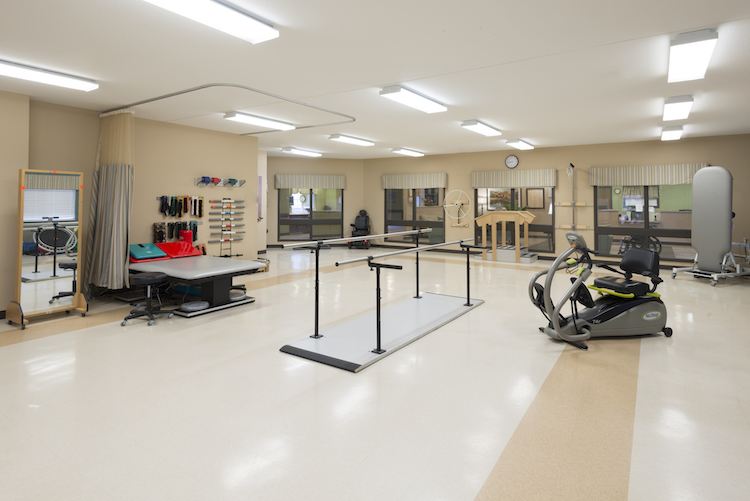
CMS rates Emerald Health & Rehab Center's staffing level at 2 out of 5 stars, which is below average compared to other nursing homes. Staff turnover is 52%, compared to the North Carolina average of 46%. RN turnover specifically is 67%, which is notably high. RNs provide skilled clinical oversight, so turnover in this role can affect medical care quality.

What Have Inspectors Found at Emerald Health & Rehab Center?

State health inspectors documented 21 deficiencies at Emerald Health & Rehab Center during 2023 to 2025. These included: 20 with potential for harm and 1 minor or isolated issues.

Who Owns and Operates Emerald Health & Rehab Center?

Emerald Health & Rehab Center is owned by a for-profit company. For-profit facilities operate as businesses with obligations to shareholders or private owners. The facility is operated by SABER HEALTHCARE GROUP, a chain that manages multiple nursing homes. With 96 certified beds and approximately 90 residents (about 94% occupancy), it is a smaller facility located in Lillington, North Carolina.

How Does Emerald Health & Rehab Center Compare to Other North Carolina Nursing Homes?

Compared to the 100 nursing homes in North Carolina, Emerald Health & Rehab Center's overall rating (2 stars) is below the state average of 2.8, staff turnover (52%) is near the state average of 46%, and health inspection rating (2 stars) is below the national benchmark.

What Should Families Ask When Visiting Emerald Health & Rehab Center?

Based on this facility's data, families visiting should ask: "Can you walk me through typical staffing levels on day, evening, and night shifts?" "Can I visit during a mealtime to observe dining assistance and food quality?" "How do you handle medical emergencies, and what is your hospital transfer rate?" "Can I speak with family members of current residents about their experience?" These questions are particularly relevant given the below-average staffing rating.

Is Emerald Health & Rehab Center Safe?

Based on CMS inspection data, Emerald Health & Rehab Center has a clean safety record: no substantiated abuse findings (meaning no confirmed cases of resident harm), no Immediate Jeopardy citations (the most serious violation level indicating risk of serious injury or death), and is not on the Special Focus Facility watch list (a federal program monitoring the lowest-performing 1% of nursing homes). The facility has a 2-star overall rating and ranks #100 of 100 nursing homes in North Carolina. While no facility is perfect, families should still ask about staff-to-resident ratios and recent inspection results during their visit.

Do Nurses at Emerald Health & Rehab Center Stick Around?

Emerald Health & Rehab Center has a staff turnover rate of 52%, which is 6 percentage points above the North Carolina average of 46%. Moderate turnover is common in nursing homes, but families should still ask about staff tenure and how the facility maintains care continuity when employees leave.

Was Emerald Health & Rehab Center Ever Fined?

Emerald Health & Rehab Center has no federal fines on record. CMS issues fines when nursing homes fail to meet care standards or don't correct problems found during inspections. The absence of fines suggests the facility has either maintained compliance or corrected any issues before penalties were assessed. This is a positive indicator, though families should still review recent inspection reports for the full picture.

Is Emerald Health & Rehab Center on Any Federal Watch List?

Emerald Health & Rehab Center is not on any federal watch list. The most significant is the Special Focus Facility (SFF) program, which identifies the bottom 1% of nursing homes nationally based on persistent, serious quality problems. Not being on this list means the facility has avoided the pattern of deficiencies that triggers enhanced federal oversight. This is a positive indicator, though families should still review the facility's inspection history directly.