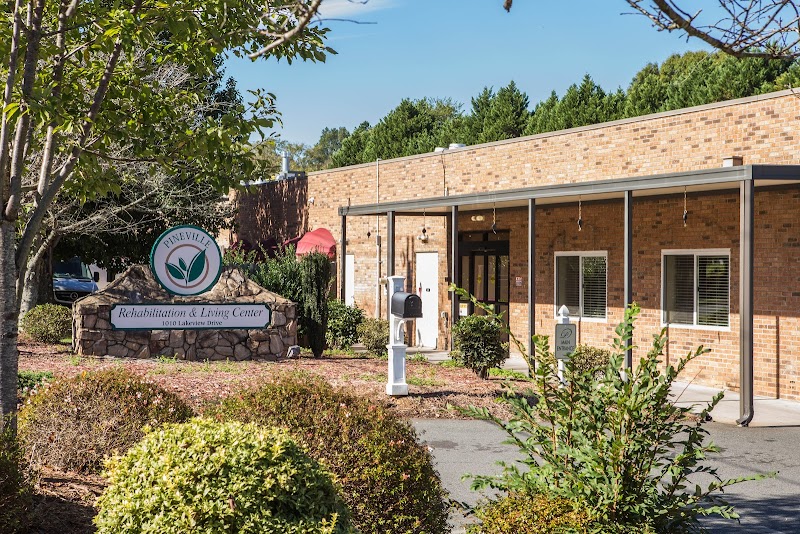
Pineville Rehabilitation and Living Center
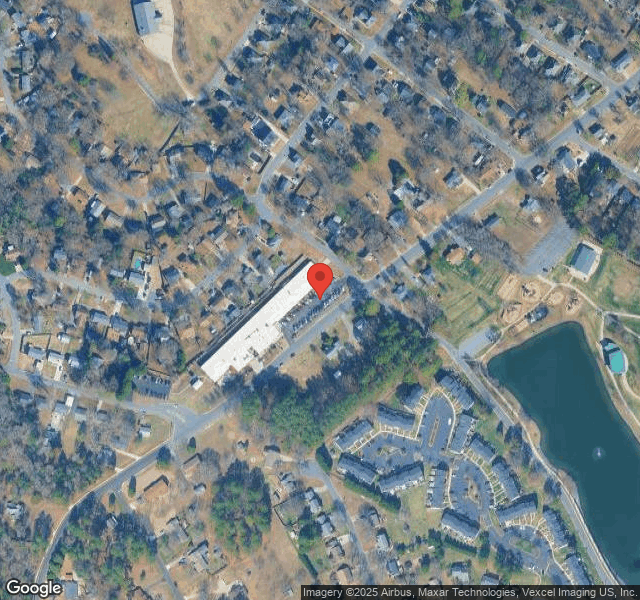

1010 Lakeview Drive, Pineville, NC 28134 (704) 889-2273
For profit - Limited Liability company 106 Beds CCH HEALTHCARE Data: November 2025 2 Immediate Jeopardy citations
Trust Grade
1/100
#276 of 417 in NC
Last Inspection: June 2025

Inspected within the last 6 months. Data reflects current conditions.

Overview

Pineville Rehabilitation and Living Center has received a Trust Grade of F, indicating significant concerns about the quality of care provided. Ranked #276 out of 417 facilities in North Carolina, they are in the bottom half, and #19 out of 29 in Mecklenburg County, meaning there are better local options available. The facility is improving, having reduced issues from 11 in 2024 to 6 in 2025, but it still faces serious challenges, including $115,980 in fines, which is concerning as it is higher than 86% of facilities in the state. Staffing is a mixed bag; while there is more RN coverage than 79% of North Carolina facilities, the turnover rate is high at 66%, indicating that many staff members leave. Recent inspections revealed critical issues, such as a resident being discharged without proper preparations, leading to missed medical treatments, and another resident being restrained inappropriately, highlighting both serious weaknesses in care and oversight at the facility.
Trust Score
F
1/100
In North Carolina
#276/417
Bottom 34%
Safety Record
High Risk
Review needed
Inspections
Getting Better
11 → 6 violations
Staff Stability
⚠ Watch
66% turnover. Above average. Higher turnover means staff may not know residents' routines.
Penalties
○ Average
$115,980 in fines. Higher than 68% of North Carolina facilities. Some compliance issues.
Skilled Nurses
○ Average
Each resident gets 40 minutes of Registered Nurse (RN) attention daily — about average for North Carolina. RNs are the most trained staff who monitor for health changes.
Violations
⚠ Watch
45 deficiencies on record. Higher than average. Multiple issues found across inspections.
★★☆☆☆
2.0
Overall Rating
★★★☆☆
3.0
Staff Levels
★★★★☆
4.0
Care Quality
★★☆☆☆
2.0
Inspection Score
Stable
2024: 11 issues
2025: 6 issues

The Good

  • 4-Star Quality Measures · Strong clinical quality outcomes
  • Full Sprinkler Coverage · Fire safety systems throughout facility
  • No fines on record

Facility shows strength in quality measures, fire safety.

The Bad

2-Star Overall Rating

Below North Carolina average (2.8)

Below average - review inspection findings carefully

Staff Turnover: 66%

20pts above North Carolina avg (46%)

Frequent staff changes - ask about care continuity

Federal Fines: $115,980

Well above median ($33,413)

Significant penalties indicating serious issues

Chain: CCH HEALTHCARE

Part of a multi-facility chain

Ask about local staffing decisions and management

Staff turnover is elevated (66%)

18 points above North Carolina average of 48%

The Ugly 45 deficiencies on record

2 life-threatening 1 actual harm
Jun 2025 6 deficiencies
CONCERN (D)

Potential for Harm - no one hurt, but risky conditions existed

Deficiency F0553 (Tag F0553)

Could have caused harm · This affected 1 resident

**NOTE- TERMS IN BRACKETS HAVE BEEN EDITED TO PROTECT CONFIDENTIALITY** Based on record review, staff and resident representative interviews, the facility failed to conduct a care plan conference and ...

Read full inspector narrative →
**NOTE- TERMS IN BRACKETS HAVE BEEN EDITED TO PROTECT CONFIDENTIALITY** Based on record review, staff and resident representative interviews, the facility failed to conduct a care plan conference and offer the resident and resident representative the right to participate in the person-centered care planning process for 1 of 5 residents reviewed for care plans (Resident #346). The findings included: Resident #346 was admitted to the facility on [DATE] and discharged on 4/8/2024. Resident #346's care plan initiated on 3/17/2024 addressed the following areas: the risk for allergic response to fenofibrate, neosporin and gluten, ADL self-care performance deficit and required staff assistance to complete ADL tasks daily, deep vein thrombosis of the left popliteal vein and left posterior tibial vein related to impaired mobility and atrial fibrillation which required anticoagulant therapy, full code status, moderate risk for falls, indwelling foley catheter due to urinary retention, bowel incontinence but was at risk for constipation due to decreased mobility and medication side effects, right hip fracture requiring surgical repair after a fall at home in her bathtub and pain associated with the fracture, nutritional risk factors related to a mechanically altered diet for dysphagia, gluten free restriction, and a history of protein calorie malnutrition, and Stage IV pressure wounds of the left ischium and left elbow, unstageable wounds to both heels, and deep tissue injuries to both the left and right lateral ankles and was at risk for further skin breakdown. The admission Minimum Data Set (MDS) assessment dated [DATE] indicated Resident #346 was cognitively intact. As Resident #346 discharged to another skilled nursing facility, an MDS assessment was completed for discharge with return not anticipated. A review of Resident #346's electronic medical record revealed no documentation that a care plan conference had been held during Resident #346's stay at the facility. On 6/3/2025 at 6:00 PM a telephone interview with the Resident Representative revealed on the day of admission, Resident #346 and the Resident Representative were told that a care plan conference would be held on 3/15/2024 at 11:00 AM in Resident #346's room. The resident representative stated she arrived for the conference and waited in the room with Resident #346, but no staff ever came to the room. The Resident Representative stated she inquired about the conference at the nurse's station but was told no one knew about the conference as their system was down. The care plan conference was not rescheduled with the resident or resident representative. The Resident Representative indicated later she asked various staff members if the conference had been held but never received any updates or progress reports. The Resident Representative stated she only discovered there was a care plan document dated 3/17/2024 outlining focus areas, goals and interventions after she requested Resident #346's medical record after Resident #346 discharged on 4/8/2024. On 6/5/2025 at 10:06 AM an interview with Social Worker #1 revealed she was responsible for the care plan conference invitations and meeting schedule based on a list provided to her by the MDS Coordinator. She recalled Resident #346 and thought the conference had been held with the Resident Representative. Social Worker #1 was unable to locate any documentation in the electronic medical record that the care plan conference had been held. She was unable to provide any documentation that discussions regarding care planning had been conducted with Resident #346 or her resident representative. Social Worker #1 indicated that documentation of the completed care plan conference in the electronic medical record was at times completed by nursing and at other times by her. She was not sure why documentation of the care plan conference had not been completed for Resident #346. There was not a clear process in place which determined if nursing or social work would document the completed care plan conference once held. On 6/5/2025 at 2:47 PM an interview with the Director of Nursing (DON) indicated that social services was responsible for arranging the care plan conferences based on a list provided by the MDS Coordinator. The DON stated the care plan process should include a progress note that the conference was held and document who attended. She stated sometimes the Social Worker would document the conference and at other times nursing would document under an Interdisciplinary Team (IDT) note. There was not a clear process to determine if nursing or social work took the responsibility to document in the electronic medical record after a completed care conference. The DON was unable to locate documentation that a care plan conference had been held for Resident #346 or that Resident #346 or the resident representative had participated in the care plan process. She did not know why there was not documentation in the electronic medical record. On 6/6/2025 at 11:34 AM an interview with the Administrator revealed that a resident and the resident representative had the right to participate in the care plan conference if they chose to do so and the care plan conference should be documented in the electronic medical record (EMR). She did not know why Resident #346 had no documentation in the EMR reflecting that a care plan conference had been held and that Resident #346 and the resident representative had participated in the planning.
CONCERN (D)

Potential for Harm - no one hurt, but risky conditions existed

Assessment Accuracy (Tag F0641)

Could have caused harm · This affected 1 resident

**NOTE- TERMS IN BRACKETS HAVE BEEN EDITED TO PROTECT CONFIDENTIALITY** 2. A hospital referral form dated 10/25/24 revealed Resident #147 required continuous supplemental oxygen. Resident #147 was ad...

Read full inspector narrative →
**NOTE- TERMS IN BRACKETS HAVE BEEN EDITED TO PROTECT CONFIDENTIALITY** 2. A hospital referral form dated 10/25/24 revealed Resident #147 required continuous supplemental oxygen. Resident #147 was admitted to the facility on [DATE] with a diagnosis of chronic obstructive pulmonary disease (COPD). A nursing progress note dated 11/01/24 revealed Resident #147 required 3 liters of supplemental oxygen. A review of the admission Minimum Data Set (MDS) assessment dated [DATE] revealed Resident #147 was coded for no oxygen therapy. An interview on 6/5/2025 at 9:38 AM with the MDS Coordinator indicated she reviewed the residents progress notes and referral forms prior to completing the initial admission MDS. The interview revealed based on the referral form and the nursing progress notes Resident #147 had received supplemental oxygen from the time of his admission and should have been coded on his admission MDS. The MDS Coordinator stated she was responsible for completing the assessment and had just miscoded it by mistake. An interview on 6/5/2025 at 2:29 PM with the Director of Nursing (DON) indicated the MDS should be coded accurately. She was not sure why Resident #147's admission MDS had been coded incorrectly. An interview on 6/5/2025 at 10:34 AM with the Administrator revealed that the MDS should be coded accurately. She did not know why Resident #147's admission MDS had been coded incorrectly. Based on record review and staff interviews, the facility failed to accurately code the Minimum Data Set (MDS) assessment in the areas of discharge location (Resident #345) and respiratory treatment (Resident #147) for 2 of 19 residents reviewed for accuracy of assessment. The findings included: 1. Resident #345 was admitted to the facility on [DATE]. A review of a social service progress note dated 4/28/2025 at 4:57 PM stated Resident #345 had a planned discharge to home with home health services on 4/28/2025. A review of the discharge MDS assessment dated [DATE] revealed that the discharge status had been coded as discharge to home/community. An interview on 6/5/2025 at 9:46 AM with the MDS Coordinator indicated she received a resident's discharge information through progress notes, discussions with the Social Worker or weekly utilization review meetings. She stated she routinely coded the discharge status as home/community when a resident discharged home. She was unable to provide an example of when it would be appropriate to use the home under the care of organized home health service organization category. The MDS Coordinator stated she saw the social service progress note documenting the home health services but since Resident #345 discharged home she thought home/community was the correct coding. An interview on 6/5/2025 at 2:47 PM with the Director of Nursing (DON) indicated the MDS should be coded accurately. She was not sure why Resident #345's discharge MDS had been coded incorrectly. An interview on 6/6/2025 at 11:34 AM with the Administrator revealed that the MDS should be coded accurately. She did not know why Resident #345's discharge status had been coded incorrectly.
CONCERN (D) 📢 Someone Reported This

A family member, employee, or ombudsman was alarmed enough to file a formal complaint

Potential for Harm - no one hurt, but risky conditions existed

Deficiency F0658 (Tag F0658)

Could have caused harm · This affected 1 resident

**NOTE- TERMS IN BRACKETS HAVE BEEN EDITED TO PROTECT CONFIDENTIALITY** Based on observations, record review, and resident and staff interviews, the facility failed to ensure Resident #9 swallowed all...

Read full inspector narrative →
**NOTE- TERMS IN BRACKETS HAVE BEEN EDITED TO PROTECT CONFIDENTIALITY** Based on observations, record review, and resident and staff interviews, the facility failed to ensure Resident #9 swallowed all of her prescribed medications before leaving Resident #9's room for 1 of 1 resident reviewed for medication storage (Resident #9). The findings included: Resident #9 was admitted to the facility on [DATE] with diagnoses which included vascular dementia, cirrhosis of the liver and end stage renal disease. The annual Minimum Data Set (MDS) assessment dated [DATE] revealed Resident #9 was moderately cognitively impaired. A physician order dated 05/27/2025 read; Lactulose 45 milliliters (ml) to be given twice daily by mouth for increased ammonia level due to cirrhosis of the liver. There was not an assessment for medication self- administration documented in Resident #9's electronic medical record. On 6/3/2025 at 8:50 AM, Resident #9 was observed sitting on the edge of her bed eating breakfast with her meal tray on her overbed table positioned next to her bed. A medication cup containing a green liquid was observed sitting next to her breakfast tray. Resident #9 stated she did not know what the liquid was or where it had come from. An interview on 6/3/2025 at 9:10 AM with Nurse #1 revealed she had administered Resident #9's medications that morning and she thought Resident #9 had taken all of the medications while she was in the room. Nurse #1 and this surveyor returned to Resident #9's room and during the interview Nurse #1 explained to Resident #9 that the medication was lactulose, and it reduced her ammonia level. Resident #9 took the medication. Nurse #1 stated she should have been sure Resident #9 had taken all of her medications before she left the room earlier that morning. On 6/4/2025 at 3:05 PM an interview with the Assistant Director of Nursing (ADON) indicated that Nurse #1 should have stayed in the room until Resident #9 had taken all of her medications. No medications should have been left at the bedside. On 6/5/2025 at 2:47 PM an interview with the Director of Nursing (DON) indicated Nurse #1 should have stayed with Resident #9 and watched while she took her medications. The DON said medication should not have been left with Resident #9. She was not sure why Nurse #1 had left Resident # 9's medication at the bedside. On 6/6/2025 at 11:34 AM an interview with the Administrator revealed that Nurse #1 should have stayed with Resident #9 to observe her taking all of the medications administered. The Administrator did not know why Nurse #1 had left medication unattended with the resident.
CONCERN (D) 📢 Someone Reported This

A family member, employee, or ombudsman was alarmed enough to file a formal complaint

Potential for Harm - no one hurt, but risky conditions existed

Accident Prevention (Tag F0689)

Could have caused harm · This affected 1 resident

**NOTE- TERMS IN BRACKETS HAVE BEEN EDITED TO PROTECT CONFIDENTIALITY** Based on observation, record review,and resident and staff interview, the facility failed to provide supervision for storage of ...

Read full inspector narrative →
**NOTE- TERMS IN BRACKETS HAVE BEEN EDITED TO PROTECT CONFIDENTIALITY** Based on observation, record review,and resident and staff interview, the facility failed to provide supervision for storage of smoking supplies (cigarettes/lighter) for 1 of 3 residents sampled for supervision to prevent accidents (Resident #31). The findings included: A review of the facility's Resident Smoking policy, dated October 2023, indicated any resident who was deemed safe to smoke independently will have their smoking materials secured by the facility, including lighters, cigarettes and e-cigarettes. Resident #31 was admitted to the facility on [DATE] with diagnoses which included seizure disorder, anxiety and depression. A review of Resident #31's care plan, revised on 02/22/24, revealed he was an unsupervised smoker. The goal was for Resident #31 to not suffer injury from unsafe smoking practices through the review date. Interventions included the residents smoking supplies to be stored with the nurse. A safe smoking assessment dated [DATE] revealed Resident #31 was a safe smoker, and the facility stored his smoking materials. A review of Resident #31's quarterly Minimum Data Set (MDS) dated [DATE] revealed the resident was cognitively intact and independent for most activities of daily living (ADL). The MDS indicated Resident #31 utilized a wheelchair for mobility. An observation and interview were conducted with Resident #31 on 06/02/25 at 12:45 PM. Resident #31 was observed with a lighter and one pack of cigarettes in the left pocket of his backpack located on the back of his wheelchair. Resident #31 stated he was an unsupervised smoker and had always kept his smoking supplies because he was trustworthy. He stated no staff member had asked him to keep his supplies at the nurse's station and that he was familiar with the smoking policy because he had signed the smoking agreement when he admitted into the facility. An observation was conducted of Resident #31 on 06/03/25 at 11:31 AM. Resident #31 was observed with a lighter and one pack of cigarettes in the left pocket of his backpack located on the back of his wheelchair. An observation was conducted of Resident #31 on 06/03/25 at 1:38 PM. Resident #31 was observed with a lighter and one pack of cigarettes in the left pocket of his backpack located on the back of his wheelchair. On 06/03/25 at 12:22 PM an interview was conducted with Nurse #1. During the interview she stated she was new to the facility and had just started working in the building that morning at 7:00 AM. Nurse #1 stated residents in the facility that were deemed unsupervised smokers were allowed to go out and smoke at the designated smoking area. She stated typically the cigarettes were kept in the nurse's medication cart however she stated she did not have any cigarettes in the cart on that day. The interview revealed she was not sure who the unsupervised smoker was or where they kept their smoking supplies. On 06/03/25 at 12:27 PM an interview was conducted with Nurse Aide (NA)#1. During the interview she stated she frequently worked with Resident #31 and that he was an unsupervised smoker. NA #1 stated the resident kept his own supplies (cigarette/lighter) so he could go to the smoking area whenever he wanted to. The facility had never had any issues or incident in which his smoking materials would be taken from him. NA #1 stated Resident #31 had kept his cigarettes and lighter in his room for as long as she could remember. On 06/03/25 at 12:39 PM an interview was conducted with NA #2. During the interview she stated she had worked in the facility for one year and typically worked with Resident #31. She stated Resident #31 would go outside to smoke whenever he wanted to, not at certain times. NA #2 stated Resident #31 kept his own cigarettes and lighter in his room. She did not know of any incidents or issues that had resulted from him keeping his own cigarettes. All the other residents had to ask for their supplies. NA #2 stated Resident #31 was the only resident in the facility that kept his own smoking supplies. On 06/04/25 at 10:07 AM an interview was conducted with Nurse #2. During the interview she stated she was responsible for Resident #31 on 06/04/25 and did not have his smoking supplies on the medication cart. She stated Resident #31 was the only resident that was allowed to keep his own smoking materials because he was deemed a safe smoker. On 06/04/25 at 10:31 AM an interview was conducted with the Director of Nursing (DON). During the interview she stated the facility did not have a lot of residents who smoked and only had two residents that were independent smokers. The DON stated the two independent smokers would retrieve their smoking materials from the Nurse on the hall and go in/out of the facility to the smoking area as they wished. All smoking supplies were stored on the medication cart and the resident had to sign the smoking materials out and back in as they reentered the building. She stated it was part of the resident's smoking agreement that they signed at admission. The DON stated she was unaware of any resident in the building that had their own smoking materials on them and was unaware about Resident #31. The DON stated staff received education several months prior for a facility wide education and upon hire regarding the smoking practices/policy of the facility. She stated the nurses along with Resident #31 should be following the facility smoking policy and he should not have been allowed to keep his own smoking supplies in his room. On 06/05/25 at 10:40 AM an interview was conducted with the Administrator. During the interview she stated Resident #31 signed a smoking agreement upon his admission into the facility. However, it was hard to keep up with him because he was known to hide his smoking supplies and curse at staff if they tried to keep them locked in the nurse's cart.
CONCERN (D)

Potential for Harm - no one hurt, but risky conditions existed

Deficiency F0761 (Tag F0761)

Could have caused harm · This affected 1 resident

**NOTE- TERMS IN BRACKETS HAVE BEEN EDITED TO PROTECT CONFIDENTIALITY** Based on observations and staff interviews, the facility failed to label an open vial of Tuberculin Purified Protein Derivative ...

Read full inspector narrative →
**NOTE- TERMS IN BRACKETS HAVE BEEN EDITED TO PROTECT CONFIDENTIALITY** Based on observations and staff interviews, the facility failed to label an open vial of Tuberculin Purified Protein Derivative (PPD) medication observed in 1of 2 medication storage rooms ([NAME] Hall Medication Storage Room) reviewed for medication storage. The findings included: An observation of the [NAME] Hall medication storage room with Nurse #1 on 06/04/25 at 7:40 AM revealed an open multi-use vial of Tuberculin Purified Protein Derivative, Diluted Aplisol Exp: 2026/8, was opened and not labeled with open date. An interview with Nurse #1 on 06/04/25 at 7:40 AM revealed the Tuberculin medication vial should have been labeled with an open date and the expiration date on box should have been circled. Nurse #1 stated the vials were labeled with open date because Tuberculin medication vials were only good for 30 days after they were opened. Nurse #1 stated she was not sure why the vial was not dated; she had not used the vial. An interview with the Assistant Director of Nursing (ADON) on 06/04/25 at 7:50 AM revealed the opened Tuberculin medication vial should have been labeled with an open date and discarded 30 days after the open date. The ADON stated Tuberculin medication vials were used so often and emptied before the 30 days of opening, the nurses probably forgot to label the vial with the open date. The ADON stated that she checked the medications in the refrigerator on day shift and unit manager checked on night shift. The ADON reported she had not completed medication refrigerator checks for the day and discarded the unlabeled open Tuberculin medication vial when it was brought to her attention by Nurse #1.
CONCERN (D) 📢 Someone Reported This

A family member, employee, or ombudsman was alarmed enough to file a formal complaint

Potential for Harm - no one hurt, but risky conditions existed

Infection Control (Tag F0880)

Could have caused harm · This affected 1 resident

Based on observation, record review, and staff interviews, the facility failed to follow their Handwashing/Hand Hygiene policy when Nurse #2 did not doff her gloves, perform hand hygiene and don clean...

Read full inspector narrative →
Based on observation, record review, and staff interviews, the facility failed to follow their Handwashing/Hand Hygiene policy when Nurse #2 did not doff her gloves, perform hand hygiene and don clean gloves prior to applying wound treatment and a clean dressing and before moving to a second wound on Resident #14. The deficient practice occurred for 1 of 4 staff members observed for infection control practices (Nurse #2). The findings included: Review of the facility's policy and procedure entitled Hand Hygiene and dated October 2021 read in part: Hand hygiene continues to be the primary means of preventing the transmission of infection. The following is a list of some situations that require hand hygiene: a. Immediately before touching a resident. b. Before performing an aseptic task c. After contact with blood, body fluids, or contaminated surfaces. d. After touching a resident e. After touching the resident's environment f. Before moving from working on a soiled body site to a clean body site on the same resident; and g. Immediately after glove removal. A wound observation was made on 06/03/25 at 3:08 PM on Resident #14 with Nurse #2 and the Infection Preventionist. Nurse #2 and the Infection Preventionist donned a clean gown and clean gloves. The Infection Preventionist stood on the resident's right side and held the resident over in a turned position so Nurse #2 could complete the dressing change. Nurse #2 then removed the old dressings from two wounds located on the residents lower back and sacrum. Nurse #2 placed the two soiled dressings into the trash can. Nurse #2 doffed her gloves, sanitized her hands, donned clean gloves and cleaned the wound to Resident #14's lower back. While wearing the same gloves Nurse #2 applied petroleum and silver alginate to the wound bed and covered the wound with a dry dressing. She then proceeded to move to the next wound located on Resident #14's sacrum without doffing her gloves and sanitizing her hands. Nurse #2 cleaned the wound bed to the sacrum, applied petroleum and silver alginate to the wound bed. A dry dressing was placed on the wound with tape to secure the dressing. She then doffed her gloves and sanitized her hands. An interview conducted on 06/04/25 at 10:24 AM with Nurse #2 revealed she was aware that she had not sanitized her hands and changed her gloves between the dressing changes on Resident #14's lower back and sacrum. She stated the resident had a total of 6 wounds and she had just gotten nervous and missed changing gloves and sanitizing between the first and second wound, however she corrected her mistake on the next dressing change she completed on the same resident. Nurse #2 stated she had received ongoing education on infection control and dressing changes, that it was just a mistake. An interview conducted on 06/04/25 at 2:55 PM with the Infection Preventionist (IP) revealed she had observed the errors made by Nurse #2 during wound care. She stated her expectation was that she would sanitize her hands and change gloves every time she moved from a dirty area to clean area and with any new wound, she was applying a dressing to. She stated the residents lower back was one wound and the sacrum wound was a second wound, she further stated they had to be treated as two separate areas. The IP stated staff received education on infection control annually and multiple times during the year. An interview on 06/04/25 at 11:03 AM with the Director of Nursing (DON) revealed she was aware of Nurse #2's errors during wound care and said she had been provided with additional education 06/03/24 regarding doffing and donning and sanitizing in between wound care. The DON stated it was her expectation for Nurse #2 to follow infection control best practices to avoid introducing microorganisms into the wounds. An interview on 06/05/25 at 10:40 AM with the Administrator revealed she would expect Nurse #2 to follow the Hand Hygiene policy for wound care.
Nov 2024 1 deficiency 1 Harm
SERIOUS (G) 📢 Someone Reported This

A family member, employee, or ombudsman was alarmed enough to file a formal complaint

Actual Harm - a resident was hurt due to facility failures

Deficiency F0604 (Tag F0604)

A resident was harmed · This affected 1 resident

**NOTE- TERMS IN BRACKETS HAVE BEEN EDITED TO PROTECT CONFIDENTIALITY** Based on record review, and responsible party (RP), staff, nurse practitioner (NP), and physician assistant (PA) interviews, the...

Read full inspector narrative →
**NOTE- TERMS IN BRACKETS HAVE BEEN EDITED TO PROTECT CONFIDENTIALITY** Based on record review, and responsible party (RP), staff, nurse practitioner (NP), and physician assistant (PA) interviews, the facility failed to protect a resident's right to be free of physical restraints for 1 of 3 residents (Resident #1) reviewed for restraints. Resident #1 was found to have his wrists restrained using a pillowcase wrapped in a figure eight [NAME] and then covered with a top sheet. The reasonable person concept was applied as no reasonable person would expect to have their wrists restrained with a pillowcase, restricting their movement, unable to use their call bell for assistance, and making the person feel restricted and/or belittled. Findings included: A review of the facility's Abuse and Neglect Policy and Use of Restraints Policy dated 03/28/2023 stated residents have the right to be free from abuse including physical restraints imposed for purposes of discipline or staff convenience. Physical restraints were defined as any manual method or physical or mechanical device, material or equipment attached to or adjacent to the resident's body that the individual cannot remove easily, which restricts freedom of movement or restricts normal access to one's body. Physical restraints shall only be used for the safety and well-being of the resident(s) and only after other alternatives have been tried successfully. Restraints shall only be used to treat the resident's medical symptom(s) and never for discipline or staff convenience. Resident #1 was admitted to the facility on [DATE] and discharged on 10/03/2024 with diagnoses that included multiple sclerosis (MS), left-side hemiplegia (partial or complete paralysis on the left side of the body), left-side hemiparesis (muscle weakness or partial paralysis on the left side of the body), and cerebral infarction (when blood flow to the brain is blocked, causing the brain tissue to die). Review of the admission Minimum Data Set (MDS) dated [DATE] indicated that Resident #1 had moderate cognitive impairment, required total assistance with all activities of daily living (ADL) and displayed no behaviors during the 7-day assessment period. The MDS revealed Resident #1 had no use of physical restraints. Review of Resident #1's care plan dated 07/30/2024 revealed Resident #1 was care planned for ADL deficits related to disease processes and cognitive deficits with interventions to converse with resident while providing care, be aware of the resident's need for assistance and that additional staff support may fluctuate from day to day and hour to hour. Resident #1's care plan also reflected limited physical mobility related to bilateral upper and lower extremity contractures with interventions to provide gentle range of motion as tolerated with daily care. Resident #1 was also care planned for being resistant to care including personal care, medication, treatments, and lab work with interventions to allow resident to have freedom of choice, and to attempt to determine the reason for non-compliance. Resident #1's care plan also indicated behavioral problems including hitting, kicking, cursing staff and using racial slurs with interventions to explain all procedures to Resident #1 before providing care, approach and speak in a calm manner, divert attention, monitor behavior episodes and attempt to determine the underlying cause and document, and praise any indication of Resident #1's improvement in behavior. Review of the facility's initial abuse investigation report dated 10/02/2024 at 11:30 AM revealed Resident #1 was found to have upper extremity range of motion restricted in linen. The report also indicated that the linen was removed immediately. Resident #1 was assessed by the Director of Nursing (DON) and the Medical Director (MD). The physical assessment revealed discoloration on the top of Resident #1's wrists. Resident #1 denied pain or discomfort and had no mental injury of harm noted upon psychosocial assessment. The report also revealed the incident was reported to local law enforcement and the Department of Social Services on 10/02/2024 at 10:30 AM. The report indicated that Nurse Aide (NA) #1 and NA #2 were suspended pending the conclusion of the investigation. Review of the incident report dated 10/02/2024 at 9:30 AM revealed upon staff rounding, Resident #1 was noted to have upper extremity range of motion restricted in linen. Linen immediately straightened and removed allowing Resident #1 normal range of motion. Resident #1 was assessed by the DON and MD with discoloration noted to top of both wrists. Resident #1 denied pain or discomfort. Review of the MD's acute visit progress note dated 10/2/2024 at 10:50 AM revealed Resident #1 was seen after he was found by nursing staff restrained at the wrists with a pillowcase. Physical examination revealed mild superficial bruising noted on the top of the left and right wrists. No edema was present and Resident #1 had no pain with palpation or movement of the left and right wrists. The MD's plan revealed clinically Resident #1 appeared stable and without fracture but given the mild bruising will obtain STAT (immediate) x-rays of both wrists. Resident #1 elicited no pain with examination. Review of the physician's orders revealed STAT bilateral wrist x-rays were ordered 10/2/224 at 10:45 AM. Review of the bilateral wrist x-ray reports dated 10/02/2024 revealed bilateral wrist x-rays were completed 10/02/2024 at 7:45 PM and results released at 10/03/2024 at 12:51 AM. The results read: 1. Right wrist - minimally displaced fracture of the scaphoid (small bone on the thumb side of the wrist) bone. 2. Left wrist - No obvious acute osseous (bone) or soft tissue abnormality. Further evaluation with Computerized Tomography (CT) (medical imaging procedure that uses x-rays to create 3D cross-sectional pictures) may be considered if clinically indicated. Review of the facility's Nurse Practitioner's (NP) acute visit note dated 10/03/2024 at 8:00 AM. Physical examination revealed Resident #1 was lying bed in no acute distress. Resident #1 endorsed no pain or complaints of pain. Review of bilateral wrist x-rays which showed displaced fracture of the scaphoid bone of right wrist and left wrist showed no acute osseous or soft tissue abnormality however further evaluation with CT may be considered if clinically indicated. NP's plan revealed Resident #1 was to be transferred to the Emergency Department (ED) for further evaluation and treatment and possible CT of left wrist. Resident #1 was sent to the ED on 10/03/2024 at 8:47 AM. Review of the ED physician assistant notes dated 10/03/2024 at 10:15 AM revealed Resident #1 had bilateral wrist x-rays taken at his nursing facility on 10/02/2024 which showed an assumed scaphoid fracture of the right wrist and unclear if there were any fractures of the left wrist. Resident #1 denied pain and when asked if his hands hurt, Resident #1 responded no. Physical examination revealed no traumatic deformity present but contractures of all 4 extremities were present with the left side being the worst. No bruising of the extremities was observed during the examination. The ED note revealed Resident #1 was placed in a thumb spica (device used to immobilize a limb) splint of the right wrist and a CT scan of the left wrist was ordered. Review of the left wrist CT scan results dated 10/03/2024 revealed the examination was degraded by demineralization (bones that have lost minerals that are essential for bone strength which makes bones more likely to fracture). There were findings suspicious for a triquetral fracture (a break in a small wedge-shaped bone in the wrist) and a questionable fracture through the tip of hamate (small bone in the wrist) versus more likely vascular groove (type of indent or [NAME] in bone surfaces). Review of the facility 5-day investigation report dated 10/04/2024 submitted to the state agency indicated staff interviews were conducted with NA #1 who had applied the restricting technique to Resident #1's wrists for combative behavior. The report also revealed NA #1 reported no intent of harm or intent of abuse but identified these techniques as behavioral management which she had learned from NA #2. The facility also conducted an interview with NA #2 who stated that she was not going to lie; she had placed Resident #1's hands inside his shirt when changing him so that Resident #1 would not hit her. NA #2 stated that she did not think she was doing anything wrong by placing Resident #1's hand inside his shirt. NA #1 and NA #2's employment with the facility was terminated effective 10/04/2024. The facility's root cause analysis determined the staff required education on behavioral management during personal care which did not include the use of restrictive devices. Review of statement provide by NA #1 dated 10/02/24 at 4:30 PM read, NA #1 revealed she only tied Resident #1's wrists together with a pillowcase this one time. NA #1 stated that Resident #1 would hit and kick staff during care. NA #1 stated she had seen NA #2 do something like this before; NA #2 would put Resident #1's arms inside his shirt so Resident #1 would not hit her when she changed him. NA #1 stated that NA #2 would take his arms out when she was done with the care. NA #1 was asked if there were other residents these techniques were used on, NA #1 replied no. An attempt to conduct a phone interview with NA #1 on 11/25/2024 at 11:10 AM was unsuccessful. The phone number was no longer in service. A statement provided by NA #2 dated 10/02/24 at 7:00 Pm read, NA #2 stated that she was not going to lie; she had placed Resident #1's hands inside his shirt when changing him so that Resident #1 would not hit her. NA #2 stated that she did not think she was doing anything wrong by placing Resident #1's hand inside his shirt. A telephone interview was conducted with NA #2 on 11/25/2024 at 11:25 AM. NA #2 stated that she had never used linen or anything else to tie a resident down with. She further explained that she had never tied a resident's hands, arms, legs, or body down and she had never seen any staff member tie a resident to the bed or a wheelchair. She further revealed she did not understand why she was involved in this investigation because she had not worked a shift at the facility since 09/29/2024 and was not working when the incident occurred. She also stated that she did not understand how her name got brought up with this investigation. She further stated that she had never shown another NA how to restrain a combative resident so that care could be provided easily, and she had never placed a Resident #1's arms inside his shirt to keep him from hitting her. An interview was conducted with the DON on 11/25/2024 at 11:45 AM. The DON stated that she was coming down the hall on 10/02/2024 and that Nurse #1 and NA #3 asked her to come to Resident #1's room at approximately 9:30 AM. She explained that NA #3 was serving Resident #1's breakfast tray and noticed his linen was tangled and found Resident #1's wrists tied together with linen. Resident #1 was covered with his sheet and when the DON removed the top sheet, she noted Resident #1's wrists were bound together and secured with a pillowcase which was tucked in a figure-8 around both wrists. The DON stated she removed the pillowcase and observed redness to the top of both wrists. The DON further added that Resident #1 denied pain or discomfort. The DON explained she went to the MD who was in the facility and explained to him what happened and ask the MD to see Resident #1. The DON revealed the MD ordered STAT (immediate) x-rays of Resident #1's bilateral wrists which were taken 12/02/2024 at 7:45 PM and resulted on 12/03/2024 at 12:51 AM. The DON stated the x-ray report was placed in the physician's box for review because the report was not flagged as critical and did not indicate an acute fracture. The DON further explained that it was unknown exactly how long Resident #1's wrists were bound by the pillowcase. The DON also revealed that Resident #1 was difficult to care for and he would often resist care. The DON explained Resident #1 would be combative, and he would hit and kick staff. She also stated that when she reviewed the night shift staffing grid, NA #1 was assigned to care for Resident #1. The DON stated that when she interviewed NA #1, NA #1 stated this was the only time she had ever placed a pillowcase around Resident #1's wrists so Resident #1 would not hit her while she provided care. An interview was conducted with NA #3 on 11/25/2024 at 12:25 PM. The NA stated that Resident #1 was tangled up in his linen and when she pulled the top sheet back, she observed Resident #1's wrists tied together with linen. NA #3 called for Resident #1's nurse (Nurse #1) and the DON who came to the room immediately. Multiple attempts to contact Nurse #1 were made and were unsuccessful. Several attempts to contact the MD were made from 11/25/2024 to 11/26/2024. The attempts were unsuccessful and there were no return calls from the MD. An interview was conducted with the facility's Nurse Practitioner (NP) on 11/25/2024 at 2:57 PM. The NP stated that she did not see the pillowcase tied around Resident #1's wrists and further added that a fracture occurring from a pillowcase wrapped around the wrists was unlikely but not impossible. She also explained that it would not be appropriate to restrain any resident because the restraint itself may result in harm and/or injury to the resident. An interview was conducted with Resident #1's responsible party (RP) on 11/25/2024 at 3:05 PM. The RP stated that the facility notified him that a staff member had bound Resident #1's wrists together and Resident #1 had broken wrist. The RP also stated that he was not happy with the care provided to Resident #1 at the facility and did not want him to return to the facility. A telephone interview was conducted on 11/26/2024 at 9:02 AM with the Physician Assistant (PA) who cared for Resident #1 on 10/3/2024 in the ED. The PA stated that they were unable to determine the age of the wrist fractures due to the demineralization of Resident #1's bones. The PA further explained that they could not tell if the fracture(s) were acute or chronic in nature. The PA explained that the fractures could be a chronic condition related to the severity of Resident #1's hand/wrist contractures. A joint interview was conducted with the Administrator and the DON on 11/26/2024 at 1:45 PM. The DON stated Resident #1 was found restrained with his wrists bound together with a pillowcase. The DON explained Resident #1 was assessed by nursing and the MD with x-rays ordered. The Administrator stated the facility reported the incident with the 24-hour initial report and the 5-day investigation report and the facility substantiated the use of the pillowcase as a restraint. The DON also stated that both NAs involved were suspended and ultimately terminated on 10/04/2024. The facility provided the following corrective action plan with a completion date of 10/04/2024. Address how corrective actions will be accomplished for those residents to have been affected by the deficient practices: On 10/02/2024, pillowcase was removed from Resident #1's hands by licensed nurse. On 10/02/2024, Resident #1 assessed by licensed nurse for any injury with none noted. On 10/02/2024, Resident #1 was assessed by physician with new orders for x-ray given. On 10/02/2024, Resident #1 assessed for psychosocial harm by licensed nurse with no ill effects noted. On 10/02/2024, Resident #1's responsible party was notified of incident by licensed nurse. On 10/02/2024, NA #1 and NA #2 staff reporting use of restraints were suspended pending investigation by the director of nursing. On 10/02/2024, 1:1 education provided verbally by director of nursing to two staff (NA #1 and NA #2) reporting use if restraints regarding restraint-free facility policy and reporting behaviors to charge nurse. On 10/02/2024, Resident #1's care plan updated by licensed nurse to include two person assist for personal care On 10/03/2024 Resident #1 was transferred to the Emergency Room. How will the facility identify other residents having the potential to be affected by the same deficient practice: All residents are at risk of this practice. On 10/02/2024, all other residents were assessed by a licensed nurse for use of restraint with no other residents affected. On 10/02/2024, all other residents were assessed by a licensed nurse for any injury or new skin area with no concerns noted On 10/02/2024, all residents with a BIMS score of 10 or greater were interviewed by a nurse unit manager to ensure no other concerns for restraint or other abuse with no additional concerns noted. On 10/02/2024, all facility staff were interviewed by the DON to ensure no other incidents of restraint use were known with no additional concerns noted. What measures will be put into place or systemic changes made to ensure that the deficient practice will not occur: On 10/02/2024, all staff were re-educated in person and/or by telephone to the facility's restraint-free policy by director of nursing or other nurse management. Newly hired or contracted staff will be educated prior to accepting an assignment and caring for residents. No staff will provide resident care without completing education. On 10/02/2024, all staff educated in person and by telephone to abuse policy by facility director of nursing or other member of nurse management including types of abuse, reporting, and response. Newly hired or contracted staff will be educated prior to accepting an assignment and caring for residents. No staff will provide resident care without completing the education. On 10/02/2024, staff were educated in person and/or by telephone to notification & intervention for combative and agitated behaviors by director of nursing or other nurse management. Newly hired or contracted staff will be educated prior to accepting an assignment and caring for residents. No staff will provide resident care without completing education. How will the facility monitor its corrective actions to ensure the deficient practice will not recur: Beginning on 10/02/2024, the DON, or other nurse manager/leader, administrator or social worker will observe (on alternating shifts to include 3rd shift) five residents per week for four weeks, and then 3 residents per week for four weeks to ensure no restraints, or other restriction of normal movement or range of motion are in place. Beginning on 10/02/2024, the DON, administrator, or other nurse manager/leader, administrator or social worker will interview 5 residents per week for 4 weeks, then 3 residents per week for 4 weeks for any safety, abuse, or restraint concerns. Beginning on 10/02/2024, the DON, administrator, or nurse manager/leader will interview 5 staff members (on alternating shifts to include 3rd) weekly x 4 weeks, then 3 staff weekly x 4 weeks to identify concerns of abuse or restraint use. The Facility Administrator will review the audits to identify patterns/trends and will adjust the plan to maintain compliance. The Facility Administrator will review the plan during the October 3rd, 2024, ad hoc QAPI meeting and the audits will continue at the discretion of the QAPI committee. Date of compliance: 10/04/2024 The facility's corrective action with a correction date of 10/04/2024 was validated onsite by record reviews and interviews with the Administrator, DON, and staff. Facility staff interviews revealed that they had received education on Abuse and Neglect and the Use of Restraints policies. Staff also received education on notification and interventions for combative and agitated resident behaviors. No employees were allowed to return to work until they had completed the training on Abuse and Neglect, Use of Restraints education and Behavior Management. Review of the assessment sheets revealed residents were assessed for the use of restraint devices with no other residents identified or affected. Residents were also assessed for injury and for the presence of new skin impairments with no concerns identified. Residents who were cognitively intact were interviewed to ensure no additional concerns for restraint or other forms of abuse were verbalized. Review of the facility staff interview sheets to ensure no other incidents of restraint use were being utilized by staff and no additional concerns were found. Administrative staff interviews revealed they had completed the education with all staff and interviews with the staff revealed they had been educated on the Abuse and Neglect, Use of Restraints policies, and Behavior Management. The education included the use of any physical or mechanical device, material or equipment attached to or adjacent to the resident's body that the individual cannot remove easily, which restricts freedom of movement or normal access to one's body. Staff were also able to verbalize that restraints were never used for staff convenience. Review of the audit records revealed the Administrative staff observed five residents per week for four weeks, then 3 residents per week for four weeks to ensure no restraints, or other restriction of normal movement or range of motion was in place. Review of the audits also revealed the Administrative staff interviewed 5 residents per week for 4 weeks, then 3 residents per week for 4 weeks for any safety, abuse, or restraint concerns. Review of the audits further revealed the Administrative staff interviewed 5 staff members on alternating shifts weekly for 4 weeks, then 3 staff members weekly for 4 weeks to identify concerns of abuse or restraint use. The Administrator reviewed the audits to identify patterns/trends and reported the auditing results to the monthly QAPI (Quality Assurance and Performance Improvement) committee. The quality improvement monitoring schedule would be modified if needed based on the findings of the audits. Interviews with the Administrator and the DON revealed the facility launched an educational program related to Abuse and Neglect which included the use of restraints immediately after the incident to re-educate all facility staff. The Administrative staff observed residents to ensure no restraints, or other restriction of movement or compromised range of motion was in place, interviewed residents to ensure no safety, abuse, or restraint concerns were present, and interviewed staff to ensure no concerns of abuse or restraint use was in place. The Administrator and the DON stated the interventions were successful as the facility did not have any further incidents of restraint usage. The compliance date of 10/04/2024 was validated.
Jan 2024 10 deficiencies
CONCERN (D) 📢 Someone Reported This

A family member, employee, or ombudsman was alarmed enough to file a formal complaint

Potential for Harm - no one hurt, but risky conditions existed

Transfer Notice (Tag F0623)

Could have caused harm · This affected 1 resident

**NOTE- TERMS IN BRACKETS HAVE BEEN EDITED TO PROTECT CONFIDENTIALITY** Based on record review and staff interviews the facility failed to provide a written discharge notification to the Resident's Re...

Read full inspector narrative →
**NOTE- TERMS IN BRACKETS HAVE BEEN EDITED TO PROTECT CONFIDENTIALITY** Based on record review and staff interviews the facility failed to provide a written discharge notification to the Resident's Responsible Party (RP) for 1 of 1 resident (#335) reviewed for discharge. The findings included: Resident #335 was admitted to the facility on [DATE] and discharged to the hospital on 8/14/23 with diagnoses including dementia and bipolar. A discharge Minimum Data Set (MDS) assessment dated [DATE] indicated Resident #335's was cognitively intact. His functional abilities were not documented on the MDS. A review of the hospital Discharge summary dated [DATE] indicated Resident #335 was not taking suboxone medication (treats narcotic dependence) and suboxone was not listed on his medication list when he was discharged to the facility on 8/11/23. A review of an admission speech therapy encounter note dated 8/11/23 revealed Resident #335 scored 3 out of 15 on the cognitive screening tool whereas he was unable to remain focused on task during the cognitive assessment. The note further revealed the Resident cognition and receptive/ expressive language were severely impaired. A nursing progress note dated 8/14/23 indicated Resident #335 was disoriented on admission and possibly sedated on 8/11/23. The note further indicated on 8/14/23, Resident #335 presented with wild mood swings, outbursts of anger, paranoia, was ambulatory, unable to redirect and demanded his suboxone medication. An order was obtained from the Medical Director to send the Resident to the hospital for an inpatient psychiatric stay. A review of #335's nursing progress note dated 8/14/23 indicated he was transferred to the hospital on 8/14/23 due to being a harm to self or others. During further review of the medical record dated 8/15/23 indicated a discharge notice was issued to Resident #335 and Ombudsman (via email) due to safety of others with his behaviors aimed at nursing staff. There was no documentation that the resident's RP was provided a written discharge notice. A review of a progress note written by the Administrator dated 9/14/23 revealed the facility was contacted by DHSR on 9/14/23 regarding the discharge and the facility completed an onsite visit to Resident #335 who remained hospitalized , required a sitter, was medicated, and would require memory care/ assisted living placement with locked unit, once discharged . During an interview on 1/25/24 at 2:31 PM the RP indicated she never received a written discharge notice from the facility. Instead, she received a call from the facility staff indicating he was discharged from the facility. The RP further indicated Resident #335 was discharged from the hospital to an unlocked assisted living in November 2023. During an interview on 1/25/24 at 11:00 AM the Director of Nursing (DON) indicated Resident #335 was sedated when he arrived at the facility on 8/11/23 and a few days later, he became increasingly agitated, irate, and was demanding his suboxone although the medication was not on his discharge summary and the facility did not have an order for suboxone. After further investigation, it was determined Resident #335 did not require assistance with care although the initial hospital referral indicated he required assistance with care. The DON further indicated law enforcement were contacted and responded to the facility due to Resident #335's behavior. He was transferred to the hospital on 8/14/23 and an emergency discharge notice was issued to Resident #335 on 8/15/23 while at the hospital, due to not being safe in the facility environment. The DON further indicated the hospital case manager was informed of the discharge and Resident #335's RP was notified of the discharge via telephone but was not provided written notification. During an interview on 1/25/24 at 4:04 PM the Marketing Director revealed she served Resident #335 the discharge notification at the hospital and had the assigned hospital nurse sign as a witness. She further revealed she did not provide a written discharge notice to Resident #335's RP and was not instructed to do so. During a phone interview on 1/25/24 at 12:05 PM Administrator #2 indicated she issued an emergency discharge notice to Resident #335 due to agitation and threatening behavior to staff. She further indicated she did not issue a written discharge notice to the RP, although a notice was delivered to the Resident at the hospital and the Ombudsman was also notified. Administrator #2 did not know why the RP was not notified in writing about the emergency discharge but that the RP was notified via telephone.
CONCERN (D) 📢 Someone Reported This

A family member, employee, or ombudsman was alarmed enough to file a formal complaint

Potential for Harm - no one hurt, but risky conditions existed

Deficiency F0655 (Tag F0655)

Could have caused harm · This affected 1 resident

**NOTE- TERMS IN BRACKETS HAVE BEEN EDITED TO PROTECT CONFIDENTIALITY** Based on record review and staff interviews, the facility failed to complete a baseline care plan within the required timeframe ...

Read full inspector narrative →
**NOTE- TERMS IN BRACKETS HAVE BEEN EDITED TO PROTECT CONFIDENTIALITY** Based on record review and staff interviews, the facility failed to complete a baseline care plan within the required timeframe for a new admission for 1 of 3 residents (Resident # 288). The findings included: Resident #288 was admitted to the facility on [DATE] with diagnoses that included neurocognitive disorder with lewy bodies and Parkinson's disease. The admission Minimum Data Set (MDS) dated [DATE] was still in progress and had not been completed. A review of Resident #288's medical record showed that the baseline care plan was started on 1/12/24 and had only one section completed, which was general information section. The general information section was completed on 1/16/24. Resident #288's functional status, health conditions, dietary, therapy and social services were not completed. On 1/25/24 at 9:56 AM, a phone interview conducted with Nurse #3 who initiated the baseline care plan on 1/12/24 revealed that she didn't know why only one section was completed. Nurse #3 stated that she generally would fill out all the sections. Nurse #3 stated she thought another staff was also helping with the baseline care plan, but she couldn't remember who that was. On 1/25/24 at 10:36 AM, an interview with the MDS Coordinator #2 revealed that the baseline care plan was not completed in a timely fashion. She stated the baseline care plan is to be completed by the nurse doing the admission. The care plan should be completed within 48 hours after admission. On 1/25/24 at 3:41 PM an interview with the Director of Nursing (DON) disclosed that the baseline care plan should be initiated right away and finished within 72 hours. She stated the nurse doing the admission should have completed the baseline care plan. She also stated that having remote staff and staff changes with MDS entry is part of the issue for missing care plans. On 1/25/23 at 4:23 PM an interview with the Administrator revealed that the baseline care plan was supposed to be completed on the day of admission. The nurse doing the admission should complete it within 24-48 hours.
CONCERN (D) 📢 Someone Reported This

A family member, employee, or ombudsman was alarmed enough to file a formal complaint

Potential for Harm - no one hurt, but risky conditions existed

Deficiency F0692 (Tag F0692)

Could have caused harm · This affected 1 resident

**NOTE- TERMS IN BRACKETS HAVE BEEN EDITED TO PROTECT CONFIDENTIALITY** Based on record review and staff interviews, the facility failed to assess and address weight loss for 1 of 3 residents reviewed...

Read full inspector narrative →
**NOTE- TERMS IN BRACKETS HAVE BEEN EDITED TO PROTECT CONFIDENTIALITY** Based on record review and staff interviews, the facility failed to assess and address weight loss for 1 of 3 residents reviewed for nutrition (Resident #1). The findings included: Resident #1 was readmitted to the facility on [DATE] with diagnoses inclusive of peripheral vascular disease, dementia, and anemia. A physician's order dated 1/4/24 indicated Resident #1 had an active order for regular diet, pureed texture, regular (thin) consistency for dysphagia. A physician's order (10/10/23) indicated health shakes two times a day for history of protein-calorie malnutrition one 4 oz serving with breakfast and dinner meal trays was discontinued on 1/3/24, when Resident #1 returned from a hospitalization. A physician's order dated 1/10/24 indicated weekly weights. Per the medical record, no weights were documented during the week of 1/10/24 and the next weight was documented on 1/19/24. A review of Resident #1's weights revealed the following: 9/4/23 218 pounds 9/11/23 216 pounds 9/29/23 206.6 pounds 10/9/23 210 pounds 10/11/23 189.6 pounds 10/16/23 205.5 pounds 10/25/23 188 pounds 10/30/23 189.6 pounds 11/2/23 202 pounds 11/7/23 199 pounds 11/13/23 202.4 pounds 11/30/23 196.2 pounds 1/4/24 185 pounds 1/5/24 reweight 187 pounds 1/19/24 170.2 pounds 1/24/24 reweight 179.8 pounds A review of Resident #1's medical record did not reveal dietary notes that addressed the recent weight loss on 1/19/24. A review of Resident #1's meal tickets dated 1/23/24 and 1/24/23 revealed he received dietary shakes at each meal. A review of Resident #1's medical record from November 2023 through January 2024 did not indicate he was at the end of life. The quarterly Minimum Data Set (MDS) assessment dated [DATE] indicated Resident #1 had severe cognitive impairment and required set up with eating. The MDS indicated a weight of 187 pounds and was checked yes for significant weight loss of 5% or more in the last month. A revised care plan dated 5/23/22 indicated Resident #1 had potential nutritional risk related to mechanically altered diet to facilitate chewing and swallowing due to edentulous status; history of Covid-19, protein/calorie malnutrition; Lymphedema, encephalopathy; elevated BMI with a goal to have adequate intake of meals and supplements to maintain nutritional status as evidenced by no significant weight change, no signs/symptoms of malnutrition, no signs or symptoms of dehydration and would maintain skin integrity through next review date. Interventions included: Administer medications as ordered; Monitor/record/report to physician as needed for signs/symptoms of malnutrition; Significant weight loss: 3lbs in 1 week, >5% in 1 month, >7.5% in 3 months, >10% in 6 months; Obtain and monitor lab/diagnostic work as ordered. Report results to physician and follow up as indicated; Obtain, record, and monitor weight per facility policy/physician order; Provide and serve supplements as ordered, monitor acceptance of supplement. The revised care plan had not been updated since 5/23/22. During an interview on 1/24/24 at 11:57 AM NA #2 indicated when she was assigned to Resident #1, he fed himself, drank a dietary supplement, and at times had a decreased appetite, as evidenced by eating 50-100 % of at least one or two meals. During an interview on 1/24/24 at 4:02 PM the Registered Dietician (RD) revealed that Resident #1 triggered (dietary notification/flagged through a report) for weight loss of 5% or more on 1/19/24 and she did not assess him or make any recommendations although she was at the facility on 1/23/24. She would normally make a recommendation such as re-weight or submit an order for interventions, because of the trigger and she could not recall why she did not. The RD further revealed she was responsible for receiving notification of weight changes via a weekly report, after nursing staff enter resident weights. Those weight results were usually reviewed during weekly risk meetings that included the interdisciplinary team. She indicated she should have followed up on the significant weight loss on 1/19/24 and assessed Resident #1 when she was at the facility on 1/23/24. During an interview on 1/25/24 at 11:25 AM the Director of Nursing indicated Resident #1 had good food intake and had previously been monitored for weight loss. She further indicated she was not aware of the recent weight loss and per the medical record, the Resident's nutritional shakes were discontinued when he was readmitted to the facility on [DATE]. However, he continued to receive nutritional shakes with each meal. Her expectation was for the triggered weight loss to be discussed in the risk meeting on 1/19/24 and for the RD to submit recommendations/ interventions and notify the nurse practitioner or physician to address the weight loss.
CONCERN (E) 📢 Someone Reported This

A family member, employee, or ombudsman was alarmed enough to file a formal complaint

Potential for Harm - no one hurt, but risky conditions existed

Comprehensive Care Plan (Tag F0656)

Could have caused harm · This affected multiple residents

**NOTE- TERMS IN BRACKETS HAVE BEEN EDITED TO PROTECT CONFIDENTIALITY** 2. Resident #298 was admitted to the facility on [DATE] with diagnoses that included dysphagia (difficulty swallowing foods or l...

Read full inspector narrative →
**NOTE- TERMS IN BRACKETS HAVE BEEN EDITED TO PROTECT CONFIDENTIALITY** 2. Resident #298 was admitted to the facility on [DATE] with diagnoses that included dysphagia (difficulty swallowing foods or liquids). Resident #298's care plan dated 11/20/23 did not include a care plan to address his tube feed and nutrition. The quarterly Minimum Data Set (MDS) dated [DATE] indicated Resident #298 was cognitively intact and used a feeding tube for nutritional intake. An interview with MDS Coordinator #1 on 1/24/24 at 10:30 AM revealed that the feeding tube should be a part of the care plan and the Dietician usually did the dietary and nutritional care plans. An interview with the Dietician on 1/24/24 at 12:05 PM disclosed that she initiated most dietary care plans. If it was a resident who required nutrition through a feeding tube, she would always initiate a care plan. The Dietician stated that Resident #298 had been in and out of the hospital so often that she did not do a care plan for the tube feeding. On 1/25/24 at 3:44 PM an interview with the Director of Nursing (DON) revealed that the MDS Nurses were responsible for making sure care plans were complete. The DON indicated that the remote staff and MDS staff changes were part of the issue with missing care plans. Typically, a feeding tube for nutrition care plan would be initiated by the Dietician. On 1/25/24 at 4:19 PM an interview with the Administrator disclosed that the feeding tube should be a part of the care plan and should have been in place for Resident #298. Based on record reviews, and staff interviews, the facility failed to develop and implement an individualized person-centered care plan that addressed activities of daily living (ADL), psychotropic drug use (Resident #7), and tube feeding (Resident #298) for 2 of 9 residents whose care plans were reviewed. The findings included: 1. Resident #7 was admitted to the facility on [DATE] with diagnoses that included bilateral knee osteoarthritis (type pf arthritis that occurs when flexible tissue at the ends of bones wears down), delusional disorder, and dementia. The modification of admission Minimum Data Set (MDS) assessment dated [DATE] indicated Resident #7 was cognitively intact, had no behaviors, and required extensive physical assistance with bed mobility, eating, toilet use, and personal hygiene, and was totally dependent on staff assistance with dressing and bathing. She did not have range of motion impairment to either upper or lower extremities. The MDS further indicated that Resident #7 received antipsychotic medications for 6 days and antidepressant medications for 4 days during the assessment period. The Care Area Assessment (CAA) dated 6/15/23 for activities of daily living (ADL) functional/rehabilitation potential indicated Resident #7 required staff assistance with ADL at this time. She was non-ambulatory and required staff assistance with transfers and mobility. She required assistance with feeding. The CAA further indicated that the ADL functional/rehabilitation potential will be addressed in the care plan with the overall objectives of slowing or minimizing decline, avoiding complications, and minimizing risks. There was a note that indicated will proceed to care plan to focus on providing assistance with ADL. The Care Area Assessment (CAA) dated 6/15/23 for psychotropic drug use indicated Resident #7 was at risk for adverse effects related to psychotropic medication usage. She was ordered and received antipsychotic and antidepressant medications daily. She has had no noted adverse effects at this time. The CAA further indicated that the psychotropic drug use will be addressed in the care plan with the overall objectives of avoiding complications and minimizing risks. There was a note that indicated will proceed to care plan to focus on monitoring for adverse effects related to psychotropic medication usage. The most recent quarterly MDS dated [DATE] indicated Resident #7 was cognitively intact, had no range of motion impairment to either upper or lower extremities, and was dependent on staff assistance with toileting hygiene and shower/bathing. She received antipsychotic and antidepressant medications, and a gradual dose reduction was documented as clinically contraindicated on 7/25/23. Resident #7's care plan which was last updated on 1/22/24 did not include a care plan for ADL and psychotropic drug use. An interview with MDS Coordinator #2 on 1/25/24 at 8:27 AM revealed she started in her current position on 11/8/23 and she was responsible for developing and updating the care plans. MDS Coordinator #2 stated she last updated Resident #64's care plan on 1/22/24 when she was asked to go through the residents listed on the matrix and make sure they had a care plan for the medications that they received. MDS Coordinator #2 stated she acknowledged that Resident #7 was listed as receiving antidepressant and antianxiety medications on the matrix, but she did not see a care plan for psychotropic drug use. She also stated that she did not see a care plan for ADL for Resident #7. MDS Coordinator #2 further reviewed Resident #7's care plan and shared that she added a care plan for urinary catheter on 1/22/24. She stated that she was not sure how the care plan for psychotropic drug use and ADL were missed. She further stated that one of the corporate staff completed Resident #7's quarterly MDS and they probably did not update her care plan then. An interview with the Director of Nursing (DON) on 1/25/24 at 3:39 PM revealed that in order for the floor staff to take care of Resident #7, she didn't think there would be specific interventions in her care plan that weren't already reflected in her medical record. The DON stated that behavior monitoring was already in her medication record, and they should have monitoring of behaviors and monitoring of side effects of psychotropic drugs on the medication administration record. The DON stated that it would be ideal if these interventions were included in Resident #7's care plan but she didn't think not having them on the care plan would prevent the staff from monitoring Resident #7. The DON also stated that ADL should be on Resident #7's care plan. The DON shared that they had MDS nurses who monitored and updated the care plans. The MDS nurses referred to the care plans often and they needed to make sure the specific needs were on the residents' care plans and that they were being met. The DON stated that it was not an excuse but that they have had changes in their MDS department related to staff and they had corporate people and outside personnel helping with MDS and care plans.
CONCERN (E) 📢 Someone Reported This

A family member, employee, or ombudsman was alarmed enough to file a formal complaint

Potential for Harm - no one hurt, but risky conditions existed

ADL Care (Tag F0677)

Could have caused harm · This affected multiple residents

**NOTE- TERMS IN BRACKETS HAVE BEEN EDITED TO PROTECT CONFIDENTIALITY** Based on observations, record review, resident interviews and staff interviews, the facility failed to provide nail care for 2 o...

Read full inspector narrative →
**NOTE- TERMS IN BRACKETS HAVE BEEN EDITED TO PROTECT CONFIDENTIALITY** Based on observations, record review, resident interviews and staff interviews, the facility failed to provide nail care for 2 of 9 residents dependent on staff for activities of daily living (Resident #44 and #1). The findings included: 1. Resident #44 was admitted to the facility on [DATE] with diagnoses inclusive of Parkinson's disease. The quarterly Minimum Data Set assessment (MDS) dated [DATE] indicated Resident #44 had severe cognitive impairment and required setup with eating, oral hygiene, and toileting. The MDS also indicated Resident #44 had not rejected care. A revised care plan dated 12/1/23 revealed Resident #44 had an activities of daily living (ADL) self-care performance deficit related to Parkinson's disease and he required staff assistance to complete ADL tasks daily. An observation and interview conducted on 1/22/24 at 11:10 AM revealed Resident #44's fingernails on both hands were long with jagged edges. Resident #44 stated his fingernails were cleaned the previous week by one staff member then was told a different staff would have to trim his nails and that did not happen. He explained that his fingernails had not been trimmed in a long time and that he wanted them to be cut. He also stated he had never declined to have his nails trimmed. A follow up observation was conducted on 1/23/24 at 9:34 AM and revealed Resident #44's fingernails on both hands remained unchanged (long with jagged edges). A follow up observation was conducted on 1/24/24 at 11:08 AM and revealed Resident #44's fingernails on both hands remained unchanged (long with jagged edges). A review of bathing sheets from 11/2023 through 1/2024 and progress notes from 12/2023 through 1/2024 in the electronic medical record indicated Resident #44 had no refusals of care. During an interview on 1/24/24 at 11:39 AM Nurse Aide (NA) #1 indicated she usually worked with Resident #44 and had provided nail care in the past. She further indicated there was a designated NA (NA#4), who was on light duty, and was assigned to provide nail care to certain residents. However, NA #1 stated she would perform nail care if she recognized the need if NA #4 had not provided nail care. During an interview on 1/24/24 at 3:35 PM the Director of Nursing (DON) expected Resident #44 to receive nail care on shower days. She then explained NA #4 was assigned to provide nail care (clean and file) and although the activities staff provided nail care as an activity, they could only file resident fingernails. 2. Resident #1 was admitted to the facility on [DATE] with diagnoses inclusive of peripheral vascular disease, dementia, and anemia. The quarterly MDS assessment dated [DATE] indicated Resident #1 had severe cognitive impairment and required maximum assistance for toileting, dressing, and personal hygiene and had not refused care. An observation and interview conducted on 1/22/24 at 11:35 AM revealed Resident #1's fingernails on both hands were long with jagged edges and had dark brown matter under both thumbnails. A follow up observation was conducted on 1/23/24 at 9:55 AM and revealed Resident #1's fingernails on both hands remained unchanged (long with jagged edges and dark brown matter under both thumbnails). A follow up observation was conducted on 1/24/24 at 11:19 AM and revealed Resident #1's fingernails on both hands remained as they did on 1/22/24 (long with jagged edges and dark brown matter under both thumbnails). A follow up observation on 1/24/24 at 3:09 PM revealed Resident #1's fingernails had been cleaned and cut. During an interview on 1/24/24 at 12:15 PM NA #3 revealed she was assigned to providing nail care to residents and she cleaned Resident #1's fingernails on 1/19/24. However, when she arrived at work on 1/22/24, she observed brown matter under his fingernails and did not get a chance to clean them again. During an interview on 1/24/24 at 11:55 AM NA #2 indicated she did not cut Resident #1's fingernails during personal care because of the thickness of his fingernails. NA #2 further indicated when she provided personal care to Resident #1, she would give him a wet soapy cloth and he could wash his hands without assistance. She was not sure why his fingernails had not been cut or who was supposed to cut them. During an interview on 1/24/24 at 3:30 PM the DON reported NAs have attempted to file Resident #1's fingernails at times due to the thickness of the nails. The DON stated Resident #1 was hospitalized at the end of December and his fingernails had not been trimmed or filed since he returned from the hospital. The DON stated she expected Resident #1 to receive nail care that included cleaning/ removing debris from his fingernails during personal care and on shower days.
CONCERN (E) 📢 Someone Reported This

A family member, employee, or ombudsman was alarmed enough to file a formal complaint

Potential for Harm - no one hurt, but risky conditions existed

Deficiency F0740 (Tag F0740)

Could have caused harm · This affected multiple residents

**NOTE- TERMS IN BRACKETS HAVE BEEN EDITED TO PROTECT CONFIDENTIALITY** Based on record review and interviews with resident, staff, the Nurse Practitioner and the Mental Health Services Representative...

Read full inspector narrative →
**NOTE- TERMS IN BRACKETS HAVE BEEN EDITED TO PROTECT CONFIDENTIALITY** Based on record review and interviews with resident, staff, the Nurse Practitioner and the Mental Health Services Representative, the facility failed to obtain mental health services for 1 of 1 resident reviewed for behavioral and emotional status (Resident #64). The findings included: Resident #64 was admitted to the facility on [DATE] with diagnoses that included depression. A progress note dated 10/2/23 by the Nurse Practitioner indicated Resident #64 was seen for routine medical follow-up. Resident #64 endorsed feelings of depression. He stated that he had not slept well for 5 nights. Resident #64 stated that his Escitalopram (antidepressant used to treat depression and generalized anxiety disorder) was not working. He was currently on 20 milligrams (mg) which was the maximum dose. The NP indicated she would place order for psychiatric consult. Resident #64 was originally prescribed Alprazolam (sedative used to treat anxiety and panic disorder) 0.5 mg twice daily as needed. Resident #64 reported he had tried taking Melatonin (hormone that plays a role in sleep) for sleep in the past and it did not work. Resident #64 denied using Trazodone (antidepressant and sedative) in the past. The NP indicated she would place an order for Trazodone 25 mg every night. There was no order in Resident #64's medical record dated 10/2/23 for a psychiatric consult. A progress note dated 10/6/23 by the NP indicated Resident #64 was seen for follow-up of anxiety and depression. Resident #64 endorsed feelings of depression. He stated he was feeling better since Alprazolam 0.5 mg was scheduled twice daily. He was currently on Escitalopram 20 mg and awaiting psychiatric referral. A nurses' progress note dated 10/17/23 at 11:52 PM by Nurse #1 indicated Resident #64 stated that he had been feeling depressed and the depression had taken over. He denied having any suicidal ideations. The NP was notified and an order for a psychiatrist consultation had been made. Staff had been made aware of the resident's change in mental health and will continue to monitor. An order for psychiatry consultation for depression was scheduled on 10/17/23 in Resident #64's medical record and was marked completed on 10/18/23 by Nurse #1. A phone interview with Nurse #1 on 1/25/24 at 8:09 AM revealed Resident #64 told him on 10/17/23 that his depression had taken over and that he wanted to see a psychiatrist. Nurse #1 stated he felt bad about Resident #64 because he was depressed but he wasn't sure what the process was at the facility. Nurse #1 stated he knew Resident #64 needed to be seen by any provider who could talk to him about his depression, and he was advised by the other nurses who worked on the same shift to leave a note under the door of the medical providers' room. Nurse #1 denied having received any order or having entered any order for psychiatry consultation for Resident #64. Nurse #1 added that he thought Resident #64 had been seen by psychiatry because the next time he worked with him, Resident #64 mentioned to him that he talked to the NP about being depressed. Nurse #1 stated that he assumed the NP had taken care of obtaining psychiatric consultation for Resident #64. A progress note dated 10/18/23 by the NP indicated Resident #64 was seen due to reports from nursing that he was experiencing increased depression. He endorsed feelings of depression. He stated he had a feeling of worthlessness. Last week, Resident #64 was seen and stated he was feeling better since adding Alprazolam 0.5 mg scheduled twice daily. He was currently on Escitalopram 20 mg daily which was the maximum daily dose. He denied suicidal or homicidal ideations. The NP indicated Resident #64 was Awaiting psychiatric referral. Resident #64 stated he had not been eating and had no appetite. He stated this happens when he gets in a depressed state. The NP indicated she would place an order to start Bupropion (antidepressant) 100 mg twice daily. The NP indicated she would increase the Bupropion to three times daily as indicated. A progress note dated 12/11/23 by the NP indicated Resident #64 was seen for depression. Resident #64 reported feeling very depressed, and really wanting to see a psychiatrist. The NP indicated the referral was pending and she would follow up with staff to expedite the referral. Resident #64 is on maximum dose of Bupropion as well as Escitalopram. He is currently taking Alprazolam 0.5 mg scheduled twice daily as well. However, he reported sleeping a lot during the day. (The NP) did not think increasing this would be beneficial. The NP documented she would like to start Resident #64 on Mirtazapine (antidepressant) however, would need the assistance of psychiatry to help with transition, as well as more appropriate medications for this resident. He denied suicidal or homicidal ideations. The NP indicated Resident #64 was awaiting psychiatric referral. The most recent quarterly Minimum Data Set assessment dated [DATE] indicated Resident #64 was cognitively intact, had no depressive symptoms and no behaviors. He received anti-anxiety and antidepressant medications. An order to consult psychiatry related to Resident #64 requesting for a psychiatry consult for depression was scheduled on 1/17/24 in Resident #64's medical record and was marked completed on 1/18/24 by Nurse #2. Attempts were made to contact Nurse #2, but they were unsuccessful. An interview with Resident #64 on 1/22/24 at 10:54 AM revealed he had asked to see a psychiatrist and they had not taken care of it. He stated that he had moods that went up and down, and that he was going through depression. He also stated that sometimes he did not get up out of the bed because of his depression. Resident #64 further stated that since his admission at the facility, he had not been seen by a psychiatrist. Resident #64's care plan last revised on 1/24/24 indicated he received antidepressant medications related to depression and insomnia, and anti-anxiety medications related to anxiety disorder. Interventions included to refer for psychological evaluation as ordered by the doctor. An interview with the Nurse Practitioner (NP) on 1/25/24 at 9:18 AM revealed she knew for sure that she gave a verbal order to a staff member that Resident #64 needed a psychiatric referral, but she couldn't remember who. During the interview, she searched in Resident #64's medical record and stated she couldn't find an order for 10/2/23. She stated that there was an issue with Resident #64's insurance but she didn't know much about it, and he had been waiting to see a psychiatrist. The NP shared that after the first time she saw him at the facility, she wanted him to see a psychiatrist because he had complained of depression. She stated that she was managing him in the meantime, and she didn't think the delay in obtaining a psychiatric consultation for Resident #64 caused a negative outcome. The NP further stated Resident #64's depression had been up and down and would continue to be up and down, and a psychiatrist probably would have ordered the same medications that he was currently on. The NP stated a psychiatrist needed to see Resident #64 first to make sure he was getting the right medications for his depression, and they would be able to refer Resident #64 to a psychotherapist from whom Resident #64 would benefit more. An interview with the Business Office Manager on 1/25/24 at 12:19 PM revealed Resident #64 did not have any issues with his insurance and if he needed to be seen by a psychiatrist, he could have been seen without her checking if it was covered by his insurance. The Business Office Manager stated the staff normally did not need to check with her before a resident was seen for a psychiatric consult unless there was an issue with the insurance. She also stated that the Social Services Director was responsible for arranging the psychiatric consults. An interview with the Social Services Director (SSD) on 1/25/24 at 12:26 PM revealed that if the NP gave an order for a psychiatric consult, the nurses would let her know that it needed to be done. She then would get the resident to sign the consent form or call a family member and obtain a verbal consent. The SSD stated that she initially obtained a verbal consent by phone from Resident #64's responsible party on 10/9/23 and she faxed this consent and referral form to the mental health provider's office on 10/9/23. During the interview, the SSD showed this consent form, and it was signed by the NP on 10/9/23. The SSD stated that Resident #64 was on the caseload to be seen by psychiatry due to his diagnoses and psychiatric medications when he was admitted to the facility. She said she did the referrals by batches which explained why she did the initial referral on 10/9/23. After she had faxed this form, she thought they had included Resident #64 on the list until December when she found out that Resident #64 still had not been seen by the psychiatrist. She The SSD stated she discovered this after Resident #64 was discussed at a utilization review meeting that he was still waiting to be seen by a psychiatrist. The SSD further stated that she called the representative at the mental health services and found out that she needed to send another consent because they changed the form to which two signatures were required if a verbal consent was obtained. The SSD obtained another verbal consent from Resident #64's responsible party on 12/12/23 and faxed it to the mental health services group. The SSD stated that she noticed there were other psychiatric referrals that did not get added to the list of residents to be seen by the mental health provider. So, she sent the representative an e-mail about this concern on 1/24/24 and requested for them to add the new residents to the list and send the new list to her. The SSD reported she had not heard back from the mental health services representative. The interview further revealed that the SSD had not talked to the NP about obtaining a psychiatric consult for Resident #64. The SSD shared that the psychiatrist typically came to the facility once a week, but they had requested for them to come more frequently because they had a lot of residents who needed psychiatric services. She also shared that there was a psychotherapist who came to the facility once or twice a month. The SSD said she couldn't remember if Nurse #2 notified her about Resident #64's order for psychiatric referral on 1/17/24 and she would need to check if she received an e-mail from Nurse #2 because sometimes the nurses sent her an e-mail if they needed to notify her of orders for psychiatric consults. During a follow-up interview with the SSD on 1/25/24 at 12:57 PM, she shared that the administrative team had a meeting with the psychiatric providers last week and they brought to their attention about the concern that they had been faxing consent forms for new residents, but they did not get added to the list of residents to be seen. They gave them a copy of the consent forms during their visit last week and this included Resident #64's referral. A phone interview with the Mental Health Services Representative (MHSR) on 1/25/24 at 3:57 PM revealed they did recently change the consent form to where two signatures were required for verbal consents and the referral for psychiatric consult was also on the same form. The MHSR stated that she did not see Resident #64 in their system as an active resident, but she would have to refer to the intake department who received the referrals for new residents to get more information. During a follow-up phone interview with the MHSR on 1/25/24 at 4:24 PM, she stated that she confirmed that they did not receive a consent and referral form for Resident #64. The MHSR stated that if the facility faxed a form over to them, it probably didn't go through. The MHSR further stated they always send the schedule for the psychiatric provider's next visit at least 48 hours in advance so if they noted that the new resident was not on the list, they should have called her to make sure they received the consent and referral form. The MHSR disclosed that the provider's assistant normally e-mailed the schedule to a number of administrative staff including the Director of Nursing, the Assistant Director of Nursing, the Social Services Director, and the Administrator to make sure someone was available at the facility to review it prior to the psychiatric provider's visit. An interview with the Director of Nursing (DON) on 1/25/24 at 3:39 PM revealed she met with the psychiatric providers last week and expressed her concern that they had been sending them referrals, but she had not been seeing notes that they were following up with the new residents. The DON shared that the facility's system was that if they received an order for psychiatric referrals, they would send the referral and consent form to the psychiatric provider and then she would receive an e-mail of the list of residents to be seen on the next visit. The DON stated she received an e-mail on either 1/11/24 or 1/12/24 and she noticed that the new residents they had just sent referrals for did not make it on the list, so she spoke with them on 1/16/24. The DON further stated that the psychiatric provider came to the facility every other week and that should have been the maximum wait time for a resident to get seen for a psychiatric consult. The DON shared that she told them that it was not acceptable for a resident to wait longer than two weeks to see a psychiatric provider. An interview with the Administrator on 1/25/24 at 4:18 PM revealed she had just started working at the facility last week and she was part of the meeting with the mental health services group, but she could not remember the details of the meeting and she relied on the DON to lead it. The Administrator stated that whenever they sent referrals to the psychiatric providers, they need to follow through with the order and make sure that they were seen by the psychiatrist as ordered. She shared that she was aware that the DON had been having issues with the psychiatric providers and their referrals not being processed and residents not being seen as they should.
CONCERN (E) 📢 Someone Reported This

A family member, employee, or ombudsman was alarmed enough to file a formal complaint

Potential for Harm - no one hurt, but risky conditions existed

Food Safety (Tag F0812)

Could have caused harm · This affected multiple residents

Based on observations and staff interviews the facility failed to remove expired food stored for use from 1 of 3 refrigerators (the walk-in refrigerator) in the kitchen. This had the potential to affe...

Read full inspector narrative →
Based on observations and staff interviews the facility failed to remove expired food stored for use from 1 of 3 refrigerators (the walk-in refrigerator) in the kitchen. This had the potential to affect food served to residents. The findings included: On 1/22/24 at 10:38 AM an observation of the kitchen's walk-in refrigerator with the Dietary Manager (DM) revealed one opened case of lettuce. The box contained approximately 6 heads of lettuce that were brown and black in color, withered on the outside and brown and slimy on the inside. During the observation, the DM stated the lettuce was expired, and it would not have been used. The DM stated she and the cooks checked the refrigerator at the start of each workday for expired food. The DM said the box of lettuce was not checked for freshness earlier in the day. The Administrator stated on 1/25/24 at 3:40 PM the assigned kitchen staff should have checked the produce and removed all expired produce.
CONCERN (E) 📢 Someone Reported This

A family member, employee, or ombudsman was alarmed enough to file a formal complaint

Potential for Harm - no one hurt, but risky conditions existed

QAPI Program (Tag F0867)

Could have caused harm · This affected multiple residents

Based on observations, record review and staff interview, the facility's Quality Assessment and Assurance (QAA) Committee failed to maintain implemented procedures and monitor interventions the commit...

Read full inspector narrative →
Based on observations, record review and staff interview, the facility's Quality Assessment and Assurance (QAA) Committee failed to maintain implemented procedures and monitor interventions the committee put into place following the recertification surveys conducted on 10/8/21 and 7/29/22, and the complaint investigation survey conducted on 4/3/23. This was for repeat deficiencies in the areas of baseline care plan, activities of daily living care provided for dependent residents, and nutrition/hydration status maintenance that were originally cited on 7/29/22 during the recertification survey, and subsequently recited during the current recertification survey completed on 1/25/24. Develop/implement comprehensive care plan was originally cited on the complaint survey on 4/3/23 and was also subsequently recited during the recertification survey on 1/25/24. Food procurement and storage was originally cited on 10/8/21 during the recertification survey, and subsequently recited during the recertification survey on 7/29/22, the complaint survey on 4/3/23 and the recertification survey on 1/25/24. The continued failure of the facility during four federal surveys of record shows a pattern of the facility's inability to sustain an effective QAA program. The findings included: This tag is cross referenced to: F655 - Based on record review and staff interviews, the facility failed to complete a baseline care plan within the required timeframe for a new admission for 1 of 3 residents (Resident # 288). During the recertification survey on 7/29/22, the facility failed to develop a baseline care plan that addressed interventions to promote healing of unstageable pressure ulcers that were present on admission for 1 of 6 residents reviewed for pressure ulcers. F656 - Based on record reviews, and staff interviews, the facility failed to develop and implement an individualized person-centered care plan that addressed activities of daily living (ADL), psychotropic drug use (Resident #7), and tube feeding (Resident #298) for 2 of 9 residents whose care plans were reviewed. During the complaint investigation survey on 4/3/23, the facility failed to initiate and implement a care plan for a resident who frequently refused to attend scheduled hemodialysis treatments for 1 of 2 residents reviewed for dialysis. F677 - Based on observations, record review, resident interviews and staff interviews, the facility failed to provide nail care for 2 of 9 residents dependent on staff (Residents #44 and #1) for activities of daily living (ADL). During the recertification survey on 7/29/22, the facility failed to provide shaving assistance, nail care, and skin care for 4 of 10 residents reviewed for activities of daily living for dependent residents. F692 - Based on record review and staff interviews, the facility failed to assess and address weight loss for 1 of 3 residents (Resident #1) reviewed for nutrition. During the recertification survey on 7/29/22, the facility failed to assess interventions for significant weight loss and have systems in place to identify further weight loss for 1 of 1 resident reviewed for weight loss. F812 - Based on observations and staff interviews the facility failed to remove expired food stored for use from 1 of 3 refrigerators in the kitchen (the walk-in refrigerator). This had the potential to affect food served to residents. During the recertification survey on 10/8/21, the facility failed to ensure dishware was sanitized according to manufacturer guidelines, store potentially hazardous foods within the manufacturers' recommended temperature range to minimize risk for contamination and spoilage and failed to remove spoiled food stored for use. These practices had the potential to affect food served to residents. During the recertification survey on 7/29/22, the facility failed to label, and date opened food for 2 of 2 nourishment room refrigerators and failed to defrost 1 of 2 nourishment room freezers. The facility also failed to ensure dietary staff covered facial hair while working in the kitchen. During the complaint investigation survey on 4/3/23, the facility failed to maintain and serve a potentially hazardous food, at least 135 degrees Fahrenheit. This had the potential to affect 5 of 5 residents with diet orders for pureed diets. An interview with the Administrator on 1/25/24 at 4:29 PM revealed their QAA committee met monthly where they go over processes and talk about identified issues and plans of correction for previously cited concerns. The Administrator stated she was new to the facility and hadn't participated in a QAA meeting yet but she would have to look at the root cause analysis and find out where the breakdown was for the repeat citations.
MINOR (B)

Minor Issue - procedural, no safety impact

Comprehensive Assessments (Tag F0636)

Minor procedural issue · This affected multiple residents

**NOTE- TERMS IN BRACKETS HAVE BEEN EDITED TO PROTECT CONFIDENTIALITY** Based on record review and staff interviews, the facility failed to complete admission and annual Minimum Data Set (MDS) assessm...

Read full inspector narrative →
**NOTE- TERMS IN BRACKETS HAVE BEEN EDITED TO PROTECT CONFIDENTIALITY** Based on record review and staff interviews, the facility failed to complete admission and annual Minimum Data Set (MDS) assessments within the regulated time frames for 5 of 6 residents reviewed for completion of comprehensive MDS assessments (Residents #71, #78, #44, #186, and #39). The findings included: 1. Resident #71 was admitted to the facility on [DATE]. The admission MDS with an assessment reference date (the last day of the assessment period) of 12/11/23 was reviewed and revealed the assessment was signed completed on 1/8/24. The MDS Coordinator was interviewed on 1/25/24 at 10:37 AM. She explained she had been off work and was trying to catch up. She stated she had identified many comprehensive assessments which were late and had been working on them with help from the Corporate Consultant. The Corporate Consultant was interviewed on 1/25/24 at 11:09 AM. She explained that a plan of correction for the late assessments was started on 1/8/24 but it was not yet completed. The Administrator was interviewed on 1/25/24 at 3:40 PM and stated the MDS comprehensive assessments should have been completed by their due dates. She stated the MDS Coordinator had received help to completed assessments by corporate and were working on preventing late assessments. 2. Resident #78 was admitted on [DATE]. The admission MDS with an assessment reference date (the last day of the assessment period) of 12/24/23 was reviewed and revealed the assessment was signed completed 1/15/24. The MDS Coordinator was interviewed on 1/25/24 at 10:37 AM. She explained she had been off work and was trying to catch up. She stated she had identified many comprehensive assessments which were late and had been working on them with help from the Corporate Consultant. The Corporate Consultant was interviewed on 1/25/24 at 11:09 AM. She explained that a plan of correction for the late assessments was started on 1/8/24 but it was not yet completed. The Administrator was interviewed on 1/25/24 at 3:40 PM and stated the MDS comprehensive assessments should have been completed by their due dates. She stated the MDS Coordinator had received help to completed assessments by corporate and were working on preventing late assessments. 3. Resident #44 was admitted on [DATE]. The admission MDS with an assessment reference date (the last day of the assessment period) of 8/18/23 was reviewed and revealed the assessment was signed completed on 8/31/23. The MDS Coordinator was interviewed on 1/25/24 at 10:37 AM. She explained she had been off work and was trying to catch up. She stated she had identified many comprehensive assessments which were late and had been working on them with help from the Corporate Consultant. The Corporate Consultant was interviewed on 1/25/24 at 11:09 AM. She explained that a plan of correction for the late assessments was started on 1/8/24 but it was not yet completed. The Administrator was interviewed on 1/25/24 at 3:40 PM and stated the MDS comprehensive assessments should have been completed by their due dates. She stated the MDS Coordinator had receivied help to completed assessments by corporate and were working on preventing late assessments. 4. Resident # 186 was admitted on [DATE]. The admission MDS with an assessment reference date (the last day of the assessment period) of 1/21/24 was reviewed on 1/25/24 and revealed the assessment was not signed as completed. The MDS Coordinator was interviewed on 1/25/24 at 10:37 AM. She explained she had been off work and was trying to catch up. She stated she had identified many comprehensive assessments which were late and had been working on them with help from the Corporate Consultant. The Corporate Consultant was interviewed on 1/25/24 at 11:09 AM. She explained that a plan of correction for the late assessments was started on 1/8/24 but it was not yet completed. The Administrator was interviewed on 1/25/24 at 3:40 PM and stated the MDS comprehensive assessments should have been completed by their due dates. She stated the MDS coordinator had received help to completed assessments by corporate and were working on preventing late assessments. 5. Resident #39 was admitted on [DATE]. The annual MDS with an assessment reference date (the last day of the assessment period) of 12/6/23 was reviewed and revealed the assessment was signed completed 12/29/23. The MDS Coordinator was interviewed on 1/25/24 at 10:37 AM. She explained she had been off work and was trying to catch up. She stated she had identified many comprehensive assessments which were late and had been working on them with help from the Corporate Consultant. The Corporate Consultant was interviewed on 1/25/24 at 11:09 AM. She explained that a plan of correction for the late assessments was started on 1/8/24 but it was not yet completed. The Administrator was interviewed on 1/25/24 at 3:40 PM and stated the MDS comprehensive assessments should have been completed by their due dates. She stated the MDS Coordinator had received help to completed assessments by corporate and were working on preventing late assessments.
MINOR (B)

Minor Issue - procedural, no safety impact

Deficiency F0638 (Tag F0638)

Minor procedural issue · This affected multiple residents

**NOTE- TERMS IN BRACKETS HAVE BEEN EDITED TO PROTECT CONFIDENTIALITY** Based on record review and staff interviews, the facility failed to complete quarterly assessments within the regulated time fra...

Read full inspector narrative →
**NOTE- TERMS IN BRACKETS HAVE BEEN EDITED TO PROTECT CONFIDENTIALITY** Based on record review and staff interviews, the facility failed to complete quarterly assessments within the regulated time frames for 5 of 6 residents reviewed for completion of quarterly MDS assessments (Residents #52, #10, #44, #34, and #57). The findings included: 1. Resident #52 was admitted to the facility on [DATE]. The quarterly MDS assessment with an assessment reference date (the last day of the assessment period) of 12/12/23 was reviewed and revealed the assessment was signed as completed on 1/5/24. The Corporate Consultant was interviewed on 1/25/24 at 11:09 AM. She explained that a plan of correction for the late assessments was started on 1/8/24 but it was not yet completed. The Administrator was interviewed on 1/25/24 at 3:40 PM and stated the MDS quarterly assessments should have been completed by their due dates. She stated the MDS Coordinator had been receiving help to completed assessments by corporate and were working on preventing late assessments. 2. Resident #10 was admitted to the facility on [DATE]. The quarterly MDS assessment with an assessment reference date (the last day of the assessment period) of 12/26/23 was reviewed and revealed the assessment was signed completed on 1/14/24. The Corporate Consultant was interviewed on 1/25/24 at 11:09 AM. She explained that a plan of correction for the late assessments was started on 1/8/24 but it was not yet completed. The Administrator was interviewed on 1/25/24 at 3:40 PM and stated the MDS quarterly assessments should have been completed by their due dates. She stated the MDS Coordinator had been receiving help to completed assessments by corporate and were working on preventing late assessments. 3. Resident # 44 was admitted to the facility on [DATE]. The quarterly MDS assessment with an assessment reference date (the last day of the assessment period) of 11/18/23 was reviewed and revealed the assessment was signed as completed on 12/7/23. The Corporate Consultant was interviewed on 1/25/24 at 11:09 AM. She explained that a plan of correction for the late assessments was started on 1/8/24 but it was not yet completed. The Administrator was interviewed on 1/25/24 at 3:40 PM and stated the MDS quarterly assessments should have been completed by their due dates. She stated the MDS Coordinator had been receiving help to completed assessments by corporate and were working on preventing late assessments. 4. Resident # 34 was admitted to the facility on [DATE]. The quarterly MDS assessment with an assessment reference date (the last day of the assessment period) of 12/5/23 was reviewed and revealed the assessment was signed as complete on 12/26/23. The Corporate Consultant was interviewed on 1/25/24 at 11:09 AM. She explained that a plan of correction for the late assessments was started on 1/8/24 but it was not yet completed. The Administrator was interviewed on 1/25/24 at 3:40 PM and stated the MDS quarterly assessments should have been completed by their due dates. She stated the MDS Coordinator had been receiving help to completed assessments by corporate and were working on preventing late assessments. 5. Resident # 57 was admitted to the facility on [DATE]. The quarterly MDS assessment with an assessment reference date (the last day of the assessment period) of 12/1/23 was reviewed and revealed the assessment was signed as complete on 12/19/23. The Corporate Consultant was interviewed on 1/25/24 at 11:09 AM. She explained that a plan of correction for the late assessments was started on 1/8/24 but it was not yet completed. The Administrator was interviewed on 1/25/24 at 3:40 PM and stated the MDS quarterly assessments should have been completed by their due dates. She stated the MDS Coordinator had been receiving help to completed assessments by corporate and were working on preventing late assessments.
Apr 2023 9 deficiencies 2 IJ
CRITICAL (J) 📢 Someone Reported This

A family member, employee, or ombudsman was alarmed enough to file a formal complaint

Immediate Jeopardy (IJ) - the most serious Medicare violation

Deficiency F0624 (Tag F0624)

Someone could have died · This affected 1 resident

**NOTE- TERMS IN BRACKETS HAVE BEEN EDITED TO PROTECT CONFIDENTIALITY** Based on record review and staff, resident, Nurse Practitioner, Medical Director, Home Health Director, Dialysis Center, Clinica...

Read full inspector narrative →
**NOTE- TERMS IN BRACKETS HAVE BEEN EDITED TO PROTECT CONFIDENTIALITY** Based on record review and staff, resident, Nurse Practitioner, Medical Director, Home Health Director, Dialysis Center, Clinical Manager and Equipment Company Manager interviews the facility failed to provide a safe and orderly discharge for 2 of 5 residents reviewed for discharge (Resident #1 and #2). Resident #1 was transported to a medical appointment on 3/16/23 and was informed by the Facility Transporter she was being discharged that day. When they returned to the facility, Nurse #6 and the Administrator came out to the van to give Resident #1 her discharge paperwork and she expressed her concern about not being able to get up and down her steps in her wheelchair to the parking lot to access transportation for dialysis services. Resident #1 was discharged to home on [DATE] and due to not being able to get to the parking lot from her apartment she missed 2 dialysis treatments. In addition, Resident #1 did not have supplies or daily wound care through home health services set up for a diabetic foot ulcer for 7 days. Resident #1 called Emergency Medical Services (EMS) the evening of 3/24/23 and was evaluated in the emergency room and admitted for hemodialysis and treatment for acute pulmonary edema and diarrhea. Missing dialysis treatments places a person at risk for building up high levels potassium which can lead to heart problems including arrhythmia, heart attack, and death. In addition, Resident #2 was discharged on 03/19/23 and delivery of a wound vac (used to treat deep wounds) for continued treatment of a surgical wound was not confirmed with the home health agency prior to discharge. Immediate Jeopardy began on 03/16/23 for Resident #1 when she was discharged home without access to dialysis services and wound care. The immediate jeopardy was removed on 03/30/23 when the facility provided and implemented an acceptable credible allegation for Immediate Jeopardy removal. The facility remains out of compliance at a lower scope and severity level of a D (No actual harm with potential for more than minimal harm that is not immediate jeopardy) to ensure completion of education and monitoring systems put into place are effective. Example #2 for Resident #2 was cited at a scope and severity of D. Findings included: Resident #1 was admitted to the facility on [DATE] and discharged on 03/16/23 with diagnoses to include end stage renal failure, acquired absence of left leg below knee, dependence on renal dialysis, and type 2 diabetes. Review of quarterly minimum data set (MDS) dated [DATE] revealed Resident #1 was cognitively intact and required extensive two+ person assist for mobility and transfers, extensive one person assist for toileting, and physical help one person assist for bathing. Resident #1 was assessed as requiring wound care for a diabetic foot ulcer, being frequently incontinent, requiring use of wheelchair for mobility, and receiving dialysis services. Resident #1 was also assessed for anticipated discharge to community and no referrals made to local contact agencies. Review of the medical record revealed there was not a care plan that addressed discharge or Interdisciplinary Team (IDT) notes about discharge for Resident #1. Review of Nurse Practitioner (NP) Discharge summary dated [DATE] revealed Resident #1 was being seen for discharge. She stated Resident #1 had a diabetic ulcer located on her right heel that required continued daily treatment and recommended for Resident #1 to receive home health services post-discharge to include physical therapy (PT) and occupational therapy (OT) for evaluation and treatment, nursing services for dressing changes, nursing assistance for bathing, and social work services for support. The NP also recommended durable medical equipment be ordered for Resident #1 home to include a 3-in-1 commode, transfer bench, wheelchair with leg support, and hospital bed. Review of note dated 03/16/23 documented by the Social Worker (SW) revealed the former Administrator had spoken with Resident #1 early last week regarding her pending discharge. She indicated Resident #1 would be returning to her apartment with her grandson. The former Administrator advised that it would be best if Resident #1 went home on a non-dialysis day which she agreed with, and discharge was set for Tuesday 03/14/2023. Several days later Resident #1 told staff that she had a foot doctor appointment on Thursday 03/16/2023 and discharge was then scheduled for today 03/16/2023 after the foot doctor appointment with Resident #1 expressing agreement. This morning, Resident #1 was transported to her foot doctor appointment and then returned to the facility to complete discharge paperwork. Resident #1 was offered to come into the facility and be present for her belongings to be packed but she refused and said her grandson was on his way. Resident #1 was transported and escorted into her home by facility transporter. An interview conducted with Social Worker (SW) on 03/27/23 at 5:09 PM revealed she had begun working at the facility in October 2022 and part of her role as SW was assisting with resident discharge. She stated the interdisciplinary team which included herself, former Administrator, Nursing, Business Office Manager, and Admissions would meet and discuss residents who were ready for discharge and afterwards she was responsible for completing any referrals for post-discharge services such as home health or durable medical equipment for resident that was discussed during the meeting. She revealed home health referrals for post-discharge typically include only PT, OT, and SW services unless she was notified by nursing, or it was discussed during the team meeting the resident would require other services such as nursing care for wounds or nursing assistance for bathing and if that was the case, she would include with the referral any orders provided by nursing. The SW stated the team would also discuss durable medical equipment needs for resident's post-discharge and she would complete those referrals as well. When asked about residents who have transportation needs post-discharge, SW stated the resident or family was responsible for setting up transportation from facility on day of discharge and to any post-discharge appointments. She revealed when a resident was being looked at for discharge, the physician or NP would complete a discharge visit with the resident prior to discharge and reconcile all medications and on the day of discharge it was the nursing staff assigned to resident responsibility to go over discharge paperwork with resident. She stated regarding Resident #1's discharge, the team had been discussing her discharge since November of last year but there had been concerns with her not being able to provide her own care and with her apartment not being handicap accessible since her left leg had been amputated and she required full time use of a wheelchair for mobility. SW revealed she had spoken with the family on-going since November 2022 about a handicap accessible apartment for Resident #1 and they were in the process of completing necessary paperwork for her to be able to obtain one but was not aware of where the family was with the process. She stated at the beginning of this year, Resident #1 refused to discuss with her any plans regarding discharge, so the facility former Administrator took over the discharge responsibilities for Resident #1 and was speaking with her and her family about discharge. She revealed she was informed on 03/07/23 by the former Administrator of Resident #1 being discharged on 03/14/23 and was asked to notify physician of pending discharge date and complete referrals for home health and durable medical equipment. SW stated she notified the physician of the pending discharge date , completed referral for home health, began completing discharge summary and completed and faxed the referral for durable medical equipment. She revealed she was told by the former Administrator; Resident #1 would be discharged back to her old apartment where she lived prior to coming to the facility and a family member would be living with her. She stated she was informed by the former Administrator on 03/10/23 Resident #1 would be discharged on 03/16/23 and would be transported home after her morning appointment with her foot doctor. She stated she completed discharge summary and faxed referral to home health for Resident #1 on 03/16/23 for PT, OT, and SW services but did not recall including nursing services for wound treatment or nursing assistance for bathing. She revealed she was not aware Resident #1 required those services post-discharge and had not reviewed the physician discharge summary to make sure all referrals for services needed post-discharge had been completed. The SW stated Resident #1 was brought back to the facility after her appointment on 03/16/23 and the former Administrator and nursing attempted to complete discharge paperwork with her, but she was being non-compliant and refused to sign due to not wanting to go home and wanting her belongings. She revealed transportation took Resident #1 home and her grandson came to the facility later that day to pick up her belongings and speak with the former Administrator. She stated she was not aware of issues with Resident #1's apartment and her having to use steps to get from her apartment to the parking lot to receive transportation to her dialysis appointments or not having family that would be living in her home to help provide her care and if she had known of these issues prior she would have discussed Resident #1 waiting to discharge until she had access to a wheelchair accessible apartment and felt more comfortable providing her own care. An interview conducted with Facility Transporter on 03/28/23 at 3:15 PM revealed on the morning of 03/16/23 he was scheduled to take Resident #1 to her medical appointment and was informed by the former Administrator that morning to take her home after her appointment. He stated he had made a comment to Resident #1 about going home after her appointment and she became upset stating she was not aware she was going home, called her family and then asked to be taken back to the facility so she could discuss her going home and also ask about her belongings. He stated he took Resident #1 back to the facility and she was asked to stay on the van by the former Administrator while a nurse came and spoke with her about her going home. Resident #1 contacted her family and asked if they could come to the facility and gather her belongings. The Transporter stated he took Resident #1 to her home and observed steps leading from the parking lot to her apartment or a grassy hill but no wheelchair ramp, so he turned her wheelchair backwards and took her down the grassy hill with the assistance of her grandson who was there. He revealed he when he returned to the facility, he informed the former Administrator about the issues with the steps at Resident #1 home and her not being able to get to and from her home to the parking lot, and she stated that she knew but Resident #1 family would be there to help. Review of a document titled Bridge to Home Discharge Summary for Resident #1 dated 03/16/23 revealed the seven-page document that had a section for each discipline including patient information, Social Services, Nursing Services, Dietary/Nutrition, Rehab Services, and Discharge instructions were filled out inaccurately or left blank. The sections pertaining to Patient, Caregiver, and Social Services sections had inaccurate information and information left blank. The sections pertaining to Medical Equipment, Dietary/ Nutrition, Activities, Rehab Services, and Discharge Instructions were all left blank. The document did have a set of vital signs taken on 11/04/22 but contained no wound care instructions, no dietary instructions, no medication education, no rehab services or medical equipment instructions, and no contact information regarding the home health agency that would be assisting Resident #1 once she was in her home. The document was signed by Nurse #6. An interview conducted with Nurse #6 on 03/28/23 at 9:35 AM revealed she was familiar with Resident #1 and her discharge from the facility. She stated on the morning of 03/16/23 she was the nurse assigned to Resident #1 and was informed by the former Administrator that she was being discharged and was asked to print off her discharge paperwork and review it with Resident #1 who was sitting out in transportation van. She revealed she printed off Resident #1's discharge paperwork that had previously been completed by SW and went to review with Resident #1 in the facility transportation van. She also revealed she had not been made aware prior of Resident #1 being discharged home after her medical appointment on 03/16/23 and was only given a few minutes notice to get her discharge paperwork ready for review. Nurse #6 stated Resident #1 was being non-compliant with reviewing her discharge paperwork and stating that she did not want to leave and was concerned about how she was going to get to her dialysis treatments and with getting her belongings from the facility specifically her telephone charger and her continuous positive airway pressure (CPAP) machine. She explained she went and got the former Administrator who came onto the van and discussed with Resident #1 her discharge and assured her they would send her all of her belongings. She stated Resident #1 informed the former Administrator that she had spoken with her grandson, and he would be coming later to pick up her belongings. Nurse #6 further revealed she did not review or educate Resident #1 on her wound care for her diabetic ulcer, did not send home any supplies for wound care, did not review medication list only that meds should have been called into pharmacy, and did not review any medical equipment with her due to not knowing what all equipment had been ordered. Nurse #6 stated she did inform Resident #1 home health would be coming to her home but was not aware what services they would be providing. Nurse #6 revealed Resident #1 refused to sign her discharge paperwork and was transported home by facility transportation. She indicated all discharge paperwork was completed beforehand by the Social Worker (SW) and to her knowledge nursing was only responsible for entering vitals if needed. Nurse #6 stated she was not trained to review discharge paperwork or the physician discharge summary to make sure all orders had been followed, all referrals for services had been completed, education had been provided with residents and their families on their care to include wound care and dressing changes or going over their medications. A telephone interview conducted with Resident #1 on 03/28/23 at 10:10 AM revealed she had been sent to the facility in September 2022 for rehab after having her left leg amputated. She stated the facility began talking to her about leaving the facility in November 2022 and tried to give her a discharge notice, but she refused because she did not feel she was ready or able to return to her home and provide her own care. She also stated she needed a wheelchair accessible apartment so she could take herself back and forth to the parking lot for transportation to her dialysis appointments, and she had developed a diabetic ulcer on her right heel while she was at the facility that needed continued daily treatment. She revealed the SW or the former Administrator would come to her every so often after that and speak with her about discharge and she would refuse saying she was not ready to leave, that her family was working with the apartment complex on getting her a wheelchair accessible apartment and she was concerned the diabetic wound on her right heel was not healing and was scared it could lead to her right leg having to be amputated. Resident #1 stated the former Administrator had spoken with her earlier in the month of March 2023 about a possible discharge on [DATE] and she had told her again about her concerns with being discharged home, explained about her current apartment being on the first floor with steps leading up and down to the parking lot which would cause issues with her being able to use transportation for her dialysis treatments. Resident #1 explained she even had her neighbor take pictures for her to show the former Administrator of her apartment and the stairs. She revealed she never heard anything further about discharge until Thursday 03/16/23 when she was on the facility transportation van after a medical appointment and was told they would be transporting her home and she asked for them to take her back to the facility so she could discuss her discharge home and gather her belongings. She stated when she arrived back at the facility, she was not allowed off the van and a nurse came onto the van to hand her a paper about discharge for her to sign and she refused to sign the paperwork and told the nurse that she did not want to leave the facility due to concerns with transportation to dialysis appointments and treatment for her wound on her right heel. Resident #1 stated the former Administrator came onto the van to speak with her about discharge and she told the Administrator her concerns with leaving the facility and she was advised she could always rent a portable ramp if she needed to. She revealed she informed the former Administrator that she had contacted her grandson about the situation, and he would be coming by the facility later to speak with the former Administrator and to get her belongings. Resident #1 confirmed neither the nurse nor the former Administrator reviewed or educated her on wound care, provided her with care supplies, discussed her current medications with her, or informed her of what services home health would be providing and she had to call back to the facility later that day to see where her medications were being filled and was told there was an issue with her pharmacy and she would need to choose another pharmacy for her medications to be sent to. When asked if Resident #1's grandson resided with her and if he had told the facility he would be responsible for assisting with her care and transportations, she stated no that her grandson and his wife lived at a different address, and both worked so they would not have agreed to be available to assist with her care or provide her transportation on a regular basis. In addition, her son who was in New York at the time of her discharge lived with her but was in and out and would also not be able to provide assistance with her care or regular transportation. She stated her grandson took her to dialysis appointment on Friday 03/17/23 due to not being able to schedule transportation to her dialysis treatment on short notice. Resident #1 stated she missed her dialysis appointment scheduled for Monday 03/20/23 due to transportation issues and not being able to get up and down stairs from her apartment to the parking lot and the appointment was rescheduled for Tuesday 03/21/23 which she was able to attend with the help of a family member pushing her up a grassy hill to the parking lot so she could meet transportation. She revealed she missed her scheduled dialysis appointment on Wednesday 03/22/23 and Friday 03/24/23 due to same transportation issues and had to call EMS to take her to the emergency room on that Friday evening so she could receive her dialysis treatments due to not feeling well and having diarrhea and shortness of breath. She stated she was currently still at the hospital receiving her dialysis treatments and treatment for her wound on her right heel. When asked if she had been seen by home health or provided any wound treatment to her right heel while at home, she stated a physical therapist from home health had come to her home on Sunday 03/18/23 and spoke to her about therapy services, social worker came out to her home on Tuesday 03/21/22 and spoke with her about receiving meals on wheels and she told her about her issues with transportation, and they sent a nurse out on Wednesday 03/22/23 who provided wound treatment to her right heel which had not been done since she had left the facility. The interview further revealed the hospital had contacted disability rights who was working with her apartment complex on getting her wheelchair accessible apartment or providing a ramp from her apartment to the parking lot until a wheelchair accessible apartment becomes available but until then she may discharge from the hospital to another facility to continue her dialysis and wound treatment but had no intentions of ever returning to her previous facility. An interview conducted with Assistant Director of Nursing (ADON) on 03/28/23 at 3:01 PM revealed she was not involved with Resident #1 actual discharge on Thursday 03/16/23 but did receive a telephone call later that day from home health asking about Resident #1's diabetic ulcer on her right heel and requiring nursing services for care and treatment and not having received a referral or order for these services. She stated she informed home health Resident #1 would require nursing services for treatment, and she believed her current orders were for daily wound treatment but did not recall telling home health the facility would be responsible for providing treatment and care until Resident #1 was seen by her primary physician. When asked if after the telephone call she provided or faxed home health with a nursing services referral for wound treatment services and a copy of the current treatment order, the ADON stated no she did not fax or provide home health with any orders for wound treatment or referrals for nursing services. An interview conducted with the former Administrator on 03/28/23 at 3:27 PM revealed all resident discharge plans were discussed with resident or their families on day of admission and the facility interdisciplinary team discusses upcoming resident discharges weekly and what referrals for services are needed and the SW was responsible for completing those referrals. She stated the SW was also responsible for speaking with resident or their families about them being able to provide their own transportation home on the day of discharge and any transportation needs post-discharge. The former Administrator revealed regarding Resident #1's discharge, the facility had attempted to schedule her discharge on four different occasions since her admission and she would refuse each time for different reasons. She stated due to Resident #1 refusing to communicate with SW, she took over responsibility of speaking with Resident #1 about her discharge while the SW continued to complete the discharge paperwork and referrals needed for post-discharge services. She revealed Resident #1 had a discharge date for 03/13/23 and she refused stating she had a doctor appointment on 03/16/23 and there was a concern with her not having a wheelchair accessible apartment, which her family was working on, and having to maneuver steps from her apartment to the parking lot to receive transportation for her dialysis treatments. The former Administrator stated she had spoken with the apartment complex earlier in March 2023 and was informed the family was working on paperwork for a wheelchair accessible apartment for Resident #1 and discussed the issues with steps from apartment to the parking lot and no ramp being available for her to be able to receive transportation and that a portable ramp could be used at Resident #1 expense. She revealed she informed Resident #1 of her option of renting a portable ramp that could assist with her getting from her apartment to the parking lot to receive transportation, but it would be at her expense and to her knowledge Resident #1 did not have a ramp to use when she was discharged home on [DATE]. She stated Resident #1 discharge date was moved to 03/16/23 and she was supposed to be transported home after doctor's appointment, but she requested to come back to the facility so that she could receive her discharge paperwork. When Resident #1 returned to the facility, she refused to sign her discharge paperwork and was upset with her discharge, and she went onto the van and spoke with her about her discharge and that the facility would get her belongings to her and Resident #1 stated her grandson would be coming later that day to pick up her belongings. When asked if Resident #1 was aware she was being discharged on 03/16/23 and was returning home after her medical appointment, the former Administrator stated she had not spoken with her about the actual date of her discharge or that she would be returning straight home after her medical appointment, but Resident #1 had been spoken to about discharge on different occasions and was aware it was being looked at. When asked about Resident #1's transportation needs for her dialysis treatments and issues with being able to receive that transportation, the former Administrator stated Resident #1 used special transportation for dialysis treatments prior to coming to the facility so she could resume using the same transportation when she returned home. The former Administrator indicated she had provided Resident #1 with information about renting a portable ramp and it was also her understanding that her grandson lived with her and could help assist her with receiving transportation to her dialysis treatment and provide for her care. She revealed she did not speak with Resident #1's grandson herself but was told by the SW that he lived in Resident #1's home and would be able to help with providing her care and assisting her with transportation. When asked about Resident #1 treatment needs post-discharge for the diabetic ulcer on her right heel, the former Administrator stated a nursing service referral should have been completed by the facility to home health to provide treatment and the facility should have discussed treatment with Resident #1 and her family. She revealed residents' discharge summary and paperwork and referrals for necessary services should be completed prior to resident discharge and residents and their families should be educated on all discharge paperwork including medications, services that will be provided post-discharge, and any care issues or treatments. A telephone interview conducted with Home Heath Clinical Manager on 03/27/23 at 3:32 PM revealed she was familiar with Resident #1 and had received a home health referral by fax from the facility Social Worker on 03/16/23 stating she had been discharged on this date and requesting them to provide her with physical therapy (PT), occupational therapy (OT) and social work services. She stated when they reviewed the NP Discharge summary dated [DATE] they saw Resident #1 had a diabetic ulcer on her right heel that would require wound treatment and had no referral requesting nursing services, no current order for treatment and no description of diabetic ulcer. The Clinical Manager revealed usually the facility would send a referral along with orders for wound treatment so she called back to the facility and spoke with Assistant Director of Nursing (ADON) and clarified Resident #1 still had a diabetic ulcer located on her right heel that required treatment and explained they could not accept Resident #1 for nursing services for treatment without a current order and description of ulcer. She stated the ADON informed her the facility and NP would be assuming responsibility for the diabetic ulcer and treatment until Resident #1 could be seen by her primary care physician. The Clinical Manager stated PT saw Resident #1 at her home on Saturday 03/18/23 and completed an assessment for services and the Social Worker (SW) saw Resident #1 at her home on Tuesday 03/21/23 and discussed referrals for services such as meals on wheels, life alert, and advanced directives. She revealed Resident #1 informed SW that she was having issues with transportation to her dialysis appointments due to being in a wheelchair and not being able to go up and down steps from her apartment to the parking lot. The Clinical Manager stated the SW informed Resident #1 that she would look into issues with transportation. She revealed on Wednesday 03/22/23 she still had not received a referral for nursing services from the facility to include any current treatment orders or a description of diabetic ulcer and was concerned no one had been out to the home to provide treatment, so she sent out a nurse to check on Resident #1. The Clinical Manager stated their nurse contacted Resident #1 primary care physician to see if they could provide an order or give instruction on what treatment could be provided. The primary care physician had not seen Resident #1 for almost a year and had no knowledge of diabetic ulcer and was not able to provide a current order treatment until Resident #1 could be seen at their office. She stated their nurse was able to observe Resident #1's diabetic ulcer and provided treatment based on the dressing that was there. She also revealed Resident #1 was not able to attend her scheduled dialysis on 3/22/23 due to transportation issues and not being able to get herself up the steps to the parking lot and informed their nurse that she was going to call EMS to take her to the hospital so she could receive her dialysis treatment. She stated they called to check on Resident #1 afterwards to see if she had gone to the hospital to receive her dialysis treatment and Resident #1 told them repeatedly that she was going to hospital but was not admitted to hospital until late on Friday 03/24/23 after missing her dialysis earlier that day. The Clinical Manager revealed on days their staff were out at the home there was no family present to assist with Resident #1 care. A telephone interview conducted with Dialysis Center Clinical Manager on 03/27/23 at 12:56 PM revealed Resident #1 was scheduled to receive dialysis treatments at their center every Monday, Wednesday, and Friday with a chair time of 5:20 AM. She stated Resident #1 had been receiving dialysis treatments prior to her stay at nursing home facility and had been able to walk up the stairs from her apartment to the parking lot and meet special transportation who would take her to and from her treatments with no issues. She revealed when Resident #1 was discharged home on [DATE], she was now confined to a wheelchair and being able to get up the stairs from her apartment to the parking lot with no ramp and meet special transportation to attend her dialysis treatments had now become an issue. The Clinical Manager stated special transportation was not able to accommodate transportation for Resident #1 for her scheduled dialysis treatment on Friday 03/17/23 due to her not being able to get herself from her apartment to the parking lot, so her grandson brought her in for her dialysis treatment, but he works and was not able to commit to bringing her for treatments three times a week. She revealed Resident #1 missed her scheduled dialysis treatment on Monday 03/20/23 due to special transportation not being able to accommodate her from getting from her apartment to the parking lot, so they rescheduled her appointment for Tuesday 03/21/23 and a family member pushed her up a hill from her apartment to the parking lot so special transportation could take her to her appointment. The Clinical Manager stated Resident #1 was not able to attend her scheduled dialysis treatments on Wednesday 03/22/23 and Friday 03/24/23 due to transportation and to her knowledge Resident #1 was taken to the hospital and admitted on [DATE] so she could receive her dialysis treatments. She revealed herself and the social worker from the dialysis center had begun contacting agencies to look at having a portable ramp put into place for Resident #1 to be able to get from her apartment to the parking lot for transportation needs until her apartment complex moved to a wheelchair accessible apartment or have a permanent ramp put into place where her current apartment was located. A telephone interview conducted with the Manager from Equipment Company on 03/29/23 at 10:22 AM revealed she had received a referral from the facility on 03/10/23 to provide medical equipment for Resident #1 for a discharge date of 03/13/23. She stated the medical equipment they were asked to provide for Resid
CRITICAL (J) 📢 Someone Reported This

A family member, employee, or ombudsman was alarmed enough to file a formal complaint

Immediate Jeopardy (IJ) - the most serious Medicare violation

Administration (Tag F0835)

Someone could have died · This affected 1 resident

**NOTE- TERMS IN BRACKETS HAVE BEEN EDITED TO PROTECT CONFIDENTIALITY** Based on record review, staff, resident, Nurse Practitioner and Medical Director, Home Health Director, Dialysis Center, Clinica...

Read full inspector narrative →
**NOTE- TERMS IN BRACKETS HAVE BEEN EDITED TO PROTECT CONFIDENTIALITY** Based on record review, staff, resident, Nurse Practitioner and Medical Director, Home Health Director, Dialysis Center, Clinical Manager and Equipment Company Manager interviews the facility Administration failed to provide leadership and oversight to facility staff to ensure effective systems were in place for a safe and orderly discharge. The Interdisciplinary Team (IDT) failed to communicate effectively, and review preparations made for Resident #1's discharge and ensure referrals for home health services post-discharge to include nursing services for dressing changes and assistance for bathing were confirmed prior to discharge. In addition, the former Administration was aware at the time of discharge that Resident #1 did not have a ramp for the stairs leading to her apartment and continued to proceed with the discharge. In addition, Resident #2 was discharged on 03/19/23 and Administration did not ensure delivery of a wound vac (used to treat deep wounds) for continued treatment of a surgical wound was not confirmed with the home health agency prior to discharge. Immediate Jeopardy began on 03/16/23 when the facility failed to have systems in place to ensure Resident #1 had a safe and orderly discharge. The immediate jeopardy was removed on 03/30/23 when the facility provided and implemented an acceptable credible allegation for Immediate Jeopardy removal. The facility remains out of compliance at a lower scope and severity level of a D (No actual harm with potential for more than minimal harm that is not immediate jeopardy) to ensure completion of education and monitoring systems put into place are effective. Findings included: This tag is cross referred to F624. F624: Based on record review and staff, resident, Nurse Practitioner, Medical Director, Home Health Director, Dialysis Center, Clinical Manager and Equipment Company Manager interviews the facility failed to provide a safe and orderly discharge for 2 of 5 residents reviewed for discharge (Resident #1 and #2). Resident #1 was transported to a medical appointment on 3/16/23 and was informed by the Facility Transporter she was being discharged that day. When they returned to the facility, Nurse #6 and the Administrator came out to the van to give Resident #1 her discharge paperwork and she expressed her concern about not being able to get up and down her steps in her wheelchair to the parking lot to access transportation for dialysis services. Resident #1 was discharged to home on [DATE] and due to not being able to get to the parking lot from her apartment she missed 2 dialysis treatments. In addition, Resident #1 did not have supplies or daily wound care through home health services set up for a diabetic foot ulcer for 7 days. Resident #1 called Emergency Medical Services (EMS) the evening of 3/24/23 and was evaluated in the emergency room and admitted for hemodialysis and treatment for acute pulmonary edema and diarrhea. Missing dialysis treatments places a person at risk for building up high levels potassium which can lead to heart problems including arrhythmia, heart attack, and death. Also, high phosphorus, which can weaken bones over time and increase the risk for heart disease. In addition, Resident #2 was discharged on 03/19/23 and delivery of a wound vac (used to treat deep wounds) for continued treatment of a surgical wound was not confirmed with the home health agency prior to discharge. A telephone interview conducted with Regional Clinical Director on 03/29/23 at 4:58 PM revealed discharge from the facility should be discussed with residents and their families prior to date of discharge and all necessary referrals and services should be completed and in place to provide post-discharge treatment. Facility administration was notified of immediate jeopardy on 03/29/23 at 5:05 PM. The facility provided the following plan for IJ removal. Identify those recipients who have suffered, or are likely to suffer, a serious adverse outcome as a result of the noncompliance. Administration failed to provide effective leadership and oversight to ensure effective systems were in place for a safe and orderly discharge. The facility did not ensure that resident was able to access her apartment via wheelchair or that she could enter/exit independently. Resident did not have wound supplies or instructed in the care of her wound and adequate home health services regarding the wound. A root cause analysis was completed by the Regional Clinical Director on 03/16/2023 in conjunction with the Administrator and the Director of Nursing, the Assistant Director of Nursing, the Unit Nurse Managers, the MDS Coordinator and the Director of Social Services Director. It was established that resident was removed from the formal Utilization Review Process by MDS Coordinator when she discontinued her skilled services which led to her discharge not being reviewed in the formal weekly meeting which was the facility's previous process. Administrator was involved in informal discussions related to resident discharge plan, however, failed to ensure that supporting documentation was maintained in the resident medical record and provided discharge summary. There was no written documentation to support a safe and orderly discharge. Specify the action the entity will take to alter the process or system failure to prevent a serious adverse outcome from occurring or recurring, and when the action will be complete The Administrator and Director of Nursing received one on one education on the new process on 03/29/2023 by the Regional Clinical Director, which includes the new utilization review process, with the assurance of a safe and orderly discharge as well as the additional Regional Oversight Team, consisting of the Regional Director of Operations and Regional Clinical Director who will assist with identifying any potential concerns related to discharge as well as assist in ensuring a safe and orderly discharge to include the assurance of the services necessary for the residents care prior to discharge. Those residents identified without a safe and orderly discharge with all necessary services will not be discharged until they are able to establish necessary services are in place. The Regional Clinical Director completed education on 03/29/2023 for the Administrator, Director of Nursing, Assistant Director of Nursing, Unit Nurse Managers, MDS Coordinator, Admissions Coordinator, Rehab Therapy Director, Business Office Manager and Director of Social Services regarding the new process for safe discharge planning to include discharge planning upon admission to the facility, will review those plans weekly until the resident is discharged home or remains long term care. The revised utilization review process will include all residents in the discharge planning process. No residents will be removed from the utilization review form until they are discharged or transitioned into long term care. The Director of Social Services will ensure the utilization review form is updated with discharge plans of all listed residents. The review includes that the resident will have a safe discharge according to the resident needs. The Interdisciplinary Team, including the Rehab Therapy Director, the Administrator, the Director of Nursing, the Director of Social Services, the Unit Nurse Managers, the Assistant Director of Nursing, the MDS Coordinator, Admissions Coordinator and the Business Office Manager, through our Utilization Review Process will meet weekly to discuss residents planned discharges for care, medical and psychosocial needs for a safe and orderly discharge. The Administrator, Director of Nursing and/or Assistant Director of Nursing will provide oversight of resident discharges daily to assure that the facility discharge protocol is followed, and a safe discharge has been initiated, and information is provided to the resident and/or resident representative. The Regional Director of Operation and/or the Regional Clinical Director will ensure oversight and review discharge planning processes for residents scheduled to discharge to validate that the discharge process is being followed according to facility protocol to ensure a safe and orderly discharge. The Regional Director of Operations and/or the Regional Clinical Director will attend and/or be provided the completed Utilization Review form for any unattended meeting immediately following the meeting to ensure that each resident has a safe and orderly discharge disposition and plan in place as evidenced by written discharge orders and documentation. The Administrator will receive weekly consultation and regular in-person visitation by the Regional Team to ensure effective leadership and monitoring of discharge systems and policies. Alleged Date of IJ Removal: 3/30/2023 On 04/03/23, the facility's corrective action plan for immediate jeopardy removal effective 03/30/23 was validated by the following: Interim Administrator interview revealed she had received education on the discharge policy and process to include discharge beginning at admission and discussing with resident and family about any concerns or barriers to discharge, responsibilities of SW and nursing with completing and educating resident and family on discharge paperwork, referrals for post-discharge services, and educating on medications/ services/care needed for post-discharge. She stated the utilization review team which would include herself, nursing, SW, physician, therapy, admission, and business office manager would meet and discuss resident discharges weekly until the resident had been discharged or moved to long term care status. She revealed she would be reviewing all audits for discharged residents, following up with residents who are ready for discharge or have been discharged for any issues or concerns, monitoring SW and nursing discharge duties and paperwork to make sure has been completed correctly and all services have been referred and contacted.
CONCERN (D) 📢 Someone Reported This

A family member, employee, or ombudsman was alarmed enough to file a formal complaint

Potential for Harm - no one hurt, but risky conditions existed

Assessment Accuracy (Tag F0641)

Could have caused harm · This affected 1 resident

**NOTE- TERMS IN BRACKETS HAVE BEEN EDITED TO PROTECT CONFIDENTIALITY** Based on staff interviews and record review, the facility failed to complete an admission Minimum Data Set assessment for Reside...

Read full inspector narrative →
**NOTE- TERMS IN BRACKETS HAVE BEEN EDITED TO PROTECT CONFIDENTIALITY** Based on staff interviews and record review, the facility failed to complete an admission Minimum Data Set assessment for Resident #13 that assessed his vision with the use of his glasses. This occurred for 1 of 1 sampled resident reviewed with visual impairment. The findings included: Resident #13 was admitted to the facility on [DATE] and discharged to the hospital on 1/4/23. An admission Minimum Data Set (MDS) assessment dated [DATE] assessed Resident #13 with impaired vision, no corrective lenses, and intact cognition. A Care Area Assessment (CAA) for visual function, dated 12/19/22, recorded Resident #13 had impaired vision requiring the use of glasses. On 3/30/23 a picture of Resident #13 wearing glasses was observed in his medical record. During a phone interview on 3/30/23 at 10:50 AM with MDS Nurse #1, she stated that she did not complete the section of the admission MDS for Resident #13 that assessed his vision or the use of his glasses. The MDS Nurse #1 stated she was trained to ask the resident if they wore glasses or needed corrective lenses to see, if the resident said yes, she completed the assessment for visual function with the resident's glasses in place, reviewed the medical record and spoke to staff about the resident's vision. The MDS Nurse #1 stated that if the resident had on glasses or wore corrective lenses and could see, she would not assess the vision as impaired, but adequate with corrective lenses. She further stated that if the resident did not have glasses, and could not obtain them, but needed them, she would assess the vision as impaired with no corrective lenses. During a phone interview on 3/30/23 at 10:55 AM with Social Worker (SW) #1, she stated she completed the section of the admission MDS for Resident #13 regarding his visual function and use of glasses. SW #1 stated at the time of the assessment, Resident #13 was not wearing glasses, but she remembered him from a previous admission to the facility when he had glasses, so she asked him if he wore glasses, and he said yes. SW #1 stated Resident #13 further stated that his vision far away was fine, but up close he did not see well and wore glasses to read. He stated that he did not have his reading glasses with him. SW #1 stated she had to read parts of the assessment for him, so she assessed his vision as impaired because of what he said, and recorded in the CAA that his vision was impaired and required the use of glasses. SW #1 further stated that she did not ask him to obtain his glasses or complete the assessment when he had the use of his glasses because he said his glasses were at home. The Director of Nursing stated in a phone interview on 3/30/23 at 2:00 PM that Resident #13 was previously a Resident at the facility and wore glasses but on the admission of 12/16/22, he did not have his glasses, so SW #1 completed the assessment based on Resident #13 not having his glasses.
CONCERN (D) 📢 Someone Reported This

A family member, employee, or ombudsman was alarmed enough to file a formal complaint

Potential for Harm - no one hurt, but risky conditions existed

Comprehensive Care Plan (Tag F0656)

Could have caused harm · This affected 1 resident

**NOTE- TERMS IN BRACKETS HAVE BEEN EDITED TO PROTECT CONFIDENTIALITY** Based on record review and staff interviews the facility failed to initiate and implement a care plan for a resident who frequen...

Read full inspector narrative →
**NOTE- TERMS IN BRACKETS HAVE BEEN EDITED TO PROTECT CONFIDENTIALITY** Based on record review and staff interviews the facility failed to initiate and implement a care plan for a resident who frequently refused to attend scheduled hemodialysis treatments for 1 of 2 residents (Resident #3) reviewed for dialysis. The finding included: Resident #3 was readmitted to the facility 03/05/23 with diagnoses that included end stage renal disease (ESRD) that required hemodialysis. A review of Resident #3's physician orders dated 03/06/23 revealed an order for hemodialysis every Tuesday, Thursday, and Saturday. A review of Resident #3's care plan revised on 03/06/23 indicated the Resident received hemodialysis with appointments three times a week on Tuesday, Thursday, and Saturday. The goal that she would not experience complications from hemodialysis would be attained by encouraging her to go to her scheduled hemodialysis appointments. There was no mention in the Resident's care plan of her frequent refusals to go to her scheduled appointments for hemodialysis or of Resident #3 frequently rescheduling her appointments. The quarterly Minimum Data Set (MDS) assessment dated [DATE] revealed Resident #3 was cognitively intact and had no behaviors of rejection of care in the look back period. The MDS also indicated the Resident received hemodialysis. A review was made of Resident #3 medical record and notations made in the progress notes revealed: -On 10/25/22 at 4:18 PM Staff reported that Resident #3 refused to go to hemodialysis today. Call was placed to the hemodialysis center and rescheduled for 10/26/22 at 6:00 AM. Transportation was made aware. -On 11/19/22 at 5:06 AM Transportation arrived to transfer Resident #3 to hemodialysis and Resident #3 refused to go despite encouragement of Nurse and staff. She stated she had already called the hemodialysis center and made them aware and that she would go on Monday. -On 02/04/23 at 2:58 PM Resident #3 refused to go to hemodialysis today due to complaints of diarrhea. -On 02/10/23 at 1:49 PM The staff reported that Resident #3 refused hemodialysis this shift. Education was provided to Resident regarding side effects, risks and precautions involved with missed hemodialysis days. -On 02/11/23 at 11:06 AM Resident #3 refused to go to hemodialysis today due to refusing to go on her scheduled day yesterday but refused to go again today stating she does not feel like it. Resident was educated on the risks and effects associated with missing hemodialysis. Transportation was canceled and message was left on daughter's voicemail. -On 03/07/23 at 11:38 AM Resident #3 refused to go to hemodialysis this shift. Stated that her sister was coming to see her. Transportation was canceled and Resident has a rescheduled chair time on 03/08/23 at 12:00. Transportation department made aware. An interview was conducted with the Unit Manager (UM) #2 on 03/28/23 at 8:45 AM who explained that Resident #3 frequently refused to go to hemodialysis for various reasons from she doesn't feel well to family coming to visit and would often reschedule her appointment times herself. The UM indicated it would be helpful for the new nurses to know that Resident #3 tended to refuse or reschedule the hemodialysis and therefore it should be care planned. An interview was conducted with the Minimum Data Set (MDS) Nurse on 03/28/23 at 10:45 AM who explained that she was not aware of Resident #3's frequent refusals and rescheduling of her hemodialysis. The Nurse stated she was given a note on 03/27/23 to add the refusal and rescheduling of hemodialysis to Resident #3's care plan and planned to do it. On 03/31/23 at 11:15 AM an interview was conducted with the former Administrator who explained that the purpose of the care plan was to individualize the resident and she felt that Resident #3's frequent refusals and rescheduling of her hemodialysis should be care planned.
CONCERN (D) 📢 Someone Reported This

A family member, employee, or ombudsman was alarmed enough to file a formal complaint

Potential for Harm - no one hurt, but risky conditions existed

Deficiency F0661 (Tag F0661)

Could have caused harm · This affected 1 resident

**NOTE- TERMS IN BRACKETS HAVE BEEN EDITED TO PROTECT CONFIDENTIALITY** Based on record review, resident, staff interviews the facility failed to complete a discharge summary recapitulation of stay an...

Read full inspector narrative →
**NOTE- TERMS IN BRACKETS HAVE BEEN EDITED TO PROTECT CONFIDENTIALITY** Based on record review, resident, staff interviews the facility failed to complete a discharge summary recapitulation of stay and information about the discharge plan for 2 of 5 residents reviewed who were discharged to the community (Resident #1 and Resident #2). The findings included: 1. Resident #1 was admitted to the facility on [DATE] and discharged home on [DATE] with diagnoses to include end stage renal failure, acquired absence of left leg below knee, dependence on renal dialysis, and type 2 diabetes. Resident #1's document titled Bridge to Home Discharge summary dated [DATE] was reviewed and revealed the seven-page document had a section for each discipline including Social Services, Nursing Services, Dietary/Nutrition, Rehab Services, and Discharge instructions. Further review of the document revealed a set of vital signs taken on 11/04/22 but contained no wound care instructions, no dietary instructions, no medication education, no rehab services or medical equipment instructions, and no contact information regarding Home Health agency that would be assisting Resident #1 once she was in her home. The document was signed by Nurse #6. The Social Worker (SW) was interviewed on 03/27/23 at 5:09 PM stated that she had opened access to the discharge summary in the electronic health record, and it was each department manager's responsibility to complete the discharge summary prior to the resident's discharge. At the time of the discharge the SW stated that the Nurse on the unit would go over the discharge instructions and medications with the Resident and/or family and obtain signatures and answer any question that they may have. Then the resident and/or family would be provided a copy of the discharge summary that would have all the information that was needed once the resident got home. The SW stated that she had completed her portion of the discharge summary for Resident #1. Nurse #6 was interviewed on 03/28/23 at 9:35 AM and revealed she was familiar with Resident #1 and her discharge from the facility. She stated on the morning of 03/16/23 she was informed by the Administrator that Resident #1 was being discharged and was asked to print off her discharge paperwork and review it with her. She revealed she printed off Resident #1 discharge paperwork that had previously been completed by SW and went to review with Resident #1 who was located inside the facility transportation van. Nurse #6 revealed Resident #1 refused to sign her discharge paperwork and was transported home by facility transportation. Resident #1 was interviewed via phone on 03/28/23 at 10:10 AM and confirmed that she had been discharged home from the facility on 03/16/23. Resident #1 stated the paperwork she was given when she discharged was incomplete. She stated she had no idea what services home health would be providing, what medications she would be taking or what pharmacy they had been called into, or how she would receive transportation to and from dialysis. The former Administrator was interviewed on 03/28/23 at 3:27 PM and revealed that when it was time for a resident to discharge the SW would open the discharge summary in the electronic medical record a few days before the scheduled discharge date and each department would go in and fill out the discharge summary. Then on the day of discharge the nurse would ensure the discharge summary was complete, print it off and go over the information with the Resident and/or family, obtain a signature and then make them a copy. The former Administrator stated Resident #1 was non-compliant during her discharge and refused to sign her paperwork, but she was not aware the discharge summary was incomplete. She revealed residents discharge summary and paperwork and referrals for necessary services should be completed prior to resident discharge and residents and their families should be educated on all discharge paperwork including medications, services that will be provided post-discharge, and any care issues or treatments. 2. Resident #2 was admitted to the facility on [DATE] with diagnoses that included surgical aftercare of cutaneous abscess. Resident #2 returned to the community on 03/19/23. Review of the comprehensive admission Minimum Data Set (MDS) assessment dated [DATE] indicated that Resident #2 was cognitively intact for daily decision making and required limited to extensive assistance with activities of daily living and had a surgical wound. The MDS further indicated that Resident #2 had participated in the assessment and expected to be discharged to the community. Review of a Physician order dated 03/16/23 read discharge on [DATE]. Review of a document titled Bridge to Home Discharge summary dated [DATE] revealed the seven page document that had a section for each discipline including Social Services, Nursing Services, Dietary/Nutrition, Rehab Services, and Discharge instructions were all blank. The document did have a set of vital signs taken on 03/19/23 but contained no other information, no follow up appointments, no wound care instructions, no dietary instructions, and no information regarding which Home Health agency would be assisting Resident #2 once she was in her home. The document was signed by Resident #2 as well as Nurse #1. Resident #2's family member was interviewed via phone on 03/28/23 at 4:34 PM who confirmed that Resident #2 had discharged from the facility on 03/19/23. The family member confirmed that the discharge paperwork that Resident #2 was provided on discharge was blank and offered no helpful information to Resident #2. The family member stated that Resident #2 had no contact information for the Home Health Agency, and none was provided on discharge and Resident #2 just had to wait until the nurse showed up on Monday afternoon. The Social Worker (SW) was interviewed on 03/28/23 at 5:21 PM and confirmed that she had arranged the discharge for Resident #2. She indicated that she had sent all the discharge information including orders for Resident #2's wound care and wound vac to the Home Health Agency. The SW also stated that she had opened the discharge summary in the electronic health record, and it was each department manager's responsibility to complete the discharge summary prior to the resident's discharge. At the time of the discharge the SW stated that the Nurse on the unit would go over the discharge instructions and medications with the Resident and/or family and obtain signatures and answer any question that they may have. Then the resident and/or family would be provided a copy of the discharge summary that would have all the important information that was needed once the resident got home. The SW stated that she had completed her portion of the discharge summary for Resident #2 and was not sure why the information was blank on the copy that Resident #2 had signed upon discharge. Nurse #1 was interviewed via phone on 03/28/23 at 6:21 PM who confirmed that she had worked on 03/19/23 and had discharged Resident #2. Nurse #1 stated that on 03/19/23 she was not aware that Resident #2 was discharging but when the family arrived to pick her up she went to the computer and printed out the discharge paperwork which included the discharge summary which Nurse #1 indicated were blank. Nurse #1 stated that she only worked at the facility on the weekends, and she did not know Resident #2 well enough to complete the discharge summary. Resident #2 told Nurse #1 that Home Health had been arranged and she had all of her medications at home and stated she would call the facility on Monday morning if she needed anything. Nurse #1 stated Resident #2 signed the discharge summary, she made her a copy and she left the facility. Nurse #2 added that she had not been told or instructed that completing the discharge summary information was her responsibility and stated it is not in my job description to coordinate a discharge, I guess it was an oversight that the discharge summary was not completed but Nurse #1 did not have time to gather all the needed information that day. Resident #2 was interviewed via phone on 03/29/23 at 12:22 PM and confirmed that she had discharged home from the facility on 03/19/23. Resident #2 stated that the paperwork she was given when she discharged was blank and had no information about her Home Health Agency. She stated she had no idea which Home Health Agency was coming to see her or when they would be there, and she had no contact information for them. The former Administrator was interviewed via phone on 03/29/23 at 3:41 PM. The former Administrator stated that when it was time for a resident to discharge the Interdisciplinary Team would meet to discuss the discharge and arrange for any equipment or services that were needed. The SW would open the discharge summary in the electronic medical record a few days before the scheduled discharge date and each department would go in and fill out the discharge summary. Then on the day of discharge the nurse would ensure the discharge summary was complete, print it off and go over the information with the Resident and/or family, obtain a signature and then make them a copy. She added that if the discharge summary was not complete the nurse should reach out to the department manager and have them complete the summary. If the discharge occurred on a non-business day or weekend the nurse should complete the discharge summary to the best of her/his ability. The former Administrator stated that the facility utilized green folders for discharge information and the nurse would place the discharge summary, medication list, and any other discharge information in the green folder and give it to the resident or family. The Director of Nursing (DON) was interviewed via phone on 03/30/23 at 10:16 AM. The DON stated that the SW was responsible for opening the discharge summary in the electronic medical record a few days before the scheduled discharge date . Each department manager was expected to complete their section of the summary prior to the discharge. At the time of the discharge the nurse would print off the summary, go over the information with the resident and/or family, obtain signature, and provide the resident with a copy of the summary. The DON stated when Nurse #1 went to the electronic record there was a discharge summary that had been initiated on 03/15/23 and was complete but the summary was not listed at the top of the list of documents, so she assumed that the discharge summary had not been completed and initiated a new one which did not have any information in it. The DON stated that if Nurse #1 had looked down the list of documents in Resident #2's medical record she would have seen the completed summary and could have printed it off and given it to Resident #2 instead of providing her a blank copy of the summary. The Medical Director (MD) was interviewed on 03/28/23 at 6:00 PM. The MD confirmed that he recalled Resident #2 and the recalled that she had a wound vac. The MD reviewed Resident #2's discharge summary that was provided to her on discharge and after reviewing it, stated. This is grossly inadequate. The MD stated the discharge summary should be completed for each resident to assist them in the transition from the facility to the home and added that this was an example of a very unsuccessful transition home.
CONCERN (E) 📢 Someone Reported This

A family member, employee, or ombudsman was alarmed enough to file a formal complaint

Potential for Harm - no one hurt, but risky conditions existed

Menu Adequacy (Tag F0803)

Could have caused harm · This affected multiple residents

Based on a lunch meal tray line observation, staff interviews and record review, the facility failed to provide portions of food per the menu. This had the potential to affect 5 residents with diet or...

Read full inspector narrative →
Based on a lunch meal tray line observation, staff interviews and record review, the facility failed to provide portions of food per the menu. This had the potential to affect 5 residents with diet orders for pureed diets, 14 residents with diet orders for mechanical soft diets and 25 residents with diet orders for regular diets. The findings included: A continuous observation of the lunch meal tray line on 3/27/23 from 11:52 AM - 12:41 PM revealed green beans, pureed meat sauce and pureed pasta were available to serve. Review of the menu and Production Sheet dated 3/27/23 revealed the following portions were to be served: - Green beans, #8 scoop, or ½ cup - Pureed meat sauce, 4 ounces - Pureed pasta, ¾ cup A review of the Portion Control Chart posted on the wall behind the steam table revealed the following portions: - #8 scoop = 4 ounces, ½ cup - #10 scoop = 3 ounces, 3/8 cup A review of the Portion Control Chart posted on the wall behind the steam table revealed there was no indication of the serving utensil that would yield a ¾ cup portion. Cook #1 was observed to serve foods in the following portions: - Green beans, #10 scoop, 3 ounces or 3/8 cup - Pureed meat sauce, #10 scoop, 3 ounces or 3/8 cup - Pureed pasta, #10 scoop, 3 ounces or 3/8 cup During an interview on 3/27/23 at 12:17 PM, [NAME] #1 stated he worked at the facility for the past 3 weeks and did not use the Portion Control Chart, Menu or Production Sheet as a guide for serving sizes, but rather served 4 ounces of all food items because he thought that was the correct portion size to serve. During the interview, he reviewed the Portion Control Chart posted on the wall behind the steam table and the Production Sheet and stated he used the wrong sized serving utensil to serve the green beans, pureed meat sauce and pureed pasta, because the utensils looked the same. During an interview on 3/27/23 at 1:08 PM, the Dietary Manager (DM) stated that she tried to educate [NAME] #1 over the past 3 weeks on following the portions/serving sizes recorded on the production sheets and menus, when she identified that he used the wrong sized utensil to serve eggs at breakfast. The DM stated [NAME] #1 responded that he followed training he received from a previous job. The DM stated that when she could, she monitored the portion sizes he served, but he continued to respond that he followed his previous training. She stated the facility did not have utensils that yielded a ¾ cup portion; this utensil size would have to be ordered. During an interview on 3/27/23 at 1:30 PM, the Registered Dietitian (RD) stated the correct portions of food should be served. The RD stated the #10 scoop, or 3-ounce portion was not the correct portion for the pureed pasta, the pureed meat sauce, or the green beans. During an interview on 3/28/23 at 12:10 PM the Dietary Corporate Consultant stated that because of the survey, the facility ordered more utensils so that the staff have the correct sized utensil to serve the right portion. He stated at the time of the lunch tray line on 3/27/23, the facility did not have a ¾ cup serving utensil, so in that situation, he would expect staff to serve a larger portion rather than a smaller portion to make sure the resident's nutritional needs were met. An interview with the former Administrator on 3/28/23 at 2:45 PM revealed that [NAME] #1 was a new employee who had been at the facility for about 3 weeks, and that he required management oversight regarding serving the correct portions.
CONCERN (E) 📢 Someone Reported This

A family member, employee, or ombudsman was alarmed enough to file a formal complaint

Potential for Harm - no one hurt, but risky conditions existed

Deficiency F0804 (Tag F0804)

Could have caused harm · This affected multiple residents

**NOTE- TERMS IN BRACKETS HAVE BEEN EDITED TO PROTECT CONFIDENTIALITY** Based on a test tray observation, interviews with residents and staff and record review, the facility failed to provide palatabl...

Read full inspector narrative →
**NOTE- TERMS IN BRACKETS HAVE BEEN EDITED TO PROTECT CONFIDENTIALITY** Based on a test tray observation, interviews with residents and staff and record review, the facility failed to provide palatable foods to 4 of 4 sampled residents per their preferences for temperature and taste (Residents #4, #5, #6, and #7). The findings included: a. Resident Council Meeting minutes documented Residents #4, #5, #6 and #7 expressed concerns in July 2022, improvement in September 2022 and then food concerns again in October 2022 regarding repetitive foods, food taste and temperature. b. A pureed diet test tray was requested on 3/27/23 at 12:39 PM. The test tray was plated, placed on an insulated tray with an insulated dome cover and placed in an insulated food cart for delivery. The cart reached the hall at 12:42 PM and the test tray was the last tray tasted on the hall at 1:06 PM. The test tray included pureed meat sauce, pureed spaghetti, pureed creamed corn, pureed apple crisp, and iced tea. On 3/27/23 the Dietary Manager (DM) set up the test tray, added margarine to each hot food item and tasted the test tray at 1:06 PM. The DM and Surveyor both tasted the pureed corn and pureed spaghetti. The DM stated both foods were warm, but not hot and that she preferred her foods hotter. The DM tasted the pureed meat sauce and said it was too salty. The Surveyor agreed with the DM comments. c. Resident #4 was re-admitted to the facility on [DATE]. A significant change Minimum Data Set (MDS) assessment dated [DATE] assessed Resident #4 with adequate hearing/vision, clear speech, able to understand and be understood, intact cognition and independent with eating after assistance with meal set up. On 3/28/23 at 9:45 AM, Resident #4 stated that lunch yesterday (3/27/23) was cold and his dinner was a meal that he did not like. He stated he did not eat lunch or dinner but sent his meal trays back to the kitchen. Resident #4 stated that he has complained about the food before, but They do nothing about it. d. Resident #5 was admitted to the facility on [DATE]. An annual MDS assessment dated [DATE] assessed Resident #5 with adequate hearing/vision, clear speech, able to understand and be understood, intact cognition and independent with eating after assistance with meal set up. On 3/28/23 at 4:55 PM, Resident #5 stated that the vegetables she received for lunch yesterday (3/27/23) were blah and did not have much taste. She stated that she had complained about the food before, and that it gets better for a while. e. Resident #6 was admitted to the facility on [DATE]. A quarterly MDS assessment dated [DATE] assessed Resident #6 with adequate hearing/vision, clear speech, usually able to understand and be understood, intact cognition and independent with eating after assistance with meal set up. On 3/28/23 at 5:00 PM Resident #6 stated that his lunch meal on 3/27/23 was not good, he stated I did not like it, I am tired of the food here, we get the same thing, and it does not taste good. He expressed that he brought up these same concerns to staff before. f. Resident #7 was admitted to the facility on [DATE]. A quarterly MDS assessment dated [DATE] assessed Resident #7 with adequate hearing/vision, clear speech, able to understand and be understood, intact cognition and required supervision/cueing with eating after assistance with meal set up. On 3/28/23 at 5:05 PM Resident #7 stated that her vegetables for lunch on 3/27/23 were bland, they needed some seasoning. She stated she had previously expressed these same concerns. During an interview on 3/27/23 at 1:08 PM, the DM stated that she felt [NAME] #1 was a little heavy handed with the salt when he prepared the pureed meat sauce. The DM stated that she was aware of previous resident concerns regarding food palatability, so she tried to monitor the tray line for either the breakfast or lunch meal, but on that day, 3/27/23, she was involved in other tasks and did not get to monitor meal prep or the lunch tray line that day. The DM stated that she was aware that the middle well on the steam table did not get as hot as the other wells, and 2 wells did not work at all. She instructed staff not to use those wells for hot foods until the installation of the new steam table was completed. The DM stated she periodically spoke to residents who ate meals in the dining room and the last resident on each hall about food quality, but that she had not received any recent complaints about the food. During a follow kitchen observation on 3/27/23, [NAME] #1 was unavailable for interview. During an interview on 3/27/23 at 1:30 PM, the Registered Dietitian stated it was her understanding that the wells of the steam table that were not working would not be used for hot foods while the facility waited on a part that had been ordered for the new steam table. During an interview on 3/28/23 at 12:10 PM the Dietary Corporate Consultant stated a new steam table was ordered because the current one was not maintaining food temps, but that the new steam table had not been installed yet because the facility was waiting on a part. He also stated that the pan used on the steam table for the pureed vegetable was not the correct size, but rather it was too large for the small volume of food it contained and allowed steam to escape too quickly. An interview with the former Administrator on 3/28/23 at 2:45 PM revealed that the corporate office gave approval to purchase a new steam table when staff noticed the current steam table was not maintaining food temperatures. The former Administrator stated that the new steam table had arrived but was not installed due to a missing part. She stated that the plan in the interim was that staff would continue using the current steam table but would not use the wells for hot foods that did not work, while the facility waited for a part needed for the new steam table.
CONCERN (E) 📢 Someone Reported This

A family member, employee, or ombudsman was alarmed enough to file a formal complaint

Potential for Harm - no one hurt, but risky conditions existed

Food Safety (Tag F0812)

Could have caused harm · This affected multiple residents

Based on a lunch meal tray line observation, staff interviews and record review, the facility failed to maintain and serve a potentially hazardous food, at least 135 degrees Fahrenheit. This had the p...

Read full inspector narrative →
Based on a lunch meal tray line observation, staff interviews and record review, the facility failed to maintain and serve a potentially hazardous food, at least 135 degrees Fahrenheit. This had the potential to affect 5 of 5 residents with diet orders for pureed diets (Residents #8, #9, #10, #11, and #12). The findings included: A continuous observation of the lunch meal tray line occurred on 3/27/23 from 11:52 AM - 12:30 PM. The observation revealed pureed vegetables were stored in one of five wells on the steam table. Temperature monitoring occurred on 3/27/23 at 12:30 PM at the request of the surveyor. Pureed vegetables were 103 degrees Fahrenheit (F) and served to residents with a diet order for pureed foods. During an interview on 3/27/23 at 12:30 PM, [NAME] #1 stated he conducted temperature monitoring of all foods before beginning the lunch tray line, he did not record the temperatures, but he thought all the hot foods were at least 165 degrees F when he checked. He stated that the required temperature for hot foods at the point of service varied depending on the food item. On 3/27/23 at 12:35 PM, [NAME] #1 stated that the middle well of the steam table, where the pureed vegetables were stored, only gets lukewarm and two of the wells did not work at all. He stated that the steam table had been like that since he started, about 3 weeks ago. [NAME] #1 stated he was told to store/serve the pureed foods from the steamer until the steam table was fixed, but that sometimes he put small portions of foods in the middle well of the steam table. Cook #2 stated in an interview on 3/27/23 at 12:36 PM that for the past month, all the wells of the steam table did not get hot. [NAME] #2 stated the cooks were told to use the first two wells on the steam table for hot items and if more room was needed for hot foods to leave pureed foods in the steamer until the new steam table was installed. During an interview on 3/27/23 at 1:08 PM, the Dietary Manager stated that she was aware that the middle well on the steam table did not get as hot as the other wells, and two wells did not work at all. She instructed staff not to use those wells for hot foods until a part for the new steam table was received and the installation of the new steam table was completed. During an interview on 3/27/23 at 1:30 PM, the Registered Dietitian stated it was her understanding that the wells of the steam table that were not working would not be used for hot foods while the facility waited on a part that had been ordered for the new steam table. During an interview on 3/28/23 at 12:10 PM the Dietary Corporate Consultant stated a new steam table was ordered because the current one was not maintaining food temps, but that the new steam table had not been installed yet because the facility was waiting on a part. He also stated that the pan used on the steam table for pureed vegetables was not the correct size, but rather it was too large for the small volume of food it contained and allowed steam to escape too quickly. An interview with the former Administrator on 3/28/23 at 2:45 PM revealed that the corporate office gave approval to purchase a new steam table when staff noticed the current steam table was not maintaining food temperatures. The former Administrator stated that the new steam table had arrived but was not installed due to a missing part. She stated that the plan in the interim was that staff would continue using the current steam table but would not use the wells for hot foods that did not work, while the facility waited for a part needed for the new steam table.
CONCERN (E) 📢 Someone Reported This

A family member, employee, or ombudsman was alarmed enough to file a formal complaint

Potential for Harm - no one hurt, but risky conditions existed

QAPI Program (Tag F0867)

Could have caused harm · This affected multiple residents

**NOTE- TERMS IN BRACKETS HAVE BEEN EDITED TO PROTECT CONFIDENTIALITY** Based on observations, record reviews, and staff interviews, the facility's Quality Assessment and Assurance (QAA) committee fai...

Read full inspector narrative →
**NOTE- TERMS IN BRACKETS HAVE BEEN EDITED TO PROTECT CONFIDENTIALITY** Based on observations, record reviews, and staff interviews, the facility's Quality Assessment and Assurance (QAA) committee failed to maintain implemented procedures and monitor interventions the committee put into place following the recertification and complaint survey conducted on 10/08/21 and 07/29/22. This failure was for three deficiencies that were originally cited in the areas of Resident Assessment (F641), and Dietary Services (F804 and F812) and were subsequently recited on the current complaint investigation survey of 04/03/23. The repeat deficiencies during three surveys of record showed a pattern of the facility's inability to sustain an effective QA program. The findings included: This tag is cross referred to: F641: Based on staff interviews and record review, the facility failed to complete an admission Minimum Data Set assessment for Resident #13 that assessed his vision with the use of his glasses. This occurred for 1 of 1 sampled resident reviewed with visual impairment. During the recertification and complaint survey conducted on 07/29/22 the facility failed to accurately code the Minimum Data Set (MDS) assessment in the area of cognition for 1 of 1 resident reviewed for MDS accuracy. F804: Based on a test tray observation, interviews with residents and staff and record review, the facility failed to provide palatable foods to 4 of 4 sampled residents per their preferences for temperature and taste (Residents #4, #5, #6, and #7). During the recertification and complaint survey conducted on 07/29/22 the facility failed to serve food that was appetizing in appearance and temperature for 3 of 4 residents. F812: Based on a lunch meal tray line observation, staff interviews and record review, the facility failed to maintain and serve a potentially hazardous food, at least 135 degrees Fahrenheit. This had the potential to affect 5 of 5 residents with diet orders for pureed diets (Residents #8, #9, #10, #11, and #12). During the recertification and complaint survey conducted on 10/08/21 the facility failed to 1) ensure dishware was sanitized according to manufacturer guidelines for 2 of 2 observations and 2) store potentially hazardous foods (bananas, red skinned potatoes, and onions) within the manufacturers' recommended temperature range to minimize risk for contamination and spoilage and failed to remove spoiled food stored for use. These practices had the potential to affect food served to residents. During the recertification and complaint survey conducted on 07/29/22 the facility failed to label, and date opened food for 2 of 2 nourishment room refrigerators ([NAME] and Restore) and failed to defrost 1 of 2 nourishment room freezers (Restore). The facility also failed to ensure dietary staff covered facial hair while working in the kitchen. The former Administrator was interviewed via phone on 03/31/23 at 1:55 PM who stated the QA meetings were held monthly and were led by the Director of Nursing (DON). The QA committee consisted of the former Administrator, DON, Medical Director, Unit Managers, Assistant Director of Nursing, Business Office Manager, Human Resources, Maintenance Director, Activity Director, Admissions Director and if they were able to arrange direct care staff. The former Administrator stated they went over a whole variety of things that included quality measures, number of admission and discharges, hospitalizations, falls, infections, new hires, turn over, resident council, activities, upcoming events, maintenance issues, survey, and any plan of corrections that were ongoing. They also discussed any performance improvement plans that they had in place as well. The former Administrator stated that all the audits from the recertification and complaint survey of 07/29/22 had come to an end but were discussed as needed. The facility tried to determine the root cause of any identified issues, make a plan of correction and then monitor the plan of correction. If the citation was a repeat citation then we realize the initial monitoring was not sufficient and we need to redo the plan which would include longer audit time frames to ensure compliance can be achieved and maintained. The former Administrator stated that there were no barriers to achieving and maintaining compliance at this time.
Jul 2022 19 deficiencies
CONCERN (D)

Potential for Harm - no one hurt, but risky conditions existed

Resident Rights (Tag F0550)

Could have caused harm · This affected 1 resident

**NOTE- TERMS IN BRACKETS HAVE BEEN EDITED TO PROTECT CONFIDENTIALITY** Based on observations, record reviews, resident and staff interviews, the facility failed to treat a resident in a dignified and...

Read full inspector narrative →
**NOTE- TERMS IN BRACKETS HAVE BEEN EDITED TO PROTECT CONFIDENTIALITY** Based on observations, record reviews, resident and staff interviews, the facility failed to treat a resident in a dignified and respectful manner when 1 of 1 staff member (Nurse #3) spoke to the resident in a perceived disrespectful manner and failed to promote the resident's dignity and privacy by not providing a cover for his urinary catheter for 1 of 1 resident (Resident # 64) reviewed for dignity and respect. The findings included: Resident #64 was admitted to the facility on [DATE] with diagnoses which included neurogenic bladder and urinary retention. Review of Resident #64's admission Minimum Data Set (MDS) assessment dated [DATE] revealed he was cognitively intact. The MDS also revealed Resident #64 had an indwelling urinary catheter. 1.a. Observation of and interview with Resident #64 on 07/25/22 at 12:01 PM revealed him lying in bed on an air mattress. Resident #64 stated there had been an incident earlier in the morning of the power going off. Resident #64 stated when the power went off his air mattress had deflated, and he was lying on an iron bed with no support. He further stated he began to yell for assistance because it was causing him pain in his sacral wound and his back. Resident #64 stated Nurse #3 came into his room after his mattress had deflated and he said he used some choice words because he was upset about lying on an iron bed with no cushioning and asked what they were doing about it. He stated Nurse #3 told him he was being mean and if he didn't like it at the facility maybe he needed to transfer somewhere else. Resident #64 indicated her tone and what she said to him made him feel like crap. He further indicated he had recorded the conversation with Nurse #3. Resident #64 stated after about 20 minutes of laying on the bed with no cushioning they finally found drop cords and plugged his bed in on a red outlet in the hallway that was generator powered to re-inflate his mattress. Interview on 07/27/22 at 5:00 PM with Nurse #3 revealed she remembered the power going off on 07/25/22 early in the morning and remembered Resident #64 being very upset and in pain and using choice language. Nurse #3 did not recall telling him he was mean but stated she had told him, you were not nice, and you were tough on the staff this morning. Nurse #3 stated he told her he was sorry for his language but said he was not happy at the facility, and she said she told him, if you're not happy at the facility you should transfer somewhere else. Interview on 07/29/22 at 5:36 PM with the Administrator and Director of Nursing (DON) revealed they had spoken with Nurse #3 about the incident with Resident #64. The Administrator stated Nurse #3 was a fabulous nurse and Resident #64 had said a lot of ugly things and then would come back days later and apologize for being ugly. The Administrator said she believed Nurse #3 was not being ugly but was trying to be helpful and offer options to the resident. The Administrator further stated Nurse #3 was an agency nurse but had been dependable and a good worker at the facility. b. Observation of and interview with Resident #64 on 07/25/22 at 12:01 PM revealed him lying in bed with his urinary catheter bag hanging on the bed rail with no privacy cover draining yellow colored urine. The catheter bag was visible from the hallway. Observation of and interview with Resident #64 on 07/26/22 at 4:00 PM revealed the resident lying in bed with his urinary catheter bag hanging on the bed rail with no privacy cover draining yellow colored urine. The catheter bag was visible from the hallway. Observation of and interview with Resident #64 on 07/27/22 at 4:29 PM revealed the resident lying in bed with his catheter bag hanging on the bed rail with no privacy cover draining yellow colored urine. The catheter bag was visible from the hallway. Resident #64 stated he would rather not have his catheter visible from the hallway or visible to his family members when they visit him. He stated he would prefer his urinary catheter to be covered. Interview with Nurse Aide (NA) #5 on 07/28/22 at 10:40 AM revealed she was assigned to Resident #64 on the 7:00 AM to 3:00 PM shift. NA #5 stated she had not noticed Resident #64's urinary catheter not having a privacy cover on it but after looking at it stated there needed to be a cover placed on the catheter bag. She stated she would report it to the nurse assigned to him. Interview with Nurse #4 on 07/28/22 at 10:50 AM revealed Resident #64's urinary catheter needed to have a privacy cover placed on it and she would take care of it. She stated no one had brought it to her attention or she would have already covered it. Interview with the Administrator and Director of Nursing (DON) revealed they would have expected staff to have noticed the indwelling urinary catheter did not have a privacy cover on it and applied one to it. The DON explained staff was used to the urinary catheter bags at the facility which all had privacy covers on them and Resident #64 had been admitted from the hospital with his urinary catheter and bag.
CONCERN (D)

Potential for Harm - no one hurt, but risky conditions existed

Deficiency F0558 (Tag F0558)

Could have caused harm · This affected 1 resident

**NOTE- TERMS IN BRACKETS HAVE BEEN EDITED TO PROTECT CONFIDENTIALITY** Based on record review, staff interviews, and observations the facility failed to implement a care plan intervention for 1 of 3 ...

Read full inspector narrative →
**NOTE- TERMS IN BRACKETS HAVE BEEN EDITED TO PROTECT CONFIDENTIALITY** Based on record review, staff interviews, and observations the facility failed to implement a care plan intervention for 1 of 3 residents (Resident #34) reviewed for call lights. The findings included: Resident #34 was originally admitted to the facility on [DATE] with diagnoses which included aphasia, contracture to right hand and knee, muscle weakness, anxiety, and depression. Review of Resident #34's quarterly Minimum Data Set (MDS) dated [DATE] revealed Resident #34 was not cognitively intact and required extensive assistance with one person assist for most activities of daily living (ADL). Review of Resident #34's care plan dated 06/27/22 indicated Resident #34: -Had a communication problem. The goal for Resident #34 was to maintain current level of communication function. Interventions included to keep Resident #34's call light in reach. - Was at an increased risk of falls. The goal for Resident #34 was to be free of falls through the review date. Interventions included Resident #34 would have a working and reachable call light. - Had an alteration in musculoskeletal status with contracture to right hand, arm, and knee. The goal was for Resident #34 to remain free of injuries or complications related to contractures to the right side. Interventions included to be sure Resident #34 call light is with in reach and respond promptly to all request for assistance. An observation conducted on 07/25/22 at 11:15 AM revealed Resident #34 in bed. The observation further revealed Resident #34's call light on the floor an estimated of three feet from the resident's bed. An observation conducted on 07/25/22 at 3:15 PM revealed Resident #34 in bed. The observation further revealed Resident #34's call light on the floor an estimated of three feet from the resident's bed. An observation conducted on 07/26/22 at 9:15 AM revealed Resident #34 in bed. The observation further revealed Resident #34's call light on the floor an estimated of three feet from the resident's bed. An interview conducted with a Nurse Aide in training (TNA) #1 on 07/26/22 at 2:20 PM revealed Resident #34 was able to use the call light for assistance. TNA #1 further revealed he had observed Resident #34 call light in the floor on 7/26/22 at lunch and put it back in reach of the resident An interview conducted with Nurse #6 on 07/29/22 at 7:00 AM revealed Resident #34 was able to use her call light for assistance. Nurse #6 further revealed Resident #34 was unable to speak and the call light was the only way for Resident #34 to ask for assistance. Nurse #6 did not observe the call light in the floor during third shift on 07/25/22, but stated Resident #34's call light was expected to be in reach at all times. An interview conducted with the Director of Nursing (DON) and Administrator on 07/29/22 at 10:30 AM revealed Resident #34 used the call light for assistance sometimes. The DON and Administrator further revealed Resident #34's call light should have not been on the floor and expected it to be in reach.
CONCERN (D)

Potential for Harm - no one hurt, but risky conditions existed

Deficiency F0561 (Tag F0561)

Could have caused harm · This affected 1 resident

**NOTE- TERMS IN BRACKETS HAVE BEEN EDITED TO PROTECT CONFIDENTIALITY** 2. Resident #19 was admitted to the facility on [DATE]. The quarterly Minimum Data Set assessment dated [DATE] indicated Residen...

Read full inspector narrative →
**NOTE- TERMS IN BRACKETS HAVE BEEN EDITED TO PROTECT CONFIDENTIALITY** 2. Resident #19 was admitted to the facility on [DATE]. The quarterly Minimum Data Set assessment dated [DATE] indicated Resident #19 was cognitively intact and had no behaviors of rejection of care. A review of the shower schedule for room [ROOM NUMBER]-A revealed the shower days were scheduled for Tuesday and Friday first shift. A review of the shower notebook revealed there were no shower sheets for Resident #19 in the notebook. A review of Resident #19's medical record revealed there was no documentation of refusing his showers. A review of Resident #19's Activities of Daily Living documentation for 07/2022 revealed there were no showers documented in the Resident's medical record. An observation and interview were conducted with Resident #19 on 07/25/22 at 12:52 PM. The Resident was lying in bed and his hair appeared dry, not greasy, with his beard neatly trimmed and had no odors of incontinence or body odor. The Resident remarked how he had not had a shower in a while when asked about his showers. Resident #19 explained that he had not had a shower since he could not remember when and that they only washed him off if you could call it that. The Resident continued to explain that he was supposed to be given a shower twice a week but that he had never been taken to the shower room for his shower and that he had never refused his shower. Resident #19 indicated he did not know what his assigned shower days were because he had never been given a shower. On 07/28/22 at 1:11 PM during an interview with Resident #19 the Resident explained that he did not get his shower on Tuesday (07/26/22) nor did the staff ask him if he wanted his shower. The Resident continued to explain that he would not have refused his shower and that he felt like the staff did not like to get him out of the bed to take him to the shower room. On 07/29/22 (Friday) at 3:07 PM during an interview with Resident #19 the Resident explained that he did not get a shower that day on first shift but was given a bed bath instead. The Resident continued to explain that he was not offered his shower and did not ask because he was used to it by now. An interview was conducted with Nurse Aide (NA) #3 on 07/28/22 at 4:07 PM who confirmed that she was the full time NA assigned to Resident #19 on first shift and worked on 07/08/22, 07/12/22, 07/15/22, 07/19/22, 07/22/22, 07/26/22 and 07/29/22 which were his scheduled shower days. The NA explained that Resident #19 was alert and oriented and you could believe what he said was true. The NA stated the Resident acted anxious when it came to his showers, so she always opted for giving him a bed bath. The NA explained that the shower schedules were in the shower notebook at the nursing station and when she completed a shower/bath she wrote it on the shower sheet and put it in the shower notebook. The NA continued to explain that if a resident refused their shower then she wrote it on the shower sheet and reported it to the nurse so she could document their refusal. An interview was conducted on 07/28/22 at 3:54 PM with Nurse Aide (NA) #1 who was assigned to Resident #19 on 07/01/22 (Friday) first shift. The NA explained that she worked the assignment by herself that day and did not give Resident #19 a shower but gave him a bed bath instead. Several attempts were made without success to interview Nurse Aide #4 who worked on 07/05/22 first shift. An interview was conducted with Unit Coordinator (UC) #1 on 07/28/22 at 10:19 AM. The UC explained that the facility utilized shower sheets that were kept in the shower notebook at the nursing station and the nurses were to sign the shower sheets when the residents' showers were given. The UC indicated if the residents refused their showers then the nurse aides were to notify the nurse and the nurse would document the refusal in the resident's medical record. The UC indicated she was not aware Resident #19 refusing his showers. An interview was conducted with the Director of Nursing (DON) on 07/29/22 at 4:30 PM who explained that the facility could not find Resident #19's shower sheets to determine whether or not if the Resident had received showers nor could they find any documentation of showers in the Point of Care system that the facility utilized. The DON stated she knew they needed to work on this documentation. Nevertheless, the DON stated Resident #19 should be allowed to receive his showers as scheduled or as he preferred and indicated that if he refused his showers then the nurse aides should notify the nurse so the refusal could be documented. During an interview with the Administrator and the Director of Nursing on 07/29/22 at 5:15 PM the Administrator explained that the residents were scheduled to receive two showers a week and Resident #19 should be given his showers as scheduled. Based on observations, record review, resident, and staff interview the facility failed to honor a residents' preferences for bathing in a tub two times a week (Resident #80) and receiving a shower twice a week (Resident #19) for 2 of 3 residents reviewed for preferences. The finding included: 1. Resident #80 was admitted to the facility on [DATE]. Review of an admission assessment dated [DATE] indicated Resident #80 was alert and oriented. There was no Minimum Data Set (MDS) information available for Resident #80. Review of a facility shower schedule indicated Resident #80 was scheduled to receive a shower on Tuesday and Friday on second shift. A review of the shower notebook revealed there was no shower documentation for Resident #80. Review of an Occupational therapy Treatment Encounter Note dated 07/22/22 read in part; patient fearful of shower due to fall risk. Patient takes a bath at home and does not desire to take showers. The note was electronically signed by the Occupational Therapist (OT). An observation and interview were conducted with Resident #80 on 07/25/22 at 11:47 AM. Resident #80 stated that she had not had a shower since her admission had no clue when her showers were scheduled. She stated, I would rather have a bath twice a week in the morning after I eat my breakfast. Resident #80 indicated that she took baths regularly at home and would rather have a bath then a shower. Resident #80 expressed no concerns with her bathing needs being met and indicated her concern was focused on preferring baths over showers. She was observed to be clean and without any signs of odor. The Administrator was interviewed on 07/27/22 at 12:21 PM. She stated that the facility had 2 bathtubs but that they were not in use and were being used for storage. The Administrator stated that both tubs functioned, but they had not been used in two years. Observation of the bathtubs were made along with the Administrator and revealed a room off the main corridor of the facility that had 2 bathtubs each packed with stuff (brief and other supplies) approximately four to five feet high. An observation and interview were conducted with Resident #80 on 07/28/22 at 11:59 AM. Resident #80 was sitting in a wheelchair in a gown and appeared clean without odors. She stated that one of the therapist had helped her take a shower and put on a clean gown. Resident #80 again stated, I would rather have a bath, but the therapist told me they did not have a bathtub so I agreed to take a shower. The OT was interviewed on 07/28/22 at 12:02 PM. She stated that on 07/22/22 she attempted to assist Resident #80 with a shower, but she preferred a bath and did not want to take a shower. The OT stated she was not aware if the facility had a bathtub or not and after she made the comment about not wanting showers but wanting a bath, she had documented that in her note but had not reported that to anyone else in the facility. The OT stated that was also the only time she attempted to bathe Resident #80. The Director of Nursing (DON) was interviewed on 07/29/22 at 11:02 AM. The DON stated that the therapist was working with Resident #80 on bathing as a part of her therapy and Resident #80 did not feel safe in the shower. The therapist obtained a shower bench and Resident #80 was agreeable to take a shower. The DON stated that they obtained the resident preferences during the 72-hour care plan meeting with the whole team, and she would have to review the questions that were asked in that meeting so they could project and meet the resident needs.
CONCERN (D)

Potential for Harm - no one hurt, but risky conditions existed

Notification of Changes (Tag F0580)

Could have caused harm · This affected 1 resident

**NOTE- TERMS IN BRACKETS HAVE BEEN EDITED TO PROTECT CONFIDENTIALITY** Based on record review and staff and Nurse Practitioner interviews the facility failed to report an abnormally high white blood ...

Read full inspector narrative →
**NOTE- TERMS IN BRACKETS HAVE BEEN EDITED TO PROTECT CONFIDENTIALITY** Based on record review and staff and Nurse Practitioner interviews the facility failed to report an abnormally high white blood cell count to the provider when it was available and two days later the resident was admitted to the hospital with systemic inflammatory response syndrome (SIRS) and altered mental status for 1 of 1 resident reviewed for hospitalizations. The findings included: Resident #52 was readmitted to the facility on [DATE] with diagnoses that included diabetes, malignant neoplasm of breast, mixed irritable bowel and others. Review of the quarterly Minimum Data Set (MDS) dated [DATE] revealed that Resident #52 was cognitively intact and required extensive assistance with activities of daily living. Review of a physician order dated 07/12/22 read; complete blood count (CBC), comprehensive metabolic panel (CMP) and ammonia level. The blood work was not ordered STAT (immediately) but was collected on 07/15/22. Review of Resident #52's medical record revealed Resident #52 was diagnosed with a Urinary Tract Infection (UTI) and was treated with Fosfomycin (antibiotic) 3 grams (gm) by mouth x 1 dose for acute urinary tract infection on 07/15/22. Review of a laboratory reported dated 07/15/22 indicated that the blood was drawn on 07/15/22 and reported out on 07/15/22 at 5:19 PM. The results included: white blood cell (indication of infection) was 18 (normal 4.1-10.7) Review of a history and physical from the local hospital dated 07/17/22 that Resident #52's assessment and plan included SIRS (favor urinary source), acute metabolic encephalopathy, along with other diagnoses. Review of the facility's schedule for 07/15/22 indicated that Nurse #9 cared for Resident #52 from 3:00 PM-11:00 PM, and Nurse #3 cared for Resident #52 from 11:00 PM to 7:00 AM. Review of the facility's schedule for 07/16/22 indicated that Nurse #10 cared for Resident #52 from 7:00 AM to 3:00 PM and Nurse #9 cared for Resident #52 from 3:00 PM to 11:00 PM. Review of the facility's schedule for 07/17/22 indicated that Nurse #10 cared for Resident #52 from 7:00 AM to 3:00 PM, and Nurse #11 cared for Resident #52 from 3:00 PM to 11:00 PM. Nurse #8 was interviewed on 07/26/22 at 4:58 PM. Nurse #8 stated that she was not familiar with Resident #52, and she only cared for her a couple of times. She stated that the other nurses and Nurse Aides (NAs) were reporting that she was confused. Nurse #8 stated that she did not know how the laboratory services worked at the facility and indicated that she did not have access to the laboratory system in the facility at all. Nurse #8 stated she did not notify the medical provider of any lab work or Resident #52's confusion because she assumed they already were aware. She stated she had never gotten or reviewed lab reports since she began working at the facility through an agency, someone else has always taken care of those. Nurse #11 was interviewed on 07/26/22 at 5:34 PM. Nurse #11 stated that Resident #52 was confused but she knew that she recently had urinary tract infection and had received an antibiotic, so I attributed her confused to the urinary tract infection. Nurse #11 stated that she did not see any lab work for Resident #52, and she did not have access to the lab system at the facility. Nurse #11 further stated she never received any lab work to review and again was not sure how the lab process worked at the facility. Nurse #10 was interviewed on 07/27/22 at 12:32 PM. Nurse #10 stated that she worked at the facility through an agency. She stated that Resident #52 had gotten more confused from the first time she cared for her until the time she discharged to the hospital. The staff had told Nurse #10 that Resident #52 had a urinary tract infection and received an antibiotic for that. Nurse #10 stated that she did not review any lab for Resident #52 and was not aware how the lab process worked at the facility. She stated, I think the nurse practitioner gets them. Nurse #3 was interviewed on 07/27/22 at 6:11 PM. Nurse #3 stated that she was aware of the urinalysis that was obtained for Resident #52, and she knew that she was extremely confused talking about things that did not make sense which she reported off to the morning (oncoming) nurse at 7:00 AM on 07/16/22 but could not recall who that nurse was. Nurse #3 stated that she did not review any labs for Resident #52, and she did not have access to the lab system in the facility and did not notify the provider of any lab reports. Nurse #9 was interviewed on 07/28/22 at 12:19 PM. Nurse #9 stated that she worked at the facility through an agency about twice a week. Nurse #9 stated that she did not review any lab reports for Resident #52 nor was she aware that labs had been ordered. She did say that she was aware that Resident #52 had recently received an antibiotic for a urinary tract infection. Nurse #9 added that she did not have access to the lab system to review labs if she wanted too and she had not notified the provider of any lab work because she had not seen any to report. The Nurse Practitioner (NP) was interviewed on 07/27/22 at 4:31 PM. The NP stated that Resident #52 had been treated with an antibiotic the week before she went to the hospital. The NP stated she did not see any lab reports which were generally printed off and made available for review. She stated that Resident #52's white blood cell being 18 was significantly elevated and should have been called to the provider. The NP stated that if the lab was a critical value the lab would have notified the facility and/or the provider. Had the lab been reported to a provider Resident #52 would have been worked up to try and determine what was going on and probably would have started with a redraw of her lab work. The Director of Nursing (DON) was interviewed on 07/28/22 at 3:34 PM. The DON stated she came over to the facility on Sunday 7/17/22 and called Resident #52's family and updated them on her condition and the CBC results from 07/15/22 and the family was upset that no one had acted upon the lab work. She stated she tired to explain to the family that the lab values did not report as critical but yes, they were abnormal and based off the way Resident #52 presented they were going to send her to the hospital for evaluation. The DON explained that the lab company came to the facility 3-4 times a week to draw labs that had been ordered. Once the lab had been drawn and processed at the lab, they were faxed over to the main nursing station, the main copier or they were called to the facility if they were critical values. Any of the nurses can take labs from the printer and turn them over to the provider but noncritical values were not generally called to on call provider they generally were given to the provider when they return onsite. The DON stated when she saw Resident #52's white blood cell count was 18 and the staff were continuing to report confusion and so we made the decision to send her to the hospital. The DON stated that our nurses are trained to process and enter lab orders and some of the agency staff that come infrequently do not have access to the lab system.
CONCERN (D)

Potential for Harm - no one hurt, but risky conditions existed

Grievances (Tag F0585)

Could have caused harm · This affected 1 resident

**NOTE- TERMS IN BRACKETS HAVE BEEN EDITED TO PROTECT CONFIDENTIALITY** 2. Resident# 67 was admitted to facility on 12/7/2018. Resident# 67 had a quarterly Minimum Data Set (MDS) assessment dated [DA...

Read full inspector narrative →
**NOTE- TERMS IN BRACKETS HAVE BEEN EDITED TO PROTECT CONFIDENTIALITY** 2. Resident# 67 was admitted to facility on 12/7/2018. Resident# 67 had a quarterly Minimum Data Set (MDS) assessment dated [DATE] that indicated he was cognitively intact. An interview with Resident #67 on 07/26/22 at 5:26 PM revealed on two occasions, he reportedly received the yellow pill at night instead of the white pill. When he corrected the nurse, she administered the correct medication. He complained to staff in the Resident Council (RC), about staff attempting to give him the wrong medication and received no follow-up. A review of the RC minutes for May 2022 indicated Resident #67 voiced concern over a medication error. A review of the RC minutes for June and July further indicated no follow-up or outcome of his concern. A review of the grievance log for May, June and July did not reflect #67's grievance. An interview with Nurse #2 on 07/28/22 at 2:25 PM indicated Resident #67 had mentioned that he received the wrong medication and encouraged him to report it since he was alert and oriented. An interview with the Director of Nursing (DON) on 07/29/22 at 3:41 PM revealed she was aware of Resident #67's concern, spoke with him about the concern and did not follow-up in writing. The DON further stated the issue was brought to a morning meeting and she should have followed up, investigated it and documented the investigation. During an interview with the Administrator on 07/29/22 at 09:43 AM, the Administrator indicated that all department managers have grievance forms. She added whenever staff members came to the managers with a grievance, the manger was to write the grievance up. Then once it was written a copy was to be given to the SW and the original held by the manager for investigation. She explained the department managers had 5 days to investigate and resolve the grievance. Based on record review, resident and staff interviews the facility failed to record and investigate a grievance for 1 of 7 residents (Resident #468) and failed to provide a written grievance summary for 1 of 7 residents (Resident #67) reviewed for grievances. Findings included: Review of the facility grievance policy, undated, indicated a policy statement which stated all grievances and complaints filed with the facility would be investigated and corrective actions would be taken to resolve the grievance(s). 1. Resident #468 was admitted on [DATE]. Review of Resident #468's Minimum Data Set (MDS) revealed a comprehensive admission assessment dated [DATE]. The resident was coded as cognitively intact. Resident #468 was discharged home on 5/6/22. Review of the facility grievances log from February 2022 through May 2022 revealed no recorded grievances for Resident #468. During a telephone interview with Resident #468 on 7/26/22 at 2:20PM, she stated it took nursing staff a while to respond to her call light for incontinence needs and at times, she waited up to 30 minutes for staff to attend to her needs. Resident #468 indicated that she was aware of the time because of the clock that hung on the wall in front of her bed. Resident #468 added she reported the concern with call bell response time and incontinence care needs to the social worker and it did not get any better. She also explained no one followed up with her regarding her grievance. During an interview with the Social Worker (SW) on 07/27/22 at 10:02 AM, she explained Resident #468 had a grievance regarding not receiving timely assistance with incontinence care and it was brought to morning meeting. The SW further explained the process would have been for nursing to talk to the resident and then do a call light audit or talk to the Nursing Assistant (NA) on that shift or other residents. The SW indicated there should have been a grievance filed per the process, but she was unsure whether one was filed. An interview was conducted with the Director of Nursing (DON) on 07/27/22 at 10:20 AM. The DON explained she did not recall any grievance being reported in morning meeting regarding Resident #468. She added that the SW was the grievance official, and grievances were only filed if someone was having a concern that could not be resolved immediately. A follow-up interview with the SW on 07/28/22 at 06:44 PM revealed she was the grievance official and responsible for maintaining the grievance log, however it was everyone's responsibility to file a grievance. The SW indicated the reason she did not document Resident #468's grievance on a form was because it was not reported to her directly by Resident # 468. She explained a NA reported to her verbally that Resident #468 had concerns regarding delayed call bell response and being left incontinent for long periods of time. The SW instructed the NA to retrieve a Grievance form from her later and file the grievance herself. The SW added the NA never came to obtain the grievance form and she forgot all about the grievance. The SW added she failed to fill out a grievance form or enter it on the log. However, the SW explained she brought it to morning meeting and thus brought it to the attention of the administrative staff and it should have been addressed and investigated. During an interview with the Administrator on 07/29/22 at 09:43 AM, the Administrator indicated that all department managers have grievance forms. She added whenever staff members came to the managers with a grievance, the manger was to write the grievance up. Then once it was written a copy was to be given to the SW and the original held by the manager for investigation. She explained the department managers had 5 days to investigate and resolve the grievance. The Administrator added a written communication was sent to the complainant once the concern was resolved. The Administrator stated the SW should have placed Resident #468's grievance on a from and forwarded the grievance to the DON for investigation.
CONCERN (D)

Potential for Harm - no one hurt, but risky conditions existed

Assessment Accuracy (Tag F0641)

Could have caused harm · This affected 1 resident

**NOTE- TERMS IN BRACKETS HAVE BEEN EDITED TO PROTECT CONFIDENTIALITY** Based on record review, observation and staff interviews, the facility failed to accurately code the Minimum Data Set (MDS) asse...

Read full inspector narrative →
**NOTE- TERMS IN BRACKETS HAVE BEEN EDITED TO PROTECT CONFIDENTIALITY** Based on record review, observation and staff interviews, the facility failed to accurately code the Minimum Data Set (MDS) assessment in the area of cognition for 1 of 1 resident reviewed for MDS accuracy (Resident #13). The findings included: Resident# 13 was readmitted to the facility on [DATE]. The diagnoses included right side hemiplegia following a stroke, aphasia and dysphasia. The quarterly MDS dated [DATE] revealed Resident# 13 was cognitively intact. A revised Care Plan dated 6/23/22 indicated Resident #13 was dependent on staff for meeting emotional, intellectual, physical, and social needs related to stroke. The Care Plan further indicated Resident #13 was cognitively impaired. An interview with the Social Worker (SW) on 7/26/22 at 4:40 PM indicated she was responsible for conducting and entering the (Brief Interview for Mental Status) cognitive score into the Electronic Medical Record (EMR). She further indicated she conducted the cognitive interview for Resident #13 but could not provide an exact date and entered the incorrect BIMS score into the EMR. She stated she would speak with the MDS coordinator and submit a correction. An interview with MDS Coordinator on 7/26/22 at 4:30 PM revealed they sometimes get behind on MDS reports due to performing other duties such as providing COVID tests to staff and assisting on the floor. She further explained that the SW was responsible for entering the cognitive score for Resident #13 and they would coordinate with the SW to correct the BIMS score. An observation on 7/27/22 of Resident #13 revealed she was lying in bed, awake, non-verbal and presented with a blank stare or intermittent eye contact. The Resident was unable to respond to questions, appeared well groomed, and pulled away from the nurse, who attempted to reposition her right hand.
CONCERN (D)

Potential for Harm - no one hurt, but risky conditions existed

Quality of Care (Tag F0684)

Could have caused harm · This affected 1 resident

**NOTE- TERMS IN BRACKETS HAVE BEEN EDITED TO PROTECT CONFIDENTIALITY** Based on observations, record review, staff, and Nurse Practitioner interview the facility failed to check a blood glucose level...

Read full inspector narrative →
**NOTE- TERMS IN BRACKETS HAVE BEEN EDITED TO PROTECT CONFIDENTIALITY** Based on observations, record review, staff, and Nurse Practitioner interview the facility failed to check a blood glucose level before breakfast as ordered by the provider for 1 of 5 residents observed during medication administration (Resident #83). The Findings included: Resident #83 was admitted to the facility on [DATE] with diagnoses that included diabetes. No Minimum Data Set (MDS) information was available for Resident #83. Review of Resident #83's admission assessment dated [DATE] indicated he was alert and oriented. Review of a physician order dated 07/15/22 read: Accucheck (fingerstick glucose) before meals. An observation was made on 07/27/22 at 9:29 AM, Nurse #5 entered Resident #83's room to check his blood glucose level. When she entered the room there was no breakfast tray in the room and Resident #83 and his family member stated that breakfast had already been delivered and the tray collected. Nurse #5 proceeded to explain to Resident #83 and his family member that she had gotten a late start this morning and that was why she was checking Resident #83 glucose level after he had eaten his breakfast. Nurse #5 proceeded to check Resident #83's fingerstick which was 156. Nurse #5 was interviewed on 07/28/22 at 10:36 AM. Nurse #5 stated that when she arrived for duty on 07/27/22 she got report on a different unit then sometime later realized that she was supposed to be on the unit where Resident #83 resided. She explained that put her behind and that was why she checked Resident #83's glucose level after he had eaten his breakfast. She further explained that was her first time working on the unit where Resident #83's resided, and she just got a late start and was not familiar with all the resident on that unit, so she was really taking her time. The Nurse Practitioner (NP) was interviewed on 07/28/22 at 12:38 PM. The NP stated glucose checks were ordered prior to the meal so that the correct dose of insulin could be given. She stated that checking after the resident eats does not give us a clear picture the glucose level. The NP again stated that she would expect Resident #83's glucose level to be checked before he ate this meal and not after. The Director of Nursing (DON) was interviewed on 07/29/22 at 10:48 AM. The DON stated that glucose levels ideally would be checked prior to the meal and not after.
CONCERN (D)

Potential for Harm - no one hurt, but risky conditions existed

Pressure Ulcer Prevention (Tag F0686)

Could have caused harm · This affected 1 resident

**NOTE- TERMS IN BRACKETS HAVE BEEN EDITED TO PROTECT CONFIDENTIALITY** Based on observations, record review and resident, staff, and Wound Nurse Practitioner interviews the facility failed to impleme...

Read full inspector narrative →
**NOTE- TERMS IN BRACKETS HAVE BEEN EDITED TO PROTECT CONFIDENTIALITY** Based on observations, record review and resident, staff, and Wound Nurse Practitioner interviews the facility failed to implement interventions to promote healing of unstageable pressure ulcers for 1 of 6 residents reviewed with pressure ulcers (Resident #83). The finding included: Resident #83 was admitted to the facility on [DATE] with diagnoses that included unspecified fracture of right femur. Review of nursing admission assessment dated [DATE] indicated that Resident #83 was alert and oriented. Review of a baseline care plan dated 07/15/22 indicated that Resident #83 had a history of skin issues, but no current skin issues were noted. Review of admission nursing assessment dated [DATE] indicated that Resident #83 had unstageable pressure ulcers to his right and left heel. The right heel measured: 7.0 centimeters (cm) x 5.0 cm and the left heel measured 7.5 cm x 5.0 cm. No Minimum Data Set (MDS) information was available for Resident #83. Review of a physician order dated 07/16/22 read: paint bilateral heels with betadine and wrap with kerlix (gauze) daily and as needed. Review of a Wound Evaluation and Management report dated 07/20/22 read in part; plan of treatment: will initiate proper wound management to include frequent repositioning and offloading. Please float heels on a pillow until boots can be obtained. The right heel measured: 7.0 cm x 4.6 cm and the left heel measured 6.7 cm x 5.9 cm. Review of a care plan dated 07/25/22 read in part, Resident #83 has pressure ulcer related to history of ulcers, immobility, and incontinence. The interventions included: administer medications as ordered, administer treatments as ordered, follow facility protocols for prevention/treatment of skin breakdown, monitor nutritional intake, monitor changes in skin, obtain and monitor lab work, the requires a pressure reducing mattress, and weekly treatment documentation to included measurement of each area of skin breakdown. An observation and interview with Resident #83 were conducted on 07/25/22 at 3:19 PM. Resident #83 was resting in bed and was awake and alert. His bilateral heels were resting on the mattress, and each contained a dressing that was soiled with yellow dried drainage. There was a pillowcase under his bilateral heels that was also soiled with dried yellow drainage. Resident #83 stated that he was waiting on someone to come and change the dressing to his bilateral heels. He stated that wound doctor told me to keep my heels elevated and off the bed but no one will take care of that for me. There were 2 pillows sitting in a chair at the end of Resident #83's bed. An observation of Resident #83 was made on 07/26/22 at 9:08 AM. He was in bed with bilateral heels resting on the mattress. There were 2 pillows in a chair at the end of Resident #83's bed. An observation and interview were conducted with Resident #83 on 07/27/22 at 9:43 AM along with Nurse #5. Resident #83 was resting in bed and Nurse #5 was administering his morning medications. Resident #83's bilateral heels were resting on the mattress. Resident #83 told Nurse #5 my heels need to be elevated at all times to which Nurse #5 replied I am going to find you a pillow to put under them. As Nurse #5 exited Resident #83's room she stated, his heels need to be elevated on something. There were 2 pillows in a chair at the end of Resident #83's bed. An observation of wound care was made with the Wound Nurse Practitioner (WNP) and Unit Coordinator (UC) #2 on 07/27/22 at 10:14 AM. Resident #83 was resting in bed and his bilateral heels were resting on the mattress. The WNP asked Resident #83 if he was keeping his heels elevated on pillows as she was pulling back the sheet to which both heels were resting on the mattress. Resident #83 proceeded to tell the WNP that he has asked the nurse (Nurse #5) to elevated them and she stated she was going to get a pillow, but she had never returned. The WNP again stated to Resident #83 how important it was to keep his heels off the mattress and floated on a pillow or wedge as that would help with the pain and promote good wound healing. The WNP measured the right heel which was noted to be 6.5 cm x 5.1 cm and his left heel measured 6.6 cm x 4.5 cm. The WNP stated that this was only the second time she had evaluated Resident #83's wound and there was not significant change in their presentation. UC #2 stated that she rounded with the WNP most weeks and once her notes were available were reviewed and any new orders or change were transcribed and carried out for completion. Nurse #5 was interviewed on 07/27/22 at 12: 33 PM. Nurse #5 stated that she had gotten busy an forgot to get a pillow to put under Resident #83's heels, she explained this was her first time working the unit and was not familiar with Resident 83's wound. She added she would review the treatment record for any ordered treatments that she needed to complete. Nurse Aide (NA) #5 was interviewed on 07/28/22 at 10:03 AM and confirmed that she was caring for Resident #83. She stated she did not know if Resident #83's heels should be elevated or not. She stated that from time to time he complained of pain in his heels. Resident #83 pulled the sheet up to reveal his bilateral heels resting on the mattress and he stated to NA #5 I tell them all the time they need to be elevated all the time. NA #5 was also unaware of where to find the information on Resident #83 and stated the facility did not have a care guide or [NAME] for her to review. She would rely on the nurse to communicate any needed information. An observation of Resident #83 was made on 07/29/22 at 9:24 Am. Resident #83 was in bed, and he was noted to have a pillow under his right shin however bilateral heels rested on the mattress. There was one pillow in a chair at the end of Resident #83's bed. The Director of Nursing (DON) was interviewed on 07/29/22 at 11:10 AM. The DON stated that all residents were on a pressure reducing mattress and had a wheelchair cushion. She stated that if a resident admitted with a wound, it was assessed and if they had significant wound, we would request an air mattress and have therapy assist with positioning devices. The DON explained when we float heels on pillow it was not uncommon for the pillow to come out and pressure relieving boots were difficult to obtain at this time but had been ordered.
CONCERN (D)

Potential for Harm - no one hurt, but risky conditions existed

Deficiency F0692 (Tag F0692)

Could have caused harm · This affected 1 resident

**NOTE- TERMS IN BRACKETS HAVE BEEN EDITED TO PROTECT CONFIDENTIALITY** Based on record review and staff, Registered Dietitian and Nurse Practitioner interviews the facility failed to assess intervent...

Read full inspector narrative →
**NOTE- TERMS IN BRACKETS HAVE BEEN EDITED TO PROTECT CONFIDENTIALITY** Based on record review and staff, Registered Dietitian and Nurse Practitioner interviews the facility failed to assess interventions for significant weight loss and have systems in place to identify further weight loss for 1 of 1 resident reviewed for weight loss (Resident #41). The findings included: Resident #41 was readmitted to the facility on [DATE] with diagnoses of infection following a procedure, gangrene, and peritonitis. A review of weights revealed Resident #41's readmission weight on 3/4/2022 was 152.8 lbs and on 7/14/2022 her weight was 132.2 lbs, for a total of 20.6 lb weight loss or 13.16% weight loss in a 4-month period. Review of the care plan dated 3/21/22 revealed Resident #41 was at nutritional risk related to poor appetite and intake, weight loss, increased nutritional needs for wound healing, interventions included: provide and serve supplements as ordered, monitor/record/report to medical provider signs and symptoms of malnutrition, and significant weight loss of 3 pounds in 1 week, > 5% weight loss in 1 month, >7.5% weight loss in 3 months and 10% weight loss in 6 months. Review of the quarterly Minimum Data Set (MDS) assessment dated [DATE], Resident #41 was coded as cognitively intact and required extensive assistance of one person for activities of daily living and was independent for eating, she was coded for weight loss. A dietary review was conducted by the Registered Dietitian on 6/28/2022 revealed Resident #41 was on a regular diet with no chewing or swallowing deficits; fed herself, had an average intake average of 28% of meals. Significant weight loss since admission weight of 205 lbs on 1/11/2022; relatively stable during past 2 months. Albumin 2.2 (Low), total protein 4.9 (low). Recommendation was to start medication pass supplement 120 ml (milliliters) by mouth twice a day to provide 480 kilocalories, 20 grams of protein to promote weight gain, wound healing, and liquid protein 30 ml twice a day to promote wound healing. A review of the physician orders dated 6/28/2022 for Resident #41 revealed the following: High protein nutritional supplement 2.0 give 120 milliliters (ml) two times a day for supplement A telephone interview was conducted with the Registered Dietitian (RD) on 7/28/2022 at 9:32AM. The RD revealed she believed Resident #41's last weight was questionable, and she did not ask for a reweight and stated she was familiar with Resident #41 and felt Resident #41's weight was stable. She stated Resident #41 recently had covid-19 and this affected her sense of taste, and she did not feel Resident #41 was nutritionally deficient. The RD further stated she thought she had informed the NP about Resident #41's weight loss, but she was not sure. She revealed she did discuss Resident #41's weight loss with the nursing staff. An interview was conducted with the Nurse Practitioner (NP) on 7/27/2022 at 4:53PM. NP stated she was concerned about Resident #41's weight loss and had spoken to her about eating her meals and not just snack foods. NP revealed she did not realize that Resident #42 had such a significant amount of weight loss but had been told by staff several months ago she was losing weight. She stated she expected the Registered Dietitian to inform her when a resident had a significant weight loss. The NP stated Resident #41 recently had Covid-19 and that had affected her sense of taste and her appetite. An interview was conducted with the Director of Nursing (DON) on 7/29/2022 at 3:47PM. DON stated since March 2022 when Resident #41 was readmitted to the facility she had a 20-pound weight loss. The DON revealed she spoke to the RD regarding Resident #41's weight loss and a supplement was ordered, and Resident #41's food preferences were reviewed with her. DON revealed she expected nursing staff and the RD to notify the medical provider of resident weight loss, so that the weight loss was addressed by the medical provider.
CONCERN (D)

Potential for Harm - no one hurt, but risky conditions existed

Respiratory Care (Tag F0695)

Could have caused harm · This affected 1 resident

**NOTE- TERMS IN BRACKETS HAVE BEEN EDITED TO PROTECT CONFIDENTIALITY** Based on observations, record review and resident, staff and Nurse Practitioner interviews the facility failed to have a physici...

Read full inspector narrative →
**NOTE- TERMS IN BRACKETS HAVE BEEN EDITED TO PROTECT CONFIDENTIALITY** Based on observations, record review and resident, staff and Nurse Practitioner interviews the facility failed to have a physician order for the use of oxygen for 1 of 1 resident reviewed with oxygen (Resident #12). The findings included: Resident #12 was admitted to the facility on [DATE] with diagnoses that included chronic obstructive pulmonary disease. Review of the quarterly Minimum Data Set (MDS) dated [DATE] revealed that Resident #12 was cognitively intact and required extensive assistance with activities of daily living. The MDS further revealed that Resident #12 required oxygen during the assessment reference period. Review of the Resident #12's physician orders revealed no active order for oxygen use. An observation and interview were conducted with Resident #12 on 07/25/22 at 12:20 PM. Resident #12 was resting in bed and was observed to have a nasal cannula in his nose that was connected to concentrator that was set to deliver 2 liters of oxygen. Resident #12 stated he had been on oxygen for a while and usually received 2-3 liters. An observation of Resident #12 was made on 07/27/22 at 4:38 PM. Resident #12 was resting in bed and was observed to have a nasal cannula in his nose that was connected to concentrator that was set to deliver 2 liters of oxygen. An observation of Resident #12 was made on 07/28/22 at 8:48 AM. Resident #12 was resting in bed and was observed to have a nasal cannula in his nose that was connected to a concentrator that was set to deliver 2 liters of oxygen. Nurse #2 was interviewed on 07/28/22 at 10:32 AM. Nurse #2 confirmed that she regularly cared for and was familiar with Resident #12. She stated that he had worn oxygen for about a year and generally required between 2-3 liters of oxygen. Nurse #2 reviewed Resident #12's physician orders and confirmed that there was no order but again stated that he definitely needed the oxygen. The Nurse Practitioner (NP) was interviewed on 07/28/22 at 12:54 PM. The NP stated that when she started at the facility 4 months ago Resident #12 was already on oxygen. She stated that 2 liters appeared to be sufficient for Resident #12 after reviewing his pulse oximeter (amount of oxygen in the blood) reading that were recorded as 90-99%. The NP again confirmed that the facility did not utilize standing orders and all orders should come through the providers. She stated that Resident #12 should have an order for oxygen, and she would take care of the order right now. The Director of Nursing (DON) was interviewed on 07/28/22 at 9:51 AM and stated that the facility had no standing orders. They had 24-hour access to providers and anything that needed an order should be called to the providers and an order obtained. The DON was interviewed again on 07/29/22 at 11:37 AM. The DON stated that whenever Resident #12 first required the oxygen the staff should have contacted the provider to obtain the order.
CONCERN (D)

Potential for Harm - no one hurt, but risky conditions existed

Medical Records (Tag F0842)

Could have caused harm · This affected 1 resident

Based on record review and staff interview the facility failed to maintain a complete and accurate medical record by failing to document the completion of wound care (Resident #42) for 1 of 6 resident...

Read full inspector narrative →
Based on record review and staff interview the facility failed to maintain a complete and accurate medical record by failing to document the completion of wound care (Resident #42) for 1 of 6 residents reviewed for pressure ulcers. The findings included: Review of Resident #42's physician orders revealed a treatment order dated 6/18/2022. This order read: Sacral wound treatment orders: cleanse wound with wound cleaner, next apply acetic moistened gauze 4 x 4's to entire wound bed, then apply gauze over the soaked gauze, then cover with abdominal pads to entire area every day shift. Review of Treatment Administration Record for July 2022 revealed no documentation of treatment completion for 10 of the 29 days reviewed. The dates of missed documentation were 7/4, 7/5/,7/7, 7/9, 7/13, 7/16, 7/17, 7/21, 7/23, and 7/25/2022. On 7/29/2022 at 11:13AM an interview was conducted with Nurse #8. She stated she was familiar with Resident #42 and had provided his wound treatments. Nurse #8 revealed she was Resident #42's assigned Nurse on July 21st and July 23rd and provided his wound treatments to his sacrum but did not document that she had completed the treatments. She stated she forgot to sign that she had completed the treatments, but she knew she had completed them because his wound was large, and she always made sure she did them. Nurse #8 stated she just got busy and forgot to sign that she had completed the treatments. An interview was conducted with the Director of Nursing (DON) on 7/29/2022 at 3:47PM. She stated the Unit Managers are responsible for checking the TARs for missing initials monthly. DON revealed she did not realize that Resident #42's TARs had missing initials until this survey. She stated she had called the facility every shift to remind staff to sign their TARs before leaving their shift. DON stated her expectation was for staff to complete the ordered treatments and then document the completion of the treatment on the TAR. She further indicated documentation for refusals must be signed on the TAR by the Nurse and an explanation given for the refusal.
CONCERN (E)

Potential for Harm - no one hurt, but risky conditions existed

ADL Care (Tag F0677)

Could have caused harm · This affected multiple residents

**NOTE- TERMS IN BRACKETS HAVE BEEN EDITED TO PROTECT CONFIDENTIALITY** Based on observations, record reviews, resident and staff interviews, the facility failed to provide shaving assistance (Residen...

Read full inspector narrative →
**NOTE- TERMS IN BRACKETS HAVE BEEN EDITED TO PROTECT CONFIDENTIALITY** Based on observations, record reviews, resident and staff interviews, the facility failed to provide shaving assistance (Resident #71, Resident #2), nail care (Residents #2, #14, and #30), and skin care (Resident #2) for 4 of 10 residents reviewed for activities of daily living for dependent residents. The findings included: 1. Resident #71 was admitted to the facility on [DATE] with diagnoses which included acute dislocation of the shoulder related to fall, and muscle weakness. Review of Resident #71's admission Minimum Data Set (MDS) assessment revealed it was in progress but not completed. The initial nursing assessment dated [DATE] revealed the resident was alert and oriented to person, place, time, and situation. Resident #71 required extensive assistance of 2 staff with bed mobility, transfers, dressing, and bathing, required extensive assistance of 1 staff member with personal hygiene, and was independent with eating once set up. Review of Resident #71's baseline care plan dated 07/21/22 revealed there was no focus area for activities of daily living. Observation of and interview with Resident #71 on 07/25/22 at 11:17 AM revealed the resident lying flat on her back in her bed and noted to have chin hairs on either side of her chin that were ½ to ¾ inches long. The resident stated she did not like having chin hairs and had asked her daughter to bring a razor to shave them but said her daughter had forgotten to bring the razor. Resident #71 was not aware the staff could shave her face for her and said no one had asked if she wanted the chin hairs shaved. Observation of Resident #71 on 07/26/22 at 4:58 PM revealed she still had chin hairs that were ½ to ¾ inches long on either side of her chin. She stated staff had not offered to shave her chin for her. Observation of Resident #71 on 07/27/22 at 4:15 PM revealed she still had chin hairs that were ½ to ¾ inches long on either side of her chin. She stated staff had not offered to shave her chin for her. Interview on 07/28/22 at 10:12 AM with Nurse Aide (NA) #2 revealed she had cared for Resident #71 on the 7:00 AM to 3:00 PM shift. NA #2 stated she had not noticed Resident #71's chin hairs but stated when she saw them, they needed to be trimmed. NA #2 stated she would let Resident #71's nurse know she needed her chin shaved. Interview on 07/28/22 at 10:44 AM with Nurse #4 revealed she was the charge nurse for the Rehab unit today. Nurse #4 went into Resident #71's room and stated her chin needed to be shaved and she would take care of it. Interview on 07/29/22 with the Administrator and Director of Nursing revealed they would have expected the staff to have noticed Resident #71's chin hairs and shaved them for her. The DON stated shaving was part of the activities of daily living (ADL) care and should be done with bathing or as needed. 2.a. Resident #2 was admitted to the facility on [DATE] with diagnoses which included acute on chronic respiratory failure and anemia. Resident #2's admission Minimum Data Set (MDS) assessment was in process but not completed. Resident #2's admission nursing assessment dated [DATE] revealed he was alert and oriented to person, place, time, and situation. Resident #2 requires extensive assistance of 2 staff with bed mobility, and transfers and requires extensive assistance of 1 staff with dressing, and toilet use and limited assistance of 1 staff with personal hygiene, and independent with eating after set-up. Resident #2's baseline care plan dated 07/10/22 revealed there was no focus area for activities of daily living. Observation of and interview with Resident #2 on 07/25/22 at 3:29 PM revealed him sitting up in his wheelchair in his room. Resident #2 stated he had not been shaved or had his beard trimmed since admission to the facility. He stated he would like to be shaved and was used to shaving daily and would also like to have his beard trimmed but stated staff had not offered to shave him or trim his beard. Observation of Resident #2 on 07/26/22 at 5:00 PM revealed him resting in bed with head of bed elevated at 90 degrees. Resident #2 stated no one had offered to shave him or trim his beard yet and said he had been bathed but had not been shaved. Observation of Resident #2 on 07/27/22 at 5:24 PM revealed him up in his wheelchair and appeared to be sleeping with his eyes closed. Resident #2 was observed to still not be shaved and his beard had not been trimmed. Interview on 07/28/22 at 10:12 AM with NA #2 revealed she was assigned to care for Resident #2 during the 7:00 AM to 3:00 PM shift. NA #2 stated she had not noticed that Resident #2 needed to be shaved but stated she would talk to the nurse about it. She stated it was not her he had asked about getting shaved and having his beard trimmed. NA #2 stated she would see if she could make him an appointment with the beautician to get his beard trimmed. Interview on 07/28/22 at 10:40 AM with Nurse #4 revealed she was not aware that Resident #2 wanted to be shaved and wanted his beard trimmed. She stated she was not sure who he had asked about getting it done. Nurse #4 stated she would shave him and get him an appointment with the beautician to trim his beard. Interview on 07/29/22 at 5:15 PM with the Administrator and Director of Nursing (DON) revealed it was their expectation that residents be shaved as requested on their bath days and as needed. The Administrator stated if staff could not trim Resident #2's beard they could make an appointment with the beautician to have it trimmed. b. Observation of and interview with Resident #2 on 07/25/22 at 3:29 PM revealed him sitting up in his wheelchair in his room. Resident #2's fingernails were noted to be ¼ to ½ inch beyond the end of his fingers and jagged on some of his fingers. Resident #2 stated he would like to have his nails trimmed and had asked about it and someone (he couldn't remember who) was going to come back and trim them for him but never did. He stated he would still like for them to be trimmed. Observation of Resident #2 on 07/26/22 at 5:00 PM revealed him resting in bed with head of bed elevated at 90 degrees. Resident #2 stated he still had not had his fingernails trimmed and would like for them to be done. Observation of Resident #2 on 07/27/22 at 5:24 PM revealed him up in his wheelchair and appeared to be sleeping with his eyes closed. Resident #2 was observed to still have fingernails ¼ to ½ inch beyond the end of his fingers and jagged on some of his fingers. Interview on 07/28/22 at 10:12 AM with NA #2 revealed she was assigned to care for Resident #2 during the 7:00 AM to 3:00 PM shift. NA #2 stated she had not noticed that Resident #2 needed to have his fingernails trimmed. She stated that was usually done by the activities department and they would need to refer him to them for his fingernails. Interview on 07/28/22 at 10:40 AM with Nurse #4 revealed she was not aware that Resident #2 needed to have his fingernails trimmed. She stated she was not sure who he had asked about getting it done. Nurse #4 stated she could trim his nails, or they could refer him to activities to get them trimmed and filed. Interview on 07/29/22 at 5:15 PM with the Administrator and Director of Nursing (DON) revealed it was their expectation that residents have their nails trimmed on bath days and as needed. The DON stated this was usually done by the activities department unless the resident was diabetic and then the nurses would trim their nails. c. Observation of and interview with Resident #2 on 07/25/22 at 3:29 PM revealed him sitting up in his wheelchair in his room. Resident #2's legs were swollen and dry and flaky and the skin was coming off his legs and was on his bed sheets and on the floor under his feet. He stated he would like to have some cream rubbed on them, so they were not so dry and flaky. Resident #2 further stated he could feel the flakes on his bed when he got back into his bed from where the skin had come off his legs. Resident #2 indicated he had asked someone (could not remember who he asked) about some cream for his legs. Observation of Resident #2 on 07/26/22 at 5:00 PM revealed him resting in bed with head of bed elevated at 90 degrees. Resident #2 stated he still had not had any cream applied to his legs and the skin was still flaking off in chunks. The dead skin was visible on his bed sheets. Observation of Resident #2 on 07/27/22 at 5:24 PM revealed him up in his wheelchair and appeared to be sleeping with his eyes closed. Resident #2 was observed to still have flaky skin and there were flakes of skin under his feet and on his bed sheets. Interview on 07/28/22 at 10:12 AM with NA #2 revealed she was assigned to care for Resident #2 during the 7:00 AM to 3:00 PM shift. NA #2 stated she had noticed that Resident #2 had dry flaky skin but stated she had not found any cream in his room to apply to his legs. She stated she had not asked the nurse about cream but stated he needed some applied to his legs. Interview on 07/28/22 at 10:40 AM with Nurse #4 revealed she was not aware that Resident #2 needed cream for his legs. Nurse #4 stated after seeing his legs that he needed some cream for them, and she would contact the physician and get some ordered for him. Interview on 07/29/22 at 5:15 PM with the Administrator and Director of Nursing (DON) revealed it was their expectation that residents with visibly dry flaky skin have cream that can be applied to their skin. The DON stated someone should have noticed his skin and the flakes of skin in his bed and called the provider for an order for cream. 3. Resident #14 was admitted to the facility on [DATE]. Diagnoses included diabetes and peripheral neuropathy. A quarterly Minimum Data Set, dated [DATE] assessed Resident #14 was cognitively intact and had no behaviors. The resident required extensive staff assistance with activities of daily living (ADL) to include dressing and bathing and total staff assistance with personal hygiene. Review of Resident #14's care plan dated 6/6/22 revealed a care plan problem regarding ADL self-care performance deficit related to disease process. The interventions included extensive assistance with hygiene/grooming. An observation of Resident #14 was made on 7/26/22 at 3:09 PM. Resident #14's nails on his bilateral hands were approximately ½ inch in length with black debris under every nail. An interview with Resident #14 was conducted on 7/26/22 at 3:10 PM, he indicated he had asked for his nails to be trimmed last week and the nursing assistant told him they would be right back, but they never came back. He added he could not remember the last time his nails were trimmed, and he could feel the nails digging into his palms. Another observation of Resident #14 was made on 7/27/22 at 10:18 AM and his nails were elongated with black debris under the nail. Interview with Nursing Assistant (NA) #6 on 7/26/22 at 3:27 PM revealed he was assigned to Resident #14 and was not able to trim his nails because he was a diabetic. NA #6 stated he could clean under the nails of diabetic residents. NA #6 added he did notice the debris under the resident's nails on 7/25/22 but did not clean under the nails and did not ask the resident if he wanted his nails cleaned. An interview was conducted with Nurse #2 on 7/27/22 at 10:47 AM, Nurse #2 explained that the staff nurses were responsible for nail care for residents who were diabetic. She added that if the resident was not a diabetic the Activities Department was responsible for the nail care. Nurse #2 indicated the nurses trimmed diabetic resident's nails when they noticed a problem with the nails. Nurse #2 further indicated of Resident #14's nails they should have been trimmed and as he was a diabetic, she should have trimmed them. She stated it was very hard to get to things like nail care and she just did not have the time. An interview was conducted with the Unit Coordinator #2 on 7/28/22 at 5:15 PM and she indicated nail care was the responsibility of the NAs for non-diabetic residents which included trimming and cleaning under the nails. She added the Nurse was responsible for ensuring the NAs provide nail care. She added she was uncertain of the Activity Department's role in nail care. She explained that Resident #14 was able to inform staff if he wanted his nails trimmed however, he should not have to ask for nail care, the Nurse should have ensured it was done. On 7/29/22 at 9:02 AM an interview was conducted with the Director of Nursing (DON) which revealed the nursing staff should have provided Resident #14 with nail care. 4. Resident #30 was admitted to the facility on [DATE] with diagnosis of peripheral vascular disease, lymphedema, dementia and anemia. A quarterly Minimum Data Set, dated [DATE] assessed Resident #30 was cognitively intact and had no behaviors. The resident required extensive staff assistance with activities of daily living (ADL) to include dressing and personal hygiene and total assistance with bathing. Review of Resident #30's care plan dated 6/23/22 revealed a care plan problem which read resident preferred to keep his nails long. The intervention included he would have no related skin injuries through the next review. An observation of Resident #30 was conducted on 7/25/22 at 11:56 AM. Resident #30's bilateral fingernails were observed to be thick, yellowish in color and over ½ inch in length with the thumb nails at least ¾ inch in length. The fingernails were noted with black and brownish colored debris embedded throughout the entire length of the nails of all fingers. An interview was conducted with Resident #30 on 7/25/22 at 3:48 PM. Resident #30 indicated that he would like to have his nails trimmed. He added that the Activity Director had trimmed them in the past. An observation of Resident #30 on 7/27/22 at 10:18 AM revealed the fingernails on both hands were still elongated with black and brownish colored debris lodged under the nails of all fingers. An interview was conducted with Nurse #2 on 7/27/22 at 10:47 AM revealed diabetic nail care was done by the nursing staff, however Resident #30 was not a diabetic and the Activity Department did nail care for residents who were not diabetic, but the nursing assistants should clean under the nails as needed with care. Nurse #2 indicated during her observation of Resident #30 nails that they were too long. An interview was conducted with the Activity Director on 7/26/22 at 4:09 PM. The Activity Director indicated that her department did nail care for all the residents who were not diabetic and that the diabetic residents were done by the nursing staff. She explained that her department did nail care weekly prior to COVID. She added it was just herself and two assistants and they did nail care twice a month and currently it was whenever they could and as needed. Review of the Activity daily log dated 4/8/22 indicated Resident #30's nails were trimmed by the Activity Department. The Activity daily log dated 5/18/22 indicated Resident #30 was taken outside to the nail salon. Further review of Activity daily log dated 6/13/22, 6/24/22, 7/20/22 and 7/24/22 did not have Resident #30 listed as receiving nail care. A follow up interview was conducted with the Activity Director on 7/29/22 at 9:09 AM which revealed Resident #30 typically asked for his nails to be trimmed but he never refused. An interview was conducted with the Unit Coordinator #2 on 7/28/22 at 5:15 PM and she indicated nail care was the responsibility of the NAs for non-diabetic residents which included trimming and cleaning under the nails. She added the Nurse is responsible for ensuring the NAs provide nail care. She added she was uncertain of the Activity Departments role in nail care. She explained that Resident #30 was able to inform staff if he wanted his nails trimmed however, he should not have to ask for nail care the Nurse should have ensured it was done. An interview was conducted with the Activity Assistant on 07/27/22 at 11:12 AM. The Activity Assistant revealed she usually trimmed Resident #30's nails. She added she trimmed them in April but in May she felt concerned by the thickness of the nails and asked if he could be seen outside for services. She explained the transportation aide took him to a salon and his nails were trimmed by the salon staff. She indicated, while observing Resident #30's nails, they are dirty and need to be trimmed. The Activity Assistant stated on 7/24/22 when she was trimming nails, she did not look at his nails and was not made aware by the nursing staff that he needed his nails trimmed, however she added she would not feel comfortable trimming his nails. An interview was conducted with the Transportation aide on 7/29/22 at 8:15 AM. She revealed she took him to a nail salon and his nails were trimmed in May. The Transportation aide revealed that Resident #30 was not on a regular rotation at the nail salon and since May she was not asked to schedule him for nail trimming at the salon. An interview with Nursing Assistant #6 (NA) was conducted on 7/27/22 at 11:58 AM. NA #6 revealed he was assigned to Resident #30 and knew his nails needed cleaning however he did not have the supplies to clean the nails. NA #6 added it was his responsibility to trim and clean Resident #30's nails. An interview was conducted with the Supply Clerk on 7/27/22 at 4:54 PM which revealed there was no shortage of nail care supplies. The Supply Clerk indicated she ordered in bulk and had plenty of nail clipper, nail files and orange sticks in house. An interview was conducted on 7/29/22 at 8:55 AM with the Director of Nursing (DON). The DON stated nail care was ultimately the NA's responsibility. She explained the activity department offered nail care as a part of their programs as well. The DON indicated that Resident #30's fingernails were thick and discolored which made it difficult to cut them safely with standard nail clippers. The DON added she was not sure why they did not have Resident #30 on a routine schedule at the nail salon, since the facility was aware that his fingernails were an issue. She continued to explain the direct care staff should have communicated that his nails needed attention and that they were unable to trim them due to the condition of the nails.
CONCERN (E)

Potential for Harm - no one hurt, but risky conditions existed

Deficiency F0687 (Tag F0687)

Could have caused harm · This affected multiple residents

**NOTE- TERMS IN BRACKETS HAVE BEEN EDITED TO PROTECT CONFIDENTIALITY** 2. Resident #71 was admitted to the facility on [DATE] with diagnoses which included acute dislocation of the shoulder related t...

Read full inspector narrative →
**NOTE- TERMS IN BRACKETS HAVE BEEN EDITED TO PROTECT CONFIDENTIALITY** 2. Resident #71 was admitted to the facility on [DATE] with diagnoses which included acute dislocation of the shoulder related to fall, and muscle weakness. Review of Resident #71's admission Minimum Data Set (MDS) assessment revealed it was in progress but not completed. The initial nursing assessment dated [DATE] revealed the resident was alert and oriented to person, place, time, and situation. Resident #71 required extensive assistance of 2 staff with bed mobility, transfers, dressing, and bathing, required extensive assistance of 1 staff member with personal hygiene, and was independent with eating once set up. Review of Resident #71's baseline care plan dated 07/21/22 revealed there was no focus area for activities of daily living. Observation of and interview with Resident #71 on 07/25/22 at 11:17 AM revealed the resident lying flat on her back in her bed with her feet out of the covers. Her toenails were noted to be ¼ to ½ inch beyond the end of her toes. One of the nails had grown over her toe and extended to the back of her toe. The resident stated she would like to have her toenails trimmed and said her family had done it for her when she was at home. Resident #71 was not aware the staff could trim her toenails or refer her to the podiatrist to have them trimmed. Observation of Resident #71 on 07/26/22 at 4:58 PM revealed she still had toenails ¼ to ½ inch beyond the end of her toes and wanted her toenails trimmed. Observation of Resident #71 on 07/27/22 at 4:15 PM revealed she still had toenails that were ¼ to ½ inch beyond the end of her toes. She stated staff had not offered to trim her toenails or refer her to the podiatrist to have them trimmed. Review of the podiatry list on 07/27/22 at 5:23 PM for August 8, 2022, revealed Resident #71 was not on the list of residents to be seen. Interview on 07/28/22 at 10:12 AM with Nurse Aide (NA) #2 revealed she had cared for Resident #71 on the 7:00 AM to 3:00 PM shift. NA #2 stated she had not noticed Resident #71's toenails but stated when she saw them, they needed to be trimmed. NA #2 stated she would let Resident #71's nurse know she needed her toenails trimmed. Interview on 07/28/22 at 10:44 AM with Nurse #4 revealed she was the charge nurse for the Rehab unit today. Nurse #4 went into Resident #71's room and stated her toenails needed to be trimmed and she would refer her to the podiatrist to get them trimmed. She stated the nurses did not trim toenails at the facility. Interview on 07/29/22 with the Administrator and Director of Nursing revealed they would have expected the staff to have noticed Resident #71's toenails needed to be trimmed and referred her to podiatry to have them done. The DON stated the podiatrist trims everyone's toenails at the facility, not the nurses. The Administrator stated they usually went room to room before podiatry came and made referrals based on needs of residents but stated someone should have already referred her to be seen on the next appointment. 3. Resident #2 was admitted to the facility on [DATE] with diagnoses which included acute on chronic respiratory failure and anemia. Resident #2's admission Minimum Data Set (MDS) assessment was in process but not completed. Resident #2's admission nursing assessment dated [DATE] revealed he was alert and oriented to person, place, time, and situation. Resident #2 requires extensive assistance of 2 staff with bed mobility, and transfers and requires extensive assistance of 1 staff with dressing, and toilet use and limited assistance of 1 staff with personal hygiene, and independent with eating after set-up. Resident #2's baseline care plan dated 07/10/22 revealed there was no focus area for activities of daily living. Observation of and interview with Resident #2 on 07/25/22 at 3:29 PM revealed him sitting up in his wheelchair in his room. Resident #2's toenails were noted to be ¼ to ½ inch beyond the end of his toes. Resident #2 stated he would like to have his toenails trimmed and had asked about getting them trimmed (he couldn't remember who he had asked about trimming his toenails). He stated he would still like for them to be trimmed because he could not reach his toenails to trim them himself. Observation of Resident #2 on 07/26/22 at 5:00 PM revealed him resting in bed with head of bed elevated at 90 degrees. Resident #2 stated he still had not had his toenails trimmed and would like for them to be done. Observation of Resident #2 on 07/27/22 at 5:24 PM revealed him up in his wheelchair and appeared to be sleeping with his eyes closed. Resident #2 was observed to still have toenails ¼ to ½ inch beyond the end of his toes and some of them were thick. Review of the podiatry list on 07/27/22 at 5:23 PM for August 8, 2022, revealed Resident #2 was not on the list of residents to be seen. Interview on 07/28/22 at 10:12 AM with NA #2 revealed she was assigned to care for Resident #2 during the 7:00 AM to 3:00 PM shift. NA #2 stated she had not noticed that Resident #2 needed to have his toenails trimmed. She stated that was usually done by the podiatrist and they would need to refer him to get his toenails trimmed. Interview on 07/28/22 at 10:40 AM with Nurse #4 revealed she was not aware that Resident #2 needed to have his toenails trimmed. She stated she was not sure who he had asked about getting it done but since they were thick, he would need to be referred to podiatry to get them trimmed. Nurse #4 stated she could refer him to be seen by podiatry. She further stated the nurses did not trim toenails they were all done by podiatry. Interview on 07/29/22 at 5:15 PM with the Administrator and Director of Nursing (DON) revealed it was their expectation that residents have their toenails trimmed by podiatry as needed. The DON stated this was usually done by the podiatrist and the nurses did not trim anyone's toenails. The Administrator stated they usually went room to room before podiatry came and made referrals based on needs of residents but stated someone should have already referred him to be seen on the next appointment. 4. Resident #64 was admitted to the facility on [DATE] with diagnoses which included acute embolism and thrombosis of the left lower extremity deep vein, and type II diabetes mellitus. Review of Resident #64's admission Minimum Data Set (MDS) assessment dated [DATE] revealed he was cognitively intact and required limited assistance of 1 staff with bed mobility, dressing and personal hygiene, required extensive assistance of 2 staff with transfers, required extensive assistance of 1 staff with bathing and was independent with eating after set-up. Resident #64's care plan dated 06/25/22 revealed there was no focus area for activities of daily living (ADL). Observation of and interview with Resident #64 on 07/25/22 at 12:01 PM revealed his feet uncovered and his toenails that were ¼ to ½ inch from the end of his toes. He stated he had trimmed his fingernails himself but could not get down to do his toenails and would like for them to be trimmed. Resident #64 further stated no one had offered to trim his toenails. Observation of Resident #64 on 07/26/22 at 4:00 PM with his toes uncovered revealed his toenails still had not been trimmed. He stated he would like for his toenails to be trimmed but said no one had offered to trim them for him. Observation of Resident #64 on 07/27/22 at 4:29 PM with his toes uncovered revealed his toenails still had not been trimmed. He stated he would like to have his toenails trimmed but no one had offered to trim them for him. Review of the podiatry list on 07/27/22 at 5:23 PM for August 8, 2022, revealed Resident #64 was not on the list of residents to be seen. Interview on 07/28/22 at 10:12 AM with NA #5 revealed she was assigned to care for Resident #64 during the 7:00 AM to 3:00 PM shift. NA #5 stated she had not noticed that Resident #64 needed to have his toenails trimmed. She stated that was usually done by the podiatrist and they would need to refer him to get his toenails trimmed. Interview on 07/28/22 at 10:40 AM with Nurse #4 revealed she was not aware that Resident #64 needed to have his toenails trimmed. Nurse #4 stated she could refer him to be seen by podiatry. She further stated the nurses did not trim toenails they were all done by podiatry. Interview on 07/29/22 at 5:15 PM with the Administrator and Director of Nursing (DON) revealed it was their expectation that residents have their toenails trimmed by podiatry as needed. The DON stated this was usually done by the podiatrist and the nurses did not trim anyone's toenails. The Administrator stated they usually went room to room before podiatry came and made referrals based on needs of residents but stated someone should have already referred him to be seen on the next appointment. Based on observations, record reviews, resident and staff interviews, the facility failed to provide nailcare for toenails for 4 of 10 residents reviewed for foot care (Residents #14, #71, #2 and #64). The findings included: 1. Resident #14 was admitted to the facility on [DATE] with diagnoses of diabetes and peripheral neuropathy. Review of Resident #14's physician order dated 12/9/20 revealed a referral for podiatrist. The order further stated toenail debridement for Diabetes. Review of Resident #14's medical record revealed a podiatry note dated 11/22/21 for follow-up foot care with general notes that read onychomycosis (fungal infection) to bilateral # 1-5. The note described the toenails as brittle, elongated and thick. Recommendations included debridement every 61 days to minimize pain, pressure and infection of risk. Review of podiatry note dated 4/19/22 documented resident was not seen due to being out of the building A quarterly Minimum Data Set, dated [DATE] assessed Resident #14 was cognitively intact and had no behaviors. The resident required extensive staff assistance with activities of daily living (ADL) to include dressing and bathing and total staff assistance with personal hygiene. Review of Resident #14's weekly nursing skin assessment dated [DATE] did not mention toenail concerns. An interview was conducted with Resident #14 on 7/25/22 at 3:56 PM. Resident #14 stated he would like someone to cut his toenails because they are too long. Resident #14 indicated the nursing staff stated the NA could not trim his toenails and that he had to wait on a doctor. He added he had not seen a doctor for his feet in a long time and could not state when the last time was that he was seen by the podiatrist. During an observation of Resident #14 on 7/26/22 at 3:09 PM, the resident was noted in bed with feet exposed. Resident #14's toenails were yellow, thick, and elongated. The great toenail of both feet was approximately an inch in length with black debris under the nail plate. The right foot digits 2-5's toenails were approximately ½ inch and curving over the toes. The left foot digits 2-5's toenails were approximately ¼ inch in length. An interview was conducted with Nurse #2 on 07/27/22 at 10:47 AM. Nurse #2 indicated diabetic toenails were trimmed by the podiatrist. The nurse added that Podiatry came to the facility, but she could not recall the last time they had been out to the facility. Nurse #2 stated regarding her skin assessment of Resident #14 on 7/22/22 she did not notice the length of his toenails on the assessment because she did not look at his feet during her assessment. An interview was conducted with NA #6 on 7/26/22 at 3:27 PM which revealed he reported the length of the toenails to Nurse #6 this week and did not trim toenails. An interview was conducted with the Representative of Podiatry on 7/27/22 at 3:17 PM. The Representative explained the podiatrist usually visited the facility every 9 weeks, but the company had lost a lot of podiatrists and had to stretch out the visits to 10 weeks. She added the facility was scheduled to be visited on 8/8/22. She did not state having anything in her facility notes which would have prohibited the Podiatrist from visiting the facility. The Scheduler indicated the service had not been able to get into the building because they did not have enough podiatrist, but the facility could always have requested a referral for an outside podiatrist. She explained everyone was aware that if the resident wanted services prior to their scheduled visit the facility can request an outside referral which does not have to be emergent at no cost to them. Interview with the Social Worker (SW) on 7/27/22 at 4:45 PM. The SW explained she was responsible for ancillary services and scheduled podiatry every 3 months. The SW indicated she was not aware that there was a shortage of podiatrist and was not aware she could obtain a referral from podiatry for residents to be seen by an alternate podiatrist. The SW added that residents new to podiatry services were added by her and those who had been seen prior by podiatry were automatically added by podiatry. She further added that podiatry sent her a list prior to their visit of all residents to be seen as well as their podiatry notes after the visit was completed. She explained with the next podiatry visit being 16 weeks from the last visit she would have tried to find another podiatrist. The SW revealed she was not aware Resident #14 was last seen by podiatry services on 11/22/21 and she thought he had been seen on 4/19/22. She stated if she had been aware, she would have tried to find an alternate podiatrist to have seen Resident #14. An interview was conducted with the Administrator and Director of Nursing (DON) on 7/29/22 at 5:15 PM which revealed it was their expectation that residents have their toenails trimmed by the podiatrist as needed. The DON stated this was usually done by podiatry and the nurses did not trim anyone's toenails.
CONCERN (E)

Potential for Harm - no one hurt, but risky conditions existed

Unnecessary Medications (Tag F0759)

Could have caused harm · This affected multiple residents

Based on observations, record review, staff, and Nurse Practitioner interview the facility to have a medication error rate of less than 5% as evidenced by 4 medication administration errors out of 26 ...

Read full inspector narrative →
Based on observations, record review, staff, and Nurse Practitioner interview the facility to have a medication error rate of less than 5% as evidenced by 4 medication administration errors out of 26 opportunities which gave the facility a medication error rate of 15.38%. This affected 1 of 5 residents observed during medication administration (Resident #83). The findings included: Review of physician orders dated July 2022 revealed the following orders: Humulin 70/30 (insulin) 45 units subcutaneously (sq) one time a day before breakfast, Aspirin 81 milligrams (mg) by mouth every day for coronary artery disease, Heparin Sodium (blood thinner) 5000 units sq every 8 hours, and Calcium Carbonate/Vitamin D3 600/400 mg by mouth everyday as a supplement. An observation of Nurse #5 preparing Resident #83's medication was made on 07/27/22 at 9:17 AM. Nurse #5 was observed to draw up Humulin 70/30 45 units of insulin into a syringe. Nurse #5 then began placing Resident #83's pills into a medicine cup that included: Aspirin 325 mg. Nurse #5 stated that she did not have the Heparin 5000 units or the Calcium carbonate/Vitamin D, so she was going to omit those medications because they were unavailable. At 9:29 AM Nurse #5 entered Resident #83's room to administer his medications. When she entered the room there was no breakfast tray in the room and Resident #83 and his family member stated that breakfast had already been delivered and the tray collected. Nurse #5 proceeded to explain to Resident #83 and his family member that she had gotten a late start this morning and that was why she was giving Resident #83 his insulin late after he had eaten his breakfast. Resident #83 indicated he was reluctant to take the insulin as he had already eaten. With much encouragement from Nurse #5 Resident #83 allowed the injection to be given and Resident #83 took his medications including the Aspirin 325 mg. Review of an Electronic Medication Administration Record (EMAR) progress note dated 07/27/22 at 9:56 AM read Calcium Carbonate/Vitamin D 600/400 mg medication unavailable at this time. Heparin Sodium medication on order and will be here later today. The progress note was electronically signed by Nurse #5. Nurse #5 was interviewed on 07/28/22 at 10:36 AM. Nurse #5 stated that when she arrived for duty on 07/27/22 she got report on a different unit then sometime later realized that she was supposed to be on the unit where Resident #83 resided. She explained that put her behind and that was why she administered Resident #83's insulin after he had eaten his breakfast. She further explained that was her first time working on the unit where Resident #83's resided and she just overlooked the Aspirin 81 mg order, and she gave the first Aspirin she came to on the medication cart which was Aspirin 325 mg. Nurse #5 also confirmed that she did not have the Heparin Sodium and so she omitted that dose but stated it came in later that day so Resident #83 only missed one dose and she forgot to go look for the Calcium Carbonate and so that too was omitted from Resident #83's medication on 07/27/22. The Nurse Practitioner (NP) was interviewed on 07/28/22 at 12:38 PM. The NP stated that insulin should be given before the Resident ate or at the time of the meal but not after. She stated that Resident #83's sugar was 84 the following morning but that was fine for him and did not believe having his insulin administered after breakfast caused him any ill effects. The NP stated that she was not made aware that Resident #83's Heparin Sodium or Calcium Carbonate were unavailable and that missing one dose of those medication would not cause him any harm but stated she would like to be notified of the missed doses of medication. When informed of the Aspirin order she stated that medications should be given as ordered by the provider. The Director of Nursing (DON) was interviewed on 07/29/22 at 10:48 AM. The DON stated that all mediation should be given as order and if the medication was unavailable there was a process to be followed. The DON stated that if there was a medication that was unavailable the staff should notify the pharmacy, and have it sent to the facility as soon as possible and they should also check the facility's back up medication supply because she believed that it contained the heparin that Resident #83 required.
CONCERN (E)

Potential for Harm - no one hurt, but risky conditions existed

Deficiency F0761 (Tag F0761)

Could have caused harm · This affected multiple residents

**NOTE- TERMS IN BRACKETS HAVE BEEN EDITED TO PROTECT CONFIDENTIALITY** Based on observations, record review and staff interview the facility failed to store controlled substances in a permanently aff...

Read full inspector narrative →
**NOTE- TERMS IN BRACKETS HAVE BEEN EDITED TO PROTECT CONFIDENTIALITY** Based on observations, record review and staff interview the facility failed to store controlled substances in a permanently affixed compartment of the refrigerator for 2 of 2 medication rooms (East and [NAME] wing) and failed to remove expired medication from 1 of 1 central supply room. The findings included: 1a. An observation of the East wing medication room was made on [DATE] at 9:47 AM along with Nurse #5. The refrigerator was not locked and contained a metal lock box that was locked but was lying on a shelf in the refrigerator. The metal lock box was not permanently affixed and was removeable. Nurse #5 was interviewed on [DATE] at 9:48 AM who confirmed that the metal lock box was the controlled substance back up and she did not know the combination to open the metal box she would have to get it from another staff member. Nurse #5 was not aware of who was responsible for the metal lock box that contained controlled substances. The Director of Nursing (DON) was interviewed on [DATE] at 11:38 AM. The DON stated that they had issues with the refrigerator on East wing recently and the refrigerator had to be replaced. She confirmed that the metal lock box contained controlled substances and should be permanently affixed to the refrigerator as they had been in the past. 1b. An observation of the [NAME] wing medication room was made on [DATE] at 10:00 AM along with Unit Coordinator (UC) #1. The refrigerator was not locked and there was a metal lock box that was locked and lying on a shelf in the refrigerator. The metal lock box was not permanently affixed and was removeable. UC #1 removed the metal lock box and took it to the nursing station to open it before returning it to the refrigerator. The metal lock box contained a bottle of Lorazepam (controlled substance) 2 milligram/milliliter that had been opened and a bottle of Dronabinol (controlled substance) 10 mg. The Director of Nursing (DON) was interviewed on [DATE] at 11:38 AM. She confirmed that the metal lock box contained controlled substances and should be permanently affixed to the refrigerator as they had been in the past. 2. An observation of the Central Supply room along with the Supply Clerk (SC) was made on [DATE] at 9:40 AM. The observation revealed 5 10-ounce bottles of magnesium citrate that expired 03/22 that were on the shelf and available for use. The SC was interviewed on [DATE] at 9:42 AM who stated that she stocked the supply room every Monday and Friday and checked expiration dates during those times. The SC stated that she overlooked those bottles during the restocking times and stated she would discard them. The Director of Nursing (DON) was interviewed on [DATE] at 11:38 AM. The DON stated that the SC ordered and stocked the supply room, but it was always the responsibility of the nurse to check the expiration date before they open and begin using the medication.
CONCERN (E)

Potential for Harm - no one hurt, but risky conditions existed

Deficiency F0804 (Tag F0804)

Could have caused harm · This affected multiple residents

**NOTE- TERMS IN BRACKETS HAVE BEEN EDITED TO PROTECT CONFIDENTIALITY** Based on observations, record reviews, resident and staff interviews, and a test tray, the facility failed to serve food that wa...

Read full inspector narrative →
**NOTE- TERMS IN BRACKETS HAVE BEEN EDITED TO PROTECT CONFIDENTIALITY** Based on observations, record reviews, resident and staff interviews, and a test tray, the facility failed to serve food that was appetizing in appearance and temperature for 3 of 4 residents (Resident #64, Resident #71, and Resident #12) reviewed with food concerns. The findings included: Review of the resident council minutes revealed on 12/28/21 the residents in attendance stated they would like better quality of food. On 03/24/22 the residents stated, the food isn't warm when delivered to the rooms. On 05/26/22 the residents discussed likes and dislikes about the food with the Dietary Manager, but no details were provided in the minutes. Upon initial interviews with Resident #64, Resident #71 and Resident #12, the residents complained about the food being cold and not being appetizing in appearance. The resident's used descriptions such as awful, cold, tastes horrible, not fit to eat. The test tray was plated and left the kitchen on the last trays to be served to residents. The last trays arrived on the hall at 12:25 PM and the last tray was served to a resident at 12:34 PM. The test tray was sampled on 07/28/22 at 12:37 PM after the last of the lunch trays on the hall had been served. The Dietary Manager was present when the lid of the tray was removed. There was no visible steam observed when the lid was lifted and there was no butter for the roll and no salt or pepper. The chicken pot pie, salad and homemade Ranch dressing were tasted by the Surveyor and Dietary Manager and the chicken pot pie was barely warm and the liquid in the chicken pot pie was congealed from not being hot enough to liquify. The salad was not cold but more like room temperature as well as the Ranch salad dressing. An interview with the Dietary Manager on 07/28/22 at 12:40 PM revealed she thought the food could have been warmer and the salad could have been colder for the residents. She stated it could have been warmer if there had been a plate base on the test tray and if their cart had been big enough to accommodate all the trays. The Dietary Manager further stated she was not sure why the test tray was plated on a Styrofoam plate instead of a regular plate and did not have a plate base. The Dietary Manager indicated she had ordered a larger cart for the resident trays and had ordered more plate bases as well as a plate warmer but stated the items had not come in yet. The Dietary Manager further indicated she had heard concerns about cold food, but said she believed it was because the food sat on the hallway too long waiting to be delivered to the residents. She explained the resident trays were all served with a heated base and cover to keep the food warm but when it sat on the hallways it was difficult to keep the food warm until it reached the residents. The Dietary Manager further stated there were more staff assisting with passing trays today than there usually was on other days. According to the Dietary Manager they had followed the recipe for the chicken pot pie they were provided, and it had a crust but scooping it made it difficult to see the crust in the portions. 1. Resident #64 was admitted to the facility on [DATE]. Review of an admission Minimum Data Set (MDS) assessment dated [DATE] revealed Resident #64 was cognitively intact. The MDS also revealed the resident was on nutrition or hydration intervention to manage skin problems for stage IV pressure ulcer. An interview on 07/28/22 at 1:00 PM with Resident #64 revealed he had not eaten his lunch because it tasted so bad. Resident #64 stated it looked like a big glob and just was not appetizing to look at and did not taste good. He stated he took a couple of bites but could not eat it and just ate his roll. Resident #64 indicated the food was barely warm and the carrots were mushy and barely warm, and he just could not eat the meal. The resident further stated this meal was just another example of the food at the facility that was just not fit to eat. Resident #64 indicated he at least could order something to eat but other residents just had to eat what they were served. 2. Resident #71 was admitted to the facility on [DATE]. Review of an admission nursing progress note dated 07/20/22 revealed Resident #71 was alert and oriented to person, place, time, and situation. Resident #71 was being provided nutritional interventions to manage skin problems for stage IV pressure ulcer. According to the physician's initial exam there was concern about deterioration of her pressure ulcer related to her poor intake. An interview on 07/28/22 at 1:07 PM with Resident #71 revealed she loved chicken pot pie but did not eat lunch because it looked awful. Resident #71 stated she had never seen a chicken pot pie that didn't have a crust and said when she looked at it, she told them to take the tray out of her room and she would call her daughter to bring her something to eat. She further stated if not for her family member bringing her food to eat, she would not be eating because the food at the facility was just barely warm and not appetizing. Resident #71 indicated she was used to hot meals and she had yet to receive one at the facility. An interview on 07/29/22 at 5:32 PM with the Administrator revealed it was her expectation that food be warm and palatable for all the residents. She explained they had identified the need for a larger cart, more plate bases and a plate warmer and said all these items had been ordered but not delivered. 3. Resident # 12 was admitted to the facility on [DATE]. Review of a quarterly Minimum Data Set (MDS) dated [DATE] revealed that Resident #12 was cognitively intact. A test tray was conducted on 07/28/22 at 12:34 PM with the Dietary Manager (DM) that consisted of chicken pot pie, salad and a dinner roll. The food was served on a Styrofoam plate without a bottom plate warmer and when the lid was removed there was no visible steam, there was also no butter for the roll, and no salt or pepper. The chicken pie was tasted and had good flavor but was room temperature at best. The liquid that was used in the chicken pie was congealed from not being hot enough to liquify. An interview was conducted with the DM on 07/28/22 at 12:28 PM. The DM could not answer why the food was served on a Styrofoam plate without a bottom plate warmer. She did say that the plate warmers were on order but had not arrived yet. The DM tasted the chicken pie and agreed that it had good flavor but stated that it could have been warmer. The DM stated she had heard concerns about cold food, but she believed it was not because the food was cold when it left the kitchen but because it sat on the hallway too long waiting to be delivered to the residents. An interview with Resident #12 was conducted on 07/28/22 at 12:44 PM. Resident #12 was resting in bed and there was no lunch tray on his bedside table. When asked if he enjoyed the chicken pie he stated, is that what that was, it looked like slop to me. He further stated he could not eat it after taking a bite or two because it was cold and tasted like freeze dried food and had eaten his left over from the previous night when he ordered take out. The Administrator was interviewed on 07/29/22 at 11:43 AM. The Administrator stated that during her experience in health care the residents either loved the food or they hated the food but we can never please them all. She stated that they offered an alternate meal if the resident did not like what was served and explained that the bottom of the plate warmers had been on order but had not come in yet, which may have affected how warm the meal was.
CONCERN (E)

Potential for Harm - no one hurt, but risky conditions existed

Infection Control (Tag F0880)

Could have caused harm · This affected multiple residents

**NOTE- TERMS IN BRACKETS HAVE BEEN EDITED TO PROTECT CONFIDENTIALITY** 3. The Centers for Disease Control and Prevention (CDC) guidance entitled, Hand Hygiene Guidance, last reviewed on 1/30/20 indic...

Read full inspector narrative →
**NOTE- TERMS IN BRACKETS HAVE BEEN EDITED TO PROTECT CONFIDENTIALITY** 3. The Centers for Disease Control and Prevention (CDC) guidance entitled, Hand Hygiene Guidance, last reviewed on 1/30/20 indicated the following information: Healthcare personnel should use an alcohol-based hand rub or wash with soap and water for the following clinical indications: immediately after glove removal. Gloves are not a substitute for hand hygiene. Change gloves and perform hand hygiene during patient care, if moving from work on a soiled body site to a clean body site on the same patient or if another clinical indication for hand hygiene occurs. The facility's policy entitled, Handwashing/Hand Hygiene Policy, last revised on 09/22/21 indicated the following statements: This facility considers hand hygiene the primary means to prevent the spread of infections. Use an alcohol-based hand rub containing at least 62% alcohol; or alternatively, soap and water for the following situations: b. before and after direct contact with residents, h. before moving from a contaminated body site to a clean body site during resident care, i. after contact with a resident's intact skin, j. after contact with blood or body fluids, and m. after removing gloves. An observation of incontinence care by Nurse Aide (NA) #2 prior to a resident's wound care was made on 07/28/22 at 10:18 AM. NA #2 was observed using alcohol-based hand rub (ABHR) prior to donning her gloves to perform incontinence care. The resident was held on her side by Unit Coordinator (UC) #2 while NA #2 cleaned her from a bowel movement. NA #2 cleaned the resident using wipes and after she was completely cleaned, NA #2 folded a sheet and placed under the resident for positioning and placed a clean brief on top of the sheet and moved the resident's pillow to rest under her arms with the same gloves. NA #2 then removed her gloves and without sanitizing her hands donned a new pair of gloves and proceeded to hold Resident #71 on her side for UC #2 to complete her wound care. After the wound care was completed NA #2 removed her gloves and sanitized her hands. An interview on 07/28/22 at 2:35 PM with NA #2 revealed she did not realize she had not sanitized her hands prior to changing her gloves when incontinence care was completed. NA #2 knew she was supposed to sanitize her hands after removing her gloves and prior to putting on new gloves. NA #2 also stated she knew she was supposed to remove her gloves, sanitize her hands, and put on new gloves after performing the resident's incontinence care. She further stated she was trying to hurry so UC #2 could complete Resident #71's wound care and just forgot to sanitize her hands after performing incontinence care and prior to assisting with the residents wound care. An interview on 07/28/22 at 2:50 PM with UC #2 revealed she was not aware NA #2 had not sanitized her hands after completing incontinence care and prior to donning new gloves to assist with wound care. UC #2 stated employees received education continuously on hand hygiene and the importance of performing hand hygiene prior to procedures and once they are completed. An interview on 07/29/22 at 5:32 PM with the Administrator and Director of Nursing revealed they would have expected NA #2 to have performed hand hygiene after removing her gloves from incontinence care and prior to donning new gloves to place a draw sheet on the resident's bed and assist with wound care. Based on observations, record review, and staff interview the facility failed to implement the Center for Disease Control and Prevention (CDC) guidelines for use of personal protective equipment (PPE) when 1 of 2 nurses (Nurse #5) failed to discard her mask and eye protection after entering and exiting a Covid positive patients room (Resident #16) and then entering a non-COVID positive patients room, Nurse #5 also failed to disinfect a glucometer (used to check a resident's blood glucose level) after use per the manufacture's recommendations which resulted in the potential for cross contamination for 1 of 6 residents observed during medication administration (Resident #83). In addition, 1 of 2 nurse aides (NA #2) failed to perform hand hygiene after providing incontinent care and before touching clean bedding and assisting with wound care for 1 of 6 residents (Resident #71) reviewed for pressure ulcers. The findings included: The Centers for Disease Control and Prevention (CDC) guideline entitled, Interim Infection Control and Prevention Recommendations for Healthcare Personnel During the Coronavirus Disease 2019 (COVID-19) Pandemic, updated on 02/23/21 indicated in part: The PPE (personal protective equipment) recommended when caring for a patient with suspected or confirmed COVID-19 includes the following: 1. Respirator - Put on N95 respirator (or equivalent or higher-level respirator) before entry into the patient room or care area, if not already wearing one as part of extended use strategies to optimize PPE supply. Disposable respirators should be removed and discarded after exiting the patient's room or care area and closing the door unless implementing extended use or re-use. Perform hand hygiene after removing the respirator or facemask. 2. Eye protection - Put on eye protection (i.e., goggles or a face shield that covers the front and sides of the face) upon entry to the patient room or care area, if not already wearing as part of extended use strategies to optimize PPE supply. Remove eye protection after leaving the patient room or care area, unless implementing extended use. Reusable eye protection (e.g., goggles) must be cleaned and disinfected according to the manufacturer's reprocessing instructions prior to re-use. Disposable eye protection should be discarded after use unless following protocols for extended use or re-use. 1. Resident #16 was readmitted to the facility on [DATE]. Her current diagnoses included COVID-19. Review of a physician order dated 07/21/22 read; Enhanced Droplet Precautions due to COVID. A continuous observation was made on 07/27/22 at 10:02 AM with Nurse #5. Nurse #5 was observed at her medication cart with a N95 respirator in place along with a face shield. She was preparing Resident #16's medications. Once Nurse #5 had finished preparing Resident #16's medication she donned a gown and gloves along with her N95 and face shield and entered Resident #16's room to administer her medications. There was a sign on Resident #16's door that read in part, Special Airborne Contact Precautions. All healthcare personnel must: Wear N95 or higher-level respirator before entering the room and remove after exiting. After Resident #16 had taken her medication Nurse #5 removed her gown and gloves and exited the room and returned to her medication cart where she sanitized her hands. Nurse #5 then proceed to push her medication cart down the hallway to continue her medication pass and entered the next residents rooms which was a non-Covid positive room on the hallway. Nurse #5 was interviewed on 07/28/22 at 10:36 AM who confirmed that Resident #16 was COVID positive. Nurse #5 confirmed that she had donned a gown and gloves when entering Resident #16's room on 07/27/22 at 10:02 AM to administer her medications. She stated that when she exited the room, she had removed her gown and gloves and used hand sanitizer. When asked if she should have changed her N95 respirator and her face shield she replied, I really don't know but that is a good question that I need to ask. The Director of Nursing (DON) was interviewed on 07/29/22 at 10:48 AM. The DON confirmed she was also the facility's infection preventionist. The DON stated that Nurse #5 should have changed her N95 respirator and her face shield when she exited Resident #16's room. She stated that the facility had plenty of personal protective equipment and there was no reason not to change both when she was finished in the room. 2. Review of a facility policy titled Obtaining a fingerstick glucose level revised on October 2011 read in part, clean and disinfect reusable equipment between uses according to the manufacturer's instructions and current infection control standard of practice. An observation of Nurse #5 preparing Resident #83's medication was made on 07/27/22 at 9:39 AM. Nurse #5 dispensed medication into a cup and before entering Resident #83's room she grabbed a glucometer (used to check blood sugar) and entered Resident #83's room. Nurse #5 administered the medication in the cup and then proceeded to check Resident #83's blood sugar with the glucometer she had brought into the room with her. Once she obtained the blood sugar, Nurse #5 exited Resident #83's room and returned to her medication cart where she sanitized her hands. Nurse #5 then opened the top drawer of the medication cart and obtained an alcohol pad and proceeded to clean the glucometer that she had just used to check Resident #83's blood sugar with for approximately 10 seconds before placing the glucometer back in the drawer on the medication cart. When Nurse #5 opened the medication cart to place the glucometer there was a container of bleach wipes in the drawer. Nurse #5 was interviewed on 07/27/22 at 9:55 AM who confirmed she worked at the facility through an agency and that she was not sure of what the policy or procedure was at the facility for cleaning glucometers. She stated that in the past she had used bleach wipes on the glucometer and after she did that the glucometer did not work anymore so since then she has always used the alcohol pads to clean the glucometer. Nurse #5 stated that not all residents had their own glucometer, she stated that she had 3 glucometers on her medication cart, and she rotated using them but always cleaned them with alcohol after each use. Nurse #5 confirmed that Resident #83 was the last fingerstick she had to check until lunch time. The Director of Nursing (DON) was notified of the above observation on 07/27/22 at 12:12 PM. The DON was interviewed on 07/29/22 at 10:48 AM who confirmed that the glucometer should have been cleaned/disinfected with bleach disinfecting wipes that were on each of the medication carts in the facility. The DON stated that most of the long-term residents in the facility had their own glucometer. She explained that the Resident #83 was a new resident in the facility and that the staff should have just gotten him his own glucometer because that was the goal of the facility for each resident that required a fingerstick to have their own that was kept in their room. The DON stated that all the staff had been educated on the cleaning practices and were aware that the glucometers were to be disinfected with the bleach wipes that were on the medication carts.
CONCERN (E)

Potential for Harm - no one hurt, but risky conditions existed

Deficiency F0925 (Tag F0925)

Could have caused harm · This affected multiple residents

**NOTE- TERMS IN BRACKETS HAVE BEEN EDITED TO PROTECT CONFIDENTIALITY** Based on observations, record review, resident and staff interviews, the facility failed to implement an effective pest control ...

Read full inspector narrative →
**NOTE- TERMS IN BRACKETS HAVE BEEN EDITED TO PROTECT CONFIDENTIALITY** Based on observations, record review, resident and staff interviews, the facility failed to implement an effective pest control program to control the presence of flies and gnats in the hallway and resident rooms. This was evident in 1 of 1 resident care hall and 5 of 46 resident rooms (Rooms 16, 29, 30, 51 and 52). The findings included: An observation on 07/25/22 at 3:22 PM revealed a fly in the hallway outside room [ROOM NUMBER] that landed on a computer and was swatted away. An observation on 07/25/22 at 3:40 PM revealed a fly outside room [ROOM NUMBER] in the hallway flying around. An observation on 07/25/22 at 4:08 PM revealed a fly outside of room [ROOM NUMBER] that kept landing on a computer and was swatted away several times. An observation on 07/25/22 at 4:11 PM revealed a fly on the table outside room [ROOM NUMBER] and 42. An observation on 07/26/22 at :19 AM revealed a fly in the hallway at the nurses station and was swatted away during an interview with Nurse #2. An observation and interview on 07/27/22 at 9:39 AM revealed Nurse #5 swat a gnat away while giving a resident medication during a med pass observation. An interview with Resident #83 who resided in room [ROOM NUMBER] revealed the gnats bothered him especially when they landed on something he was going to eat. An observation on 07/27/22 at 12:15 PM revealed a fly observed falling into a resident's tea on her lunch tray. The resident was alerted there was a fly in her tea, and she requested a new cup of tea from staff. Resident #31 who resided in room [ROOM NUMBER] stated flies were bad to be flying around in the rooms during meals. An observation on 07/27/22 at 12:41 PM of room [ROOM NUMBER] where Resident #84 resided revealed a dead roach in the shower in the resident's bathroom. An interview on 07/27/22 at 2:19 PM with Nurse Aide (NA) #7 revealed several residents had complained about water bugs and roaches in their rooms. NA #7 stated several of the residents were terrified of the roaches being in their rooms. NA #7 explained when residents complained about bugs in their rooms that she would tell the Maintenance Director and he would either spray or have the exterminator come out and treat the area. According to NA #7 bugs had been an ongoing issue at the facility. During an interview on 07/27/22 at 4:29 PM with Resident #64 who resided in room [ROOM NUMBER]-B, a gnat landed on the resident's nose, and he had to swat it away from his face. Resident #64 stated there were always gnats in his room flying around. Resident #64 stated there were bugs crawling around in the room at night and had seen them but couldn ' t tell what kind of bugs they were. There was no fruit or open food noted in the resident's room. During an observation of wound care on 07/28/22 at 10:18 AM Unit Coordinator (UC) #2 was observed swatting a gnat away from Resident #71 's sacral wound prior to putting her dressing on the wound. There was no fruit or open food noted in the room. An interview on 07/28/22 at 10:40 AM with Unit Coordinator #2 revealed she had swatted a gnat away from Resident #71's wound while providing wound care. She stated there were sometimes issues with gnats in rooms where residents kept food. An observation on 07/28/22 at 10:29 AM and 07/29/22 at 11:00 AM of room [ROOM NUMBER] revealed a dead roach in the shower in Resident #84's room. An interview on 07/29/22 at 3:35 PM with the Maintenance Director revealed he was not aware there were flies in the building and stated no one had reported them to him. He stated he was aware of the gnats in the building and said the Pest Control company had been out to the facility today for their monthly maintenance. He further stated they had recommended and added more glue boards (glue traps for flying insects) to the resident hallways to help with gnats and said it would also help with flies. The Maintenance Director explained that currently he worked on issues that were verbally given to him, but they were looking at a better system of written requests for maintenance to allow him to better track jobs to be done and those that were completed. Review of the Pest Control company's written maintenance performed on 07/29/22 revealed areas of concern identified on the exterior, in resident rooms, behind the dishwasher, in the kitchen and drains in patient rooms with recommendations for repairs to prevent pests entering the building. There were 5 additional glue boards added to the resident care hallway to combat flying insects and sprays and treatments left for the Maintenance Director to use in the interim before the next visit. An interview with the Administrator revealed she expected the facility to be as free from insects and bugs as possible and stated they were currently working with the Pest Control company to resolve the issue of insects and bugs. Additionally, she stated they were trying to keep open food out of the resident rooms and throwing away any old food in their rooms.
MINOR (B)

Minor Issue - procedural, no safety impact

Transfer Requirements (Tag F0622)

Minor procedural issue · This affected multiple residents

**NOTE- TERMS IN BRACKETS HAVE BEEN EDITED TO PROTECT CONFIDENTIALITY** Based on record review and staff interview the facility failed to document a resident's discharge in the medical record (Residen...

Read full inspector narrative →
**NOTE- TERMS IN BRACKETS HAVE BEEN EDITED TO PROTECT CONFIDENTIALITY** Based on record review and staff interview the facility failed to document a resident's discharge in the medical record (Resident #52) for 1 of 1 resident reviewed for hospitalizations. The finding included: Resident #52 was readmitted to the facility on [DATE] with diagnoses that included diabetes, malignant neoplasm of breast, mixed irritable bowel and others. There was no discharge Minimum Data Set (MDS) available for review. Review of Resident #52's medical record revealed no order for transfer to the hospital and no documentation of why she was being transferred to the hospital. Review of a history and physical from the local hospital dated 07/17/22 that Resident #52's assessment and plan included SIRS, acute metabolic encephalopathy, along with other diagnoses. The plan also indicated Resident #52 would be admitted to the hospital. Nurse #4 was interviewed on 07/29/22 at 12:22 PM and confirmed that she was working the day Resident #52 was sent to the hospital which was 07/17/22. She stated that during the shift Resident #52 had to have a room change and went to Nurse #7's unit but she was assisting Nurse #7 in copying information and getting all the paperwork copied so they could transfer Resident #52 to the hospital as directed by the Director of Nursing (DON). She added that Nurse #7 should have made a note in the medical record and completed a change in condition form. An attempt to speak to Nurse #7 was made on 07/29/22 at 12:22 PM with no success. The DON was interviewed on 07/28/22 at 3:34 PM. The DON stated she came over to the facility on Sunday 7/17/22 and called Resident #52's family and updated them on her condition and the lab results from 07/15/22 and based off of the lab work and Resident #52's current condition they were going to transport her to the hospital for evaluation. The DON stated that she and Nurse #4 were getting the paperwork ready and that the change in condition form should have been complete and was an oversight as they had a lot going on at that time but we should have documented Resident #52's discharge in the medical record.
Understanding Severity Codes (click to expand)
Life-Threatening (Immediate Jeopardy)
J - Isolated K - Pattern L - Widespread
Actual Harm
G - Isolated H - Pattern I - Widespread
Potential for Harm
D - Isolated E - Pattern F - Widespread
No Harm (Minor)
A - Isolated B - Pattern C - Widespread

Questions to Ask on Your Visit

  • "What changes have you made since the serious inspection findings?"
  • "Why is there high staff turnover? How do you retain staff?"
  • "Can I speak with families of current residents?"
  • "What's your RN coverage like on weekends and overnight?"

Our Honest Assessment

Strengths
  • • Licensed and certified facility. Meets minimum state requirements.
Concerns
  • • Multiple safety concerns identified: 2 life-threatening violation(s), 1 harm violation(s), $115,980 in fines. Review inspection reports carefully.
  • • 45 deficiencies on record, including 2 critical (life-threatening) violations. These warrant careful review before choosing this facility.
  • • $115,980 in fines. Extremely high, among the most fined facilities in North Carolina. Major compliance failures.
  • • Grade F (1/100). Below average facility with significant concerns.
Bottom line: Trust Score of 1/100 indicates significant concerns. Thoroughly evaluate alternatives.

About This Facility

What is Pineville Rehabilitation And Living Center's CMS Rating?

CMS assigns Pineville Rehabilitation and Living Center an overall rating of 2 out of 5 stars, which is considered below average nationally. Within North Carolina, this rating places the facility higher than 0% of the state's 100 nursing homes. A rating at this level reflects concerns identified through health inspections, staffing assessments, or quality measures that families should carefully consider.
How is Pineville Rehabilitation And Living Center Staffed?

CMS rates Pineville Rehabilitation and Living Center's staffing level at 3 out of 5 stars, which is average compared to other nursing homes. Staff turnover is 66%, which is 20 percentage points above the North Carolina average of 46%. High turnover can affect care consistency as new staff learn residents' individual needs. RN turnover specifically is 55%, which is notably high. RNs provide skilled clinical oversight, so turnover in this role can affect medical care quality.

What Have Inspectors Found at Pineville Rehabilitation And Living Center?

State health inspectors documented 45 deficiencies at Pineville Rehabilitation and Living Center during 2022 to 2025. These included: 2 Immediate Jeopardy (the most serious level, indicating potential for serious harm or death), 1 that caused actual resident harm, 39 with potential for harm, and 3 minor or isolated issues. Immediate Jeopardy findings are rare and represent the most serious regulatory concerns. They require immediate corrective action.
Who Owns and Operates Pineville Rehabilitation And Living Center?

Pineville Rehabilitation and Living Center is owned by a for-profit company. For-profit facilities operate as businesses with obligations to shareholders or private owners. The facility is operated by CCH HEALTHCARE, a chain that manages multiple nursing homes. With 106 certified beds and approximately 83 residents (about 78% occupancy), it is a mid-sized facility located in Pineville, North Carolina.

How Does Pineville Rehabilitation And Living Center Compare to Other North Carolina Nursing Homes?

Compared to the 100 nursing homes in North Carolina, Pineville Rehabilitation and Living Center's overall rating (2 stars) is below the state average of 2.8, staff turnover (66%) is significantly higher than the state average of 46%, and health inspection rating (2 stars) is below the national benchmark.

What Should Families Ask When Visiting Pineville Rehabilitation And Living Center?

Based on this facility's data, families visiting should ask: "What changes have been made since the serious inspection findings, and how are you preventing similar issues?" "How do you ensure continuity of care given staff turnover, and what is your staff retention strategy?" "Can I visit during a mealtime to observe dining assistance and food quality?" "How do you handle medical emergencies, and what is your hospital transfer rate?" These questions are particularly relevant given the facility's Immediate Jeopardy citations and the facility's high staff turnover rate.

Is Pineville Rehabilitation And Living Center Safe?

Based on CMS inspection data, Pineville Rehabilitation and Living Center has documented safety concerns. Inspectors have issued 2 Immediate Jeopardy citations (the most serious violation level indicating risk of serious injury or death). The facility has a 2-star overall rating and ranks #100 of 100 nursing homes in North Carolina. Families considering this facility should ask detailed questions about what corrective actions have been taken since these incidents.

Do Nurses at Pineville Rehabilitation And Living Center Stick Around?

Staff turnover at Pineville Rehabilitation and Living Center is high. At 66%, the facility is 20 percentage points above the North Carolina average of 46%. Registered Nurse turnover is particularly concerning at 55%. RNs handle complex medical decisions and coordinate care — frequent RN changes can directly impact care quality. High turnover means new staff may not know residents' individual needs, medications, or preferences. It can also be disorienting for residents, especially those with dementia who rely on familiar faces. Families should ask: What is causing the turnover? What retention programs are in place? How do you ensure care continuity during staff transitions?

Was Pineville Rehabilitation And Living Center Ever Fined?

Pineville Rehabilitation and Living Center has been fined $115,980 across 3 penalty actions. This is 3.4x the North Carolina average of $34,239. Fines at this level are uncommon and typically indicate a pattern of serious deficiencies, repeated violations, or failure to correct problems promptly. CMS reserves penalties of this magnitude for facilities that pose significant, documented risk to resident health or safety. Families should request specific documentation of what issues led to these fines and what systemic changes have been implemented.

Is Pineville Rehabilitation And Living Center on Any Federal Watch List?

Pineville Rehabilitation and Living Center is not on any federal watch list. The most significant is the Special Focus Facility (SFF) program, which identifies the bottom 1% of nursing homes nationally based on persistent, serious quality problems. Not being on this list means the facility has avoided the pattern of deficiencies that triggers enhanced federal oversight. This is a positive indicator, though families should still review the facility's inspection history directly.