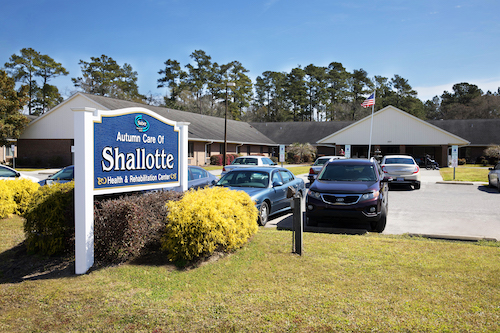
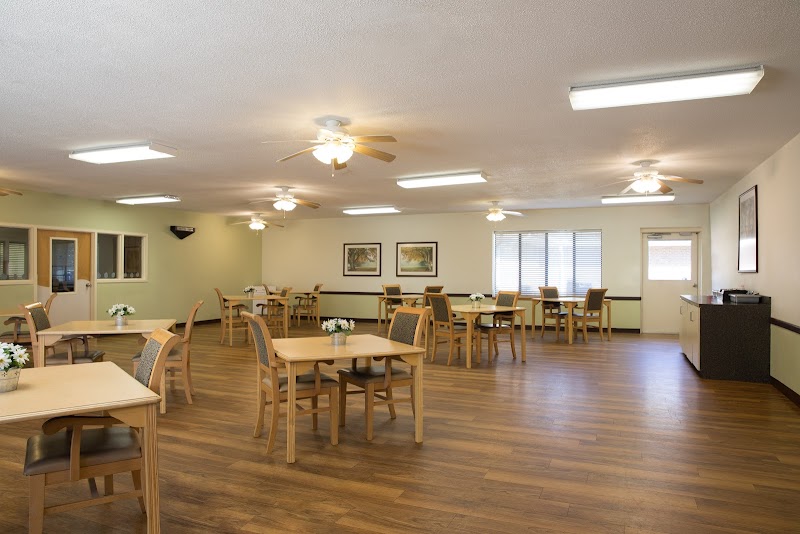
Autumn Care of Shallotte

237 Mulberry Street, Shallotte, NC 28459 (910) 754-8858
For profit - Corporation 100 Beds SABER HEALTHCARE GROUP Data: November 2025 1 Immediate Jeopardy citation
Trust Grade
33/100
#151 of 417 in NC
Last Inspection: July 2025

Inspected within the last 6 months. Data reflects current conditions.

Overview

Autumn Care of Shallotte has a Trust Grade of F, indicating significant concerns about the care provided at this facility. While they rank #151 out of 417 nursing homes in North Carolina, placing them in the top half, their county rank of #1 out of 5 suggests they are the best option locally, despite the overall poor performance. The facility is improving, reducing issues from 8 in 2024 to 3 in 2025, but it still has a troubling history, including incidents where a resident fell and sustained injuries due to improper transfer procedures and multiple altercations between cognitively impaired residents. Staffing ratings are average with a turnover rate of 52%, and while they have good RN coverage, they have incurred fines totaling $51,348, which is concerning and indicates compliance issues. Overall, families should weigh the improving trend and local rank against the serious incidents and compliance challenges when considering this facility.

Trust Score
F
33/100
In North Carolina
#151/417
Top 36%
Safety Record
High Risk
Review needed
Inspections
Getting Better
8 → 3 violations
Staff Stability
⚠ Watch
52% turnover. Above average. Higher turnover means staff may not know residents' routines.
Penalties
✓ Good
$51,348 in fines. Lower than most North Carolina facilities. Relatively clean record.
Skilled Nurses
✓ Good
Each resident gets 46 minutes of Registered Nurse (RN) attention daily — more than average for North Carolina. RNs are trained to catch health problems early.
Violations
⚠ Watch
23 deficiencies on record. Higher than average. Multiple issues found across inspections.
★★★☆☆
3.0
Overall Rating
★★★☆☆
3.0
Staff Levels
★★★★☆
4.0
Care Quality
★★★☆☆
3.0
Inspection Score
Stable
2024: 8 issues
2025: 3 issues

The Good

  • 4-Star Quality Measures · Strong clinical quality outcomes
  • Full Sprinkler Coverage · Fire safety systems throughout facility
  • No fines on record

Facility shows strength in quality measures, fire safety.

The Bad

3-Star Overall Rating

Near North Carolina average (2.8)

Meets federal standards, typical of most facilities

Staff Turnover: 52%

Near North Carolina avg (46%)

Higher turnover may affect care consistency

Federal Fines: $51,348

Above median ($33,413)

Moderate penalties - review what triggered them

Chain: SABER HEALTHCARE GROUP

Part of a multi-facility chain

Ask about local staffing decisions and management

The Ugly 23 deficiencies on record

1 life-threatening 1 actual harm
Jul 2025 3 deficiencies
CONCERN (E)

Potential for Harm - no one hurt, but risky conditions existed

Drug Regimen Review (Tag F0756)

Could have caused harm · This affected multiple residents

**NOTE- TERMS IN BRACKETS HAVE BEEN EDITED TO PROTECT CONFIDENTIALITY** Based on record review and staff, Nurse Practitioner and Consultant Pharmacist interviews, the pharmacy failed to notify the fac...

Read full inspector narrative →
**NOTE- TERMS IN BRACKETS HAVE BEEN EDITED TO PROTECT CONFIDENTIALITY** Based on record review and staff, Nurse Practitioner and Consultant Pharmacist interviews, the pharmacy failed to notify the facility of a clinical high priority recommendation that required a prompt response. This failure contributed to the facility not administering the antibiotics cefdinir and doxycycline prescribed to a resident (Resident # 4) for sepsis due to pneumonia from 7/17/25 through 7/20/25. This occurred for 1 of 5 residents reviewed for medication administration. Findings included:Resident # 4 was admitted on [DATE] with diagnosis of chronic respiratory failure with hypoxia, congestive heart failure, and chronic obstructive pulmonary disease. Resident #4's hospital Discharge summary dated [DATE] indicated the resident was discharged back to the facility in stable condition after treatment for acute hypoxic respiratory failure related to sepsis secondary to bilateral pneumonia. The hospital course further stated Resident # 4 was to continue antibiotics for the treatment of pneumonia upon discharge. The current discharge medication list indicated Resident # 4 was to start taking cefdinir 300 milligrams (mg) by mouth every 12 hours for 3 days and doxycycline monohydrate 100 mg capsule by mouth every 12 hours for 3 days for pneumonia. Review of a pharmacy consultation report completed by Pharmacist #1 dated 7/18/25 indicated a clinical priority recommendation for Resident #4 with prompt response requested was submitted to the facility. The recommendation indicated Resident # 4 was recently admitted to the facility and the medication review process revealed the following discrepancies on the admission orders: antibiotic orders for doxycycline and cefdinir for 3 days are not active in the computer system. The pharmacy consultation report further stated that the current hospital discharge orders were not re-entered into the computer system, so the current physician orders are from prior to her discharge to the hospital. The recommendation indicated to clarify the medication orders, communicate with the prescribing provider and the pharmacy. The report was signed by the Director of Nursing on 7/21/25. A review of Resident # 4's physician orders revealed orders dated 7/21/25 entered by Unit Manager #2 for cefdinir 300 mg. twice per day and doxycycline 100 mg twice per day.An interview with Unit Manager #2 on 7/23/25 at 11:30 AM revealed that she did not receive the pharmacy consultation report for Resident #4 until 7/21/25 and she did not receive a phone call from the pharmacy on 7/18/25 regarding the medications. Unit Manager #2 stated on 7/21/25 after receiving the pharmacy consultation report, she informed the Nurse Practitioner of the medication error and received the orders for the antibiotics cefdinir and doxycycline. An interview was conducted with the Nurse Practitioner on 7/23/25 at 4:30 PM. The Nurse Practitioner stated she became aware that Resident # 4 had not received the ordered antibiotics doxycycline and cefdinir when she saw the pharmacy consultation report on 7/21/25. The NP indicated that given resident's comorbidities, not starting the antibiotics had the potential to worsen Resident #4's condition. An interview was conducted with the Consultant Pharmacist on 7/25/25 at 10:30 AM. The Consultant Pharmacist stated that the pharmacy had a process for reviewing the orders within 24 hours when a resident is admitted or readmitted to the facility. The Consultant Pharmacist stated the reviews consisted of the pharmacist comparing the hospital discharge summary with the physician orders that the facility enters in the computer system. The medication regimen reviews are sent via email to the Director of Nursing and the Unit Managers. If there is an urgent issue that requires prompt attention, the pharmacist is to call the facility. The Consultant Pharmacist stated that the facility should have been notified on 7/18/25 that the antibiotic orders for Resident #4 were not entered into the computer system. The Consultant Pharmacist indicated that the medication review for Resident #4 was marked as priority and the pharmacy policy is that all priority recommendations are to be called in to the facility for immediate response. The Consultant Pharmacist stated there was no indication that Pharmacist #1 notified the facility of the priority recommendations regarding the antibiotics for Resident #4. Pharmacist #1 was out of the office and was unavailable for interview during the survey. Attempts were made twice on 7/25/25 to interview the Pharmacy Services Manager with voice mails sent with no return phone call received. An interview was conducted with the Director of Nursing (DON) on 7/25/25 at 11:00 AM. The DON stated that the pharmacy consultation report was listed as priority and should have been addressed. The DON indicated that the emailed pharmacy consultation report was sent to his facility email account on 7/20/25 which was a Sunday, and he was not working at the facility that day. The DON stated he did not see the email from the pharmacy until Monday 7/21/25 when he returned to work. The DON stated that if he had been informed of the issues regarding the medications on 7/18/25, he would have addressed them immediately and investigated why the issues occurred.
CONCERN (E) 📢 Someone Reported This

A family member, employee, or ombudsman was alarmed enough to file a formal complaint

Potential for Harm - no one hurt, but risky conditions existed

Deficiency F0760 (Tag F0760)

Could have caused harm · This affected multiple residents

**NOTE- TERMS IN BRACKETS HAVE BEEN EDITED TO PROTECT CONFIDENTIALITY** Based on record review and staff, Nurse Practitioner and Consultant Pharmacist interviews, the facility failed to: a). administe...

Read full inspector narrative →
**NOTE- TERMS IN BRACKETS HAVE BEEN EDITED TO PROTECT CONFIDENTIALITY** Based on record review and staff, Nurse Practitioner and Consultant Pharmacist interviews, the facility failed to: a). administer the antibiotic medications doxycycline and cefdinir per the physician orders on the discharge summary from 7/18/25 through 7/20/25 resulting in 12 missed doses of the antibiotic treatment for pneumonia and b). failed to administer the ordered dose of roflumilast (a medication used to treat severe Chronic Obstructive Pulmonary Disease) for 2 consecutive days. There was no significant outcome due to either of the medication errors. This deficient practice occurred for 1 of 1 resident (Resident #4) reviewed for significant medication errors. Resident #4 was admitted originally on 11/27/24 with diagnosis of chronic respiratory failure, congestive heart failure, and chronic obstructive pulmonary disease (COPD). Review of Resident #4's quarterly Minimum Data Set (MDS) assessment dated [DATE] indicated resident was cognitively intact with no behaviors. Resident #4 was transferred to the hospital on 7/14/25 and was readmitted to the facility on [DATE] with diagnosis of acute hypoxic respiratory failure related to sepsis due to pneumonia. A nursing progress note written by Nurse #8 on 7/17/25 at 6:38 PM indicated Resident #4 returned to the facility from the hospital via stretcher accompanied by 2 transport workers. a). A review of the hospital Discharge summary dated [DATE] revealed Resident #4's discharge diagnoses were acute hypoxic respiratory failure related to sepsis (a potentially life-threatening condition when the body responds to infection causing injury to the tissues and organs) due to pneumonia and the resident was to continue antibiotic treatment. The current discharge medication list indicated Resident # 4 was to start taking cefdinir 300 milligrams (mg) by mouth every 12 hours for 3 days and doxycycline monohydrate 100 mg capsule by mouth every 12 hours for 3 days for pneumonia. Review of a pharmacy consultation report dated 7/18/25 indicated Resident #4 was recently admitted to the facility. The medication review process revealed the following discrepancies on the admission orders: Antibiotic orders for doxycycline and cefdinir for 3 days are not active in the computer system. The pharmacy consultation stated that the medication orders from the hospital were not entered into the computer system, so the current physician orders are from prior to her discharge to the hospital. The recommendation indicated to clarify the medication orders, communicate with the prescribing provider and the pharmacy as appropriate. The report was signed by the Director of Nursing on 7/21/25. Review of a Nurse Practitioner progress note dated 7/18/25 indicated Resident #4's medications were reviewed. The Nurse Practitioner progress note indicated that Resident #4 was to receive doxycycline 100 mg twice per day for 7 days and cefdinir 300 mg. twice per day for 7 days instead of the 3 days that was specified in the hospital discharge summary. The NP stated she was extending the regimen for a total of 7 days due to the high risk of persistent infection, advanced age, frailty and co-morbidities. The NP progress note indicated that the information regarding the antibiotic orders was relayed to Unit Manager #2. Review of Resident #4's physician orders revealed there were no physician orders dated 7/18/25 for cefdinir or doxycycline. An interview with Unit Manager #2 on 7/23/25 at 11:30 AM revealed that she was working on 7/17/25, the day that Resident #4 was readmitted and on 7/18/25. Unit Manager #2 stated that she did not review Resident #4's discharge summary, did not enter the physician orders nor did she verify the orders with the provider when the resident returned from the hospital on 7/17/25. Unit Manager #2 stated she typically reviewed the discharge summary and the medications the day after a resident was admitted or readmitted , but she did not review Resident #4's orders. Unit Manager #2 did not know why she did not review Resident #4's orders. Unit Manager #2 stated Resident #4's physician orders were not discontinued when the resident was admitted to the hospital and when readmitted the orders from prior to the hospitalization were resumed without being reviewed or verified. Unit Manager #2 stated she did not recall being informed by the Nurse Practitioner on 7/18/25 of any changes to Resident #4's medications. Unit Manager #2 stated that she became aware of the issues with Resident #4's medication orders on 7/21/25 when the Director of Nursing received the pharmacy consultation report and she (Unit Manager #2) informed the Nurse Practitioner. A late entry nursing progress note for 7/21/25 at 9:24 PM was written by Unit Manager #2 on 7/22/25 at 9:24 PM for Resident #4. The progress note indicated Resident #4's admission orders were reviewed by the NP and a new order was received for cefdinir twice per day for COPD exacerbation. Resident #4 was seen on rounds by the Nurse Practitioner. Resident #4's Medication Administration Record was updated. A review of Resident #4's physician orders revealed orders dated 7/21/25 entered by Unit Manager #2 for cefdinir 300 mg. twice per day with no stop date specified and doxycycline 100 mg twice per day for 7 days. A review of Resident #4's electronic health record revealed there was no NP progress note dated 7/21/25 or 7/22/25. Review of a care plan dated 7/22/25 indicated Resident #4 was being treated with antibiotics related to pneumonia. Interventions included to administer medications as ordered. Evaluate, record and report effectiveness and any adverse side effectsAn interview was conducted with the Nurse Practitioner on 7/23/25 at 4:30 PM. The Nurse Practitioner stated she was not called to verify Resident #4's orders on 7/17/25 when the resident returned to the facility from the hospital. The Nurse Practitioner stated she made a progress note on 7/18/25 after Resident #4 returned from the hospital. The Nurse Practitioner stated she reviewed the discharge summary medication list on 7/18/25, but she did not check to confirm that the medication changes were made when Resident #4 returned from the hospital on 7/17/25. The Nurse Practitioner stated when she saw the pharmacy consultation report on 7/21/25 she became aware that Resident #4 had not received the ordered antibiotics doxycycline and cefdinir and it was then that the medications were ordered. The NP indicated that given resident's comorbidities, not starting the antibiotics had the potential to worsen Resident #4's condition. The NP further stated that the cefdinir order that was entered on 7/21/25 was transcribed incorrectly and should have included a stop date of 7 days. An interview was conducted with Nurse #8 on 7/24/25 at 11:20 AM. Nurse # 8 stated that she was an agency nurse that worked at the facility as needed. Nurse #8 was assigned to Resident #4 on 7/17/25 from 7:00 AM to 7:00 PM. Nurse #8 stated that Resident #4 was readmitted in the evening at the end of her shift. Nurse #8 stated she did not see the discharge summary from the hospital, and she was not sure who reviewed, verified or entered the physician orders for Resident #4. Nurse #8 stated either the Unit Manager, or the floor nurse was responsible for entering and verifying the physician orders. An interview was conducted with Nurse #7 on 7/25/25 at 8:30 AM. Nurse #7 stated she worked at the facility since the end of May. Nurse #7 stated she was assigned to Resident #4 on 7/17/25 from 7:00 PM to 11:00 PM. Nurse #7 stated the off going nurse (Nurse #8) reported to her on 7/17/25 at 7:00 PM that Resident #4's orders were done. Nurse #7 stated she did not call the provider to verify the orders, and she did not verify or check the orders in the computer. Nurse #7 indicated she did not review Resident #4's hospital discharge summary. An interview was conducted with Nurse #6 on 7/25/25 at 2:00 PM. Nurse #6 stated that she was assigned to Resident #4 from 11:00 PM to 7:00 AM on 7/17/25. Nurse #6 stated that she did not verify Resident #4's orders on 7/17/25. Nurse #6 stated she was told that the orders were completed. Nurse #6 indicated that she did not review Resident #4's hospital discharge summary. Nurse #6 indicated that sometimes she reviewed the paperwork when a resident returned from the hospital, but usually by 11:00 PM the orders were entered into the computer, so she usually did not check orders at night on the 11:00 PM to 7:00 AM shift. An interview was conducted with the Director of Nursing (DON) on 7/25/25 at 11:00 AM. The DON stated that the orders for a new admission or readmission to the facility were transcribed from the discharge summary medication list. The DON stated that the medication orders for Resident #4 were not entered correctly. He indicated that Resident #4's physician orders from prior to her hospital stay were not discontinued and the new orders from the hospital discharge summary were not verified and transcribed. The DON stated that he trusted the nurses to accurately transcribe the physician orders, but this was not done for Resident #4. The DON indicated that he would implement procedures to ensure that all physician orders were transcribed accurately and he indicated that Resident #4 not receiving the ordered antibiotics was a medication errors and needed to be addressed. b). A physician order dated 7/21/25 by the NP indicated to administer roflumilast 250 mcg (micrograms) once per day for 7 days, then increase to roflumilast 500 mcg once per day. A review of Resident #4's physician orders revealed the following orders dated 7/21/25 entered by Unit Manager #2 roflumilast 250 mcg once per day for 7 days from 7/21/25 through 7/27/25 and roflumilast 500 mcg once per day start date 7/21/25. A review of Resident #4's July 2025 Medication Administration Record revealed entries for roflumilast 250 mcg once per day and roflumilast 500 mcg once per day both with a start date of 7/22/25. The entries for roflumilast 250 mcg and roflumilast 500 mcg once per day were electronically signed as administered on 7/22/25 and 7/23/25 by Nurse #4. A medication observation was completed on 7/23/25 at 10:00 AM with Nurse #4. Observation revealed that roflumilast 250 mcg once per day and roflumilast 500 mcg once per day were both listed to be administered, and both strengths of the medication were available on the medication cart. Nurse #4 asked Unit Manager #2 to clarify the orders for roflumilast. Unit Manager #2 went to the computer at the nurse's station and returned to the medication cart. Unit Manager #2 instructed Nurse #4 to give both 250 mcg and 500 mcg of roflumilast for a total of 750 mcg. Nurse #4 administered both 250 and 500 mcg roflumilast tablets. A review of the Medication Administration Record (MAR) for July 2025 revealed that Resident #4 received roflumilast 250 mcg and 500 mcg on 7/22/25 and 7/23/25. The entries on the MAR for roflumilast were electronically signed as administered by Nurse #4. An interview was conducted with Nurse #4 on 7/25/25 at 8:55 AM. Nurse #4 stated she thought it was unusual that there were 2 orders for the medication roflumilast on the medication administration record (MAR) when she administered medications on 7/23/25 and that was why she asked Unit Manager #2 to clarify it prior to administering it. Nurse #4 stated that usually, when the dose required giving 2 different strengths it stated on the MAR to give both doses together to equal the ordered dose. Nurse #4 reviewed the MAR and acknowledged that she had administered the incorrect dose of roflumilast on 7/22/25 and stated she must not have noticed the discrepancy in the order. An interview with Unit Manager #2 on 7/23/25 at 11:30 AM revealed that when she was asked by Nurse #4 to clarify the orders for roflumilast during the medication pass observation she looked and saw that both orders were active in the computer. Unit Manager #2 stated she did not notice that both orders for roflumilast were not to be administered at the same time. An interview was conducted with the Nurse Practitioner on 7/23/25 at 4:30 PM. The NP stated that the written orders she gave to Unit Manager #2 on 7/21/25 for 250 mcg and 500 mcg roflumilast were transcribed incorrectly and that the order should have read 250 mcg once daily for 7 days and then begin 500 mcg once per day. The NP reviewed Resident #4's electronic Medication Administration Record (MAR) and acknowledged that the resident was administered the incorrect dosage on 7/22/25 and 7/23/25 due to a transcription error. The NP stated that the incorrect dose of roflumilast could result in gastrointestinal upset. An interview was conducted with the Consultant Pharmacist on 7/25/25 at 10:30 AM. The Consultant Pharmacist stated that it was important for antibiotics to be administered as ordered to treat pneumonia and omitting doses had the potential to compromise the resident's condition. The Consultant Pharmacist indicated that the medication roflumilast used to treat severe COPD worked by reducing inflammation in the lungs and was usually ordered at a dose of 250 mcg daily and then increased to a maintenance dose of 500 mcg daily. The Consultant Pharmacist indicated that the dose of 750 mcg that was administered on 7/22/25 and 7/23/25 had the potential to cause nausea, stomach pain, and diarrhea. An interview was conducted with the Director of Nursing (DON) on 7/25/25 at 11:00 AM. The DON stated that he trusted the nurses to accurately transcribe the physician orders. The DON indicated that the physician orders for the medication roflumilast were not accurately transcribed resulting in the medication errors. The DON indicated that he expected that all physician orders were transcribed accurately and Resident #4 receiving the incorrect dose of the medication roflumilast was a medication error and needed to be addressed.
CONCERN (E)

Potential for Harm - no one hurt, but risky conditions existed

Food Safety (Tag F0812)

Could have caused harm · This affected multiple residents

Based on observations and staff interviews the facility failed to a) label and date opened packages of food for 1 of 1 walk-in cooler in the kitchen; and b) to discard expired foods in a refrigerator ...

Read full inspector narrative →
Based on observations and staff interviews the facility failed to a) label and date opened packages of food for 1 of 1 walk-in cooler in the kitchen; and b) to discard expired foods in a refrigerator in 1 of 3 nutrition rooms (100/200 hall nutrition room). This deficient practice had the potential to affect the food served to the residents.The findings included:An initial tour of the kitchen was conducted on 7/21/25 at 10:34 AM in the presence of the Dietary Manager.a) a) An opened package of French toast sticks and opened package of cauliflower were observed in the kitchen walk-in cooler without an opened date or expiration date. An interview was completed with the Dietary Manager on 7/21/25 at 11:05 AM. The Dietary Manager stated that all opened foods stored in the walk-in cooler should be labeled and dated with the date it was opened and the expiration date. b) b) An observation of the 100/200 hall nutrition room was conducted on 7/23/25 at 12:30 PM in the presence of the Dietary Manager. There were 4 cups of sugar-free orange gelatin with the expiration date 3/17/25 and 4 cups of sugar-free orange gelatin with the expiration date 2/25/25. An interview was completed with the Dietary Manager on 7/23/25 at 11:05 AM. The Dietary Manager stated there was not supposed to be any expired food in the nutrition rooms. She indicated that the staff were not paying close attention to the dates. An interview was completed with the Administrator on 7/24/25 at 12:40 PM. The Administrator stated that she expected the kitchen staff to check for expired food in the kitchen and nutrition rooms and to discard them. She further stated she expected the staff to label and date food stored in the kitchen and nutrition rooms.
Aug 2024 6 deficiencies
CONCERN (D)

Potential for Harm - no one hurt, but risky conditions existed

Abuse Prevention Policies (Tag F0607)

Could have caused harm · This affected 1 resident

Based on record review and staff interviews the facility failed to implement their abuse policy for staff to immediately report an allegation of resident-to-resident abuse to the facility management a...

Read full inspector narrative →
Based on record review and staff interviews the facility failed to implement their abuse policy for staff to immediately report an allegation of resident-to-resident abuse to the facility management as soon as the incident was observed. This occurred for 2 of 6 residents (Resident #57 and Resident #83) reviewed for abuse. Findings included. The facility policy titled; Abuse, Neglect, and Exploitation revised 08/30/23 indicated facility staff must immediately report allegations of abuse to the Administrator/Abuse Coordinator. The Administrator/Abuse Coordinator will immediately begin an investigation and notify the applicable local and state agencies in accordance with the procedures in this policy. A facility initial report dated 06/20/24 revealed the facility received an allegation on 06/13/24 at 8:00 AM by Nurse #9 was reviewing clinical record that revealed on 06/12/24 at 3:30 PM Resident #57 slapped Resident #83 on the face. Administrator sent initial incident report to the Department of Health and Human Services (DHHS) fax 06/13/24 at 8:43 AM., An interview was conducted on 08/27/24 at 3:05 PM with Nurse #7. Nurse #7 stated on 06/12/24 at approximately 3:30 PM Resident #57 and Resident #83 were sitting in their wheelchairs together by resident room laughing and being friends, when suddenly, Resident #57, for no apparent reason, slapped Resident #83 on the face. Nurse #7 said she immediately separated the two residents, assessed Resident #83 for injuries, which revealed none. Resident #57 was placed on every 15-minute checks. Nurse #7 said she immediately informed Nurse #8 of the incident and started every 15-minute checks on Resident #57. She said she reported the 06/12/24 abuse immediately to her nursing supervisor, but did not call the Administrator. Nurse #7 said she thought her supervisor, Nurse #8, reported the incident to the Administrator. Nurse #7 said she had received abuse training when she was first hired on 06/05/24, and again from the 6/12/24 incident. She said the 06/13/24 abuse training included resident to resident incidents were to be considered abuse and should be reported immediately to the Administrator. A written statement from Nurse #8 revealed: On 06/12/24 the new employee [Nurse #7] asked her what she should do about a patient hitting another patient, I stated, write a note about the incident and make sure to document on the (every) 15-minute check list the occurrence. [Nurse #8] said she totally forgot about telling her to call the on-call supervisor or Director of Nursing [DON]. Attempted to interview Nurse #8 by phone and she was unable to be reached. An interview was conducted on 08/27/24 at 3:45 PM with the Administrator. The Administrator stated she was notified by Nurse #9 on 06/13/24 around 8:00 AM of the incident regarding Resident #57 and Resident #83. The Administrator stated both Nurse #7 and Nurse #8 should have immediately called the Administrator or DON right after the incident occurred. The Administrator stated staff had been trained numerous times to report any incidents of abuse immediately. She stated the incident on 06/12/24 should have been reported that day but stated that didn't happen. She stated a plan of correction regarding the abuse allegation and not reporting abuse was initiated on 06/13/24. The corrective action for the noncompliance dated 06/13/24 was as follows: 1.) Address how corrective action will be accomplished for those residents found to have been affected by the deficient practice. On 06/12/24 a severely impaired resident slapped another severely impaired resident's face who was sitting next to her. Facility staff (Nurse #7 and Nurse #8) failed to report the incident until 06/13/24. On 06/13/24 counseling and education was done by the Director of Nursing with the two employees (Nurse #7 and Nurse #8) that failed to report timely. 2.) Address how the facility will identify other residents having the potential to be affected by the same deficient practice. On June 13, 2024, all staff were interviewed to ensure there were no additional cases of unreported abuse. There were no additional findings. 3.) Address what measures will be put into place or systemic changes made to ensure that the deficient practice will not recur. On 06/13/24 the DON/Designee started abuse education with all staff. The training included in part; Resident to resident incidents are considered abuse and must be reported immediately, separate residents, report to supervisor, and call Administrator. Education was completed by 06/13/24. All staff would be required to sign training signature sheet prior to their next shift. 4.) Indicate how the facility plans to monitor its performance to make sure that solutions are sustained. The DON/designee to ask 5-staff members a week who the abuse coordinator is and if they know what to do if they see abuse including resident to resident abuse allegations. Facility Administrator or designee will conduct a 10-week audit to ensure that staff know what to do for abuse and who the abuse coordinator is. Results will be reviewed at facility's QAPI (Quality Assurance Performance Improvement) meetings for the duration of the 10-week audits including monitoring to ensure staff reported abuse allegations within the required timeframe. Reviewed 10-week audits that were completed. An ad hoc QAPI meeting was completed on 06/13/24 with the interdisciplinary team. The Medical Director was notified by the Administrator. 5.) The facility alleged compliance with the corrective action plan on 06/14/24. The completion of the self-imposed corrective action plan was verified on-site through staff interviews and record review Validation of the corrective action plan was completed on 08/30/24. This included staff interviews and in-service training that was received to ensure understanding and knowledge of the training provided. Staff interviews revealed following in-service training they had a better understanding of the reporting requirement related to abuse allegations. The initial interviews were verified. There were no concerns identified. The last QAPI meeting was held August 2024 where audit results were discussed. The corrective action plan was validated to be completed as of 6/14/24.
CONCERN (D) 📢 Someone Reported This

A family member, employee, or ombudsman was alarmed enough to file a formal complaint

Potential for Harm - no one hurt, but risky conditions existed

Medication Errors (Tag F0758)

Could have caused harm · This affected 1 resident

**NOTE- TERMS IN BRACKETS HAVE BEEN EDITED TO PROTECT CONFIDENTIALITY** Based on record review and interviews with staff, the Medical Director, and the Consultant Pharmacist, the facility failed to en...

Read full inspector narrative →
**NOTE- TERMS IN BRACKETS HAVE BEEN EDITED TO PROTECT CONFIDENTIALITY** Based on record review and interviews with staff, the Medical Director, and the Consultant Pharmacist, the facility failed to ensure an as needed (PRN) psychotropic medication Lorazepam prescribed for anxiety was limited to 14 days or document the continued use with a rationale and duration for 2 of 5 residents (Resident #45 and Resident #21 ) reviewed for medication administration. Findings included. 1.) Resident #45 was admitted to the facility on [DATE] with diagnoses to include age-related cognitive decline and dementia, moderate, with anxiety. The physician orders for Resident #45 revealed an order written on 7/15/2024 for lorazepam (an antianxiety medication) 0.5 milligrams (mg) tablet every 8 hours as needed (PRN). One tablet orally every 8 hours PRN for dementia, moderate, with anxiety. There was no end date or rational documented for the lorazepam 0.5 mg every 8 hours PRN. The Pharmacy Consultant's recommendations dated 7/30/2024 for Resident #45 revealed the following recommendation: PROMPT RESPONSE REQUESTED. Resident #45 has a PRN order for an anxiolytic, which has been in place for greater than 14 days without a stop date. Lorazepam 0.5 mg TAKE 1 TAB BY MOUTH EVERY 8 HOURS AS NEEDED FOR ANXIETY. Please discontinue PRN lorazepam, tapering as necessary. If the medication cannot be discontinued at this time, please document the indication for use, the intended duration of therapy, and the rationale for the extended time period. The August 2024 medication administration record for Resident #45 revealed from 8/1/2024 through 8/28/2024 she received 16 doses of lorazepam, 0.5 mg tablet PRN. An interview was completed with the Director of Nursing (DON) on 8/29/2024 at 11:53 AM. The DON stated new orders were reviewed every morning by administrative nursing staff. She further stated all medications were reviewed and stop dates were verified for PRN medications. The DON indicated she did not know how Resident #45's PRN lorazepam's stop date was missed. She stated that all psychotropic medications were supposed to have a stop date and could not be PRN for more than 14 days. An interview was completed with the Medical Director on 8/29/2024 at 12:02 PM. The Medical Director stated it was the clinician's responsibility to make sure there was a stop date on all psychotropic medications. He further stated that when clinicians were in a nursing home, they must follow the nursing home rules. A telephone interview was conducted with the Consultant Pharmacist on 8/29/2024 at 2:33 PM. The Consultant Pharmacist stated there was a problem at the facility with PRN psychotropic medications not having a 14 day stop date. He stated that he thought the facility had put something in place to prevent this from recurring. The Consultant Pharmacist stated he had even spoken to the Medical Director and that even if a resident was on Hospice, all PRN medications needed to have a stop date. 2.) Resident #21 was admitted to the facility on [DATE] with diagnoses including vascular dementia and anxiety. A physician's order dated 04/27/24 for Resident #21 revealed Lorazepam 0.25 milligrams (mg). Give 0.25 mgs by mouth every 12 hours as needed for anxiety. This remained an active order. Review of the Medication Administration Record (MAR) dated 04/27/24 through 08/28/24 revealed Lorazepam 0.25 milligrams was not administered to Resident #21. The Minimum Data Set (MDS) quarterly assessment dated [DATE] revealed Resident #21 was severely cognitively impaired and received psychotropic medications. Review of the Monthly Medication Review dated 07/30/24 conducted by the Consultant Pharmacist revealed to add a stop date to Resident #21's Lorazepam 0.25 mg as needed order. During an interview on 08/29/24 at 1:53 PM the Medical Director stated he was aware that as needed psychotropic medications were to be limited in duration. He reported that the physicians were responsible to write orders for psychotropic medications to include a 14 day stop date or document a rationale for continued use. He indicated they had recently recognized the issue and would get it resolved. During an interview on 08/29/24 at 2:07 PM the Director of Nursing (DON) along with the Regional Director of Clinical Services stated interdisciplinary team meetings were held daily, and all new orders were reviewed to verify that as needed psychotropic medication orders were limited to 14 days or had a rationale for continued use. The Regional Director of Clinical Services reported they had recently realized the issue regarding 14 day stop dates for psychotropic medications and were scheduled to meet with the Consultant Pharmacist to discuss psychotropic medications and durations. She indicated they would initiate a 100% audit of psychotropic medications to ensure a duration was on the order. She indicated education would be provided to ensure 14 day stop dates were added to the medication orders. During a phone interview on 08/29/24 at 6:35 PM the Consultant Pharmacist stated he was aware that a 14-day duration was not being added to as needed psychotropic medications. He reported he would be working with the facility administration and the Medical Director to get the issue resolved.
CONCERN (D)

Potential for Harm - no one hurt, but risky conditions existed

Medical Records (Tag F0842)

Could have caused harm · This affected 1 resident

**NOTE- TERMS IN BRACKETS HAVE BEEN EDITED TO PROTECT CONFIDENTIALITY** Based on observations, record review and staff interviews the facility failed to accurately document the administration of medic...

Read full inspector narrative →
**NOTE- TERMS IN BRACKETS HAVE BEEN EDITED TO PROTECT CONFIDENTIALITY** Based on observations, record review and staff interviews the facility failed to accurately document the administration of medications in the electronic medical administration record (eMAR) for 1 of 3 residents (Resident #45) observed during a medication pass observation. Findings included: The Minimum Data Set admission assessment dated [DATE] revealed Resident #45 was cognitively aware. On 08/28/24 at 9:10 AM, a medication administration pass was observed with Nurse #2 for Resident #45. Nurse #2 indicated at 9:20 AM she had completed her medication pass and had administered all the medications as ordered. a. A review of the physician medication orders during reconciliation on 08/28/24 at 9:30 AM, it was noted Nurse #2 had omitted giving Resident #45 the physician ordered Budesonide Suspension nebulizer (an inhaling medication that reduces inflammation and swelling in the lungs) 0.25 milligram (mg)/2 milliliters (ml) 1 vial to be administered twice a day. A review of the eMAR for August 28, 2024, revealed Nurse #2 had signed off that she had administered the Budesonide Suspension nebulizer 0.25 mg/2 milliliters as evidenced by a check mark and Nurse #2's initials. An interview with Nurse #2 on 08/28/24 at 9:45 AM revealed she did not administer the Budesonide nebulizer treatment and she should not have signed it off as given. Nurse #2 stated that it was inaccurate documentation. b. A review of the physician medication orders during reconciliation on 08/28/24 at 9:30 AM, it was noted Nurse #2 had omitted administering two medications that were ordered to treat constipation: Sennosides-Docusate Sodium two tablets twice daily, and MiraLAX 17 grams once daily. A review of the eMAR for August 28, 2024, revealed Nurse #2 had signed off that she had administered the Sennosides two tablets and MiraLAX 17 grams as evidenced by a check mark and Nurse #2's initials. An interview was conducted with Nurse #2 on 08/28/24 at 9:45 AM. Nurse #2 revealed she held the Sennosides and MiraLAX because the resident was having loose stools a couple of weeks ago when she was on the rehabilitation hall. Nurse #2 stated she signed it off as given because it was easier than documenting the medication was refused because she would have to write a progress note. Nurse #2 stated she should not have signed the medications off as given because it indicated the resident was still requiring the medication for constipation when in fact, she was having loose stools and did not need the medication. At this time, on 08/28/24 at 9:50 AM, Nurse #2 entered Resident #45's room and asked her if she wanted her Sennosides and MiraLAX medications. Resident #45 refused the medications. c. A review of the physician medication orders during reconciliation on 08/28/24 at 9:30 AM, it was noted Nurse #2 omitted administering Aspirin (supplement) 81 mg one tablet. A review of the MAR for 08/28/24, revealed Nurse #2 had signed off that she had administered the Aspirin 81 mg as evidenced by a check mark and Nurse #2's initials. An interview with Nurse #2 on 08/28/24 at 9:50 AM was conducted. Nurse #2 stated she had omitted administering the Aspirin during the medication pass and should not have signed it off as given until the medication was actually given. An interview was conducted with the Director of Nursing (DON) on 08/29/24 at 3:00 PM. The DON stated her expectation of Nurse #2 was to accurately document the administration of medications to ensure she was administering all medications as physician ordered. The DON stated it was important to document medication administration accurately to determine how the resident was responding to ordered medications. The DON stated Nurse #2 had contacted the physician today to get an order to change the Sennosides and MiraLAX to as needed instead of scheduled and let the physician know Resident #45 was having loose stools. An interview was conducted with the Regional Clinical Director on 08/29/24 at 3:00 PM who stated that further education was going to be provided to this nurse regarding the five rights of medication administration.
CONCERN (E)

Potential for Harm - no one hurt, but risky conditions existed

Unnecessary Medications (Tag F0759)

Could have caused harm · This affected multiple residents

**NOTE- TERMS IN BRACKETS HAVE BEEN EDITED TO PROTECT CONFIDENTIALITY** Based on observations, record review and staff interviews the facility failed to maintain a medication rate greater than 5% when...

Read full inspector narrative →
**NOTE- TERMS IN BRACKETS HAVE BEEN EDITED TO PROTECT CONFIDENTIALITY** Based on observations, record review and staff interviews the facility failed to maintain a medication rate greater than 5% when 4 medications were noted to be omitted. The result of the medication errors could have resulted in a negative effect for 1 of 3 residents (Resident #45) observed for medication administration. The medication error rate was 16%. Findings included: The Minimum Data Set admission assessment dated [DATE] revealed Resident #45 was cognitively aware. On 08/28/24 at 9:10 AM a medication administration pass was observed with Nurse #2 for Resident #45. Nurse #2 was observed preparing the following medications for administration: Amlodipine (medication to treat high blood pressure) 10 milligrams (mg) one tablet, Aripiprazole (medication to treat psychosis) 5 mg one tablet, Buspirone (medication to treat depression) 10 mg one tablet, Celebrex (medication to treat arthritis) 100 mg one tablet, Divalproex (medication to treat epilepsy) 250 mg one tablet, famotidine (medication to treat gastric reflux disease) 20 mg one tablet, hydrochlorothiazide (medication to treat high blood pressure) 12.5 mg one tablet, Lasix (a diuretic medication to remove fluid) 20 mg one tablet, Lisinopril (medication to treat high blood pressure) 20 mg one tablet, Myrbetriq (medication for overactive bladder) 25 mg one tablet, primidone (medication to treat epilepsy) 50 mg one tablet, Potassium (supplement medication) 10 milliequivalents one tablet, Memantine (medication to treat dementia) 10 mg one tablet, Propranolol (medication to treat high blood pressure) 10 mg one tablet, and Sertraline (medication to treat depression) 50 mg 3 tablets. After preparing the medications, Nurse #2 entered Resident #45's room and asked Resident #45 if she was having any pain and what the scale of pain was from 1 - 10. Resident #45 stated she wanted her Tramadol medication for a pain level of 6 out of 10 and also asked for her antianxiety medication. On 08/28/24 at 9:15 AM, Nurse #2 was observed preparing the Tramadol (a medication to treat pain) 50 mg one tablet and Lorazepam (a medication to treat anxiety) 0.5 mg one tablet. Nurse #2 added the two additional medications to medication cup and entered Resident #45's room. Nurse #2 was observed administering all the medications she prepared for Resident #45. Resident #45 was noted to have swallowed all the medications that Nurse #2 handed her. An interview with Nurse #2 on 08/28/24 at 9:20 AM revealed she had completed her medication administration pass for Resident #45 and had administered all of her medications that were ordered. a. A review of the physician medication orders during reconciliation on 08/28/24 at 9:30 AM, it was noted Nurse #2 had omitted administering Resident #45 the physician ordered Budesonide suspension nebulizer (an inhaling medication that reduces inflammation and swelling in the lungs) 0.25 mg/2 milliliters 1 vial twice a day. A follow up interview with Nurse #2 on 08/28/24 at 9:45 AM revealed she had administered the Budesonide nebulizer treatment earlier this morning because Resident #45 was feeling short of breath. b. A review of the physician medication orders during reconciliation on 08/28/24 at 9:30 AM, it was noted Nurse #2 had omitted administering two medications to treat constipation: Sennosides-Docusate Sodium two tablets to be given twice daily, and MiraLAX 17 grams once daily. A follow up interview was conducted with Nurse #2 on 08/28/24 at 9:45 AM. Nurse #2 revealed she held the Sennosides and MiraLAX because the resident was having loose stools a couple of weeks ago when she was on the rehab hall. Nurse #2 was asked if she asked Resident #45 if she was still having loose stools before she held the medications and she stated No. Nurse #2 stated she should have asked Resident #45 if she was still having loose stools and if she wanted her medications and should not have assumed Resident #45 was going to say No. An interview was conducted with the DON on 08/29/24 at 3:00 PM. The DON stated Nurse #2 should have assessed Resident #45 to see if she was having loose stools before making the decision to hold the medication. The DON stated if Resident #45 had asked to hold her Sennosides and MiraLAX, it was the nurse's responsibility to notify the physician and obtain an order to hold the medication. The DON further added, Nurse #2 should not have held the medications for loose stools Resident #45 was having 2 weeks ago. c. A review of the physician medication orders during reconciliation on 08/28/24 at 9:30 AM, it was noted Nurse #2 omitted administering Aspirin (supplement) 81 mg one tablet. A follow up interview with Nurse #2 on 08/28/24 at 9:50 AM was conducted. Nurse #2 stated she administered the Aspirin to Resident #45. At this time, the medications that were previously dispensed were reviewed with Nurse #2 revealing that Aspirin 81 mg was not noted on the list of medications already administered as observed during her medication pass. Nurse #2 stated I guess I must have missed it. Nurse #2 removed the Aspirin from the drawer to prepare to administer to Resident #45. As Nurse #2 entered Resident #45's room to administer the Aspirin, she asked Resident #45 if she would wanted her Sennosides and or MiraLAX. Resident #45 refused both medications at this time as she was having loose stools. Nurse #2 administered Resident #45 her ordered Aspirin. At this time, Resident #45 was asked by this writer how she was feeling after her breathing treatment this morning. Resident #45 reported she had not received nebulizer treatments in weeks. Resident #45 was noted to have no shortness of breath or difficulty breathing at this time. A follow up interview with Nurse #2 on 08/28/24 at 9:50 AM was conducted. Nurse #2 stated she never said that Resident #45 received the Budesonide. Nurse #2 was reminded that she indicated the resident was feeling short of breath and she administered the nebulizer earlier this morning. Nurse #2 stated she misspoke and stated she did not administer the nebulizer earlier this morning. Nurse #2 stated she would notify the physician regarding Resident #45's refusal of the Sennosides and MiraLAX due to loose stools and to change the treatments to as needed for the Sennosides, MiraLAX and Budesonide. An interview was conducted with the DON on 08/29/24 at 3:00 PM. The DON stated her expectation of Nurse #2 was to ensure she was administering all medications as physician ordered. The DON stated she would have expected Nurse #2 to administer the Budesonide as ordered, and if Resident #45 refused the medication, she would have expected Nurse #2 to notify the physician that resident was refusing which would have warranted a reevaluation of Resident #45 to determine if the medication was still required. An interview was conducted with the Regional Clinical Director (RCD) on 08/29/24 at 3:00 PM The RCD stated that further education was going to be provided to this nurse regarding the five rights of medication administration.
CONCERN (E)

Potential for Harm - no one hurt, but risky conditions existed

Deficiency F0760 (Tag F0760)

Could have caused harm · This affected multiple residents

**NOTE- TERMS IN BRACKETS HAVE BEEN EDITED TO PROTECT CONFIDENTIALITY** Based on observations, record review, staff, the Medical Director, and the Consultant Pharmacist interviews the facility failed ...

Read full inspector narrative →
**NOTE- TERMS IN BRACKETS HAVE BEEN EDITED TO PROTECT CONFIDENTIALITY** Based on observations, record review, staff, the Medical Director, and the Consultant Pharmacist interviews the facility failed to a.) implement an order for Metoprolol 12.5 milligrams twice a day (a beta blocker indicated for the treatment of hypertension and heart failure) that was prescribed for atrial fibrillation (irregular heart rhythm) and b.) implement an order for Magnesium Oxide 400 milligrams prescribed as a supplement for low magnesium levels. This occurred for 1 of 5 residents (Resident #21) reviewed for medication administration. Findings included. 1. Resident #21 was admitted to the facility on [DATE] with diagnoses including atrial fibrillation, long term use of anticoagulants, congestive heart failure, and hypomagnesemia. a.) A physician's order dated 05/04/24 for Resident #21 revealed Metoprolol 12.5 milligrams twice a day. Hold for systolic blood pressure less than 110 mm/hg (millimeters of mercury) or heart rate less than 55 beats per minute. A review of the Medication Administration Record (MAR) from 05/04/24 through 08/28/24 revealed no documentation that Metoprolol 12.5 milligrams twice a day was administered to Resident #21. A review of the progress notes from 05/04/24 through 08/28/24 revealed no documentation regarding the administration of Metoprolol 12.5 milligrams twice a day to Resident #21. A review of Resident #21's medical record from 05/04/24 through 08/28/24 revealed his heart rate ranged from 60 - 90 beats per minute which was within normal limits. His systolic blood pressure ranged 110-130's mm/hg and diastolic blood pressure ranged from 70-80's which were within normal limits. b.) A physician's order dated 05/04/24 for Resident #21 revealed Magnesium Oxide 400 milligram tablets give 400 milligrams by mouth two times a day for low magnesium level. A review of the Medication Administration Record (MAR) from 05/04/24 through 08/28/24 revealed no documentation that Magnesium Oxide 400 milligrams twice a day was administered to Resident #21. A review of the progress notes from 05/04/24 through 08/28/24 revealed no documentation regarding the administration of Magnesium Oxide 400 milligrams twice a day to Resident #21. Record review revealed the most recent magnesium level for Resident #21 dated 05/06/24 was 1.8 milligrams per deciliter. Normal magnesium levels range between 1.7 - 2.8 milligrams per deciliter (mg/dl). The Minimum Data Set (MDS) quarterly assessment dated [DATE] revealed Resident #21 was severely cognitively impaired and required assistance with activities of daily living. He received anticoagulant medications. A physician's note dated 07/16/24 revealed Resident #21 was evaluated with no new or worsening concerns. He had no respiratory concerns, his heart rate was regular with normal sinus rhythm. The plan of care in regard to atrial fibrillation was to continue Eliquis (anticoagulant) and the beta blocker. Resident #21's heart rate was controlled, blood pressure was well-controlled. With regard to heart failure, he remained euvolemic ( the state of normal body fluid volume), continue diuretic and Metoprolol. Magnesium levels were within normal limits, and to continue magnesium supplement. During an interview on 08/29/24 at 10:00 AM the Regional Director of Clinical Services stated the facility transitioned to a new electronic medical record system in May 2024. She reported that the actual system merge date occurred on 04/27/24 however they didn't go live with the new system until 05/07/24. She stated between 04/27/24 through 05/07/24 the nursing staff were instructed to enter any new medication orders into both the old and new electronic medical record systems since the system merged and all the data transferred on 04/27/24. She stated most likely since the orders were actually entered into the old electronic medical record on 05/04/24 the nurse didn't enter the Metoprolol or the Magnesium Oxide order into the new medical record system as instructed. She reported that staff were trained on the new electronic medical record system and were instructed to enter orders into both systems until 05/07/24. During a phone interview on 08/29/24 at 1:43 PM Nurse #13 stated she did not recall entering the orders for Metoprolol or Magnesium Oxide for Resident #21 but stated during that time they transitioned from the old electronic medical record system to the new system. She stated she worked per diem (as needed) and she didn't know how to do anything in the new medical record system at that time. She stated she did attend training but still didn't understand the new system. She stated she was not aware that she had to enter medication orders in both the old and new system during that time. She indicated it was done in error. During an interview on 08/29/24 at 2:00 PM the Medical Director stated he wrote the order for a low dose of Metoprolol for Resident #21 on 05/04/24 because he had not been on Metoprolol since 2021. He stated he wanted to start a trial dose although it was a very low dose only to add additional protection. He reported he was not aware the medication had not been administered but stated Resident #21's heart rate was well controlled and remained at 70-80 beats per minute and indicated his blood pressure was well controlled. He stated Resident #21 had no significant outcome from not receiving the low dose of Metoprolol and the potential outcome would be his heart rate or blood pressure would increase but they would have caught that from routine monitoring of his vital signs. He reported the Magnesium Oxide was ordered as a supplement, but his magnesium level was within normal limits. He stated not receiving the medications has had no effect on Resident #21 due to having no change in condition and he remained at his baseline. During an interview on 08/29/24 at 3:14 PM Nurse #6 stated she was routinely assigned to provide care to Resident #21. He was alert and oriented to person only. She stated he was compliant most of the time with his medications and his vital signs were stable, and there had been no change in his condition. During an observation on 08/29/24 at 3:30 PM Resident #21 was observed sitting up in his wheelchair at the nurses station. He was oriented to person only. He was in no distress. During an interview on 08/29/24 at 4:00 PM the Administrator stated she was made aware of the medication error today and indicated the error occurred during the transition to the new electronic medical record system. She stated a full audit of all medications had already been initiated. She indicated the Director of Nursing, and the Regional Director of Clinical Services were completing a 100% audit of all medications and education to the nursing staff would be provided. During a phone interview on 08/29/24 at 6:35 PM the Consultant Pharmacist stated he didn't think Resident #21 needed to be on a beta blocker because he was on an anticoagulant twice a day and his heart rate and blood pressure were well controlled. He reported Resident #21 had not been on Metoprolol prior to the order written on 05/04/24 and due to polypharmacy and being on an anticoagulant he didn't think Metoprolol was needed. He stated if the Medical Director decided to initiate low dose Metoprolol at this point, he would most likely recommend to discontinue the Metoprolol on his next monthly medication review. He stated there was typically no benefit in supplemental magnesium and there would be no outcome from not receiving the magnesium supplement.
CONCERN (E) 📢 Someone Reported This

A family member, employee, or ombudsman was alarmed enough to file a formal complaint

Potential for Harm - no one hurt, but risky conditions existed

Food Safety (Tag F0812)

Could have caused harm · This affected multiple residents

Based on observation and staff interviews the facility failed to maintain sanitizing solutions used in the kitchen at the strength recommended by the manufacturer and failed to ensure refrigerated foo...

Read full inspector narrative →
Based on observation and staff interviews the facility failed to maintain sanitizing solutions used in the kitchen at the strength recommended by the manufacturer and failed to ensure refrigerated food items stored for use in the walk-in refrigerator for residents' meals were dated. These practices had the potential to affect 90 of 91 residents' food quality and kitchen sanitation safety. Findings included: a) The initial tour of the kitchen conducted on 08/24/24 at 11:35 AM the Dietary [NAME] said the staff used the solution in the two red buckets to wipe down the main food preparation table area after food preparation and prior to manning the tray line. The [NAME] said their stainless-steel food preparation tables were wiped down before breakfast and again just before lunch tray line set-up using the sanitizing solution kept in the two red sanitizing buckets kept under the kitchen's food preparation tables. At 12:45 AM on 08/24/24 strips were used to check the sanitizing solution in the kitchen's two red sanitizing buckets. The solution in the bucket registered 0-parts per million (PPM) of quaternary sanitizer. [NAME] reported she or her staff did not check the strength of the sanitizing solution in the bucket when it was filled that morning, prior to wiping down all food preparation table services. She said her dietary kitchen aides should have test stripped the buckets solution's strength throughout the day, to keep them between 200 - 300 PPM. The [NAME] then demonstrated how to properly fill the red sanitizing bucket, by first filling the bucket with clean tap water, then she added the proper amount of sanitizing solution to the buckets, and finally she tested the red bucket's solution with a test strip that read 200 - 300 PPM, which the [NAME] said was acceptable for disinfecting food preparation services. The Dietary Manager (DM) was interviewed on 08/26/24 at 11:35 AM said she preferred the quaternary solution in the red sanitizer bucket to register 200 - 300 PPM when checked with the appropriate strips. She reported when the strength was less than this there was a chance that the surfaces being wiped down were not properly disinfected. She commented the strength of the solution in the bucket should be checked when the bucket was made up and should not have registered 0-PPM. The DM then tested the two red buckets solution with a test strip that read 200 - 300 PPM, which the DM said was acceptable for disinfecting food preparation services. b) A follow-up interview and kitchen observation were conducted on 08/26/24 at 11:40 AM with the DM. An observation of the kitchen's walk-in refrigerator, with the DM revealed; three half-gallon clear plastic containers of tuna salad, ham salad, and fortified chocolate pudding, were without opened dates or end dates. The DM was unable to explain why food stored in the kitchen's walk-in refrigerator was not dated properly. During an interview with the DM on 08/26/24 at 12:00 PM she said she monitored the items in the refrigerators and freezers weekly when conducting inventory. She stated the containers of tuna salad, ham salad, and fortified chocolate putting should have been dated properly, with both an open date and end date. During an interview with the Administrator on 08/29/24 at 1:30 PM, she reported it was her expectation the facility's kitchen staff follow all regulatory guidelines for food and kitchen sanitation safety.
Jan 2024 2 deficiencies 1 IJ
CRITICAL (J) 📢 Someone Reported This

A family member, employee, or ombudsman was alarmed enough to file a formal complaint

Immediate Jeopardy (IJ) - the most serious Medicare violation

Accident Prevention (Tag F0689)

Someone could have died · This affected 1 resident

**NOTE- TERMS IN BRACKETS HAVE BEEN EDITED TO PROTECT CONFIDENTIALITY** Based on record review, observations, and staff and resident interviews, the facility failed to ensure a resident was safely tra...

Read full inspector narrative →
**NOTE- TERMS IN BRACKETS HAVE BEEN EDITED TO PROTECT CONFIDENTIALITY** Based on record review, observations, and staff and resident interviews, the facility failed to ensure a resident was safely transferred into the facility's transportation van, when the Transport Driver failed to utilize the safety strap while the lift platform was being raised on the facility van. This resulted in the resident (Resident #3) falling from the lift and sustaining injuries to the left side of his head, left wrist, and left elbow. This occurred when the facility Transport Driver was picking up Resident #3 from a doctor's office appointment on 11/29/2023. The office personnel called emergency medical services (EMS) and Resident #3 was transported to the emergency room (ER) at Hospital #1, where he was diagnosed with a traumatic subdural hematoma (pool of blood between the brain and the outermost layer that can put pressure on the brain) without loss of consciousness. Resident #3 requested to be transferred to the trauma service at Hospital #2, where he received treatment until he was discharged on 12/7/2023. This was for 1 of 1 resident (Resident #3) reviewed for accidents. Findings included: The manufacturer's instructions for the proper use of the van's lift during transportation specified, that to load a passenger, start with the platform at ground level and the outer barrier [at base] fully extended. Move the passenger onto the lift platform into position within the yellow boundaries. Again, lock the wheelchair brakes or turn off wheelchair power on powered chairs, buckle the handrail belt safety strap if equipped, and have the passenger hold the lift handrails, if possible, for additional support. While being sure to stand clear of the lift, press and hold lift switch on the handheld control. It further read, that when the platform was at ground level the outer barrier forms a bridge between the platform and the ground and upward movement would be prevented by the interlock system until the outer barrier was fully upright. Resident #3 was admitted to the facility on [DATE], with diagnosis to include cerebral vascular infarction (stroke) and hemiplegia (paralysis of one side of the body) and hemiparesis (weakness on one side of the body) affecting left side. He was admitted to Hospital #2 on 11/29/2023 with a traumatic subdural hemorrhage without loss of consciousness and he was readmitted to the facility on [DATE]. The physician's orders for Resident #3 revealed an order dated 11/16 2023 for Clopidogrel Bisulfate (a medication that prevents clots from forming and increases risk of bleeding) 75 milligrams (mg). Give 1 tablet by mouth one time a day for history of CVA. Resident #3's admission Minimum Data Set (MDS) assessment dated [DATE] revealed the resident was moderately cognitively impaired and required assistance of 1 staff member with activities of daily living (ADL). He was coded for using a wheelchair for locomotion on and off the unit. A review of the written statement written by the Transport Driver on 11/29/2023 revealed in part, I was attempting to load [Resident #3] onto the van lift after his urologist appointment. His wheelchair had a leg rest that extended outward and because it touched the front yellow bar and wheels touched the back bar (when raised) the electric lift would not work. I was attempting to hand crank him up enough so I could raise the back bar up (it did not come up automatically like it was supposed to). The lift was about 6 inches up, when he shifted, and the chair flipped sideways off the lift. I do not know if the brakes came loose or if he moved in the chair. He sits more to the left in the chair, so his arm rests comfortably in the armrest. I had tried to adjust the leg rest so that it would not touch the front but could not get it to move. After he fell, I ran inside to get help, while a person passing by called 911. I came back and placed a small pillow under his head and put my jacket over him. When EMS arrived, they put him back in his wheelchair. I spoke to them and asked them to transport him to the ER. I honestly do not understand how it happened; what caused the chair to move. The Hospital #1 ER Physician report dated 11/29/2023 at 2:28 PM read in part that Resident #3 was transported via EMS for a fall that occurred when his wheelchair tipped over when he was on the lift platform being raised into the van. Resident #3 sustained a left head, left wrist, and left elbow injury, and he complained of a moderate left sided headache. It further read that there was no change in symptoms during the ER observation, neuro exam unchanged, lungs clear, alert, vital signs stable. The ER Physician reviewed labs, and Cat scan (computed tomography) which were consistent with a UTI (urinary tract infection) and a traumatic subdural hematoma (a pool of blood between the brain and its outermost covering, this can cause pooled blood to push on the brain). The physical exam further revealed that Resident #3 had a 1-centimeter (cm) abrasion over the left eye, and mild tenderness noted over the left elbow and wrist, with a 1 cm superficial laceration noted over the left elbow. Resident #3 was treated with Tranexamic acid (a drug used to control bleeding), Keppra (an antiseizure medication), and Rocephin (an antibiotic) administered intravenously. Resident #3 requested to be transferred to the trauma service at Hospital #2 where he had received care following his stroke. He was accepted by the Trauma Surgeon for transfer, and he was transferred to Hospital #2 on 11/29/2023. A progress note written by the Trauma Surgeon at Hospital #2 on 11/30/2023 at 8:37 AM revealed Resident #3 was admitted to the intensive care unit on 11/29/2023 at 4:50 PM with a subdural hematoma, traumatic brain injury, and acute pain secondary to fall from his wheelchair. It further read that Resident #3 was treated with Desmopressin (a medication used to treat increased thirst and urination caused by head surgery or head trauma), and he was administered platelets (tiny cells in the blood that stick together to form clots) intravenously. The note further read that Neurosurgery was consulted and a repeat cat scan of the head had been ordered. A progress note written by the Nurse Practitioner (NP) for Trauma Surgery dated 12/1/2023 at 8:39 AM revealed Resident #3 was transferred out of ICU to the surgical floor on 11/30/2023, after the repeat CT scan of the head was stable and Neurosurgery was consulted. The hospital discharge instructions from Hospital #2 revealed that Resident #3 was discharged on 12/7/2023 following treatment for a subdural hematoma, traumatic brain injury and a UTI. It further read that Resident #3 was to follow up with Neurosurgery in 2 weeks with a new head CT prior to the appointment. Resident #3 was not to resume taking his clopidogrel bisulfate or aspirin until cleared at the follow-up appointment. An interview was conducted with Resident #3 on 1/4/2024 at 11:36 AM. Resident #3 stated that when he was leaving his physician's office on 11/29/2023, he had fallen off the van lift. He further stated that while being loaded into the facility van by the facility Driver, he and the wheelchair fell off the left side of the lift and he hit his head on the concrete. Resident #3 indicated that he had a stroke on 10/8/2023 and he was paralyzed on the left side of his body, and therefore he had been unable to break his fall. He stated that it felt like it was a long fall and he that had hurt his head and left elbow. He further stated that he had been diagnosed with subdural hematoma and was in the hospital for over a week. Resident #3 stated that he did not know what had caused him to fall, but he did not blame the Transport Driver. An interview was conducted with Transport Driver on 1/4/2024 at 3:10 PM. The Transport Driver stated that on 11/29/2023, she was loading Resident #3 onto the lift platform to get him inside the van and was having difficulty positioning the wheelchair. She further stated that the wheelchair must be placed inside the yellow boundaries, or the back lift plate on the outer barrier would not close. The Transport Driver stated that because Resident #3's wheelchair footrest was touching the inner front safety bar, the lift would not operate with the handheld control. She indicated that she had not had any problems with the lift before, so she tried again to reposition the wheelchair onto the lift. The Transport Driver stated that it was cold that day, so she decided to see if she could manually raise the lift off the ground a few inches to see if the back plate would close. The Transport Driver stated she could not remember if she forgot to place the safety strap around Resident #3, or if she did not buckle it securely. She further stated that the hydraulic pump that operated the lift was in the back of the van. The Transport driver indicated that she had climbed up into the van and left the resident on the ground in the lift. The Transport Driver stated she had inserted the handle into the pump and proceeded to crank the lift up, like a car jack. She further stated that when she had raised the lift approximately 6 inches off the ground, Resident #3 and his wheelchair had suddenly fallen off the lift platform. The Transport Driver stated that he had landed on his left side on the concrete and his head was bleeding. The Transport Driver indicated that a person in the parking lot had called 911, while she was checking on Resident #3. She stated that she had placed a small pillow under his head and her coat over him while they were waiting for EMS to arrive. The Transport Driver further stated that Resident #3's wife had been standing by talking to them when the accident occurred. The Transport Driver indicated that she had been trained to call 911 if there was an accident and to have the resident transported to the hospital. An interview and observation of the Transport Driver describing the process for securing a wheelchair in the transport van occurred with the Maintenance Director on 1/4/2023 at 3:25 PM. The Transport Driver lowered the lift to the ground and proceeded to explain the process for how the lift operated and how to position the wheelchair properly between the yellow boundaries. She further stated that the lift would not operate electronically if something was touching the front or back lift plate bars on the lift. The Transport Driver stated that when she had been unable to operate the lift using the electric hand control, she had climbed into the back of the van to raise it up off the ground manually. She further stated that she was supposed to be at the same level as the resident when operating the lift and she should not have left him. The Transport Driver explained that she was just going to manually crank the lift up a few inches to see if the back plate would close automatically. She stated she would usually ask the resident to hold on to the bars as the lift was being raised up into the van, but Resident #3 was paralyzed on his left side and was unable to hold on. The Transport Driver demonstrated how to secure the safety strap around the wheelchair and that it was working properly. She further stated that she could not remember if she had forgotten to use the safety strap or if she had not secured the buckle securely. The Transport Driver indicated that as she was cranking up the lift to about 6 inches high, Resident #3 and his wheelchair suddenly fell off the lift. The Transport Driver stated that she immediately had gone to check on Resident #3 and a passerby had called 911. The Transport Driver demonstrated how to manually crank the lift up, and how to use the handheld control to automatically raise the lift. She indicated that she had been trained that in case of an emergency, she was supposed call 911 and have the resident transported to the hospital. The Transport Driver stated that she felt her training and education had been adequate prior to transporting residents. An interview was completed with the Maintenance Director on 1/4/2024 at 2:49 PM. The Maintenance Director stated that when he heard that Resident #3 had fallen off the lift while being loaded into the van, he had inspected the van as soon as the Transport Driver returned to the facility. He further stated that he had found all the equipment to be in working order. The Maintenance Director indicated that the van had been inspected by the Van Lift company on 12/6/2023 and by the Van company on 12/29/2023, and that the van's lift system had passed both inspections. He stated that the cause of the accident was determined to be a human error, by not securing the resident with the safety strap on the lift. The Maintenance Director further stated that he did not think it would be possible to fall off the lift if the safety strap was in place. He further stated that he was the person who was responsible for making sure the van was serviced and in good working order. The Maintenance Director indicated that he was the person who was also responsible for the Transport Driver's training and competencies. He stated that he had the Transport Driver watch the lift video and then she was given a written test and she passed. He then stated that the competencies were demonstrated and repeat demonstrations were performed by the Transport Driver. The Maintenance Director indicated that she had performed all the steps correctly. He further stated that he had ridden in the van with the Transport Driver on ride alongs prior to her being allowed to transport residents. The Maintenance Director indicated that the Transport Driver completed these steps prior to being allowed to drive the facility van. The invoice from the Van Lift company dated 12/6/2023 revealed that the van lift was checked for proper operation and that it was found to be in good, safe, working order. An invoice from the Van company dated 12/29/2023 revealed that no concerns were found all functions were working properly. An interview was conducted with the Administrator on 1/4/2024 at 1:17 PM. The Administrator stated that the incident involving Resident #3 falling from the van lift had occurred on 11/29/2023, following a physician's appointment. She further stated that the Transport Driver had called the facility and stated that Resident #3 had fallen off the lift platform when she was raising it into the van, and he was being transported by EMS to Hospital #1. The Administrator stated that the first things she did were to suspend the Transport Driver until investigation was completed and take the van out of service until it had been inspected. She indicated that the inspections were completed and there were no mechanical or technical problems found. The Administrator stated that she and the Maintenance Director had determined the root cause was that the safety strap on the lift was not utilized by the Transport Driver when she started to raise the lift. The Administrator stated that the Transport Driver was suspended from duty on 11/29/2023 until she was reeducated by the Maintenance Director with return demonstration on 11/30/2023. The Administrator stated that on 12/1/2023 corrective action was completed with the Transport Driver. She indicated that the facility staff had interviewed the alert and oriented residents on 11/29/2023 that had been transported in the van by the Transport Driver. The Administrator further indicated that all the residents stated they were secured properly in the van, and they felt safe riding with the Transport Driver. She stated that the facility staff had performed skin checks on the residents that were not alert and oriented on 11/29/2023 with no negative findings. She stated that everyone makes mistakes, and she did not think the Transport Driver would forget to utilize the safety strap again. The Administrator stated that to monitor for on-going compliance she or her designee were completing the van restraint competency tool, which includes applying safety straps and loading a resident, applying facility safety belts before moving the van and unloading a resident, and do transport observations 5 times per week for 4 weeks, then 3 times a week for 4 weeks, then weekly for 4 weeks. She further stated that she was going to present the audits to the Quality Assurance Performance Improvement (QAPI) committee each month for review for the duration of the audits. The Administrator indicated that the QAPI committee may extend the plan of correction or change the plan of correction as needed. The Administrator was notified of Immediate Jeopardy on 1/4/2024 at 4:15 PM. Address how corrective action will be accomplished for those residents found to have been affected by the deficient practice The facility failed to ensure Resident #3 was transferred safely into the facility's transportation van after a doctor's appointment. On 11/29/2023 the facility driver failed to utilize the safety strap while the lift platform was being raised on the facility van. Resident #3 fell from the van with resulting injuries to the left head, left wrist and left elbow injury. The urology office personnel called emergency medical services and Resident #3 was transferred to the hospital. Resident #3 was transferred to another local hospital on [DATE] where care was provided until discharge. Resident #3 readmitted to the facility on [DATE]. Root cause analysis was completed on 11/29/2023 by facility Administrator and it was determined that the facility driver failed to implement van safety features by forgetting to utilize the safety strap. Address how the facility will identify other residents having the potential to be affected by the same deficient practice The Administrator, unit managers and the Director of Nursing interviewed all alert and oriented residents that were transported by the facility, during the 14 days prior to the event, to ensure there were no other residents left unattended on the lift with the safety straps not in place. The interviews were completed on 11/29/2023 and there were no additional issues identified. The unit manager assessed all cognitively impaired residents that were transported in the facility van during the 14 days prior to the incident, to ensure there were no signs of injury that may have been a result of a facility van incident. The assessments were completed on 11/29/2023 and there were no negative findings identified on the assessments. Address what measures will be put into place or systemic changes made to ensure that the deficient practice will not recur The facility van was removed from use on 11/29/2023 until it was inspected at a licensed inspection facility on 12/6/2023. The facility driver was suspended from duty on 11/29/2023 until re-educated by the facility Maintenance Director with return demonstration on 11/30/2023. Indicate how the facility plans to monitor its performance to make sure that solutions are sustained On 11/30/2023 a decision was made to monitor performance and take the plan of action to the Quality Assurance Performance Improvement committee. The Administrator and Maintenance Director will perform van restraint competency tool, which includes applying safety straps and loading a resident, applying facility safety belts before moving the van and unloading a resident, and do transport observations 5 times per week for 4 weeks then 3 times per week for 4 weeks and then weekly for 4 weeks. The Administrator will present the audits to the Quality Assurance Performance Improvement committee each month for review for the duration of the audits. The Quality Assurance Performance Improvement committee may extend the plan of correction or change the plan of action as needed to ensure ongoing compliance. Include dates when corrective action will be completed. The facility implemented all corrective action and was in compliance on 12/01/2023. As part of the validation process on 1/5/2024, the plan of correction was reviewed and included a sample of staff which included the Transport Driver, Administrator, and Maintenance Director regarding in-services and training related to deficient practice. The Transport driver verified the reeducation and training, and the continuing audits. An observation of the Transport Driver operating the lift correctly was conducted on 1/4/2024 at 3:25 PM. The Transportation Review Checklist and the Driver Ride-Along Evaluation Form monitoring tools were verified. A review of all the documents provided to correct the deficient practice was completed. The completion date of 12/1/2023 was confirmed.
CONCERN (D) 📢 Someone Reported This

A family member, employee, or ombudsman was alarmed enough to file a formal complaint

Potential for Harm - no one hurt, but risky conditions existed

QAPI Program (Tag F0867)

Could have caused harm · This affected 1 resident

Based on observations, record review, and staff and resident interviews, the facility's Quality Assurance and Performance Improvement (QAPI) program failed to maintain implemented procedures and monit...

Read full inspector narrative →
Based on observations, record review, and staff and resident interviews, the facility's Quality Assurance and Performance Improvement (QAPI) program failed to maintain implemented procedures and monitor interventions the committee put in place following the recertification and complaint investigation survey completed on 7/27/2023. This was for a deficiency cited in the area of Accidents Hazard/ Supervision/Devices (F689) that was subsequently recited during the complaint investigation conducted on 1/5/2024. The continued failure during two federal surveys of record shows a pattern of the facility's inability to sustain an effective QAPI program. This tag is cross-referenced to: F689 Based on record review, observations, and staff and resident interviews, the facility failed to ensure a resident was safely transferred into the facility's transportation van, when the Transport Driver failed to utilize the safety strap while the lift platform was being raised on the facility van. This resulted in the resident (Resident #3) falling from the lift and sustaining injuries to the left side of his head, left wrist, and left elbow. This occurred when the facility Transport Driver was picking up Resident #3 from a doctor's office appointment on 11/29/2023. The office personnel called emergency medical services (EMS) and Resident #3 was transported to the emergency room (ER) at Hospital #1, where he was diagnosed with a traumatic subdural hematoma (pool of blood between the brain and the outermost layer that can put pressure on the brain) without loss of consciousness. Resident #3 requested to be transferred to the trauma service at Hospital #2, where he received treatment until he was discharged on 12/7/2023. This was for 1 of 1 resident (Resident #3) reviewed for accidents. During the recertification and complaint investigation survey conducted on 7/27/2023, the facility was cited for failure to use 2-person assistance when transferring a resident using the mechanical lift and according to care planned interventions.
Oct 2023 1 deficiency
CONCERN (D) 📢 Someone Reported This

A family member, employee, or ombudsman was alarmed enough to file a formal complaint

Potential for Harm - no one hurt, but risky conditions existed

Deficiency F0757 (Tag F0757)

Could have caused harm · This affected 1 resident

**NOTE- TERMS IN BRACKETS HAVE BEEN EDITED TO PROTECT CONFIDENTIALITY** Based on record review, staff, Consultant Pharmacist, and Nurse Practitioner interviews the facility failed to prevent the dupli...

Read full inspector narrative →
**NOTE- TERMS IN BRACKETS HAVE BEEN EDITED TO PROTECT CONFIDENTIALITY** Based on record review, staff, Consultant Pharmacist, and Nurse Practitioner interviews the facility failed to prevent the duplication of drug therapy by administering a duplicate order of the antihistamine Zyrtec (Cetirizine) prescribed for allergies. This resulted in 13 additional doses of the medication being administered to the resident which exceeded the recommended daily dose. This occurred for 1 of 1 resident (Resident #1) reviewed for unnecessary medications. Findings included. Resident #1 was admitted to the facility on [DATE] with diagnoses including in part; vascular dementia with mood disturbance, chronic kidney disease, and allergic rhinitis. The Minimum Data Set (MDS) quarterly assessment dated [DATE] revealed Resident #1 had severely impaired cognition. She required extensive assistance with activities of daily living. She received antipsychotics, antidepressants, hypnotics, diuretics, and opioids during the assessment period. A physicians order dated 05/19/21 revealed Resident #1 was prescribed Zyrtec (Cetirizine HCl) tablets 10 milligram (mg). Give 10 mgs by mouth at bedtime for allergies. This order was entered into the electronic Medication Administration Record (MAR) to be administer nightly at 9:30 PM. A new physicians order dated 10/10/23 revealed Resident #1 was prescribed Cetirizine HCl oral tablets 10 milligram (mg). Give 10 mgs by mouth one time a day for allergies. This order was entered into the MAR by Nurse #1 to be administer daily at 9:30 AM. Review of the Medication Administration Record (MAR) dated October 2023 revealed Resident #1 received Zyrtec (Cetirizine) 10 mgs daily at 9:30 AM and nightly at 9:30 PM on 10/12, 10/13, 10/15, 10/16, 10/17, 10/18, 10/19, 10/20, 10/21, 10/22, 10/23, 10/24, and 10/25, resulting in 13 duplicate doses. During a phone interview on 10/25/23 at 5:00 PM Nurse #1 stated she entered the orders for Resident #1 on 10/09/23 upon her return from the hospital. She stated if she entered a duplicate order for Zyrtec (Cetirizine) then it was done in error. She stated the facility protocol included that a second nurse reviewed medication orders once the order was entered into the medical record. She stated the unit manager reviewed the orders that were entered on 10/09/23. During an interview on 10/26/23 at 3:37 PM Unit Manger #1 stated when she reviewed orders each morning the system only showed what orders were entered the day before. She stated the previous order which showed on the MAR was written for Zyrtec and the new order was written for the generic form (Cetirizine) which could be why it was missed. She stated the duplicate order was entered in error. A phone interview was conducted on 10/26/23 at 11:45 AM with the Consultant Pharmacist. He stated Zyrtec (Cetirizine) 10 mgs administered twice a day would be considered duplicate therapy. He stated the maximum recommended dose was up to 10 mgs daily. He stated he had not completed the Medication Regimen Review for October yet and therefore was not aware of the duplicate order for Resident #1. He stated side effects of a higher dose would include drowsiness and it could also affect renal function. He stated upon review of Resident #1's recent laboratory report her renal function was within normal limits. A phone interview was conducted on 10/26/23 at 1:30 PM with Nurse Practitioner #1. She stated typical dosing for Zyrtec (Cetirizine) was 5 -10 mgs. She stated she last fully evaluated Resident #1 on 08/24/23 but had seen her since that time. She stated she was not aware of the duplicate order. She stated she did not feel that the duplicate therapy for that period of time caused any significant outcome for Resident #1. During an interview on 10/26/23 at 4:00 PM the Director of Nursing stated there was a process in place to review medication orders but unfortunately the duplicate order was missed. He indicated additional education would be provided.
Oct 2023 1 deficiency
CONCERN (D) 📢 Someone Reported This

A family member, employee, or ombudsman was alarmed enough to file a formal complaint

Potential for Harm - no one hurt, but risky conditions existed

Tube Feeding (Tag F0693)

Could have caused harm · This affected 1 resident

**NOTE- TERMS IN BRACKETS HAVE BEEN EDITED TO PROTECT CONFIDENTIALITY** Based on observations, record review, nurse practitioner, and resident and staff interviews, the facility failed to prevent the ...

Read full inspector narrative →
**NOTE- TERMS IN BRACKETS HAVE BEEN EDITED TO PROTECT CONFIDENTIALITY** Based on observations, record review, nurse practitioner, and resident and staff interviews, the facility failed to prevent the presence of maggots at a tube feeding insertion site; and failed to label a tube feeding dispensing bag with a date and time when initially opened for 1 of 2 residents (Resident #1) observed for tube feeding. Findings included: a. Resident #1 was admitted to the facility on [DATE]. Diagnoses included dysphagia (difficulty swallowing) following a stroke with right sided weakness (hemiplegia), aphasia (difficulty speaking), and gastrostomy (insertion of feeding tube). Review of the physician's orders revealed an order written on 02/03/23 for enteral (nutritional feeding via a tube) feed called Diabeticsource at 70 milliliters (ml) per hour, an order written on 03/02/23 to ensure resident has 2 hour break from continuous tube feeding, an order written on 03/13/23 to cleanse feeding tube site with normal saline and apply split gauze daily and as needed if soiled, and an order written on 08/04/23 for free water flushes of 125 ml every 4 hours via tube. Review of the Medication Administration Records (MAR) from February to October 2023 revealed the orders had been followed as directed. The Minimum Data Set quarterly assessment dated [DATE] revealed Resident #1 was cognitively intact and required extensive assistance with two person physical assistance with bed mobility, dressing, and toileting and one person physical assistance with personal hygiene and extensive assistance with one staff physical assistance with meals. Resident #1 had impairment to one side to both upper and lower extremities and had a feeding tube receiving 51% or more of calories via tube feeding and 501 (ml) or more of fluid via tube feeding. Review of Resident #1's care plan dated 07/18/23 revealed a plan of care for a feeding tube related to swallowing impairment with a goal that resident would tolerate the tube feeding without aspiration or other adverse reactions through next review with interventions to include, in part, check residual and placement of tube prior to feeding, medication administration and water flushes, monitor for complications including diarrhea, aspiration and gastric distention and report to physician. A nursing progress note written by Nurse #1 on 10/05/23 at 11:11 AM revealed at 10:45 AM, Nursing Assistant (NA) #1 called this nurse to the resident's room. Resident presented with redness to feeding tube site and maggots coming out from the site and around the tubing. The Physician was present in the building and gave new orders to send resident to the Emergency Department (ED). Nurse #1 updated resident's family member on his condition and gave report to the ED. Emergency Medical Services (EMS) took resident via stretcher to hospital #1. Resident denied pain at the time and vital signs were within normal limits. Review of the hospital Emergency Department record from Hospital #1 dated 10/05/23 revealed nursing staff changed the dressing on the feeding tube and noted some worms or maggots. Feeding tube site noted to have some oozing of clear liquid and some blood, visible small white worms noted. The medical decision making revealed resident had normal vital signs, lab studies reassuring, and resident without any issues. Resident was given a dose of intravenous antibiotics here. Recommended admission, but resident refusing this. It was difficult to communicate but resident did have a clear understanding with written communication and continued to refuse. Overall, resident may have some mild cellulitis which was treated with Clindamycin (antibiotic medication). In regard to the worms, it was more of a hygiene issue and will advise skilled nursing facility to manage this with flushes of topical peroxide and close wound care follow up. The ER note indicated there were no signs of any abscess, resident was not in any pain, and he was discharged back to the skilled nursing facility at his request. Review of the physician orders revealed an order written on 10/05/23 for antibiotic Clindamycin hydrochloride oral capsule 150 milligrams (mg), give 2 capsules by mouth every 6 hours for cellulitis of the skin for 10 days and to cleanse tube feeding site with hydrogen peroxide (a mild antiseptic used to prevent infection) twice daily. A nursing progress note written on 10/06/23 revealed Nurse #1 spoke with resident about getting treatment for his tube feeding site due to maggots being present. Resident was sent out on 10/05/23 but refused treatment at Hospital #1. Nurse #1 and the Wound Treatment Nurse explained to the resident the importance of getting treatment. Resident's sister also encouraged resident to get treatment. Resident agreed and EMS transported him to Hospital #2 for treatment on 10/06/23. The ED nurse was updated on resident's condition and sister was aware of situation. Review of the hospital Emergency Department record from Hospital #2 dated 10/06/23 revealed Resident presented with maggots at the feeding tube site. Resident was seen at other hospital on [DATE] and had wound care with hydrogen peroxide done, given a dose of Clindamycin, and discharged back to the skilled nursing facility with increased hygiene recommendations. The assessment revealed the feeding tube site was noted with maggots crawling at the abdominal wall and more maggots came out with manipulation of the feeding tube site. Resident was noted to have trace erythema (redness) surrounding the feeding tube site. The medical decision making ED note indicated no actual issue with feeding tube itself, easily flushed in the ED, the issue primarily was hygiene surrounding the wound. He was seen at the other hospital yesterday and had unremarkable labs. A cat scan of the abdomen and pelvis was done to evaluate for possible intra-abdominal (the area between skin, tissues, and the stomach) wall for deeper infections, abscess, etc. Results were unremarkable. Hydrogen peroxide used to clean the wound as this will kill the maggots but will need frequent application which can be done at the skilled nursing facility. Maggots should be individually removed as best as possible. A nursing progress note written on 10/06/23 at 11:23 PM revealed resident returned from hospital by EMS, alert and oriented to name and command. Orders were given to clean feeding tube site with peroxide and remove maggots as seen and cover with dressing twice daily. Resident denied pain or distress. Review of the October TAR on 10/06/23, revealed the order for cleansing the feeding tube site with normal saline and applying split gauze daily continued to be done as ordered from 03/13/23 to 10/6/23. Review of the October MAR on 10/06/23 revealed Resident #1 was received the antibiotic and hydrogen peroxide treatments as ordered from 10/05/23 through 10/11/23. A review of the weekly skin assessments completed by nurses from 09/08/23 through 10/01/23 revealed there were no new areas of concern noted to Resident #1's skin. A review of the shower sheet forms from 09/08/23 through 10/04/23 revealed the shower sheet form was noted to have a drawing of a body front and back and asked specifically to check each box if any rash, bruising, redness, edema/swelling, scratches, or blisters were present and a box to check if skin completely intact. Additionally, there was a box to indicate if resident had a shower or bed bath. Each shower sheet form was signed by the Nurse and Nursing Assistant and dated. The shower sheets reviewed revealed Resident #1 refused showers, but had bed baths on 09/08/23, 09/17/23, 09/24/23, 09/27/23, 09/30/23 and 10/04/23 and each shower sheet form indicated Resident #1's skin was completely intact. An observation of Resident #1 on 10/11/23 at 10:30 AM revealed an alert and oriented resident lying in bed. Resident #1 did not have any clothes on his upper body and a sheet was covering him up to his chest. The tube feeding was noted to be the correct tube feeding formula and infusing via a pump at the correct rate of 70 ml/hr. The resident's head of the bed was elevated. There was no sign of any insects including flies, no signs of overflowing trash, torn screens, open windows, or any food that may attract flies. Resident #1 on 10/11/23 at 10:30 AM. Resident #1 had aphasia and could communicate with shaking his head yes or no and using hand gestures as well as using pad of paper and pen. Resident #1 reported he was aware he had maggots in his tube feed site. He reported he was not upset about it by shrugging his shoulders and nodding his head no. He reported the nursing staff changed his tube feeding site dressing every day and he wrote in his note pad, when asked if he had seen any flies in his room at any time, the word none. Resident #1 reported he did not have any pain or feel any discomfort such as itching when the maggots were identified. Resident #1 reported he chose not to wear any clothes and only his brief while in bed because it was cooler and more comfortable. He reported he received care daily from the nursing staff including bed baths and chose not to take showers despite being asked. An interview was conducted with Nurse #1 at 12:30 PM on 10/11/23. Nurse #1 revealed she was very familiar with Resident #1 and she cared for him often. She stated Resident #1 was nonverbal but able to communicate his needs with shaking his head yes or no, making hand gestures and writing on a pad. She stated he had the tube feeding since admission due to a stroke. Nurse #1 stated he received water flushes 4 times a day and it was patent (flushed without difficulty). Nurse #1 explained on the day of 10/05/23 when she went to assess the tube feeding site due to concerns reported by the NA, she pulled back the existing dressing, lifted the tube feeding stabilizer disc that rested on the abdomen, and noted the maggots coming out of the tube feeding insertion site and on the dressing. Nurse #1 stated she believed it was about 40 or so maggots. Nurse #1 added the tube feeding site area did not have any drainage or foul odor, but it was red around the insertion site. She explained to the resident what she saw, but he seemed unaffected by it. She stated she notified the family and physician and Resident #1 was sent to the ED where he refused to be admitted and was sent back to the facility. Nurse #1 stated he came back with an order to cleanse the tube feeding site with hydrogen peroxide twice daily which was implemented. She stated she encouraged Resident #1 to go back to the hospital for treatment, but he refused. Nurse #1 added on 10/06/23, she noted he continued to have maggots and she and the Wound Treatment Nurse (WTN) suggested again for him to go back to the hospital for further treatment, but Resident #1 continued to refuse. Nurse #1 stated she finally convinced him he needed to go back and he was sent on 10/06/23. Nurse #1 stated when she read the ED discharge summary from 10/05/23 she was upset because it stated the resident got maggots because of poor hygiene and added, she provided care to Resident #1 every day including changing his tube feed dressing. Nurse #1 stated she had never seen any redness, drainage, etc. Nurse #1 stated she had seen flies in the building when we had a hot spell a couple of weeks ago and they probably were getting in with the doors opening and closing from staff, visitors and residents wanting to go outside. Nurse #1 added she had seen a fly in Resident #1's room and saw one land on the outside of the tube feeding bag and on the dressing site but she swished it away about a week or so ago. Nurse #1 stated I guess the fly crawled underneath the dressing. Nurse #1 stated she had only seen the one random fly and did not observe an influx of flies. She stated if she had, she would have notified the Maintenance Director so that a pest control treatment could be done. An observation of the Resident #1's tube feeding site was conducted on 10/11/23 at 12:45 PM with Nurse #1. The tube feeding was noted to not be infusing at this time due to physician's order to hold tube feeding for 2 hours per day. The resident was noted to be lying in bed with no clothing to the top half of his body, but a sheet covering him up to his chest including covering the tube feeding site. The tube feeding dressing was intact and the insertion site was noted to be clean and dry and slightly pink in color with no drainage, odor, or maggots. An interview was conducted with the Facility Maintenance Director (FMD) on 10/11/23 at 12:56 PM. The FMD reported the pest control company came once a week on Friday and treated the kitchen and any other areas of concerns that may have been reported that week. The FMD added once a month the pest control company sprayed the entire facility which included any entry ways into the building, the kitchen, hallways, offices, and all the residents' rooms. The FMD reported for the last 15 years they have had insect light traps positioned at the front door and in the dining room. The insect light traps had a black light which attracted the flies with sticky paper on the bottom so that the flies would not be able to get out once they got in. He stated they were changed quarterly and he added, he would detect a few dead flies on the sticky paper, but he added, there was not an abundance of them. The FMD stated he had not received any work orders from staff regarding flies and only had concerns reported to him regarding water bugs in specific resident rooms which were treated on the Friday the pest control company came. The FMD stated he did rounds in the building daily and had not seen any flies in the building that he could recall. He stated a fly or two would get into the building, but he added, he felt the facility did not have a significant fly problem and that the insect light traps and pest control treatments were very effective. The FMD provided documentation to support the pest control company treated the facility on 09/01/23, 09/08/23, 09/15/23, 09/22/23, 09/29/23 and 10/06/23. An interview was conducted with the Nurse Practitioner (NP) on 10/11/23 at 1:30 PM. The NP stated she was made aware of the maggots that were discovered at Resident #1's tube feeding site. The NP stated when he was sent to hospital #1 they had initiated an antibiotic due to cellulitis since it was red, but Resident #1 refused any further treatment so hospital #1 discharged him back to the facility. The NP stated the last time she had assessed the tube feeding site was August 18, 2023, for a routine visit and there was no drainage or redness seen on the site on this assessment or previous assessments. The NP added there have been no reports of abnormal findings to the site and Resident #1 was tolerating the tube feeding well. The NP stated she had not had any sightings of flies in the resident's room or in the facility and she was in the facility 3 times per week. She stated while wearing a shirt would add an extra level of protection to the tube feeding site for Resident #1, he generally would not wear any clothing and used a light sheet to cover himself. She stated flies are attracted to sweet smelling food (tube feeding) and moist areas and somehow one got into his site. The NP added, she did not agree with the hospital point of view that Resident #1 had poor hygiene. She stated she believed that was the only conclusion they could come too. She added, whenever she had seen Resident #1 for a visit he looked as though he was receiving good personal hygiene. An interview with the Wound Treatment Nurse (WTN) on 10/12/23 at 9:49 AM revealed at the present time the facility had primary surgical wounds and there was only one resident who was being treated for a stage 3 wound to his sacrum which was resolving and did not have any purulent drainage or odor. She stated she did not change the tube feeding dressing sites as part of her wound care responsibilities and that it was the primary nurses' responsibility. The WTN added, she would only begin to manage a tube feeding site if there were any concerns with skin breakdown. She stated she was not made aware of any skin breakdown to Resident #1's tube feeding site until 10/05/23 when she was asked to view the site when a NA identified maggots. The WTN stated she and Nurse #1 assessed the site and noticed the maggots coming out of the tube feeding insertion site. She stated the site did not have any drainage, it was pink in color and there were several maggots noted. She stated she could not say how many. The WTN stated Resident #1 was not being treated for any wounds so she was not often in the room, but she did not recall seeing any flies in his room and only had seen a random fly here and there in the facility. The WTN stated she never saw an abundant of them and if she had she would have reported that to the Facility Maintenance Director. She stated on 10/06/23 she was with Nurse #1 when they were encouraging him to go back to the hospital for more treatment and Resident #1 finally agreed to go back. An interview was conducted with NA #1 on 10/12/23 at 10:16 AM. NA #1 reported she was the one that first identified maggots on Resident #1 and reported it immediately to Nurse #1. She stated she saw what looked like rice on top of his brief and realized it was a maggot crawling. She stated she immediately notified Nurse #1 and she and the WTN and the Director of Nursing (DON) came in to evaluate. NA #1 stated nurse aides are not allowed to take down a dressing at tube feeding site, so she did not view what was under the dressing until Nurse #1 came and removed the dressing. NA #1 stated she then saw more maggots around the tube feeding site. She stated when she provided care for Resident #1 she had never seen any flies in his room. She stated Resident #1 would not usually wear any clothes to his top half or bottom half and would only wear his brief covered with a sheet. She stated that was his choice. NA #1 stated Resident #1 did not seem phased at all or concerned about the maggots that were observed in his tube feeding site when the nurse, WTN and DON were assessing him. An interview was conducted with the DON on 10/12/23 12:38 PM. He stated he had not seen any flies in the facility or in the resident's room, but he would expect if any staff have identified any flies in residents' rooms, specifically residents with any open areas to their skin, that the staff would be pro-active in notifying the Facility Maintenance Director and Housekeeping to address it. The DON reported he did not feel Resident #1 had poor hygiene and when he assessed the site on 10/05/23 the site did not have any purulent draining or odor but did appear to be red around the insertion site. b. An observation of Resident #1 on 10/11/23 at 10:30 AM revealed an alert and oriented resident lying in bed. The tube feeding was noted to be secured at the opening and the ordered tube feeding formula was infusing via a pump at the ordered rate of 70 ml/hr. and there was between 180 and 200 ml remaining. The tube feeding bag was noted to have a label to include the date and time the tube feeding was started. The label was observed to have been blank, or not filled out. An interview was conducted with Nurse #1 at 12:30 PM on 10/11/23. Nurse #1 stated Resident #1 received Diabeticsource tube feeding in a prefilled bag containing 1,000 milliliters. Nurse #1 stated once the bag was emptied, she disposed of the entire bag and the tubing. She stated nurses would replace it with another prefilled bag and new tubing after 14 hours. She stated she did not usually label and date the tube feeding bag because the feeding runs quickly and they were changing the prefilled feeding bag continuously. Nurse #1 added once the feeding tube was done infusing, another prefilled bag was immediately hung. She stated the last time the current bag was hung up was at 10:00 PM last night per night shift nurse. She stated it was a good practice to date the bag when it was opened and it should have been dated when the nurse hung it last night and she would be sure to date the next bag she hung. An interview was conducted with the NP on 10/11/23 at 1:30 PM. She stated anytime there is a tube feeding infusing them should be a date and time on the bag of when it was started so all staff would be aware of the time it was hung and that it was only good for 24 hours once the bag was punctured. An interview was conducted with Nurse #2 via phone on 10/12/23 at 11:11 AM. Nurse #2 confirmed she was assigned to Resident #1 on 10/10/23 from 7:00 AM to 7:00 PM. She stated Resident #1's tube feeding bag finished infusing on her shift on 10/10/23 at around 10:00 PM. She stated she had an orientee with her during her shift and she did not take the time to date and label the new tube feeding bag she hung at 10:00 PM. She added, she quickly hung the bag and moved on with her medication pass. Nurse #2 stated she usually labeled the new bag whenever she hung one. Nurse #2 stated it was important to label and date the feeding tube formula bags because the they were only good for 24 hours. An interview was conducted with the Director of Nursing (DON) on 10/12/23 12:38 PM. The DON stated he expected his nursing staff to always date and time the tube feeding bag whenever it was initiated. He stated the date and time was necessary because the formula and tubing was only good for 24 hours to prevent spoilage.
Jul 2023 10 deficiencies 1 Harm
SERIOUS (G) 📢 Someone Reported This

A family member, employee, or ombudsman was alarmed enough to file a formal complaint

Actual Harm - a resident was hurt due to facility failures

Free from Abuse/Neglect (Tag F0600)

A resident was harmed · This affected 1 resident

**NOTE- TERMS IN BRACKETS HAVE BEEN EDITED TO PROTECT CONFIDENTIALITY** Based on observations, record review, staff, Psychiatrist, Nurse Practitioner interviews and the Medical Directors interview the...

Read full inspector narrative →
**NOTE- TERMS IN BRACKETS HAVE BEEN EDITED TO PROTECT CONFIDENTIALITY** Based on observations, record review, staff, Psychiatrist, Nurse Practitioner interviews and the Medical Directors interview the facility failed to protect a residents right to be free from abuse when a cognitively impaired resident (Resident # 46) had physical and verbal altercations against another cognitively impaired resident (Resident #53). During an initial altercation Resident #46 was observed grabbing Resident #53's arms and pulling them away from his face and yelling at him, there were no injuries reported. During a second altercation Resident #46 became agitated and attempted to lash out at Resident #53, there were no injuries reported. During the most recent altercation Resident #46 verbally and physically lashed out at Resident #53 by yelling at him and grabbing his left arm which resulted in large bruise on his left wrist and thumb region as documented by Nurse Practitioner #2. Due to the altercations initiated by Resident #46 toward Resident #53, a reasonable person would have experienced intimidation and fear. This was for 1 of 2 residents reviewed for abuse. Findings included. Resident #46 was admitted to the facility 06/20/20 with diagnosis including dementia with behavioral disturbance, delusional disorder, and Alzheimer's disease. The quarterly Minimum Data Set (MDS) assessment dated [DATE] revealed Resident #46 had severely impaired cognition with inattention and disorganized thinking. He required limited one person assistance with bed mobility, transfers, and activities of daily living (ADL). Resident #46 had no impaired range of motion and self-propelled a wheelchair for mobility. Resident #53 was admitted to the facility on [DATE] with diagnoses including Alzheimer's disease, and dementia without behaviors. The quarterly Minimum Data Set (MDS) assessment dated [DATE] revealed Resident #53 had severely impaired cognition with no behaviors. He required limited one person assistance with bed mobility, transfers, and activities of daily living (ADL). Resident #46 had no impaired range of motion and self-propelled a wheelchair for mobility. A care plan dated 05/05/23 revealed Resident #53 had impaired cognitive function and impaired thought processes related to Alzheimer's. Resident had severe cognitive impairment, inattention, difficulty focusing, and disorganized thinking. The goal of care included Resident #53 would be able to communicate basic needs daily. Interventions included; to administer medications as ordered, document and report changes in cognitive function to the physician, cue, reorient and supervise the resident as needed. A progress note dated 06/13/23 at 4:37 PM documented by Nurse #6 revealed Nurse Aide (NA) #6 witnessed Resident #46 wheel himself to Resident #53 in the hallway and attempt to swing at the resident. There were no injuries noted. Resident #46 stated he was all over the place, and on the wrong hall. The nurse explained to Resident #46 that Resident #53 lived there. The nurse separated the residents, both residents were confused. Nurse Practitioner #1 was made aware. During a phone interview on 07/27/23 at 3:34 PM Nurse #6 stated regarding the altercation between Resident #46 and Resident #53 on 06/13/23 she did not recall the nurse aide (NA#6) reporting physical contact, only a verbal altercation. She stated as far as she was aware there were no injuries or bruising following the altercation on 06/13/23. She stated the residents were redirected and kept separated following the incident. She stated the incident on 06/13/23 was reported to her unit manager. During a phone interview on 07/27/23 at 2:25 PM Nurse Aide #6 stated she witnessed the altercation between the two residents on 06/13/23. She stated she was walking down the hall and heard Resident #46 get loud and he was in the hallway in Resident #53's personal space. She walked up to them and asked Resident #46 what was wrong, and he stated, get this man out of here. She reported Resident #46 had this behavior before, so she tried to redirect him and then Resident #46 started coming at her with aggression. She stated she removed him from the situation quickly, as he was grabbing Resident #53's arm, and grabbing at his head. She stated Resident #53 put his arms over his head as in a fetal position and Resident #46 started pulling Resident #53's arms off of his head and made physical contact. She stated she did not recall any injury from the incident. She stated she was not their assigned nurse aide that day she just happened to be walking through the unit when it happened. She stated she had witnessed verbal behaviors between the two residents in the past. Resident #46 would go right behind Resident #53 and say things like, get this guy out of here and yell at him. She stated Resident #53 seemed to be in his own world and would not pay him any attention. During an interview on 07/27/23 at 3:44 PM Unit Manager #1 stated she was made aware of the altercation on 06/13/23. She stated she thought Nurse Aide #6 said they were fighting but then she talked to Resident #53, and he stated, he felt like the guy was chasing him and he was all over the place. Resident #53 stated to her, I just try to mind my own business and he keeps following me. She stated Resident #46 tried to be the hall monitor and had no recollection of any incidents or altercations. She stated Nurse #6 informed her that Resident #46 had tried to grab Resident #53's arm but did not recall her saying he had made any physical contact. She stated Resident #46 had been at the facility for a long time and although he had dementia, he knew his roommate and knew the female residents. She indicated Resident #46 had no verbal or physical aggression displayed toward other residents. She stated although Resident #53 had dementia he was aware of how Resident #46 was and if he saw Resident #46, he would go the other way. A care plan revised on 06/18/23 revealed Resident #46 had altered cognition with diagnosis of advanced dementia/Alzheimer's and remained on medication for mood stabilization, was currently on a cognitive enhancer for cognitive loss, and had a history of verbal confrontations with staff and residents, an attempted episode of becoming physical with another resident, and scored 0 on the most recent BIMS (Brief Interview for Mental Status- a tool used to screen and identify the cognitive condition of residents.), which had improved with no reported aggression or behavioral concerns at this time. The goal of care included Resident #46 would be comfortable and familiar with surroundings without complications. Interventions included: to anticipate needs and observe for nonverbal cues and explain events and procedures prior to starting. Introduce self, and orient to person, place, and time. A Psychiatric evaluation note dated 06/21/23 revealed in part; Resident #46 was seen today for follow up on his dementia and at the request of staff for anxiety related to sundowning. Nursing staff told provider that he had episodes of being moody and irritable, particularly in the evening. Nurse also gave report of an incident last week where he became verbally aggressive with another resident (Resident #53) and also attempted to physically attack him but could not because he was in a wheelchair. Nurse told provider that he still cares for himself but there were days that he became very agitated, and it was difficult for them to deescalate him. Nurses stated that it did not occur every evening. Upon speaking with Resident (#46), he told this provider that he was doing good and gets along with everybody. Orders were written to start Ativan (antianxiety medication) in the evening as needed for anxiety or agitation for 14 days. Record review revealed a physicians order dated 06/21/23 for Resident #46 to start Ativan 0.5 milligrams (mgs) as needed for agitation for 14 days. This order was updated on 07/19/23 to give Ativan 0.5 mgs as needed for agitation for 14 days. Review of Resident #46's Medication Administration Record (MAR) dated June 2023 revealed he did receive Ativan as needed for agitation. Review of Resident #46's Medication Administration Record (MAR) dated July 2023 revealed he did receive Ativan as needed for agitation. A progress note dated 07/07/23 at 9:44 PM documented by Nurse #7 revealed Resident #46 was noted to become agitated this evening and attempted to thrash out at male resident (#53) on the unit. Nurse #7 intervened and asked Resident #46 to return to his room. Resident #46 was compliant and sat in front of his room doorway and remained compliant the remainder of the shift until he went to bed. Attempts were made to contact Nurse #7 during the investigation with no response. No other staff interviewed could provide details of the altercation on 07/07/23. A progress note dated 07/24/23 at 3:34 PM documented by Nurse #6 revealed Resident #53 was in the hallway minding his own business and was approached by Resident #46. Then Resident #46 yelled at Resident #53 and grabbed Resident #53 by the arm. Nurse #6 separated the residents immediately. There were no injuries noted. Resident #53 stated Resident #46 was always starting with him. Nurse Practitioner #2 was notified. The family was notified as well. A weekly skin evaluation note dated 07/25/23 at 4:56 PM for Resident #53 and documented by Nurse #6 revealed, a newly identified skin issue of bruise to back of left hand from resident altercation. There was no further description of the evaluation. During a follow up interview conducted on 07/25/23 at 5:00 PM Nurse #6 stated Resident #46 and Resident #53 both had dementia. She stated Resident #46 had been in the facility for a few years, was oriented to person only and had periods of sundowning. She stated he had occasions where he would yell at the male residents on his hall but had never been physically aggressive toward the other residents. She stated Resident #46 thought he was the protector of the female residents on the hall. She stated Resident #53 was just admitted in April 2023 and was oriented to person only and did not have aggressive behaviors toward other residents. She stated Resident #46 and Resident #53 had verbal altercations between each other approximately 2-3 times a week but as far as she was aware there had been no physical contact until the altercation on 07/24/23. She stated Resident #46 was the aggressor not Resident #53. She stated there was something about Resident #53 that triggered Resident #46 and he would become verbally aggressive toward him. She stated both residents resided on the same hall just a few doors down and across the hall from each other in semi-private rooms. She stated Resident #46 had to pass by Resident #53's room to get to other areas of the facility including the nurses' station, dining room or activities. She stated Resident #46 was not aggressive toward his roommate and acted as his roommate's protector. She stated there had been no issues between Resident #53 and his roommate. She indicated interventions included redirection and to keep the two residents separated, but indicated they were both able to self-propel in their wheelchairs and both roamed around the facility during the day. She stated the altercation on 07/24/23 occurred as Resident #46 was coming down the hallway in his wheelchair to go to activities and Resident #53 was just sitting in the hallway in his wheelchair outside of his room. Resident #46 started yelling at him and then grabbed Resident #53's arm and she intervened and separated the two residents. She stated Resident #53 stated to her that Resident #46 was always starting something with him. She stated the Nurse Practitioner was made aware of the behaviors and both residents were followed by the Psychiatrist. She stated both residents received medications for mood and behaviors. She stated Resident #46 received Ativan as needed and had not been agitated prior to the altercation and had not received the Ativan that day. She stated she did administer Ativan 0.5 milligrams following the altercation. She indicated Resident #46 remained calm with no aggressive behaviors toward Resident #53 the remainder of her shift. She stated she reported the physical altercation on 07/24/23 to the unit manager, who reported it to the Director of Nursing. During an interview on 07/26/23 at 3:45 PM the Social Worker stated she was aware of the physical altercation on 07/24/23 between Resident #46 and Resident #53. She indicated this was the first reported incident regarding physical contact with injury between the two residents. She stated she spoke with both residents on 07/25/23 the day flowing the altercation. She stated Resident #46 was happy and did not remember the incident with Resident #53 the day prior. She stated she spoke with Resident #53 also and stated Resident #53 did not remember the incident either. She stated she would continue to follow up with both residents. A progress note dated 07/25/23 documented by Nurse Practitioner #2 regarding Resident #53 revealed in part; he was seen at the request of staff post resident to resident altercation on 07/24/23. Nursing reported the incident to the on-call provider and denied any injuries directly after the incident. However, today staff noticed that Resident #53 had a large bruise on his left wrist and thumb region, with skin intact. Resident #53 denied pain or limited range of motion of the left wrist. Per the staff Resident #53 was minding his own business when another resident approached him yelling and grabbed the resident by the left arm. Staff separated the residents immediately, residents family was notified, no further intervention was required. The physical exam noted in part; Resident #53 was a frail, elderly male, who was alert and oriented to person only. Left wrist/hand bruise healing with skin intact. The plan of care revealed traumatic bruising of left wrist. No further assessment required, full range of motion, site healing, no pain, no new orders. During an interview on 07/25/23 at 5:30 PM Resident #53 was sitting in his wheelchair in the hallway. He was alert, oriented to self, he was calm, and in no distress. He was observed with a large, bruised area on his left hand and thumb with skin intact. Resident #53 stated, I was just sitting there, and he grabbed my arm and held on to it. Nurse #6 approached as Resident #53 described what happened during the altercation on 07/24/23. Resident #53 continued to say, I wasn't doing anything, he grabbed my arm and wouldn't let go. Nurse #6 then stated Resident #53 described the altercation exactly how it happened. Resident #53 was asked by the surveyor if he was fearful of that resident he stated No. When asked if he wanted to move his room to another hall he stated, No. Resident #53 continued to talk and when asked if he knew where he was, what year it was, or who is nurse was he stated No. During an observation of Resident #46 on 07/25/23 at 5:45 PM he was observed sitting in his wheelchair in his room. He was calm, smiling and was coloring a picture. He was oriented to self only. He could not answer questions meaningfully. A Psychiatric evaluation note for Resident #53 dated 07/26/23 revealed in part; Resident was seen today at the request of the facility for physical confrontation with another resident. The social worker told this provider that Resident #53 was not the resident who initiated the interaction but was the one who was physically assaulted. Nurse told this provider that other than the negative incidents with the same resident he remained at baseline. Upon speaking with him this provider noted that the resident that assaulted Resident #53 was seen coming towards him. Resident #53 told this provider that he himself was a nice guy and was friendly with everybody. He told this provider that he was sitting minding his own business when the resident came up to him and grabbed his arm. He stated that he held it for 5 minutes . He told this provider that he just wanted to get along with everybody since I am here. He stated he would rather be at home but if he was going to be here, he wanted it to be pleasant. He stated he did not want to have problems with anybody. Nursing staff told this provider that he was not the aggressor in these confrontations with the other resident and otherwise did well, with no reported behavioral issues. This provider did note that he had a large contusion on his left hand. The plan of care included to continue current medications and monitor for mood or behavior changes. A Psychiatric evaluation note for Resident #46 dated 07/26/23 revealed in part; Resident was seen today after he physically assaulted a resident and to follow up on his dementia. Provider was told the incident occurred on Monday 07/24/23 where Resident #46 was the aggressor with another resident, grabbing the resident by the wrist and leaving bruises on his arm. Nurse told this provider that Resident #46 did not recall the incident when she asked him about it. Upon speaking with him resident (#46) went off on some delusional tangents. This provider noted he appeared to be very confused and did not recall hitting anyone. Nursing staff reported there were times when he gets agitated, but it was usually when he saw this particular resident at which time, he will immediately go to him and engage in confrontations. Nurse told this provider that Resident #46 is the aggressor in each of the confrontations. This provider does note that while sitting and speaking with the nurse at the nursing station, this provider witnessed Resident #46 approaching the resident in which he has had said confrontations. He quickly approached the resident and appeared angry and agitated. The nurse aide redirected him down the hall away from the resident. During an interview on 07/26/23 at 4:08 PM the Psychiatrist stated she was made aware of the altercation between Resident #46 and Resident #53 through email on 07/24/23 the day of the occurrence. She stated Resident #53 was not the aggressor. She stated Resident #46 was very confused when she talked to him, and his speech was word salad, and it was hard to piece together his story. She stated Resident #46 did not remember hurting anybody and then he stated he went out with his family last night on the wagon. She stated Resident #46 denied knowing anything regarding the allegation. She stated she informed staff today to keep the two residents separated. She stated Resident #53 was friendly with cognitive impairment but not impaired to the extent of Resident #46. She stated Resident #53 was content. She reported the medications were adjusted for Resident #46 for agitation related to his dementia. She increased his Depakote (an anticonvulsant prescribed in treatment of mood and behavior disturbance) to 250 milligrams (mgs) twice a day. She stated she was aware of the previous altercation regarding an incident in June 2023 when Resident #46 made an attempt to physically attack Resident #53 but per nursing staff during that incident no physical contact was made and there was no injury. She stated she prescribed an as needed dose of an antianxiety medication following that incident. She stated she was not aware of any injury until this most recent altercation on 07/24/23. Resident #53 stated to her that he was not fearful and would try to stay away from Resident #46. She stated Resident #53 received an antipsychotic medication nightly and was stable on the medication. She stated she spoke to nursing staff today and the Administrator on the importance of separating these residents on different halls due to safety concerns. During an interview on 07/26/23 at 10:00 AM Nurse Aide #7 stated she did not typically work the hall that Resident #46 and Resident #53 resided on. She stated she did not witness the incident between the residents on 07/24/23 but stated she had witnessed verbal altercations between the two residents in the past maybe a couple of times per month. She stated Resident #46 was the protector of the hall and would become verbally aggressive toward Resident #53. She added there was something about Resident #53 that triggered Resident #46 but did not know why. She stated both residents could self-propel their wheelchairs and would pass each other on the hall. She stated interventions included; redirection, activities and keeping the residents separated. She indicated she had received education on dementia care and abuse training. During an interview on 07/26/23 at 5:00 PM Nurse Aide #4 indicated Resident #46 and Resident #53 both had dementia. She stated she typically worked their hall during the evening shift and was routinely assigned to provide their care. She indicated there had been verbal altercations between the two residents in the past but stated she had not witnessed physical altercations between them. She stated they just try to keep the residents separated. She stated she had received dementia care training and abuse training in the last few months. She reported no issues between the two residents today. During a phone interview on 07/27/23 at 2:10 PM Nurse #8 stated she routinely provided care to both residents. She stated when Resident #53 first came to the facility it seemed as though both residents were friends, and they would talk. She stated Resident #46 thought he was the watcher of the hall and had to take care of the female residents. She stated Resident #46 thought his roommate was a child and he had to take care of him. She stated he was started on Depakote and had medication adjustments a couple of times and since then she had not seen physical aggression between the two residents. She stated Resident #46 said things that made no sense. She stated they kept them separated and kept an eye on them. She stated she had never witnessed physical contact only verbal altercations. She stated Resident #53 was routinely up and down the hallway and around the facility in his wheelchair. She stated it was reported to her on one occasion when Resident #46 made a verbal threat in Resident #53's face saying to him he could get punched in the face but that was a couple of months ago. She indicated that had been reported to the unit manager who would then report to the Director of Nursing. She stated both residents were followed up with by the Psychiatrist. She stated Resident #46 thought he was the guard and said things such as he has to watch the girls. She stated she had abuse and dementia care training this year, through an online platform and also handouts from in-services a couple of times a year. She stated she received monthly dementia training. During an interview on 07/27/23 at 12:11 PM Nurse Practitioner #1 stated he was made aware that Resident #46 had altercations with residents before but there had been no reported serious injuries in the past. He stated both residents were followed by the Psychiatrist who managed their medications. He stated he typically did not make medication adjustments to the medications that were prescribed by the Psychiatrist unless it was an emergency situation. He stated both residents continued to be followed by the Psychiatrist. During an interview on 07/27/23 at 1:32 PM the Medical Director indicated he was fairly new to the facility. He stated he was made aware of the behaviors regarding Resident #46 but was not aware of specific details of the allegations. He indicated both residents were seen by the Nurse Practitioner following the incident on 07/24/23 and both residents were followed by the Psychiatrist. During an interview with the Director of Nursing on 07/27/23 at 4:13 PM he stated staff were aware that Resident #46 and Resident #53 needed to be separated as much as possible. He stated he was aware of verbal altercations between the two residents but there had been no reports of a physical altercation or injury until the incident on 07/24/23. He stated they were planning to move Resident #46 to another hall to keep them separated as much as possible but stated both residents were able to self-propel in their wheelchair and both moved around the facility during the day. He stated moving forward staff would need to be more diligent in keeping the two residents separated. During an interview with the Administrator on 07/27/23 at 4:00 PM she stated she was aware of the verbal altercations between Resident #46 and Resident #53 but there had been no physical contact or injury reported to her until the altercation on 07/24/23. She stated both residents had dementia, and both were followed by the Psychiatrist and interventions had been implemented such as keeping the residents separated as much as possible. She stated that following the physical altercation that occurred on 07/24/23 she followed procedure and made the report to Adult Protective Services and to the State. She stated her investigation was ongoing at this time. She stated they were making arrangements to move Resident #46 to another hall due to the altercation on Monday in order to keep the residents separated as much as possible.
CONCERN (D)

Potential for Harm - no one hurt, but risky conditions existed

Deficiency F0583 (Tag F0583)

Could have caused harm · This affected 1 resident

Based on observations and staff interviews the facility failed to maintain the privacy of residents' records when the computer screen was left open with resident information exposed during two observa...

Read full inspector narrative →
Based on observations and staff interviews the facility failed to maintain the privacy of residents' records when the computer screen was left open with resident information exposed during two observations for 1 out of 4 medication carts observed. Findings included: a. A continuous observation of a medication cart on the 400 Hall at 11:45 AM until 12:05 PM on 07/24/23 revealed the computer screen was left open and displayed patient information for 15 minutes until it defaulted to a secured screen. Nurse #9 was not in view of the medication cart. A therapist and a resident in a wheelchair were noted to be adjacent (approximately 2 feet away) to the medication cart for 20 minutes, a family member with a resident in the wheelchair walked by the cart twice, two aides walked by the cart, and a resident in a wheelchair was parked in front to of the cart for 10 minutes while waiting for the nurse. An interview with Nurse #9 on 07/24/23 at 12:05 PM revealed she got pulled away and distracted and added she messed up. Nurse #9 stated she knew she was supposed secure resident information before walking away from her computer to keep staff and other residents from viewing other resident's private information. b. A continuous observation of the 400 hall medication cart on 07/26/23 at 3:20 PM revealed Nurse #9 had left the computer screen open revealing resident information. Staff and residents were observed passing by the cart while it remained open. The resident information was displayed for approximately 5 minutes while Nurse #9 was observed at the other end of the hall. An interview with Nurse #9 on 07/26/23 at 3:25 PM upon return to medication cart revealed she did not know why she kept leaving the screen opened and added I'm not very good at this today. An interview with the DON on 07/27/23 at 1:50 PM revealed the nursing staff were educated regarding securing resident information anytime they walked away from their computer/medication cart. He stated exposing resident information was a Health Insurance Portability and Accountability Act (HIPPA) violation.
CONCERN (D)

Potential for Harm - no one hurt, but risky conditions existed

Assessment Accuracy (Tag F0641)

Could have caused harm · This affected 1 resident

**NOTE- TERMS IN BRACKETS HAVE BEEN EDITED TO PROTECT CONFIDENTIALITY** 2. Resident #61 was originally admitted to the facility 12/22/22 with medical diagnoses which included in part: COVID pneumonia,...

Read full inspector narrative →
**NOTE- TERMS IN BRACKETS HAVE BEEN EDITED TO PROTECT CONFIDENTIALITY** 2. Resident #61 was originally admitted to the facility 12/22/22 with medical diagnoses which included in part: COVID pneumonia, Chronic Obstructive Pulmonary Disease, atrial fibrillation, and stroke. Review of Resident #61's MDS assessments revealed assessments were completed with the following reference dates: an entry assessment on 12/22/22, and admission on [DATE], a discharge return anticipated on 1/19/23, an entry on 1/24/23, a quarterly on 1/26/2023, and a discharge return anticipated on 1/26/23. Review of Resident #61's 1/24/23 entry MDS assessment revealed resident was coded as a new entry into the facility. Interview with the MDS Coordinator on 7/27/23 at 3:05 PM revealed she must have missed it when she incorrectly coded Resident #61 as a new entry into the facility on 1/24/23. The MDS Coordinator stated she was familiar with the MDS questions and the coding of entry and reentry in the assessments. The MDS Coordinator stated it was an error that Resident #61 was coded as an entry. 3. Resident #38 was admitted to the facility on [DATE] with diagnoses which included in part: hypertension, acute kidney failure, and dementia. Review of Resident #38's medical record revealed a weight of 181 pounds was recorded on 3/3/23 and a weight of 177 pounds was recorded on 4/10/23. Review of Resident #38's 4/12/23 quarterly MDS assessment indicated resident had severe cognitive impairment, a weight of 181 pounds with no weight loss and did not receive a mechanically altered diet. Review of the MDS data revealed that the nutritional status section of Resident #38's assessment was signed as complete by the Dietary Manager (DM) on 4/9/23. Interview on 7/27/23 at 11:15 AM with the DM revealed that she completed the quarterly MDS assessments, and the registered dietician completed the annual and significant change assessments. The DM stated that she looked at the resident's weight and diet when she completed the MDS assessment. The DM stated the assessment reference date (ARD) was used on the MDS to identify the last day of the look back period and the assessment was to use a weight as close to the ARD but not after that date. The DM stated she did not know why she completed and signed the MDS on Resident #38 prior to the ARD and used the prior month's weight. Interview on 7/27/23 at 3:05 PM with the MDS Coordinator revealed that Resident #38's 4/12/23 quarterly MDS was coded in error. The MDS Coordinator further stated that the DM was not to complete assessments prior to the ARD and was to use the weight obtained closest to the ARD. Interview on 7/27/23 at 4:30 PM with the Director of Nursing (DON) revealed that he expected that the MDS assessments would be completed accurately. The DON indicated that education and auditing was needed to ensure that errors did not occur. Based on record review and staff interviews, the facility failed to code the Minimum Data Set (MDS) assessments accurately in the areas of discharge status (Resident #93), type of entry (Resident #61), and nutritional status (Resident #38), for 3 of 20 residents whose MDS assessments were reviewed. Findings included: 1. Resident #93 was admitted to the facility on [DATE] and discharged to home on [DATE]. Diagnoses included, in part: Dementia, anemia, and muscle weakness. Review of a Discharge/Return not anticipated MDS assessment dated [DATE] documented Resident #93 was discharged to an acute hospital. Review of a Social Services progress note written on 05/01/23 at 12:57 PM documented Resident #93 was short term rehabilitation and was to return home with her family and home health services upon completion of therapy. Review of the Discharge Instructions written on 05/05/23 documented the discharge destination for Resident #93 as home with family. Review of an additional Social Services progress note written on 05/08/23 at 1:42 PM documented Resident #93 was to be discharged home with her family and services for Home Health Nursing, Physical Therapy, Occupational Therapy, Speech Therapy, Nurse Aide services and Social Work services had been arranged through the home health agency. There were no equipment needs. A follow-up appointment was made with her primary care physician for May 15, 2023 at 11:30 AM. Review of a nursing progress note written by Nurse #1, dated 05/10/23 at 10:53 AM, documented the following: Resident discharged via private vehicle with family this shift. Medications reviewed and all medications available at home. No complaints noted. In an interview with Nurse #1 at 11:05 on 7/26/23 she stated after looking at the resident's picture that she vaguely remembered her but did not recall the actual discharge. She did know that she has never discharged a resident to the hospital via a private family car and was 100% sure that she discharged the resident to home with her family after reading the discharge note she documented. She reiterated that if a resident was discharged to a hospital, the resident was always transported by EMS and never by a private vehicle. In an interview with MDS Nurse #2 on 7/26/23 at 11:15 AM she stated she did not remember the resident. She reviewed the progress notes and stated she must have read something in the record that led her to assume the resident was discharged to an acute hospital and that was why she coded the assessment as discharged to an acute hospital. She concluded the assessment was coded in error and that the resident had been discharged to home. In an interview with the Administrator on 07/27/23 at 11:00 when discharge information was shared with her, she agreed the assessment had been coded in error.
CONCERN (D)

Potential for Harm - no one hurt, but risky conditions existed

Accident Prevention (Tag F0689)

Could have caused harm · This affected 1 resident

**NOTE- TERMS IN BRACKETS HAVE BEEN EDITED TO PROTECT CONFIDENTIALITY** Based on observations, record review, and staff interviews, the facility failed to use 2-person assistance when transferring a r...

Read full inspector narrative →
**NOTE- TERMS IN BRACKETS HAVE BEEN EDITED TO PROTECT CONFIDENTIALITY** Based on observations, record review, and staff interviews, the facility failed to use 2-person assistance when transferring a resident using the mechanical lift and according to care planned interventions for 1 of 1 resident (Resident #99) reviewed for supervision to prevent accidents. Findings included. Resident #99 was admitted to the facility on [DATE] with diagnoses including cerebral vascular accident, and non-Alzheimer's dementia. A care plan dated 05/05/23 revealed in part; Resident #99 had expected decline related to advanced vascular dementia, end stage heart failure, advanced age, and continued cognitive decline. The goal of care included Resident #99's needs would be met daily. Interventions included in part; to transfer with the total mechanical lift using two-person assistance, resident was non-ambulatory. The Minimum Data Set (MDS) assessment dated [DATE] revealed Resident #99 had severely impaired cognition and required total dependence with bed mobility, transfers, and activities of daily living. She had impaired range of motion of bilateral upper and lower extremities. There were no falls since admission, and no wounds or skin tears. Review of the Treatment Administration Record dated July 2023 revealed Resident #99 required transfers with the total mechanical lift using 2-person assistance. The resident's care guide which is utilized as a reference to determine care needs was posted on Resident 99's closet door in her room. The care guide revealed to transfer using the mechanical lift with 2-person assistance. During an observation of the 100 hallway on 07/24/23 at 2:20 PM Resident #99 was observed in her room sitting in her wheelchair. During a continuous observation of the 100 hallway on 07/24/23 at 2:25 PM Nurse Aide #5 was observed going into Resident #99's room with the mechanical lift. There were no other staff members observed entering the room with her. On 07/24/23 at 2:34 PM upon entering Resident #99's room, Nurse Aide #5 was observed in Resident #99's room with the mechanical lift. Resident #99 was observed lying in her bed, with eyes closed and in no acute distress. There were no other staff members in the room. During an interview on 07/24/23 at 2:35 PM Nurse Aide #5 stated that she went into Resident #99's room to put her in the bed because Resident #99 had been sitting up for a while and it was near the end of her shift. She stated she transferred Resident #99 from the wheelchair into the bed alone using the mechanical lift. She stated she had worked in the facility for over a year and had received training on using the mechanical lift and was aware that use of the mechanical lift required two person staff assistance. She stated, I just didn't think to ask for help. She continued to say, another staff person would have assisted her if she had asked them, and she should have asked. She stated Resident #99 did not fall during the transfer. During an interview on 07/24/23 at 2:40 PM Nurse #1 stated she was Resident #99's assigned nurse. She stated Resident #99 required total care and the use of the mechanical lift for transfers. She stated the facility's policy was to use two-person assistance when transferring with the mechanical lift. She stated Nurse Aide #5 did not ask her for assistance before transferring Resident #99 alone, and indicated she was at the nurses station during that time and could have assisted Nurse Aide #5 with the transfer. She stated she was routinely assigned to Resident #99, and she has had no falls and her skin was intact. Review of Resident #99's medical record from July 2022 through July 2023 revealed no documented falls. During an interview on 07/24/23 at 2:50 PM the Director of Nursing (DON) stated the mechanical lift required 2 person staff assistance. He indicated all nursing staff had received training on using the mechanical lift. He stated Nurse Aide #5 should have asked for assistance before transferring Resident #99 alone. He stated further education would be provided.
CONCERN (D)

Potential for Harm - no one hurt, but risky conditions existed

Incontinence Care (Tag F0690)

Could have caused harm · This affected 1 resident

**NOTE- TERMS IN BRACKETS HAVE BEEN EDITED TO PROTECT CONFIDENTIALITY** Based on observations, record review, Physician, Nurse Practitioners and staff interviews, the facility failed to obtain a physi...

Read full inspector narrative →
**NOTE- TERMS IN BRACKETS HAVE BEEN EDITED TO PROTECT CONFIDENTIALITY** Based on observations, record review, Physician, Nurse Practitioners and staff interviews, the facility failed to obtain a physician order for an indwelling urinary catheter for 1 of 2 residents (Resident #146); and failed to determine and document an accurate diagnoses for the urinary catheterization for 2 of 2 residents (Resident #146 and #145) who had an indwelling urinary catheter. Findings included: 1. Resident #146 was admitted to the facility on [DATE]. Diagnoses included, in part, stroke with right sided weakness. There was no diagnoses or justification recorded for an indwelling urinary catheter. A review of the discharge summary from the hospital dated 07/12/23 revealed there was no documentation to support why Resident #146 had an indwelling urinary catheter, A review of Resident #146's care plan dated 07/13/23 revealed there was no plan of care in place for an indwelling urinary catheter. The physician's urinary catheter orders written on 07/12/23 revealed an order to record urinary output each shift, change catheter as needed, anchor drainage bag and provide privacy bag. There was no order to indicate the size of the catheter, the catheter bulb size (amount of saline to fill the bulb to secure the catheter once inserted) or the justification. A review of the Catheter Justification assessment dated [DATE] completed by Nurse #12 revealed the indication that was checked off for catheter utilization was resident requires due to prolonged immobilization. A review of the Evaluation for Continence and Retraining assessment dated [DATE] completed by Nurse #10 revealed the nurse answered yes for indwelling urinary catheter. The catheter size was recorded as 18 French and the catheter bulb size was recorded as 15 milliliters (ml). The supporting diagnosis for the purpose of the catheter was recorded as urinary retention. A review of the admission progress note history and physical written by the facility Physician on 07/13/23 revealed the Physician was seeing Resident #146 for a new admission and there was no mention of an indwelling urinary catheter in his assessment or plan. The Minimum Data Set (MDS) admission assessment dated [DATE] revealed Resident #146 was severely cognitively impaired. She required extensive assistance with two person assistance with bed mobility, transfers, dressing, toileting, and personal hygiene and had an impairment to one side to upper and lower extremities Resident #146 had an indwelling urinary catheter and was always incontinent of bowel. During an interview with Nurse #1 on 07/26/23 at 11:20 AM she stated Resident #146 was admitted to the facility from the hospital with the catheter for a wound. She stated usually if a resident was admitted with a urinary catheter the physician would give us the order to clamp off the catheter to see if the resident can void on their own or the physician would order a urology (a doctor who specializes in the urinary system) consult. Nurse #1 stated there was no urology appointment made at this time for Resident #146 and no order to clamp the catheter to see if Resident #146 could void. Nurse #1 stated if a resident came to facility from the hospital and there were orders for a catheter, they should be on the discharge summary indicating the size of the catheter, the bulb size and a diagnosis. She stated she did not admit Resident #146 but confirmed after reviewing the discharge summary, Resident #146 did not have orders for an indwelling catheter on the discharge summary and there was no mention of a wound. Nurse #1 stated she did not know why Resident #146 had a urinary catheter or what size she had. Nurse #1 reviewed the Evaluation for Continence and Retraining and noticed Nurse #10 had recorded Resident #146 had an indwelling urinary catheter for urinary retention with a catheter size 18 French and bulb size 15. An observation of Resident #146's catheter with Nurse #1 was conducted on 07/16/23 at 11:30 AM. Nurse #1 noted Resident #146's catheter size was 16 French with 30 ml bulb. At this time, Nurse #1 stated she would update the orders to include the correct catheter size and bulb size and stated it was important to have the accurate size recorded so staff would know what size to use when changing the catheter. An interview was attempted via phone with Nurse #10 and Nurse #12 on 07/27/23 at 4:48 PM. Left messages for a returned call. An interview was conducted with Nurse Practitioner (NP) #1 on 07/27/23 at 10:45 AM. NP #1 reported he had not seen Resident #146 since her admission, but if she had come in with a urinary catheter, he would expect for the nurses to notify him that she had a catheter and whether or not they should remove it especially if there was no indication for it in the discharge summary. NP #1 stated if the catheter was a necessity, he would expect the nursing staff to record the appropriate documentation to support why Resident #146 had it and to put the correct orders in place to care for the catheter. NP #1 stated there should have been a clinical diagnoses recorded for Resident #146's catheter as well as an order for the correct size catheter and bulb size. An interview was conducted with the facility Physician on 07/27/23 at 12:47 PM. The Physician reported he was aware Resident #146 had a urinary catheter. He reviewed the hospital discharge summary and confirmed there were no records to indicate why she had the catheter in place. The Physician stated if a resident was admitted with a urinary catheter he would want to do a voiding trial within a week. He added, if the catheter was not necessary, he would want to have it discontinued because it is a source of infection. The Physician stated there should be a clinical diagnosis recorded for any resident who had an indwelling urinary catheter and he should have questioned the nurses when he first assessed Resident #146 as to why she had the catheter. The Physician added he would have expected the nurses to input orders to include the correct catheter size and bulb size. An interview with Nurse Practitioner #2 on 07/27/23 at 1:23 PM revealed that she did not see any documentation to support why Resident #146 had an indwelling urinary catheter in the discharge summary from the hospital. NP #2 stated usually there were standing orders for urinary catheters (batch orders) to include the size of the catheter and the bulb size. She would have expected the nurse to determine the correct sizes and document that in the orders. An interview was conducted with the Director of Nursing (DON) on 07/27/23 at 1:50 PM. The DON stated he would have expected the nurses to determine why the resident had a urinary catheter and document the justification under the orders. The DON stated the nurses should ensure that all documentation related to the urinary catheter was accurate including the size of the catheter and the bulb size. The DON added the nursing staff need to take more time when completing their documentation so that they were entering accurate information. An interview with another DON who was assisting the facility DON on 07/27/23 at 1:50 PM revealed the Evaluation for Continence and Retraining was a tool that was used for all residents including residents with a urinary catheter to determine if residents could void on their own and if there was a need for the catheter anymore. She stated the Foley Catheter Justification Form was important because it indicated on the assessment if the catheter was justified and why the resident should continue to need it. 2. Resident #145 was admitted to the facility on [DATE]. Diagnoses included, in part, stage IV pressure ulcer to sacral region, urinary tract infection, and osteomyelitis of sacral region. The discharge summary orders from the hospital dated 07/13/23 revealed, in part, to maintain catheter to keep wound clean and reduce risk of infection. A review of the Catheter Justification assessment dated [DATE] completed by Nurse #11 revealed the indication that was checked off for catheter utilization was resident had acute urinary retention or bladder outlet obstruction/obstructive uropathy diagnosis. The Evaluation for Continence and Retraining assessment dated [DATE] completed by Nurse #11 revealed Resident #145 had an indwelling urinary catheter, 16 French with 5 ml bulb size and the supporting diagnoses was checked off as urinary retention. A review of the care plan for Resident #145 revealed a plan of care was in place for pressure ulcer to the sacrum with a goal that pressure ulcer will show signs of healing and remain free from infection. The appropriate interventions were in place for the pressure ulcers. A plan of care was in place for intravenous therapy via a peripherally inserted central catheter (PICC) line with a goal that resident would be free of complications of infection. Intervention included, in part, assess/document/report to physician signs or symptoms of a urinary tract infection such as frequency, urgency, malaise, foul smelling urine, dysuria, fever, nausea and vomiting, flank pain, supra-pubic pain, hematuria, cloudy urine, altered mental status, loss of appetite and behavioral changes. There was no care plan in place for a urinary catheter. A review of the physician orders for Resident #145's urinary catheter written on 07/13/23 revealed; urinary catheter size 16 French with 5 milliliter (ml) bulb, provide privacy cover for drainage bag, provide catheter care, maintain catheter drainage bag below bladder level, anchor catheter tubing and check placement every shift, record urinary output every shift, and change catheter as needed. There was no indication documented to support why Resident #145 had a urinary catheter. The MDS assessment admission assessment dated [DATE] revealed Resident #145 was cognitively intact. She was coded as having an indwelling urinary catheter and a stage IV pressure ulcer upon admission. An interview with Nurse #11 on 07/27/23 at 11:50 AM revealed she was told in report from the hospital that Resident #145 had urinary retention so she documented urinary retention in the assessments. Nurse #11 reported when a resident was admitted to the facility, she would review the discharge summary orders and review them with the physician to determine which orders would be entered into the system. Nurse #11 stated she did not know why she did not put in the diagnosis after she initiated the catheter batch orders which indicated catheter size and bulb size and must include diagnosis. She stated she could not remember why she did not enter it and added she did the admission, but we do not have time to go through every single thing. Nurse #11 stated she missed reading Resident #145 had an indwelling urinary catheter due to a pressure ulcer in the discharge summary and stated, I guess she has the catheter due to the pressure ulcer and not urinary retention. An interview was conducted with Nurse Practitioner (NP) #1 on 07/27/23 at 10:45 AM. NP #1 reported the clinical diagnosis for the urinary catheter was written on the discharge summary and he would have expected the nurse to enter the diagnosis in the orders and to accurately complete the urinary catheter assessments to reflect the purpose of the catheter. An interview was conducted with the Director of Nursing (DON) on 07/27/23 at 1:50 PM. The DON stated he would have expected the nurses to clarify the justification for the urinary catheter as to whether or not it was for urinary retention or due to a stage IV pressure ulcer and document the justification in the orders. The DON added the nursing staff need to take more time when completing their documentation to ensure they are entering accurate information. An interview with the assisting DON from another facility on 07/27/23 at 1:50 PM revealed the Evaluation for Continence and Retraining was a tool that was used for all residents including residents with a urinary catheter to determine if residents could void on their own and if there was a need for the catheter anymore. She stated the Foley Catheter Justification Form was important because it indicated on the assessment if the catheter was justified and why the resident should continue to need it.
CONCERN (D)

Potential for Harm - no one hurt, but risky conditions existed

Deficiency F0692 (Tag F0692)

Could have caused harm · This affected 1 resident

**NOTE- TERMS IN BRACKETS HAVE BEEN EDITED TO PROTECT CONFIDENTIALITY** 2. Resident #38 was admitted to the facility on [DATE] with diagnoses which included acute kidney failure, and dementia. Review ...

Read full inspector narrative →
**NOTE- TERMS IN BRACKETS HAVE BEEN EDITED TO PROTECT CONFIDENTIALITY** 2. Resident #38 was admitted to the facility on [DATE] with diagnoses which included acute kidney failure, and dementia. Review of Resident #38's physician orders revealed an 8/10/22 physician order for regular diet with regular texture thin consistency liquids. Review of the Registered Dietician (RD) evaluation on 8/15/2022 revealed Resident #38 received a regular diet with no adaptive equipment, no supplement was in place and consumed 51-100 percent of breakfast and lunch and 25-75 percent of dinner. The RD indicated Resident #38's meal intake was not meeting her nutritional needs and she was at risk for weight loss. The RD recommended Magic Cup supplement twice per day with lunch and dinner to meet the resident's estimated nutritional needs and staff were to monitor and record amount consumed. Review of Resident #38's physician orders from 8/15/22-7/24/23 revealed no order for Magic Cup supplement with lunch and dinner was entered. The following weights were documented in Resident #38's weight and vital sign record: 11/2/23 6:53 AM 189.0 pounds 12/2/22 7:23 AM 186 pounds 1/6/23 10:15 PM 190 pounds 2/3/23 3:28 PM 185 pounds 3/3/23 10:50 AM 181 pounds Review of a Nurse Practitioner (NP) progress note on 3/14/23 indicated Resident #38 had a 10-pound weight loss recently. The Nurse Practitioner note did not include changes in care, new interventions and did not indicate that Resident #38 received a nutritional supplement. On 4/10/2023 at 7:59 AM a weight of 177.0 pounds was recorded in Resident #38's weight and vital sign record. Resident #38's 4/12/23 quarterly Minimum Data Set (MDS) assessment indicated resident had severe cognitive impairment with weight of 181# with no recent weight loss and was independent with supervision with eating. On 5/5/2023 at 8:12 AM a weight of 172.0 pounds was recorded in Resident #38's weight and vital sign record. Review of Resident #38's physician progress note on 5/11/23 indicated resident was examined with no indication that resident's weight was addressed. On 6/2/2023 at 8:00 AM a weight of 172.0 pounds was recorded in Resident #38's weight and vital sign record. Review of a 6/29/23 swallowing evaluation revealed Resident #38 demonstrated mild to moderate oral dysphagia, difficulty swallowing food or liquids. On 7/5/23 at 2:45 PM a weight of 164 pounds was recorded in Resident #38's weight and vital sign record. Review of the NP progress notes revealed the resident was seen on 7/13/23. The note did not address Resident #38's weight loss, decreased intake, or the swallowing evaluation on 6/29/23 which indicated dysphagia. Review of the RD evaluation on 7/17/2023 revealed Resident #38 received a regular diet with no nutritional supplement, had meal intake of 50-75 percent for breakfast and lunch and 25-50 percent for dinner with a weight of 164.0 pounds recorded on 7/5/2023. The RD indicated Resident #38 had significant weight change in the last 180 days with 13.7 percent weight loss in 6 months. The RD further stated that Resident #38's meal intake did not meet resident's needs, intake at dinner was decreasing and she was at risk for continued weight loss. The RD note indicated a recommendation for Boost supplement 240 milliliters twice per day to meet needs for weight maintenance and to prevent further weight loss. Review of Resident #38's care plan revealed a nutrition problem was added on 7/17/23 which indicated actual weight loss of greater than 10 percent in 6 months with risk for further weight loss due to variable intake. Interventions indicated: assist with meals as needed, monitor amount taken of supplement/snack, record amount eaten on tray and weights per orders and as needed. A physician order was entered on 7/17/23 for Resident #38 for Boost supplement twice per day. Review of Resident #38's nursing progress notes revealed a note on 7/17/2023 at 4:40 PM which indicated a nutritional supplement was ordered to meet weight maintenance needs due to decreased intake and weight loss. An interview was conducted on 7/27/23 at 10:20 AM with the Registered Dietician (RD). The RD revealed she reviewed residents based on acuity. The RD stated that she assessed a resident if they had a weight change, a wound, was a new admission, received tube feeding or quarterly if they were stable. The RD stated she reviewed the weight report that the Dietary Manager provided when she was in the facility. The RD stated she did not have access to any resident information when she was not in the facility. The RD stated she reviewed Resident #38 in August 2022 but had not followed up since regarding weight, supplement, or changes in intake. The RD stated she was not aware that Resident #38 had not received the magic cup supplement that she recommended in August 2022. An interview on 7/27/23 at 11:15 AM with the Dietary Manager revealed that the RD reviewed the weights. The Dietary Manager stated she ran a weight report and gave it to the RD for review on her scheduled visits. The Dietary Manager stated the RD completed assessments as needed on residents. The Dietary Manager stated the magic cup supplement was served on the meal trays and was not recorded on the Medication Administration Record. The Dietary Manager indicated that Resident #38 did not have an order for the magic cup supplement, and it was not served on her meal trays. The Dietary Manager did not know how the RD recommendations were processed. An interview with the NP on 7/27/23 at 11:49 AM revealed that he did not recall being notified of Resident #38's recent significant weight loss, had not evaluated resident's weights, or ordered new interventions due to weight loss. An interview on 7/27/23 at 11:30 AM with the Unit Manager#2 revealed that Resident #38 had declined in the past few weeks with decreased meal intake. The Unit Manager #2 indicated she thought the RD had been following Resident #38 for weight loss, but she was not sure. The Unit Manager #2 indicated the nurses on the floor were responsible for processing the RD recommendations including informing the family and physician of weight changes and obtaining orders for supplements. Interview on 7/27/23 at 4:25 PM with the Director of Nursing revealed that he had only been in the position at the facility for a few months. He stated that he did not know why the magic cup supplement was not started and why interventions were not implemented to prevent further weight loss for Resident #38. An interview on 7/27/23 at 4:37 PM with the Administrator revealed that the RD evaluated residents as needed. The Administrator further indicated that RD recommendations were to be processed and interventions put in place as soon as possible after written. Based on observations, record review and staff interviews, the facility failed to obtain an accurate weight for a newly admitted resident (Resident #80) and failed to put interventions in place to prevent weight loss (Resident #38) for 2 of 5 residents reviewed for nutrition. Findings included: 1. Resident #80 was admitted to the facility on [DATE] with diagnoses that included, in part: Osteomyelitis, malignant neoplasm of lung and bronchus (cancer), secondary malignant neoplasm of the brain, moderate protein calorie malnutrition, pressure ulcer Stage 4 on sacrum, unstageable pressure ulcer on buttock, Stage 3 chronic kidney disease, benign prostatic hyperplasia, dementia and sepsis. Review of an admission MDS (Minimum Data Set) assessment dated [DATE] revealed Resident #80 required extensive to total assistance with all activities of daily living. He coughed or choked while swallowing. He had a weight loss. He was on a mechanically altered diet. He had (1) stage 4 pressure ulcer and (2) unstageable pressure ulcers present on admission. He had received opioid pain medication on one of the days during the assessment look back period. He had received Speech Therapy and Occupational Therapy on 5 days and Physical Therapy on 6 days during the assessment period. Review of the care plan for Resident #80 dated 07/14/23 included the following focal area: Resident has increased nutrition/hydration risk related to: cancer, chronic kidney disease Stage 3, hypertension, protein-calorie malnutrition, and multiple wounds. The goal was for Resident #80 to be free of significant weight changes, and signs and symptoms of dehydration, fluid overload, and electrolyte imbalance through the next review. One of the interventions was to monitor his weight. The following weights were documented in the facility record for Resident #80: 04/07/23 at 4:11 PM: 153.00 pounds by bed scale 04/08/23 at 12:09 AM: 153.0 pounds by bed scale 04/10/23 at 10:58 PM: 127.0 pounds by Mechanical Lift Scale 04/18/23 at 10:22 AM: 128.0 pounds by Mechanical Lift Scale 04/25/23 at 3:24 PM: 129.0 pounds by Mechanical Lift Scale 05/02/23 at 1:50 PM: 129.0 pounds by Mechanical Lift Scale 06/02/23 at 8:11 AM: 132.0 pounds by Mechanical Lift Scale 07/05/23 at 2:47 PM: 138.0 pounds by Mechanical Lift Scale An interview was conducted on 07/16/23 at 1:35 PM with the Director of Nursing (DON) and the DON of a sister facility who was helping the newly appointed DON. The DON from the sister facility stated after investigating the weights that the nurse who admitted the resident had taken the resident's weight from the discharge paperwork from the hospital. She noted the weight of 153 pounds had been obtained at the hospital two months earlier on 02/11/23. She explained the facility did not have a bed scale. She stated the facility used a lift scale for residents if in bed and weights were obtained by the Restorative Aides (RA's) during the week, but the resident had been admitted on a Friday night when the RA's were off duty. The accurate admission weight of 127.0 pounds had been obtained by the RA's on Monday following the resident's admission. She stated any weights recorded in the facility record were to be weights done at the facility not obtained from records provided by another facility or hospital. She concluded no weights were to be documented in the facility records unless the weight was taken at the facility. She stated the weights documented on 04/07/23 and 04/08/23 would be stuck out as errors. In an interview with the Restorative Aides on 07/27/23 at 10:00 they stated they did the weights at the facility and kept a 3-month manual record. They stated they did not have access to the weights in the computer system and used their manual record to determine weight loss or gain. They obtained the weights then reported them to the nurses who entered them into the computer system. They were not aware of the admission weight that had been documented so they did not know there was a >3 pound difference. They stated had they known, they would have reported it to the nurse and the Registered Dietician. They explained they reported any weight that varied by 3 pounds. In an interview with Nurse #2 on 07/27/23 at 10:10 AM she stated she had entered the resident's weight into the system on 04/10/23 of 127 pounds. She explained she had worked second shift and the nurse on day shift had given her the weight to enter into the system because the day shift nurse had not had time. She stated she had not looked at the previous weights recorded and had not realized the difference in the weights. A call was placed to Nurse #4 on 07/26/23 at 4:59 PM. She returned the call on 07/27/23 at 7:35 AM. She stated she recalled entering the weight for Resident #80 from the hospital records because she was too busy when he was admitted to weigh the resident. She concluded she should have weighed the resident instead of using the weight documented in the hospital records. In an interview with the Administrator on 07/27/23 at 11:00 she stated staff was expected to weigh all residents on admission at the facility. She noted weights were not to be recorded that were from documents provided by other facilities.
CONCERN (D)

Potential for Harm - no one hurt, but risky conditions existed

Unnecessary Medications (Tag F0759)

Could have caused harm · This affected 1 resident

**NOTE- TERMS IN BRACKETS HAVE BEEN EDITED TO PROTECT CONFIDENTIALITY** Based on observations, record review and staff interviews the facility failed to maintain a medication rate greater than 5% when...

Read full inspector narrative →
**NOTE- TERMS IN BRACKETS HAVE BEEN EDITED TO PROTECT CONFIDENTIALITY** Based on observations, record review and staff interviews the facility failed to maintain a medication rate greater than 5% when a medication was administered after a meal instead of the physician order to give 30 minutes prior to a meal, and when one medication was omitted. The result of the medication errors could have resulted in a negative effect for 1 of 3 residents (Resident #7) observed for medication administration. The medication error rate was 8%. Findings included: Resident #7 was admitted to the facility on [DATE]. Diagnoses included, in part, chronic obstructive pulmonary disease, and gastroesophageal reflux disease (GERD). On 07/26/23 at 8:45 AM a medication administration pass was observed with Nurse #9 for Resident #7. Nurse #9 was observed preparing the following medications for administration: Seroquel (antipsychotic) 25 milligrams (mg) one tablet, and 50 mg one tablet, Tramadol (medication to treat pain), 50 mg one tablet, Allopurinol (medication to treat Gout) 100 mg one tablet, Anastrozole (medication to treat breast cancer) 1 mg one tablet, Eliquis (medication to thin blood) 5 mg one tablet, Augmentin (medication to treat respiratory infection) 500-125 mg one tablet, Cardizem (medication to treat high blood pressure) 120 mg one tablet, Lasix (medication to treat congestive heart failure) 20 mg one tablet, Gabapentin (medication to treat pain) 300 mg one tablet, Namenda (medication to treat dementia) 10 mg one tablet, Glucophage (medication to treat diabetes) 850 mg one tablet, Metoprolol (medication to treat high blood pressure) 50 mg one tablet, Omeprazole (medication to treat GERD), 20 mg one tablet, Zoloft (medication to treat depression) 50 mg one tablet, and Thera gram (multivitamin) one tablet. a. On 07/26/23 at 8:52 AM Nurse #9 was observed administering the medications she prepared for Resident #7. Resident #7 was noted to have swallowed all the medications that Nurse #9 handed her. Resident #7's breakfast tray was noted to be in front of her on her bedside table. The breakfast tray was noted to be 100% consumed. An interview with Resident #7 at 8:52 AM revealed she had just finished eating her breakfast. An interview with Nurse #9 at 8:53 AM revealed she had completed her medication administration for Resident #7 and had given all of the resident's morning medications as scheduled. Nurse #9 reported Resident #7 had just finished eating her breakfast. A review of the physician medication orders during reconciliation on 07/26/23 at 9:30 AM, it was noted the physician's orders revealed Omeprazole 20 mg one capsule per day to be administered at least 30 minutes before a meal. An interview with Nurse #9 on 07/26/23 at 10:15 AM was conducted. Nurse #9 reviewed the medication administration record (MAR) at this time and stated she should not have given the Omeprazole because the order read to give at least 30 minutes before a meal and confirmed Resident #7 had just finished her meal at the time of the administration. An interview was conducted with Nurse Practitioner (NP) #1 on 07/27/23 at 10:45 AM. The NP revealed Omeprazole was recommended to be given on an empty stomach so the effects of the medication can begin to work before a resident starts eating. The NP stated he would have expected the nurses to ensure to the order was put into the system at a time when a meal was going to be given 30 minutes or later. An interview was conducted with the Director of Nursing (DON) on 07/27/23 at 1:50 PM. The DON stated that nurses should be following the physician orders and administering the Omeprazole 30 minutes before a meal. b. On 07/26/23 at 8:52 AM, Nurse #9 was observed administering the medications she prepared for Resident #7. Resident #7 was noted to have swallowed all the medications that Nurse #9 handed her. An interview with Nurse #9 at 8:53 AM revealed she had completed her medication administration for Resident #7. A review of the physician medication orders during reconciliation on 07/26/23 at 9:30 AM, it was noted Nurse #9 had omitted giving Resident #7 the physician ordered Spiriva (a medication to treat COPD) one capsule daily. An interview with Nurse #9 on 07/26/23 at 10:15 AM was conducted. Nurse #9 reported she usually removed the Spiriva medication from the drawer once she had all of Resident #7's oral pills in a cup and would give it to Resident #7 once she had taken all of her medications from the cup. Nurse #9 stated she forgot to remove the Spiriva from the drawer and realized it was not given until she went back into the system to check it off. Nurse #9 reported she knew which medications were ordered for Resident #7 by memory and she followed the medication administration record and reviewed the orders, but somehow she missed the Spiriva. An interview was conducted with the Director of Nursing (DON) on 07/27/23 at 1:50 PM. The DON reported the nurses should be reviewing each residents' MAR during the medication pass to ensure they were not omitting any physician ordered medications.
CONCERN (D)

Potential for Harm - no one hurt, but risky conditions existed

Deficiency F0761 (Tag F0761)

Could have caused harm · This affected 1 resident

Based on observations and staff interviews the facility failed to secure a medication cart on the 400 Hall when the medication cart was noted to be in an unlocked position and the keys to the medicati...

Read full inspector narrative →
Based on observations and staff interviews the facility failed to secure a medication cart on the 400 Hall when the medication cart was noted to be in an unlocked position and the keys to the medication cart were inserted in the drawer where narcotics were kept for 1 out of 4 medication carts observed. Findings included: A continuous observation of a medication cart on the 400 Hall at 11:45 AM until 12:05 PM on 07/24/23 revealed the medication cart was facing the hallway and was unlocked with the keys to secure the cart and the narcotic drawer were observed hanging from the lock of the narcotic drawer. Nurse #9 was not in view. During the observation, a therapist and a resident in a wheelchair were adjacent (approximately 2 feet away) to the cart for 20 minutes, a family member with a resident in the wheelchair walked by the cart twice, two nurse aides walked by the cart, and a resident in a wheelchair was parked in front of the cart for 10 minutes while waiting for the nurse. An interview with Nurse #9 on 07/24/23 at 12:05 PM when she returned to the medication cart revealed she got pulled away and distracted and she left the keys in the narcotic drawer and left the medication cart unlocked. She stated she messed up and she got distracted. She stated she knew she was supposed to lock her cart and keep her keys on her person anytime she walked away from the cart. An interview with the Director of Nursing (DON) on 07/27/23 at 2:50 PM revealed any time nursing staff walk away from their medication cart, they should be sure the cart was secured and the keys to their cart were on their person. He stated leaving a medication cart unsecured and unsupervised was not safe and staff, family, or residents could access the medication cart.
CONCERN (D)

Potential for Harm - no one hurt, but risky conditions existed

QAPI Program (Tag F0867)

Could have caused harm · This affected 1 resident

Based on observations, record review and staff interviews, the facility's Quality Assurance and Performance Improvement Program (QAPI) failed to maintain implemented procedures and monitor interventio...

Read full inspector narrative →
Based on observations, record review and staff interviews, the facility's Quality Assurance and Performance Improvement Program (QAPI) failed to maintain implemented procedures and monitor interventions that the committee put into place following a recertification and complaint investigation on 03/03/22 for one deficiency that was originally cited in area of nutritional maintenance (F692). This deficiency was subsequently recited on the current recertification and complaint survey on 07/27/23. The continued failure during 2 surveys of record shows a pattern of the facility's inability to sustain an effective Quality Assurance Program. Findings included: This tag is cross referenced to: F692: Based on observations, record review and staff interviews the facility failed to obtain an accurate weight for a newly admitted resident and failed to put interventions in place to prevent weight loss. During a recertification and complaint survey on 03/03/22, the facility failed to follow a renal diet for a resident reviewed for dialysis. An interview was conducted with the Administrator on 07/27/23 at 4:07 PM. The Administrator revealed she sensed the nutrition concerns were not a system breakdown as the concerns were isolated and not widespread and added that continued education and training would be done.
MINOR (C)

Minor Issue - procedural, no safety impact

Staffing Information (Tag F0732)

Minor procedural issue · This affected most or all residents

Based on record review and staff interviews, the facility failed to post accurate nurse staffing information for 17 out of 26 days reviewed for staffing. Findings included: A review of the nursing sta...

Read full inspector narrative →
Based on record review and staff interviews, the facility failed to post accurate nurse staffing information for 17 out of 26 days reviewed for staffing. Findings included: A review of the nursing staff posting (report of nursing staff directly responsible for resident care) from 07/01/23 through 07/26/23 was conducted. The staff posting included the day shift 7:00 AM - 3:00 PM, the evening shift 3:00 PM - 11:00 PM and the night shift 11:00 PM - 7:00 AM. Each shift listed the category for Registered Nurses (RNs), Licensed Practical Nurses (LPNs) and Certified Nurses (CNAs), the census (# of residents in the facility), a column for the number and actual hours worked, and a column for staffing totals. A review of the actual working assignment sheets compared to the daily staff posting sheets from 07/01/23 through 07/26/23 revealed 17 of the staff posting sheets were noted to have discrepancies of actual nursing staff that were physically in the facility working at the beginning of each shift including the RNs, LPNs, and CNAs. An interview was conducted with the Nurse Scheduler on 07/27/23 at 10:15 AM. She stated when she creates the staff postings, she records the number of staff that are scheduled. She noted that often the actual working schedule is different because staff call off or stay over and the nurses are supposed to change the numbers on the posting, but they haven't been doing it. She acknowledged the numbers are supposed to be the actual number of RNs, LPNs, and CNAs in the building at the start of a shift. In an interview with the Administrator on 07/27/23 at 11:00 AM she explained that the nurses had been changing the working schedules when staffing changed but had not been adjusting the staff postings when there was a discrepancy or change. She stated education would be provided to all the nurses regarding the staff posting and correcting it each shift to reflect the actual number of nurses and aides in the building at the start of each shift.
Understanding Severity Codes (click to expand)
Life-Threatening (Immediate Jeopardy)
J - Isolated K - Pattern L - Widespread
Actual Harm
G - Isolated H - Pattern I - Widespread
Potential for Harm
D - Isolated E - Pattern F - Widespread
No Harm (Minor)
A - Isolated B - Pattern C - Widespread

Questions to Ask on Your Visit

  • "What changes have you made since the serious inspection findings?"
  • "Can I speak with families of current residents?"
  • "What's your RN coverage like on weekends and overnight?"

Our Honest Assessment

Strengths
  • • Licensed and certified facility. Meets minimum state requirements.
Concerns
  • • Multiple safety concerns identified: 1 life-threatening violation(s), 1 harm violation(s), $51,348 in fines. Review inspection reports carefully.
  • • 23 deficiencies on record, including 1 critical (life-threatening) violation. These warrant careful review before choosing this facility.
  • • $51,348 in fines. Extremely high, among the most fined facilities in North Carolina. Major compliance failures.
  • • Grade F (33/100). Below average facility with significant concerns.
Bottom line: Trust Score of 33/100 indicates significant concerns. Thoroughly evaluate alternatives.

About This Facility

What is Autumn Care Of Shallotte's CMS Rating?

CMS assigns Autumn Care of Shallotte an overall rating of 3 out of 5 stars, which is considered average nationally. Within North Carolina, this rating places the facility higher than 99% of the state's 100 nursing homes. This mid-range rating indicates the facility meets federal standards but may have areas for improvement.

How is Autumn Care Of Shallotte Staffed?

CMS rates Autumn Care of Shallotte's staffing level at 3 out of 5 stars, which is average compared to other nursing homes. Staff turnover is 52%, compared to the North Carolina average of 46%.

What Have Inspectors Found at Autumn Care Of Shallotte?

State health inspectors documented 23 deficiencies at Autumn Care of Shallotte during 2023 to 2025. These included: 1 Immediate Jeopardy (the most serious level, indicating potential for serious harm or death), 1 that caused actual resident harm, 20 with potential for harm, and 1 minor or isolated issues. Immediate Jeopardy findings are rare and represent the most serious regulatory concerns. They require immediate corrective action.

Who Owns and Operates Autumn Care Of Shallotte?

Autumn Care of Shallotte is owned by a for-profit company. For-profit facilities operate as businesses with obligations to shareholders or private owners. The facility is operated by SABER HEALTHCARE GROUP, a chain that manages multiple nursing homes. With 100 certified beds and approximately 93 residents (about 93% occupancy), it is a mid-sized facility located in Shallotte, North Carolina.

How Does Autumn Care Of Shallotte Compare to Other North Carolina Nursing Homes?

Compared to the 100 nursing homes in North Carolina, Autumn Care of Shallotte's overall rating (3 stars) is above the state average of 2.8, staff turnover (52%) is near the state average of 46%, and health inspection rating (3 stars) is at the national benchmark.

What Should Families Ask When Visiting Autumn Care Of Shallotte?

Based on this facility's data, families visiting should ask: "What changes have been made since the serious inspection findings, and how are you preventing similar issues?" "Can I visit during a mealtime to observe dining assistance and food quality?" "How do you handle medical emergencies, and what is your hospital transfer rate?" "Can I speak with family members of current residents about their experience?" These questions are particularly relevant given the facility's Immediate Jeopardy citations.

Is Autumn Care Of Shallotte Safe?

Based on CMS inspection data, Autumn Care of Shallotte has documented safety concerns. Inspectors have issued 1 Immediate Jeopardy citation (the most serious violation level indicating risk of serious injury or death). The facility has a 3-star overall rating and ranks #1 of 100 nursing homes in North Carolina. Families considering this facility should ask detailed questions about what corrective actions have been taken since these incidents.

Do Nurses at Autumn Care Of Shallotte Stick Around?

Autumn Care of Shallotte has a staff turnover rate of 52%, which is 6 percentage points above the North Carolina average of 46%. Moderate turnover is common in nursing homes, but families should still ask about staff tenure and how the facility maintains care continuity when employees leave.

Was Autumn Care Of Shallotte Ever Fined?

Autumn Care of Shallotte has been fined $51,348 across 3 penalty actions. This is above the North Carolina average of $33,592. Fines in this range indicate compliance issues significant enough for CMS to impose meaningful financial consequences. Common causes include delayed correction of deficiencies, repeat violations, or care failures affecting resident safety. Families should ask facility leadership what changes have been made since these penalties.

Is Autumn Care Of Shallotte on Any Federal Watch List?

Autumn Care of Shallotte is not on any federal watch list. The most significant is the Special Focus Facility (SFF) program, which identifies the bottom 1% of nursing homes nationally based on persistent, serious quality problems. Not being on this list means the facility has avoided the pattern of deficiencies that triggers enhanced federal oversight. This is a positive indicator, though families should still review the facility's inspection history directly.