Smithfield Manor Nursing and Rehab

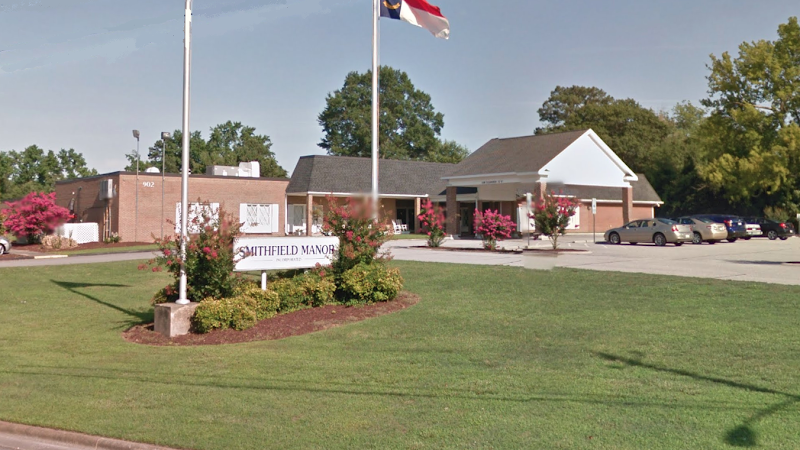
902 Berkshire Road, Smithfield, NC 27577 (919) 934-3171
For profit - Corporation 160 Beds Independent Data: November 2025 3 Immediate Jeopardy citations
Trust Grade
0/100
#389 of 417 in NC
Last Inspection: January 2025

Within standard 12-15 month inspection cycle. Federal law requires annual inspections.

Overview

Smithfield Manor Nursing and Rehab has received a Trust Grade of F, indicating significant concerns about the facility's performance. With a state rank of #389 out of 417, they are in the bottom half of nursing homes in North Carolina, and ranked #5 out of 5 in Johnston County, meaning there are no better local options. The facility is worsening, with reported issues increasing from 2 in 2024 to 7 in 2025. Staffing is relatively strong with a 4 out of 5 stars rating and a turnover rate of 45%, which is below the state average, indicating that staff may be more familiar with the residents' needs. However, the facility has accumulated $246,622 in fines, which is concerning and suggests ongoing compliance issues. Specific incidents of concern include a resident who fell and was injured due to improper wheelchair securement during transport and another resident who fell off the bed when staff did not follow care instructions requiring two-person assistance. While staffing is a positive aspect, the serious safety violations raise significant alarms about the overall quality of care at this facility.

Trust Score
F
0/100
In North Carolina
#389/417
Bottom 7%
Safety Record
High Risk
Review needed
Inspections
Getting Worse
2 → 7 violations
Staff Stability
○ Average
45% turnover. Near North Carolina's 48% average. Typical for the industry.
Penalties
✓ Good
$246,622 in fines. Lower than most North Carolina facilities. Relatively clean record.
Skilled Nurses
○ Average
Each resident gets 32 minutes of Registered Nurse (RN) attention daily — about average for North Carolina. RNs are the most trained staff who monitor for health changes.
Violations
⚠ Watch
12 deficiencies on record. Higher than average. Multiple issues found across inspections.
★☆☆☆☆
1.0
Overall Rating
★★★★☆
4.0
Staff Levels
★☆☆☆☆
1.0
Care Quality
★☆☆☆☆
1.0
Inspection Score
Stable
2024: 2 issues
2025: 7 issues

The Good

  • 4-Star Staffing Rating · Above-average nurse staffing levels
  • Full Sprinkler Coverage · Fire safety systems throughout facility
  • No fines on record
  • Staff turnover below average (45%)

    3 points below North Carolina average of 48%

Facility shows strength in staffing levels, fire safety.

The Bad

1-Star Overall Rating

Below North Carolina average (2.8)

Significant quality concerns identified by CMS

Staff Turnover: 45%

Near North Carolina avg (46%)

Typical for the industry

Federal Fines: $246,622

Well above median ($33,413)

Significant penalties indicating serious issues

The Ugly 12 deficiencies on record

3 life-threatening
Sept 2025 1 deficiency 1 IJ
CRITICAL (J) 📢 Someone Reported This

A family member, employee, or ombudsman was alarmed enough to file a formal complaint

Immediate Jeopardy (IJ) - the most serious Medicare violation

Accident Prevention (Tag F0689)

Someone could have died · This affected 1 resident

**NOTE- TERMS IN BRACKETS HAVE BEEN EDITED TO PROTECT CONFIDENTIALITY** Based on observation, record review, and interviews with the resident, staff, and the Medical Director, the facility failed to f...

Read full inspector narrative →
**NOTE- TERMS IN BRACKETS HAVE BEEN EDITED TO PROTECT CONFIDENTIALITY** Based on observation, record review, and interviews with the resident, staff, and the Medical Director, the facility failed to follow the manufacturer's instructions for wheelchair securement in a transportation van. On August 26, 2025, the Transport Driver incorrectly anchored all four securement straps to the rear wheels of the wheelchair, leaving the front of the wheelchair unsecured. As the vehicle accelerated, the unsecured wheelchair tipped backward, causing Resident #1 to fall and strike her head and back on the floor of the van. She was transported to the hospital, where she was diagnosed with posterior (back) neck and upper back pain, a superficial laceration on the tip of her tongue, paraspinal (muscles located along the spine) tenderness in the upper thoracic (part of the body between the neck and the abdomen) region, and a superficial abrasion on her right hand. A computed tomography (CT) (non-invasive imaging test that uses x-rays and computer technology to create detailed images of the body's internal structures) scan revealed no evidence of hemorrhage (bleeding) or acute fracture. Resident #1 was discharged back to the facility later that evening. The noncompliance had the high likelihood to cause serious injury, harm, impairment or death. The deficient practice affected 1 of 3 residents reviewed for accident-related incidents (Resident #1).The findings included:The undated manufacturer's instructions for wheelchair tie-downs used by the facility revealed it read in part, Attach the four tie-down hooks to solid frame members or weldments (parts joined by [NAME]), near seat level [of the wheelchair]. Ensure tie-downs are fixed at approximately 45 degrees. Do not attach hooks to wheels, plastic, or removable parts of wheelchair.Resident #1 was admitted to the facility on [DATE]. Her active diagnoses included neuropathy, chronic ischemic heart disease osteomyelitis, atherosclerotic heart disease, diabetes, amputation of the right toes and left leg above the knee, and generalized anxiety disorder.Resident #1's Minimum Data Set assessment dated [DATE] revealed she was assessed as cognitively intact. She had range of motion impairment on both sides of her lower extremities. She was dependent on staff for transfers and required setup assistance with wheelchair mobility. She was also assessed to receive scheduled and as needed pain medication. She had pain or hurting during the 5 days prior to the assessment and was documented as having pain occur rarely or not at all and described the pain as mild. She received an opioid for her pain control during the lookback period. Resident #1's orders revealed on 7/18/25 she was ordered oxycodone 5 milligram tablet every 8 hours as needed for pain. On 7/19/25 she had orders for chewable aspirin 81 milligrams one time a day related to chronic ischemic heart disease as well as clopidogrel bisulfate oral tablet 75 milligrams, an anti-platelet medication, in the morning related to atherosclerotic heart disease. During an interview on 9/10/25 at 10:33 AM Resident #1 stated the Transport Driver came to her room on 8/26/25 and rolled her out to the transport van for a dentist appointment. This van was the facility's transport van that opened in the back and had a ramp on which the Transport Driver pushed her up. The Transport Driver would always do something with the floor that would lock her wheelchair in place and to the best of her memory, the Transport Driver did something, and it seemed like she had locked the wheelchair in the van as she normally did, and Resident #1 did not know what failed this time. She confirmed her seatbelt was also in place. During transport, everything seemed normal until they had stopped at a red light. When the light turned green, the Transport Driver pressed the gas to go straight, and as the van accelerated at a normal pace, her wheelchair came loose. The chair flipped backwards resulting in her landing on her back still seated in the wheelchair. The ramp had been pulled up in the back and stored, and she hit her head on the steel ramp as she fell backwards. She bit her tongue, causing some bleeding but she could not remember how bad it bled. She stated the Transport Driver parked the van, but she could not say how long it took to come to a stop. Her back was in pain due to the sudden jerk of the wheelchair flipping over and the doctors at the hospital said she probably had some whiplash from the incident once she had made it to the emergency department. Resident #1 stated her pain was a 9 out of 10 (0 being no pain and 10 being the worst pain imaginable). The Transport Driver came into the back of the van after parking and called Emergency Medical Services (EMS) as well as the facility. Three people came from the facility to where they were parked, arriving before EMS as the van had not made it far from the facility. The three staff members who arrived at the van were the Director of Nursing, the Administrator, and the Maintenance Director. It did not take them long to get there but she was unsure of the length of time. She was still lying on her back, seated in the flipped wheelchair when the three staff members arrived. The Administrator began taking pictures of the van and the things on the floor of the van that anchored the chair to the van, and the Maintenance Director was inspecting the van. The Director of Nursing assessed her and explained they would need to wait for EMS to ensure Resident #1 was moved safely. During an interview on 9/10/25 at 12:36 PM the Transport Driver stated Resident #1 had a dental appointment on 8/26/25 at 2:30 PM. At around 2:00 PM to 2:15 PM she went to Resident #1's room to take her to the van and get her set up for transport. Once Resident #1 was in the van, she locked the wheels on the wheelchair and then secured the two front straps and two back straps from the floor of the van to the large, back wheels of the wheelchair, one front and one back strap per wheel. She then did a pull test to make sure the wheelchair did not move by pulling back on the chair handles to ensure it was securely in place and allow the automatic tension to tighten. She stated she heard the clicking of the locking mechanisms which indicated the wheelchair was securely in place. She then put on Resident #1's seatbelt. One belt went around the resident's waist and locked into the floor on the right and left side of the resident. Then another belt attached to the side wall of the van is pulled over the resident's right shoulder and locked into the waist belt. She then completed another pull test by pulling back on the wheelchair by its handles and asked Resident #1 if she was comfortable or if the seat belt was too tight. Resident #1 indicated she was comfortable. The ramp was folded and stored by folding it to sit upright in the back of the van and then the doors of the van were closed. Everything continued without incident, and they stopped at a stop light. When the light turned green, she pressed the gas, and as she accelerated through the light, Resident #1 shouted, and she heard a noise from the back. She asked Resident #1 what happened, and the resident responded she had come out of the chair. The Transport Driver told Resident #1 to just hold on as she was trying to get out of the road and park. She pulled to the shoulder of the road and parked the van. The Transport Driver told Resident #1 to keep talking to her to keep her conscious and told Resident #1 she could not move her before a medical professional assessed her. The Transport Driver then called the EMS as well as the Administrator. She stated by then she had moved to the back of the van with Resident #1. The wheelchair had tipped over backwards with Resident #1 in it, resulting in her lying on the floor of the van on her back, halfway in the wheelchair with her buttock having shifted up to the middle of the back rest of the wheelchair. She stated Resident #1 asked if she could get her up and the Transport Driver told her she could not move her due to the increased risk of injury. Resident #1 told the Transport Driver she thought she had hit her head. The top of Resident #1's head was up against the ramp which was folded and stored behind Resident #1. At no point did she move the resident or move any items including the ramp due to the risk of moving the resident, causing more injury. The only thing she moved was to unlock the right front anchor strap which was still secured on the wheel and the van floor when she first entered the back of the van. She did this to get back to Resident #1 without having to step over the anchors. The Director of Nursing and Administrator arrived 7 to 10 minutes prior to EMS arriving. The Transport Driver stated she demonstrated how she had anchored Resident #1's wheelchair in the van for the Maintenance Director, Director of Nursing, and Administrator. This was completed while still pulled over to the side of the road. After the demonstration, she was informed she could not drive the van again until the investigation was completed and she had been reeducated on how to secure resident wheelchairs in the van. The Maintenance Director drove the van back to the facility. The Transport Driver indicated she attended training, watched instructional videos, and took tests during the investigation which she completed on 9/2/25 and she was now currently monitored with a monitoring tool by the Maintenance Director. The Transport Driver stated she was educated that by attaching both the front and rear anchors to the same rear wheel on each side, the frame of the wheelchair was still free to rotate and flip over. She stated she had done it correctly in the past as far as she could recall and did not know why she attached it this way on 8/26/25.During an interview on 9/10/25 at 2:23 PM the Maintenance Director stated he was in the building when the incident happened on 8/26/25, and he got a call from the Administrator to come to the location of the incident. The Administrator informed him an incident had occurred during transport of Resident #1 in the facility van. When he arrived, EMS was already there on the scene, and the side door was open and through the side door he noted Resident #1 lying on her back. The Director of Nursing and Administrator were already on there as well. EMS was in the process of getting Resident #1 out of the van, and once the resident was safely removed from the van and on the way to the hospital, he was then able to examine the van, and they could start their investigation. The Transport Driver explained what happened and he asked her how she had attached the anchor straps to the chair and floor of the van. She demonstrated how she attached the anchors to the wheelchair, and it was done incorrectly. He stated when a wheelchair was anchored in a transport van, it must be anchored by the front and back frame of the wheelchair. Wheels should never be used to anchor a wheelchair down. Also, she had anchored the left front and back anchors to the same larger back left wheel and anchored the right front and back anchors to the same larger back right wheel. Because she anchored both the back and front anchors to the same wheel on either side, the frame was still free to rotate while the back wheels stayed stationary. When the van had accelerated, the wheelchair was free to rotate backwards, causing the incident. He stated they inspected the van and found all parts were functioning correctly.The EMS narrative dated 8/26/25 revealed EMS documented that upon arrival, Resident #1 was found laying on her back in a transport van. The resident was partially in her wheelchair and partially on the floor of the van. Resident #1 indicated she tipped over during transport and now her neck and upper back were hurting. No deformities were noted with assessment. Resident #1 was lifted from the floor and placed back in her wheelchair. The facility staff present informed EMS she did take blood thinners, and she had hit her head. Resident #1 was transferred to the ambulance and was complaining of 8 out of 10 pain in her neck and back. Resident #1 was transported to the hospital. Resident #1's hospital record dated 8/26/25 revealed Resident #1 was in a vehicle transport going to an appointment when her wheelchair flipped backwards resulting in her striking her head on the floor of the van. Resident #1 indicated she saw stars but did not lose consciousness. She suffered back and neck pain as well. She was transported to the emergency department for further evaluation. Resident #1 indicated she had posterior neck pain and upper back pain but was otherwise at her baseline. She denied any other symptoms. She was documented to take clopidogrel bisulfate and aspirin but denied any other anticoagulant medication. CT scans demonstrated no evidence of hemorrhage or acute fracture. Blood work was unremarkable for acute issues and Resident #1 was discharged back to the facility on 8/26/25.A nursing note dated 8/26/25 revealed Resident #1 was documented to have returned to the facility via transport Med-X/stretcher from hospital where she had been evaluated for possible head injury from a fall. The nurse documented the hospital found negative findings from CT scans and lab work up.A provider note dated 8/27/25 revealed the Nurse Practitioner saw Resident #1 and documented Resident #1 was in a transport van headed to a dental appointment when the van accelerated, causing her wheelchair to tip over. She struck her head, neck, and back on the floor of the van. She also bit her tongue and sustained scrapes. She was taken to the emergency department where CT scans of the head and cervical spine were performed, all of which were negative for acute findings. She was discharged back to the facility with instructions to rest in bed for a few days. Resident #1 reported persistent pain, particularly in the shoulders and neck, and was ordered oxycodone 5 mg every 8 hours as needed for pain. Resident #1's diagnoses were acute whiplash injury, contusion of tongue, and pain. During an interview on 9/11/25 at 10:05 AM the Medical Director stated she was notified of the incident on 8/26/25, the day it happened. She further stated the main concern with an accident of this type would be internal bleeding because of the fall which thankfully did not occur. Another concern would be fractures because of the impact of the fall. She stated they had been seeing her regularly due to her medical condition and the incident to monitor Resident #1's status. The Medical Director stated the resident had not mentioned any fear of transportation or increase in her pain since the initial acute pain from the fall. During an interview on 9/11/25 at 10:54 AM the Director of Nursing (DON) stated on 8/26/25 she was informed by the Administrator they had to go because there had been a van incident. They got in the Administrator's car and arrived in less than 5 minutes. The van was parked on the shoulder of the road, and the Director of Nursing heard the Transport Driver saying, I'm in here as she opened the passenger front door. At that point she saw the Driver in the back of the van with Resident #1. The resident was in the wheelchair, on her back, with the front wheels in the air. Resident #1 told the Director of Nursing she bit her tongue and there was some bleeding but there was no pooling of blood as well as no indication or observed risk of choking on blood by Resident #1. EMS arrived shortly after the DON assessed Resident #1. EMS got in the van, assessed the resident and asked her questions. EMS transferred Resident #1 to a stretcher, placed her in the ambulance, and took her to the hospital. The Director of Nursing, Transport Driver, Administrator, and Maintenance Director examined the van. They had the Transport Driver demonstrate how she had anchored the wheelchair in the van. The Transport Driver had anchored both left and right front and rear straps to the rear wheels. At that point they determined the wheelchair had been anchored incorrectly by the Transport Driver.During an interview on 9/11/25 at 12:10 PM the Administrator stated she received a call from the Transport Driver on 8/26/25 and she told her there had been an incident with the van. The Administrator found out where the transport van was parked and then instructed the Transport Driver to call 911 if she had not done so. The Administrator then got the Director of Nursing and told her what she knew, and they got in her car and drove to the transport van. She stated Resident #1 was alert and oriented and talking with her and the other staff members. While the Director of Nursing assessed the resident, she called the Maintenance Director and asked him to come to the location as well so that he could examine the transport van after Resident #1 was taken care of. She stated shortly after this, EMS arrived and worked with the Director of Nursing to safely transfer Resident #1 to the ambulance and take her to the hospital. While this was happening, the Maintenance Director arrived. After Resident #1 had been transferred to the ambulance, she requested the Transport Driver demonstrate to her, the Director of Nursing, and Maintenance Director, how she had anchored the wheelchair to the van. Following her demonstration, they understood she had attached the anchors incorrectly to the rear wheels on both sides. The Transport Driver was suspended from transportation, and the Maintenance Director drove the van back to the facility. The Administrator was notified of the immediate jeopardy on 9/10/25 at 4:12 PM.The facility provided the following corrective action plan:1. Address how corrective action will be accomplished for those residents found to have been affected by the deficient practice.On 8/26/25 Resident #1's wheelchair tipped backwards in the facility transportation van due to the transportation driver failing to follow manufacturer's instructions for wheelchair securement. The driver had improperly anchored both left and right front and rear straps to the rear wheels, leaving the front of the wheelchair unsecured. When the vehicle accelerated, the wheelchair tipped backwards, causing Resident #1's head and back to strike the floor of the van. Emergency services were called, and Resident #1 was transported to the hospital where she was treated for posterior neck pain, upper back pain, a superficial tongue laceration, paraspinal tenderness, and a superficial abrasion to her right hand. A CT scan revealed no evidence of hemorrhage or acute fracture, and the resident was discharged back to the facility the evening of 8/26/25.On 8/26/25, the transportation driver was removed from driving duties pending retraining and competency validation. 2. Address how the facility will identify other residents having the potential to be affected by the same deficient practice. On 8/26/25 the facility conducted a 100% audit of progress notes, transport log and interview with the Transportation Driver of in-house facility residents' transports for the past 90 days by the Assistant Director of Nursing (ADON) that was completed on 8/27/25, with no concerns identified. The Assistant Director of Nursing reviewed the transport log to identify any resident that would potentially be transported with facility van. No residents were to be transported until investigation and retraining completed. All scheduled appointments were scheduled by the Transportation Driver with a contracted outside transportation company beginning 8/27/25. 3. Address what measures will be put into place or systemic changes made to ensure that the deficient practice will not recur.The facility has two employees who drive the transportation van. The Transportation Driver is the primary driver and the Maintenance Director is the back up driver. The Administrator audited on 8/26/25 the transport employee files: audit to include training, valid driver's license, van maintenance checklist to include proper alignment of the wheelchair between the tie down straps, attaching the rear tie down straps to the rear frame, front tie down straps to the front frame, ensuring tightness on both the front and rear tie downs, and securing seatbelt around resident, and employee vehicle policy to include but not limited to vehicle purpose, driver licensing, maintenance of company van, proof of insurance on company van, traffic violations, usage of cellular phone, accidents involving company vehicle, theft of company vehicle and driver responsibilities in regards to operation of vehicle, use of seatbelts and securement devices and reporting requirements with no concerns identified. The Maintenance Director did the initial education for the Transportation Driver on site of incident and return demonstration on 8/26/25. The Administrator reviewed the manufacturer's video and training documents provided by the facility and re-educated post incident on 8/27/25. The Maintenance Director conducted education and an initial return demonstration with the Transportation Driver, Director of Nursing and Administrator on 8/26/25 that included proper securement of the wheelchair and van anchors per manufacturer's instructions. Outside Maintenance Director from a sister facility provided additional education to the Administrator, Maintenance Director and Transportation Driver regarding proper securement of the wheelchair and van anchors per manufacturer's instructions on 9/2/25. On 8/27/25 the Administrator initiated 100% in-service with the Maintenance Director and Transportation Driver about proper securement of wheelchairs during transport per manufacturer's instructions. The in-service was completed by 8/28/2025. All newly hired Transport Drivers will be in-serviced by the Maintenance Director during orientation to include the skills check list. The skills check list includes but is not limited to a competency validation of loading, securing and unloading a resident and a return demonstration. The Maintenance Director sent the van out for inspection that included checking functional status of the wheelchair anchors that was completed on 8/27/25 with no concerns identified. 4. Indicate how the facility plans to monitor its performance to make sure that solutions are sustained. Include dates when corrective action will be completed. On 8/26/25 the facility initiated 10% audit of all residents being transported by the facility to be completed by the Maintenance Director weekly x 4 weeks then monthly x 2 months utilizing the Van Transport Audit Tool to ensure proper securing of the resident before leaving the facility and this was taken to Quality Assurance committee meeting on 8/26/25. This audit is an observational audit to determine proper securement of the resident, wheelchair, and van anchors. The results will be documented on the Van Transport Audit Tool. All areas of concern will be addressed by the Administrator and/or Maintenance Director immediately.The Administrator will forward the results of the Van Transport Audit Tool to the Executive Quality Assurance Committee to include Administrator, Director of Nursing, Assistant Director of Nursing, Quality Assurance Nurse, Infection Control Preventionist/Staff Development Nurse, Activities Director, social workers, unit managers and unit coordinators, Maintenance Director, Minimum Data Set nurse, Dietary Manager, Medical Director and additional staff representatives monthly x 3 months for review to determine trends and / or issues that may need further interventions put into place and to determine the need for further and / or frequency of monitoring. Completion date 9/3/25Onsite validation of the facility's corrective action plan was completed on 9/11/25. The initial audit results were reviewed. The in-service education records completed 9/2/25 were reviewed. Interviews with the Transport Driver and Maintenance Director as well as observations of a demonstration of anchoring a wheelchair to a transport van by both staff members were completed. The monitoring results were reviewed, and the Quality Assurance meeting minutes were reviewed. The facility's immediate jeopardy removal date of 9/3/25 was validated.
Jan 2025 6 deficiencies
CONCERN (D)

Potential for Harm - no one hurt, but risky conditions existed

Comprehensive Care Plan (Tag F0656)

Could have caused harm · This affected 1 resident

**NOTE- TERMS IN BRACKETS HAVE BEEN EDITED TO PROTECT CONFIDENTIALITY** Based on record review and staff interviews, the facility failed to develop and implement an individualized care person centered...

Read full inspector narrative →
**NOTE- TERMS IN BRACKETS HAVE BEEN EDITED TO PROTECT CONFIDENTIALITY** Based on record review and staff interviews, the facility failed to develop and implement an individualized care person centered care plan in the area of nutrition for 3 of 36 residents reviewed for comprehensive care plans (Resident #67, Resident #122 and Resident #19). Findings included: 1 a. Resident #67 was admitted to the facility on [DATE] with diagnoses including diabetes mellitus. A record of Resident #67's weights indicated on - 6/6/2024 Resident #67 weight was 144 pounds (lbs). - 8/7/2024 Resident #67 weight was 133 lbs. Physician orders included an order on 9/6/2024 for speech therapy evaluation for weight loss. Registered Dietician consult dated 9/9/2024 reported a weight loss of ten pounds in one month and recommended monitoring weights and adding sugar free shakes with all meals for nutritional support. A record of Resident #67's weights indicated on - 11/7/2024 Resident #67 weight was 134.6 lbs. - 12/4/2024 Resident #67 weight was 128.4 lbs. Physician orders included orders on 12/6/2024 for a carbohydrate controlled diet and sugar free shakes (meal replacement options for residents with diabetes) with all meals. The quarterly Minimum Data Set (MDS) assessment dated [DATE] indicated Resident #67 was cognitively intact and required only assisting with setting up meal tray for eating. The MDS coded Resident #67's nutritional status with a weight of 128 pounds, on a therapeutic diet and with a weight loss more than 5% in the last month or 10% in more than six months and not on a physician prescribed weight loss regimen. Resident #67's care plan did not include a plan of care that addressed Resident #67's risk for a decrease in the nutritional status and/or weight loss. Resident #67's care plan was last reviewed on 12/10/2024. Dietary notes dated 12/11/2024 indicated Resident #67 was receiving supplemental sugar free protein and calorie dense shakes with meals due to weight loss and Resident #67's weight at 128.4 was a 5% weight loss over the past 30 days and 10% weight loss over the last 180 days. b. Resident #122 was admitted to the facility on [DATE] with diagnoses including depression. Dietary notes dated 10/14/2024 indicated Resident #122 weighed 170.9 pounds with a an eleven pound weight loss in last 90 days. The report included Resident #122 was receiving a no added sugar protein and calorie dense frozen supplement with lunch and dinner meals for nutritional support and recommended monitoring Resident #122's weights and oral intake. Additional dietary notes on 11/25/2024 recorded Resident #122 weight as stable at 170.1 pounds. Nursing documentation dated 11/22/2024 reported a change in diet to pureed due to dysphagia. Speech therapy note dated 11/24/2024 indicated Resident #122 presented with oropharyngeal dysphagia and receiving a pureed and thin liquid diet. Resident #122's care plan did not include a plan of care that addressed Resident #67's risk for a decrease in the nutritional status and/or weight loss. Resident #67's care plan was last reviewed on 12/5/2024. Physician orders dated 12/6/2024 included an order for a fortified nutritional supplement shake for weight loss and malnutrition, 120 milliliters three times a day for weight loss and poor appetite. On 12/12/2024, Resident #122 diet was changed to a no added salt mechanical soft diet and thin liquids. The quarterly Minimal Data Set (MDS) assessment dated [DATE] indicated Resident #122 was cognitively intact and required assistance in setting up meal trays only for eating. The MDS coded Resident #122's nutritional status as receiving a therapeutic diet, weighing 170 pounds (lbs) with no weight loss. c. Resident #19 was admitted on [DATE] to the facility with diagnoses including diabetes mellitus, dementia and depression. Resident #19's weights indicated a weight loss in the last six months: - 7/8/2024 127.0 pounds (lbs). - 7/17/2024 124.0 lbs. - 7/24/2024 121.0 lbs. - 7/31/2024 119.0 lbs. - 8/7/2024 119.0 lbs. - 9/10/2024 114.0 lbs. - 9/11/2024 113.0 lbs. - 9/18/2024 113.0 lbs. - 9/25/2024 117.0 lbs. - 10/2/2024 112.0 lbs. -12/4/2024 107.9 lbs. -1/1/2025 103.2 lbs. Physician orders dated 7/8/2024 included an order for a regular diet and a protein and calorie dense frozen supplement for weight loss, with lunch and dinner. Dietary notes dated 9/9/2024 reported a 10% weight loss in 180 days. The note included the fortified nutritional supplement shake for weight loss and malnutrition was increased from 30 milliliters to 60 milliliters three times a day and continued to monitor weights. Physician notes dated 9/16/2024 reported a six pounds (5%) weight loss in one month and the weight loss team addressed with the addition of the fortified nutritional supplement shake three times a day for nutritional support. The annual Minimum Data Set (MDS) assessment dated [DATE] indicated Resident #19 was severely cognitively impaired and coded Resident #19's nutritional status receiving a therapeutic diet. A weight of 112 pounds and with weight loss more than 5% in the last month or 10% in more than six months and not on a physician prescribed weight loss regimen. The annual MDS triggered a concern for nutritional status for Resident #19's care plan. Resident #19's care plan did not include a plan of care that addressed Resident # 67's risk for a decrease in the nutritional status and/or weight loss. Resident #67's care plan was last reviewed on 12/3/2024. In an interview on 1/24/2025 at 3:18 pm with the MDS Coordinator, she stated the Dietary Manager was responsible for creating a care plan for residents who were at risk for a decrease in their nutritional status. She explained meetings were held to discuss residents with weight loss and the Dietary Manager was responsible for updating the residents' care plan after weight loss meetings. In an interview on 1/24/2025 at 3:26 pm with the Dietary Manager, she stated she was responsible for entering the initial care plans for residents when there was a risk for a change in their nutritional status and updating residents' care plans for weight loss discussed in the monthly weight loss meeting. She explained she been trained on the new electronic medical record system in July 2024 and had access to the information to create care plans for Resident #67, Resident #122 and Resident #19 and had not entered or updated the care plans for the residents. She stated she knew she was responsible for entering the nutrition information into the care plans and had not been able to complete the tasks and was working on entering the information into the care plans. In an interview with the Administrator on 1/24/2025 at 3:48 pm, she stated she was unaware that Resident #67, Resident #122 and Resident #19 care plans did not include a nutritional risk care plan. She stated the Dietary Manager should have been updating the residents' care plan due to weight loss and included interventions.
CONCERN (D)

Potential for Harm - no one hurt, but risky conditions existed

Accident Prevention (Tag F0689)

Could have caused harm · This affected 1 resident

**NOTE- TERMS IN BRACKETS HAVE BEEN EDITED TO PROTECT CONFIDENTIALITY** Based on observation, record review, and Medical Director, Pharmacist Consultant, Sales Representative and staff interviews, the...

Read full inspector narrative →
**NOTE- TERMS IN BRACKETS HAVE BEEN EDITED TO PROTECT CONFIDENTIALITY** Based on observation, record review, and Medical Director, Pharmacist Consultant, Sales Representative and staff interviews, the facility failed to protect the resident from a potential flammable hazard for 1 of 3 residents reviewed for accidents. (Resident #16) The findings included: The National Institute of Health's website included an article dated October 2016 titled Safety in the use of [name brand of petroleum jelly] during oxygen therapy: the pharmacist's perspective indicated the following: The justification of the combination of [name brand of petroleum jelly] and oxygen has been subject for discussion in many hospitals. Due to the lack of evidence-based data in literature, we have provided recommendations from a pharmacist's perspective. The use of petroleum-based products should be avoided when handling patients under oxygen therapy. Whenever a skin moisturizer is needed for lubrication or rehydration of dry nasal passages, the lips or nose when breathing oxygen, consider the use of oil-in water creams or water-based products. Resident #16 was readmitted to the facility on [DATE] with diagnoses which included hypoxia (a condition that occurs when the body or a part of the body doesn't receive enough oxygen), and cognitive communication deficit. A physician's order dated 12/23/24 revealed an order for oxygen at 1 liter per minute (LPM) via nasal cannula (NC) to maintain oxygen saturation rates greater than 94% every shift for hypoxia. A physician's order written by the Medical Director dated 12/24/24 revealed an order for white petroleum jelly to be applied to Resident #16's lips every day and every evening for dry lips. Review of Resident #16's annual Minimum Data Set (MDS) dated [DATE] revealed Resident #16 to be severely cognitively impaired. Resident #16 was dependent on staff for all activities of daily living (ADL) and transfers. Resident #16 was coded for continuous oxygen therapy. Resident #16's January 2025 Treatment Administration Record (TAR) revealed the white petroleum jelly had been initialed as administered every day twice a day. An observation made on 1/21/25 at 1:05 pm revealed Resident #16 laying in bed with the NC in her nares (the openings of the nose, or nostrils). Resident #16's lips were not visually dry. A phone interview was conducted on 1/24/25 at 12:56 pm with the Sales Representative from an oxygen concentrator repair company. The Sales Representative explained the petroleum jelly was safe to use with residents who received oxygen therapy. When asked about the petroleum jelly being inflammable, the Sales Representative stated the petroleum jelly was heavily processed and the risk would be small. During an interview with Nurse #2 on 1/24/25 at 9:58 am, she indicated she was applying petroleum jelly but was unaware of the potential hazard of petroleum jelly when used on residents with oxygen. Nurse #2 further indicated if the white petroleum jelly was flammable then it should not be used. Nurse #2 was assigned the day shift (7:00 am until 3:00 pm) for Resident #16 and was familiar with Resident #16. In an interview with the Director of Nursing (DON) on 1/24/25 at 3:15 pm, she stated the facility should not be using petroleum jelly on residents who received oxygen therapy. The risk was small, but the petroleum jelly should not be used. During a phone interview with the Pharmacist Consultant on 1/24/25 at 8:52 am, she indicated petroleum jelly was not good to use with residents on oxygen therapy because it was considered flammable. She further indicated the risk was small; however, she would not want to take the chance of using petroleum jelly. In a phone interview with the Medical Director on 1/24/25 at 2:45 pm, she stated petroleum was flammable and there was a small risk for an adverse reaction for residents who were receiving both oxygen therapy and petroleum jelly. She further stated she was unaware of the petroleum jelly being used for Resident #16 and when it was brought to her attention, changes were made for Resident #16.
CONCERN (D)

Potential for Harm - no one hurt, but risky conditions existed

Respiratory Care (Tag F0695)

Could have caused harm · This affected 1 resident

**NOTE- TERMS IN BRACKETS HAVE BEEN EDITED TO PROTECT CONFIDENTIALITY** Based on observations, record review, interviews with the Medical Director and staff, the facility failed to provide supplementa...

Read full inspector narrative →
**NOTE- TERMS IN BRACKETS HAVE BEEN EDITED TO PROTECT CONFIDENTIALITY** Based on observations, record review, interviews with the Medical Director and staff, the facility failed to provide supplemental oxygen as ordered by the physician for 1 of 1 resident reviewed for respiratory care (Resident #16). The findings included: Resident #16 was readmitted to the facility on [DATE] with diagnoses which included hypoxia, (a condition that occurs when the body or a part of the body doesn't receive enough oxygen). Resident #16's care plan dated 12/23/24 revealed a focus for oxygen therapy at 1 liter (L) via nasal cannula (NC) for hypoxia. Intervention included oxygen saturations to be monitored as ordered and as needed. A physician's order dated 12/23/24 revealed an order for oxygen at 1 L via NC to maintain oxygen saturation rates greater than 94% every shift for hypoxia. Review of Resident #16's annual Minimum Data Set (MDS) dated [DATE] revealed Resident #16 was severely cognitively impaired. Resident #16 was dependent on staff for all activities of daily living (ADL's) and transfers. Resident #16 was coded for continuous oxygen therapy. An observation made on 1/21/25 at 1:05 pm revealed Resident #16 laying in bed with the NC in her nares (the openings of the nose, or nostrils). An observation of the in-room oxygen concentrator revealed the oxygen setting at 2 L. Resident #16 had no signs or symptoms of respiratory distress. A follow up observation was made on 1/21/25 at 2:56 pm which revealed Resident #16's in-room oxygen concentrator setting remained at 2 L. Resident #16 had no signs or symptoms of respiratory distress. Resident #16 was observed at lunch on 1/23/25 at 12:15 pm which revealed Resident #16's in-room oxygen concentrator setting remained at 2 L. No signs or symptoms of distress were observed. During an interview at the medication cart on 1/23/25 at 5:11 pm with Nurse #1, she stated Resident #16's order was for 1L of oxygen via NC. Nurse #1 verified the physician order in the electronic medication administration record (eMAR) which revealed Resident #16 was ordered continuous oxygen at 1 L via NC. An observation with Nurse #1 was completed on 1/23/25 at 5:13 pm in Resident #16's room. Nurse #1 observed the in-room oxygen concentrator setting at 2 L. Nurse #1 alerted her supervisor and asked him if she needed to change the oxygen setting to 1 L. Nurse #1 indicated nurses should be checking the in-room oxygen concentrators every shift to make sure the correct ordered liter was still in place for their residents on supplemental oxygen. In an interview with the Quality Coordinator (QA) on 1/23/25 at 5:15 pm, he explained the knob could have been accidentally bumped when performing care. He stated he did not know why the oxygen setting was at 2 L, but it should have been on 1 L as ordered by the physician. Nurses should be checking the in-room oxygen concentrators every shift to make sure the correct ordered liter was still in place for their residents on supplemental oxygen. An interview with the Director of Nursing (DON) on 1/23/25 at 5:17 pm, she stated nurses should be checking supplemental oxygen settings daily to ensure residents were on the correct ordered liter. An interview with the Medical Director was completed on 1/24/25 at 2:45 pm. The Medical Director explained Resident #16's in-room oxygen concentrator should have been set at the correct ordered liter. She further explained there was no harm to Resident #16 for being on 2 L instead of 1 L of oxygen.
CONCERN (D)

Potential for Harm - no one hurt, but risky conditions existed

Deficiency F0761 (Tag F0761)

Could have caused harm · This affected 1 resident

Based on observations and staff interviews, the facility failed to secure residents' medications in a locked medication cart for 1 of 6 medication carts observed (200-hall upper west medication cart)....

Read full inspector narrative →
Based on observations and staff interviews, the facility failed to secure residents' medications in a locked medication cart for 1 of 6 medication carts observed (200-hall upper west medication cart). Findings included: On 1/24/2025 at 6:14 am, the 200-hall upper west medication cart was observed unlocked and located outside the nurse's station in the hallway approximately 15 feet from an unlocked entrance to the facility where staff were observed exiting as the surveyor entered the facility. There were no staff observed at the 200-hall upper west medication cart or in the nursing station. There were also no residents and/or staff observed on the 200-hall upper west. On 1/24/2025 at 6:15 am, Nurse #3 was observed exiting a resident's room that was located 30 feet away from the 200-hall upper west medication cart into the 200-hall and walking toward the unlocked 200-hall upper west medication cart. On 1/24/2025 at 6:16 am during an interview with Nurse #3, Nurse #3 was observed locking the 200-hall upper west medication cart. She stated she was in a resident's room administering medications and explained the 200-hall upper west medication cart was to be locked before leaving the medication cart unattended. When asked why the 200-hall upper west medication cart was observed unattended and unlocked upon entering the facility, Nurse #3 did not provide a reason. In an interview with the Director of Nursing on 1/24/2025 at 4:02 pm, she stated the 200-hall upper west medication cart was to be locked at all times when Nurse #3 was not present at the medication cart.
CONCERN (E)

Potential for Harm - no one hurt, but risky conditions existed

Deficiency F0578 (Tag F0578)

Could have caused harm · This affected multiple residents

**NOTE- TERMS IN BRACKETS HAVE BEEN EDITED TO PROTECT CONFIDENTIALITY** Based on record review and staff interviews, the facility failed to have a process that provided an opportunity to formulate an ...

Read full inspector narrative →
**NOTE- TERMS IN BRACKETS HAVE BEEN EDITED TO PROTECT CONFIDENTIALITY** Based on record review and staff interviews, the facility failed to have a process that provided an opportunity to formulate an advance directive (Resident's #'s 292, 73, 287, 54) and have accurate advance directive documentation throughout the medical record (Resident #54) for 5 of 15 residents reviewed for advance directives. Findings included: 1a. Resident #292 was admitted to the facility on [DATE] with diagnoses including spinal cord disease and chronic obstructive pulmonary disease (a condition caused by damage to the airways or other parts of the lung). The admission Minimum Data Set (MDS) assessment dated [DATE] indicated Resident #292 was cognitively intact. Physician orders dated [DATE] included an order for cardiopulmonary resuscitation (CPR). There was no documentation in Resident #292's medical record that education regarding the formulation of advance directives and/or an opportunity to formulate an advance directive was offered. b. Resident #73 was admitted to the facility on [DATE] with diagnoses including chronic obstructive pulmonary disease. The quarterly Minimum Data Set (MDS) assessment dated [DATE] indicated Resident #73 was cognitively intact. Physician orders dated [DATE] included an order for cardiopulmonary resuscitation (CPR). There was no documentation in Resident #73's medical record that education regarding the formulation of advance directives and/or an opportunity to formulate an advance directive was offered. c. Resident #287 was admitted to the facility on [DATE] with diagnoses including pyothorax (a condition where pus builds up around the lungs). The admission/5-day Minimum data Set (MDS) assessment dated [DATE] indicated Resident #287 was moderately cognitively impaired. Physician orders dated [DATE] included an order for cardiopulmonary resuscitation (CPR). There was no documentation in Resident #287's medical record that education regarding the formulation of advance directives and/or an opportunity to formulate an advance directive was offered. d. Resident #54 was admitted to the facility on [DATE] with diagnoses including chronic ischemic heart disease (heart weakening caused by reduced blood flow to the heart), type 2 diabetes mellitus (a chronic disease that occurs when the body doesn't produce enough insulin or doesn't use it properly), and generalized muscle weakness. The quarterly Minimum Data Set (MDS) assessment dated [DATE] indicated Resident #54 was cognitively intact. Physician orders dated [DATE] for Resident #54 included an order for cardiopulmonary resuscitation (CPR). There was no documentation in Resident #54's medical record that education regarding formulation of advance directives and/or an opportunity to formulate an advance directive was offered. An interview was conducted on [DATE] at 10:23 AM with the Admissions Coordinator. She stated she does not discuss advanced directives with residents. She further stated the Assessment/Admissions Nurse talks about code status/advanced directives with residents. An interview was conducted on [DATE] at 10:26 AM with the Assessment/admission Nurse. She stated she reviews information regarding code status provided by the sending facility. She further stated if a resident is admitted to the facility from home, a verbal explanation of the difference between full code status and do not resuscitate (DNR) status is provided to the resident, however that discussion itself is not documented. An interview was conducted on [DATE] at 12:07 PM with the Director of Clinical Operations (former Director of Nursing). He stated code status was verified with the order from the hospital. There is no other written information that advance directives were discussed with residents. An interview was conducted on [DATE] at 2:54 PM with the Medical Director. She stated advance directives were discussed during the initial assessment, at least once per year, as well as with a resident's change in condition and/or recurrent hospitalizations. She further stated there was no specific statement that is documented regarding discussion of advance directives with the residents. An interview was conducted on [DATE] at 3:03 PM with the Administrator. She stated she assumed advance directives were discussed and documented with the residents by Admissions Coordinator. The Assessment/admission Nurse should also be documenting the discussion of advanced directives; however, it was discovered that neither of these staff members were doing so. 2.Resident #25 was admitted to the facility on [DATE] with diagnoses which included cerebral infarction, dementia, and cognitive communication deficit. Review of Resident #25's hard chart located at the nurse's station revealed a form dated [DATE] indicating the preference of Do Not Resuscitate (DNR) and was visually identified as a DNR. Resident #25's hard chart further revealed a physician's order dated [DATE] which indicated a DNR code status. Resident #25's care plan dated [DATE] revealed a focus for her code status with the intervention listed as if resident's heart stops beating, their wishes of being a full code status will be adhered to, and Cardiopulmonary Resuscitation (CPR) will be administered. Review of Resident #25's annual Minimum Data Set (MDS) dated [DATE] revealed Resident #5 was severely cognitively impaired. During an interview with the MDS Coordinator on [DATE] at 4:53 pm, she explained the MDS nurses were responsible for updating the care plans and they should the reflect the code status for Resident #25. Resident code status was discussed during the morning meetings with the different department heads. During an interview with MDS Nurse #1 on [DATE] at 4:10 pm, she indicated code status was discussed in morning meetings as well as care plan meetings. MDS Nurse #1 confirmed she was responsible for updating Resident #25's care plan and explained she was aware Resident #25's code status was DNR. The MDS Nurse #1 stated she entered the care plan intervention of full code status in error for Resident #25. In an interview with the Director of Nursing (DON) on [DATE] at 5:00 pm, she stated her expectations were the care plans reflect the accurate code status of the resident's wishes. Resident code status was discussed during the morning meetings as well as care plan meetings. The DON indicated the MDS nurses were responsible for updating the care plans.
CONCERN (E)

Potential for Harm - no one hurt, but risky conditions existed

Assessment Accuracy (Tag F0641)

Could have caused harm · This affected multiple residents

**NOTE- TERMS IN BRACKETS HAVE BEEN EDITED TO PROTECT CONFIDENTIALITY** Based on record review, observations and staff interviews, the facility failed to accurately code the Minimum Data Set (MDS) ass...

Read full inspector narrative →
**NOTE- TERMS IN BRACKETS HAVE BEEN EDITED TO PROTECT CONFIDENTIALITY** Based on record review, observations and staff interviews, the facility failed to accurately code the Minimum Data Set (MDS) assessment in the areas of skin conditions (Resident #129), bowel and bladder (Resident #31), nutritional status (Resident #5) and discharge (Resident #134) for 4 of 36 residents whose MDS assessments were reviewed. Findings included: 1. Resident #129 was re-admitted to the facility on [DATE] and diagnoses included the absence of right toes. The hospital Discharge summary dated [DATE] recorded on 12/26/2024 Resident #129 had a transmetatarsal amputation (surgery to remove part of the foot that included the metatarsals (bones between ankle and toes). The discharge summary further recorded Resident #129's surgical wound was being treated with a wound vacuum (type of treatment that uses a device to decrease air pressure of the wound to help it heal). Nursing documentation dated 12/30/2024 at 8:39 pm by the admission Nurse reported Resident #129 was re-admitted to the facility and had surgery to remove gangrenous toes from the right foot. Physician orders dated 12/30/2024 included an order to clean the right foot wound with Dakin's solution, apply black foam with wound vacuum at 125 millimeters of mercury continuous suction and change three times a week on Monday, Wednesday, Friday and as needed. Resident #129's January 2025 Treatment Administration Record recorded wound care to the right foot was administered as ordered from 1/1/2025 to 1/23/2025. The admission MDS assessment dated [DATE] indicated the resident was coded for no pressure ulcer, no venous or arterial ulcer and no surgical wound. The MDS further indicated Resident #129 was receiving no surgical wound treatments. An interview conducted with the MDS Coordinator on 1/23/2025 at 4:32 pm, after reviewing Resident #129's MDS dated [DATE] for skin conditions, she stated the MDS assessment was inaccurate because a surgical wound had not been coded for Resident #129. She stated the MDS data entered for Resident #129 was not reviewed prior to transmitting and her signature on the MDS only represented completion of data collection on the MDS assessment and not accuracy of the MDS. In a follow up interview on 1/24/2024 at 10:27 am with the MDS Coordinator, she stated Resident #129's MDS assessment dated [DATE] should have also been coded for receiving wound care. In an interview with the Administrator on 1/24/2025 at 10:28 am, she stated the MDS assessment for Resident #129 should be coded accurately. 2. Resident #31 was admitted to the facility on [DATE] with diagnoses including cancer. Nursing documentation dated 7/19/2024 reported Resident #31's urostomy bag was drained several times during the shift by the nurse. Resident #31's care plan last reviewed on 7/22/2024 included Resident #31 having an urostomy (a surgery that creates a stoma, a small opening in the abdomen used to remove body waste like urine, in the abdomen to collect urine outside of the body). Interventions included to empty the urostomy bag every shift and as needed, expel gas from urostomy bag as needed and notify physician of any changes in the appearance of the urostomy's stoma. Physician orders dated 10/21/2024 included an order to change urostomy bag as needed. There were no orders for an internal or external urinary catheter. The quarterly Minimum Data Set (MDS) assessment dated [DATE] indicated Resident #31's assessment for bowel and bladder was coded for an indwelling urinary catheter, external urinary catheter, ostomy and incontinence in urine occasionally. On 1/21/2025 at 12:32 pm, Resident #31 was observed with a urostomy bag with amber urine on the left lower quadrant of the abdomen. In an interview with Nurse #5 on 1/23/2025 at 11:47 am, she stated Resident #31 had a urostomy due to bladder cancer and had never had an internal or external urinary catheter. In an interview with the MDS Coordinator on 1/24/2025 at 10:27am, she stated Resident #31's MDS assessment for bowel and bladder was inaccurately coded. She explained Resident #31 had a urostomy and stated Resident #31 should not have been coded for an internal or external urinary catheter. In an interview with the Administrator on 1/24/2025 at 10:28 am, she stated Resident #31's MDS assessment should have been coded accurately. 3. Resident #5 was admitted to the facility on [DATE] with diagnoses which included coronary artery disease, hypertension, diabetes mellitus, and dementia. A physician's order dated 9/20/24 revealed an order for tube feeding four times a day. Review of Resident #5's quarterly Minimum Data Set (MDS) dated [DATE] revealed Resident #5 was severely cognitively impaired. The MDS dated [DATE] did not have Resident #5 coded as having a gastrostomy tube. During an interview with Nurse #1 on 1/23/25 at 1:55 p.m., she explained she had just finished giving Resident #5's tube feeding. During an interview with the MDS Coordinator on 1/23/25 at 4:47 p.m., she explained the dietary department coded the nutrition section of the MDS for all of the residents. She further explained that it was coded in error. During an interview with the Food Service Director on 1/24/25 at 2:12 p.m. she explained she was responsible for coding the nutrition section of the MDS for Resident #5. She further explained it was an oversight and an error on her part. During an interview with the Director of Nursing (DON) on 1/23/25 at 5:00 p.m., she stated Resident #5's MDS should be accurately coded. During an interview with the Administrator on 1/24/25 at 3:15 pm she indicated the MDS should be completed accurately. 4. Resident #134 was admitted to the facility on [DATE] with diagnoses which included chronic kidney disease, hypertension, and atrial fibrillation. Review of Resident #134's discharge Minimum Data Set (MDS) dated [DATE] revealed he was cognitively impaired and was discharged to an acute hospital. Review of a progress note dated 12/4/24 noted Resident #134 had been discharged to an assisted living facility. During an interview with the MDS Coordinator on 1/23/25 at 4:37 p.m., she explained the MDS discharge for Resident #134 dated 11/28/24 was coded incorrectly and should have been coded as discharged to an assisted living facility. During an interview with the Director of Nursing (DON) on 1/23/25 at 5:00 p.m., she stated the resident's discharge MDS should accurately reflect their discharge status. During an interview with the Administrator on 1/24/25 at 3:15 p.m. she indicated the MDS should be completed accurately.
Apr 2024 2 deficiencies 2 IJ
CRITICAL (J) 📢 Someone Reported This

A family member, employee, or ombudsman was alarmed enough to file a formal complaint

Immediate Jeopardy (IJ) - the most serious Medicare violation

Free from Abuse/Neglect (Tag F0600)

Someone could have died · This affected 1 resident

Based on observation, record review and interviews with staff, Nurse Practitioner, Medical Examiner and Physician, the facility failed to protect a resident's right to be free from neglect for 1 of 3 ...

Read full inspector narrative →
Based on observation, record review and interviews with staff, Nurse Practitioner, Medical Examiner and Physician, the facility failed to protect a resident's right to be free from neglect for 1 of 3 sampled residents reviewed for neglect (Resident #1). On 3/4/24, Nursing Assistant (NA) #1 disregarded Resident #1's physician orders and plan of care for the assessed need of 2 person assistance with Activities of Daily Living (ADL) care and provided care to the resident without assistance. During care, NA # left the resident positioned on his right side with the bed at waist height and turned his back to get a washcloth. Resident #1 rolled off the bed, landing face down on the tile floor. Resident #1 was transferred to the emergency room where a Computerized Tomography (CT) scan revealed a closed fracture of the left distal femur (a break of the thigh bone just above the knee) and a small skin tear to the left elbow. Resident #1 was on a blood thinning medication and he had multiple medical comorbidities making him vulnerable and at high risk for injury. The death certificate dated 3/31/24 listed the cause of death as complications of a left femur fracture. Immediate jeopardy began on 3/4/24 when NA #1 neglected to provide Resident #1 with the necessary care and services required to provide care safely. The immediate jeopardy was removed on 4/19/24 when the facility implemented an acceptable credible allegation of immediate jeopardy removal. The facility remains out of compliance at a lower level and severity of D (no harm with the potential for more than minimal harm that is not immediate jeopardy) to ensure monitoring systems put in place were effective. The findings included: This tag is cross-referenced to: F689: Based on observation, record review, staff, Nurse Practitioner, Medical Examiner and Physician interviews, the facility failed to provide Activities of Daily Living (ADL) care safely to a dependent resident for 1 of 3 residents reviewed for supervision to prevent accidents (Resident #1). On 3/4/24 Nursing Assistant (NA #1) began providing care to Resident #1 when he left the resident positioned on his right side with the bed at waist height and turned his back to get a washcloth. Resident #1 rolled off the bed, landing face down on the tile floor. Resident #1 was transferred to the emergency room where a Computerized Tomography (CT) scan revealed a closed fracture of the left distal femur (a break of the thigh bone just above the knee) and a small skin tear to the left elbow. Resident #1 was on a blood thinning medication and he had multiple medical comorbidities making him vulnerable and at high risk for injury. The death certificate dated 3/31/24 listed the cause of death as complications of a left femur fracture. Review of the Initial Allegation Report dated 4/18/24 revealed the facility's Director of Nursing (DON) became aware of Resident #1's allegation of resident neglect from the State Survey Agency. The alleged incident occurred on 3/04/24 at 2:50 PM. The resident received a bath and the aide turned away from the bed to retrieve cloth and resident rolled from bed resulting in fall. The Investigation Report dated 4/19/24 completed by the DON for the neglect allegation related to Resident #1 documented the accused staff member (NA #1) was noted to be aware of 2 person ADL care requirement, however, the NA felt he could provide care independently because he had worked with the resident for over a year. A fall occurred during care as a result of care plan not being followed. The report indicated Resident #1 sustained serious bodily injury and the allegation was substantiated. The Administrator and Director of Nursing (DON) were notified of Immediate Jeopardy on 4/17/24 at 5:51 PM. The facility provided the following credible allegation of Immediate Jeopardy removal: Identify those recipients who have suffered, or are likely to surer, a serious adverse outcome as a result of the noncompliance Resident # 1 noted to have received activities of daily living (ADL) care by NA #1 on 3-4-24. While receiving care, NA#1 noted to be providing care independently with Resident # 1 on his right side with bed at waist height. During care, it is noted that resident had a fall from the bed while NA#1 turned from care to retrieve bath cloth. Resident noted to have 2 person ADL (activities of daily living) ordered. Resident was noted to be sent to ER and returned with left leg injury. Resident remained in facility until new onset of facial drooping noted and was sent to ER 3/18/24 where he was discovered to have renal stones leading to sepsis whereupon resident aspirated and became unresponsive leading to a hospice admission at a local Hospice House instead of returning to facility for hospice care. NA #1 noted to be out of work indefinitely since 3/8/2024 with no expected return to work date. All residents receiving ADL care with concentration on residents with orders and care plans for 2 person assist with ADLs (Activities of Daily Living) identified as Recipients at Risk for neglect. Residents with orders and care plans for 2 person assist with ADLs shall be identified through audit entitled 2 person ADL care order Audit completed by Director of Nursing no later than 4/17/2024. Audit shall be completed by reviewing all active residents' current orders and care plans to ascertain all Recipients at Risk for neglect. Entity shall complete facility wide audit of Residents at Risk, no later than 4/17/2024. Results of audit identifying residents with 2 person assist with ADL care, shall be reviewed by facility Quality Assurance Committee (Physician services, Administrator, Director of Nursing, Quality Assurance Coordinator, Rehab Manager, Staff Development Coordinator, Social Worker, Environmental Services Director) on 4/18/2024 and results ensured to be communicated clearly in facility software to all nursing staff (Nurses and Nurse Aide 1). Software communication noted to populate in ADL documentation grid for all nurses and nurse aides and is populated through the ADL care plan once any orders are received and is documented by care planning nurse. Current care plan and communication shall be validated by Quality Assurance Committee by 4/18/24. Resident #1 shall have neglect reported via Initial Allegation Report by Director of Nursing to Health Care Personnel Investigation 4/18/2024. Director of Nursing shall also notify neglect to adult protective services on 4/18/24. Audits entitled 2 Person ADL Care Audit to include physician orders, care planning and staff observation shall be completed by Quality Assurance Coordinator on 4/18/2024. Specify the action the entity will take to alter the process or system failure to prevent a serious adverse outcome from occurring, and when the action will be complete: The Quality Assurance Committee shall also adopt new 2 Person assist with ADL Care Icon to be placed at foot of bed for any Residents at Risk as to improve process, in order to more clearly identify Residents at Risk with 2 person ADL care ordered. Once Committee has ensured accuracy of audit, as well as communication through facility software and new icon, all nursing staff shall receive education by Staff Development Coordinator or their designee, regarding all residents currently at risk. Education to encompass all residents receiving ADL care will include instruction on safety with ADL care to include gathering supplies and equipment, ensuring proper positioning in bed to provide safety, awareness of bed height and leaving residents in a safe position with call light in place. Education shall also include current list of all Residents at Risk, with 2 person ADL care and where their orders and care plan, may be identified in facility software, care plan awareness through new Icon and expectations regarding 2 person assist with ADL care. Residents / responsible party shall also be contacted by Resident Services Coordinator by 4/18/2024 to ensure permission to place Icon as to avoid any dignity issues and documented acceptance. Additionally, all staff shall receive education on facility policy for Resident Abuse and Neglect to include policy entitled Resident Abuse Prohibition Policy and Procedures with concentration on residents at higher risk for falls during ADL care requiring 2 people and to report to the Administrator / Director of Nursing, any witnessed abuse or neglect of care for these residents not meeting facility expectations. Education shall be completed and all efforts to encompass entire staff present 4/18/2024. Any staff not present 4/18/2024 shall have attempts made to complete education by phone no later than 4/18/2024 with messages left for any not spoken to, to contact facility as soon as possible for education, as to prevent future serious adverse outcomes from occurring. Education shall be documented on In-service Training Report. Staff Development Coordinator shall notify nursing supervisor of any nursing staff on the schedule who have not received in-servicing so that education may be delegated and completed for any nursing staff that may enter facility after 4/18/24. 2 Person assist with ADL Icon shall be placed at foot of bed for all Residents at Risk by Quality Assurance Coordinator by 4/18/2024. Audits entitled 2 Person ADL Care Audit shall be completed by Quality Assurance Coordinator 4/18/2024 monitoring for compliance of education completed as to ensure prevention on possible neglect. Alleged Immediate Jeopardy Removal Date: 4/19/24 Onsite validation of the immediate jeopardy removal plan was conducted on 4/19/24. The validation included staff interviews, observation, and record review. Inservice sign in sheets and staff interviews verified in-services were completed on the Abuse and Neglect Policy and Procedure with a concentration on residents at higher risk for falls during ADL care. Staff verified their understanding of neglect and the importance of providing residents with their assessed level of assistance. Additionally, staff revealed during education they had the opportunity to ask questions on resident Abuse and Neglect. Evidence of audits were reviewed for Abuse and Neglect and identifying Residents at Risk. Resident interviews were conducted with no issues identified. Observation of ADL care revealed staff provided the necessary assistance to meet the resident's assessed needs. The immediate jeopardy removal date of 4/19/24 was validated.
CRITICAL (J) 📢 Someone Reported This

A family member, employee, or ombudsman was alarmed enough to file a formal complaint

Immediate Jeopardy (IJ) - the most serious Medicare violation

Accident Prevention (Tag F0689)

Someone could have died · This affected 1 resident

**NOTE- TERMS IN BRACKETS HAVE BEEN EDITED TO PROTECT CONFIDENTIALITY** Based on observation, record review, staff, Nurse Practitioner, Medical Examiner and Physician interviews, the facility failed t...

Read full inspector narrative →
**NOTE- TERMS IN BRACKETS HAVE BEEN EDITED TO PROTECT CONFIDENTIALITY** Based on observation, record review, staff, Nurse Practitioner, Medical Examiner and Physician interviews, the facility failed to provide Activities of Daily Living (ADL) care safely to a dependent resident for 1 of 3 residents reviewed for supervision to prevent accidents (Resident #1). On 3/4/24 Nursing Assistant (NA #1) began providing care to Resident #1 when he left the resident positioned on his right side with the bed at waist height and turned his back to get a washcloth. Resident #1 rolled off the bed, landing face down on the tile floor. Resident #1 was transferred to the emergency room where a Computerized Tomography (CT) scan revealed a closed fracture of the left distal femur (a break of the thigh bone just above the knee) and a small skin tear to the left elbow. Resident #1 was on a blood thinning medication and he had multiple medical comorbidities making him vulnerable and at high risk for injury. The death certificate dated 3/31/24 listed the cause of death as complications of a left femur fracture. Immediate jeopardy began on 3/4/24 when NA #1 failed to provide care safely to Resident #1. The immediate jeopardy was removed on 4/19/24 when the facility implemented an acceptable credible allegation of immediate jeopardy removal. The facility remains out of compliance at a lower level and severity of D (no harm with the potential for more than minimal harm that is not immediate jeopardy) to ensure monitoring systems put in place were effective. The findings included: Resident #1 was admitted to the facility on [DATE] with diagnoses that included, chronic atrial fibrillation (a type of irregular heartbeat that causes the heart to beat too quickly), heart failure, diabetes mellitus, peripheral artery disease (a condition in which narrowed arteries reduce blood flow to the arms or legs), and obesity. Resident #1's quarterly Minimum Data Set, dated [DATE] revealed he was cognitively intact. He was assessed as dependent with bed mobility, incontinence care and bathing. Resident #1 was not coded for any falls since the prior assessment. The MDS indicated the resident's weight as 325 pounds and he was coded for receiving an anticoagulant. A review of the active physician orders for March 2024 included the following orders: - Two person assist with ADL care (order start date 11/01/22). - Eliquis (anticoagulant) 5 milligrams twice daily Resident #1's care plan initiated on 10/24/22 and reviewed on 12/20/23 revealed he was at risk for falls related to impaired mobility, multiple comorbidities, and continuous oxygen (02). Interventions initiated on 11/01/22 included two people assisting with care. An interview was conducted with NA #2 on 4/16/24 at 2:29 PM. She indicated Resident #1 was a two person assist as he was a heavy-set man, and she always had another NA to help her provide his care. NA #2 revealed she would check in the FYI (for your information) section of the computer to see what care a resident needed. An interview on 4/17/24 at 1:09 PM was conducted with NA #3. She revealed Resident #1 was a 2 person assist with ADL care. NA #3 indicated she looked in the computer to see what type of care a resident needed. On 4/17/24 at 1:25 PM the Director of Nursing (DON) stated Resident #1 had extension bars on his bed that extended the bed frame out 8 inches on either side of the bed and a larger mattress to fit the bed frame. The Nurse note dated 3/4/24 completed by Nurse #1 revealed NA# 1 called nursing staff to Resident #1's room at 2:50 PM. Resident #1 was noted laying on his side undressed on the floor with the bed in the high position. NA #1 stated he was turning Resident #1, and he kept on rolling off the bed onto the floor. The Supervisor was notified and on assessment Resident #1 was noted to have blood upon inspection but could not locate the source due to his positioning. The note documented Resident #1 was on a blood thinner. EMS (Emergency Medical Service) were notified, and Medical Doctor notified. Order was obtained to send Resident #1 to (name of hospital) for evaluation. The Fall Incident/Accident Report initiated on 3/4/24 and signed completed on 3/4/24 by Unit Manager Nurse was reviewed. The report revealed while care was being provided Resident #1 was turned to face the door, the NA turned his back to get a cloth and Resident #1 landed face down on the floor. NA #1 was interviewed by phone on 4/16/24 at 5:29 PM. NA #1 indicated on 3/4/24 he positioned Resident #1 on his right side in the middle of bed. He indicated he (NA #1) turned to the tray table to grab a washcloth. He indicated while he was turned away from the bed he looked in the mirror in the room and saw the resident move his leg and he roll off the bed face first onto the floor. NA #1 indicated he was aware Resident #1 was a two person assist according to the care plan. When asked why he provided care without another staff member's assistance on 3/4/24 he indicated there was a lot going on that day, it was close to shift change, he worked with Resident #1 daily, and thought he could provide incontinence care alone. NA #1 indicated Resident #1 was able to assist with his turning and repositioning in bed. A follow up interview with NA #1 was conducted by phone on 4/17/24 at 4:10 PM. He revealed on 3/4/24 the bed was at waist height when the resident rolled onto the floor. NA #1 stated Resident #1 did not hit his head when he fell. In a phone interview on 4/16/24 at 1:12 PM Nurse #1 stated that when she arrived in Resident #1's room on 3/4/24, she found Resident #1 on the floor lying between Bed A and Bed B. He was on his side and she observed some blood but she could not tell where it was coming from, and she wanted to send Resident #1 out for evaluation in case of head injury as he was receiving a blood thinner. She revealed Resident #1 was a larger man and required two persons for assistance with his ADL care. The Unit Manager Nurse was interviewed on 4/17/23 at 9:31 AM. The Unit Manager Nurse revealed when she arrived at Resident #1's room on 3/4/24, the resident was on the floor face down with slight weight on his left side. She indicated NA #1 worked with the resident daily and the resident was a two person assist as he was a heavy man. She reported Resident #1 fell onto the tile floor. The Unit Manager Nurse called 911, the hospital to notify them they had a fall resident and the RP (responsible person). She stated that EMS arrived at the facility within 5 minutes of her call. Review of the emergency room (ER) report dated 3/4/24 revealed upon arrival at 4:09 PM EMS reported an obese, chronically ill-appearing, but awake, alert, Glasgow Coma Scale (a scale used to objectively describe the extent of impaired consciousness) of 15 (a score of 15 means you are fully awake, responsive and have no problems with thinking ability or memory). A Computerized Tomography (CT) scan was conducted in the ER of Resident #1's left lower extremity and revealed a comminuted non-displaced fracture of distal femoral meta-epiphysis (rounded long end portion of the bone) with fracture line extending to the lateral femoral condyle (a break in the lower part of a bone) with extension to posterior lateral femoral condyle. The resident was assessed by orthopedics and the fracture was non-operative. He was splinted at bedside and returned to the facility on 3/5/24. Review of the physician progress note dated 3/11/24 documented Resident #1 was sent out to the ER on [DATE] following a fall from bed while being adjusted in bed. He was noted with some bleeding and concerned for a head injury as on Eliquis. CT scan revealed a closed fracture of the left distal femur. The orthopedist was consulted, determined the fracture was nonoperative and the resident was splinted at bedside. Post splint x-ray showed stable positioning and the resident was cleared to discharge to the facility. Review of the nurse notes dated 3/17/24 documented the resident was complaining of chest pain at 10:30 AM. The Supervisor was notified of the resident's cardiac history (chronic atrial fibrillation), 911 was called, and the resident was transported to the ER by EMS for evaluation and treatment. Review of the physician progress note dated 3/18/24 documented Resident #1 was sent out to the ER on [DATE] for concern of acute chest pain. A complete blood count showed no leukocytosis (high white blood cell count may indicate an infection or inflammation in the body). Cardiac tests were unremarkable, (for heart proteins leaking into the blood) and the resident was discharged back to the facility. Review of the nurse note dated 3/18/24 at 11:46 AM indicated the resident was seen by Nurse Practitioner #1 for follow up of chest pain. Resident #1 was noted to have right sided facial droop, a fixed pupil and acute disorientation. Resident #1 was sent to the ER for evaluation and treatment. Review of the emergency room report dated 3/18/24 at 12:44 PM revealed Resident #1 presented as a prehospital code stroke due to a change in mental status. The resident was afebrile, chronically ill-appearing and had a left lower extremity in a splint due to recent fracture. An EKG (electrocardiogram) revealed atrial fibrillation with premature atrial contraction (PVC is associated with an increased risk of atrial fibrillation) and a chest x-ray revealed pulmonary venous congestion with hypoventilatory changes (breathing that is too shallow or slow to meet the needs of the body). Review of the Discharge summary dated [DATE] revealed Resident #1 was reviewed by the Tele-neurologist for suspected stroke. The stroke was ruled out and suggested probable acute metabolic encephalopathy (metabolic encephalopathy occurs when problems with your metabolism cause brain dysfunction). He was treated with antibiotics for a complicated UTI (urinary tract infection that carries a higher risk of treatment failure and typically require longer antibiotic courses) and aspiration pneumonia (occurs when food or liquid is breathed into the airways or lungs instead of being swallowed). The Discharge Summary documented that due to Resident #1's age related debility and poor improvement the family decided on comfort measures. Resident #1 was discharged from the hospital on 3/29/24 to an inpatient hospice facility. Review of Resident #1's death certificate dated 3/31/24 listed the cause of death as complications of a left femur fracture. An interview was conducted with the Medical Examiner (ME) on 4/17/24 at 12:39 PM. She indicated she had reviewed Resident #1's medical history after she received the body for autopsy which revealed he fractured his ankle 3 years prior. The Medical Examiner indicated after a fall or broken bone patients were never the same and the femur fracture precipitated a decline in the body. The ME indicated Resident #1 was not a young man, had many comorbidities and determined the cause of death was due to blunt force trauma to the femur. The Nurse Practitioner was interviewed by phone on 4/16/24 at 3:24 PM. He revealed Resident #1 had a history of atrial fibrillation, was on a blood thinner, and after his fall on 3/4/24 the facility sent Resident #1 out immediately to evaluate for head injury (individuals taking a blood thinner are at higher risk of brain bleeding, following a head injury). The Nurse Practitioner indicated the resident was diagnosed with a femur fracture, received a soft cast in the ER and returned to the facility that same day. He indicated on 3/17/24 Resident #1, was sent to the ER for a complaint of chest pains, where a cardiac evaluation was unremarkable for heart proteins leaking into the blood, and the resident returned to the facility. The Nurse Practitioner revealed he followed up with Resident #1 on 3/18/24 and sent him back to the ER for a facial droop and slurred speech. He stated within a two-week period, Resident #1 had no further falls, had two hospital visits and with his contributing comorbidities he did not see how the fracture could have contributed to his death. A phone interview was conducted with the Medical Doctor on 4/17/24 at 2:47 PM. He indicated during Resident #1's hospital stay on 3/18/24, he was diagnosed with an UTI (urinary tract infection), an acute kidney injury, renal stones, and during that hospital stay he had an infection that overwhelmed his system and had an acute aspiration event. The MD indicated Resident #1's infection, UTI, and renal stones would have occurred regardless of the fall, and the hospital record highlighted the aspiration pneumonia as a contributing factor. The Medical Doctor indicated he saw no connection between his fall/fracture and expiration. The Director of Nursing (DON) was interviewed on 4/17/24 at 5:00 PM. The DON revealed staff were trained to look in the computer for resident care needs and NA #1 should have followed their policies and procedures. He indicated Resident #1 was care planned and documented in the computer for a two person assist with ADL care and any residents requiring extensive assistance with ADL's staff should use 2-person assistance with care. The Administrator and DON were notified of Immediate Jeopardy on 4/17/24 at 5:51 PM. The facility provided the following credible allegation of Immediate Jeopardy removal: Identify those recipients who have suffered, or are likely to suffer, a serious adverse outcome as a result of the noncompliance: · Resident # 1 noted to have received Activities of Daily Living (ADL) care by NA #1 on 3-4-24. While receiving care, NA #1 noted to be providing care independently with Resident #1 on his right side with bed at waist height. During care, it is noted that resident had a fall from the bed while NA #1 turned from care to retrieve bath cloth. Resident noted to have 2 person ADL (activities of daily living) ordered. Resident was noted to be sent to emergency room (ER) and returned with left leg injury. Resident remained in facility until new onset of facial drooping noted and was sent to ER 3/18/24 where he was discovered to have renal stones leading to sepsis whereupon resident aspirated and became unresponsive leading to a hospice admission at a local Hospice House instead of returning to facility for hospice care. NA #1 noted to be out of work indefinitely since 3/8/2024 with no expected return to work date. All residents receiving ADL care with concentration on residents with orders and care plans for 2 person assist with ADLs (Activities of Daily Living) identified as Recipients at Risk for accidents and failure to provide safe care. Residents with orders and care plans for 2 person assist with ADLs shall be identified through audit entitled 2 person ADL care order Audit completed by Director of Nursing no later than 4/17/2024. Audit shall be completed by reviewing all active residents' current orders and care plans to ascertain all Recipients at Risk for accidents and failure to provide safe care. Entity shall complete facility wide audit of Residents at Risk, no later than 4/17/2024. Results of audit identifying residents with 2 person assist with ADL care, shall be reviewed by facility Quality Assurance Committee (Physician services, Administrator, Director of Nursing, Quality Assurance Coordinator, Rehab Manager, Staff Development Coordinator, Social Worker, Environmental Services Director) on 4/18/2024 and results ensured to be communicated clearly in facility software to all nursing staff (Nurses and Nurse Aide 1). Software communication noted to populate in ADL documentation grid for all nurses and nurse aides and is populated through the ADL care plan once any orders are received and is documented by care planning nurse. Current care plan and communication shall be validated by Quality Assurance Committee by 4/18/24. Specify the action the entity will take to alter the process or system failure to prevent a serious adverse outcome from occurring or recurring, and when the action will be complete: · The Quality Assurance Committee shall also adopt new 2 Person assist with ADL Care Icon to be placed at foot of bed for any Residents at Risk as to improve process, in order to more clearly identify Residents at Risk with 2 person ADL care ordered. Once Committee has ensured accuracy of audit, as well as communication through facility software and new icon, all nursing staff shall receive education by Staff Development Coordinator or their designee, regarding all residents currently at risk. Education to encompass all residents receiving ADL care will include instruction on safety with ADL care to include gathering supplies and equipment, ensuring proper positioning in bed to provide safety, awareness of bed height and leaving residents in a safe position with call light in place. Education shall also include current list of all Residents at Risk, with 2 person ADL care and where their orders and care plan may be identified in facility software, care plan awareness through new Icon and expectations regarding 2 person assist with ADL care. Residents / responsible party shall also be contacted by Resident Services Coordinator by 4/18/2024, to ensure permission to place Icon as to avoid any dignity issues and documented acceptance. Education shall be completed and all efforts to encompass entire staff present 4/18/2024. Any staff not present 4/18/2024 shall have attempts made to complete education by phone no later than 4/18/2024 with messages left for any not spoken to, to contact facility as soon as possible for education, as to prevent future serious adverse outcomes from occurring. Education shall be documented on In-service Training Report. Staff Development Coordinator shall notify nursing supervisor of any nursing staff on the schedule who have not received in-servicing so that education may be delegated and completed for any nursing staff that may enter facility after 4/18/24. Staff Development Coordinator shall additionally add lesson plan to Orientation packet to encompass all new hires as well. 2 Person assist with ADL Icon shall be placed at foot of bed for all Residents at Risk by Quality Assurance Coordinator by 4/18/2024. Alleged Immediate Jeopardy Removal Date: 4/19/24. Onsite validation of the immediate jeopardy removal plan was conducted on 4/19/24. The validation included staff interviews, observation, and record review. Inservice sign in sheets and staff interviews verified in-services were completed on 2- person assist with ADL care. Education was confirmed for facility nursing staff. Observation of staff providing 2-person assistance with ADL care revealed no issues. Evidence of audits were reviewed for 2 person ADL care and the current list of identified Residents at Risk. Resident interviews were conducted with no issues identified. The immediate jeopardy removal date of 4/19/24 was validated.
Sept 2023 1 deficiency
CONCERN (D)

Potential for Harm - no one hurt, but risky conditions existed

Deficiency F0698 (Tag F0698)

Could have caused harm · This affected 1 resident

**NOTE- TERMS IN BRACKETS HAVE BEEN EDITED TO PROTECT CONFIDENTIALITY** Based on record review and facility staff and Dialysis staff interviews the facility failed to have a system in place to monitor...

Read full inspector narrative →
**NOTE- TERMS IN BRACKETS HAVE BEEN EDITED TO PROTECT CONFIDENTIALITY** Based on record review and facility staff and Dialysis staff interviews the facility failed to have a system in place to monitor for complications before and after dialysis treatments and to ensure there was ongoing communication, coordination, and collaboration between the nursing home and the dialysis staff for 1 of 1 residents reviewed for dialysis (Resident #46). Findings included: Resident #46 was admitted into the facility on 4/8/2021 with a readmission on [DATE] that included following diagnosis: coronary artery disease, end stage renal disease requiring hemodialysis. Resident #46's quarterly Minimum Data Set, dated [DATE] revealed Resident #46 was moderately cognitively impaired and received dialysis. Resident #46's comprehensive care plan dated 4/29/2021 included the problem of resident required dialysis for renal disease. Dialysis on Monday/Wednesday/Friday, a goal of no complications related to hemodialysis. Interventions of: document dialysis shunt site when documenting, monitor for peripheral edema and capillary refill notify Medical Doctor of abnormal findings, no blood pressure or blood draws from left arm due to dialysis shunt placement. Nurse to assess shunt site for bleeding, bruit and thrill daily and as needed, and provide transportation to and from dialysis as ordered. A review of the physician orders date 9/2023 included an order for hemodialysis on Monday, Wednesday and Friday, staff to check thrill/bruit every shift. (A thrill is a vibration felt over the dialysis shunt and a bruit is a swishing sound heard with a stethoscope when placed on the dialysis shunt. A shunt is a surgically created connection between vein and artery. It allows direct access to the bloodstream for dialysis.) An interview was conducted on 9/27/2023 with Nurse #1 at 11:45 AM who stated that she was not aware of any protocol for assessments completed by a nurse pre and post dialysis treatments. She indicated that prior to leaving for dialysis and upon the residents return vital signs were obtained by the nursing assistant. She revealed that there was no system in place for assessment of the dialysis site for bleeding, ensuring a dressing was in place, thrill/bruit were present or cognition post dialysis. She further revealed that prior to dialysis there was no system in place for assessment of the dialysis shunt, current weight, incidents or acute problems since the last dialysis treatment, order or medication changes, or any laboratory tests to be drawn at the dialysis center. Nurse #1 acknowledged there was an order to check Resident #46's thrill and bruit every shift however they did not always correspond to pre and post dialysis treatments and could be checked at any point during the shift. Nurse #1 was asked what the protocol was for communication, coordination, and/or collaboration between the facility and the dialysis clinic. She revealed that there was no routine communication, coordination, and/or collaboration between the facility and the dialysis clinic. She clarified that there was no written communication or verbal communication between the facility and dialysis clinic unless there was an issue. Nurse #1 verified that Resident #46 had outpatient dialysis on Monday, Wednesdays, and Fridays. She further verified that there was no protocol in place for assessments pre and post dialysis treatment for Resident #46 nor was there any routine communication with the dialysis clinic. Nurse #1 further revealed that she did not know of any communication forms that were sent with Resident #46. Nurse #1 had not called report to the dialysis center prior to Resident #46 leaving the nursing facility for the dialysis center, nor had she received any communication from the dialysis center unless there was an issue. An interview Nursing Assistant #1 on 9/27/2023 at 11:30 AM who was caring for Resident #46 revealed that she had received no training on what to look for when Resident #46 goes to or returns from dialysis. She further stated that if something had changed with Resident #46 the nurses would let the Nursing Assistants know. Nurse #2 was interviewed on 9/27/2023 at 11:55 AM who stated that there were no written forms of communication taken to or received from the dialysis facility. She further revealed that the dialysis facility would call and notify them of any issues, if they did not hear from the dialysis facility then the assumption was that everything was fine. Nurse #2 stated that there was no oral report given to the dialysis facility prior to the resident leaving the nursing facility. Nurse #2 indicated that the nursing staff was responsible for checking dialysis patients thrill/bruit every shift. Nurse #2 also stated that there is no system in place for an assessment of dialysis patients either pre or post dialysis treatments. An interview with the Dialysis Staff on 9/27/2023 at 12:17 PM indicated that if a facility wanted a communication form filled out the dialysis facility would do so. She further stated that the dialysis facility called the nursing facility if there were any issues with the dialysis session but other than that there was no communication between the nursing facility and the dialysis center. An interview with the Director of Nursing on 9/27/2023 at 1:00 PM indicated that there was no communication between the nursing facility and the dialysis facility unless there was an issue during the dialysis treatment. He further revealed that the nursing facility had never had any type of communication with the dialysis facility for any of the dialysis residents as far back as he could remember nor a process for the nurse to complete pre and post dialysis assessments. He acknowledged there was in place an order to check the thrill/bruit every shift but that there were times that it did not correlate with dialysis treatments either pre or post. He further stated that vital signs were taken by the nursing assistants pre and post dialysis. He stated that a system of pre and post dialysis communication between the nursing facility and the dialysis center would ensure that the continuity of care, reduce hospital readmissions related to hemodialysis, and improving resident outcomes. An interview with the Medical Director on 9/28/2023 at 10:00 AM revealed that she expected there to be communication regarding any changes in the resident's conditions, vital signs and/or changes in orders to be communicated to the dialysis facility prior to a dialysis session and for the facility to receive communication back from the dialysis facility regarding the amount of fluid removed, weights, vital signs, and any other pertinent information regarding the resident during the dialysis treatment when the resident returned. She further stated that the dialysis center needed to be aware of medication changes, condition changes, and anything else pertinent to the resident. She further stated that the nursing facility needed to be aware of any complications during the dialysis treatment, new orders, how much fluid was removed during treatment, and how the resident tolerated the treatment. She stated that she was unaware that communication was not taking place between the nursing facility and the dialysis center.
Mar 2022 2 deficiencies
CONCERN (D)

Potential for Harm - no one hurt, but risky conditions existed

Comprehensive Care Plan (Tag F0656)

Could have caused harm · This affected 1 resident

**NOTE- TERMS IN BRACKETS HAVE BEEN EDITED TO PROTECT CONFIDENTIALITY** Based on record review and staff interviews the facility failed to develop a comprehensive care plan for 1 of 5 residents review...

Read full inspector narrative →
**NOTE- TERMS IN BRACKETS HAVE BEEN EDITED TO PROTECT CONFIDENTIALITY** Based on record review and staff interviews the facility failed to develop a comprehensive care plan for 1 of 5 residents reviewed for unnecessary medications (Resident #71). Findings included: Resident #71 was admitted to the facility on [DATE] and readmitted on [DATE] with a diagnoses of diabetes mellitus and Chronic Obstructive Pulmonary Disease (COPD). The quarterly Minimum Data Set (MDS) dated [DATE] revealed Resident #71 had moderate cognitive impairment and required extensive assistance with activities of daily living. The MDS revealed Resident #71 had an active diagnosis of diabetes mellitus and indicated she had a pulmonary diagnosis. A review of Resident #71 ' s active medications revealed she was receiving blood glucose checks before meals and insulin as needed for diabetes. She was also receiving inhaled steroids and a bronchodilator inhaler for COPD. A review of the active care plans for Resident #71 revealed no care plan related to diabetes mellitus or COPD. An interview was conducted with the MDS nurse on 3/31/22 at 11:00 AM and she stated she noticed on Monday 3/28/22 some of Resident #71 ' s care plans were not in the system. She stated the care plans were reinstated when Resident #71 was readmitted on [DATE] but there was a computer glitch that caused them to disappear. The MDS nurse stated she could have developed the care plans herself but just didn ' t. They were trying the get the computer issue fixed. On 3/31/22 at 12:07 PM an interview was conducted with the Administrator, and she stated she expected all the residents to have a comprehensive person-centered care plan in place.
CONCERN (D)

Potential for Harm - no one hurt, but risky conditions existed

Incontinence Care (Tag F0690)

Could have caused harm · This affected 1 resident

**NOTE- TERMS IN BRACKETS HAVE BEEN EDITED TO PROTECT CONFIDENTIALITY** Based on observation, staff interviews and record review, the facility failed to maintain a device to secure catheter tubing and...

Read full inspector narrative →
**NOTE- TERMS IN BRACKETS HAVE BEEN EDITED TO PROTECT CONFIDENTIALITY** Based on observation, staff interviews and record review, the facility failed to maintain a device to secure catheter tubing and prevent tension on the catheter for two of five resident ' s catheters observed (Residents #25 and #108). Findings included: 1.A review of records revealed Resident #25 was admitted on [DATE] with diagnoses including Urinary Tract Infection (UTI), and urinary retention. The Significant Change Minimum Data Set (MDS) dated [DATE], noted an indwelling catheter. The care plan updated 1/28/22 noted a focus of indwelling catheter and risk of UTI. Interventions were listed and included ensure catheter is strapped to thigh to prevent pulling on urinary meatus. Resident #25 ' s catheter was observed on 3/29/22 at 8:30 AM. The catheter was in a cover, off the floor and below the level of the bladder. The catheter tubing was not kinked and was draining well. On 3/29/22 at 8:30 AM, NA #4 was in the room to assist Resident #25 and lifted the linen off the resident ' s legs to check for a strap. There was no strap and the NA stated she would tell the nurse so a strap could be applied. On 3/31/22 at 12:24 PM in an interview, the Director of Nursing stated if staff recognize that a strap is missing, they should see that it is replaced at that time. 2. Medical records were reviewed and revealed Resident #108 was admitted [DATE] with diagnoses that included dementia, pressure ulcers and Urinary Tract Infection (UTI). The Annual Minimum Data Set (MDS) dated [DATE] noted a UTI with indwelling catheter. The care plan dated 12/23/20 included interventions for check tubing for kinks every shift, ensure catheter is strapped to thigh to prevent pulling on urinary meatus. On 3/28/22 at 2:06 PM Resident #108 was observed getting care, and the catheter tubing had no strap or attachment to the resident ' s leg. The NA who was assisting Resident #108 stated she would tell the nurse so a device could be applied to hold the catheter tubing. On 3/31/22 at 12:24 PM in an interview, the Director of Nursing stated if staff recognize that a strap is missing, they should see that it is replaced at that time.
Understanding Severity Codes (click to expand)
Life-Threatening (Immediate Jeopardy)
J - Isolated K - Pattern L - Widespread
Actual Harm
G - Isolated H - Pattern I - Widespread
Potential for Harm
D - Isolated E - Pattern F - Widespread
No Harm (Minor)
A - Isolated B - Pattern C - Widespread

Questions to Ask on Your Visit

  • "What changes have you made since the serious inspection findings?"
  • "Can I speak with families of current residents?"
  • "What's your RN coverage like on weekends and overnight?"

Our Honest Assessment

Strengths
  • • 45% turnover. Below North Carolina's 48% average. Good staff retention means consistent care.
Concerns
  • • Multiple safety concerns identified: 3 life-threatening violation(s), $246,622 in fines. Review inspection reports carefully.
  • • 12 deficiencies on record, including 3 critical (life-threatening) violations. These warrant careful review before choosing this facility.
  • • $246,622 in fines. Extremely high, among the most fined facilities in North Carolina. Major compliance failures.
  • • Grade F (0/100). Below average facility with significant concerns.
Bottom line: This facility has 3 Immediate Jeopardy findings. Serious concerns require careful evaluation.

About This Facility

What is Smithfield Manor Nursing And Rehab's CMS Rating?

CMS assigns Smithfield Manor Nursing and Rehab an overall rating of 1 out of 5 stars, which is considered much below average nationally. Within North Carolina, this rating places the facility higher than 0% of the state's 100 nursing homes. A rating at this level reflects concerns identified through health inspections, staffing assessments, or quality measures that families should carefully consider.

How is Smithfield Manor Nursing And Rehab Staffed?

CMS rates Smithfield Manor Nursing and Rehab's staffing level at 4 out of 5 stars, which is above average compared to other nursing homes. Staff turnover is 45%, compared to the North Carolina average of 46%. This relatively stable workforce can support continuity of care.

What Have Inspectors Found at Smithfield Manor Nursing And Rehab?

State health inspectors documented 12 deficiencies at Smithfield Manor Nursing and Rehab during 2022 to 2025. These included: 3 Immediate Jeopardy (the most serious level, indicating potential for serious harm or death) and 9 with potential for harm. Immediate Jeopardy findings are rare and represent the most serious regulatory concerns. They require immediate corrective action.

Who Owns and Operates Smithfield Manor Nursing And Rehab?

Smithfield Manor Nursing and Rehab is owned by a for-profit company. For-profit facilities operate as businesses with obligations to shareholders or private owners. The facility operates independently rather than as part of a larger chain. With 160 certified beds and approximately 131 residents (about 82% occupancy), it is a mid-sized facility located in Smithfield, North Carolina.

How Does Smithfield Manor Nursing And Rehab Compare to Other North Carolina Nursing Homes?

Compared to the 100 nursing homes in North Carolina, Smithfield Manor Nursing and Rehab's overall rating (1 stars) is below the state average of 2.8, staff turnover (45%) is near the state average of 46%, and health inspection rating (1 stars) is much below the national benchmark.

What Should Families Ask When Visiting Smithfield Manor Nursing And Rehab?

Based on this facility's data, families visiting should ask: "What changes have been made since the serious inspection findings, and how are you preventing similar issues?" "Can I visit during a mealtime to observe dining assistance and food quality?" "How do you handle medical emergencies, and what is your hospital transfer rate?" "Can I speak with family members of current residents about their experience?" These questions are particularly relevant given the facility's Immediate Jeopardy citations.

Is Smithfield Manor Nursing And Rehab Safe?

Based on CMS inspection data, Smithfield Manor Nursing and Rehab has documented safety concerns. Inspectors have issued 3 Immediate Jeopardy citations (the most serious violation level indicating risk of serious injury or death). The facility has a 1-star overall rating and ranks #100 of 100 nursing homes in North Carolina. Families considering this facility should ask detailed questions about what corrective actions have been taken since these incidents.

Do Nurses at Smithfield Manor Nursing And Rehab Stick Around?

Smithfield Manor Nursing and Rehab has a staff turnover rate of 45%, which is about average for North Carolina nursing homes (state average: 46%). Moderate turnover is common in nursing homes, but families should still ask about staff tenure and how the facility maintains care continuity when employees leave.

Was Smithfield Manor Nursing And Rehab Ever Fined?

Smithfield Manor Nursing and Rehab has been fined $246,622 across 2 penalty actions. This is 6.9x the North Carolina average of $35,545. Fines at this level are uncommon and typically indicate a pattern of serious deficiencies, repeated violations, or failure to correct problems promptly. CMS reserves penalties of this magnitude for facilities that pose significant, documented risk to resident health or safety. Families should request specific documentation of what issues led to these fines and what systemic changes have been implemented.

Is Smithfield Manor Nursing And Rehab on Any Federal Watch List?

Smithfield Manor Nursing and Rehab is not on any federal watch list. The most significant is the Special Focus Facility (SFF) program, which identifies the bottom 1% of nursing homes nationally based on persistent, serious quality problems. Not being on this list means the facility has avoided the pattern of deficiencies that triggers enhanced federal oversight. This is a positive indicator, though families should still review the facility's inspection history directly.